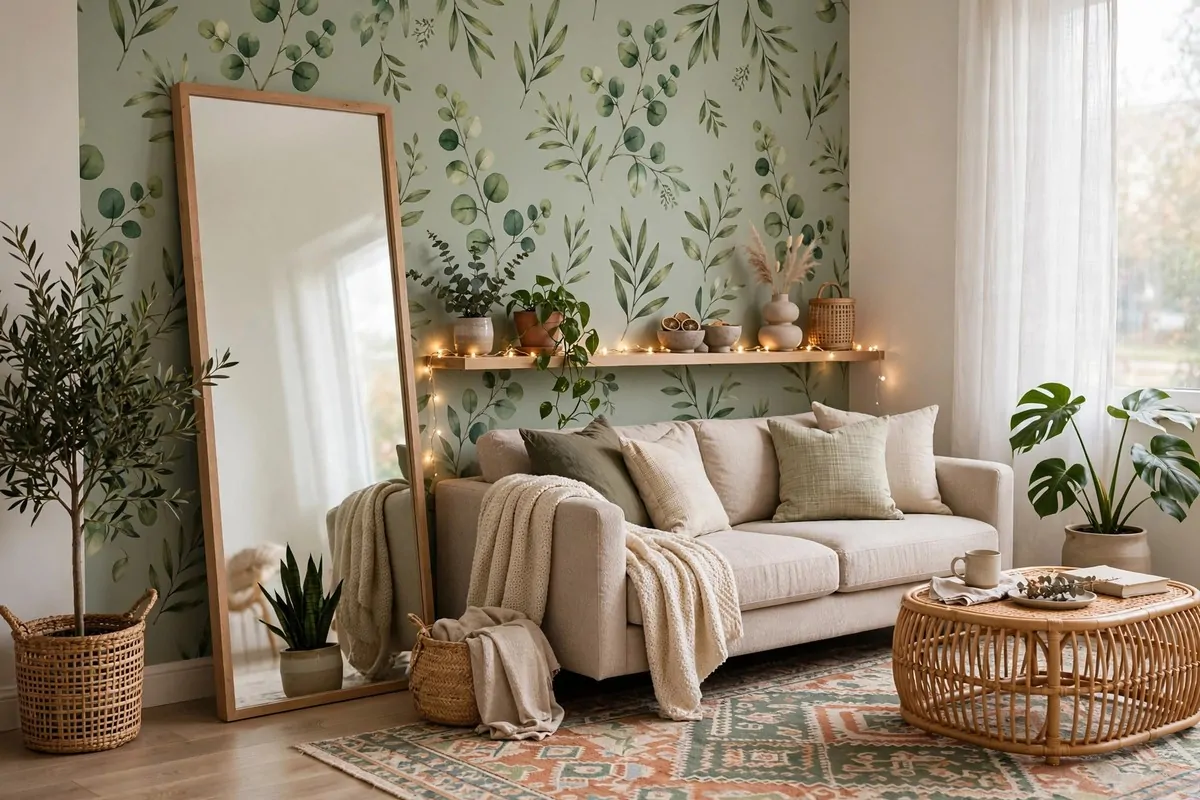
22 Laundry Room Organization Ideas That Actually Stick

I once found a clean sock in the fridge. That was the day I knew my laundry room needed a real system.
My laundry room used to be the messiest spot in my house. Clean clothes, dirty clothes, and one sock nobody claimed all lived in one big pile.
Then I built a few small habits, one at a time. Nothing fancy, just spots for things and rules that are easy to keep. These are the 22 laundry room organization ideas that actually stick in my home.
Three Baskets for Sorting
Sorting used to be the part I skipped. I tossed everything into one big pile and hoped for the best.
Then the whites came out pink, and a dark sock went missing for a month. That was the end of my one pile habit.
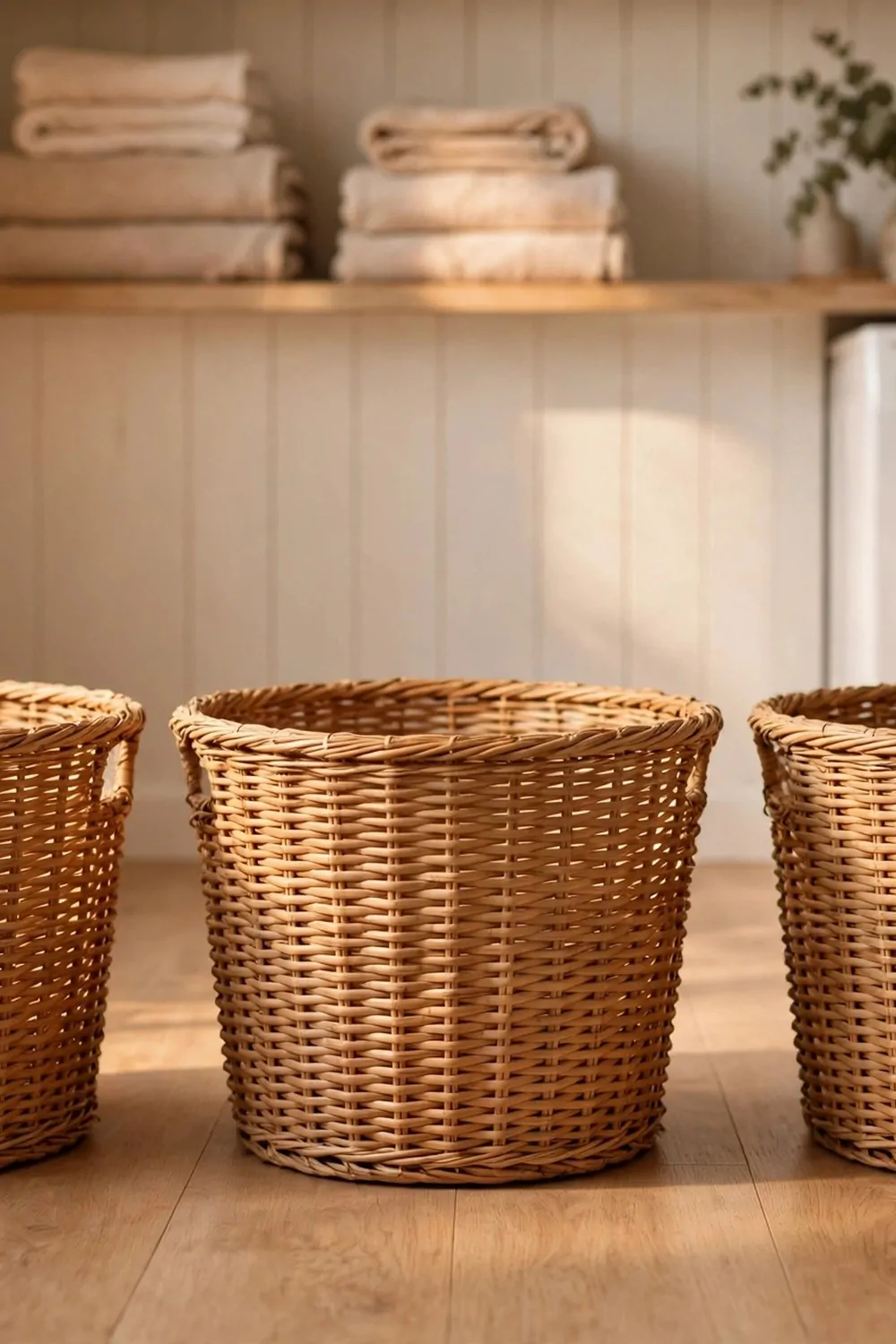
Three baskets changed everything. One for whites, one for darks, and one for colours. That is all you need.
- whites, like towels and sheets and plain shirts
- darks, like jeans and dark tops
- colours, like bright shirts and patterned clothes
- one basket that stays empty for the odd load
I keep the baskets in a row on the floor. Everyone in my house knows which one is which.
The rule is simple. When you take clothes off, they go in the right basket right away.
It takes two seconds. But it saves a whole sorting session on wash day.
My kids learned it fast. Even my youngest can tell a dark sock from a white one.
Three baskets and no more pink whites. It is the easiest win on this whole list.
A Folding Shelf Above the Machines
I used to fold clothes on top of the washing machine. It wobbled, and things slid off onto the floor.
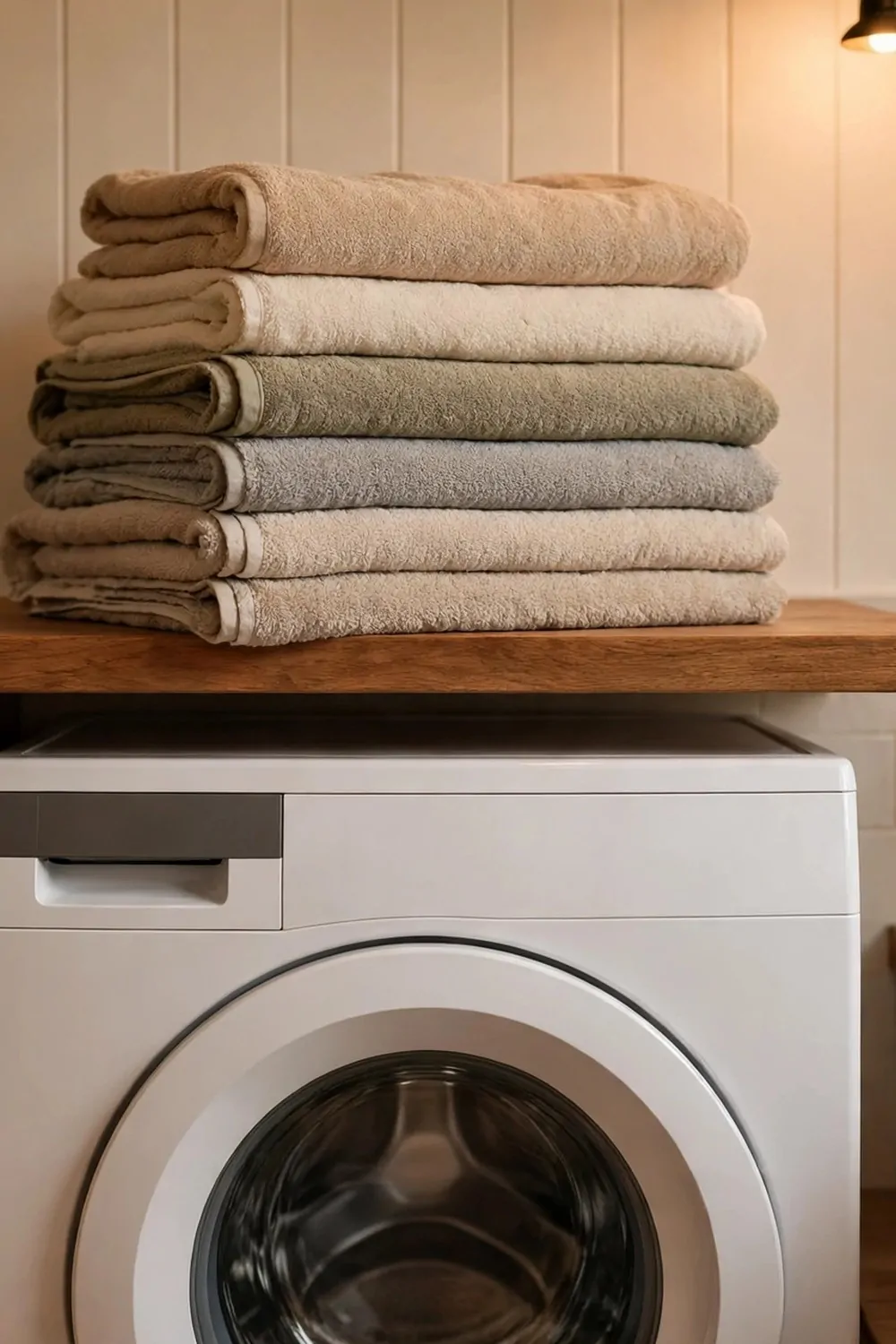
A flat shelf above the machines fixed that. It is just a plain board, but it gives me a real work top.
I fold everything right there, fresh from the dryer. The clothes never make it to a chair or a bed first.
The shelf holds a stack of folded towels too. Clean things wait there until they go to their rooms.
Keep the shelf clear on purpose. If it fills up with clutter, it stops being a folding spot.
I wipe it down once a week. A damp cloth takes ten seconds, and the wood stays nice.
My shelf is deep enough for a folded blanket. Measure your machines first, so the board fits right.
One shelf above the machines turns a pile of clean laundry into neat stacks. It is a small change with a big payoff.
A Drying Rack That Folds Flat
My old drying rack lived in the middle of the floor all week. I bumped into it every single day.
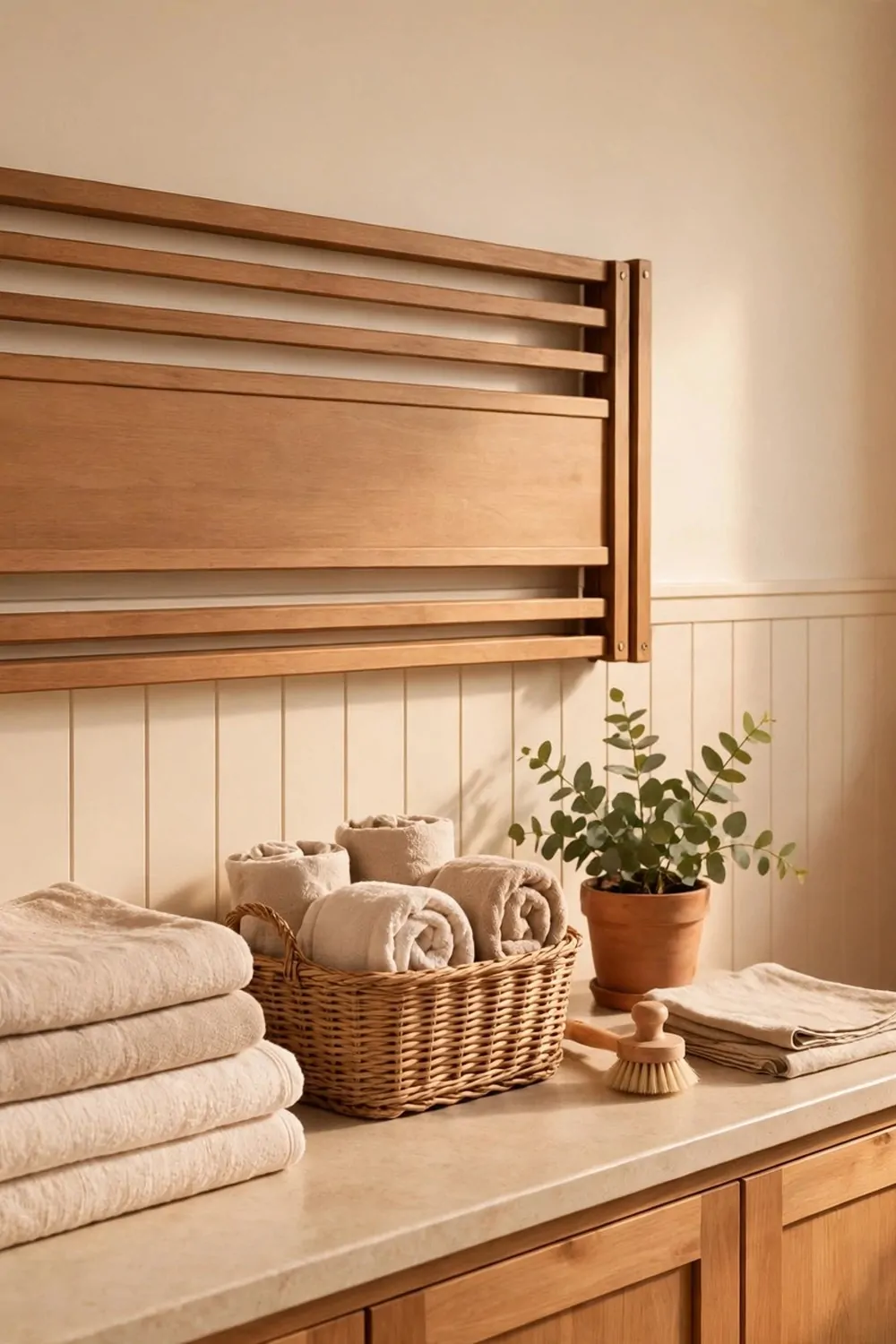
A rack that folds flat against the wall fixed that. I open it when I need it, and it disappears when I do not.
Wet clothes hang on it, and the air does the drying. No heat, no noise, just time.
It holds shirts, small towels, and the kids clothes. The heavy stuff still goes in the dryer.
Hang things with a little space between them. Air needs to move, or the clothes dry slow.
I fold the rack away every night, even if it is still holding a few things. It keeps the floor clear for the next day.
A wall rack is better than a floor one in a small room. The floor is for walking, not for drying.
When a rack folds flat, you get the drying space and the floor space. That is a fair trade.
Detergent in One Tidy Spot
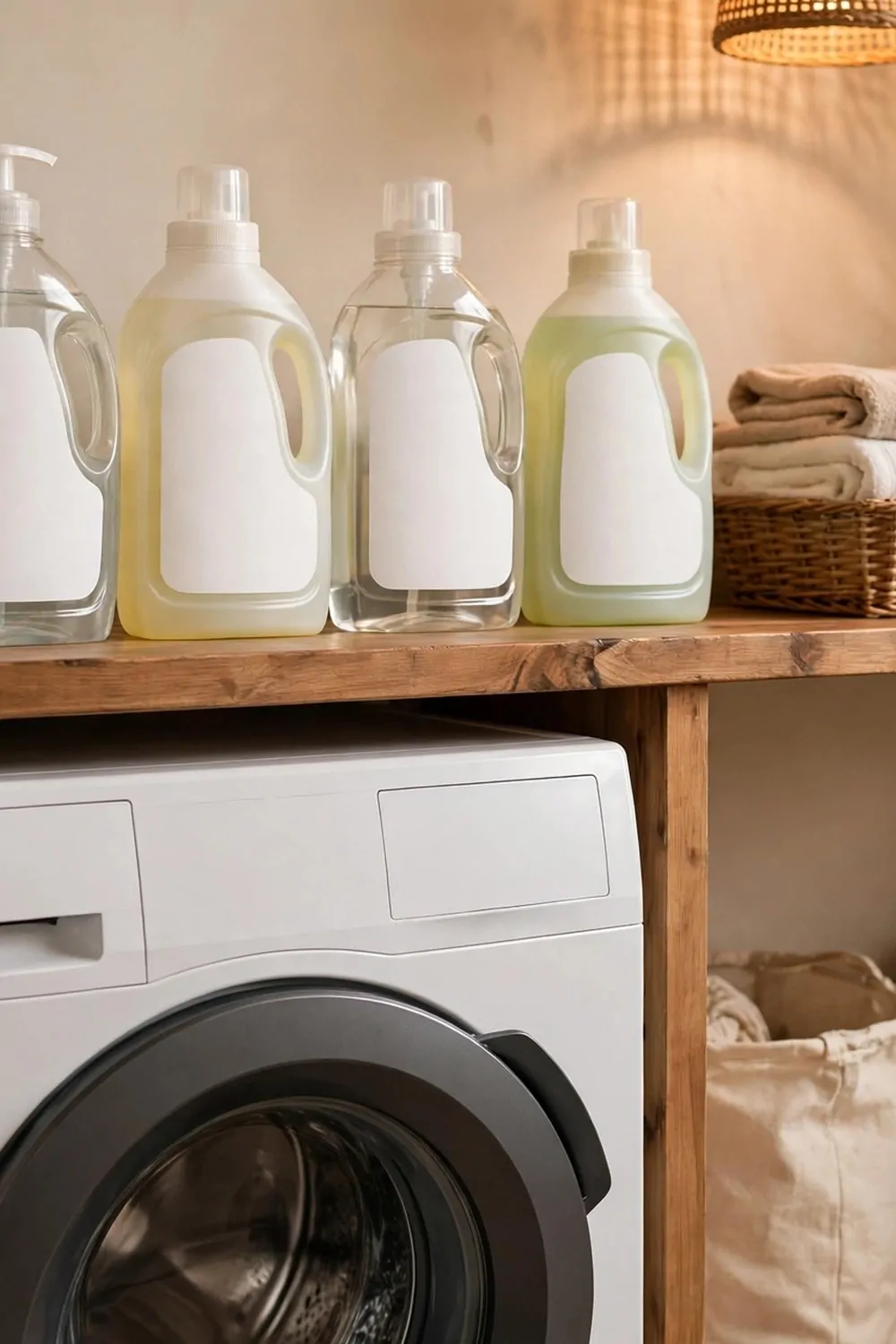
Detergent used to live in three places in my house. One bottle by the machine, one in the kitchen, and one hiding in a cupboard.
Now it all lives in one spot. One shelf, right above the machines, where I can reach it without thinking.
I pour what I need and put the bottle back in the same place. It sounds small, but it stops the hunting.
Keep the bottles in a row, labels facing out. You can see what is low at a glance.
When a bottle gets low, I write it on my laundry list the same day. That way I never run out mid wash.
A small tray under the bottles catches the drips. Detergent drips make sticky spots on wood.
Kids should not reach the detergent shelf. Keep it up high, and the bottles stay safe.
One tidy spot for detergent means wash day starts in seconds. No hunting, no mess, no stress.
A Lost Sock Box
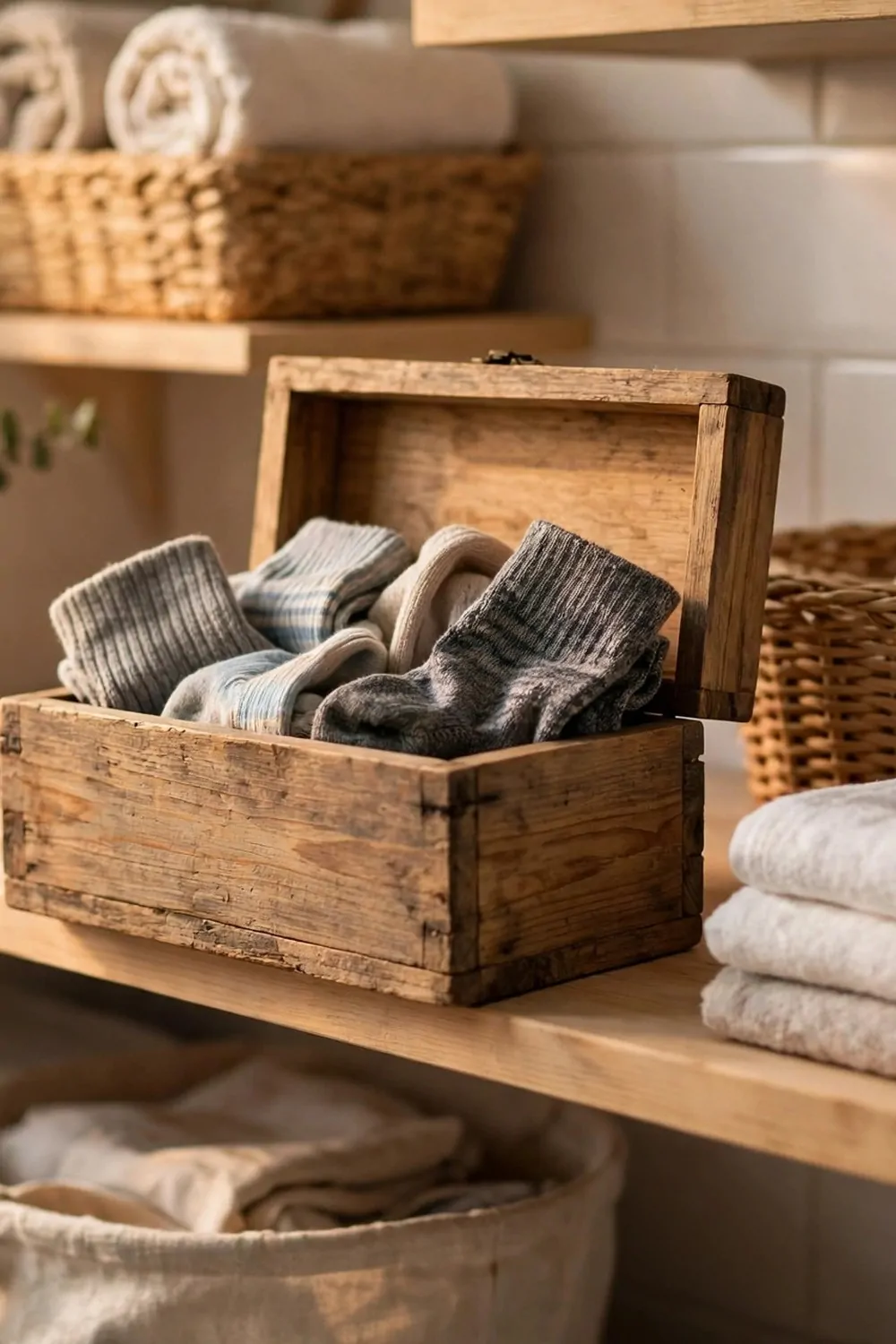
Every house has lost socks. Mine used to turn up in strange places, like behind the dryer and inside the couch.
A little box on the shelf fixed the mystery. Every single sock goes in the box, and I check it once a week.
Half the time, the missing sock is already in the box. The other half, it turns up in the wash the next week.
The box does not need to be fancy. Mine is a small wooden box with a lid, nothing more.
I keep the box where everyone can reach it. If it hides in a cupboard, nobody will use it.
My kids check the box before they ask for new socks. Most weeks they find what they need right there.
Empty the box once a month. Socks with holes go in the bin, and the rest go back to their pairs.
A lost sock box will not find every sock. But it finds more than you think, and that feels like a small win.
Labels on Every Basket
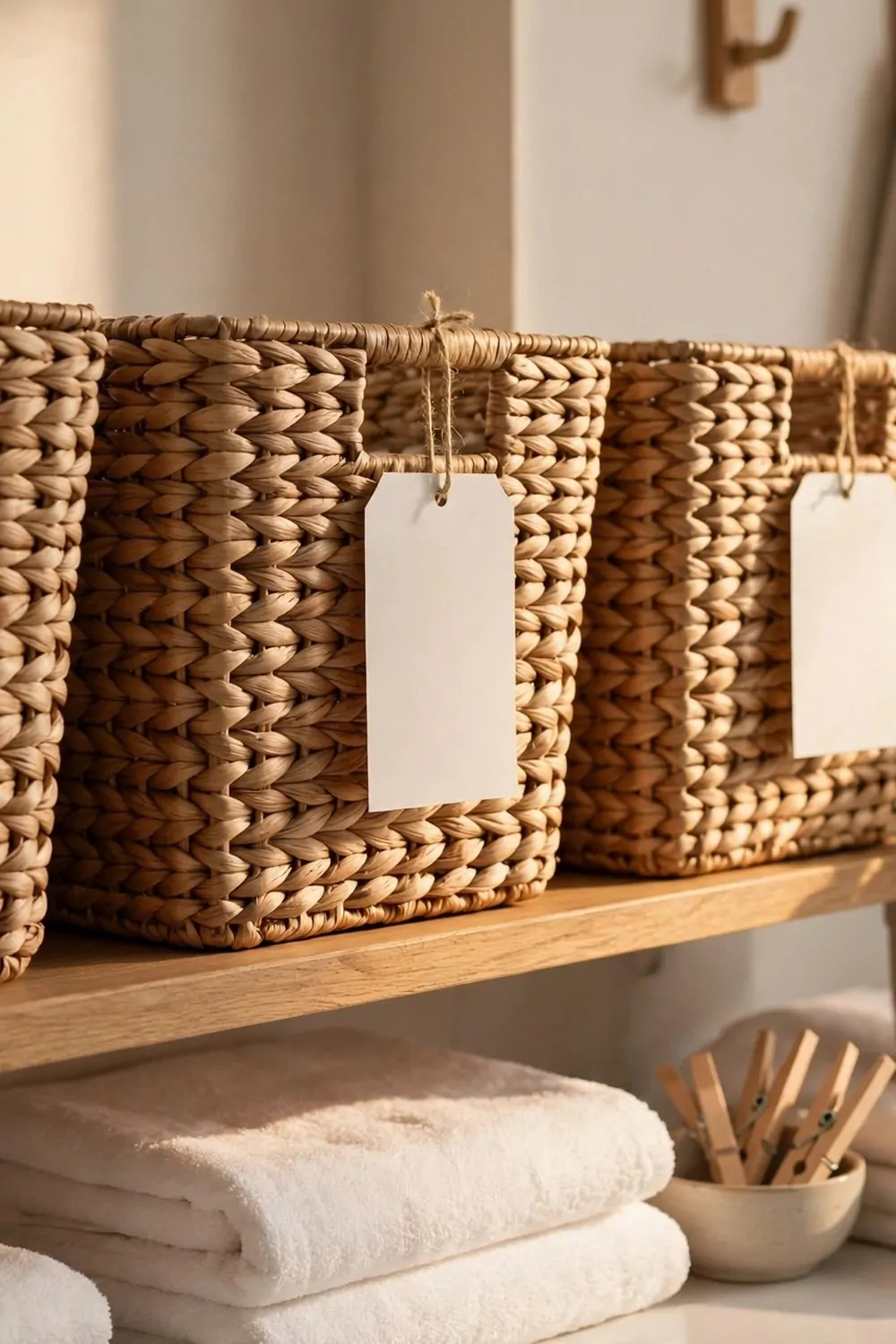
My baskets all looked the same. I opened the wrong one a dozen times a week.
Labels fixed that in one afternoon. A little tag on each basket says what lives inside.
I use simple words. Towels. Darks. Kids clothes. Nothing fancy, just words anyone can read.
The labels sit on the front of each basket, where you can see them from the door.
When a label falls off, I stick it back on the same day. A basket with no label is a basket full of mystery.
My kids read the labels now. They put things in the right spot without being asked.
Use big letters if the room is dim. A label you cannot read is just decoration.
Labels cost nothing and save you minutes every single day. That is a good trade.
A Hanging Rail for Drying
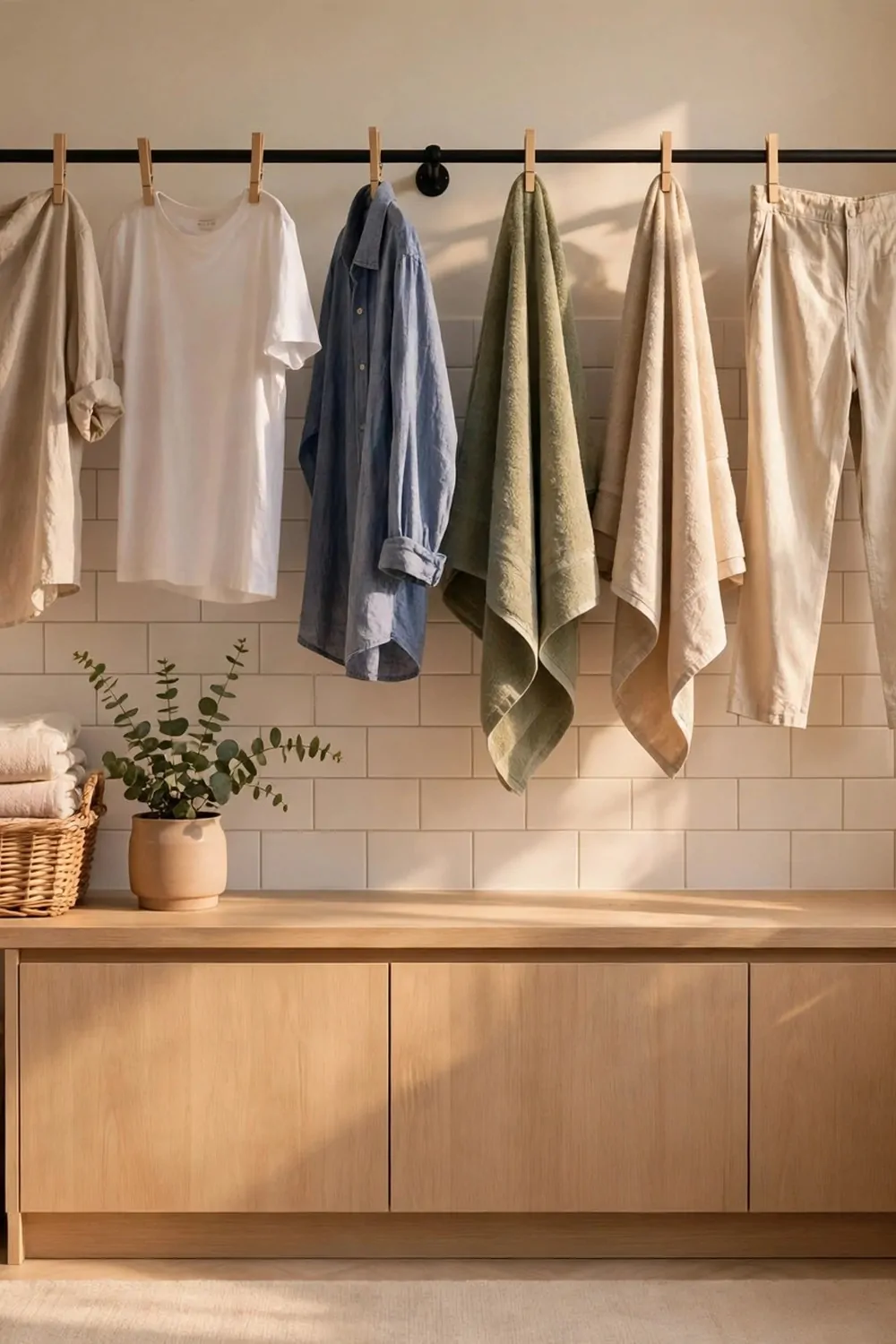
Shirts came out of the dryer wrinkled, and I ironed them one by one. It ate up my whole evening.
A hanging rail changed that. I hang shirts straight from the dryer, and the wrinkles fall out on their own.
The rail hangs on the wall, above the folding shelf. Shirts drip a little, so I keep a small tray under it.
I use plain wooden hangers. They hold the shirt shape better than the thin wire ones.
Hang the shirt by its shoulders and button the top button. It dries in shape, not in a heap.
Dresses and blouses go on the rail too. Anything that wrinkles easy gets a hanger, not a pile.
Leave space between the hangers. Crowded shirts dry slow and wrinkle each other.
A hanging rail means less ironing and neater clothes. It is one of my favourite spots in the room.
A Stain Kit That Is Always Ready
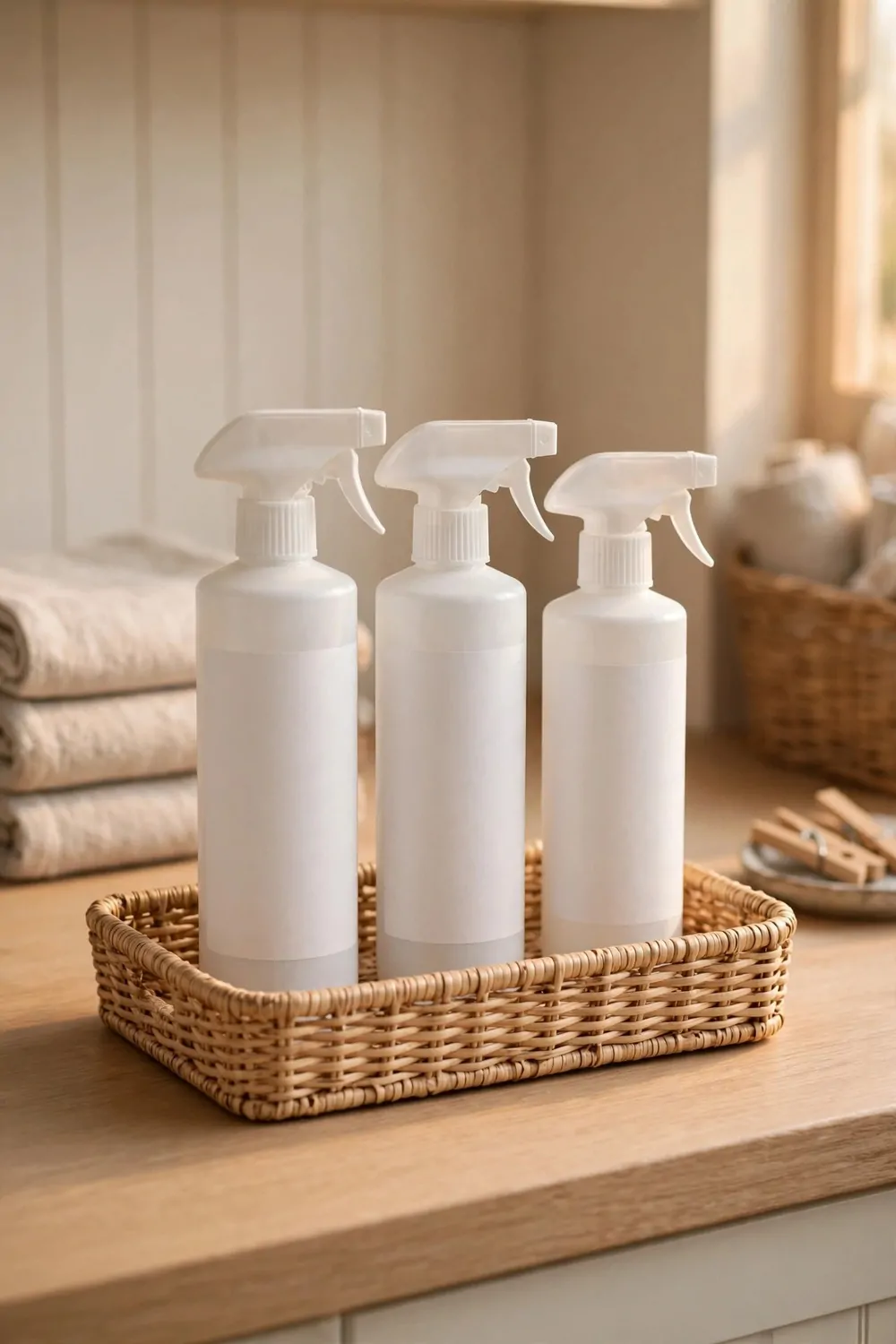
Stains used to wait. I would toss the shirt in the pile and deal with it later, and later never came.
A little stain kit by the machine fixed that. Everything I need sits in one small tray.
The tray holds a stain spray, a clean cloth, and an old toothbrush for scrubbing. That is the whole kit.
I treat the stain the same day it happens. Fresh stains come out easy. Old stains fight back.
Dab, do not rub. Rubbing pushes the stain deeper into the cloth, and then it never comes out.
Check the stain before the shirt goes in the dryer. Heat sets a stain, and then it is there for good.
Keep the kit where you can see it. If it hides in a cupboard, you will forget it exists.
| Stain | What to do | What to use |
|---|---|---|
| Grass | Dab with cold water first, then wash as usual | Cold water and a clean cloth |
| Tomato sauce | Rinse under cold water, then dab with a little soap | Cold water and mild soap |
| Mud | Let it dry, brush it off, then wash as usual | A soft brush and cold water |
A stain kit that is always ready saves shirts. It takes five minutes, and the shirt lives to wear another day.
Fold Clothes Straight From the Dryer
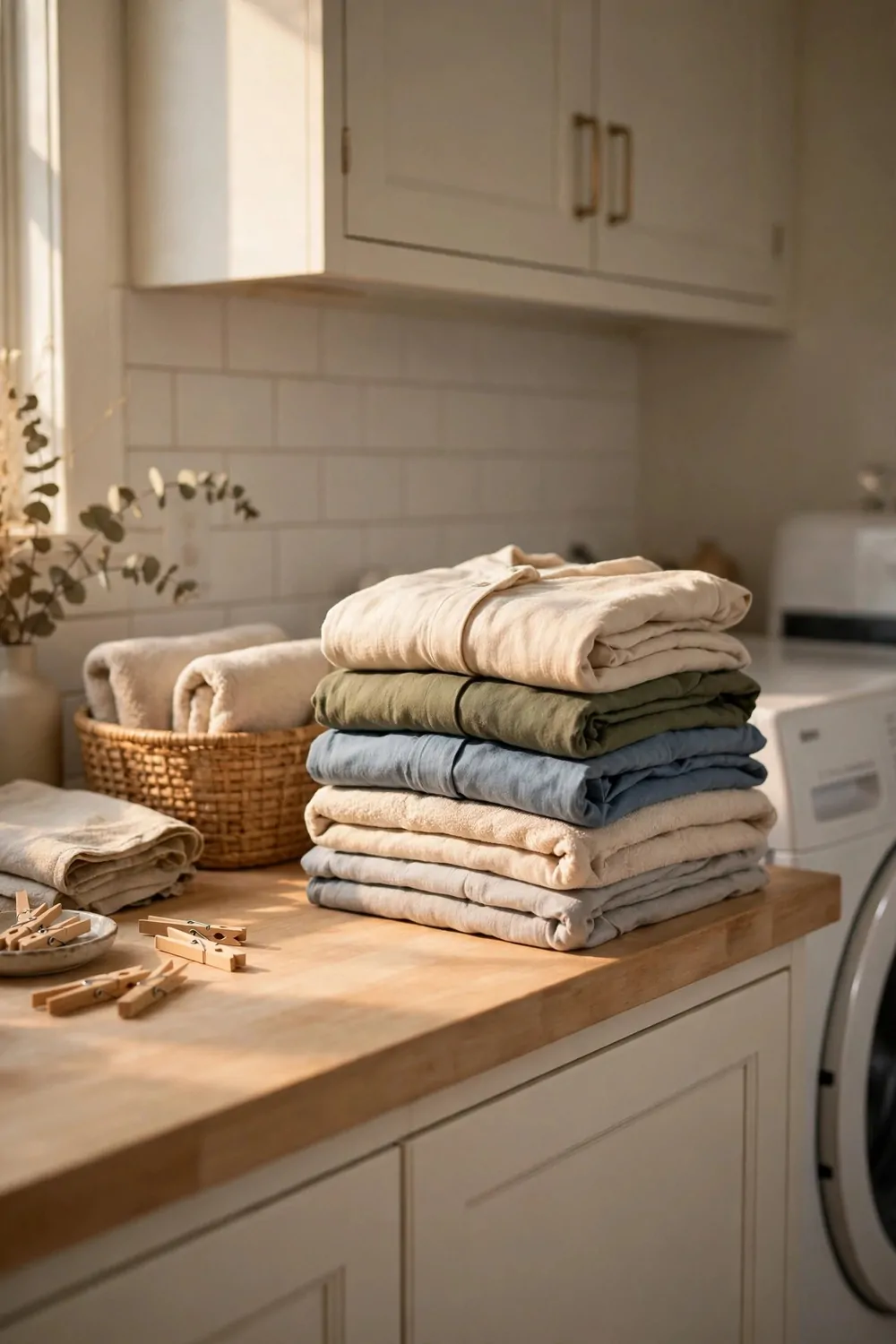
Clean clothes used to sit in the dryer for a day. Then they wrinkled, and I had to iron them all over again.
Now I fold straight from the dryer. The clothes are warm, soft, and easy to fold.
I set a timer when the dryer starts. When it beeps, I go and fold, no excuses.
Warm clothes fold flatter. Cold clothes from a forgotten load always look like a crumpled mess.
Fold each thing the same way every time. Same folds, same stacks, and the cupboard stays neat.
I fold on the shelf above the machines. The stack grows, and then I carry it to the right room.
If I am in a rush, I fold the shirts first. They wrinkle fastest, so they get my time first.
Folding straight from the dryer takes ten minutes. Leaving it for later takes an hour of ironing.
A Small Ironing Corner
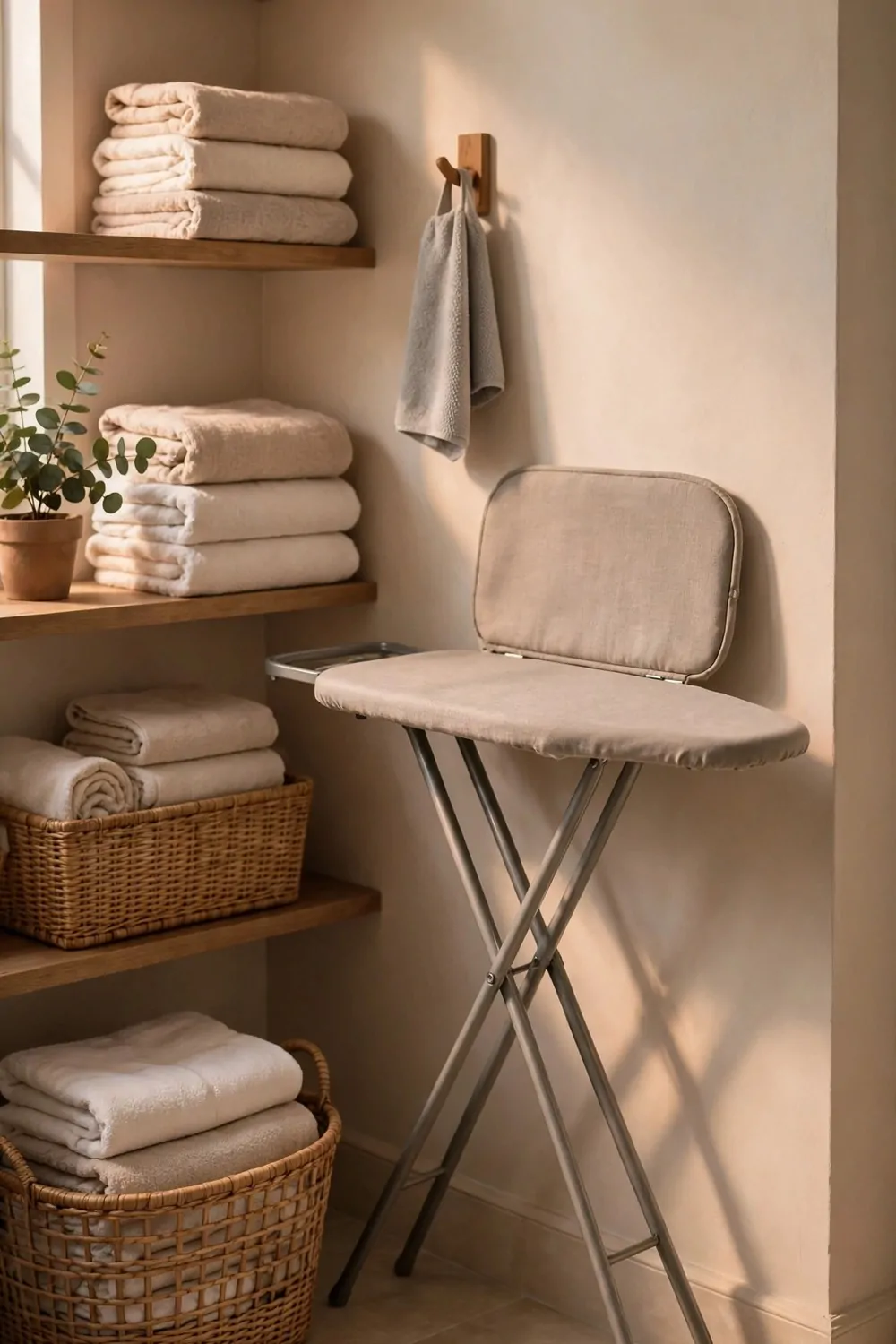
My ironing board used to lean behind the door. I had to drag it out every time, and I hated it.
A small ironing corner fixed that. The board stays open in one spot, and the iron sits beside it.
The corner is just a small patch of floor by the window. It does not need much room.
I iron in short bursts now. One shirt while I wait for the kettle, two more while the wash runs.
Keep the iron unplugged when you are done. Safety first, even in a small room.
A little basket under the board holds the things that need ironing. When the basket is empty, I am done.
I press shirts, not every single thing. T-shirts and towels do not need an iron, and that saves me time.
A small ironing corner means ironing is a quick job, not a big event. That is how it should be.
Hampers That Roll
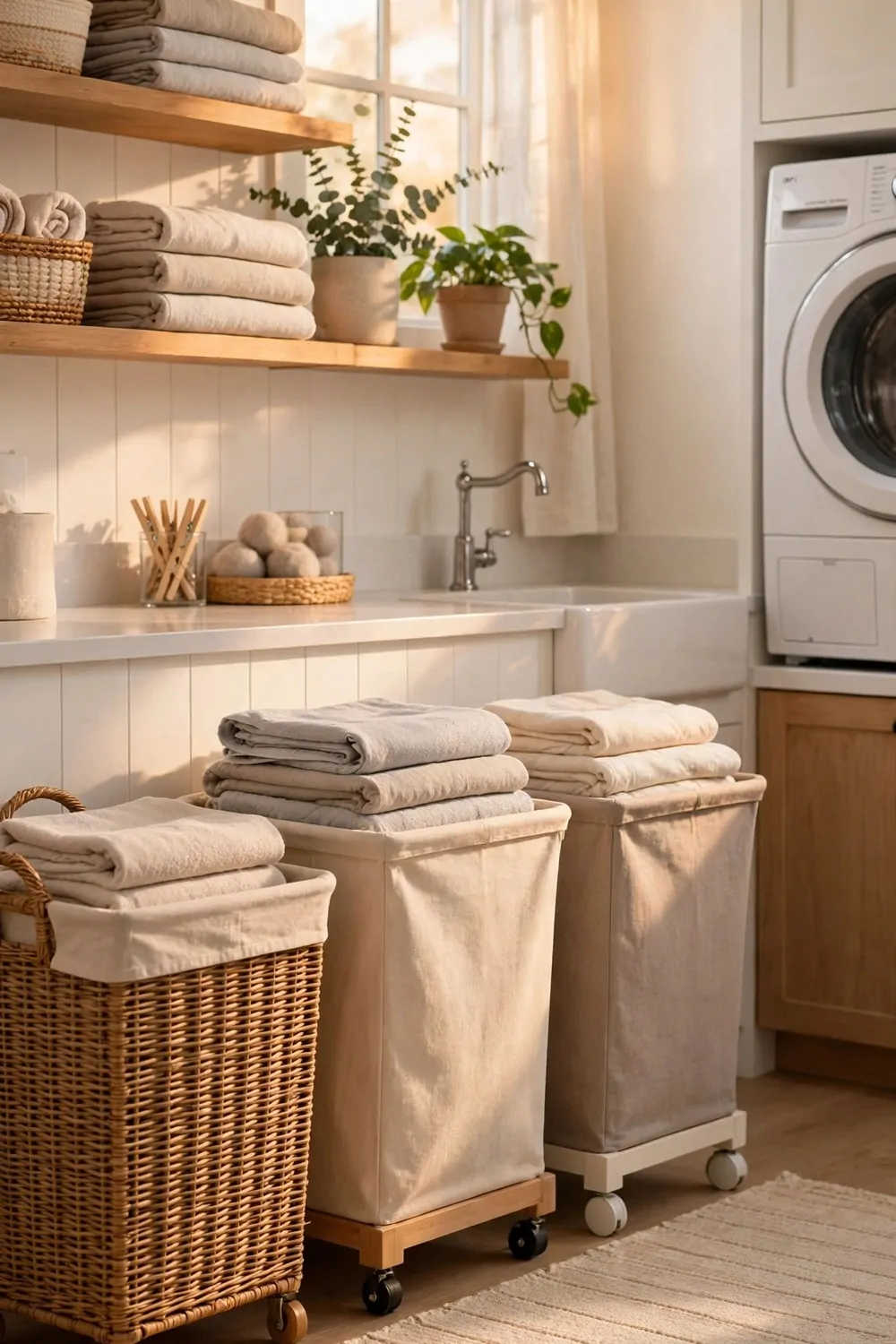
Carrying a full hamper to the machines hurt my back. It was heavy, and it bumped into every door frame.
A hamper on wheels fixed that. I roll it to the machine, and my back says thank you.
Each person in my house has a small hamper in their room. On wash day, we roll them all to the laundry room.
The wheels work on hard floors and on carpet. Test them first if your floor is thick carpet.
I empty the hamper the same day it goes to the machines. A full hamper is a heavy hamper.
Wash the hamper itself once a month. It holds dirty clothes, so it gets dirty too.
A rolling hamper with a lid keeps the smell in. Open hampers let the whole room smell like old socks.
Rolling beats carrying, every single time. My back agrees, and yours will too.
A Shelf for Clean Towels
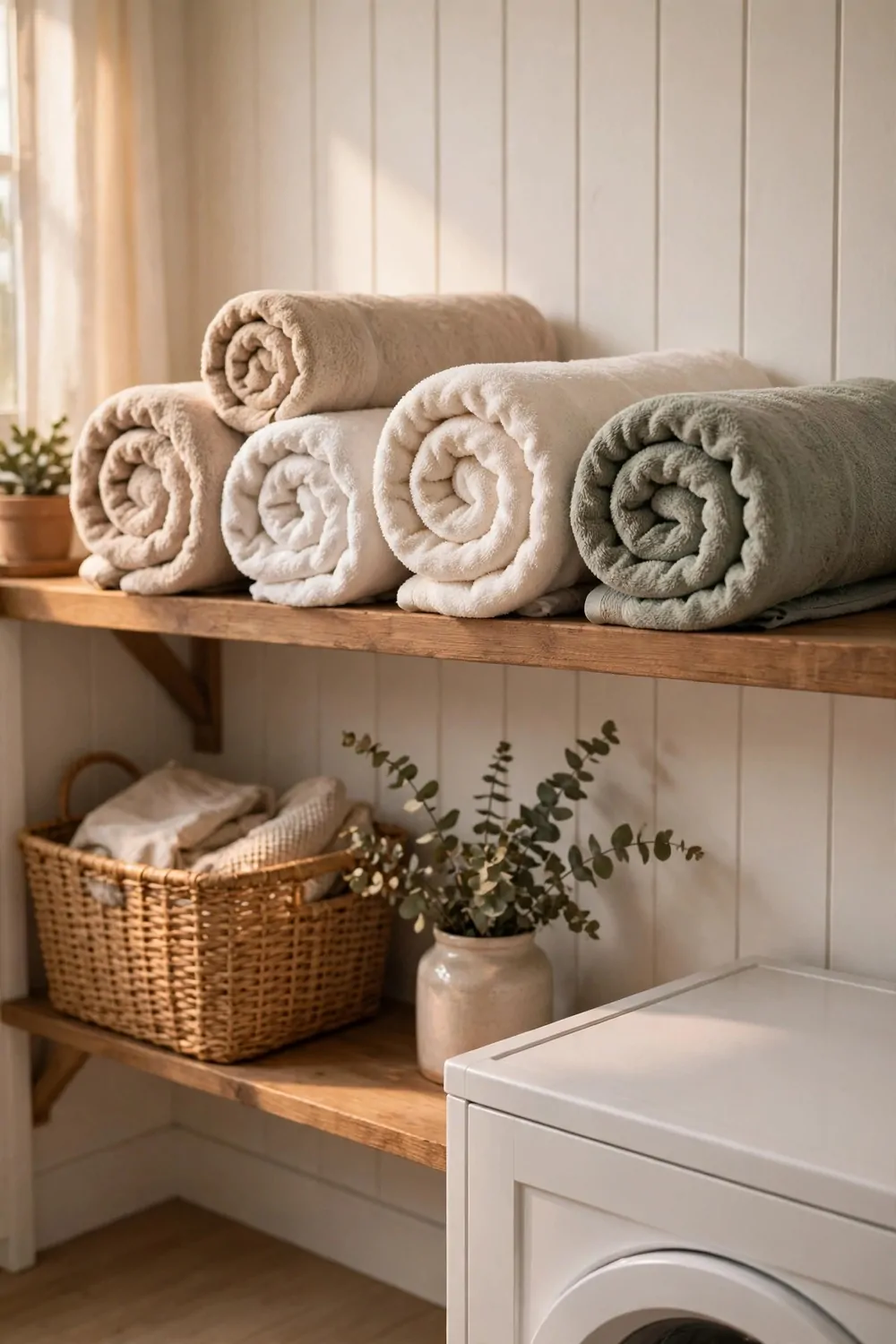
Clean towels used to live in a pile on the dryer. They fell off, got mixed with dirty ones, and drove me mad.
One shelf for clean towels fixed that. Folded towels live there, and only there.
I roll the towels instead of folding them flat. Rolled towels stack neat and look tidy.
The shelf sits at eye level, so I can grab a towel without bending or reaching.
Keep the towel shelf for towels only. The moment other things move in, the towels lose their home.
I wash towels twice a week in my house. The shelf empties fast, and that is fine.
A small stack of hand towels sits on top of the big ones. Little towels for little jobs.
One shelf for clean towels means no more towel hunting. You reach, you grab, you go.
One Wash Day a Week
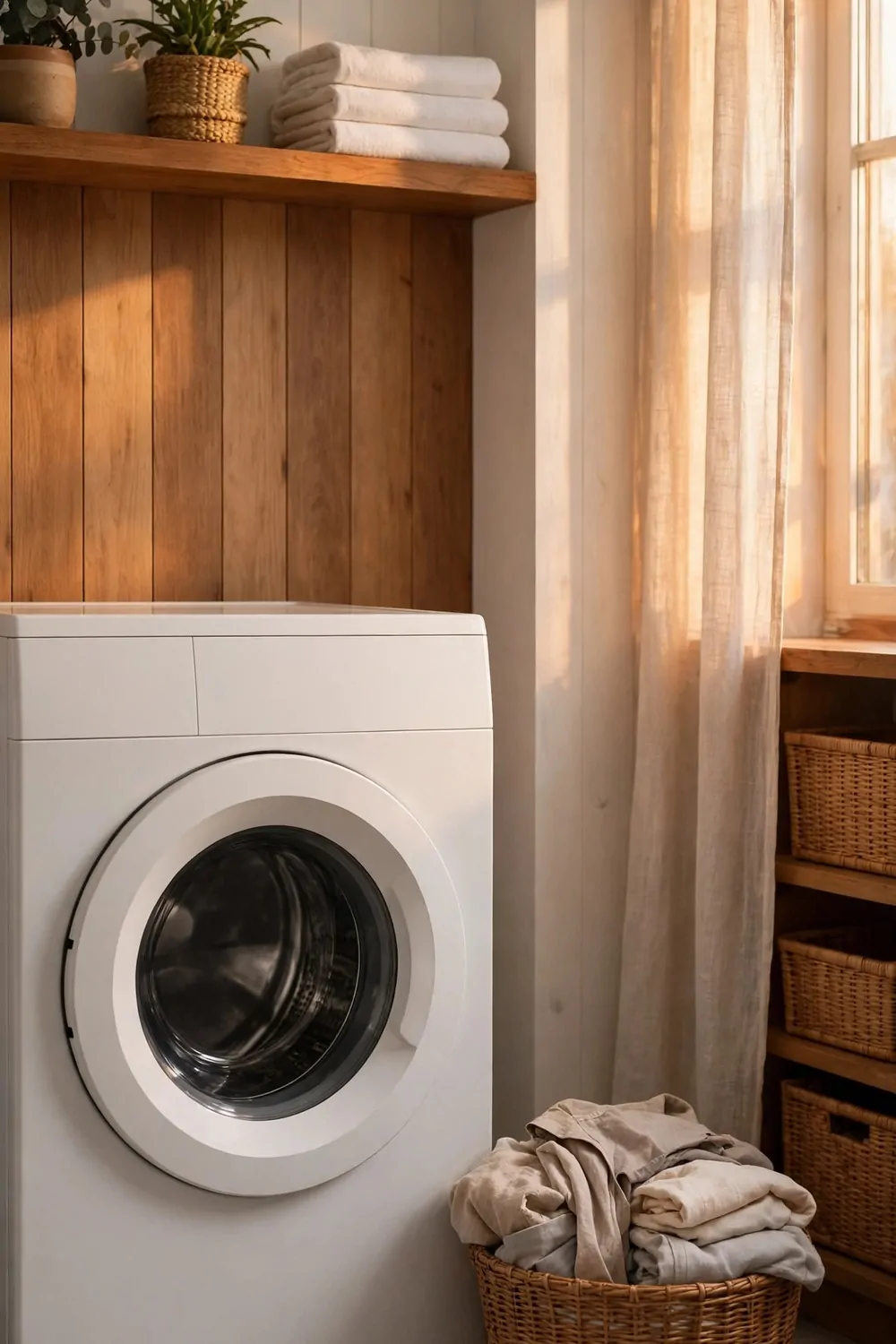
I used to wash a little every day. A load here, a load there, and laundry never ended.
One wash day a week fixed that. I pick a day, and I do all the washing in one go.
The machines run while I do other things. Fold a load, start the next one, and keep moving.
My wash day is Saturday. Yours might be Wednesday. The day does not matter, the habit does.
I start early, so the last load is done by lunch. The afternoon is free, and the laundry is done.
Small loads still happen when I need them. A muddy school uniform cannot wait for Saturday.
Keep the routine loose. If wash day moves by a day, it still works. The point is one main day, not a perfect day.
| Day | Job | How long |
|---|---|---|
| Saturday | Wash all the clothes | About three hours |
| Saturday | Fold and put away | About one hour |
| Sunday | Check the lost sock box | Five minutes |
One wash day a week gives me six days with no laundry on my mind. That is a calm I did not know I needed.
A Lint Bin by the Dryer
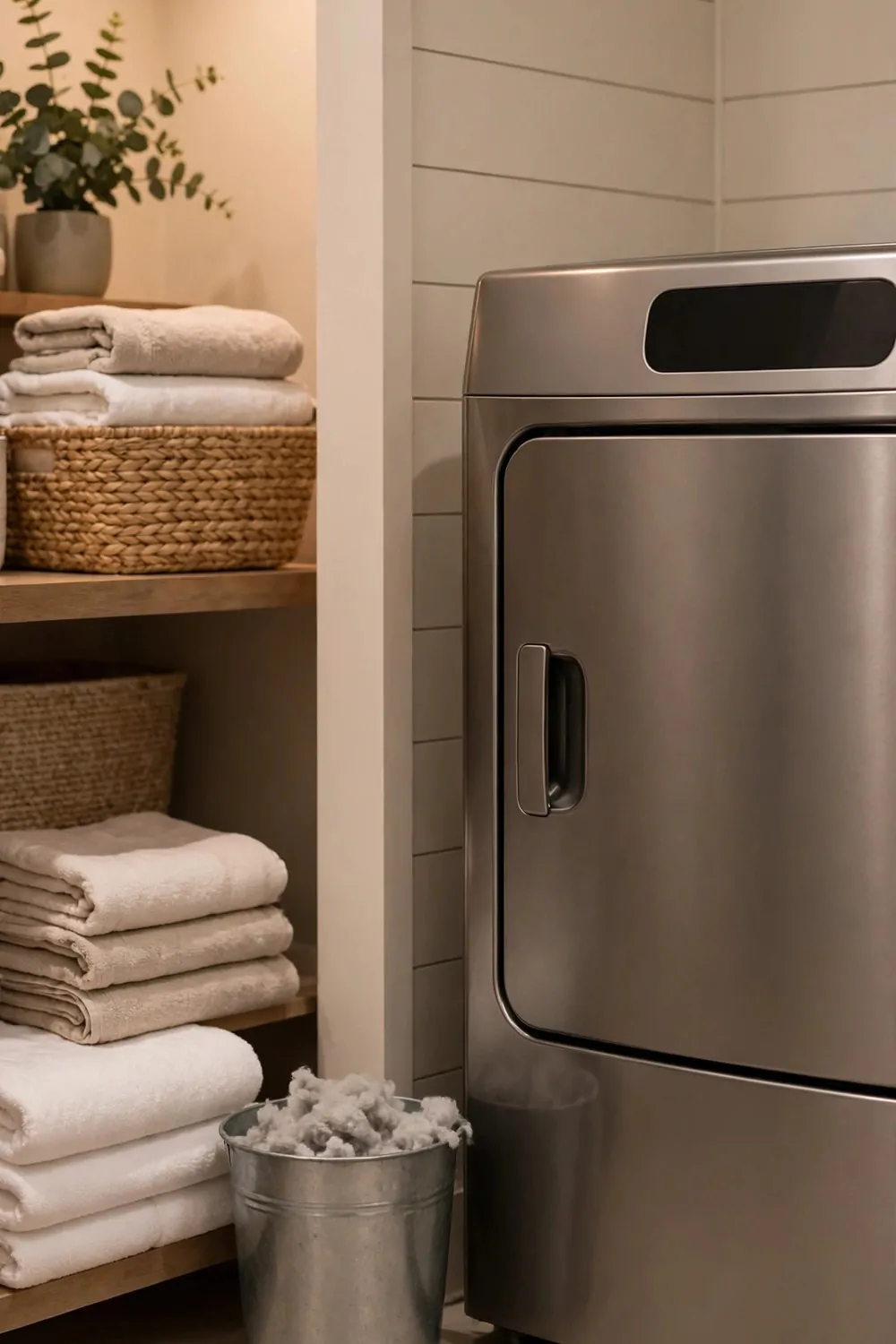
Lint used to end up on the floor. I cleaned the dryer filter and dropped the fluff right where I stood.
A little bin by the dryer fixed that. The lint goes in the bin, not on the floor.
I empty the dryer filter after every load. It takes five seconds, and the dryer works better.
A full filter makes the dryer work harder. Harder work means longer drying and higher bills.
The bin is small, just a little pot on the floor. It does not need to be fancy.
I empty the bin once a week into the rubbish. Lint builds up fast in a busy house.
Keep the bin right next to the dryer door. If it is across the room, the lint still ends up on the floor.
A lint bin is the smallest idea on this list. It is also one of the most useful.
Hooks for Aprons and Bags
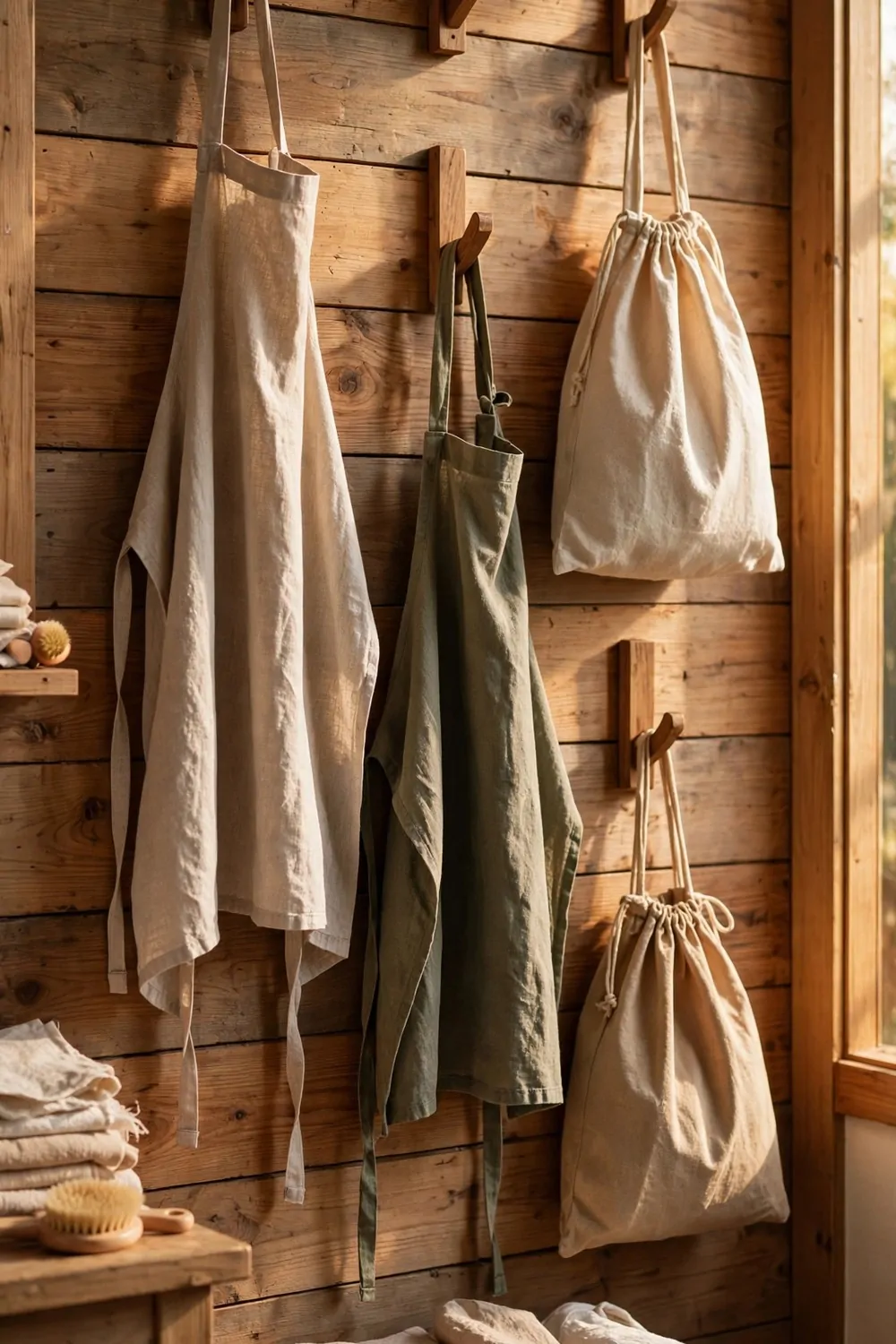
Aprons used to hang on the back of a chair. Bags lived on the floor, and I tripped over them daily.
A row of hooks on the wall fixed that. Everything hangs up, and the floor stays clear.
I put the hooks at a height my kids can reach. If they cannot reach, they will not use them.
Each hook has one job. One for aprons, one for cloth bags, one for the laundry basket straps.
Hang the apron by its loop, not bunched up. A hung apron dries fast and stays clean.
Cloth bags on hooks are easy to grab on wash day. I use them for small loads and odd bits.
Check the hooks once a year. A loose hook falls off the wall, and the bag goes with it.
Hooks on a wall turn a messy corner into a tidy row. It takes five minutes to fit them, and they work for years.
A Basket for Odd Socks
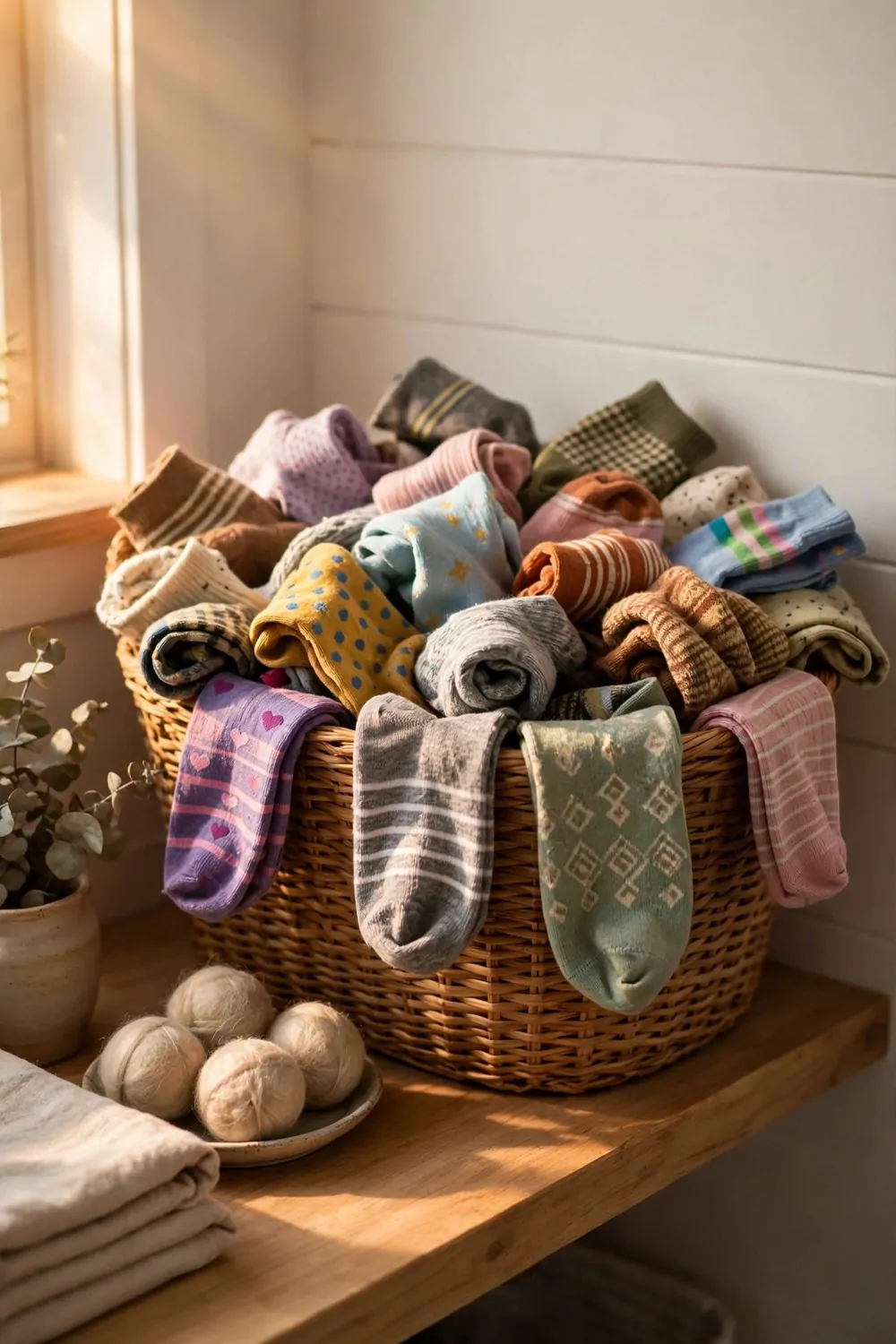
Odd socks are a fact of life. One sock goes in, and its partner vanishes into thin air.
A basket for odd socks keeps the lonely ones in one place. They wait there until their partner turns up.
I keep the basket on the shelf next to the lost sock box. Two small homes for two small problems.
- one clean sock with no partner
- socks that came back from the wash alone
- socks that lost their pair in the dryer
- any sock that looks familiar but has no match
I check the basket every Sunday. Most weeks, two or three pairs find each other again.
Socks with holes do not go in the basket. They go in the bin, or they become cleaning cloths.
My kids love checking the basket. It feels like a little treasure hunt for them.
When a sock waits more than a month, I let it go. Some socks are gone for good, and that is fine.
A basket for odd socks will not stop socks going missing. But it keeps the lonely ones together, and that is enough.
Keep the Machines Clean
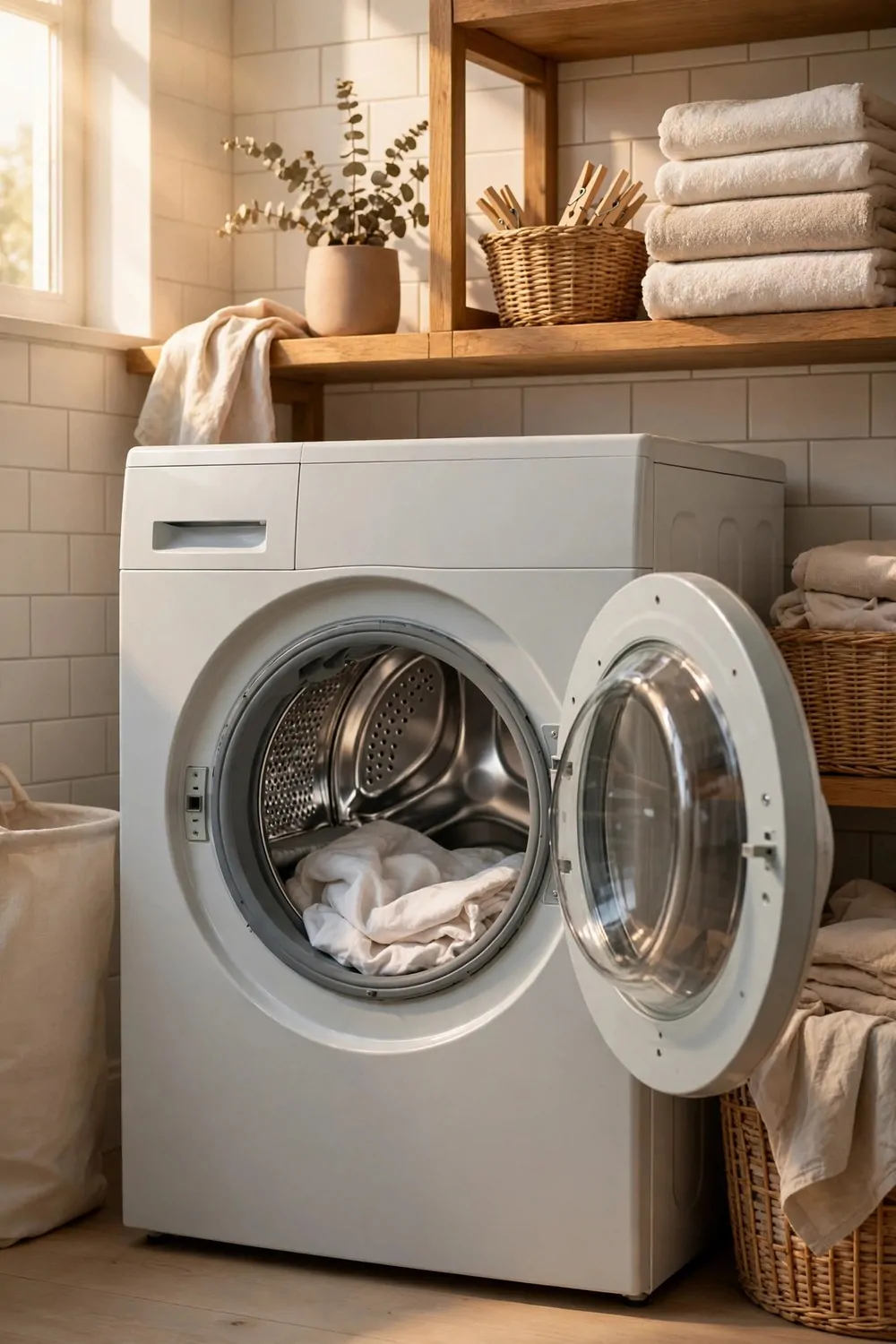
My washing machine started to smell. I cleaned the clothes, but the machine itself was dirty.
A monthly clean fixed that. I run one hot empty wash with a little soap, and the smell goes away.
Wipe the rubber seal after every wash. Water sits in the folds, and that is where the smell starts.
Leave the door open between washes. Air dries the drum, and a dry drum does not smell.
Clean the soap drawer too. Old soap builds up in the corners and turns into a sticky mess.
I wipe the outside of the machines once a week. Dust and drips make them look old fast.
Check the filter at the bottom every few months. Coins and buttons hide in there, and they block the drain.
Clean machines wash better and last longer. A little care now saves a big repair later.
A Laundry List on the Door
I used to run out of soap mid wash. The machine would beep, and I would have nothing to put in it.
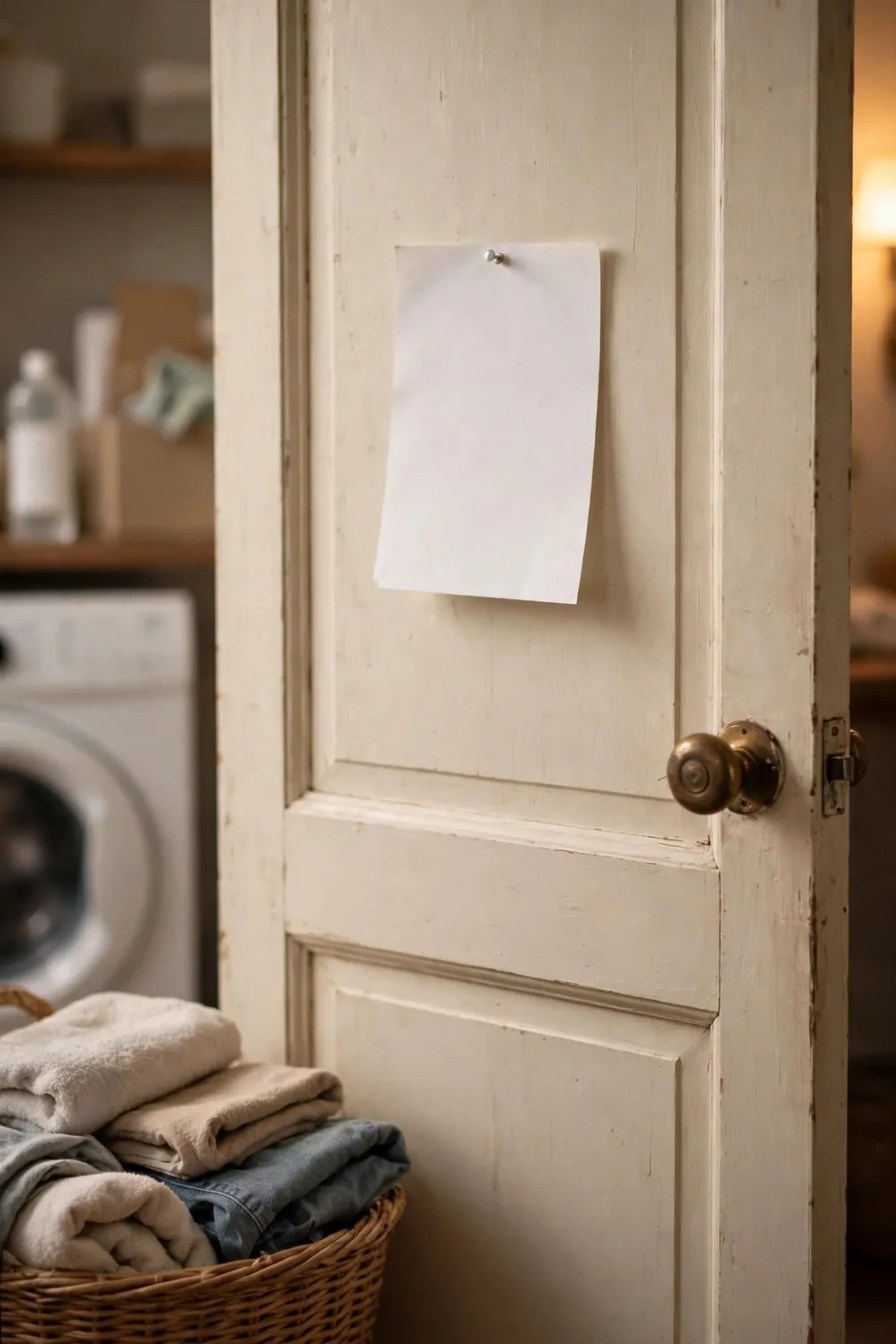
A laundry list on the door fixed that. When something runs low, I write it down right away.
The list hangs on the inside of the door, where I see it every time I walk in.
It is just a small notepad and a pen on a string. Nothing fancy, nothing digital.
My list holds soap, softener, stain spray, and pegs. The little things that run out when you least expect it.
I check the list before my weekly shop. One look, and I know what to buy.
The kids add to the list too. When the pegs run low, they write it down without being asked.
A laundry list on the door means no more mid wash surprises. Small list, big calm.
Small Baskets for Small Loads
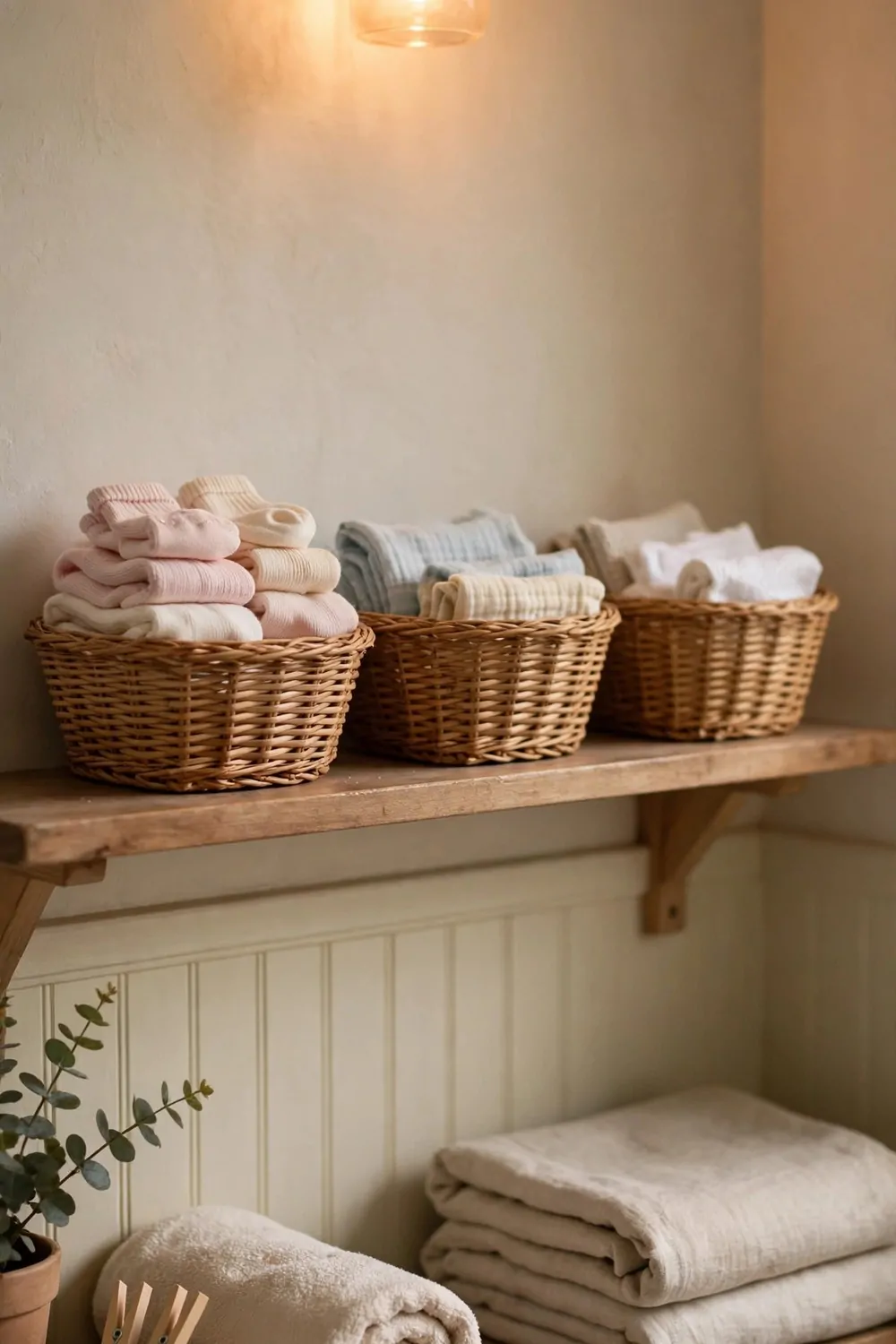
Small loads used to get lost in the big pile. Baby clothes, socks, and cloths all vanished into the heap.
Small baskets fixed that. Each little load has its own little home.
I keep three small baskets on the shelf. One for baby things, one for cloths, and one for socks.
- baby clothes and tiny socks
- cleaning cloths and small towels
- single socks waiting for a pair
- delicate bits that need a gentle wash
The baskets make small loads easy to wash. I grab a basket, tip it in the machine, and I am done.
Small loads wash better on their own. They do not tangle with the big sheets and jeans.
I wash the small baskets themselves once a month. They hold dirty things, so they get dirty too.
Label the small baskets, just like the big ones. A label saves you opening the wrong one.
Small baskets for small loads keep the little things from getting lost. Simple, and it works.
A Drying Line for Delicates
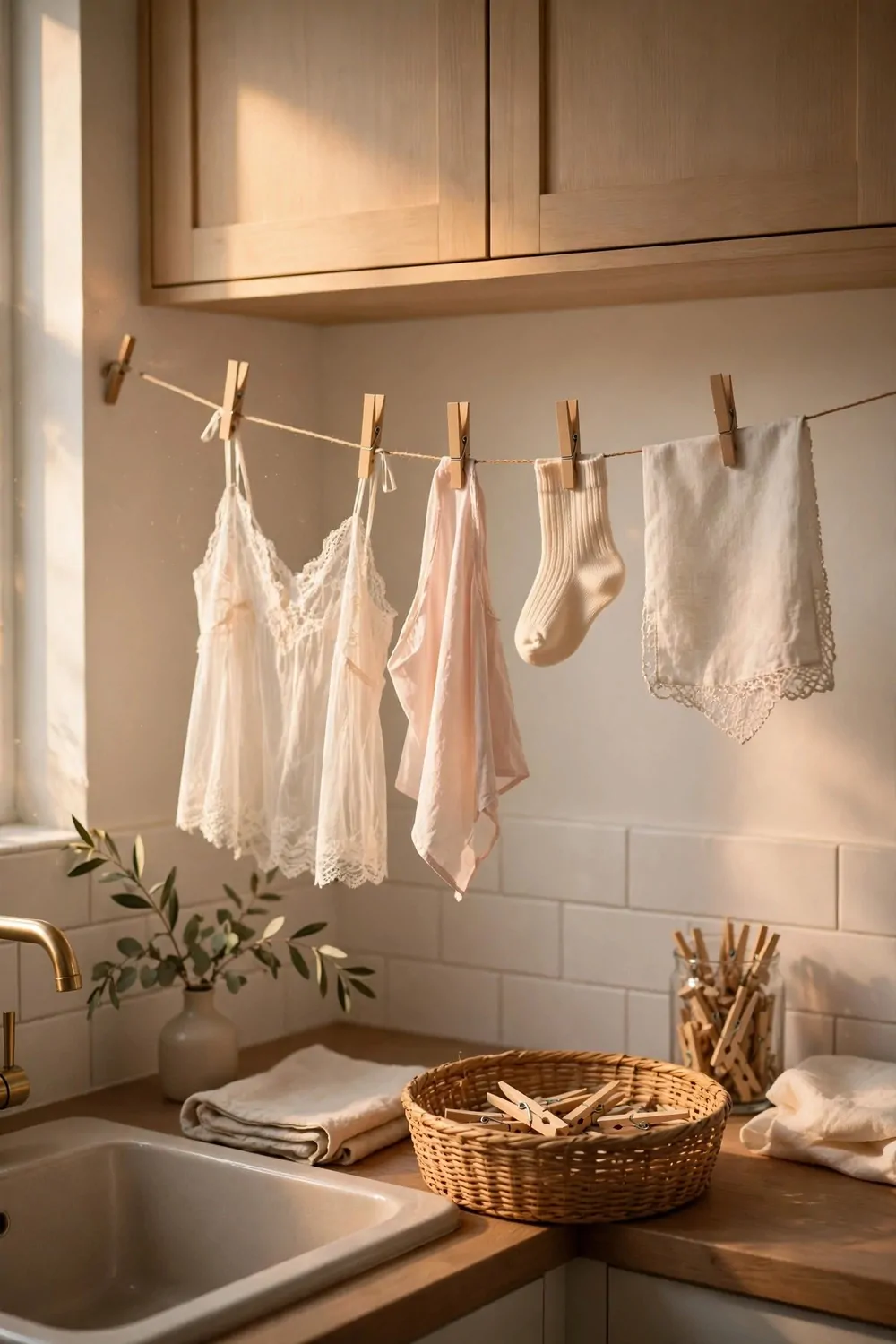
My delicate clothes went in the dryer, and they came out smaller. One good jumper shrank, and I never wore it again.
A small drying line fixed that. Delicates hang on the line, and the air dries them slow and safe.
The line runs across one corner of the room. It is short, just enough for a few pieces.
I hang woollens flat on a towel first, then on the line. Heavy wet wool stretches if it hangs too soon.
Pegs hold the light things in place. A breeze from the window helps them dry, but the pegs keep them from falling.
Check the label before you hang a piece. If it says dry flat, dry it flat, not on the line.
Delicates dry slower than normal clothes. Give them a full day, and do not rush them.
A drying line for delicates saves your best clothes. It is a small corner, and it earns its space.
The Five-Minute Laundry Reset
My laundry room looked tidy in the morning and messy by night. Baskets on the floor, a towel on the machine, and a sock by the door.
A five minute reset fixed that. I do it every evening, and the room starts the next day clean.
It is not a big scrub, just a quick once over. It keeps the little mess from growing bigger day by day.
I start by putting the baskets back in their row. One look, and the room already feels calmer.
Then I wipe the shelf and fold anything left out. A damp cloth takes one minute.
I check the floor last and pick up anything that fell. A sock, a peg, and once, a whole towel.
My nightly reset has three small steps, and this little table shows what each one is.
| Step | What to do | How long |
|---|---|---|
| Put baskets back | Line the baskets up in their row | One minute |
| Wipe and fold | Wipe the shelf and fold stray clothes | Three minutes |
| Check the floor | Pick up socks, pegs and stray bits | One minute |
Five minutes in the evening means a clear laundry room when you wake up, and that is worth it every single morning.
A Laundry Room That Smells Fresh
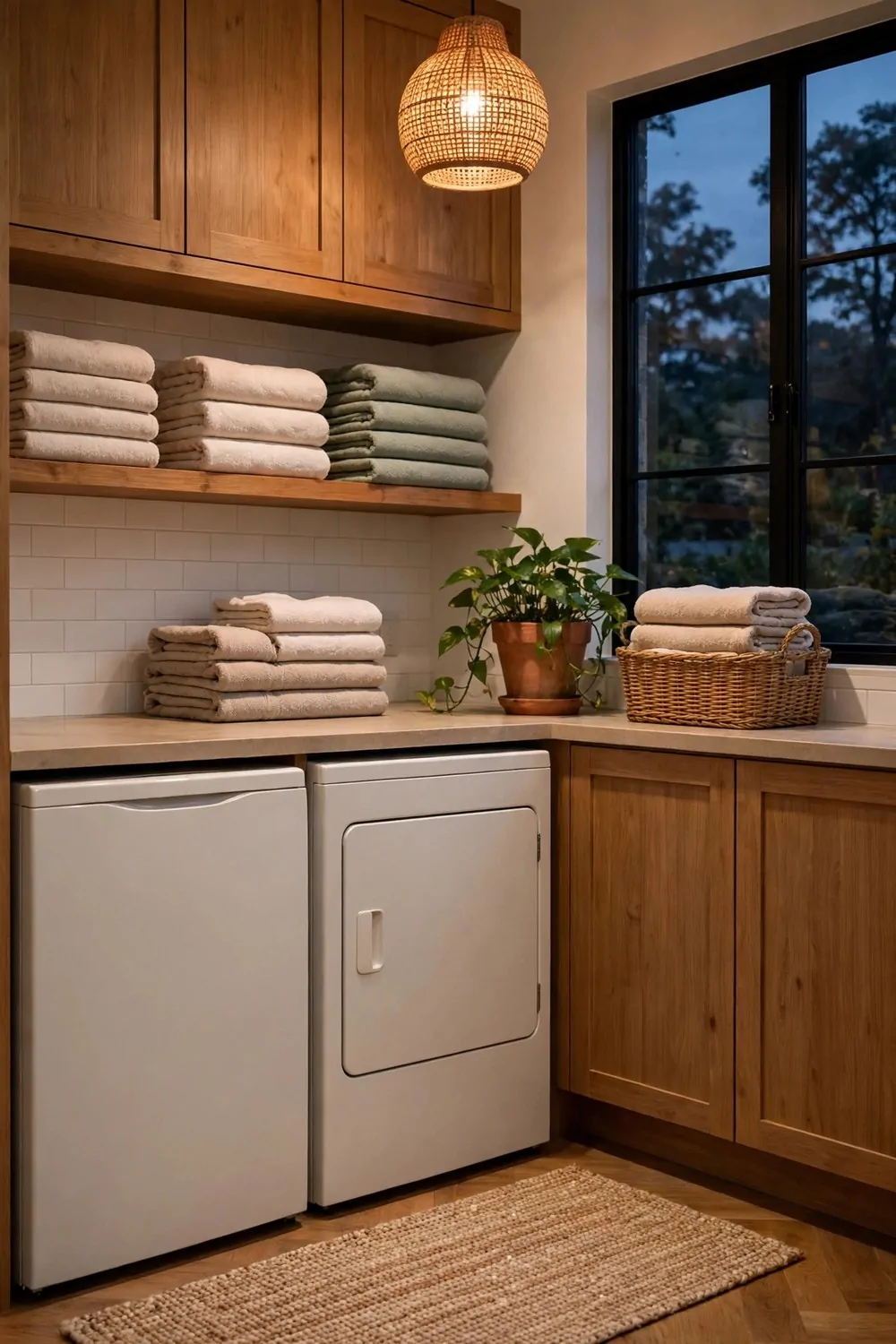
My laundry room used to smell like damp clothes. It was clean, but the air felt heavy.
A few small changes fixed that. Now the room smells fresh before I even start the wash.
I open the window for a few minutes every day. Fresh air does more than any spray.
A small bowl of dried flowers sits on the shelf. It smells soft, and it never fights with the soap.
I never leave wet clothes in the machine. Wet clothes left overnight are the worst smell in the house.
A damp cloth and a little soap clean the surfaces. Strong sprays smell harsh, and the smell stays on the clothes.
I hang a small cloth bag with dried herbs on a hook. It smells lovely, and it costs almost nothing.
A laundry room that smells fresh makes wash day feel lighter. You walk in, you breathe in, and the chore feels easier.
Keep Reading
If you liked making your laundry room calm and easy, these ideas will feel familiar. Each one starts with one small change, and the whole home grows calmer step by step.
Take a peek at one of them next, and see which idea fits your home.
- 20 Kids Bedroom Ideas That Grow With Your Child
- 18 Hallway Decor Ideas That Make a Narrow Space Shine
- 23 Bathroom Storage Ideas That Hide the Clutter
Start with one idea this week, like the three baskets or the five minute reset, and let your laundry room grow calmer one wash at a time. A room that feels cared for makes every chore easier, and your home will thank you for it.