20 Kids Bedroom Ideas That Grow With Your Child

There is a pencil mark on my child’s bedroom door frame. It says how tall she was last spring, and right above it there is a newer mark, a little bit higher.
That door frame tells the whole story of this room. Every year she grows, and every year the room has to grow with her. The bed that fit her at five feels small at eight. The toy shelf that held blocks now needs to hold books.
I learned to stop buying a brand new room every year. Instead I pick pieces that stretch, move, and change with her. These are the 20 kids bedroom ideas that grow with your child, and each one is simple enough to try this weekend.
A Bed That Grows Longer
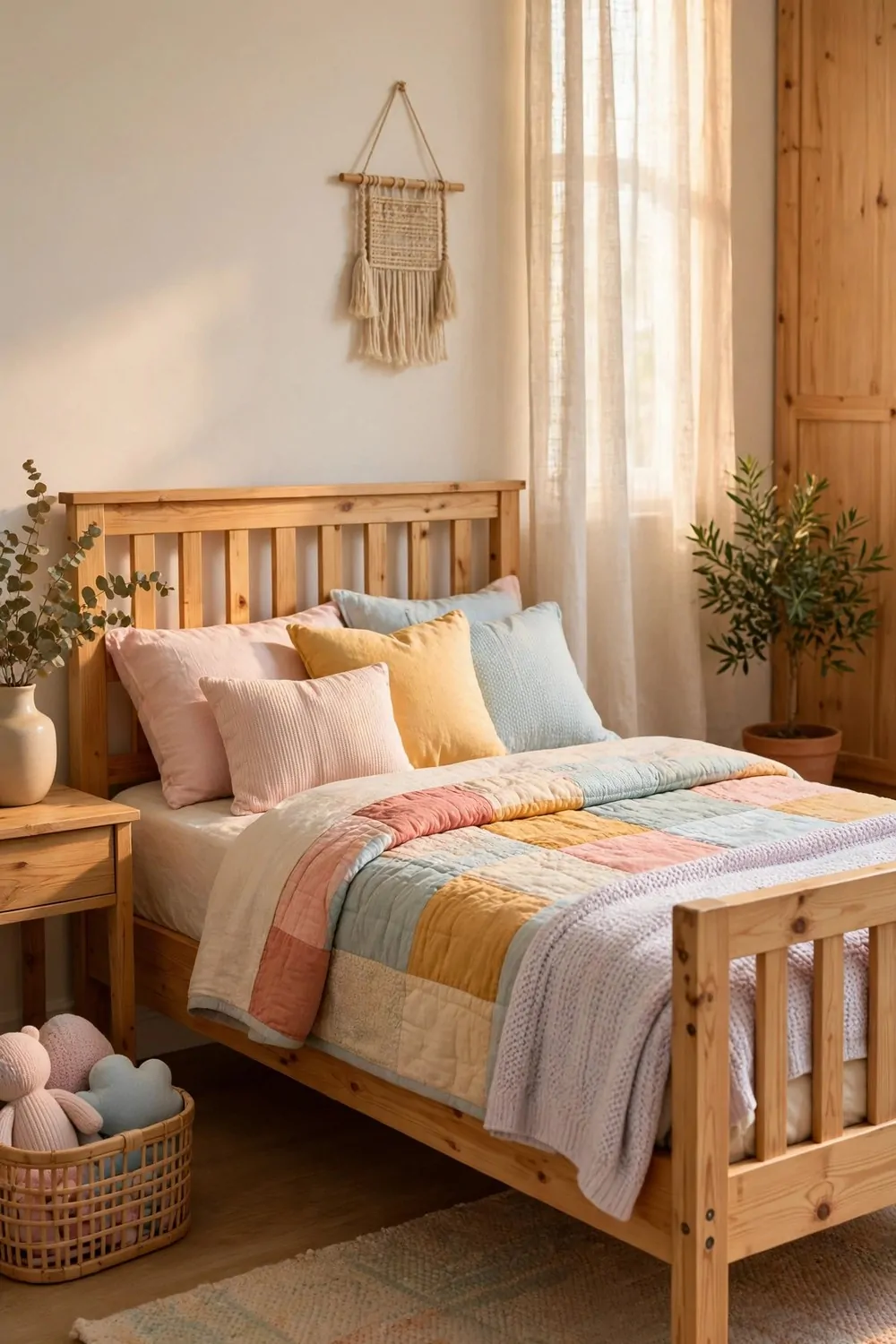
My daughter outgrew her first bed in two years. It was a sweet little bed, and then one morning her feet touched the end of it.
An extendable bed fixed that problem for good. It starts short for a little child, and it pulls out longer as she grows.
I looked for a bed with a simple slide out frame. No tools, no fuss, just a pull and a click and the bed is longer.
The mattress grows too. Some beds come with extra mattress pieces that you add in as the bed gets longer.
I put the bed against the wall with room at the foot end. That way the bed can stretch out without pushing the desk into the corner.
A bed that grows saves you from buying three beds in ten years. One good bed can last from toddler years to teen years.
My daughter likes that her bed is still hers, just bigger. It feels like the bed grew up with her, and in a way it did.
Check the frame once a year to make sure the sliding parts still move smooth. A little bit of care keeps it working for years.
One Wall for Art That Changes
My child’s art used to live on the fridge, and then on every wall, and then in piles on the floor. She makes a lot of art.
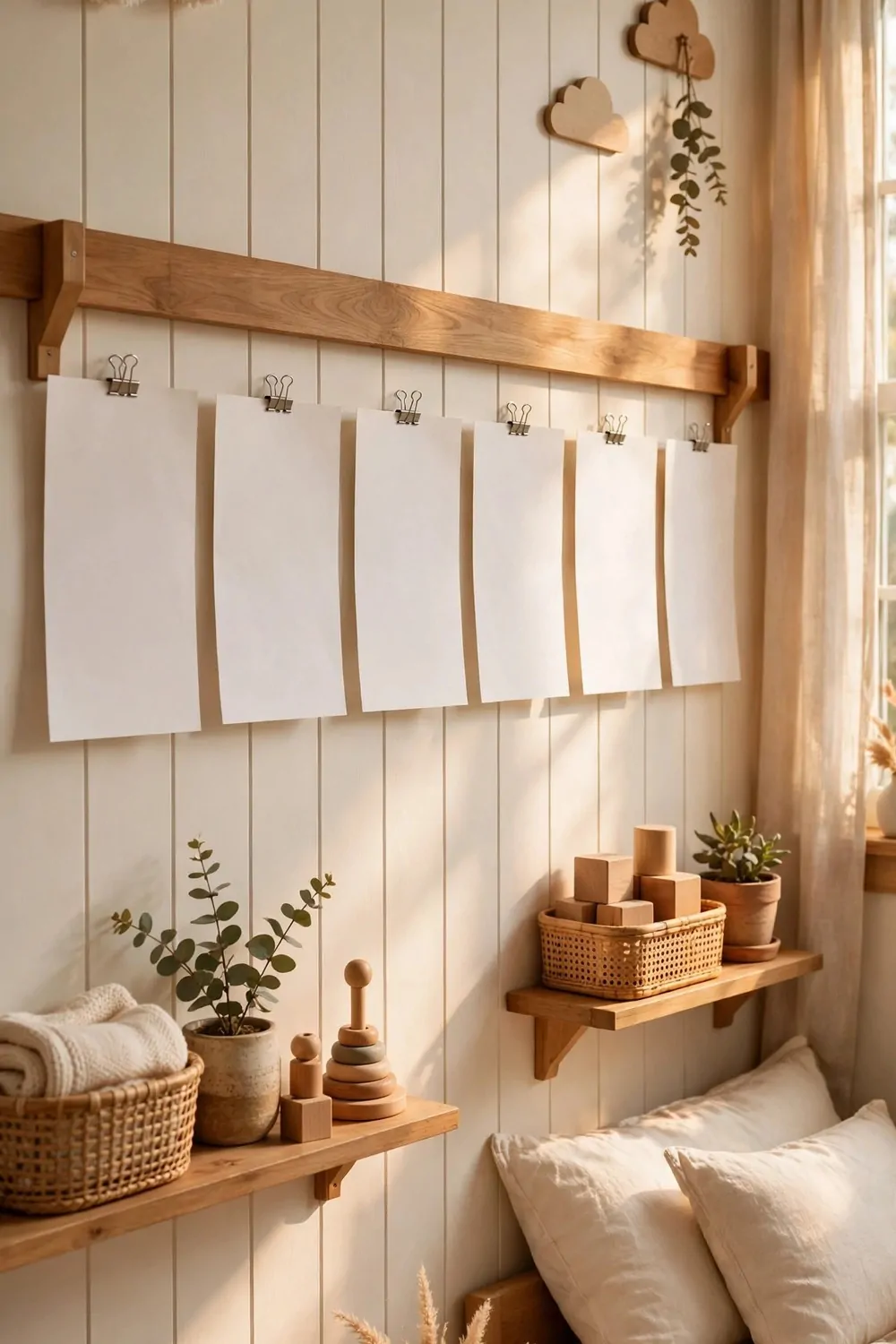
One wall in her room is now her gallery. It holds whatever she made this week, and nothing else.
I put up a simple wooden rail with clips on it. She clips her newest picture on, and the old one comes down.
The wall changes every few weeks, and she loves that. Her room always shows what she cares about right now.
I keep the rail low enough for her to reach. If she needs me to hang her art for her, it is not really her wall.
The clips hold paper, ribbons, and even small flat crafts. Anything with a bit of weight goes on the shelf below instead.
When the rail gets full, we pick one piece to keep in a folder. The rest goes in the recycling bin, and she is fine with that.
A changing art wall makes a room feel alive. It grows with her taste, from hand prints to maps to drawings of her friends.
Low Hooks They Can Reach
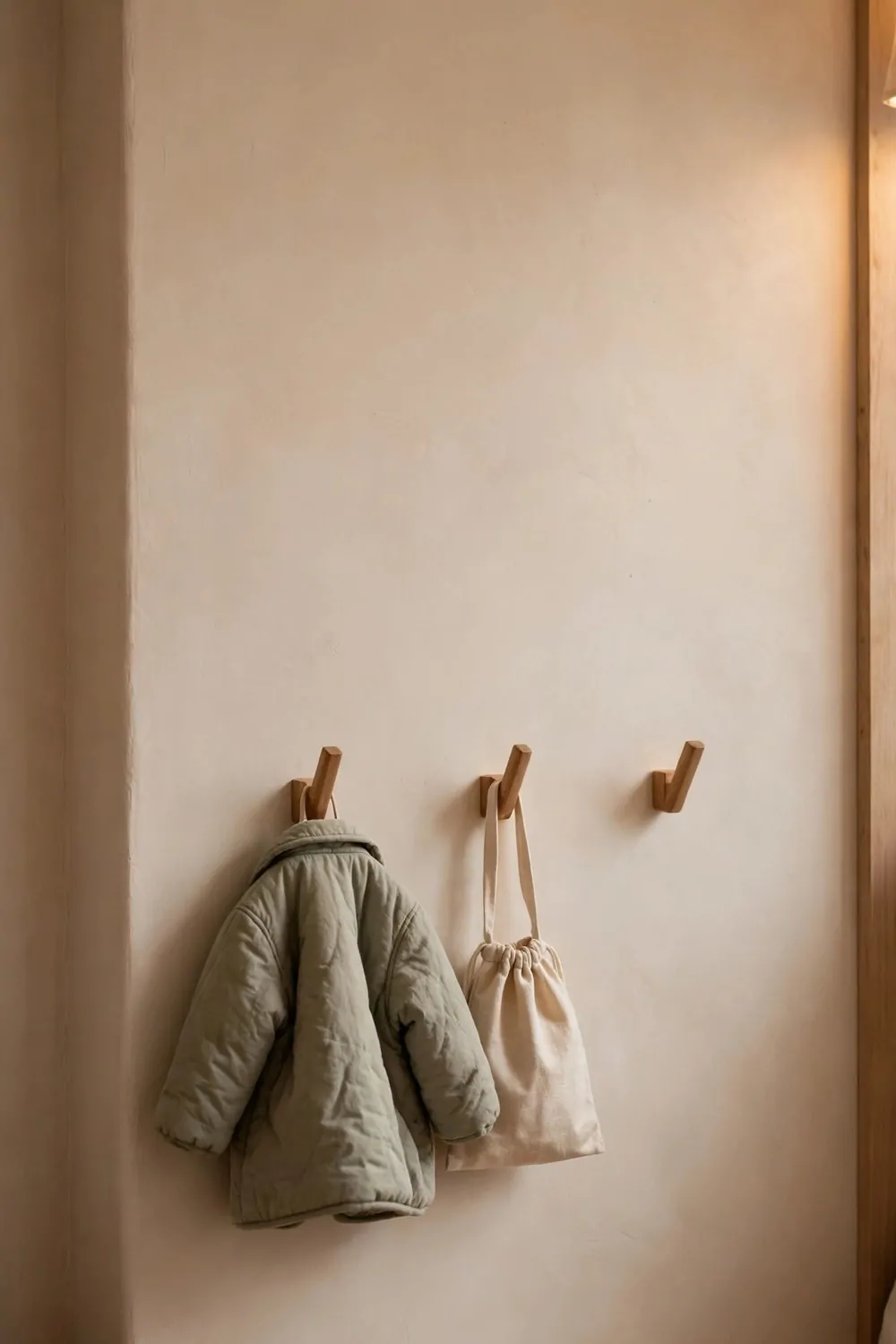
Coats on the floor. Bags on the floor. Everything on the floor. That was my child’s bedroom for a long time.
Low hooks changed it in one afternoon. I put a row of hooks at her height, and suddenly the floor stayed clear.
The hooks sit just above her shoulder height. She can reach them without a stool, and she can hang her own coat by herself.
I put five hooks in a row. One for her coat, one for her school bag, one for her hat, and two spare ones for whatever she brings home.
Wooden hooks feel warm and safe. I picked plain round ones with no sharp edges, because little hands move fast in the morning.
Her coat goes on the hook the second she walks in. It took about a week for the habit to stick, and now it happens without me saying a word.
A hook at her height gives her a small win every day. She can do it herself, and that matters more than a tidy floor.
If a hook starts to loosen, I tighten it right away. A hook that pulls out of the wall leaves a hole and a coat on the floor again.
Toy Bins With Pictures, Not Words
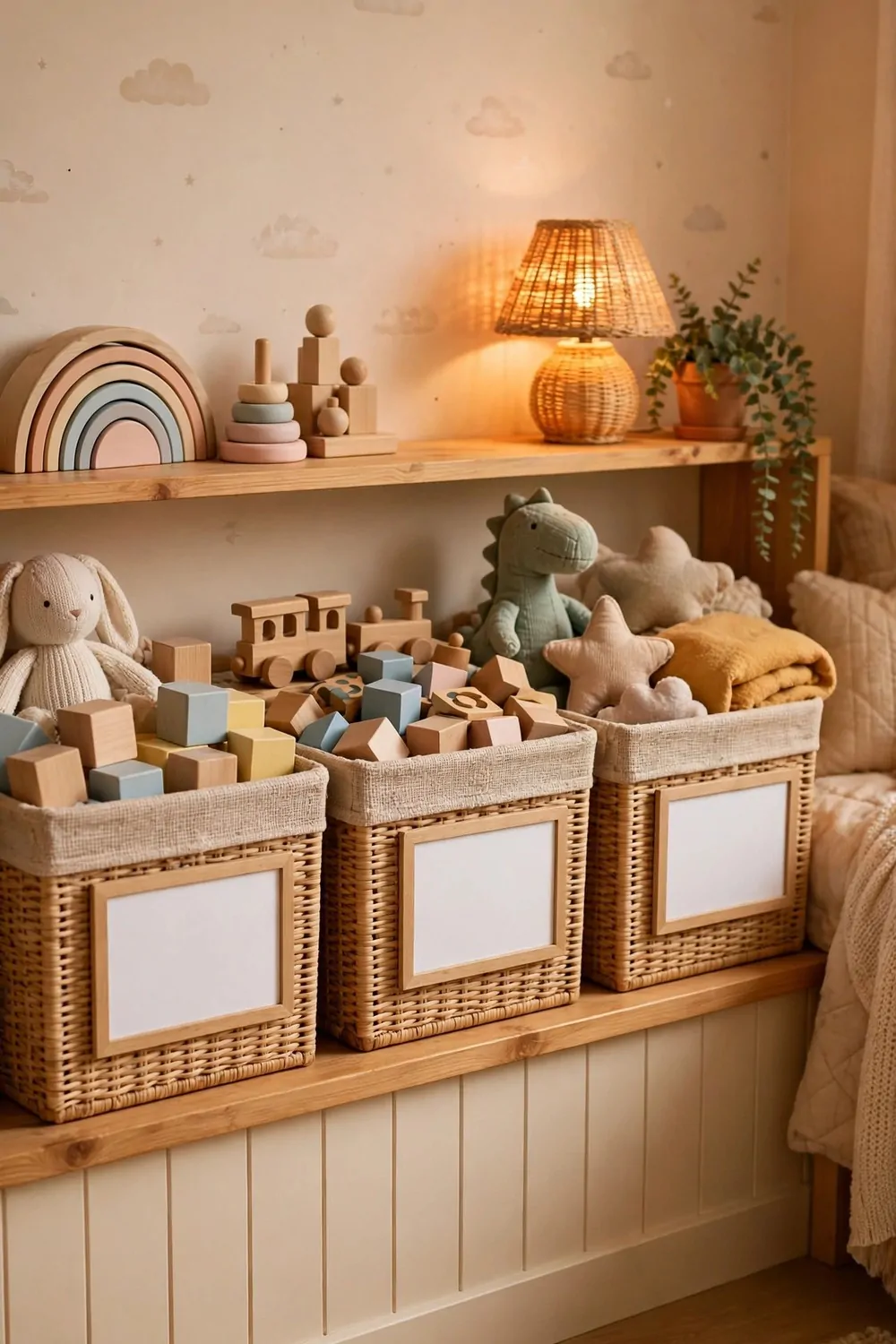
My youngest could not read yet, but she could find her toys if the bins had pictures on them. That small trick changed tidy up time for good.
Each bin has a picture on the front. Blocks on one bin, dolls on another, cars on a third. She matches the toy to the picture.
I drew the pictures myself on plain cards. They are not fancy, and she knows exactly what each one means.
The bins sit on a low shelf, open at the top. She can see inside, grab what she wants, and put it back without help.
When she outgrows a toy, the bin gets a new picture. The system stays the same, even when the toys change.
Toy bins that work best in our room are:
- low open bins she can reach without climbing
- one picture on the front of each bin
- a lid that stays off during play time
- a size she can carry by herself
Tidy up time takes five minutes now. She races the clock, and the bins fill up fast.
A picture on a bin is a small thing. But it lets a child tidy her own room, and that is a big step toward growing up.
A Desk That Rises With Them
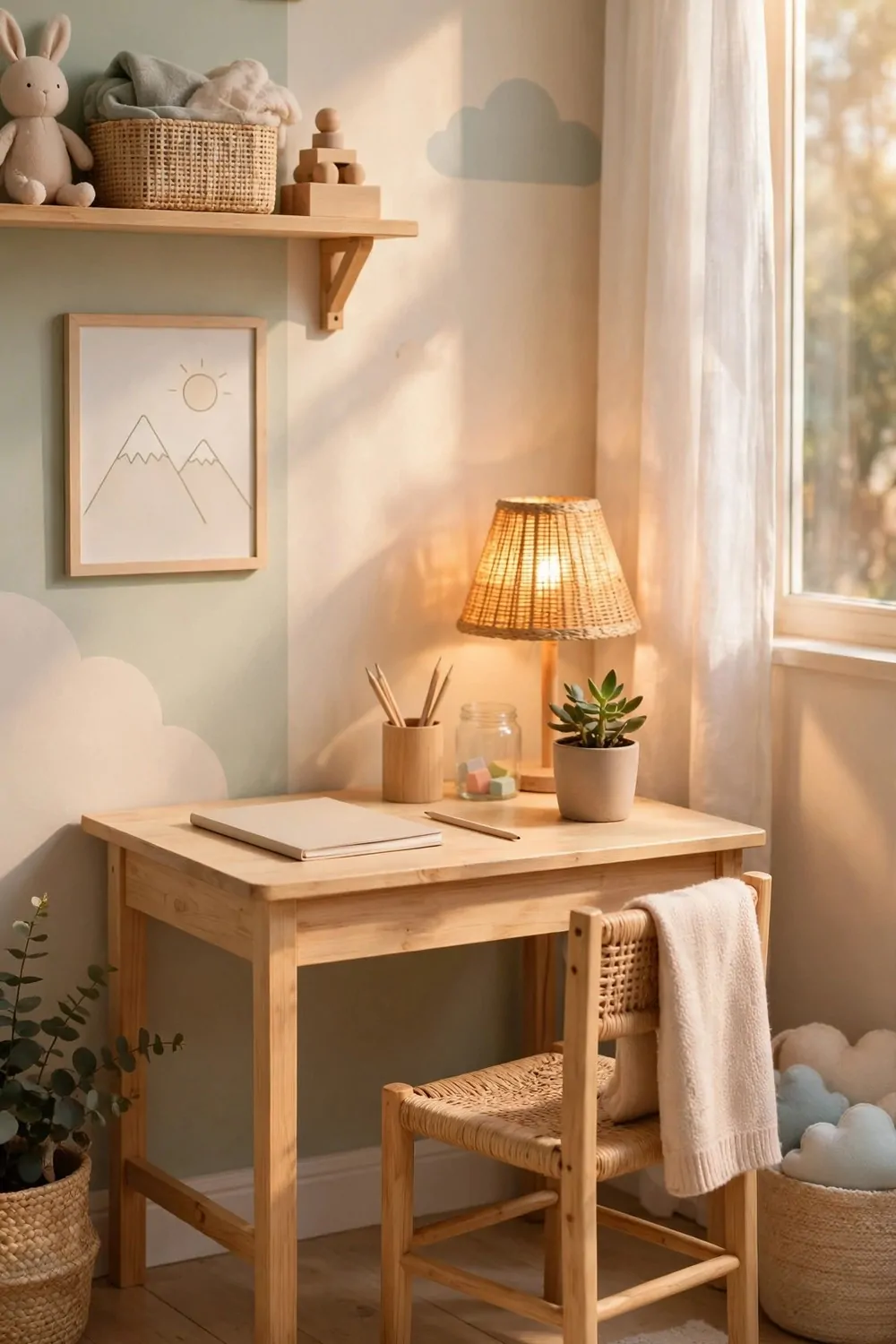
My daughter’s first desk was cute and tiny. By the time she was seven, her knees hit the underside every time she sat down.
An adjustable desk fixed that. It rises as she grows, so the same desk works at seven and at twelve.
I picked a desk with a simple crank handle on the side. She turns it herself when the desk feels too low.
The desk top stays clear because her books live on a small shelf above it. A clear desk makes homework start faster.
Her chair adjusts too. Feet flat on the floor, back straight, elbows at the desk top. That is the test I use every year.
A desk that grows with your child costs a little more than a fixed one. It also lasts three times as long, so it pays for itself.
A few desk heights that work well at each age are in this little table.
| Age | Desk height | Chair height |
|---|---|---|
| 5 to 7 years | About 52 cm | About 30 cm |
| 8 to 10 years | About 58 cm | About 34 cm |
| 11 to 13 years | About 66 cm | About 40 cm |
Check the height at the start of every school year. A desk that fits in September might feel low by June, because kids grow fast.
A Reading Nook in the Corner
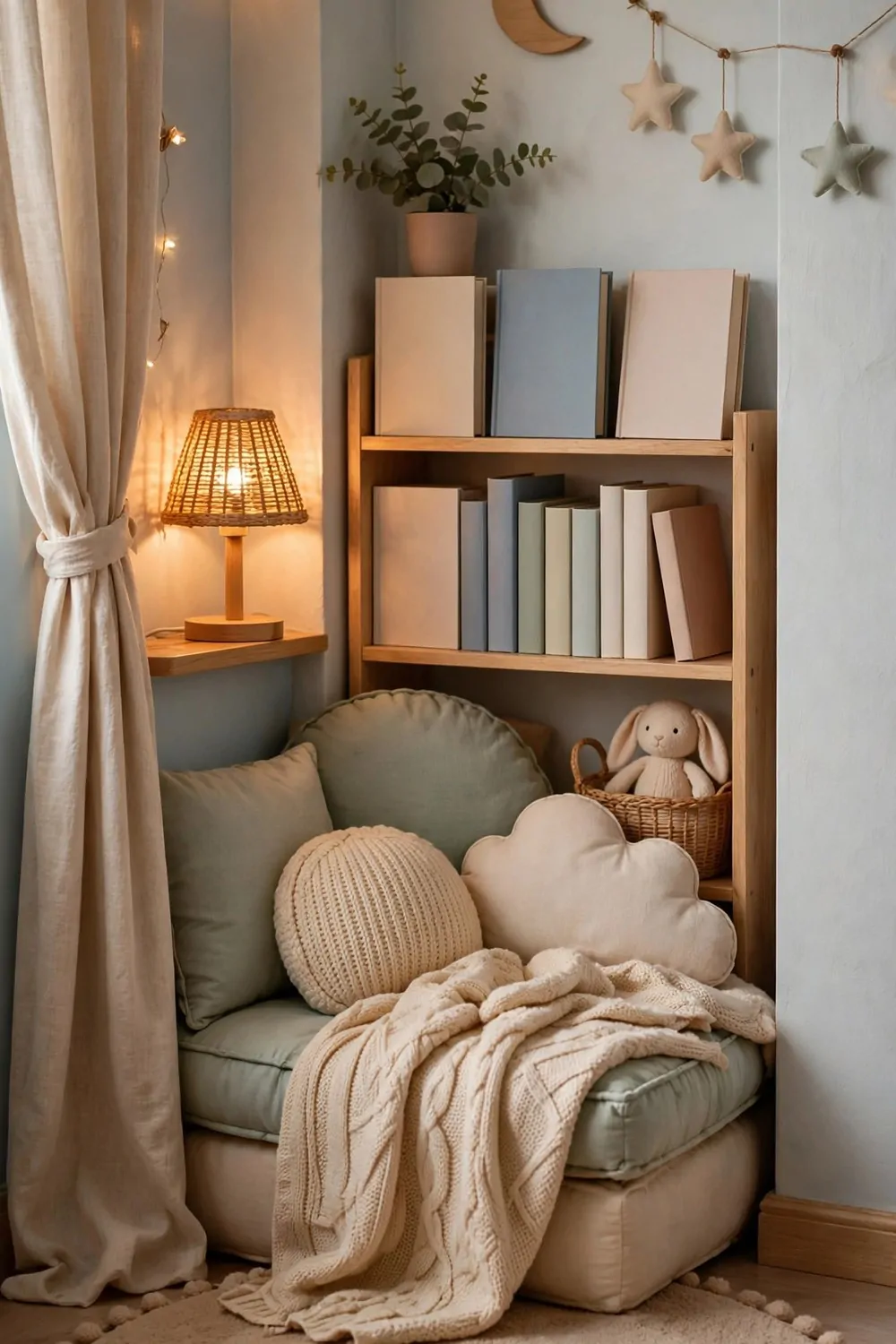
Every kids bedroom needs a quiet corner. Ours was a dull empty spot by the window until I put a reading nook there.
I started with a pile of soft cushions on the floor. Two big ones to lean on, one small one to hug, and a blanket for cold days.
A little shelf beside the cushions holds the books she is reading right now. Just five or six, not the whole collection.
The nook sits by the window because the light is best there. She reads in the morning sun, and the room feels warm.
I added a small lamp for evening reading. A soft warm light, low and close, so she can read without the big ceiling light on.
The nook is hers alone. Nobody else sits there unless she invites them, and that makes it feel special.
Her reading nook grows with her too. The cushions stay the same, but the books on the shelf change every year.
Start with cushions and a lamp. That is all a reading nook needs to become the best seat in the house.
Shelves That Move Up the Wall
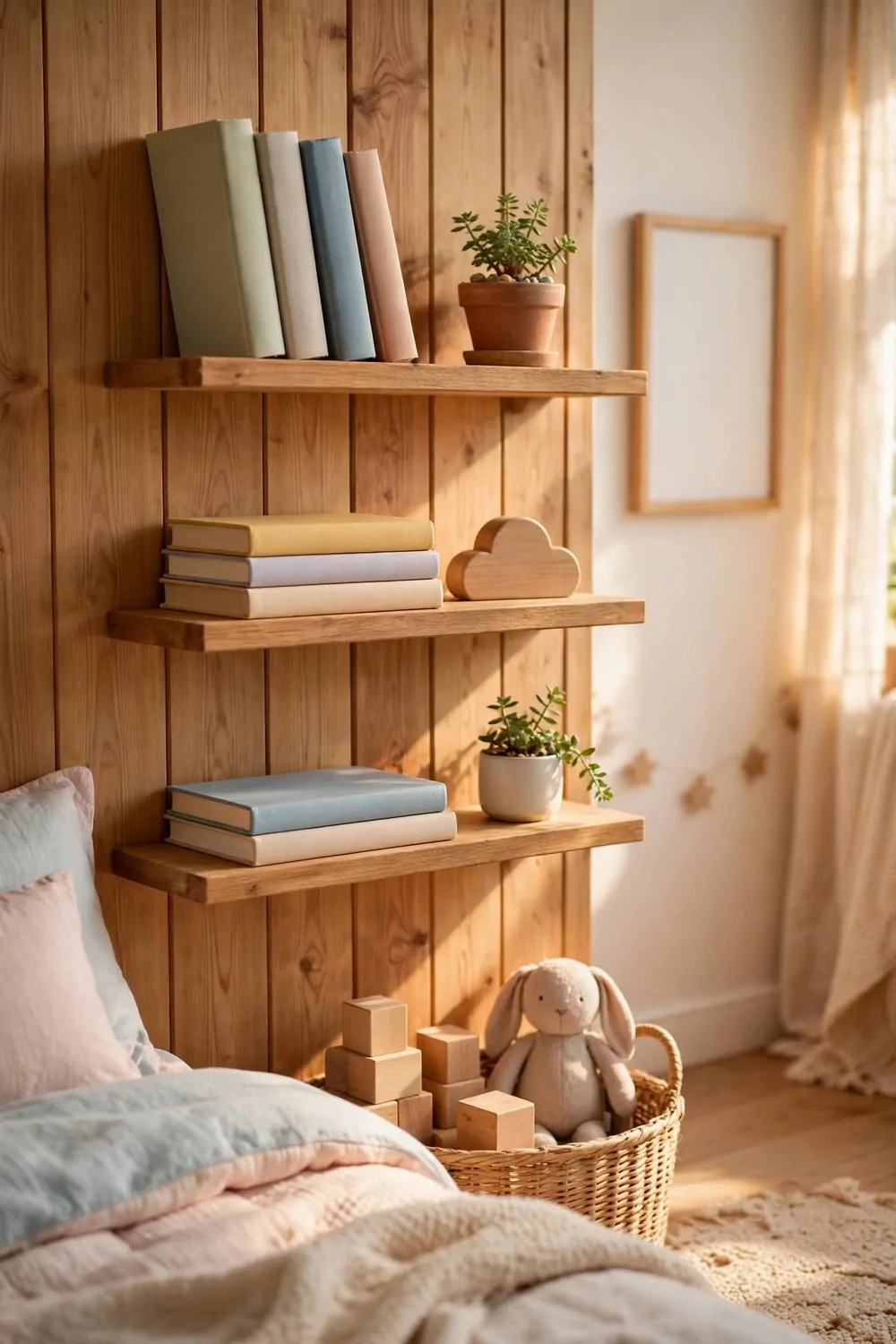
My child’s shelves used to be fixed in one spot, and they were always wrong. Too high for her at five, too low for her at nine.
Adjustable shelves fixed that. The brackets move up and down the wall, so the shelves move with her.
I put two long tracks on the wall and the shelf brackets clip into them. Moving a shelf takes two minutes and no tools.
Her favourite books sit at eye level now. The things she uses less often sit higher, where I can reach them for her.
The shelves hold more than books. A small plant, a jar of shells, and her favourite soft toy all have a spot.
I check the shelf height every school year, just like I check the desk. A small move makes a big difference to a growing child.
Wall tracks look plain, but you can paint them the same colour as the wall. They blend in, and the shelves do all the talking.
Shelves that move mean you never have to drill new holes. The wall stays neat, and the room keeps working as she grows.
A Dress-Up Box by the Door
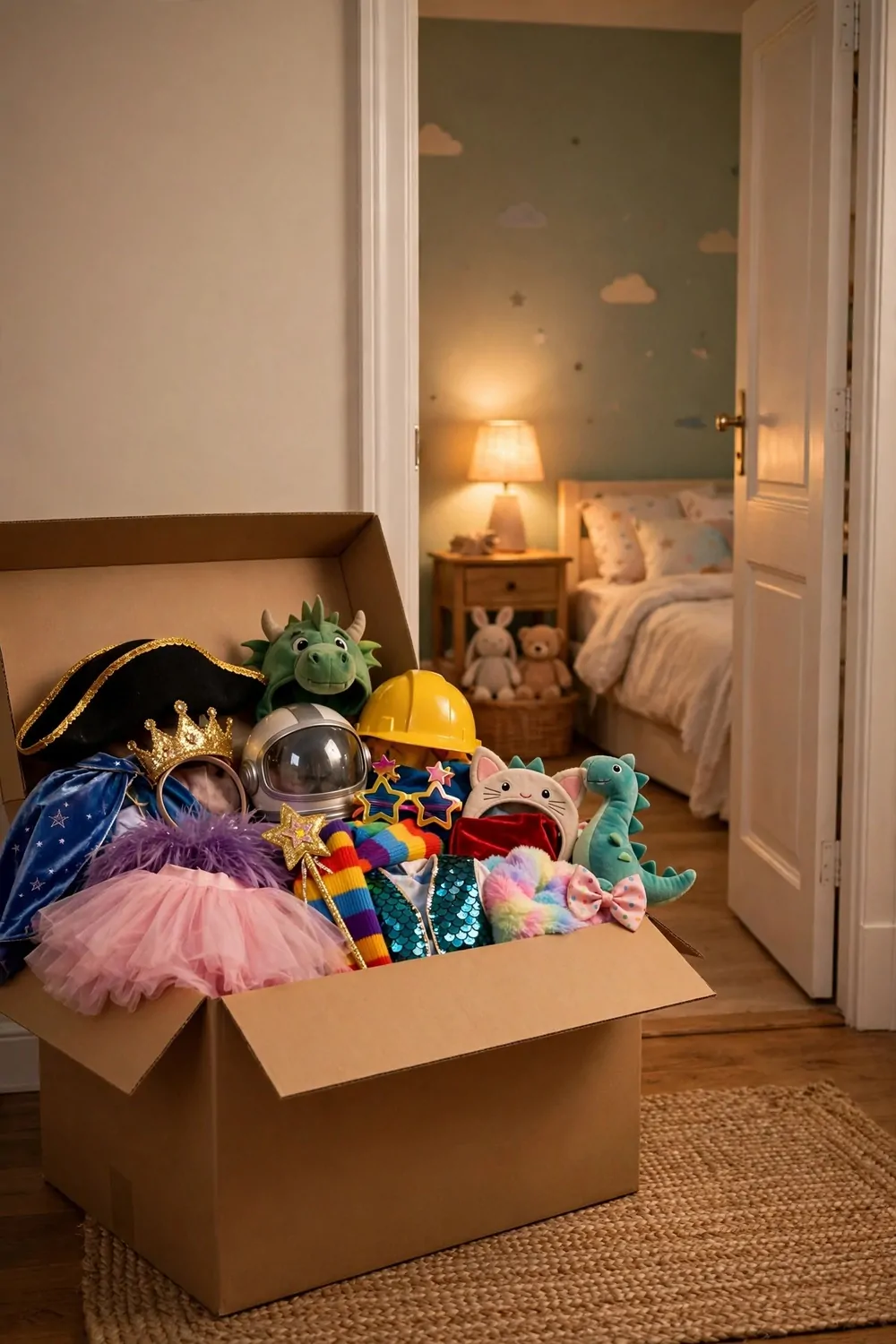
Dress up clothes used to live all over my child’s bedroom. A cape on the bed, a crown under the desk, a pirate hat in the toy box.
One big box by the door fixed that. Everything for dressing up lives in one place, and she can see it all at once.
The box is low and wide, with no lid. She lifts out what she wants and drops it back in when play time is done.
I keep the box by the door because dress up play often starts the second a friend walks in. The box is right there, ready to go.
Her favourite outfits sit on top. The cape, the crown, and the doctor kit. The rest waits underneath for a rainy day.
A dress up box grows with your child too. At four it holds capes and crowns. At eight it holds a lab coat and a detective hat.
I wash the dress up clothes once a month. Play clothes get dirty fast, and a clean box smells much better than a dusty one.
One box by the door turns dressing up from a mess into a game. She opens it, picks a role, and the whole room becomes a stage.
A Small Table for Big Projects
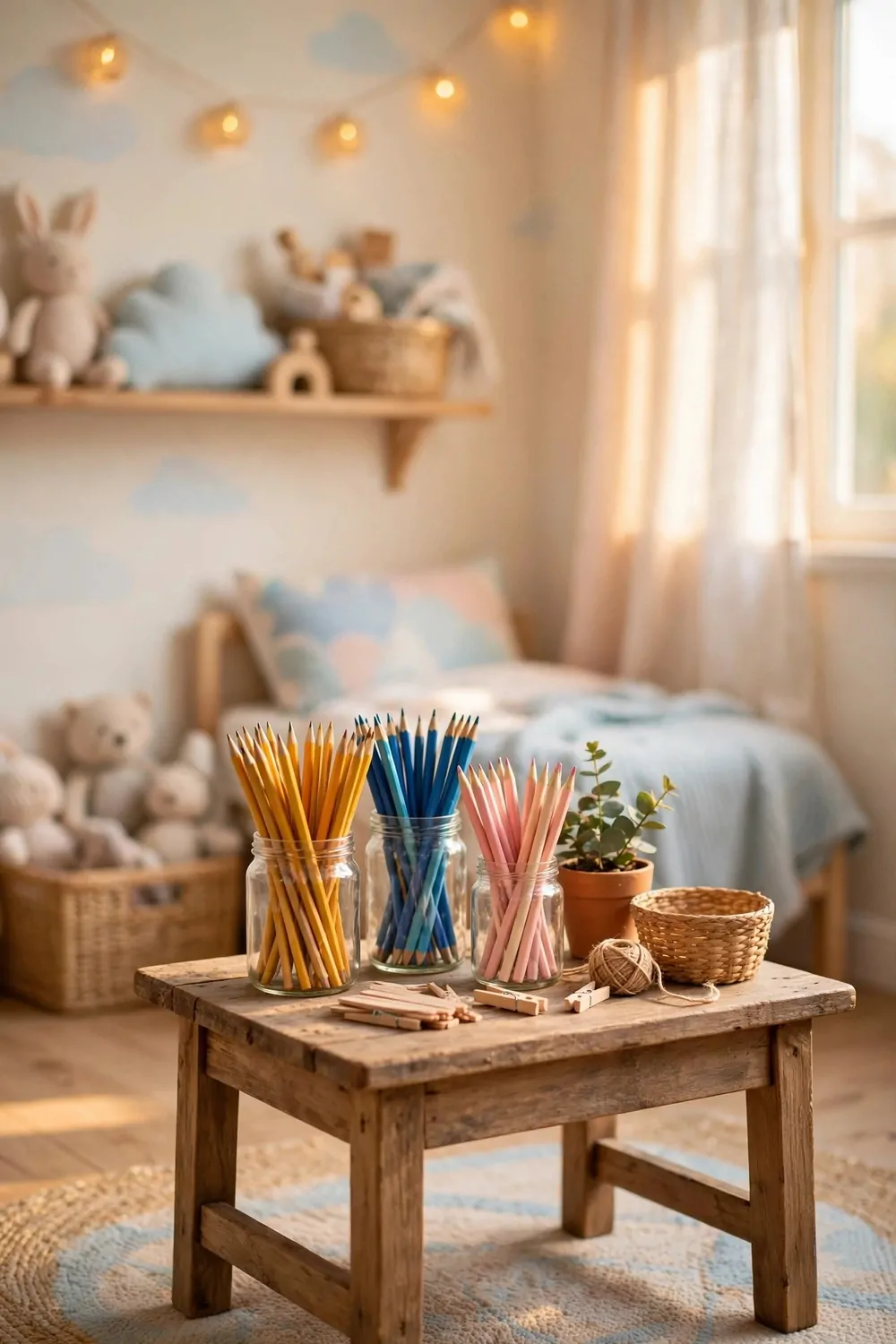
Big projects need a table. My child’s bedroom floor used to be the table, and my feet paid the price every night.
A small sturdy table fixed that. It sits in the corner by the window, and it holds whatever she is making this week.
The table is low enough for her to reach across, and strong enough to hold paint, glue, and a pile of paper.
I cover it with a wipe clean mat. Paint and glue wash off, and the table stays neat for the next project.
Her craft supplies live in jars on the table, right where she can see them. Scissors, pencils, and glue sticks, all in a row.
Craft supplies that live on our project table are:
- pencils and crayons in one tall jar
- scissors and glue sticks in a small pot
- plain paper stacked in a neat pile
- stickers and tape in a little tray
When a project is done, it goes on the art wall or into the memory box. The table clears, and the next idea starts fresh.
A project table teaches her that making things has a place. She sits down, she makes something, and the room stays tidy around her.
Curtains They Can Open Themselves
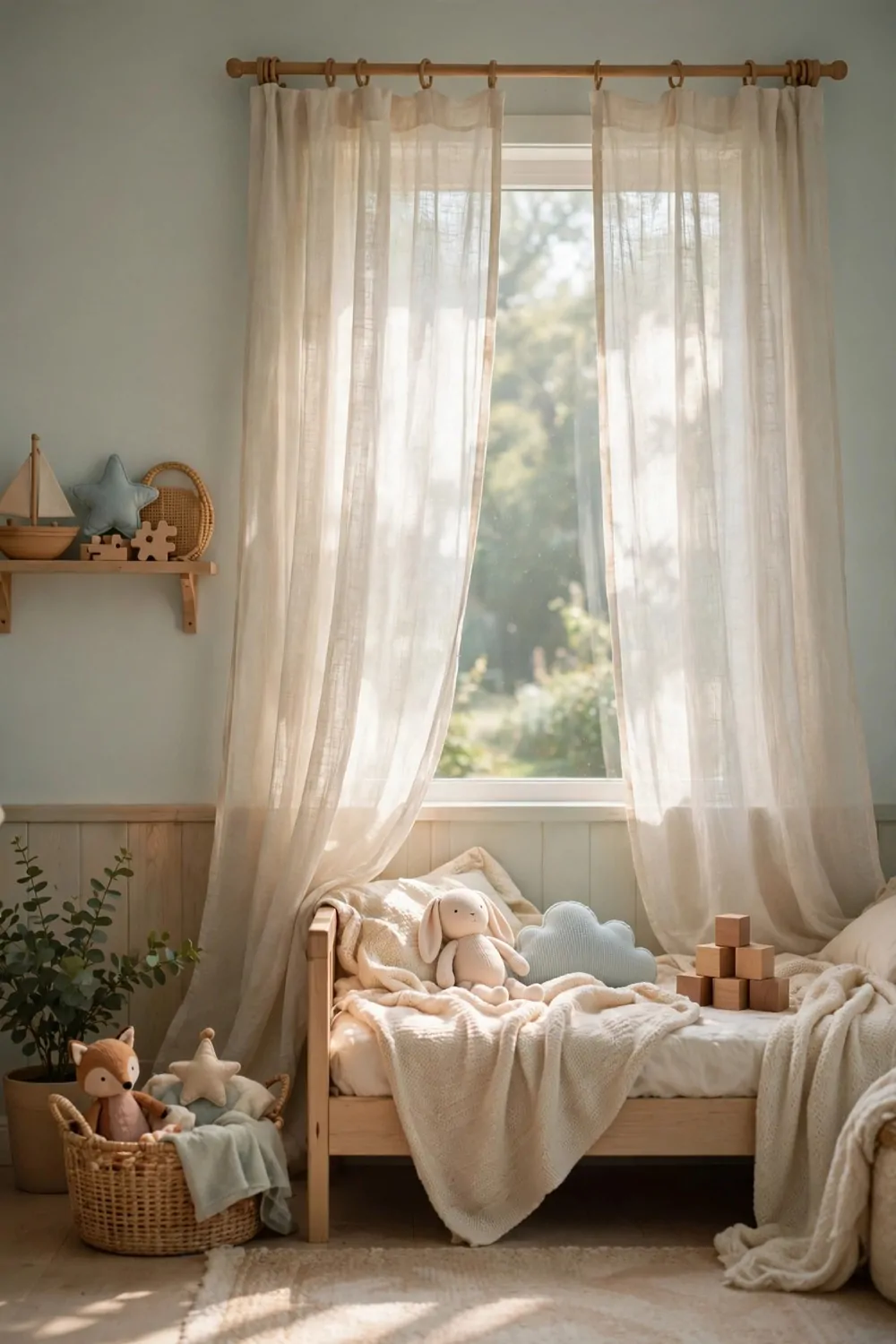
My child’s curtains were too heavy for her to move. Every morning I had to open them, and every night I had to close them.
Light curtains she can pull herself changed that. Now she opens her own window in the morning, and the room wakes up with her.
I picked simple curtains on a smooth rod. One pull and they slide open, no tugging and no stuck rings.
The curtains are light enough to let the sun through in the morning. The room feels bright, even on a cloudy day.
At night she pulls them shut herself. It is part of her bedtime routine now, just like brushing her teeth.
I added a blackout lining behind the light curtains for summer nights. The sun stays out late, but her room stays dark for sleep.
Curtains that a child can move give her a small bit of control over her own room. She picks how much light comes in.
Check the rod once a year to make sure it still slides smooth. A stiff rod makes a child give up, and the curtains stay shut all day.
A Wall of Soft Colour
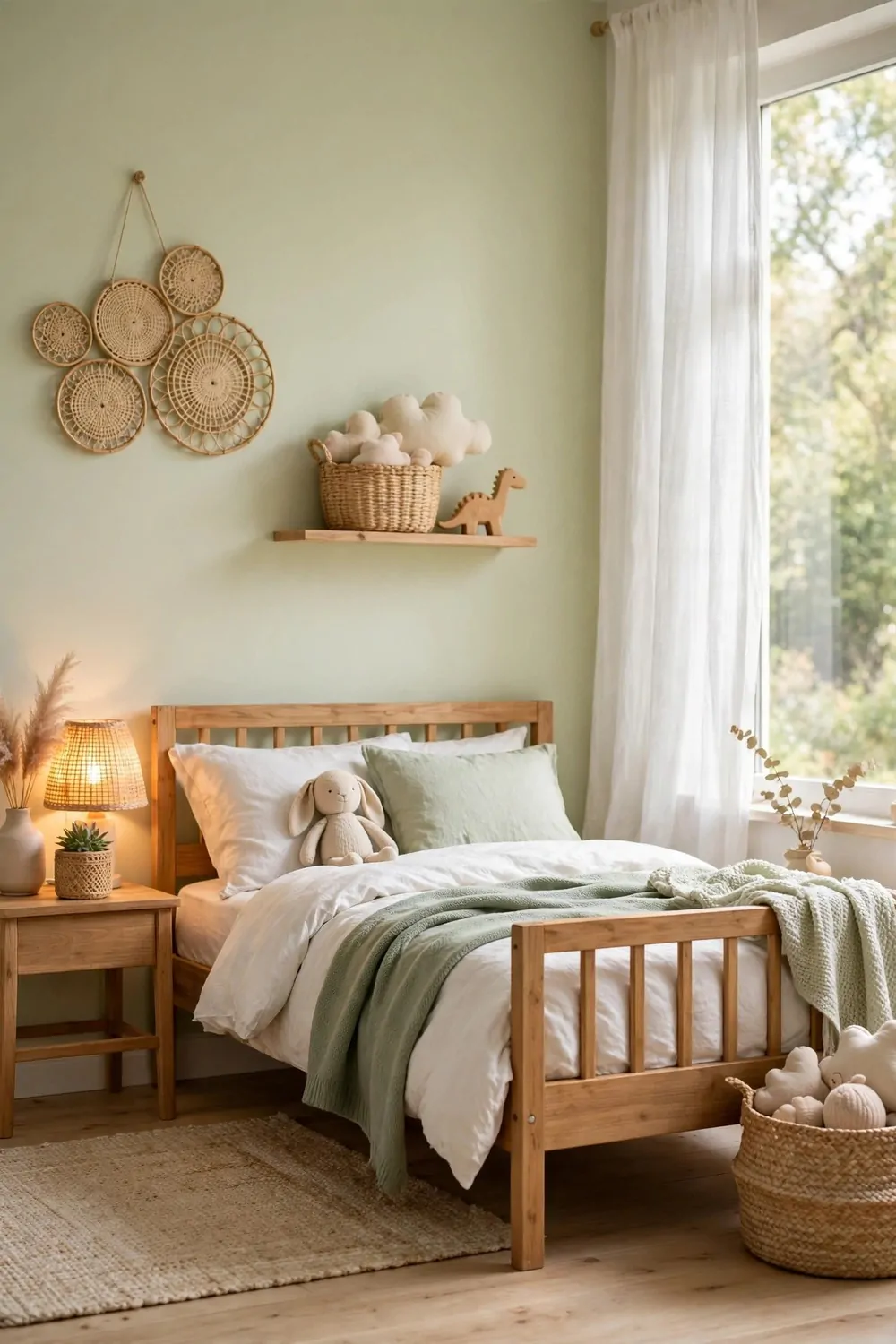
My child’s bedroom wall used to be bright pink. She loved it at four, and by seven she said it felt babyish.
A wall of soft colour fixed that. Pale, calm colours grow with a child, because they suit a four year old and a twelve year old.
I painted the walls a soft warm white. It feels clean and bright, and it goes with every bedspread she picks.
One wall has a soft colour on it. Right now it is pale sage green. When she wants a change, I repaint just that one wall.
Soft colours are easy to change. One tin of paint and one afternoon, and the room feels brand new again.
A few soft wall colours that work well as kids grow are in this little table.
| Colour | Mood | Best wall |
|---|---|---|
| Pale sage green | Calm and fresh | The wall behind the bed |
| Soft sky blue | Quiet and airy | The wall by the window |
| Warm cream | Bright and cozy | The wall by the door |
Let your child pick the accent colour. She lives in the room, and a colour she picked feels like hers.
Keep the big furniture plain and pale too. Bright colours live in the bedding and the cushions, which are easy to swap as she grows.
Book Baskets, Not Bookcases
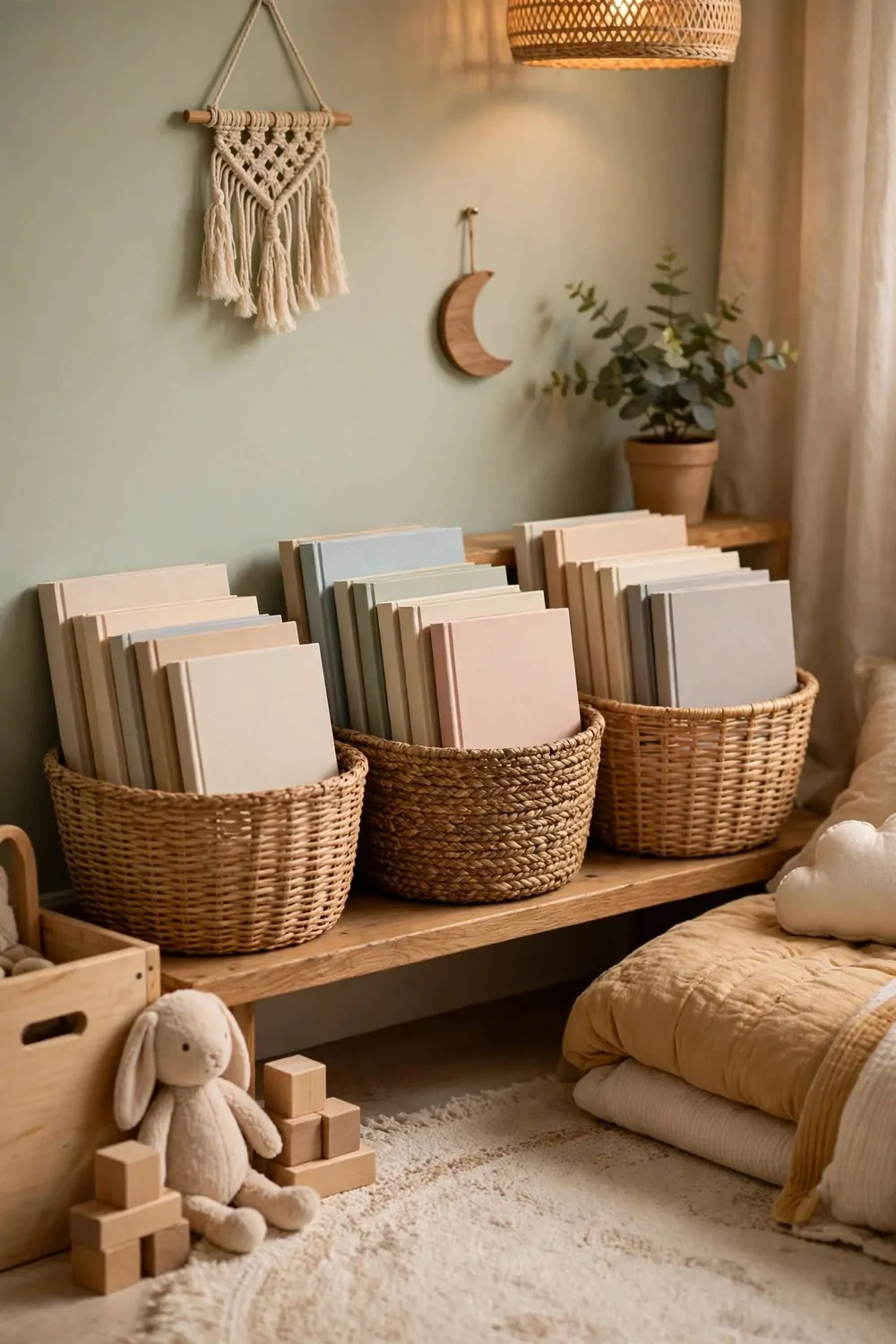
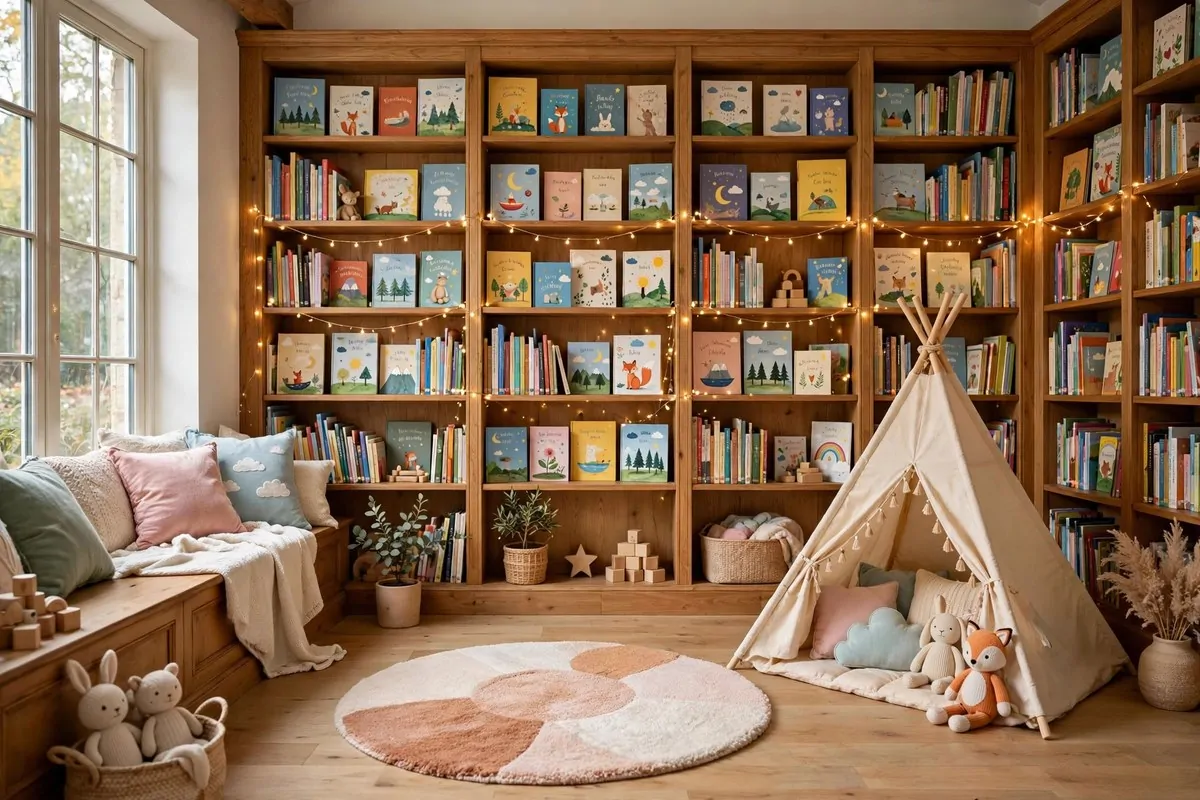
Bookcases look tidy, but my child never used ours. The books stood in a tight row, and she could not see the covers.
Book baskets fixed that. The books stand face forward in a basket, and she can see every cover at a glance.
I keep three baskets on a low shelf. One for stories, one for facts and animals, and one for her favourites she reads again and again.
She picks her own book now, without asking me. The covers call to her, and she pulls one out like it is a treat.
The baskets are low and wide, so the books lean back a little. Heavy books sit at the bottom, light ones on top.
When she outgrows a book, it leaves the basket and a new one takes its place. The basket stays the same, the books grow with her.
I read to her from the basket every night. We pick together, and the basket feels like a little library that belongs to her.
A basket of books costs almost nothing, and it turns a child who never reads into a child who reads every night.
A Homework Spot That Feels Their Own
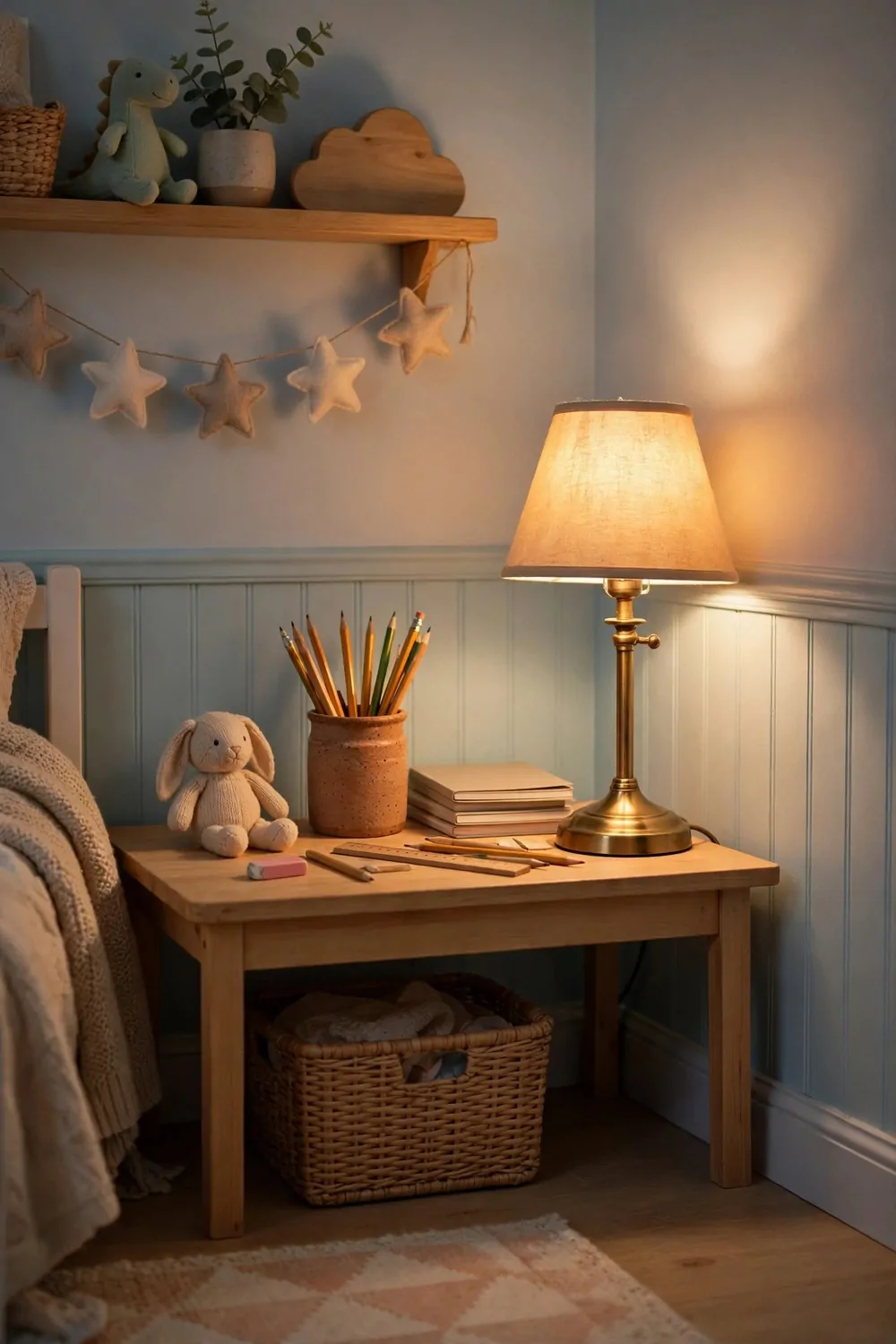
Homework at the kitchen table never worked for my child. The telly was on, the dog barked, and her pencil kept rolling off the edge.
A small homework spot in her own room fixed that. It is just a corner of her desk, but it belongs to her and nothing else.
I set it up with a lamp, a pencil pot, and a little clock. When she sits there, her brain knows it is work time.
The spot stays the same every day. Same chair, same lamp, same corner of the desk. Routine makes homework start faster.
I keep the homework spot free of toys. Toys live in the bins, and the desk stays for work and drawing only.
She does her homework there for twenty minutes after school, and then she is free. A short routine beats a long fight every time.
The homework spot grows with her too. At six it holds colouring books. At ten it holds maths work and a reading list.
One small corner, one lamp, one routine. That is all a homework spot needs to make school work feel easier.
A Memory Box on the Shelf
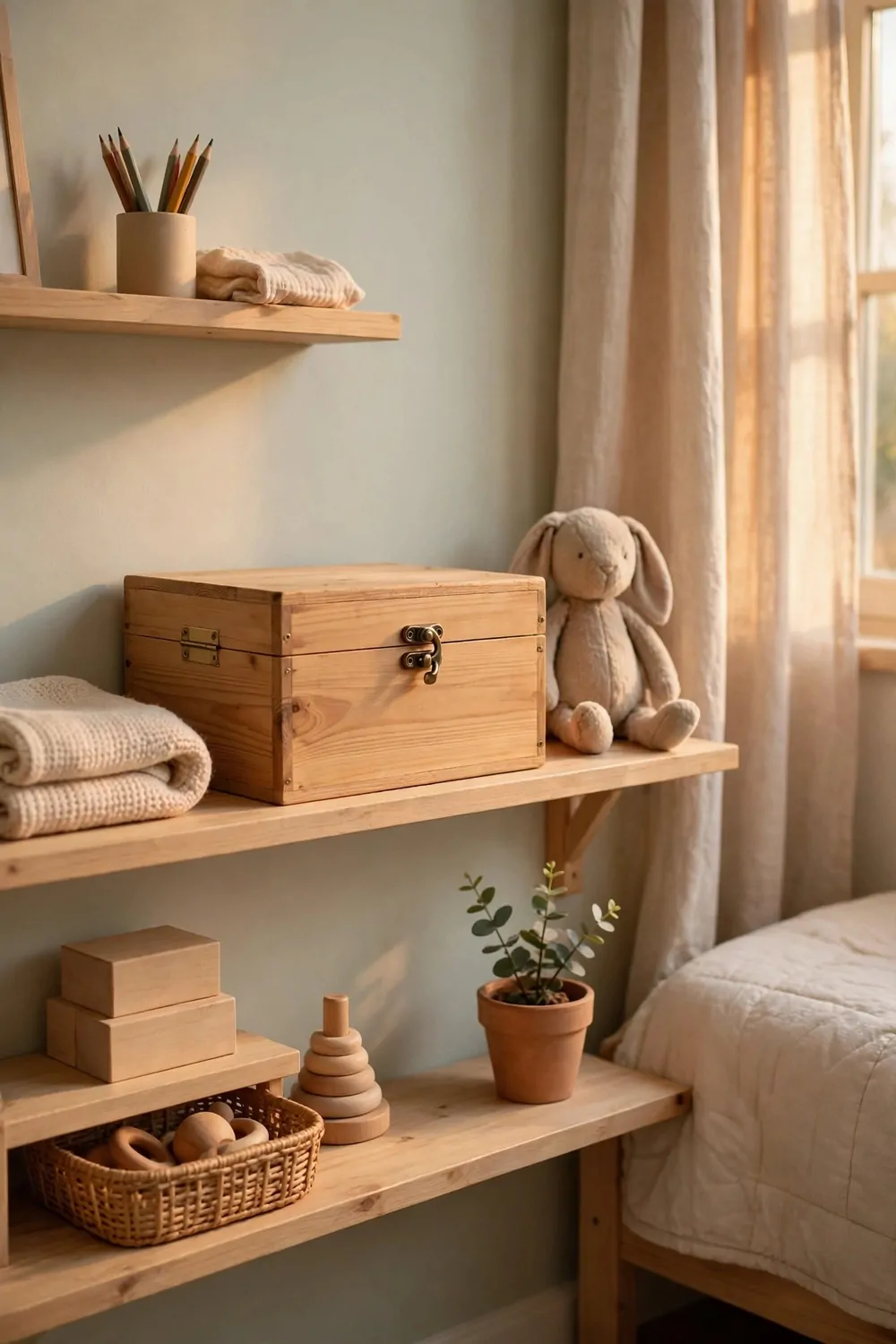
My child brings home a new treasure every week. A shell from the beach, a ticket from a school trip, a drawing from a friend.
A memory box on her shelf holds them all. One box, one spot, and every little treasure has a home.
The box is plain wood with a lid that shuts tight. She opens it when she wants to look back, and she closes it when she is done.
I help her pick what goes in. One small thing from each big day, not everything. A full box is a happy box, but an overstuffed box is just a mess.
The memory box grows with her. At five it holds shells and stickers. At nine it holds tickets, photos, and notes from friends.
She shows the box to her friends when they visit. It is her own little museum, and she is proud of every piece inside it.
I write the date on the bottom of each treasure with a pencil. Years from now, she will know exactly when each one mattered.
One box on a shelf keeps the treasures safe and the room tidy. The memories stay, and the clutter stays out.
Night Light Magic
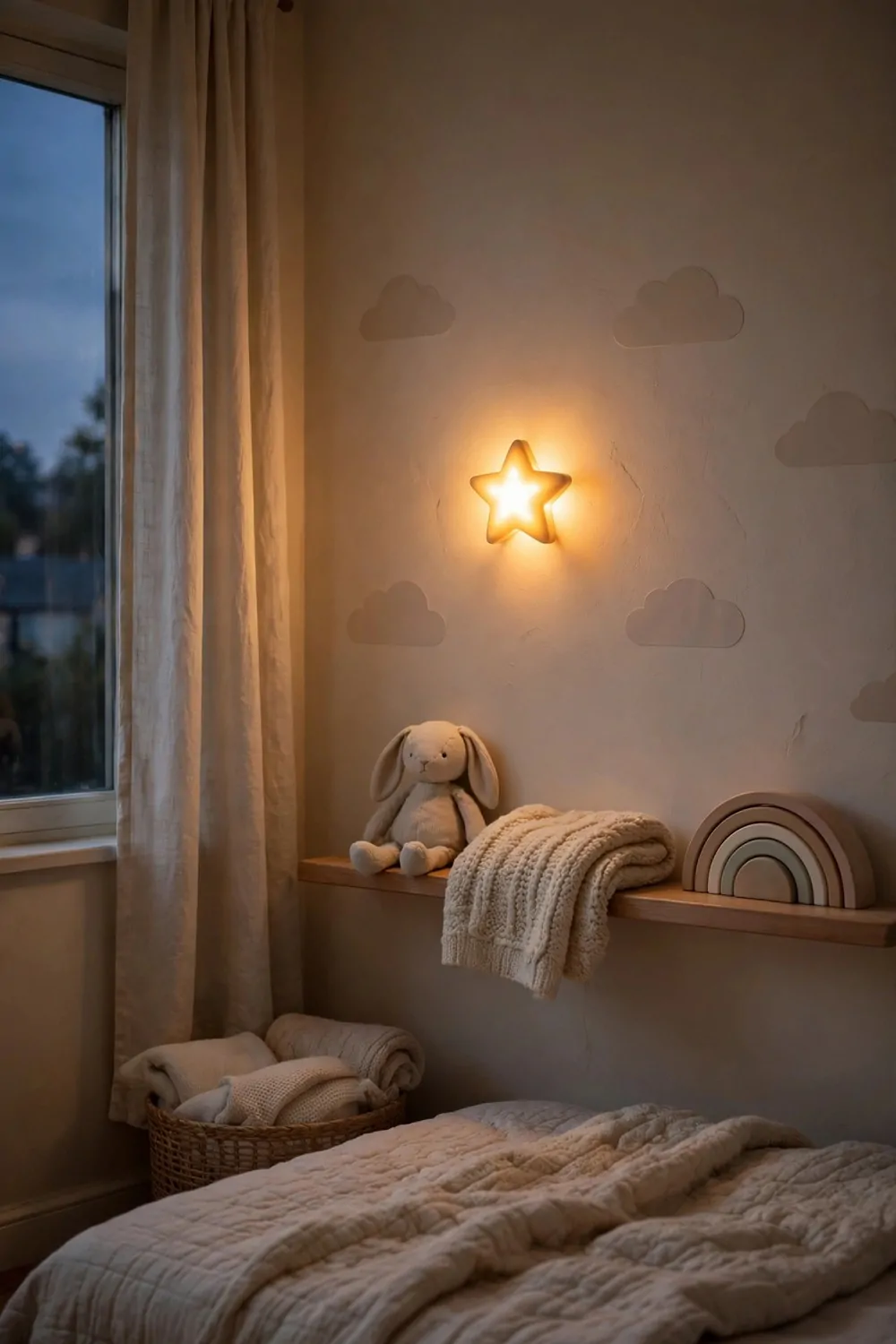
My child was scared of the dark at four. A big bright light hurt her eyes, and no light at all scared her more.
A small night light fixed that. It glows soft and warm all night, and her room never feels fully dark.
I picked a little plug in light shaped like a star. It sits low on the wall by her bed, and she can switch it on herself.
The light is warm, not white. White light feels cold and wakes the brain up. Warm light feels like a hug and lets her drift off.
She picks the night light herself when we shop. A star, a moon, a little animal. Her choice makes it feel like hers.
As she grows, the night light moves. At four it sat by her bed. At eight it sits by the door, just in case she wakes in the night.
A night light costs almost nothing and uses almost no power. It stays on all night, and I never worry about the bill.
One soft glow turns a scary dark room into a safe little cave. Sleep comes easier, and mornings start better.
A Rug That Marks the Play Zone
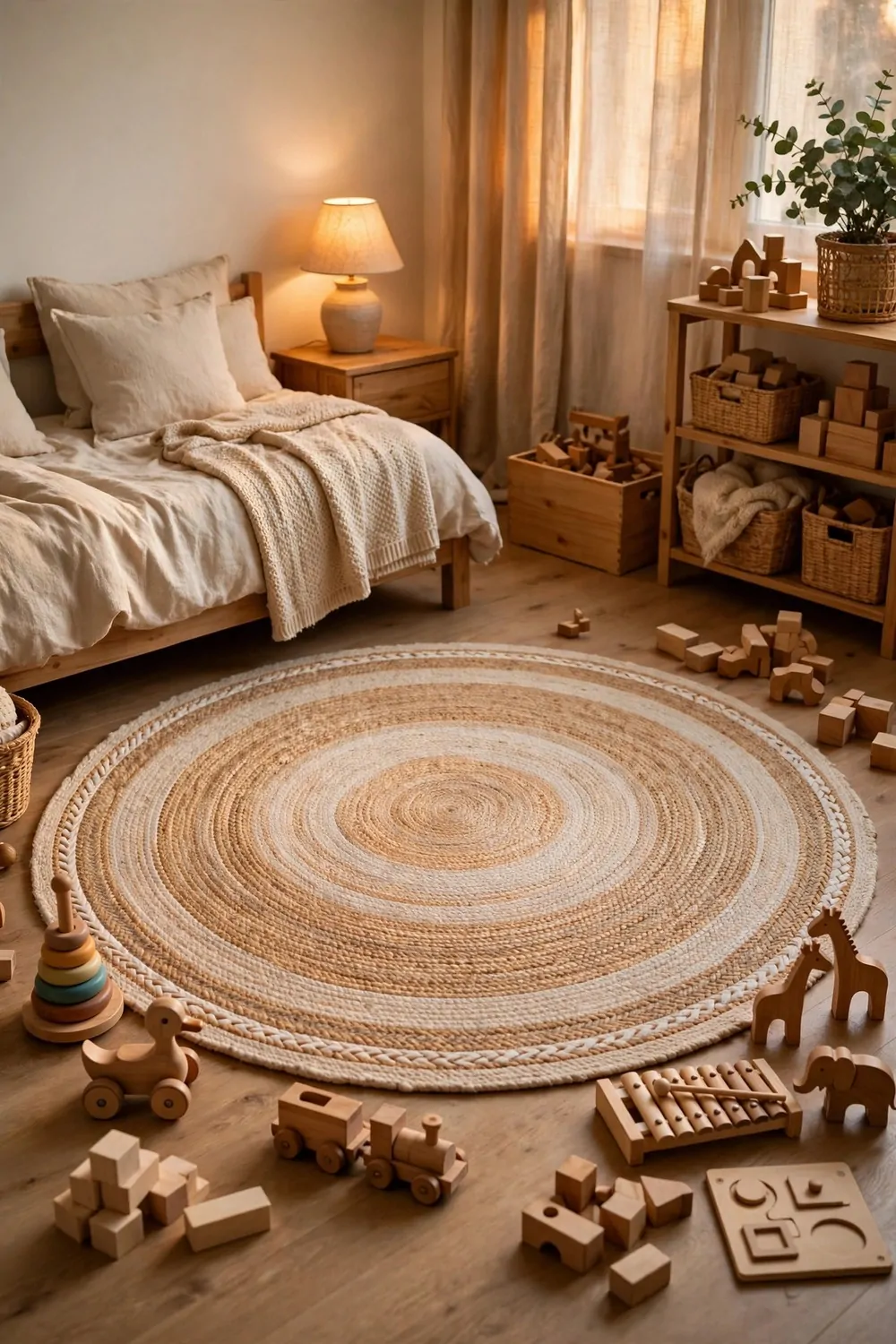
My child’s bedroom floor used to be one big play space, and the mess spread to every corner. Toys everywhere, all the time.
A rug fixed that. It marks the play zone, and the toys stay on the rug instead of wandering all over the room.
I picked a big round rug in a soft colour. It sits in the middle of the floor, and it is the spot where play happens.
The rule is simple. Toys stay on the rug. When play time ends, the toys go back in the bins, and the rug stays clear.
The rug is soft enough to sit on for hours. She builds blocks on it, reads on it, and sometimes just lies on it and stares at the ceiling.
I wash the rug once a month, because play rugs get dirty fast. A clean rug smells fresh, and the room feels calm again.
The rug grows with her too. At four it held toy cars. At eight it holds board games and books. The rug stays, the play changes.
One rug on the floor turns a messy room into a room with zones. Play happens here, sleep happens there, and the floor stays clear.
Clothes They Can Choose Themselves
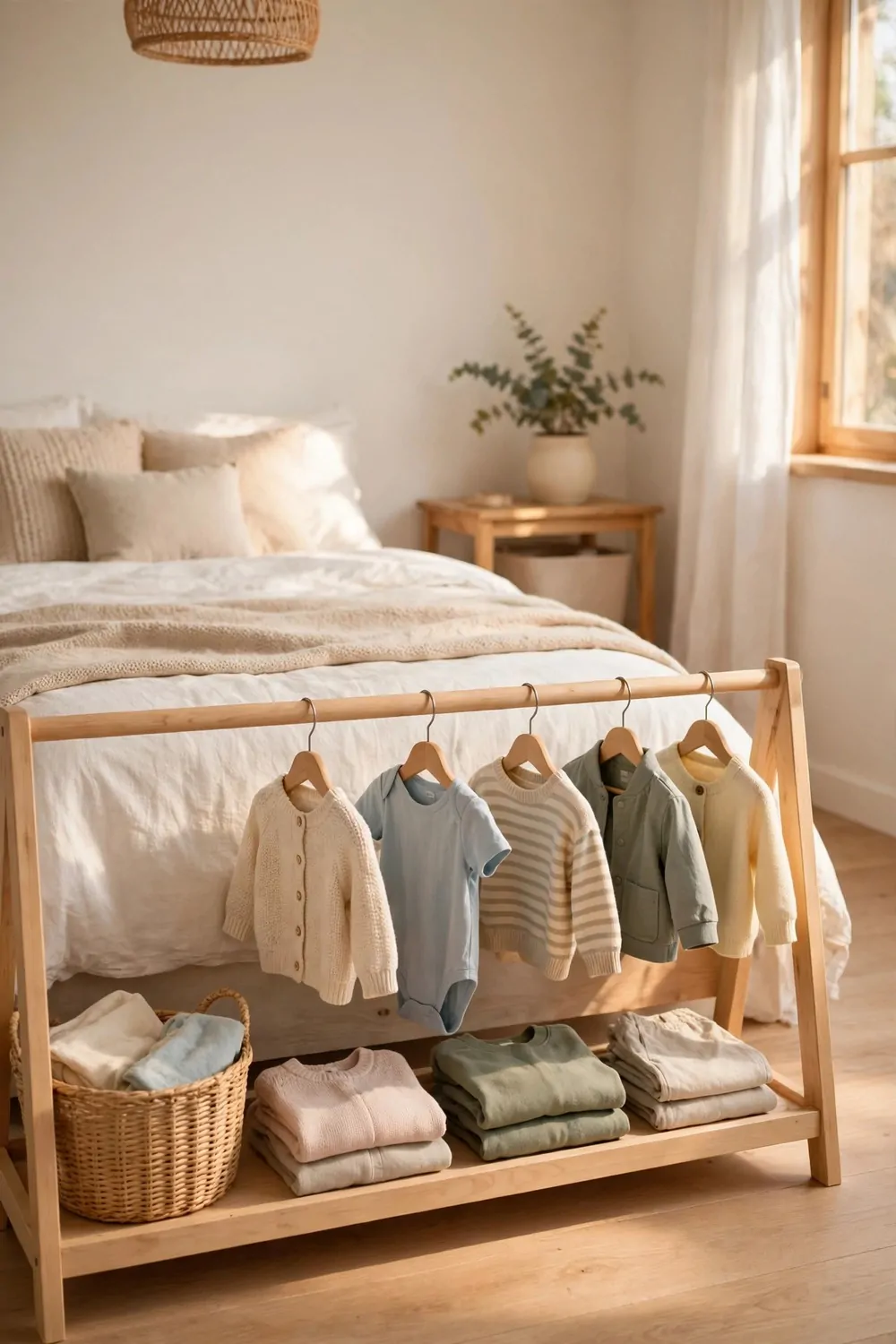
My child could not reach her own clothes. Every morning I had to pick her outfit, and every morning she wanted something else.
A low rail fixed that. Her clothes hang at her height, and she picks her own outfit every morning.
The rail sits low in the wardrobe, with a few hooks beside it. Dresses hang on the rail, and jumpers fold on the shelf below.
I keep only five outfits on the rail at a time. Too many choices make mornings slow, and five is just right.
She picks her clothes the night before now. She lays them on the little chair by her bed, and the morning starts smooth.
A low rail grows with your child. At five it holds small dresses. At nine it holds school shirts and jeans. The rail stays low, the clothes get bigger.
I let her pick, even when the colours clash. A pink top with green trousers is her choice, and she wears it with pride.
Clothes she can reach give her a small win before breakfast. She starts the day feeling grown up, and mornings get easier for both of us.
A Quiet Corner for Big Feelings
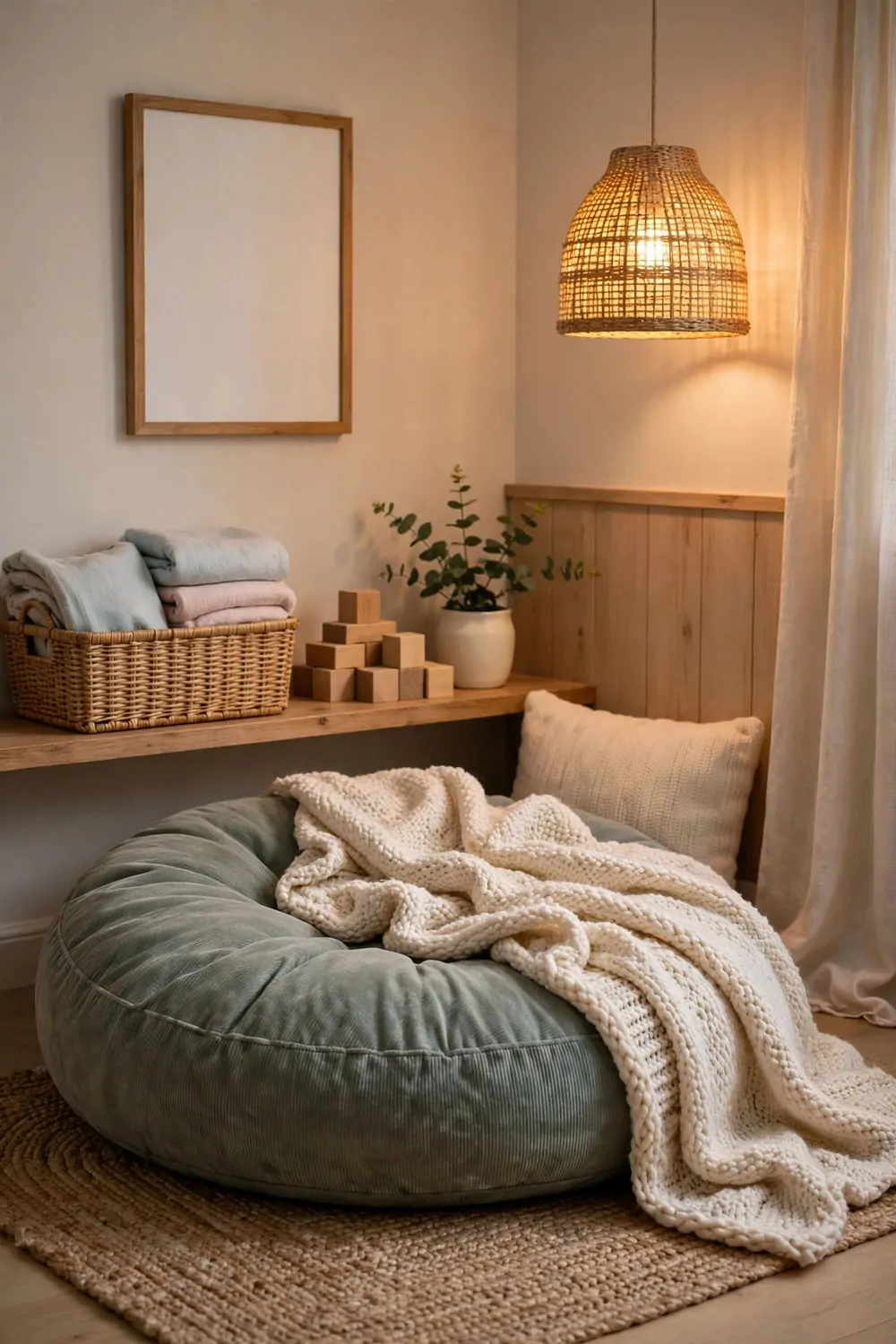
Big feelings need a quiet corner. My child used to cry on the floor in the middle of her room, with toys all around her.
A quiet corner fixed that. It is a soft spot by the wall where she can sit, breathe, and feel calm again.
I put a big cushion there, a soft blanket, and a little basket of calm things. She goes there when the day feels too big.
Calm things that live in our quiet corner are:
- a soft toy she can hug tight
- a small book of gentle stories
- a little jar of smooth stones
- a breathing card with three slow breaths
Nobody follows her to the quiet corner unless she asks. It is her space, and it stays quiet until she feels ready.
The corner grows with her too. At four it held a soft toy. At eight it holds books and a journal she writes in.
I use the corner myself sometimes, when I need a minute. A quiet corner works for grown ups too, and she knows it.
One soft corner teaches a child that feelings are okay. She sits, she breathes, and she comes back when she is ready.
A Growth Chart on the Door Frame
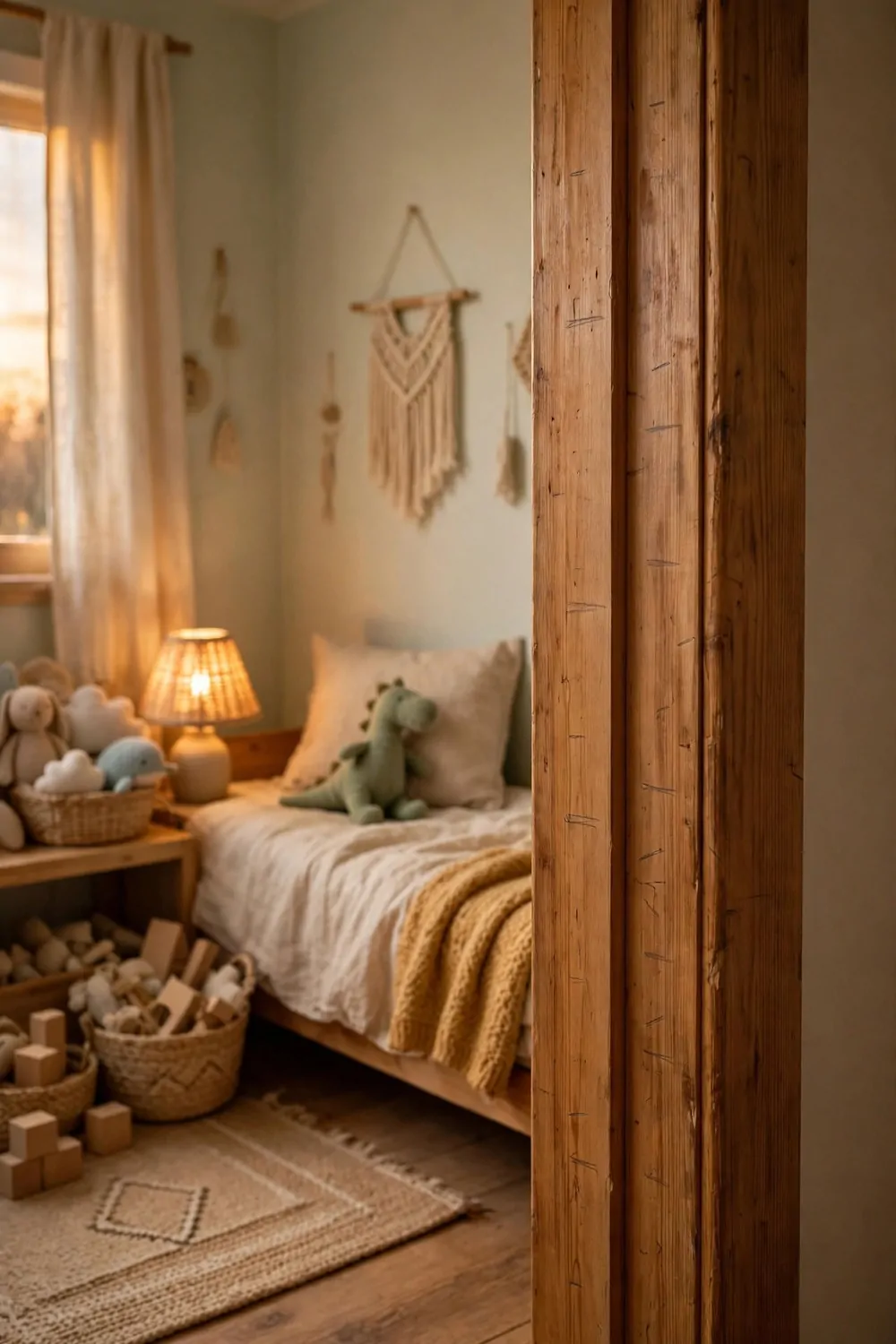
The pencil marks on my child’s door frame are the best decoration in her room. They cost nothing, and they mean everything.
A growth chart on the door frame shows how fast she grows. Every mark has a date next to it, and we measure on her birthday.
I use a soft pencil, not a pen. Pencil marks can be rubbed out if I make a mistake, and the door frame stays neat.
She stands straight against the frame, heels on the floor, chin up. I mark the top of her head and write the date beside it.
The marks climb higher every year. She loves to see how far she has come, and she checks the marks when friends visit.
A growth chart works on a wall too, if you rent your home. A paper chart on the wall moves with you when you leave.
When she outgrows the frame, the marks stay. They are a little history of her childhood, right there on the door.
One pencil, one door frame, and a record of growing up. It is the simplest idea on this list, and maybe the sweetest one.
A Room That Changes Every Year
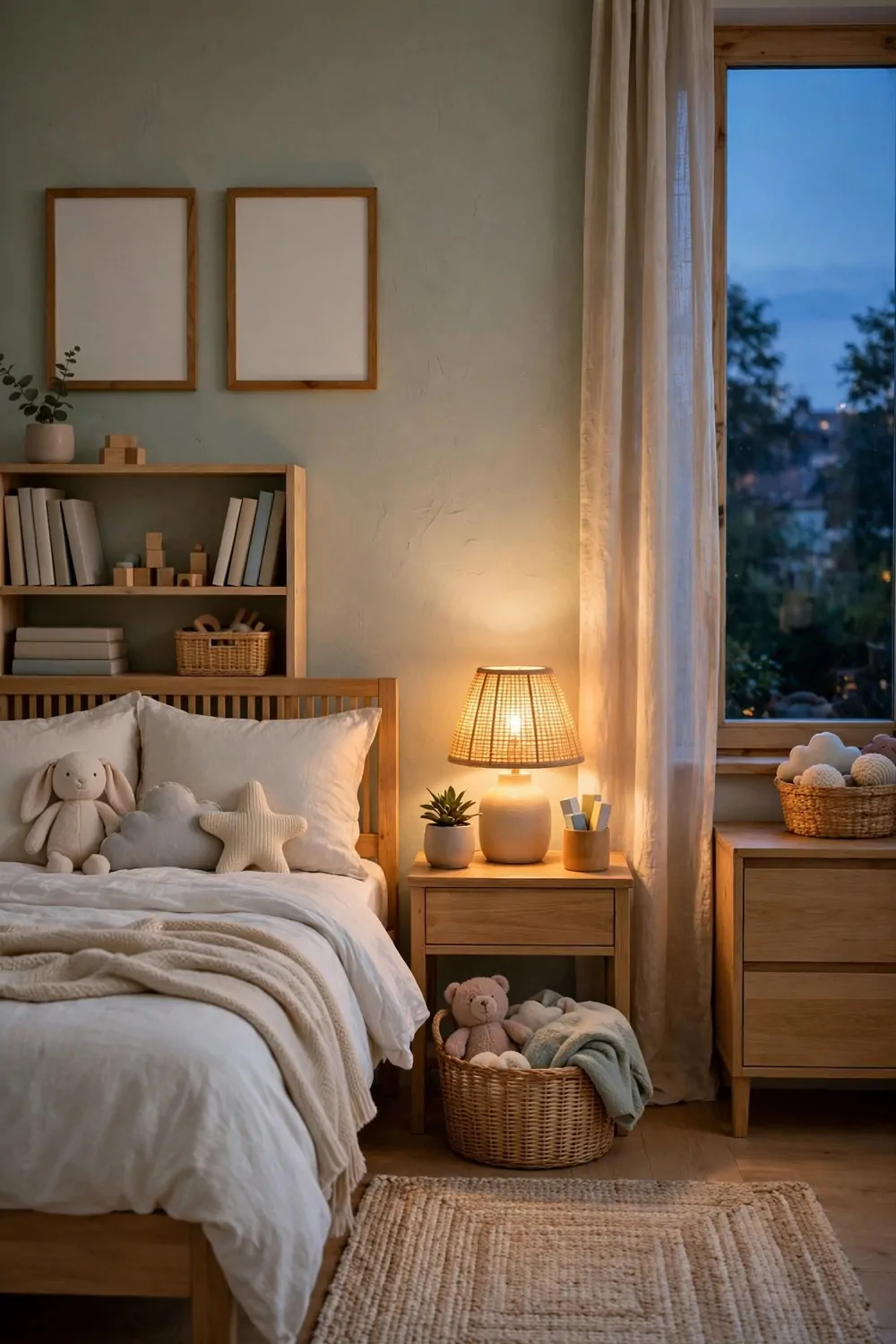
My child’s room is never finished, and that is the point. Every year she changes, and every year the room changes with her.
I do a small room reset every summer, right before school starts. One afternoon, just the two of us, and the room gets a fresh start.
We move the desk, swap the bedding, and clear out the toys she has outgrown. The room feels new again without buying anything big.
A few jobs that make up our yearly reset, and how long each one takes, are in this little table.
| Job | What to do | How long |
|---|---|---|
| Move the furniture | Shift the desk and bed to a fresh spot | One hour |
| Clear the toys | Keep the favourites, pass on the rest | One hour |
| Fresh bedding | New covers she picks herself | Half an hour |
She picks one new thing for the room each year. Last year it was a lamp. This year it was a new bedspread in her favourite colour.
The yearly reset keeps the room feeling hers, not stuck in the past. A room that grows with a child is a room that changes a little every year.
The reset takes one afternoon, and we do it together. She picks the music, I bring the drinks, and the room changes while we talk about the new school year.
Start with one small change this summer. Move the bed, swap the bedding, or clear one shelf. The room will feel new, and so will she.
Keep Reading
If you liked making a kids bedroom grow with your child, you will like these ideas too. They work the same way. One small fix, then another, and soon the whole home feels calmer.
Pick one to read next, and see which idea suits your home.
- 23 Bathroom Storage Ideas That Hide the Clutter
- 19 Balcony Garden Ideas for Tiny Outdoor Spaces
- 21 Small Kitchen Pantry Ideas That Make Cooking Easier
Start with one idea this week, like the low hooks or the toy bins with pictures, and let your child’s room grow calmer one shelf at a time. A room that grows with your child makes every year easier, and your home will thank you for it.