42 Laundry Room Shelving Ideas That Combine Style and Function

I counted the shelves in my laundry room one Sunday. Four shelves. And every single one of them was doing the wrong job.
One held old paint cans that had nothing to do with clean clothes. One held a pile of single socks with no partners in sight. One was so high I needed a chair to reach it, and the last one was empty because I had given up on it.
That count changed how I look at the room. A shelf is not just a flat board on a wall. It is a job, and each shelf needs one clear job to do.
So I started over with a simple rule. Every shelf in my laundry room now holds one kind of thing, and I can reach it without a hunt. These 42 ideas follow that same rule, and they work in big rooms and tiny ones too.
Open Shelves Over the Washer and Dryer
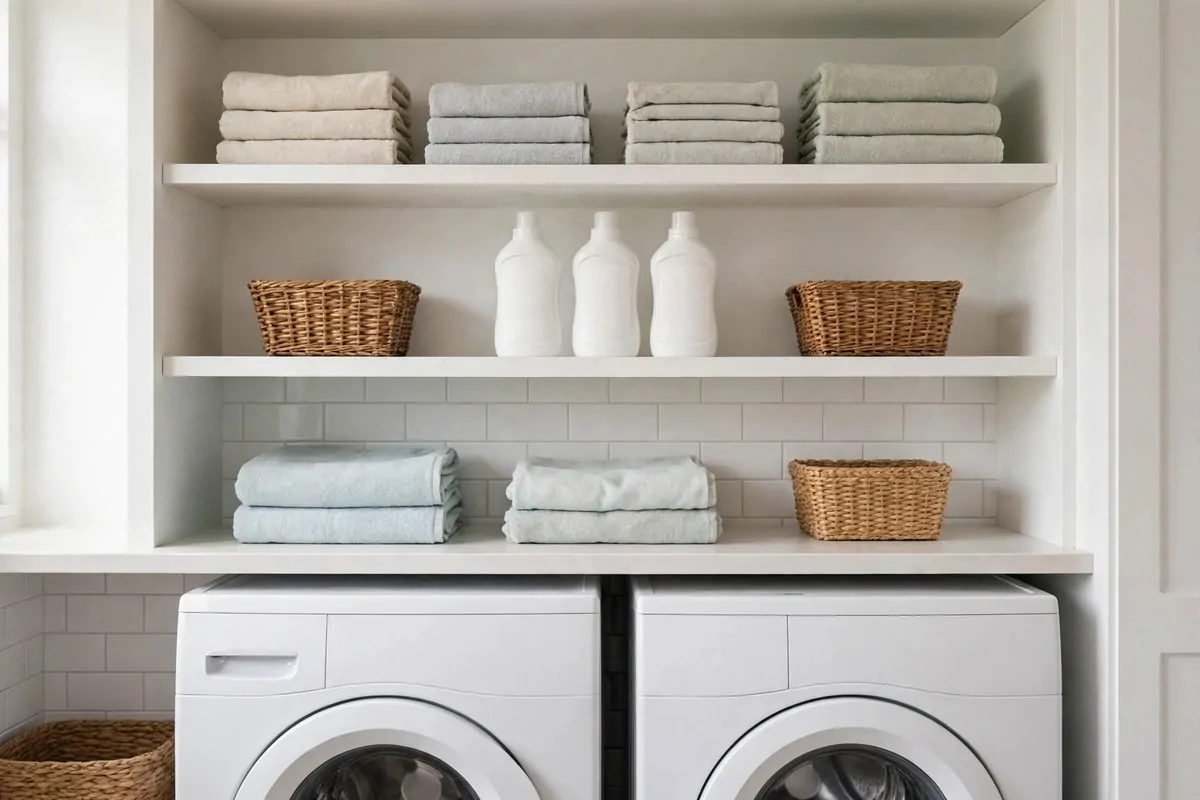
The wall over your washer and dryer is the best spot in the whole room. It is right where you stand, and it is easy to reach without a step.
I put two open shelves there and it felt like I gained a whole new counter. The bottom shelf holds the stuff I grab every wash day. The top shelf holds the extras I only need now and then.
Open shelves beat closed cupboards here because you can see everything at once. You do not open a door and forget what sits behind it.
Keep the heavy bottles low and the light things high. A full bottle of soap is heavy, and you do not want it over your head.
I keep a small basket on the end for clothespins and odd bits. It stops the little things from sliding around and falling behind the machine.
Wipe the shelves once a week when you wipe the machines. Dust builds fast in a laundry room, and a quick wipe keeps it fresh.
If the wall feels bare, paint the shelves the same color as the wall. They blend in and the towels and jars become the pretty part.
Measure the space before you drill anything. Leave enough room over the machines to open the lids and lift a full basket out.
This one change makes wash day feel calmer. You reach up, you grab what you need, and you get on with it.
A Long Wooden Shelf for Folded Towels
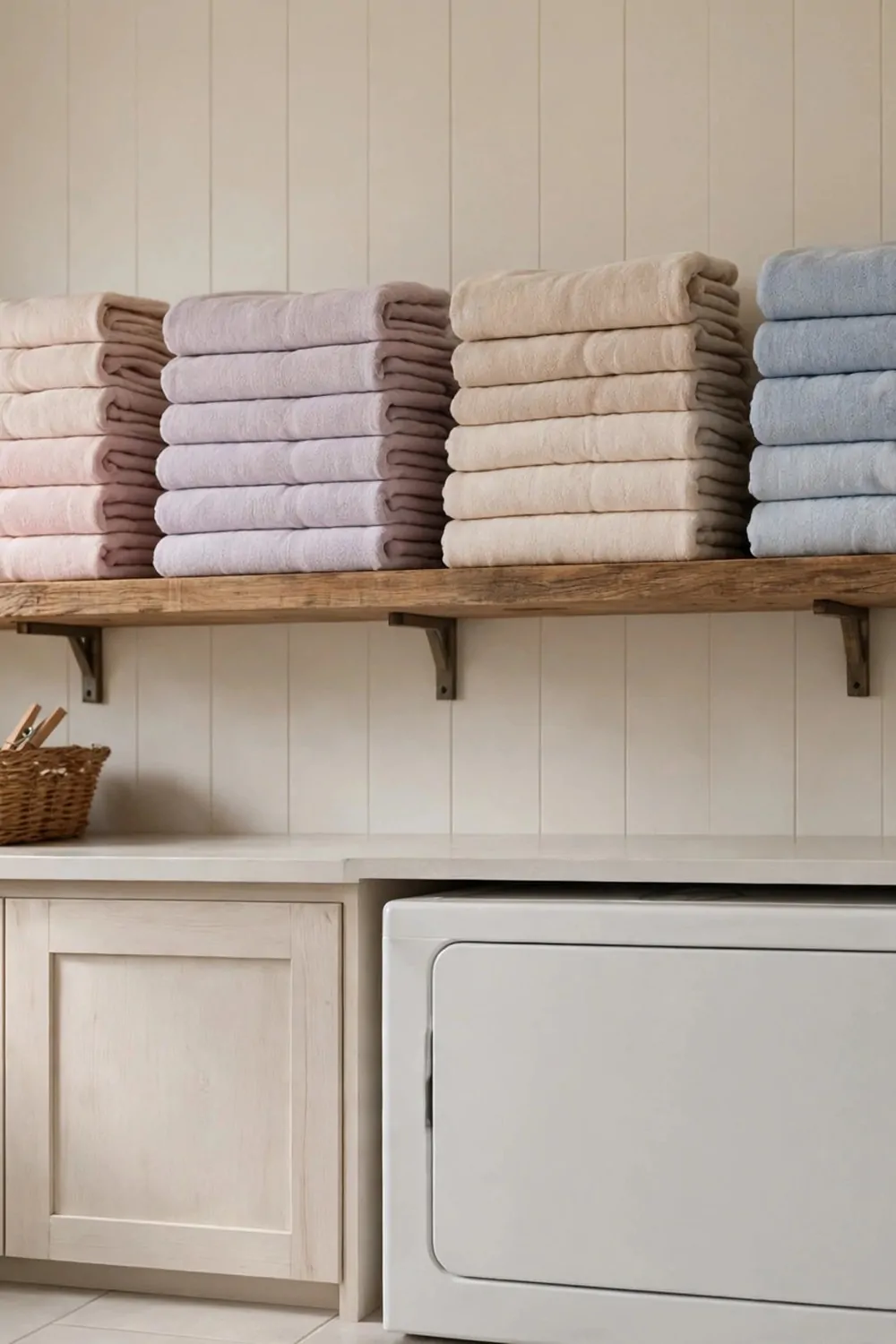
One long shelf can hold more towels than three small ones. I learned that when I swapped my short shelves for a single long board.
Wood feels warm in a room full of machines and tile. It softens the whole space without any extra decor at all.
Fold your towels the same way every time and they stack like books. I fold mine in thirds, and the piles stay neat for days.
Keep the colors in soft groups so the shelf looks calm. Whites together, blues together, and a few pale greens at the end.
Do not pile the towels too high. Five or six in a stack is plenty, and you can pull one from the middle without the whole pile falling.
A long shelf also works as a spot for a small plant or a jar of pegs. Just leave a little gap at one end so it does not look crowded.
Check that the shelf is level before you load it up. A shelf that tilts a little will send your towel stacks sliding to one side.
I like to keep the fresh towels here and the old rags somewhere else. That way I never grab a rag by mistake when I want a clean towel.
This shelf is the one guests notice first. It looks like a shop display, but it only takes five minutes to keep it that way.
Floating Shelves in a Straight Row
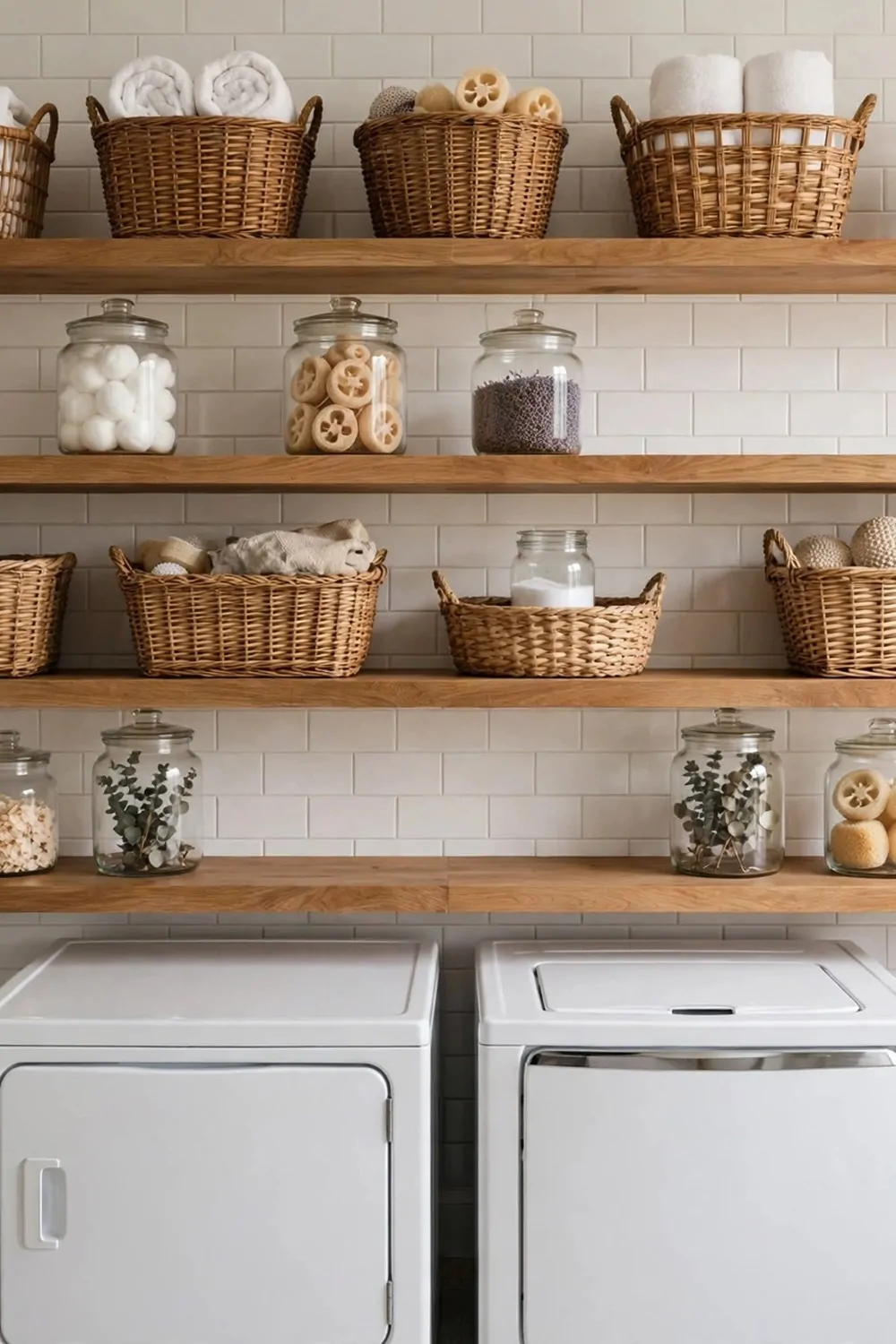
Floating shelves have no brackets you can see, so the wall looks clean and simple. I love that look in a small room.
Put them in a straight row with the same gap between each one. The even spacing makes the wall feel calm and tidy.
I use the lowest shelf for things I grab daily, like soap and softener. The middle shelf holds baskets, and the top shelf holds jars I do not need often.
Mix baskets and jars so the row does not look too plain. A woven basket next to a clear jar gives the wall some life.
Keep the shelves shallow enough that things do not get lost at the back. About a hand and a half deep is right for most laundry bits.
Dust the tops every few days because floating shelves show dust fast. A quick swipe with a cloth is all it takes.
If you rent your home, ask before you drill. Some floating shelves need strong wall plugs, and a landlord may want to know first.
I put a small label on the front edge of one basket. It sounds fussy, but it stops my family from putting random stuff on my tidy shelves.
A straight row of shelves can turn a blank wall into the hardest working wall in the house. And it costs very little to do.
A Shelf for One Detergent Bottle Each
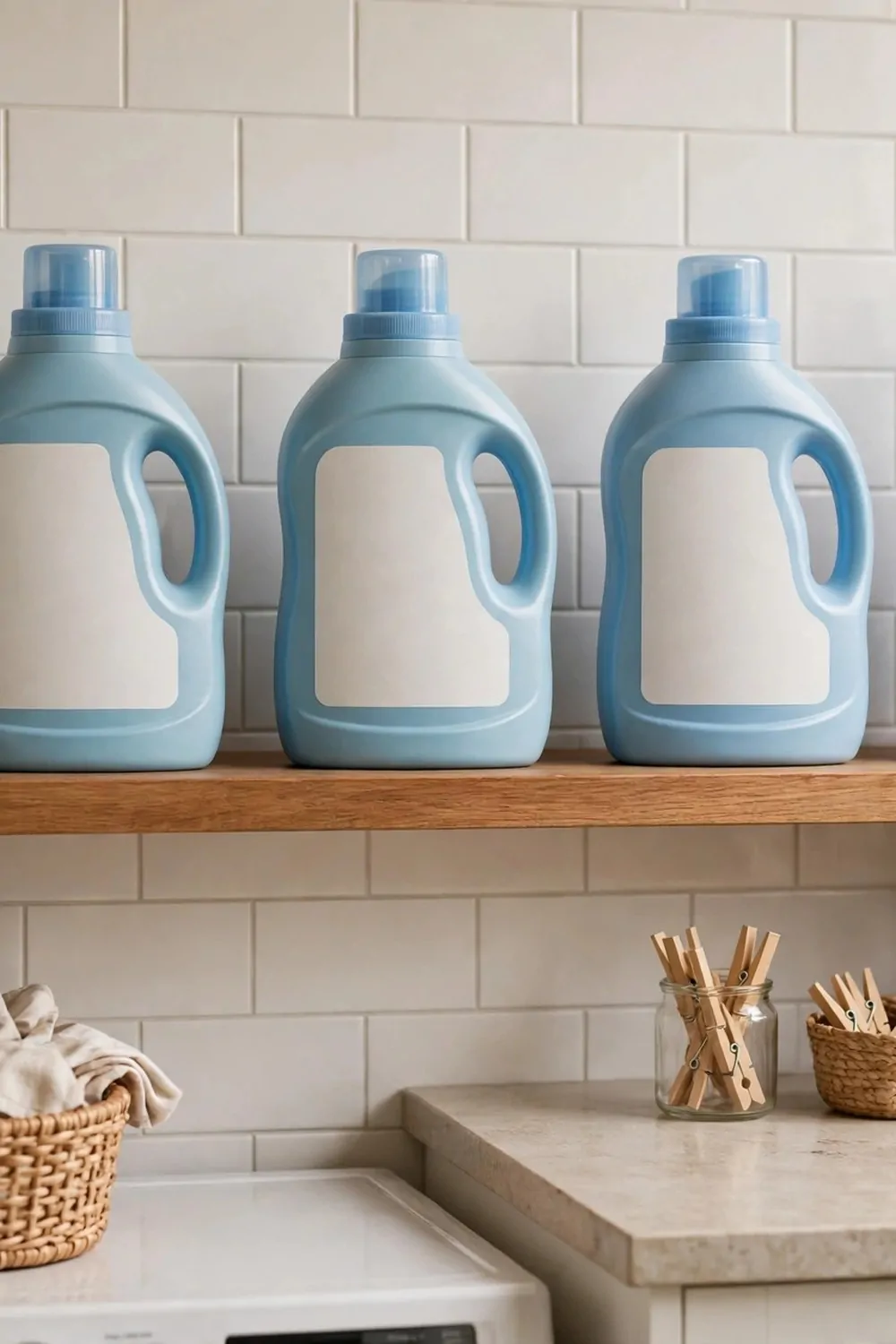
Detergent bottles are all different shapes, and they fall over if you crowd them. Give each bottle its own spot and the mess stops.
I marked a spot for each bottle with a small dot of paint on the shelf edge. It sounds silly, but now everyone in my house puts the bottle back in its place.
Keep the bottle you use most at the front. The spare bottles can sit behind it or on the shelf above.
Pouring is easier when the bottle is not wedged between three others. You can tip it without knocking the next one over.
Wipe up drips right away so the shelf does not get sticky. Soap drips dry hard, and then the bottles stick to the wood.
If you buy big bottles, measure the shelf height first. A tall bottle needs a tall gap, or you will have to store it on the floor.
I keep a small funnel on this shelf too. It helps when I refill a smaller bottle from a big one, and it stops spills.
This shelf taught me a small lesson. One thing per spot is faster than a crowded shelf every single time.
Baskets on Open Shelves
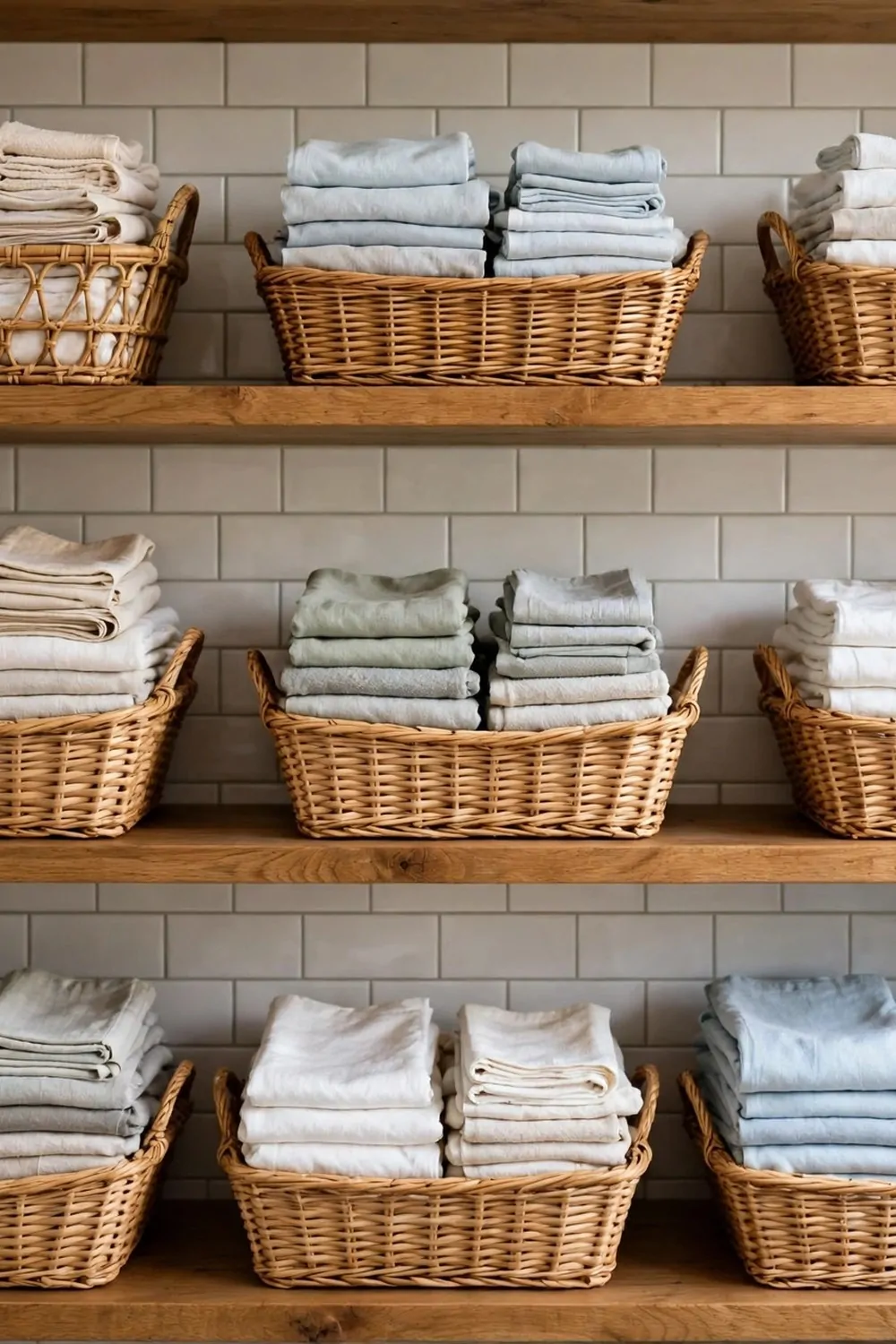
Baskets hide the mess without hiding where things live. I can see the basket, I know what is in it, and the room still looks tidy.
Pick baskets that fit the shelf with a little air around them. A basket that is too tight is hard to pull out when your hands are full.
I use one basket for clean cloths, one for rags, and one for things that need mending. Three baskets, three jobs, no guessing.
Label the baskets if your family mixes things up. A simple tag with one word on it does the job.
Woven baskets need a shake outside now and then. Dust and lint collect in the weave, and a quick shake keeps them fresh.
Do not fill a basket right to the top. A basket that overflows looks messy, and things fall out when you pull it down.
I keep the basket handles facing out so I can grab them fast. It is a tiny thing, but it saves time on busy wash days.
Baskets also soften a room full of hard surfaces. The weave adds warmth, and the room feels less like a work zone.
If a basket starts to fray, swap it out before it sheds bits everywhere. A tidy basket is worth more than a worn one.
A Drying Shelf for Delicates
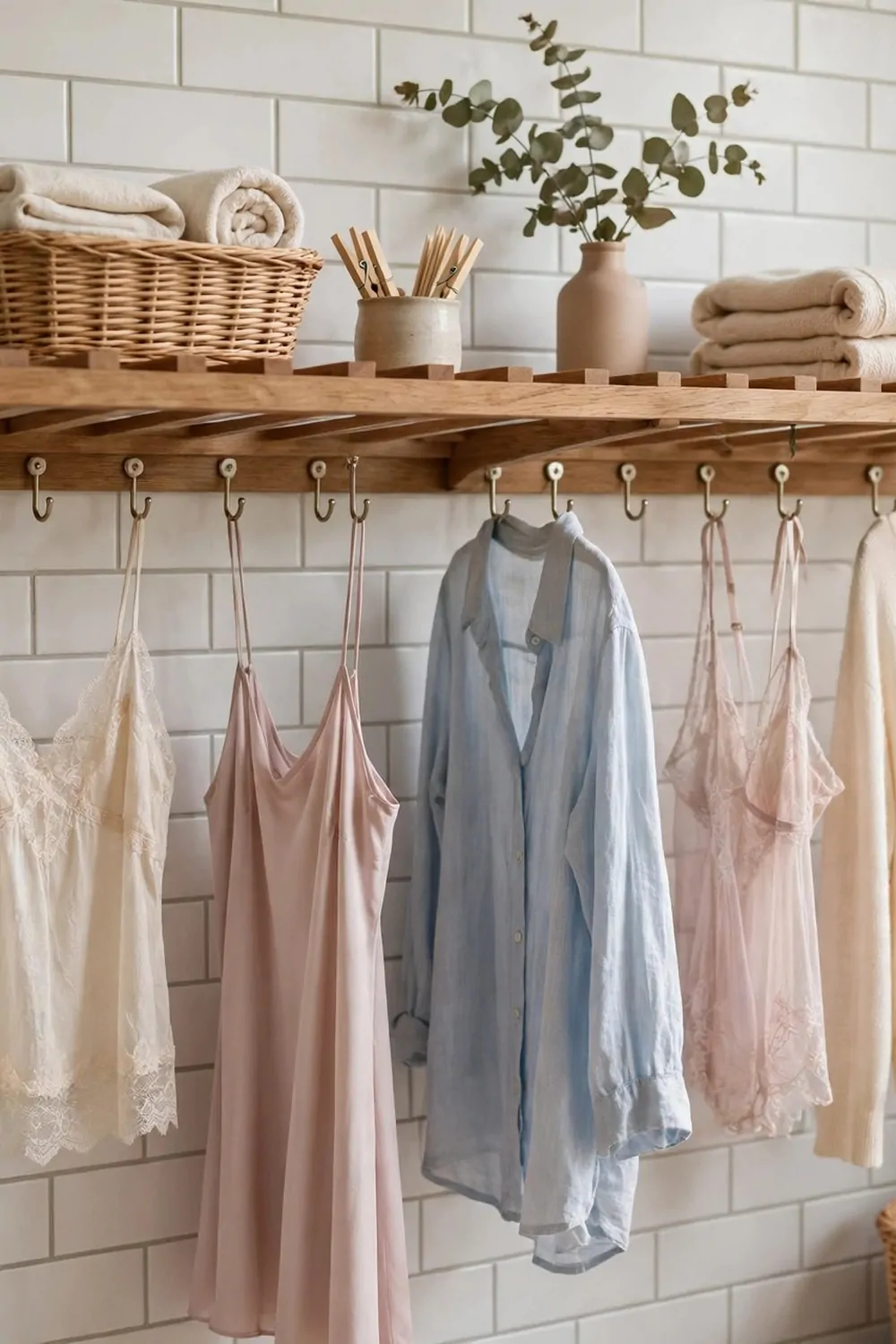
Some clothes should never go in the dryer. I made a shelf just for them, with hooks underneath for hanging.
The shelf itself holds a small basket for pegs and a spray bottle. The hooks below hold the clothes that need to drip dry.
Hang the wet items with space between them so air can move around. Clothes that touch take twice as long to dry.
I put this shelf near a window or a vent if I can. Moving air dries delicates faster than still air in a closed corner.
Do not hang heavy wet jeans on small hooks. They stretch the hooks and drip water all over the floor.
A towel on the floor under the hooks catches the drips. I swap it out each day and hang it up to dry too.
This shelf saves my favorite tops from shrinking. I used to lose one or two a year to the dryer, and now I lose none.
Keep the hooks low enough to reach without stretching. You hang wet clothes often, and a high hook gets old fast.
A drying shelf is a quiet hero in a laundry room. It does a small job, and it does it every single week.
A Shelf Just for Socks and Small Things
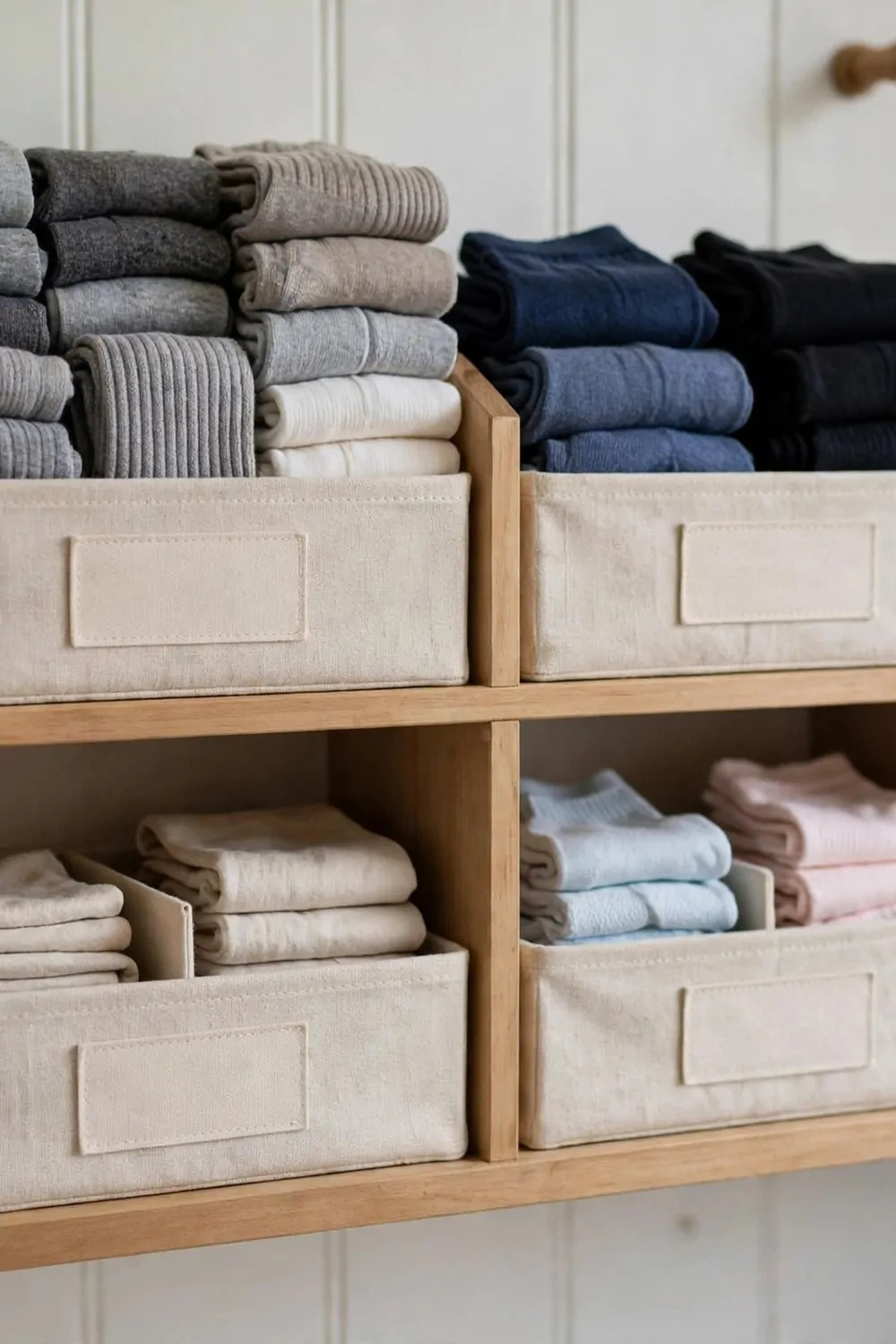
Socks vanish in my house. I gave them their own shelf with dividers, and now far fewer of them go missing.
The dividers split the shelf into small boxes. One box for white socks, one for dark socks, and one for the odd singles waiting for a partner.
Small things need small spaces. A big open shelf swallows a sock, but a small divided box keeps it in sight.
I fold each pair together so they stay a pair. It takes ten seconds, and it saves a hunt later in the week.
Keep this shelf at a height kids can reach. My kids can put their own socks away, and that alone is worth the shelf.
A small tray on the shelf holds buttons and coins from pockets. I empty it once a month and put the bits back where they belong.
Do not let this shelf become a junk shelf. If something does not fit the sock rule, it lives somewhere else.
I check the odd singles box every Sunday. Most weeks a pair turns up, and the shelf feels like a small win.
This is the smallest shelf in my room, and it might be the most useful one I own.
High Shelves for Out-of-Season Supplies
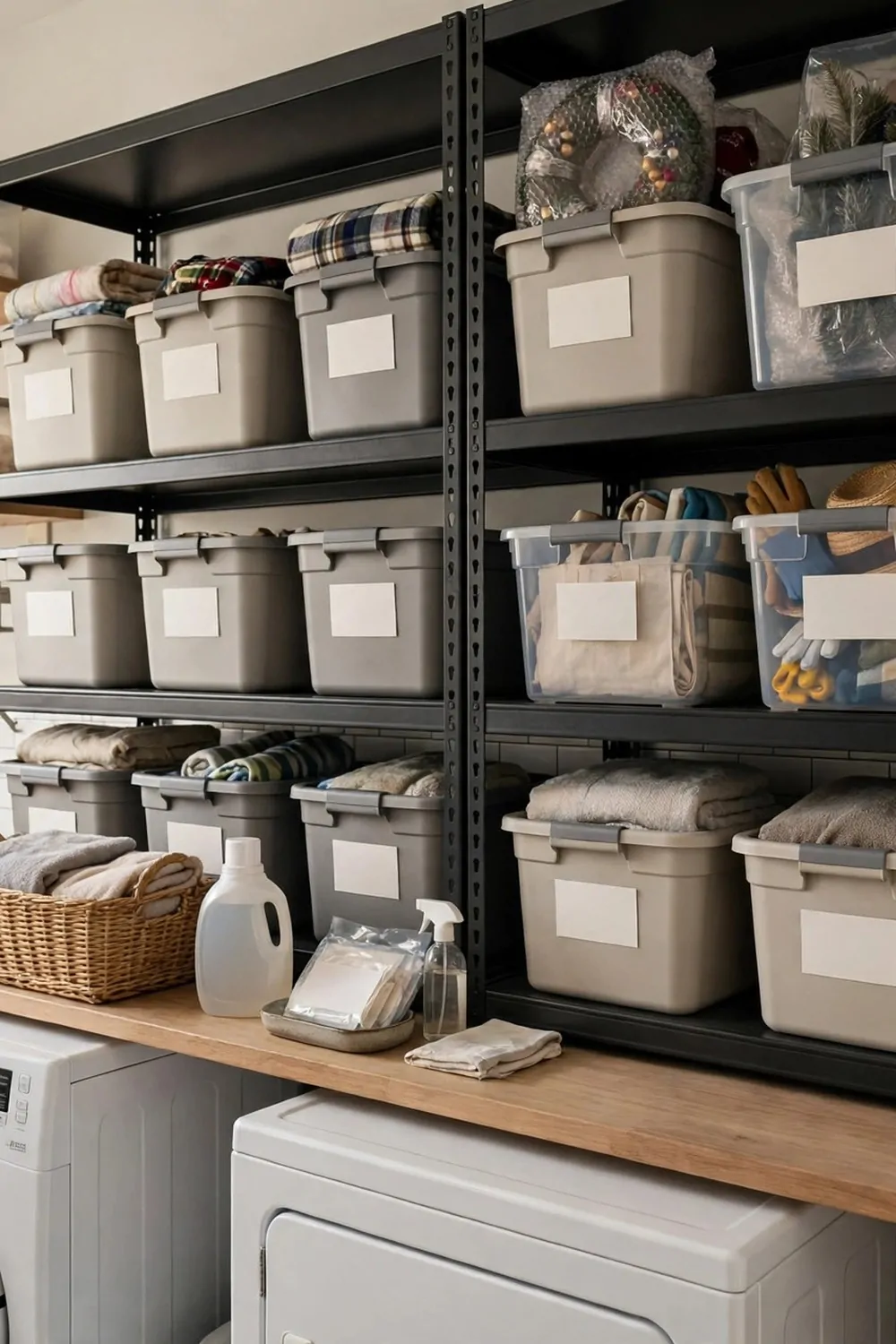
The top of the wall is wasted space in most laundry rooms. I use it for things I only need a few times a year.
Big bins with lids live up there, each with a plain label on the front. One holds spare blankets, one holds extra soap, and one holds cleaning bits for deep cleans.
Label the bins on the side you can see from the floor. A label on the top is no good when the bin sits over your head.
Keep a small step stool in the room for these shelves. Do not climb on the washer to reach them, because that is how accidents happen.
I check these bins twice a year, once in spring and once in autumn. I pull out what I need and put back what I do not.
Heavy bins go lower, light bins go higher. A heavy bin over your head is a bad idea, even if it fits.
Dust the bin lids when you do your seasonal check. Dust sits on high shelves for months without anyone noticing.
These shelves free up the lower shelves for daily stuff. That trade is worth it, because daily stuff needs to be easy to reach.
High shelves are not for everyday things. They are for the stuff you store and forget, and that is fine.
A Pegboard Shelf for Small Tools
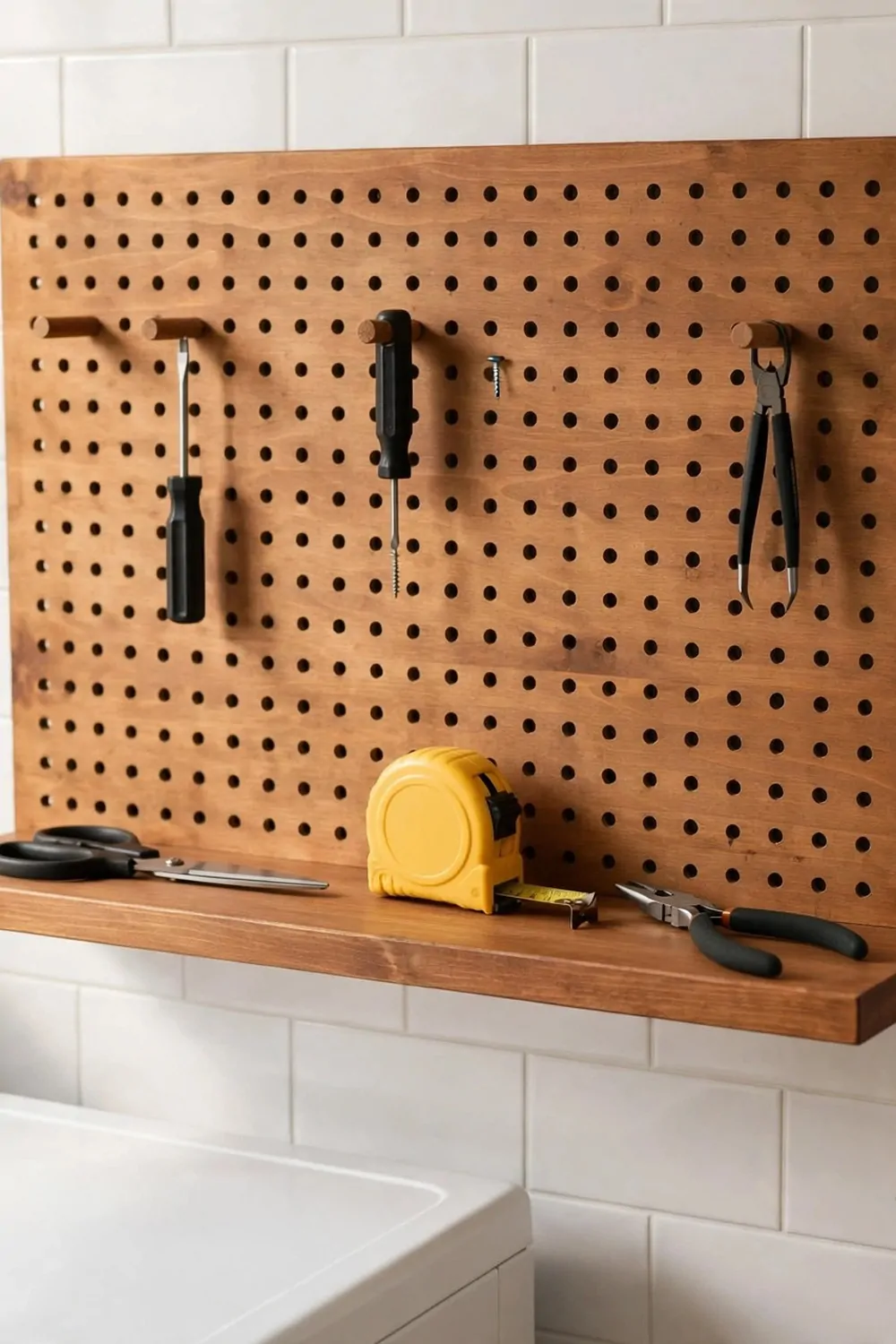
A pegboard turns a wall into a tool rack. I hung one over a small shelf, and now my little tools have a home.
Scissors, a tape measure, and a seam ripper hang on hooks. The shelf below holds a needle case and a small box of pins.
I can see every tool at a glance, so I never buy a second pair of scissors by mistake. That used to happen a lot in my house.
Paint the pegboard the same color as the wall if you want it to blend in. Or paint it a soft color to make it a feature.
| Tool | Where It Lives | How Often I Use It |
|---|---|---|
| Scissors | Top pegboard hook | Every week |
| Tape measure | Middle pegboard hook | A few times a month |
| Needle case | Small box on the shelf | Once a month |
| Lint roller | End of the shelf | Every wash day |
Keep the sharp tools high enough that small hands cannot reach them. Scissors and pins belong out of reach of little kids.
The shelf under the pegboard catches the bits that fall. I keep a small dish there for buttons and loose threads.
Move the hooks around until the layout feels right. Pegboards are easy to change, and that is half the fun.
I added a small clip for the stain guide I printed out. It hangs where I can read it while I treat a stain.
This setup cost very little, and it keeps my mending tools in one spot instead of in five drawers.
A Shelf for Ironing Supplies
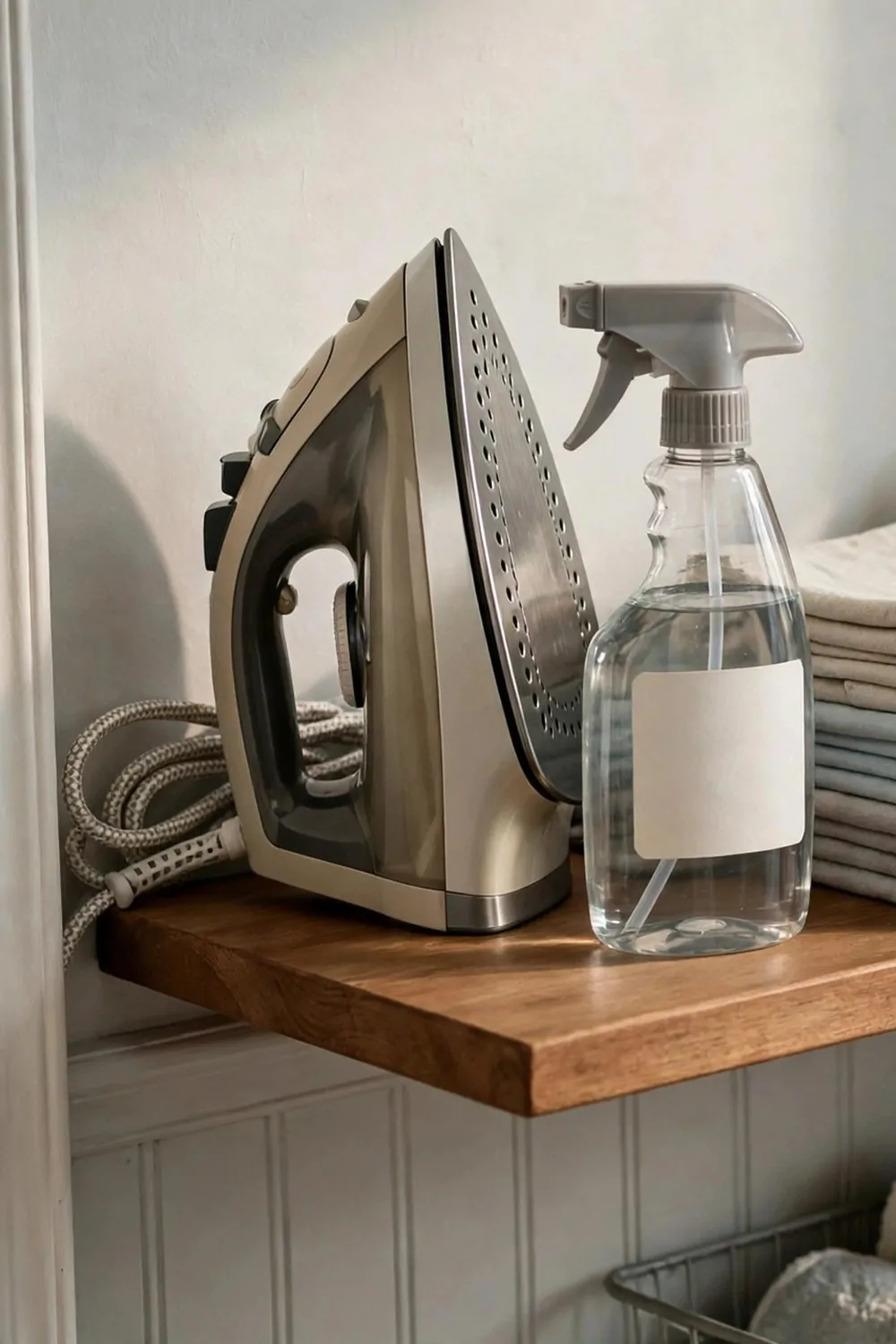
Ironing is easier when everything sits in one spot. I keep my iron, spray bottle, and cloths on a shelf near the board.
The iron rests on a heat proof mat on the shelf. I never put a hot iron straight on wood, because it can mark the surface.
A spray bottle of water lives next to the iron. A quick spray helps with stubborn creases, and it beats lugging a jug around.
Folded pressing cloths stack beside the bottle. They protect dark clothes from shine marks, and they are easy to wash.
Keep the cord wrapped loose around the iron when you store it. A tight wrap wears the cord out over time.
I keep a small bowl on this shelf for shirt buttons that pop off. They wait there until I have time to sew them back on.
Do not store the ironing board on this shelf. It is too big, and it will knock everything else off when you pull it out.
Wipe the shelf after ironing day, because steam leaves a damp ring. A dry shelf lasts longer and looks better.
This shelf turns ironing from a hunt into a habit. I grab the iron, I press the shirt, and I put it all back.
Glass Jars on a Display Shelf
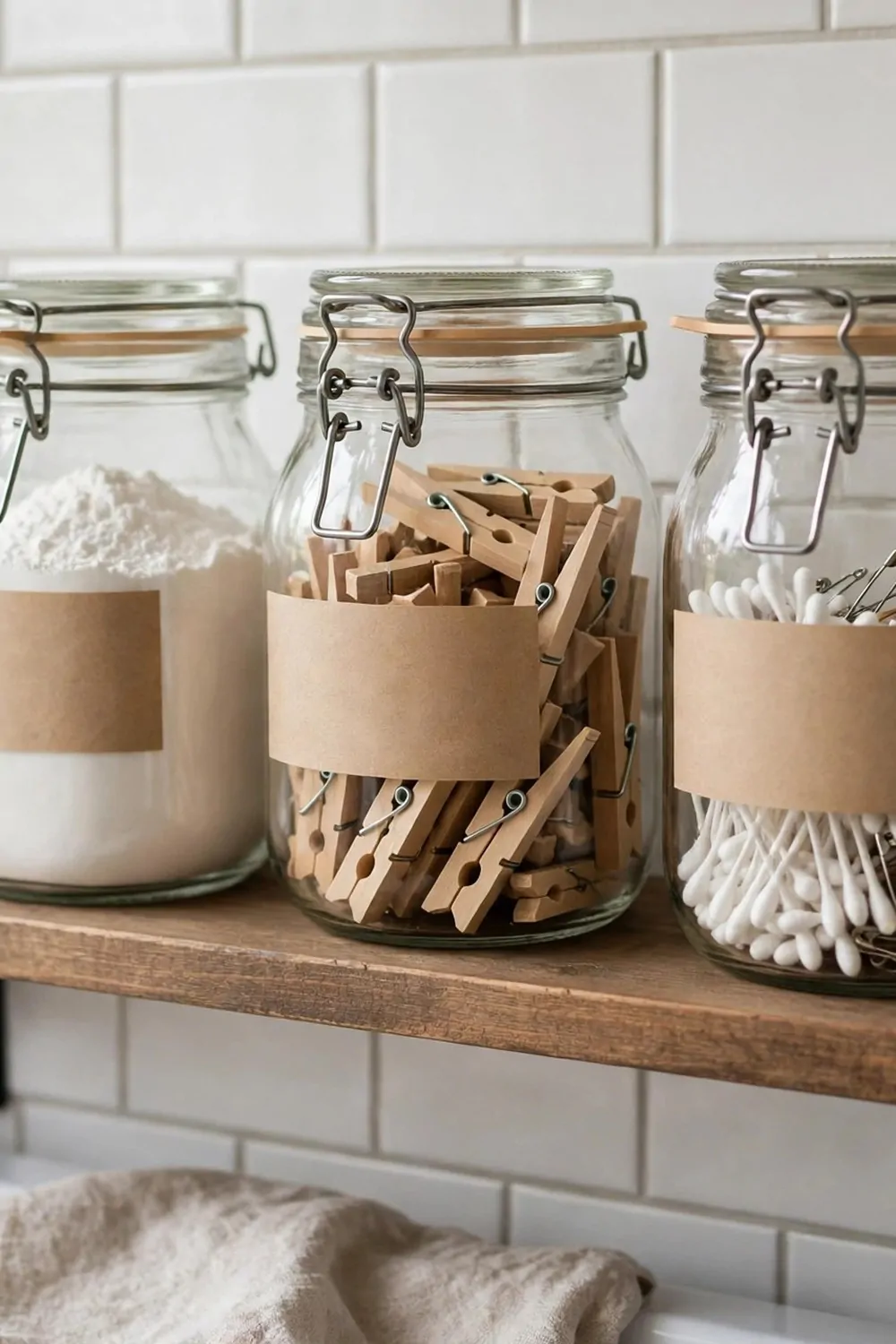
Glass jars make plain soap look pretty. I pour powder into jars, and the shelf looks like a little shop.
Use jars with lids that seal well. Damp air can clump powder, and a loose lid lets the smell escape.
Label each jar with what is inside. White powder all looks the same, and you do not want to mix up soap and stain powder.
Keep the jars you use daily at the front. The jars with spare supplies can sit at the back or on a higher shelf.
A small scoop in each jar makes measuring easy. I tie the scoop to the jar neck with string so it does not get lost.
Do not fill jars right to the brim. Leave a finger of space at the top so you can scoop without spilling.
Wash the jars when you refill them. Old powder sticks to the glass, and a clean jar keeps the new batch fresh.
I keep clothespins in a wide jar with no lid. They are easy to grab, and the jar shows when I am running low.
This shelf is the prettiest one in my room. It proves that useful things can look good too.
A Shelf for Each Family Member
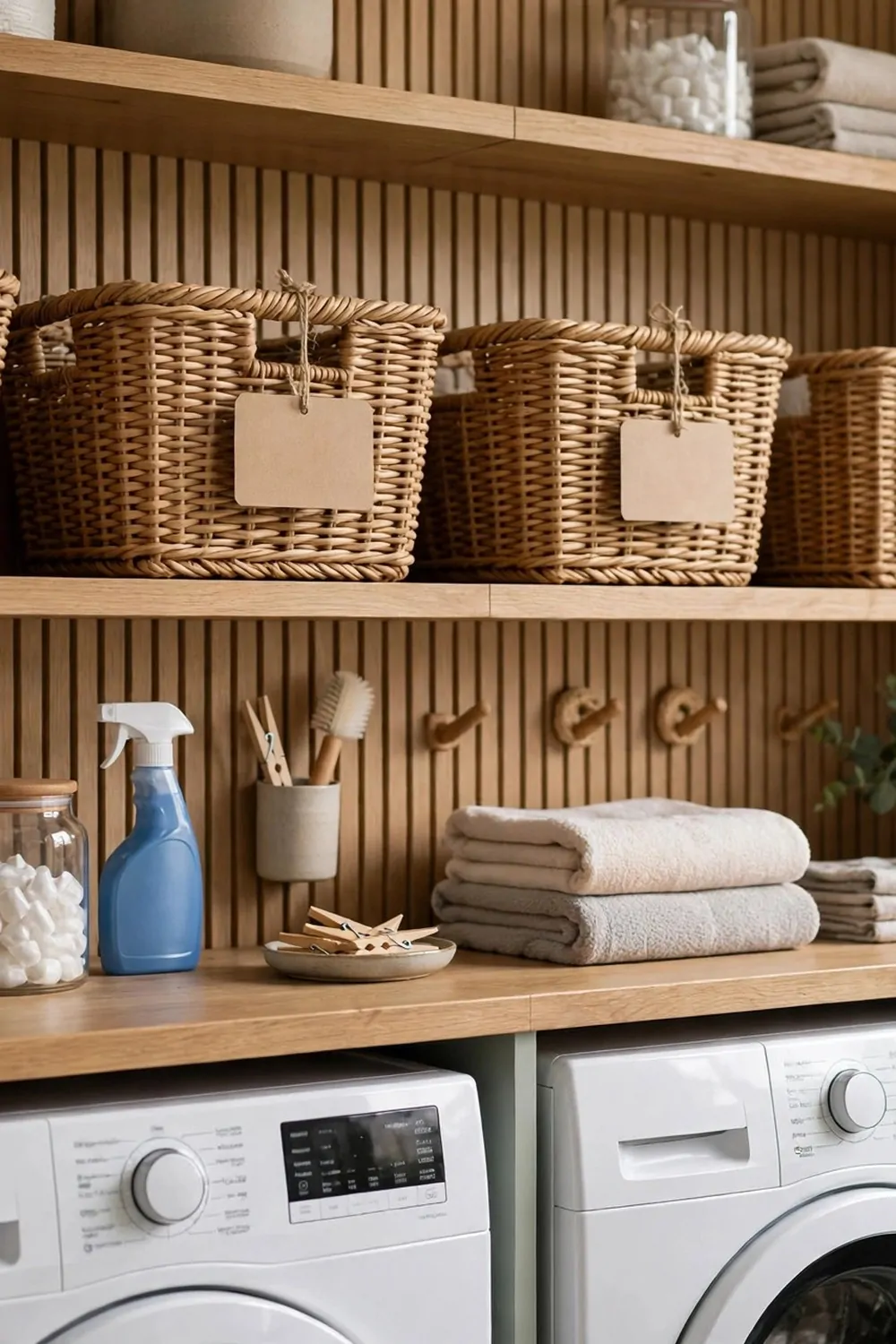
One basket per person stops the clean laundry pile from turning into a mountain. Each person gets a shelf spot and a basket.
I put a plain name tag on each basket. No fancy writing, just a name, so even a young child can find their own basket.
Folded clothes go straight into the right basket after drying. No sorting on the bed, no piles on the floor.
Kids learn fast when the system is simple. My youngest took a week to learn which basket was hers, and now she does it herself.
Keep the baskets at a height each person can reach. Little kids need low shelves, and tall teens can reach higher ones.
Empty the baskets each day so they do not overflow. A full basket is hard to carry, and clothes get wrinkled again.
I use the same color baskets for everyone so the shelf looks calm. The name tags do the telling apart, not the colors.
If a basket breaks, replace it with the same kind. A matching set keeps the shelf looking neat and stops arguments about who got the nice one.
This idea cut my folding time in half. The clothes are sorted before they leave the laundry room.
Corner Shelves That Use Dead Space
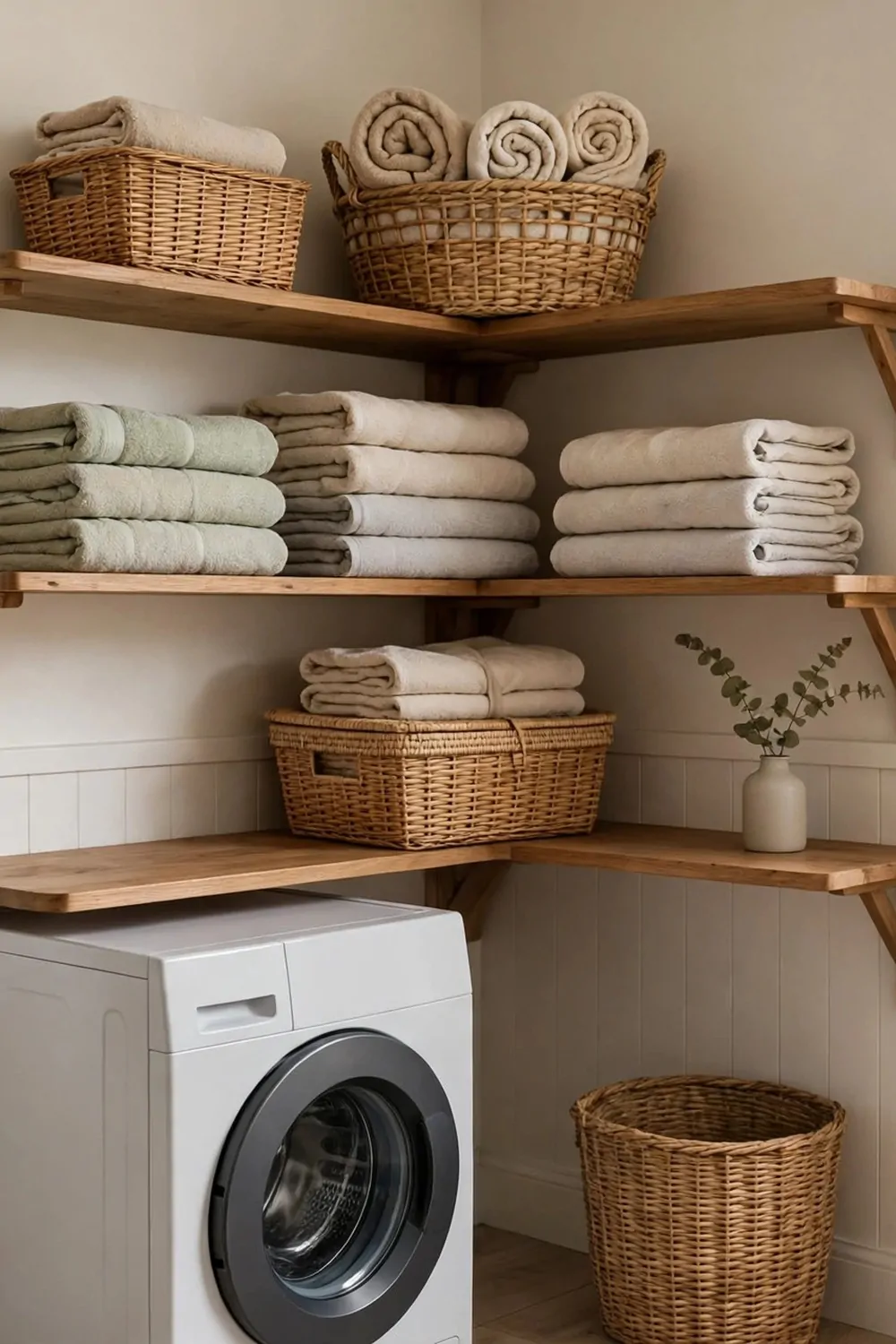
Corners are dead space in most rooms. I put small shelves across mine, and now the corner works hard.
Triangle shelves fit the corner shape well. They hold towels and baskets without sticking out into the walkway.
Keep the corner shelves shallow so you do not bump into them. A deep shelf in a corner is a bruise waiting to happen.
I store the things I use least in the deepest part of the corner. The things I grab often sit near the front edge.
A basket on a corner shelf hides the awkward gap behind it. It also stops small things from falling into the crack.
Dust corners more often than flat walls. Dust loves a corner, and a quick wipe keeps the shelves looking fresh.
Paint the corner shelves the same color as the walls. They blend in, and the towels on them stand out instead.
Measure both walls before you buy or cut a corner shelf. Corners are rarely square, and a shelf that is a touch too big will not fit.
This small fix gave me two extra shelves with no new wall space. It felt like free storage, and in a way it was.
Fold-Down Shelf for Extra Counter Room
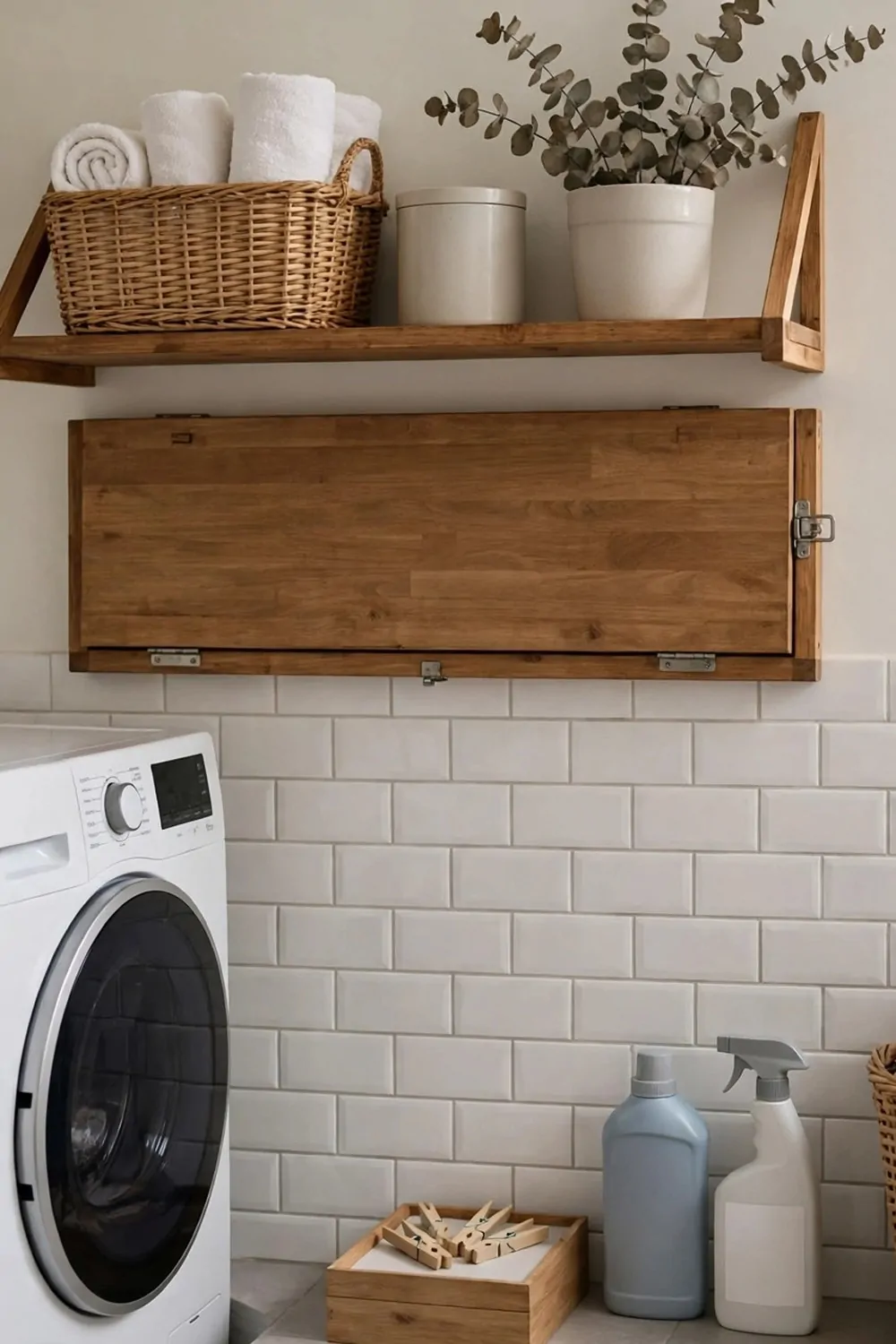
Some days I need more counter room, and some days I do not. A fold down shelf gives me both.
It folds flat against the wall when I am done. I can walk past it without bumping my hip, and the room feels bigger.
Pull it down when you fold a big load. It holds a full basket of clothes with room to spare.
Check the hinges before you load it up. Strong hinges hold the weight, and weak ones will sag over time.
I keep a small hook on the wall to hold the shelf up when it is folded. It stops the shelf from dropping down on its own.
Do not leave heavy things on it overnight. It is a work shelf, not a storage shelf, and it works best when it is clear.
Wipe it down after folding, because lint sticks to the wood. A clean shelf is ready for the next load.
This shelf is my favorite trick in a small room. It appears when I need it and vanishes when I do not.
If you have kids, put the shelf high enough that they cannot pull it down. A folding shelf is fun to play with, and that is not safe.
A Shelf for Stain Sprays and Brushes
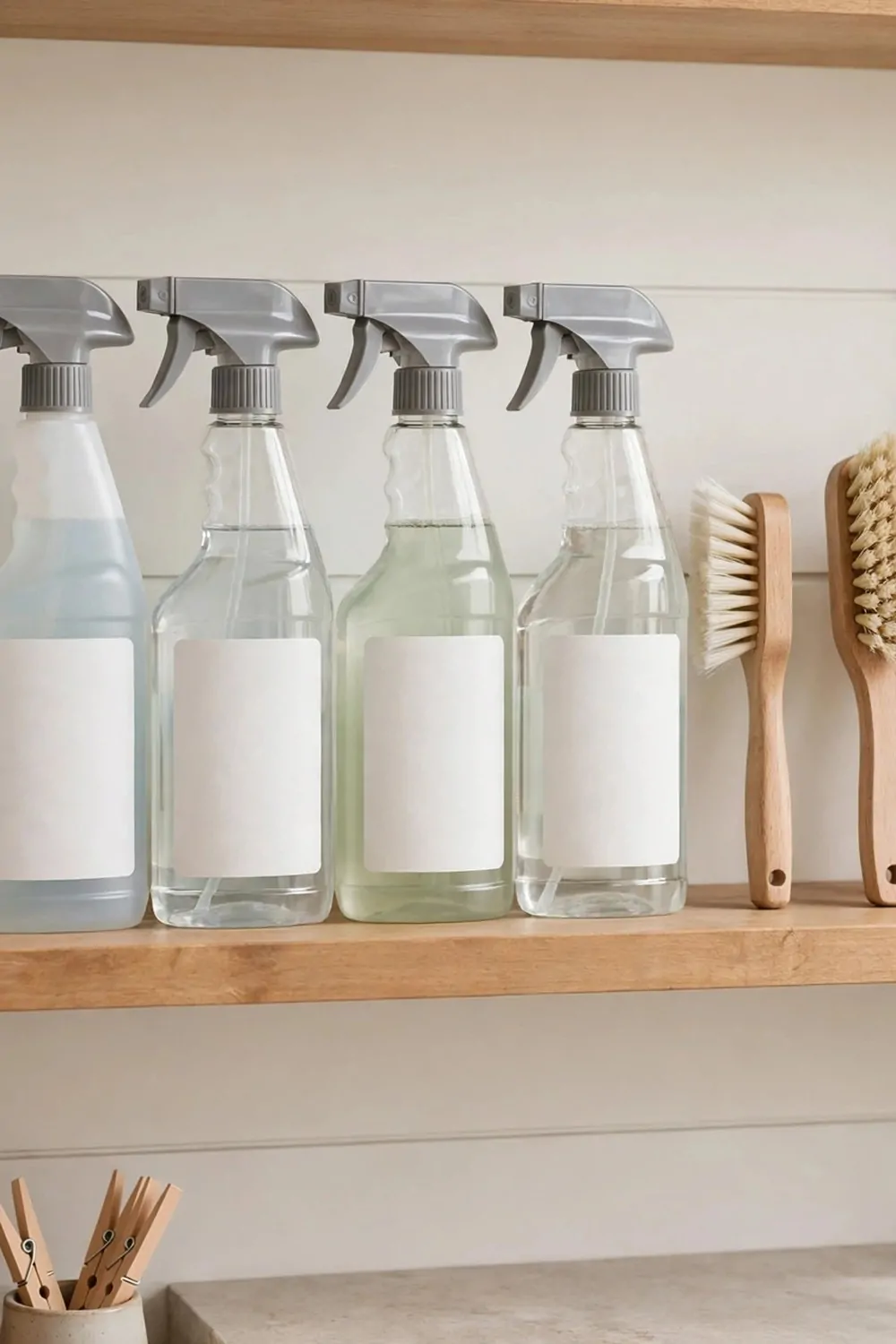
Stains need fast action, and fast action needs the sprays in one spot. I keep every stain spray and brush on a single shelf.
Line the sprays up with the labels facing out. You can read them in a second, and you do not grab the wrong one.
Keep the brushes in a small pot so the bristles stay up. A brush left flat gets bent, and bent bristles do not scrub well.
I keep a white cloth on this shelf too. I dab the stain first, then spray, then brush, and the cloth shows if the stain is lifting.
Store the sprays away from the dryer heat. Heat can warp the bottles, and a warped bottle leaks.
Check the bottles once a month for drips. A small drip can stain the shelf, and it wastes the spray.
Teach the family where this shelf is. A stain treated in the first hour washes out far easier than one left overnight.
Do not mix sprays on the same stain without reading the labels. Some sprays do not play well together, and a mix can make things worse.
This shelf has saved more shirts than I can count. It is small, simple, and always ready.
A Ladder Shelf in the Corner
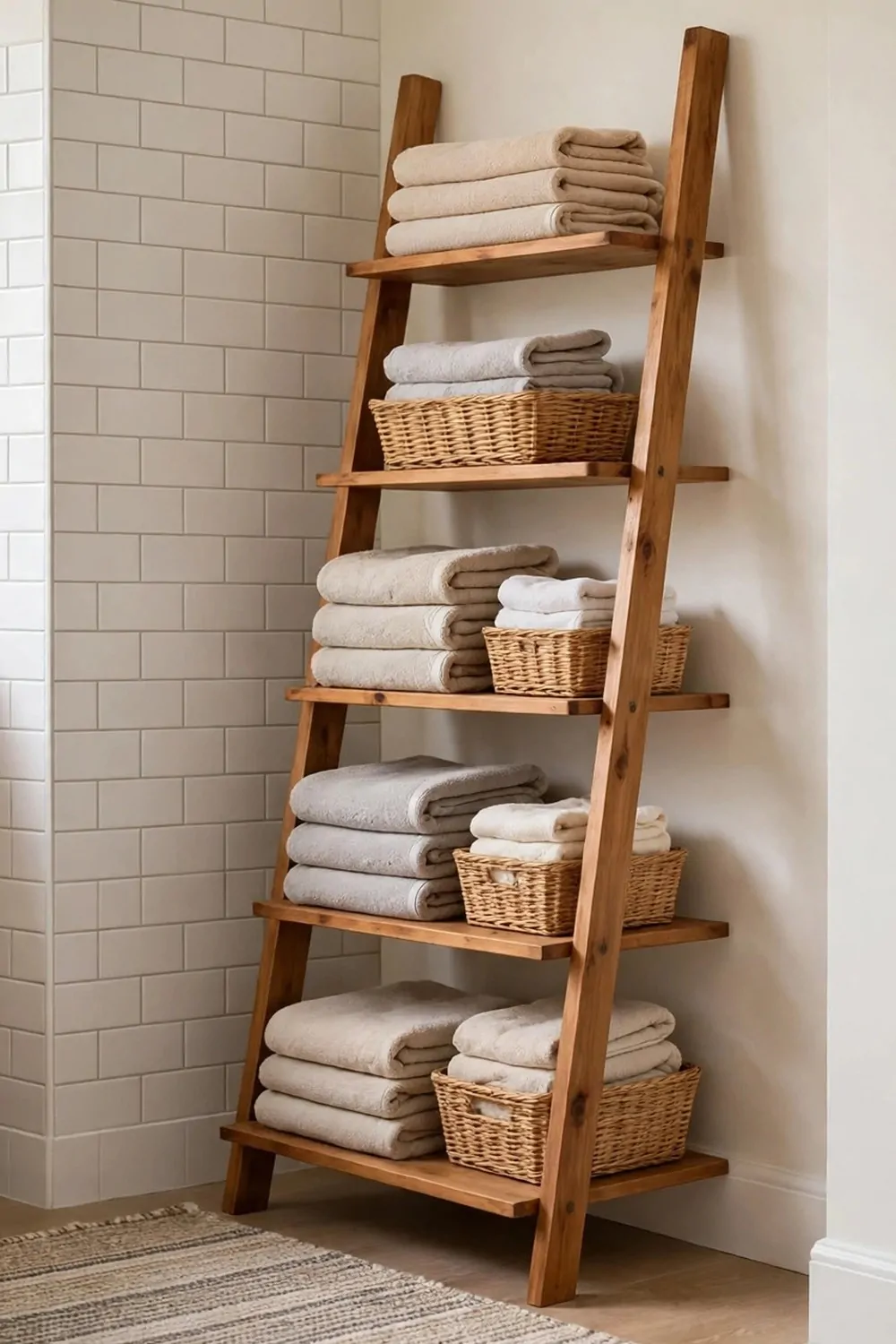
A ladder shelf leans against the wall, so it needs no drilling at all. I love that in a room where I change my mind a lot.
The wide bottom shelf holds big baskets. The narrow top shelves hold small jars and folded cloths.
It fits in a corner without taking much floor space. The lean shape leaves room to walk past it.
Keep the heaviest things on the bottom rung. A top heavy ladder shelf can tip, and that is a mess no one wants.
I tie the top of my ladder shelf to the wall with a small strap. It looks neat, and it stops the shelf from sliding.
Use the middle shelves for the things you grab most. The top shelf is for pretty things and spares.
Wipe the rungs when you dust the room. Lint settles on every flat bit, and a ladder shelf has a lot of flat bits.
This shelf moves easily when I clean the floor. I pull it out, mop, and push it back in under a minute.
A ladder shelf feels friendly in a work room. It is simple wood, simple shape, and it just works.
A Shelf for Clean Sheets Only
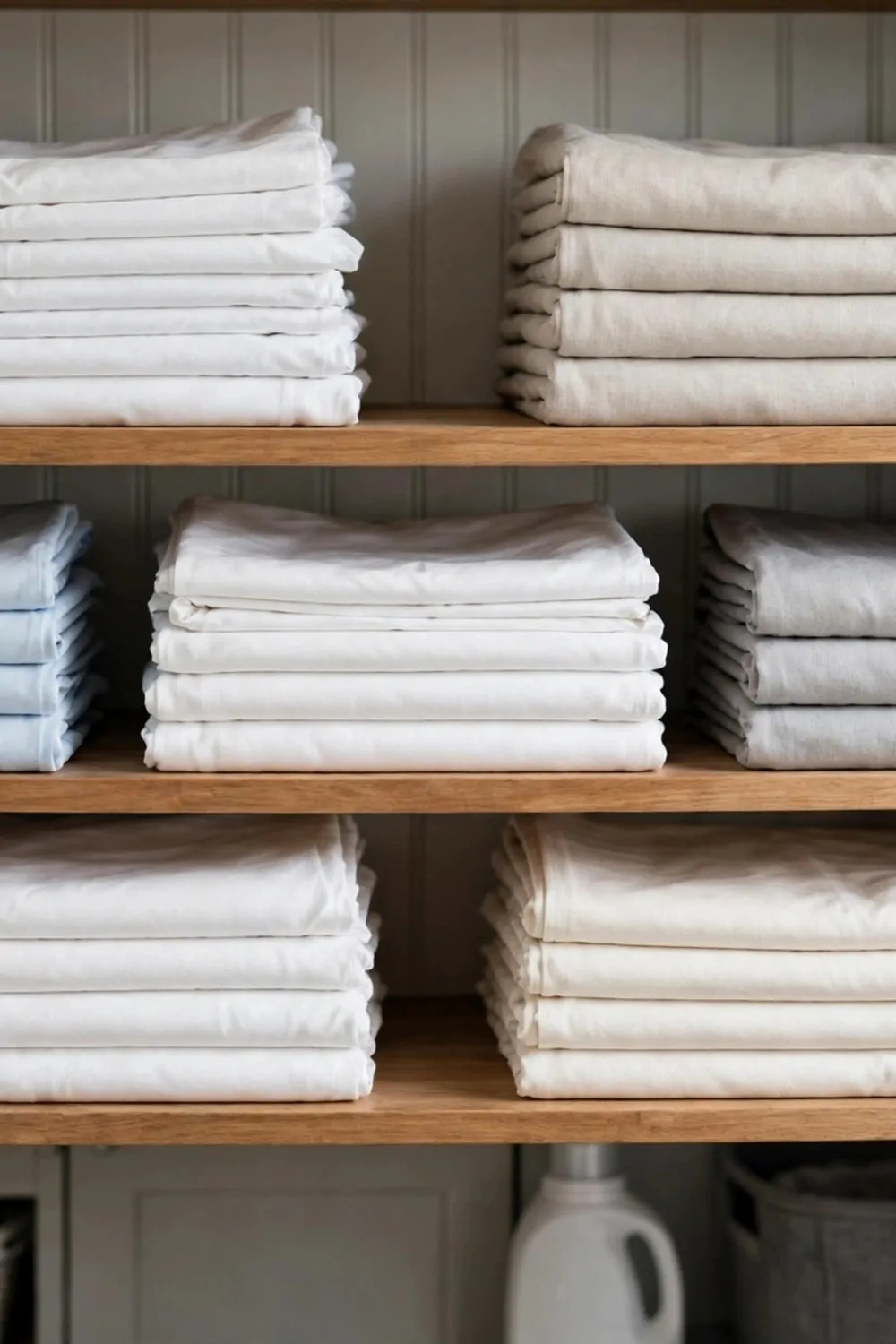
Clean sheets deserve their own shelf. I keep nothing else there, so I never dig through towels to find a sheet set.
Fold each set together, sheet and pillow cases in one bundle. I tuck the pillow cases inside the folded sheet so the set stays together.
Stack the sets by size so you can see what you need. Double sets on one side, single sets on the other.
I keep a small lavender bag on this shelf. It smells fresh, and the sheets pick up a light scent.
Do not store damp sheets here. They need to be fully dry first, or the shelf will smell musty in a week.
Rotate the stacks so the bottom set gets used too. I pull from the top and put fresh sets at the bottom.
This shelf makes bed day faster. I grab a set, I make the bed, and I am done in minutes.
Keep the shelf dust free, because sheets touch skin. A quick wipe once a week is enough.
A sheets only shelf sounds fussy, but it saves time every single week. And it feels good to open a shelf that is just clean sheets.
A Shelf With Hooks Underneath
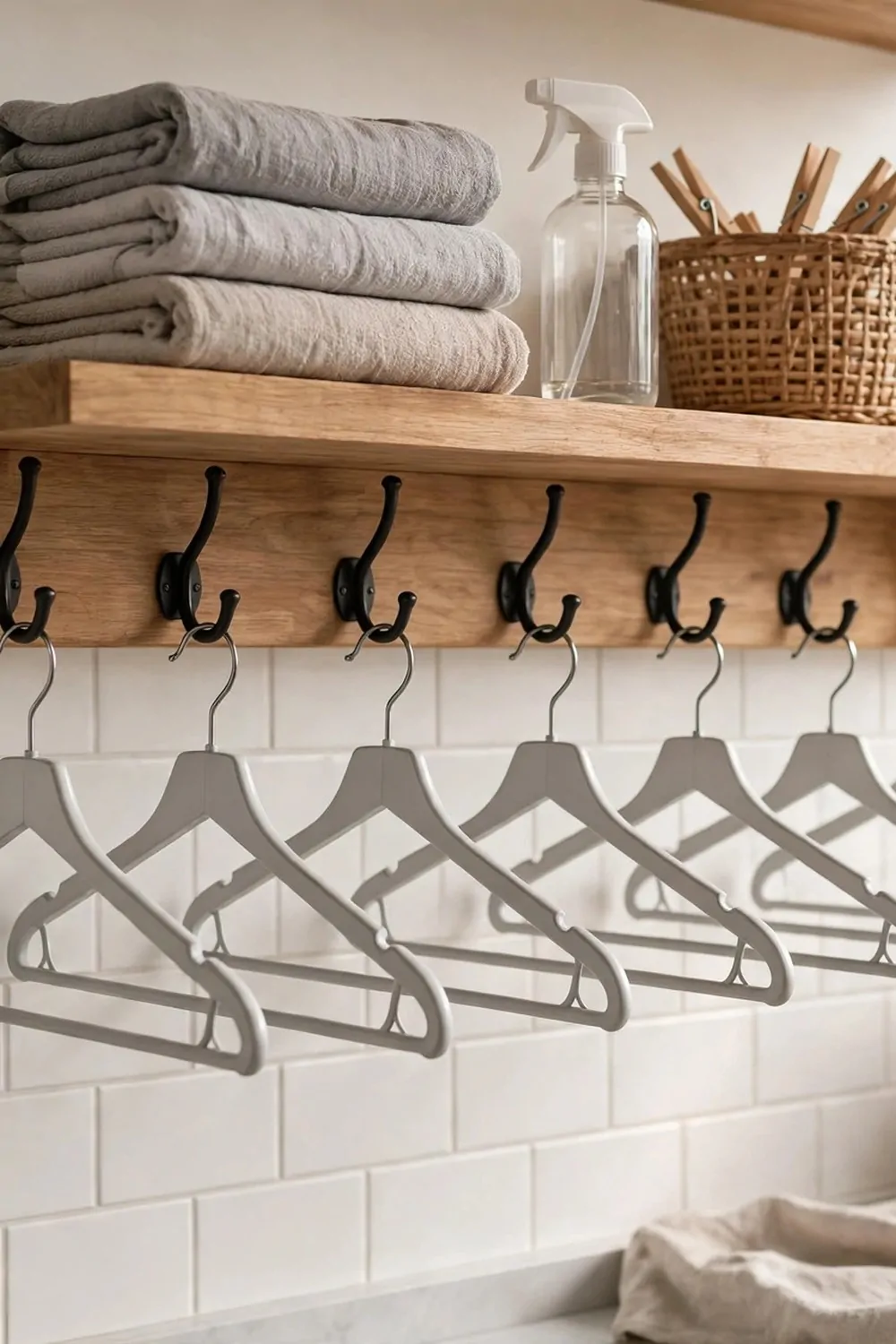
Hooks under a shelf turn dead space into hanging space. I hang empty hangers there, ready for the next load.
Screw the hooks into the shelf base, not just the wall. The shelf wood holds them firm, and they do not pull out.
Keep the hangers in a neat row, all facing the same way. A row of tangled hangers is worse than no hangers at all.
I hang a small mesh bag on one hook for clothespins. It keeps them together, and I can grab a handful fast.
Use the shelf top for folded items and the hooks below for hanging items. One shelf does two jobs, and the room stays tidy.
Do not hang wet clothes on these hooks. They are for empty hangers and light things, not for heavy wet loads.
Check the hooks now and then to make sure they are tight. A loose hook drops hangers on the floor, and that is a small mess.
This shelf sits near the dryer so I can hang shirts straight from the machine. Less folding, fewer creases.
It is a simple idea, but it changed my routine. The hangers are always there, and I never hunt for one.
A Shelf for Pet Laundry Supplies
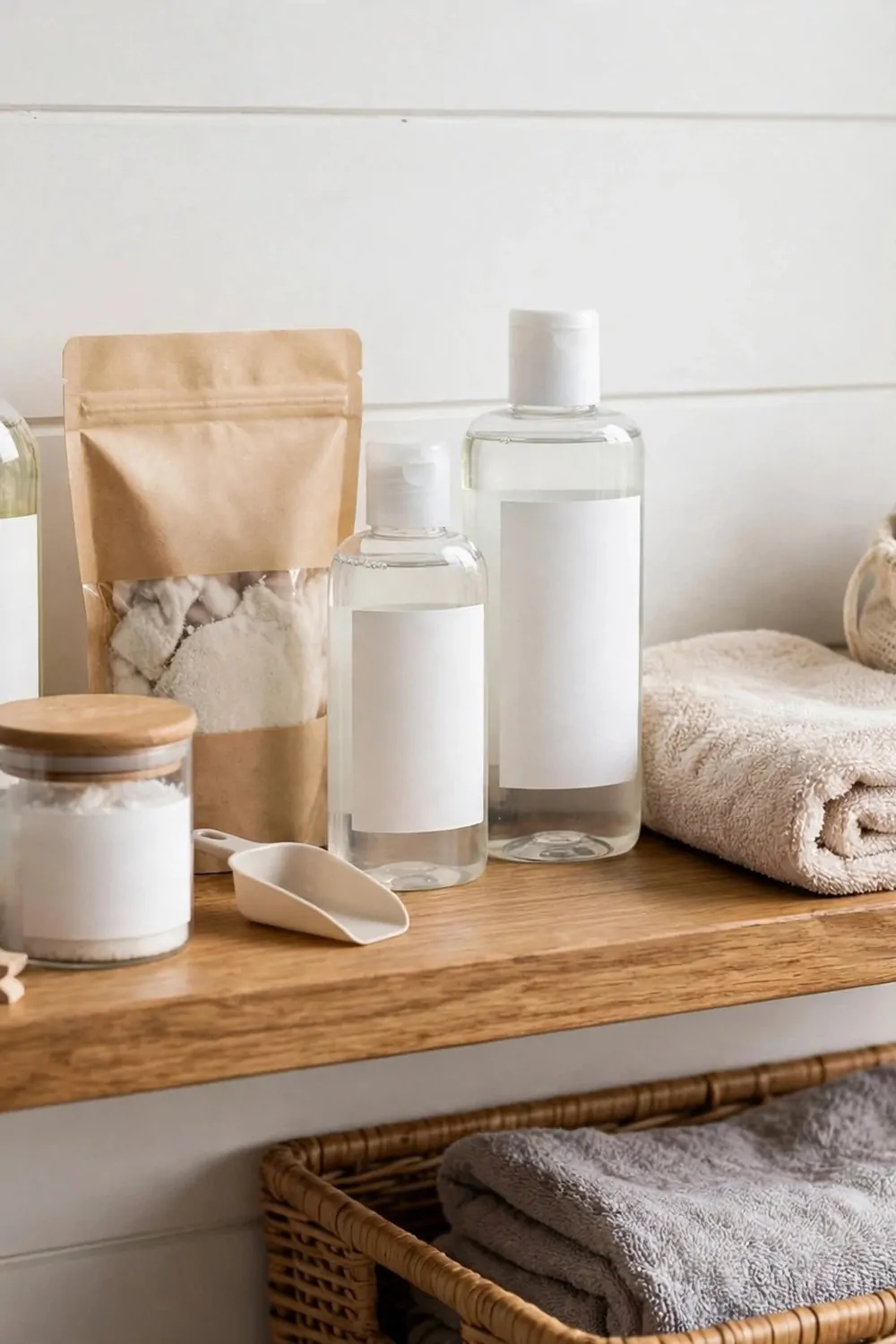
Pet bedding and towels need their own shelf. I keep pet soap, shampoo, and a small towel there, away from our clothes.
Label the pet bottles clearly so no one mixes them up with ours. A pet soap is not the same as a baby soap.
Keep a small brush on this shelf for pet hair. I brush the bedding before I wash it, and the machine stays cleaner.
Store pet towels in a separate basket on the shelf. They get fur on them, and I do not want fur on our clean towels.
Wash pet items on their own, not mixed with our clothes. It keeps the fur in one load and the wash simple.
I keep a spare collar and lead on a hook under this shelf. They are easy to grab before a walk, and they do not get lost.
Wipe this shelf more often than the others. Pet hair floats, and it lands on every flat surface in the room.
This shelf is small, but it stops a big mess. Pet stuff stays in one spot, and the rest of the room stays clean.
If you have no pets, skip this shelf and use the space for something else. Every home needs different shelves, and that is fine.
A Shelf for Gift Wrap and Odd Bits
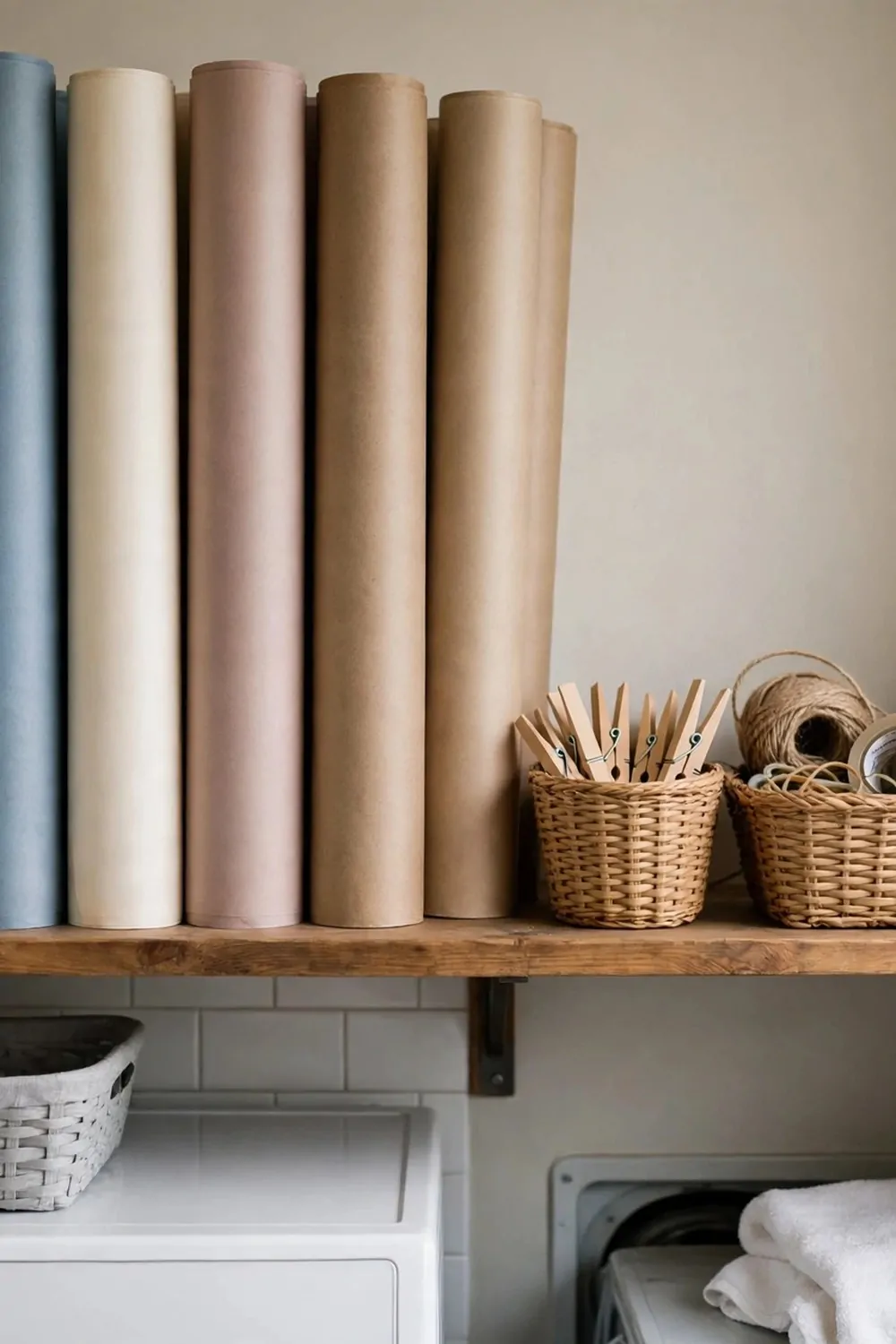
Gift wrap rolls are long and awkward, and they roll off flat shelves. I keep mine upright in a tall basket on a shelf.
The shelf holds the wrap, ribbon, tape, and scissors in small baskets. Everything for wrapping sits in one place.
Keep the rolls upright so they do not crease. A creased roll is hard to use, and the paper tears.
I store odd bits in a small basket on the same shelf. Spare buttons, string, and tape live there until I need them.
Label the odd bits basket so it does not become a junk box. If I cannot name what is in it, it does not belong there.
Check the wrap stock before a busy season. I count the rolls twice a year, and I buy more before I run out.
Keep scissors in a pot with the blades down. It is safer, and the blades stay sharp longer.
This shelf lives in the laundry room because it has space. The wrap does not mind the room, and the room has room to spare.
It is a strange shelf for a laundry room, but it works. The wrap is out of the way, and I always know where it is.
A Shelf for Shoes and Boots by the Door
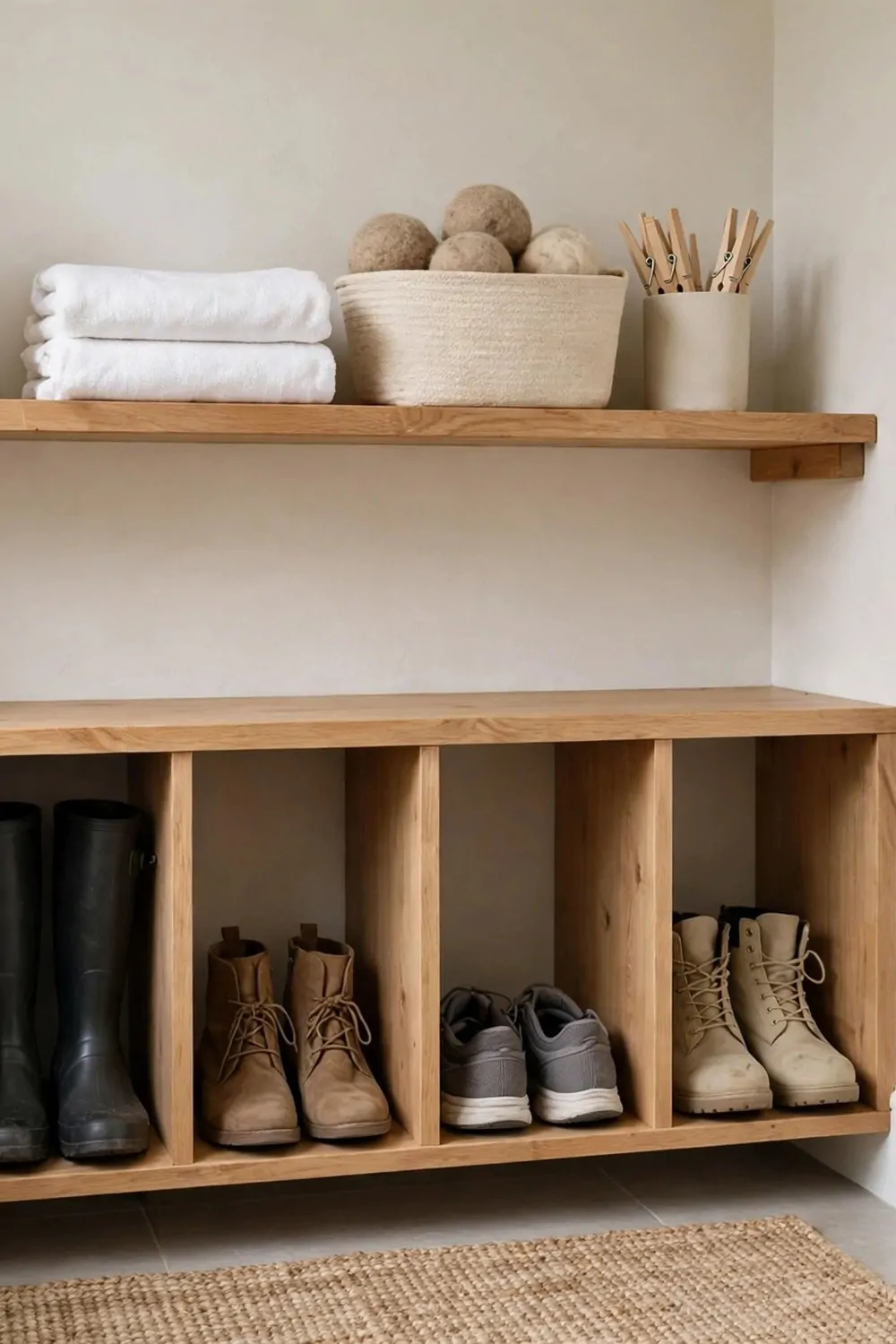
Shoes by the door keep mud out of the house. I put a shelf low by the door with cubbies below it for boots.
Each person gets a cubby for their shoes. The shelf above holds a brush and a cloth for quick cleans.
Keep the cubbies open so shoes air out. Closed boxes trap damp, and damp shoes smell bad fast.
I put a tray under the boots to catch mud and water. I rinse the tray once a week, and the floor stays clean.
Teach the family to put shoes in the cubby, not beside it. A shoe beside the cubby is a shoe to trip over.
Keep the shelf top clear except for the brush and cloth. A clear shelf is easy to wipe, and it looks tidy.
In wet weather, I put a small towel on the shelf for drying hands after wiping boots. It saves a trip to the bathroom.
This shelf is the first thing I see when I come home. It tells me the house is in order, and that feels good.
Shoes have a home now, and the hallway is clear. It is a small change with a big daily payoff.
Wire Shelves That Let Air Move
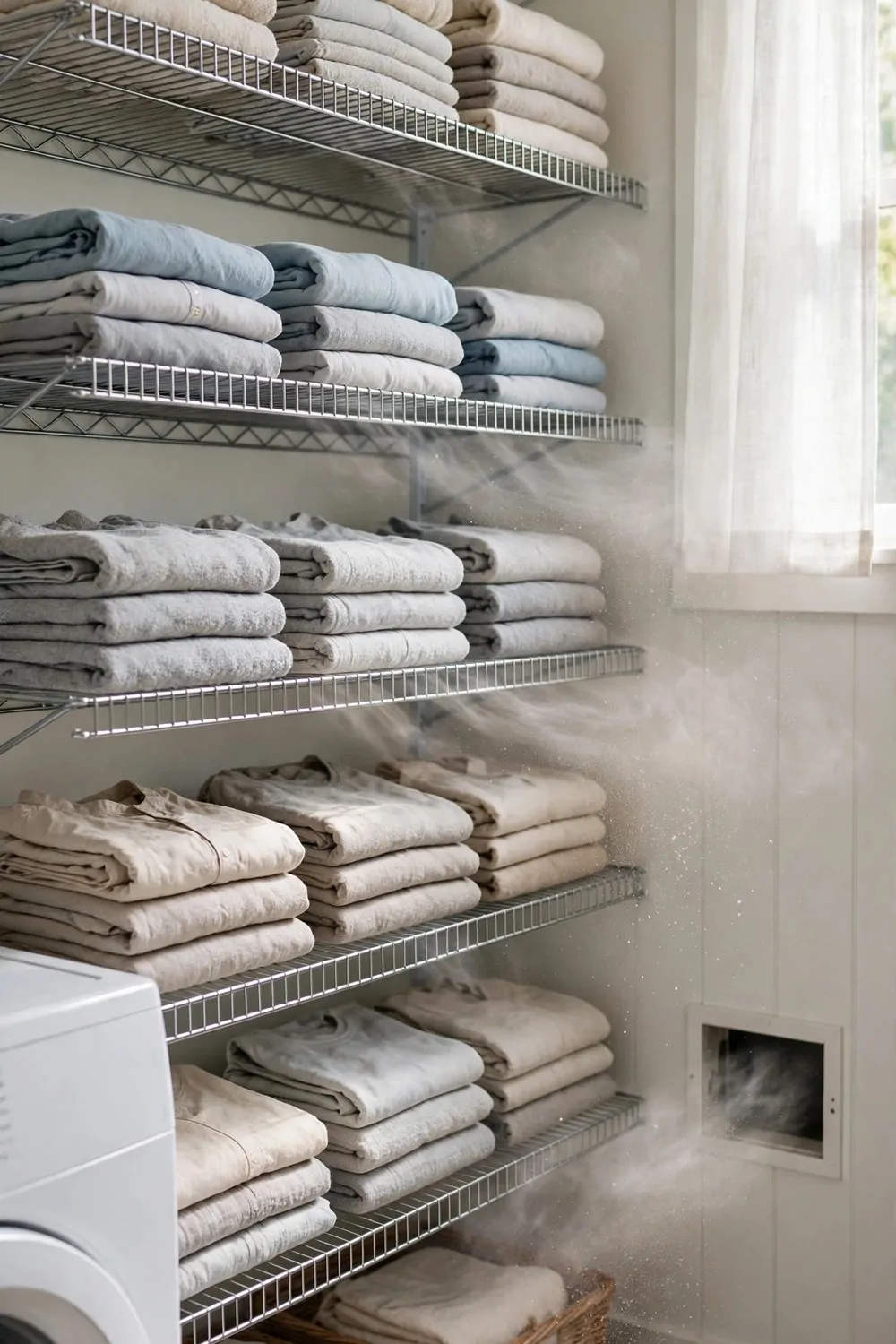
I used to stack towels on a solid board and they always felt a bit damp underneath. The bottom towel never dried right and it bugged me every time I grabbed it.
Wire shelves fixed that little problem in one go. Air moves up through the gaps and around each stack, so nothing sits in its own damp spot for days.
You can see through them too, which sounds small but it helps a lot. I spot the blue towels from the doorway now and I do not have to pull three stacks out to find one thing.
They are light to put up and they hold more than you would think. I keep folded sheets on one and the kids’ play clothes on another, and nothing has sagged yet.
Dust falls through the wires instead of piling up on a board. I wipe the shelf with a damp cloth once a week and it takes about two minutes, maybe less.
If your laundry room gets steamy, these shelves are a kind friend to your clothes. Wet air escapes instead of getting trapped under a pile of clean laundry.
I like to leave a little space between each stack so the air can do its job. Cramming them tight defeats the whole point, and I learned that the hard way.
Try one wire shelf first if you are not sure. You will know in a week if your towels feel fresher, and I bet they will.
A Shelf for Air-Drying Clothes
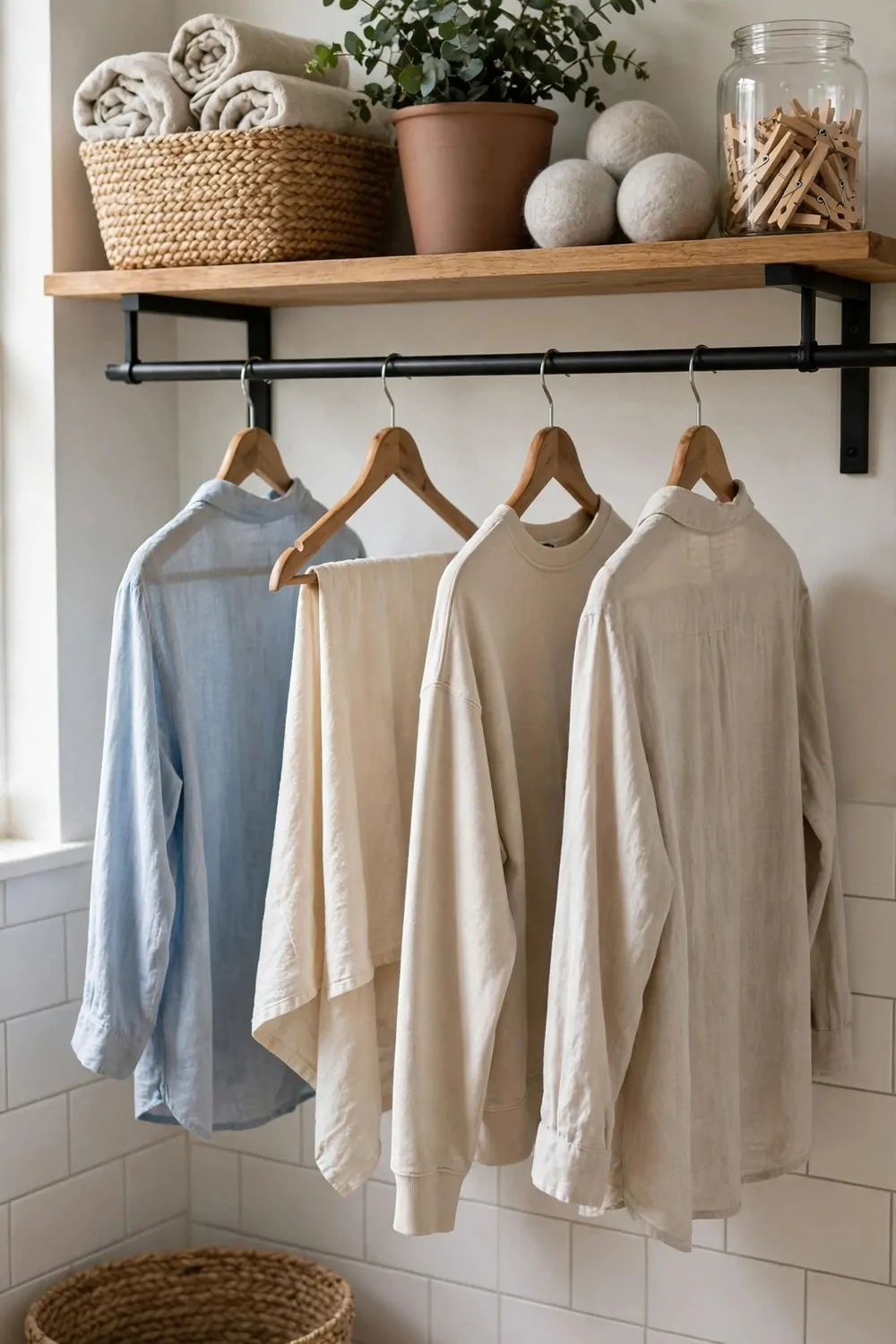
Some clothes just should not go in the dryer. My soft sweaters and the kids’ school shirts last way longer when they dry in the air, and I wish I had learned that years ago.
A shelf with a rail under it gives those clothes a home. The shelf holds the soap and pegs up top, and the rail below holds the hangers with the wet clothes.
I hang things straight from the washer so they do not wrinkle as much. A quick shake, a hanger, and up it goes, and by morning most of it is dry.
The best spot for this shelf is near a window or a vent if you have one. Moving air dries clothes faster than still air, and you can feel the difference.
I keep a small basket on the shelf for pegs and clips. They used to wander all over the room, and now they live in one spot where I can reach them.
Delicate things dry flat on top of the shelf too. I lay a clean towel down first and spread the sweater out, and it keeps its shape so much better.
This setup saves power as well, which makes me smile a little each month. Fewer dryer runs add up, and the clothes look better for it.
If you only air-dry a few things, one short shelf is plenty. Start small and add a second rail later if your pile of hand-wash clothes grows.
A Shelf Above the Door
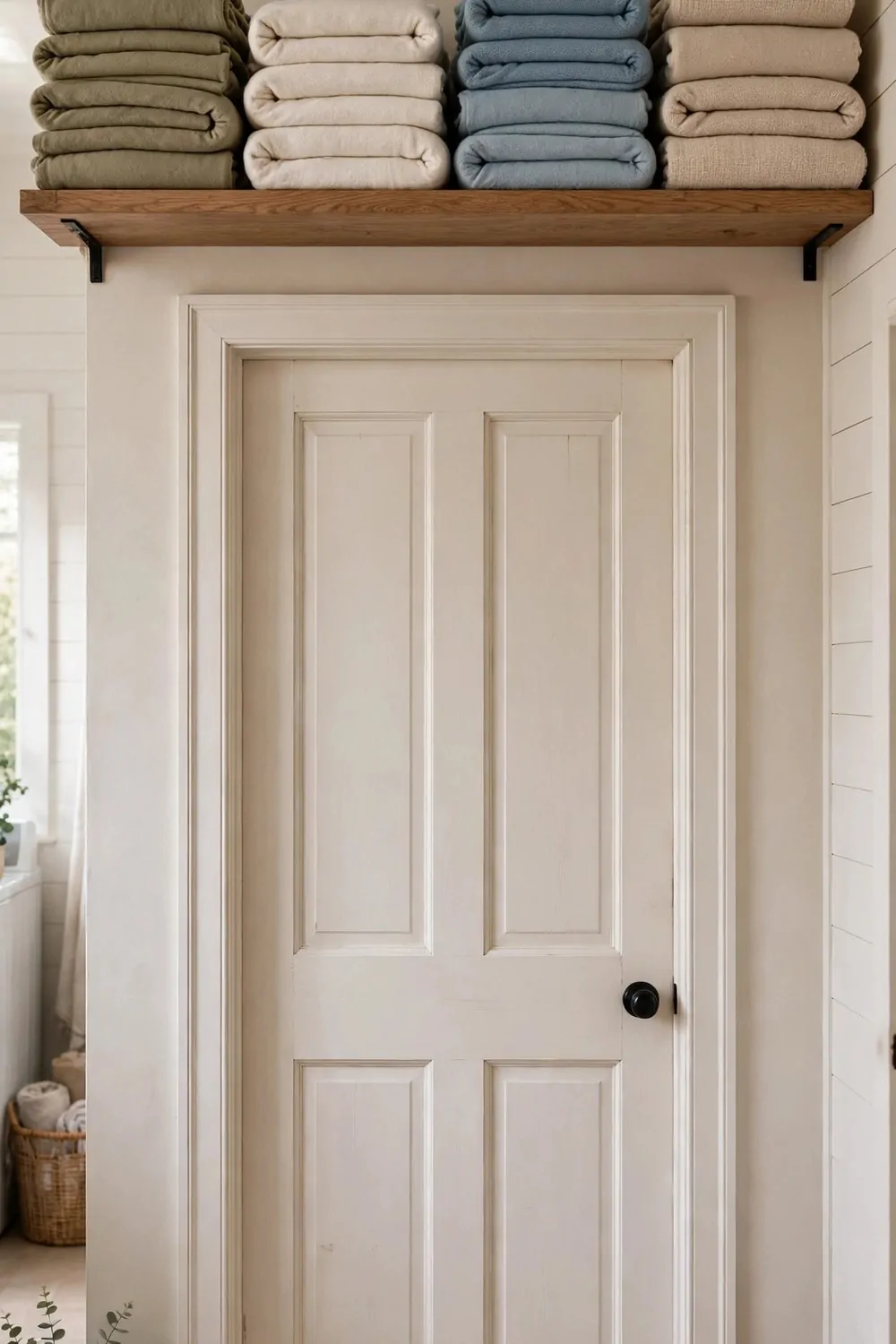
The space above the door sat empty in my laundry room for years. I walked under it a hundred times a week and never once thought about using it.
Then one day I put a shelf up there and it felt like finding a secret room. It holds things I do not need every day but still want close by.
I keep spare blankets up there, folded tight in neat stacks. They are out of the way but I can grab one in seconds when someone feels cold at night.
This shelf is perfect for things you use once in a while. Guest bedding, the big beach towels, and the spare pillow all live above my door now.
You do need a small step stool to reach it, and that is fine. I keep a little folding stool tucked behind the door, and it takes me five seconds to grab it.
Make sure the shelf is fixed tight to the wall, because you do not want it wobbling above a doorway. I had my brother check the screws twice, and I am glad I did.
Keep the stacks low and flat so nothing can slide off onto someone’s head. I never pile things higher than a few inches up there, just to be safe.
It is a tiny change that freed up a whole shelf lower down for daily stuff. Sometimes the best storage is the space you forgot you had.
A Shelf for Laundry Baskets Below
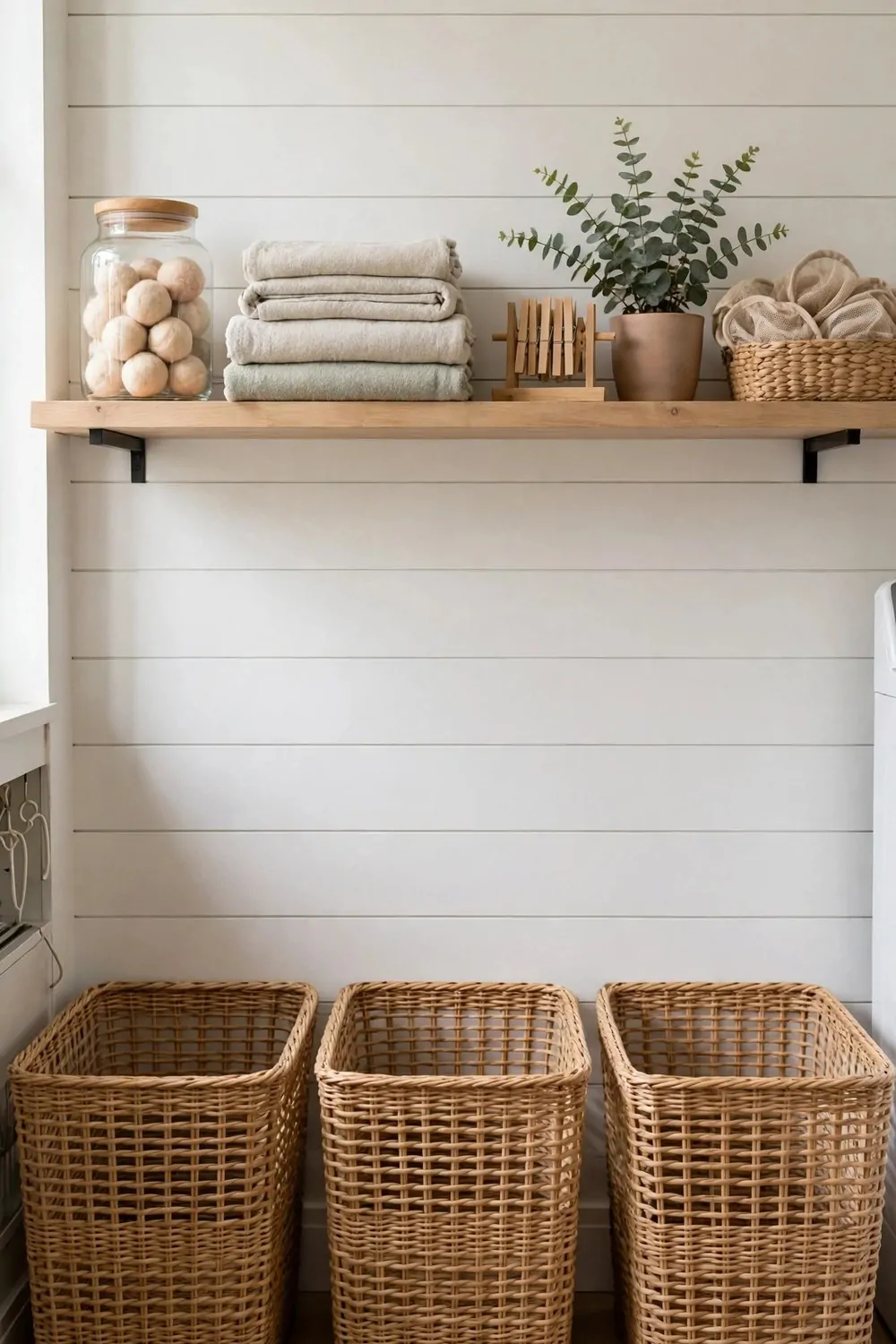
Baskets used to live in a messy pile on my laundry room floor. I tripped over them, the lids went missing, and sorting clothes felt like a chore before the chore even started.
A shelf above the baskets changed the whole flow of the room. The shelf holds soap and stain spray up top, and the baskets sit in a neat row underneath it.
I gave each basket a job. One is for dark clothes, one is for light clothes, and one is for towels, and everyone in the house knows the system now.
Sorting happens as clothes come off, not on wash day. That one change cut my laundry time down a lot, and I am not exaggerating.
The baskets slide out easy when they are full. I pull one out, carry it to the washer, and slide it back empty when I am done.
Kids can reach their own basket too, which means fewer clothes on the bedroom floor. It is not perfect, but it is so much better than before.
I picked baskets with handles because carrying a full basket without handles is a workout nobody asked for. The handles make the trip to the washer simple.
If your floor space is tight, stack two baskets and put the shelf a little higher. The idea stays the same, and your floor stays clear for walking.
A Deep Shelf for Bulky Bedding
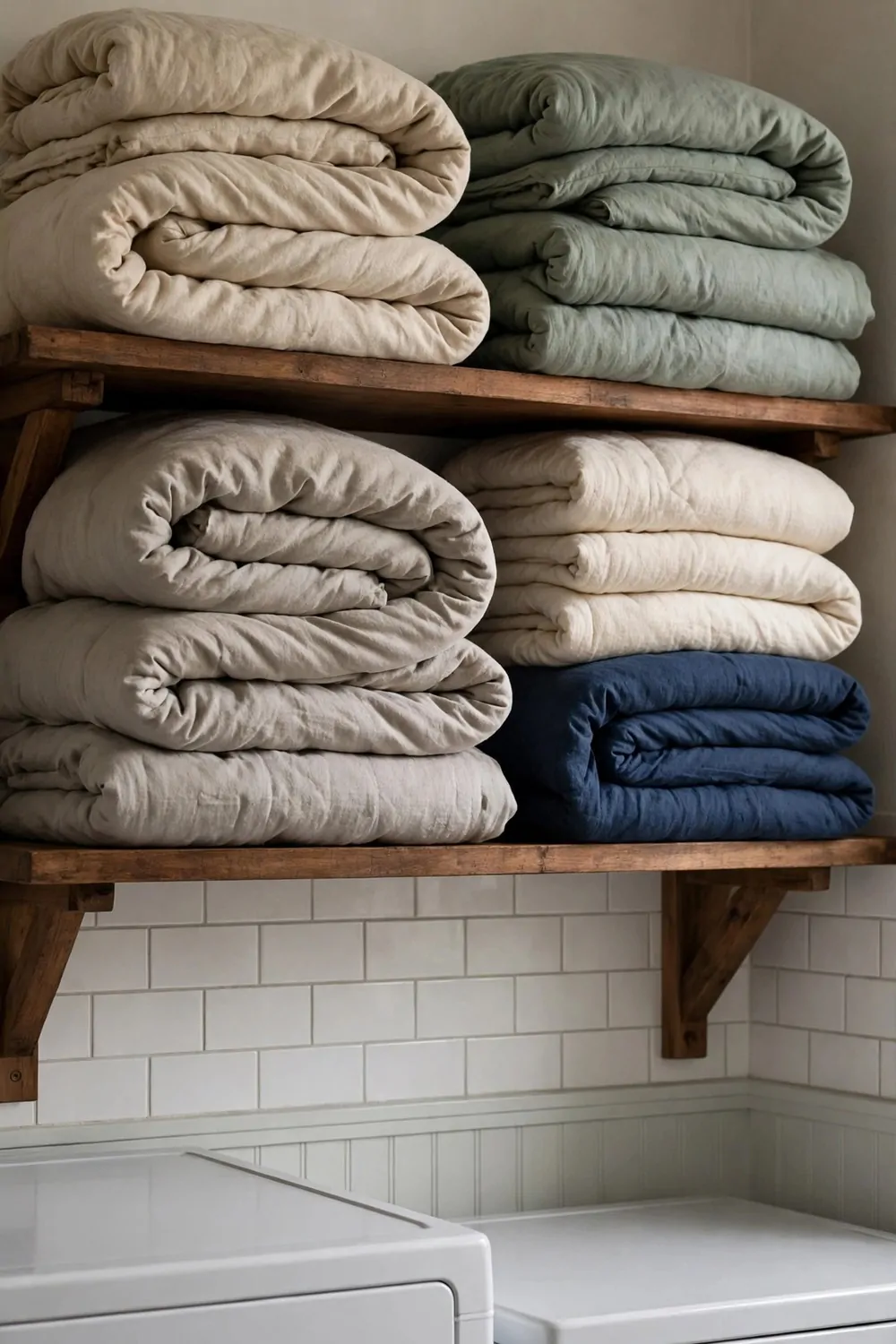
Duvets and thick blankets are the hardest things to store in a laundry room. They flop over the edge of a normal shelf and end up in a heap on the floor.
A deep shelf gives them room to sit properly. Mine is about twice as deep as a normal shelf, and a folded duvet fits on it without hanging over the front.
I fold bedding into big flat squares so each pile stays neat. It takes an extra minute to fold them well, but the shelf looks tidy for weeks after.
This shelf lives at the top of my laundry room, where I can reach it but it does not get in the way. Heavy bedding up high is fine because I only grab it a few times a month.
I roll the thickest blankets instead of folding them sometimes. Rolled blankets fit snug side by side, and I can pull one out without the whole pile falling over.
A deep shelf also works for sleeping bags and the guest bed set. Everything bulky has one home now, and the linen closet in the hall feels empty in a good way.
Keep the piles to two or three high, or the bottom one gets squashed flat. I learned that after a month of flat pillows and lumpy blankets.
If you have the wall space, one deep shelf beats three shallow ones for bedding. It is the one shelf in my laundry room I would never give up.
A Shelf for Cleaning Cloths and Rags
Cleaning cloths used to live in a drawer where I could never find the right one. I would dig past old rags to reach a clean cloth, and the drawer always looked like a mess.
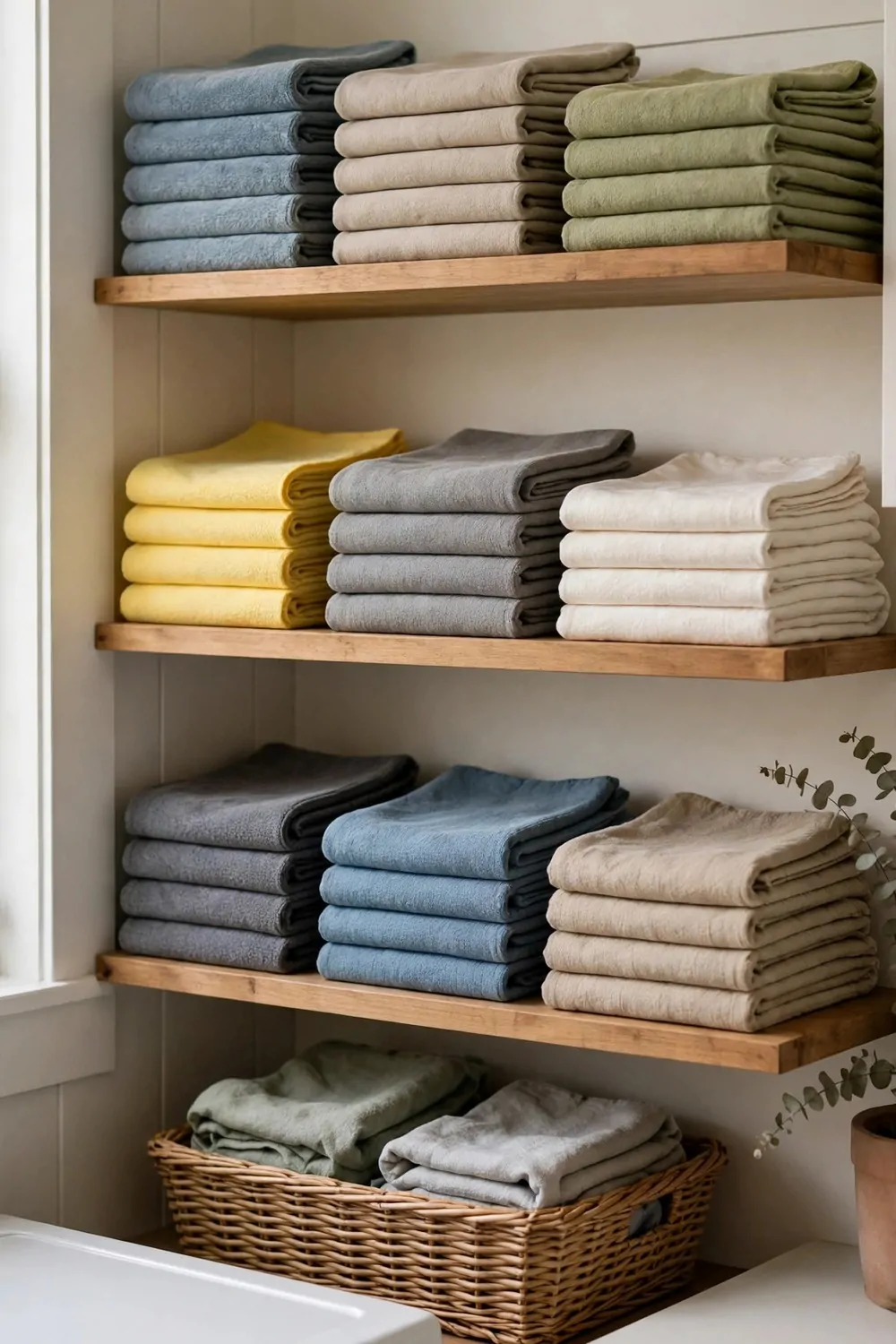
Now they have their own shelf, and it is a small thing that makes cleaning day feel easier. Clean cloths sit in one stack and old rags sit in another, and I always know which is which.
I fold them small so a lot fit in a little space. A stack of thin cloths takes up less room than you think, and the shelf stays neat for a long time.
Colour helps me sort them without thinking. Blue cloths are for glass, yellow ones are for the kitchen, and the old torn ones are rags for dirty jobs.
I keep a little basket on the shelf for the cloths that need washing. When the basket is full, it goes straight in the machine with the towels.
This shelf sits right by the washer, which makes sense when you think about it. Dirty cloths go in, clean ones come out, and the shelf is right there in the middle.
I wash the rags separate from the good cloths so they stay nice longer. It is a tiny habit, but my glass cloths still look new after a year.
Give your cloths a shelf of their own and you will wonder why you waited. It costs nothing and it saves you from digging through that drawer ever again.
A Shelf for Each Day of the Week
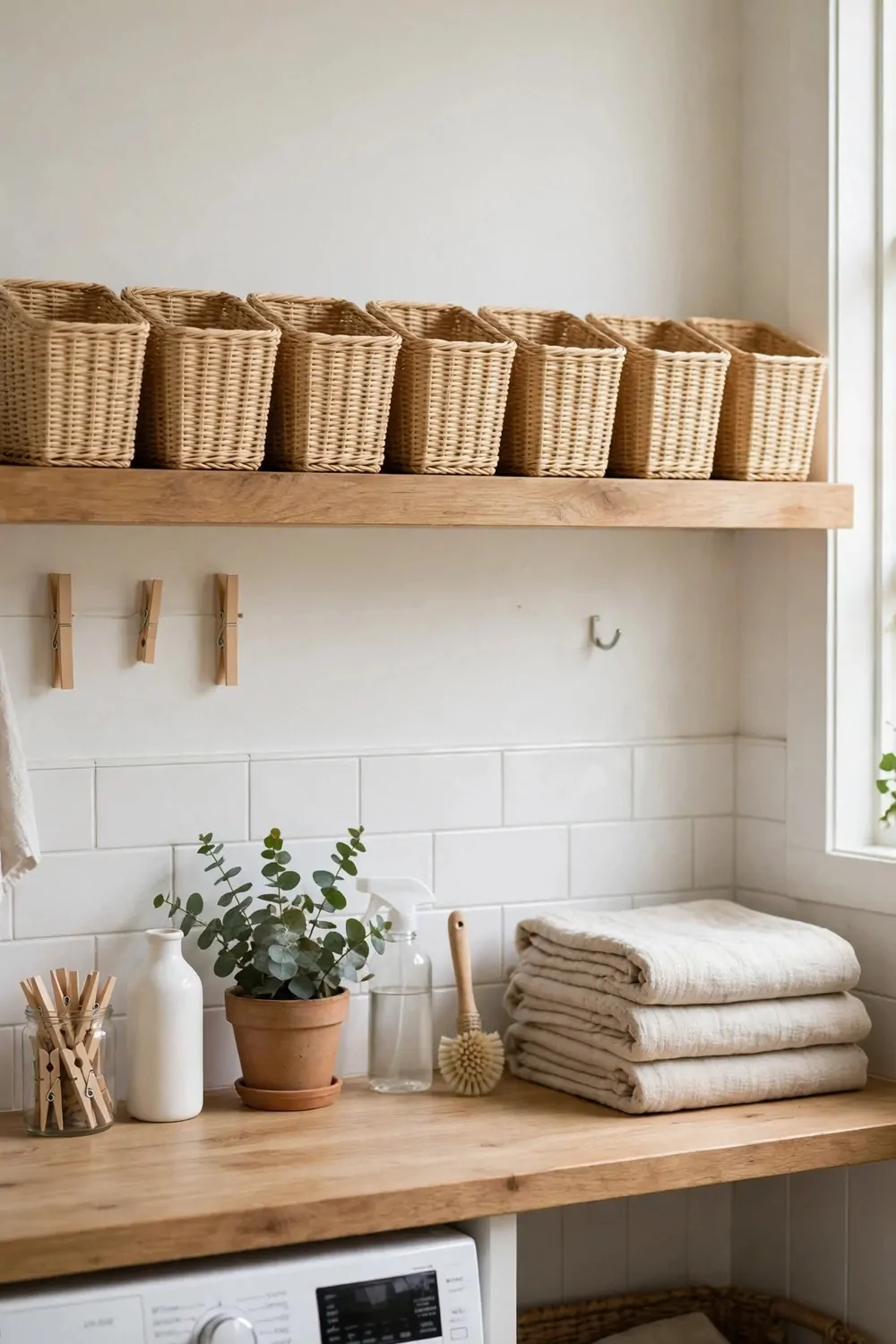
Laundry piles up fast when you put it off, and by Sunday the basket looks like a mountain. I needed a system that spread the work out so no one day felt huge.
Seven small bins on one shelf did the trick for me. Each bin has a day on it, and I toss clothes in the bin for the day they will be washed.
Monday gets the school clothes, Tuesday gets the work shirts, and the rest of the week follows the same simple pattern. I wrote the days on little cards and taped them to the front.
The bins are small on purpose. A small bin fills up in a day, and a full small bin is a quick load, not a scary mountain of washing.
| Day | What goes in the bin | When I wash it |
|---|---|---|
| Monday | School clothes | Monday morning |
| Tuesday | Work shirts | Tuesday morning |
| Wednesday | Towels and cloths | Wednesday evening |
| Thursday | Everyday clothes | Thursday morning |
| Friday | Bedding and sheets | Friday evening |
| Saturday | Sports kit and play clothes | Saturday morning |
| Sunday | Rest day, bin stays empty | No wash |
My kids actually like this system, which surprised me a lot. They check the day, they find their bin, and they feel like they are part of the plan.
I keep the soap and a stain stick on the shelf right above the bins. Everything for that day’s load is in one spot, so I do not wander around the room looking for things.
Sunday is the rest day in our house, and the Sunday bin stays empty most weeks. It feels good to look at the shelf and see one empty bin, like the week went to plan.
This shelf taught me that laundry is easier in small daily bits. One load a day beats seven loads on the weekend, and my Sundays are mine again.
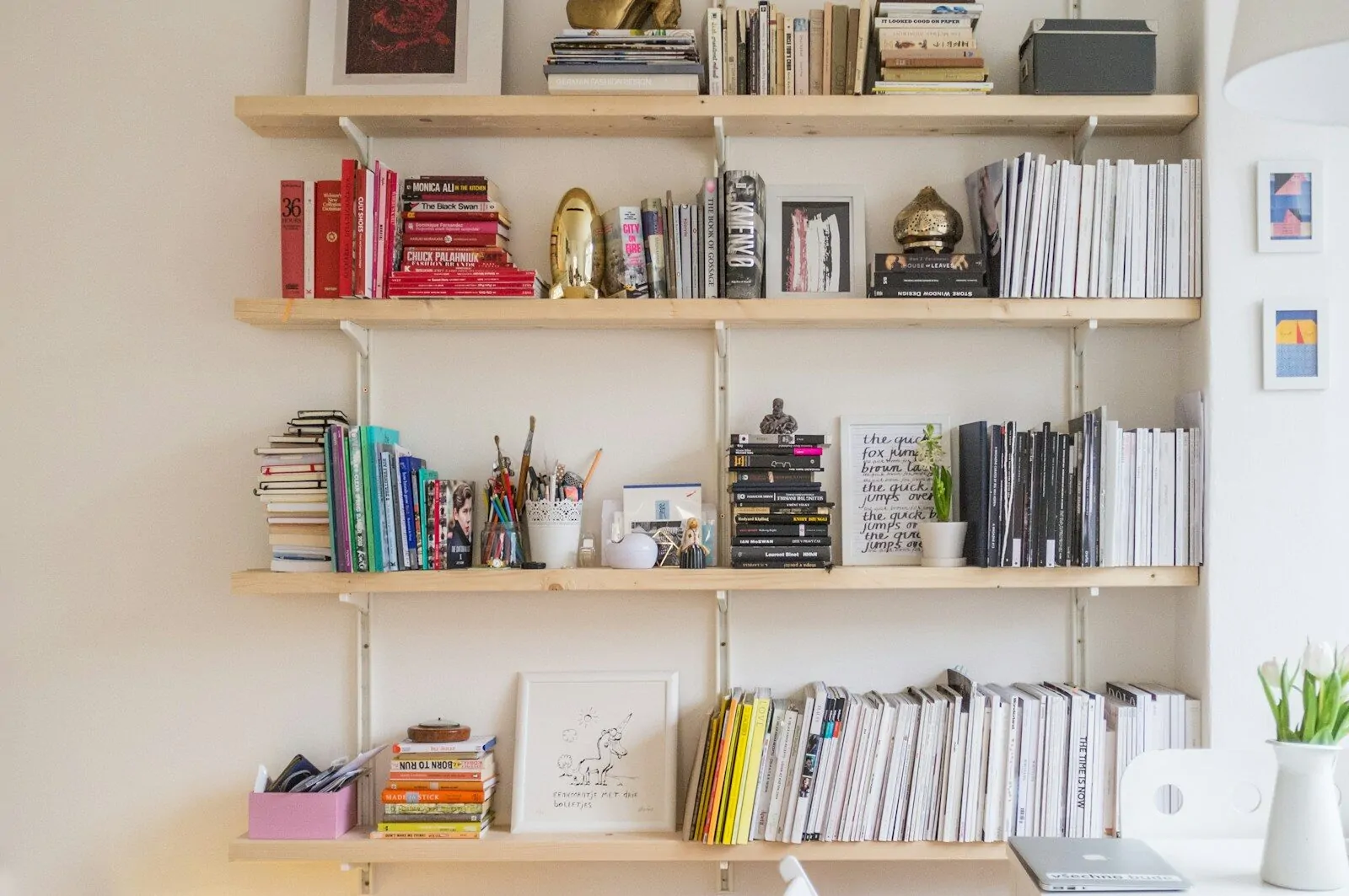
A Shelf for Books and a Small Plant
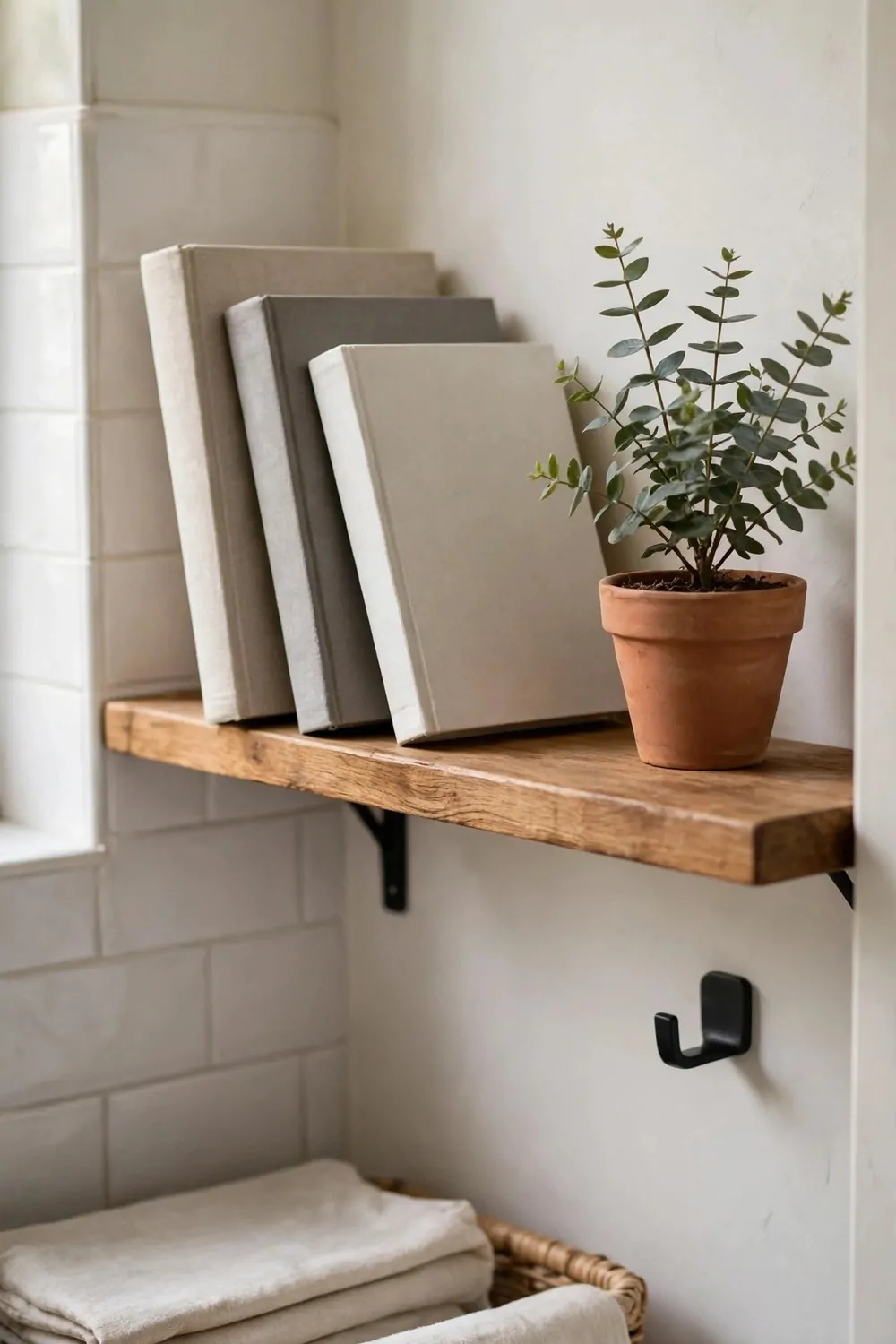
A laundry room does not have to look like a plain work room. I put a few books and a small plant on one shelf, and now the room feels like part of my home.
I wait for the washer a lot, and a book makes the wait feel short. I keep two or three light reads on the shelf, nothing heavy, just something fun to flip through.
The plant loves the steamy air in here. It drinks up the moisture and stays green with almost no care from me, which suits me just fine.
I picked a plant that likes shade because my laundry room has one small window. It sits happy on the shelf and I water it once a week when I remember.
Books and plants make the shelf look soft next to all the soap bottles. The room feels less like a chore zone and more like a little corner I enjoy.
Keep the books away from the washer splash zone, or they will get damp. Mine sit on the far end of the shelf, and they have stayed dry for months.
A small plant pot with a tray underneath keeps water off the shelf. I learned that after one spill left a ring mark I still see when the light hits it right.
This shelf is my reminder that useful rooms can be pretty too. One plant and a couple of books, and the whole room feels warmer.
A Shelf for the Iron and Steamer
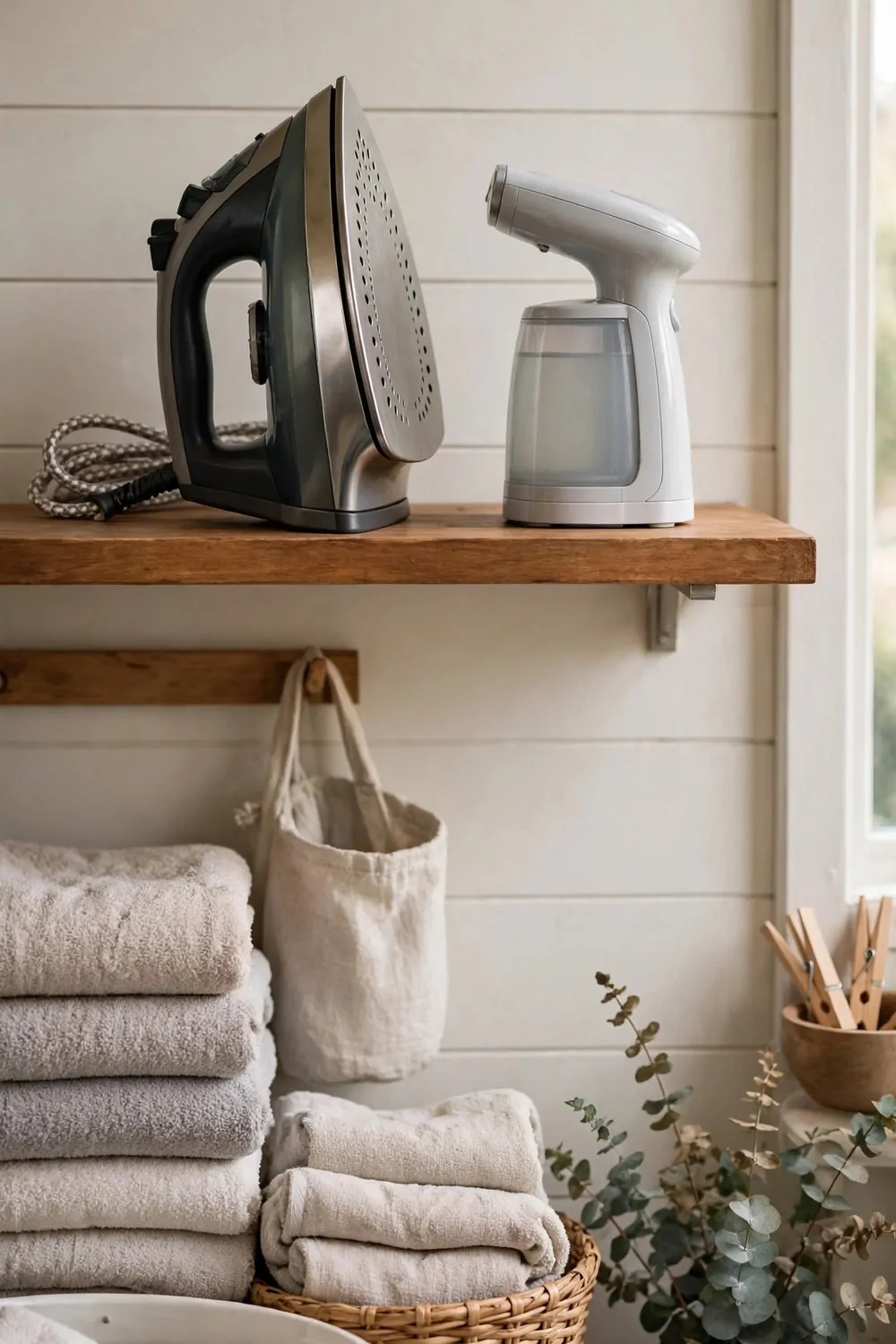
My iron used to live on top of the dryer where it slid around every time the machine shook. I found it on the floor twice, and the second time it cracked a little on the corner.
A shelf made just for the iron and steamer keeps them safe and ready. They sit side by side on a heat-safe spot, and I can grab either one without moving five other things.
I let the iron cool down on the shelf before I put it away. The shelf does not mind the warmth, and it beats leaving a hot iron on a pile of clothes.
The steamer hangs on a little hook under the shelf, and its cord wraps neat around a peg. No more tangled cords falling off the dryer onto my feet.
I keep a small spray bottle of water on the same shelf for stubborn wrinkles. One shelf holds the whole ironing kit, and I love that.
This shelf sits near the folding counter, which makes the flow of the room work better. Wash, dry, fold, press, and done, all in a few steps.
I check the iron’s water tank each time I put it back. A quick empty keeps it from leaking on the shelf, and it takes about ten seconds.
Give your iron a real home and it will last longer. Mine has survived two years on its shelf without a single fall, and that is a record in my house.
A Shelf for Travel Laundry Bags
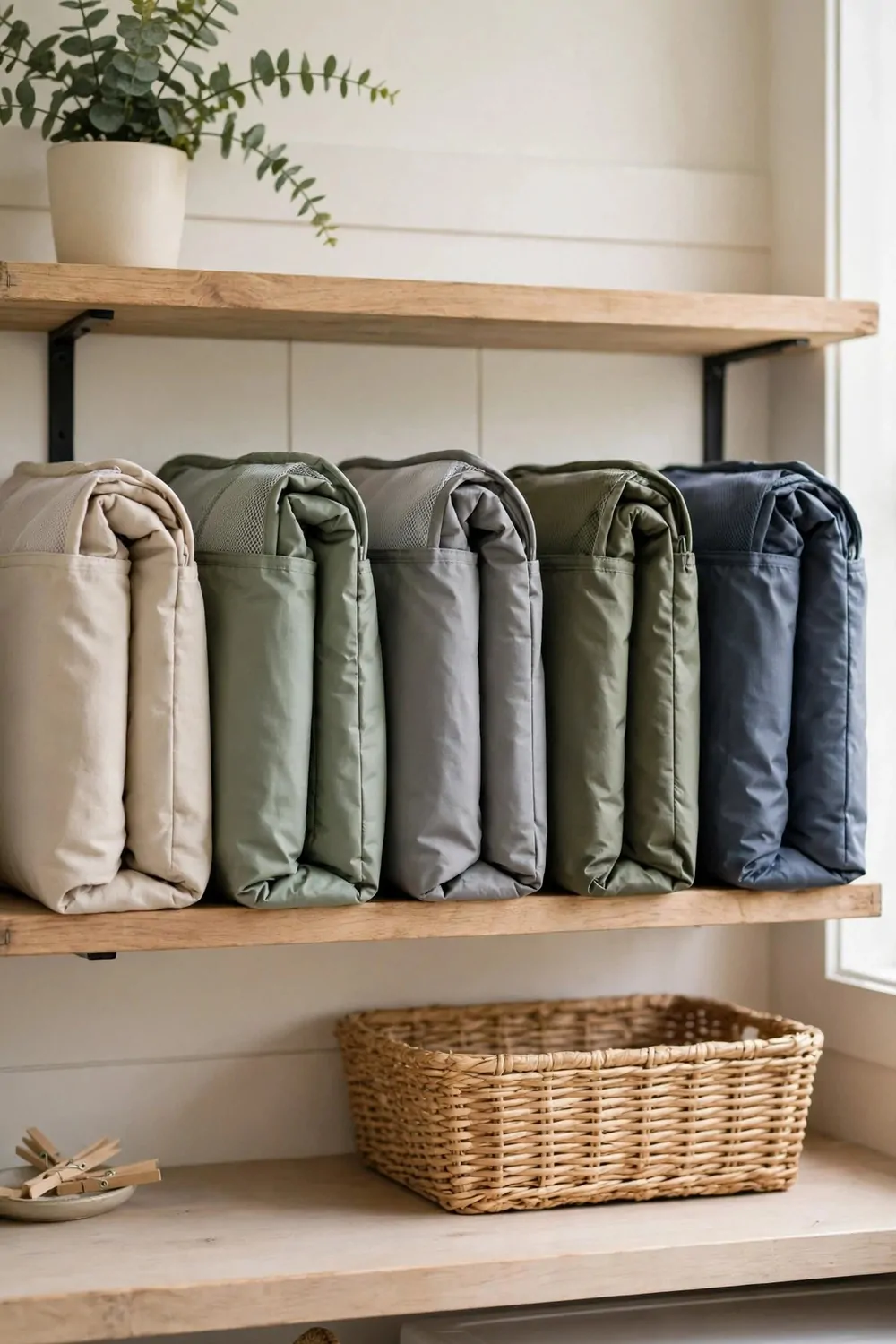
Travel laundry bags are one of those things you forget until you need them. I used to hunt through drawers the night before a trip, and I always found them at the last minute.
Now they live folded in a row on one shelf by the door. I can see them, grab one, and pack it in the suitcase without a second thought.
I keep a few sizes on the shelf. Small ones for socks and little things, big ones for the whole trip’s dirty clothes, and one spare in case a bag tears.
When we come home, the bags go straight in the wash with the trip clothes. Then they get folded and put back on the shelf, ready for the next trip.
The kids each have their own bag with their name on it. It makes packing feel like their job, and they argue less about whose socks are whose.
I fold the bags flat so they take up almost no room. A whole row of them fits on a shelf that is only a hand wide, which still surprises me.
Keep one bag in the car too if you travel a lot by road. The shelf holds the spares, and the car bag handles the quick weekend trips.
This little shelf saves me from that last-minute hunt every single time. It is a small habit, but trips start calmer because of it.
A Shelf for Baby Clothes and Tiny Things
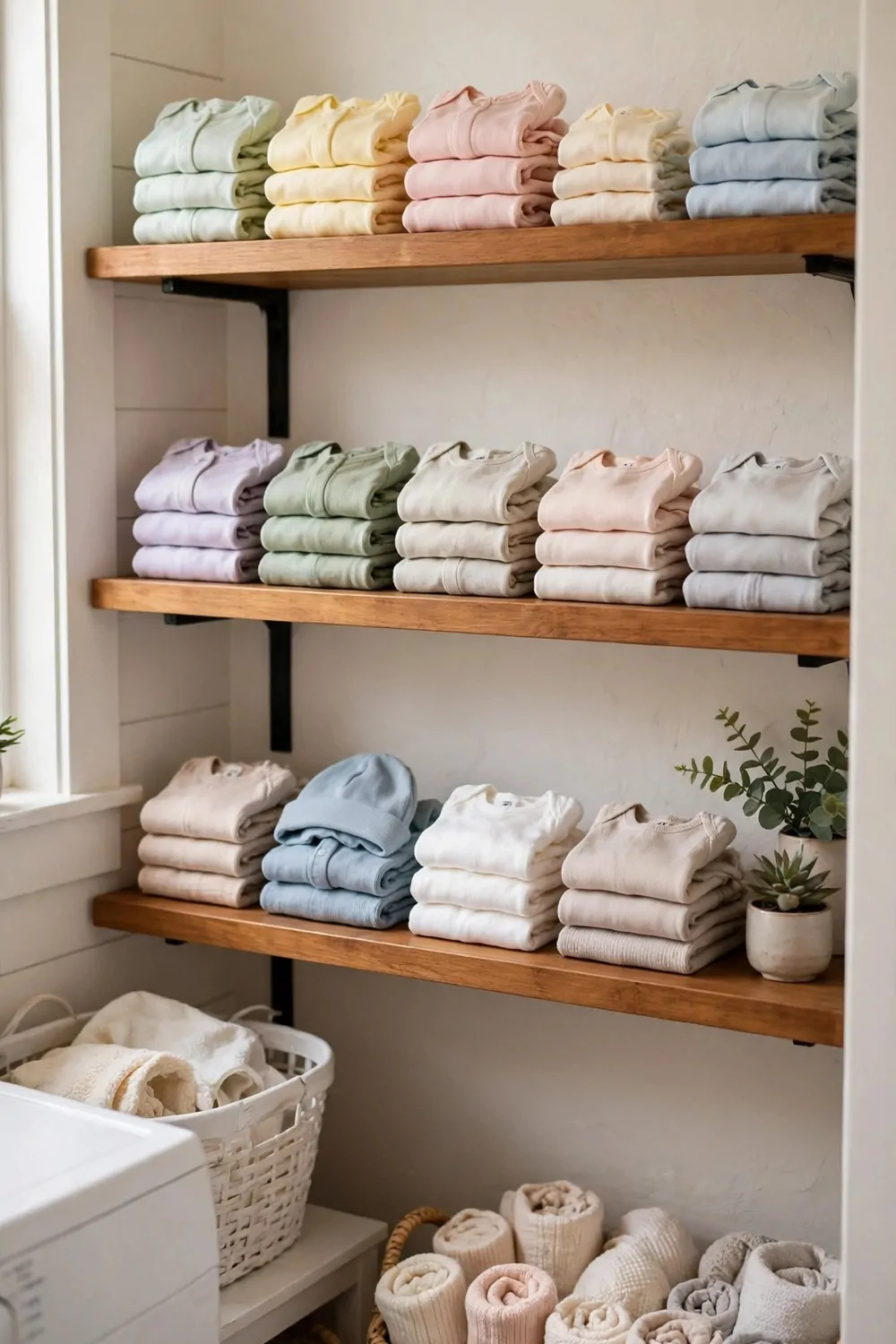
Baby clothes are so small that they get lost in a normal laundry pile. I used to find one tiny sock in the washer and its pair nowhere, and it drove me a little mad.
A shelf with small bins just for baby things keeps them all together. Tiny shirts in one bin, tiny pants in another, and socks in a little basket that nothing else can fall into.
I fold baby clothes into the smallest stacks you have ever seen. They take up so little room that a whole week of baby washing fits on one shelf.
The shelf sits low enough for me to reach while holding the baby. That sounds like a small thing, but when your hands are full, every inch matters.
I keep the gentle baby soap on the same shelf, right next to the bins. One reach and I have what I need, and the baby stays safe in my other arm.
Little hats and mittens go in a small basket on the end of the shelf. They are the first things to go missing, so they get their own spot where I can see them.
As the baby grows, the bins grow with them, one size at a time. I just swap the tiny bins for bigger ones, and the shelf keeps working.
This shelf made baby laundry feel less like a mess and more like a sweet little job. Everything tiny has a tiny home, and nothing gets lost anymore.
A Shelf for Seasonal Blankets
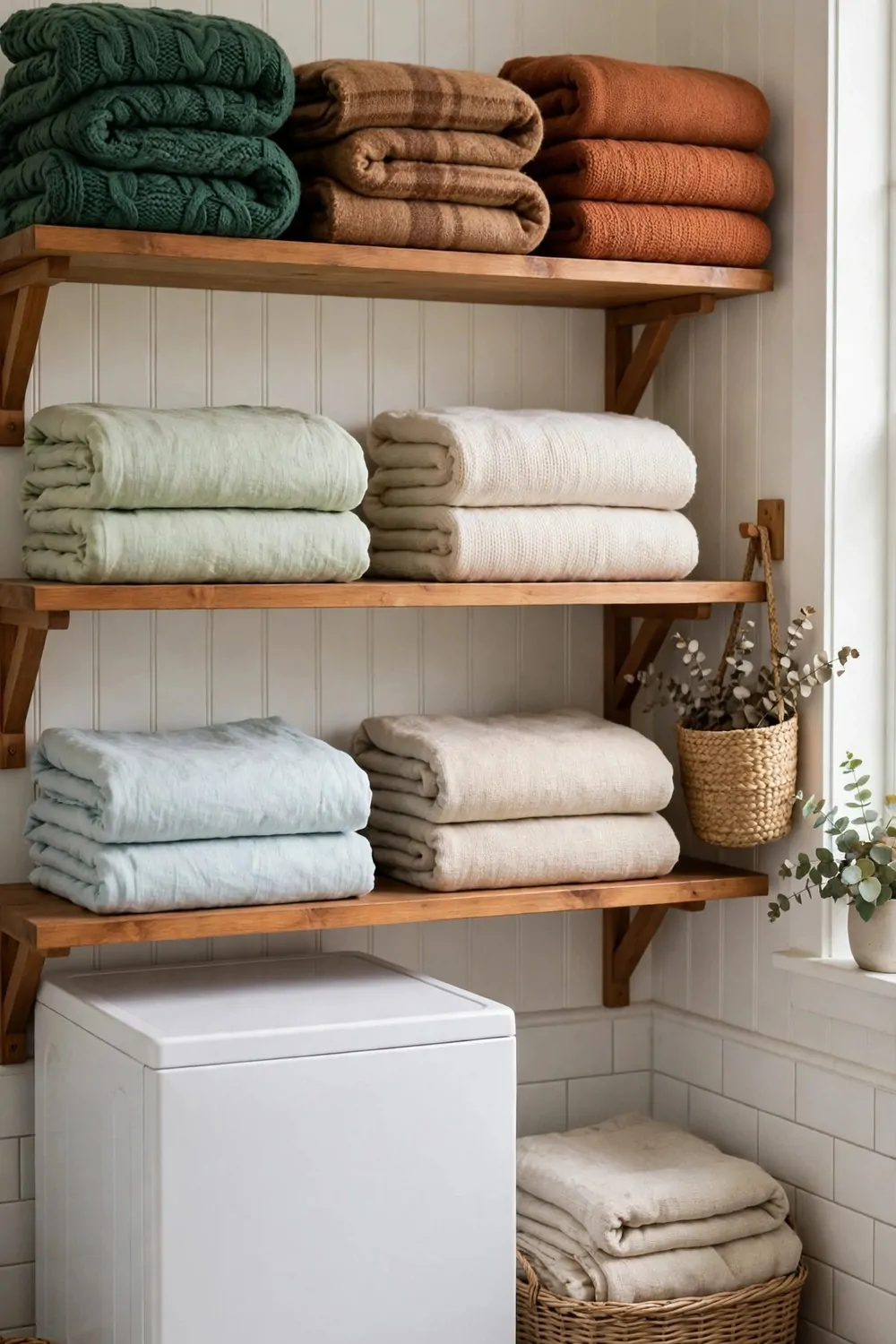
Seasonal blankets only get used for a few months each year, but they take up room all year long. My winter blankets sat in a closet I needed for other things, and it never felt right.
A high shelf in the laundry room holds them now, and it works better than I expected. They are clean, dry, and out of the way until the cold comes back.
I wash each blanket before I store it, so it smells fresh when I pull it out months later. A clean blanket going into storage stays clean, and that is the whole trick.
I fold them tight and stack them flat so they do not topple. Heavy blankets go on the bottom of the pile and light ones go on top, and the stack stays steady.
A little label on the shelf edge tells me which pile is which. Winter wool on the left, light summer throws on the right, and I never have to unfold three blankets to find one.
The laundry room is dry and warm, which is good for stored blankets. Damp closets can make blankets smell musty, but mine come out smelling like fresh soap.
When the season changes, I swap the piles in one go. Winter blankets come down, summer throws go up, and the whole swap takes about ten minutes.
This shelf freed up my hall closet for coats and shoes, which is where they belong. Seasonal things live on a seasonal shelf, and the rest of the house breathes easier.
A Shelf for the Sewing Kit and Mending
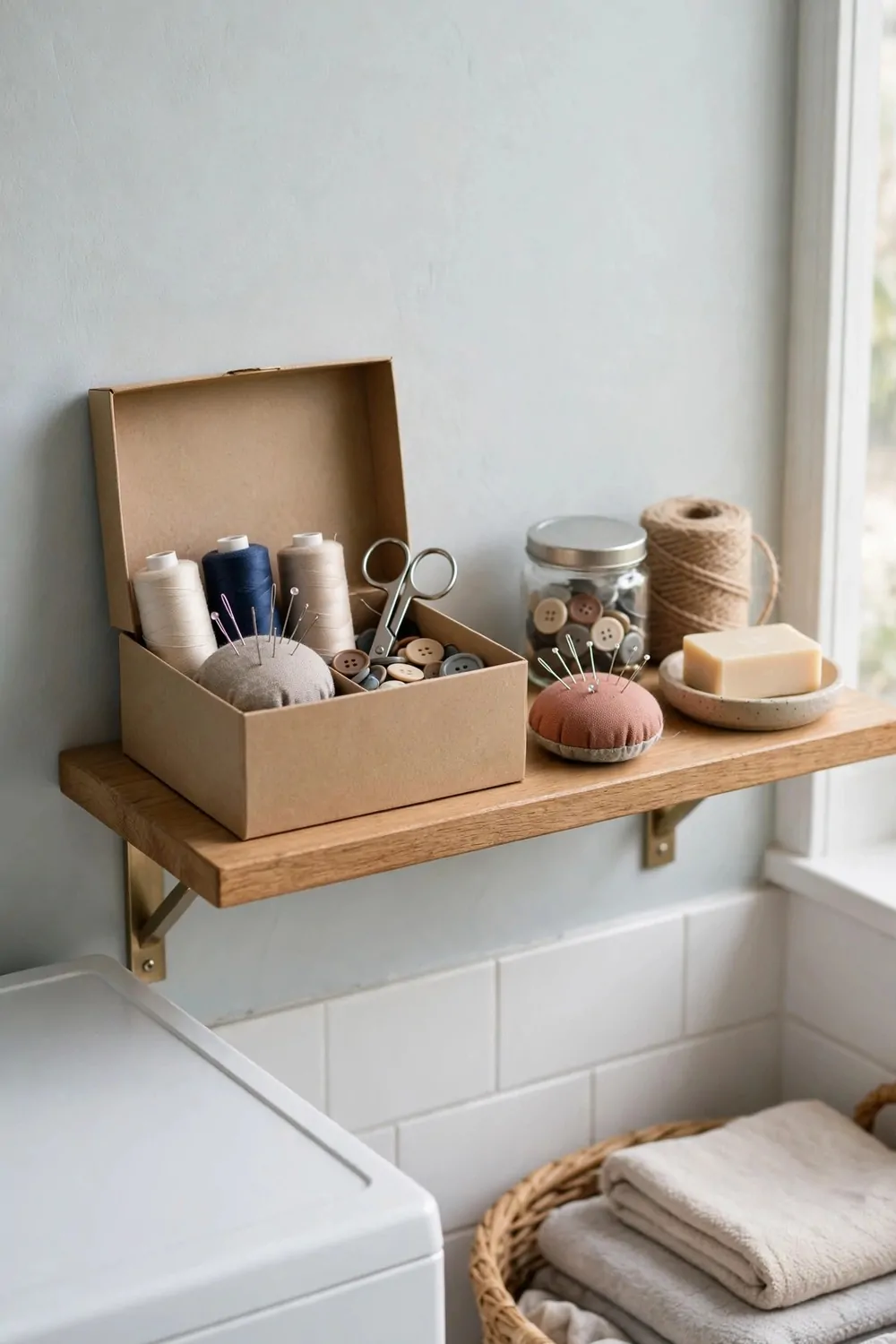
A loose button or a small tear should not mean a trip to buy a new shirt. I keep a sewing kit on a laundry room shelf, and small fixes take five minutes now.
The kit lives in a small box with a lid, so needles and pins stay safe. I keep it on a shelf up high, well away from little hands that like to explore.
I toss clothes that need mending into a little basket under the shelf. When the basket has three or four things in it, I sit down and fix them all at once.
Thread, spare buttons, and a pair of small scissors all fit in the box. I also keep a few safety pins in there for quick fixes when I do not have time to sew.
Mending while the washer runs is my favourite trick. I sit on my little stool, fix a hem, and the wash finishes right about when I do.
The shelf also holds a small iron-on patch kit for the kids’ jeans. Knees wear out fast in my house, and a patch buys those jeans another six months.
I check the box every few months and top up the thread colours I use most. Black, white, and navy cover almost everything in our closets.
This shelf saves clothes from the bin and saves me money too. A five-minute fix beats a new shirt every time, and my kids are learning that as well.
A Shelf for Spare Hangers
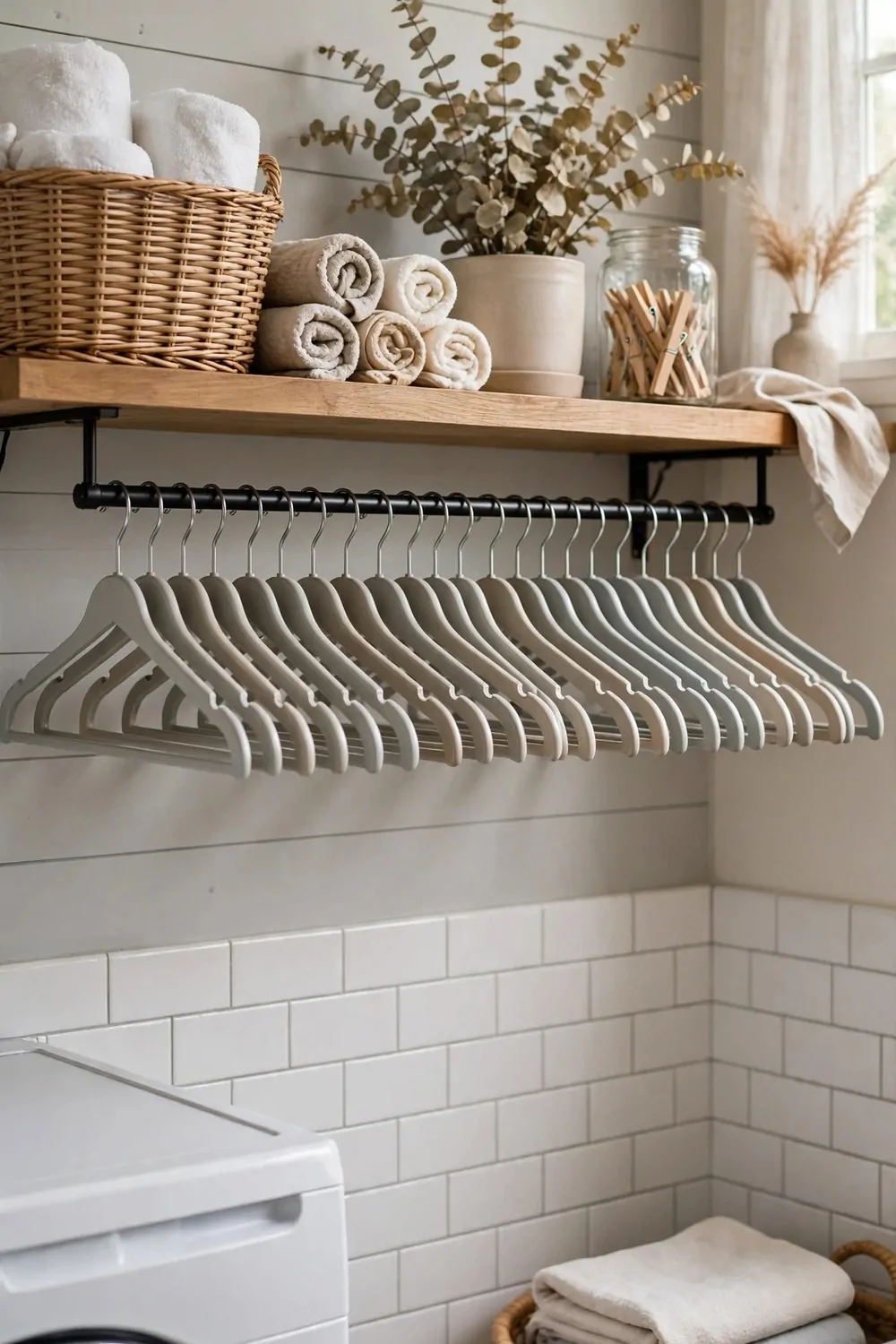
Spare hangers breed in my house, I swear. They show up in closets, behind doors, and in the car, and I could never find one when I needed it.
A shelf with a rail underneath gathers them all in one place. The hangers hang in a neat row below the shelf, and the shelf top holds the pegs and clips.
I sort them by type so I can grab the right one fast. Shirt hangers on the left, trouser hangers in the middle, and the big ones for coats on the end.
When I take clothes off a hanger, the hanger goes straight back to the rail. It is a small rule, but it keeps the hangers from wandering off again.
| Hanger type | Best for | How many I keep |
|---|---|---|
| Shirt hangers | Shirts and light tops | 20 |
| Trouser hangers | Trousers and skirts | 12 |
| Coat hangers | Coats and jackets | 8 |
| Clip hangers | Kids clothes and small items | 10 |
The shelf is also where I keep a few spare hooks and a small bag of clips. Everything to do with hanging lives in one spot, and I like that a lot.
Wire hangers go in their own little bunch because they tangle with everything. I tie them with a rubber band so they stay in a neat bundle instead of a metal knot.
I count the hangers once a month and give the extras away. Too many hangers is a real thing, and my rail looks better with breathing room.
This shelf turned hanger chaos into hanger calm. I grab one, I hang the shirt, and I move on with my day.
A Shelf for Shoes That Need Air
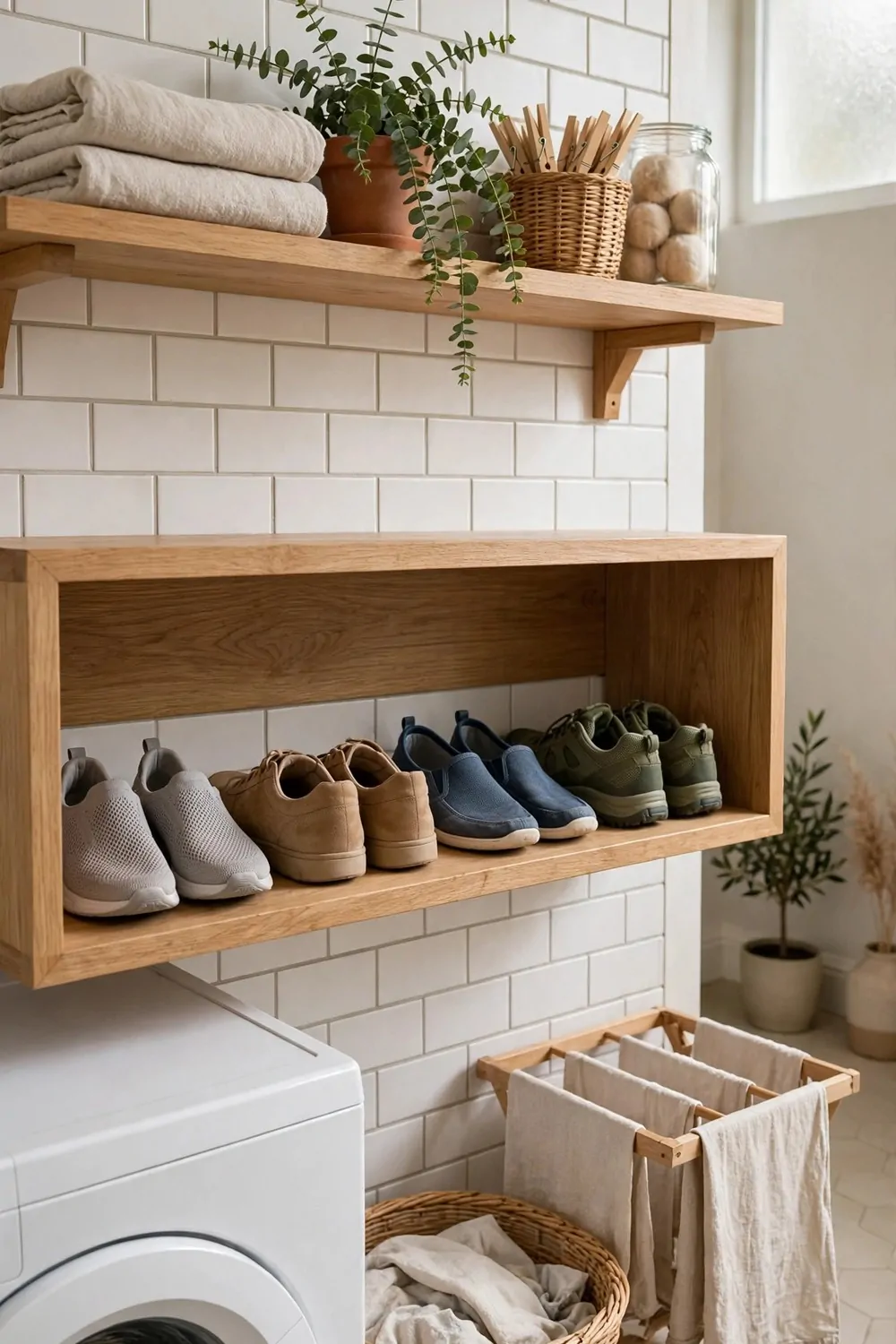
Shoes that get wet or sweaty should not go straight back in a closed closet. They need air, or they start to smell, and nobody in my house likes that smell.
An open shelf in the laundry room is the perfect airing spot. Shoes sit in a row with space between them, and the warm dry air does the rest.
I keep a boot tray under the shelf to catch drips from rainy day shoes. The tray wipes clean in seconds, and the floor stays dry.
Sports shoes live on this shelf after practice, and they dry out overnight most of the time. By morning they smell fine and feel dry to wear again.
I stuff wet shoes with old newspaper to help them dry faster. The paper soaks up the damp, and I swap it once before bed if the shoes were really soaked.
Kids’ muddy shoes get a quick brush outside before they come to the shelf. It keeps the mud off the shelf and out of the laundry room.
This shelf sits near the back door, which makes it easy to kick shoes off and put them right there. The habit stuck because the shelf is in the right place.
Airing shoes on a shelf beats stuffing them in a dark cupboard. They last longer, they smell better, and the hallway stays clear of shoe piles.
A Shelf for the Lint Bin and Small Tools
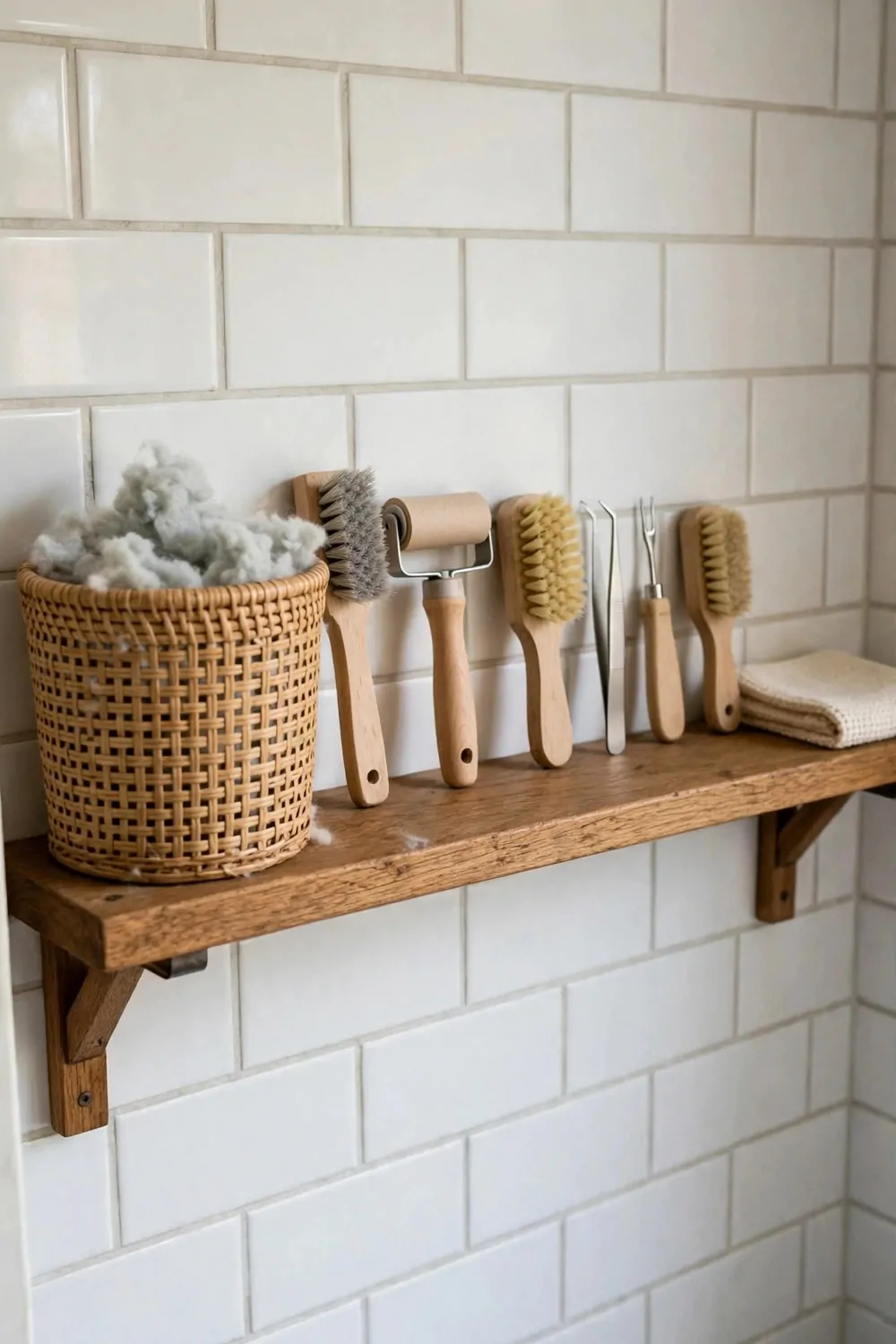
Lint from the dryer has to go somewhere, and for years mine went in a bin I kept forgetting to empty. It overflowed onto the floor, and I stepped on grey fluff more times than I want to admit.
A small bin on a shelf right by the dryer fixed that. I empty the lint trap, drop the fluff in the bin, and the bin gets emptied once a week without fail.
The shelf also holds the small tools I reach for all the time. A lint roller, a fabric shaver, and a little brush all stand in a row where I can see them.
I keep a tiny pair of scissors on the shelf for cutting loose threads. It saves me from hunting through the kitchen drawer every time a shirt has a stray thread.
A small screwdriver lives there too, for the day the washer hose needs a tweak. It is not a big tool kit, just the few things this room actually needs.
Everything on this shelf has a set spot, and I put it back after I use it. That rule took a month to stick, but now the shelf always looks tidy.
The bin is small on purpose so I have to empty it often. A small bin never gets heavy, and emptying it takes less than a minute.
This shelf is not pretty, but it is one of the most useful ones in the room. Small tools close at hand make every laundry job a little bit faster.
A Shelf for Folding in Progress
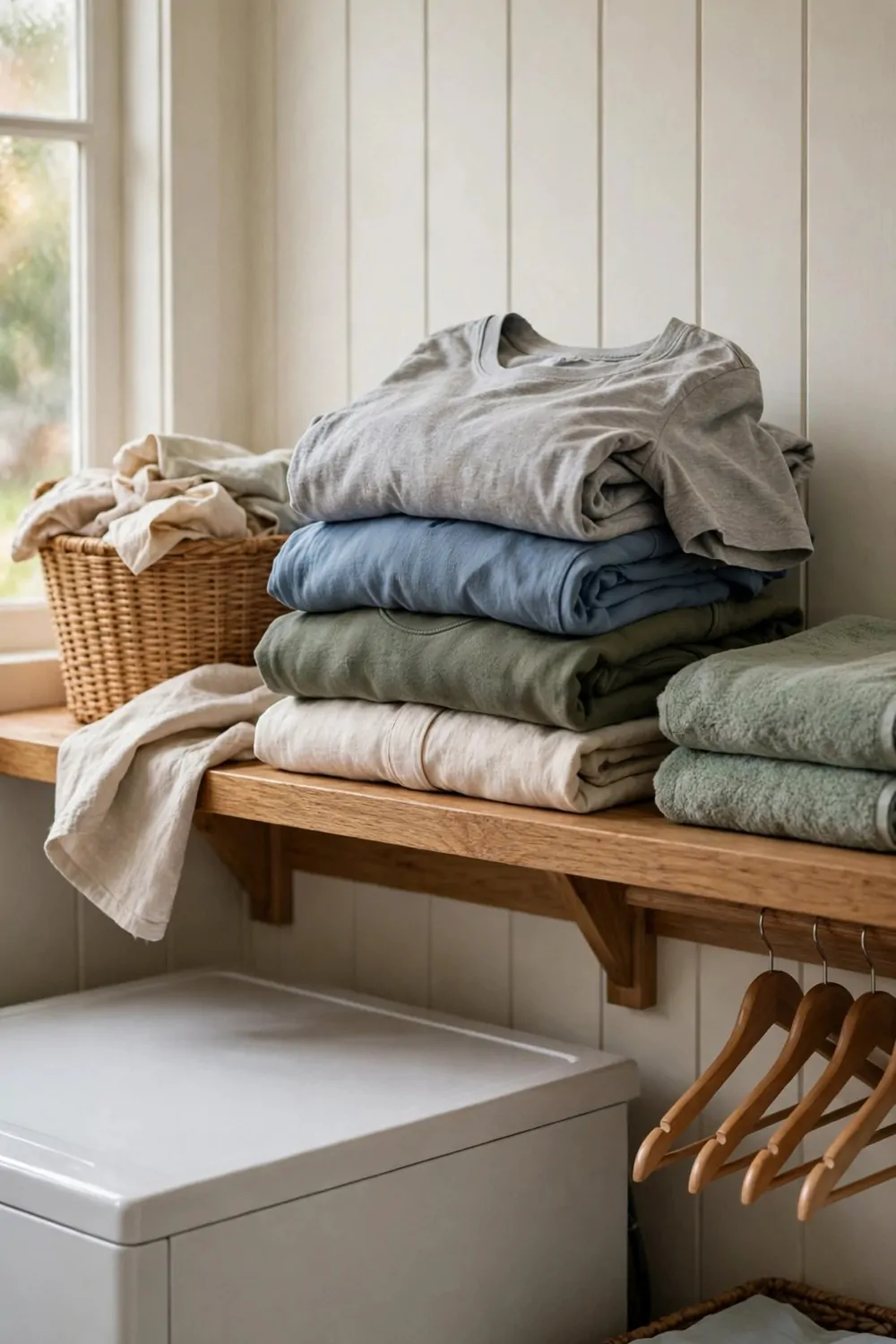
Folding a big load of laundry takes time, and sometimes life gets in the way halfway through. The phone rings, a kid needs help, and the half-folded pile sits there waiting.
A shelf just for folding in progress gives that pile a proper home. I move the half-done clothes onto the shelf, and they stay neat until I come back.
I fold in small batches now, one pile at a time, and the shelf holds the piles that are done and the pile I am working on. It keeps the counter clear for the next load.
The shelf sits right above the folding counter, so I do not have to carry piles across the room. I fold, I lift, I place, and my arms do not get tired.
When the shelf is empty, I know all the folding is done. It is a simple visual check, and it feels good to see a clear shelf at the end of the day.
I keep a little basket on the end of the shelf for socks that lost their pair. They wait there until the match turns up, and most of the time it does.
This shelf also holds the clothes that need a second look. A shirt with a stain goes on the end of the shelf, and I treat it before the next wash.
Folding does not have to happen all at once anymore. The shelf holds my place, and I can finish the job when I have ten quiet minutes.
A Shelf for the Laundry Schedule and Notes
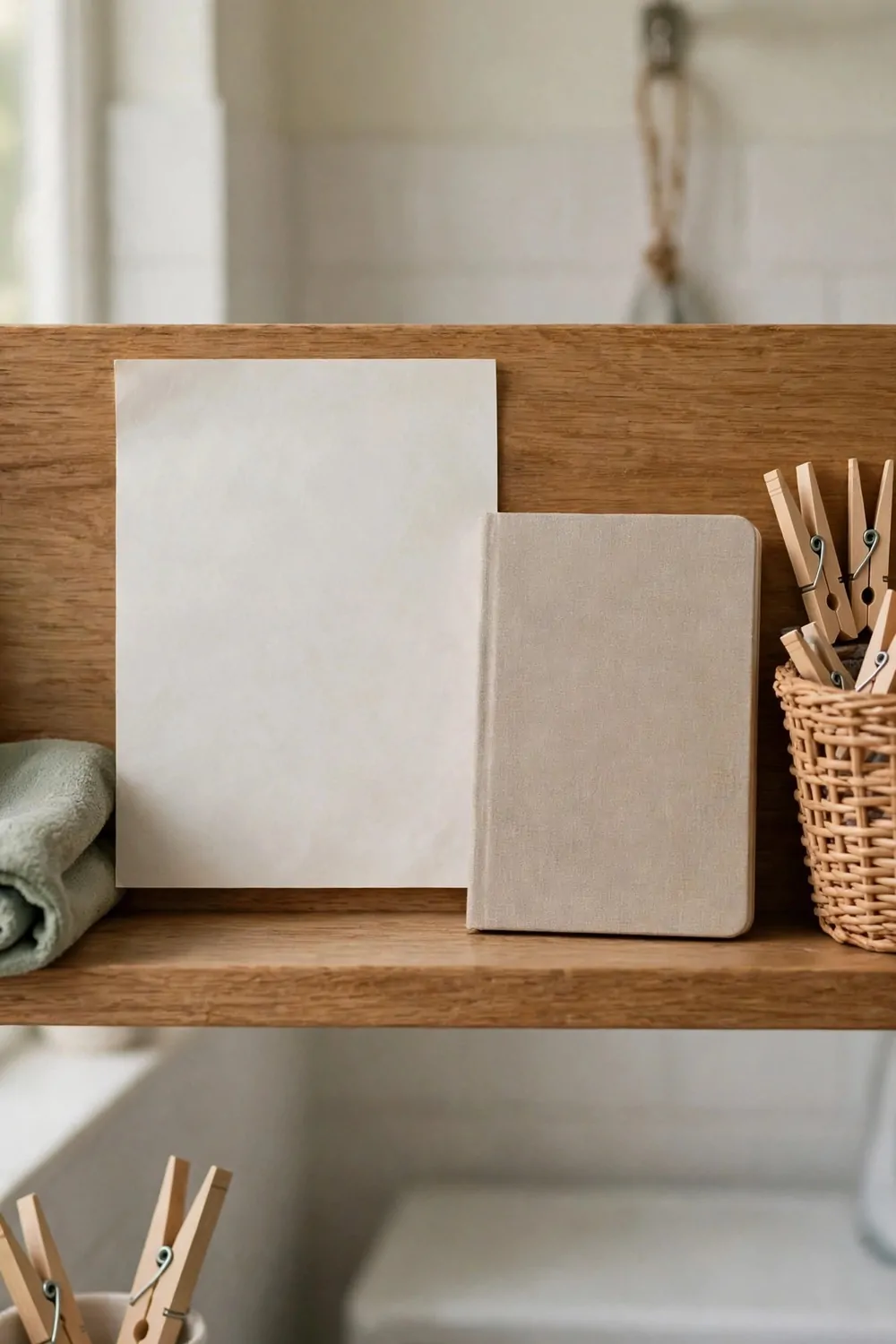
I used to keep the laundry plan in my head, and my head is not a great filing cabinet. Loads got forgotten, bedding went two weeks without a wash, and I felt behind all the time.
A shelf with a little notebook and a schedule card keeps the plan where I can see it. I check the card in the morning, and I know what needs washing that day.
The notebook holds my notes about what worked and what did not. A stain trick that saved a shirt, a wash setting that shrank a jumper, and the soap that made the towels soft.
I stick a small pen to the shelf with a bit of string so it never walks away. Pens vanish in my house like socks, and the string trick actually works.
The schedule is simple, just one line per day, and I cross things off as I go. Crossing off a finished load feels like a tiny win, and I take my wins where I can get them.
I also note down when I last washed the big things, like the duvet and the curtains. It stops me from guessing, and the house stays fresher because of it.
The kids check the schedule too, which helps them know when their sports kit will be clean. Fewer questions for me, and they feel more grown up for knowing the plan.
This shelf turned laundry from a guessing game into a calm routine. A notebook, a pen, and a plan, all in one spot by the washer.
A Shelf for Extra Towels for Guests
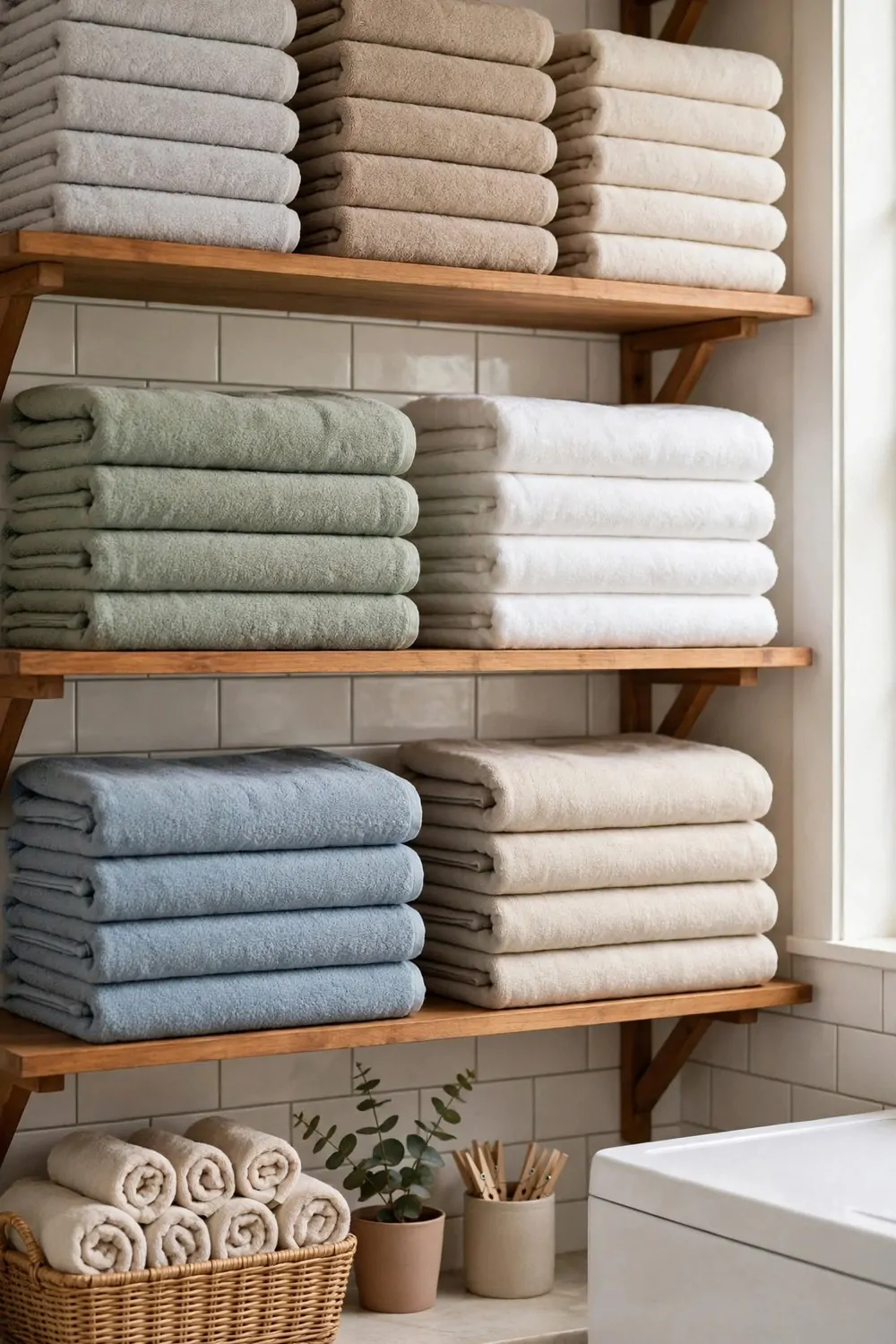
Guests always need a towel, and they always ask at the worst moment. I used to dig through the linen cupboard while they waited, and it felt rushed and a bit awkward.
Now extra towels for guests live on their own shelf in the laundry room. I grab a fresh stack, hand it over with a smile, and nobody waits around.
I fold the guest towels a little nicer than the everyday ones. It is a small touch, but a neatly folded towel makes a guest feel welcome in your home.
Each stack has two bath towels and one hand towel, so I can grab a full set in one go. I do not have to count or match things up when someone is standing at the door.
The guest towels are a different colour from our daily towels. That way nobody grabs a guest towel by mistake, and the guest stack stays full and ready.
I wash the guest towels after each visit and put them straight back on the shelf. A quick fold, a neat stack, and the shelf is ready for the next guest.
A little basket on the shelf holds spare face cloths and a small soap. It is a tiny guest kit, and friends always comment on how thoughtful it feels.
This shelf means I never panic when someone stays over. The towels are clean, folded, and waiting, and that is one less thing to worry about.
A Shelf for the Dustpan and Brush
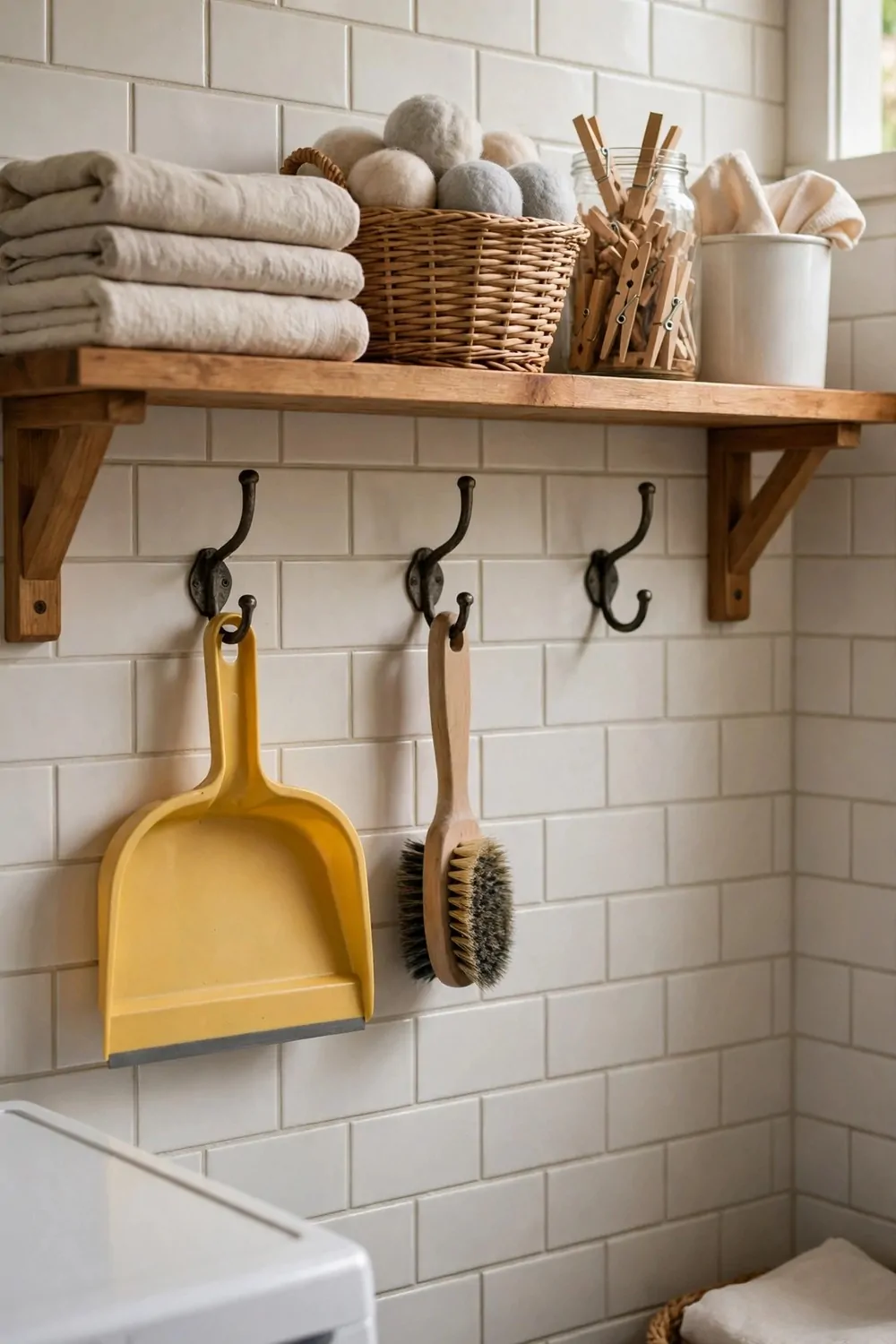
Laundry rooms get dusty fast, and lint and bits of fluff gather in the corners. I used to walk past the mess for days because the dustpan lived in another room.
Now the dustpan and brush hang on hooks under a shelf right by the door. I see them every time I walk in, and a quick sweep takes less than a minute.
The hooks keep them off the floor, so they do not get kicked around or lost behind the washer. They hang neat and ready, and I reach for them without thinking.
I sweep the floor while the washer runs, which turns dead time into a tidy room. It is a habit that stuck because the tools are right there in front of me.
The brush fits inside the dustpan when they hang, so they take up almost no space. Two hooks, one little set, and the floor stays clean.
I keep a small hand brush on the shelf too, for the shelf tops and the window sill. Dust settles everywhere in this room, and a hand brush handles the high spots.
Kids can reach the dustpan as well, and they actually use it after craft time in the laundry room. That still surprises me, but I am not going to question it.
A clean floor makes the whole laundry room feel better to work in. One shelf, two hooks, and the dust has nowhere to hide.
A Shelf That Grows With Your Family
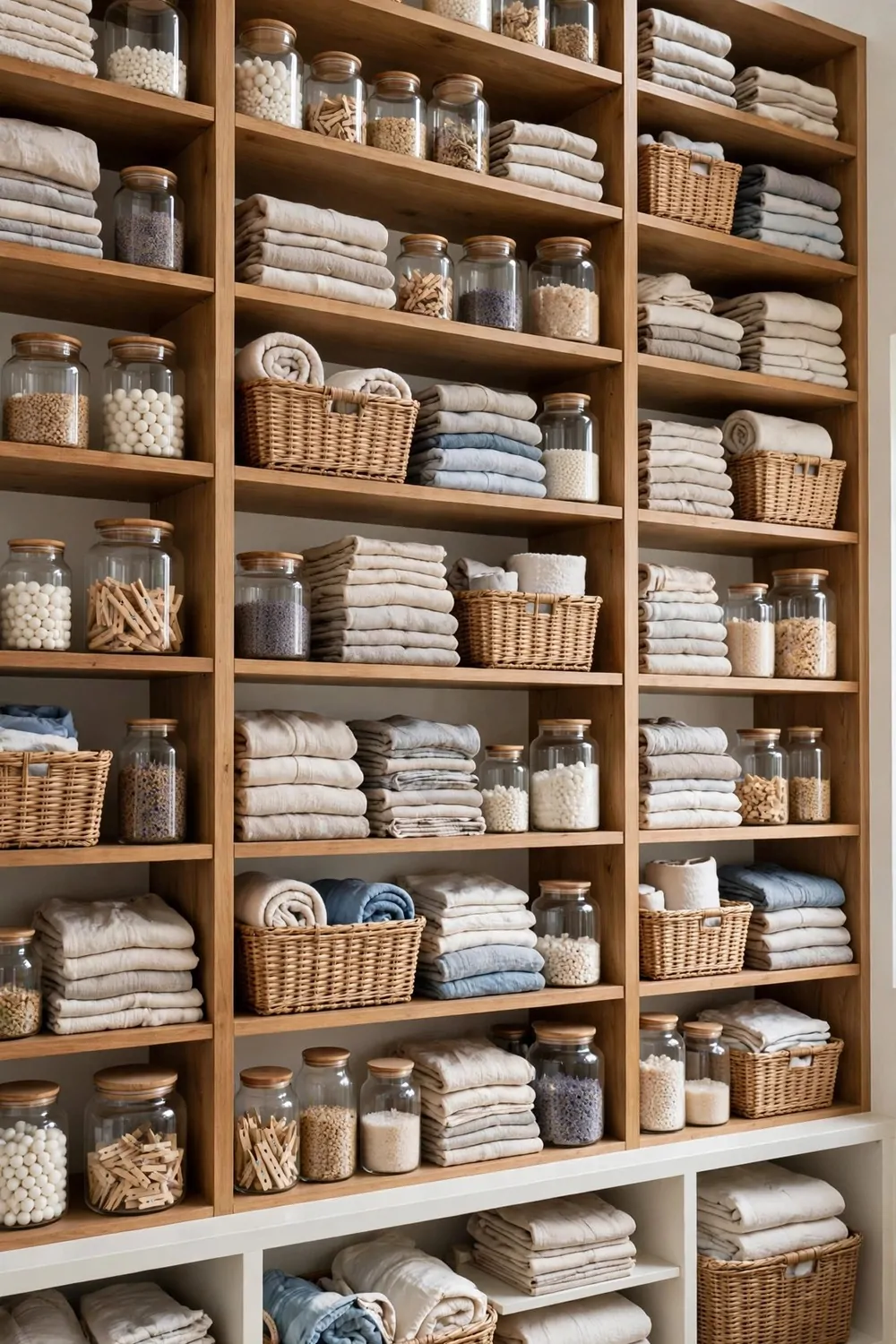
Families change, and the laundry room has to change with them. When my kids were small, the shelves held tiny clothes and nappies, and now they hold sports kits and school uniforms.
I built my shelves so I can move them up and down as we grow. A shelf that sat low for baby things now sits high for spare bedding, and it took me five minutes to move it.
The bottom shelves belong to the kids now, and they can reach their own baskets and hangers. It teaches them to help, and it saves my back from bending down all day.
I leave one shelf empty on purpose, just in case life changes again. An empty shelf is room to grow, and a growing family always needs a little extra space.
Glass jars on the top shelf hold pegs, buttons, and little bits that used to get lost. I can see what is inside each jar, and the kids like counting the pegs when they help me.
Every year I look at the shelves and ask what still works and what does not. A shelf that made sense last year might not make sense now, and moving it is no big deal.
The best laundry room shelves are the ones you can change without a fuss. No fixed boards, no glued brackets, just shelves that move when your family moves.
Start with shelves that can grow, and your laundry room will serve you for years. Babies grow, kids grow, and your shelves should grow right along with them.
One day the kids will leave home, and the shelves will change again. I will lower a shelf for my own things, fill a jar with something new, and the room will still feel like mine.
Keep Reading
If you liked these shelving ideas, there is more waiting for you on the site. I have written about storage and laundry rooms in lots of different ways, and each post has fresh ideas you can steal for your own home.
Take your time and look through the ones below. Pick the room that matches yours, or the problem that bugs you most, and start there.
- 41 Custom Kitchen Cabinet Organization Ideas Worth Stealing
- 34 Luxury Laundry Room Ideas With Beautiful Built-In Cabinets
- 25 Laundry Folding Station Ideas for Organized Homes
- 39 Laundry Room Cabinet Ideas That Make Storage Look Beautiful
I hope your laundry room feels calmer and easier to use after reading this. A good shelf is a small change, but small changes add up to a room you actually enjoy.