19 Balcony Garden Ideas for Tiny Outdoor Spaces

I water my balcony plants with a jam jar, because my balcony is too small for a watering can. The jar fits in my hand, and I can tip a little water right where each plant needs it, without splashing the floor.
My balcony is only as wide as my arms can reach, and it holds more green than I ever thought it could. One pot led to two, two pots led to a row on the railing, and now the whole little space feels alive.
These are the 19 balcony garden ideas that worked for me, on a tiny outdoor space with no big budget. Each one is simple, and you can start with just one pot this weekend.
Pots on the Railing
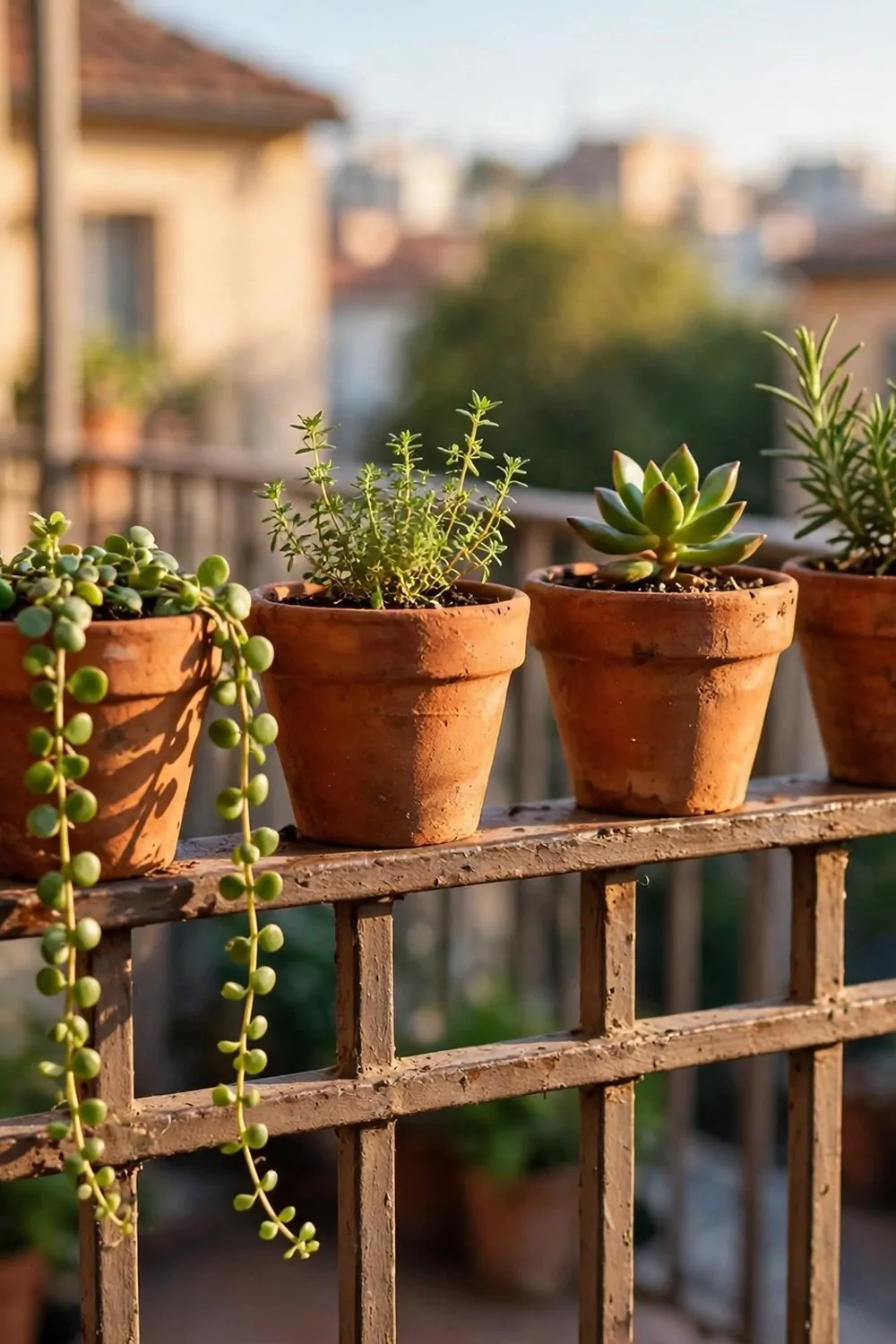
My railing was empty for years, and that was a waste of good sun. The top of the railing gets light all morning, and it was doing nothing at all.
I started with two small clay pots that hook over the rail. They clip on tight, and they do not wobble when the wind blows.
Clay pots are my favourite for the railing. They are heavy enough to stay put, and they look warm against the metal rail.
I plant small things in them, like herbs and tiny flowers. Big plants are too heavy for a rail, and their roots need more soil than a small pot can hold.
Water drains out of the bottom of a clay pot, so I put a little saucer under each one. The saucer catches the drips, and my neighbour below stays dry.
I check the hooks once a month, just to make sure they are still tight. Metal hooks can loosen over time, and a pot on the railing is not something you want to drop.
A row of pots on the railing turns a plain metal bar into a garden bed. From inside the flat, it looks like a green shelf floating in the air.
Start with two pots and see how they do. If they thrive, you can add a third, and the railing will feel like a real garden in no time.
A Herb Garden by the Door
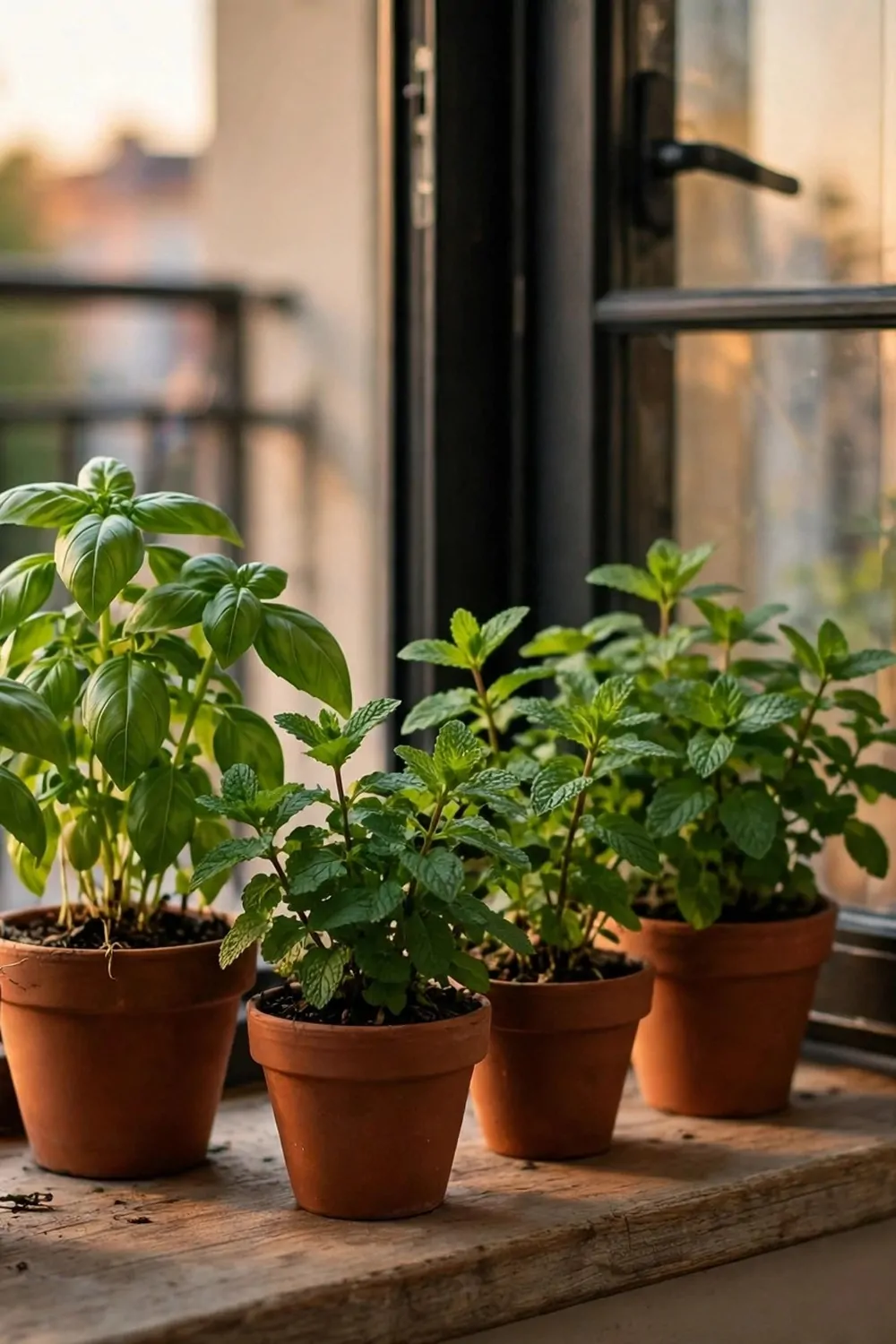
My kitchen door opens onto the balcony, and that short walk changed how I cook. I snip herbs right before dinner, and they taste like they just grew.
Basil is the first herb I planted, because I use it the most. It likes sun, and it grows fast enough that I can see the change every few days.
Mint is the second one, but mint needs its own pot. It spreads fast, and it will take over a shared pot before you notice.
I keep the herb pots right by the door, at arm height on a little shelf. When I am cooking, I step out, snip what I need, and step back in.
Fresh herbs smell stronger than the dried ones in my cupboard. One small leaf of basil can change a whole plate of pasta.
I water the herbs in the morning, before the sun gets hot. Wet leaves in strong sun can burn, and morning water gives the roots time to drink.
A few herbs that grow well in small pots, and what each one likes best, are in this little table.
| Herb | Where it likes to sit | What I use it for |
|---|---|---|
| Basil | Sunny spot by the door | Pasta, salads, and fresh sauces |
| Mint | Its own pot, part shade | Tea, cold drinks, and puddings |
| Parsley | Bright light, regular water | Soups, salads, and roast dinners |
Pick the herbs you actually cook with, not the ones that look pretty in a photo. A herb garden should feed your kitchen, and yours will do that if you plant what you eat.
Hanging Baskets That Save Floor Space
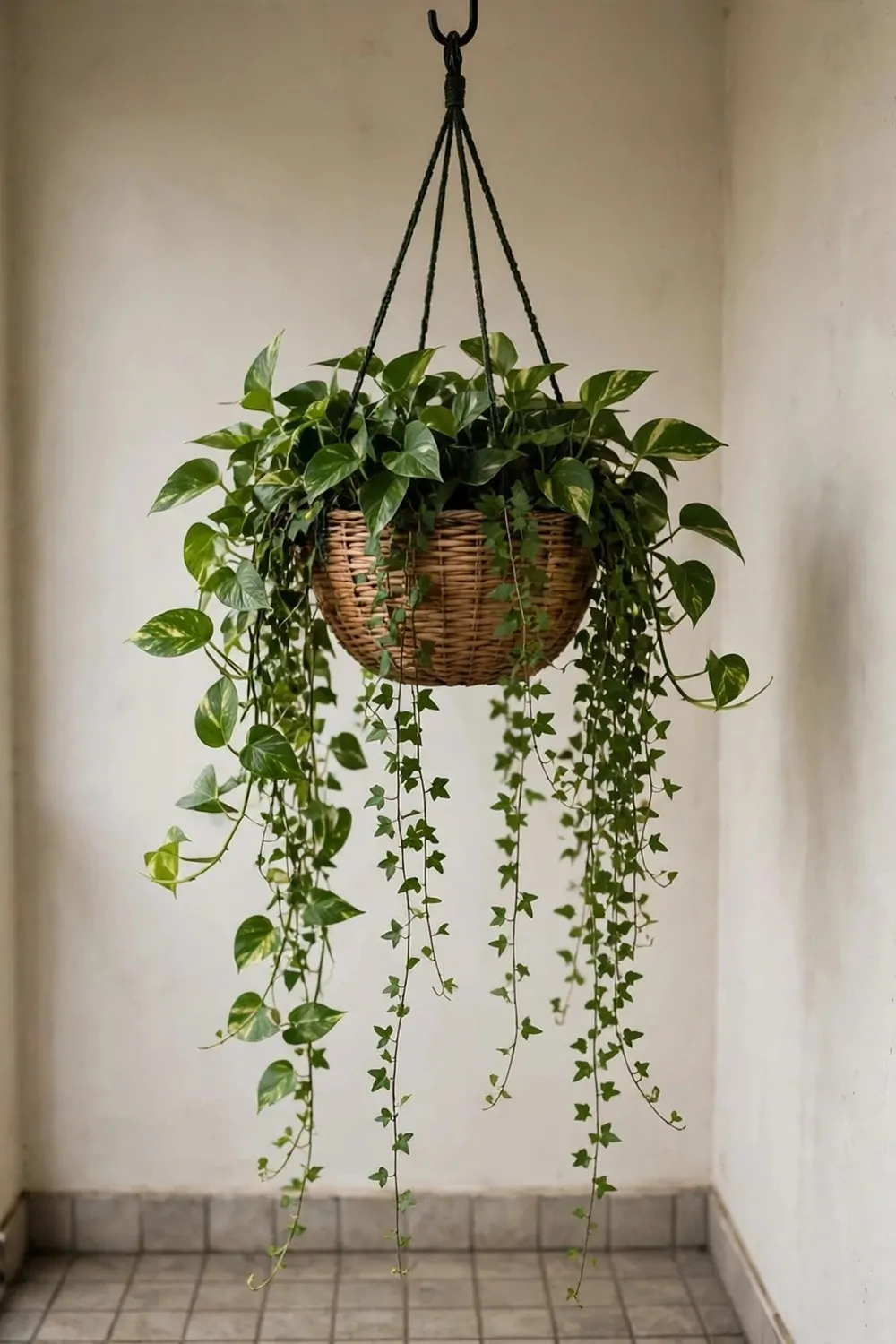
My balcony floor is small, and every pot on the floor takes a step away from me. Hanging baskets gave me plants without losing a single step.
I hang the baskets from hooks on the wall above the railing. They hang at eye level, so I see the flowers every time I step outside.
Trailing plants work best in a hanging basket. Their stems spill over the edge and fall down in a soft green curtain.
I line the basket with a bit of old cloth before I add soil. The cloth holds the soil in, and the water still drains out slow.
A hanging basket dries out faster than a pot on the floor. The wind moves around it on all sides, so I water it a little more often.
Light baskets are safer than heavy ones. I use small plastic pots inside the basket, and I keep the soil level low so the basket never gets too heavy.
Good things to plant in a hanging basket are:
- trailing lobelia that spills over the edge in soft blue
- small strawberries that hang down like little red jewels
- trailing herbs that you can snip without bending down
- tiny petunias in soft pink that bloom all summer long
Hang one basket first and watch how it does for a week. If it stays happy, you can add a second one, and your wall will turn green without touching the floor at all.
Tomatoes in One Big Pot
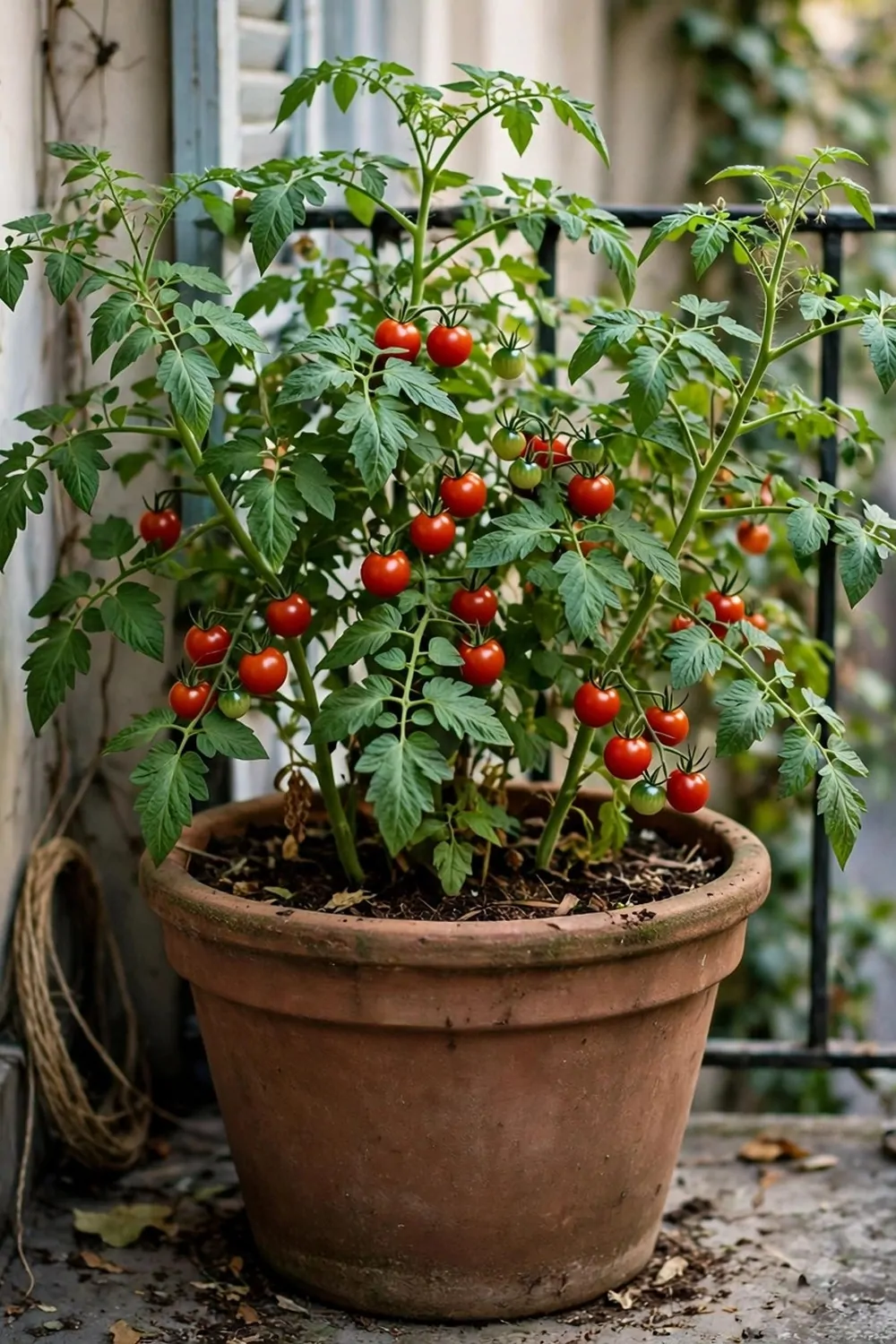
I never thought tomatoes could grow on a tiny balcony, and then my neighbour showed me her pot. One plant, one big pot, and more tomatoes than her family could eat.
You need one big pot for a tomato plant, not a small one. The roots need room, and a small pot dries out too fast in the sun.
I picked a variety made for pots, the kind that stays short and bushy. Tall tomato plants need a lot of support, and a small balcony is not the place for that.
A bamboo cane in the middle of the pot holds the plant up as it grows. I tie the stem to the cane with soft string, loose enough that it can still grow.
Tomatoes love sun, so I put the pot in the sunniest corner of the balcony. It gets light from morning until late afternoon, and the plant drinks it all up.
I water the pot every morning in summer, right at the soil, not on the leaves. Wet leaves in hot sun can spot and burn, and the roots are what need the water.
The first tiny green tomato feels like a small win. It takes weeks to turn red, and I check it every morning like a child waiting for a birthday.
One plant is enough for a small balcony. It will give you plenty of tomatoes, and you will have room left for the herbs and the flowers too.
Lettuce in a Window Box
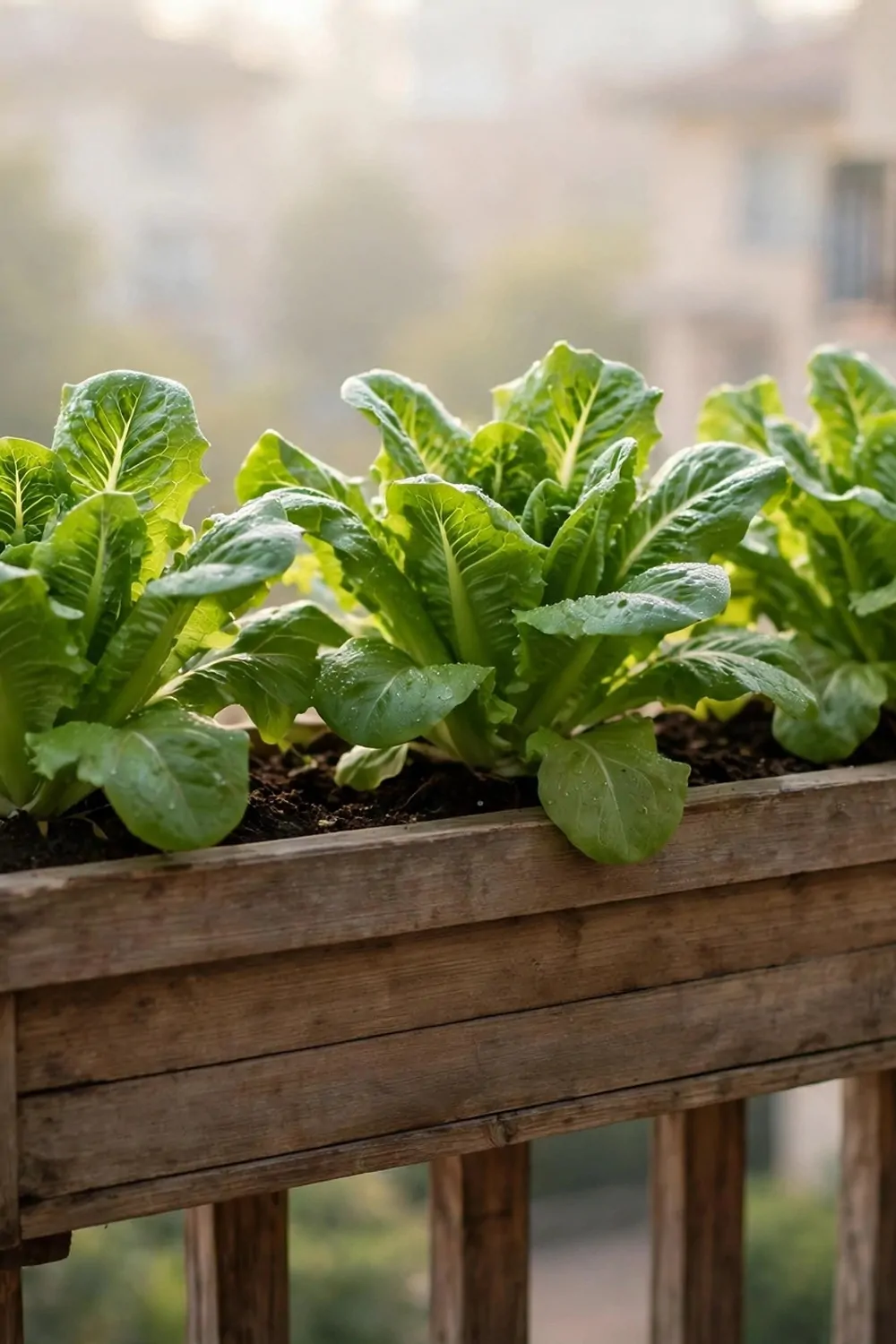
Lettuce grows fast, and it does not mind a shallow box. That makes it perfect for a balcony window box.
I fill a long wooden box with soil and scatter the seeds in a neat row. I cover them with a thin layer of soil, and I water them gentle with my jam jar.
The seeds sprout in about a week, and the tiny green leaves look like a little lawn. I thin them out so each plant has room to grow wide.
Lettuce likes cool mornings and soft light. My window box sits where it gets morning sun and shade in the hot afternoon.
I pick the outer leaves first and let the middle keep growing. That way one box gives me salads for weeks, not just one day.
A window box on the railing is easy to reach from inside. I lean out, snip a few leaves, and lunch is half made before I even go back in.
A few leaves that grow well in a window box, and when to pick them, are in this little table.
| Leaf | When to pick it | How it tastes |
|---|---|---|
| Butter lettuce | Soft and full, about six weeks | Mild and sweet, good in sandwiches |
| Rocket | Young leaves, three to four weeks | Peppery and bold, good with pasta |
| Little gem | Firm heart, about eight weeks | Crisp and fresh, good with lemon |
Sow a new row every two weeks, and you will always have fresh leaves. A window box is a small salad garden, and it sits right outside your kitchen window.
Flowers That Bring the Bees
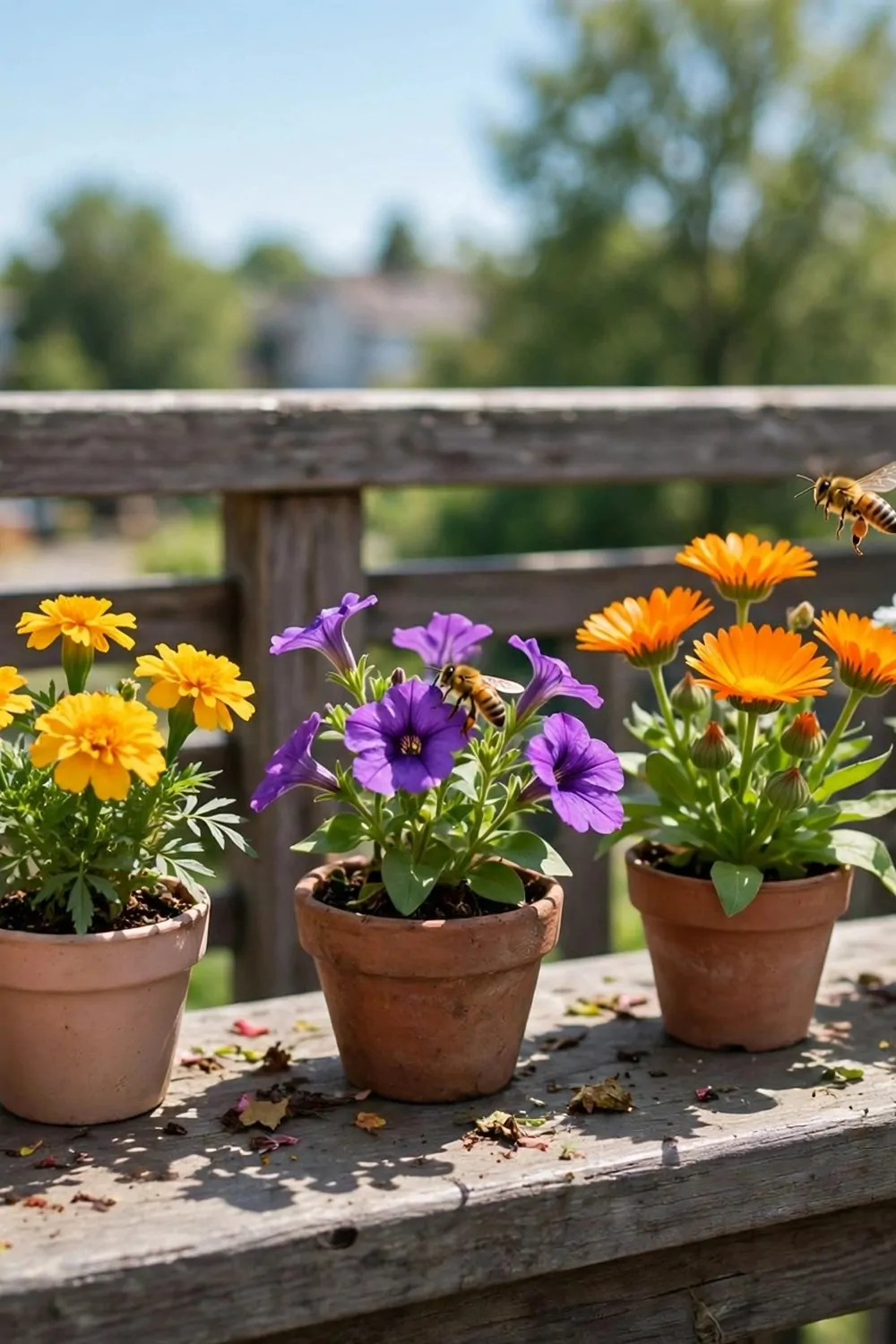
My balcony used to be quiet, and then I planted flowers. Now the bees visit every morning, and the whole space hums a little.
Bees love simple flowers with open petals. They do not care about fancy blooms, and they skip the ones with too many petals to reach inside.
I plant lavender in a pot by the railing, because the bees find it first. The smell drifts through the open door, and my whole flat smells like summer.
Marigolds are the second flower I plant, in bright orange and yellow. They are tough, they bloom for months, and they ask for almost nothing.
I water the flowers in the early morning, before the bees arrive. Wet flowers are hard for a bee to land on, and dry ones are much easier.
A flower pot near your chair gives you a front row seat. I sit with my tea and watch the bees work, and it is the calmest part of my day.
Bees need water too, so I keep a shallow dish of water with a few small stones in it. The bees land on the stones and drink without falling in.
Plant flowers the bees love, and your tiny balcony becomes part of something bigger. It is a small garden, but the bees treat it like a real one.
A Small Chair for Slow Mornings
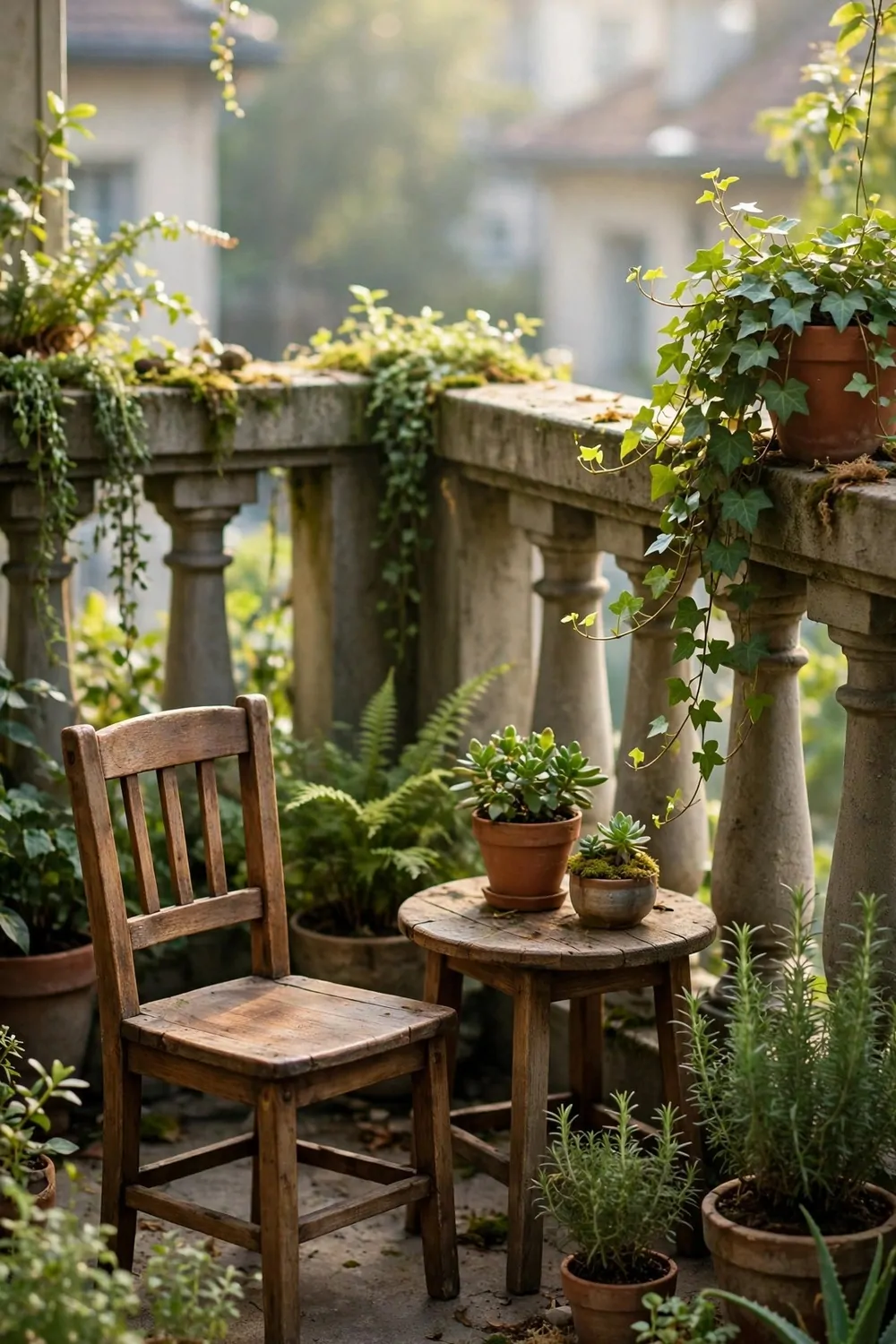
My balcony had no chair for years, and I only ever stepped out to water the plants. Then I found a small folding chair, and the balcony became a room.
The chair is light, and it folds flat against the wall when I need the space. I unfold it in the morning, and my balcony turns into a morning spot.
I sit there with my first cup of tea, and the plants are all around me. The herbs smell fresh, the bees hum, and the day starts slow.
A small chair needs a small table next to it, or at least a flat spot for your cup. I use an upturned crate, and it works perfectly.
Cushions make a hard chair soft, and a soft chair makes you stay longer. I keep one thin cushion on the chair, in a colour that matches the pots.
Rain will ruin a fabric cushion if you leave it out, so I bring mine in at night. It takes five seconds, and the cushion lasts all summer.
Morning is the best time for a balcony chair, before the sun gets strong. The air is cool, the light is soft, and the plants look their best.
One chair is enough for a tiny balcony. It gives you a place to sit, and sitting is what turns a garden into a part of your home.
Climbing Plants on a Trellis
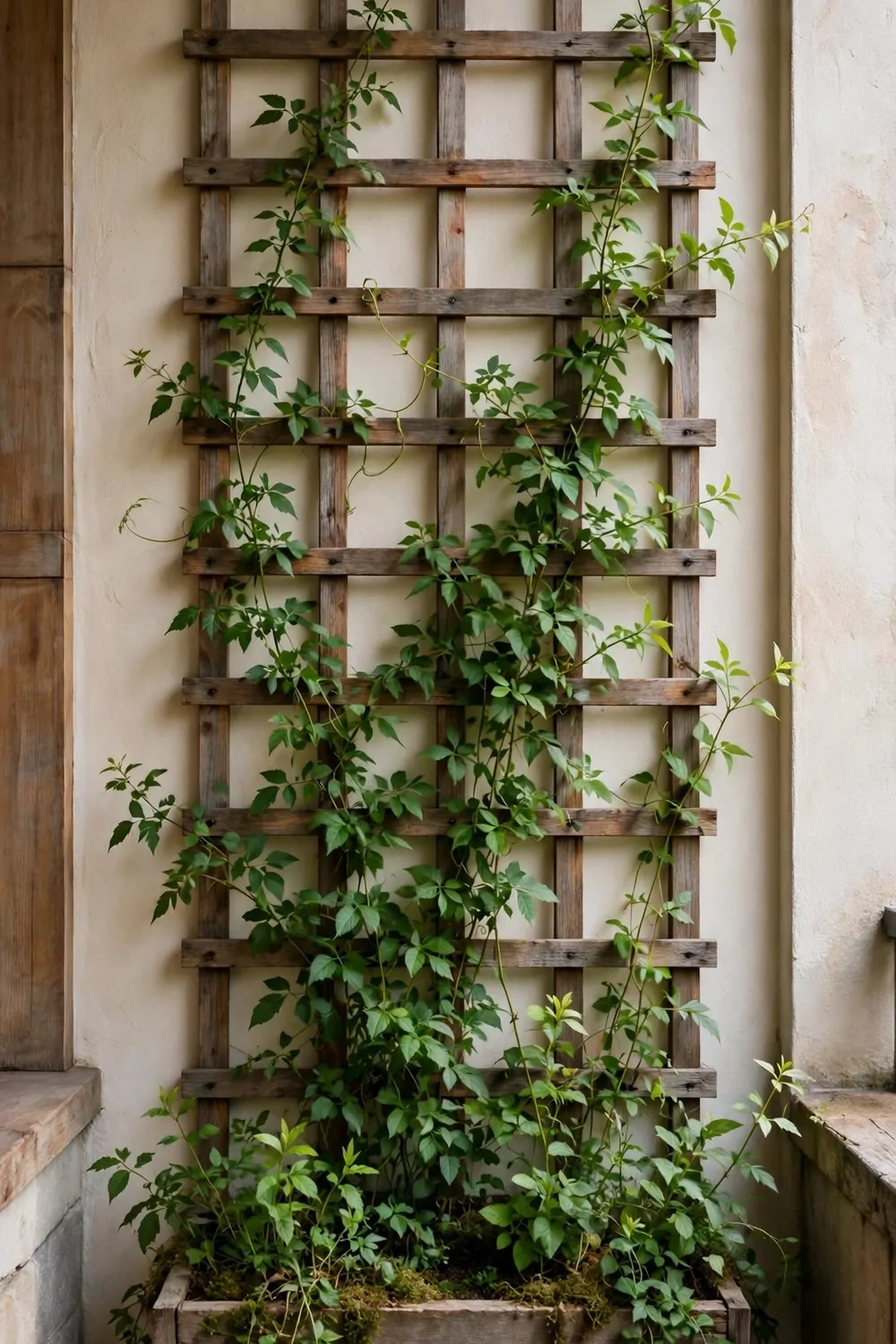
My balcony wall was bare and plain, and then I put up a trellis. Now the wall is green from the floor to the top of the door.
A trellis is just a wooden frame with thin bars, and climbing plants hold on to it as they grow. It turns a flat wall into a living one.
I planted sweet peas first, because they grow fast and smell lovely. Their tendrils reach out and curl around the bars all on their own.
Morning glory is the second climber I tried, with big blue flowers that open at dawn. They close by lunch, so the morning is the time to enjoy them.
I tie the young stems to the trellis with soft string when they are small. Once they find the bars, they climb by themselves, and I can take the string away.
A trellis needs a pot at its base, and the pot needs to be big. A climber grows tall, and tall plants need deep roots to hold them steady.
I water the base of the trellis in the morning, and the water soaks down to the roots. The leaves stay dry, and the plant grows faster.
One trellis can cover a whole wall by the end of summer. It gives you privacy, shade, and flowers, all from one small pot on the floor.
A Wooden Crate Garden
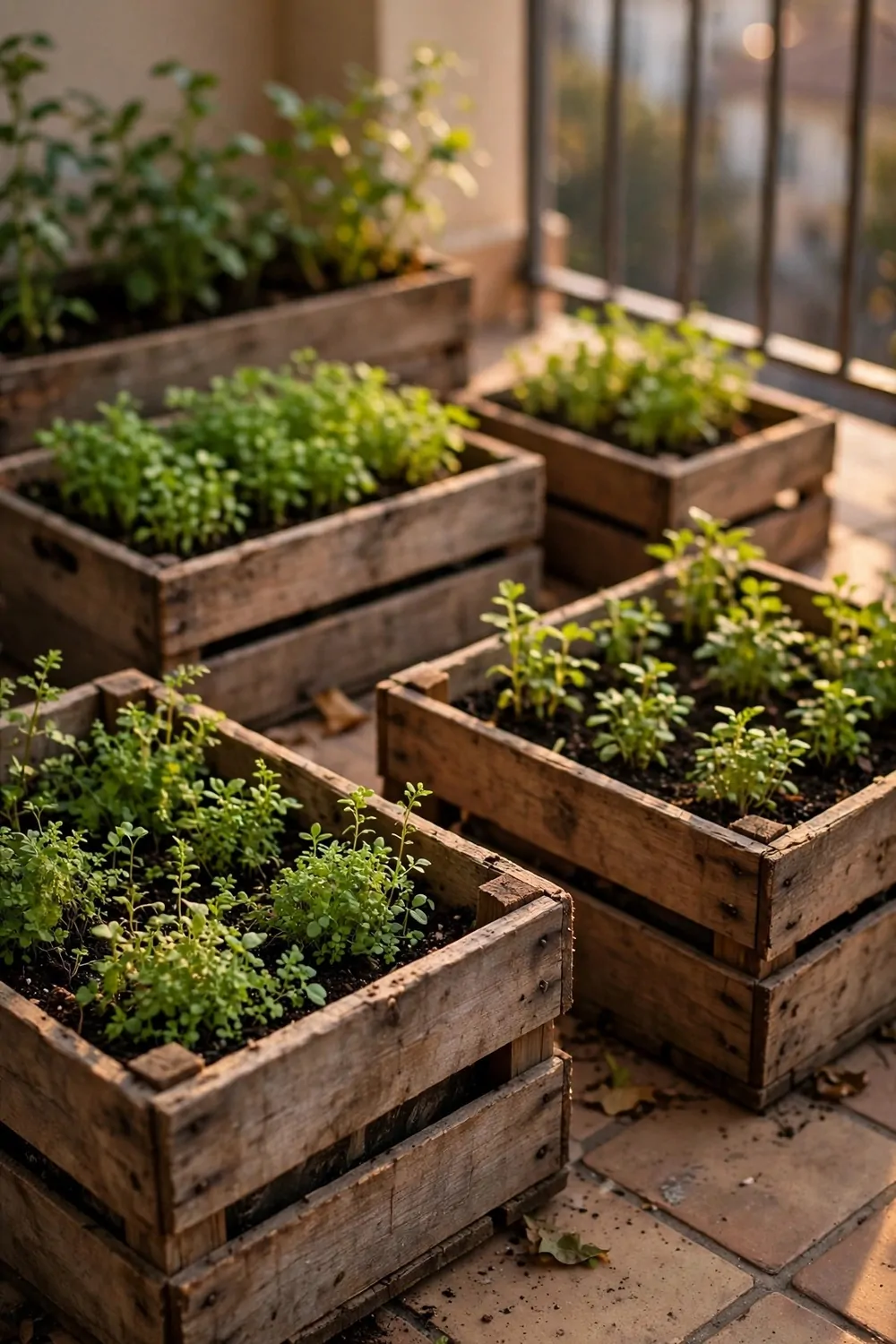
Old wooden crates make the best small gardens, and they cost almost nothing. I found mine behind a market stall, and the seller let me take three for free.
I line each crate with a bit of old fabric, so the soil stays in and the water drains slow. The fabric stops the soil from falling through the gaps.
One crate holds herbs, one holds salad leaves, and one holds small flowers. Each crate is its own little garden, and I can move them around.
Crates stack well, so I put one on top of two others, like steps. The plants on top get the most sun, and the ones below get shade in the hot afternoon.
Wood rots if it stays wet all the time, so I lift the crates off the floor on small feet. Air moves underneath, and the wood dries out between waterings.
I paint the outside of my crates with a soft wash of colour, pale green and cream. The paint protects the wood, and the crates look pretty too.
Good things to grow in a wooden crate are:
- herbs in small pots that sit snug in a row
- salad leaves that you can snip a little at a time
- small flowers in soft colours that brighten the corner
- strawberries that spill over the edge like red jewels
Three crates turned the dullest corner of my balcony into the prettiest one. They cost me nothing, and they hold more plants than a whole shelf of pots.
A Tiny Watering Routine
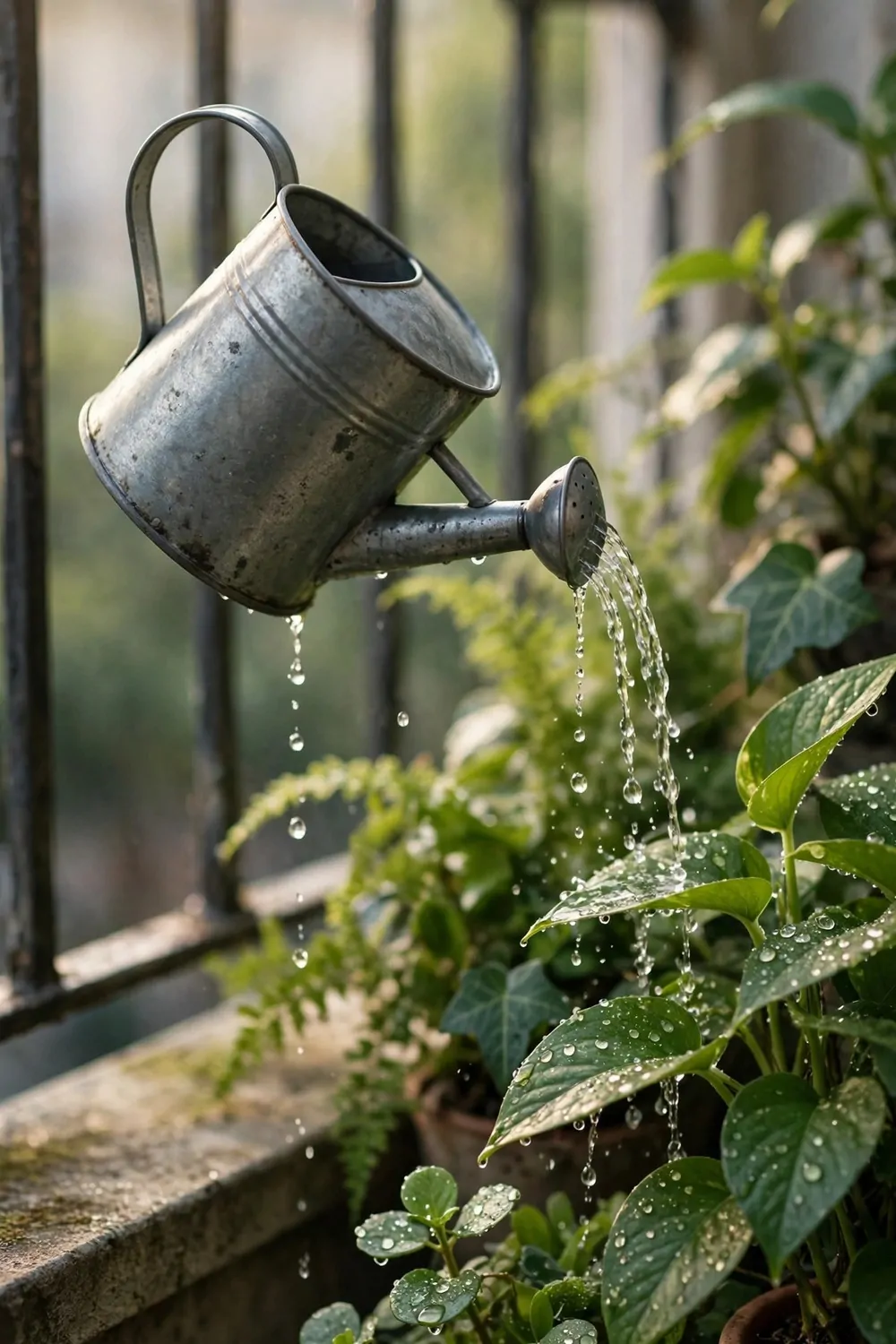
Watering sounds simple, and then you drown a plant or let one dry out. A tiny routine fixed that for me, and my plants have never been happier.
I water in the morning, before the sun gets strong. The soil drinks it in slow, and the leaves stay dry all day.
I check the soil with my finger before I water. If the top feels dry, the plant needs a drink. If it still feels damp, I leave it alone.
My jam jar holds just enough water for two small pots. I fill it at the kitchen tap, and I carry it out like a little ritual.
Big pots need more water than small ones, and hanging baskets need the most of all. The wind dries them out fast, so I water them first.
I never water in the middle of a hot afternoon. The water dries before it reaches the roots, and wet leaves in strong sun can burn.
A routine is just a habit, and habits are easy once you start. Morning, finger test, jam jar, and my plants know what to expect.
Write your routine on a small card by the door if you forget. One line is enough, and your plants will thank you for it.
Shade for Hot Afternoons
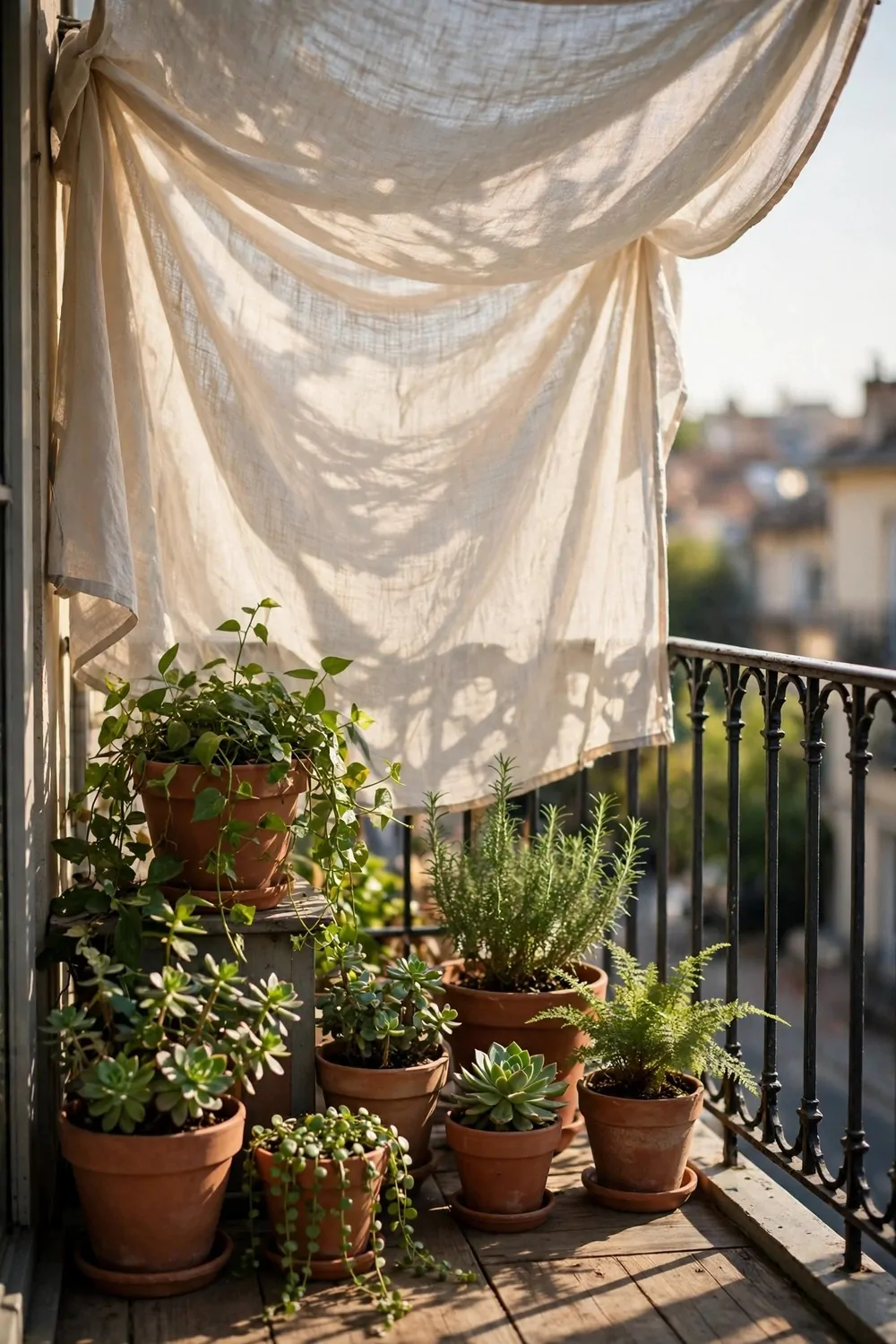
My balcony gets full sun after lunch, and the plants used to wilt by three in the afternoon. A little shade fixed that, and the plants perked up the same day.
I hung a light cloth over the sunniest corner, tied to the railing on one side and the wall on the other. It cuts the hard sun but still lets the light through.
A thin cotton cloth works best, because it softens the sun without making the corner dark. The plants still get light, just gentler light.
I only put the shade up on the hottest days. On mild days the plants want all the sun they can get, and the cloth stays folded in a basket.
Shade cloth from a garden shop works too, and it lasts longer than a cotton sheet. It is made to block some sun and let the air through.
I tie the cloth loose, not tight, so the wind can move it a little. A tight cloth flaps hard in the wind, and it can pull a hook right out of the wall.
Lettuce and herbs love a bit of shade in the afternoon. Tomatoes and flowers want more sun, so I put the shade over the soft leaves, not the whole balcony.
One small cloth can save a whole row of plants on a hot day. It costs almost nothing, and it turns a harsh afternoon into a gentle one.
Plant Stands in Layers
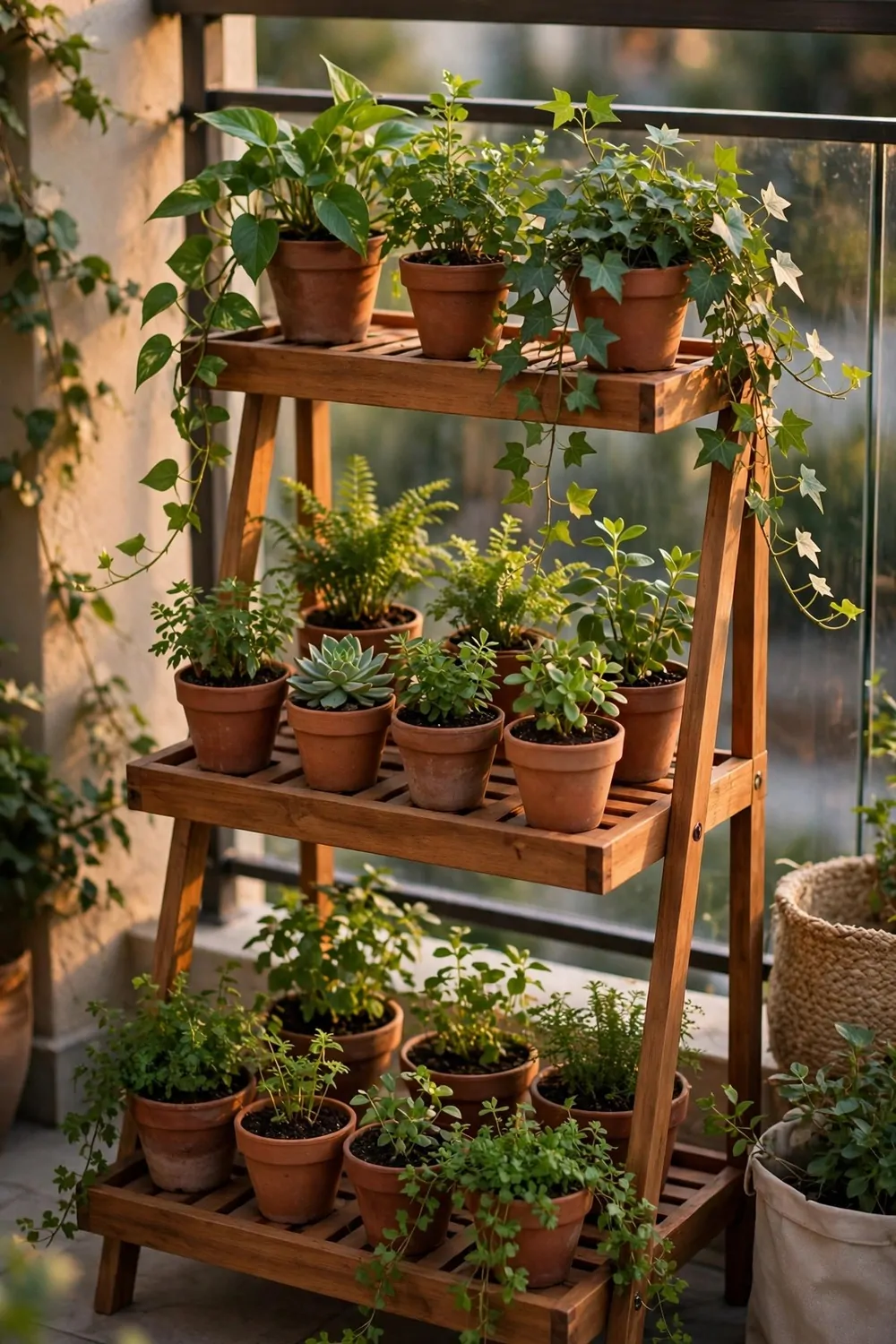
My balcony floor holds only so many pots, and then I run out of room. Plant stands in layers gave me three floors of green in the same small space.
I use a small wooden stand with three shelves, like a tiny set of stairs. Each shelf holds two pots, and the whole thing leans against the wall.
The top shelf gets the most sun, so I put the sun lovers there. The bottom shelf gets shade, so the shade lovers live there.
A metal stand works too, and it does not rot in the rain. I painted mine a soft green, so it blends in with the plants.
I keep the heaviest pots on the bottom shelf, where the stand is steadiest. Light pots go on top, where they cannot tip the whole thing over.
Layers make watering easier, because I can see every pot at once. I start at the top and work down, and no plant gets missed.
A stand also keeps the pots off the cold floor in spring. The soil warms up faster, and the plants grow sooner than the ones on the ground.
One layered stand holds six pots in the space of two. It is the simplest way I know to fit more green onto a tiny balcony.
A Jug That Catches Rain
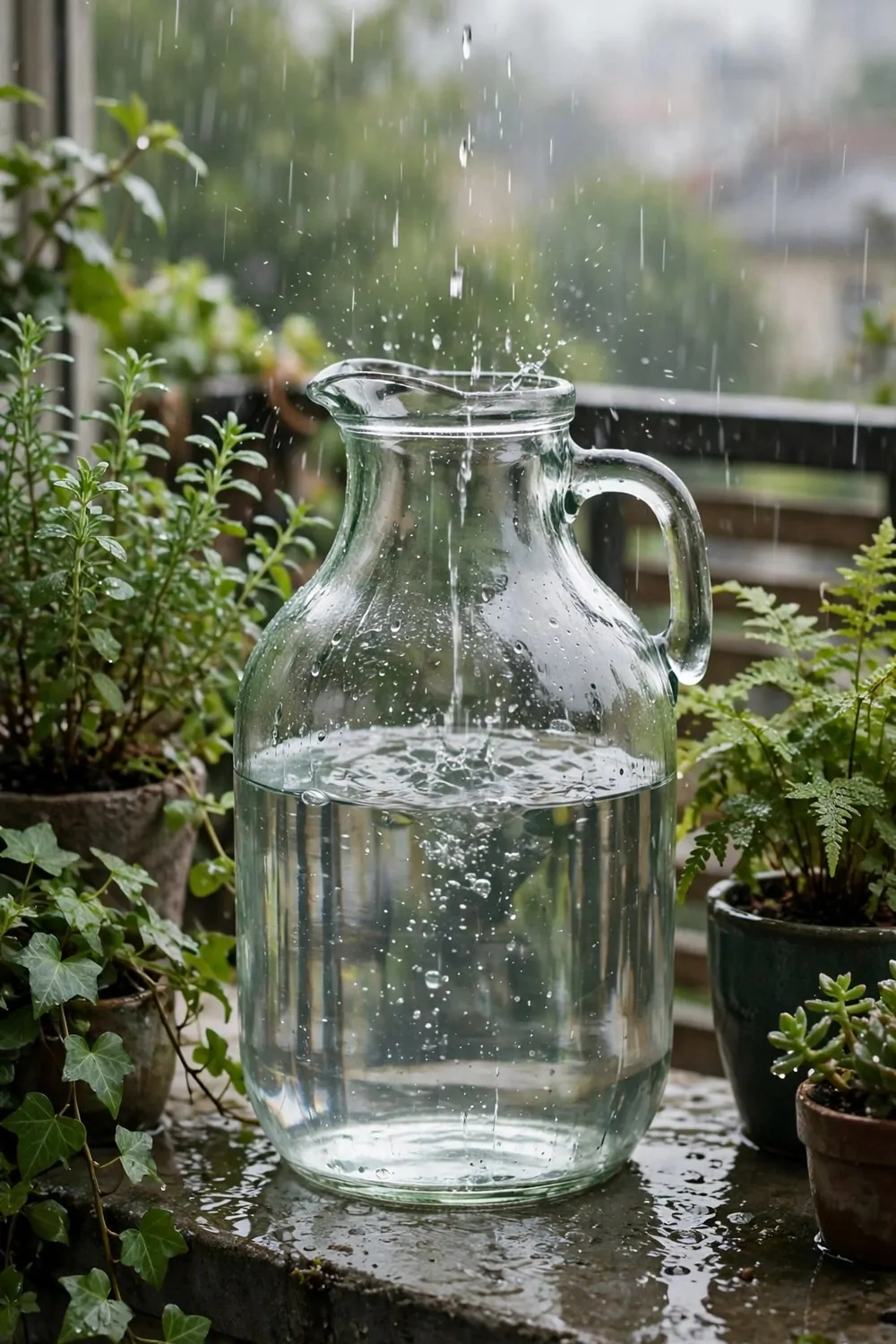
Rain falls on my balcony whether I use it or not, and for years it just ran off the floor. Now a jug catches it, and my plants drink it for free.
I put a wide jug under the edge of the roof where the rain drips down. One good shower fills it right up.
Rain water is soft, and my plants like it more than tap water. The leaves look greener after a rain, and I am sure it is the water, not my imagination.
I keep the jug covered with a bit of cloth when it is not raining. The cloth keeps leaves and dust out, and the water stays clean.
A jug is small, and it will not hold enough for a whole week. But it holds enough for a day or two, and that is a free drink for the plants.
I use the rain water first, before I turn on the tap. When the jug is empty, I go back to my jam jar, and the routine stays the same.
If your balcony has a drain, do not block it with the jug. The jug should sit beside the drain, not on top of it, or a big storm will flood the floor.
One jug, one rainy day, and free water for the garden. It is a small habit, but it feels good to use what the sky gives you.
A Little Bird Feeder
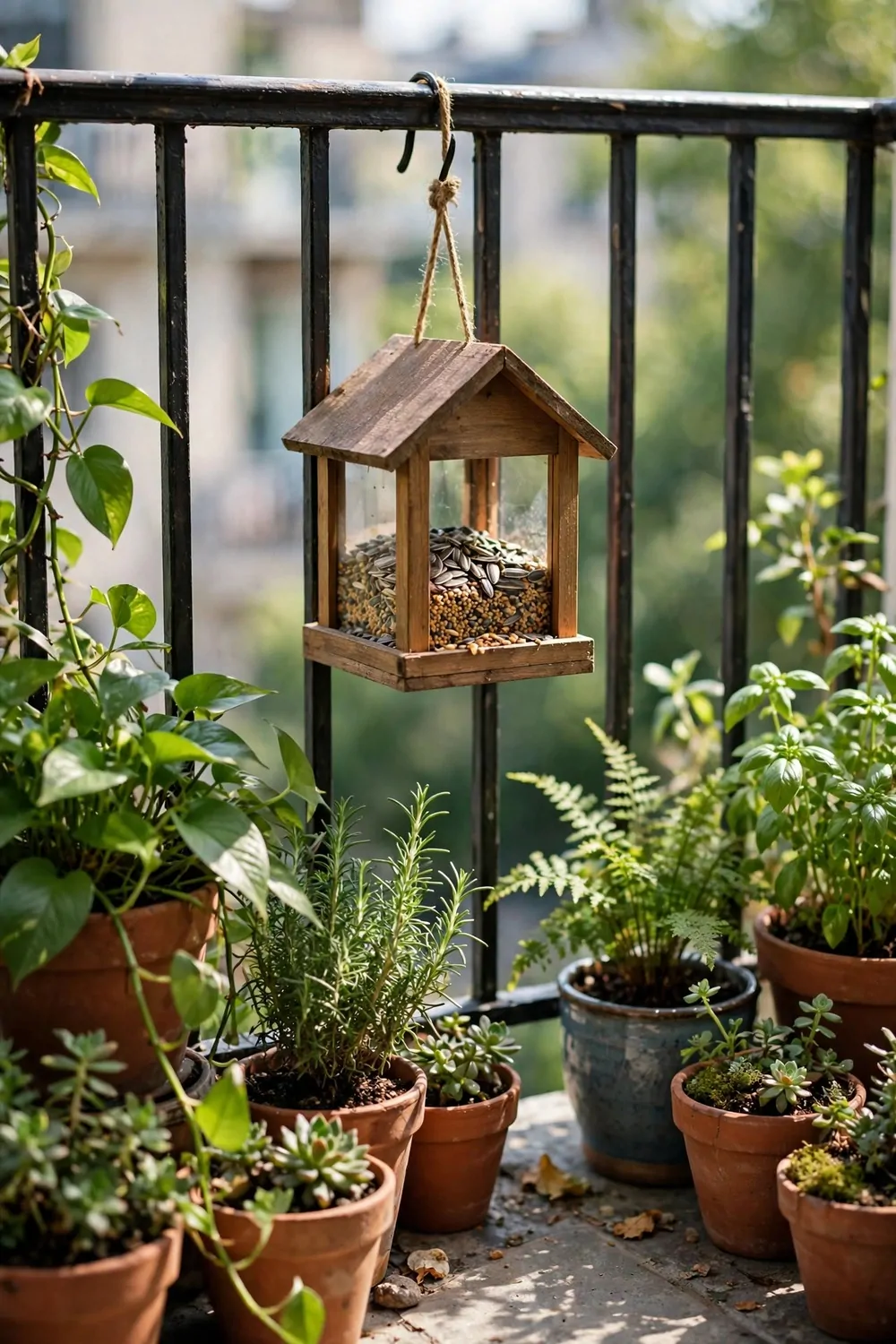
Birds found my balcony before I invited them, and then I put up a feeder. Now a small finch visits most mornings, and my garden feels alive.
I hang the feeder from a hook on the wall, away from the pots. The birds can see it from the sky, and the seeds stay dry under a little roof.
Small seeds are best for a tiny feeder. Sunflower hearts and tiny millet are the ones the small birds like most.
I fill the feeder once a week, and no more than that. A full feeder in the rain goes soggy, and soggy seeds make the birds sick.
The feeder needs a clean every few weeks. I wash it with hot water and let it dry in the sun before I fill it again.
Birds like a bit of cover near the feeder, so I keep a bushy plant close by. The birds hop from the plant to the feeder and back, and they feel safe.
Good things to keep near a bird feeder are:
- a bushy green plant where small birds can hide
- a shallow dish of fresh water for drinking and bathing
- a quiet corner away from the door, so the birds feel calm
- a small branch for the birds to sit on while they wait
A bird feeder turns a balcony garden into a wild little place. You grow the plants, the birds visit, and the whole space feels like a garden, not just a balcony.
Fairy Lights After Dark
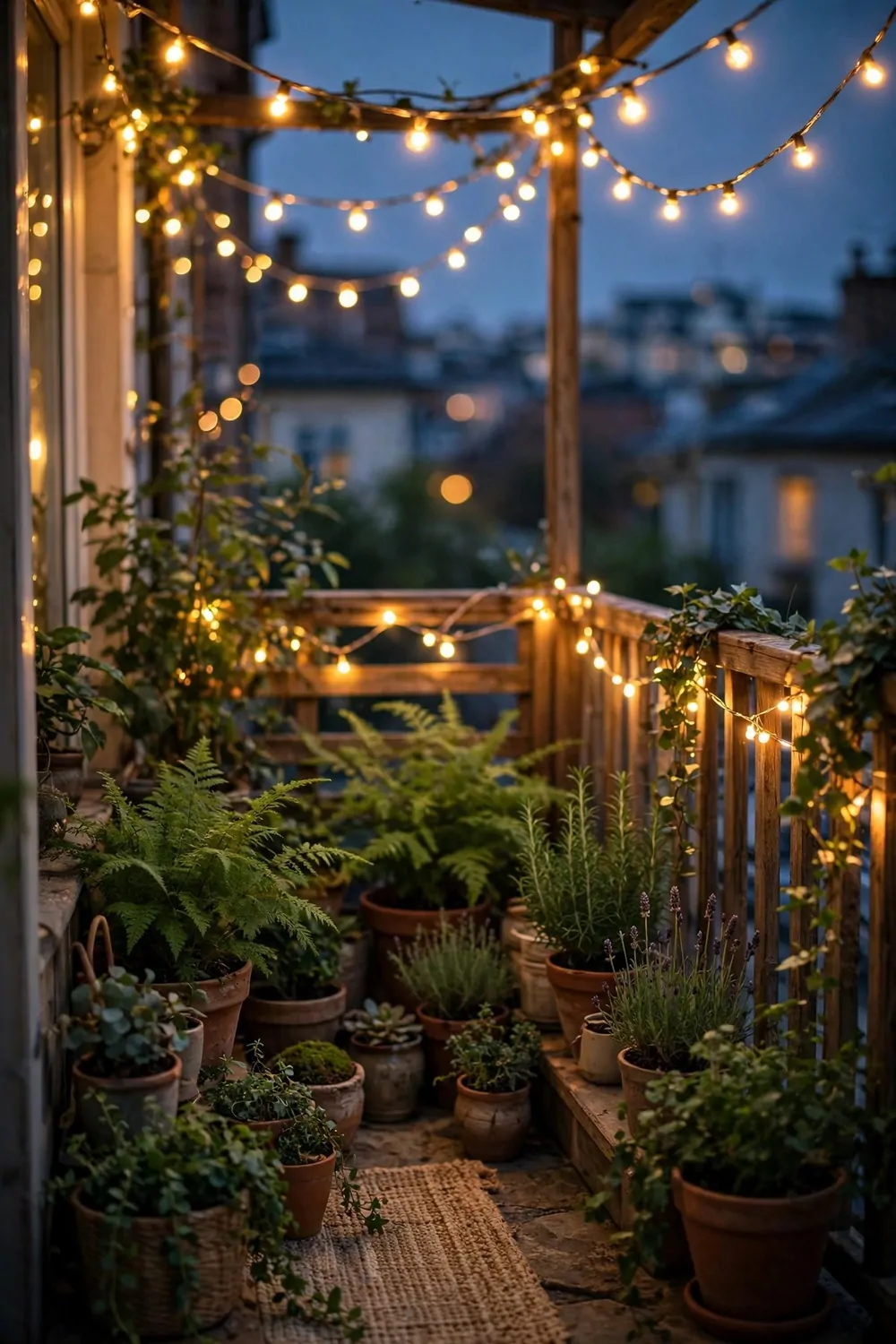
My balcony used to go dark at sunset, and the garden disappeared until morning. Fairy lights changed that, and now the balcony glows all evening.
I string the lights along the railing, tucked behind the pots so the bulbs hide among the leaves. The light falls soft on the green, and the whole space looks magic.
Warm white lights look best, because they glow gold like a candle. Cool white lights feel harsh, and they make the garden look like a shop window.
Battery lights are the easiest for a balcony, because there is no cord to hide. I tuck the little battery box behind a pot, and nobody sees it.
I switch the lights on at dusk, when the sky turns pink. They stay on while I sit with my tea, and I switch them off before bed.
Rain can hurt cheap lights, so I bring the battery box inside on wet nights. The lights themselves are fine in a drizzle, but the box likes to stay dry.
One string of lights is enough for a tiny balcony. Two strings look busy, and the garden gets lost behind the glow.
Fairy lights make the balcony a room at night, not just a garden in the day. It is the prettiest hour on my balcony, and it costs almost nothing.
A Tiny Greenhouse from a Clear Box
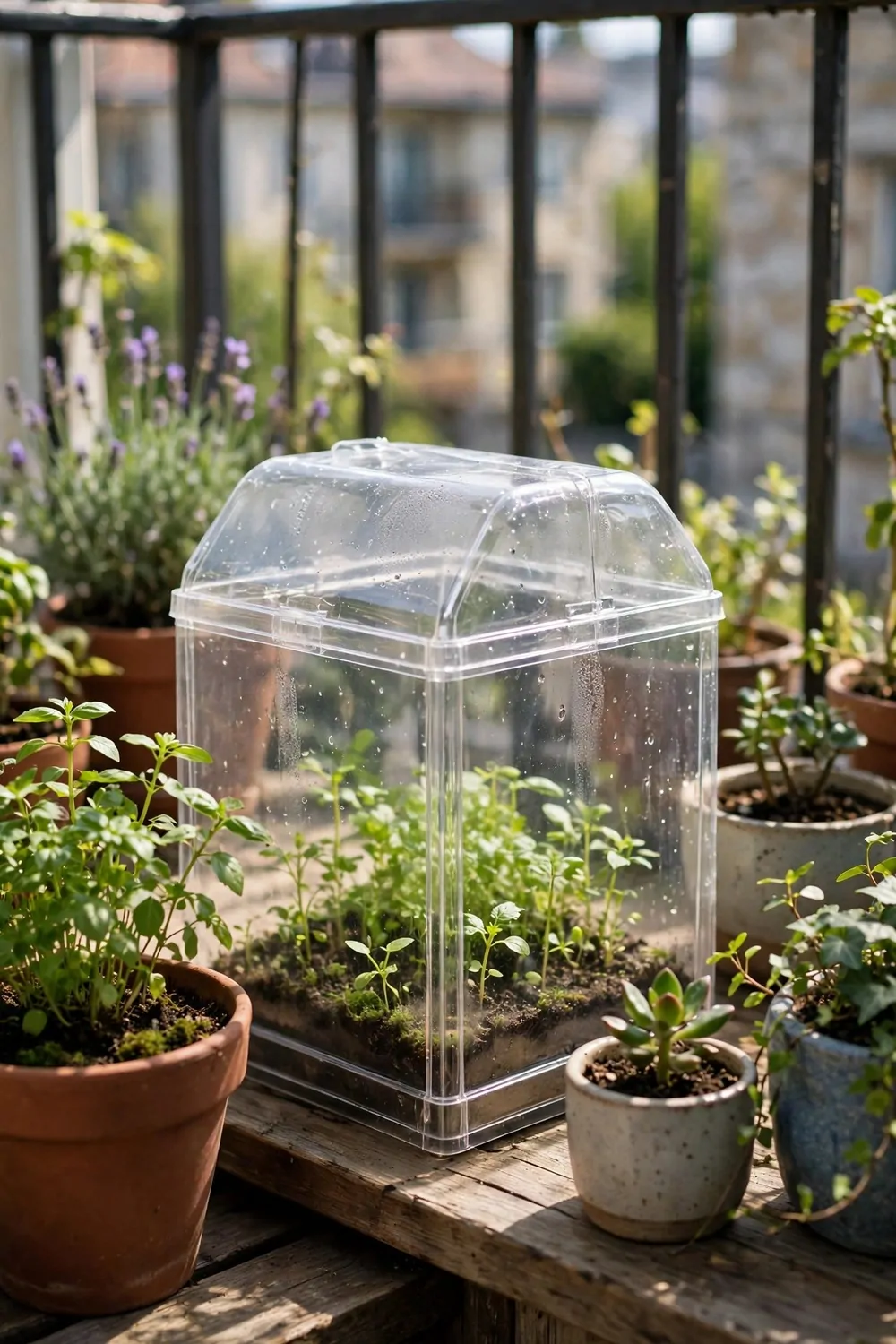
Spring nights can be cold, and my young plants used to shiver. A clear box over them works like a tiny greenhouse, and they grow faster now.
I use an old clear storage box, turned upside down over the pots. The sun warms the air inside, and the plants stay cosy through the night.
The box needs air, or the plants will cook in the sun. I lift one edge with a small stone, so a little air flows through all day.
I take the box off in the late morning, once the sun is warm. The plants get fresh air, and I put the box back on in the evening.
A clear box also keeps the wind off young seedlings. Wind dries small plants out fast, and a box gives them a calm little room to grow in.
I wash the box once a week, so the light still comes through clear. Dust on the plastic blocks the sun, and the plants grow slow.
One box can cover three or four small pots at once. It is a greenhouse that costs nothing, and it fits on a balcony of any size.
Take the box off for good once the nights stay warm. The plants are strong by then, and they do not need a roof any more.
Winter Care for Balcony Plants
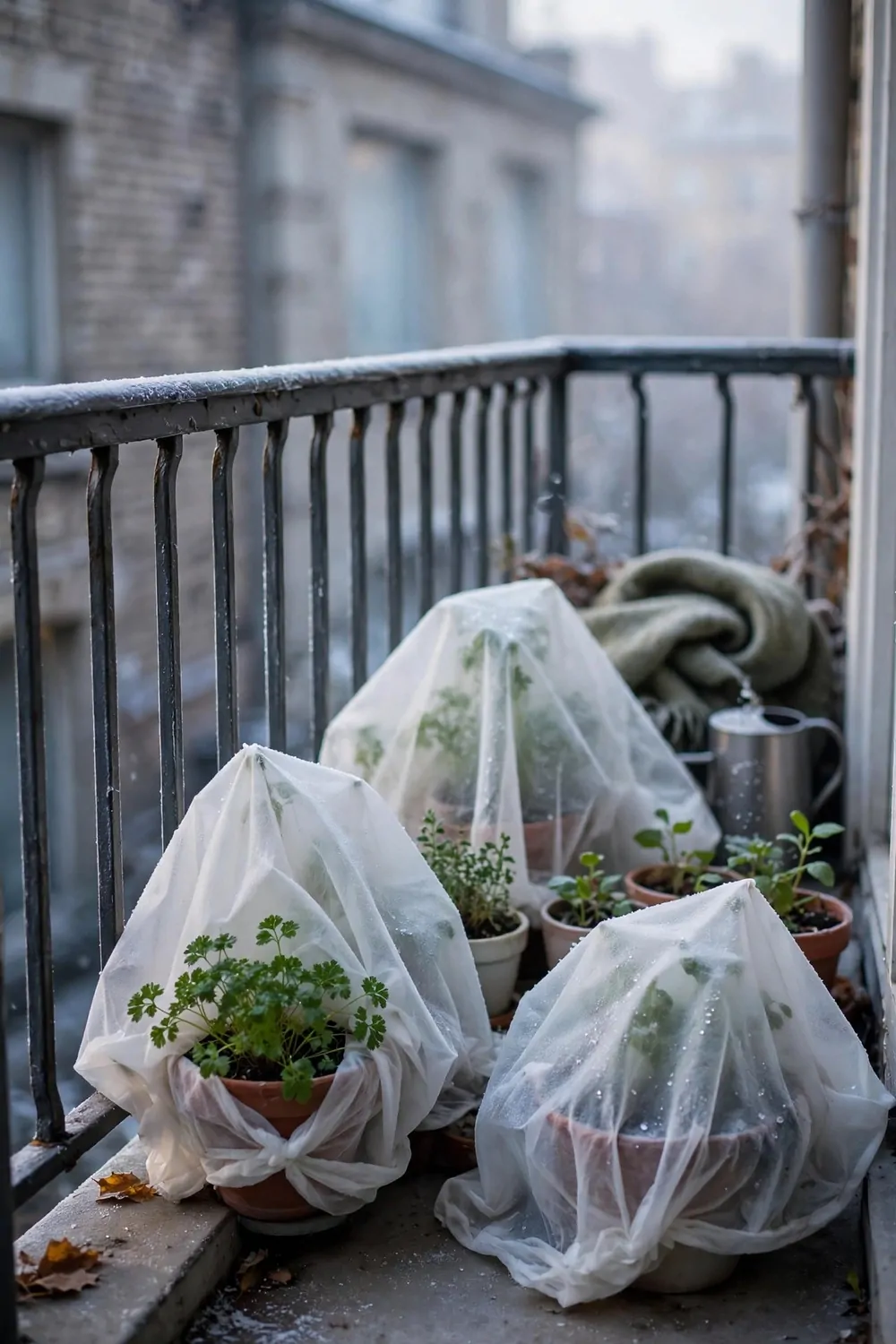
Winter is hard on balcony plants, and my first winter taught me that the hard way. I lost two pots to frost, and I have never let it happen again.
The first thing I do is move the pots close to the wall. The wall holds a little warmth from the house, and the wind cannot reach them there.
I wrap the pots in old cloth on cold nights. The cloth keeps the roots warm, and the roots are what matter most in winter.
Water less in winter, because the plants grow slow and the soil stays wet longer. I check with my finger, and I only water when the top feels dry.
A few simple winter jobs, and when to do them, are in this little table.
| Job | When to do it | Why it helps |
|---|---|---|
| Move pots to the wall | First cold week | The wall holds warmth from the house |
| Wrap pots in cloth | On frosty nights | Warm roots survive, cold roots do not |
| Water less often | All winter long | Wet cold soil can rot the roots |
Bring the smallest pots inside on the coldest nights. A kitchen windowsill is a good winter home, and the plants come back out in spring.
Cut back the dead leaves in late winter, and the plant will sprout fresh in spring. Dead leaves look sad, but the roots underneath are still alive.
Winter care is mostly about doing less. Less water, less fuss, and the plants rest until the sun comes back.
A Compost Pot for Kitchen Scraps
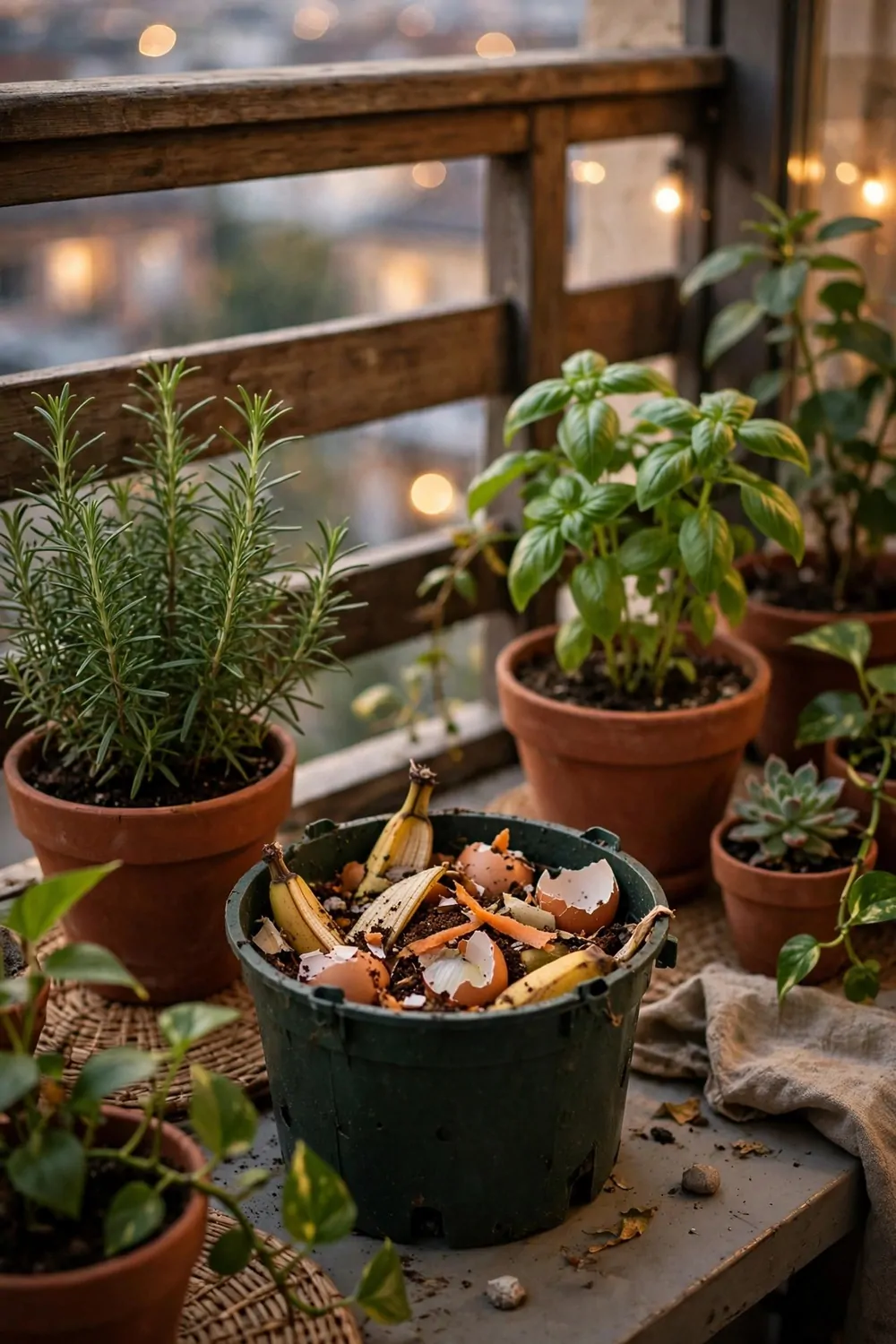
My kitchen scraps used to go in the bin, and now they feed my plants. A small compost pot on the balcony turns peelings into rich soil.
I use a pot with a lid, tucked in the corner where it does not smell. The lid keeps the flies out, and the pot stays tidy.
I add fruit peelings, tea leaves, and eggshells, a little at a time. I never add meat or oily food, because that smells bad and brings pests.
A handful of dry leaves or torn paper goes in with the scraps. The dry stuff keeps the pot from getting soggy, and it helps the scraps break down.
I stir the pot once a week with an old spoon. The air helps the scraps rot faster, and the smell stays mild.
In a few months the scraps turn dark and crumbly, like good soil. I mix a little into my pots, and the plants grow greener.
A compost pot needs patience, not skill. You add scraps, you stir, you wait, and the pot does the rest all by itself.
One pot of compost means less rubbish and happier plants. It is a small circle, and it starts right in your kitchen.
The Balcony at Dusk
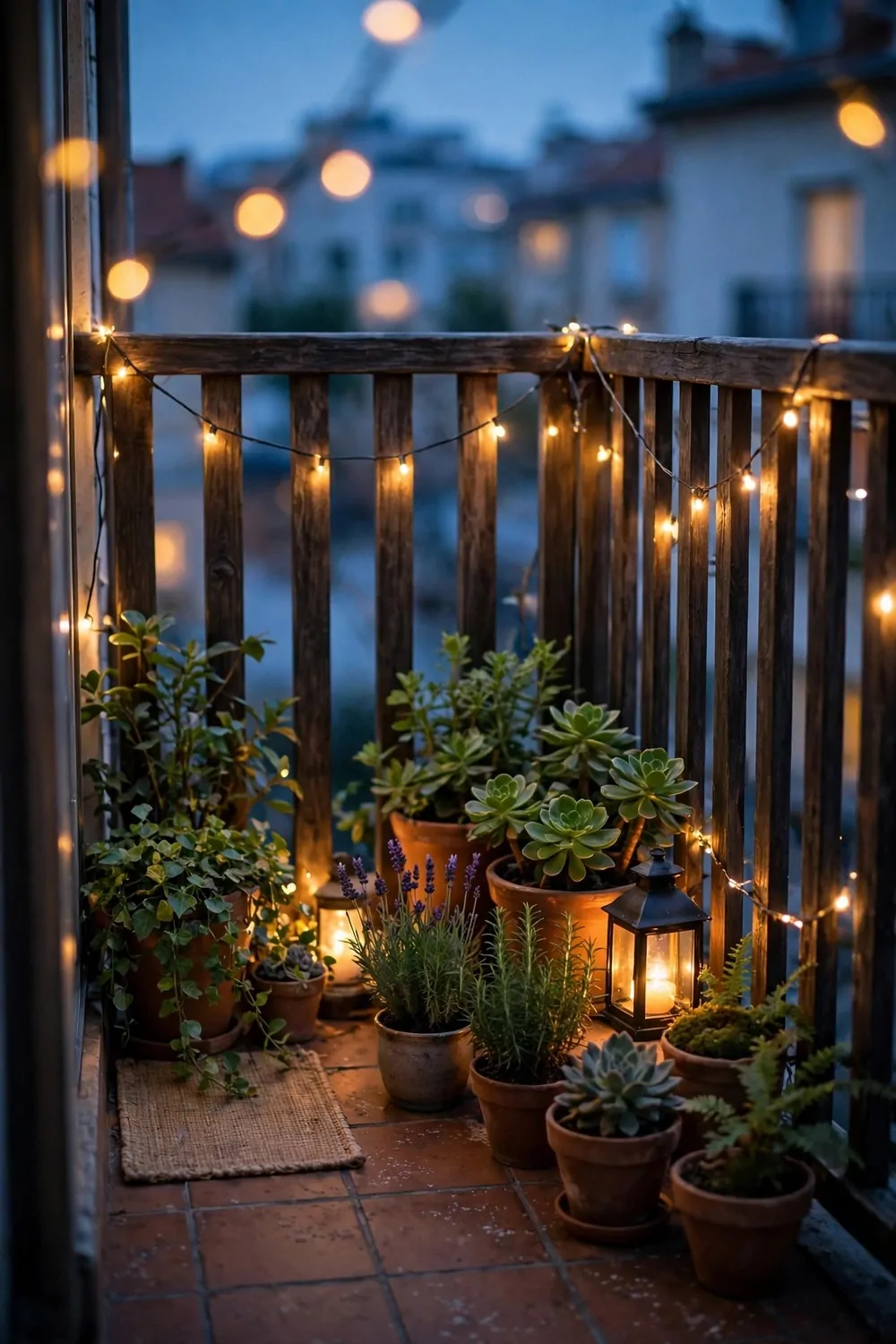
Dusk is my favourite hour on the balcony, when the day cools and the garden softens. The light turns gold, and every plant looks its best.
I water the pots at dusk in summer, when the sun is low. The water soaks in slow, and the leaves stay cool all night.
The fairy lights come on as the sky turns pink. The bees go home, the birds settle, and the balcony feels quiet and calm.
I sit in my small chair with a cup of tea, and I look at what grew today. A new leaf, a taller stem, a flower that opened while I was not looking.
Dusk is also the time to check the plants for the next day. I look for dry soil, a leaning stem, or a pot that needs moving, and I fix it in a minute.
The city sounds fade a little at dusk, and the garden sounds take over. Leaves rustle, water drips, and the whole balcony feels like a small green room.
I leave the balcony feeling calm, and I sleep better for it. A garden at dusk is a gentle way to end the day.
One balcony, nineteen small ideas, and a space that used to hold nothing now holds a whole little world. Start with one pot, and see where it grows.
Keep Reading
If you liked turning a tiny balcony into a green little world, you will like these ideas too. Each one starts small, grows one step at a time, and makes a home feel better to be in.
Have a look at one of them next, and find the idea that fits your home best.
- 23 WFH Office Ideas for a Comfortable Work Day
- 19 Cozy Home Office Aesthetic Looks You’ll Want to Recreate
- 18 Cozy Office Space at Work Ideas That Boost Your Mood
Start with one idea this week, like a pot on the railing or a herb by the door, and let your balcony grow greener one plant at a time. A tiny space can hold a whole garden, and your balcony is waiting for it.