18 Ikea Study Room Ideas for a Focused, Tidy Space

Have you ever walked through an IKEA showroom and thought, I could just live inside this room? The little fake apartment with the desk by the window, the lamp glowing warm, the shelves full of tidy boxes. It looks so calm. So easy.
Then you get home and your study spot is a chair pulled up to the dining table, a pile of papers sliding off the edge, and a charger you can never find. The showroom feeling feels very far away.
Here is the good news. A study corner is the easiest showroom room to copy. It is small. It needs only a few pieces. And IKEA made most of those pieces exactly for this job.
These 18 Ikea study room ideas use real IKEA pieces and real setups people actually live with. Desks, storage, lighting, little tricks. Pick the ones that fit your room and start with just one.
1. Start With the KALLAX and LAGKAPTEN Desk Combo
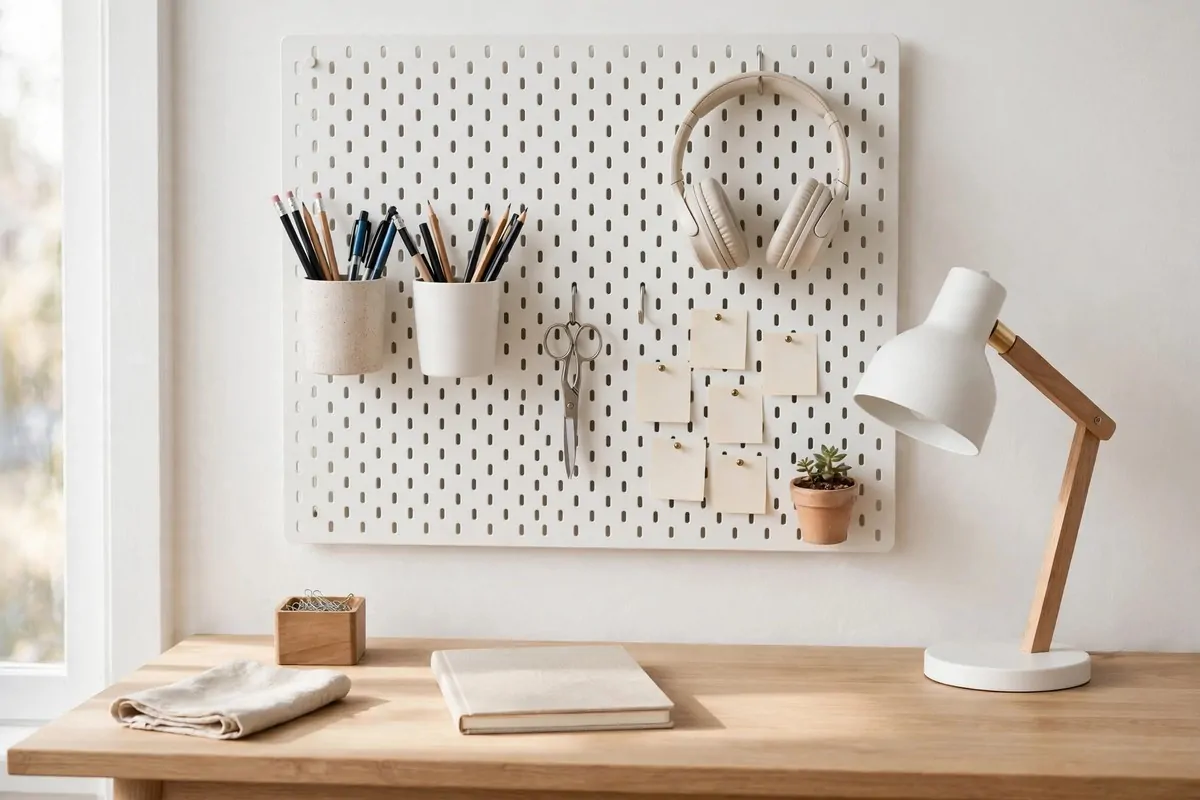
This is the study desk you see in a thousand photos, and there is a reason for that. A KALLAX shelf laid on its side becomes the desk base. A LAGKAPTEN top goes across it. You get a big desk and eight storage cubes in one move.
It works so well for studying because your supplies live right under your work. Textbooks in one cube. Notebooks in another. The stuff you grab every day sits an arm’s reach below your hands.
I love the horizontal KALLAX for this. The four-by-two shape is the perfect desk height when it lies on its side. It feels solid. It does not wobble when you write.
Pick the top size that fits your room. The longer tops give you room for a laptop plus open books side by side. The shorter ones fit a small bedroom and still hold plenty.
Put DRONA fabric bins in a few cubes. They hide the messy stuff fast. Loose papers, cables, the junk drawer everyone has. Slide a bin in and the desk looks clean in ten seconds.
Keep the top cubes open. Those are for books you use daily. Standing books up in open cubes looks tidy and saves desk space.
Add little legs or feet if you want. Some people put small legs under the KALLAX so they can clean under it. It also makes the desk feel a bit lighter in the room.
One more trick. Face the desk toward the wall or the window, not into the room. You will focus better when there is less to look at. The KALLAX back sits against the wall and gives you a clean view.
Here is how I would fill the cubes for a student:
- Top row: daily textbooks standing upright, easy to grab
- Middle row: notebooks, folders, and a pencil box in each cube
- Bottom row: DRONA bins with chargers, spare paper, and craft supplies
This setup costs less than most real desks and stores more. That is why it shows up in so many study rooms.
2. Tuck a MICKE Desk Into a Small Bedroom Corner
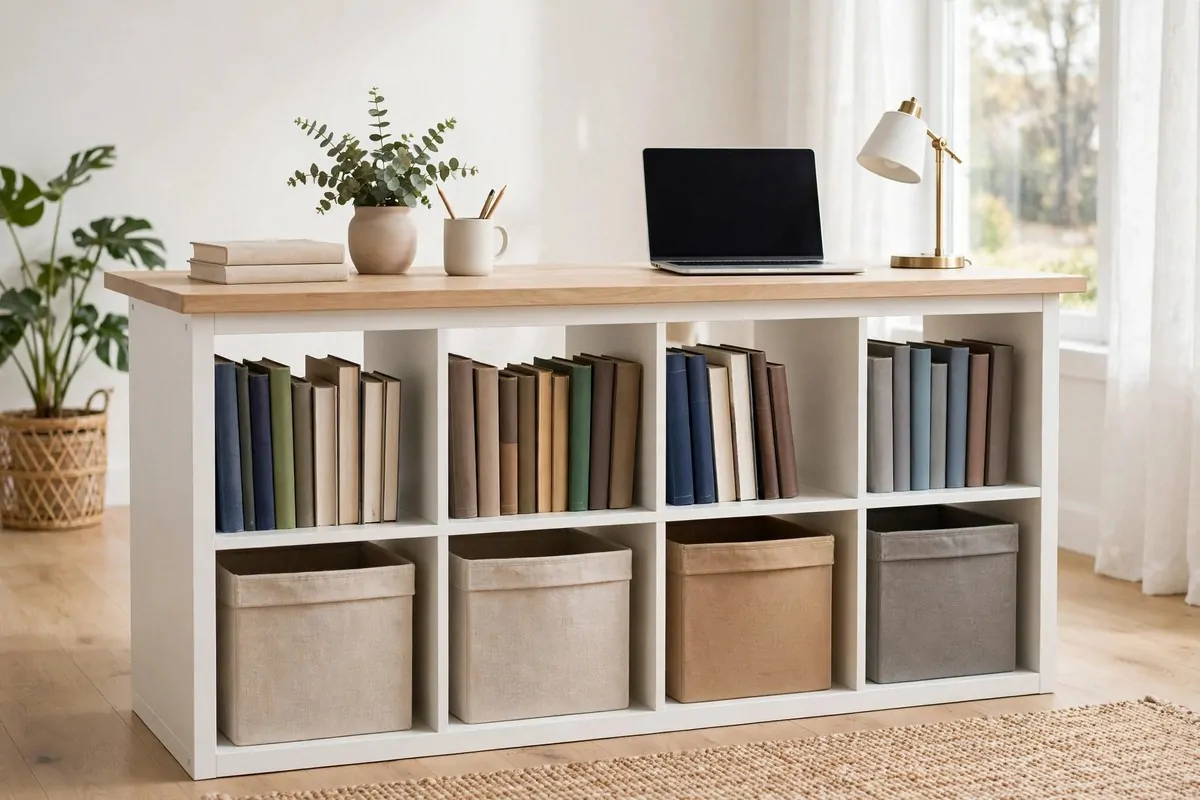
Not everyone has a spare room for studying. Most of us study in a bedroom. That is exactly what the MICKE desk was made for.
It is narrow and neat. It slides into a corner that would otherwise hold nothing but dust. And it has drawers and little compartments built right in, so a small desk does not turn into a messy one.
The best spot is the corner near the window. Natural light helps you focus and keeps you awake during long study sessions. Push the desk right up to the wall so no space is wasted behind it.
Use the drawers with a plan. Top drawer for pens and small things. The deeper drawer for notebooks and folders. When everything has a home, the small surface stays clear.
The cable hole in the back is a quiet hero. Thread your charger through it instead of letting the cable snake across the desk. Small desks look messy fast, so every hidden cable helps.
Add one wall shelf above the MICKE. Books go up there, not on the desk. Your little work surface stays free for actual work.
A MICKE with the add-on top unit is worth it if you study a lot. It gives you shelves without taking any more floor space. Floor space is gold in a small bedroom.
Keep the color light. White or light wood makes a small corner feel bigger. Dark furniture in a small corner can feel heavy and make you want to leave.
Here is a quick way to pick the right small IKEA desk:
| Desk | Best for | Why it works |
|---|---|---|
| MICKE | Small bedrooms | Drawers built in, tiny footprint |
| LACK side table | Laptop-only study | Cheapest option, moves anywhere |
| NORBERG | Shared rooms | Folds flat against the wall |
I have seen students do great work at a MICKE for years. The desk does not need to be big. It needs to be yours.
3. Build a SKADIS Pegboard Study Wall
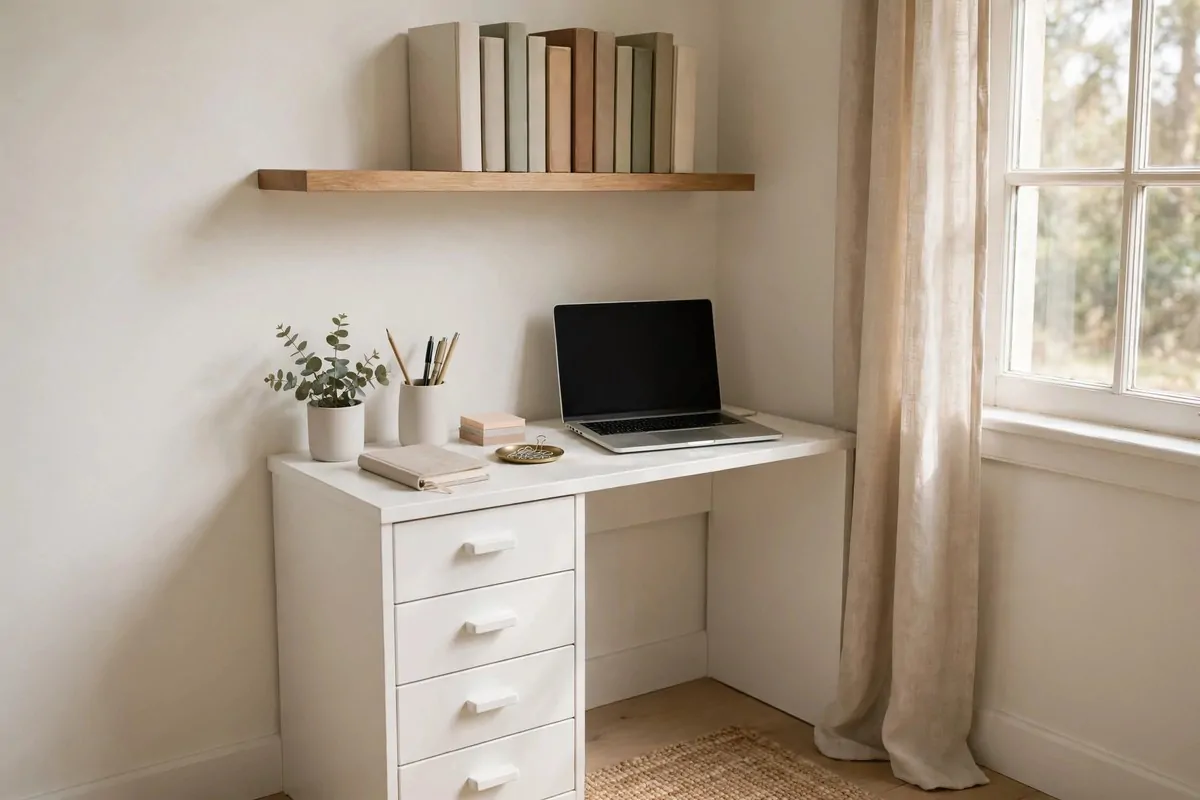
Your desk surface is prime land. Every pen cup and stack of sticky notes that lives on it steals space from your books. The SKADIS pegboard moves all of that onto the wall.
Hang it right above your desk, where your eyes land when you look up. That is the perfect spot for the things you reach for all day. Pens, scissors, highlighters, your headphones.
The little cups and hooks are the fun part. You can move them around in seconds. Your board can change as your study needs change, and nothing needs screws or drilling into the desk.
Use one row of the board for revision. Pin up formula cards, vocabulary lists, or a small calendar with exam dates. Seeing them every day without trying is how things stick.
Keep it neat though. A pegboard can turn into a junk wall fast. If you have not touched something in a month, take it down. The board should hold tools, not clutter.
Add one small plant in a pegboard pot. It sounds silly, but a little green above your desk makes the whole corner feel alive. It is the one decoration that never distracts.
The white board disappears into a white wall. The wood-look one warms up a plain room. Pick whichever matches your desk and the room feels pulled together.
If you share the room, a pegboard is even better. Your study stuff stays on your wall, not spread across shared surfaces. Everyone knows whose things are whose.
I pin my weekly plan at eye level on mine. Just a small card with the three things I must finish this week. It keeps me honest, and it takes up almost no space.
4. Turn a BILLY Bookcase Into Your Study Library
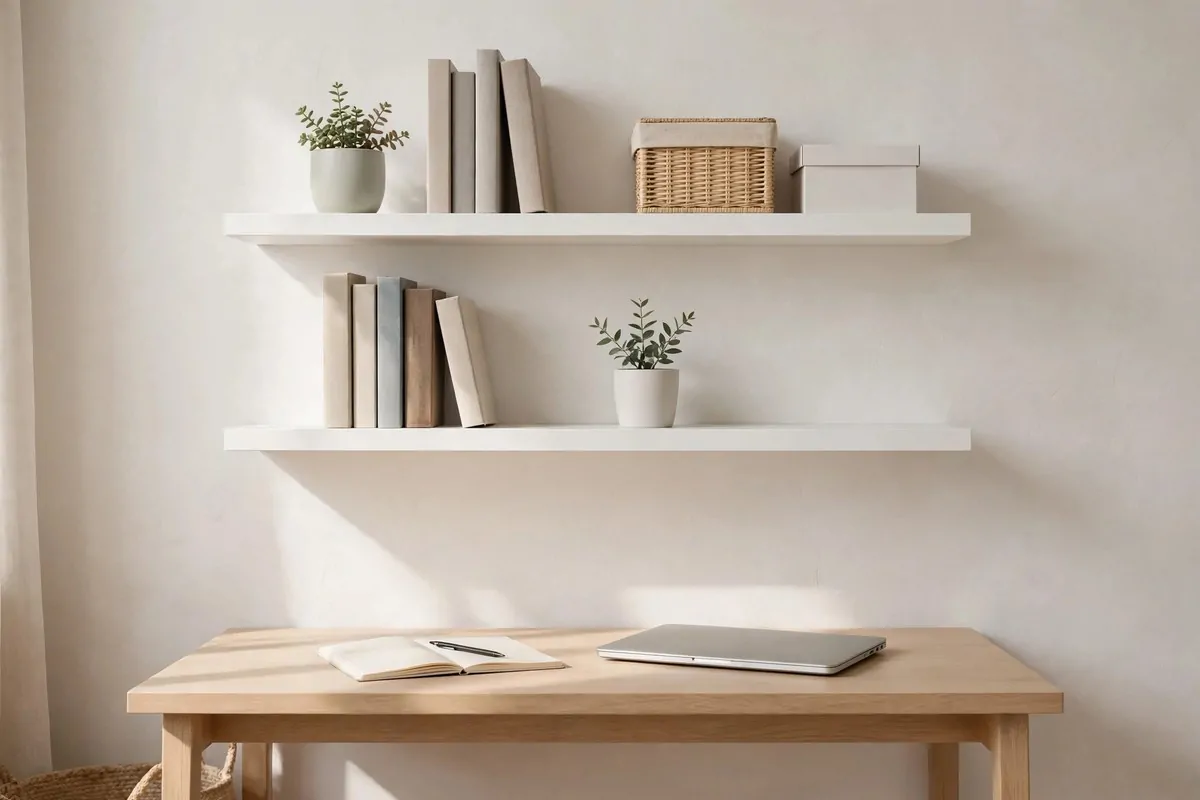
Every serious study room needs a home for books. Textbooks, reference books, the novels you read when you need a break. A BILLY bookcase holds all of them without eating your floor.
The shelves move up and down. That matters more than you think. Tall textbooks get tall shelves. Paperbacks get short ones. No wasted air above short books.
Put the BILLY right next to your desk if you can. When your books live within reach, you actually use them. A bookcase across the room is a bookcase you ignore.
Use the bottom shelves for boxes. The OXBERG doors or simple boxes hide the ugly stuff. Old notes, spare supplies, the printer paper. Up high stays pretty, down low stays hidden.
Line books up by subject. It sounds fussy, but it saves real time. When you sit down to study maths, all the maths books stand together. You grab and go.
Leave one shelf half empty. That sounds strange, I know. But books multiply. New notebooks arrive every term. An empty shelf is future space, not wasted space.
The narrow BILLY fits spots a wide one cannot. Between a door and a window, for example. Two narrow ones flanking a desk look built-in and very smart.
Add the little extension unit on top if your ceiling is high. It gives you one more shelf for the books you rarely touch. Out of sight, but still yours.
A full bookcase changes how a room feels. It says this room is for learning. That feeling alone makes it easier to sit down and start.
5. Add an ALEX Drawer Unit for Hidden Study Storage

Study supplies are sneaky. One day you have three pens. The next day you have forty pens, six rulers, and a drawer that will not close. The ALEX drawer unit ends that story.
Nine drawers sounds like a lot. It is not. Once you start sorting, they fill up fast, and that is the point. Everything gets a drawer. Nothing lives on the desk anymore.
Label the drawers. Little paper labels or a label maker, whatever you have. When a drawer says pens, pens go there. It takes two seconds and it keeps the whole unit working for years.
The shallow top drawers are perfect for the small daily things. Pens, pencils, erasers, sticky notes, paper clips. The deep bottom drawers hold the big stuff. Folders, spare notebooks, the calculator.
Put the ALEX next to your desk, not under it, if you have the room. Under-desk drawers are fine, but beside the desk you can open every drawer fully without hitting your knees.
The ALEX also makes a great desk base. One unit on one side, legs on the other, and a top across. You get storage and a desk in the same footprint.
Keep one drawer empty on purpose. Call it the landing drawer. New things that come into the room go there first. Once a month, sort it. Nothing drifts into clutter this way.
White ALEX units look clean and calm. The gray-turquoise one adds a little fun color for a kid’s study room. Both do the same job.
I think the ALEX is the single best storage piece IKEA makes for students. It is boring, and boring is exactly what study storage should be. Quiet, closed, and tidy.
6. Hang LACK Shelves Above the Desk
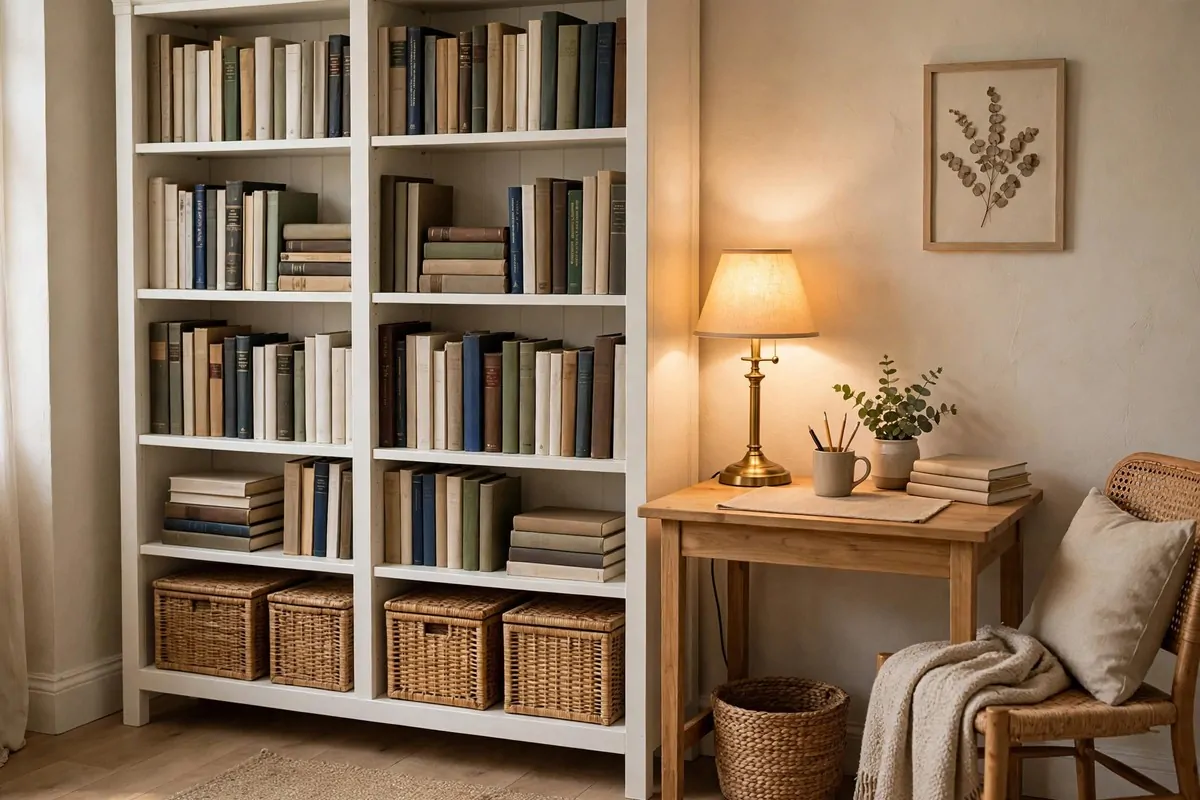
The wall above your desk is free real estate. Most people leave it bare. Two LACK shelves turn it into the most useful storage in the room.
They are cheap and light. They hold books, boxes, and a small plant without any trouble. And they look like they float, which keeps a small study corner feeling open.
Hang the first shelf at a height you can reach while sitting. That shelf holds the daily stuff. The second shelf goes higher for things you need less often. Old textbooks, keepsakes, the lamp you only use at night.
Use boxes on the shelves, not loose piles. Small boxes or baskets keep the shelves looking tidy from across the room. Loose papers on a shelf always look messy, even when they are organized.
Leave some air between things. A shelf packed edge to edge feels heavy. A shelf with a little breathing room feels calm. Calm is what you want where you study.
Line the shelves up with the desk edges. When the shelf is the same width as the desk below, the whole corner looks planned. That one detail makes cheap shelves look expensive.
Check the wall before you hang them. LACK shelves need solid fixing. If your wall is plasterboard, use the right anchors. A shelf of books is heavier than it looks.
I like putting a small clock on the top shelf. You can see the time without picking up your phone. That alone has saved me from a hundred little distractions.
Two shelves, a few boxes, done. It takes one afternoon and changes the whole corner.
7. Clip On a TERTIAL Lamp for Late-Night Study Sessions

Good light is not a luxury when you study. It is the difference between focusing for two hours and giving up after twenty minutes. The TERTIAL lamp is the classic fix.
It clamps to the desk edge. No base taking up desk space. You can aim the head exactly where your book sits, and it stays there. That focused pool of light tells your brain it is work time.
Use a warm bulb for evening study. Warm light feels calm and does not fight your sleep later. For daytime focus, a cooler white bulb keeps you sharp. One lamp, two moods.
The arm folds flat against the wall when you are done. Your desk goes back to being a clean surface. Small thing, but it makes the room feel tidy at the end of the day.
Put the lamp on the opposite side from your writing hand. Right-handed, lamp on the left. That way your hand never throws a shadow across your notes. Old trick, still the best one.
Pair the desk lamp with the room’s main light. One lamp alone in a dark room strains your eyes. A soft ceiling light plus the focused desk lamp is the combo that works.
The TERTIAL comes in fun colors too. A bright one can be the one playful piece in a plain study corner. Kids pick their lamp color and suddenly the desk feels like theirs.
I studied under a clamp lamp all through my late school years. There is something about that little circle of light. The rest of the room fades away, and it is just you and the page.
8. Fold Down a NORBERG Table in a Tiny Corner
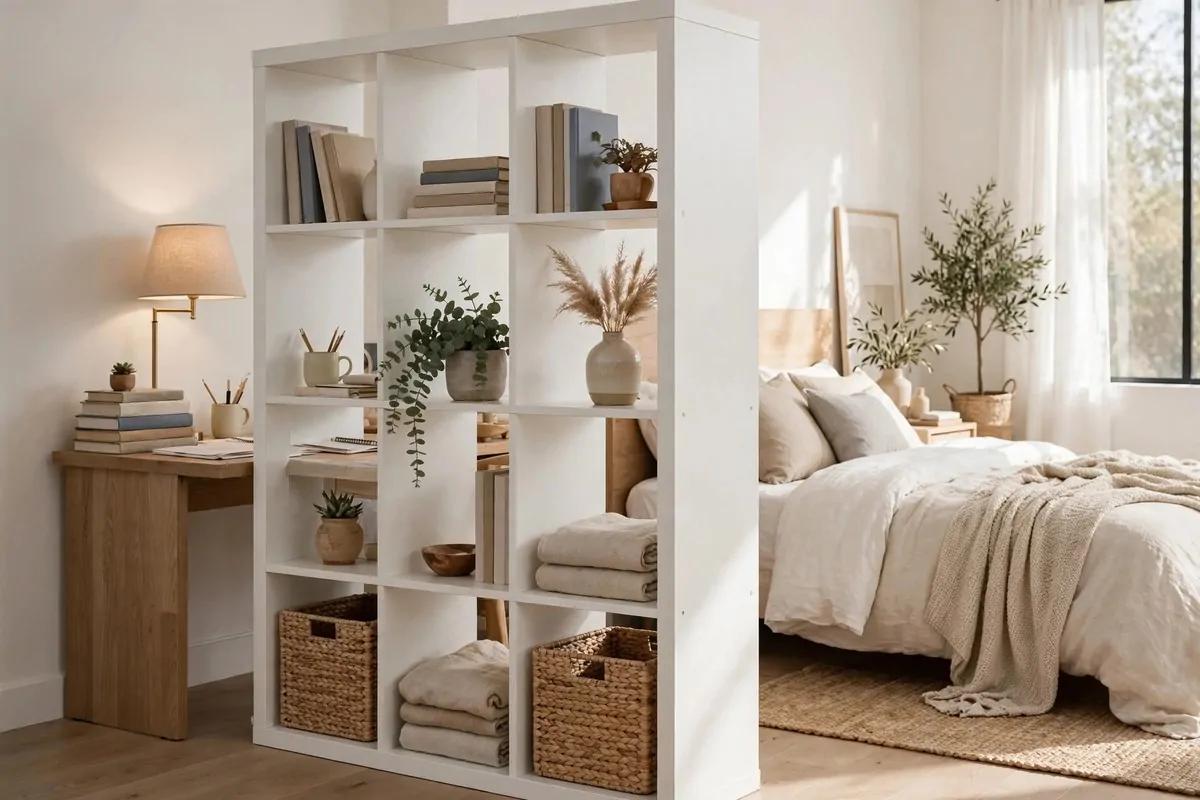
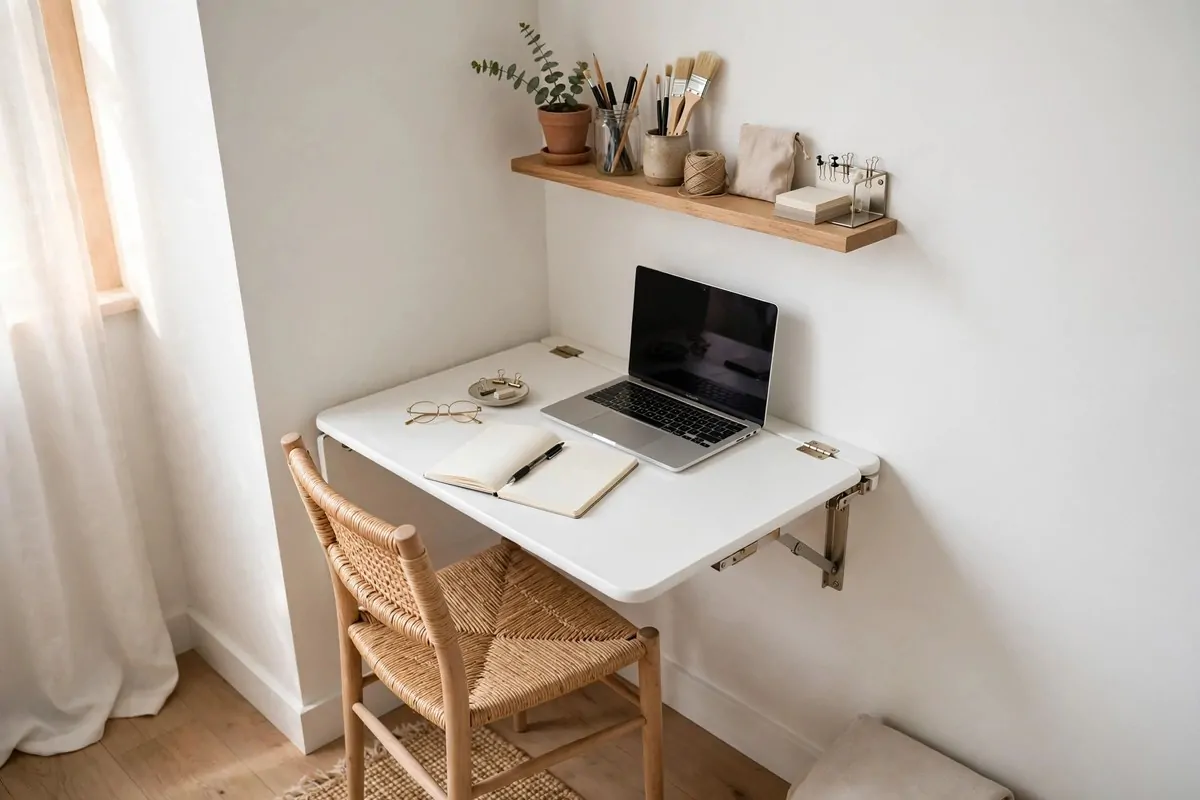
Some rooms have no space for a desk at all. The NORBERG is IKEA’s answer. It mounts on the wall and folds down when you need it. Study time, it is a desk. Done studying, it disappears.
This is perfect for shared bedrooms. Your study space exists only when you need it. The rest of the time the room is just a bedroom. No desk staring at you all evening.
Mount it at proper desk height. Sit in your chair, rest your arms like you are typing, and mark the wall. A desk at the wrong height hurts your back within a week.
Keep a small box of supplies nearby. Since the table folds away, your pens and notebooks need a home too. A wall shelf above or a RASKOG cart beside it does the job.
The folded table is only a few inches deep. You can hang it behind a door or in a hallway nook. Any blank wall becomes a possible study spot.
It is sturdy enough for a laptop and books. It is not made for a heavy desktop computer and three monitors. Know its limits and it will serve you well.
Add a cushion to your chair. A fold-down desk often pairs with a simple chair, and a cushion makes long sessions much kinder. Comfort keeps you studying longer.
Students in dorms love this piece. When the room is tiny and shared, a desk that vanishes is worth more than a big one that does not fit.
I wish I had known about the NORBERG in my first small flat. It would have saved me a year of studying at the kitchen table.
9. Roll In a RASKOG Cart as Your Mobile Study Station
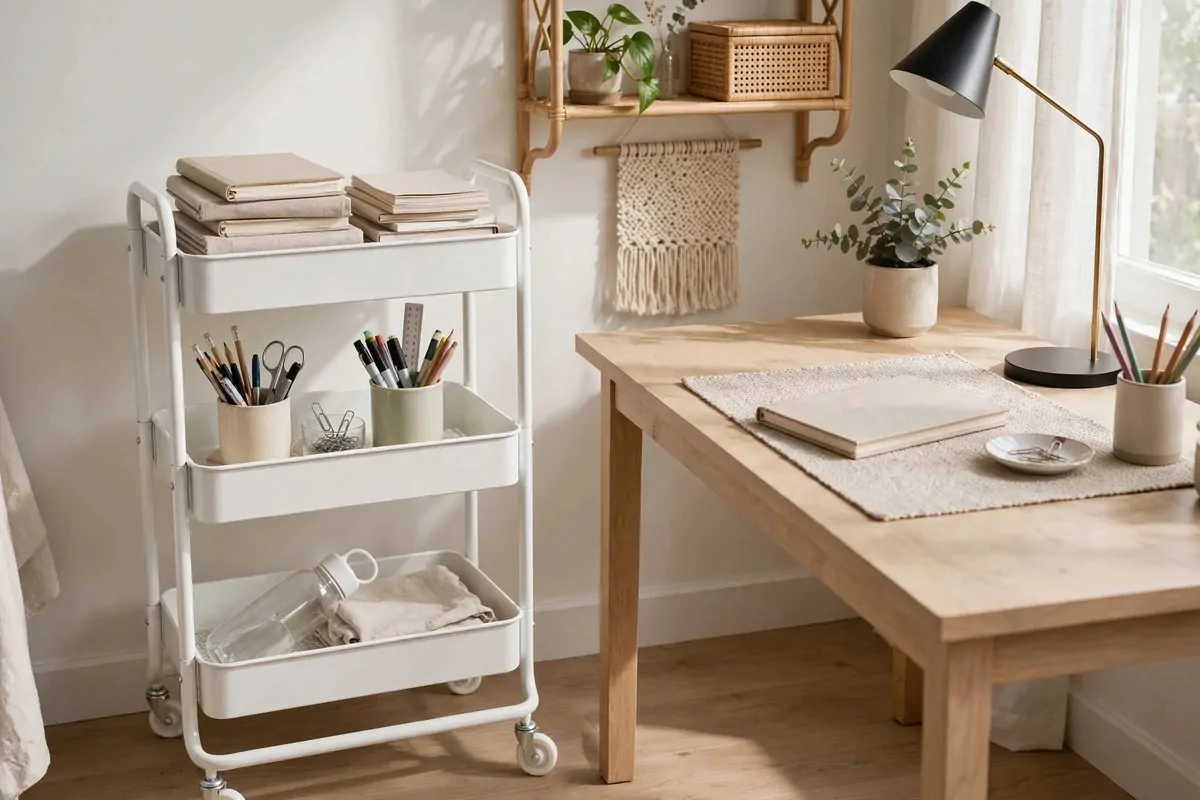
Studying does not always happen at the desk. Sometimes it happens on the couch, the bed, or the balcony. The RASKOG cart follows you there.
Three tiers of storage on little wheels. Load it with your current subjects and roll it wherever you sit. Your study kit travels as one tidy unit instead of an armful of loose things.
Use the tiers with a system. Top tier for what you are studying right now. Middle tier for supplies. Bottom tier for the next subject or your snacks and water. Everything in reach.
The cart is narrow enough to park beside any desk. When you sit down properly, roll it next to you. It becomes a side table with everything you need.
Kids love this cart. They can roll their homework station to the kitchen table when they want company, then roll it back to their room. It gives them control over their space.
Hook small cups on the sides for pens. The cart has holes made for this. A few S-hooks and cups turn the sides into extra storage without taking any tier space.
It comes in several colors. Match it to your room or pick a bright one as an accent. A colored cart can be the fun piece in a plain study corner.
Clean it out every Sunday. A rolling cart collects things fast. Five minutes once a week keeps it a study station instead of a junk pile.
I keep mine stocked like a little shop. When everything I need is on those three tiers, I stop getting up every ten minutes. Fewer trips, more focus.
10. Use KALLAX as a Room Divider for a Study Zone
When your study desk sits in a bedroom or living room, the rest of the room keeps pulling your attention. A KALLAX unit standing between the desk and the room fixes that.
It works as a low wall. You sit at your desk and see shelves, not the bed or the television. Your brain gets the message. This side is for work.
The shelves face both ways. From the desk side they hold your study supplies. From the room side they hold books, plants, or pretty boxes. One piece of furniture does two jobs.
Do not fill every cube. Leave a few open so light passes through. A divider that blocks all light makes the study side feel like a cave. Open cubes keep it airy.
Anchor it to the wall if you can. A tall KALLAX standing free in the middle of a room should be secured. It is a simple job and it keeps everyone safe.
The two-by-four KALLAX laid horizontally makes a lower divider. You can see over it, but it still marks the boundary. Good for small rooms where a tall unit would feel heavy.
Put your desk facing the divider, not the room. This is the key move. Your back is to the distractions. Your eyes see only shelves and your work.
Add a rug under the desk area. The rug marks the study zone on the floor the way the KALLAX marks it at eye level. Two boundaries, one clear message.
I have seen this trick turn a corner of a shared living room into a real study space. The student said it felt like having their own room. All it took was one shelf.
11. Set Up a FLISAT Table for Little Learners
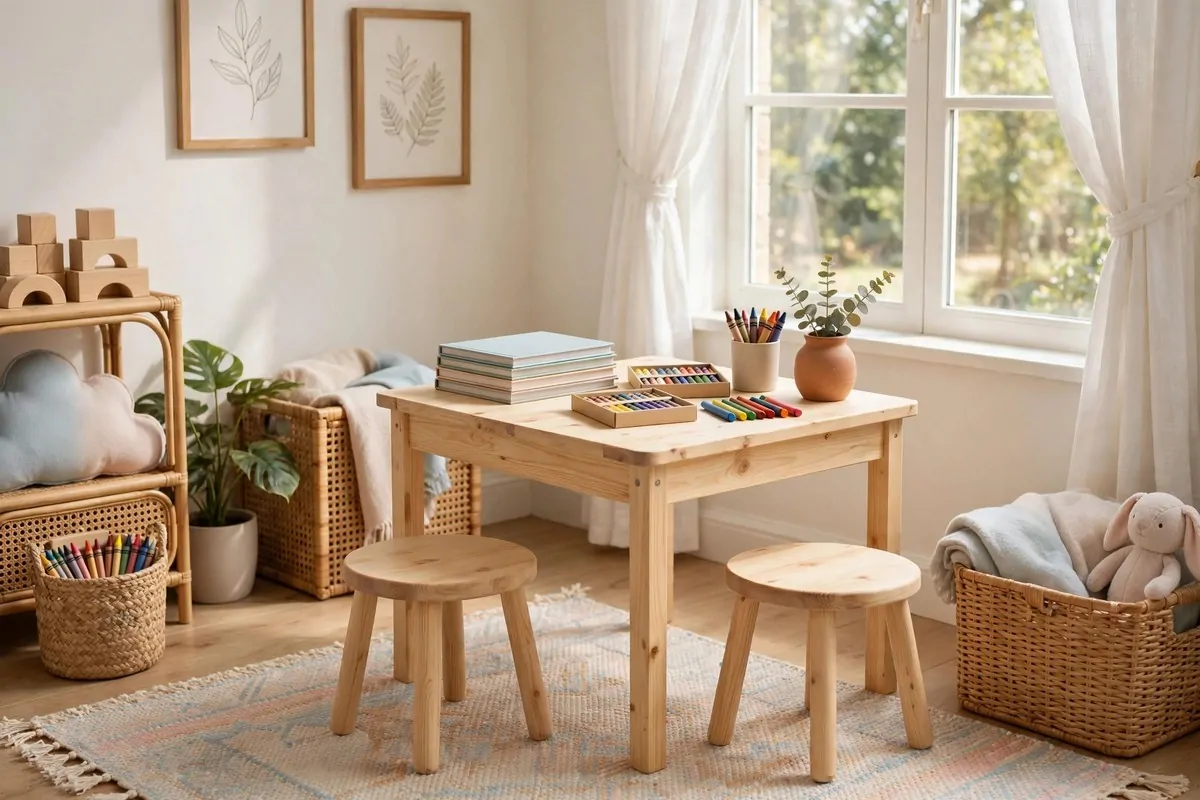
Study rooms are not only for teens and adults. Little kids need a study spot too, and it needs to fit them. The FLISAT table is built for small bodies.
It is low and light. A child can sit down, reach everything, and feel like the table was made just for them. That feeling matters. Kids take care of spaces that fit them.
The pine top is perfect for crafts and homework. It wipes clean easily. Spilled paint, glue, marker streaks. They all come off, and the table keeps going.
Pair it with the matching small stools. Feet flat on the floor helps kids sit still longer. A chair that is too tall makes little legs dangle, and dangling legs mean fidgeting.
Keep supplies in small boxes on the table. Crayons in one, paper in another. When a child can see and reach their tools, they start projects on their own. That is the dream.
Put the little table near a window. Daylight is kind to young eyes. It also gives them something nice to look at during thinking breaks.
The FLISAT grows with crafty kids for years. It starts as a drawing table at three and becomes a homework desk at seven. Few pieces earn their keep that long.
Let them decorate it. A few stickers on the legs, their name on a little sign. When a child decorates their study table, they defend it. It becomes their place.
My nephew does his reading at a table just like this. He calls it his office. He is six. Start them early and the study habit builds itself.
12. Put the Desk Under a STORA Loft Bed
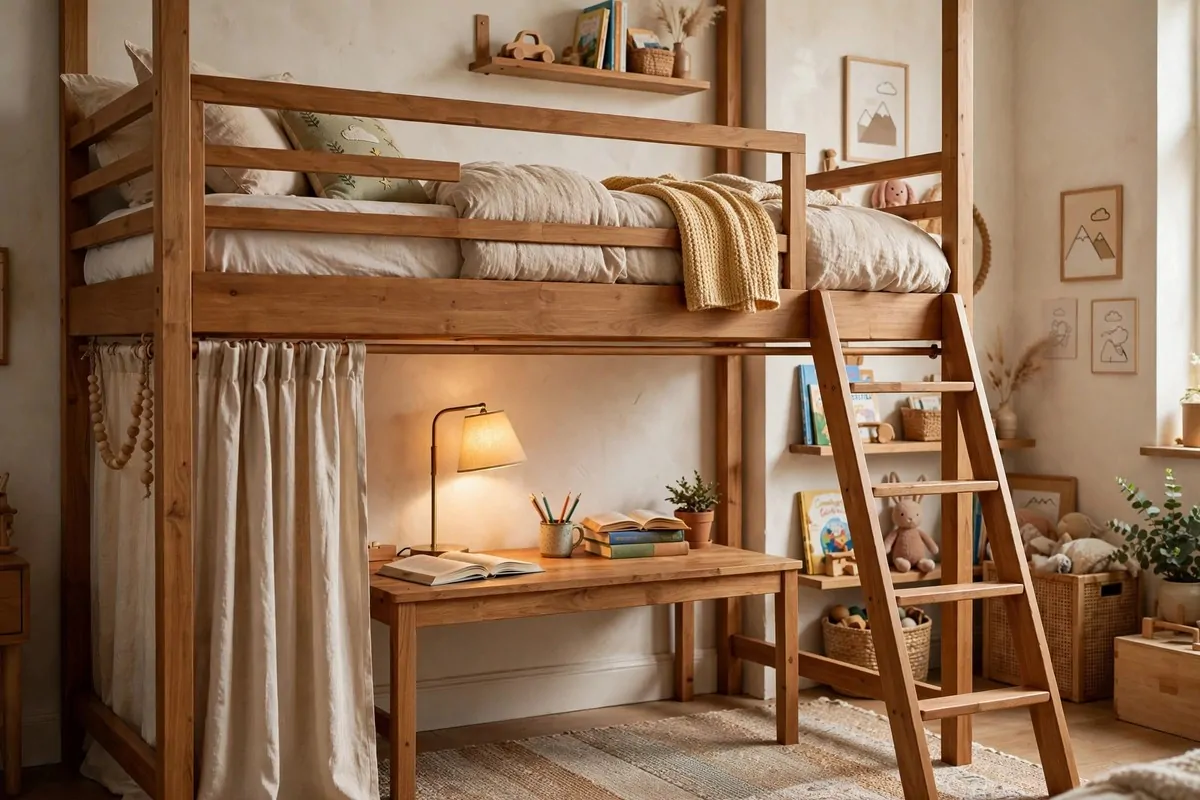
Small kids’ bedrooms have one big problem. The bed eats half the floor. The STORA loft bed lifts the bed up and hands that floor back to you. The space underneath becomes a study nook.
It feels like a secret den. Kids love studying under their own bed. The frame wraps around the desk and makes the space feel private and cozy. Focus comes easier in a nook.
Fit a small desk and chair under there. A MICKE or a simple LACK table works. Add a clamp lamp since the bed frame blocks some ceiling light. Light the nook well and it never feels dark.
Hang a curtain on one side. It makes the study den feel even more private. Open it when they want light, close it when they want to focus. Kids adore this control.
Use the bed posts for storage. Hooks hold backpacks and headphones. A small hanging organizer holds pens and notebooks. The frame becomes part of the study system.
Check the ceiling height first. You need enough room to sit comfortably under the bed. Measure from the floor to the bed frame, then subtract chair and headroom. Do the maths before you buy.
This setup is a classic for a reason. Sleep up top, study below, play everywhere else. One small room holds a whole childhood.
Teens like it too, when the room is truly tiny. The den feeling never really gets old. It just gets a better lamp and bigger books.
I have watched a shy kid bloom in a loft-bed study nook. Having a space that felt like hers changed how she felt about homework. Rooms shape us more than we admit.
13. Pair a MALM Desk With Matching Bedroom Storage
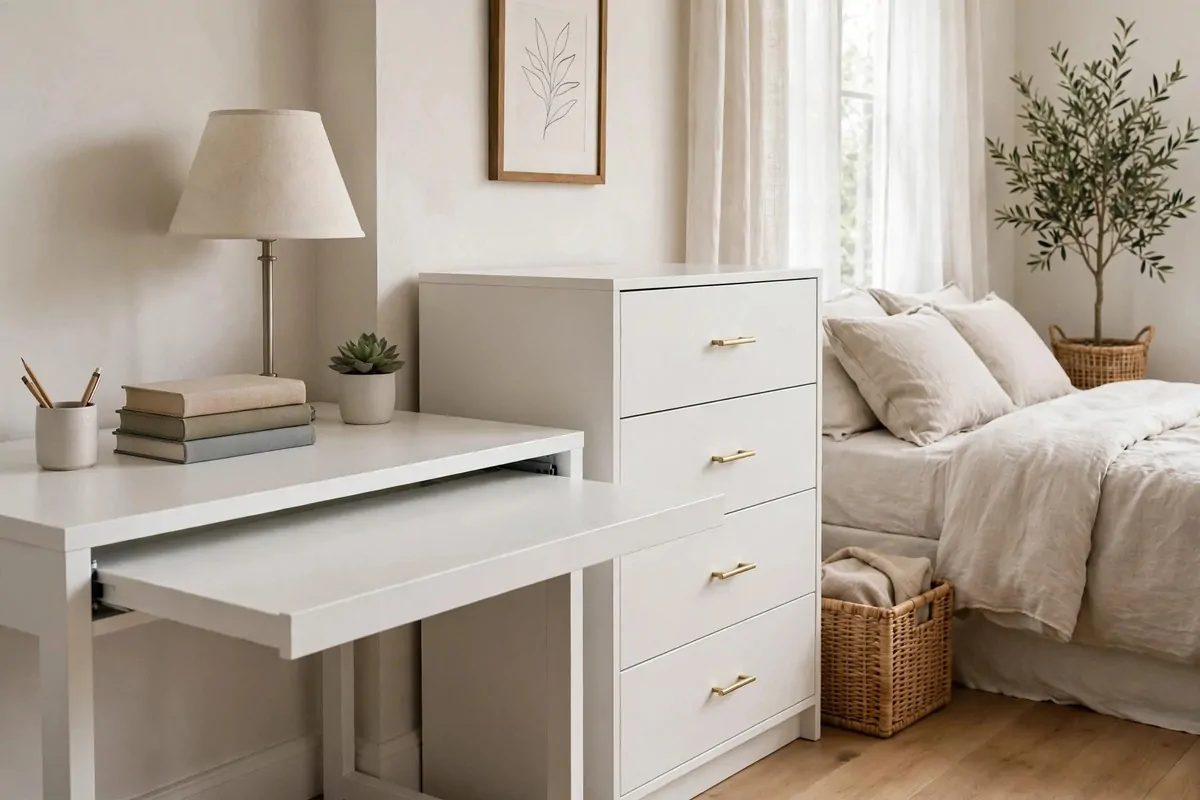
Some study corners need to look grown up. The MALM desk has clean lines and a pull-out panel that gives you extra surface when you need it. It looks like real furniture, not a student setup.
The pull-out panel is the clever part. Slide it out for your laptop or writing space. Push it back when you are done. The desk stays slim against the wall.
Match it with a MALM chest of drawers beside it. Same color, same style. The pair looks like a planned set. Study supplies live in the drawers, and the top of the chest holds a lamp or books.
This works beautifully in a master bedroom that doubles as a study. The furniture looks like bedroom furniture. Nothing screams office. You can rest and work in the same room without either feeling wrong.
Keep the palette calm. White, oak effect, or black-brown. The MALM looks best when it is simple. Let one nice lamp or a framed print be the decoration.
The desk has a cable outlet in the back. Thread chargers through it like the MICKE. Clean cables make simple furniture look far more expensive.
Add a comfortable chair, not a spare dining chair. You will sit here for hours. The MALM deserves a chair that matches its calm look and supports your back.
Dust the top once a week. Simple dark surfaces show dust fast. A quick wipe keeps the whole corner looking sharp.
I think of the MALM as the quiet achiever of IKEA desks. It never shouts. It just sits there looking tidy while you get your work done.
14. Tame Clutter With DRONA Bins in KALLAX Cubes
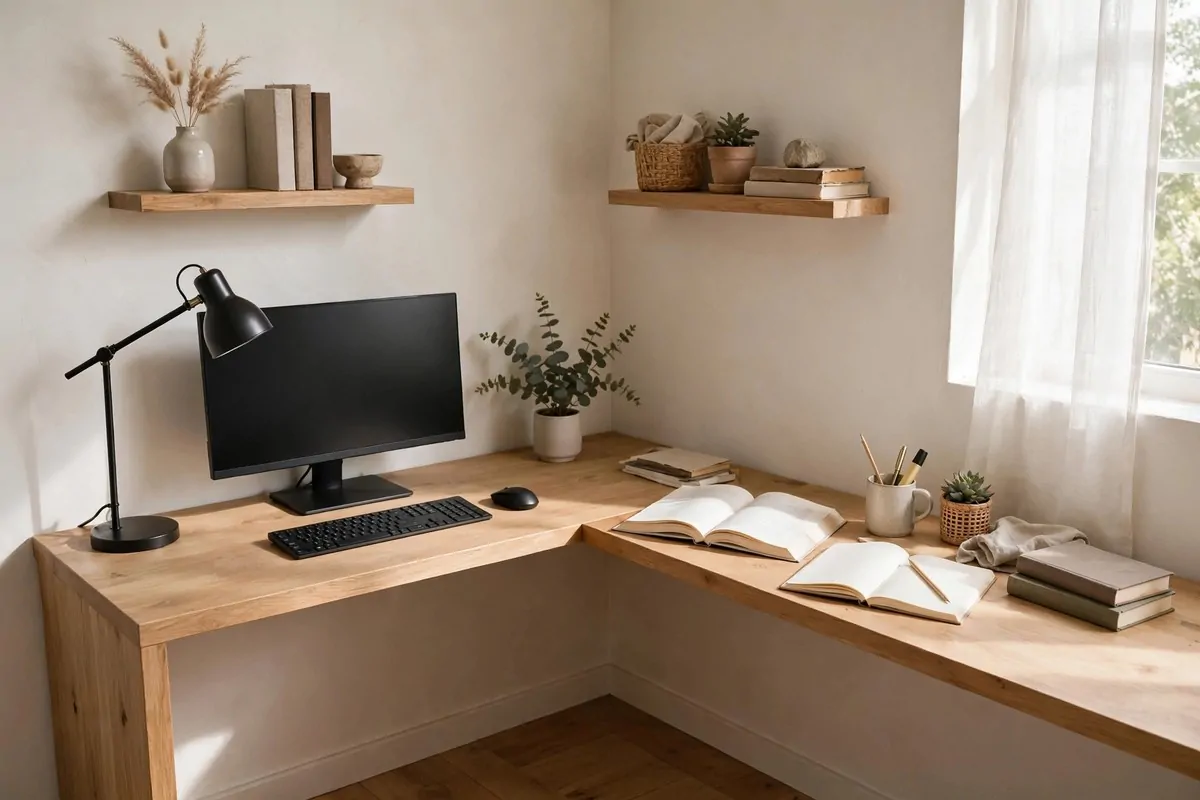
Here is a hard truth about study rooms. They are never messy because of big things. They are messy because of small things. Cables, chargers, loose paper, old notebooks. DRONA bins swallow all of it.
The bins fit KALLAX cubes exactly. Slide one in and an open cube becomes a closed drawer. The room looks tidy even when the bin inside is a beautiful mess.
Sort by category, not by subject. One bin for cables and tech. One for paper and notebooks. One for art and craft supplies. Categories stay stable while subjects change every term.
Label each bin. A small label on the fabric front saves you from pulling out six bins to find one charger. It takes a minute and pays off daily.
Use colors with a plan. All one color looks calm and grown up. Mixed colors look fun and work great in a kid’s study room. Either way, keep it intentional.
Keep one empty bin. New clutter goes in the empty bin, not on the desk. Once a month, sort it. This one habit keeps the whole system alive.
The bins are cheap enough to replace. When one gets shabby, swap it out. Fresh bins make old shelves look new again. It is the cheapest refresh in the IKEA catalog.
Stack nothing on top of the KALLAX if bins are inside. The unit stays stable and the bins slide in and out easily. Heavy things on top make the whole thing harder to use.
I am a little obsessed with these bins, honestly. They turn the most chaotic study shelf into something that looks styled. Ten seconds per bin, and the mess is gone.
15. Wrap a LINNMON Top Around a Corner
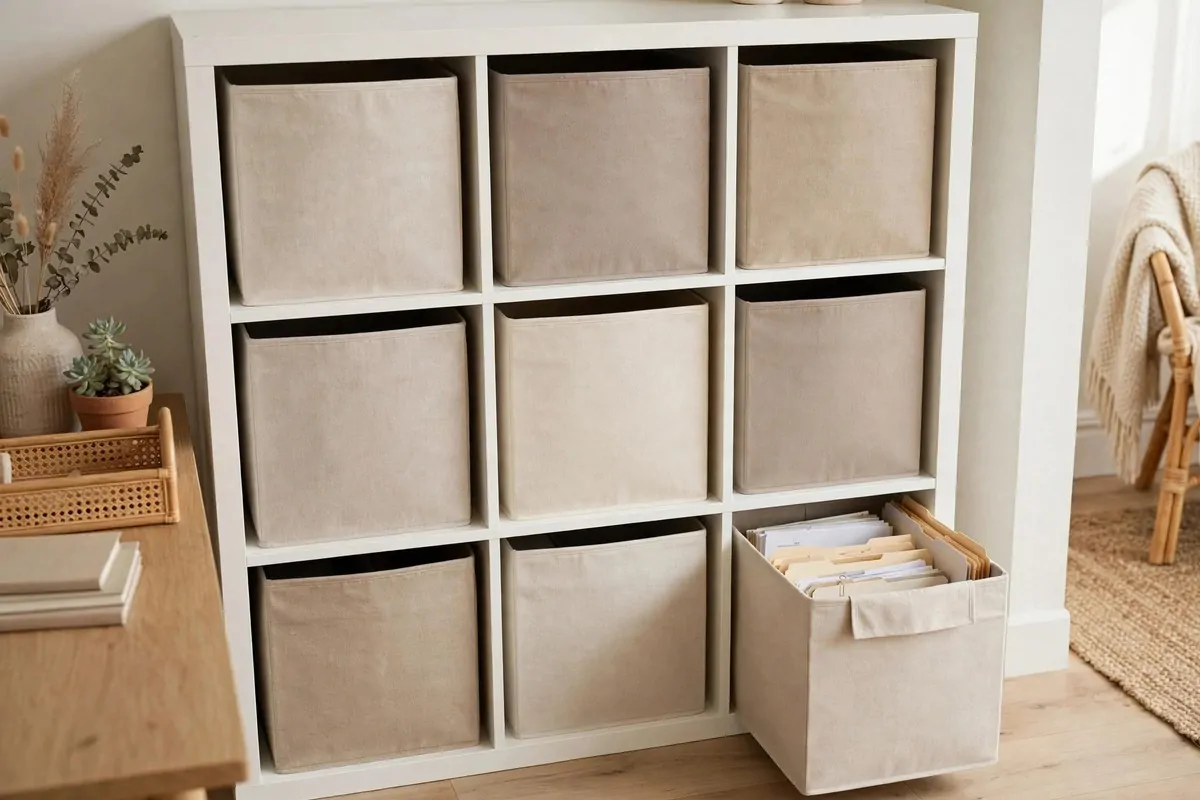
Corners are wasted in most rooms. Two LINNMON tops joined in an L shape turn a dead corner into the biggest study desk in the house. One side for the computer, one side for books and writing.
The L shape gives you zones without walls. Screen work happens on one arm. Paper work happens on the other. You swivel between them instead of shuffling piles around.
Support the join properly. Where the two tops meet, they need legs or a support underneath. A wobbly corner ruins the whole desk. Take ten minutes to make it solid.
Run cables along the back edge. With a corner desk you have twice the cable mess if you are careless. A cable tray under each arm keeps everything invisible.
Face the corner, not the room. Sitting in the V of the L feels tucked in and private. It is one of the most focused seating positions you can get without building walls.
This is the setup students pick when they have a computer and lots of paper. Programmers, designers, exam studiers with five textbooks open at once. The L shape was made for them.
Keep one arm clear as a rule. The computer arm can be busy. The paper arm stays empty until you need it. An always-clear surface invites you to sit down and start.
Add a shelf on each wall above the desk. The corner gives you two walls of vertical storage. Books on one side, boxes on the other. Nothing on the desk itself.
I love an L-shaped desk for deep study sessions. Everything you need is within a swivel. Nothing is behind you. It feels like mission control for your brain.
16. Mount a BOAXEL System Over a Narrow Desk
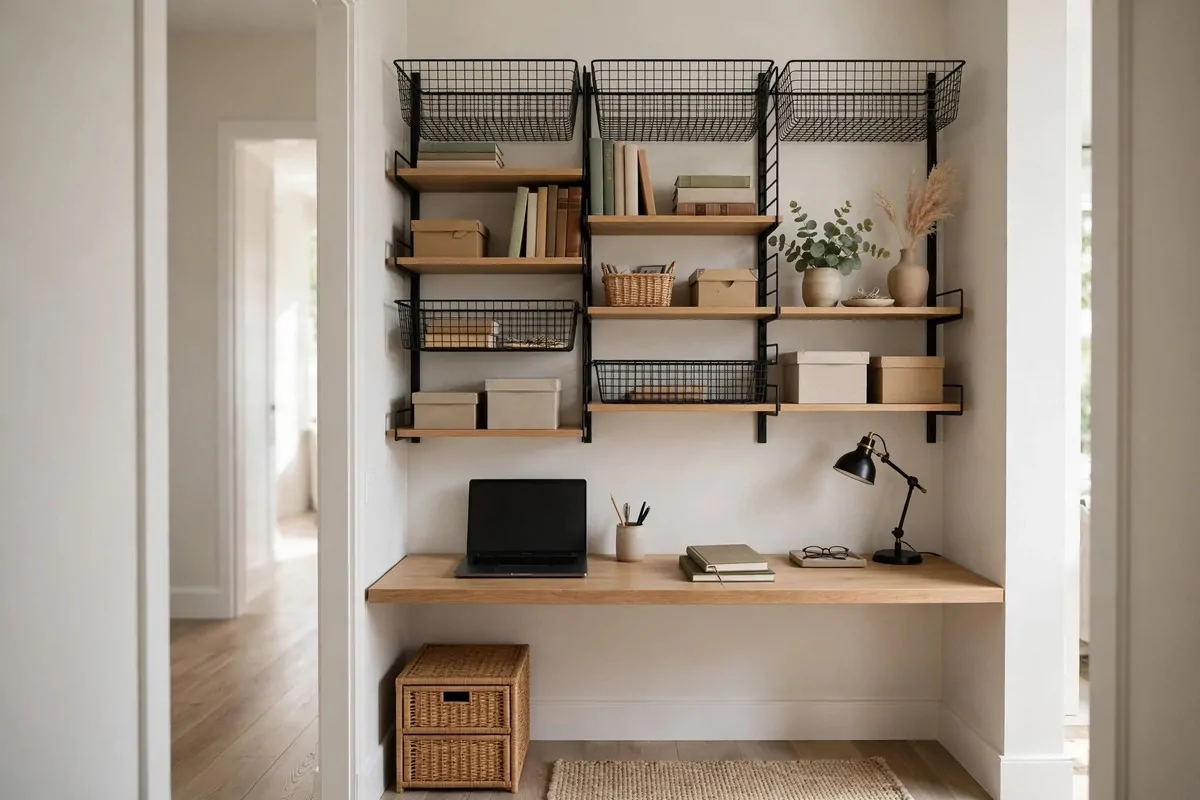
Some study spots are narrow. A hallway nook, a sliver of bedroom wall. The desk can only be small, so the storage has to go up. BOAXEL is IKEA’s wall system for exactly this.
It mounts on uprights screwed to the wall. Shelves, baskets, and hooks click in wherever you want them. Your storage wall can be as narrow as your desk and as tall as your ceiling.
Plan it on paper first. List what needs to live above the desk. Books, boxes, a lamp, maybe a small printer. Then place the pieces to fit the list. Random mounting wastes the system.
Keep daily things at arm’s reach. The shelf right above the desk holds current books and supplies. Higher shelves hold archives and extras. Your arms should not ache from reaching.
Baskets are great for the messy middle zone. Loose papers, notebooks, the things that are used but not pretty. A basket hides them while keeping them close.
The system looks tidy because everything hangs on the same uprights. One vertical line, many parts. It reads as one piece of furniture, not a pile of shelves.
This is a renter-friendly option if your landlord allows small wall fixings. The uprights need solid mounting, but they come down clean with a little filler when you move.
Pair it with the narrowest desk that fits your work. The wall does the heavy lifting. The desk just needs to hold your laptop and your elbows.
I have seen a BOAXEL wall turn a 60-centimeter-wide nook into a full study station. Width is not the limit. Planning is.
17. Go Classic With a HEMNES Desk and Shelves
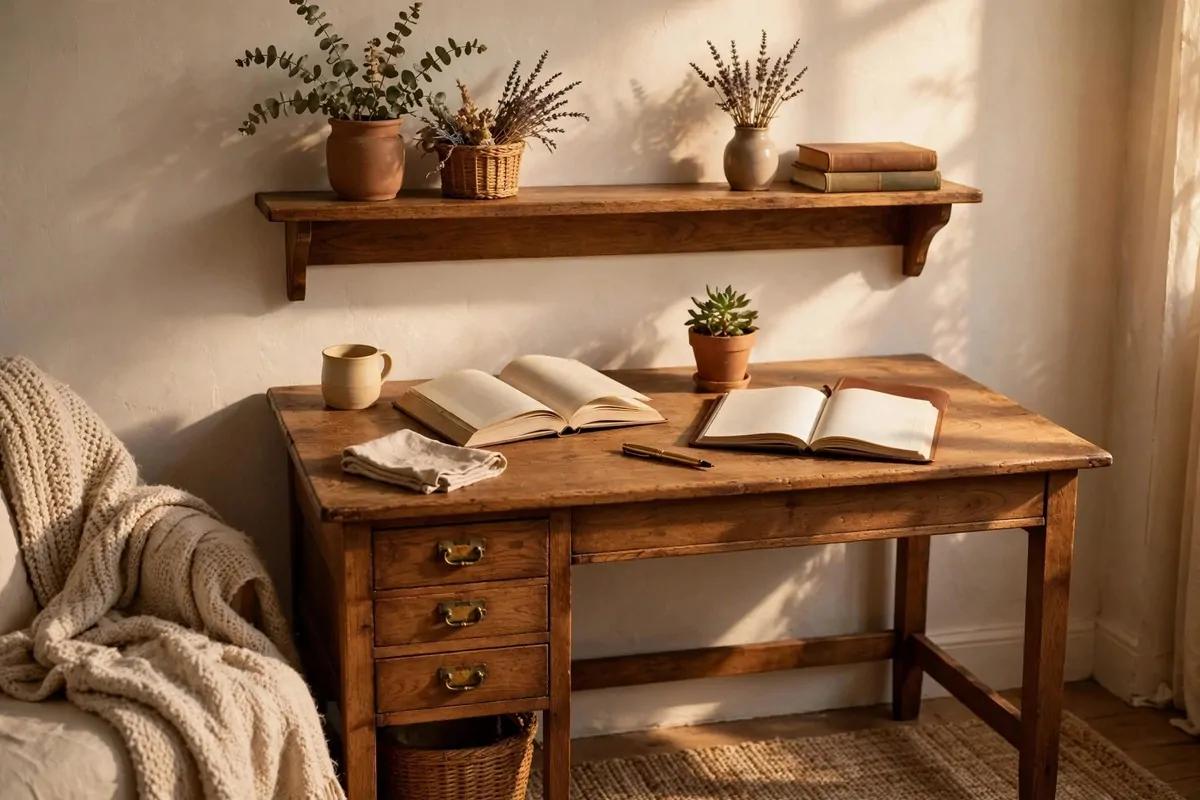
Not every study room wants the modern white look. The HEMNES desk brings warm wood and classic lines. It looks like a proper writing desk, the kind with drawers that glide and a top that ages well.
The small drawers hold the daily tools. Pens, stamps, the good scissors. A classic desk invites classic habits. Everything in its drawer, everything put away.
Add the HEMNES wall shelf above it. Same wood, same style. The pair looks like they were always meant to be together. Books and a small clock go up there.
Wood warms a room in a way white never does. If your study corner feels cold or bare, a wooden desk changes the temperature of the whole space. It feels settled.
This desk suits longhand work beautifully. Writing, sketching, reading with a notebook beside you. The solid top feels steady under your hands in a way light desks sometimes do not.
Keep the styling simple. A green plant, a stack of books, one framed picture. Classic furniture needs very little decoration. Let the wood do the talking.
The HEMNES is heavier than most IKEA desks. That is a feature, not a flaw. It does not wobble. It does not slide. It sits like it plans to stay for years.
Oil or wax the top once a year if you want it to glow. Five minutes of care keeps the wood looking rich. Cheap furniture that is cared for outlasts expensive furniture that is not.
I picture this desk in a quiet corner with afternoon sun on it. A cup of tea going cool beside the books. Some study rooms are about speed. This one is about staying a while.
18. Keep It Light With a VITTSJO Glass Desk Nook
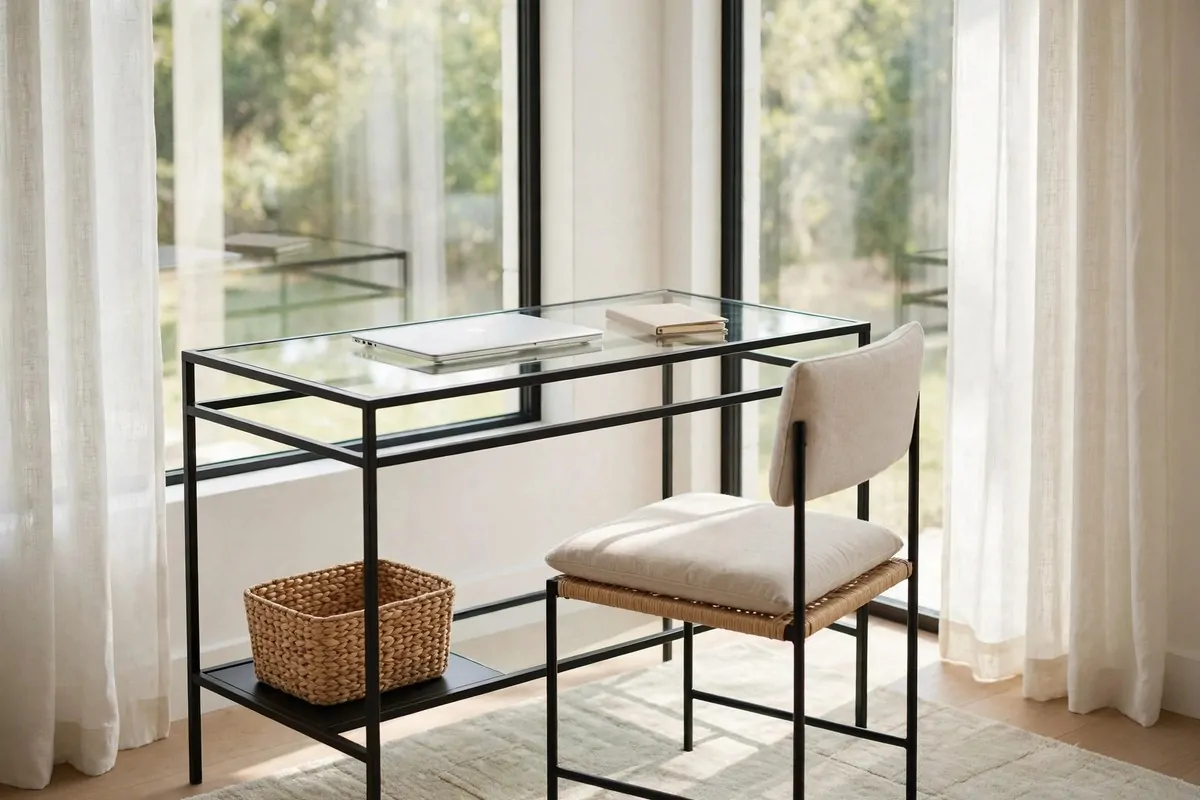
A glass desk almost disappears. In a small or dark room, that matters. The VITTSJO laptop table gives you a real work surface without the visual weight of a solid desk. Light passes through. The room stays airy.
This is the desk for minimalists. Laptop, notebook, lamp. That is all it holds, and that is the point. If your study style is one thing at a time, a small glass desk keeps you honest.
The black metal frame adds a little edge. It looks smart against white walls. Pair it with a simple chair and the nook reads as intentional, not temporary.
Keep the surface nearly empty. Glass shows everything, including dust and fingerprints. A quick wipe every few days keeps it sparkling. Clutter has nowhere to hide, which is secretly great for focus.
Use the lower shelf for a basket. One basket, not three. Books you are reading now, a notebook, done. The glass top stays clear for work.
This desk works best near a window. Daylight through glass is beautiful. The whole nook glows. Studying in natural light feels less like a chore.
It is not the desk for paper spreaders. If you study with six books open, pick a bigger top. The VITTSJO is for the laptop-and-notebook crowd, and it serves them well.
Add one soft texture nearby. A rug under the chair, a cushion on it. Glass and metal can feel cold. One warm textile balances the whole nook.
I like this desk for small flats where the study nook shares the living room. It does its job all day and visually vanishes in the evening. The room gets to be a living room again.