28 Utility Room Organization Ideas for a Clutter-Free Home

There is one room in my house that has never been in a single photo.
It holds my mops and my tools and my spare bulbs. It holds the stuff I use every week but never show to anyone. Nobody takes a photo of a room like that.
I used to walk past it and just close the door fast. The mess inside made me feel tired before I even started a job. I knew where things were, but only just.
This list is my simple plan for that hardworking room. You do not need a big budget or a whole weekend. You just need a clear spot for each job, and then you keep it that way.
1. Give Every Job Its Own Zone
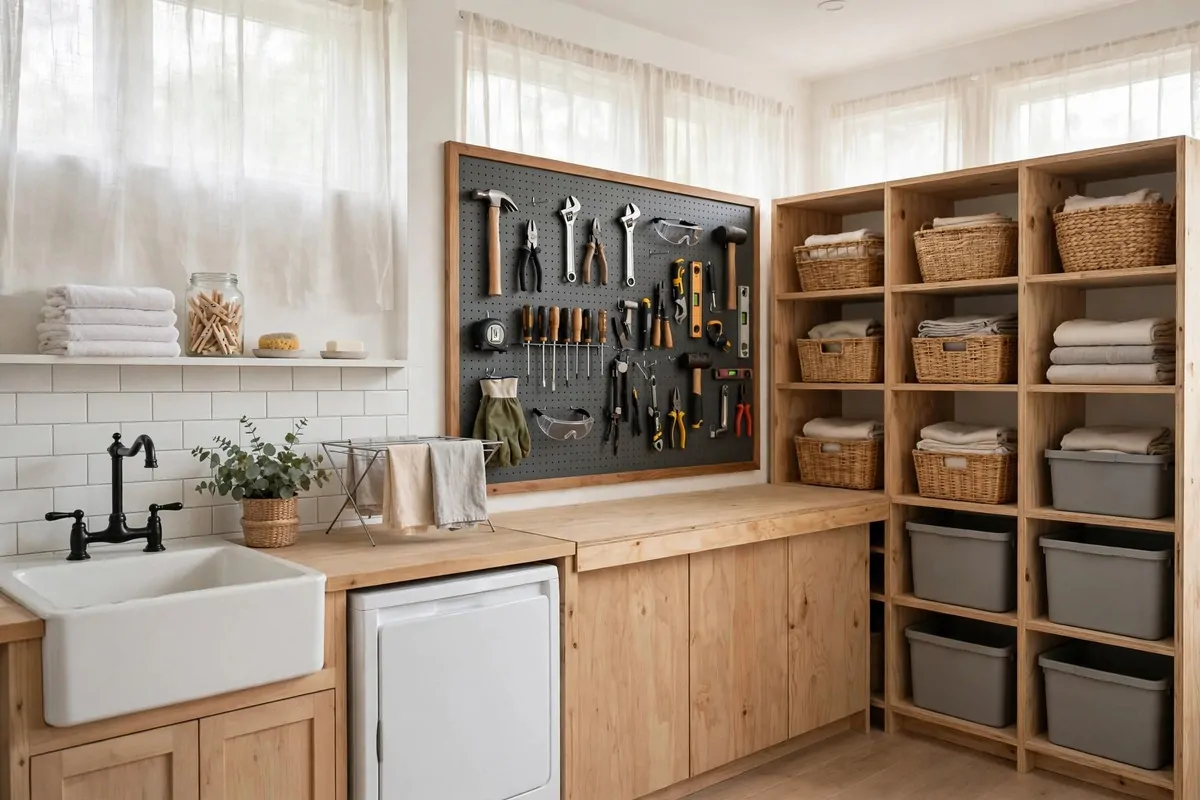
I used to keep everything in one big pile by the door. I would dig for a screwdriver and find a spare light bulb instead. It wasted my time every single week.
Now I split the room into small zones. One corner is for tools. One shelf is for cleaning stuff. One spot is for garden gear.
You can start with just three zones. Pick the three jobs you do most in that room. Give each one a clear home.
I put a small mat on the floor to mark my work zone. It sounds silly, but it works. I know where to stand when I fix things.
My tool zone lives on the left wall. My cleaning zone lives on the right shelf. My spare bits live in a box in the middle.
When I walk in now, I do not have to think. My feet take me to the right spot. My hands find what I need.
Do not try to plan the whole room in one go. Start with one zone today. You can add the next one tomorrow.
Your zones can be small. A shelf can be a zone. A hook can be a zone. It still counts if it keeps things apart.
2. A Wall of Hooks for Tools and Gear
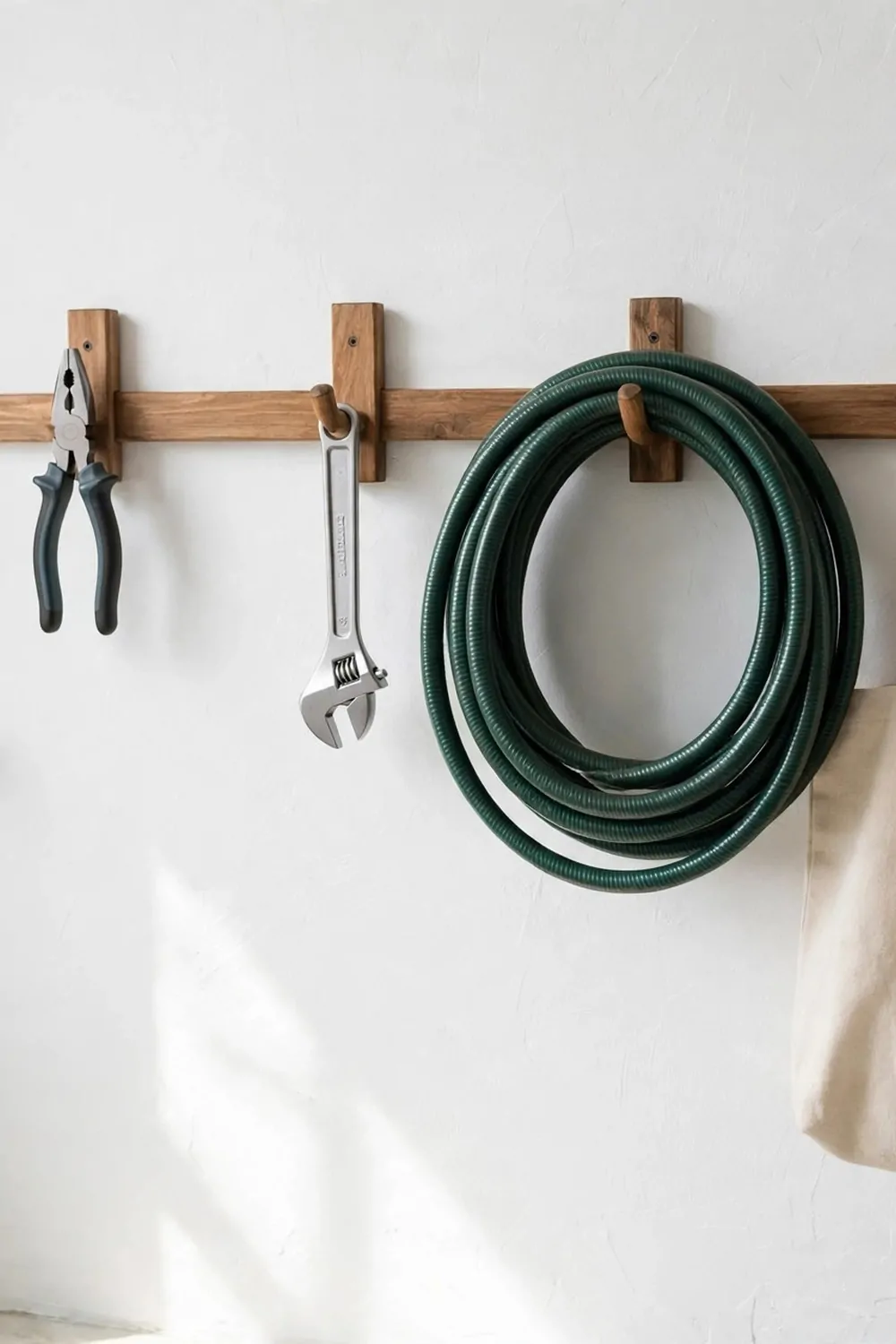
Hooks changed my utility room more than any shelf did. They get things off the floor and up where I can see them. I wish I had put them up years ago.
I hung a row of hooks on the plainest wall in the room. I put my most used tools there first. Now I reach for them without thinking.
A hook is a home for one thing. A hammer gets a hook. A coiled hose gets a hook. A canvas bag gets a hook too.
I used to lose my dustpan all the time. It lived behind the door and fell over every day. Now it hangs on a hook by the sink, and I never lose it.
Keep the heavy stuff low on the wall. Put light stuff up high. You do not want a heavy tool falling on your toes.
I left two hooks empty on purpose. New stuff always shows up in this house. An empty hook means I have a spot ready for it.
My kids know the hook rule now. If you take it down, you hang it back up. It took a week to learn, but it stuck.
Check your hooks once a month. Tighten any that feel loose. A wobbly hook is no good to anyone.
3. Tall Cabinets for Cleaning Supplies
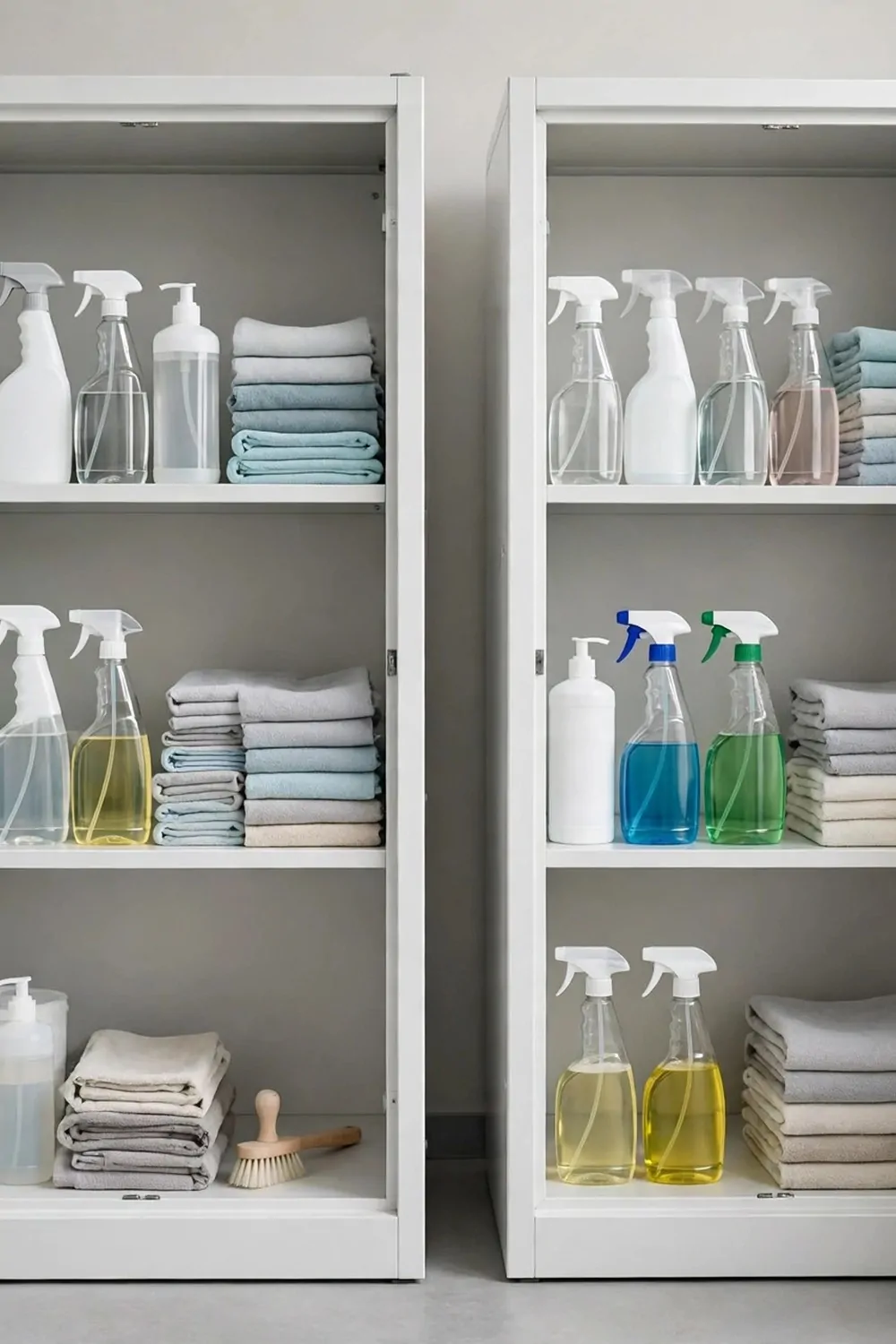
Tall cabinets keep the messy stuff out of sight. I like that a lot. My cleaning bottles are not pretty, and I do not want to look at them all day.
I keep sprays on one shelf and cloths on another. I keep the stuff I use most at eye level. The stuff I rarely use goes up high.
Do not shove bottles in at random. Line them up with the labels facing out. You will spot the one you need in two seconds.
I keep a small tray on the bottom shelf. It catches drips from bottles. It also stops a leak from spreading all over the shelf.
My cabinet doors close, and that matters. When guests walk past, they see clean white doors. They do not see my pile of sprays.
Put a lock or a high latch on the cabinet if you have small kids. Some cleaning stuff is not safe for little hands. Keep it up high and out of reach.
I wrote the shelf jobs on a small card inside the door. Top shelf is spares. Middle shelf is daily stuff. Bottom shelf is heavy bottles.
Clean the cabinet shelves once a month. Wipe them down and toss any bottle that is empty. It takes five minutes and it keeps the whole thing fresh.
4. A Workbench That Folds Down
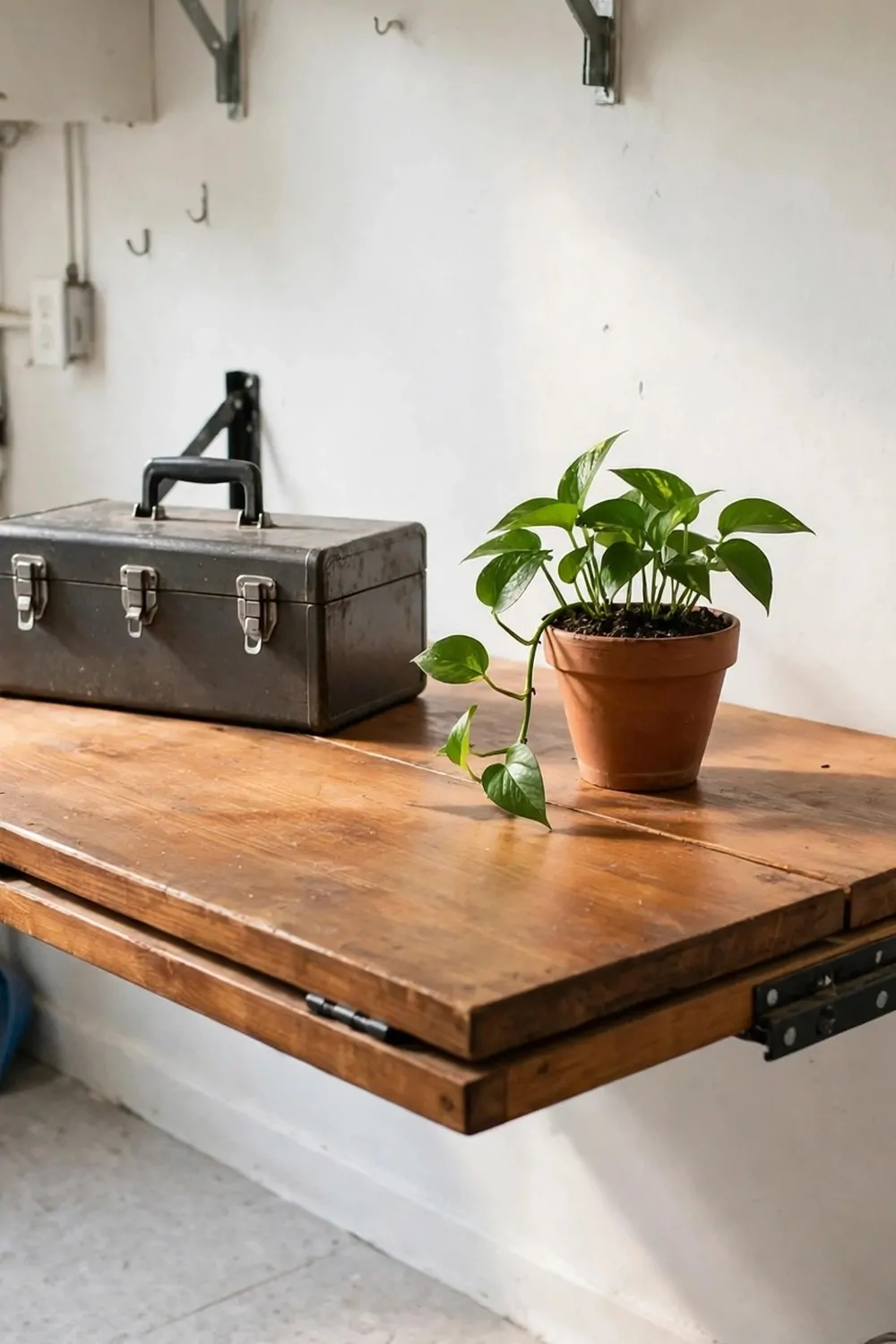
My utility room is not big. A big bench would eat the whole floor. A fold down bench was the fix for me.
It folds flat against the wall when I am done. I get my floor space back in two seconds. That feels like magic in a small room.
I use it for small fix jobs. I tighten a chair leg there. I sort screws there. I pack a small box there too.
Keep only a few things on the bench when it is down. A small toolbox and a cloth is plenty. Too much stuff makes the bench useless.
I put a small plant on the end of mine. It makes the work corner feel less cold. It also reminds me to put things away, so the plant has room.
Fold it up after each job. Do not leave it down overnight. A bench left down just becomes another shelf for junk.
Check the hinges twice a year. Tighten the screws if they feel loose. A steady bench is a safe bench.
You do not need a fancy bench. A plain board on strong brackets does the job. Simple is fine here.
5. Open Shelves for Things You Grab Daily
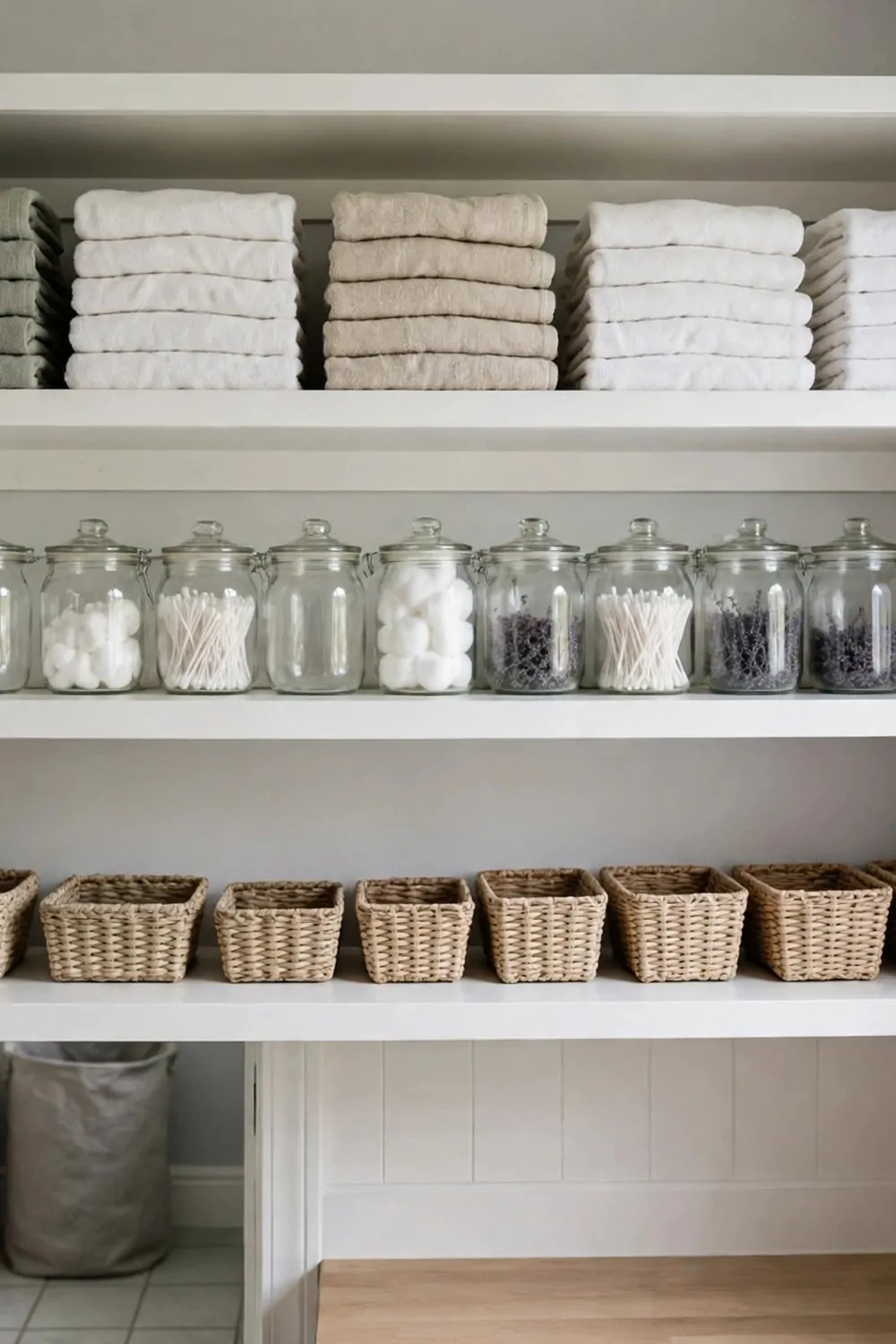
Open shelves are for the stuff I grab every day. I do not want to open a door for a towel. I want to reach out and take it.
I keep my daily stuff at arm height. Towels go on the middle shelf. Jars go next to them. Small baskets hold the bits and bobs.
Do not fill an open shelf to the edge. Leave a little gap at the front. A packed shelf looks messy even when it is tidy.
I roll my towels instead of folding them flat. They take up less room that way. They also look neat in a row.
Glass jars are my best trick on these shelves. I can see what is inside without opening them. I keep spare bits and small odds and ends in them.
Put one thing on each shelf that you use less often. That keeps the shelf from turning into a junk pile. If I have not touched it in a month, it moves down a shelf.
Wipe the open shelves once a week. Dust builds up fast on open wood. A quick wipe keeps them looking clean.
Open shelves work best when they hold less, not more. Pick five things you truly grab daily. The rest can live in a cabinet.
6. Labeled Bins on Every Shelf
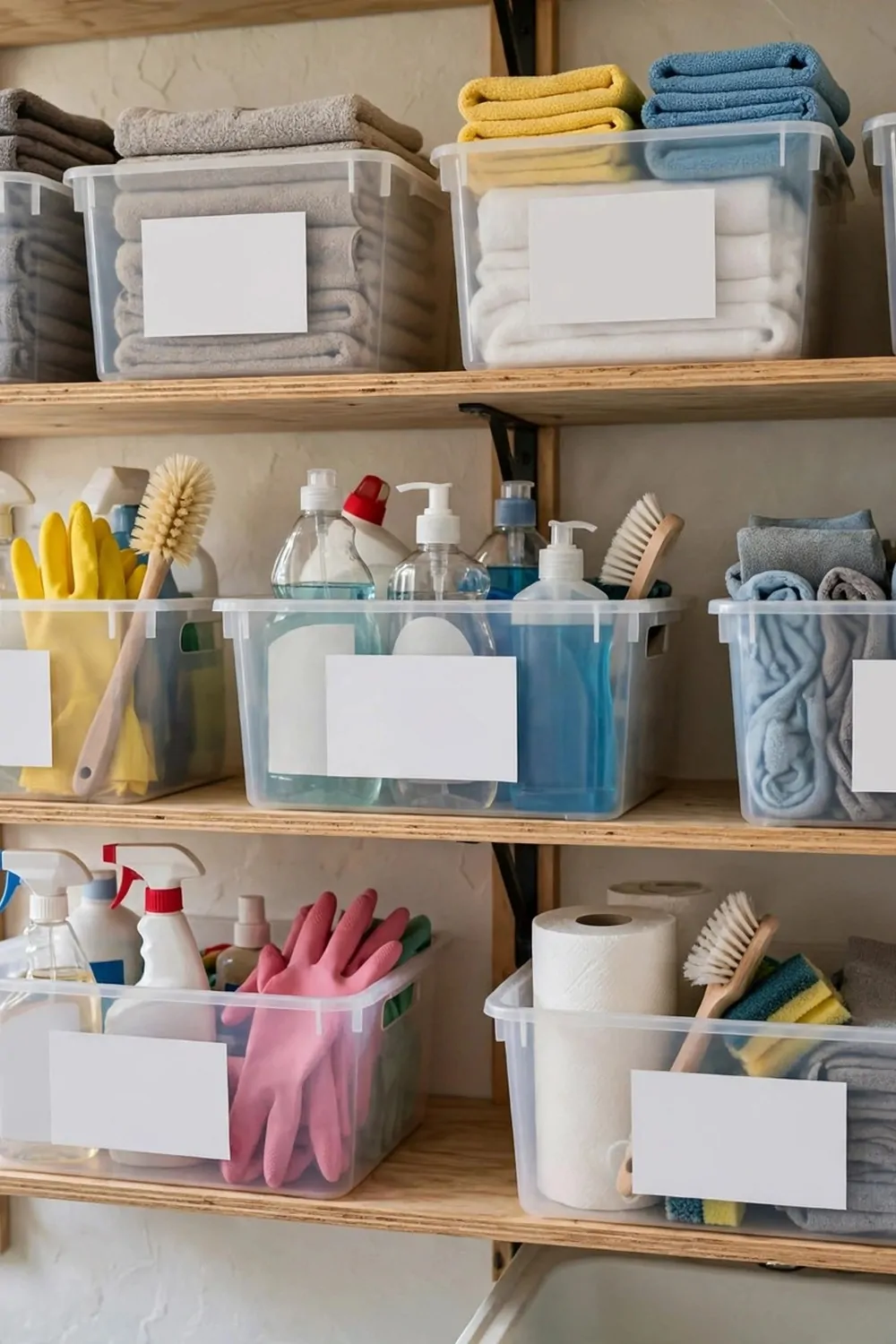
Labels are the whole trick. Without a label, a bin is just a box of mystery stuff. With a label, everyone in the house knows where things go.
I use plain white labels and a dark pen. I write one clear word on each one. Cleaning. Fixing. Spares. That is all it needs.
Keep the labels big enough to read from the door. If you have to walk right up to read it, the label is too small. Make it bold and simple.
I put my cleaning bin on the top shelf near the sink. It holds sprays, sponges and cloths. I grab it, use it, and put it straight back.
My fixing bin sits on the middle shelf. It holds screws, tape and small tools. It is easy to grab when something needs a quick fix.
My spares bin lives low down in a small box. It holds bulbs, batteries and fuses. I check it once a month and top it up.
Do not make the labels too fancy. Fancy labels take ages to write, and then you never update them. Simple labels get used.
If a bin starts to hold random stuff, empty it out. Put each thing back where its label says it belongs. It takes two minutes.
| Bin label | What goes inside | Where it lives |
|---|---|---|
| Cleaning | Sprays, sponges and cloths | Top shelf, near the sink |
| Fixing | Screws, tape and small tools | Middle shelf, easy to grab |
| Spares | Bulbs, batteries and fuses | Low shelf, in a small box |
7. A Pegboard for Small Tools
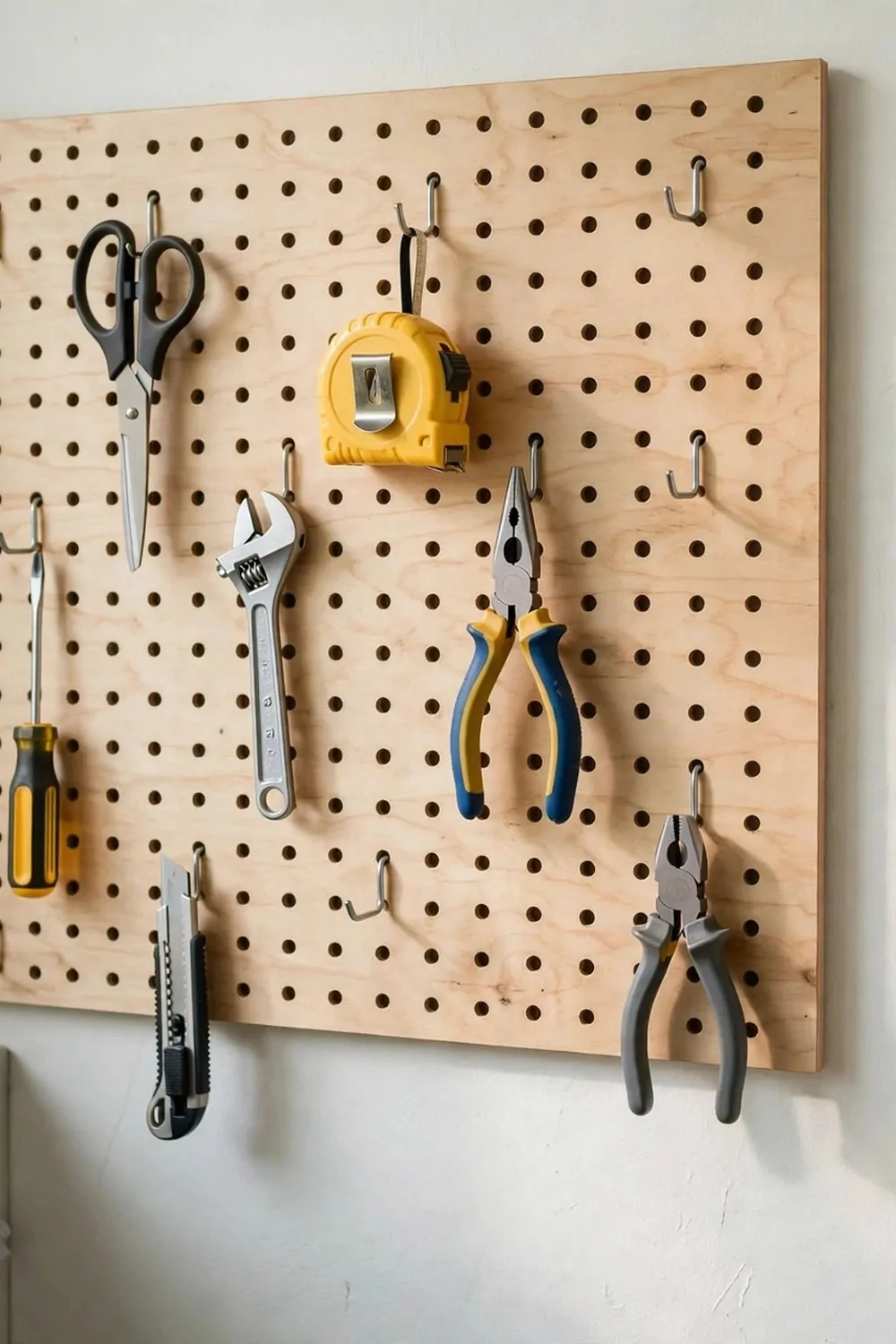
Small tools get lost faster than big ones. A screwdriver slips behind a box. Scissors end up in a drawer in another room. A pegboard stops all that.
I hung a wooden pegboard on the wall by my bench. Every small tool has its own hook. I can see them all at a glance.
Trace the shape of each tool on the board with a pen. Then you know at once if something is missing. It also helps the kids put things back in the right spot.
My tape measure hangs at the edge where I can grab it fast. My scissors hang next to it. My small hand tools fill the middle rows.
Do not overload the pegboard. Leave space between the hooks. A crowded board is hard to use, and tools knock into each other.
Keep the sharp stuff up high and out of reach of small hands. Put the safe stuff low where you can grab it with one hand.
I add a small shelf at the bottom of my pegboard. It holds a pot for pencils and a few spare hooks. It keeps the little bits together.
Move things around until the board feels right for you. Your most used tool should sit closest to your hand. That is the only rule that matters.
8. A Sink Corner for Dirty Jobs
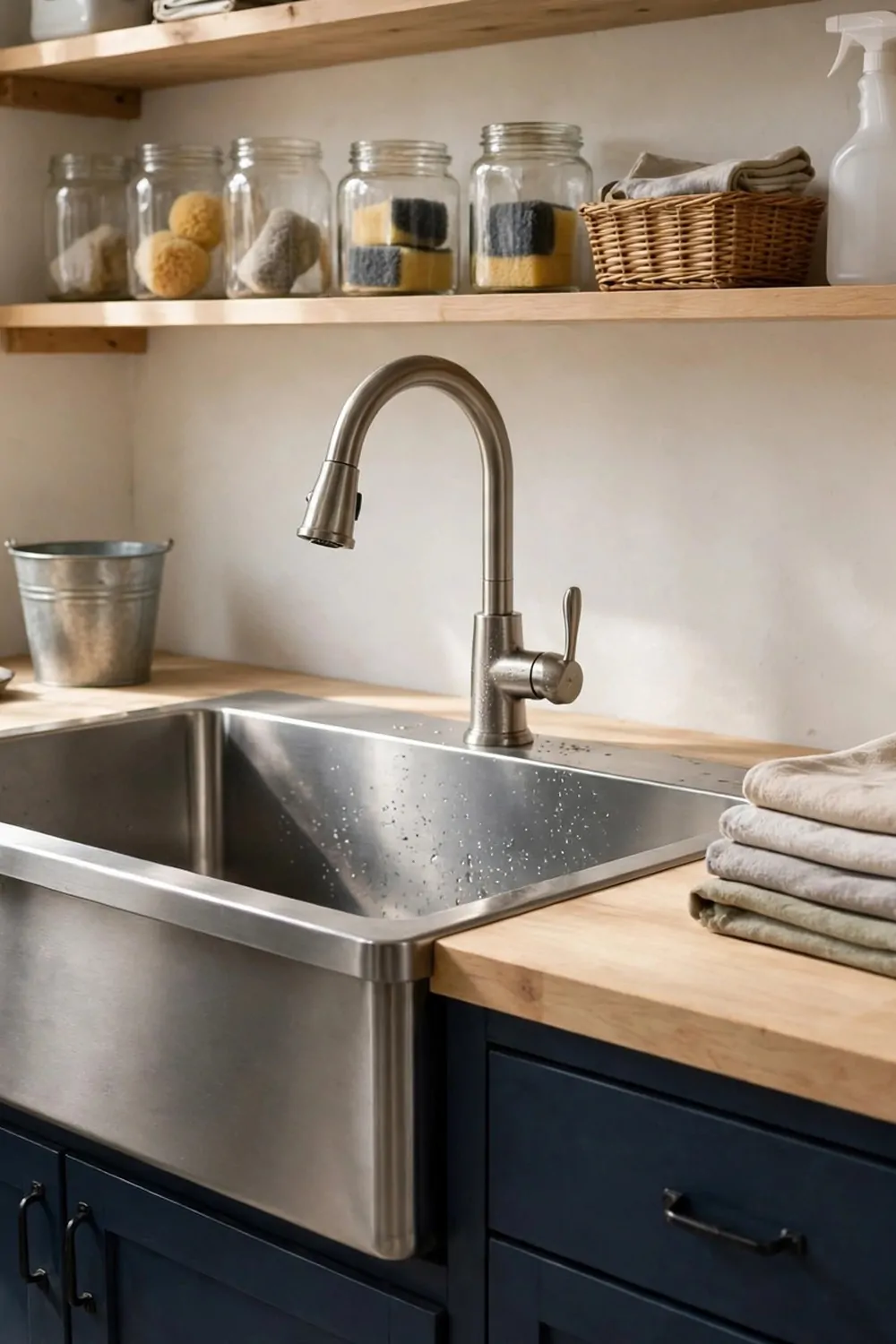
A deep sink is the best friend of a utility room. Dirty jobs need a place to happen. I do not want mud and paint in my kitchen sink.
I use mine to rinse muddy boots and scrub grubby tools. I fill a bucket there too. The deep sides stop water from splashing all over the floor.
Keep a scrub brush right by the faucet. Keep a stack of folded cloths on the counter beside it. When the stuff is close, you actually use it.
Do not let the sink corner turn into a storage spot. If you pile boxes on the counter, you cannot use the sink. Keep that counter clear.
I keep a small bin under the sink for dirty cloths. When it fills up, I deal with it. It stops wet cloths from sitting on the counter.
Wipe the sink down after a messy job. It takes thirty seconds. A clean sink makes the next dirty job feel less grim.
Put a small mat in front of the sink. It catches drips and keeps your feet dry. It also stops the floor from getting slippery.
A sink corner is a work spot, not a pretty spot. Let it be plain and tough. That is what it is for.
9. A Drying Line for Wet Gear
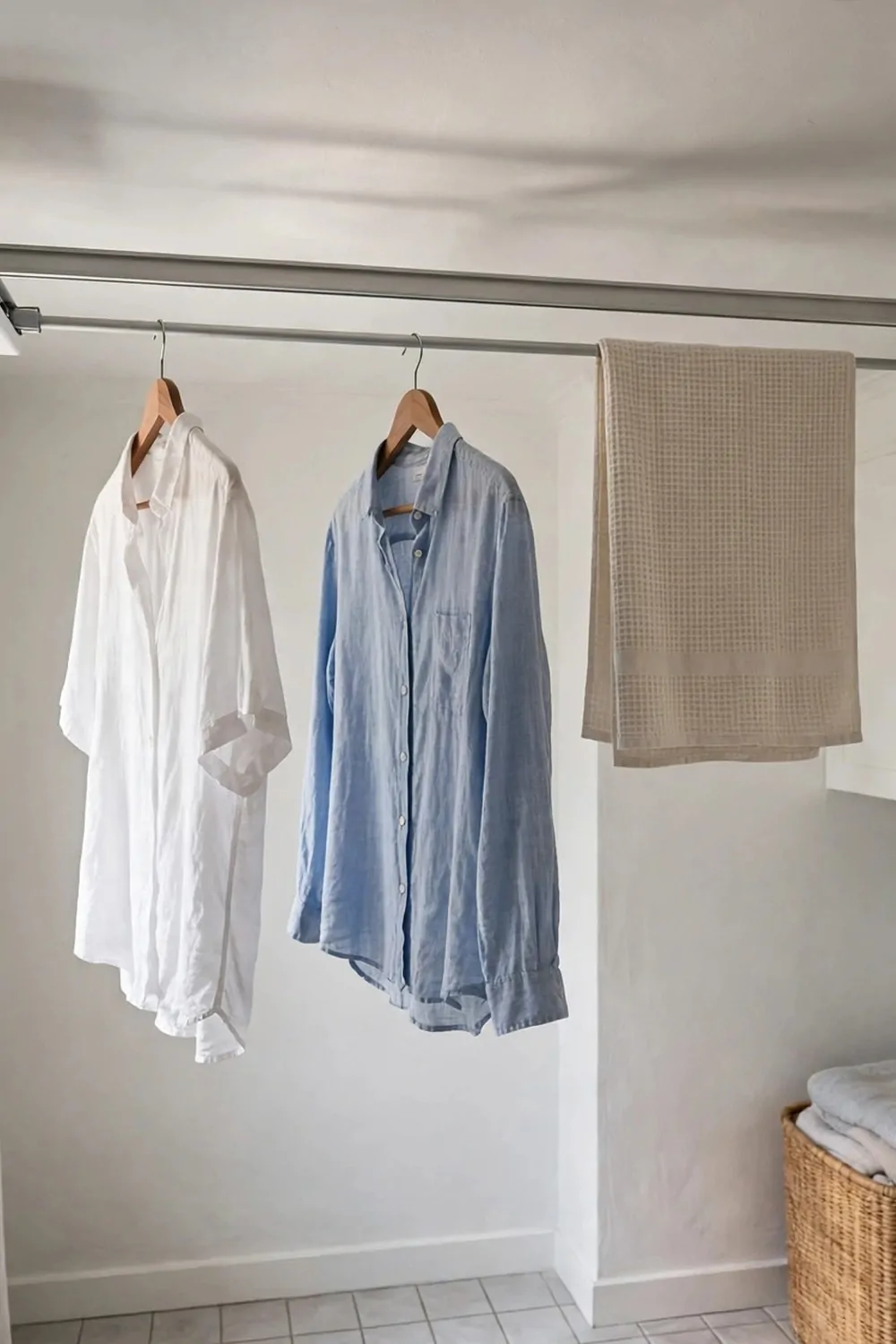
Wet gear needs air, not a pile on the floor. A pull out line gives it that air. I pull it out when I need it and push it back when I am done.
I hang wet coats and damp towels on mine. I hang sports kit there too after a rainy game. It dries faster up high where the air moves.
Keep the line high enough that you do not bump your head. You want to walk under it with ease. Measure it before you fix it in place.
Do not overload the line. Two or three items dry fast. Ten items drip on each other and take all day. Less is more here.
I put a small tray or an old towel on the floor under the line. It catches the first drips. It keeps the floor dry while things dry.
Push the line away when it is empty. An empty line left out just gets in the way. Put it back and enjoy your clear room.
Open the door or a small vent while things dry. Fresh air helps a lot. A stuffy room makes damp gear smell stale.
A drying line is a simple fix. It costs little and it saves your floor from wet piles. I use mine every week.
10. Shoe and Boot Storage by the Back Door
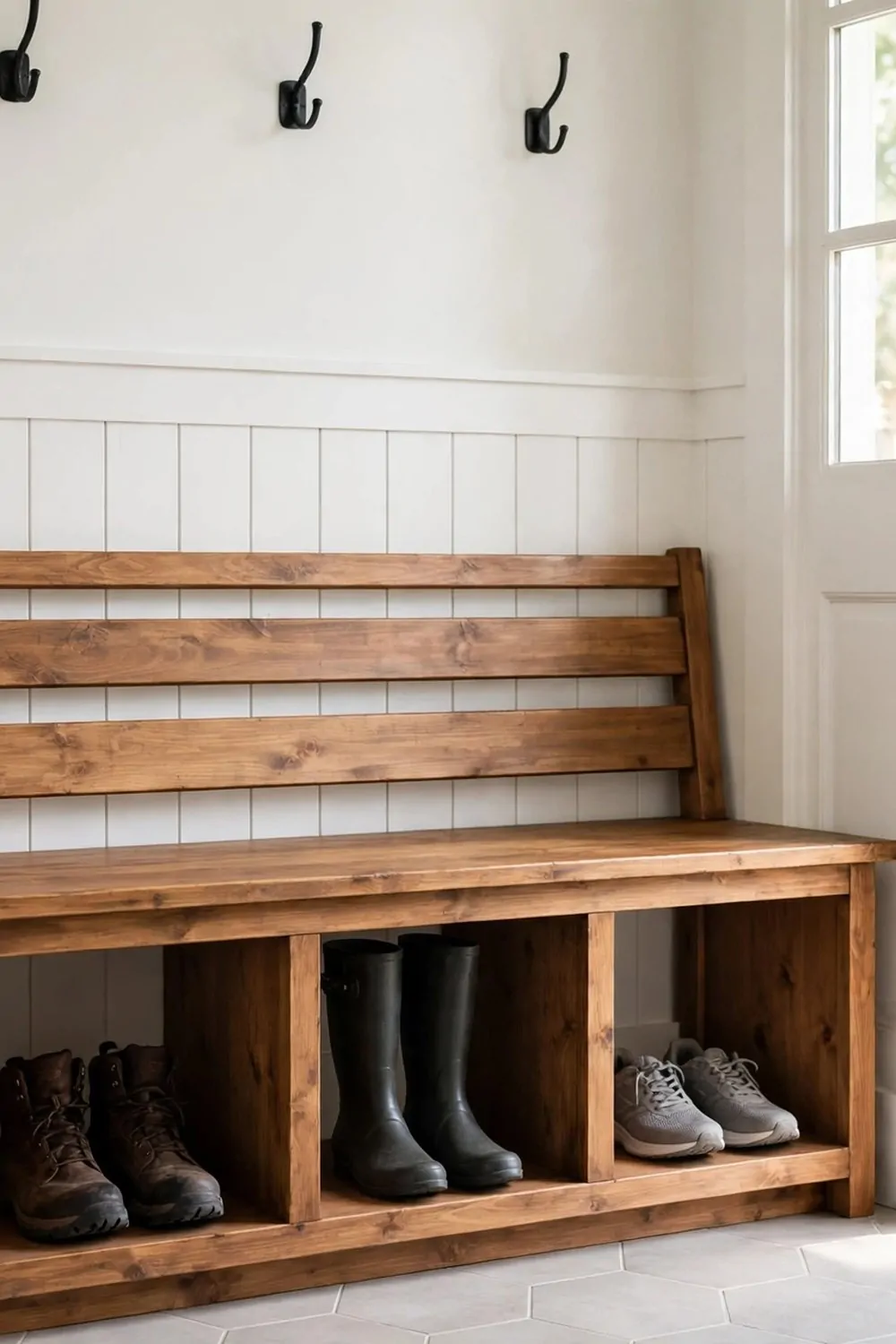
Shoes by the back door can take over a whole room. One pair becomes six pairs in a week. Cubbies under a bench fix that fast.
I put a wooden bench by the back door. Each person in my house gets one cubby underneath. That is their spot, and only their spot.
Boots go in the tall cubbies. Trainers go in the short ones. Muddy boots go on a tray so the mud stays off the floor.
Sit on the bench to pull your boots off. It sounds small, but it stops shoes from landing in a heap by the door. You sit, you slip them off, you slide them in.
Keep a brush by the bench for muddy soles. A quick brush outside saves a lot of cleaning inside. I keep mine in a small pot by the door.
Do not let spare shoes creep in from other rooms. If a pair lives in the bedroom, it stays in the bedroom. The bench is for back door shoes only.
Wipe the cubbies once a week. Mud and dust build up fast down low. A quick wipe keeps them fresh and stops smells.
A bench by the door makes coming home feel calm. You walk in, you sit down, your shoes have a home. That is a good start to the evening.
11. A Charging Spot for Batteries and Tools
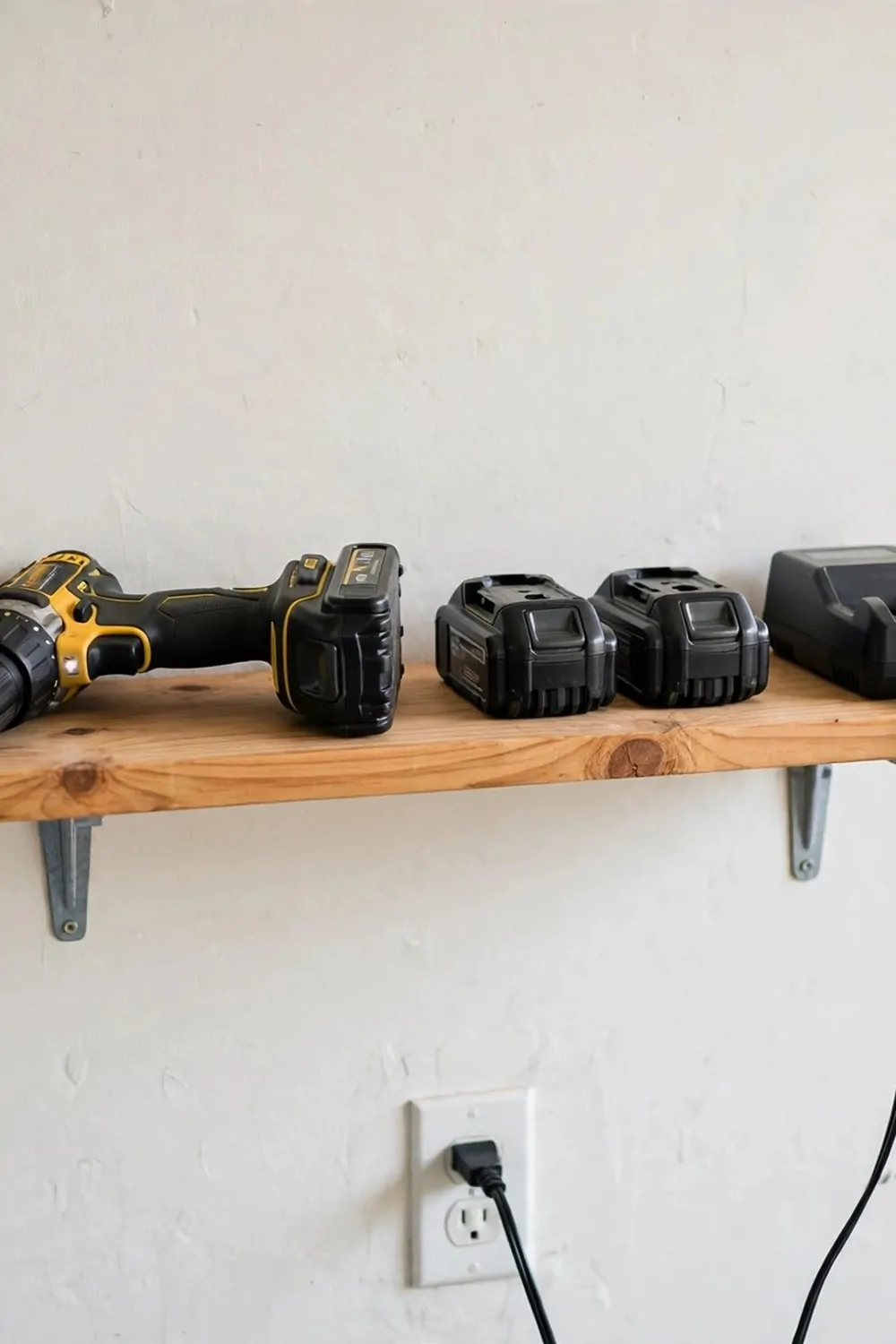
Flat batteries always show up at the worst time. You pick up the drill and it is dead. A charging spot stops that from happening.
I set up a small wooden shelf near a wall socket. The charger lives there all the time. Spare batteries sit next to it in a row.
Plug the charger in and leave it plugged in. Put the battery on charge as soon as you finish a job. Then it is ready next time.
Label your batteries if you have more than one type. A small strip of tape with a word on it is enough. It stops you grabbing the wrong one.
Keep the charging shelf clear of cloths and paper. Chargers get warm when they work. They need air around them, not a pile of stuff.
Do not charge a battery that looks cracked or swollen. Put it aside and get advice before you use it again. Safety comes first here.
I check my charging spot once a month. I wipe the shelf and make sure the plug is snug in the socket. Loose plugs are a fire risk.
A charging spot is a small habit with a big payoff. You never start a job with a dead tool again. That alone is worth the shelf.
12. A Pet Corner With Bowls and Towels
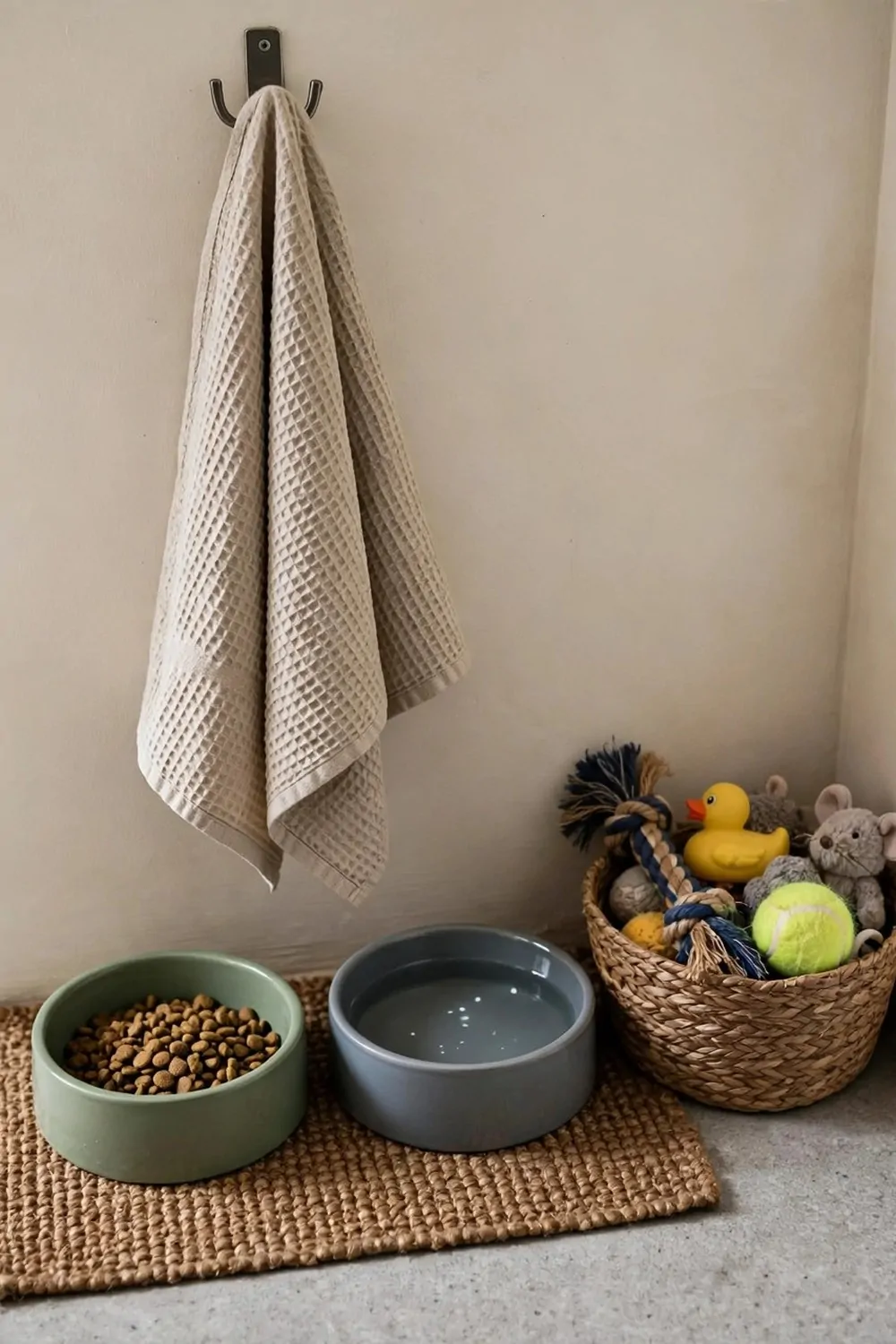
My pet eats in the utility room. It keeps food and water off the kitchen floor. It also gives my pet a quiet corner of their own.
I put the bowls on a mat in one corner. The mat catches splashes and crumbs. I can lift the mat and shake it outside in ten seconds.
A towel hangs on a hook right above the bowls. I use it to wipe muddy paws after a walk. It is always there when I need it.
Keep a basket of pet toys next to the bowls. When play time is over, the toys go back in the basket. It stops toys from spreading all over the house.
Store pet food in a sealed tub on a low shelf nearby. Open bags spill and attract pests. A tub with a lid keeps it fresh and safe.
Wash the bowls every day. Fresh water matters a lot for pets. A quick wash takes a minute and keeps the corner clean.
Do not put the pet corner next to the tool wall. Tools and paws do not mix. Give your pet a calm spot away from sharp stuff.
A pet corner is a kind touch in a work room. It says this room looks after the whole house, pets included.
13. Sports Gear in One Big Bin
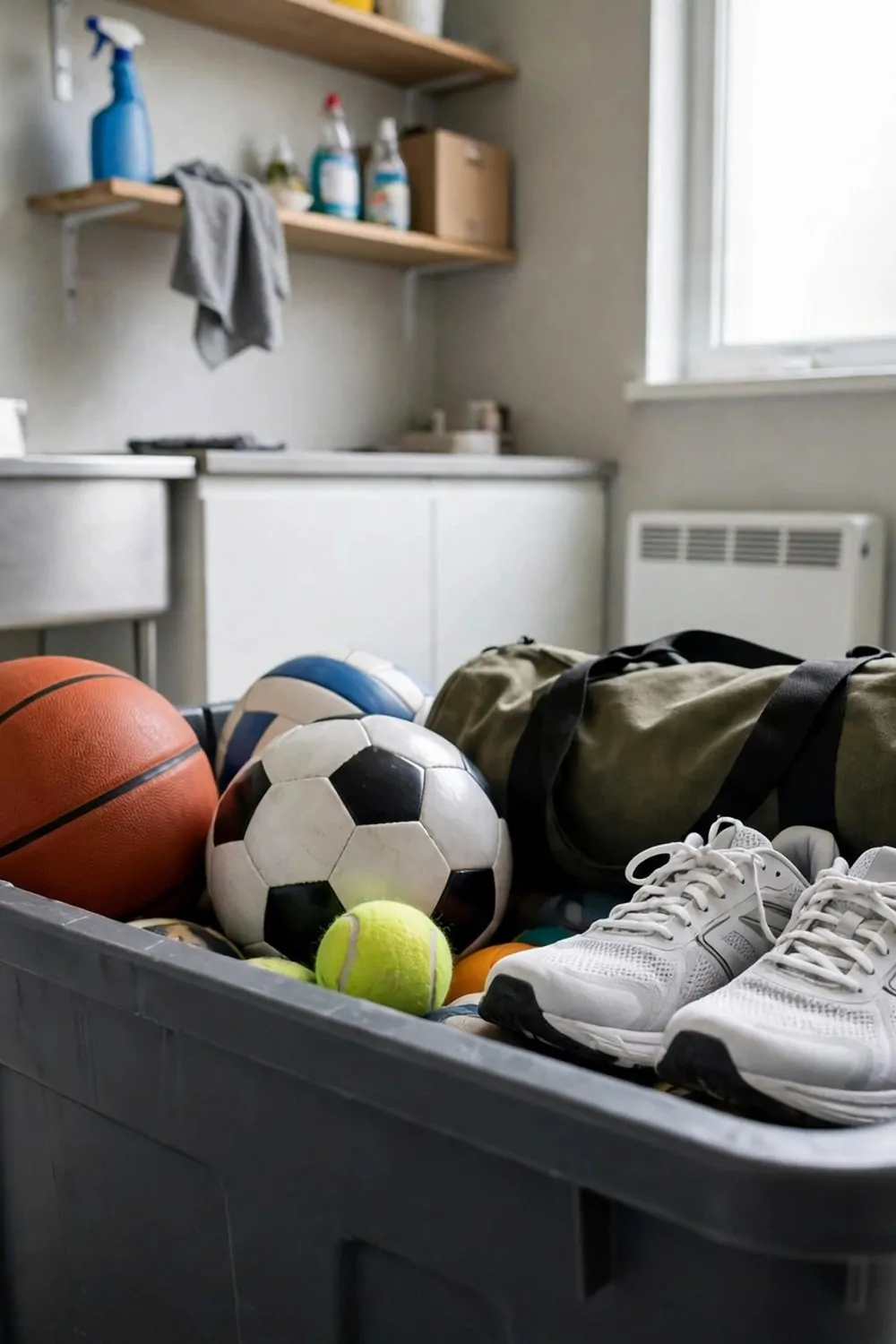
Sports gear is big and awkward. Balls roll away. Bags flop over. Trainers end up in three different rooms. One big bin holds it all.
I keep a large open bin by the door of my utility room. Balls go in first. The gym bag sits on top. Trainers tuck in at the side.
An open bin works better than a lidded box here. You can toss gear in fast after a game. You can also see what is inside at a glance.
Give each person one small bag inside the big bin if you share it. That stops gear from getting mixed up. It also makes packing for practice much faster.
Air the bin out once a week. Sports gear can smell after a sweaty game. Leave the bin empty for an hour with the door open.
Do not let the bin turn into a dumping ground. If a ball is flat or a bag is torn, fix it or let it go. Broken gear just takes up space.
Keep the bin near the back door, not deep in the room. You grab gear on your way out and drop it back on your way in. That is the whole point.
One big bin is a simple system. It will not win any prizes for looks. But it keeps the hallway clear, and that is worth a lot.
14. Garden Tools on a Wall Rack
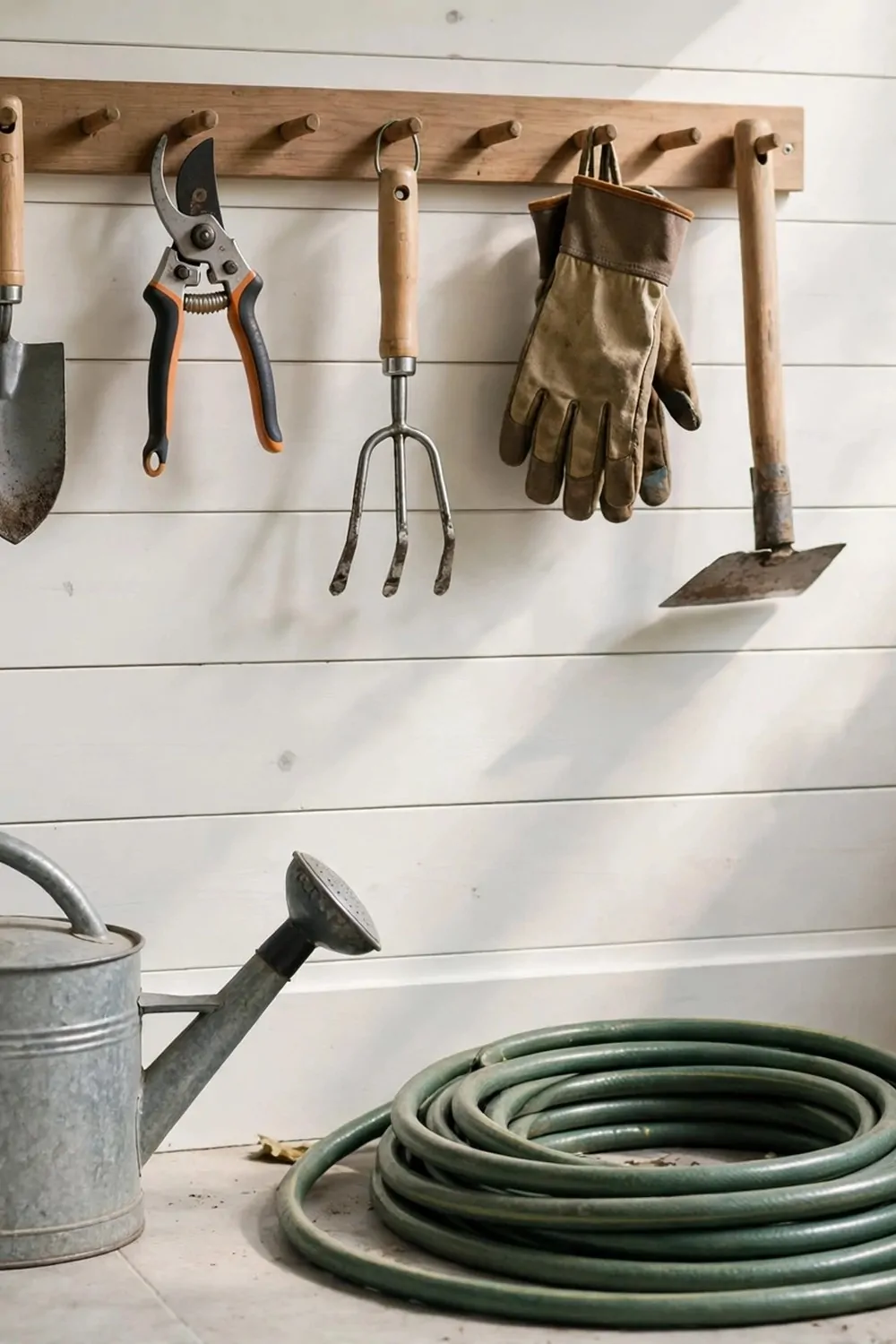
Garden tools are long and sharp and awkward to store. They lean in a corner and fall over. A wall rack keeps them up and safe.
I fixed a rack on the wall near the back door. Long tools hang from it with their heads up. The watering can sits below, and the hose coils next to it.
Hang tools by their handles so the sharp ends point down. That is safer for everyone. It also keeps the blades off the floor.
Clean the mud off tools before you hang them up. A quick brush takes a minute. Clean tools last longer and they do not rust as fast.
Keep a small pot on the rack for twine and plant ties. Little bits like that get lost fast in a big room. A pot keeps them in one spot.
Do not hang heavy tools too high. You need to lift them down with ease. Keep the ones you use most at shoulder height.
Check the rack screws once a season. Heavy tools pull on the wall over time. Tighten anything that feels loose before it falls.
A garden rack by the back door makes garden days easier. You grab what you need, you do the job, you hang it straight back. Simple.
15. A Paint and Repair Shelf
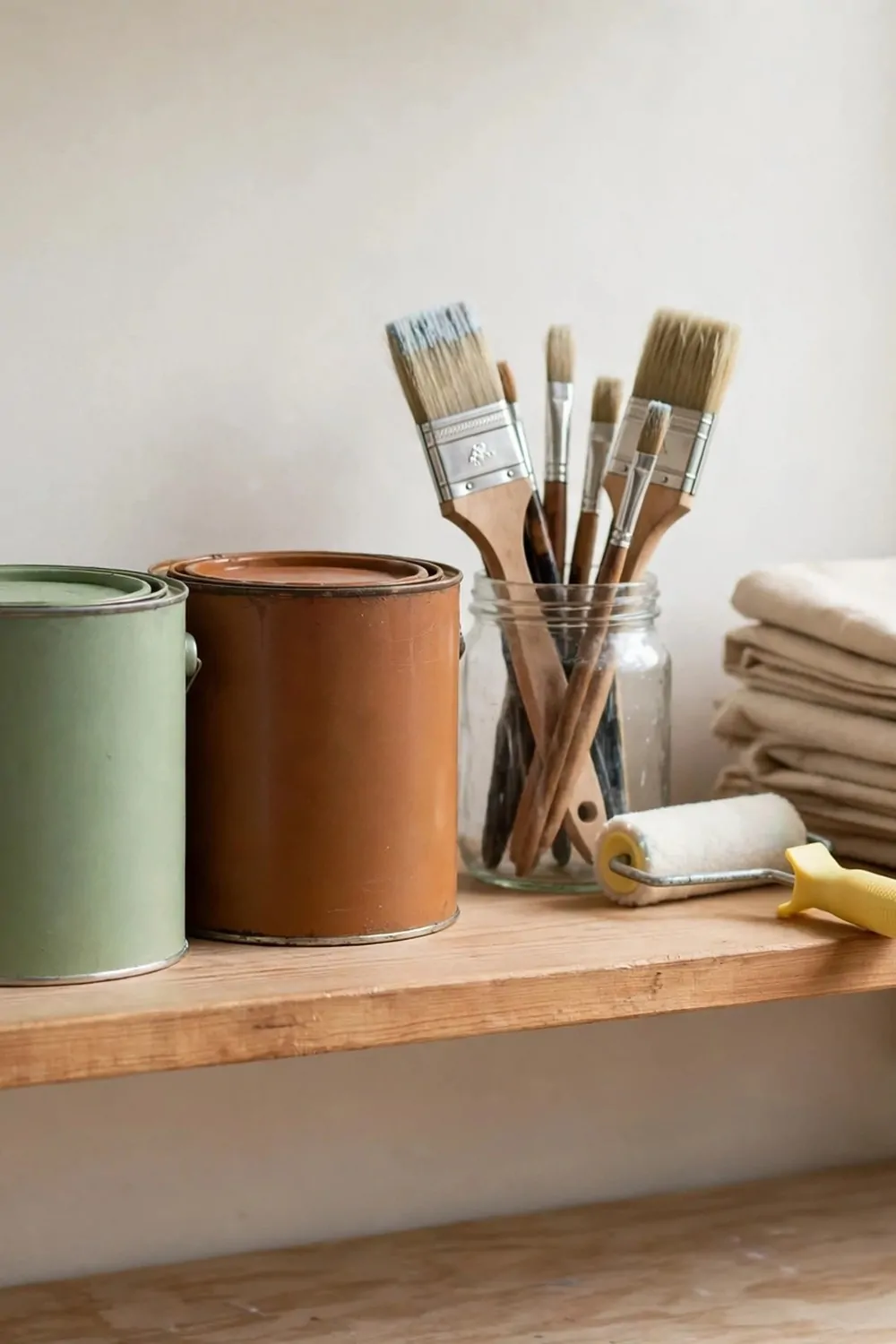
I keep a small shelf just for paint and fix-it stuff. It saves me so much time when something needs a quick touch up.
A spare tin of wall paint sits there with the lid on tight. I write the room name on the lid with a marker so I never have to guess.
Brushes stand in an old jar, bristles up. A small roller and a tray sit next to them, ready to go.
Drop cloths fold up small and stack on the end of the shelf. I use them under tins and when I paint a wall, so my floor stays clean.
I keep a few nails and screws in a small jar on the same shelf. A hammer hangs from a hook right below it, so I can grab it fast.
The shelf is not big, and that is the point. If it was huge, I would fill it with junk I never use.
When I finish a paint job, the leftovers go back here the same day. That habit keeps the shelf useful instead of messy.
I check the tins once a year and throw out any paint that smells bad or looks clumpy. Old paint is not worth keeping.
This little shelf turns a chore into a five minute job. And it feels good to know where everything is.
16. Seasonal Boxes Up High
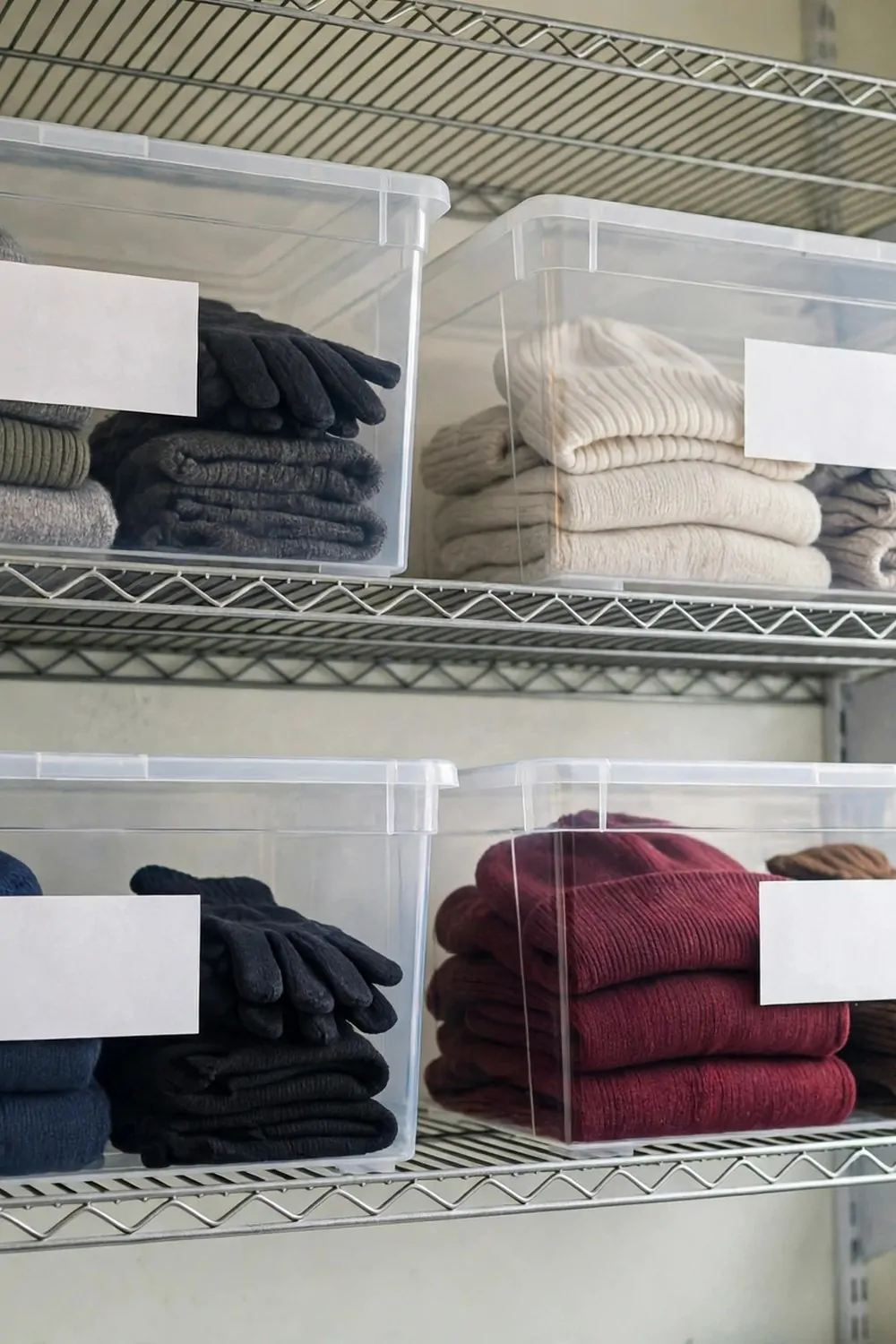
High shelves are perfect for stuff you only need twice a year. I put my seasonal boxes up there and forget about them until the weather turns.
Clear boxes work best because I can see what is inside. I still stick a blank label on the front, so I can write what it holds in plain words.
Winter hats and gloves go in one box. Thick scarves go in the same one, folded flat so they do not take up too much room.
Summer stuff gets its own box too. Sun hats and light jackets live there until the warm days come back.
The trick is the swap. When the cold comes, I pull the winter box down and put the summer box up.
I do this swap on a quiet afternoon, and it only takes about twenty minutes. It feels like a fresh start for the whole house.
Kids outgrow things fast, so I check each box before it goes back up. Anything too small gets passed on instead of stored again.
Keep the boxes light enough to lift safely. If a box feels heavy, split it into two smaller ones.
High shelves only work if you can reach them with a step stool. Mine lives close by, so I never climb on a chair.
| Swap time | Pack away | Bring out |
|---|---|---|
| Start of cold weather | Sun hats and light jackets | Heavy coats, hats, and gloves |
| Start of warm weather | Heavy coats and snow boots | Light jackets and rain gear |
| Twice a year | Anything no one used last season | The gear for the season ahead |
17. A Small Desk for Bills and Lists
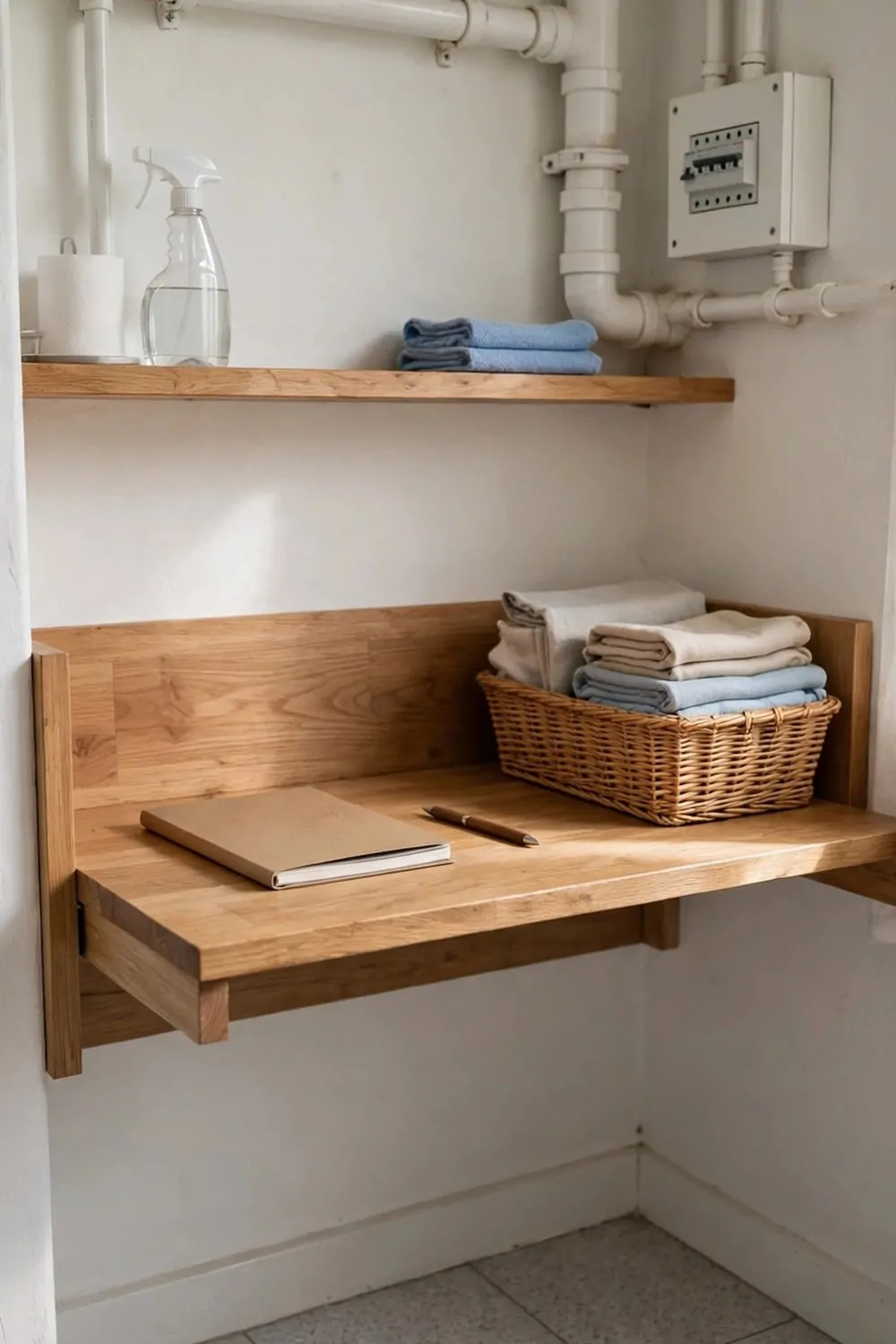
A tiny desk in the utility room is one of my best ideas. It gives me a spot to sit down and sort out the boring stuff.
The desk does not need to be big. A board fixed to the wall works fine, with just enough room for a notebook and a pen.
I keep a basket of folded cloths on one end. They are handy for wiping up spills, and they stay out of the way on the desk.
Bills land in a small tray on the desk, not in a pile on the kitchen table. I sort them once a week, and it takes five minutes.
I write my shopping list in the notebook that lives on the desk. When something runs out in the utility room, I jot it down right away.
The desk is also where I plan my chores. A short list each morning keeps me from forgetting the small jobs.
A hook on the wall above the desk holds my keys and a small bag. I grab them on the way out and never hunt for them.
Keep the desk clear of clutter. If papers pile up, the desk stops being useful and just becomes another shelf.
This little corner makes the utility room feel like a real room, not just a cupboard. I actually like standing there for a few minutes each day.
18. A Sorting Station for Recycling
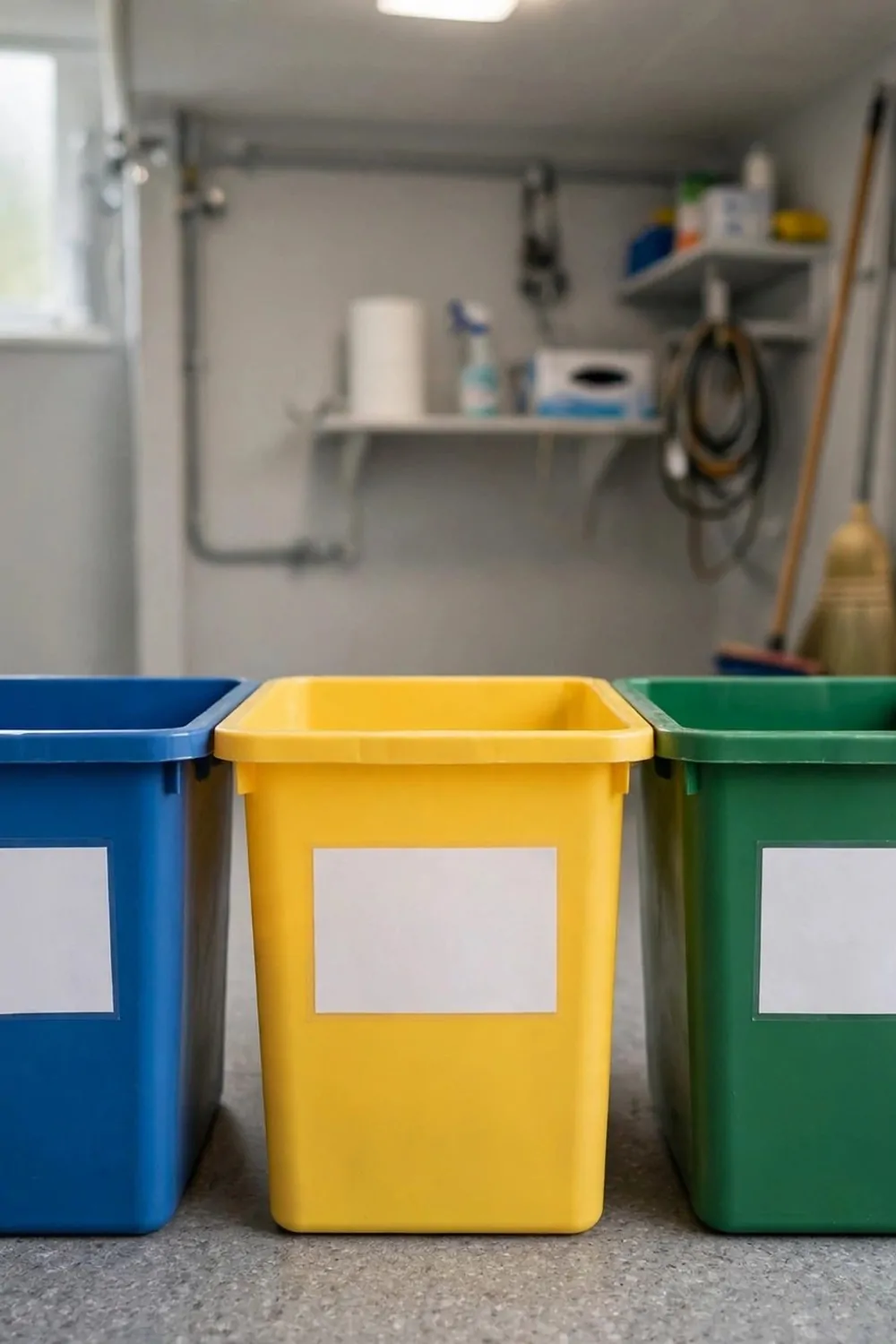
Recycling is easy when the bins are right where you need them. I set up three bins in my utility room, and the whole family uses them.
One bin is for paper, one for plastic, and one for glass. Each bin has a plain blank label on the front, so everyone knows where things go.
The bins sit in a row on the floor, close to the back door. That spot makes it easy to carry them out on collection day.
I rinse jars and bottles before they go in the glass bin. It only takes a second, and it keeps the bin from smelling.
Paper goes in flat, so the bin holds more. I fold cardboard boxes down before they go in too.
Kids learn fast when the system is simple. My little one puts her cereal boxes in the paper bin without being asked now.
When a bin gets full, I tie it off and take it out straight away. A full bin left sitting just turns into a mess.
I wipe the bins out once a month with a damp cloth. It keeps them fresh and stops sticky stuff from building up.
This small station keeps rubbish out of the kitchen and out of my way. It is one of those changes that just works.
19. A Shoe Drying Rack That Drains
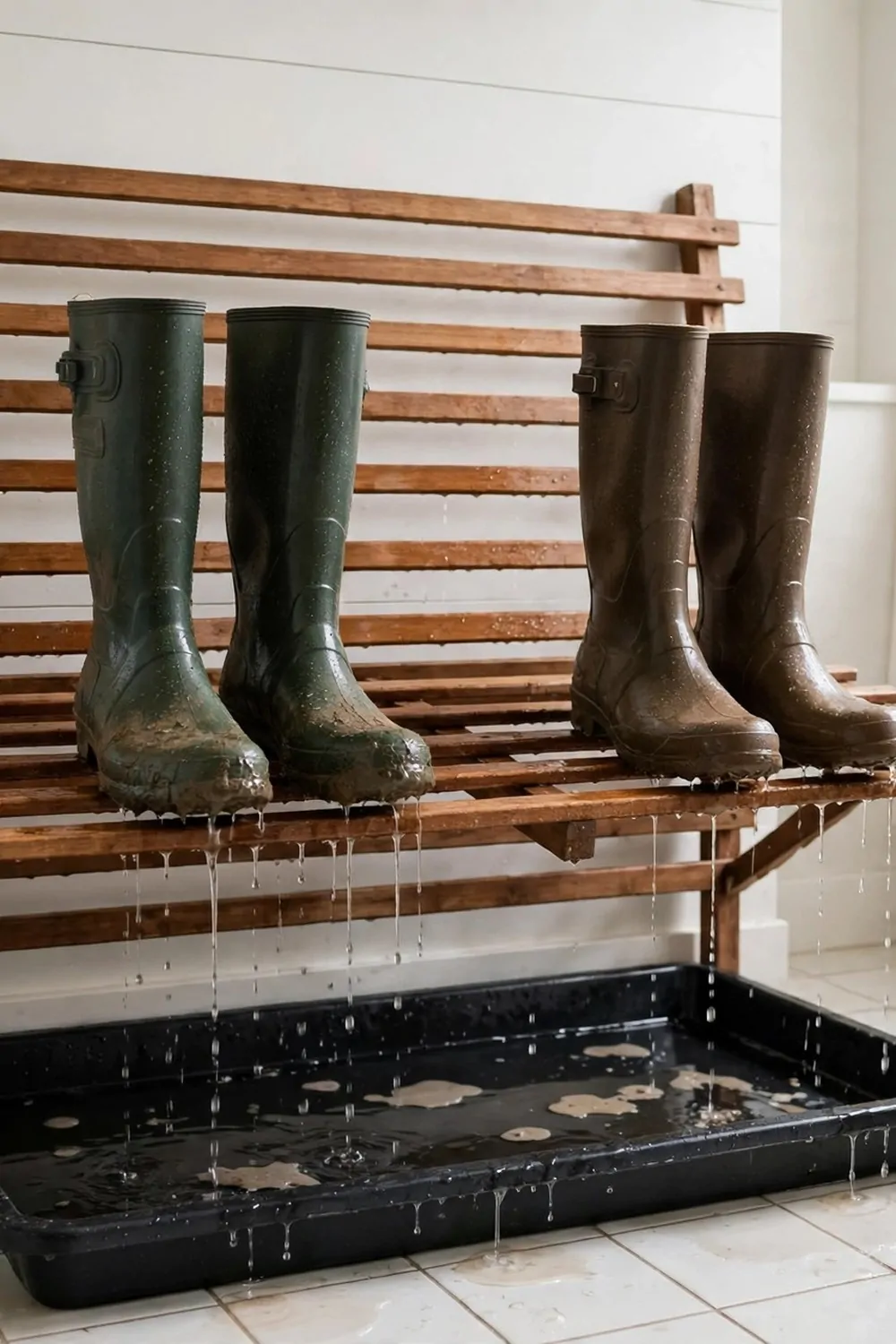
Wet boots used to leave puddles all over my floor. A slatted drying rack fixed that in one go.
The rack holds boots and shoes up off the floor. Air moves through the slats, so things dry much faster.
A tray sits underneath the rack to catch the drips. I empty it when it gets full, and the floor stays dry.
I put the rack near the back door, where muddy shoes come in. That way no one walks wet shoes through the house.
The rack is wooden and looks nice, but any slatted rack works. The slats are the key part, not the material.
Kids shoes dry on the lower slats, and my big boots go on top. Everyone in the family has their own spot.
In rainy weeks, I wipe the tray out every day. It only takes a minute, and it stops the tray from getting grimy.
If shoes are really soaked, I stuff them with old newspaper first. The paper soaks up the worst of the wet, and the rack does the rest.
This rack is a small thing, but it saves my floor and my patience. No more wet footprints through the house.
20. A Hidden Spot for the Vacuum and Mop
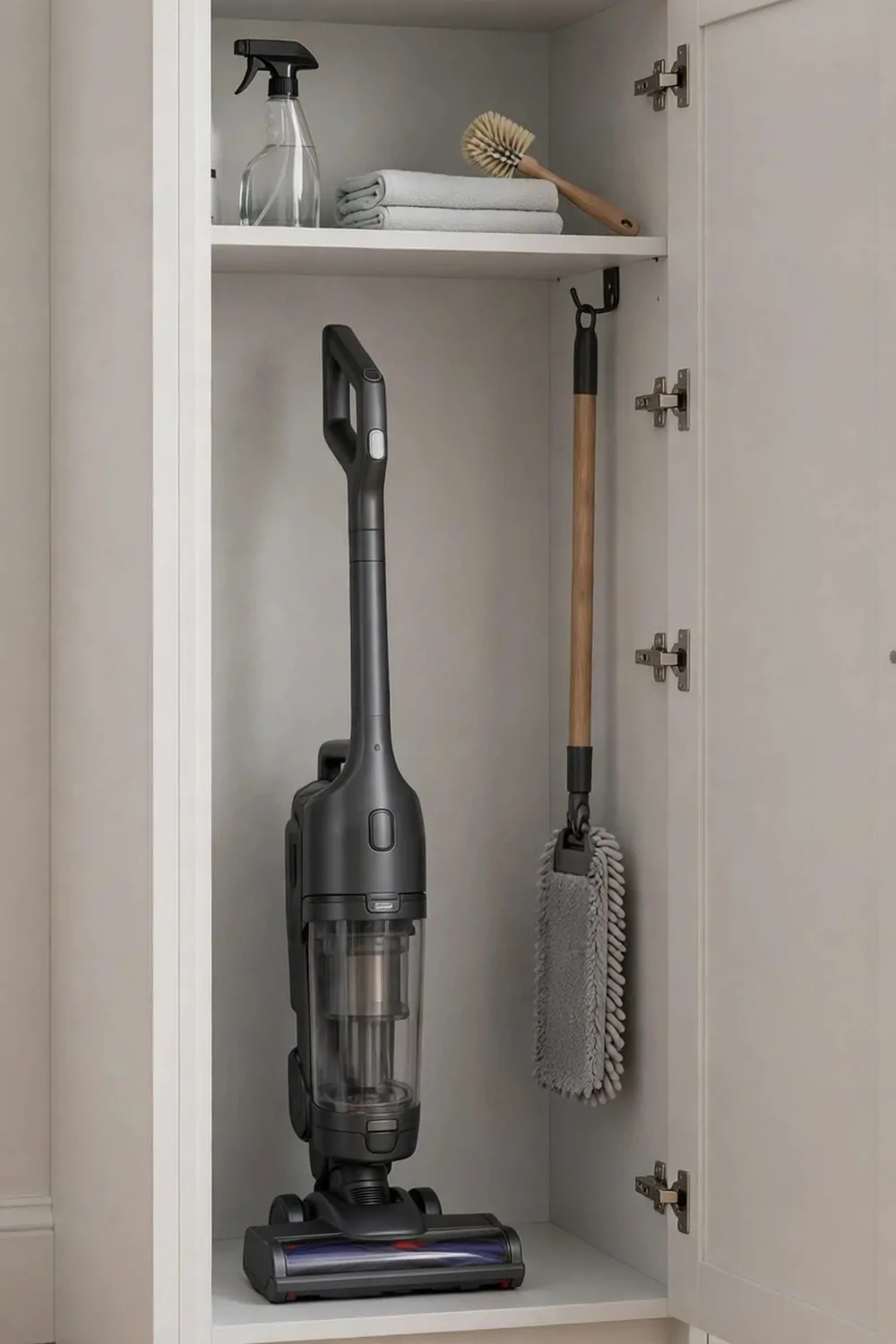
My vacuum used to live in a hallway corner, always in the way. Now it has a hidden home in a slim cabinet in the utility room.
The cabinet is tall and narrow, just wide enough for the vacuum. The door closes, and the whole thing disappears.
My mop hangs on a hook inside the same cabinet. It dries there, and the floor of the cabinet stays dry too.
I keep the vacuum charger plugged in inside the cabinet. When I need to clean, I just open the door and grab it.
A small shelf at the top of the cabinet holds spare vacuum bags and a spare mop head. I never have to hunt for them.
The cabinet sits near the door of the utility room, so it is easy to reach. I do not have to drag the vacuum across the house.
Kids know the rule now: the vacuum goes back in its home when the job is done. It actually works most of the time.
I wipe the inside of the cabinet once a month. Dust builds up in there, and a quick wipe keeps it fresh.
A hidden spot like this makes the whole house look tidier. Out of sight really does mean out of mind.
21. A First Aid and Medicine Shelf
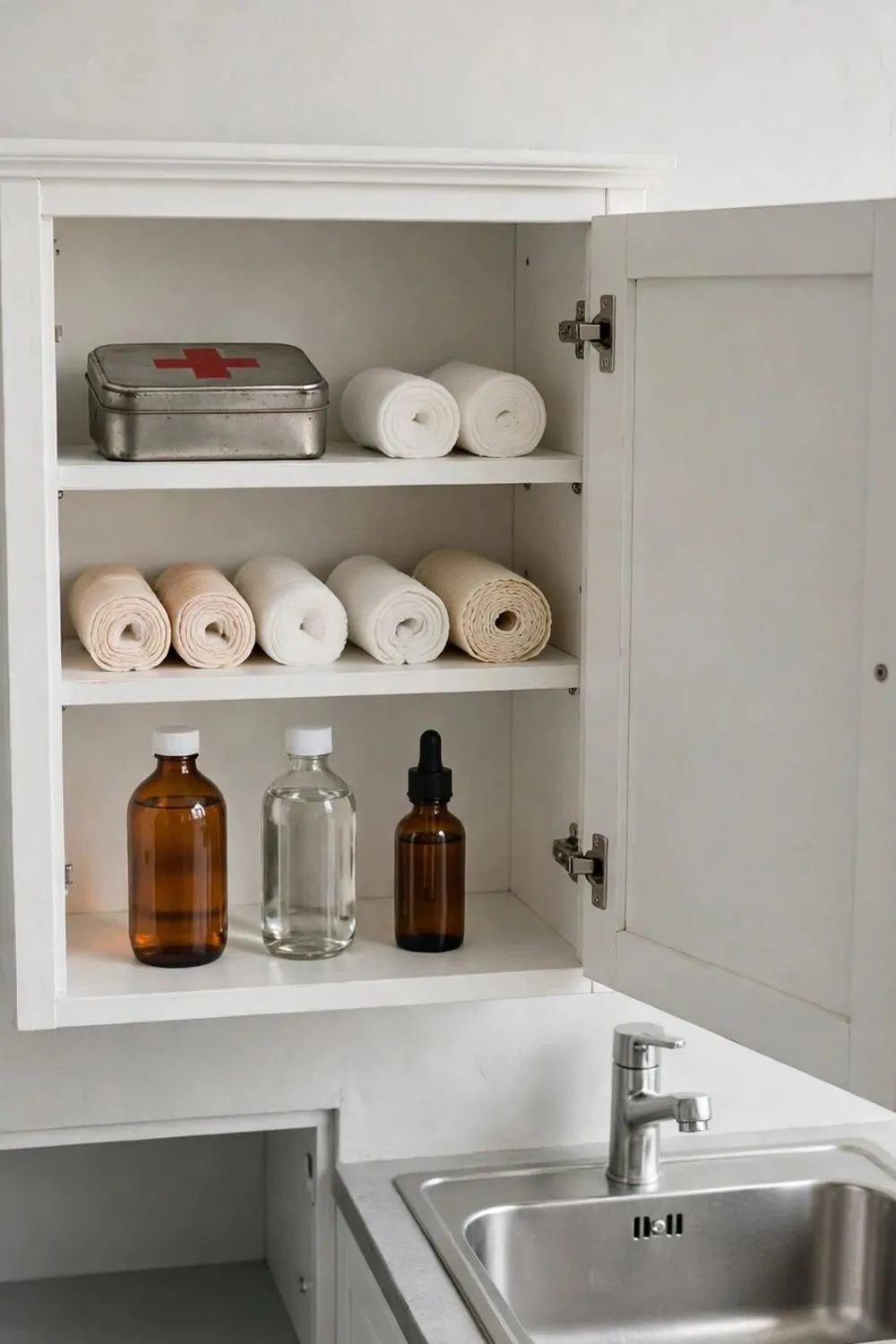
Every home needs a first aid spot that everyone knows about. Mine is a small white cabinet in the utility room, up high where little hands cannot reach it.
A red cross tin sits on the shelf inside. It holds bandages, plasters, and antiseptic wipes for small cuts and scrapes.
I keep a few bottles of medicine on the same shelf, with the labels facing out. That way I can read them fast when I need to.
The cabinet door has a small latch, so it stays shut. I like knowing the bottles will not fall out if someone bumps the shelf.
I check the dates on the medicine twice a year. Anything out of date goes in the bin, and I write a note to buy a fresh one.
A small torch lives in the cabinet too, in case the power goes out. It is one of those things you are glad to have when you need it.
Everyone in my family knows where the cabinet is. When my daughter scraped her knee last summer, she came straight to it.
I keep a list of emergency numbers taped inside the cabinet door. It is a small thing, but it gives me peace of mind.
This shelf is not fancy, but it is one of the most useful spots in the whole room. Be ready, and you will never regret it.
22. A Spare Parts Drawer for Bulbs and Batteries
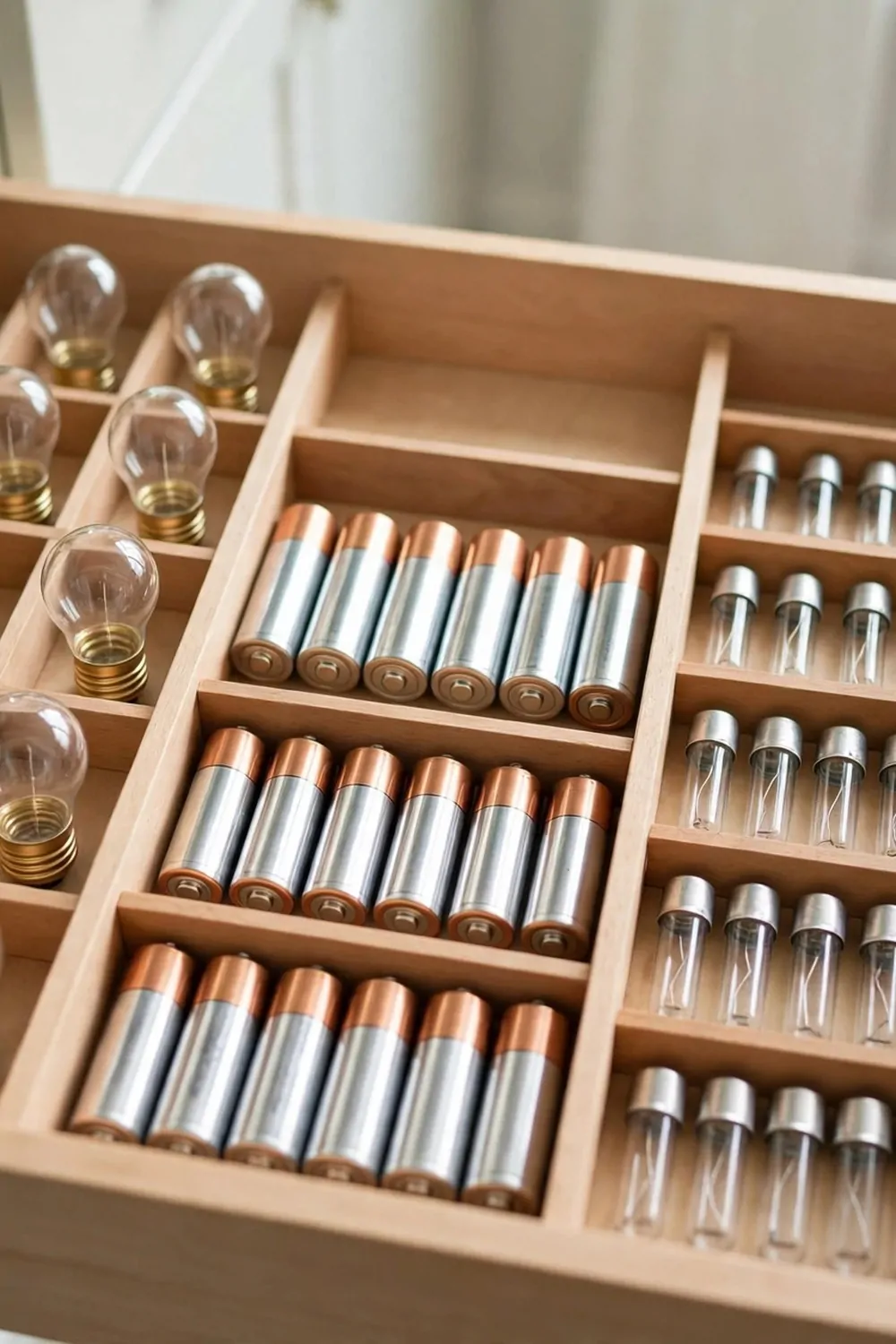
There is nothing worse than a bulb blowing and having no spare. A small drawer with dividers fixed that problem for me.
The drawer holds light bulbs in neat rows, sorted by size. I can see at a glance which ones I need to buy more of.
Batteries sit in their own section, grouped by type. A few small fuses sit beside them in a tiny box.
Dividers are the secret here. Without them, the drawer would just be a jumble of loose bits.
I label each section with a simple word on a scrap of card. It takes two minutes, and it saves me guessing later.
When I use a bulb, I add it to my shopping list the same day. That way the drawer never runs empty.
The drawer lives in the utility room because that is where I do most of my fixing. It is close to the tools and the step stool.
I also keep a few screws and wall plugs in the back of the drawer. They come in handy more often than I expected.
This little drawer turns a small annoyance into a one minute job. A spare bulb is always there when I need it.
23. A Folding Step Stool in a Slim Gap
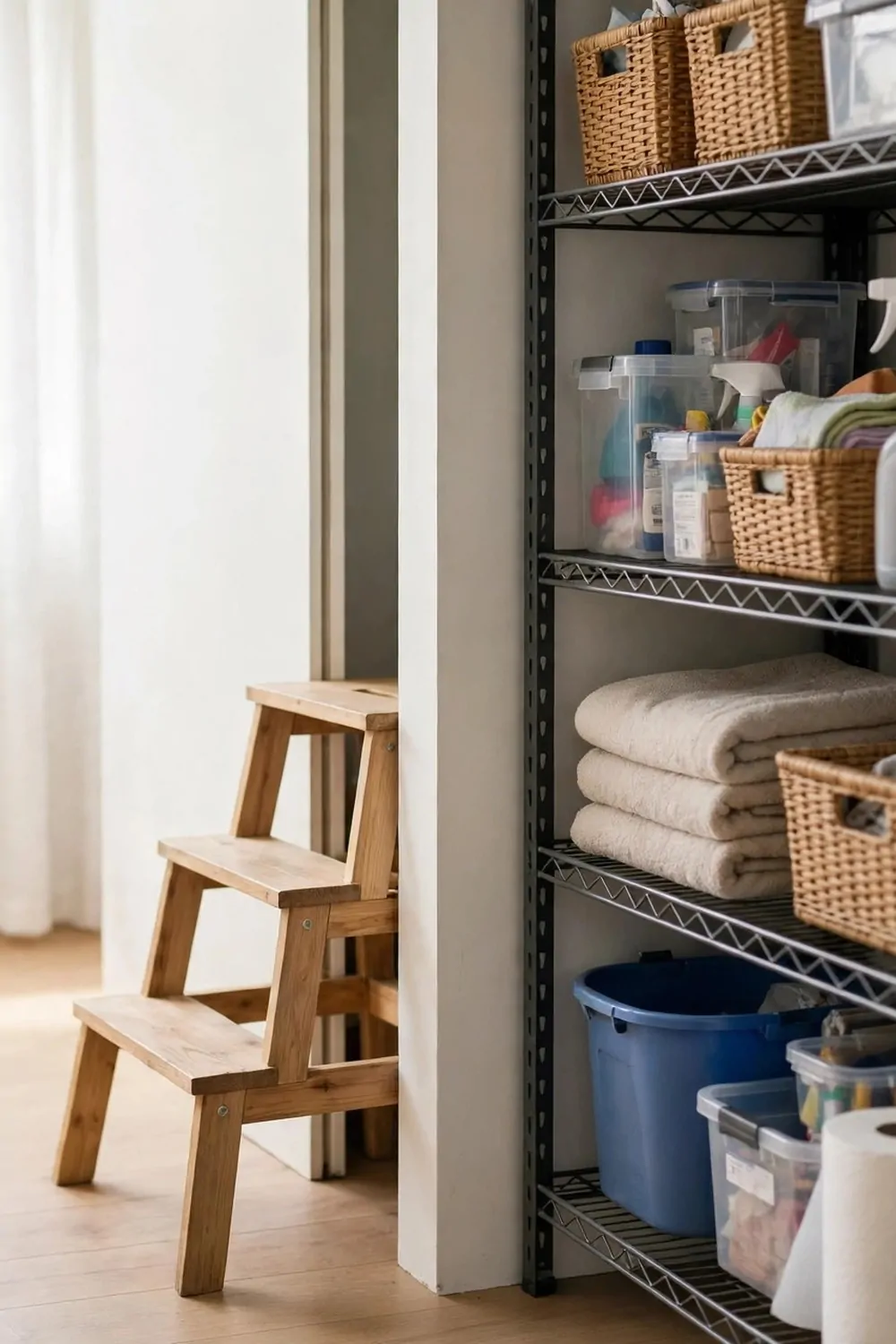
High shelves are no good if you cannot reach them. A folding step stool slid into a slim gap beside my tall shelves solved that for me.
The stool is slim, so it fits in a gap I was not using anyway. It takes up almost no space at all.
When I need it, I pull it out and unfold it in seconds. It is sturdy, and I feel safe standing on it.
I use it to reach the seasonal boxes on the top shelf. I also use it to change bulbs and wipe the top of the shelves.
The stool folds flat, so it slides back into its gap when I am done. No tripping over it, no clutter on the floor.
I picked a wooden one because it looks nice and matches the shelves. It feels solid under my feet, which matters a lot to me.
My kids use it too, to reach their own hooks and shelves. It gives them a little independence, and they love that.
Keep the stool near the shelves it serves. If it lives in another room, you will never bother to fetch it.
This is such a small change, but it makes the whole room work better. Every shelf becomes a shelf you can actually use.
24. A Counter for Folding and Sorting
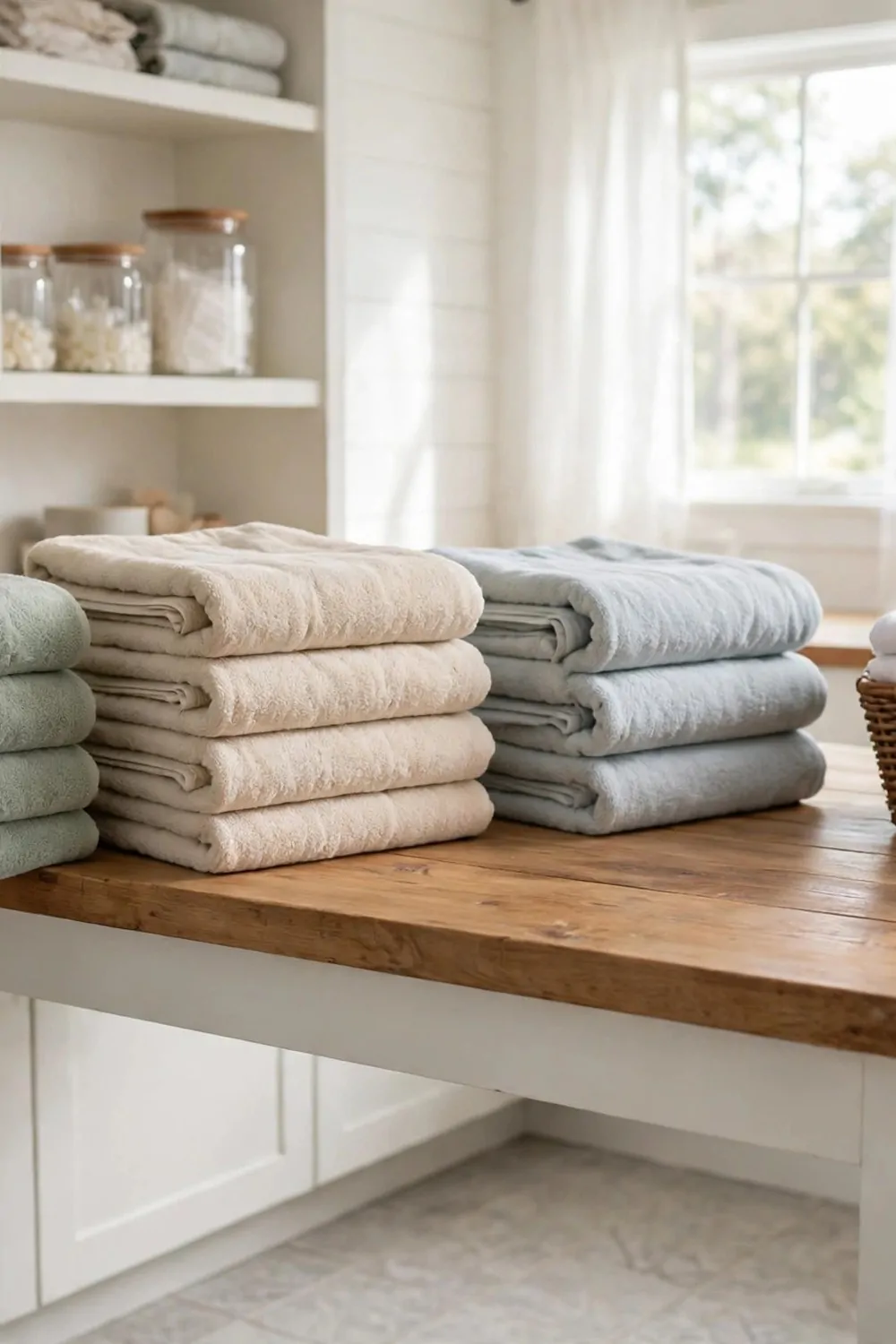
A wide counter in the utility room is where I sort and stack everything. It is the work surface that holds the whole room together.
I fold towels on it in neat stacks. Clean cloths get folded here too, and they go straight into their baskets.
The counter is wooden and wide enough for a big pile. I can spread things out without running out of room.
A basket of clean clothes sits at one end, waiting to be sorted. I work through it a little at a time, and it never feels like a chore.
I keep the counter clear when I am not using it. A clear counter means I can start work the moment I walk in.
Under the counter, I store baskets for different things. One for towels, one for cloths, one for things that need mending.
Sorting on a counter is faster than sorting on a bed or a sofa. Everything is at the right height, and my back thanks me.
I wipe the counter down after each sorting session. A quick wipe keeps it clean and ready for next time.
This counter is the heart of my utility room. It turns a pile of stuff into neat stacks in just a few minutes.
25. A Window Ledge for Plants and Light
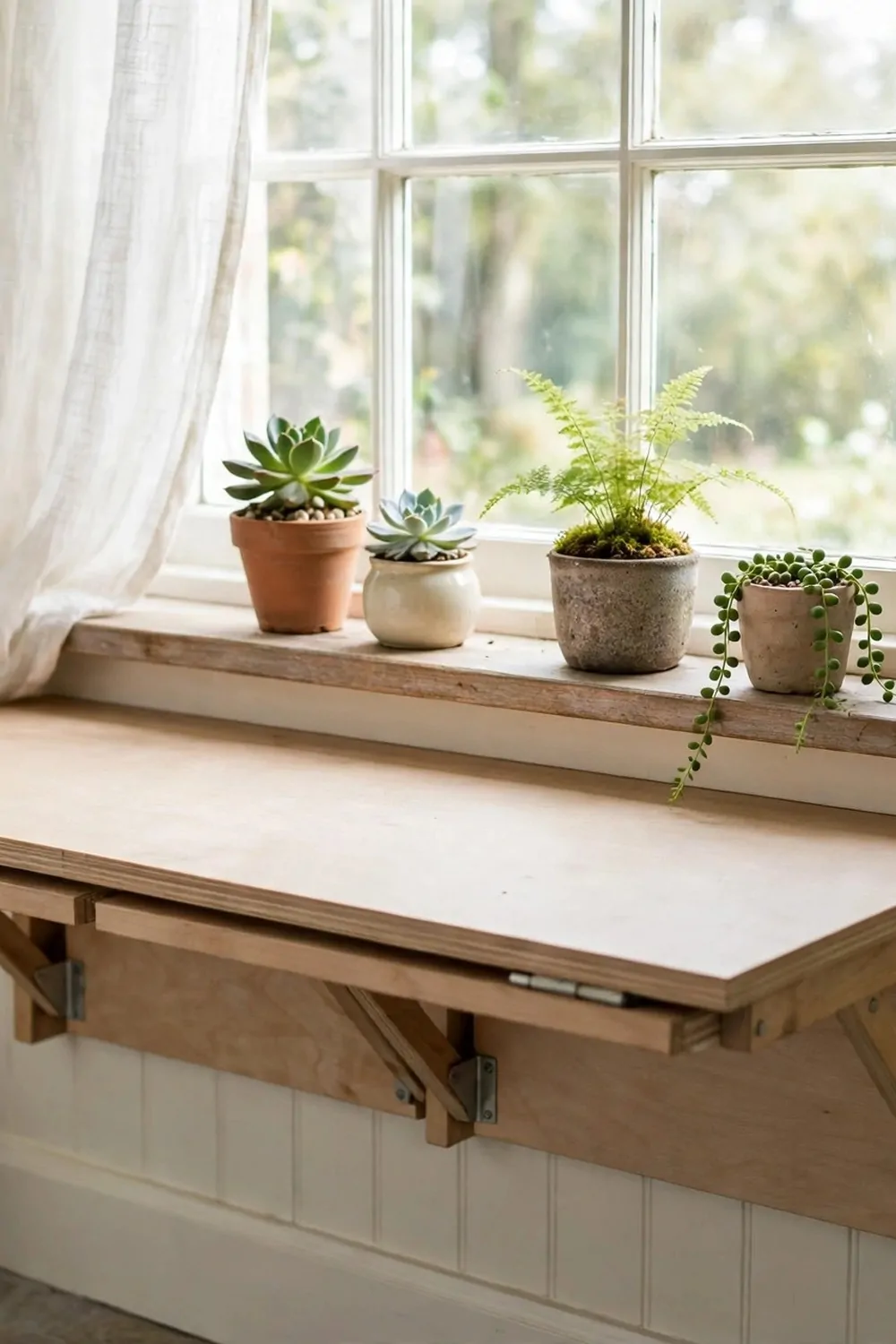
My utility room window used to be bare and dull. Now the ledge holds small potted plants, and the whole room feels brighter.
The plants love the soft daylight from the window. I pick hardy ones that do not mind a bit of neglect.
A few small pots sit in a row on the ledge. They are light enough to lift off when I need to wipe the sill.
Watering is simple: a small jug once a week. I do it on the same day I water the plants in the rest of the house.
The green makes the room feel alive. It is a small touch, but it changes the mood of the whole space.
Light from the window falls right onto the counter below. Sorting and folding feels nicer in natural light than under a bare bulb.
I keep the window clean, so the light comes through properly. A quick wipe once a month is all it takes.
If a plant looks sad, I swap it for a fresh one. No fuss, no guilt, just a new little green friend.
This ledge proves that a work room can still be a pretty room. A bit of green and a bit of light go a long way.
26. A Coat and Bag Rail for the Whole Family
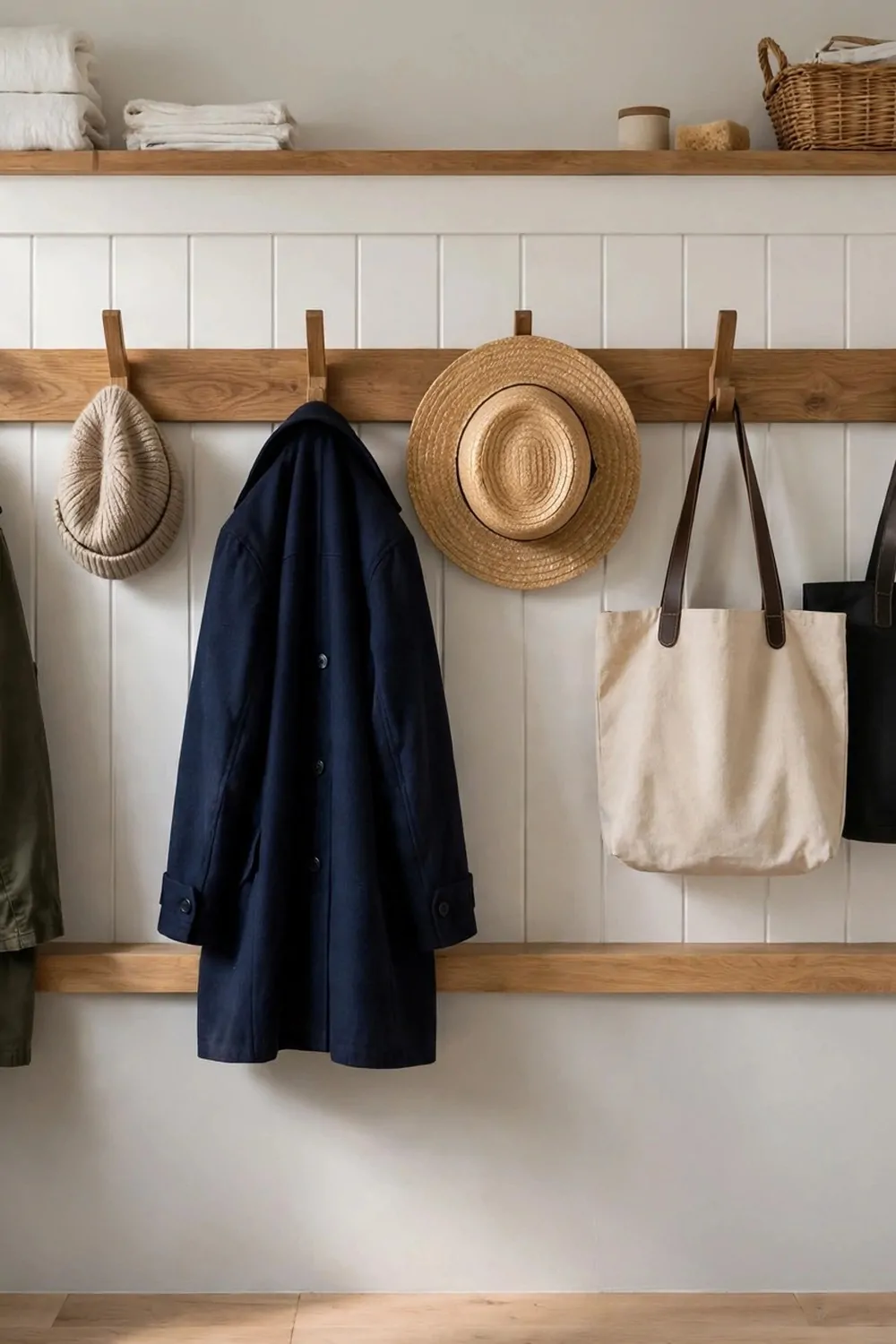
Coats used to end up on chairs and stairs in my house. A wooden rail on the utility room wall ended that mess.
The rail has a hook for each person in the family. Everyone knows their spot, and coats go there every time.
Hats hang on the same hooks, right next to the coats. Tote bags hang there too, ready for the next trip out.
The rail sits at a height everyone can reach. My youngest can hang her own coat up, and she is proud of that.
I keep the rail near the back door, so coats go on and off as we come and go. It is the first thing we see and the last thing we touch.
If the rail gets crowded, I take off the coats no one has worn in weeks. They go into storage, and the rail breathes again.
A quick brush of the coats once a month keeps dust off. It takes five minutes, and the coats last longer for it.
The rail looks neat and simple, and it matches the wooden shelves. It feels like part of the room, not an afterthought.
This rail is one of the best things I added to the room. A place for everything really does mean everything in its place.
27. A Weekly Ten Minute Reset
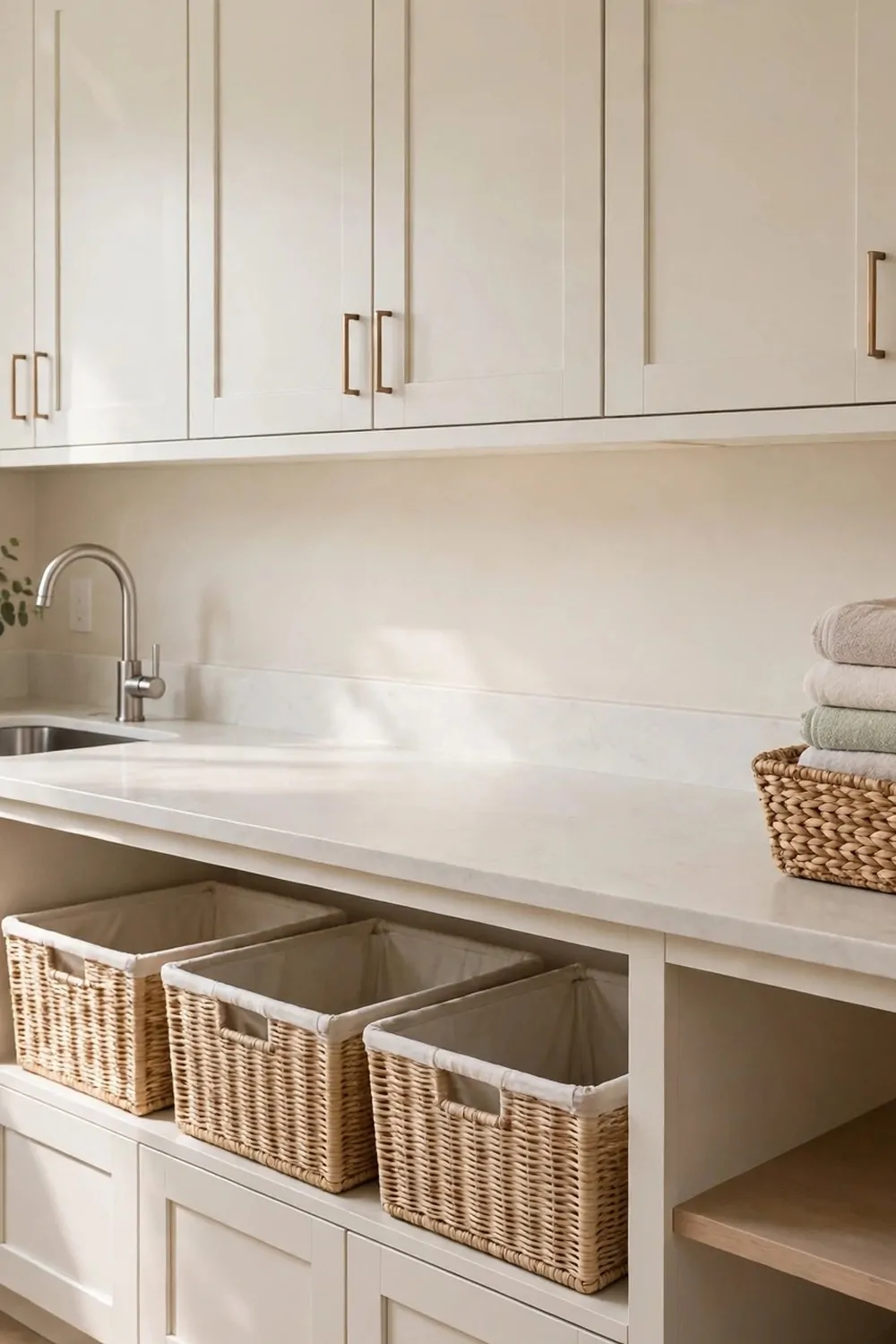
A utility room does not stay tidy on its own. I give mine a ten minute reset once a week, and it never gets out of hand.
I pick the same day each week, so it becomes a habit. Sunday evening works for me, right before the new week starts.
First, I clear the counter. Everything that does not belong there goes back to its home, and the surface is empty again.
Then I empty the bins. Recycling goes out, rubbish goes out, and the bins get a quick wipe if they need it.
Next, I wipe the sink and the shelves. Dust and drips build up fast in a work room, and a weekly wipe keeps them from settling in.
I put one wandering thing back where it belongs. A tool, a tin, a cloth, whatever has drifted off its shelf.
Ten minutes sounds short, but it is enough. Small jobs done often beat big jobs done rarely, every time.
When the reset is done, I stand back and look at the room. A tidy room on a Sunday night makes Monday feel easier.
This little routine is the secret to a room that always looks good. Ten minutes a week is all it takes.
| Reset task | How long | What it fixes |
|---|---|---|
| Clear the counter | Two minutes | A clear spot to work next time |
| Empty the bins | Three minutes | No smell and no overflow |
| Wipe the sink and shelves | Three minutes | Dust and drips never build up |
| Put one thing back | Two minutes | Tools stop wandering off |
28. Start With One Corner This Weekend
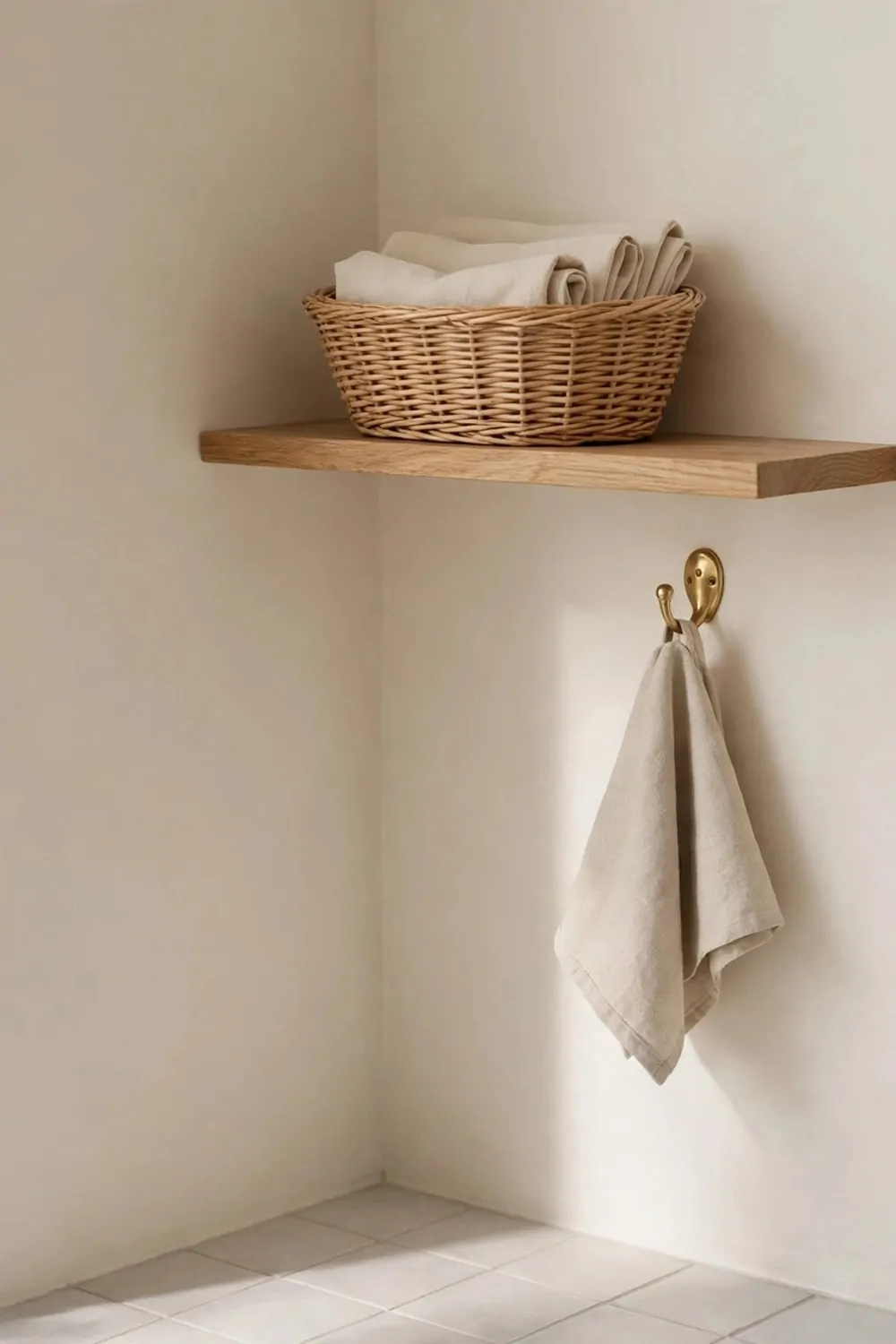
You do not need to fix the whole room in one day. Just pick one corner this weekend, and start there.
One shelf, one hook, and one basket is enough to begin. Clear that little corner, and see how good it feels.
I started with one corner too, and it grew from there. Each small win gave me the energy for the next one.
Choose the corner that bugs you most. The one you see every day, the one that makes you sigh when you walk past it.
Give yourself one hour, no more. Set a timer, put on some music, and just work on that corner.
When the hour is up, stop and look at what you did. A tidy corner is a small victory, and small victories matter.
Next weekend, do another corner. In a month, the whole room will look different, and you will wonder why you waited so long.
Do not buy anything new for this first step. Use what you already have, and add things later if you need them.
Your utility room can be a calm, useful space. Start with one corner, and let the rest follow.
Keep Reading
If you liked these ideas, there is more where that came from. I have written about other rooms in the house too, and they all follow the same simple rules.
A tidy home is not about being perfect. It is about small steps that make your days easier, one room at a time.
- 22 Laundry Room Organization Ideas That Actually Stick
- 39 Laundry Room Cabinet Ideas That Make Storage Look Beautiful
- 25 Laundry Folding Station Ideas for Organized Homes
- 41 Custom Kitchen Cabinet Organization Ideas Worth Stealing
Pick one idea from this list and start this weekend. Your future self will thank you for it.