17 Small Second Bedroom Office Ideas That Look Designer-Made

My second bedroom looked fine. That was the problem. It looked fine, and fine is not finished.
The desk worked. The bed worked. The shelves held books. But nothing in the room talked to anything else. The desk was dark wood. The bed was pale wood. The lamp was black. The boxes were four different colours. It was a room full of good pieces that had never met each other.
Then I spent one weekend matching things up. Same wood on the desk and the bed. Same cream on the walls and the shelves. One strong colour, used three times. A row of frames hung straight. It cost very little. Most of it was paint, moving things around, and throwing out the bits that did not fit.
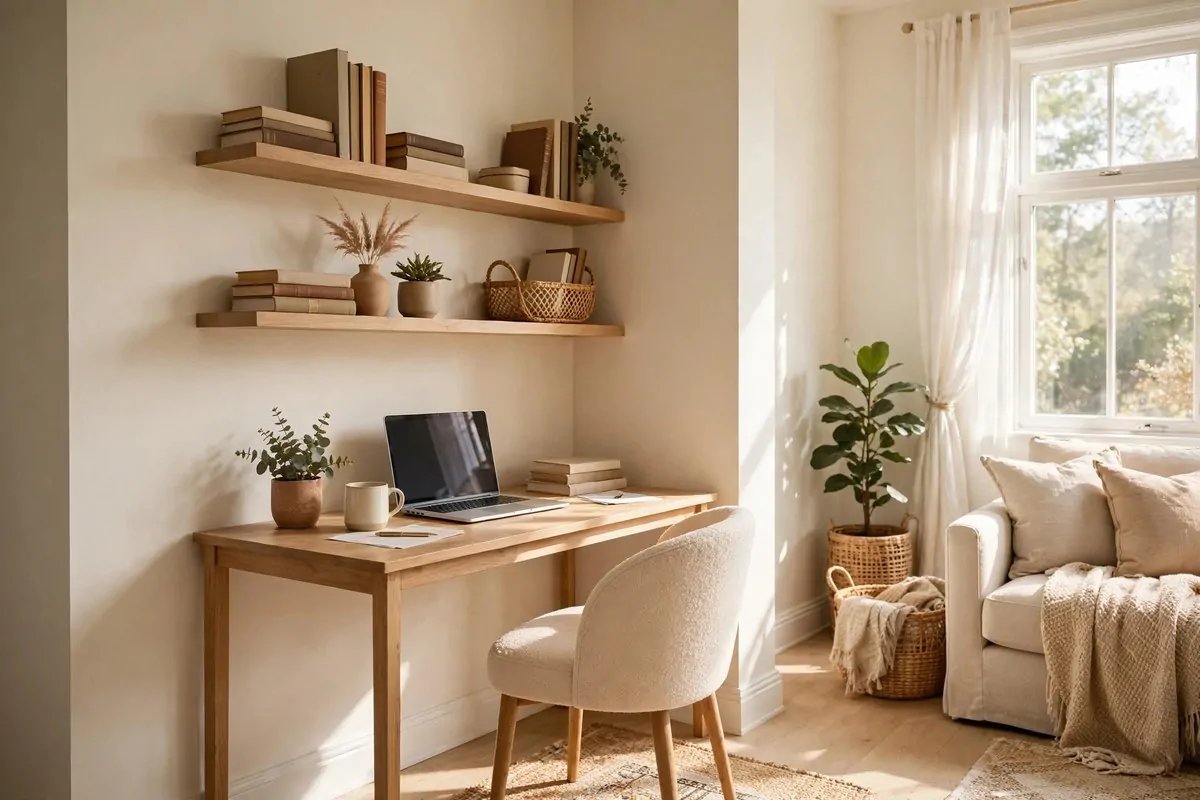
Now people walk in and ask who designed the room. Nobody did. I just made the pieces match. That is what this list is for. Seventeen Small Second Bedroom Office Ideas that make a small room look designer-made, using matching finishes, clean lines, styled shelves and one strong colour.
You do not need to buy anything new. Pick three ideas. Start with the one that feels simplest. Stand in the doorway when you finish and take a fresh look. The room will look like someone planned it.
Match the Desk to the Bed Frame
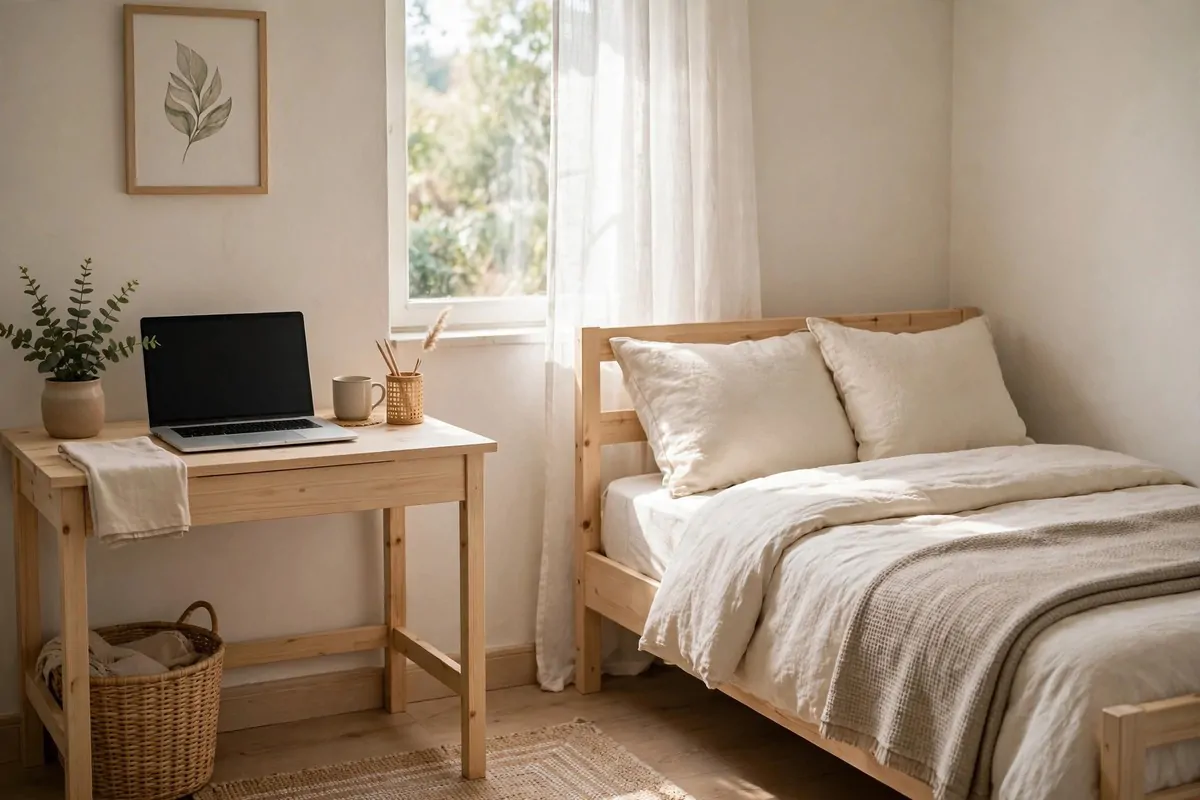
A desk and a bed in different woods look like strangers sharing a room. Match the wood and they look like a set.
My desk was dark brown. My bed frame was pale pine. They sat two feet apart and fought each other all day. I sanded the desk down and oiled it pale to match the bed. One afternoon, and the room changed.
You do not have to sand anything. A desk in the same wood tone as the bed works just as well. Hold a drawer front next to the bed leg in the shop. If they look like cousins, buy the desk.
Paint works too. One tin of paint in the same shade as the bed frame turns any desk into a match. Two thin coats, and the desk stops arguing with the bed.
Keep the chair in the same family as well. A chair in a third wood tone breaks the match. A chair in the same pale wood keeps it going.
This trick costs nothing if you already own the desk. A little sandpaper, a little oil, and the two biggest pieces in the room finally agree.
Run your hand across the desk and the bed rail when you finish. If they feel like the same wood, they look like the same wood. That is the whole trick.
Try this one first if your room feels like a jumble. One matching wood, and the room looks planned.
One Colour on the Walls, One on the Furniture
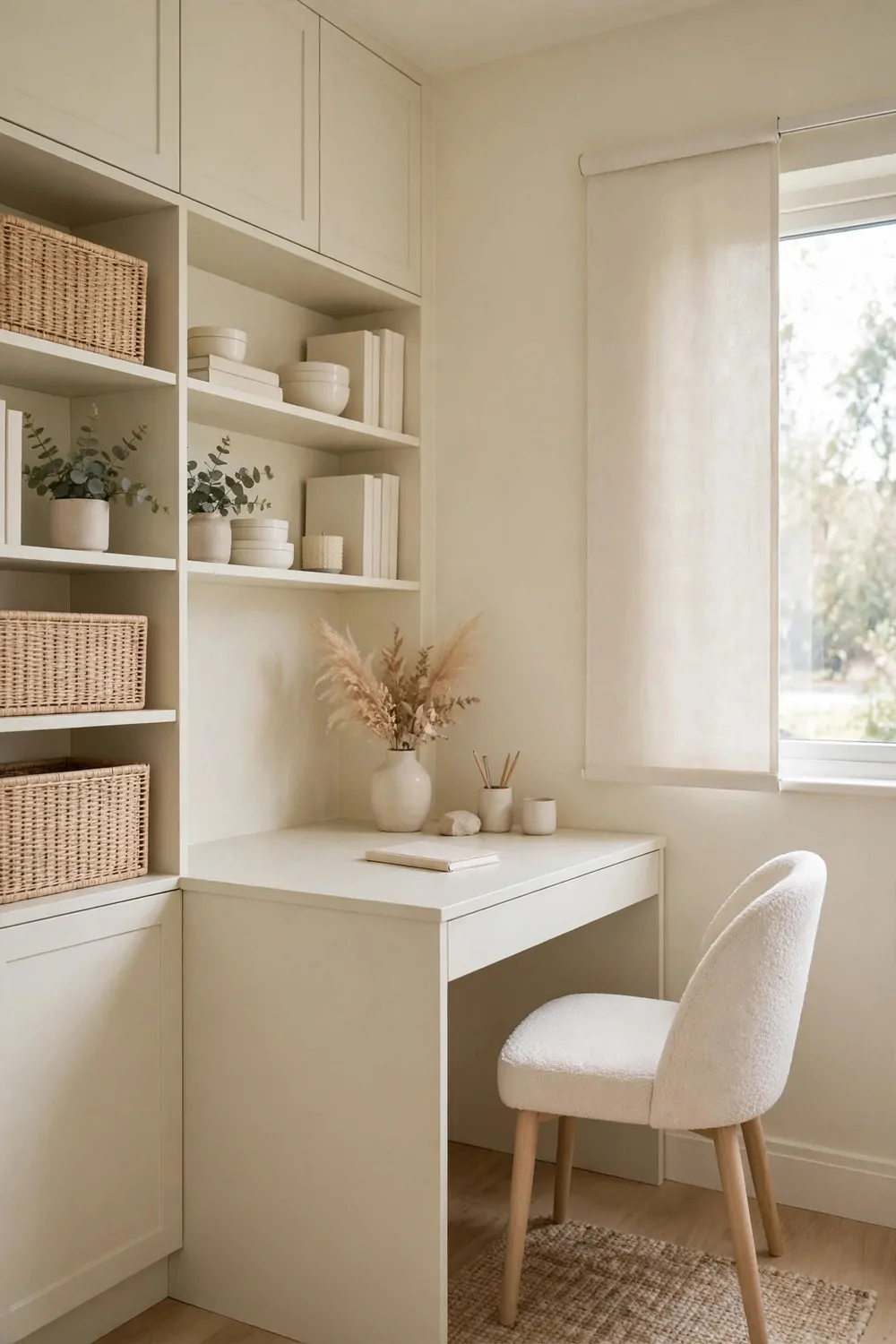
Too many colours in a small room make your eyes jump around. Two colours make them rest.
My walls are soft cream. My desk, my shelves and my bedside table wear the same soft cream. When the furniture matches the walls, the corners blur and the room feels wider than it is.
Choose a pale shade you like living with. Cream, soft white, or a pale warm grey all work. Paint the walls first, then paint the furniture to match. The room will feel like one calm space instead of five small pieces.
The floor stays out of the rule. A wood floor under cream furniture warms the whole room up. It anchors everything, and the pale walls float above it.
Tuck one warm accent into the room so it does not feel cold. A wood lamp base. A leather notebook cover. A small clay pot. One warm note is plenty. A second one starts to crowd the calm.
This move is gentle on the wallet when the furniture is already yours. A single tin of paint turns a mixed-up room into a room that matches. Nothing new to buy, just one colour doing the work.
Step back and squint at the room after the paint dries. If the edges melt into each other, you got it right. The room should feel quiet, like a deep breath.
Give this a go when the room feels noisy even though it is silent. Two colours, used everywhere, and the whole space settles down.
A Rug That Ties the Room Together
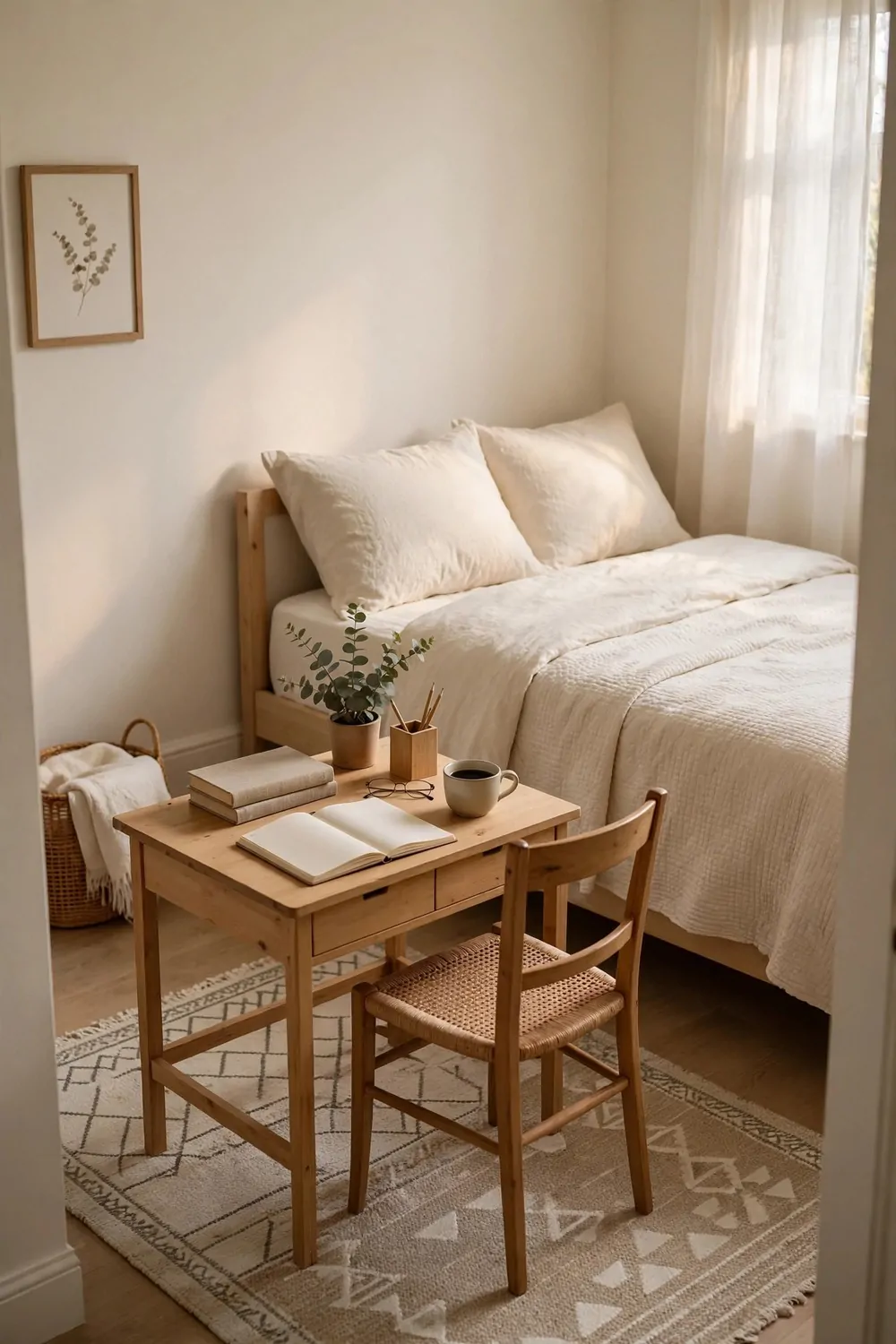
A rug that matches nothing looks like a mistake. A rug that picks up one colour from the room ties everything together.
My rug is cream with a thin navy line around the edge. The navy line matches my cushion. The cream matches my walls. One rug, two matches, and the whole room feels tied up.
Pick a rug with a simple pattern. One stripe. One border. One quiet shape repeated. A busy rug fights the desk and the bed. A simple rug lets them shine.
Make the rug big enough for the desk and the chair together. Your chair should still sit on the rug when you push it back. A rug that is too small looks like a mat under a desk.
Choose a rug that sits low and flat. A thick rug makes the chair rock, and a rocking chair is one you stop using. A low flat rug keeps the chair steady and the room looking neat.
Vacuum the rug once a week and shake it outside once a month. A clean rug lifts the whole corner, and the desk sitting on it looks better too.
Step onto the rug barefoot before you buy it, if you can. If it feels soft under your feet, it will feel soft every morning. If it feels rough in the shop, it will feel rough at home.
Start here if your room feels like pieces that never met. One rug with one matching colour, and the room pulls together.
Shelves Lined Up Like a Picture
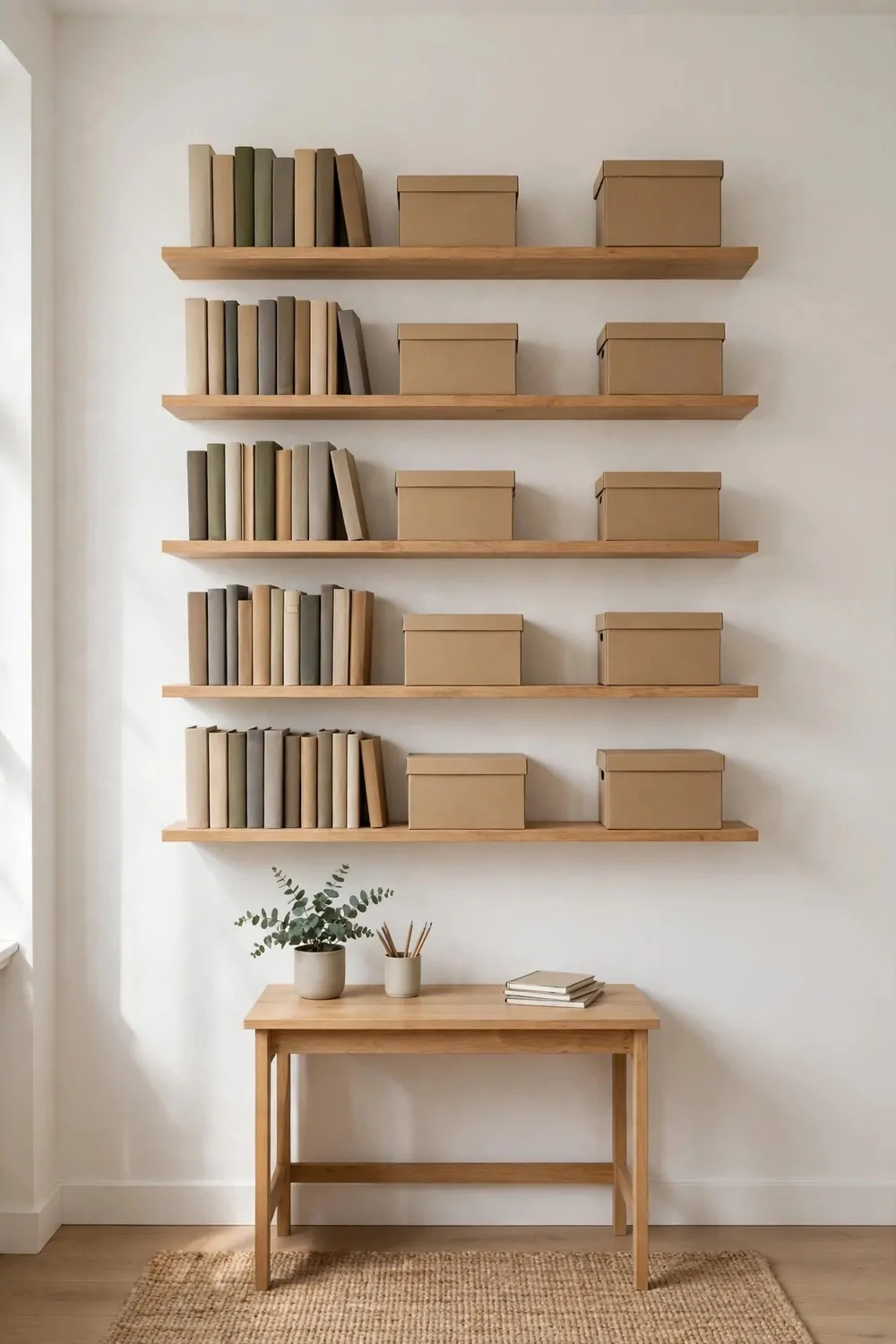
Shelves hung at different heights look like an accident. Shelves hung in a straight line look like a picture on the wall.
My shelves run in one straight line above my desk. Same height. Same spacing. Same depth. Books on the left, boxes on the right, and a little empty space in the middle. It looks like someone measured it, because someone did.
Measure first. Mark the line with a pencil and a spirit level. A shelf that tilts by one centimetre looks wrong from the door. A shelf that is level looks right from everywhere.
Keep the shelf depth the same on every shelf. A deep shelf next to a shallow one breaks the line. Two shelves, same depth, and the wall looks neat.
Leave a little gap between the things on the shelf. A shelf crammed full looks like storage. A shelf with breathing room looks like a display.
Put the tallest books at the ends. Tall things at the edges frame the shelf like a picture frame. Short things in the middle keep the eye moving.
Stand in the doorway and look at the shelf when you finish. If the line looks straight from there, it looks straight from everywhere. That is the test.
Try this one if your shelves look messy even when they are tidy. One straight line, and the wall looks designed.
Cables Hidden, Not Dangling
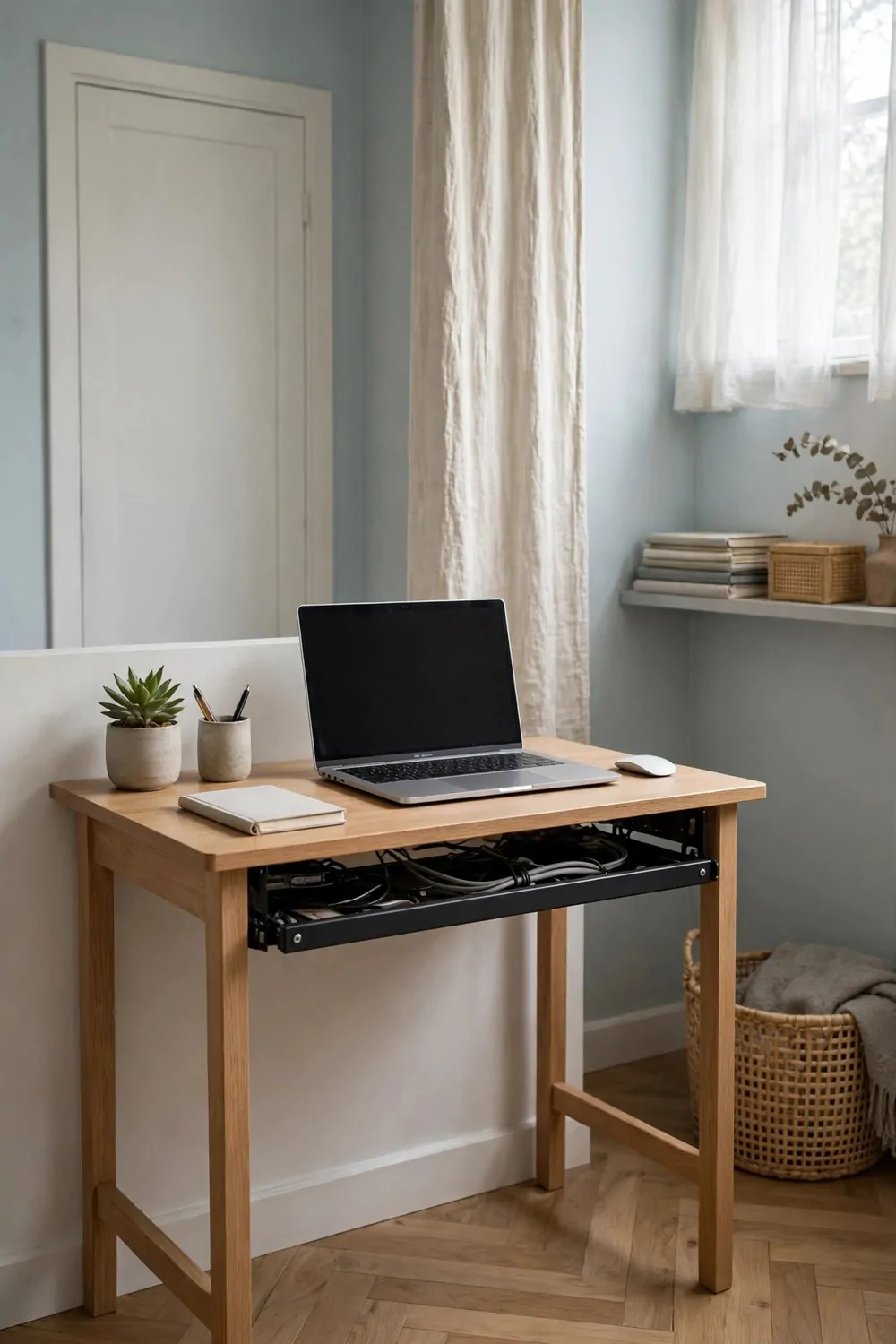
Dangling cables ruin a tidy room faster than anything else. Hide them and the desk looks finished.
My cables live in a slim tray under the desk top. One tray, screwed to the underside, holds the power strip and every wire. From the door you see nothing. The desk looks clean.
A cable tray costs very little. One tray, two screws, and the mess is gone. You can buy one or make one from a narrow box.
Run the cables through the tray in a straight line. A cable that loops and knots looks messy even inside a tray. Straight cables stay tidy.
Add a small hole in the desk top where the cables come up. A desk grommet, a little round cover, keeps the hole neat. The laptop cable pops up right where you need it.
Keep the power strip inside the tray too. A power strip on the floor collects dust and trips people. A power strip in a tray is out of sight and out of the way.
Label the plugs inside the tray with tiny tags if you share the desk. One tag per plug, and nobody unplugs the wrong thing by mistake.
Give this a go if your desk looks messy even when the top is clear. One tray under the desk, and the room looks finished.
One Strong Colour, Used Three Times
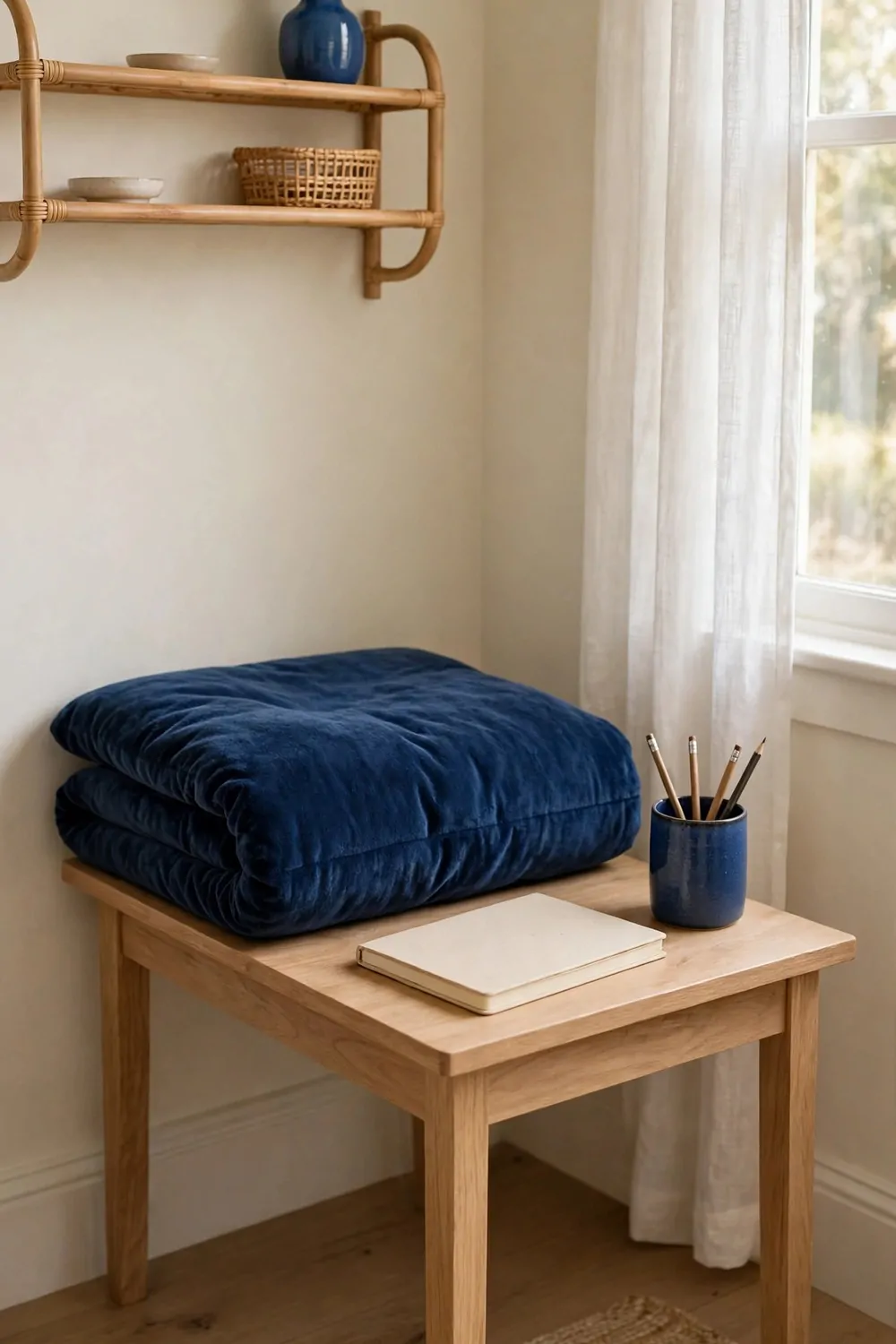
One strong colour, used once, looks like a mistake. The same colour, used three times, looks like a plan.
My strong colour is navy blue. It shows up on my chair cushion, on my notebook, and on the pen cup. Three times, same shade, and the room feels designed.
Pick a colour you love and use it in three small places. A cushion. A notebook. A picture frame. Small places only. A whole navy wall would shout. Three small navy touches whisper.
Keep the rest of the room pale. Cream walls, pale wood, white bedding. The strong colour needs a quiet room around it, or it has nothing to stand out against.
Match the shade exactly. Three blues that are almost the same look like a mistake. Three blues that match exactly look like a choice. Hold them next to each other in the shop.
Here is how the rule works in a small room.
| Where the colour goes | How big | Why it works |
|---|---|---|
| Chair cushion | One cushion | The first spot your eye lands |
| Notebook on the desk | One notebook | The colour at work height |
| Pen cup or small tray | One small piece | The third time, and the eye believes it |
Stop at three. Four or five uses and the colour stops being an accent. It becomes the whole room, and the room loses its calm.
Try this one if your room feels plain but you do not know what is missing. One strong colour, three small times, and the room wakes up.
Framed Prints in a Straight Row
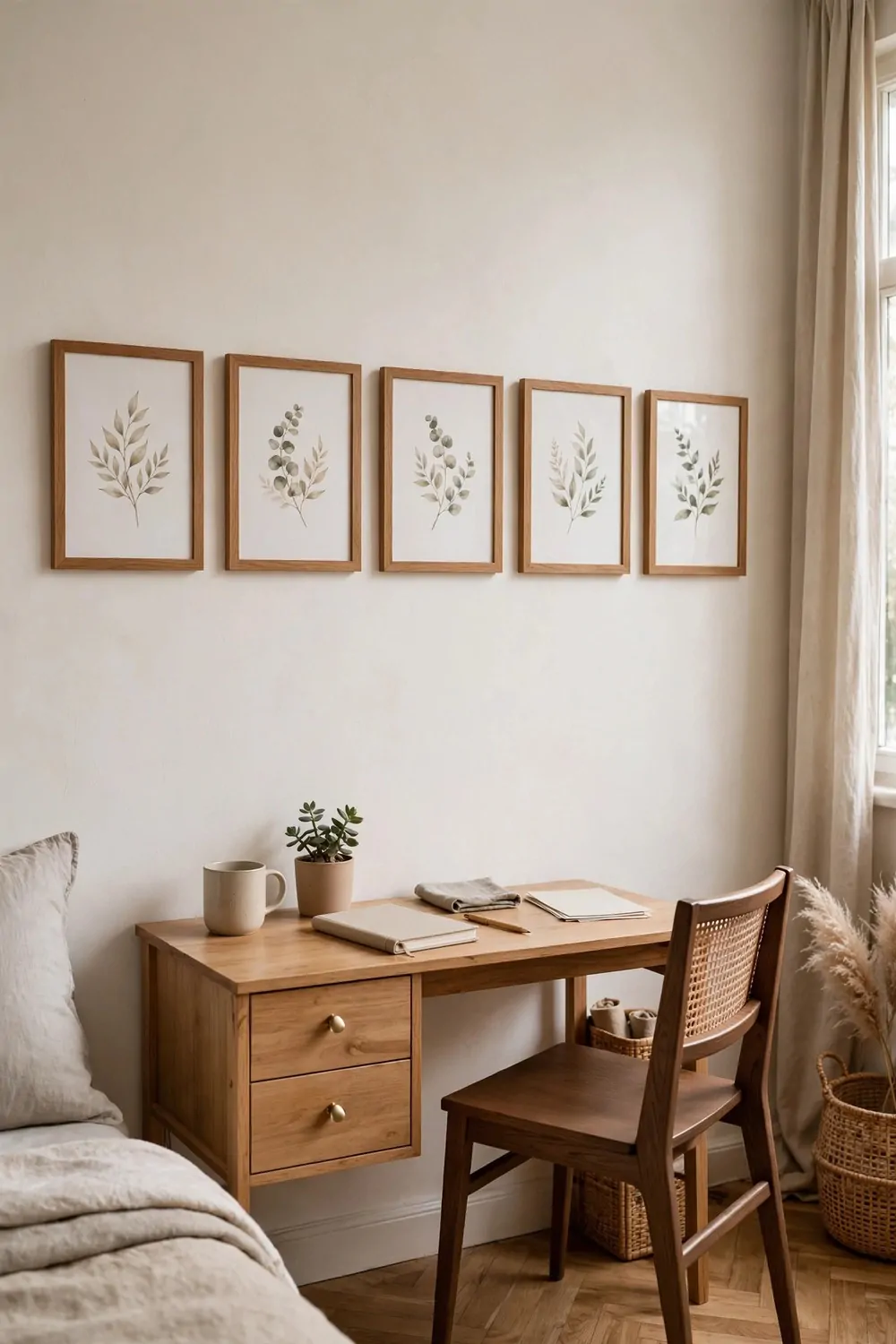
One frame on a wall looks lonely. Three frames in a straight row look like a gallery.
My prints hang in a row above my desk. Same size. Same wood frames. Same gap between them. A pencil line and a spirit level made it happen in half an hour.
Pick three prints you love. They do not have to match each other. They have to match in size and frame. Same frames, different pictures, and the row looks planned.
Hang them at eye level when you sit down. A row hung too high looks like it belongs to someone standing. A row at sitting height belongs to the person at the desk.
Keep the gaps equal. Measure the space between each frame with your hand. Same gap, same row, and the wall looks neat from the door.
Use plain glass and plain mounts. A wide white mount around each print makes small pictures look bigger. It also makes three different pictures feel like one set.
Step back to the door once the row is up. If the three frames read as one straight line from there, the gallery is done.
Give this a go if your walls feel bare but you do not want clutter. Three frames, one straight row, and the wall looks finished.
The Lamp That Matches the Handles
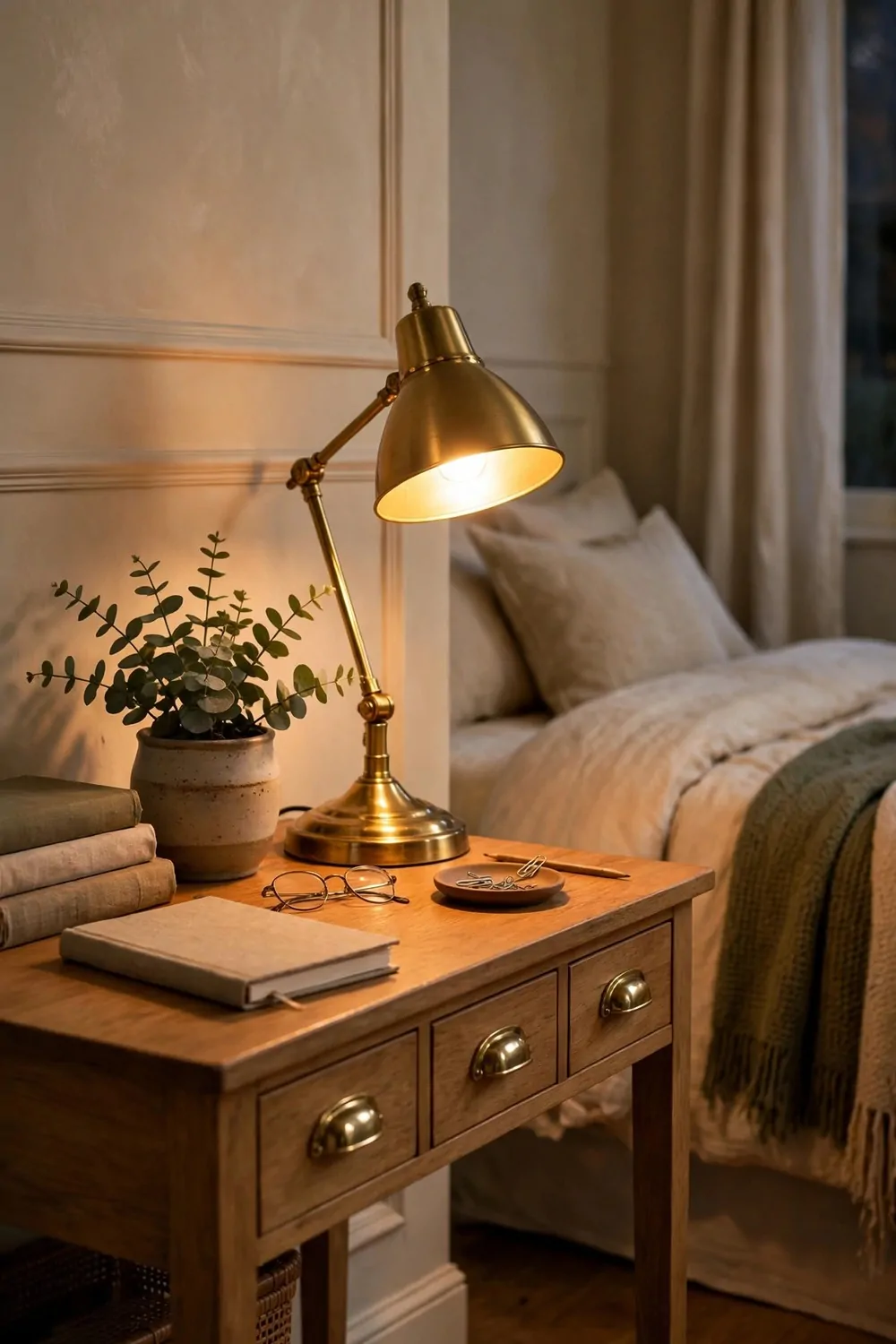
A lamp in one metal and handles in another look like two different rooms. Match the metal and the desk looks like a set.
My lamp has a brass base. My drawer handles are brass too. Same warm gold tone, and the desk looks like it came from one shop. It did not. The lamp came from a sale. The handles cost a few coins each.
Pick one metal and use it twice. Brass lamp, brass handles. Black lamp, black handles. Chrome lamp, chrome handles. Two uses, same metal, and the desk looks planned.
Change the handles first. A handle swap takes ten minutes and a screwdriver. It is the cheapest way to make a desk look new.
Keep the rest of the metal quiet. One metal, used twice, is a match. Three metals fighting on one desk is a mess. Pick one and stick to it.
Wipe the metal once a week with a dry cloth. Brass and black metal both show dust fast. A fast wipe keeps the match looking sharp.
If the lamp and the handles came from different shops, hold them side by side in daylight before you fit anything. Daylight tells the truth about metals. Shop light lies.
Try this one if your desk feels plain but you cannot say why. One matching metal, and the desk looks like it was made that way.
A Tray That Makes the Desk Look Finished
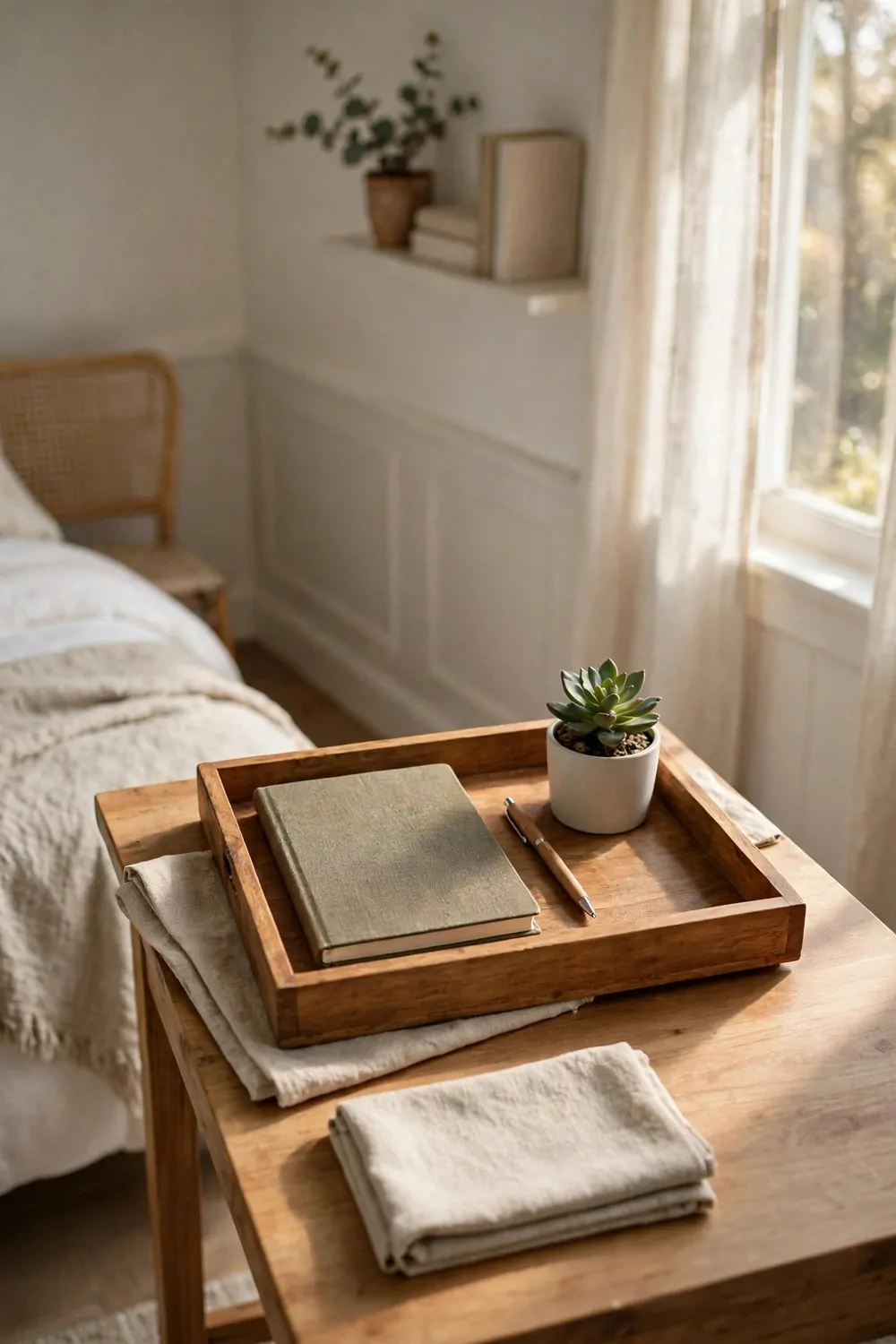
A desk with bits scattered everywhere looks unfinished. A tray gathers the bits and the desk looks done.
My tray sits in the middle of my desk. It holds my notebook, my pen, and a small plant. Three things, one tray, and the desk looks like a picture in a magazine.
Pick a tray that matches the desk wood. A wood tray on a wood desk looks like part of the desk. A tray in a clashing colour looks like a visitor.
Keep the tray small. A tray that covers half the desk is a desk with a lid. A tray that holds three things is a tray that works.
Put the tray in the same spot every day. A tray that moves around the desk looks lost. A tray that lives in one place looks like it belongs there.
Here is what belongs on the tray, and what does not.
- The notebook you use every day.
- One pen, not five.
- A small plant or a tiny clock.
- Nothing else. The tray is not a drawer.
Clear the tray each evening when work ends. A tray with yesterday’s papers on it is just a tidy mess. An empty tray in the morning says the day starts fresh.
Give this a go if your desk looks messy even when it is clean. One tray, three things, and the desk looks finished.
Matching Boxes on Every Shelf
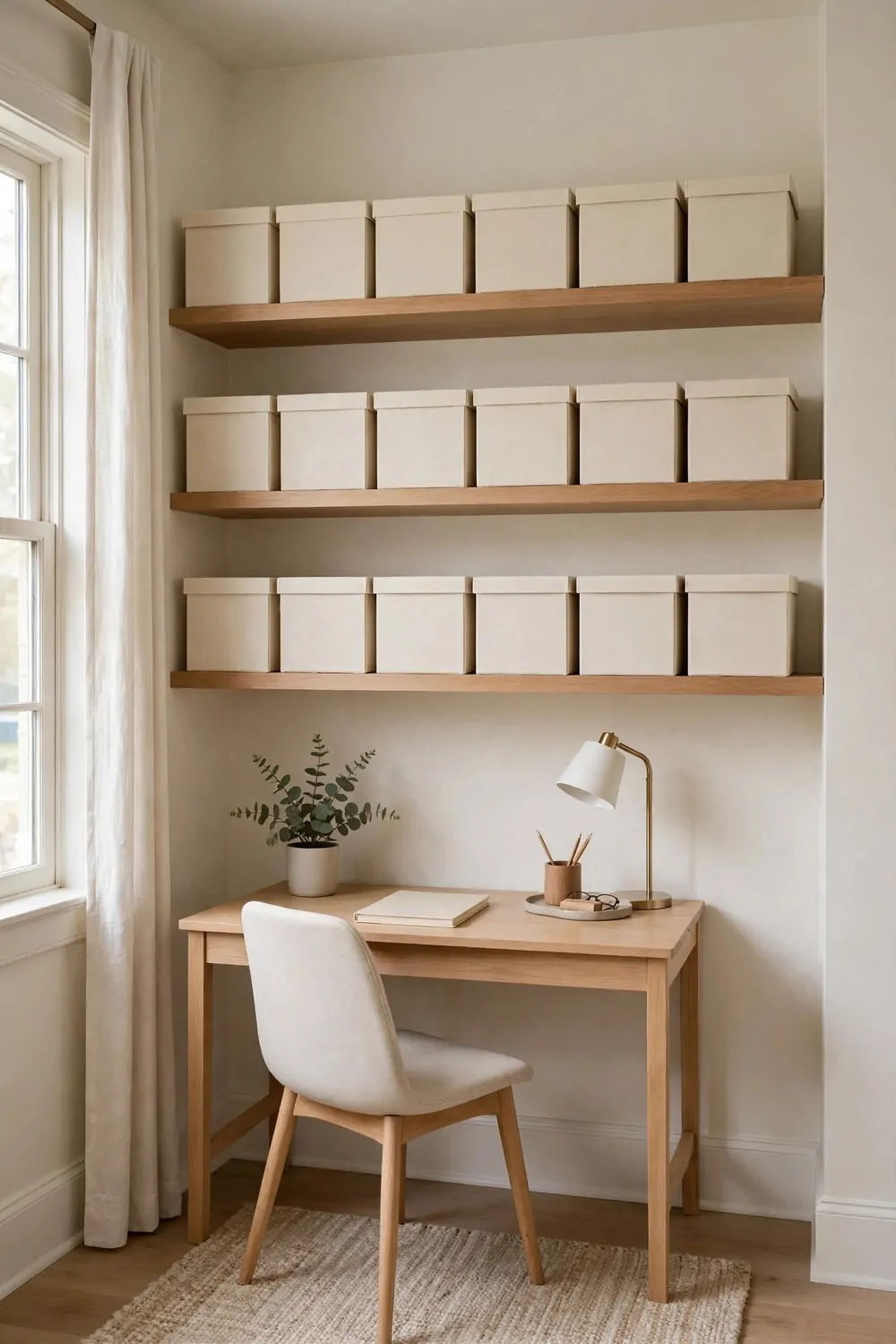
Boxes in four colours look like a jumble. Boxes in one colour look like a set.
My boxes are all plain cream. Same size, same colour, same lids. They line up on my shelves like books on a library shelf. The room looks calm, and calm rooms look expensive.
Pick one colour for every box. Cream, soft grey, or pale sage. One colour, every shelf, and the shelves look like they were planned together.
Use the same size where you can. Boxes that match in size stack neatly. Boxes in five sizes wobble and look messy even when they are full.
Label each box in the same way. Same tags, same handwriting, same spot on the front. Matching labels make matching boxes look even more finished.
Put the things you use most at eye level. The everyday boxes live where your hands reach them. The boxes you open twice a year live up high.
Keep one shelf half empty on purpose. A shelf packed tight leaves nowhere for the next thing to land. That empty space is where the next project goes.
Try this one if your shelves look messy even when they are tidy. One colour, one size, and the shelves look designed.
The Chair That Looks Like It Belongs
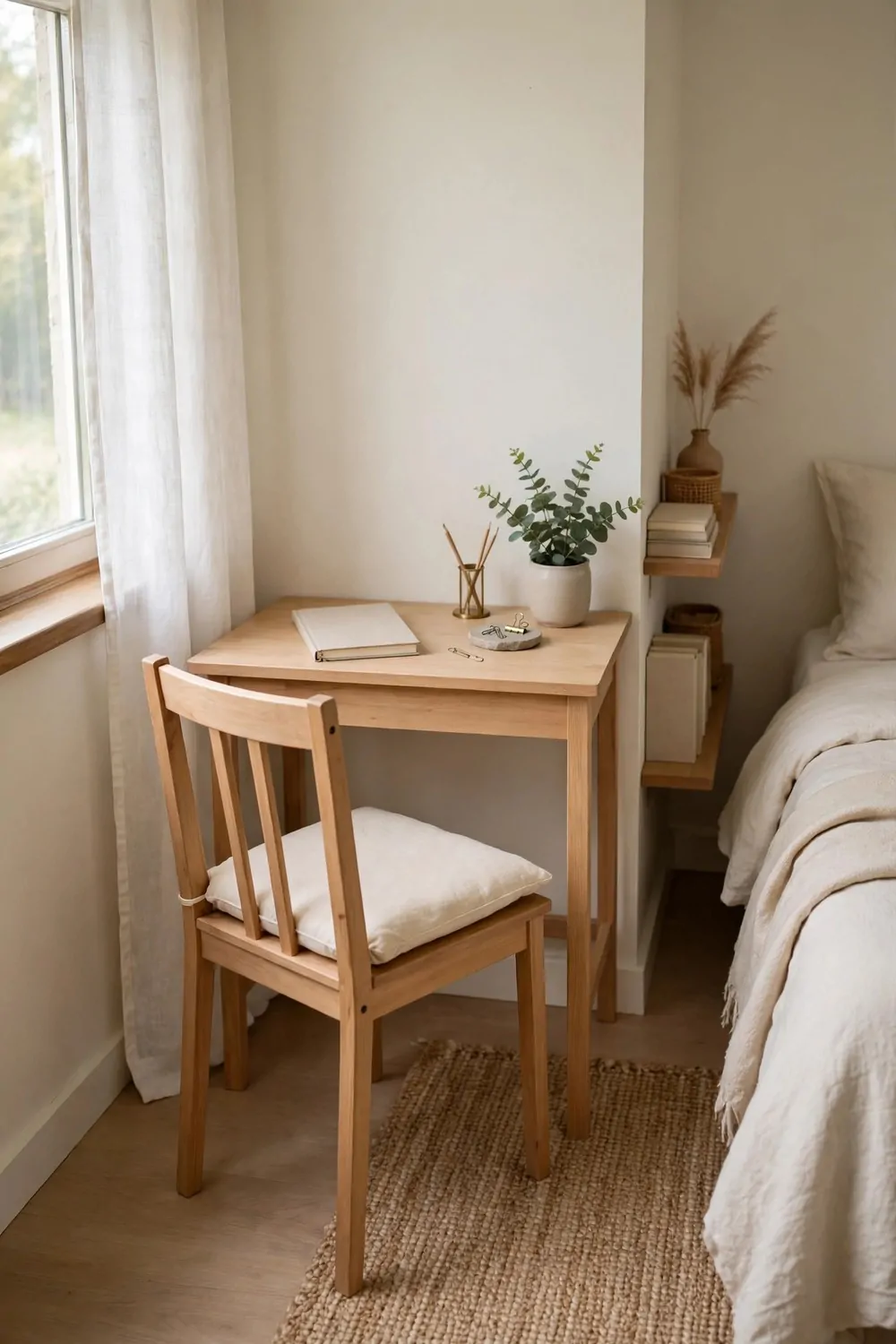
A chair in a third style breaks the room. A chair that matches the desk keeps it whole.
My chair is simple wood with a cream cushion. Same wood as the desk. Same cream as the walls. It looks like it came with the desk. It came from a different shop, two years later.
Pick a chair in the same wood as the desk. A chair that matches the desk wood looks like part of the set. A chair in a clashing wood looks like it wandered in from another room.
Keep the cushion plain. A plain cushion in the room’s main colour ties the chair to the bed. A patterned cushion fights the rug and the curtains.
Push the chair under the desk when you finish. A chair sticking out into the room breaks the clean lines. A chair tucked away says the workday is done and the room is tidy again.
Here is how to pick a chair that fits a small room.
| What to check | Good fit | Bad fit |
|---|---|---|
| Wood tone | Same as the desk | A third wood tone |
| Arms | No arms, slides right under | Wide arms that catch the desk |
| Cushion | Plain, room colour | Loud pattern |
Give this a go if your chair is the odd one out. One matching chair, and the room looks whole.
Sit in the chair and look around before you decide. If the chair feels like it belongs in the room, it probably does. If it feels like a visitor, keep looking.
Clean Lines on the Desk Edge
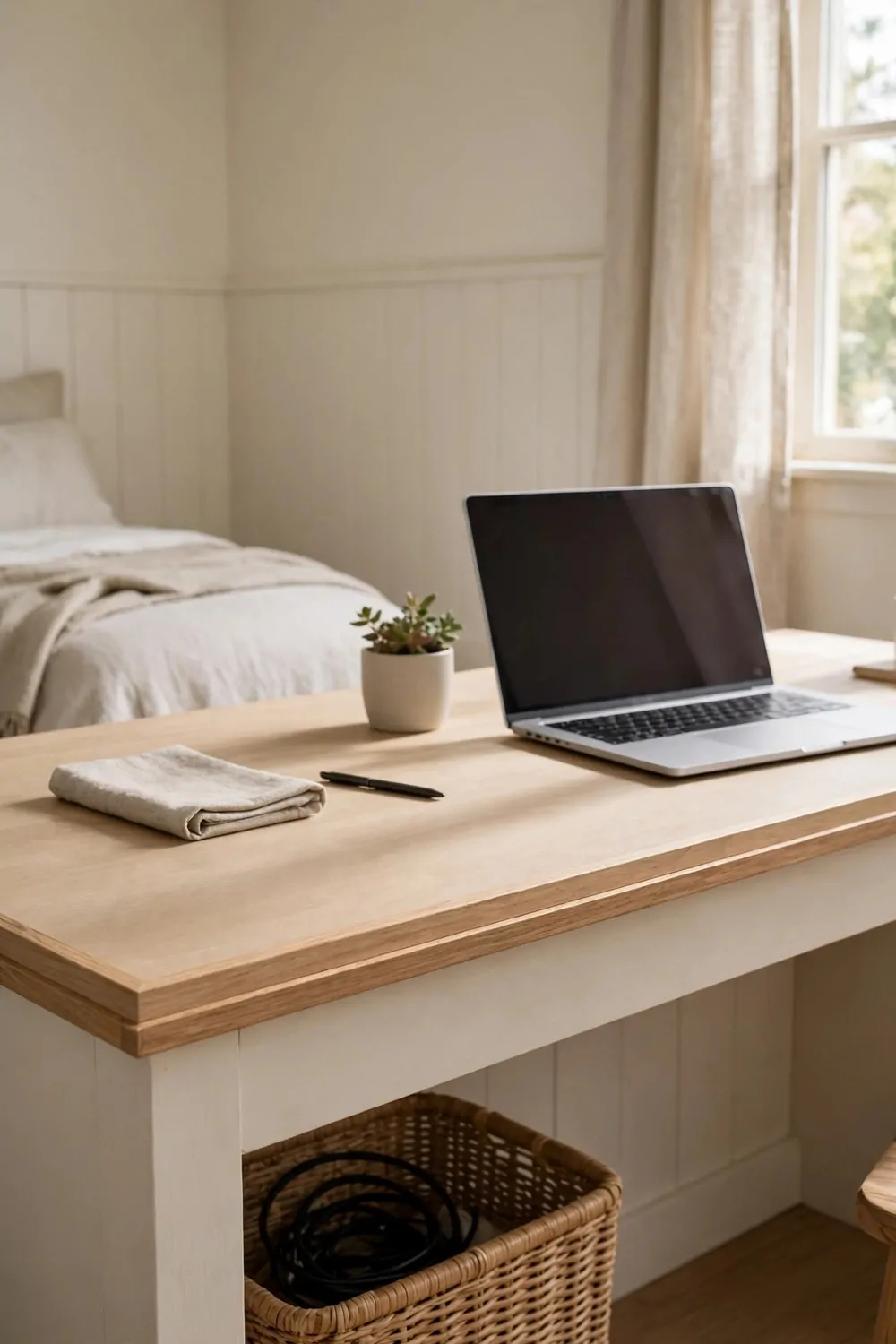
A desk edge with chips and rough spots looks tired. A clean straight edge looks new.
My desk had a chipped front edge. I glued on a thin strip of wood trim, sanded it smooth, and painted it the same cream as the desk. Run your finger along it now and it feels like one smooth line.
A trim strip costs very little. One strip, a little glue, and the desk looks like it was made yesterday. It is the cheapest face-lift a desk can get.
Sand the edge smooth before you glue anything on. A rough edge under a trim strip shows through. A smooth edge takes the trim cleanly.
Paint the trim the same colour as the desk top. A trim in a different colour draws the eye to the edge. A trim that matches disappears, and the desk looks like one piece.
Keep the desk top clear near the front edge. Papers hanging over the edge break the clean line. Papers stacked neatly behind the line keep it.
Feel the edge with your palm once the trim is on. If it is smooth all the way across, the job is done. If you find a bump, sand it now, not next month.
Try this one if your desk looks old even though it works fine. One straight edge, and the desk looks finished.
A Plant in a Pot That Matches the Room
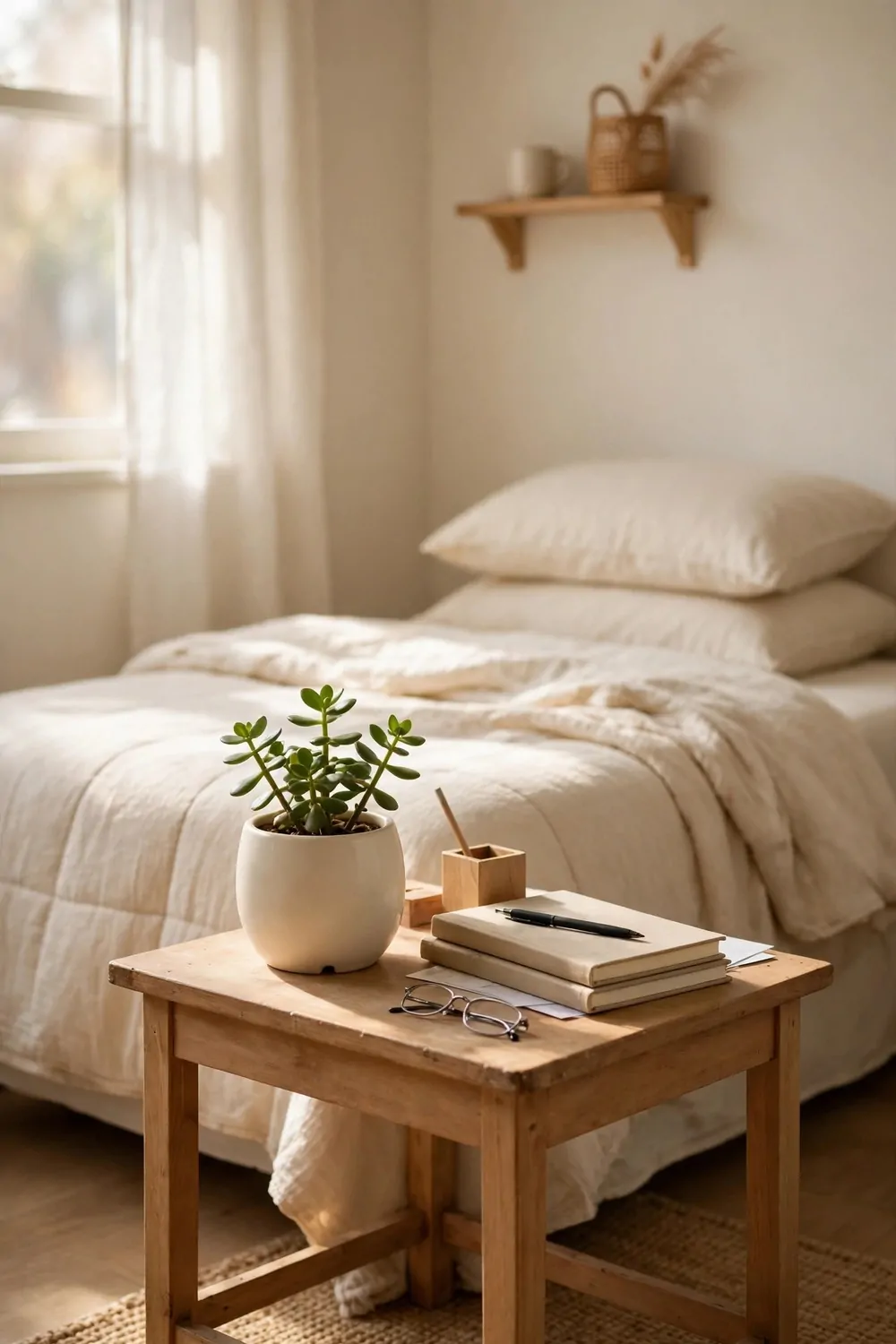
A plant in a bright plastic pot looks like an afterthought. A plant in a pot that matches the room looks like part of the plan.
My plant lives in a cream ceramic pot. Same cream as the walls. Same cream as the boxes. The plant looks like it was bought for the room, not rescued from the kitchen window.
Pick a pot in the room’s main colour. Cream pot, cream room. The pot disappears and the green stands out. A pot in a clashing colour fights the plant for attention.
Keep the plant small. A small plant on a desk looks neat. A big plant on a small desk looks like the desk is holding it up. One small green thing is enough.
Give the plant a drink every Sunday, same day, same small amount. A little water goes a long way. Most desk plants die from too much love, not too little.
Run a damp cloth over the leaves now and then. Clean leaves catch more light, and the whole desk looks cared for.
If the plant starts to droop, move it closer to the window for a week. Plants show you what they need, and more daylight is nearly always the fix.
Give this a go if your desk feels flat and plain. One plant, one matching pot, and the corner wakes up.
The Curtain That Matches the Bedding
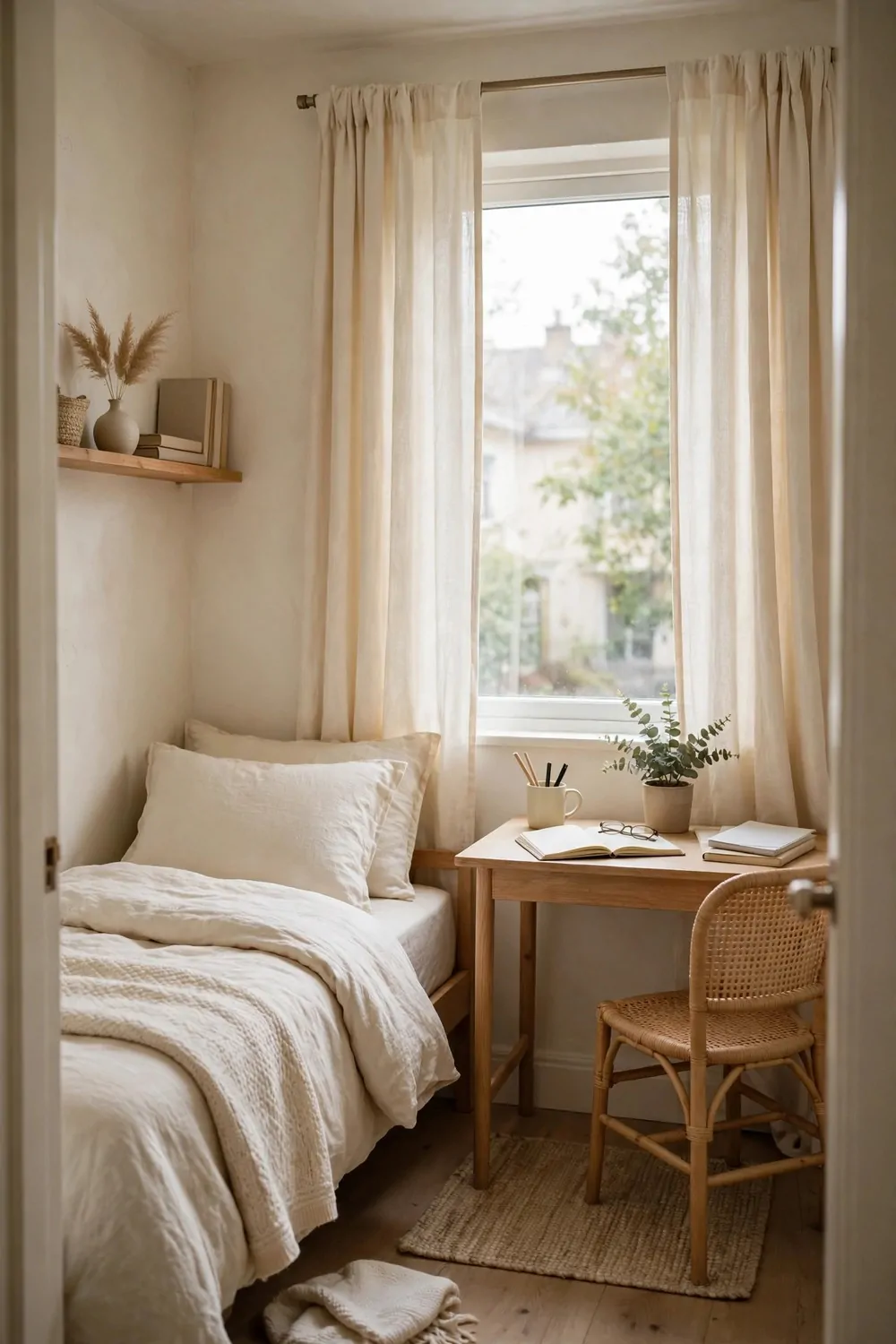
Curtains in one colour and bedding in another look like two rooms. Match them and the room looks like one.
My curtains are cream. My bedding is cream. Same soft shade, and the room feels like one gentle place instead of a desk corner and a bed corner fighting each other.
Pick curtains in the same shade as the bedding. Hold the fabric next to the bed in daylight. If they look like cousins, buy the curtains.
Hang the curtains from close to the ceiling. A long curtain makes the wall look taller, and the window looks twice as big. A short curtain chops the wall in half.
Keep the curtains plain. A plain curtain in the room’s colour lets the desk and the bed shine. A patterned curtain fights everything else in the room.
Wash the curtains once a season so they stay fresh. Curtains hold onto dust and stale air, so a wash each season keeps the corner smelling fresh.
Close the curtains at night and look at the room. If the window and the bed read as one soft block of cream, the match is working.
Try this one if your room feels split in two. One matching colour on the window and the bed, and the room pulls together.
Labels in the Same Handwriting
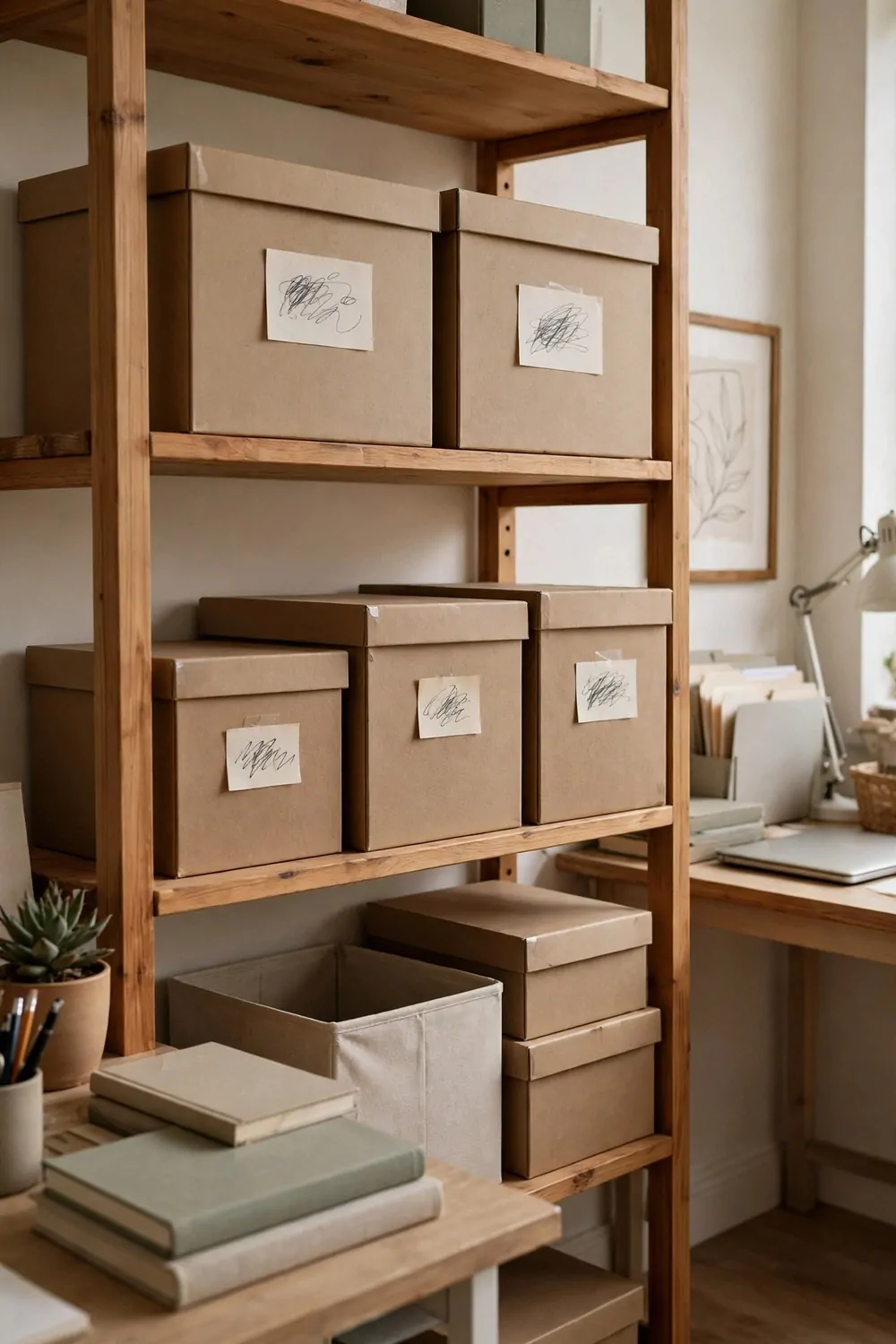
Labels in five different handwritings look like five different people live here. Labels in one handwriting look like one person planned the room.
My labels are all in my own handwriting, same pen, same neat capitals. Every box, every shelf, every jar. It looks like someone sat down and labelled the whole room in one afternoon. Someone did. It was me.
Pick one pen and one style. Same pen, same size letters, same spot on every tag. Matching labels make matching boxes look even more finished.
Write short labels. One word is enough. Papers. Cables. Notes. A long label looks like a sentence. A short label looks like a plan.
Here is what belongs on a good label.
- One word, plain and clear.
- Same pen on every tag.
- Same spot on the front of every box.
- Nothing else. The label is not a letter.
Replace a label when it gets grubby. A dirty label makes a tidy shelf look tired. A fresh label takes ten seconds and the shelf looks new again.
Do the labelling in one sitting, all the boxes at once. Labels made on the same day, with the same pen, always match. Labels made weeks apart never quite do.
Give this a go if your shelves look messy even when they are tidy. One handwriting, and the room looks like one person designed it.
The Mirror That Finishes the Wall
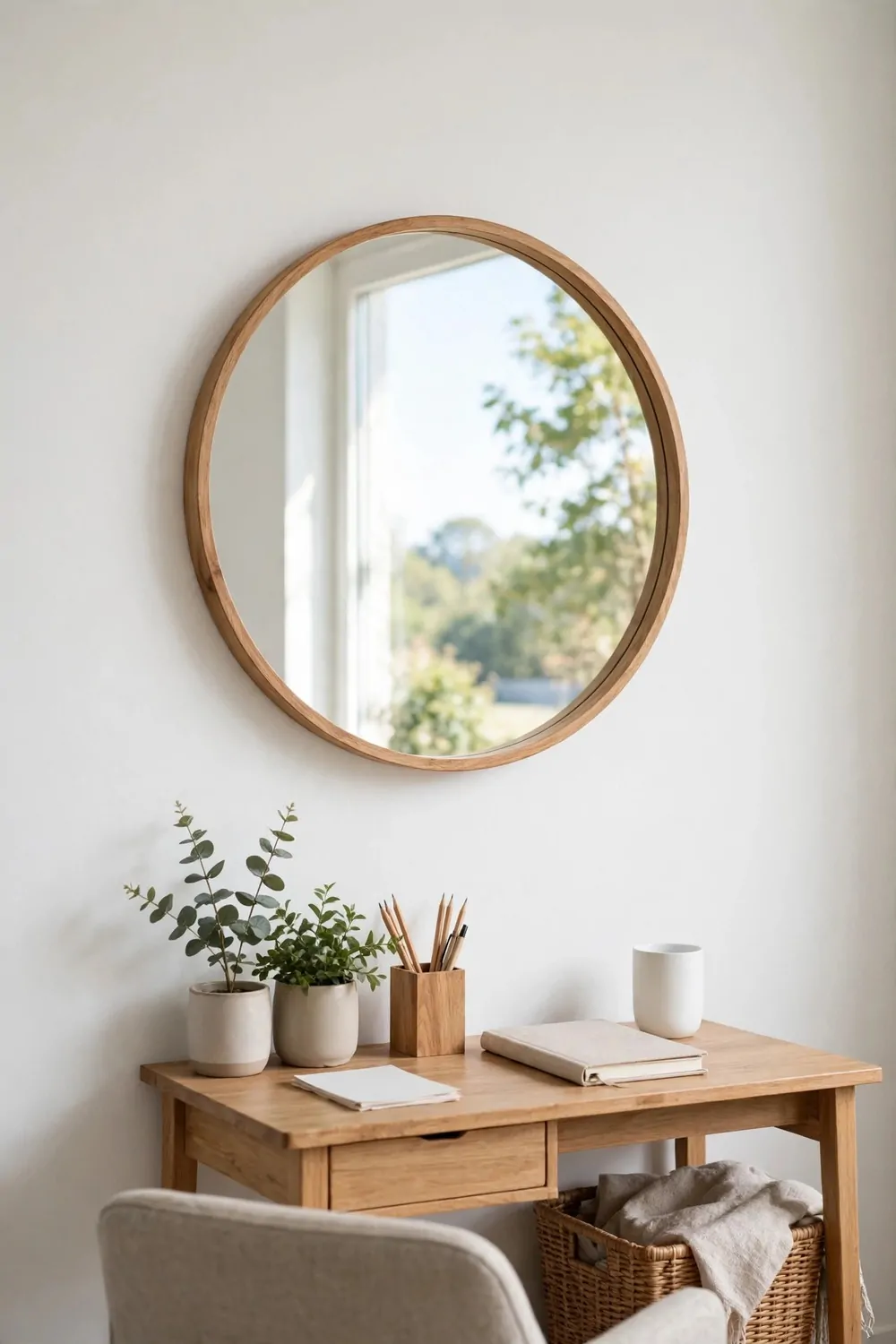
A wall with a gap looks unfinished. A mirror fills the gap and bounces light around the room.
My mirror hangs above my desk, round, with a thin wood frame. Same wood as the desk. It catches the window light and throws it back across the room. The wall looks finished, and the room looks brighter.
Choose a mirror close to the width of the desk. A mirror near the desk width looks like it was picked for the spot. A tiny one looks like it was hung as an afterthought.
Fix it so its middle sits at your eye line when you are seated. A mirror set too high sends its light up at the ceiling. A mirror at seated eye height sends light right onto your work.
Here is how a mirror changes a small room.
| Where it hangs | What it does | What to avoid |
|---|---|---|
| Above the desk | Bounces light onto your work | Facing the bed, it throws light at the pillows |
| Opposite the window | Doubles the daylight in the room | A second mirror, it makes the room feel like a studio |
| On the short wall | Makes a narrow room feel wider | A mirror with a thick dark frame, it looks heavy |
Keep the glass clean. A grimy mirror throws back no light at all. A fast wipe with a dry cloth each week keeps it bright.
One mirror is plenty. A pair of mirrors turns the room into a dance studio. One mirror, one window, and the daylight doubles.
Give this a go if your wall has a bare patch that bugs you. One round mirror, and the wall looks finished.
The Last Ten Minutes That Make It Look Done
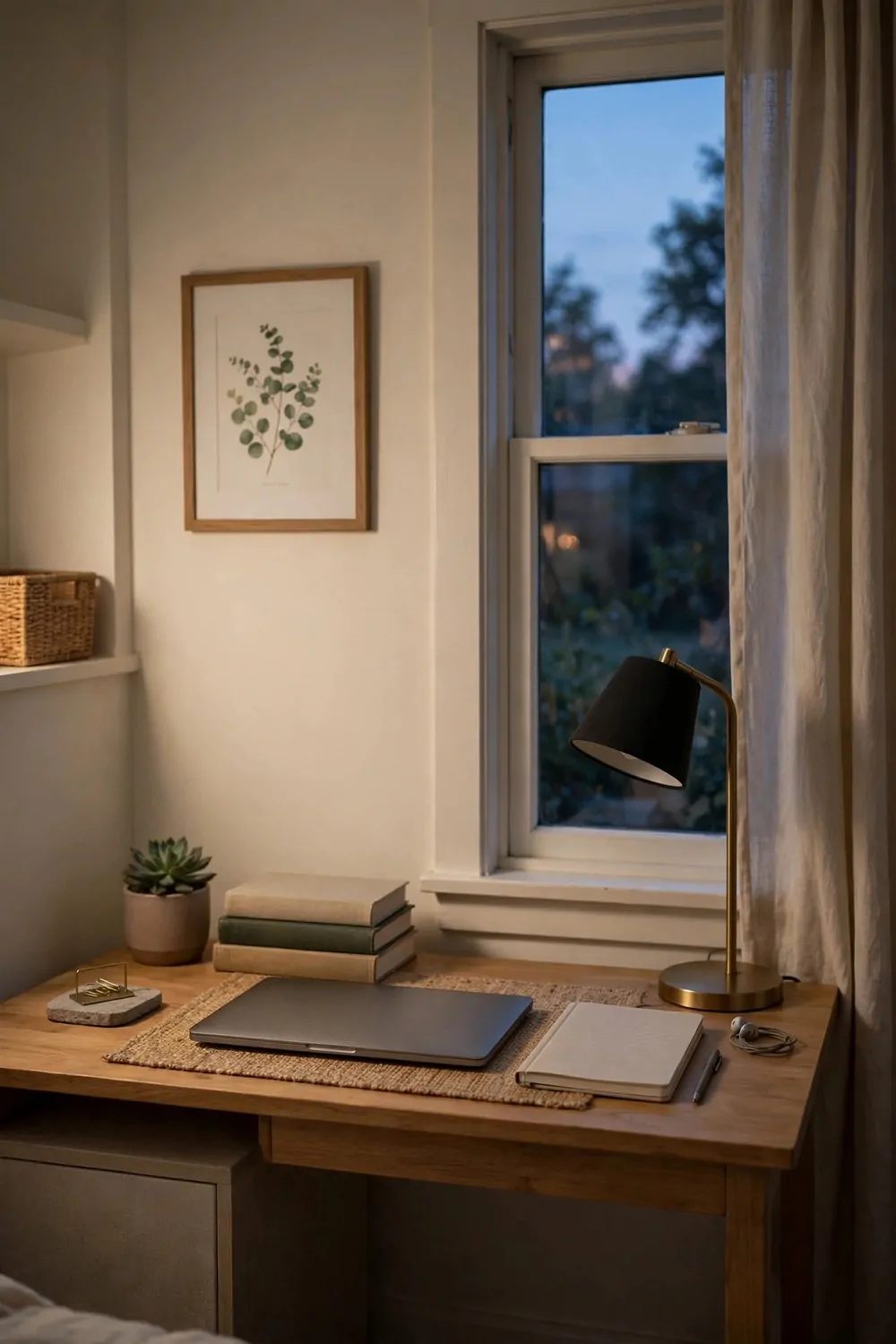
A room that looks designed is a room that gets ten minutes at the end of the day. Ten minutes, every evening, and the room stays finished.
My routine takes ten minutes. Straighten the books on the shelf. Line up the boxes. Put the pen in the cup. Close the laptop. Fluff the cushion. Ten minutes, and the room looks like it did on the day I finished it.
Do the same ten minutes every evening. Do it every evening and it becomes a habit you do not have to think about. Do it only on tidy days and it never sticks.
Here is what belongs in the last ten minutes.
- Straighten the books so the spines line up.
- Push the chair under the desk.
- Put the pen back in the cup and the notebook on the tray.
- Wipe the desk top with a dry cloth.
Keep the routine short. Ten minutes is enough. Keep it short or you will skip it, and a skipped routine helps nobody.
Look at the room from the doorway when you finish. The doorway is where guests see it first. If it looks finished from there, it is finished.
Put the cushion back on the chair when the ten minutes are done. A fluffed cushion is the last thing your eye sees, and it says the room is finished.
Start tonight. Ten minutes, every evening, and tomorrow morning your room will still look like someone designed it.
Keep Reading
If you liked these Small Second Bedroom Office Ideas, these cozy, small-space and everyday-use office ideas will give you even more ways to make a small room look finished.
- 20 Cozy Bedroom Office Ideas for a Soft, Snug Workspace
- 24 Small Home Office Design Tricks That Add Space Fast
- 20 Ikea Workspace Ideas for a Desk You’ll Actually Use
A small second bedroom does not need a designer. It needs matching finishes, clean lines, and ten minutes at the end of the day. Pick your favourite three ideas from this list, try them this weekend, and let your smallest room surprise you.