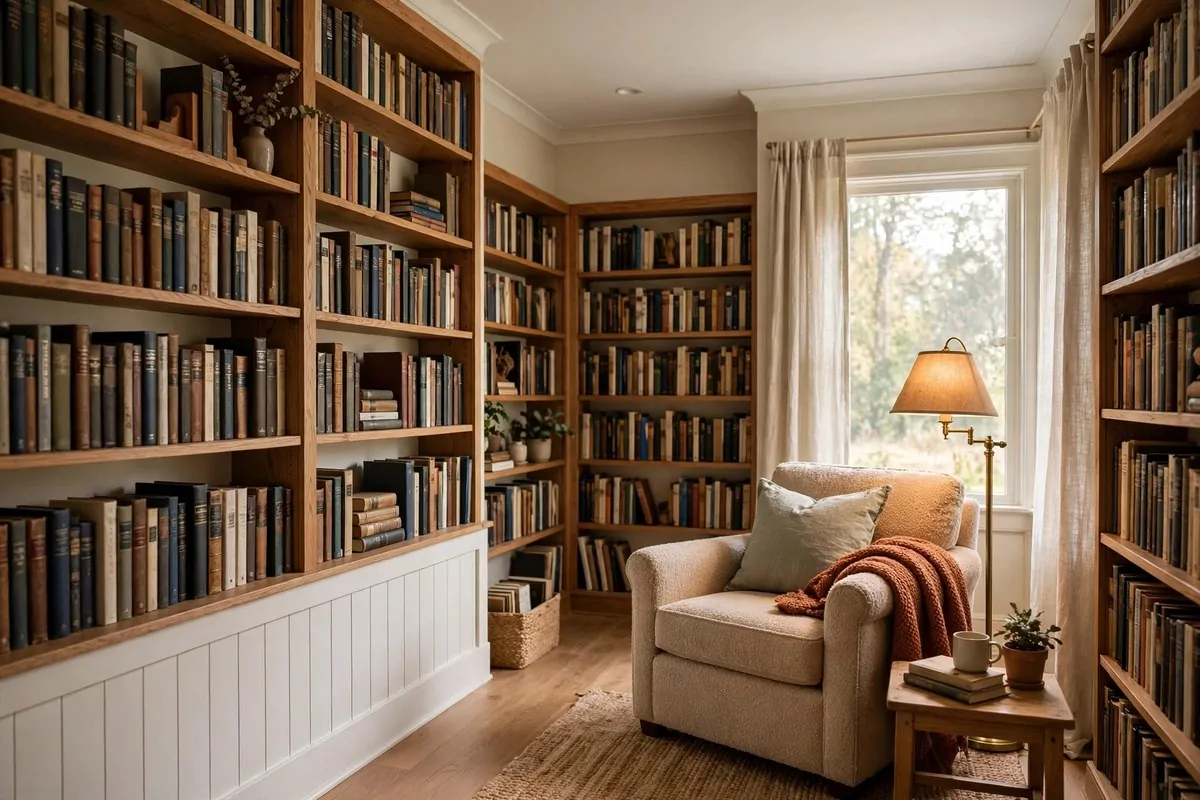
16 2nd Bedroom Office Ideas That Feel Like a Real Study

A study is not a desk and a chair. A study is a room that tells your brain it is time to think.
My second bedroom had a spare bed in it for years. Nobody slept in that bed. Guests came twice a year, and the rest of the time the room just sat there, quiet and a little bit sad. The bed was made up. The curtains were closed. Nothing happened in there.
Then I asked myself a simple question. What if this room stopped pretending to be a bedroom and became a real study instead? Not a desk pushed into a corner. A proper study. Dark wood. Books on the walls. A lamp that glows warm. A chair you sit in for hours and still feel good.
That is what these 16 2nd Bedroom Office Ideas are about. They turn a spare bedroom into a room that feels like a real study. A room for reading, writing, and thinking. A room that is quiet on purpose.
You do not need to buy everything at once. Pick three ideas. Start with the desk, because that is where a study begins.
The Big Wood Desk That Anchors the Room
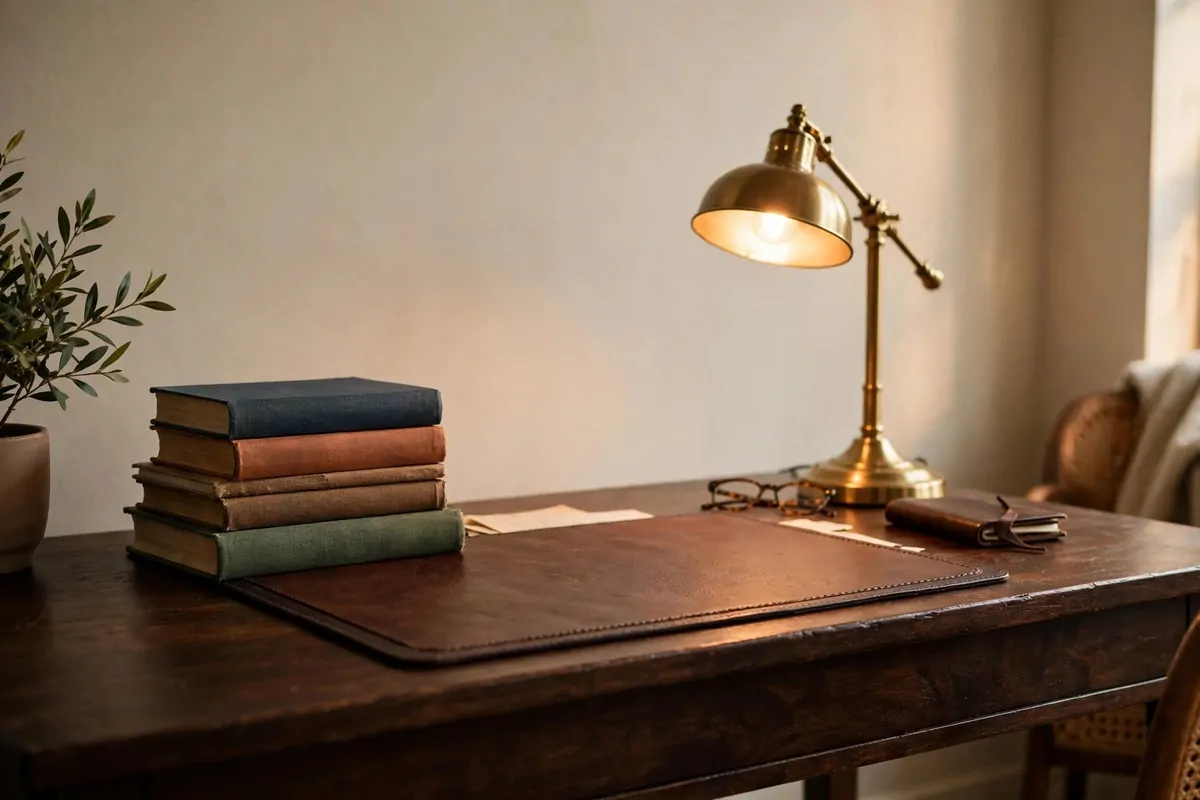
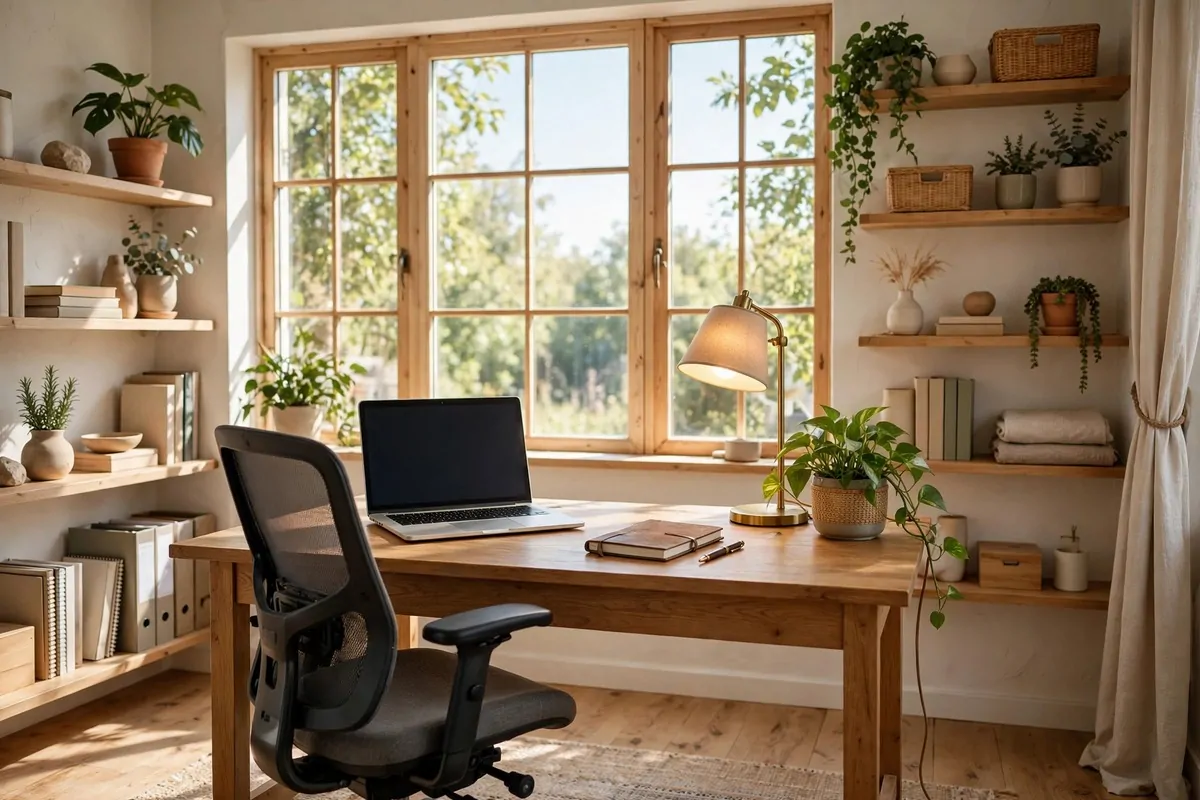
Every real study has one big piece of furniture that holds the room together. That piece is the desk.
My desk is a heavy slab of dark wood. It is wider than my arms can reach, and it does not wobble when I lean on it. A study desk should feel solid. You should be able to spread your books across it and still have room for a mug.
Pick a desk made of real wood if you can. Dark wood suits a study best. Walnut, mahogany, or just a deep brown stain on plain pine. The colour matters because a dark desk makes the whole room feel serious and calm.
Put the desk in the middle of the longest wall, or float it in the centre of the room if you have the space. A desk against the wall is fine, but a desk you can walk around feels like a real study. It says this room has one job, and the desk is it.
Keep the top of the desk clear except for the work in front of you. A study desk is not a shelf. It is a place to think. One stack of books. One notebook. One lamp. That is enough.
Add a leather desk pad in the middle of the top. It protects the wood from pen marks and coffee rings. It also feels good under your wrists when you write. A dark green or brown pad looks right in a study.
Do not put the desk right next to the bed if the bed is still in the room. A study needs its own corner. Move the bed out if you can. If the bed must stay, put a tall bookshelf between the bed and the desk so the two jobs do not mix.
Try this one first if your spare bedroom still looks like a bedroom with a laptop in it. One big wood desk, and the room starts to feel like a study.
Bookshelves That Reach the Ceiling
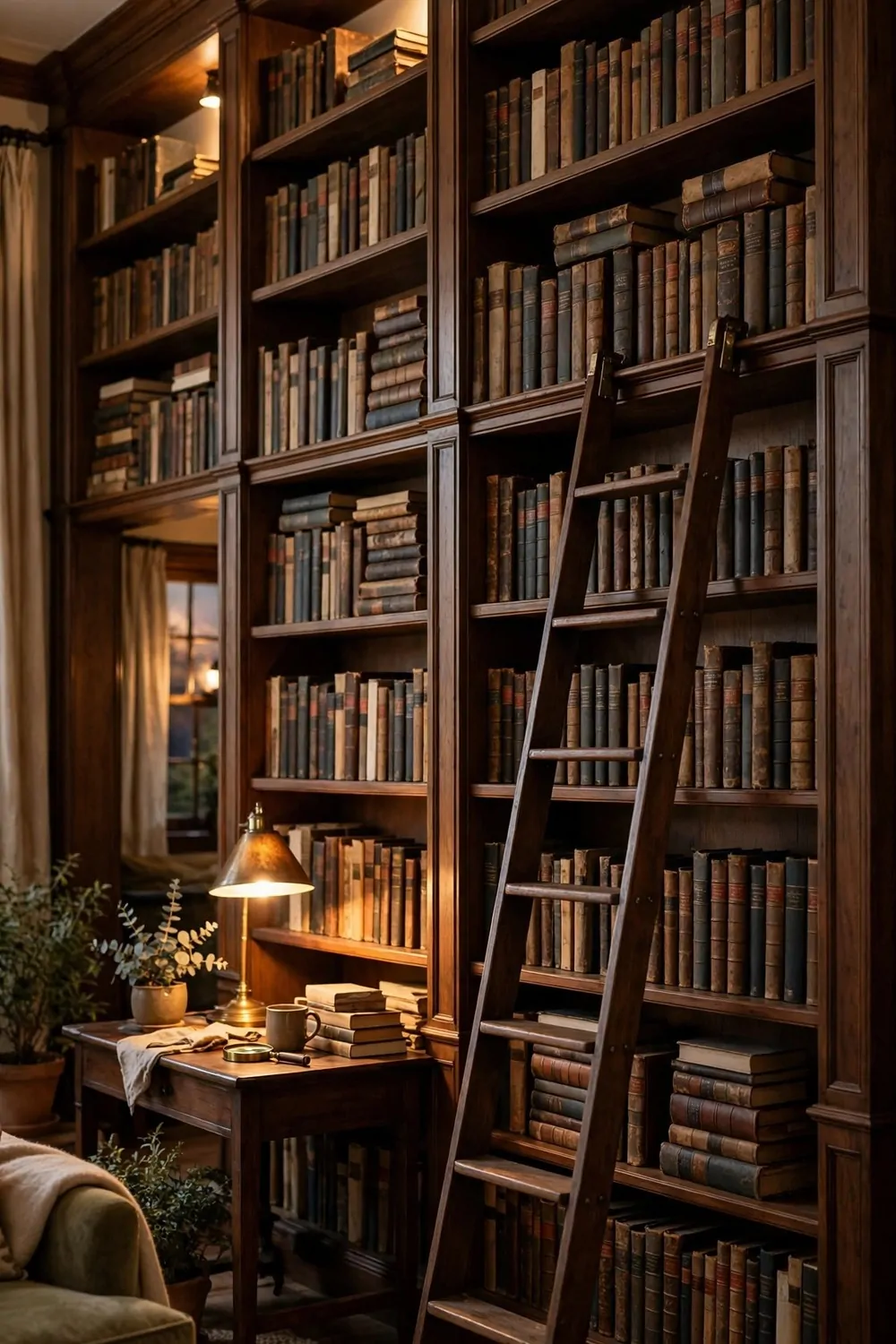
A study without books is just a room with a desk. The shelves make it a study.
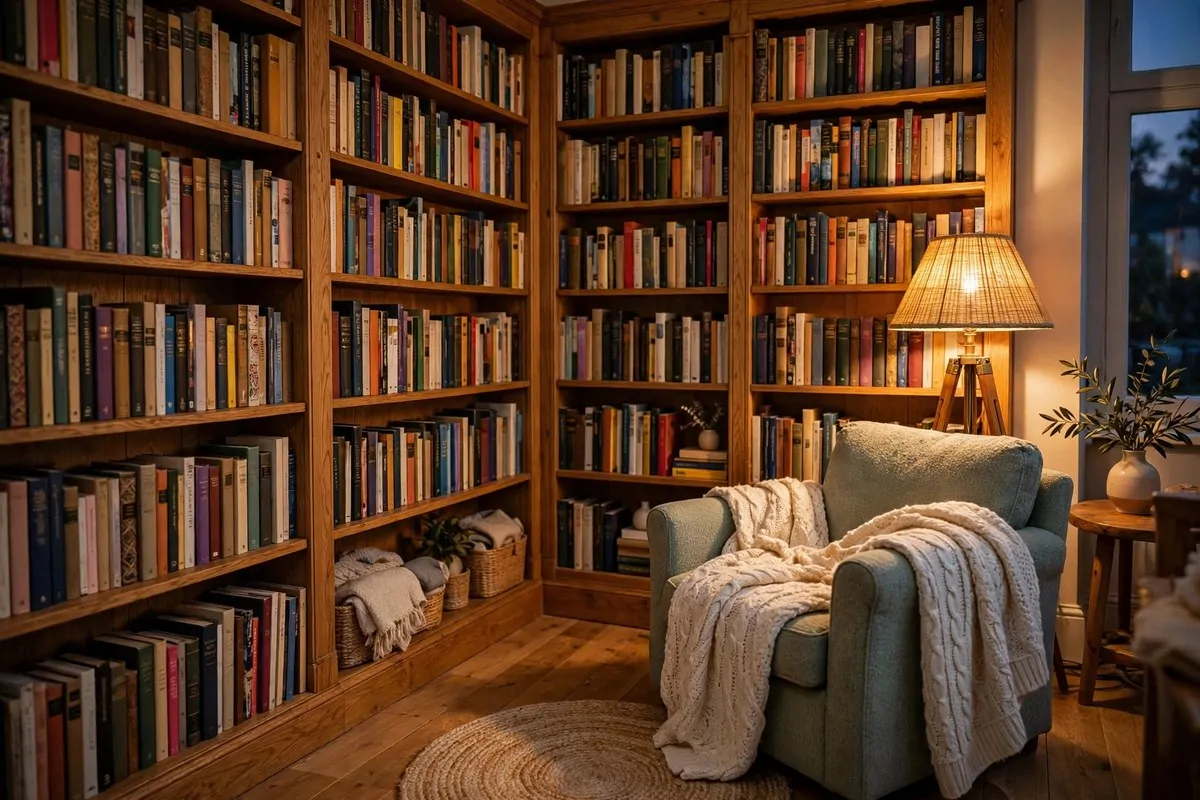
My shelves run from the floor to the ceiling on one whole wall. They hold the books I have read, the books I mean to read, and the books I keep just because I like the way they look.
Build the shelves tall, even if you cannot reach the top shelf without a step stool. Tall shelves make a room feel grand. Short shelves make a room feel like a storage cupboard.
Fix the shelves to the wall with strong brackets. A tall shelf full of books is heavy. Two screws into wall studs at the top will keep it safe for years.
Here is how to fill tall shelves so they look like a study, not a warehouse.
| Shelf height | What lives there | Why it works |
|---|---|---|
| Eye level | Books you read every week | Within easy reach all day |
| Above your head | Old favourites and big reference books | Close, but out of the daily way |
| Near the ceiling | Boxed sets and books you rarely open | Uses space that was doing nothing |
Leave one shelf with a gap in it on purpose. A shelf with no free space has no room for the next book you bring home. That empty space is where the next good read lands.
Keep the heaviest books down low on the shelves. Books packed high up are a pain to reach and they strain the brackets. Heavy low, light high.
Keep a small step stool in the corner for the top shelf. A folding stool propped in the corner does the job. You only need it once a week, and it beats climbing on a chair.
This move is for people whose books live in piles on the floor. Move the piles up the wall, and the room turns into a study.
A Reading Lamp With a Green Shade
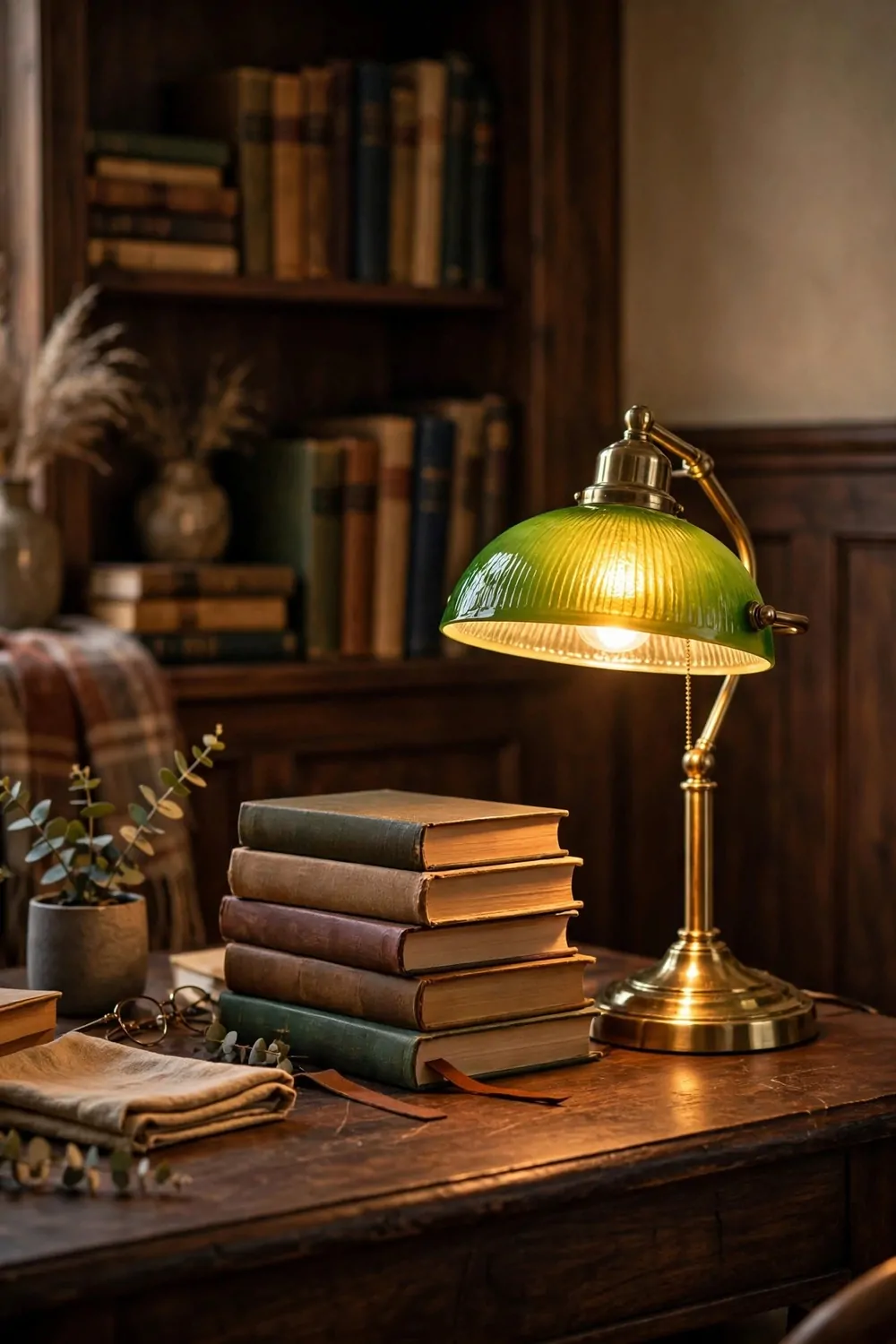
Every proper study has a lamp with a green glass shade. It is the one detail that says study louder than anything else.
My lamp sits on the left side of my desk. The green shade throws a soft pool of light over my notebook, and the rest of the room stays dim and quiet. That is how a study should feel at night.
Pick a lamp with a brass base and a green glass shade. Brass and green go together the way wood and paper do. The lamp does not have to be old. A new one in the old style works just as well.
Set the lamp on the side of the desk away from your writing hand. That way the light falls on your work, not on your hand. Your shadow never covers the page.
Use a warm bulb, never a bright white one. Bright white light makes a study feel like an office. Warm light makes it feel like evening in a library.
Switch the lamp on before you open a book. One small click, and the corner changes from a bedroom corner into a study. One small click when the day ends, and it turns back again.
Keep a spare bulb in the desk drawer so the glow never goes out on a busy morning. A lamp with a dead bulb is just a pretty shape sitting on a desk.
Wipe the green shade once a month with a soft dry cloth. Dust dulls the glass fast, and a dusty shade throws less light than a clean one.
Try this one tonight. Switch on a green-shaded lamp, open a book, and notice how the room feels older and quieter in one minute.
The Leather Chair That Ages With You
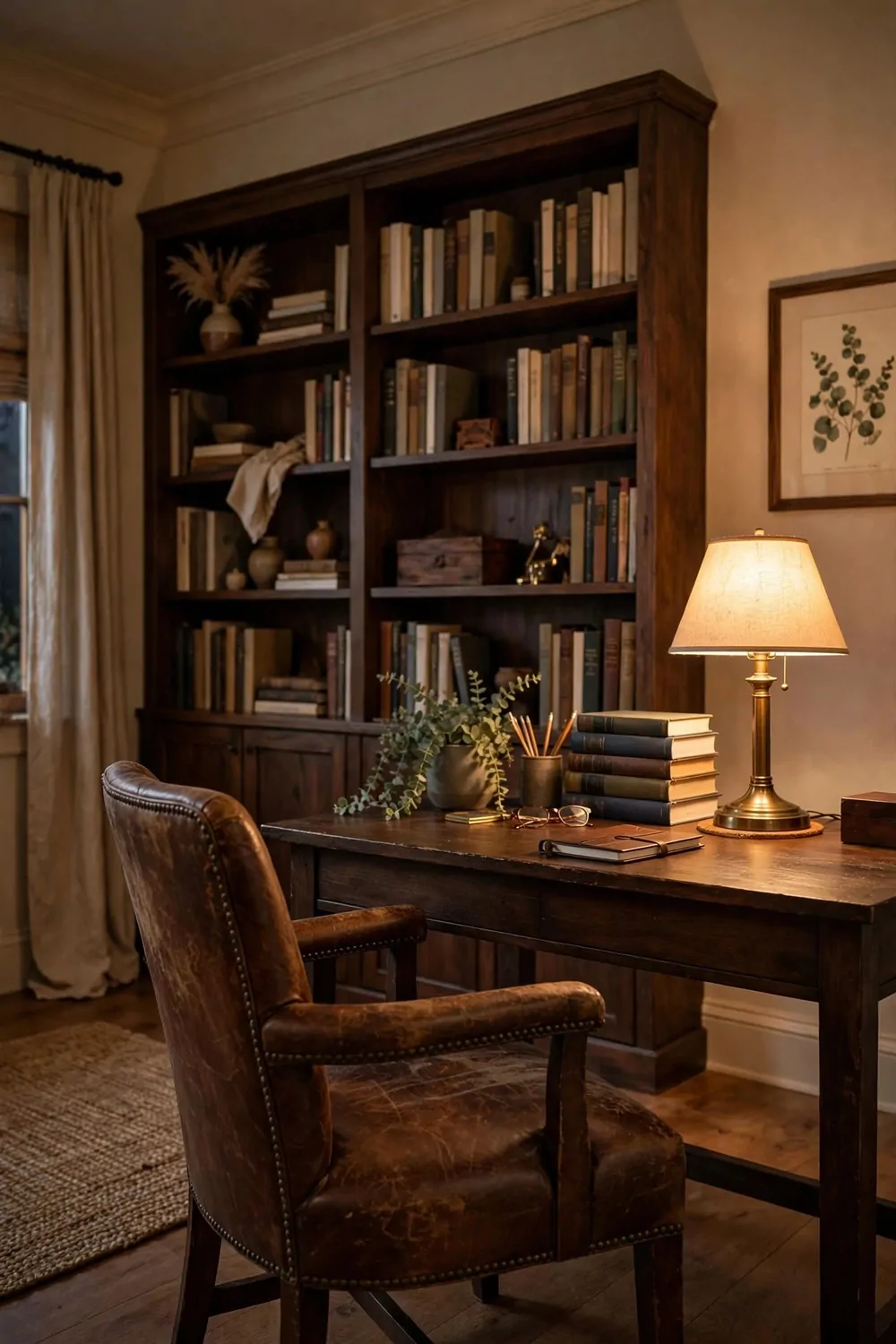
A study chair should be the kind of chair you keep for twenty years. Leather does that. It gets better the more you sit in it.
My chair is brown leather, worn soft where my shoulders rest. It creaks a little when I lean back, and I like that sound. It is the sound of a chair that has done a lot of thinking with me.
Pick a leather chair with a high back and arms you can rest on. A high back holds your shoulders while you read. Arms give your elbows a home during long writing sessions.
Choose real leather if your budget allows it. Fake leather cracks after a few years and looks tired. Real leather softens, darkens a little, and grows more beautiful with every winter.
Keep the chair at the desk, not across the room. A study chair that lives far from the desk will never get used. A chair tucked under the desk is ready the second you sit down.
Oil the leather twice a year with a soft cloth and a little leather cream. It keeps the leather from drying out and cracking. Ten minutes, twice a year, and the chair lasts decades.
Put a small cushion on the seat if the leather feels hard in winter. A flat cushion in dark green or brown keeps the chair comfy without hiding the leather. A big fat cushion would ruin the look.
This kind of chair does not suit everyone. If you want a chair you can sink into for a nap, a leather study chair is not it. It is a chair for sitting up straight and thinking clearly.
Try this one if your office chair is plastic and squeaky. Swap it for leather, and the whole room feels more serious.
Paper, Pens and a Real Ink Bottle
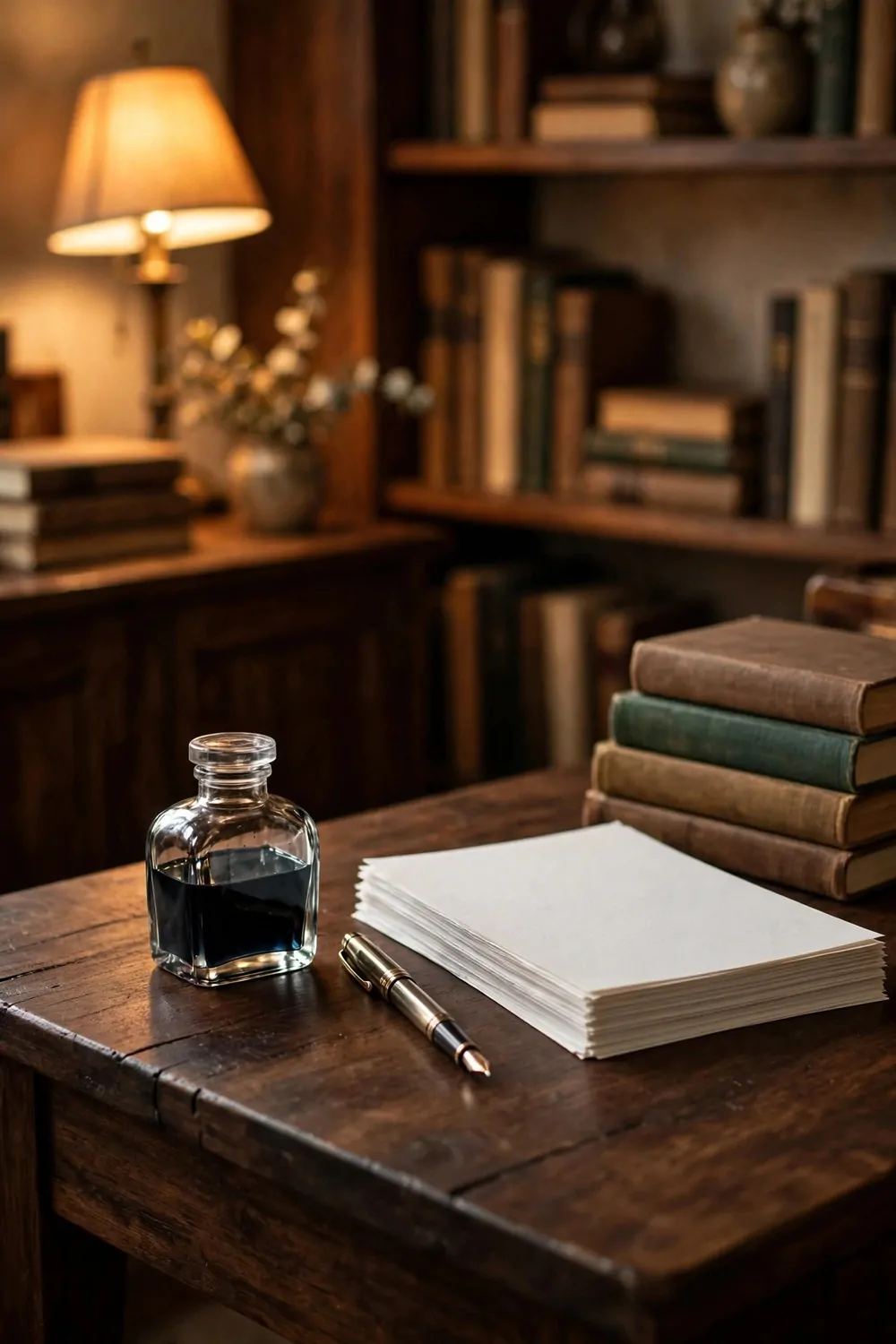
A study runs on paper. Not screens. Paper you can hold, fold, and write on with a real pen.
My desk always has a stack of plain paper on it. No lines, or wide lines if you like them. Beside the paper sits a fountain pen and a small glass ink bottle. Writing with ink slows me down in a good way. I think before I write.
Pick a fountain pen that feels heavy in your hand. A light plastic pen feels like a toy. A pen with a little weight to it feels like a tool. You do not need an expensive one. A simple steel pen writes beautifully.
Keep the ink bottle on a small tray so a spill never reaches the wood. Ink on dark wood is hard to clean, and a tray catches the drops before they land. A plain ceramic tray works fine.
Write your first thought of the day on paper, before you open the laptop. One line. One idea. Paper first, screen second. That little habit changes how the whole morning feels.
Keep three pens in a cup on the desk. One fountain pen. One pencil. One plain ballpoint for quick notes. Three pens are enough. Ten pens in a cup look like a stationery shop.
Store spare paper in the desk drawer, not on the desk top. A stack of paper on the desk top gets knocked over, coffee-stained, and curled at the edges. Paper in a drawer stays flat and clean.
Try this one if your desk is all screens and cables. One stack of paper, one good pen, and the room starts to feel like a study.
A Wall of Books You Have Actually Read
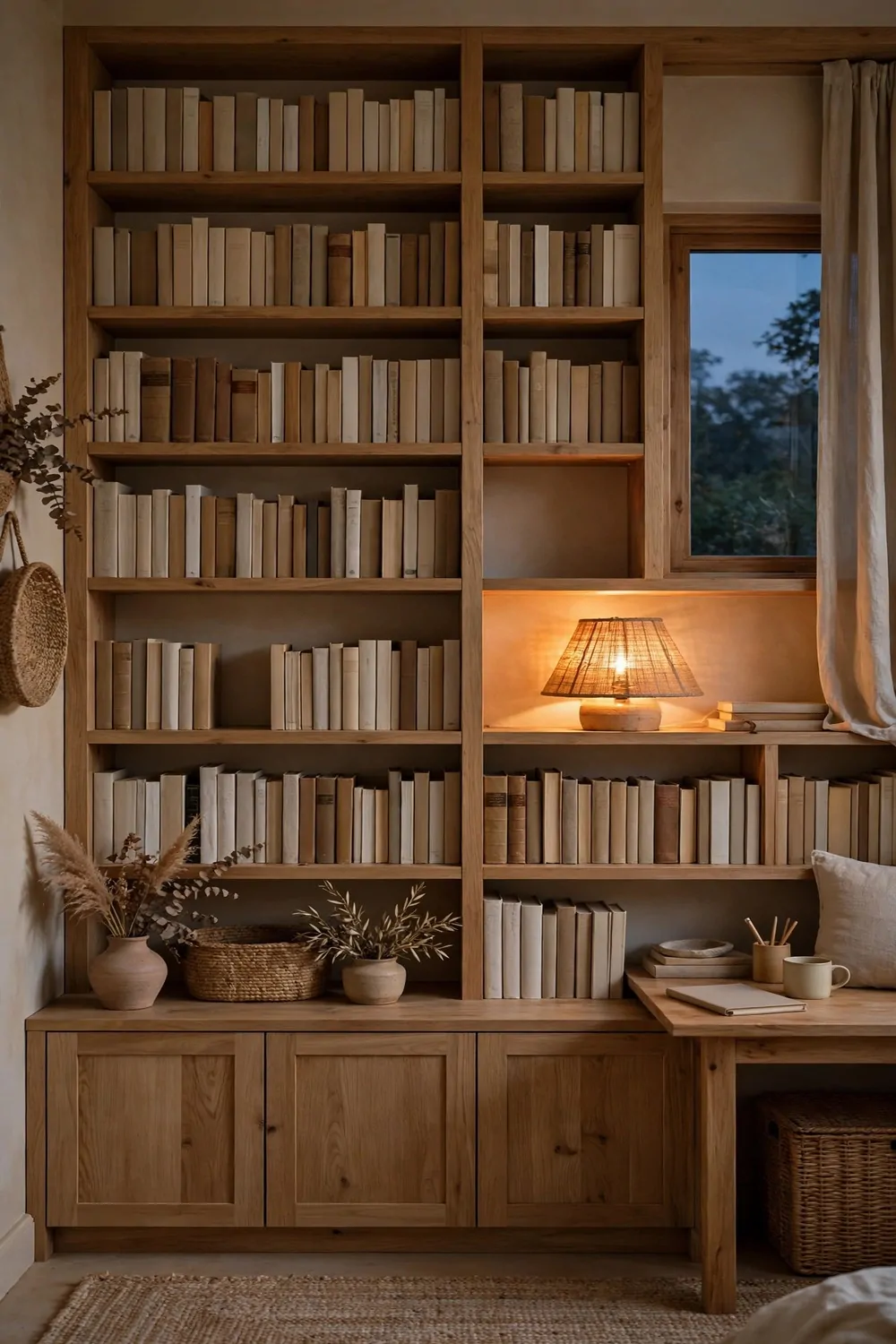
There is a difference between a wall of books and a wall of books you have actually read. The second one is a study. The first one is a stage set.
My shelves hold the books I have finished. The spines are a little worn. Some have notes in the margins. A few have a page corner folded down where I stopped for the night. Those marks are what make the shelves honest.
Take the books you have never opened off the eye-level shelves. Put them higher up, or give them away. Eye level is for the books that shaped you. The ones you reach for again and again.
Arrange the books by size, or by colour, or by the order you read them. There is no wrong way. A shelf arranged by memory looks more like a study than a shelf arranged by a rulebook.
Leave a gap on each shelf for the next book. A shelf packed tight to the edges looks like a shop. A shelf with breathing room looks like a room where someone reads.
Put a small brass bookend at the end of each row. Bookends keep the books standing straight, and brass suits a study. Two plain brass bookends cost very little and last forever.
Dust the shelves once a month with a dry cloth. Dust on books looks like nobody reads them. Clean shelves say the books are alive and used.
This move is for people whose shelves are full of books they bought but never opened. Be honest about what you have read, and the shelves turn into a study.
The Quiet Corner for Deep Work
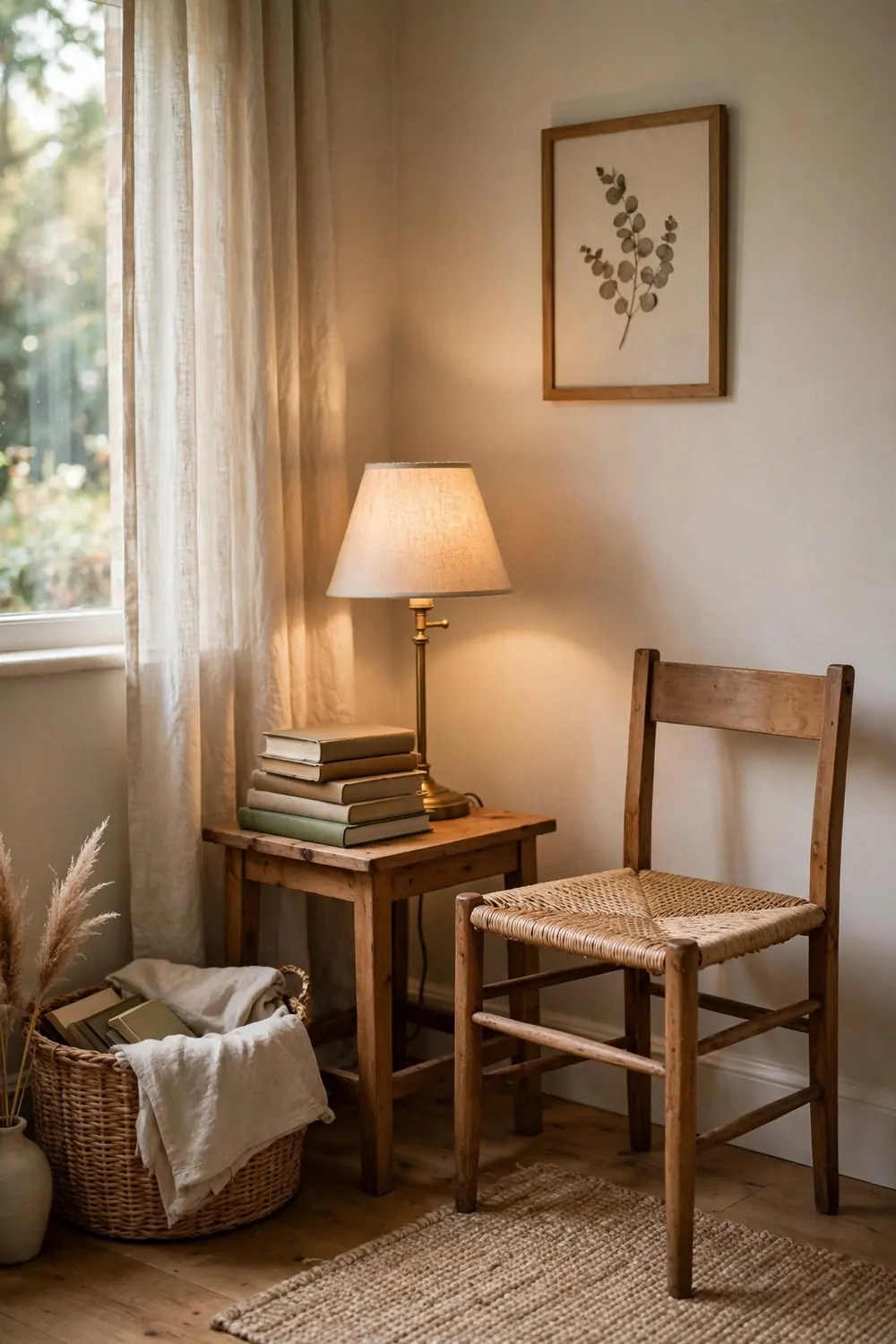
Every study needs one corner where nobody talks, no phone rings, and no one walks past. That corner is for deep work.
My quiet corner is the far end of the room, away from the door. It holds one small chair, one side table, and one lamp. No desk. No screen. Just a place to sit and think with a book.
Pick the corner farthest from the door for this spot. The door is where interruptions come in. The far corner is where they cannot reach you.
Put a small side table beside the chair for your book and your tea. A side table is enough. A big desk in the quiet corner would turn it into a second office, and that is not the point.
Keep the phone out of this corner. Leave it on the desk, or in another room. A quiet corner with a phone in it is not quiet at all. The phone will buzz, and your brain will follow it.
Use this corner for one hour a day, at the same time every day. Morning works best for most people. The house is still quiet, and your mind is fresh. One hour of deep work beats four hours of distracted work.
Add a thick rug under the chair if the floor is hard. A rug softens the sound of your feet and makes the corner feel separate from the rest of the room. A plain wool rug in a dark colour suits a study.
Try this one if your workday is full of interruptions. One quiet corner, one hour a day, and your thinking gets deeper.
The Filing Drawer That Keeps Papers Calm
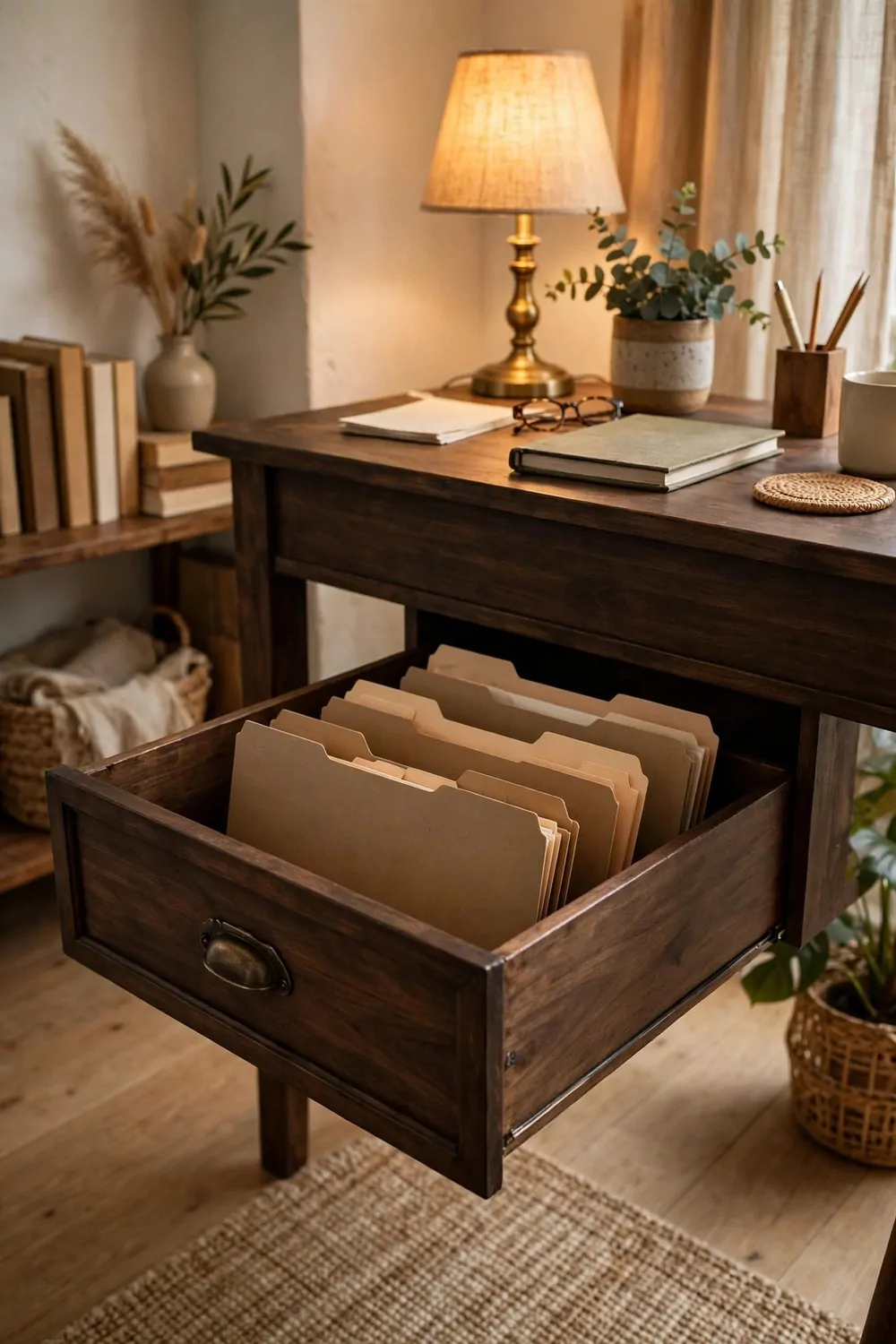
A study collects paper. Bills, letters, notes, old notebooks. Without a home for them, the paper takes over the desk.
My filing drawer sits under the desk, on the right side. It holds hanging folders, one for each kind of paper. Bills in one. Letters in another. Notes in a third. When a paper arrives, it goes in a folder the same day.
Pick a drawer deep enough for hanging folders. A shallow drawer cannot hold them, and the folders will flop over. Measure the drawer before you buy the folders.
Label each folder with one plain word. Bills. Letters. Notes. Ideas. One word is enough. Long labels make a filing drawer feel like a chore.
Empty the drawer once a season. Throw out what you do not need. File what you must keep. A drawer that gets a fresh start every season never turns into a mystery box.
Keep the drawer tidy with folders that match. Plain folders in one colour look calm. Five clashing colours make the drawer look messy.
Put the drawer on the side of your writing hand. If you write with your right hand, put it on that side. The drawer ought to slide open easy while you stay seated.
This drawer is for the papers you must keep, not the papers you might need one day. The papers you might need one day belong in a box on a high shelf, not in the drawer.
Try this one if your desk top is always covered in loose paper. One filing drawer, and the top of the desk belongs to your work again.
Dark Wood, Warm Light, No Glare
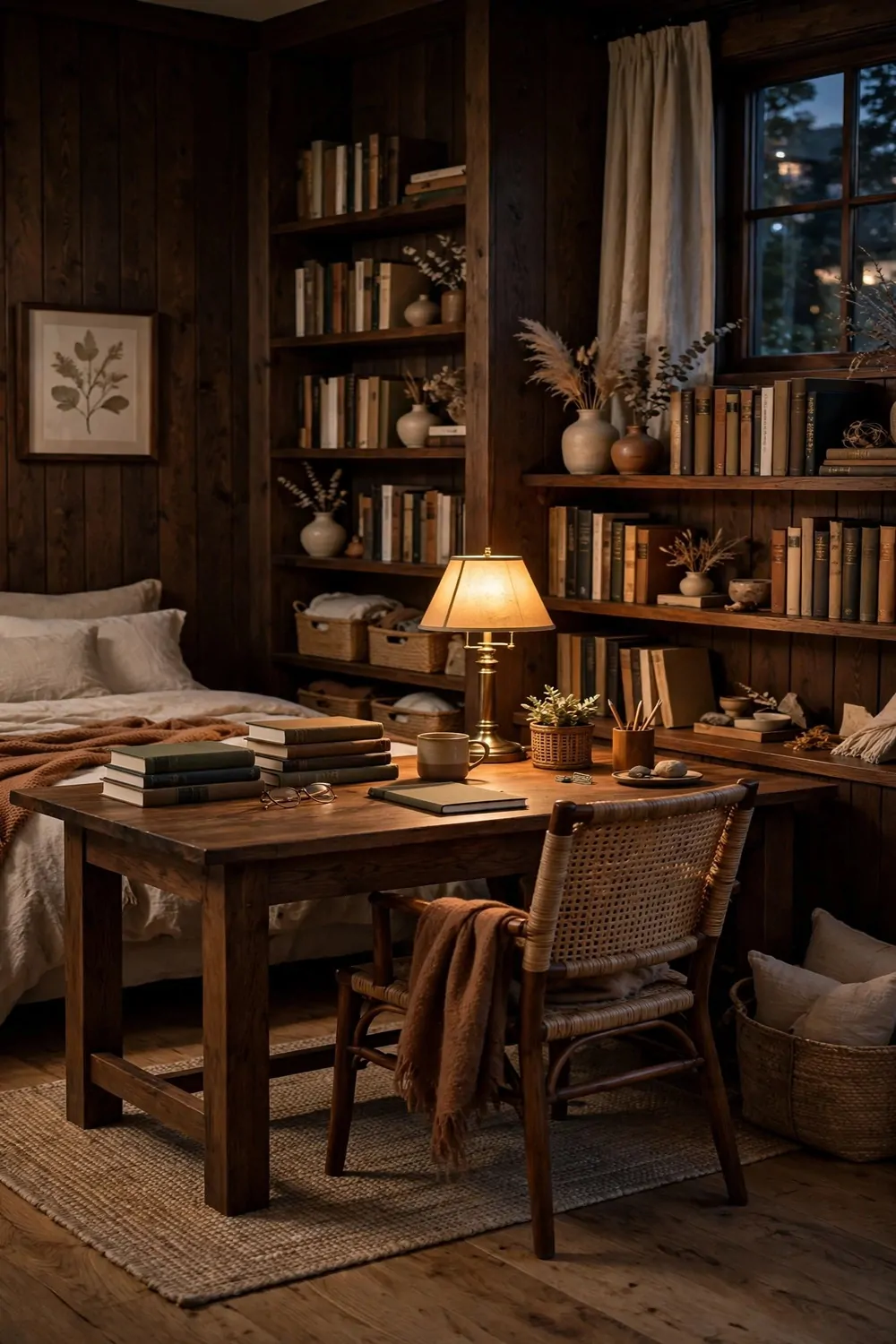
A real study feels dark in a good way. Not gloomy. Just warm and quiet, with light where you need it and shadow everywhere else.
My study has dark wood furniture and one warm lamp. The walls are a soft cream colour, so the room never feels like a cave. The dark wood does the serious work. The cream walls keep it gentle.
Paint the walls a warm cream or a soft pale sage. Dark walls can work too, but pale walls are the safest way to keep a small study from feeling like a cupboard.
Here is how the light in a study should work.
| Light | When to use it | How it feels |
|---|---|---|
| Green-shaded desk lamp | Reading and writing at the desk | Warm pool of light, quiet room |
| Soft window light | Morning work and thinking breaks | Gentle daylight, calm and clear |
| Low wall light | Evening, when the desk lamp is off | Soft glow, easy on tired eyes |
Keep the desk lamp glowing low and warm after dark. A low warm light on the desk makes the corner feel calm, and the room stays dark behind you in a good way.
Avoid bright white ceiling lights in a study. One bright ceiling light flattens the whole room and ruins the feeling. Warm small lights do a better job than one harsh one.
Hang heavy curtains on the window if the afternoon sun glares on your screen. Curtains in a dark colour suit a study. They block the glare and keep the room cool in summer.
Try this one if your study feels too bright and noisy. Dark wood, warm light, no glare, and the room calms down with you.
The Study Ritual That Starts the Day
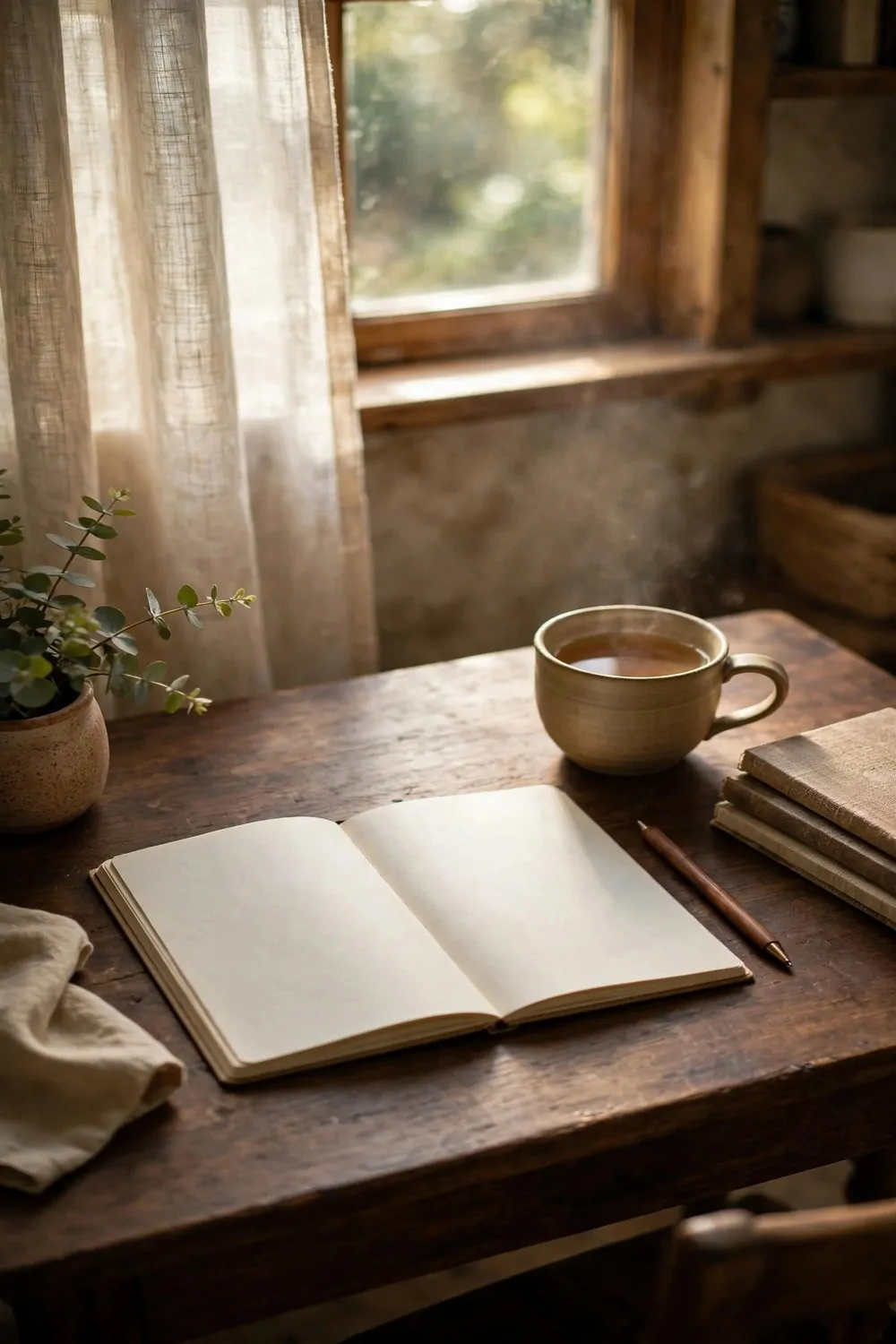
A study works better when the day starts the same way every morning. A small ritual tells your brain it is time to think.
My ritual takes five minutes. I open the curtains. I put the kettle on. I sit at the desk and write one line in my notebook. One line about what matters most today. Then I start.
Do the ritual at the same time every morning. A ritual that runs daily becomes automatic. A ritual that runs only on good days never sticks.
Keep the ritual short. Five minutes is enough. A long ritual is a ritual you will skip, and a skipped ritual is no ritual at all.
Write the one line by hand, on paper, not on a screen. Handwriting slows you down just enough to think. A typed line feels like an email. A written line feels like a promise.
Make the tea or coffee after the line is written, not before. The drink is the reward for starting. If the drink comes first, the starting never happens.
Keep the notebook open at a blank page the night before. A closed notebook is a notebook you will not open at eight in the morning. An open one sits there waiting for you in the morning.
This ritual is for people whose workdays start with a rush and end with a sigh. Five minutes, every morning, and the day gets its shape back.
Try this one tomorrow. Curtains open, kettle on, one line in the notebook. Then start.
The Letter Tray That Sorts the Day
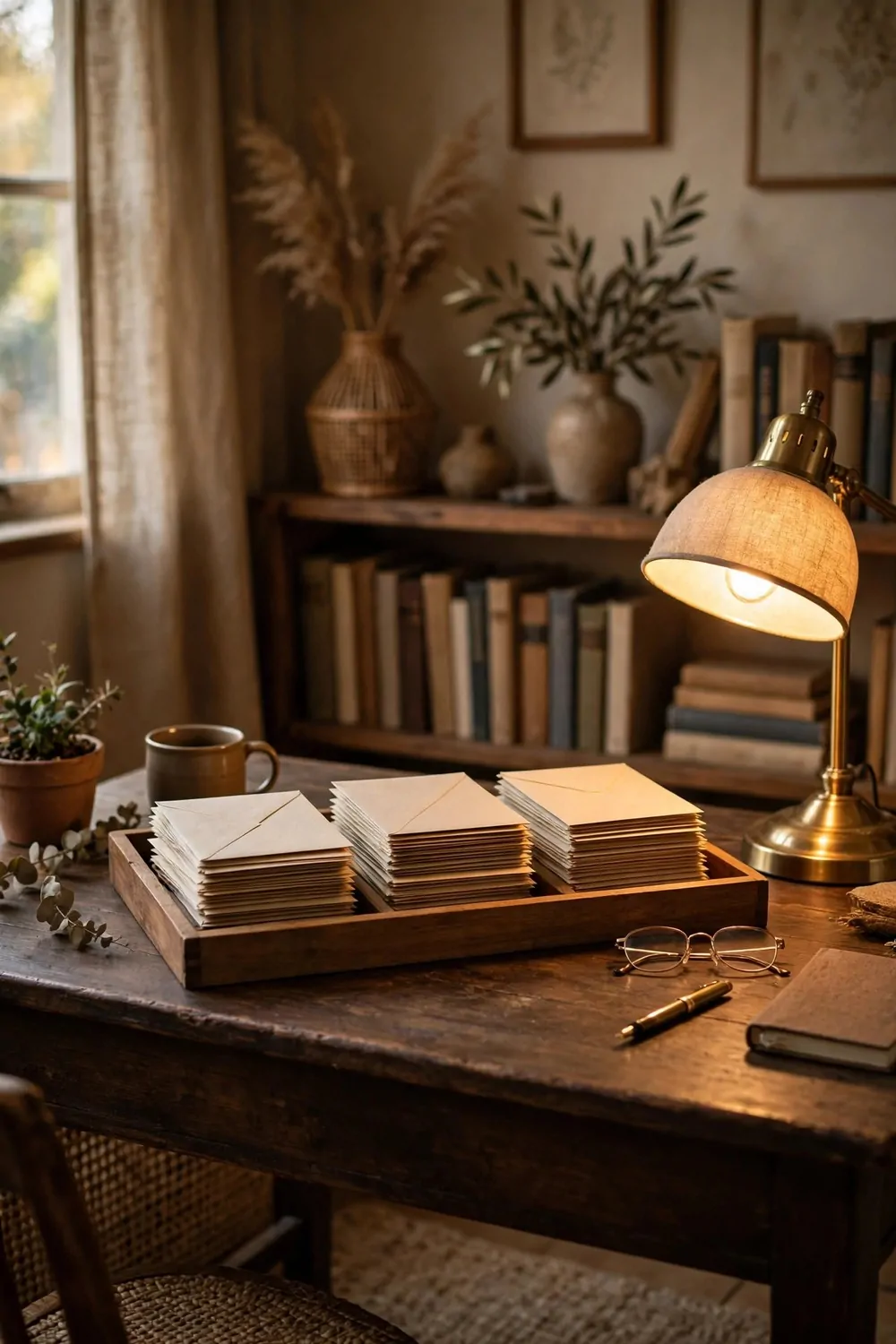
Letters still arrive in a study. Bills, cards, notes from friends. A letter tray gives them a home the second they come through the door.
My tray sits on the left side of the desk. It has three slots. One for letters to read. One for letters to answer. One for letters to keep. Three slots, three jobs, and I always know where things live.
Pick a tray made of dark wood or brass. A plastic tray looks wrong in a study. Wood and brass suit the room, and they last longer too.
Empty the tray every Friday afternoon. Read what is left. Answer what needs answering. File what must be kept. Friday afternoon, ten minutes, and the tray is fresh again for Monday.
Keep the tray on the desk, not on a shelf. A tray on a shelf is a tray you forget. A tray on the desk is part of the day.
Put the letters to keep in the filing drawer the same day you read them. A letter that sits in the tray for a month becomes part of the furniture. A letter filed the same day is done.
Use the tray for paper only. No pens. No cables. No keys. A tray full of small things is a junk drawer on the desk. A tray with only letters is a study tool.
Try this one if your desk top is always covered in envelopes. One letter tray, and the paper has a home.
The Standing Shelf for Books in Progress
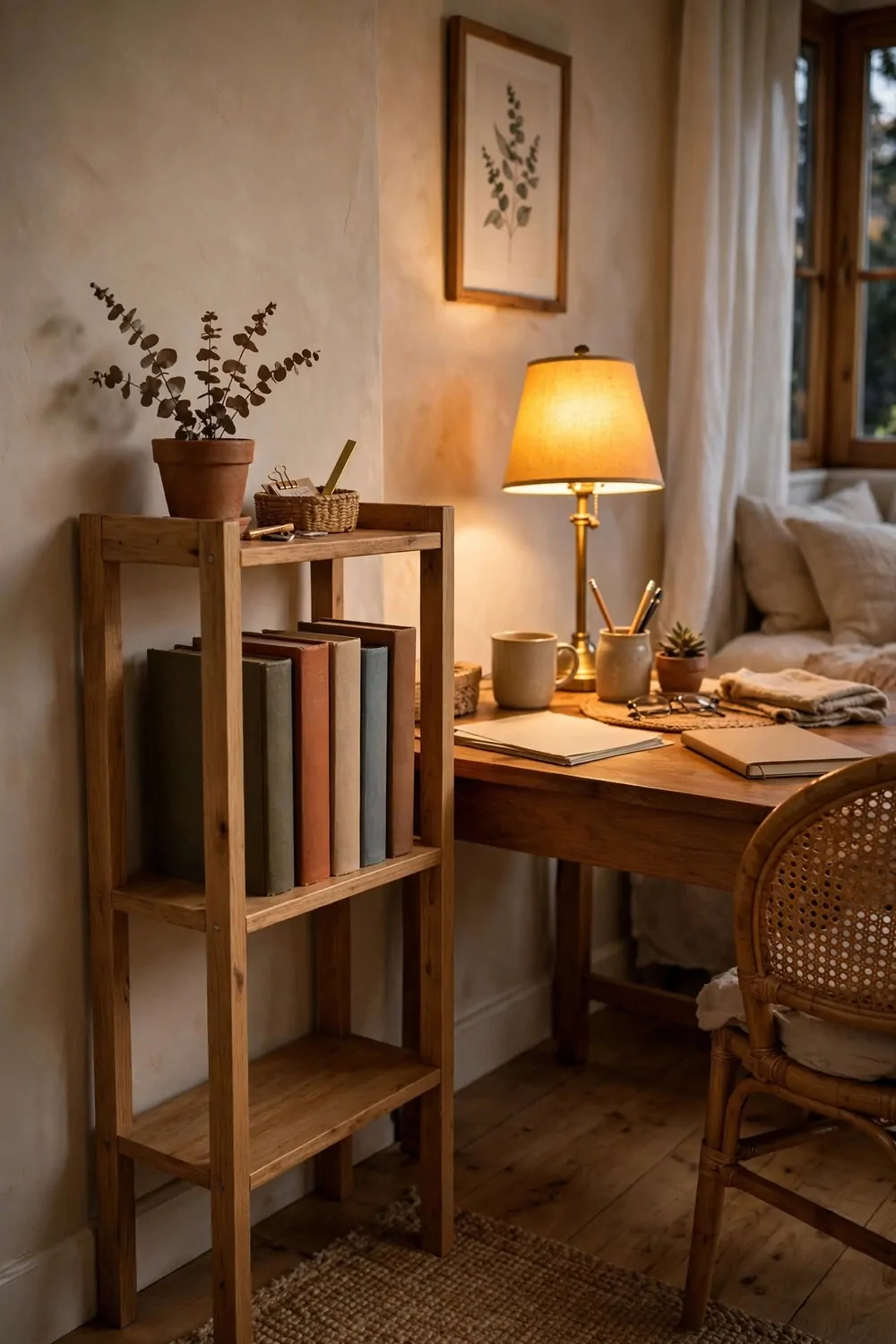
A study always has a few books on the go at once. They need a home that is not the desk top and not the tall shelves.
My standing shelf sits beside the desk, at arm height. It holds the five books I am reading right now. One on history. One on gardening. One novel for the evening. Two more that I picked up and have not finished yet.
Pick a small shelf that stands on the floor or mounts on the wall beside the desk. It should hold about five books, no more. Five books in progress is plenty. Ten books in progress means you are not finishing any of them.
Keep the books upright, spines out, so you can see them at a glance. A stack of books lying flat hides the titles. Upright books invite you back.
Move a finished book to the tall shelves the same day you finish it. A finished book on the standing shelf takes the place of the next book. The shelf is for books in progress, not books already read.
Put a small brass bookend at the end of the row. Bookends keep the books standing straight, and brass suits a study. One plain bookend is enough for a short shelf.
Dust the shelf once a week when you clean the desk. A shelf that holds books in progress collects dust fast, and a dusty shelf makes the books look forgotten.
Try this one if your desk top is always covered in half-read books. One standing shelf, and the desk belongs to your work again.
A Small Globe on the Desk
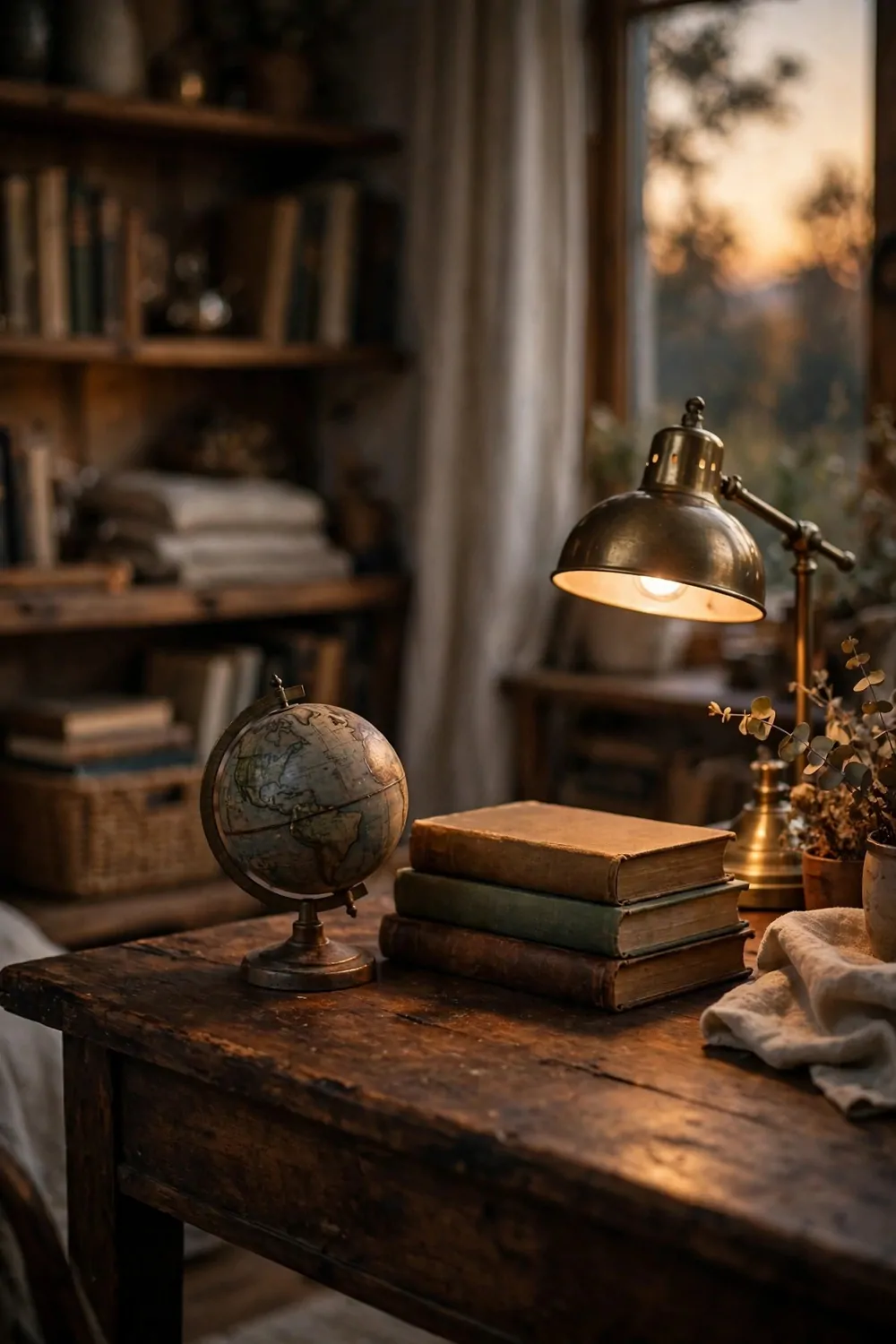
Every real study has a globe. It does not have to be big. A small one, about the size of a grapefruit, sits on the corner of my desk.
My globe is old and a little faded. The oceans are the colour of weak tea. I spin it when I am stuck on a thought. The spinning helps me think, the way walking helps some people think.
Pick a globe that fits on the desk without crowding it. A globe the size of a grapefruit is right. A globe the size of a football eats the whole desk.
Put the globe on the corner of the desk away from your writing hand. That way it never gets in the way of your notebook. It sits there, quiet, until you need it.
Spin the globe when you need a break. One slow spin, eyes closed, finger out. Wherever your finger lands is the next place you will read about. It is a small game, and it makes breaks feel like part of the study.
Keep the globe clean with a soft dry cloth. Dust dulls the colours fast, and a dusty globe looks like nobody touches it. A clean globe invites a spin.
Do not buy a globe with bright cartoon colours. A study globe should look old, even if it is new. Muted blues, soft browns, and cream land suit the room.
Try this one if your desk feels a little bare. One small globe, and the desk gains a story.
The Tin of Tea Beside the Books
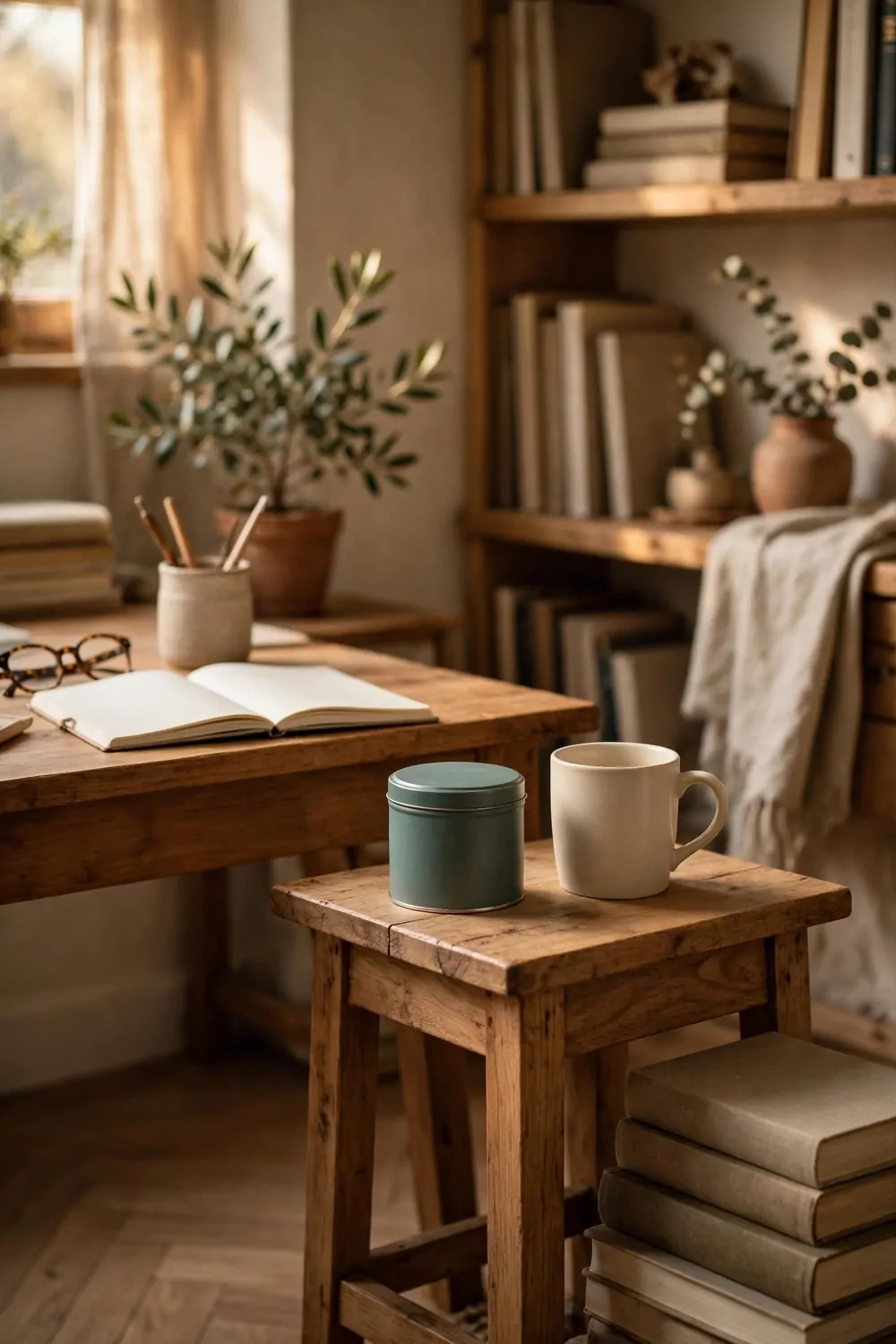
A study runs on tea. Not coffee in a paper cup. Tea in a real mug, from a tin that lives beside the books.
My tin sits on the small side table next to my desk. It holds loose leaf tea, the kind that smells like a garden when you open the lid. One spoonful in the pot, hot water, three minutes, and the study smells like calm.
Pick a tin with a tight lid. Tea goes stale fast in an open tin. A tight lid keeps the leaves fresh for months. A plain metal tin suits a study better than a bright plastic tub.
Keep the mug plain too. A plain ceramic mug in cream or dark green looks right in a study. A mug with a funny slogan belongs in the kitchen, not on the study desk.
Make the tea before you sit down to read. The small wait while the tea brews is a good pause. It gives your brain a minute to arrive before the work starts.
Drink the tea slowly, from the same mug every day. A study is built on small habits, and the same mug is one of the smallest and best of them.
Wash the tin once a month and let it dry fully before you refill it. A damp tin ruins good tea. A dry tin keeps it fresh.
Try this one if your workdays run on cold coffee and rushed mornings. One tin of tea, one plain mug, and the study slows down in a good way.
The Framed Map That Marks Your Travels
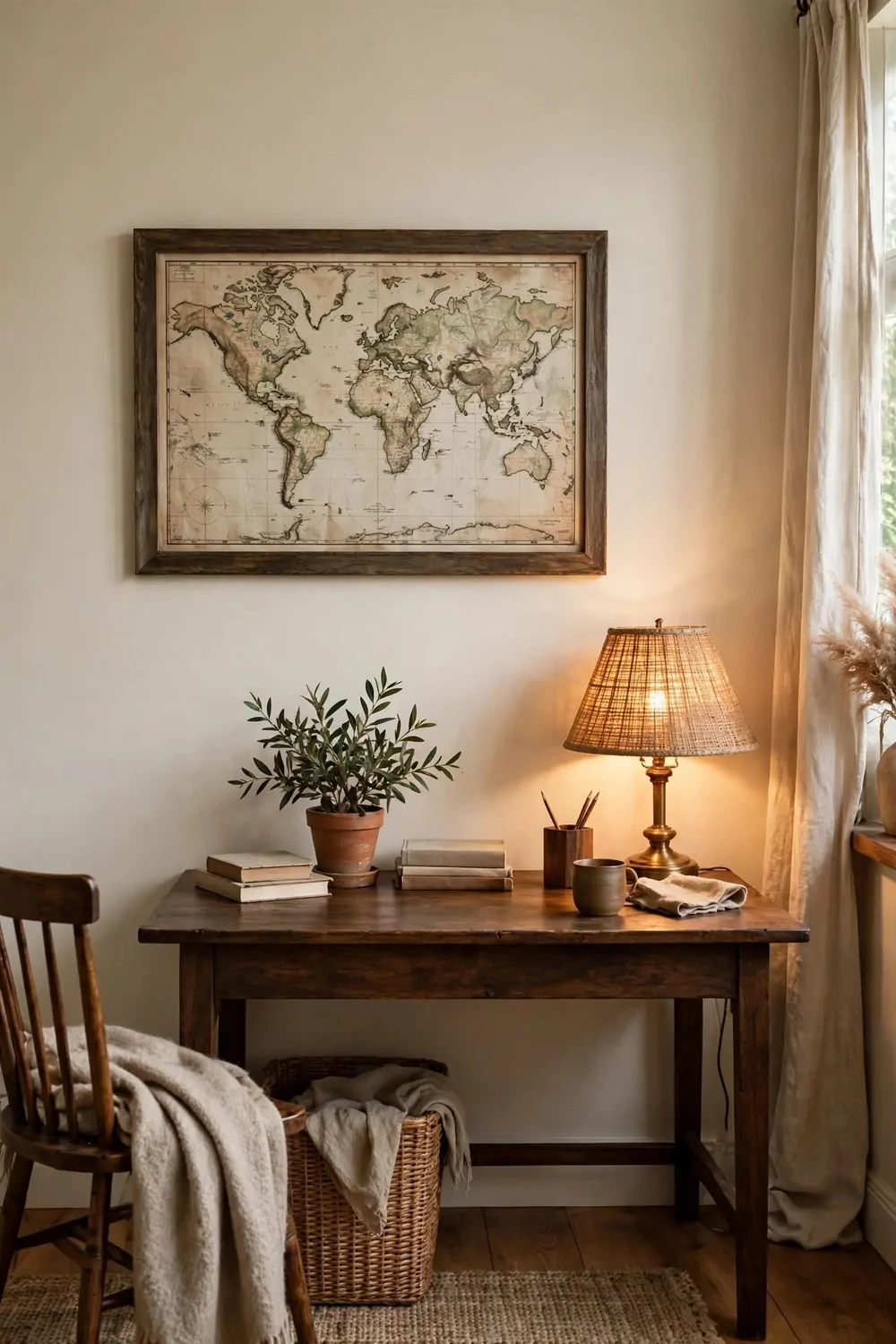
A study wall should hold one thing that is not a bookshelf. A framed map is the right thing. It marks where you have been and where you want to go.
My map hangs on the wall opposite the desk. It is an old map of the world, framed in dark wood. I marked the places I have visited with small brass pins. The pins are few, but each one has a story.
Pick a map that looks old, even if it is a new print. Muted colours suit a study. Bright modern maps look like a classroom. Old-style maps look like a study.
Frame the map in dark wood to match the desk. A thin dark frame is enough. A thick gold frame would fight the room for attention.
Hang the map at eye level when you sit down. A map hung too high is a map you never look at. A map at sitting height becomes part of the day.
Add one pin for each place you have been. One pin, one story. Do not pin places you have not visited. An honest map is better than a crowded one.
Keep the glass clean with a soft cloth once a month. Dust on glass makes the map look dull, and a dull map is a map nobody reads.
Try this one if your study walls are bare. One framed map, and the wall gains a story.
The Closing Ritual That Ends the Day
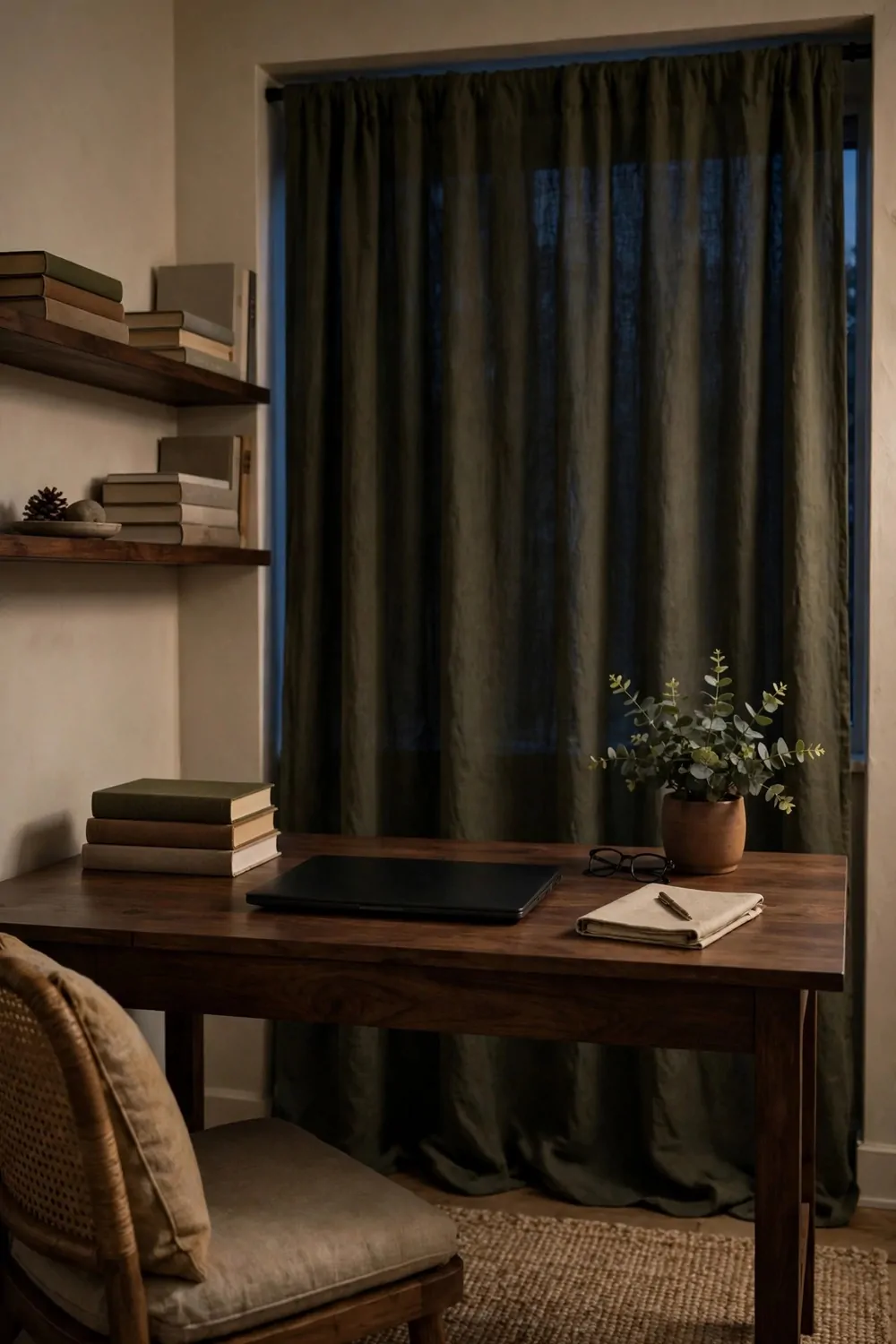
A study only works if it closes properly at night. A little ritual does that.
My ritual takes three minutes. Close the book. Set the notebook down on the shelf. Switch the lamp off at the very end. Three minutes, and the study is a quiet room again.
Do the ritual at the same time every evening. A ritual that runs daily becomes automatic. A ritual that runs only on tidy days never sticks.
Here is what belongs in a good closing ritual.
- Close the book and put it on the standing shelf
- Set the notebook on the shelf and drop the pen in the cup
- Switch the lamp off and straighten the desk pad
- Close the curtains so the morning starts fresh
Say goodnight to the study in your head, even if that sounds silly. A quiet goodbye in your head tells your brain the work is finished. Without it, the work follows you into the evening.
Jot down tomorrow’s first job on a sticky note and stick it on the notebook. Keep it to one short line. Your morning self will thank your night self for bothering.
Keep the ritual short. Three minutes is enough. A long ritual is a ritual you will skip, and a skipped ritual is no routine at all.
Try this one tonight. Three minutes, every evening, and tomorrow morning your study will feel like a place to think again.
Keep Reading
If you liked these 2nd Bedroom Office Ideas, these spare-inch tricks, cozy bedroom ideas and small-space designs will give you even more ways to make a spare room work hard.
- 20 Extra Bedroom Office Ideas to Use Every Spare Inch
- 20 Cozy Bedroom Office Ideas for a Soft, Snug Workspace
- 24 Small Home Office Design Tricks That Add Space Fast
A second bedroom is not a problem to fix. It is a room that can become a real study. A big wood desk. Tall shelves. A green-shaded lamp. A leather chair that ages with you. Pick your favourite three ideas from this list, try them this weekend, and let your spare room surprise you.