30 Homeschool Activity Ideas for Every Subject

Our best school days never start with a bell. They start with a warm drink, a quiet room, and one small job we both look forward to.
I put together 30 homeschool activity ideas that cover every subject, and you can pick the ones that fit your day.
I used to plan too much for one morning. Then I learned that one small thing done well beats five things done in a rush.
You do not need a big room or a lot of new things to teach at home. A plain table, some pencils, and a calm start can do a lot.
Some ideas here take ten minutes. Some take a whole slow afternoon. All of them use things you already have at home.
Start with just one idea tomorrow morning. If it works, keep it and add one more the next day.
Pick the ones that make your child smile. That is how you know the day went well.
1. Start the Day with a Slow Morning Basket
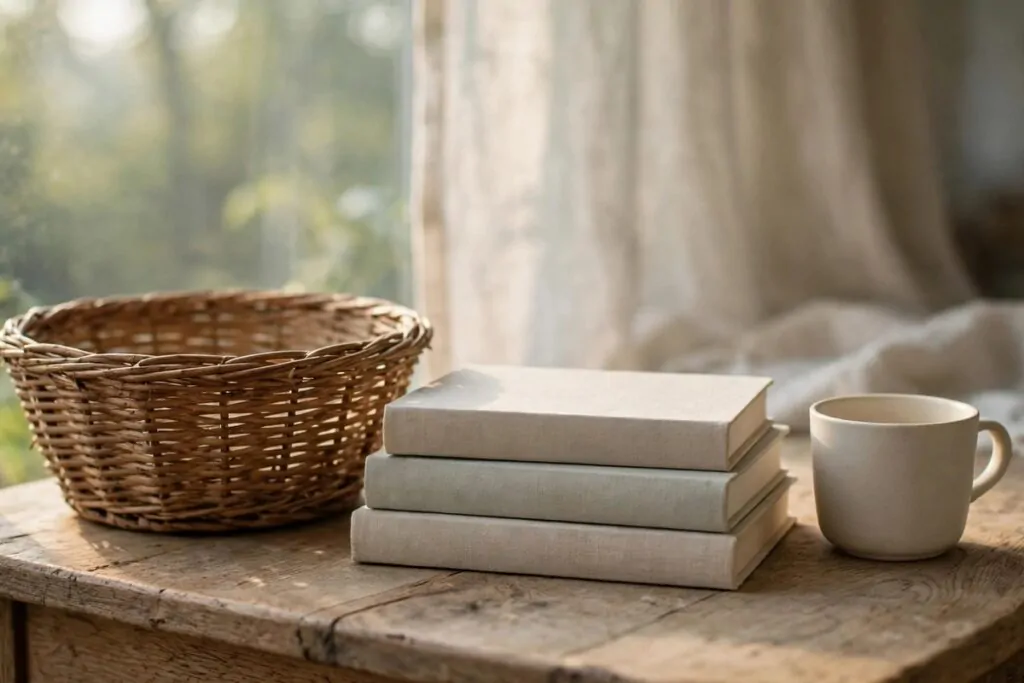
I fill a plain basket the night before with one book, a pencil, and a small notebook. In the morning I set the basket on the table and we start slow.
No rush, no loud start. Just one quiet job to wake the brain up.
We open the book first and we read one short page together. Then we write one line about the page in the notebook. The pencil moves slow and the day feels calm.
I keep a cup of warm milk on the table while we work.
If the morning feels hard, I pick the easiest thing in the basket. One small page is enough. A slow start still counts as a start.
I put the basket away when we finish, so the table stays clear for the next job.
My child picks one thing for the basket the next night. That small choice makes the morning feel like theirs.
A slow basket costs nothing when you use things you already own. The basket, the book, and the pencil all come from our own shelves.
Typical cost $0 to $0.
2. Read One Book Aloud Together
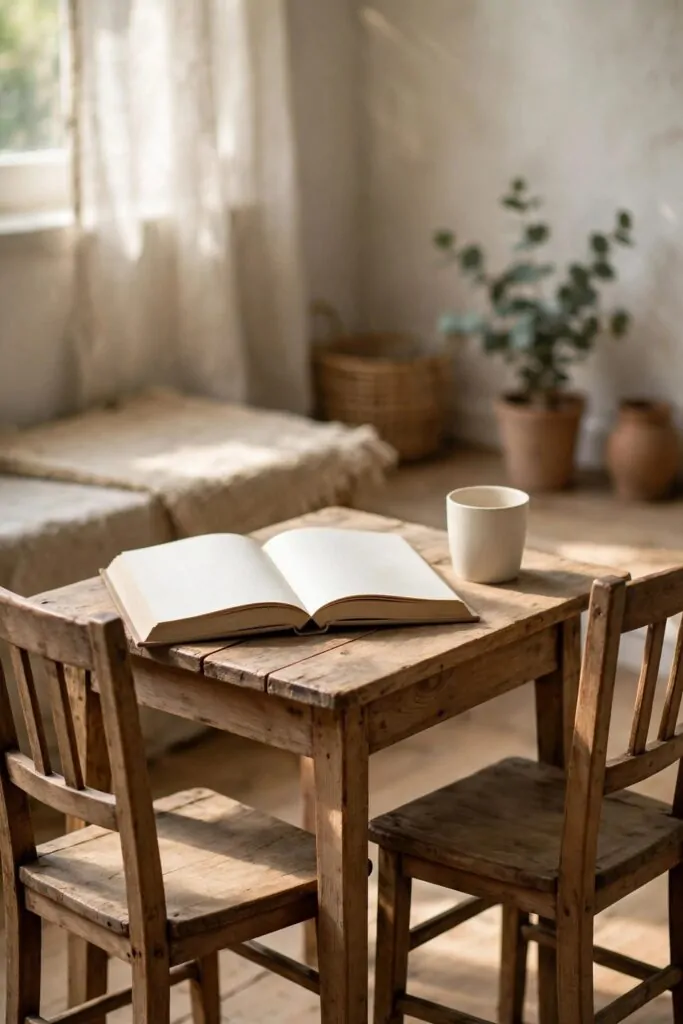
I pick one short book and I read it out loud at the table.
My child sits close and follows the words with one finger. When I stop, they tell me what happens next in their own words.
We stop after each short part and we talk about it. Who did what, and why it matters. Short talks like this help the story stick.
I keep my voice slow and plain, so every word is easy to hear.
If a word is new, I say it twice and I use it in a small sentence of my own. Then my child tries it too, and we both smile when it works.
We read the same book again the next day, and the second time feels easier. The words come faster and the story feels like an old friend.
I keep the book on the table after we finish, so my child can look at the pictures again on their own.
A good book from our own shelf costs nothing extra. We borrow the rest from the library when we want a new one.
Typical cost $0 to $0.
3. Play a Simple Maths Dice Game
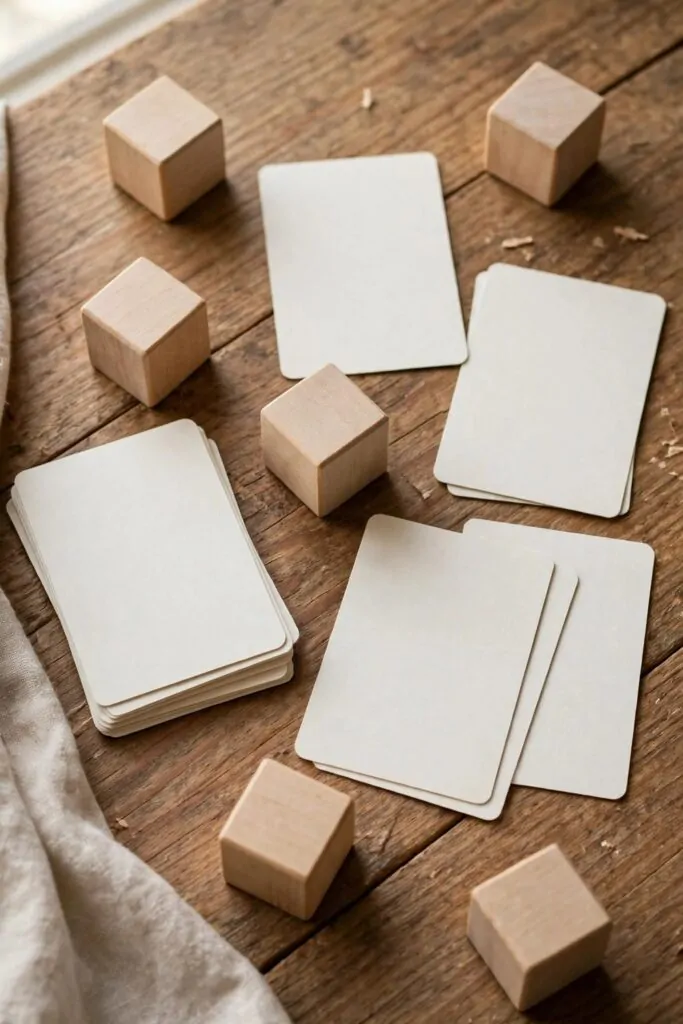
I take two plain dice and a small notebook, and we sit down for a quick maths game at the table. We roll the dice and we add the two numbers together.
The first one to say the right total gets a small tick on the page.
We play ten rounds and then we count the ticks. The winner picks the next game we play.
I keep the rounds short so the game stays fun. When a sum is hard, we count it out loud on our fingers, one by one.
We change the game some days and we take the numbers away instead. Then we try times tables with the same two dice, one small step at a time.
When my child wins three games in a row, I add a third die to make it harder. Three dice make the sums bigger, and the game feels new again. We play the harder game for a few days, then we go back to two dice when we want an easy round.
I write the sums in the notebook as we go, so we can see how fast we get by the end of the week.
Two plain dice cost very little, and the notebook is one we already have. The whole game fits in a small bag on the shelf.
Typical cost $2 to $4.
4. Take a Nature Walk with a Notebook
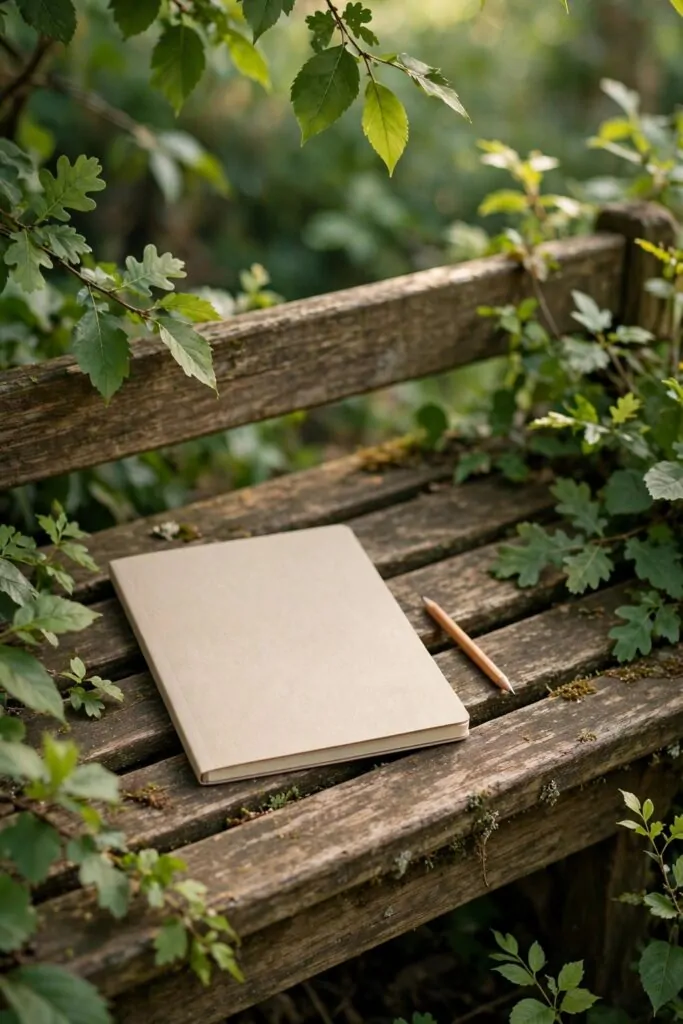
I take a small notebook and a pencil, and we walk slow around the garden and the lane near our home.
We stop at each plant and we look close. I ask my child to draw one leaf, just as it looks, with the lines and the shape.
We write one line under each drawing about what we saw. A red leaf, a tall stem, a small white flower.
I keep the walk short so little legs do not get tired.
I bring a small bag for the bits we find on the path. A smooth stone, a dry leaf, and a small stick all go in the bag. Back at home we lay them on the table and we look at them one more time.
If we see an ant on the path, we stop and we watch it for a minute. Then we write one line about where it went and what it carried.
Back at the table we look at the drawings again and we talk about which one we liked best. The notebook holds our whole walk on a few plain pages.
A walk costs nothing and a notebook is one we already own. The pencil comes from the jar on our desk.
Typical cost $0 to $0.
5. Spell Words with Plain Word Cards
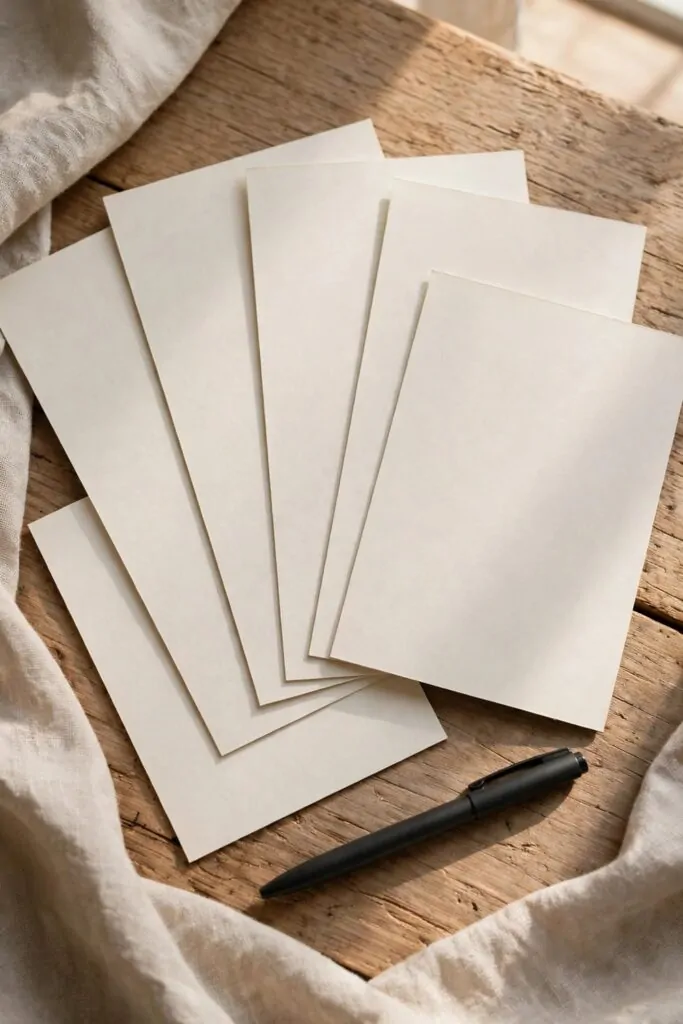
I take a pack of blank cards and I write one word on each card with my pen. Each card holds only one word, so the pile stays easy to look at.
We lay the cards on the table and we read each word out loud, slow and clear.
Then I turn the cards face down and my child tries to spell one word from memory. If they get it right, the card goes in a small pile on the right.
I keep the words short at first, then I add longer ones when the short ones feel easy.
When a word feels hard, I break it into small parts on the card. We say each part slow, then we put the parts back together. The whole word feels easy once the parts make sense.
We play with the same ten cards for a whole week. By Friday the words feel like old friends, and my child spells them without a pause.
I write new words on the back of old cards when we are done with them. That way one pack lasts a long time.
Blank cards cost very little, and one pack lasts me many weeks. I keep them in a small bag by the desk, ready for the next round of cards.
Typical cost $1 to $3.
6. Keep a Quiet Drawing Time
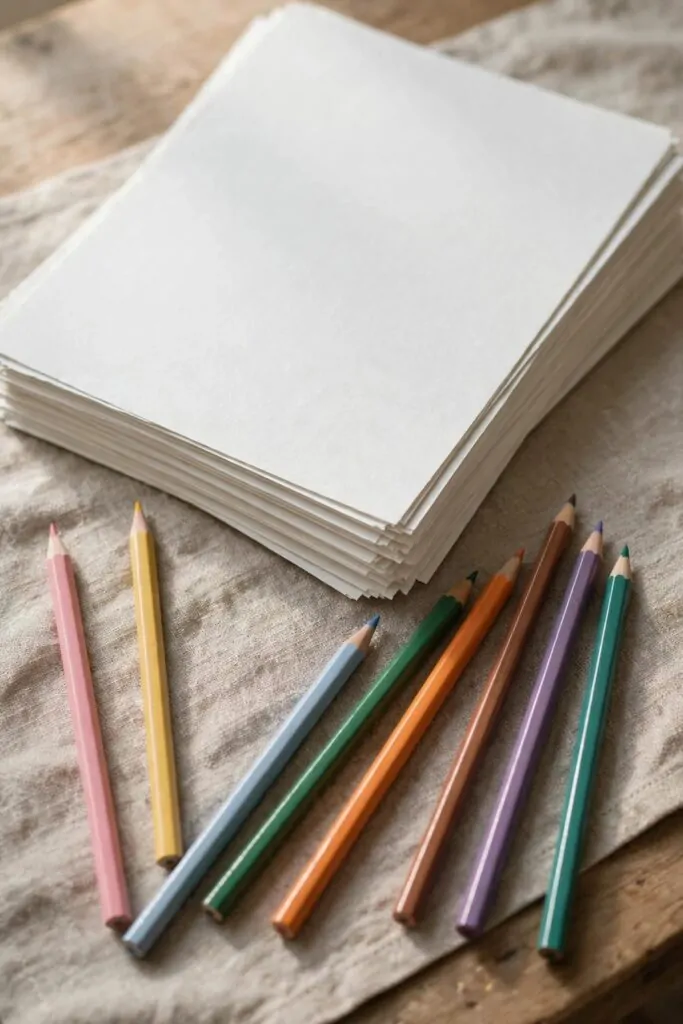
I set out plain paper and some pencils, and we draw in quiet for twenty minutes at the table. No talking, just the soft sound of pencils on paper.
My child draws whatever they like. A house, a tree, a cup on the table. I draw too, right beside them, and the quiet feels good.
I keep the time short so it stays calm and fun. When the time is up, we show each other our drawings and we say one kind thing about them.
If my child gets stuck, I point at the plant by the window. Draw what you see, I say. One leaf is enough to start.
Some days we draw the same thing twice, and the second drawing always looks a little bit better. That small change makes my child proud.
I keep the pencils sharp, so the lines stay neat and clear.
I keep the drawings in a plain folder on the shelf. At the end of the month we look through them and we see how much the lines have grown.
Paper and pencils cost very little, and I buy them once and use them for many weeks. The folder is one we already have at home.
Typical cost $1 to $2.
7. Count with Things from Around the House
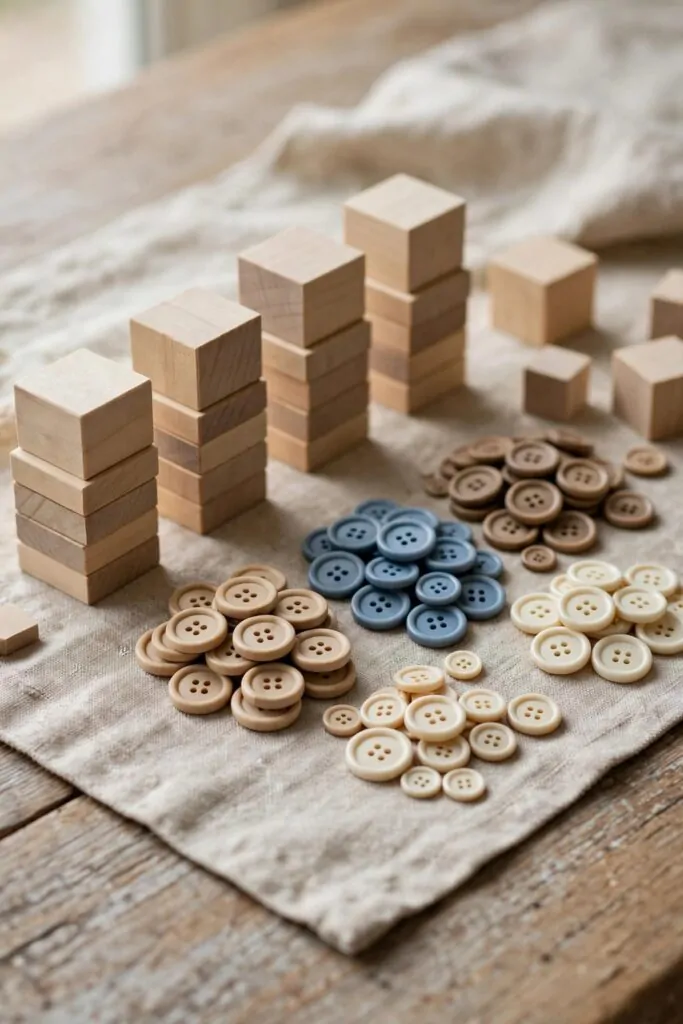
I take a small bowl of buttons and a plain tray, and we count together at the table.
We pour the buttons out and we sort them into small groups of five. Five, then ten, then fifteen, and the groups grow in a neat row.
My child counts each group out loud, and I point at the groups as we go. When we reach fifty, we start again and we try to go faster.
I keep the groups small so the counting stays easy. If we lose our place, we start the row again and we laugh about it.
When the groups reach twenty, we stack them in a tall row on the tray. The tall row shows how fast small groups can grow. My child likes to count the tall row twice, just to be sure.
Some days we use dry beans instead of buttons, and some days we use small stones from the garden. The counting stays the same, only the things change.
We write the totals in a notebook when we finish, so we can see how far we counted that day.
Buttons, beans, and stones cost nothing when they come from our own jars and garden. The bowl and the tray are ones we already use every day.
Typical cost $0 to $0.
8. Take a Slow Science Look Around the Garden
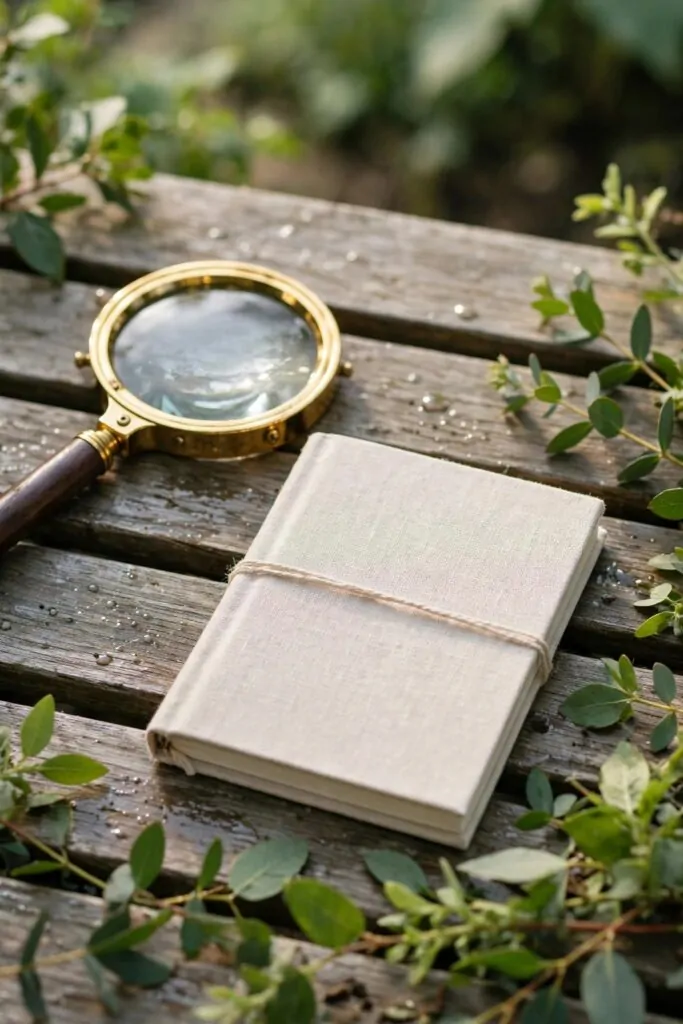
I take a small notebook out to the garden and we look close at how things grow.
We pick one plant and we look at it from the top to the bottom. The leaves, the stem, the soil at the base.
I ask my child to tell me what the plant needs to grow. Water, light, and good soil, they say, and I write their words in the notebook.
We look at a seed that has just come up, and we look at a tall plant beside it. The small one and the tall one show the same job at two different times.
I keep the look slow so we see the small things. A new leaf curled up tight, a root showing at the edge of the pot, a drop of water on a leaf after the rain.
We smell the soil after the rain, and it smells fresh and clean. I ask my child what the smell tells us about the garden. It tells us the soil is wet and the plants can drink.
We come back to the same plant each week and we draw it again in the notebook. The drawings show how it grows, week by week, in plain lines.
Looking at the garden is free, and we already own a notebook. I take the pencil from the jar on the desk, and the garden waits right outside our door.
Typical cost $0 to $0.
9. Write a Short Story with a Plain Pen
I sit at my desk with a blank page and my pen. I think of one small thing that happened today and I start my tale there.
I give my main person a name I like and one small job to do.
I write where the tale happens first, so I can see it in my head. My desk lamp gives me warm light while I write. I keep my cup of tea near my book so I can take a slow sip when I stop to think.
I let one small problem come into the tale, so my person has a job to fix. I write how my person tries to fix it, one small step at a time.
I end my tale with one plain line that tells how it all turns out.
I read my tale back out loud at my desk and I mark the bits that feel slow. I cross out the slow bits with my pen and I write a fresh line in their place. My plant sits by the lamp and I feel calm while I fix my words.
I keep my tale in a plain book on my desk. I can add one more page to it tomorrow if I want.
Try one short tale today and see how fun it feels to finish it.
Typical cost $1 to $3.
10. Hunt for Spelling Words Around the House
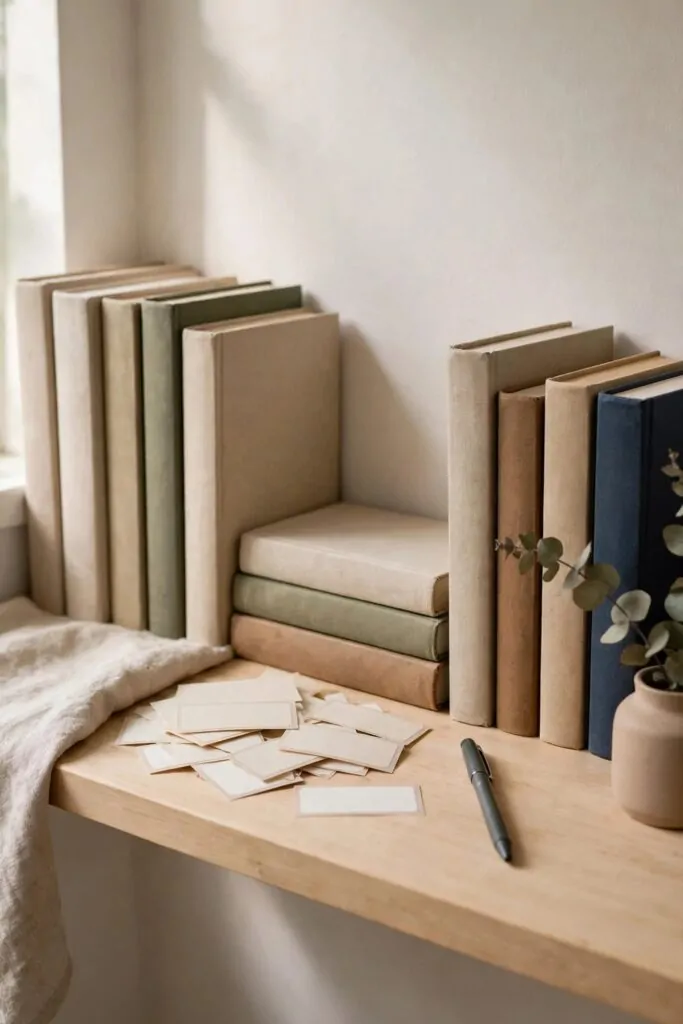
I pick five spelling words from my book and I write each one on a small card.
I hide the cards in plain sight around the rooms of my house. I put one card by the lamp, one by the clock, and one by the plant on my desk.
I walk around the house with my pen and my blank notebook.
When I spot a card, I read the word out loud and I spell it letter by letter. I write the word in my notebook with my pen. If I miss a letter, I look at the card again and I try it once more.
I keep my cards in a small bag when the hunt is done. My bag waits by my desk for the next hunt.
You can ask a friend to hide the cards for you next time.
I pick five new words each week so the hunt stays fresh. My notebook fills up with words I can spell on my own now.
I read my list back at my desk before I put my notebook away. I say each word slow and clear. I feel proud when I get them all right.
Typical cost $0 to $0.
| Idea | Main change | Typical cost |
|---|---|---|
| Start the Day with a Slow Morning Basket | start the day with a slow morning basket | $0 to $0 |
| Read One Book Aloud Together | read one book aloud together | $0 to $0 |
| Play a Simple Maths Dice Game | play a simple maths dice game | $2 to $4 |
| Take a Nature Walk with a Notebook | take a nature walk with a notebook | $0 to $0 |
| Spell Words with Plain Word Cards | spell words with plain word cards | $1 to $3 |
| Keep a Quiet Drawing Time | keep a quiet drawing time | $1 to $2 |
| Count with Things from Around the House | count with things from around the house | $0 to $0 |
| Take a Slow Science Look Around the Garden | take a slow science look around the garden | $0 to $0 |
| Write a Short Story with a Plain Pen | write a short story with a plain pen | $1 to $3 |
| Hunt for Spelling Words Around the House | hunt for spelling words around the house | $0 to $0 |
| Total | $5 to $12 |
11. Learn New Words with Plain Word Cards
I take ten blank cards and I write one new word on each card. I write what the word means on the back in plain words. I keep the cards in a neat pile on my desk.
I pick one card each morning and I try to use that word three times that day.
I write a short line with the new word in my notebook. I read the line back and I check that it makes sense.
My lamp lights my desk while I write my cards each night.
I put the words I know well in a small bag. I keep the hard words on my desk till I know them too.
I test myself with the cards at the end of the week. I turn each card over and I try to say what the word means. The cards I miss go back on my desk for one more round.
Ten little cards fit in my pocket and I can finish them in one go.
I add five new cards each week so my pile grows slow and steady. My book list grows too, and I like to see my own words pile up.
Typical cost $2 to $4.
12. Make a Simple History Timeline on the Wall
I take a long strip of plain paper and I pin it on the wall above my desk. I draw one straight line from one end to the other with my pen.
I pick five big events from my history book. I write each event on the line in the order it happened. I leave a small gap between each one so the line stays easy to read.
I draw one small plain shape next to each event with my pen.
My clock hangs near the timeline and I glance at it while I work. I write the year under each event in big plain numbers.
I read the line from left to right and I tell the tale of each event in my own words. I ask myself what came first and what came next. My cup sits on my desk while I read, and my plant sits by the lamp.
I add one new event to the line each week.
I keep my history book close by on my desk while I add to the line. I check each date twice before I write it down. A wrong date on the wall will mix me up later, so I take my time.
When the line gets full, I start a new strip of paper below it. My wall fills up slow with the tale of long ago.
Typical cost $3 to $5.
13. Tell a Tale from One Picture in a Book
I open my book to a picture I like and I look at it for one full minute.
I ask myself what the picture shows and where it all happens. I look at the desk, the lamp, and the cup in the scene. I think of one small thing that might happen next.
I tell my tale out loud first, so the words come easy. I start with where it happens and then I add what goes on there.
I write my tale in my notebook with my pen when I am ready.
I give the tale a plain start, a middle, and a short end. I keep each bit short so my tale stays easy to follow. I read it back at my desk and I fix the bits that feel muddled.
My plant sits by my lamp while I write. I feel calm when the words start to flow.
You can pick a new picture from your book each week.
I keep my tales in a plain book on my desk. I write the date at the top of each one. One day I will look back and see how my tales grew.
Typical cost $0 to $0.
14. Write a Letter to a Friend by Hand
I take a plain sheet of paper and my best pen. I sit at my desk and I think of my friend. I write their name at the top and I start with one warm line.
I tell my friend what I did this week in plain words. I write about my book, my desk, and the plant by my lamp.
I ask my friend one small question near the end of my letter.
I read my letter back slow and I fix any word that looks wrong. I keep my lines short so my letter is easy to read. I sign my name at the bottom with my pen.
I fold my letter neat and I put it in a plain envelope.
I put a stamp on the envelope and I set it in my bag. My bag sits by my desk till it is time to send it.
I like to write my letters by hand, not in a rush. My clock ticks soft on the desk while I write. I take my time and I enjoy each line.
A letter by hand feels warm and true. Your friend will smile when it comes in the post.
Typical cost $1 to $2.
15. Read a Poem Aloud Together at the Desk
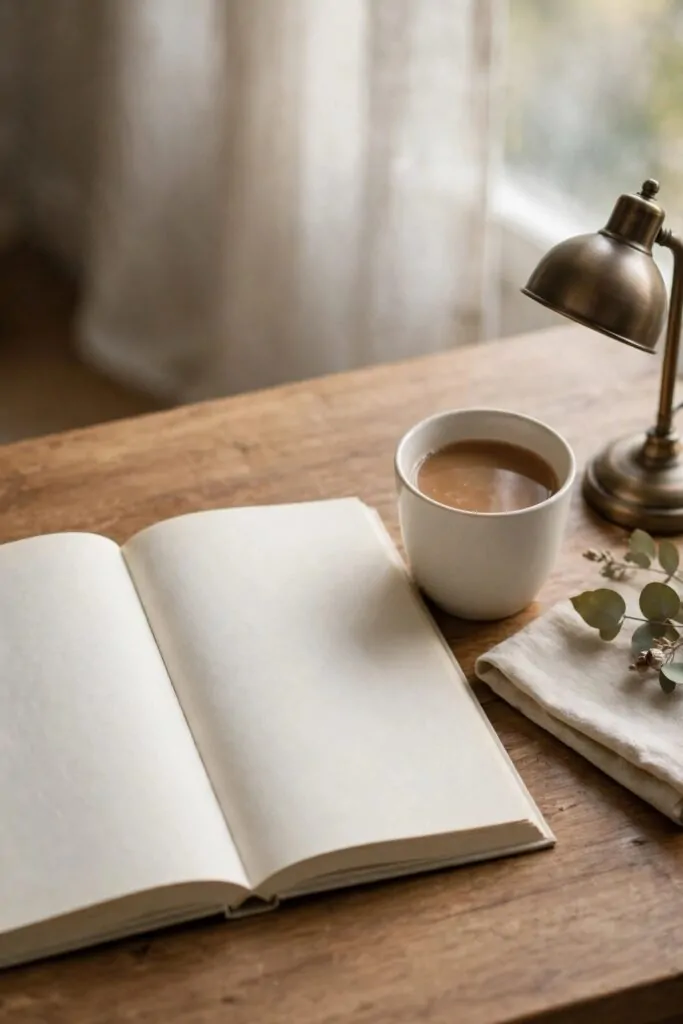
I pick a short poem from my book and I set the book open on my desk. I sit with my friend and we take turns to read one line each.
I read my line slow and clear, and I pause at the end of each line.
My lamp lights the page while we read. My cup sits near the book, and my plant sits by the lamp.
I point at the hard words with my pen and we talk about what they mean. I write one hard word in my notebook. We say the word together till it feels easy.
We read the whole poem once more from the start.
I mark my best-loved lines with a small star in the margin. I can find them fast next time I open my book.
A short poem takes only a few minutes to read well.
I keep my poem book on my desk, near my clock and my pen. I pick a new poem each week to read together. My notebook fills up with words I like from each poem.
Typical cost $0 to $0.
16. Keep a Simple Diary in a Plain Notebook
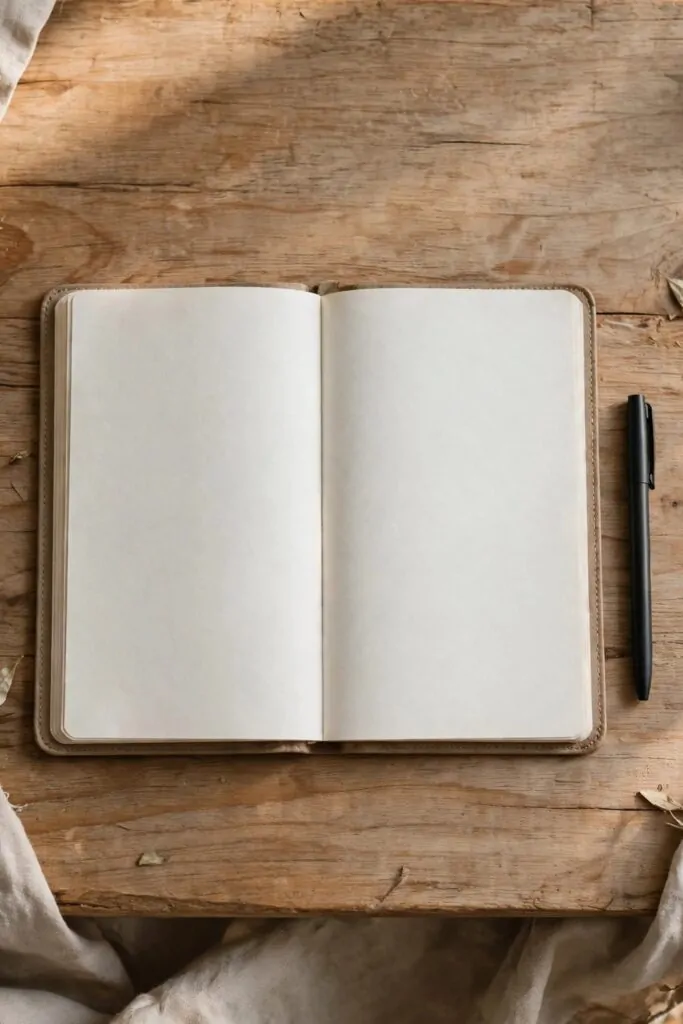
I keep a plain notebook on my desk just for my diary.
I write three short lines in it each night before bed. I write what I did, what I liked, and what I want to do tomorrow.
My lamp gives me soft light while I write. My pen moves slow across the page. My cup rests on the desk corner and my plant stays by the lamp.
I write the date at the top of each page with my pen.
I do not worry if my lines are short or plain. A diary is for me, so it can be as simple as I like.
I keep my diary in my bag when I go out, so I can write in it anywhere.
At the end of the week I read my pages back at my desk. I see what I did well and what I want to try next. My clock ticks on the desk while I read, and I feel calm.
I start a new notebook when the old one gets full. The old diary stays safe on my shelf for a quick look back.
Typical cost $2 to $4.
17. Grow a Small Seed in a Little Pot
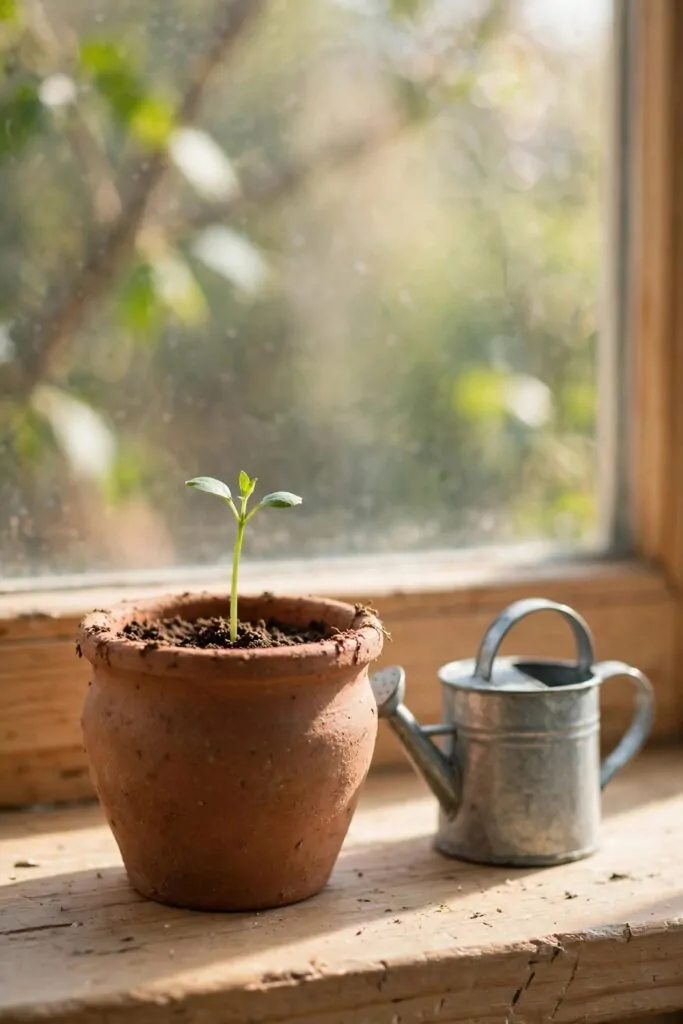
I fill a small pot with plain soil and I press one seed in with my finger. I give it a little water from my cup and I set it by the window.
You can watch it each morning and see what changes.
I draw the seed in my notebook on day one, and I draw it again each week. My drawings show the stem grow tall and the leaves open wide. I write the date under each drawing with my pen.
A small pot fits on my desk and it needs only a little water each day. Too much water makes the soil soft and the seed will not grow well.
My plant sits near my lamp so it gets light in the dark hours.
I ask my mum what seeds grow fast in our home. She tells me beans grow fast and they are fun to watch.
When the stem gets tall, I move the pot to a bigger pot with fresh soil. I hold the stem soft in my hand and I set the roots down slow. Then I water it again and I put it back by the window.
A seed in a pot is a slow lesson you can see grow.
Typical cost $2 to $4.
18. Make a Weather Chart for the Wall
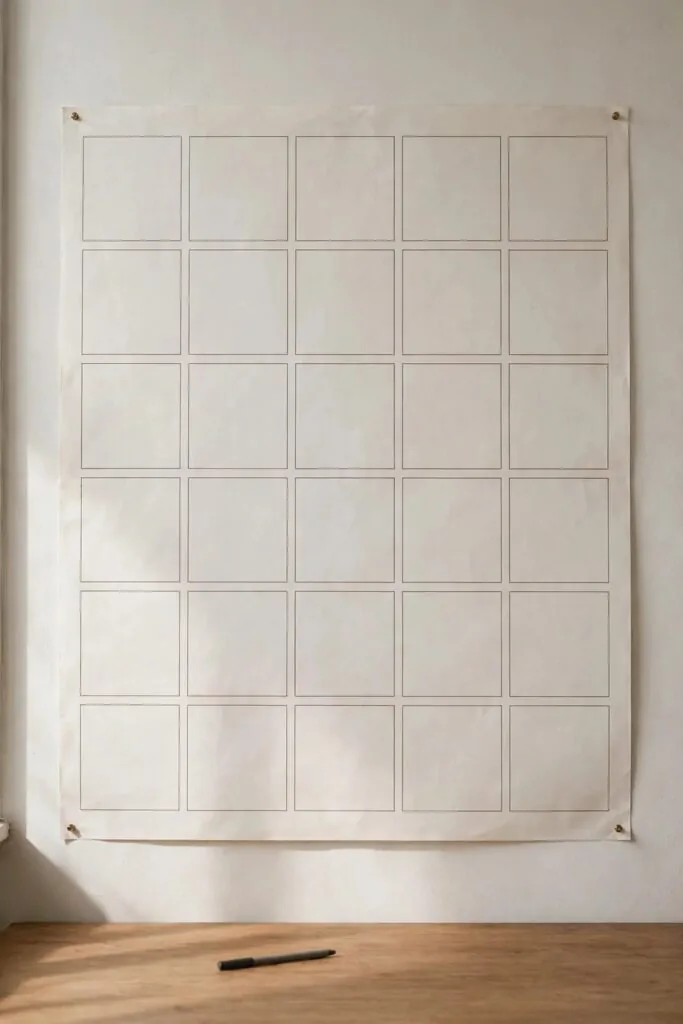
I pin a big sheet of paper on the wall by my desk.
Each morning I look out of the window and I see if the sky is blue or grey. I draw a small sun or a small cloud in the box for that day.
I use my pen to write the day name at the top of each box. I fill one box each morning for that day.
When rain falls, I draw small drops under the cloud. When the wind moves the leaves outside, I draw small lines by the cloud. At the end of the week I can see which days were sunny and which days were wet.
My chart helps me plan what to wear each morning.
I keep my pens in a cup on my desk so the chart is easy to fill. I use a blue pen for rain days and a yellow pen for sun days. The colours make the week easy to read at one look.
You can add a small box for the wind and a small box for the cold. A cold day gets a small snow mark in my chart.
A wall chart turns the sky into a lesson you can see.
Typical cost $1 to $3.
19. Draw a Simple Map of Your Town
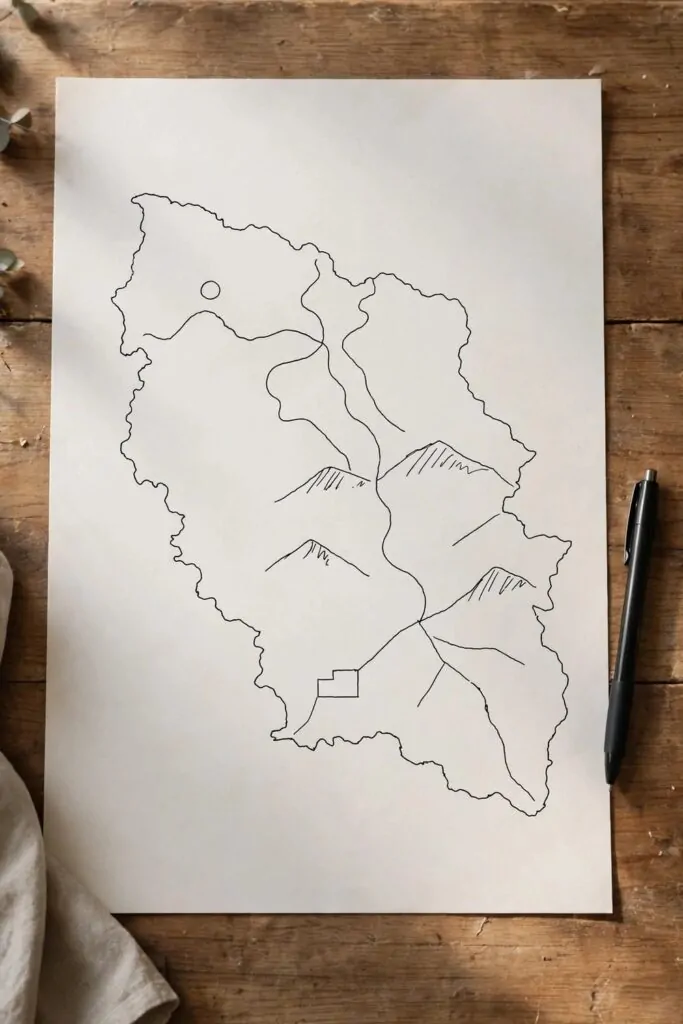
I take a blank sheet of paper and I draw my home in the middle with my pen. I draw the road in front of my home as one long line. Then I add the park and the shop on the same road.
A map helps me see where things sit near my home.
I walk to the park with my mum and I count the turns on the way. I draw each turn on my map. I do it when I get back home.
My map does not need to be neat, it just needs to be clear.
I add small squares for homes and small circles for trees. I write the name of each road in plain letters under the line.
You can draw your school on the map too and the road you take each day. I mark my school with a small square and I draw the road as one long line. Then I can show a friend how to find my home.
A plain map is a good way to learn where you live.
I keep my map in my notebook and I add one new place each week. A new place makes my map grow a little more each time.
Typical cost $0 to $2.
20. Paint with Plain Colours
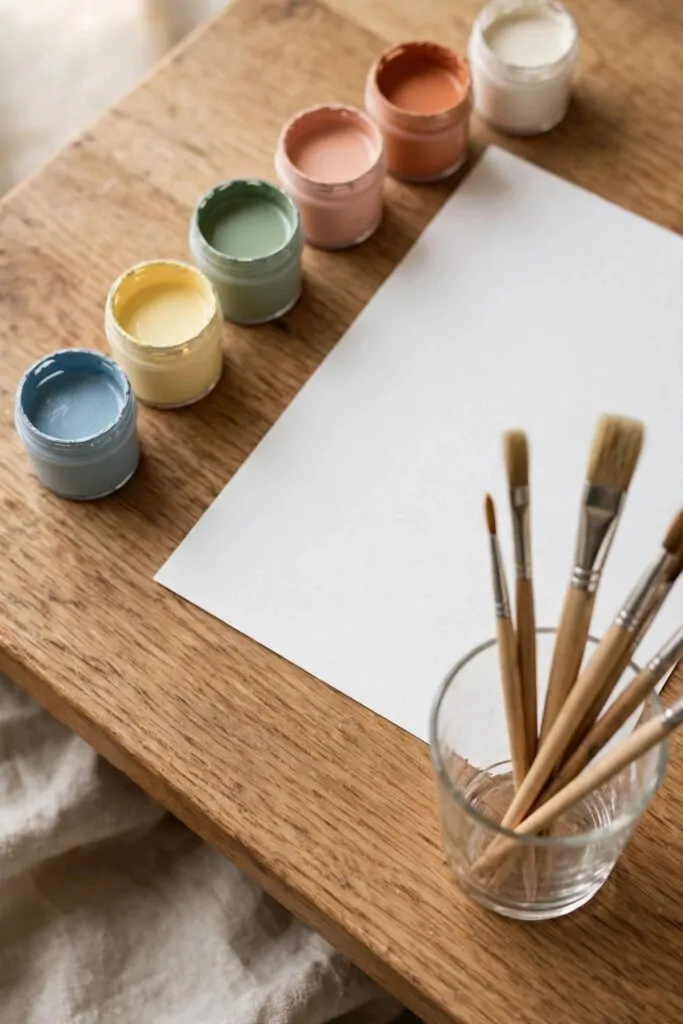
I set out small pots of paint on my desk and a plain sheet of paper. I pick blue, yellow and green, and I keep my water cup close.
I dip my brush in the yellow paint and I make a big round sun. Then I wash the brush in my cup and I dip it in the blue paint. I paint the sky in soft lines over the top of the page.
Plain colours mix well and they make new colours too.
Orange and yellow make a warm gold when I mix them on the paper. Blue and yellow make a soft green that looks like new leaves.
I paint a small plant in a pot at the foot of the page. The pot is brown and the leaves are green, and the sun is gold in the sky. My picture looks bright and it makes me smile when I look at it.
I wait till the paint dries before I paint over it.
You can paint a cup, a book, or a lamp from your desk. I paint what I see and I keep the shapes plain and big.
A brush and three colours are all you need to start.
Typical cost $3 to $6.
| Idea | Main change | Typical cost |
|---|---|---|
| Learn New Words with Plain Word Cards | learn new words with plain word cards | $2 to $4 |
| Make a Simple History Timeline on the Wall | make a simple history timeline on the wall | $3 to $5 |
| Tell a Tale from One Picture in a Book | tell a tale from one picture in a book | $0 to $0 |
| Write a Letter to a Friend by Hand | write a letter to a friend by hand | $1 to $2 |
| Read a Poem Aloud Together at the Desk | read a poem aloud together at the desk | $0 to $0 |
| Keep a Simple Diary in a Plain Notebook | keep a simple diary in a plain notebook | $2 to $4 |
| Grow a Small Seed in a Little Pot | grow a small seed in a little pot | $2 to $4 |
| Make a Weather Chart for the Wall | make a weather chart for the wall | $1 to $3 |
| Draw a Simple Map of Your Town | draw a simple map of your town | $0 to $2 |
| Paint with Plain Colours | paint with plain colours | $3 to $6 |
| Total | $14 to $30 |
21. Sort Leaves by Their Shape
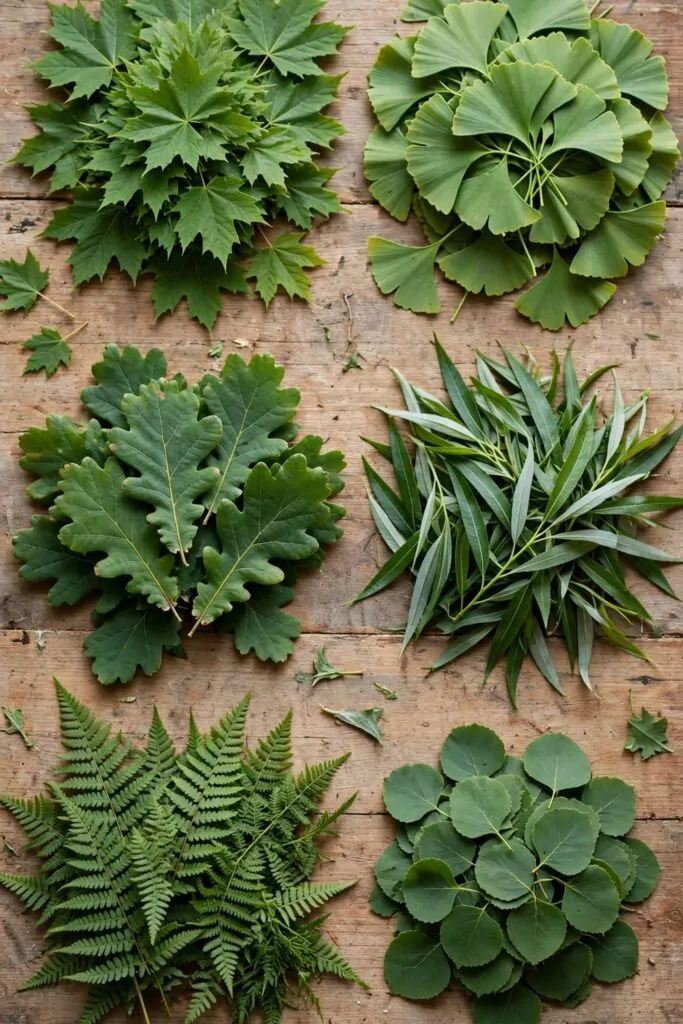
I take my bag and I walk out to find leaves on the ground.
I pick up leaves that look not the same as each other. One leaf is long and thin, one leaf is round and wide, and one leaf has soft points round its edge. I put each kind in its own part of my bag.
Back at my desk I lay the leaves out in rows on the table. Each row holds leaves of one shape only.
Sorting leaves helps me see how plants are not all the same.
I draw each leaf shape in my notebook with my pen. I write one word under each drawing to say what shape it has. My words are plain, like long, round, or wide.
You can press a leaf in your notebook and it stays flat for a long time. I put a book on top of it for one night to press it flat.
A leaf hunt is a quiet walk with a clear job to do.
I keep my best leaves in a small box on my desk. Each week I add one new shape to my box.
Typical cost $0 to $1.
22. Play with Water and Cups in a Tray
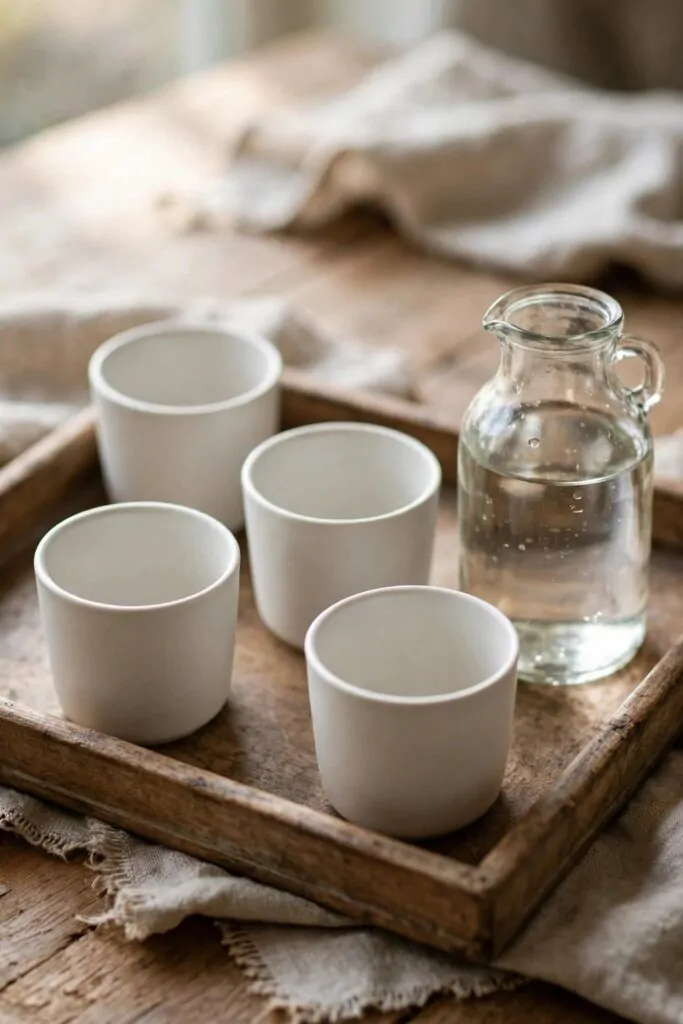
I set a low tray on my desk and I pour water in from my cup. I put four small cups in the tray and one small jug beside them. Then I pour the water from one cup to the next and I watch it move.
Pouring water slow helps my hands learn to be steady. If I pour too fast, the water spills over the side of the tray.
A tray keeps the mess in one small place.
I fill one cup to the top and I leave one cup half full. I lift the full cup and I pour it slow into the half full cup. Then I look at both cups and I see they hold the same now.
You can float a small leaf on the water and watch it drift. A leaf moves slow when the water is still.
I dry the tray with a plain cloth when I am done.
My mum shows me how to pour without a spill. I hold the cup low and I tip it just a little at a time. My hands feel more sure each time I try.
Water play is a calm way to learn how full and half full look.
Typical cost $2 to $5.
23. Build a Small Tower from Blocks
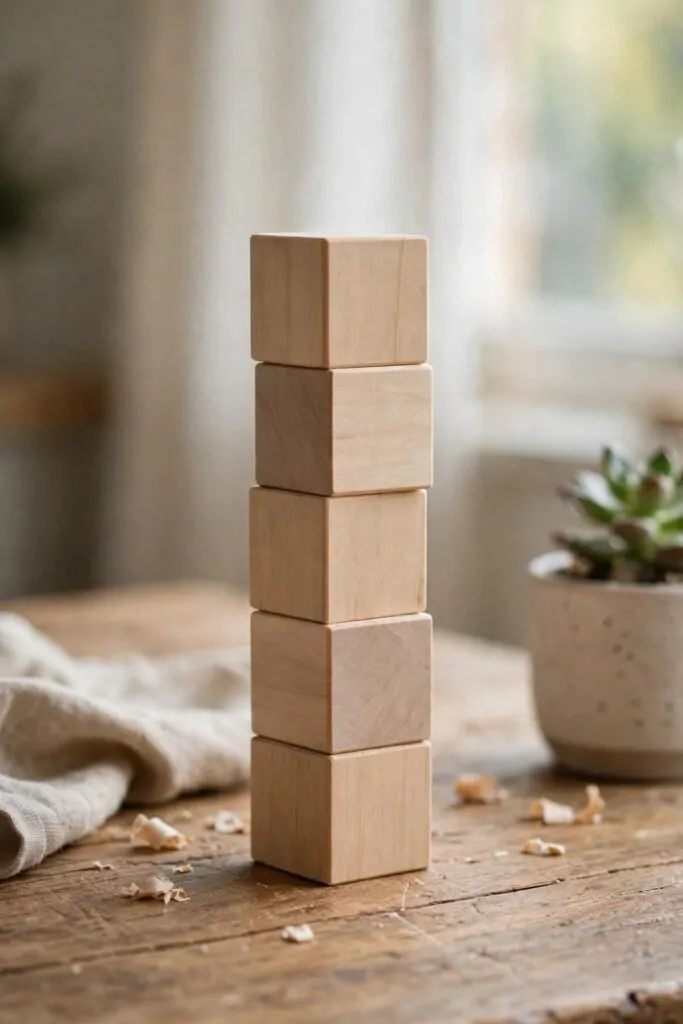
I tip my blocks out on the floor and I sort them into piles by size. Big blocks go in one pile and small blocks go in one more pile.
A good tower starts with a wide base.
I set one block down first to make a firm base.
Then I add one block at a time, each one straight on top of the last. I press each block down soft and I check it does not wobble. If it wobbles, I move it till it sits flat.
I build up slow, one layer at a time, and I stop to look from the side. A tower that leans a little will fall if I rush the next layer.
When my tower is tall, I put one last block right on top like a roof. I step back and I count the blocks with my finger. My tower has five blocks today, and it stands straight and still.
Building with blocks helps me plan before I place each bit.
You can draw your tower in your notebook when it is done. I draw the layers one by one and I write the count at the foot of the page.
Typical cost $4 to $8.
24. Take a Seasons Walk with a Notebook
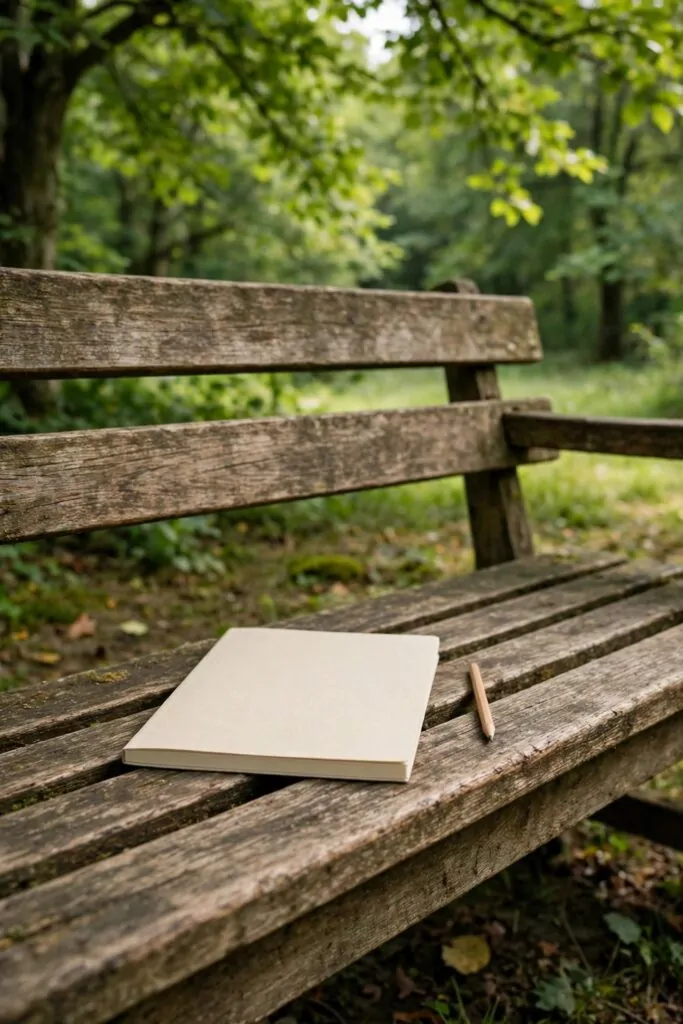
I take my notebook and my pen and I walk out in the fresh air.
I look at the trees on my road and I write what I see. In spring the leaves are small and green, and in autumn the leaves turn gold and brown.
I pick a tree near my home and I draw it each season. My drawings show the same tree with new leaves, then full leaves, then bare twigs. I write the date under each drawing so I can see the change.
A walk helps me see small things I miss from the window. I see buds on a twig and a bird nest high in a tree.
I write one line in my notebook for each thing I see.
My notebook fills up slow, one walk at a time.
You can take the same walk each month and draw the same tree again. The tree will look new each time you draw it. That is how the year moves, slow and plain to see.
I keep my pen in my bag so my hands are free on the walk. When I stop, I take out my notebook and I write what I saw.
Typical cost $0 to $2.
25. Cook a Simple Snack Together
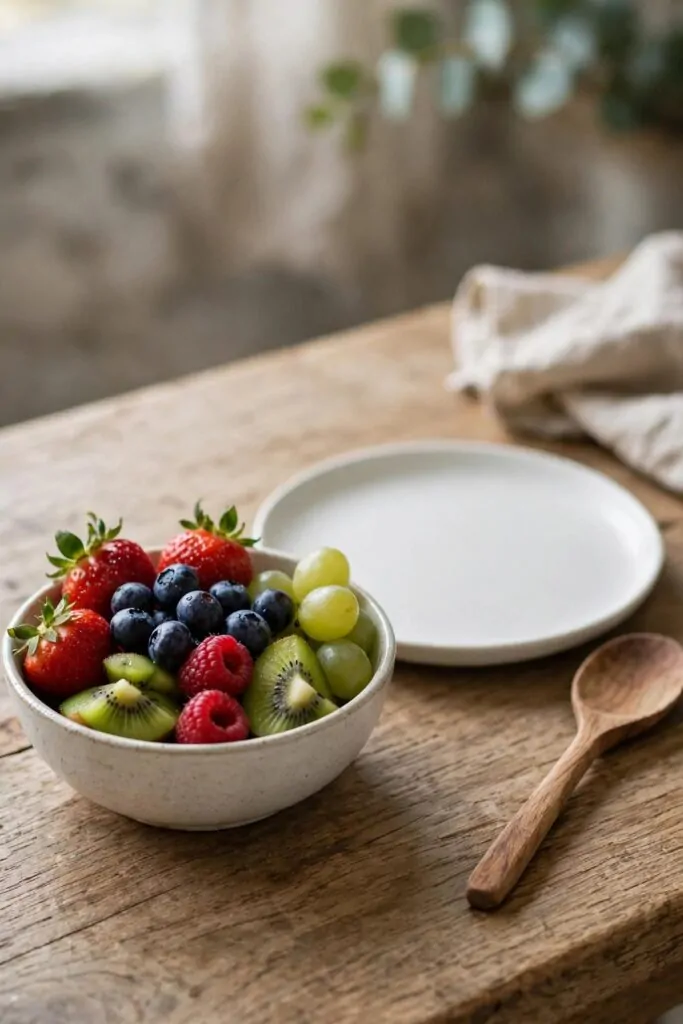
I cook a simple snack with my child in our kitchen. We pick a snack we both like. We keep it easy and we take our time.
We wash our hands first and we put on our aprons.
We slice a banana and we spread butter on two slices of bread. We add a spoon of jam and we cut each slice in half. We put the pieces on a plain plate and we sit down to eat.
My child stirs the fruit in a small bowl. I watch and I help when the bowl feels heavy.
We talk while we cook and we laugh at the mess.
I teach my child to put things back where they belong. We wipe the table with a damp cloth when we finish. We wash the bowl and the knife and we set them to dry.
A snack you make together tastes better than a snack from a box. My child feels proud to serve the plate.
You can cook the same snack again tomorrow and change one fruit.
Typical cost $3 to $5.
26. Play a Tidy Up Game for the Shelves
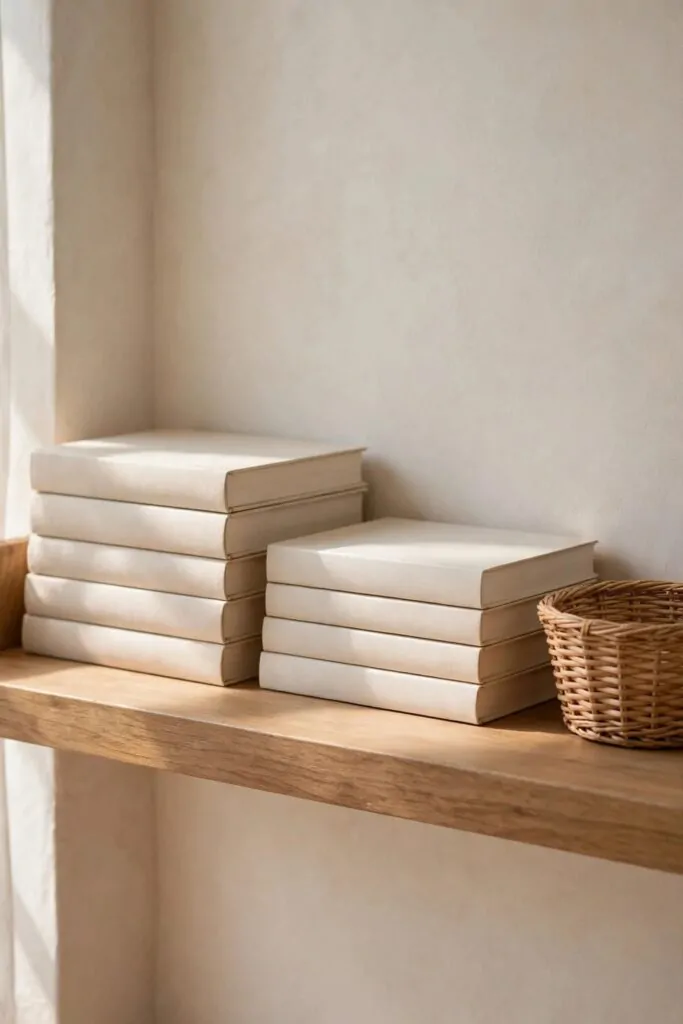
I turn tidy up time into a game for the shelves.
I set a small clock on the desk and I give us five minutes. My child picks up the books first and I take the loose papers. We race to see who can clear one shelf first.
The winner picks the next book we read. We both win when the shelf looks neat again.
I keep a small basket on the shelf for loose bits.
My child stacks the books neat on the shelf. I dust the wood with a soft cloth while my child works.
We sort the books by size on the shelf. Big books go on the left and small books go on the right. We leave one small gap so we can pull a book out fast.
A tidy shelf makes it easy to find the next book.
You can play the game once a week after lunch. Your shelf stays neat and your child learns where things live.
Typical cost $0 to $2.
27. Plan Your Week on a Paper Chart
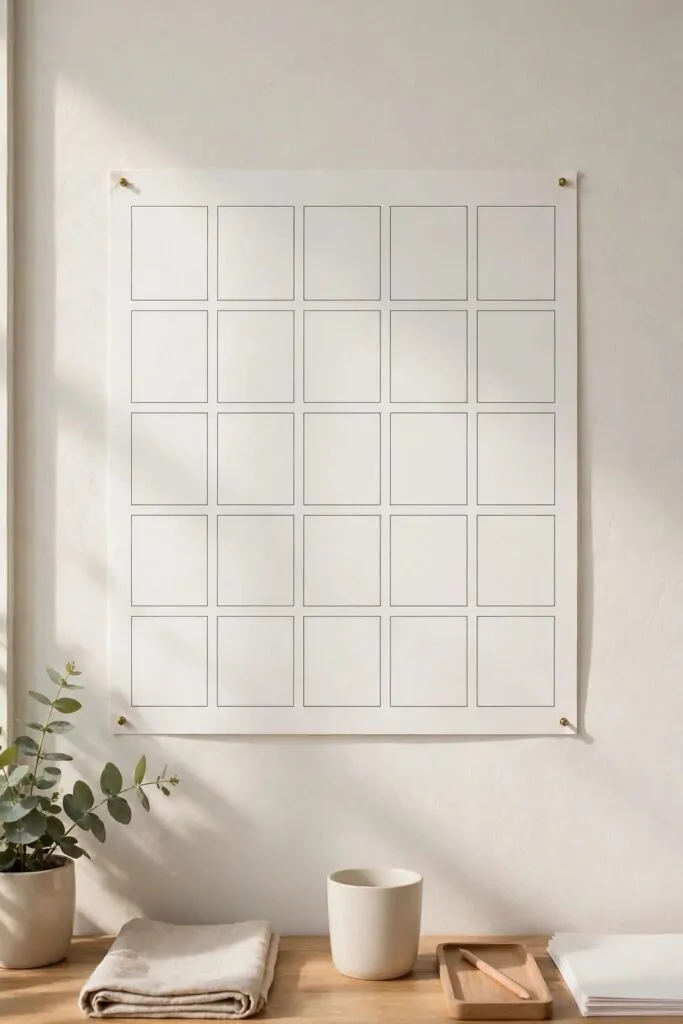
I pin a plain paper chart on the wall near our desk. I draw five small boxes for the five school days. I write one job in each box with a plain pencil.
My child picks the colour of the pencil for each day.
We look at the chart each morning before we start. We tick the box when the job is done.
A chart helps my child see the whole week at once. My child knows when reading day comes and when art day comes. I feel calm when the week is set out on the wall.
We keep the chart simple and we change it on Sunday night.
You can add a small star next to a hard job. A star makes a hard job feel a bit lighter.
I keep a spare chart in the drawer for a fresh week. I write the days in big letters so they are easy to read. We use the same chart all week and we start fresh each Monday.
A paper chart keeps our week in one place.
Typical cost $1 to $3.
28. Share a Favourite Book at Show and Tell
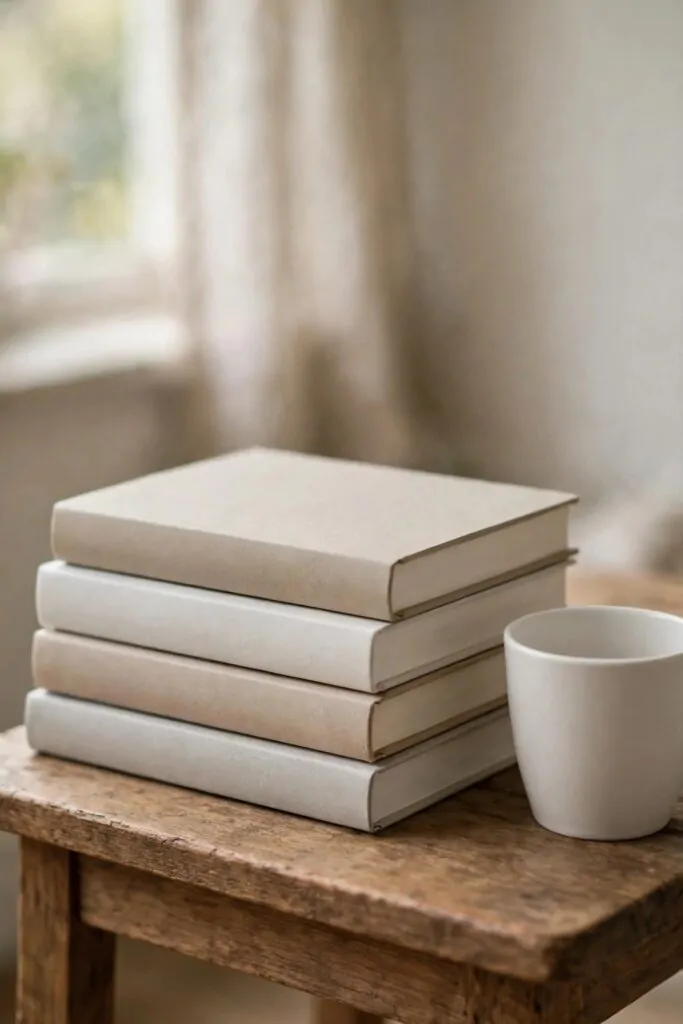
I let my child pick one favourite book for show and tell. We sit at the table and my child holds the book up for all to see.
My child reads the first page out loud in a clear voice. I listen and I ask one kind question about the tale. My child tells us why the book feels special.
A book we love is easy to talk about.
I ask my child to point at the best picture in the book. We look at the picture together and we talk about what we see.
My child tells the tale in simple words. I do not stop to fix every small slip. I let the tale flow and I smile at the good parts.
Show and tell builds brave talkers.
You can try it with a friend or a grandparent too. One book and one kind listener is all you need.
I keep the favourite book on the shelf where we can reach it. We read it again at bedtime when the day is done. A loved book never stays shut for long.
Typical cost $0 to $0.
29. Count Coins in a Simple Money Game
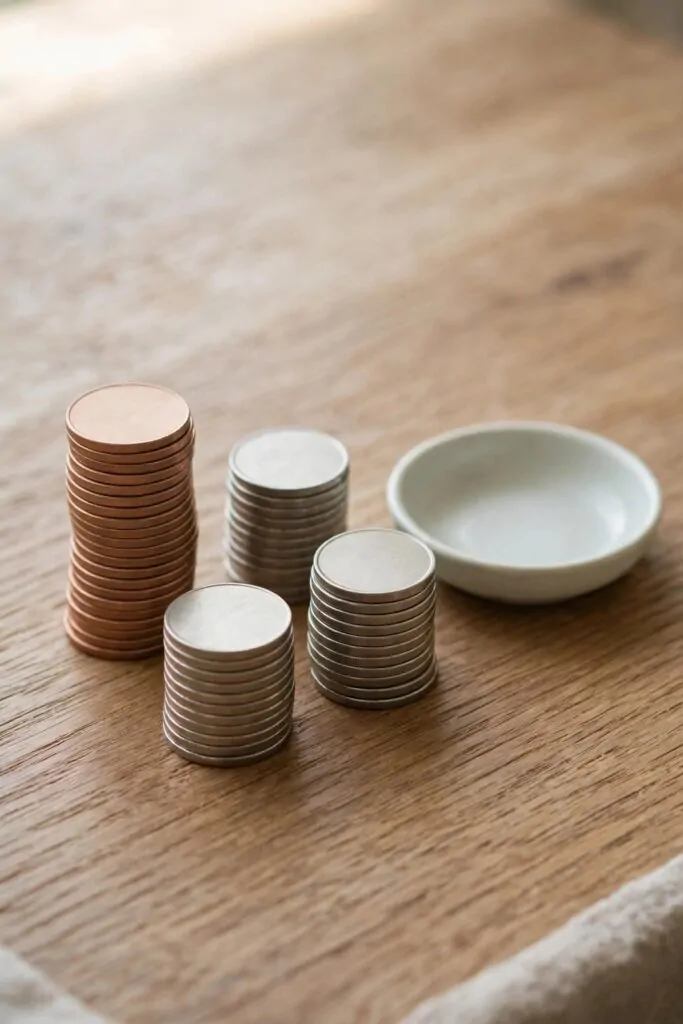
I play a simple money game with coins on the table.
I put ten coins in a small pile in the middle. My child counts them one by one and sets them in a neat row.
We sort the coins by size first. Big coins go on the left and small coins go on the right. Then we count each group and we add the two groups together.
Counting real coins makes the numbers feel true.
I ask my child to find three coins that add up to ten. My child tries a few pairs and I cheer each good try. We write the answer in a plain notebook when we find it.
You can play the game with pennies and small coins from a jar. A short game each day builds a strong feel for numbers.
My child smiles when the coins add up right.
I keep the coins in a small tin when the game ends. I put the tin on the shelf where my child can reach it. We play again tomorrow with a new pile.
Typical cost $0 to $0.
30. Lay Out Your Homeschool Activity Kit on the Table First
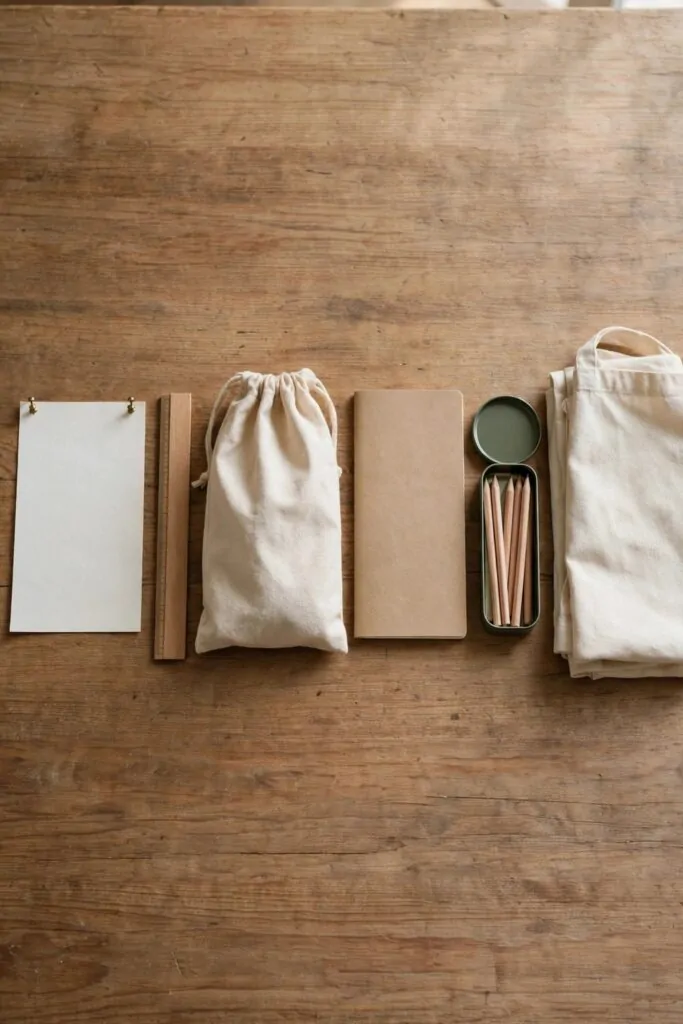
I put the plain paper wall chart down on the table first, then I lay the rest of the kit next to it. It rests at the left end of the row and tells me the plan for the week.
A short wooden ruler lies next to it in second place.
A soft fabric book bag sits third in the row. I keep our books inside it so they stay neat. I set the bag down soft so the books do not slide out.
A plain paper jotter sits fourth in the row where I can reach it fast.
A small tin of plain pencils sits fifth in the row. I keep the pencils neat inside the tin so I can find them fast.
A plain cotton work apron lies last at the right end of the row. I fold it neat and I lay it flat on the table. I put it on when we cook so my clothes stay clean.
The full kit looks tidy in its row on the table. I can see each thing at a glance and I feel ready to start.
A plain paper wall chart costs $2 to $4, a short wooden ruler costs $2 to $3, a soft fabric book bag costs $4 to $6, a plain paper jotter costs $2 to $4, a small tin of plain pencils costs $3 to $5, and a plain cotton work apron costs $4 to $7, for a total of $17 to $29.
I set the kit out on the table, I take a slow breath, and I feel glad our homeschool day is ready to begin.
| Idea | Main change | Typical cost |
|---|---|---|
| Sort Leaves by Their Shape | sort leaves by their shape | $0 to $1 |
| Play with Water and Cups in a Tray | play with water and cups in a tray | $2 to $5 |
| Build a Small Tower from Blocks | build a small tower from blocks | $4 to $8 |
| Take a Seasons Walk with a Notebook | take a seasons walk with a notebook | $0 to $2 |
| Cook a Simple Snack Together | cook a simple snack together | $3 to $5 |
| Play a Tidy Up Game for the Shelves | play a tidy up game for the shelves | $0 to $2 |
| Plan Your Week on a Paper Chart | plan your week on a paper chart | $1 to $3 |
| Share a Favourite Book at Show and Tell | share a favourite book at show and tell | $0 to $0 |
| Count Coins in a Simple Money Game | count coins in a simple money game | $0 to $0 |
| Lay Out Your Homeschool Activity Kit on the Table First | lay out your homeschool activity kit on the table first | $17 to $29 |
| Total | $27 to $55 |
| Idea | Main change | Typical cost |
|---|---|---|
| a plain paper wall chart | plan the week on a plain paper wall chart | $2 to $4 |
| a short wooden ruler | measure lines straight with a short wooden ruler | $2 to $3 |
| a soft fabric book bag | carry books to the table in a soft fabric book bag | $4 to $6 |
| a plain paper jotter | write notes down in a plain paper jotter | $2 to $4 |
| a small tin of plain pencils | keep pencils neat in a small tin of plain pencils | $3 to $5 |
| a plain cotton work apron | keep clothes clean with a plain cotton work apron | $4 to $7 |
| Total | $17 to $29 |
Keep Reading
If you liked these ideas, you will love these posts too
Each post has more simple ideas you can try at home this weekend.