21 Small Laundry Room Designs That Maximize Every Inch of Space

My laundry room is so small I can touch both walls at the same time.
I used to think that meant I could not have a nice laundry room. I thought small meant messy and tight and hard to use. But I was wrong.
My little room works hard now. Every wall has a job. Every gap holds something useful. And I can still move around in it.
You do not need a big room to wash clothes well. You just need smart picks that fit your space. This list shows you how I made my tiny room work.
I hope you find one or two ideas here that fit your home too. Small can still feel calm and neat.
Stack the Washer and Dryer to Free the Floor
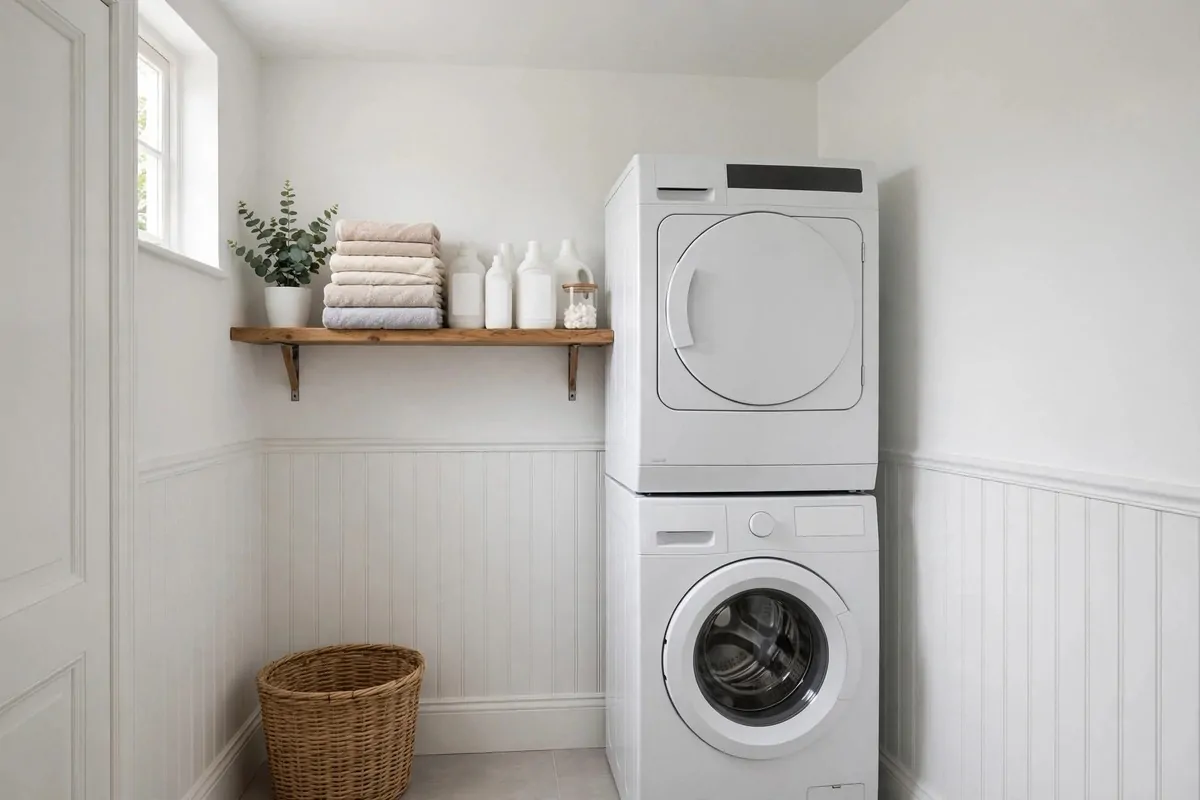
I stacked my washer and dryer and it changed my whole room. The floor felt bigger in one day.
Before that, the two machines took up a full wall. I had no room to turn around. Now one side of the room is free.
I can fit a small basket on the floor now. I can stand in front of the machines without bumping into the wall. It sounds small, but it helps a lot.
You need a stacking kit for your machines. It holds the dryer safe on top of the washer. Ask your store which kit fits your set.
My dryer is a bit high up now. I keep a small step stool close by. I use it to reach the buttons and to pull clothes out.
I put a shelf above the stack too. It holds folded towels and my soap. I reach up, grab what I need, and I am done.
Some people worry a stack will shake a lot. Mine is fine because the kit locks it in place. The floor is level, and that helps too.
Here is a quick look at how the two setups compare in a tiny room.
| Setup | Floor space used | Best for |
|---|---|---|
| Stacked machines | About half the width | Very small rooms |
| Side by side machines | Full width of both machines | Wider rooms with space to spare |
If your room is as small as mine, stacking is the easy win. You get your floor back. And the room feels less full right away.
A Wall-Mounted Folding Shelf That Folds Away
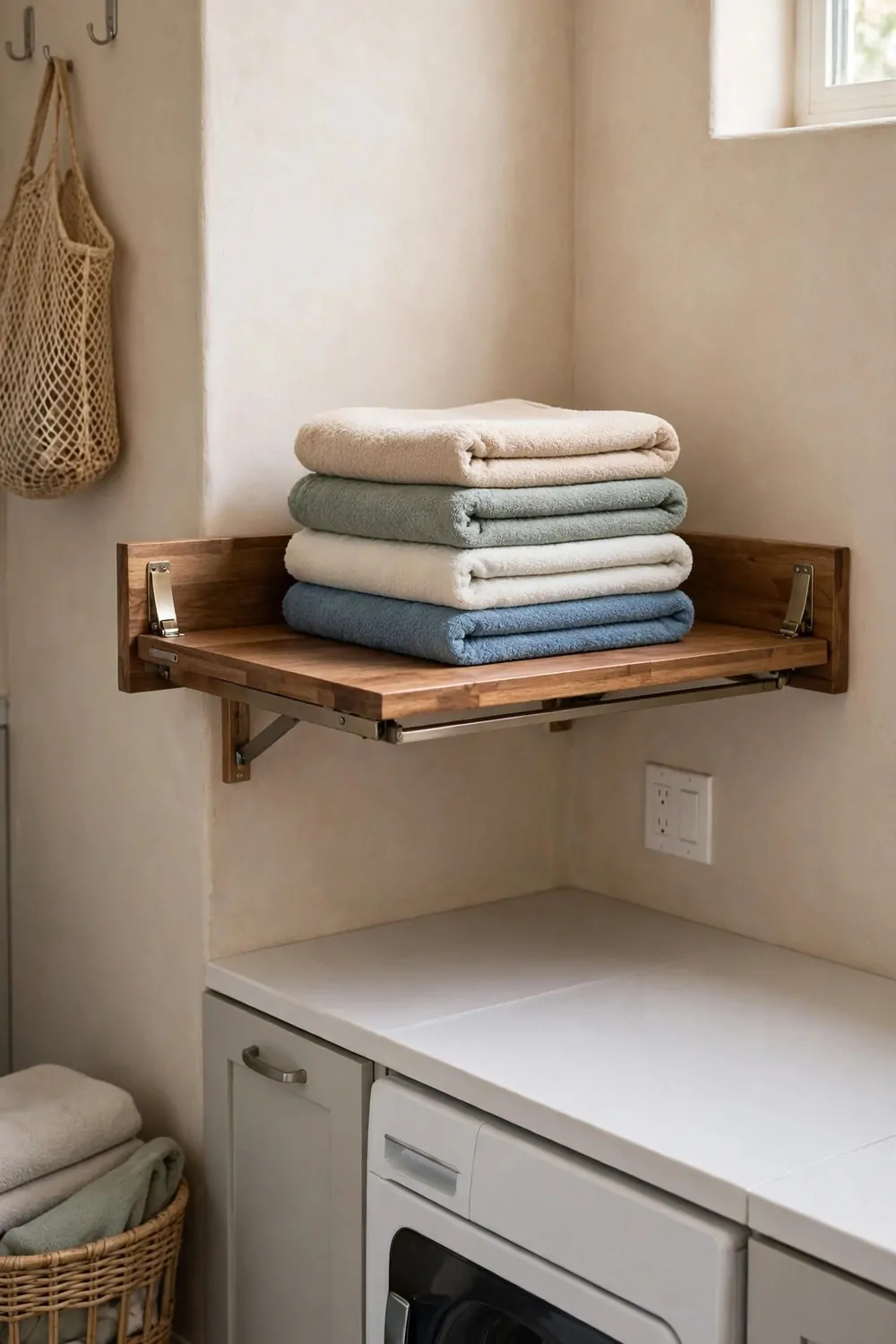
I love my wall shelf that folds away. I pull it down when I need it. I push it up when I am done.
It sits flat on the wall most of the time. You would not even know it is there. Then I fold it down and I have a flat spot to fold shirts.
My old room had no flat spot at all. I folded clothes on top of the dryer. Things fell off. It was a mess.
This shelf fixed that. I fold a full load on it. My towels stack up neat and my shirts stay smooth.
You can find one that screws right into the wall studs. Pick wood that feels strong and smooth. Mine is light wood, and it fits the room well.
I keep it at a height that feels good for my arms. Not too high. Not too low. I can stand close and fold without bending too much.
When friends come over, I fold it up. The room looks tidy again. No one can tell it is a work spot.
It also helps with small loads. I do not need a big table. Just this one shelf does the job.
If you have one free wall, try this first. It is cheap, it is simple, and it gives you a work top without taking floor space.
A Narrow Rolling Cart Between the Machines
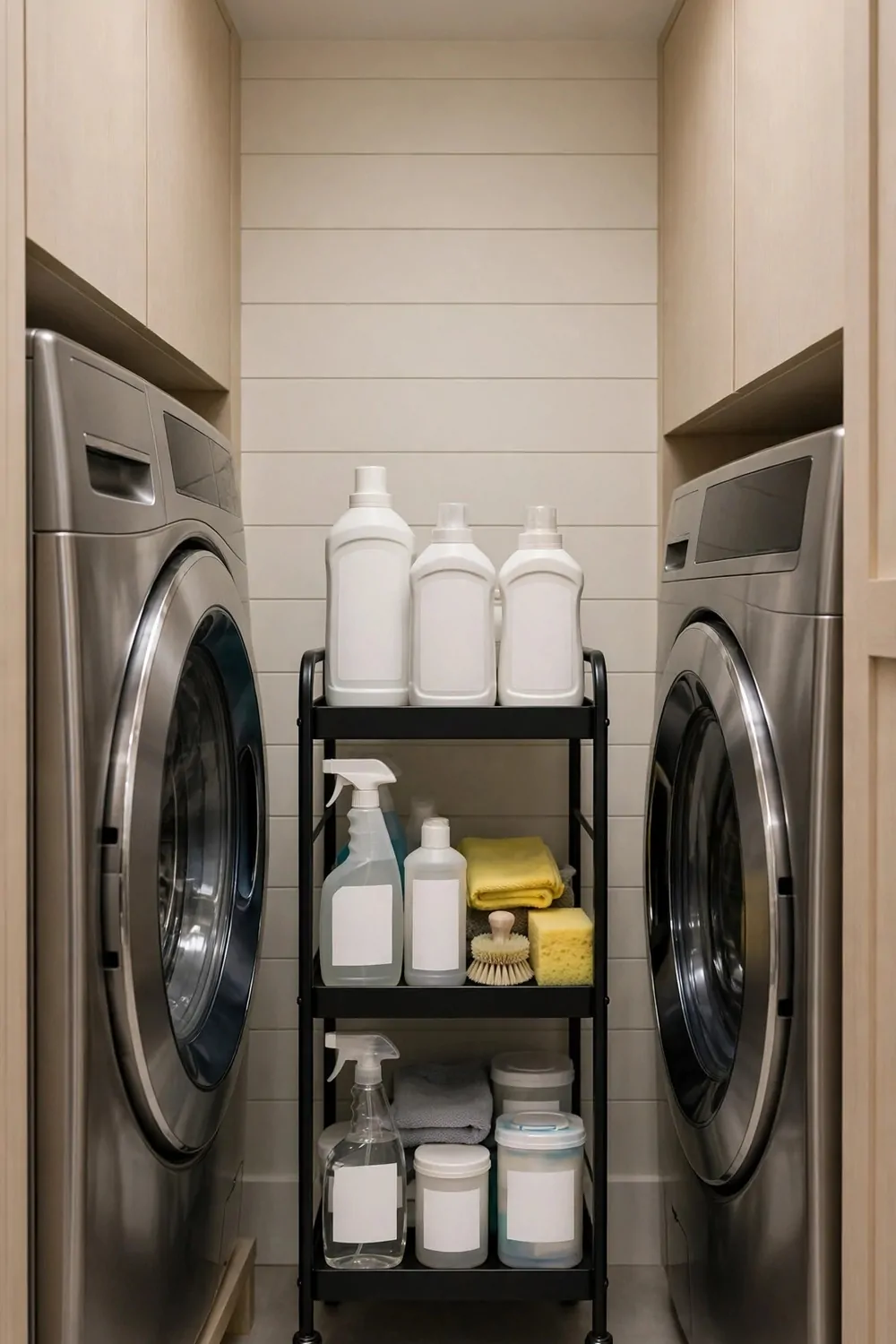
There was a thin gap between my machines. It was too small for a shelf. It was just dead space.
Then I found a narrow cart on wheels. It slides right into that gap. Now that dead space holds all my soap.
The cart has three little levels. The top holds my soap and stain spray. The middle holds cloths and small bits. The bottom holds extra bottles.
I pull it out when I need something. I push it back when I am done. It rolls smooth, and it never gets stuck.
I like that I can see all my bottles at once. I do not dig in a deep cupboard now. I just look down and pick what I need.
Measure your gap before you buy one. Mine is only a few inches wide. The cart fits with a tiny bit of room on each side.
Keep the tall bottles on the bottom level. That way they do not tip over when you roll the cart. Small bottles go on top.
It is one of those small buys that makes a big change. The gap was doing nothing before. Now it works hard for me.
If you have a gap like mine, do not leave it empty. Fill it with a cart and watch your clutter drop.
A Drying Rack That Folds Flat Against the Wall
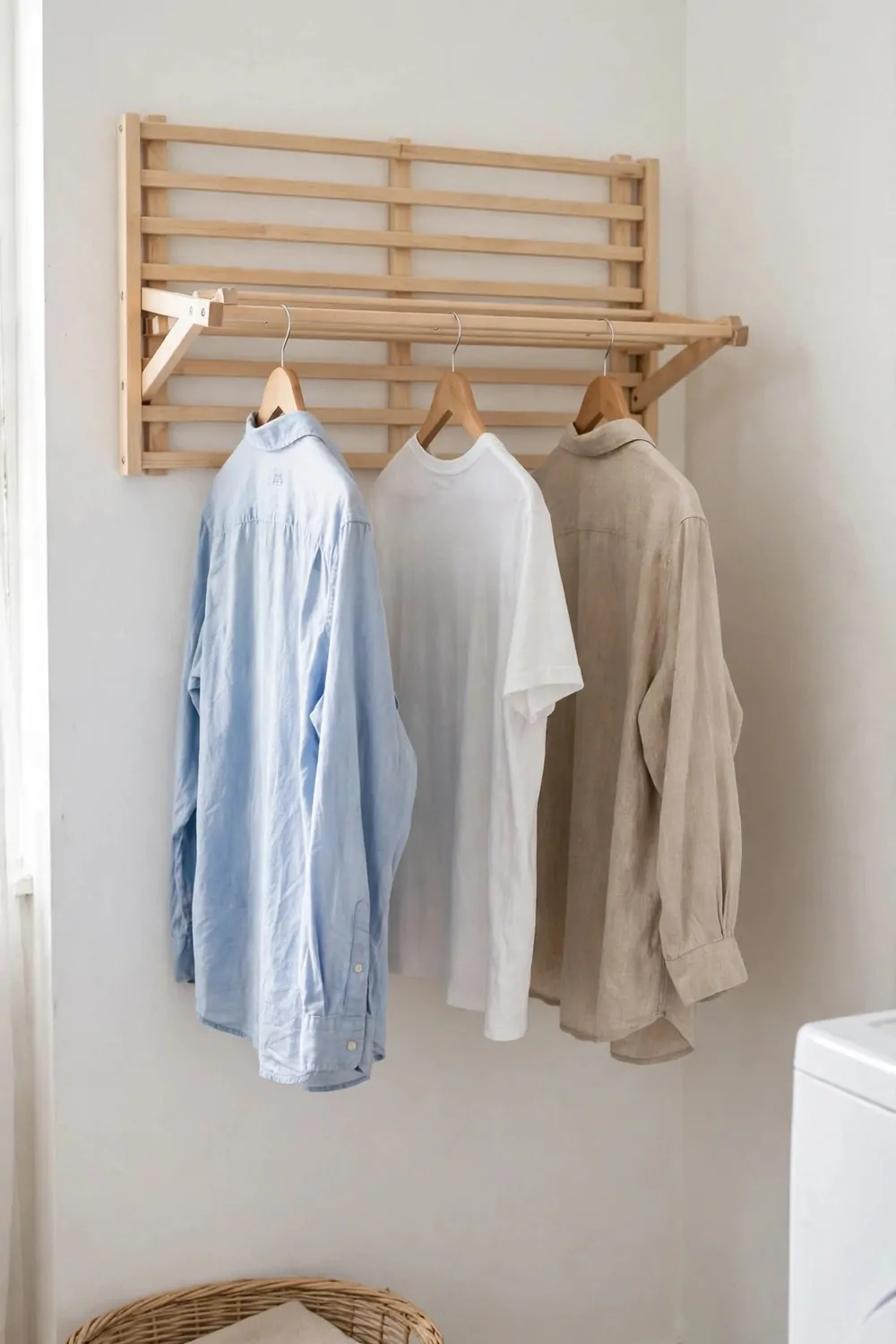
I do not have room for a big drying stand. It would block the whole floor. So I use one that folds flat on the wall.
It hangs on the wall like a flat frame. I pull the arms out when I have wet clothes. I hang shirts and small bits on it.
When the clothes are dry, I fold the arms back in. The rack sits flat again. The wall looks plain and tidy.
I use it most for shirts I do not want in the dryer. It also works for soft tops and light pants. They dry fast with a bit of air.
I put it near the machines so I can move wet clothes fast. I do not drip water across the room. I just turn and hang.
Pick a rack made of strong wood or metal. It needs to hold wet clothes without bending. Mine holds a full small load with no trouble.
Do not load it too heavy on one side. Spread the clothes out. That way they dry even and the rack stays level.
This is a great pick for a tiny room. You get a drying spot without losing your floor. And it looks nice on the wall too.
Open Shelves Above the Machines for Daily Bits
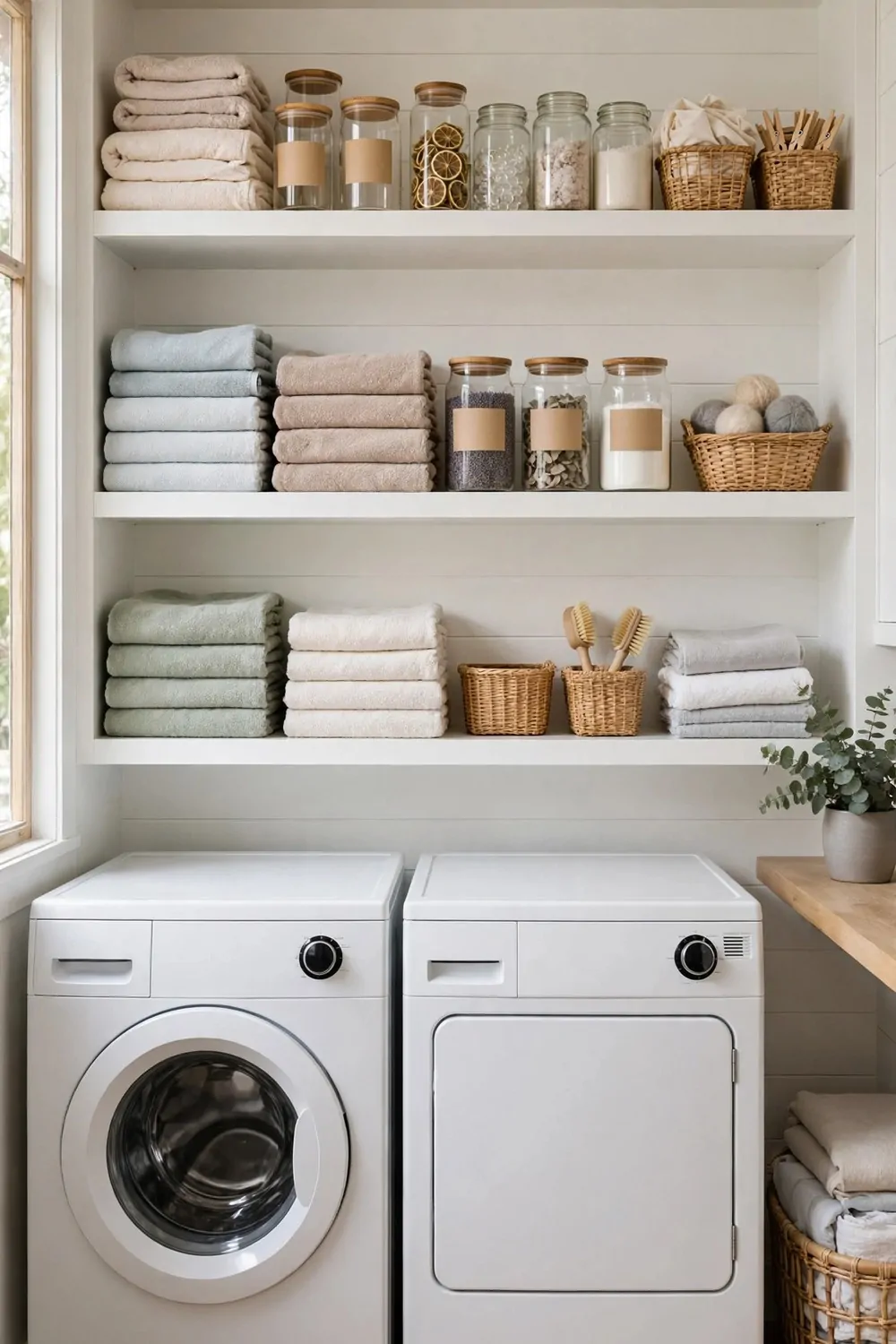
I put two open shelves above my machines. They hold the stuff I use every day. I can see it all in one glance.
The top shelf holds extra towels and a few jars. The lower shelf holds my soap, cloths, and a small basket. I reach up and grab what I need.
I like open shelves because I do not have to open doors. In a small room, doors can bump into you. Shelves just stay open and easy.
Keep the shelves neat, or they will look messy fast. I use small baskets to group things. One basket holds cloths. One holds small bits.
I keep heavy jars low so they are easy to lift. Light towels go up high. That way I do not strain my arms.
I wipe the shelves once a week. Dust builds up fast in a laundry room. A quick wipe keeps them fresh.
White shelves work well in my small room. They blend with the wall. They do not make the room feel dark or full.
If you add shelves, leave a little space above the machines. You need room to open the lids and load clothes. Measure first, then hang them.
Open shelves are simple and cheap. They turn dead wall space into useful storage. And they make the room feel more put together.
A Slim Pull-Out Tower for Detergent Bottles
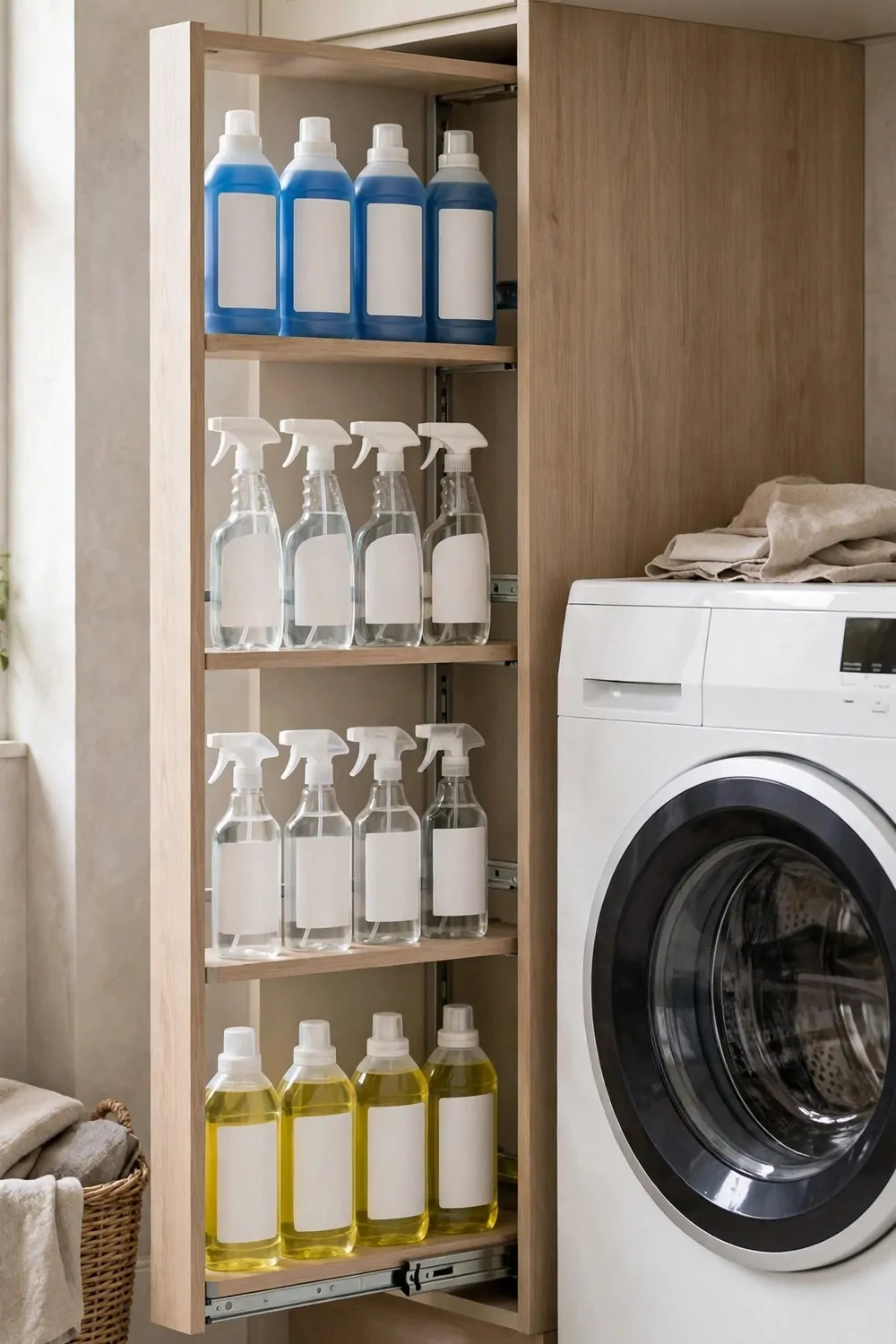
I have a slim tower that pulls out from beside my washer. It is thin, but it holds a lot. It is one of my best small-room picks.
The tower has tall sides so bottles do not fall. I line up my soap, softener, and stain spray in a neat row. I can see each label.
I pull it out with one hand. I grab what I need. I push it back in with my hip. It slides back smooth every time.
Before this tower, my bottles sat on top of the washer. They fell over a lot. They also made the top look messy.
Now the top of the washer is clear. I can set a basket there for a short time. The room looks calmer.
This tower fits in a gap you might think is too small. Mine is only a few inches wide. It still holds full-size bottles.
Keep the bottles you use most at the front. Put the extras at the back. That way you do not have to move things around.
I clean the tower once a month. Soap can drip and get sticky. A damp cloth does the job fast.
If you hate clutter on top of your machines, try a pull-out tower. It hides the bottles, but keeps them close.
Hooks and Rails on Every Spare Inch of Wall
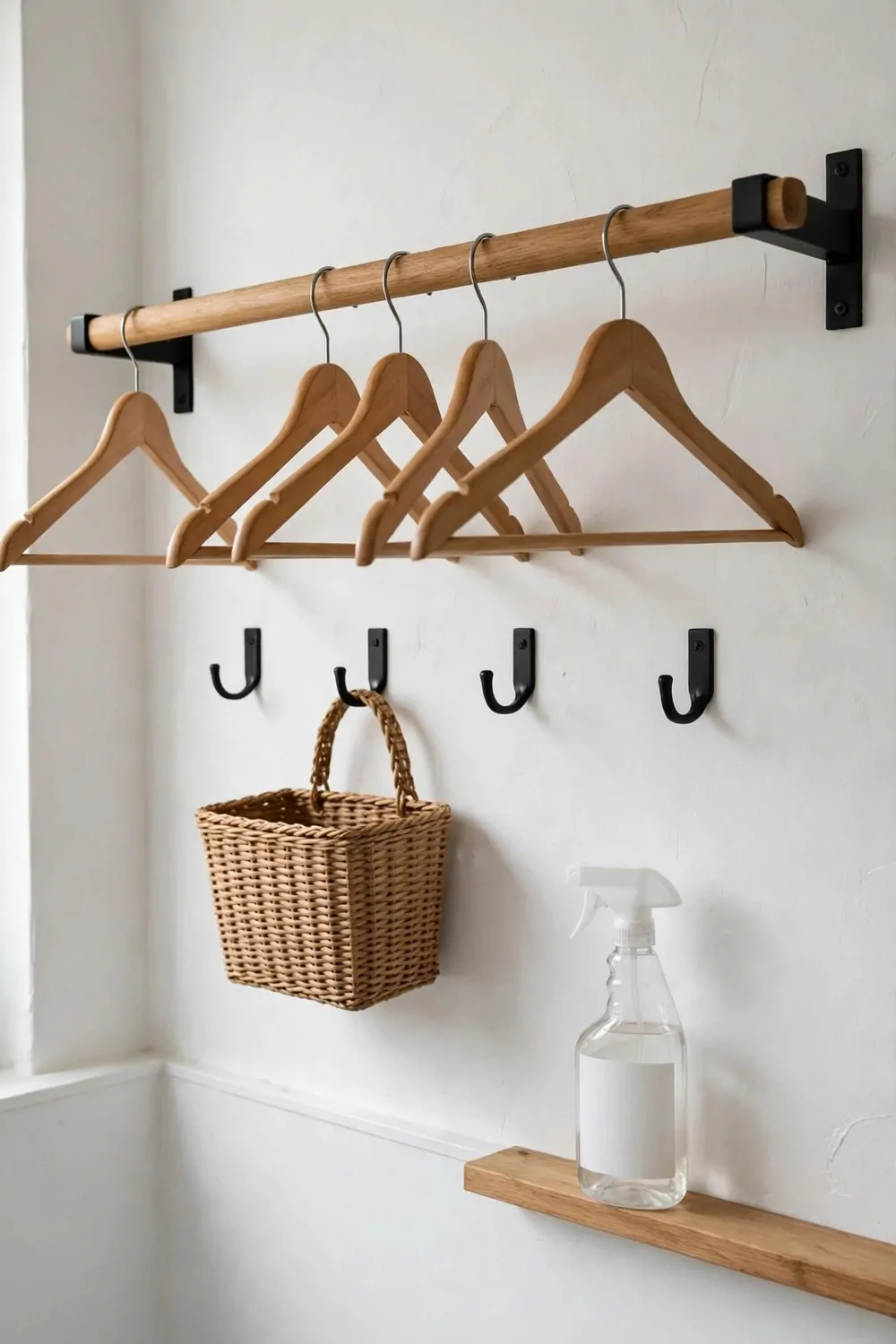
My walls do a lot of work now. I put hooks and a rail on every spare bit. It sounds like a lot, but it looks tidy.
I hang hangers on the rail. When clothes come out of the dryer, I hang them right away. They stay smooth and I skip extra ironing.
I use hooks for small things too. I hang a small basket, a spray bottle, and a cloth bag. They are off the floor and easy to grab.
I put a hook low for my kids’ small bits. They can reach it themselves. It helps them put things away without my help.
Do not put hooks too close together. Leave a little space so things do not tangle. I learned that the hard way with a bunch of hangers.
A wooden rail adds a warm touch to the room. It looks nice next to the white walls. It feels soft and homey.
I check the hooks now and then to make sure they are tight. Wet clothes can be heavy. A loose hook will pull out of the wall.
Start with one rail and a few hooks. See what you use most. Then add more where you need them.
Walls are free space in a small room. Use them well and your floor stays clear. That is the whole trick.
A Small Sink That Fits in a Corner
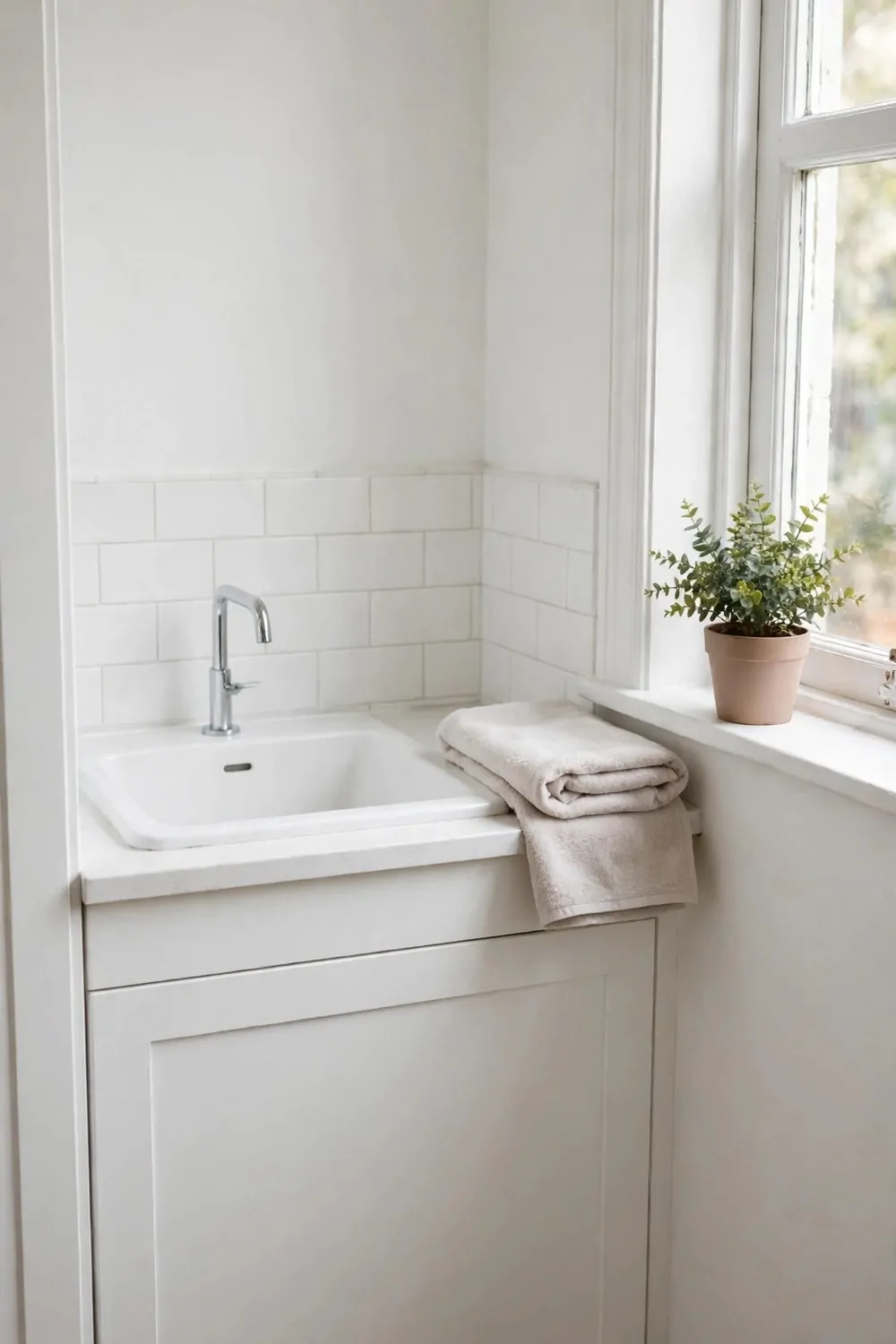
My corner sink is small, but I use it all the time. It fits in a spot that was doing nothing before.
I use it to soak stained shirts. I use it to rinse cloths. I use it to fill a small bucket. It saves me trips to the kitchen.
The sink is compact and white. It blends with the room. It does not stick out far, so I can still walk past it.
I keep a folded towel on the edge. I keep a small plant on the sill by it. Those two little touches make the corner feel nice.
I do not let the sink get full of clutter. I keep soap close by, but not too much. A clean sink is easier to use.
If you add a small sink, check your pipes first. A plumber can tell you if your corner will work. Mine took one short visit to set up.
I like that I can wash my hands right there too. After I handle dirty clothes, I do not have to walk far.
A corner sink is not for every tiny room. But if you have one dead corner, it can turn into your most used spot.
Baskets That Stack Up Instead of Spreading Out
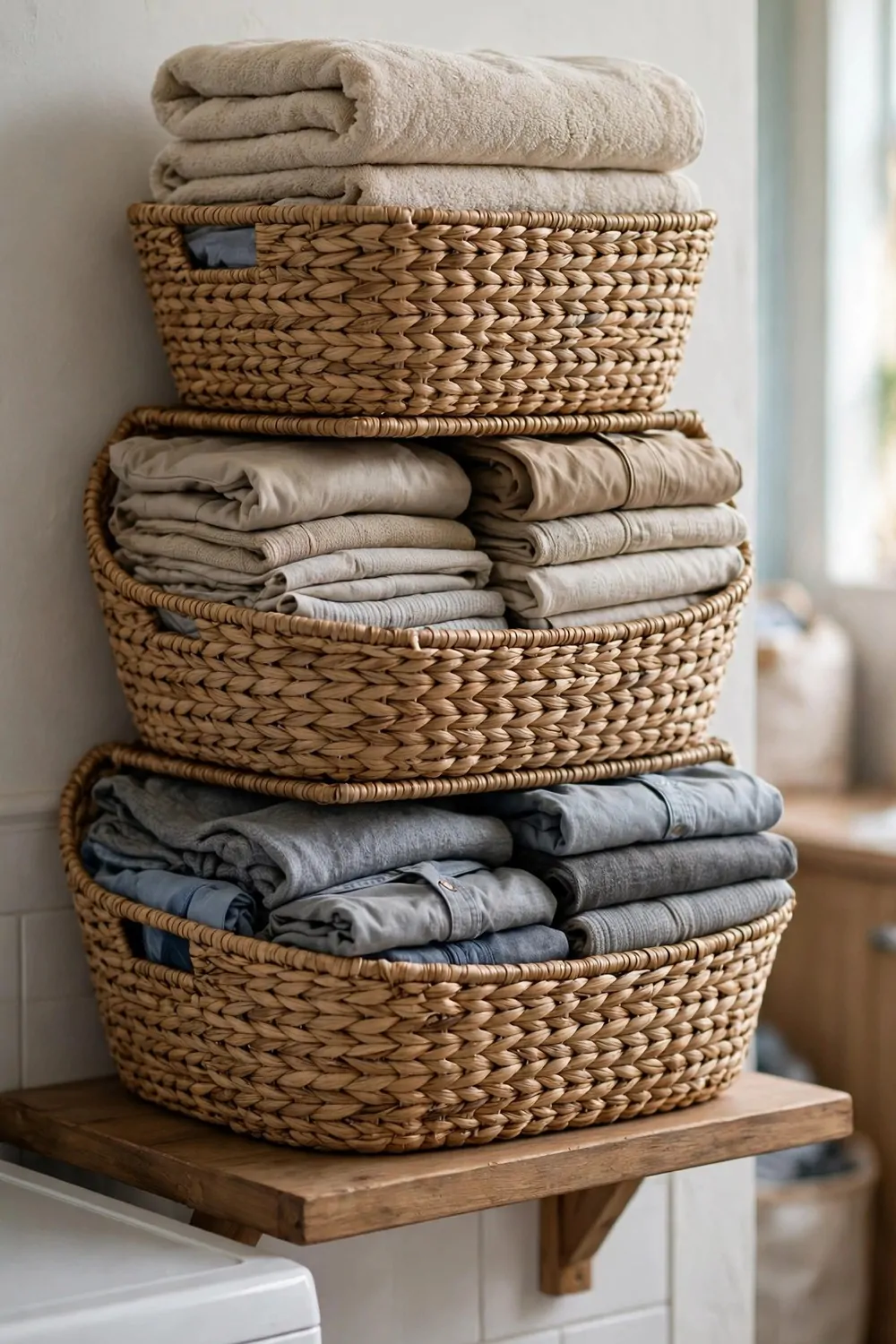
I used to have baskets all over my floor. They took up so much space. Now my baskets stack up high instead.
I use woven baskets that fit on top of each other. Each one holds a different sort. One for darks. One for lights. One for towels.
I put them on a shelf so they are off the floor. I can pull one down when I need it. I put it back when I am done.
Labels help a lot. I stick a small tag on each basket. My family knows where each load goes. It cuts down on mix-ups.
Do not stack them too high. If they get too tall, they can tip. I keep mine at three high, and that feels safe.
Woven baskets look soft and warm. They add a nice feel to the room. They are light too, so I can carry them with ease.
I wash the baskets out now and then. Dust and lint build up inside. A quick shake outside does the job.
Stacking up is the key in a small room. Go up, not out. Your floor will thank you for it.
A Pocket Door That Gives You Back the Swing Space
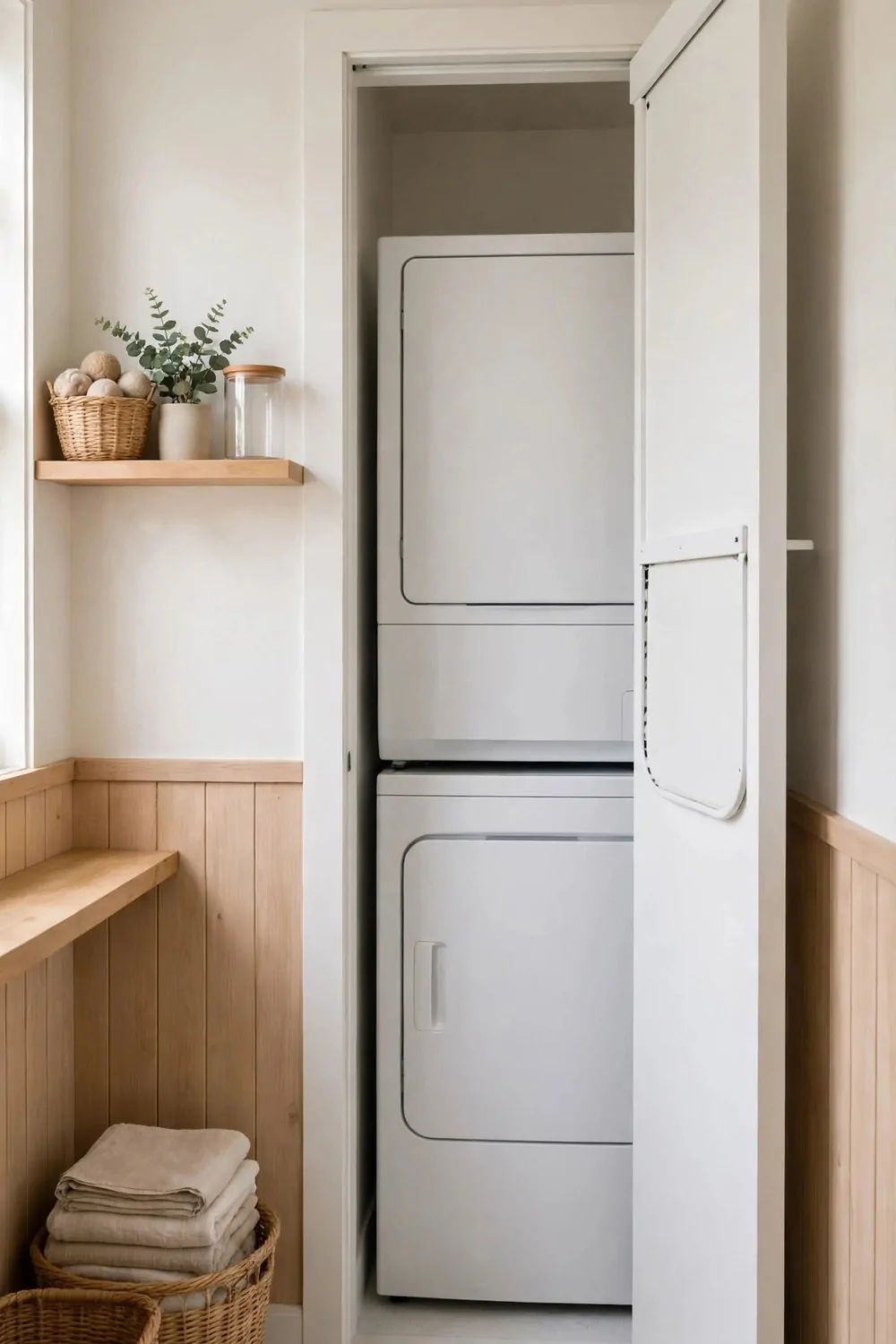
My old door swung into the room. It hit the machines. It blocked my path every time I opened it.
Now I have a pocket door. It slides into the wall. It takes up no floor space at all.
I can stand right where the door used to swing. I can set a basket there. I can move around with no door in my way.
The door slides smooth on its track. I push it with one finger. It feels light and easy, even when my hands are full.
It also looks clean and simple. When it is open, the room feels bigger. When it is shut, the mess hides away.
You need wall space for the door to slide into. My wall had room for it. A builder can tell you if yours will work too.
Keep the track clean so it slides well. Dust can build up in there. A quick wipe keeps it smooth.
A pocket door is a bigger change than a hook or a shelf. But in a tiny room, that extra swing space is worth it.
A Mirror and Light Colors That Open the Room Up
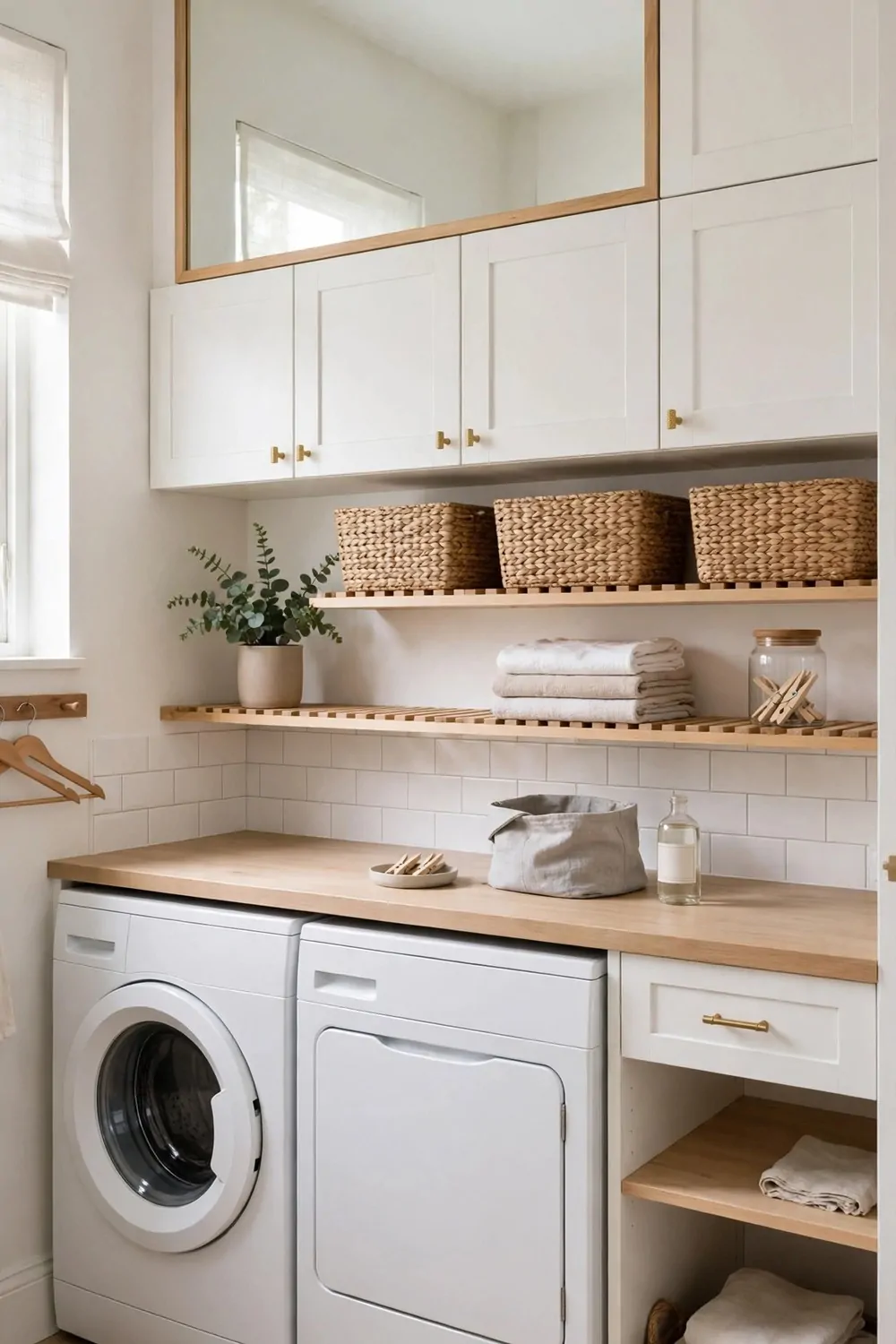
My room felt dark and tight before. Then I added a big mirror and light colors. It feels twice as big now.
The mirror sits on the wall across from the light. It bounces light around the room. The whole space feels bright and airy.
I picked a simple mirror with a thin frame. It does not take over the wall. It just adds light and a bit of depth.
Light paint helps too. I used soft white on the walls. My shelves are light wood. Nothing feels heavy or dark.
I keep the mirror clean. A few spots can make it look dull. A quick wipe with a cloth brings back the shine.
Do not hang the mirror where it will get splashed a lot. Mine sits away from the sink. It stays clear and dry.
Light colors also make it easier to see what you are doing. I can spot stains on clothes fast. I can find small bits without a search.
You do not need to knock down walls to feel more space. A mirror and pale colors can do a lot. My tiny room proves it.
An Ironing Board That Hangs on the Door
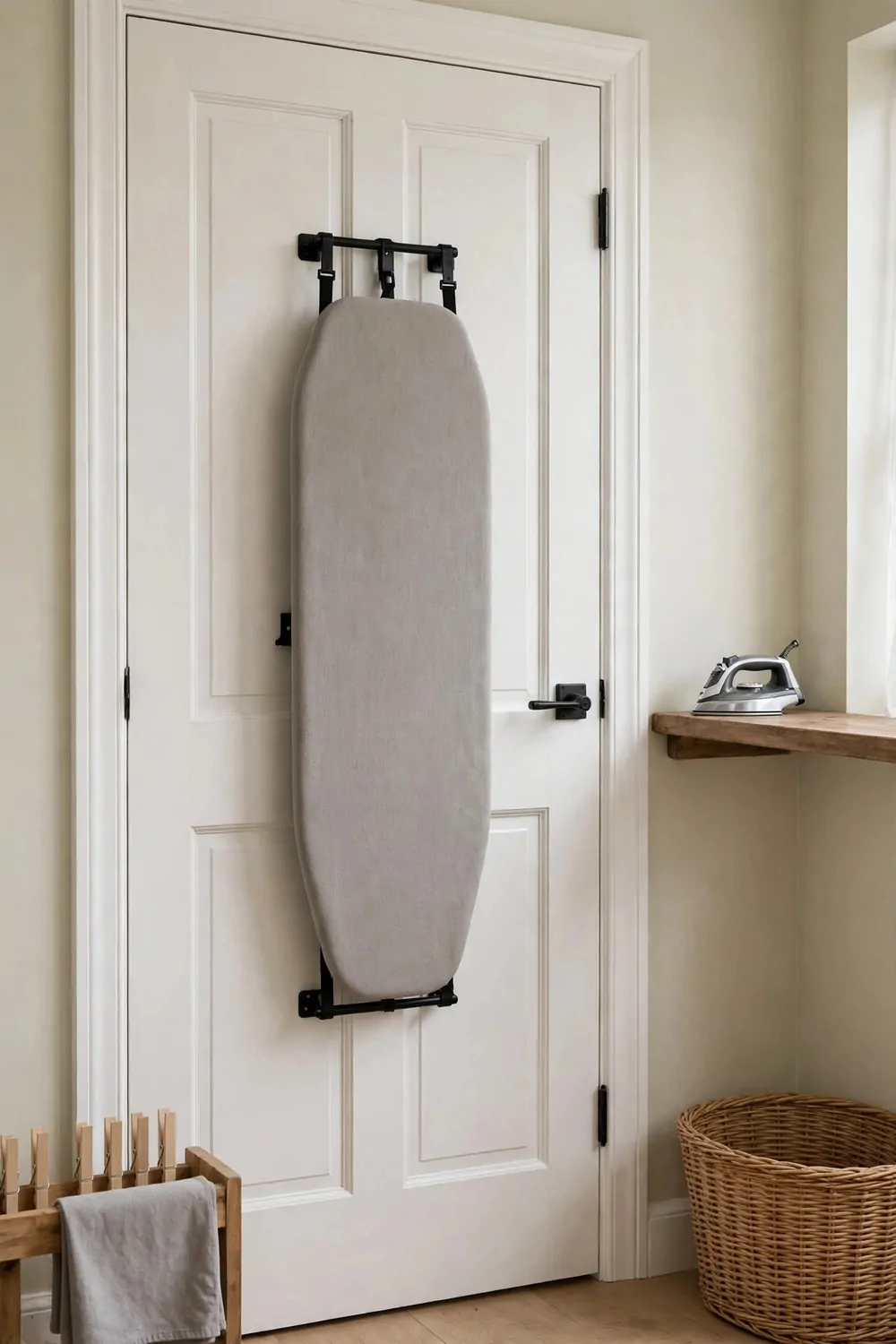
I used to keep my ironing board leaning in a corner and it always fell over. It took up floor space I did not have. Then I hung it on the back of the door and the whole room felt bigger in one minute.
A door ironing board folds flat against the door when you are not using it. You barely notice it is there. It stays out of your way while you load the washer and sort clothes.
You just unhook it when you need it. It drops down in a few seconds. I love that I do not have to drag it out of a closet or move a pile of stuff first.
Put a small hook beside it for the iron cord. That keeps the cord from tangling around other things. A tiny shelf nearby holds the iron itself when it cools down.
This trick works best on a solid door. A thin hollow door can wobble a bit when you press hard. I put a small felt pad behind the board so it does not rattle when the door moves.
My door board is narrow, and that is fine for my small room. It handles shirts and pillowcases with no trouble. For big tablecloths I just iron them in two parts and move them along.
If your door opens into the room, check the board clears the machines when it swings. Mine swings free with just enough room. I measured it once and never thought about it again.
Keep a small spray bottle on the shelf too. A quick mist helps wrinkles relax fast. You will find you iron more often when the board is this easy to reach.
A Countertop Over Front-Load Machines
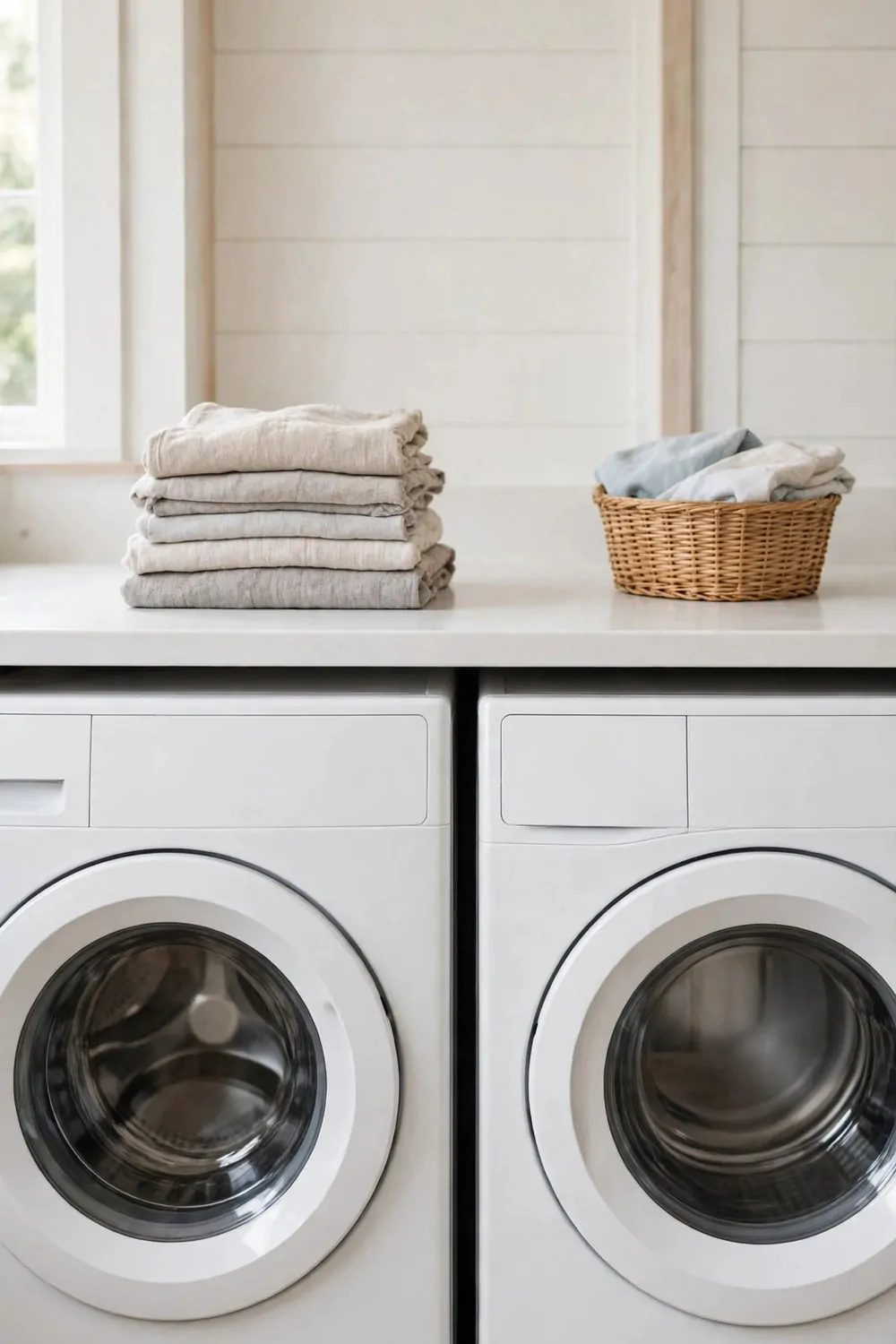
Front-load machines sit at the same height, and that flat top is wasted space. A simple countertop across both of them turns it into a work spot. I fold clothes right there now instead of carrying them to the bed.
You can buy a ready-made board or have a piece of wood cut to fit. Mine is just plain white and wipes clean with a damp cloth. It does not need to be fancy to work well.
Measure the width across both machines first. Leave a tiny gap at the sides so the machines can shake a little during the spin cycle. A tight fit will buzz and rattle, and that noise gets old fast.
I keep a small basket on one end for socks and little things. The middle stays clear for folding. That clear middle is the whole point, so I guard it like it is gold.
A countertop also hides the gap between the two machines. Socks used to fall down that gap all the time. Now nothing falls, and I do not have to fish things out with a ruler anymore.
If you rent, pick a board that just rests on top with no screws. You can lift it off when you move. Put a thin non-slip mat under it so it stays put while you work.
Wipe it down once a week and it stays fresh. Detergent drips wipe off easy if you catch them early. I keep a small cloth right on the counter for that.
This one change made my laundry days feel calmer. I fold as clothes come out of the dryer. The pile never grows into a mountain on the floor again.
You do not need a big room for a folding spot. You just need the flat space you already have. Two machines side by side give you that for free.
A Laundry Closet Tucked Under the Stairs
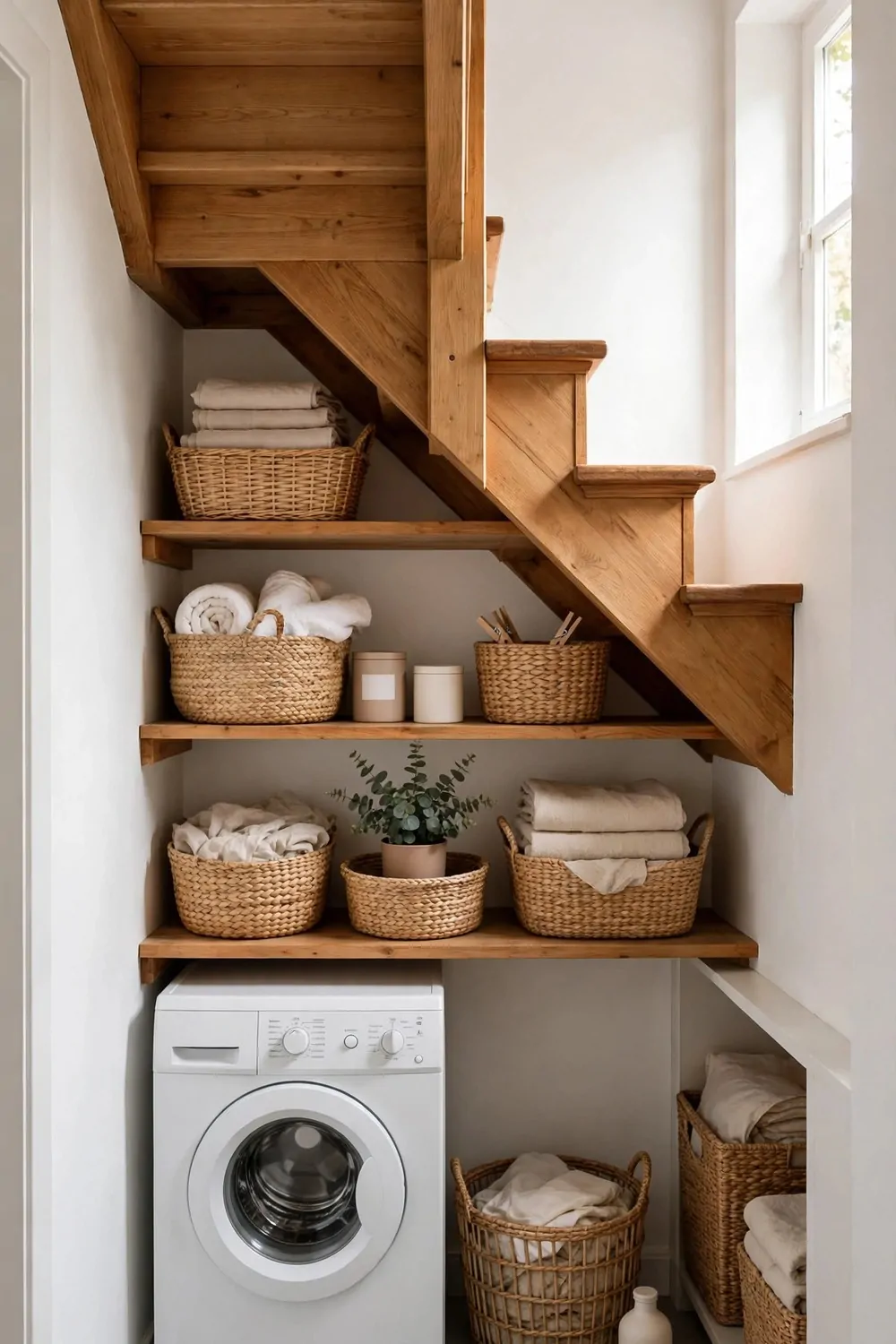
The space under the stairs sits empty in so many homes. It is low and odd shaped, but a small washer fits there just fine. I turned mine into a tiny laundry closet and it works better than I hoped.
You need a compact washer for this spot. A full-size one may not fit under the low part of the stairs. Measure the height at the lowest point before you buy anything.
Put the washer on the tall side if you can. That leaves the low side for shelves and baskets. I keep detergent on a low shelf where I can reach it without bending too far.
A curtain or a small folding door hides the whole nook. I like a light curtain because it is soft and cheap. When guests come, I just pull it shut and the room looks tidy.
Light matters a lot in a stair nook. It can feel dark and cramped fast. I stuck a small battery light under the top step and it changed everything.
Vent the dryer well if you use one here. A stair nook gets warm quick. My little vent hose runs to a small window nearby and the air stays fresh.
Keep only what you need in this spot. One basket for dirty clothes and one for clean ones is enough. Extra stuff will crowd the narrow space and make it hard to move.
I love that this nook uses dead space. The stairs were just holding air before. Now they hold a whole laundry setup, and the rest of my home stays free.
A Rail Above the Machines for Hangers
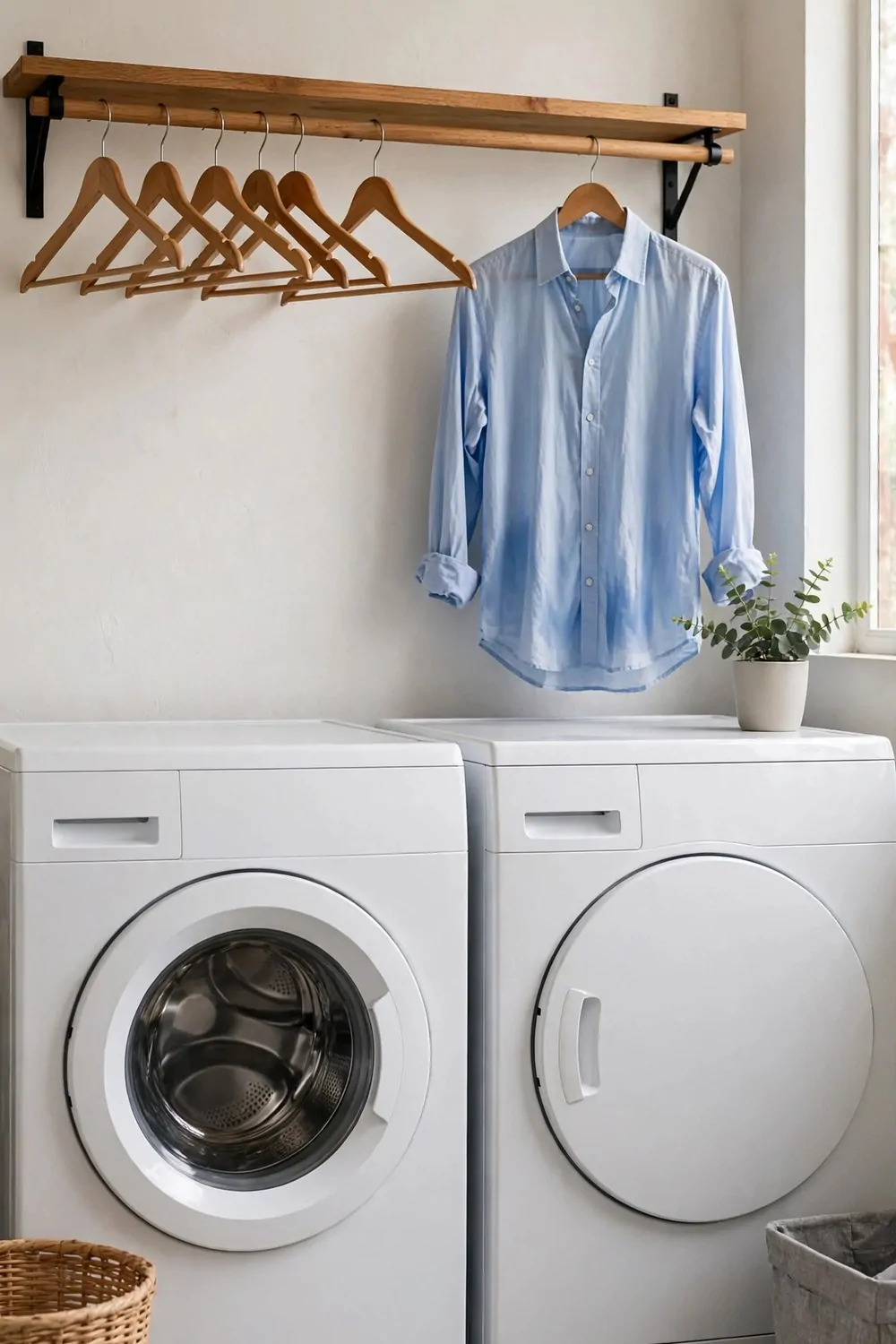
Shirts come out of the dryer and need a hanger right away. If the hangers live in another room, the shirts end up in a pile. A rail above the machines fixes that in the simplest way.
Mount a short wooden rail or a metal bar on the wall above the washer. Hang your empty hangers there so they are always in reach. I grab one the second a shirt comes out.
Hang wet shirts on the rail too and let them air dry. They dry with fewer wrinkles this way. I shake each shirt once, hang it up, and smooth the collar with my hand.
Keep the rail short and strong. A long rail sags in the middle when it holds wet clothes. Mine is about as wide as the washer, and that size holds plenty for one load.
Put the rail high enough that hanging shirts do not touch the machines. Mine sits just above my head height. Shorter folks in the house can still reach it with a small stretch.
I keep a few wooden hangers and a few plastic ones mixed together. The wooden ones hold heavy shirts better. The plastic ones are light and fine for thin tops.
This rail also holds clothes I want to wear tomorrow. I hang tomorrow’s outfit there at night. It saves me a rushed morning search through the closet.
A rail costs very little and takes one afternoon to put up. You just need two strong brackets and a level. It is one of the easiest wins in a small laundry room.
A Tiny Drying Line Across the Ceiling
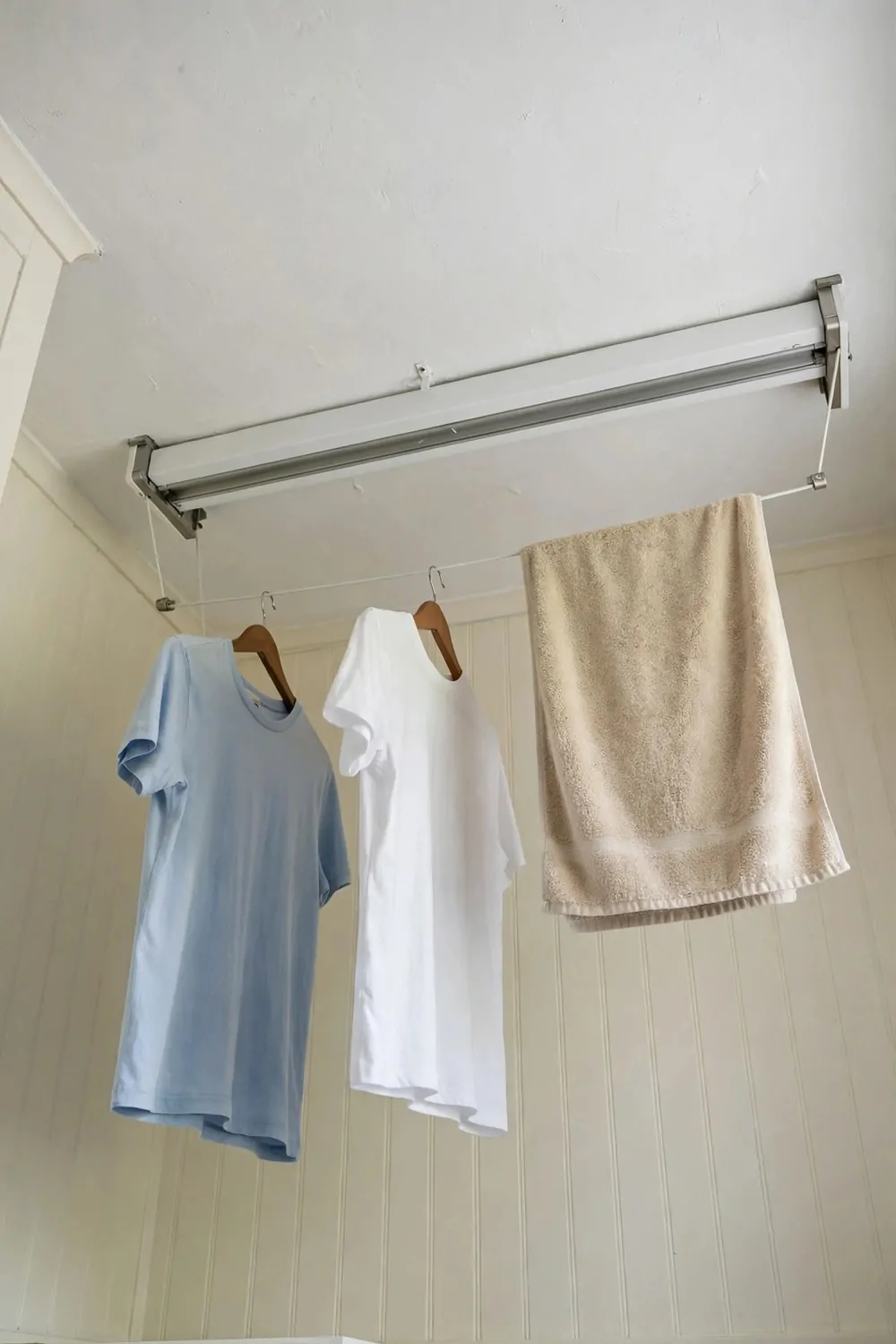
A drying line across the ceiling uses air space no one else wants. Warm air rises, so clothes up high dry faster than you think. I hang two shirts and a towel there and they are dry by morning.
A pull-down line is best for a small room. You pull it down to hang clothes, then push it back up out of the way. When it is up, you can walk under it with no trouble.
Do not hang heavy wet jeans on a thin line. The line will sag and drip on the floor. I save the ceiling line for light things like shirts, towels and pillowcases.
Put a small tray or a towel on the floor under the line when you first hang wet clothes. A few drips always fall in the first hour. The tray catches them and your floor stays dry.
I run the line from one wall to the other across the narrow part of the room. That short span stays tight and strong. A long span across a wide room would droop too much.
Check the ceiling hooks once a month. Give them a gentle tug to make sure they are still firm. A hook that loosens will drop clothes on the floor, and wet clothes on the floor are no fun.
This line is a lifesaver on rainy days. I cannot hang clothes outside when it rains. The ceiling line gives me a dry spot indoors that costs no floor space at all.
Keep the line clean with a quick wipe now and then. Dust settles on it just like any shelf. A clean line means clean clothes, and that is the whole point.
A Pegboard Wall for Small Tools and Supplies
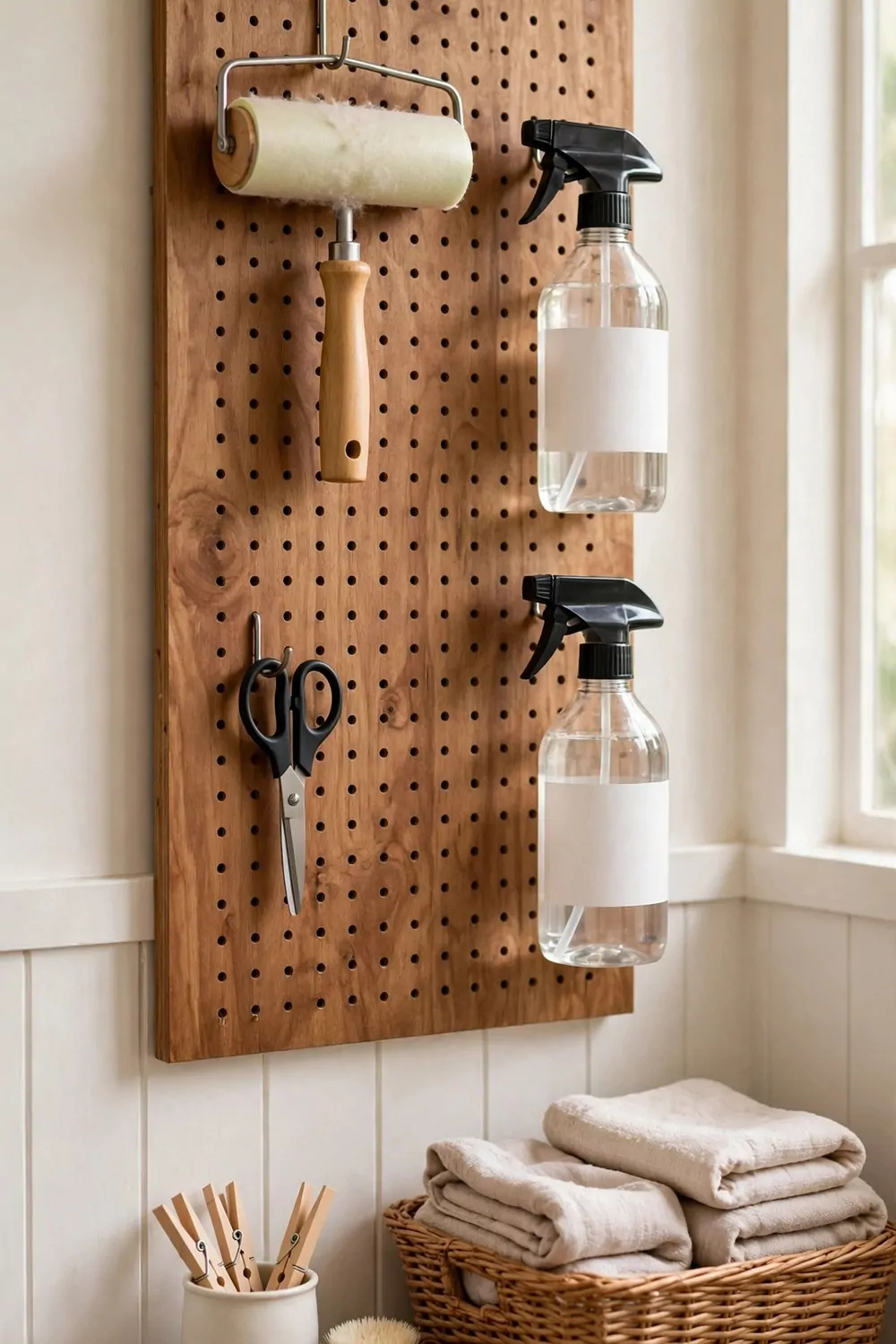
Small laundry tools get lost in drawers. The lint roller ends up under a pile and the scissors vanish. A pegboard on the wall keeps them all in sight and in reach.
You can hang hooks, small baskets and clips on a pegboard. I put my lint roller on one hook and my stain spray on another. Everything has its own spot now.
Move things around any time you like. That is the best part of a pegboard. If a hook is in the wrong place, you just lift it out and put it somewhere better.
Keep heavy bottles on the lower hooks. Light things like clothespins can go up high. I learned that the hard way when a full bottle slid off a high hook and splashed the floor.
Paint the pegboard the same color as your wall if you want it to blend in. Mine is a soft white and it looks calm, not busy. A bright color works too if you like a fun pop.
I keep a tiny pair of scissors on the board for cutting tags and loose threads. I also keep a small brush for scrubbing collars. They are small tools, but I reach for them every week.
Label nothing and let the shape of each tool show you where it goes. Your eyes learn the pattern fast. After a week you will grab things without even thinking.
A pegboard turns a blank wall into storage. In a small room, every wall counts. This one wall now holds a dozen little things that used to clutter my counter.
Sorting Hampers That Slide Under a Shelf
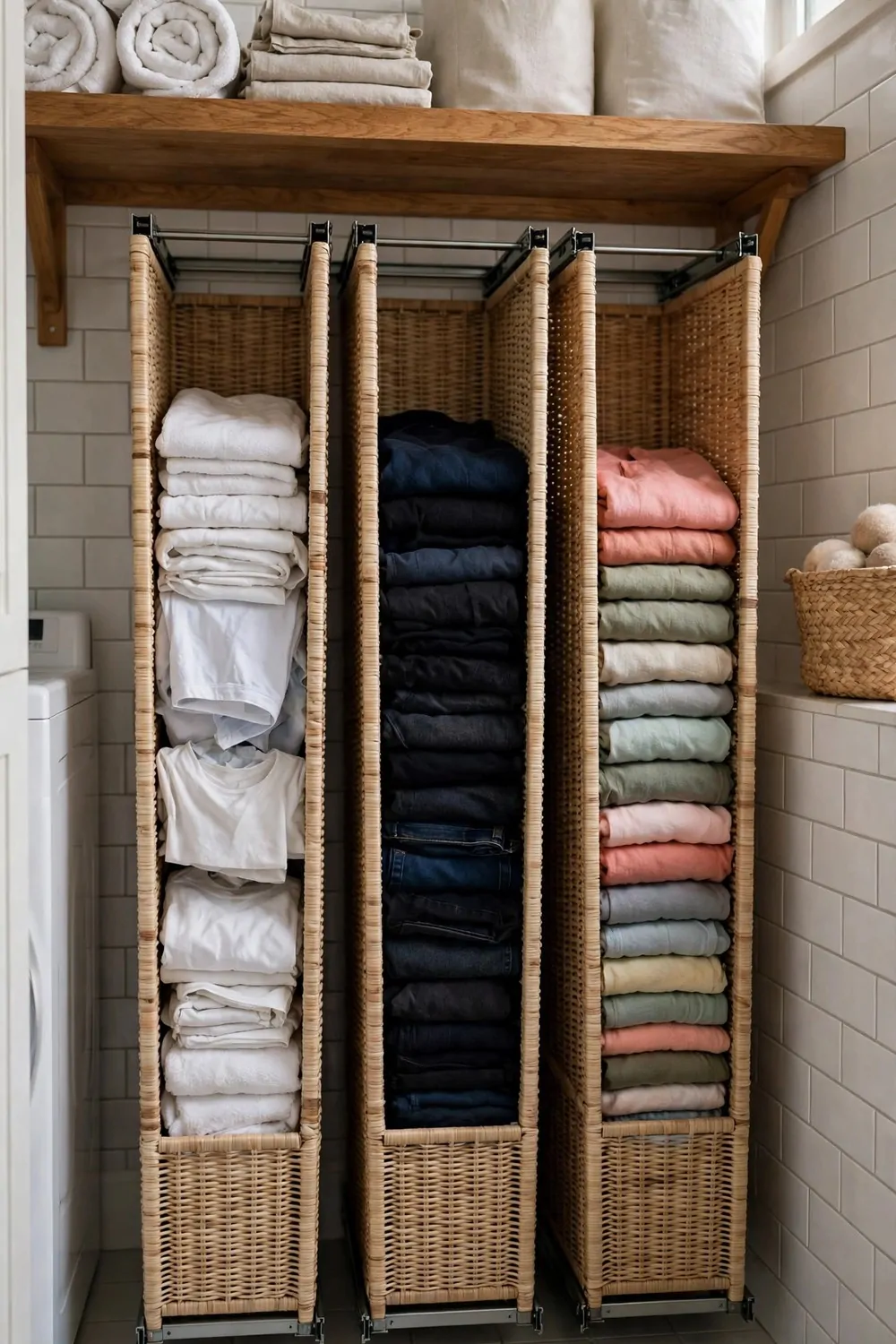
Sorting clothes takes time when you do it all at wash time. Slim hampers under a shelf let you sort as you go. Lights go in one, darks in another, towels in the third.
The hampers slide out like drawers when you need them. You toss clothes in as you change. When one is full, you know it is time for that load.
Pick hampers that are tall and narrow, not wide and short. Narrow ones fit under a shelf in a small room. Wide ones eat floor space you do not have.
Label each hamper with a simple tag. I wrote lights, darks and towels on small cards and tied them on with string. My kids can sort their own clothes now with no guessing.
A shelf above the hampers holds detergent and a small basket for socks. The shelf keeps the tops of the hampers clear. Nothing piles up on top and blocks the slide.
Wash one hamper at a time and the system keeps itself going. You never face a giant mixed pile again. Each load is already sorted and ready to wash.
Here is a quick look at how three simple setups compare, so you can pick the one that fits your room best.
| Setup | Best for | Space it needs |
|---|---|---|
| Three slim hampers | Lights, darks and towels | One narrow shelf bay |
| Two wide hampers | Lights and darks only | A wider wall or closet |
| Stacked sorting bags | Very tight corners | One small vertical slot |
Empty the hampers the same day you wash. A clean hamper invites clean habits. A full one just sits there and starts to smell, and no one wants that.
This little system saves me time every single week. Sorting happens in seconds, spread out over days. Wash day feels lighter because the hard part is already done.
A Foldable Step Stool for the Top Shelf
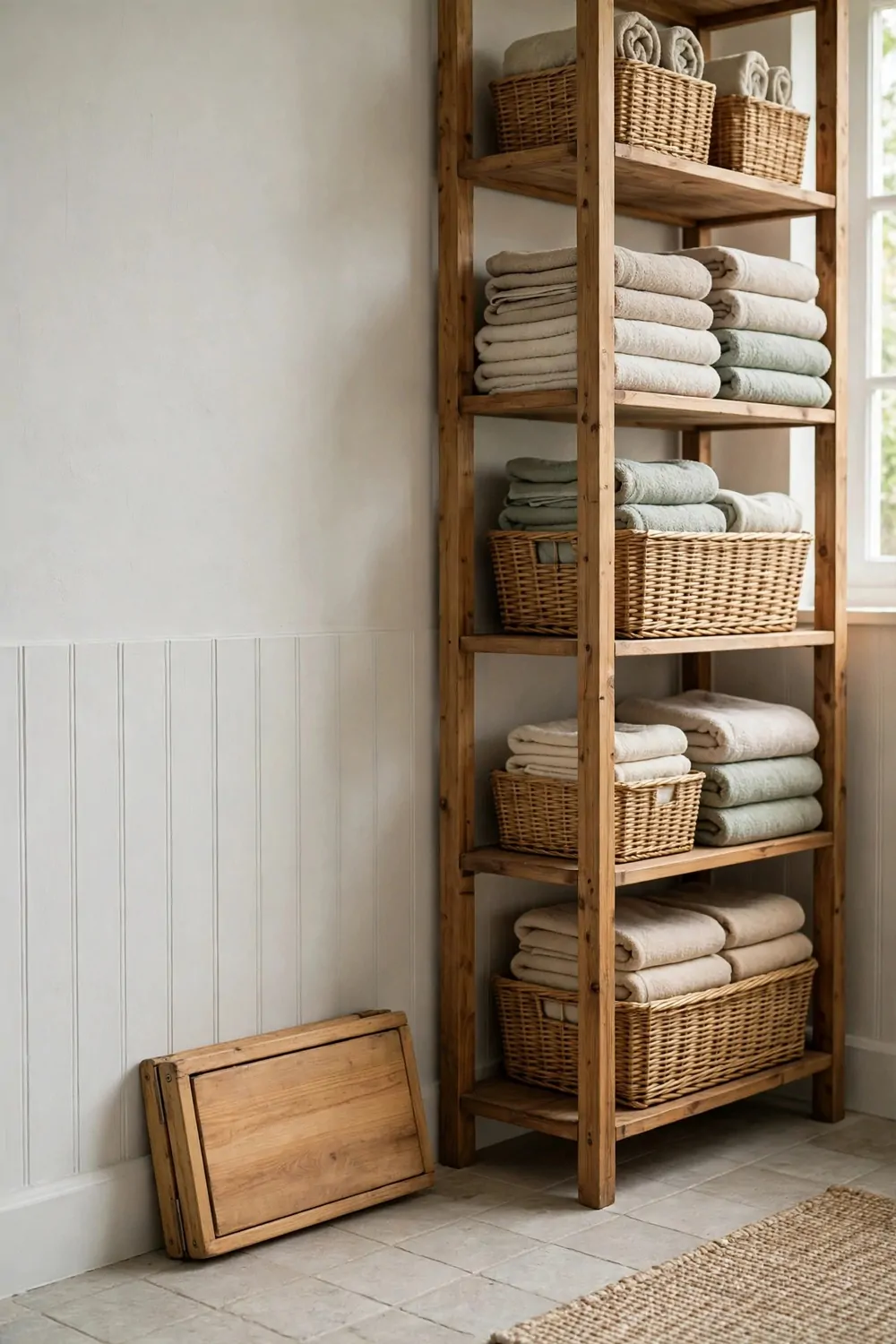
Top shelves hold things I use once a week, like extra detergent and spare cloths. I cannot reach them without help. A foldable step stool gives me that help and then folds away flat.
Keep the stool leaning against the wall near the tall shelf. It takes up almost no room when it is folded. I slide mine into a thin gap between the shelf and the wall.
Pick a stool with a wide flat step, not a narrow round one. A wide step feels safe under your feet. I stand on mine with wet hands sometimes, so grip matters a lot to me.
Look for rubber feet on the bottom. Rubber stops the stool from sliding on a smooth floor. My floor is tile, and the rubber feet keep the stool still every time.
Fold it flat after each use. That is the rule in my house. An open stool left out becomes a trip hazard in a small room, and I have stubbed my toe on it more than once.
Kids can use a low stool to reach their own shelf too. I gave my youngest a low spot for her folded clothes. She reaches it herself now and feels proud of it.
A wooden stool looks warm and fits a home feel. A plastic one is lighter to carry. Either works fine, so pick the one that feels best in your hand.
Do not use a wobbly chair as a step stool. Chairs tip and slide in ways a stool does not. A real step stool is built for standing, and your ankles will thank you.
Store the stool where you can grab it with one hand. If it is buried behind baskets, you will stop using it. Mine lives right by the door, always in reach.
A Small Rug and a Few Pretty Touches
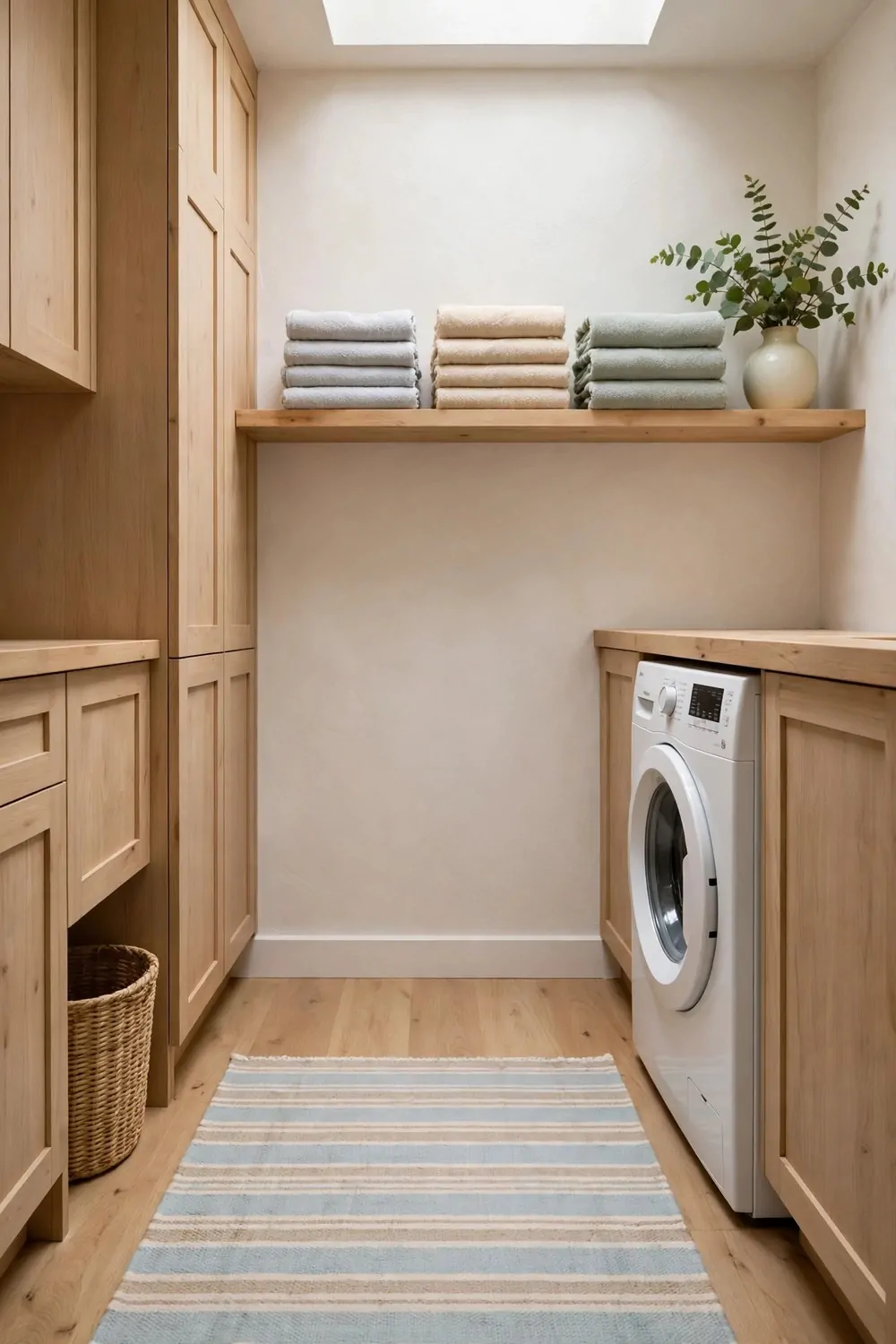
A laundry room can feel cold and plain. A small rug warms it up in one step. I picked a striped rug that I can toss in the wash, and it makes the floor soft under my feet.
Keep the rug small enough that it does not block the washer door. Mine sits in the middle of the floor with room to spare. It catches drips too, which saves my floor from spots.
A vase with green leaves on a shelf adds life to the room. I use fake leaves because the room gets warm and real ones wilt fast. No one can tell from across the room.
Fold your towels in neat stacks and let them show. A tidy stack of white towels looks pretty all by itself. It feels like a small shop shelf, and it makes me smile.
Pick one color to repeat in the room. I use soft blue in the rug, the towels and a small jar. That one repeat ties the whole room together without much effort.
Hang a small picture or a simple sign on the wall. It does not need to be big. A tiny frame with a kind word makes the room feel like part of the home, not just a work corner.
Keep pretty touches low and out of the splash zone. Water and detergent splash near the machines. I keep my vase on a high shelf where splashes never reach it.
A pretty room is a room you enjoy using. I used to rush through laundry and hate every minute. Now I slow down a little, and the chore feels lighter.
You do not need to spend much on these touches. A rug, a vase and neat towels are enough. Small pretty things make a small room feel loved.
A Weekly Reset That Keeps a Small Room Working
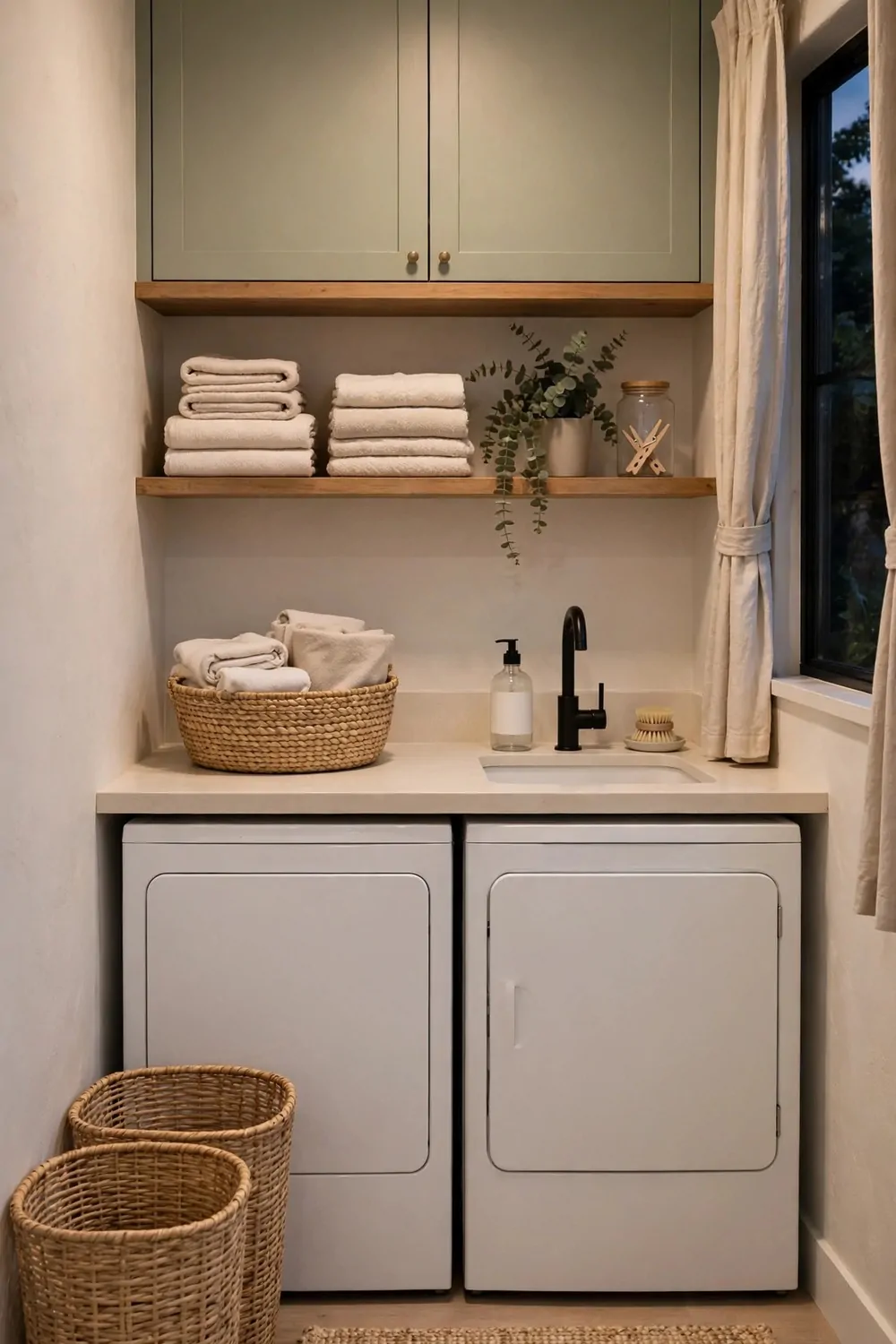
A small room falls apart fast when you skip a week. One pile becomes three and the counter disappears. A weekly reset stops that slide before it starts.
Pick one day each week for your reset. I do mine on Sunday night. It takes about fifteen minutes, and it sets up the whole week that follows.
Start by emptying every hamper. Wash what is full and put the rest back in neat piles. Empty hampers at the start of the week feel like a fresh start.
Wipe the counter and the tops of the machines next. Detergent drips and dust build up quick in a small room. A damp cloth and two minutes make it all shine again.
Check your supplies during the reset. Are you low on detergent or dryer sheets? Write it on your shopping list right then. Running out mid-load is the worst surprise.
Fold any clean clothes still sitting around. Put them in their basket or take them to the closet. Clean clothes left out just get wrinkled and need washing again.
Sweep or shake out the rug last. Lint and dust gather under the machines and behind the door. A quick sweep keeps the room fresh and stops that stale smell.
Look at the room with fresh eyes when you finish. Is one shelf too full? Move one thing out. Small rooms stay calm when you keep only what fits with ease.
A weekly reset is not deep cleaning. It is a small habit that keeps a small room working. Do it every week and your laundry room will stay a help, not a headache.
Keep Reading
If you liked these small laundry room ideas, you will love these kitchen posts too. They are full of the same simple storage feeling, just in different corners of the room.
- 25 Small Kitchen Ideas You’ll Wish You Knew Sooner
- 26 Kitchen Design Layouts That Look Stunning and Work Hard
- 27 Home Decor Ideas Living Room and Kitchen Looks That Match
- 26 Modern Home Decor Updates That Look Instantly Fresh
Pick one idea and start there. Just one. Try it this weekend and see how much calmer your small laundry room feels.