21 Small Workout Space at Home Setups That Actually Work

I know. It sounds too small to do anything real. But I have watched friends turn corners that size into places they use almost every single day.
The secret was never more space. It was a setup that matched the space they actually had.
This list has 21 of those setups. Every one of them is made for small homes, flats and odd little corners. Pick the one that fits your life and start there.
You do not need a spare room. You do not need a big budget. You just need a plan that fits the room you have got.
1. The Corner Dumbbell Station
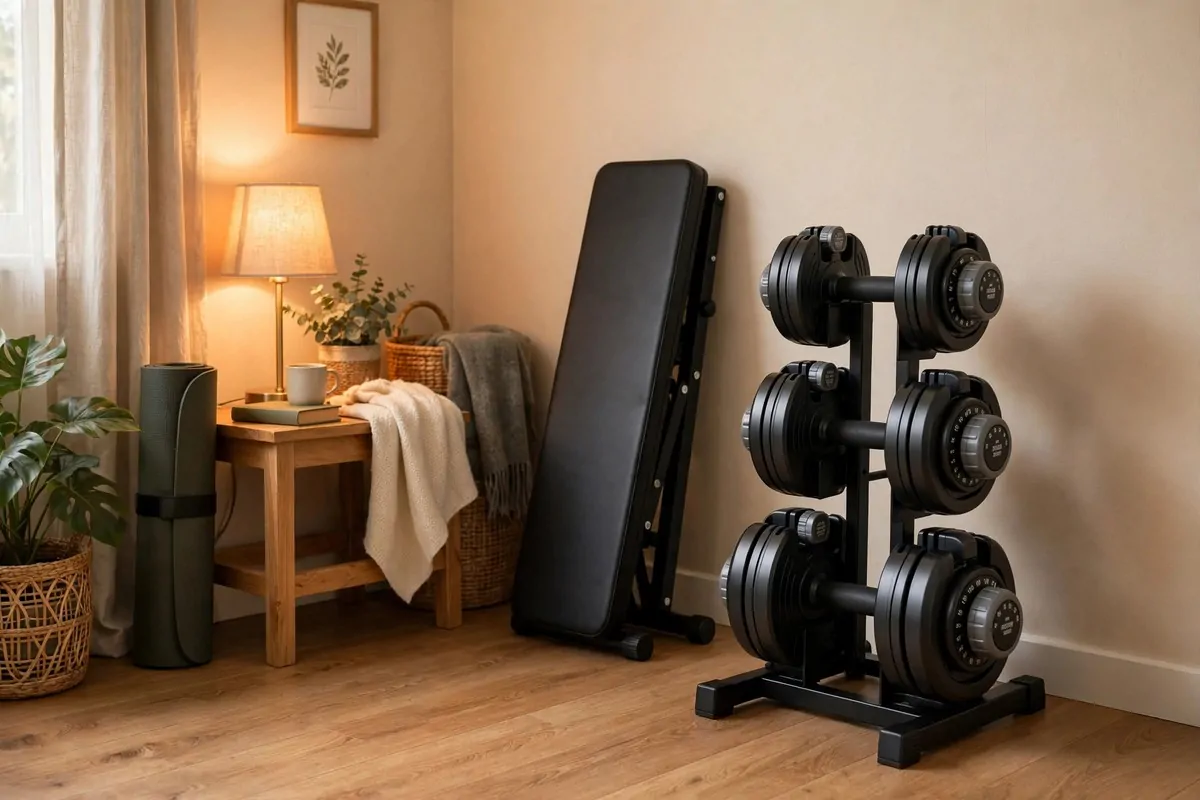
Most living rooms have one dead corner. You know the one. It holds a plant that is barely alive and not much else.
That corner can be your gym.
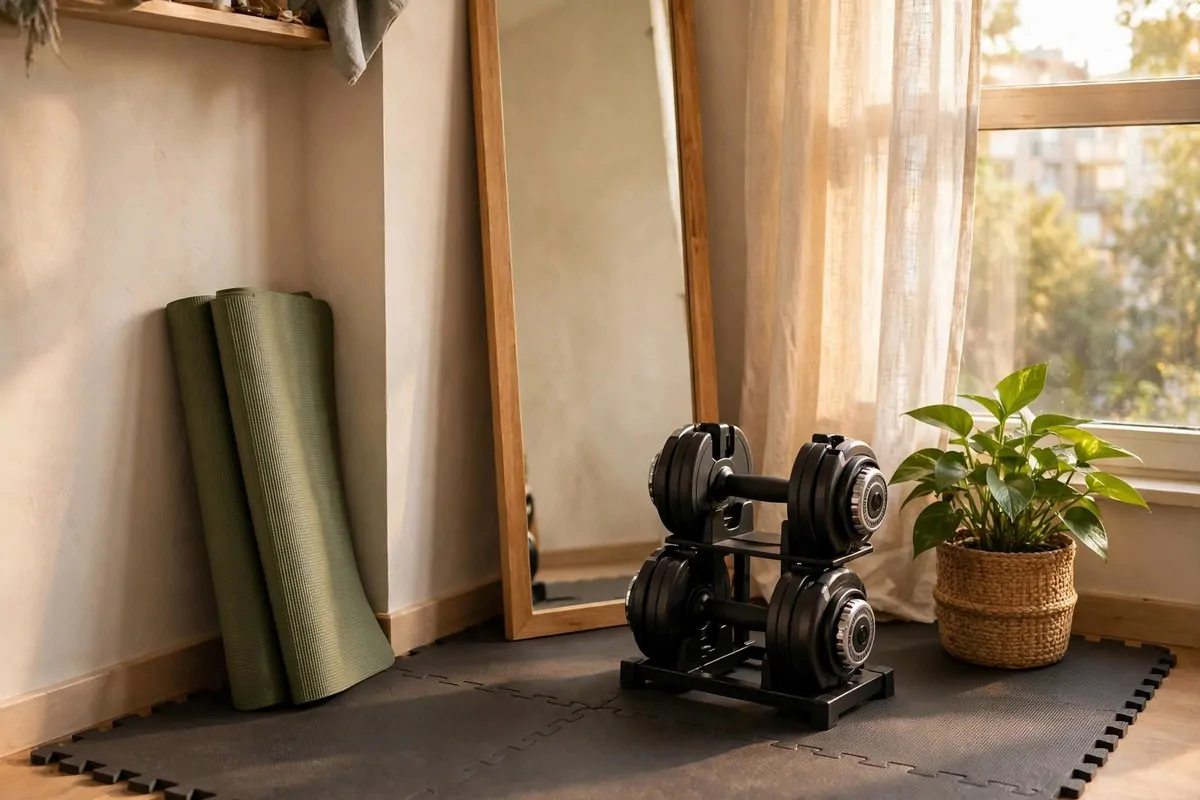
All you need is a pair of adjustable dumbbells on a small stand. They replace a whole rack of fixed weights. One stand takes up about as much floor as a side table.
Add a bench that folds flat and leans against the wall. When it is workout time, you pull it out. When you are done, it disappears behind the sofa or in the gap beside the bookcase.
Keep a mat rolled up in the corner too. It defines your workout spot. When you unroll it, your brain gets the message that it is time to move.
Here is the kit I would buy for this setup, and why each piece earns its place.
| Piece of kit | Floor space it takes | Why it works |
|---|---|---|
| Adjustable dumbbells on a stand | About the size of a side table | One pair replaces many fixed pairs |
| Folding bench | Flat against the wall when stored | Opens up presses, rows and step ups |
| Rolled exercise mat | A corner footprint | Marks your workout zone and cushions the floor |
| Set of resistance bands | A drawer or a hook | Warm ups, pull aparts and extra moves |
The best part is how fast it sets up. Two minutes, honestly.
And when guests come over, the whole gym vanishes. That is what makes this setup stick for people who hate clutter.
2. The Under-the-Stairs Cupboard Gym
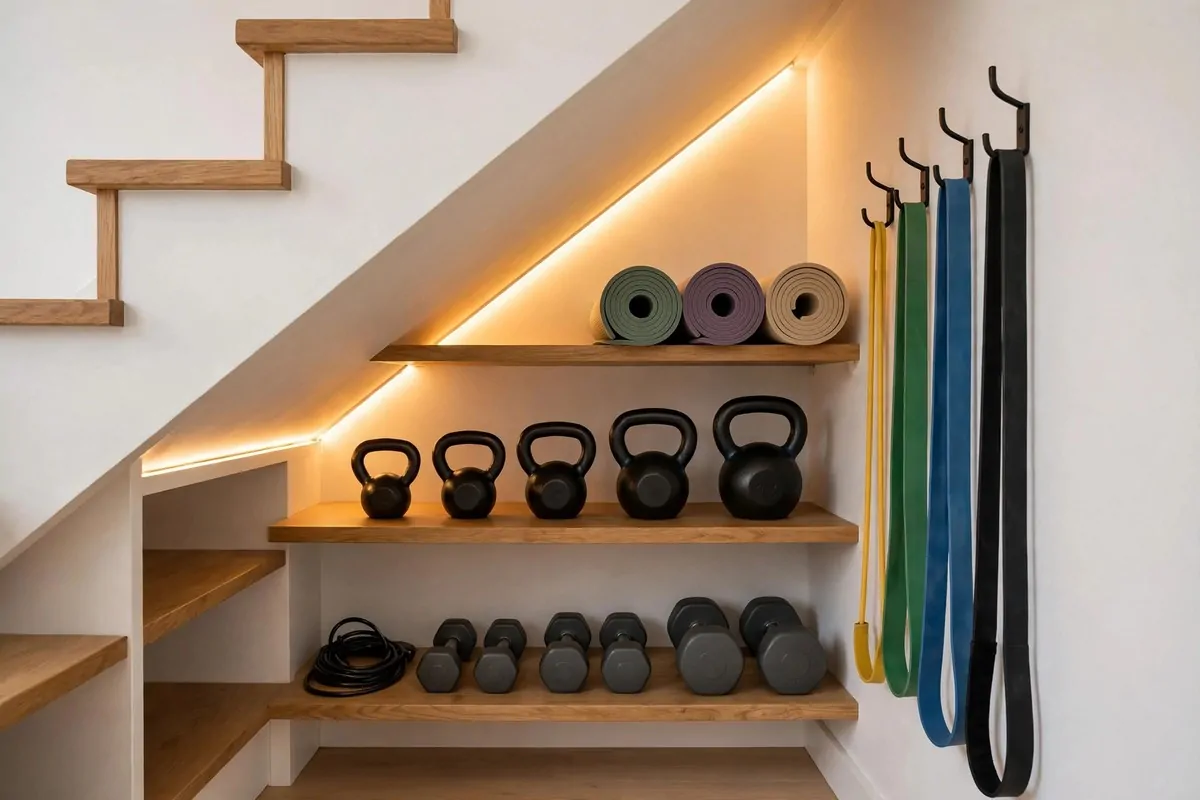
The space under your stairs is probably full of shoes and old boxes. Mine was. Then I moved the boxes out and found a gym hiding in there.
This spot is perfect for storing gear. Dumbbells sit on the low shelf. Kettlebells line the back wall.
Bands hang on hooks screwed into the wall. Rolled mats slide in sideways.
You might not be able to do a full workout under the stairs. The ceiling is low. But you can store everything there and work out in the hallway or living room right next to it.
It keeps all your kit in one place. And that matters more than people think. When your gear has a home, you actually use it.
I put a small battery light inside mine. It cost almost nothing. Now I can see what I am grabbing at six in the morning without switching on every light in the house.
Label the shelves if you share the house with other people. Sounds fussy. But it stops your dumbbells ending up behind the hoover.
Measure the tallest bit before you buy anything big. Stair slopes are sneaky, and a kettlebell that does not fit under the slope is just an expensive doorstop.
Keep a small dustpan nearby too. Under-stair corners collect dust fast, and a quick sweep once a week keeps the whole cupboard feeling fresh.
3. The Fold-Down Wall Rack
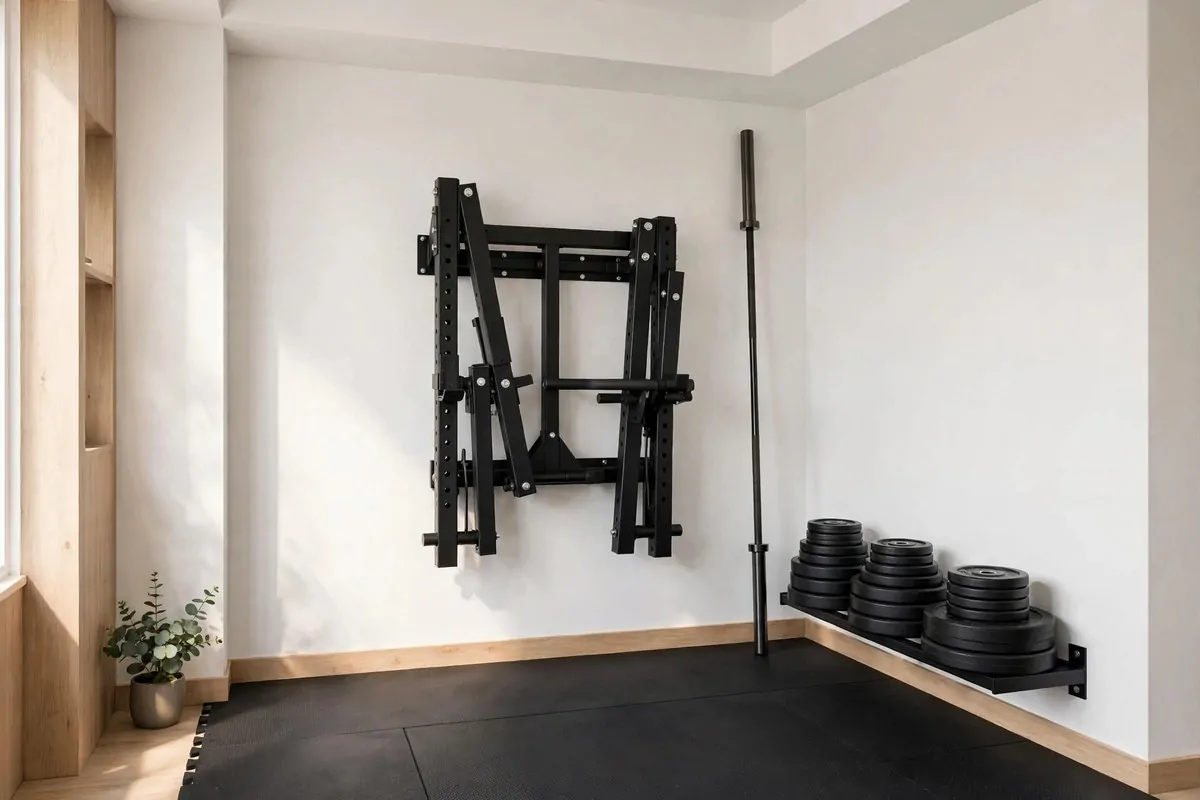
This one is for people who love lifting but rent a small place. A wall-mounted rack folds flat against the wall when you are not using it.
You pull it down, slide the bench in, and lift. When you finish, the whole thing folds back up. The wall behind it looks like a normal wall again.
You need solid wall studs or brick for this. That is the one rule you cannot skip. If the wall is weak, the rack is not safe, so check first or ask someone who knows walls.
Mount it near a corner so the plates and bar have somewhere to live. A vertical bar holder keeps the barbell upright in a tiny footprint. Plates stack on a small wall rack or a low trolley.
Honestly, this setup feels like a magic trick the first time you fold it away. A full lifting station that hides in a wall. Your landlord would never even know it was there.
It suits strength training best. Squats, presses, rows. The big moves that need something solid to lean a bar on.
Paint the wall behind the rack a bold colour if you like. When the rack folds away, the colour stays, and the wall looks like a design choice instead of a hiding spot.
And fold it away after every session, even when you are tired. That one habit is what keeps this setup renter friendly and roommate friendly for years.
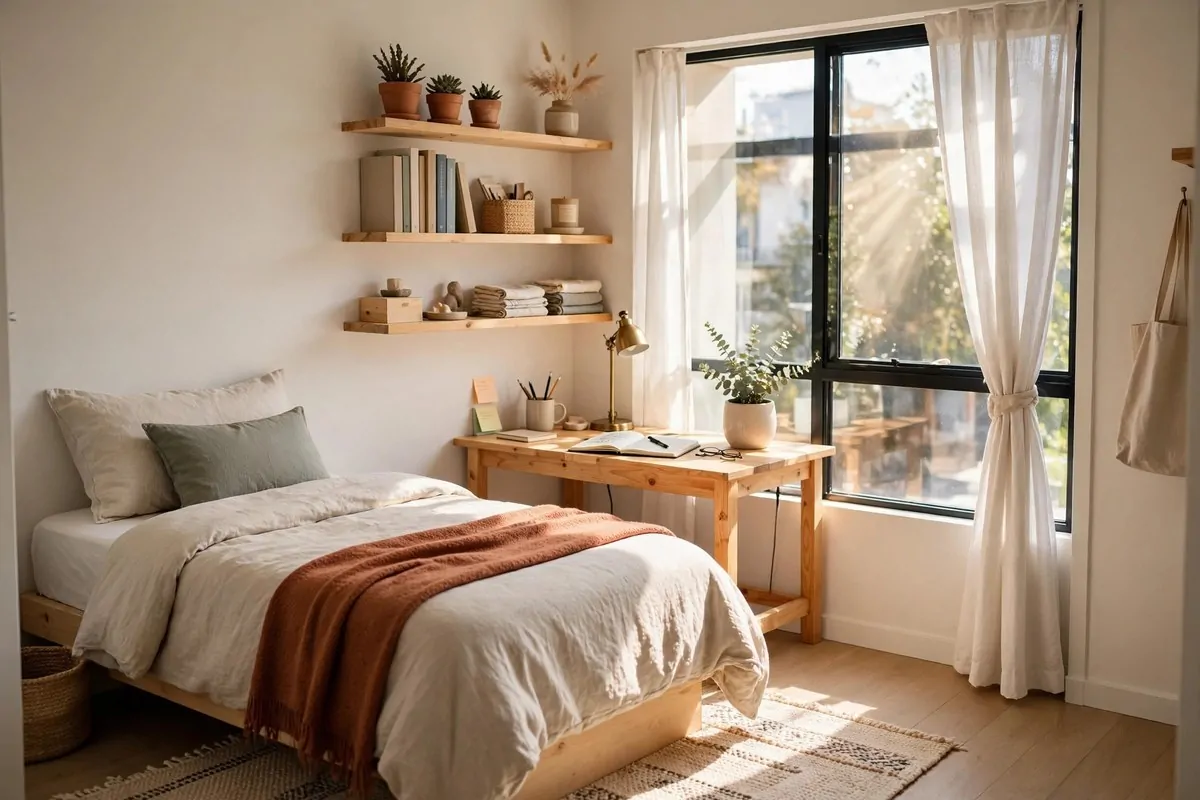
4. The Bedroom Corner That Still Feels Like a Bedroom
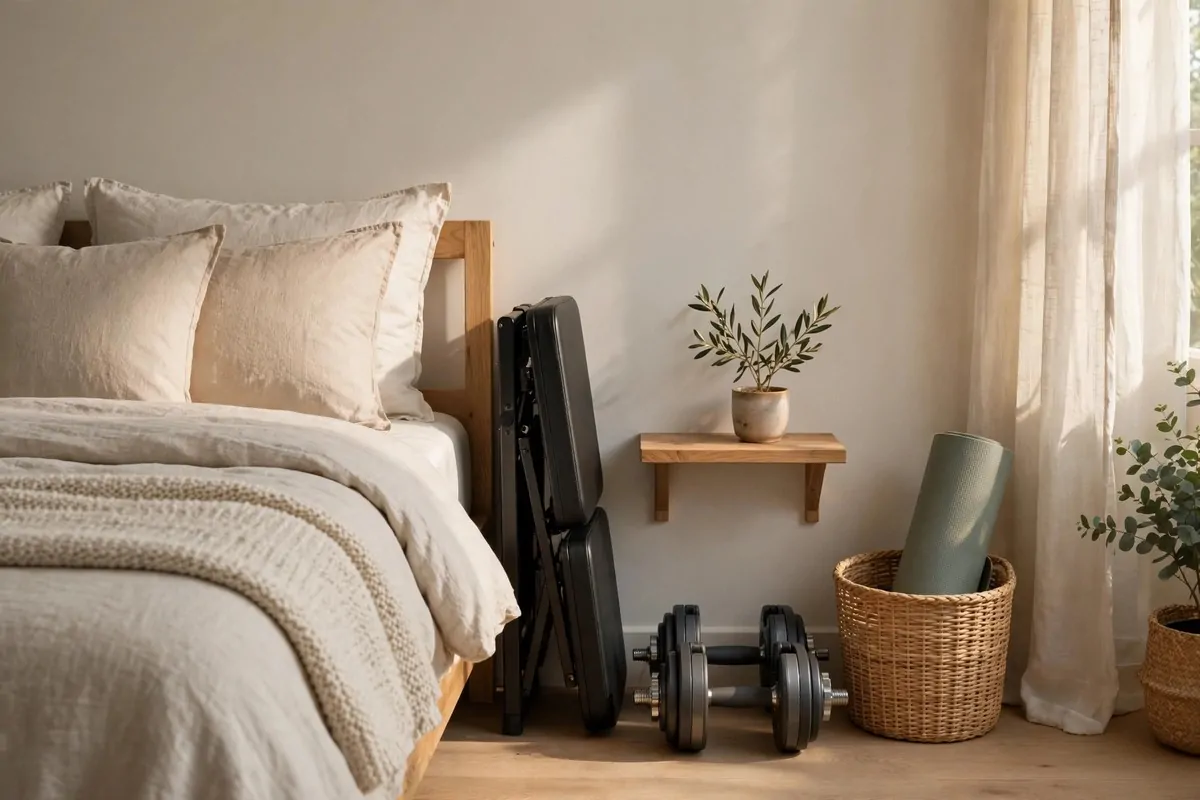
Your bedroom should feel calm. That does not mean it cannot hold a small workout corner too.
Pick the corner by the window if you have one. Natural light makes morning workouts much easier to start. Your body wakes up faster when the room is bright.
Keep everything tuckable. Dumbbells slide under the bed in a low tray.
A folding bench stands in the wardrobe. The mat rolls into the gap between the wardrobe and the wall.
When the gear is hidden, the room goes back to being a bedroom. That matters. Nobody wants to fall asleep staring at a pile of weights.
I keep a small basket by the corner for the little things. Bands, a skipping rope, a sweat towel. The basket looks like decor, so it never feels like gym clutter.
One warning. Do not put the mat where you will trip on it at night.
I learned that the hard way. Tuck it behind furniture, not in your path to the bathroom.
And keep workouts short and quiet in here if someone sleeps nearby. Bands and slow dumbbell moves are kind to thin walls and sleeping partners.
This setup is perfect if you like training first thing. You roll out of bed, roll out the mat, and start before your brain has time to argue.
5. The Balcony Workout Spot
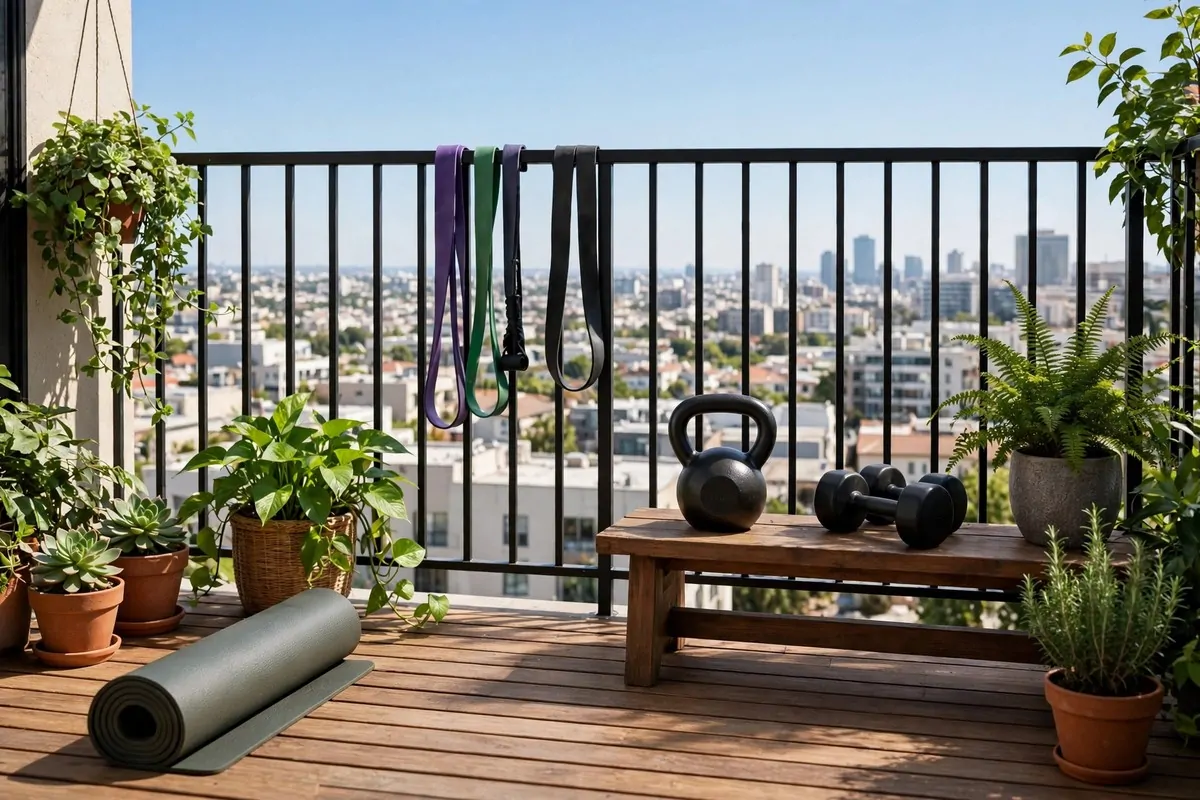
Fresh air makes everything better. If you have a balcony, even a tiny one, you have a workout space waiting to happen.
Stick to lightweight gear out here. Dumbbells, a kettlebell, bands and a skipping rope are all easy to carry in and out. A folding bench works if your balcony is deep enough.
Weather is the thing to plan for. Rain ruins metal gear fast. So store everything inside after each session, or keep it in a weatherproof box on the balcony.
A small outdoor rug or interlocking tiles protect the balcony floor. They also mark your zone, which helps you feel like this is a real training spot and not just a balcony.
Mornings are the best time out here. The air is cool and the street is quiet. You get your workout done before the day heats up.
Keep a plant or two in the corner. Sounds odd for a gym tip, but plants make the space feel good to step into. And you will use a space that feels good.
Check your building rules before you start. Some places have rules about noise or heavy gear on balconies. A quick check saves an awkward chat with the neighbours later.
Wipe the gear down after rainy weeks. A quick dry cloth stops rust before it starts, and your balcony gym stays fresh for years.
6. The One-Wall Garage Setup
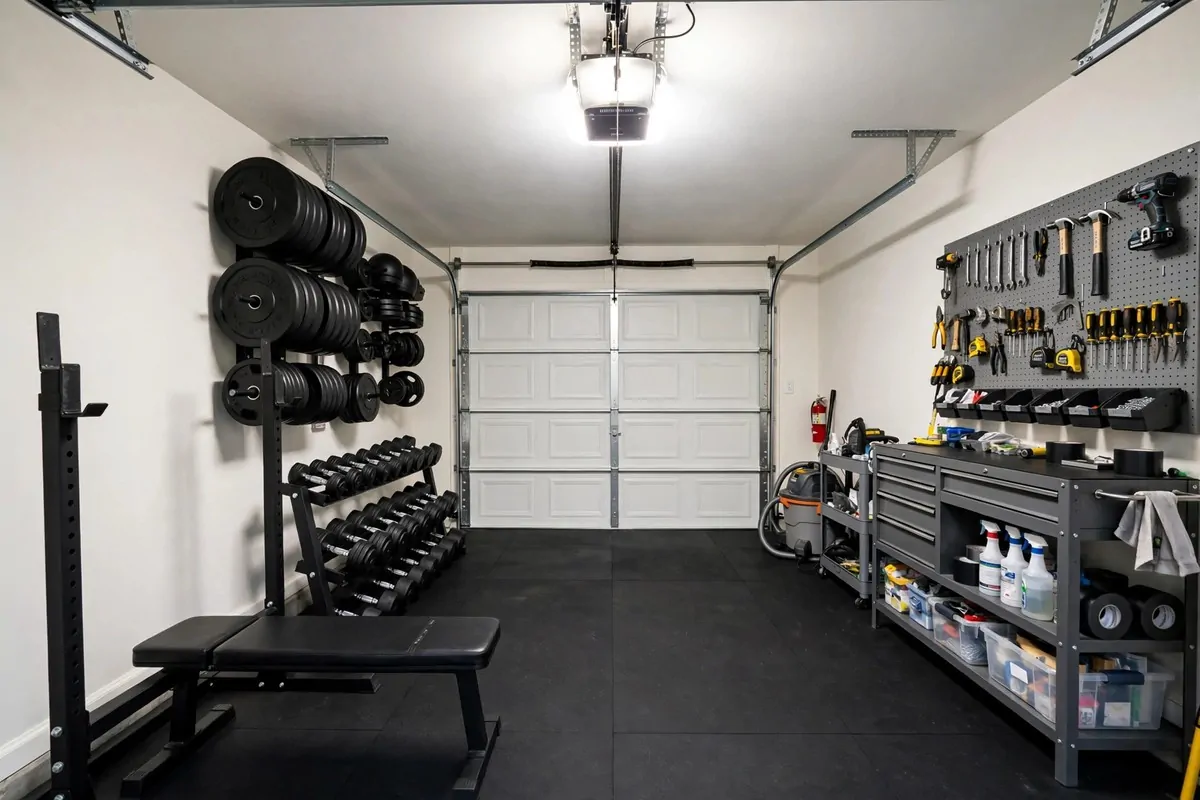
Garages are the classic home gym spot. But most of us still park a car or store boxes in ours. So claim one wall and leave the rest alone.
Put a compact rack or a fold-down rack against that wall. Slide the bench inside the rack when you are done. Plates live on a wall-mounted plate holder above the floor.
Rubber tiles or a lifting platform protect the concrete floor. They also cut the noise, which your neighbours will thank you for.
Vertical storage is your best friend here. Hooks for the bar, a pegboard for bands and small bits, shelves up high for things you use less. The wall does the work the floor cannot.
Keep the middle of the garage clear. You need room to move around the bar safely. Three feet of clear space in front of the rack is a good rule of thumb.
Honestly, a one-wall garage gym can hold more kit than most spare-room gyms. Garages have height, tough floors and nobody cares if it looks a bit rough.
Add a small fan. Garages get hot in summer and cold in winter, and moving air makes both ends easier to train through. A window fan or a floor fan does the job.
Sweep the tiles once a week. Garage dust gets everywhere, and clean tiles grip better and look far more inviting.
7. The Pegboard Wall
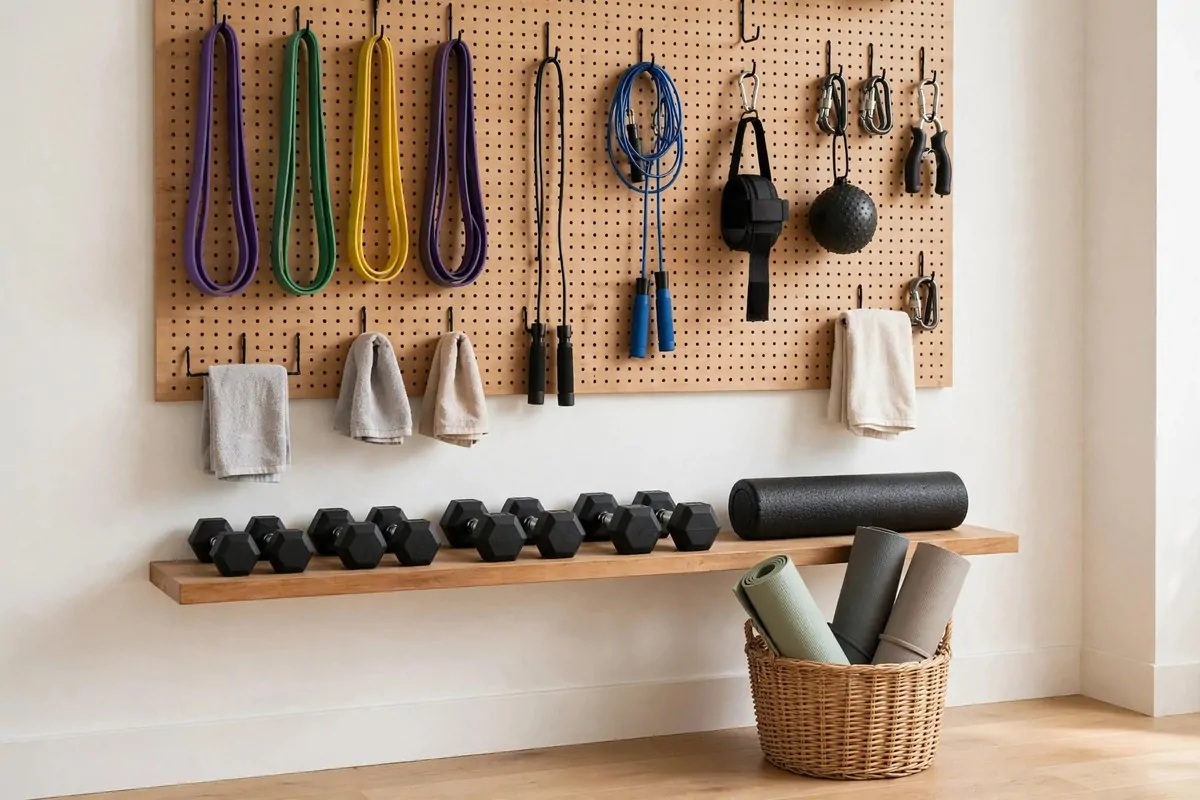
A pegboard turns a blank wall into a storage system. It is one of the cheapest upgrades on this whole list.
Hang one above a low shelf or a small bench. Use hooks for resistance bands, skipping ropes, towels and gym bags. Small baskets on the board hold chalk, timers and spare batteries.
The trick is to hang things by how often you use them. Daily gear at arm height.
Rarely used stuff up high. Your hands learn where everything lives.
Paint the pegboard a colour you like. White looks clean.
A soft sage green looks calm. It stops the wall feeling like a hardware shop and starts it feeling like your space.
Below the board, put a low bookcase or a bench. It holds the heavier things like a kettlebell and a pair of dumbbells. The board handles the light stuff, the shelf handles the heavy stuff.
This setup works in almost any room. Bedrooms, living rooms, hallways, garages. Anywhere with a free stretch of wall is fair game.
And it is renter friendly if you hang it with strong removable strips or lean a framed board against the wall. No drill holes needed if you plan it right.
The whole thing probably costs less than one month of a gym membership. And it never closes, never queues, and never plays music you hate.
8. The Mirror Trick That Doubles the Space
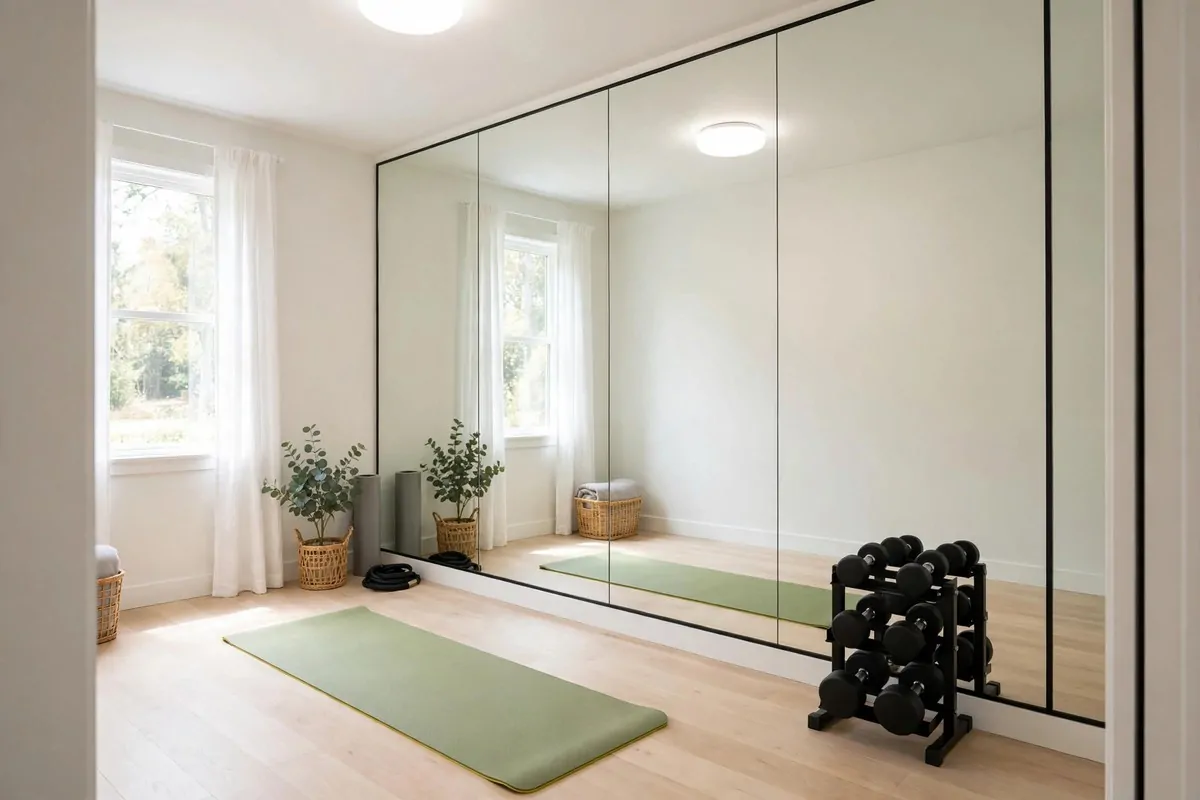
Mirrors are the oldest trick in the small-room book. One big mirror on the wall makes a tiny workout corner feel twice as big.
It is not just about looks. Watching your form keeps you safe.
You can see when your back rounds or your knees cave in. That is hard to feel from the inside.
Use a full-length mirror or a few tall panels side by side. Acrylic mirror sheets are lighter and cheaper than glass, which matters if you are renting or hanging on a thin wall.
Put the mirror where you face during your main moves. For most people that is the wall they squat and press toward.
Stand in your workout spot and look at where your eyes land. That is the spot.
Add a simple light above or beside the mirror. Good light on your form matters more than fancy gear. A basic ceiling light or a clip-on lamp works fine.
Keep the area in front of the mirror clear. This is your movement zone. Nothing should live on the floor between you and the glass.
Clean it once a week. A dusty mirror kills the whole effect. It takes thirty seconds with a damp cloth, and the room instantly feels fresh again.
Pair the mirror with pale walls and the space opens up even more. Light colours bounce light around. Dark corners eat it.
9. The Fold-Away Cardio Corner
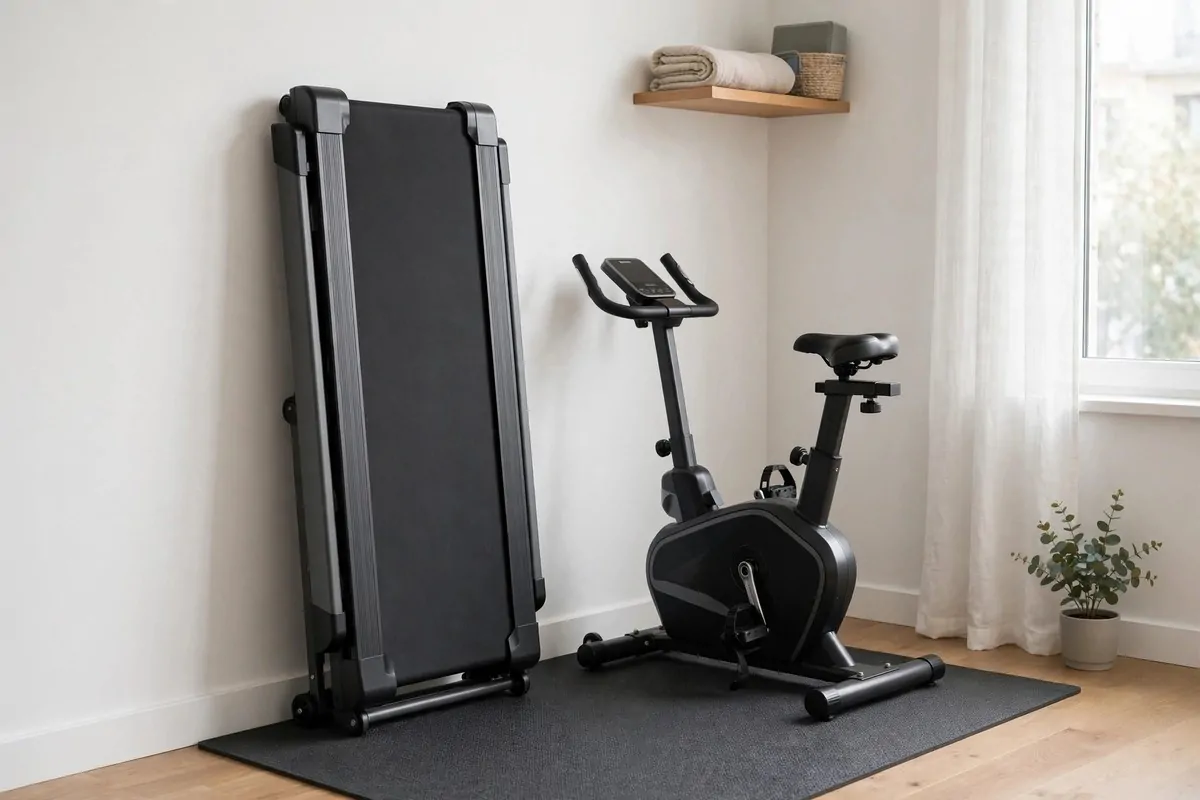
Cardio machines are space hogs. But the foldable ones changed that. A slim treadmill can stand upright against a wall like a surfboard.
Pick one machine, not three. A folding treadmill, a compact bike or a small rower. One cardio tool you actually use beats three that gather dust.
Measure before you buy. Check the folded size, not just the open size.
Then check your doorway and your storage spot too. Machines that cannot fit through the door are just expensive mistakes.
Slide a mat under the machine while you use it. It protects the floor and damps the noise for the people below you. Thick rubber mats are best for this.
When you finish, fold it and slide it home. Behind a door, beside the wardrobe, in the gap between the sofa and the wall. Every home has a slim gap somewhere.
Honestly, the folding part is what makes this work long term. If setting up took twenty minutes, you would skip it. Two minutes of unfolding is nothing.
Here is a quick way to pick the right machine for your space.
| Machine | Folded footprint | Best for |
|---|---|---|
| Slim folding treadmill | Stands upright like a board | Walkers and light runners |
| Compact exercise bike | Tucks into a corner | Quiet low impact sessions |
| Small folding rower | Splits or folds in half | Full body cardio in little space |
| Mini stepper | Fits in a cupboard | Tiny flats and tight budgets |
Start with walking if you are new to this. A walking pad under your desk or in front of the TV is the easiest cardio habit there is. You barely notice you are doing it.
10. The Calm Yoga and Stretching Nook
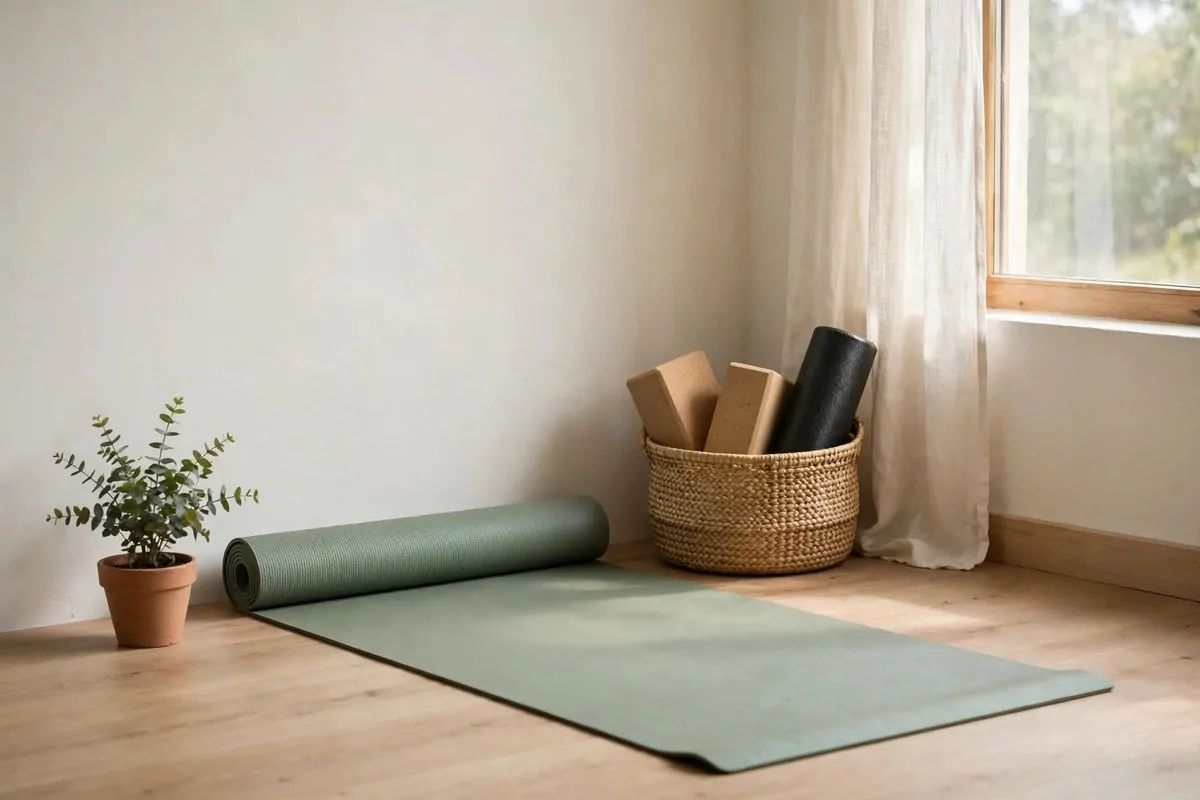
Not every workout needs iron. A stretching nook is a workout space too, and it asks for almost nothing.
You need a mat, a foam roller and maybe two yoga blocks. That is the whole list. Everything fits in one woven basket when you are done.
Pick the quietest corner of your home. Near a window is lovely. Soft light and a bit of sky make stretching feel like a treat instead of a chore.
Keep the colours calm. A sage mat, a cream basket, a small plant. Your nervous system notices these things, even if you think it does not.
This nook doubles as your cool down spot after harder workouts. Stretch where it is peaceful and you will actually do it. Stretch on cold hard floor in a messy room and you will skip it every time.
Add a small speaker or just use your phone. Slow music or a guided session turns ten minutes of stretching into the best part of your day.
And here is a thought. This corner can be the start of a bigger habit. Many people begin with just stretching.
Then one day they add bands. Then dumbbells. The nook grows with you.
Keep a folded blanket nearby. It is a prop for seated stretches and a comfort thing for the final rest. Little comforts keep you coming back.
11. The One-Kettlebell Corner
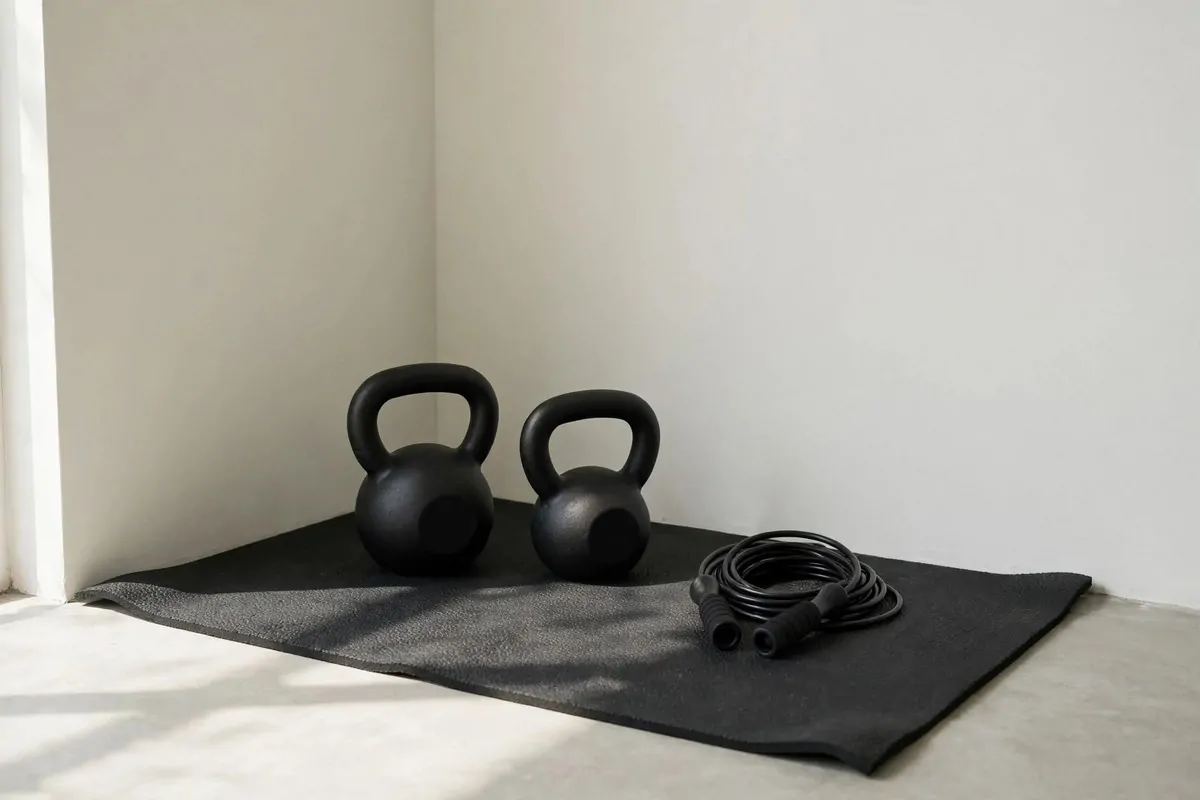
One kettlebell. That is the whole gym. And it can do more than you think.
Swings, squats, presses, rows, carries, deadlifts. One bell covers the big moves. It is the most workout per square inch of any piece of gear I know.
You need a mat-sized patch of floor and a corner to park the bell. That is it. The bell lives in the corner like a quiet little pet.
Start with a weight you can press overhead safely. Too heavy is the classic mistake. You can always buy a second bell later when the first one feels easy.
Learn the swing properly before you go hard. Watch a few good tutorials.
A clean swing feels smooth and powerful. A bad one just feels bad.
Store the bell on a rubber tile or a small mat. It protects your floor and stops the bell sliding. Cast iron on wood floors is a recipe for dents.
This setup is brilliant for small flats because it is nearly silent. No dropping weights, no clanking plates. Your downstairs neighbours will never know you train.
Honestly, if I had to start over with one piece of gear and a tiny corner, I would pick this. Simple to store, simple to use, and it never gets boring.
12. The Resistance Band Wall
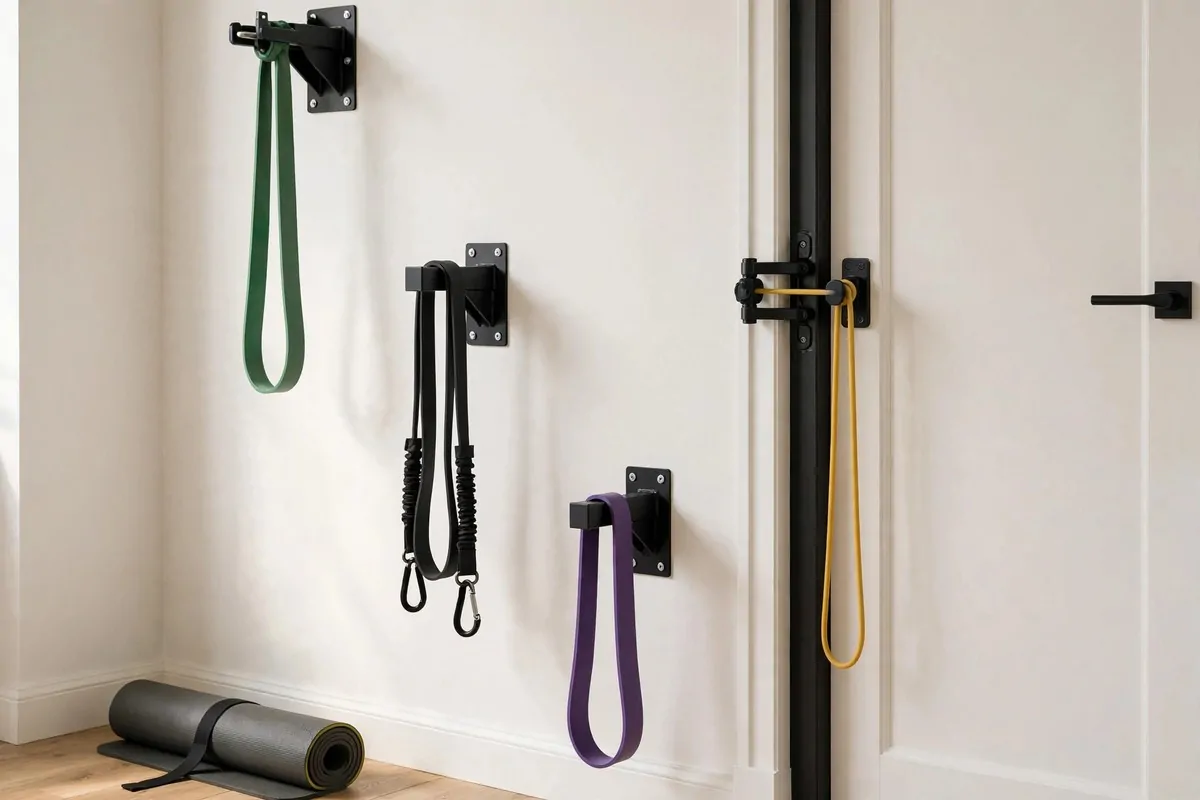
Resistance bands are the kings of small spaces. They weigh almost nothing and store in a drawer. But they need somewhere to anchor, and that is what this setup gives them.
Fix sturdy anchors to one wall at three heights. Low for rows and curls. Middle for presses.
High for pulldowns. Three anchor points turn bands into a full cable machine.
Use proper wall anchors rated for pulling force. This is not the place for cheap sticky hooks. Screw into studs or brick, and test each anchor hard before you trust it.
A door anchor is the renter friendly version. It slides into the top or side of a door and holds the band tight. No holes, no damage, and it works surprisingly well.
Keep your bands on hooks right next to the anchors. If you have to dig them out of a drawer across the room, you will use them less. Visibility is motivation.
Bands come in different thicknesses for different strengths. Keep a light one, a medium one and a heavy one. That covers warm ups, main moves and the hard stuff.
This setup is perfect for travel too. When you visit family or stay in a hotel, the bands come with you. Your wall anchors stay home, but a door anchor fits in your bag.
I love band workouts for busy weeks. You can get a full session done in twenty minutes. No setup, no packing away, just clip in and go.
And the whole wall setup costs less than a pair of decent shoes. For the price, nothing else gives you this many exercises in this little space.
13. The Ottoman That Hides Your Gear
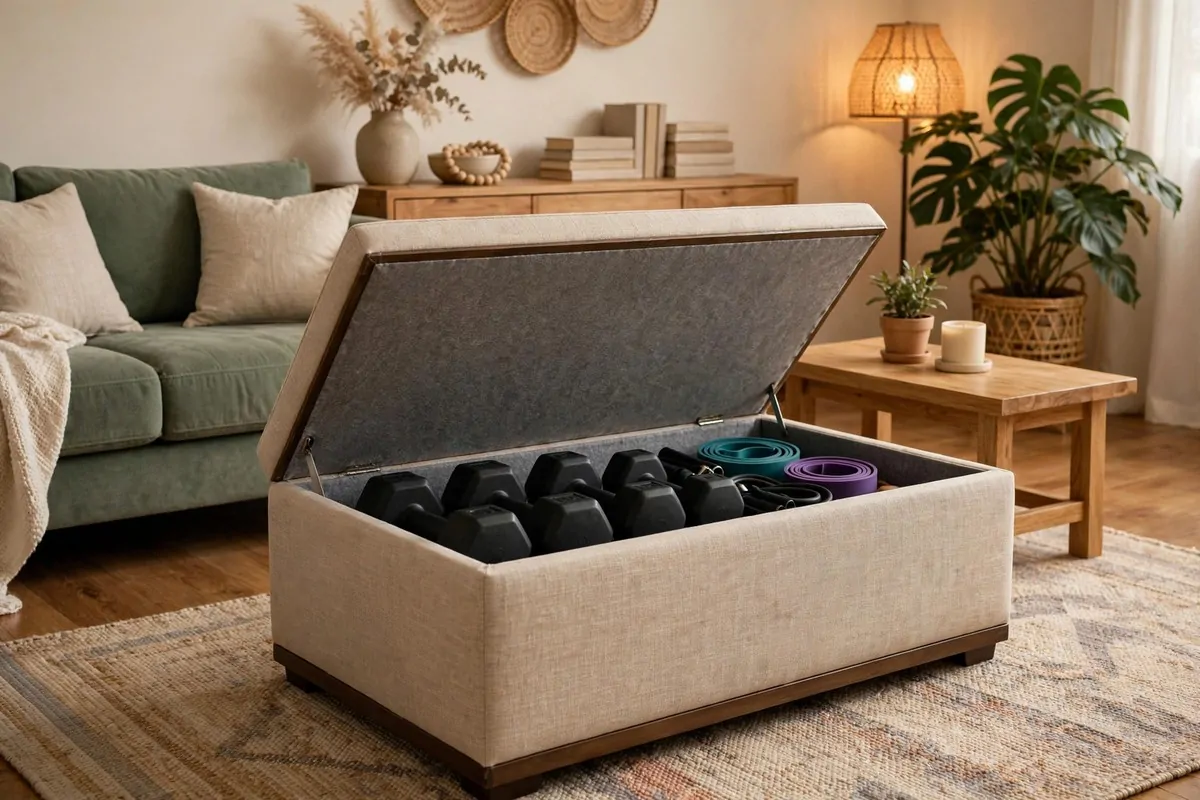
This is the sneakiest setup on the list. Your gym hides inside your furniture, and nobody can tell.
A large storage ottoman holds dumbbells, bands, a skipping rope and a mat strap. The lid closes and it is just an ottoman again. Footrest by day, gym by workout time.
Pick one with a strong frame. Cheap ottomans sag under weight. Look for solid wood or reinforced sides, and check the weight rating before you load it with iron.
Put it where you actually work out. Next to the rug in the living room is perfect. When it is time to train, you open the lid, pull out the gear, and the room becomes a gym in two minutes.
The mat can live rolled beside the sofa or behind a curtain. Or get a mat strap and hang it inside a cupboard. The ottoman handles the heavy small stuff best.
This setup is made for people who hate seeing gym gear. If clutter stresses you out, this is your answer. Everything has a lid on it, literally.
It also works brilliantly in studio flats. One room does everything, so the gym has to vanish when training ends. An ottoman makes that effortless.
Choose a fabric that wipes clean. You will set sweaty hands on it. Leather-look or tight weave fabrics handle that better than fluffy ones.
And honestly, guests will sit on your gym and never know. That is the kind of small-space magic I live for.
14. The Rolling Gym Cart
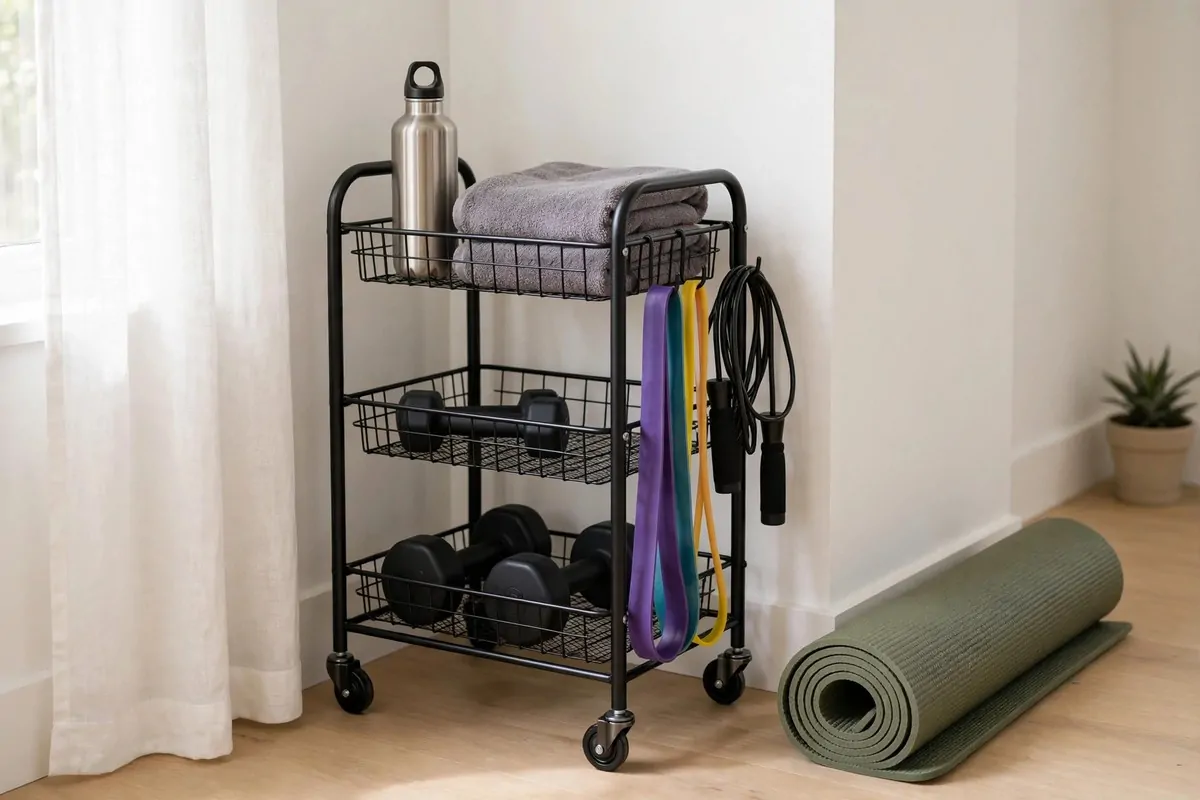
A rolling cart is a gym on wheels. Load it up, roll it to your workout spot, and roll it back when you are done.
Use a sturdy three-tier cart. Bottom shelf for dumbbells and the kettlebell.
Middle shelf for bands, ropes and small bits. Top shelf for your towel, water bottle and phone.
The wheels are the whole point. Your workout space can be anywhere.
Living room today, bedroom tomorrow, balcony on a sunny morning. The gym follows you.
Lock the wheels during your session. Most carts have little brakes on the wheels. Use them, or your cart will slowly roll away mid-set, which is funny exactly once.
Keep a small bin on the cart for the sweaty towel and used bands. It stops them ending up on the floor. Tidy habits are easier when the bin is right there.
This is a great setup for shared homes. Nobody trips over your gear because it lives in a cupboard or a corner when you are not using it. Everyone stays happy.
Label nothing, honestly. You will learn where everything sits after a week. The cart becomes like a little toolbox, and your hands find things on their own.
The best part is how it looks. A neat cart in the corner reads as organised, not gym-obsessed. It fits in a living room without shouting about it.
15. The Closet Gym
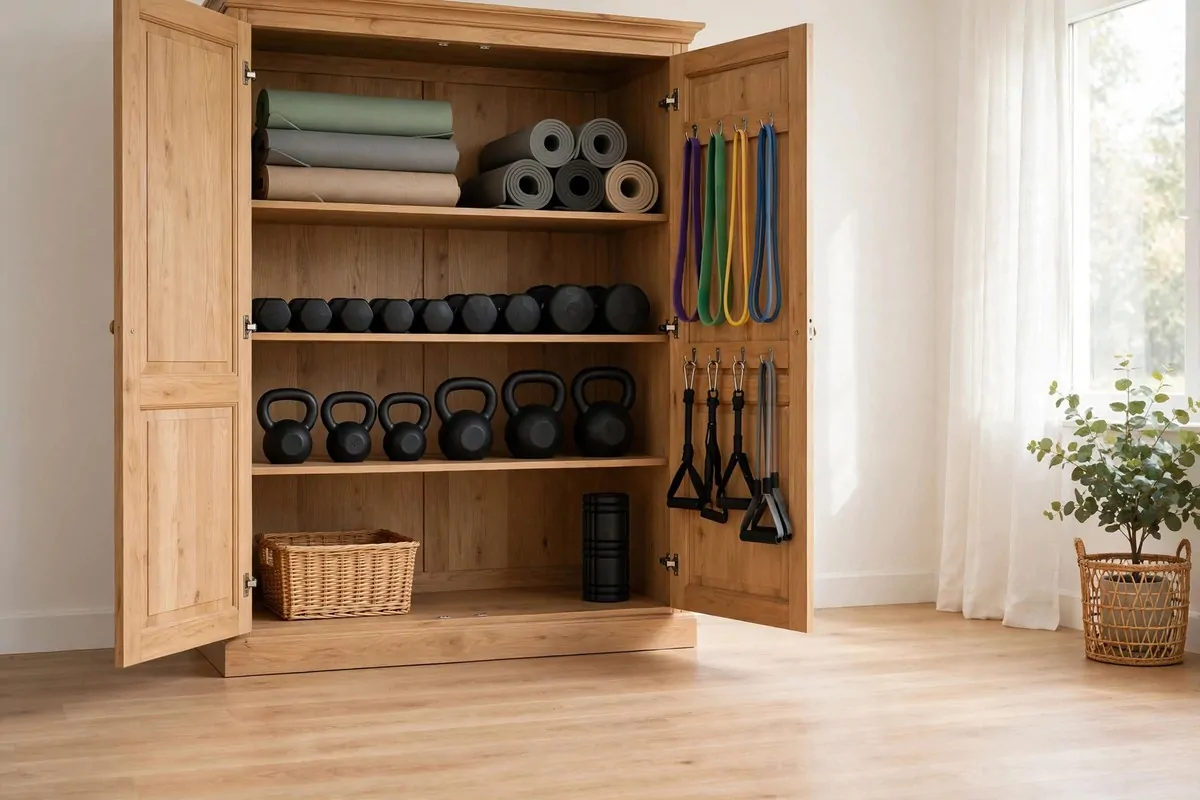
Look at your closets. Is there one that is half empty? That is a gym waiting to happen.
Clear the floor of the closet and fit it with shelves. Dumbbells on the low shelf, bands on hooks inside the door, mats rolled in the corner. Everything has a spot.
You work out in front of the open closet. The closet is your equipment wall. When you finish, you close the doors and the gym is gone.
This works best with a wide closet or a wardrobe with double doors. Narrow single-door closets are too tight to reach into comfortably.
Add a battery light inside. Closets are dark, and you will grab the wrong band in the gloom. A little motion light costs almost nothing and feels like luxury.
Keep the floor in front of the closet clear. That is your workout patch. A mat lives there during sessions and rolls into the closet after.
If the closet has a rod, use it. Hang bands and ropes from the rod on hooks. It is already there, so you might as well use it.
Renters love this one. No holes in the main walls, no gear in the living room, no landlord conversations. Just a tidy closet that happens to hold a gym.
16. The Desk-to-Workout Corner
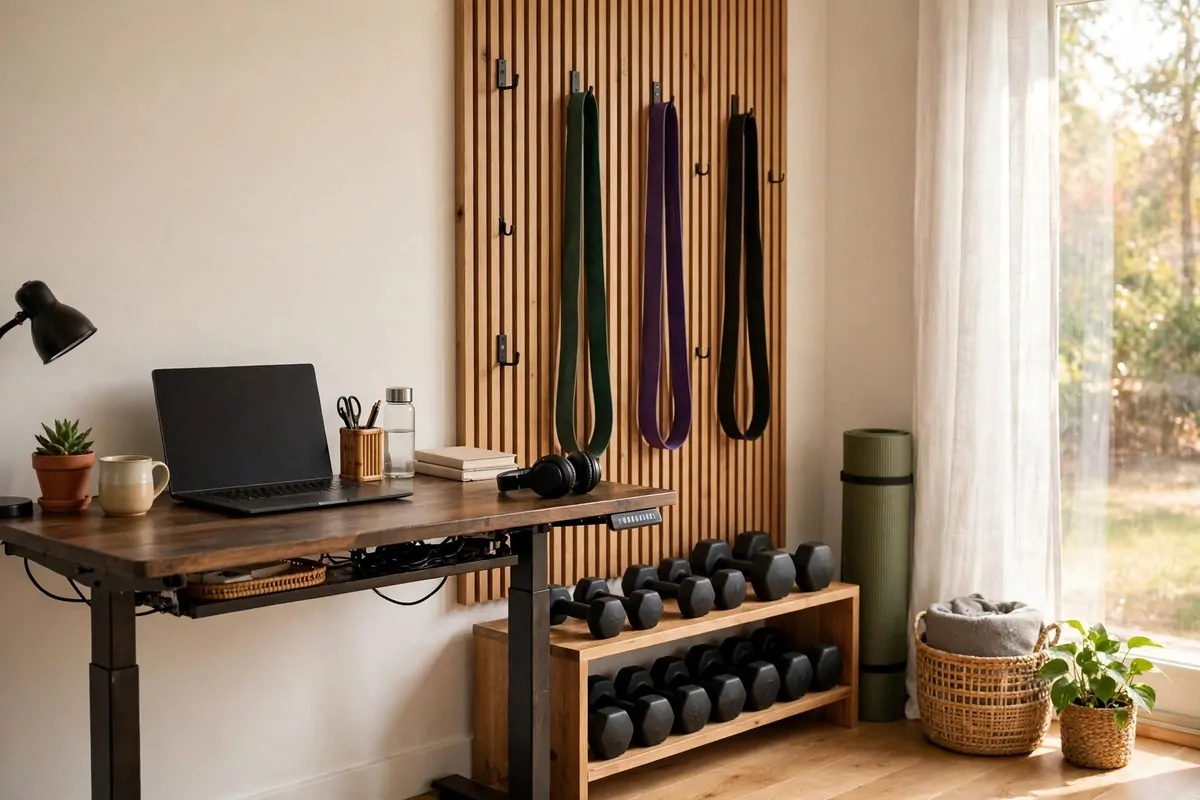
Work from home? Then your office corner can pull double duty as your gym.
Push the desk to one side when the workday ends. Roll out the mat in the cleared space. That physical switch tells your brain the day is done and training has started.
Keep workout gear on a low shelf under or beside the desk. Dumbbells in a tray, bands on a hook, mat rolled in the corner. Everything within arm’s reach, nothing in the way of your keyboard.
A standing desk is a bonus here. Raise it, slide the chair away, and you have even more floor. Some people walk on a walking pad while they work, which is the ultimate double duty.
Set a shutdown ritual. Laptop closed, mat out, water bottle filled.
Small rituals make habits stick. Your body starts to expect the workout when the ritual begins.
This setup kills the “no time” excuse. Your commute to the gym is four steps. You cannot get stuck in traffic between your desk and your mat.
Keep work stuff and workout stuff visually separate. A small plant or a different rug marks the gym zone. It stops the space feeling like one big blur of work and sweat.
And change your clothes. Even just swapping your top helps. It is a signal to your brain that the role has changed from worker to trainer.
Honestly, this is how a lot of people finally get consistent. The gym is not a place you go. It is a corner you turn toward.
17. The Narrow Hallway Strip
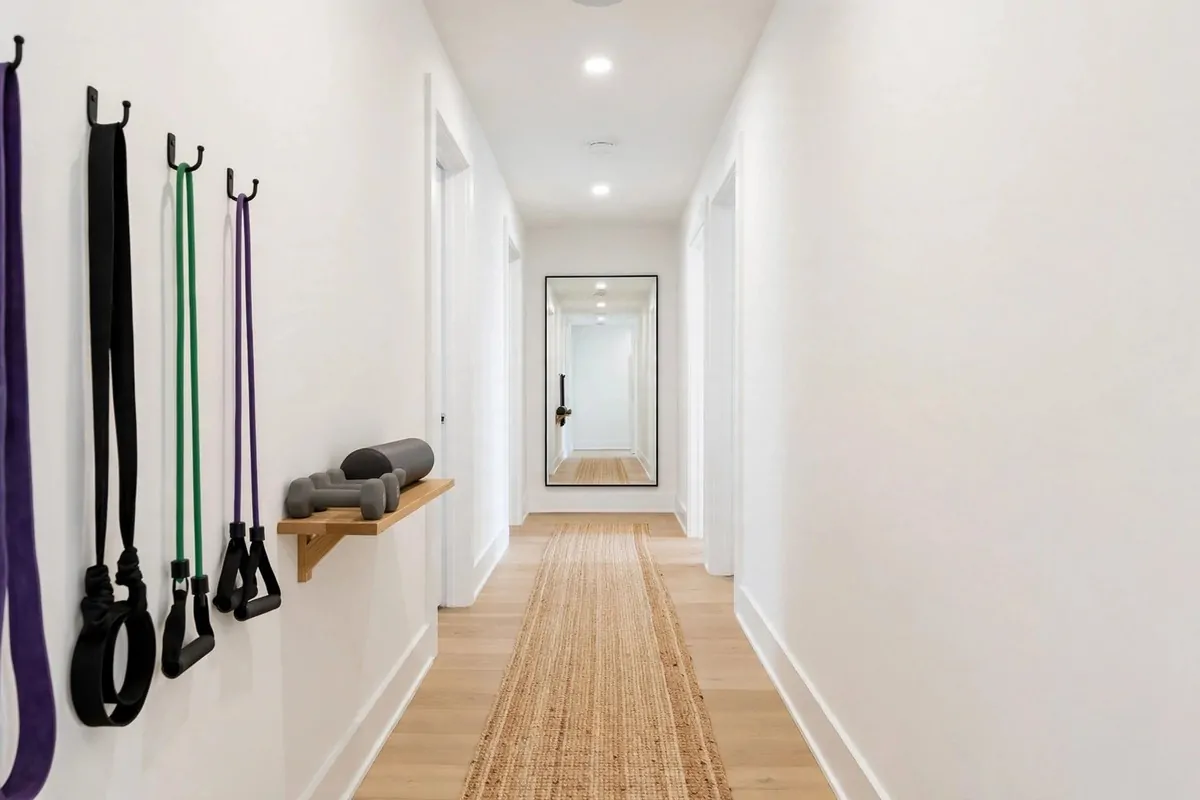
Hallways are the most wasted space in most homes. Long, empty and just sitting there. Turn yours into a workout strip.
Lay a slim runner mat down the middle. It protects the floor and gives you a track for walking lunges, bear crawls and mobility work. A hallway is basically a built-in lane.
Use the walls. Hooks on one side hold bands and a skipping rope.
A narrow shelf holds small dumbbells and a foam roller. Everything stays off the floor so people can still walk through.
A mirror at one end makes the hallway feel wider. It also lets you check your form on the way past. Two jobs, one mirror.
This setup shines for bodyweight and band workouts. Push ups, squats, lunges, band rows, stretching. You would be amazed what fits in a hallway.
Keep it quiet if the hallway is near bedrooms. Bands and bodyweight moves are silent. Save the jumping for the park or the garage.
The best thing about a hallway gym is that it is always set up. No unfolding, no dragging gear out. You just step into the hallway and start.
And when guests visit, it is still just a hallway. A mat and a few hooks do not scream gym. They whisper it, at most.
18. The Basement Nook
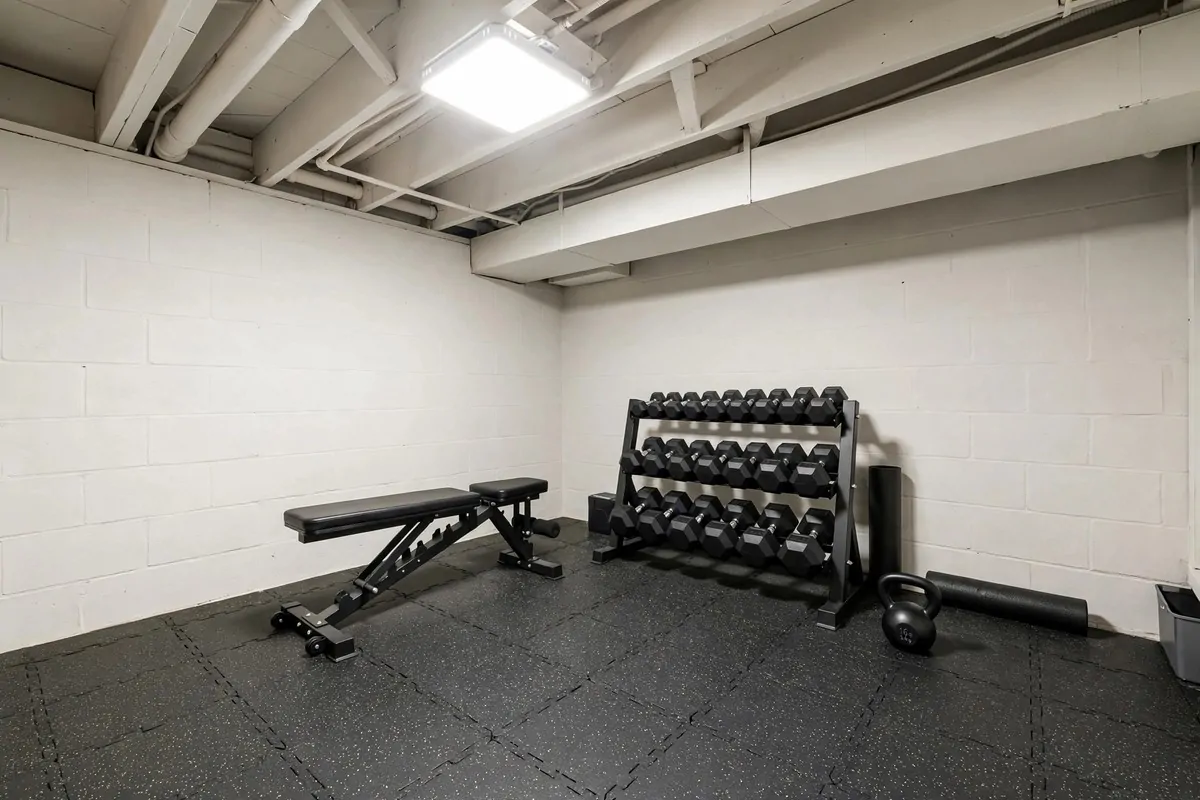
Basements are cold, a bit dark and often half forgotten. They are also brilliant gyms, because nobody cares what they look like.
Pick the driest corner. Damp and iron gear do not mix. If the floor feels damp, lay a vapour barrier under your rubber tiles or choose a different corner.
Rubber tiles are the foundation here. They insulate against the cold floor, protect the concrete and deaden sound. Interlocking tiles are cheap and easy to lay yourself.
Brighten it up. Basements need more light than you think. A couple of bright LED panels or a daylight bulb in the ceiling fixture changes the whole mood.
Store gear on raised shelves or a rack. Basement floors can flood a little in heavy rain. Keeping iron off the ground protects it and makes cleaning easier.
A small dehumidifier is worth it if your basement runs damp. It protects your gear and makes the air nicer to breathe while you train.
The upside of a basement gym is freedom. Drop weights, play music, grunt a bit. Nobody upstairs hears much through a concrete floor.
And in summer it is the coolest room in the house. While everyone else melts, you train in the one naturally air conditioned corner of your home.
19. The Loft-Style Open Corner
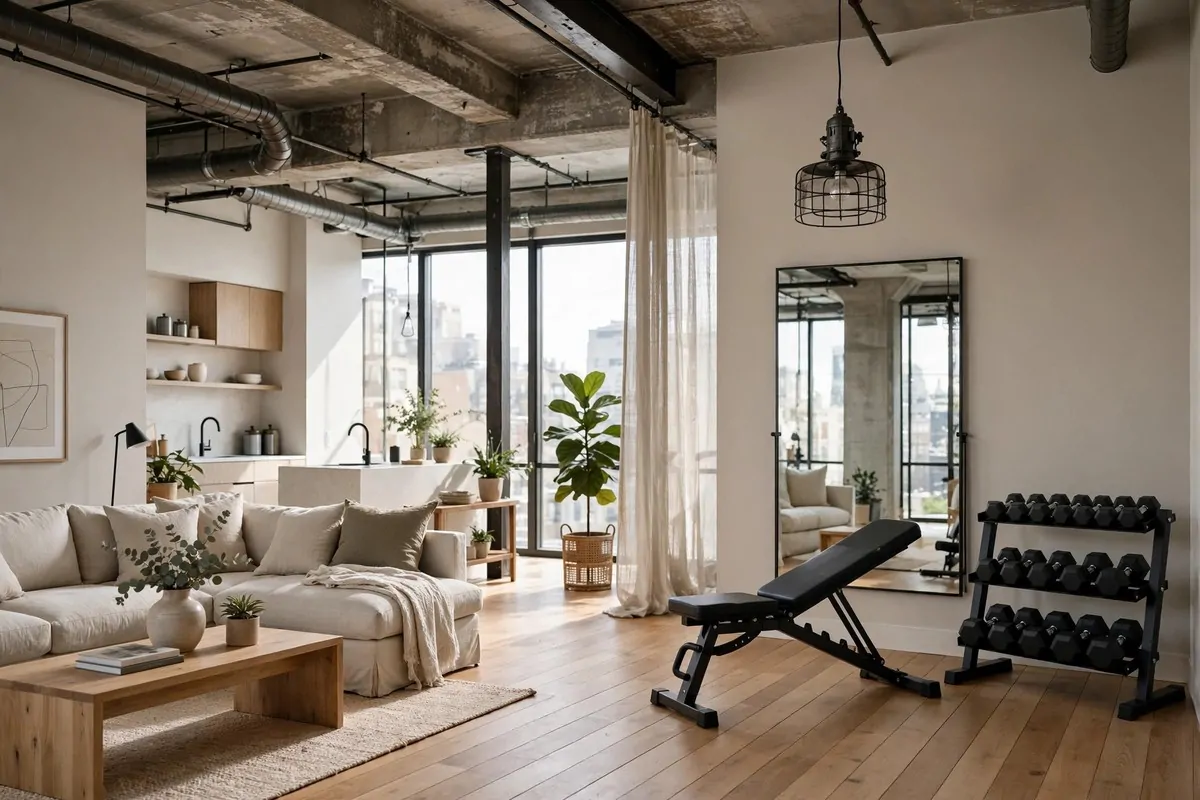
Some people want their workout corner to look good, not just work well. This setup is for them.
Keep it minimal. One bench, one dumbbell rack, one mirror.
That is the whole look. Every piece earns its place or it leaves.
Choose gear in matching colours. Black and wood is the classic loft look. When your gear matches, the corner reads as designed, not dumped.
A large mirror on the wall doubles the light and the space. In a loft-style corner it also looks like a style choice, which it is.
Add one industrial touch. A metal pendant light, an exposed bulb, a steel shelf.
Just one. It gives the corner its character without turning it into a theme park.
Keep the floor clear around the gear. Loft style is about air and space. If the corner gets crowded, it stops looking like a loft and starts looking like a storage unit.
This setup lives happily in open-plan living rooms. It looks intentional, like a reading nook or a plant corner. Guests see style, you see a gym.
Honestly, a beautiful workout corner gets used more. You walk past it, it looks inviting, and you think, why not. That is the whole psychology of it.
20. The Doorway Pull-Up Bar Station
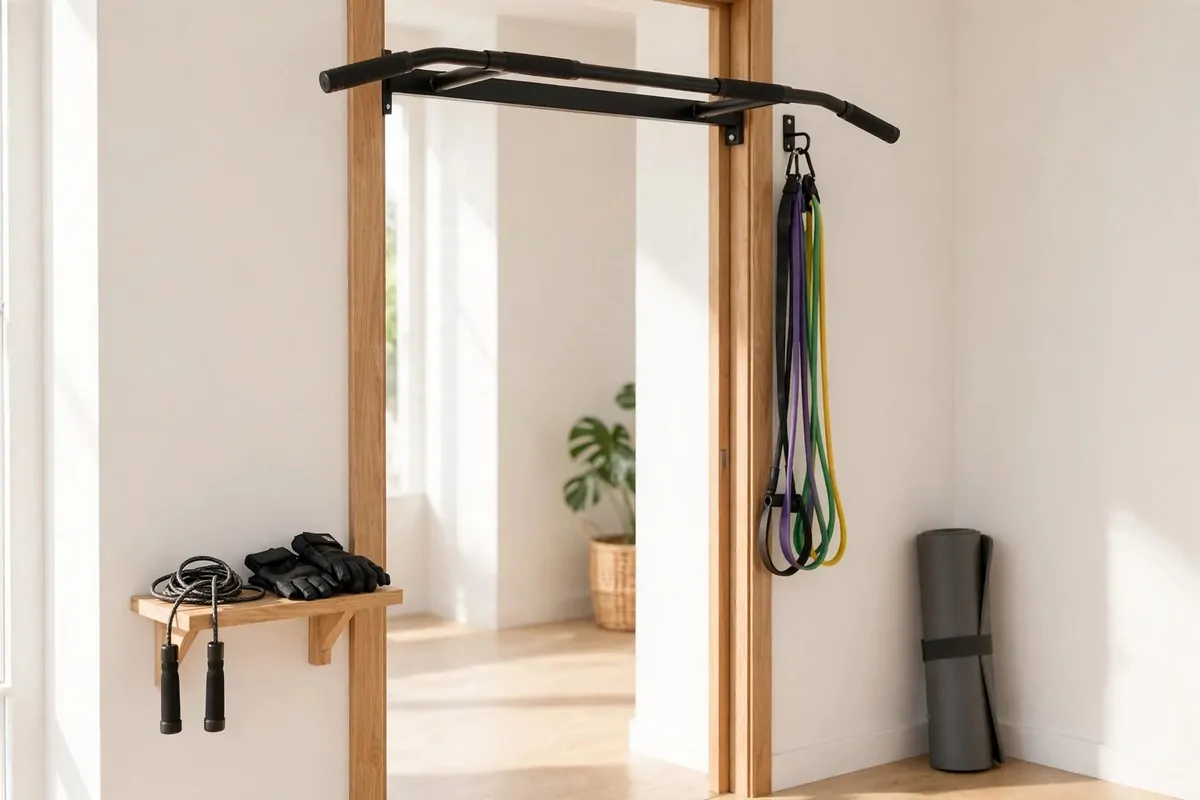
A doorway pull-up bar is the smallest gym upgrade there is. It fits in a door frame and costs less than a pizza night.
The lever-style bars need no screws. They grip the frame with pressure. When you move out, they come down without a mark, which renters love.
Hang bands on a hook beside the door. A mat rolls into the corner.
A small shelf nearby holds a skipping rope and gloves. The doorway becomes a little training station.
Pull ups are hard at first. That is normal.
Start with dead hangs, then slow lowers, then full reps. The bar is always there, so you can practise a little every day.
Use it as a stretch station too. Hanging from the bar feels amazing after a day at a desk. Your shoulders and spine will thank you for it.
Check your door frame first. It needs solid wood trim to grip safely. Hollow or weak frames will not hold, so test it low and careful before you commit.
Keep the area under the bar clear. You need space to hang without kicking furniture. A hallway doorway or a bedroom doorway usually works best.
This is the setup for people who want strength without any real footprint. The bar lives in a doorway you walk through anyway. Zero extra space required.
21. The Recovery Corner
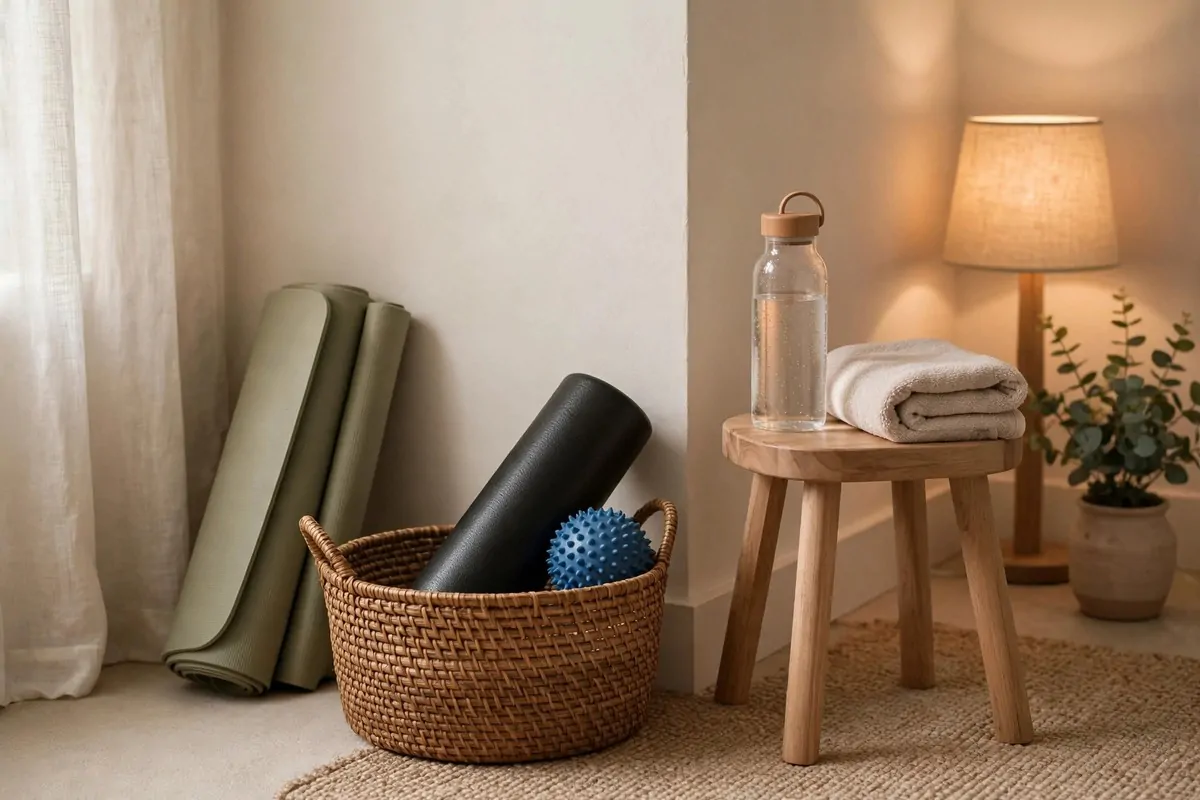
Every good workout space needs a recovery corner. This is where your body gets its thank you.
You need a foam roller, a massage ball and a mat. Maybe a stretching strap. That is the whole kit, and it fits in one basket.
Put it somewhere calm. Near the yoga nook if you have one, or in a quiet bedroom corner. Recovery works best where your mind can slow down.
Keep a water bottle and a small towel there. After a session you roll straight into the corner and start cooling down. No friction, no excuses.
Use it every day, not just after hard workouts. Five minutes of rolling while you watch TV keeps everything moving nicely. Little and often beats rare and long.
Add a cushion or a folded blanket. Recovery should feel comfortable, or you will not do it.
Comfort is not laziness here. It is strategy.
This corner also reminds you to rest. In a home gym it is easy to train every day and forget that rest is part of the plan. The recovery corner makes rest visible.
Honestly, this might be the most important setup on the list. Training breaks your body down a little.
Recovery builds it back up. Give it a corner of its own.