26 Bullet Journal Ideas for a Fresh Start

My desk drawer held three half used notebooks, and none of them could tell me what today was supposed to hold.
Here are 26 bullet journal ideas for a fresh start that turn one plain notebook, one pen, and a few quiet minutes into pages you will enjoy opening each day.
A bullet journal is just a plain notebook where you keep your plans, your lists, and your notes all in one place. You make the pages yourself, one at a time, and each page has one simple job.
You need very little to begin. A plain dot grid notebook, one pen that writes well, and a small ruler will do for almost every page in this list.
Start with one page, not ten. Pick the idea that feels easiest, try it for a few days, and add a new page only when the first one feels like a habit.
Keep your pages plain and calm. A few straight lines and a little white space look better than a page that is full of fuss, and a plain page is much easier to read the next morning.
Take care with your pens too. Keep the caps on when you are done, store them in a small pouch, and keep them away from little ones who might mark the walls or the couch with them.
1. Start with a Simple Daily Log Page
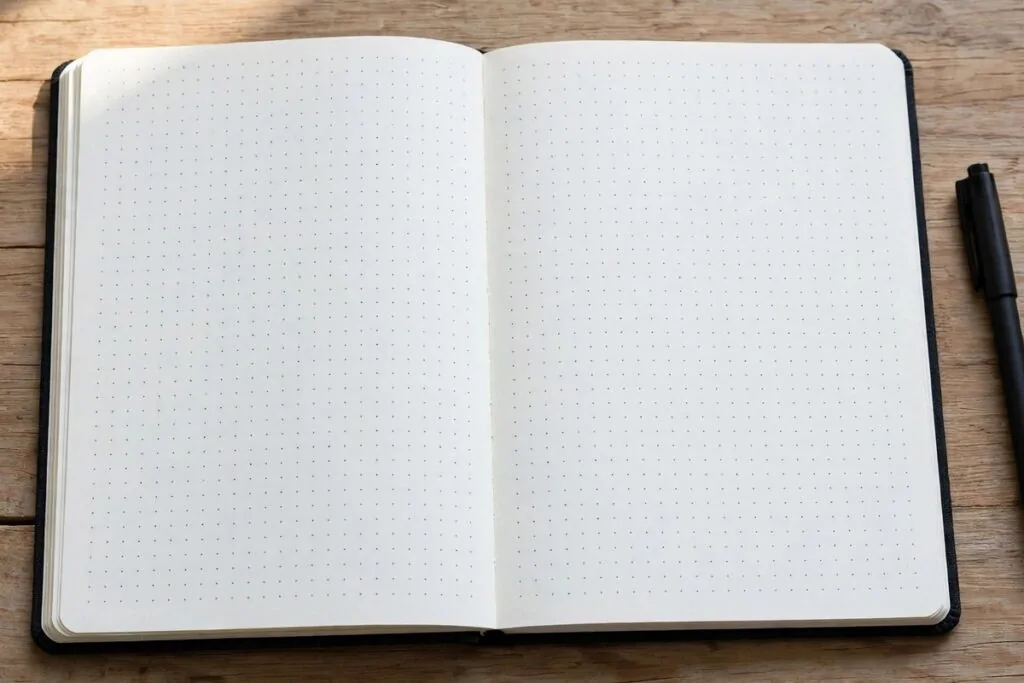
A daily log is one page for one day, and it holds the few things that matter most. You write a short line for each task, and you leave room to add more as the day goes on.
One line per task keeps the page calm and easy to scan.
Start each morning by writing down the three things you must do that day. Put the most urgent one first, so you see it right away. Then add smaller tasks below it as you think of them.
Cross out a line when the task is done, and it feels good to see the page fill with finished work. If a task moves to tomorrow, draw a small arrow beside it and move it along.
Keep the lines short so the whole day fits on one page.
Use a small dot or a tiny box at the start of each line. The dot can mean a task, and the box can mean a note or an event. Pick one simple mark and use it the same way every day.
At night, look back over the page for one minute. You will see what got done and what still needs your time tomorrow.
A plain daily log turns a busy day into a short list you can trust.
A plain notebook and a pen for one daily log cost $3 to $5.
2. Make a Monthly Cover Page for a Fresh Month
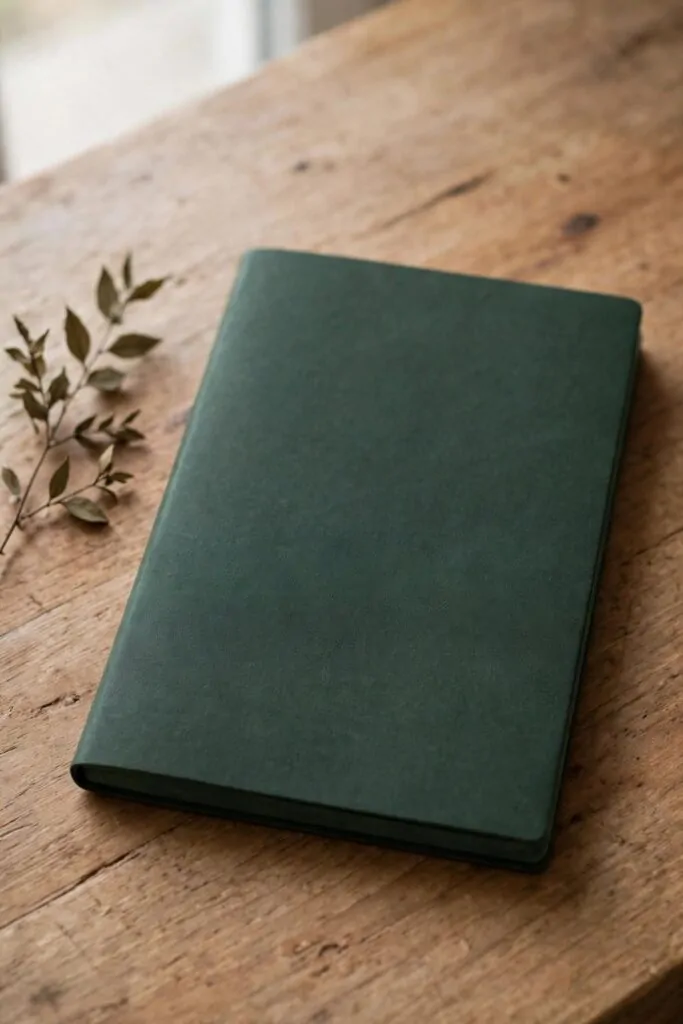
A monthly cover page marks the start of a new month in your notebook.
Give it one plain border at the top of the page. A row of small dots can be enough, and it takes only a few minutes to add.
Write the month name in large plain letters across the top. Leave the rest of the page open for a short line about your hopes for the month. Keep it simple so the page feels fresh, not full.
A cover page gives your month a clear start and a calm first page.
Use the same pen you use for your daily pages, so the whole notebook feels like one set. A matching border on each cover page ties the months together through the year.
Make the new cover page on the last day of the old month, so the fresh month starts ready.
Keep a small list of dates that matter on the back of the cover page. Birthdays, trips, and school events can sit there in short lines. A quick glance tells you what the month holds.
If you miss a month, just start again with the next one. A blank page is a fresh start, not a mistake.
A plain notebook, a pen, and a ruler for one monthly cover page cost $4 to $6.
3. Build a Habit Tracker You Will Actually Use
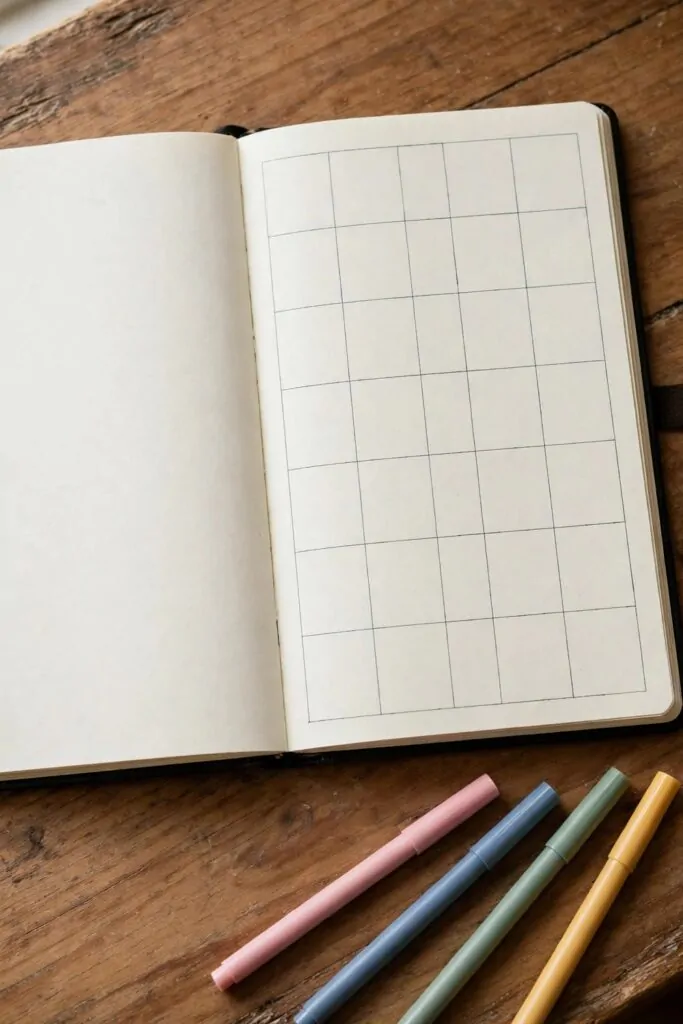
A habit tracker is a simple grid where each row is one habit and each column is one day. You mark a small box when you do the habit, and you leave it blank when you do not. Over the month, the marked boxes show your progress at a glance.
Pick only three or four habits to track at first, so the page stays easy to use.
Good habits to start with are drinking water, reading a few pages, and taking a short walk. Pick habits that fit your real life, not a perfect week that never happens.
Draw the grid with a ruler so the rows and columns stay neat and even. Leave a little space at the side for the habit names. Then mark one box each night before you close the notebook.
A full row of marks feels like a small win every time you see it.
If you miss a day, leave the box blank and move on. One blank box does not ruin the month, and the next mark puts you right back on track.
Check the grid each Sunday and pick one habit that needs a little more care.
Keep the tracker near the front of your notebook so you see it often. A page you never open cannot help you. A page you see each day becomes part of your routine.
A plain notebook, a pen, and a ruler for one habit tracker cost $5 to $8.
4. Plan Your Week on One Clean Spread
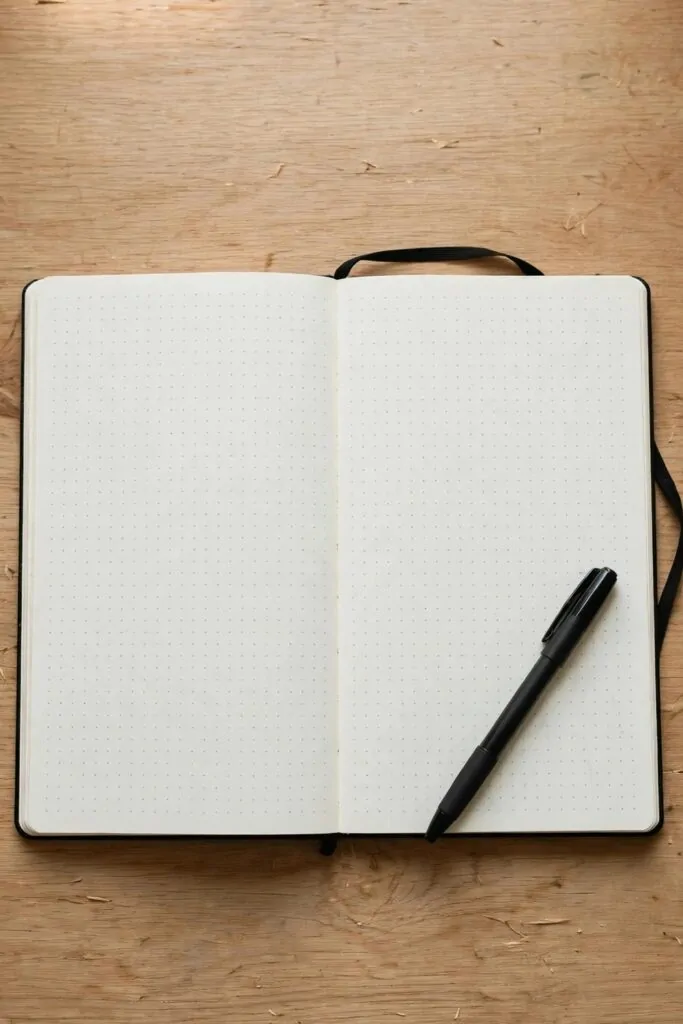
A weekly spread shows seven days on one open spread, so the whole week sits in front of you.
Split the spread into seven plain boxes, one for each day of the week. Give each box the same size, so no day looks more crowded than the next. Leave a small strip at the side for notes that belong to the whole week.
Write each day’s main tasks in its box the night before or early in the morning. Short lines work best, and you can add more lines as plans change.
A weekly view helps you spread big tasks across the days instead of piling them all on Monday.
Keep one box free at the end of the week for things you want to remember but cannot place yet. That box holds ideas, calls to make, and little jobs that can wait a day. Move them into a day box when you know where they fit.
Use the same layout every week, so you never waste time redrawing the spread. A steady layout lets your eyes find each day fast, even on a busy morning.
At the end of the week, look at the boxes that stayed empty and ask why.
A clean weekly spread makes the week feel shorter and calmer. You can see the busy days coming, and you can rest easy on the light ones.
A plain notebook, a pen, and a ruler for one weekly spread cost $3 to $6.
5. Keep a Mood Tracker Page
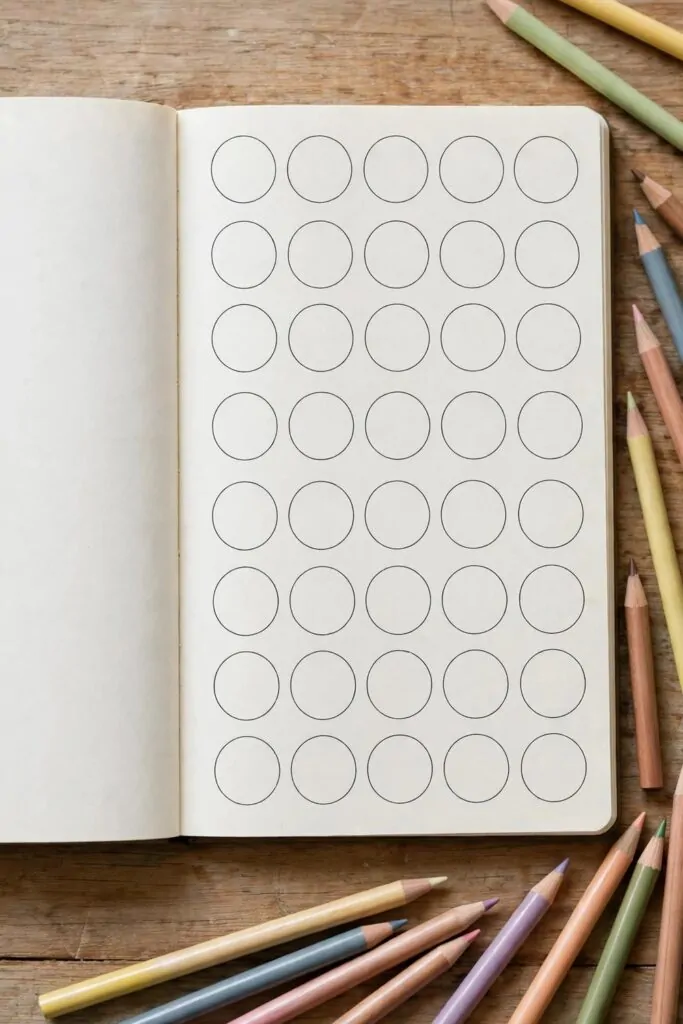
A mood tracker is one page where you mark how you felt each day. It takes less than a minute, and over time it shows patterns you would never spot from memory alone.
Draw a row of small circles, one for each day of the month. Pick a simple mark for each kind of day, like a dot for a calm day and a star for a bright day. Use the same marks all month so the pattern stays easy to read.
Mark the circle each night, while the day is still fresh in your mind.
At the end of the month, count which mark shows up most. You might see that busy weeks feel harder, or that quiet weekends feel calmer.
Add a short line under the tracker for a note about the week. A few words about what helped can teach you more than the marks alone. Keep the note short, so it stays easy to write.
A mood tracker is not for judging your days, it is for learning from them.
Share the page with no one unless you want to. It is your private record, and it works best when you are honest on it.
Keep the tracker simple and you will keep using it. A fancy page you skip helps no one. A plain page you mark each night tells a true story by the end of the month.
A plain notebook and a pen for one mood tracker page cost $4 to $7.
6. Write a Short Gratitude Log Each Night

A gratitude log is three short lines each night about good things from the day. They can be tiny things, like a warm drink or a kind word from a friend. Small good things count just as much as big ones.
Write the lines just before bed, when the day is done and the house is quiet. The habit takes only a few minutes, and it ends the day on a soft note.
Keep each line short, so the habit stays easy on tired nights too.
If you cannot think of three things, start with one. A warm meal, a sunny window, or a page you finished can be enough. The habit grows easier the more nights you try it.
Look back at the log when a week feels hard. The old lines will remind you that good days were there too, even when the week felt long.
A gratitude log works best when you write it every night, even the plain ones.
Keep the log on one page per week, with a few lines for each night. That way you can see a whole week of good things at once. A full week of lines is a lovely thing to read on a Sunday.
Three short lines a night can change how the whole day feels.
A plain notebook and a pen for one gratitude log cost $2 to $4.
7. Plan Your Meals for the Week
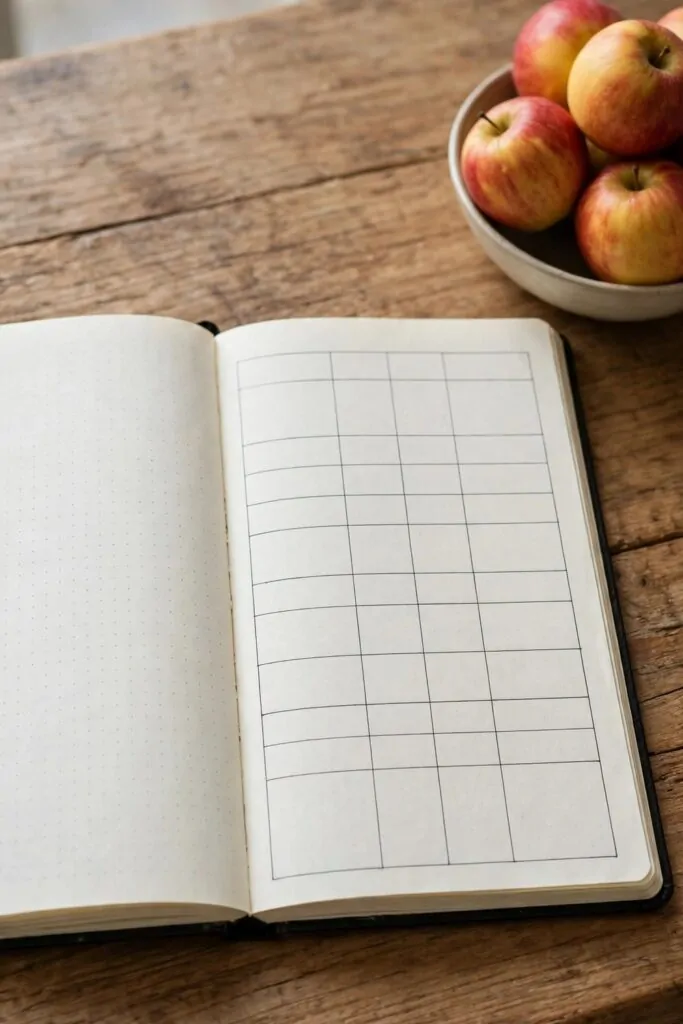
A meal plan page lists what you will cook for each day of the week.
Write the days down the side of the page and leave space beside each one. Then fill in one main dish for each day, using foods you already know how to cook.
Plan the week on Sunday, so shopping takes one trip instead of five.
Start with meals your family already likes, like rice and beans or a simple pasta dish. Add one new dish a week if you feel brave, and keep the rest familiar. A plan you enjoy is a plan you will follow.
Leave one day open for leftovers or a simple bread and soup night. An open day gives the week room to bend when plans change.
Add a small shopping list at the bottom of the page. List only what you need for the planned meals, and check the cupboards first. A short list saves money and stops extra trips to the shop.
A meal plan also stops the daily question of what to cook tonight.
Keep the page where you can see it while you cook. A plan on the fridge door or inside the notebook cover works well, and it keeps the week running smooth.
A plain notebook and a pen for one meal plan page cost $6 to $9.
8. Track Your Money on One Plain Page
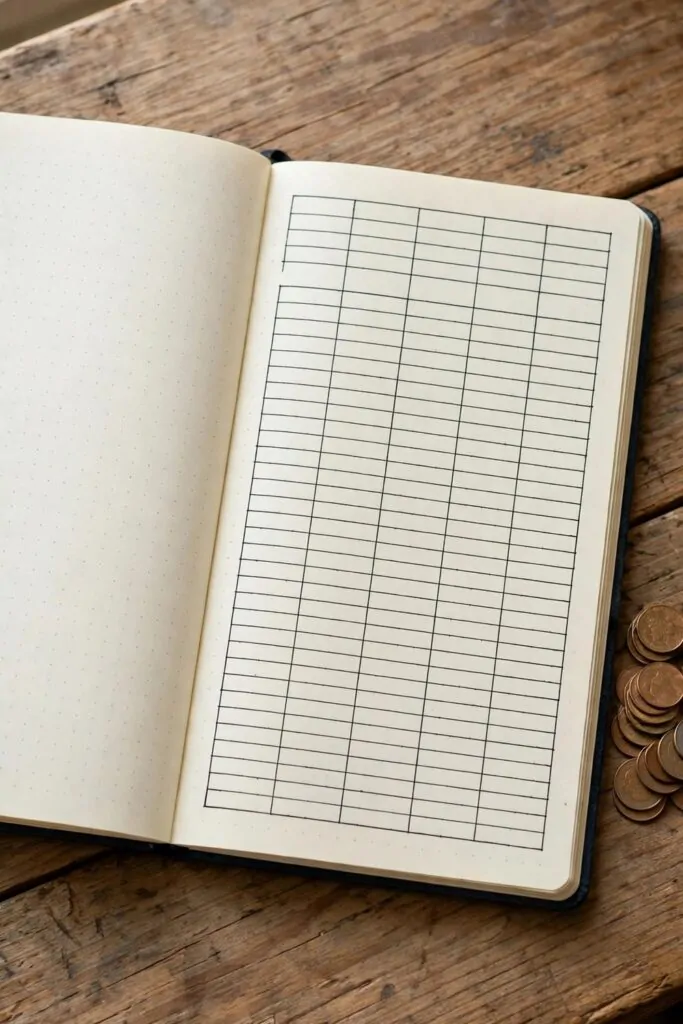
A money page tracks what you spend, one short line at a time. You write the thing you bought and the price, and the page adds up to a clear picture of the month.
Start the page with the amount you have for the month at the top.
Add a line each time you spend, with the date and the price. Small spends count too, because they add up fast over a month.
At the end of each week, add up the lines and write the total below them. Seeing the weekly total helps you slow down before the month runs out. A small weekly check keeps the month calm.
Keep one column for needs, like food and bus fares, and one for wants, like books and treats.
If the wants column grows too fast, pick one treat to skip next week. The page makes the choice clear, and you still keep the treats you love most.
Use the same page shape each month, so the months are easy to compare. A steady layout shows whether spending is going up or down. It also shows which month felt easiest to manage.
A plain money page turns worry into a short list you can actually use.
A plain notebook, a pen, and a ruler for one money tracker page cost $5 to $7.
9. Keep a Reading Log Page

A reading log is one page where you list the books you finish. Each line holds the book title and the date you finished it. Over the year, the list grows into a record of all the stories you loved.
Add a small mark beside the books you would read again.
Leave a little space after each line for a short note about the book. A line or two about the best part is enough. Those notes help you pick your next book with ease.
Keep a second short list on the same page for books you want to read next. When you finish one book, the next one is already waiting for you.
A reading log turns a pile of finished books into a story of your year.
If you read a little each day, the list grows faster than you expect. Ten pages a day can finish a book in two weeks. A short daily habit beats a long session you never start.
Try one new kind of book each month, like a tale of travel or a book of poems. A new kind of story can open a door you did not know was there.
Your reading log is a quiet record of time well spent.
A plain notebook and a pen for one reading log page cost $3 to $4.
10. Track Your Sleep on a Simple Grid

A sleep tracker is a simple grid that shows how long you slept each night.
Draw one row for each night of the week and mark the hours you slept. A full row means a full night of rest, and a short row means a short night. The grid makes good weeks and hard weeks easy to see.
Write the time you went to bed and the time you woke up in short notes beside the grid. A few nights of notes will show whether late nights are stealing your rest.
Aim for the same bedtime each night, even on weekends, so the grid stays steady.
If a night was short, add a short note about why, like a late meal or a restless evening. A small note can show the cause in plain sight. Then you can fix the cause instead of just feeling tired.
Look at the grid each Sunday and count the good nights. If most nights look short, move your bedtime a little earlier for the next week.
A sleep grid works best when you fill it in each morning, while the night is fresh.
Keep the grid near your daily log, so you mark it at the same time each day. A tracker you see each morning gets used. A tracker buried at the back of the notebook gets forgotten.
A plain notebook, a pen, and a ruler for one sleep tracker grid cost $6 to $8.
| Idea | Main change | Typical cost |
|---|---|---|
| Start with a Simple Daily Log Page | Keep one plain line for each day | $3 to $5 |
| Make a Monthly Cover Page for a Fresh Month | Add one plain cover page each month | $4 to $6 |
| Build a Habit Tracker You Will Actually Use | Mark one small box for each habit | $5 to $8 |
| Plan Your Week on One Clean Spread | Plan the week on one clean spread | $3 to $6 |
| Keep a Mood Tracker Page | Add one small mark for each mood | $4 to $7 |
| Write a Short Gratitude Log Each Night | Write three short lines each night | $2 to $4 |
| Plan Your Meals for the Week | List meals for each day of the week | $6 to $9 |
| Track Your Money on One Plain Page | Write each cost on one plain page | $5 to $7 |
| Keep a Reading Log Page | List each book on one plain page | $3 to $4 |
| Track Your Sleep on a Simple Grid | Mark sleep hours on a simple grid | $6 to $8 |
| Total | $41 to $64 |
11. Track Your Water on a Plain Page

I keep one plain page for water. I draw small drops in a row for each glass.
Each drop stands for one glass of water.
I mark a drop when I finish a glass. I do it right away so I do not forget. A quick mark keeps the page honest.
I start fresh each morning with a new row. I leave the old rows alone so I can see the week.
Eight drops is my daily goal.
Some days I reach it by lunch. Some days I reach it late in the day.
I keep a glass near my journal. I fill it when it is empty. I mark the drop after each fill.
A plain page works better than a fancy one for me.
For this page I reach for a dot grid journal and a plain pen. All together, the journal and the pen cost $4 to $11.
12. Make a Cleaning Schedule Spread
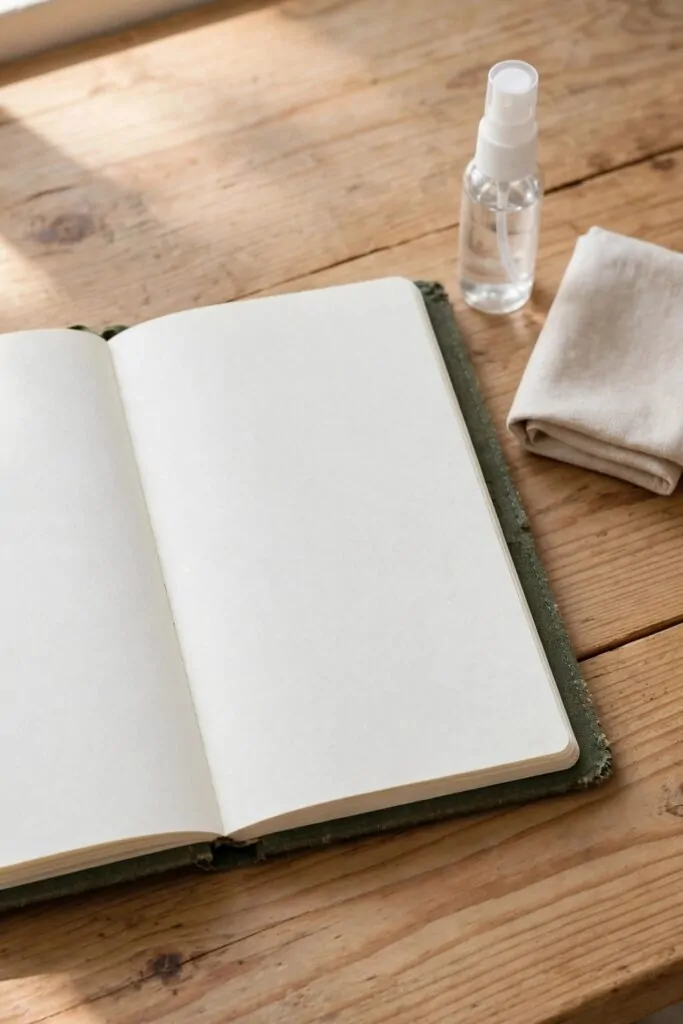
I give cleaning a simple spread in my journal.
I list one small job for each day. I keep each job short so I can finish it.
Monday gets the kitchen counters. Tuesday gets the bathroom sink. Wednesday gets the floors in the main rooms.
I check off each job when it is done.
I leave blank space under each day. I add small notes there when a job needs more time.
I keep the list short on busy weeks. I move one job to next week when I need to. I do not add it back twice.
A short list beats a long list I never finish.
I look at the spread each morning. I pick the job for that day and start with it.
The journal, a plain pen, and a ruler for this spread cost $5 to $13.
13. Keep a Packing List Page for Trips
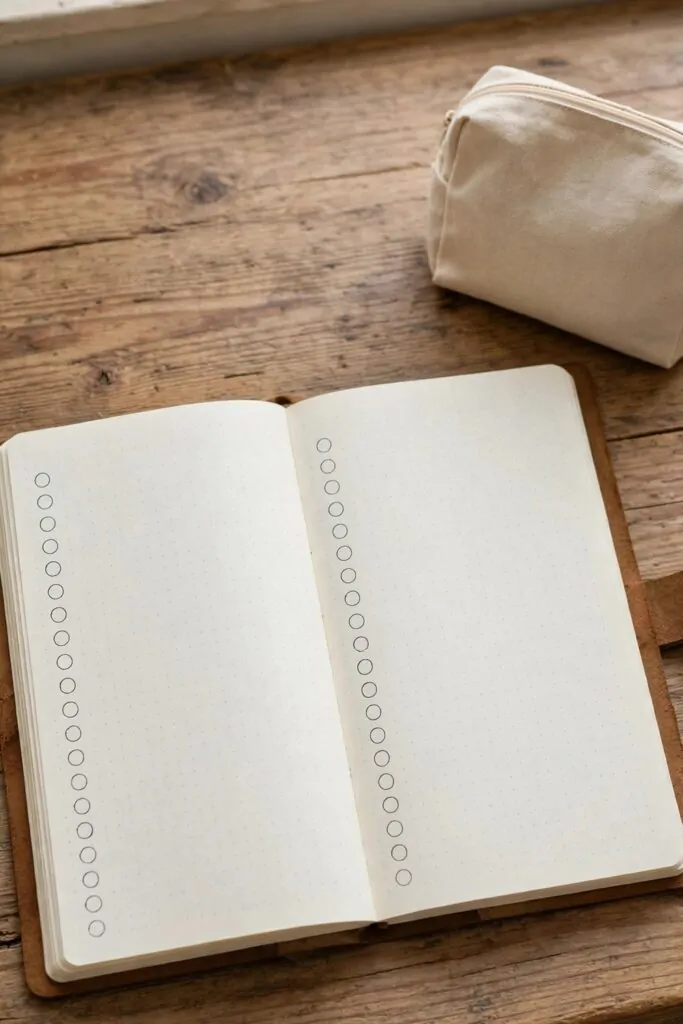
I keep one packing page for trips. I start it a few days before I go. I add things to it when I think of them.
I group the list by bag. I keep clothes in one group and toiletries in one group.
I check off each item as it goes in the bag.
I leave space at the bottom for last minute adds. I look at that space the night before I leave.
I pack light when the trip is short. I add one warm layer for cool nights. I add one pair of comfy shoes for long walks.
I reuse the same page plan each trip.
I cross out items I do not need next time. I keep the ones I always forget at the top.
A calm list makes packing calm too.
I add a small ruler for neat lines, and I use a dot grid journal and a plain pen for this list. The journal, pen, and ruler cost $4 to $12.
14. Keep a Birthday List Page

I keep all birthdays on one plain page.
I group them by month. I write the month at the top of each group. I leave room under it for names and dates.
I look at the page at the start of each month. I note who has a birthday that month.
I keep the list short and simple.
I add a small mark next to close friends. I keep the rest plain.
I update the page when a new birthday comes up.
I plan gifts early when I can. I keep gift notes on the same page. I buy the gift a week ahead when I have time.
I check the page before I shop. I never guess a date now.
This page needs only a dot grid journal and a plain pen. The small journal plus the plain pen cost $3 to $10.
15. Keep a Simple Wishlist Page

I keep a wishlist page for things I want later. I add to it only when I really want the item.
I write the item and a rough price. I wait a week before I buy it. I cross it off the list when I buy it or drop it.
Waiting saves me from quick buys I regret.
I group the list into home, clothes, and books. I keep each group short. I move items between groups when my plans change.
I review the page once a month.
I take off items I no longer want. I keep the ones I still think about.
A short wishlist feels calm to look at.
I set a small budget for the month. I pick one item from the list when I can afford it. I leave the rest for later months.
The small journal and the plain pen for this list cost $3 to $10.
16. Clear Your Mind with a Brain Dump Page

I keep a brain dump page for busy days. I open it when my head feels full. I write down every thought that pops up.
I do not sort the thoughts yet.
I just get them out of my head.
I leave the page messy on purpose. I sort it later when I feel calm.
I circle the three things that matter most. I move those three to my task list. I leave the rest on the dump page for now.
I dump in the morning on hard days. I dump at night when the day felt long.
I keep one dump page ready for hard days. I turn to it fast when I need it.
An empty head helps me sleep better.
A dot grid journal and a plain pen are all this page needs. The journal and the pen cost $3 to $10.
17. Write One Line a Day
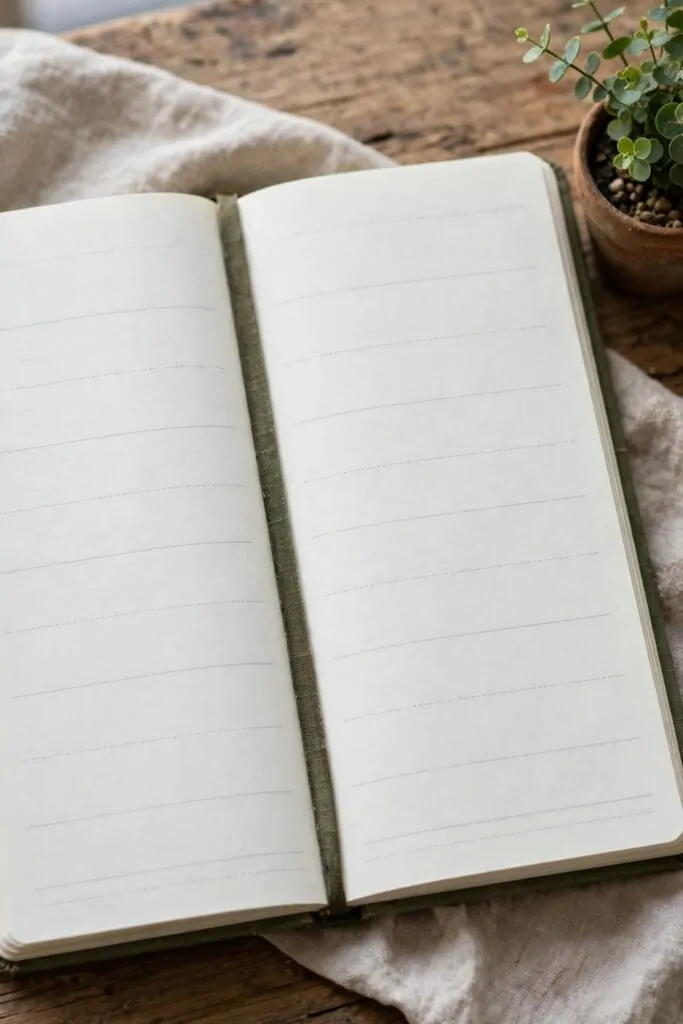
I write one line a day in my journal.
I pick one small moment from the day. I write it in one short line.
I do it at night before bed. I keep it short so I never skip it.
Some days I write about a good meal. Some days I write about a walk. Some days I write one plain line about the weather.
One short line does the job.
I read back a week of lines on Sundays. I smile at the small moments I forgot. I add a new line for that day too.
I miss some days and that is fine. I just pick it up again the next day.
A year of lines tells a sweet story.
The journal and pen for this page cost $3 to $10.
18. Set Up a Future Log Spread

I keep a future log for plans far ahead. I give each month its own small block.
I write plans in the month they belong to.
I add trips, visits, and big tasks. I keep each note short.
I check the log when I plan a new month.
I move plans from the log to the monthly page. I cross them off the log when I move them. I leave the done ones alone.
I plan gifts for birthdays there. I plan trips months ahead there. I plan big jobs like deep cleans there too.
A future log stops me from forgetting big dates.
I review it at the start of each month. I copy the plans for that month to my monthly page.
For this spread I take a dot grid journal, a plain pen, and a ruler. I draw the month blocks with the ruler. The journal, pen, and ruler cost $5 to $13.
19. Look Back with a Monthly Review Page

I keep one review page at the end of each month. I sit with my journal and look back at the month. I write down what went well and what felt hard.
I note one win from the month. I note one lesson I learned. I note one thing I want to try next month.
I keep each note to one short line.
I do not judge the hard parts.
I thank myself for the small wins. I let the misses go and move on.
I look at my goals from the start of the month. I see which ones moved and which ones waited.
I carry one goal into next month. I drop one goal that no longer fits. I add one fresh goal when I feel ready.
A short review keeps me honest and kind.
A small journal and a plain pen cost $3 to $10.
20. Track One Goal at a Time

I track one goal at a time in my journal.
One goal keeps my focus clear.
I pick a goal I can measure. I break it into small weekly steps. I mark each step when I finish it.
I give the goal its own page. I keep that page simple and plain.
I write the weekly steps under the goal. I check them off one by one.
I review the goal each Sunday. I note what worked that week. I change the plan when a step feels too big.
Little steps soon make a big change.
I celebrate small wins on the page. I keep going when a week feels slow. I do not quit when I miss one step.
For this page I need a plain pen, a dot grid journal, and a ruler to keep my goal neat. The journal, pen, and ruler for this page cost $4 to $12.
| Idea | Main change | Typical cost |
|---|---|---|
| Track Your Water on a Plain Page | water tracker page | $4 to $11 |
| Make a Cleaning Schedule Spread | cleaning schedule spread | $5 to $13 |
| Keep a Packing List Page for Trips | packing list page | $4 to $12 |
| Keep a Birthday List Page | birthday list page | $3 to $10 |
| Keep a Simple Wishlist Page | wishlist page | $3 to $10 |
| Clear Your Mind with a Brain Dump Page | brain dump page | $3 to $10 |
| Write One Line a Day | one line a day page | $3 to $10 |
| Set Up a Future Log Spread | future log spread | $5 to $13 |
| Look Back with a Monthly Review Page | monthly review page | $3 to $10 |
| Track One Goal at a Time | one goal tracker page | $4 to $12 |
| Total | $37 to $111 |
21. Make a Daily Routine Checklist
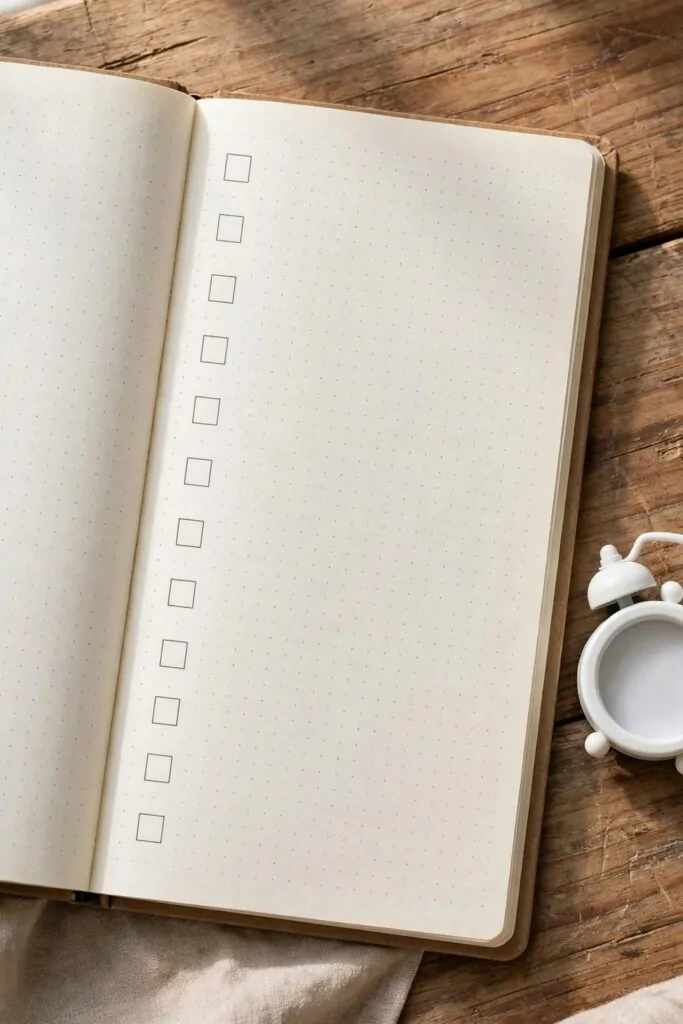
A new day feels calmer when I know what comes first. I keep a short list of my small daily tasks in my journal.
I write the list the night before so my morning starts slow and easy.
I put the easy tasks at the top of the list. I put one hard task in the middle. I leave the last line free for one small joy, like a cup of tea.
I tick each task off as I finish it. That small tick feels like a tiny win each time.
I keep the list short, so I never feel rushed.
A plain daily checklist pad costs $3 to $5. I use one page for each day. I start a fresh page each morning and the old page stays as a small record of my week.
If a task does not get done, I move it to the next day with no fuss.
You can build your list around your own day. Your list can hold chores, rest, and one kind thing for yourself.
I add one new task each week when the old ones feel easy. I drop a task that no longer fits my day. A short list that fits your life beats a long list that makes you tired.
22. Keep a Prayer Tracker Page
A prayer tracker helps me keep my days steady and calm.
I draw a small grid for the month in my journal. I mark one box for each prayer time. I fill a box when I pray, and I leave it blank when I miss one.
I never scold myself for a blank box. I just try again the next day.
The page shows my whole month at one glance.
I add a small line at the bottom for one thankful thought each day. That line keeps my heart soft and glad.
A plain monthly tracker pad costs $4 to $6. I use it for the whole month. I start a new page when the month turns, and the old page stays as a quiet record.
You can track one prayer time or all of them. The page bends to fit your own rhythm.
I keep the page simple so I use it every day.
Some weeks look full and some look light. Both are fine, and both teach me to keep going.
23. Plan Your Garden on One Page

I plan my whole garden on one page in my journal. I sketch each bed as a plain box. I note what grows in each box for the season.
One page holds the full plan, so I never hunt for lost notes.
I add a small note for when to sow each seed. I add another note for when to pick.
I leave room at the side for a wish list of new plants. I write the names of the plants I want to try. I cross one off when I plant it.
A plain garden planner pad costs $5 to $8.
I check the page each week and add one small job. I water, I weed, and I watch the beds grow.
You can plan a big garden or one small pot on the sill.
I note which beds did well this year. I note which ones need more sun next year. Those small notes make next spring much easier.
A garden plan on one page saves time and seeds. It turns a big job into small steps you can enjoy.
24. Track a Craft Project from Start to Finish
A big craft project feels much smaller when I track it step by step.
I start a fresh page for each new project. I note the first step at the top and the last step at the bottom.
I list the bits I need before I start. I tick each bit off as I gather it. I never start a project when a bit is still missing.
I note the date I start, so I can see how the work grows.
A plain project tracker pad costs $4 to $7. I use one page for each project. I keep the finished pages in one place, so I can look back at what I made.
I add a small note when a step takes longer than I hoped. I add another note when a step turns out easy.
You can track a quick weekend project or a slow one that takes a month.
I write one line about what I learned when I finish. That line helps my next project go much smoother.
A finished page feels like a small prize all on its own.
25. Keep a Letter Writing Log

I love to write letters to the people I miss. A letter log helps me keep track of each one.
I note the name of the person I wrote to. I note the day I sent the letter. I leave a line for the day a reply comes back.
One page holds a whole season of letters.
I add a small note about what I wrote in each letter. That note helps me pick up the thread next time.
A plain letter log book costs $5 to $7. I use one page for each month. When the month turns I open a fresh page, and the old page stays as a sweet record.
You can log one letter a month or one each week.
I keep a small list of people I want to write to next. I pick one name when I have a quiet hour.
A letter log turns a kind habit into a joy you can see.
I read back through the old pages when I feel low. I see all the love I sent out into the world. That is a fine reason to write one more letter today.
26. Put Together a Bullet Journal Starter Kit
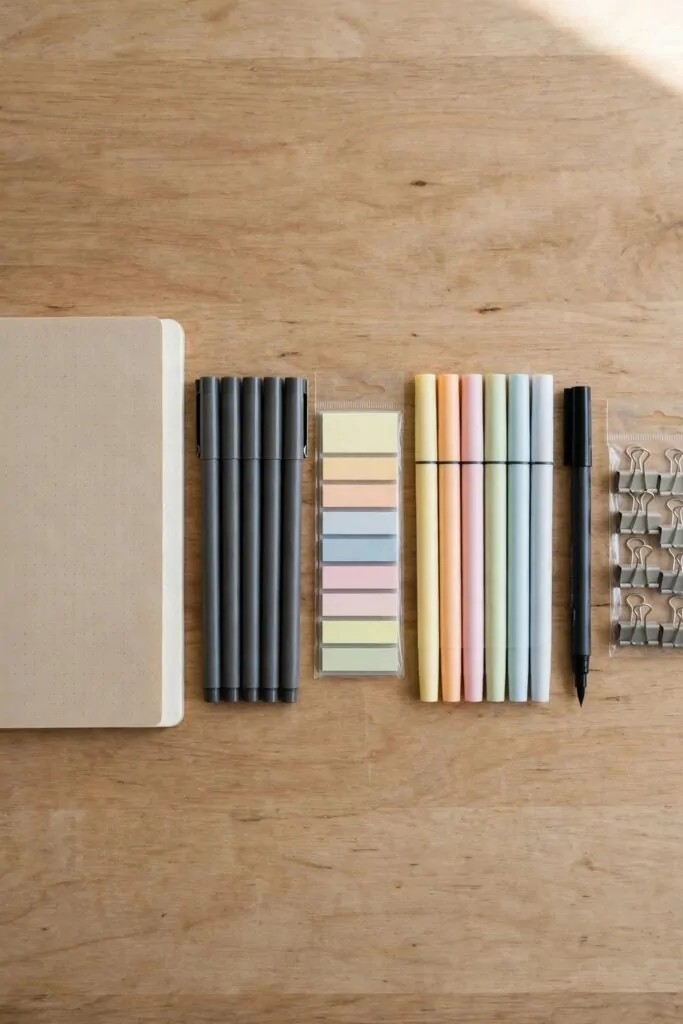
A starter kit puts all your journal bits in one box. You can grab the box and start a fresh page any time. You never have to hunt for a pen again.
I keep my kit small and plain. Six bits are all you need to begin.
A plain box or a small tray holds the whole kit.
I keep the kit where I sit to plan my day. It stays ready, so a fresh page is never far away.
A plain dot-grid notebook costs $4 to $6, a set of plain fineliner pens costs $3 to $5, a pack of plain sticky tabs costs $2 to $3, a set of plain highlighter pens costs $3 to $4, a plain brush pen costs $2 to $3, and a pack of plain binder clips costs $2 to $3. For a total of $16 to $24, you can put this whole bullet journal kit together.
I use the sticky tabs to mark the pages I use most. I use the binder clips to hold loose pages together. I use the brush pen for big page titles when I want them to stand out.
You can add more bits later, but these six are a fine start.
I check my kit once a month and fill what runs low. I keep the pens with the notebook so all six bits stay close. A kit that stays in one place gets used far more than one that hides in a drawer.
Tomorrow morning, open a fresh page and write one small plan for your day. A blank page is a kind friend, and it is ready when you are.
| Idea | Main change | Typical cost |
|---|---|---|
| Make a Daily Routine Checklist | Tick off each small task | $3 to $5 |
| Keep a Prayer Tracker Page | Mark each prayer day | $4 to $6 |
| Plan Your Garden on One Page | Sketch each bed on one page | $5 to $8 |
| Track a Craft Project from Start to Finish | Note each step as you go | $4 to $7 |
| Keep a Letter Writing Log | Note each letter you send | $5 to $7 |
| Put Together a Bullet Journal Starter Kit | Put six plain kit bits in one box | $16 to $24 |
| Total | $37 to $57 |
| Idea | Main change | Typical cost |
|---|---|---|
| a plain dot-grid notebook | Start each month on a fresh page | $4 to $6 |
| a set of plain fineliner pens | Keep them in the front pocket | $3 to $5 |
| a pack of plain sticky tabs | Mark the pages you use most | $2 to $3 |
| a set of plain highlighter pens | Keep them beside the notebook | $3 to $4 |
| a plain brush pen | Use it for big page titles | $2 to $3 |
| a pack of plain binder clips | Clip loose pages together | $2 to $3 |
| Total | $16 to $24 |
Keep Reading
If you liked these ideas, you will love these posts too
Each post has more simple ideas you can try at home this weekend.