26 Low Light Indoor Plant Ideas for Dark Corners

The corner by my stairs never got any sun. I put a plant there and it went yellow in two weeks.
I tried again with a new plant and the same thing happened.
I felt silly for it. I watered it more. I moved it closer to the lamp, but it still looked sad.
Then a friend told me I was picking the wrong plants.
Some plants are made for dark corners. They do not need a bright window to stay green.
I started with just one of them. I put it in that same dark corner. It stayed green for months and I could not believe it.
That is why I wrote this post for you. All 26 ideas are in this one post, so you can find the right plant for your dark corner too.
1. A Snake Plant in a Dark Corner
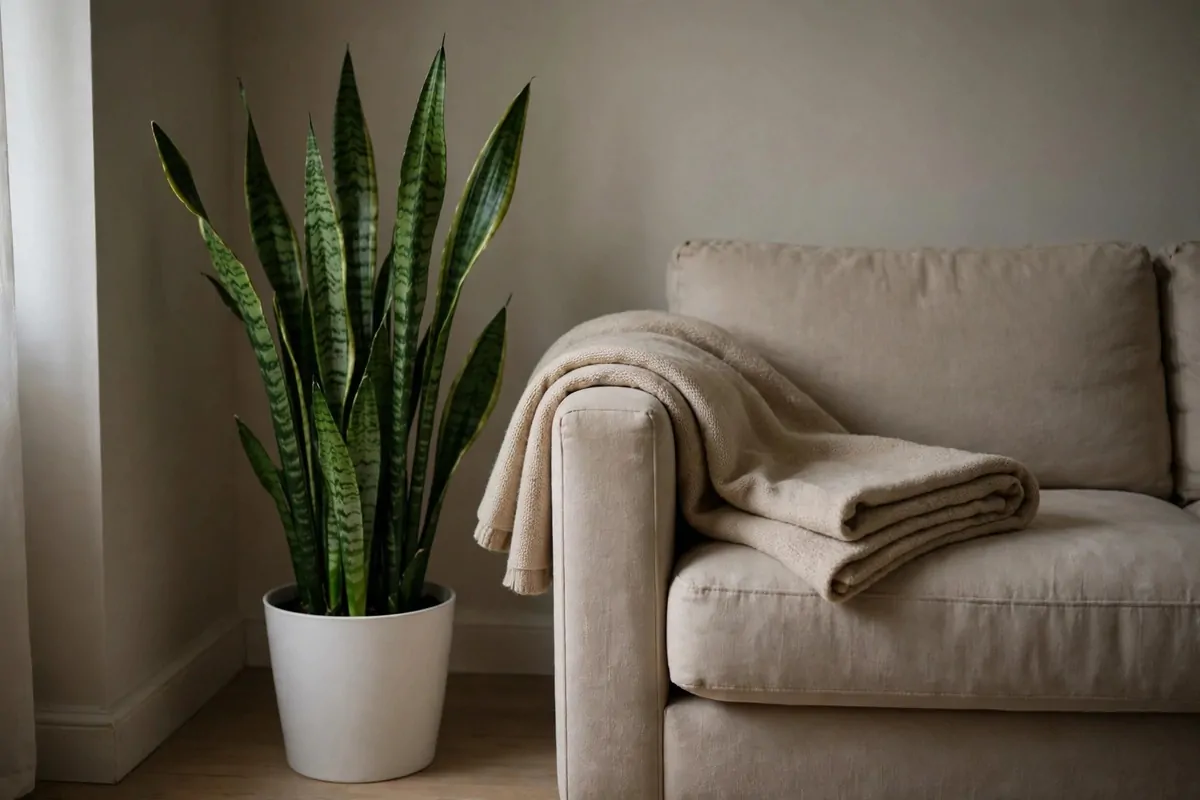
A snake plant was the first plant that lived in my dark corner. Its tall green leaves stood up straight even with almost no sun.
I love how simple it looks.
You do not need to water it a lot. I water mine about once every two weeks. I always check the soil first with my finger.
If the soil feels dry, I give it a little water. When it still feels wet, I leave it alone for a few more days.
That is the whole trick with this plant.
It likes a plain pot that fits the corner. I use a tall pot so the leaves have room to grow up. A heavy pot helps too, so it does not tip over.
You can put it next to a sofa or by a door. It makes a dark spot look alive right away.
I wipe the leaves with a damp cloth once a month.
Dust can sit on the wide leaves. A quick wipe keeps them shiny and green. It takes me less than a minute to do it.
2. A ZZ Plant That Thrives on Neglect
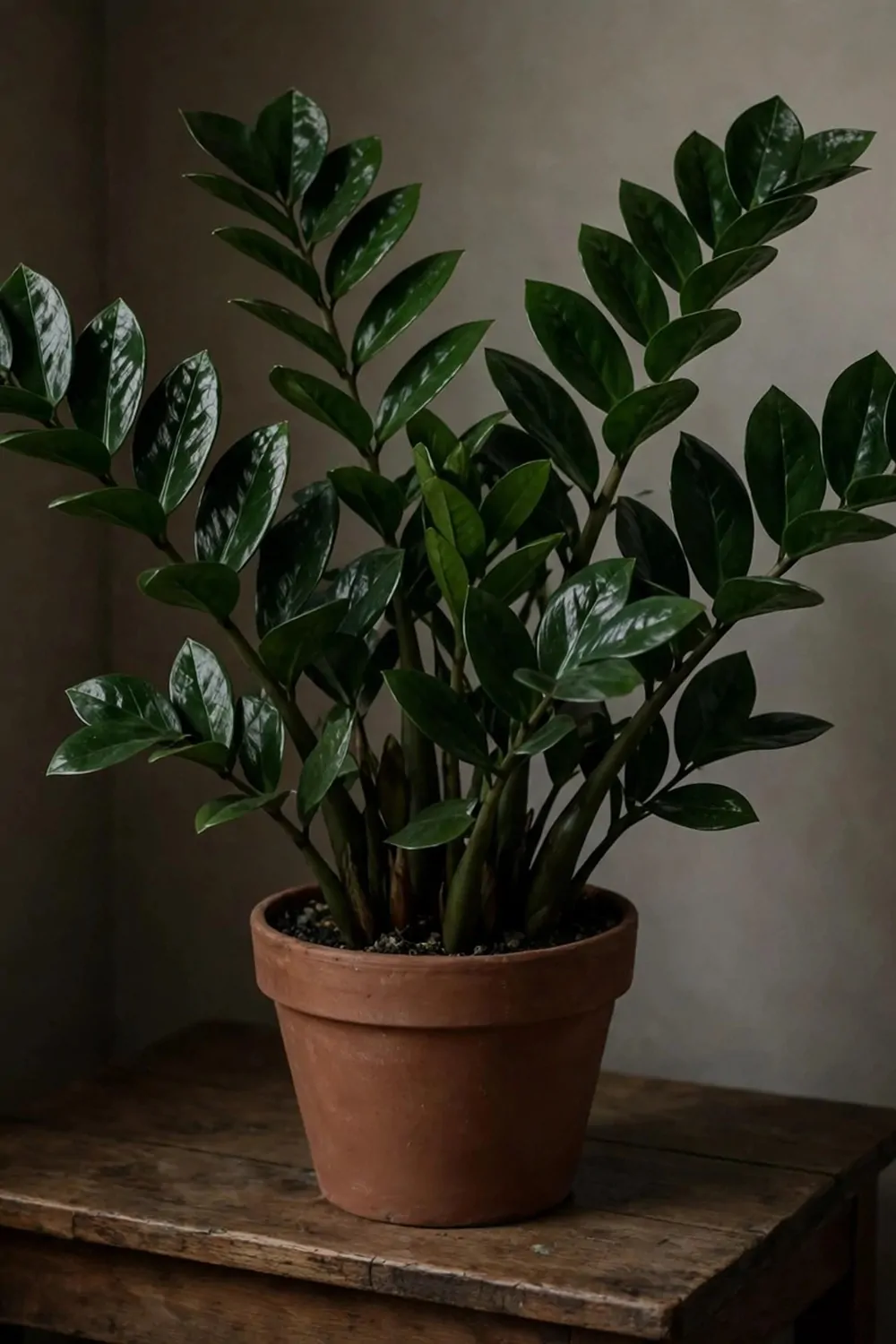
A ZZ plant is perfect if you forget to water plants. I forgot mine for three weeks once and it still looked fine.
It stores water in its thick stems and roots.
That is why it does not mind a dark corner. It grows slow in low light. It just stays green and calm while it waits.
You can find one at most plant shops for a fair price. A ZZ plant costs $10 to $22, and a small one is often on the low end of that range.
I picked a small one to start with.
A pothos costs $6 to $15, so it is a good cheap friend for it. A snake plant costs $8 to $20 if you want a tall one too. I like to mix a cheap plant with one that costs a bit more.
| Plant | Typical cost |
|---|---|
| Pothos | $6 to $15 |
| Snake plant | $8 to $20 |
| ZZ plant | $10 to $22 |
I keep my ZZ plant in a pot with a hole at the bottom. The extra water can drain out and the roots stay safe.
I water it only when the soil feels dry deep down.
If a leaf turns yellow, I just snip it off. The plant makes a new one in time. I do not worry about it, and the plant does fine on its own.
3. A Pothos Trailing Down a Dim Shelf
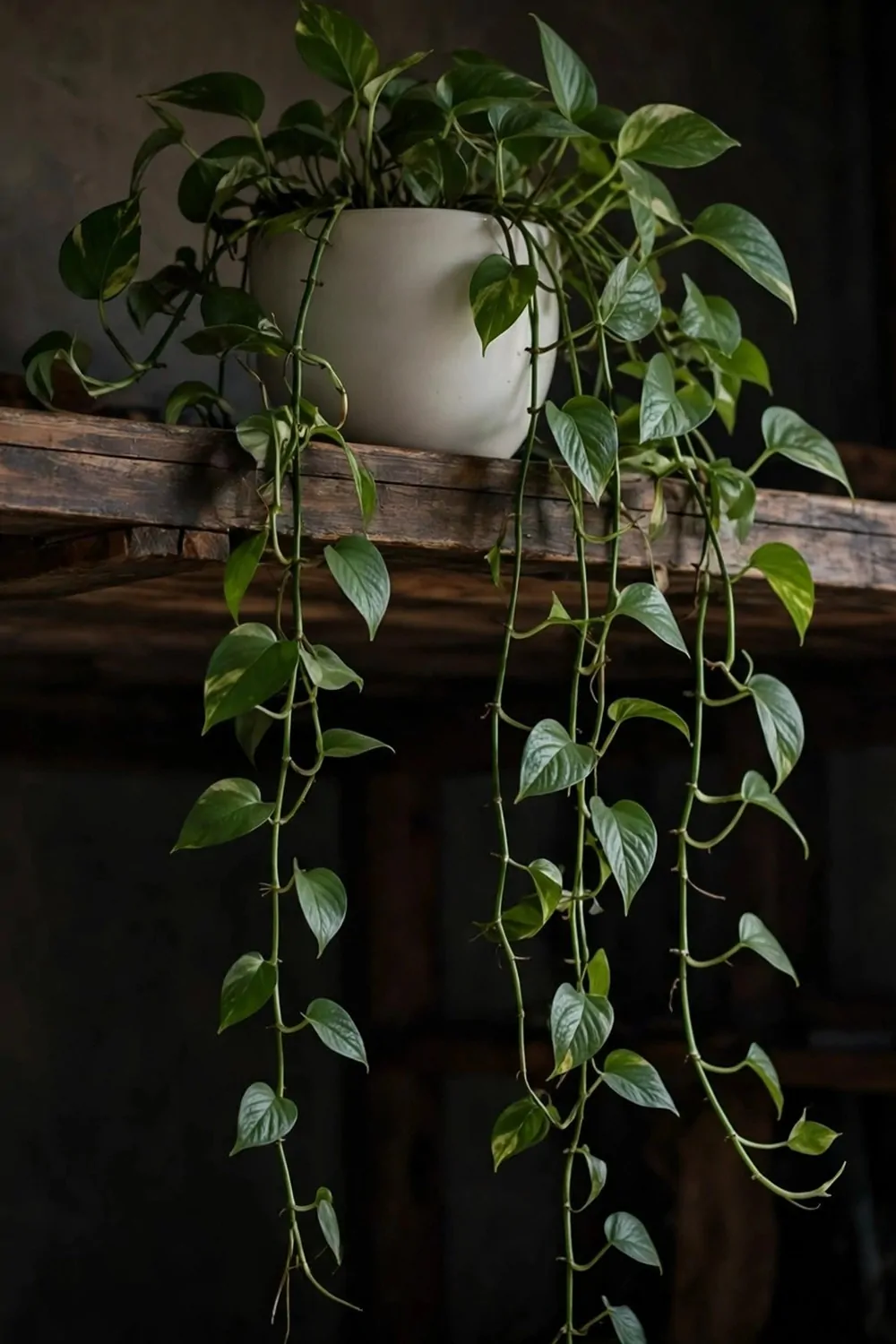
A pothos is the plant I tell all my friends to try first. It grows long vines that fall down soft and green.
It looks lovely on a high shelf in a dim room.
I put mine on a shelf above my desk. The vines reached down past the books in a few months. I trim them when they get too long for the space.
You can cut a vine and put the end in water. In a few weeks you will see small roots grow.
Then you can plant that cutting in soil.
It does not need bright light to grow. It likes a little light from a lamp or a far window. Too much direct sun can burn its leaves, so shade is better.
I water mine once a week in warm months. In cold months I water it even less.
I always feel the soil with my finger first.
If the top soil feels dry, I water it. If it feels wet, I leave it alone. That small check keeps the plant happy for a long time.
4. A Peace Lily for a Shady Spot
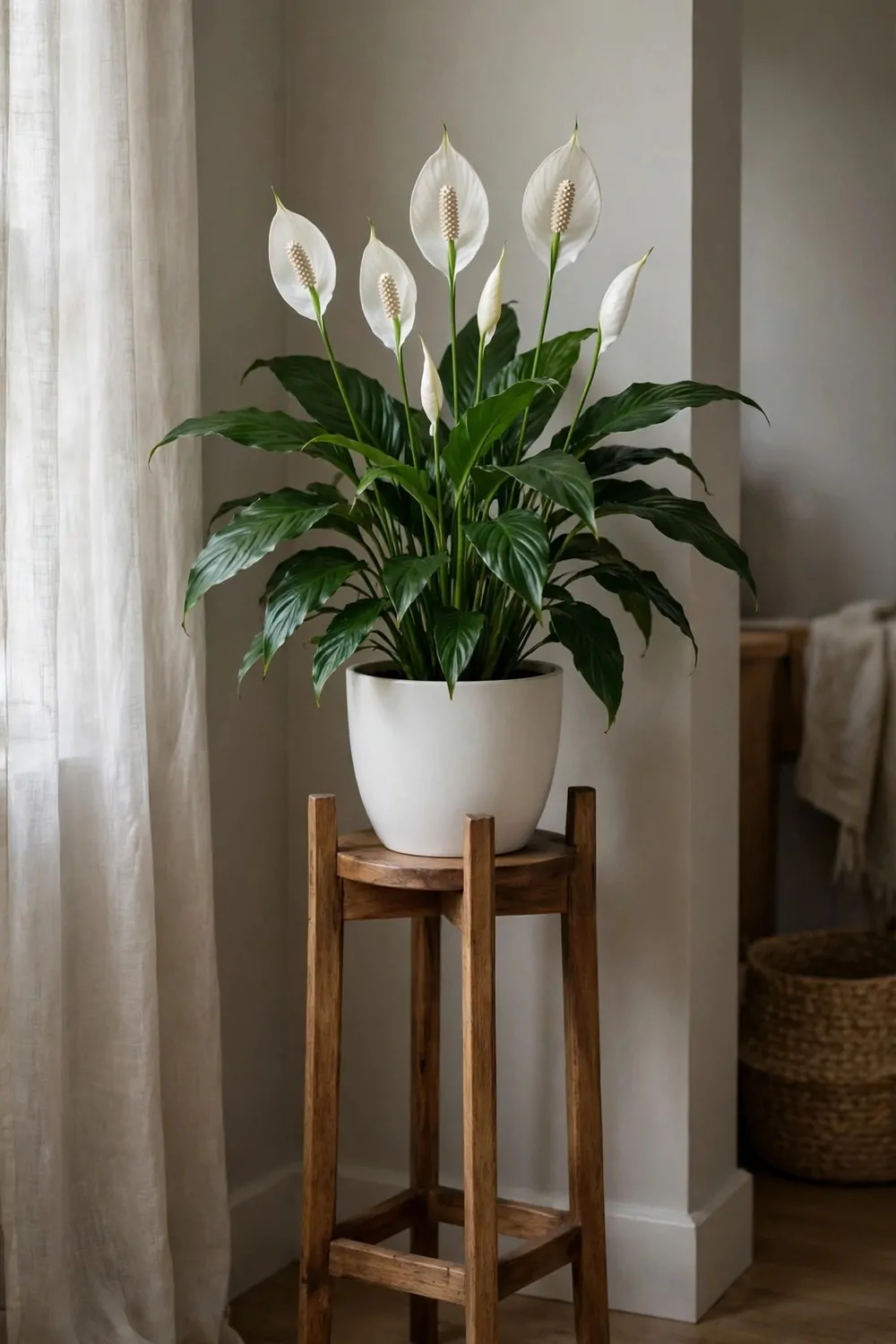
A peace lily gives you soft white flowers in a shady spot. I did not think a plant could flower with so little light.
Mine did, and I was so happy to see it.
Its leaves are wide and deep green. They droop a little when the plant is thirsty. That droop is its way of telling you it needs water.
I water mine when I see the leaves drop down. Within a few hours they lift back up again.
It is like the plant talks to you.
I keep it away from cold air by the door. It likes a warm room and a little bit of shade. A spot near a lamp works well for it.
I wipe its leaves now and then to keep them clean. Dust makes it hard for the leaves to breathe.
A clean leaf stays green for longer.
If the tips turn brown, I trim just the brown part off. The rest of the leaf stays green and fine. I also check that I am not watering it too much.
5. A Cast Iron Plant for the Darkest Corner
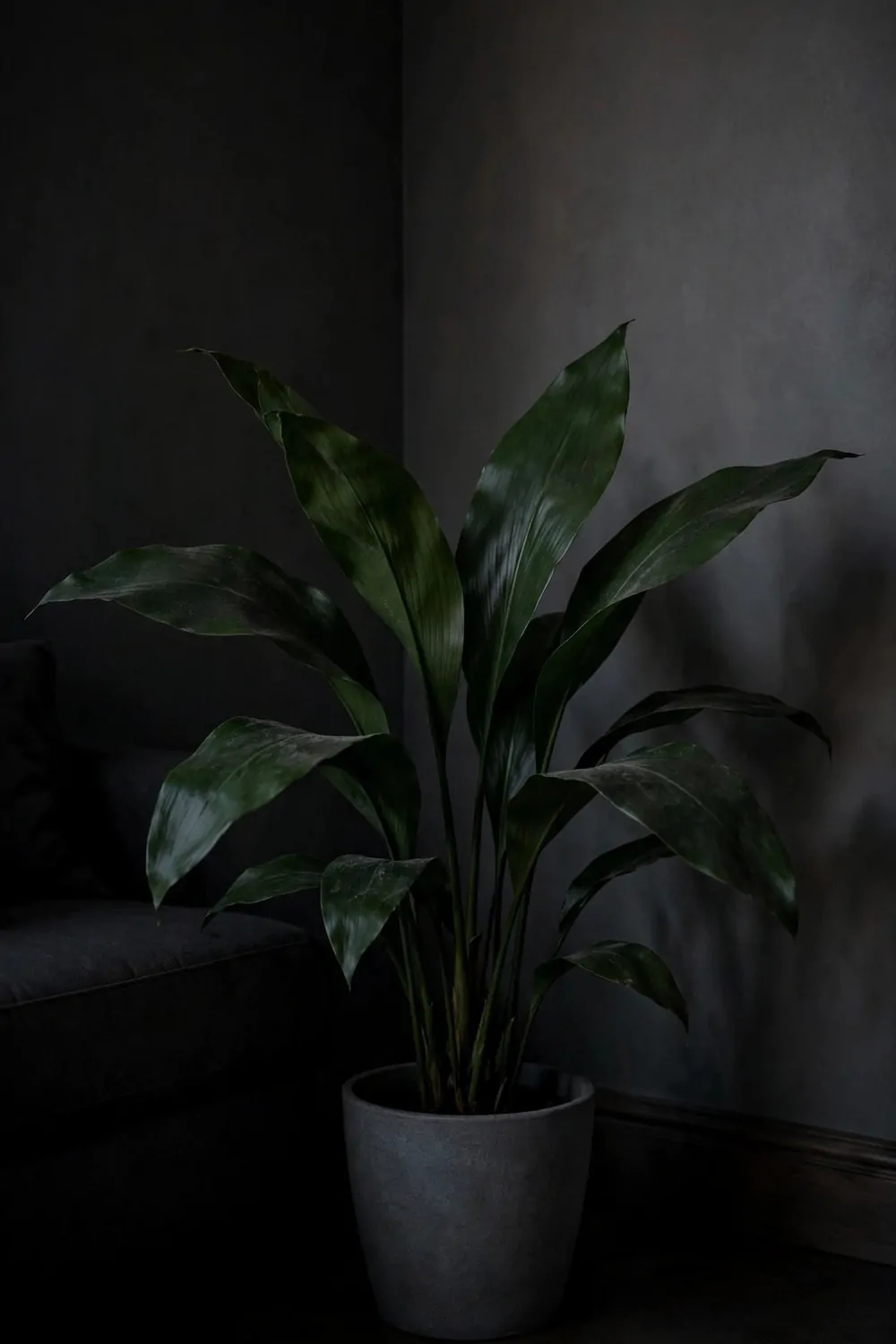
A cast iron plant is as tough as its name sounds. It can live in the darkest corner of my home.
I have one in a corner that gets almost no light at all.
Its leaves are long and dark green. They grow up from the soil in a neat bunch. It does not grow fast, but it grows steady.
I water it about once every two weeks. I let the soil dry out a bit between each watering.
It does not like to sit in wet soil.
I use a simple pot with good drainage. I put a small tray under it to hold any drops. That keeps my floor clean and the plant safe.
You can put it in a hallway or a back room. It fills an empty space without asking for much care.
I hardly ever have to fuss over it.
If a leaf gets old and yellow, I cut it off at the base. A new leaf will grow in its place. It is a quiet plant that just keeps going.
6. A Fern That Loves Low Light
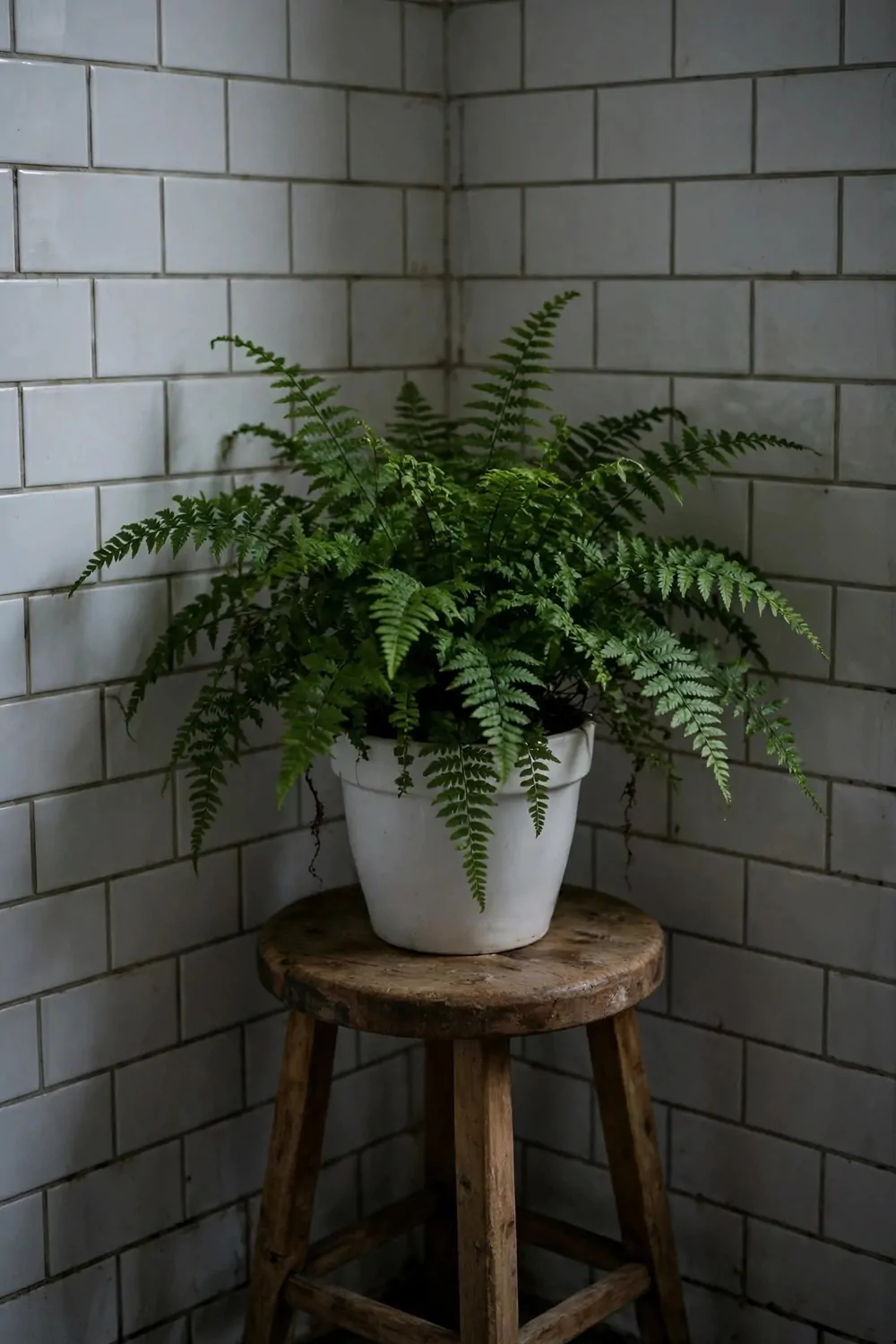
A fern makes a dim room feel soft and full. Its feathery leaves fall out in a round, full shape.
I keep mine on a low table near a wall.
Ferns like a bit of damp air. I mist mine with water once or twice a week. I also keep it away from a hot heater.
It does not like dry air. If the air is too dry, the leaf tips can turn brown.
A small spray bottle is all you need.
I water it when the top soil feels a little dry. I do not let it dry out all the way. I give it a good drink and let the extra water drain away.
You can hang it too if you have a hook. It looks nice hanging in a shady corner of a room.
I turn it a little each week so it grows even.
Ferns grow best when you leave them alone most of the time. I check the soil, I mist the leaves, and I let it do its thing. It rewards that calm care with lots of fresh green growth.
7. A Spider Plant Hanging in a Dim Room
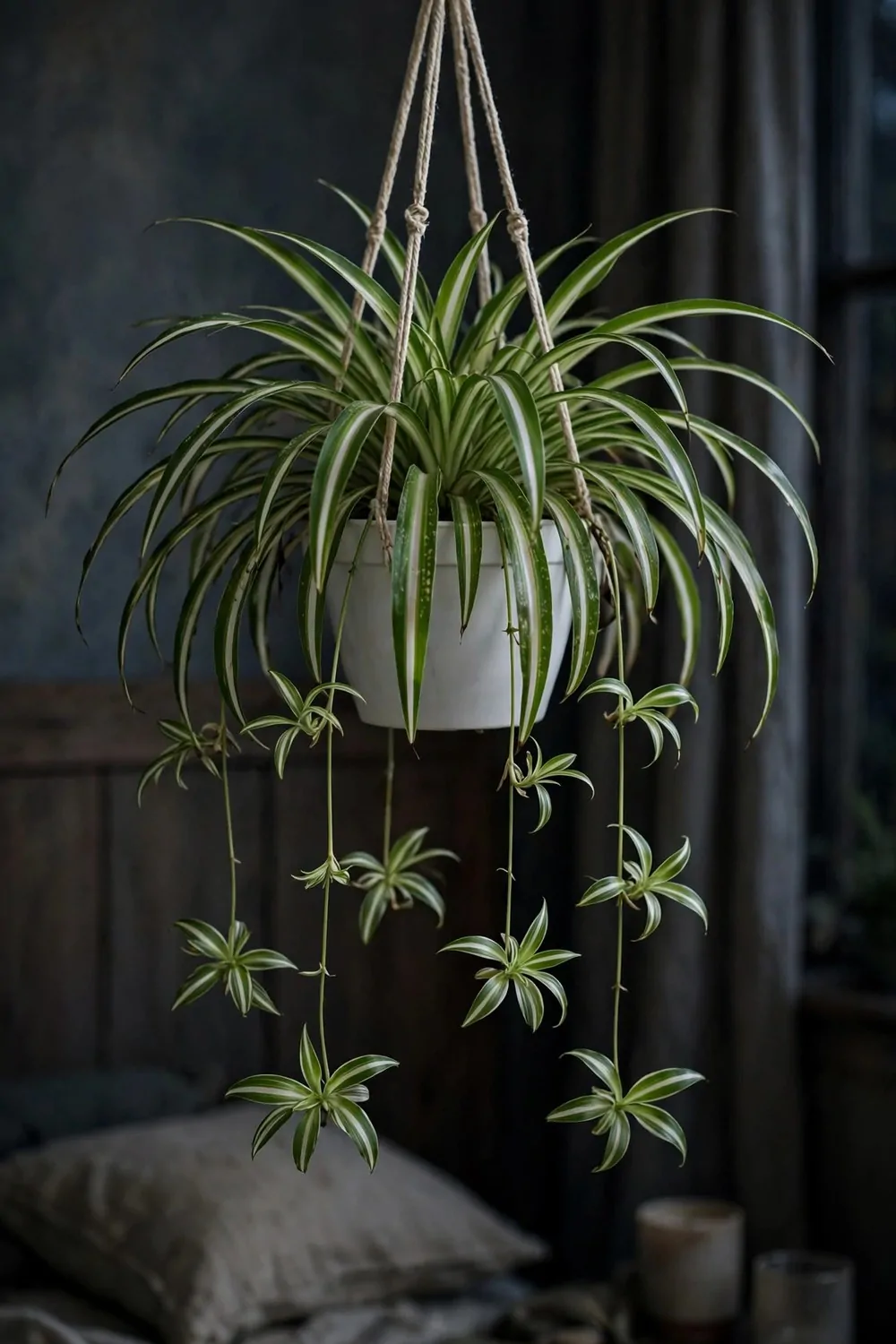
A spider plant is fun to watch grow. It makes tiny baby plants that hang down from long stems.
My kids love to point at the little babies.
I hang mine in a dim corner of my living room. The long leaves arch out and down. The baby plants dangle below them like small green stars.
It likes light from a window far away. It does not need sun right on its leaves.
Too much direct sun can make the tips go brown.
I water it once a week in summer. In winter I water it less, about once every ten days. I always check the soil with my finger before I water.
You can snip off a baby plant and put it in soil. It will grow roots and make a whole new plant.
That is how I got three more spider plants for free.
I use a hanging pot with a strong hook. I make sure the hook is fixed tight in the ceiling. Then I can enjoy the plant without worrying it will fall.
8. A Chinese Evergreen for a Shady Table
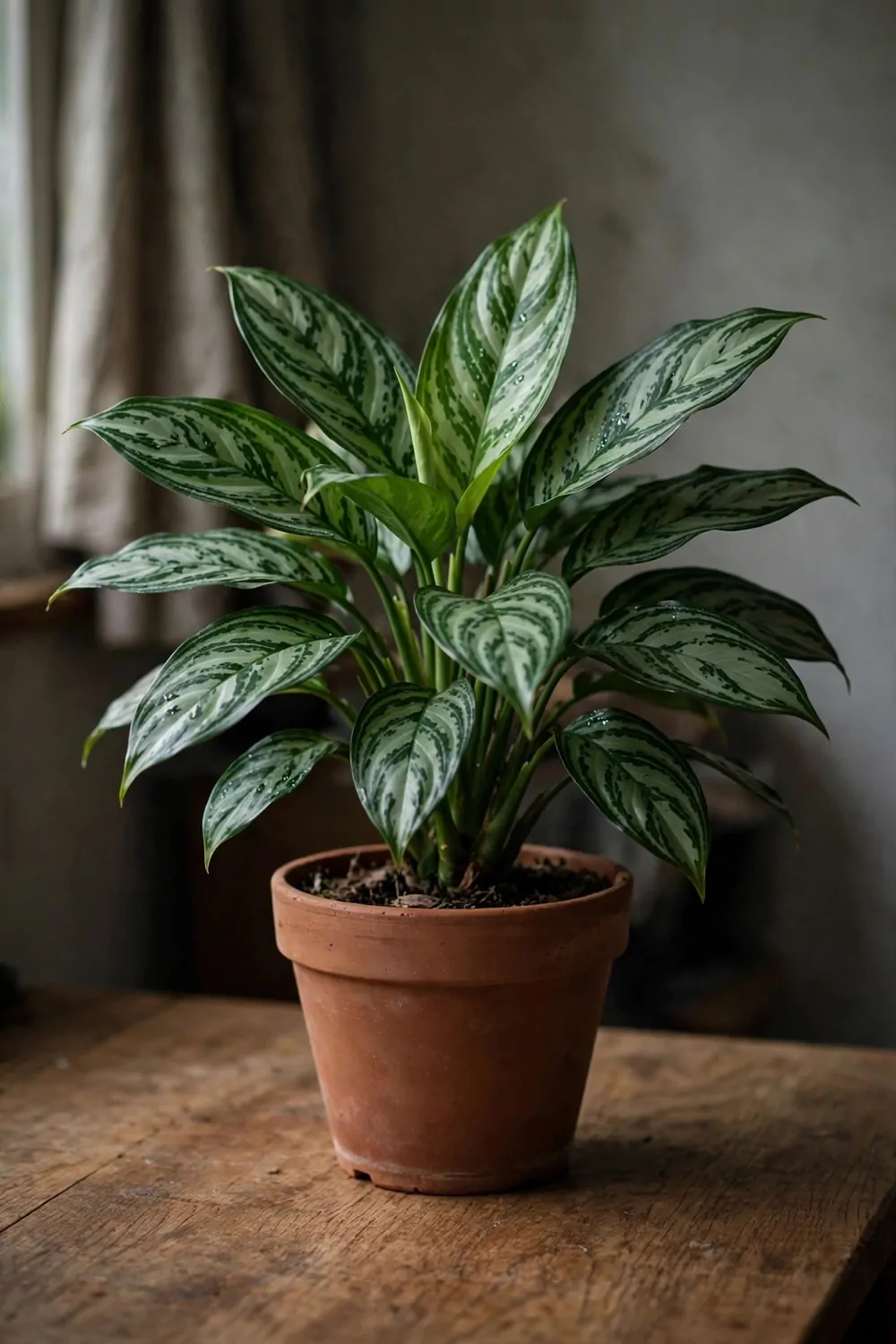
A Chinese evergreen has pretty leaves with light green and silver marks. It looks fancy but it is very easy to keep.
I keep mine on a side table in a shady room.
It does not need much light at all. It grows slow and stays neat. I like that it does not take over the whole table.
I water it when the top soil feels dry. I pour a little water and let it soak in.
I never leave it standing in water.
It likes a warm room and does not like cold drafts. I keep it away from an open door in winter. A steady warm spot is best for it.
I wipe the leaves gently with a damp cloth. Clean leaves show off the silver marks much better.
It is a calm plant for a quiet corner.
If a lower leaf turns yellow, I pull it off gently. The plant keeps making new leaves from the top. In a few months it looks full and fresh again.
9. A Philodendron Climbing a Dark Wall
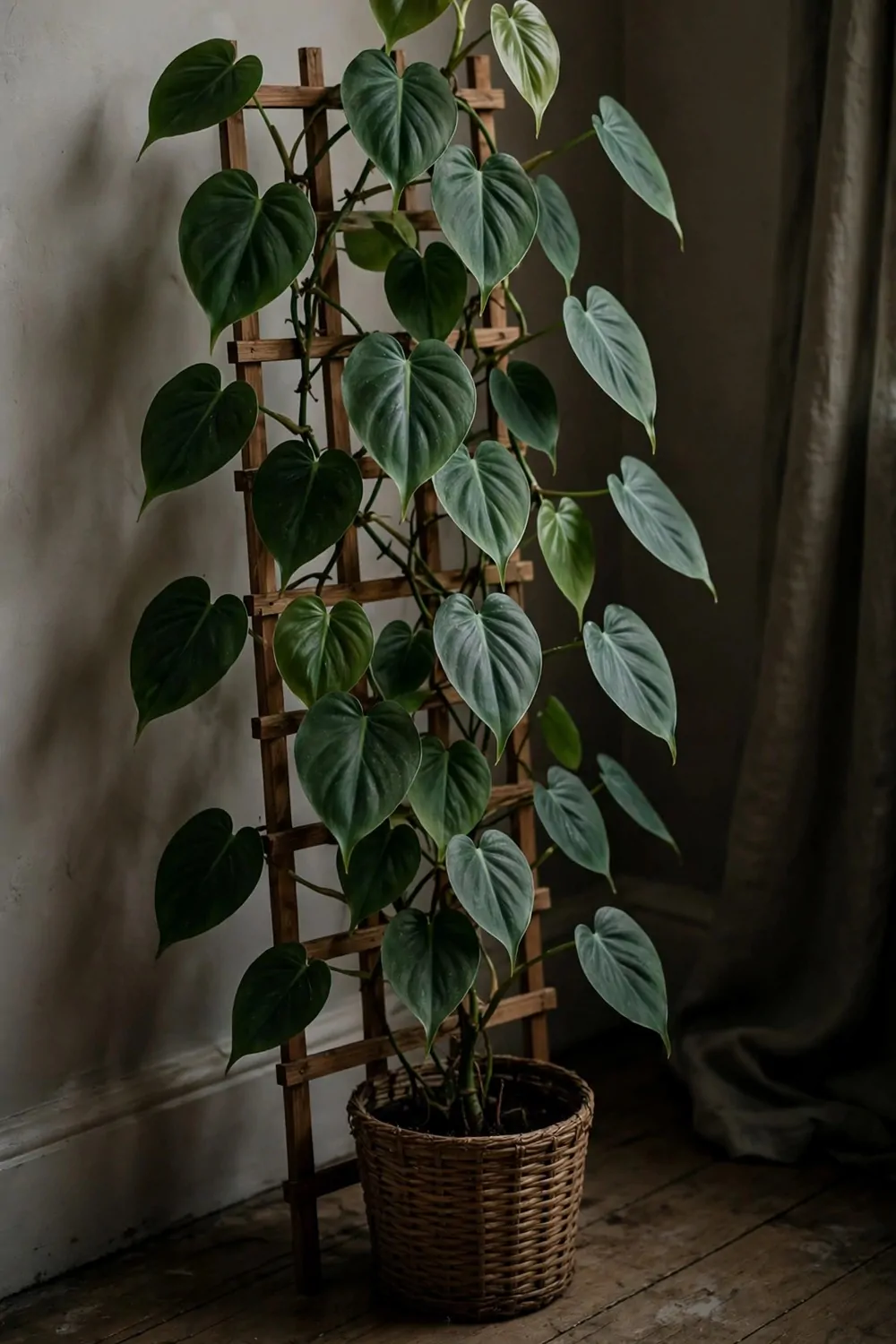
A philodendron can climb up a dark wall and make it look alive. Its heart shaped leaves grow along a pole or a trellis.
I tied mine to a tall moss pole.
It reaches up a little more each week. I tie the new stems to the pole with soft string. I do not tie them too tight or they can get hurt.
It likes low light and a warm room. A corner away from a bright window is just right for it.
I water it when the top soil feels dry.
I mist the leaves now and then to keep them fresh. I also wipe dust off the big leaves. Clean leaves can use what little light there is in the room.
You can let it trail down from a shelf too. It looks just as nice hanging down as it does climbing up.
I trim it back when it gets too long for the wall.
That trim helps it grow bushier and fuller. I put the cuttings in water to grow new roots. Then I have new plants to share with friends.
10. A Calathea in a Soft-Lit Corner
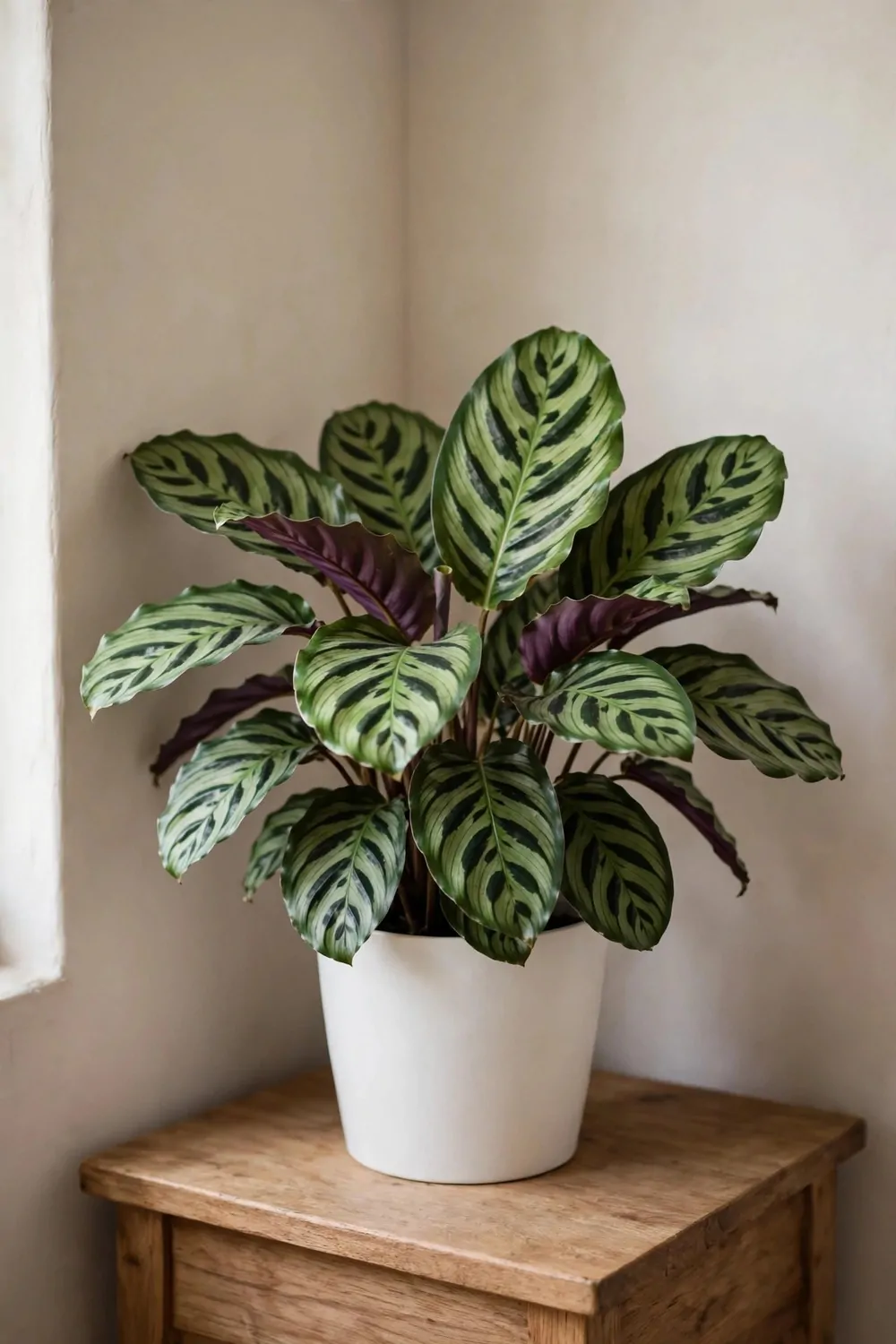
I love a calathea in a soft-lit corner. Its leaves look painted, and they make a dull spot feel alive.
You do not need a bright window for this one. A corner near a lamp or a shaded window is enough. It likes soft light and it hates harsh sun.
I keep mine a few steps away from the window. The leaves stay bright and they do not burn.
Water it when the top soil feels dry to your finger. I check it once a week, and I only water when it needs it. Too much water is the one thing that hurts it fast.
Its leaves fold up a bit at night. I thought something was wrong the first time I saw it, but that is just how it moves.
You can put it on a small stool or a low table. That lifts the leaves up so you can see the pretty patterns.
I wipe the leaves now and then with a soft cloth. Dust makes them look dull, and a quick wipe brings the color back.
Pick a pot with a hole at the bottom. The extra water needs a way out, or the roots sit wet for too long.
If the tips turn brown, it may need softer water. I let tap water sit in a jug overnight before I use it, and that seems to help.
11. A Dracaena for a Dim Hallway
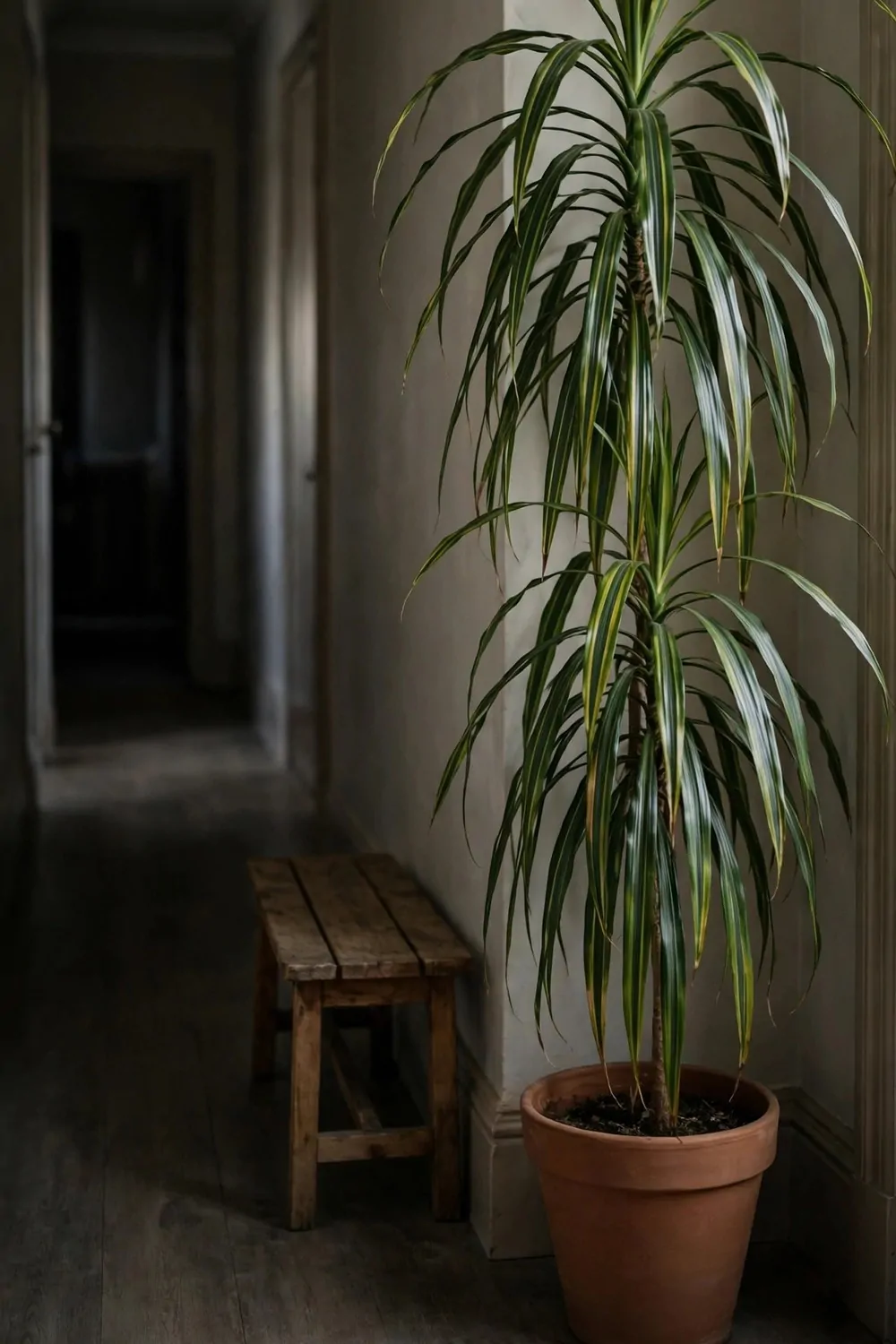
A dracaena is a great plant for a dim hallway. It stands tall and it fills a bare spot with almost no work.
I like how it looks like a small tree. The long leaves fall down in a soft way, and they add life to a plain wall.
You can place it right by the door or at the end of the hall. It does not mind low light, and it grows slow and steady.
I water mine every two weeks or so. I push my finger into the soil first, and if it feels dry, I water it. If it feels damp, I wait.
Its leaves can get brown tips if the air is too dry. I move it a bit away from heat vents, and that helps a lot.
Choose a tall pot that fits the plant. A heavy pot is good too, so it does not tip over when someone walks past.
I turn it a little every month. That way it does not lean to one side toward the light.
You do not need to feed it much. A little plant food in spring is enough for me, and I skip it in the cold months.
If a lower leaf turns yellow, just pull it off. New leaves grow at the top, and the plant keeps looking fresh.
12. A Parlor Palm in a Low-Light Living Room
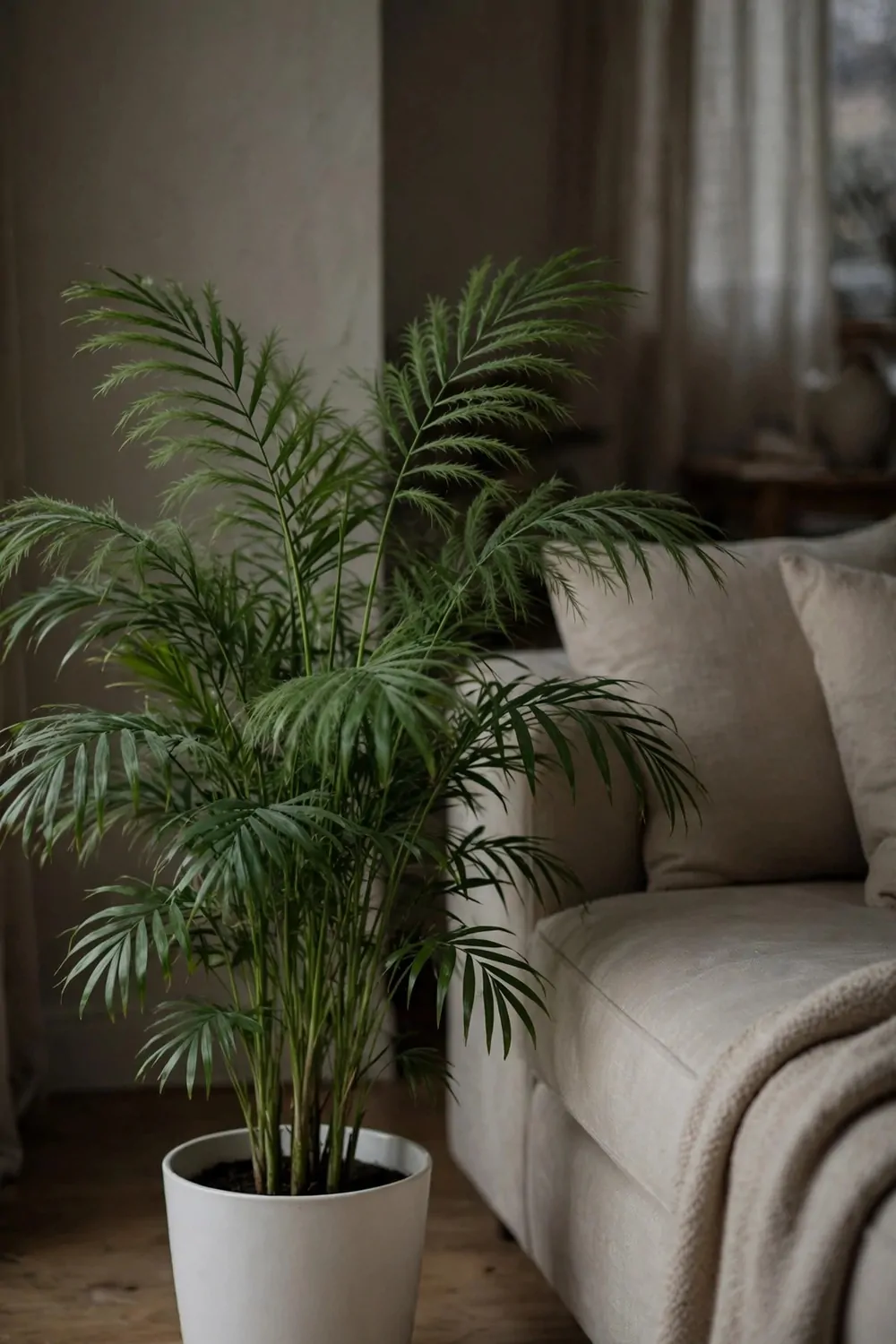
A parlor palm makes a living room feel soft and calm. I love its thin green leaves, and it fits in almost any spot.
You can put it in a corner that gets very little sun. It is happy there, and it does not ask for much.
I keep mine next to the couch. It adds a bit of green right where we sit, and it makes the room feel more homely.
Water it when the top soil is dry. I check with my finger, and I water it slowly so the soil soaks it up well.
It grows slow, so you will not need a bigger pot soon. That is one reason I like it for a small living room.
Dust can sit on the thin leaves. I give them a gentle shake or a soft wipe once in a while, and they look bright again.
Pick a pot that matches your room. A plain clay pot looks nice, and a woven basket around it looks warm too.
It likes a normal room temp. I keep it away from cold drafts by the door, and it stays green all year.
If the leaf tips turn brown, I trim just the brown part off. The rest of the leaf stays fine, and the plant still looks good.
13. A Monstera Near a Shady Window
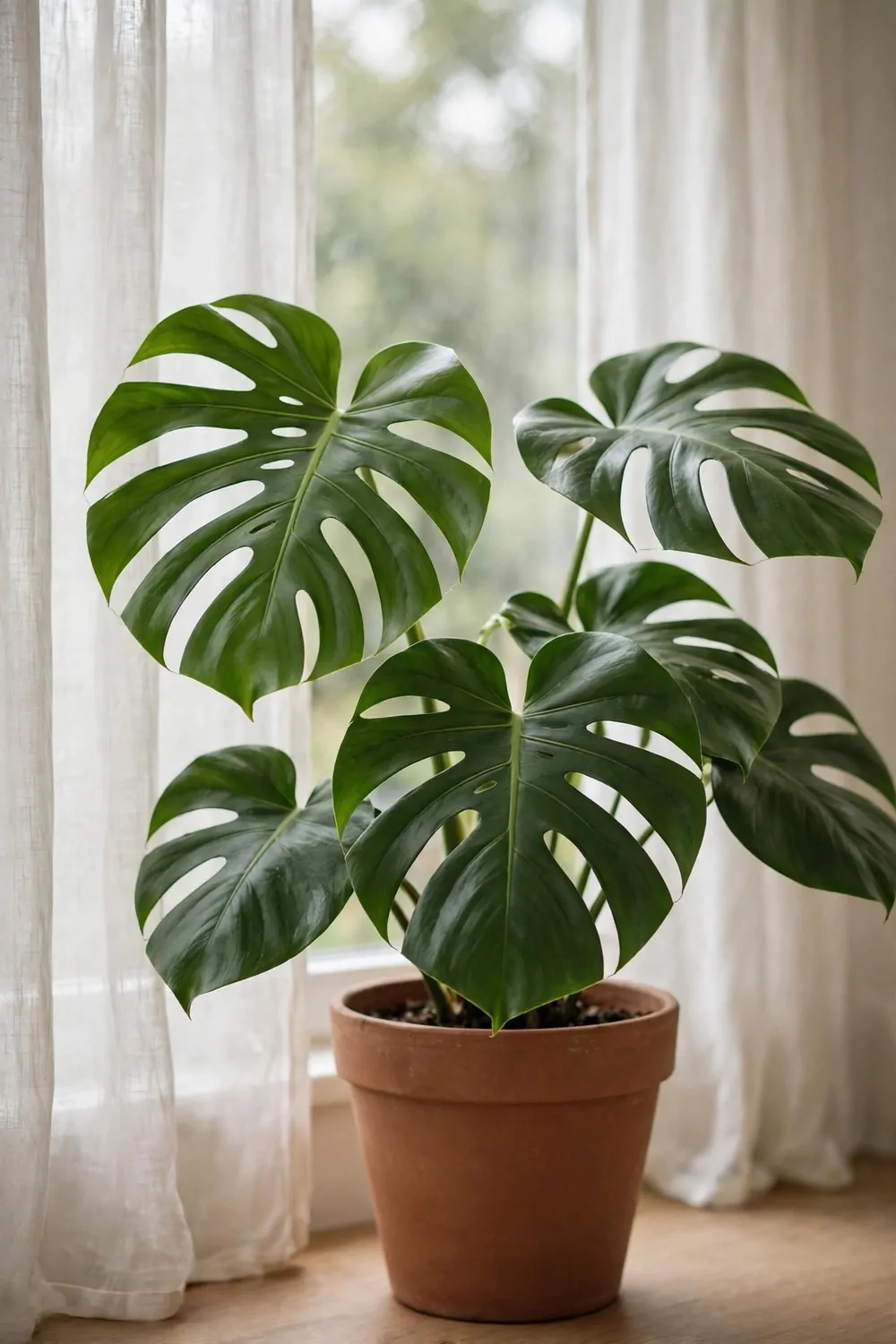
A monstera near a shady window is one of my top picks. Its big split leaves make a dark wall look fun and full.
You do not need full sun for it. A window that gets soft light in the morning is just right. Too much direct sun can burn the leaves.
I keep mine about a step back from the glass. It gets light without the hot sun on it, and the leaves stay deep green.
Water it when the top soil feels dry. I check with my finger first, and I only water when it needs it. Low light plants drink slow, so less water is better.
Its leaves grow big, so give it some room. I let it spread a little, and it fills the corner in a nice way.
Here is a quick look at light needs and typical costs for a few low light plants. A Monstera costs $15 to $30, a Rubber plant costs $12 to $25, and a Parlor palm costs $10 to $22. That helps you plan before you buy.
| Plant | What light it likes | Typical cost |
|---|---|---|
| Monstera | Soft light near a shady window | $15 to $30 |
| Rubber plant | Soft light in a shady spot | $12 to $25 |
| Parlor palm | Low light in a living room | $10 to $22 |
I wipe the big leaves with a damp cloth now and then. Dust hides the shine, and a clean leaf looks so much better.
You can add a moss pole if it starts to climb. I tie the stem to it with soft string, and it grows up straight.
If a new leaf comes out small with no splits, it may want a bit more light. I move it a touch closer to the window, and the next leaf looks better.
14. A Rubber Plant for a Shady Office
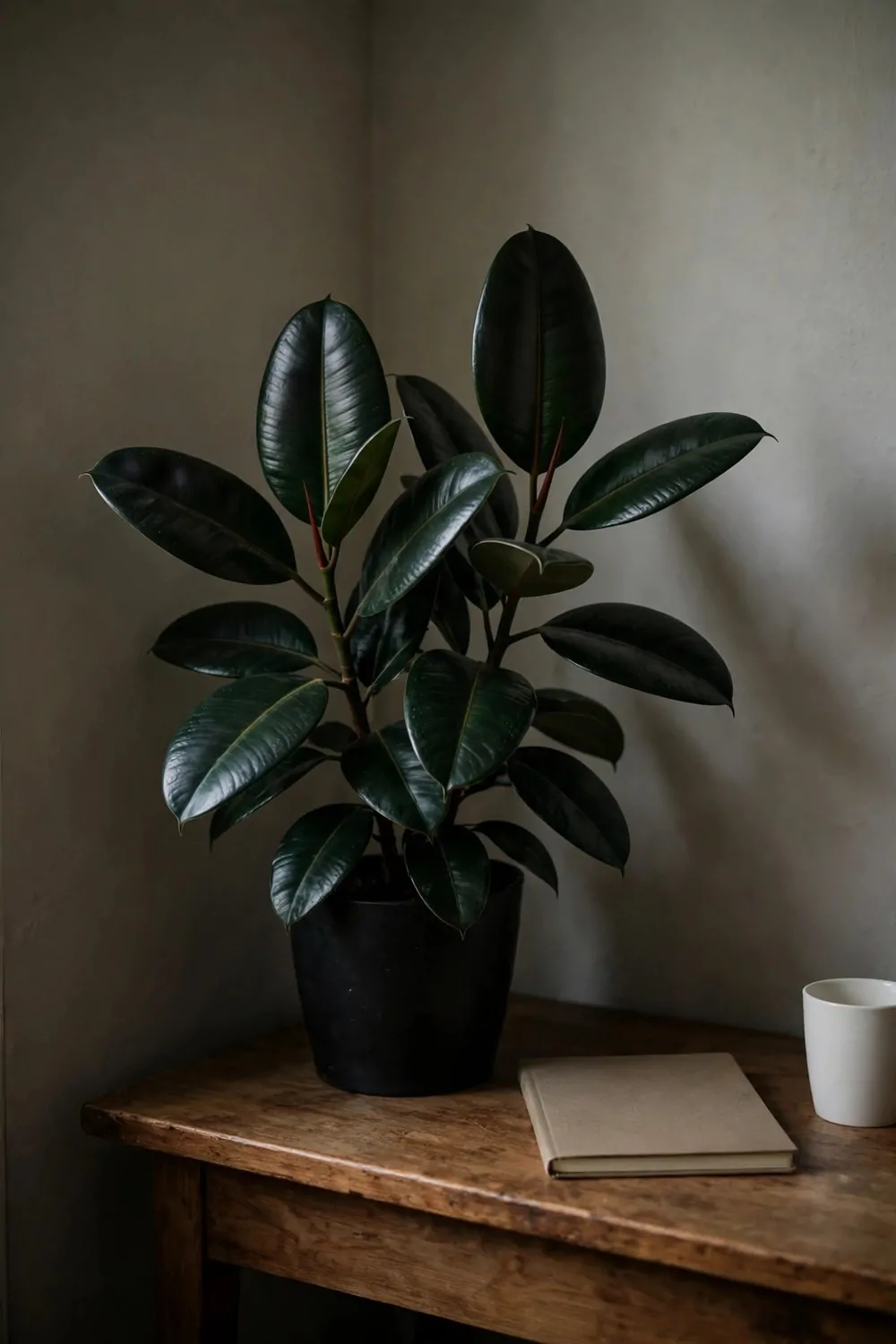
A rubber plant is a strong pick for a shady office. Its thick dark leaves look neat, and it does not need much care.
I keep one on my desk corner. It makes work feel less plain, and I only have to look after it once in a while.
It likes soft light and it can cope with a dim room. A spot near a window with a blind is just right.
Water it when the top soil feels dry to your finger. I water mine about once a week in warm months and less in cold months.
Its leaves are big and smooth. I wipe them with a damp cloth, and they shine like new after that.
Pick a pot with a hole at the bottom. The roots do not like to sit in water, so let the extra water drain out.
It grows tall over time. I pinch the top tip off now and then, and that makes it branch out and look fuller.
You do not need to move it much. Find a good spot, leave it there, and let it settle in.
If a leaf drops, check the soil first. Most times it is too much water, so I let the soil dry out more before the next drink.
15. A Prayer Plant That Folds Up at Night
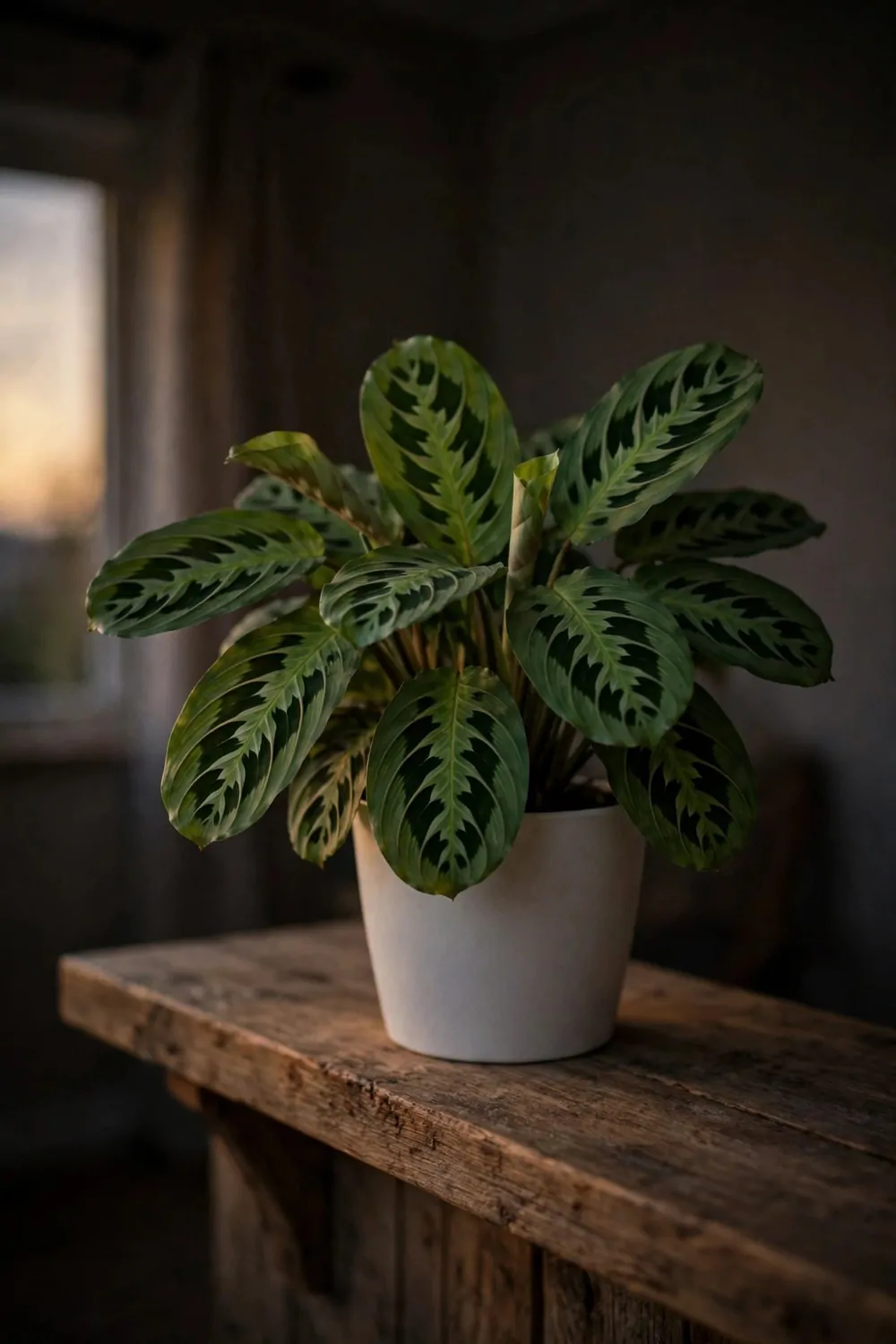
A prayer plant is fun because its leaves fold up at night. I love to watch it change, and it feels a bit like magic.
Its leaves have soft red lines on them. They look best in soft light, so a dim room suits it well.
I keep mine on a shelf near a shaded window. It gets light in the day and folds up when the room gets dark.
Water it when the top soil feels dry. I check with my finger, and I water it a little at a time so the soil stays damp but not wet.
It likes a bit of damp air. I put a small tray of water with stones near it, and that helps the leaves stay soft.
Do not put it in direct sun. The bright sun can fade the pretty marks on the leaves, and they lose their color.
I trim off any dry leaf tips with clean scissors. The plant keeps growing new leaves, and it looks tidy again.
It stays small, so it fits on a shelf or a side table. That makes it easy to move if you want to try a new spot.
If the leaves stay folded in the day, it may be too dry or too cold. I check the soil and move it to a warmer spot, and it opens up again.
16. A Pilea for a Dim Desk
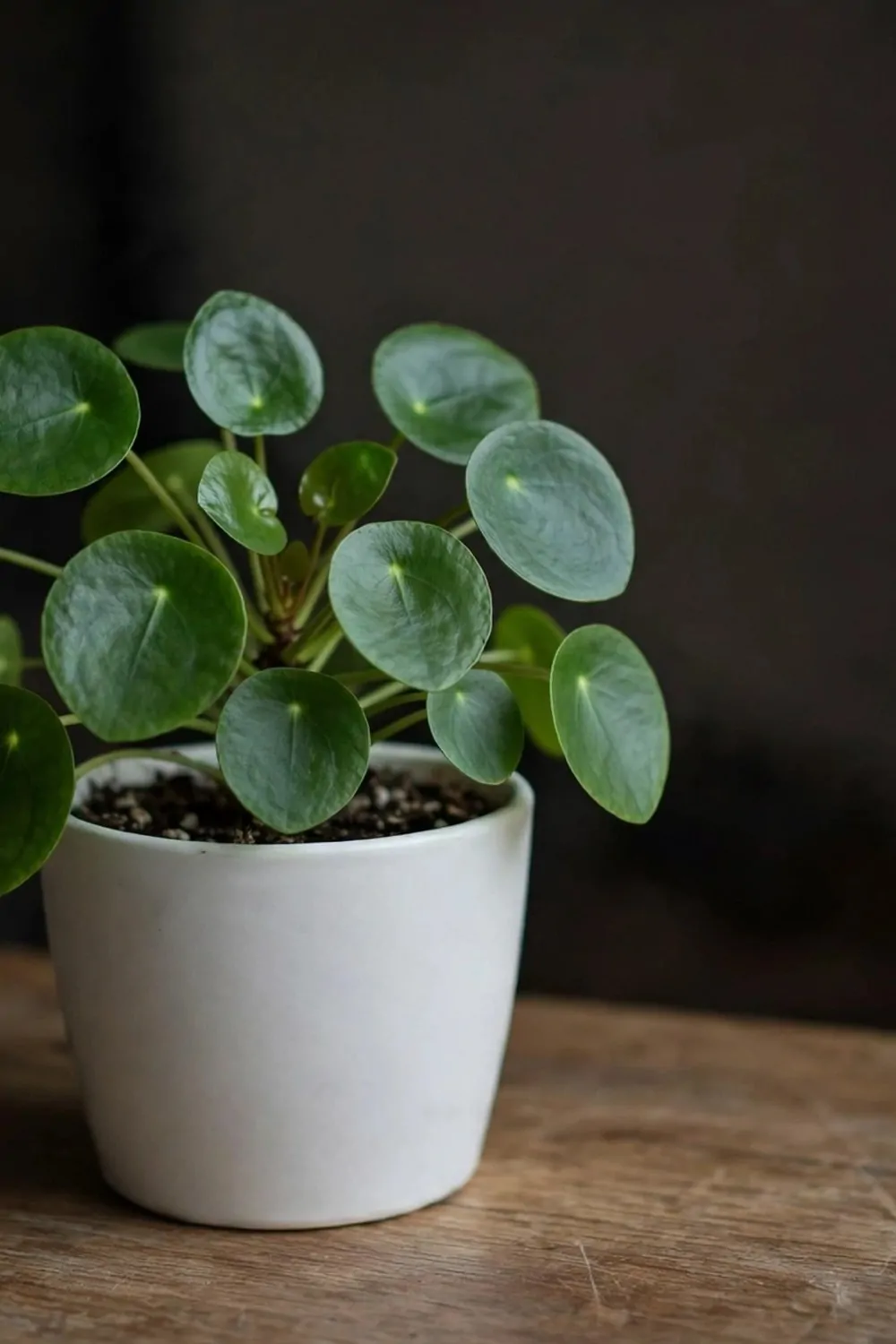
A pilea is a cute plant for a dim desk. Its round leaves look like little coins, and they make me smile when I work.
You can keep it right on your desk. It does not need a big pot, and it fits in a small space with ease.
It likes soft light from a nearby window. I keep mine a bit back from the glass so the sun does not hit it straight on.
Water it when the top soil feels dry. I use my finger to check, and I water it just enough to wet the soil through.
It grows small baby plants at its base. I love that part, and you can pot a baby up and give it to a friend.
Turn it a little each week. That keeps it growing straight instead of leaning hard toward the light.
Pick a small pot with a hole at the bottom. The extra water must drain out, or the roots can rot fast.
I feed it a tiny bit of plant food in spring. I skip it in winter, when it grows slow and rests.
If a leaf turns yellow, I take it off. New round leaves pop up soon, and the plant looks fresh and full again.
17. A Peperomia on a Shady Shelf
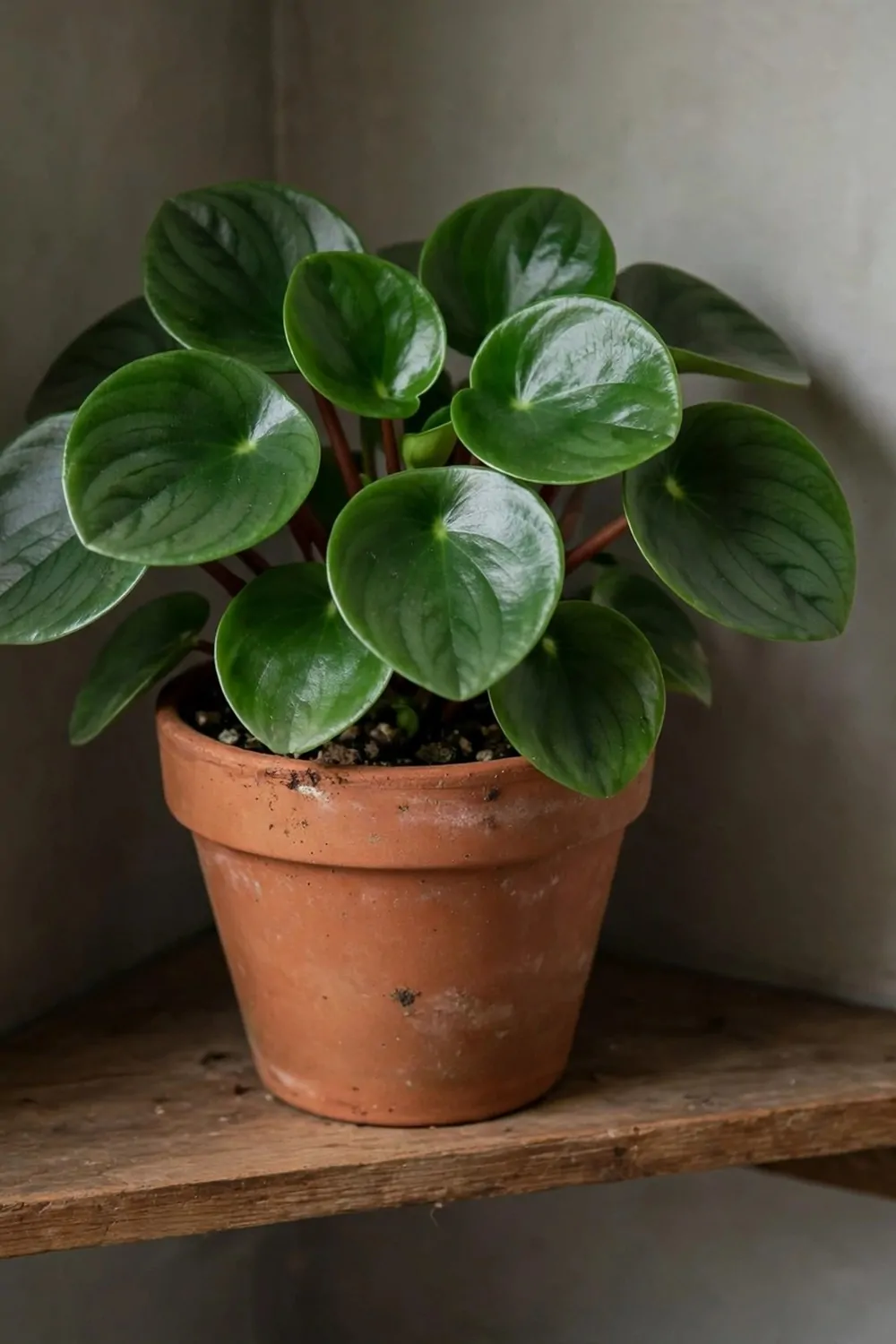
A peperomia is a great plant for a shady shelf. Its small thick leaves hold water, so it forgives you if you forget to water it.
I keep one on my bookshelf. It sits between books and it adds a soft green touch to the shelf.
It likes soft light and it does not need much sun. A shelf near a window with a curtain is a good home for it.
Water it when the soil feels dry to your finger. I water mine about once a week, and I let the soil dry a bit between drinks.
There are lots of kinds of peperomia. Some have round leaves and some have long wavy leaves, so you can pick the one you like best.
It stays small, so it will not take over your shelf. That is one reason I like it for a tight space.
Pick a small pot that fits the shelf. A light pot is easy to move when you want to dust the shelf.
I wipe the leaves with a soft cloth now and then. Dust makes them look dull, and a quick wipe brings back the shine.
If a stem gets too long, I snip it back. The plant grows new shoots, and it looks bushy and neat again.
18. A Dieffenbachia for a Dark Bedroom Corner
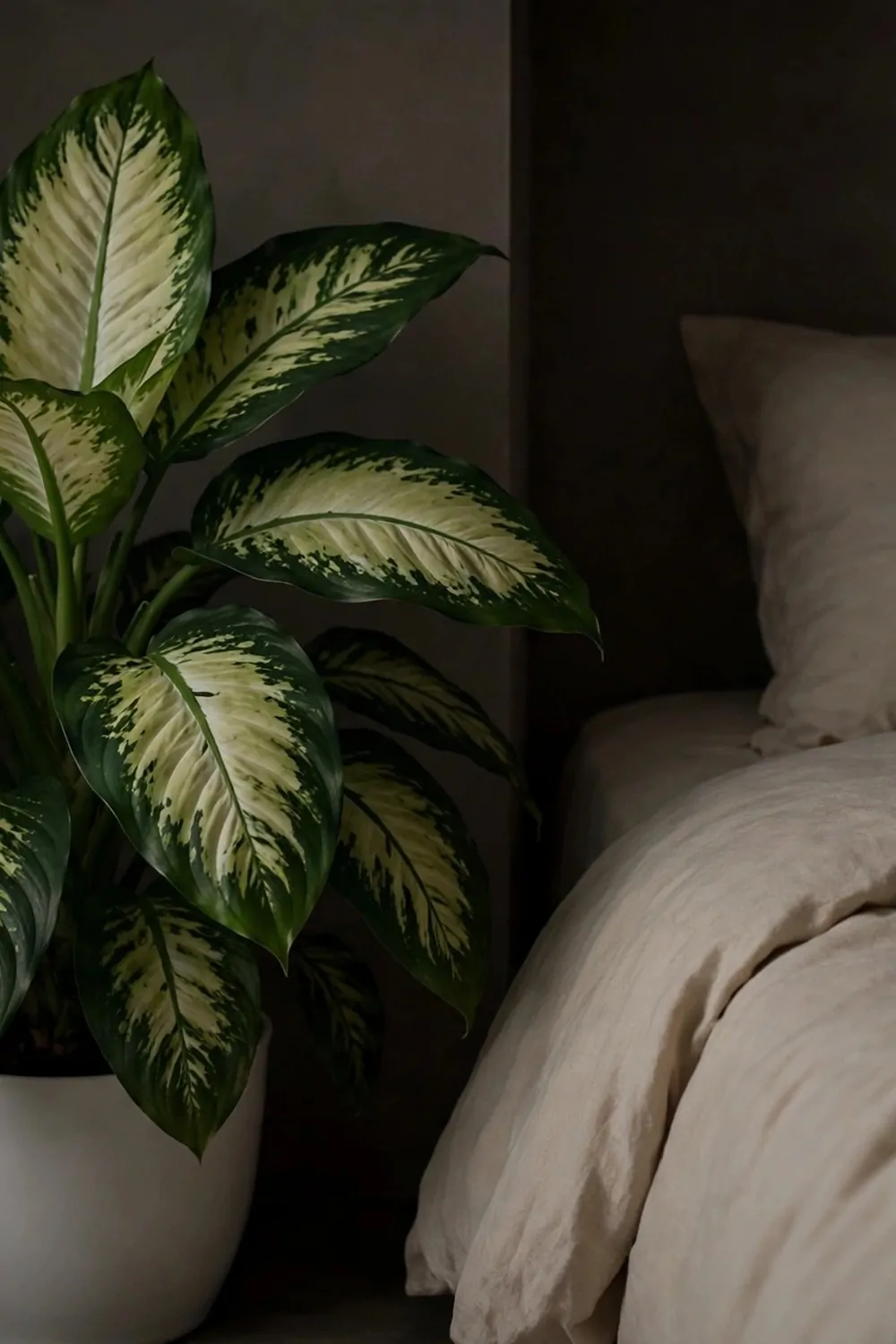
A dieffenbachia is a bold plant for a dark bedroom corner. Its big leaves have light green marks, and they brighten a dull spot.
I keep one in the corner by my bed. It makes the room feel calm at night, and I wake up to soft green leaves.
It likes low light and it grows tall. A corner that gets only a little light in the day is fine for it.
Water it when the top soil feels dry. I check with my finger first, and I water it slowly so the soil soaks it up.
Its leaves are big, so dust shows on them fast. I wipe them with a damp cloth once a week, and they look fresh.
Pick a sturdy pot for it. It can grow tall and heavy, so a wide base helps it stay upright.
Keep it away from cold air by the window at night. I move mine a step in from the glass in cold months, and it stays happy.
You can cut the top off if it gets too tall. I put the cut top in water till roots grow, then I pot it up as a new plant.
Wash your hands after you touch a cut stem. The sap can sting your skin a bit, so I handle it with care and keep it out of reach of small kids.
19. A Lucky Bamboo in a Low-Light Bathroom
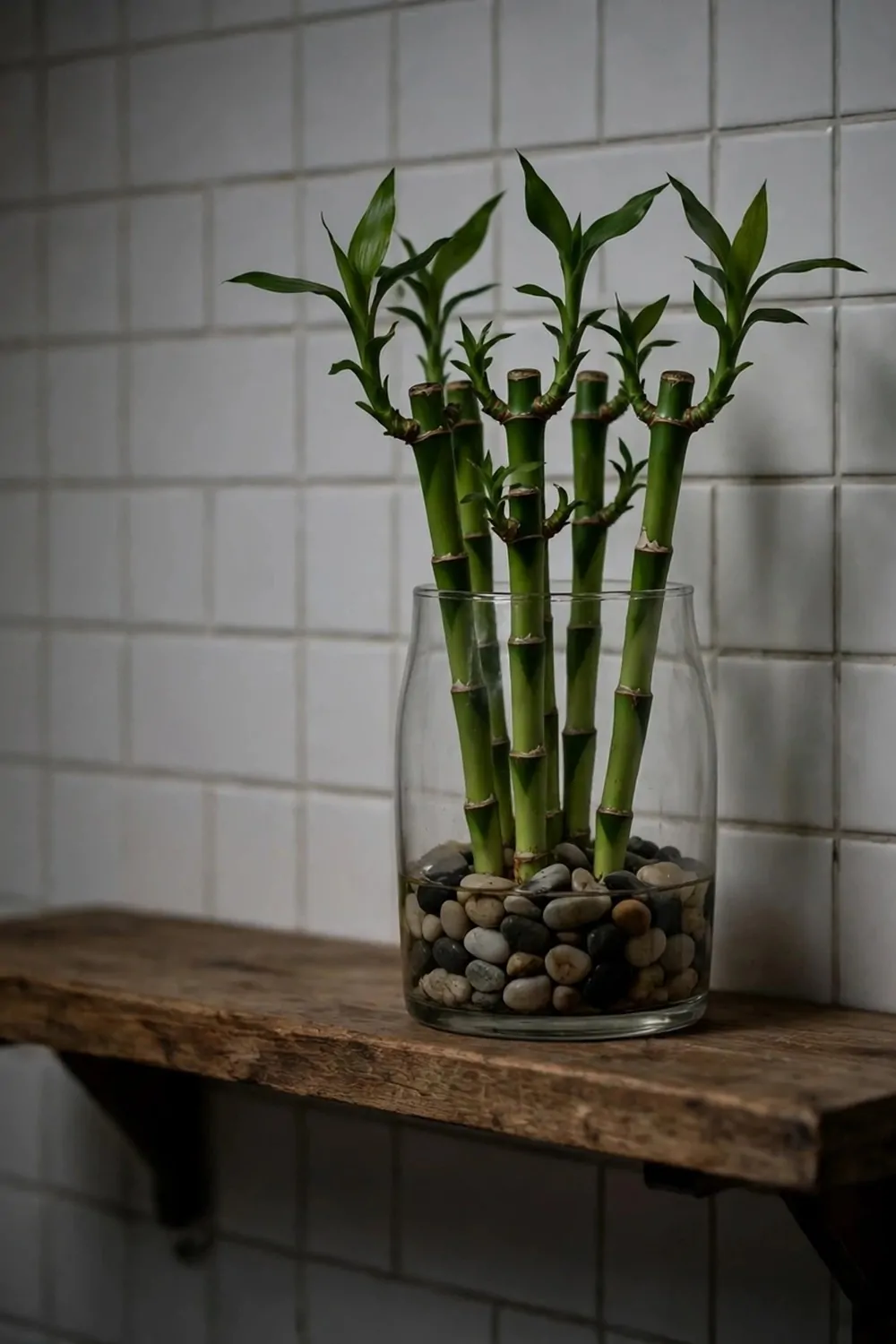
I keep a lucky bamboo in my bathroom and it looks so happy there.
It does not need bright sun at all. The soft light near the mirror is enough for it, and the steam from a warm shower makes the air just right.
You can grow it in water or in soil.
I grow mine in a tall glass with clean water and a few small stones at the bottom. The stones hold the stems up straight and the glass looks pretty on the shelf.
Change the water once a week so it stays fresh. If the water starts to smell funny, just pour it out and add fresh water right away.
Keep the water level near the roots. The roots should always stay wet, but the leaves should stay dry above the water line.
If a leaf turns yellow, snip it off with clean scissors. One yellow leaf does not mean the whole plant is in trouble, and new green leaves often grow back fast.
Typical cost is low, often just a few dollars for a small bunch of stems. You can find them in most plant shops and even in some grocery stores.
A lucky bamboo makes a plain bathroom feel calm and green. Try one on your sink or on a small shelf and see how it fits your space.
20. An English Ivy Trailing in a Dim Room
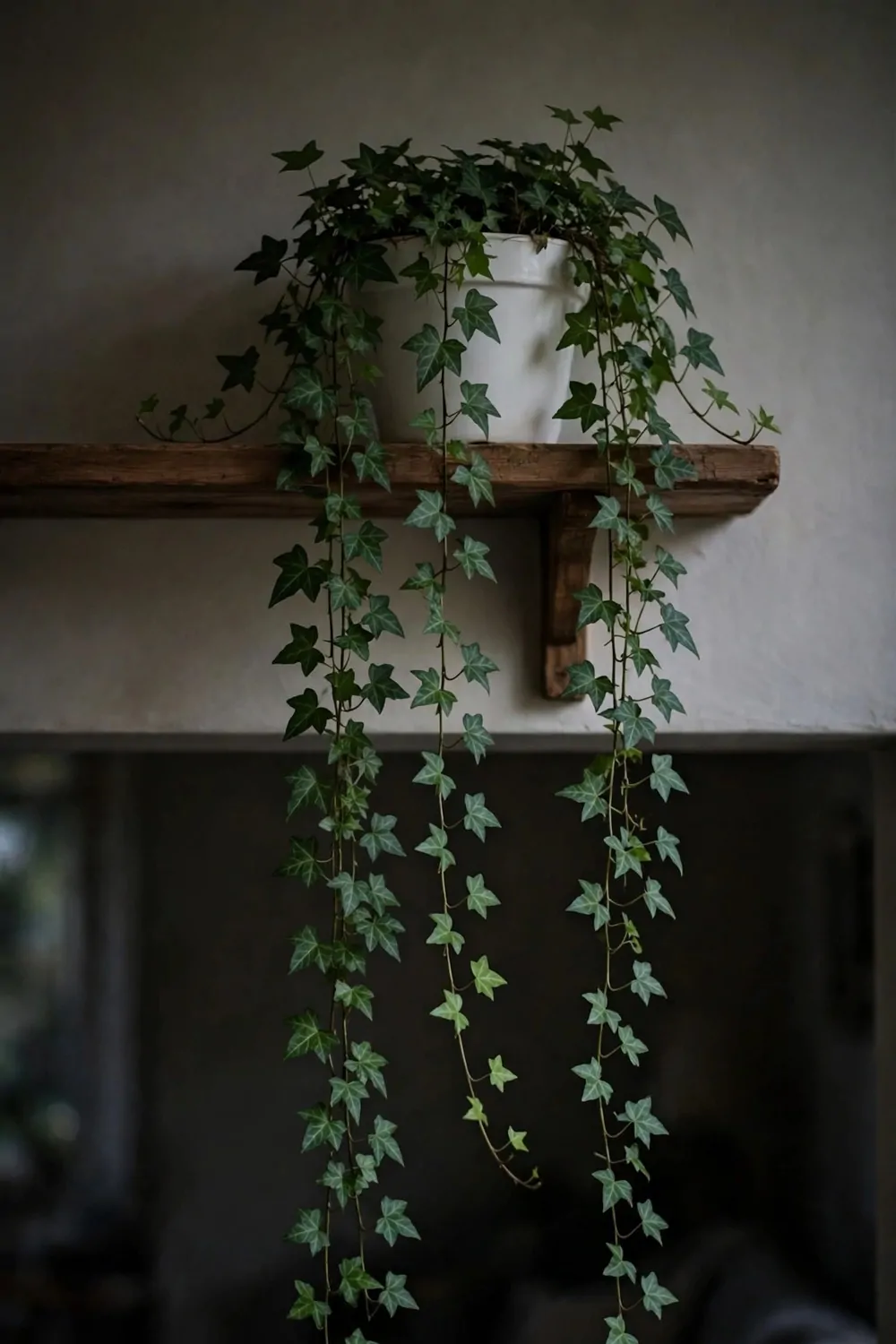
English ivy is a great pick when you want green that hangs down and fills a dim corner.
I hang mine in a basket near the door, and the long stems trail down the wall. It looks soft and full, even though the room only gets a little light in the morning.
Let the soil dry a bit between waterings.
I push my finger into the soil before I water it. When the top feels dry, I pour in a little water. When it still feels wet, I leave it alone for a few more days.
Give the stems a place to climb or trail. You can let them hang from a high shelf, or you can guide them along a small hook on the wall.
Turn the pot once a week so all sides get a share of the light. That keeps the plant full on every side instead of thin on one side.
Snip the tips of long stems when they get too long for your space. A quick trim makes the plant branch out and grow bushier near the top.
Wipe the leaves now and then with a damp cloth. Clean leaves catch the little light there is, and the plant just looks better for it.
English ivy is cheap and easy to find, and one small pot can fill a whole corner in a few months. It is a simple way to add life to a room that feels dark.
21. A Hoya in a Shady Window
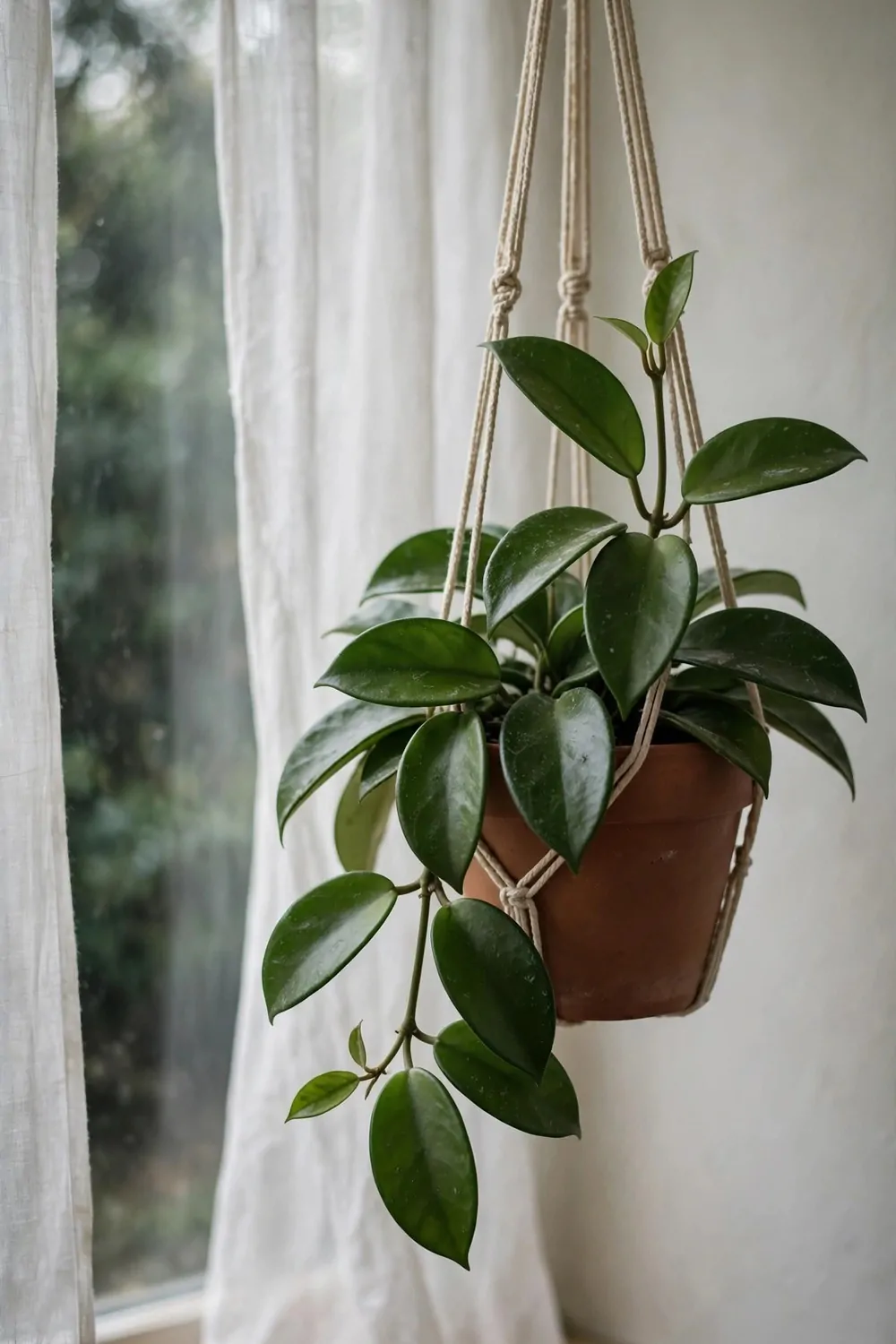
A hoya is a sweet little plant that does fine in a shady window.
Mine sits on a windowsill that never gets direct sun. The leaves stay thick and green, and the plant grows slow and steady all year.
Hoyas like to dry out between waterings. I water mine only when the soil feels dry a good way down, and I never let it sit in a puddle.
The leaves are thick and waxy, and they hold water inside them. That is why a hoya can wait longer between drinks than most other houseplants.
Give it a small trellis or a hoop to climb on. The stems like to wind around something, and a little frame makes the plant look neat and tidy.
Do not move it around too much once it settles in. Hoyas like one spot, and they grow best when they stay put in the same place.
Be patient with the flowers. A hoya may take a while to bloom, but the small star shaped flowers smell lovely when they finally open.
Typical cost is a bit more than a basic plant, but one small pot lasts for years. You can also take a cutting from a friend and grow a new one for free.
If you want a plant that asks for very little and still looks lovely, a hoya is a good choice. Put it in a shady window and let it do its own thing.
22. A Bird’s Nest Fern for a Damp Dark Bathroom
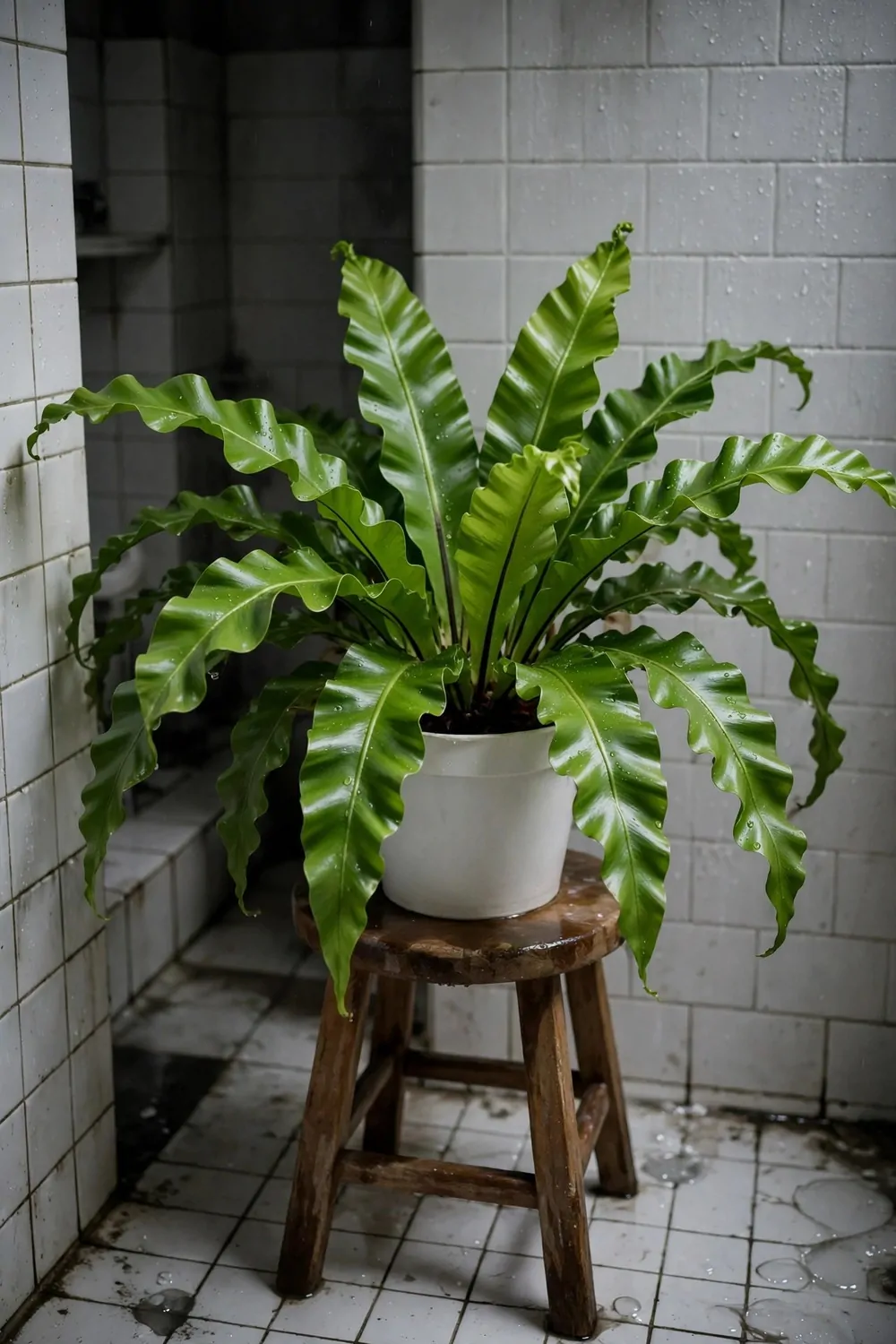
A bird’s nest fern loves a damp bathroom, and it does not mind low light one bit.
Mine sits on a shelf near the shower, and the steam keeps its wide green leaves soft and fresh. It looks like a little nest made of leaves, which is how it got its name.
Keep the soil moist but never soggy. I water mine when the top of the soil starts to feel just a little dry to the touch.
Water around the edges of the pot, not into the middle of the plant. Water that sits in the center can rot the new leaves as they grow.
Give it room to spread its leaves out wide. The leaves grow in a circle, so a wide shelf or a big spot on the floor works best.
It likes warm, damp air more than anything else. A bathroom with a shower is perfect, but a kitchen near the sink can work well too.
Do not wipe the leaves too hard. The leaves are soft and a little crinkly, and a gentle touch with a damp cloth is all they need.
Typical cost is fair for the size, often just a few dollars for a small one. A bigger fern costs more, but it fills a space right away.
If your bathroom feels dark and a little damp, a bird’s nest fern will fit right in. It turns a plain corner into a small green spot you will love.
23. A Corn Plant for a Dark Living Room
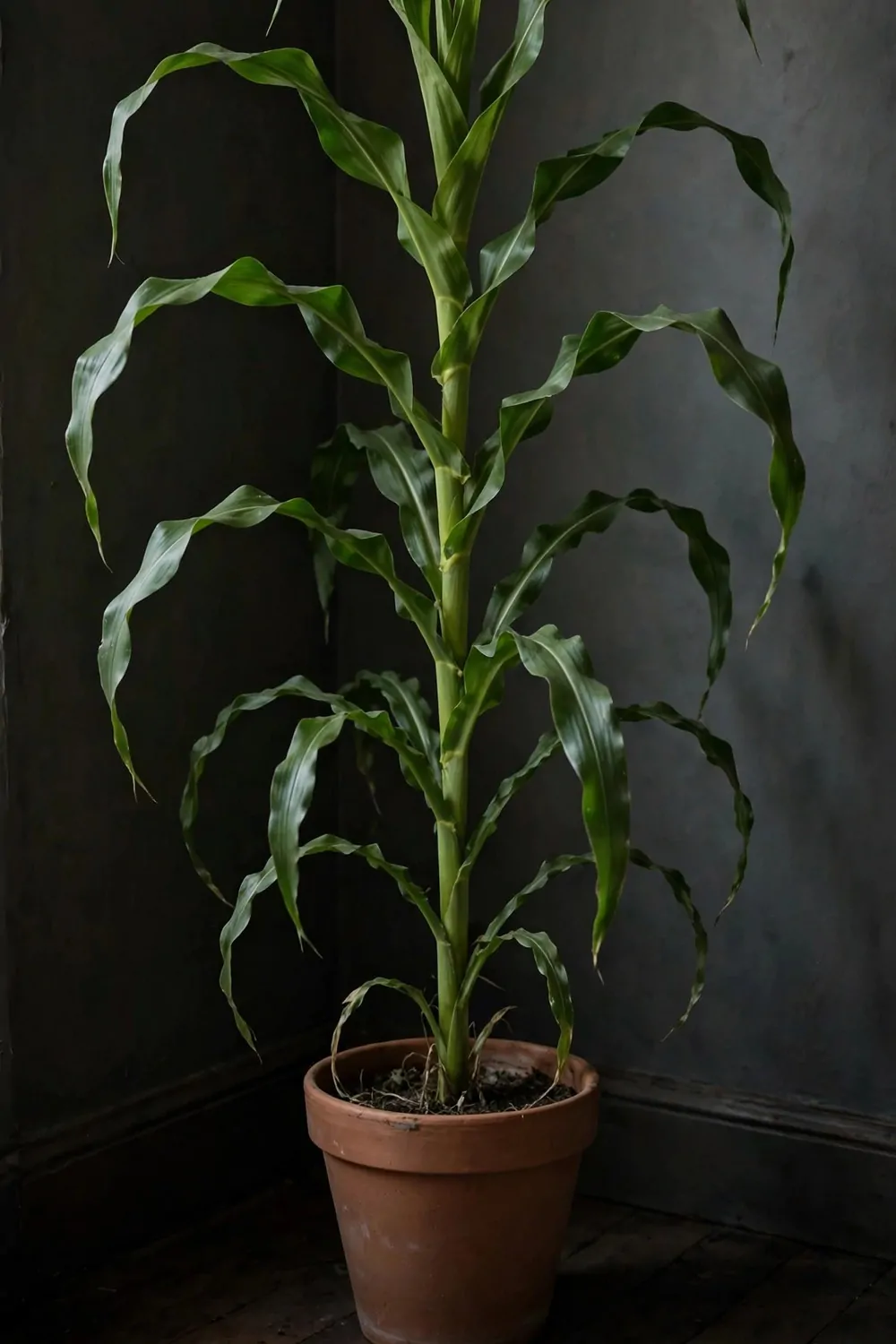
A corn plant is a tall, leafy plant that can make a dark living room feel alive.
Mine stands in the corner next to the sofa, and its long green leaves reach up toward the ceiling. It looks like a small indoor tree, and it needs very little light to stay green.
It grows slow, so you do not need to repot it often. I check mine once a year, and I only move it to a bigger pot when the roots start to peek out of the bottom.
Water it only when the soil feels dry a couple of inches down. Too much water is the one thing that can hurt it, so it is better to wait than to water too soon.
Give it a spot away from cold drafts. A corner near an inside wall is better than a spot right next to a drafty door or a cold window.
Wipe the long leaves with a damp cloth once a month. Dust builds up on big leaves fast, and clean leaves help the plant catch what little light there is.
If the tips of the leaves turn brown, trim just the brown part off with scissors. The rest of the leaf stays green, and the plant still looks fine.
Typical cost is moderate, more than a small plant but less than a big piece of furniture. One corn plant can fill a whole corner on its own.
A corn plant is a good pick when you want height and green without much fuss. Put it in a dark corner and let it grow tall and calm.
24. A Shelf of Small Low-Light Plants
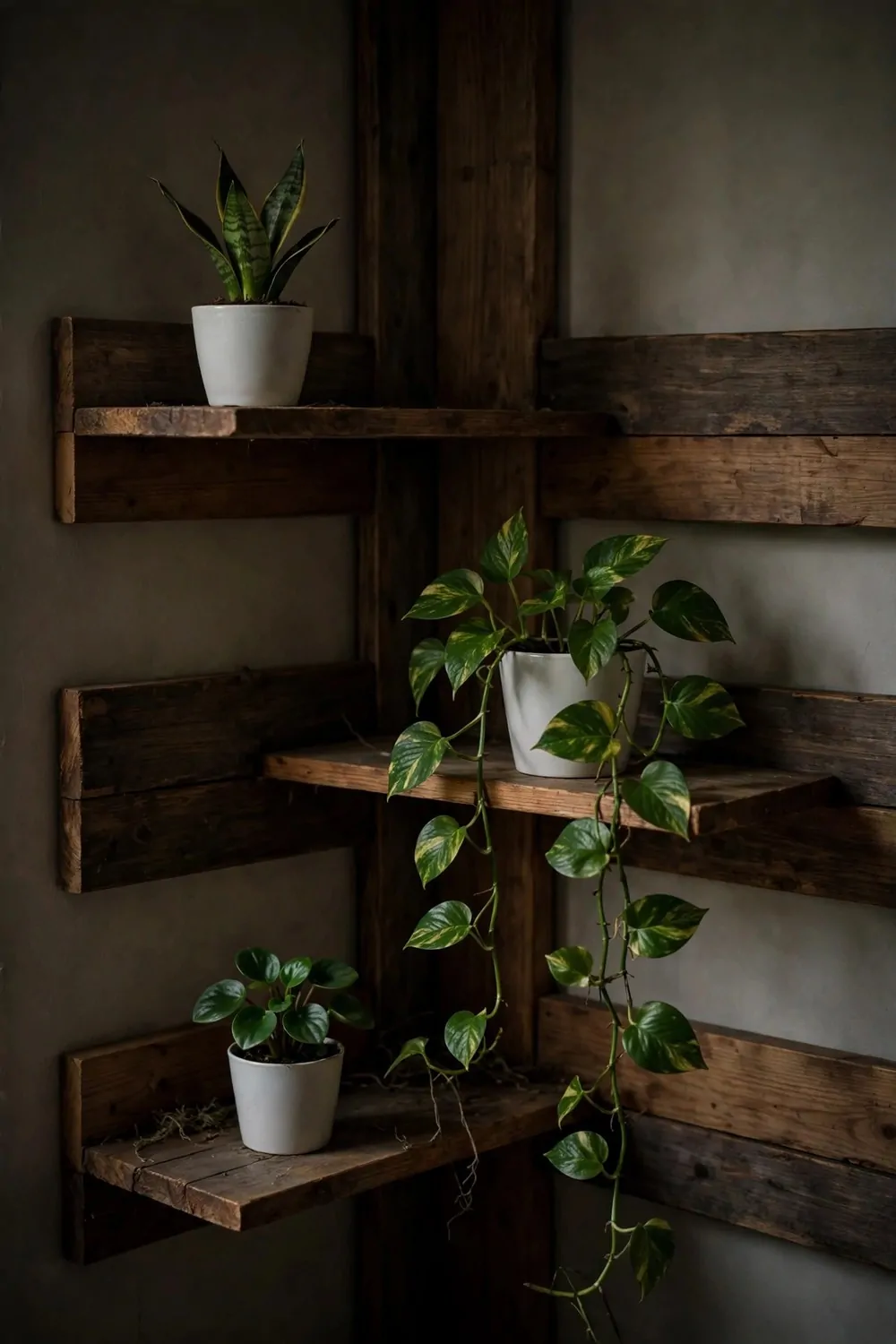
A shelf full of small low-light plants is one of my favorite ways to fill a dark wall.
I put three small pots on one shelf, and each one looks different. One has round leaves, one has long leaves, and one trails a little over the edge, so the shelf looks full and fun.
Start with just two or three plants. A few small pots look better than a crowded shelf, and it is easier to water them all when there are only a few.
Mix pots of different heights and colors. A tall pot next to a short one makes the shelf look planned, even if you just grabbed what you had at home.
Group plants that like the same amount of water. That way you can water the whole shelf on the same day and not worry about one plant getting too much.
Leave a little space between the pots. Air needs to move around the leaves, and a bit of space also makes each plant easier to see.
Turn each pot a little bit every week. The plants will lean toward the light, so a small turn keeps them growing straight and even.
Typical cost stays low when you buy small plants. Small pots are cheap, and you can build your shelf a little at a time as you find plants you like.
A shelf of small plants turns a bare dark wall into a green spot you will look at every day. Start small, add one plant at a time, and enjoy how it grows.
25. A Grow Light for the Darkest Corner
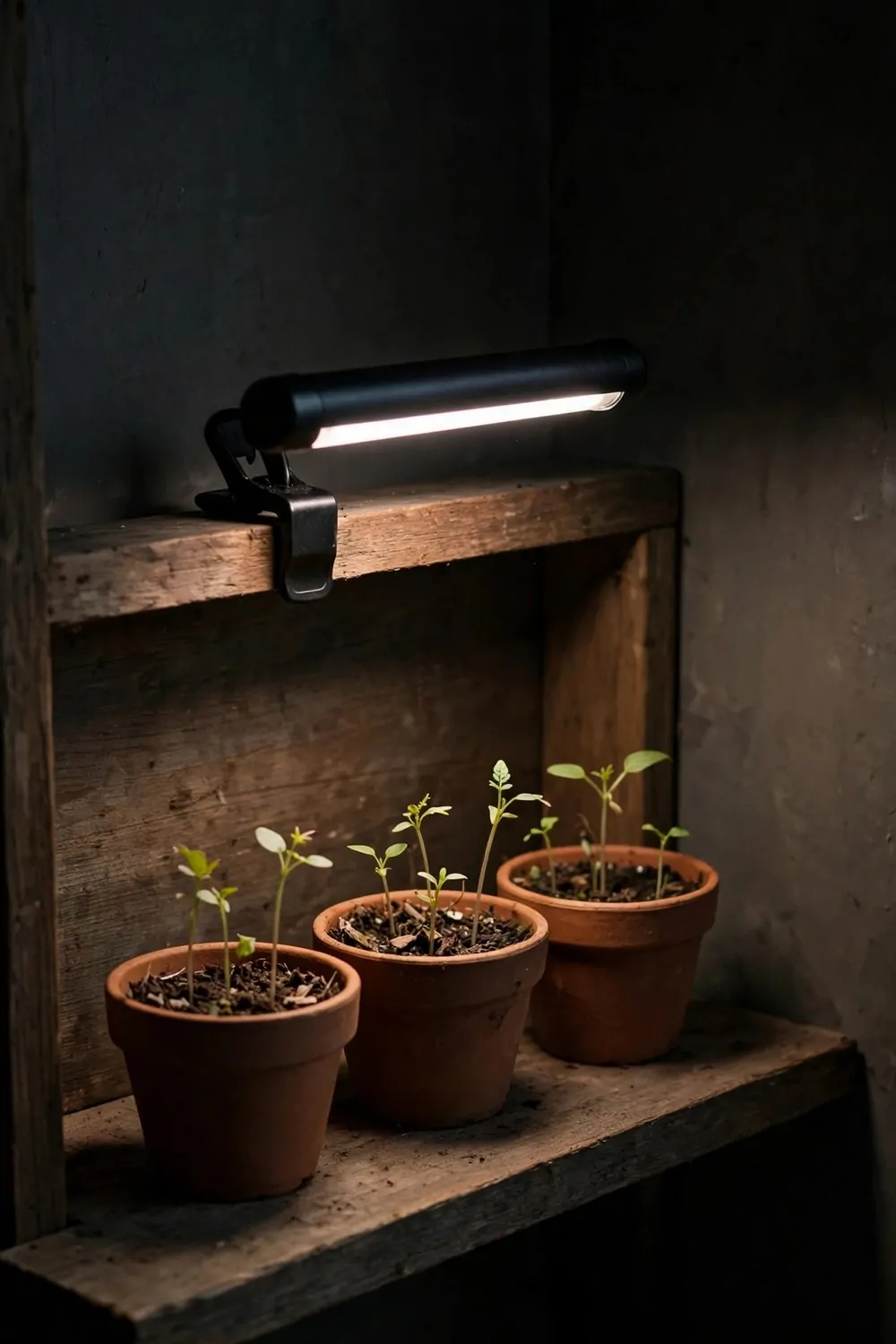
Some corners are just too dark for any plant, and that is where a grow light helps.
I put a small grow light over the darkest corner of my living room, and the plants there started to perk up within a few weeks. The light gives them what the sun cannot reach.
Pick a small clip-on light or a simple bulb for one corner. You do not need a big setup, and a small light is often enough for a few pots.
Keep the light on for about eight to ten hours a day. A simple timer plug can turn it on in the morning and off at night, so you never have to think about it.
Hang the light about a foot above the plants. Too close can burn the leaves, and too far away does not help much, so a foot is a good place to start.
Use the light with low-light plants, not in place of them. The light helps, but plants that love low light will still do best in that dark corner.
Turn the light off at night so the plants can rest. Plants need a dark time too, just like we need sleep, and a timer makes this easy.
Typical cost is fair for a small light, and a timer plug costs just a few dollars more. It is a small spend for a corner that could not hold plants before.
A grow light opens up the darkest corner in your home. Try one small light first, watch your plants for a few weeks, and see how much greener that corner gets.
26. A Simple Care Routine for Dark Corners
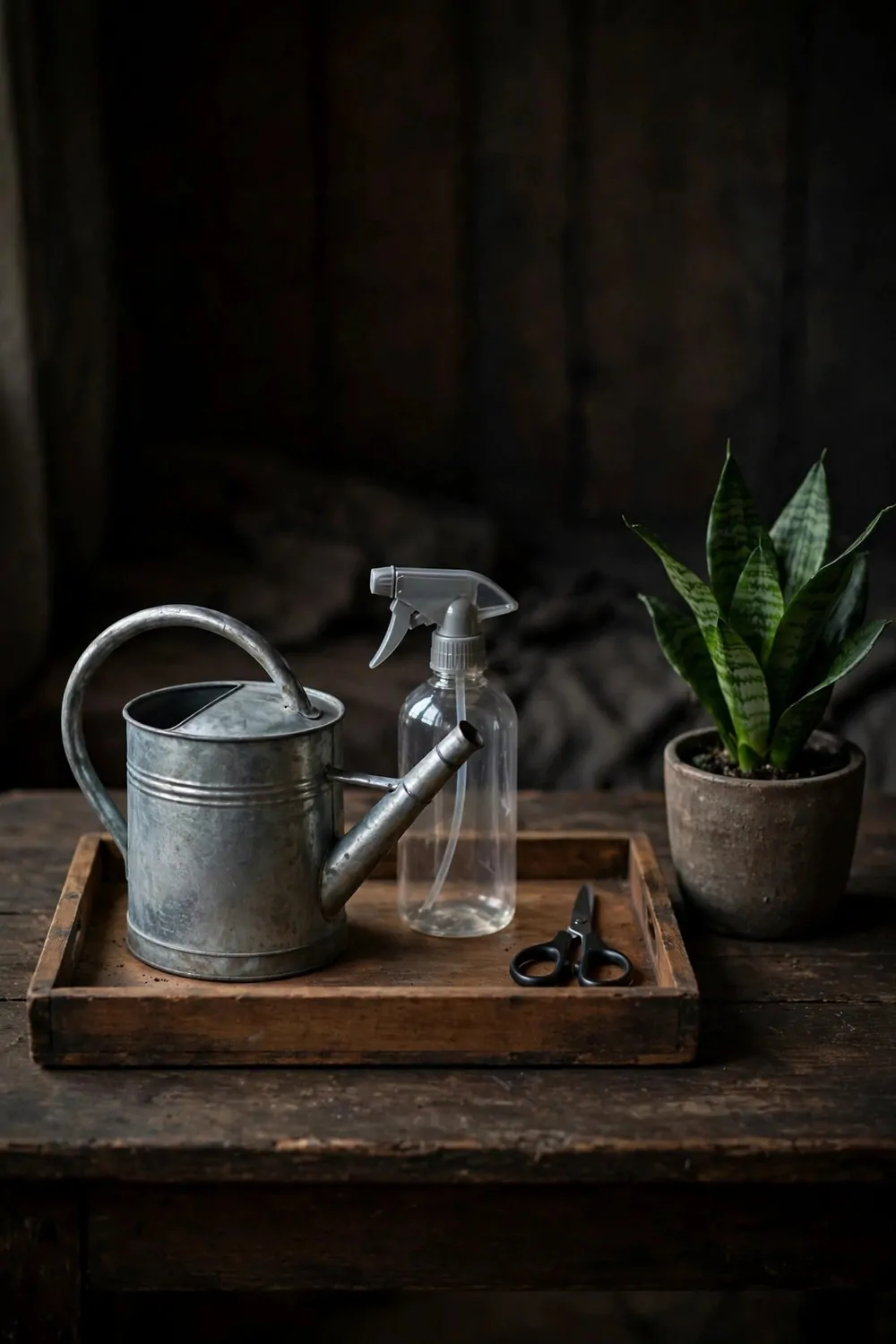
Dark corners are easy to care for once you have a simple routine.
I check my plants once a week, and that one quick check keeps them all healthy. Most low-light plants need less water than you think, so a routine stops you from watering too much.
Push your finger into the soil before you water. If the soil feels dry, water the plant. If it still feels damp, wait and check again in a few days.
Water slowly and let it soak in. Pour a little, wait a moment, then pour a little more until you see a bit of water come out of the bottom of the pot.
Empty the saucer under the pot after watering. Plants should never sit in a puddle, and an empty saucer keeps the roots safe from rot.
Wipe the leaves once a month with a damp cloth. Clean leaves catch more light, and you will spot any problems early while you wipe.
| Task | How Often |
|---|---|
| Check soil with your finger | Once a week |
| Water only dry plants | When soil feels dry |
| Empty saucers after watering | Every time you water |
| Wipe leaves | Once a month |
| Turn pots toward the light | Once a week |
| Trim yellow or brown leaves | When you see them |
Turn the pots a little each week so all sides get light. A small turn keeps the plants growing even instead of leaning hard to one side.
Trim off any yellow leaves when you see them. A quick snip keeps the plant tidy and lets new leaves grow in strong.
Keep it simple and stick to the same day each week. A small routine is all a dark corner needs to stay green and alive all year.
Keep Reading
If you liked these ideas, you will love these posts too.
- 20 Plant Stand Ideas That Display Plants Beautifully
- 31 Plant Corner Ideas That Bring Life Into Any Room
- 24 Hanging Plant Ideas That Save Floor Space
- 27 Indoor Plant Shelf Ideas That Turn Walls Green
- 29 Playroom Shelving Ideas That Hold Everything
- 26 Shared Kids Bedroom Ideas That Give Everyone Space
I hope one of these ideas helps your dark corner feel green and alive.