29 Playroom Shelving Ideas That Hold Everything

I opened the playroom door one morning and toys were spilling off every shelf. Blocks were on the floor, soft toys were piled in a heap, and one shelf was leaning so far I thought it would fall.
I stood there for a minute and just looked at the mess.
My kids had tried to tidy up the night before, I know they had. But the shelves were too high, too deep, and too full for little hands to use well. So everything ended up in one big pile again, and I felt tired before the day had even started.
That was the day I stopped blaming my kids for the mess.
The shelves were the problem, not the children. A good playroom shelf should make tidying easy, quick, and even a bit fun for a child. When a shelf works well, your child can see a toy, grab it, play with it, and put it back without your help.
I have tried a lot of shelf styles in our playroom now, some cheap and simple, some made to fit the room just right. Some worked great from day one, and some taught me what not to do next time.
In this one post you will find all 29 ideas, no part split, nothing saved for later. Read through them, pick the ones that fit your room and your budget, and make a playroom that stays tidy most days.
1. Low Open Shelves at Kid Height
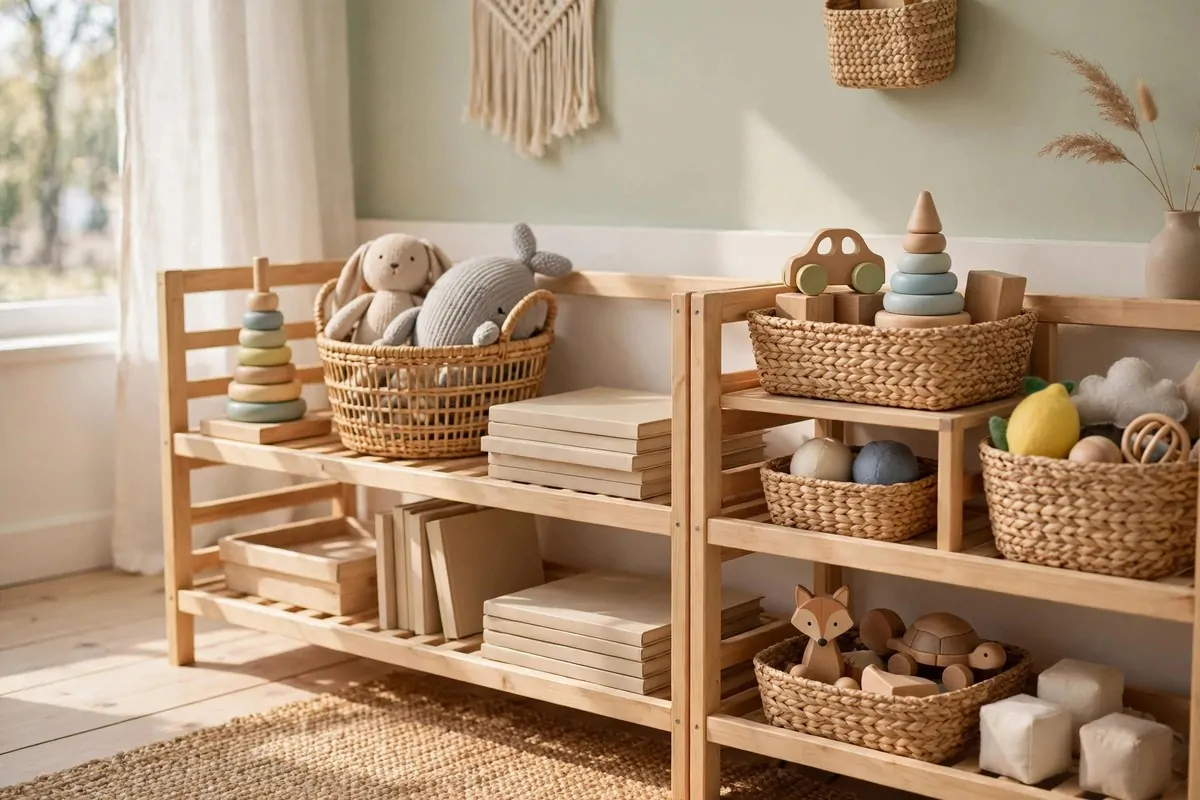
Low open shelves are the best place to start in a playroom. Your child can see everything and reach everything without climbing or asking you for help.
I put our lowest shelf at my youngest child’s waist height. That one small change made tidying so much easier for her.
Keep the top of the shelf low enough for your child to see the back of it. If a child cannot see a toy, the toy will stay lost at the back for weeks.
Use the low shelf for the toys your child plays with most days, like blocks, cars, and soft toys. Put the toys they use less often up higher, out of the way.
Leave a little empty space on each shelf. A full shelf looks neat for a photo, but it is hard for a child to use.
When a shelf has a gap, your child has a clear spot to put a toy back. That gap is what makes tidying feel easy instead of hard.
I keep one basket on the low shelf for small bits that have no home yet. It stops tiny pieces from rolling all over the floor.
Fix the shelf to the wall, even if it is low and feels safe. Kids climb on shelves, I have seen it with my own eyes.
A low open shelf will not fix every mess in your home, but it will make your playroom calmer. Your child will play more, and you will pick up less.
2. Cube Shelves with Fabric Bins
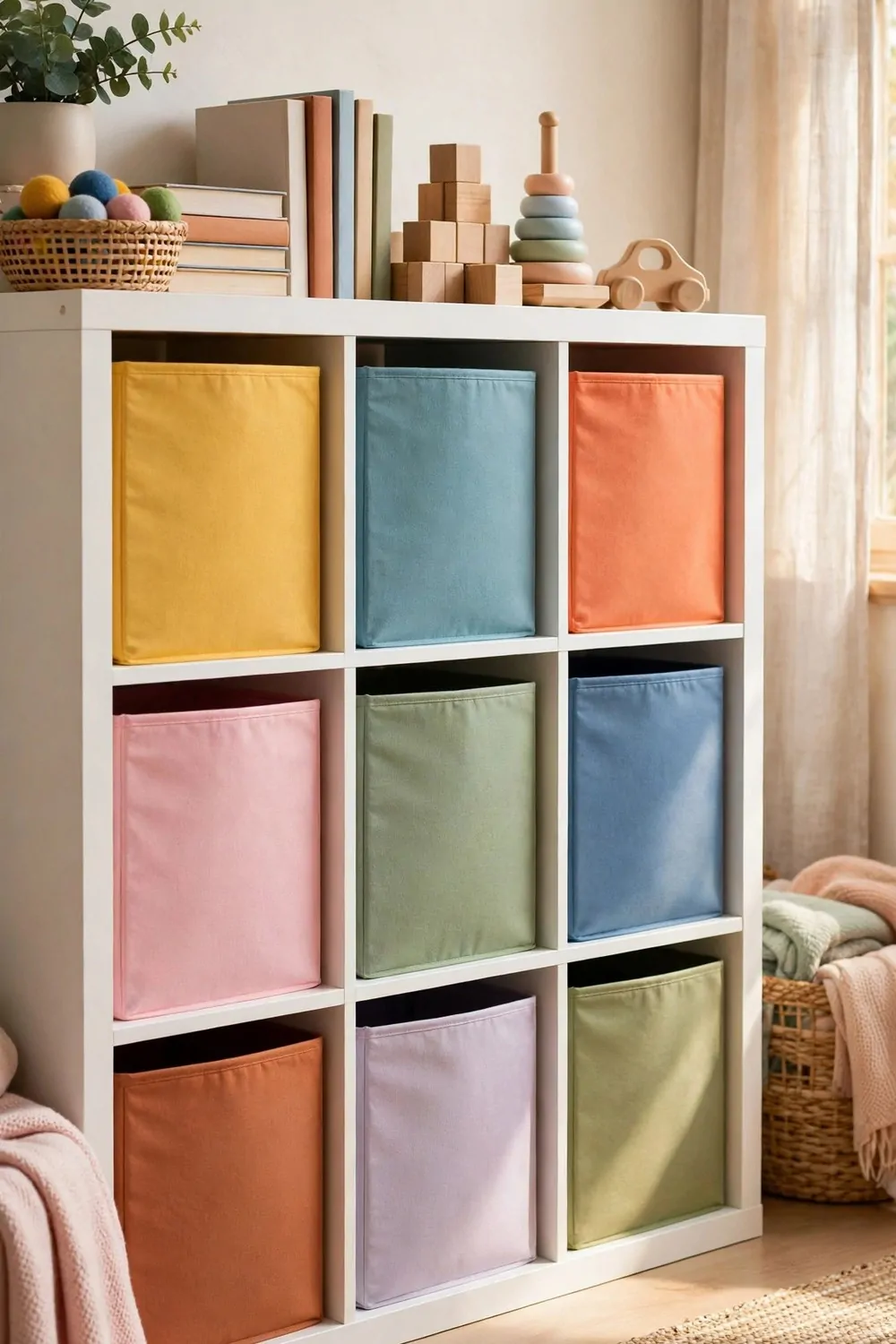
Cube shelves are boxes joined together to make one big shelf unit. Each cube holds one bin, and each bin holds one kind of toy.
I love cube shelves because they look tidy even when the bins inside are a bit messy. You just push a bin in, and the front looks neat.
Fabric bins are soft, light, and easy for a child to pull out and push back in. They do not hurt if they fall, and they do not make a loud noise on a wood floor.
Give each bin one job. One bin for blocks, one bin for cars, one bin for soft toys, and one bin for art bits. That rule helps your child know where each toy lives.
Pick bins in colours your child likes, but keep the shelf unit plain. A plain shelf lets the bright bins stand out, and the room does not feel too busy.
| Cube Shelf Type | Typical cost | Good for |
|---|---|---|
| Small 4-cube unit | $40 to $90 | A small room or a first shelf |
| Large 9-cube unit | $80 to $180 | A big toy pile in a large room |
| Cube unit with fabric bins included | $100 to $220 | A quick start with no extra shopping |
A small 4-cube unit has a typical cost of $40 to $90. It is a good size if you are just starting out or if your playroom is small.
A large 9-cube unit has a typical cost of $80 to $180. It holds a lot more toys, and it works well along one wall of a large playroom.
A cube unit with fabric bins included has a typical cost of $100 to $220. You pay a bit more, but you do not need to shop for bins on top.
Start with the size that fits your room now. You can add a second cube unit later if you need more room, and the two units will still look like they belong together.
3. A Tall Bookshelf for Books and Games
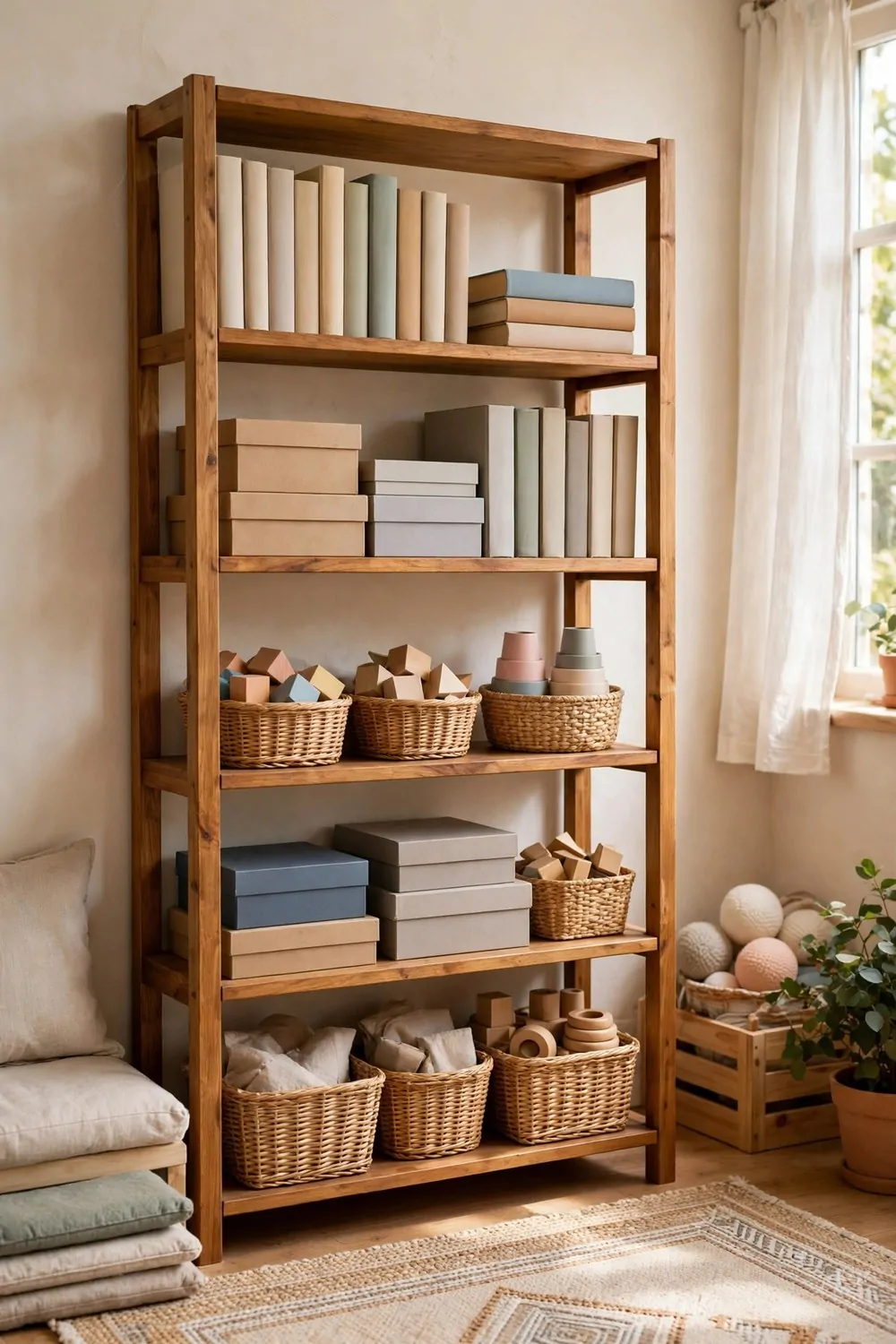
A tall bookshelf gives you a lot of room without taking up much floor space. It goes up, not out, so your playroom still has space to play in.
Put books on the lower shelves so your child can reach them on their own. Put games with lots of small parts up higher, where you can help.
I sort our books by size on the tall shelf, tall books on one shelf and small books on the next. It looks neat, and my kids can find a book fast.
Use one shelf just for games in boxes. Stand the boxes up like books, with the front of each box facing out.
That way your child can see each game at a glance. They do not need to pull out five boxes to find the one they want.
Leave the very top shelf for things you want to keep out of reach, like paint, glue, and craft bits that make a mess. Your child will grow into that shelf in time.
Add a small basket on one shelf for puzzle pieces and game parts that lose their box. It keeps small bits in one spot.
Fix a tall bookshelf to the wall with a strap or a screw. A tall shelf can tip if a child climbs it, and a fix takes only a few minutes.
A tall bookshelf is a simple buy, but it can hold years of books and games. Fill it slowly, and let your child help you pick what goes where.
4. Wall-Mounted Floating Shelves
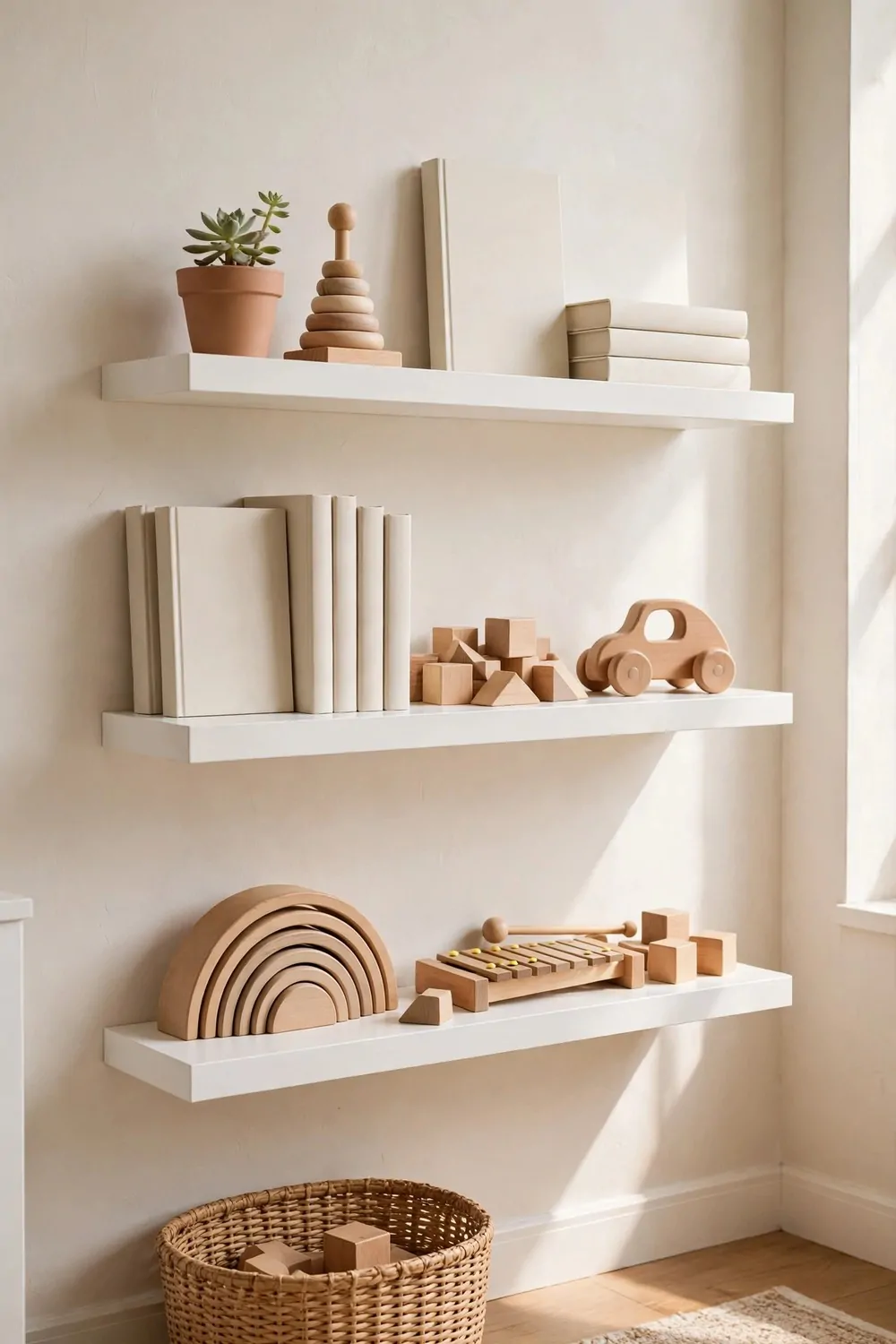
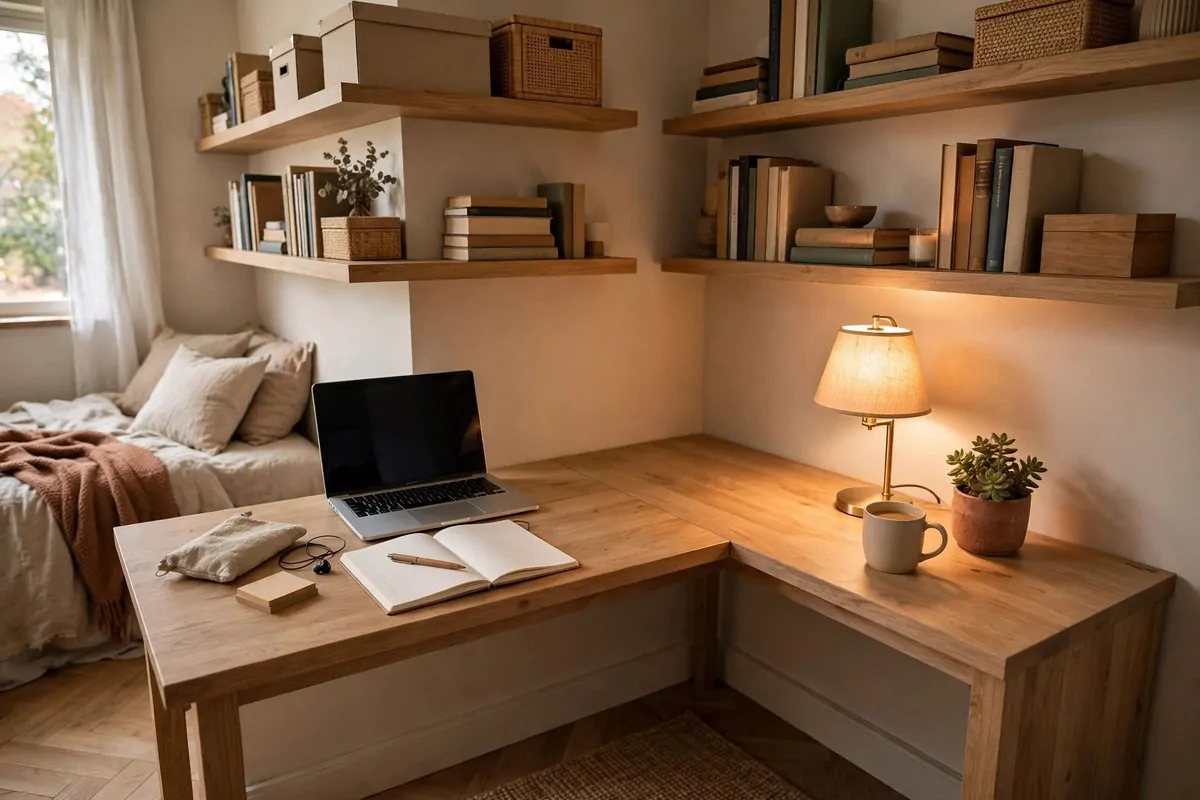
Floating shelves are flat boards fixed to the wall with no legs and no base. They look light in a room, and they leave the floor free for play.
I use floating shelves for toys that are for looking at, not for daily play. My kids keep their best models and art pieces up there.
Put one floating shelf at your child’s eye height for their top toys of the week. They can see them, pick one, and put it back with ease.
Put a second shelf higher up for toys you want to keep safe. A shelf up high is a good home for a toy with small parts.
Do not fill a floating shelf from end to end. Leave gaps between the toys so each one stands out and the shelf does not look crowded.
Check the weight limit before you load a floating shelf. Books are heavy, and a shelf full of books needs strong fixings in the wall.
Use short floating shelves in a row if your wall is long. Three short shelves look better than one very long shelf, and they are easier to fix well.
Keep the shelf edge clear of cups, paint pots, and other bits that can spill. A clean shelf edge means fewer knocks and fewer messes on the floor.
Floating shelves are great for small rooms because they add room without taking floor space. Use them for display, and keep the daily toys down low.
5. Corner Shelves That Use Dead Space
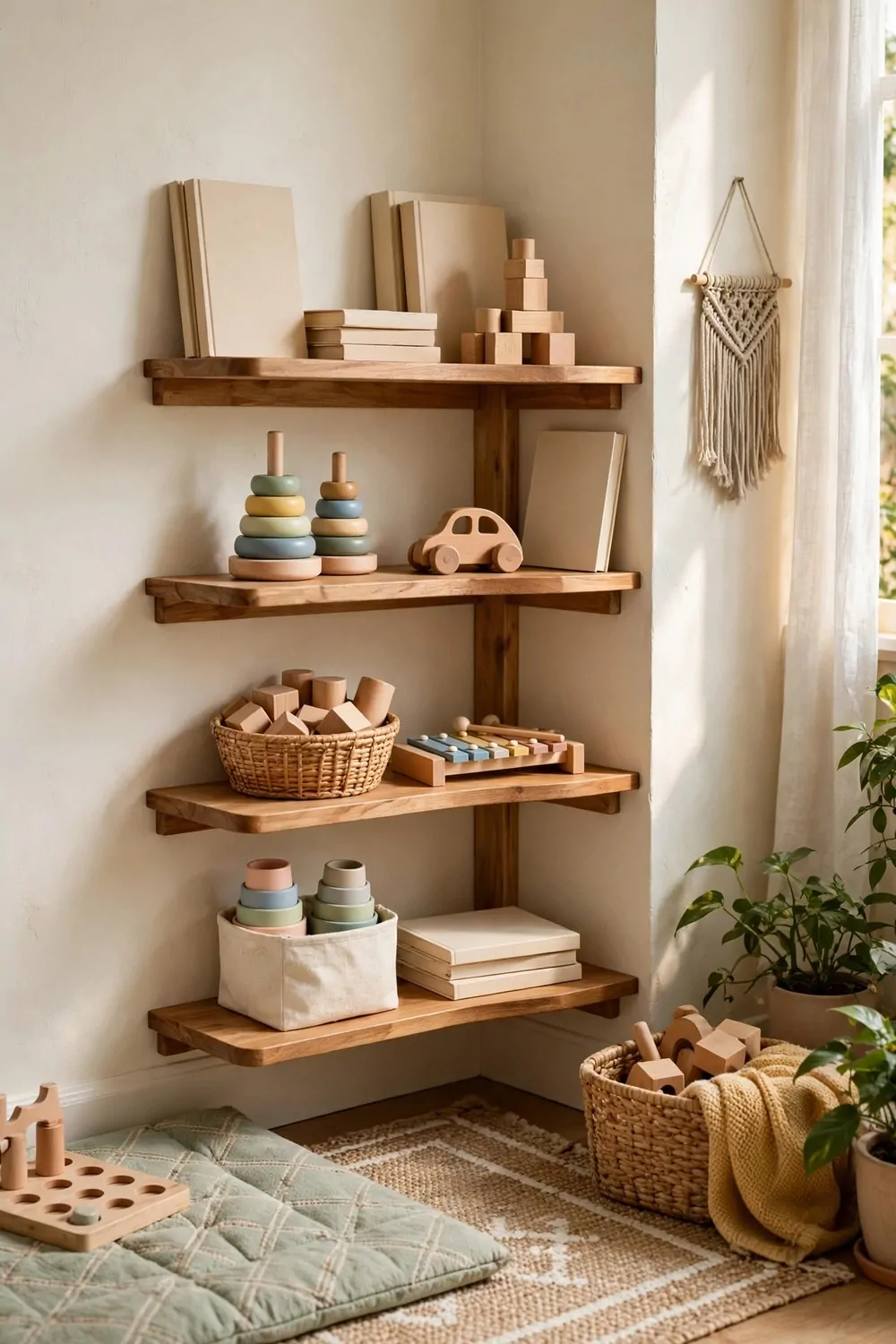
Every playroom has a corner that is hard to use. A corner shelf turns that dead space into a useful spot for toys and books.
I put a small corner shelf in the corner by the window in our playroom. It was empty for months, and now it holds books my kids read each day.
Corner shelves work well for books because books fit neatly into a corner shape. Stand them up, and they are easy to see and grab.
Use a corner shelf for a small toy set too, like a tea set or a small building set. A set that stays in one corner does not spread all over the room.
You can buy a corner shelf unit that stands on the floor, or you can fix small corner boards to the wall. The floor unit holds more, and the wall boards look lighter.
Keep the corner shelf tidy with a simple rule, one kind of toy per shelf. When the shelf holds just one kind of toy, your child can find it fast.
Put a soft rug or a small cushion near the corner shelf. It makes a cosy reading nook, and your child will want to sit there with a book.
Do not push a big toy box into the corner in front of the shelf. It blocks the shelf, and your child will stop using it.
A corner shelf will not hold all your toys, but it will use space you were wasting. That is a win in a small playroom.
6. A Toy Shelf with Labelled Bins
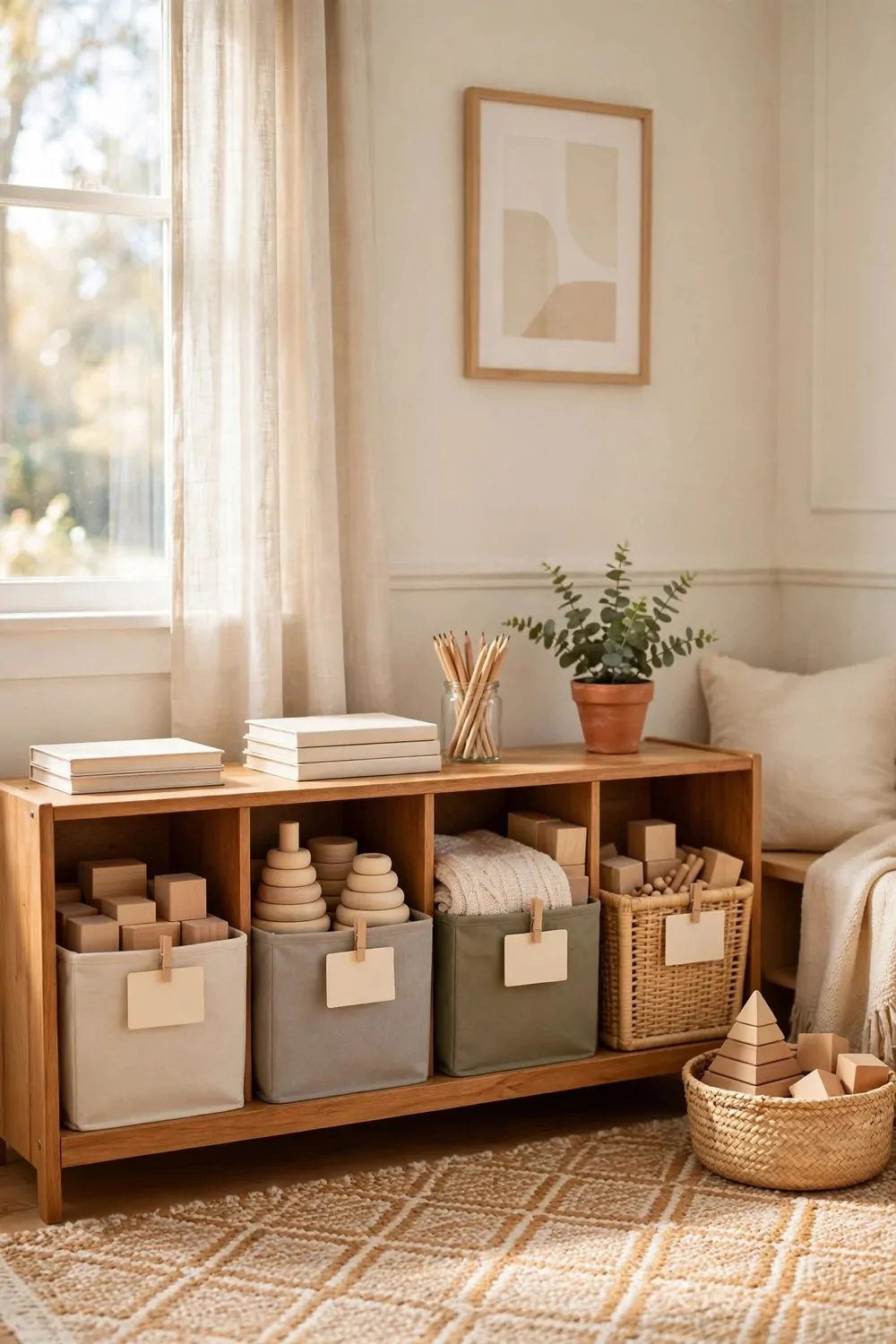
A label on a bin tells your child where a toy lives. It takes the guesswork out of tidying, and it helps even a child who cannot read yet.
I use picture labels for my younger child and word labels for my older child. A photo of blocks on the bin is clear for any age.
Stick the label on the front of the bin, at your child’s eye height. A label on the side or on the top is too easy to miss.
Use simple words on the labels, like blocks, cars, dolls, and art. Short words are easy to read and easy to remember.
Keep the labels the same on every bin. Same size, same spot, same style. That makes the shelf look calm and neat.
Let your child help you make the labels. They can draw a small picture for each bin, and they will feel proud of their shelf.
Change a label when the bin changes its job. A label that says cars on a bin full of blocks will confuse your child, and the toys will end up in the wrong spot.
Use clear tape over a paper label to keep it safe from sticky hands. It will last a lot longer, and you will not need to remake it each week.
Labelled bins make tidying a game your child can win. They know where things go, so they can tidy up on their own, and you can step back.
7. A Rolling Shelf Cart That Moves
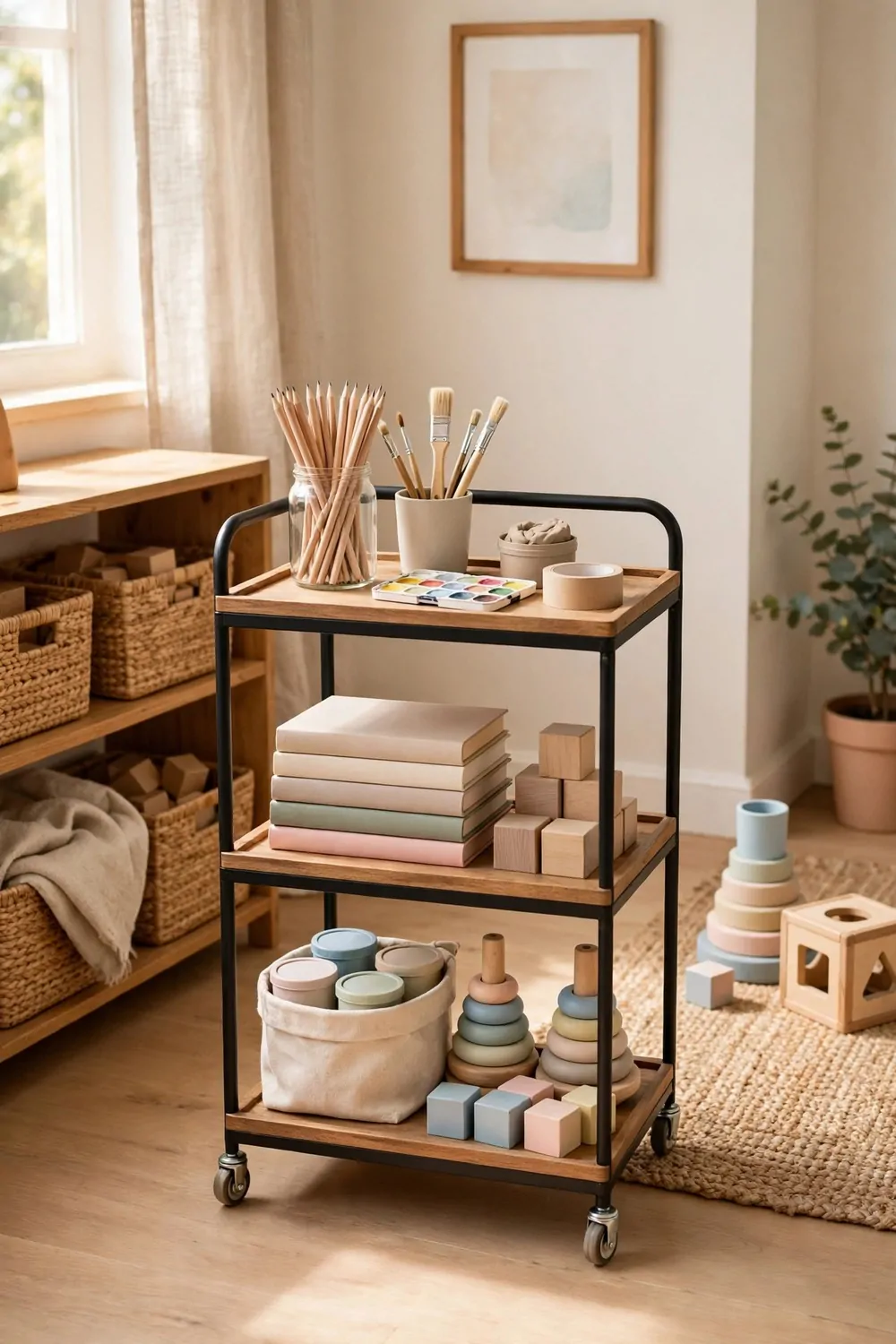
A rolling shelf cart is a small shelf unit on wheels. You can push it where you need it, and push it away when playtime is done.
I roll our cart next to the table for art time. My kids can reach the paper, pens, and glue without getting up and walking across the room.
Use the top shelf of the cart for the bits you use most in that moment. Use the lower shelves for extra paper, spare pens, and back-up bits.
When art time is done, we roll the cart back to its spot by the wall. The table is clear, and the floor is clear too.
Pick a cart with wheels that lock. A cart that rolls away on its own is no fun, and it can spill toys all over the floor.
Keep the cart light enough for you to push with one hand. If it is too heavy, you will leave it in one spot, and it will lose its point.
A rolling cart is great for a toy set that moves around the house. My kids roll their building set to the living room, play there, and roll it back.
Put small baskets on the cart shelves to stop bits from sliding off when it moves. A basket holds the bits still, even on a bumpy floor.
A rolling shelf cart is a small buy with a big use. It brings the toys to your child, not the other way round, and that makes playtime smoother.
8. Built-In Shelves Around the Door
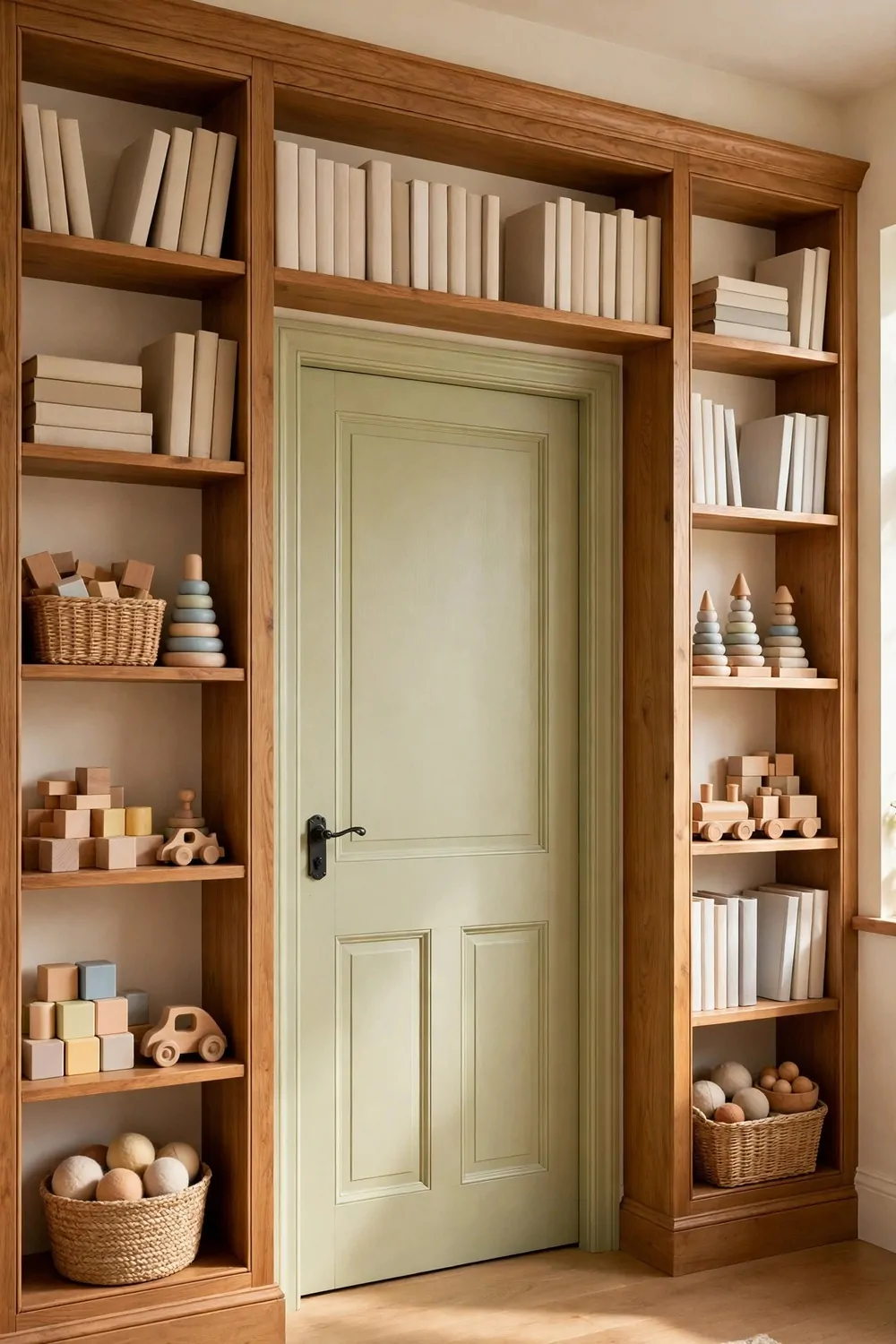
Built-in shelves around a door use the wall space above and beside the door. That space is often empty, and it can hold a lot of toys and books.
I like this idea because it uses space you already have. You do not need to give up floor space, and the room still feels open.
Put books and games your child uses less often on the high shelves around the door. Keep the daily toys down low where hands can reach them.
Use the shelves beside the door for books, and the shelf above the door for boxes you use once in a while. That split keeps things easy to find.
A built-in shelf can be made to fit your door just right, with no gaps at the sides. That neat fit is what makes it look part of the room, not an extra bit stuck on.
| Built-In Option | Typical cost |
|---|---|
| Shelves around one door | $150 to $400 |
| Shelves around two doors | $300 to $700 |
| Built-in with cupboards below | $500 to $1,200 |
| Simple wall shelves fitted by a handyman | $100 to $300 |
Shelves around one door have a typical cost of $150 to $400. That is a good start if you have one door in the playroom and you want a neat built-in look.
Shelves around two doors have a typical cost of $300 to $700. You get a lot more room, and the two doors can look smart with shelves on both sides.
Built-in with cupboards below have a typical cost of $500 to $1,200. The cupboards hide the messy bits, and the open shelves hold the books and best toys.
Simple wall shelves fitted by a handyman have a typical cost of $100 to $300. This is the cheapest way to get the same look, and it still uses the space well.
9. A Shelf Above the Toy Bins
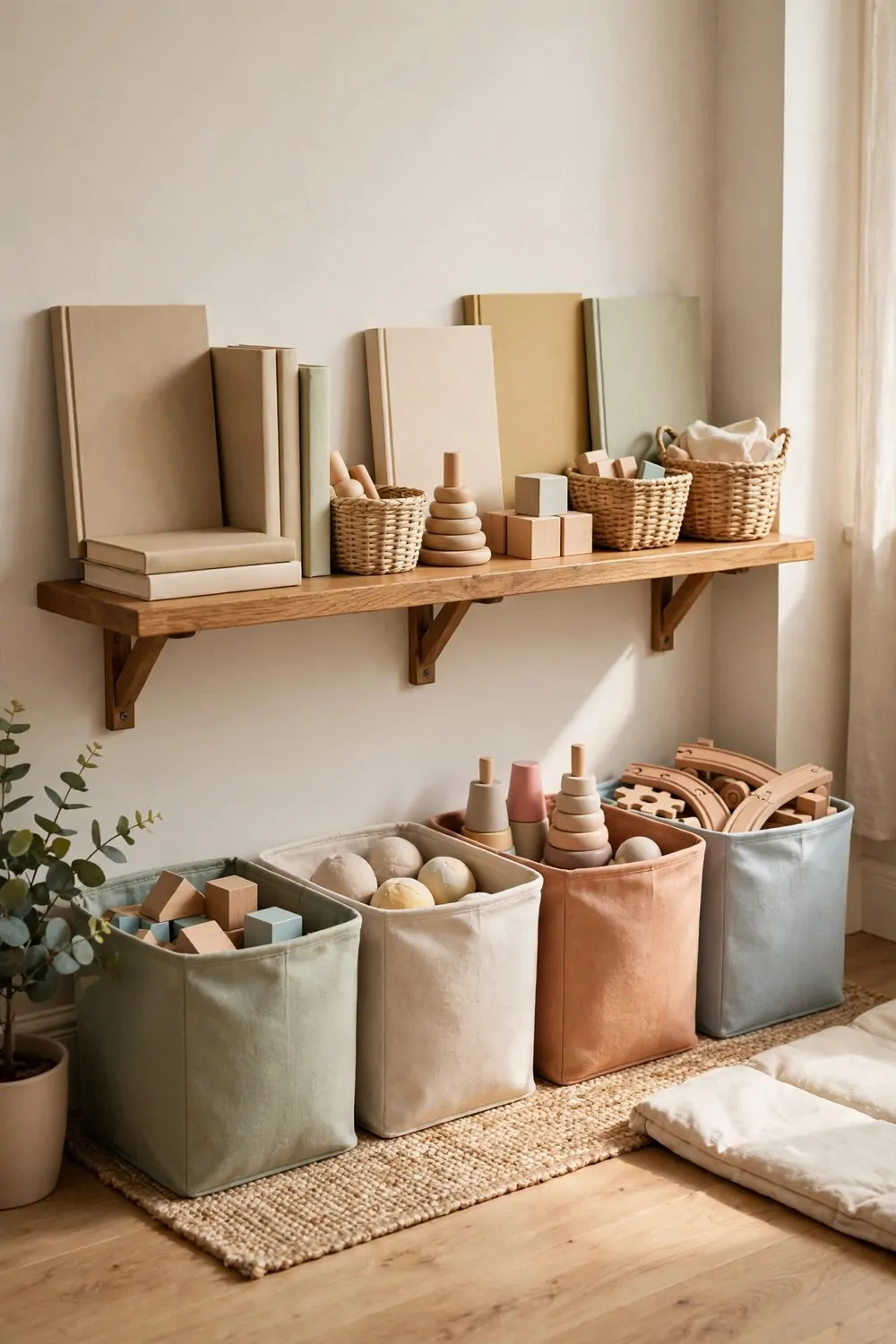
A shelf above the toy bins gives you one more row of room without taking up any floor space. It sits just above the bins, right where you need it.
I use the shelf above our toy bins for books and small games. My kids can reach it with ease, and the bins below still open and close fine.
Keep the shelf at a height your child can reach without standing on a bin. If they need to climb to reach it, they will stop using it.
Use the shelf for things that go with the bins below it. Books about cars can sit above the car bin, and books about building can sit above the block bin.
That link helps your child find what they want in one spot. They do not need to walk across the room to find a book that goes with a toy.
Do not put heavy boxes on a shelf above the bins. A heavy box is hard to lift down, and it can fall on small hands.
Keep the shelf clear at the front edge so nothing falls off when a bin is pulled out. A clear edge is safer, and it looks neater too.
Add a small basket on the shelf for bits that belong with the bins below. It keeps the small bits close to the toys they go with.
A shelf above the toy bins is a simple add-on, but it makes your toy bins work harder. You get more room in the same spot, and the room stays tidy.
10. Picture Ledges for Books
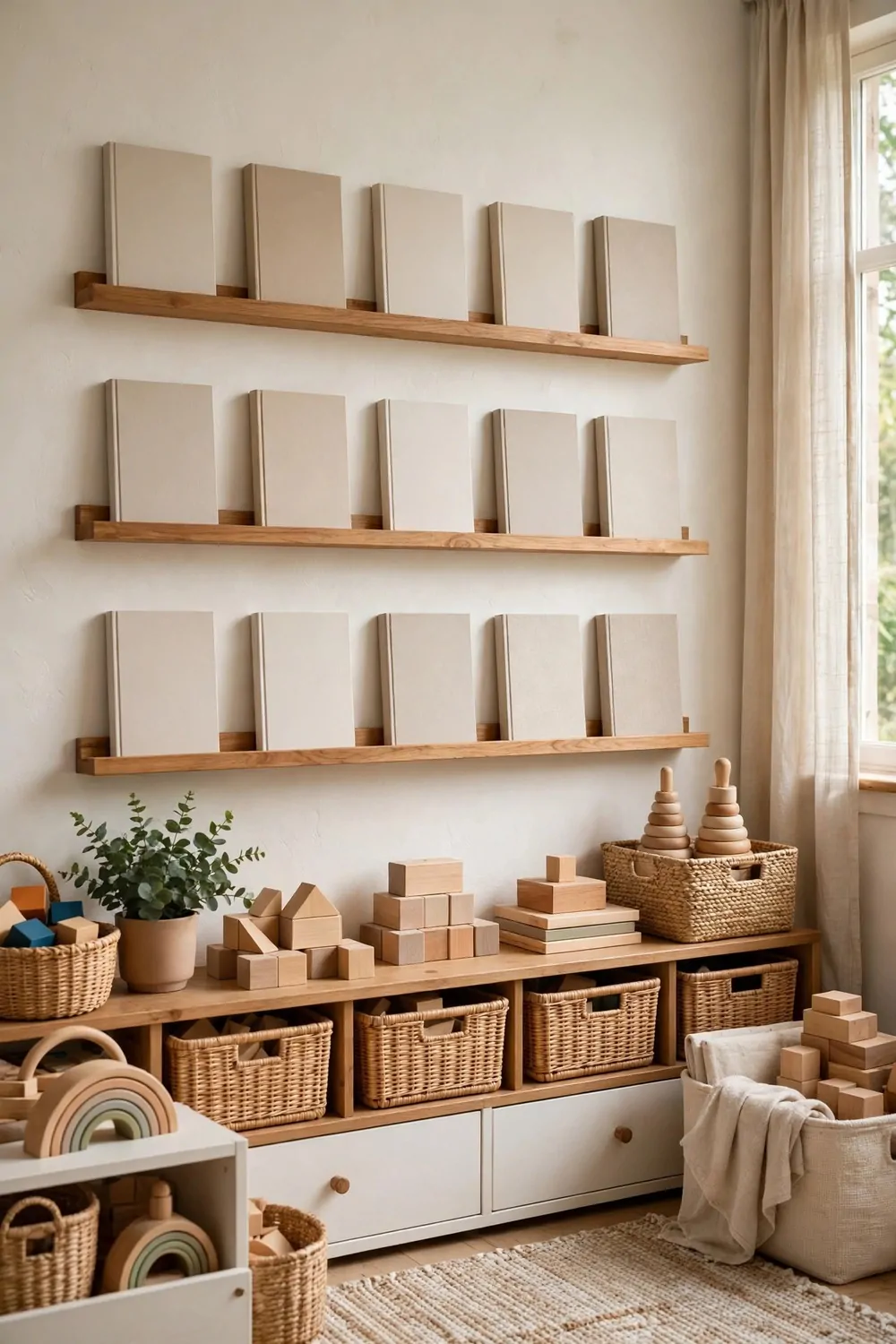
A picture ledge is a slim shelf with a small lip at the front. Books stand up on it with their covers facing out, like a little shop display.
I love picture ledges because my kids pick books by the cover. When they can see the cover, they pick a book much faster than when they see just the spine.
Put a picture ledge at your child’s eye height, and fill it with five or six books. That is enough choice without making the shelf look full.
Change the books on the ledge each week. A fresh set of covers feels new, and your child will want to read a book they have not seen for a while.
Use two or three ledges in a row if you have a long wall. Each ledge can hold a different kind of book, like story books on one and fact books on the next.
Keep the books standing straight, with the lip holding them in place. If a book leans, it can slide off, so push the books close together.
Picture ledges work well in a reading corner, next to a soft chair or a floor cushion. Your child can grab a book and sit down right there.
Do not fill a picture ledge with toys or other bits. It is a book shelf, and it works best when it holds just books.
Picture ledges are cheap, slim, and easy to fix to a wall. They turn a plain wall into a book display your child will use each day.
11. A Display Shelf for Favourite Toys
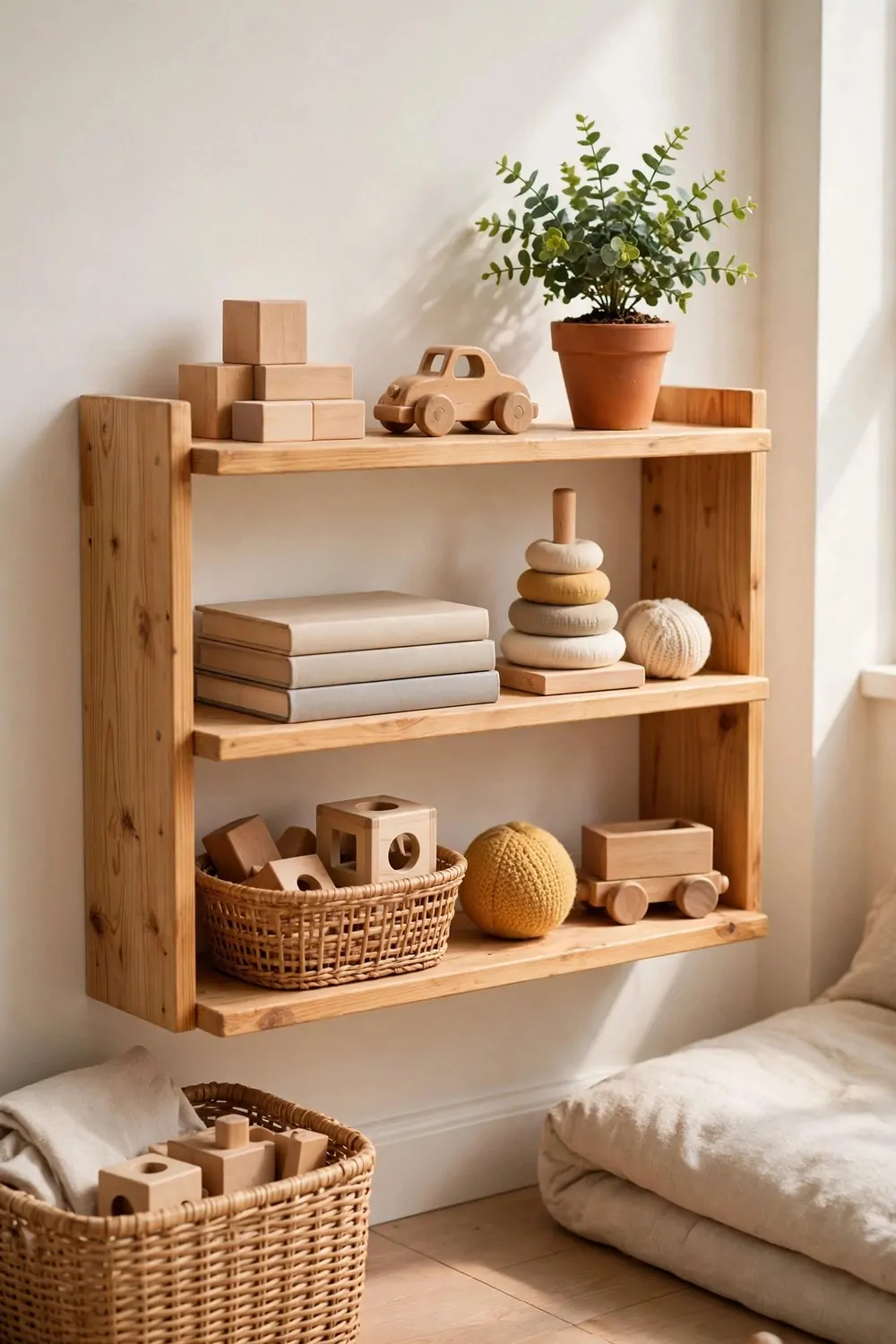
I love seeing my child’s favourite toys out on show. A display shelf makes them feel special.
You can pick one low shelf just for the toys your child loves most. Put three or four toys on it and leave some space around them.
Too many toys on one shelf looks messy fast.
I rotate the toys on our display shelf every week or so. My child gets so excited when an old toy comes back out again. It feels like a brand new toy to them.
You can let your child choose which toys go on the shelf. It gives them a little bit of pride in their room.
A plain wooden shelf works great for this idea.
You can add a small plant or a framed drawing next to the toys. It makes the shelf look like a real display, not just storage.
Keep the shelf at your child’s eye level so they can see everything. If it is too high, they will forget what is up there.
Typical cost for a small display shelf is about 15 to 40 dollars. You can find good ones at most home stores.
12. Under-Window Low Shelves
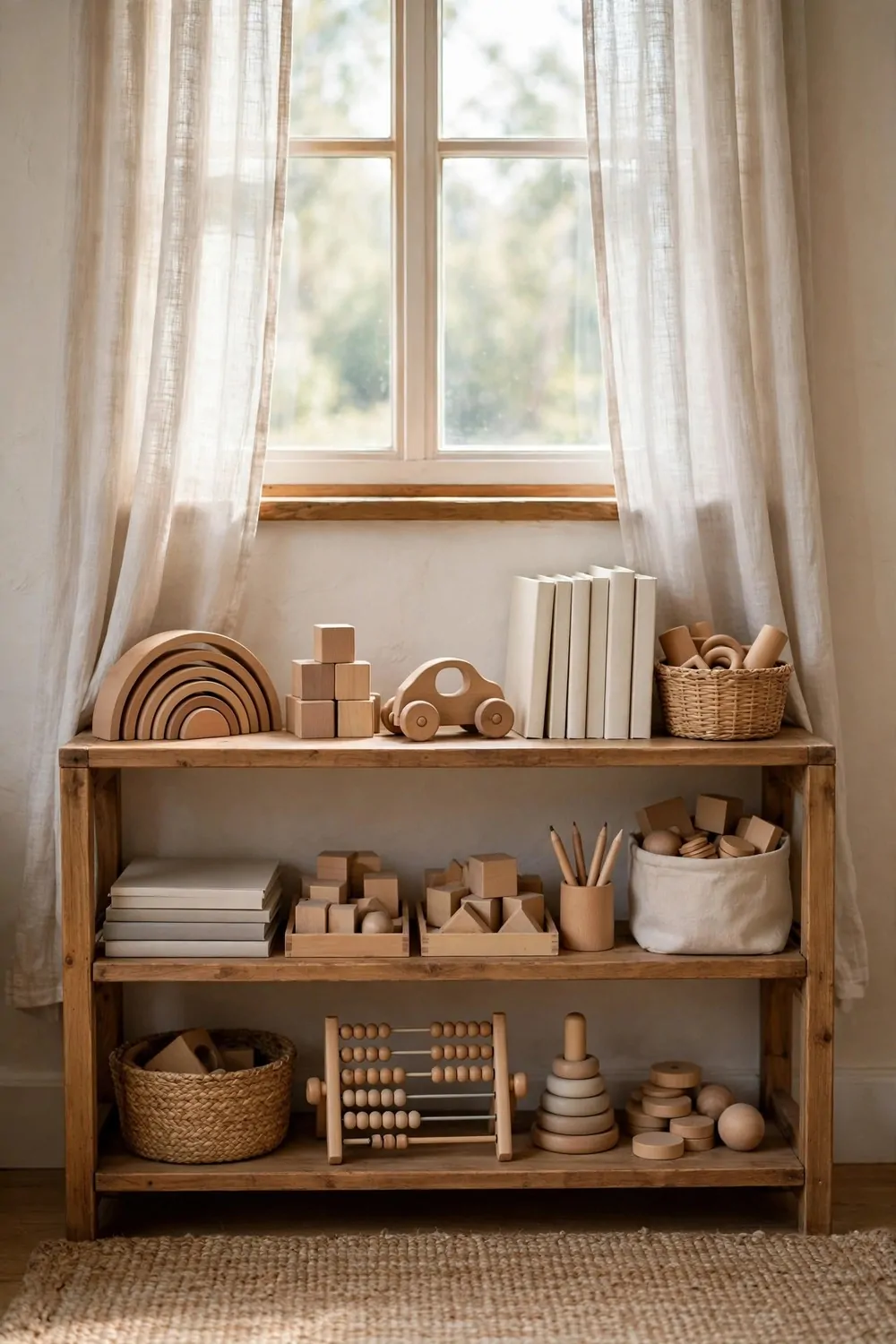
The space under a window often goes to waste in a playroom. Low shelves fit there so well.
I like this spot because the light from the window makes the toys easy to see. My child can sit right there and play on the floor.
Keep the shelves low and wide so they do not block the light.
You can use baskets on these shelves for small toys and books. My child pulls a basket out, plays, and then slides it back in. It is the easiest tidy-up we have in the whole house.
Make sure the shelves are fixed to the wall so they stay safe. Kids lean on things more than you think.
You can paint the shelves the same colour as the wall. It makes the room feel calm and tidy.
I put soft toys on the under-window shelf in our playroom.
They look sweet in the sunlight and my child grabs them first thing in the morning.
Typical cost for a low under-window shelf unit is about 30 to 80 dollars. Measure the space first so it fits just right.
13. A Shelf with Baskets for Dress-Up Clothes
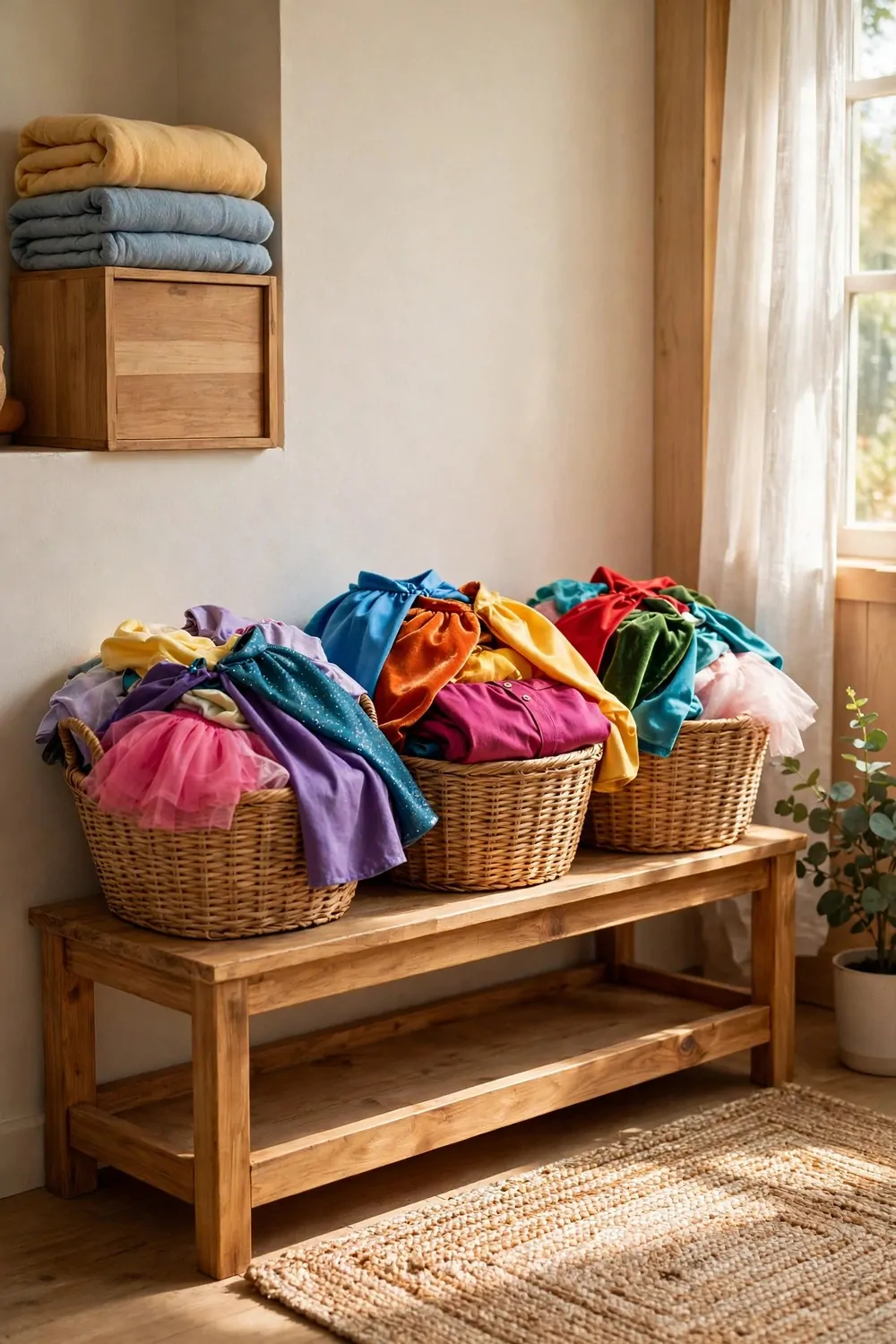
Dress-up clothes are so much fun, but they end up all over the floor. A shelf with baskets fixes that in one go.
You can give each basket a job. One for hats, one for capes, and one for shoes and boots.
Labels help a lot, even simple picture labels.
I use fabric baskets because they are soft and light. My child can pull one down without any help from me. That little bit of freedom makes dress-up time even more fun.
You can put the shelf low so your child can reach everything on their own. That is the whole point of dress-up play.
Hang a few hooks on the side of the shelf for capes and belts. It keeps them from getting all tangled up.
I fold the clothes loosely instead of folding them neat.
Nobody has time for neat folds with dress-up clothes, and my child just wants to grab and go.
Typical cost for a shelf with three or four baskets is about 40 to 90 dollars. Woven baskets cost a little more but they last longer.
14. Divided Shelves for Art Supplies
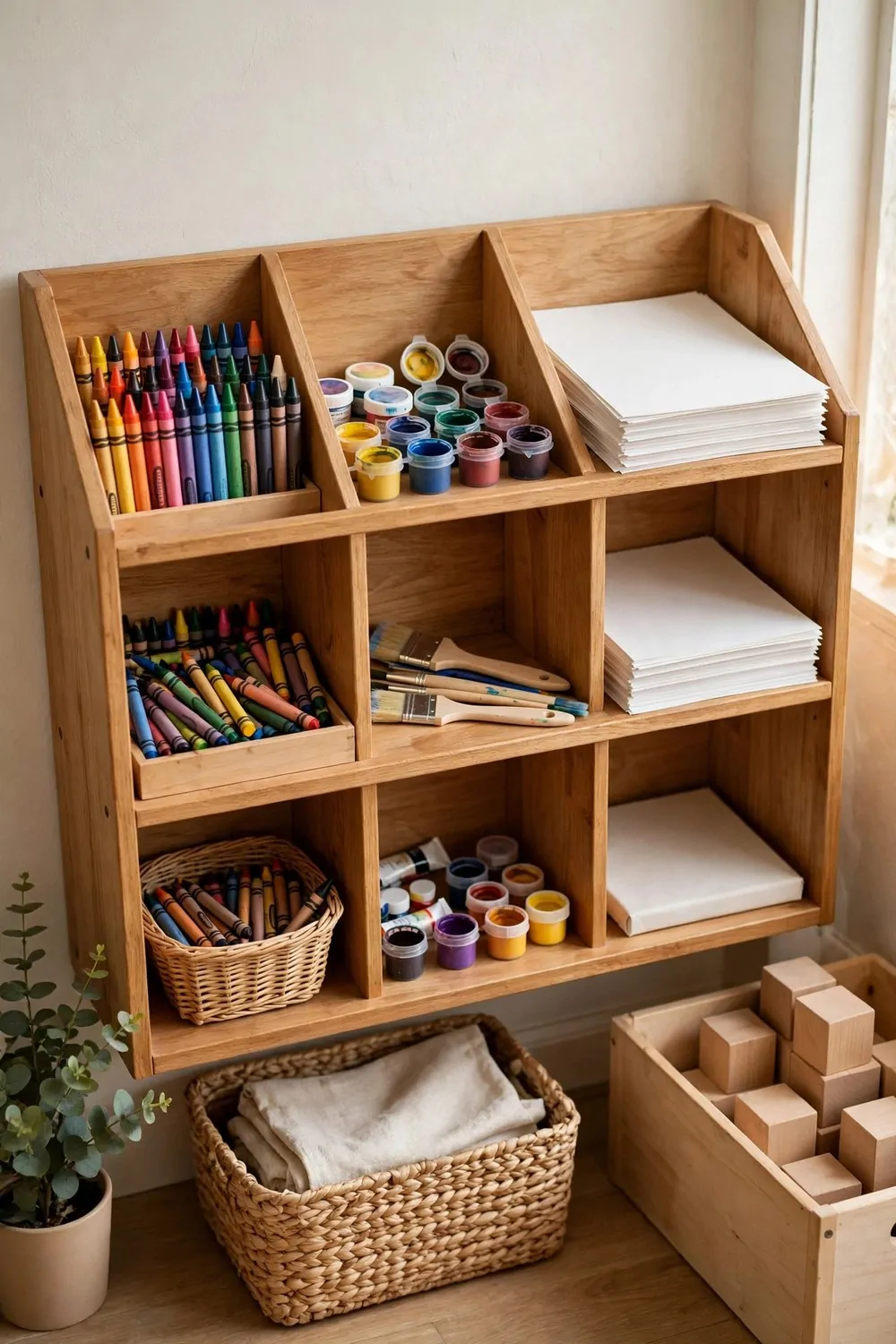
Art supplies need their own home or they spread everywhere. Divided shelves keep every little thing in its place.
You can use small boxes inside each shelf section. One box for crayons, one for markers, and one for glue sticks.
Clear boxes work best because your child can see what is inside.
I keep the messy stuff like paint on the higher shelf. The safe stuff like paper and crayons stays low where my child can reach it. It saves me a lot of cleaning up later.
You can add a little tray for paper on the bottom shelf. It stops the paper from sliding all over the place.
Put a wipeable mat under the art shelf if you can. Paint and glue do find their way out of the boxes sometimes.
I sort the supplies with my child once a month.
We throw away dried-out markers and broken crayons together, and it only takes a few minutes.
Typical cost for a divided shelf unit with boxes is about 35 to 75 dollars. Small boxes are cheap and you can add more later.
15. A Spinning Shelf for Small Toys
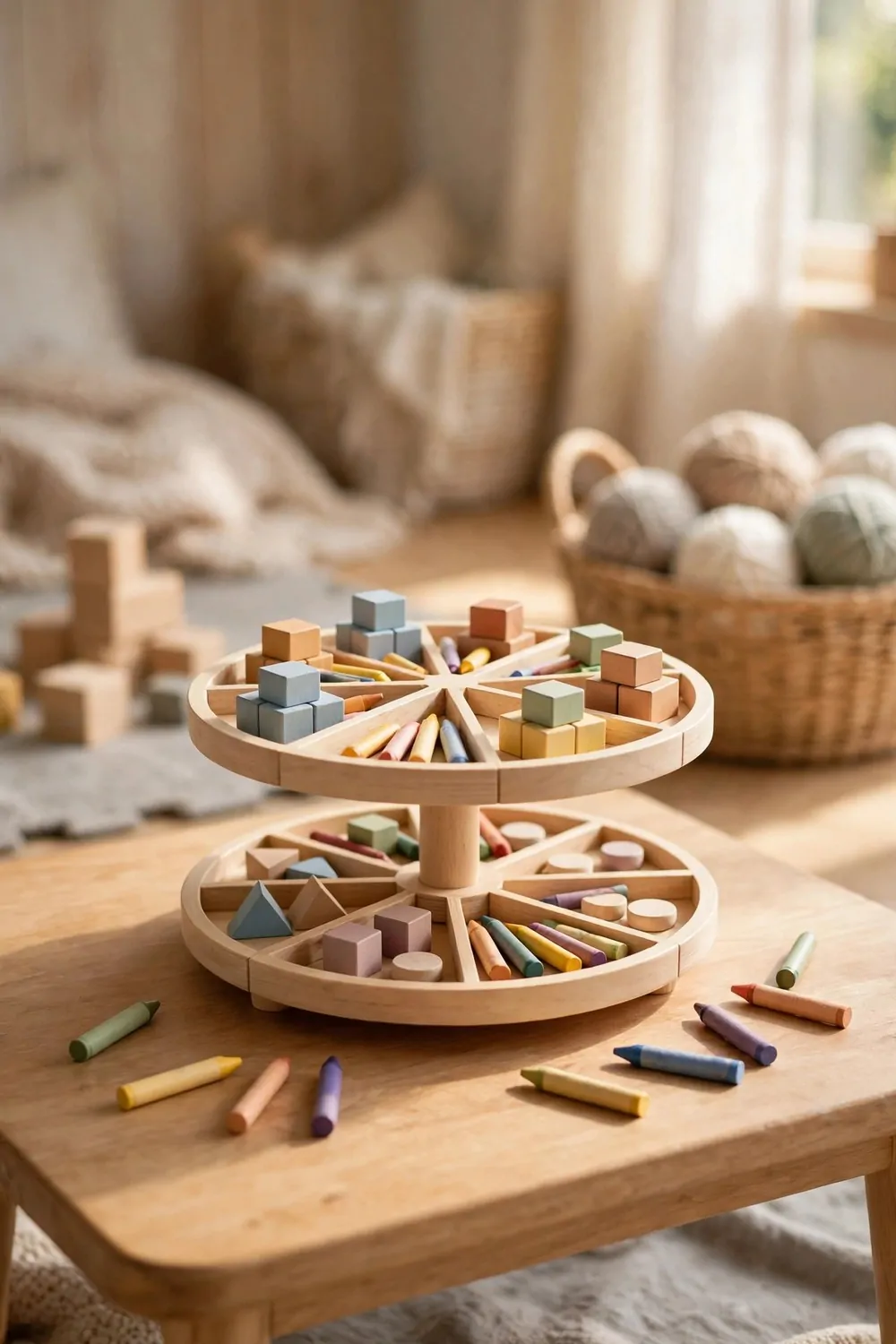
Small toys are the hardest to keep tidy. A spinning shelf makes them easy to find and fun to put away.
You can spin it around to see everything on it. My child loves turning it like a little shop display.
It works great on a play table or a low shelf.
Put tiny figures, cars, and building blocks in the sections. Each section holds one kind of toy so nothing gets mixed up. My child finds what they want in seconds now.
You can use a spinning shelf with two levels if you have lots of small toys. The top level is good for the toys your child plays with most.
Make sure the spinning shelf is steady and not too heavy. A wobbly one will tip over when your child spins it fast.
I keep ours on a low table near the window.
My child sits there for ages just spinning it and picking out toys to play with.
Typical cost for a spinning shelf is about 20 to 50 dollars. Look for one with deep sections so small toys do not fall out.
16. A Shelf Unit with Doors to Hide the Mess
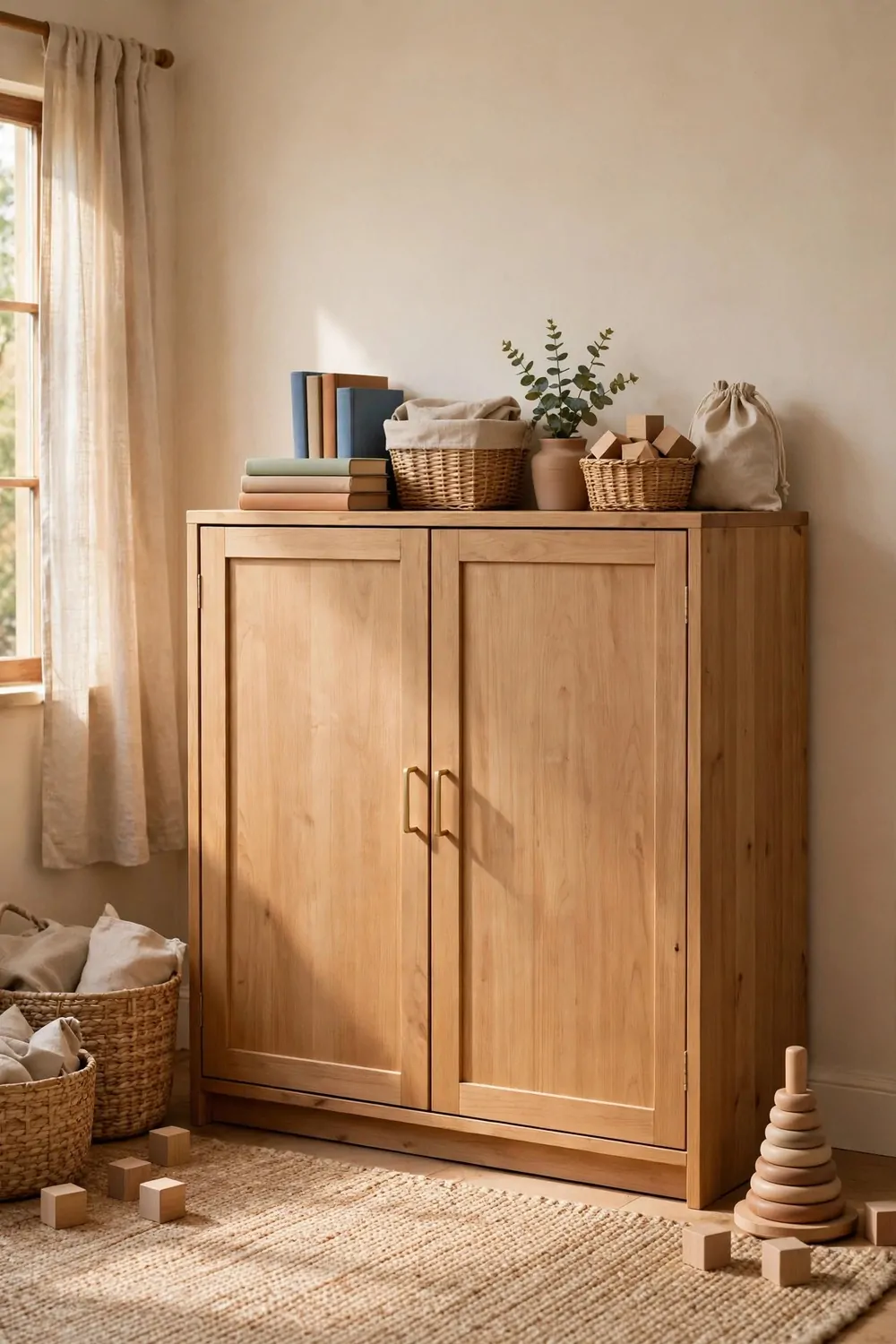
Some days the playroom just looks like a storm hit it. A shelf unit with doors lets you hide it all in seconds.
You can close the doors when guests come over. The room looks tidy even if the shelves inside are a bit wild.
I love that part more than anything.
Use the inside shelves for the messy toys and games. Put the pretty stuff on open shelves above the doors. The room looks neat from the door even on a wild play day.
You can pick doors with soft close hinges so little fingers do not get pinched. That matters a lot with young kids.
Let your child help tidy up before the doors close. It teaches them that everything has a home, even if the home is behind a door.
I put a small basket on top of our unit for the toys we use every day.
That way my child does not need to open the doors all the time for just one toy.
Typical cost for a shelf unit with doors is about 80 to 200 dollars. Bigger units cost more, but they hold so much.
17. Ladder Shelves in the Playroom
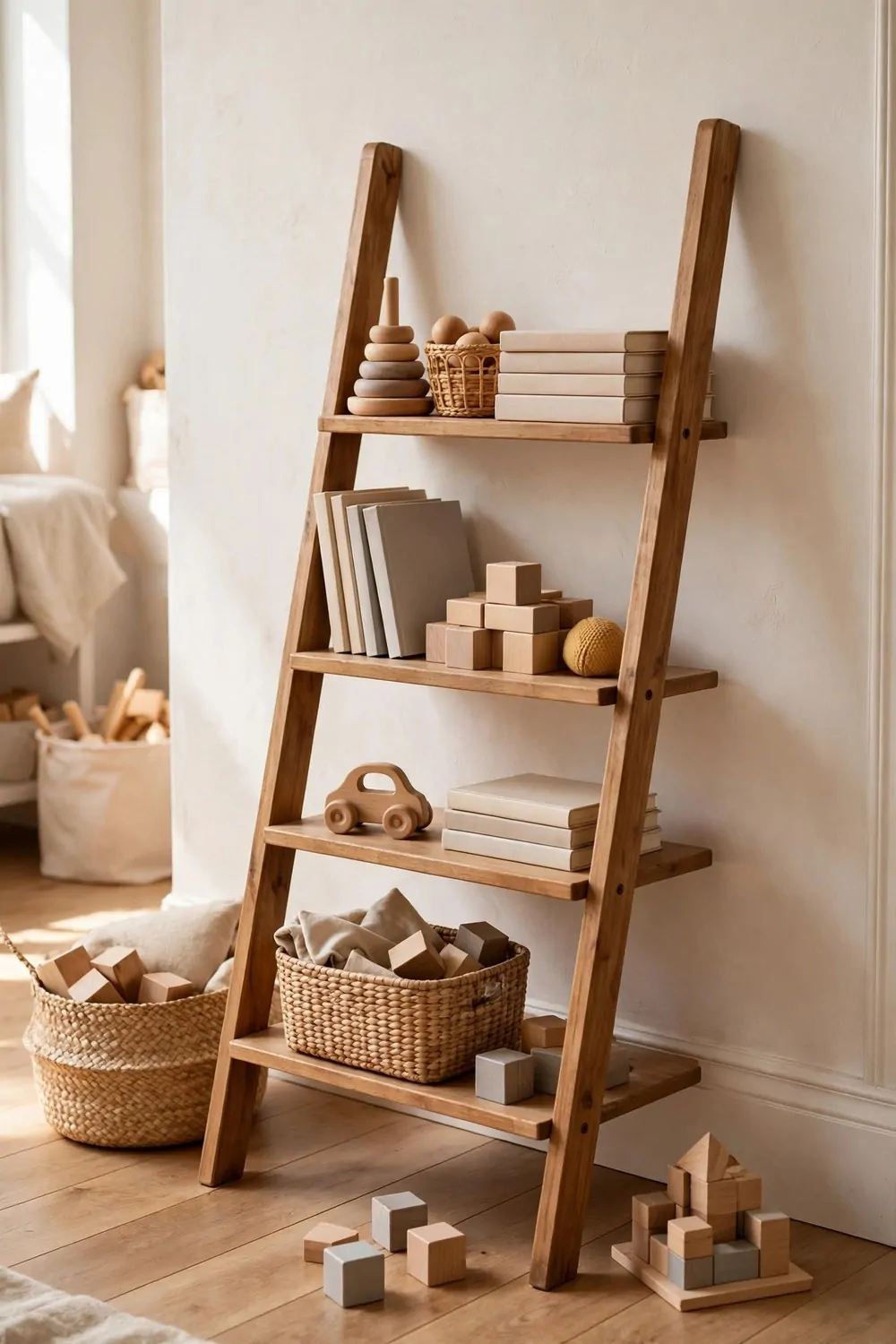
Ladder shelves look so pretty in a playroom. They lean against the wall and the shelves get deeper toward the bottom.
You can put books on the narrow top shelves. The wide bottom shelf is perfect for big baskets of toys.
I like how open they feel compared to a big closed unit.
Make sure the ladder shelf is fixed to the wall at the top. Kids climb on things, and you want it to stay put.
You can mix toys, books, and a few pretty things on the shelves. It makes the playroom feel warm and lived in. I move things around when I feel like a small change.
Keep the heaviest things on the bottom shelf. That keeps the whole unit steady and safe.
I use our ladder shelf for soft toys and picture books.
My child can reach the bottom two shelves on their own, and I keep the top shelf for things I want to stay nice.
Typical cost for a ladder shelf is about 50 to 120 dollars. Wooden ones tend to last longer than the very cheap ones.
18. A Reading Nook Shelf
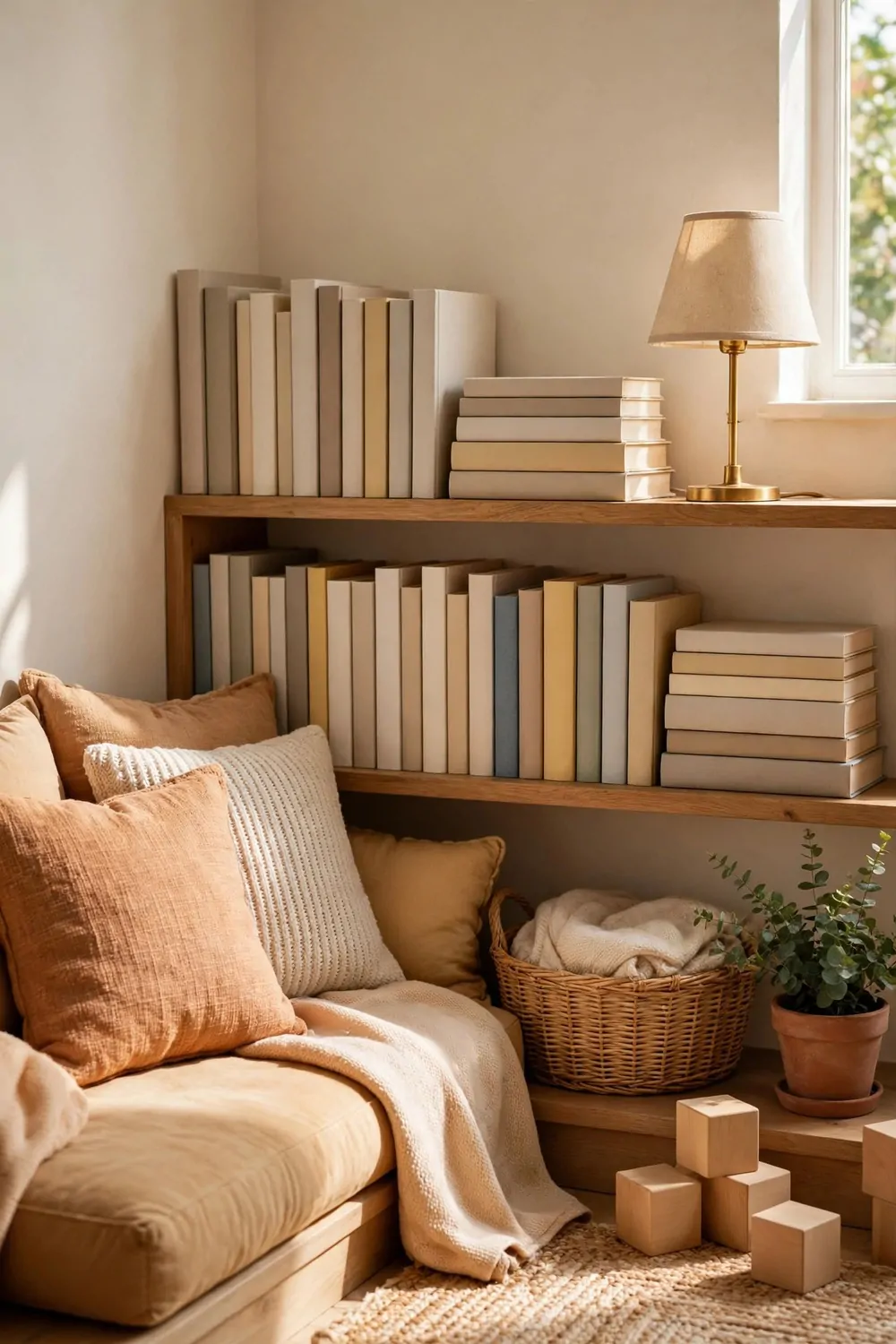
A reading nook needs books close by. A small shelf right next to the cosy corner makes reading time so easy.
You can use a low forward-facing shelf so your child sees the book covers. Kids pick books by the cover, just like we do.
It makes them want to read more.
Put a soft cushion and a blanket in the nook. My child curls up there with a book and stays quiet for ages. It is my favourite corner of the whole house.
You can rotate the books on the shelf every week. Fresh books keep the nook exciting.
Keep the shelf low and full, but not stuffed. If it is too full, books fall out every time your child pulls one out.
I add a small basket next to the shelf for the books we are reading right now.
It stops them from ending up under the sofa or in another room.
Typical cost for a small forward-facing book shelf is about 25 to 60 dollars. You can also use a simple low shelf and lean the books forward.
19. Shelves Above the Play Table
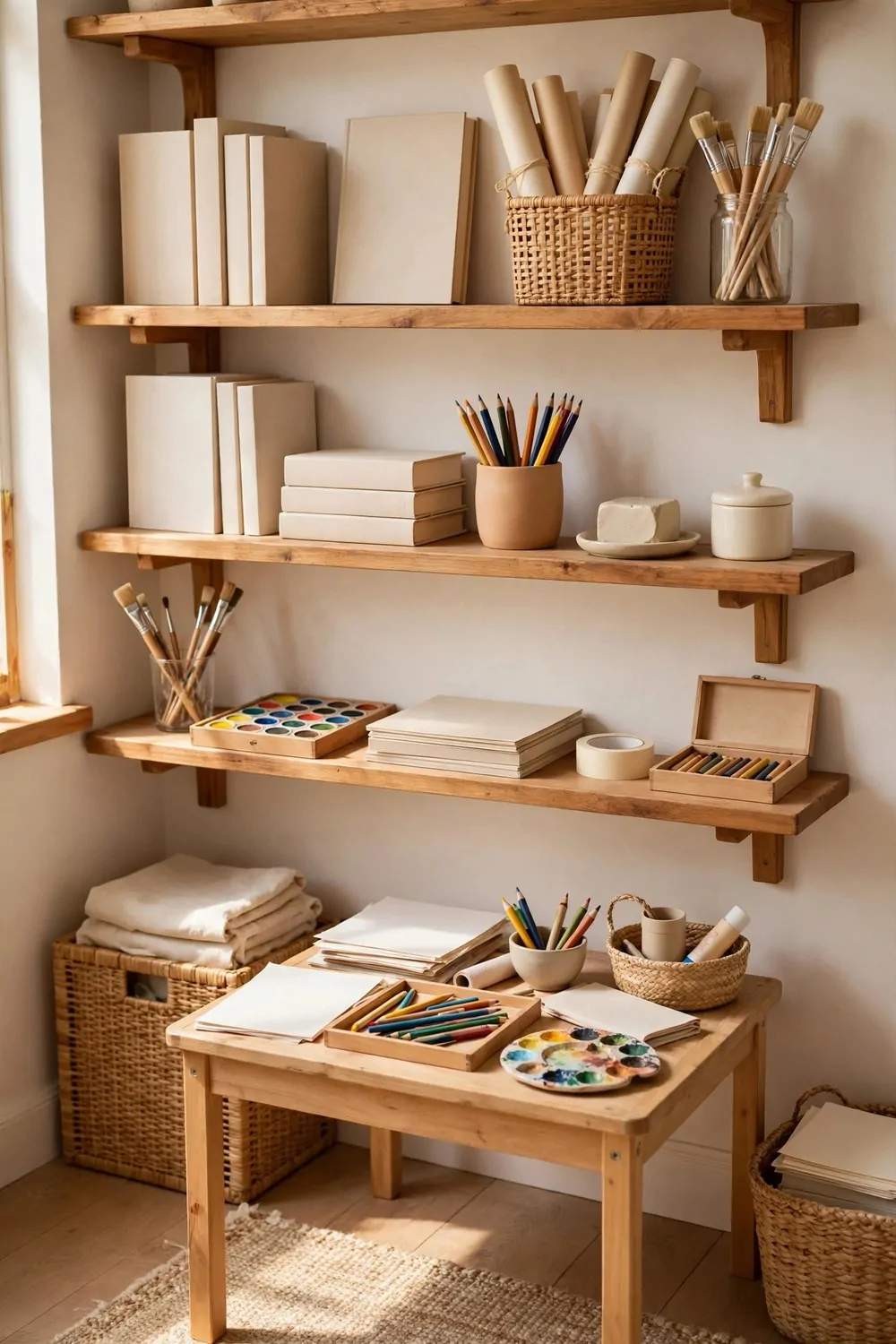
The wall above the play table is perfect for shelves. Everything your child needs stays right within reach.
You can put paper, crayons, and glue on the lower shelf. The higher shelf is good for things you want to hand down yourself.
I keep the scissors and paint up high.
Use small jars or cups on the shelves for pencils and brushes. My child can see what is in each one and grab it fast. We wash the jars out together when they get messy.
You can add a little rail under the shelf for hanging aprons or bags. It keeps the table clear for actual play.
Make sure the shelves are not too deep or they will bump heads. Shallow shelves work best above a table.
I love how much floor space this idea saves.
Everything is up on the wall instead of piled on the table or the floor.
Typical cost for two shelves above a play table is about 20 to 50 dollars. Simple wooden shelves are all you need.
20. A Cubby Shelf for Each Child
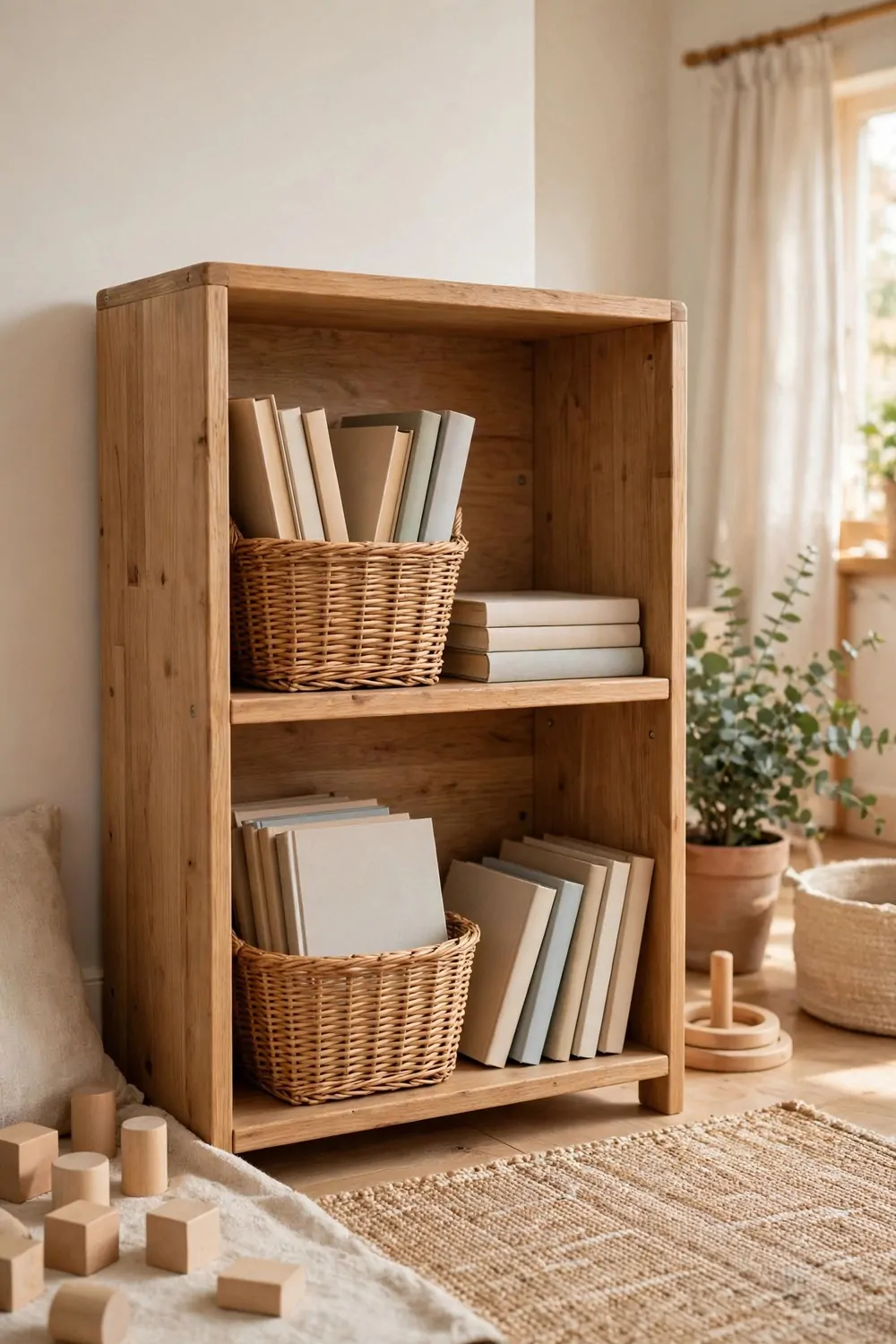
When kids share a playroom, things get mixed up fast. A cubby shelf for each child gives everyone their own space.
You can label each cubby with your child’s name. My kids love seeing their own name on their own shelf.
It stops so many little arguments.
Let each child choose what goes in their cubby. One might fill it with books and the other with building blocks. That is fine, because the cubby belongs to them.
You can use different coloured baskets for each child. It makes it easy to tell whose things are whose at a glance.
Keep the cubbies the same size so nobody feels left out. Fair matters a lot when kids share a room.
I ask my kids to tidy their own cubby before dinner.
It only takes a few minutes because each child only has one small space to sort out.
Typical cost for a cubby shelf unit is about 60 to 150 dollars. You can find units with two, three, or four cubbies to fit your family.
21. A Toy Rotation Shelf
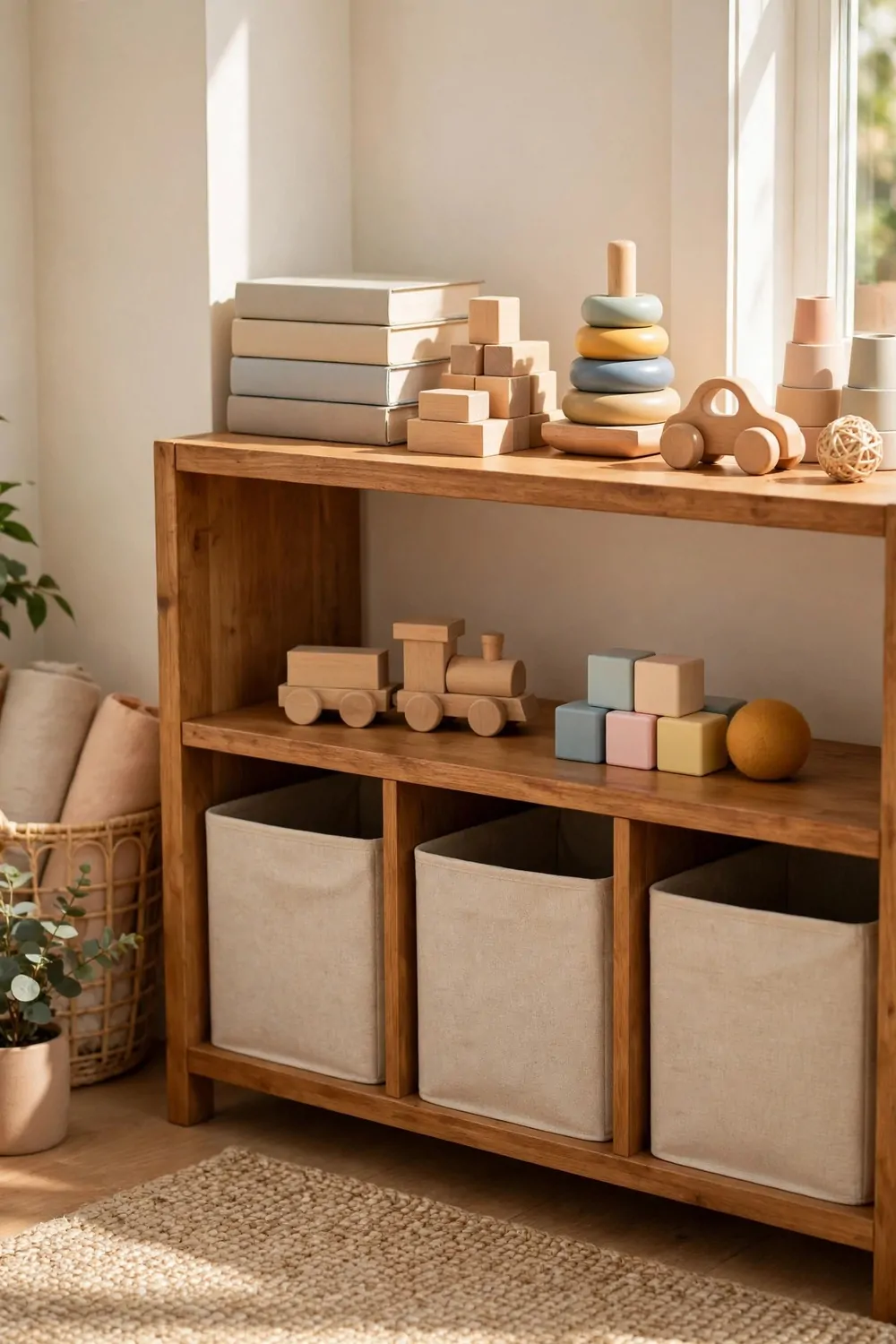
I keep some toys on a shelf and some toys in a box in the closet.
Every week I swap a few toys. The old toys go back in the box and the box toys come out on the shelf. My kids run to the shelf like it is full of new toys.
It is a small trick but it works so well.
I pick one shelf just for this job. It sits low so my kids can reach it on their own. I do not pile it high. Five or six toys are enough.
I choose toys they have not touched in a while. A puzzle they forgot. A truck they left alone for weeks. A game they once loved. When it comes back on the shelf, it feels brand new again.
I let my kids help me pick what goes on the shelf. They point at a toy and I put it out. They feel proud because they chose it. That little bit of choice makes them play with it longer.
I keep the swap day the same each week. Sunday works best for us. It takes me about ten minutes. I grab the box, I pick a few toys, and I put the old ones away.
Do not feel bad about toys sitting in the box. They are not wasted. They are just waiting for their turn. And when their turn comes, your kids will love them all over again.
Try it for one month. Watch how your kids play. I think you will see less mess and more fun on that one little shelf.
22. High Shelves for Grown-Up Stuff
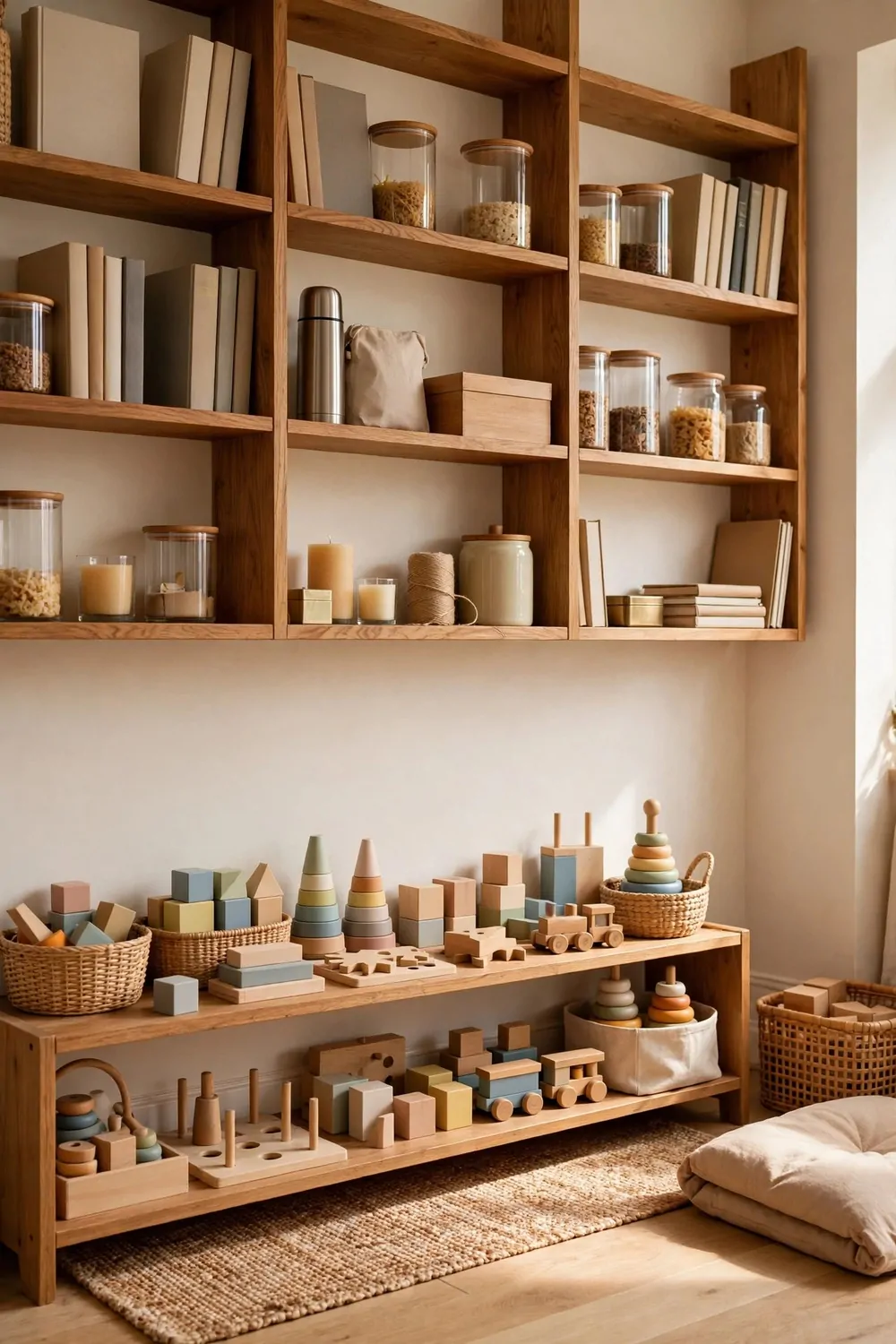
Some things in a playroom are not for little hands.
Paints, glue, small craft bits, and my own books live on high shelves in our playroom. The kids can see them but they cannot reach them. That keeps everyone safe and keeps my stuff in one piece.
I put these shelves up high on the wall, above my own head height.
I keep the grown-up shelf neat and simple. A few jars for paint brushes. A box for glue sticks and tape. A stack of my books on one end. Nothing fancy, just easy to find when I need it.
My kids know the rule. If it is on the high shelf, they ask me first. I like that rule a lot. It teaches them to ask before they touch things that are not theirs.
I use strong brackets and I check them now and then. A high shelf must hold its weight. I never put heavy things up there. Light boxes and jars are best.
One shelf holds my craft supplies for projects we do together. When it is craft time, I take the box down and we work at the table. When we finish, it goes right back up. That keeps paint off the floor.
You can use the high shelf for your own bits too. A phone charger. A notebook. A small plant that adds a bit of green. The playroom is for the kids, but a small corner can still be yours.
Put the shelf where you can reach it without a chair if you can. You will use it more that way. And your kids will learn that some shelves are for grown-ups, and that is just fine.
23. A Shelf for Board Games
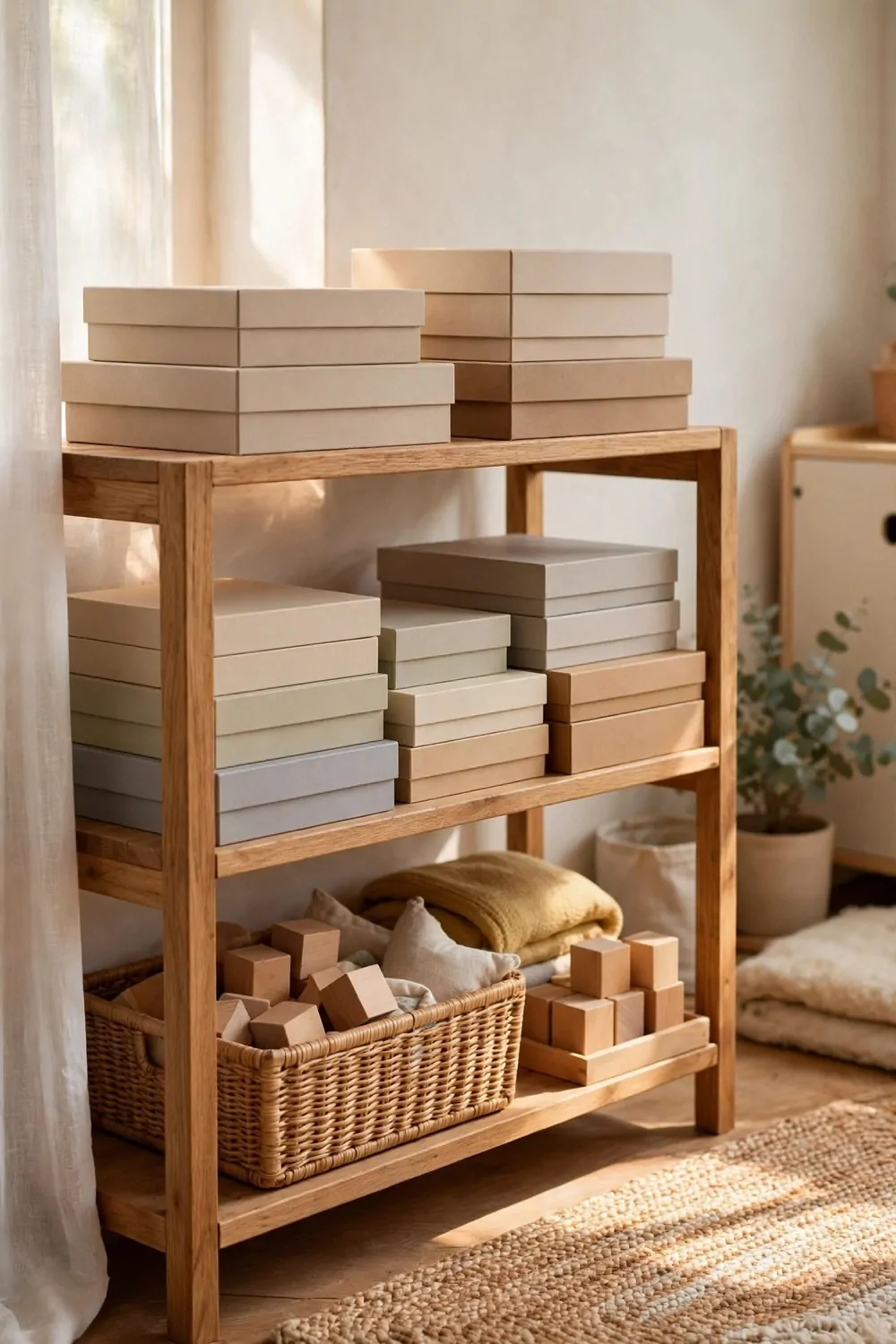
Board games pile up fast in our house.
We had boxes stacked on the floor and boxes leaning on each other. One box always fell over and the pieces went everywhere. So I gave the games their own shelf.
A game shelf keeps every box in one place.
I sort the games by how often we play them. The ones we play every week go on the easy shelf at kid height. The ones we play once in a while go up higher. My kids can grab a game on their own now.
I keep the boxes standing up like books. The titles face out so we can read them fast. It looks tidy and it makes game night start in seconds.
| Game Shelf Type | Typical cost | Good for |
|---|---|---|
| Low open shelf for game boxes | $30 to $80 | Easy reach for young kids |
| Shelf with dividers for game boxes | $60 to $150 | Keeping tall boxes upright |
| Tall shelf with game boxes and puzzles | $90 to $200 | Big game collections |
A low open shelf for game boxes costs $30 to $80. A shelf with dividers for game boxes costs $60 to $150. A tall shelf with game boxes and puzzles costs $90 to $200.
I like a shelf with dividers best for our games. The dividers stop the boxes from sliding over. Each game gets its own little slot. My kids put the box back in its own slot after we play.
I put small games and card games in a basket on the shelf. Loose packs get lost so fast. One basket holds them all. My kids just pull the basket out and pick a game.
Keep the shelf near where you play. Ours sits right next to the rug. We sit down, we pick a box, and we play. When we finish, the box goes back on the shelf before we pick a snack. That one small rule keeps the games tidy.
24. Low Shelves for Blocks and Building Toys
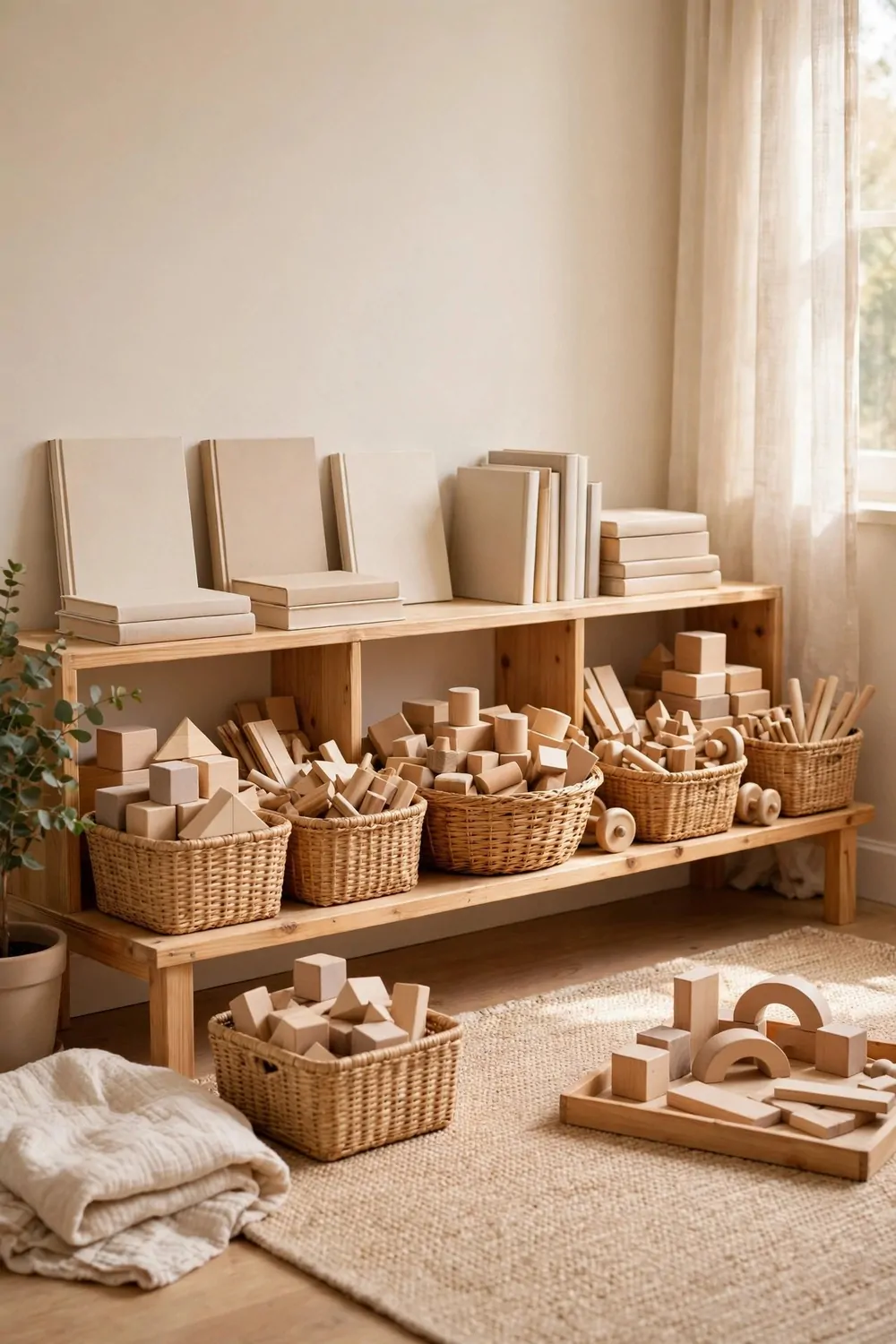
Blocks are the toys my kids reach for most.
They build towers, roads, houses, and whole little towns. But blocks all over the floor hurt when you step on them. I learned that the hard way more than once.
Low shelves fixed it for us.
I put two low shelves right at my kids’ knee height. They can sit on the floor and pull a box of blocks straight off the shelf. No climbing, no asking for help, no mess spread all over the room.
I sort the blocks by type. Wood blocks on one shelf. Big plastic bricks on the next. Small building sets in a tray on the third spot. My kids know where each kind lives.
I keep the shelves open with no doors. My kids can see the blocks and grab what they want. When the shelf is open, they play more. When toys hide behind doors, my kids forget they own them.
I leave a bit of empty space on each shelf. A full shelf looks messy and my kids shove things in any old way. A shelf with room to spare makes it easy to put blocks back in the right spot.
We build right on the floor in front of the shelves. The blocks come off the shelf and the tower goes up in front of it. When play time ends, the blocks go back in their box on the shelf. It takes my kids about five minutes.
Try a low shelf for your blocks this week. Your feet will thank you. And your kids will build more when their blocks are easy to reach.
25. A Shelf with Clear Boxes
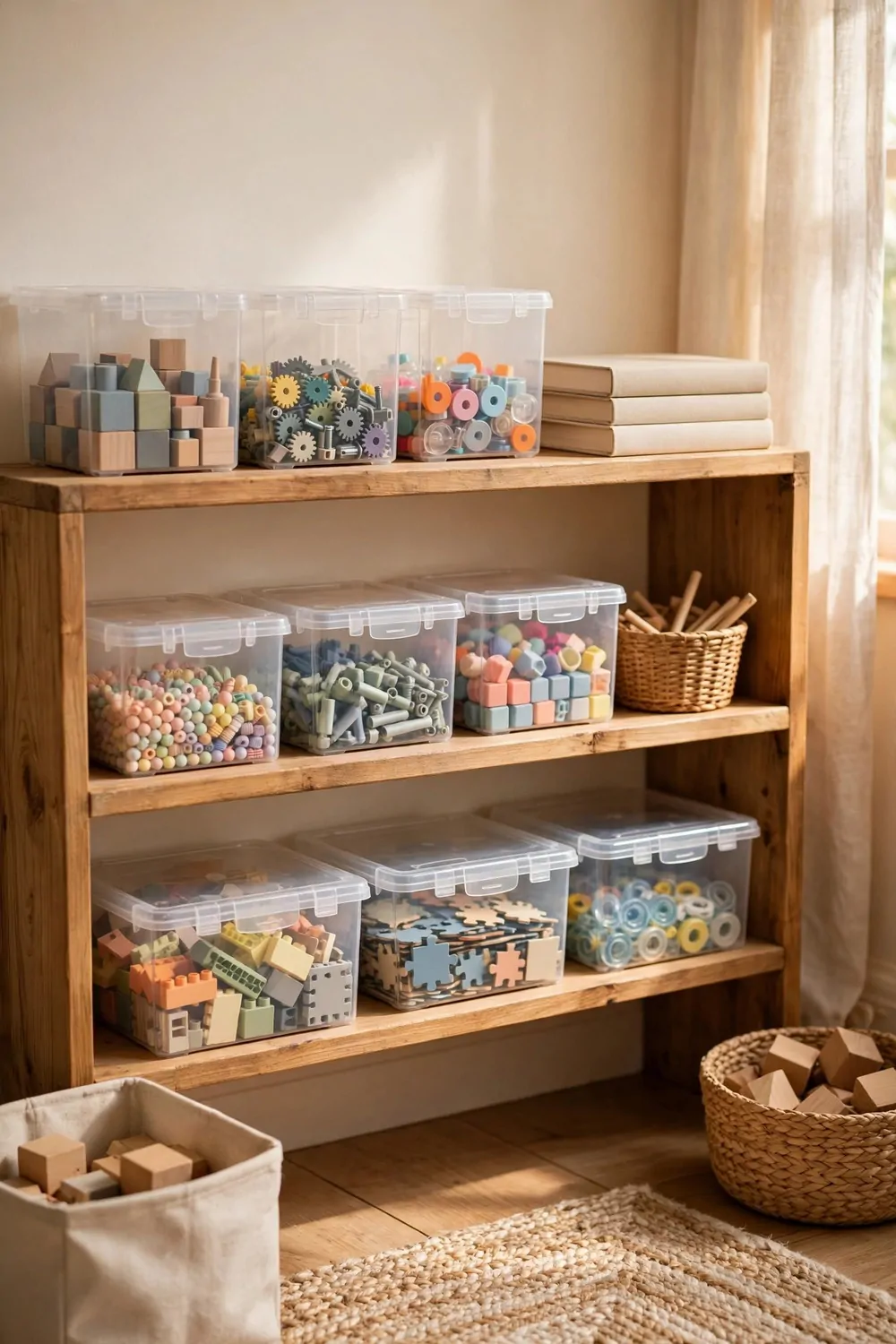
I love clear boxes on shelves.
My kids can see what is inside without opening every box. That means less mess. They pick the box they want and leave the rest alone.
Clear boxes work for so many little things.
I use one box for crayons and markers. One box for small figures. One box for craft bits like beads and buttons. Each box sits on the shelf where my kids can see it and reach it.
I label each box with a simple picture. A crayon drawn on a sticker. A little star for the craft bits. My youngest cannot read yet, but she knows the pictures. She finds her own things now.
I pick boxes with lids that snap shut. Open boxes spill when they tip over. A lid keeps the small bits safe. My kids learn to snap the lid back on before the box goes on the shelf.
Do not buy huge boxes for small toys. A big box with a few small toys inside looks empty and things slide around. A small box that fits its toys just right works much better.
I stack two boxes on one shelf spot when the shelf is tall enough. It saves space and it looks neat. I keep the heavy box on the bottom and the light box on top.
Clear boxes make clean-up a game for us. I say, “Can you find the box for the markers?” My kids run to the shelf and point at it. Seeing what is inside makes tidying up so much easier.
26. Wall Shelves for Soft Toys
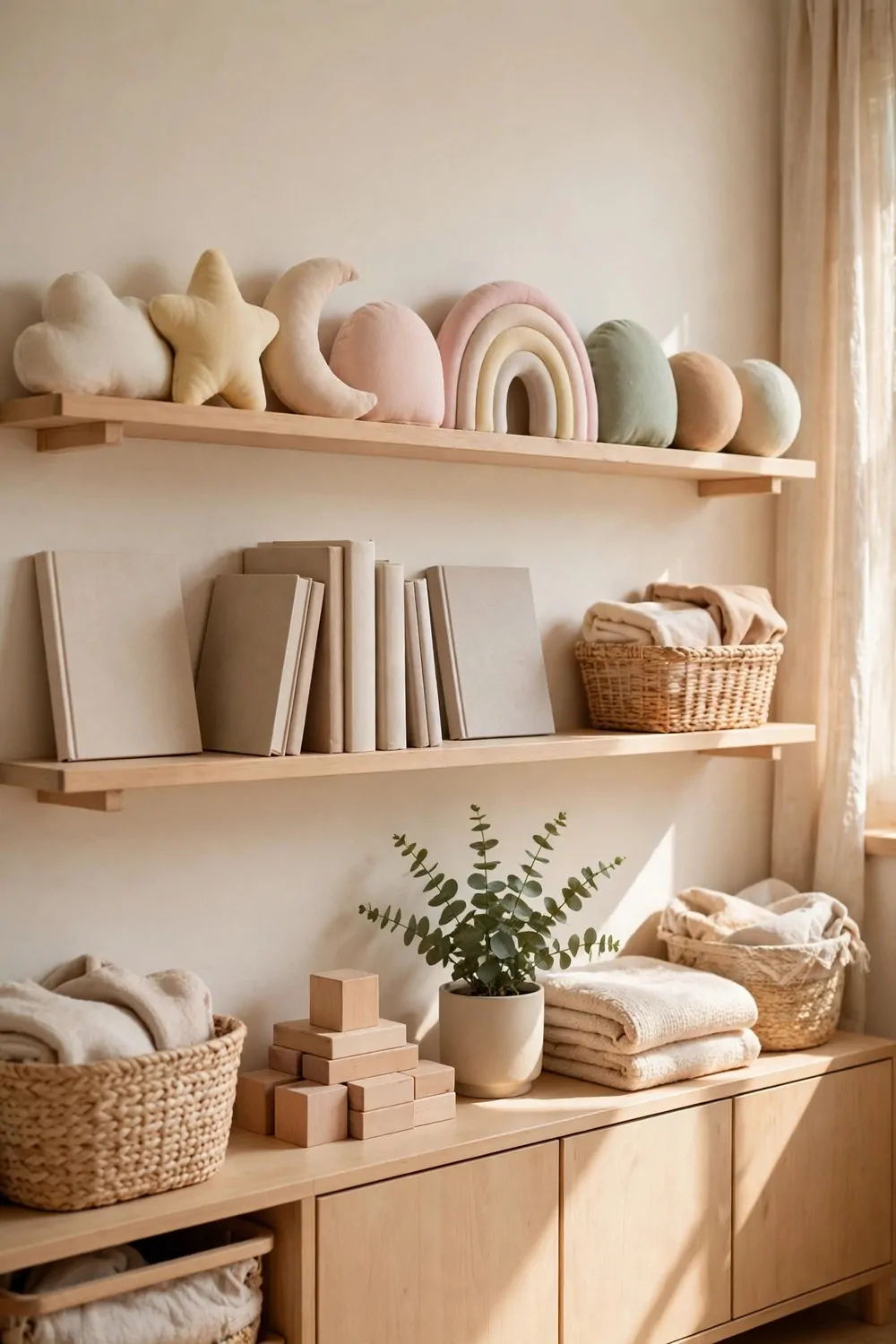
Soft toys take over a playroom fast.
We had bears and bunnies on the floor, on the chairs, and under the table. I love them, but they were everywhere. Wall shelves gave them a home.
I put two long wall shelves up at my kids’ eye level.
Each soft toy gets its own spot on the shelf. My kids line them up like a little shop. They pick one to play with and the rest stay on the shelf, sitting neat in a row.
I keep the shelves low enough for my kids to reach. If the shelf is too high, the soft toys just sit there and never get played with. My kids need to grab their favourite bear on their own.
I use shelves with a small lip on the front edge. The lip stops the toys from sliding off. Soft toys are round and wobbly, so that little edge helps a lot.
We rotate the soft toys now and then, just like the toy shelf. A few go in a bag in the closet for a while. When they come back out, my kids hug them like old friends. It keeps the shelf from getting too full.
I let my kids arrange the shelf their own way. Tall toys at one end, small ones at the other. Sometimes they line them up by size. Sometimes they just put their favourites in front. It is their shelf, so their rules work.
Soft toys on a wall shelf look sweet too. The room feels cosy and the floor stays clear for play. Try one shelf first and see how it goes. You might want a second one soon.
27. A Shelf with a Small Lamp for Evening Play
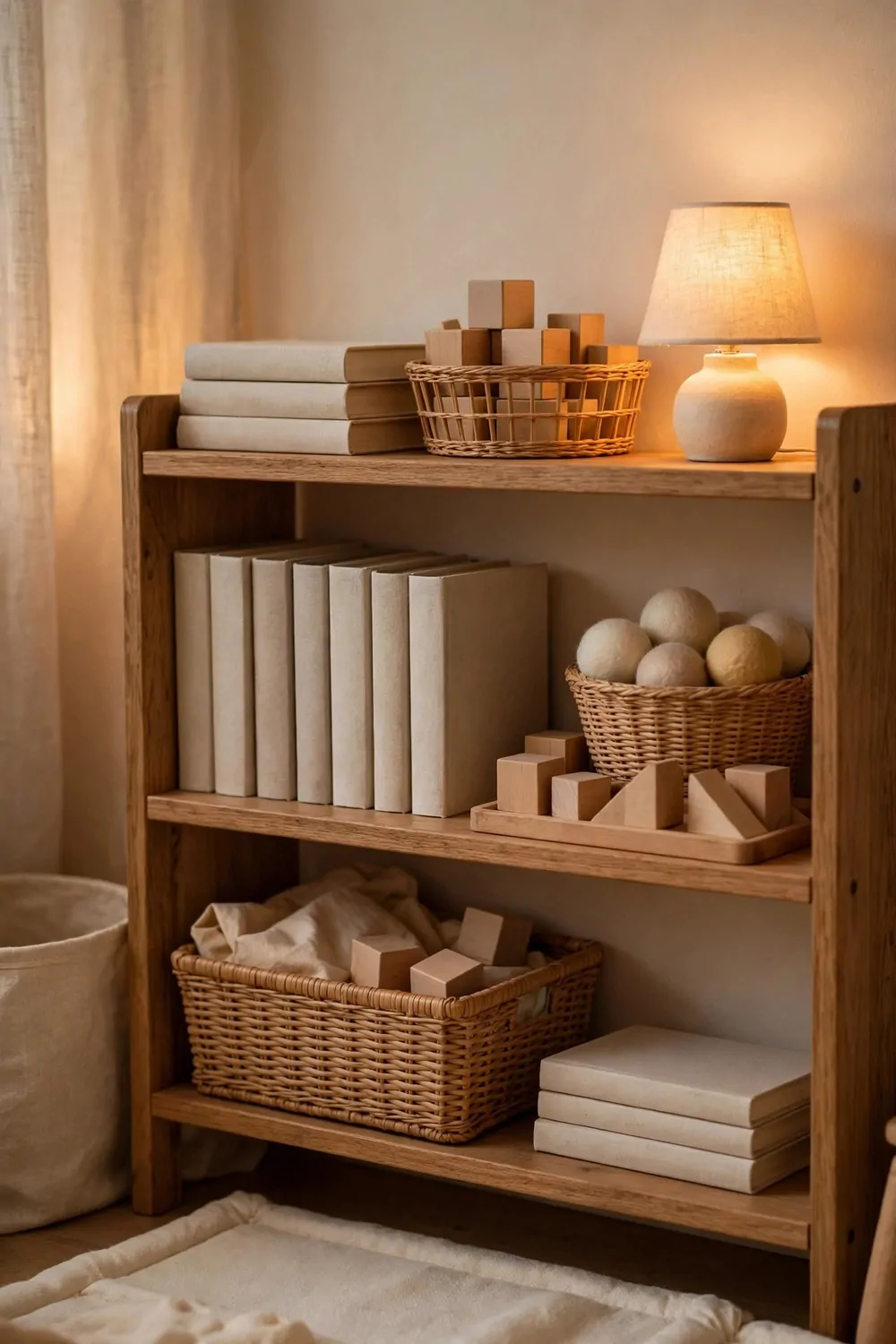
Evenings in the playroom feel different with a little lamp.
The big ceiling light feels too bright when the day winds down. A small lamp on a shelf gives a soft warm glow. My kids calm down a bit and play more gently.
I put a small lamp on a sturdy shelf near the reading corner.
The shelf sits low enough that my kids can switch the lamp on by themselves. They love that job. It makes the evening feel special, like the room is theirs for quiet play.
I pick a lamp with a warm bulb, not a harsh white one. Warm light feels cosy. I also pick a lamp that stays cool to touch. Little hands will touch it, so safety comes first for me.
I keep a few quiet toys on that shelf too. A couple of books. A soft toy. A small puzzle. When the lamp is on, my kids know it is quiet play time. No loud games, no running around.
The lamp cord stays tucked behind the shelf where little hands cannot pull it. I check it often. A cord hanging loose is not safe in a playroom, so I keep it neat and out of reach.
We read one book under that lamp most nights. My kids pick the book, I sit on the floor, and we read together. That little shelf with its lamp has become our favourite spot in the whole room.
Try a lamp on a shelf this week. It costs little and it changes the feel of the room. Evening play gets calmer, and bedtime gets a little easier too.
28. A Shared Shelf for Two Kids
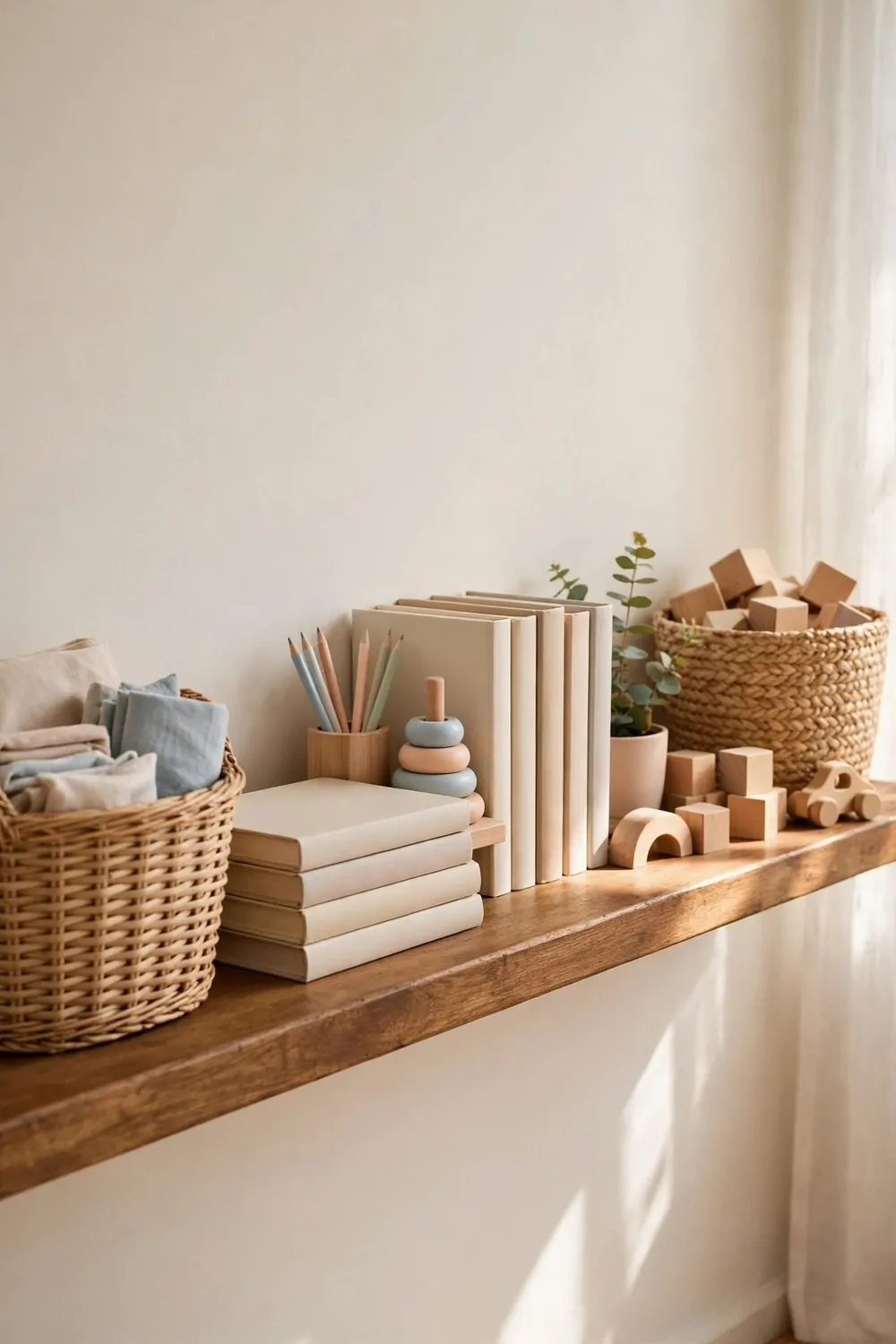
Two kids sharing one playroom need a shelf they both own.
My kids each have their own shelf for their own toys. But they also share one shelf in the middle. That shelf holds the toys they play with together.
A shared shelf teaches them to take turns.
I put the shared toys on that middle shelf. The big puzzle they build together. The board game they both love. The building set they share. When a toy is on the shared shelf, it belongs to both of them.
I let both kids help me set the shelf up. My son picks a toy to add. My daughter picks one too. They each put their toy on the shelf with pride. It feels fair because they both chose something.
We have one rule for the shared shelf. If you take a toy off it, you ask the other one first. It sounds simple, but it stops so many fights. My kids remind each other of the rule now.
I keep the shelf at a height both kids can reach. My youngest is small, so the shelf sits low. If one kid cannot reach it, it is not really shared. Both kids need to grab things on their own.
Sometimes they argue about what goes on the shelf. That is normal. I let them talk it out for a bit. Most of the time they work it out and pick something they both like.
A shared shelf will not fix every fight. But it gives your kids one place that is truly theirs together. Try it and watch how they play. You might see more sharing and less fuss.
29. A Weekly Shelf Tidy-Up Routine
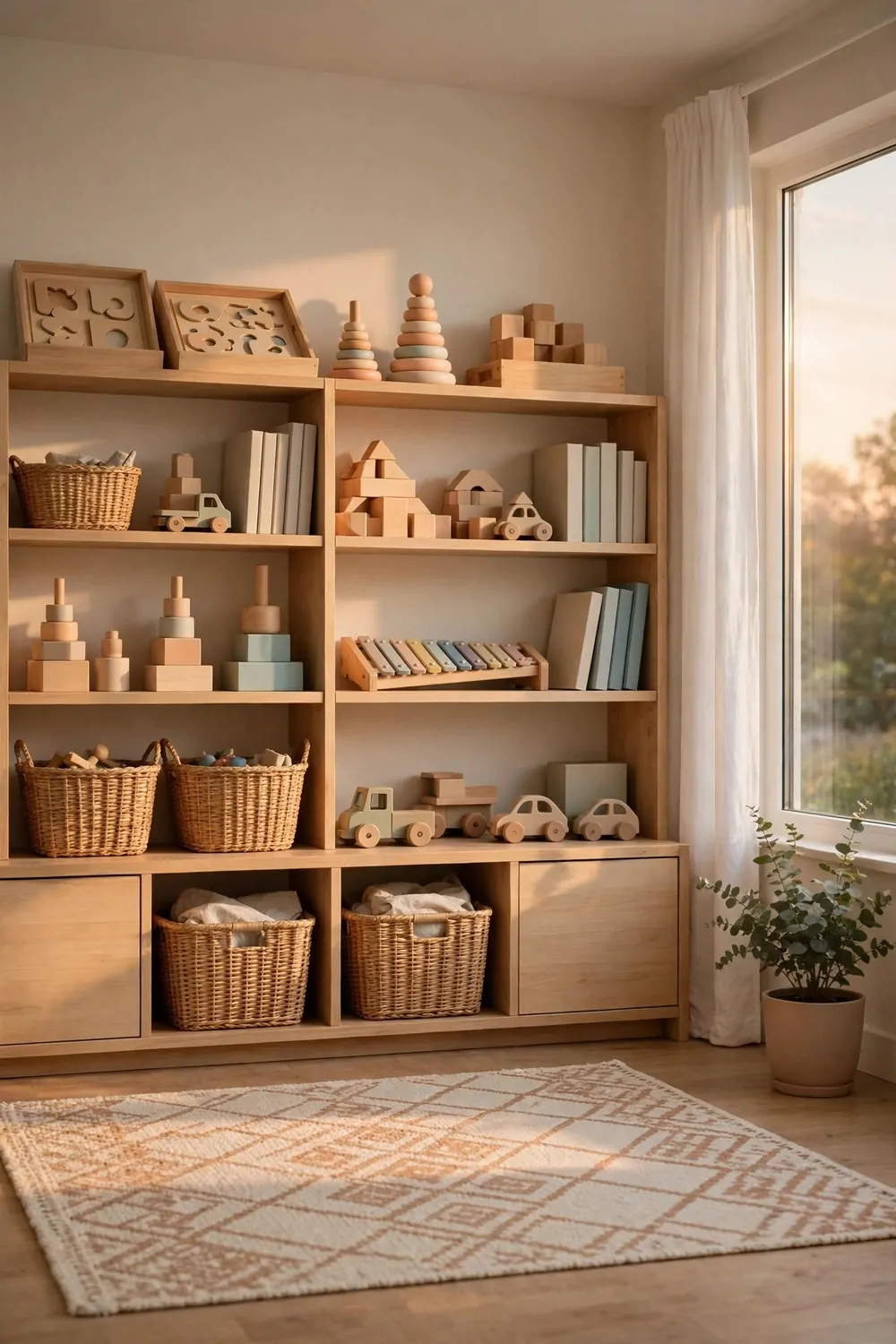
Shelves get messy fast when kids play every day.
Toys move around, boxes end up in the wrong spot, and books lean the wrong way. I used to tidy it all myself every night. Then I made a weekly routine and my kids help now.
We tidy the shelves once a week, on the same day.
Saturday morning works for us. I set a timer for fifteen minutes. We all work together and we make it fun. I put on music and we race the timer.
Each kid gets one shelf to tidy. My son takes the block shelf. My daughter takes the soft toy shelf. I take the top shelf they cannot reach. We each own our job.
We follow three simple steps. First, we take everything off the shelf. Second, we wipe the shelf with a damp cloth. Third, we put things back in the right spot. It sounds like a lot, but it goes fast when we all help.
I keep a small basket nearby for bits that belong somewhere else. A stray sock, a puzzle piece from another room, a toy that lives in the bedroom. We drop those in the basket and put them away after.
We end the tidy-up with a small treat. A sticker each. A story under the lamp. Something little that says well done. My kids look forward to it now, which still surprises me a bit.
Try one weekly tidy-up this Saturday. Fifteen minutes, music on, everyone helps. Your shelves will look fresh again, and your kids will start to care for their own space.
Keep Reading
If you liked these ideas, you will love these posts too.
- 26 Shared Kids Bedroom Ideas That Give Everyone Space
- 21 Kids Desk Ideas for Homework and Play
- 30 Kids Bookshelf Ideas That Make Reading Easy and Fun
- 23 Kids Closet Organization Ideas That Make Mornings Easy
- 27 Playroom Organization Ideas That Keep Toys in Check
- 34 Toy Storage Ideas That Make Clean-Up Fast and Fun
Pick one idea from this list and try it this week. A small change on the shelves can make playtime calmer and clean-up faster for everyone.