21 Kids Desk Ideas for Homework and Play

I walked into my child’s room one evening and saw homework spread all over the bed.
Papers were on the pillow. Pencils were under a blanket.
I thought, we need a real spot for this.
Not a big fancy desk. Just a small place where homework can live and play stuff can wait its turn.
That night I started to look at simple desk ideas that work for kids.
I wanted ideas that are easy to set up, easy to keep tidy, and fun enough that my child actually wants to sit down. I also wanted ideas that fit a small room and a normal budget.
I put all 21 ideas in this one post for you, so you can read them here and pick what fits your home, with no part split and nothing saved for later.
1. A Small Desk in the Corner
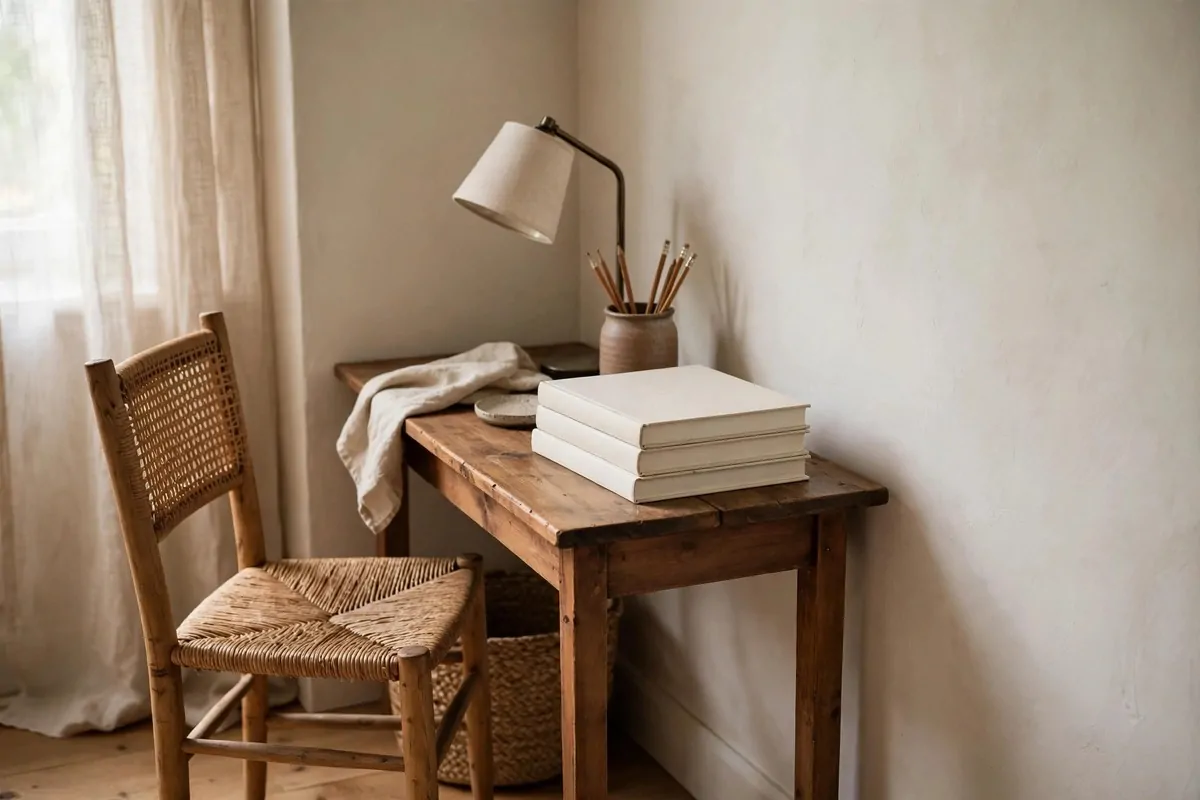
A corner can feel empty and a bit lost in a kids room.
I put a small desk right in that corner and it changed the whole room. It gave homework a home and it left the middle of the floor free for play.
You do not need a big desk for this to work.
A small desk with space for a notebook, a pencil cup, and a lamp is enough for most school work. My child can sit, open a book, and start without moving a pile of stuff first.
I like that a corner desk feels cosy and safe.
Two walls close in around it, so my child feels tucked in and less distracted. It is a bit like a small nest for thinking and drawing.
Pick a desk that fits the corner without sticking out too far.
Leave a little space on one side for a chair to slide in and out with ease. If the chair bumps the bed or the door, the corner will feel tight and my child will not want to use it.
Try it for a week and see how it feels, and move a small shelf or a lamp if the light is not right.
2. A Desk at the Right Height
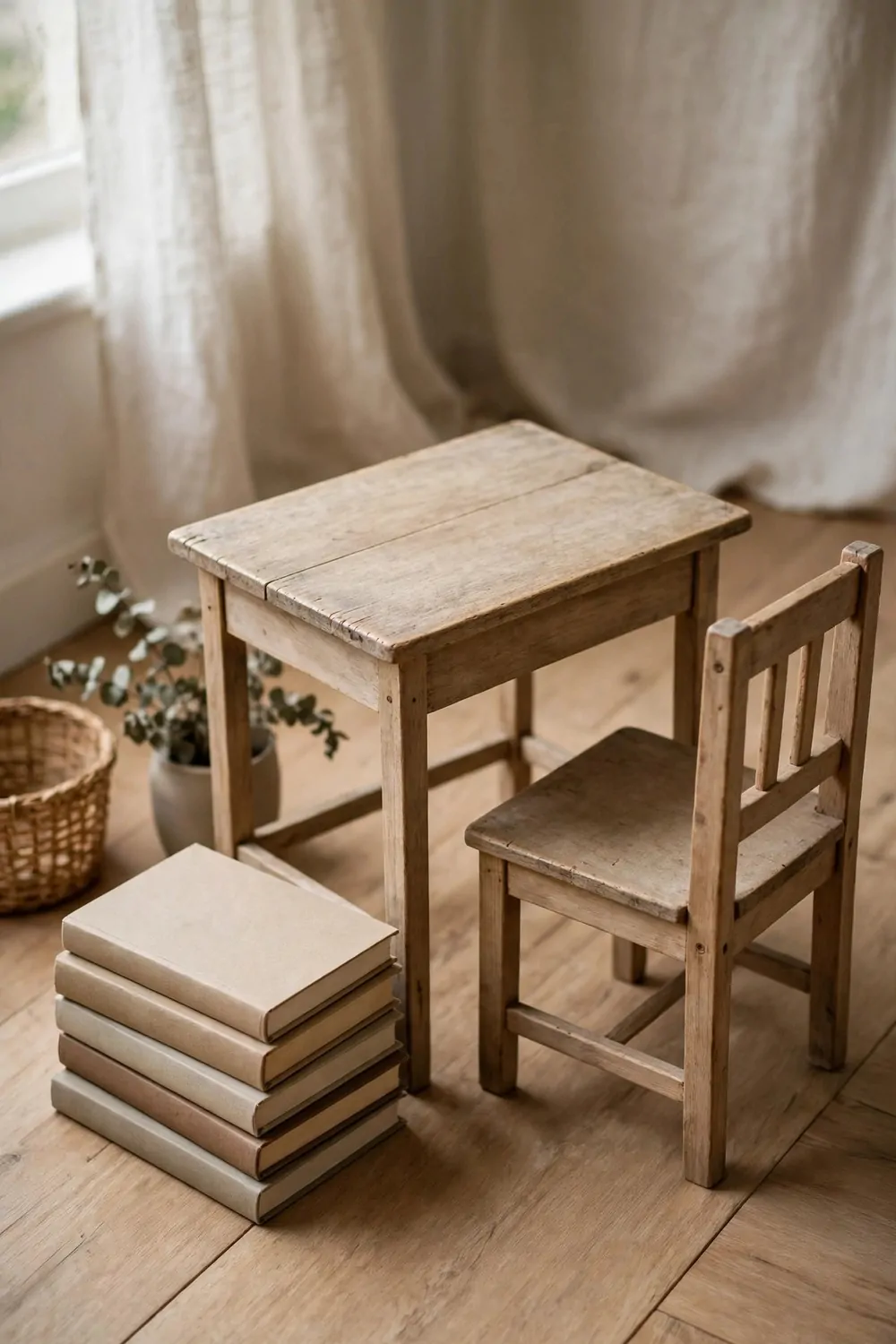
A desk that is too tall makes a child hunch up their shoulders.
A desk that is too low makes them bend over their work. Both feel bad after ten minutes, and homework starts to feel like a chore.
I learned to check the height before I bought anything.
When my child sits down, their feet should touch the floor. Their elbows should rest near the desk top without reaching up or dropping down low.
If the feet dangle, I add a small footrest or a low stool under the desk.
| Desk type | Typical cost | Good for |
|---|---|---|
| Small fixed desk | $40 to $90 | One child, small room |
| Adjustable height desk | $90 to $180 | Growing child, long use |
| Desk riser or booster | $25 to $60 | Fixing a desk that is too low |
A small fixed desk is a simple choice and it often costs $40 to $90, which is fair for a first desk.
An adjustable height desk costs more, often $90 to $180, but it can grow with your child for a few years.
A desk riser or booster is the cheapest fix if your desk is too low, often $25 to $60, and it can lift the work up to a better height.
Check the height again every few months, because kids grow fast and a desk that fit in September can feel low by spring.
3. A Chair That Fits Your Child
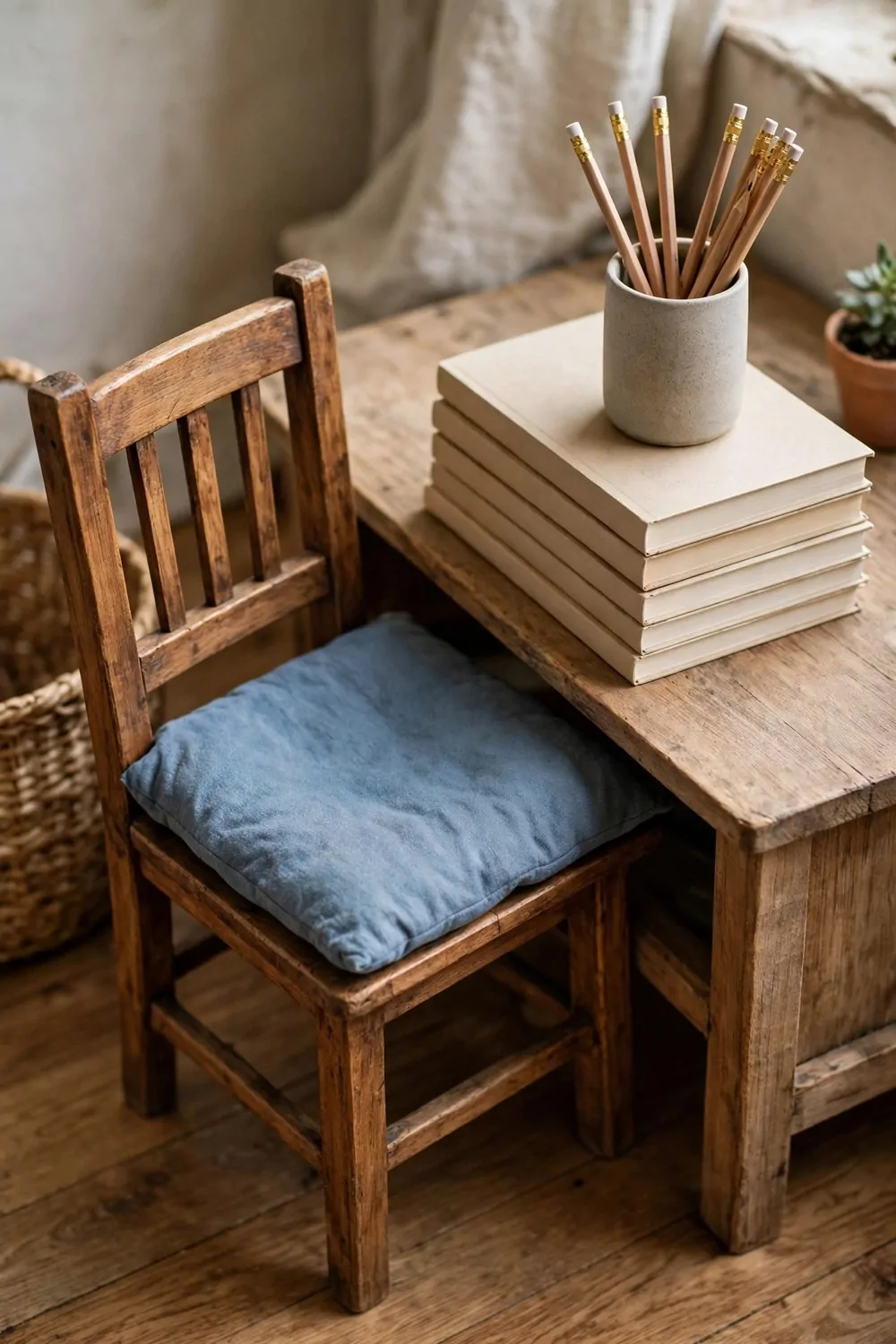
A good chair makes homework feel easy on the body.
I used to think any chair would do, but my child kept sliding down or sitting on one leg. A chair that fits helps them sit still and focus a bit longer.
Look for a chair where the feet touch the floor.
The knees should bend at a soft right angle, not stick up high or dangle down low. The back should touch the chair back without a big gap.
I like chairs with a flat seat and a short back.
They are simple and they do not tip over as much as a tall office chair. A chair with no wheels is often safer for a younger child too.
Let your child try the chair before you buy it if you can.
Ask them to sit, reach for a pencil, and open a notebook. If they wiggle a lot or climb up with effort, the chair is not the right size yet.
A small cushion can help a hard seat feel softer, and it is easy to wash when it gets messy.
4. A Pencil Cup on the Desk
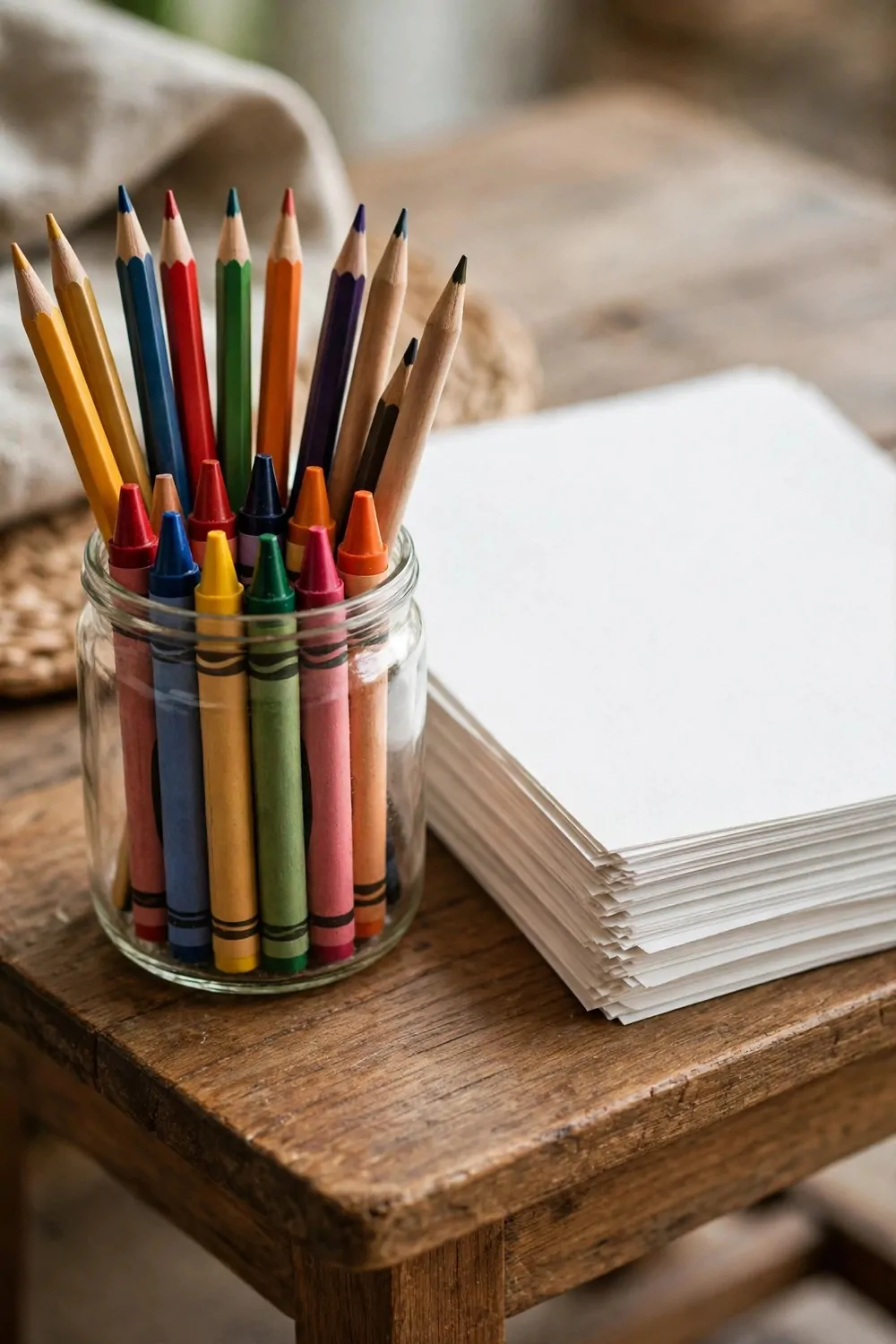
Pencils seem to vanish in a kids room.
I find them in drawers, under the bed, and in coat pockets. A pencil cup on the desk stops a lot of that hunting around.
I use a plain cup or a small jar for this.
It holds pencils, pens, a few crayons, and a ruler. My child can see what is there and grab it fast without opening five boxes.
Keep the cup near the writing hand, but not in the way.
If your child writes with the right hand, put the cup on the right side. If they write with the left hand, put it on the left side so the arm does not knock it over.
Do not fill the cup too full.
Ten pencils are easier to use than thirty pencils jammed in tight. When a pencil gets short or broken, I take it out and add a fresh one.
You can let your child pick the cup colour or add a small sticker, and that little choice makes them want to use it more.
5. A Desk Lamp for Dark Days
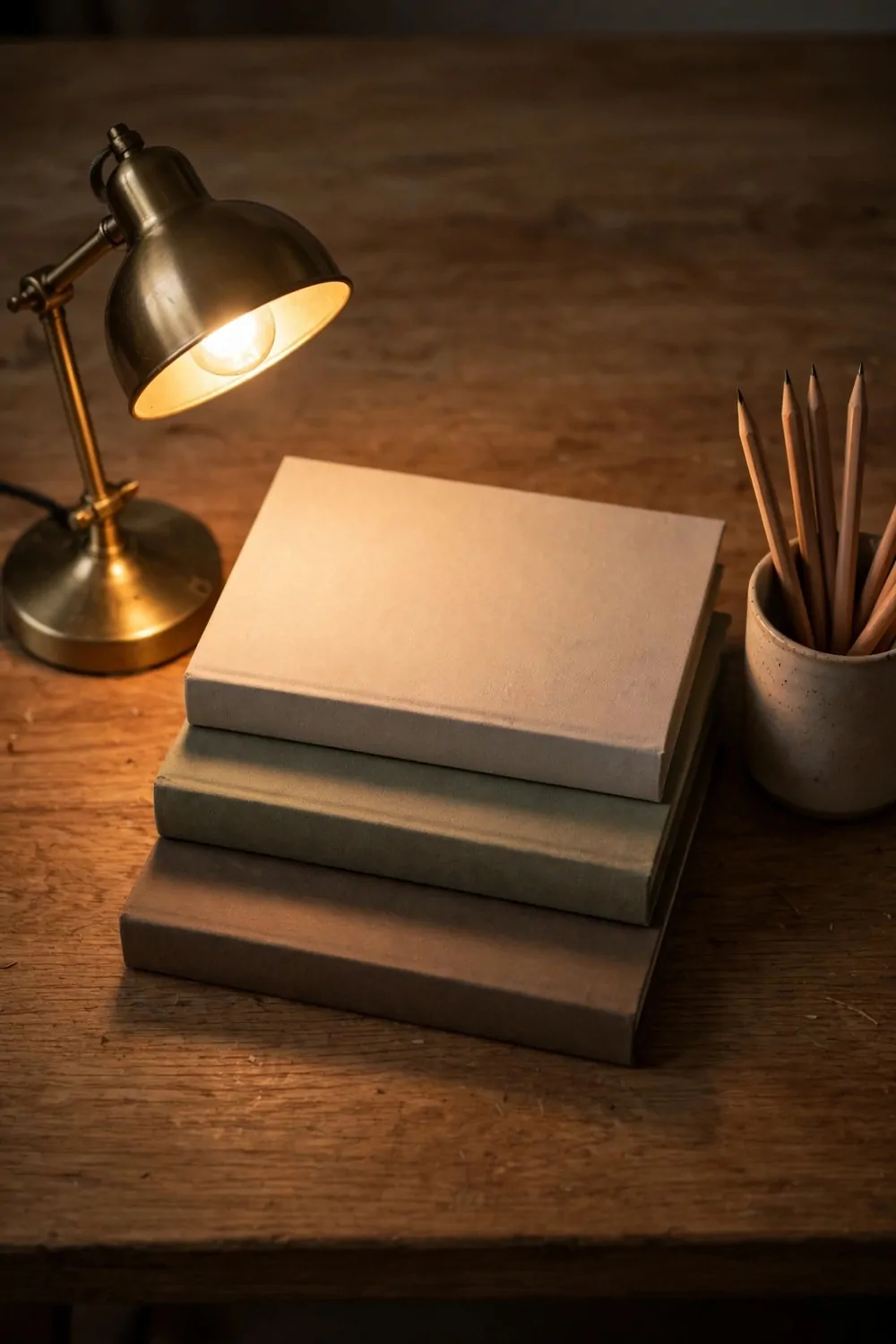
Some days are grey and the room feels dim by late afternoon.
My child would lean close to the page and squint, and then complain their eyes felt tired. A desk lamp fixed that in one day.
I pick a lamp with a warm, soft light.
It should light up the page without shining straight into my child’s eyes. A lamp with a bendy neck is best because I can aim it right where the book sits.
Put the lamp on the side away from the writing hand.
That way the hand does not cast a dark shadow over the words. For a right handed child, the lamp goes on the left, and for a left handed child, it goes on the right.
Check that the lamp base is heavy and steady.
A light lamp falls over with one bump, and then you have a mess to clean up. A steady base stays put even when my child reaches across the desk fast.
I turn the lamp on at the start of homework time, so it becomes a small signal that it is time to focus.
6. A Drawer for School Supplies
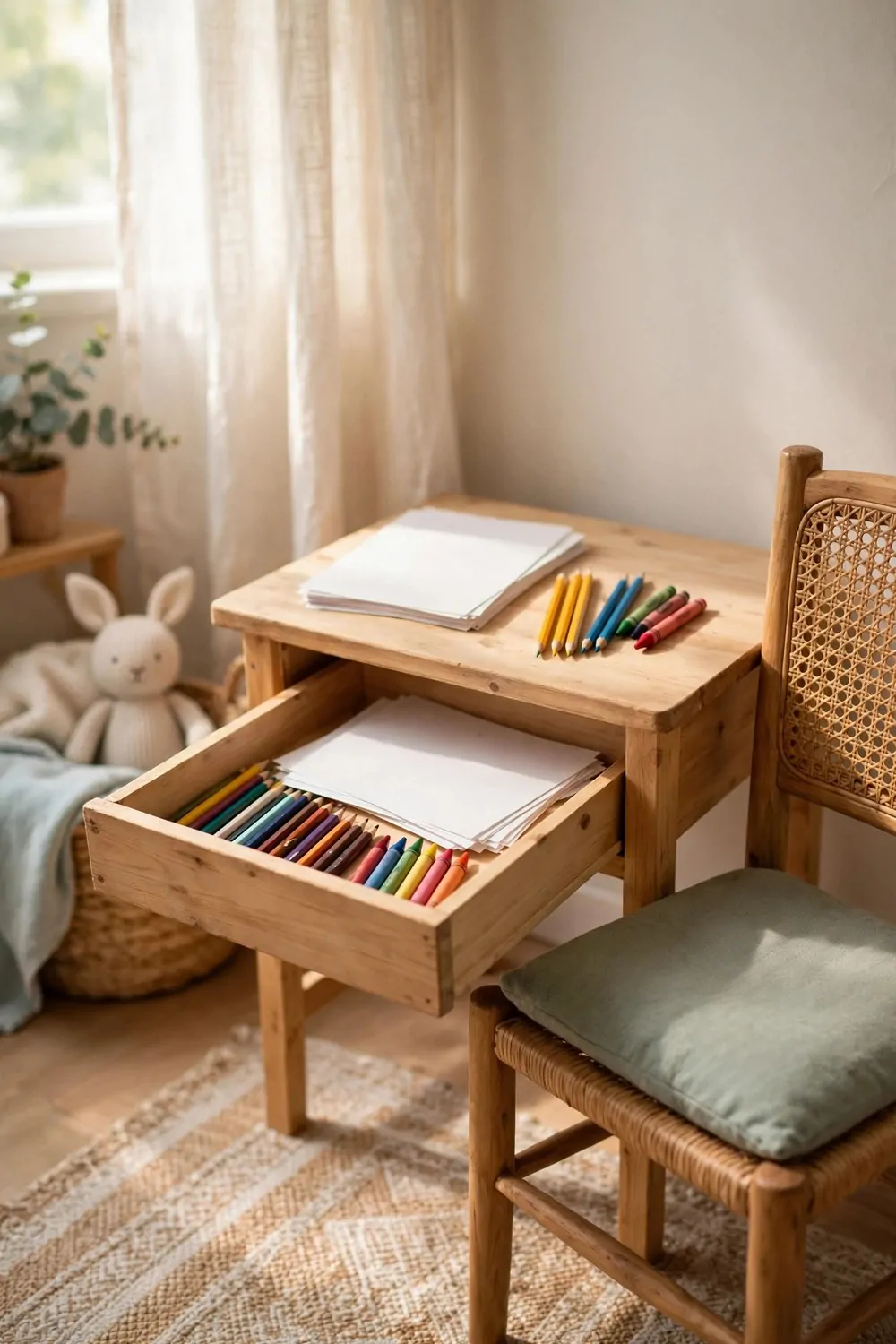
Loose supplies take over a desk in one day.
Erasers roll off, glue sticks hide, and scissors end up in the wrong room. One drawer gives all those bits a place to go.
I keep the drawer for school stuff only.
Pencils, erasers, glue, scissors, and a sharpener live there. Toys stay out, so the drawer does not turn into a toy box.
A small tray inside the drawer helps a lot.
I use one tray for pencils and pens, one small spot for erasers, and one spot for glue and tape. My child can open it and find what they need in seconds.
Clean the drawer once a week with your child.
Take everything out, toss the broken bits, and put back only what they use. It takes five minutes and it keeps the desk from getting messy again.
If the desk has no drawer, a small box with a lid works just as well.
7. A Wall Shelf Above the Desk
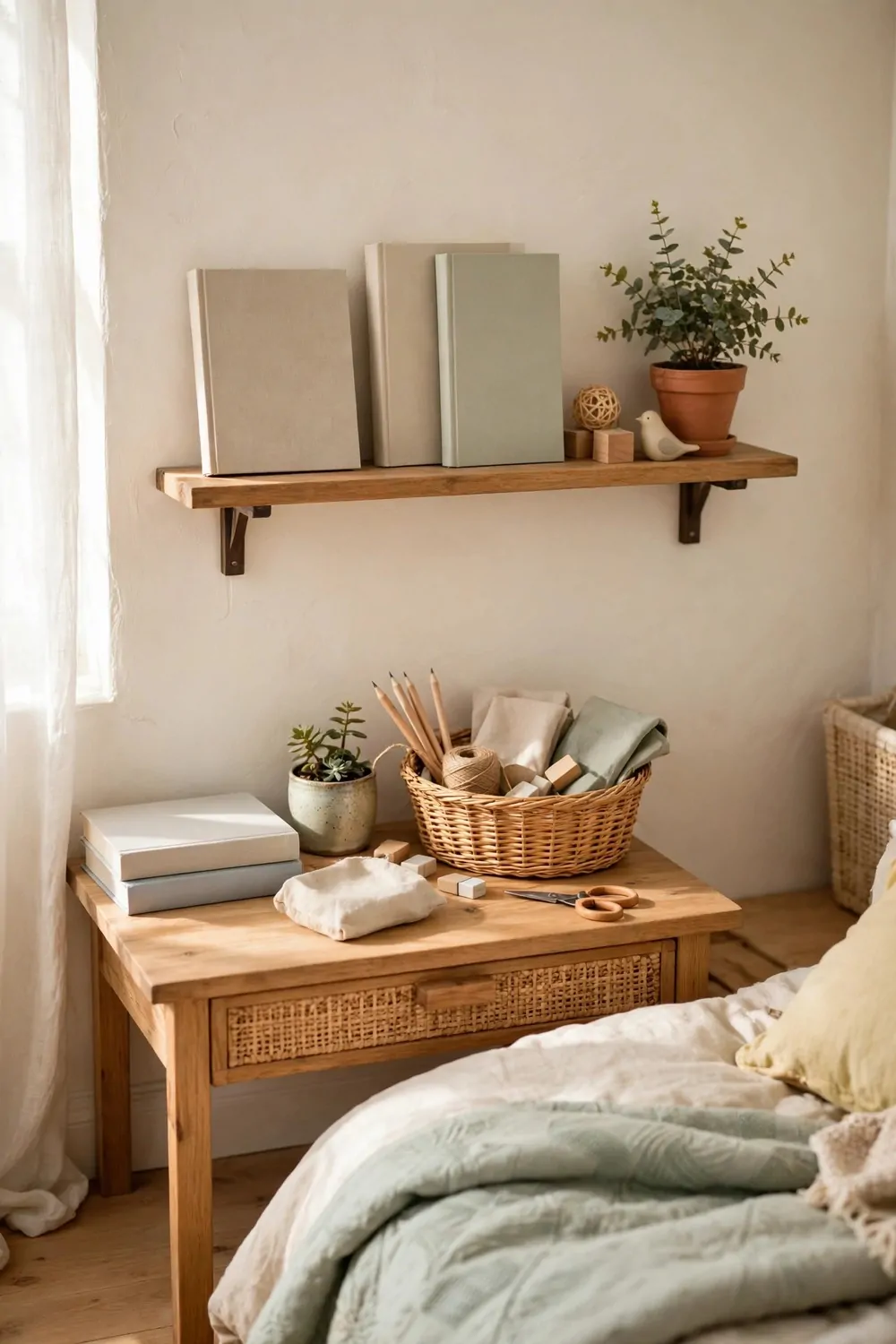
A wall shelf above the desk uses space that is often empty.
I put one shelf up and it freed the desk top right away. Books and jars moved up, and homework had room to spread out below.
Hang the shelf where your child can reach it while sitting.
If it is too high, they will stand on the chair to reach it, and that is not safe. If it is too low, it will bump their head when they lean forward.
I keep the shelf for things they use most days.
A few books, a small plant in a safe pot, and a jar for pencils fit well. Heavy books go at the ends so the middle does not sag.
Do not load the shelf with too much stuff.
A clear shelf looks calm and my child can find things fast. A full shelf looks messy and things fall off when they grab one book.
Check the shelf screws once in a while, just to be sure it is still firm on the wall.
8. A Homework Caddy That Moves
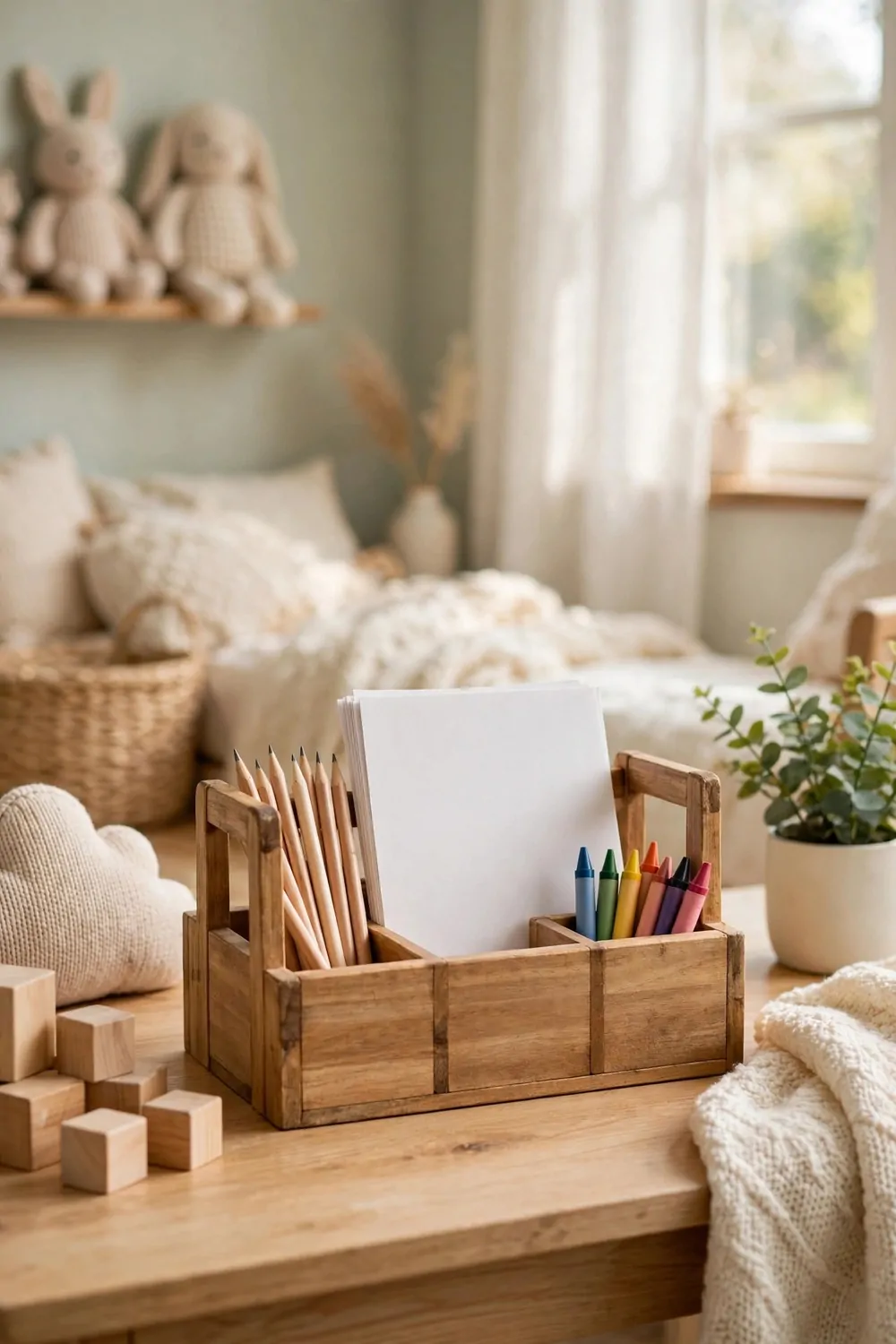
Some days homework happens at the desk, and some days it happens at the kitchen table.
I made a small caddy that moves with my child, so we do not have to hunt for supplies each time. It is a box with a handle that holds the basics.
I put pencils, an eraser, glue, scissors, and a small notebook inside.
That is enough for most school work, and the caddy stays light enough for a child to carry. If it gets too heavy, I take out what we do not need that day.
A caddy with parts inside helps keep it tidy.
I use small cups or jars inside the box, one for pencils and one for crayons. My child can lift out one cup and put it back without a mess.
When homework is done, the caddy goes back to one spot.
I pick a shelf or a corner by the desk, so we always know where it lives. That one habit saves us a lot of time in the morning.
Let your child help pack the caddy each night, and it becomes part of the routine.
9. A Cork Board for Notes and Drawings
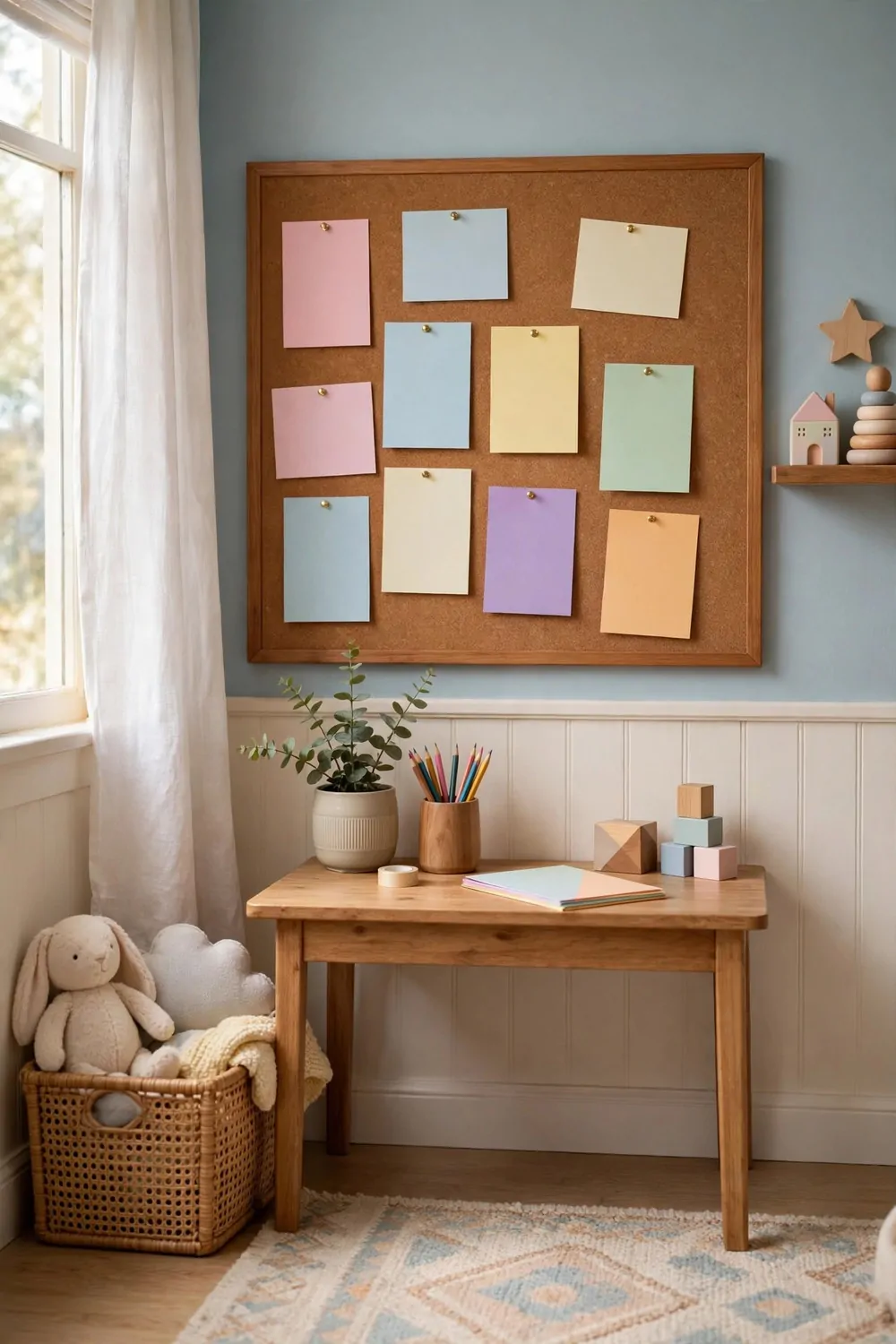
A cork board turns a plain wall into a place for my child’s work.
I pin up spelling lists, a small timetable, and drawings they are proud of. It makes the desk area feel like theirs, not just a grown up space.
Hang the board at eye level when your child sits at the desk.
They should be able to see the notes without turning around or standing up. That makes it easy to glance up and check a word or a date.
I change what is on the board each week.
Old drawings come down and go into a folder, and new work goes up. That keeps the board fresh and my child likes to see new work on show.
Use short pins and keep them out of reach of small hands when not in use.
I press the pins in firm so the papers do not fall off, and I take them out with care so the board does not tear. A few pins are enough, you do not need one on every corner.
A cork board also helps with focus, because the plan for the day is right there in front of them.
10. A Desk with a Built-In Bookshelf
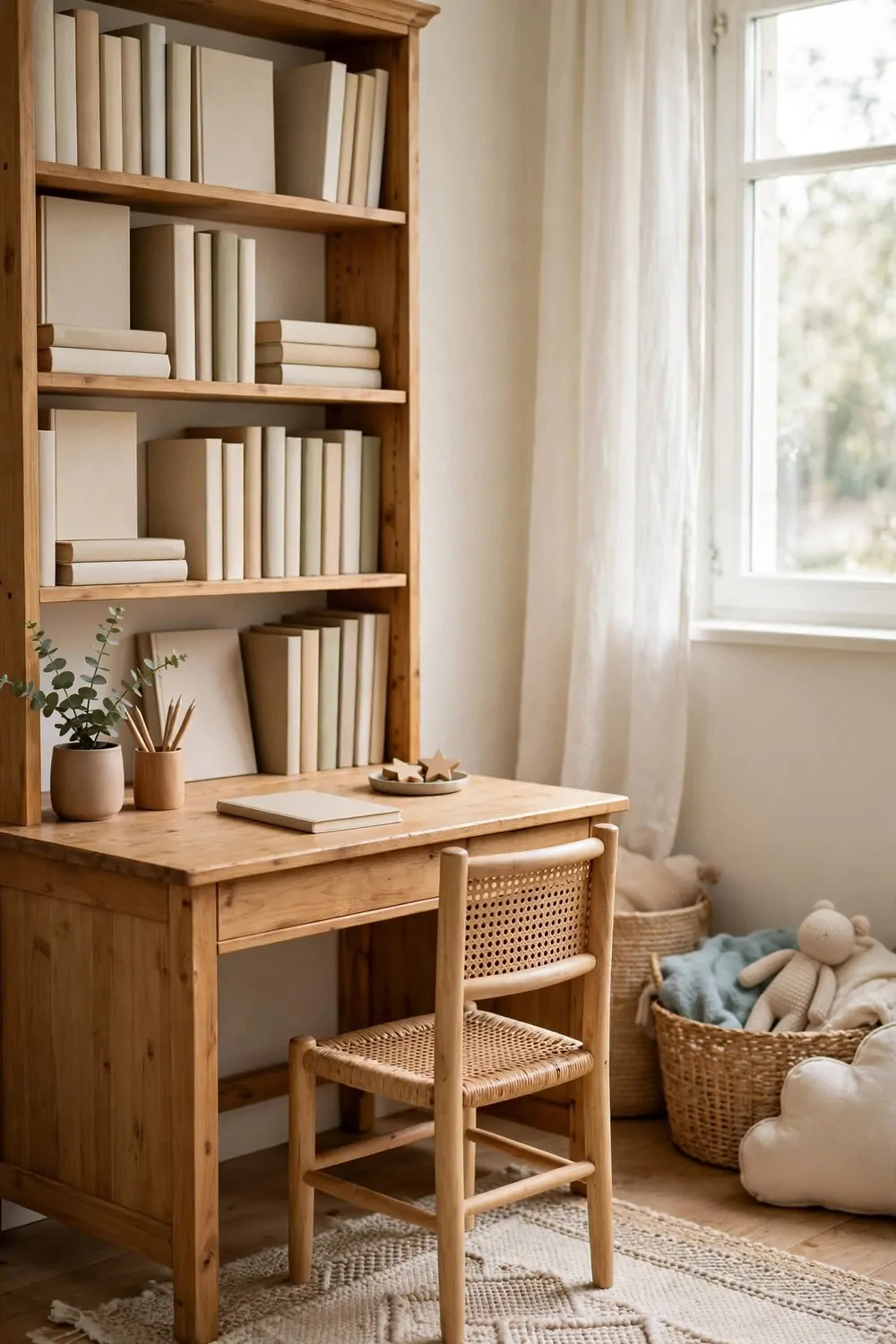
A desk with a built-in bookshelf saves space in a small room.
I like this idea because books sit right next to the desk, not in a pile on the floor. My child can pull a book out, read a page, and put it back without getting up.
The shelf is often on the side or at the back of the desk.
I look for shelves that are low and open, so my child can see the books and reach them with ease. Closed doors look tidy, but open shelves are faster for a child to use.
Keep the books your child reads most on the lowest shelf.
Story books, school books, and drawing pads go there, and the books they use less go up higher. That way the desk stays clear for writing and drawing.
Do not fill every shelf to the top.
Leave a little gap on each shelf so books slide in and out with ease. If the shelves are jammed full, books fall out and the desk area looks messy fast.
This kind of desk works well when two children share a room too, because each child can have one side of the shelf for their own books.
11. A Fold-Down Desk for Small Rooms
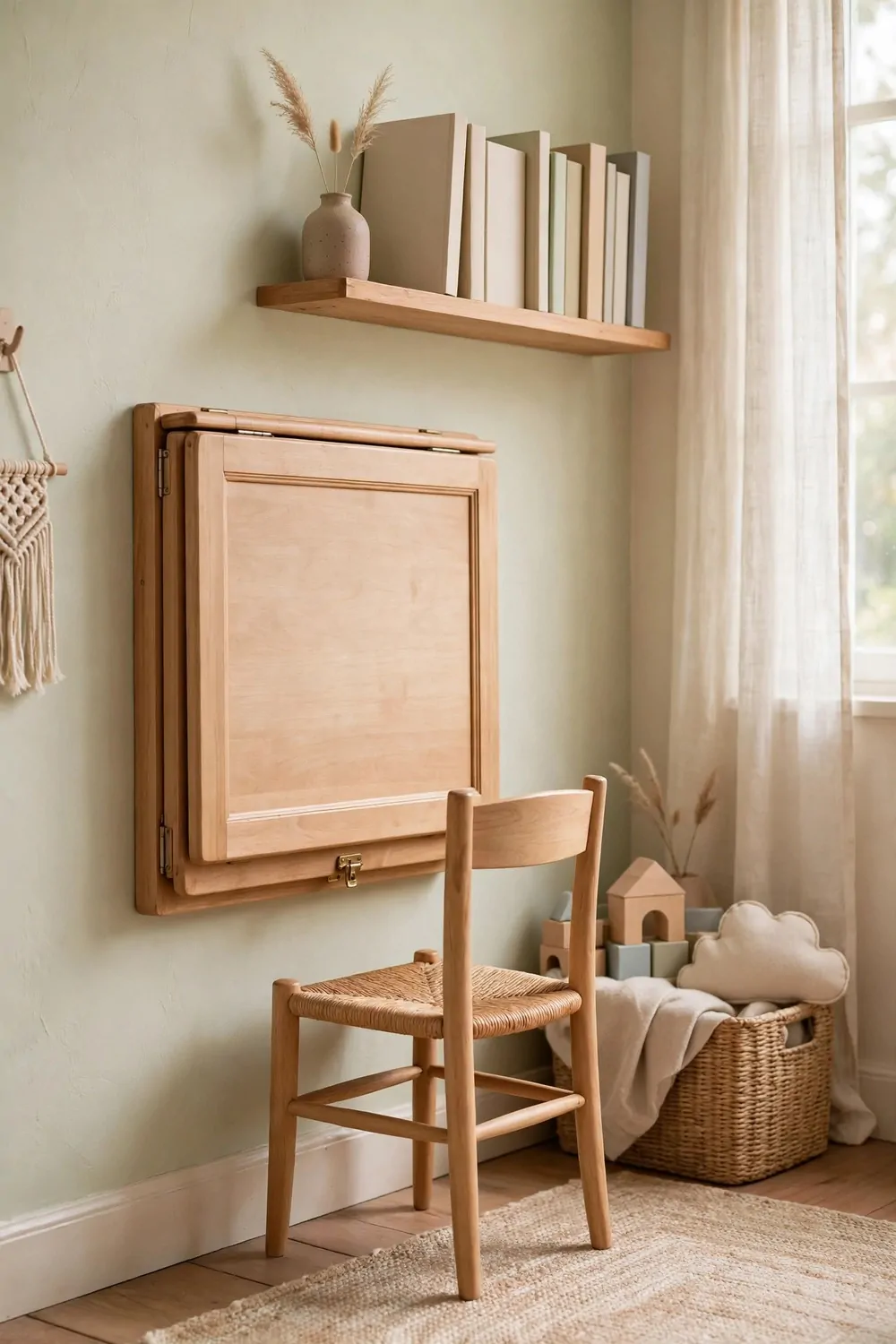
A fold-down desk is a smart fix when there is no room for a full desk.
It folds flat against the wall when not in use, and folds down when it is homework time. My child likes that it feels like a secret desk that appears when needed.
I hang it at a height that fits my child when they sit down.
The desk top should be level and firm, with no wobble when they write on it. A small lock or latch keeps it shut when it is folded up.
Keep only a few things on the desk when it is down.
A notebook, a pencil cup, and a small lamp are enough for most work. If you pile too much on it, it will feel shaky and hard to fold back up.
Clear the desk before you fold it up each day.
I ask my child to put pencils back in the cup and books on a shelf first. That takes a minute and it keeps the wall area tidy and safe.
This desk works well in a shared room, because the floor is free for play once homework is done.
12. A Homework Station by the Window
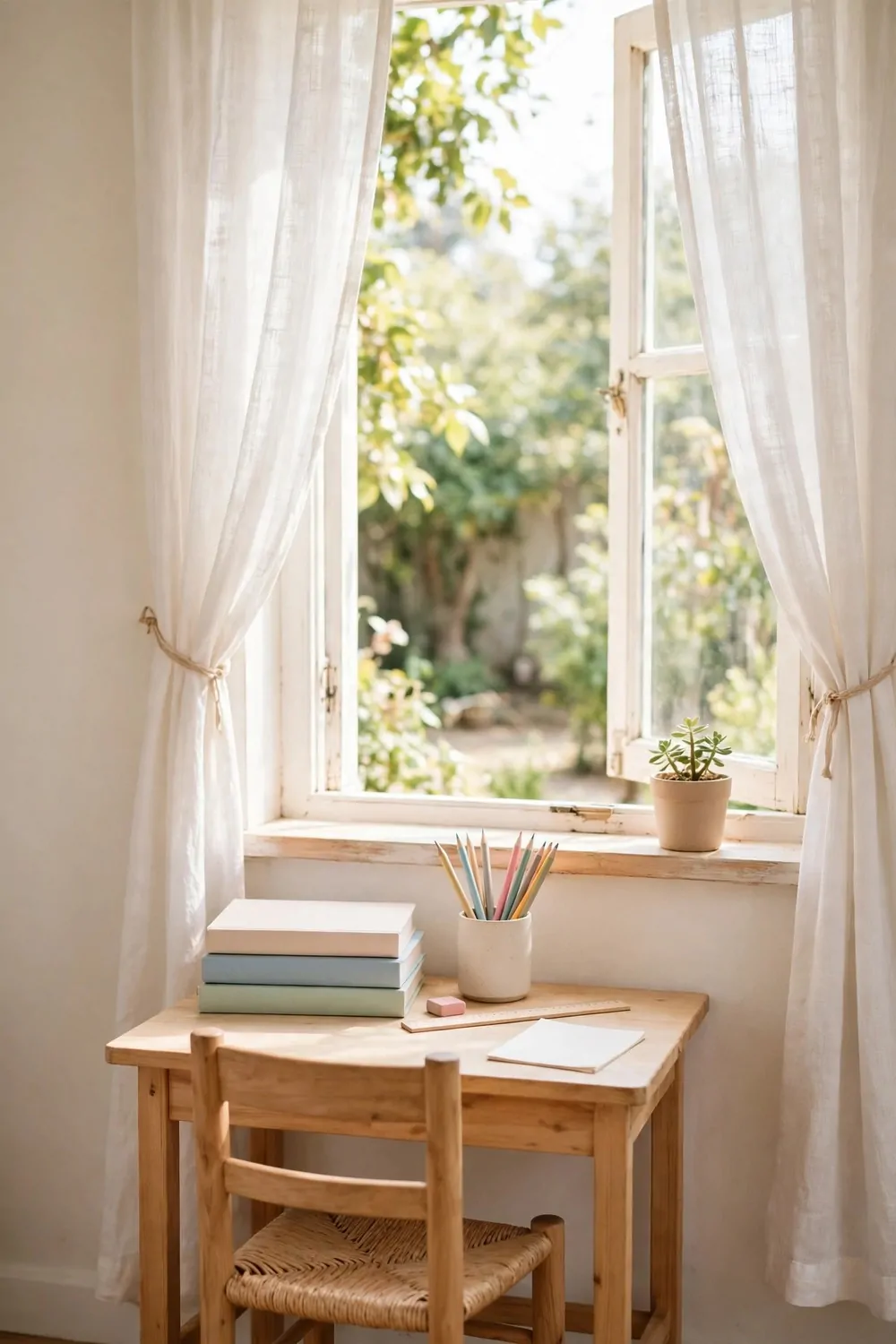
I moved my kid’s desk next to the window, and it made such a big change. The light is soft, and the room feels calm.
Natural light helps my kid see the words on the page. It also helps me see when the pencil needs a sharpen.
We keep the desk close to the window but not right against it. That way the sun does not shine right in my kid’s eyes.
A small curtain helps on bright days. I pull it half way, and the light stays soft.
I put a small plant on the sill. It makes the spot feel happy and fresh.
My kid likes to look outside for a short break. A quick look at the trees helps the eyes rest.
We keep only homework things on this desk. A pencil cup, a notebook, and a small lamp are enough.
At night I close the curtain and turn on the lamp. The desk still feels warm and quiet.
Try this spot if your kid gets sleepy at homework time. A bright window spot can wake up the whole afternoon.
13. A Desk Organizer Tray
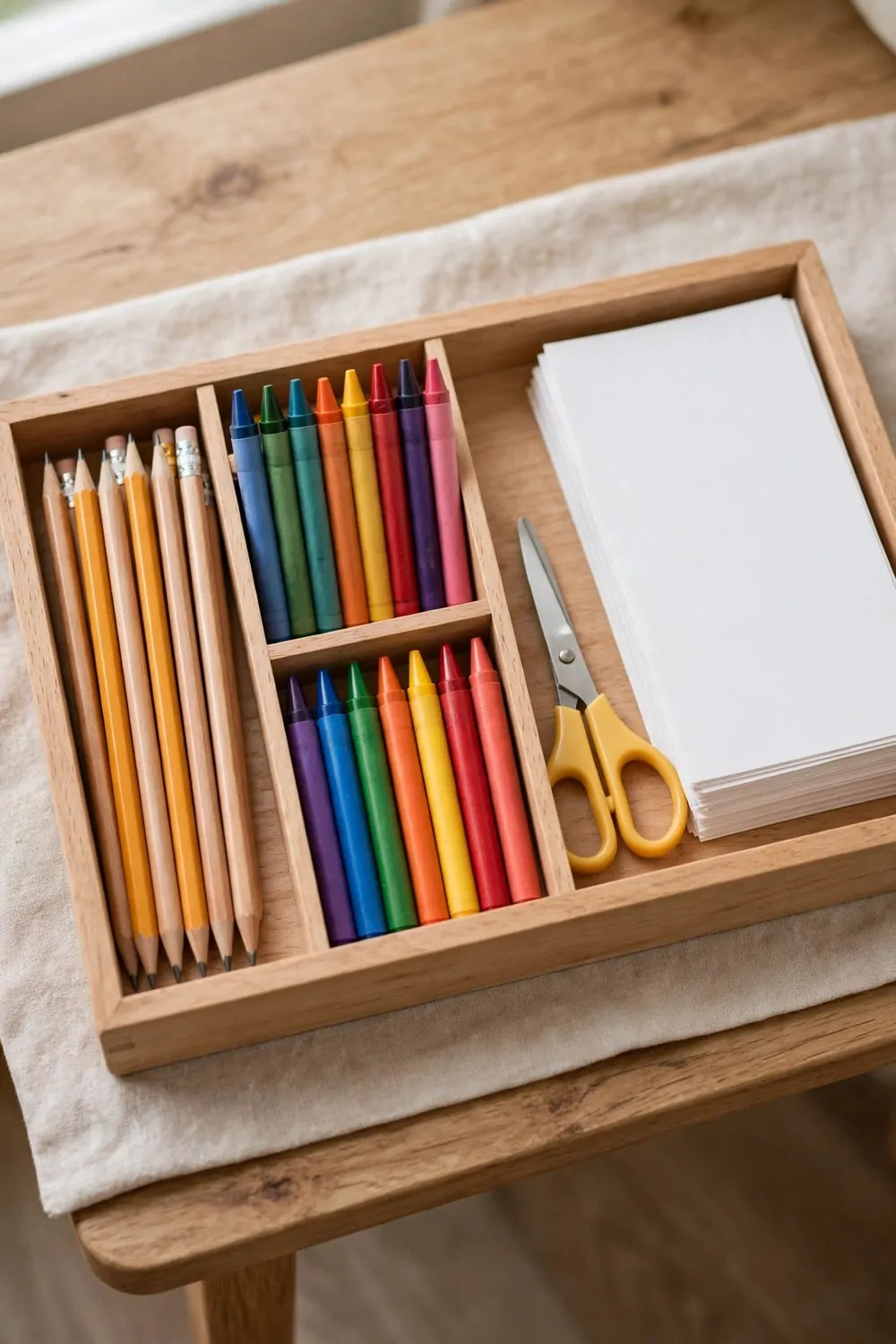
A tray on the desk keeps small things from rolling away. I got tired of pens under the chair.
I use a tray with three small parts. One part holds pens, one holds pencils, and one holds erasers.
My kid knows where each thing goes. That makes clean up fast at the end of the day.
I picked a tray that fits the desk. It should not take up half the work space.
A tray with a low edge is best for small hands. My kid can reach in and grab a pen with no fuss.
We put the tray on the left side of the desk. My kid is right handed, so the middle stays free for writing.
I add a small label on each part. A picture label works too if your kid is still learning to read.
Once a week we empty the tray and check what is broken. Dried out pens go in the bin, and good ones stay.
A simple tray can save you a lot of time. You will not hear “where is my pencil” quite so much.
14. A Timer on the Desk
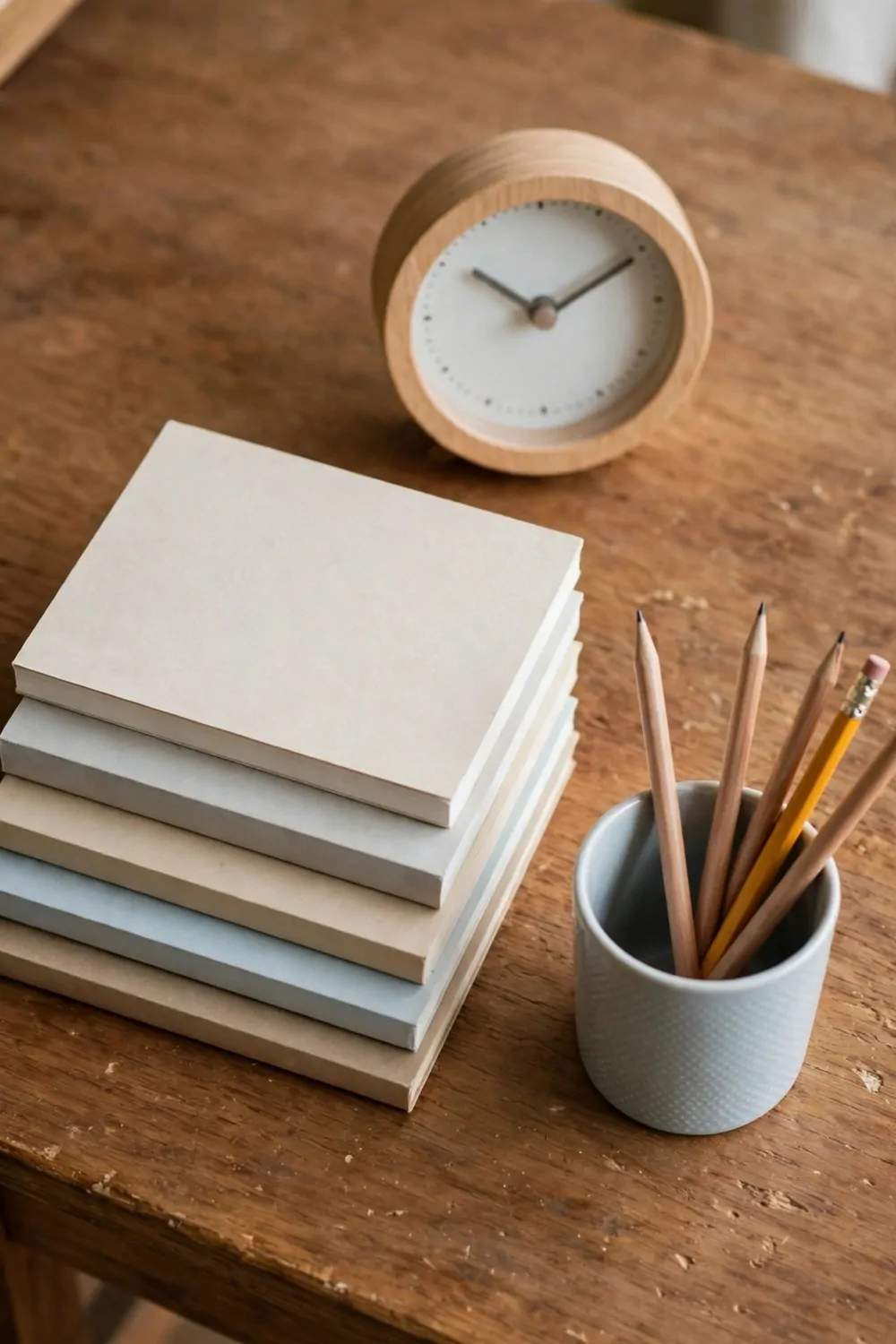
A timer on the desk helps my kid focus for a short time. We start with ten minutes, and then we take a break.
I like a timer my kid can see. When the time runs out, it makes a soft sound.
A simple sand timer costs about $5 to $10, and it is easy to use. My kid loves to watch the sand fall.
A small digital timer costs about $8 to $15, and it beeps when time is up. I like that I can set it for any number of minutes.
A timer with a light costs about $12 to $25, and the light changes as time goes by. It helps my kid see how much time is left with no numbers to read.
| Timer type | Typical cost |
|---|---|
| Simple sand timer | $5 to $10 |
| Small digital timer | $8 to $15 |
| Timer with a light | $12 to $25 |
We use the timer for homework first, then for reading. Short work times feel easy, and my kid does not get tired so fast.
I never use the timer as a punishment. It is a helper, not a race.
If my kid finishes early, we use the rest of the time for a fun drawing. That makes the timer feel like a friend.
Pick the timer that fits your budget and your kid. A simple one works just as well as a fancy one.
15. A Reading Nook Desk
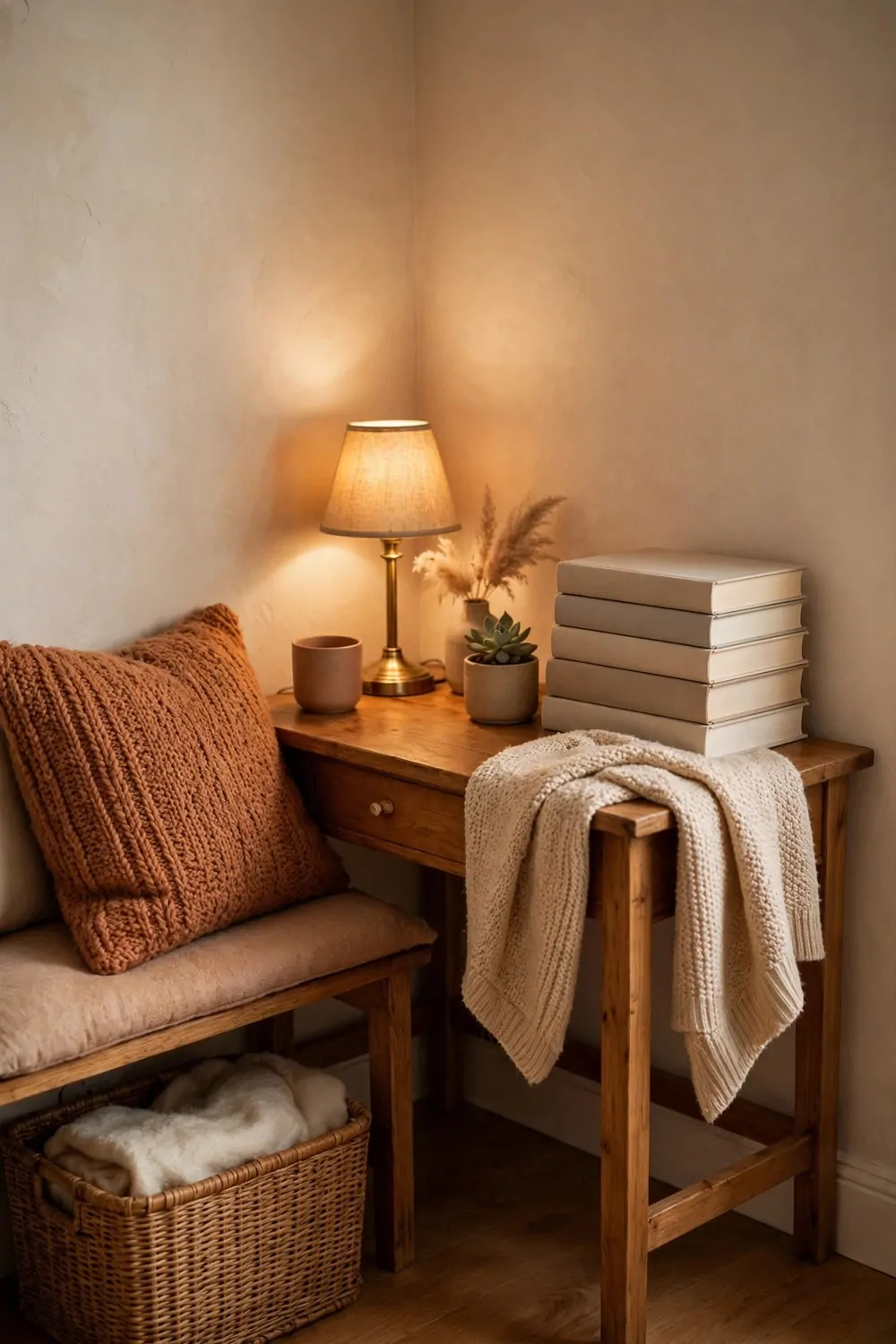
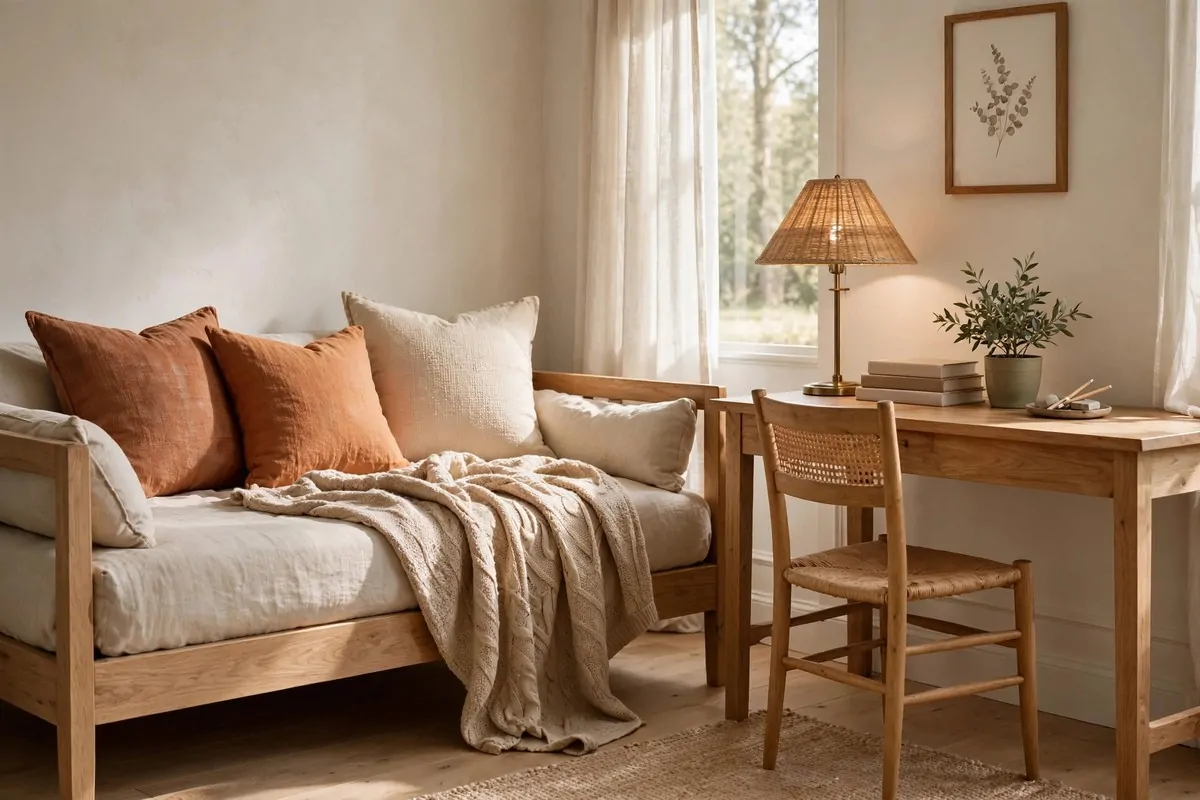
A reading nook desk is a small desk tucked in a cozy corner. It is just for books and quiet reading.
I put a soft cushion on the chair. My kid sits longer when the seat feels comfy.
A small lamp on the desk makes the books easy to see. Warm light feels calm in the evening.
We keep a small stack of books on the desk. I let my kid pick the books, so reading feels like a treat.
A blanket over the chair back makes the nook feel like a hideaway. My kid loves that part.
I keep the nook away from the TV and loud toys. Quiet helps my kid fall into a story.
We read together there for ten minutes each night. Then my kid reads alone for a bit more.
A little shelf above the desk holds the next books to read. My kid can see what is coming next.
You do not need a big room for this. A small corner with a desk and a lamp is enough.
16. A Craft Desk with a Washable Top
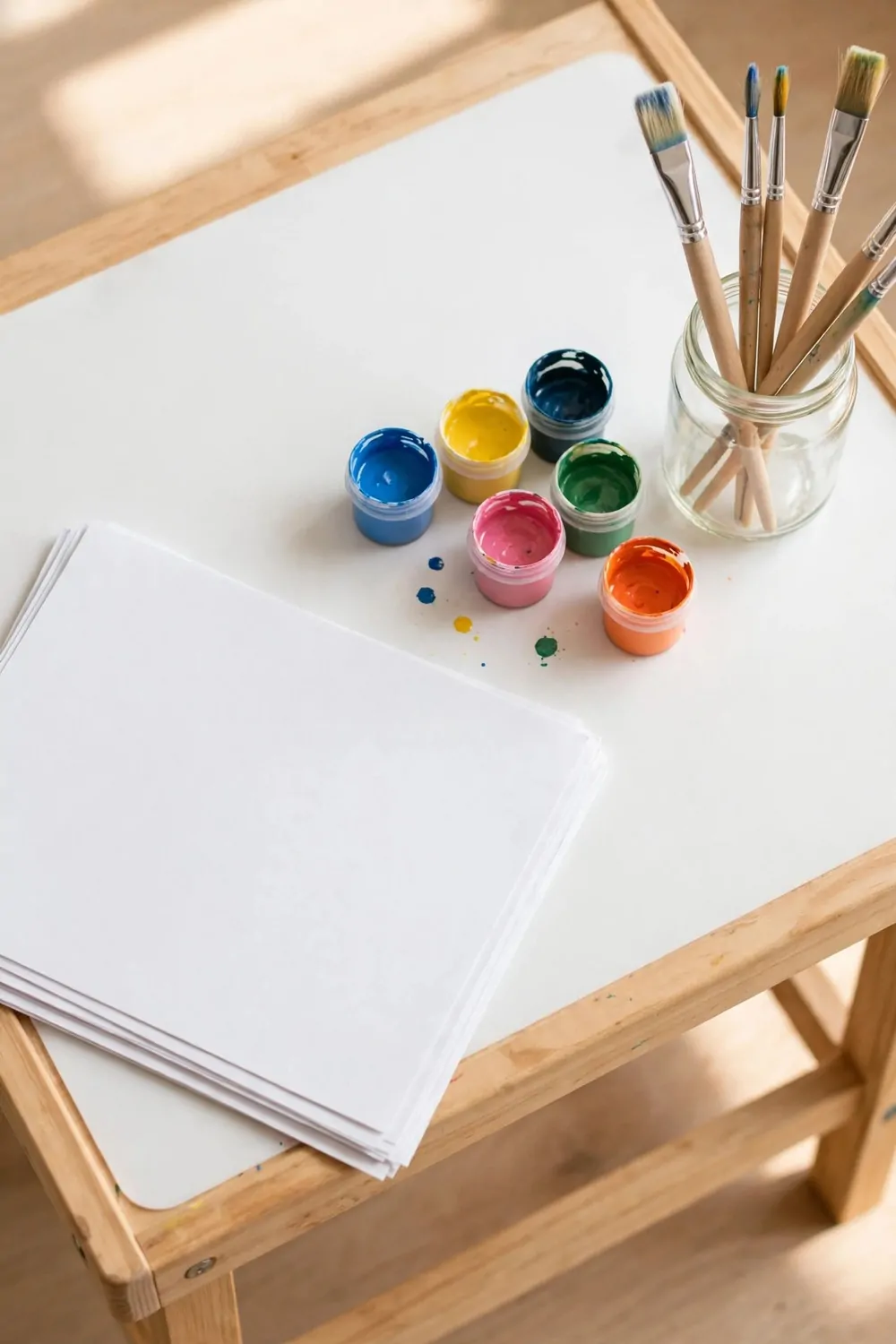
A craft desk with a washable top is my best friend on art days. Paint and glue wipe right off.
I look for a top that feels smooth and hard. If water beads up on it, it will clean fast.
We keep a damp cloth in a small tub by the desk. My kid wipes up spills right away.
Markers, crayons, and glue all have a home in a tray on the side. The middle of the desk stays free for making things.
I put old newspaper under big paint projects. It holds the drips, and I toss it when we are done.
My kid can try new ideas with no worry. If paint goes on the desk, we just wipe it clean.
At the end of craft time, we wash hands and wipe the desk. It takes two minutes, and the desk looks new again.
I keep smocks on a hook near the desk. My kid puts one on before the paint comes out.
A washable top means less stress for me and more fun for my kid. Art time stays fun, not messy.
17. A Shared Desk for Two Kids
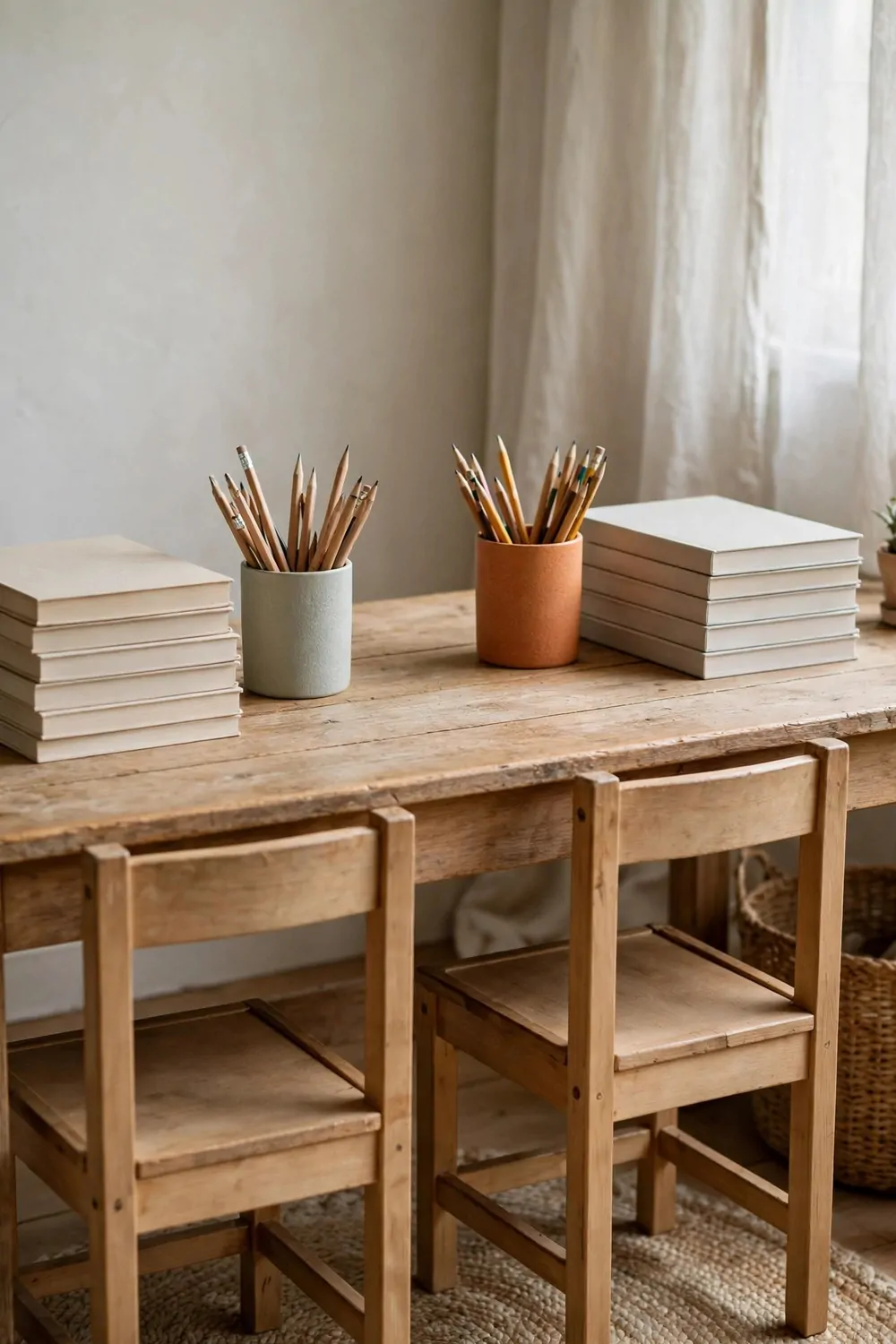
A shared desk for two kids can work well with a little plan. My two kids share one long desk, and it is fine most days.
We split the desk down the middle with a small line of tape. Each kid knows which side is theirs.
Each kid has their own pencil cup and tray. That stops a lot of small fights.
We set a rule that homework comes first. Play and drawing wait until homework is done.
A small divider in the middle helps them focus. I use a low book stand, so they can still see each other.
We take turns picking the music or the quiet. One day one kid picks, and the next day the other one picks.
If one kid needs help, the other one waits a bit. I sit nearby, so I can help fast.
At the end of the day, each kid clears their own side. It takes five minutes, and the desk is ready for the next morning.
A shared desk teaches my kids to share space and be kind. It is not perfect, but it works for us.
18. A Rolling Desk Cart
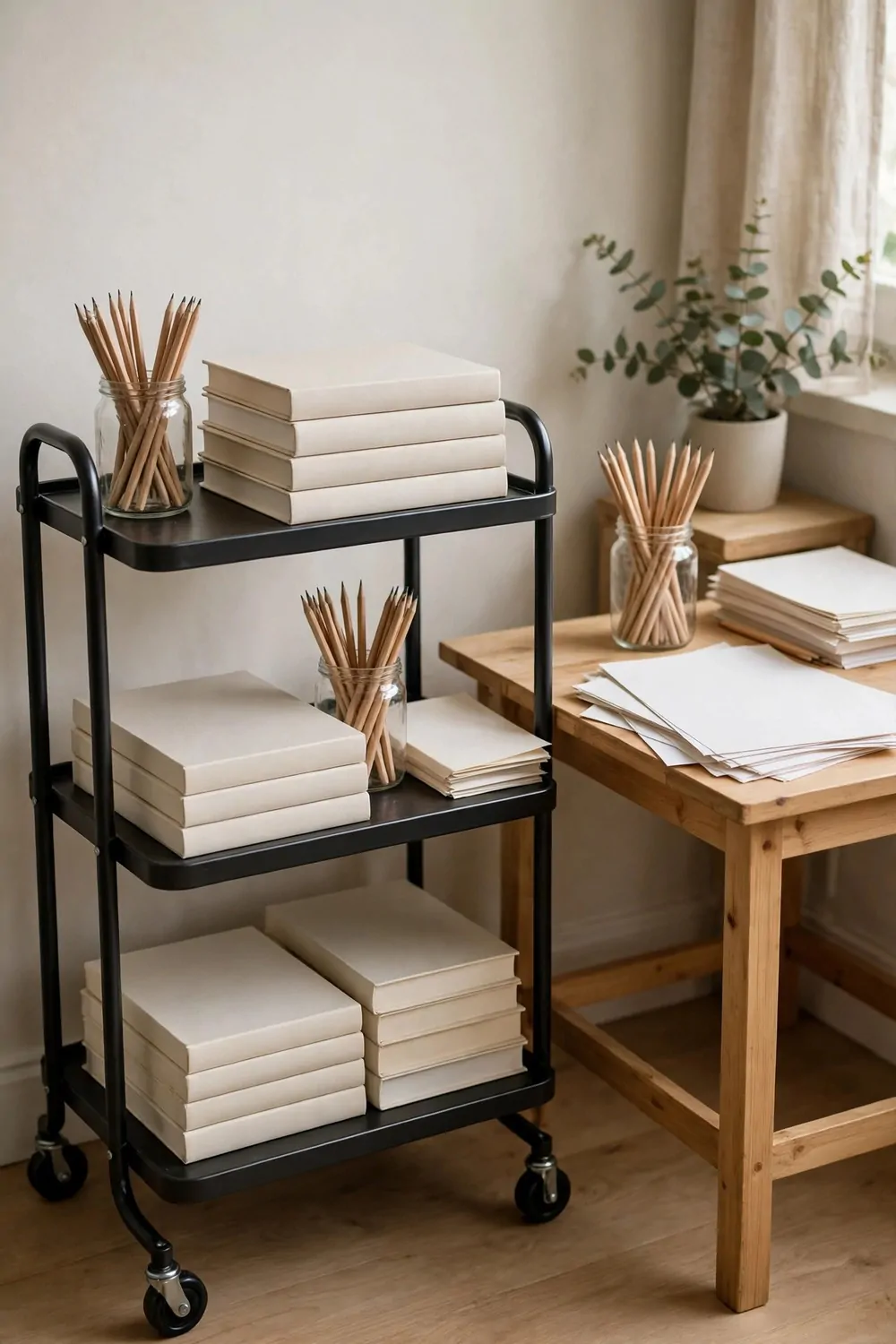
A rolling desk cart is a small cart on wheels that holds school things. I can roll it to the desk and roll it away again.
We keep notebooks and workbooks on the top shelf. The middle shelf holds pens, glue, and scissors.
A small rolling cart costs about $25 to $45, and it fits in a tight spot. I like that I can tuck it beside the desk.
A medium rolling cart costs about $40 to $70, and it holds more books and boxes. This is the one we use most days.
A rolling cart with drawers costs about $60 to $100, and the drawers hide the mess. It looks neat even when it is full.
| Cart type | Typical cost |
|---|---|
| Small rolling cart | $25 to $45 |
| Medium rolling cart | $40 to $70 |
| Rolling cart with drawers | $60 to $100 |
I lock the wheels when the cart is in place. That way it does not roll away in the middle of homework.
My kid can roll the cart to the kitchen table too. Homework can happen where I am cooking dinner.
Once a week we take everything out and put it back in order. It is a quick job, and it keeps the cart useful.
If you are short on space, try a rolling cart. It gives you storage that moves where you need it.
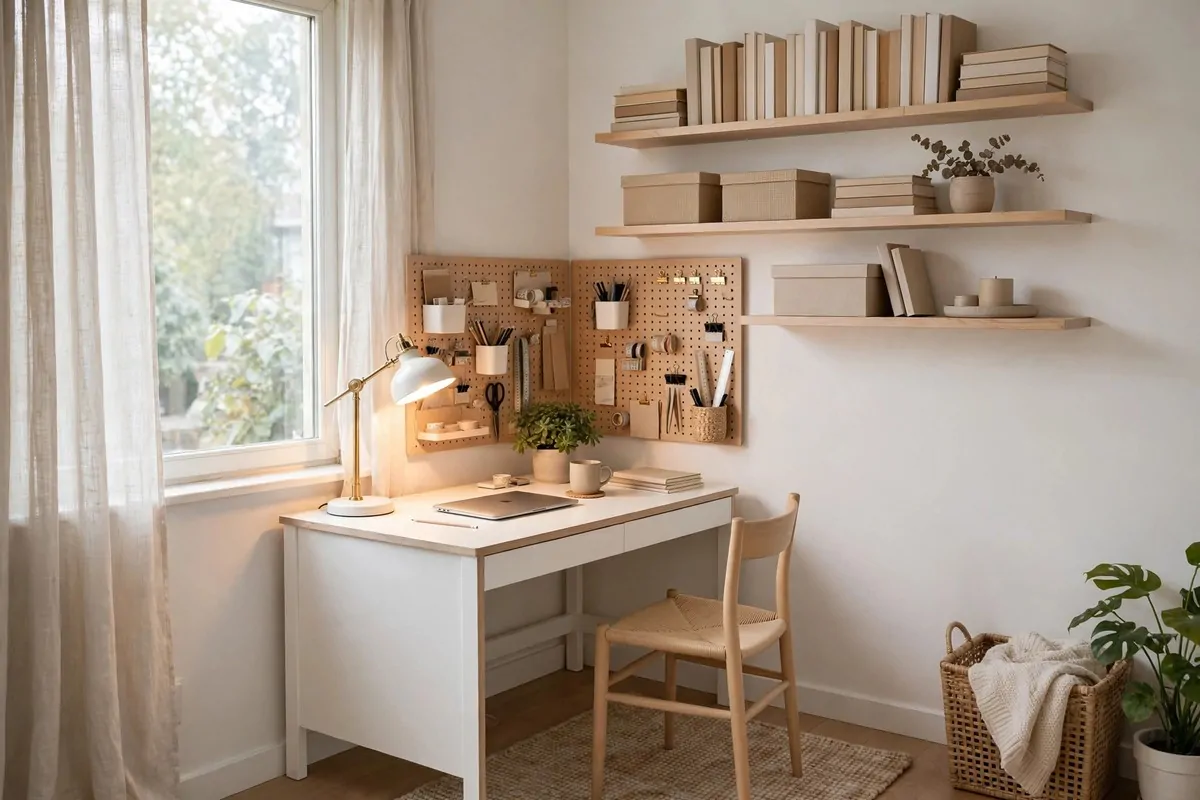
19. A Desk with a Pegboard Wall
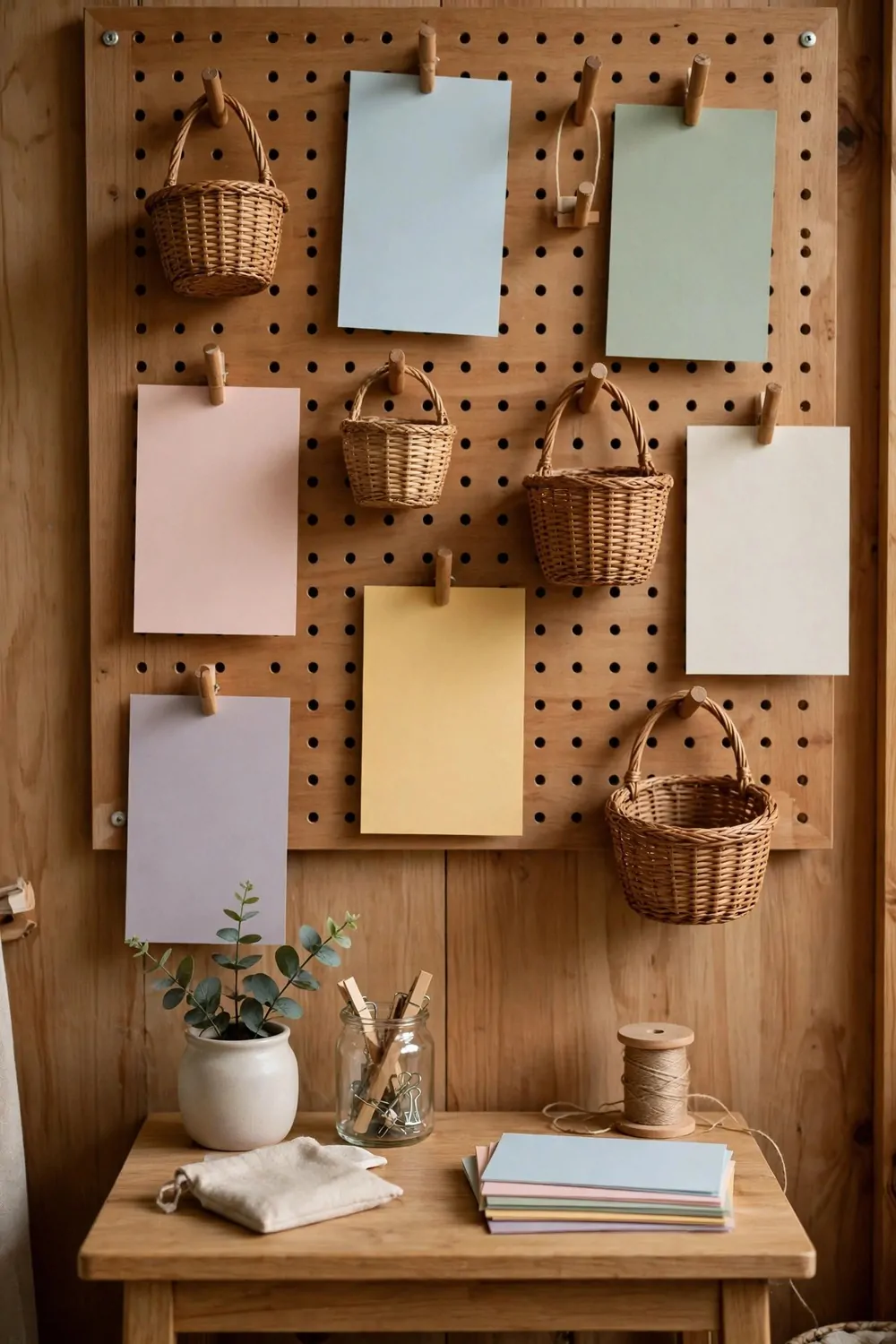
A pegboard wall above the desk turns empty wall space into storage. I hung one last month, and I love it.
Small hooks hold scissors, rulers, and cups. Everything hangs where my kid can see it.
I put the most used things at my kid’s eye level. The less used things go up high.
A small shelf on the pegboard holds books and notebooks. It frees up space on the desk top.
My kid helped me pick where each hook goes. When kids help set it up, they use it more.
I add a small clip for the homework list. My kid checks off each job as it gets done.
The pegboard is easy to change. If we need a new spot for something, I just move a hook.
I keep the board tidy with a quick check each Sunday. Hooks that are empty get a new job or come down.
A pegboard makes a plain wall useful and fun. It is one of my favorite desk ideas.
20. A Quiet Homework Corner
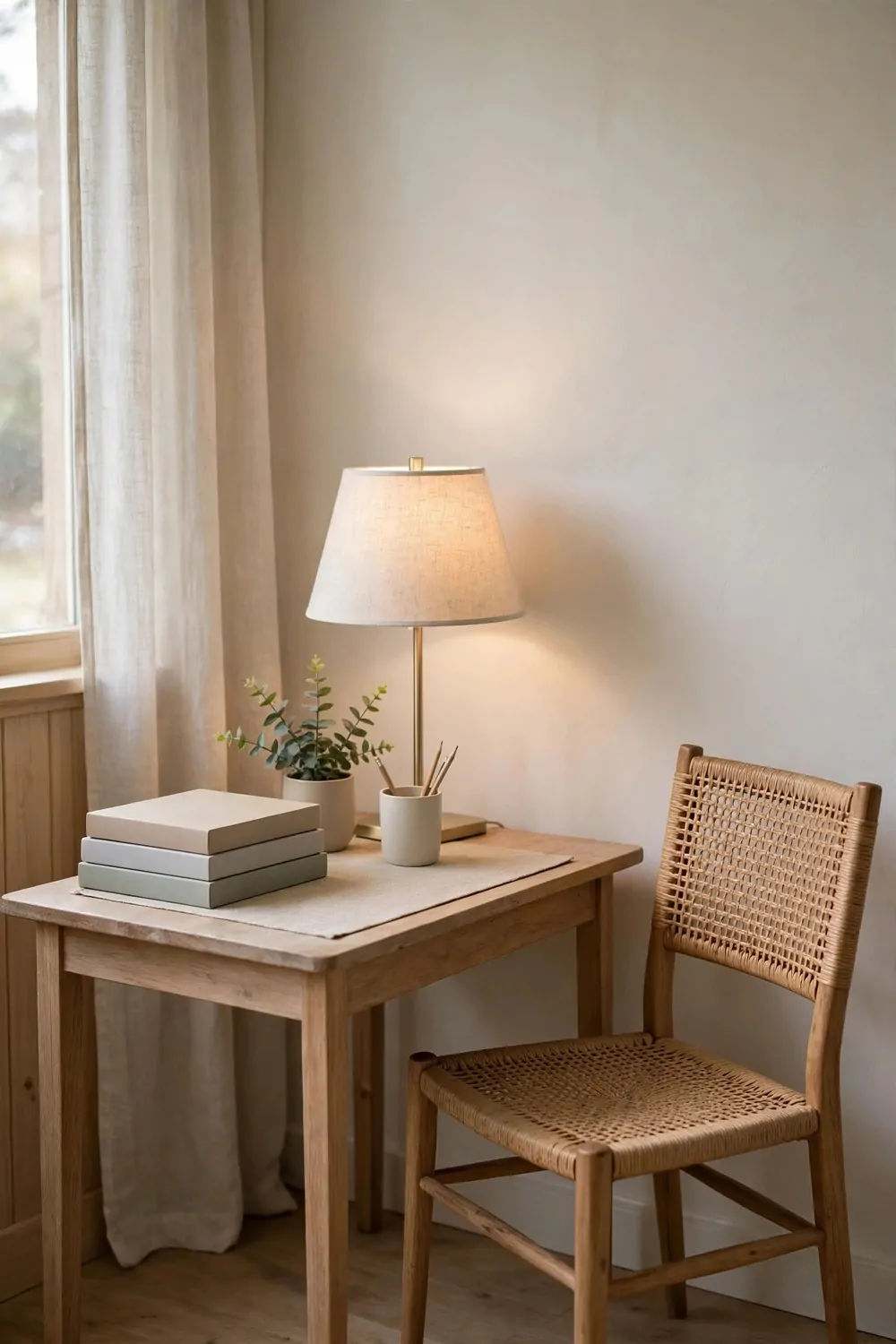
A quiet homework corner is a small spot with no noise and no toys in sight. My kid does homework there each day.
I picked the calmest corner of the room. It is away from the door and away from the TV.
A desk, a chair, and a lamp are all we need. Too much stuff in the corner makes it hard to focus.
We keep a “do not disturb” sign on the desk. My kid puts it up when homework starts.
I keep my phone on silent when my kid is working. If I am calm, my kid is calm too.
A soft rug under the chair makes the corner feel warm. My kid likes to sit there even to read.
We work in the corner at the same time each day. A steady time helps my kid get ready to focus.
If my kid gets stuck, we take a short break and walk to get water. Then we come back fresh.
A quiet corner does not need to be big. It just needs to be calm, clear, and ready each day.
21. A Desk Clean-Up Routine at Night
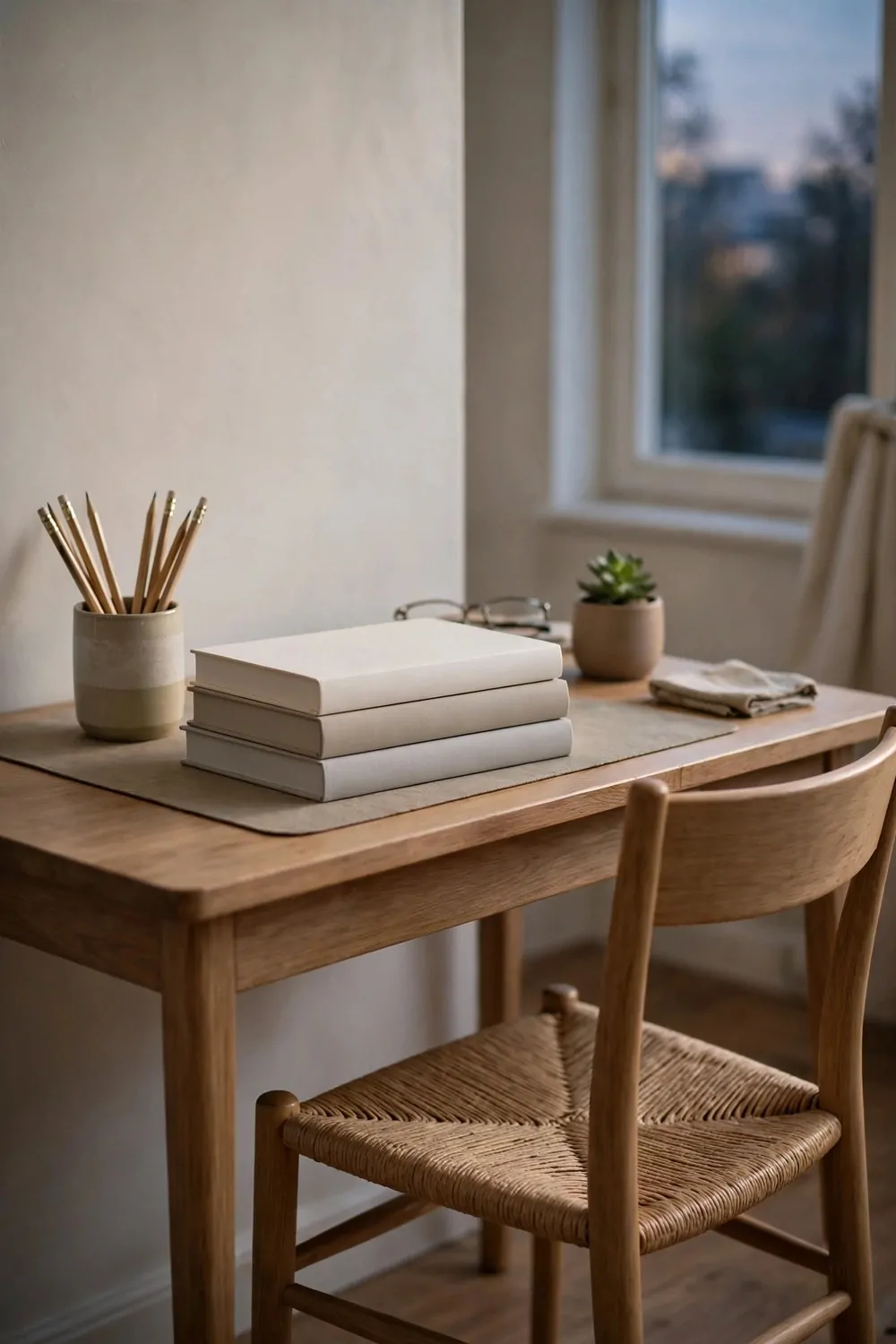
A desk clean up routine at night saves my mornings. I do it with my kid each night before bed.
We start by clearing papers off the desk. Finished work goes in the school bag, and old scrap goes in the bin.
Next we put pens and pencils back in their cup. Nothing stays loose on the desk top.
We wipe the desk with a damp cloth. It takes one minute, and the desk feels fresh.
Then we set out what my kid needs for the next day. A notebook, a pencil, and the homework sheet wait on the desk.
I check the school bag with my kid. Lunch box, water bottle, and books all get a quick look.
We put the chair back in place and turn off the lamp. The desk looks ready, and my kid feels ready too.
I praise my kid for a clean desk. A small “well done” goes a long way.
Try this routine for one week. You will see calmer mornings, and your kid will start homework with a smile.
Keep Reading
If you liked these ideas, you will love these posts too.
- 30 Kids Bookshelf Ideas That Make Reading Easy and Fun
- 23 Kids Closet Organization Ideas That Make Mornings Easy
- 27 Playroom Organization Ideas That Keep Toys in Check
- 34 Toy Storage Ideas That Make Clean-Up Fast and Fun
- 24 Entryway Rug Ideas That Handle Mud and Look Good
- 28 Coat Closet Organization Ideas That End the Pile
Pick one idea from this list and try it this week. A small change at the desk can make homework time feel easy and fun for your kid.