28 Executive Home Office Designs That Look Professionally Planned

I still remember the sound of my first real office door closing behind me. It was heavy and quiet, and for the first time my work had a room of its own.
For years I worked at the kitchen table with a laptop and a mug that always went cold.
My papers lived in piles, and my best ideas got lost between bills and shopping lists. Then I got a proper desk in a proper room, and everything changed.
I sat taller, I thought clearer, and I finished my work faster. In this post I will show you 28 executive home office ideas that look calm, smart, and well planned. You can borrow one idea or mix a few, and your room will start to feel like a real office.
A Solid Wood Desk That Anchors the Room
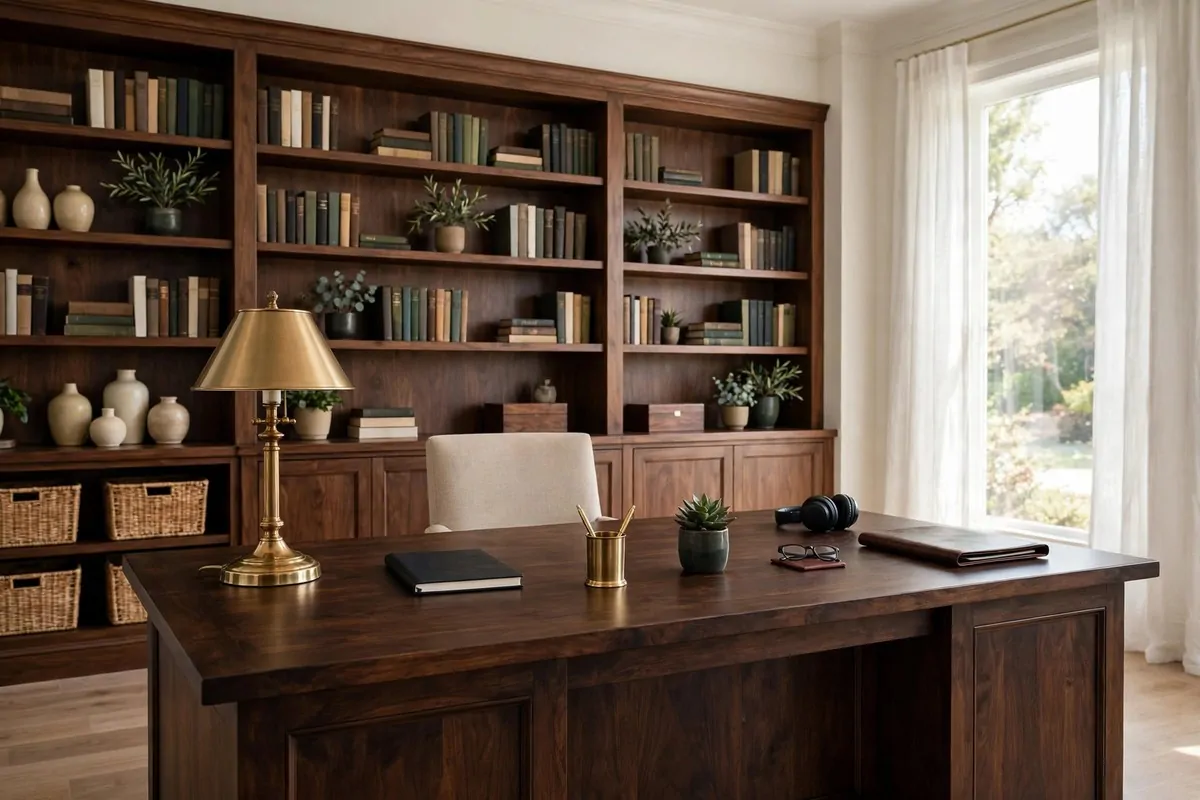
A solid wood desk does more than hold your laptop. It tells the whole room what it is for.
I love how wood feels warm under my hands.
It makes a cold room feel like a place where real work happens, and it makes me want to sit down and start. Pick a desk that fits your wall, not one that fights it.
Leave room to push your chair back and stand up without bumping anything.
Look for a thick top and strong legs. A wobbly desk will drive you mad by the end of the week, and you will notice it every single day.
Keep the top mostly clear. A lamp, a pen pot, and your laptop are plenty, and the empty space helps your mind stay clear too.
I keep one small tray for papers I need today.
Everything else goes in a drawer, and my desk stays calm even on busy days. Wood goes with almost any chair and any wall color.
You do not need to match it perfectly, and a little mix looks more natural. Wipe it down once a week with a soft cloth. A quick wipe keeps dust away and keeps the wood looking rich and warm.
Built-In Bookshelves Behind the Desk
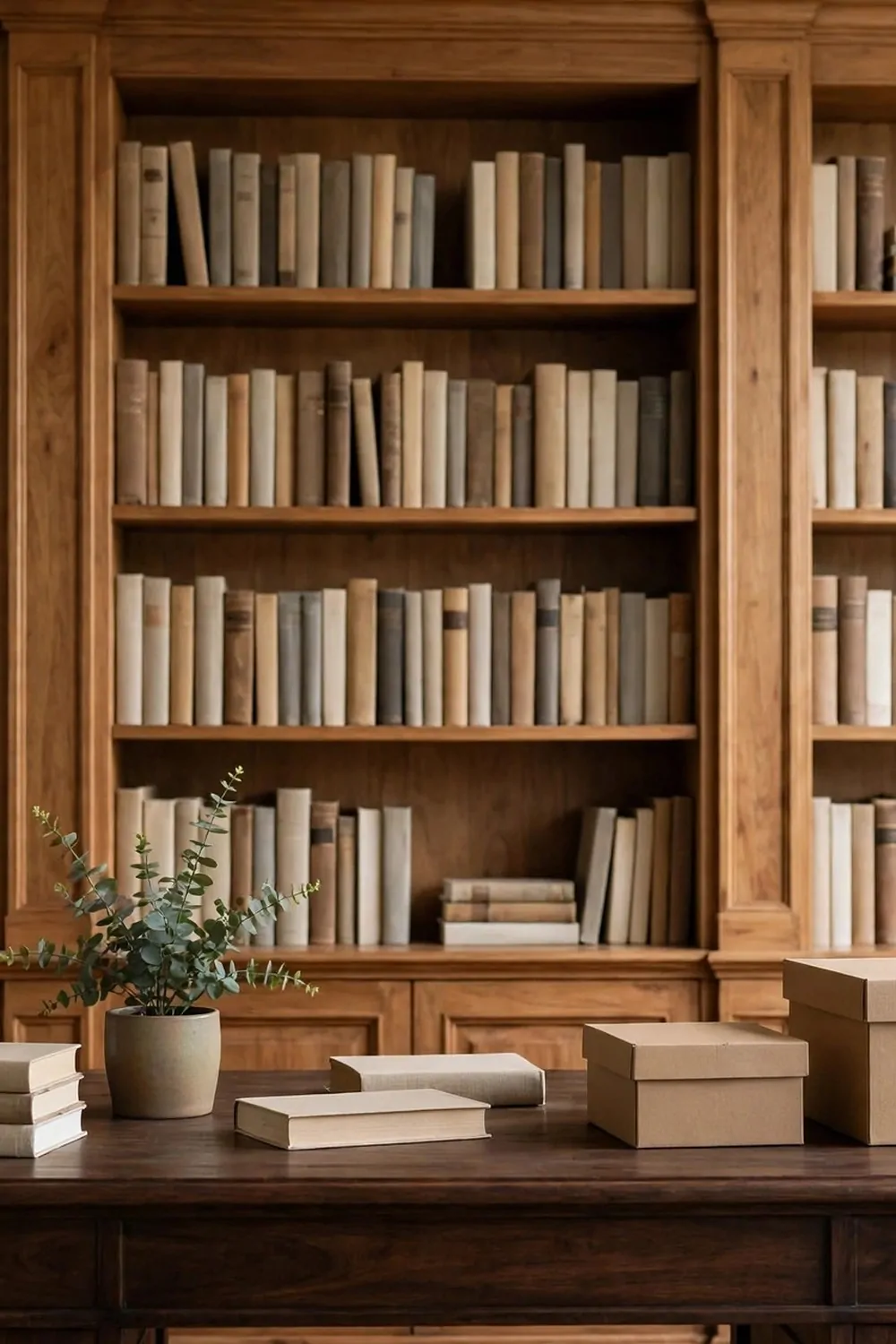
Bookshelves behind your desk make the room look serious in the best way.
They frame you like a real workspace, not a spare corner. I like shelves that go right up to the ceiling.
They use the tall space well, and they make the room feel taller too. Mix your books with a few plain objects. A small plant, a clock, or a box breaks up the rows and stops the shelves from looking stiff.
Put the books you reach for most at eye level. The heavy ones can go low, and the pretty ones can go high where you just look at them.
Do not fill every shelf to the edge.
A little empty space is good, and it lets your eyes rest when you glance away from your work. If your shelves are open, dust them now and then.
A quick pass with a cloth keeps them looking fresh, and it only takes a few minutes. Paint the shelves the same color as your wall for a soft look.
Or paint them a deeper color if you want them to stand out more.
I keep a few notebooks and folders on the middle shelf. They are close when I need them, and they look tidy when I do not. Built-in shelves cost more than a freestanding bookcase, but they fit the room like they were always there.
A Leather Desk Chair That Means Business
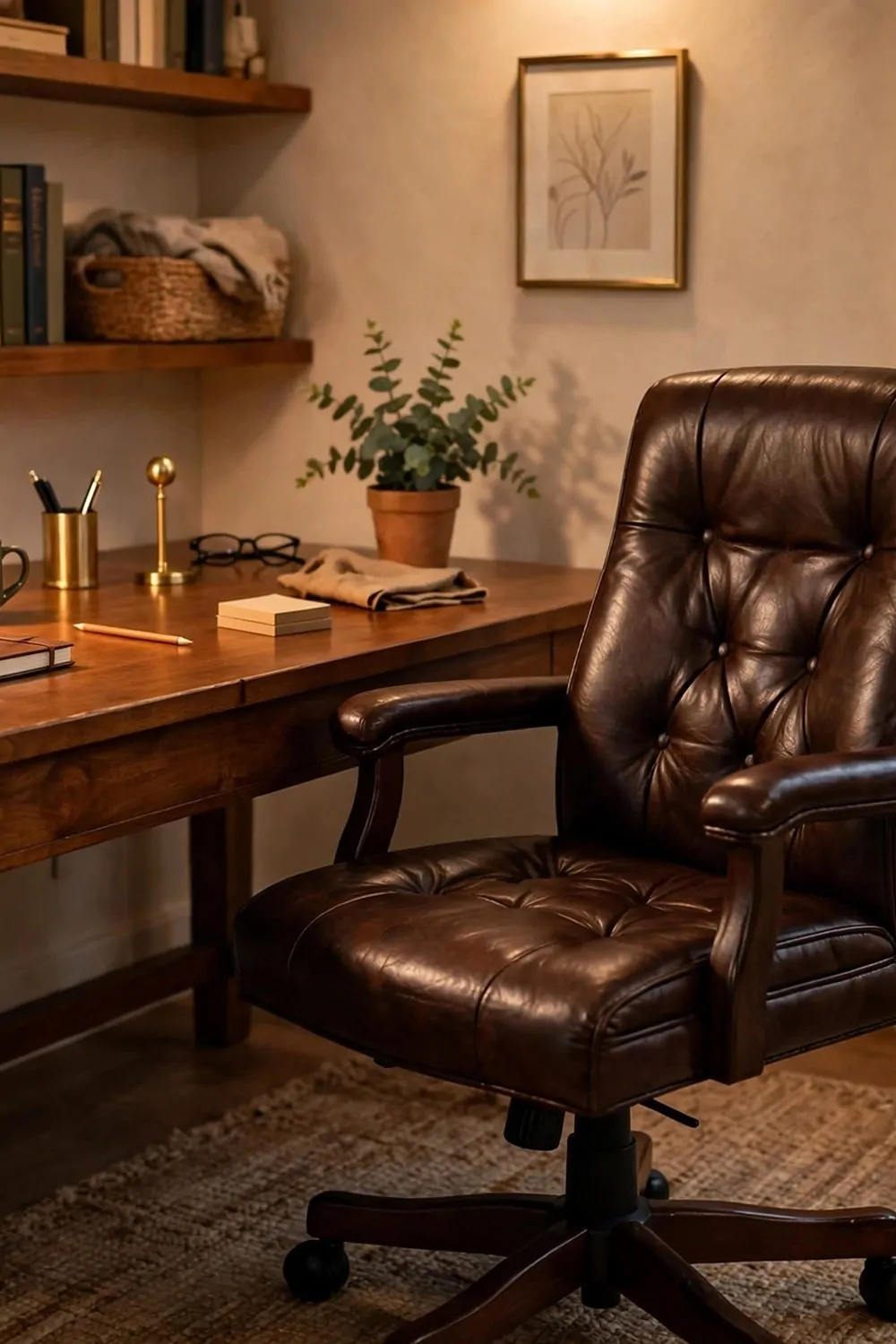
A good leather chair changes how you sit and how you feel about work. You sit up, you focus, and you feel ready.
Pick a chair with a high back and good armrests.
Your back will thank you after a long day, and your shoulders will feel less tight. Leather looks better as it ages a little.
Small marks and soft creases give it character, and it never looks cheap or flimsy. Make sure the chair rolls smoothly on your floor.
If it sticks or drags, add a simple chair mat, and your floor stays safe too. I test a chair by sitting in it for ten minutes.
If I start to fidget or slump, it is not the right chair for me. Dark brown or black leather suits most offices.
A rich tan color also works well, and it warms up a room with white walls. Wipe the leather with a damp cloth once a month.
It keeps the surface clean, and it stops dust from settling into the seams. A chair is not the place to save money if you sit for hours.
Spend a little more here, and your body will notice the difference. When you roll up to your desk in a chair like this, the room feels complete. It is the piece that says you mean business.
Closed Cabinets That Hide Office Clutter
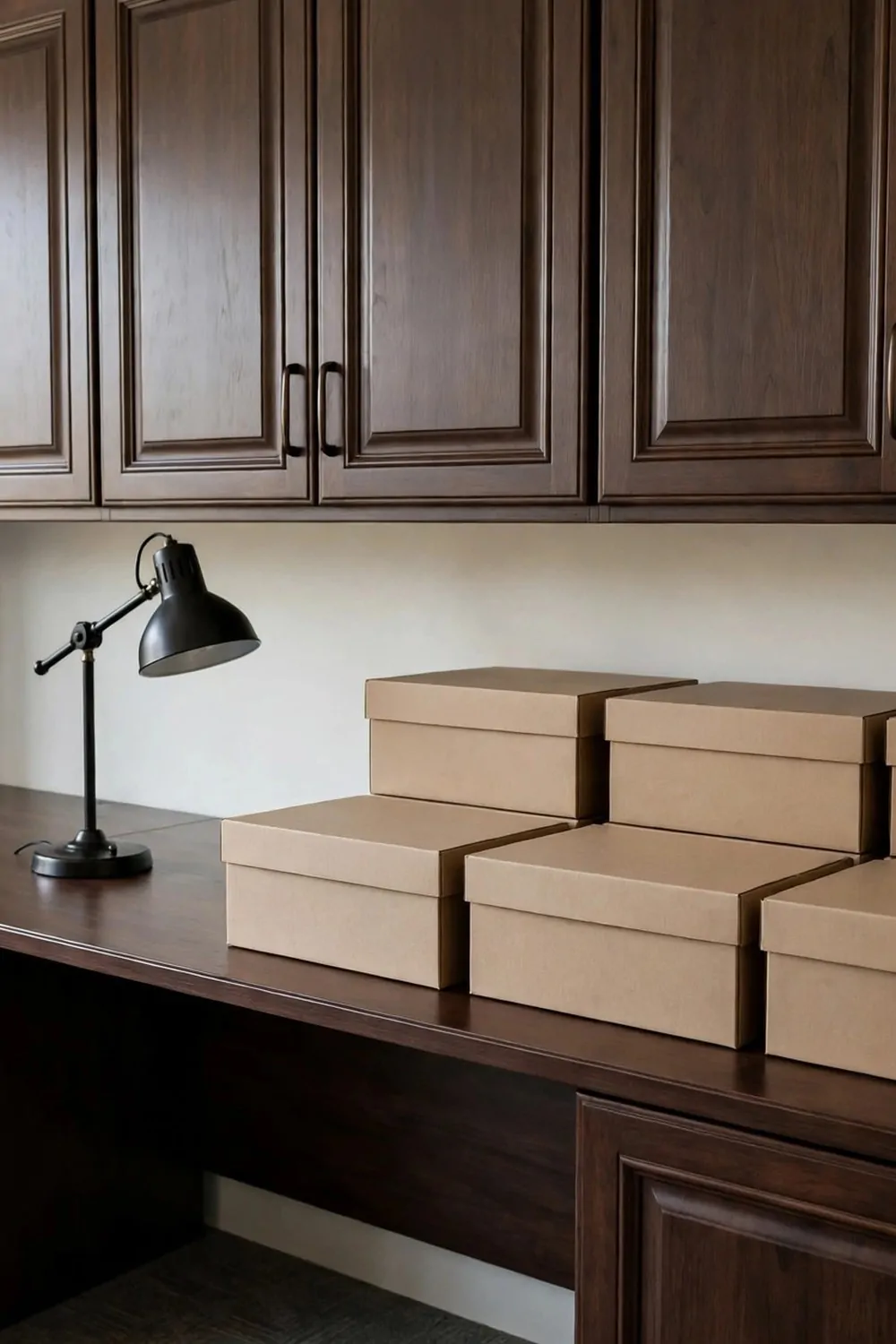
Closed cabinets are my favorite trick for a tidy office. You shut the door, and the mess just disappears.
I use one cabinet for paper, one for cables, and one for things I rarely use.
When everything has a spot, I stop losing things. Pick doors that close flat and smooth.
A door that sticks out or will not shut will annoy you, so check it before you buy. Label the inside of each door if it helps you.
A small note saves you from opening five doors to find one folder. Keep the tops of the cabinets clear if you can.
A clear top makes the room feel bigger, and it gives you a place to set a box while you sort. White cabinets make a small room feel bright.
Dark wood cabinets make a big room feel warm and rich, so pick what suits your space. I sort my cabinets once a month for ten minutes.
It is a small job, and it stops clutter from building up into a big job. Do not keep broken things in a cabinet just because you can hide them.
Closed storage is what makes an office look planned instead of busy. The room stays calm, and you can think clearly.
A Filing Wall That Keeps Papers in Order
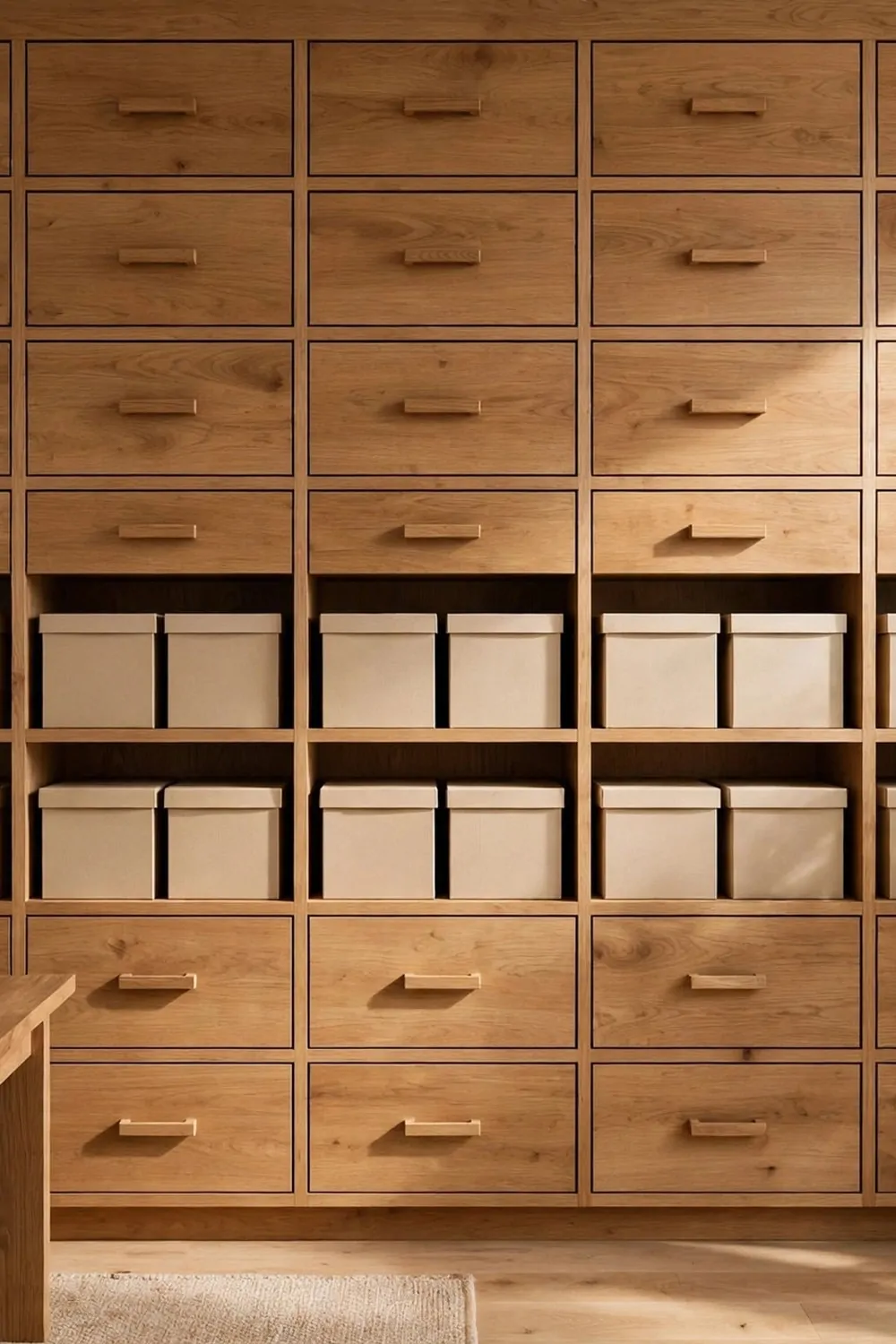
A filing wall sounds old fashioned, but it still works better than a pile.
Every paper gets a home, and you can find it fast. I use simple folders with clear labels.
Big words, plain names, no clever codes that I will forget next week. Sort papers into a few big groups first.
Bills, work, home, and ideas is enough to start, and you can add groups later if you need them. Put the folders you use most at arm height.
The ones you rarely touch can go high or low, out of your daily way. A filing wall works best near your desk.
You can file a paper in ten seconds, and you will actually do it instead of leaving it on the desk. I keep a small tray for papers that need action this week.
Once I deal with them, they go to the filing wall, and the tray stays empty. Use the same color folders for one group if you like order.
Shred old papers once a year. It frees up space, and it feels good to let go of paper you no longer need.
A tidy filing wall makes tax time and busy weeks much easier. You will not dig through piles, and you will not panic.
Warm Desk Lighting That Flatters the Room

Warm light makes an office feel kind at night. It softens the room, and it is much easier on your eyes than bright white light.
I use a desk lamp with a warm bulb.
I can aim it at my work, and the rest of the room stays soft and calm. Avoid one harsh light from above if you can.
It makes shadows on your face and on your desk, and it feels tiring after a while. Add a small lamp on a shelf or a side table too.
Two soft lights beat one strong light, and the room feels layered and warm. Pick a lamp that fits your desk size.
A huge lamp eats your space, and a tiny lamp will not light your papers well. I keep my lamp on the left side since I write with my right hand.
That way my hand does not cast a shadow over my words. Warm bulbs also make wood look richer.
Your desk and shelves glow a little, and the whole room looks more welcoming. If you work late, dim light helps you wind down. You can finish your last task without feeling wired and wide awake.
Good lighting is a small change with a big payoff. Your eyes feel better, and your office looks better too.
A Meeting Corner With Two Smart Chairs
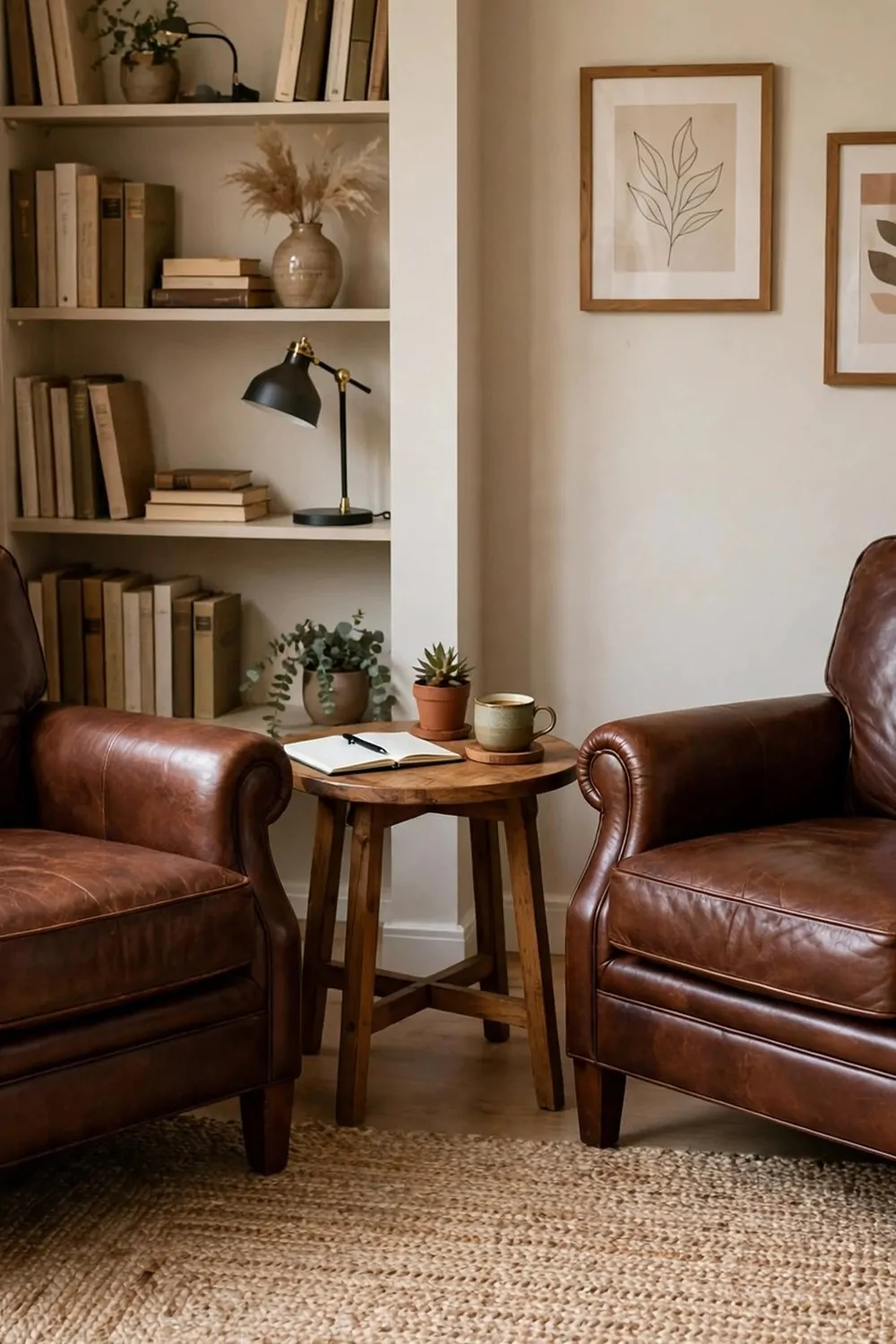
A meeting corner turns your office into a place where people can talk. Two chairs and a small table are all you need.
I place the chairs at a slight angle, not straight across from each other.
It feels friendly, and it is easier to talk that way. Pick chairs that are comfy but still look smart.
Soft seats, firm backs, and no wobble, so your guest can relax and focus. Add a small round table between the chairs.
It holds two cups and a notepad, and it keeps the corner from feeling empty. Keep this corner near the door if you can.
Your guest can sit down fast, and they will not have to walk past your whole desk. A small rug under the chairs marks the spot.
It tells your eyes this is a separate zone, and it makes the corner feel finished. I keep a pen and a notepad on the table at all times.
If a good idea comes up, I can write it down before I forget it. Good light matters here too. A floor lamp or a window nearby keeps faces bright, and talks feel warmer and easier.
This little corner makes your office feel like a real workplace. You can meet, plan, and chat without leaving the room.
| Zone | Best piece | What it does | Cost level |
|---|---|---|---|
| Desk wall | Solid wood desk | Sets the tone of the room | High |
| Storage wall | Closed cabinets | Hides clutter fast | Medium |
| Meeting corner | Two leather chairs | Makes talks feel easy | Medium |
| Reading corner | Armchair and lamp | A calm spot to think | Low |
| Window wall | Desk by the light | Free light all day | Low |
Dark Wood Paneling on One Feature Wall
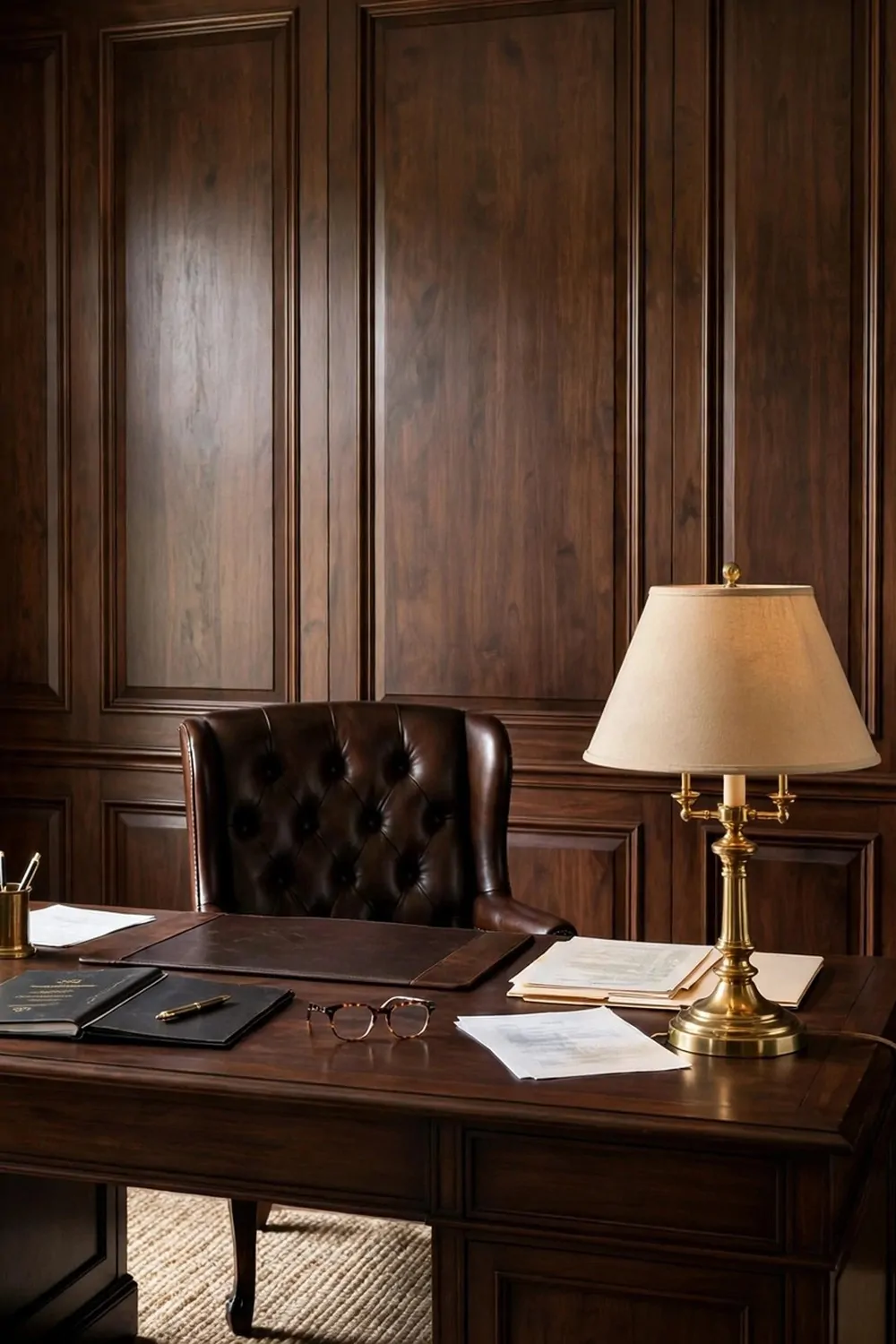
One dark wood wall can make a plain office feel rich and calm.
It adds depth without making the room feel dark all over. I like paneling behind the desk most.
It frames your workspace, and it looks great in video calls too. Keep the other walls light if you use dark wood.
The contrast keeps the room bright, and the dark wall becomes the star. Simple flat panels look clean and modern.
Fancy carved panels can look busy, so I keep the lines simple and straight. Dust the panels now and then with a dry cloth.
Wood shows dust more than white paint, and a quick wipe keeps it looking sharp. Pair dark wood with warm light and soft fabric.
A rug or a cushion stops the room from feeling cold or hard. Do not cover the whole room in dark wood unless it is very large.
One wall is enough, and it leaves the room feeling open. I also like a dark wood wall behind a reading chair. It makes a small corner feel cozy, like a quiet library nook.
This one wall does a lot of work for little effort. It gives the office a strong look, and it never goes out of style.
A Credenza That Holds the Printer and Supplies
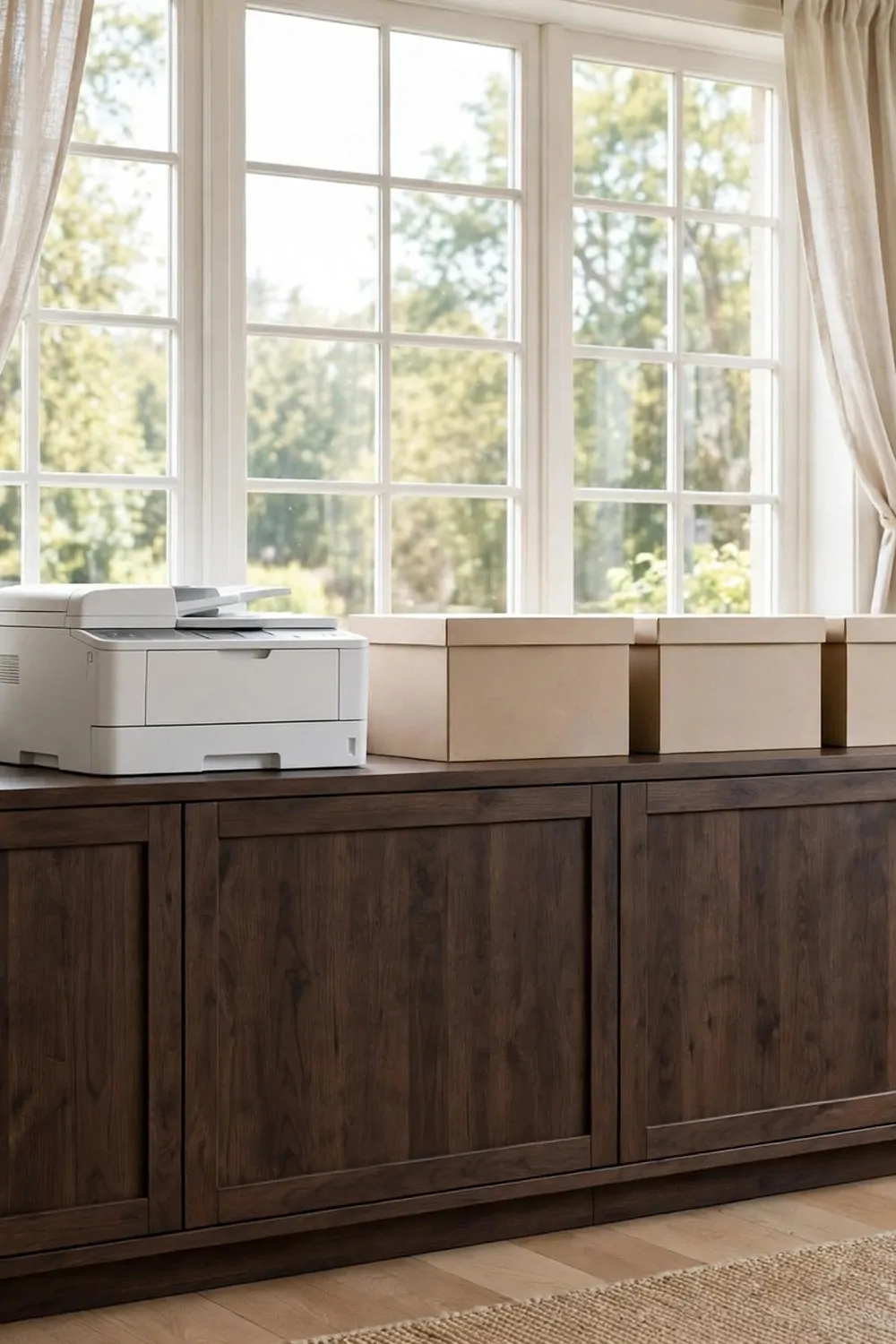
A credenza is a long low cabinet that hides the messy parts of office life.
Your printer lives inside, and the room stays neat. I keep my printer on a pull-out shelf inside the credenza.
I slide it out to print, then slide it back, and the top stays clear. Use the drawers for paper, ink, and cables.
Small boxes inside the drawers stop things from sliding around and getting lost. Pick a credenza that matches your desk wood if you can.
Matching wood ties the room together, and it looks like you planned it that way. Keep the top simple with one or two items.
A small plant or a lamp is plenty, and the rest of the space stays free. Measure your printer before you buy.
Some printers are taller than they look, and you want the door to close with room to spare. I keep spare paper in the left drawer and pens in the right one.
I always know where things are, and I do not waste time hunting. A credenza also gives you a spot to sort mail. I open mail there, file what I need, and toss the rest right away.
This piece is quiet and useful, and that is why I love it. It holds the clutter, and your desk stays free for real work.
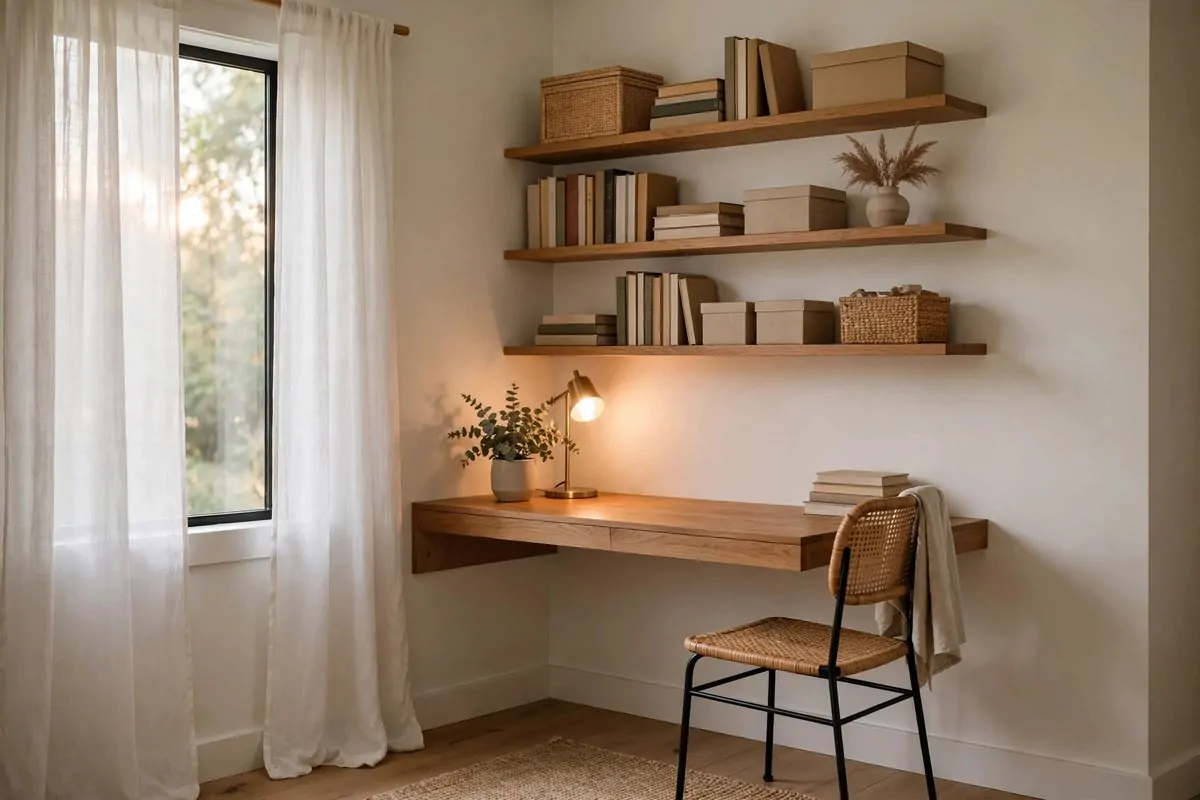
Floating Shelves for Books and Awards
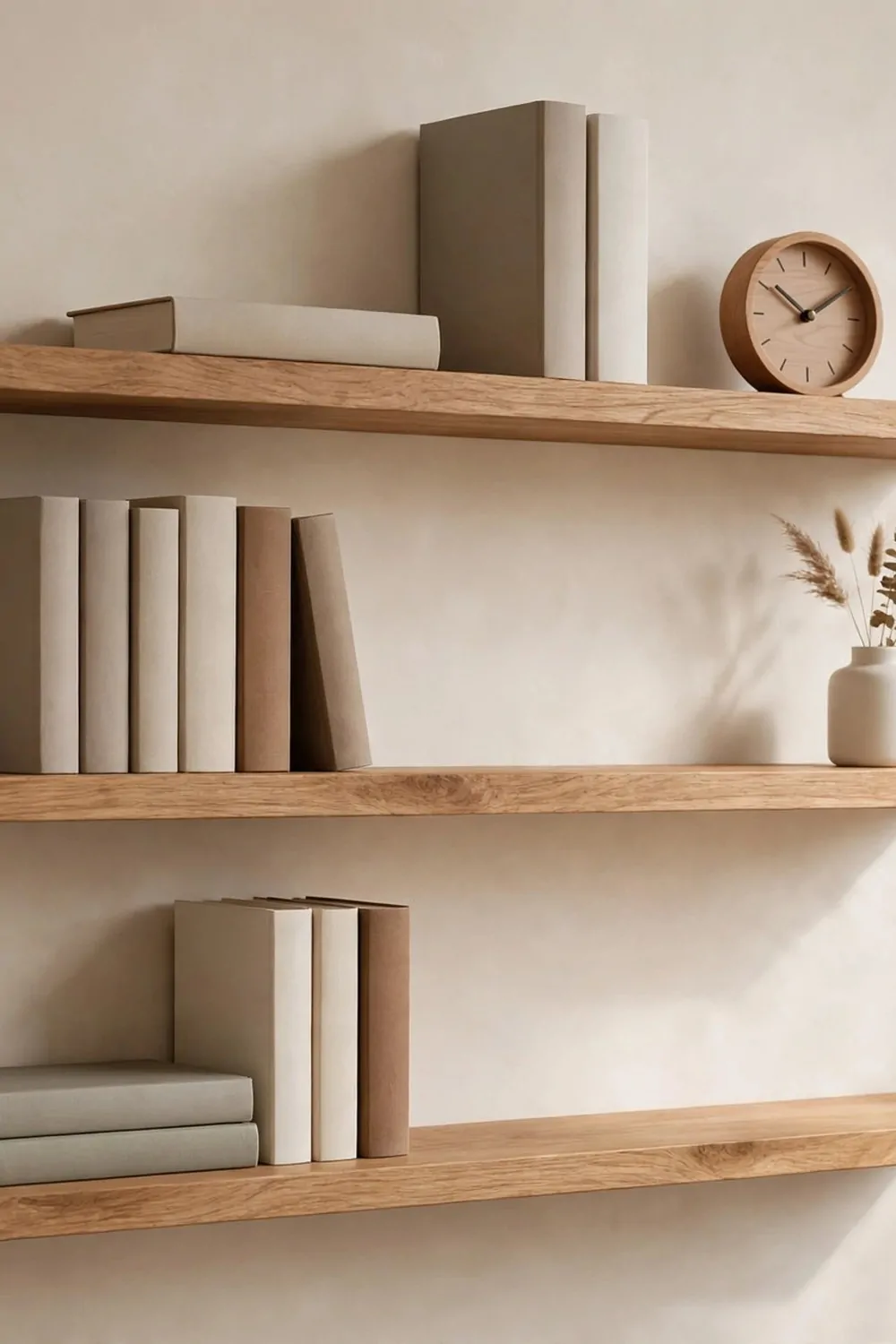
Floating shelves look light and clean because you cannot see the brackets.
They float on the wall, and they make a room feel modern. I use them for books I love and a few awards I am proud of.
They are on show, but they do not crowd the room. Hang them at eye level so you can enjoy them.
Too high and you will forget what is up there, and too low and they get in the way. Do not overload a floating shelf.
Heavy books can pull it down, so keep the load light and spread it out. Mix books lying flat with books standing up.
The mix looks relaxed, and it stops the shelf from looking like a library row. Leave a gap between shelves so each one can breathe.
Crowded shelves look messy, and spaced shelves look calm and planned. I dust my floating shelves once a week.
They are open, so dust shows fast, but a quick wipe takes only a minute. Use the same shelf color as your wall for a soft look. Or use wood shelves on a white wall if you want them to pop.
Floating shelves are a small change that makes a big difference. They show your story, and they keep your desk clear.
A Rug That Defines the Work Zone
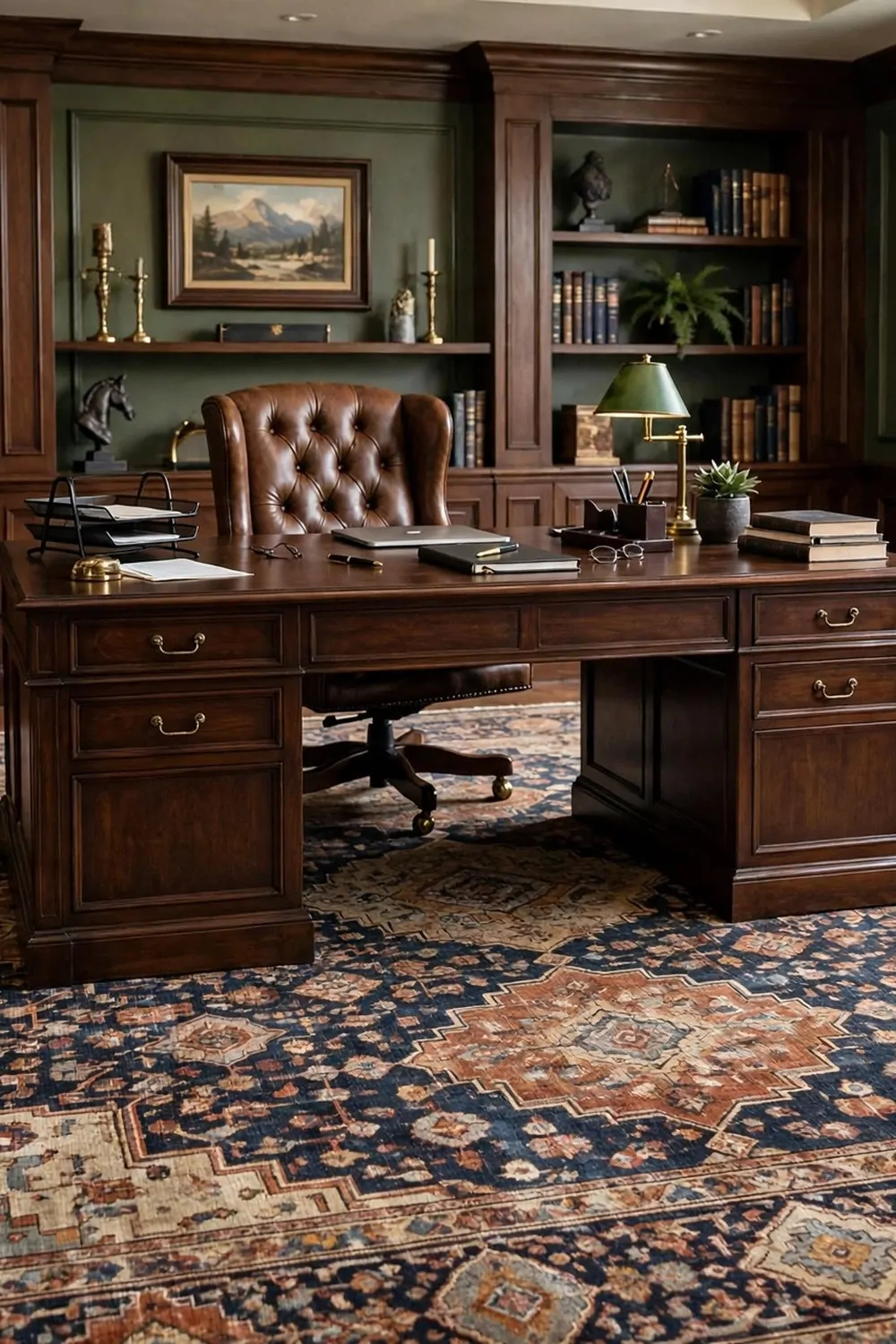
A rug under your desk tells your eyes where work happens.
It marks the zone, and the rest of the room feels separate. I pick a rug big enough for the desk and the chair.
If the chair rolls off the edge, the rug is too small, and it will annoy you daily. A low pile rug works best under a rolling chair.
Thick rugs catch the wheels, and you will fight the chair every time you move. Choose a pattern that hides a little dust.
Plain light rugs show every mark, and a soft pattern is much more forgiving. I like rugs in calm colors for an office.
Soft grey, warm beige, or deep blue all work well, and they suit most wood tones. Vacuum the rug once a week to keep it fresh.
A clean rug makes the whole room smell and feel better, and it only takes a few minutes. If your floor is cold, a rug warms it up fast.
Your feet stay warm, and the room feels cozy even on a winter morning. Do not let the rug bunch up at the corners. A flat rug is safe to walk on, and it looks much neater too.
A good rug is like a frame for your desk. It pulls the zone together, and your office starts to feel finished.
Built-In Drawers Under a Window Seat
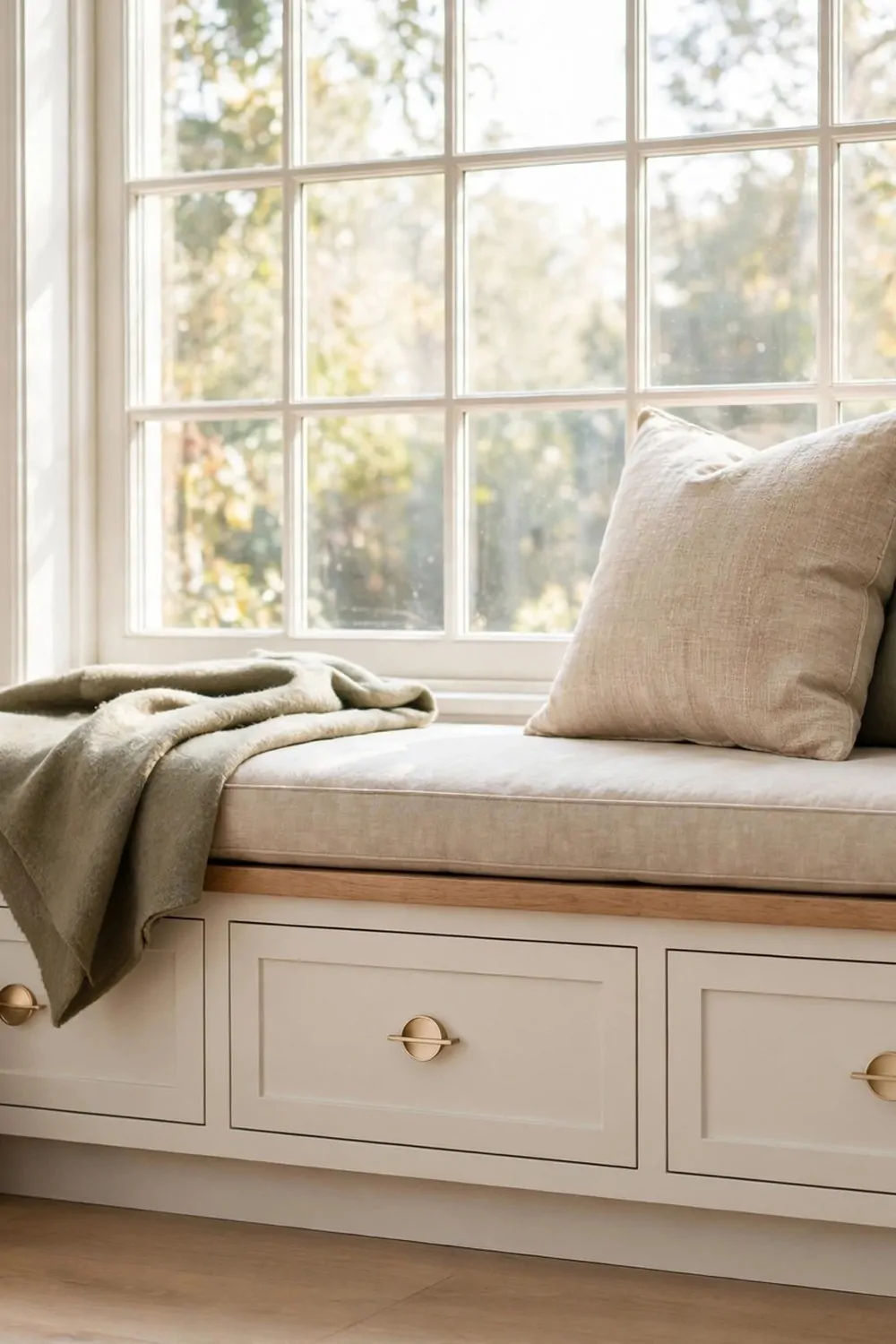
A window seat with drawers is one of my favorite smart ideas. You get a cozy seat and hidden storage in the same spot.
I use the drawers for notebooks, files, and chargers.
They are close to my desk, but they stay out of sight until I need them. Add a soft cushion on top of the seat.
It makes the spot comfy for reading, and it turns a plain box into a favorite seat. Keep the cushion color simple so it matches the room.
A plain cushion lasts longer in style than a loud one, and you can change it later. Put the drawers you use most in the middle.
The end drawers can hold things you rarely need, like spare cables or old files. I like a window seat near my desk but not behind it.
I can turn around, grab a file, and be back at my desk in seconds. Light from the window makes this spot great for reading.
I keep a small lamp nearby too, for cloudy days and late afternoons. Make sure the drawers open fully without hitting anything. Test them before you fill them, and you will avoid a daily frustration.
This seat does two jobs at once, and it looks lovely doing them. It is storage, a seat, and a sunny spot all in one.
A Standing Desk Hidden in a Classic Frame
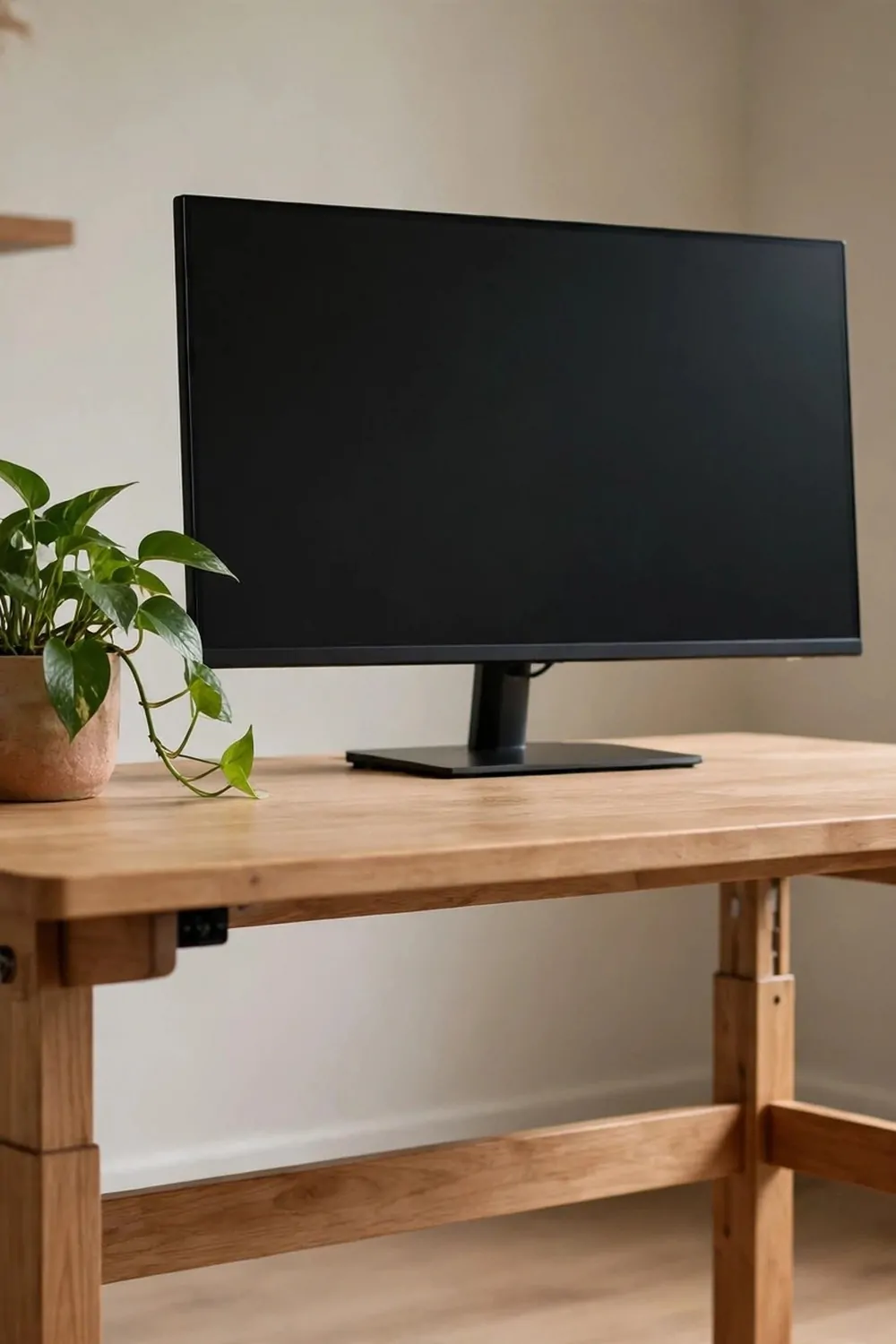
A standing desk helps your body, but it does not have to look like gym gear. A classic frame hides the motor and keeps the room smart.
I like a desk that looks like wood from the front.
The buttons are small and hidden, and guests would never guess it moves. Raise it for calls and lower it for deep work.
I switch a few times a day, and my back feels much better for it. Keep cables tidy with a simple tray under the desk.
Loose cables look messy, and they can snag when the desk moves up or down. Pick a frame that matches your other wood.
A matching frame makes the desk blend in, and the room stays calm and classic. I keep a small mat to stand on.
It cushions my feet, and it makes standing for twenty minutes feel easy. Do not stand all day at first.
Start with short bursts, and build up slowly, so your legs and back get used to it. A classic standing desk costs more than a plain one, but you use it every day. Your health is worth the extra cost here.
This desk gives you the best of both worlds. It looks timeless, and it moves when your body needs a change.
A Pin Board Wall for Plans and Notes
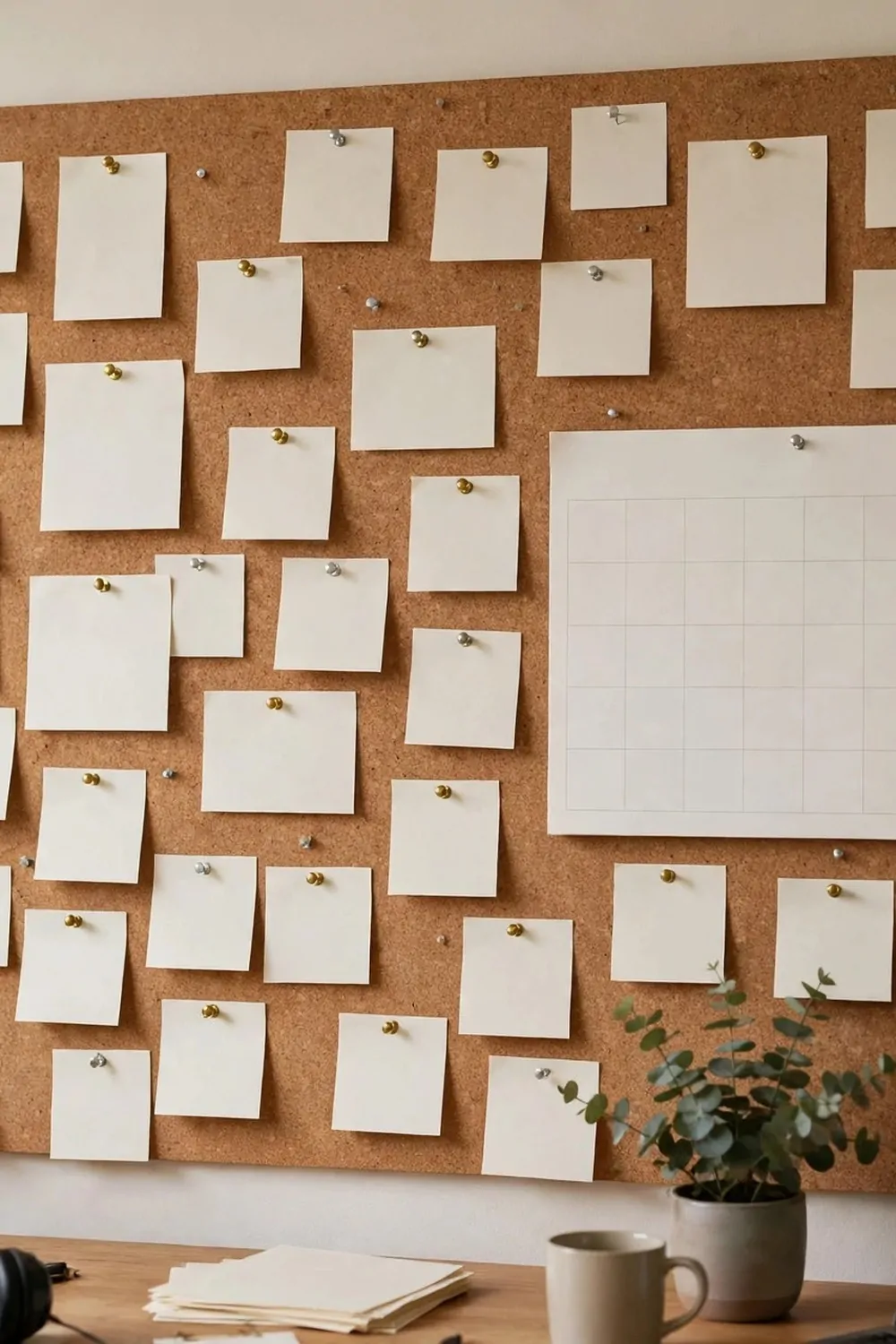
A pin board wall is a big board where your plans live in plain sight. You can see your week at a glance, and nothing gets lost.
I pin my top three tasks at the top.
When I finish one, I take it down, and the board feels lighter right away. Use big pins and clear notes.
Small writing is hard to read from your desk, and you will stop looking at the board if it is messy. Sort the board into simple zones.
Work on the left, home in the middle, and ideas on the right, so your eyes know where to look. Change the board every Monday morning.
Old notes go, new notes go up, and the board stays fresh and useful. I keep a small box of pins and spare cards nearby.
When an idea pops up, I can pin it in seconds before it slips away. Do not pin everything you own.
A board full of paper is just a wall of clutter, and it will stress you out instead of helping you. Use color to mark what matters most. One bright color for urgent tasks is enough, and the rest can stay plain and calm.
A pin board wall keeps your plans where you can see them. It is simple, cheap, and it works every single day.
A Coffee and Tea Corner for Slow Mornings
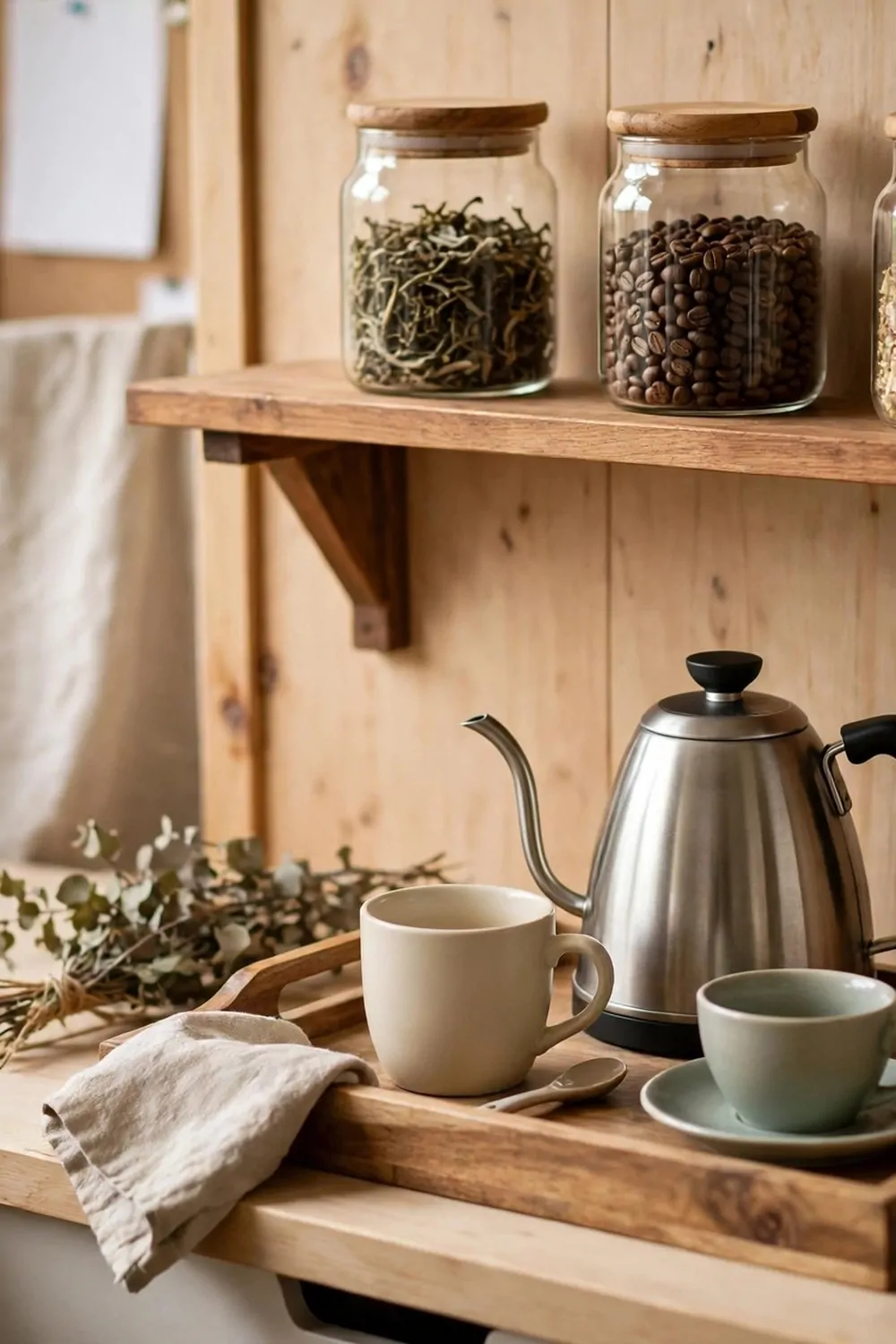
I love starting my work day with a warm cup in my hand. A small coffee and tea corner makes that easy.
You do not need a big space for it.
A little tray on a side table can hold your kettle, your mugs, and a small jar of tea bags. I keep my favorite mug right there so I never have to hunt for it. It feels like a tiny cafe in my own room.
Put the corner near your desk but not on it. That way your papers stay dry and your desk stays clear.
A small electric kettle is all you need.
I like to keep a few kinds of tea ready, like green tea and a soft herbal blend. Coffee lovers can keep a small jar of ground coffee and a simple pour over set. Pick what you drink most and skip the rest.
Add one small plant or a pretty cloth under the tray. It makes the corner feel warm and not just useful.
Clean the mugs each night so mornings start fresh.
I take five slow minutes with my tea before I open my laptop. Those quiet minutes help me think about the day ahead. You might find your best ideas come in that little pause.
A Reading Chair and Lamp in the Corner
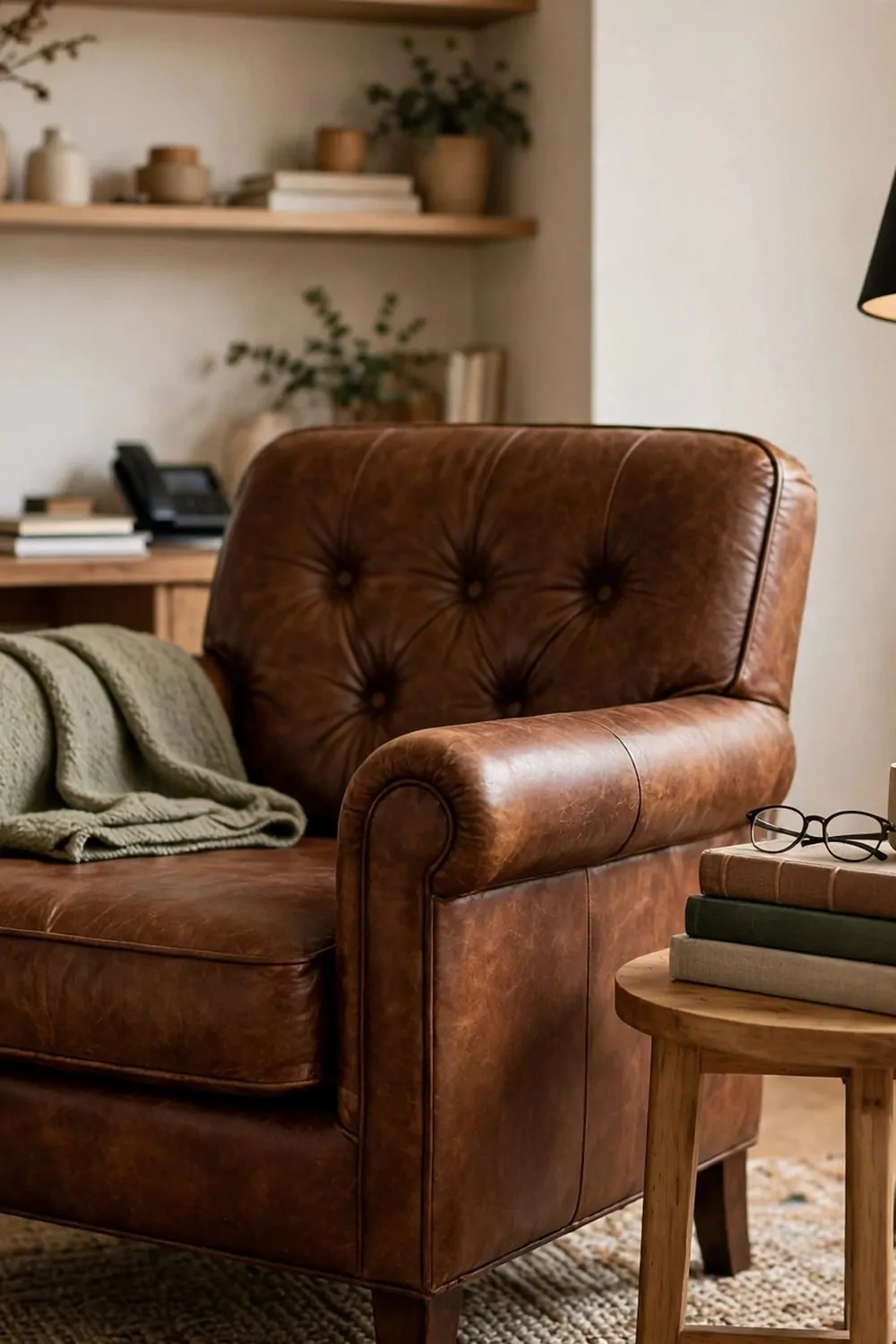
Every serious office needs a spot to sit and think. A reading chair in the corner gives you that place.
Pick a chair that feels soft but holds your back well.
I like a chair with arms so I can rest a book or a notebook on my lap. A small side table next to it holds my cup and my pen. It is my little thinking spot.
The lamp matters just as much as the chair. A warm lamp keeps your eyes calm in the evening.
Put the lamp behind your shoulder so the light falls on the page.
I keep a small stack of books on the side table, just two or three at a time. I pick them by mood, some days a story, some days a book about how people work. A small stack looks calm and never messy.
A soft blanket over the chair arm makes the corner feel kind. You will use the chair more if it feels like a treat.
Try to keep this corner free of work papers.
I sit there for ten minutes when my mind feels stuck. A short break in a good chair can fix a whole afternoon. You will be surprised how much a quiet corner helps.
Cable Management Built Into the Desk
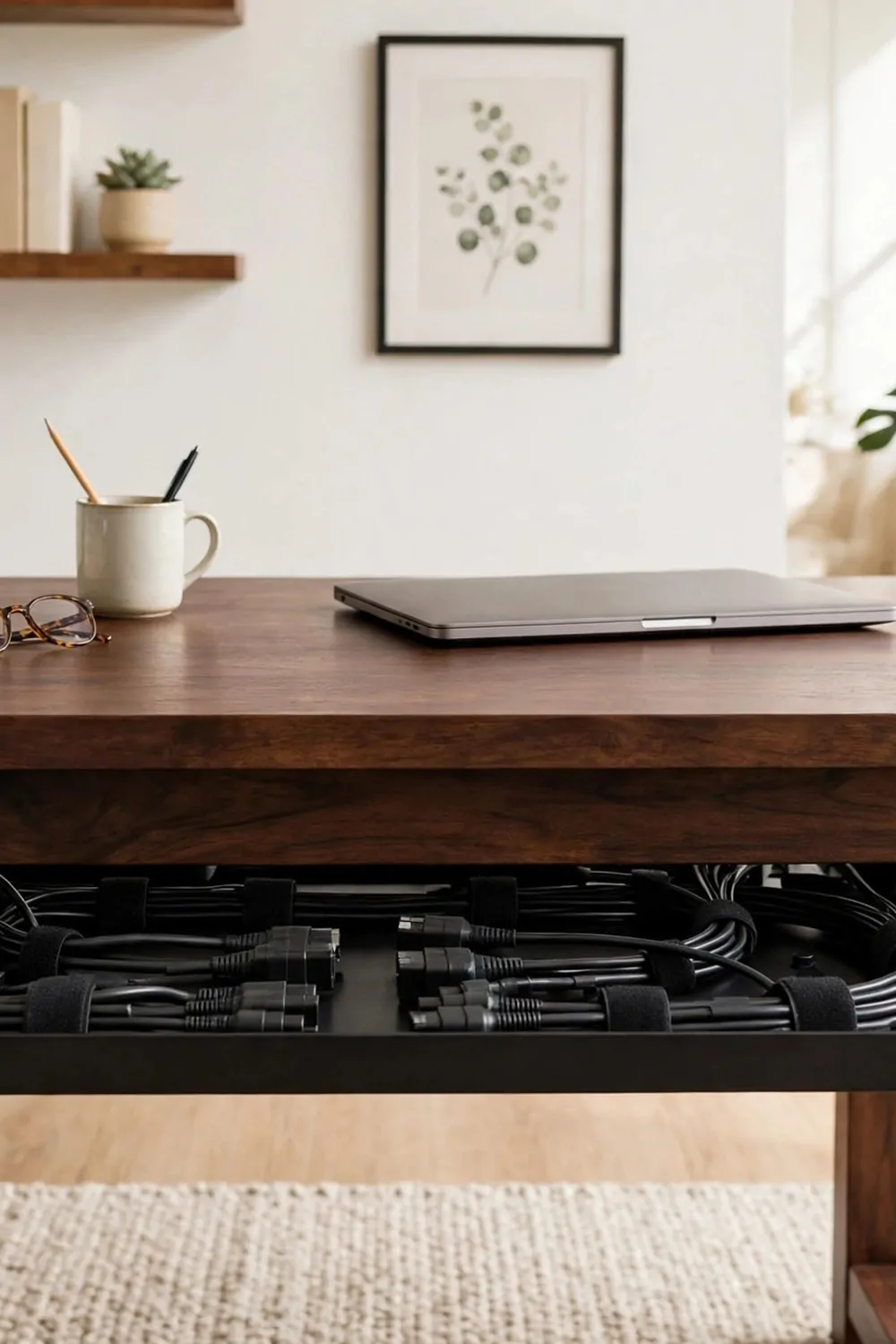
Cables can make even a nice desk look messy fast. A desk with built in cable paths keeps them out of sight.
I hate the tangle of wires under my feet.
Look for a desk with a small tray or a channel under the top. The tray holds your power strip and the extra wire length. You only see the short bit that plugs into your laptop.
A hole in the desk top helps too. The cord drops straight down and out of view.
Velcro ties are cheap and they work great.
I bundle my cords together once a month and check which ones I still use. Old chargers go in a drawer, not under the desk. A quick tidy keeps the mess from coming back.
Label the cords if you have a lot of them. A tiny tag saves you from unplugging the wrong thing.
Keep the power strip off the floor if you can.
When the cables are hidden, the whole room feels calmer. You can focus on your work instead of the mess. It is a small change with a big payoff.
| Material | Look | Best for | Care |
|---|---|---|---|
| Dark walnut | Rich and serious | Big statement desks | Oil once a year |
| Light oak | Warm and calm | Small bright rooms | Wipe with a damp cloth |
| Painted wood | Clean and neat | Cabinets and shelves | Wipe and touch up paint |
| Leather top | Soft and smart | Writing desks | Keep dry and wipe clean |
| Metal frame | Strong and plain | Standing desks | Wipe with a damp cloth |
A Wall of Closed Storage for Files and Boxes
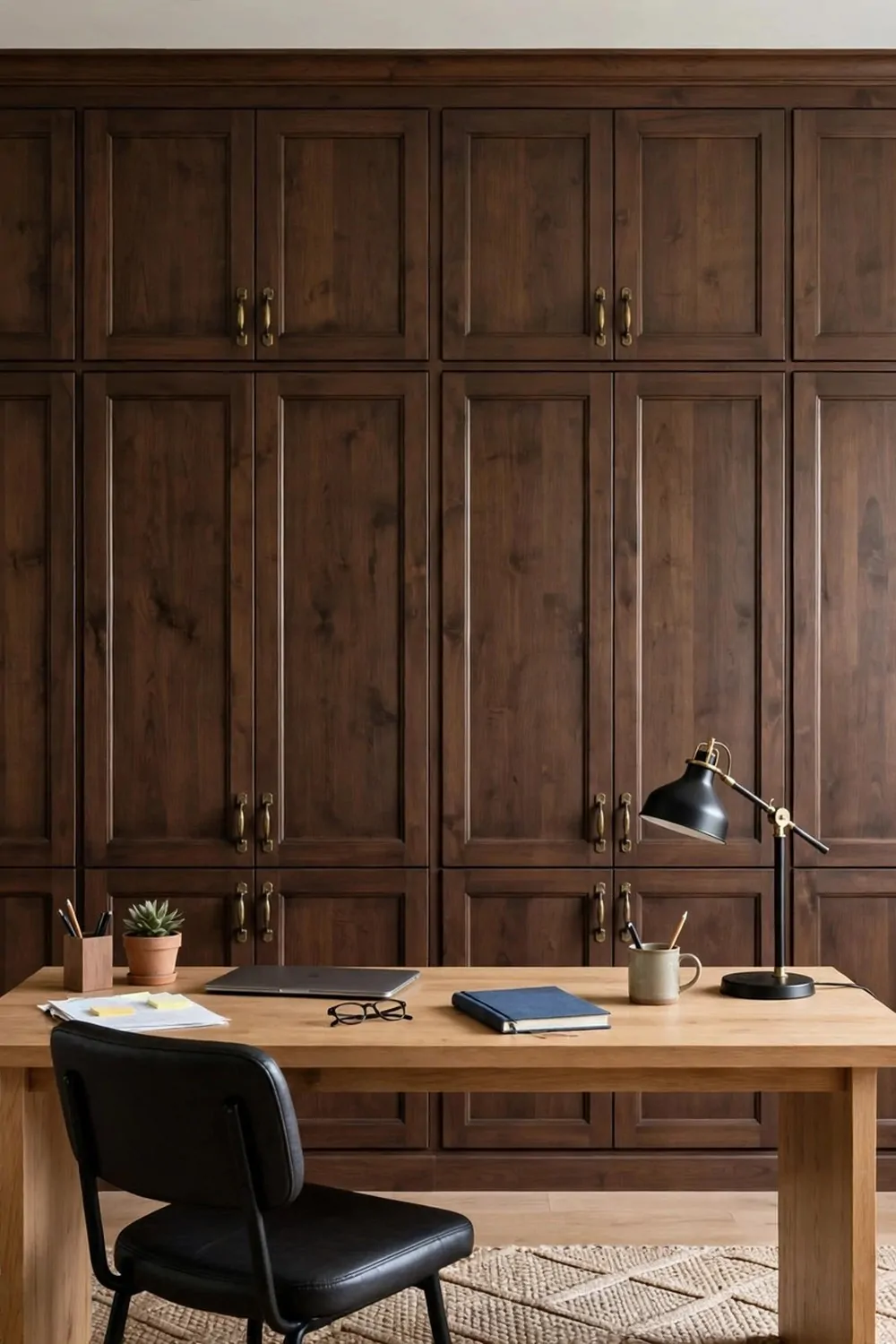
Closed storage is my favorite trick for a calm office. When the doors shut, the mess just goes away.
Files and boxes do not need to be on show.
A full wall of cabinets can hold years of papers, spare supplies, and old boxes. I put the things I use most at hand height. The rest goes up high or down low.
Pick doors that match your desk wood if you can. It makes the whole wall look like one calm piece.
Label the inside of each door so you know what lives there.
I keep one cabinet just for papers I must keep, like tax forms and contracts. Another holds printer paper, pens, and spare cables. When each thing has a home, I stop losing stuff.
Leave one shelf open for a few pretty things. A small plant or a framed photo softens the wall.
Shut the doors at the end of each day.
A tidy wall helps me think more clearly in the morning. You walk in and the room feels ready. That feeling is worth the cabinets alone.
A Second Desk for a Partner or Assistant
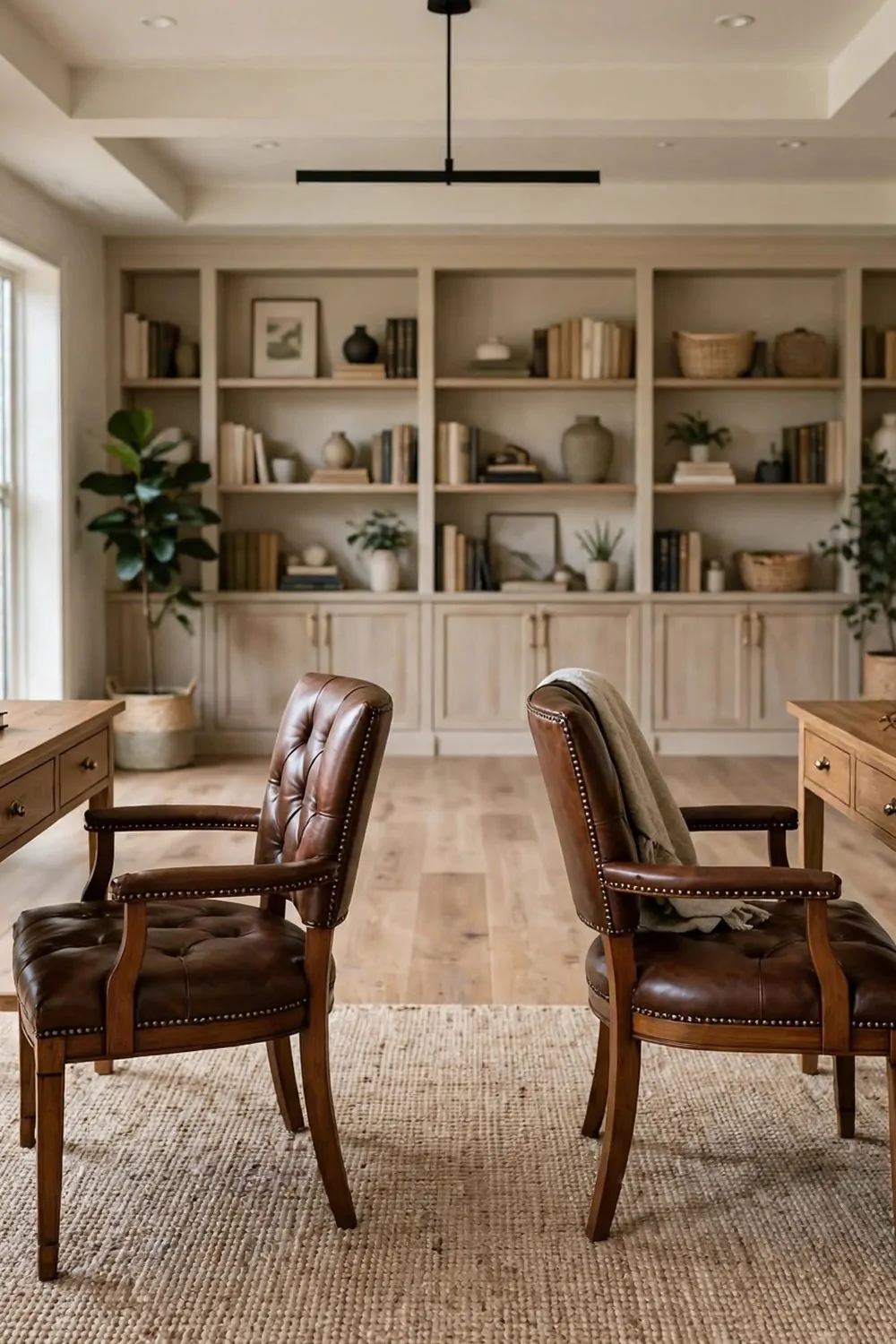
A second desk sounds like a luxury, but it can be simple. It gives a partner or an assistant a real place to work.
Two people can share one room without stepping on each other.
Put the desks on opposite walls if you have the space. That way you are not staring at each other all day. A little distance helps you both focus.
If the room is small, try two desks back to back. It saves space and still feels fair.
Each desk needs its own lamp and its own plug points.
I like to keep shared things in the middle, like the printer and the reference books. That way nobody has to cross the room to grab something. Small habits like this keep the peace.
Talk about quiet hours before you start sharing a room. A little plan saves a lot of small fights.
Two chairs that match make the room look planned.
A shared office can be a good thing when it is set up right. You get company and help close by. And you still have your own corner to call yours.
Framed Art That Sets a Calm, Serious Mood
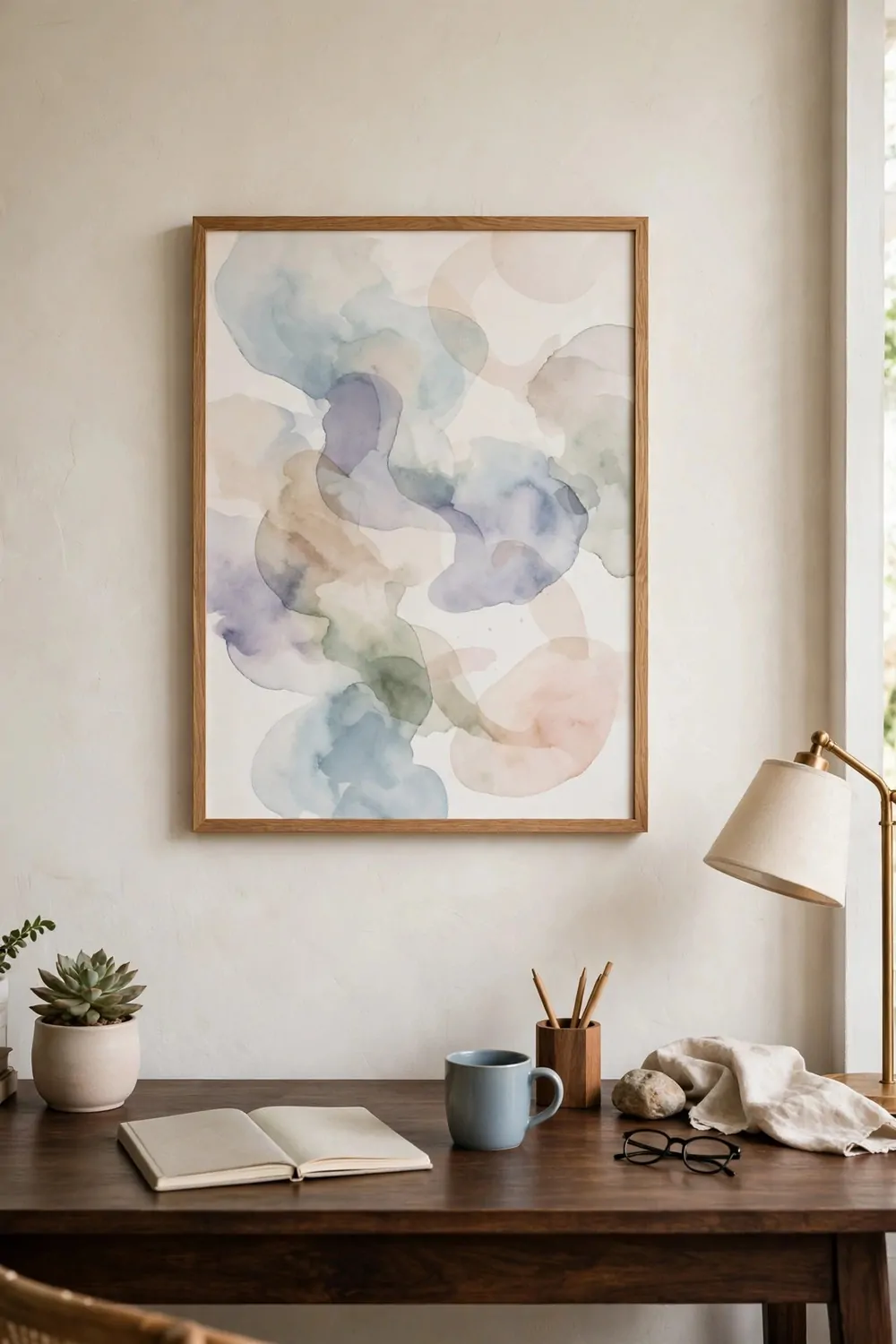
Art sets the mood of a room before you even sit down. A few calm frames can make an office feel serious and warm.
You do not need big or costly art.
I like simple prints with soft colors, like hills, trees, or quiet sea scenes. They calm my mind when the day gets busy. One or two large frames beat ten small ones.
Hang the art at eye level where you can see it from your chair. It should be part of your day, not just wall filler.
Match the frames to each other for a neat look.
Dark wood frames feel strong and classic in an executive room. Black frames feel sharp and modern. Pick the one that fits your desk and your mood.
Leave some empty wall space around the art. The blank space makes each piece stand out more.
Change one print now and then to keep the room fresh.
I look at my favorite print when I need a deep breath. It reminds me to slow down and think. Good art does quiet work all day long.
A Built-In Safe Drawer for Important Papers
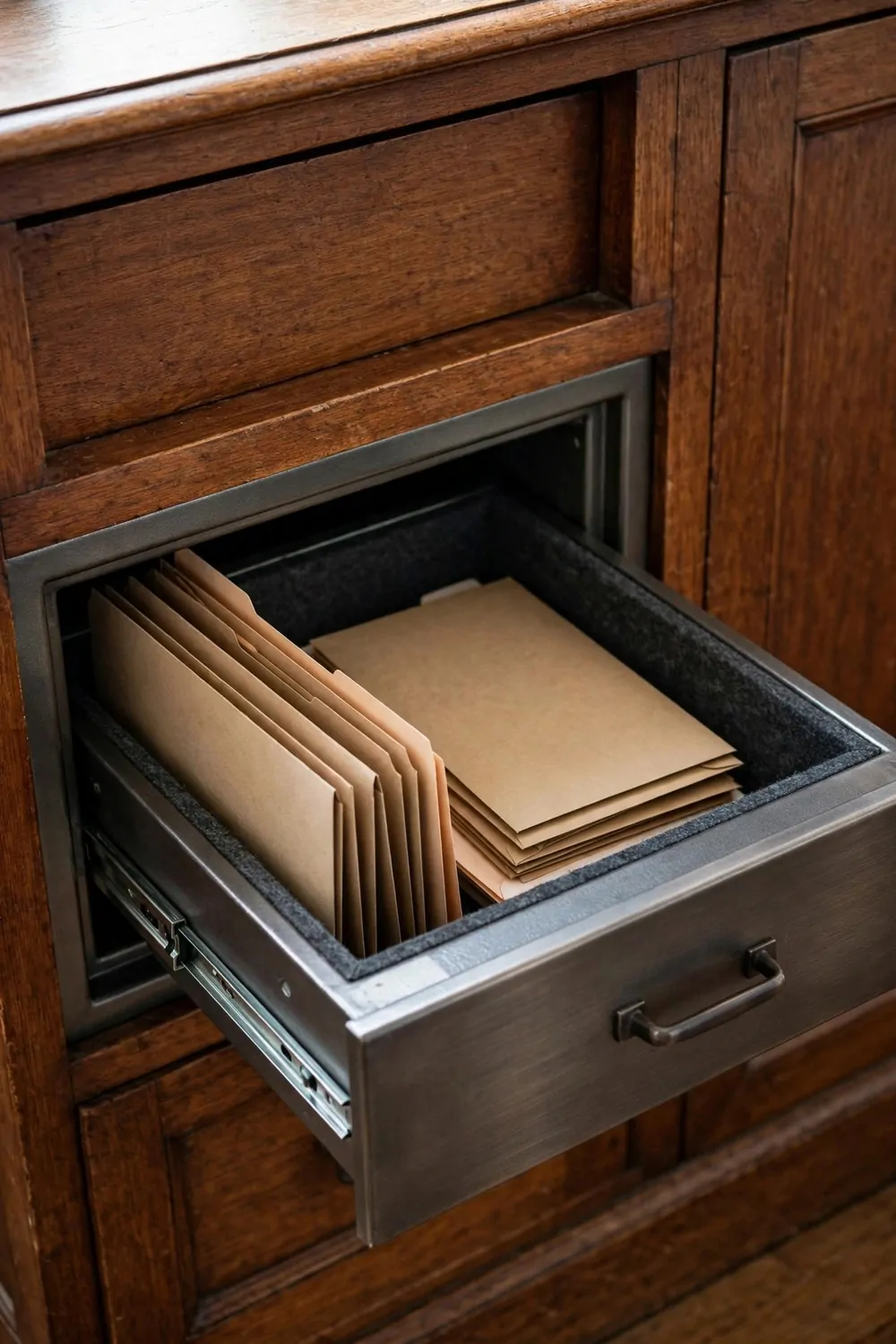
Some papers are too important to leave in a normal drawer. A built in safe drawer keeps them close and safe.
Passports, contracts, and spare keys all need a safe spot.
A safe drawer looks like any other drawer from the outside. Inside it has a small lock and a steel box. Only you know it is there.
Put it in the desk drawer you reach most. That way it is easy to use every day.
Keep the key or code in a place you will not forget.
I keep a little list of what is inside the safe drawer, but I keep that list somewhere else. It helps me find things fast without opening every drawer. Simple systems save time.
Do not fill the safe drawer with stuff you use daily. It is for the important things only.
Check the lock once in a while to make sure it still works well.
Knowing your papers are safe helps you relax at work. You can focus on the job and not worry. Peace of mind is worth a lot in a busy office.
A Whiteboard Wall for Big Ideas
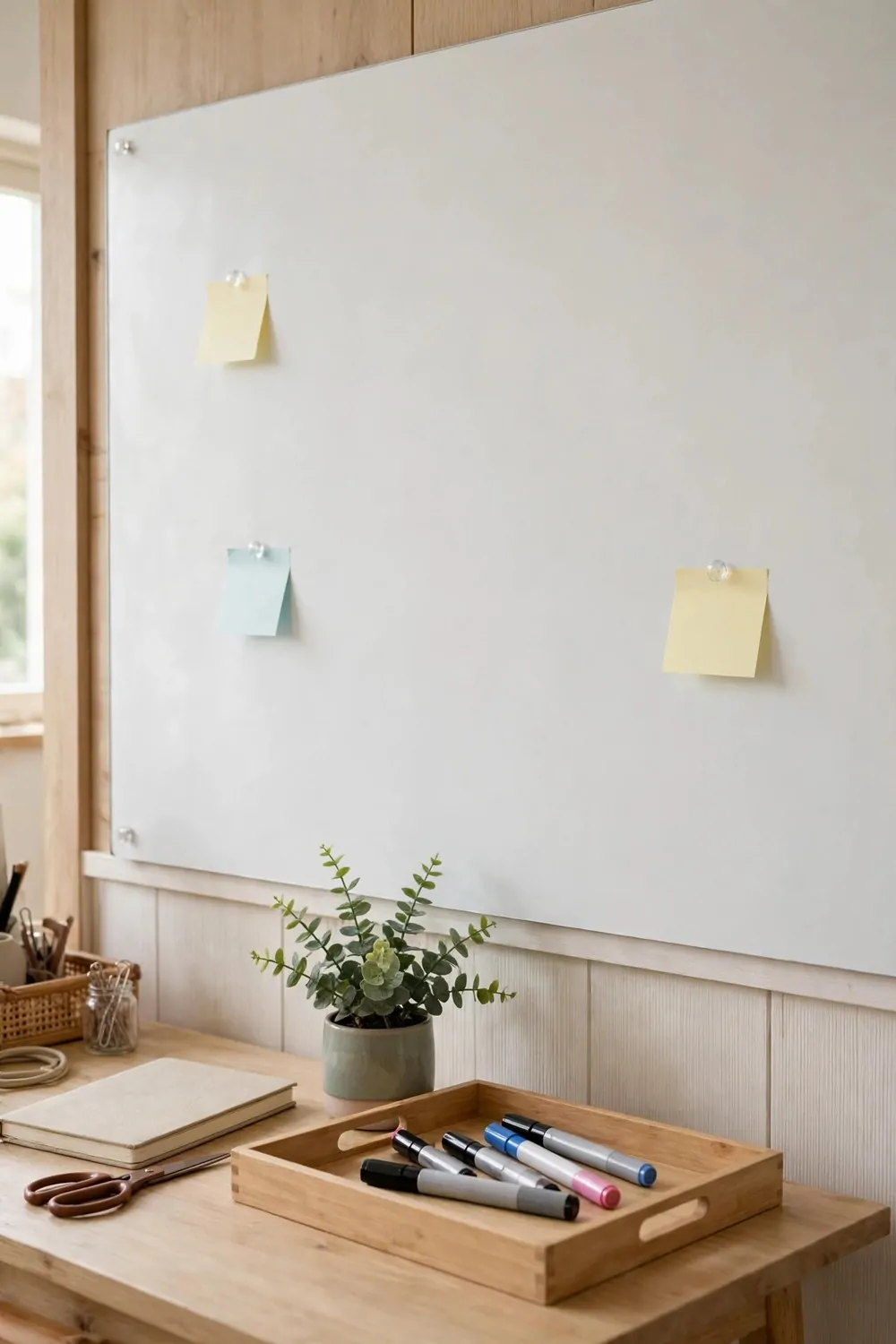
A whiteboard wall is the best place for big ideas. You can see your whole plan at once.
I think better when I can write it out big.
A full wall gives you room for lists, dates, and rough sketches. You can draw arrows and move ideas around. It beats a tiny notebook when the plan is big.
Use dark markers that you can read from your desk. Light colors look nice but they are hard to see.
Keep an eraser and spare markers in a small tray nearby.
I start each week by writing my three big goals on the board. Each day I tick off what I finish. Seeing the progress keeps me going.
Take a photo of the board before you wipe it clean. Good ideas should not get lost.
A whiteboard wall also works great for calls and planning with others.
When the wall is full, the plan feels real. You can point at it and talk it through. That is how big ideas turn into real work.
Plants That Soften a Serious Room
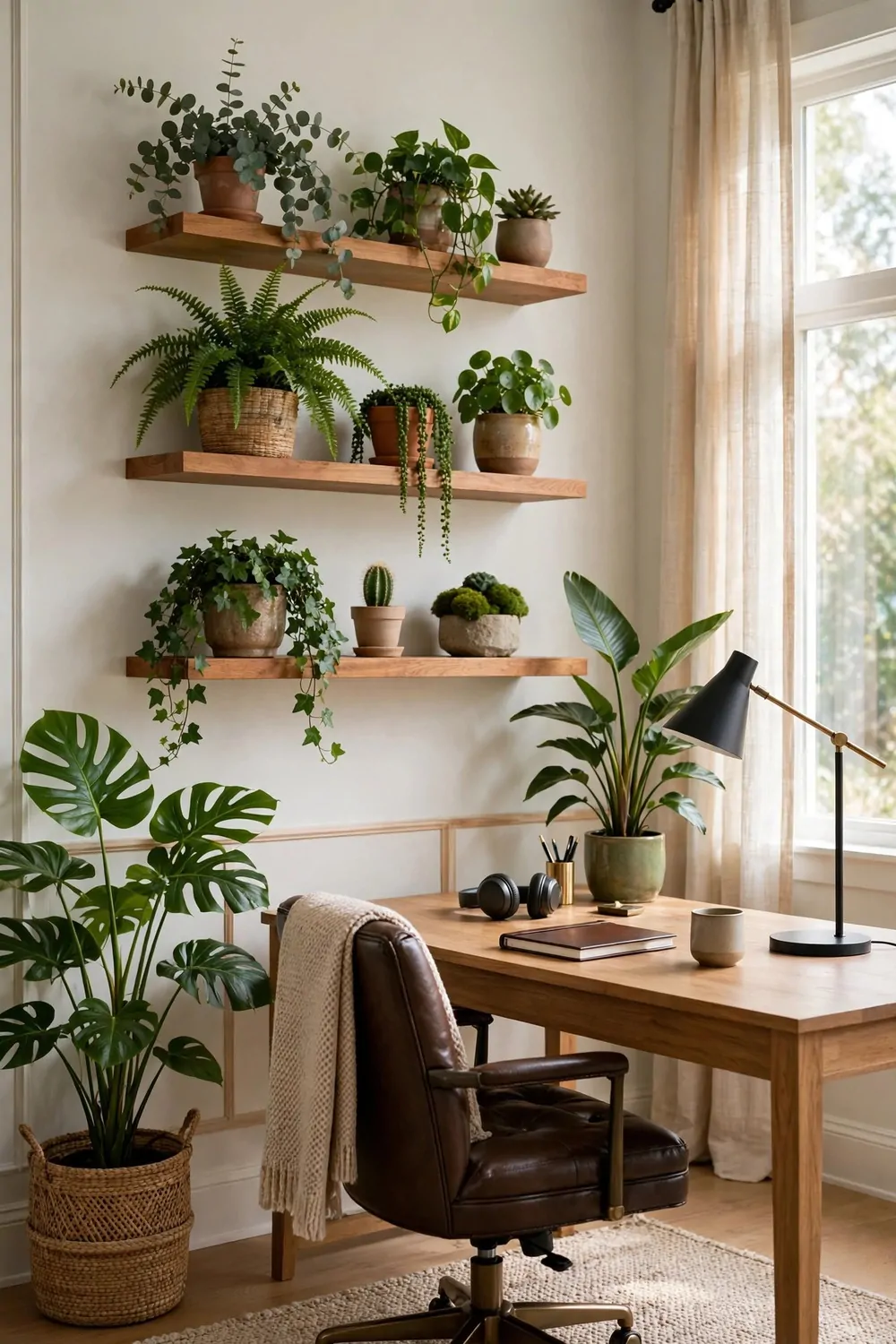
A serious room can feel too cold without something green. Plants soften the edges and make the air feel fresh.
You do not need a jungle, just a few good plants.
I like a tall plant in the corner by the window. It fills an empty spot and catches the light. A small plant on the desk adds life right where you work.
Pick plants that are easy to care for. A snake plant or a pothos can handle a busy week.
Water them on the same day each week so you do not forget.
A plant on a shelf breaks up a long wall of books and boxes. The green color rests your eyes after hours on a screen. I think every office needs at least one.
Use pots that match your room, like plain ceramic or dark wood. Pretty pots make the plant look like part of the plan.
Keep plants away from your papers so water never spills on them.
I smile a little every time I see my plants in the morning. They remind me the room is alive, not just a work box. A soft touch like that matters more than people think.
A Clock and Calendar Wall That Keeps You on Time
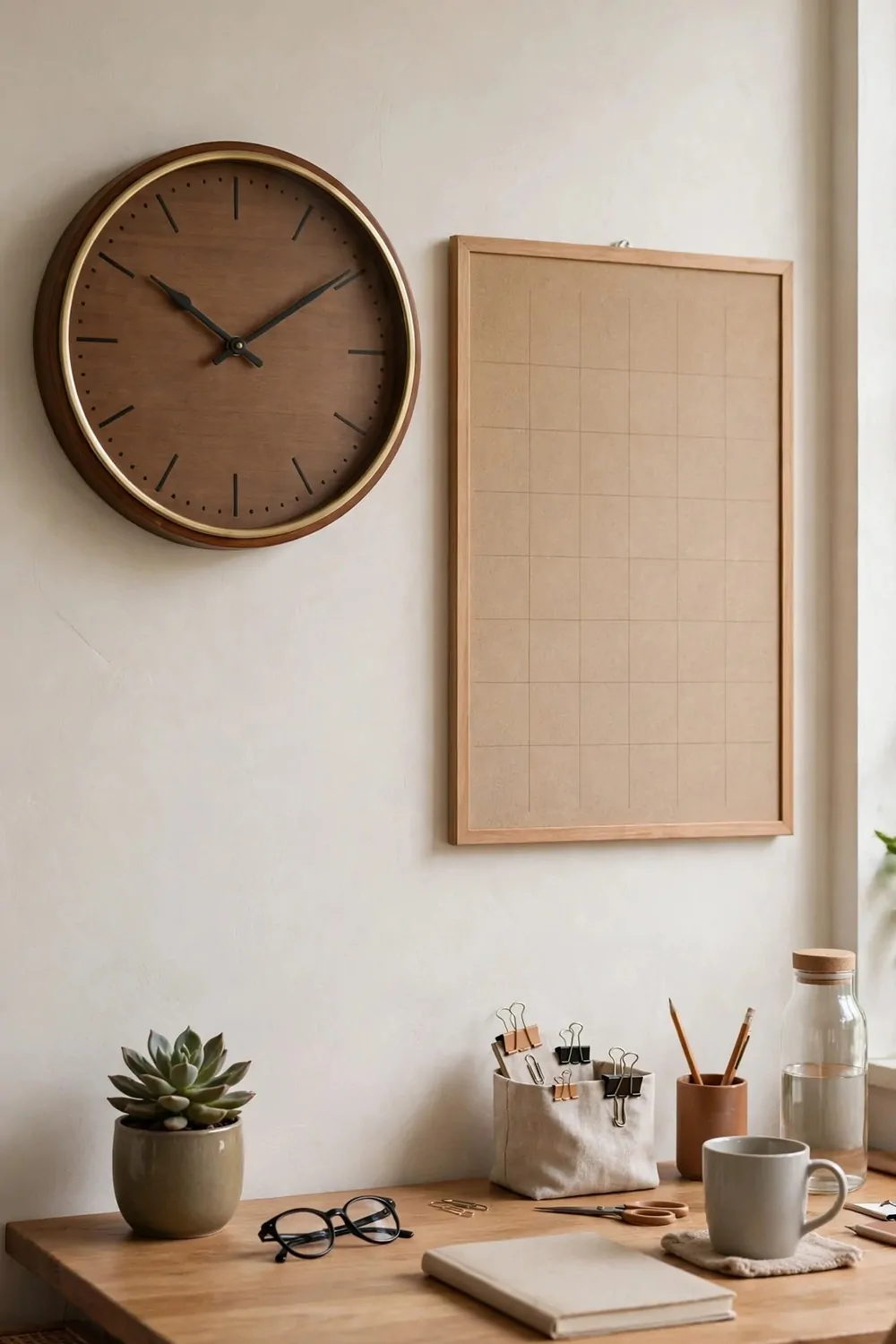
A clock and calendar wall keeps your day on track. You can see the time and the week at a glance.
I check my wall clock more than my phone.
A big round clock above the desk is easy to read from anywhere. Put a wall calendar next to it with your key dates marked. You will stop missing things.
Use one color for work dates and another for family dates. It takes two seconds and saves a lot of mix ups.
Keep the calendar at eye level so you see it often.
I write my big deadlines in bold so they jump out at me. Small tasks go in pencil because they change a lot. A wall plan feels more real than a phone buzz.
A small shelf under the clock can hold your pens and sticky notes. Everything you need for planning stays in one spot.
Change the calendar page on the first day of each month.
When time is in front of you, the day feels calmer. You know what comes next and you can plan for it. That little bit of order helps a lot.
A Guest Chair That Feels Like a Real Seat
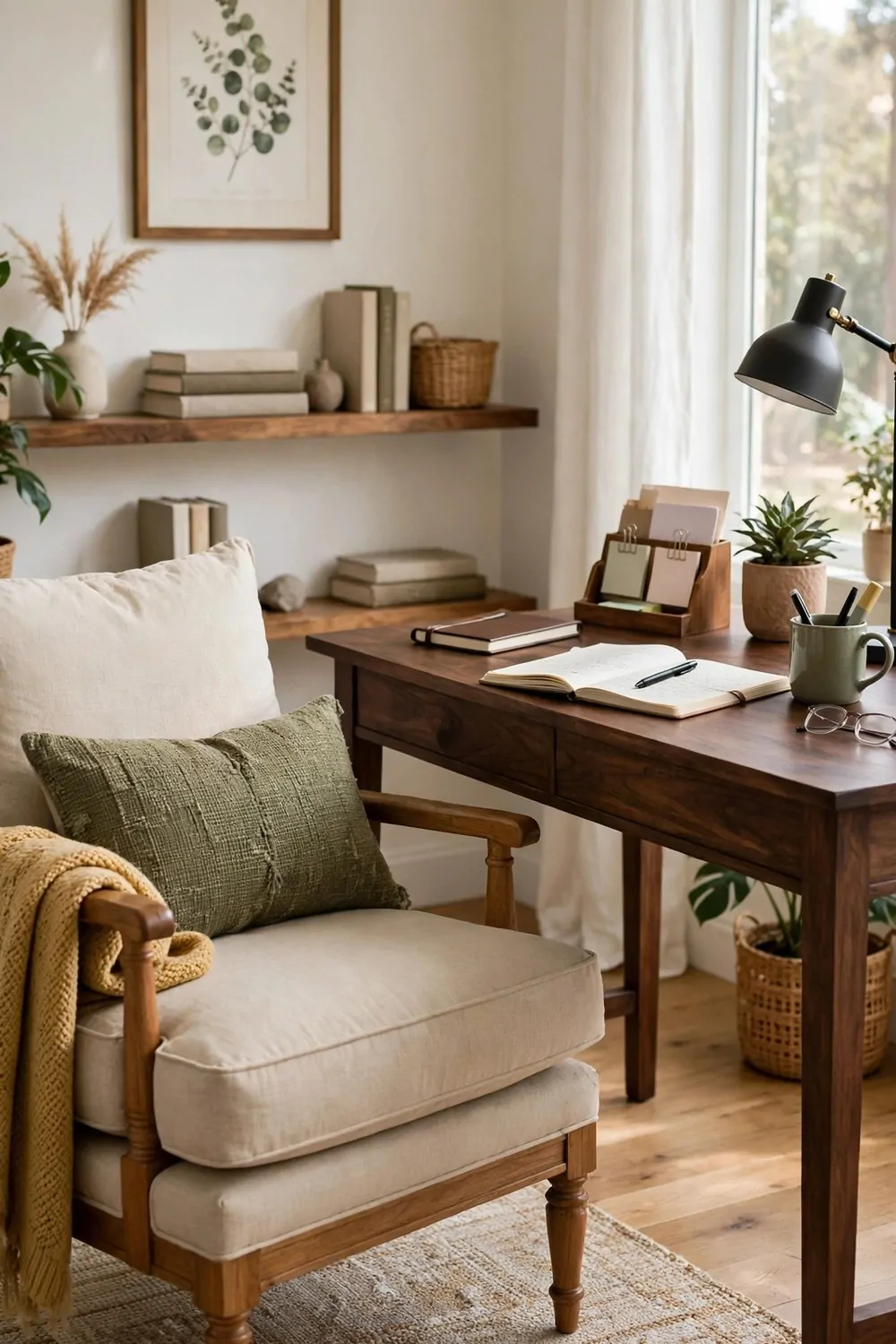
A guest chair should feel like a real seat, not an afterthought. When someone sits down in your office, they should feel welcome.
I learned this the hard way with a wobbly spare chair.
Pick a chair with a soft seat and a back that supports you. It does not have to match your desk chair, but it should look like it belongs. A good guest chair says you respect your visitor’s time.
Place it across from your desk with a little space between you. That feels like a talk, not an interview.
A small side table next to it is a kind touch.
I keep a glass of water ready when I know someone is coming. It is a small thing but it makes people relax. Good talks start when people feel at ease.
If your room is small, pick a chair that folds or slides under a table. Comfort matters more than size.
Test the chair yourself before you buy it.
A good guest chair turns quick chats into real talks. People stay a little longer and share more. That is how good work relationships grow.
A Charging Drawer That Hides Phones and Cables
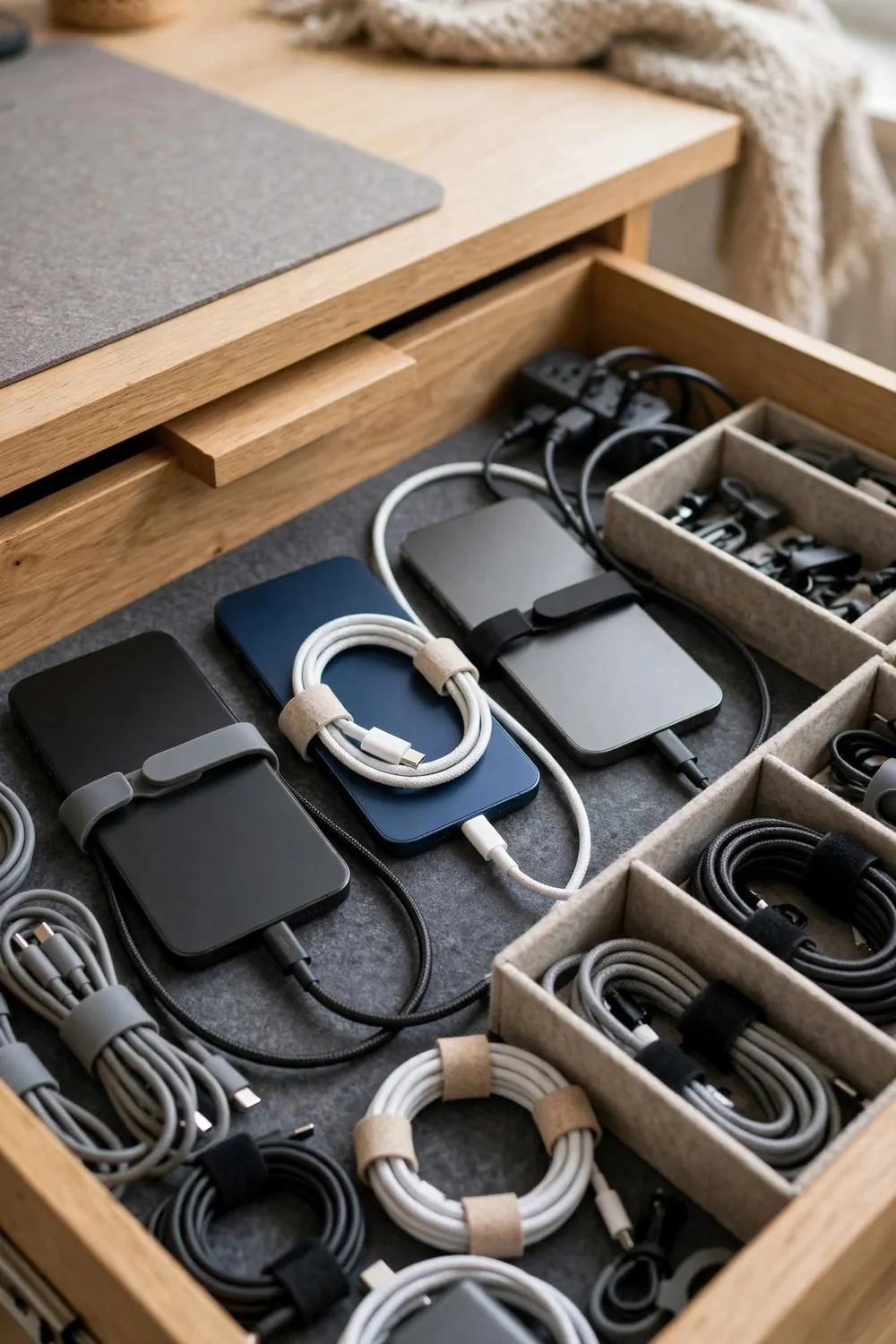
Phones and cables take over a desk if you let them. A charging drawer hides them all in one neat spot.
I got tired of wires all over my desk.
A charging drawer has plugs built inside, so your phone charges while the drawer stays shut. You open it, plug in, and close it again. The desk top stays clear and calm.
Keep one drawer just for charging and nothing else. That rule keeps it from turning into a junk drawer.
A small tray inside stops the cords from tangling.
I charge my phone, my earbuds, and my tablet in the same drawer. Each one has its own little spot. When I leave the room, I grab what I need and go.
Put the drawer near your desk so it is easy to reach. Far away means you will not use it.
Clean the drawer out once a month and toss old cables.
A clear desk helps me think more clearly. When my phone is out of sight, I check it less. That one drawer gives me back hours of focus each week.
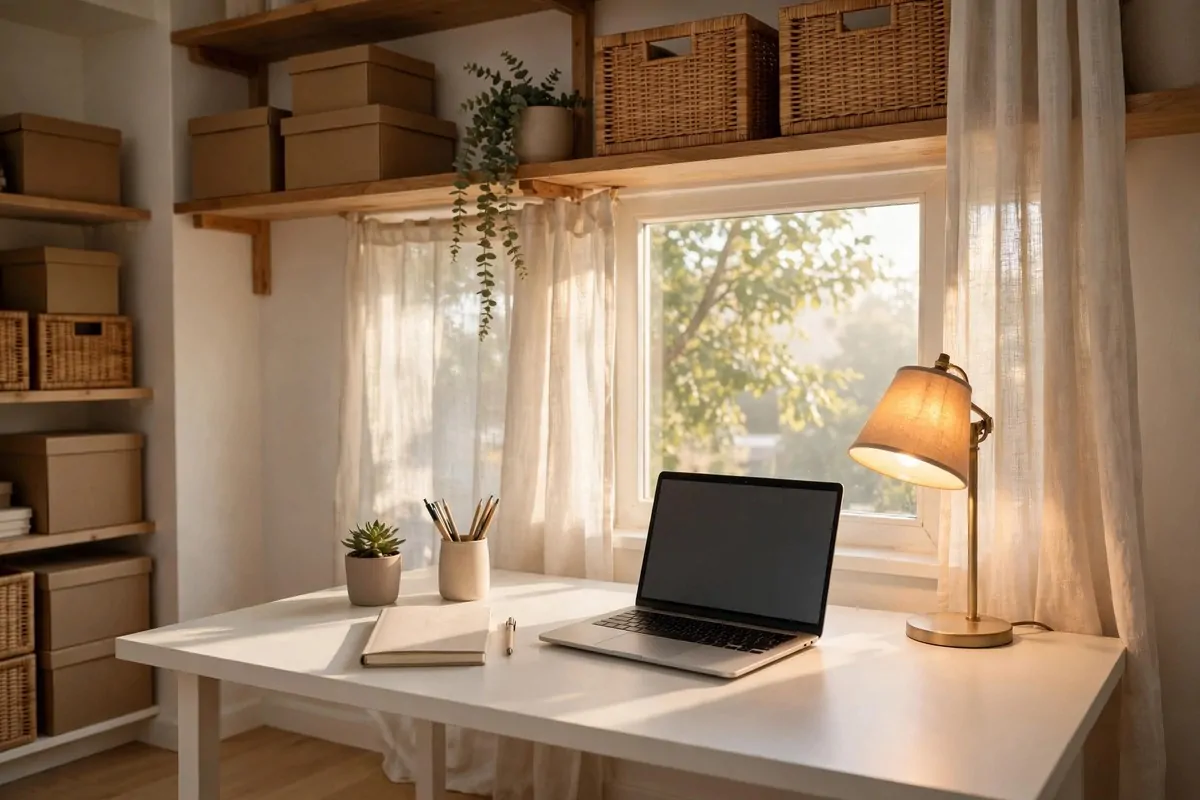
A Window Desk That Uses Natural Light
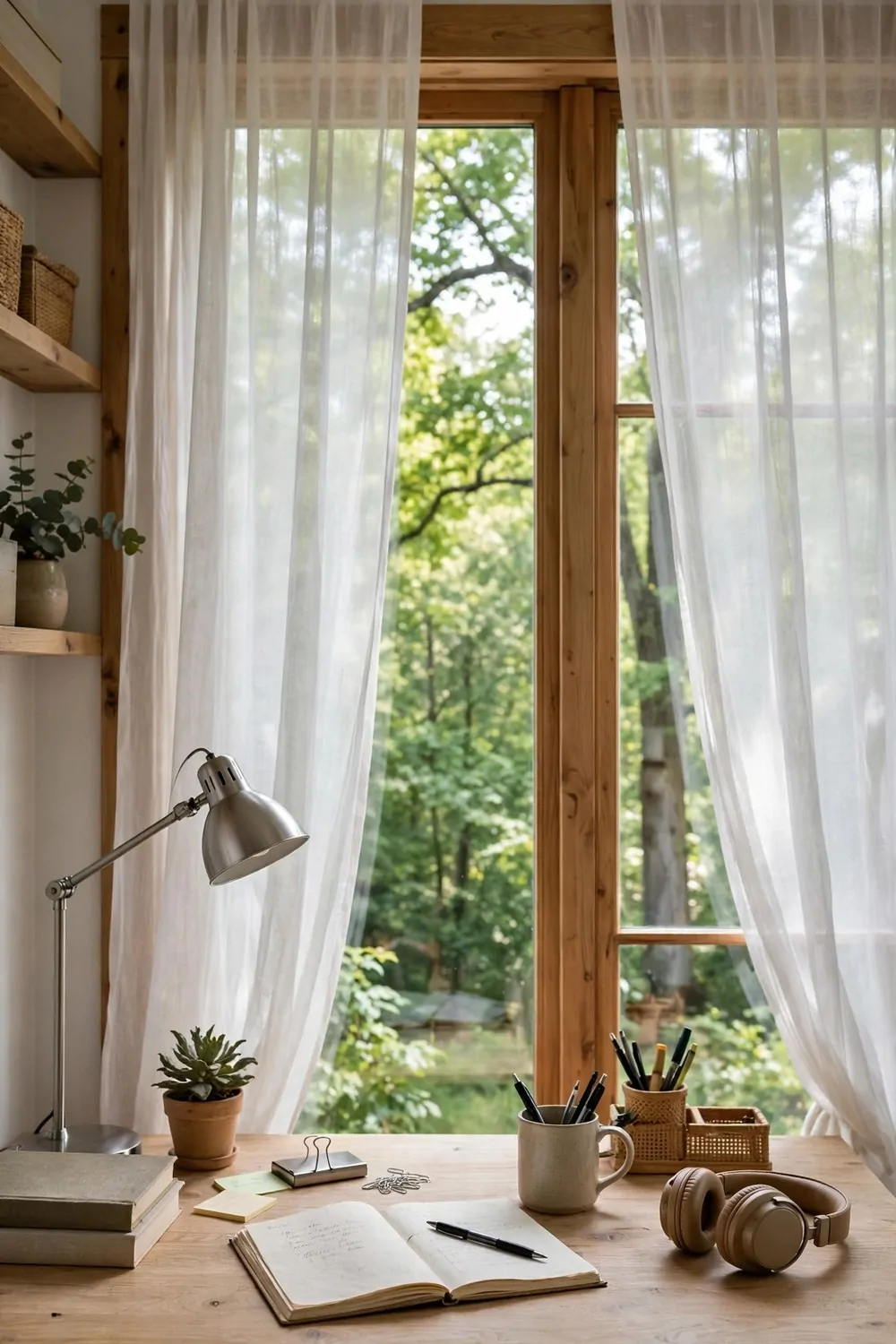
A desk by the window uses the best light in the house. Natural light makes work feel easier and brighter.
I do my best thinking in morning light.
Put your desk so the light comes from the side, not straight behind your screen. Side light means less glare and happier eyes. You can still look up and see the sky.
A sheer curtain softens strong sun without blocking it. You get the light without the heat on your face.
Keep the window sill clear for a plant or a small clock.
I open my window for a few minutes each morning, even in cold months. Fresh air wakes me up better than a second cup of tea. It makes the whole room feel alive.
Watch out for sun on your screen in the afternoon. A small blind you can tilt fixes it fast.
A window desk also gives you a view to rest your eyes on.
When the light is good, the whole room feels bigger. Work feels less heavy and the day moves faster. I would pick a window desk over any other spot.
A Whole-Room Plan That Ties It All Together
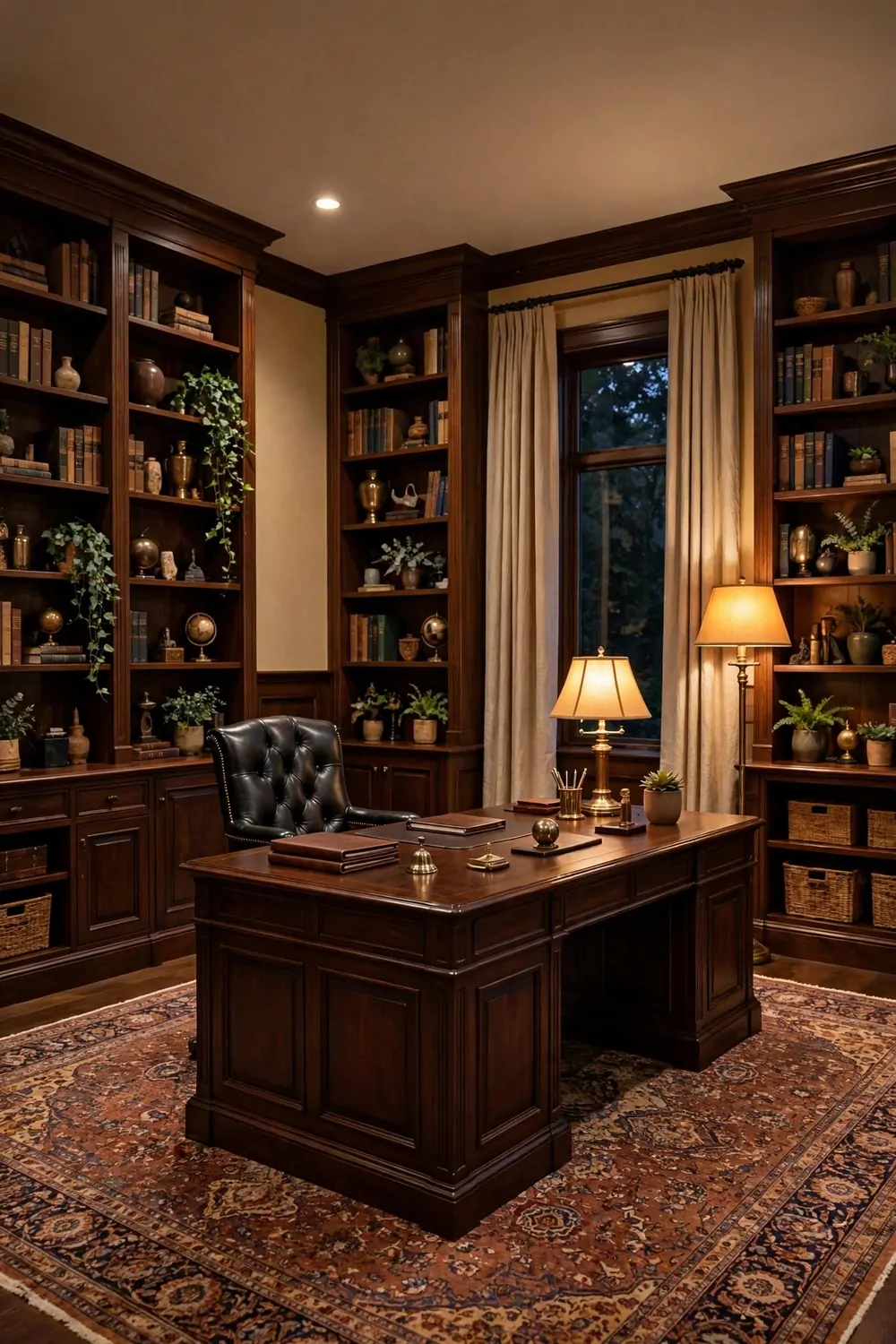
A whole room plan ties every piece together. It is the step that turns a pile of good ideas into a real office.
Start with a simple sketch on paper.
Draw your desk, your storage, and your chair spots before you buy anything. I measure the room twice so I do not guess wrong. A little planning saves costly mistakes.
Pick one wood tone and one main color for the room. Too many colors make a room feel busy.
Walk the path you will take each day and make sure it is clear.
I leave one wall mostly empty so the room can breathe. Not every inch needs furniture. Empty space is part of the design, not a waste.
Add light in layers, a ceiling light, a desk lamp, and a soft corner lamp. Each one has a job at a different time of day.
Live with the plan for a week before you change anything.
When the room works as a whole, your work feels easier. You know where everything is and the room feels calm. That is what a well planned office gives you every single day.
| Project | Size | Typical cost | Time |
|---|---|---|---|
| One good desk and chair | One corner | 150 to 300 dollars a foot | One weekend |
| Built-in shelves and cabinets | One full wall | 150 to 300 dollars a foot | A few weekends |
| A whole executive office | Whole room | 400 dollars a foot and up for premium work | A few weeks |
Keep Reading
I hope these ideas help you shape an office that feels like yours. A good room grows with you, one small change at a time.
Start with the one idea that made you smile.
If you want more built in storage ideas, the posts below are full of them. I picked ones that fit this room so well. Take a look when you have a quiet minute.
- 30 Custom Built-In Shelving Ideas for Every Room
- 44 Hidden Built-In Storage Ideas for Modern Homes
- 38 Custom Wardrobe Designs for Beautiful Organized Bedrooms
- 41 Custom Closet Lighting Ideas That Transform Your Wardrobe
Your office should work hard and feel calm at the same time. I wish you many good work days in it.