19 Mini Gym at Home Ideas Garage Builds That Beat a Membership

At seven in the morning, my garage is a gym. By seven in the evening, it is just a garage again, and the car sits right where the bench was.
I like that deal more than I ever liked my gym membership. And honestly, the workouts got better once the drive went away.
This list has 19 builds that work in real garages. Small ones, dusty ones, ones that still park a car.
1. Start With the Floor, Not the Gear
Everyone wants to buy a rack first. I get it.
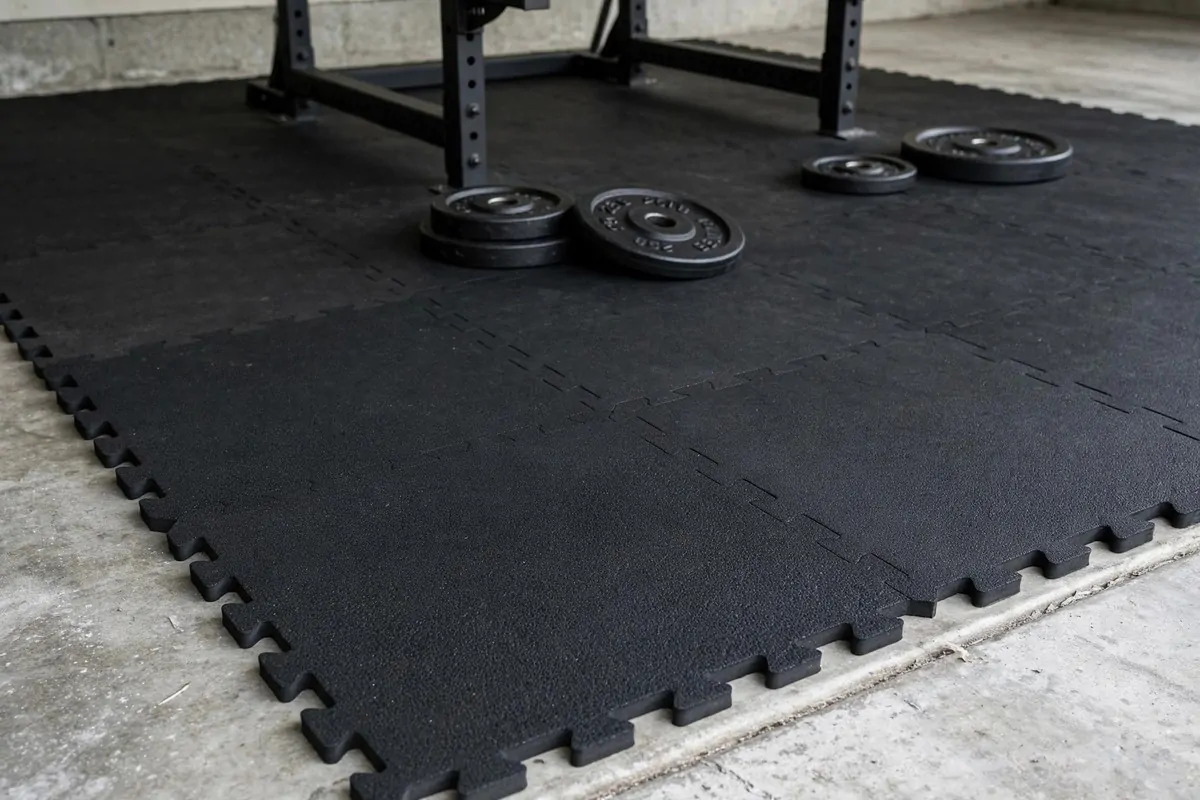
But the smartest first move is the floor. Bare concrete is hard on your joints, and it gets slippery when you sweat.
Thick rubber mats fix both problems in one afternoon. They also protect your weights when you set them down.
And here is the part nobody tells you. A nice floor makes the whole garage feel like a real gym. It is funny how much difference one layer makes.
Foam tiles work too if money is tight. They are softer, lighter, and easy to replace.
Start with the zone where you lift most. You can cover the rest later.
Honestly, I wish someone had told me this first. I bought a bench before mats and regretted it for months.
Measure once, order the mats, and lay them on a dry day. You will thank yourself every single workout.
2. The Fold-Back Rack That Saves Your Parking Spot
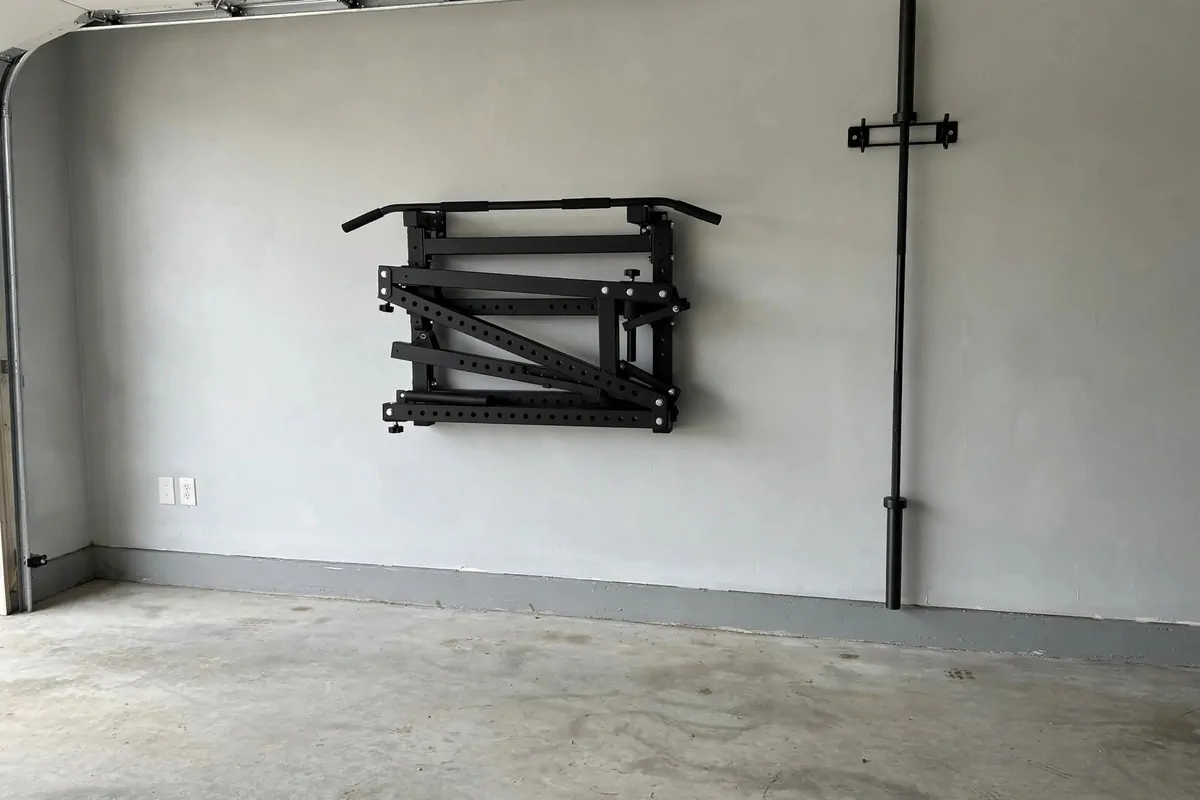
A fold-back rack bolts to the wall. When you finish, it folds flat.
This is the move that lets you keep your car in the garage. You train, you fold, you park.
I love this build for small single garages. It takes up almost no floor when it is folded.
The rack still holds a pull-up bar. You do not lose the good stuff.
Mount it on solid studs, not just plaster. A rack with weight on it is no joke.
Keep a wrench nearby for the pins. You will use it more than you think.
And label the pin spots with tape. It sounds silly, but it saves you five minutes every session.
If you rent, check with your landlord first. Some do not love bolts in the walls.
3. Split Your Garage in Half and Keep the Car
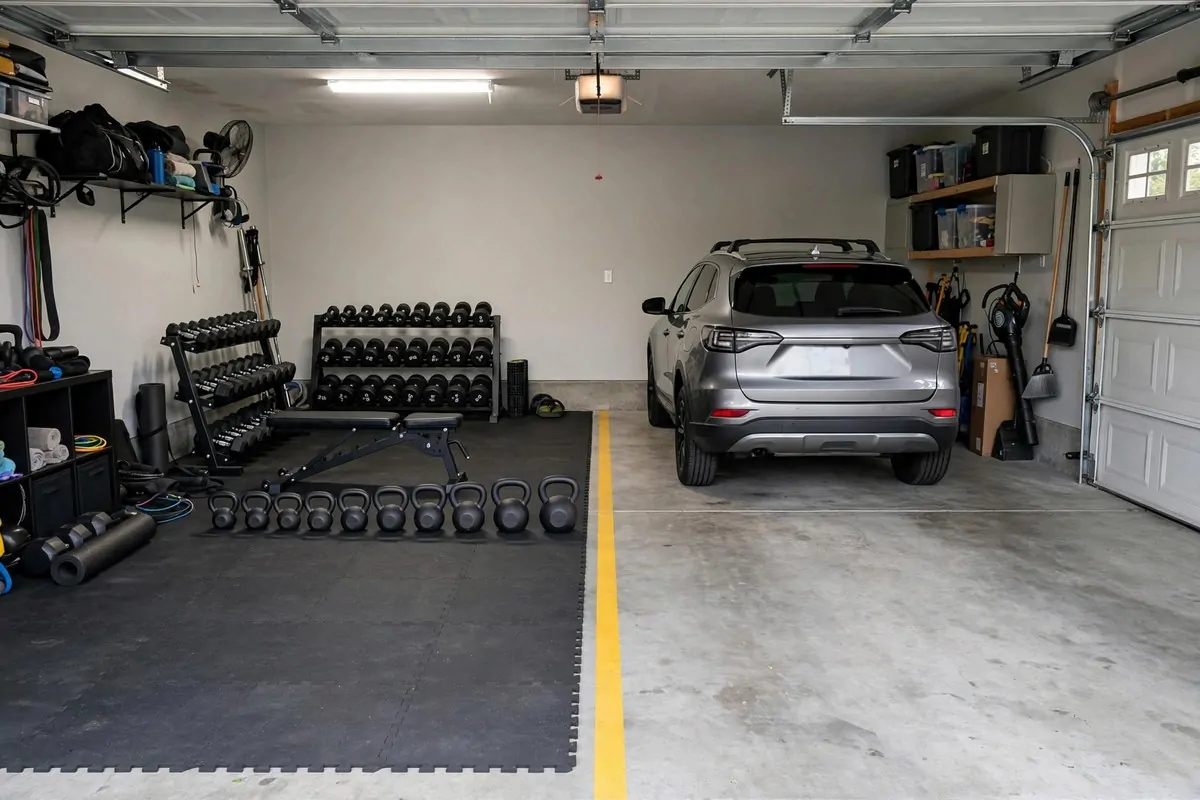
You do not have to give up the whole garage. Half works fine.
Draw a line, real or in your head. One side is the gym, one side is the car.
This zoning trick keeps both lives from fighting. The gym gear stays put, and the car stays clean.
Put your rack and weights against the back wall. Cardio goes along one side.
And keep the middle clear. That open floor is gold for warm-ups and bodyweight moves.
A painted line on the floor helps everyone respect the zones. Honestly, my family needed that line more than I did.
Here is a simple way to zone a half garage:
- Strength zone: rack, bench, dumbbells, and plates along the back wall.
- Cardio zone: treadmill or bike along one side wall.
- Floor zone: open mat space in the middle for stretching and bodyweight work.
- Storage zone: wall hooks and shelves, never gear on the floor.
Foldable benches shine here. They tuck away when the car comes home.
Storage goes on the walls, never on the floor. Floor space is the whole game.
If guests park inside, this build saves you every single time.
4. The Cardio Corner by the Open Door
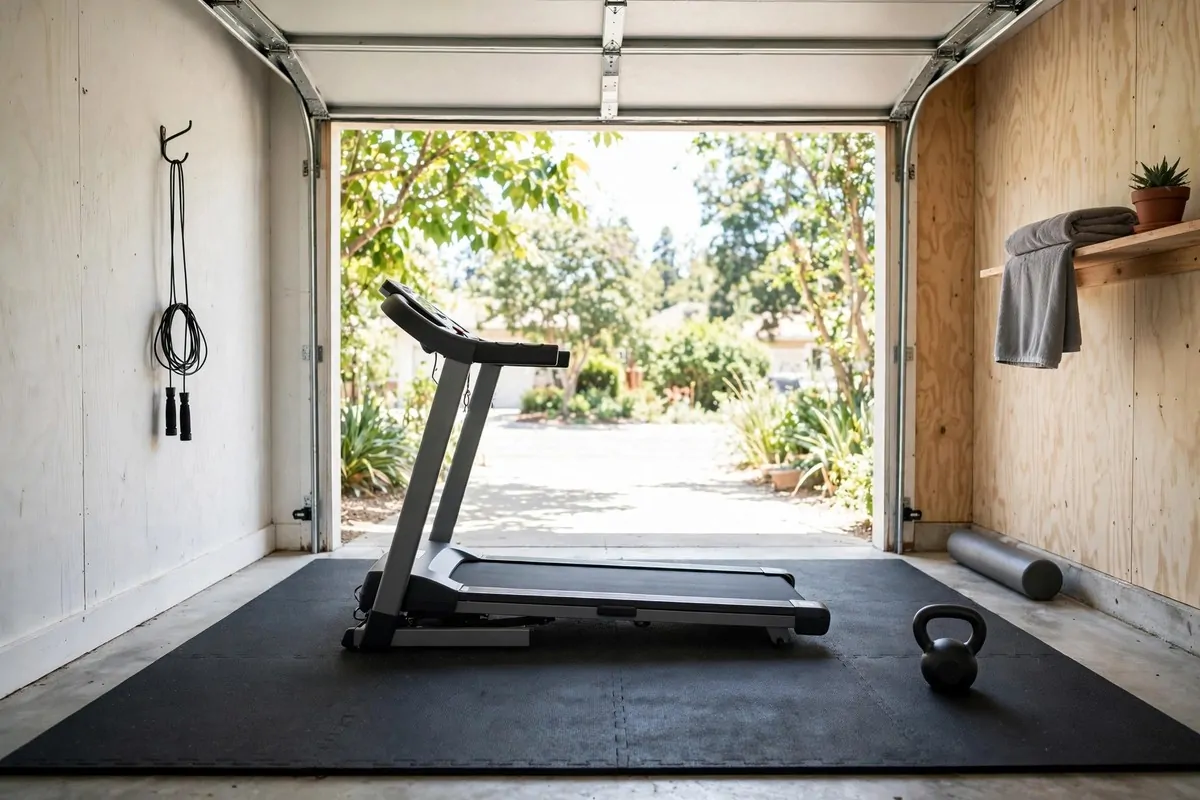
Open the big door and let the air in. That is the whole idea.
Put your treadmill, bike, or rower near the opening. Fresh air makes hard cardio feel much easier.
Morning light pours in too. It beats staring at a wall in a dark room.
A foldable treadmill fits this corner perfectly. Fold it up and roll it to the side when you are done.
And a jump rope costs almost nothing and needs no machine at all. Hang it on a hook by the door.
Rainy days happen. Keep a mat ready so the floor does not get slippery.
This corner is my favourite in summer. You feel like you are outside, but your water and towels are right there.
Just watch the heat at midday. Train early or late, and you will love this spot.
5. A Pegboard Wall for All the Small Stuff
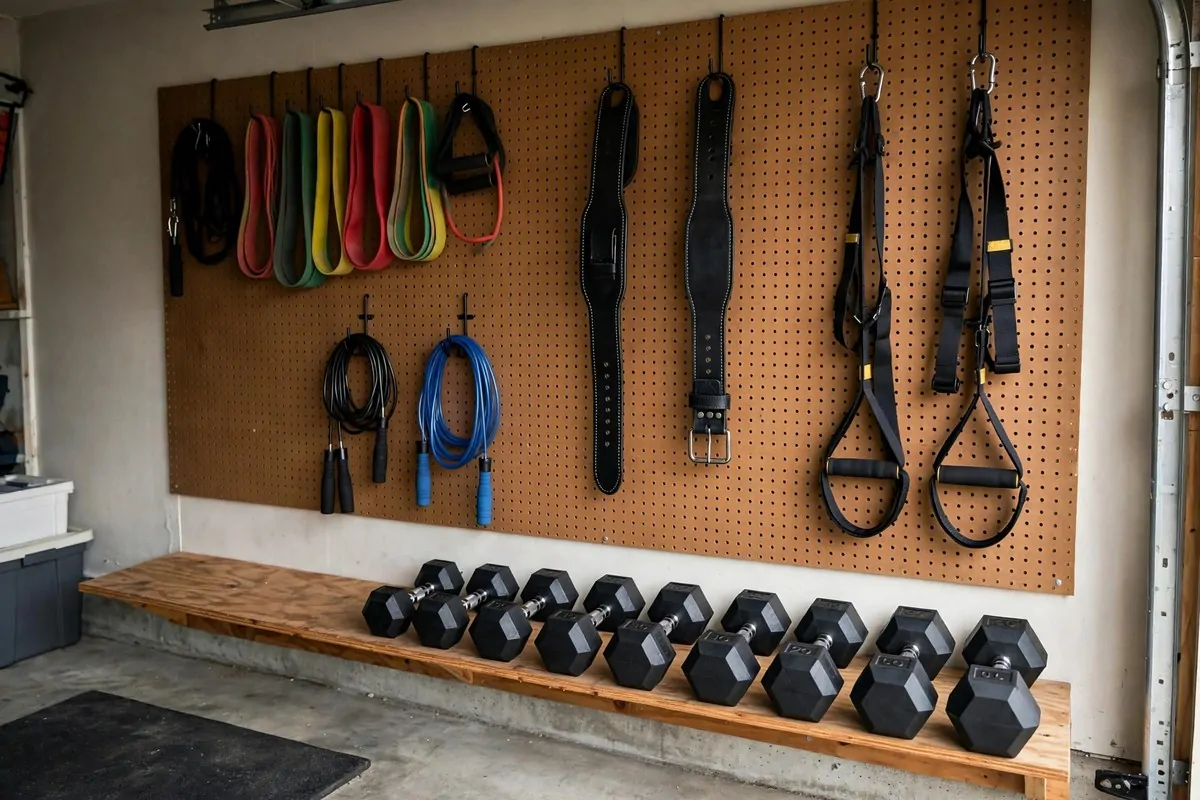
Bands, ropes, belts, and straps end up everywhere. A pegboard wall fixes that in one go.
Hang the board on a clear stretch of wall. Add metal hooks wherever you like.
I put my jump ropes at the top and my bands at the bottom. You will find your own order fast.
And the best part? You can see everything at a glance. No more digging through bins.
Pegboards are cheap. A full wall costs less than one fancy accessory.
Trace the shape of each tool with a marker. Then you always know what is missing.
Honestly, this is the first upgrade I tell every friend to do. It takes an hour and changes the whole room.
Keep heavy plates off it. Pegboard is for the small stuff only.
6. Mirrors That Make the Garage Feel Twice as Big
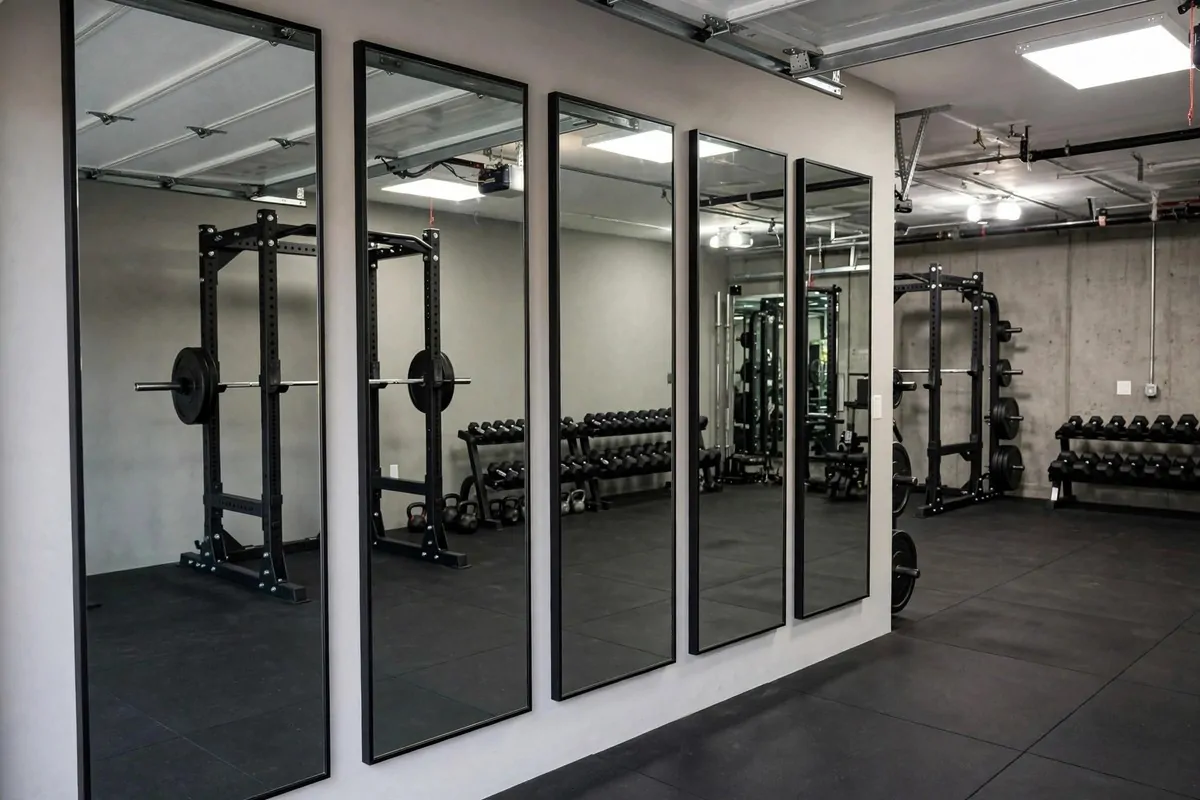
A mirror wall is the oldest trick in gym design. It works at home too.
Big mirrors bounce light around the garage. The room feels larger and brighter the same day.
And they fix your form. You can see your squat, your press, your row, right there in front of you.
Mount them flat and solid. A wobbly mirror is worse than no mirror.
Start with one wide panel. Add more later if you love the effect.
I check my deadlift setup in mine every session. It caught bad habits I never felt.
Thrift stores sometimes have big mirrors for cheap. Just clean them well and frame the edges.
Put the mirrors where the light hits them. Morning sun plus mirrors is a whole mood.
One warning. Do not mount them where a dropped plate can reach them.
7. Bright Lights Change the Whole Mood
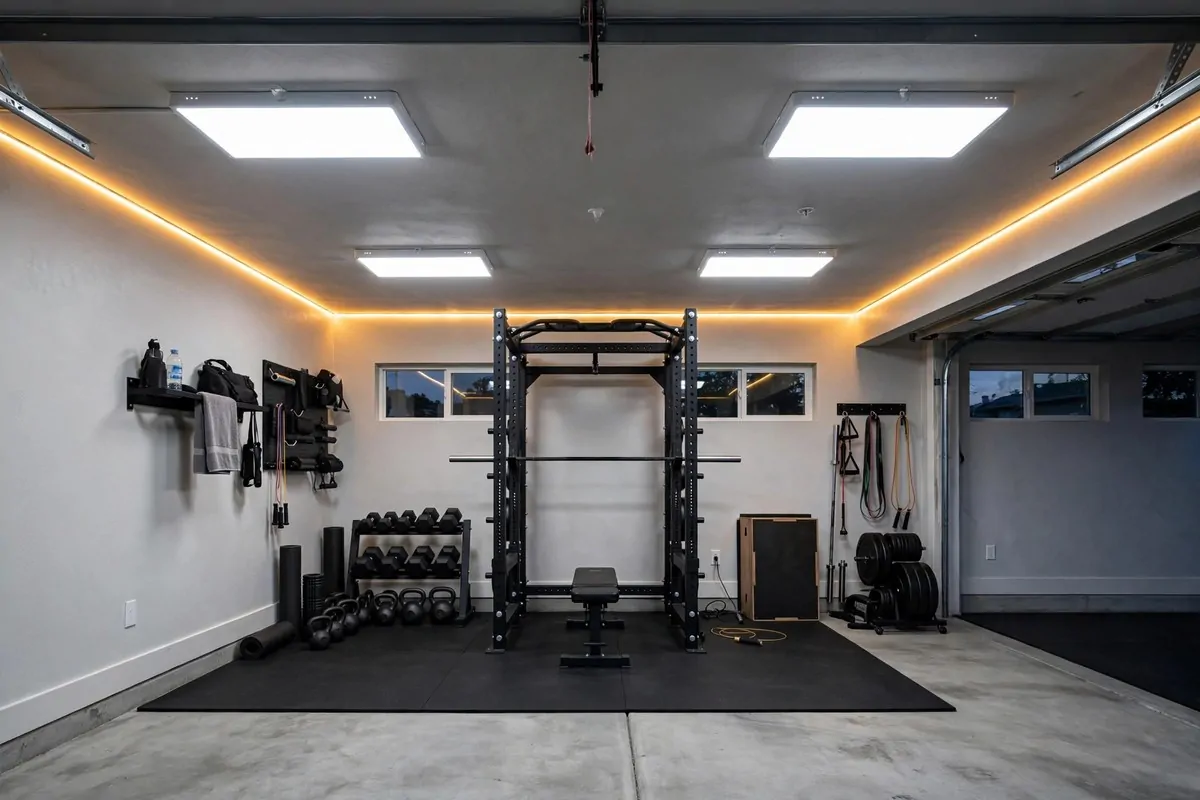
Garages are dark. One sad bulb in the ceiling is the usual setup.
Swap it for bright LED panels and the room transforms. You will want to train there.
Good light also keeps you safe. You can see the floor, the plates, the edges of the bench.
LED strips along the walls add a warm glow for evening sessions. It feels calm, not harsh.
And bright light makes the space photograph well. If you track progress with photos, this matters.
Pick daylight-white for the main panels. It feels like morning all year.
Honestly, lighting is the cheapest mood upgrade you can buy. A couple of panels change everything.
Keep the wiring tidy. Clip the cords along the wall so nothing dangles.
Dimmer switches are a nice touch. Bright for lifting, soft for stretching.
8. The Power Rack Centrepiece
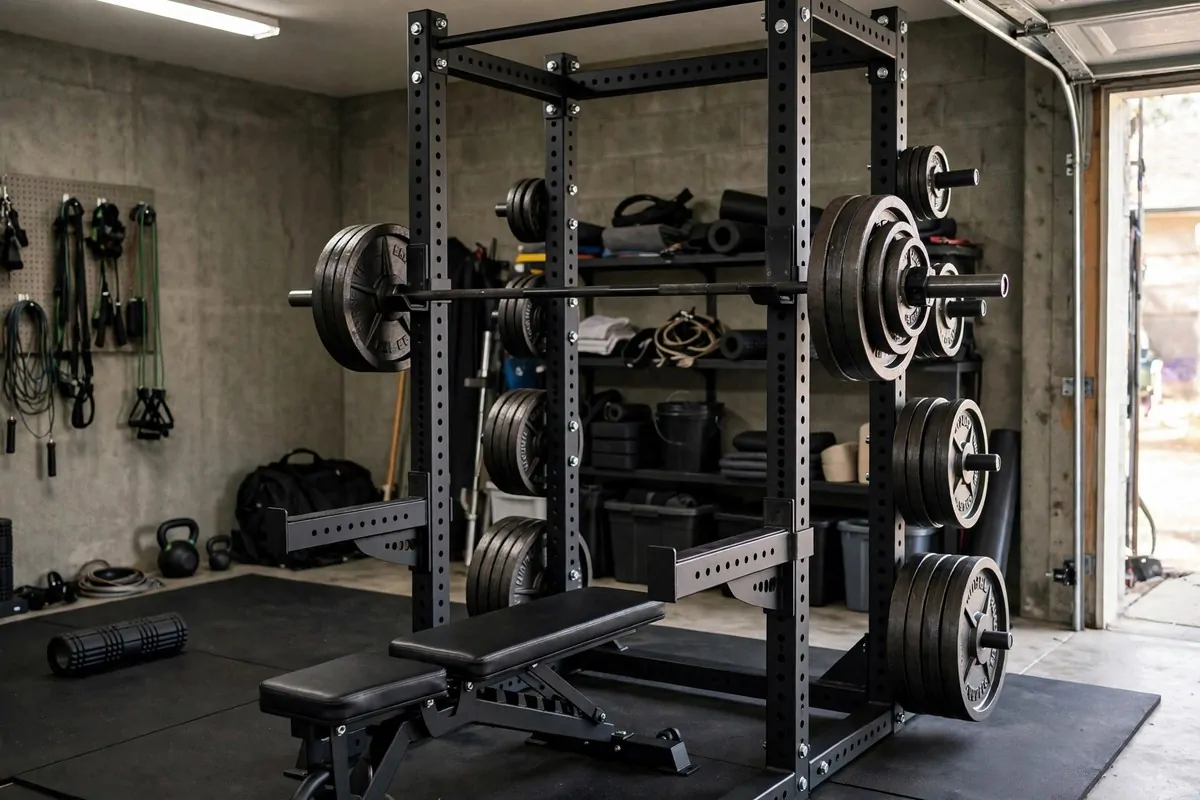
If you buy one big thing, make it a power rack. It is the heart of a serious garage gym.
A rack gives you squats, presses, rack pulls, and pull-ups in one spot. That is a lot of training from one frame.
Look for solid steel and safety arms. The safety arms catch the bar if you miss a rep.
Bolt it down if you can. A rock-solid rack feels completely different.
And store plates on the side pegs. It keeps them close and makes the rack even more stable.
Slide your bench inside the rack for presses. Pull it out for rows and step-ups.
| What to check | Why it matters |
|---|---|
| Steel thickness | Thicker steel wobbles less under heavy weight |
| Safety arms | They catch the bar if a lift goes wrong |
| Height | It must clear your garage ceiling with room to spare |
| Hole spacing | Closer holes give you finer bar height choices |
I trained in a commercial gym for years. My rack at home gets used more than that whole building did.
Buy the rack for the lifter you want to be, not just today. You will grow into it.
Check your ceiling height first. Some garages are low, and a tall rack will not fit.
9. A DIY Deadlift Platform That Protects the Floor
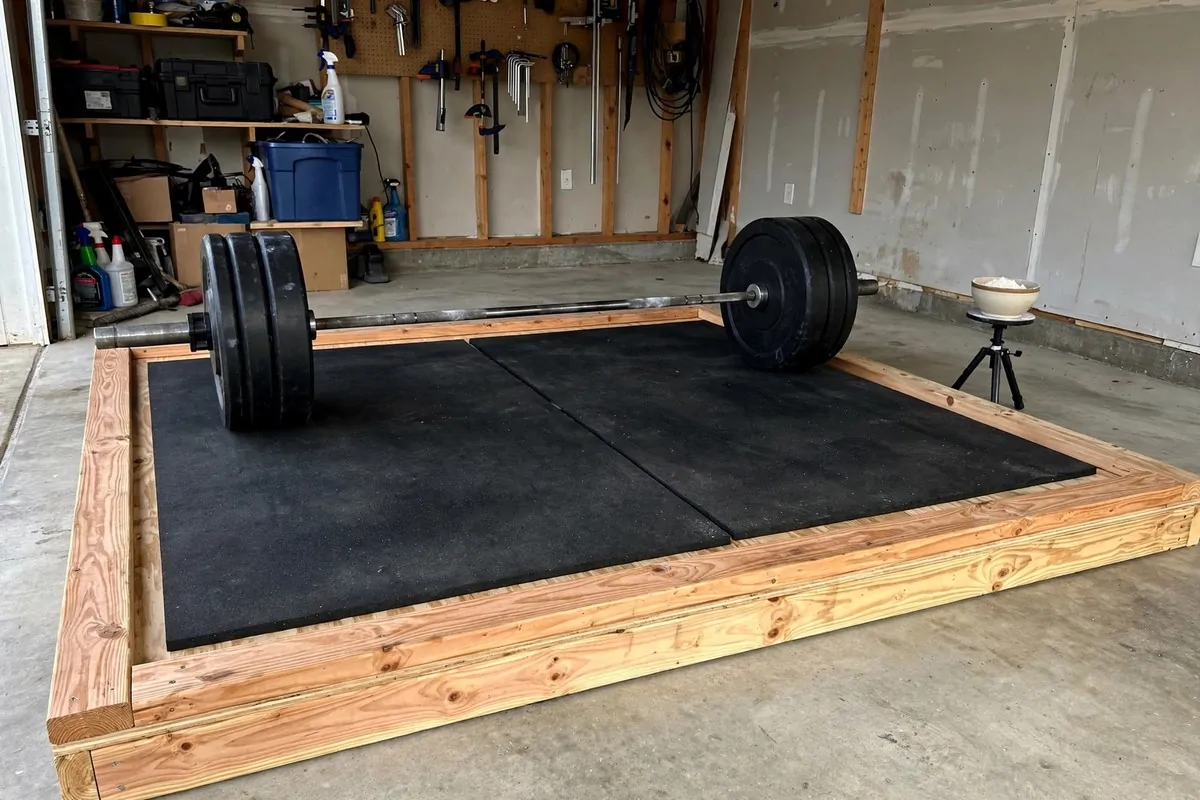
Deadlifts are rough on floors. A platform takes the beating instead.
You can build one with plywood and rubber mats. It is a weekend project, and it lasts for years.
The wood centre is smooth for your feet. The rubber sides swallow the noise and the bounce.
And your neighbours will thank you. Dropped iron on bare concrete is loud.
Mark your foot spots with tape. It speeds up your setup every single time.
Honestly, building my own platform made me prouder than any single workout. It felt real.
Keep the platform flat against a wall when space is tight. Slide it out to lift.
Seal the wood so sweat does not soak in. A quick coat does the job.
Chalk helps your grip. Keep a small bowl on a stand right beside the platform.
10. Adjustable Dumbbells: One Set, Endless Options
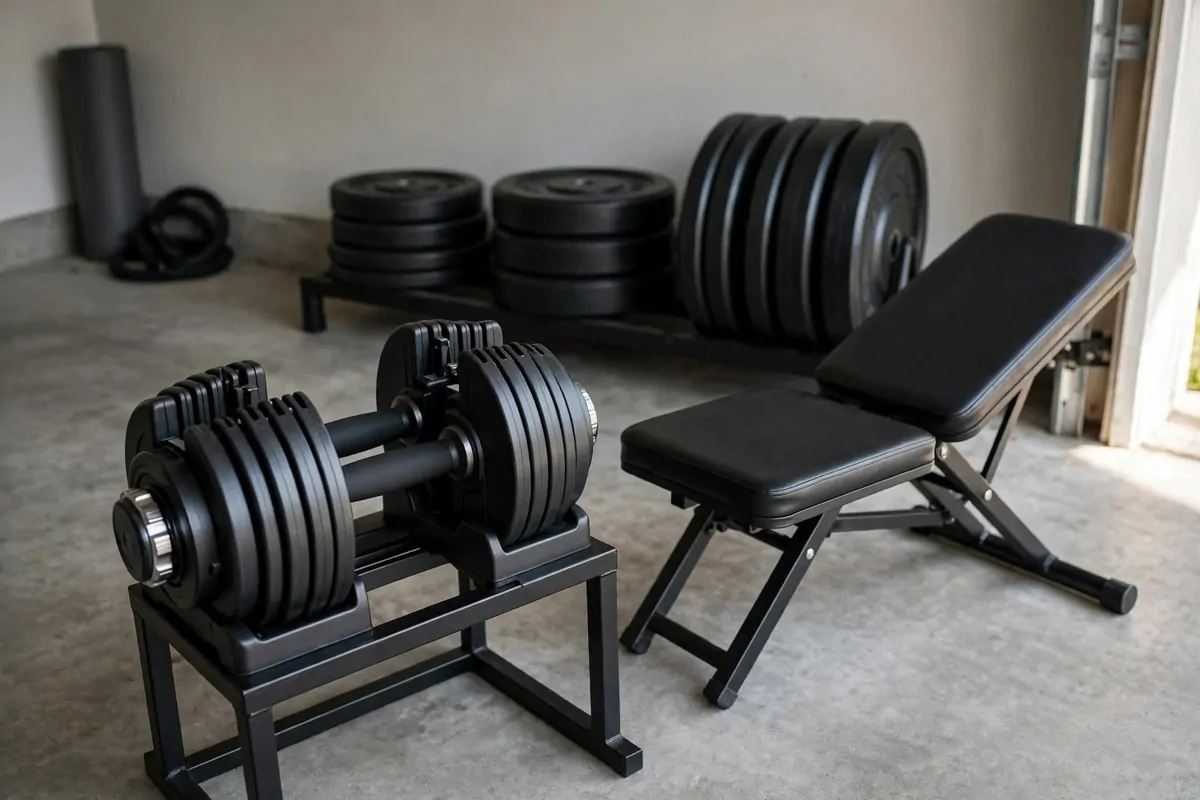
A full dumbbell rack eats a whole wall. Adjustable dumbbells fit on one small stand.
You twist a dial, and the weight changes. One pair replaces a long row of fixed bells.
This is perfect for small garages. You keep the training, you lose the clutter.
And they are quiet. No clanking rack waking up the house at six in the morning.
Pair them with a folding bench. Presses, rows, lunges, curls, all covered.
I started with just these and a mat. It carried me for a whole year.
They cost more up front than one cheap pair. But they cost far less than a full set.
Set them down gently. The dial parts do not love being dropped.
Keep a small towel on the stand. Sweaty handles are no fun.
11. A Wall-Mounted Cable Machine
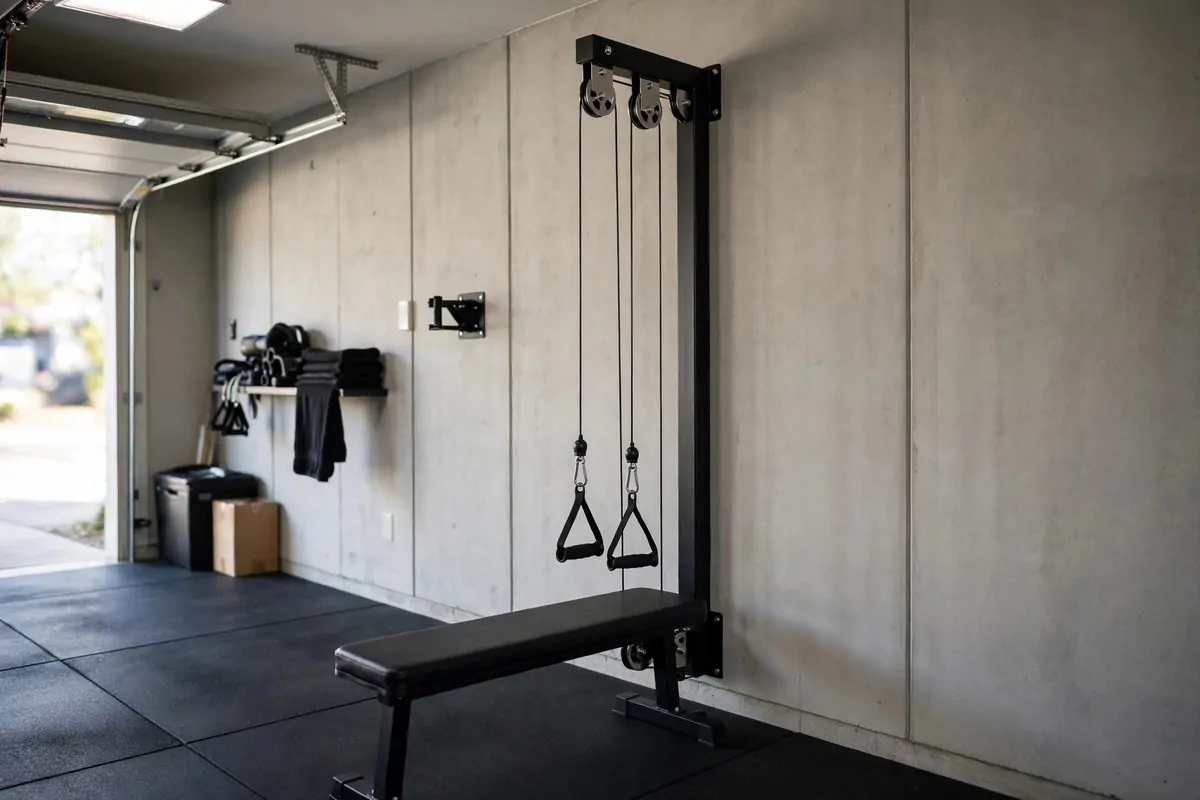
Cables give you rows, presses, and pull-downs without a huge machine.
A wall-mounted unit bolts flat and takes up almost no floor. It just waits for you.
The handles swap in seconds. One minute you are rowing, the next you are pressing.
And the constant pull feels different from free weights. Your muscles work the whole way.
Mount it at a height that suits your tallest move. You can always kneel for the low ones.
I use mine for finishers mostly. Ten minutes on the cables and I am done.
Keep the cables clean and smooth. A quick wipe keeps them gliding.
This build pairs well with a rack. Strength plus cables covers nearly everything.
If your walls are thin, mount it to a stud or a backing board. Solid is safe.
12. The Quiet Stretching Corner
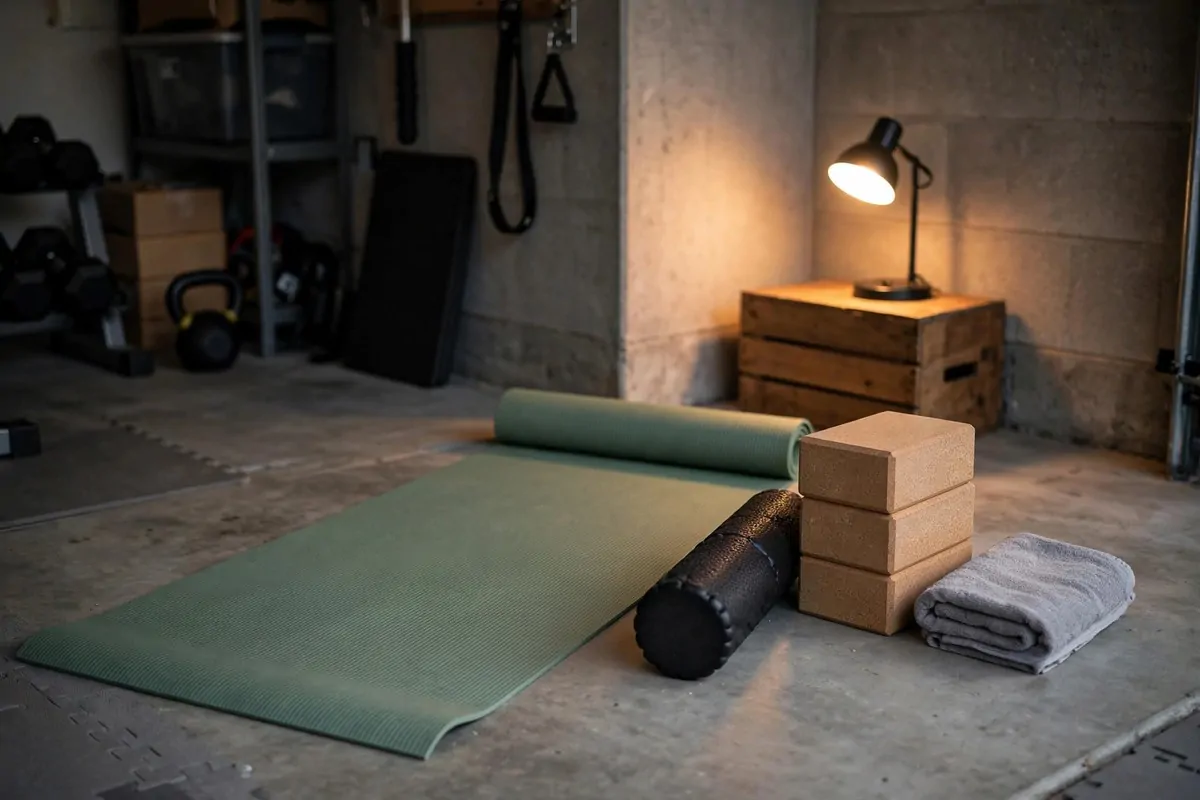
Every hard gym needs a soft corner. This is yours.
A yoga mat, a foam roller, and a few blocks. That is the whole shopping list.
Put this corner away from the clanging weights. Quiet matters here.
Stretch after your lifts, not before. Your muscles are warm and it feels so much better.
And a small mirror helps here too. You can check your form on the floor moves.
I used to skip stretching completely. A pretty corner changed that, honestly.
Keep a folded blanket nearby. It is nice for the slow, sleepy stretches.
Five minutes a day adds up fast. Your back will thank you by the second week.
This corner doubles as a reading spot. I am just saying.
13. A Boxing Corner for Loud, Fun Workouts
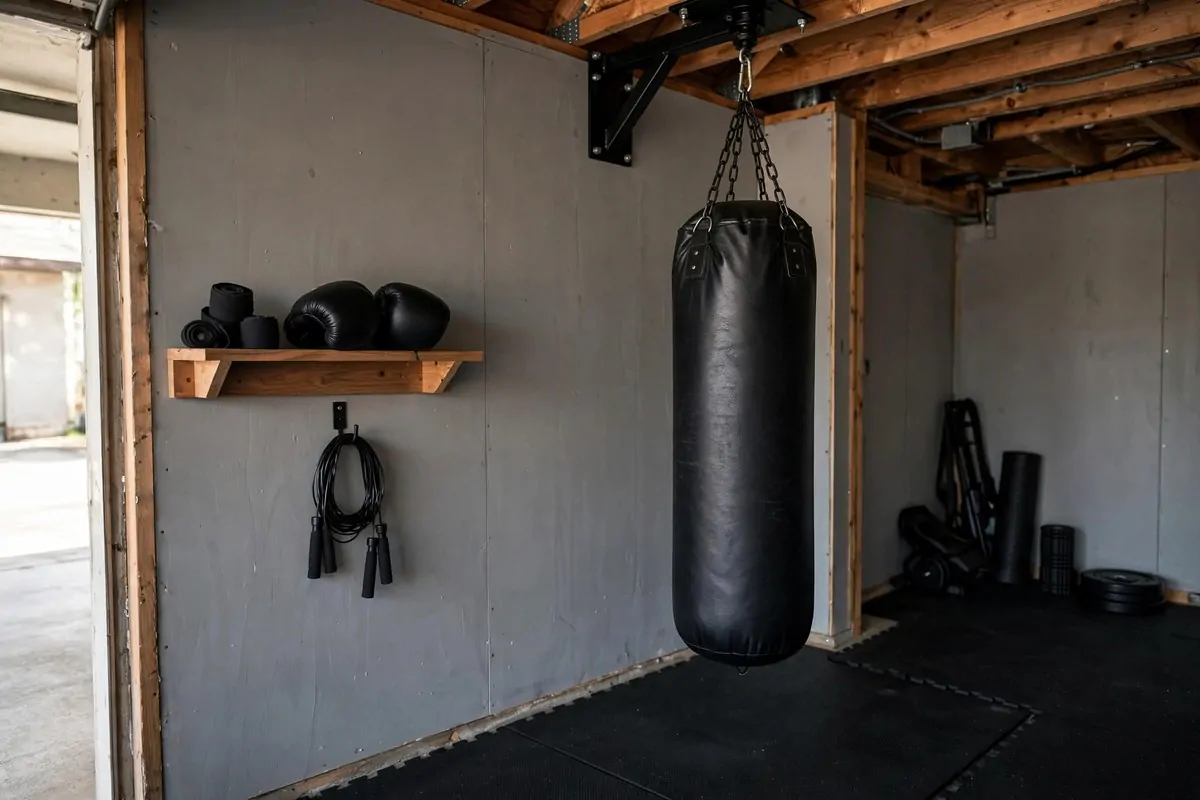
A heavy bag changes the energy of a garage gym. It is loud, and it is fun.
Hang it from a solid ceiling beam or a wall mount. It swings hard, so the mount must be strong.
Boxing gloves and hand wraps live on a shelf nearby. Wrap your hands every time.
And a speed rope on a hook gives you a warm-up in thirty seconds.
Hitting the bag melts stress like nothing else. Bad day? A few rounds fixes it.
Rubber mats under the bag keep the noise down. Your family will appreciate that.
I am not a boxer. I just love the workout. You do not need skill to start.
Keep the bag away from the mirrors. A swinging bag and glass do not mix.
Wipe the bag down after sweaty sessions. It lasts much longer that way.
14. The CrossFit-Style Rig Build
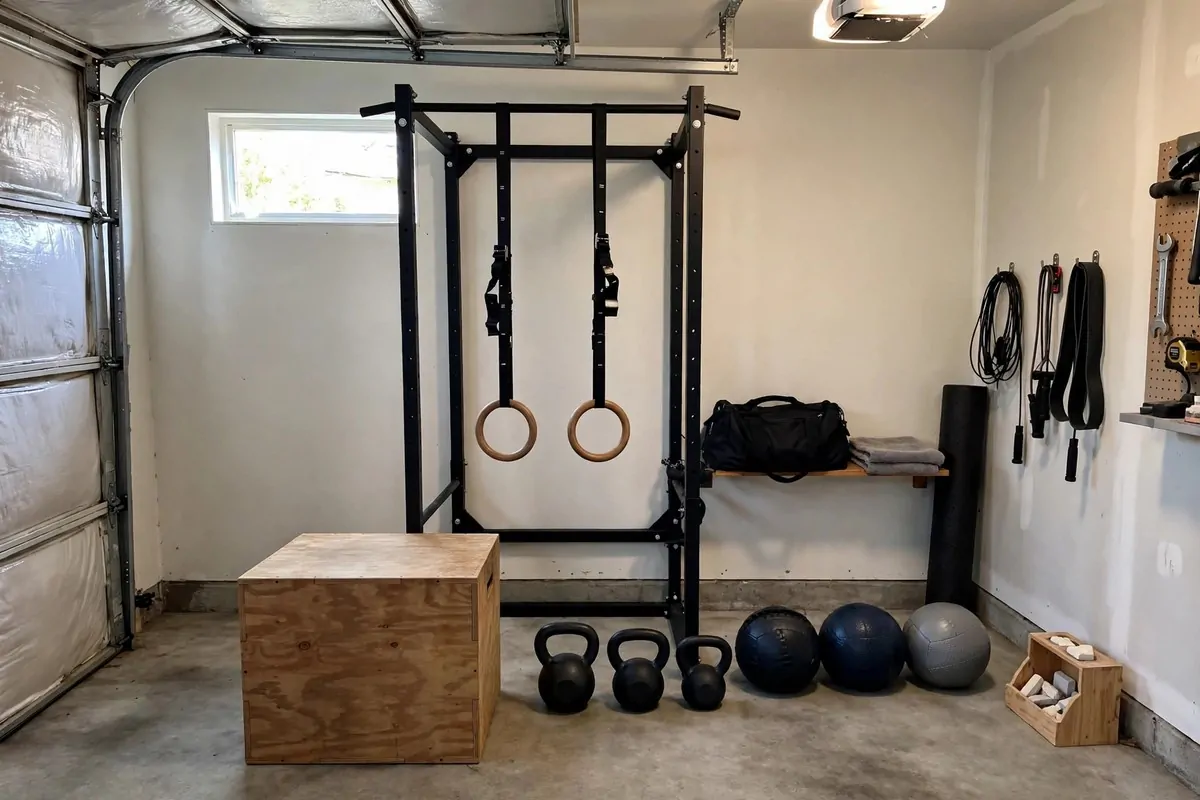
A rig is a frame built for pull-ups, rings, and rope work. It is the playground of garage gyms.
Add a plyo box and some kettlebells. Now you have conditioning and strength in one corner.
Wall balls are cheap and tough. They need almost no space.
And rings hang from the top bar for dips and rows. They fold away in seconds.
Leave open floor in front of the rig. Jumps and box work need room to be safe.
Chalk helps on the bar. Keep it in a small bucket, not loose in a bag.
I love how a rig looks, honestly. It says this garage means business.
Check the bolts every month. Sweat and swinging loosen things over time.
Start simple. A rig, a box, and two kettlebells go a very long way.
15. A Big Screen for Guided Workouts
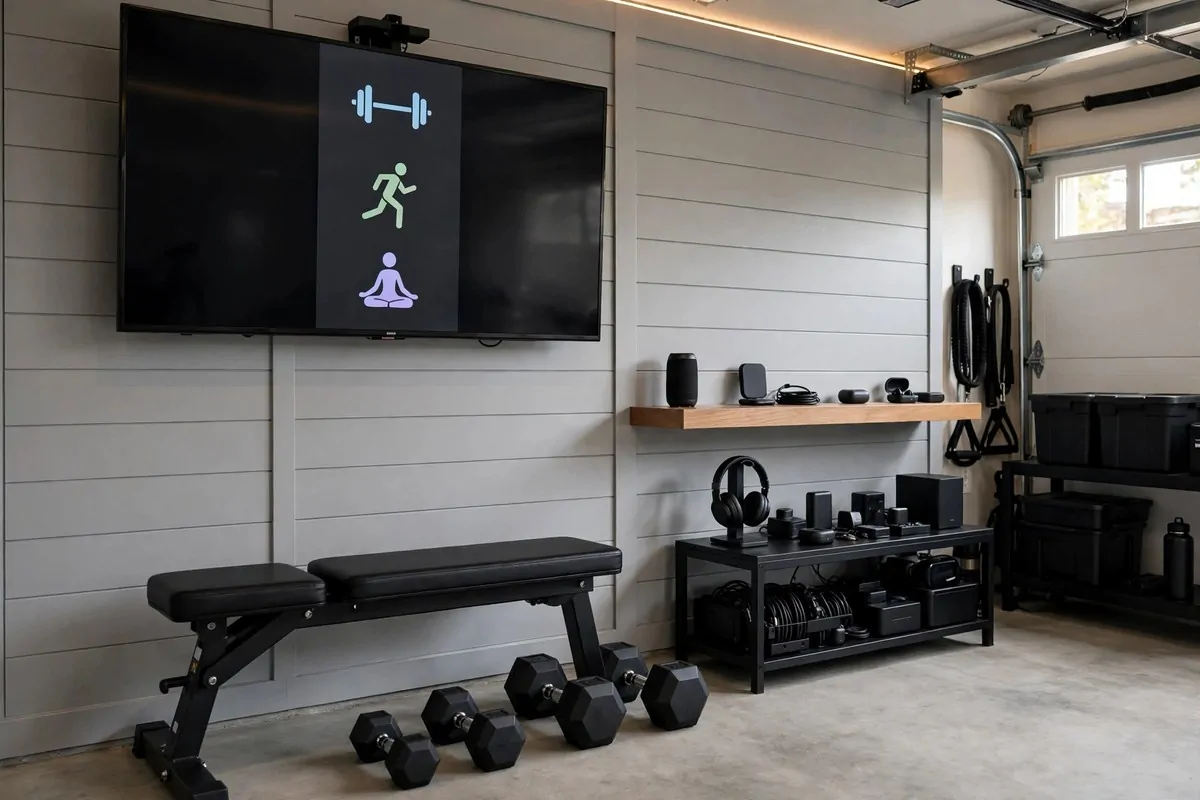
A wall-mounted screen turns your garage into a class studio. Follow along with real coaches.
Mount it high enough to see from the floor and the bench. Tilt it down a little.
A smart speaker handles your music and your timer. One gadget, two jobs.
And workout apps walk you through plans day by day. No more guessing what to do.
Keep the remote in a fixed spot. You will lose it in gym clutter otherwise.
I follow a programme on mine three days a week. It keeps me honest when motivation dips.
Dust the screen often. Garages are dusty places.
A fan pointed at you during screen workouts helps a lot. You heat up fast.
This build is great for beginners. A coach on the wall makes the first month much easier.
16. Industrial Shelving That Ends the Mess
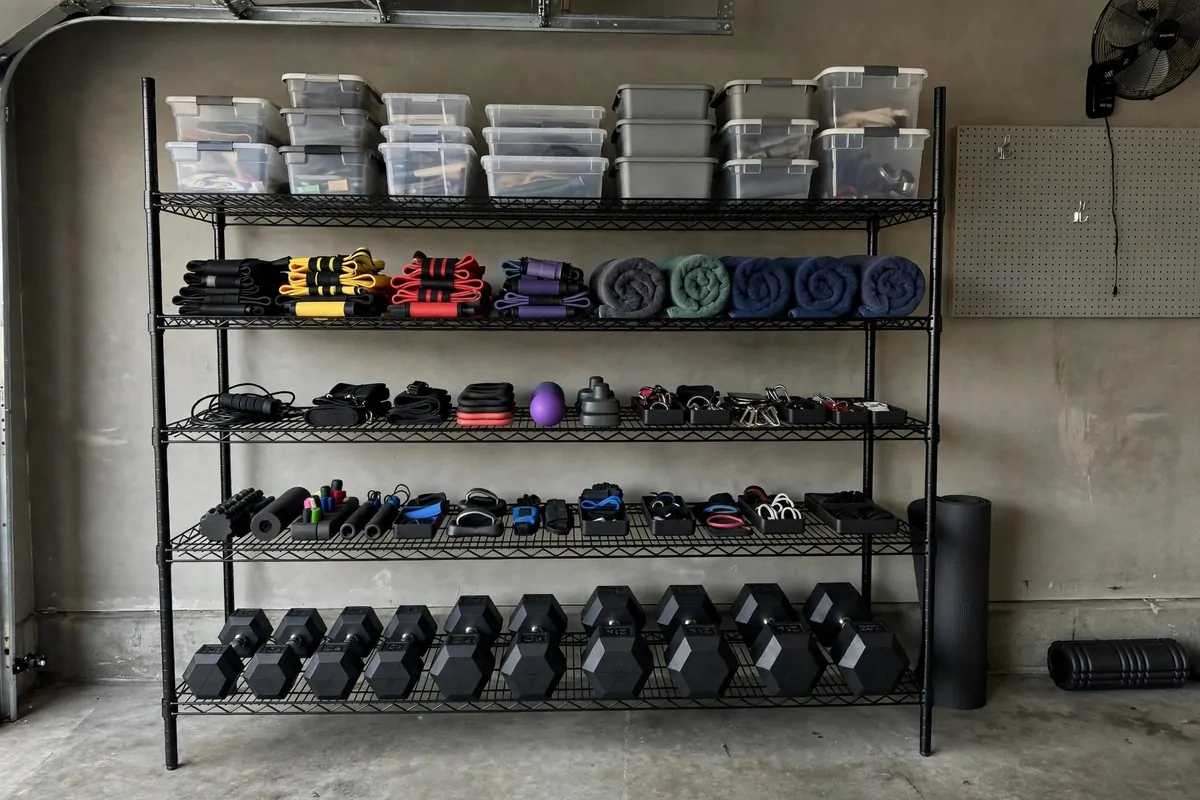
Messy gyms get used less. I am sure of it.
Tall industrial shelves hold bins, bands, towels, and all the small gear. The floor stays clear.
Label every bin. It sounds fussy, but it saves you from digging.
And go vertical. Garage walls are tall, so use every inch of height.
Heavy stuff goes on the bottom shelves. Light stuff goes up top.
I put a small shelf by the door for shoes and a water bottle. It keeps the mess at the door.
Wipe the shelves once a month. Dust builds up fast in a garage.
Honestly, clean shelves make the whole gym feel bigger. Clutter shrinks a room.
Bolt tall shelves to the wall. A loaded shelf tipping over is dangerous.
17. Fans and Airflow, the Part Everyone Forgets
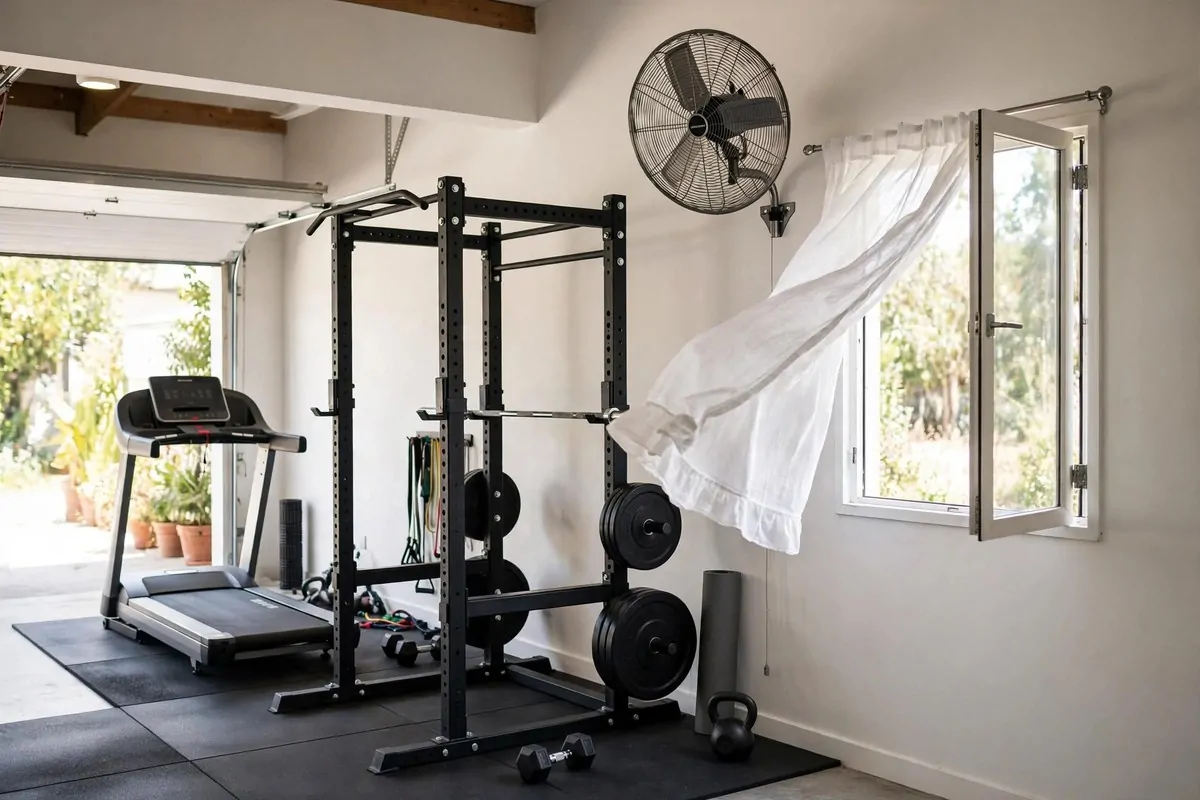
Garages get hot. A summer workout in still air is miserable.
A big wall fan changes everything. It moves the air and cools your skin.
Open a side window if you have one. Cross-breeze beats any single fan.
And in winter, crack the door a little. Fresh air keeps the room from feeling stale.
Point the fan at your main training spot. You want it where you sweat most.
I train at lunch sometimes, and the fan is the reason I can. No fan, no workout.
A small portable fan works if you cannot mount one. Put it on a shelf at body height.
Keep water close when it is hot. You will drink more than you expect.
Clean the fan blades now and then. Dusty blades push dusty air.
18. Paint It White and Let the Morning In
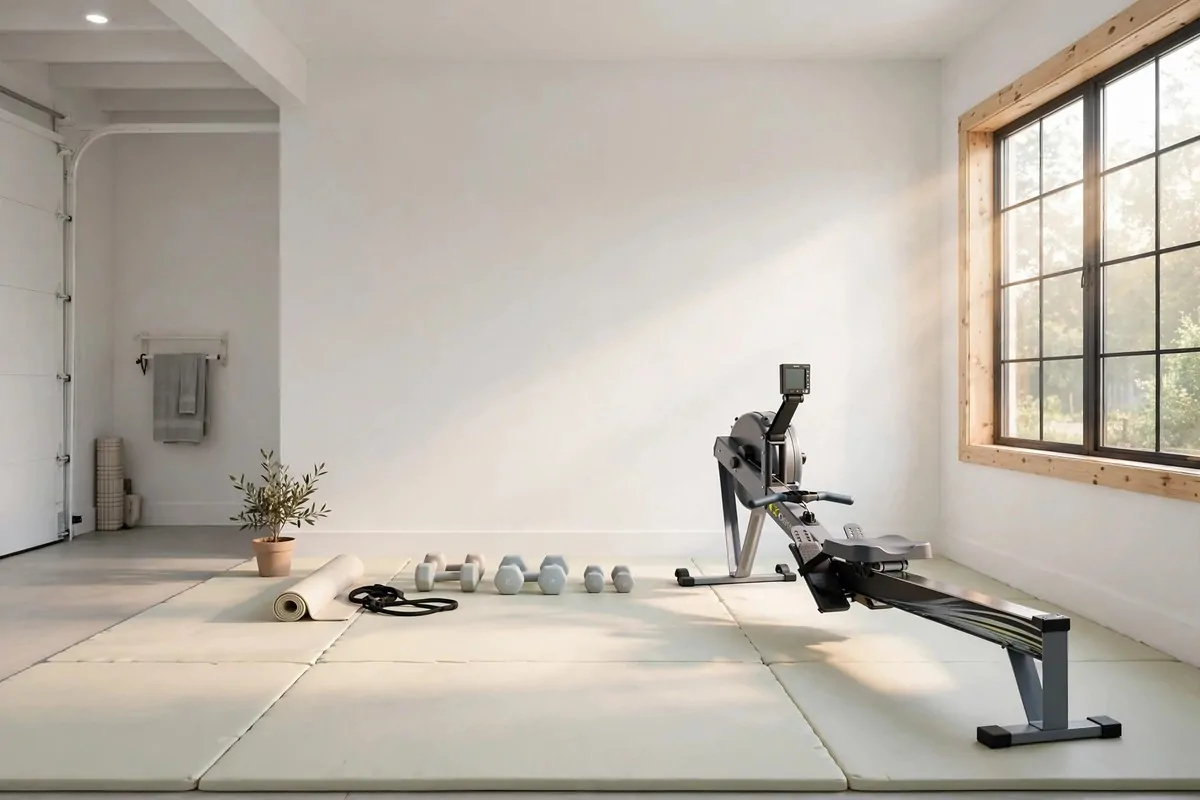
Dark garage walls suck the life out of a room. White paint fixes it fast.
A fresh white coat bounces light everywhere. The garage feels twice as bright.
And white walls make your gear look sharp. Black racks pop against white.
Clean the walls before you paint. Garage grime stops paint from sticking.
One accent wall in a bold colour adds personality. Keep the rest white.
I painted mine on a Saturday morning. By lunch, it felt like a different building.
Pair the white walls with a window or an open door. Morning light plus white paint is magic.
Touch up scuffs once a year. Plates and benches leave marks.
This is the cheapest full makeover on the list. Paint does the heavy lifting here.
19. The Slow Starter Build
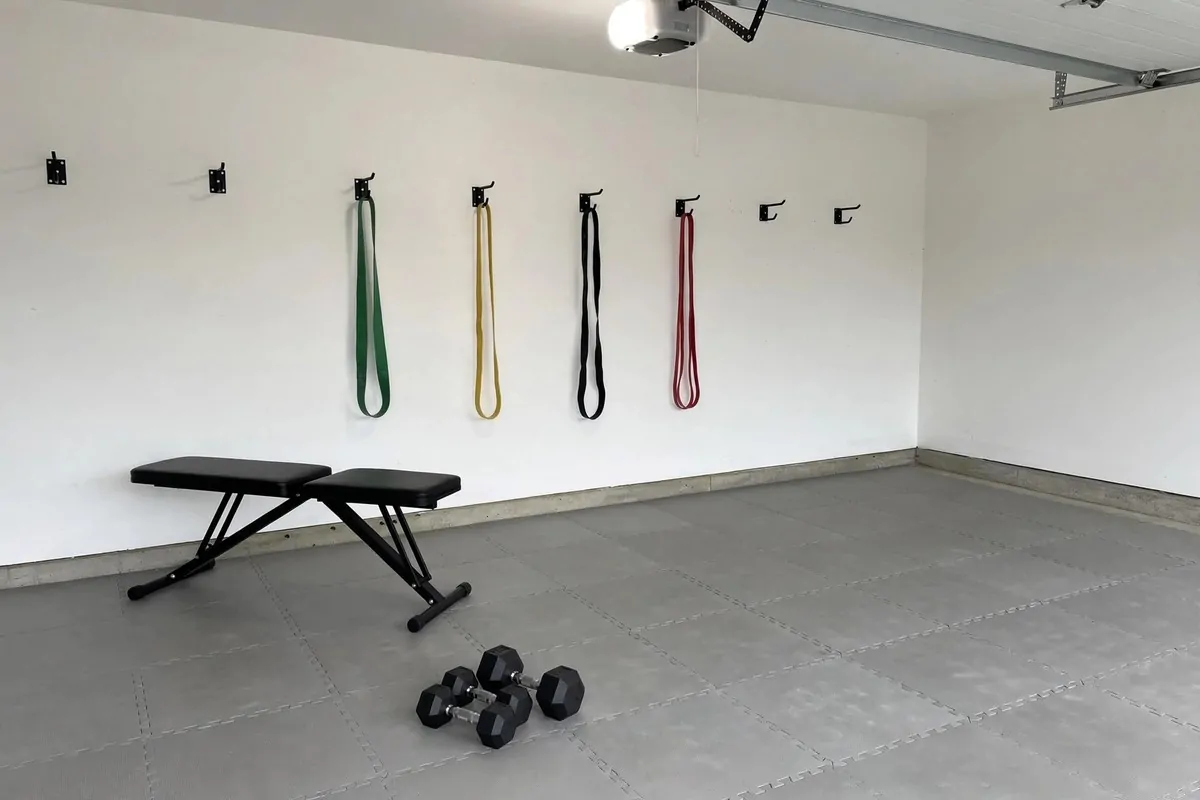
You do not need everything on day one. Start small and grow.
Phase one is simple. Mats, a bench, dumbbells, and bands.
Train with that for a month. You will learn what you actually miss.
And that stops you from buying gear you never touch. I have been there, and it hurts.
Phase two adds the rack and the barbell. Now you are lifting heavy.
Phase three is the fun stuff. Cables, mirrors, the screen on the wall.
| Phase | What to buy | What you get |
|---|---|---|
| Phase one | Mats, bench, dumbbells, bands | Full-body training in a small corner |
| Phase two | Rack, barbell, plates | Heavy lifting with safety |
| Phase three | Cables, mirrors, screen, lighting | A gym that feels finished |
Honestly, the slow build kept me training. Each new piece felt like a gift.
Write your wish list on the wall. Crossing things off is the best feeling.
There is no finish line. The gym grows as you grow.