43 Built-In Bookshelf Ideas for Beautiful Home Offices

My desk had a tower of books on it, and one Tuesday morning the whole tower fell over.
Books slid across my keyboard and one landed on my foot. I sat there and laughed a little, then I felt tired of the mess.
I wanted shelves that hold books in a proper way. I wanted a spot for every book, so my desk could stay clear for real work.
So I looked at built in bookshelves for home offices, and I found so many good ideas. Here are 43 built-in bookshelf ideas for beautiful home offices, and I hope one of them fits your room too.
A Full Wall of Shelves Behind Your Desk
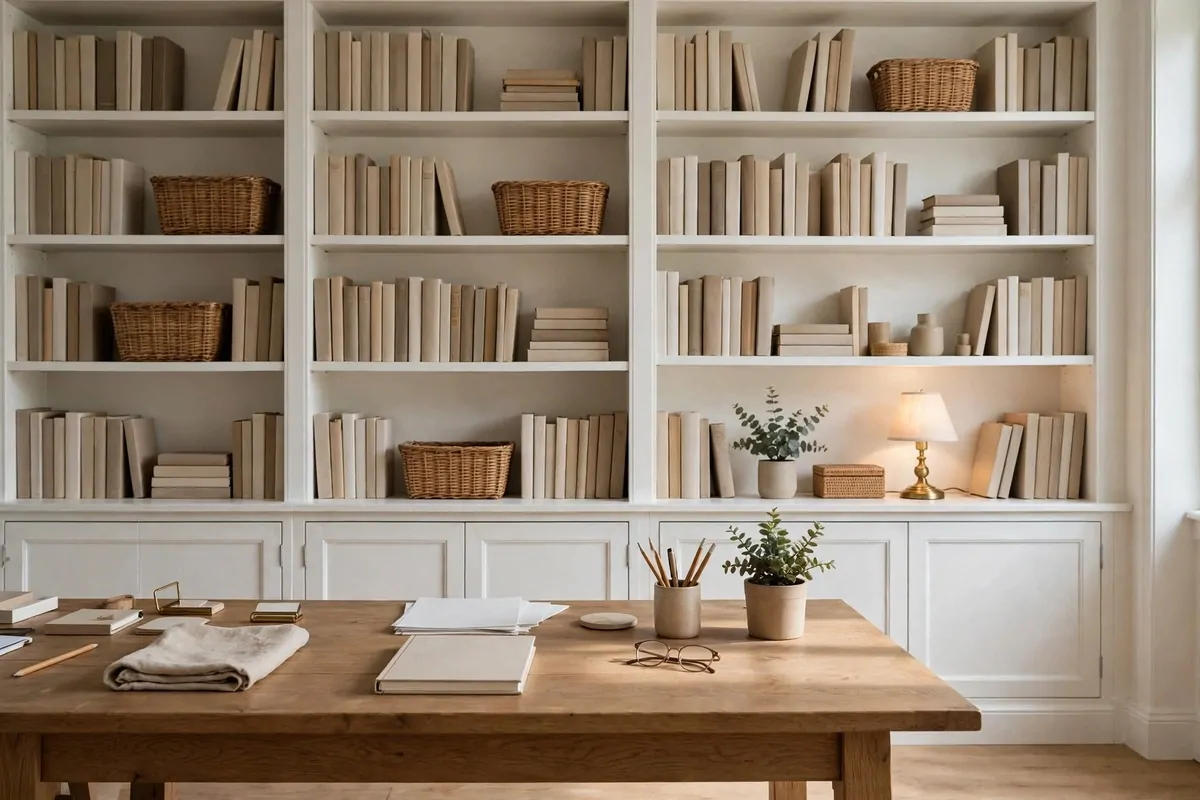
A full wall of shelves sits right behind your desk, and it changes the whole room in one go.
You can see all your books from your chair. You just turn around and grab the one you need.
I like how it makes a small office feel like a real library.
Put the books you use most at arm height. Put the heavy ones low, so they do not fall on you.
Leave a few gaps between the books too. A small plant or a plain box in a gap makes the wall look calm, not crowded.
Paint the shelves the same colour as your desk if you want a tidy look. Or pick white shelves for a bright and clean feel. It feels good every day.
You can sort books by colour if you like that look. You can also sort them by topic, which helps more when you work.
Add a small lamp on one shelf if the room feels dark. It gives a warm glow when you work late.
Keep the top shelf for things you rarely touch. That way you are not climbing up every day for a book you need.
Shelves That Frame the Window and the Light
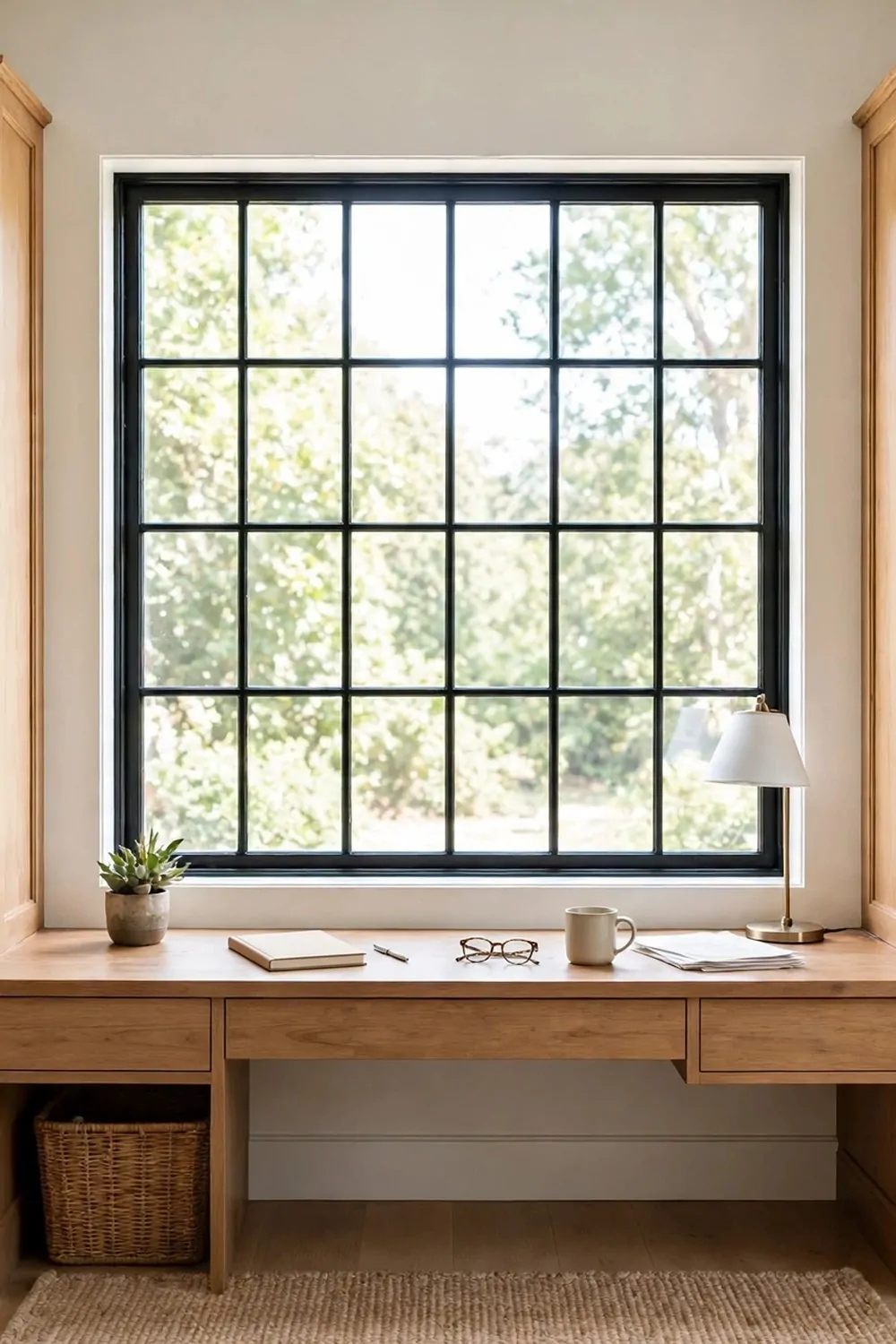
Shelves around a window make the light feel like part of the room.
You sit at your desk and the books sit on both sides of the light. It feels cosy and bright at the same time.
I love this idea for a room with one good window.
Put short shelves on each side of the window frame. Keep them the same height so the room looks balanced.
Use the shelf under the window for books you read often. The light helps you find them fast in the morning.
Do not block the window with tall stacks. Let the sun come in and let the shelves hug the edges. It is a happy spot to work in.
You can add a small curtain rod above the shelves if you want. It softens the hard lines of the wood.
Pick light wood here if your room is small. Dark wood can make the window area feel heavy.
Try a few books lying flat on one shelf. It breaks up the rows and gives your eyes a rest.
A Reading Corner With Shelves on Two Walls
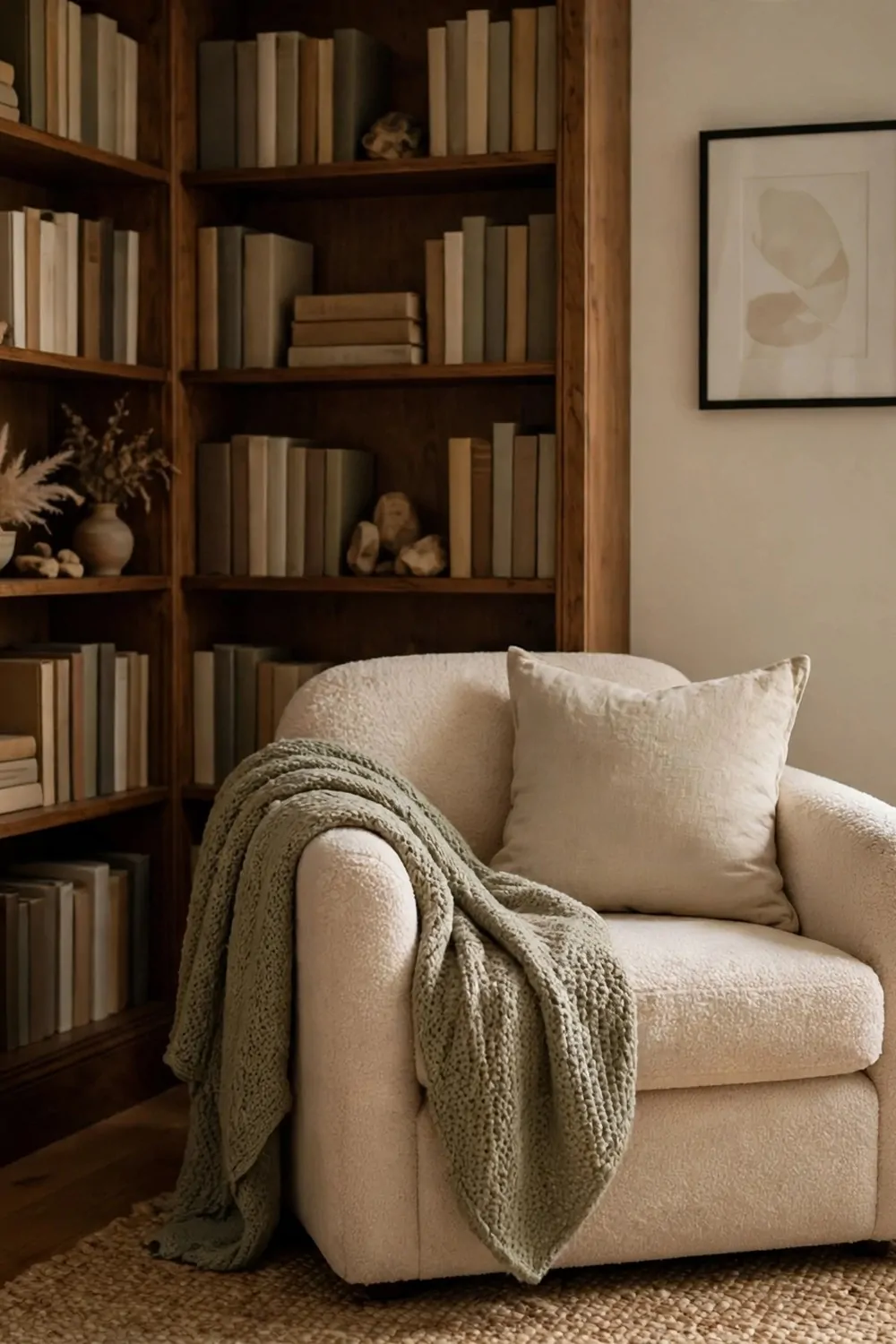
A reading corner uses two walls, and it feels like a little hideaway in your office.
You put a comfy chair in the corner and shelves go up on both sides. It is your own small spot to think.
I sit in a corner like this when I need to read something slowly.
Put the shelves low on one wall and tall on the other. That mix keeps the corner from feeling like a box.
Add a soft cushion to the chair and a small blanket over the arm. You will stay longer when the seat feels kind.
Keep your current book on the lowest shelf. You can reach it without standing up, which is the whole point. You will love that quiet time.
A small floor lamp in the corner gives warm light for evening reading. It beats a bright ceiling light when your eyes are tired.
Leave space on one shelf for a notebook and a pen. Good ideas come when you read, and you want to catch them fast.
Try not to fill every shelf in the corner. A bit of empty space makes it feel calm and easy to breathe in.
Low Shelves Under the Window for Easy Reach
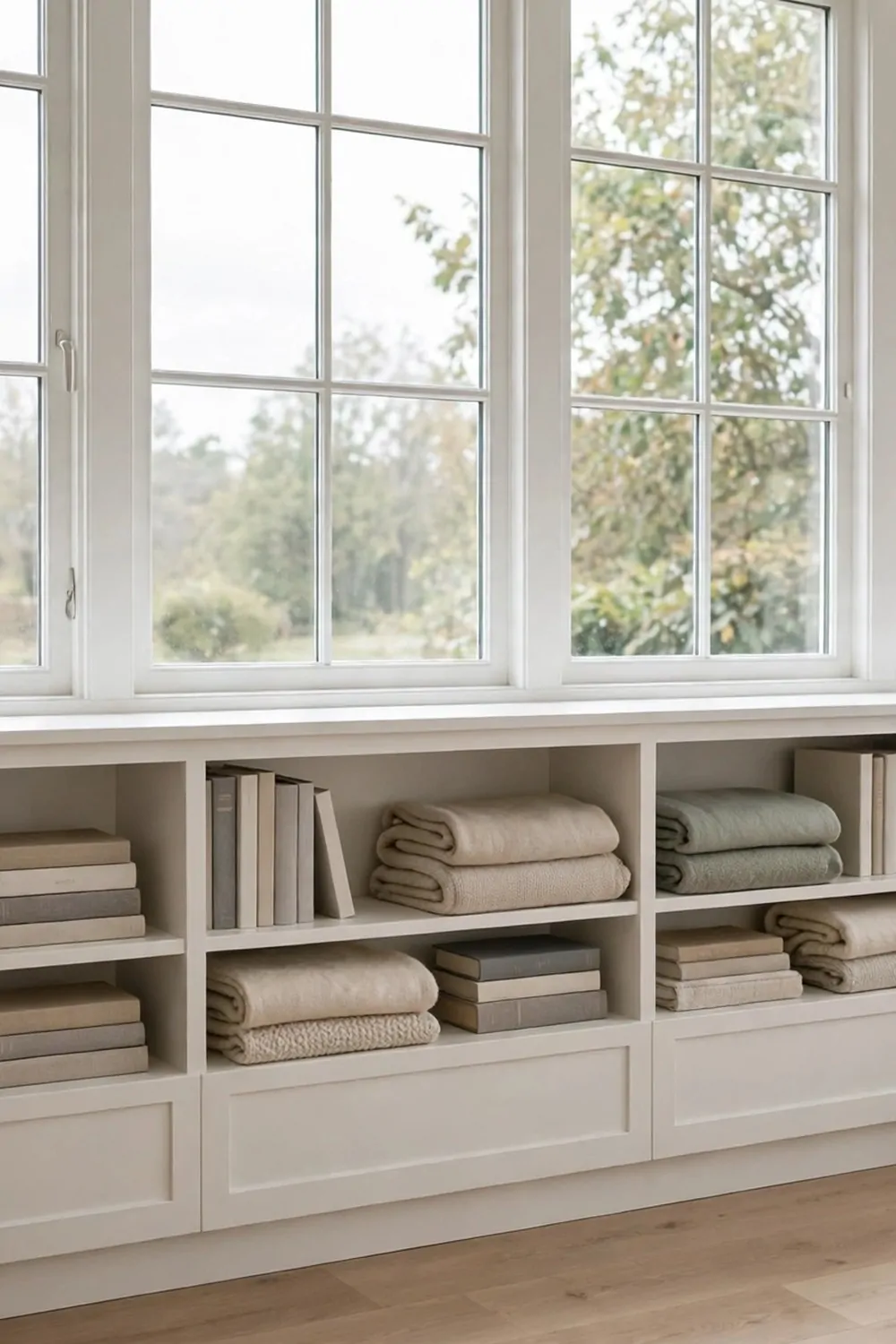
Low shelves under a window are easy to reach and easy to keep tidy.
You do not need a stool or a stretch to get a book. You just bend down a little and there it is.
I like this for offices where the window is low and wide.
Build the shelves to the same height as the window sill. That line makes the room look neat and planned.
Put books you use every day on these low shelves. Your planner, your workbooks, and your favourite reference books all fit here.
Add a cushion on top of the low shelf if it is strong enough. It turns into a small window seat for short breaks. It makes mornings easier.
Keep the books upright with a simple bookend. A plain wooden bookend works well and costs very little.
You can store boxes under the lowest shelf for papers you do not need daily. Label them in plain words so you find things fast.
Wipe the shelves often because window sills catch dust. A quick wipe once a week keeps the books clean.
Tall Shelves That Reach the Ceiling
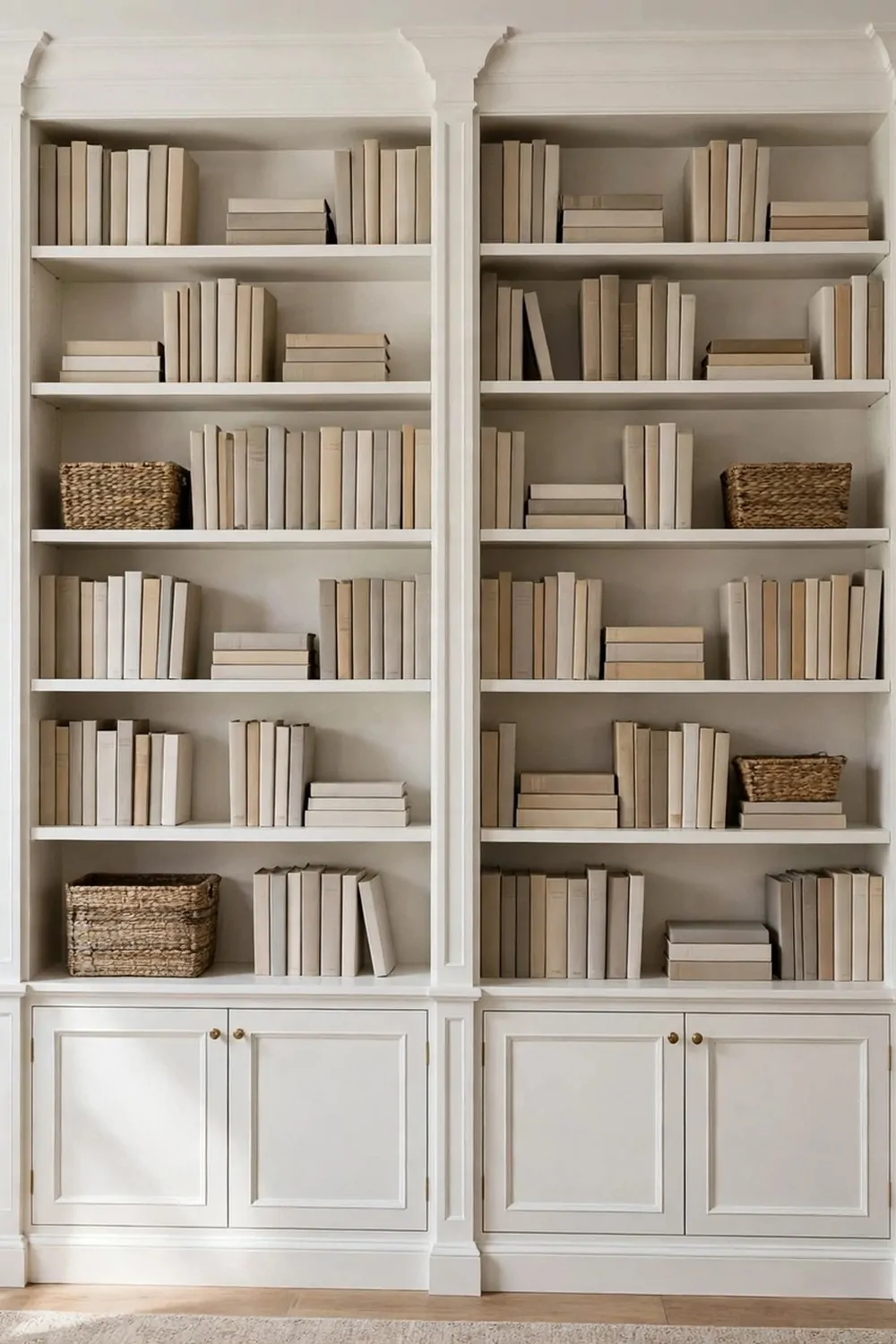
Tall shelves that reach the ceiling use space most people forget about.
You get room for many more books without taking up floor space. It is a smart move for a small office.
I was scared of tall shelves at first, because I thought they would feel too big.
But when they are built in, they look like part of the wall. They do not stick out or feel bulky.
Put books you rarely use up high. Old notebooks, keepsake books, and spare copies live well up there.
Keep a small step stool in the office for the top shelves. A folding one tucks behind the door when you do not need it. It is worth the climb.
Make sure the shelves are fixed to the wall properly. Tall shelves must not wobble, so ask for strong fixings.
Use the middle shelves for your daily books. That way your arms stay comfy and you are not reaching up all day.
Add a few small items on the high shelves to break up the rows. A tiny vase or a plain box does the job nicely.
Shelves Around the Door Frame
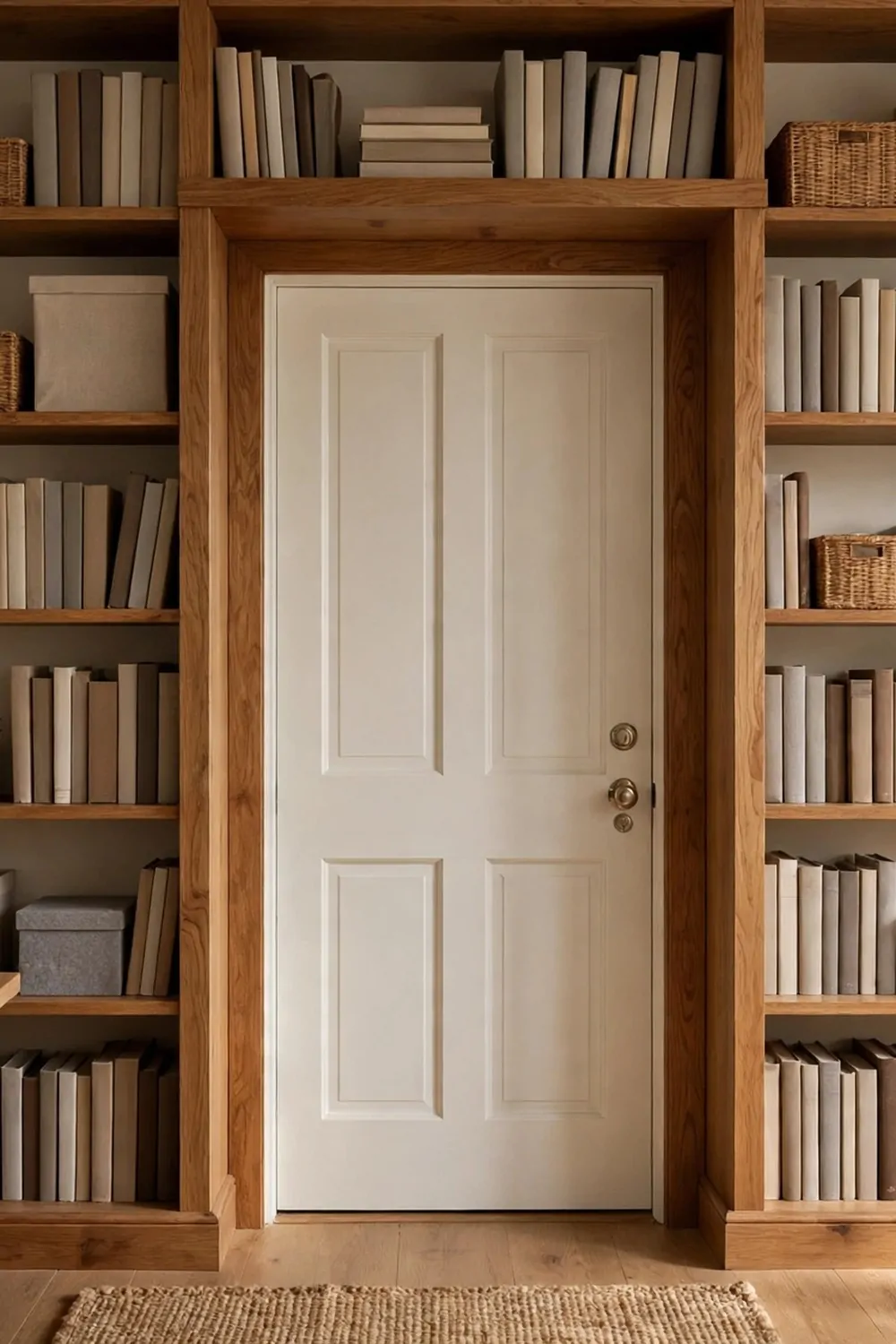
Shelves around the door frame use space that usually stays empty.
You walk in and books greet you on three sides. It feels welcoming, not cramped.
I like this in a small office where every bit of wall counts.
Build a shelf across the top of the door first. That high shelf is great for books you keep but do not read often.
Then add narrow shelves down each side of the door. Keep them shallow so the door still opens wide.
Do not put heavy books right above the door. Light paperbacks and thin notebooks are safer up there. It feels like a warm welcome.
Use the side shelves for books you grab on your way out. A planner or a small notebook fits nicely at hand height.
Paint the door frame shelves the same colour as the door. It makes them look like they were always there.
Leave a little gap at the top corner for air. Shelves that touch the ceiling can trap dust in a tight spot.
A Bookshelf Wall That Hides the Cables
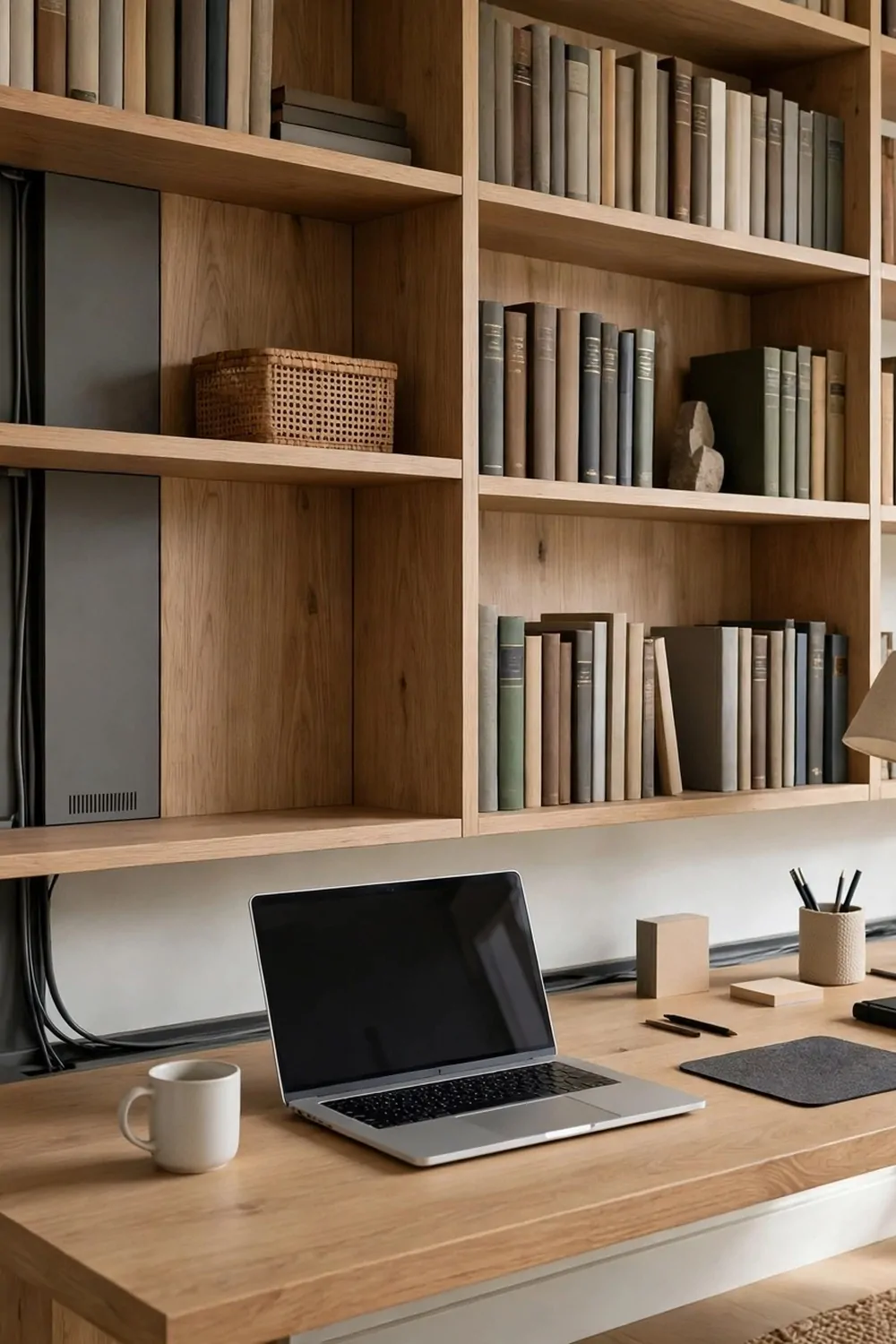
A bookshelf wall can hide all those messy cables behind your desk.
You know the tangle I mean. Charger wires, lamp wires, and printer wires all mixed up in a knot.
I hated looking at that mess every day, so this idea felt like a gift.
Build the shelves with a small gap at the back. The cables run in that gap and stay out of sight.
Cut a small hole in the back of one shelf for the plug strip. It sits hidden, but you can still reach it when you need to.
Put your router and charger box on a low shelf behind a book row. The books hide them, and the air still moves around them. No more tangled wires to trip on.
Use plain cable ties to keep wires in a neat bunch. It takes five minutes and it makes a big change.
Keep one shelf near the desk for the charger you use daily. You can plug in your phone without crawling under the desk.
Label the plugs with a bit of tape if you have many. It saves you from unplugging the wrong thing by mistake.
| What goes on it | Shelf depth | Best room |
|---|---|---|
| Books and small decor | 8 to 10 inches | Living room, bedroom office |
| Plates and bowls | 10 to 12 inches | Kitchen, dining room |
| Folded clothes and towels | 12 to 14 inches | Closet, bathroom |
| Big bins and boxes | 14 to 16 inches | Garage, basement |
| Work books and files | 10 to 12 inches | Home office |
Open Shelves Above a Closed Cabinet Base
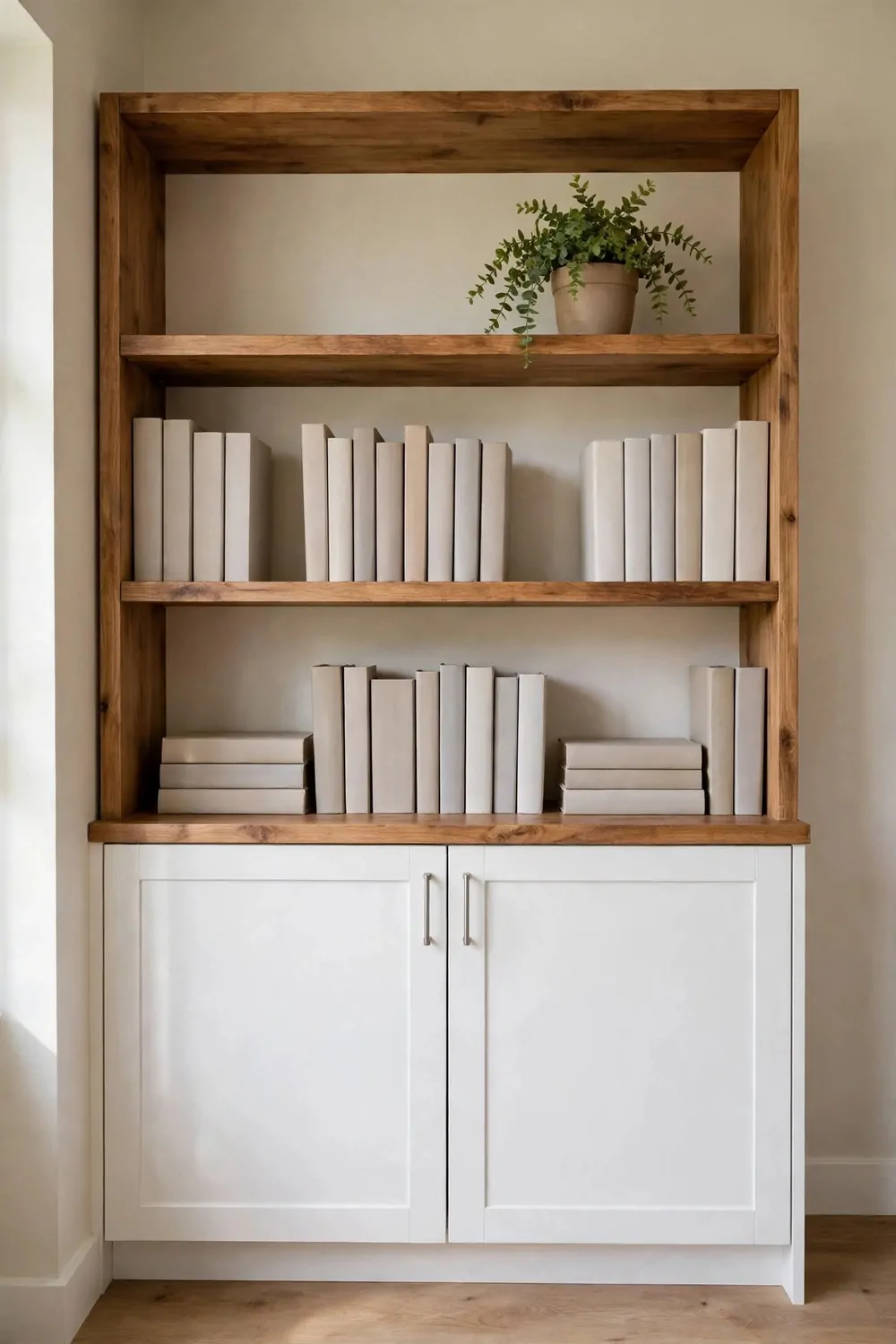
Open shelves on top and closed cabinets below give you the best of both worlds.
You see your pretty books up top. You hide the messy stuff down below.
I think this is the most practical shelf idea for a busy home office.
Put your favourite books on the open shelves. Let them show, because they make the room feel like yours.
Use the closed cabinets for papers, folders, and spare supplies. Shut the door and the mess is gone in one second.
Pick cabinet doors that match your desk colour. It keeps the whole wall looking tidy and calm. It keeps work and calm in one wall.
Add a small handle or a push latch to the doors. You want them easy to open when your hands are full.
Keep the open shelves shallow so books do not fall back. A depth that fits one row of books is just right.
You can put a basket inside the cabinet for loose cables. It keeps them in one place and out of your way.
A Slim Shelf Wall for a Narrow Office
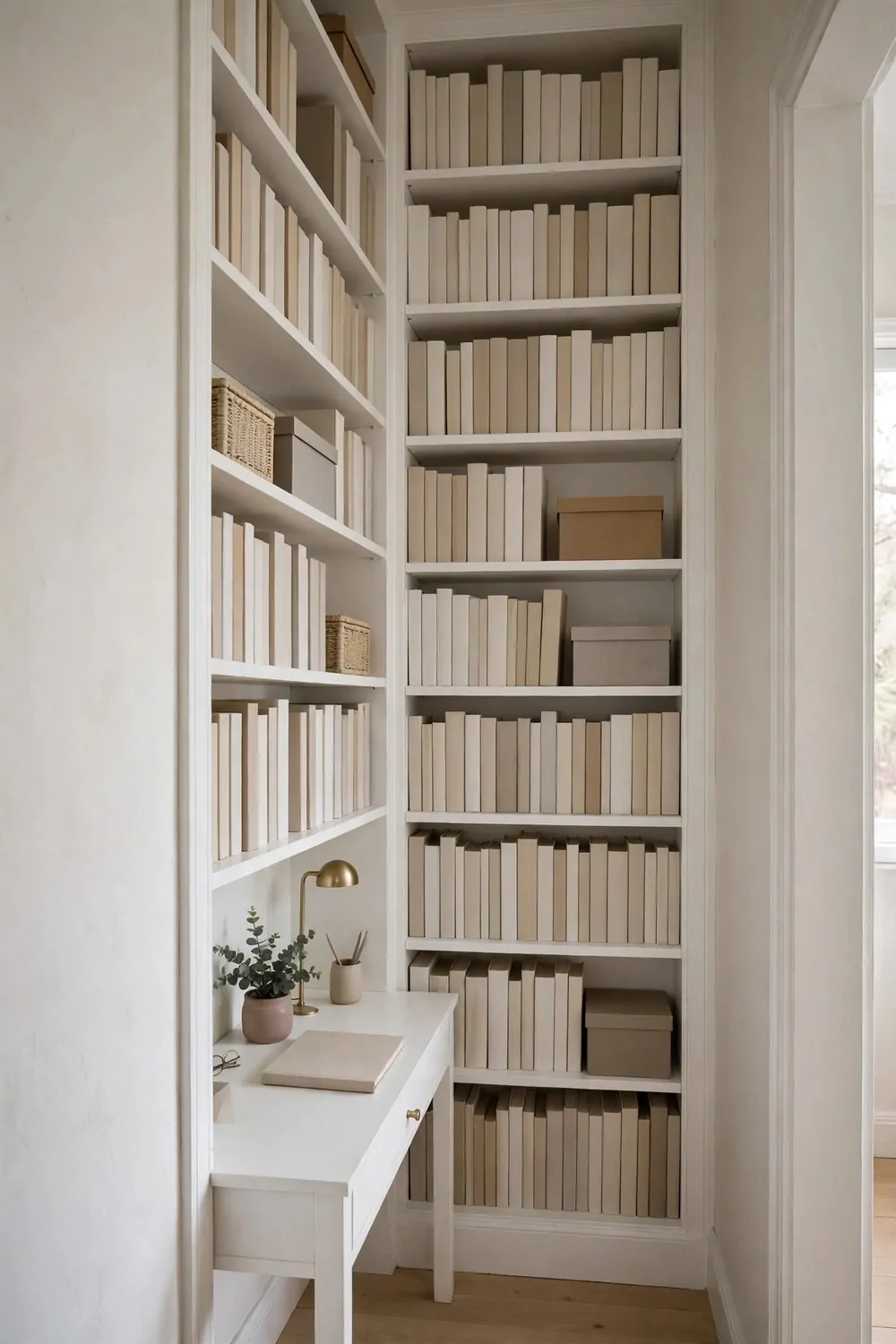
A slim shelf wall works well when your office is narrow and tight.
You do not need deep shelves to hold books. A slim shelf still holds a full row of books with ease.
I used this idea in a tiny spare room, and it saved the whole space.
Build the shelves only as deep as one book. That leaves more floor space for your chair and your legs.
Put the slim shelves on the longest wall in the room. It gives you lots of book space without crowding you.
Use light colours on slim shelves to keep the room feeling open. White or pale wood works best in a narrow room. Small can still hold a lot.
Do not stack books two rows deep on a slim shelf. The back row gets lost and you will forget what is there.
Add a slim shelf above your desk too. It holds your daily books right where you can see them.
Keep the bottom shelf a little higher than the floor. It makes cleaning under the shelves much easier.
Corner Shelves That Use Dead Space
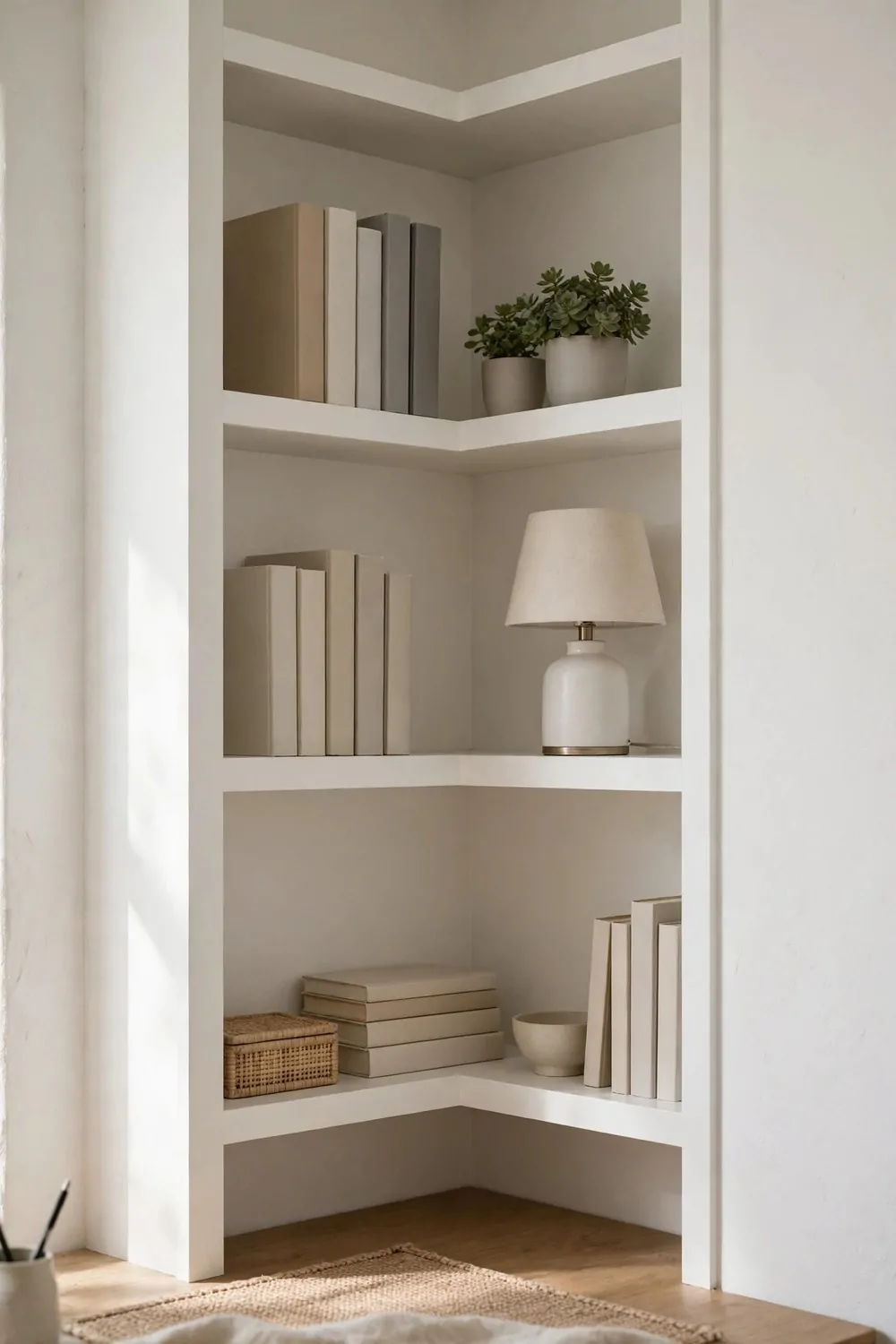
Corner shelves turn dead space into useful book space.
Most rooms have a corner that holds nothing but dust. Shelves fix that in a simple way.
I love corners because they feel hidden and cosy at the same time.
Build triangle shelves that fit snug into the corner. They hold books well and they look neat from the front.
Put the corner shelves near your desk if you can. You can spin your chair and reach a book without standing up.
Use the lowest corner shelf for big, heavy books. The corner holds their weight well and they stay put. That dead corner finally earns its keep.
Add a small light in the corner if it feels dark. A tiny clip light on the shelf works and costs very little.
Do not fill the corner shelves to the very edge. Leave a little space so books do not fall when you pull one out.
You can use the top corner shelf for plants. A small plant softens the sharp corner and adds a bit of green.
Floating Shelves Above the Desk
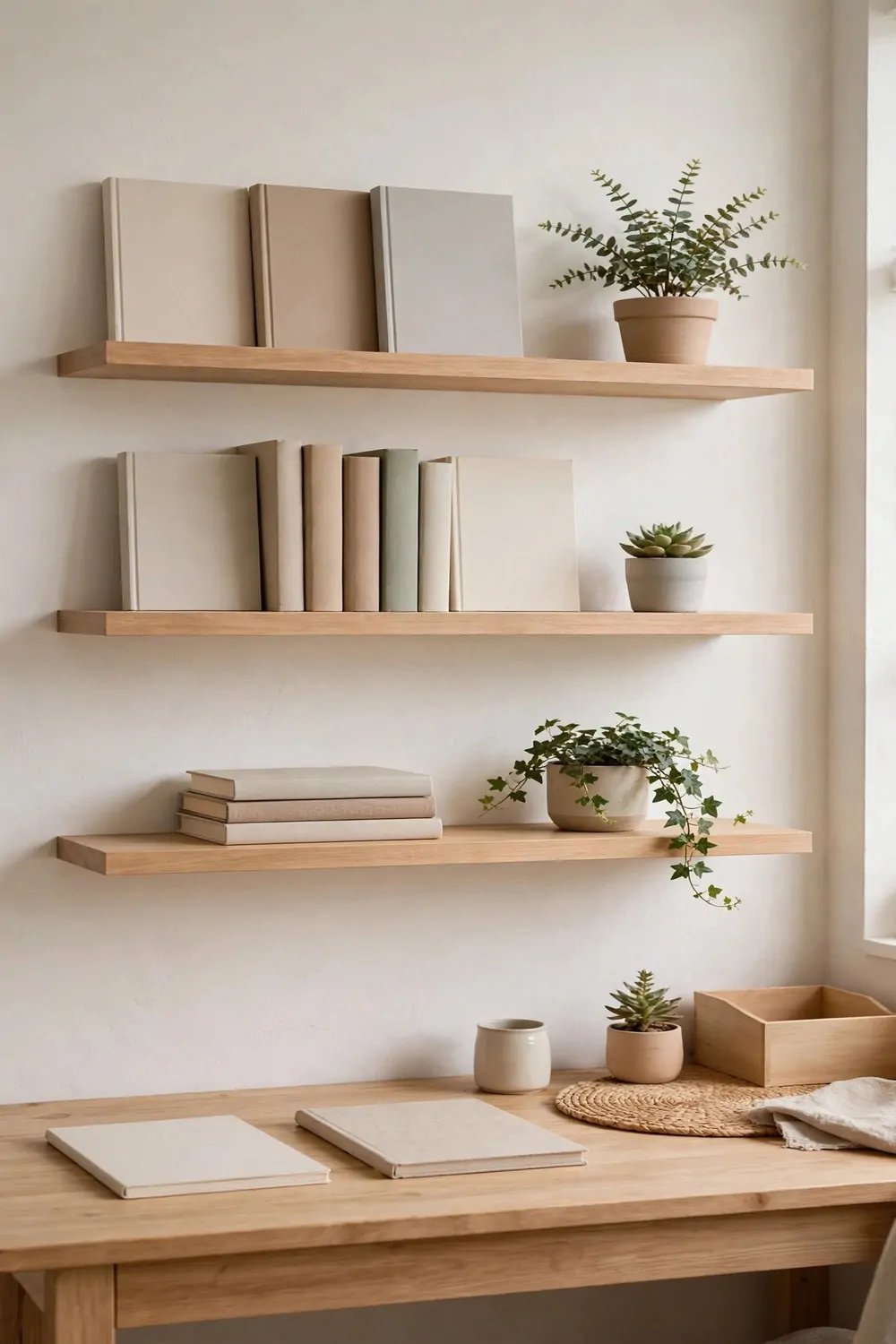
Floating shelves above the desk look light and modern.
They have no visible brackets, so they seem to float on the wall. It is a clean and simple look.
I like floating shelves because they do not make the desk area feel heavy.
Hang two or three floating shelves above your desk. Space them so you can reach the lowest one from your chair.
Put your most used books on the lowest floating shelf. You want them close, not up high where you cannot reach.
Use strong wall fixings for floating shelves. Books are heavy, and a weak fixing will sag over time. Your desk stays clear below them.
Keep the top shelf for lighter items. A few thin books and a small box are fine up there.
Do not overload a floating shelf with too many books. Leave a gap at the end so the shelf looks light and airy.
You can stagger the shelves if you want a playful look. One short shelf and one long shelf can look really nice together.
A Built-In Shelf With a Fold-Down Desk
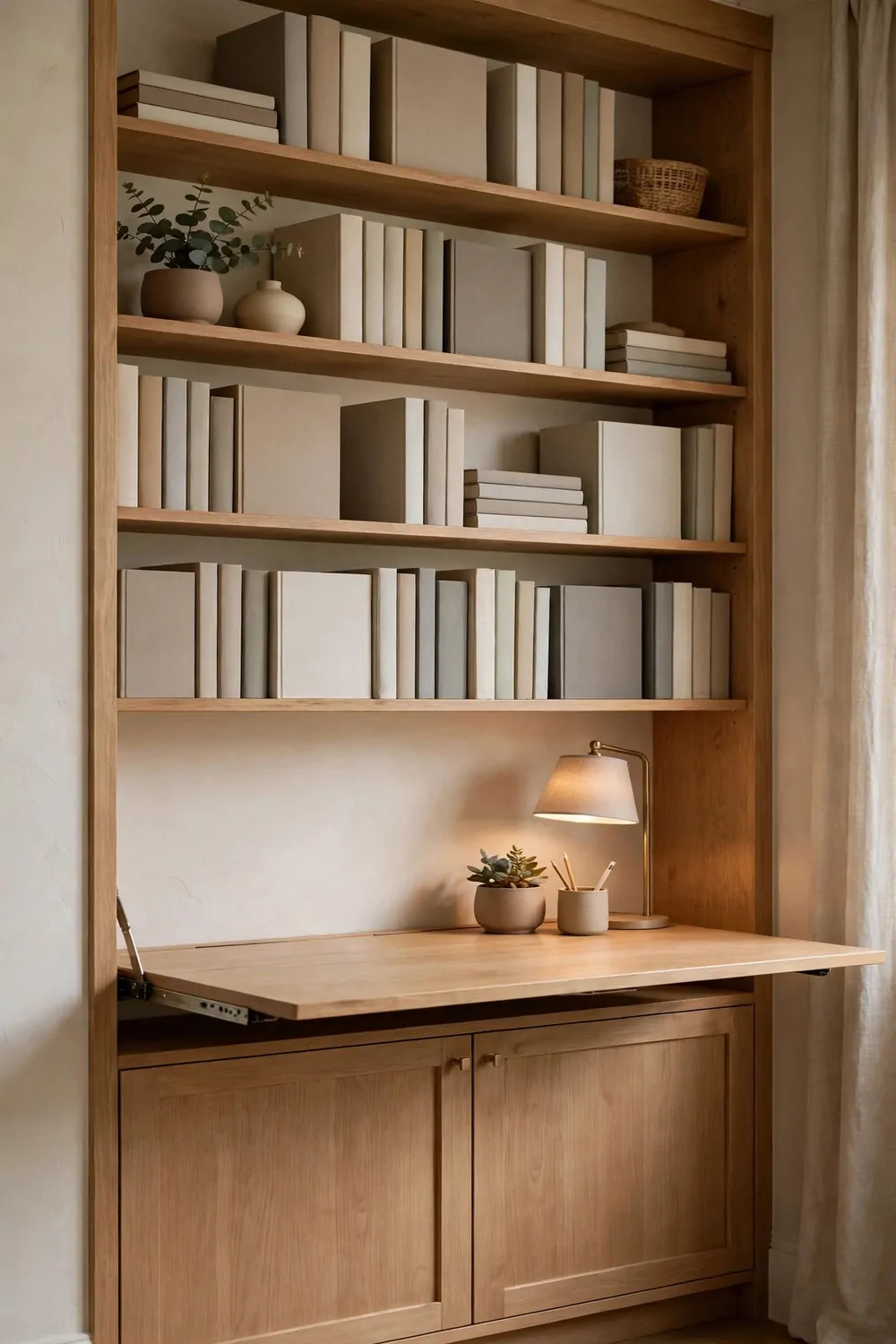
A built-in shelf with a fold-down desk is perfect for a very small office.
You fold the desk down when you work. You fold it up when you are done, and the room is free again.
I wish I had this in my first tiny flat, where space was always tight.
Build the desk into the middle of the shelf unit. It should fold down flat and feel strong when it is open.
Put books on the shelves above and beside the fold-down desk. They stay in place even when the desk moves.
Use a simple latch to hold the desk shut. You do not want it dropping open on its own in the night. It folds away in seconds.
Keep your laptop and notebook on the desk when it is down. Put them away on a shelf when you fold it up.
Add a small lip at the front edge of the desk. It stops pens from rolling off while you work.
Choose a desk surface that wipes clean easily. Coffee spills happen, and you want a quick wipe, not a stain.
Shelves With Warm Lights Inside
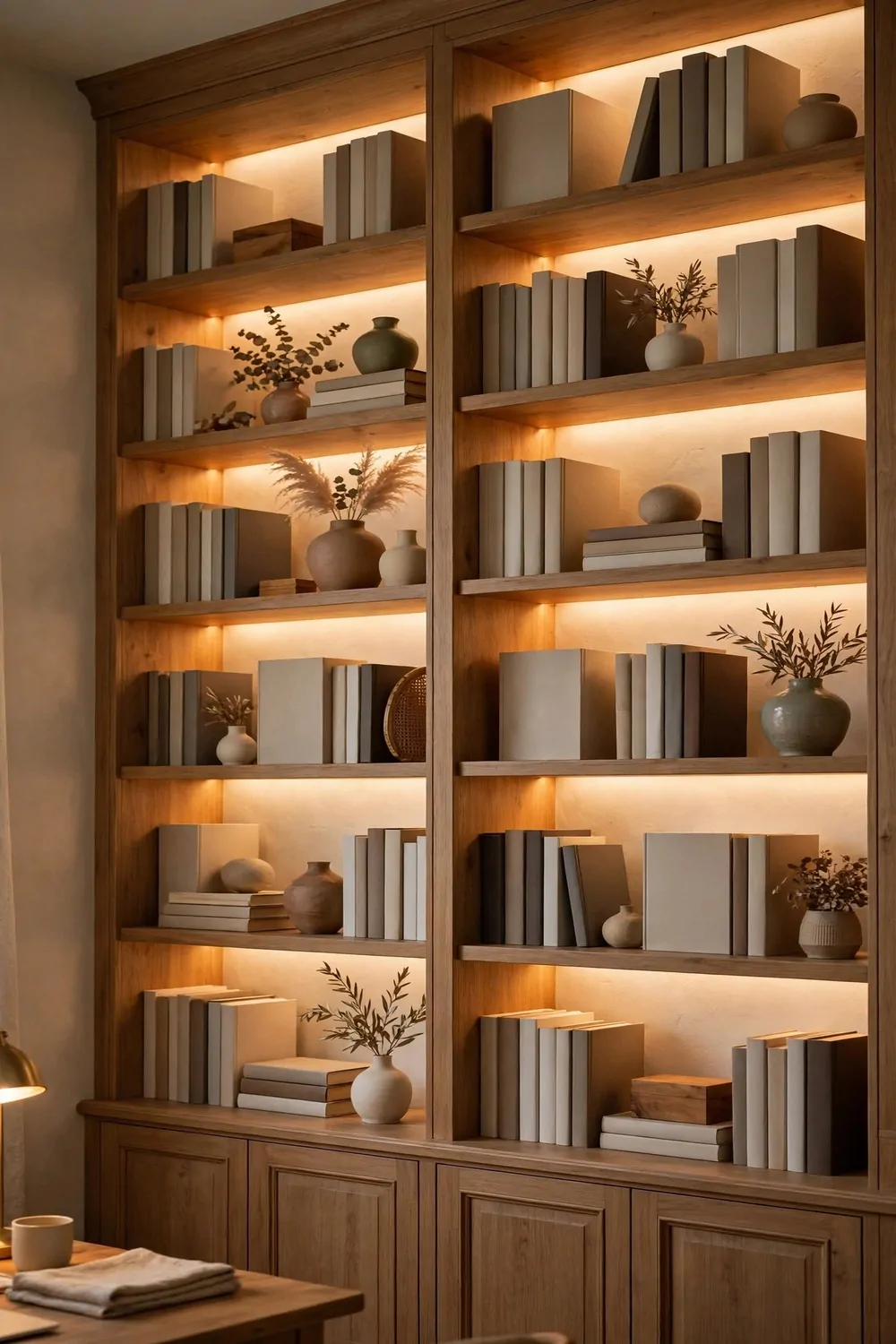
Warm lights inside shelves make books glow in a soft and cosy way.
You switch them on in the evening and the whole office feels calm. It is like a small library at home.
I turn my shelf lights on when the sky gets dark, and it helps me wind down.
Use small LED strips under each shelf. They are cheap, they stay cool, and they last a long time.
Pick a warm colour, not a cold blue white. Warm light feels kind on your eyes after a long day.
Hide the light strip at the front edge of the shelf. You see the glow, but you do not see the strip itself. Evenings feel softer with them on.
Add a simple switch near your desk so you can turn the lights on fast. A remote switch works well too if you like that.
Put the lights on the shelves with your favourite books. They deserve a little spotlight, and it looks lovely.
Do not light every single shelf if you want a soft look. A few lit shelves are enough to warm the whole wall.
A Bookshelf That Doubles as a Room Divider
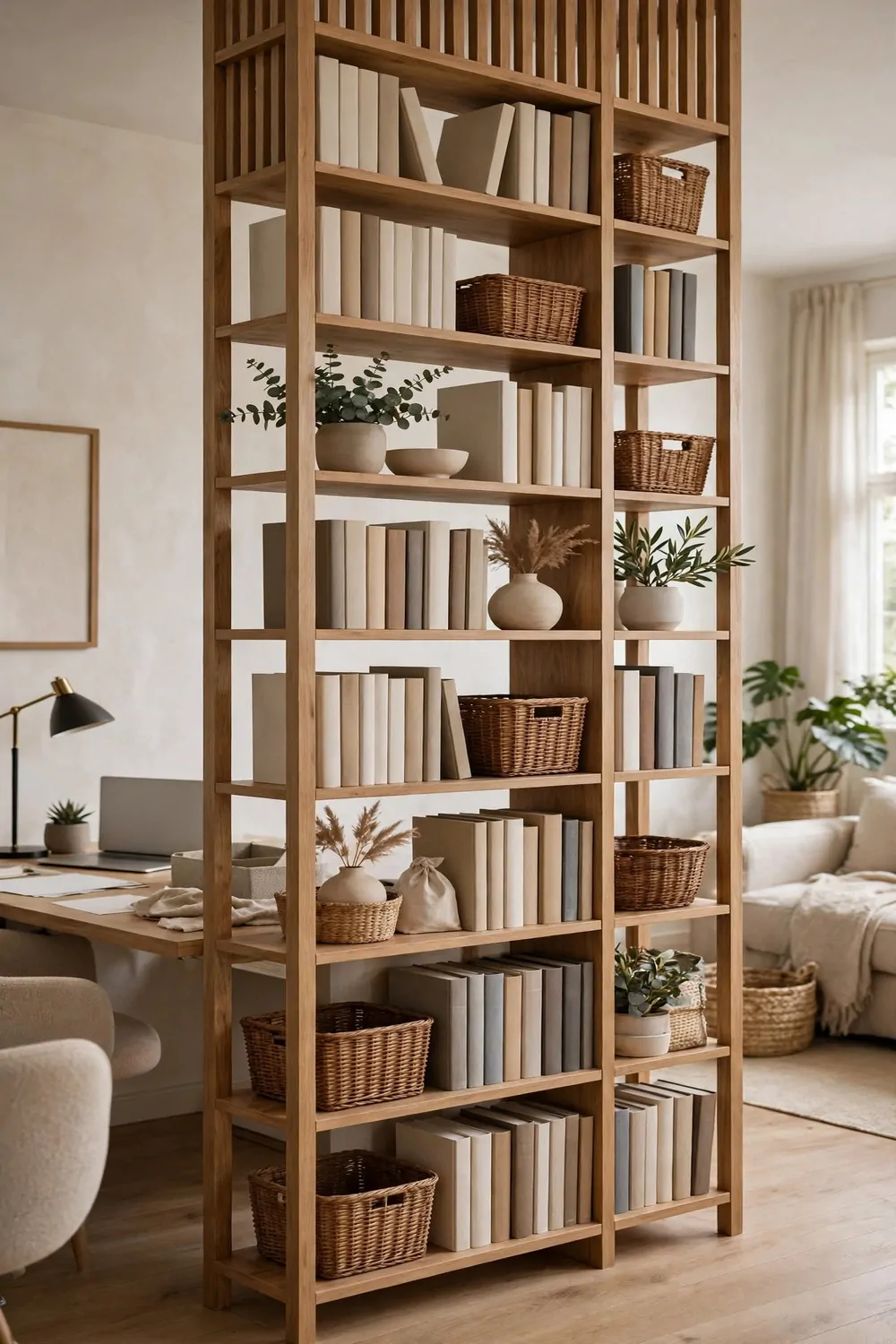
A bookshelf can split one big room into two useful spaces.
You get a home office on one side and a living space on the other. The shelf is the wall between them.
I like this idea because it keeps the room open but still gives you privacy.
Build the shelf so you can see through it a little. Open shelves on both sides let light pass through the room.
Put books on both sides of the divider shelf. That way it looks good from your desk and from the other side too.
Keep the shelf strong and fixed to the floor or ceiling. A divider shelf must not wobble when you walk past it. Two rooms, one smart shelf.
Use the middle shelves for books you use often. The top shelves can hold lighter books and a few plain boxes.
Leave one shelf open with no books at all. It lets you see through and talk to someone on the other side.
Add a few plants on the divider shelf to soften the line. Green leaves make a hard shelf feel friendly.
Deep Shelves for Big Books and Boxes
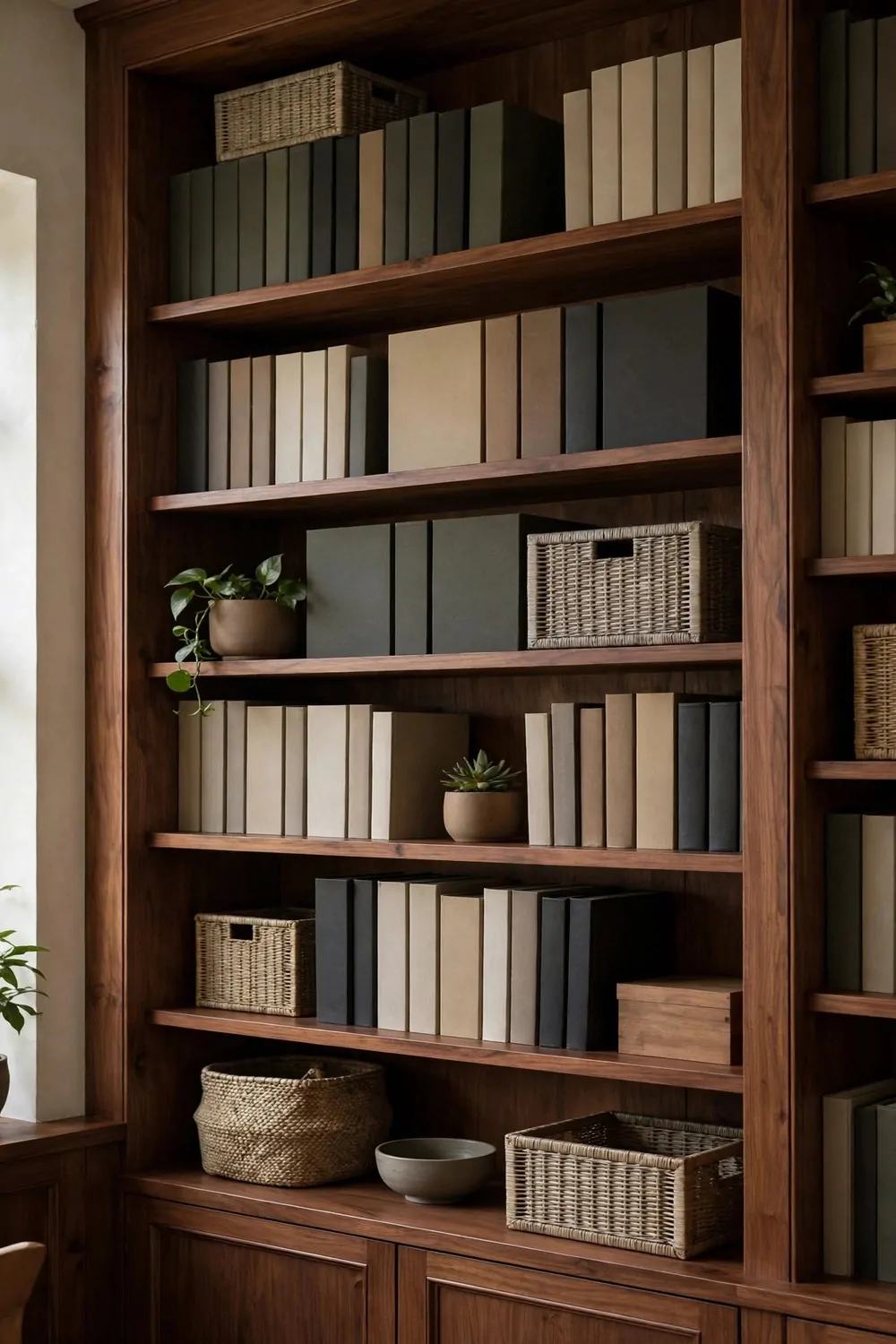
Deep shelves are made for big books and storage boxes.
Some books are wide and heavy, and they do not fit on a normal shelf. Deep shelves solve that problem.
I have a few big picture books and craft books that need this kind of space.
Build the shelves deep enough for two rows of books if you want. The front row holds daily books, and the back row holds spares.
Put storage boxes on the deep shelves too. A plain box can hold papers, cables, or craft supplies out of sight.
Label each box in big, clear words. You will thank yourself later when you need something fast. Big books finally have a home.
Keep heavy books low on deep shelves. It is safer and easier to lift them from a low spot.
Use bookends on deep shelves to stop books from sliding back. A heavy bookend works best for wide shelves.
Do not push books to the very back of a deep shelf. Leave a small gap so you can pull them out with ease.
Shallow Shelves for a Small Office
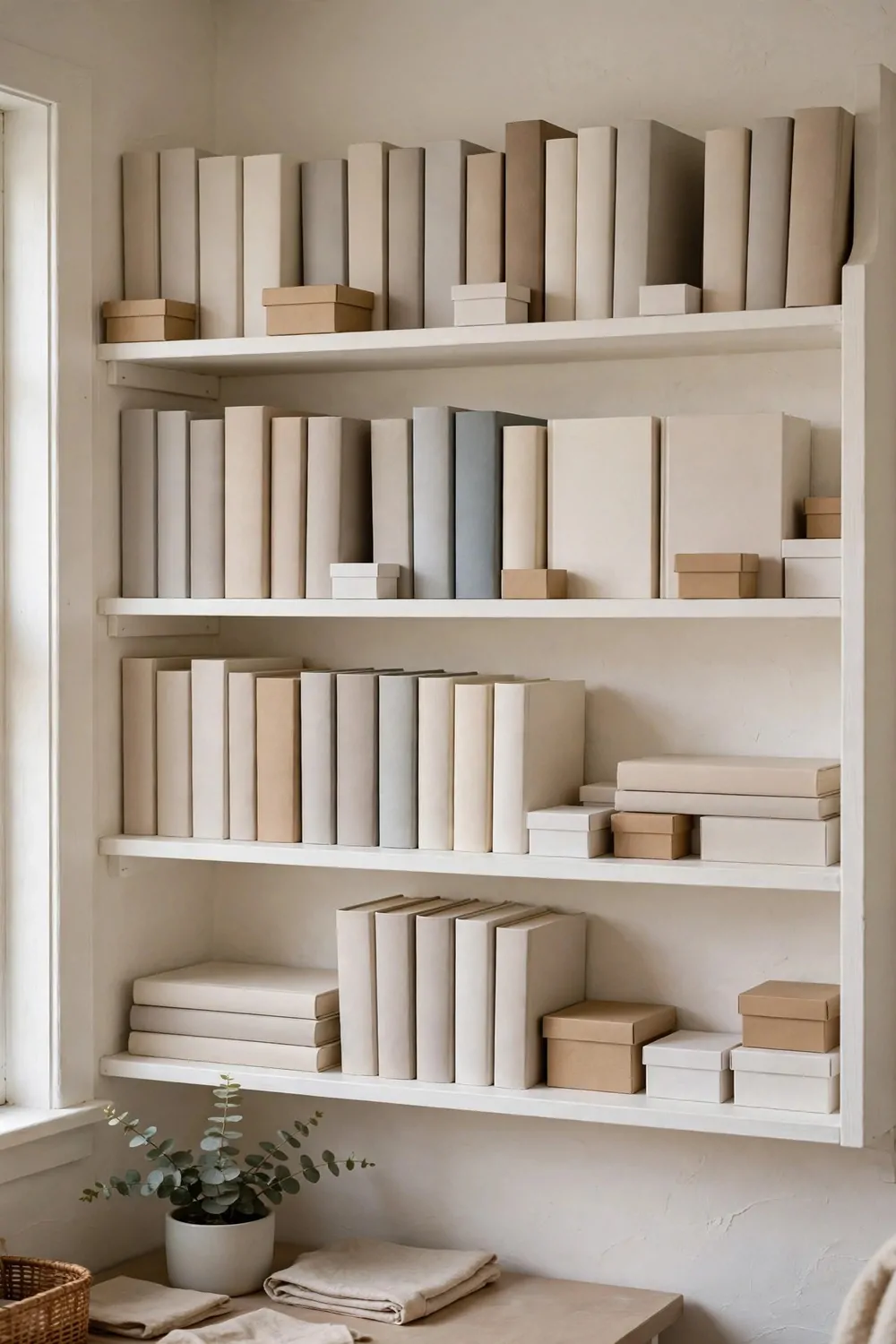
Shallow shelves are a smart pick for a small office.
They hold one row of books and they do not eat up your floor space. Your room stays open and easy to move in.
I think shallow shelves are underrated, because they look so neat.
Build them just deep enough for a book spine. That is all the depth you need for most books.
Put shallow shelves on the wall behind your door if you have space. It is a spot people often forget about.
Use them for thin books and notebooks. Thick books can go on a deeper shelf somewhere else in the room. Less depth, more floor to move.
Add a small rail at the front of a very shallow shelf. It stops books from slipping off when the door shuts.
You can fit more shelves on a wall when they are shallow. More shelves mean more books, even in a tiny room.
Paint shallow shelves a bright colour to make them a feature. Or keep them white for a calm and quiet look.
A Shelf Wall Painted the Same Colour as the Wall
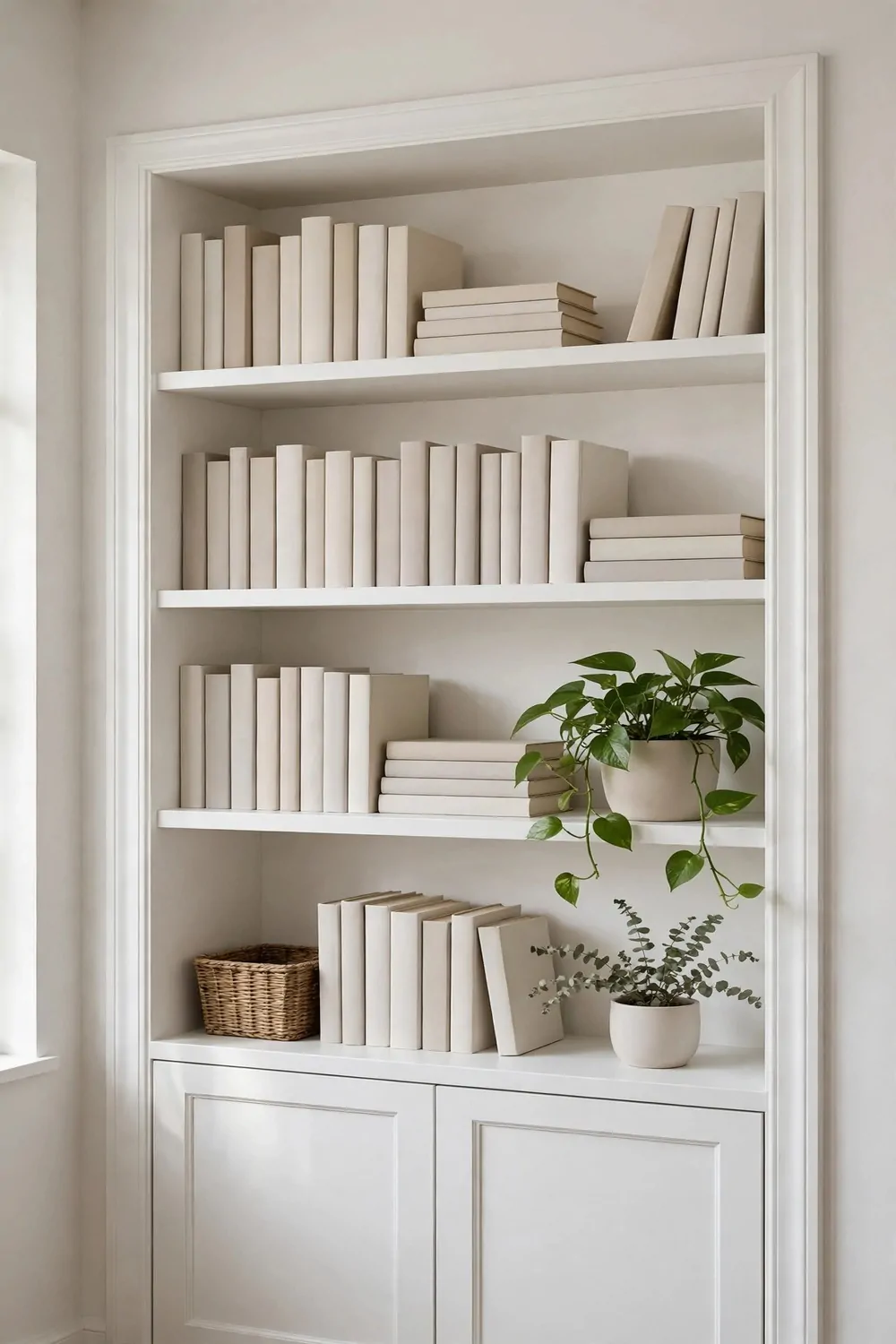
A shelf wall painted the same colour as the wall looks calm and seamless.
The shelves blend in, and the books become the stars of the room. It is a quiet and classy look.
I love this when I want the room to feel peaceful, not busy.
Paint the shelves, the back panel, and the wall in one colour. Use the same paint so the shades match just right.
Pick a soft colour like pale grey, sage green, or warm cream. These colours let the book covers shine without a fight.
Put books with bright covers on these shelves. The colour pops against the plain shelf, and it looks lovely. The books do all the talking.
Keep the shelf edges clean and smooth before you paint. A rough edge shows up more when the colour is all one shade.
You can add a darker desk in front of a same-colour shelf wall. The desk stands out, and the shelves sit quietly behind it.
Do not worry if the paint gets a small scuff. A tiny touch up with the same paint fixes it in minutes.
Shelves With Baskets and Plain Boxes
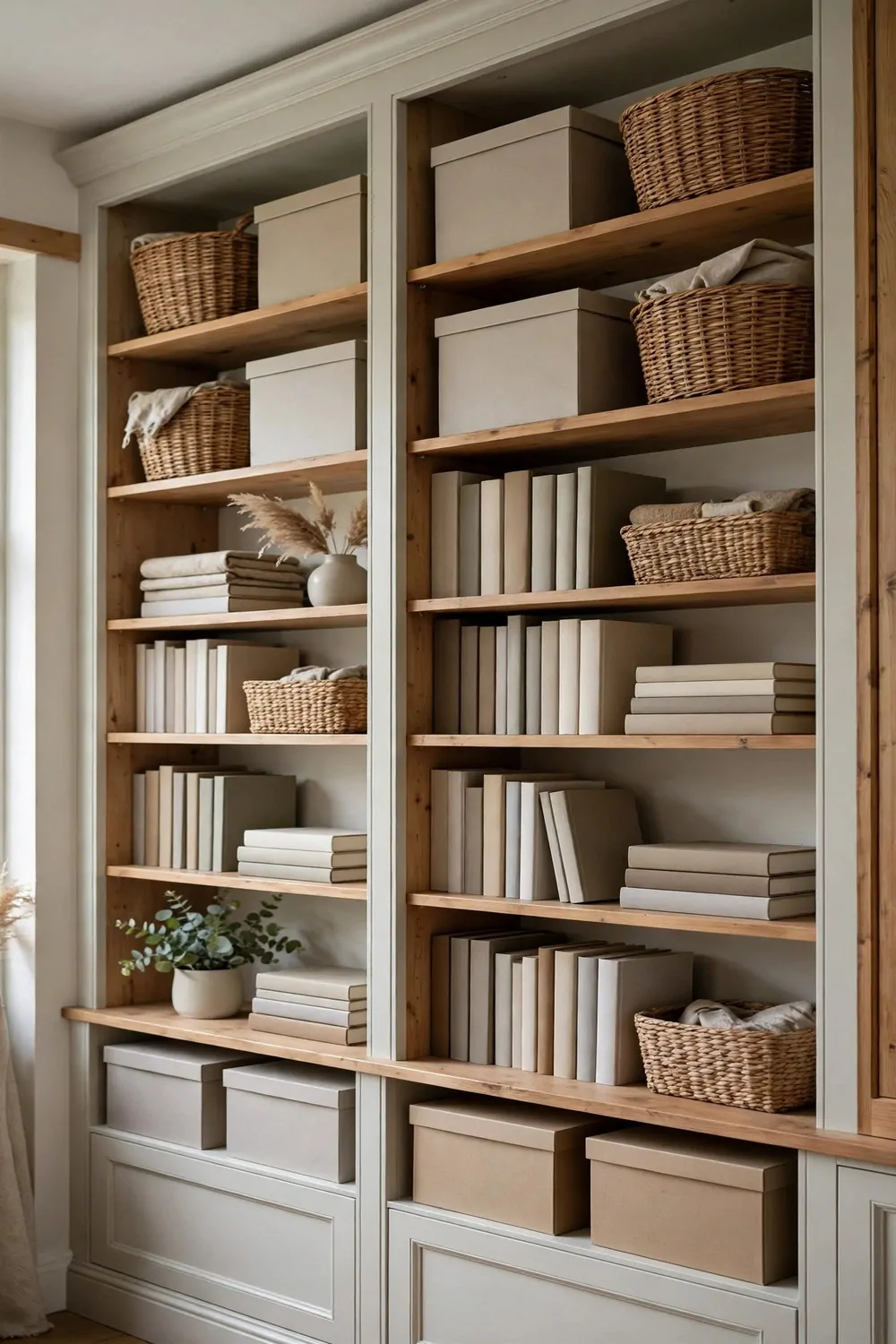
Baskets and plain boxes on shelves keep small things tidy and out of sight.
You can hide chargers, papers, and spare pens in a box. The shelf still looks neat from the outside.
I use boxes for all the little bits that used to clutter my desk.
Pick baskets that fit the shelf snugly. A basket that is too big will stick out and look messy.
Use plain boxes in one colour for a calm look. Natural baskets add warmth if your room feels cold.
Label each basket with a simple word like papers, cables, or craft. It helps you find things without opening every box. Everything has a place now.
Put the baskets on the lower shelves where they are easy to reach. You use them more than you think.
Keep books on the upper shelves and boxes down low. That mix looks balanced and feels practical.
Do not overfill a basket or it will be hard to pull out. Leave a little space at the top for your hand.
A Bookshelf With a Built-In Filing Spot
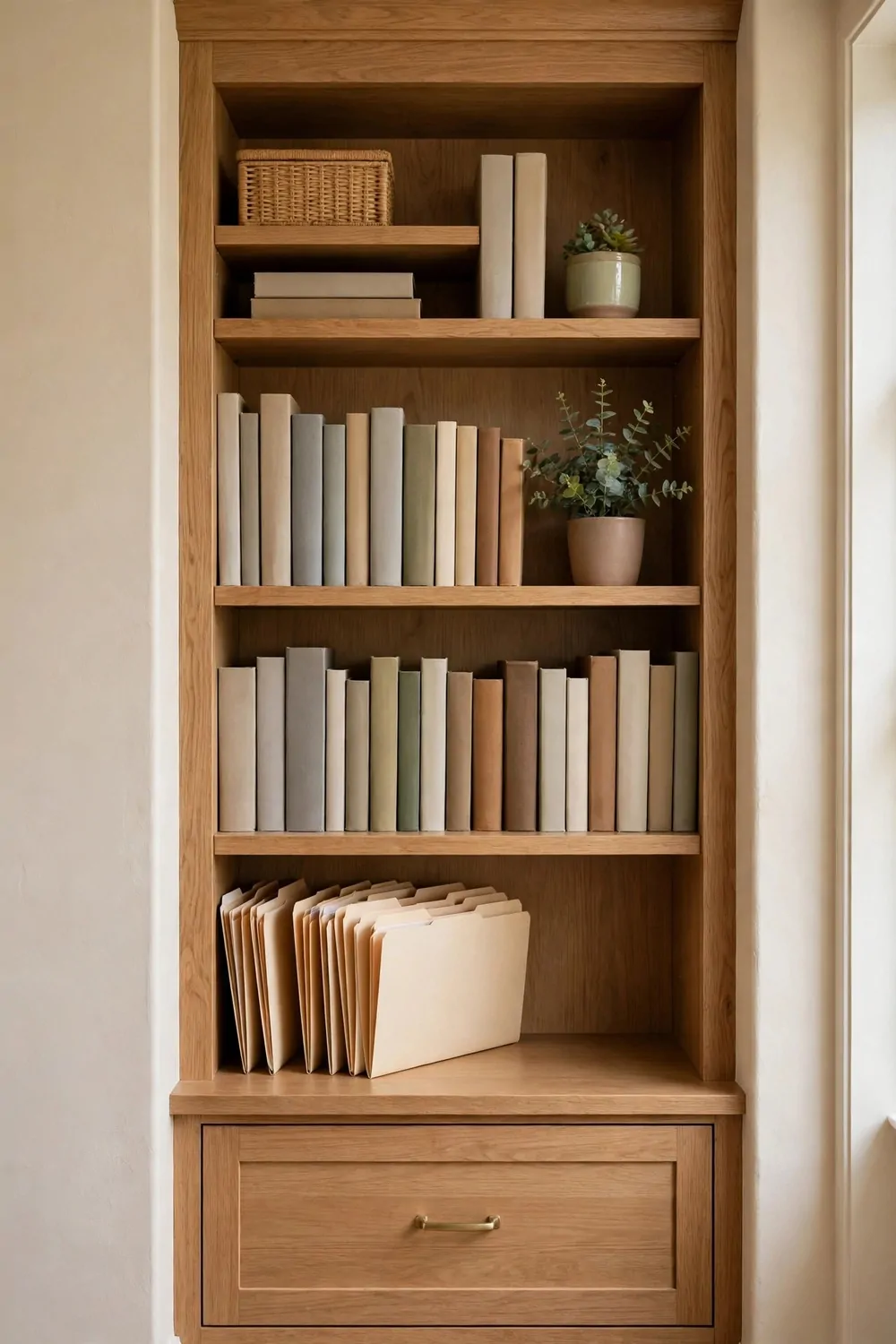
A bookshelf with a filing spot keeps your papers close to your books.
You do not need a separate filing cabinet taking up floor space. The shelf does both jobs at once.
I like this because my papers used to pile up on my desk in a messy stack.
Build a few upright slots into one shelf section. They hold folders upright, just like a small filing box.
Sort your folders by topic, like bills, work, and home. Use plain labels so you can read them at a glance.
Put the filing spot at arm height near your desk. You can file a paper in seconds, so you actually do it. Papers stop piling up on the desk.
Keep the folders slim and do not overstuff them. A fat folder is hard to pull out and it bends the papers inside.
Use the shelves above the filing spot for books. It keeps your work tools and your reading in one neat wall.
Add a small tray on the filing shelf for papers that need action. It reminds you what to do first each morning.
Glass-Front Shelves That Keep Dust Away
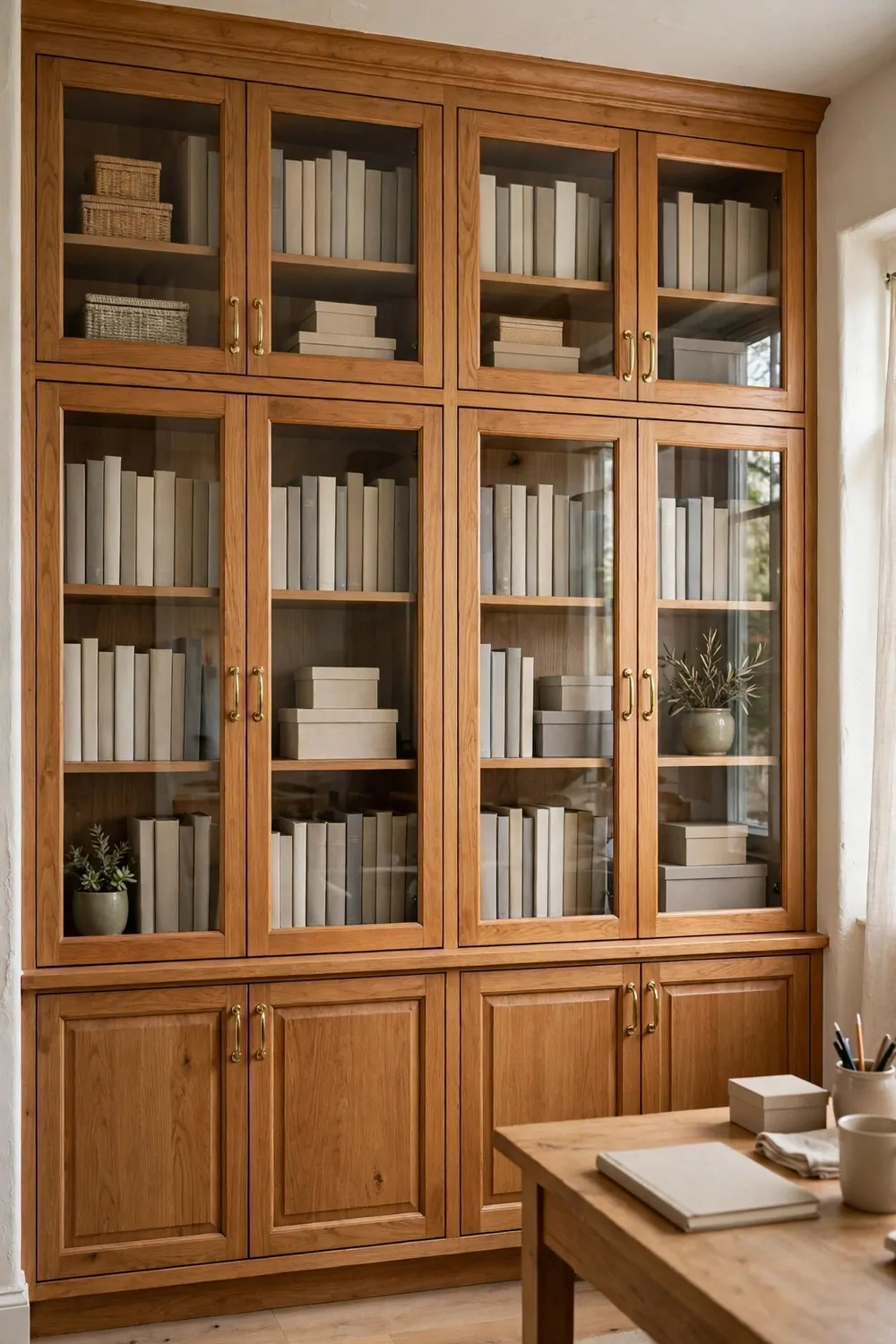
Glass-front shelves keep dust away from your books.
You can still see all your books through the glass. They just stay cleaner for much longer.
I love this idea if you live near a busy road or you hate dusting.
Pick clear glass doors so the books show through nicely. Frosted glass hides the books, so it is less fun to look at.
Use a simple frame for the glass doors that matches your shelves. A thin frame looks neat and modern.
Keep the glass clean with a quick wipe once a week. A streaky door spoils the whole look, so wipe it well. Clean books, happy reader.
Put your most loved books behind glass. They stay safe from dust and from sticky little hands too.
Add a small handle to each glass door. You want to open them with one hand when you need a book fast.
Do not put glass doors on shelves you use every hour. Opening and closing the doors all day gets tiring.
| Material | Look | Best for | Cost |
|---|---|---|---|
| Painted wood | Clean and smooth | Living room, bedroom office | Medium |
| Natural wood | Warm and rich | Dining room, office | Higher |
| Painted plywood | Plain and strong | Garage, basement | Lower |
| Metal brackets with wood | Simple and modern | Laundry room, mudroom | Lower |
A Shelf Nook for Plants and Books
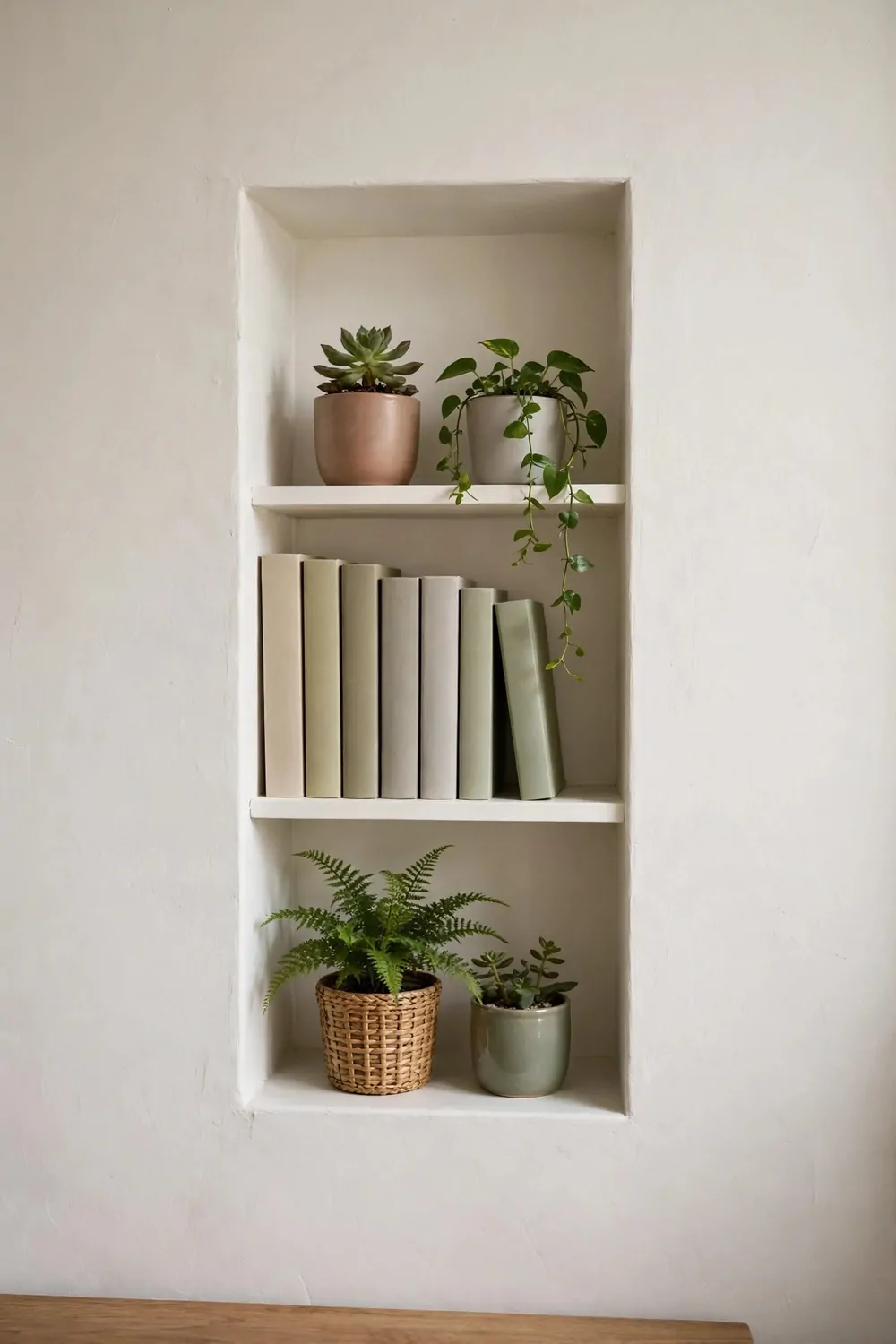
A shelf nook for plants and books brings a bit of nature into your office.
Green leaves next to book spines look fresh and calm. It makes work feel a little less like work.
I keep a small plant on my shelf, and I smile every time I see it.
Pick plants that like indoor light and need little care. A small green plant that forgives a missed watering is best.
Put the plant on a shelf near the window if you can. It will grow better with a bit of soft light each day.
Use a plain pot that matches your shelves. A simple pot lets the plant and the books do the talking. A little green goes a long way.
Keep the plant on a small tray to catch water. You do not want water dripping onto your books below.
Mix one plant with a row of books on the same shelf. The green breaks up the straight lines and feels alive.
Do not crowd the nook with too many plants. One or two plants are enough for a small office shelf.
Shelves That Hold Your Work Tools Too
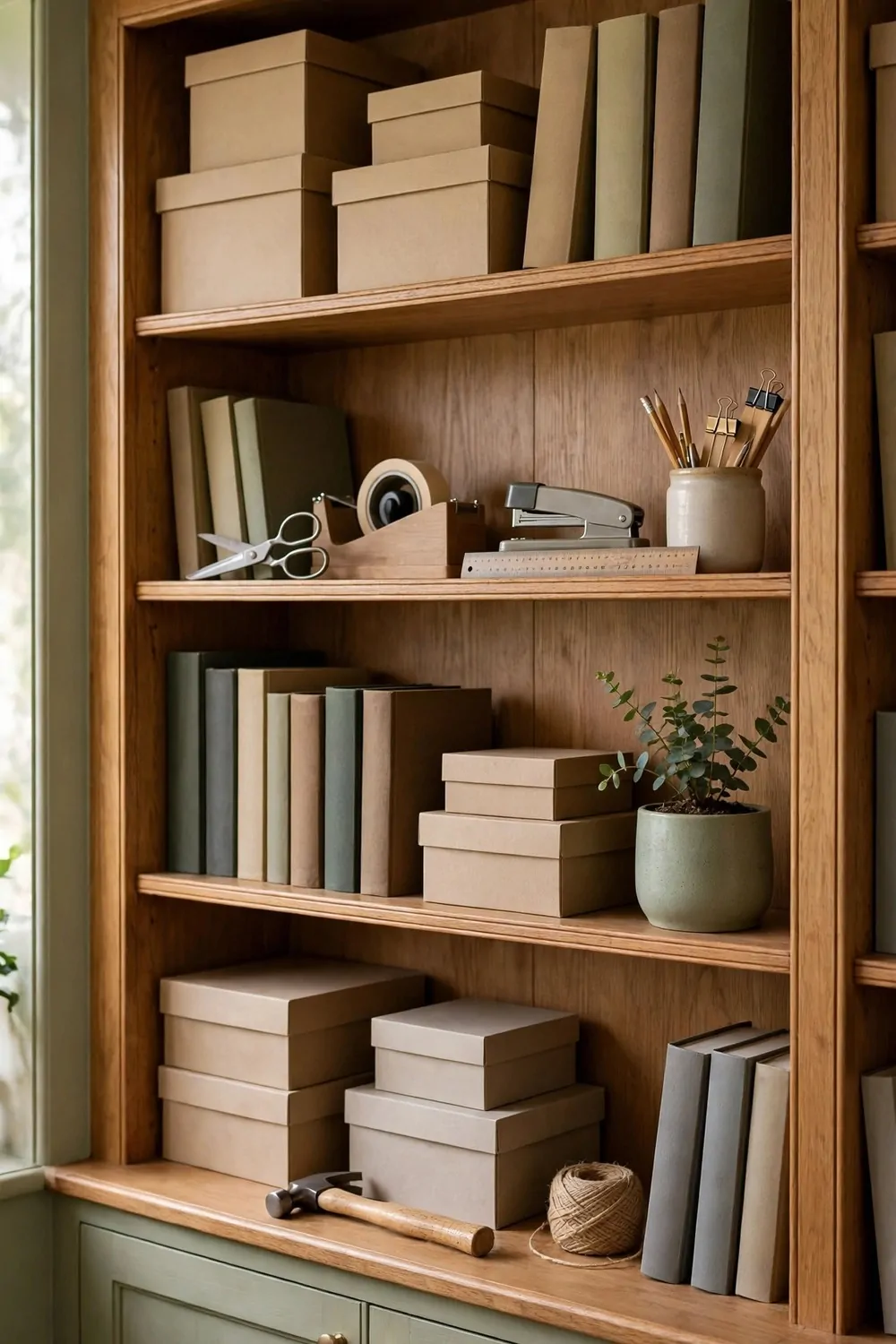
Shelves that hold your work tools keep everything you need in one place.
Your books sit next to your stapler, your scissors, and your notebooks. You do not have to hunt around the room.
I like this because it saves me time when I am in the middle of a task.
Put your tools on a shelf right above your desk. You can reach them without standing up or opening a drawer.
Use small jars or plain pots for pens and pencils. They stand up straight and you can see what you have.
Keep your notebooks in a neat stack on one shelf. Put the one you use most on top so it is easy to grab. Work feels smoother when tools are close.
Add a small box for tape, clips, and pins. Little things get lost fast if they have no home on the shelf.
Do not mix too many tools with your books on one shelf. It can look messy, so give tools their own shelf if you can.
Put heavy tools low and light tools high. A stapler is safer on a low shelf than on a high one.
A Ledge for the Printer, Paper and Spare Ink
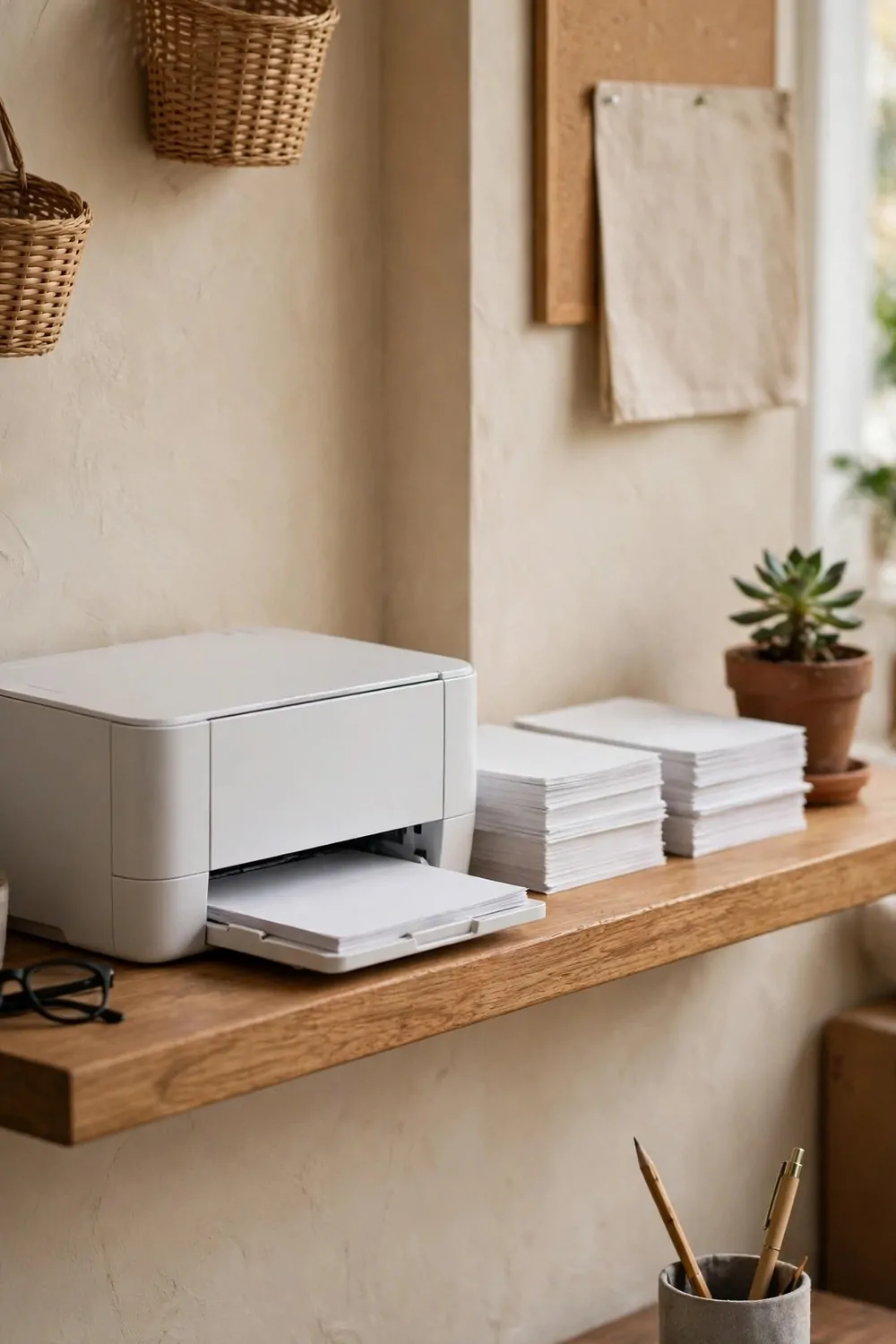
Your printer needs a home that is not the floor.
I like a ledge that sits just below waist height. You can slide a sheet of paper in without bending down or stretching up.
Keep the paper stack right next to the printer. A small upright holder stops the pages from sliding all over the shelf. It costs very little and it saves a lot of mess.
Spare ink goes in a little box on the same ledge. You will never have to hunt through a drawer when the printer flashes that low ink warning.
Leave some empty space on the ledge too. You need a spot to set a fresh stack of paper while the printer is still working.
The cable is the part most people forget. A small hole at the back of the shelf lets the cord drop down to the plug without hanging in the air.
I put a basket under the ledge for the printed pages that are waiting to be filed.
If your printer is loud, a shelf with a back panel helps a little. The sound stays in the shelf instead of bouncing around the whole room.
Wipe the ledge once a week and you are done. Dust loves printers, and a clean ledge keeps the paper feeding smooth.
A Bookshelf Wall for Two People Sharing One Office
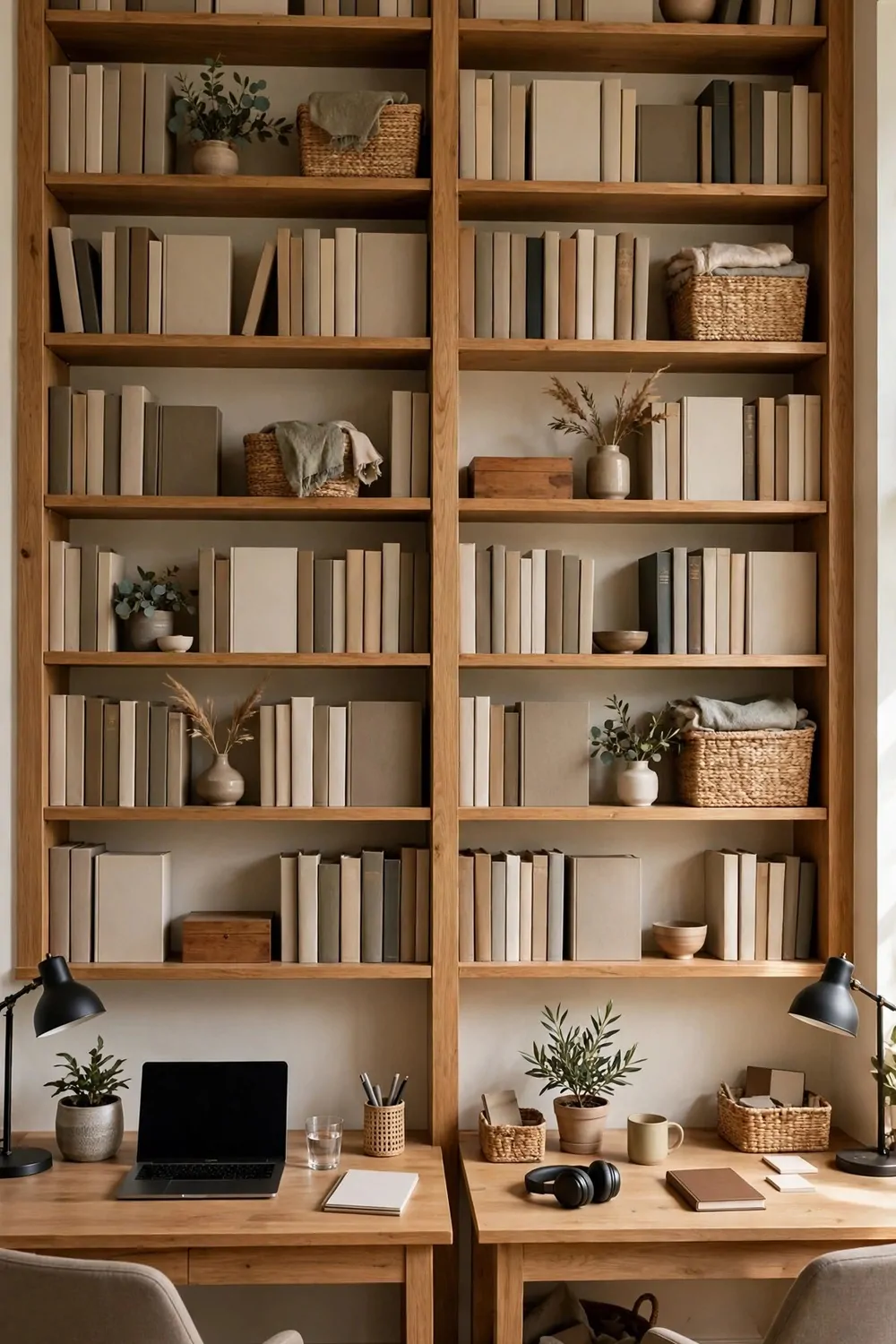
Two people in one office can still have their own shelf space.
My side has my work books and my notebooks. His side has his files and his reference books. We never mix them up now.
A tall shelf in the center can hold the things you both use. Shared folders, the printer paper, and the spare cables all live there. Nobody has to ask where the shared stuff lives.
Give each person a different shelf color or a small label if you like. It sounds silly but it stops the daily question of whose book is whose.
Desks should face the same wall if you can manage it. You both reach your own shelves without walking around each other.
Keep the middle shelf low enough for both of you to grab things. If only one person can reach it, it becomes that person’s shelf by accident.
I keep a small tray on my side for the things I use every day.
Noise is the other thing to plan for. A bookshelf full of books between two desks softens sound more than a bare wall ever will.
When we both work at the same time, the wall keeps us tidy. Each of us puts things back on our own side and the office stays calm.
A Kids Homework Shelf Inside the Office
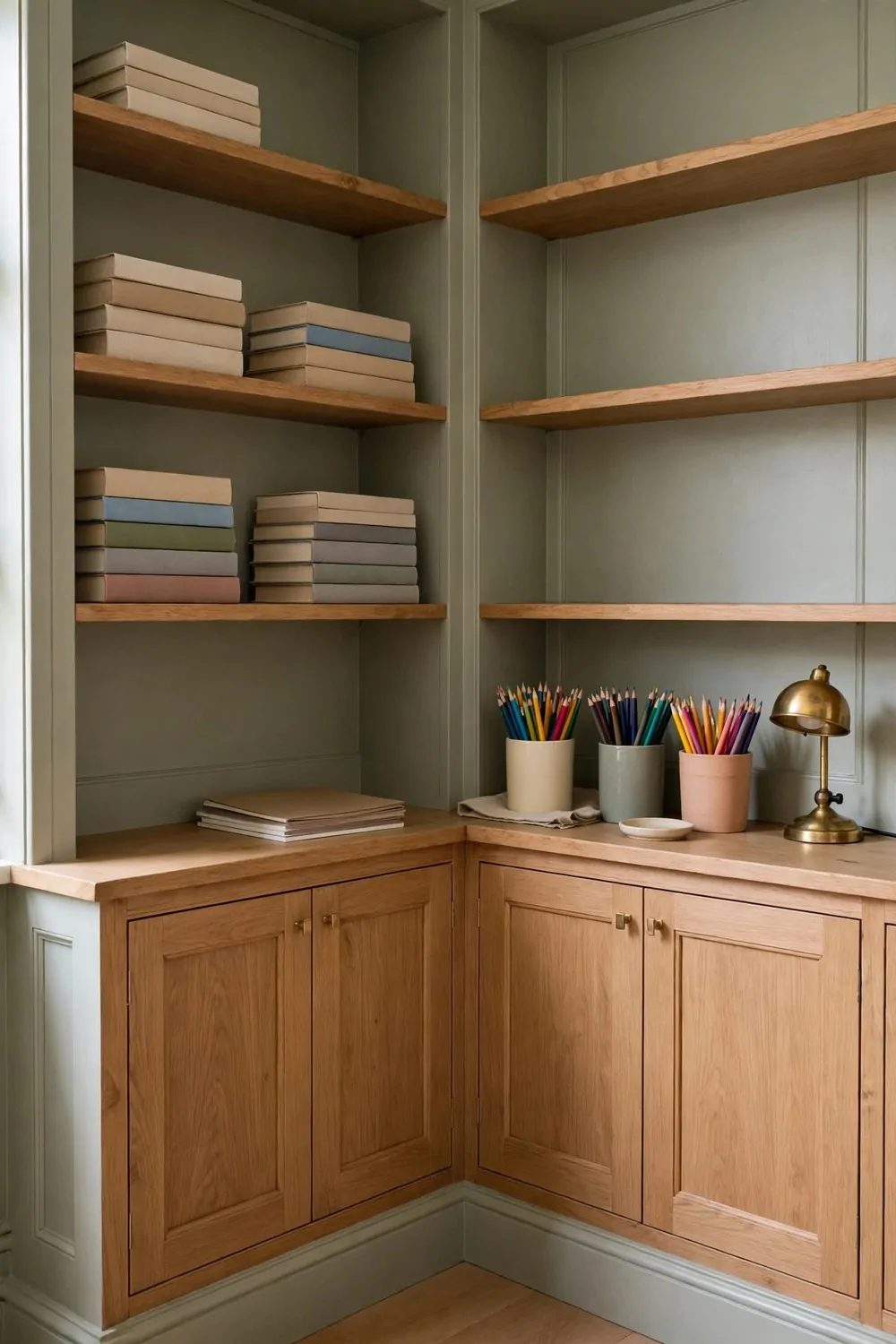
A homework shelf inside your office lets you watch over the work without hovering.
Pick a low shelf that your child can reach on their own. If they need you to lift every book down, they will just ask you all day instead.
Keep the school books on one shelf and the fun books on another. It helps your child find what they need fast and put it back the same way. A clear split makes tidy up time much faster too.
A small basket for pencils and crayons works better than a drawer. Kids can see what is inside and they grab what they need without making a mess.
I put a clock on the shelf at eye level for my little one. It helps them learn to watch the time when homework starts and ends.
Leave one shelf empty for the school bag. When the bag has a home, it stops landing on the floor in the middle of your office.
A pin board next to the shelf holds the timetable and the spelling list.
Keep snacks off the shelf. Crumbs and books do not mix, and a sticky page is hard to fix.
At the end of the day we tidy the shelf together. It takes two minutes and it teaches your child that the office is a shared space we both care for.
A Shelf Wall With a Built-In Pin Board
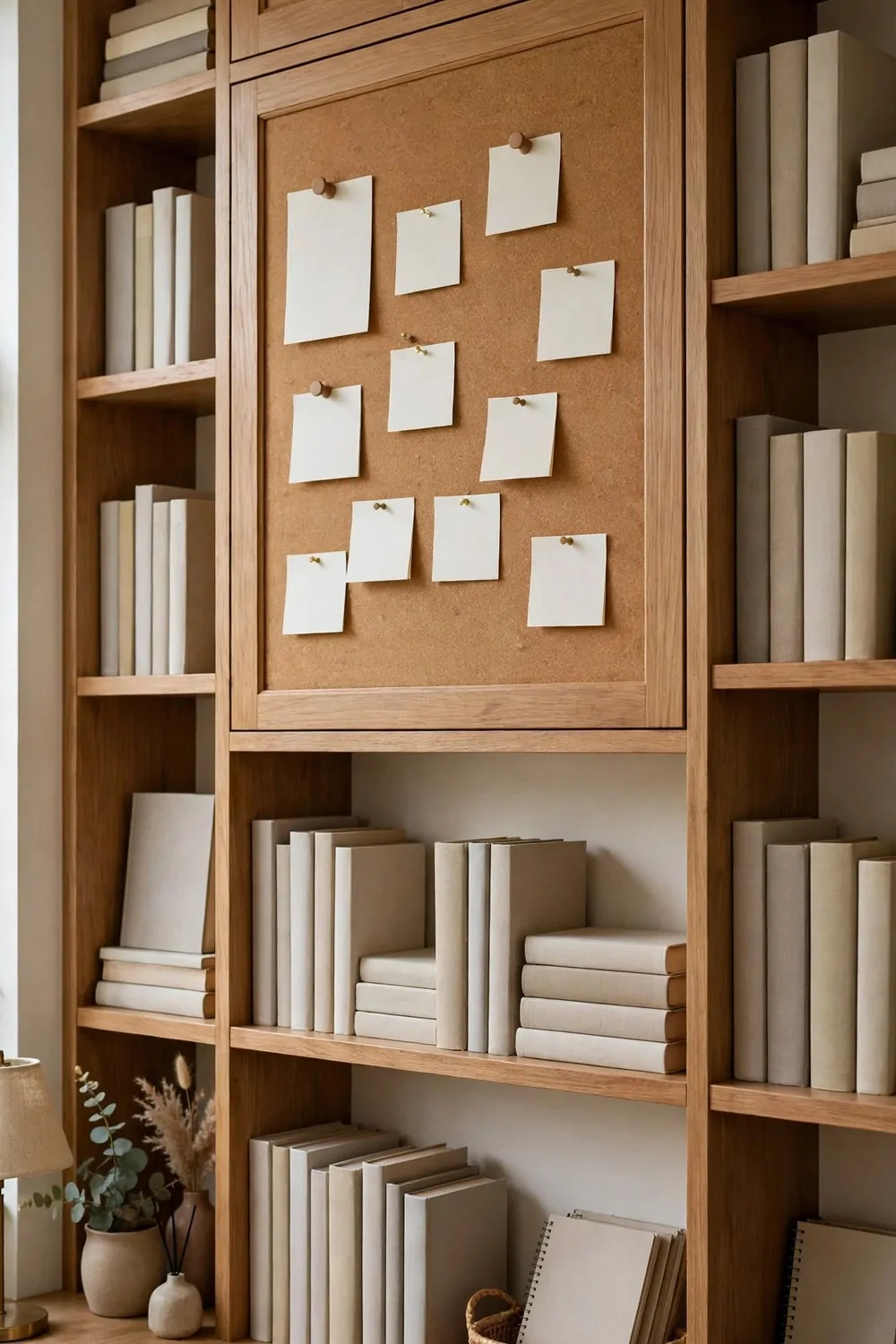
A pin board built into your shelf wall keeps your ideas where you can see them.
I like the board at eye level between two shelves. You can pin a note without standing on a chair or moving a stack of books.
Cork is soft and easy to use. Fabric over cork looks softer and it hides the pin holes when you move things around. Pick the one that suits the look of your office best.
Keep the board small if your wall is already full of shelves. A board the size of a large book is enough for the notes that matter most.
Pin your weekly plan where you can see it every morning. When the plan is on the wall, you do not have to keep it in your head all day.
Use the board for one happy thing too. A photo or a small drawing makes the office feel warm and it reminds you why you work hard.
Change the notes often or the board turns into wallpaper.
Do not pin heavy things to the board. A thick folder will fall off and land on your keyboard at the worst moment.
A pin board and a bookshelf work well together. The books hold the knowledge and the board holds the plans you are making right now.
A Ladder Rail That Reaches the Top Shelves
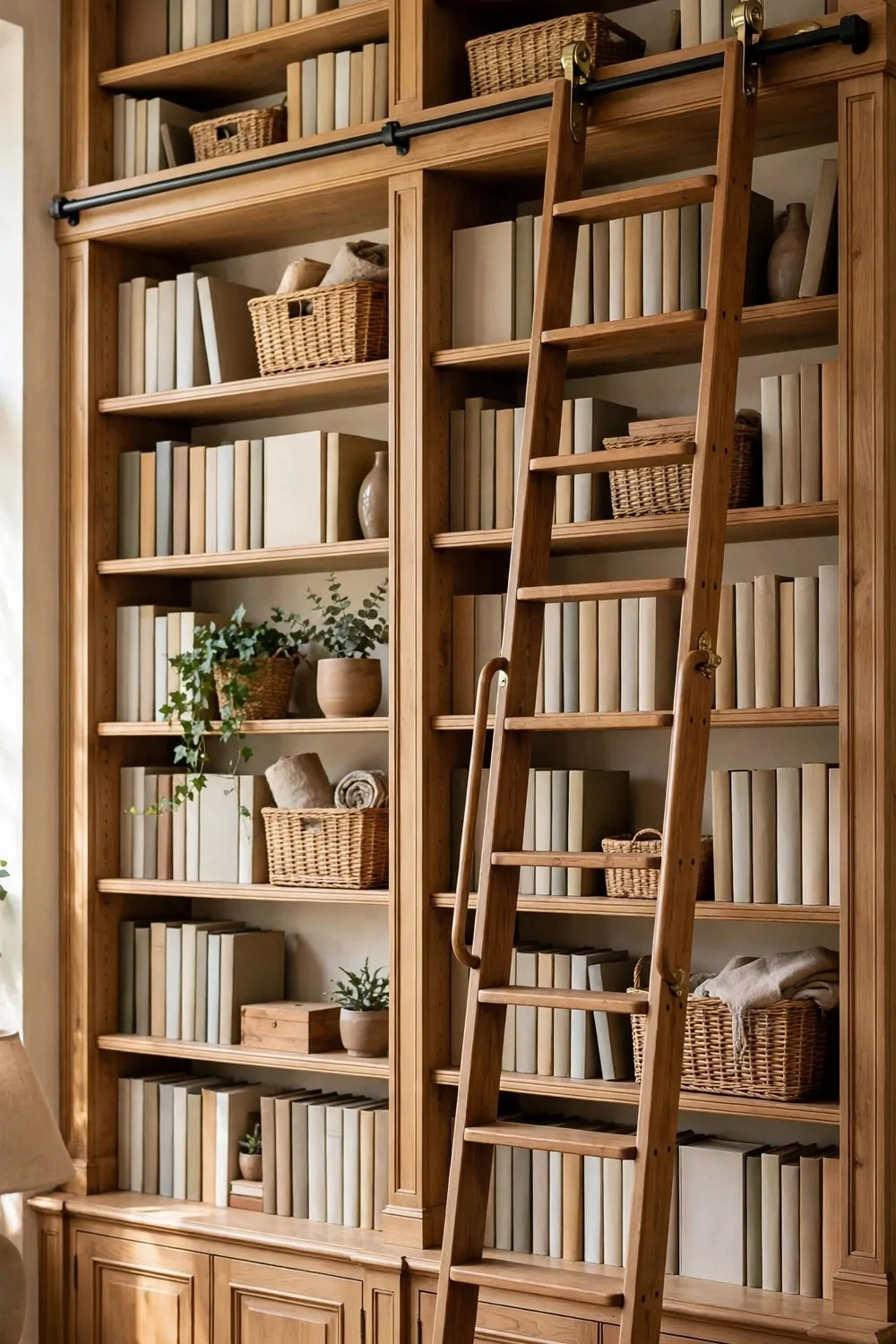
A ladder rail lets you reach the very top shelf without a wobbly chair.
The rail runs along the top of the shelf wall. A small hook on the ladder catches the rail and holds the ladder steady while you climb.
I pick a ladder that is light enough to move with one hand. If it is too heavy, you will stop using it and the top shelves will gather dust.
Keep the top shelves for things you do not need every day. Old files, keepsakes and books you have already read all belong up high. You will only need the ladder now and then.
Always face the ladder when you climb down. It feels slow but it is the safe way, and you will not drop a book on your own foot.
A wooden ladder looks warm next to a wood shelf wall. A metal ladder looks neat next to a white shelf wall. Pick the one that fits your room.
Make sure the rail is fixed tight to the wall.
Teach the kids that the ladder is a tool, not a toy. It stays hooked on the rail when nobody is using it.
With a ladder rail, no shelf is wasted. The whole wall becomes useful from the floor right up to the ceiling.
A Bookshelf With Hidden Drawers Underneath
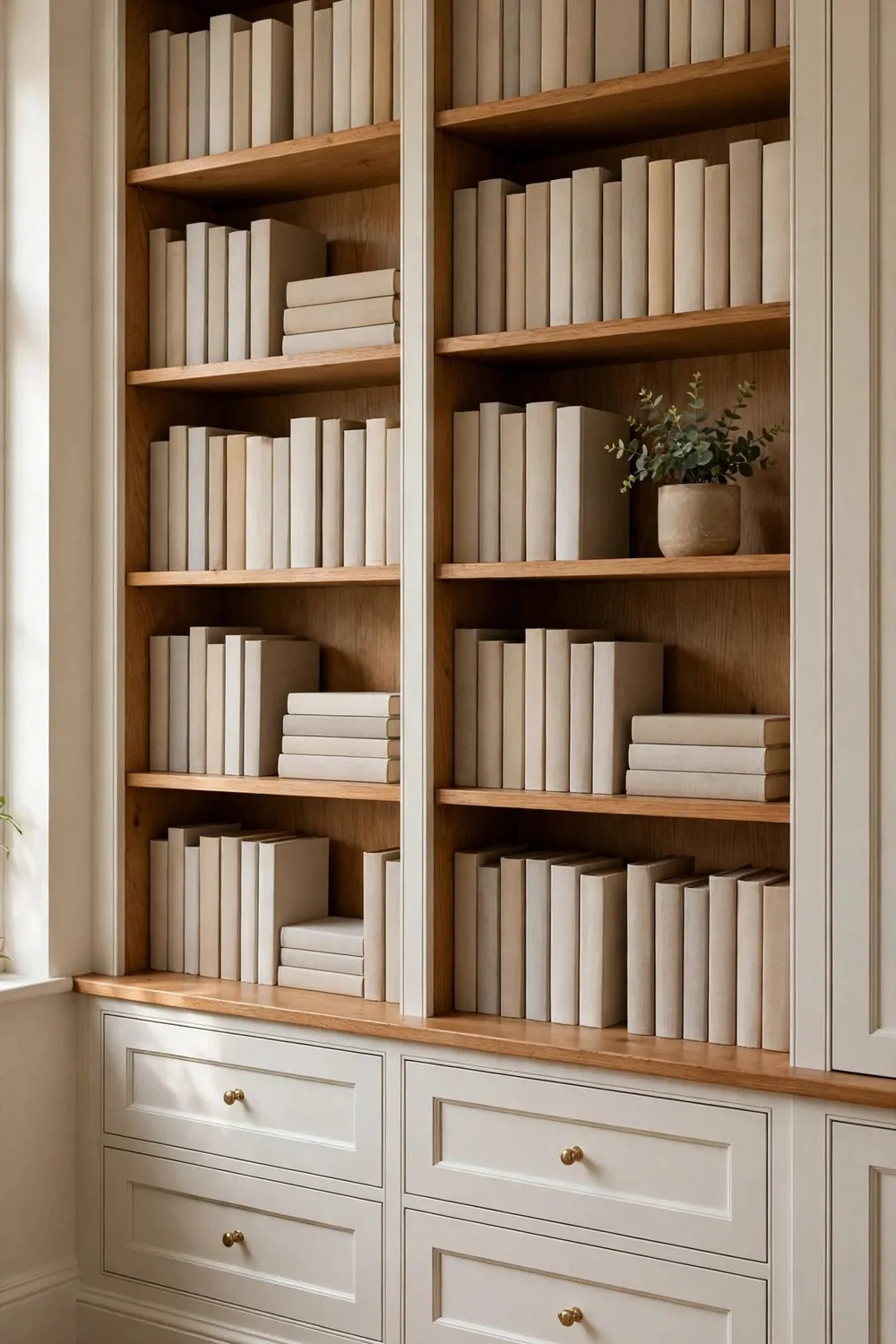
Hidden drawers under a bookshelf hold the messy stuff nobody needs to see.
The drawers look like part of the shelf base. From across the room you would never guess they open at all.
I keep one drawer for cables and chargers. They tangle less when each one has its own little space inside the drawer.
Another drawer holds the things I use once a month. Stamps, envelopes and the spare batteries all live there out of sight. I check it at the start of each month and top it up.
Deep drawers work best under a bookshelf. A shallow drawer fills up fast and then you start stacking things on top of the shelf again.
Label the inside of each drawer if you share the office. A small label on the inner edge keeps everyone from opening every drawer to find one thing.
Push the drawers shut every night before you leave the office.
Do not overload a hidden drawer. A drawer that sticks will make you avoid it, and then the clutter comes back to the desk.
Hidden drawers give you the best of both worlds. The shelves show the books you love and the drawers hide the stuff you just need to store.
A Shelf Wall in a Loft or Attic Office
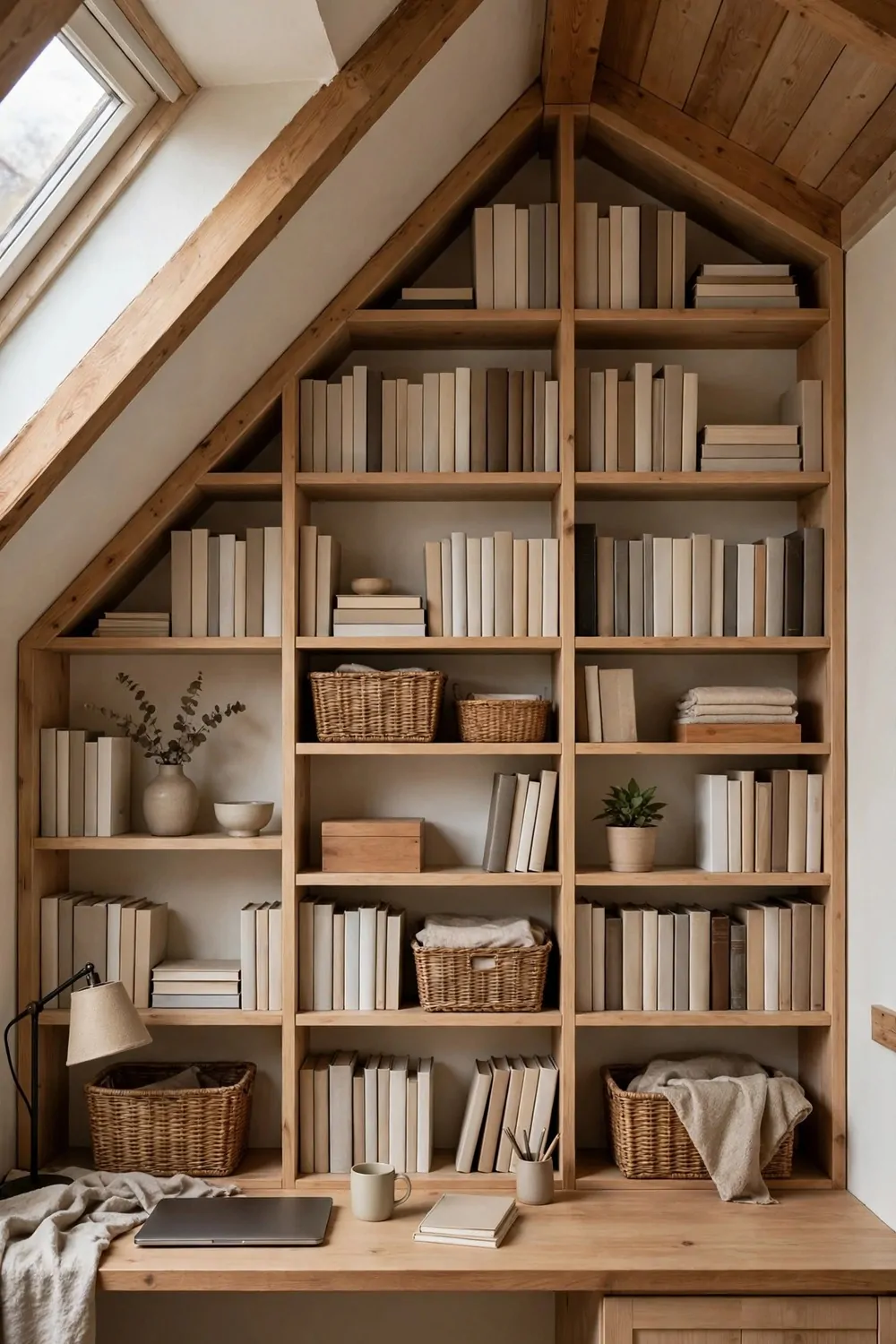
A loft or attic office has sloped ceilings that make shelves tricky.
Short shelves fit best under the lowest part of the roof. Tall shelves belong where the ceiling is highest, usually near the middle of the room.
I use the low shelves for boxes and baskets. They slide in easy and you do not need to see inside them every day.
The middle shelves hold the books you reach for most. They sit at a height where you can stand up straight and pull a book out with no trouble. That is the sweet spot for daily use.
Light matters more in an attic than anywhere else. A small lamp on the shelf makes the books easy to read on a cloudy day.
Keep the walkway clear in front of the shelves. Attic floors slope too, and you do not want to trip over a stack of books.
A pale paint color on the shelves helps the room feel bigger. Dark shelves in a low attic can make the space feel small and heavy.
Use the awkward corner under the eaves for storage boxes.
A loft office with shelves that fit the roof feels made just for you. The odd shape stops being a problem and starts being the charm of the room.
A Shelf Wall That Looks Good on Video Calls
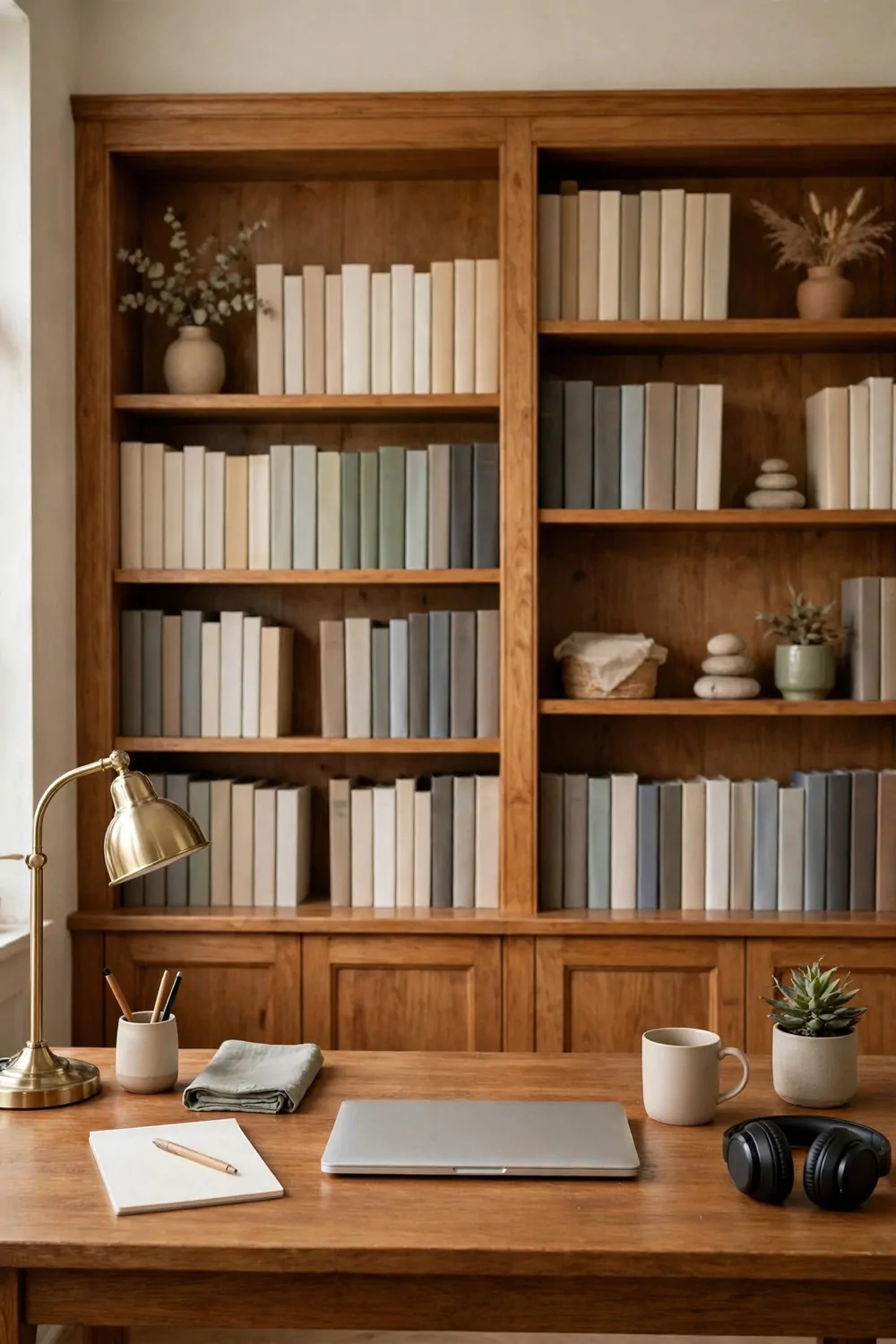
Your shelf wall is the background of every video call you make.
Keep the shelves behind your chair simple. A few books and one or two pretty things look better than a wall stuffed full.
I turn the book spines so the colors do not clash on camera. Soft colors and plain covers look best on a small screen.
Move the messy stuff out of the camera frame. Files and cables can live on the shelves to the side where nobody sees them. Your callers will only see the tidy part.
A plant on the shelf adds life to the background. Pick one that does not grow too fast or it will block your books in a month.
Light from a window in front of you is better than light behind you. If the window is behind the shelves, your face can look dark on camera.
Test the view before an important call. Sit in your chair, open the camera, and look at what is behind you.
Keep one shelf clear for the things you grab during a call.
When your shelf wall looks good on camera, you stop worrying about it. You can focus on the call instead of the background.
A Bookshelf With a Built-In Charging Drawer
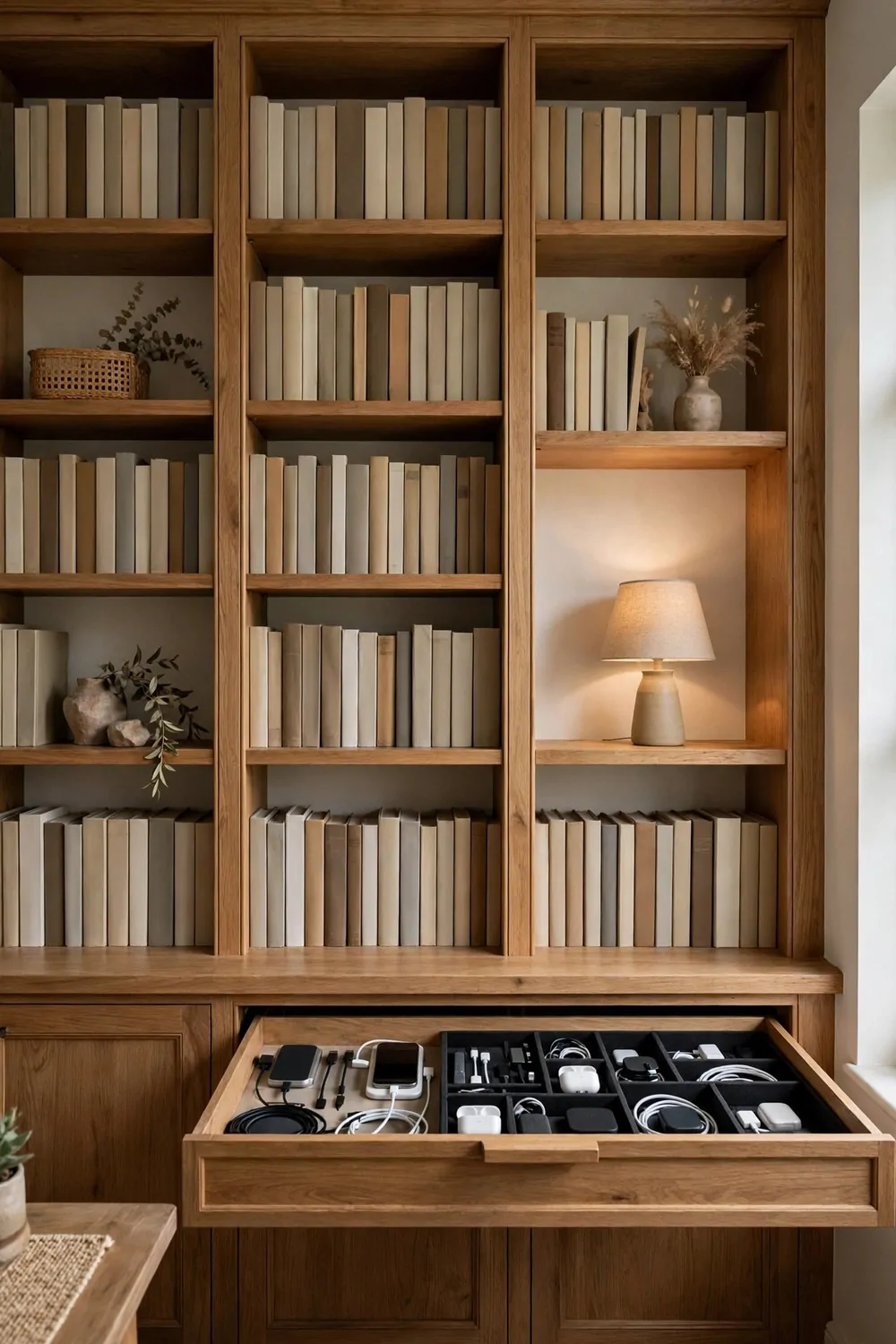
A charging drawer hides all your cables in one tidy spot.
The drawer has a power strip fixed inside it. You plug the strip into the wall once and then every charger stays plugged in behind the drawer front.
I drill a small hole at the back of the drawer for the power cord. The cord stays hidden and the drawer still slides open and shut with ease.
Keep the chargers short and neat inside the drawer. A little tray or a few clips stop the cables from tangling into a knot. It takes five minutes to set up and it lasts for months.
Put your phone in the drawer when you need to focus. Out of sight really does help, and the battery is full when you come back.
Label each charger if you have more than one device. A tiny tag on the cable saves you from unplugging the wrong one in a hurry.
Do not charge things on top of a pile of papers inside the drawer.
Check the drawer once a month for old cables you no longer use. They creep in fast and take up space for the ones you need.
A charging drawer is a small change that makes a big difference. Your desk looks clean and your devices are always ready to go.
A Shelf Wall for a Writer’s Office
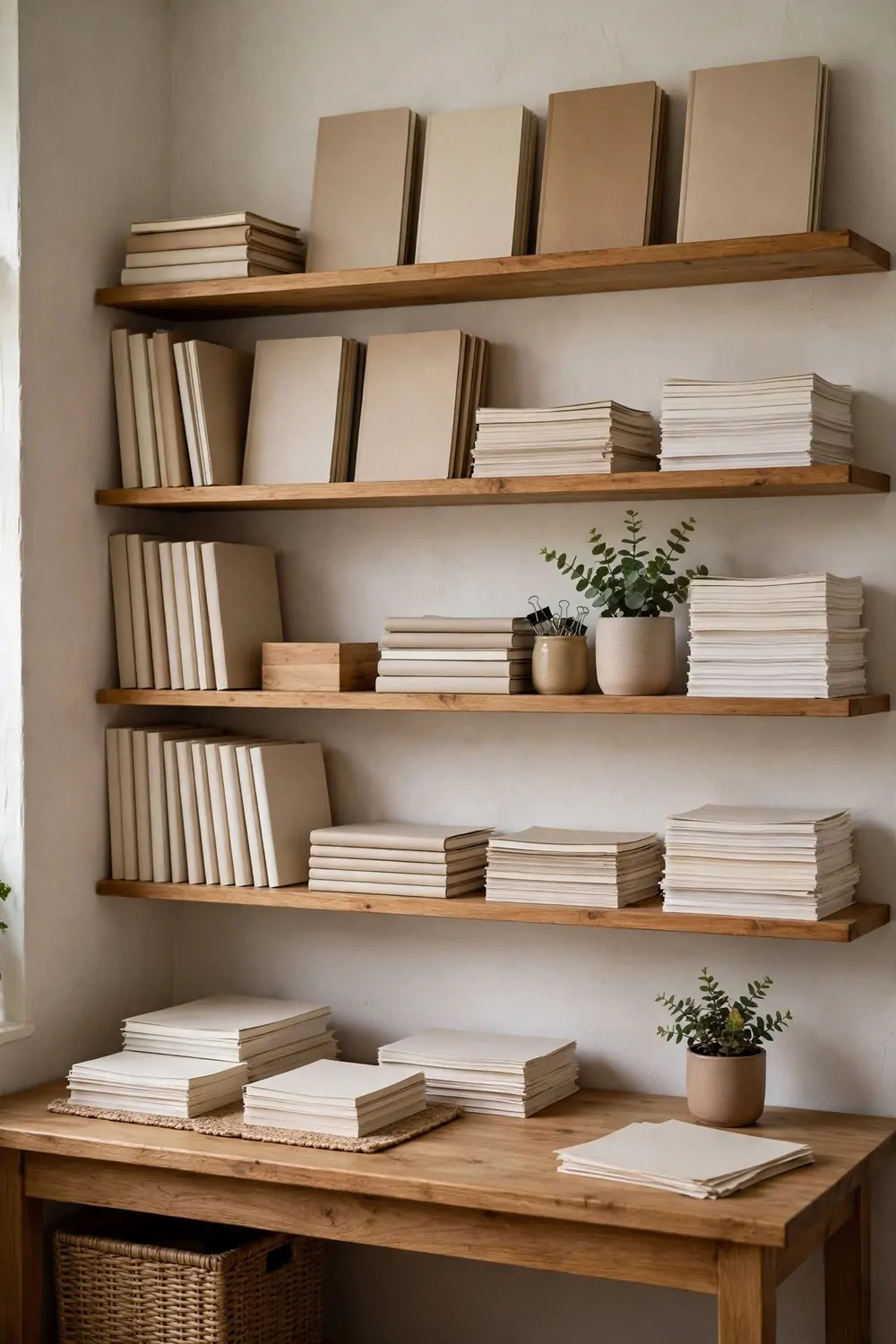
A writer needs shelves that hold research close and drafts closer.
I keep my reference books on the shelf right next to my desk. When I need a fact, I can pull the book down without losing my train of thought.
One shelf holds my notebooks in the order I filled them. It feels good to see the whole row and know how much work is already done. It reminds me that slow progress still counts.
A small shelf for works in progress keeps the drafts off the desk. Each folder has its own slot so nothing gets mixed up.
Keep a dictionary and a thesaurus where you can grab them fast. Even with a computer, a paper book is quicker when you are deep in a sentence.
Leave one shelf half empty on purpose. A writer always has a new project coming, and it needs a home before the desk gets buried.
I pin my outline to the shelf edge with a small clip.
A cup of tea fits on the shelf next to my chair. It is far enough from the keyboard to be safe and close enough to reach without thinking.
Your writer’s shelf wall should feel like a quiet friend. It holds your tools, your notes and your books, and it never judges a messy first draft.
A Shelf Wall for an Artist’s Home Office
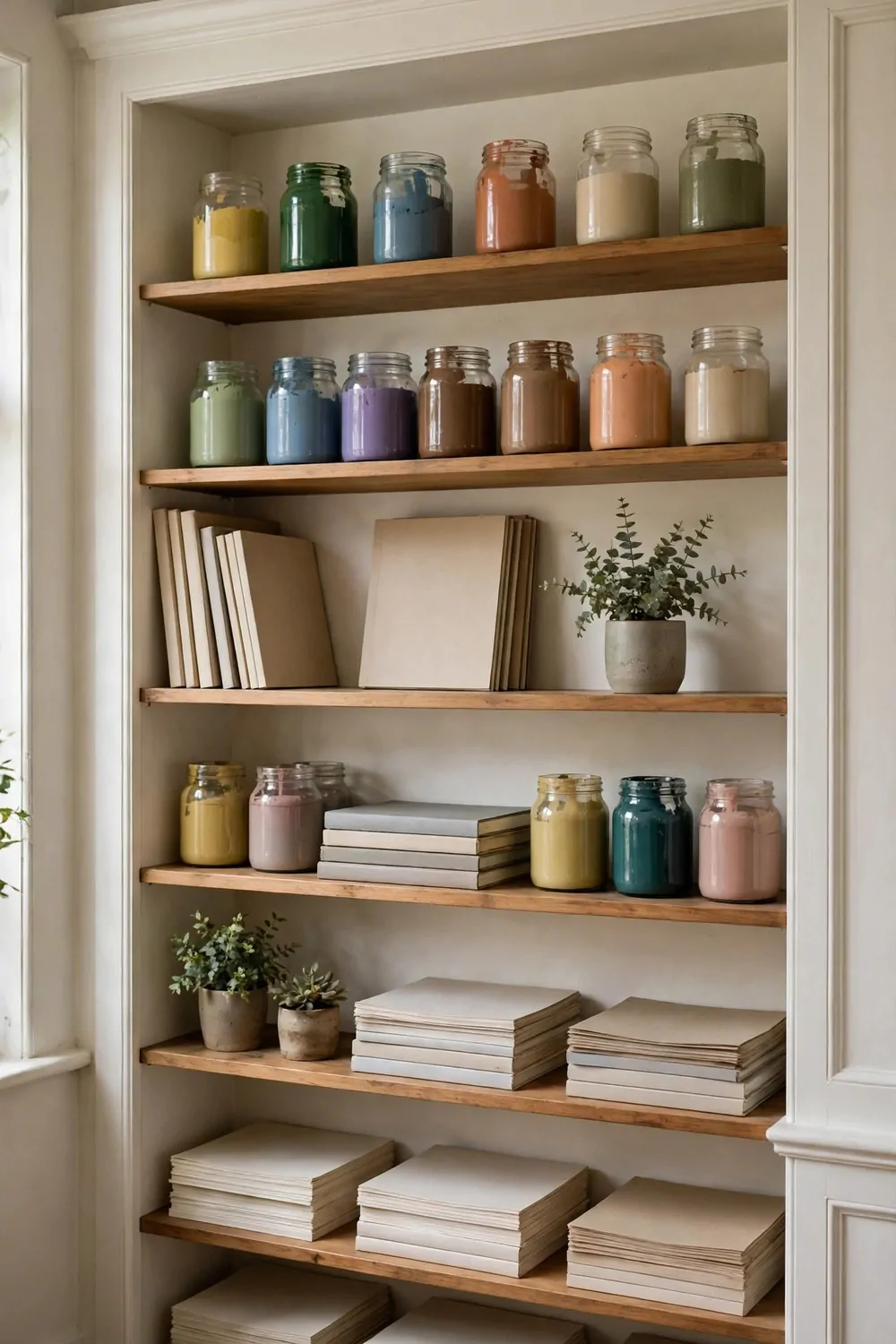
An artist’s shelf wall holds more than books.
I keep the art books on the middle shelves where I can flip through them for ideas. The colors on the covers cheer me up on a slow day.
Jars for brushes sit on a shelf with a wipeable surface. Paint drips happen, and a shelf you can wipe clean saves a lot of scrubbing later. A quick wipe after each session keeps it looking new.
Sketchbooks stack best on their sides like books. I sort mine by size so the tall ones do not crush the small ones.
A shelf near the window holds the supplies I use in daylight. Good light helps me see the true color of a paint before I mix it.
Keep one shelf just for finished work that is waiting to dry or be framed. It stops wet paint from ending up on your desk or your books.
Small baskets hold the tiny things that roll away.
I leave a little space on each shelf for the next project. An artist always finds a new material to try, and it needs somewhere to live.
An artist’s shelf wall is part of the studio, not just storage. When everything has a place, you spend your time making art instead of hunting for it.
A Dark Wood Shelf Wall for a Classic Look
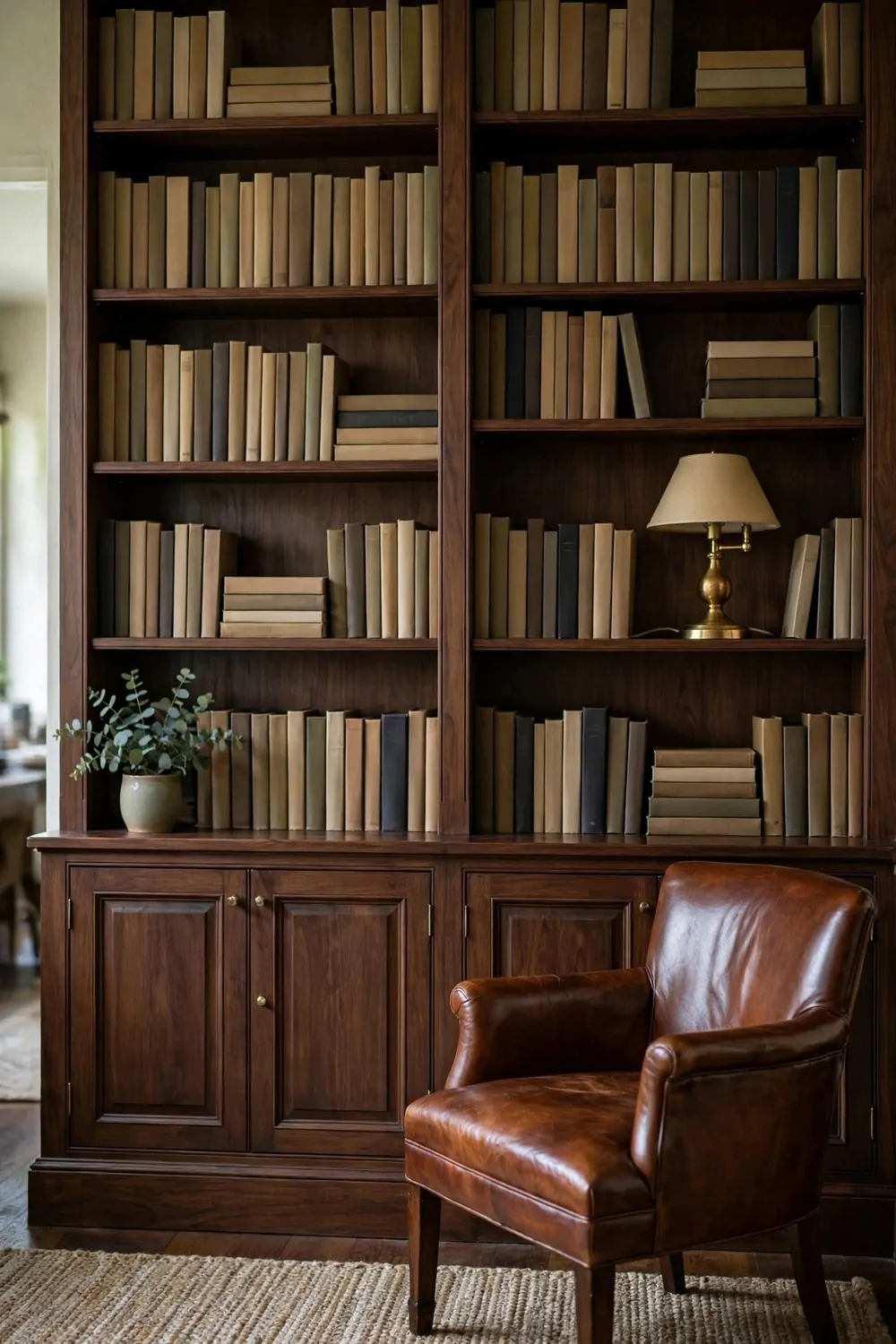
Dark wood shelves make an office feel rich and calm.
I like walnut and mahogany tones best. They look warm in the morning light and they still look good in the evening lamp light.
Dark shelves show dust more than light ones do. A quick wipe with a dry cloth once a week keeps them looking their best. It is a small habit that pays off.
Pair dark wood with light walls if your office is small. The contrast keeps the room from feeling too dark or too heavy.
Books with light covers stand out nicely on dark shelves. The mix of dark wood and pale spines makes the whole wall easy to read at a glance.
Brass or black metal handles suit dark wood shelves. They add a small touch of shine without making the room look fussy.
Keep the decor simple on dark shelves.
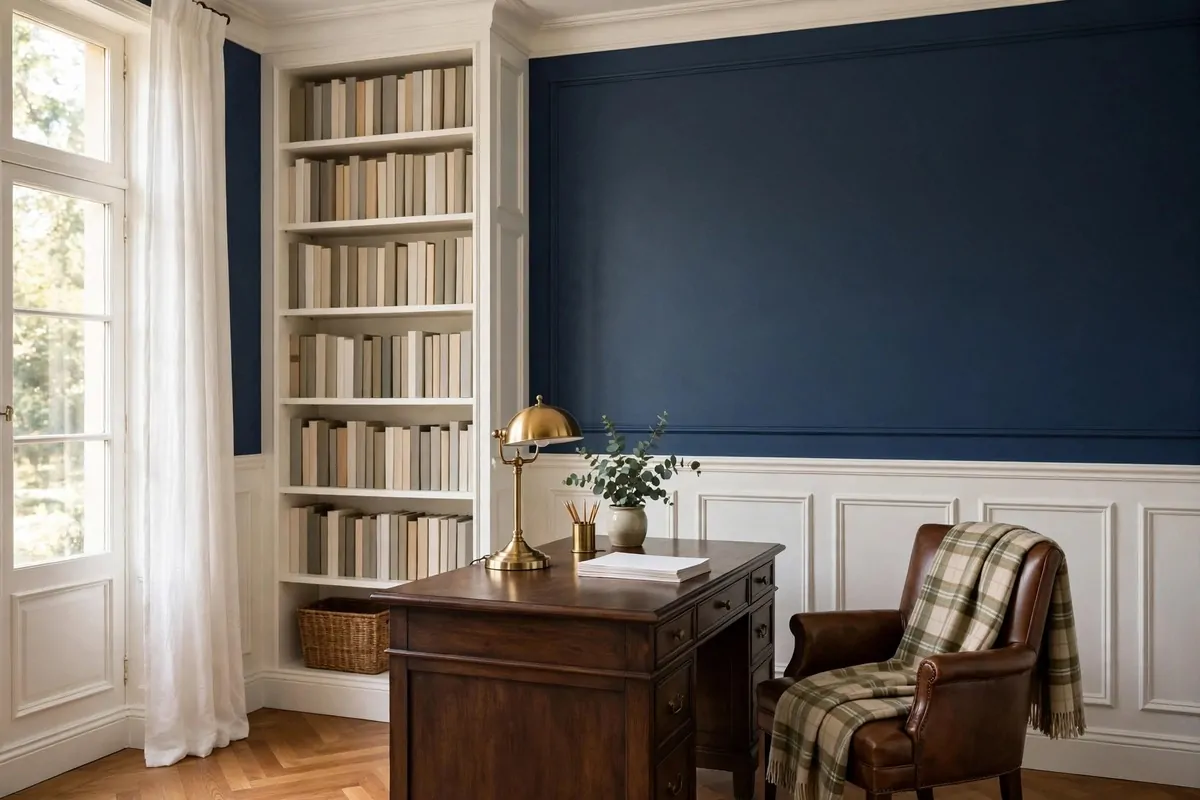
A dark wood shelf wall suits a leather chair and a warm lamp. The whole corner starts to feel like a quiet library you own.
If you love a classic look, dark wood is hard to beat. It ages well, it hides small marks, and it makes your books feel important.
A White Shelf Wall That Makes a Small Office Feel Bigger
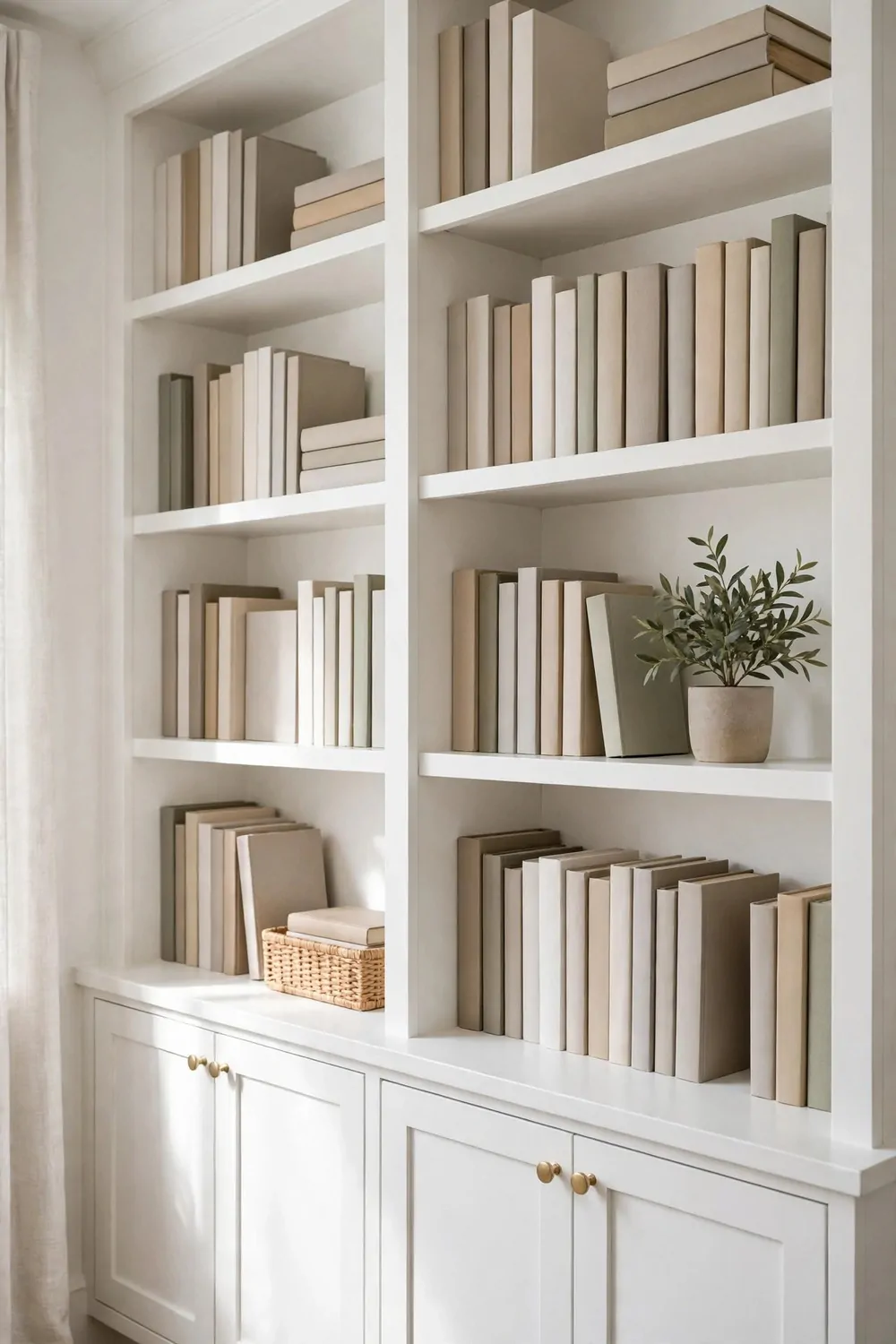
White shelves can make a small office feel bigger and brighter.
I paint my shelves the same white as the walls. The shelves blend in and the room feels like it has more air in it.
White shows fingerprints and marks, so keep a damp cloth nearby. A quick wipe keeps the shelves looking fresh without much work.
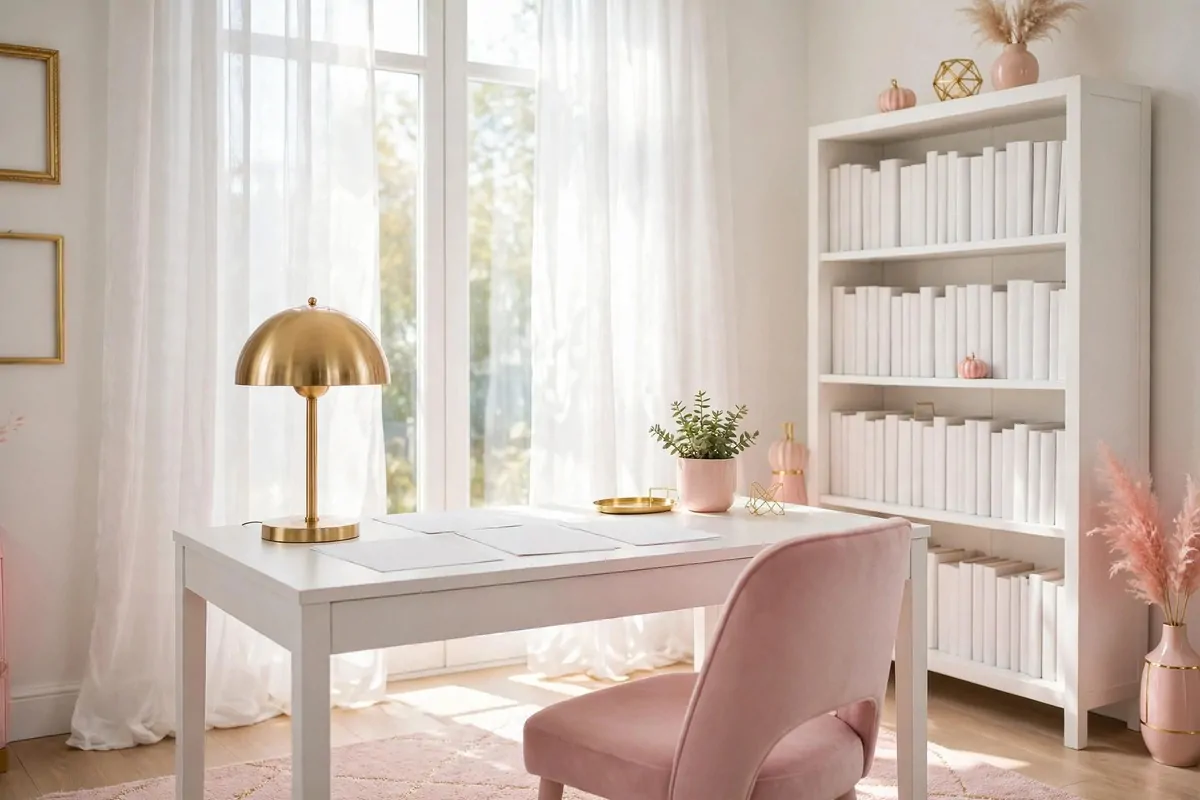
Use the white shelves to show off colorful book covers. The books become the color in the room and the shelves stay quiet behind them. It is an easy way to add color without paint.
A white shelf wall suits a small desk and a light chair. Everything feels open and you can move around without bumping into dark furniture.
Keep the shelves tidy because white makes clutter easy to spot. That sounds like a chore, but it really helps you stay organized.
Add one green plant to break up all the white.
White shelves work in a rented home too. They look clean in photos and they suit almost any desk you already own.
If your office feels tight, try white shelves first. It is a simple change and it can make the whole room feel twice as big.
| Project | Size | Typical cost | Time |
|---|---|---|---|
| One small shelf wall | 4 feet wide | 150 to 300 dollars a foot | One weekend |
| One full wall of shelves | 8 to 10 feet wide | 150 to 300 dollars a foot | A few weekends |
| A whole room, floor to ceiling | Whole room | 400 dollars a foot and up for premium work | A few weeks |
A Shelf Wall With a Mix of Open and Closed Storage
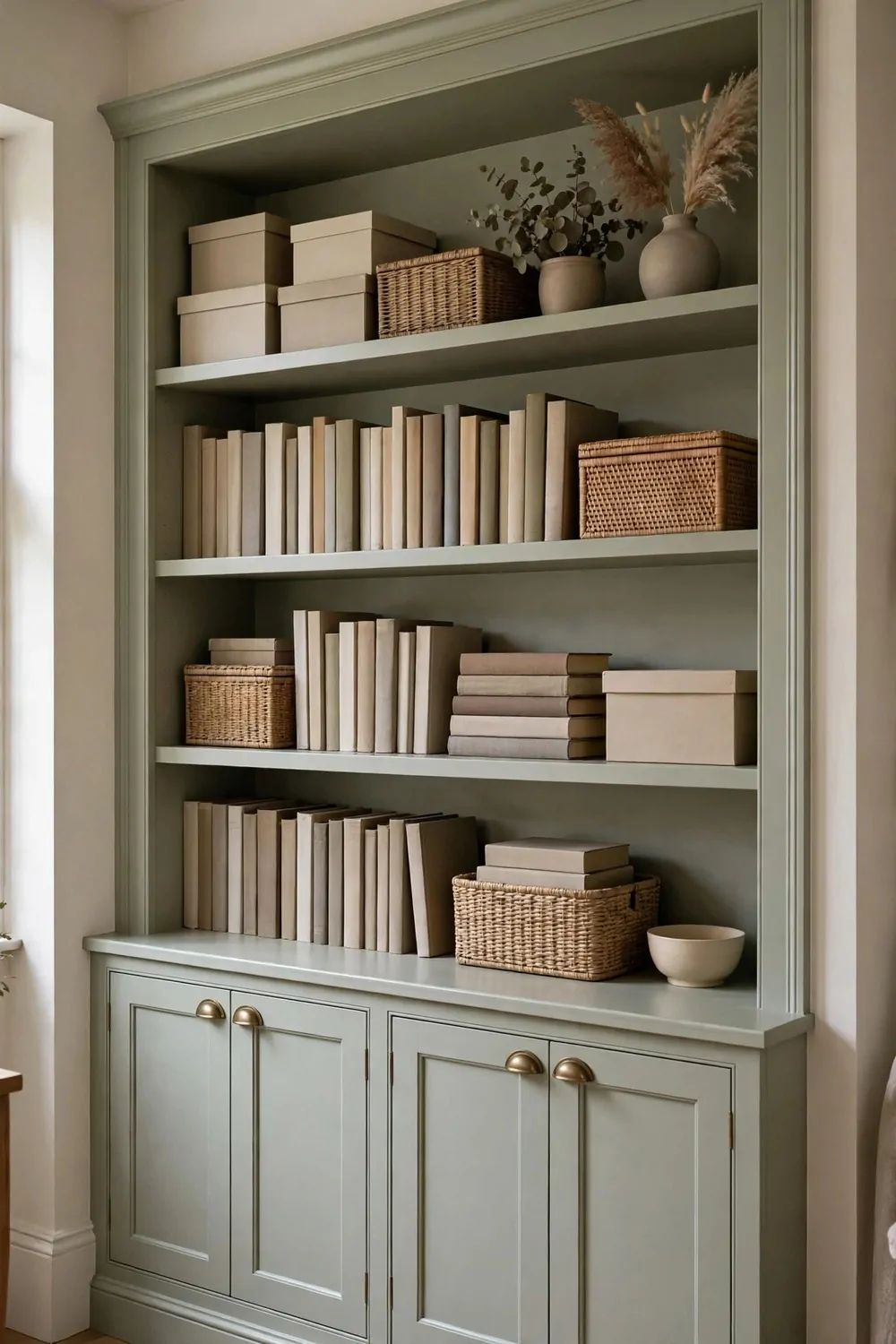
A mix of open and closed storage gives you the best of both worlds.
I put the pretty books and a few favorite things on the open shelves. They make the office feel personal and warm when you walk in.
The closed cupboards hold the files, the spare cables and the stuff you need but never want to look at. Doors keep it all out of sight. Close the door and the room looks calm again.
Put the closed storage at the bottom where it is easy to reach. Bending down to a low cupboard is easier than reaching up to a high one.
Open shelves at eye level are for the things you use every day. You can grab a book without opening a door first.
Keep the balance even across the wall. Too many open shelves look messy and too many closed doors look like a plain cupboard wall.
I use the same color for the open shelves and the cupboard doors.
Label the inside of the cupboards if you share the office. Everyone can find the paper or the files without opening every door.
A mixed shelf wall is the most practical wall I know. It shows the good stuff, hides the rest, and keeps your office looking calm.
A Built-In Shelf Around the Bed in a Bedroom Office
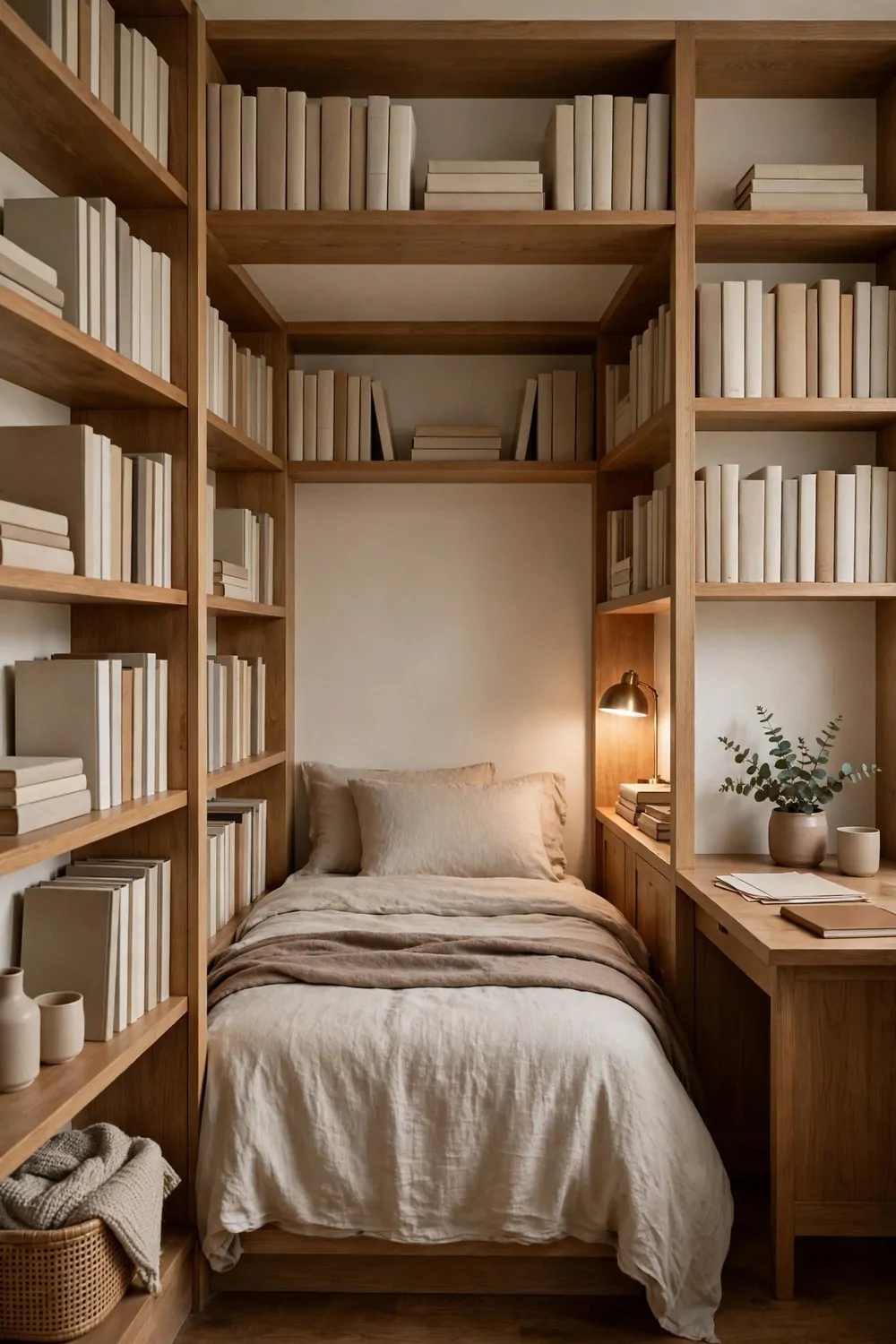
A shelf built around the bed turns a bedroom office into a cozy workspace.
I build the shelves along the wall behind the bed first. They sit above the pillows and hold the books you read before sleep.
Side shelves next to the bed work like big bedside tables. A lamp, a glass of water and your current book all fit there with room to spare. Everything you need at night is right there.
Keep the shelves above the bed shallow. Deep shelves over your head feel heavy and you will bump into them when you sit up.
Use the shelf space for work books during the day and story books at night. One wall can serve both parts of your life.
A small reading light fixed under the shelf is perfect for late nights. It lights your book without waking anyone else in the room.
Do not store heavy boxes on the shelves above the bed.
Keep the desk close to the bed shelves if you can. You can reach a reference book from your chair without walking across the room.
A bedroom office with shelves around the bed feels like a little hideaway. Your books surround you and the room still has space to breathe.
A Shelf Wall in a Hallway Office Nook
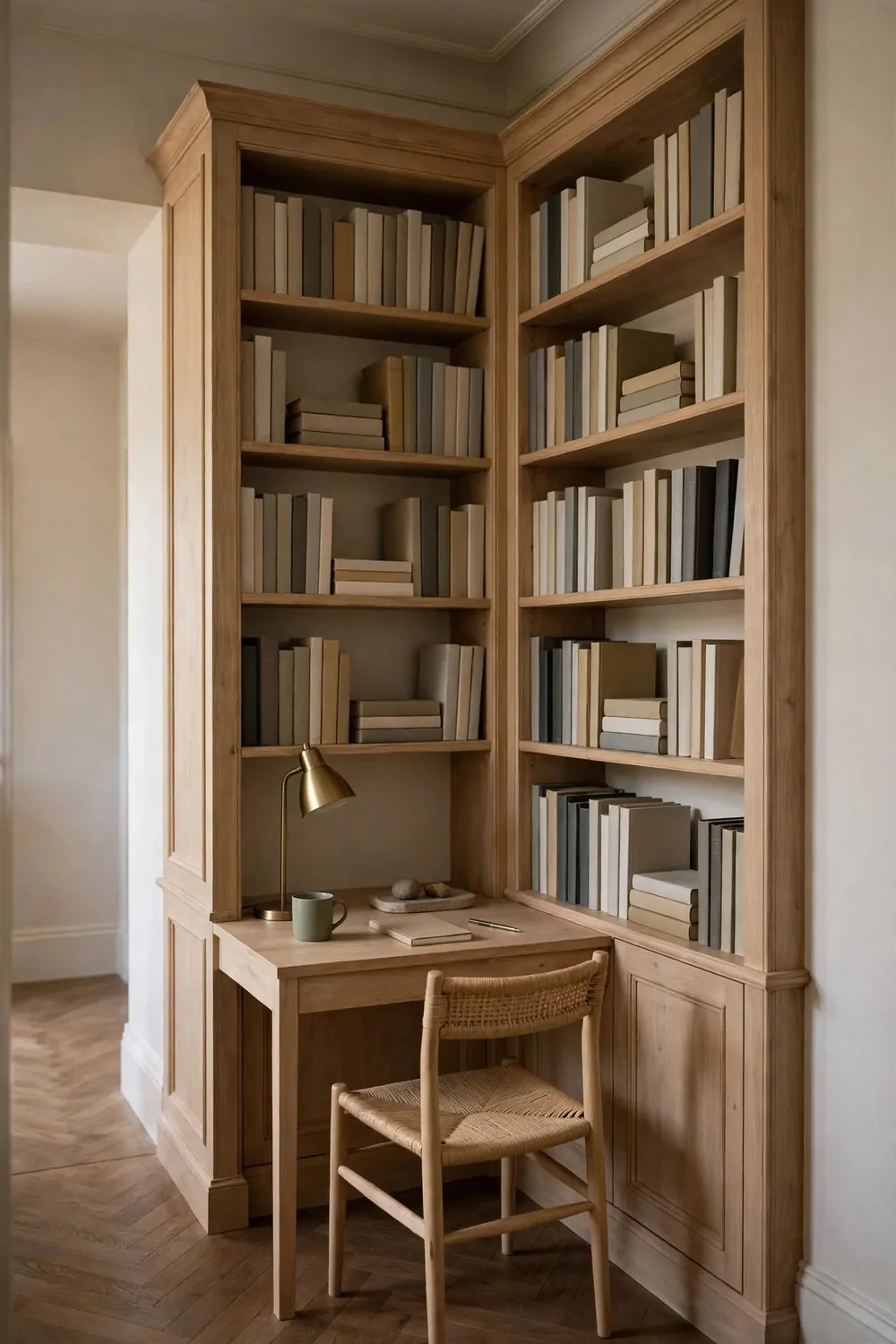
A hallway nook can become a small office with one good shelf wall.
I use shelves that are only as deep as a book. They hold plenty and they leave the hallway wide enough to walk through with ease.
A fold down desk under the shelves gives you a work spot. When you fold it up, the hallway is clear again for everyone else.
Keep the shelves tidy because everyone in the house walks past them. A hallway office is on display all day, so clutter shows fast. A quick tidy each evening keeps it looking smart.
Use baskets on the lower shelves for the things you grab on your way out. Keys, mail and your bag can live there without fuss.
Good light matters in a hallway because windows are rare. A small light under the top shelf makes the desk area bright enough to work.
I keep only the books I use most in the nook.
A chair that tucks under the desk keeps the hallway clear. When work is done, the chair slides away and the nook looks like part of the hall again.
A hallway nook office proves you do not need a whole room. One shelf wall and a small desk can give you a real place to work.
A Bookshelf That Holds Plants and Books Together
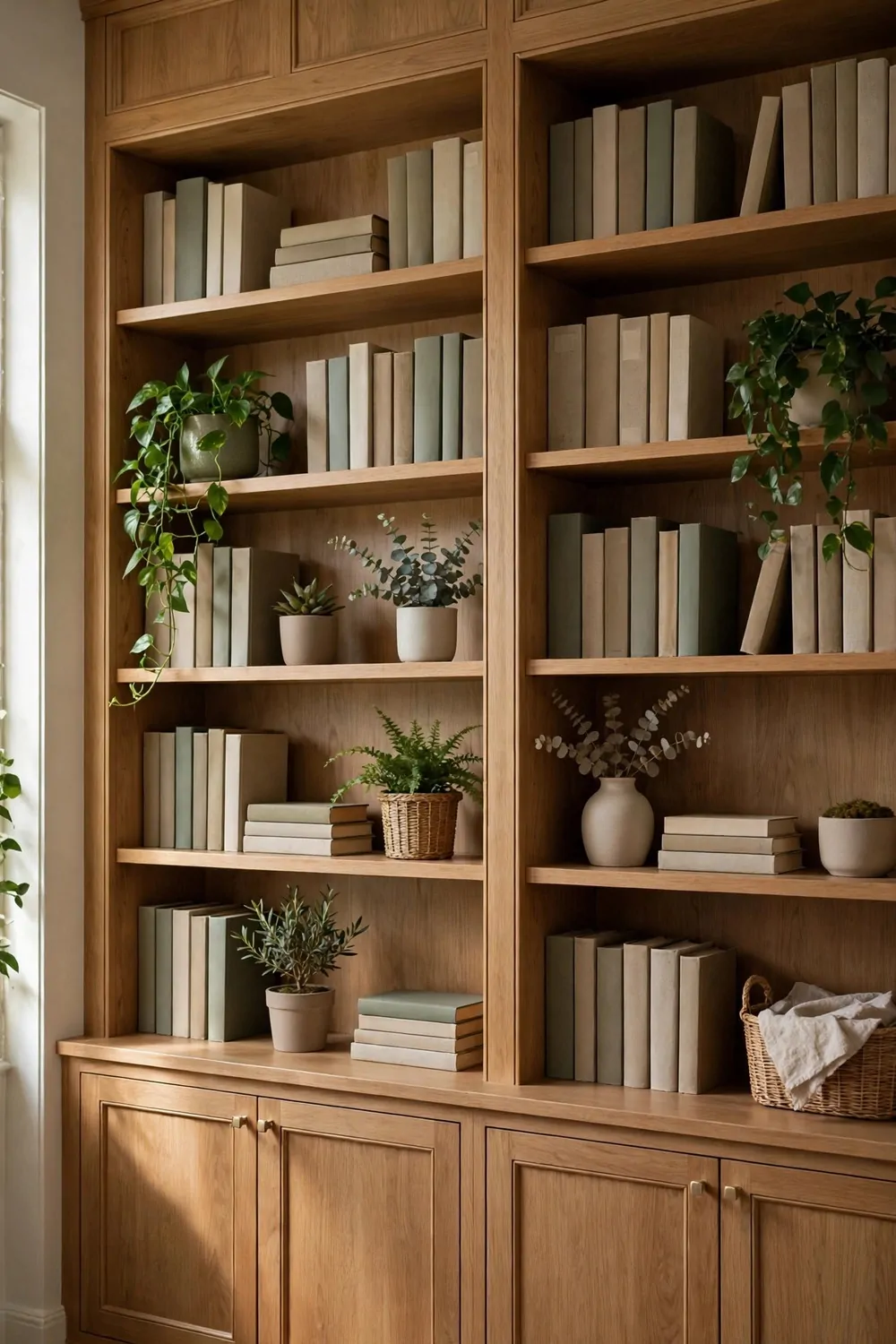
Plants and books look lovely together on the same shelf.
I put small plants on the top shelf where they get the most light. Trailing plants look best up high because their leaves can hang down the side.
Keep plants in pots with a tray underneath. Water drips will stain a wood shelf fast if there is nothing to catch them. A cheap tray saves you a costly repair.
Water the plants over the sink, not on the shelf. Carry them to the sink, let them drain, and then put them back dry.
Pick plants that like the light your office gets. A plant that needs full sun will fade in a dark corner no matter how much you water it.
Leave space between the plants and the books. Leaves need air to grow, and books need to stay dry and free from damp soil.
I mix one plant per shelf with a row of books.
Dust the leaves once in a while with a damp cloth. Clean leaves catch more light and the plant grows stronger for it.
A bookshelf with plants turns a plain office into a calm place. You get fresh air, green color and your favorite books all in one spot.
A Shelf Wall With a Built-In Seat Below
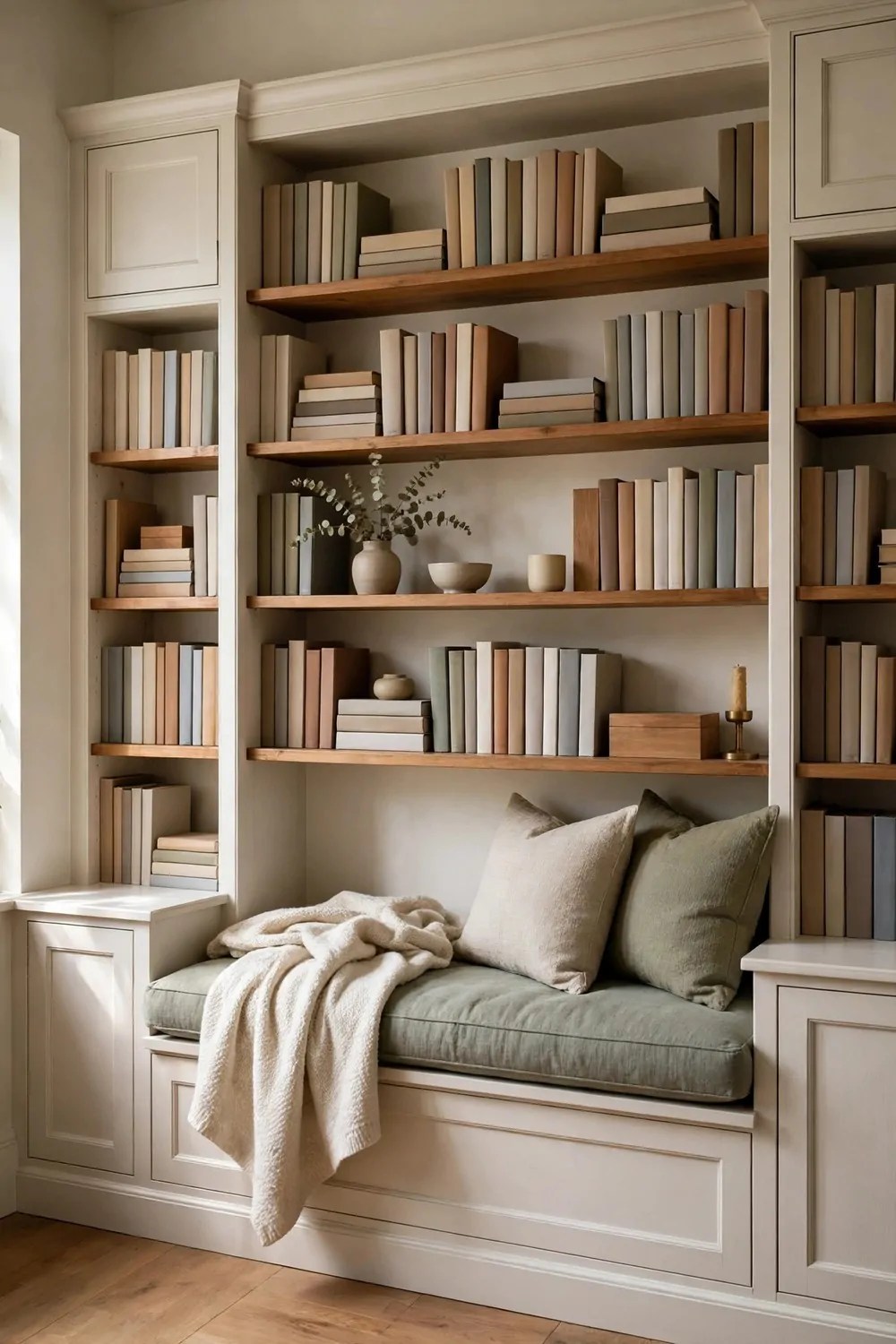
A seat built under your shelf wall gives you a reading nook in your own office.
I like a seat with a thick cushion in a soft color. It invites you to sit, and it makes the office feel like more than a workroom.
Storage under the seat holds extra books or blankets. Lift the seat lid and you have a hidden box that keeps the office tidy. It is storage that nobody even notices.
Keep a small lamp on the shelf above the seat. It lights your book in the evening and makes the nook feel warm and cozy.
The seat should be wide enough for one person to stretch out a little. A narrow seat feels like a bench at a bus stop, not a reading spot.
Put your favorite books on the shelves right above the seat. When you sit down, the books you love most are already within reach.
A throw blanket folded on the seat makes it look inviting.
I use the seat for phone calls too. It is a comfy spot to sit when I need to think and talk without staring at my screen.
A shelf wall with a seat below turns a plain wall into the best corner of the house. It is a place to work, to read and to rest.
A Minimal Shelf Wall With Lots of Empty Space
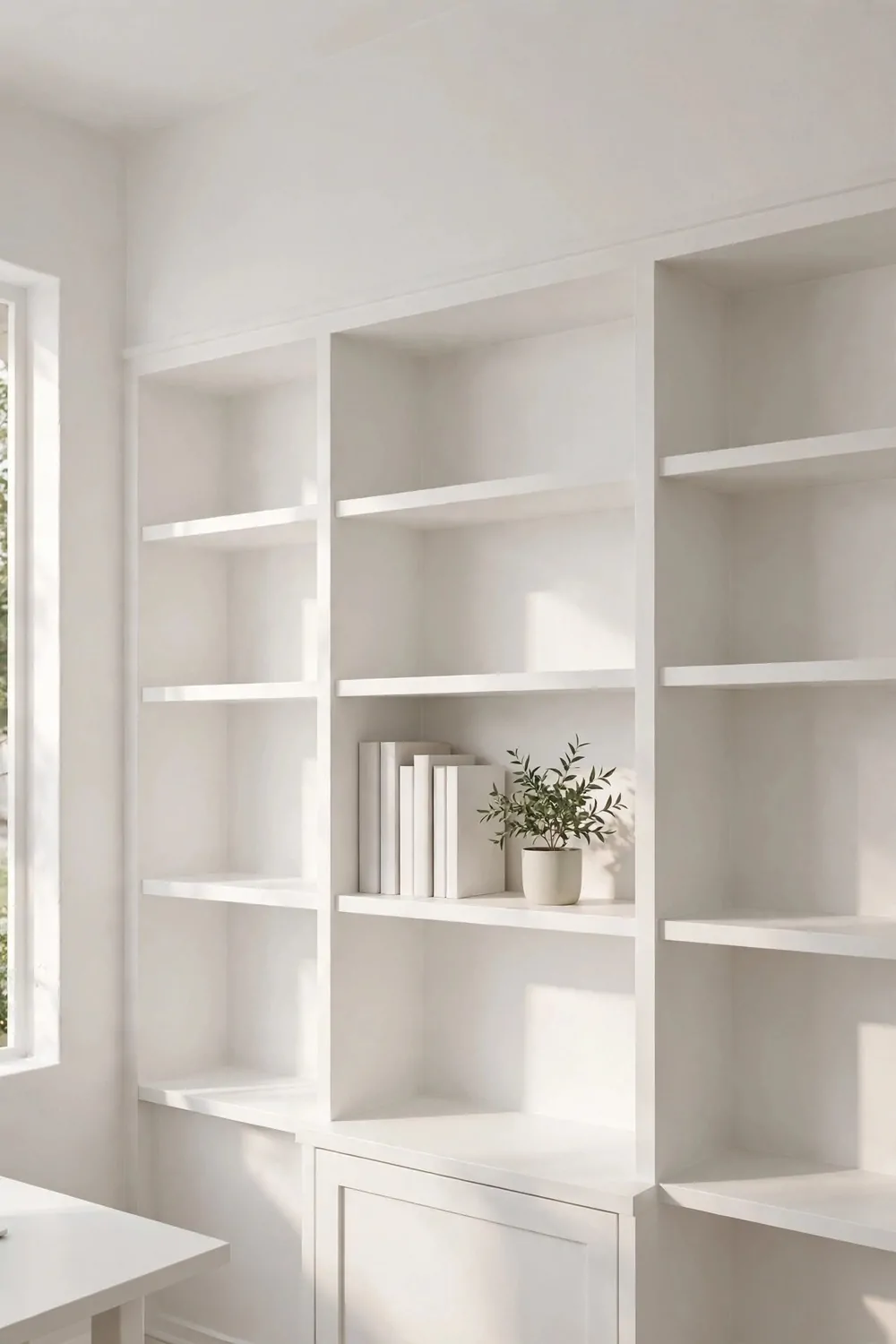
A minimal shelf wall leaves lots of empty space on purpose.
I put only a handful of books on each shelf. When a shelf holds just a few books, each one stands out and looks chosen.
Empty space is not wasted space. It gives your eyes a rest and it stops the office from feeling crowded and loud. Your mind feels calmer when the room is calm.
Pick the books you love most for a minimal wall. The ones you reach for again and again deserve the spotlight.
One small object per shelf is enough. A vase, a clock or a tiny frame adds warmth without filling the space back up.
Keep the shelf color plain so the books do the talking. White or pale wood works best for a minimal look.
A minimal wall is easy to clean. With fewer things on the shelves, dusting takes minutes instead of half an hour.
Resist the urge to fill every gap.
A minimal shelf wall suits a busy mind. When the room is quiet and clear, it is easier to think and get your work done.
A Small Shelf Wall in a Corner Office
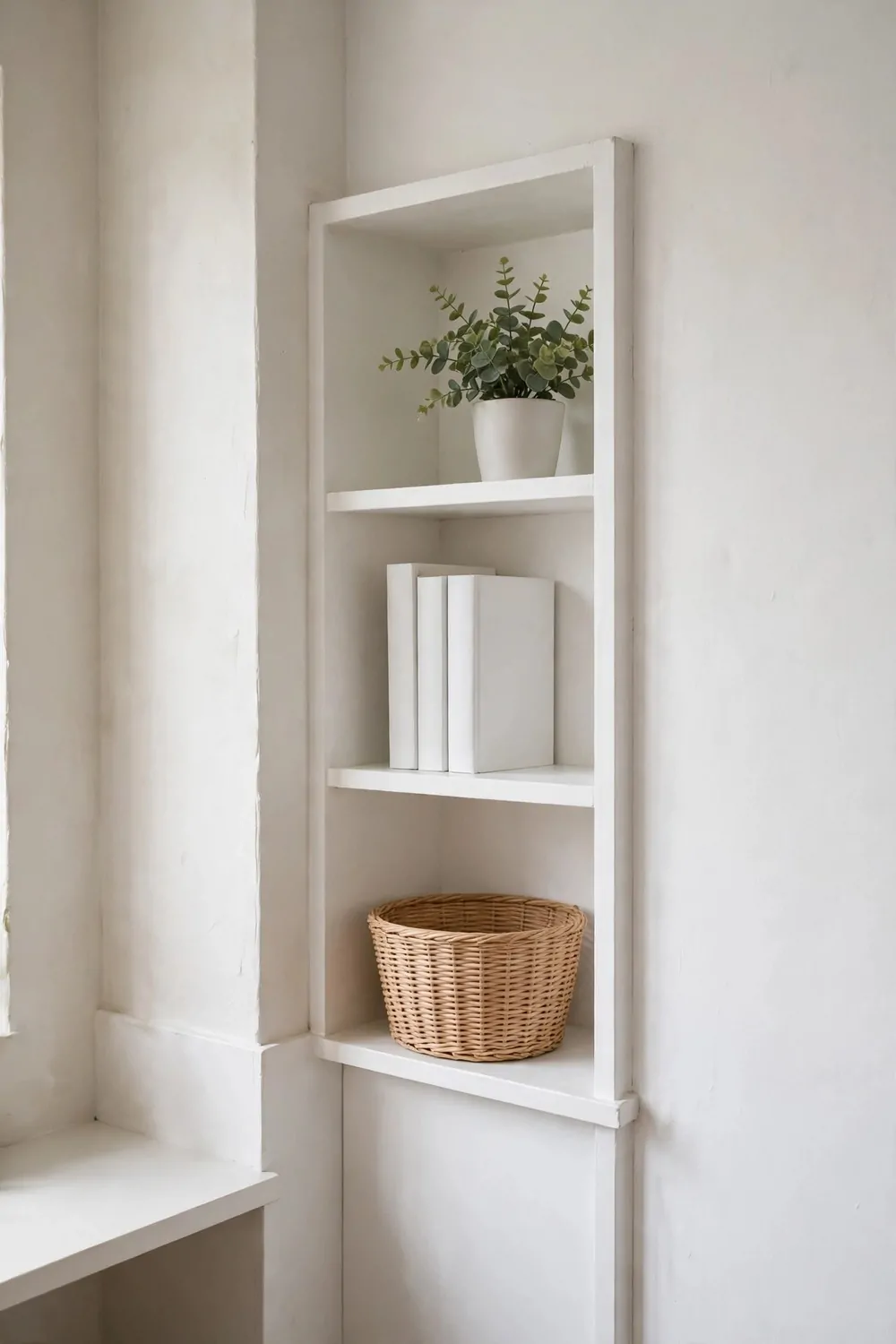
A corner office has two walls that meet, and that corner is perfect for shelves.
I build one shelf along each wall so they meet in the corner. The corner shelf holds the books I reach for most because it is right next to my chair.
Short shelves fit a corner better than tall ones. A tall shelf in a corner can feel heavy and block the light from the window. Low shelves keep the corner bright and open.
Use the corner for a small plant or a lamp. It softens the sharp angle and it makes the whole corner feel like a planned spot.
Keep the desk in the corner under the shelves. You sit with the shelves around you and everything you need is within arm’s reach.
A corner shelf wall makes a small room feel bigger. The shelves use the walls instead of the floor, so you still have space to move.
I keep my work books on one wall and my fun books on the other.
Do not cram the corner shelves full. Leave a little gap at the corner itself so you can reach the books on both sides with ease.
A corner shelf wall is a smart fix for a small office. It turns a dead corner into the hardest working spot in the room.
One Small Shelf Wall to Start With Tonight
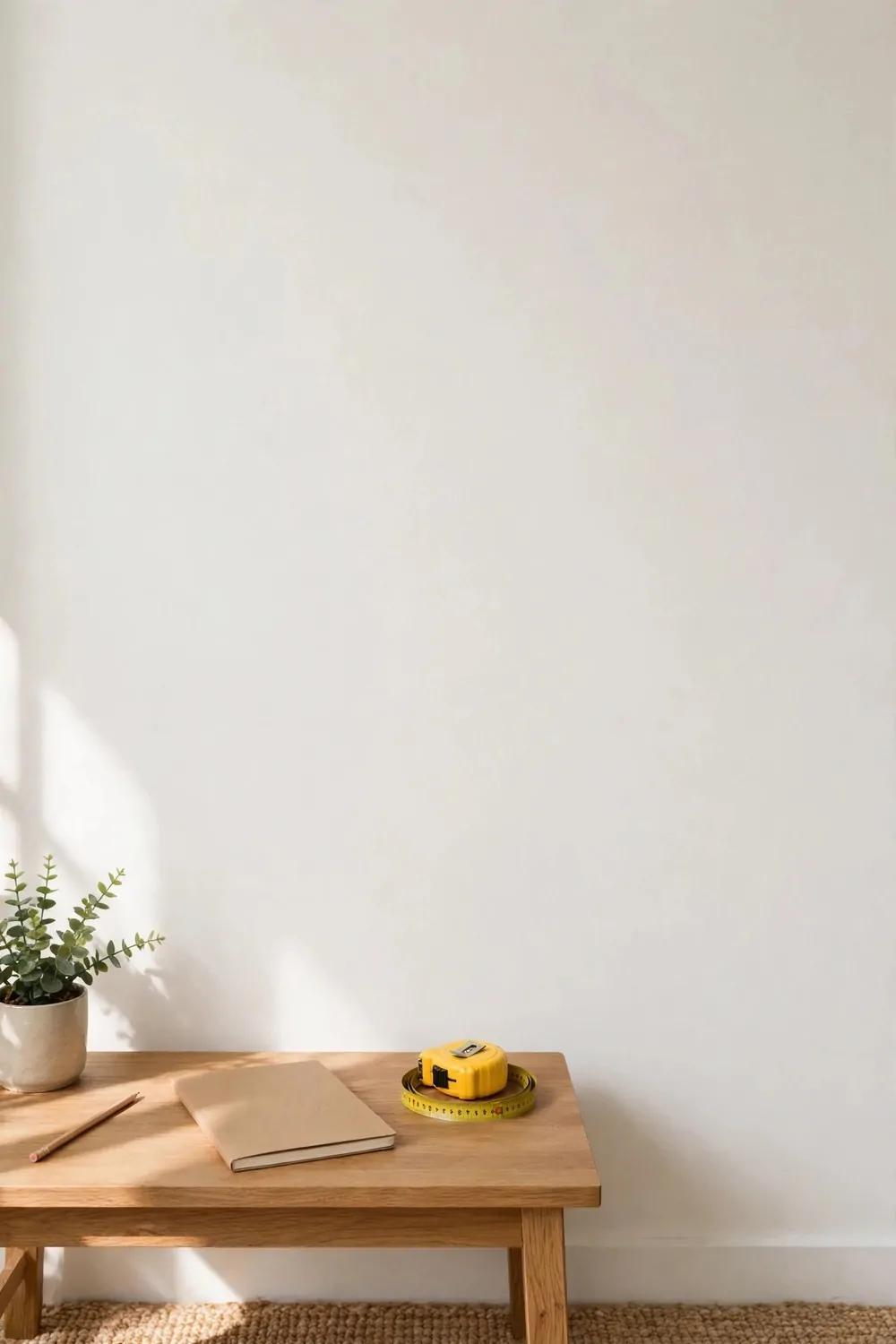
You do not need a whole wall of shelves to begin.
Pick the wall behind your desk first. It is the wall you see all day, and a shelf there makes the biggest difference for the least work.
Start with two shelves and your favorite books. You can add more shelves later when you know what else you need. There is no rush to fill the whole wall at once.
Measure the wall before you buy anything. A quick measure with a tape saves you from a shelf that is too wide or too short.
I started with one shelf and a few books I already owned. It cost almost nothing and my office felt new the same evening.
Put the shelf at a height you can reach without a chair. If you need a chair to reach it, you will stop using it within a week.
Hang the shelf straight with a small level.
Add one thing you love to the shelf, not just books. A photo or a small plant makes the shelf feel like yours from day one.
Tonight is a good night to start. One small shelf wall is all it takes to begin, and your office will thank you for it.
Keep Reading
If you liked these bookshelves, you will like these posts too.
Each one has more storage ideas for a different room in your home.
- 30 Custom Built-In Shelving Ideas for Every Room
- 44 Hidden Built-In Storage Ideas for Modern Homes
- 41 Custom Closet Lighting Ideas That Transform Your Wardrobe
- 35 Hidden Closet Storage Ideas That Maximize Every Inch
Pick the one for the room you want to fix next, and start there.