24 Small Home Office Design Tricks That Add Space Fast

Last month I helped my sister move her desk six inches to the left. Six inches. That was the whole job.
She texted me that night to say her office felt twice as big. I laughed, because six inches is nothing. But she was right. The desk had been blocking the light from the window, and six inches was enough to let it back in.
That is the idea behind this list. Small design moves that make a tiny office feel bigger, fast. No knocking down walls. No new room. Just tricks that change how your eyes read the space.
A small office feels small for a few simple reasons. The walls are dark. The furniture is too big for the room. The light cannot get in. The floor is covered in things that belong on a shelf. Fix those four things and the room changes.
These 24 Small Home Office Design tricks do exactly that. They use light, colour, layout and smart storage to add space you already own. Most of them take an afternoon. A few take ten minutes.
You do not need to do all 24. Pick three. Start with the one that sounds easiest. Step back into the doorway when you finish and take a fresh look. Your office will look like a different room.
Ready? Let us start with the walls, because that is where the space begins.
Paint the Walls White and Let the Light Work
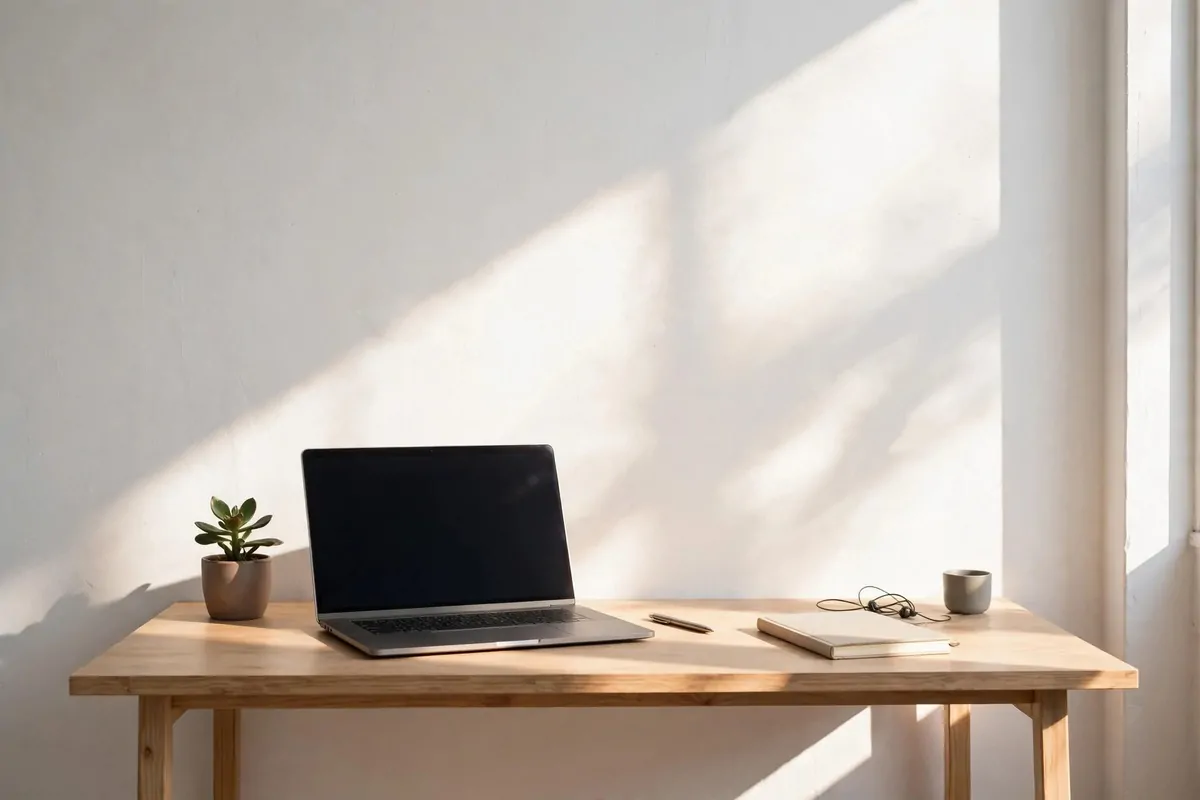
White walls are the fastest space trick I know. They bounce light into every corner of a small office.
A dark wall eats light. It drinks it up and gives nothing back. A white wall does the opposite. It throws the light back into the room, and the room looks brighter without a single new lamp.
Pick a warm white, not a cold one. Cold white looks like a hospital corridor. Warm white looks like morning sun. The tin will say warm white or soft white on the label.
Paint the ceiling white too, even if it already looks white. A fresh coat lifts the whole room. Old ceilings go grey over time and you never notice until you paint them.
Do the skirting boards in the same white. When the wall and the boards match, the edge between them disappears. Your eye sees one long wall, and the room looks taller.
One tin of paint is enough for most small offices. Two coats on a Saturday morning, and the room feels new by lunch.
Keep the desk and shelves light too if you can. White furniture against white walls sounds boring, but it is the opposite. The room looks calm, and calm rooms feel bigger.
Start here if your office feels dark even at noon. One coat of white paint, and the light starts working for you instead of against you.
Hang the Curtains From the Ceiling
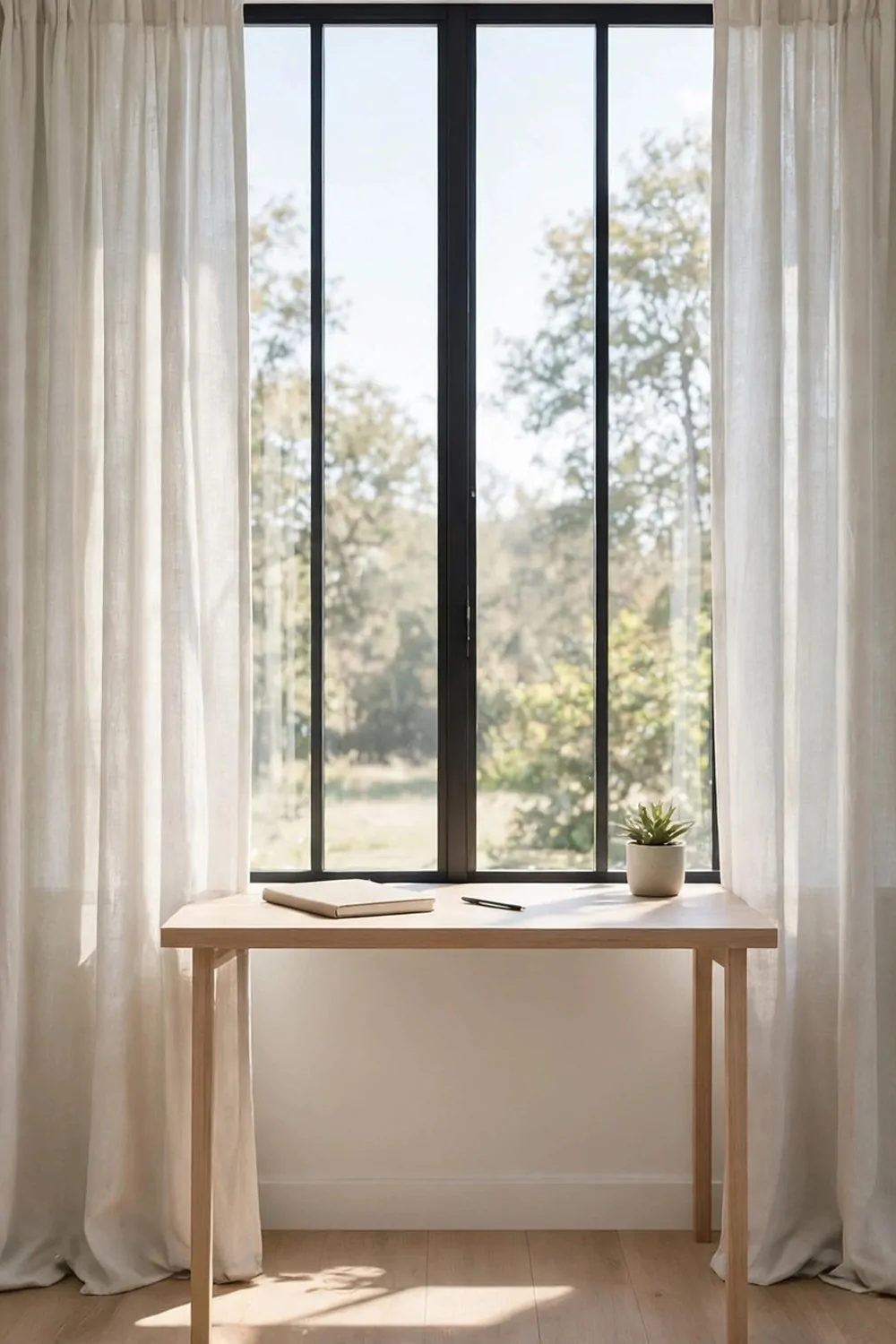
Curtains hung low make a room feel short. Curtains hung high make it feel tall.
Most people hang the curtain rail just above the window frame. That chops the wall in half. Your eye stops at the rail, and the room feels as tall as the window.
Hang the rail close to the ceiling instead. Let the curtains fall all the way to the floor. The wall looks twice as tall, and the window looks twice as big.
Pick curtains in a light colour that matches the walls. Heavy dark curtains close a small room in. Light curtains let the daylight through and keep the room feeling open.
The curtains should just brush the floor. Too short and they look like they shrank. Too long and they puddle and collect dust.
A simple rail costs very little. Two brackets, four screws, and the whole trick is done in half an hour.
This move works even on a tiny window. The window stays the same size, but the wall around it changes. Your brain reads the tall curtains and thinks the room is taller.
Give this a go if your office ceiling feels low. One rail, one pair of long curtains, and the walls stretch upward.
The Glass Desk You Can See Through
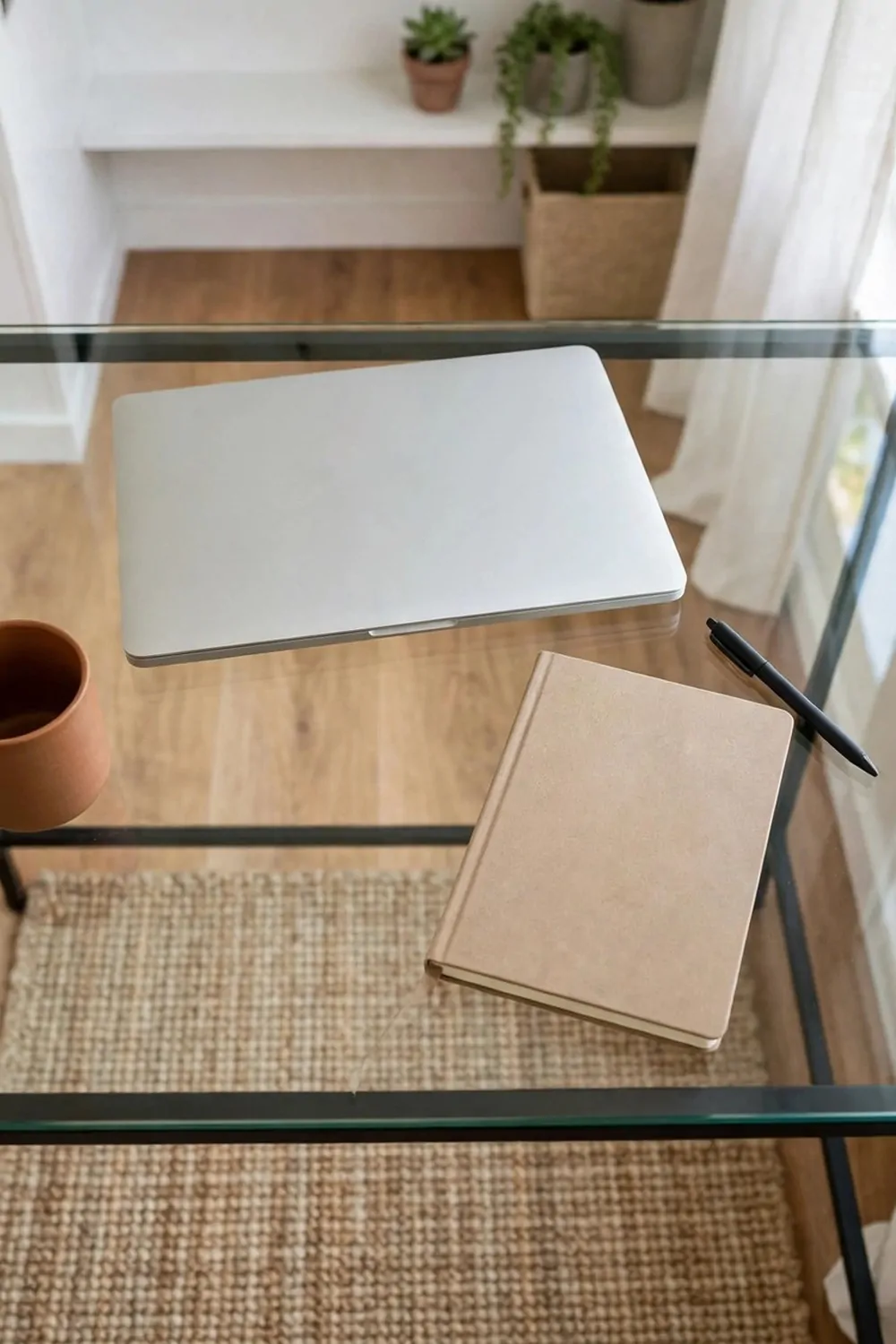
A solid desk blocks your view of the floor. A glass desk does not.
Your eyes judge a room by how much floor they can see. A big wood desk hides a chunk of floor, and the room feels smaller. A glass top lets your eyes travel right through it.
The desk does not have to be all glass. A glass top on slim metal legs works just as well. The legs are thin, the top is clear, and the floor stays visible.
Keep the top clean. A glass desk shows every fingerprint and coffee ring. A quick wipe with a damp cloth each morning keeps it looking sharp.
Put a slim mat under your laptop so it does not slide. A plain dark mat looks neat on glass and stops the laptop from wandering while you type.
This trick suits people who love a tidy desk. If your desk is always covered in papers, glass will show the mess twice. Clear it each evening and the desk stays beautiful.
A glass desk also bounces light around the room. Sun from the window hits the top and spreads it across the floor. The room gets brighter without a new lamp.
Start here if your desk feels like a big dark block in the middle of the room. Swap the top for glass, and the floor comes back.
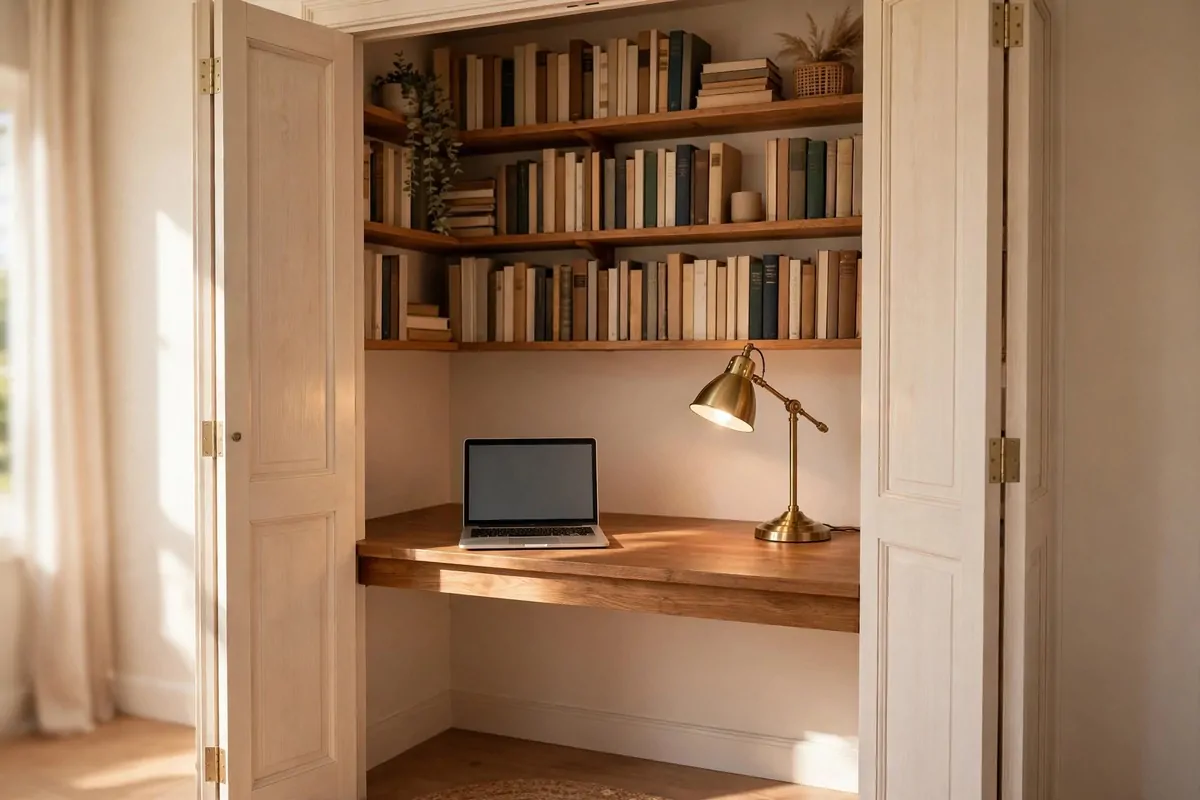
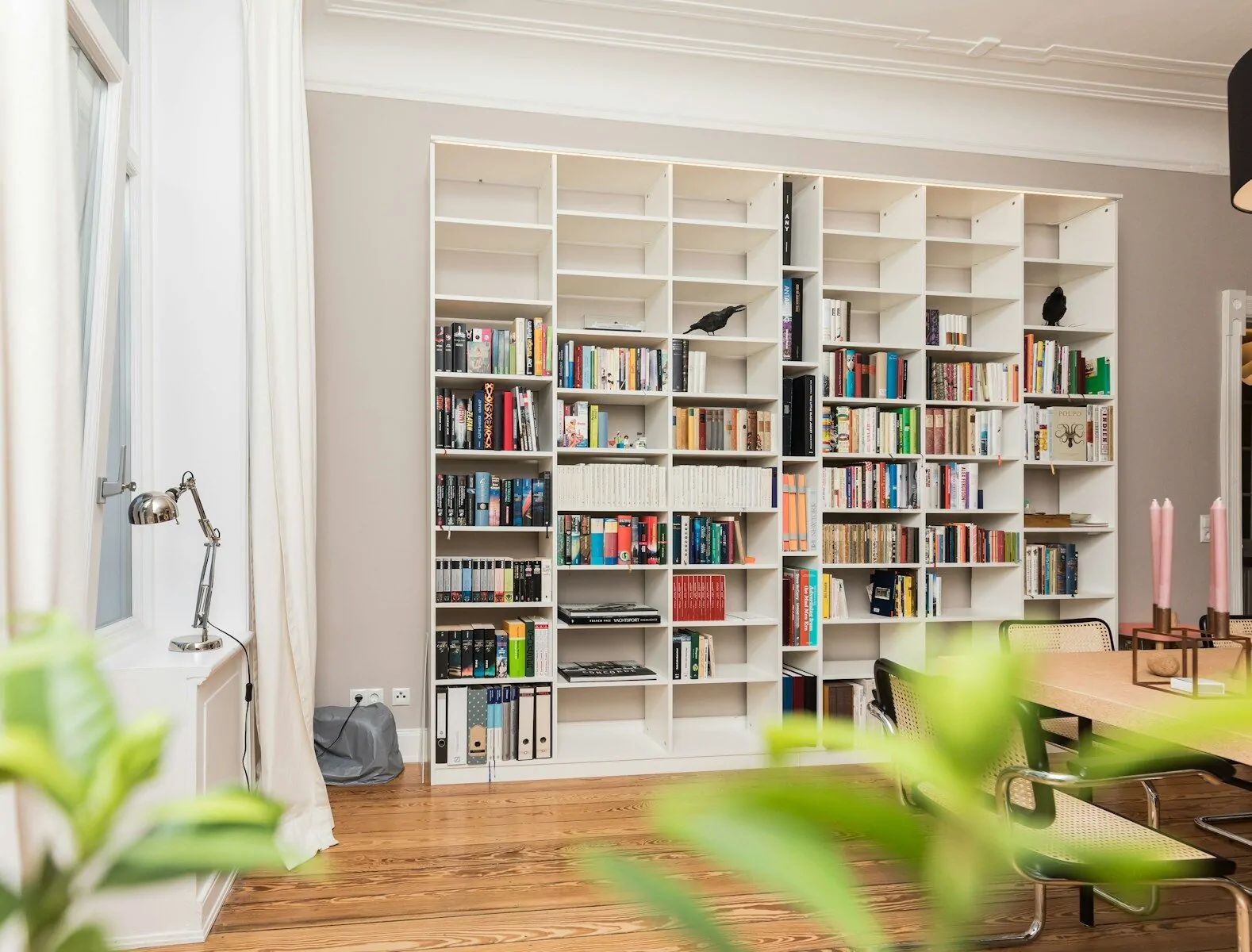
Shelves That Climb All the Way Up
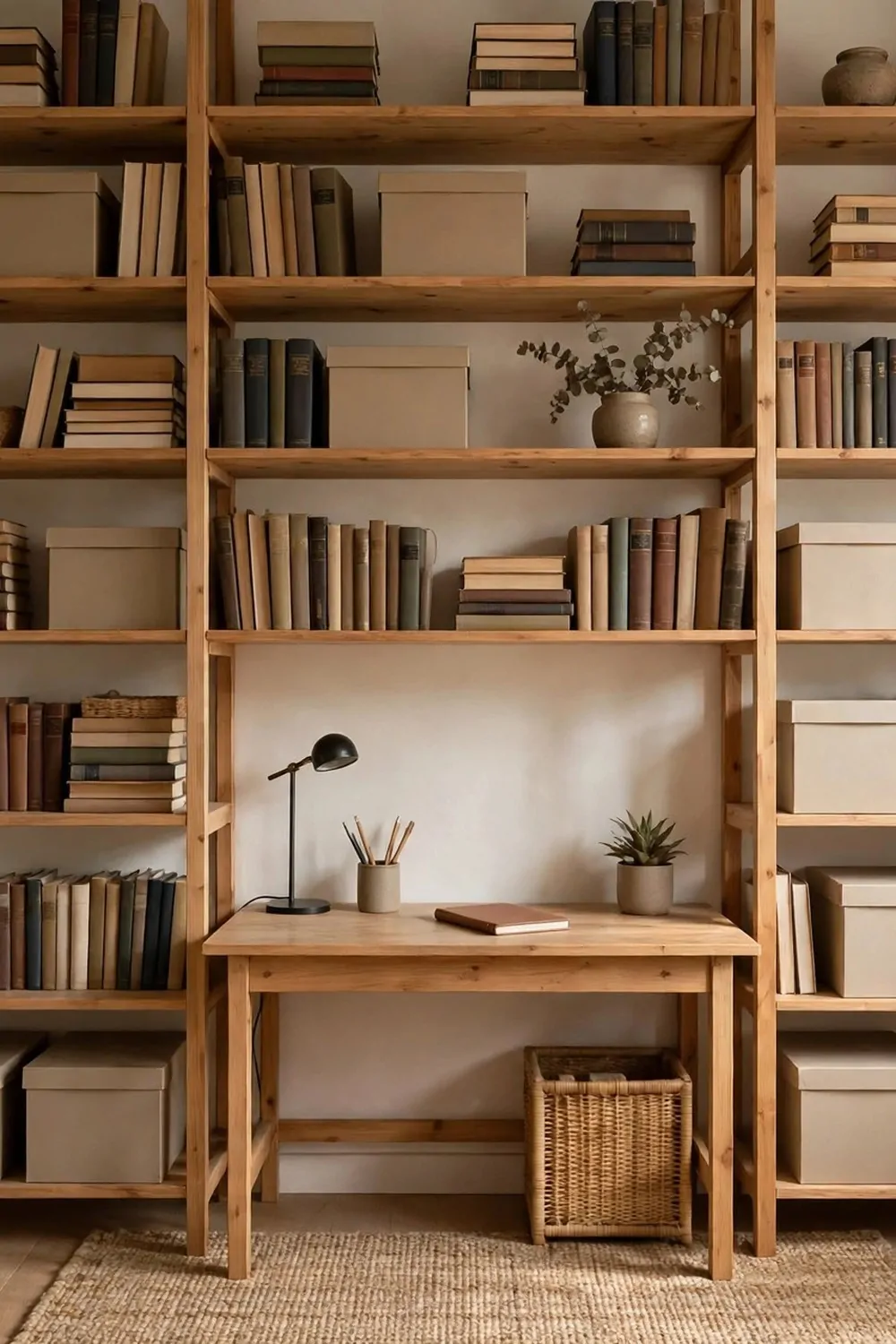
The wall above your head is free space. Most small offices leave it empty.
A shelf that stops at shoulder height wastes the top half of the wall. A shelf that climbs to the ceiling uses every inch. Your books and boxes move up, and the floor gets its space back.
Fix a tall shelf unit to the wall with two strong screws at the top. A tall shelf full of books can tip forward, and two screws stop that for good.
| Shelf height | What lives there | Why it works |
|---|---|---|
| Eye level | Books you read every week | Within easy reach all day |
| Above your head | Boxes and files you rarely need | Out of the way but still close |
| Near the ceiling | Old papers and spare supplies | Uses space that was doing nothing |
Put the heavy books on the lowest shelves. A shelf full of heavy books at the top is hard to reach and hard on the brackets. Heavy low, light high.
Use matching boxes on the top shelves. Plain boxes hide the clutter, and the shelf looks tidy even when it is full of stuff you rarely touch.
Leave one shelf half empty on purpose. That empty space is where the next project lands, or the parcel you need to open. A shelf with no free space has no room for real life.
Keep a small step stool nearby if the top shelf is high. A folding stool that leans against the wall is enough. You only need it once a week.
This move is for people whose floor is covered in piles. Move the piles up the wall, and the floor belongs to you again.
The Desk That Folds Flat Against the Wall
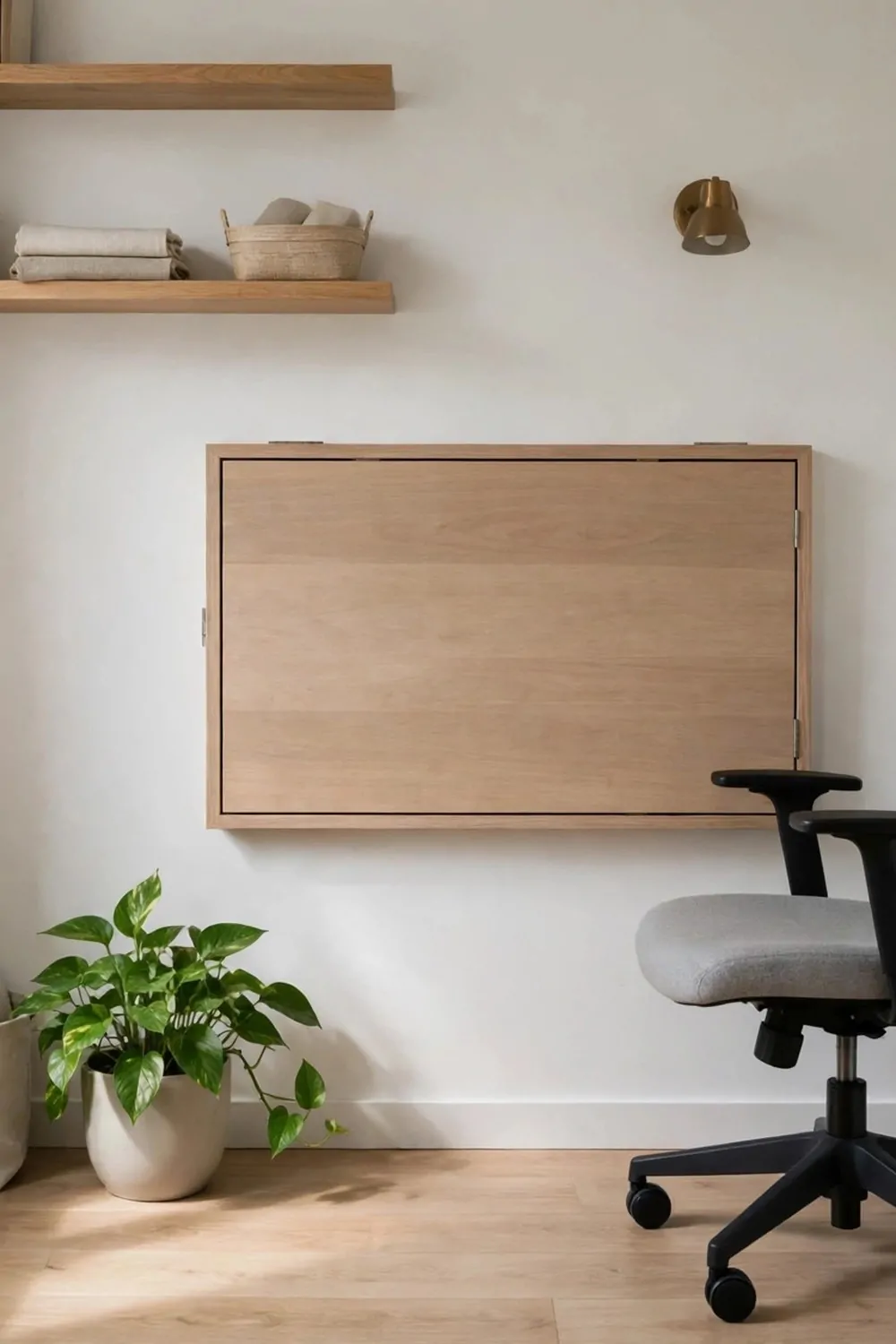
A desk you only use for a few hours a day does not need to own the floor all day.
A fold-down desk hangs on the wall like a picture frame when it is closed. You pull it down when work starts, and fold it flat when work ends. The floor is yours again by dinner.
Fix the desk to wall studs, not just plaster. A desk that holds a laptop and your arms needs solid wood behind it. Two brackets into studs will hold it steady for years.
Pick a desk top that is deep enough for a laptop and a notebook. About forty centimetres is plenty. Any deeper and it sticks out too far when it is folded down.
Add a small shelf above the folded desk for your lamp and pens. When the desk folds up, the shelf stays. Everything has a home, even when the desk is closed.
Keep the chair nearby, folded or hung on a hook. A desk that folds away with nowhere to sit is only half the trick. The chair needs a home too.
This is the desk for people whose office is also a bedroom or a living room corner. Work happens, then the desk disappears, and the room goes back to being a room.
Wipe the wall behind the desk once a month. Fold-down desks hide dust on the wall behind them, and a quick wipe keeps the whole corner looking fresh.
Give this a go if your office shares its room with something else. One fold-down desk, and the room does two jobs without a fight.
Turn the Desk on the Diagonal
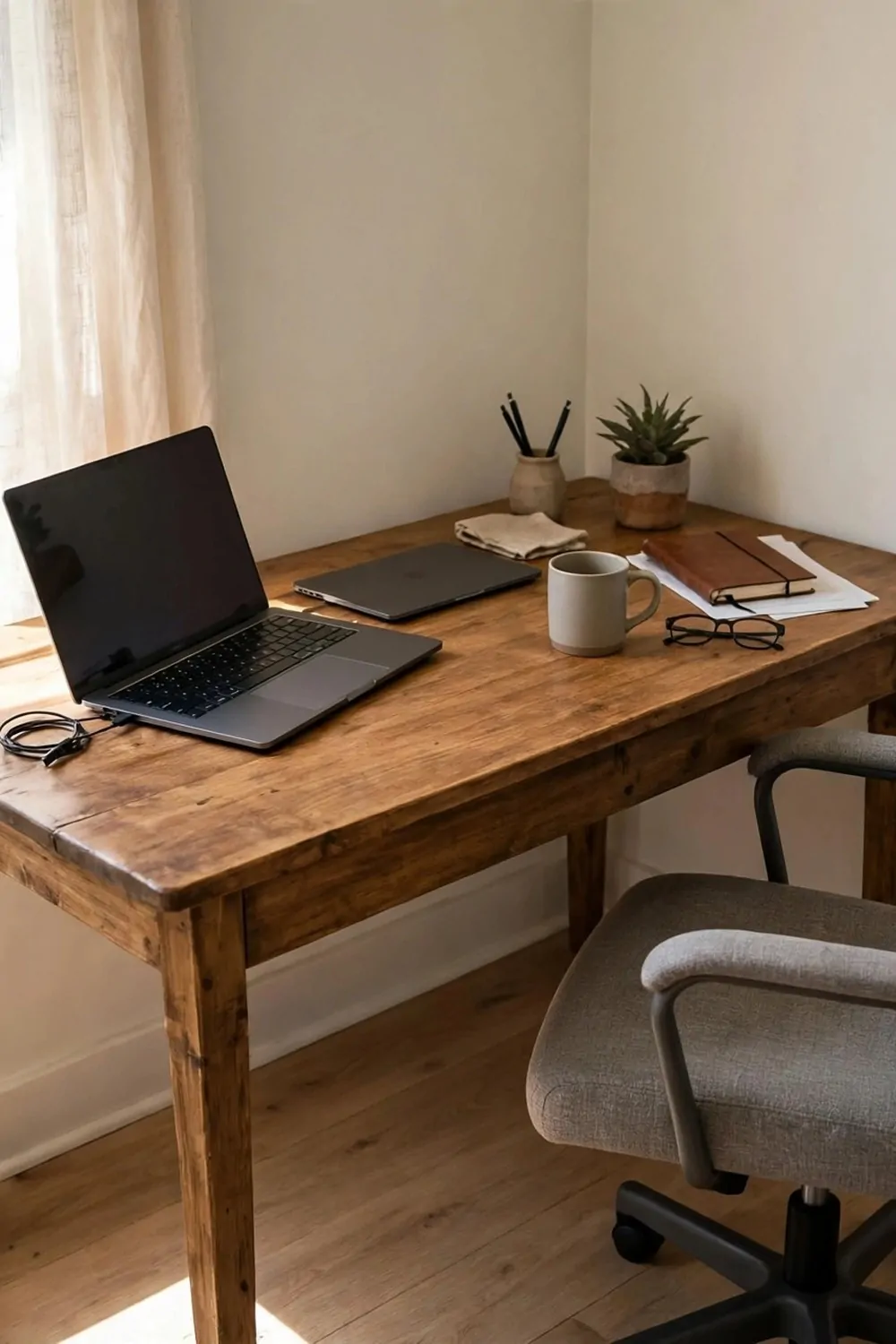
A desk pushed flat against the wall wastes the corner behind it. A desk turned on the diagonal uses it.
Corners are dead space in most small offices. The desk sits against one wall, and the corner behind it collects dust and lost pens. Turn the desk at an angle and the corner becomes part of the workspace.
Angle the desk so it faces into the room, not the wall. You sit with your back to the corner, and the room opens up in front of you. It feels less like a box and more like a proper office.
The triangle of space behind the desk is perfect for cables and the power strip. They hide behind the desk where nobody sees them, and the floor stays clear.
A diagonal desk needs a chair that turns easily. A chair on wheels lets you spin to reach the shelves on either side. A stiff chair makes the angle feel awkward.
Keep the desk small for this trick. A big desk on the diagonal eats the middle of the room. A slim desk at an angle uses the corner without stealing the floor.
Put a tall plant or a floor lamp in the other corner to balance the room. Two corners working, two corners resting, and the room feels planned.
This move suits square rooms best. In a long thin room, a diagonal desk can look lost. In a square room, it turns the worst corner into the best seat in the house.
Try it this weekend. Pull the desk out, turn it, push it back. Ten minutes, and the corner stops being dead space.
One Colour From Wall to Wall
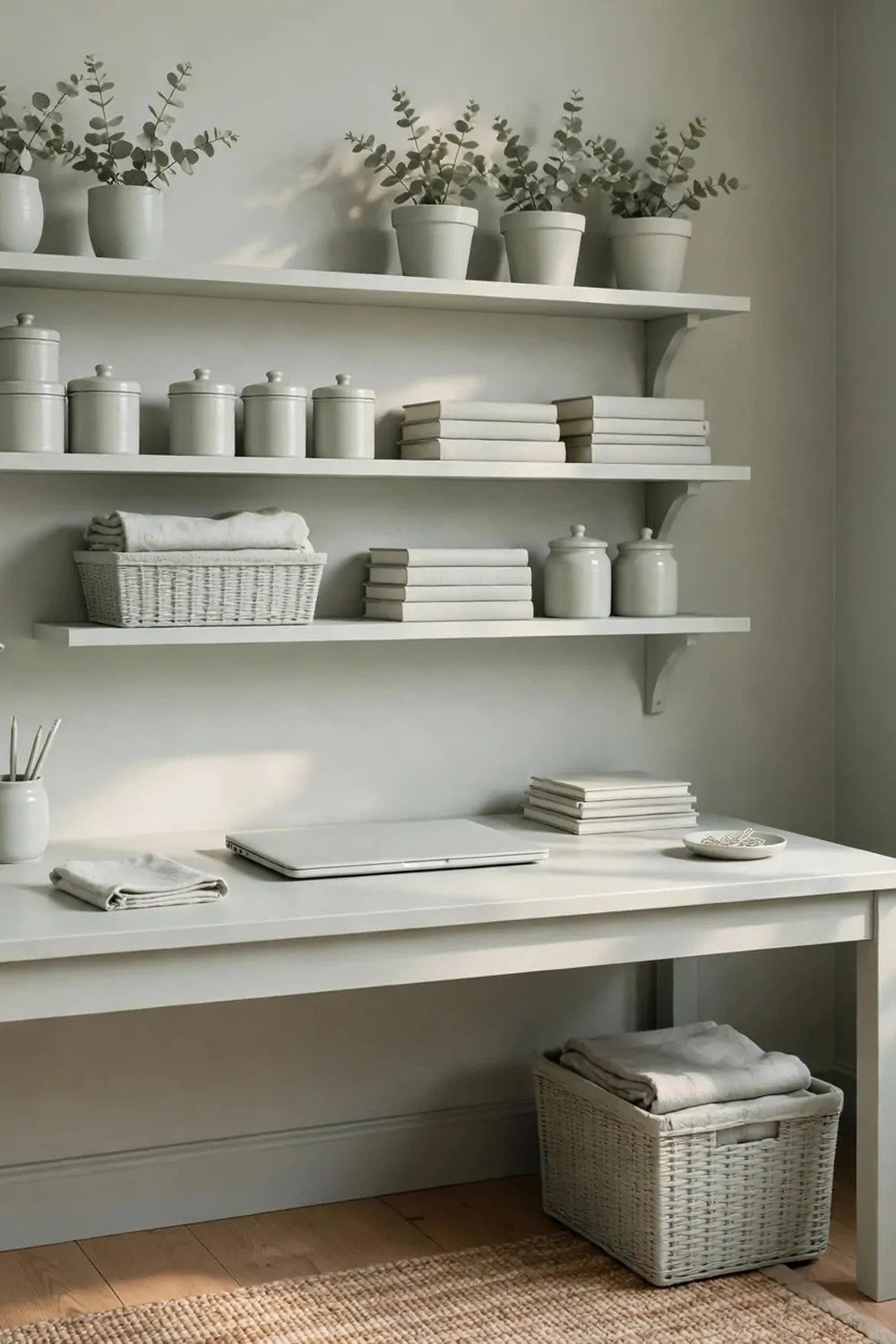
A room with five colours looks busy. A room with one colour looks bigger.
Your eye stops at every colour change. A white wall, a wood desk, a red chair, a blue shelf. Each change is a little wall for your eyes. The room feels chopped up, even when it is not.
Paint the walls, the desk and the shelves one soft colour and the edges blur. Your eye travels across the room without stopping. The room feels like one big space instead of five small ones.
Pick a pale colour. Soft white, pale grey, or a light warm beige. Dark colours can work too, but pale colours are the safest way to open a small room up.
Keep the floor out of the colour rule. A wood floor or a dark floor both work fine. The floor is the base, not part of the walls, and it grounds the room nicely.
Add one warm thing to stop the room feeling cold. A wood lamp base, a leather cushion, a small plant. One warm touch is enough. Two or three start to break the calm.
This trick is cheap if you already own the furniture. One tin of paint turns a cluttered mix into a room that matches. The furniture does not change. The way your eyes read it does.
Give this a go if your office feels like a jumble sale. One colour, wall to wall, and the room calms down at once.
The Clear Chair That Disappears
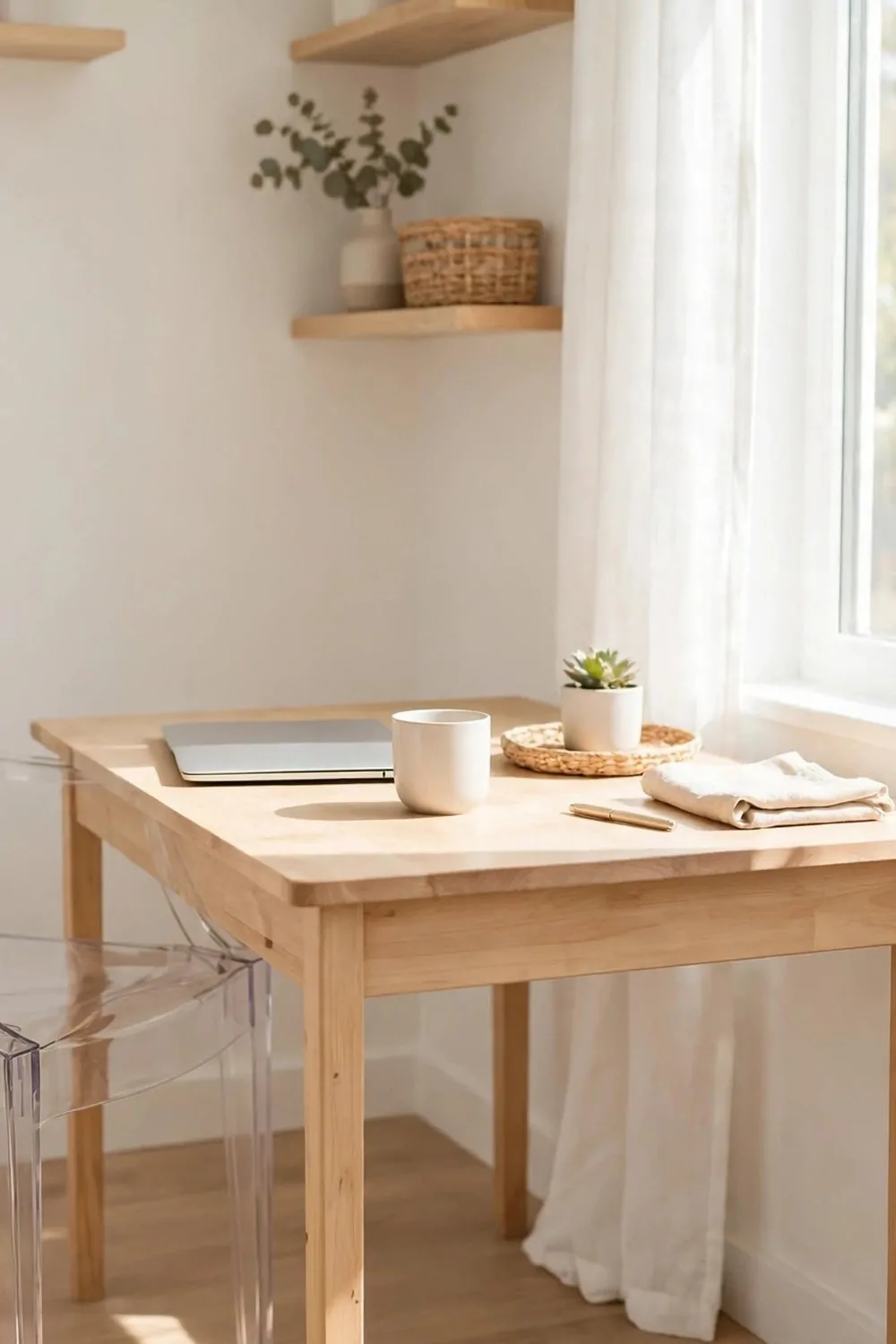
A big chair is a big block in a small room. A clear chair is almost invisible.
Clear acrylic chairs look like glass. You can see the wall and the floor right through them. Your eye does not stop at the chair, so the room feels like it has one less piece of furniture in it.
A clear chair works best at a slim desk. The desk is small, the chair is clear, and the whole corner looks light. A heavy wood chair next to a slim desk would fight it.
Wipe the chair with a damp cloth once a week. Clear chairs show fingerprints fast, and a quick wipe keeps them looking like new.
Put a thin cushion on the seat if the chair feels hard. A flat cushion in a pale colour keeps the chair comfy without hiding it. A big fat cushion would ruin the see-through trick.
This chair is not for everyone. If you want a chair you can sink into for hours, a clear chair is not it. It is a chair for short work sessions and small rooms.
Keep the chair pushed in when you are not using it. A clear chair tucked under the desk almost vanishes. The floor looks empty, and the room looks bigger.
Start here if your chair is the biggest thing in the room. Swap it for a clear one, and a whole chair disappears.
A Floating Desk With No Legs at All
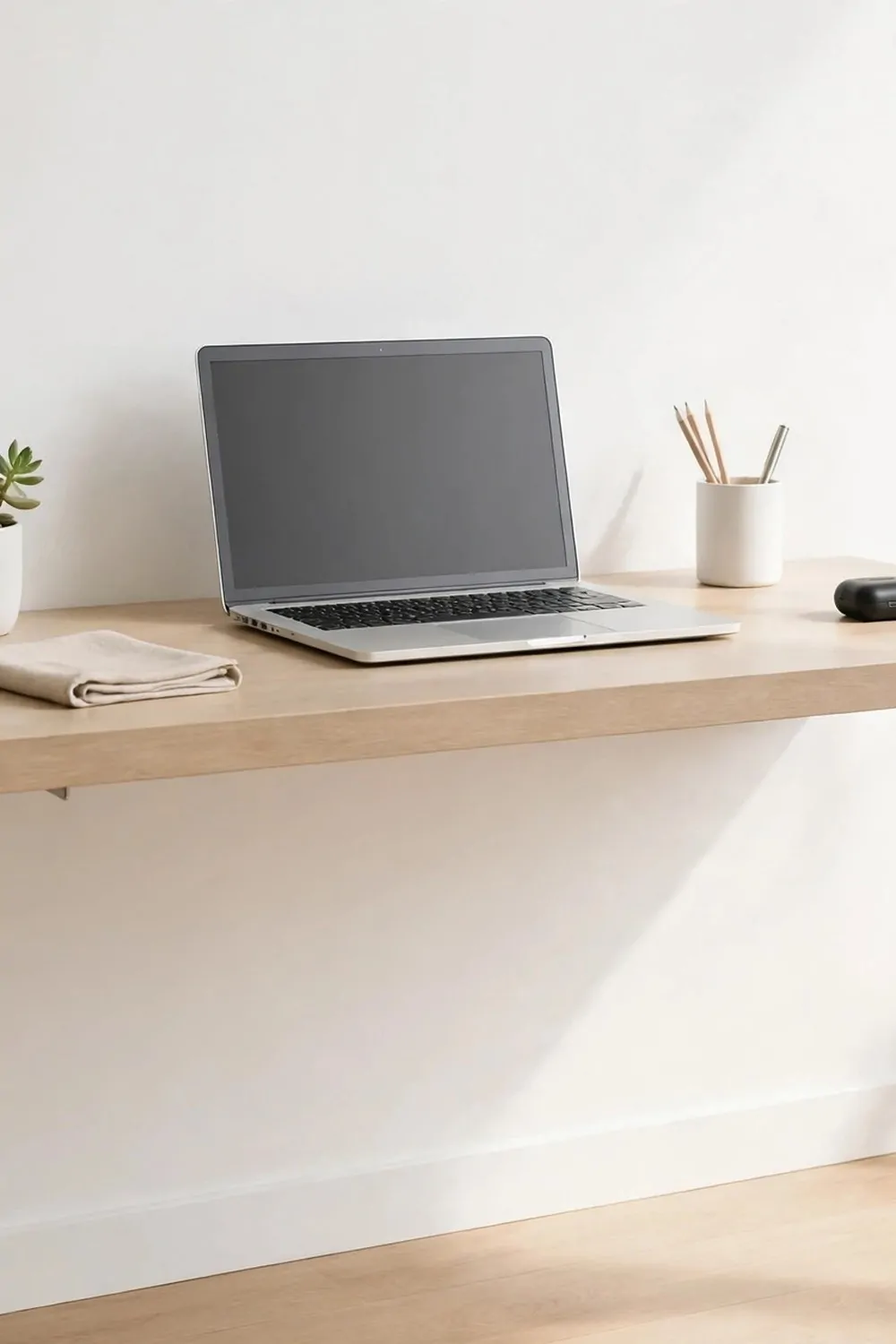
Desk legs chop the floor into pieces. A floating desk leaves the floor whole.
A floating desk is a board fixed to the wall at desk height. No legs. No feet. Nothing touching the floor. Your eyes see the whole floor underneath, and the room looks bigger.
Mount it into wall studs with two strong brackets. A floating desk holds your laptop, your arms and your coffee. It needs solid wood behind it, not just plaster.
Pick a slim top, about forty centimetres deep. A deep floating desk looks heavy and eats the room. A slim one looks like a shelf that grew up.
Slide a basket underneath for cables and chargers. The space under a floating desk is the easiest storage in the whole room. One basket, and the wires are gone.
Add two small floating shelves above the desk. They hold your books and boxes, and the wall does the storing. The desk stays clear, and the floor stays empty.
A chair with no arms slides under best. Arms catch on the desk edge and leave the chair sticking out. A simple chair keeps the whole corner tidy.
This is the desk for the tiniest offices. One board, two brackets, and the floor belongs to the room again.
Light in Three Layers, Not One
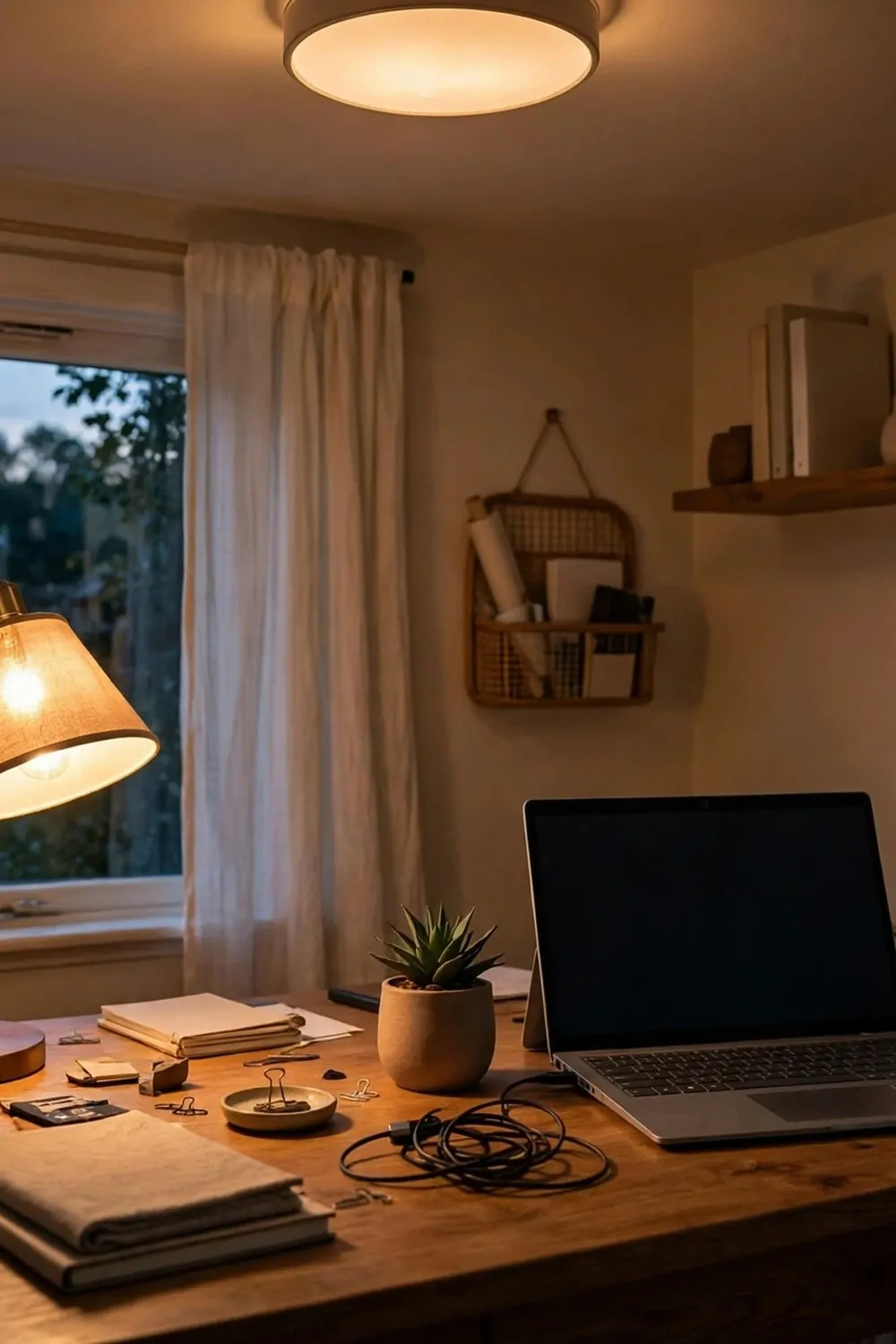
One ceiling light makes a small office feel flat. Three layers of light make it feel deep.
A room with one light has one bright spot and a lot of shadows. Your eyes read the shadows as walls closing in. A room with three lights has no dark corners left, and it feels bigger.
| Light layer | What it is | Where it goes |
|---|---|---|
| Daylight | Sun through the window | Keep the window clear and clean |
| Desk lamp | Warm light for close work | On the desk, low and warm |
| Soft glow | A small wall light or shelf light | High on the wall, out of the way |
Start with the window. Wash it inside and out. A dirty window steals half the daylight, and a clean one makes the whole room feel brighter without changing a thing.
Add the desk lamp next. A warm lamp on the desk gives you light where your hands are. It makes the desk feel like a proper workspace, even on a grey morning.
Finish with one soft glow high on the wall. A small light above a shelf, or a warm bulb in the corner. It lifts the ceiling and kills the last dark spot in the room.
Use warm bulbs in all three layers. Cold white light feels like a waiting room. Warm light feels like evening sun, and your eyes stay relaxed for hours.
Leave the ceiling light off while you work. One ceiling light washes the whole room flat and kills the mood. Three soft lights do a better job than one harsh one.
Give this a go if your office has one sad light in the middle of the ceiling. Three layers, and the room gains depth overnight.
The Slim Desk Rule
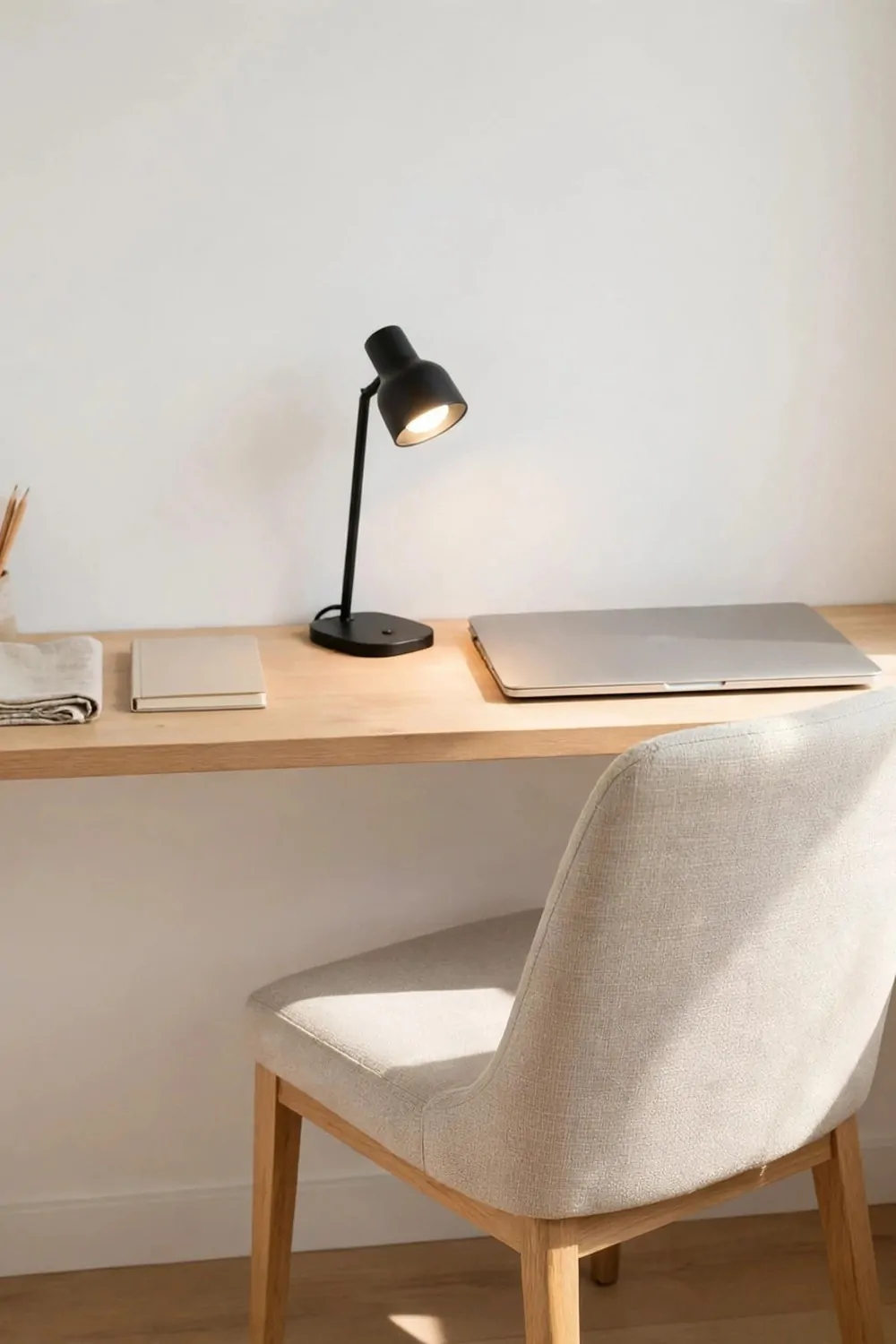
A deep desk eats a small room. A slim desk gives the room back.
Most desks are sixty centimetres deep or more. That is a lot of desk for a laptop and a notebook. In a small office, that extra depth is floor space you will never get back.
A slim desk is about forty centimetres deep. That is enough for a laptop, a lamp and a notebook. Nothing more. The desk does the job, and the room keeps the rest of its floor.
Measure your desk before you buy a new one. If it is deeper than your arm from elbow to fingertip, it is too deep for a small office. Your arms only reach so far.
A slim desk also forces you to stay tidy. There is no room for piles. Papers live in the tray, pens live in the cup, and the desk stays clear because it has to.
Put the slim desk against the longest wall in the room. A long wall makes a slim desk look like it belongs there. A short wall makes it look squeezed.
Keep the chair slim too. A wide armchair next to a slim desk looks wrong. A simple chair with no arms fits the slim desk and slides right under it.
This is the rule for people who bought a big desk for a small room. Swap it for a slim one, and the floor comes back the same day.
The Window Seat That Doubles as a Desk
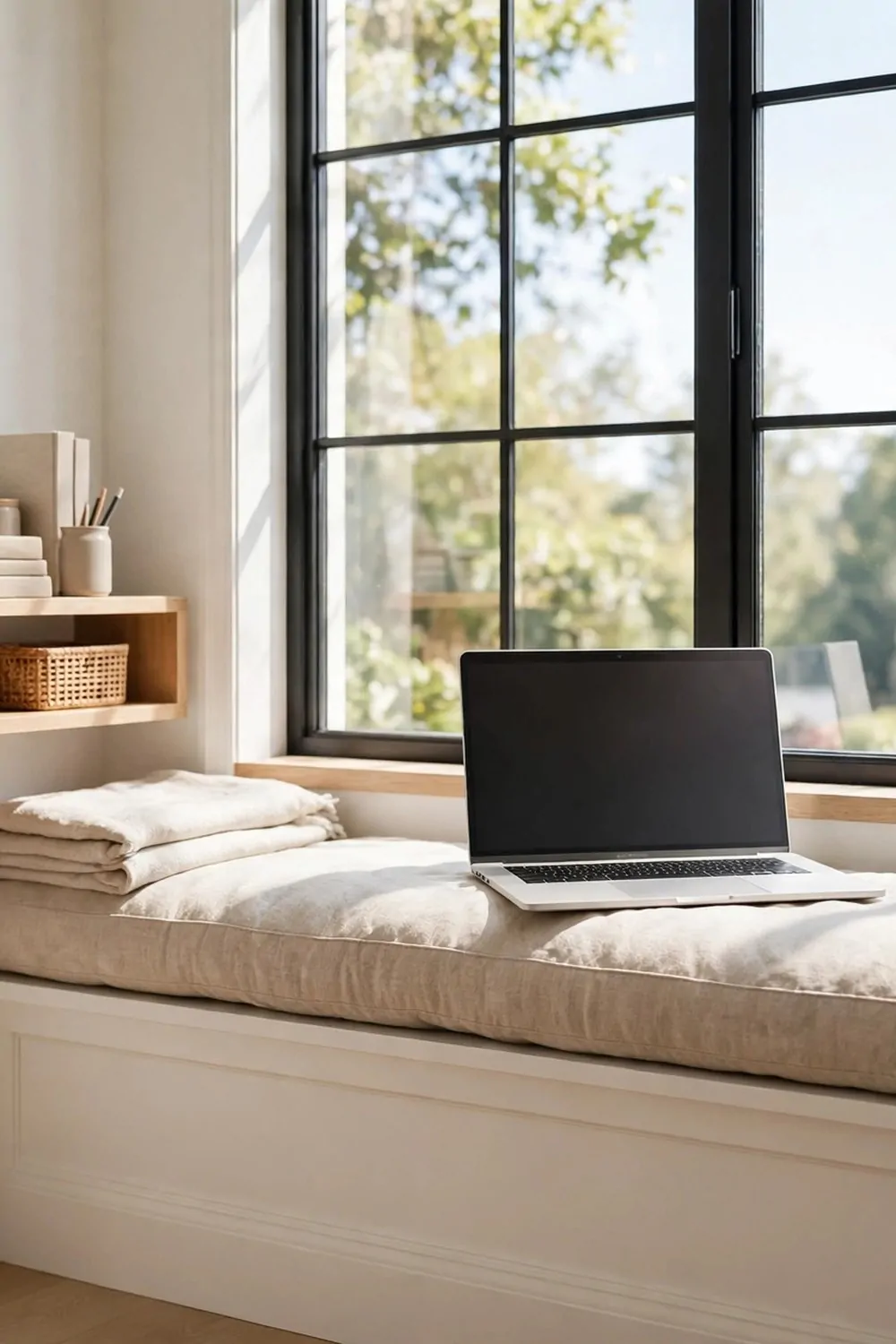
The brightest spot in your office is the window. Put your desk there.
A desk by the window gets the best light in the room for free. You work in daylight, and the room feels bigger because your eyes can see outside. A desk against a blank wall has no view at all.
Build the desk into the window seat if you have one. A wide windowsill with a cushion becomes a seat, and a board across it becomes a desk. The window does two jobs at once.
Keep the windowsill clear of clutter. A sill full of plants and books blocks the light. One small plant is enough. The light needs a clear path into the room.
Put a thin cushion on the seat if you sit there for hours. A flat cushion in a pale colour makes the seat comfy without blocking the window. A thick cushion eats the light.
This spot suits morning work best. The sun comes in low and warm, and the room glows. By afternoon, the light moves on, and you can slide the laptop back to the main desk if you like.
Give the inside of the window a wipe once a month. A dusty window steals half the daylight, and a clean one makes the whole corner feel brighter without changing a thing.
Give this a go if your desk faces a blank wall. Move it to the window, and the room gains a view it never had.
The Shelf Above the Door
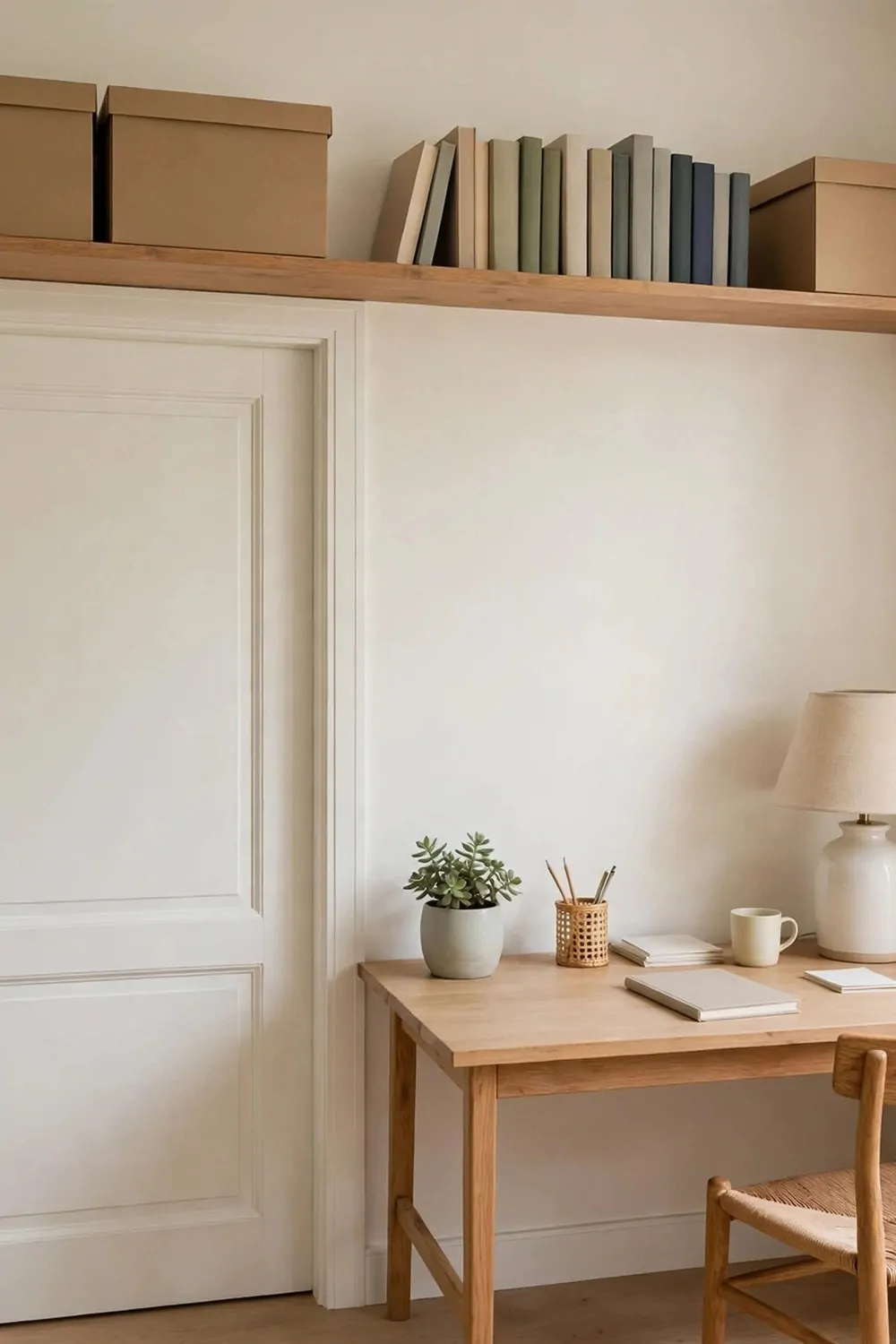
The space above a door is the most wasted space in a small office.
Nobody looks up there. Nobody stores anything there. It is just empty wall, doing nothing, while the floor below it is covered in piles.
Fix one shelf above the door and the piles move up. Old papers, spare supplies, the boxes you open twice a year. They all live up there now, out of the way but still close.
Here is what belongs on the high shelf, and what does not.
- Old files you need to keep but never open.
- Spare notebooks and printer paper.
- The box of cables you might need one day.
- Seasonal things, like the fan you only use in summer.
Fix the shelf to wall studs with strong brackets. A shelf above a door holds heavy boxes, and it must never fall. Two screws into studs, and it stays put for years.
Use matching boxes on the shelf so it looks tidy from below. Plain boxes in one colour hide the mess inside. From the floor, the shelf looks like part of the wall.
Keep a small step stool in the corner for the days you need something from up there. A folding stool that leans against the wall is enough. You only need it once a week.
Do not put anything heavy above the door that you need every day. A high shelf is for things you touch rarely. Daily things belong at eye level, where your hands can find them.
This move is for people who have run out of wall. The door is a wall too, and the space above it was waiting for a job.
The Rolling Cart That Tucks Away
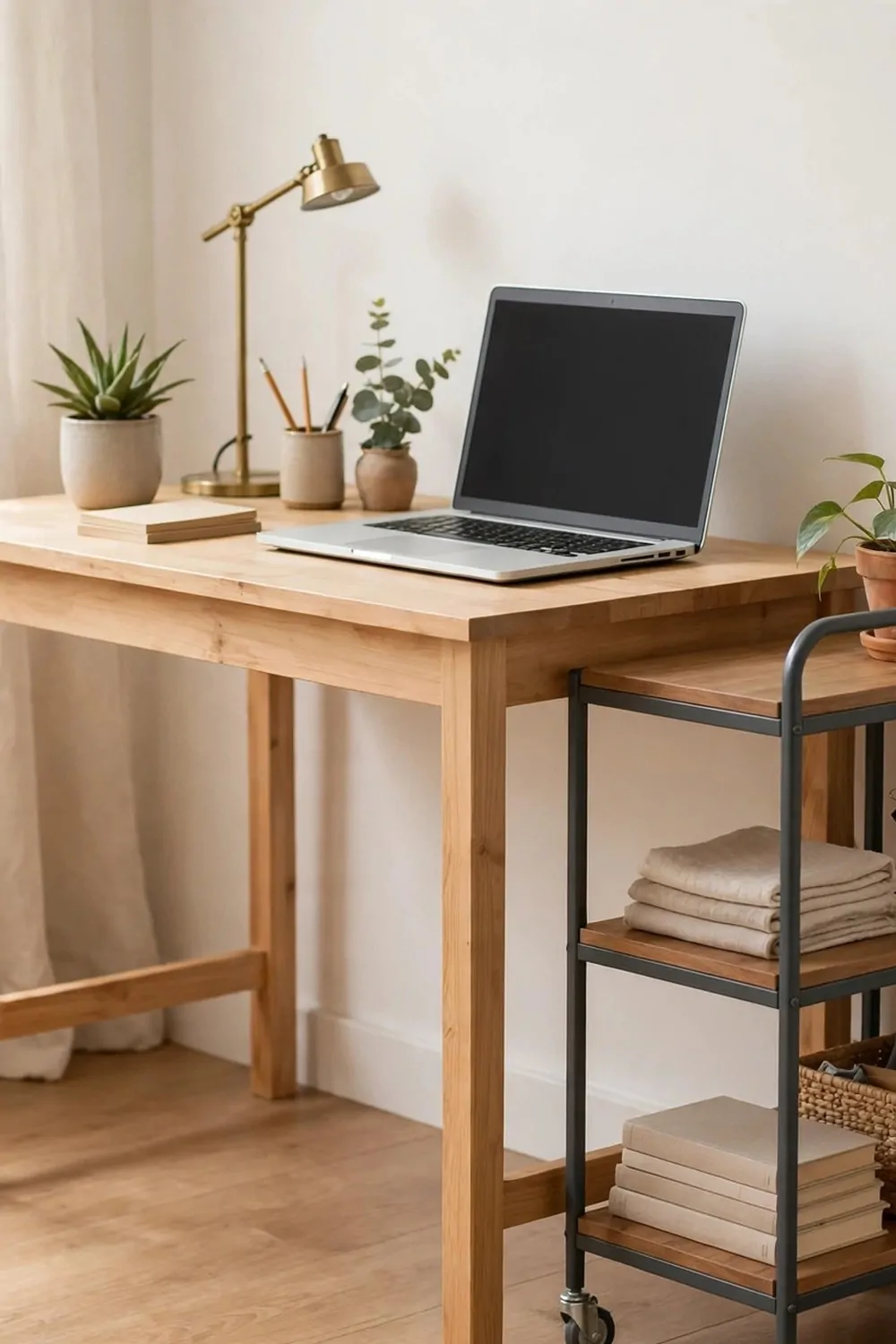
A rolling cart is a shelf on wheels. It goes where you need it, then hides when you do not.
Small offices need storage that moves. A fixed bookcase owns its spot forever. A rolling cart slides beside the desk while you work, then tucks into a corner when you finish.
Pick a cart with three slim shelves. The bottom shelf holds heavy things like books and files. The middle shelf holds the work in progress. The top shelf holds the lamp or the plant.
Keep the cart narrow, about thirty centimetres wide. A wide cart is just a bookcase on wheels. A narrow cart slips into gaps a bookcase never could.
Use the cart for the job of the day. Printer paper on Monday. Craft supplies on Tuesday. The cart changes with your work, and the desk stays clear.
Lock the wheels when the cart is in place. A cart that rolls away while you reach for a book is a cart that annoys you. Most carts have little brakes on the wheels.
Wipe the shelves once a week when you clean the desk. Carts collect dust fast because they sit low. A quick wipe keeps them looking fresh.
Give this a go if your office has one awkward gap nothing fits in. A slim cart slides right in, and the gap becomes storage.
A Table That Does Two Jobs
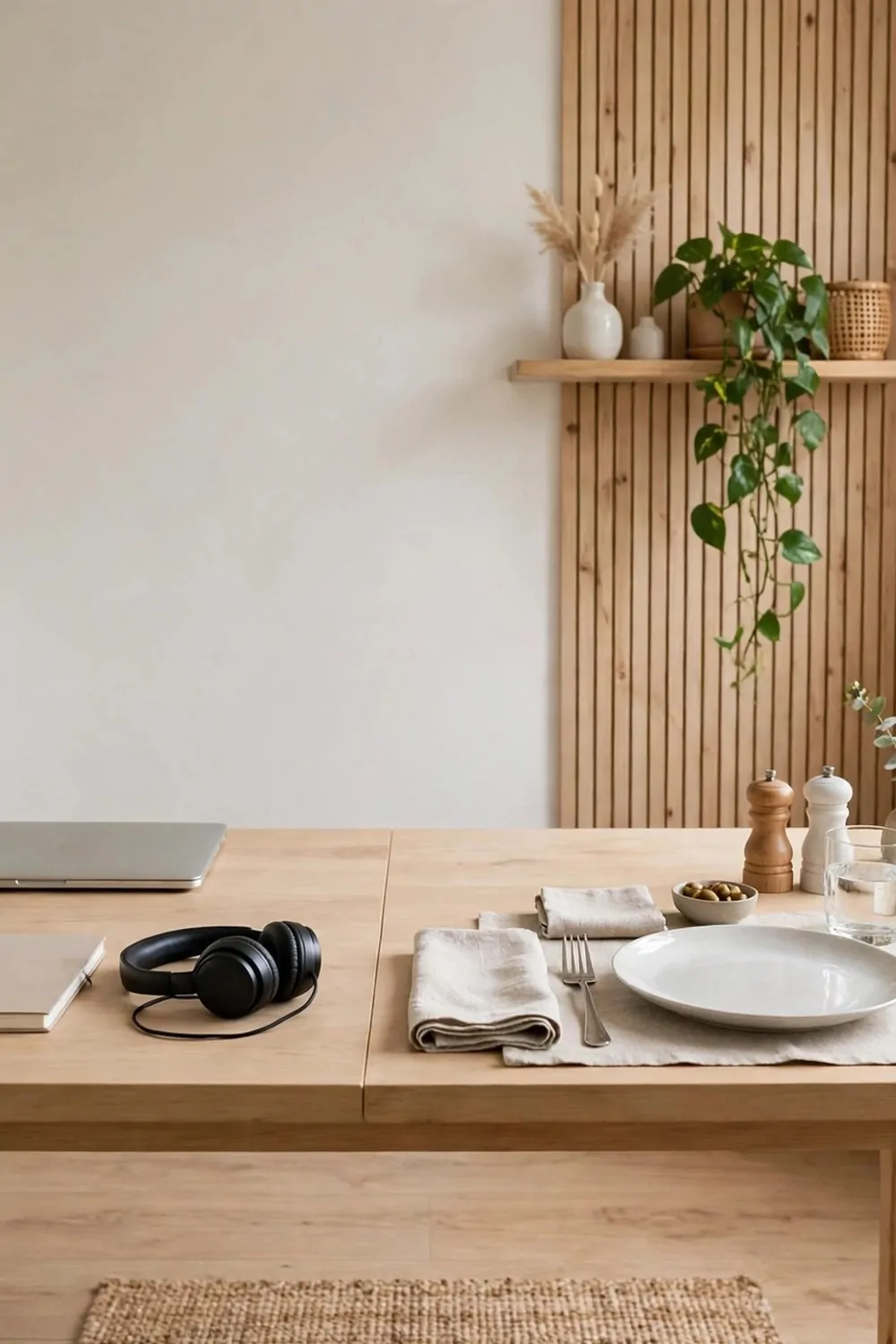
A small home cannot afford furniture with one job. A table that does two jobs earns its floor space twice.
A desk that is also a dining table is the classic two-job piece. You work on it all day, then clear it and eat on it at night. One table, two lives, and the room never feels crowded.
Pick a table that is the right height for both jobs. Desk height and dining height are almost the same, so most plain tables work for both. A table that is too low for eating or too high for typing fails at both.
Keep the work stuff in one box that lives on a shelf. At dinner time, the laptop and papers go in the box, the box goes on the shelf, and the table becomes a dining table in two minutes.
| Piece | First job | Second job |
|---|---|---|
| Plain wood table | Desk by day | Dining table by night |
| Narrow console | Laptop spot in the morning | Hallway shelf in the evening |
| Fold-down desk | Work surface when open | Plain wall when folded flat |
| Rolling cart | Printer stand by day | Drinks trolley at dinner |
Choose chairs that work for both jobs too. A simple wood chair is fine at a desk and fine at dinner. A big office chair with wheels looks wrong at a dinner table.
Clear the table completely between jobs. A desk that still has papers on it at dinner feels like work followed you to the table. A clear table feels like a fresh start.
This trick suits flats and small houses best. One room, one table, two jobs, and the room never has to choose.
Start here if your home has more jobs than rooms. One table that does two jobs, and the space problem shrinks fast.
Stripes That Lift a Low Ceiling
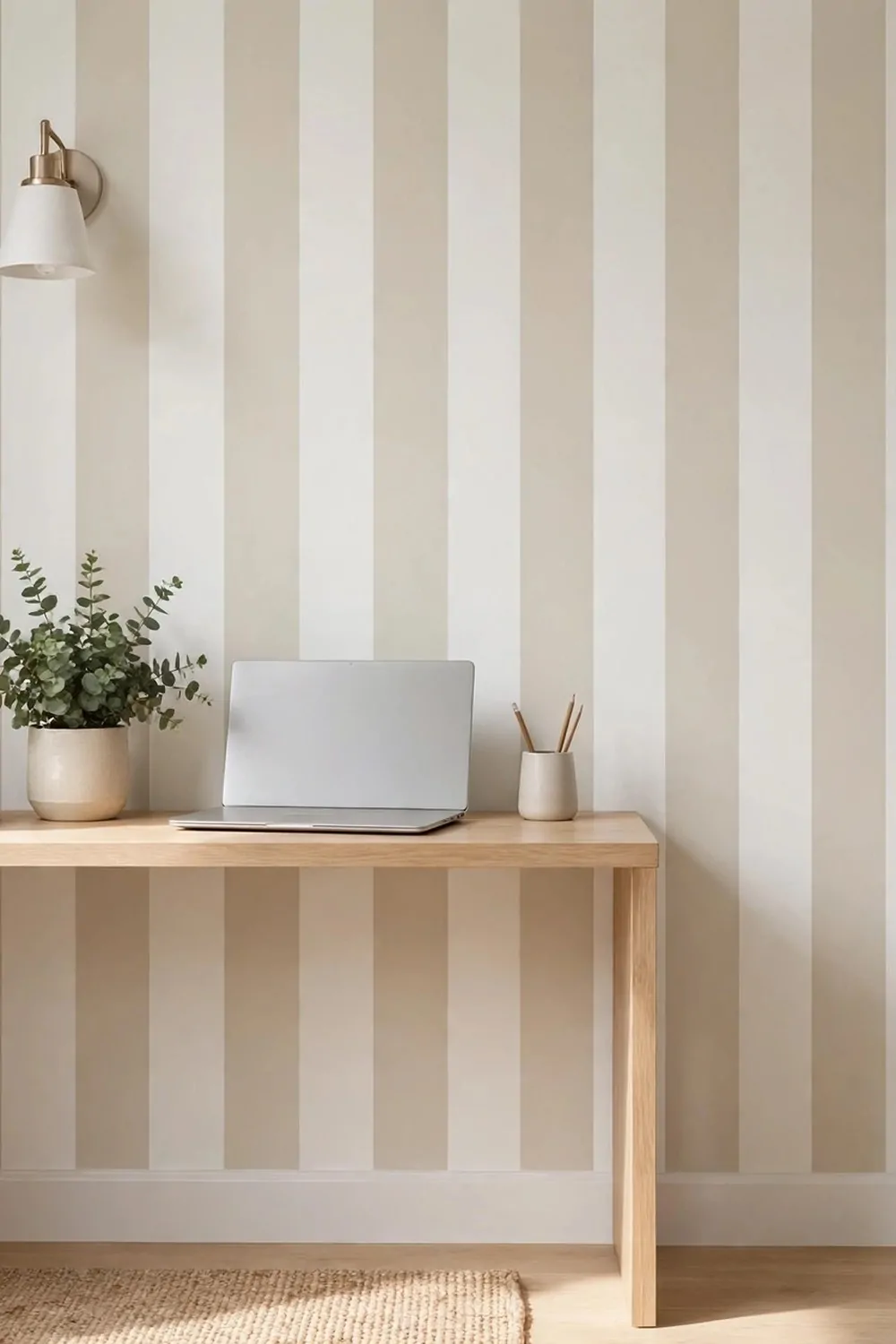
A low ceiling presses down on a small office. Stripes push it back up.
Vertical stripes trick your eyes. Your eyes follow the lines upward, and the ceiling feels higher than it is. It is a simple paint trick, and it works on the first look.
Paint the stripes in two soft tones of the same colour. A pale grey and a white, or a soft sage and a cream. Two tones that are close together look calm. Two tones that fight each other look like a circus.
Keep the stripes narrow, about the width of your hand. Wide stripes look like a bold pattern. Narrow stripes look like the wall itself is taller.
Paint only one wall with stripes. The wall behind your desk is the best one. One striped wall lifts the room. Four striped walls make the room feel like a tent.
Use painter’s tape to keep the lines straight. Mark the stripes with a pencil first, tape along the lines, and roll the paint on. Peel the tape off while the paint is still a little wet for clean edges.
This move takes one afternoon and one tin of paint. A low ceiling that felt like a lid starts to feel like a proper room.
Give this a go if your office ceiling feels like it is sitting on your head. A few stripes, and the walls grow taller.
The Round Rug in a Square Room
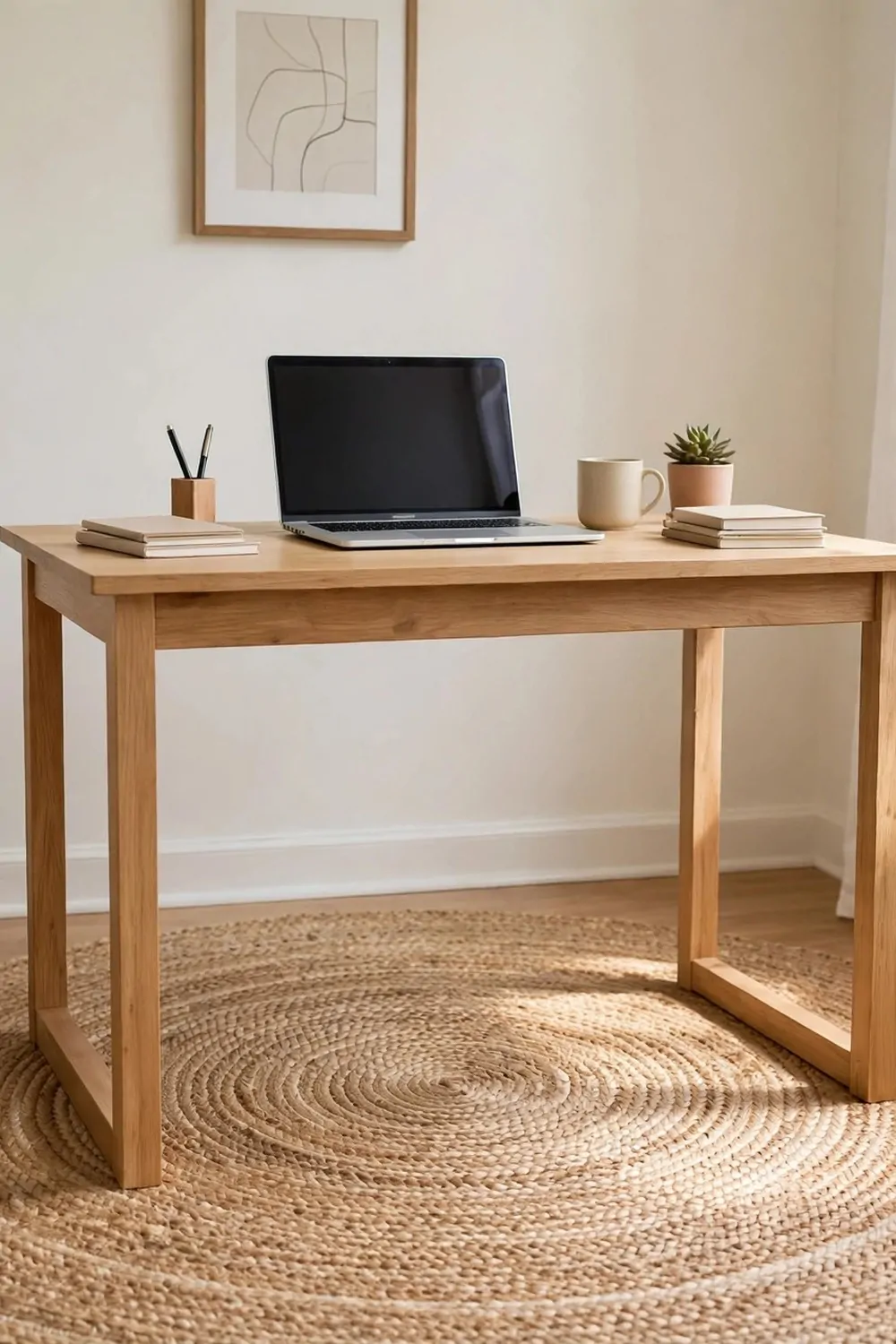
Square rooms feel boxy. A round rug softens the box.
A square rug in a square room makes the corners feel sharper. Your eyes see four corners, four edges, and the room feels like a crate. A round rug breaks the pattern, and the room feels softer.
Pick a rug that is big enough for the desk and the chair together. Your chair should still be on the rug when you push it back. A rug that is too small looks wrong under a desk.
Choose a flat rug that lies low on the floor. A thick rug makes the chair wobble, and a wobbly chair is one you stop using. Flat and low works best.
A round rug also marks the office corner in a shared room. The circle says, this is the office, and the rest of the room is something else. No walls needed.
Pick a simple pattern or a plain colour. A busy pattern on a round rug fights the shape. A calm colour lets the round shape do the work.
Run the vacuum over the rug each week and shake it outside once a month. A fresh rug makes the whole corner feel looked after, and the desk above it looks better.
Start here if your office feels like a box with a desk in it. One round rug, and the corners stop shouting.
The Desk That Stays Clear Overnight
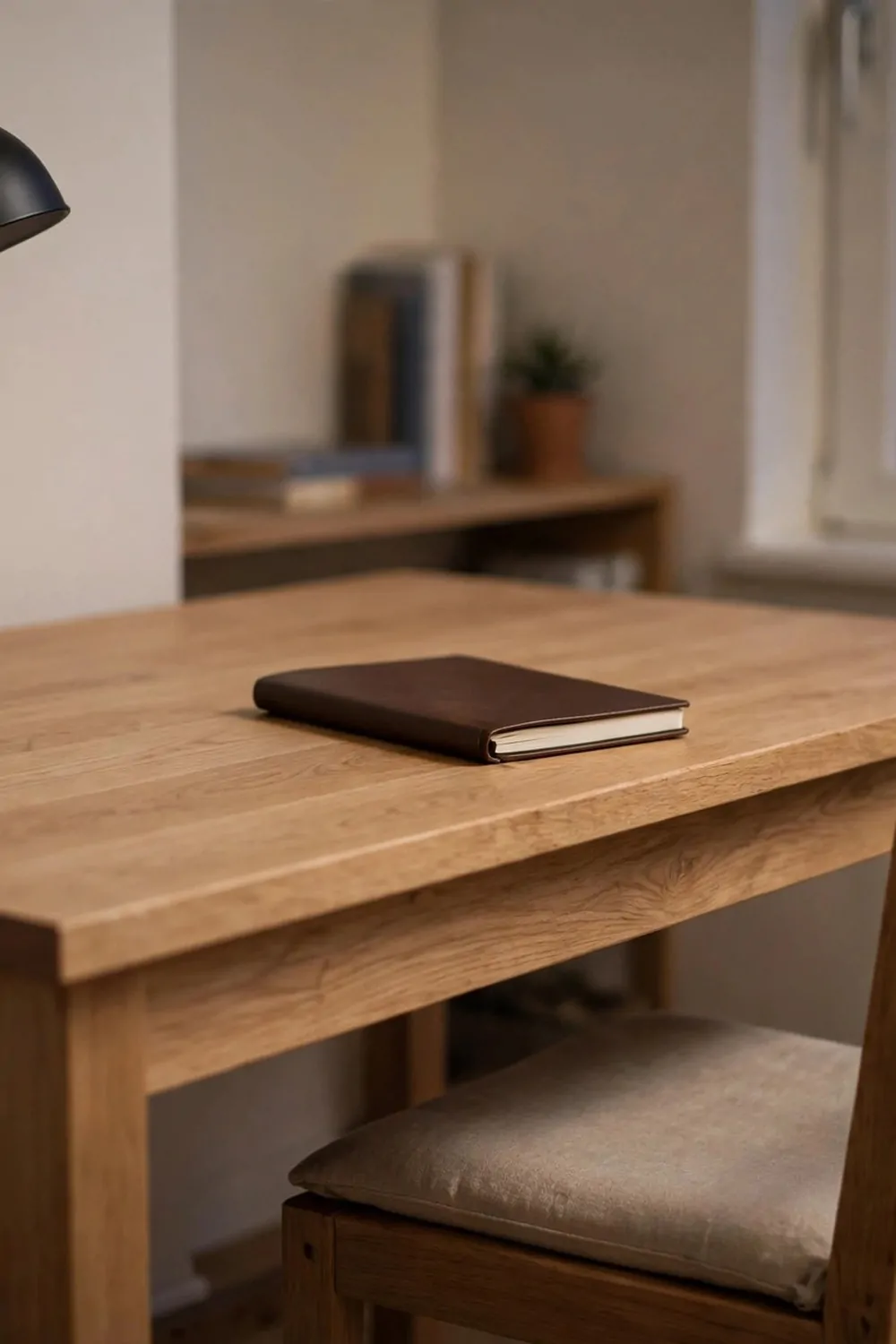
A desk covered in stuff looks smaller than it is. A clear desk looks bigger, even though the room never changed.
Papers, cups, cables and chargers pile up on a desk during the day. By evening, the desk looks like a storage shelf. Your eyes see the mess, not the room, and the office feels cramped.
Tidy the desk each evening before you stop for the day. Papers go into the tray. The pen goes on the notebook. The mug goes back to the kitchen. Two minutes, and the desk is empty.
Keep only three things on the desk overnight. The lamp, the notebook, and the mug on its spot. Everything else lives somewhere else. Three things look calm. Ten things look like chaos.
A clear desk also makes the morning easier. You sit down to a clean surface, and your brain starts work without fighting yesterday’s mess first.
This rule costs nothing. No paint, no new furniture, no tools. Just two minutes at the end of the day, every day.
Do it even on days when the desk looks fine already. A routine that only happens on messy days never sticks. A routine you do daily becomes second nature.
Give this a go tonight. Two minutes, a clear desk, and tomorrow morning your office will look bigger before you even start work.
The Shallow Drawer Under the Desk
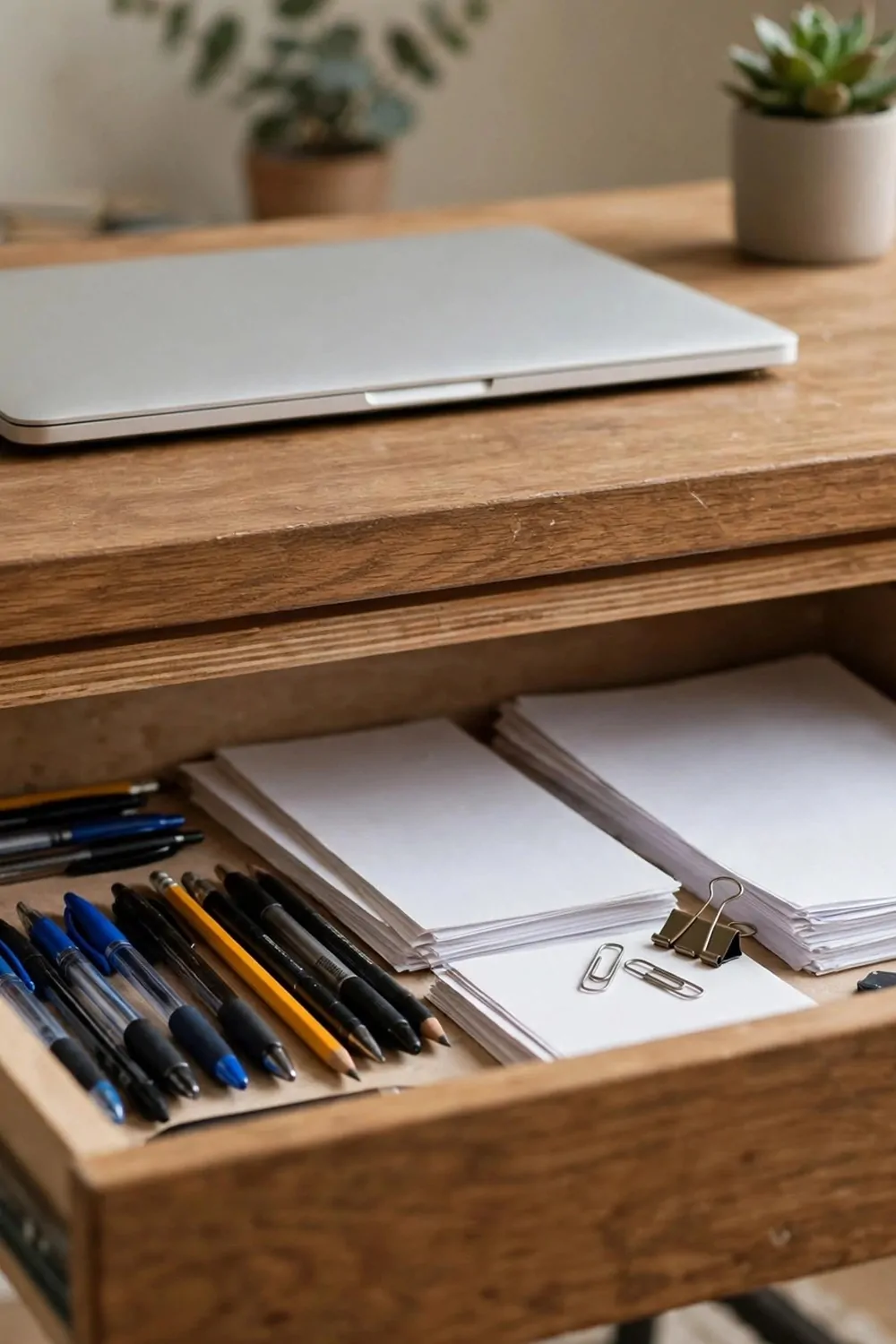
A desk with no drawers makes you pile things on top. A shallow drawer under the top fixes that without taking any floor space.
A shallow drawer is only a few centimetres deep. It holds pens, a notebook, the charger, and the bits you reach for all day. It does not hold junk, because junk does not fit.
Fix the drawer under the desk top, close to your writing hand. Right-handed people put it on the right. The drawer should open smoothly without you having to stand up or twist around.
Keep the drawer tidy with two small boxes inside. One box for pens. One box holds the little bits. Two boxes stop the drawer turning into a junk drawer in a week.
Empty the drawer once a month and throw out what you do not need. A drawer that gets a fresh start every month never turns into a mystery box.
This drawer is for the things you use every day. The pen you like. The notebook. The charger. The things you use once a month belong on a shelf, not in the drawer.
A shallow drawer also hides the clutter from view. The desk top stays clear, and the room looks bigger, because the mess is tucked away under the surface.
Give this a go if your desk top is always covered in small things. One shallow drawer, and the top of the desk belongs to your work again.
A Peg Rail Instead of a Bookcase
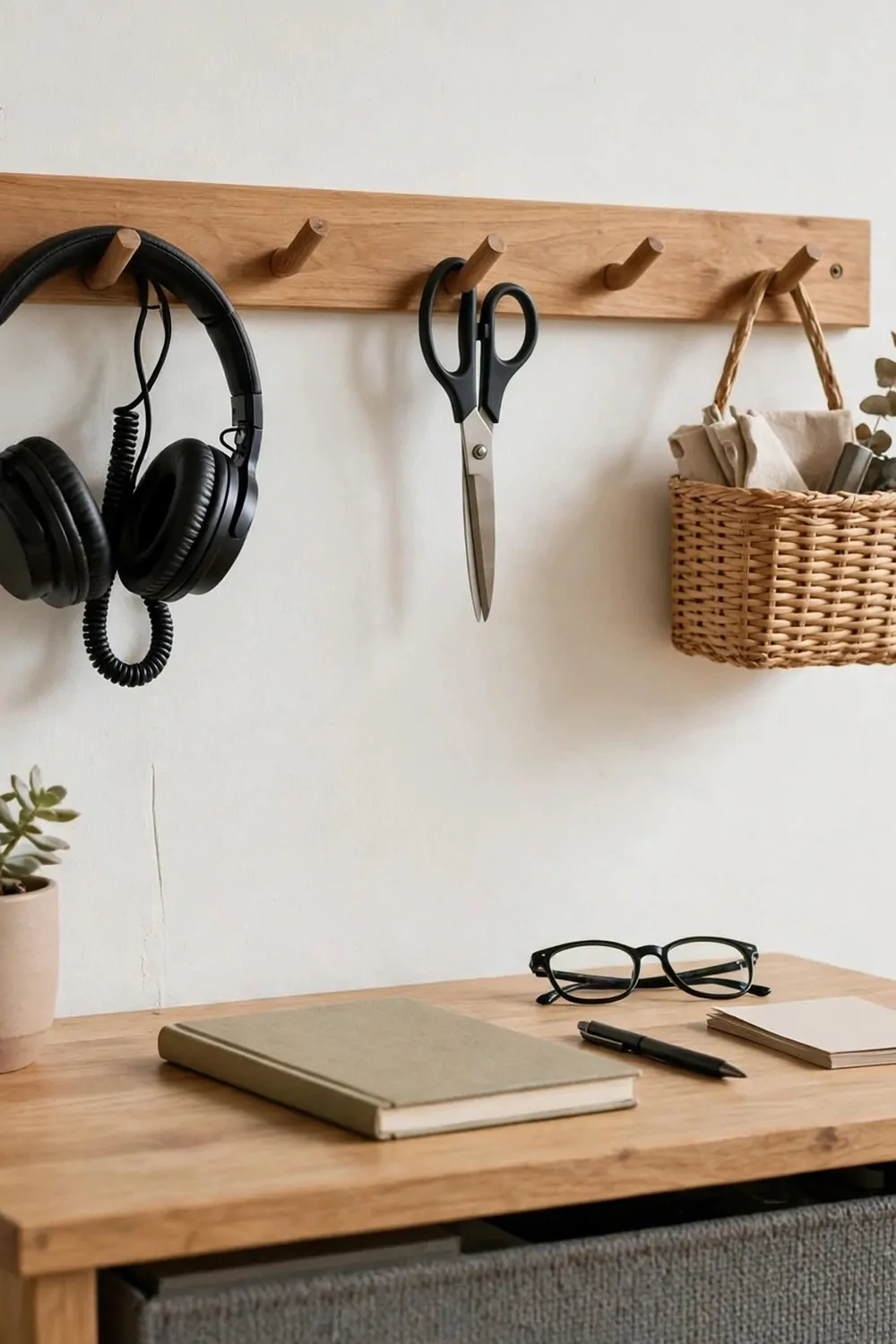
A bookcase is a big box that owns a wall. A peg rail is a thin strip that does the same job without the bulk.
A peg rail is a long wood strip fixed to the wall, with hooks and pegs along it. It holds headphones, scissors, a small basket, the keys, and the bag. Everything hangs where your hand can find it.
Here is what hangs well on a peg rail.
- Headphones on a wide hook, so the band never bends.
- A small basket for pens, pencils and the ruler.
- Scissors on a hook, always in the same spot.
- A little shelf for the phone and the charger.
- The work bag on the end peg, ready to grab.
Fix the rail to wall studs at shoulder height. It should be easy to reach without standing on tiptoes. A rail you cannot reach is a rail you will never use.
Keep the rail short, about as wide as the desk. A rail that runs the whole wall looks like a shop display. A short rail looks like a tidy office.
Add hooks only when you need them. A rail full of empty hooks looks unfinished. A rail with five hooks you really use looks like a proper workspace.
This move is for people whose bookcase is too big for the room. Take the bookcase out, put a peg rail up, and the wall breathes again.
Paint the rail the same colour as the wall if you want it to blend in. A rail that matches the wall looks like part of the room, not an extra piece bolted on.
Take the Door Off
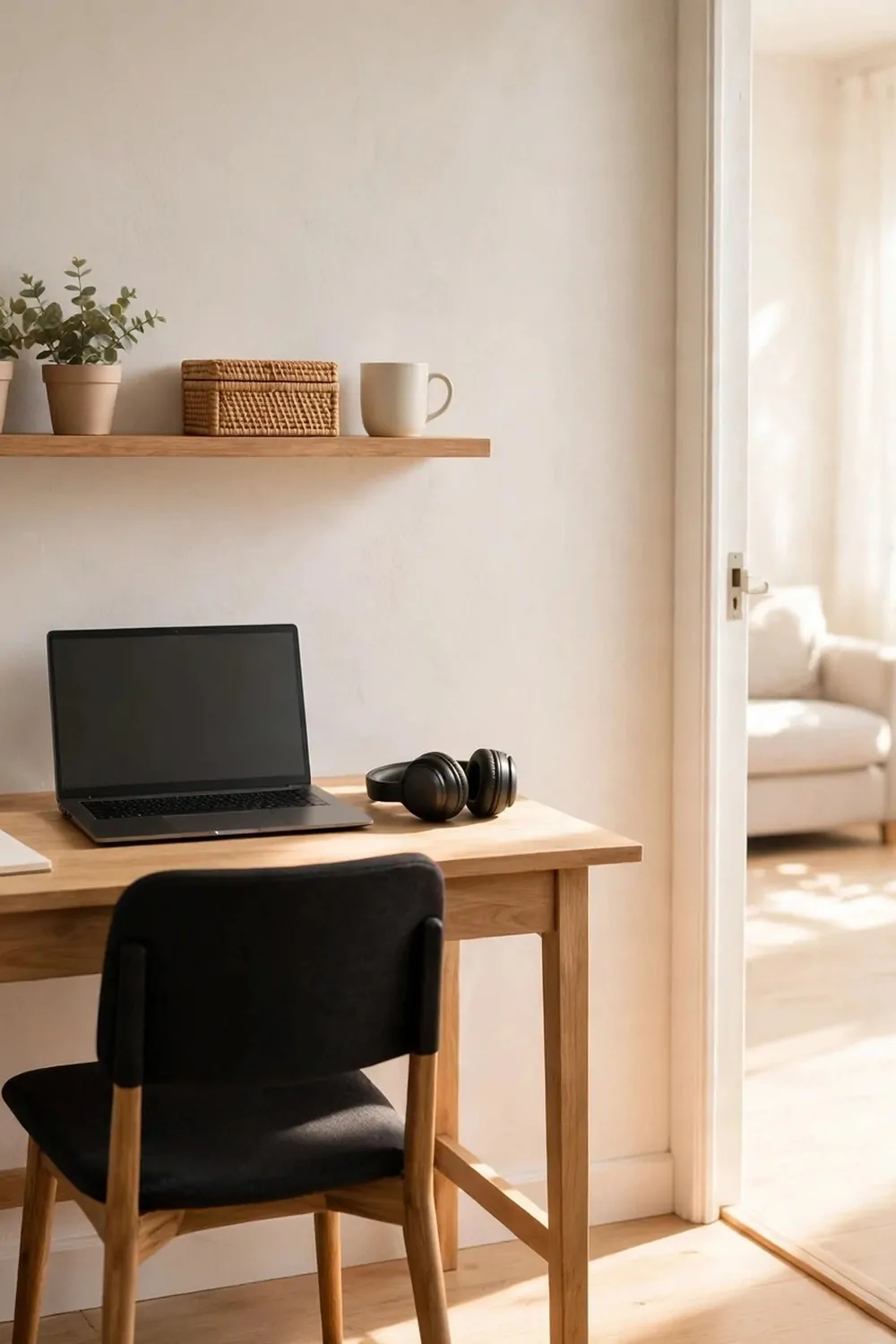
A door that is always open is a wall that moves. Take it off, and the room gains space it never had.
Most small office doors stay open all day. The door swings into the room, takes up floor space, and blocks the light from the hallway. It does nothing except get in the way.
Lift the door off its hinges and store it in a closet or under the bed. The doorway stays open, light flows in from the next room, and the office feels like part of the house instead of a cupboard.
Hang a curtain in the doorway if you want privacy sometimes. A light curtain you can pull across when you need quiet, and push back when you do not. A curtain takes no floor space at all.
Keep the door frame painted the same colour as the walls. A frame that matches the walls disappears, and the doorway looks like part of the room. A frame in a different colour frames the hole and makes it look smaller.
This trick costs nothing and takes ten minutes. Two people, one screwdriver, and the door is off its hinges.
Try it for a week before you decide. If you miss the door, it goes back on in ten minutes. Most people never put it back.
A doorway with no door also makes the hallway feel like part of the office. The light from the next room spills in, and the two rooms feel like one bigger space instead of two small ones.
Shiny Things That Bounce the Light
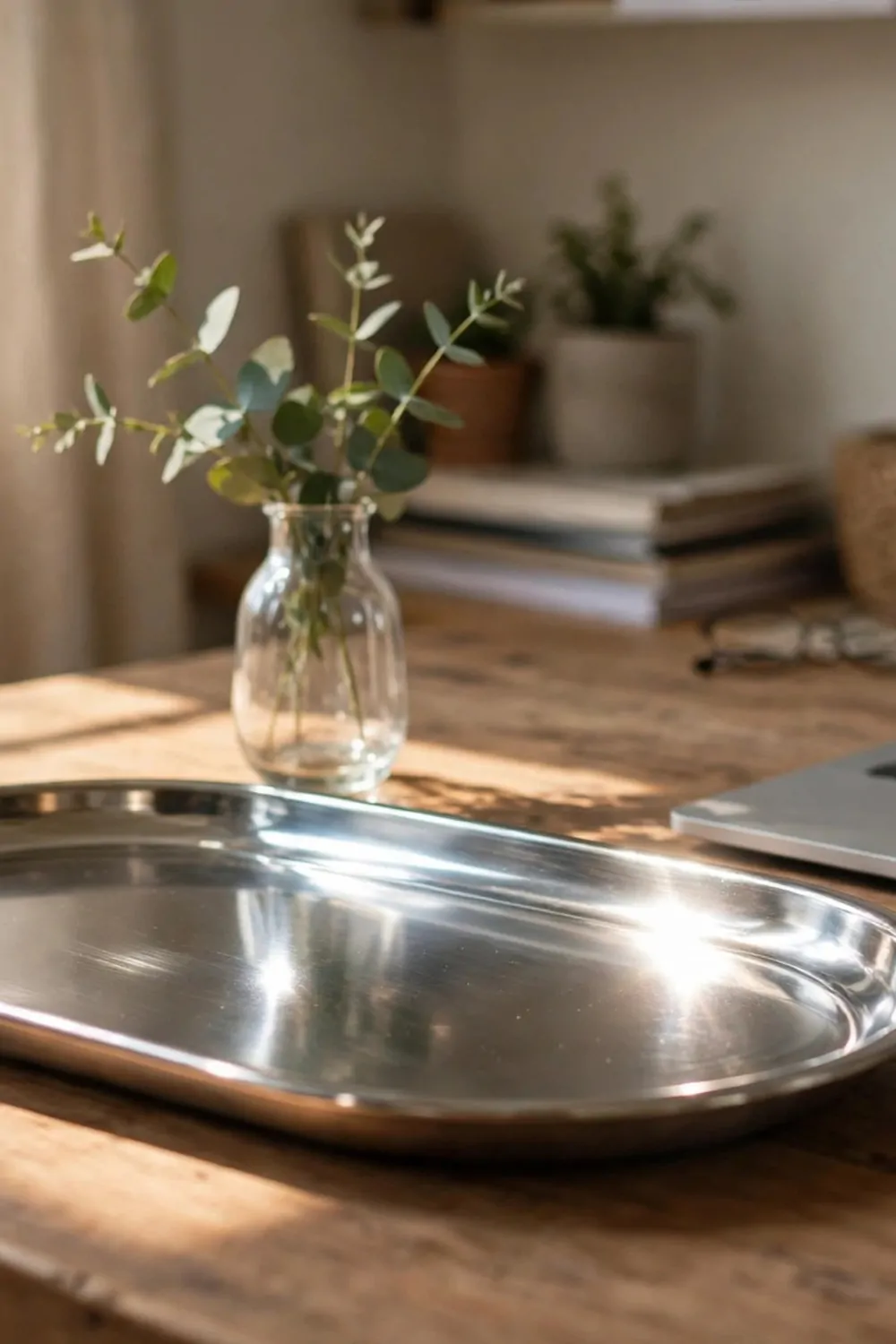
Dark rooms swallow light. Shiny things throw it back.
A small office with one window needs every bit of light it can get. Shiny surfaces catch the light and spread it around the room. A metal tray, a glass vase, a mirror tile. Each one is a little light catcher.
Put a shiny tray on the desk to hold your pens. The metal catches the window light and throws it across the desk. Your pens have a home, and the desk gets brighter.
Hang one small mirror on the wall opposite the window. It bounces the daylight back into the room, and the office feels like it has two windows instead of one.
Keep the shiny things small. One tray, one vase, one mirror. A room full of shiny things looks like a shop. A few shiny things look like a plan.
Wipe the shiny surfaces once a week with a dry cloth. Dust dulls metal and glass fast, and a dusty tray bounces no light at all. A quick wipe keeps them bright.
This trick works best in offices with one small window. The window gives the light, and the shiny things share it around the room.
Give this a go if your office has one dark corner no lamp seems to fix. One shiny tray, and the corner gets light it never had.
Baskets on the Wall, Not the Floor
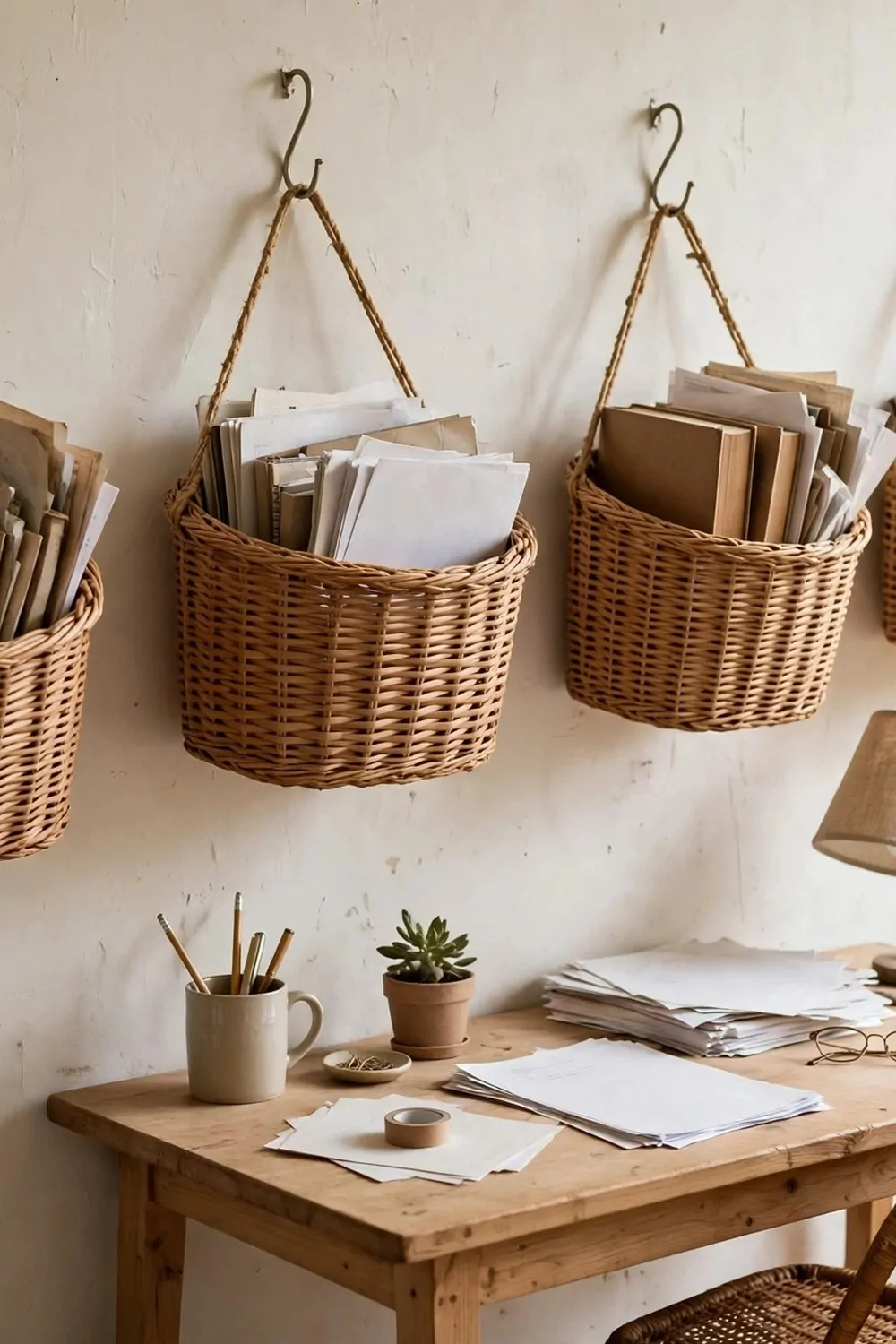
Baskets on the floor eat floor space. Baskets on the wall give it back.
A basket on the floor is a box you trip over. A basket on the wall is storage that floats. Your books, papers and cables live in the baskets, and the floor stays empty.
Fix sturdy hooks to the wall and hang woven baskets from them. One basket for books. One for papers. One for the cables and chargers. Each basket has one job, and you always know where things live.
Pick baskets that are light when they are empty. Heavy baskets pull hooks out of the wall. Woven baskets are light, strong, and they look warm against a white wall.
Keep the baskets at a height you can reach without a step stool. Eye level is perfect. A basket you cannot reach is a basket you will never use.
Label each basket with a small plain tag if you share the office. One word is enough. Books. Papers. Cables. The tags stop the baskets turning into mystery boxes.
This move suits rented homes well. A few hooks leave tiny holes that are easy to fill when you move out. A bookcase leaves a big empty patch on the wall.
Start here if your floor is covered in baskets and boxes. Move them up the wall, and the floor belongs to you again.
The Chair That Hangs on a Hook
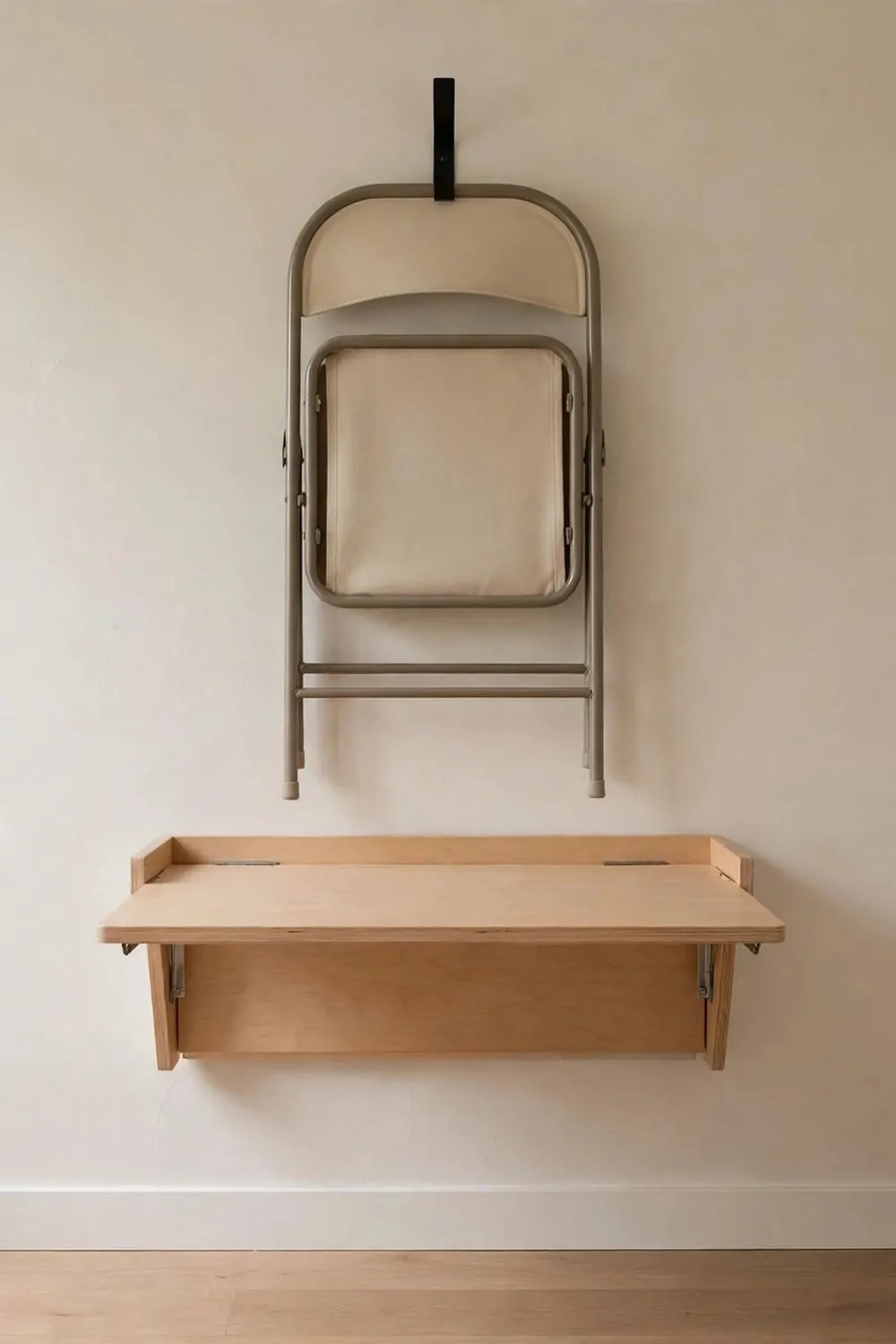
A chair on the floor takes up floor space all day, even when nobody sits on it. A chair on a hook takes up none.
A folding chair hangs flat on a wall hook like a picture. You take it down when work starts, and hang it back up when work ends. The floor is empty by dinner.
Fix a strong hook to a wall stud, at a height you can reach easily. The hook holds the whole weight of the chair, so it needs solid wood behind it. One screw into a stud is enough.
Pick a light folding chair that folds flat. A heavy chair is hard to lift onto a hook every day. A light chair goes up and down in two seconds.
Keep the hook near the desk, not across the room. A chair that lives far from the desk will never get hung back up. A hook beside the desk makes the habit easy.
This is the chair for the smallest offices, the ones where the chair is the biggest thing in the room. Hang the chair, and the room gains a whole chair of space.
Wipe the chair once a week when you clean the desk. A chair that hangs on a wall collects dust on the seat, and a quick wipe keeps it fresh.
Give this a go if your office is so small the chair blocks the door. One hook, one folding chair, and the floor is yours again.
Keep Reading
If you liked these Small Home Office Design tricks, these hacks, industrial and business office ideas will give you even more ways to make a small space work hard.
- 21 Ikea Home Office Hacks That Look Way More Expensive
- 16 Ikea Office Ideas Workspaces Industrial Fans Will Love
- 17 Ikea Office Ideas Business Owners Can Set Up Fast
A small office is not a problem to fix. It is a room that rewards small, clever moves. A white wall. A tall shelf. A desk that folds away. Pick your favourite three tricks from this list, try them this weekend, and let your smallest room surprise you.