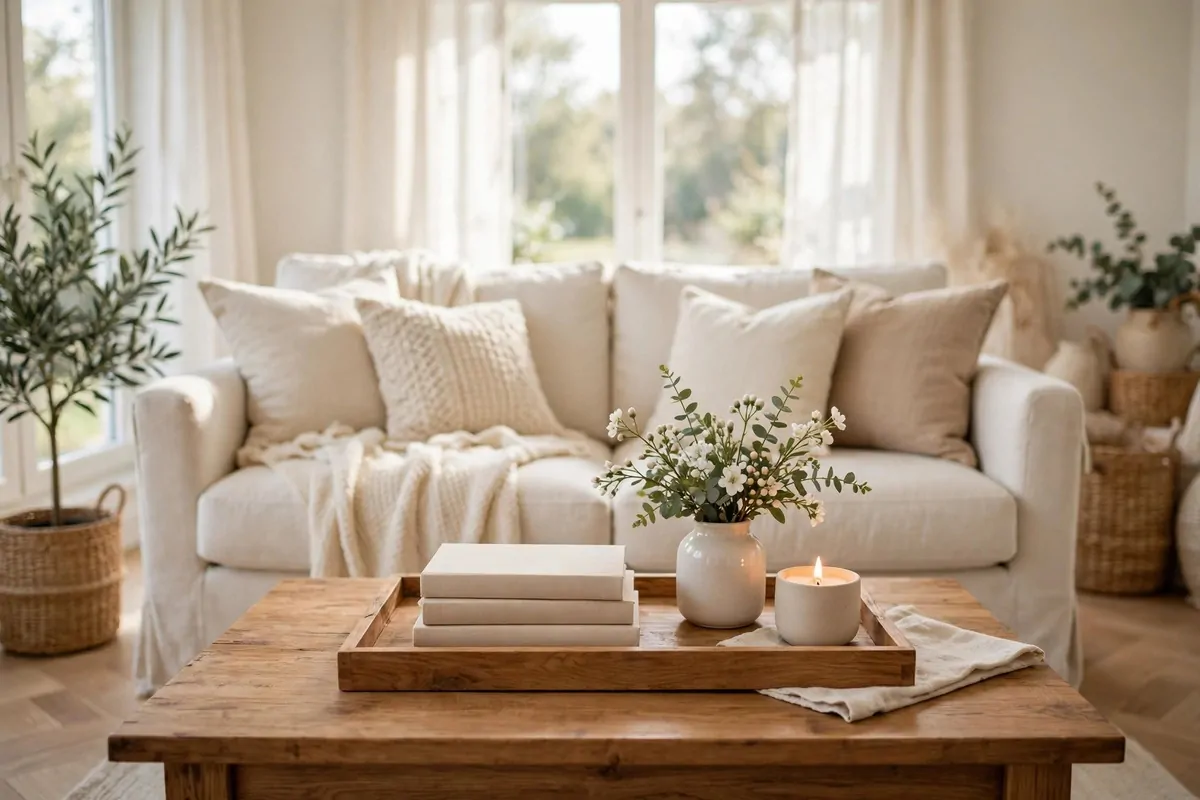
26 Sunroom Relaxation Ideas for Quiet Time at Home

The morning light comes into my sunroom first, before it reaches any other room in the house, and I follow it there with my cup.
My sunroom works best when I treat it as a pause room, not a pass-through room, and I keep the middle of the floor clear so I can cross it slow and stop where I want. I leave my phone in the kitchen most mornings, and that one small choice changes the whole hour for me. The glass lets the sky in, and the quiet feels wider than it does in a room with plain walls.
A low wooden chair with a soft cream cushion sits in a bright sunroom corner in the picture, and beside it stands a wooden side table topped by a plain white cup for morning tea. A potted green fern in a terracotta pot stands near the chair, and a woven rug lies on a light wooden floor under the seat. Tall glass windows fill the corner with soft daylight, and the whole scene feels open and calm.
You do not need a big plan to make this room restful, and you do not need to buy a full set of new things at once. I started with one chair and one rug, and I added the next piece only after I knew how I used the room each day. That slow way of adding things kept the room simple, and it kept my budget easy to manage too.
Quiet time here can look different on different days, and that is fine with me. Some mornings I read for twenty minutes, some mornings I just watch the clouds move past the glass, and some afternoons I sit with a warm drink and let my thoughts settle. The room does not ask me to do anything, and that is why I keep coming back to it.
Keep the pieces soft, low, and easy to move, because a sunroom feels best when nothing in it feels stiff or formal. I choose plain fabrics, smooth wood, and open space over tall shelves and heavy frames, and I leave room for the sun to move across the floor. When the room stays simple, my mind stays simple in it too.
All 26 ideas wait for you in this one post, so pour a cup of tea, sit by the glass, and pick the quiet spot that suits your sunroom best.
1. A Low Chair by the Glass Wall
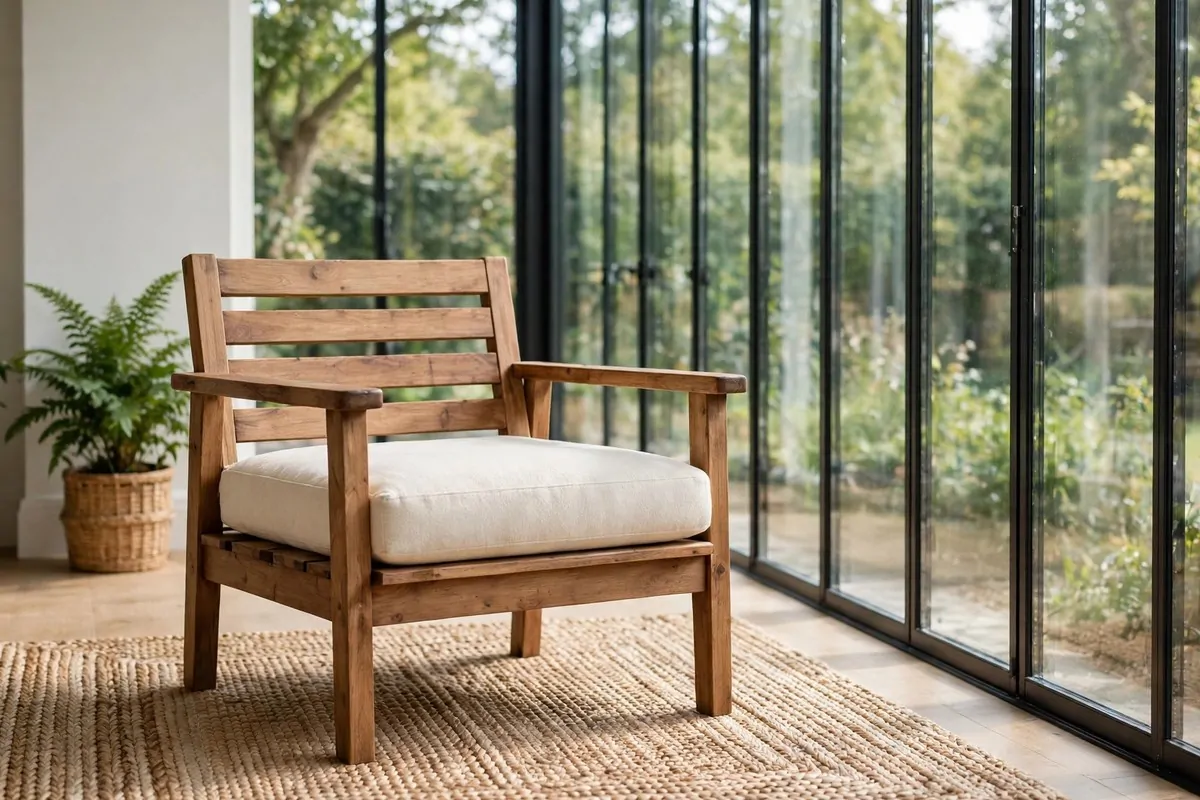
A low chair lets me sit close to the glass without feeling boxed in, and my feet rest flat on the floor while I look out at the yard. I picked a seat with a wide base and arms that feel steady when I lean back, and I test it by sitting in it for a full ten minutes before I decide. A chair that feels good at minute one can feel stiff at minute ten, so I take my time with the test.
I slide the chair a short step away from the glass so the frame does not press against my shoulder, and I leave space behind it for the door to swing open. That gap also lets air move around the seat, and the room feels less crowded when the chair has breathing room. You can shift it a hand width left or right until the view lines up with your eyes.
A soft seat pad makes a plain wood chair feel warm in the early hours, and I choose one that I can lift off and shake outside. I wash the cover when it starts to look dull, and I let it dry flat on a rack near the window. A pad that comes off easy stays clean longer, and I do not have to fight with it on wash day.
Keep a folded throw over one arm so you can pull it across your knees when the morning air feels cool, and fold it back neat when you stand up. With the throw in reach, you never have to walk to another room for it. That small habit is what turns a quick sit into a longer rest.
When friends visit, this chair becomes the seat everyone wants, so I keep a second chair nearby that I can pull close for a chat. I angle the two seats toward each other a touch, and the talk flows easy without anyone raising their voice. Two low seats feel more open than one tall sofa pushed against the wall.
I check the chair legs once a month for wobble, and I tighten any loose joint with a plain screwdriver from my kitchen drawer. A steady chair feels safe when I lean to reach my cup, and a wobbly one pulls me out of my rest. Five minutes of care keeps the seat solid for years.
Rain on the glass sounds soft from this seat, and I like to watch the drops run down in slow lines while I wait for the kettle. The room feels like a shelter on grey days, and the low chair keeps me close to that view. I do not need a view of far hills to feel calm here.
Typical cost: $45 to $120.
Try the chair at the same hour you plan to use it most, because morning sun and late sun hit the glass in very different ways. If the glare hits your eyes at four in the afternoon, move the chair a step toward the inner wall and try again the next day. Your best spot is the one that feels easy at your own hour.
2. A Soft Rug Under Bare Feet
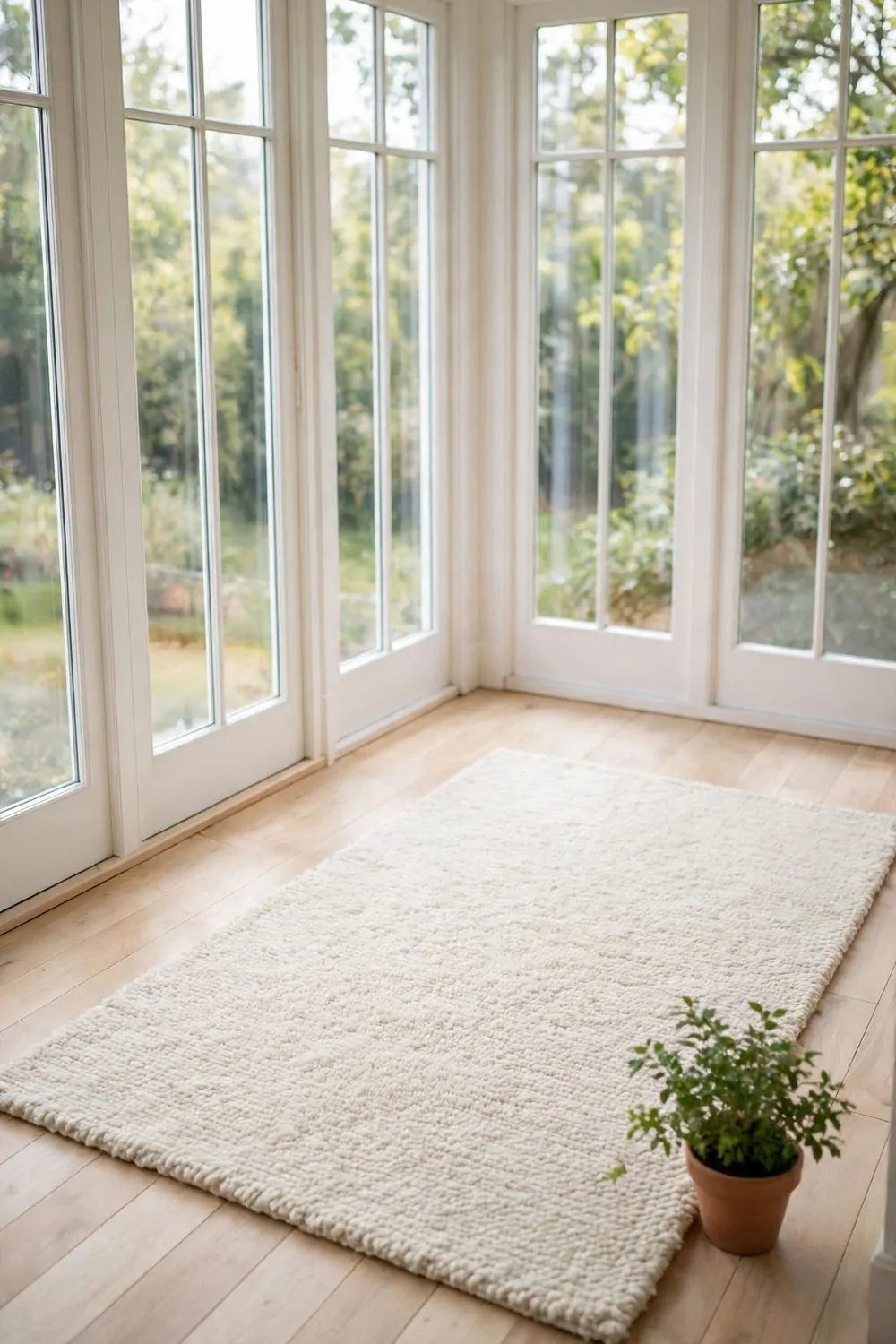
A soft rug changes the first step into the sunroom, and my bare feet meet warm fibres instead of cool boards in the early morning. I roll the rug out where I walk most, and I press the corners flat with my hands so they do not curl up. A flat rug stays safe underfoot, and it makes the whole room feel softer at once.
I choose a weave that feels smooth under my toes but still grips the floor, and I test it by walking across it in socks first. If the rug slides, I add a thin grip pad under it and trim the pad a touch smaller than the rug edge. The pad stays hidden, and the rug stops moving when I step on it.
Sun can fade a rug over time, so I turn mine end to end every few weeks to spread the wear even. I shake it outside on a dry day, and I let the dust fall out before I bring it back in. That quick turn keeps one side from looking pale while the other side stays bright.
A rug also marks out a rest zone in a room that has no walls to divide it, and I use that edge as a quiet border for my chair and table. When I step onto the rug, my mind knows this is the slow part of the room. You can use that border to keep toys, shoes, and clutter on the other side of it.
I pick a size that leaves a rim of floor showing around it, because a rug that fills the whole room can feel heavy underfoot. The rim of bare floor frames the weave, and the room still feels open and bright. Measure the space with your feet first, then measure it with a tape before you buy.
Spills happen near a tea cup, so I blot any drop at once with a plain cloth and plain water, and I press down instead of rubbing the spot. Rubbing pushes the mark deeper into the weave, and blotting lifts it out while it is still fresh. I keep that cloth in a basket by the door so it is always close.
In winter I layer a second rug over the first for extra warmth, and I take the top one away again when the days turn warm. The swap takes two minutes, and it lets the room change with the season without a big shop. I store the spare rug rolled up in a dry cupboard.
Typical cost: $30 to $95.
Stand on the rug with your eyes closed for a moment and notice how the floor feels under your feet, because that feel is the whole point of the piece. If it feels rough or thin, keep looking for a thicker weave that suits your step. Your feet will tell you the truth faster than any label can.
3. Potted Plants Along the Sill
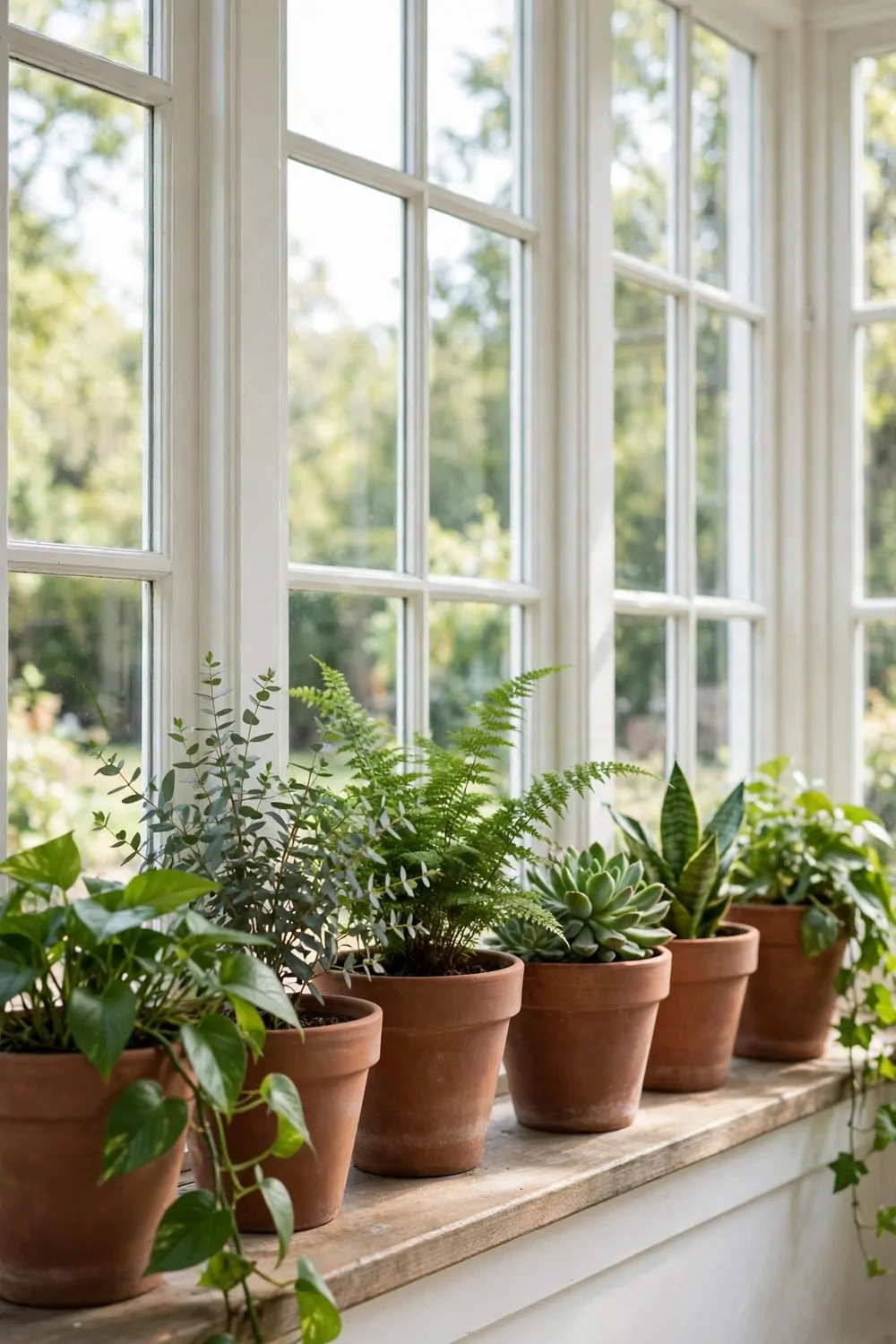
Green leaves along the sill give my eyes a soft place to rest, and I like how they break up the long line of glass without blocking the view. Every Sunday I give each pot a small twist so the stems stay upright, after I set the pots in a row with space for the sun to pass between them. The turn keeps the stems from leaning hard toward the glass.
I water with a small jug that I fill at the kitchen sink, and I pour slow so the soil drinks it in instead of letting it run straight through. I check the soil with one finger first, and I skip the water if the top still feels damp. That finger test stops me from watering on a fixed day when the plant does not need it.
Some leaves gather dust in a glass room, so I wipe each leaf with a damp cloth once a week and let it dry in the open air. The wipe takes only a few minutes, and the leaves look fresh and bright after it. I work from the top leaf down so the dust does not fall onto the leaves I just cleaned.
I mix tall stems and low spreading leaves so the sill does not look like a straight fence of green, and I leave gaps where I can still see the yard beyond. The mix feels more like a garden edge than a shelf display, and the room stays bright through the gaps. You can move a pot to a new spot when its shape changes as it grows.
Set a drip tray under each pot to protect the sill from water marks, and empty the tray after you water so the roots do not sit in a puddle. Lift the pot once a month and wipe the tray clean with a cloth. That small check keeps the sill dry and the wood in good shape.
When a leaf turns yellow, I snip it off close to the stem with clean scissors and drop it in the compost bin. I do not pull the leaf, because pulling can tear the stem and leave a rough edge. A clean snip heals fast, and the plant puts its strength into the fresh leaves.
I keep a spare pot and a bag of soil in a cupboard, so I can move a plant that outgrows its home without a trip to the shop. I move it in the morning when the room is cool, and I water it well after the move. The plant settles in a day or two, and the sill looks full again.
Typical cost: $18 to $60.
Start with three pots if you are new to indoor plants, and learn their rhythm before you add more to the sill. Three pots teach you how fast the soil dries in your sun, and they are easy to care for on a busy week. You can grow the row later when the habit feels easy.
4. A Small Table for Tea and a Book
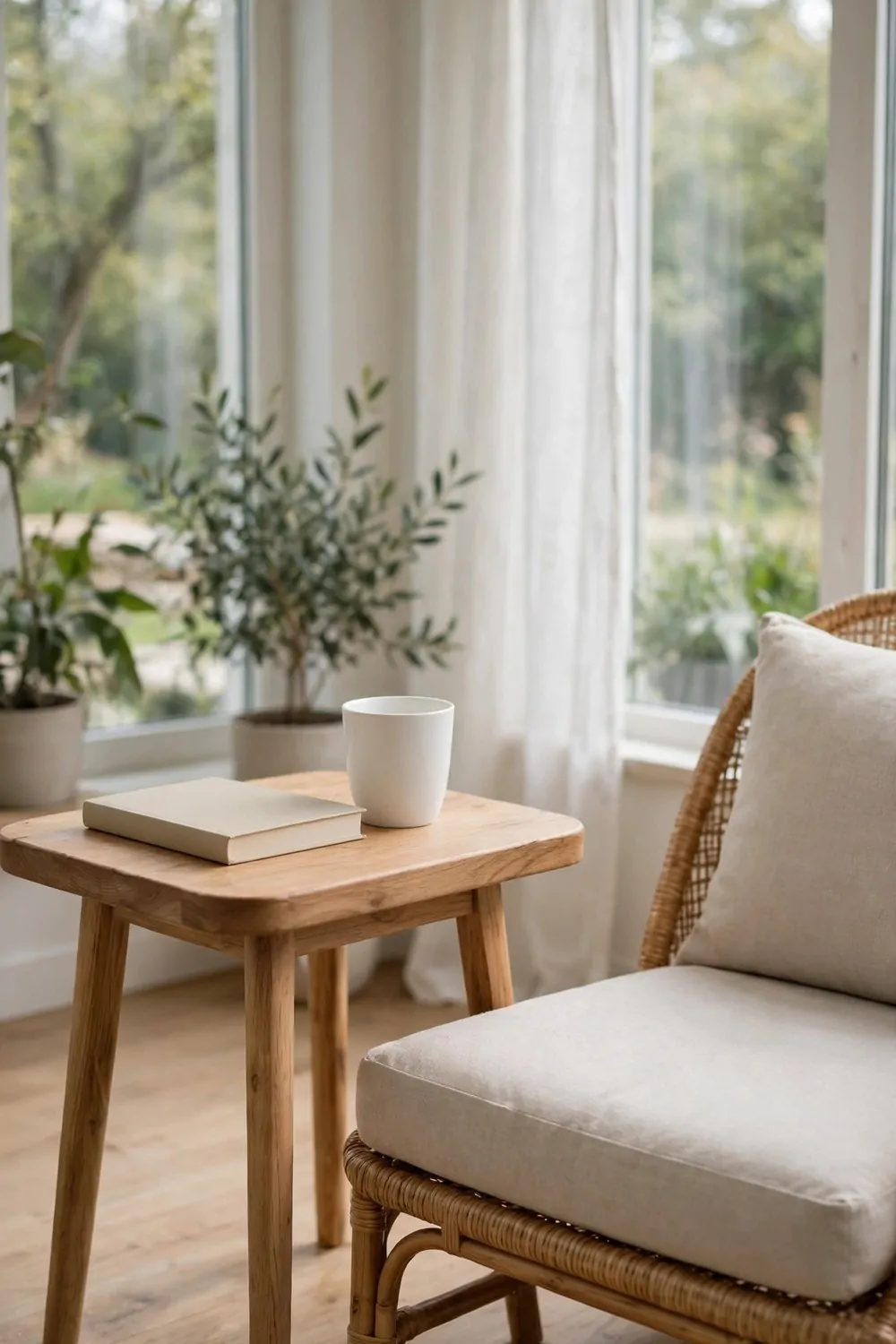
A small table beside my chair holds my cup within easy reach, and I never have to stand up in the middle of a quiet page. I choose a top that is wide enough for a cup and a book side by side, and I check that it does not wobble when I lean on it. A steady top keeps my drink safe, and my reading stays calm.
I wipe the top each evening with a damp cloth so tea rings do not build up into dark marks, and I dry it with a second cloth straight after. The two-cloth habit takes less than a minute, and the wood stays smooth and clean. If a ring does appear, I rub it gently with a dab of plain oil on a cloth.
When I finish a chapter, I close the book and rest it flat on the table so I can find my page again without a hunt. I use a plain paper slip as a marker, and I tuck it between the pages I just read. That slip is easy to replace, and it never falls out the way a loose scrap can.
The table also gives you a place to set your glasses when you look up at the yard, and a small cloth beside them makes a quick wipe easy. Set the glasses down lens-up so the glass does not scratch on the wood, and pick them up by the arms. Those two habits keep the lenses clear for months.
I move the table a touch closer on cold mornings and a touch farther back on warm afternoons, because my reach changes with the chair and the throw. The table is light enough to shift with one hand, and I do not drag it across the floor. A lift keeps the legs quiet and the floor free of marks.
If you share the room, a second small table on the other side of the chair lets two people sit with their own cups, and neither one has to reach across the other. I keep both tables plain and low so they match without looking like a matched set. Two quiet cups feel better than one shared tray.
At night I clear the top so the morning starts with a clean surface, and I carry the cup back to the kitchen before bed. A clear table in the morning feels like an open page, and I sit down faster when nothing is in my way. That one-minute clear is my favourite end-of-day habit.
Typical cost: $25 to $80.
Test the table height against your chair before you buy it, because a top that sits too high makes your shoulder rise when you reach for your cup. Sit in your chair, rest your arm at your side, and check that your hand lands flat on the top. The right height feels like no reach at all.
5. Sheer Curtains That Soften the Sun
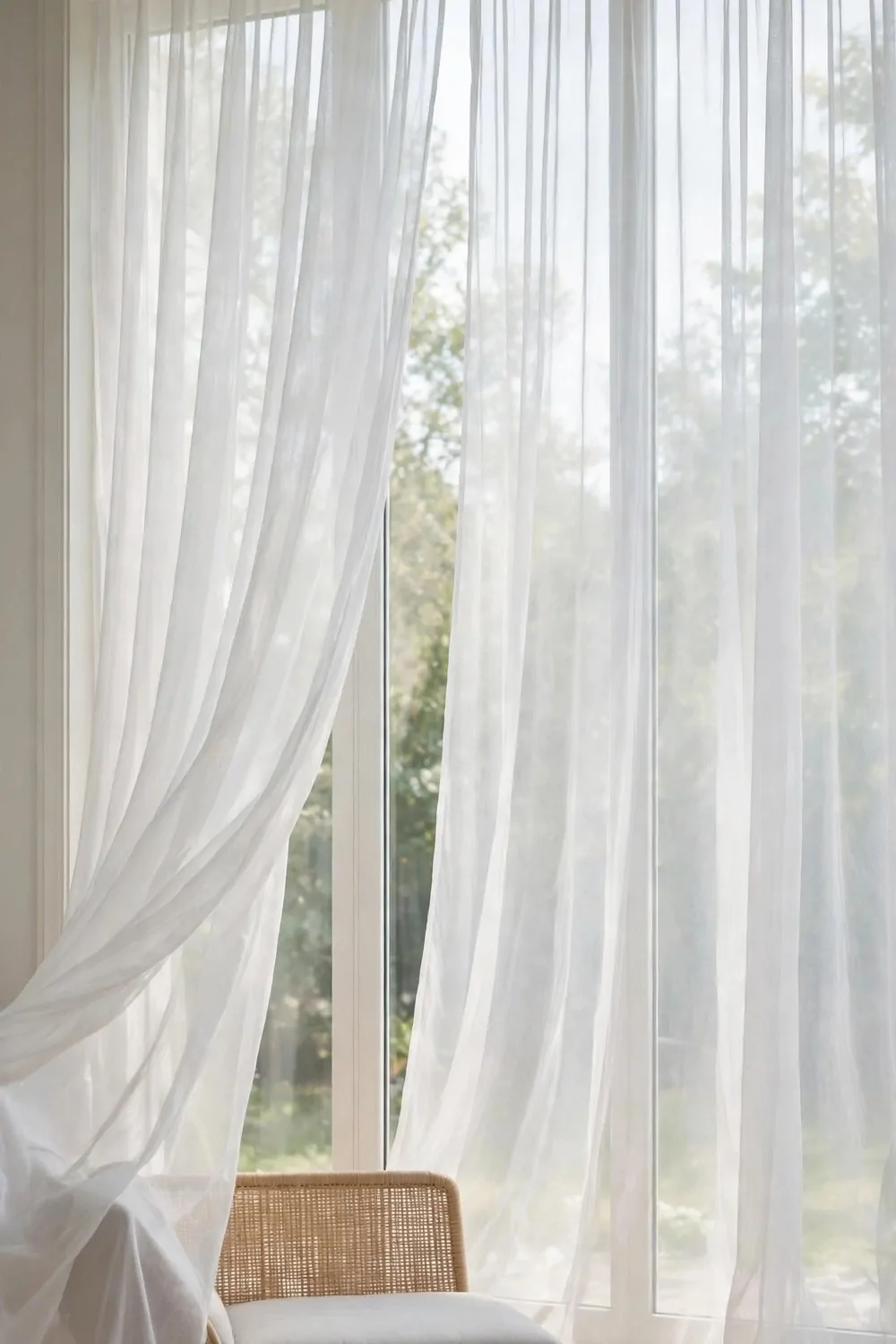
Sheer curtains take the hard edge off the midday sun, and the room stays bright without the glare that makes my eyes squint. I hang them so they fall straight from the rod to the sill, and I let the fabric move a touch in the breeze from the door. The soft drape makes the glass feel less bare, and the room feels gentle.
I wash the panels in cool water with a mild soap, and I hang them back up while they are still a touch damp so they dry smooth. I never twist them hard in the sink, because twisting can pull the weave out of shape. A gentle wash keeps the fabric clear and light for a long time.
When the sun shifts in the afternoon, I draw one panel across the brightest pane and leave the other panel open for the view. That half-open mix gives me shade where I need it and sky where I want it, and I change it again when the light moves. You can learn your sun path in one week of watching.
A plain rod with simple rings holds the panels well, and I check that the rings slide free before I hang the fabric. If a ring sticks, I wipe the rod with a dry cloth and try the ring again. Smooth rings mean I can open and close the panels with one hand while I hold my cup.
I keep the hem just above the sill so it does not drag on the wood or dip into a plant pot, and I measure twice before I trim any extra length. A hem that clears the sill stays clean, and it swings free when I open the window. If the panel is too long, I fold the hem up and pin it for a test week first.
On cloudy days I pull both panels wide open so the room can take in all the grey light, and I tie them back with a plain fabric loop. The open glass makes the room feel bigger, and the loop keeps the fabric from blowing into my tea. I untie the loop in the evening and let the panels fall straight again.
Dust settles on sheer fabric fast in a glass room, so I shake each panel outside once a month and let the air pass through it. The shake takes a minute, and the fabric looks fresh without a full wash. I do this on a dry day so the dust does not stick back on damp cloth.
Typical cost: $20 to $65.
Hold a sample of the fabric up to the glass at noon before you buy a full set, because some sheers look clear in the shop and turn grey in strong sun. The noon test shows you the true shade, and it saves you from a set that darkens the room. Pick the one that still lets the sky show through.
6. A Reading Lamp for Cloudy Days
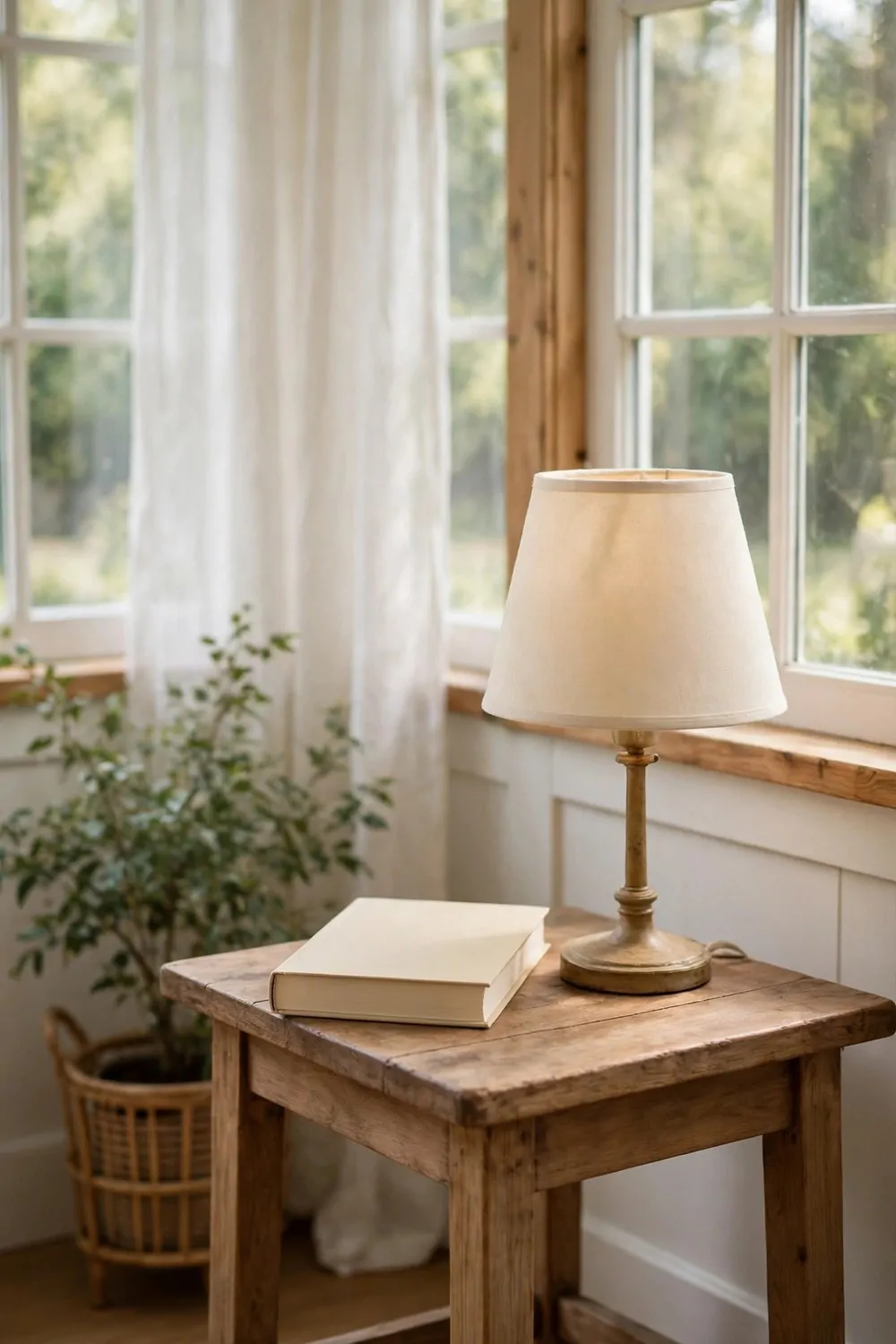
A reading lamp gives my sunroom a soft pool of light on grey days, and I can read past sunset without turning on the big ceiling light. I place it where the shade sits just above my shoulder, and I angle the head down toward the page. That angle lights the words without shining straight into my eyes.
I choose a warm bulb that feels close to daylight but softer, and I test it in the evening before I settle on it. A bulb that feels harsh at night will tire my eyes fast, so I swap it at once if it feels sharp. The right bulb lets me read for an hour without a headache.
The lamp base needs a firm spot, so I set it on a flat surface and press it down to check that it does not rock. If the base rocks, I move it to a flatter part of the top and try again. A firm base means the lamp will not tip when I reach past it for my cup.
Keep the cord tucked along the wall with a small clip, and run it down behind the table leg so no one trips on it. The clip costs almost nothing, and it keeps the cord out of the walkway for good. I check the clip once a month to make sure it still holds tight.
When I stop reading, I switch the lamp off and let the bulb cool before I touch the shade, because a hot shade can burn a finger in a second. I wait a full minute, then I dust the shade with a dry cloth. That cool-down habit keeps the shade clean and my hands safe.
A lamp with a simple switch on the cord is easy to find in the dark, and I prefer it over a tiny switch hidden on the base. I can tap the cord switch without looking down from my book, and the light comes on at once. Simple controls suit a rest room better than fussy ones.
I move the lamp to the other side of the chair when my eyes feel tired on one side, and the change of angle rests them fast. The move takes seconds, and the room feels fresh again after it. You can try the lamp on each side for a week and keep the side that feels best.
Typical cost: $28 to $85.
Read three pages under the lamp in the shop if you can, because a lamp that looks good on a shelf can still throw a patchy circle on a page. Three pages show you the evenness of the light, and they show you whether the shade hums or buzzes. Pick the lamp that lights the whole page the same way.
7. A Woven Basket for Throws
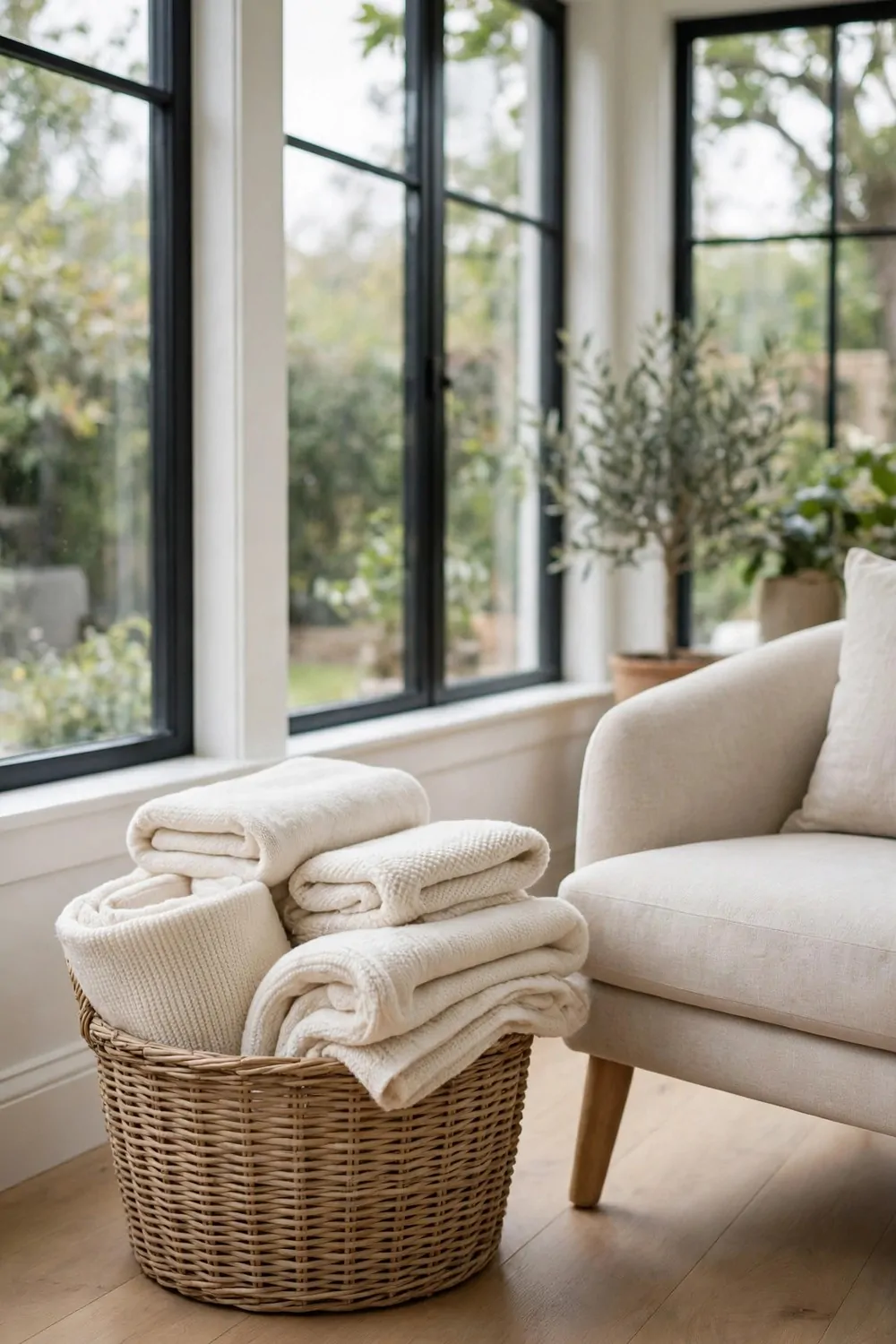
A woven basket keeps my throws in one tidy place, and I can pull one out with one hand when the evening air turns cool. I set the basket where I can reach it from my chair, and I leave the top open so I can see what is inside. An open top means I never have to dig for the throw I want.
I fold each throw in thirds before I roll it loose and set it in the basket, and the roll keeps the fabric from creasing hard. I stack the rolls side by side instead of piling them high, so the top one does not squash the ones below. That loose stack also lets air move between the folds.
When a throw starts to smell stale, I air it outside on a dry line for an hour and let the breeze freshen it. I do not wash it every time, because too much washing wears the fibres thin. Airing is gentler, and it works well for a throw that is only a touch musty.
I wipe the basket rim with a damp cloth once a week, because dust settles in the weave and dulls the colour over time. I work around the rim in a slow circle, and I let it dry before I put the throws back. A clean rim keeps the throws clean too, and the basket looks cared for.
If the basket starts to shed small fibres, I trim the loose ends with scissors and smooth the edge with my hand. I do not pull the loose strands, because pulling can unravel a whole row of weave. A quick trim keeps the basket neat, and the weave stays strong.
I use the basket for throws only, and I keep books and cups on the table instead, so the basket never turns into a mixed pile. One job for one basket is easy to keep, and I can find a throw in the dark without a search. When a basket has one job, it stays tidy on its own.
When guests stay late, I offer a throw from the basket without making a fuss, and I hand it over folded so it feels fresh. The guest can keep it on their knees or drape it over their shoulders, and I take it back at the end of the night. That small offer makes a late chat feel warm.
Typical cost: $15 to $45.
Pick a basket you can lift with one hand when it is full, because a heavy basket will stay in one spot even when you want to move it. Lift it in the shop with a few throws inside, and check that the handles feel firm in your grip. The right basket moves easy and sets down steady.
8. A Tray for Slow Mornings
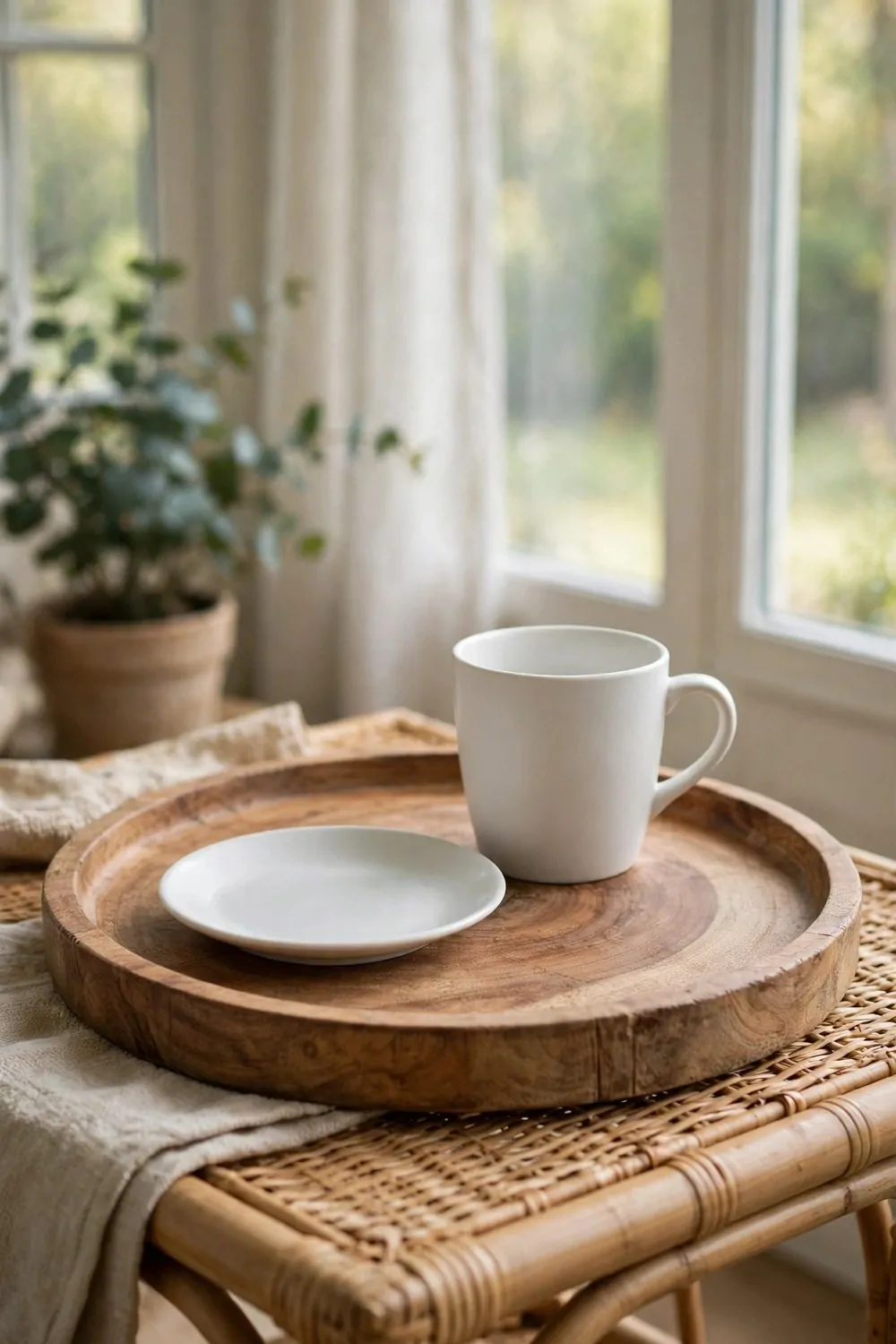
A tray turns a slow morning into a small ritual, and I can carry my cup, my book, and my glasses to the sunroom in one trip. I hold the tray with both hands and walk slow, and I set it down flat before I let go. That flat set-down keeps the cup from sliding, and the morning starts calm.
I choose a tray with a low rim that stops the cup from slipping off the edge, and I test it by tilting it a touch in the shop. A rim that is too high makes it hard to lift the cup out, so I look for a rim that is just high enough to stop a slide. The right rim feels like a quiet guard, not a wall.
After breakfast I wipe the tray with a damp cloth and dry it at once, because tea drips can leave sticky rings if they sit all day. I wipe in one direction so I do not push crumbs into the corners, and I check the corners with a fingertip. A clean tray is ready for the next morning without a second thought.
When you read, rest your book on the tray beside your cup so the pages stay flat and the cup stays clear of the spine. Turn the pages with a dry hand so you do not mark them with damp fingers, and close the book when you pause to look out. The tray keeps your reading spot tidy in one small square.
I keep the tray on my lap for a short while when the chair feels cold, and the wood warms fast against my knees. I shift it a touch when I change position, and I keep the cup near the centre so it stays balanced. A tray on the lap feels like a small table that moves with me.
If a friend joins me, I use the tray to carry two cups out at once, and I set it down between our chairs so we can both reach it. I pour the second cup in the kitchen first, so I do not have to carry a hot pot across the room. Two cups on one tray feel generous and simple.
At the end of the morning I stack the tray upright against the wall by the door, and it dries in the air while I wash the cups. The upright stack saves floor space, and the tray stays out of the walkway. I grab it again the next morning without a hunt.
Typical cost: $12 to $40.
Try the tray with a full cup on it before you buy, because a tray that feels fine empty can feel tippy with a hot drink on board. Walk a few steps with it in the shop, turn slow, and set it down on a flat top. The tray that stays steady on that walk is the one to take home.
9. A Low Footstool With a Soft Cushion
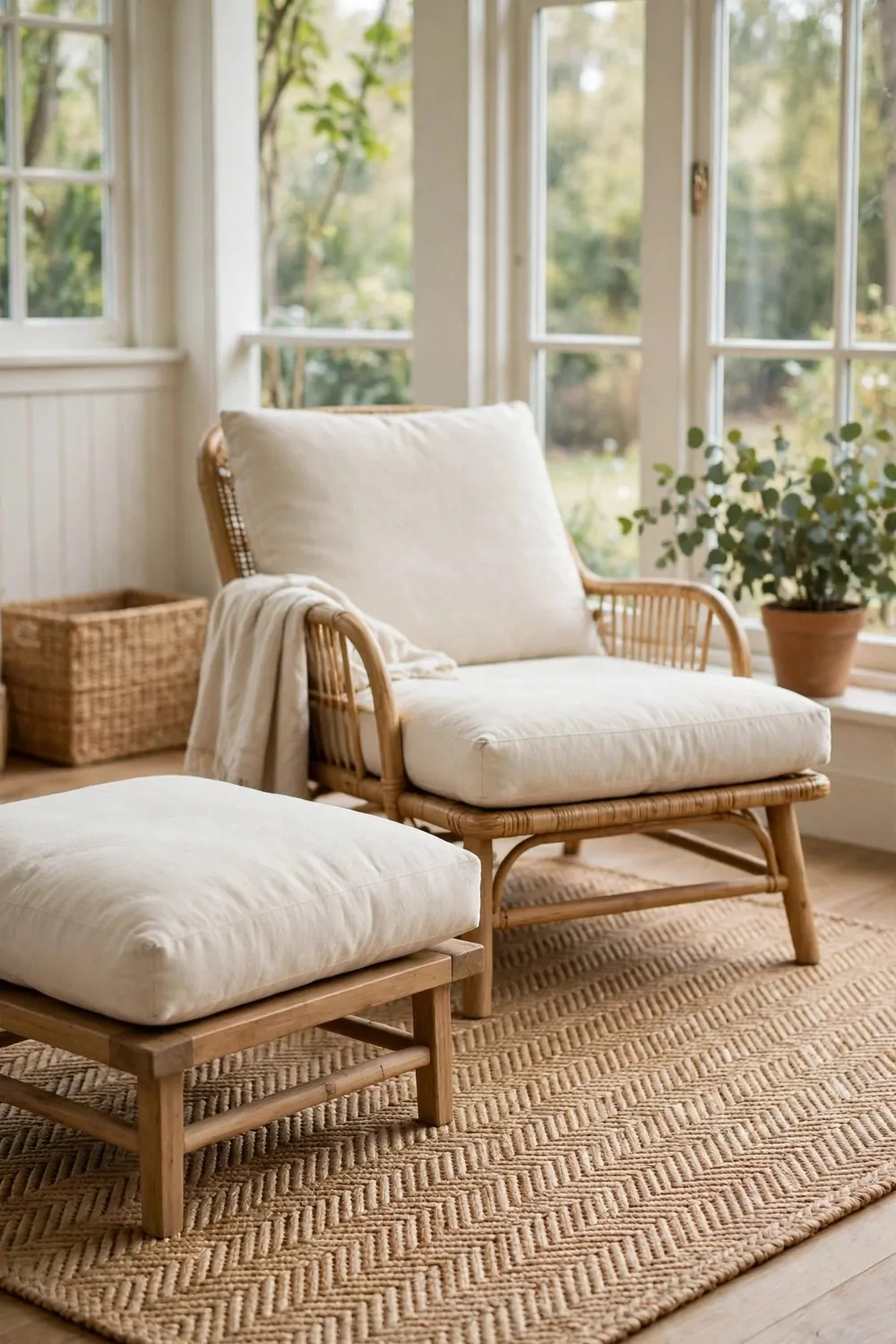
A footstool lets me lift my feet off the floor after a long day, and my legs feel lighter within a few minutes of resting them up. I slide the stool close with one foot and settle my heels on the top, and I let my knees bend soft instead of locking straight. That soft bend keeps my legs relaxed, and I can sit longer without shifting.
I choose a top that is firm enough to hold my feet without sinking deep, and I press it with my palm to test the give. A top that sinks too far makes my ankles roll, so I look for one that springs back when I lift my hand. The palm test tells me more than the label does.
When I read, I rest my book on my lap and my feet on the stool, and the whole pose feels open and easy. I shift my feet from time to time so one spot does not grow stiff, and I stretch my toes wide before I put them back down. Those small moves keep my feet warm and awake.
I keep the stool light enough to pull close with one hand, and I push it away with the same ease when I stand up to stretch. A stool that drags loud across the floor will pull me out of my rest, so I lift it instead of dragging it. A quiet move keeps the room calm.
The stool also works as a spare seat when a friend drops in for a short chat, and I offer it without moving my own chair. I wipe the top first if my shoes have been on it, and I set it near the door side of the room. A stool that serves two jobs earns its floor space twice over.
I check the legs for wobble once a month, and I tighten any loose screw with a plain driver from my drawer. A steady stool feels safe under my feet, and a wobbly one makes me tense my legs without knowing it. Five minutes of care keeps the stool solid for a long time.
In the evening I tuck the stool under the edge of my chair so the floor stays clear for the night, and I pull it out again in the morning with one hand. The tuck keeps the walkway open, and the room looks tidy when I switch the lamp off. A clear floor is part of the rest.
Typical cost: $30 to $90.
Test the stool height against your chair seat before you buy, because a stool that sits too high will push your knees up toward your chest. Sit in your chair, rest your feet flat, and check that the stool top meets your heels without lifting your knees. The right height lets your legs rest flat and soft.
10. A Wall Shelf for Small Pots
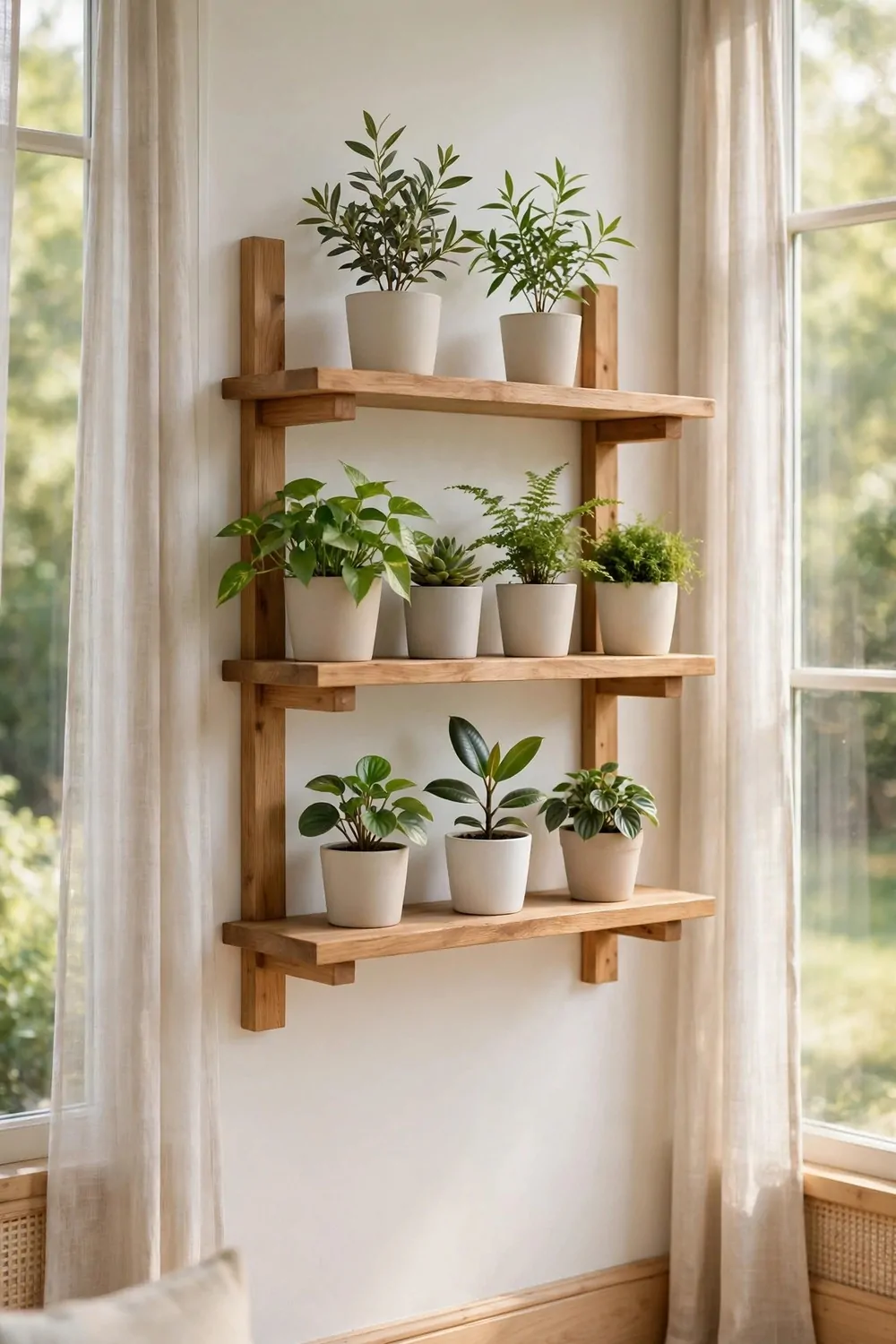
A wall shelf gives small pots a tidy home up off the floor. I reach for it when my sill starts to feel crowded and messy.
Small pots suit a narrow shelf because they stay light and easy to move. You can water them without bending down low each time.
Pick a shelf that feels firm when you press on it with your hand. A wobbly shelf makes watering feel rushed and awkward for me.
Keep the pots near the glass so they get plenty of sun through the day. I turn each pot a little when I water it so the stems stay even.
Use a small jug for watering, and pour slowly so the soil stays in place. Set a tray under each pot to stop drips from marking the shelf below.
Typical cost: $18 to $34.
Choose pots that are easy to lift with one hand. Heavy pots make the shelf feel like hard work instead of a calm job.
Dust the shelf with a dry cloth when you water the pots. A quick wipe keeps the whole corner looking fresh and cared for.
This shelf works well in a quiet nook where you sit and rest. It turns a plain wall into a soft spot full of leafy life.
| Idea | Main change | Typical cost |
|---|---|---|
| a low chair by the glass wall | Set a low chair near the glass so you can sit close to the view and rest your feet flat. | $45 to $120 |
| a soft rug under bare feet | Lay a soft rug where you walk most so your first step in the morning feels warm. | $30 to $95 |
| potted plants along the sill | Line the sill with green pots and leave gaps so the sun still passes between them. | $18 to $60 |
| a small table for tea and a book | Keep a small steady table beside your chair so your cup and book stay within reach. | $25 to $80 |
| sheer curtains that soften the sun | Hang sheer panels to take the hard edge off the midday glare while the room stays bright. | $20 to $65 |
| a reading lamp for cloudy days | Add a reading lamp that lights the page on grey days without shining into your eyes. | $28 to $85 |
| a woven basket for throws | Keep your throws rolled loose in a woven basket by the chair for cool evenings. | $15 to $45 |
| a tray for slow mornings | Carry your cup, book and glasses to the sunroom in one trip on a low-rimmed tray. | $12 to $40 |
| a low footstool with a soft cushion | Slide a firm footstool close so you can lift your feet up and let your legs rest soft. | $30 to $90 |
| a wall shelf for small pots | A firm narrow shelf lifts small pots off the floor and frees the sill. | $18 to $34 |
| Total | $241 to $714 |
11. A Stack of Soft Cushions for Long Sits
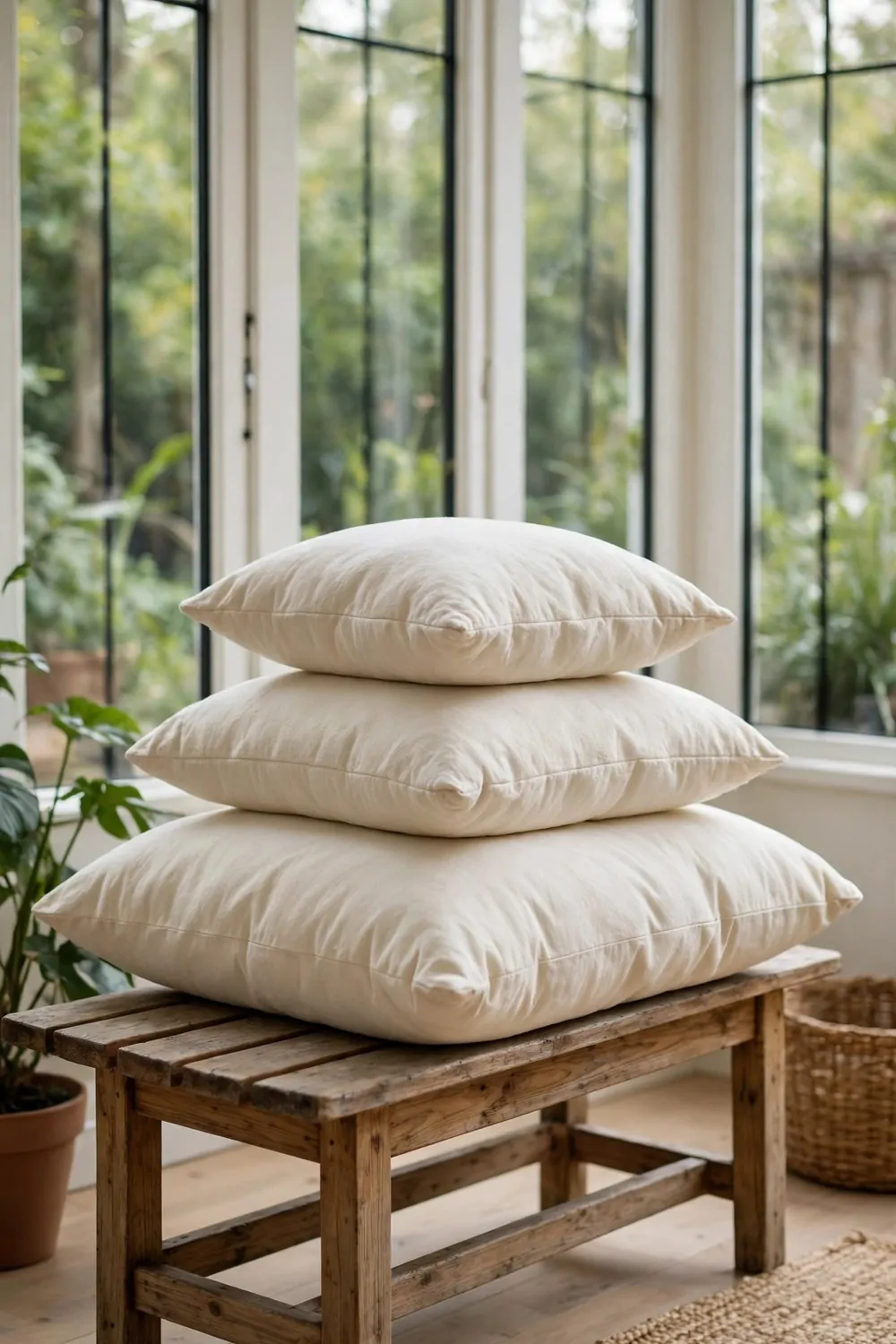
A stack of cushions makes a long sit feel soft and easy on my back. I pull the pile close when I plan to stay in the chair for a while.
Soft cushions let you shift your weight without getting stiff. You can lean back, sit up straight, or tuck your legs to one side.
Pick cushions that spring back when you press them down. Flat cushions feel tired after ten minutes, and I notice it fast.
Keep the stack within arm reach of your chair so you never have to stand up. I grab the top one first and then settle the rest behind me.
Fluff each cushion with a quick shake before you sit down. A shaken cushion feels fuller and holds its shape for longer.
Typical cost: $22 to $41.
Mix thick and thin cushions so you can build the pile your own way. A thin one works well behind your knees on a long afternoon.
Air the cushions outside the sunroom door now and then when the day is dry. Fresh air keeps them from smelling stale and flat.
Slow mornings suit this pile well, with a book in your lap and a warm drink close by. The seat turns into a soft nook that pulls you back each day.
12. A Small Fan for Warm Afternoons
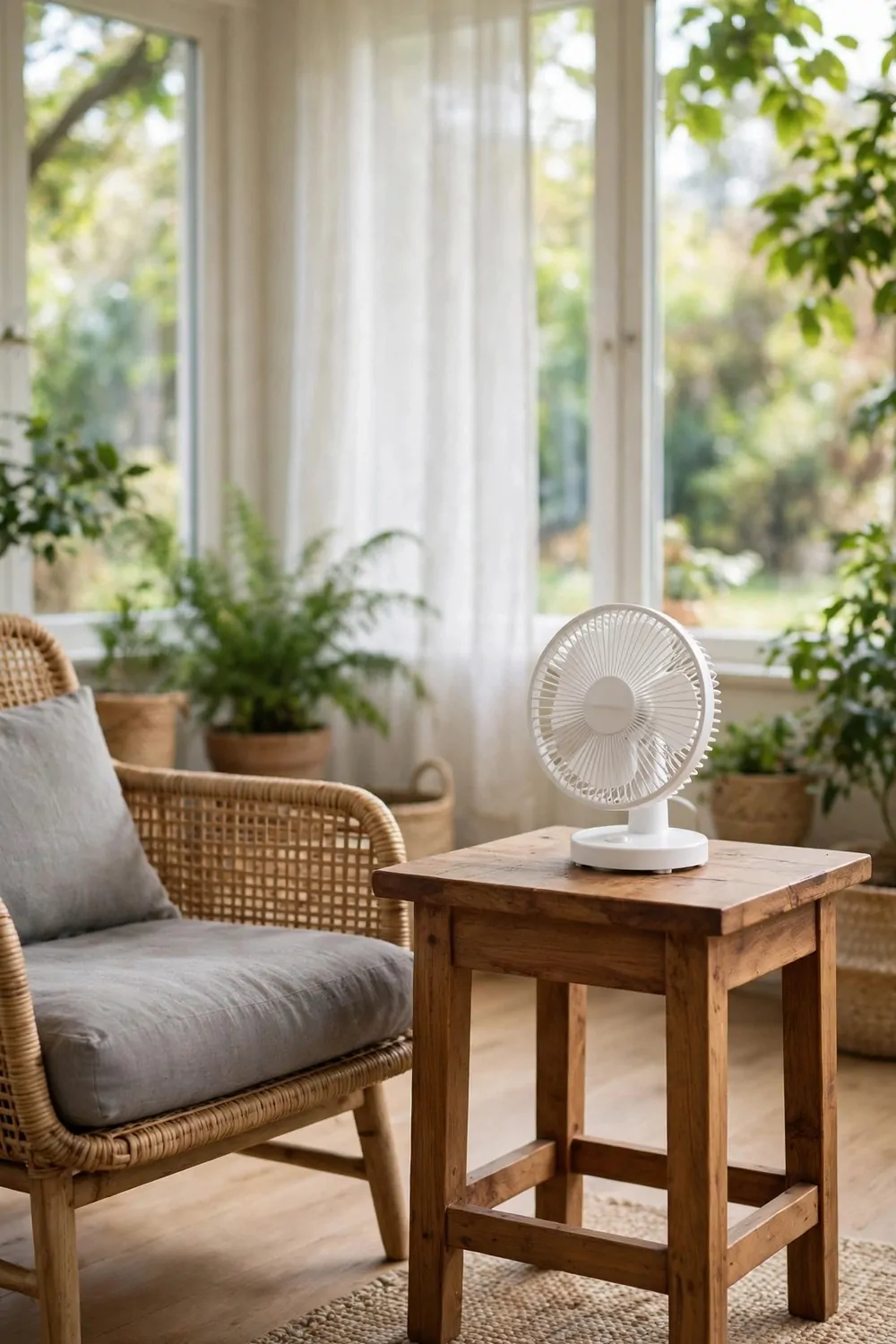
A small fan makes a warm afternoon feel fresh without a big fuss. I switch it on when the air in the sunroom starts to feel still.
Moving air cools your skin and keeps the room from feeling stuffy. You can point it at your chair or let it sweep across the whole room.
Pick a fan with a steady base that does not wobble on the table. A fan that rattles will spoil a quiet hour fast.
Try the low speed first before you turn it up high. Low speed often gives you all the breeze you need for reading.
Typical cost: $16 to $29.
Keep the fan cord tucked back so no one trips over it in the room. I run mine along the edge of the rug where feet do not land.
Wipe the blades with a damp cloth when dust starts to show. Clean blades move air better and make less noise as they turn.
Place the fan where it can pull in cooler air from an open window. A breeze from outside feels softer than air that just spins in place.
This little fan suits hot afternoons when you still want to sit out. It lets you stay in your sunny spot without feeling warm and tired.
13. A Journal Corner on the Sill
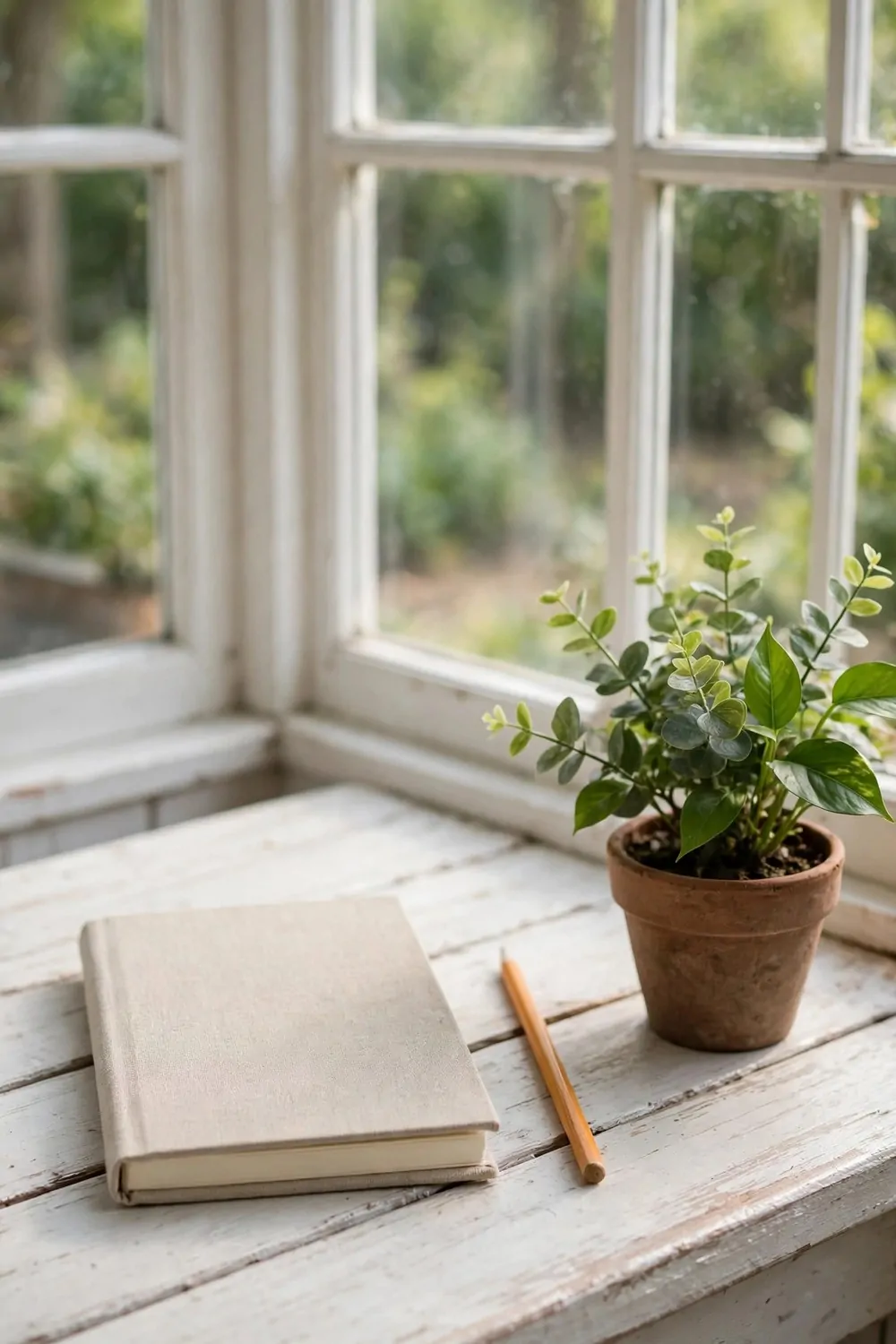
A journal corner on the sill gives your thoughts a small home by the glass. I open my notebook there when the house feels quiet in the morning.
Writing by hand slows me down in a good way. You can jot a line, pause, and watch the garden while you think.
Keep a pen tucked inside the notebook so it is always ready. I lose good ideas fast when I have to hunt for a pen.
Use the sill as a firm spot to rest your notebook while you write. A flat base stops the pages from sliding as your hand moves.
Typical cost: $9 to $19.
Write short notes instead of long pages when you are short on time. A line or two still counts, and it keeps the habit alive.
Leave the notebook open at your last page when you finish. An open page makes it easy to pick up where you left off tomorrow.
Keep loose papers in a slim folder beside the notebook. A folder stops the sill from turning into a messy pile by noon.
This corner suits quiet moments before the day gets busy. It turns a plain sill into a calm place to think and breathe.
14. A Hanging Planter by the Door
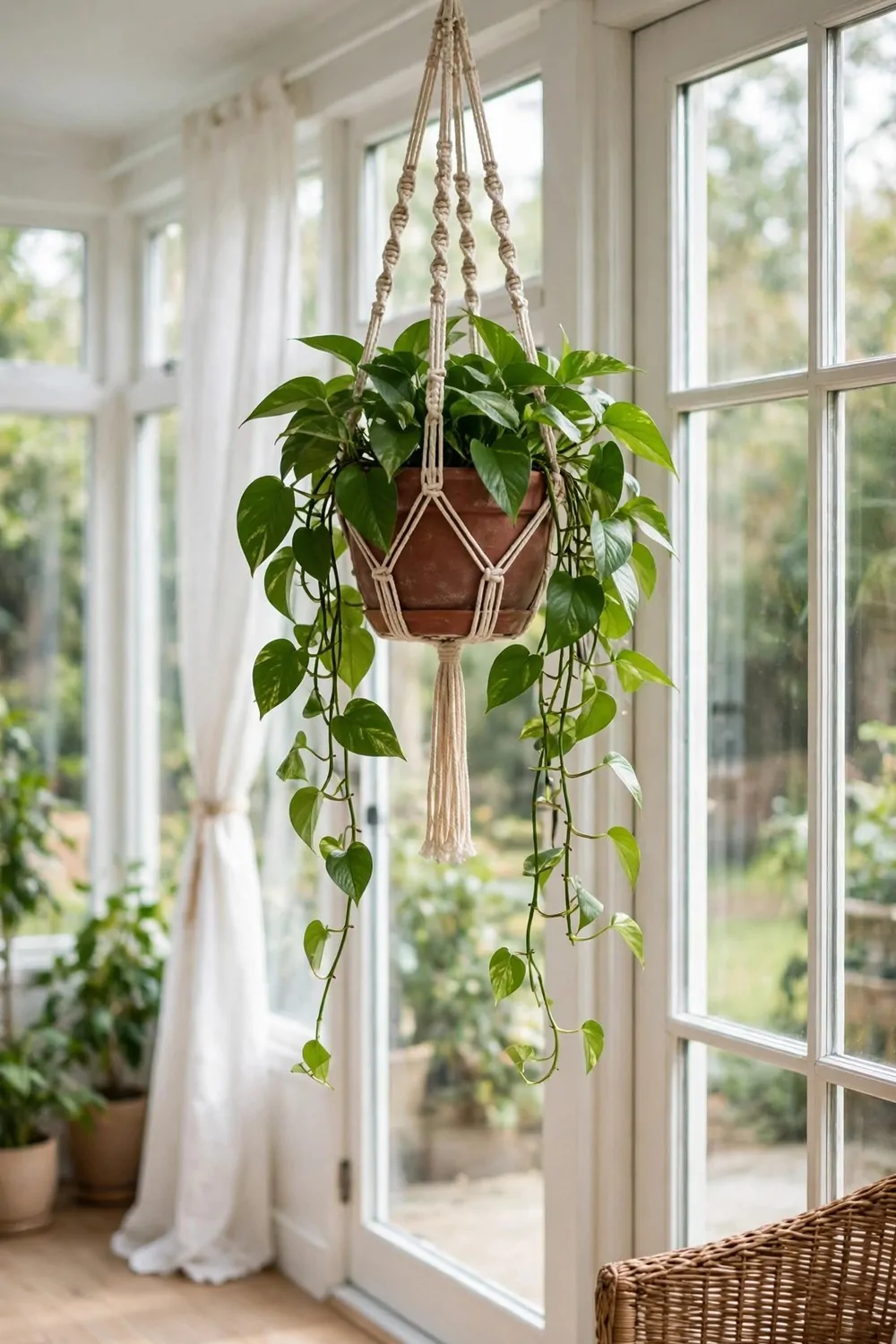
A hanging planter by the door greets you with leafy green each time you step in. I smile at it on my way out to the garden.
Hanging a planter lifts the plant up where you can see it well. You do not need floor space for it, which helps in a small room.
Pick a hook that feels strong when you tug it with your hand. A weak hook will worry you every time you walk past it.
Give the plant its drink above a wide bowl, so stray drops land in the bowl and not on your floor. I lift the hanger down, soak the soil through, and put it back up once the last drops have gone.
Typical cost: $14 to $27.
Choose a plant that trails a little so the leaves fall in a soft line. Trailing leaves make the doorway feel gentle and welcoming.
Spin the planter round a little every Sunday so the leaves fill out on all sides. When one face gets all the sun, that side stretches out while the other stays bare.
Poke a fingertip into the soil surface before you pick up the jug. Loose dry earth means the plant is thirsty, while cool damp earth means you can leave it alone till tomorrow.
This planter suits a doorway you use a lot through the day. It turns a plain entry into a fresh and leafy welcome.
15. A Soft Throw for Cool Mornings
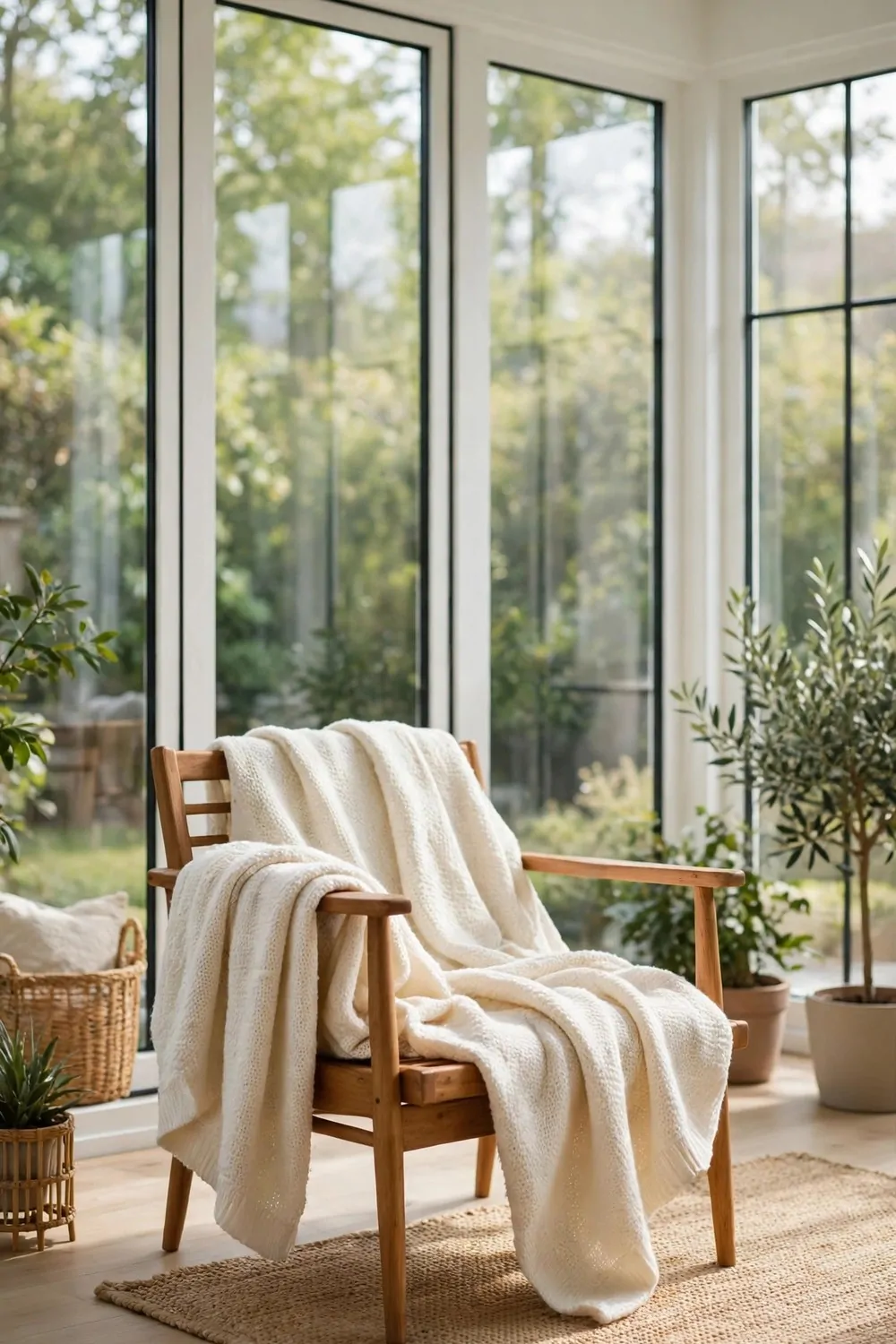
A soft throw makes a cool morning feel warm without a heavy blanket. I drape it over my knees when the sun has not warmed the room yet.
A throw lets you warm up fast and cool down just as fast. You can fold it back when the sun starts to heat the glass.
Pick a throw that feels soft against your cheek when you test it. Rough cloth will sit in a pile and never get used.
Fold the throw in a neat roll when you are done with it. A rolled throw looks tidy and is easy to grab next morning.
Typical cost: $19 to $36.
Wash the throw on a gentle cycle when it starts to feel dusty. A clean throw smells fresh and feels softer against your skin.
Keep the throw on the arm of your chair so it stays close. I reach for mine without standing up, which keeps the morning calm.
Share the throw with a friend who stops by for a chat. A second throw on the next chair makes the visit feel warm and kind.
This throw suits early hours when the air still feels crisp. It turns a chilly seat into a cosy place to sit and wake up slow.
16. A Clock With a Quiet Face
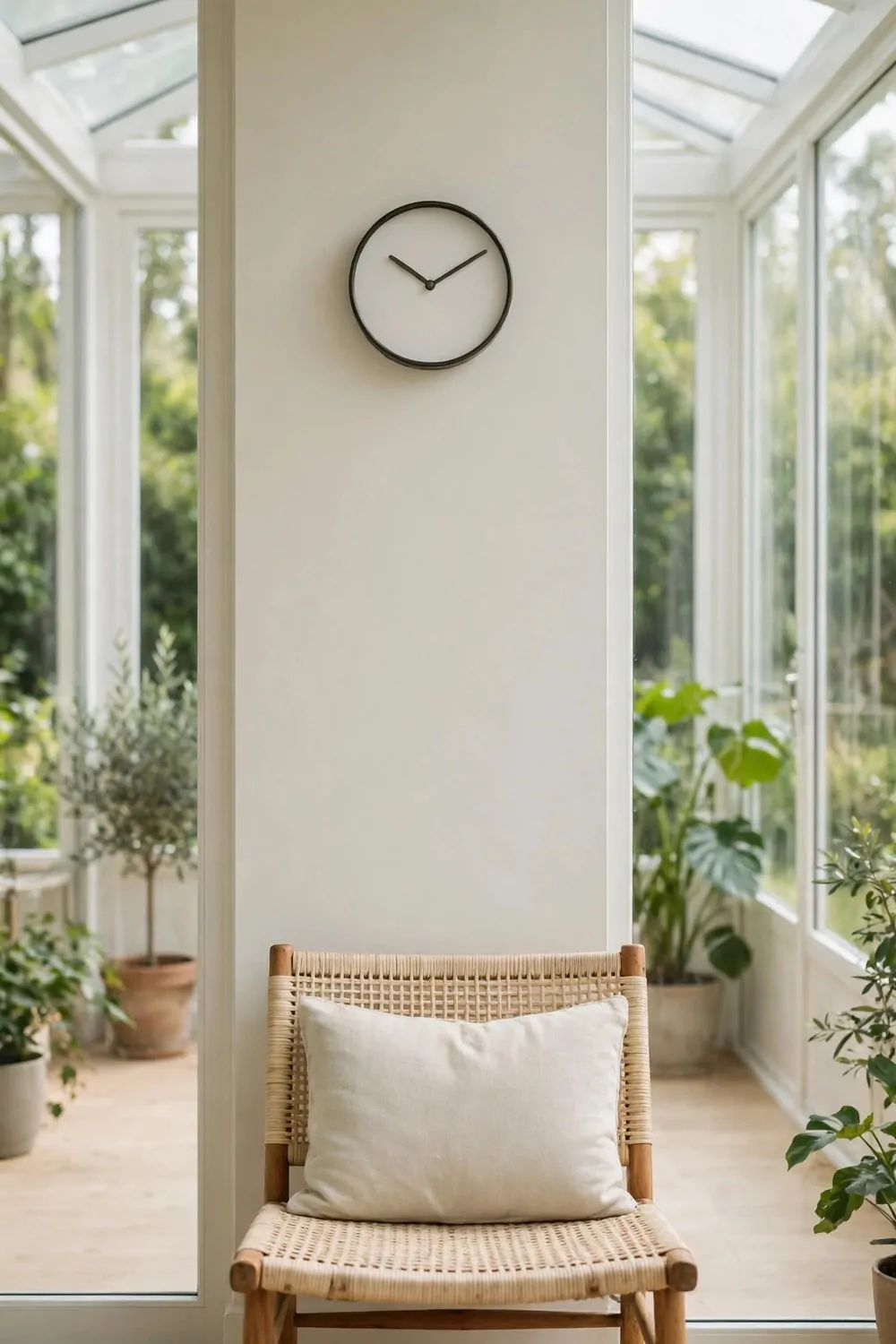
A clock with a quiet face helps me keep track of time without a loud tick. I glance at it when I want to know how long I have sat.
A plain face is easy to read from across the room. You do not need to squint or stand up to see the hands.
Pick a clock that runs silent when you hold it near your ear. A ticking clock can spoil a still morning in a small room.
Fix the clock on a wall that faces your seat, so a quick glance tells you the hour. Mine sits just past the window, where it stays easy to spot while I rest.
Typical cost: $15 to $28.
Change the battery when the hands start to lag behind the hour. A slow clock makes you late without you even knowing it.
Wipe the glass with a soft cloth so the face stays clear to read. Dust can blur the numbers and make you guess the time.
Use the clock to mark the end of your quiet hour. When the hands reach your mark, you can rise and get on with the day.
This clock suits slow sits when you want to rest but not drift too long. It keeps the hour gentle and the morning on track.
17. A Basket of Books by the Chair
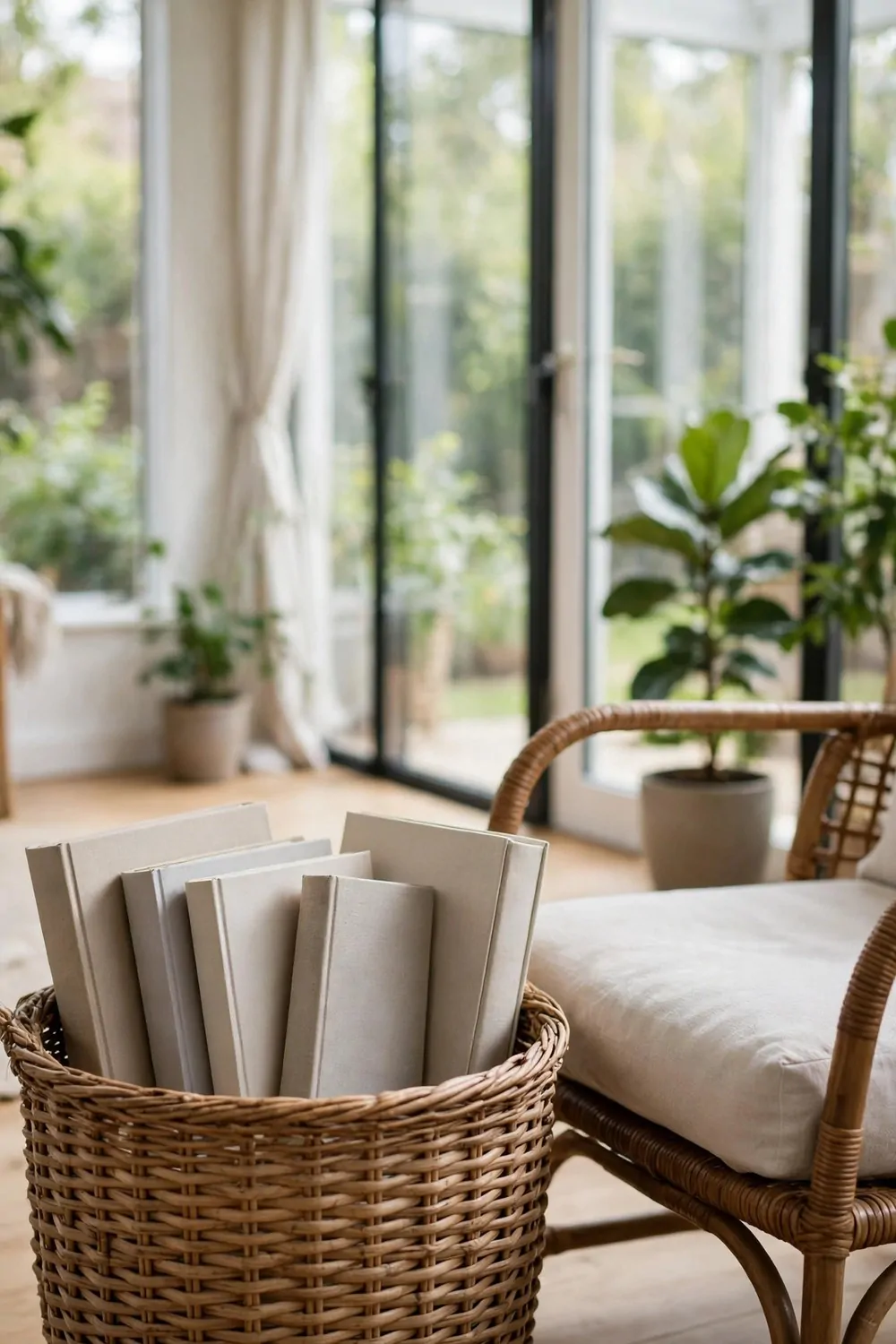
Books tucked in a basket beside your seat mean your next story is never far away. I dip a hand down for one when the room goes still and I have time to spare.
Books in a basket feel easy to swap and sort through. You can pull one out, try a page, and put it back with no fuss.
Pick a basket with a firm base so it does not tip when you lean on it. A basket that tips will spill your books across the floor.
Sort the books with the ones you love most at the front. I put a short book at the front for days when I only have a little time.
Typical cost: $17 to $31.
Dust the book covers with a dry cloth once a month. Clean covers feel nice in your hands and keep the basket looking cared for.
Swap in a fresh book from another room when you finish one. A new book in the basket keeps the corner feeling fresh and alive.
Lend a book from the basket to a friend who visits. A shared book makes the chair feel like a warm and open place.
This basket suits slow evenings when you want to read and rest. It turns the space beside your chair into a small home library.
18. A Small Stool for Plants
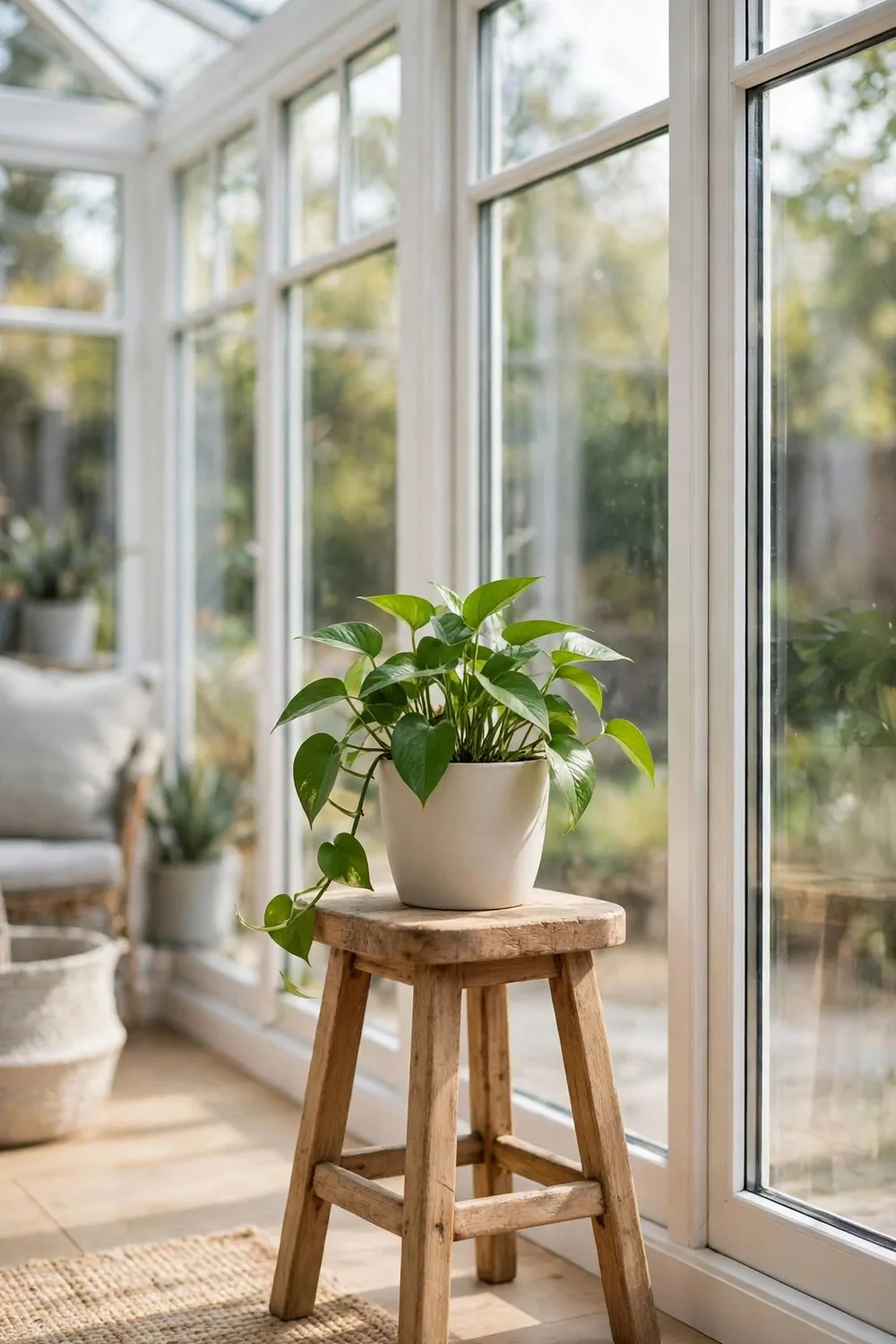
A small stool gives a plant a lift so you can see its leaves well. I use one when a pot sits too low to enjoy from my chair.
A stool raises the plant up into the sun by the glass. You can move it with one hand when you want to change the view.
Pick a stool with legs that feel steady on the floor. A stool that rocks will make you nervous each time you water the pot.
Typical cost: $21 to $38.
Set a small tray on the stool under the pot to stop drips. A tray keeps the wood dry and makes watering feel neat and calm.
Give the pot a small spin every Sunday so the stems rise straight instead of bending. A plant left in one spot will lean hard toward the glass and look lopsided.
Wipe the stool top with a damp cloth when soil spills on it. A quick wipe stops soil from drying hard on the wood.
Use the stool for a plant that needs more sun than the floor gives. A lifted plant gets a better view of the sky through the glass.
This stool suits a sunny nook where a low pot gets lost. It turns a plain plant into a small feature you notice each day.
19. A Rug Runner to the Garden Door
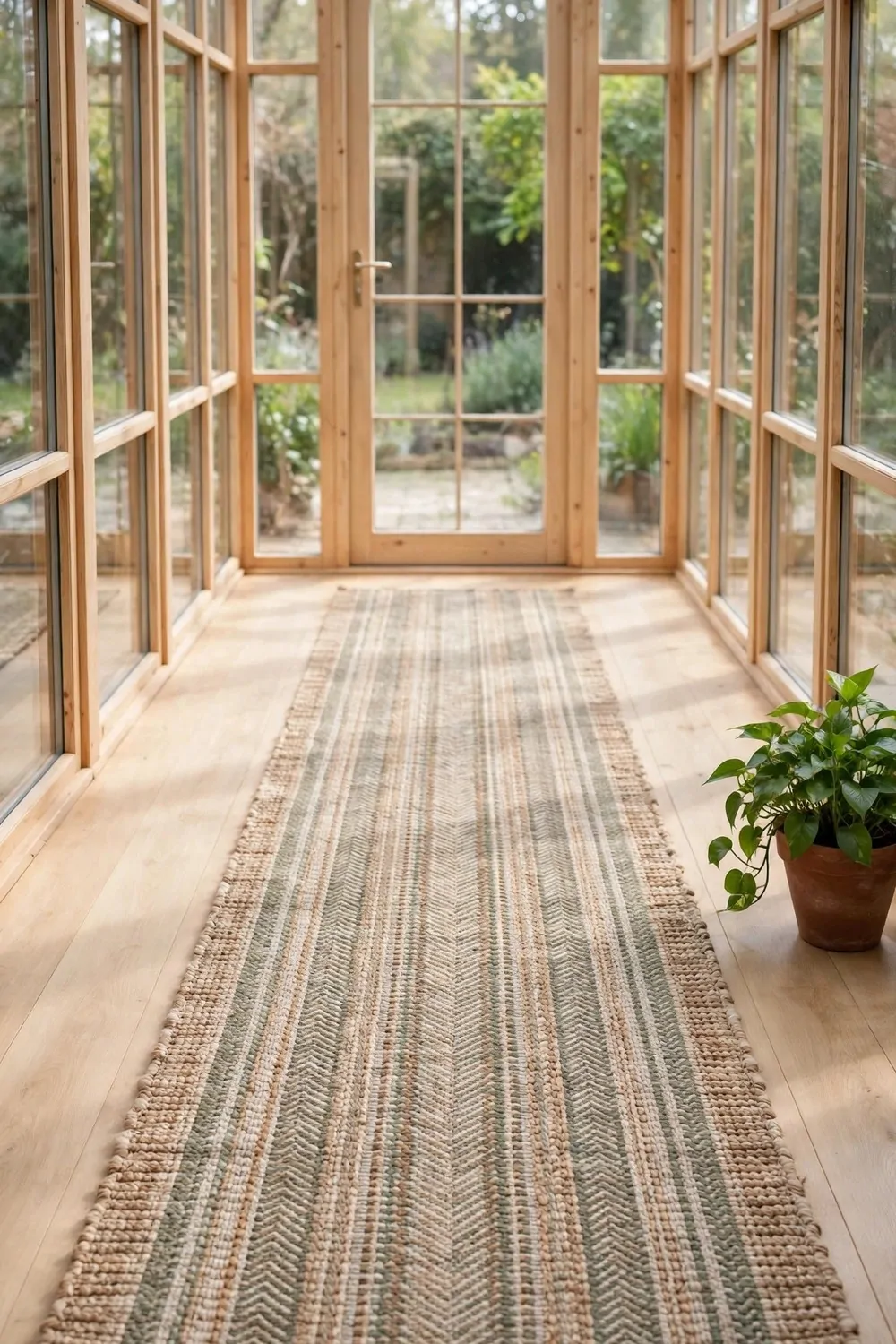
A runner by the garden door gives your feet a soft path when you step in from outside. I like how it marks the way from the door to my chair without any fuss.
You can roll it out in a minute and walk on it right away. It lies flat under your feet and it stays put while you move round the room.
When I come in with soil on my shoes, I wipe them at the door and the runner keeps the floor clean past that spot. It saves me from sweeping the whole room each time.
A runner also makes the doorway feel like part of the sunroom, not just a gap in the wall. It joins the garden side to the sitting side in one soft line.
Pick a runner that feels soft under bare feet and firm enough to walk on in shoes. Typical cost: $14 to $24.
If the runner gets dusty, I shake it outside and let the breeze do the work. It dries fast in the open air and it comes back in fresh.
You can move it aside when you want the bare floor back for a day. Then you lay it out again when you want that soft path under your feet.
It suits a small sunroom well because it takes up so little room. One long strip is all you need to change how the doorway feels.
Try it for a week and see how often your feet find it on their own. A soft path at the door can make the whole room feel more welcoming.
20. A Glass Vase of Fresh Stems
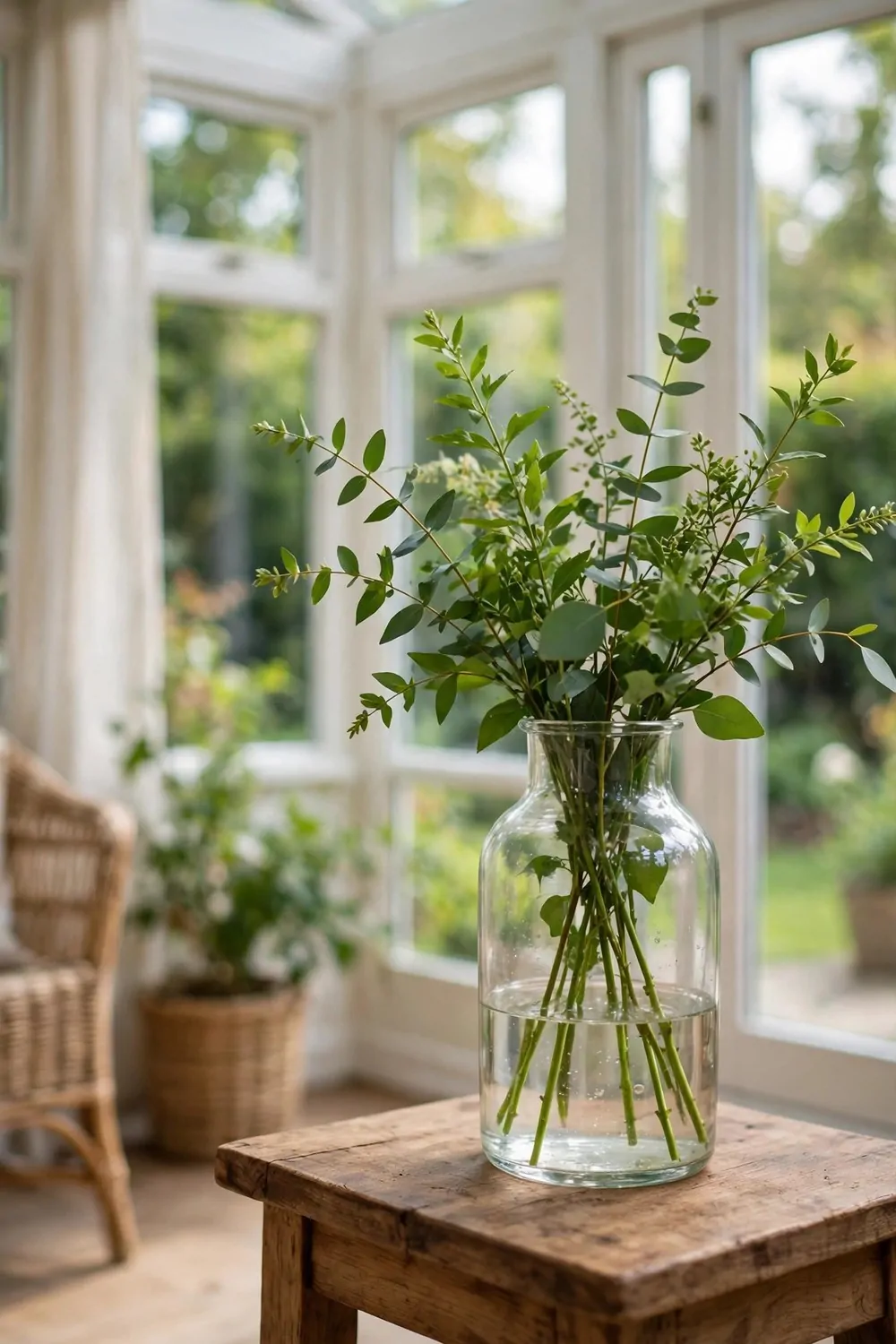
A glass vase of fresh stems brings the garden inside without any big change. I set it where I can see it from my chair and it lifts my mood each time I glance over.
You do not need a big bunch to make it work. A short bunch of stems from the garden or the market is plenty for a small vase.
Change the water every day or two so the stems stay fresh longer. I rinse the vase out first and then I fill it with clean cool water.
Trim the stem ends at a slant before you put them in the water. A fresh cut helps each stem drink well and it keeps the bunch looking bright.
Pick stems that smell soft and look calm beside your chair. Typical cost: $9 to $16.
When one stem starts to droop, I pull it out and let the rest shine. The vase still looks full and the bunch lasts longer that way.
You can swap the stems with the seasons and try new shapes each month. A vase lets you bring in whatever is growing near your home right now.
It sits well on a side table or a low shelf near the window. Wherever you put it, it gives the room a fresh touch that costs very little.
Start with one vase and one bunch this week. You will soon see how a small bit of green can make a quiet room feel alive.
| Idea | Main change | Typical cost |
|---|---|---|
| a stack of soft cushions for long sits | A pile of springy cushions within arm reach softens a long sit in the chair. | $22 to $41 |
| a small fan for warm afternoons | A steady low-speed fan on a firm base freshens still air on warm afternoons. | $16 to $29 |
| a journal corner on the sill | A notebook and pen kept on the sill turn quiet mornings into a short writing habit. | $9 to $19 |
| a hanging planter by the door | A strong hook by the door lifts a trailing plant up where it greets you each day. | $14 to $27 |
| a soft throw for cool mornings | A soft throw kept on the chair arm warms cool mornings without a heavy blanket. | $19 to $36 |
| a clock with a quiet face | A silent clock facing the chair marks a quiet hour without a loud tick. | $15 to $28 |
| a basket of books by the chair | A firm basket beside the chair keeps the next book close and easy to swap. | $17 to $31 |
| a small stool for plants | A steady small stool lifts a low pot into the sun by the glass. | $21 to $38 |
| rug runner to the garden door | A soft runner marks the path from the garden door to the sitting spot. | $14 to $24 |
| glass vase of fresh stems | A glass vase of fresh stems brings a small bit of the garden inside. | $9 to $16 |
| Total | $156 to $289 |
21. A Low Bench for Two Cups
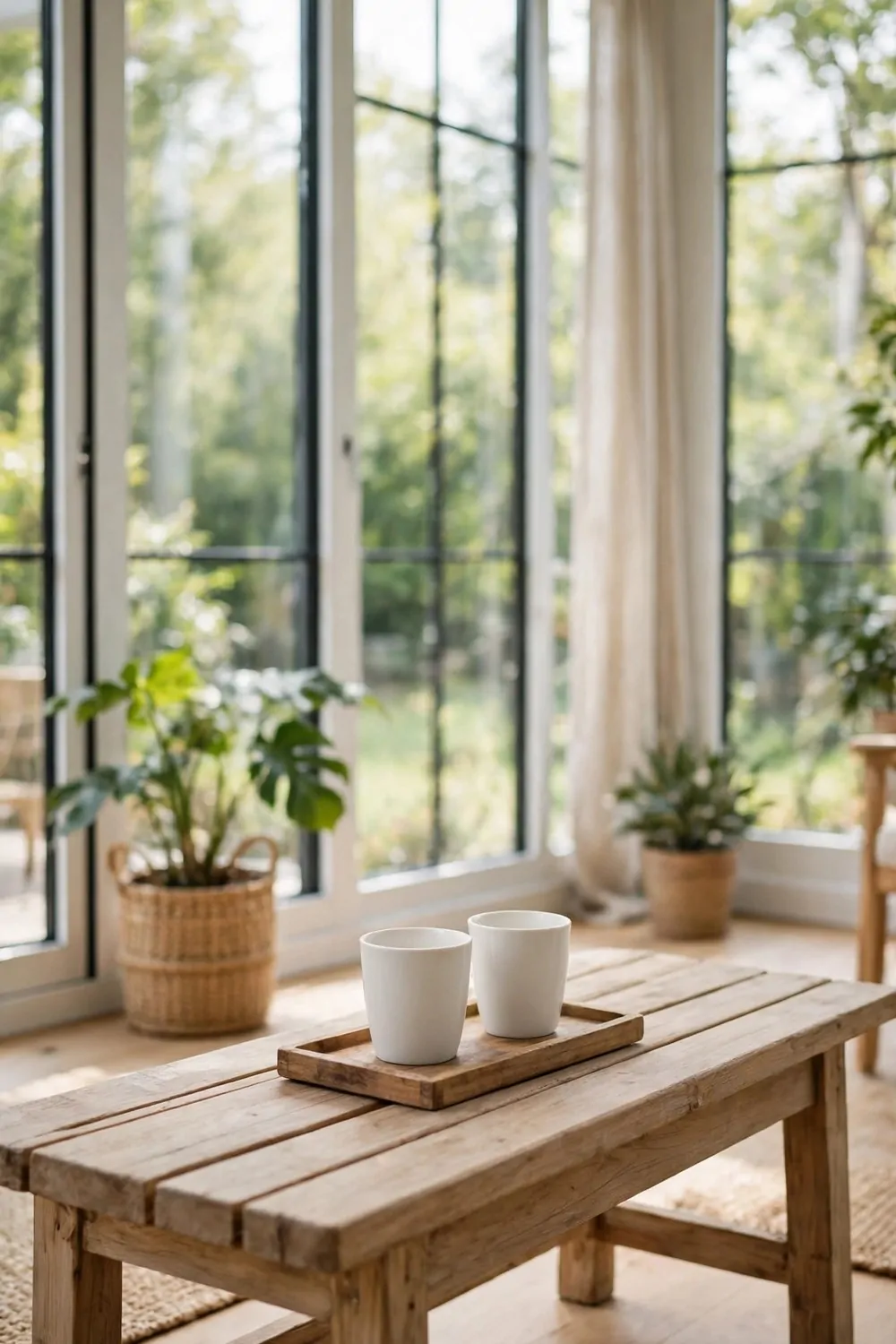
A low bench gives you a place to set two cups down while you sit and talk. I like how it keeps the drinks close without a tall table in the way.
You can sit on one side and your friend can sit on the other side. The bench makes room for both of you and it leaves space to stretch your legs.
It works well in front of a chair or beside a window seat. You reach over, take your cup, and you never have to stand up.
Pick a bench that feels steady when you lean on it. Typical cost: $18 to $30.
When the cups are gone, the bench can hold a book or a small tray. It stays useful all day and it never feels in the way.
I wipe it down with a damp cloth when tea spills or dust settles. A quick wipe keeps the top smooth and ready for the next sit.
You can slide it aside when you want more floor space for the day. Then you pull it back out when a friend comes round for a drink.
A low bench suits a sunroom because it stays below the window line. It does not block the view and it does not block the soft daylight.
Try it with two cups tomorrow morning and see how easy it feels. A small bench can turn a quiet sit into a shared one.
22. A Small Frame With a Plain Print
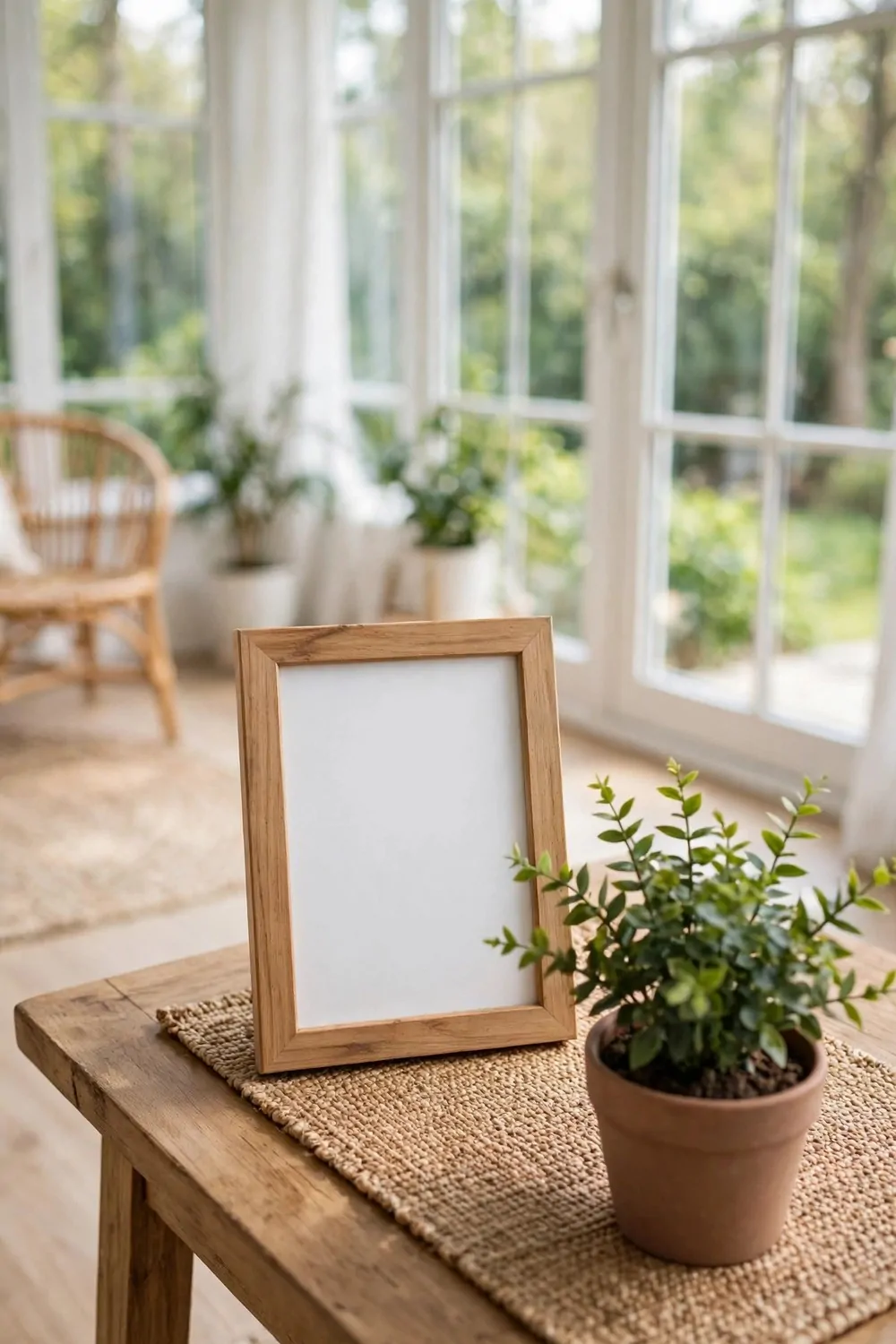
A small frame with a plain print gives your eye one calm spot to rest on. I like how it fills a bare spot on the table without making the room feel busy.
Pick a print with a simple scene that makes you smile. A leaf, a hill, or a quiet field can all work well in a sunroom.
Hang it at eye level where you can see it from your chair. You do not need a nail gun or a big tool kit to put it up.
Check that it hangs straight by stepping back and looking at it twice. Typical cost: $7 to $12.
If the frame feels too small on its own, you can move it to a narrow wall. A small frame suits a small wall better than a wide one.
You can swap the print inside when you want a fresh look. Keep the same frame and just slide a new print in behind the glass.
A plain print also helps the room feel finished without much money spent. One small frame can do the work of a whole shelf of bits.
I dust the glass once a week so the print stays clear. A clean pane lets the picture show its soft lines.
Choose one print you truly like and hang it this weekend. A small frame on the wall can make your quiet corner feel like yours.
23. A Watering Can by the Plants
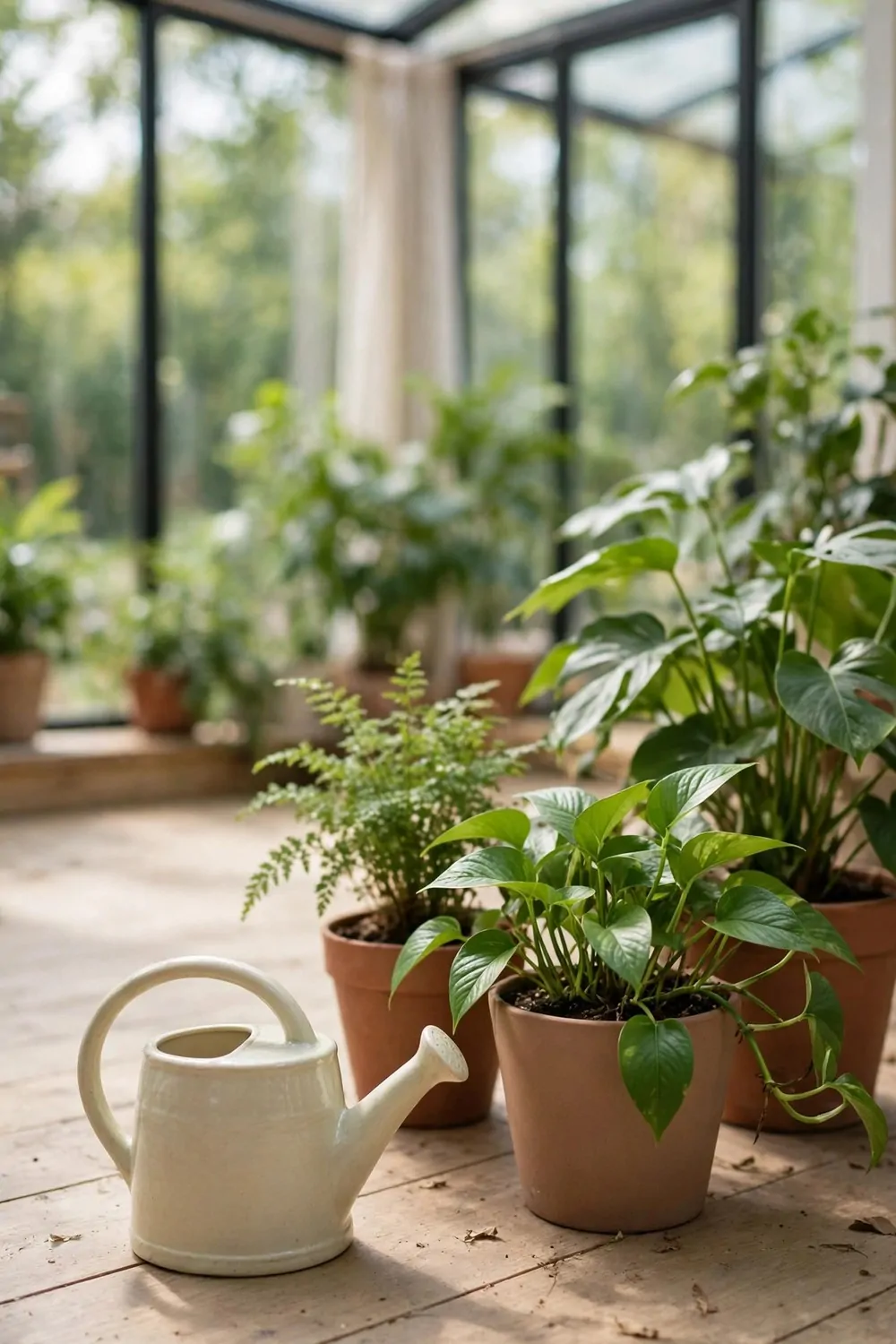
A watering can by the plants makes watering feel easy instead of a chore. I keep mine within reach so I can water whenever the soil looks dry.
Pick a can that feels light in your hand even when it is full. A good handle makes it simple to tip and pour without a spill.
Pour slow and let the water sink into the soil bit by bit. If the water runs straight through, stop and wait before you pour more.
Water in the morning so the leaves have the whole day to dry. Typical cost: $8 to $14.
Feel the top of the soil with one finger before you reach for the can again. If the top feels damp, the plant can wait another day.
When the can is empty, I fill it at the tap and set it back by the plants. It stays ready for the next round and I never have to hunt for it.
A small can suits a sunroom well because the plants sit close together. You can reach each pot without carrying a heavy jug across the room.
Wipe the spout now and then so it stays clear and pours smooth. A clean spout gives a neat stream and it keeps the leaves dry.
Keep your can by the plants and watering will become a small calm habit. Your green corner will thank you with fresh growth.
24. A Cushion for the Window Seat
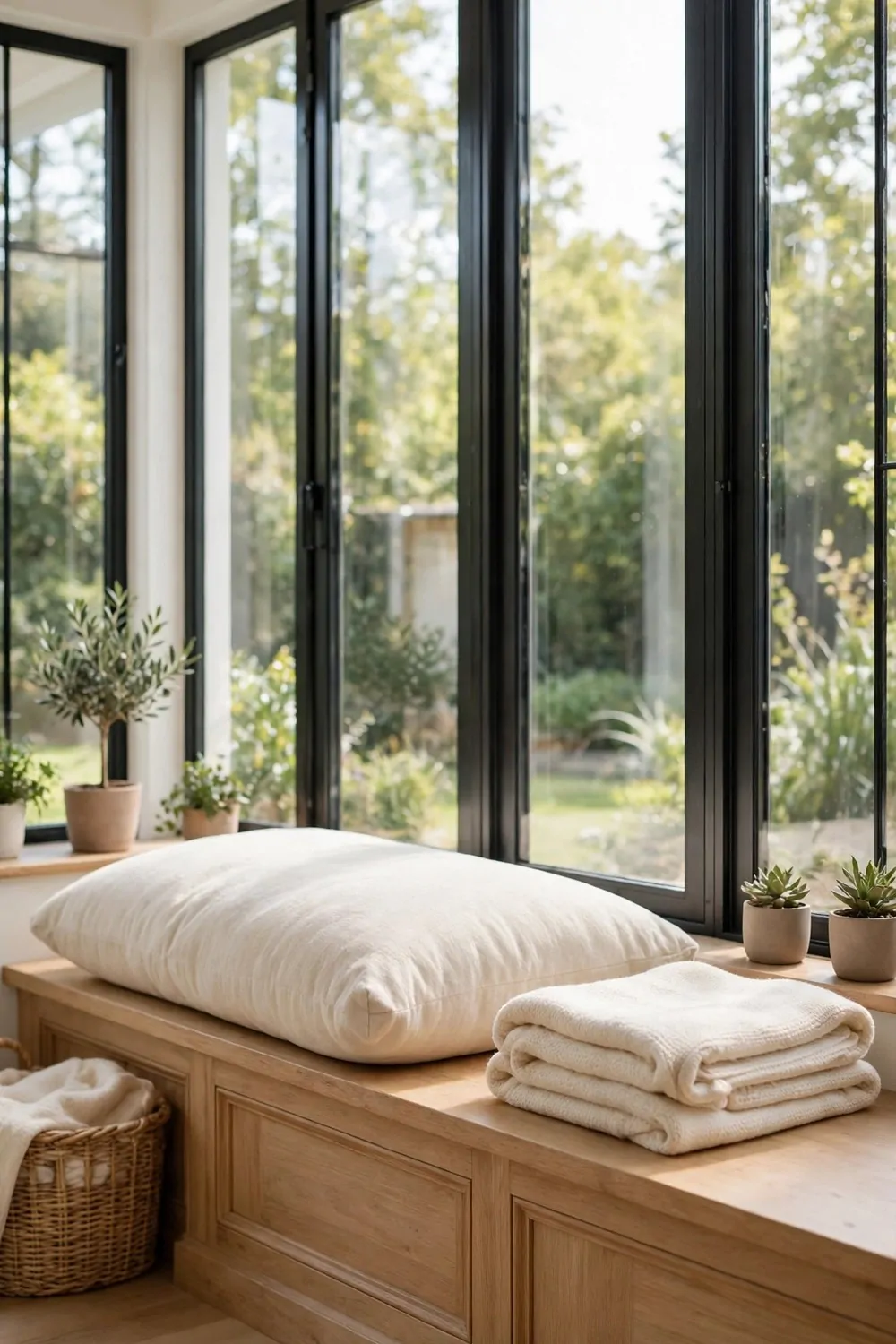
A cushion for the window seat turns a hard ledge into a soft place to sit. I like how it lets me stay by the glass for a long while without feeling stiff.
Pick a cushion that feels thick enough to sit on for an hour. It should spring back when you press it and it should not go flat by noon.
You can lean back on the frame and let your legs stretch out. The seat becomes a small nook where you can read or just watch the garden.
Choose a cover you can take off and wash when it gets dusty. Typical cost: $10 to $17.
If the seat feels cold in the morning, the cushion takes the chill off. It warms up fast and it makes the first sit of the day feel kind.
Fluff it up with your hands when it starts to look flat. A quick shake brings the softness back and it looks neat again.
You can move the cushion to a chair when friends come round. Then you bring it back to the window when the room is quiet again.
It suits a sunroom well because the seat sits right in the soft daylight. You get the view, the warmth, and a soft place to rest all at once.
Try one cushion on your window seat this week. You may find it becomes your favourite spot in the whole house.
25. A Quiet Corner for Puzzles
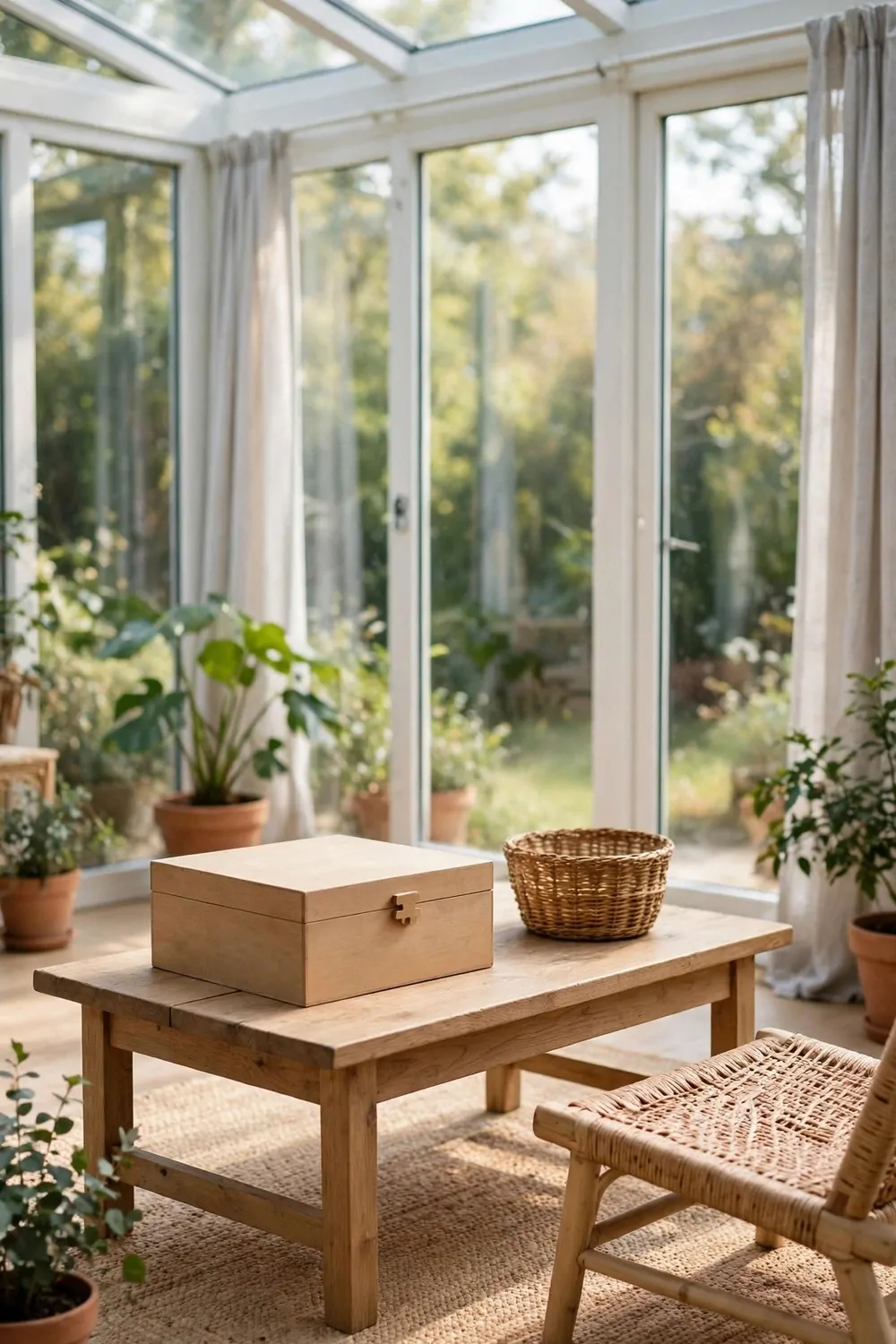
A quiet corner for puzzles gives your hands something calm to do while your mind rests. I like how a puzzle slows the day down without any rush.
Pick a puzzle with a picture you enjoy looking at for hours. A garden scene or a soft landscape can keep you going till the last piece.
Spread the pieces out on a flat board so you can move them round. Sort them by shape first and then look for the edges.
Work on it for a short while each day instead of all at once. Typical cost: $11 to $19.
When you get stuck, step away and come back with fresh eyes. The missing piece often shows up right after a short break.
Keep the board in one spot so you do not have to pack it away each night. A steady spot lets you pick up where you left off.
You can work on it alone or with a friend beside you. Either way, the quiet focus feels restful and the time passes soft and slow.
Keep the box close at hand so you can open it and check the pieces when you need them. A quick look inside can help you find the next piece.
Start with a small puzzle and see how it feels. A quiet corner with a puzzle can become the calmest part of your day.
26. A Simple Plan for Your Sunroom Corner
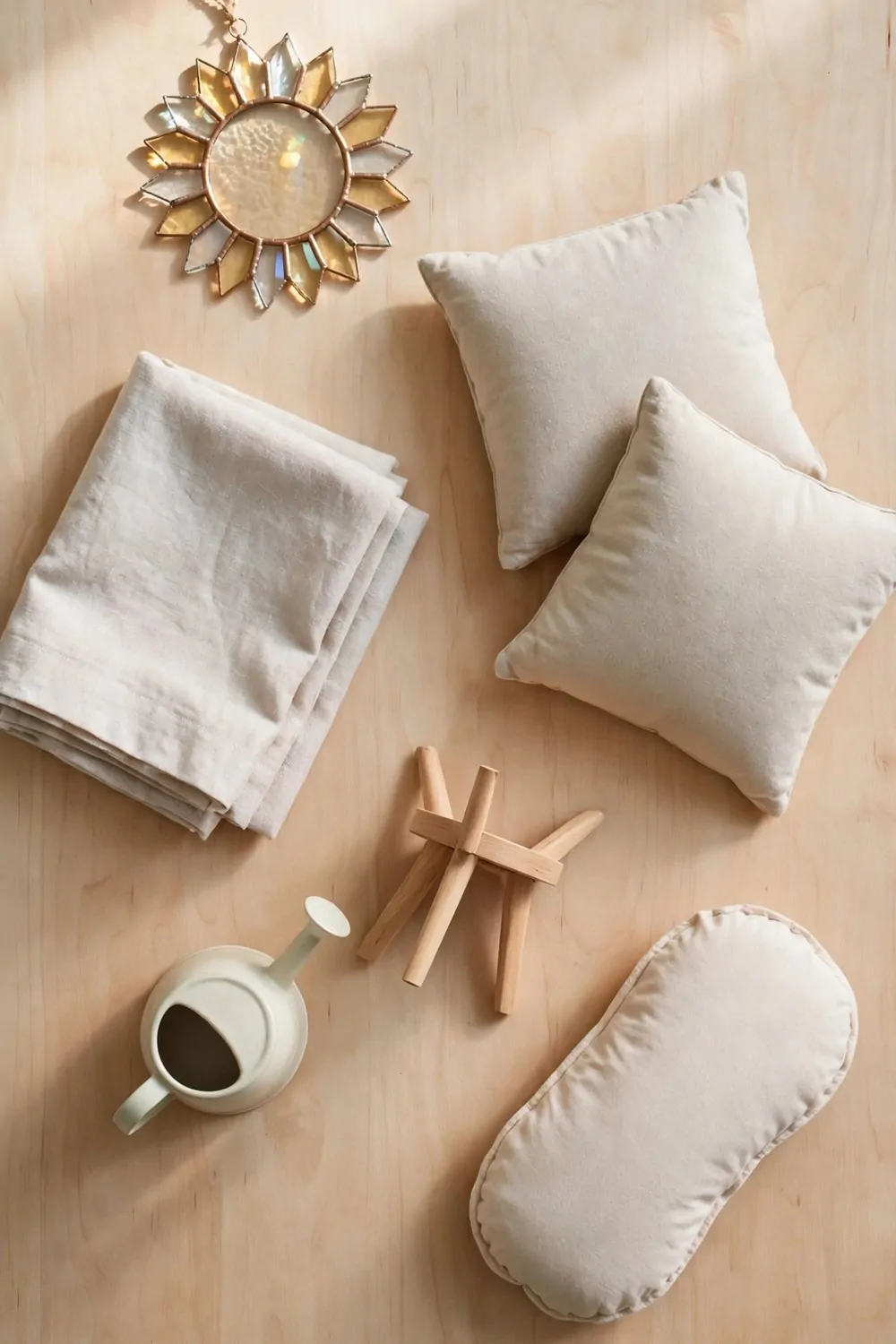
Gather six gentle pieces for the corner by the glass and set them out one by one till the whole spot feels ready for slow mornings.
First, hang the small glass sun catcher by the window so it throws soft spots of colour across the room on bright days. It needs no care at all and it works best when the sun comes straight through the glass.
Next, hang the light linen curtain panel by the glass door to soften the glare and give the corner a light, airy feel. Then set out the pair of soft cotton sunroom cushions on the seat so you have a soft back rest for long quiet sits. They make the corner feel warm and they wash well when they get dusty.
After that, place the small wooden plant stand in the sunny corner and lift your pot off the floor onto it. The stand gives the plant a clear spot of its own and it keeps the leaves up where you can see them.
Keep the small ceramic watering can by the plants so watering feels easy and calm, and lay the soft cotton eye pillow on the seat for a soft, dark pause when you rest. Both pieces stay close at hand and both are simple to use.
| Idea | Main change | Typical cost |
|---|---|---|
| Small glass sun catcher for the window | Hang it by the window so soft colour spots drift across the room on bright days | $7 to $12 |
| Light linen curtain panel for the glass door | Let it soften the glass door and give the corner a light, airy feel | $14 to $24 |
| Pair of soft cotton sunroom cushions | Prop them on the seat so you have a soft back rest for long quiet sits | $12 to $20 |
| Small wooden plant stand for the sunny corner | Lift the pot off the floor and give it a clear spot in the sunny corner | $11 to $19 |
| Small ceramic watering can for the plants | Keep it by the plants so watering feels easy and calm | $8 to $13 |
| Soft cotton eye pillow for quiet rests | Lay it over your eyes for a soft, dark pause when you rest | $6 to $10 |
| Total | $58 to $98 |
Use the watering can in the morning and lay the eye pillow aside till you rest. Each piece has its own small job and none of them needs much care.
Set the six pieces out on the wooden table first and look at them all together. Then move each one to its own spot by the window, the door, and the seat.
Check that the cushions sit well on the seat and the stand stands firm in its corner. Shift any piece that feels out of place till the whole group looks calm. Typical cost: $58 to $98.
For a total of $58 to $98, the whole sunroom corner is ready. Step into the glass room tomorrow at dawn and let the soft morning light welcome you to your own quiet hour.
Keep Reading
If you liked these ideas, you will love these posts too
Each post has more simple ideas you can try at home this weekend.