19 Corner Entryway Designs That Make a Small Space Work Hard

A corner is shaped like a slice of pizza. It looks small and tricky at first. But that little triangle of space can hold so much more than you think.
I love corners because they ask for smart ideas, not big furniture. You do not need a wide wall or a big hall. You just need to use the angle you already have.
These 19 corner entryway designs are all made for small spaces that have to work hard. Some hold your shoes, some hold your keys, and some just make the corner look pretty when you walk in the door. I picked ideas that are easy to try and kind to a small budget too.
So grab a cup of tea and walk through them with me. You might find one idea that fits your corner just right, or you might mix a few together. Either way, your entryway is about to feel a lot more useful.
A Triangular Floating Shelf That Follows Both Walls
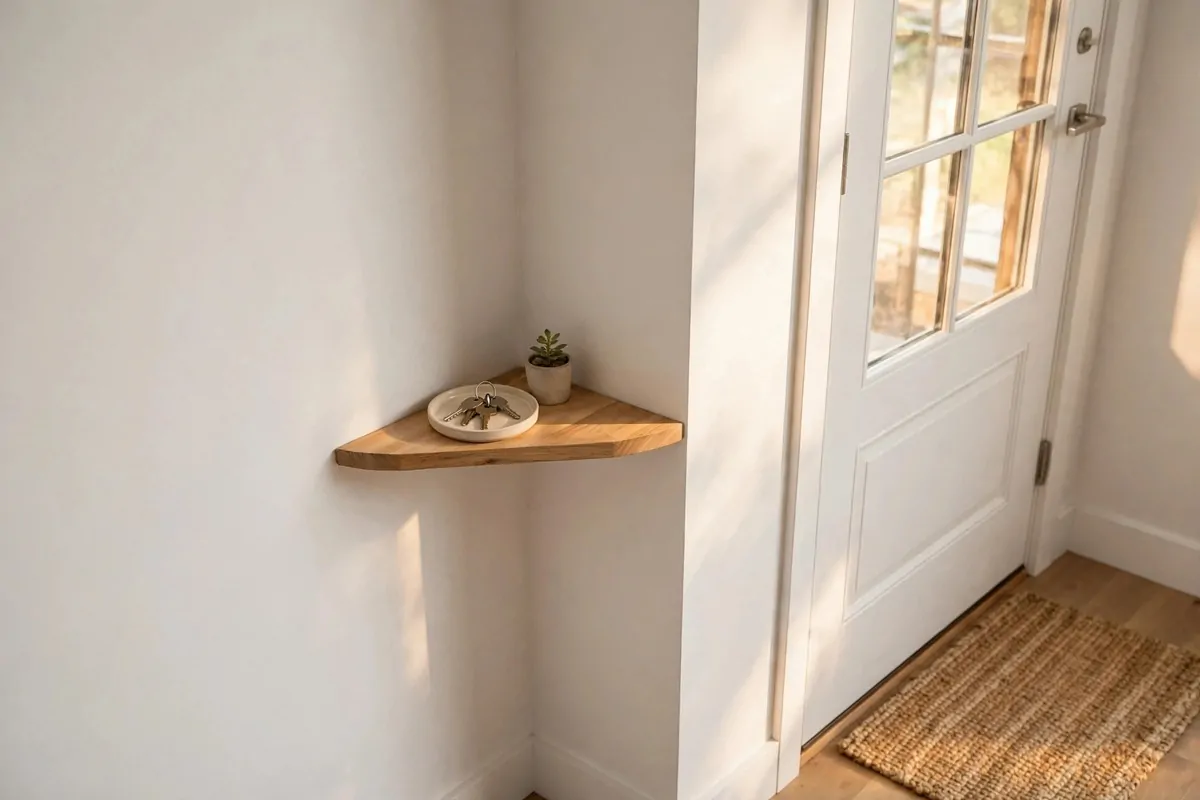
A triangular shelf fits into a corner like it was made for it, and it sits flat against both walls at once. You get a real surface without anything poking out into the room.
I like to put a small tray on mine. Keys go in the tray, and a little plant sits next to it. Everything has a home, and nothing slides off the edge.
You can hang the shelf at any height you want, low for kids who need to reach it or higher to keep it out of the way.
The shelf only needs a few screws and a small board. Most people can fit one in under an hour. It is one of the easiest ways to claim a corner.
It also makes the corner look finished. A bare corner can feel cold and forgotten, but a little wooden shelf warms it right up.
You can stack two shelves if you want more room. Put the bigger one lower and the smaller one higher. It looks neat and gives you space for a book or a small lamp.
Do not load it with heavy things. A shelf like this is for small daily stuff, not a pile of books, so keep it light and it will last a long time.
You can change what sits on the shelf with the seasons. A small vase in spring, a pine cone in autumn. It is a tiny spot that can change its mood.
A Quarter-Round Corner Bench With Shoe Space Underneath
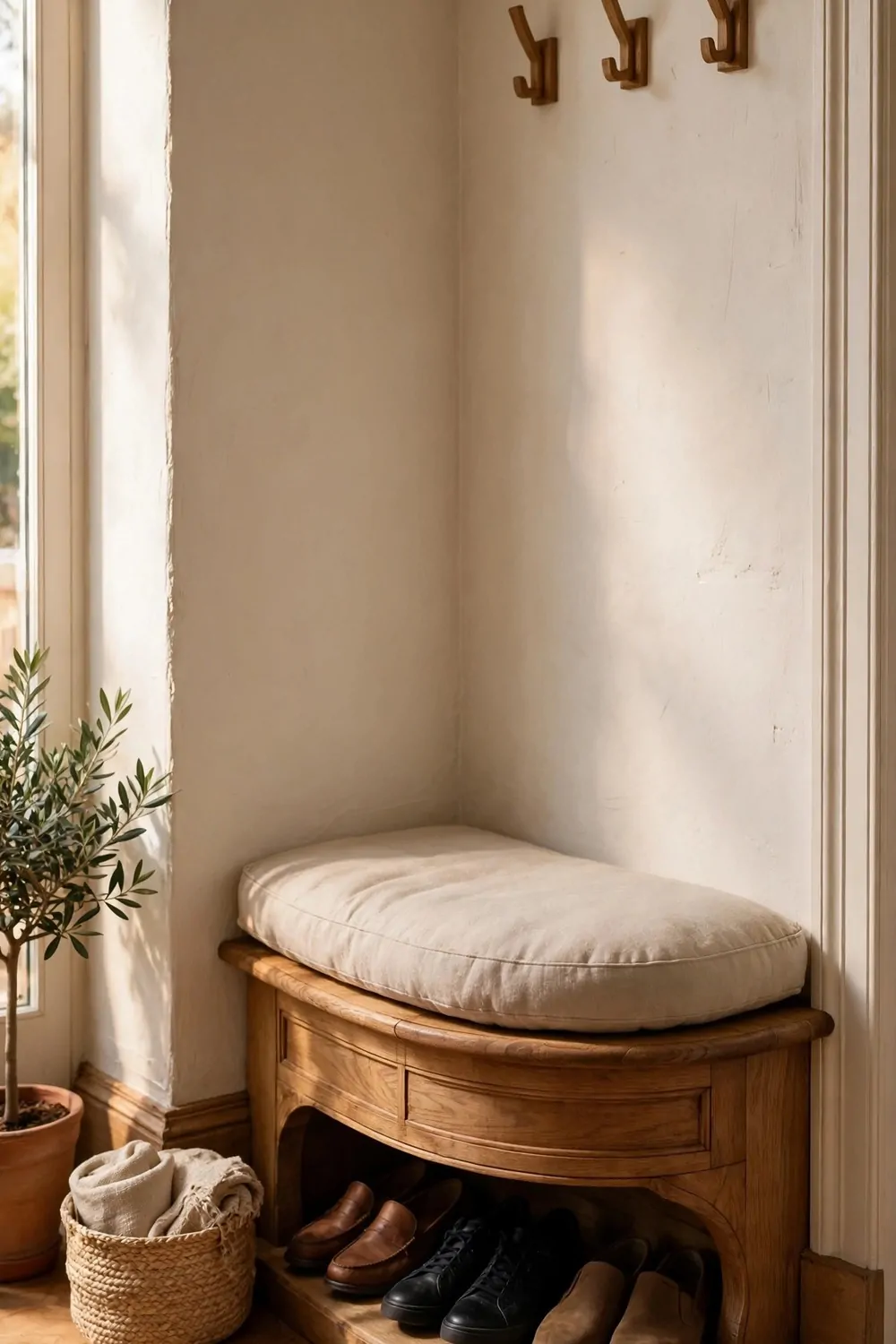
A quarter-round bench curves around the corner in a soft half circle. It gives you a place to sit and pull your shoes on. It also tucks shoes away under the seat.
I think a bench makes a small entryway feel so much kinder. You are not hopping on one foot by the door anymore, you just sit down, and everything is easy.
The curved shape is gentle on your legs too. You will not bump into sharp corners when you walk past. That matters a lot in a tight hallway.
Pick a bench that is just tall enough to sit on with comfort, not so low that it feels like a step and not so high that your feet dangle.
| Shape | Floor Space It Needs | Best For |
|---|---|---|
| Quarter-round | Very little | Tight corners |
| Triangular | A bit more | Straight walls that meet at a sharp angle |
| Rectangular | The most | Wider corners with room to spare |
Keep the space under the bench open so shoes can slide in and out. A couple of pairs is all you need there, and the rest can live in a closet.
Add a cushion if you like soft seats. A thin cushion in a light color makes the bench look friendly. You can wash the cover when it gets dirty.
A bench also gives you a spot to set your bag when you come home. Drop it, take your shoes off, and you are done, because small corners can feel that easy.
If your bench is wood, wipe it down once a week. A quick wipe keeps it looking fresh and stops dust from building up in the corner.
Two Narrow Mirrors That Meet Right at the Corner
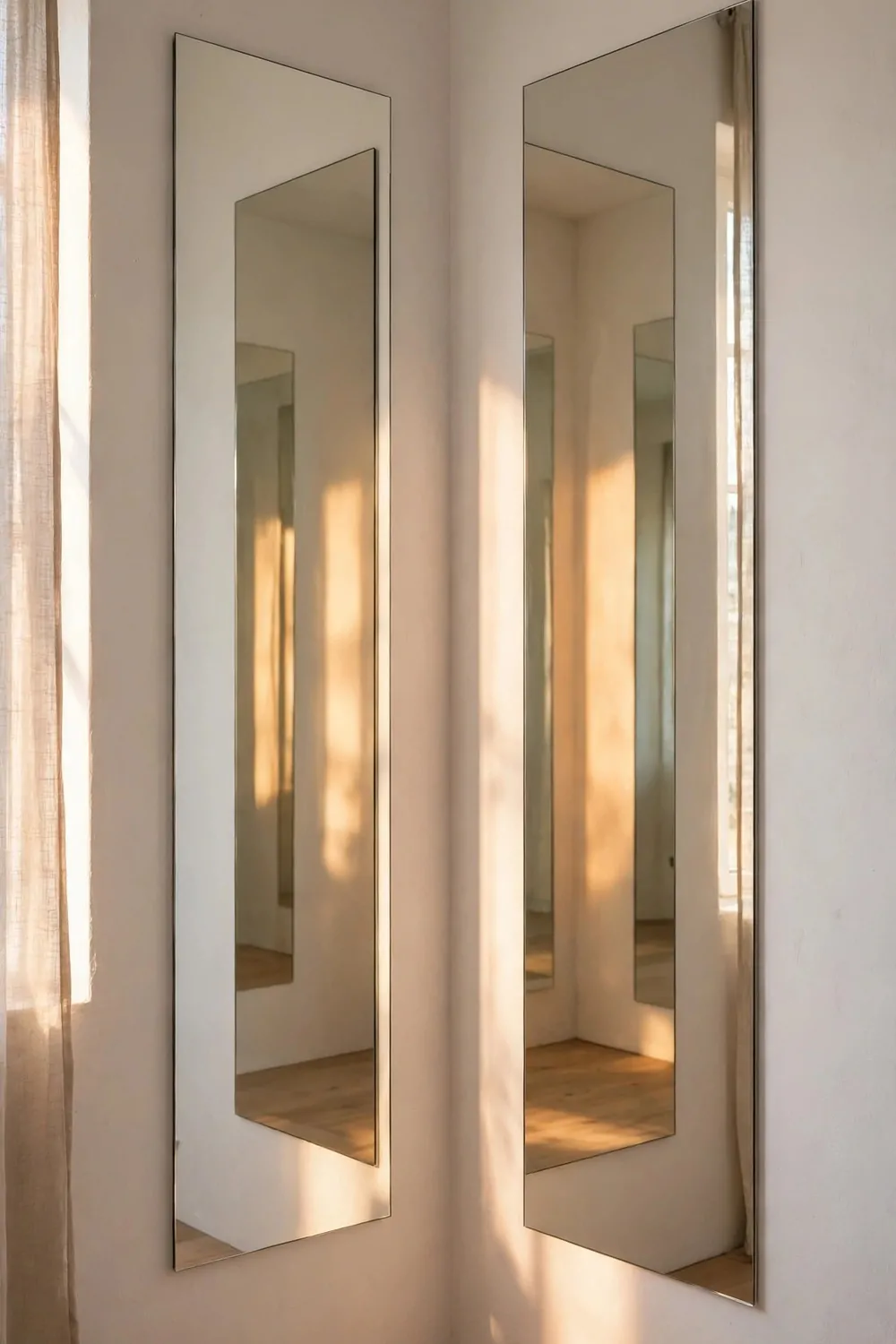
Two slim mirrors can sit on the two walls that meet at a corner. They meet at the angle, and the corner suddenly feels wider, with light bouncing from one to the other.
I love this trick because it costs so little and changes so much. A small dark corner turns bright in a few minutes. You do not need new lights or new paint.
Hang the mirrors at eye level so you can check yourself before you leave. You want to see your whole face in one glance, because that is the whole point.
Keep the frames the same on both mirrors, since two matching frames make the corner look planned, not random, and a thin wood or plain black frame works well.
The mirrors also help you see around the corner a bit better. You can spot your shoes or your bag without turning your whole body. It sounds small, but it feels handy every day.
Do not hang them too high or too low. Stand in front of the corner and mark the spot where your eyes land, because that is where the middle of the mirror should go.
You can find narrow mirrors at most home shops. They are cheap and light. A couple of small hooks will hold them just fine.
Wipe the mirrors once a week so they stay bright. A clean mirror makes the whole corner look bigger. It also makes it feel lighter.
A Vertical Mail Sorter With Slim Stacked Pockets
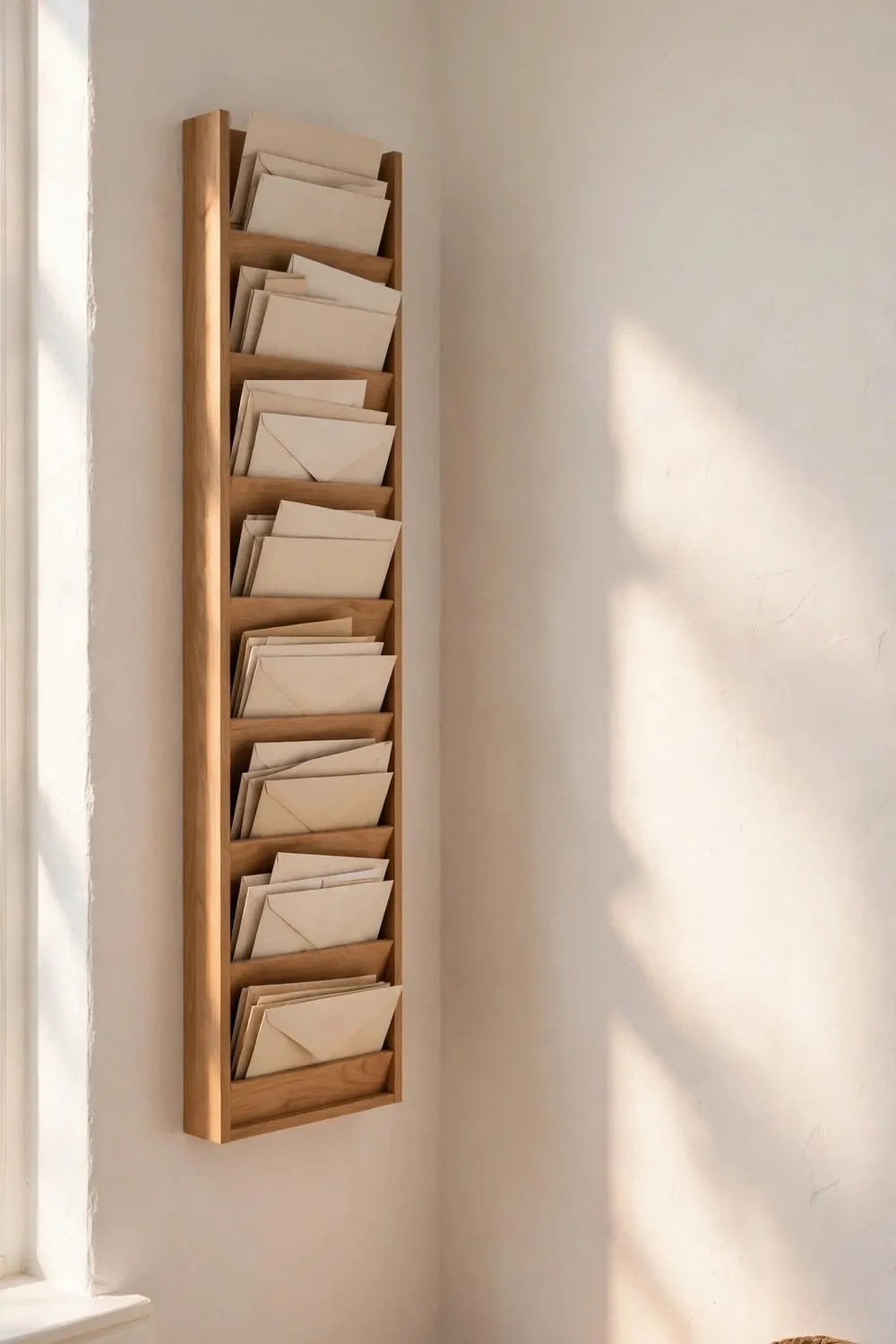
A vertical mail sorter stacks its pockets one above the other on the wall. It fits a corner because it goes up, not out. Your wall space does the work.
I used to let mail pile up on a table. Now it all goes in the sorter the second I walk in, so my table stays clear and I never lose a bill again.
Put the sorter right where you come in the door. You want to drop the mail in without thinking. If it is too far away, you will forget to use it.
Each pocket can hold a different kind of paper. That is what makes it work so well, because you know where to look when you need something.
Label the pockets if your family shares the sorter, since a small sticker or a bit of tape tells everyone which pocket is theirs.
- Incoming mail
- Outgoing items
- Receipts
- Things that need action
Empty the sorter once a week. Toss the junk mail, file what matters, and start fresh. A sorter only helps if it does not turn into a second pile.
A wooden sorter looks warm and fits most homes. A metal one looks clean and holds heavier paper, so pick the one that matches your corner.
If a pocket stays empty for weeks, give it a new job. It could hold coupons or a shopping list instead. Your sorter should fit your life, not the other way round.
A Low Shoe Ledge That Runs Along the Baseboard
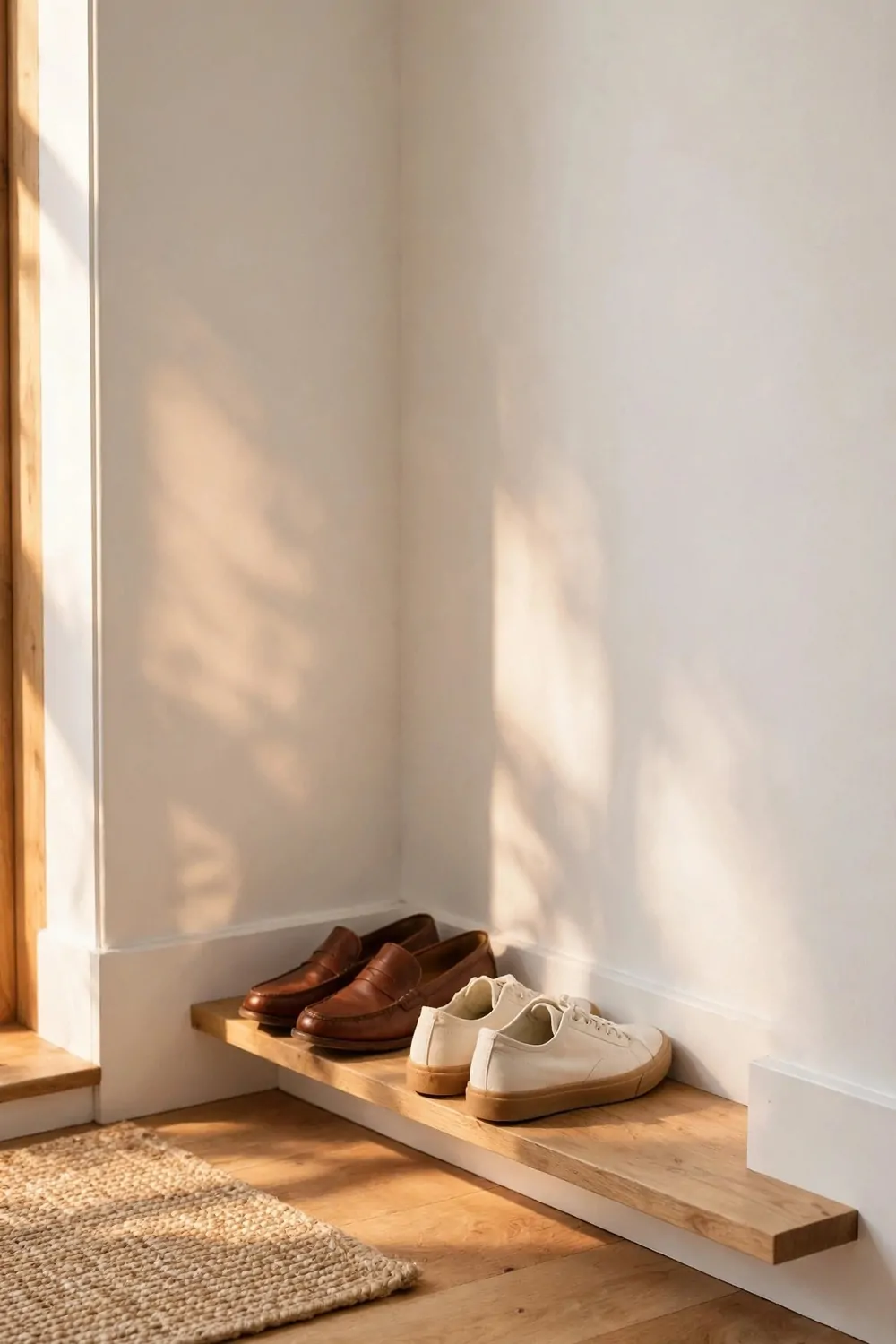
A low shoe ledge is a thin shelf that hugs the baseboard. It runs along both walls of the corner, just above the floor, and shoes sit on it in a neat little row.
I like this idea because shoes stop ending up in a heap by the door. Each pair has its own spot on the ledge. The floor stays clear, and you can walk in without tripping.
The ledge does not need to be deep at all. Just deep enough to hold the front of a shoe. Your heels can hang over the edge a little bit.
Keep it low so it does not crowd the wall. About a hand’s width off the floor is enough, and you can still sweep under it when you clean.
| Ledge Type | Depth | Pairs It Holds |
|---|---|---|
| Single thin ledge | About 4 inches | 2 to 3 pairs |
| Double stacked ledge | About 4 inches | 4 to 6 pairs |
| Wider angled ledge | About 6 inches | 3 to 4 pairs |
You can paint the ledge the same color as the baseboard, and then it almost disappears while the shoes look like they are floating.
A second ledge above the first one doubles your space. Put your everyday shoes on the bottom one and the less used pairs on top. It keeps things tidy.
This is a great idea for families with kids. Little shoes fit on the ledge so well, and your children can put their own shoes away without any help.
You can even add a small rug in front of the ledge. It catches dirt from shoes. It also makes the corner feel cozy when you step inside.
A Diagonal Shelf That Cuts Straight Across the Corner
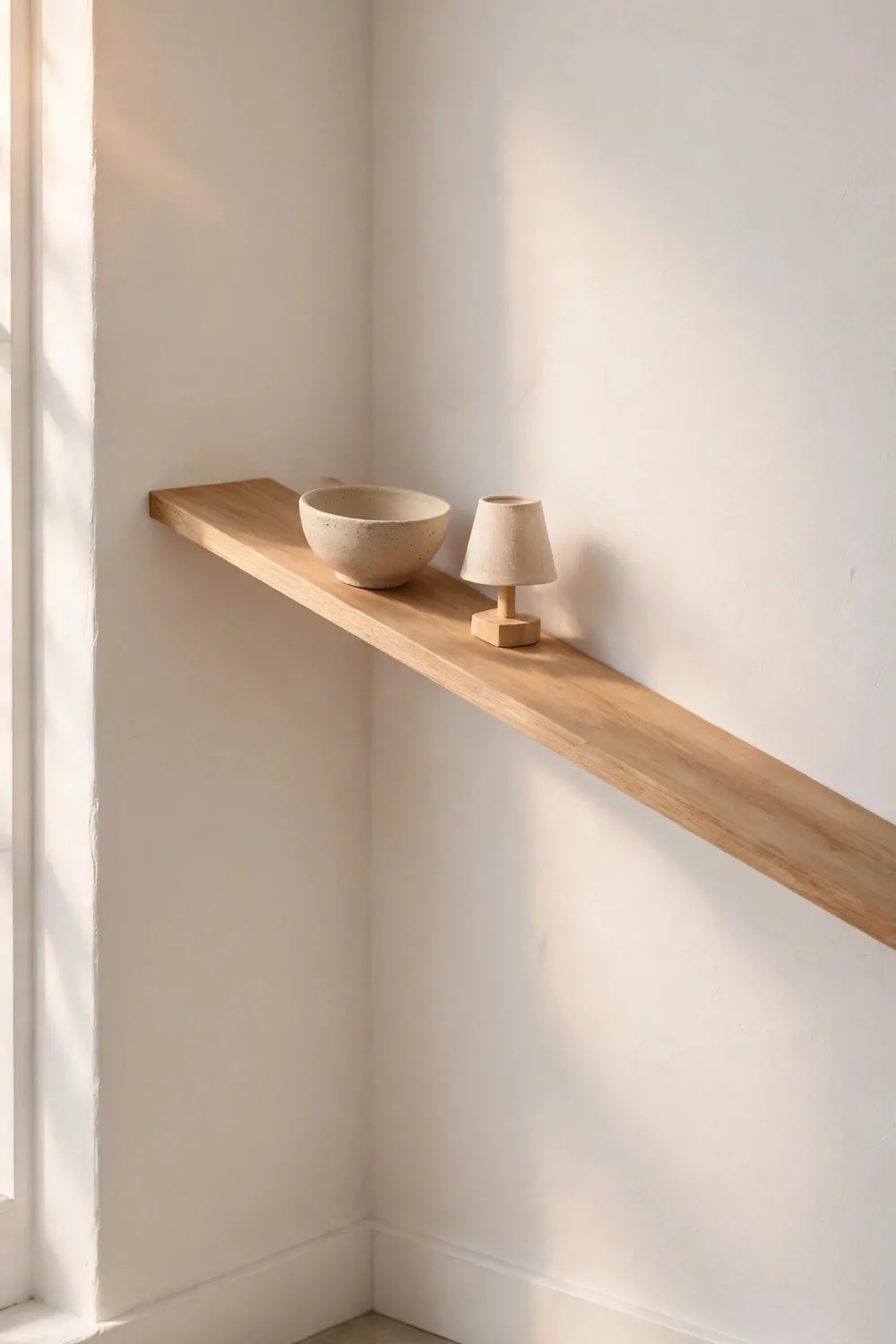
A diagonal shelf runs straight across the corner, from one wall to the other. It makes a flat little triangle of space right where the walls meet. It is simple and strong.
I like this shelf because it uses the dead space in the middle of the corner, where nothing else can fit, so the shelf claims it.
You can put a small bowl on it for keys and coins. A tiny plant fits too, and it becomes the first thing you touch when you walk in and the last thing you check before you leave.
The shelf is easy to make from one board. Cut it at an angle on both ends, fix it to both walls, and it is done. You do not need fancy tools.
Make it at a height that is easy to reach without stretching. Your shoulder height is a good guide, because you want to drop things on it, not lift them up high.
It also works well above a bench or a shoe rack. Put the shelf higher and the bench lower, and the whole corner becomes one neat station. Everything lives in one spot.
Keep the shelf tidy with a small tray. A tray stops little things from sliding off the angled edge. It also makes the shelf look done, not messy.
If you rent your home, ask before you drill. A good adhesive strip can hold a light shelf, but check the weight limit first.
Corner Peg Rails at Two Different Heights
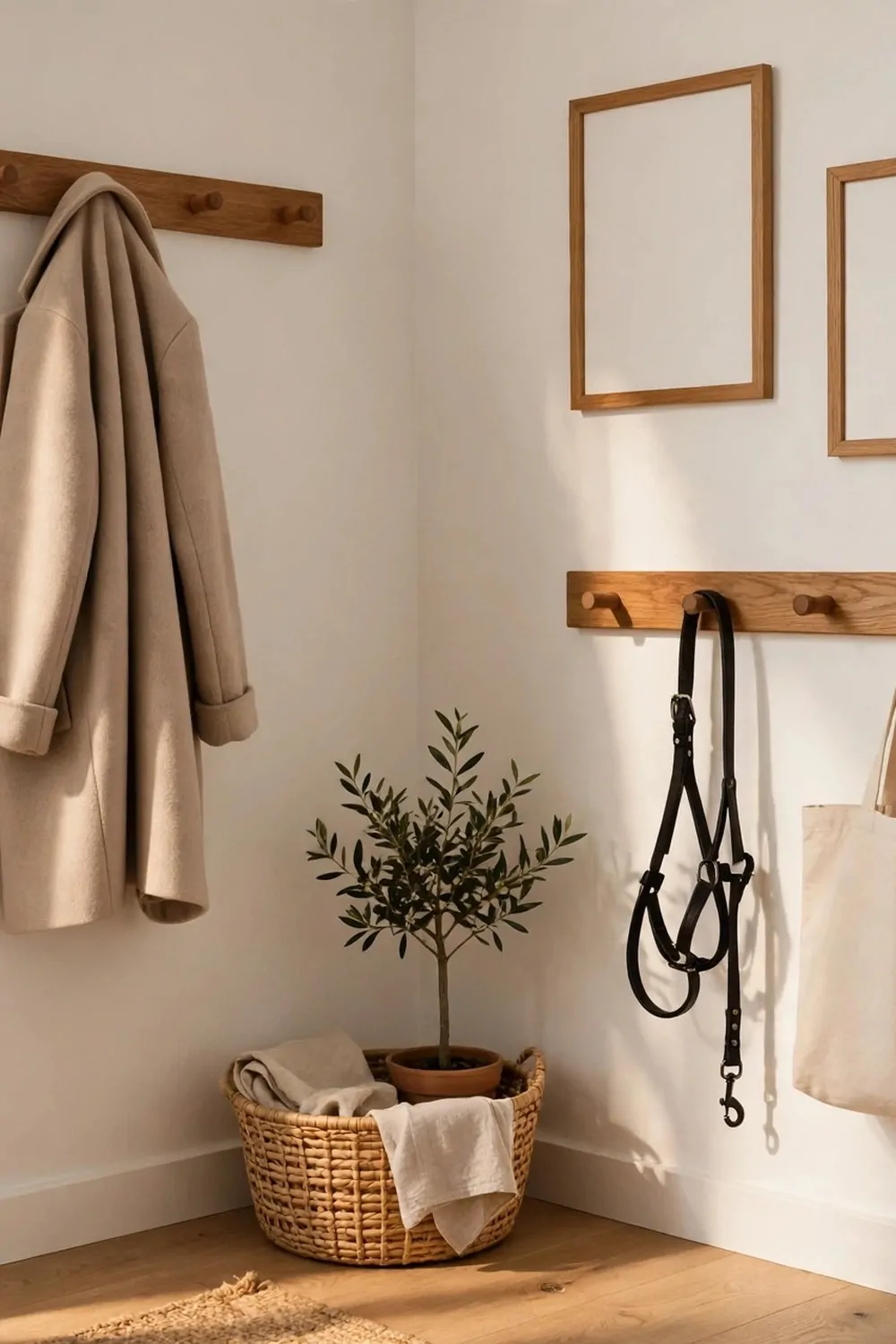
Peg rails are long strips of wood with little hooks sticking out. In a corner, you can run one rail on each wall, hang one rail high and one rail low, and you double your hooks.
I love peg rails because they hold so many things at once. Coats, bags, scarves, and dog leads all hang in one place. You can see everything at a glance.
Put the higher rail at a height grown-ups can reach with ease. Put the lower rail where kids can reach it, so everyone in the house has their own hooks.
Keep a few pegs empty if you can. A rail that is full to the brim looks messy and is hard to use. A little breathing room makes it feel calm.
The rails look best when they match the wall color or the wood in your home.
Pegs are kinder to clothes than sharp hooks. Coats hang well on a rounded peg, and they do not get pulled out of shape. Your jackets will thank you.
You can add the rails in an afternoon. A level, a drill, and a few screws are all you need, and it is a small job with a big payoff.
Try a small basket hung from one peg for gloves or pet treats. It keeps tiny things off the floor. It also keeps them right where you need them.
A Skinny Shelf Above the Door Frame That Turns Into the Corner
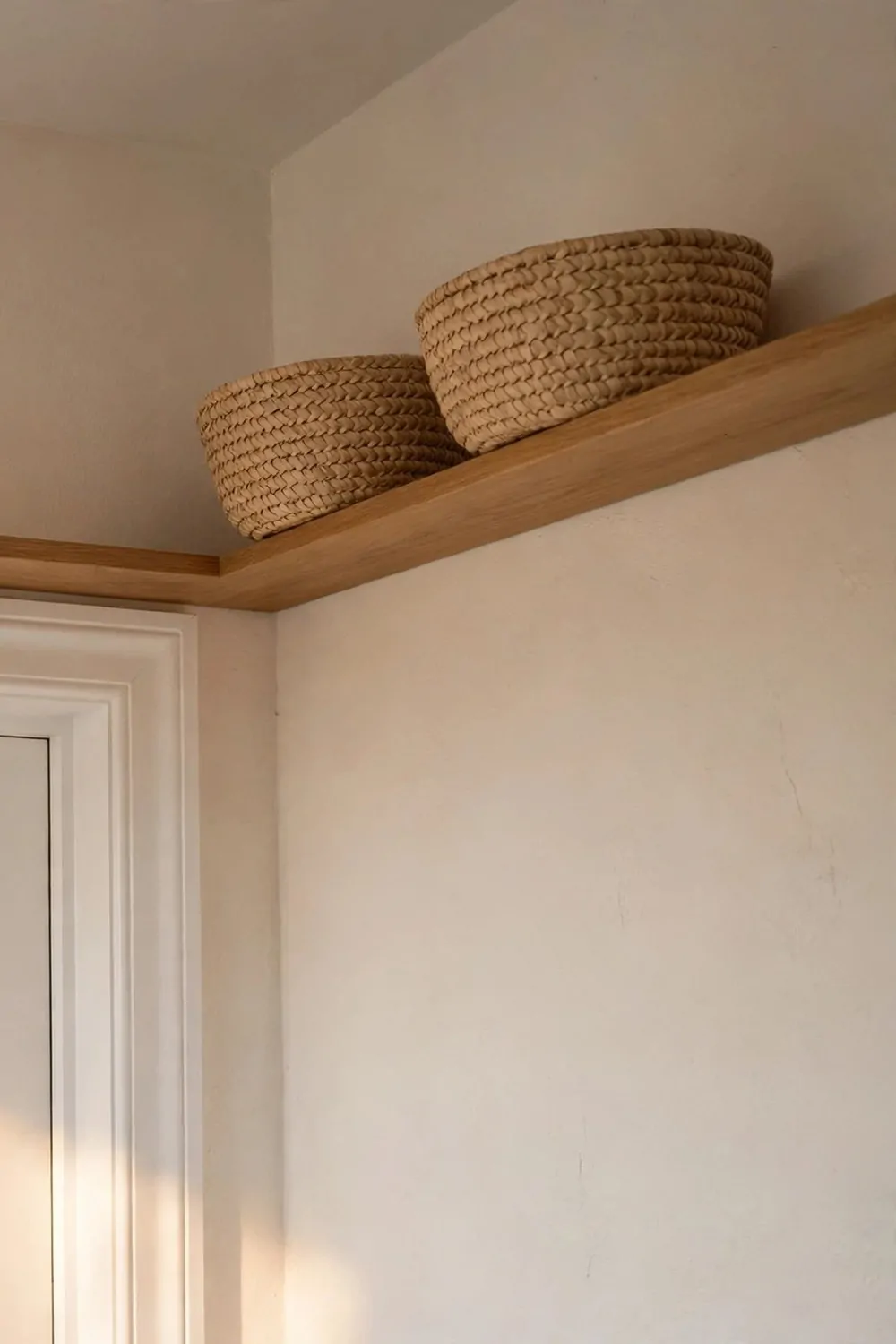
The space above a door frame is almost always empty. A skinny shelf can run across the top of the door and turn the corner. It gives you storage where nothing else can go.
I like this shelf for things you do not need every day. Hats, spare scarves, and a small box of gloves fit up there, out of the way but still easy to grab.
Keep the shelf shallow so it does not feel heavy over the door.
Paint it the same color as the wall if you want it to blend in. A shelf that matches the wall looks like part of the room. It will not draw your eye every time you pass.
You will need a small step stool to reach it. That is fine, because you will not reach up there every day, so keep a little stool nearby in the corner if you have room.
This shelf also works well for pretty things. A small plant or a framed photo can live up there. It turns a plain doorway into something worth looking at.
Make sure the shelf is fixed to the wall with strong screws. It sits high up, so you want it to feel solid, because a wobbly shelf above a door is not a good idea.
Do not store anything fragile up there. You do not want it falling on you. That is the last thing you need when you open the door in a rush.
A Hidden Key Spot Behind a Shallow Art Panel
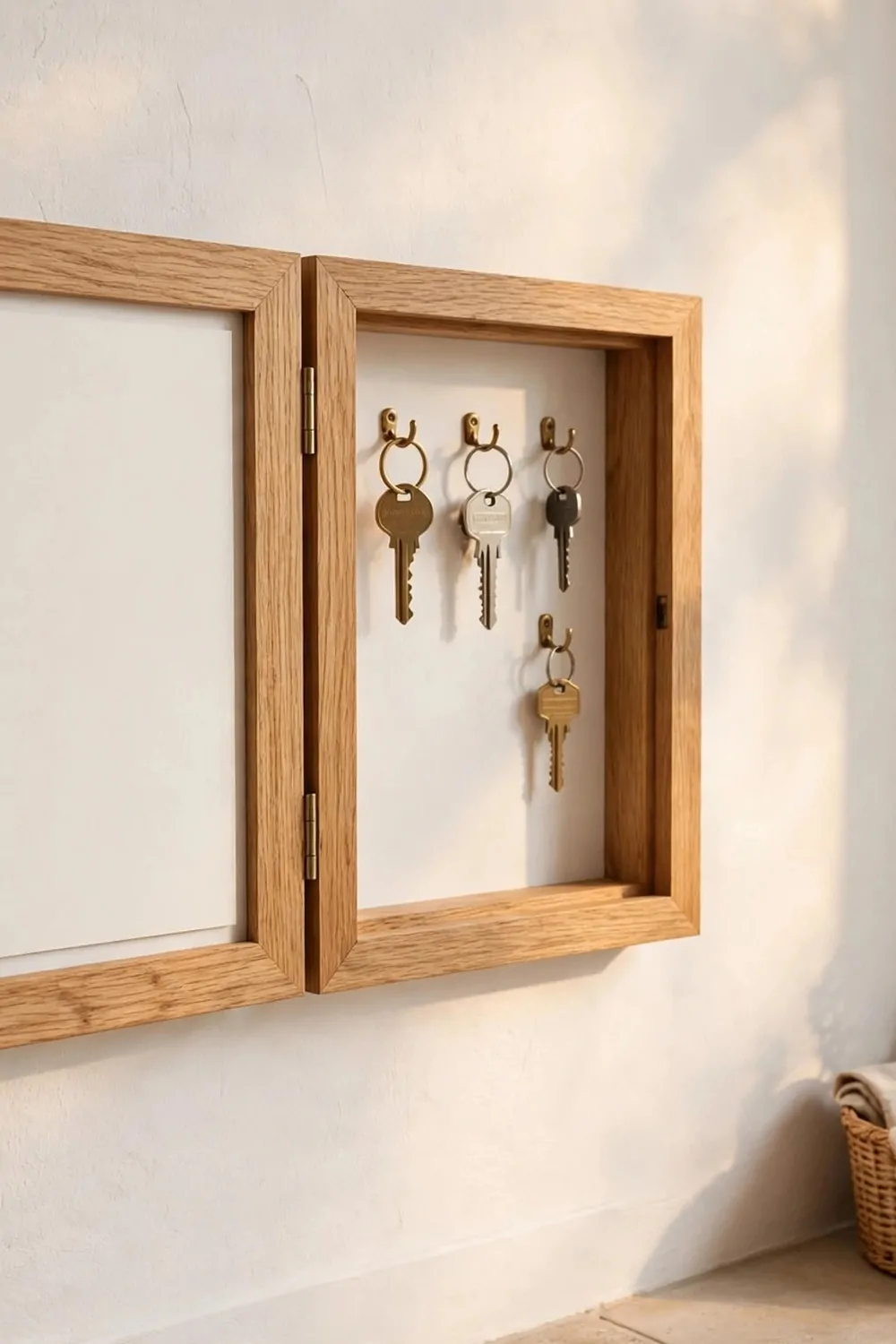
A shallow art panel can hide a row of small hooks right behind it. The picture looks like plain wall art, but it swings open to show your keys, and it is a secret that works every day.
I think this idea is so clever because it solves two problems at once. Your wall gets a pretty picture, and your keys get a safe home. Nobody would guess what is hiding there.
Pick art that you truly like looking at. You will see it every time you walk past the door. A small landscape or a simple print in soft colors works well.
The hooks behind the panel only need to hold a few sets of keys.
Make sure the panel is easy to open with one hand. You will be holding a bag or a cup of coffee when you reach for your keys, so a small finger pull at the side is enough.
This is a lovely idea if you like a clean look. No hooks show, no keys hang in plain sight. Your entryway looks calm and tidy, even when real life is busy behind the panel.
You can build this with a small frame and a thin board. Hinge it on one side and it swings like a tiny door. It is a weekend project that feels like magic when it is done.
Tell your family where the keys live. A hidden spot only works if everyone who needs it knows the secret.
A Tall Slim Hall Tree That Hugs the Corner
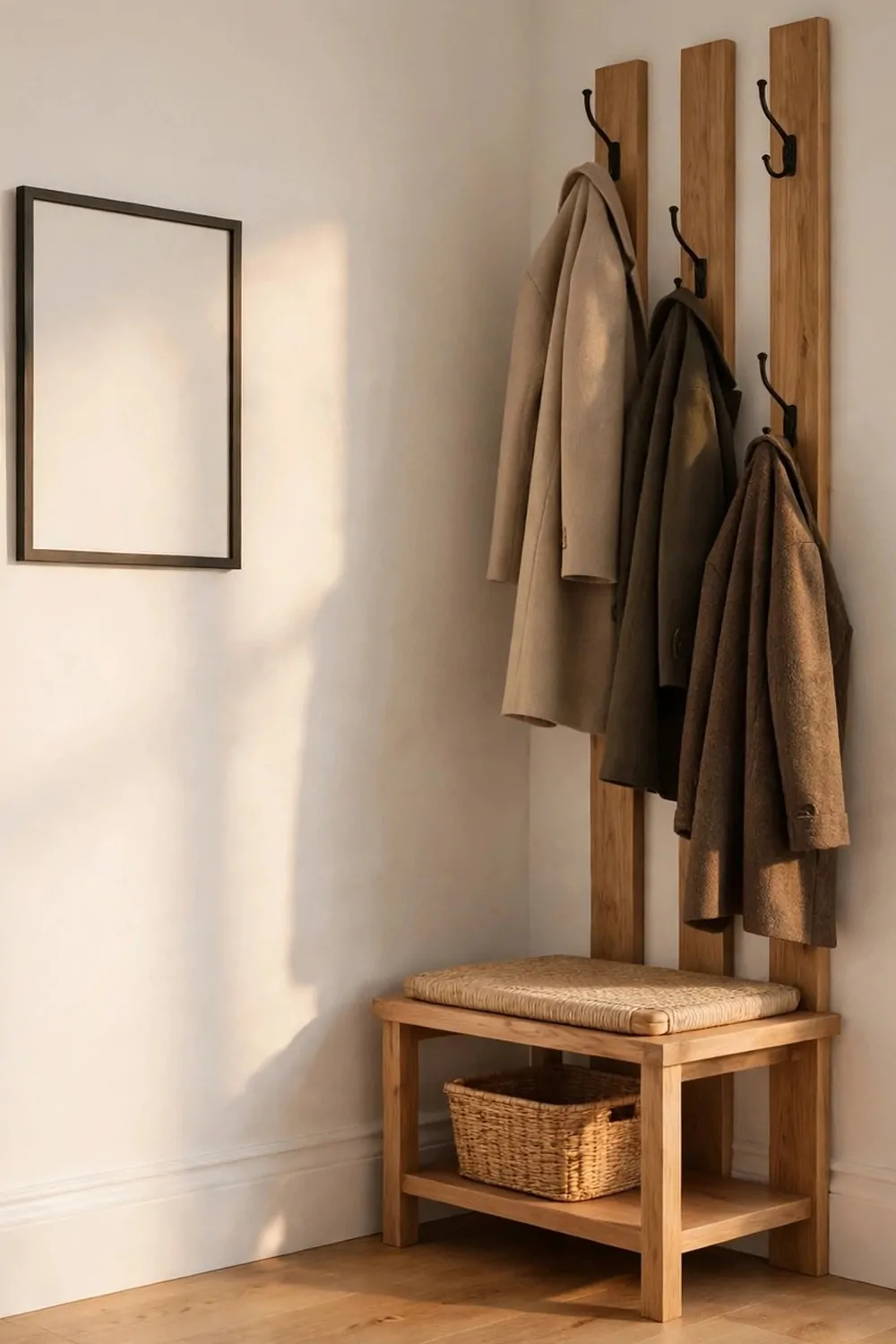
A tall slim hall tree fits right into the corner and reaches up toward the ceiling. It has hooks up top and a small seat or shelf down low. The whole corner becomes one tidy station.
I love a hall tree because it does the job of three pieces of furniture at once. It holds your coats, your shoes, and your bag, all in one small footprint, so your corner works so hard for you.
Look for a hall tree that is narrow and tall, not wide and low. A slim shape suits a corner best. It should hug the walls and leave the walkway clear.
Put your everyday coat on the closest hook. Put the bags on the lower hooks, so you can grab what you need in one move when you are running out the door.
A hall tree with a small bench seat is the most useful kind. You can sit to pull your boots on, and the shoes tuck under the seat when you are done. It is a whole routine in one corner.
Keep the top shelf for things you use less often.
A hall tree also gives the corner a finished look. The tall shape draws your eye up and makes the ceiling feel higher, so a small corner can feel grand when it has one tall piece in it.
If the hall tree wobbles, fix it to the wall with a small bracket. A tall piece should never lean, and one screw keeps it safe and steady.
An Umbrella Trough Built Into the Bottom of a Corner Cabinet
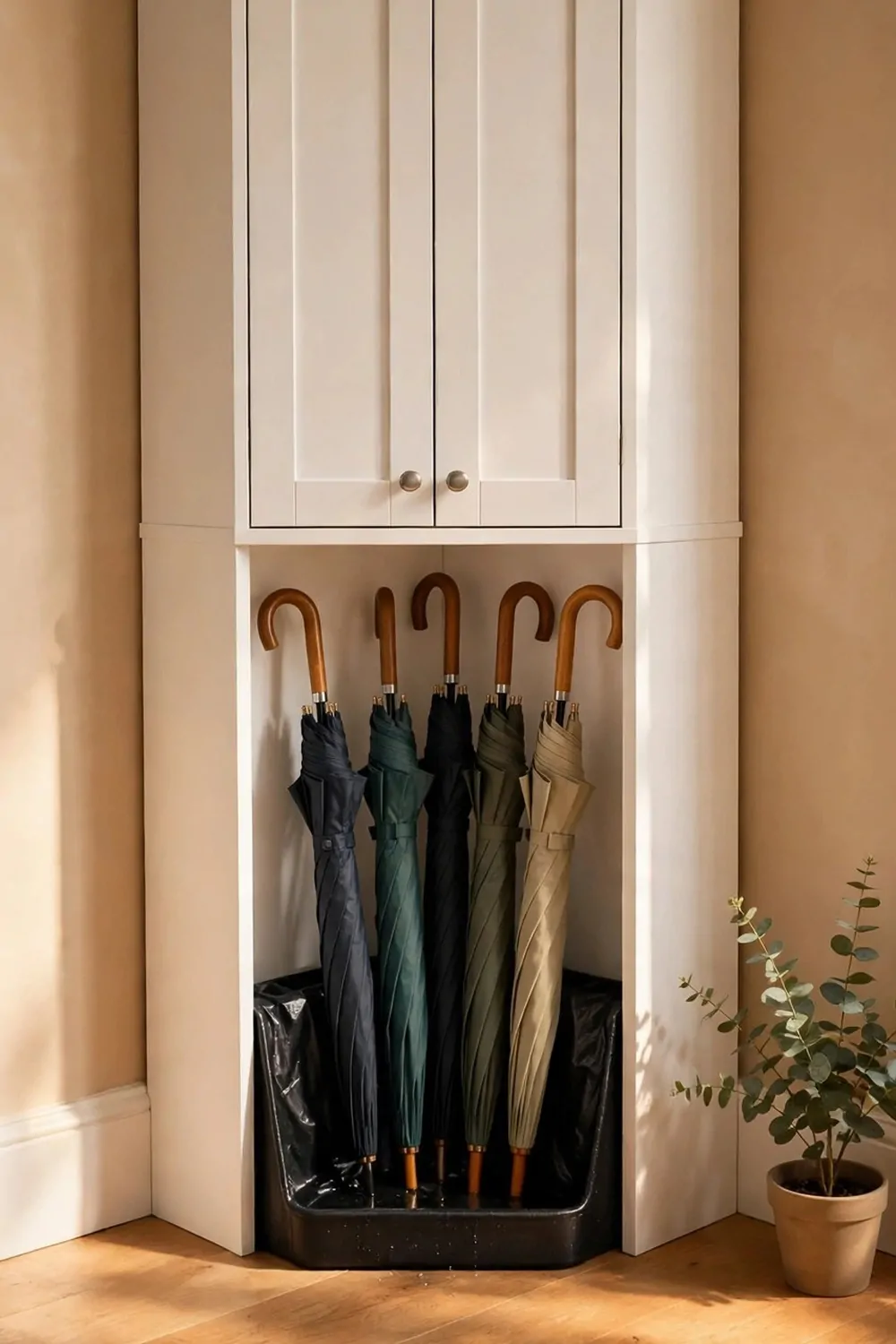
I used to lean my umbrellas against the wall and watch them slide down every time I opened the door. It drove me a little bit mad, if I am honest.
A small trough built into the bottom of a corner cabinet fixes that mess in one move.
You just drop the umbrella in and it stays put. No more sliding, no more clatter on the floor. It feels so good to have one less thing to chase.
The water drips down into the trough instead of making a puddle on your floor.
That one little change keeps the whole corner clean and dry. Your shoes stay dry too, which is a small win on a wet day.
I like a trough with a removable tray inside, because you can pull it out and rinse it in the sink when it gets muddy. It takes about a minute to clean. A tray that stays put is much harder to wash.
If your cabinet sits right in the corner, the trough uses space you were wasting anyway. It tucks away so neatly that you forget it is even there.
It holds two or three umbrellas without crowding the room. You walk in, you drop your umbrella in, and you are done. That is the whole routine, and it works every rainy day.
A Toe-Kick Drawer Under a Built-In Corner Seat
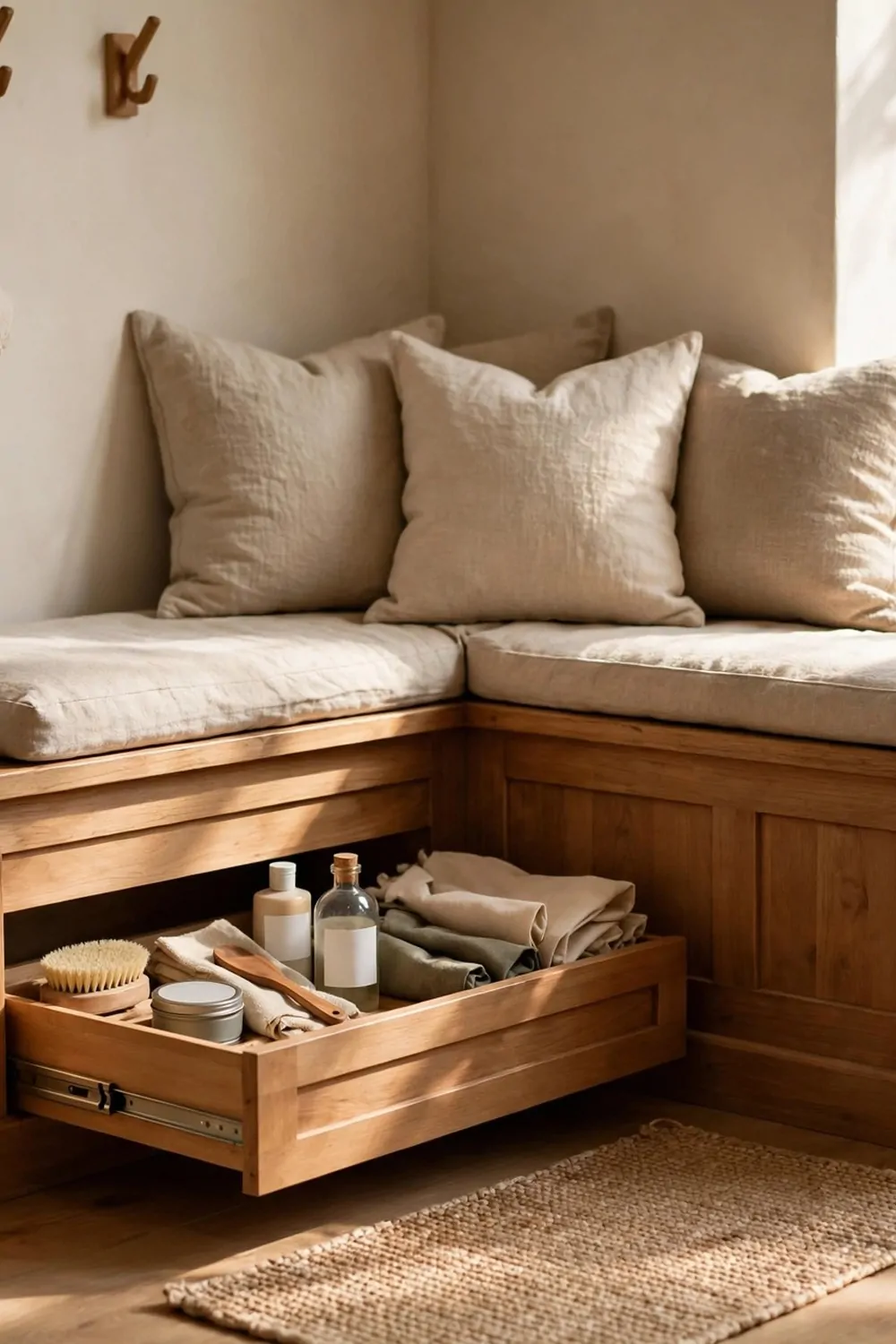
That little gap under a built in seat always felt like wasted space to me. It just sat there, doing nothing, while my bench got crowded. I knew there had to be a better use for it.
A toe kick drawer turns it into a secret spot for the things you need but never want to see. It hides the clutter and keeps the bench clear.
You push it open with your foot when your hands are full of bags.
I keep mine stocked with the small stuff that used to pile up on the bench. Shoe care supplies, spare laces, and folded shopping bags all live down there now. Everything has a home, and nothing shows.
It closes flush, so nobody even knows it is there. The front of the drawer looks just like the rest of the seat base.
- Shoe care supplies like polish, brushes, and a spray bottle
- Reusable shopping bags folded flat and ready to grab
- Spare laces in a small zip bag
- Pet accessories like a spare leash and treat pouch
- Slippers for guests who want to slip out of their shoes
I check mine once a month and pull out anything that does not belong there anymore.
The best part is how it keeps the bench clear for sitting. You sit down, you pull your shoes off, and everything you need is right under your feet. It makes the whole routine feel easy and calm.
A toe kick drawer is a small change with a big payoff. Once you have one, you will wonder how you ever lived without it.
A Charging Shelf Where the Two Walls Meet
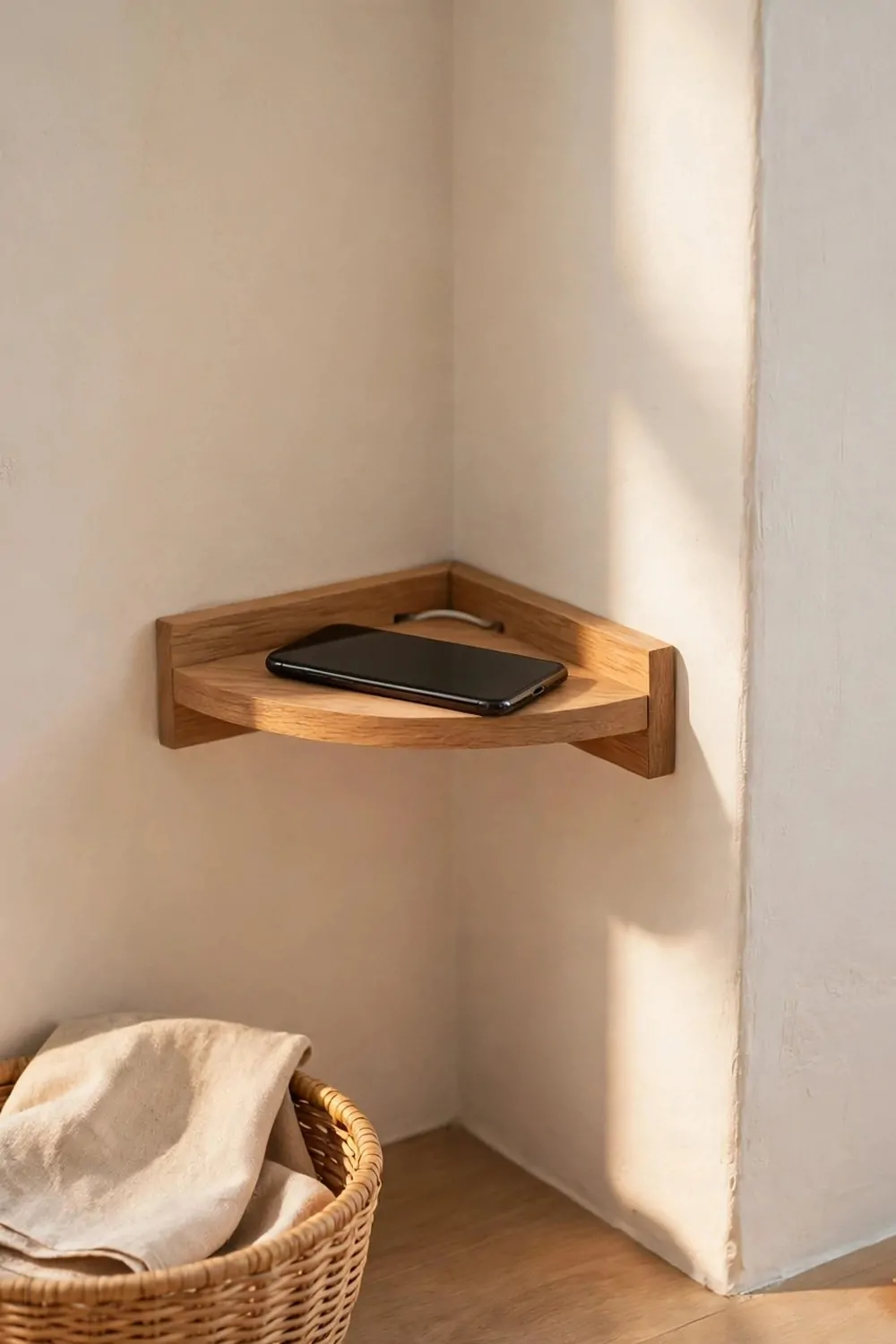
The corner where two walls meet is the perfect spot for a tiny charging shelf.
Your phone sits there while you put your shoes on, and you never leave it behind. It is right at eye level when you grab your bag. That one habit has saved me more times than I can count.
I mounted a narrow shelf right at hand height so I can see the screen light up. It is the first thing I check when I walk in.
A small hole in the back lets the cable pass through, so you see no messy wires. The cable stays hidden behind the shelf, out of the way. Your corner looks tidy, even with a charger plugged in all day.
It only needs to be big enough for one or two phones.
My husband puts his watch on it too, and it charges right next to his phone. They sit side by side, and both are ready by morning.
You plug in when you walk in the door, and your phone is ready when you walk out. No more hunting for a cable at the last minute. It turns a daily chore into something you never even think about.
It is a small habit, but it saves me from that dead battery panic at least once a week. A little shelf, a little cable, and a lot less stress.
A Slatted Screen That Turns the Corner Into a Micro Mudroom
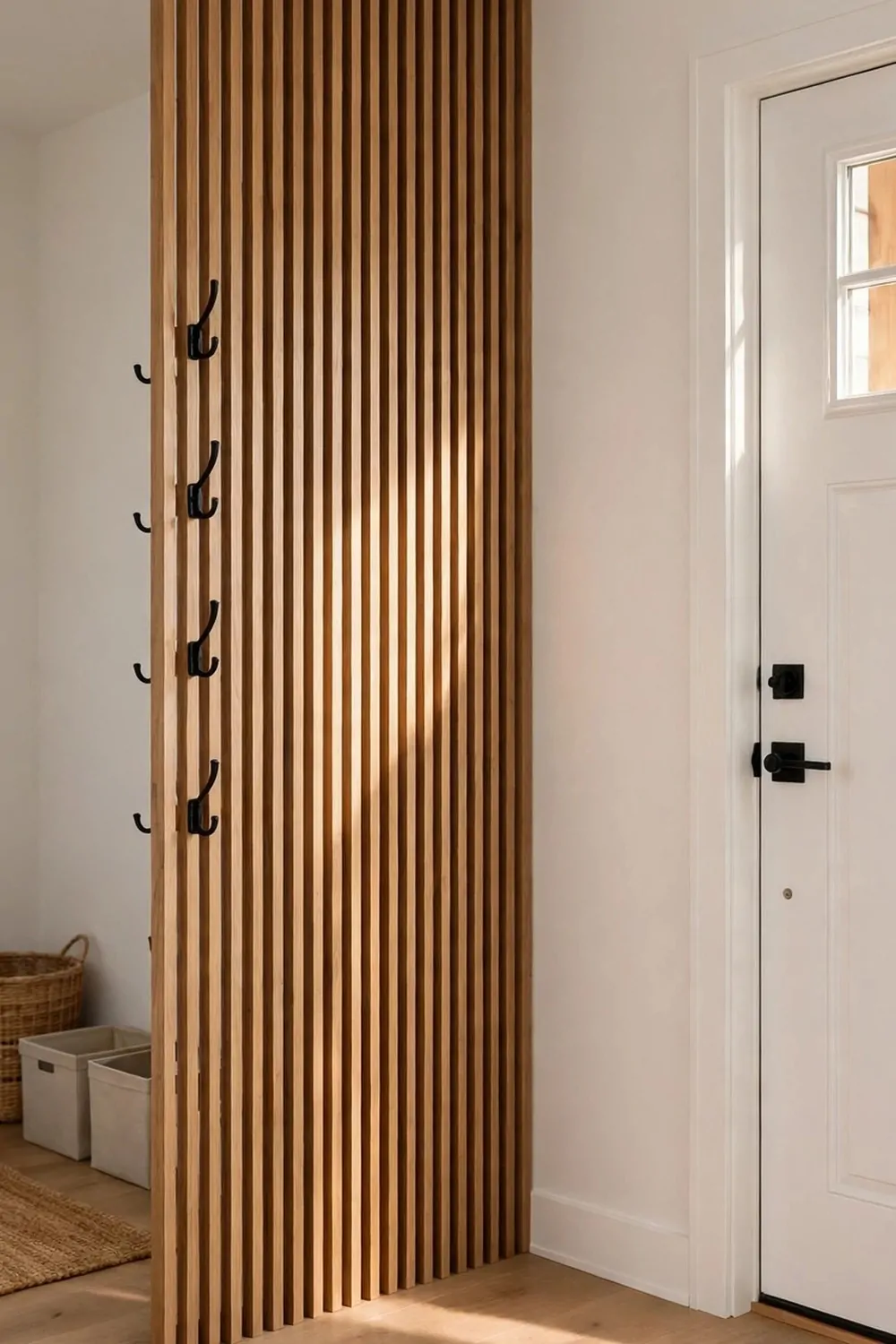
A slatted screen can turn a plain corner into a tiny mudroom without building a single wall. It just stands there, doing the job of a whole room.
It marks the spot where the entry stops and the rest of the house starts. You can feel the change when you step past it. That little boundary makes the whole home feel more organised.
I love how it still lets light pass through, so the corner never feels closed in.
You can hang a hook on it for your coat and set a basket at its base for shoes. Everything you need is right there, in one small spot.
| Material | Light It Lets Through | Look |
|---|---|---|
| Wood slats | Soft and warm light | Cozy and natural |
| Metal slats | Bright and open light | Clean and modern |
| Fabric panel | Soft and diffused light | Calm and cozy |
Pick the material that fits the rest of your home, and the screen will look like it was always meant to be there. Wood feels warm and cozy, while metal feels clean and modern. A fabric panel gives you a soft, calm look instead.
The slats give you a little privacy without shutting the space off.
My kids know that when their shoes are behind the screen, they are put away. They drop their shoes in the basket and run off to play. It is a small rule, and it actually works most days.
It is such a simple trick, and it makes a small corner feel like it has a real job to do. A few slats, and your corner stops being wasted space.
A Single Departure Station for the Last 30 Seconds
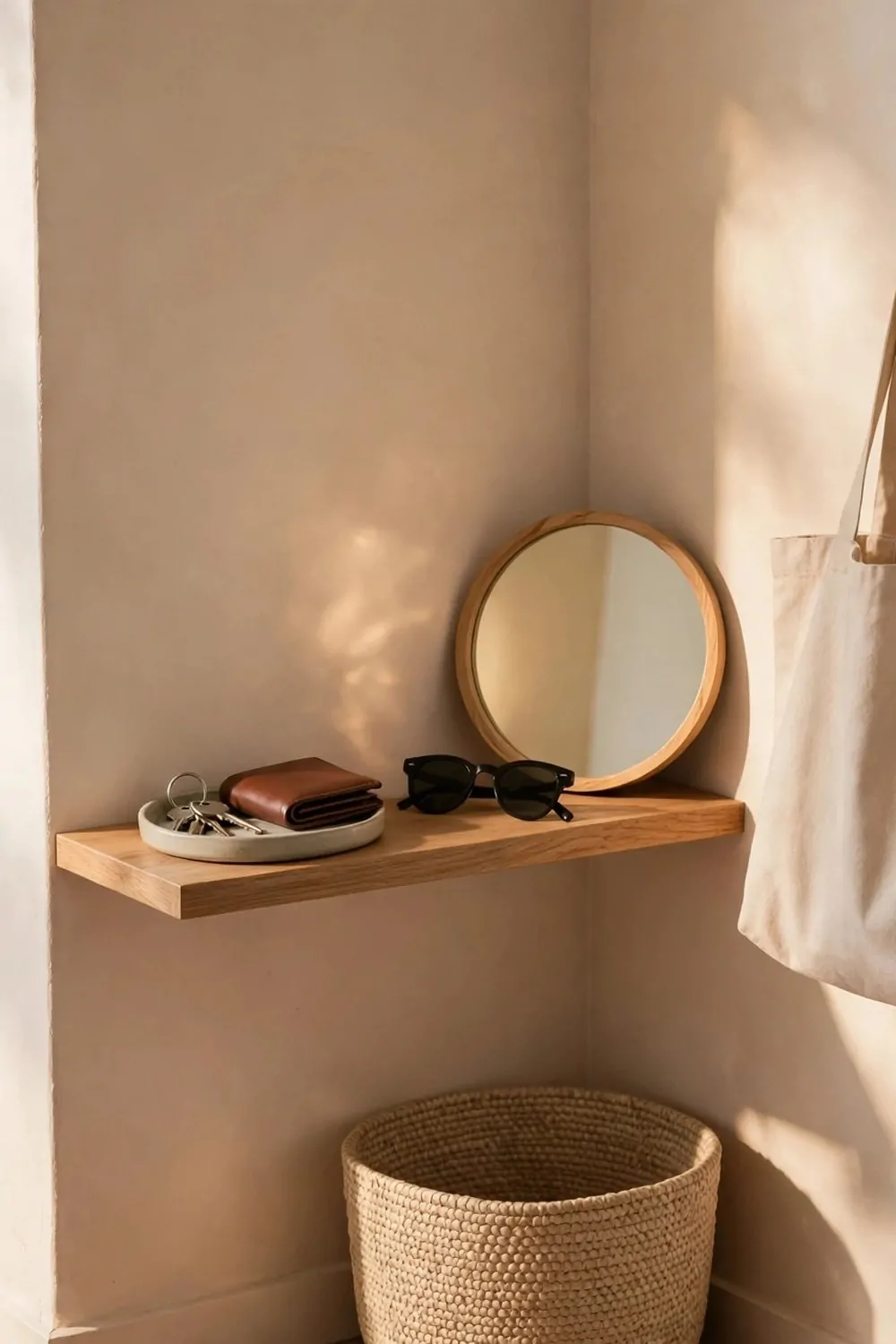
The last 30 seconds before you leave are always the rushy ones. You are grabbing your bag, hunting for your keys, and trying to remember what you forgot. It is the worst part of my morning, or at least it used to be.
A single departure station in the corner holds everything you need, so you stop running back through the house.
I set mine up right by the door, at arm height, and I never forget my keys now. Everything is right where my hand expects it to be.
It is small, but it holds the few things that matter most.
- A hook for your everyday bag
- A tray for keys and wallet
- A small mirror for a quick last check
- One charging spot for your phone
- A narrow shelf for sunglasses
- A basket for returns you need to take out
I set the basket by the door on Sunday night, so Monday morning I never forget what goes out with me. Returns, library books, and anything that needs to leave the house all go in the basket. Sunday night me is always looking out for Monday morning me.
You grab your bag, you check the mirror, and you are out the door. It takes about thirty seconds, and there is no more last minute panic.
My mornings got so much calmer once everything lived in that one little spot. I am not running from room to room anymore. I just walk to the corner, grab my things, and go.
If you share the house, give each person their own hook so nothing gets mixed up. A little label on each hook makes it easy for everyone to find their own stuff.
A Round Catchall Dish on a Corner Shelf
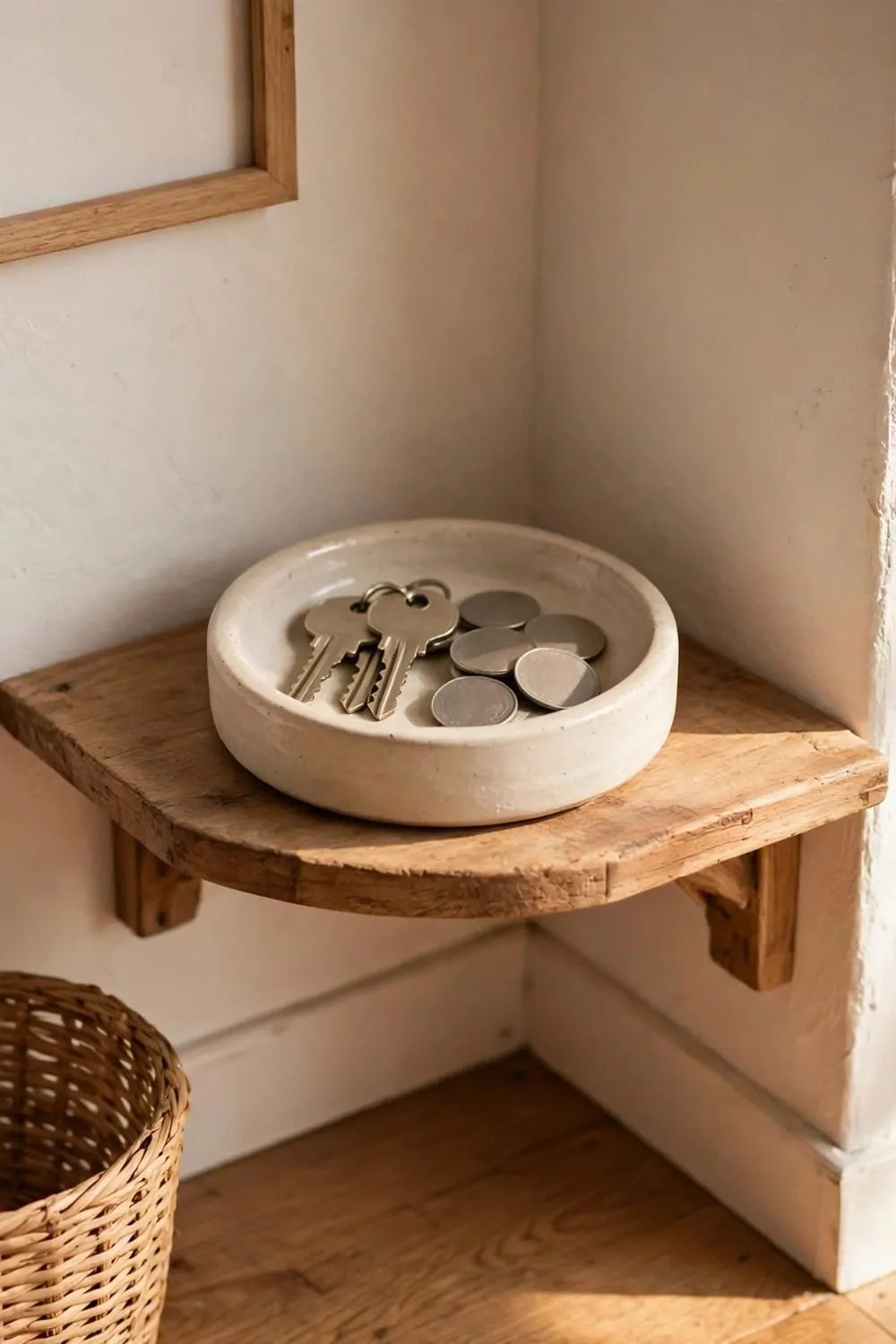
A round catchall dish is the smallest fix on this list, and maybe my favorite.
It sits on a corner shelf and gives your keys and coins a home. No more digging through your bag or patting your pockets.
I picked a dish with a slightly raised edge, so nothing rolls off and lands on the floor. The edge is just high enough to catch a rolling coin. It is a small detail, and it makes all the difference.
Round works best in a corner, because it softens all those sharp angles around it. The soft curve looks so much kinder than another square box.
You drop your keys in when you walk in, and you pick them up on your way out.
It is that simple, and it works every single day. I found mine at a little shop for almost nothing, and it still gets used more than anything else in the entry. Some of the cheapest things end up being the ones you love most.
If your shelf is tiny, a small dish still does the job just fine. You do not need a big dish to hold a set of keys and a few coins.
A catchall dish turns a messy habit into a calm one. Your keys always live in the same spot, so you always know where to look. It is the kind of small win that makes your whole morning feel easier.
A Tall Plant That Softens the Hard Corner
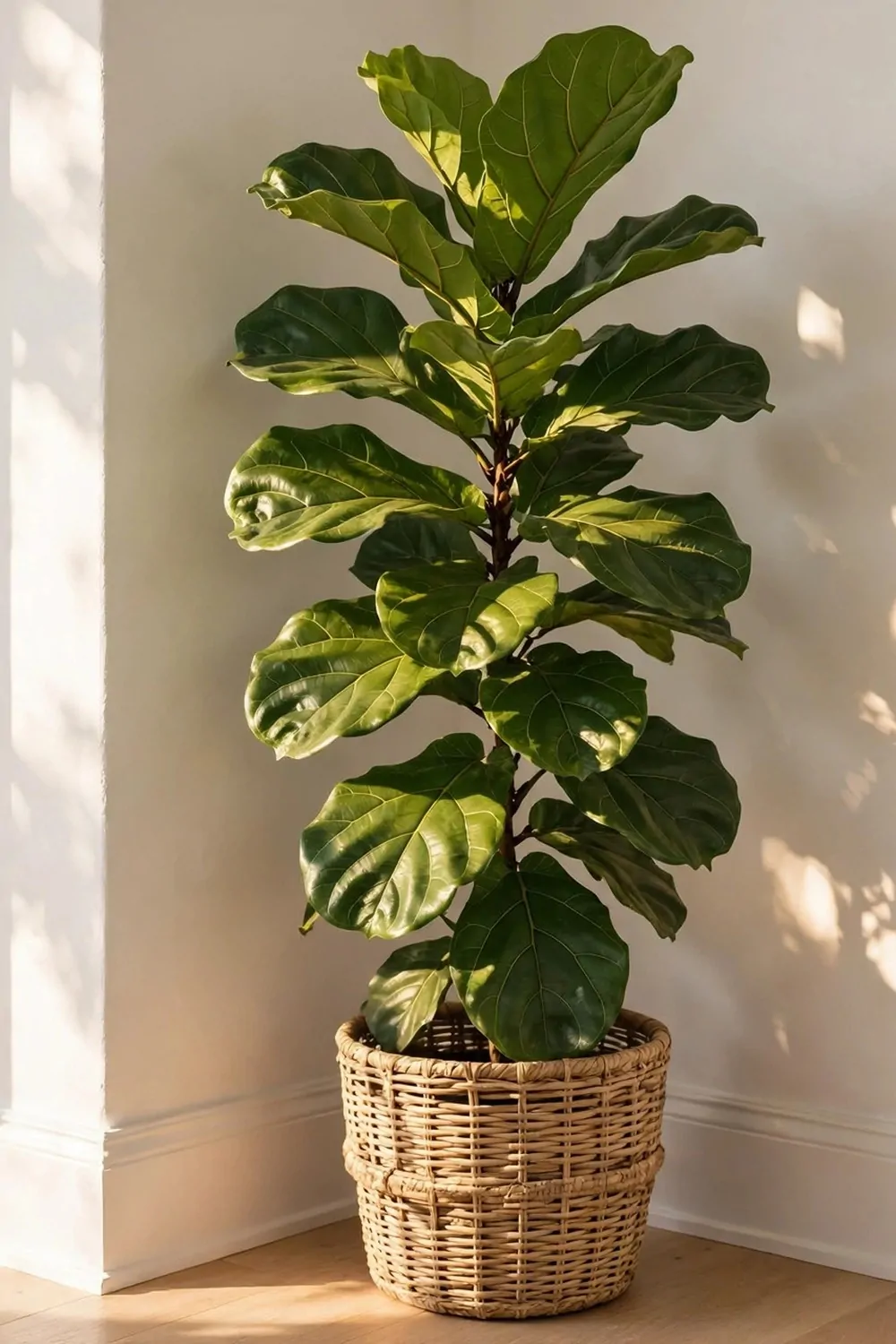
A tall plant can make a hard corner feel soft and alive in one move. It fills the empty space with something green and growing.
I put a snake plant in the corner by my door, and it changed the whole feel of the room.
The green breaks up all the straight lines and pale walls. It gives your eye something soft to rest on when you walk in. A bare corner can feel cold, but a plant warms it right up.
You do not need a big pot, just one tall enough to fill the empty space. A slim pot fits neatly into the corner without blocking the walkway. The plant does the work, not the pot.
A plant also makes the entry feel welcoming, like someone actually lives here and cares. It is the first green thing you see when you come home.
I water mine once a week, and it still looks great even when I forget for a few days.
If you have little light, pick a plant that likes shade and you will be fine. Snake plants and pothos both do well in a dim corner.
It is the easiest way to make a corner feel finished without buying any furniture. One plant, one pot, and the corner is done. Your entryway will feel softer the very same day.
Paint the Corner a Different Color to Mark the Zone
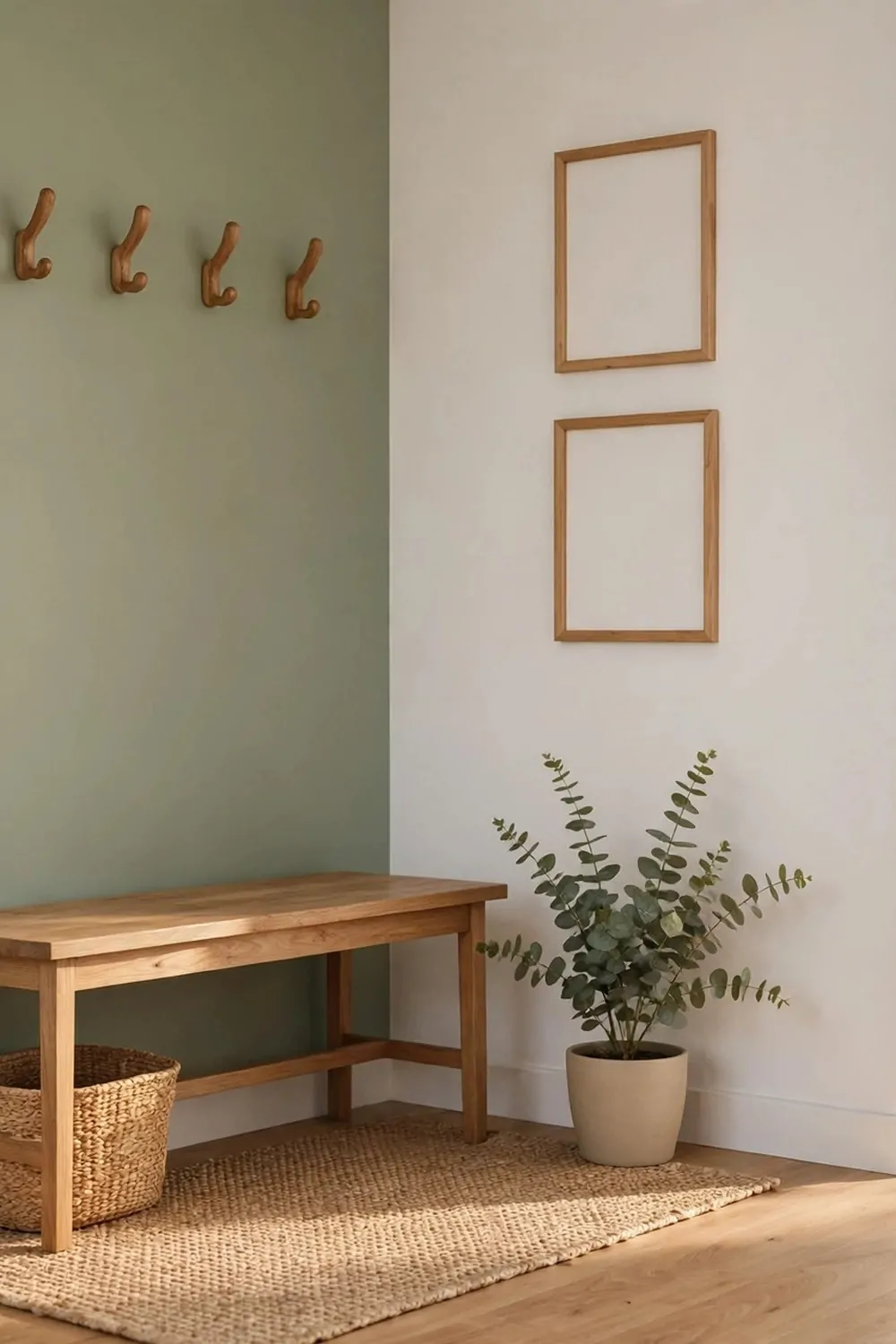
Paint is the cheapest way to tell your eye where the entry starts and stops. You do not need new furniture or a big budget. A small tin of paint and one afternoon is all it takes.
I painted just the corner walls a soft color, and suddenly the little space had its own identity. It stopped feeling like a leftover gap between two walls.
You do not need to paint the whole room, just the two walls that meet in the corner.
It looks intentional, like you planned the zone from the start. Visitors notice it right away, even if they cannot say why. A painted corner just looks like it was meant to be there.
Pick a color that feels calm and works with the rest of your home. Soft sage, warm cream, or pale blue all work well in a small space.
- Soft sage green
- Warm cream
- Pale blue
- Light terracotta
I went with a warm cream, and it made the corner glow a little in the morning light.
A painted corner also makes your hooks and shelves stand out nicely against it. The wood and metal pop against the soft color. It is a small backdrop that makes everything else look better.
You can finish the whole job in one afternoon, and it costs almost nothing. A little paint, a little time, and your corner has a whole new feel.
A Small Rug Cut to Fit the Corner Angle
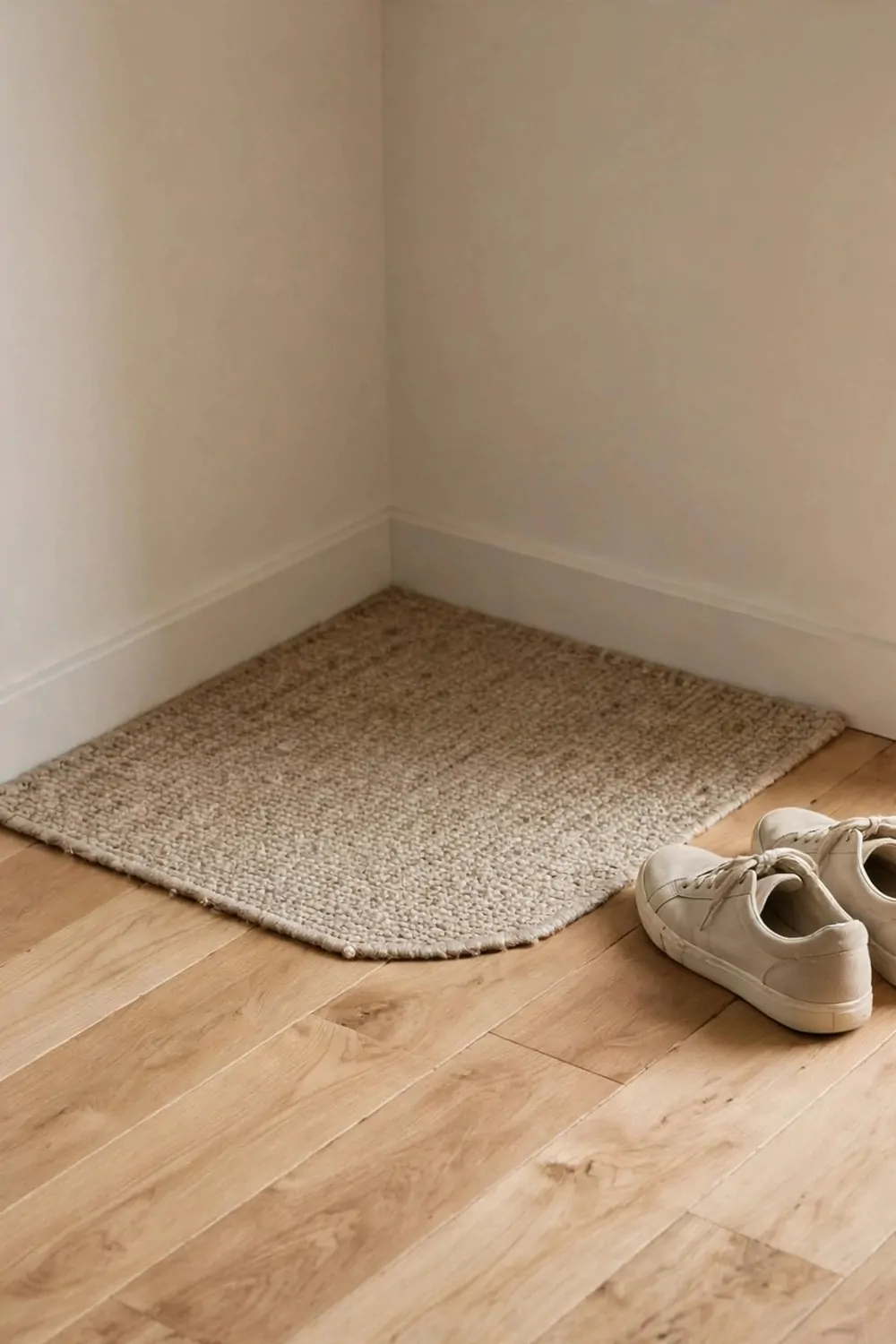
A rug that fits the corner angle makes the space feel made for you.
Most rugs are square, and they stick out oddly in a corner, so I had one cut to fit. The angled edge hugs both walls, and nothing bunches up. It looks like the rug was made just for that spot.
It catches the dirt from your shoes before it spreads into the house. Your floors stay cleaner, and you sweep a lot less.
You step onto it when you walk in, and it tells you that you are home now. That soft landing after a long day feels so good. A rug turns a hard floor into a warm welcome.
I picked a low pile rug, because it is easy to shake out and it does not trip anyone.
The corner shape also keeps the rug from bunching up against the walls. It stays flat, and it stays put, even with feet walking over it all day.
You can use a piece of paper to trace the angle first, then take it to the shop. The shop can cut the rug to match your tracing. It is a simple step, and it makes the fit perfect.
It is a tiny detail, but it makes the whole corner look finished and thought through. A rug that fits the angle says you cared about the small things.
Keep Reading
If you liked these corner ideas, you will love these other small space reads too.
- 22 Home Office Nook Designs Tucked Into Tiny Corners
- 27 Small Home Ideas That Make Every Inch Count
- 25 Tiny Spaces That Look Like a Million Bucks
- 26 Closet Organization Ideas That Make Mornings So Much Easier
Your corner may be small, but with the right idea it can work just as hard as any big entryway, so pick one you love and try it this weekend.