21 Minimalist Home Decor Ideas for a Calm Clutter-Free Home

I timed myself once. It took me eleven minutes to find my car keys in my own house. Eleven minutes, just to leave the house.
That was the day I stopped blaming my memory and started blaming my rooms. My things had no home. They lived wherever my hands dropped them, and every morning I paid for it with time I did not have.
So I changed how my home works, one small rule at a time. I did not buy new furniture or repaint a single wall. I just gave everything a place, and I stopped letting new stuff in without a plan.
These 21 minimalist home decor ideas are the rules that worked for me. They are simple, they cost almost nothing, and they make a home feel calm. Pick the ones you like and start with one today.
1. Start With One Clear Surface
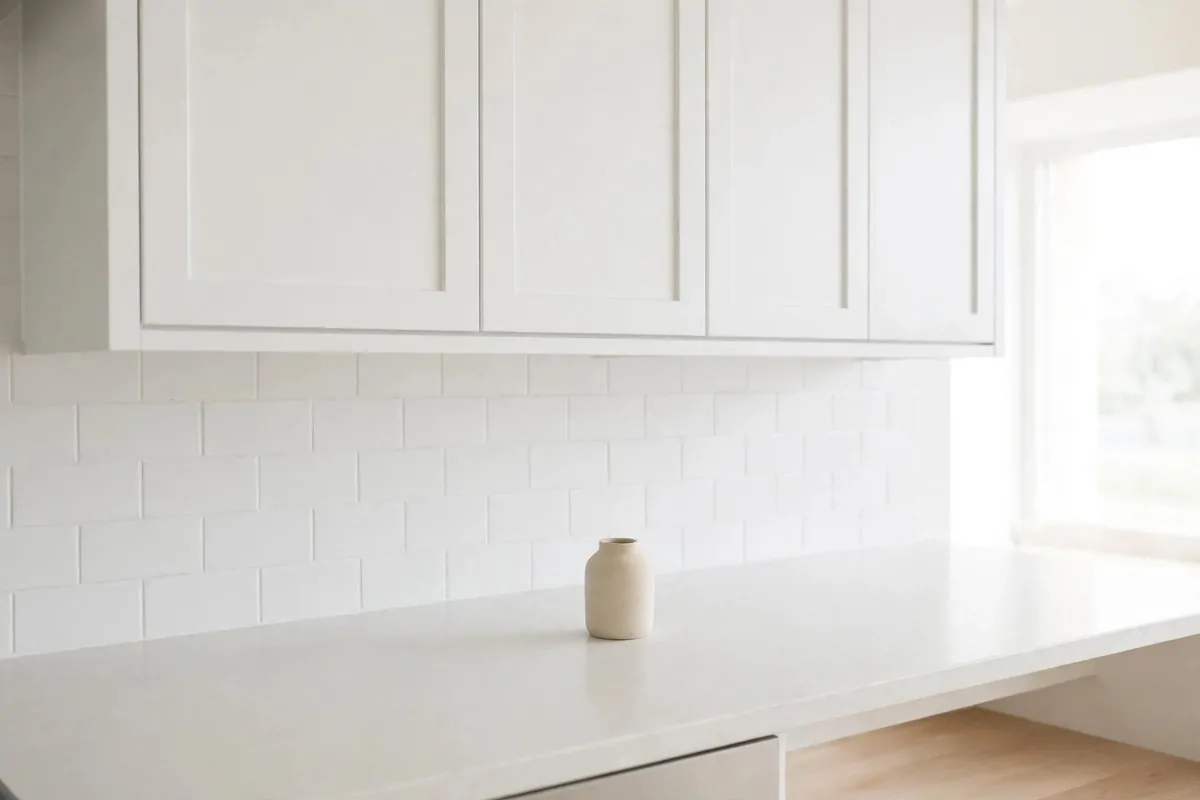
Pick one surface in your home and make it clear today.
It can be your kitchen counter or your desk or the top of your dresser. Just pick one spot and clear it all the way. I like to start small because a small win feels good and it keeps me going.
Take everything off that surface and put it in a box for now.
Wipe the surface clean and look at it for a minute. Does it feel better already? I bet it does. A clear spot gives your eyes a place to rest, and your mind feels a bit lighter too.
Now look at the things in the box one by one.
Ask yourself if each thing really needs to live on that surface. Most of the time the answer is no. Put the things you use every day back, and find a better spot for the rest.
I keep only three things on my kitchen counter now.
One is my kettle, one is a small cutting board, and one is a jar with my cooking spoons. That is it. When I walk in, the room feels calm, and I can start cooking without moving a pile of stuff first.
Your clear surface does not have to stay perfect all day.
Life happens, and things land there. That is fine. Just clear it again at night before bed. It takes two minutes, and you wake up to a calm room instead of a messy one.
Once one surface feels good, you will want to do another one. That is how a calm home starts, one clear spot at a time.
2. Give Everything a Home
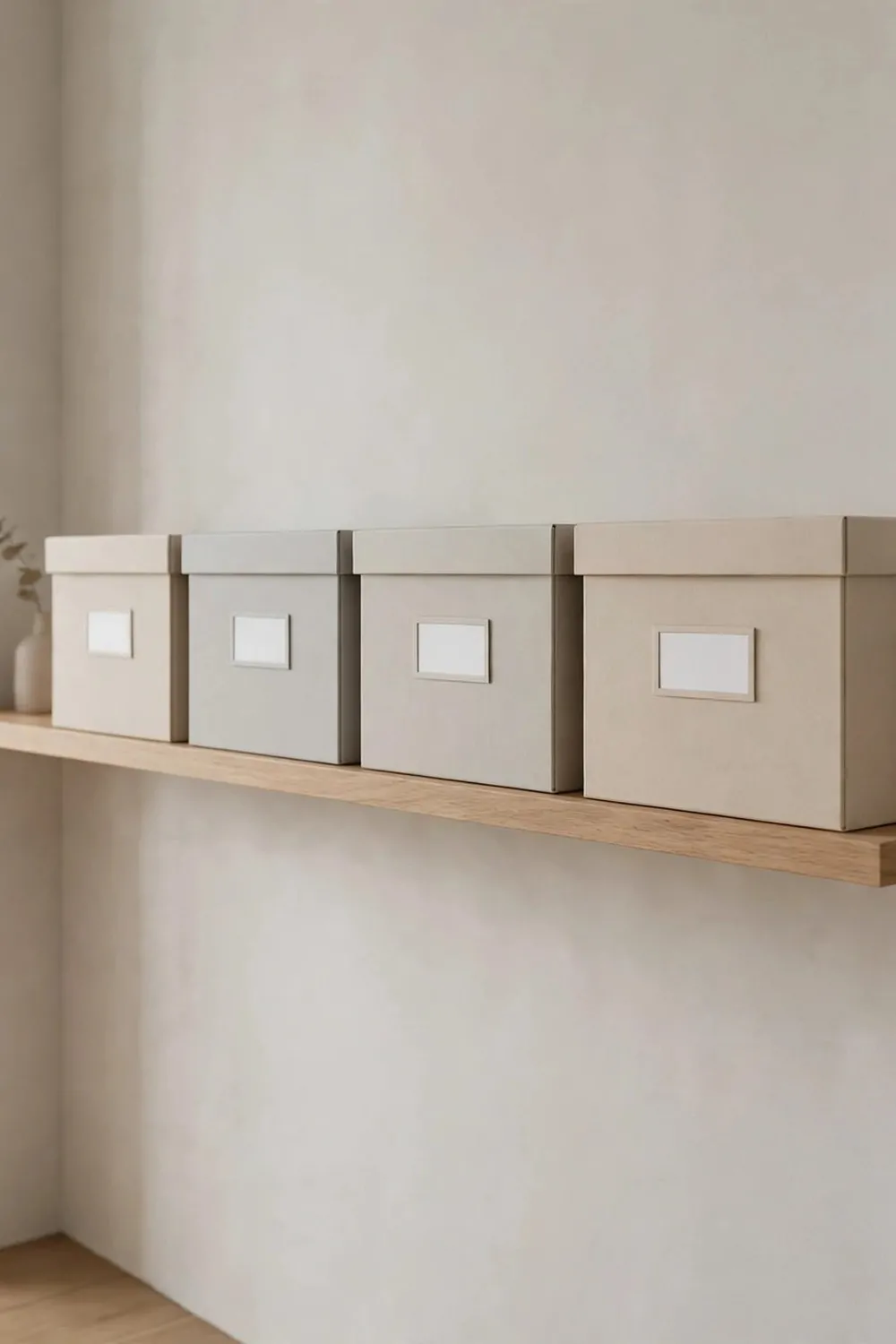
Every single thing in your home needs a home of its own.
When a thing has no home, it ends up on the table or the chair or the floor. Then those piles grow, and the whole room starts to feel messy. I learned this the hard way in my own flat.
So walk around your home and watch where things land.
Where do your keys go when you come in? Where does the mail go? Where do your chargers end up? If you do not have a set spot for these things, they will wander all over the house.
Pick one small spot for each everyday item and stick to it.
It does not have to be fancy or cost money. A hook by the door works for keys. A small box on a shelf works for mail. A drawer works for chargers. The point is that you always know where to look.
Here are some simple homes that work well in my home:
- Keys: a small hook right by the front door
- Mail: a slim box on the shelf near the door, sorted once a week
- Chargers: one drawer in the living room, with each cable rolled up
- Bags: two hooks in the hall, one for my everyday bag and one for shopping bags
Once you set these spots, tell everyone in your home about them.
It takes a few days to build the habit. You will forget sometimes, and that is okay. Just put the thing back in its home when you notice it is out of place.
After a week or two, it starts to feel automatic.
You come home, you hang your keys, you drop the mail in its box, and you do not even think about it. The house stays tidy on its own, and you spend less time hunting for lost things.
That is the real gift of giving everything a home. You get your time back.
3. Try the One In, One Out Rule
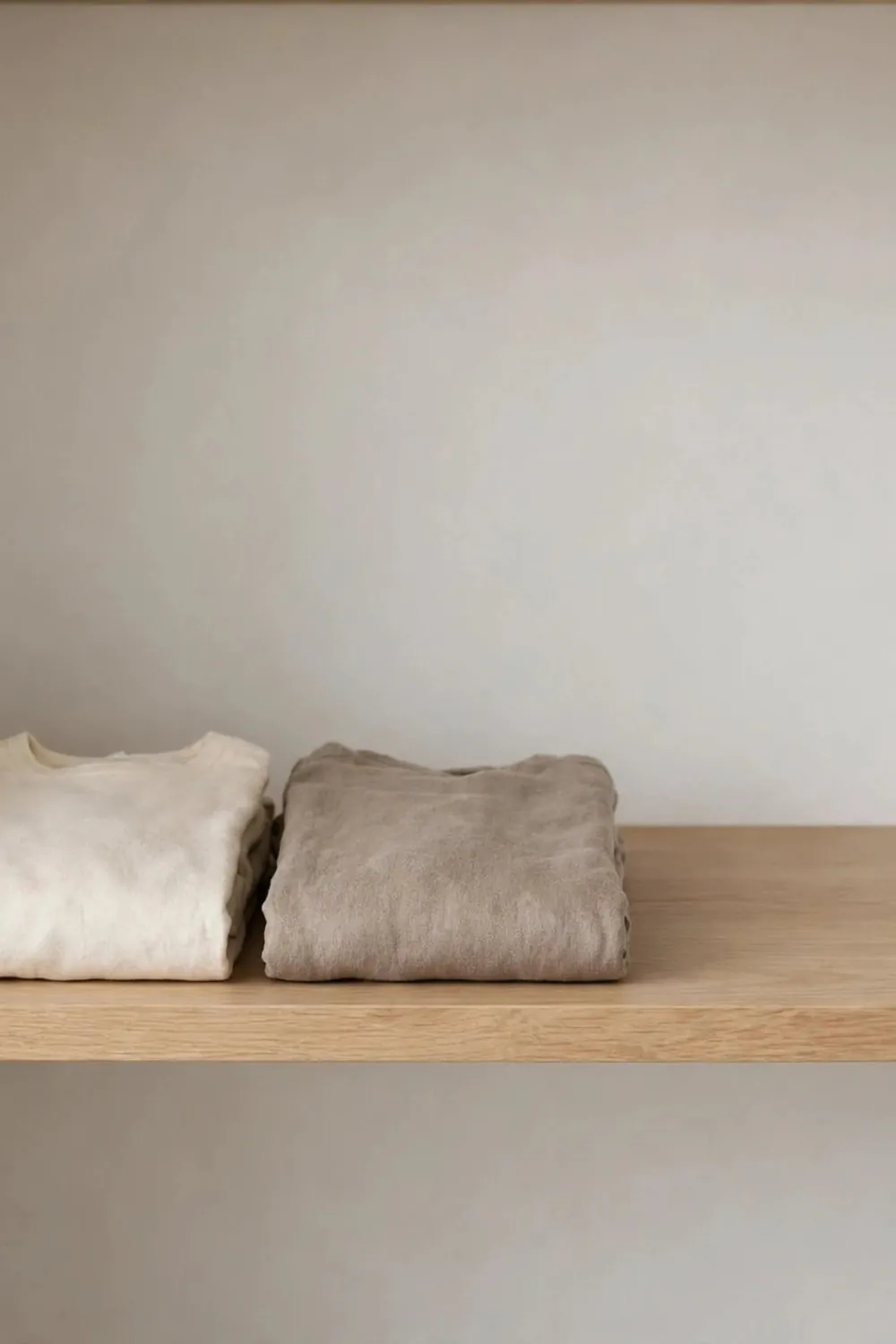
The one in, one out rule is so simple that anyone can do it.
When a new thing comes into your home, one old thing has to leave. That is the whole rule. It stops stuff from piling up, and it keeps your home at the same calm level all year.
I use this rule for clothes, books, dishes, and even small gadgets.
If I buy a new shirt, I pick an old shirt to give away. If I buy a new mug, an old mug goes out. It sounds strict, but it is actually very freeing.
Why does it work so well?
Because most of us buy new things without thinking about the old ones. The old ones stay in the back of a cupboard, and slowly the cupboards fill up. Then we cannot find what we need, and the whole house feels full.
This rule makes you pause before you buy.
You start to ask yourself if the new thing is really worth letting go of an old one. A lot of the time, the answer is no, and you walk away. You save money, and your home stays light.
It also helps to keep a small bag by your door for things going out.
When you pick an old thing to remove, drop it straight in the bag. When the bag is full, take it to a charity shop or pass it on to a friend. Do not let the bag sit there for months.
Kids can learn this rule too, and they often like it.
Let them pick a toy to give away when a new toy arrives. It teaches them that sharing feels good, and it keeps their room from bursting at the seams.
Try it for one month and see how your home feels. I think you will notice the difference fast.
4. Use Closed Storage, Not Open Shelves
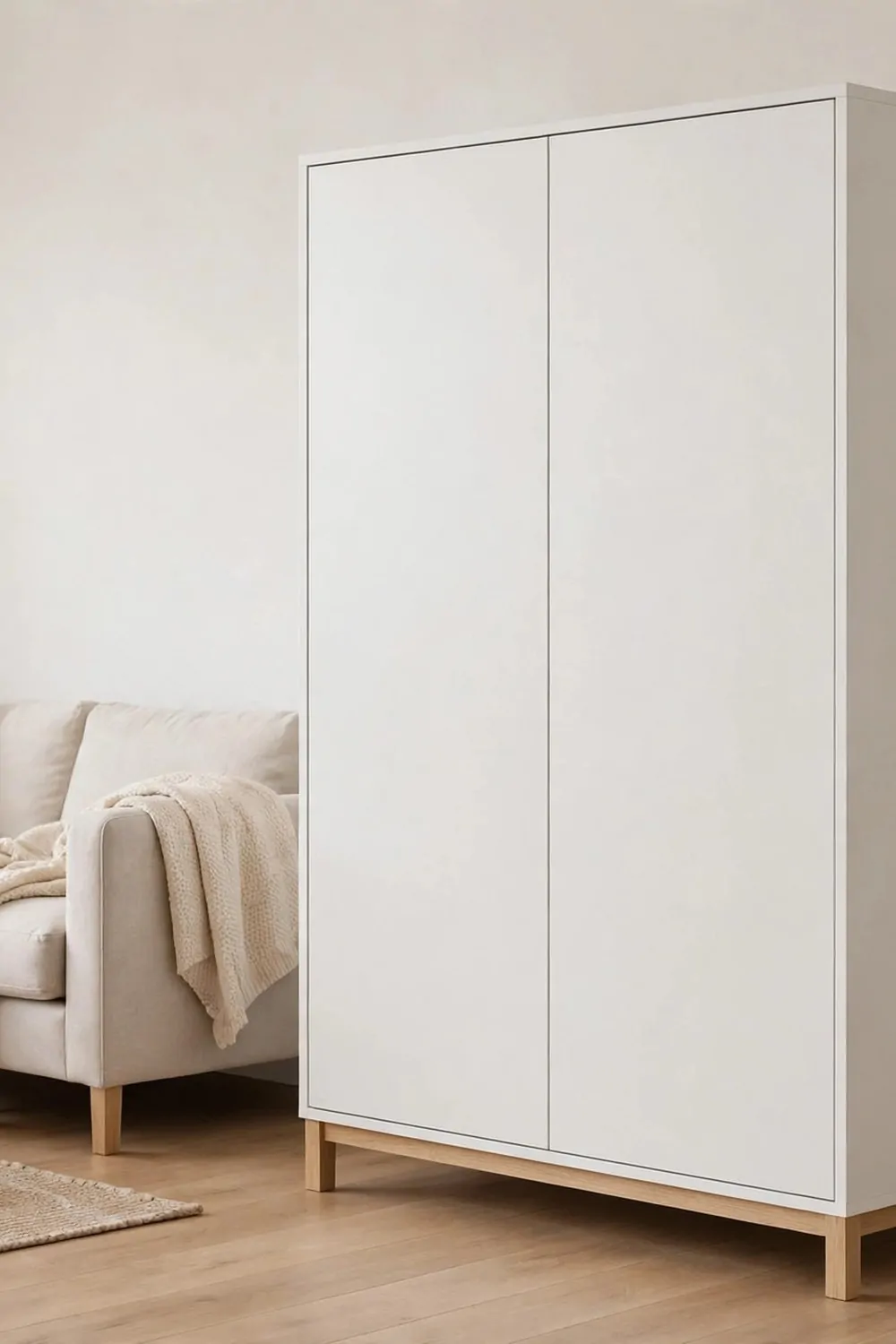
Open shelves look nice in photos, but in real life they are hard work.
Every single thing on an open shelf has to look neat all the time, or the whole room looks messy. Dust settles on everything, and you have to clean it all the time. I gave up on open shelves years ago, and my home feels calmer for it.
Closed storage is your best friend when you want a calm home.
Cupboards, drawers, and boxes with lids hide the everyday mess. You can open a drawer, grab what you need, and close it again. The room stays looking tidy, even when life inside the drawers is a bit busy.
That does not mean your drawers should be a wild mess inside.
Use small boxes or dividers inside them so things stay in their own zones. I use simple boxes I already had at home. One box holds batteries, one holds tape and string, and one holds spare keys. It takes a minute to set up, and it saves me time every day.
Think about the busiest spots in your home first.
The kitchen is a good place to start. Put your pots and pans in cupboards with doors, not on open racks. Put your food in closed cupboards too. The room will look bigger and calmer right away.
Your bedroom is another good spot for closed storage.
Use a dresser with drawers for clothes instead of open rails. Use a bedside table with a drawer for the bits you need at night. When you wake up, you see clean lines, not a pile of stuff.
Closed storage is not about hiding things you are ashamed of.
It is about giving your eyes a break. When you see less stuff, your brain feels less busy. That is the heart of a calm home.
If you have open shelves now, you do not have to rip them out.
Try putting plain boxes on them first, with lids, and see how the room feels. You might love the change as much as I did.
5. Keep One Focal Point in Each Room
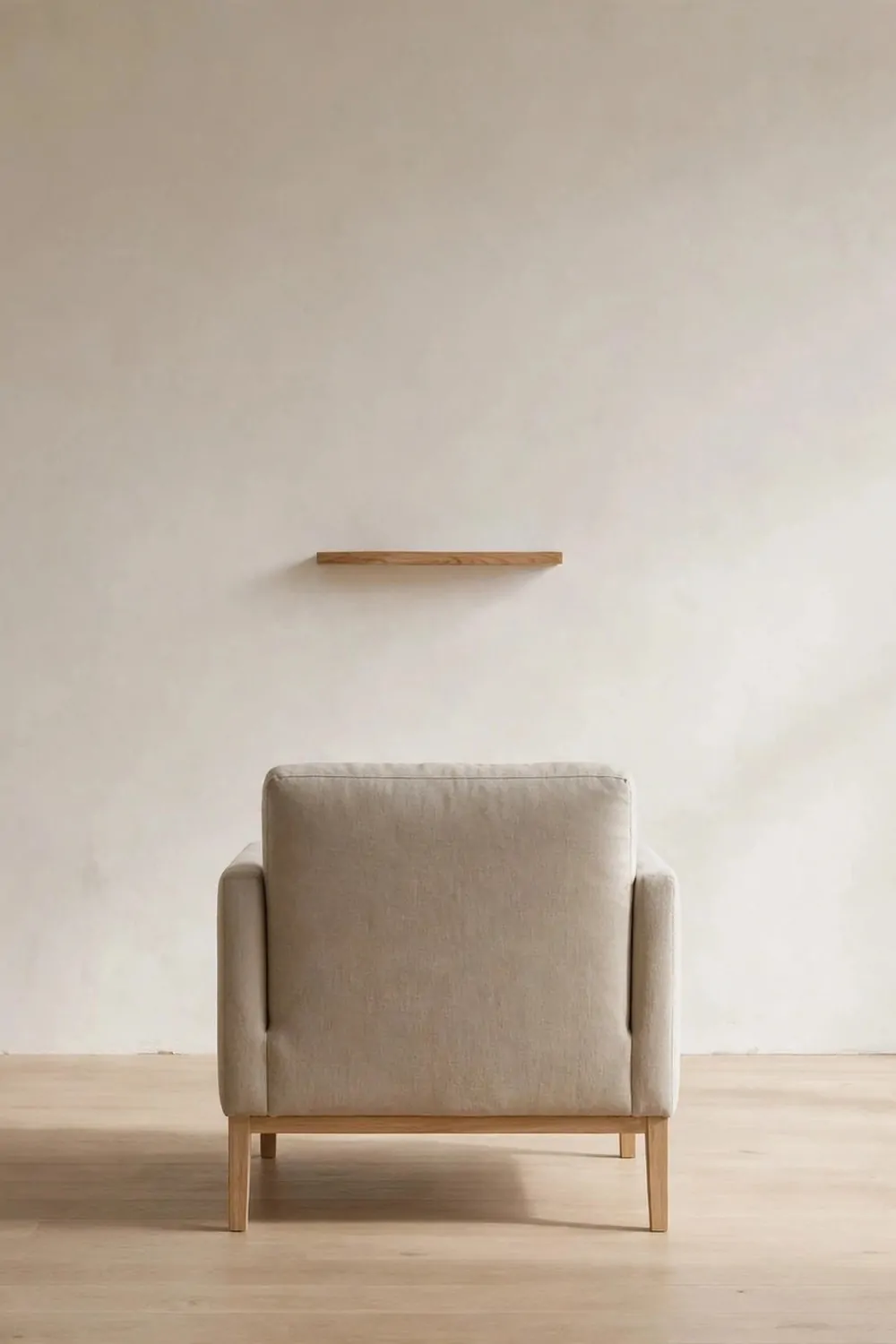
Every room needs one main thing for your eyes to land on.
Just one. When a room has five things all shouting for your attention, it feels busy and loud. When it has one clear focal point, it feels calm and easy to be in.
So pick one thing per room and let it lead.
In the living room, it might be the sofa wall or a large window. In the bedroom, it might be the bed itself. In the kitchen, it might be the cooker area. You do not need to buy anything new to do this.
Once you pick your focal point, keep the area around it simple.
Do not crowd it with lots of little things. Give it space to breathe. I like to leave a bit of empty space around the main thing in a room, and it makes the whole room feel bigger.
This is a hard habit for me, because I love little bits and bobs.
But I learned that when I take away the extra bits, the one main thing looks better. It is like letting one voice speak instead of ten voices all talking at once.
Walk into each room and ask yourself what you see first.
Is it the thing you want to see first? Or is it a pile of clutter or a stack of papers? If it is the pile, move the pile away and let the real focal point show.
Your focal point can change over time, and that is fine.
Maybe in summer you want the window to be the star, and in winter you want the bed to feel like the heart of the room. Just keep it to one star at a time.
One focal point also makes cleaning easier.
You know where to focus your tidying, and the rest of the room can stay simple. It is a small trick, but it makes a big difference to how calm your home feels.
6. Pick Three Colours and Stop There
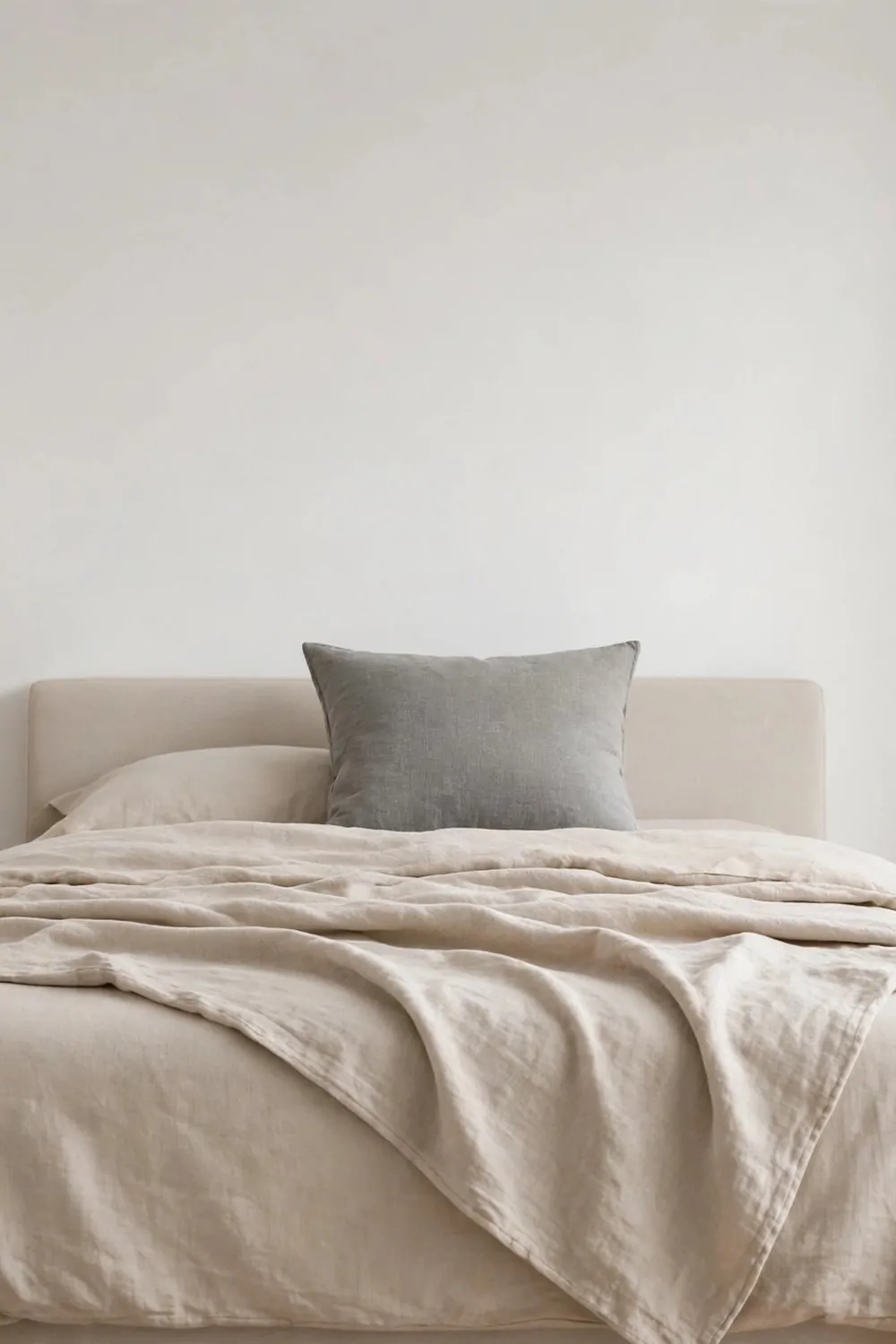
Three colours are enough for a whole home.
When you use too many colours, each room feels different and the house feels noisy. When you stick to three colours, everything feels linked and calm. I use this trick in my own home, and it makes shopping so much easier too.
Pick one main colour, one second colour, and one small accent colour.
Your main colour should cover most of the room, like the walls and the big bits of furniture. Your second colour adds warmth or depth, and your accent colour pops up in small spots only.
Do not pick colours that fight each other.
Soft, quiet colours work best for a calm home. Think pale grey, soft white, gentle beige, or a soft sage. Then add one deeper tone for contrast, like a dark grey or a soft navy.
Here is a simple plan you can copy for each room:
| Room | First Colour | Second Colour | Third Colour |
|---|---|---|---|
| Living room | Soft white | Pale grey | Soft sage |
| Bedroom | Pale grey | Soft white | Dusty blue |
| Kitchen | Soft white | Gentle beige | Dark grey |
| Bathroom | Soft white | Pale grey | Soft navy |
Use the same three colours in every room if you can.
You do not have to use them in the same way in each room. Maybe the living room is mostly soft white with a bit of sage, and the bedroom is mostly pale grey with a bit of dusty blue. The link between the rooms is what makes the house feel calm.
When you shop, take your three colours with you.
Keep a small note on your phone with the colour names. If a thing does not match one of your three colours, do not buy it. This one habit stops so many random buys.
It also stops the house from slowly filling up with odd colours.
We all do it. We buy a bright red cushion one day and a bright yellow throw the next, and suddenly the room looks loud. Three colours keep you on track.
Your accent colour should be the smallest one.
Use it in tiny spots, like a cushion, a small towel, or a soap dish. A little bit goes a long way, and it keeps the room feeling fresh without making it busy.
7. Wait Two Weeks Before You Buy Something New
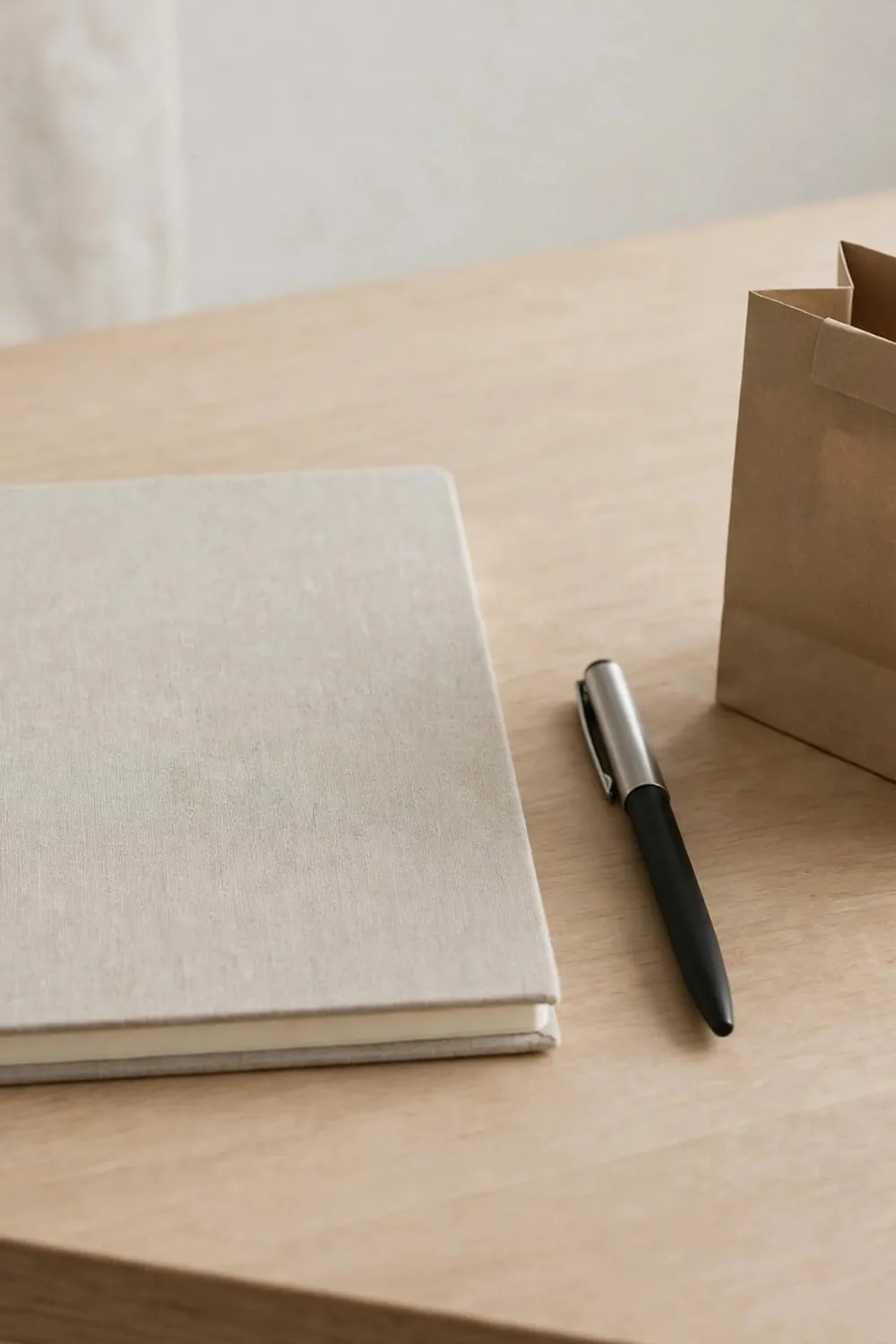
Waiting two weeks before you buy is the best trick I know.
When you see something you like, write it down and wait. Put it on a list on your phone or on a piece of paper on the fridge. Then live your life for two weeks and see if you still want it.
Most of the time, you will forget about it.
That tells you it was just a quick want, not a real need. And that is fine. We all get quick wants. The trick is not to act on them right away.
Why two weeks? Because two weeks is long enough for the buzz to fade.
After two weeks, you can look at the list with clear eyes. Do you still think about that thing? Do you have a real place for it in your home? Can you say what you will use it for every week?
If the answer is yes to all three, then go ahead and buy it.
You will enjoy it more because you chose it with care. It will not be just another thing that ends up in a cupboard. It will be a thing you really wanted.
This rule works for big things and small things.
It works for a new chair, a new lamp, a new set of plates, or a new gadget. I even use it for clothes. Two weeks feels long at first, but it gets easier with practice.
Keep your list where you can see it.
I keep mine on my phone, and I check it on Sundays. Some weeks I cross things off because I do not want them anymore. That feels good, like a small win.
Waiting also helps you find a better price.
Sometimes the thing goes on sale while you wait. Sometimes you find a secondhand one that is just as good. Either way, you win.
Try it for one month and count how much you save.
I think you will be surprised. Your home stays calmer, your money stays in your pocket, and the things you do buy feel more special.
8. Make the Entryway a Drop Zone With One Hook Each
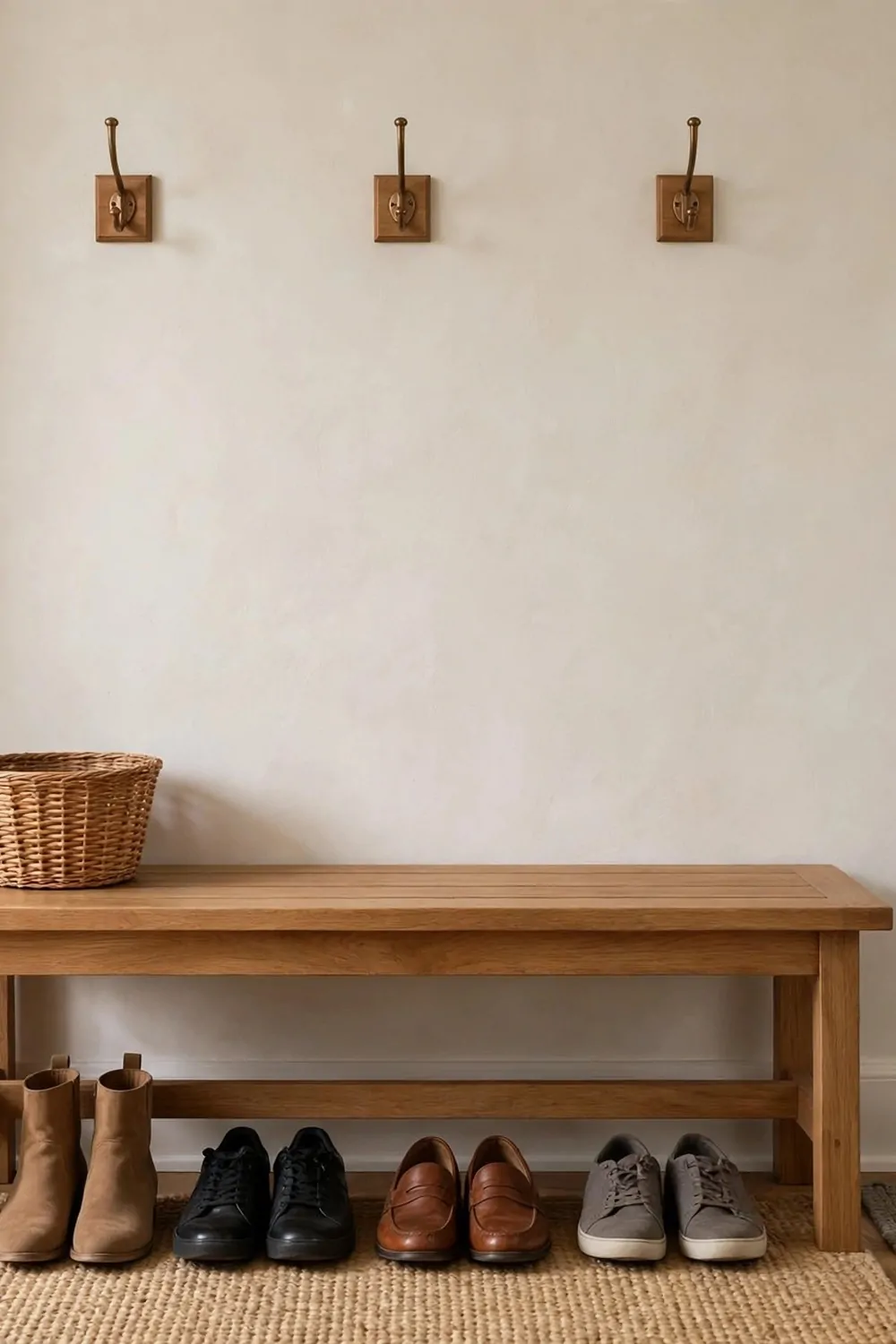
I used to walk in and dump my bag on the floor. My coat landed on a chair. My keys went missing every morning. It was a mess, and it took me ages to find things when I was already late.
Then I gave everyone in the house one hook each. Just one. My coat goes on mine, and my bag goes on the same hook. My keys hang on a tiny nail right beside it. That is all.
You do not need a big fancy hall tree for this. A row of three hooks on the wall works fine. If you live alone, two hooks is plenty.
One hook is for your coat, and one is for your bag. That is the whole rule. When you come home, you hang things up before you do anything else.
It takes about ten seconds, and it saves you ten minutes the next morning. I am not kidding about that. I used to lose my keys at least twice a week.
Put a small tray under the hooks for the little stuff. Your wallet goes there. So does your mail, and your sunglasses. The tray catches the bits that have no hook.
If you have kids, give them a low hook they can reach. Kids love having their own spot. Mine hang their school bags there without me asking, most days.
A shoe tray under the hooks helps a lot too. Shoes stay in one spot, and dirt stays off the floor. I wipe the tray once a week, and that is it.
The entryway is the first thing you see when you come home. When it is clear, the whole house feels calm. When it is full of stuff, everything feels loud.
Keep it simple. One hook each, one small tray, one shoe spot. Nothing else needs to live by the door.
9. Edit Your Wardrobe Down to What You Wear
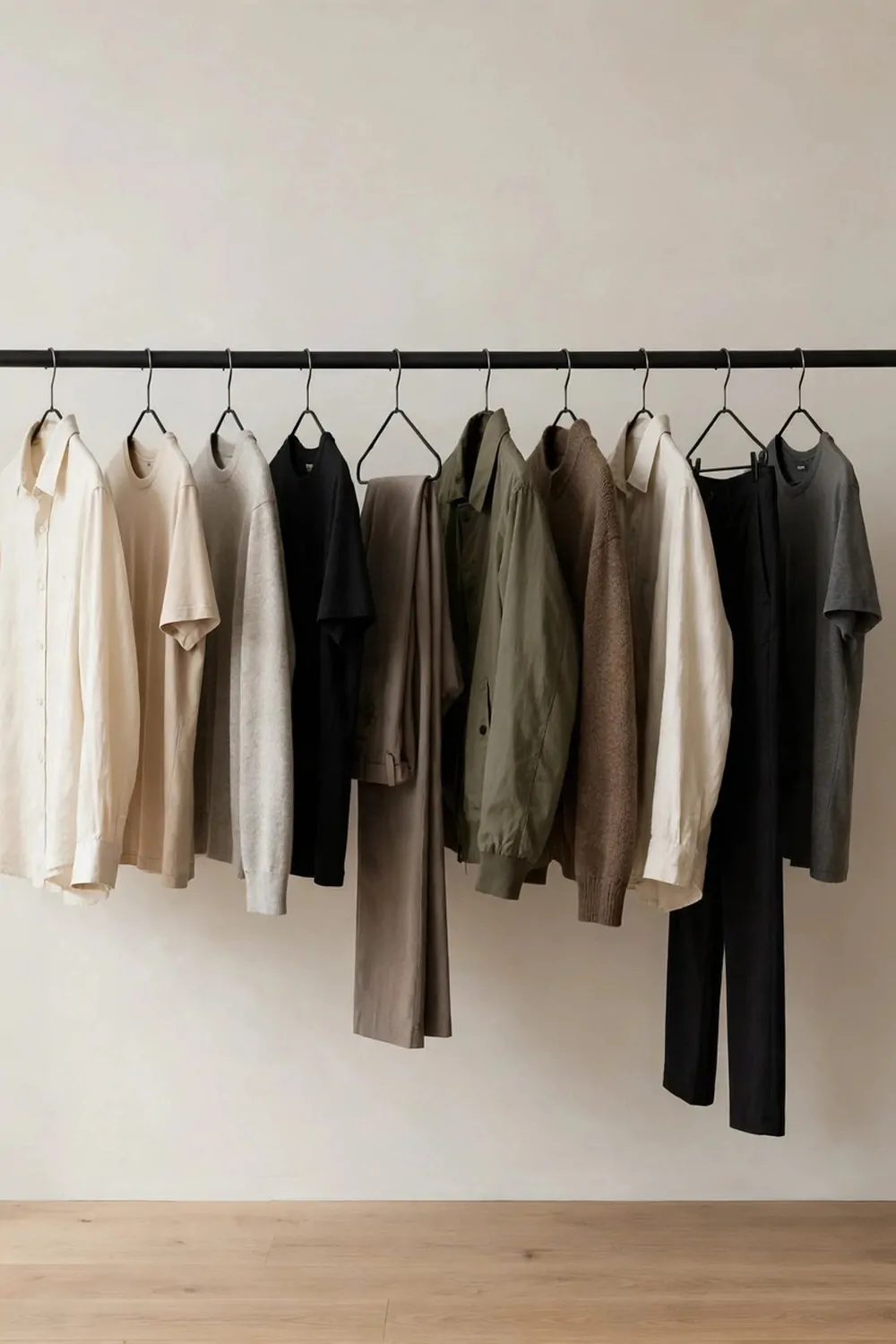
I once had a closet full of clothes and nothing to wear. Does that sound like you? It is so common, and the fix is not more clothes.
Start by pulling out everything you have not worn in a year. Be honest with yourself. If it has sat there for twelve months, you are not going to wear it next month either.
I put mine in a bag and gave it away. It felt scary for about a minute. Then it felt like my closet could breathe again.
Keep only the things you reach for again and again. The jeans that fit just right. The shirt you wear every week. The shoes you actually walk in.
If something does not fit well, let it go. You do not need clothes that make you feel bad about yourself. Life is too short for that.
Try the hanger trick if you are not sure. Turn all your hangers one way. When you wear something, turn that hanger back. After a month, the ones still turned are the ones you do not wear.
A small wardrobe makes mornings so much easier. I pick my outfit in two minutes now. I used to stand there for ages and still feel unhappy with what I chose.
You will also stop buying stuff you do not need. When your closet is calm, you can see what you have. You know what is missing, and you buy only that.
Fold or hang what is left with a little space between each piece. When clothes are crammed together, they wrinkle and you forget what you own. Space is your friend here.
I keep about thirty pieces in my closet now, and I wear all of them. It is a small number, but my life feels bigger with less stuff in the way.
10. Tame the Cables in One Box
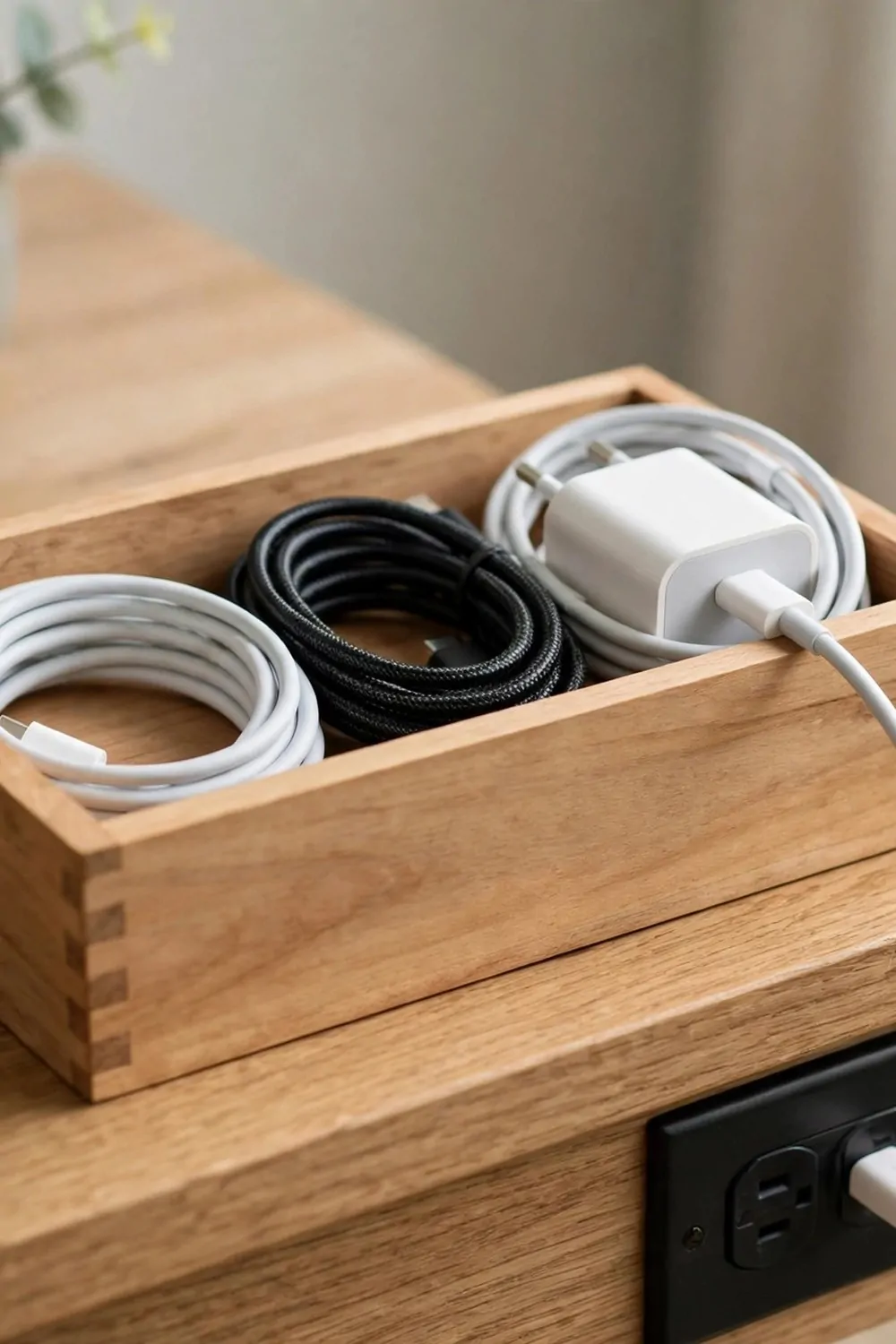
Cables are the sneakiest clutter in a house. They hide behind the TV, under the desk, and next to the bed. They tangle up, and they make a clean room look messy in seconds.
I bought one simple box with a lid, and it changed everything. All the spare cables and chargers live in that box now. Nothing loose on the floor anymore.
The box sits on a shelf near my desk. When I need a charger, I open it and take one out. When I am done, it goes back in. That is the whole system.
Label your cables if you have a lot of them. A small piece of tape and a pen is all you need. Write “phone” or “laptop” on the tape so you never grab the wrong one.
Here is what goes in my box:
- phone chargers
- laptop charger
- spare USB cables
- spare batteries
- headphones
- small power strip
If a cable is broken, throw it away right away. Do not keep a dead cable just in case. It will never work again, and it just takes up space in the box.
Tie long cables with a small rubber band or a twist tie. Loose cables tangle, and a tangled pile is the worst. A quick twist keeps them neat and easy to pull out.
I also keep one charging spot in the house, and only one. All the phones charge there at night. No cables in the bedroom, no cables on the kitchen counter.
When guests come over, I love that there are no wires trailing across the floor. The room looks calm, and nobody trips over anything.
One box is enough for most homes. If you have more cables than fit in one box, that is a sign you have too many. Let the extra ones go.
11. Do a Ten-Minute Reset Before Bed
I used to go to bed with the house a mess, and I woke up to the same mess. It set a bad mood for the whole morning. Then I tried a ten-minute reset, and my mornings got so much better.
You set a timer for ten minutes. That is all. You do not clean the whole house. You just do a quick reset so the house feels calm when you wake up.
Start in the room you are standing in. Pick up what is out of place and put it back. That is really the main job, over and over, room by room.
Here is the plan I follow every night:
| Minute | Job |
|---|---|
| 1-2 | Clear the kitchen counter and put dirty dishes in the sink |
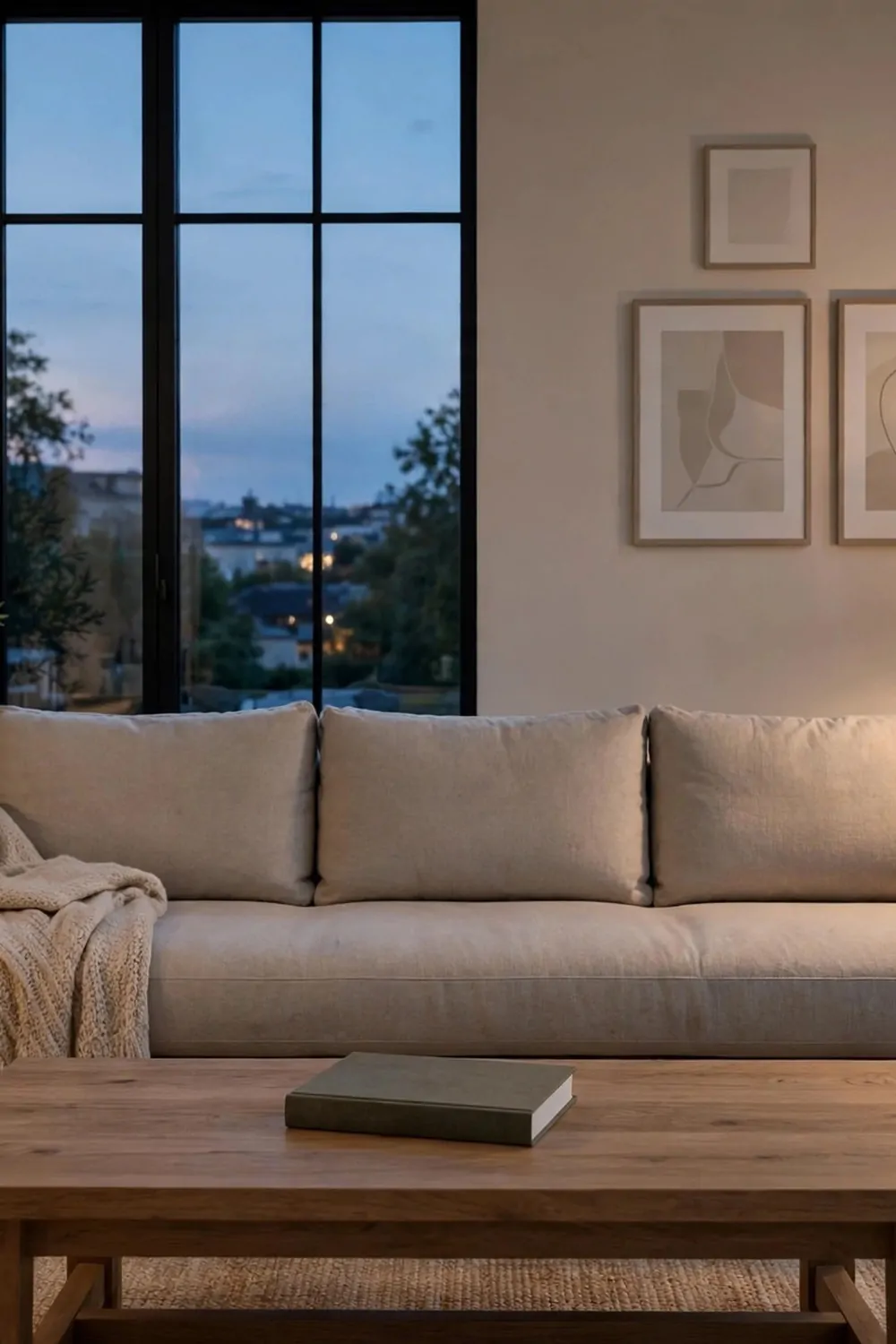
| 3-4 | Fluff the sofa cushions and fold any blankets |
| 5-6 | Put shoes, bags and coats back in their spots |
| 7-8 | Take out the trash and wipe the bathroom sink |
| 9-10 | Lay out tomorrow’s clothes and set the coffee ready |
Ten minutes is short enough that you will actually do it. If I told you to clean for an hour, you would skip it. Ten minutes feels easy, even on a tired night.
Do it at the same time every night. I do mine right after I brush my teeth. It is part of my night routine now, like locking the door.
The best part is waking up to a calm house. The counter is clear, the sofa looks tidy, and my clothes are ready. My morning feels slow and easy instead of rushed.
If you live with other people, ask them to join in. Ten minutes with two people gets a lot done. My kids each take one job from the list, and we finish fast.
Some nights I only do five minutes, and that is fine too. A little reset is still better than none. The habit matters more than doing it perfectly.
Try it for one week and see how you feel. I bet your mornings change. A calm night makes a calm morning, and a calm morning makes a calm day.
12. Choose Fewer, Bigger Pieces of Furniture
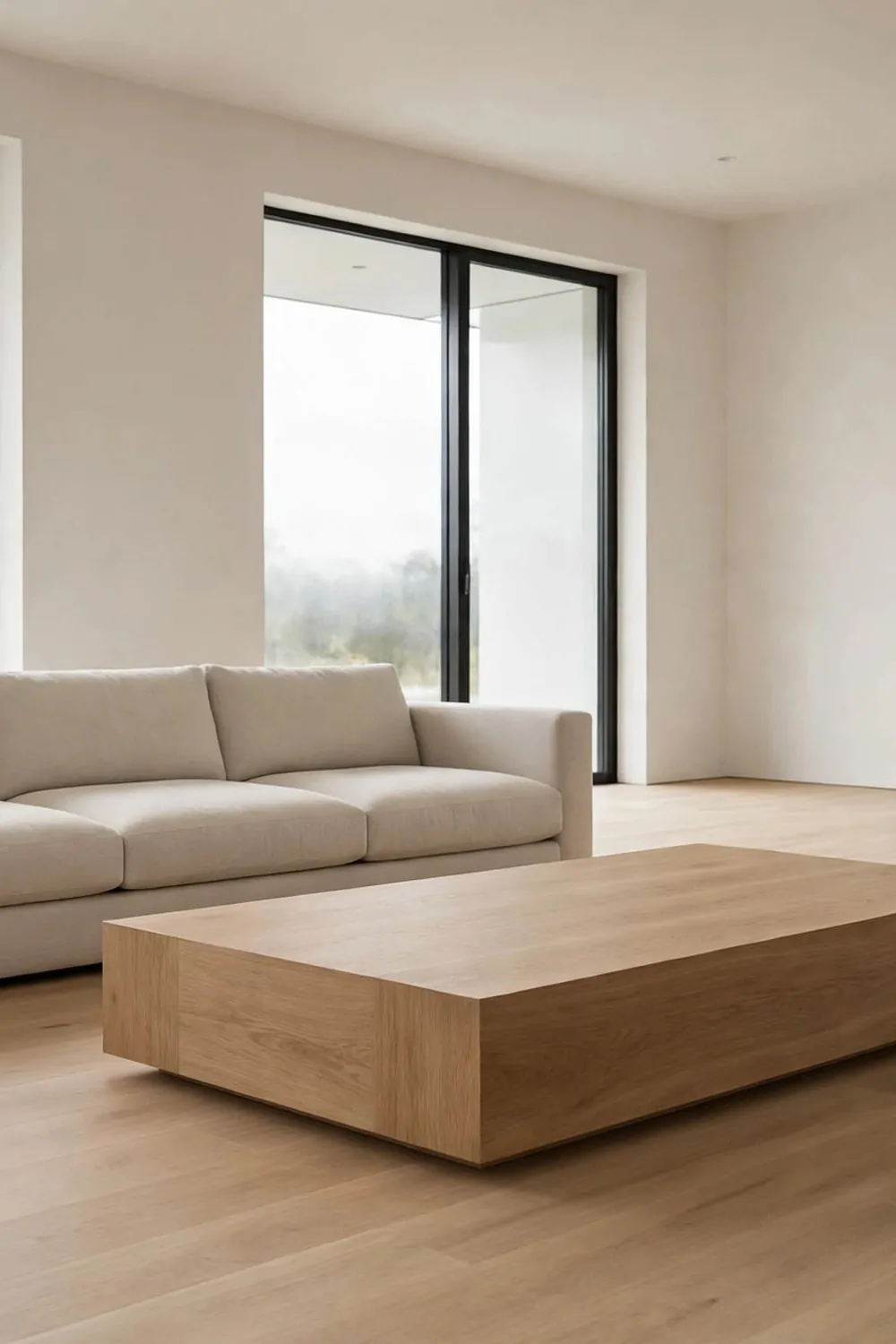
A room full of small tables and chairs feels busy, even when it is tidy. Every little piece adds one more thing for your eyes to look at. I learned this the hard way in my own living room.
I had a side table, a plant stand, a small shelf, and a stool, all in one corner. Each one was fine on its own. Together, they made the room feel crowded.
So I took them all out and put in one big piece instead. One solid cabinet holds what all four small pieces held. The room feels twice as big now.
Big furniture gives your eyes a place to rest. One large sofa looks calmer than three small chairs squeezed together. One wide dresser beats two narrow ones every time.
This does not mean you need huge furniture. It means you pick fewer pieces, and you let each one do more work. A bed with drawers under it stores your spare blankets. A bench with a lid holds your shoes.
Before you buy anything new, ask yourself if it earns its spot. Will you use it every day? Does it hold a lot? If the answer is no, skip it.
Leave space around each piece too. When furniture touches the wall on every side, the room feels stuffed. A little gap between things lets the room breathe.
I also stopped buying small decor items to fill empty corners. An empty corner is not a problem. It is a quiet spot, and quiet spots make a home feel calm.
Count the furniture in your living room right now. If it is more than five or six big pieces, you might have too many. Try moving one out for a week and see if you miss it.
Most of the time, you will not miss it at all. The room will feel lighter, and cleaning gets easier too. Fewer legs to vacuum around is a real win.
13. Leave Empty Space on Purpose
Empty space scares a lot of people. They see a bare shelf or a blank wall and think something is missing. I used to feel that way too, and I filled every gap with stuff.
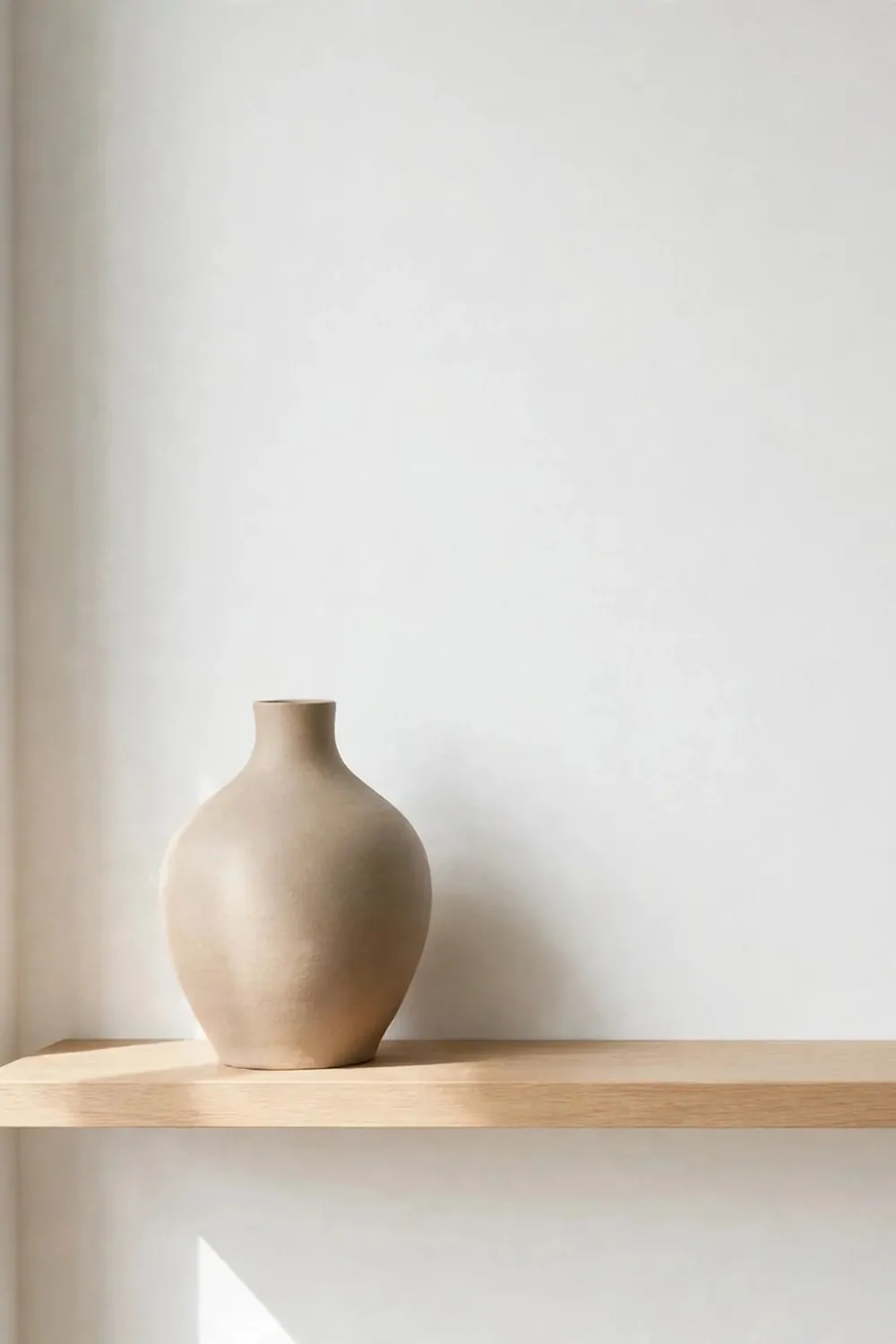
But empty space is not a problem to fix. It is part of the design. It gives your eyes a rest, and it makes the things you do keep stand out more.
Think of a shelf with one nice bowl on it and nothing else. You notice the bowl. Now think of a shelf crammed with ten things. You notice nothing, because everything shouts at once.
I leave one shelf in my living room totally empty. It is my favorite shelf in the house. It makes the whole room feel calm, like a deep breath.
Try it on your kitchen counter first. Clear one stretch of counter and keep it clear. No jars, no gadgets, no mail. Just clean, open space.
At first it will feel strange. You might want to put something there. Give it a week. Most people tell me they start to love the empty spot more than anything else in the room.
Empty space also makes cleaning faster. There is nothing to move, nothing to dust around. You wipe the surface and you are done.
It helps with your mind too. A room with space in it feels quiet. A room packed full feels noisy, even when no one is talking. I feel the difference every day.
You do not need to empty your whole house. Start with one surface, one shelf, or one wall. Let it stay empty on purpose and see how it feels.
The calm you feel is real. Space is not wasted space. It is the part that lets everything else shine.
14. Use the Maybe Box When You Cannot Decide
Some things are hard to let go of. You do not use them, but you are not ready to give them away either. That is normal, and it does not mean you failed at decluttering.
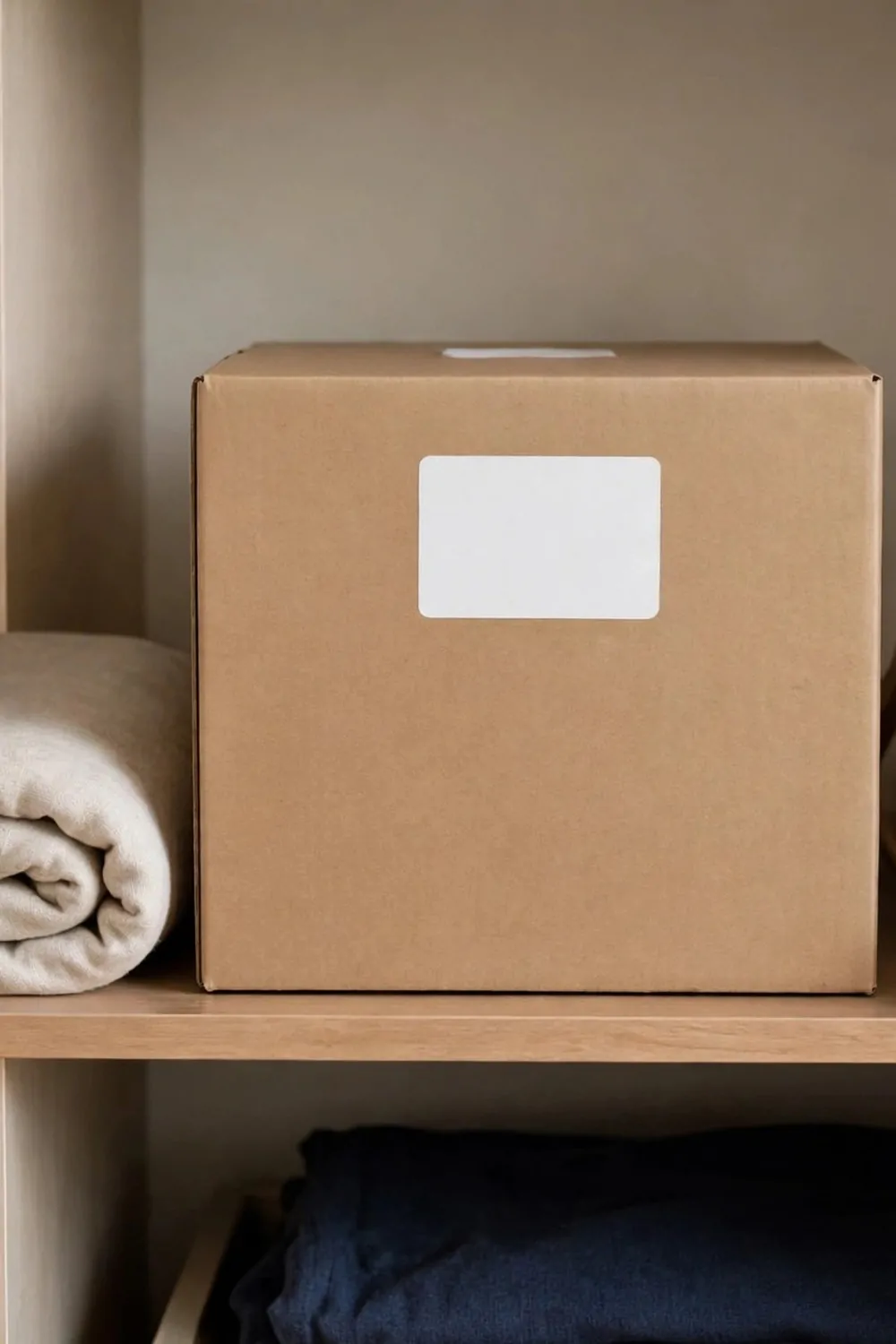
That is what the maybe box is for. You put the hard items in a box, close the lid, and write the date on it. Then you put the box away and forget about it for a while.
I use a plain cardboard box for mine. It sits on the top shelf of my closet, out of sight. If I never think about it, that tells me something.
Set a date three months from now. Write it on the box in big letters so you can see it. When that date comes, open the box and look at what is inside.
If you did not miss anything in it, you can let it go. You just proved to yourself that you do not need it. That proof makes it so much easier.
If you did need something from the box, take it out and use it. That is fine too. The box is not a trap. It is a test, and passing or failing both teach you something.
The maybe box works because it takes away the pressure. You do not have to decide today. You just have to decide later, with more information.
I used mine for a stack of old magazines, a vase I never used, and a jacket I loved but never wore. Three months later, I gave them all away without a second thought.
Only keep one maybe box at a time. If you have five maybe boxes, they are just clutter with a fancy name. One box, one date, one decision.
Be kind to yourself through this. Letting go is a skill, and skills take time. The maybe box lets you practice without the stress, and that is why it works so well.
15. Keep the Dining Table Clear Between Meals
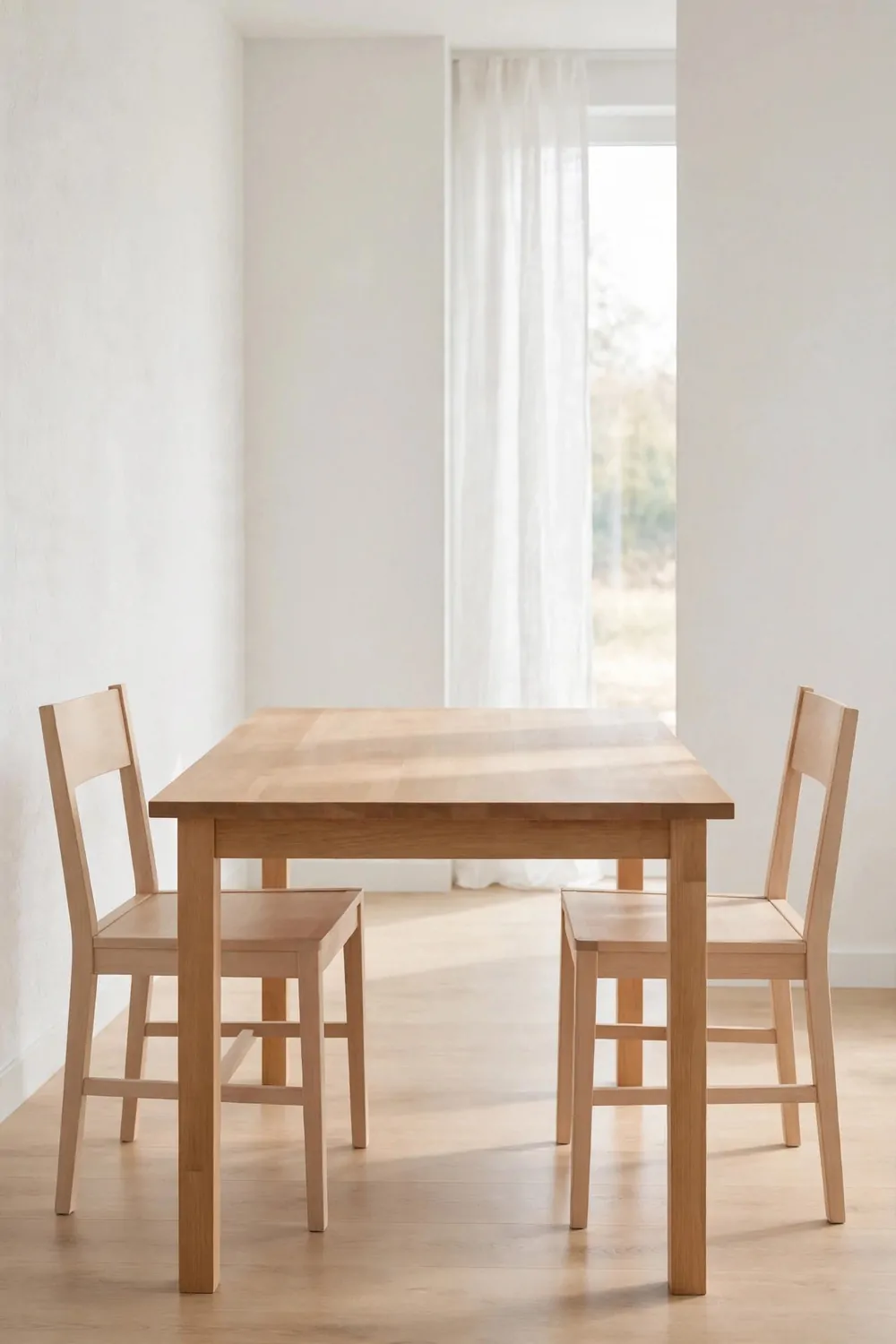
A clear dining table makes the whole room feel calm. I learned this the hard way in my own home.
When the table stays full of stuff, the room never feels done. Mail piles up. A half finished craft sits there. The table turns into a storage spot, and that is not what it is for.
Try this. After each meal, take everything off the table.
Put the plates in the sink. Put the cups away. Wipe the top clean with a damp cloth, and let it stay empty till the next meal.
It only takes two minutes. That is all. Two minutes after lunch and two after dinner, and the room looks fresh again.
Give every small thing a home away from the table. Keys go on a hook by the door. School papers go in one drawer. A bag goes on a chair in the hall, not on the table.
If your kids do homework at the table, that is fine. Let them spread out while they work. But when the work is done, the books and pencils go back in their bags.
An empty table invites you to sit down. You eat slower. You talk more. The meal feels like a real meal, not just food at a messy spot.
It also makes cleaning the floor so much easier. No chairs piled with bags. No papers in the way of the broom. You can just sweep and be done.
So keep the table clear between meals. It is a small habit, but it changes how the whole room feels.
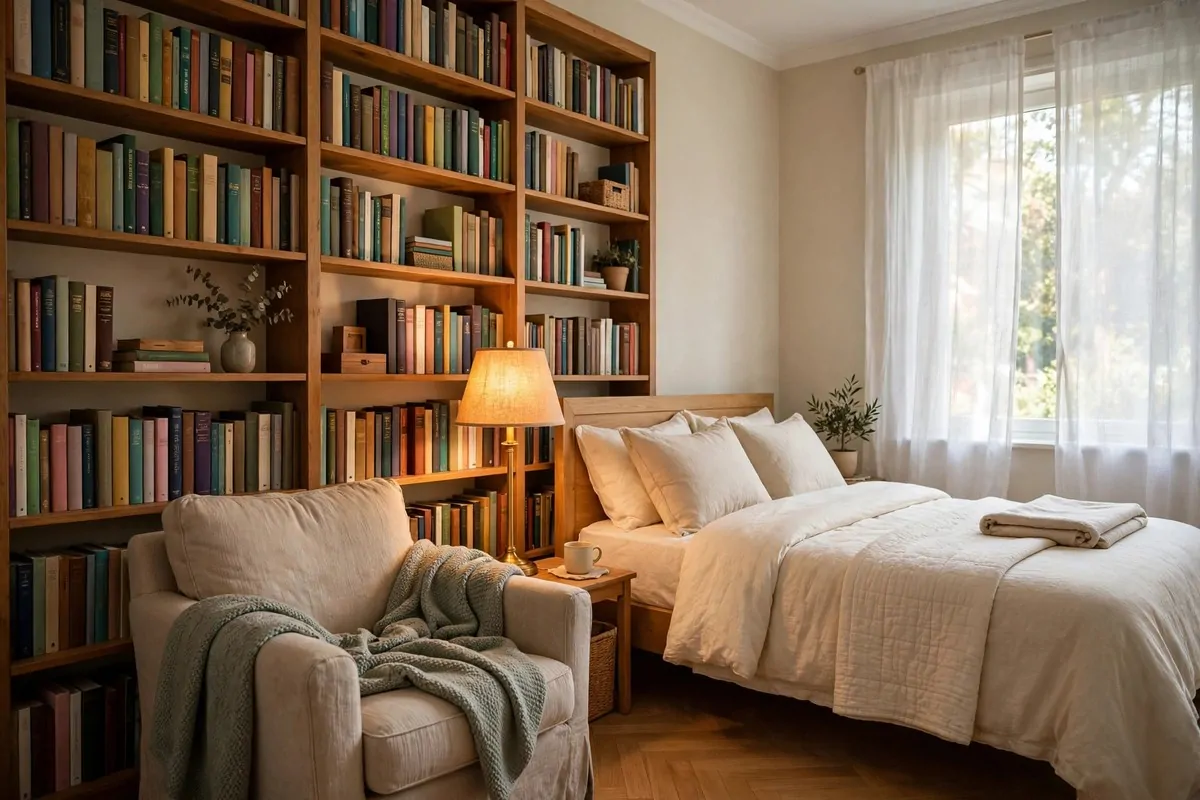
16. Edit the Bookshelf and Leave Gaps
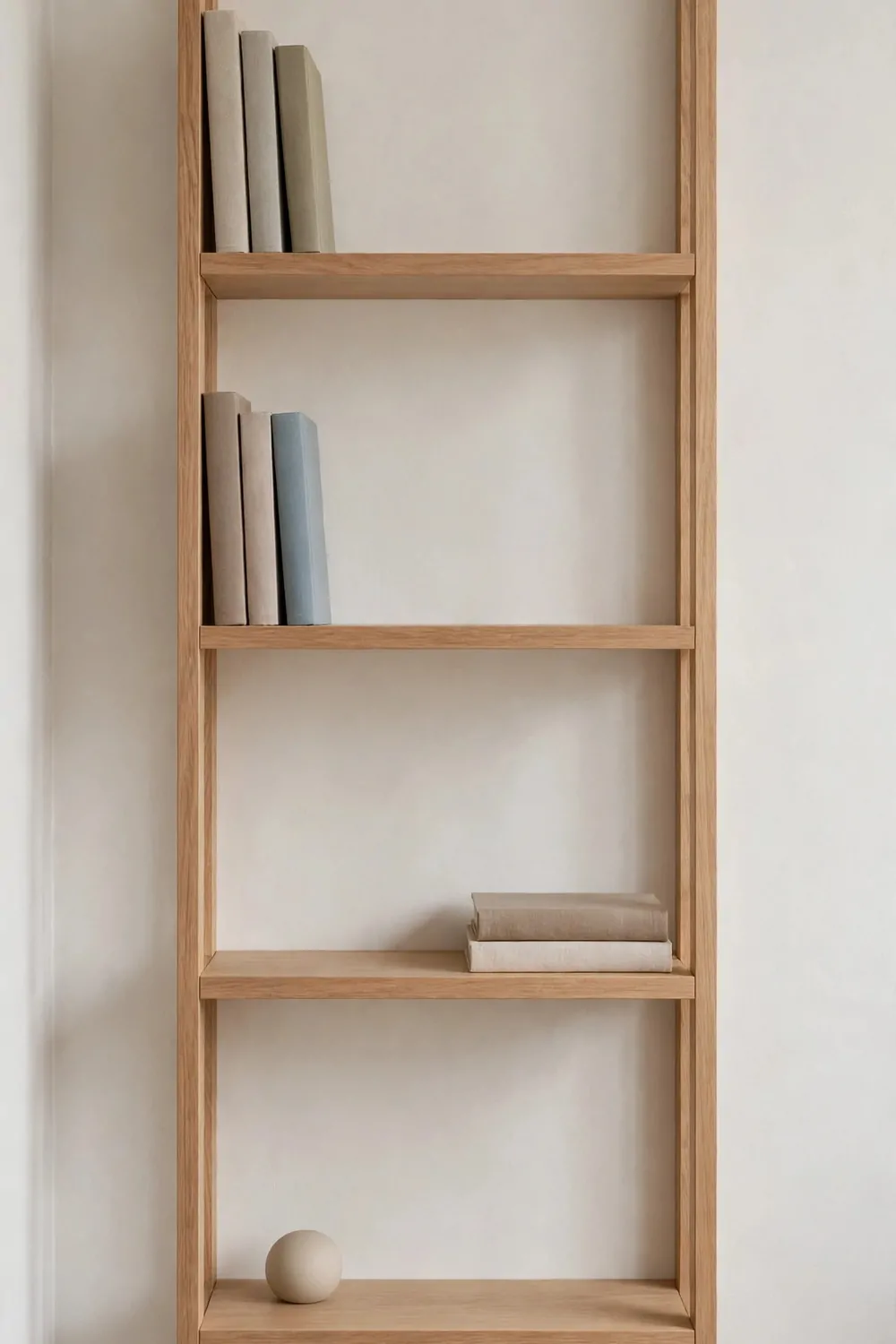
A full bookshelf can look messy even when it is neat. When every inch is packed, your eyes have nowhere to rest.
I used to fill my shelves right to the edge. It felt wrong to leave empty space. But the room felt heavy, and I could never find the book I wanted.
Then I tried editing the shelf. I took everything off and started again. The change was big, and it cost me nothing.
Here is how to do it step by step.
- Take all the books off the shelf, every single one.
- Keep only the books you love or still use.
- Give away the ones you will never read again.
- Put the kept books back in small groups.
- Leave gaps of empty space between the groups.
- Step back and look, then take off a few more if it still feels full.
Those gaps are not wasted space. They are breathing room. They let your eye rest, and they make the books you kept stand out.
Try putting books in groups of five or six. Then leave a gap about as wide as your hand. It looks calm right away.
You can also mix in one plain object if you like. A small box or a plain vase works well. But keep it to one thing per shelf, not five.
Do not be scared to let a shelf stay half empty. A half empty shelf looks smart and calm. A packed shelf looks like a shop.
When you buy a new book, take an old one off. That way the shelf stays edited all year, and you never have to do a big clean again.
17. Hide the TV and Its Cords
A TV is a big black box. When it is off, it still pulls your eyes to it. And the cords make it worse.
I used to have a tangle of cords behind my TV. It looked messy from across the room, even when the rest of the room was tidy.
The fix was simple. I bought a cheap cord cover from a home store. It sticks to the wall and hides all the cords inside one neat line.
You can also use a small basket or box behind the TV stand. Put the power strip inside it. Run the cords through the back. Out of sight, out of mind.
If your TV sits on a stand, check the back of the stand. Many stands have a hole for cords. Feed them through it so they drop straight down behind, not out the sides.
Some people put the TV inside a cabinet with doors. When the doors are shut, the room feels like a living room again. When you want to watch, you just open them.
Another trick is to hang the TV on the wall. A wall hung TV takes up no floor space. The cords can run inside the wall or inside a slim cover that you paint the same color as the wall.
Do not forget the small boxes. The game box, the streaming box, the router. Put them in a drawer or behind a door. You do not need to see them every day.
When the TV and its cords are hidden, the room feels bigger. Your eyes can rest on the window or the sofa instead of a black screen.
It is a small job. One afternoon, one cord cover, and the room looks ten times calmer.
18. One Basket Per Person in the Bathroom
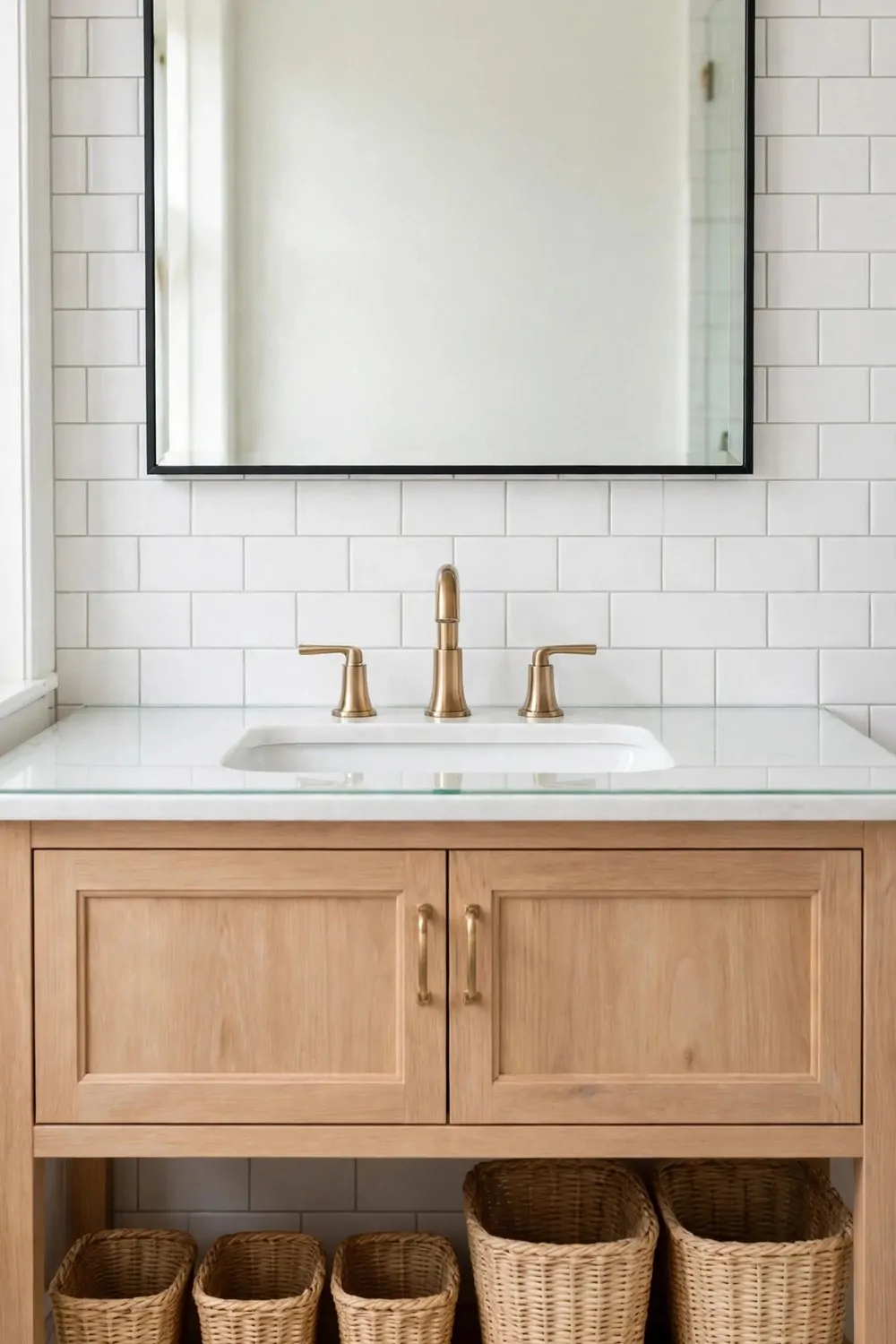
Bathrooms get messy fast. Four people share one small room, and every bottle and brush ends up on the counter.
I tried a simple fix in my home. One basket per person. That is it. Each person gets one small basket for their own stuff.
The basket holds their toothbrush, their face wash, their hairbrush, and whatever else they use each day. Nothing more.
Pick baskets that are small. If the basket is big, it will fill up with junk. A small basket forces you to keep only what you use.
Put the baskets on a shelf or in a cupboard. Each person knows which basket is theirs. No more hunting for your own things in a shared pile.
Kids love this system. Give them a color each. My daughter has the blue basket, and she keeps it neat because it is hers.
Shared things stay out of the baskets. The soap, the towels, the toilet paper. Those live on the shelf for everyone.
Once a week, empty each basket. Throw away the empty bottles. Wipe the basket clean. Put back only what you still use.
The counter stays clear. You can wipe it in ten seconds. The room feels like a calm space, not a storage room.
One basket per person. It is the easiest bathroom rule I know, and it works from day one.
19. Rotate the Kids’ Toys, Don’t Display Them All
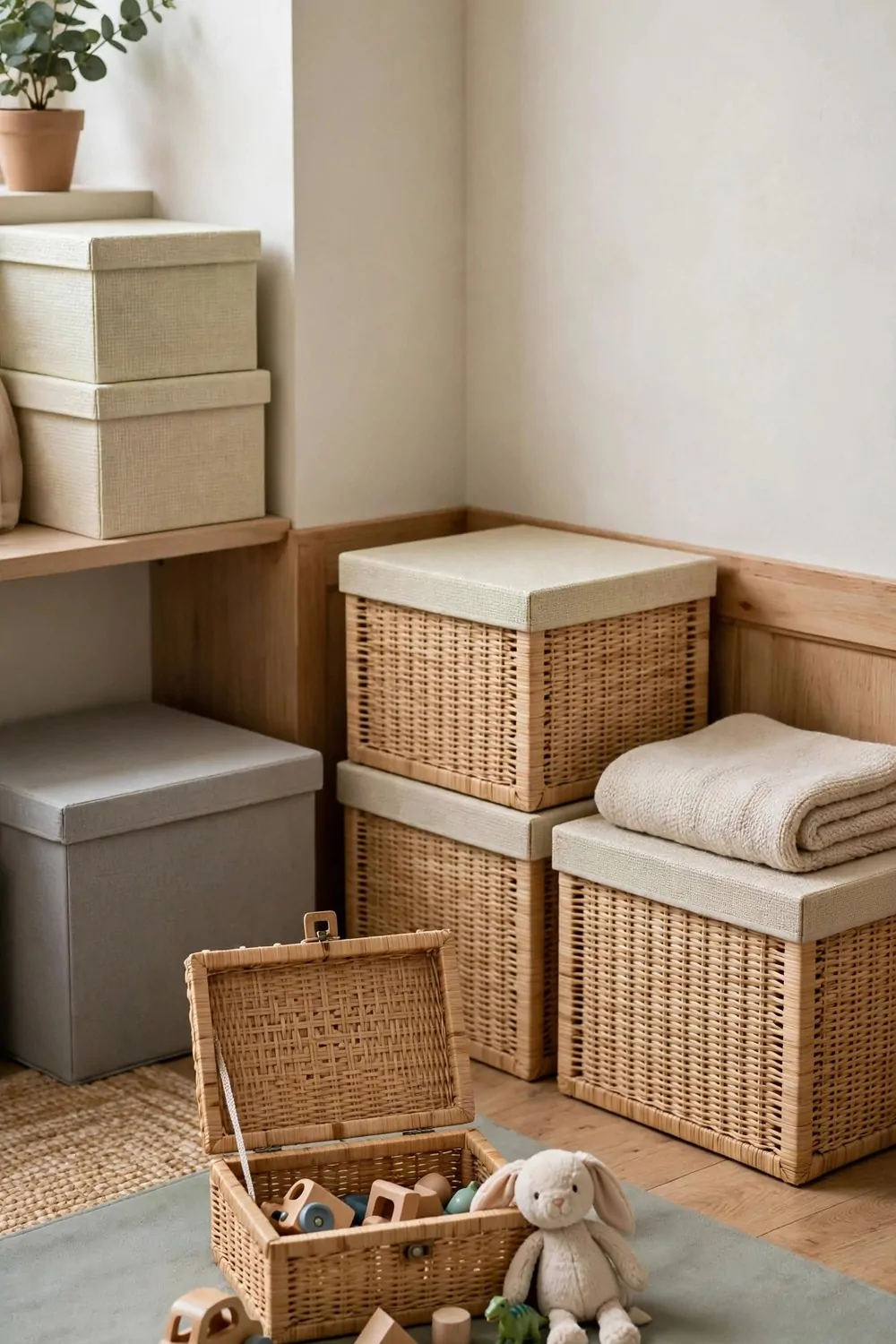
Kids do not need all their toys out at once. When every toy is on show, they play with none of them well.
I learned this when my living room looked like a toy shop. There were toys on the floor, on the sofa, and under the table. Nobody could walk through the room.
So I tried a rotation. I put most of the toys in boxes in a cupboard. Only one box stays out at a time.
Each week, I swap the box. The old box goes away, and a new box comes out. The kids feel like they got new toys, even though they are the same old ones.
Here is a simple four week plan you can copy.
| Week | Box Out | Box Away |
|---|---|---|
| Week 1 | Building blocks | Cars and trucks |
| Week 2 | Cars and trucks | Dolls and soft toys |
| Week 3 | Dolls and soft toys | Art and craft kit |
| Week 4 | Art and craft kit | Building blocks |
Keep the box small. One box, not three. If a toy does not fit in the box, it stays in the cupboard till its turn comes.
Let your child help with the swap. It makes them excited about the next box. They will ask what is coming out this week.
Broken toys go straight in the bin. Do not keep a broken toy in the rotation. It just takes up space and makes the box feel messy.
At the end of the day, all the toys from the box go back in the box. That is the rule. It takes five minutes, and the room is clear again.
Your living room can be a calm room again. The toys have their turn, and the room has its peace too.
20. Keep Bedding Simple: One Set, No Extra Cushions
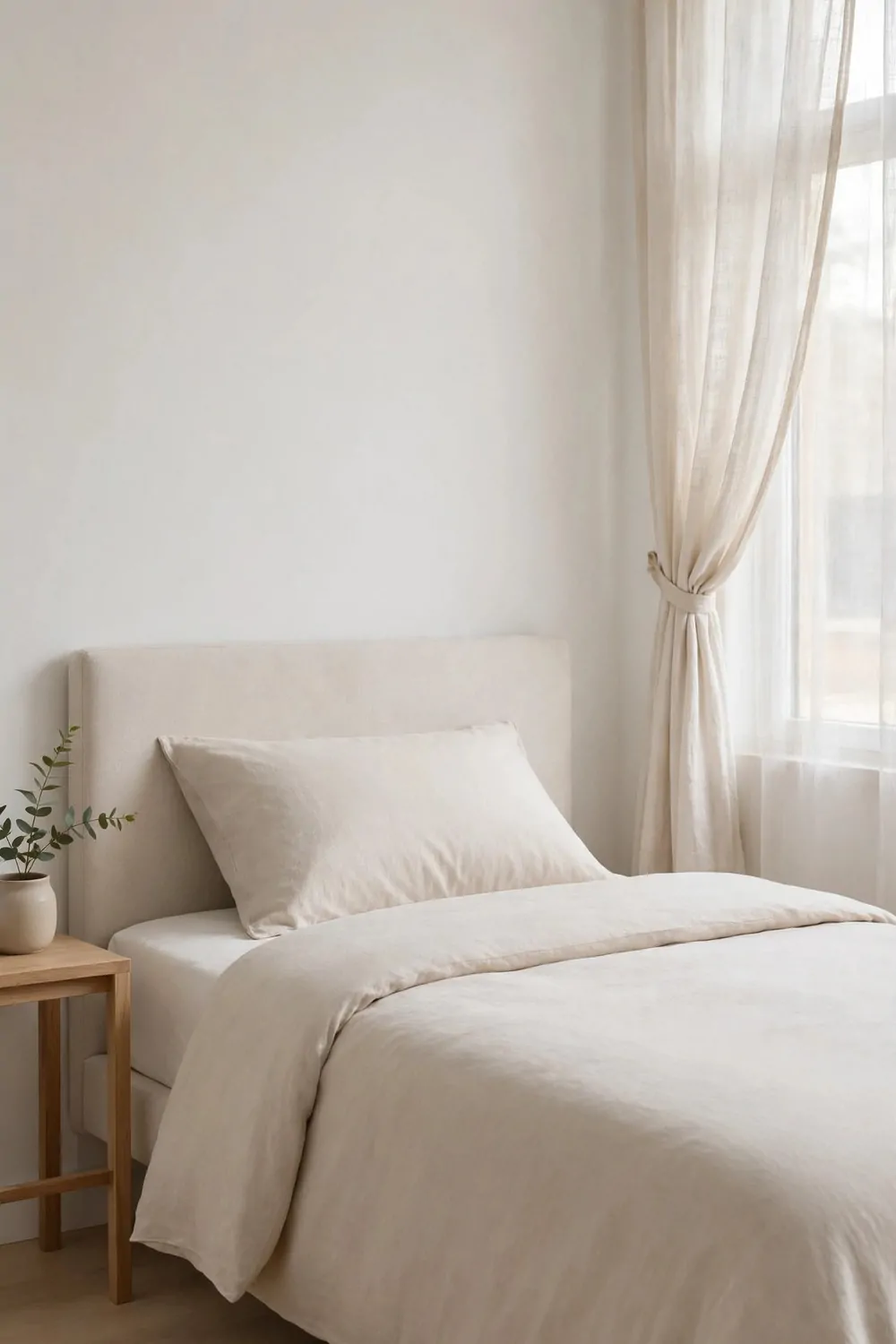
Your bed is the biggest thing in your bedroom. When the bed looks messy, the whole room looks messy.
I used to pile cushions on my bed. Five, six, sometimes seven. Every night I had to take them all off. Every morning I had to put them all back.
It took ten minutes a day, and it gave me nothing. The bed looked nice in a photo, but it made my life harder.
So I stopped. Now I have one set of bedding and no extra cushions. Just the pillows I sleep on.
Making the bed takes one minute now. Pull the sheet up. Smooth the cover. Done. The room feels calm before I even leave it.
Pick one set you love. One color, plain and soft. When it is in the wash, use your spare set. Two sets are enough for the whole year.
Do not keep a stack of spare blankets on the bed. Keep one folded at the foot of the bed if you get cold at night. That is plenty.
When you have fewer things on the bed, you can see the bed itself. It looks clean and simple. Your eyes rest, and your mind rests too.
At night, you just get in. No pile of cushions to move to the floor. No fuss. Sleep should be simple, and your bed should be simple too.
Try it for one week. One set, no extra cushions. I think you will not go back.
21. Do a Fifteen-Minute Weekly Edit
A calm home is not a one time job. It is a small habit you repeat each week.
I do a fifteen minute edit every Sunday evening. That is all it takes to keep the whole house calm.
Set a timer on your phone for fifteen minutes. Walk through the house with a bag in your hand.
Pick up anything that does not belong. A toy in the kitchen. A book in the bathroom. A shirt on the sofa. Put it where it belongs, or put it in the bag.
Look at the surfaces. The table, the counters, the shelves. If something has been sitting there all week and nobody used it, take it away.
Check one small spot each week. This week, the junk drawer. Next week, the shelf by the door. Small spots add up fast.
Ask yourself one question about each thing. Did I use this in the last month? If the answer is no, it can go.
When the timer rings, stop. You are done. Fifteen minutes is enough, and the house already looks better.
Do this every week and the mess never builds up. You will never need a big stressful clean again, because the small edit keeps it away.
Fifteen minutes, once a week. That is the whole secret to a calm clutter free home.
Keep Reading
If you liked these calm ideas, you will love these next. Each one helps you keep a different room tidy without much work.
- 26 Closet Organization Ideas That Make Mornings So Much Easier
- 23 Bathroom Storage Ideas That Hide the Clutter
- 21 Entryway Ideas Guests Will Remember
- 22 Laundry Room Organization Ideas That Actually Stick
Pick one room to start with, and try just one idea from it this week. Small steps add up, and your home will feel calmer before you know it.