21 Mini Gym at Home Ideas Basement Layouts That Use Dead Space

You already own a gym. It is sitting right under your feet.
Think about it. That basement of yours has a concrete floor, solid walls, and space nobody is using for anything important. Boxes you never open. A corner you never walk to. That is honestly the perfect starting point for a workout room.
Most people shop around for a gym membership. They drive across town, wait for machines, and pay every month for a place they stop visiting by February. Meanwhile their basement sits there, free and empty, doing nothing at all. These 21 mini gym at home ideas basement layouts fix that by putting your workout in the dead space you already pay for.
You do not need a finished basement. You do not need high ceilings or big windows. You just need a plan for the odd little zones most people ignore. Each idea below shows you one layout that fits real basement life.
1. The Under-Stair Nook Gym
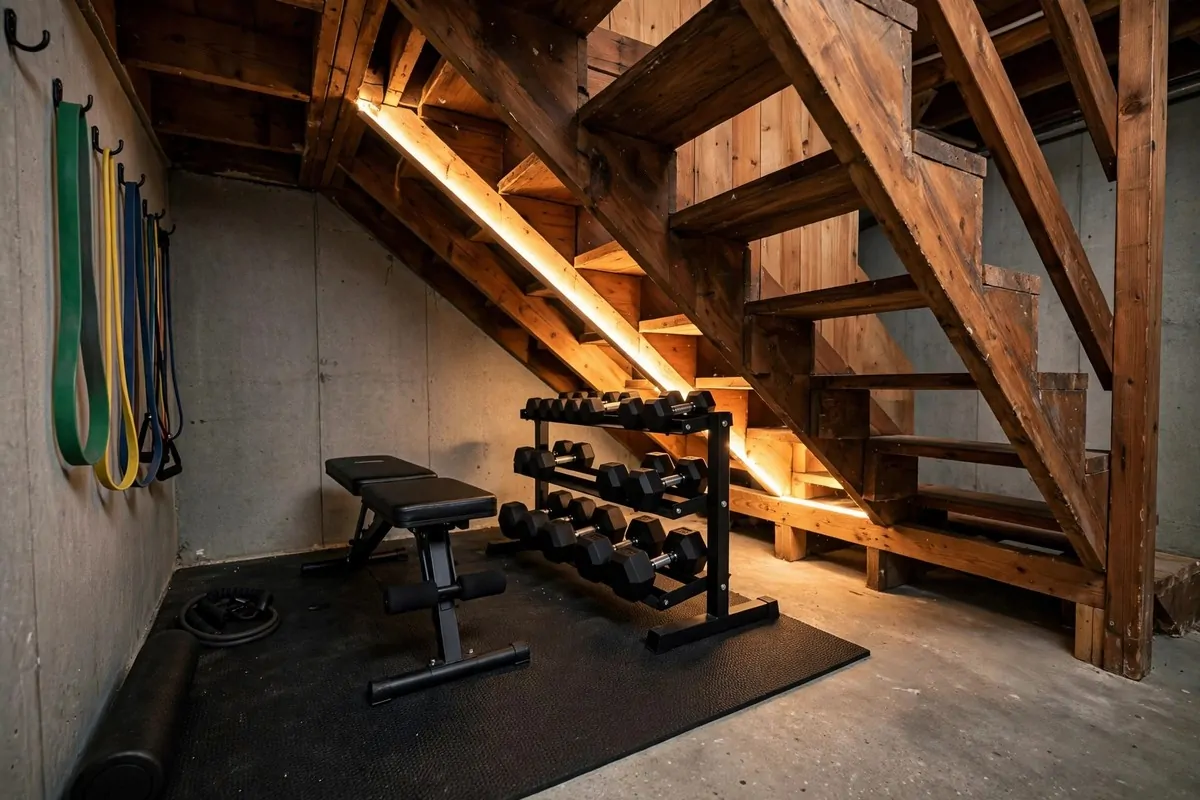
That triangle of air under your basement stairs is wasted space. It is too short to stand in. Too dark to read in. And too awkward for storage.
But it is just right for a small dumbbell station. A low rack of dumbbells slides in under the slope. A foldable bench fits right beside it.
Measure the tallest point under your stairs first. You need enough room to sit on the bench without banging your head.
Then clear out whatever is living there now. Old paint cans and broken toys have to move somewhere else.
Lay a rubber mat down to protect the floor. This is the base of your whole gym nook.
The low wall side is perfect for bands and jump ropes. Hang them on simple hooks so they do not pile up on the floor.
Your dumbbell rack goes against the back wall. Heaviest weights on the bottom row so nothing tips.
A foldable bench is the one big piece here. Open it for bench press, fold it flat when you are done, and it hides in almost no space.
Lighting matters more here than anywhere else. Stick a battery light or a plug-in LED strip under the stair slope and the whole nook wakes up.
This layout works because you never lose floor space. The gym lives in a gap you could not use for anything else anyway.
And here is the nice part. When the bench is folded, nobody even knows it is a gym. It just looks like a tidy corner.
2. The Linear Wall Layout
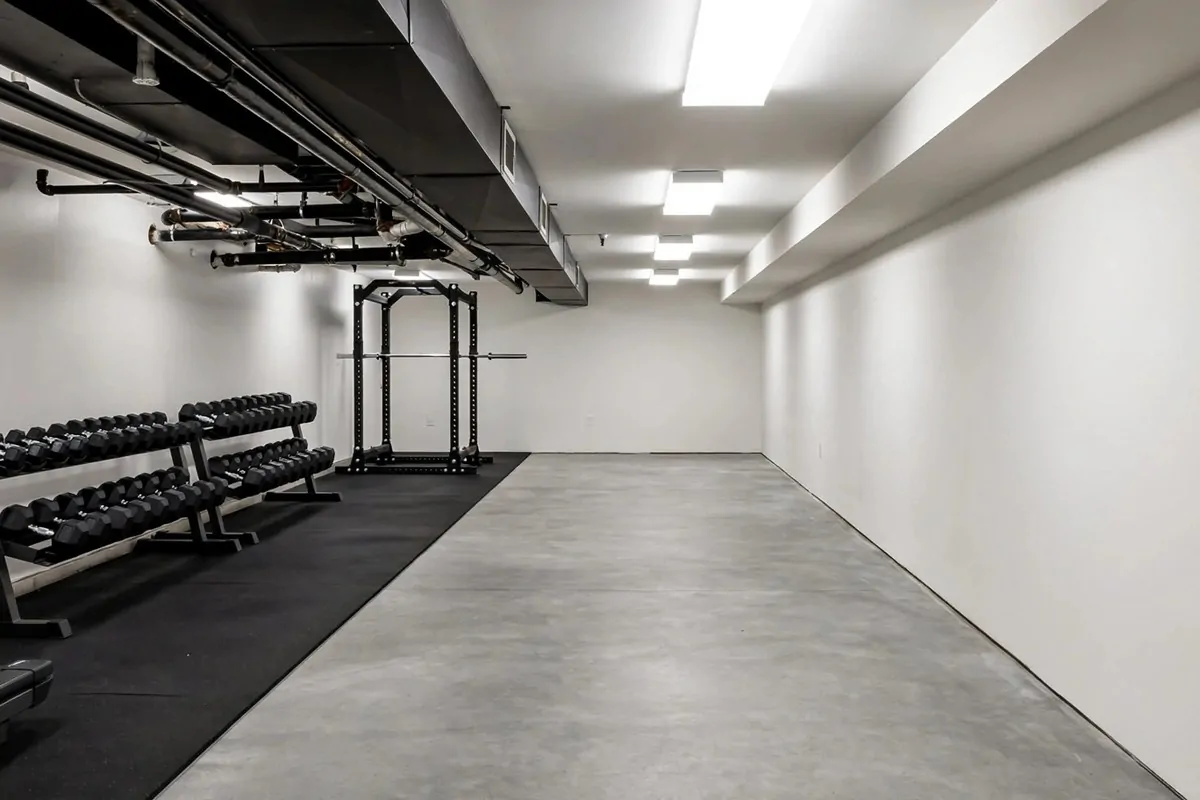
Long narrow basements love this layout. You line every piece of equipment along one wall and leave the middle of the room wide open.
Start with a cardio machine at one end. A treadmill or bike works fine.
Move down the wall to your dumbbell rack in the middle. Keep it close to a bench if you can.
Put a squat rack or power rack at the far end. It needs the most room around it for safety.
Now step back and look. You have a full gym and an open floor strip running right down the center.
That open strip is gold. You can use it for bodyweight moves, stretching, or lunges without moving anything.
Mirrors help this layout a lot. Hang one big mirror above the dumbbell area so you can check your form.
Rubber flooring along the wall protects the concrete. You only need to cover the strip under the equipment, not the whole room.
Keep a small basket for bands and gloves at the end of the line. Little stuff gets lost fast in basements.
Cables run along the wall too. A power strip mounted on the wall keeps cords off the floor.
This layout is simple and cheap. It uses the longest wall you have and turns the rest of the room into open workout space.
I like it for small basements because you can see everything at a glance. Nothing hides in the dark.
3. The Corner Squat Rack Zone
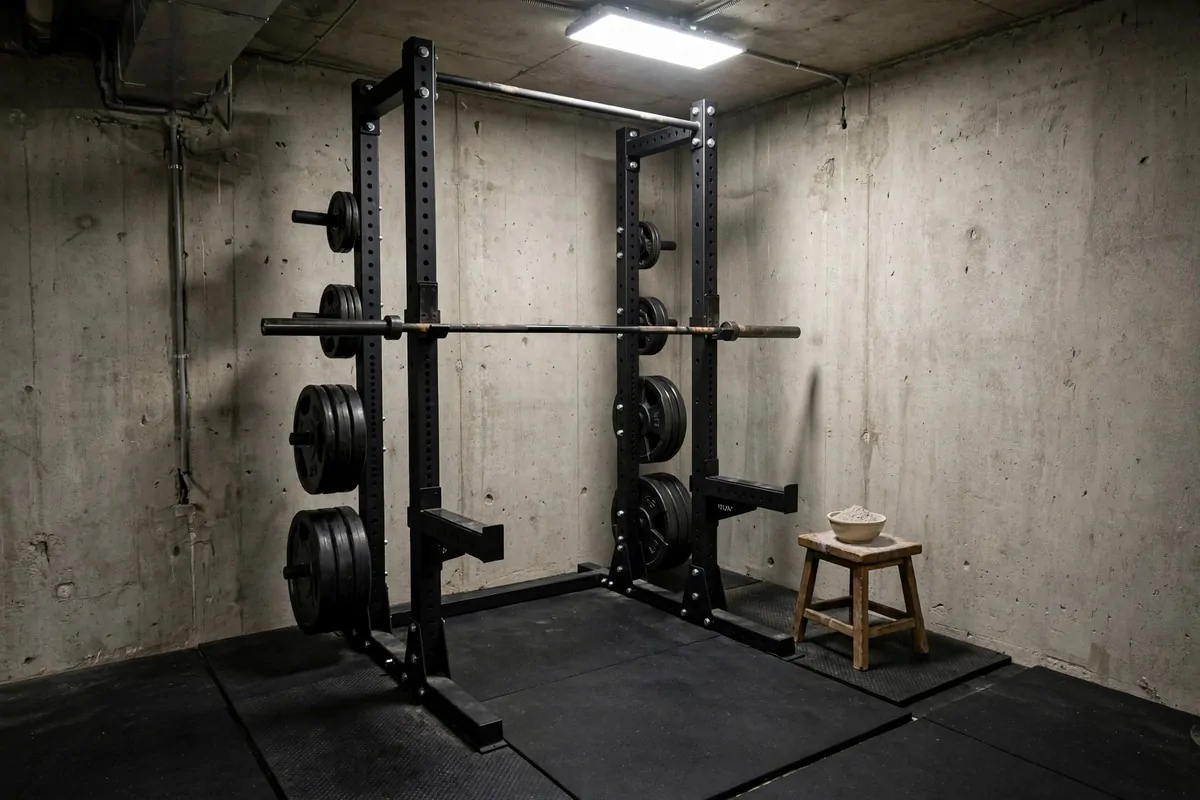
A corner is dead space in most basements. For a squat rack, a corner is actually the safest spot in the room.
Push the rack into the corner so two walls back it up. The bar cannot roll anywhere and plates stay put.
Check your ceiling height first. You need room to stand up with the bar overhead if you plan to press.
If the ceiling is low, keep the rack for squats and rows only. Honestly that covers most of what a home lifter does.
Lay thick rubber mats under the rack. Dropped plates will crack bare concrete over time.
Store your plates on a small tree or lean them against the wall behind the rack. Keep them close so you are not carrying heavy plates across the room.
A corner rack also keeps the noise down. The weight sits on mats in a corner instead of shaking the middle of the floor.
You can bolt the rack to the wall if you want extra safety. Most racks have holes for this and it takes ten minutes.
Face out of the corner when you lift. Your eyes need open space in front of you.
This is a small footprint for serious training. One corner, one rack, one lifter, done.
Add a hook for your belt and chalk bowl on the wall beside it. The whole corner becomes your lifting home.
4. The Mirrored Strength Corner
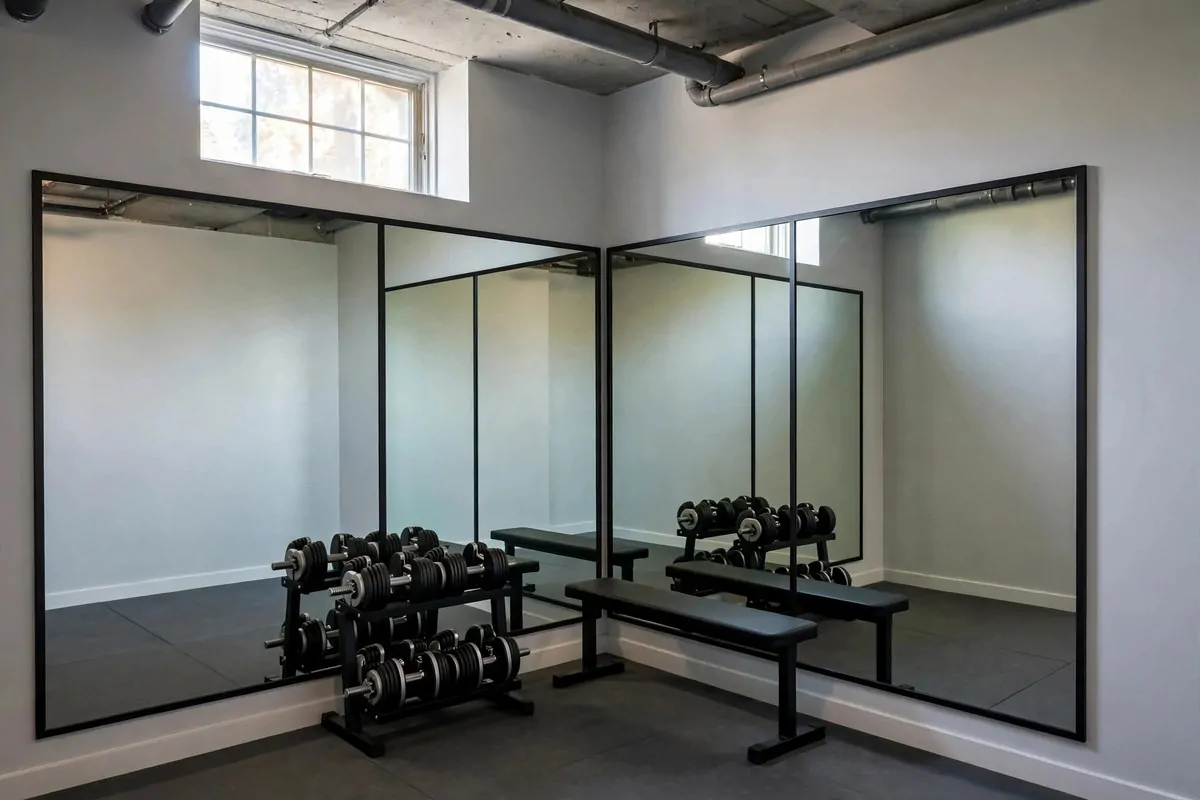
Mirrors do two jobs in a basement gym. They let you check your form and they make a dark corner feel twice as big.
Pick the corner that gets the most light. Even a tiny basement window counts.
Cover one wall with large mirrors. You do not need fancy ones. Big flat mirrors from a hardware store work fine.
Mount them low enough to see your full body when you squat. Top edge near your head height is a good rule.
Put your adjustable dumbbells in front of the mirrors. You will watch every rep and catch bad form fast.
A slim bench fits right under the mirror wall. Slide it out when you lift and push it back after.
Paint the wall behind the mirrors a light colour. White or pale grey bounces light around and fights that cave feeling.
Keep the mirror clean with a spray bottle of water and a cloth. Basement dust settles on everything.
Never place heavy plates in front of the mirrors. One slip and you are buying new glass.
This corner becomes the heart of your gym. You will do more exercises here than anywhere else in the room.
Friends who see it will think you hired a designer. And all you did was hang mirrors in a corner.
5. The Low-Ceiling Cardio Strip
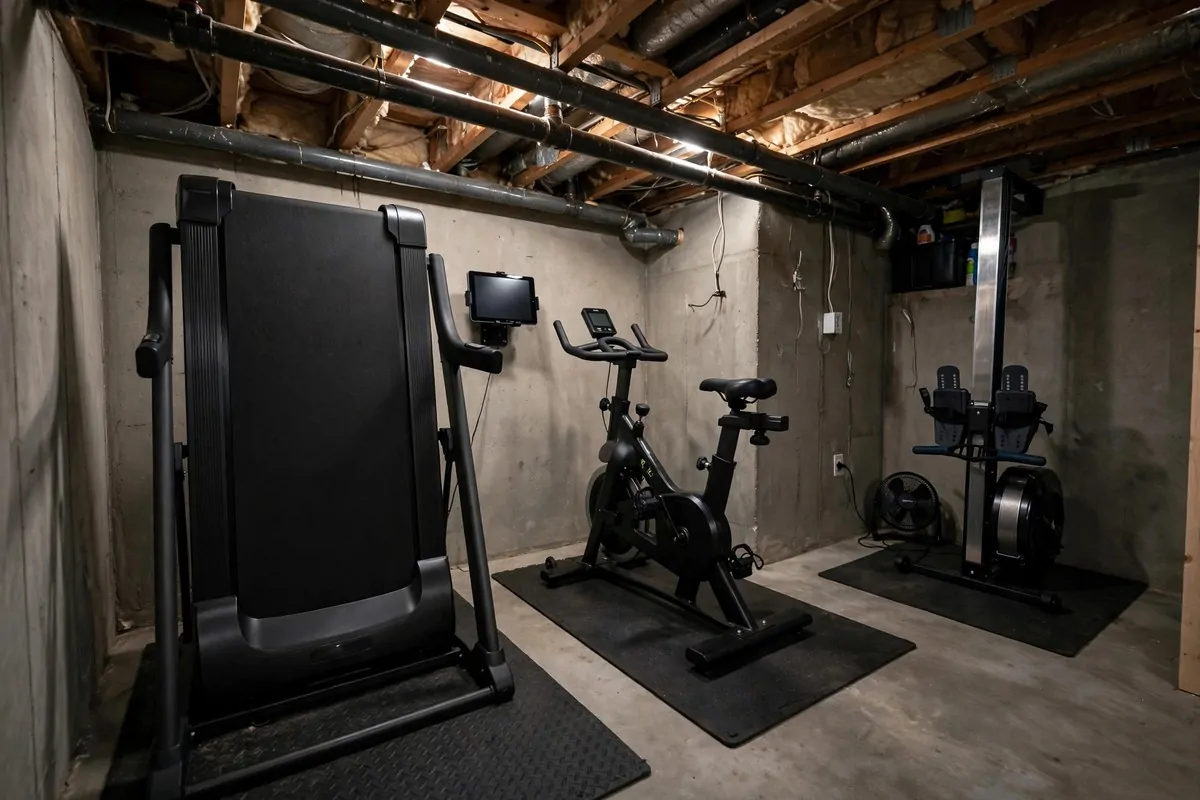
Low ceilings scare people off basement gyms. They should not. Cardio barely needs any headroom at all.
Treadmills, bikes, and rowers all work under ceilings that are too low for overhead lifts. You just avoid jumping and pressing.
Line your cardio machines along the shortest wall. This wall would be useless for lifting anyway.
A folding treadmill is the star here. Fold it up and the strip becomes open floor again.
Rowers stand up on end when you are done. Lean one in the corner and it takes almost no space.
Put a small fan at the end of the strip. Basements get warm when you sweat and air moves slow down there.
A TV or tablet on a wall mount makes cardio time fly. Hang it at eye level in front of the treadmill.
Plug everything into one power strip. One switch kills it all when you are done.
Floor mats under each machine cut noise and vibration. Your upstairs floors will thank you.
Keep a towel rail or hook at the end of the strip. Sweaty cardio needs towels close by.
This layout uses the worst part of the basement and makes it useful. Low ceilings stop being a problem and start being a plan.
6. The Foldable Bench and Dumbbell Wall
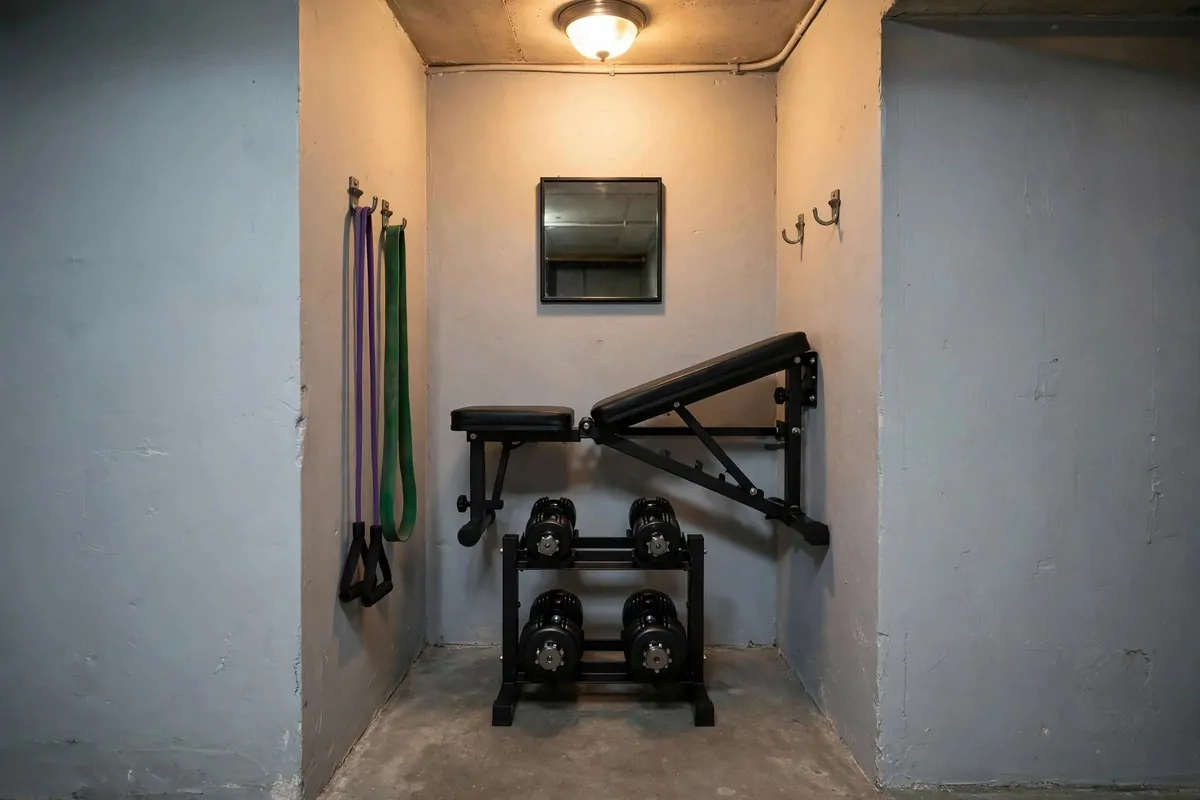
This layout is for the person who wants a real workout in almost no space. One wall, one bench, one set of dumbbells.
Mount a foldable weight bench flat against the wall. It hangs there like a slim panel until you need it.
Under it, set a compact dumbbell rack. A tier rack that holds one set of adjustable dumbbells fits in half a metre.
When it is workout time, pull the bench down and grab the dumbbells. The whole setup takes about thirty seconds.
You can press, row, curl, lunge, and step up on this little station. That is a full body workout from one wall.
Afterwards everything folds back. The wall looks empty again and you have your basement back.
Add two wall hooks beside the bench for resistance bands. They take zero space and add lots of moves.
A small mirror above the dumbbell rack helps you check form. Even a small one makes a difference.
This station loves dead wall space. The bit between a door and a corner that holds nothing right now is perfect.
Paint that wall a fresh colour when you set it up. A clean wall makes a foldable gym feel real.
Total footprint when open is about the size of a rug. When folded it is almost nothing.
7. The Rubber Mat Zone
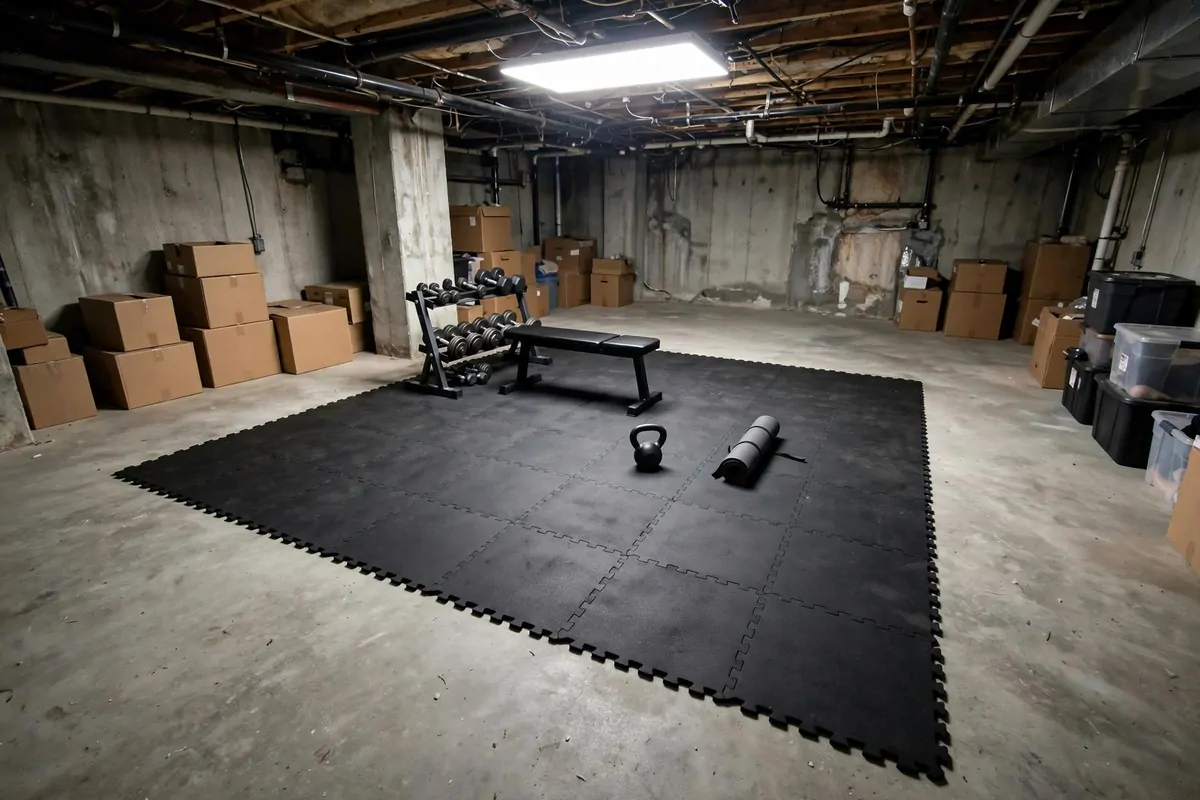
Here is a trick designers use. Flooring defines a room even when there are no walls. One big rubber mat zone turns random basement floor into a gym.
Start by choosing your zone. A square of about two by three metres handles most workouts.
Buy interlocking rubber tiles or one big mat. Tiles are nice because you can replace one if it wears out.
Lay the zone on bare concrete. No glue needed. The weight of the tiles holds them down.
Now put all your gear inside the lines. Dumbbells, bench, kettlebell, mat. Everything lives on the rubber.
The visual edge is the magic part. Your brain reads the mat as a room. You stop seeing boxes and old furniture around it.
This zone also cuts noise. Rubber eats the thud of dropped weights and the bounce of jumping moves.
Pick a dark colour like black or charcoal. It hides basement dust and looks like a real gym floor.
Leave a walkway around the zone. You want to step onto the mat like walking into the gym, not trip over it.
Add a small shelf or basket at the edge for water and towels. Your gym zone needs its own supplies.
One mat, one zone, one clear signal that this part of the basement is for training.
8. The Pegboard Storage Wall
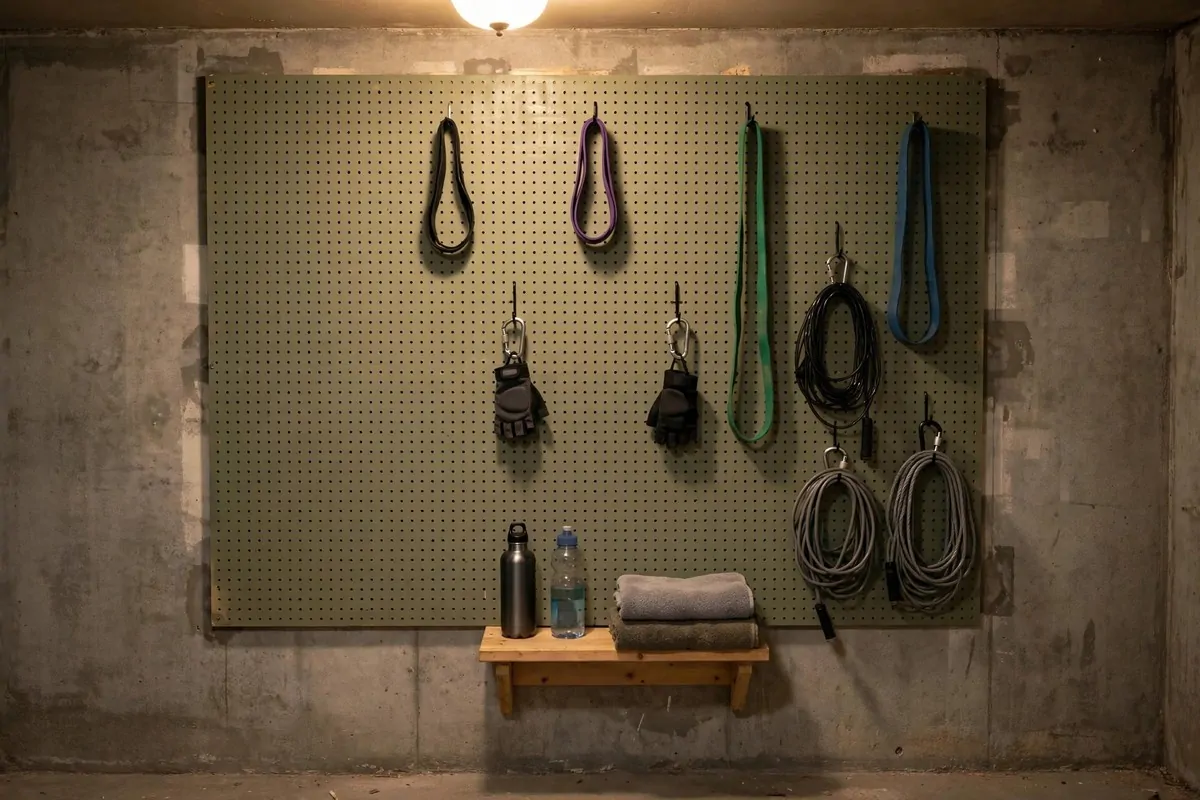
Small gym gear is a clutter machine. Bands, ropes, gloves, and belts pile up fast in a basement. A pegboard wall fixes that.
Mount a big pegboard panel on a bare wall. Dead wall space between studs is all you need.
Hook everything up where you can see it. Resistance bands hang on pegs. Jump ropes coil on hooks. Gloves clip onto carabiners.
The beauty of pegboard is that it grows. Add more hooks as your gear grows.
Label nothing. You will see what everything is because it is all out in the open.
Keep heavy stuff off the pegboard. Plates and dumbbells live on the floor or a rack, not on pegs.
Paint the pegboard a fun colour. It turns a boring basement wall into a feature.
Put the pegboard near your main workout zone. Gear you can grab fast gets used more.
A small shelf screwed to the bottom holds bottles and small towels. Two screws and it is solid.
Dust the gear now and then. Basement air is dusty and rubber bands attract it.
This wall takes up zero floor space. It is pure vertical storage in a spot that was holding nothing but cobwebs.
9. The Alcove Yoga and Stretch Corner
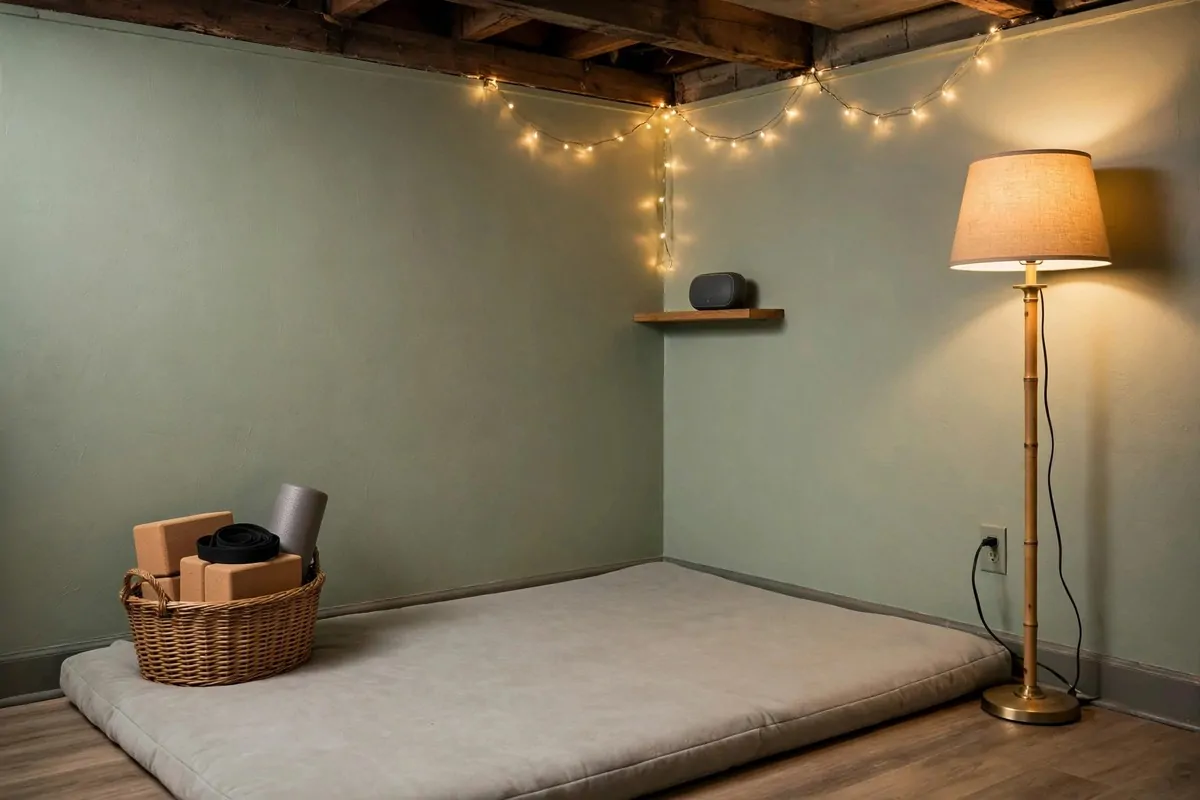
Not every basement gym idea is about lifting. This one is about the quiet work your body needs too.
Find a small alcove or a dead corner with a bit of privacy. The far end of the basement is ideal.
Lay down a big soft mat or two yoga mats side by side. This is your floor from now on.
Add a basket with yoga blocks, a strap, and a foam roller. Three cheap tools that make stretching ten times better.
Paint the alcove a soft warm colour. Cream, sage, or pale terracotta all calm a basement down.
Lighting is everything here. A warm plug-in lamp or a string of soft lights beats harsh overheads.
Keep a small speaker on a shelf for calm music or guided stretches. Your phone works fine too.
This corner is for rest days and warm-ups. Ten quiet minutes here before lifting makes the whole workout better.
Roll the mats up if you need the space. This layout packs away in minutes.
Your muscles will thank you for this corner. Honestly mine did.
10. The Recovery Nook
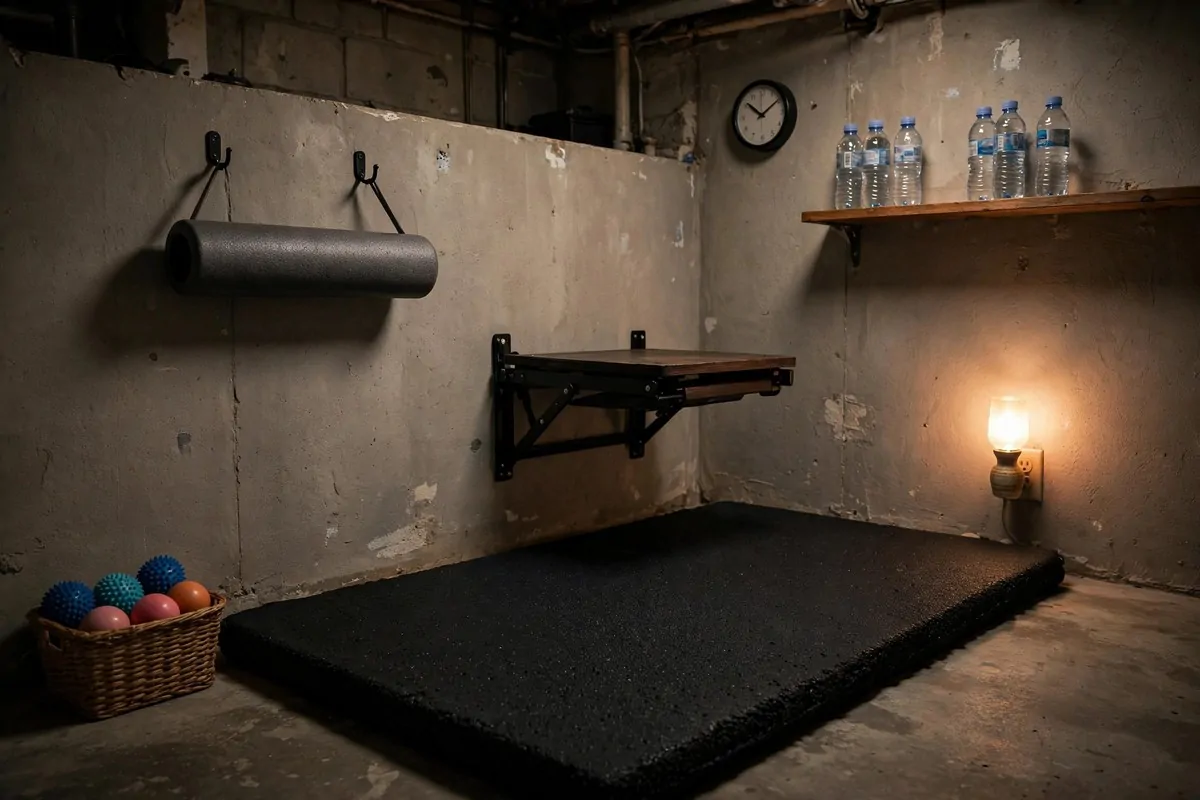
Hard training without recovery is just breaking yourself slowly. A recovery nook gives your body the corner it deserves.
Pick the quietest dead corner in the basement. Away from the cardio machines is best.
Lay a thick mat on the floor. This is where foam rolling and stretching happen.
Hang a foam roller on two wall hooks. It stays off the floor and you can see it, which means you will use it.
Add a small bin with massage balls and a lacrosse ball. These reach the spots a roller misses.
A wall-mounted fold-down seat is a nice touch. Flip it down for seated stretches, fold it up after.
Put a small clock on the wall. Timing your stretches keeps you honest about doing them long enough.
Keep a water bottle station here. Recovery and water go together.
Soft light again, same as the yoga corner. A plug-in lamp is enough.
This nook is small but it changes how you train. You start finishing workouts properly instead of skipping the cool-down.
Every serious gym has recovery space. Yours just fits in a basement corner.
11. The Kettlebell Cluster
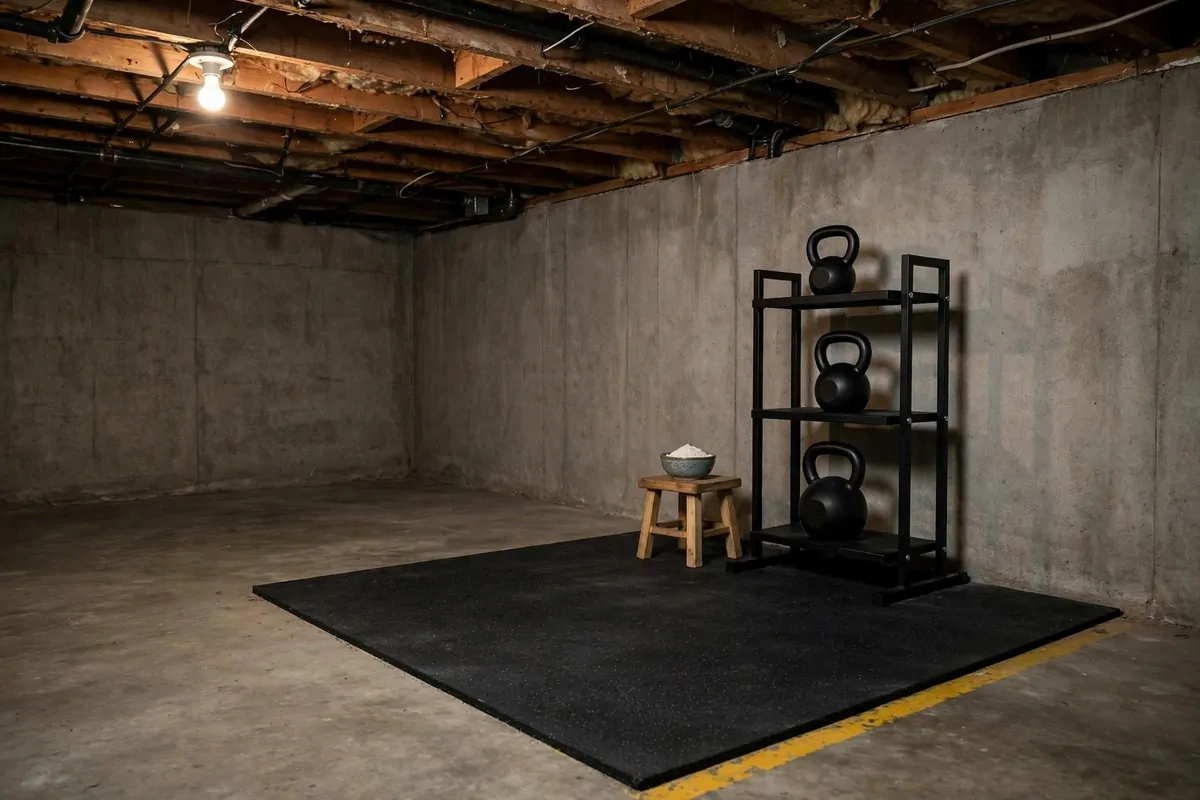
Kettlebells are the kings of small-space training. One small cluster of them can replace a whole rack of machines.
Set up a vertical kettlebell rack in a tight corner. A three-tier stand holds a full set in less than a metre of floor.
You need clear space in front of the rack. Swings and snatches need room, so face the open part of the basement.
Put a heavy rubber mat under the whole area. Kettlebells get set down hard and the mat saves the floor.
This corner works in low ceilings too. Most kettlebell moves stay below shoulder height anyway.
Keep a chalk bowl on a tiny stool beside the rack. Sweaty hands and kettlebells are a bad mix.
Three or four bells cover most people. Light for warm-ups, medium for reps, heavy for swings.
Paint a small floor line where you stand. It sounds silly but it keeps your feet in the right spot every time.
Store the lightest bell on top and the heaviest on the bottom. Same rule as dumbbells.
This cluster is dead simple and dead cheap. One corner, a few bells, and you can train your whole body.
12. The Ceiling-Mount Pull-Up Bar
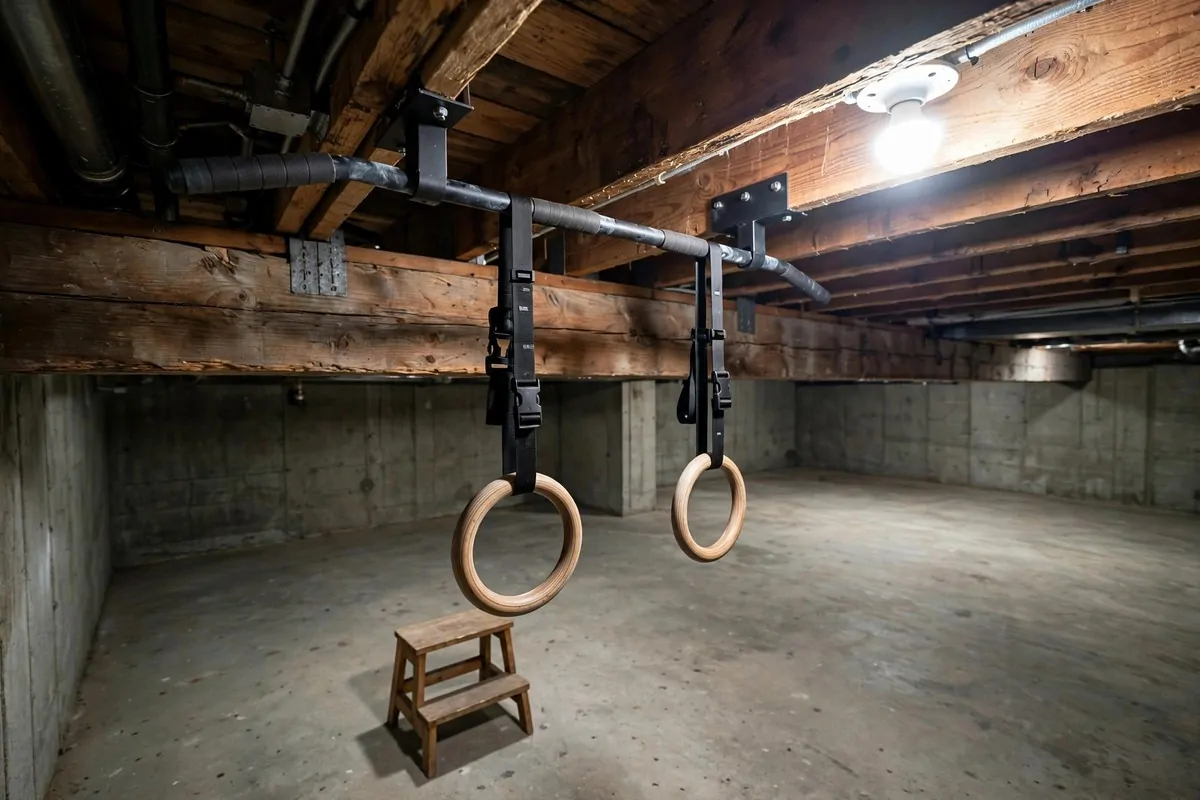
Look up. The space above your basement walkway is dead air doing nothing. A ceiling-mount pull-up bar puts it to work.
You need solid joists to bolt into. If your basement ceiling is open, this is easy. If it is finished, find the joists first.
Mount the bar over a walkway or an open spot, not over equipment. You need a clear drop zone underneath.
Check that you have enough headroom to hang with bent knees if needed. Low basements can still work.
This bar takes zero floor space. It lives overhead and only appears when you grab it.
Wrap the bar with grip tape. Cold basement metal is slippery and rough on hands.
Hang gymnastic rings from the bar too. Rings add rows and dips to the same mounting point.
Keep a small step stool nearby if you are short. Hopping to the bar is fine but a stool is kinder.
Do not mount it in a doorway with a door. The door will hit you. Ask me how I know.
A pull-up bar turns dead ceiling space into upper-body day. One bolted bar, endless workouts.
13. The Battle Rope Corner
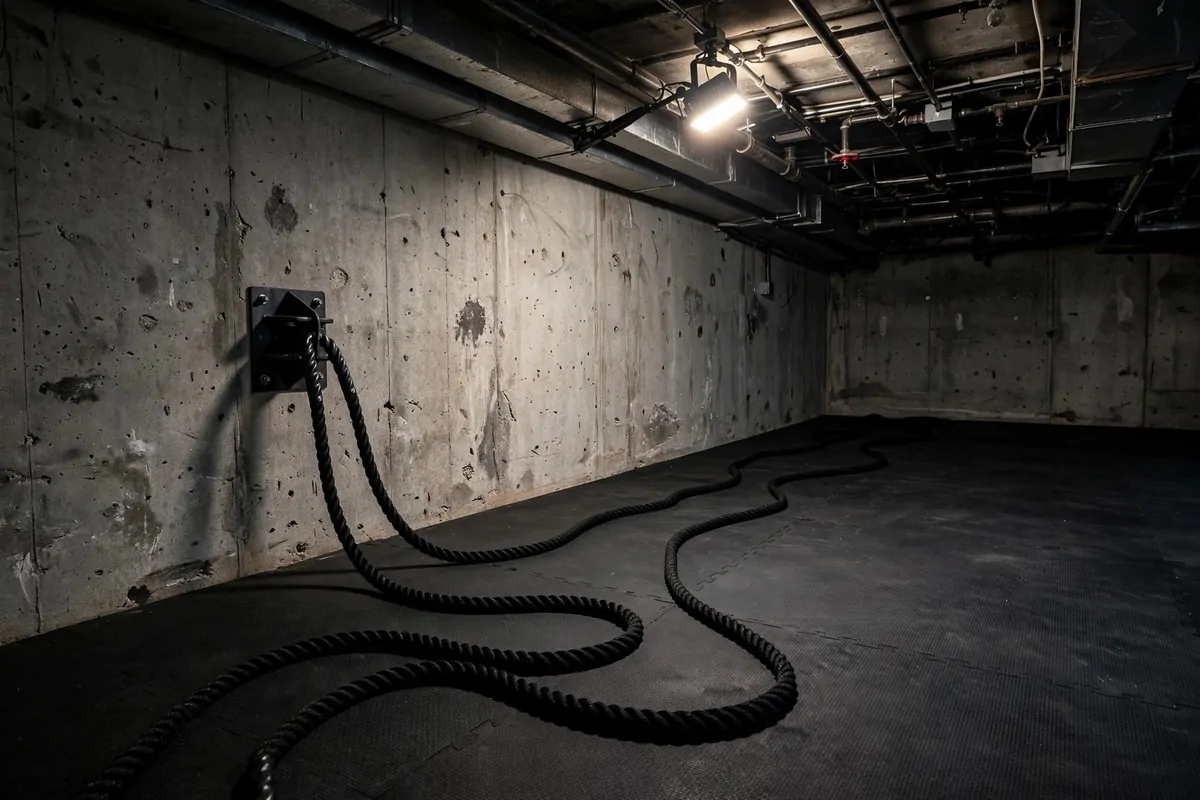
Battle ropes need an anchor point and a long clear lane. A bare concrete basement corner gives you both.
Bolt a wall anchor to the concrete or a solid stud wall. This holds the rope’s center point.
You need a lane about five to six metres long for the rope to wave in. Basements usually have this along one wall.
Anchor in the corner and wave out into the room. The corner holds the anchor and the open floor holds you.
Thick rubber flooring under the lane is a must. Rope slams shake the floor and the mats soak it up.
Keep this corner clear of everything else. Waving ropes eat space and will hit whatever is nearby.
Coil the rope and hang it on the anchor when done. It stores flat against the wall in seconds.
This is loud work, so mats matter double here. Your family upstairs will hear every slam without them.
Battle ropes train arms, back, and lungs all at once. Ten minutes here feels like a full session.
One corner, one anchor, one rope. Dead space becomes the hardest workout in the house.
14. The Cable Station Nook
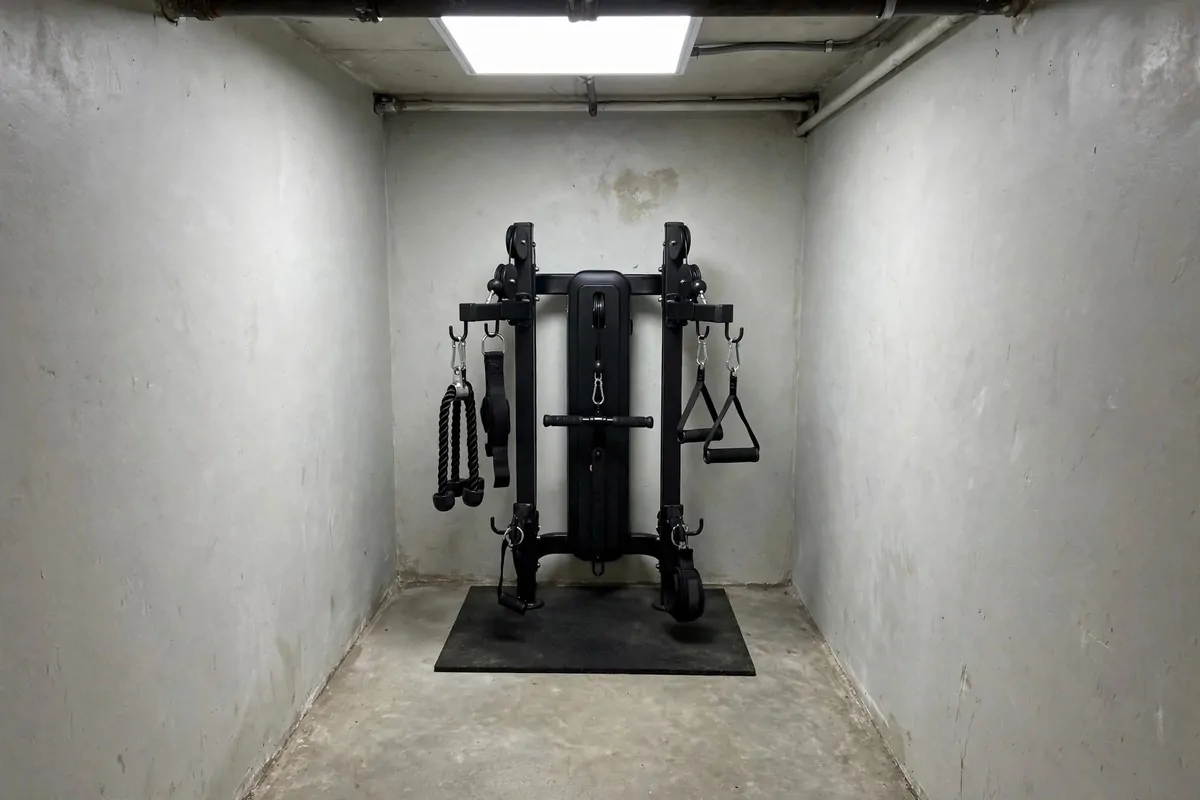
Cable machines do hundreds of exercises in one spot. A compact one fits in a basement nook you would otherwise ignore.
Look for a dead corner about two metres wide. That is all a slim functional trainer needs.
Push the machine into the corner and face it into the room. You need arm room in front, not behind.
These machines are tall, so check ceiling height. You need room to stand and reach the top pulleys.
Bolt it to the floor if the manual says so. Top-heavy machines can tip on smooth concrete.
Store the attachments on the machine’s own hooks. Handles, ropes, and bars all hang right there.
A small mat under the machine protects the floor and marks your spot.
This one station replaces a lot of gear. Chest, back, arms, legs, core. It all happens on cables.
It is not cheap, but it is cheaper than a gym membership over a couple of years.
One nook, one machine, and your whole upper body is covered. Dead corners were made for this.
15. The Bike Station Under the Window
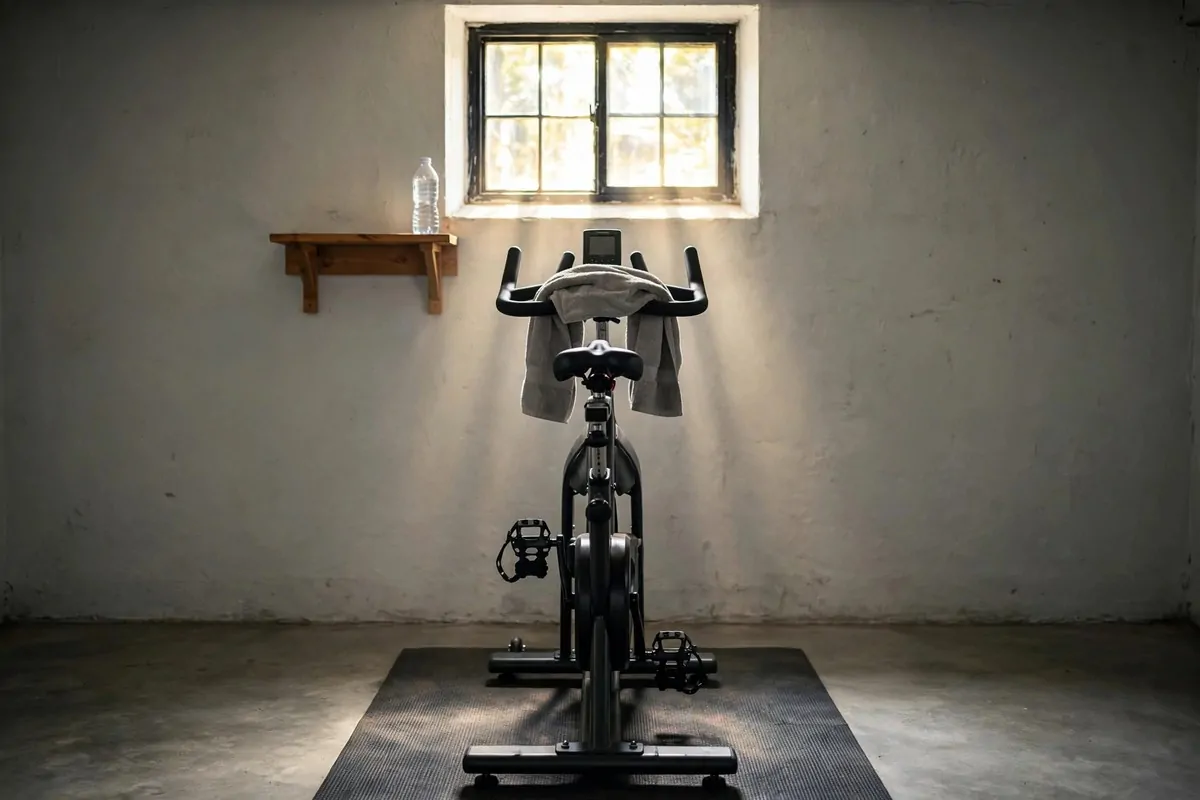
Basement windows are small and high, but they give real light. Park your stationary bike under one and ride in daylight.
The strip under a window is usually dead space. Too narrow for furniture, too low for shelves.
A bike fits perfectly. Its footprint is small and the seat height works under low windows.
Face the window when you ride. Staring at real sky, even a small patch of it, beats staring at a wall.
Put a mat under the bike. Sweat drips and mats protect the floor.
Hang a small shelf beside the window for water and your phone. Everything in reach while you pedal.
A wall-mounted tablet arm is a nice upgrade. Watch shows or follow rides without holding anything.
Open the window a crack if you can. Fresh air changes everything about basement cardio.
Keep a towel on the handlebars. You will need it by minute five.
This station uses the most ignored wall in the basement. The window wall finally has a job.
16. The Resistance Band Wall Station
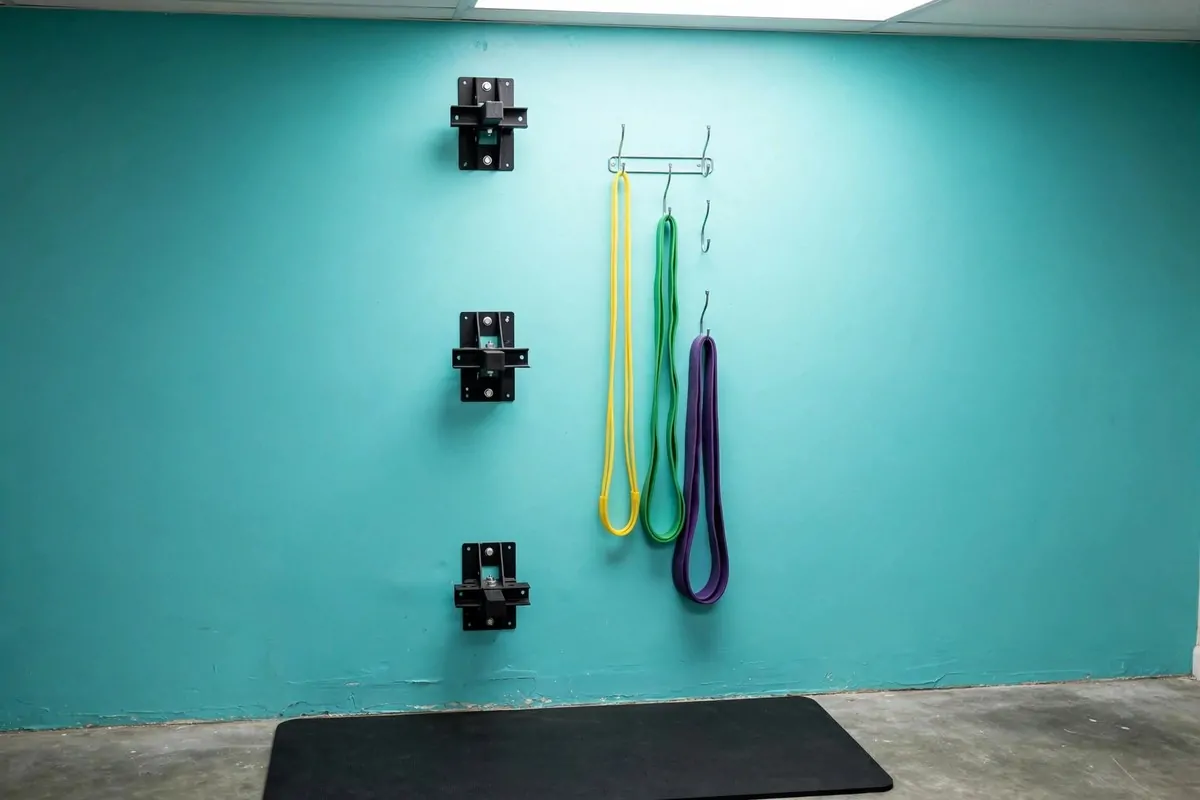
Resistance bands are the lightest gym equipment on earth. A whole gym’s worth hangs on one strip of wall.
Mount band anchors at three heights on a dead wall. High, middle, and low anchors cover every angle.
The anchors bolt into studs. Three solid points hold more weight than you will ever hang on bands.
This station needs almost no floor space. You stand on a mat in front of the wall and train.
Bands replace dumbbells for travel-style workouts. Press, pull, curl, squat. It all works.
Keep bands on hooks beside the anchors. Sort them by thickness so you grab the right one fast.
A door frame anchor is a backup option. But wall anchors are sturdier and always ready.
This is a great station for beginners. Bands are kind to joints and cheap to start with.
Paint the wall a bright colour. Bands against white look like a clinic. Bands against colour look like a gym.
One wall, three anchors, a pocket full of bands. Dead space becomes a full gym in an afternoon.
17. The Bright Light Makeover
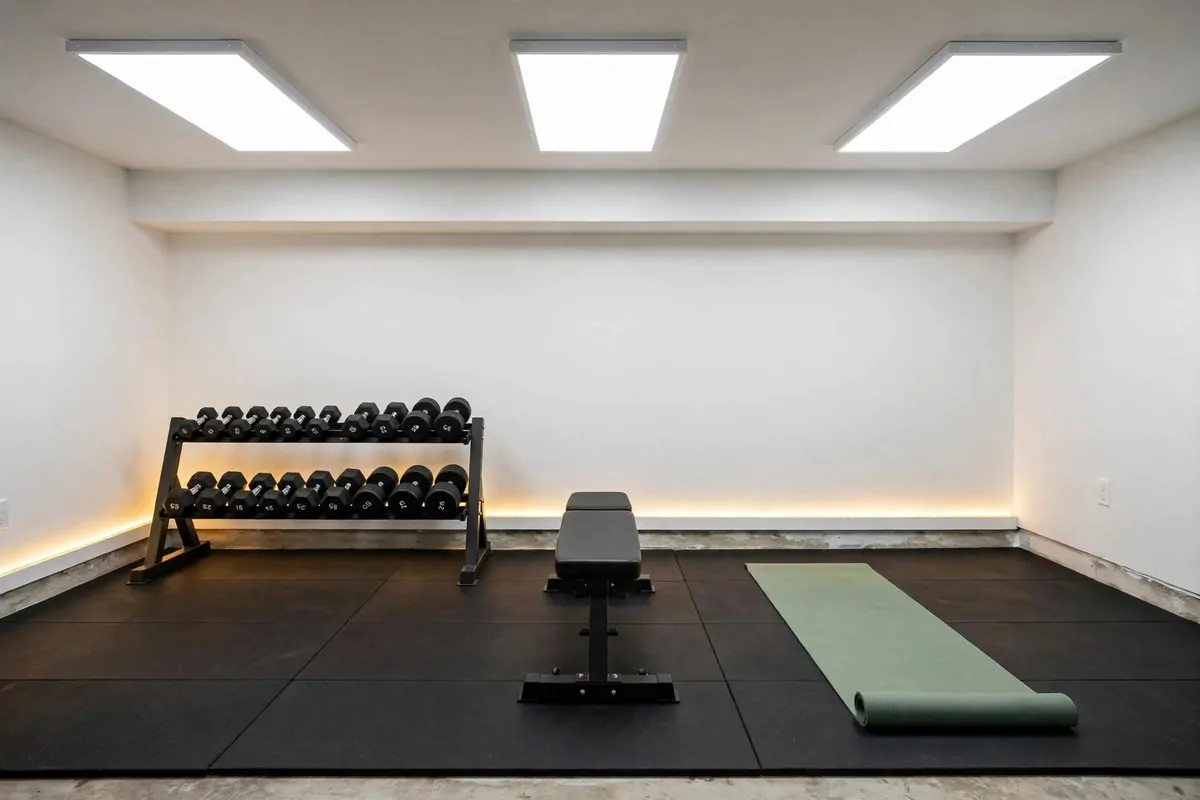
Dark basements kill motivation. You walk down, see a cave, and walk back up. Light fixes that faster than any equipment.
Start with the ceiling. Bright LED panels or shop lights turn a dungeon into a daylight room.
Aim for even light with no dark corners. Two or three fixtures beat one bright one.
Paint the walls white or very light grey. Paint plus light together double the effect.
Add a few plug-in LED strips behind equipment. The glow makes corners feel designed instead of dark.
Cool white light works best for workouts. It keeps you alert and makes the room feel clean.
Put the lights on one switch or a smart plug. One tap and the gym is awake.
Windows get a quick clean too. Grimy basement windows block a shocking amount of light.
Check for flicker in old fixtures. Flickering lights give people headaches and kill the mood.
You do not need a remodel for this. Light and paint are the cheapest layout change on this whole list.
A bright basement gets used. A dark one gets ignored. That is really the whole secret.
18. The Closed Storage Cabinet
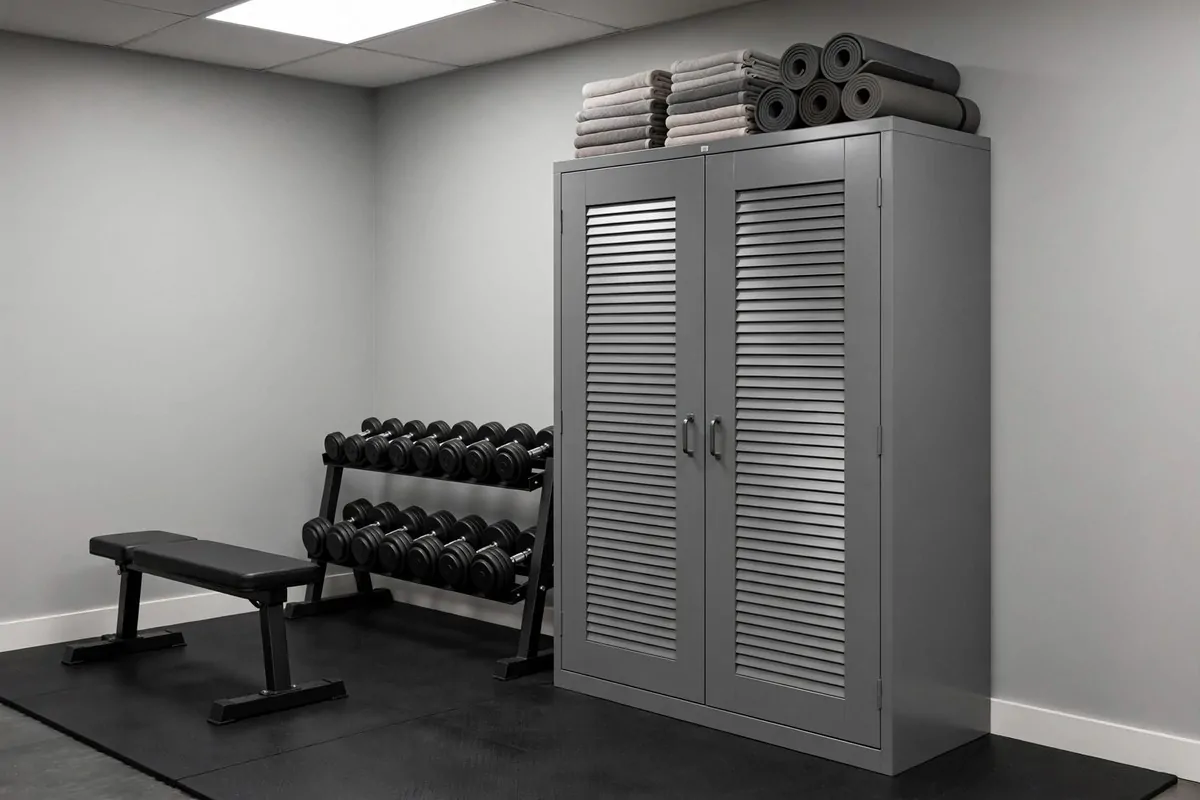
Open shelves in a basement collect dust and look messy fast. A closed cabinet keeps small gym gear tidy and clean.
Get a tall cabinet with doors. A basic wardrobe or garage cabinet works fine.
Inside, fit small bins on each shelf. Bands in one bin, gloves in another, small plates in a third.
The top of the cabinet holds towels and spare mats. Folded flat, they take almost no space.
Lock the doors if kids are around. Heavy small plates are not toys.
Put the cabinet at the edge of your gym zone. It becomes a wall that separates gym from storage side.
Inside the doors, stick a simple workout list. You see your plan every time you open it.
Dust stays out when doors stay shut. Your gear lasts longer and looks new.
One cabinet replaces three open shelves and a pile on the floor. Less mess, less dust, less excuse.
Closed storage is boring but powerful. It keeps the gym feeling like a gym instead of a junk corner.
19. The Mat-Rollout HIIT Zone
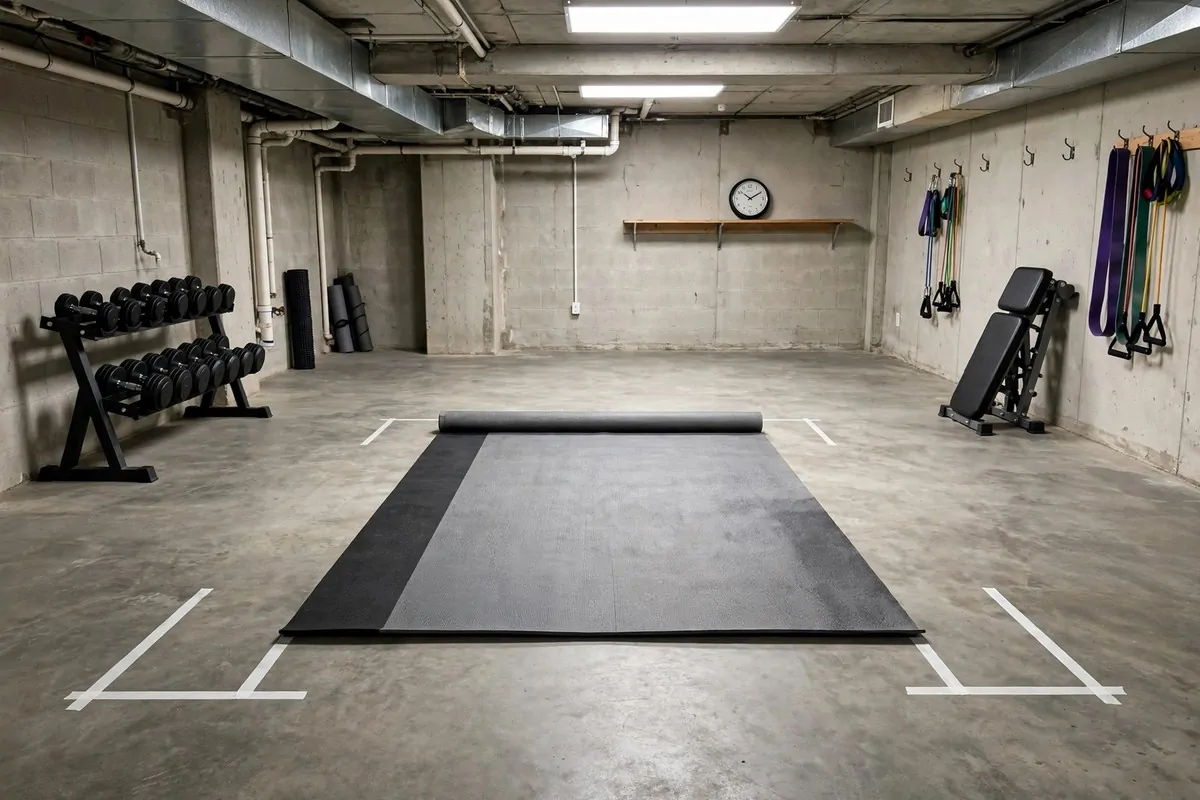
HIIT workouts need one thing. Open floor. Everything else can live against the walls.
Push all equipment to the walls. Dumbbell rack on one side, bench folded flat on another, bands on hooks.
Leave the center of the basement completely open. This is your HIIT zone.
Roll out a big mat when it is time to train. Roll it up and lean it in the corner after.
The open center also works for dancing, boxing rounds, and mobility flows. One space, many workouts.
Mark the zone corners with tape on the floor. You will know exactly where your space starts.
Keep a timer on a wall shelf. HIIT runs on intervals and a visible clock keeps you honest.
This layout is perfect for shared basements. The gym disappears into the walls when family needs the room.
Sound travels during jumps, so double up the mat. Two mats beat one for noise.
You do not buy much for this layout. You move what you have and clear the middle.
Open floor is the most flexible gym layout there is. The walls hold the gear, the center holds you.
20. The Narrow Hallway Workout Strip
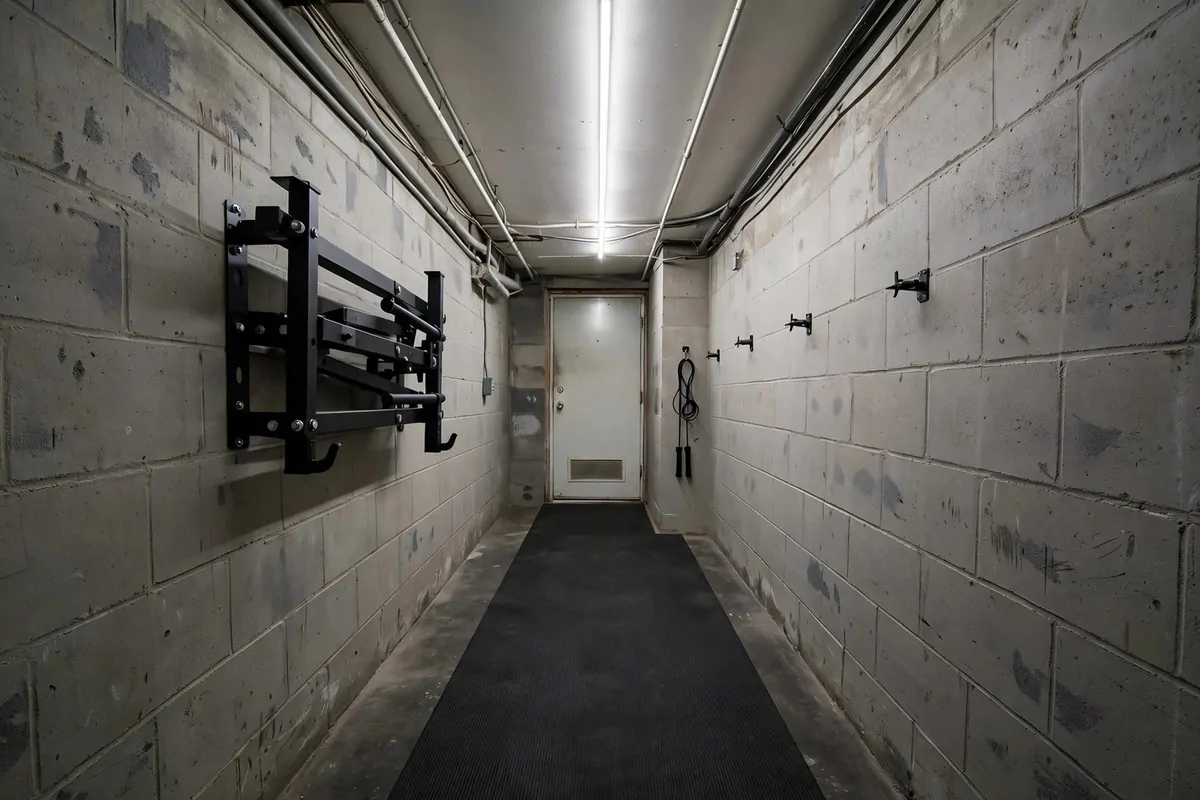
Basement hallways are the definition of dead space. People walk through them and nothing else happens there. This layout changes that.
Mount a foldable squat rack to one hallway wall. It folds flat when the hall needs to be a hall.
Lay a long runner mat down the center. It protects the floor and marks your workout lane.
Wall anchors for bands go on the opposite wall. Now both walls work for you.
A hallway is naturally narrow, so choose slim gear. Dumbbells on a slim rack, bands on hooks, one mat.
Keep the path clear when folded. Family still needs to walk through without tripping.
Lighting matters in halls. One bright strip light down the hall makes it feel like a gym tunnel.
Store a jump rope on a hook by the door. Hallways are great for rope work if the ceiling allows.
This layout is weird and wonderful. It turns a walkway into a workout lane twice a day.
Measure the hall width first. You need enough room to move without hitting both walls.
21. The Cool-Down Lounge Corner
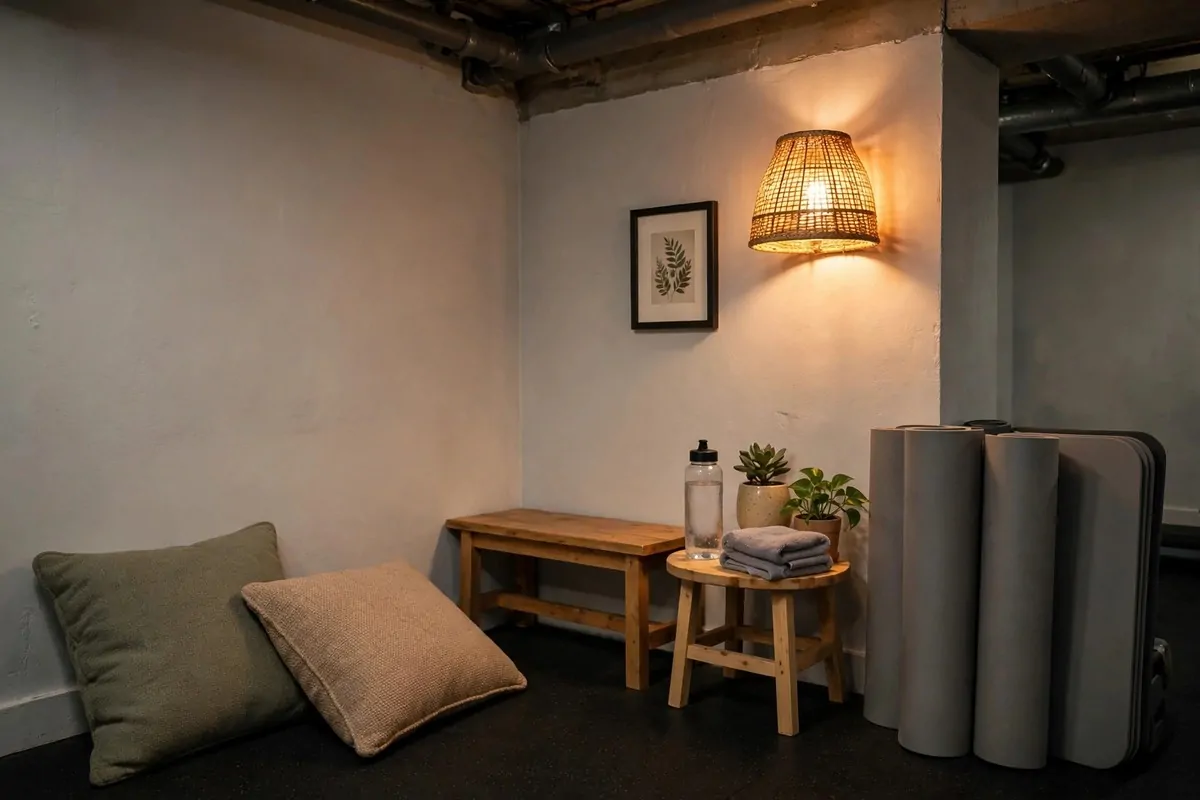
Every gym needs a finish line. This corner is where your workout ends and your day begins again.
Pick a dead corner away from the loud gear. The far end of the basement is perfect.
Put a small bench or two floor cushions there. Somewhere to sit and breathe after the last rep.
Add a tiny side table for water and a towel. Cold water after a hot workout is one of life’s best feelings.
A plant or two softens the corner. Basements need green things more than any room in the house.
Hang a small framed quote or a photo that motivates you. Keep it simple and personal.
Soft warm light only. No bright gym lights in this corner. It should feel different from the training zone.
Keep a notebook there for workout notes. Writing down what you did takes one minute and helps a lot.
Stretch here while you cool down. The cushions, the light, the quiet. It all slows you down gently.
This corner costs almost nothing. But it makes the whole gym feel finished and human.
Walk off the mats, sit in your corner, and breathe. That is a gym that takes care of you.