20 Gym Corner at Home Setups You Can Do This Weekend

Last Saturday I set a timer on my phone for one hour and walked around my own house like a detective. I was hunting for one corner. Just one. A corner that was doing nothing at all except collecting dust and holding a plant I kept forgetting to water.
The winner was a spot beside my bookshelf, about as wide as a doorway. Honestly, it looked like the saddest patch of floor in the whole house. By Sunday evening it held a rolled mat, two dumbbells and a little rack on the wall, and I had used it twice already.
That is the whole point of this list. You do not need a spare room. You need a corner and a weekend. Here are 20 Gym Corner at Home setups, one per corner idea, and every one of them can be up and running in two days.
1. The Adjustable Dumbbell Corner with a Wall Mirror
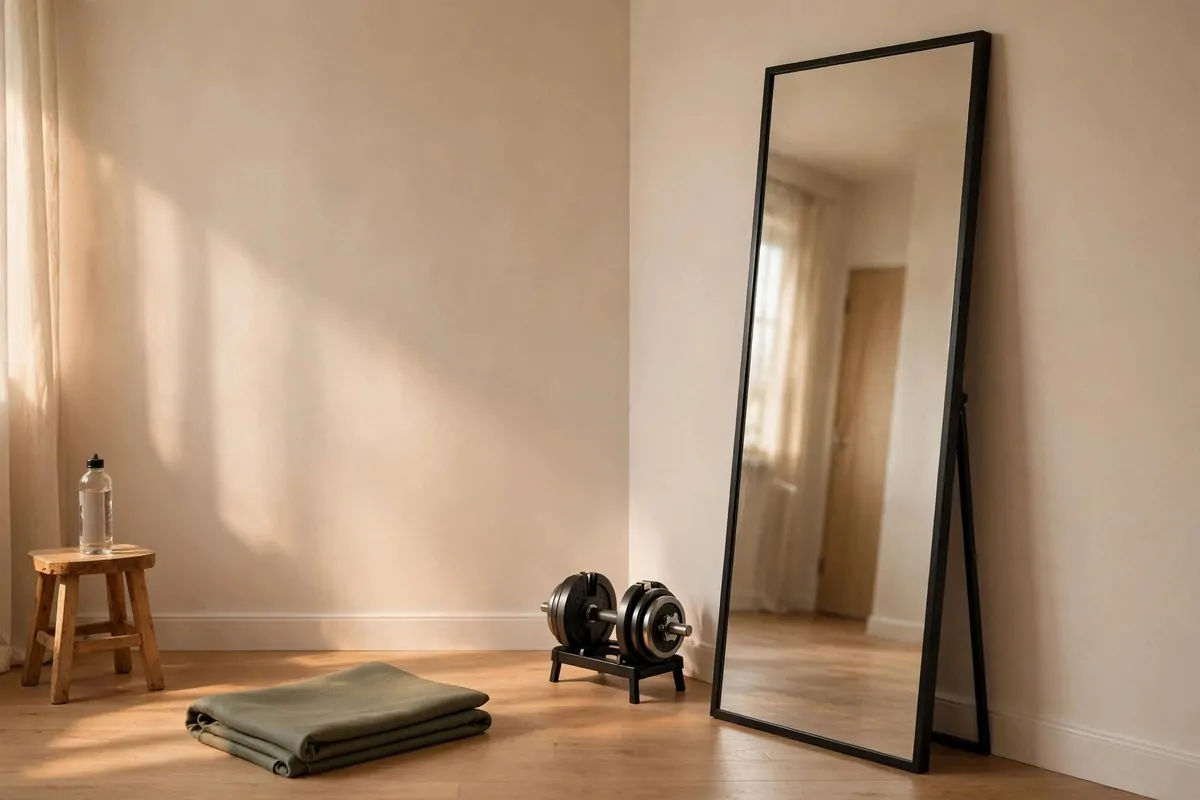
If you buy only one thing this weekend, make it a pair of adjustable dumbbells.
They take the place of a whole rack of weights but sit in one small spot. You just turn the handle and the weight changes, so two little blocks can grow with you as you get stronger.
I keep mine in the corner by the window. Honestly they look quite nice there, black and simple.
Now add a mirror. You do not need a giant gym mirror from a shop. A tall leaner mirror from a home store works and costs far less.
Lean it against the wall right next to the dumbbells. It bounces light around and makes the corner feel twice as big.
It also helps you check your form. That sounds like trainer talk, but seeing your own back during a row stops you from hunching.
And here is the secret part. Put a small rug or mat under the dumbbells. It protects the floor and it marks the corner as yours.
A little stool beside it holds a water bottle and your phone. Now the corner is finished.
On Saturday you shop and set up. On Sunday you do your first set of presses in that mirror. It feels oddly official.
Here is all you need for this one:
- Adjustable dumbbells
- A tall leaner mirror
- A small mat or rug
- A stool for your bottle and phone
2. The Diagonal Yoga Mat Stretch Corner
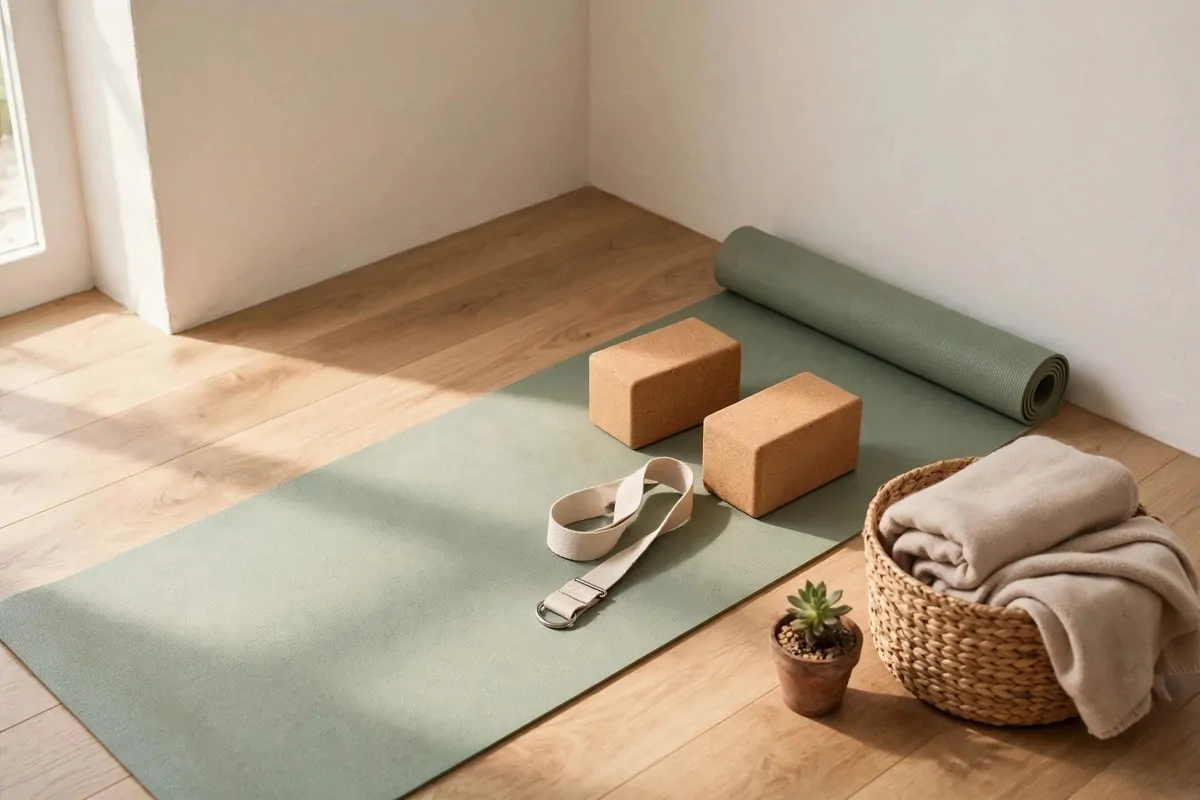
Most people lay their mat flat against the wall. Turn it diagonal instead.
A diagonal mat uses the corner triangle of space, which gives your arms and legs more room to reach. It is a tiny trick that makes a small corner feel bigger.
Roll your mat out on Saturday morning and test it. Stretch your arms wide. You will feel the difference right away.
Add two yoga blocks and a strap. Blocks sit under your hands in poses that feel too far away. The strap helps with stretches your hamstrings refuse to do on their own.
I store mine in a pretty basket tucked right into the corner. It looks like home decor until I pull the mat out.
A small plant makes this corner feel calm. Green things and slow stretching go together somehow.
Keep a folded blanket there too. It works as a cushion for your knees, and on rest days it is perfect for ten minutes of quiet breathing.
Sunday task: do one slow stretch session in the new spot. Notice how the corner feels like it has a job now.
This is the gentlest setup on the whole list. No noise. No heavy gear. Just you, a mat, and a corner that finally earns its keep.
3. The Pegboard Resistance Band Wall
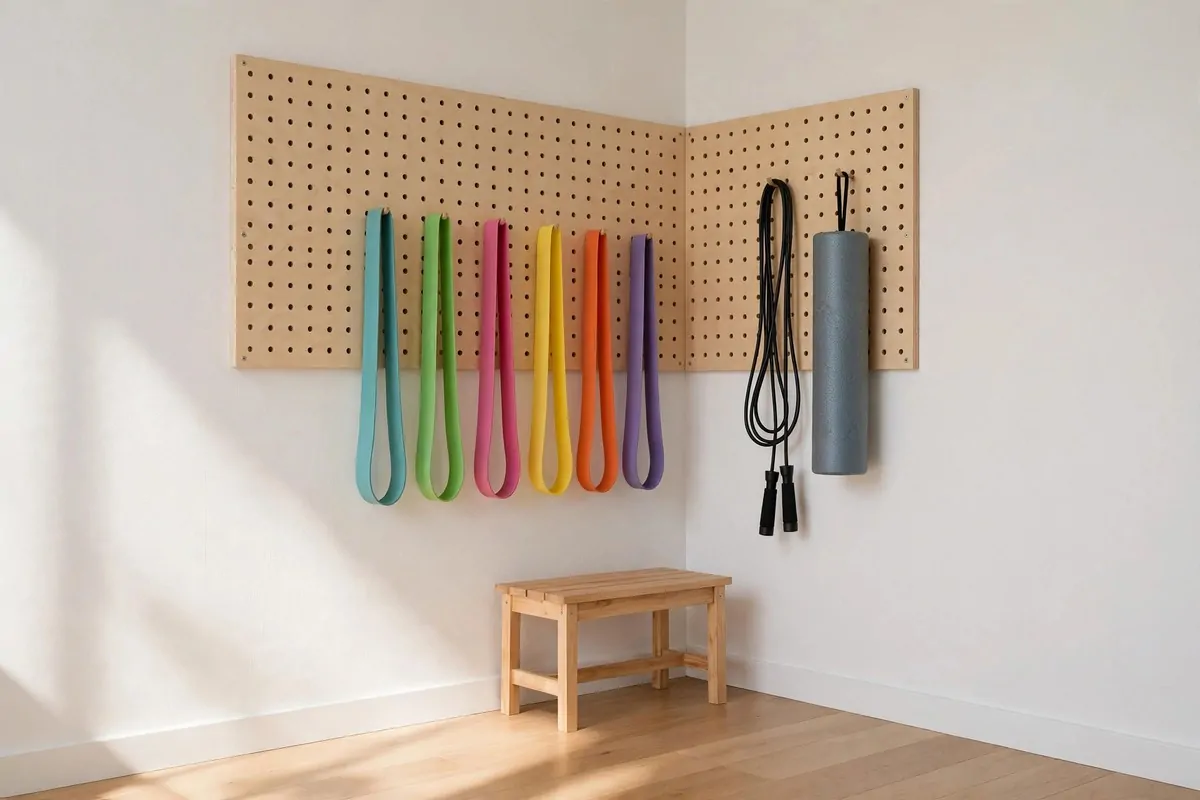
Pegboards are not just for garages. One board on a wall turns a corner into a full band station.
Saturday job: mount the pegboard with wall plugs into studs. Ask the hardware shop for help picking anchors if your walls are brick. It takes about thirty minutes with a drill.
Then hang your bands on hooks by strength level. Light on the left, heavy on the right. Your future self will thank you for the order.
Jump ropes go on longer hooks. A foam roller can hang sideways on two sturdy hooks. Everything is off the floor in one afternoon.
What I love about this setup is the speed of it. You walk into the corner, grab a band, and start. No digging through drawers. No excuses.
Bands give you a whole workout without a single heavy weight. Rows, presses, squats, pull aparts. They are cheap and they never break your floor.
Paint the pegboard if you want. White looks clean. A warm color makes the corner feel fun. It is your call.
And when guests come over, it looks like a nice display wall. Nobody guesses it is a gym until they see you mid workout.
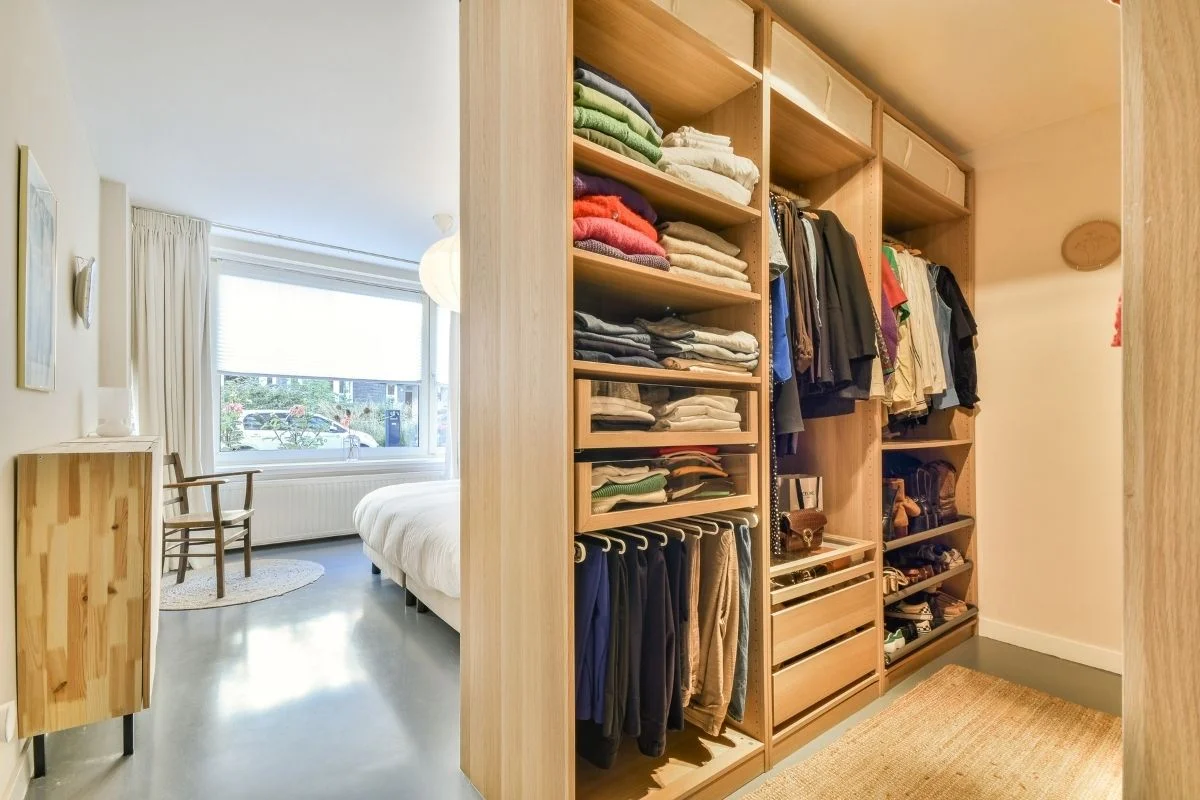
4. The Closet Turned Into a Workout Alcove
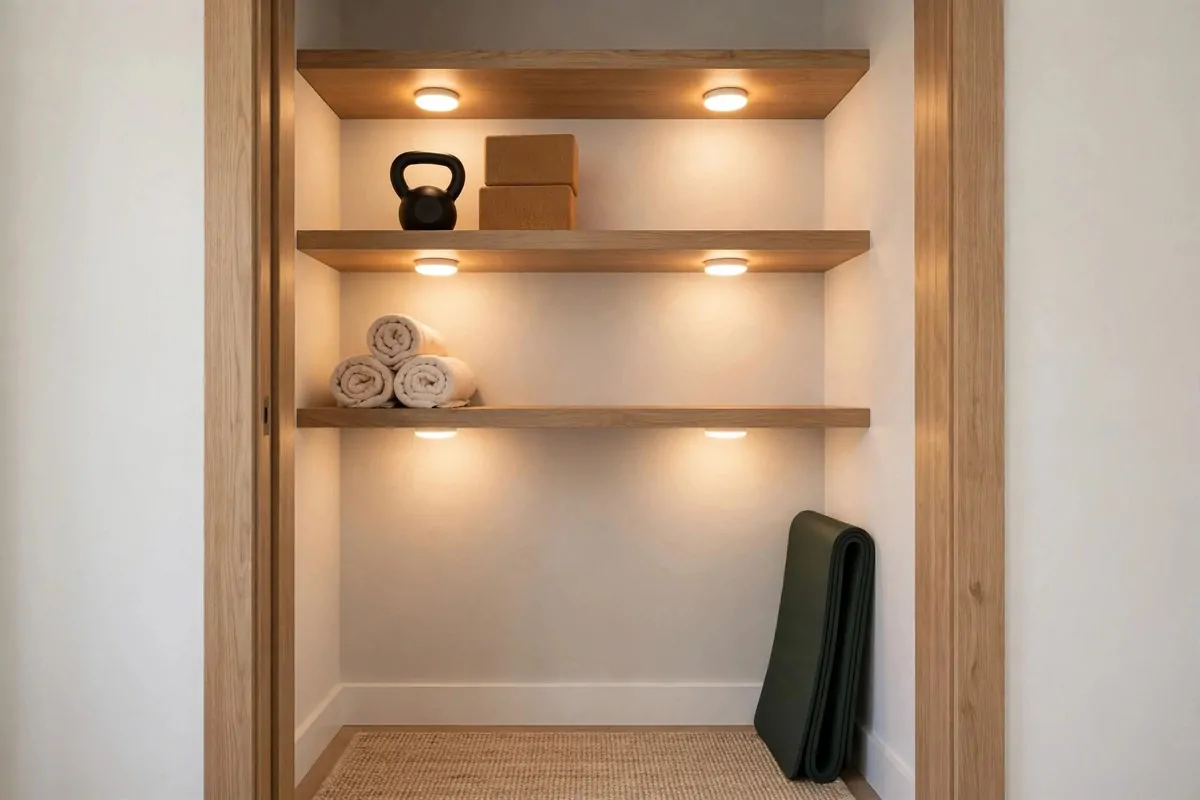
That closet full of things you forgot about? It wants to be a gym.
Take the doors off first. Sliding doors lift out of their tracks. Hinged doors need a screwdriver and ten minutes. The whole closet becomes an open alcove.
Now it is just wall and floor, waiting. Put up two or three floating shelves at different heights. Bands, blocks, hand weights and towels live on the shelves.
Stick battery puck lights under the shelves. They cost very little and need no wiring. Press one and the whole alcove glows.
A kettlebell on the floor is your heavy piece. A folded mat leans against the side. That is genuinely all the gear you need.
The best part is the invisibility. When you finish, the closet doors could even go back on. Gym appears, gym disappears.
I like this one for bedrooms. It keeps sleep space and workout space in the same corner without the bedroom ever feeling crowded.
Sunday job: one full workout inside your closet gym. You will laugh the first time. Then you will love it.
5. The Spin Bike Cardio Corner
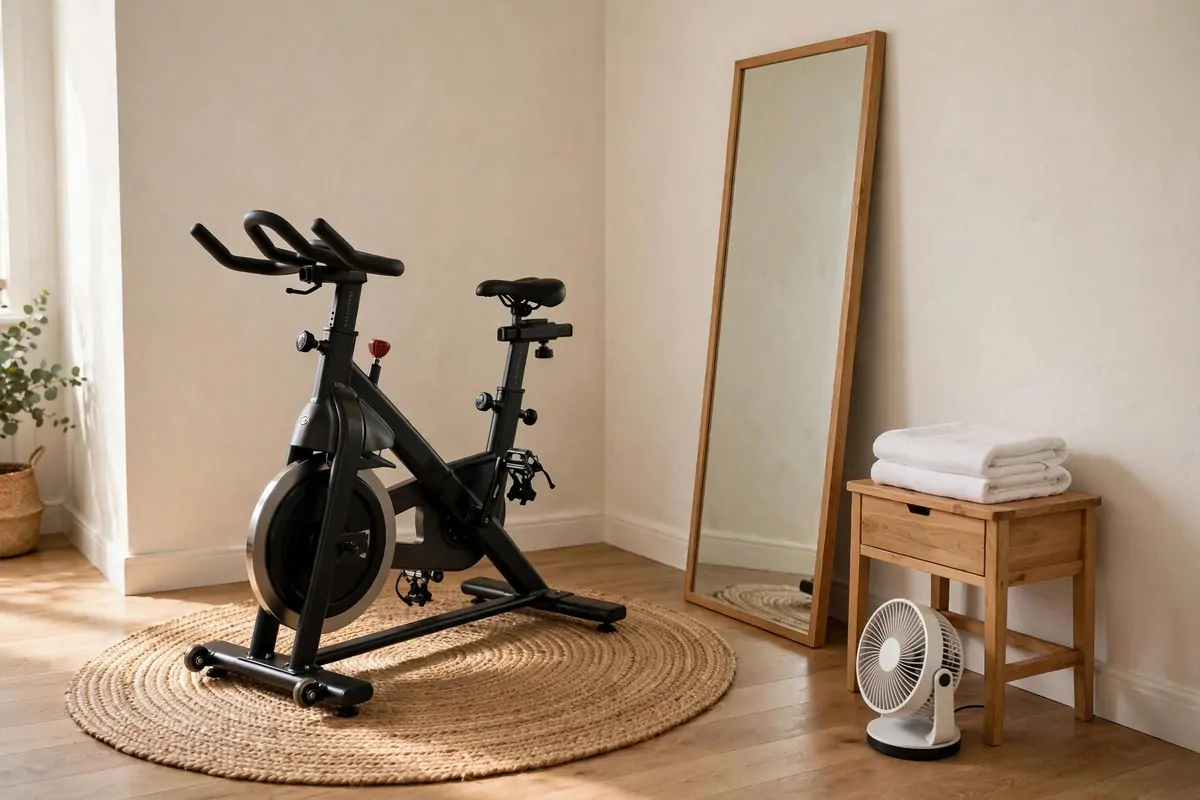
A spin bike in a corner looks like a plan. That is what this setup is.
Lay a woven rug down first. It warms up the corner and stops the bike from sliding or scratching the floor. Neutral rugs work with any room style.
Push the bike into the corner at a slight angle. Leave enough room behind it for your feet at the bottom of the pedal stroke. Sit on it and test before you lock in the position.
The mirror on the wall is for watching your posture, not for admiring yourself. Slouching on a bike for twenty minutes is a bad idea. A quick glance fixes it.
Keep a folded towel on a small side table. Sweat happens. A little fan on the floor helps too.
What I love is that a bike needs zero setup each time. You walk in, sit down, and pedal. Morning workouts get ten times easier when the bike is already there waiting.
If a spin bike is too big for your corner, a small folding bike works. Or even a sturdy step platform. The idea stays the same: one cardio tool, one corner, no fuss.
Sunday job: a short easy ride while you watch something fun. That is how a corner becomes a habit.
And here is the shopping list for this one:
- A spin or folding bike
- A woven rug
- A full length mirror
- A small side table, a towel and a fan
6. The Doorway Pull-Up Bar Calisthenics Spot
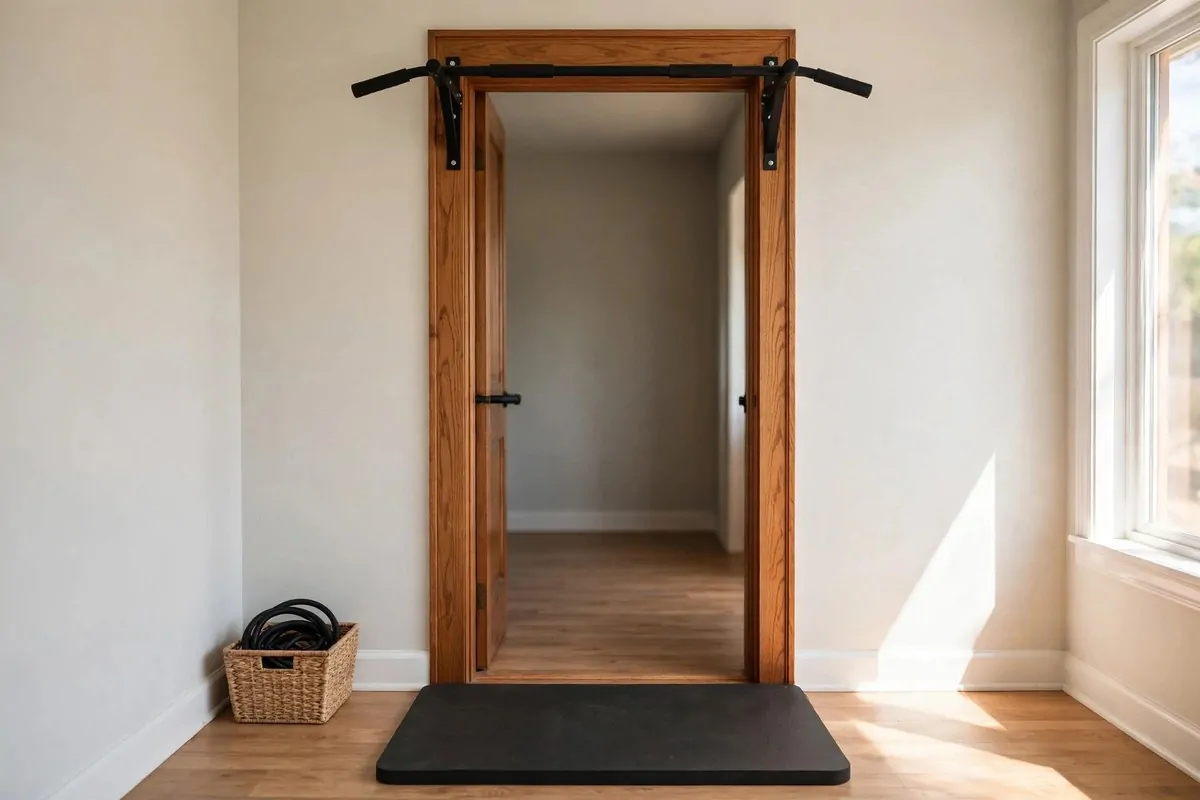
Bodyweight training needs almost no gear. A pull-up bar in a doorway and a mat is honestly the whole setup.
Most doorway bars need no screws. They wedge into the frame with pressure. Check your door frame width before you buy, and look for one rated for your weight.
Mount it on Saturday. It takes about fifteen minutes. Then hang from it once, just to make sure it feels solid. Safety first, always.
Lay a thick mat under the doorway. It cushions your feet and gives you a home base for push ups, dips between chairs, and core work.
And the corner part matters here too. Pick the doorway near a corner, not in the middle of a hallway. A small storage bin in that corner holds your mat and any dip bars.
Pull ups are hard at first. That is normal. Even dead hangs for ten seconds build grip strength. Everyone starts somewhere.
I like that this setup disappears into the house. The bar stays in the doorway and nobody notices it until they see you hanging there.
Sunday job: three sets of whatever you can do, even if that is just hanging. Write it down somewhere. Watching those numbers grow is the best part.
7. The Kettlebell and Rubber Mat Zone
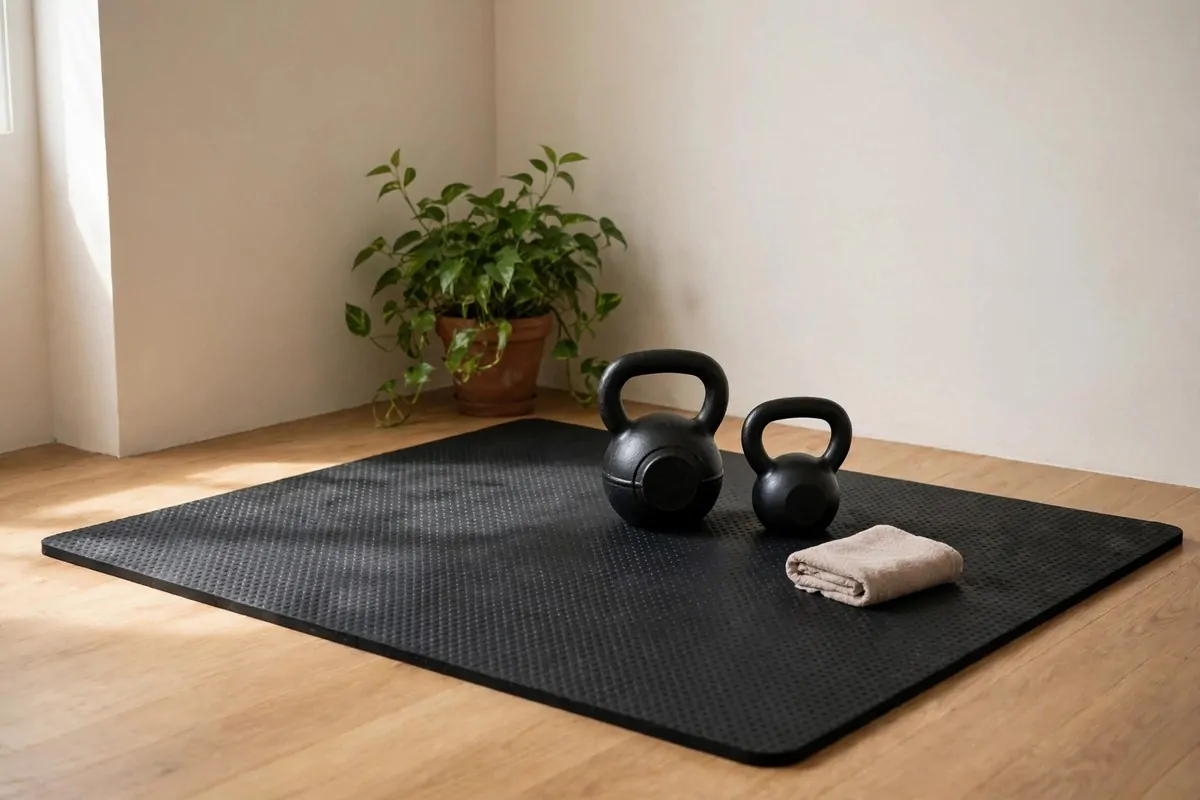
A kettlebell is a whole gym in a cannonball shape. Swings, squats, presses, carries. One or two bells cover a lot.
But kettlebells are heavy and hard on floors. So the first buy for this corner is a thick rubber mat. Horse stall mats from a farm shop work and cost little.
Lay the mat in your chosen corner on Saturday. Let it sit flat for a few hours. They sometimes curl up at the edges right out of the roll.
Then place two kettlebells on it, a lighter one and a heavier one. You will grow into the heavier one. That is the plan.
Learn one move at a time. The kettlebell swing is the famous one, but start with goblet squats and deadlifts. Slow and safe beats fast and hurt.
Keep a folded towel on the mat for grip. Chalk helps too if your hands get sweaty, though a little bowl of chalk looks oddly serious.
What I love about this corner is how small it is. One mat, two bells, and you are done. The footprint is tiny but the workouts are not.
Sunday job: one short circuit of squats, rows and presses. The corner will smell faintly of rubber. That is the smell of commitment.
8. The Interlocking Foam Tile HIIT Corner
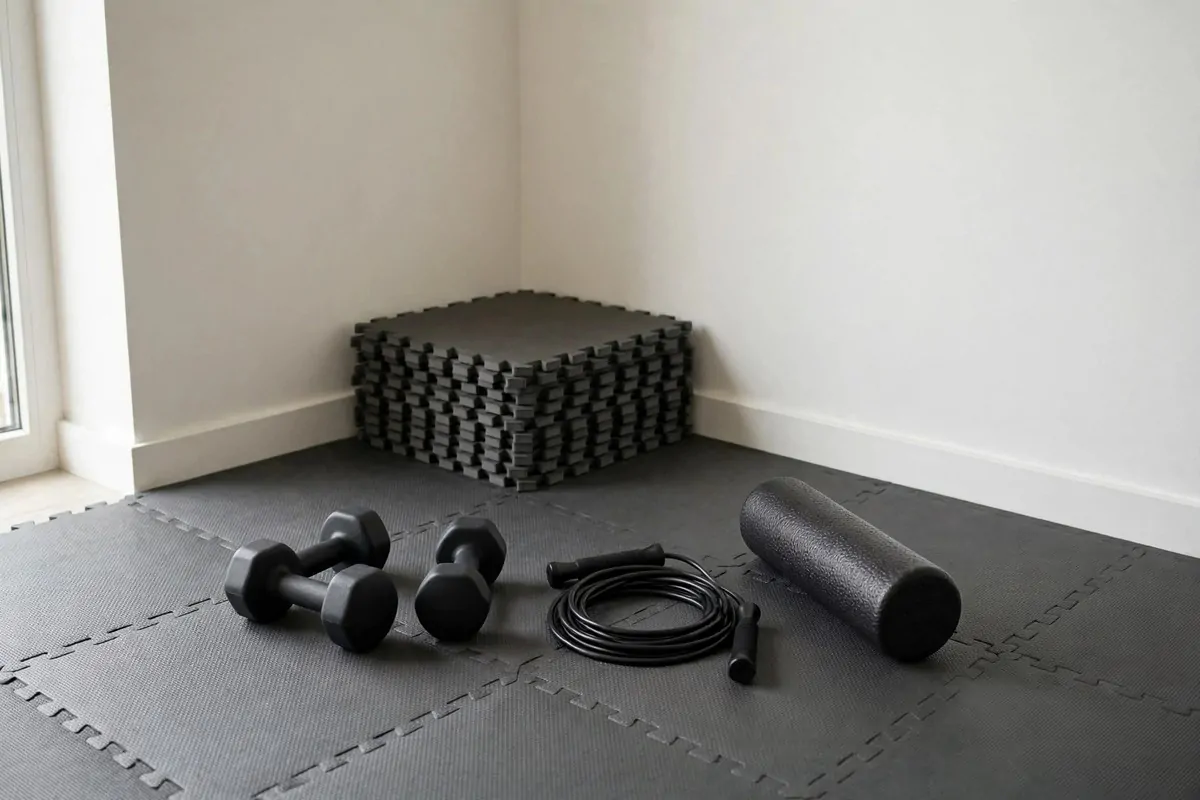
If your workouts are loud, your floor needs help. Interlocking foam tiles solve it in one afternoon.
They come in packs and snap together like a puzzle. Measure your corner first. A four by four foot square is plenty for most bodyweight moves.
Lay them on Saturday and walk around on them. They feel springy and kind. Your knees will say thank you during lunges.
The tiles also draw a line. Inside the tiles is workout land. Outside is normal home. Your brain learns the difference fast.
Now stock the corner: a pair of dumbbells, a jump rope, and a foam roller for cool downs. Everything sits on the tiles and nowhere else.
High energy corners like this one work better with a little color. Red or orange accents wake you up. Keep that in mind when you pick tiles.
After workouts, you can stack the tiles against the wall if you need the floor back. They are light. That is the beauty of foam.
Sunday job: try a simple circuit on the tiles. Jumping jacks, squats, push ups, mountain climbers. Rest. Repeat. Done in twenty minutes.
9. The Storage Ottoman Hideaway Gym
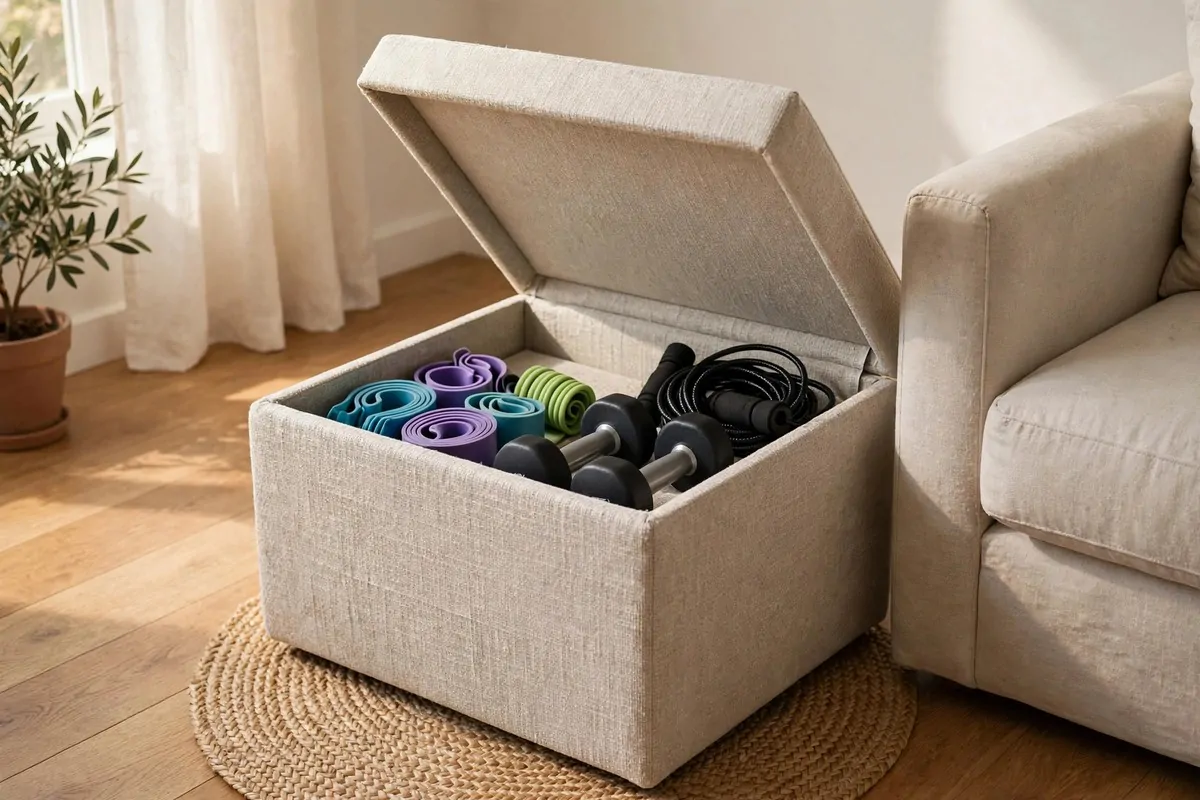
Some corners cannot look like a gym. This one hides the gym completely.
A storage ottoman is a footrest, extra seat, and secret equipment chest in one. That is three jobs for one piece of furniture.
Saturday job: fill the ottoman. Light bands on top. Dumbbells at the bottom so the heavy stuff stays low. Shoes in a bag on the side so the rubber smell stays in.
Now the workout happens anywhere. Pull the gear out, use your corner, put it all back. The room looks untouched in five minutes.
This is the renter’s dream setup. No holes in walls. No big equipment. Nothing for a landlord to frown at.
It also kills the biggest excuse. Your gear is always one lid lift away. Out of sight, out of mind is a real problem, and this flips it.
Pick an ottoman that matches your sofa. Fabric or leather, whatever fits the room. Guests sit on it and never know.
I used this setup in a tiny flat for months. My living room stayed pretty. My arms got stronger. Nobody connected the two.
Sunday job: unbox your gear, do a band workout in the corner, and repack it. If it takes under five minutes to tidy, the system works.
Here is what fits inside:
- Two or three resistance bands
- A pair of light dumbbells
- A jump rope
- A folded mat leaning beside it
10. The Foldaway Bench Behind the Door
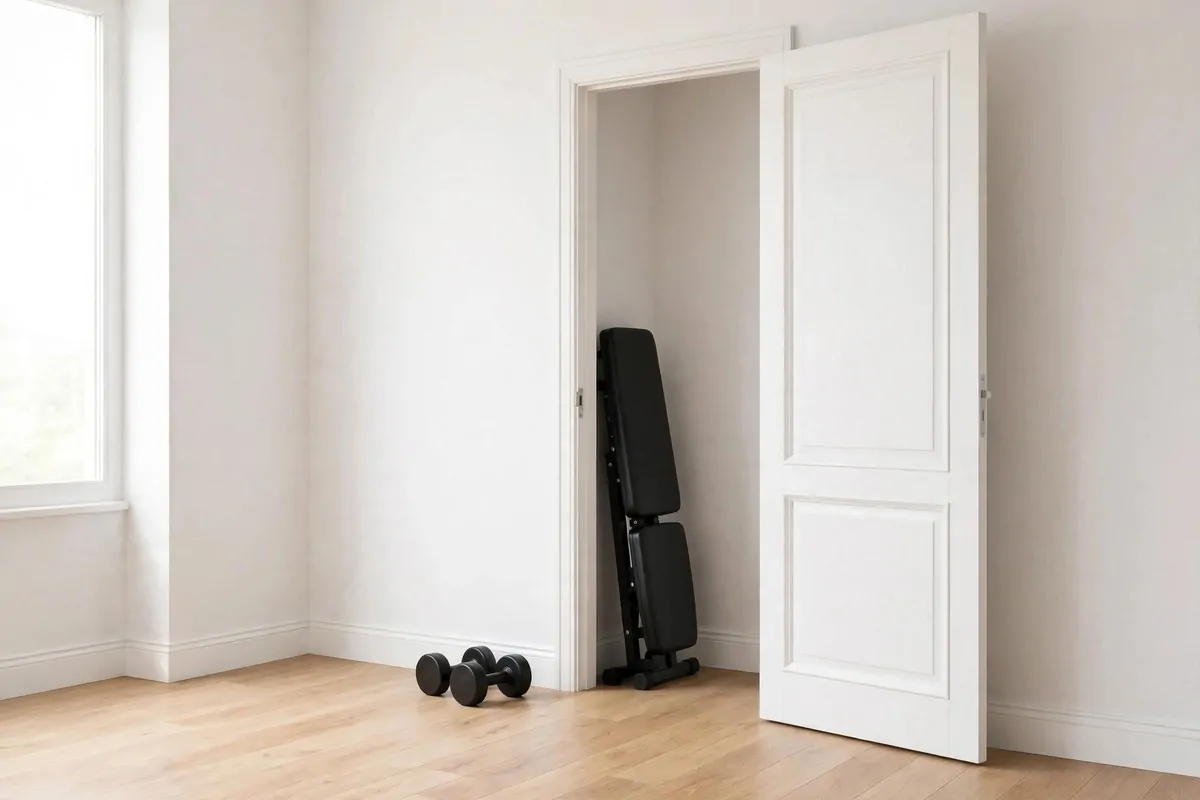
Behind every door is free real estate. A foldaway bench fits there perfectly.
Saturday job: clear the space behind the door you use least. Spare room doors and wardrobe doors are the best candidates.
Open and close the door fully. Mark where it swings. The bench must live inside that swing zone or the door will hit it.
A folding workout bench folds flat to a few inches thick. Lean it against the wall behind the door. It practically vanishes.
When it is workout time, unfold it in the middle of the room. Presses, rows, step ups, Bulgarian split squats. One bench gives you dozens of moves.
The trick is the five minute rule. If unfolding takes longer than five minutes, you will skip workouts. Test it on Saturday until it feels easy.
Store dumbbells right next to the bench. Together they are a mini gym that hides behind a door.
Sunday job: time yourself. Unfold, do one set of presses, fold, store. If it is fast, this setup will last.
11. The Under-Stairs Workout Nook
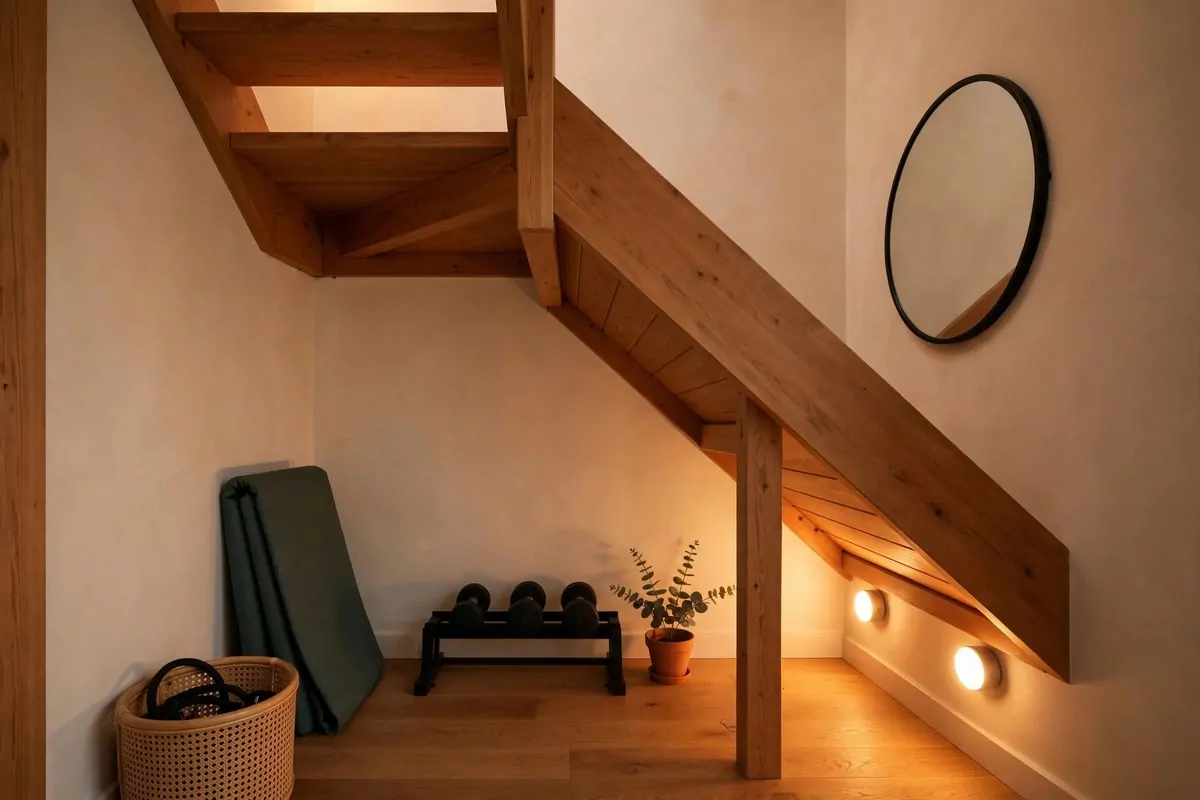
The space under the stairs is always wasted. Time to hire it.
First measure the height at the lowest point. You need enough room to stand or at least kneel. Tall people should measure twice before committing.
Saturday job: clear it out. Under stair cupboards collect the strangest things. Mine had three broken umbrellas and a box of cables.
Line the back wall with a low dumbbell rack. Keep heavy things low, since the ceiling slopes. A round mirror on the slanted wall adds light and fun.
Battery puck lights make the nook feel like a real space instead of a cave. Stick two or three along the steps above.
A folded mat leans against the side. Bands hang on hooks on the stair stringer. Everything tucks into the triangle.
The sloped ceiling is actually a feature. It makes the nook feel like a little cave of your own. Workouts feel oddly cozy there.
Sunday job: one quiet workout in the nook. The rest of the house keeps living its life. Your nook keeps you.
12. The Balcony Fresh-Air Training Corner
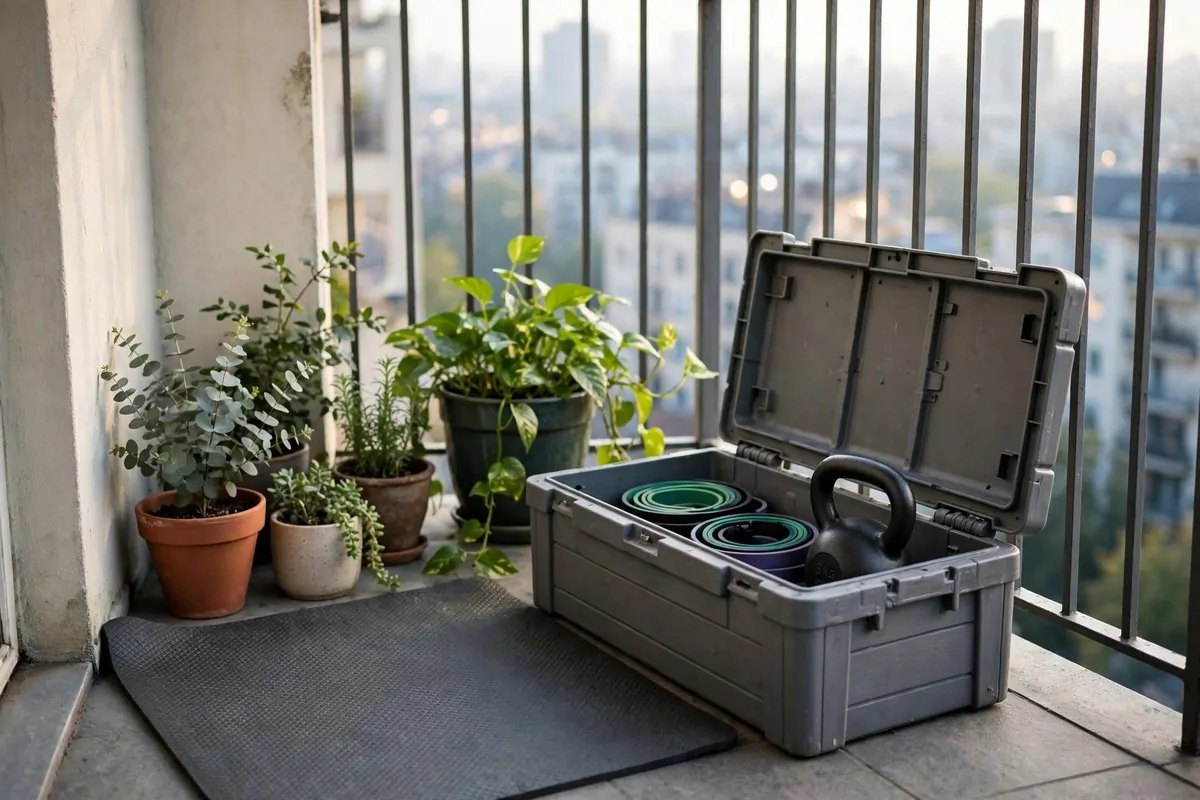
Fresh air makes every workout better. If you have a balcony, use it.
First check your balcony rules. Some buildings ban heavy weights outside. Bands and bodyweight moves almost never cause trouble.
Saturday job: lay a non slip mat or outdoor tiles in one corner. Wet tiles are dangerous, so grip matters more here than indoors.
A weatherproof deck box holds your gear. Bands, a kettlebell, a jump rope. Everything must survive rain and sun, or live in the box.
Morning workouts here are magic. Cool air, birds, the city waking up. It beats any gym view I have ever had.
But weather is the boss. Have a backup indoor corner for rainy days. Even a small one. Consistency beats perfect weather.
Plants make the corner feel like a little gym garden. They also soften the hard edges of equipment. A green corner is a happy corner.
Sunday job: a sunrise stretch session on the balcony. If the neighbours wave, wave back. You have earned it.
| Check before you build | Why it matters |
|---|---|
| Building rules for balconies | Some ban weights or morning noise |
| Non slip flooring | Rain makes tiles risky |
| Weatherproof storage box | Protects gear from sun and rain |
| A small indoor backup spot | Keeps workouts going in bad weather |
13. The Boxing Gloves Wall-Rack Corner
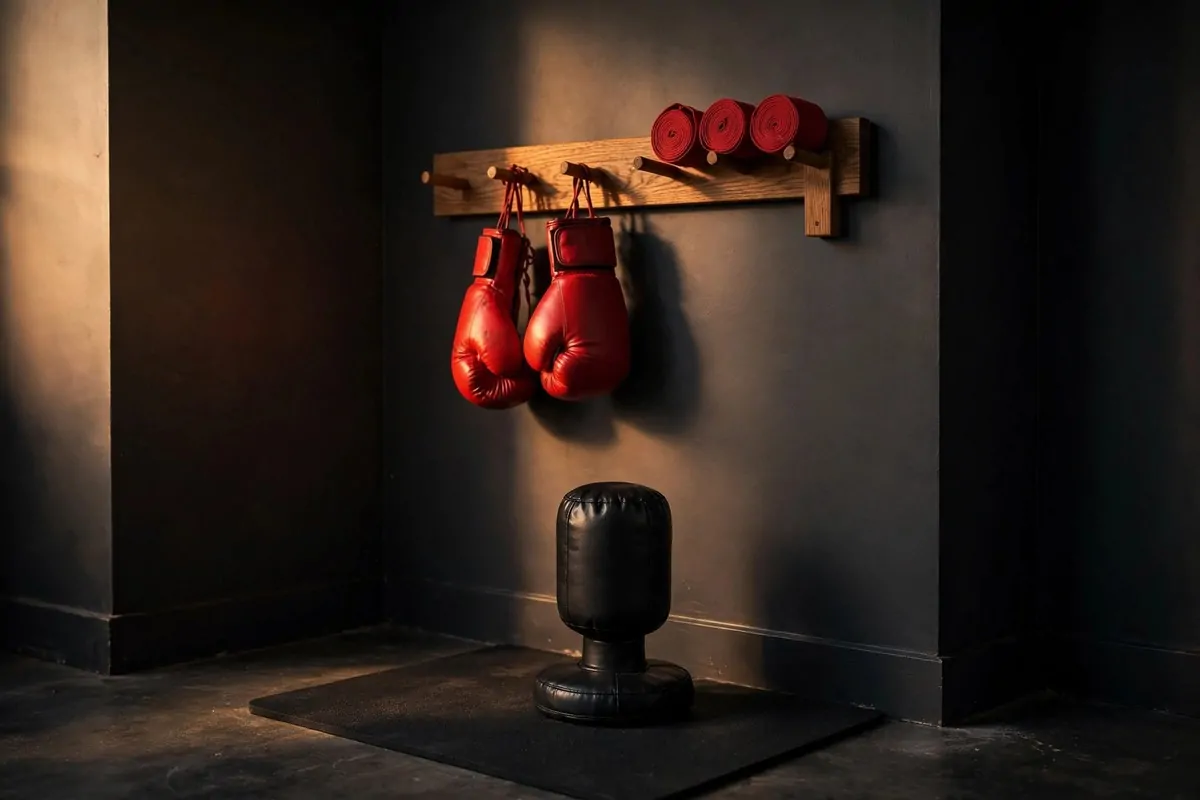
Boxing at home does not need a ring. It needs gloves, wraps, and a corner to throw punches in.
Saturday job: paint one wall of the corner a deep color. Dark green or charcoal look strong. It sets the mood and defines the zone in one afternoon.
Mount a rack or hooks for the gloves and wraps. Boxing gloves are bulky, so give them space. Wraps hang on smaller hooks beside them.
A freestanding punch bag fits in the corner if you have the floor space. It needs about a meter all around. Measure before you buy.
If a bag is too big, a wall mounted target pad works. Or just shadow box with the gloves on. Your shoulders will still burn.
Boxing gloves on the wall look cool. That matters. A corner that looks good gets used more. That is just human nature.
Wraps protect your hands. Learn to wrap properly before your first session. It takes practice and there are simple guides everywhere.
Sunday job: three rounds of shadow boxing with wraps on. Two minutes each, rest between. You will feel muscles you forgot about.
14. The Pilates Ring and Soft Weights Spot
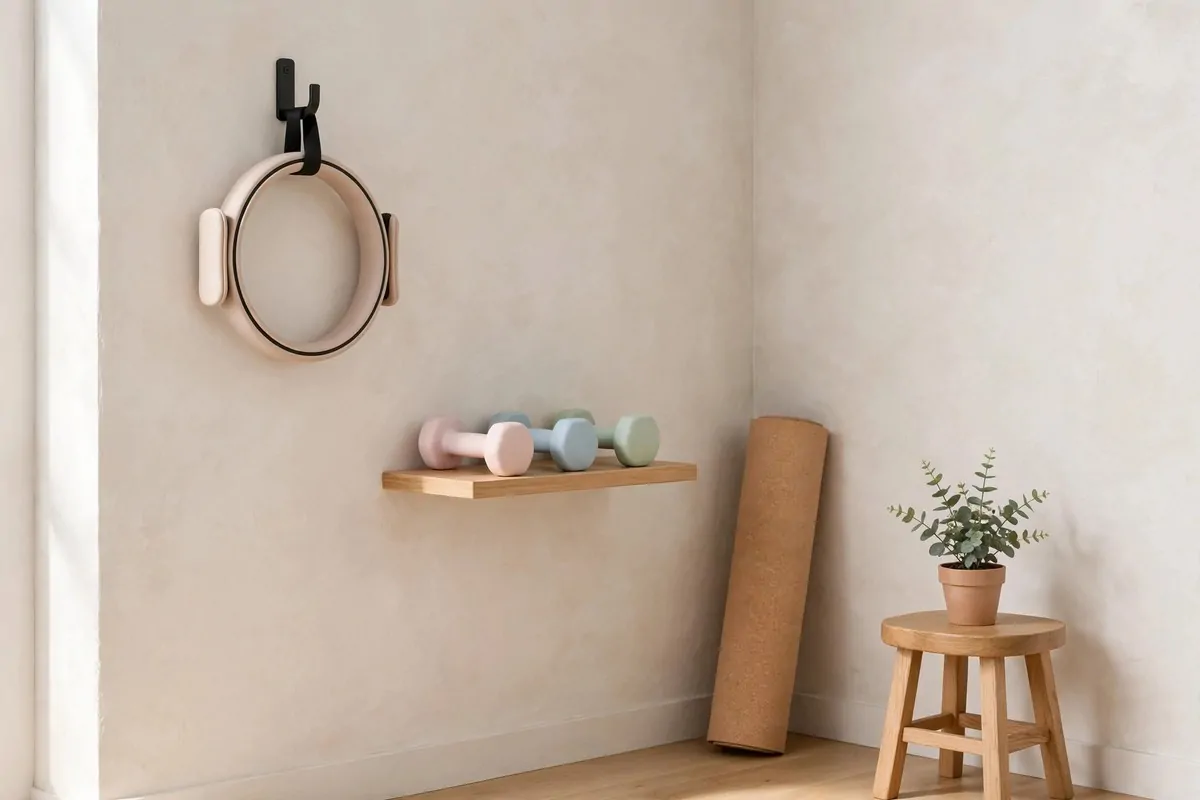
Pilates at home is quiet, small, and wonderful for a corner. No jumping. No noise. The downstairs neighbours will never know.
The star is the pilates ring. It squeezes between your thighs or presses between your hands for toning work. Hang it on a wall hook when you are done.
Soft coated dumbbells are the quiet kind. They do not clang on the floor. Two or three light pairs are plenty for pilates style moves.
A rolled mat leans in the corner. Soft weights sit on a small shelf. The ring hangs on the wall. Three items. That is the whole setup.
Add a plant and this corner looks like a wellness nook. Because it is. Pilates and calm go together like tea and biscuits.
Follow along videos make this setup shine. Prop your phone or laptop on a stool. Ten minute sessions are perfect for busy days.
Saturday job: set up the three items and test a short video. Sunday job: do another one. Two days, two sessions, and the habit has started.
This one is great for people who hate loud workouts. Gentle does not mean easy. Your inner thighs will confirm that.
Here is the tiny kit:
- A pilates ring
- Soft coated dumbbells
- A yoga mat
- A stool for your screen
15. The Foam Roller Recovery Corner
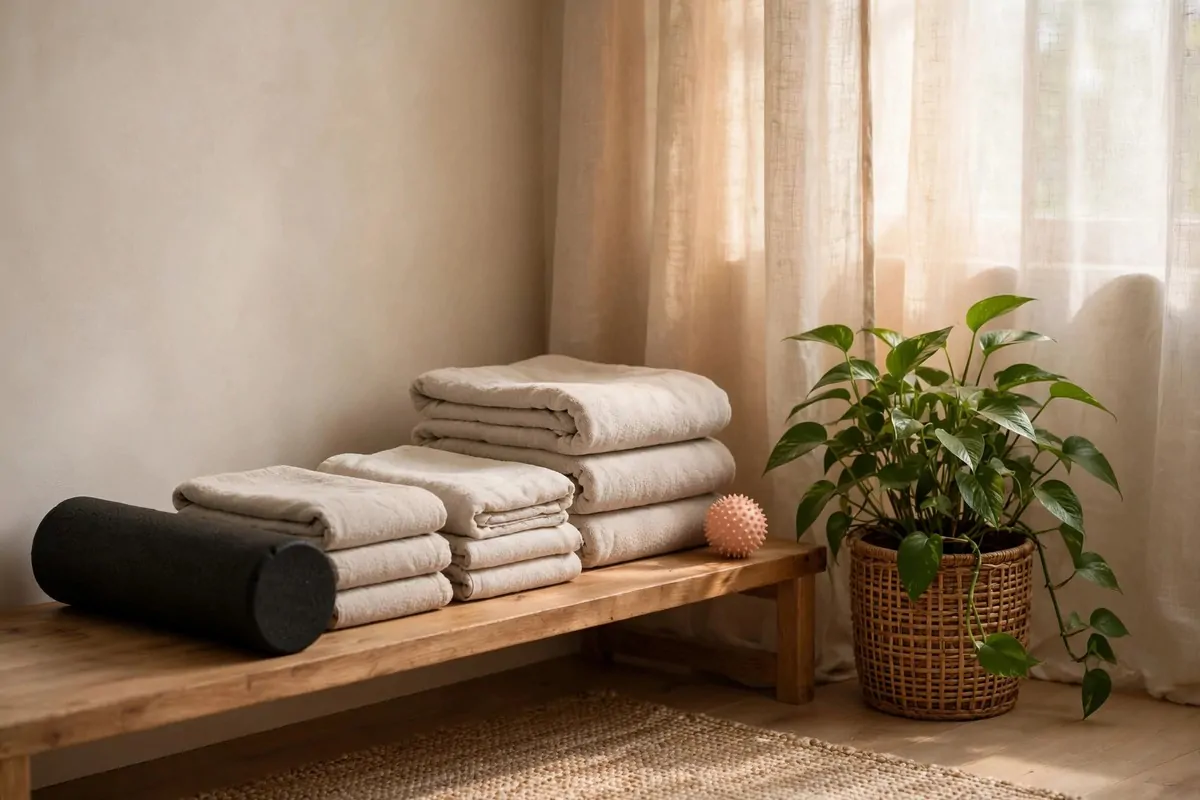
Every gym needs a corner for the day after. This is yours.
A foam roller is the main piece. It works out the tight spots in your back, legs and shoulders. Ten minutes after a workout makes the next morning so much easier.
Add a massage ball for small sore spots. Feet, glutes, the spot between your shoulder blades. It finds the places the roller cannot reach.
A small shelf or basket holds folded towels. Warm towels after stretching feel like a spa. Cold ones are great after hard sessions.
Plants make this corner feel restful. Recovery is a gentle thing. The corner should look gentle too.
Stretch straps live here too. Hamstring stretches with a strap are much easier than without. Your body thanks you later.
Use this corner on rest days. Sunday evening stretching while something nice plays in the background. That is a ritual worth keeping.
Honestly, a recovery corner makes you train more. When the soreness has a home, the hard workouts feel less scary.
Saturday job: gather the roller, ball and towels. Sunday job: use them. Your Monday self will be grateful.
16. The Bold Accent Wall Motivation Corner
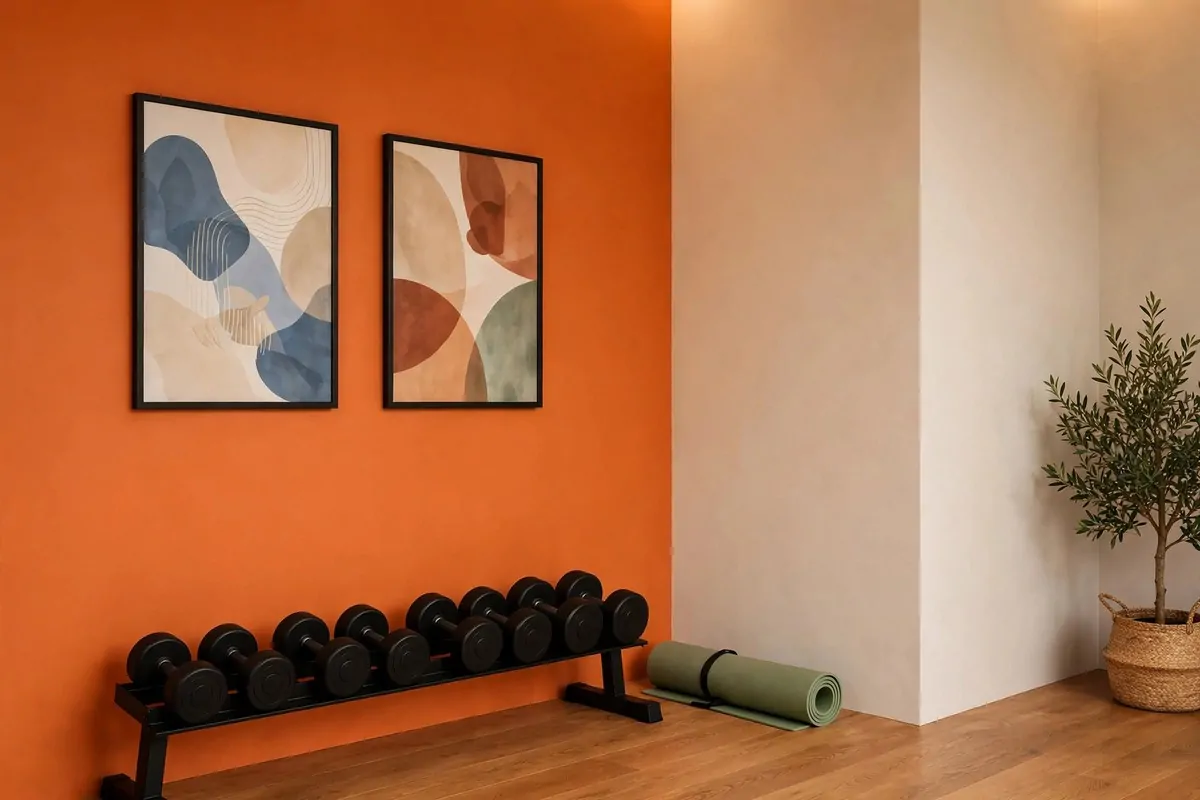
Sometimes the corner needs paint before it needs equipment. Color changes how a space feels in one weekend.
Pick a bold color for one wall. Warm orange or deep red wakes you up. Cool blue or green calms you down. Match the color to the workouts you love.
Saturday job: tape the edges and paint. One accent wall in a corner is a two hour job. Open the windows and let it dry by evening.
While it dries, arrange your gear against it. A low dumbbell rack. A rolled mat. Maybe a kettlebell. The color makes ordinary gear look intentional.
Framed art goes on the painted wall. Keep it simple. Landscapes, abstract prints, anything that makes you feel good. No words needed. The color does the talking.
The rest of the room stays neutral. That contrast is the trick. Your eye goes straight to the gym corner. Your brain reads it as a destination.
This setup is half decor, half gym. And that is fine. A corner that looks exciting gets visited more often.
Sunday job: paint dry, gear arranged, first workout against the new wall. Take a photo. It will look completely different from last week.
17. The Under-Sofa Dumbbell Hideout
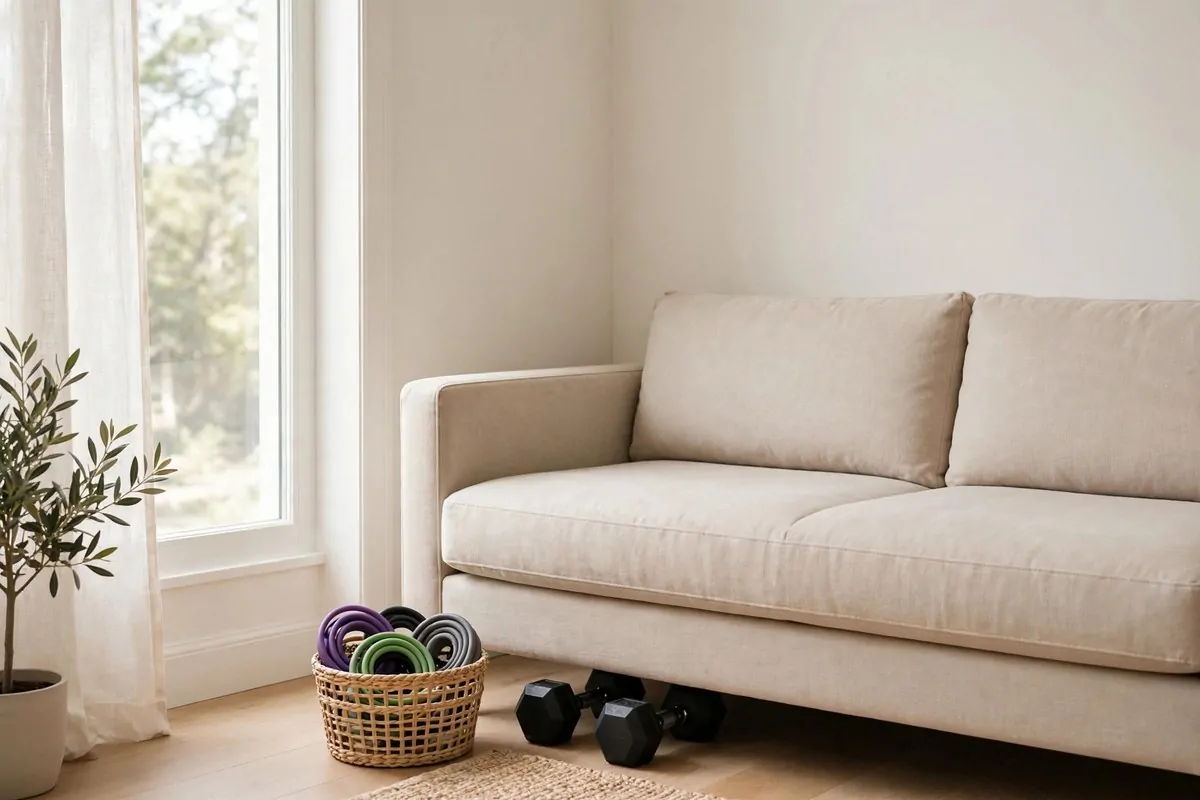
Your sofa is storage. You just did not know it yet.
Adjustable dumbbells or a pair of hex dumbbells slide right under most sofas. The gap under there is wasted space. Now it is a gym drawer.
Saturday job: measure the gap under your sofa. Then buy dumbbells that fit the height. Nothing is more annoying than weights that stick out.
Slide them in handle first. They should glide, not scrape. A thin rug under the sofa protects the floor if they are heavy.
The corner next to the sofa becomes the workout spot. Roll out a mat there when it is time. The gear comes from under the sofa. The mat comes from behind it.
A small basket beside the sofa holds bands and a jump rope. It looks like a decor basket. It is secretly a gym bag.
This setup is perfect for living room workouts. You watch something, the ad break comes, you grab the dumbbells. It just happens.
And nobody knows. Friends sit on that sofa every week. They have no idea there is a workout hiding under their feet.
Sunday job: pull the dumbbells out, do a quick arm session by the sofa, slide them back. Three minutes of tidying. That is the whole system.
18. The Fold-Up Treadmill Slim Corner
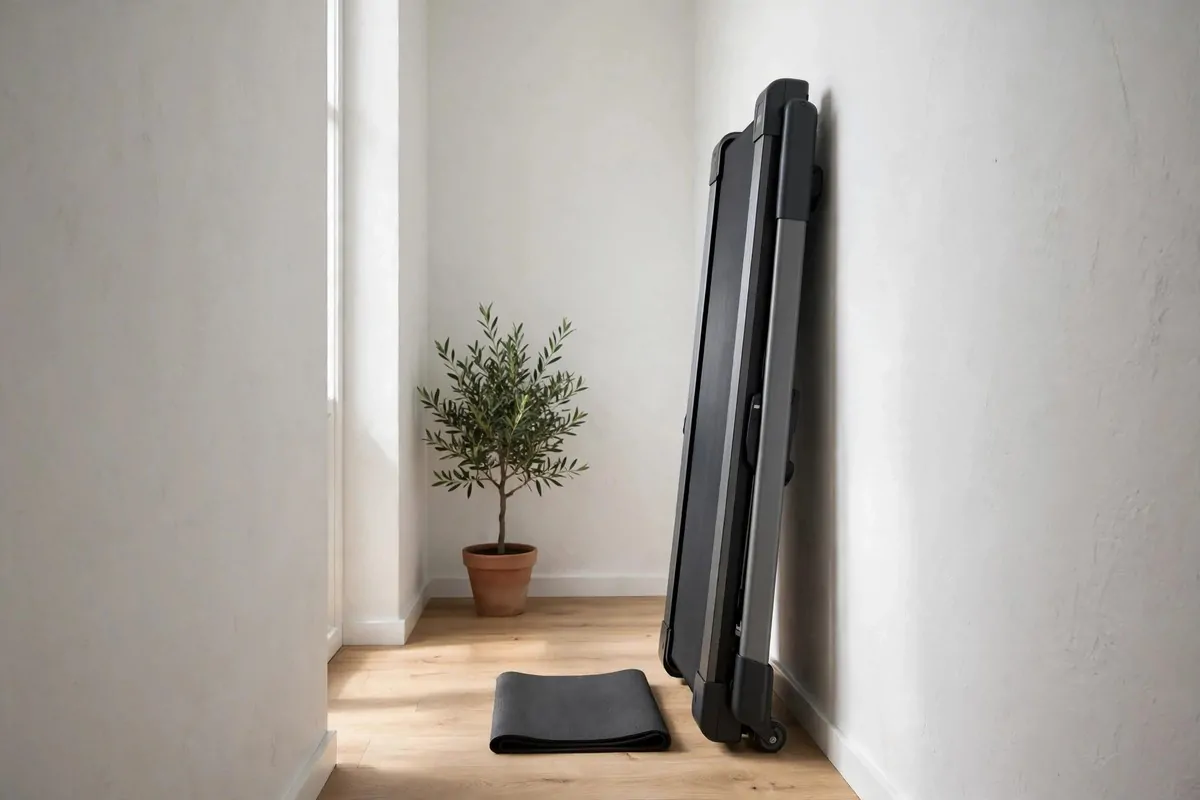
Cardio at home usually means a big machine. Not anymore. Slim fold up treadmills changed the game.
Saturday job: pick the narrowest corner in your home. Measure it. Most slim treadmills need less than a meter of width when folded.
Unbox and unfold it once. Walk on it slowly to check it feels steady. Read the manual for the folding lock. You must trust that lock.
When folded upright, it leans against the wall like a tall cabinet. Drape nothing over it. It is gym equipment, not a coat rack.
Keep a small mat in front of it. That is your walking zone. The mat also catches dust and sweat.
A plant in the corner softens the machine. Treadmills look very techy. A green leaf or two balances it out.
Noise matters in flats. Use the treadmill at reasonable hours. A dense mat under it cuts the thump for the neighbours below.
Sunday job: unfold, walk for fifteen minutes, fold it back. Time the folding. If it is quick, you will actually use this thing.
Here is what this corner needs:
- A slim fold up treadmill
- A dense floor mat
- A plant for balance
- Clear space in front for walking
19. The Jump Rope and Stepper Cardio Strip
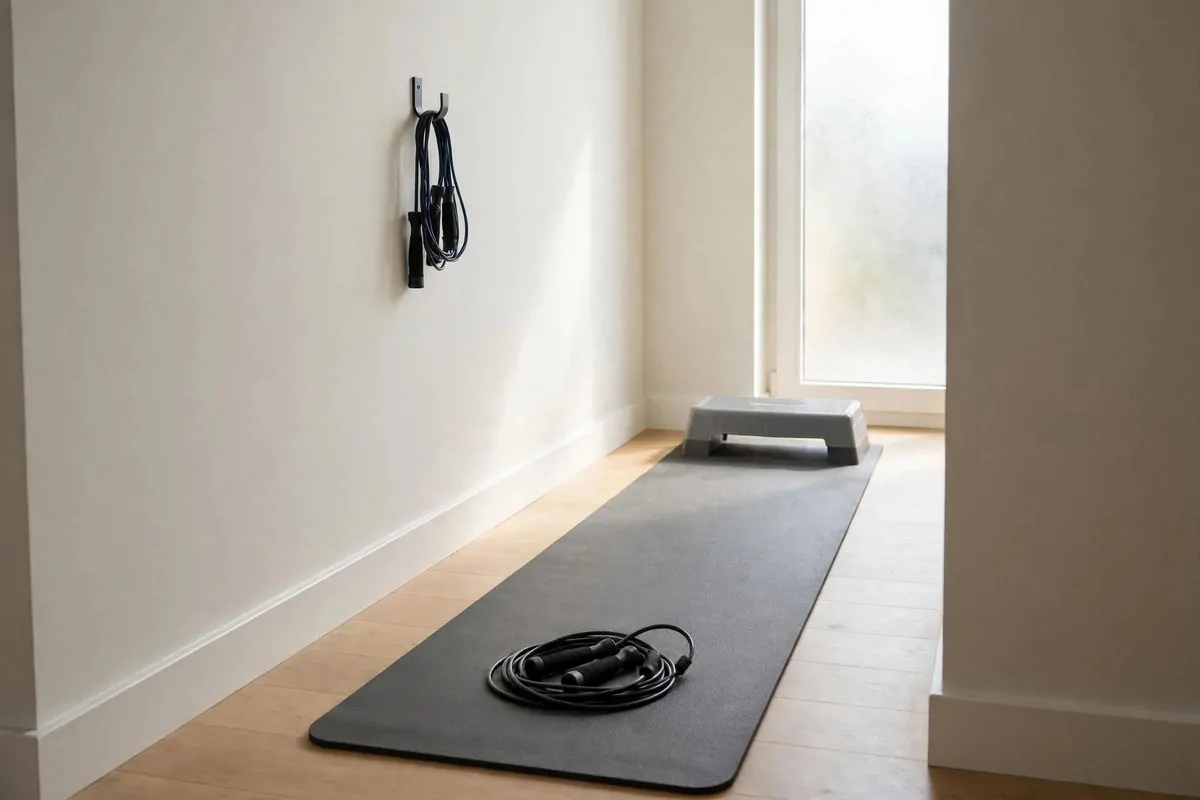
Jump ropes are the cheapest cardio on earth. Pair one with a step platform and you have a cardio strip.
This setup needs length, not width. A hallway corner or the strip beside a bed works. You need enough ceiling height to swing the rope.
Saturday job: lay a long flat mat. It marks your strip and cushions your landings. Jump ropes on bare floors are loud and hard on joints.
Hang the rope on a wall hook. Coiled ropes become tangled monsters. A hook keeps it ready and neat.
The step platform sits at one end of the strip. Step ups, step overs, tricep dips off the side. It is a humble box with big talents.
Start slow with the rope. Ten jumps, rest, ten more. Nobody learns fast skipping in a day. Your calves will remind you tomorrow.
This corner is beautifully simple. No plug sockets. No apps. No assembly. Just a rope, a box, and a strip of floor.
Sunday job: try a tiny circuit. One minute of steps, one minute of rope, rest, repeat three times. Short, sweaty, done.
20. The One-Rug Two-Zone Corner
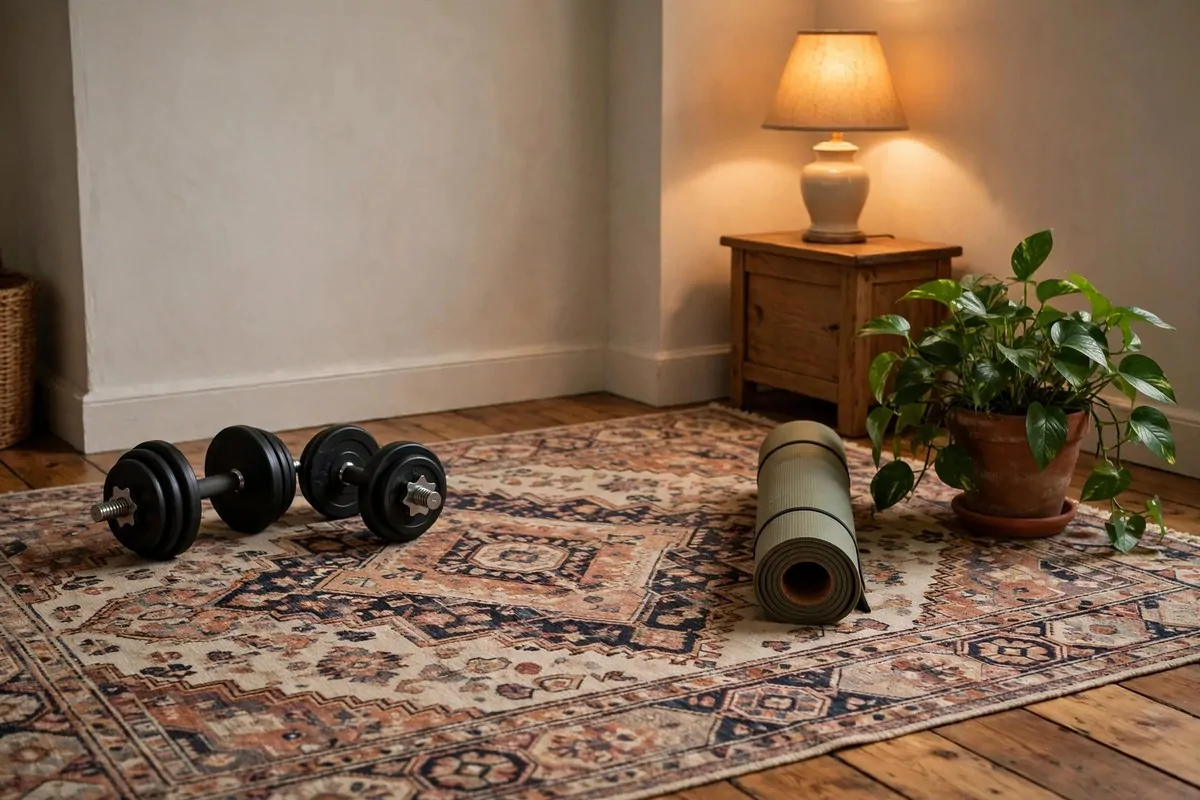
One rug can run two workouts. This is my favourite trick on the whole list.
Saturday job: lay one large rug in your chosen corner. It should be big enough for your body to lie on with arms out.
Now split the rug in your head. Left half is strength. Right half is stretch. Put dumbbells on the left. Put the rolled mat on the right.
The rug is the boundary and the decor. It says gym without saying gym. It ties the corner to the room.
A plant goes at the back of the rug, right in the corner point. It sits between the two zones like a little referee.
Workouts flow across the rug. Warm up with dumbbell moves on the left. Cool down with stretches on the right. No equipment moves anywhere.
This is the lowest cost setup here. A rug you may already own. Gear you may already have. The idea is the new part.
Sunday job: do the full flow. Strength side, then stretch side, then sit on the rug and drink some water. The corner is officially yours.
| Weekend plan | Your job |
|---|---|
| Saturday morning | Clear the corner and lay the rug |
| Saturday afternoon | Place dumbbells left, mat right, plant at the back |
| Sunday morning | First full session, strength then stretch |
| Sunday evening | Ten quiet minutes on the rug to seal the habit |