21 Little Free Library Ideas That Make Your Street Magical

On my morning walk last Tuesday, I stopped right in the middle of the sidewalk. Three doors down from my house, on top of a neighbor’s fence post, there was the tiniest little house I had ever seen. Wooden. Painted red. A little pitched roof, a glass front door, and inside, a neat row of books lined up like passengers on a tiny bus.
I stood there like a fool, smiling at a box. It was a little free library. I had heard of them before, of course. But seeing one in the wild, on my own street, felt different somehow. Someone I walk past every day had built a tiny bookshop for the whole neighborhood. For free. Just because.
I picked up a mystery novel that looked interesting, and I slipped one of my own paperbacks onto the shelf in its place. That little exchange took maybe thirty seconds. But I thought about it all day.
That night I went down a rabbit hole learning about Little Free Library Ideas. I found out these tiny book boxes have a real history, a real nonprofit behind them, and way more creative shapes than I ever imagined. Some people paint them like castles. Some build them into tree stumps. One town even has a blue one shaped like a time machine.
So here are 21 little free library ideas that will make your street feel magical too. Maybe one of them ends up on your own fence post someday.
1. The Classic Red Schoolhouse
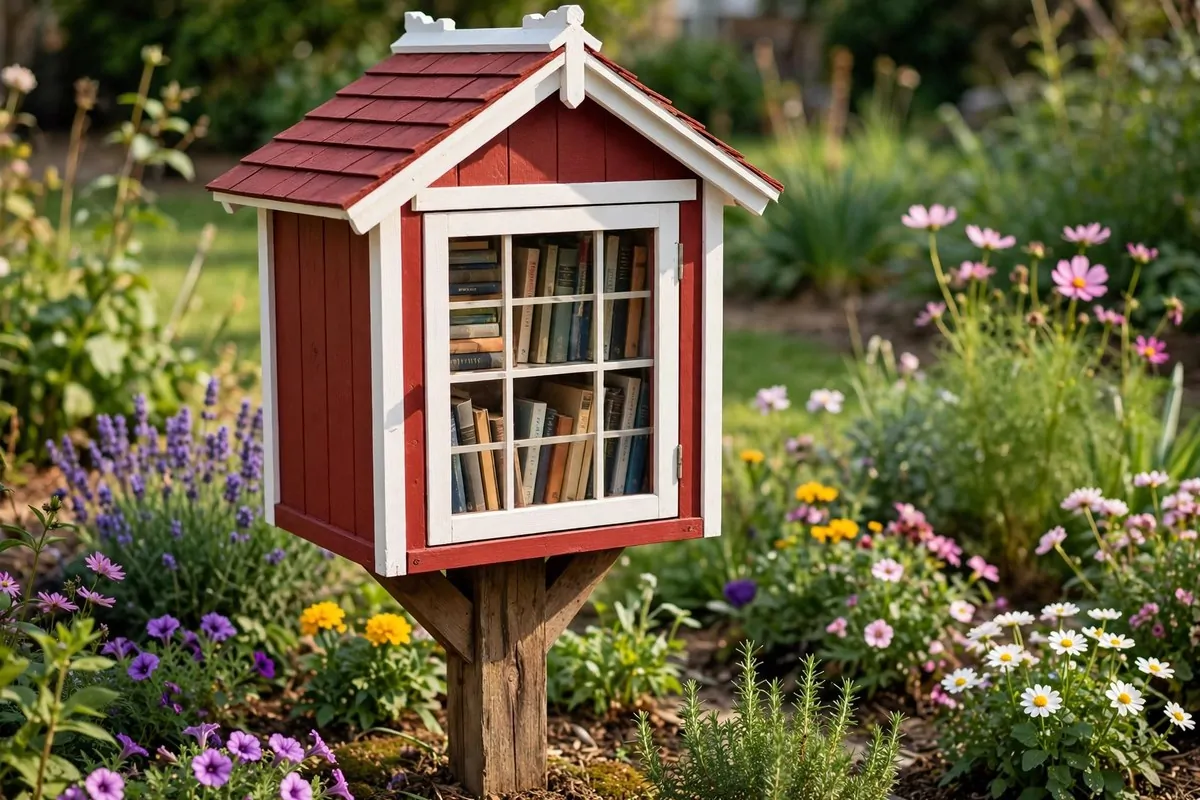
Let us start with the original. The very first little free library was built in 2009 by a man named Todd Bol in Hudson, Wisconsin. He built it to honor his mother, who was a schoolteacher and loved books more than almost anything.
He shaped it like a tiny one-room schoolhouse. Red paint, a pitched roof, a little door you can open and close. It sat on a post in his front yard, and neighbors could take a book or leave a book whenever they liked.
That one little box grew into a whole movement. The Little Free Library nonprofit now counts well over 150,000 registered libraries in more than 100 countries. It even reached Antarctica, so there is one on every continent now.
I love that the classic design is still the most copied one. There is something about a little red schoolhouse that just reads as friendly from across the street. Drivers slow down. Walkers stop. Kids point at it.
Building one is simpler than you think. Most designs use a weather-resistant plywood for the box, a shingled or sloped roof to shed rain, and a door with a clear panel so people can see the books inside. Mount it on a sturdy 4×4 post sunk into the ground.
Here is a rough parts list if you want to build the classic style yourself.
| Part | What it is for |
|---|---|
| Plywood box | The main body and shelves |
| 4×4 post | Keeps the box at a good height |
| Clear door panel | Lets people peek at the books |
| Outdoor paint | Red is classic, but any color works |
| Small roof shingles | Keeps rain off the books |
Paint it red and it becomes a landmark. Paint it your favorite color and it becomes yours. Either way, the schoolhouse shape tells every passerby exactly what it is without a single word.
If you want to make it official, you can register it with the nonprofit and get a charter number and a little sign. Lots of stewards do this. It also puts your library on their world map.
Keep the first batch of books mixed. A little of everything. Novels, kids books, a cookbook, maybe a travel guide. You will quickly learn what your street actually reads.
And put a small sign inside the door that says take a book, leave a book. Three words, and suddenly everyone understands the rules.
2. A Tree Stump Library
Some ideas are so good they stop traffic. In Coeur d’Alene, Idaho, a woman named Sharalee Armitage Howard had a 110-year-old cottonwood tree that had to come down. The inside of the trunk had rotted, and a branch had already dropped onto her son’s car.
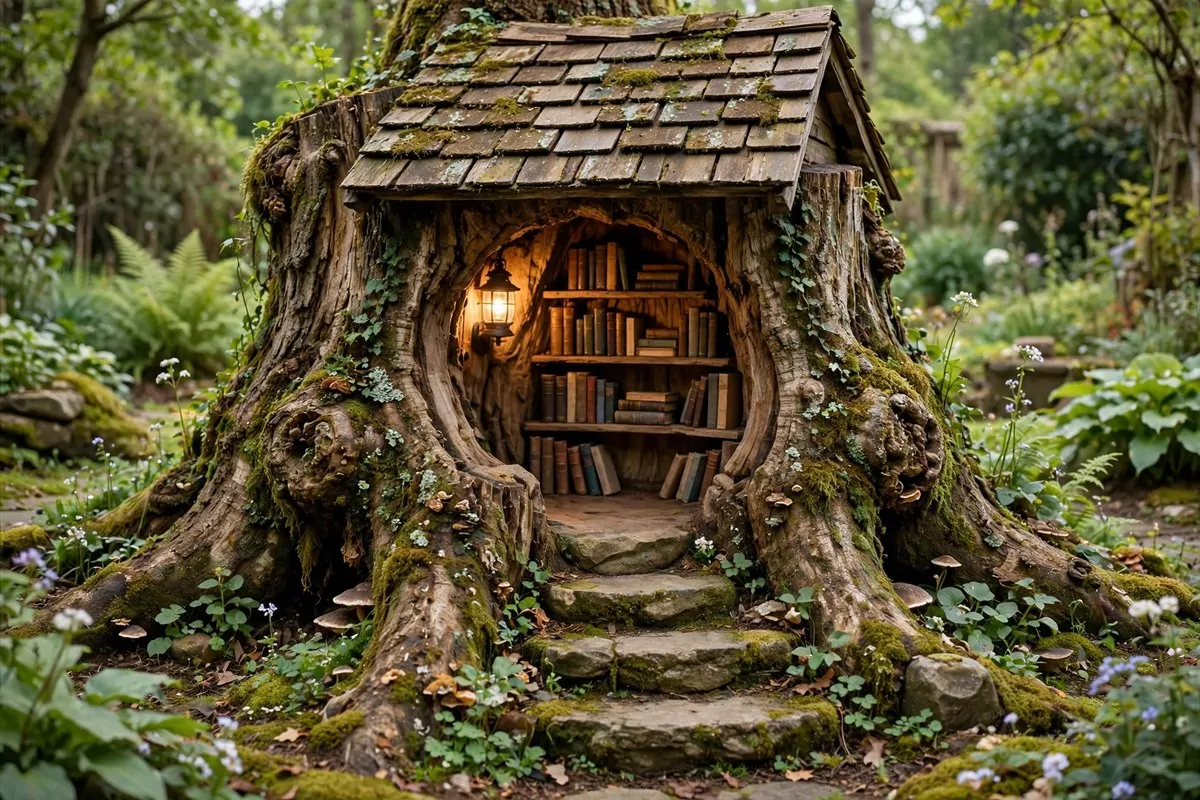
Instead of hauling the stump away, she turned it into a library. She carved out the inside, installed shelves and lighting, and topped the ten-foot-tall stump with a shingled roof that hangs a little over the edges.
There is a lantern-style lamp that lights the little room. The door was once a vintage window. The trim is decorated with tiny wooden books painted with real titles.
Photos of it went viral online, shared more than a hundred thousand times. It is easy to see why. It looks like something from a fantasy book, a secret library a tree would grow for you.
You probably do not have a 110-year-old tree stump in your yard. Most of us do not. But you can fake the look with a wooden box and the right paint job.
Faux bark texture paint, a stone-step path, and a small shingled roof give you the fairy-tale feel without the chainsaw. I have seen people use thick branches as the mounting posts to keep the woodland look going.
If you do have a stump, please be safe about it. A hollow trunk needs to be sturdy enough to hold shelves and a roof. Ask someone who knows trees before you start cutting.
The best part of the stump design is how it feels like it grew there. It does not look placed or planned. It looks discovered.
Kids especially love this one. To a child, a library inside a tree is the most magical thing in the world. And honestly, I agree with them.
3. A Lighthouse by the Curb
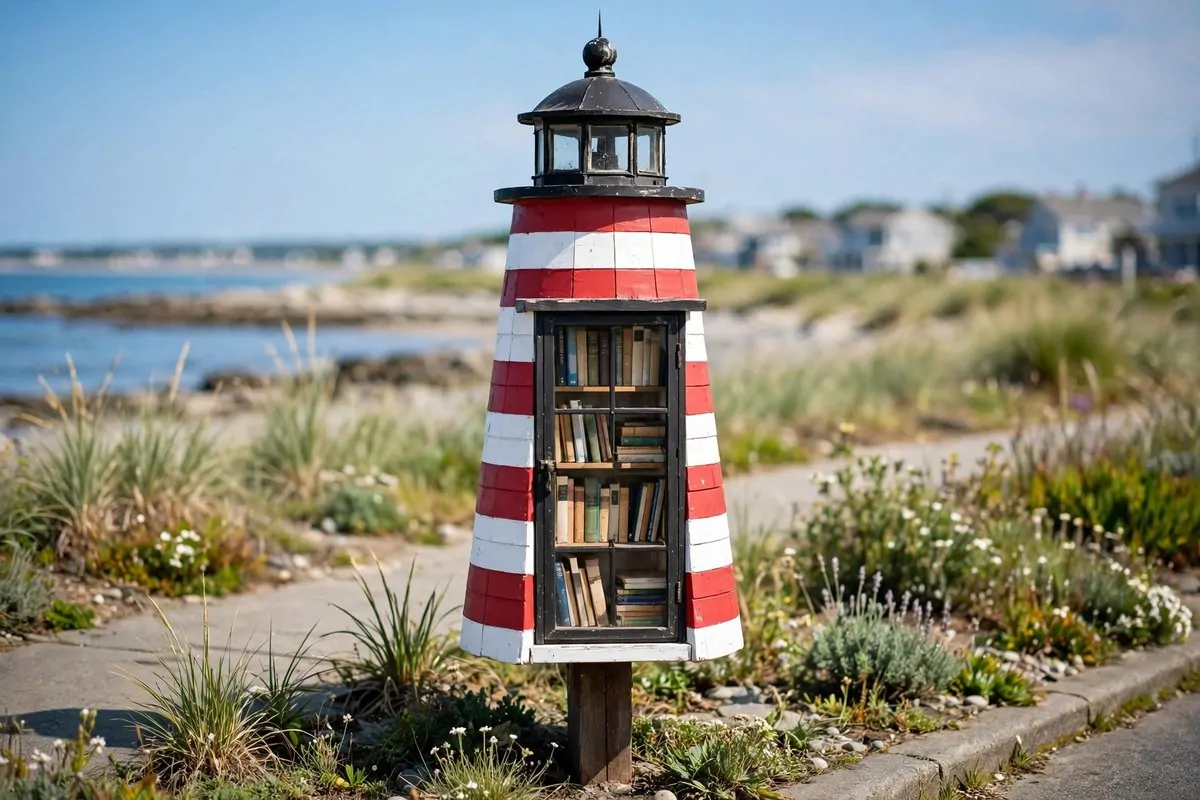
If you live near the water, this one is almost too perfect. A lighthouse-shaped little free library. Red and white stripes, a little lantern room on top, and a glass door where the books live.
Lighthouses mean guidance and safe harbor. That is a pretty lovely message for a box of free books. Take a story home, find your way back when you are done.
The tall, narrow shape actually works great for books. You get two or three shelves stacked up, and the small footprint means it fits in a narrow side yard or by a driveway.
Paint the stripes with outdoor paint and take your time taping the lines. Crisp stripes are what sell this design. Messy stripes just look like a barber pole.
Add a little railing around the top lantern room with craft wood strips. It is a small detail, but it is the one people photograph.
Some people even put a small solar light in the lantern room. At night the whole thing glows softly. I saw one photo of that and gasped out loud. It was beautiful.
The lighthouse also works if you do not live near water. My street is nowhere near the sea, and I would still walk to a lighthouse library every single day.
Keep the door simple and weather-tight. A clear panel helps people browse from outside, which matters when it is raining and nobody wants to stand there with the door open.
Stock it with adventure books and sea stories if you want to lean into the theme. Or ignore the theme entirely. The lighthouse is the message.
4. A Tiny Red Barn
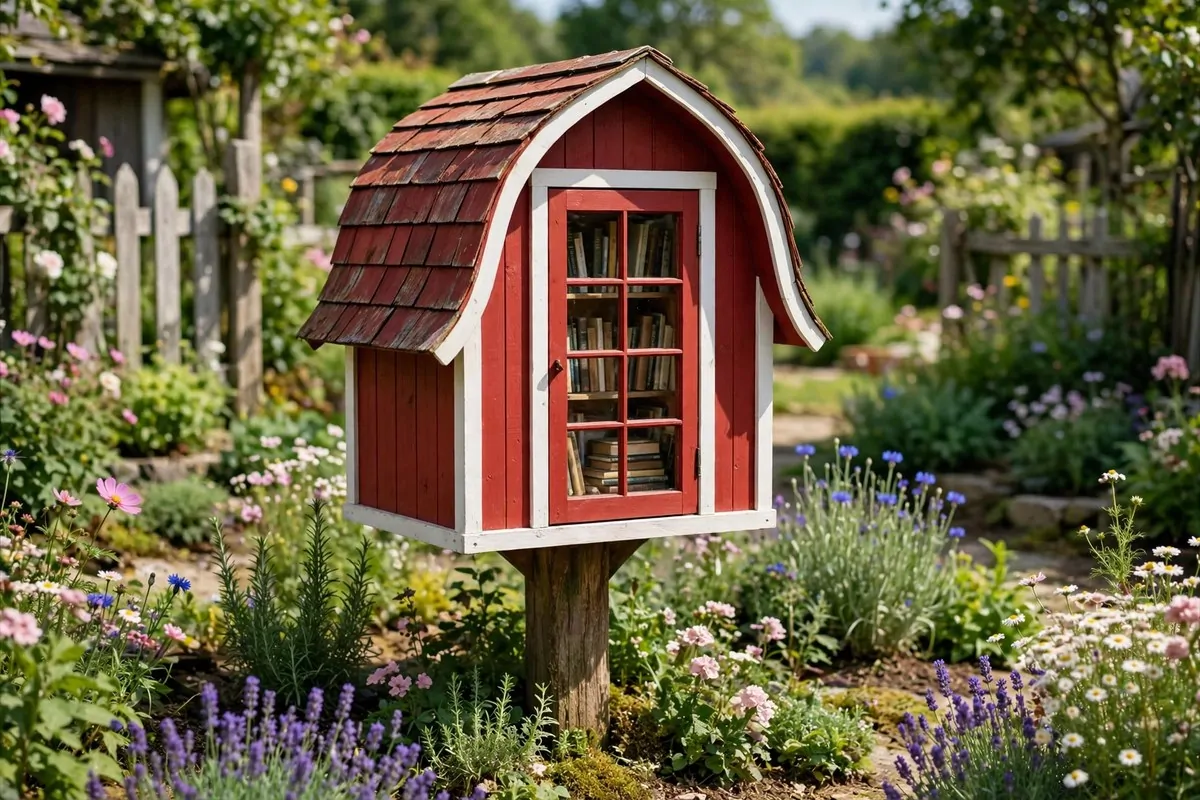
The barn shape is a close cousin of the schoolhouse, but with its own personality. A gambrel roof, that classic barn curve, and the same little red paint with white trim.
Barns feel warm and hardworking. They say farmhouse, fresh air, and simpler times. On a suburban street, a tiny barn full of books is a small surprise that makes people smile.
The gambrel roof is actually practical, not just cute. That curved shape gives you more headroom inside the box for tall books. Cookbooks and art books fit easily.
White trim is doing most of the work here. Paint the corners, the door frame, and the roof edge in crisp white, and the whole thing pops from half a block away.
I like the idea of adding a tiny silo next to it. Not a real one, just a small cylinder painted silver. It would be pure decoration. It would also be adorable.
Mount the barn on a post wrapped in wood that matches your fence. It looks more built-in that way, like it has always lived there.
Inside, a barn library begs for farm memoirs, gardening books, and kids picture books about animals. You know the ones. The whole street will fight over them.
One steward I read about puts seasonal decorations on her barn. Tiny pumpkins in fall, a little wreath in winter. It has become the neighborhood calendar.
The barn works in cities too. Maybe especially in cities. A tiny barn in the middle of a concrete block is the best kind of surprise.
5. A Time-Traveling Blue Box
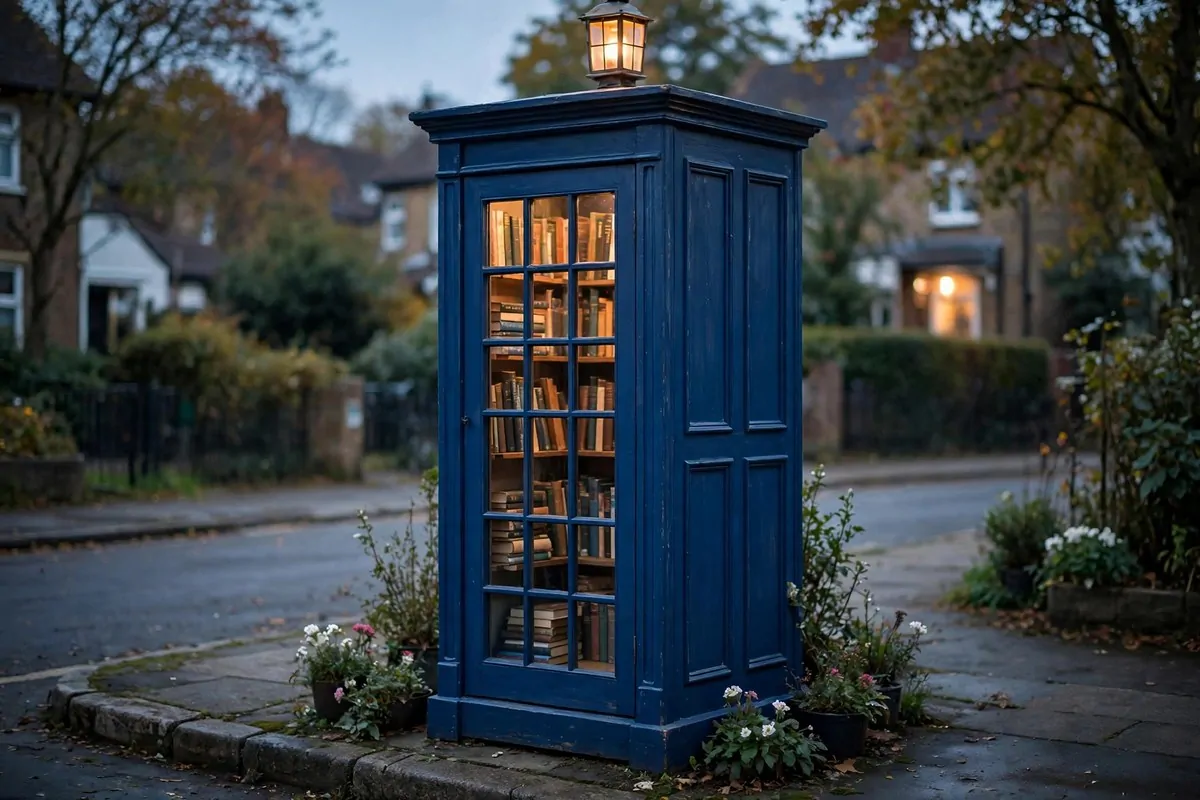
This one is for the science fiction fans. There are little free libraries out there shaped like the famous blue time-traveling phone box from that British show. Taller than the others, deep blue, with a little lantern on top.
You do not need to be a fan to love the idea. A tall blue box on a street corner looks like a doorway to somewhere else. Which is exactly what books are.
The tall shape fits a lot of books. You can get three or four shelves in a box like this, and the narrow width keeps it from blocking the sidewalk.
Paint it a rich navy or royal blue. Then add lighter blue panels on the sides to fake the paneled look. The panels are what make it read as the box, not just a blue rectangle.
Top it with a small lantern. A solar one works fine. At dusk it glows and the whole thing looks like it is about to hum and disappear.
I would fill this one with science fiction and fantasy, obviously. But also travel books. Time travel and regular travel are cousins, I think.
Kids go wild for this design. I watched a video of a little boy running up to one and shouting with joy. That is the whole point of these things.
A quick tip for tall libraries. Anchor the post well. Tall boxes catch more wind than short ones, and you do not want your time machine tipping over in a storm.
This design proves a fun point. Your library can be a love letter to your favorite story. The box itself can be the first book on the shelf.
6. A School Bus With a Curved Roof
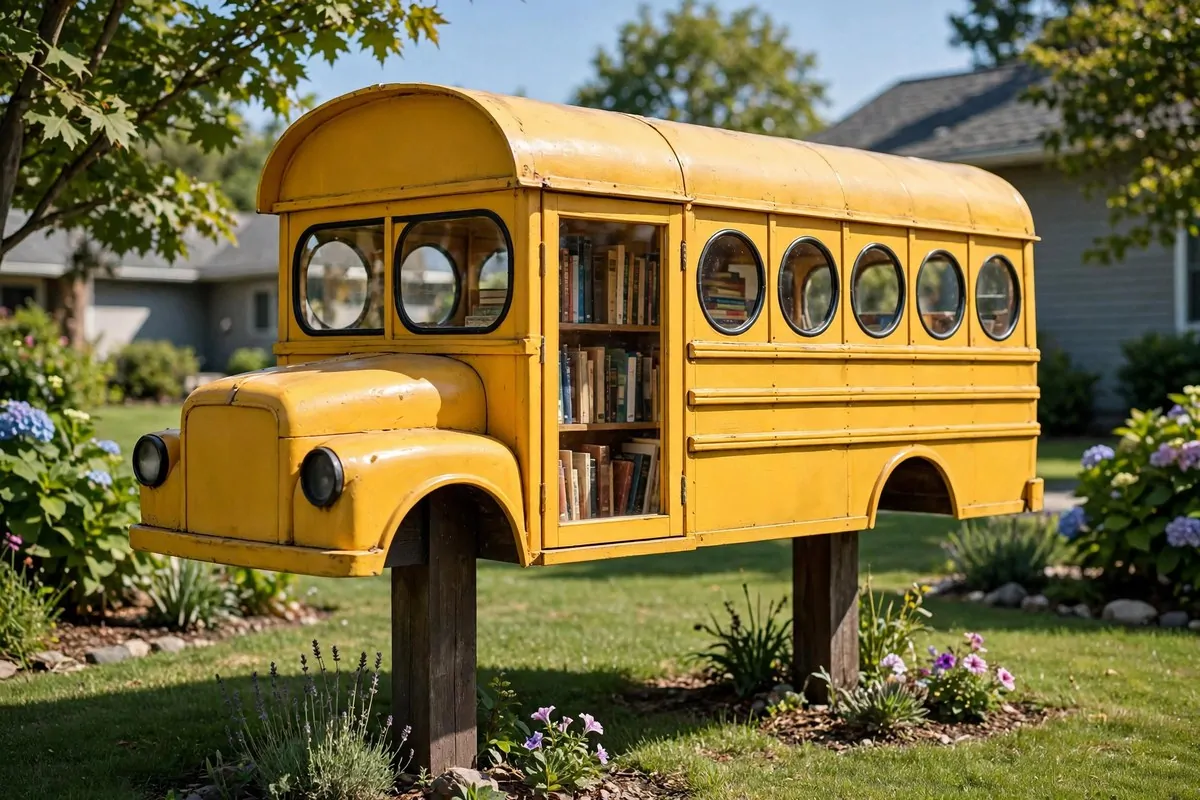
This one makes me laugh in the best way. A little free library shaped like a school bus. Yellow paint, rounded roof, little windows along the sides.
The story behind this design is sweet. An elementary school class once wrote to a home improvement show asking for help setting up their own library. The kids suggested a simple box painted like a school bus.
The builders took it up a notch. They gave it a gently curved roof, clear window panels, and a little front hood to make it look like a vintage bus. The kids must have lost their minds.
Yellow is the happiest color for a street corner. You can spot a school bus library from two blocks away. It practically waves at you.
The curved roof is easier than it looks. You can bend thin plywood over a frame, or build the curve with angled cuts. Either way, the curve is what makes it a bus instead of a yellow box.
Little round windows are the detail that sells it. Cut circles in the side panels and cover them with clear plastic. Behind them, the books look like passengers.
This is a perfect project for a school, a church, or a family with kids. Let the children pick the books that go inside. They will guard that bus like treasure.
Park it near the sidewalk so it feels like it is waiting for passengers. A little curb painted to look like a bus stop would be the cherry on top.
Rain tip for bus builders. The curved roof sheds water beautifully, but seal the window edges well. Curved cuts and rain are not natural friends.
7. The Book Spine Illusion
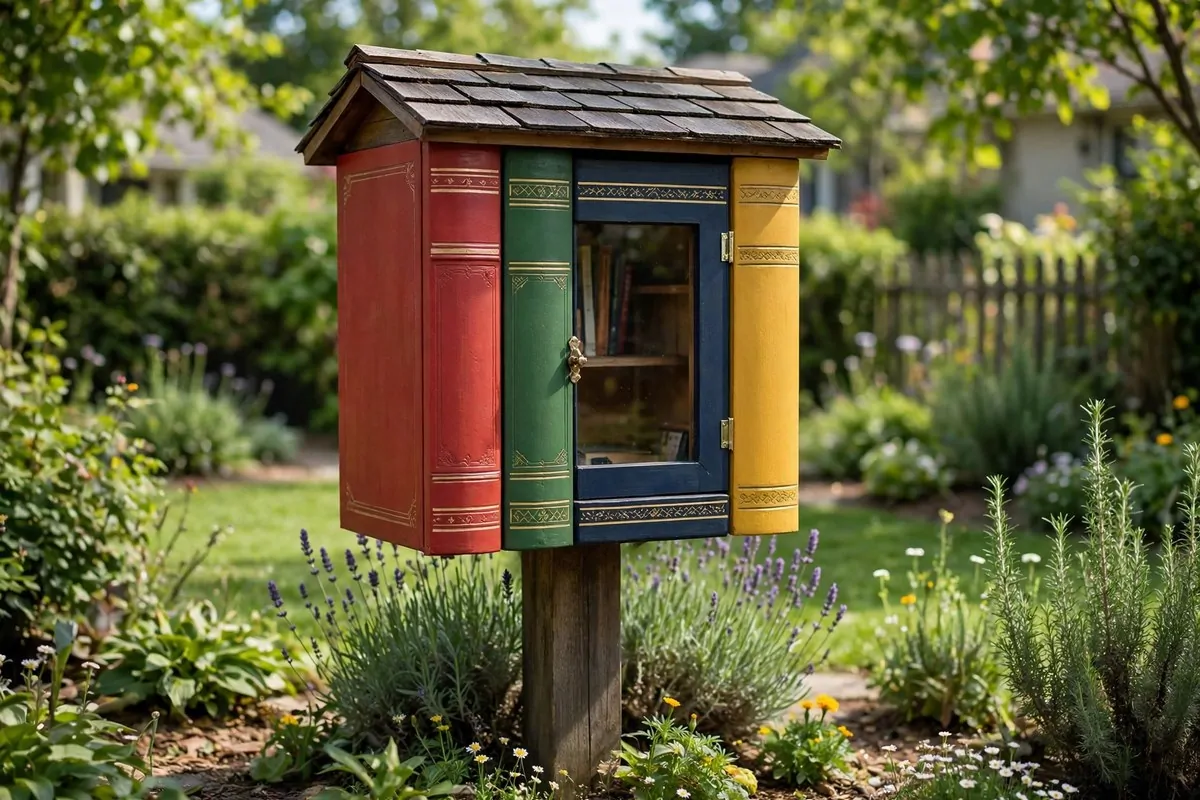
This paint trick is genius. You paint the outside of your library to look like a shelf of giant book spines. From across the street, the whole box looks like a bookshelf that escaped the house.
Each painted spine gets its own color, its own fake title, its own little decorations. Mix tall ones and short ones. Lean a few at an angle, the way real books lean when a shelf gets full.
Kids love guessing the titles. I read about one steward who painted spines of her family’s favorite books, and the neighborhood kids made a game of naming them all.
You do not need to be an artist. Rectangles and straight lines do most of the work. The trick is picking colors that look like real book covers. Deep reds, forest greens, navy blues, mustard yellow.
Paint the spines on all four sides. When someone walks around the box, it is like browsing a whole bookstore. Each side is a new shelf.
Add a thin painted shadow line on one edge of each spine. That one line is what turns a flat rectangle into a 3D book. It takes two seconds and it changes everything.
Leave one spine blank or paint your own street name on it. A personal touch makes people feel like this library belongs to their neighborhood, not just some house.
Seal the whole thing with outdoor varnish when you are done. Painted books fade in the sun like real books fade on a sunny shelf. A good sealant keeps them bright.
The best part is that the outside of the library becomes a book too. The box is advertising the joy inside before anyone even opens the door.
8. An Under the Sea Library
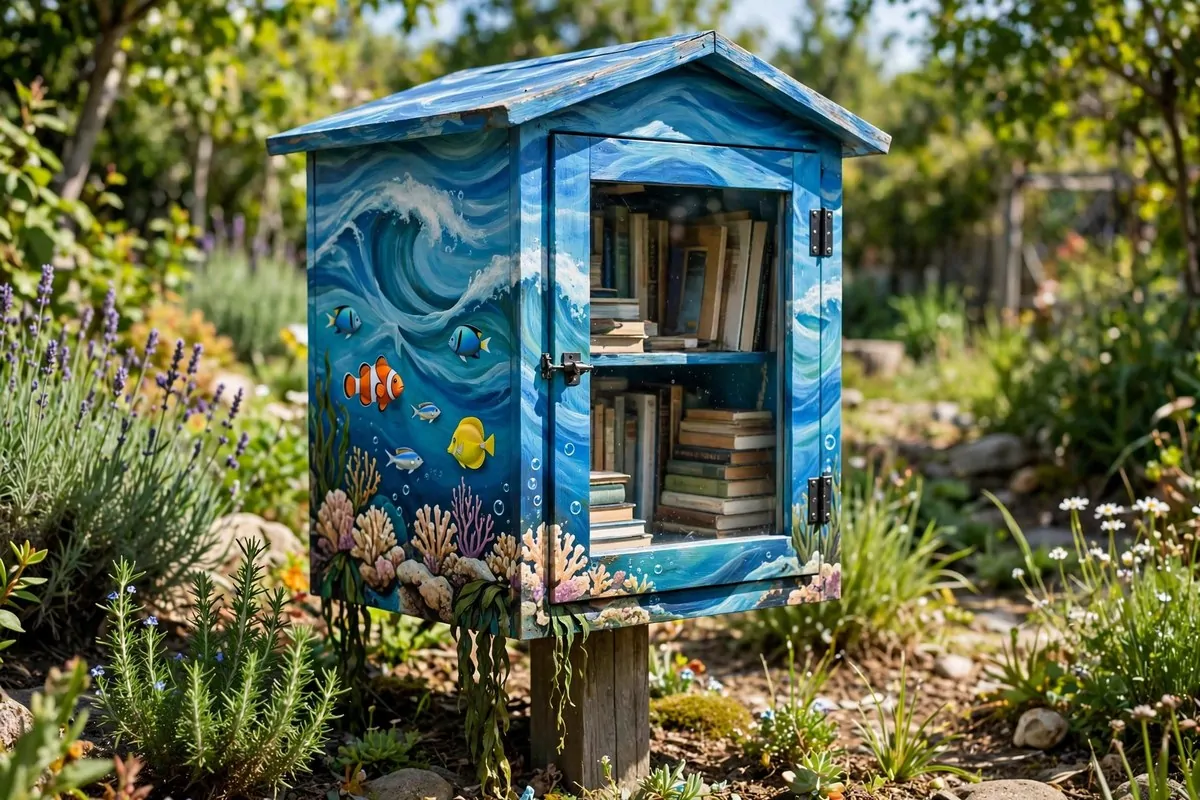
Dive into this one. An ocean-themed library painted with waves, fish, and coral. Bright blues, sunny yellows, coral pinks. It looks like the sea decided to hand out books.
This design is a magnet for kids. Little ones who might walk past a plain box will run toward a library covered in fish. It speaks their language.
Start with a deep blue base coat. Then layer lighter blues for waves. Simple fish shapes are easy, just ovals with triangle tails. Add some bubbles and seaweed and you are done.
Coral along the bottom edge grounds the design. Pinks and oranges at the base, blue waves above. It reads as an underwater scene from every angle.
I love the idea of adding a few 3D touches. A starfish glued near the roof. Some rope wrapped around the post like a dock line. Small things that make it feel real.
Paint a little wave pattern around the door frame. When the door opens, it feels like you are diving in for treasure. Which you are, in a way.
This theme is perfect near a school or a park. Anywhere kids gather. It turns a book exchange into a tiny adventure.
Stock the inside with ocean books to match. Picture books about whales, chapter books about pirates, a field guide to sea life. The theme inside and outside should talk to each other.
One more idea. Name your library something fun on the sign. The Deep Sea Reads. The Book Lagoon. A name makes it a place, not just a box.
9. A Galaxy Full of Stories
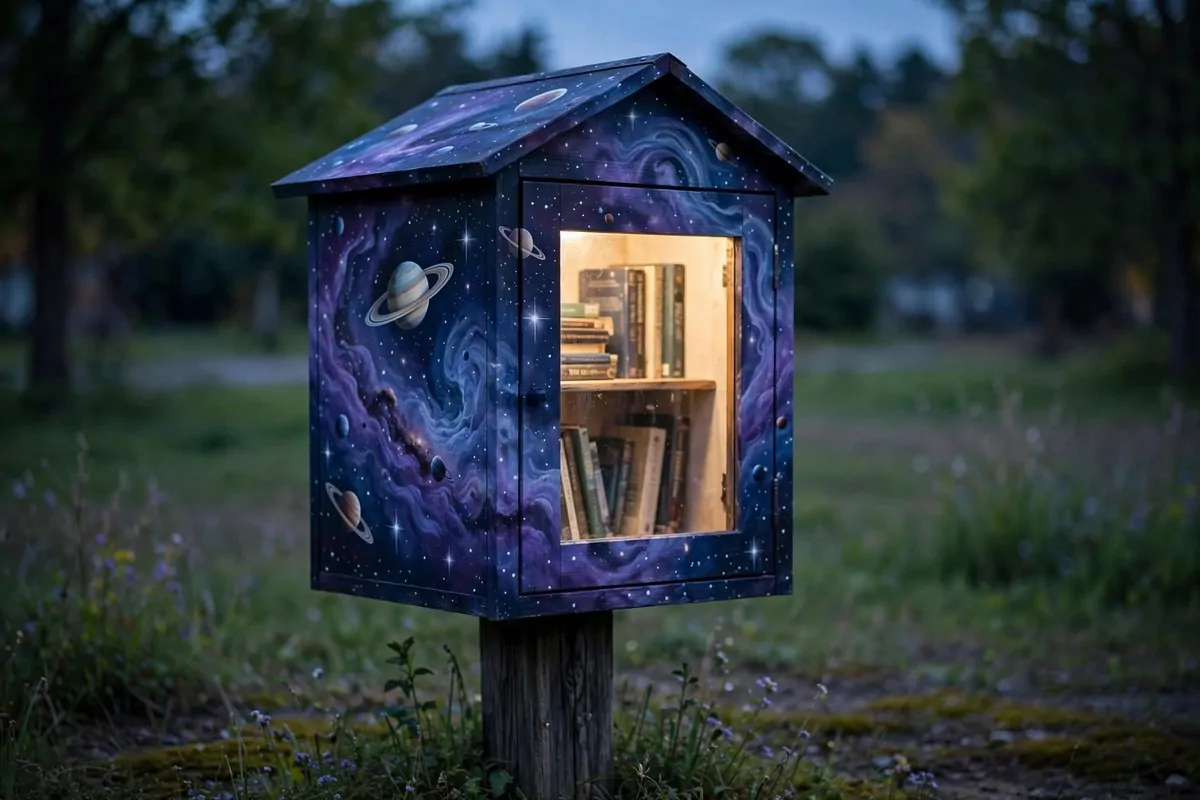
Some libraries point down at the garden. This one points up at the sky. A galaxy-themed library, painted deep space purple and black, swirled with stars and planets.
Borrowing a book from outer space. That is the pitch, and kids near schools absolutely love it. One steward painted a galaxy design for a library near a school, and the children loved imagining their books came from the stars.
The painting technique is forgiving. Sponge on layers of dark blue, purple, and black. Then flick white paint off a toothbrush for stars. The messier the better, honestly. Space is messy.
Add a few planets with simple circles and rings. A big swirly galaxy in the center of the door. Maybe a tiny rocket ship flying across one side.
This design glows beautifully at night if you add a small solar light inside. The clear door panel lets the star paint catch the light. It looks like a little universe sitting on a post.
Silver and gold paint pens are your best friends here. Use them for star details and planet rings. Metallic paint on a dark background looks expensive.
I would stock this one with science books, space encyclopedias, and science fiction. The outside makes a promise, and the inside should keep it.
Do not worry about being neat. Galaxy painting is one of those rare art projects where mistakes become nebulas. You literally cannot mess it up.
This is also a great group project. A few neighbors with sponges and paint, one Saturday afternoon, and your street has its own little cosmos.
10. Chalkboard Paint, Always Changing
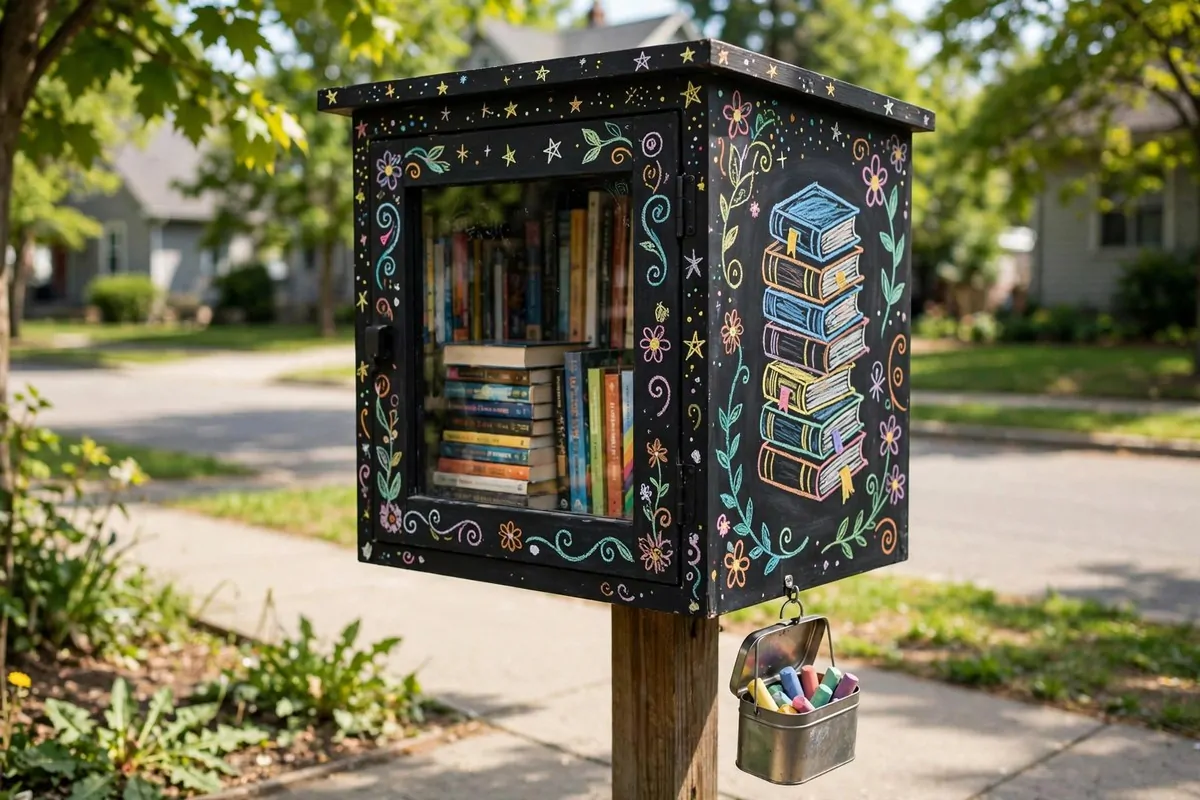
Here is a library that is never finished. Paint the whole thing in chalkboard paint, and it becomes a living message board. Every week it can look brand new.
Visitors leave notes. Book recommendations. Little drawings. A kid’s chalk rainbow. A neighbor’s thank you message. The box collects the personality of the whole street.
You will need to keep a little box of chalk nearby. A small tin wired to the post works. Colorful chalk, not just white. People get creative when you give them colors.
Chalkboard paint needs a few coats to work well. Two or three, with drying time between. Then season the surface by rubbing chalk all over it and wiping it off. This stops ghost marks.
The fun part is the prompts. Write a question on the door each week. What are you reading right now. Draw your favorite book character. Leave a one-word review of the book you took.
Seasonal art is the other joy. Snowflakes in winter, flowers in spring, suns in summer. The library becomes a little calendar the whole street watches change.
Rain will wash chalk art away, which is both sad and kind of poetic. A roof overhang helps. So does taking a photo of the best drawings before the storm comes.
One steward told me her chalkboard library gets more notes than books some weeks. People just like talking to their street. The books are almost the excuse.
If you have kids, this is the design. It turns the library into a toy they can redraw every single day. And it costs almost nothing to refresh.
11. A Living Roof of Succulents
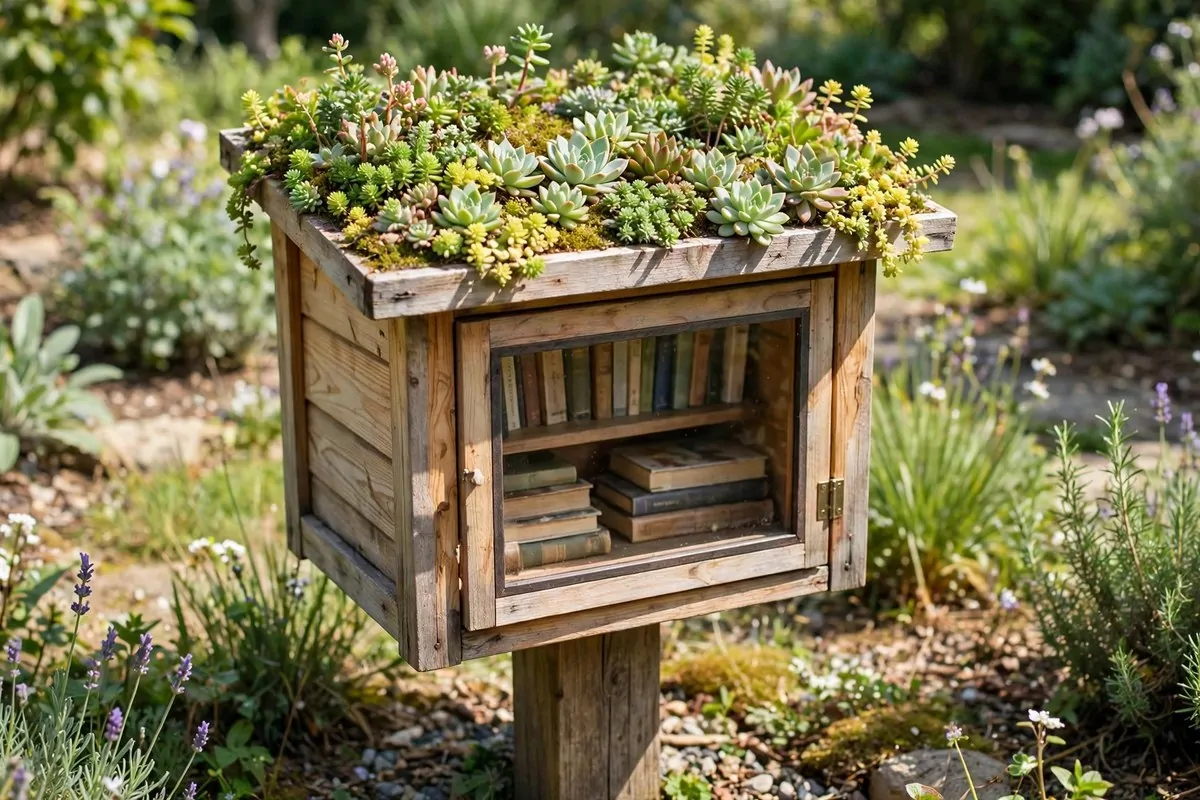
Why should the roof just sit there. A succulent roof turns the top of your library into a tiny garden. Green, alive, and very hard to ignore.
This is an eco-friendly twist that actually works. Succulents are tough little plants. They handle sun, they handle neglect, and they look good doing it.
Build a shallow tray on the roof, a few inches deep, with drainage holes. Line it, fill it with cactus soil, and plant small succulents close together. They will fill in the gaps themselves.
Pick varieties with different colors and shapes. Blue-green rosettes, trailing strings, spiky reds. A mix looks like a tiny landscape from far away.
Watering is easy because rain does most of the work. In dry spells, a quick sprinkle once a week keeps them happy. Succulents forgive forgetfulness better than almost any plant.
The roof also insulates the box a little. Plants and soil keep the inside cooler in summer, which is kinder to your books. Paper and heat are not friends.
Bees and butterflies will visit. That is a feature, not a bug. A library with a garden on its head becomes a small ecosystem.
Keep the plants low and tidy. Tall plants flop over the door and block it. Think groundcover, not jungle.
This design photographs beautifully. A green roof on a tiny house is the kind of image people share online, which brings more visitors to your books.
One caution. Check the weight. Wet soil is heavy. Make sure your post and brackets can handle a planted roof, especially after rain.
12. A Cozy Cottage With Window Boxes
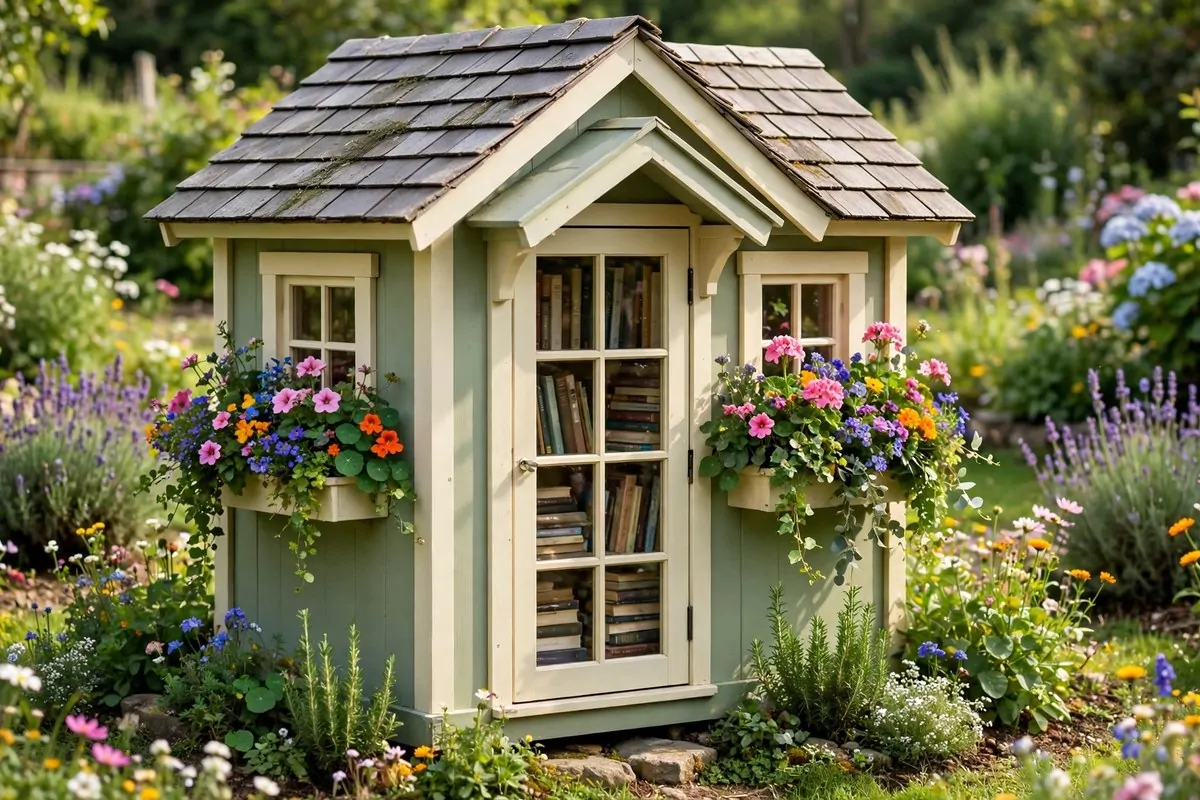
This design is pure charm. A cottage-style library with little window boxes full of flowers, faux shingles, and a picket-fence feel. It looks like a dollhouse that learned to read.
Paint it a soft color. Cream, sage green, pale yellow. Cottage style is about softness, not bold statements. It should look like it belongs in a storybook village.
The window boxes are the star. Tiny wooden boxes under the side windows, filled with real or fake flowers. Real ones need watering. Fake ones need dusting. Pick your chore.
Faux shingles on the roof gable sell the cottage look. You can cut them from thin wood or even heavy craft felt. Overlap them in rows like a real roof.
Add a tiny picket fence around the base of the post. It is pure decoration. It will also make every passerby smile. Some decorations earn their keep in smiles.
A little lantern beside the door is the perfect finishing touch. A warm light makes the cottage glow in the evening and feel safe and welcoming.
Cottage libraries attract a certain kind of book. Cozy mysteries. Gardening books. Romance novels. The box sets the mood and the books follow.
This style fits beautifully in a front garden. Tuck it among flowers and it looks like it grew there. Tuck it by the sidewalk and it becomes a landmark.
Maintenance is the trade-off. Flowers need care, paint needs touch-ups. But that is true of any garden. This library just joins the routine.
If you love the cottagecore look inside your home, this is your library. It is the outdoor version of everything you already love.
13. A Community Paint Collage
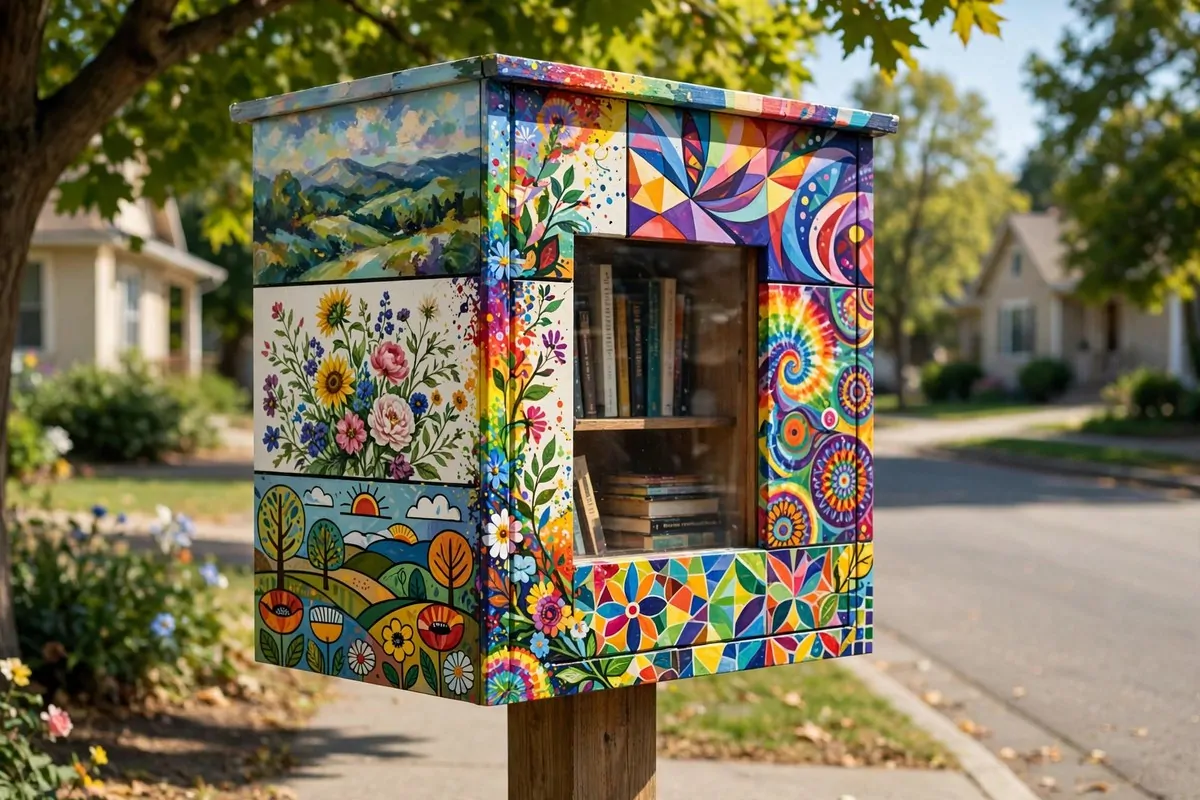
This idea belongs to everyone. A community collage library is painted by the neighborhood itself. Each person or family paints one small section, and the whole box becomes a patchwork of your street’s creativity.
Local artists can join too. Invite them to paint a panel each. The mix of styles is the point. A kid’s rainbow next to an artist’s landscape, both equally at home.
Organize it as a block party. One Saturday, paint and brushes on a folding table, and the library as the canvas. It is the kind of event people remember for years.
Give light guidance, not rules. A theme helps, like our street or stories we love. But let people surprise you. The surprises are the best panels.
Photograph each painter with their section. Print the photos small and keep them in a little album inside the library. The art has artists, and the street should know them.
This design solves a real problem. Some people feel shy about starting a library because they are not crafty. A collage says your square counts even if it is just your favorite color.
Kids’ sections age the best. A wobbly painted sun from a five-year-old will still make you smile in ten years. Do not paint over the kid art. Ever.
Seal the finished collage with clear outdoor varnish. Many hands means many paint types, and a good seal keeps them all safe together.
The collage library becomes a meeting point. People stop to find their panel, then stay to browse the books. Community is the whole point of these boxes.
Repaint one panel every year. A rotating guest square keeps the library fresh and gives new neighbors a way to join in.
14. A Fairy Tale Castle
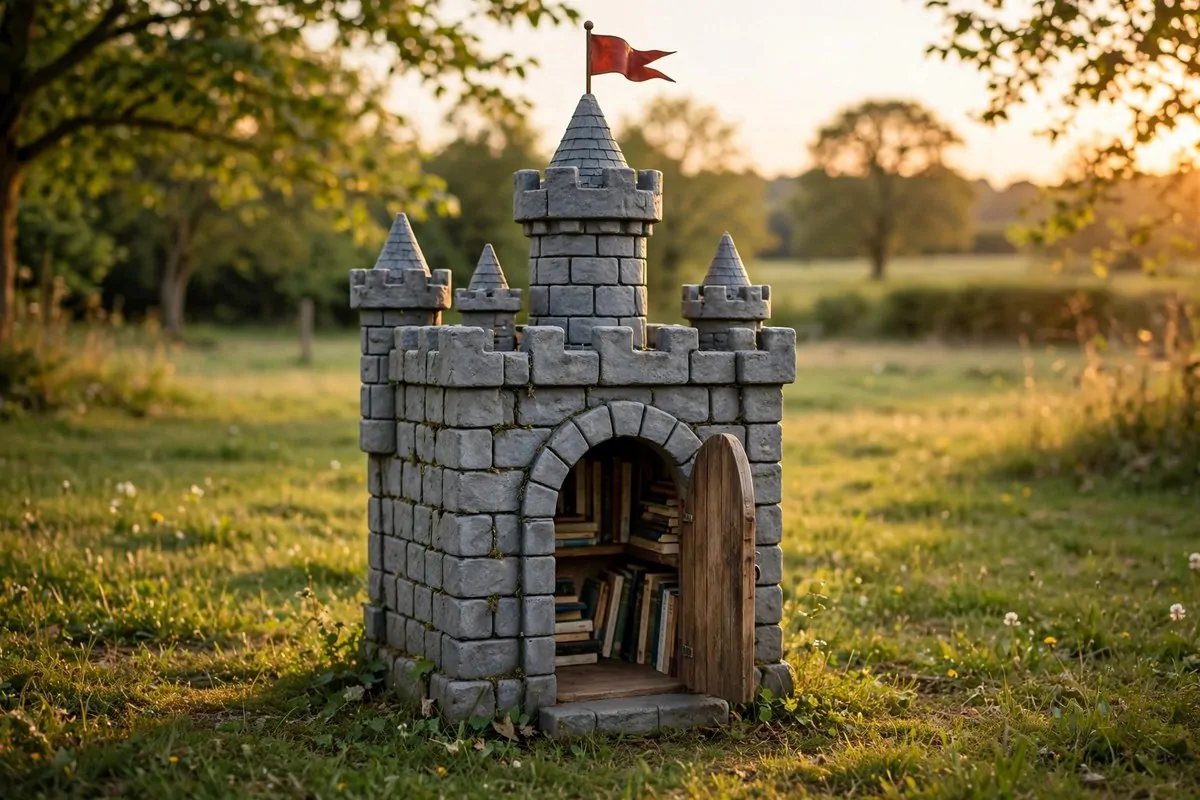
Every street needs a little magic. A fairy tale castle library has tiny turrets, painted stone walls, and a door that looks like a drawbridge. It is a storybook you can touch.
Build the turrets from cardboard tubes or PVC pipe, sealed and painted gray. Crenellations, those little notches along the top, are just small rectangles cut from craft wood.
Paint the walls to look like stone. A gray base, then sponge on lighter and darker grays for texture. Add thin dark lines for the mortar between stones. It looks harder than it is.
A tiny flag on the tallest turret is the finishing touch. It flutters in the wind and tells the whole street that this castle is occupied by readers.
The drawbridge door is a fun detail. Paint the door like wooden planks with metal bands. When it opens, it feels like the castle is letting you in.
Line the inside shelves with fairy tales and fantasy, obviously. But also add adventure stories and myths. A castle library should feel epic inside.
This is the design that makes drivers stop their cars. I am not exaggerating. A tiny castle on a lawn is a full double-take moment.
At night, a small light inside turns the windows golden. A lit castle on a dark street is genuinely magical. Kids will talk about it at school.
Build it sturdy. Turrets catch the wind and curious little hands. Anchor everything well and use outdoor glue for the decorations.
Your street just got its own landmark. People will give directions using your castle. Turn left at the little castle, then it is the third house down.
15. A Library That Shares Food Too
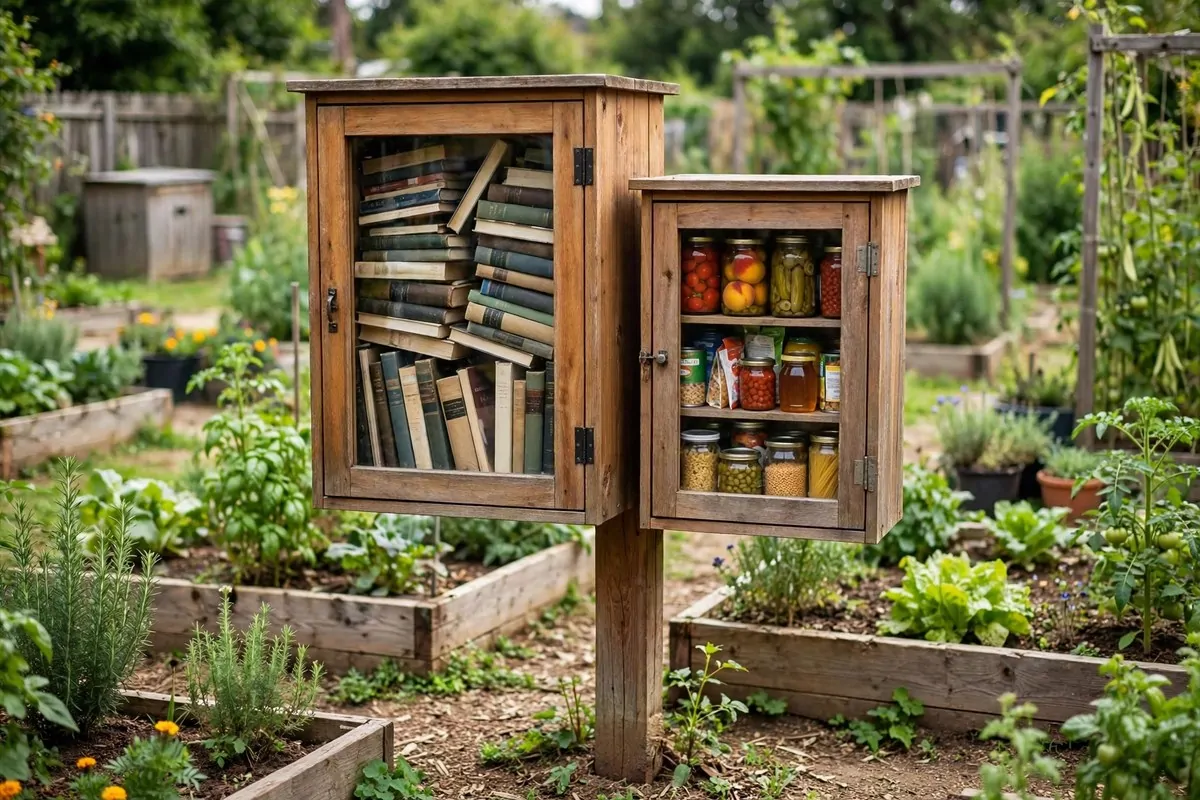
Books feed the mind, but neighbors get hungry too. Some little free libraries add a small pantry cabinet beside the book box. Take what you need, leave what you can.
The idea is simple. One box holds books. A second, smaller cabinet holds non-perishable food. Canned goods, pasta, rice, peanut butter. Things that keep without a fridge.
This combo has a lovely name in some neighborhoods. The Library Pantry Club. It turns a book exchange into a full community cupboard.
Keep the two sections clearly separate. Books on one side, food on the other, with a little divider or just two stacked boxes. You do not want soup cans leaning on paperbacks.
Here is a quick guide to what belongs where.
| Library side | Pantry side |
|---|---|
| Books of all kinds | Canned vegetables and soup |
| Magazines | Pasta, rice, and grains |
| Kids activity books | Peanut butter and crackers |
| Puzzle books | Tea, coffee, and cereal |
Check the pantry often. Food moves faster than books, and expired items need to go. A quick check twice a week keeps it safe and welcoming.
A small sign explains the idea in one line. Free food for neighbors, no questions asked. That line matters. It tells shy people they are truly welcome.
This design builds the deepest kind of community. People who take a can of soup remember the house with the pantry. They come back with books to share.
Weatherproofing matters more here. Food and damp do not mix. Make sure both cabinets seal well and the roof overhangs generously.
Start small. Even a tiny pantry shelf helps someone. You can always add a bigger cabinet later when you see how the street uses it.
16. A Phone Booth for Books
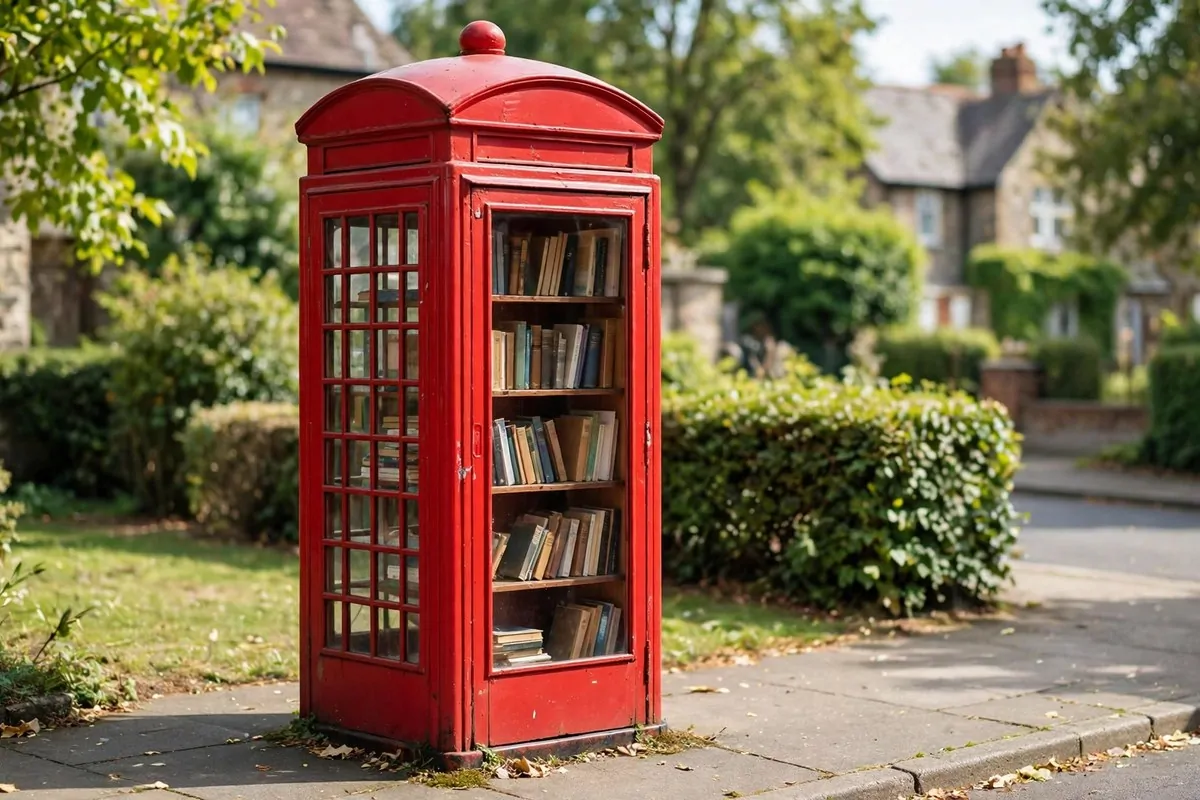
The classic British phone booth is one of the most beloved shapes on earth. Painted red, with paneled glass sides and a little domed roof. As a library, it is perfect.
Phone booths were always about connection. You stepped inside to reach someone far away. A phone booth full of books keeps that spirit alive. Step up, connect with a story.
The tall, narrow shape fits a surprising number of books. Three shelves fit easily, and the glass panels on all sides show them off like a little shop window.
Paint it pillar-box red. That bright, classic red is the whole identity. Get it right and people will recognize it from across the street instantly.
The domed or pitched cap on top is the detail that makes it. A simple curved roof piece, painted red to match, turns a red box into a phone booth.
Add the word-free details. Small crown shapes, thin white window frames, a little sign panel on top. Keep it decorative, not wordy. The shape speaks for itself.
This design has real history behind the idea. Old phone booths have actually been converted into book exchanges in villages. A famous one in a small English town started the trend years ago.
It works on any street in the world. You do not need to be British to love a red phone booth. It is a global symbol of charm.
Anchor it well. Tall and narrow means tippy in strong wind. A solid post set in concrete keeps your booth standing through every storm.
Fill it with British authors if you like the theme. Or fill it with whatever your street reads. The booth is the wink. The books are the gift.
17. A Giant Birdhouse Library
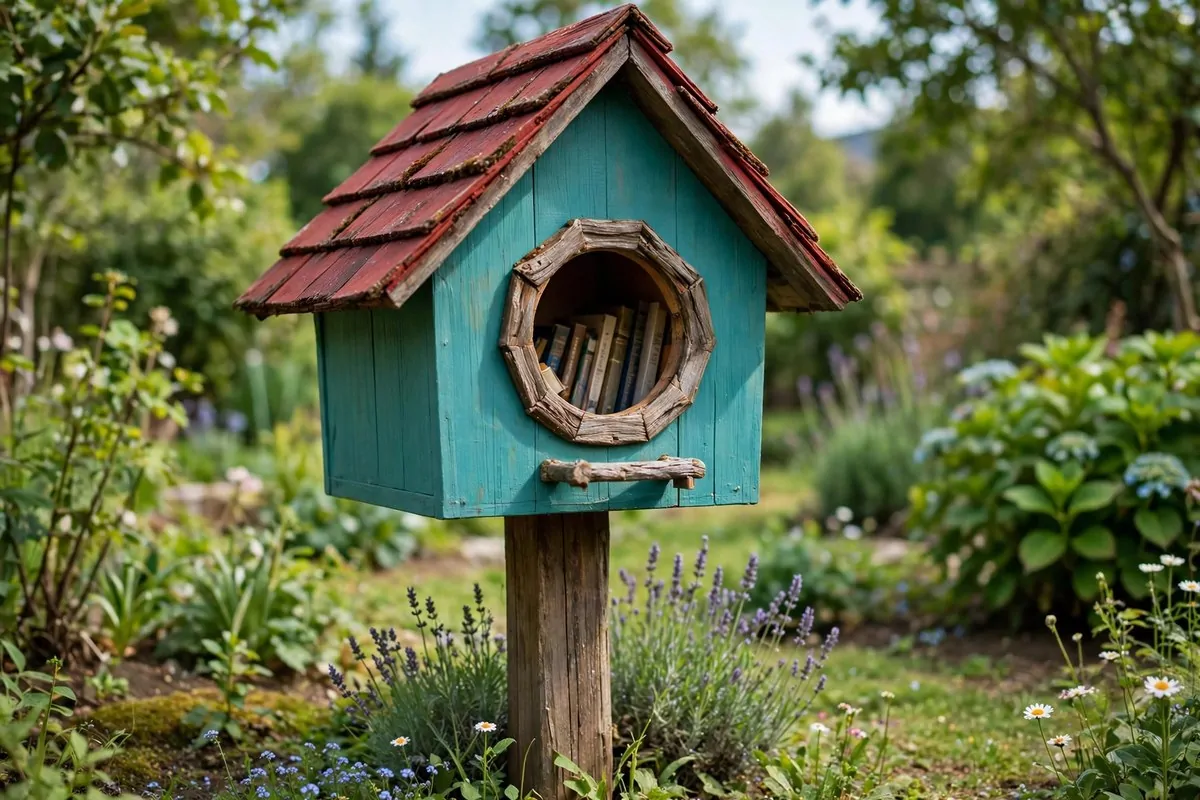
Little free libraries are often called birdhouse-shaped, and this design leans all the way in. Build it like a giant birdhouse. Steep pitched roof, a round entrance hole, perched on a tall post.
The birdhouse shape is instantly readable. Even a small child understands it. A little house for little things. In this case, the little things are books.
Mount it high on a tall post, the way real birdhouses sit. About chest height is perfect. High enough to feel special, low enough for everyone to reach.
The round entrance hole is the signature detail. Cut a circle in the front panel and frame it with a thin ring of wood. Behind it, a clear panel or an open doorway shows the books.
Paint it cheerful. Classic birdhouse colors work great. Red, teal, yellow, or natural wood with a colorful roof. It should look happy from the sidewalk.
Add a tiny perch below the entrance hole. A short wooden dowel, just like a real birdhouse. It is completely decorative for a library. It is also completely necessary.
Real birds might actually visit. That is fine. A bird sitting on your book house is the best decoration you will ever get, and it is free.
This is one of the easiest shapes to build. Four walls, a pitched roof, a post. If you can build a box, you can build a birdhouse library.
Keep the inside simple. One shelf, books standing upright. The birdhouse is small, so curate tightly. A dozen great books beat thirty random ones.
Hang a tiny wooden bird on the roof peak. It is the period at the end of the sentence. The whole street will know exactly what your little house is for.
18. A Woodland Hideaway in the Garden
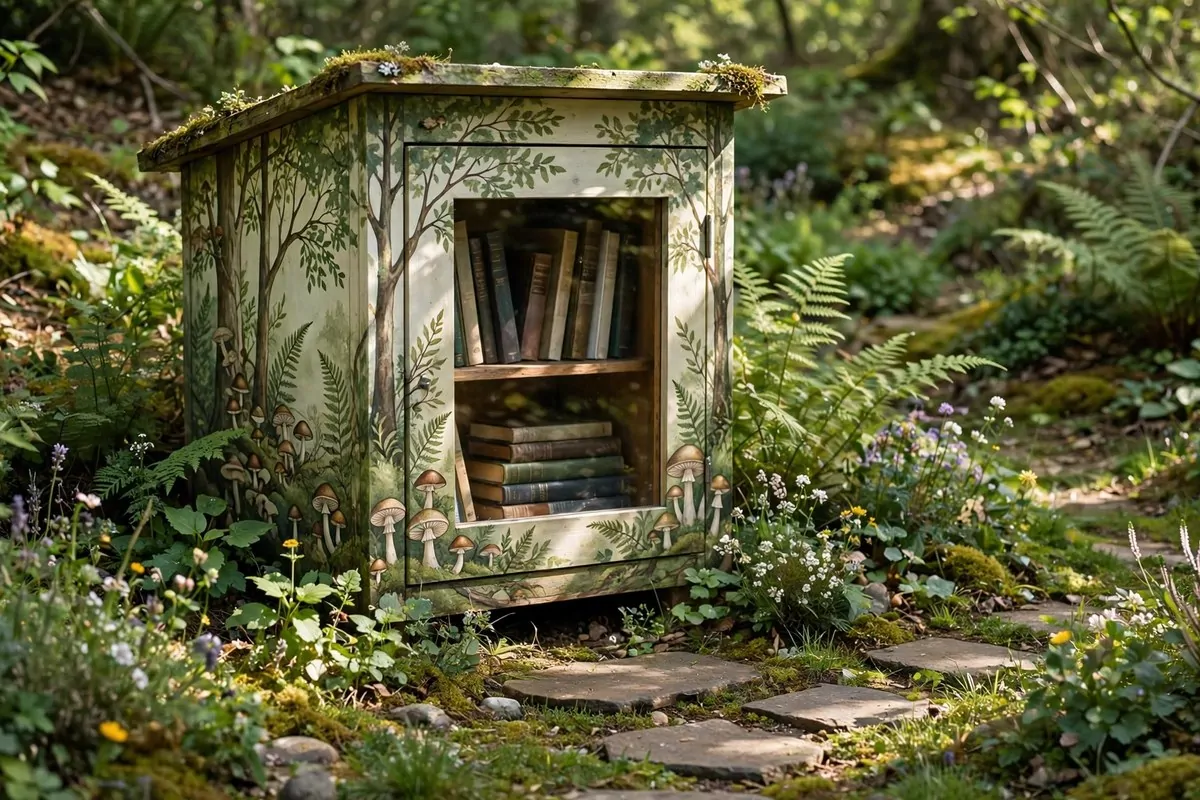
Some libraries want to be found. This one wants to be discovered. A woodland-themed library tucked into the garden, painted with trees and forest creatures, half-hidden among the flowers.
Paint a forest scene on all sides. Tall trees, ferns, mushrooms, maybe a fox peeking around the corner. Soft greens and browns. It should feel like a secret.
Placement is everything. Set it back from the sidewalk a little, among plants. Visitors have to wander in to find it. That small journey makes the books feel like treasure.
A little stone or wood-chip path leading to it completes the effect. Two or three stepping stones are enough. They say this way to something special.
Add natural decorations. Pinecones on the roof. A wreath of dried flowers on the door. Moss tucked around the base of the post. The garden and the library should blend.
This design is wonderful for shy readers. Some people feel awkward browsing a box right on the sidewalk. A garden nook gives them privacy and calm.
Plant fragrant flowers nearby. Lavender, roses, jasmine. The smell becomes part of the memory. Years later, that scent will remind someone of finding a great book.
Keep the path clear and the plants trimmed. A hideaway should feel secret, not abandoned. Ten minutes of garden care a week keeps it magical.
Stock it with nature books. Field guides, gardening books, nature poetry, wilderness adventures. The setting and the shelf should match.
I love this one for older streets with big gardens. It turns a front yard into a destination. People will plan their walks to pass your house.
19. A Bold Modern Geometric Box
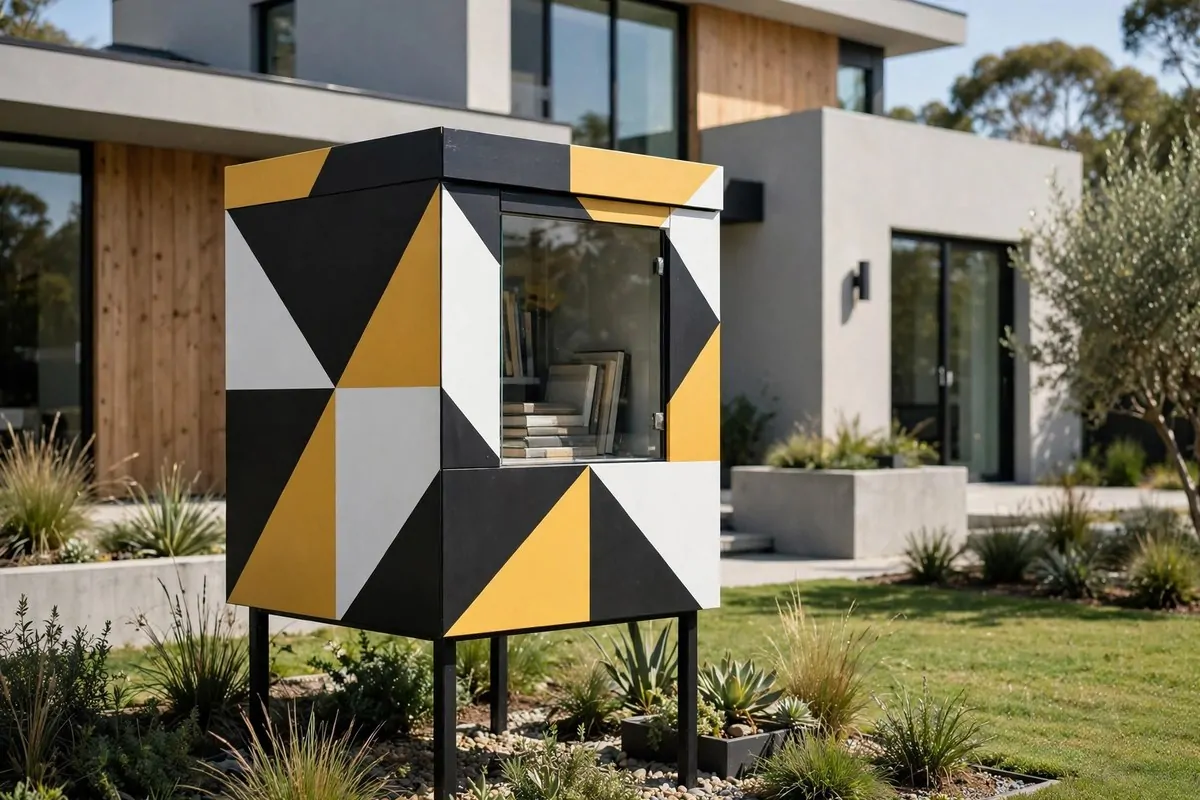
Not every library has to look old-fashioned. A modern geometric design uses bold shapes and sharp colors. Black, white, mustard yellow. Clean lines. Zero nostalgia.
This style fits modern homes perfectly. If your house has flat lines and big windows, a cottage library would look odd. A geometric box looks like it was designed with the house.
Painter’s tape is your best tool. Tape off triangles, stripes, and blocks, then paint between the lines. Peel the tape while the paint is slightly wet for the sharpest edges.
Pick two or three colors max. Restraint is what makes geometric design work. Black and white with one bright accent is a classic combo that never fails.
The shape of the box can be modern too. A clean cube with a flat or single-slope roof. No turrets, no shingles, no picket fences. Just a beautiful box.
Metal legs instead of a wooden post push the modern look further. Simple steel or black metal brackets give it a gallery feel.
This design photographs incredibly well. Bold geometry pops in photos, which means more shares, more visitors, and more books moving through your street.
Inside, keep it tidy and curated. A modern box with messy shelves sends mixed signals. A dozen well-chosen books look intentional.
Add a small, simple sign. Clean lettering, no frills. The whole design says less is more, and the sign should agree.
Modern does not mean cold. A sharp-looking library on a modern street feels welcoming in its own way. It says this neighborhood loves design and stories both.
20. A Kid-Sized Library at Their Eye Level
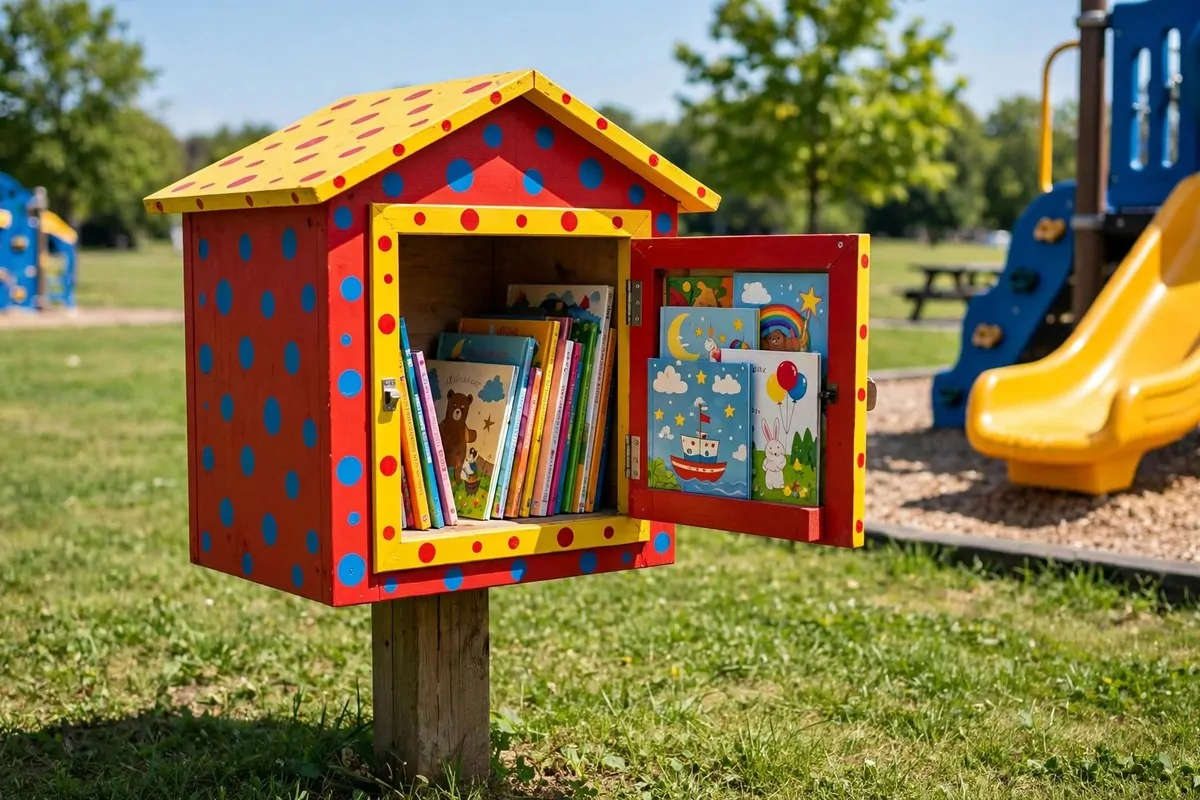
Here is a thought. Most little free libraries are built for adults. They sit at adult height, full of adult books. Kids have to stretch and squint.
A kid-sized library flips that. Mount it low, at a child’s eye level. Paint it in bright, cheerful colors. Fill it only with children’s books.
The low height changes everything. A four-year-old can open the door herself. She can see every book. She can choose. That independence is powerful.
Paint it like a toy box come to life. Primary colors, polka dots, a rainbow across the roof. It should look like the most fun object on the street.
Fill it with picture books, early readers, and activity books. Ask neighbors with kids to donate. Children’s books wear out fast, so a steady supply matters.
Add a small guest book with crayons. Kids love signing their names. A page full of wobbly signatures is the sweetest thing you will ever see.
Put it near a school, a park, or a playground. Location matters more for kids. They will not walk an extra block, but they will absolutely stop at one on their route.
Keep a few step-free design notes in mind. No sharp corners. A door that is easy to open. A latch a small hand can manage. Test it with a real kid if you can.
This library teaches generosity early. A child who leaves a book for another child learns sharing in the most natural way. No lecture needed.
Pair it with your main library if you have one. A tall box for grown-ups, a low box for kids, side by side. The whole family gets served.
21. A Library With a Reading Bench Beside It
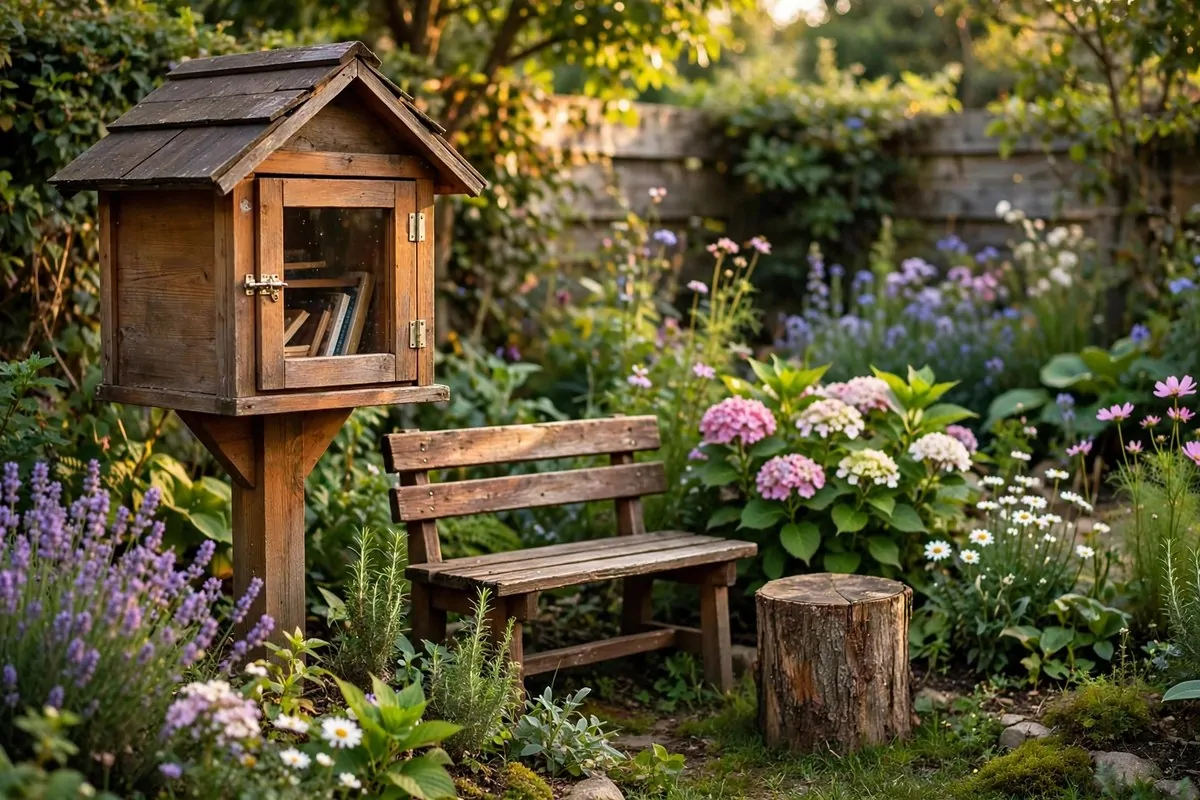
The books are only half the gift. The other half is a place to enjoy them. A library with a little bench beside it invites people to sit down and start reading right away.
The bench does not need to be fancy. A simple wooden bench, a tree stump seat, even a couple of sturdy crates with a cushion. Comfort beats style here.
Place the bench where it catches good light. Morning sun for the early readers, afternoon shade for the hot days. Watch your yard for a day and you will find the sweet spot.
A small side table is a lovely extra. Somewhere to set a coffee cup while you read the first chapter. A stump or a crate works perfectly.
Plant something nice nearby. Flowers, a small shrub, a pot of herbs. A bench in a bare patch of dirt feels forgotten. A bench among plants feels like a retreat.
This setup turns your library into a destination. People do not just grab and go. They stay. They read. Sometimes they chat with the next person who stops by.
I have read about streets where the library bench became the neighborhood hangout. Morning coffee readers. After-school kids. Evening couples. All because of a bench.
Keep the bench weather-safe. Outdoor wood needs sealing, and cushions should come inside in rain. A little care keeps it inviting year-round.
Add a small sign on the bench. Something warm like sit a while. Two words, and suddenly a stranger feels welcome in front of your house.
This is my favorite idea on the whole list. A box of books is wonderful. A box of books with a place to read them is a gift to the entire street.