22 Earthy Cottage Home Decor Touches With Natural Charm

There is a chipped terracotta pot by my back door. It has been there for years, and I will not move it. The rim has a little crack, the color has faded in one spot from the sun, and it still makes me happy every time I see it.
That pot taught me what earthy cottage style is really about. It is not about buying new things that look old. It is about letting real, natural things age the way they want to age.
I wrote this list for you so your home can have that same feeling. Twenty two small touches, all earthy, all simple, all full of natural charm. You do not need to do all of them. Pick the ones that make your heart say yes.
Layer a Jute Rug Over Worn Wood Floors
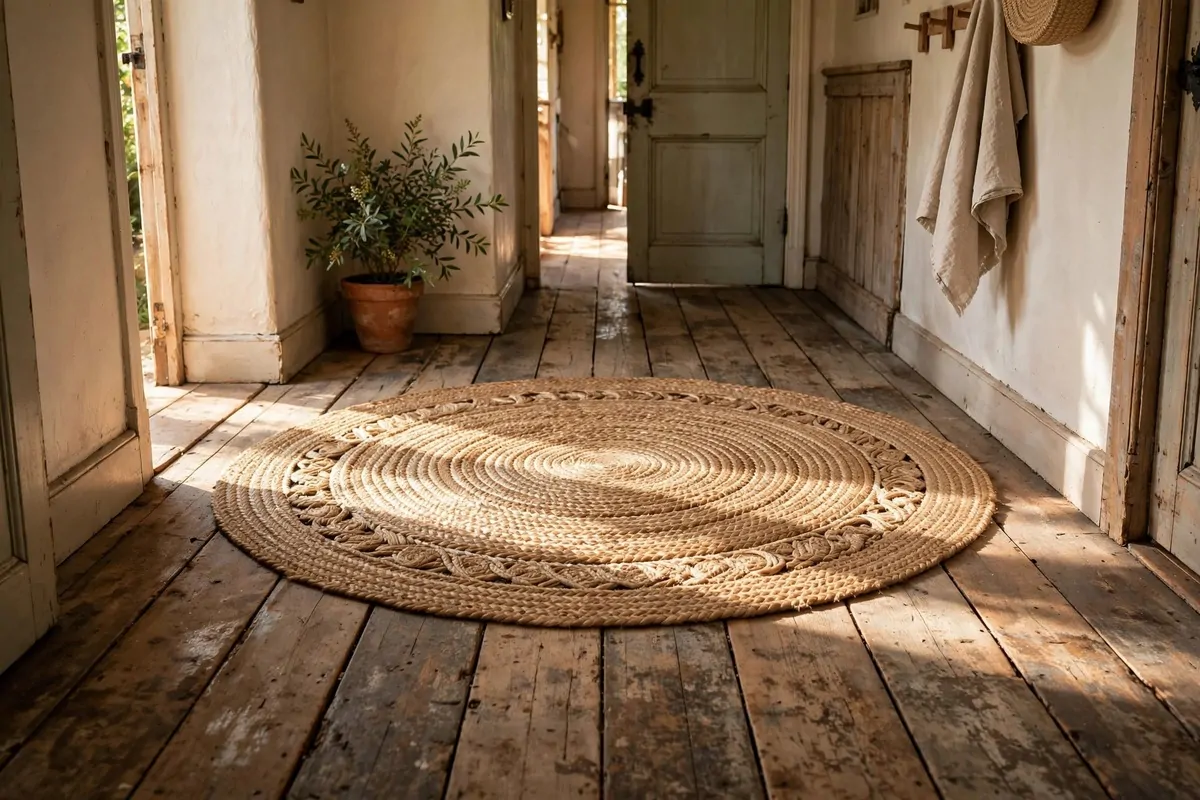
Wood floors are beautiful, but they can feel cold and bare. I learned this the hard way in my old flat. My feet hated the mornings.
A jute rug changes that in one afternoon. It softens the room the second you unroll it. The natural fiber texture feels like it grew out of the floor itself.
Jute works because it does not try too hard. It has a rough, sandy color that matches almost everything. Cream walls, wood beams, terracotta pots, all of them look better next to it.
Layering is the trick that makes it cottage and not just a rug. Put the jute rug under a smaller flat weave or an old wool rug. The edges peeking out add depth without adding noise.
Size matters more than pattern. I always say go bigger than you think you need. The front legs of your sofa or chairs should sit on the rug, not float around it.
Round jute rugs are my favorite for small spaces. They break up all the straight lines of a room. A hallway or a reading corner feels softer with one.
You do not need to spend much here. Jute is one of the cheapest natural rugs you can buy. Check local shops before you order online, because you can feel the weave with your hands.
Keep it simple and it will last you years.
Hang Cream Linen Curtains That Pool on the Floor
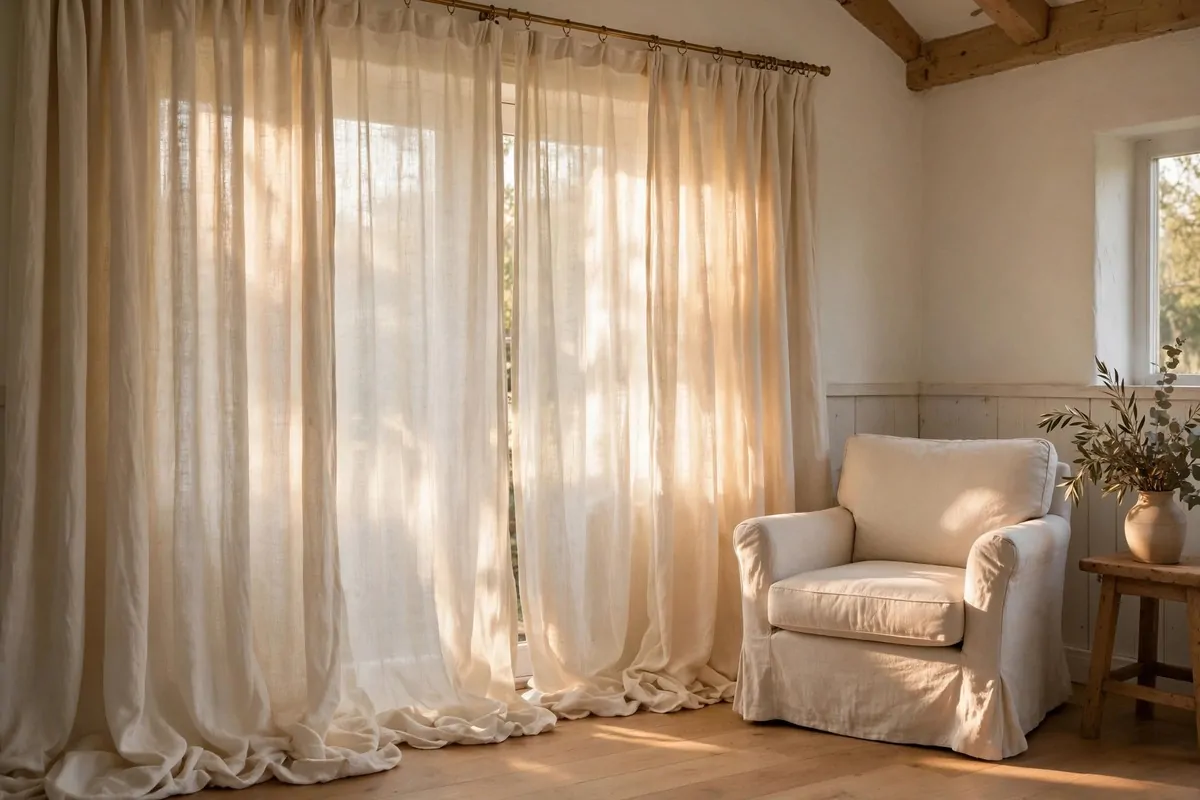
Short curtains that stop at the window sill always look a bit tense to me. They never quite relax. A cottage should feel like it is breathing easy.
Cream linen curtains that pool on the floor do exactly that. They fall soft and a little wrinkled, and the light comes through them like honey. I love that word for it, because that is what it looks like.
Hang the rod close to the ceiling, not just above the window frame. This one change makes your walls look taller. It is such a small thing, but your whole room feels bigger.
Let the fabric kiss the floor and puddle just a little. An inch or two is enough. Too much and you will trip, too little and it looks like a mistake.
Pick natural, undyed linen if you can. The color is warm without trying. Bleached white curtains can look cold next to wood and stone, so cream wins here every time.
Use a simple brass or wood rod. Shiny chrome pulls you out of the earthy mood. You want hardware that looks like it could have been there for fifty years.
Wash your linen curtains twice before you hang them. They soften up a lot. Fresh linen can be stiff, and you want that relaxed drape from day one.
Do not iron them. Wrinkles are part of the charm. A cottage that looks pressed is not a cottage at all.
Add Exposed Wood Beams to a Plain Ceiling
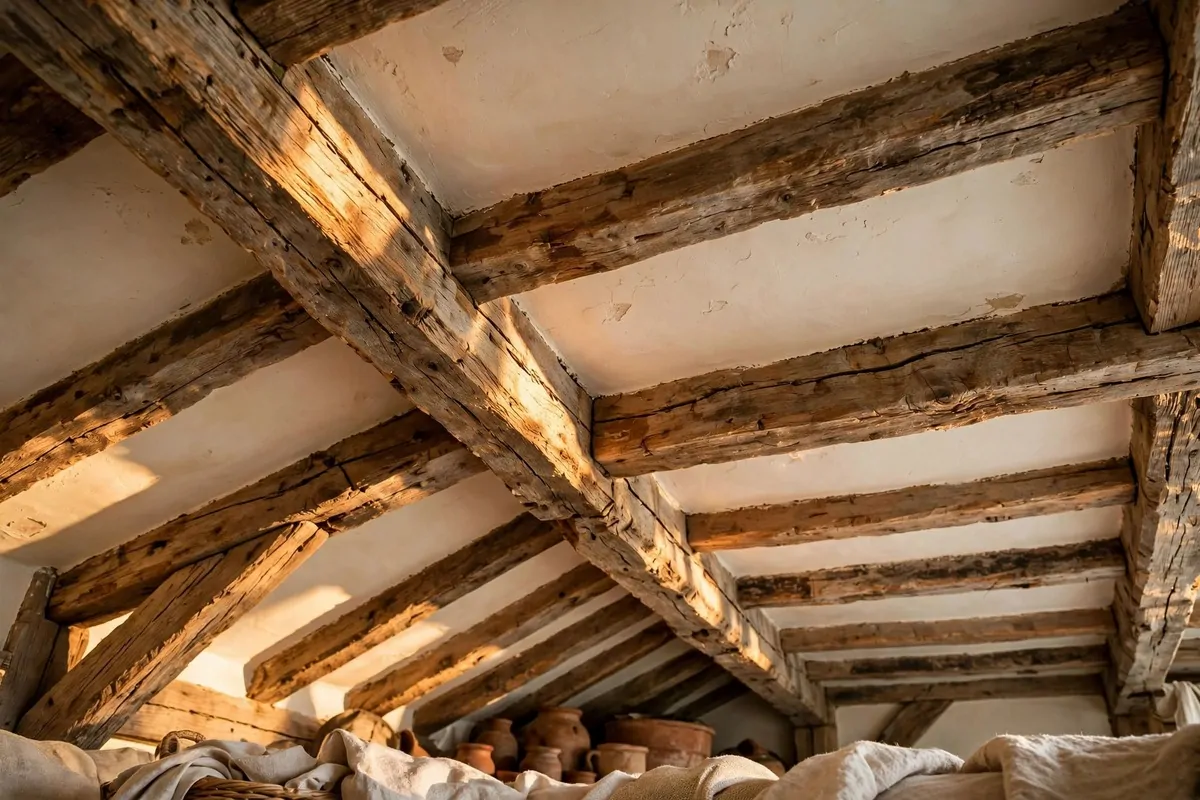
A plain white ceiling is a blank that nobody looks at. That is a waste of a whole surface. In cottage homes, the ceiling should work as hard as the walls.
Wood beams give a flat ceiling a heartbeat. The moment they go up, the room feels older, warmer, and more honest. I have seen a basic rental living room turn into a cottage just from beams.
You do not need real structural timber. Faux beams made from real wood veneer look right and cost much less. They are light, so most people can install them in a weekend.
Look for beams with real patina and rough grain. The kind that shows its age. Smooth, perfect beams look like plastic next to plaster walls.
Keep your ceiling paint soft cream or warm white. Dark beams on a cream ceiling is the classic cottage recipe. It never fails, and it photographs beautifully in golden light.
Run the beams across the narrow side of the room. This pulls the eye across and makes the space feel wider. It is an old designer trick, and it works in tiny rooms too.
I hung mine slightly uneven on purpose. One sits a little lower than the rest, and I love that. Perfect spacing can look stiff, and stiffness is the enemy of cozy.
Stand back and look up when you finish. You will smile.
Style Open Wooden Shelves With Handmade Pottery
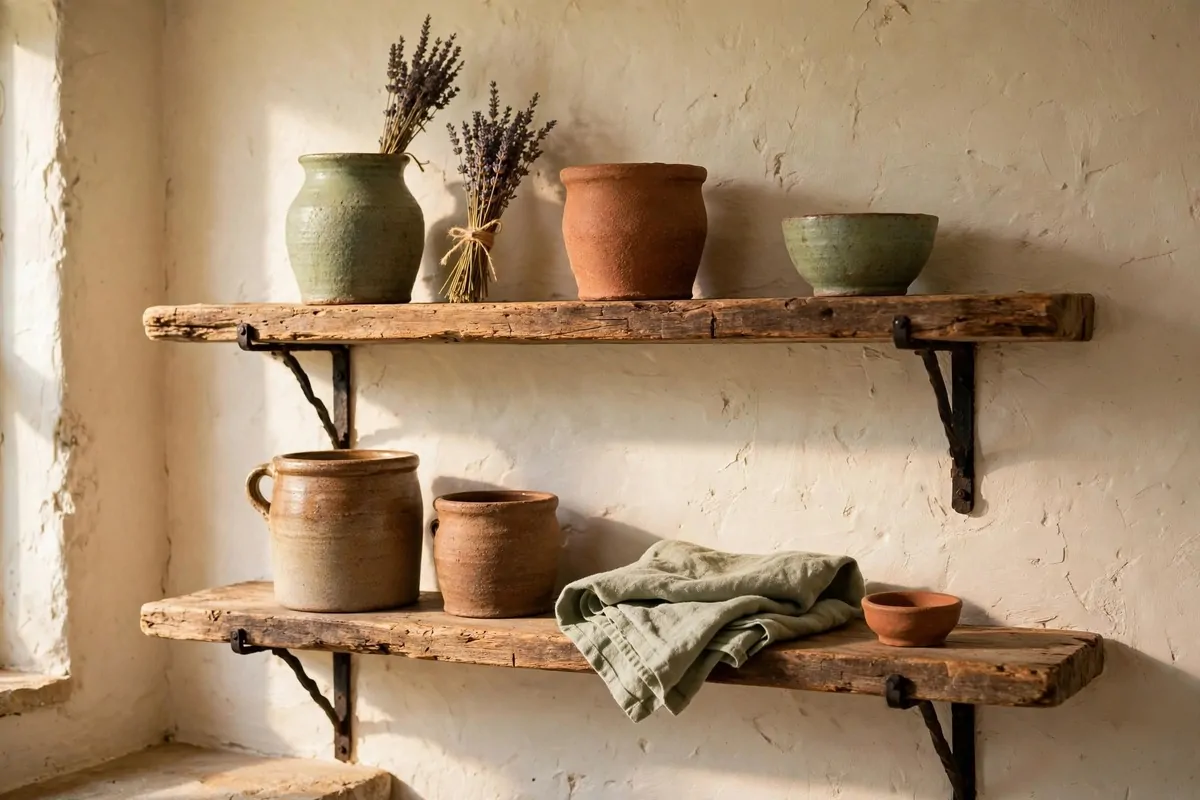
Closed kitchen cabinets hide everything you love. Open shelves do the opposite. They turn your everyday dishes into the decor.
I switched one wall of cabinets for open wood shelves two years ago. It scared me at first. Now I would never go back, because my kitchen feels like a warm little shop.
Start with thick, solid wood shelves. Reclaimed oak or pine with visible grain is perfect. Thin floating shelves look modern and cheap, and this style needs weight.
Fill them with handmade pottery in sage, terracotta, and cream. Mismatched is better than matching. A crooked mug from a flea market has more soul than a perfect set.
Leave breathing room between pieces. This is the mistake most people make. They crowd every shelf until it looks like a store display, and then the charm dies.
Add one soft touch per shelf. A folded linen towel. A small bundle of dried lavender. These little things tell your eye that a person lives here, not a catalog.
Put the things you actually use on the lowest shelf. Your daily mugs, your cereal bowls. Cottage style celebrates the useful as much as the pretty.
Step back and squint. If it looks calm and a little imperfect, you got it right.
Group Terracotta Pots With Trailing Plants
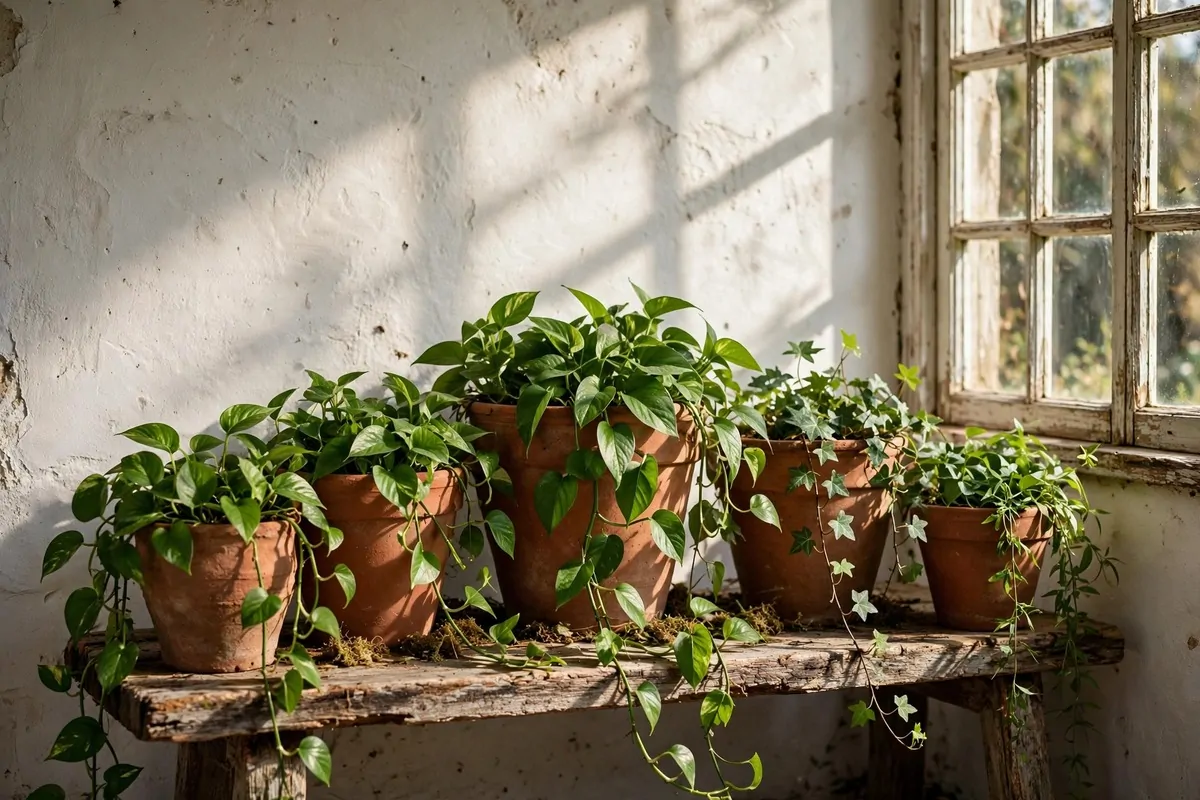
One small plant in a plastic pot looks lonely. A group of terracotta pots looks like a family. I always tell my friends to buy three, never one.
Terracotta has a color you cannot fake. That sun baked orange brown warms up every corner it sits in. Against white walls it glows, and against sage walls it sings.
Mix your sizes. A tall pot, a medium one, and a tiny one make a little skyline. Put the tallest at the back so the small ones can be seen.
Trailing plants are the best partners for terracotta. Pothos, string of pearls, ivy. They spill over the rims and soften all the hard edges of a room.
Set your group on a weathered wood bench or a low stool. Height matters here. Plants sitting on the floor can get lost, but a foot of lift makes them a feature.
Water them in the sink and let them drain before you put them back. Terracotta breathes, which plants love, but it can stain a wood table. A little care keeps everyone happy.
I rotate mine toward the light every few weeks. They grow straighter, and I notice the new leaves. It is a small ritual that makes me slow down.
Watch the shadows they cast in the afternoon. That is the free art this touch gives you.
Build the Room Around a Stone Fireplace
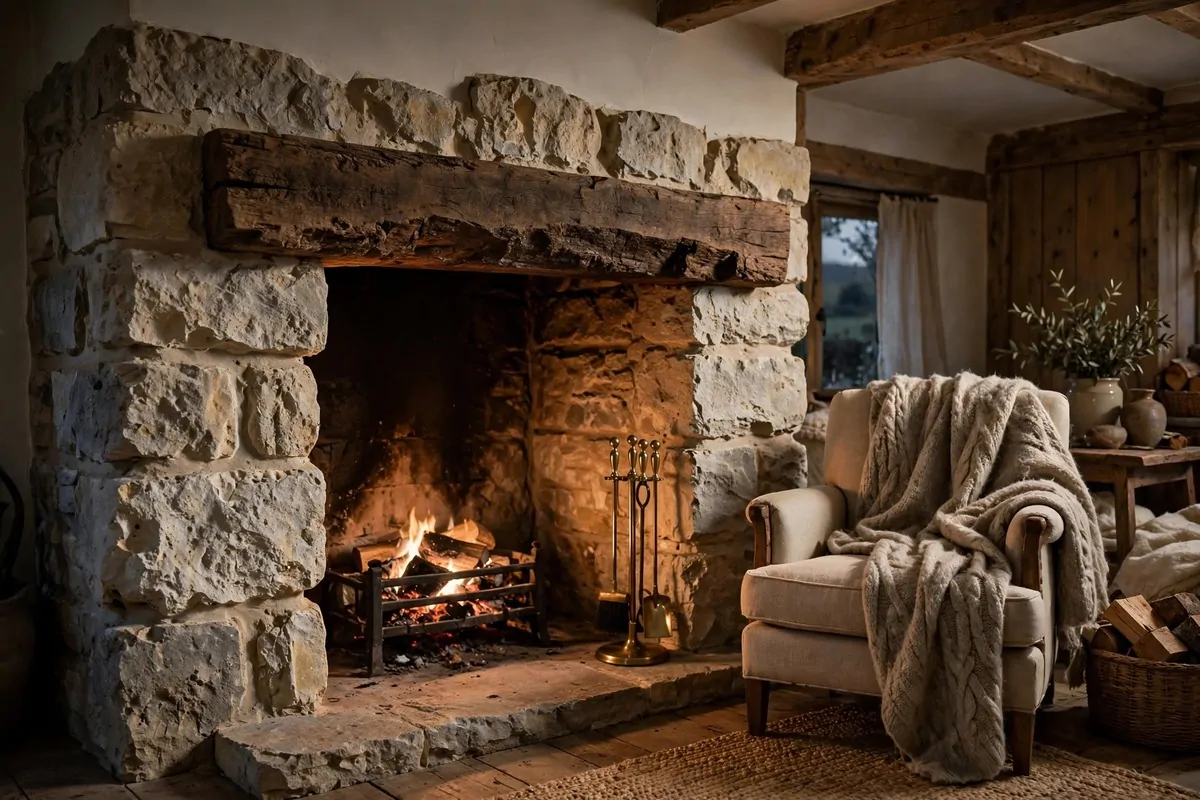
If you have a fireplace, it is already the boss of your room. You cannot fight it, so you might as well let it win. Build everything else around it.
Stone fireplaces are the heart of earthy cottage style. Rough limestone or fieldstone catches firelight in a way paint never can. The shadows move all evening, and the room feels alive.
Add a chunky wood mantel if you do not have one. Thick, rough hewn timber with visible grain is what you want. It should look like it was pulled from an old barn.
Keep the mantel styling simple. A few terracotta pots, one framed print, maybe a trailing plant. Too much stuff and the stone loses its voice.
Face your seating toward the fire, not the TV. I know the TV usually wins, but a room that faces the hearth feels ten times more cottage. Move the screen to the side wall if you can.
Put a wool throw on the chair closest to the fire. Someone will pull it over their knees. That is the whole point of a fireplace corner, bodies warming up in a circle.
Stack real logs beside the hearth, even if you burn gas. A tidy pile of wood in a woven basket looks and smells right. It tells the story of winter, even in summer.
Clean the soot off the stone once a year. A soft brush and warm water is enough. The stone will age into a deeper, richer color, and that is exactly what you want.
Firelight makes every other texture in the room look better. That is the secret gift of this touch.
Swap Cool Grays for Warm Neutrals
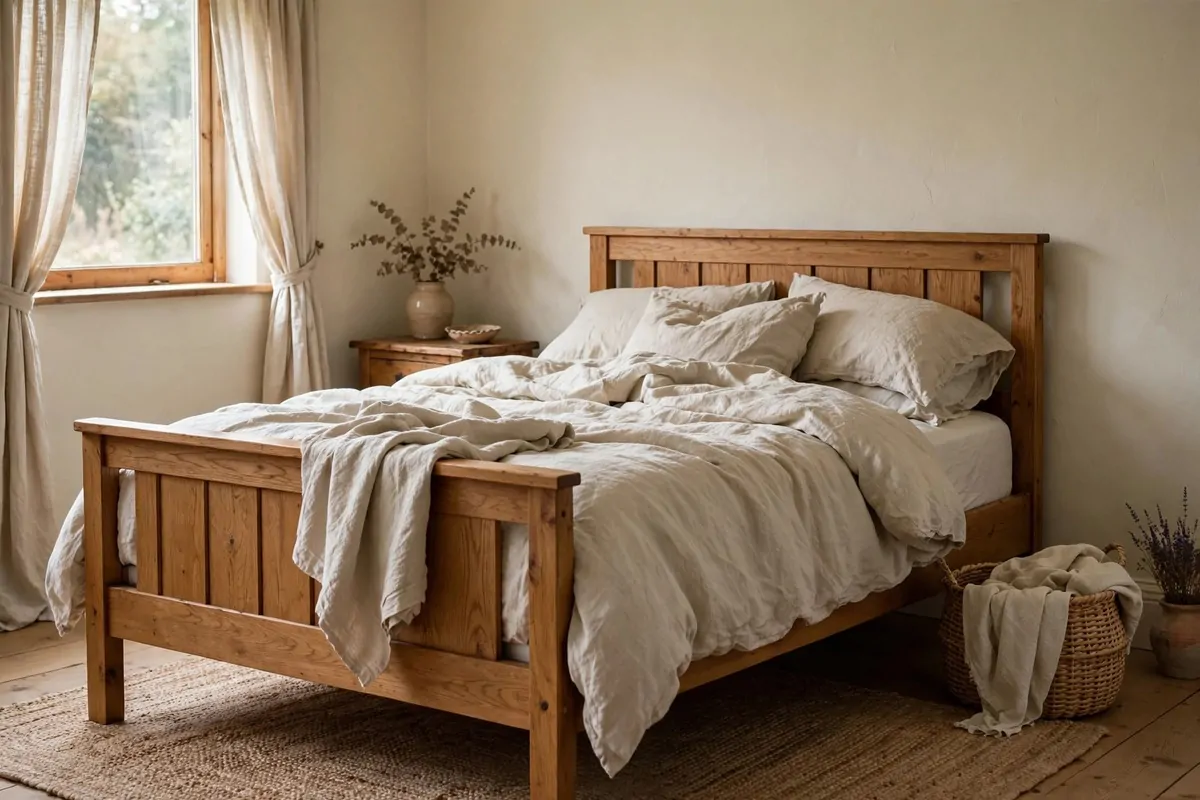
Cool gray walls were everywhere for a decade. They looked clean in photos and cold in real life. If your home feels a little chilly, your wall color might be the reason.
Warm neutrals are the foundation of earthy cottage decor. Cream, oatmeal, mushroom, warm greige. These shades flatter wood and stone instead of fighting them.
I repainted my living room from a blue gray to warm cream last spring. The same sofa, the same rug, and the room felt like it got a hug. My sister asked if I bought new furniture.
Paint your walls first and pick the rest later. The wall color sets the temperature of the room. Everything you layer on top will thank you.
Use the table below to pick your shades. Stick to warm undertones, and always test a patch in daylight before you commit.
| Warm neutral | Mood it gives | Best used on |
|---|---|---|
| Cream | Sunlit and soft | Walls, trim, ceilings |
| Oatmeal | Cozy and calm | Bedrooms, sofas, bedding |
| Mushroom | Quiet and grounding | Hallways, cabinets |
| Warm greige | Balanced and timeless | Living rooms, kitchens |
Warm neutrals make a room feel sunlit even on gray days. That is not magic, it is just undertones. Cool colors bounce cold light, warm colors bounce warm light.
Go one shade warmer than you think. Paint dries lighter than the chip looks in the store. Every painter knows this, and now you do too.
Bring the swatch home and look at it next to your floor. Colors change next to wood and stone. What looked perfect in the store can turn pink or green in your room.
Add Depth With Terracotta, Rust and Clay Tones
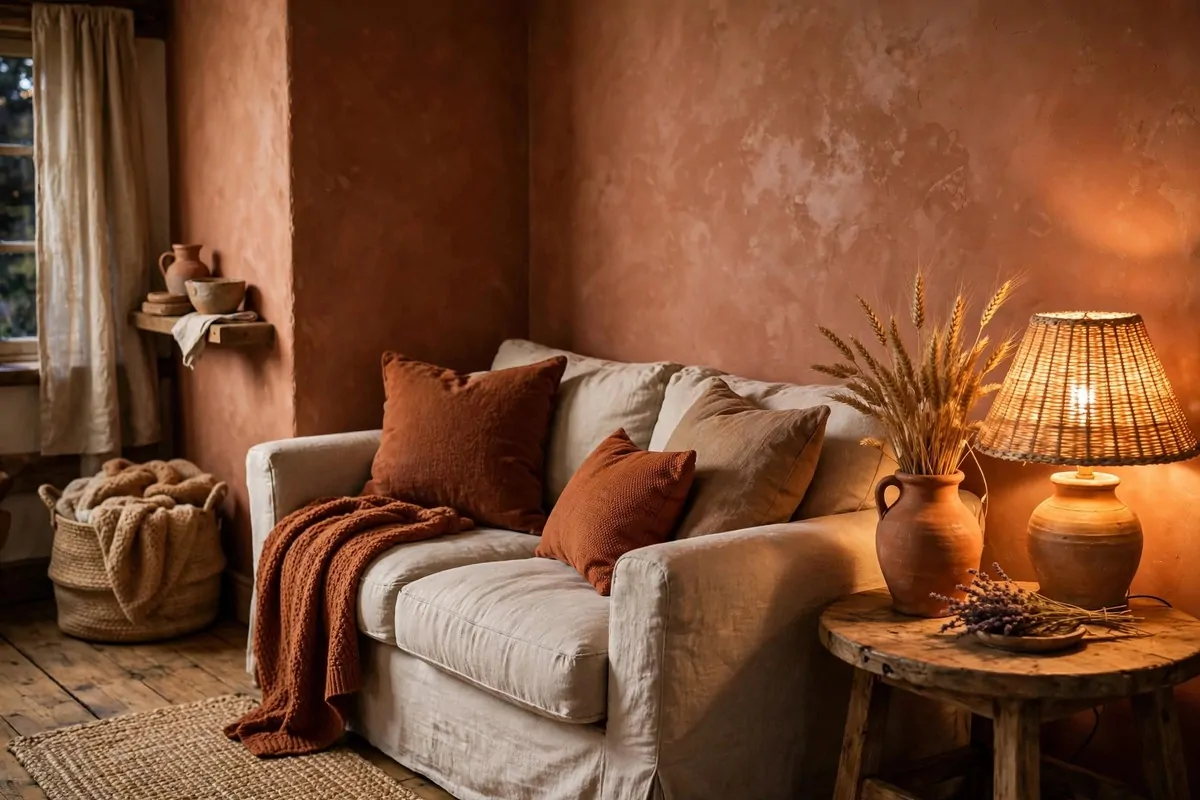
A room that is all cream can feel a little flat. It needs one strong, warm note to wake it up. Terracotta is that note.
Terracotta, rust, and clay tones ground a room like nothing else. They are the color of earth, of bricks, of autumn leaves. Your eye relaxes the second it sees them.
Start small if you are nervous. Two rust cushions on a cream sofa. A clay vase on the shelf. You do not need to paint a wall on day one.
I added a terracotta accent wall to my reading corner last year. It took one Saturday and one can of paint. Friends ask about that corner more than anything else in my house.
These tones love natural light. Put them where the sun hits in the afternoon. The color deepens and glows, and the whole room warms up with it.
Pair terracotta with linen, wood, and wool. Skip anything shiny or plastic. Earth tones want honest materials around them, or they look out of place.
A little goes a long way here. One strong wall or three strong pieces is enough. More than that and the room starts to feel heavy instead of cozy.
Step back and check the balance. If your eye rests easy, you used just the right amount.
Use Olive and Sage Green as Your New Neutral
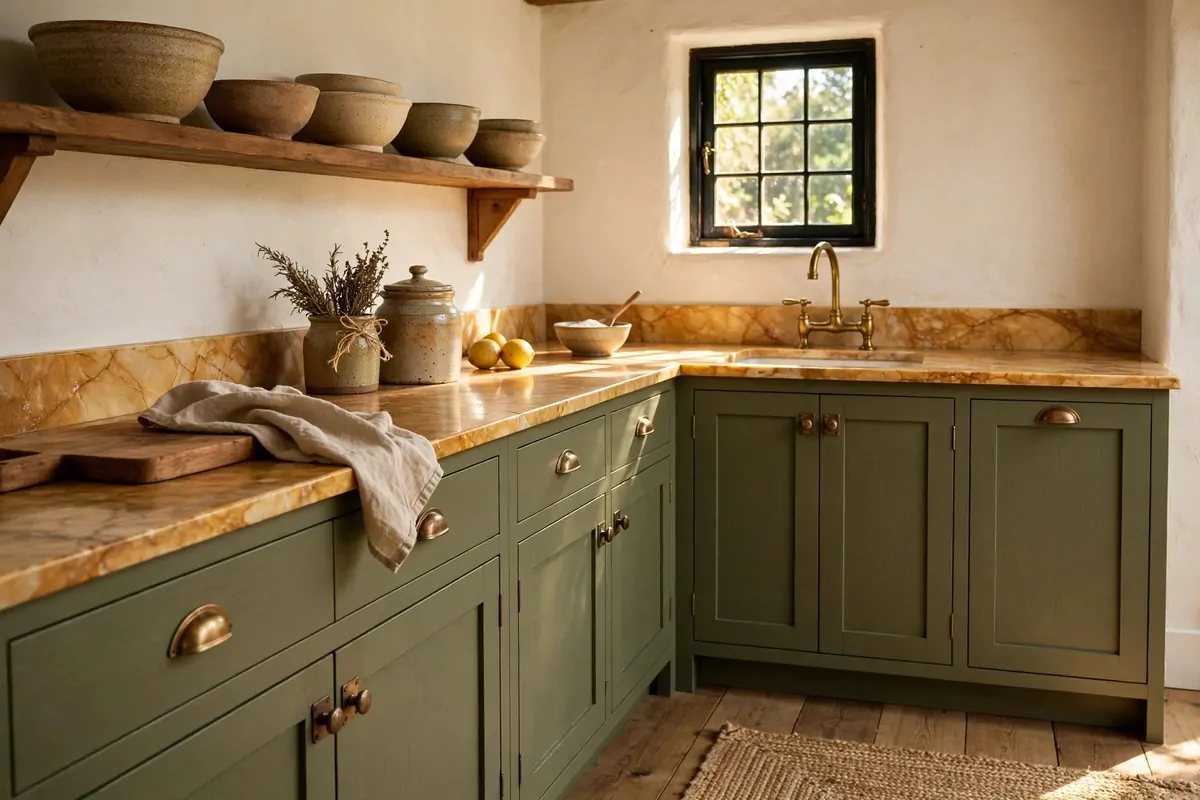
Green is the color outside your window. Bringing it inside is the most natural thing you can do. Olive and sage are the greens that behave like neutrals.
Olive on kitchen cabinets is my favorite look in this whole list. It pairs with honey wood and warm marble like they were made for each other. Because they were, in a way. They all come from the earth.
Sage works best on bedroom or bathroom walls. It is quiet and soft, almost gray, but with life in it. You will sleep better in a sage room. I am sure of it, though I cannot prove it.
Deep moss green suits small, dark spaces. A mudroom bench, a pantry door, the inside of a bookcase. Dark green in a small spot feels like a secret garden.
These greens bridge your home and your garden. When you look from the window to the room, the colors talk to each other. The line between inside and outside gets blurry in the best way.
Keep your hardware warm with these colors. Unlacquered brass or aged bronze will patina over time. Silver handles fight with green, so leave them out.
Mix your greens with cream and wood, not with other brights. Muted green needs calm friends. A loud color next to it will shout over the whole room.
Start with one green piece and live with it for a month. You will probably want more.
Layer Linen Bedding in Earth Tones
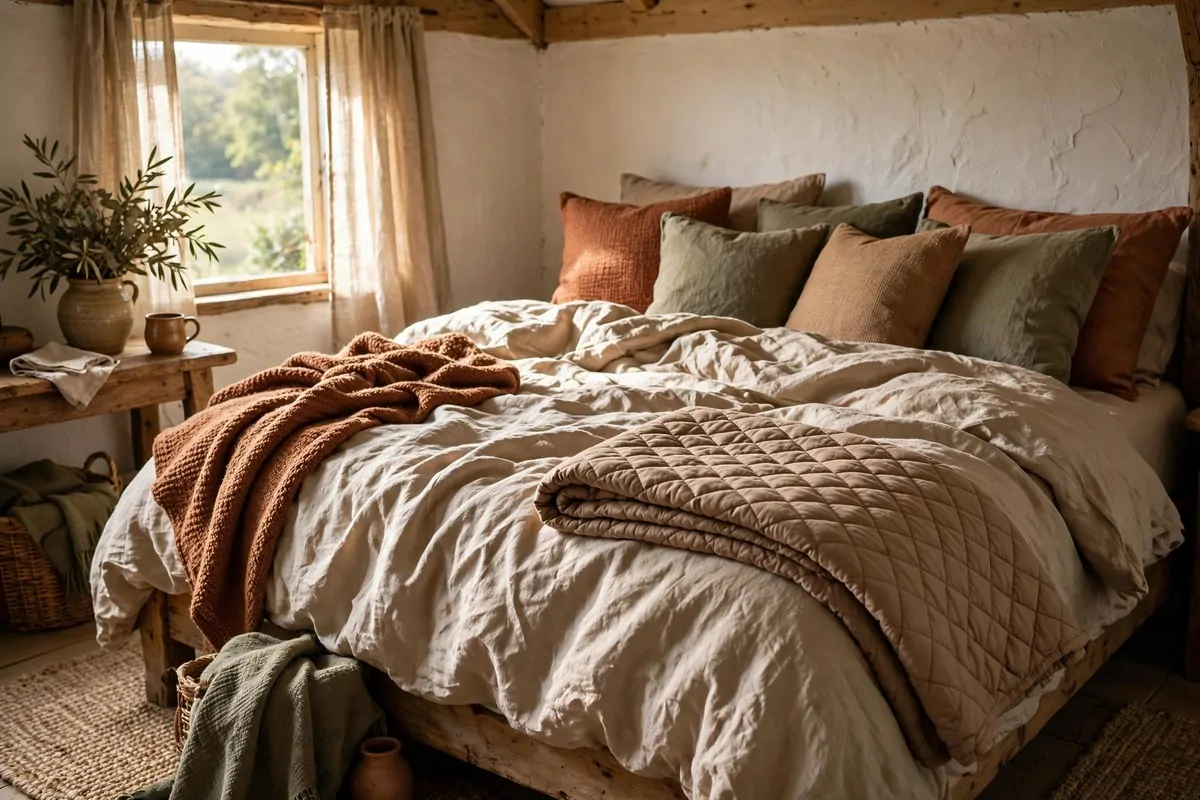
Your bed is the biggest thing in your bedroom. It decides the whole mood. If the bedding is cold and crisp, the room is cold and crisp.
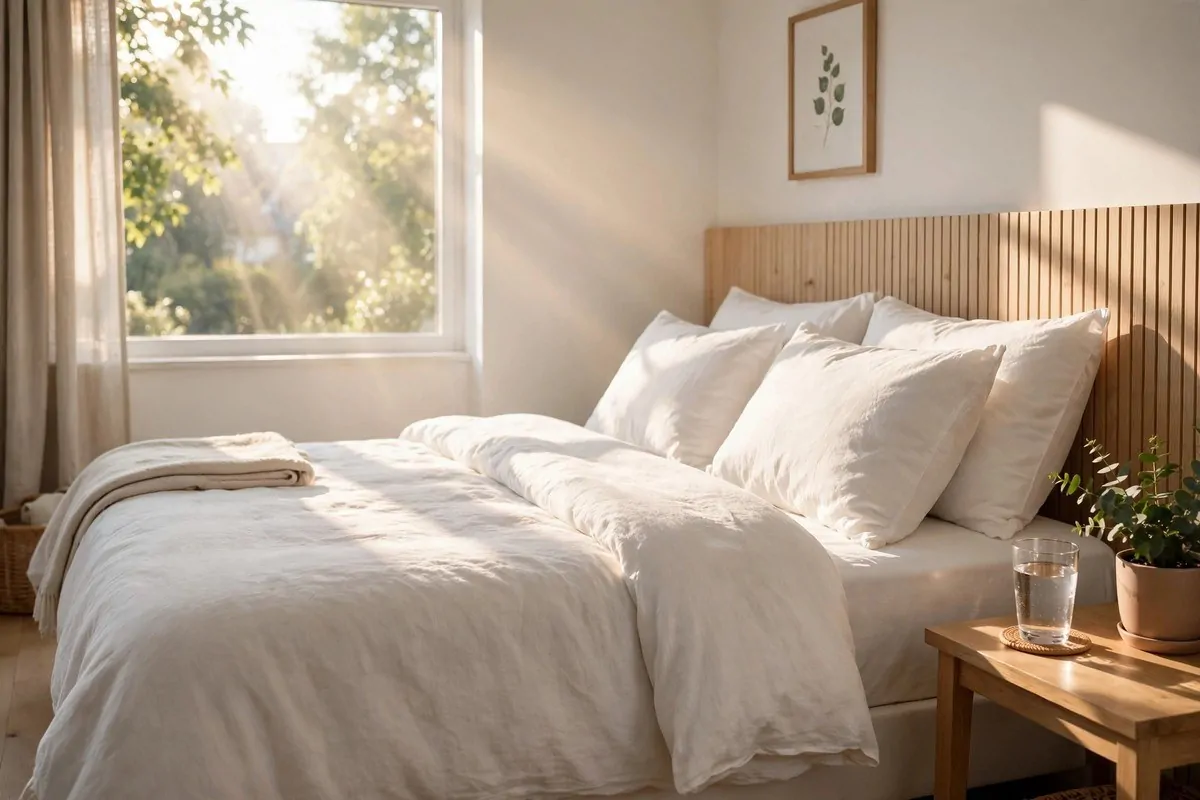
Rumpled linen in earth tones fixes that overnight. Oatmeal or flax for the duvet, then layers of rust, olive, and clay on top. The bed starts to look like a landscape.
Linen has a slight crinkle that no other fabric has. It looks slept in even when it is fresh. That is a feature, not a flaw. Ironed sheets belong in hotels.
Mix your textures on purpose. Quilted cotton, soft wool, a chunky knit at the foot of the bed. Your hands will want to touch everything, and that is how you know it works.
Do not match your pillowcases to your duvet. Mix them. A rust pillow next to a cream one looks collected and real. Matching sets look like a showroom.
Wash linen with a little vinegar instead of softener. It stays soft without the waxy feel. Your skin will feel the difference on the first night.
Toss the top sheet back instead of folding it neat. Let the bed look lived in. A cottage bedroom should invite you in, not impress you from the door.
I make my bed every morning and unmake one corner on purpose. My little rebellion. Try it.
Tame Clutter With Woven Storage Baskets
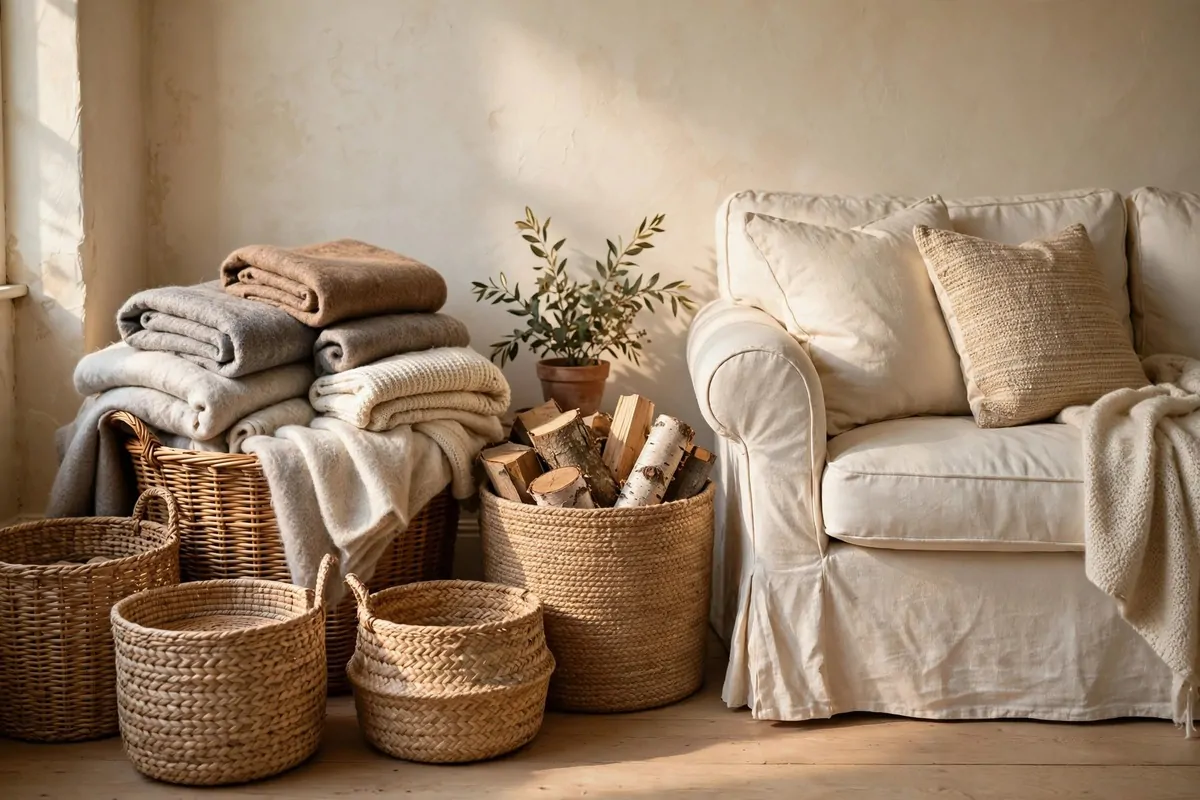
Clutter is the enemy of calm. But cottage style is full of stuff, so how do you win? Baskets. Beautiful baskets that swallow the mess.
Woven storage baskets turn tidying into a thirty second job. Throws, magazines, toys, firewood. They all disappear into natural fiber, and the room looks styled instead of cleaned.
Use seagrass, jute, or rattan. These materials add warmth while they work. A plastic bin hides clutter, but a woven basket hides it beautifully.
Vary your sizes and shapes. A tall basket for throws, a wide flat one for magazines, a small one for keys and bits. Each job gets its own little home.
Here are my favorite basket jobs around the house:
- Big jute basket beside the sofa for throw blankets
- Medium seagrass basket by the door for shoes and scarves
- Small rattan basket on the shelf for remote controls
- Sturdy log basket by the fireplace for firewood
- Flat woven tray on the coffee table for books and candles
Hang a few flat baskets on the wall as art. A basket gallery wall adds texture without any clutter at all. I have five on my hallway wall and people always ask about them.
Buy baskets that feel good in your hands. The tight, even weave ones last longer. Loose weaves snag and shed, and you will replace them in a year.
Give every basket a job on day one. An empty basket collects random junk. A basket with a job keeps your home calm.
Install a Handmade Zellige Tile Backsplash
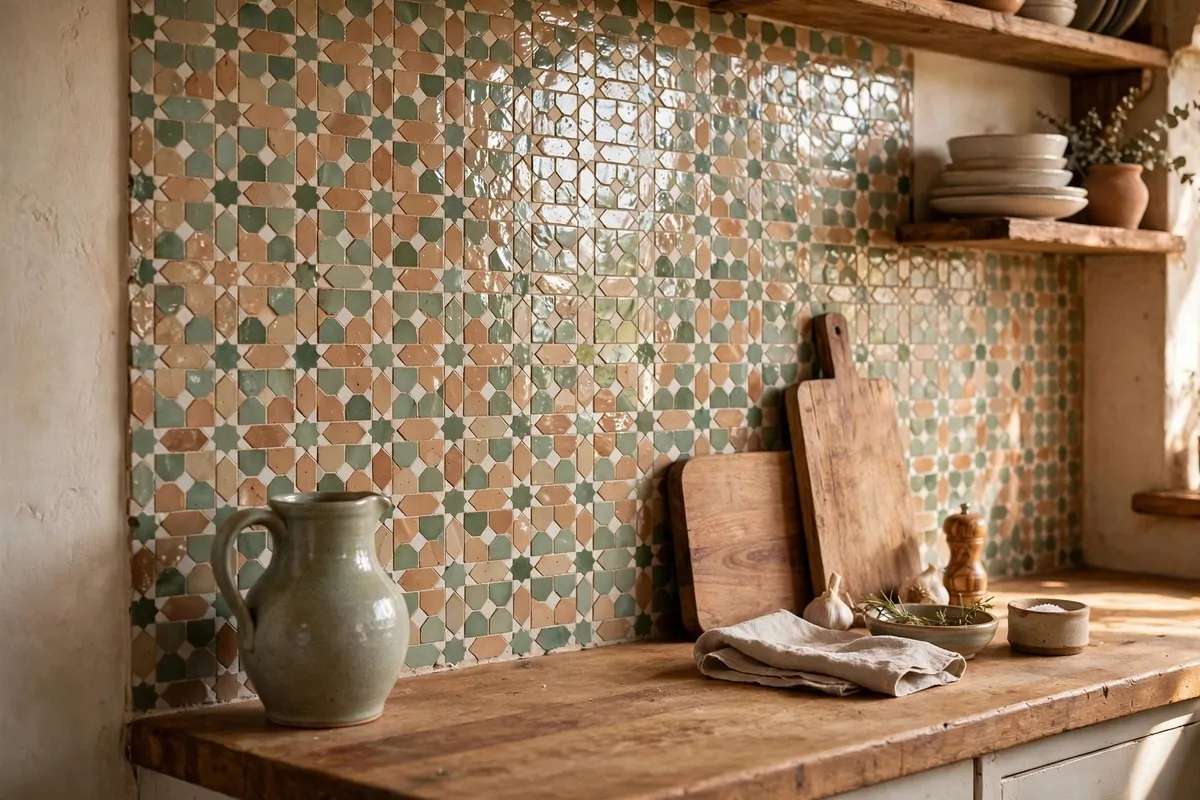
Some backsplashes just sit there. A zellige backsplash dances. Every handmade tile has its own glaze, its own color shift, its own slightly uneven edge.
Zellige is made from clay by hand, tile by tile. No two are the same. When the light moves across them, the wall seems to breathe. It is the opposite of flat subway tile.
Cream, sage, clay, and ochre tones all fit this style. Pick the one that talks to your counters. Warm stone loves cream zellige, wood loves sage.
The uneven edges are the whole point. Do not ask your tiler to make it perfect. The little wobbles catch the light, and that is where the soul lives.
Run the tile all the way up to the ceiling or the shelves. A short backsplash looks choppy. Full height tile makes a small kitchen feel taller and more finished.
Use a warm grout color, never stark white. Bright white grout draws hard lines around each tile and kills the handmade feel. A sandy or clay grout melts everything together.
This is not the cheapest tile. But you need less of it than you think, since it is mostly one wall. Save here, spend there. Your kitchen will thank you for ten years.
Wipe it with a soft cloth and warm water. The glaze does the rest. Handmade things ask for gentle care, and they pay you back with beauty.
Drape a Chunky Knit Throw Over Your Favorite Chair
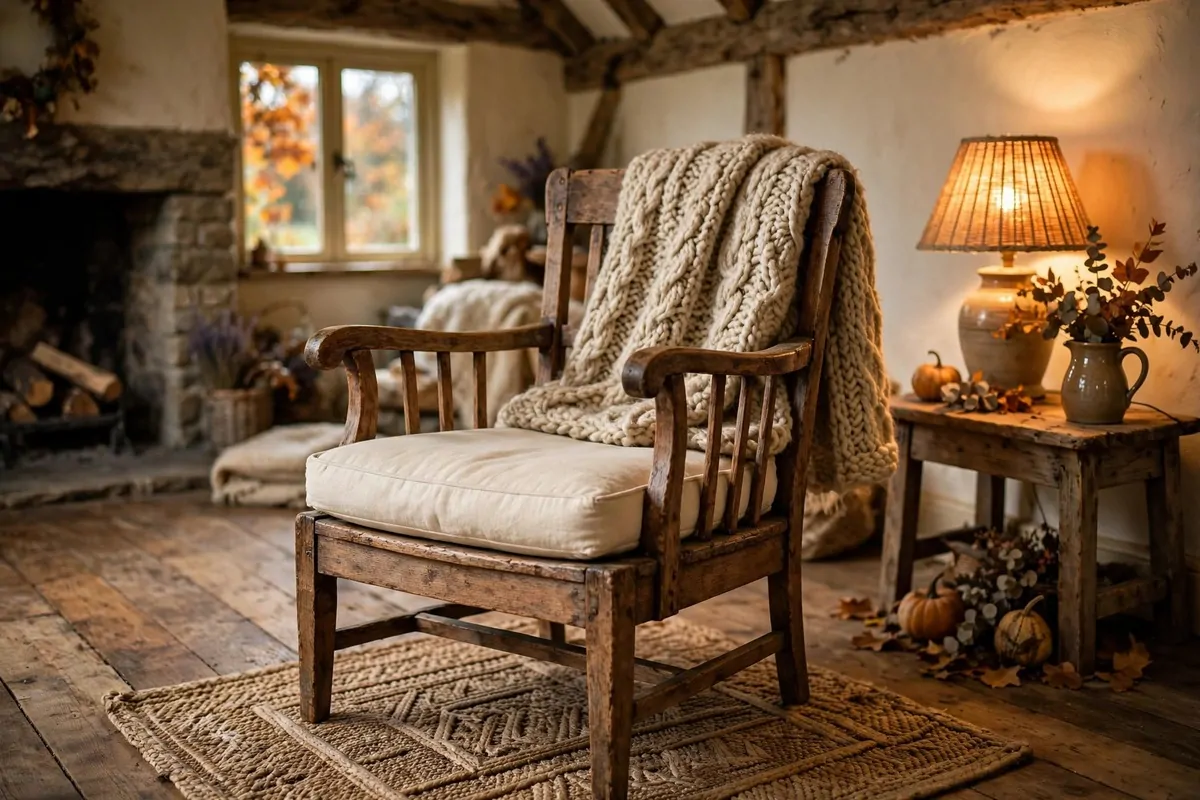
A bare chair looks like it is waiting for something. A chair with a chunky knit throw looks like it is holding someone. That is the difference texture makes.
Chunky knit throws are the fastest cozy upgrade I know. You unfold one, drape it over the chair back, and the whole corner softens. It takes ten seconds.
Pick wool or a wool blend. It has weight, and weight feels warm. Thin throws slide off and look messy. A thick knit stays where you put it and looks intentional.
Cream, oatmeal, and soft rust are the best colors here. They sit calmly on wood and leather. A loud throw will fight the chair instead of hugging it.
Drape it loose, never folded in a perfect square. Let one corner hang longer than the other. The art of the throw is looking like you just stood up from a nap.
Keep one throw per chair, not three. More than one looks like a pile of laundry. One good throw says someone loves this spot.
I move my throw with the seasons. Heavy wool in winter, light cotton knit in summer. The chair feels new twice a year for free.
Sit down and pull it over your knees. If you do not want to get up, you styled it right.
Carve Out a Cozy Reading Nook
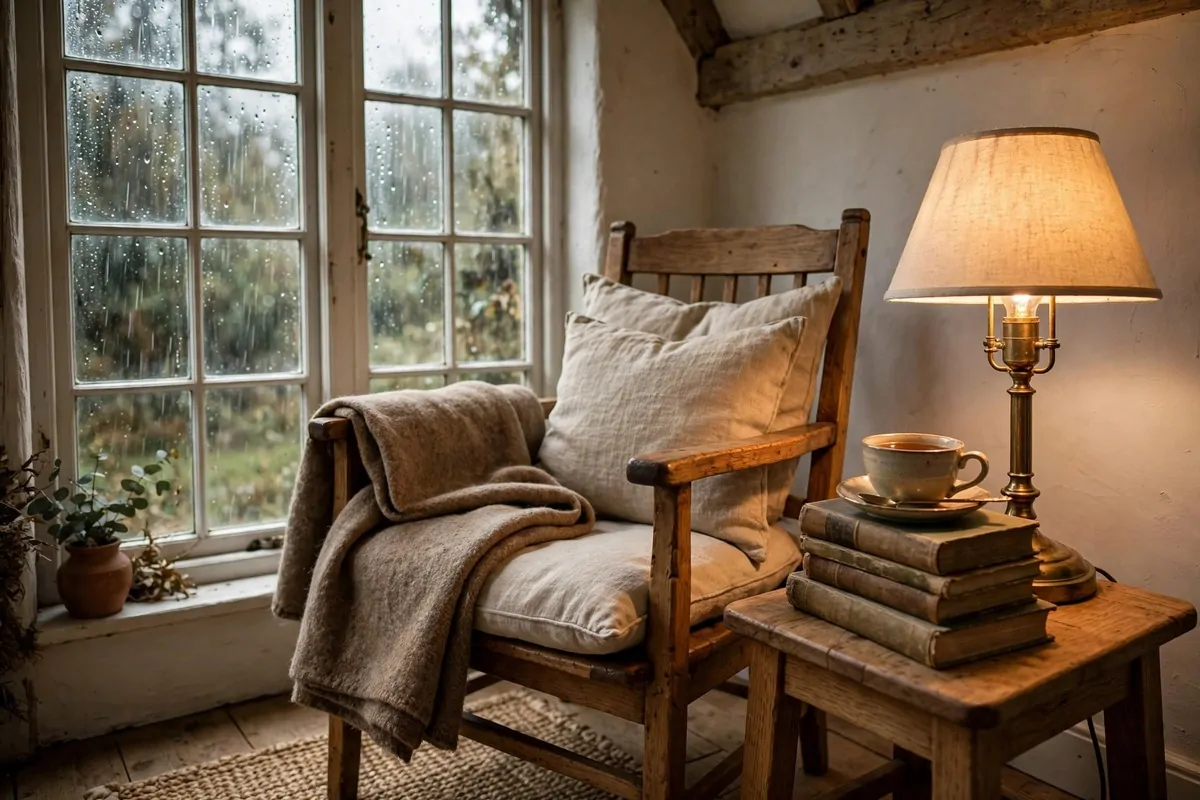
Every cottage needs a spot that belongs to one person. A corner where the world gets quiet. Mine is by the window, and I guard it like treasure.
A reading nook needs only four things. A comfortable chair, a small table, good light, and something soft. That is the whole recipe. Do not overthink it.
Put it near a window if you can. Daylight makes reading easy, and rain on the glass makes reading perfect. I have read whole books in one rainy sitting in my nook.
Dress the chair in natural linen. A linen cushion and a folded wool throw. The textures should make you want to curl up before you even sit down.
Add a small oak side table for your tea. It needs to hold a cup, a book, and maybe your glasses. Nothing more. A big table invites clutter into your calm spot.
Light it with a warm lamp, not the ceiling light. A vintage brass lamp with a soft shade gives you a pool of golden light. Your eyes will thank you at night.
Keep a stack of books within reach, three or four. A tall pile looks stressful. A short pile looks like a plan.
I do not allow my phone in my nook. That is my one rule. The nook is for paper pages and slow hours, and the rule keeps it sacred.
You will know your nook works when you find excuses to sit in it. That happens fast.
Display Dried Herbs and Flowers in Glass Jars
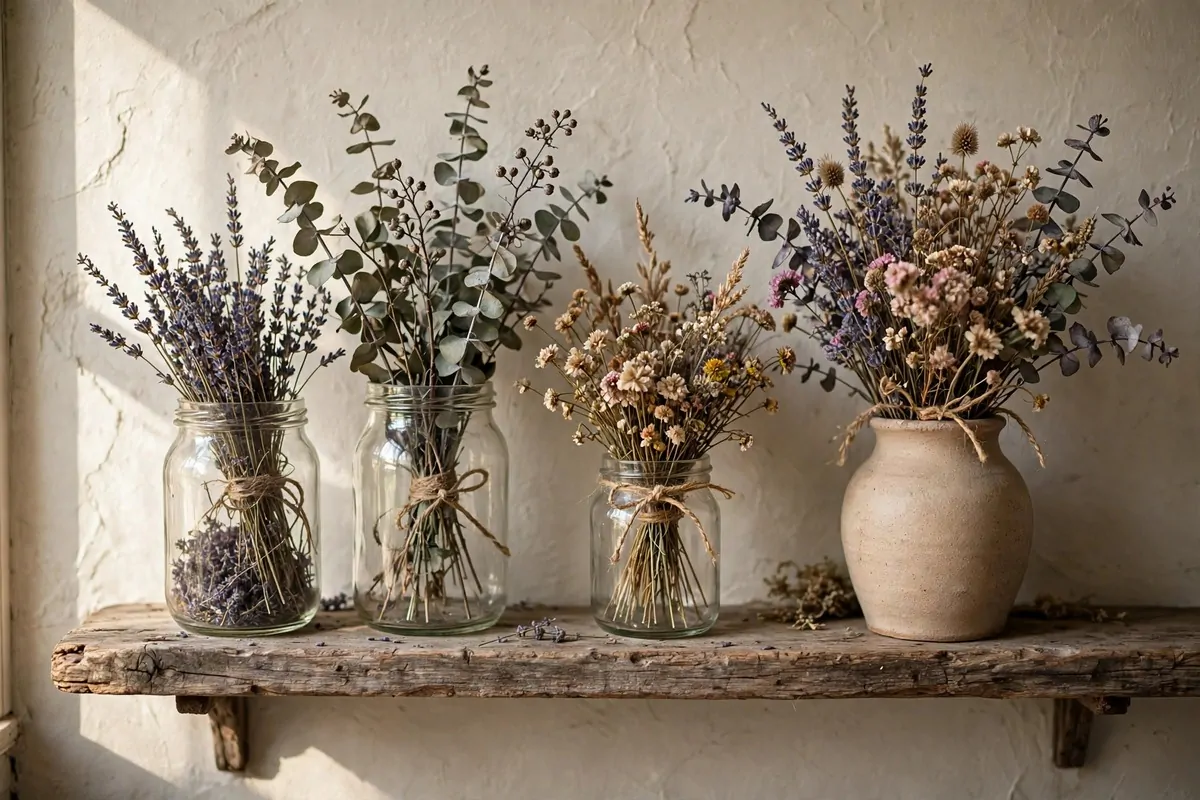
Fresh flowers are lovely and they die in a week. Dried flowers are lovely and they last for months. For cottage style, dried wins the long game.
Dried lavender, eucalyptus, wheat stalks, wildflowers. They bring the meadow inside without any watering. The colors fade to soft, dusty versions of themselves, which fits this style perfectly.
Clear glass jars show off the stems. That is half the beauty. Line up three jars of different heights on a shelf and you have an arrangement that cost almost nothing.
Tie small bundles with twine and hang them on a wall or a window frame. Lavender bundles smell faintly for months. Every time you brush past one, you get a little gift.
You can dry your own from the garden. Hang stems upside down in a dark, dry spot for two weeks. I dried my first lavender bunch last summer and felt like a farmer.
Mix dried with one fresh sprig when guests come. A bit of green eucalyptus next to dried wheat looks alive and styled. It is my little dinner party trick.
Keep dried arrangements out of direct sun. The sun bleaches them fast. A shelf a few feet from the window keeps their color for a whole season.
Dust them gently with a soft brush once a month. They are tougher than they look, but a little care keeps them pretty.
Collect Vintage and Handmade Pieces Slowly
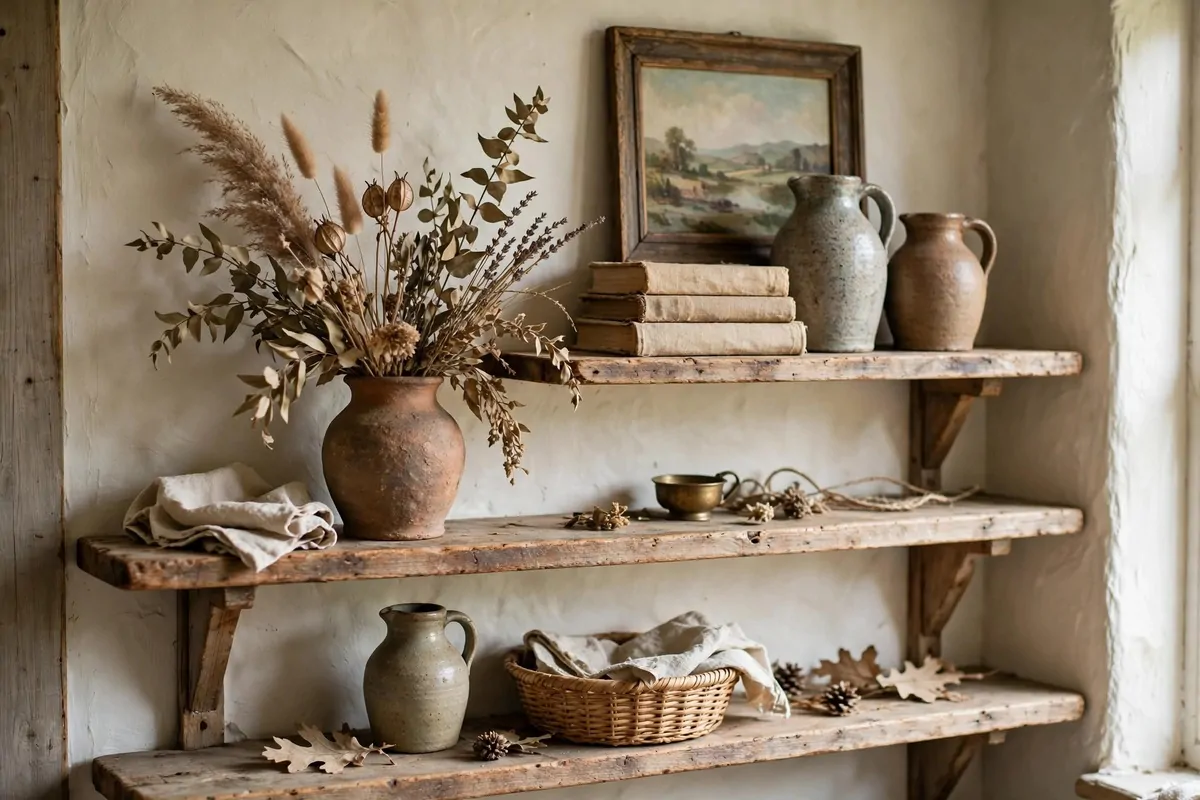
Earthy cottage decor is built on objects with a story. A stoneware jug from a flea market. A painting from your grandmother. New things cannot fake this feeling.
Shop slowly. That is the whole secret. One good find a month beats ten rushed buys. Your home should grow like a garden, not arrive like a delivery.
Flea markets, antique shops, estate sales. These are your hunting grounds. Go early for the best picks, and always check the bottom shelves where the good stuff hides.
Look for pieces that are useful and beautiful. A wooden toolbox becomes bathroom storage. Old glass bottles become bud vases. Cottage style loves things that work hard.
Here is what I always look for when I hunt:
| Look for | Why it works |
|---|---|
| Handmade pottery and stoneware | Organic shapes, warm glazes, one of a kind feel |
| Old books and wooden boxes | Add history and quiet color to shelves |
| Vintage brass and copper | Warm metal that glows against wood and linen |
| Landscape art and botanical prints | Bring the outside in without any upkeep |
| Woven and carved small pieces | Handmade texture that new decor cannot copy |
Do not over theme it. Too many roosters and word signs tip into kitsch. Fewer, better objects always win. If it makes you laugh in a bad way, put it back.
Leave room on your shelves for future finds. A shelf that is full cannot grow. I keep one shelf half empty on purpose, and it fills itself over the year.
Clean your finds gently. Warm water, soft cloth, no harsh chemicals. Old things have survived this long, and they deserve a soft landing in your home.
Light the Room With a Warm, Golden Glow
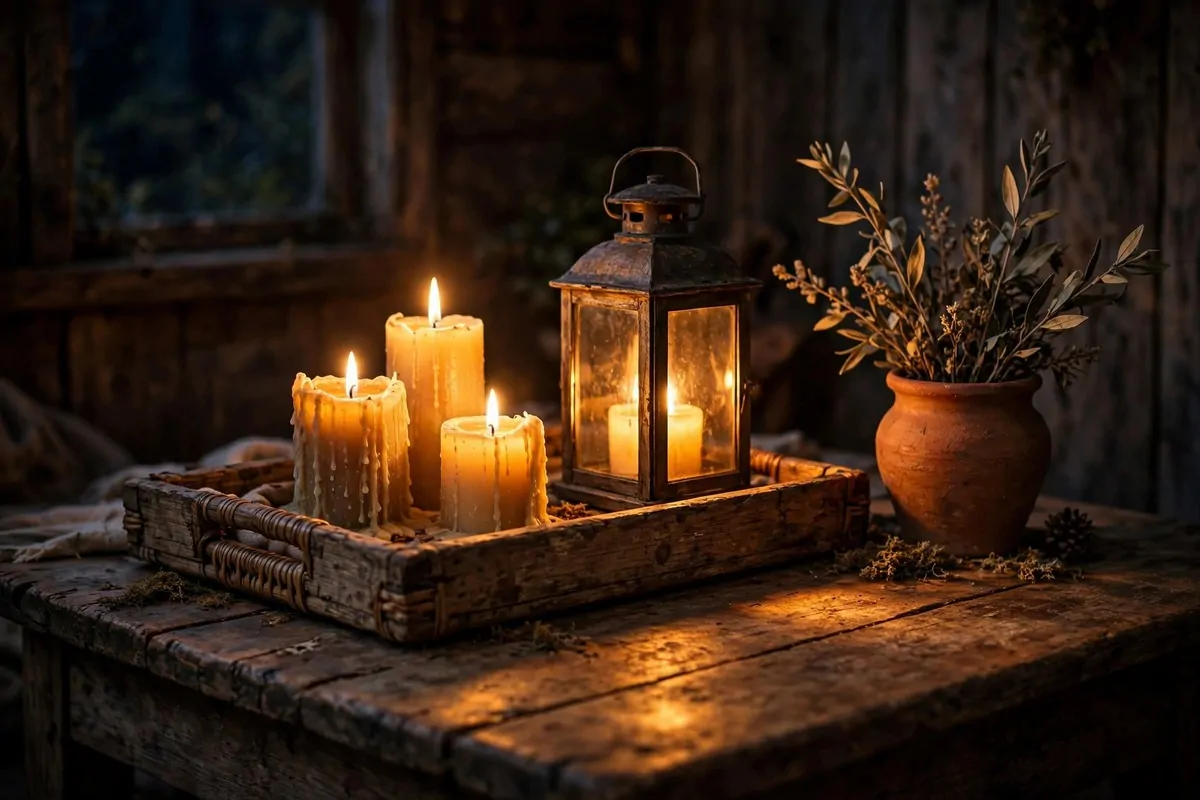
Light can make or break a cottage. Bright white bulbs turn it into an office. Warm golden light turns it into a hug. Check your bulbs first, before you buy anything.
Swap every bulb for a warm tone. Look for 2700K or lower on the box. That number is the difference between daylight and firelight, and firelight is what you want.
Candles and lanterns are the soul of this touch. A wooden tray with pillar candles on a side table. A glass lantern by the fireplace. The flames move, and the room breathes.
Cluster your candles in odd numbers. Three or five looks natural, four looks staged. I do not know why this works, but every stylist I know swears by it.
Fairy lights have a place here too. Drape them along a bookshelf or above a bed. The tiny warm dots feel like fireflies, and children love them as much as adults.
Avoid the big overhead light when you can. Table lamps and floor lamps at different heights make the room feel layered. One bright ceiling light flattens everything.
I put my lamps on a timer for sunset. I come home to a golden house every evening. It is a small automation that feels like a gift from past me.
Dim what you can. Even a little dimming softens edges and hides dust. Your room will look better and feel calmer in the same minute.
Add a Stone or Plaster Accent Wall
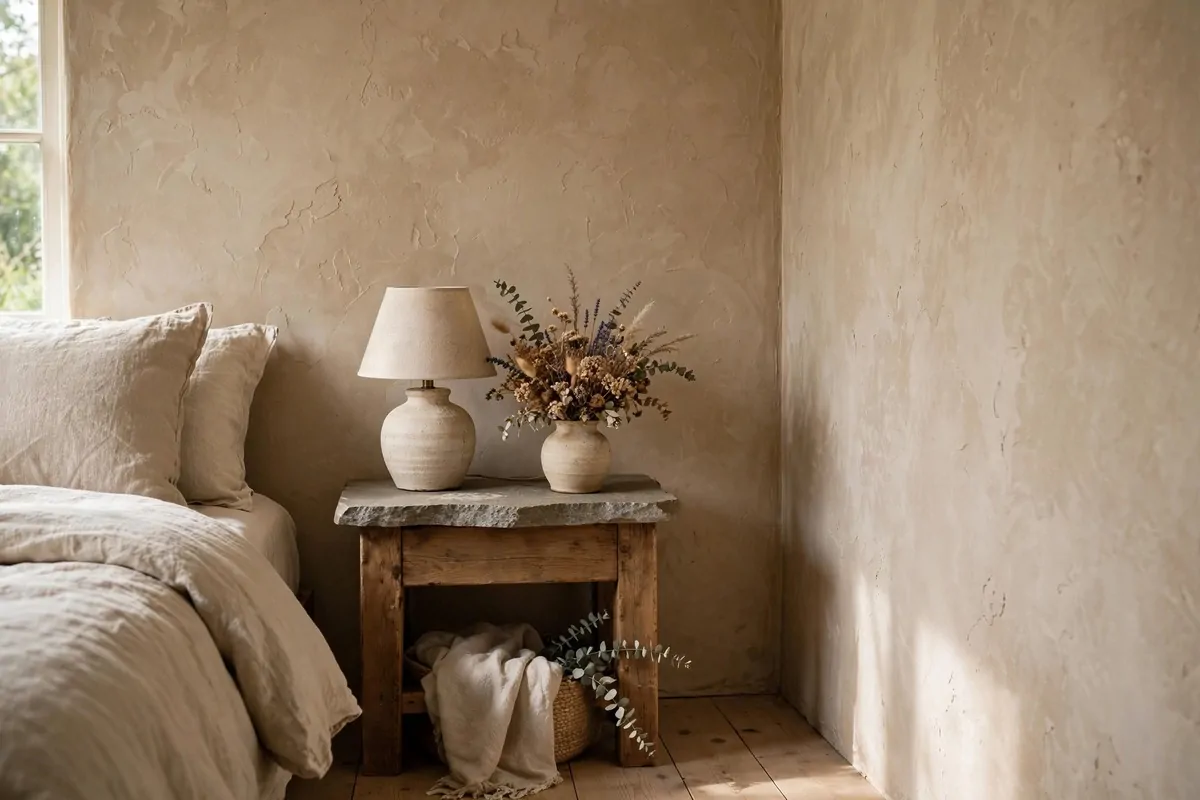
Some walls should whisper, and one wall can speak. An accent wall in stone or plaster gives a soft room something to lean on.
Hand troweled plaster has a texture you can feel with your eyes. It catches light in little hills and valleys. Paint cannot do this, no matter how many coats you use.
Warm sand, clay, or limewash tones are the right colors. They stay calm while adding depth. A plaster wall in warm white looks different every hour as the light changes.
Tumbled limestone or thin stone veneer works for a stronger look. Use it behind the bed or beside the fireplace. One wall of stone grounds the whole room like an anchor.
This is a weekend project if you use limewash paint. Real plaster takes more skill, so hire it out or practice in a closet first. I practiced in my pantry and I am glad I did.
Keep the rest of the room soft when you add texture. Linen bedding, a wool rug, one wooden nightstand. The accent wall is the star, and stars need a quiet stage.
A stone topped nightstand echoes the wall in a small way. It ties the corner together without shouting. Little echoes like this make a room feel designed.
Stand in the doorway and look at the wall. If it makes you want to touch it, you chose right.
Style a Marble or Stone Serving Board
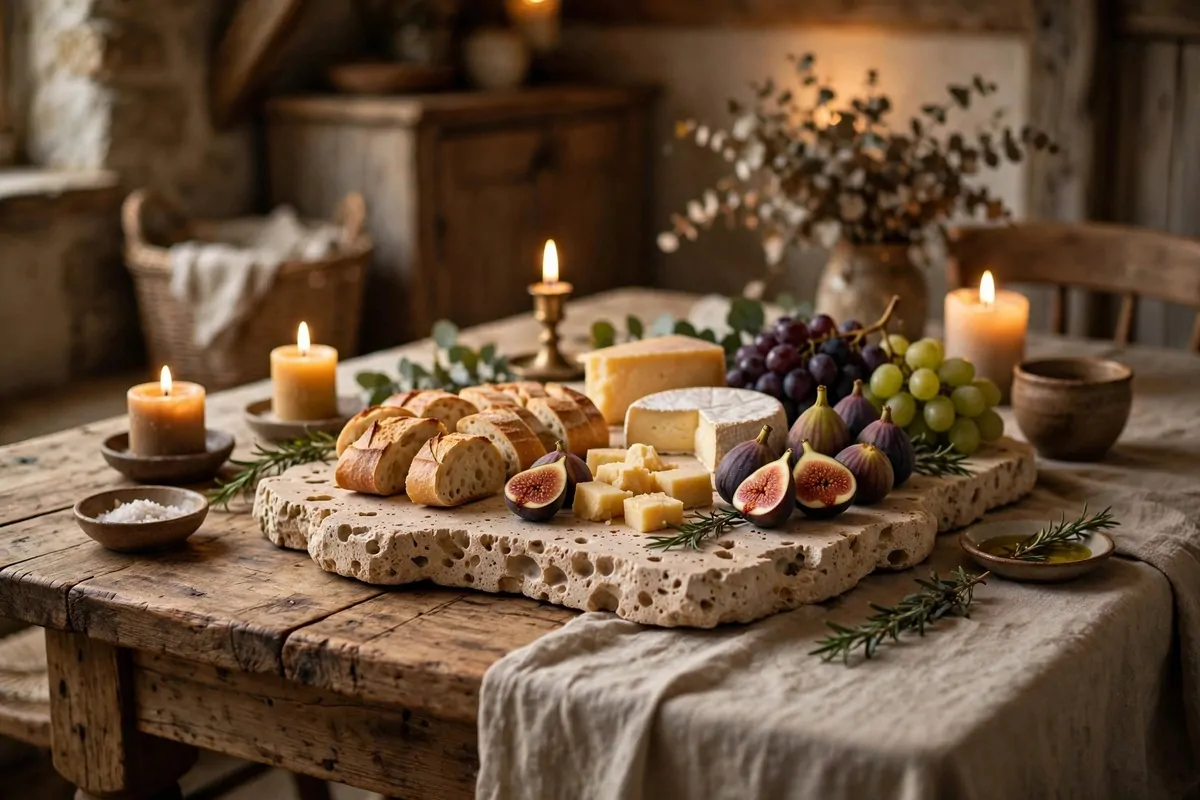
A serving board is decor you can eat off. That is my favorite kind. It sits pretty all week and works hard when friends come over.
Choose honed marble or travertine, never polished. The soft matte finish fits cottage style and hides fingerprints. Polished stone looks like a hotel lobby.
Warm veining is what you want. Creamy bases with gold, taupe, or brown lines. Icy white marble with gray veins belongs to a different style, so leave it at the store.
Style it with bread, cheese, figs, and grapes. The colors do the decorating for you. A board like this looks abundant and generous, and it takes five minutes.
Leave the board on the table between meals. It is too pretty to hide in a cupboard. Put a small linen cloth under it so the stone does not scratch your table.
Wash it with mild soap and dry it right away. Stone and water are friends, but standing water leaves marks. A quick wipe keeps it looking new for years.
I use mine for breakfast too. Toast and jam on warm marble feels fancy on a Tuesday. Small luxuries are the cottage way.
Your guests will gather around it. Boards pull people in like a campfire. That is the natural charm this touch is named for.
Set the Table With Linen, Stoneware and Foraged Greenery
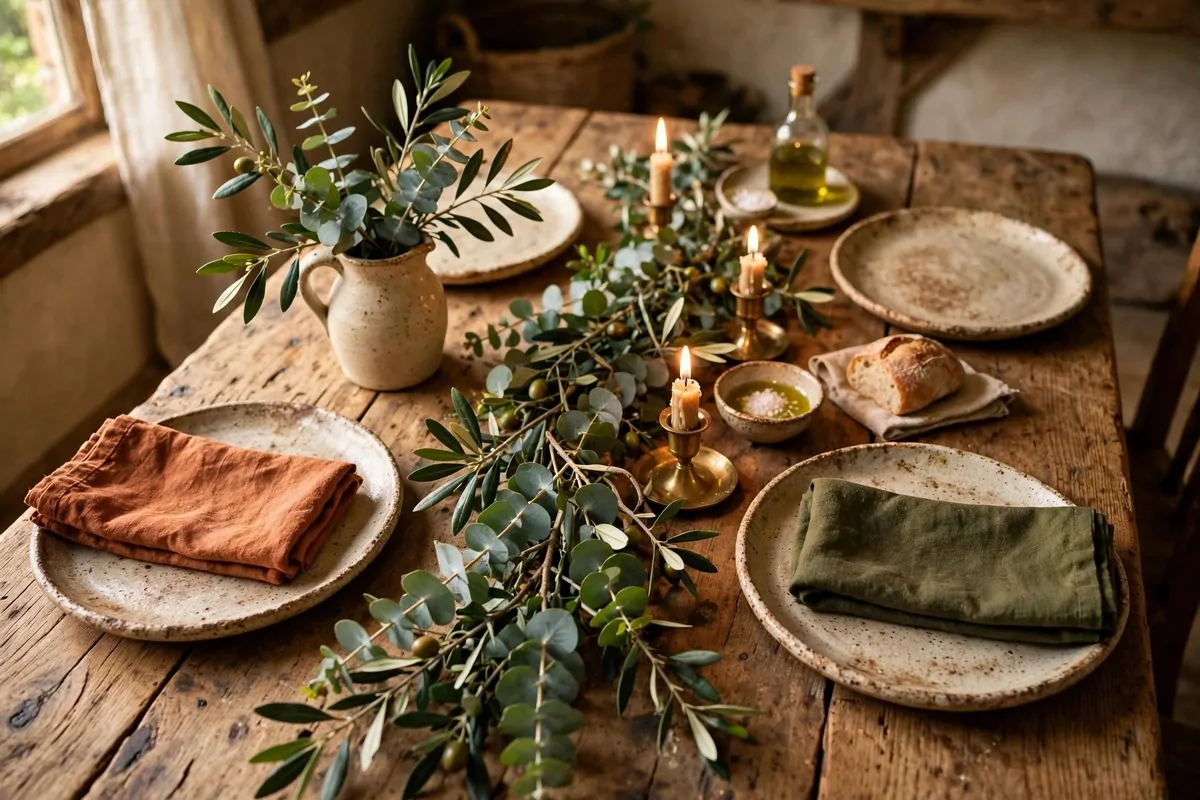
You do not need a party to set a pretty table. Tuesday dinner deserves nice things too. A cottage table should look loved every day, not just on holidays.
Skip the matching sets. Mix handmade stoneware plates in different glazes. Linen napkins in rust, olive, and cream. The mix looks collected, and collected looks like home.
Forage your centerpiece from the garden or a walk. Eucalyptus branches, olive stems, dried grasses. Lay them down the middle of the table as a loose runner. Free and perfect.
Keep it low. Your guests need to see each other across the table. Tall centerpieces make people lean and shout, and that is not cozy at all.
Add low taper candles in brass holders. Three down the runner is enough. The brass glows against the green, and the flames make the stoneware look golden.
Here is my simple formula for a weeknight table that still feels special:
- Stoneware plates, mixed but in the same color family
- Linen napkins, folded loose, no rings needed
- One foraged runner down the center
- Low candles in warm metal holders
- One small bowl of fruit as the anchor
Use your good dishes on ordinary days. Waiting for a special occasion means they sit in a cupboard for years. Tuesday is special enough.
Clear the table slowly after dinner. A pretty table makes people linger, and lingering is the whole point.
Line Your Windowsill With Potted Herbs in Clay Pots
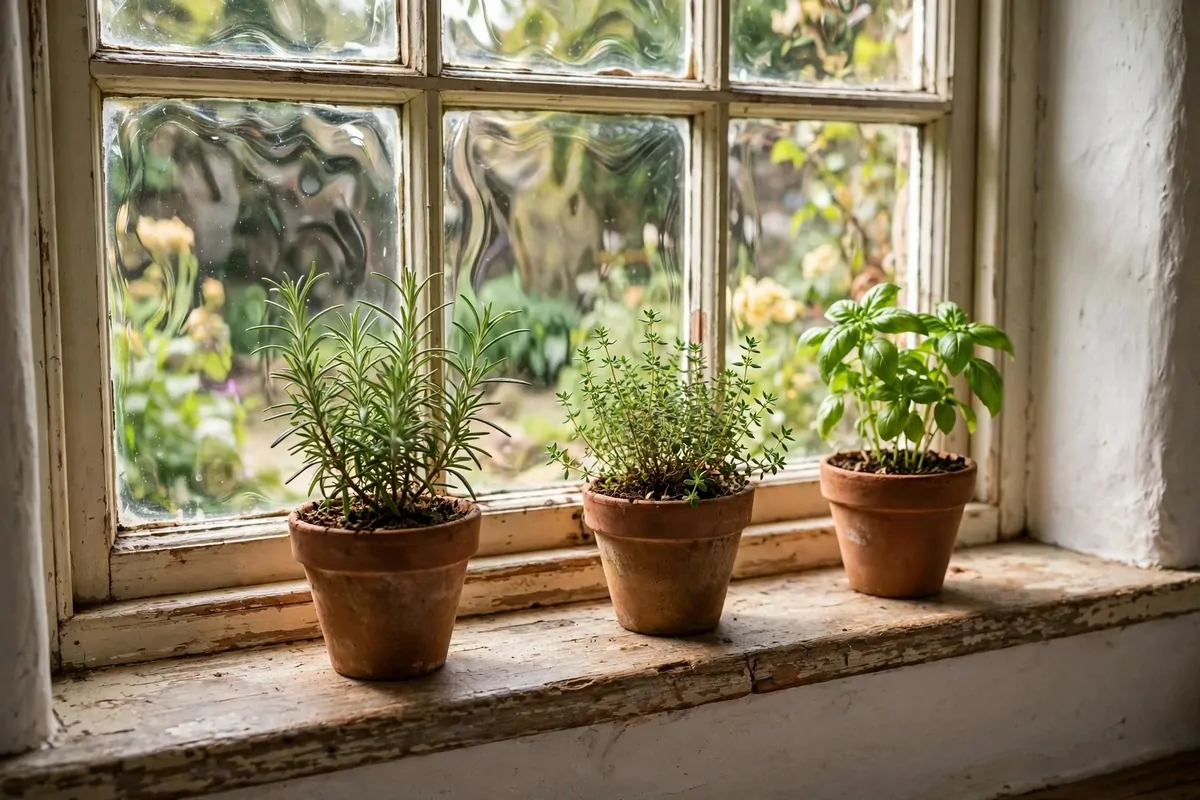
A kitchen windowsill full of herbs is the cottage dream in miniature. Green, alive, useful, and pretty all at once. It is hard to beat.
Use small terracotta clay pots. They breathe, which herbs love, and the warm orange color looks right against the green. Plastic pots kill the mood, so skip them.
Rosemary, thyme, basil, mint. Start with the ones you cook with most. I use rosemary daily, so mine sits closest to the stove. Plant what you eat.
Line them up along the sill with a little space between each pot. Crowded herbs fight for light and look messy. A finger width of air keeps them happy and pretty.
Water from the bottom when you can. Set the pots in the sink for ten minutes and let them drink. The leaves stay dry, and dry leaves mean fewer problems.
Snip often and snip boldly. Herbs grow bushier when you cut them. The first time I was scared to cut my basil, and it grew tall and sad. Now I snip like I mean it.
The smell hits you when you brush past. Rosemary on your fingers while you cook. That scent is the feeling this whole article is about.
Replace tired plants without guilt. Herbs are workers, not pets. A fresh pot in spring keeps the sill looking alive all year.
Bring Home an Apothecary Cabinet With Small Drawers
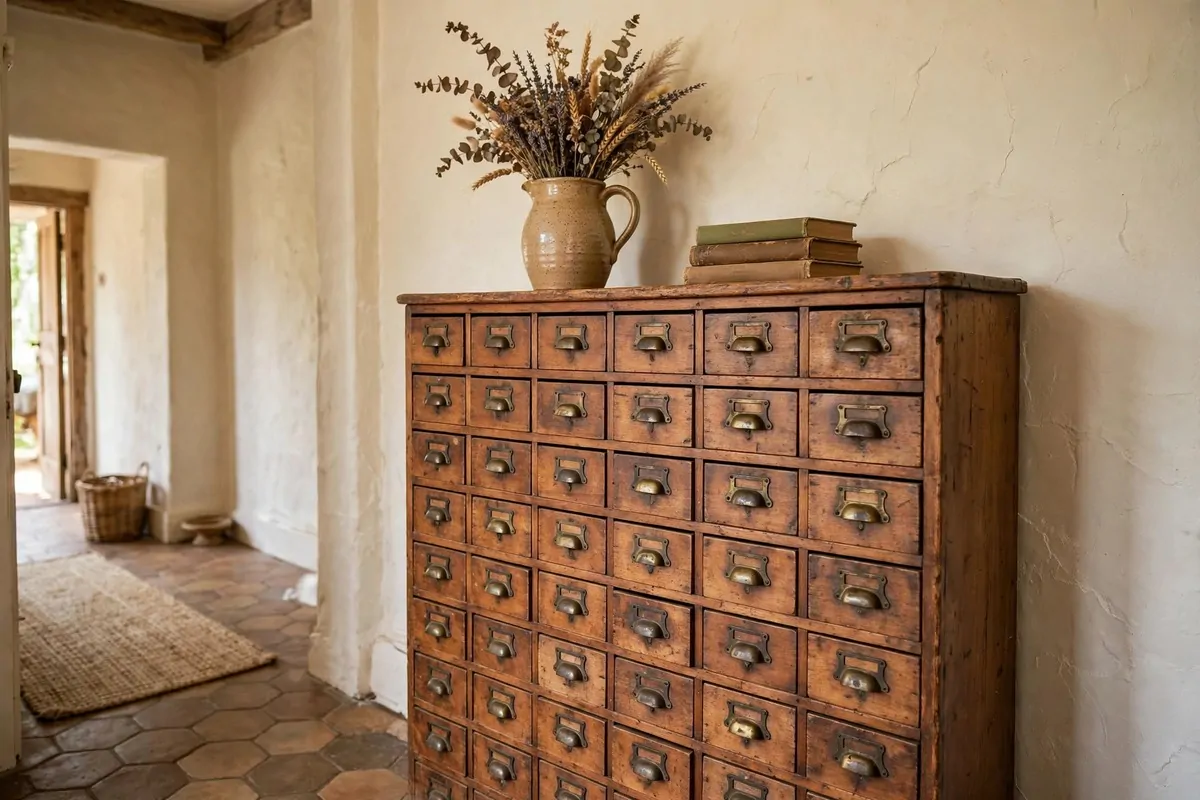
Some furniture pieces do all the talking in a room. An apothecary cabinet is one of them. Those rows of tiny drawers make everyone stop and look.
These cabinets came from old shops and pharmacies. Each small drawer held something different. That history gives them a charm that new furniture cannot copy.
Use the drawers for the little things that clutter your life. Craft supplies, spare keys, tea bags, seed packets. Everything gets a tiny home, and your surfaces stay clear.
Style the top simply. A stoneware pitcher, a small stack of books, dried flowers in a jar. The cabinet is busy enough with all those drawers, so the top should breathe.
Look for real wood with aged brass pulls. New reproductions exist and they are fine, but check the drawer slides. Drawers that stick will annoy you every single day.
Measure your space before you fall in love. These cabinets are often deeper than they look. I almost bought one that would have blocked my hallway, and I am still sad about it.
Dust the drawers with a dry cloth. Old wood and water are not friends. A little beeswax on the drawer edges keeps them sliding smooth for years.
Label a few drawers with small brass tags or handwritten cards. It looks adorable and it means you will actually remember what is inside.
Twenty two touches, and this one might be my favorite. Small drawers for small treasures. That is the cottage spirit in one piece of furniture.