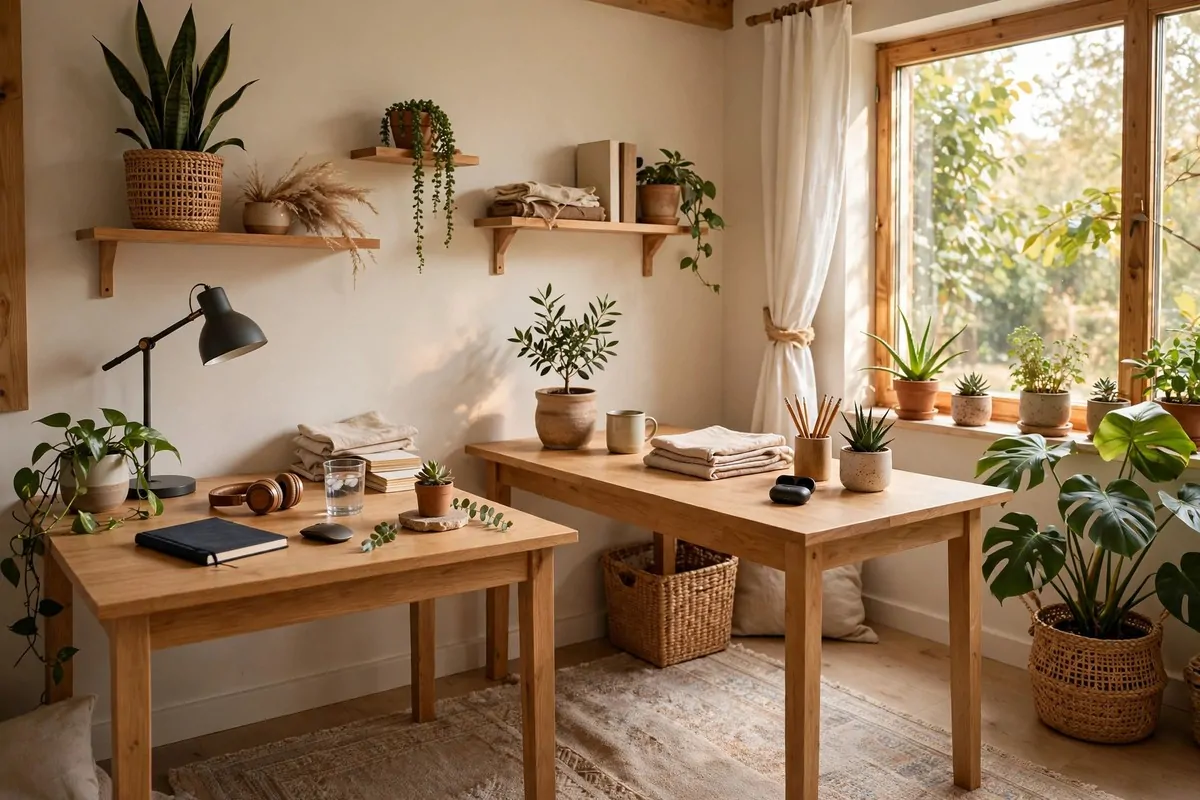
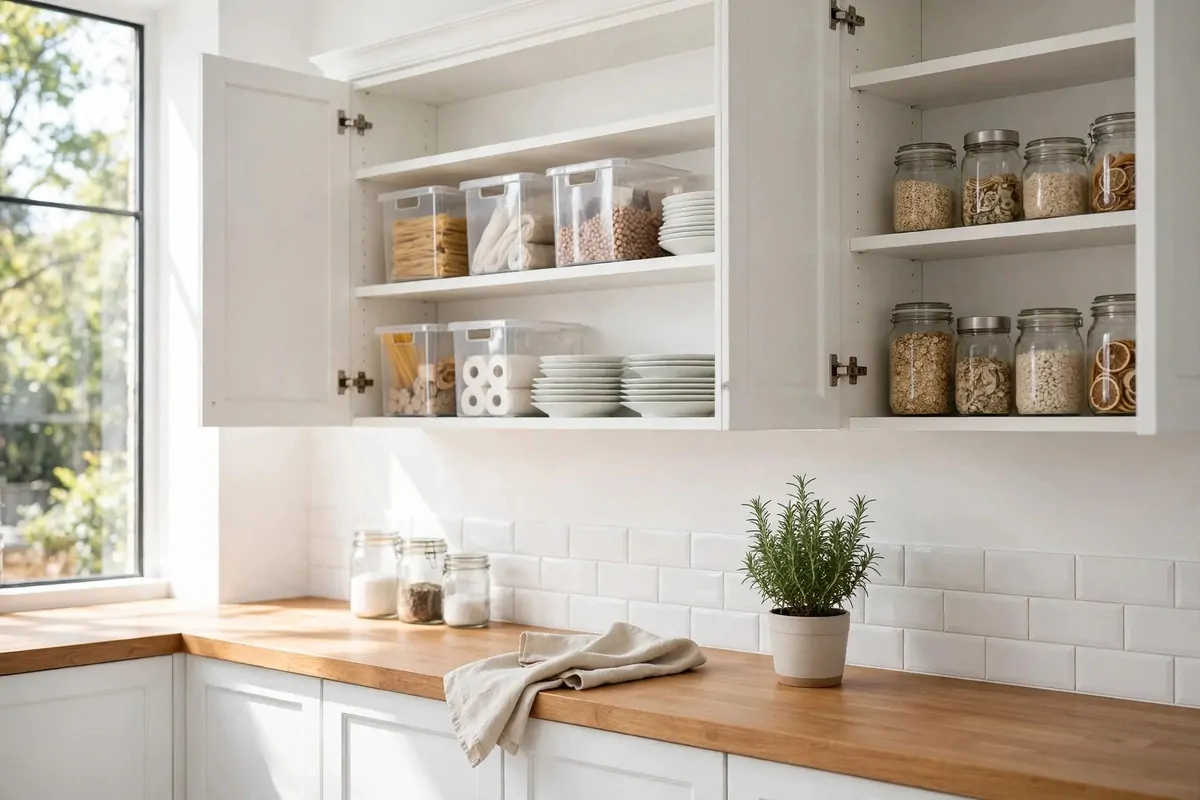
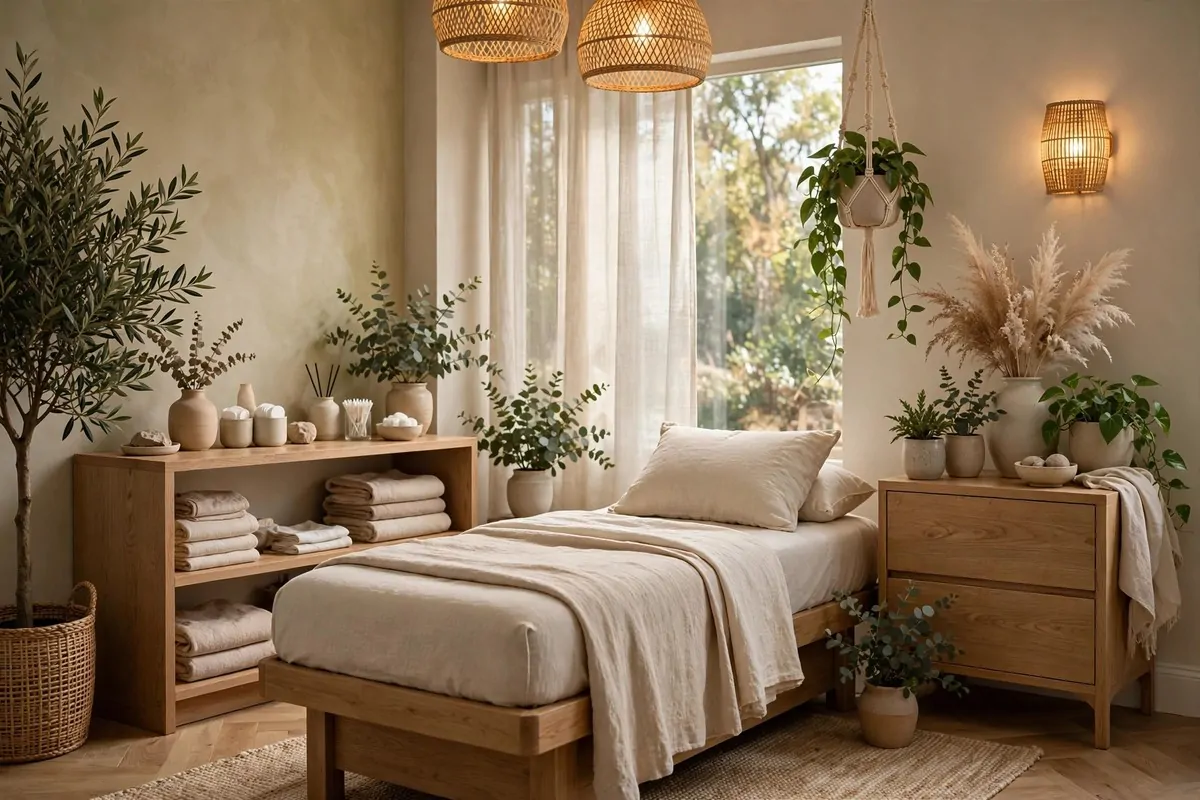
21 Floor-to-Ceiling Storage Ideas That Make Small Homes Feel Bigger

Look up. Right now, wherever you are sitting, look up at the wall above your head.
There is a strip of empty space up there. In most homes it is a foot or two of plain wall, doing nothing at all. No shelf. No hook. Just paint and quiet.
I did this in my own living room one evening and I counted three whole walls with nothing on the top half. Three walls. My home felt crowded at the floor and empty at the ceiling, and that made no sense to me at all.
So I started building up instead of out. Tall shelves, full-height cabinets, one wall at a time. These 21 floor-to-ceiling storage ideas are the ones that worked in my small home, and they can make yours feel bigger too.
A Tall Open Shelf Wall in the Living Room
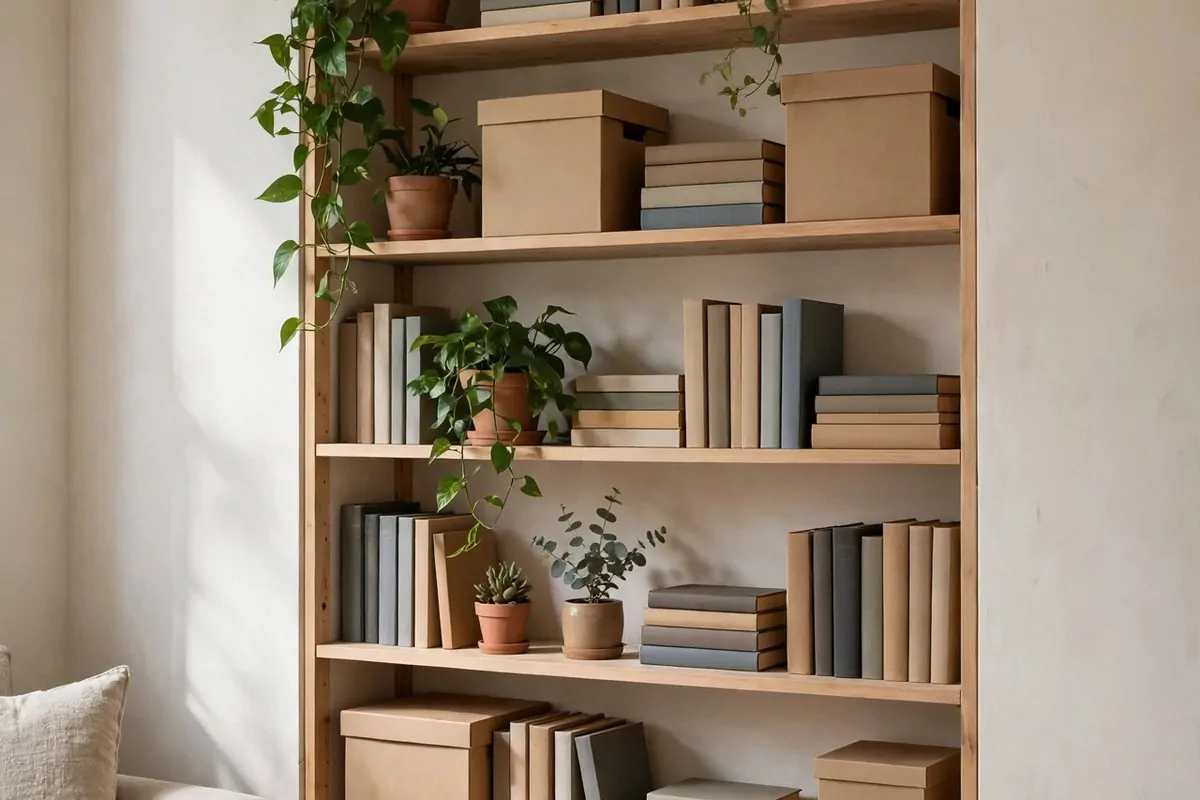
I love a tall shelf wall in a small living room.
Start with one full wall if you can. Pick the wall behind the sofa or the wall across from the window. Measure it first so you know what fits.
Put your daily things low.
Move the pretty things up a little higher. I like a small plant and a plain vase on the middle shelves.
The top shelves are for things you do not need every day. I keep photo albums and spare cushions up there in plain boxes. They stay safe and out of the way.
Keep the colors light on the top half. White or pale wood makes the tall wall feel open.
Leave some empty space on each shelf. A full shelf looks messy fast. A little gap lets your eye rest.
Fix the whole unit to the wall.
Use a small step stool when you need the top. I keep a folding one behind the door.
Full-Height Cabinets That Frame the TV
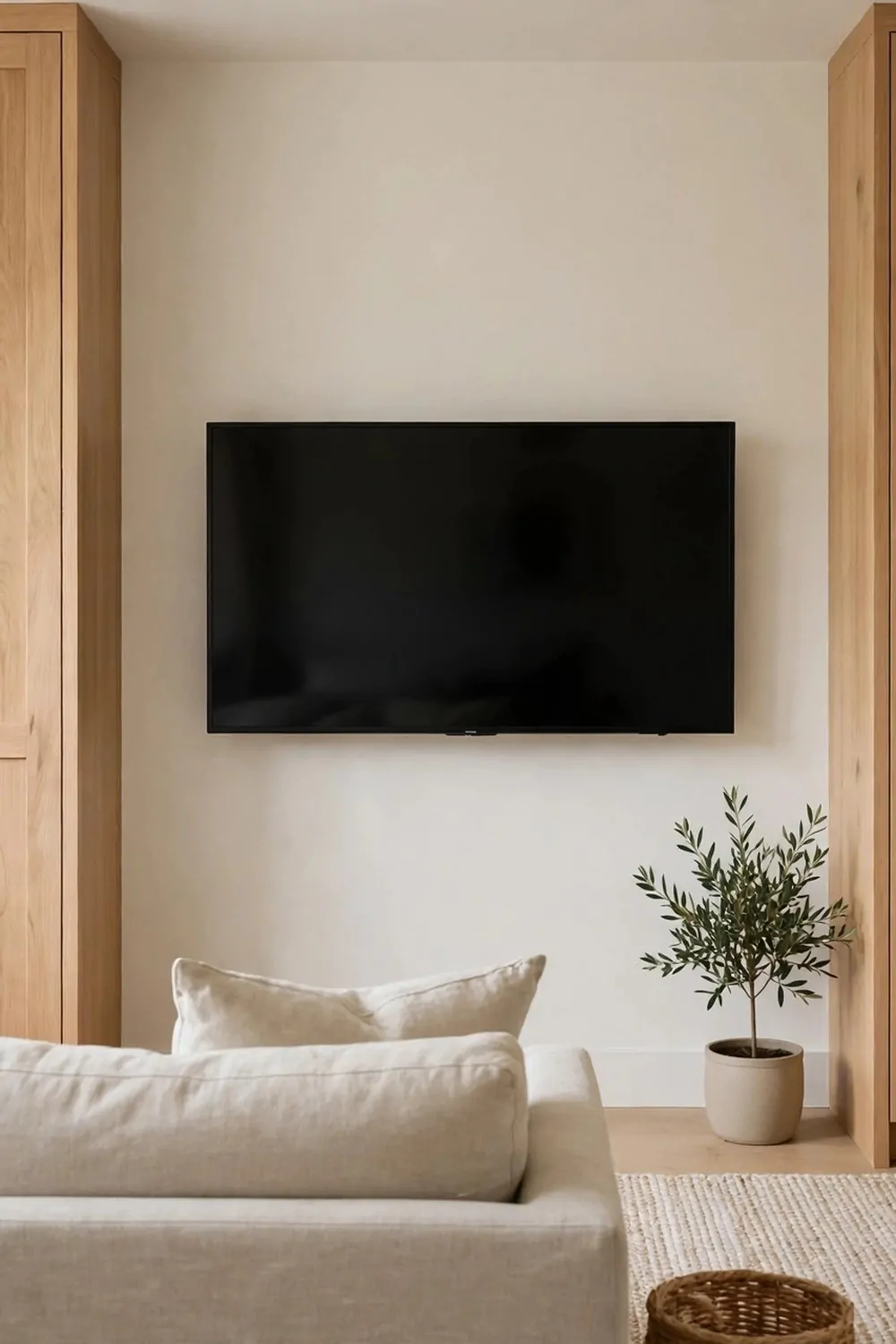
I think cabinets around the TV are one of the best tricks for a small living room. They hide the mess. And they make the TV look like it belongs there.
Start with two tall cabinets, one on each side of the TV.
Keep the doors plain and light in color. I like flat doors with no handles showing.
Put the things you use each day in the middle shelves. I keep board games and chargers there. You can grab them fast and put them back fast.
The bottom shelves are good for heavy things. I store extra blankets and a few big books down low.
The top shelves are for things you touch once in a while. I keep spare cables and old photo boxes up there. I label the boxes so I know what is inside.
Leave a small gap under the TV for a sound bar or a tiny plant.
Fix both cabinets to the wall. They are tall and heavy when full.
Step back and look at the wall when you are done.
A Floor-to-Ceiling Bookcase That Acts Like a Wall
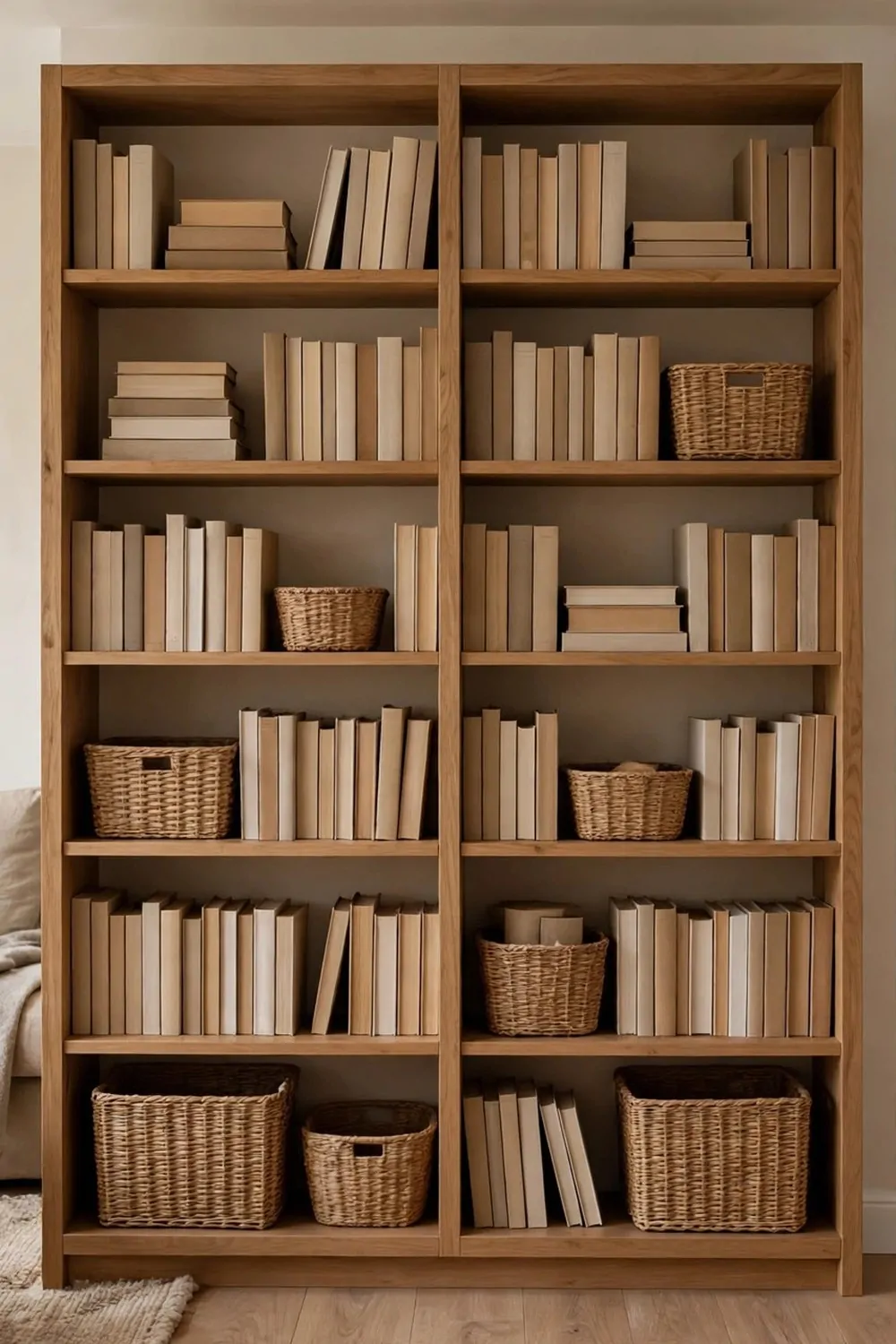
A tall bookcase can split a small home into two rooms.
Pick a spot where you want a little privacy. The space between the sofa and the dining table is a good place.
Choose a bookcase that reaches the ceiling. A short one leaves a gap and the rooms still feel like one big space. The tall one makes the split feel real.
Put books on the lower shelves first. I keep the ones we read most on the bottom two rows.
Use baskets on the middle shelves. I keep toys in one and scarves in another. The baskets hide the mess and the shelves still look neat.
Leave the back open if you want light to pass through.
Fix the bookcase to the ceiling or the wall. A tall divider can wobble if someone bumps it.
Keep the top shelves light.
Walk around it for a day before you fill it all. You will see if the path feels too tight. I moved mine a few inches and the whole room felt easier to walk through.
Shelves That Run Around the Top of a Room
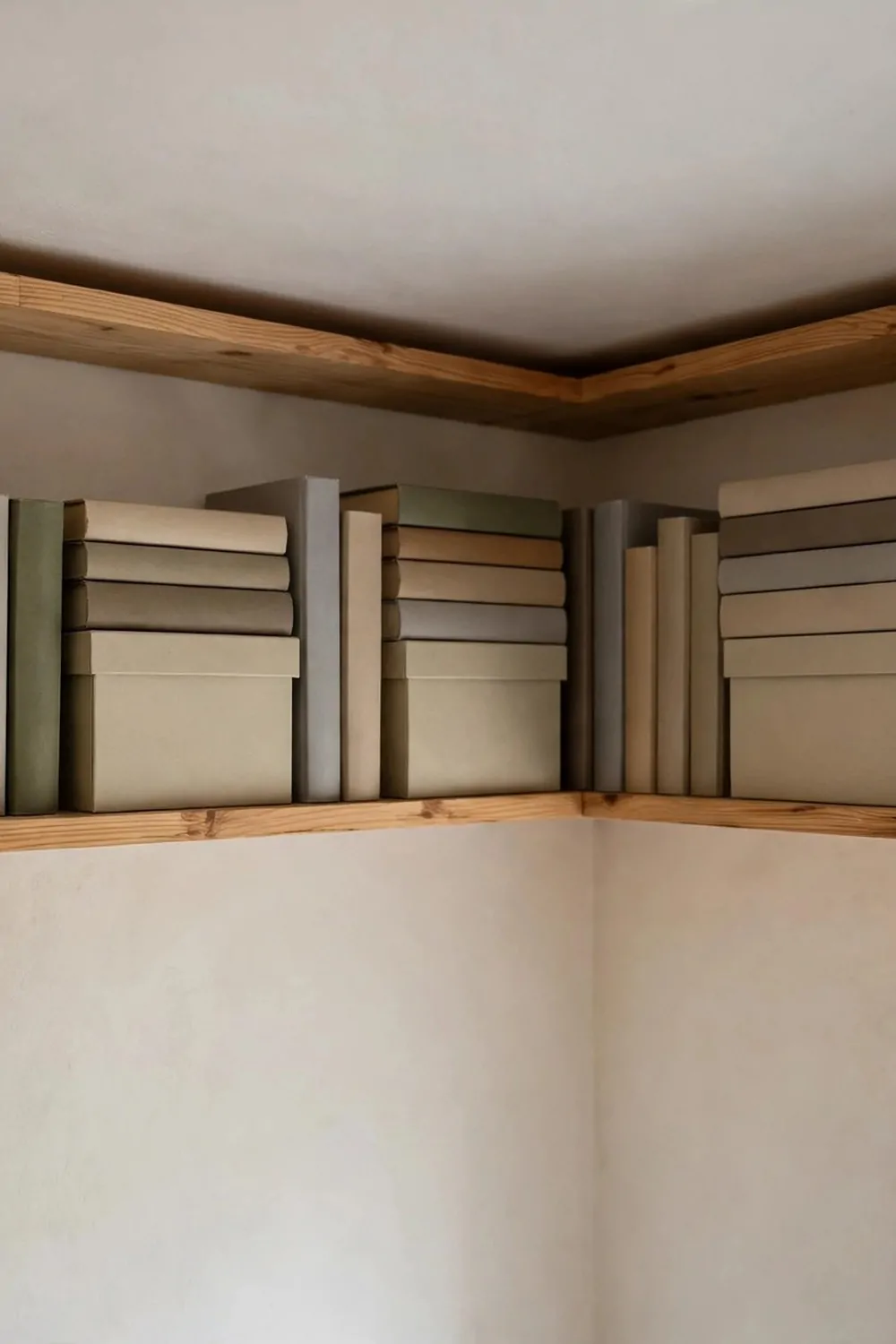
Shelves near the ceiling feel like a secret extra room. I love them in small homes.
Pick a wall that has nothing on it near the top. The wall above a doorway is a good start. You can run one long shelf right across it.
Keep the shelf narrow. About a hand span deep is enough for books and small boxes.
Put books you have already read up there. I keep my old favorites in a neat row. They look nice and I do not need them every day.
Use plain boxes for the rest.
Keep the shelf the same color as the wall. White shelves on a white wall almost disappear.
Use a small step stool to reach it.
Check the shelf is fixed well. It holds a lot of weight up high. I used strong brackets and checked them twice before I loaded it.
Leave a little gap at the ends.
A Tall Pantry Wall for a Small Kitchen
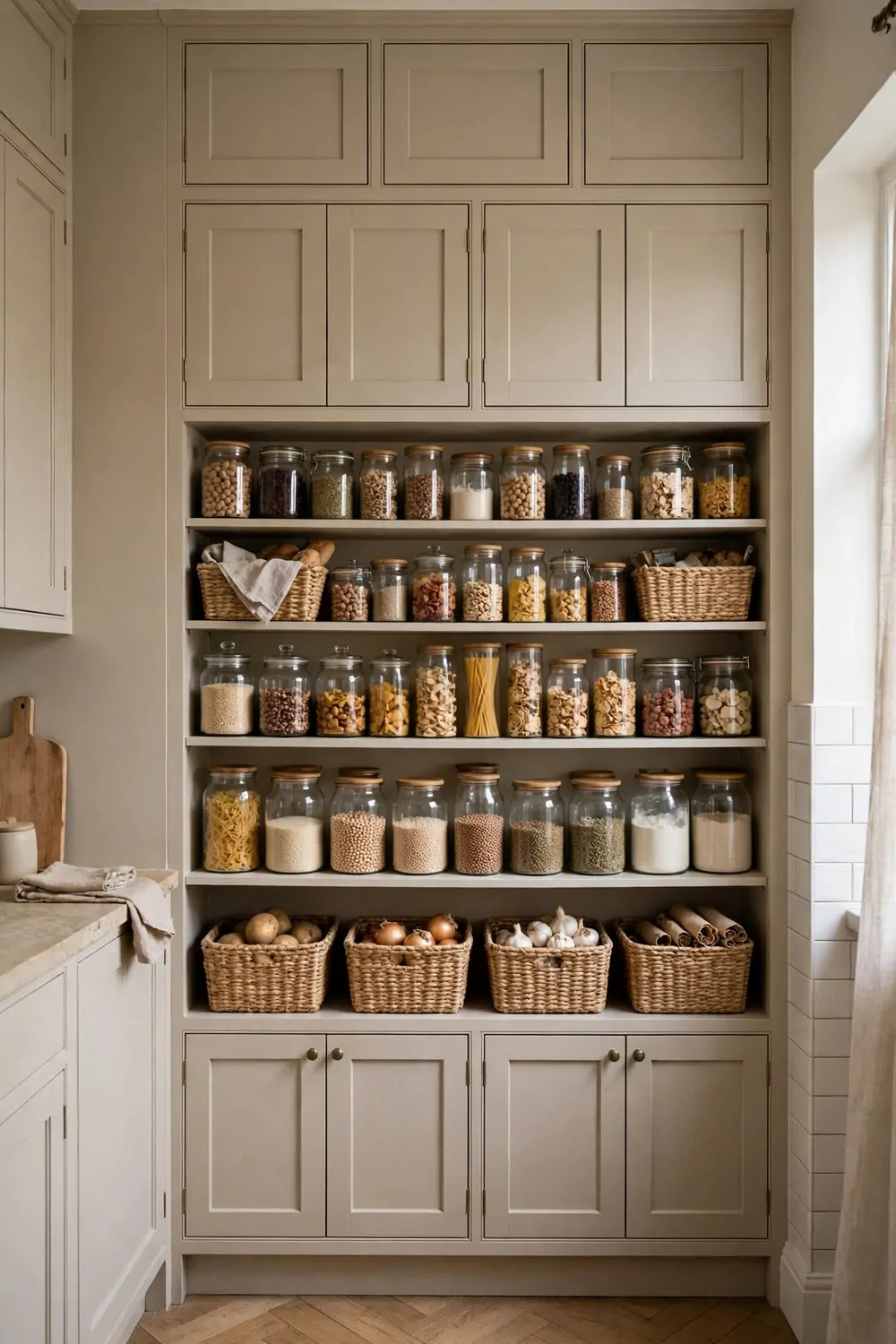
A tall pantry wall can change a small kitchen. I know because mine was a mess before. Now I can find everything in seconds.
Start with one wall of tall cabinets. They should go right up to the ceiling.
Keep your daily food at eye level. I put pasta, rice, and snacks on the middle shelves. You can see them all without bending or stretching.
Put heavy things low.
Use clear jars where you can. I can see how much rice is left without opening a lid.
Add small baskets inside for loose packets.
The top shelf is for things you use rarely. I keep a spare set of dishes and a big pot up there. I only grab them a few times a year.
Fix the tall units to the wall.
Wipe the shelves once a month. Crumbs hide in the corners.
Full-Height Cabinets Beside the Fridge
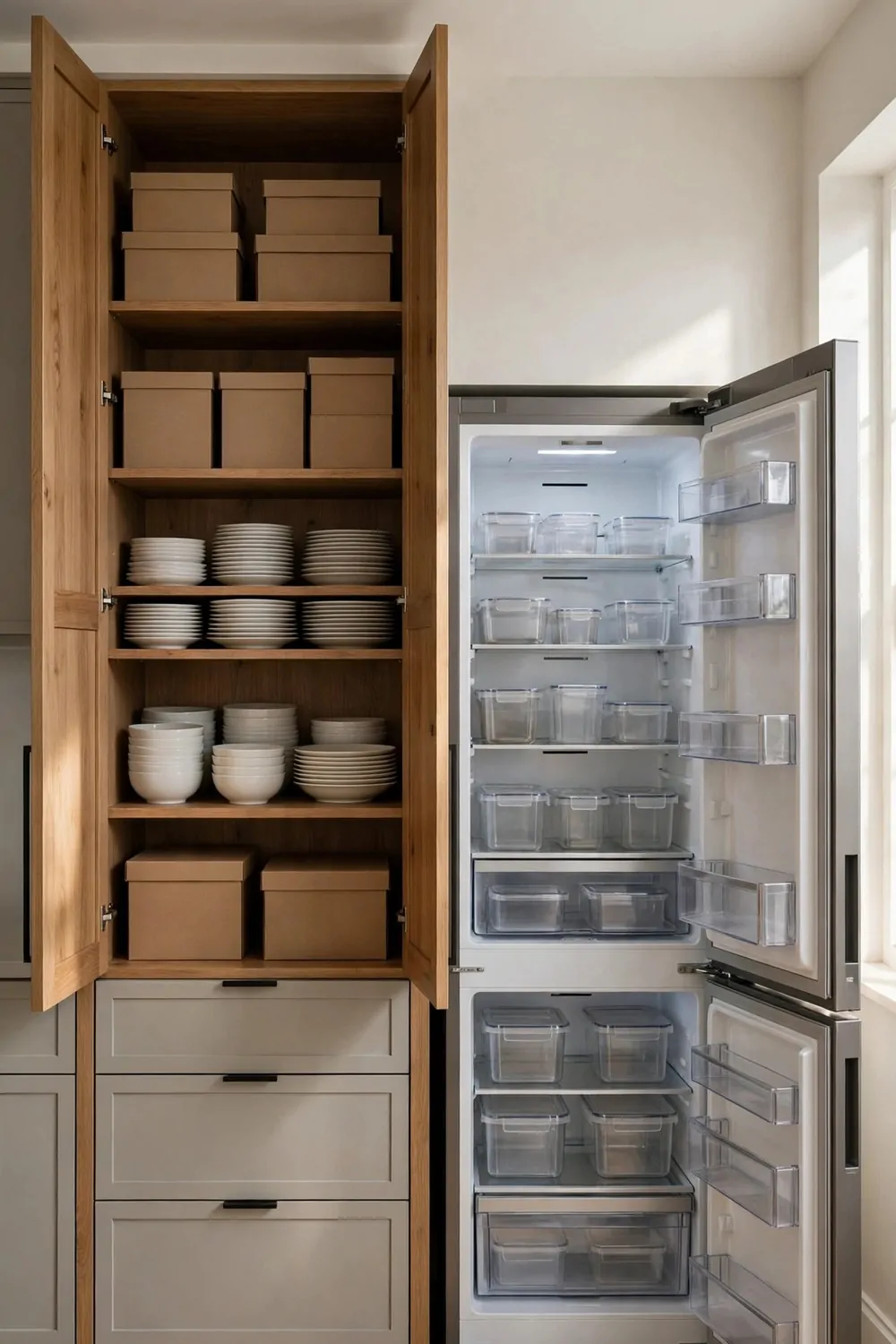
The space beside the fridge is easy to waste. I see it in so many small kitchens.
Measure the gap first. It might be narrow but tall. Even a slim cabinet can hold a lot if it goes all the way up.
Use the height in zones.
Keep the doors simple. I like plain doors that match the fridge color.
| Height Zone | What Goes There | Why It Works |
|---|---|---|
| Floor to waist | Heavy pots, cans, and daily dishes | No lifting, no bending far |
| Waist to eye level | Plates, bowls, and food you use each day | Everything is one easy reach away |
| Eye level to full reach | Small appliances and weekly supplies | Used often but not every single day |
| Top near the ceiling | Holiday dishes and spare supplies | Out of the way until you need them |
Put a pull-out shelf inside if you can.
Keep the things you use each morning close. I keep cereal and mugs on the shelf next to the fridge door. Breakfast takes two minutes now.
Label the top shelf so you remember what is up there.
Fix the cabinet to the wall and to the fridge side if you can. Tall units next to a fridge get opened a lot.
Clean the top of the cabinet twice a year. Dust builds up fast up high. A quick wipe with a damp cloth is all it needs.
A Ceiling-High Wardrobe in a Small Bedroom
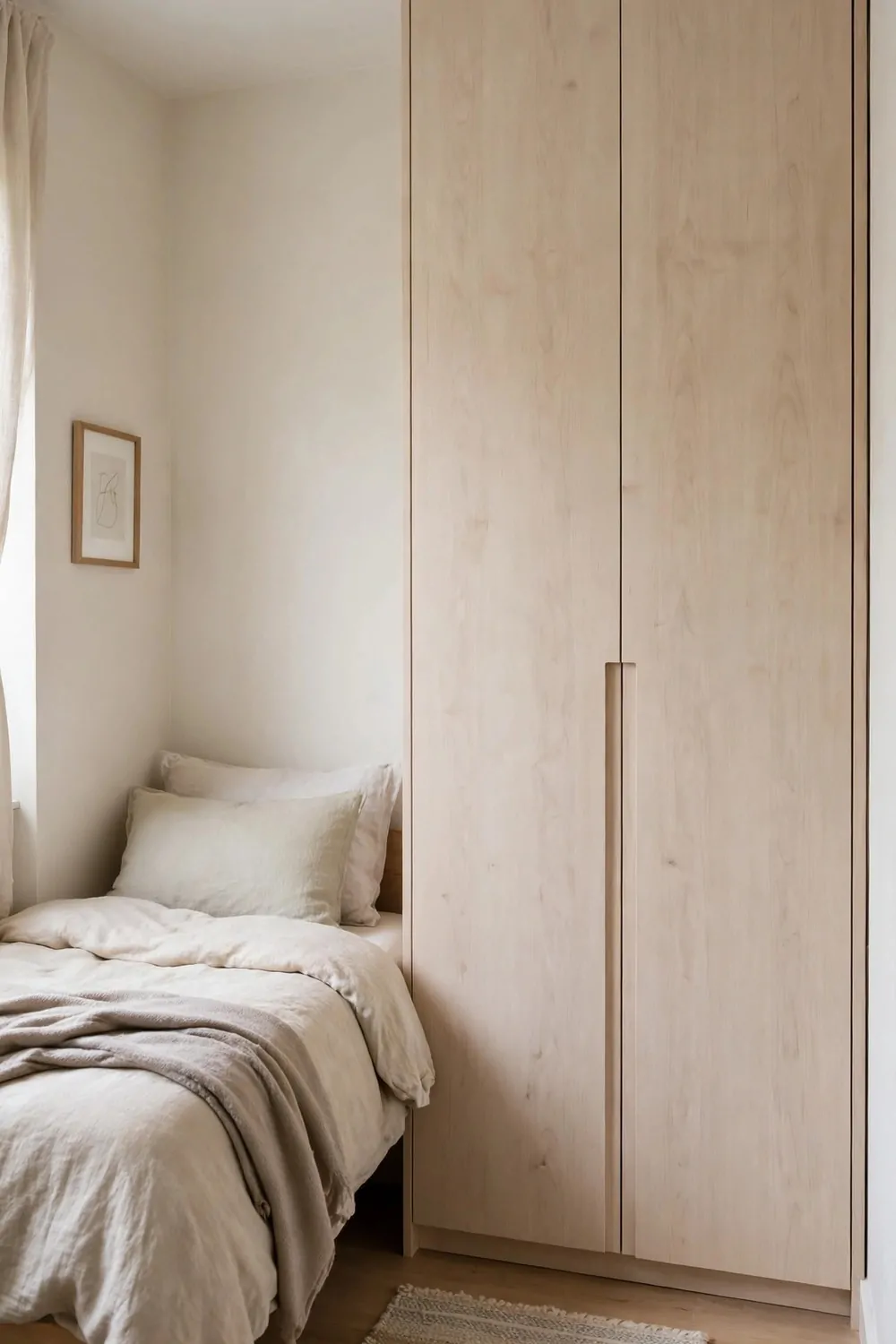
A wardrobe that reaches the ceiling can hold a whole bedroom. I love this in a small room. It takes the same floor space but gives you so much more room.
Start with doors that go all the way up.
Keep your daily clothes at eye level. I hang the shirts and dresses I wear most in the middle.
Put folded clothes on shelves, not in a pile on the floor.
Use the bottom for shoes and bags. I keep my everyday shoes in a row at the base. My bag hangs on a small hook inside the door.
The top shelf is for out of season clothes.
Add a small mirror on the inside of a door if you can. It saves wall space in a tiny room.
Fix the wardrobe to the wall. It is tall and full of heavy clothes. A wall fixing is a must, and it is a simple job.
Keep the doors light in color. White or pale wood makes the bedroom feel bigger.
Tall Shelves Above the Bed
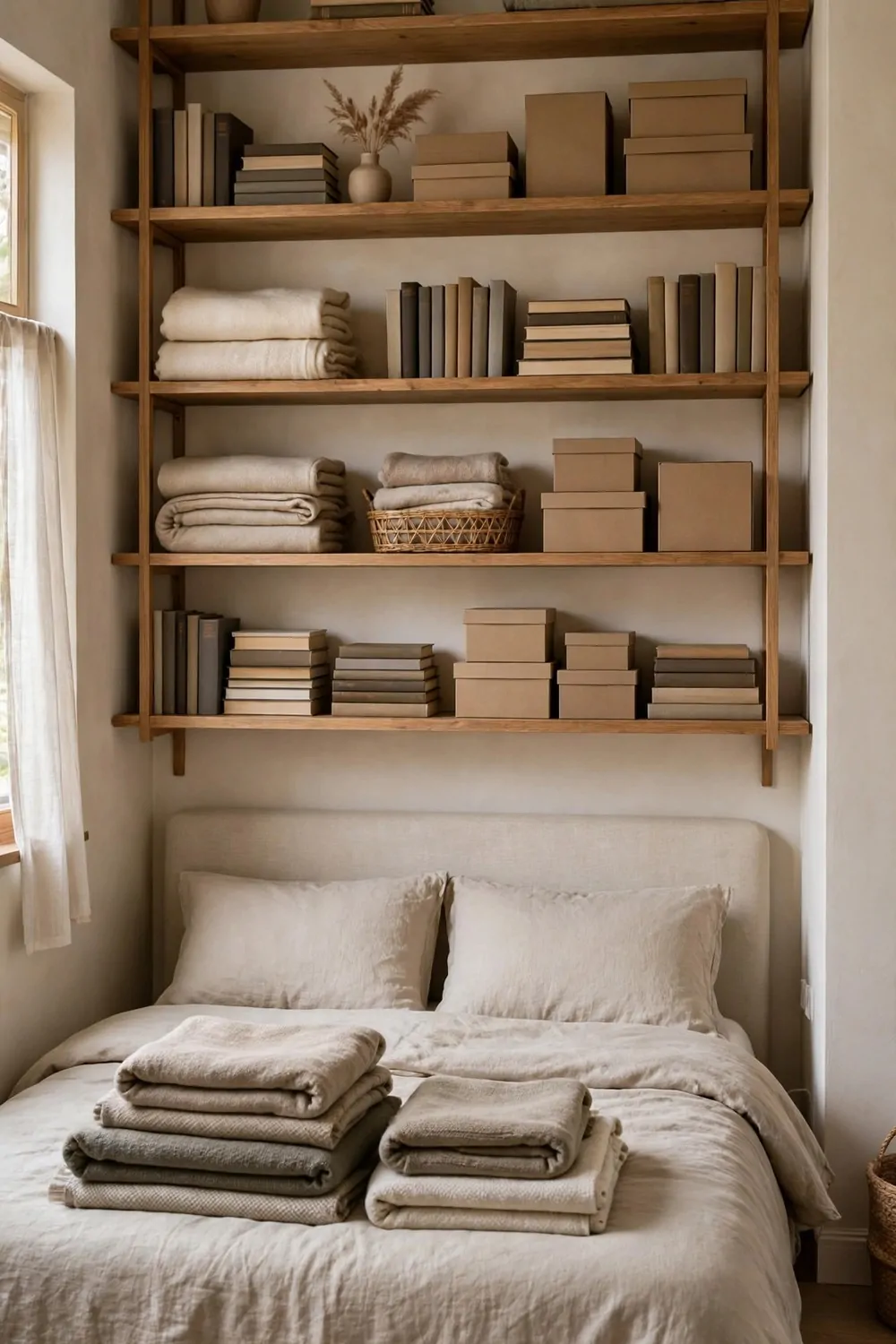
Shelves above the bed use wall space you might forget about.
Keep the shelves shallow. A deep shelf over your head feels heavy and hard to reach.
Mount them high enough that you can sit up in bed.
Put light things up there. I keep folded blankets and a few books on mine. Heavy boxes over a bed are not a good idea.
Use baskets to keep it neat.
Fix the shelves with strong brackets. They must hold the weight and stay put.
Keep the colors soft. I painted my shelves the same color as the wall. They blend in and the room feels calm and open.
Leave the middle of the wall free if you can. One long shelf is enough for most rooms.
Change what is up there with the seasons. I swap a thick blanket for a light one in summer. It keeps the shelves useful all year round.
A Floor-to-Ceiling Closet Wall With Sliding Doors
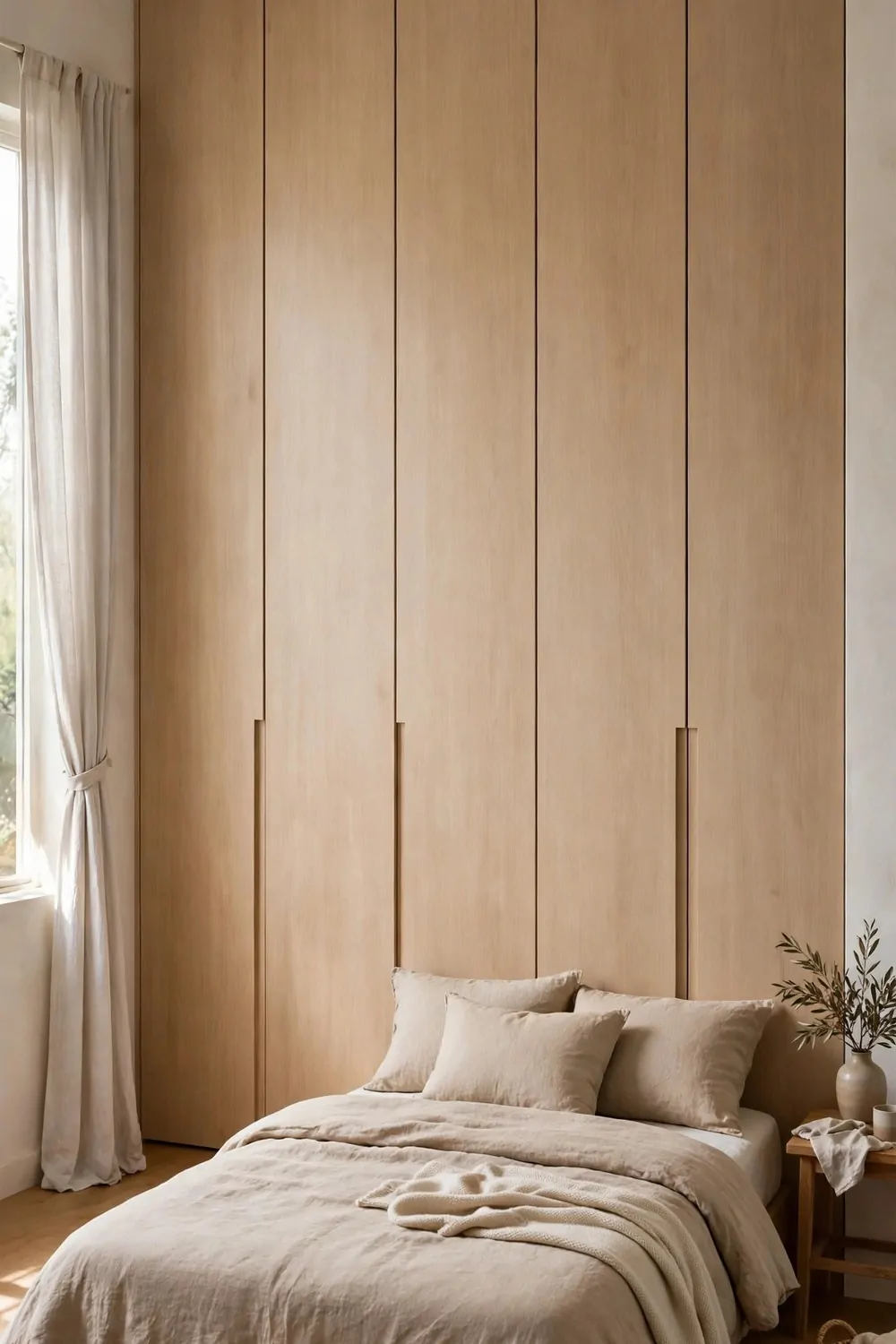
Sliding doors are perfect for a small bedroom. They do not swing out into the room.
Build the closet wall from floor to ceiling.
Keep the doors plain and light. I like flat doors in a pale color. They make the wall look calm and the room feels wider.
Put a rail at eye level for daily clothes.
Use the lower space for drawers or boxes. I keep socks and small items in drawers at the bottom.
The top shelf is for things you use rarely. I keep a spare duvet and a travel bag up there. I only need them a few times a year.
Add a small light inside if you can. A tiny battery light helps a lot.
Fix the whole unit to the wall. Sliding doors are heavy and the frame is tall. A wall fixing keeps it safe and stops it from leaning.
Keep the floor in front clear.
Narrow Tall Storage in a Small Bathroom
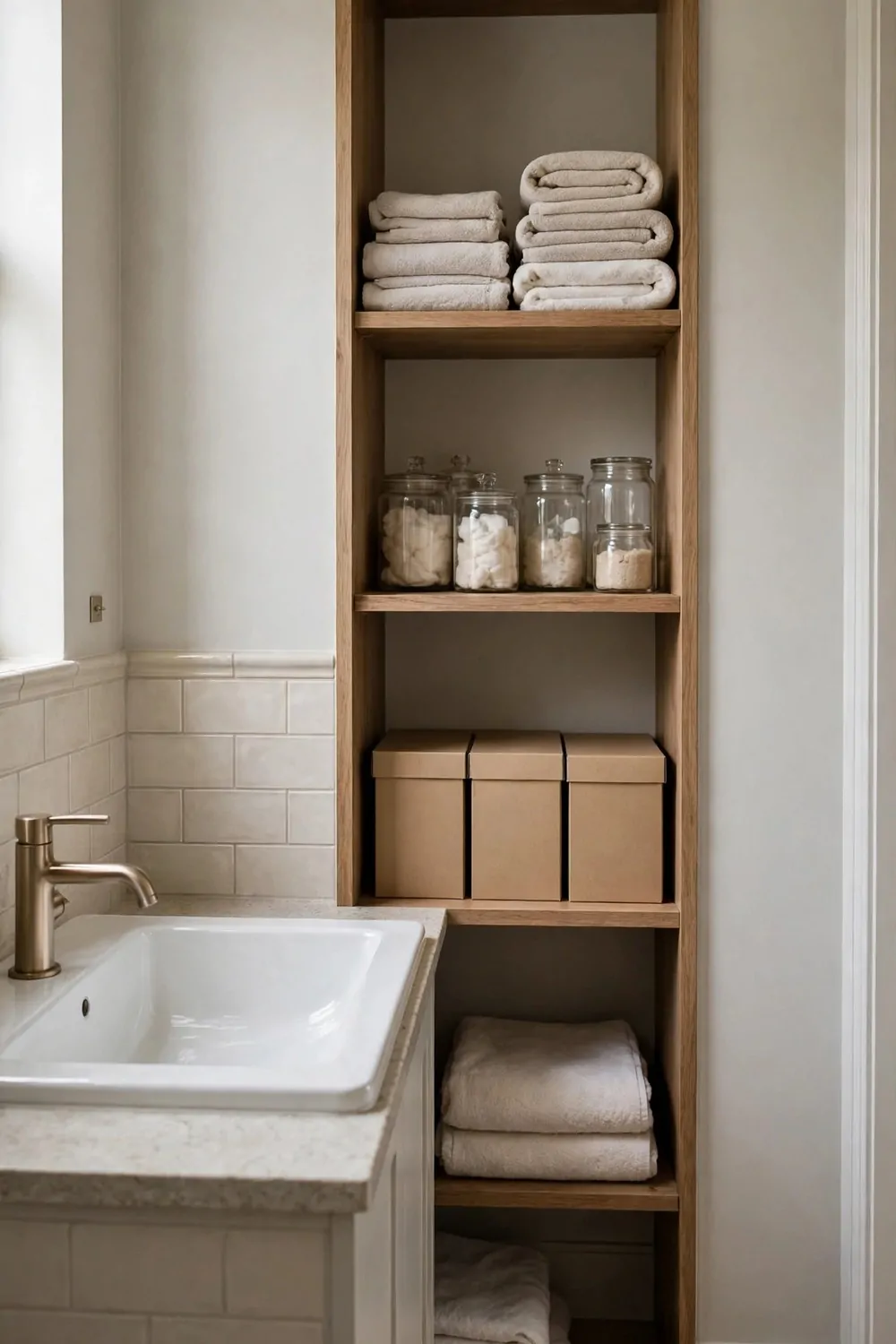
A small bathroom needs tall storage.
Pick the narrowest spot you can use. The wall beside the sink or behind the door often works. Measure it twice before you buy anything.
Keep daily things at eye level.
Store towels on the lower shelves. I roll mine so they fit in a narrow space.
Put cleaning things low and in a closed box. I keep mine in a plain box with a lid. It keeps them away from kids and out of sight.
Use the top shelf for spare supplies. I keep extra toilet paper and spare soap up there.
Choose a cabinet that can handle damp air. I picked one with a smooth finish that wipes clean. Wood that soaks up water will not last in a bathroom.
Fix it to the wall.
Keep a small step stool nearby if the top is high. I keep a tiny one under the sink.
Shelves Above the Door That Reach the Ceiling
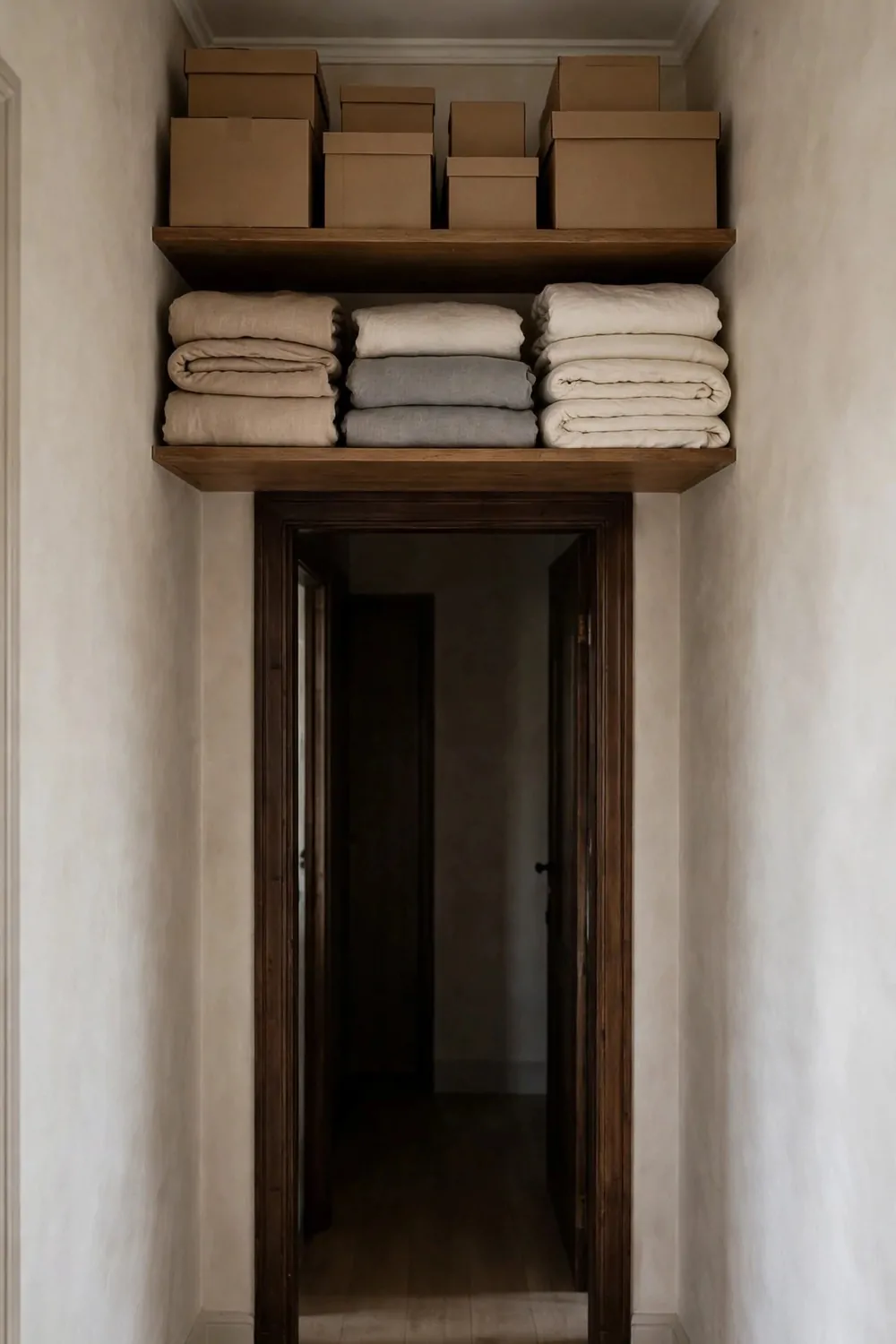
The space above a door is free storage. I love this trick in small homes. It holds a lot and it does not take any floor space at all.
Start with one shelf above a door you use a lot.
Keep the shelf close to the ceiling. That leaves a clear space to walk under it.
Put light boxes up there. I keep spare bedding and out of season hats in plain boxes. They are light and easy to lift down.
Label each box on the side you can see. I write the label in big plain letters.
Use a step stool every time. Never stand on tiptoe or climb on a chair. I keep a folding stool right by the door so it is always close.
Fix the shelf with strong brackets.
Keep the boxes the same color as the wall if you can. Matching boxes blend in and the hallway feels open.
Check the shelf once a year.
A Tall Hallway Cabinet for Coats and Shoes
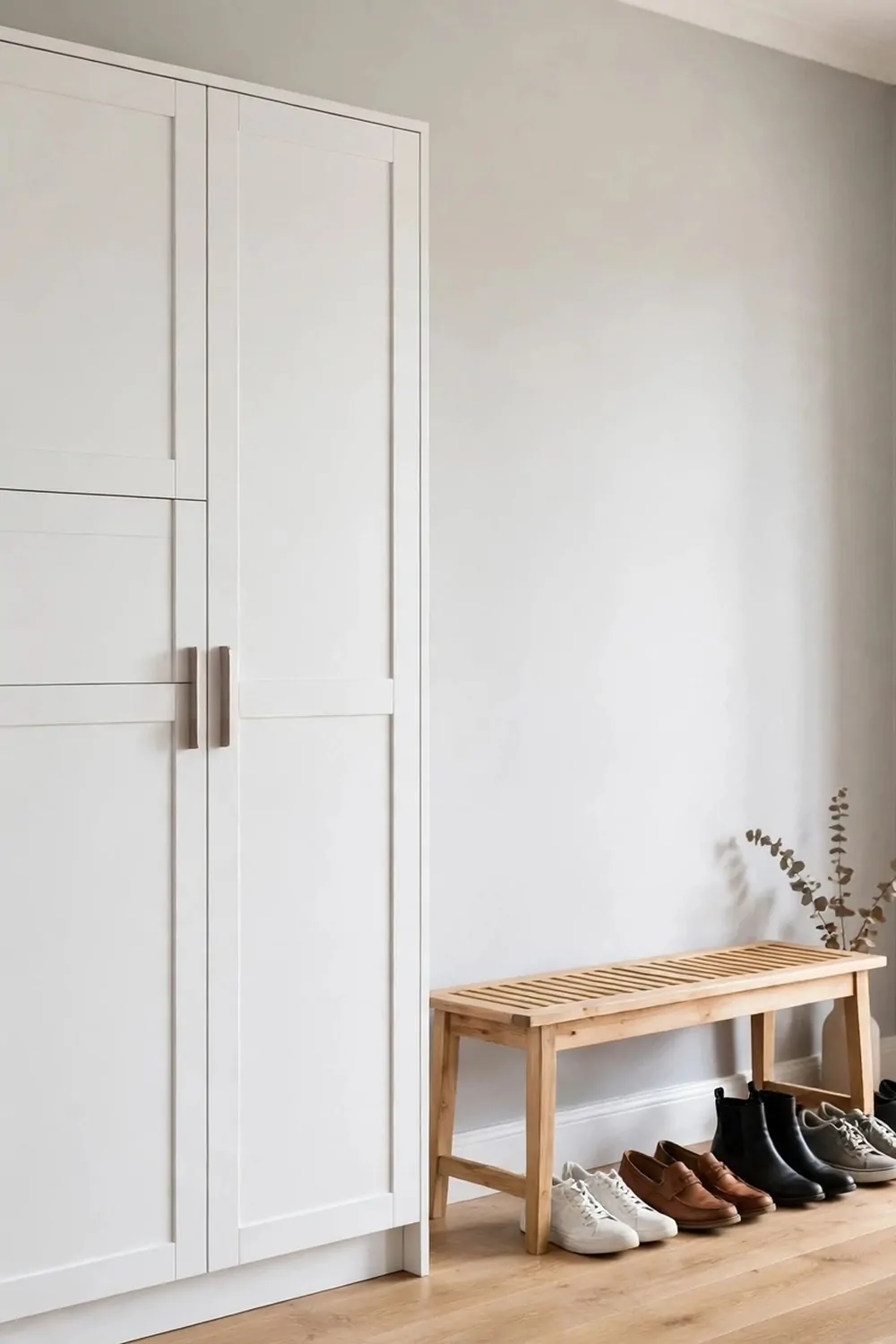
I used to trip over shoes every single morning in my old flat. You know that feeling when the hallway is so full you can barely get the door open.
A tall cabinet fixed to the wall changed all of that for me.
It uses the space right up to the ceiling, so coats and shoes have a real home instead of living in a pile by the door. I put the things we use each day at arm height, and the things we rarely need go right up top where they stay out of the way. That one small change made our tiny hallway feel calm again, and I stopped losing my keys in the mess.
You do not need a wide hallway for this to work. A slim cabinet, even one that is only a foot deep, can hold a lot if you plan the inside well.
| Cabinet Zone | What It Holds | Best For |
|---|---|---|
| Bottom | Shoes and boots in rows | Muddy days and busy mornings |
| Middle | Coats on hooks and bags | Grab and go in seconds |
| Top | Hats, gloves, and spare scarves | Cold days and guests |
I like a mix of hooks and one short rail inside, because hooks are quick for kids and bags, and the rail keeps coats from bunching up.
Keep the bottom open or use low trays for shoes, so wet shoes can dry and you can see what is there at a glance. I put a small tray by the door for keys and post too, and that stopped the daily hunt for them.
Light colours help a lot here, so I would pick white or pale wood for the doors. Dark tall cabinets can make a narrow hall feel like a tunnel, but a light one just blends into the wall.
Fix it to the wall, please, even if it feels solid on its own. A tall cabinet full of coats can tip, and a couple of wall fixings keep everyone safe.
When I shut the doors at night, the whole hallway looks tidy in two seconds. You walk in, you hang your coat, you kick your shoes into their spot, and the day feels done.
Floor-to-Ceiling Storage Under the Stairs
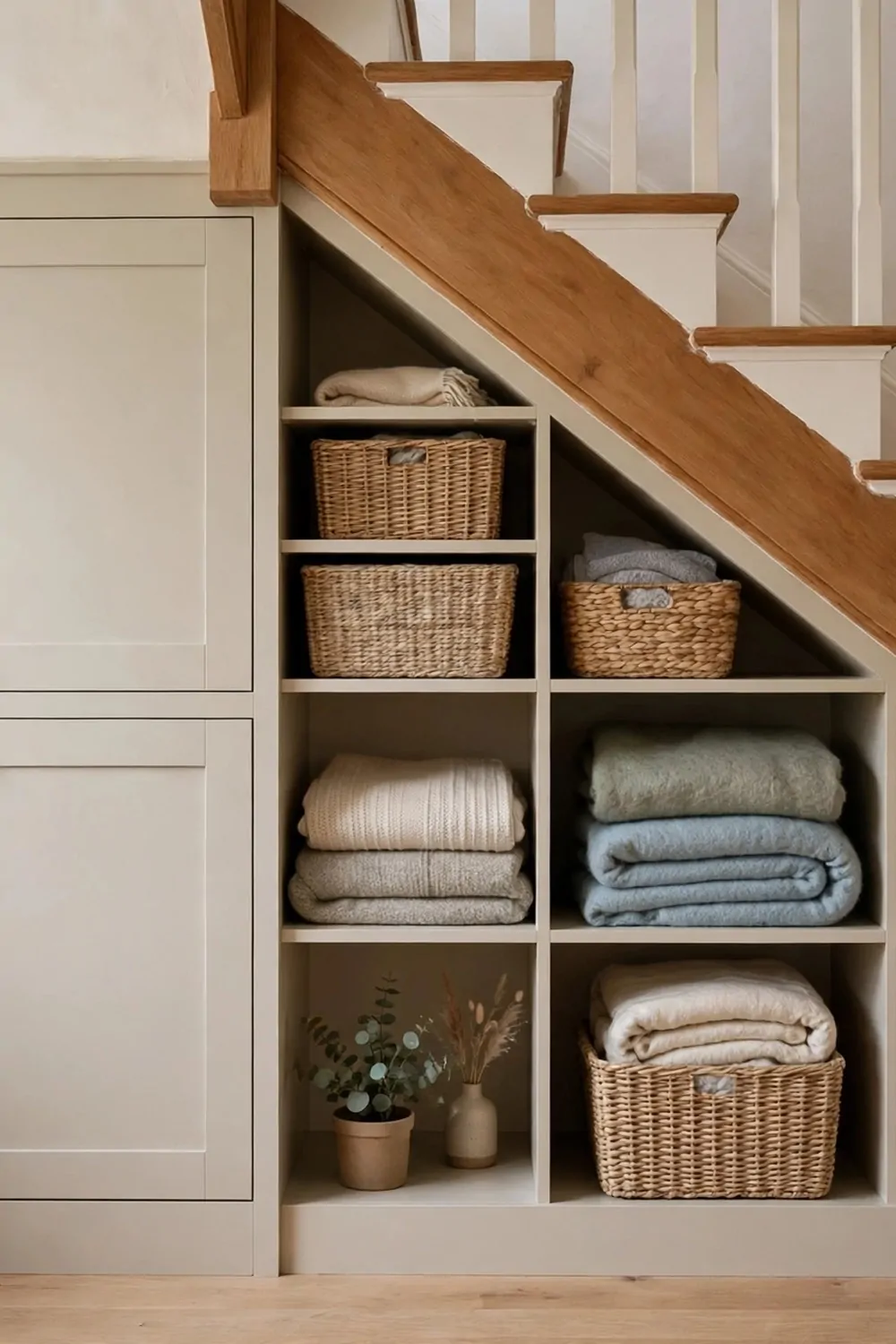
That space under the stairs is often just wasted in a small home. I used to throw things in there and shut the door and hope I never had to find them again.
You can turn it into one of the best storage spots in the house.
I like deep drawers on wheels for the lowest part, because you can pull them right out and see everything. The middle part works well for coats or cleaning things, and the very top is perfect for boxes you only open a few times a year. It is a funny shaped space, but that is what makes it so useful once you plan it right.
If you rent, you do not need to build anything in. A few stackable boxes and a low shelf that fits the slope can do the job, and you can take them with you when you move.
Measure the slope first, and write the numbers down before you buy anything. I learned that the hard way when a box I loved did not fit by two inches.
Put daily things near the front and low down, like shoes, bags, and the vacuum bits. Put spare bedding and out of season clothes right at the back and up high, where you will not need them every week.
A small light inside makes a huge difference, because under stair cupboards are always dark. I stuck a little battery light in mine, and now I can actually find things without holding my phone in my teeth.
Keep the floor clear in front of it, so you can open every door and drawer all the way. If you block it with a chair or a plant, you will stop using it, and the clutter will creep back.
I love that this storage hides in plain sight. You get a whole extra cupboard without losing a single bit of floor space, and your rooms feel bigger because the mess has somewhere real to go.
A Home Office Wall That Stores Everything Up High
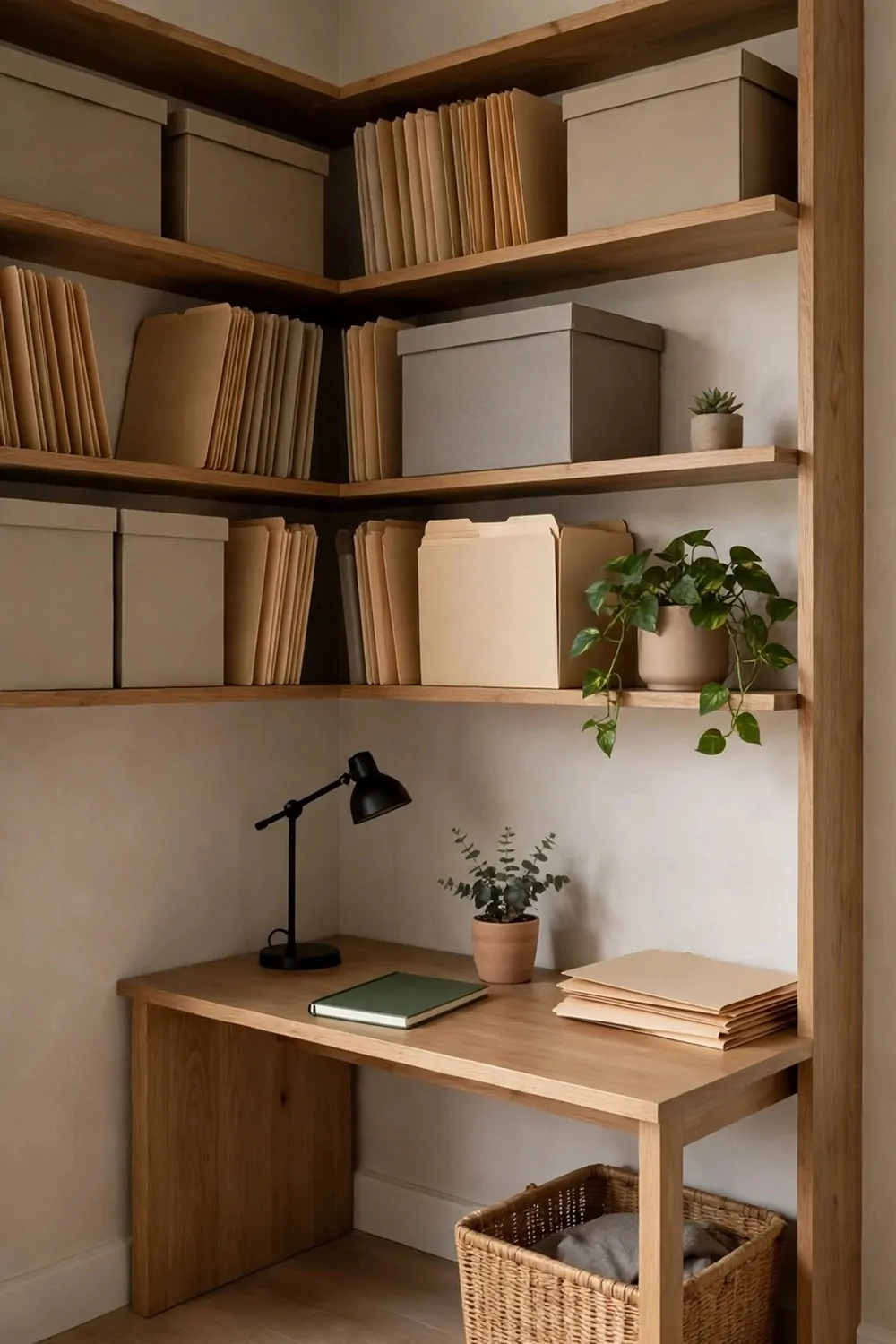
Working from home in a small room can feel messy fast. I had papers on the desk, chargers on the floor, and books stacked on a chair, and none of it helped me think.
A tall wall above the desk fixed that for me.
I keep my laptop, notebook, and pen pot on the desk, and everything else goes up. Files I use each week sit on the lowest shelf, where I can reach them from my chair. Files I only need once a month go higher, and spare paper and old notebooks live right at the top in plain boxes.
You want the shelves to feel light, not heavy. I picked pale shelves and left a bit of empty space on each one, so the wall does not close in on me while I work.
Closed boxes are your friend here. I label each one with a simple word on a blank sticker, like bills or ideas, and I can grab what I need without digging through a pile.
If your desk is in a bedroom corner, this wall helps even more. It keeps work stuff off the bed and off the floor, so the room can still feel like a place to rest at night.
Fix every shelf and tall unit to the wall, and do not overload the top shelf. Heavy boxes up high are hard to lift down, and they make the whole unit feel unsafe.
I also leave one shelf just for pretty things, like a small plant and a favourite mug. It sounds silly, but it makes the work corner feel like mine, not just a storage wall.
At the end of the day I put papers back in their box and shut the desk drawer. You start the next morning with a clear desk, and that small habit has made my work days feel much calmer.
A Tall Craft Cabinet That Closes Away the Mess
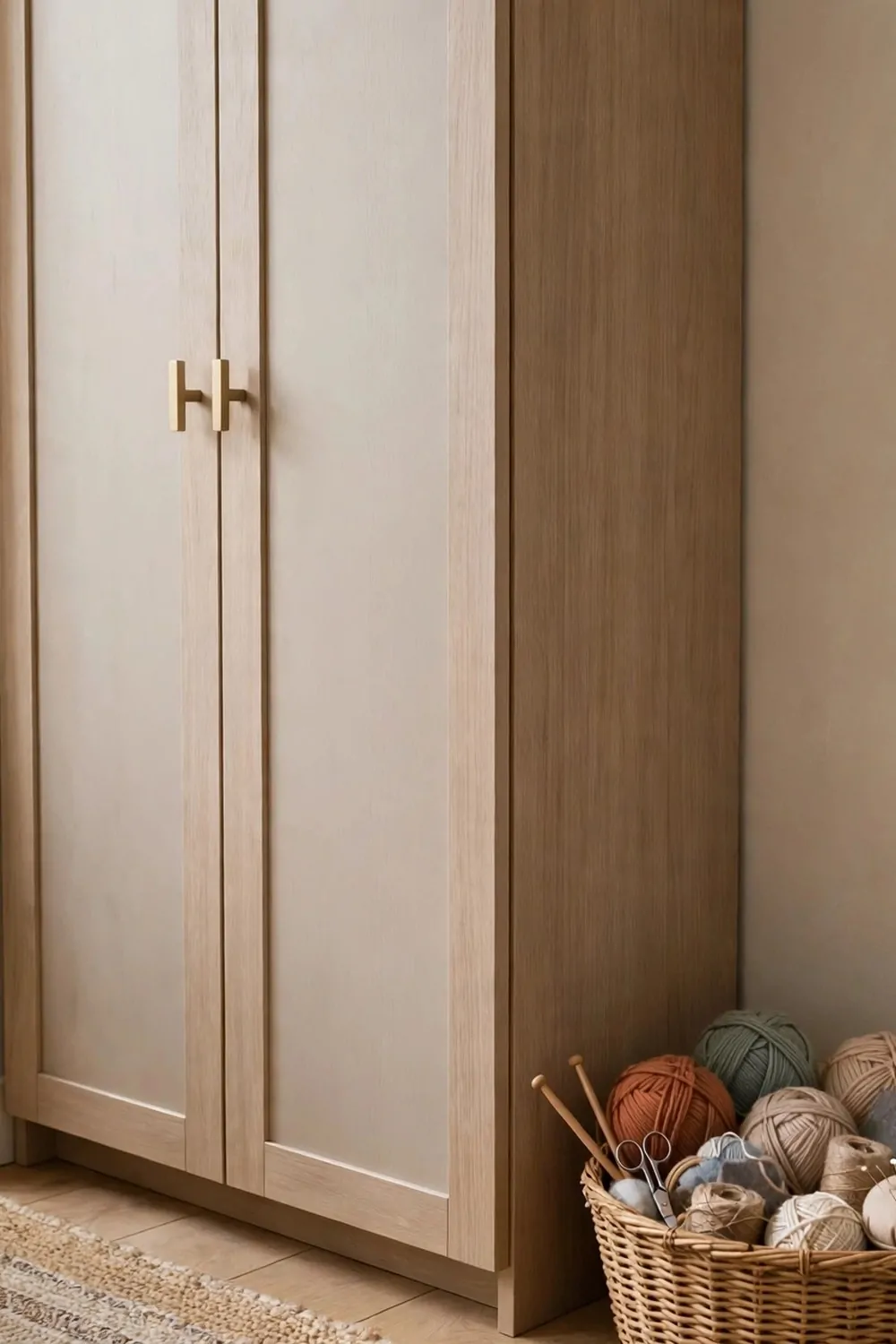
Craft stuff takes over a small home so fast. I had yarn in one bag, paint in another, and paper everywhere, and I could never find the scissors when I needed them.
A tall cabinet that closes changed how I craft at home.
I keep my most used things at waist height, so I can grab them and start in a minute. Paints, brushes, and small pots sit in trays on the middle shelves, and paper and fabric go in the lower drawers where they stay flat and clean.
The top shelves hold the things I use less often, like spare glue, extra paper packs, and half finished projects in boxes. I like that they are out of sight but still in the same cabinet, so nothing gets lost in another room.
When the doors shut, the mess just disappears. You can have guests over, watch telly, or eat dinner, and no one would know a craft corner lives right there.
Use small boxes inside, one for each kind of thing, so a shelf does not turn into a jumble. I use plain boxes with no writing on them, and I remember what is inside because each box has its own spot.
Light colours work well again here, because a big dark cabinet can feel heavy in a small room. I went for a soft white, and it looks like a normal cupboard from the outside.
If you have kids, keep the sharp tools and messy paints on a high shelf inside, and keep the safe things low. A simple latch on the doors helps too, and it keeps little fingers out of the glue.
I love that I can leave a project half done on a shelf and shut the door. You come back the next day, open it up, and everything is right where you left it, ready to go.
Ceiling-High Shelves in a Small Kids Room
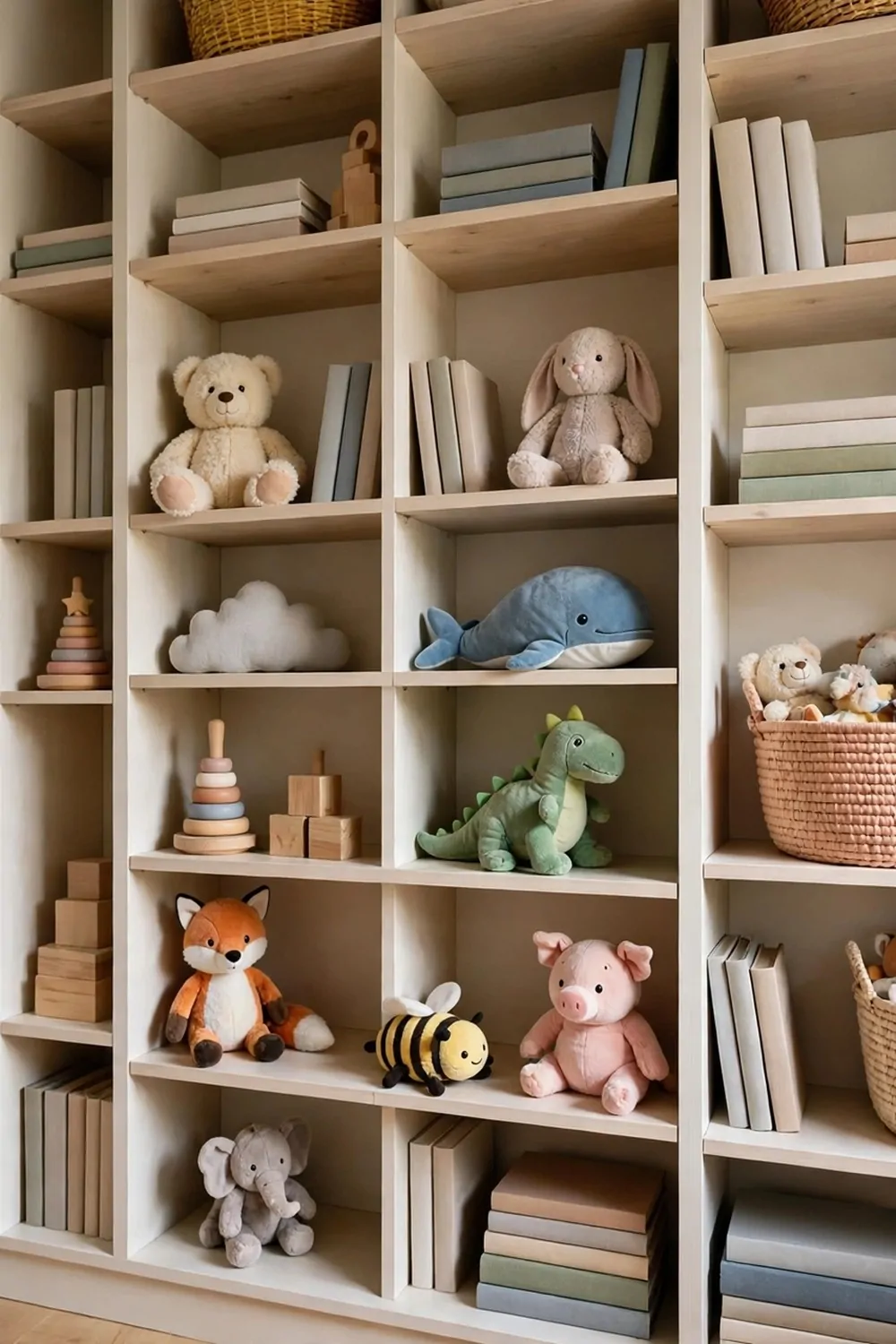
Kids rooms fill up so quickly, and the floor disappears under toys. I know how hard it is to keep a small room tidy when every toy wants to live on the floor.
Tall shelves help, but only if you put things in the right place.
I keep the toys my child plays with every day on the lowest shelves, in baskets they can pull out themselves. Books with soft covers and building blocks live low too, so playtime starts without me lifting heavy boxes down.
Higher shelves hold the toys that need a grown up, like small parts, paint sets, and puzzles with lots of pieces. The very top is for keepsakes and spare bedding, things we do not need every day.
You must fix tall shelves to the wall in a kids room. It is not a nice extra, it is a must, because kids climb, and a shelf that is not fixed can fall.
Keep the shelves light and open up high, so the room still feels bright and fun. I left some space empty on purpose, and the room feels bigger than it did when every shelf was stuffed full.
I use baskets with no words on them, just different colours, so my child knows the red basket is for cars and the blue one is for soft toys. It makes tidy up time feel like a game, and it works most days.
Rotate toys now and then, and keep some up high for a few weeks. When they come back down, they feel new again, and you do not need to buy more to keep play fresh.
At bedtime we put the low baskets back, shut the toy boxes, and the floor is clear. You can walk across the room without stepping on a brick, and that is a small win every parent understands.
A Rolling Ladder That Makes Top Shelves Easy to Reach
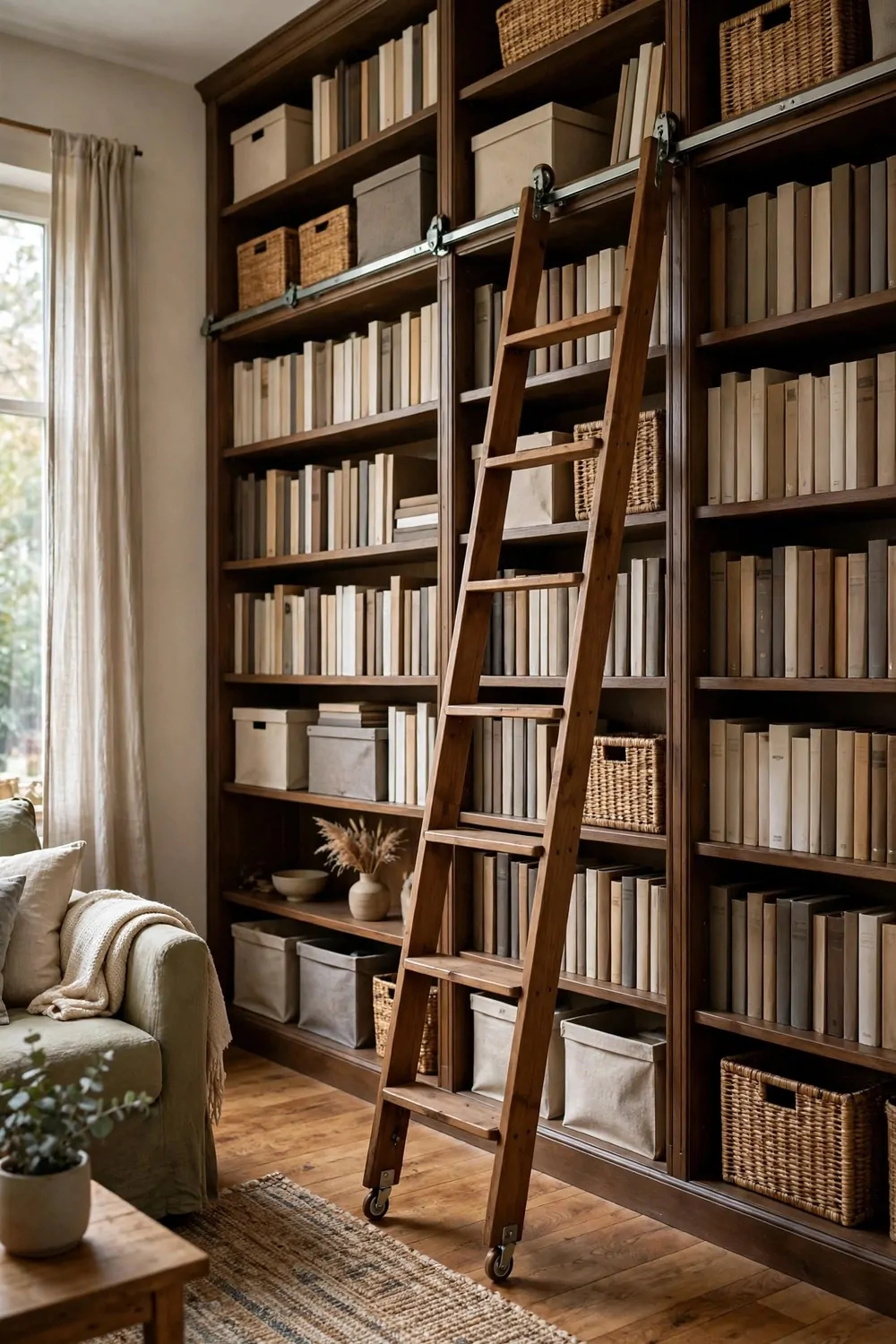
Tall shelves are great until you need something from the top. I used to stand on a chair and wobble, and it never felt safe, especially with a heavy box in my arms.
A rolling ladder on a rail makes the top easy and fun to reach.
It slides along the wall, so you step up, grab what you need, and step down in a calm way. I keep it in my living room, and guests always smile when they see it, because it looks like it belongs in a cosy book room.
You do not need a huge wall for this. A short rail over one tall bookcase works just as well, and the ladder hooks on and off when you do not need it.
Keep the heavy things low, even with a ladder. I put books I read a lot on the middle shelves, and light things like spare cushions and photo albums up top, so I am never carrying a heavy box down a ladder.
If you rent, a small folding ladder that leans on the shelf can work instead. It folds flat behind a door when you are done, and you still get to use all that high space.
Check the rail and the ladder often, and make sure the wheels roll smooth and the lock holds. A ladder that sticks or wobbles is not safe, and a quick check once a month keeps it feeling solid.
I love the way the ladder makes the room feel taller. You look up, you see shelves full of books and boxes, and the room feels like it has so much more space than it really does.
It is a simple idea, but it changed how I use my tall shelves. You stop ignoring the top half of the wall, and that whole space starts to work for you every day.
Pull-Down Shelves for the Highest Spots
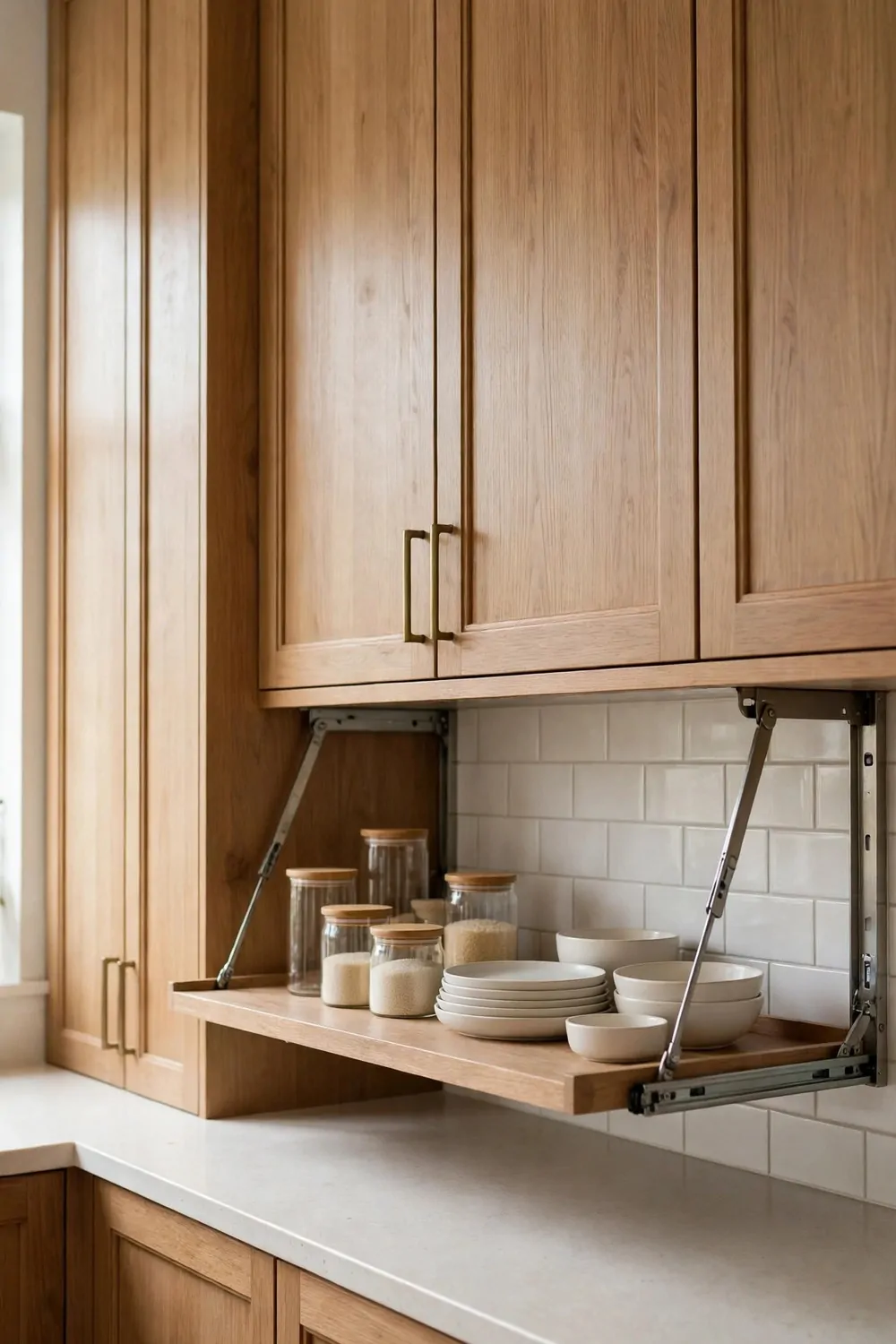
The highest shelves in a kitchen are the ones we all ignore. I used to put things up there and forget them, because I could not reach them without a chair.
Pull-down shelves bring that high space down to you.
You pull a handle, and the whole shelf comes down to counter height, smooth and slow. I keep heavy dishes and big jars up there now, things I used to avoid because they were too high and too heavy to lift down.
It is a good pick for small kitchens, because you get more storage without adding a single cupboard. The shelf hides away when you push it back up, and the kitchen still looks tidy.
You do not need one in every cupboard. I would start with just one, over the counter where you cook most, and see how much you use it before you add more.
| Way to Reach High Shelves | Cost | Best For |
|---|---|---|
| Folding step stool | Low | Quick reaches a few times a week |
| Rolling ladder on a rail | Higher | Daily use and tall book walls |
| Pull-down shelf | Medium | Heavy dishes and jars up high |
Keep the pull-down shelf for things you use each week, not for things you never touch. If it holds your everyday bowls and mugs, you will love it. If it holds spare party plates, you will forget it is there.
Do not overload it, and check the weight limit before you fill it. A shelf that is too heavy will not glide well, and it can wear out faster than it should.
I like plain jars and dishes on mine, with nothing fancy on show. When the shelf comes down, I can see everything at once, and I put things back in the same spot each time.
It feels a bit magic the first time you use it. You reach up high without climbing, and a small kitchen suddenly feels like it has room for everything you own.
A Full-Height Wall That Hides the Washer and Dryer
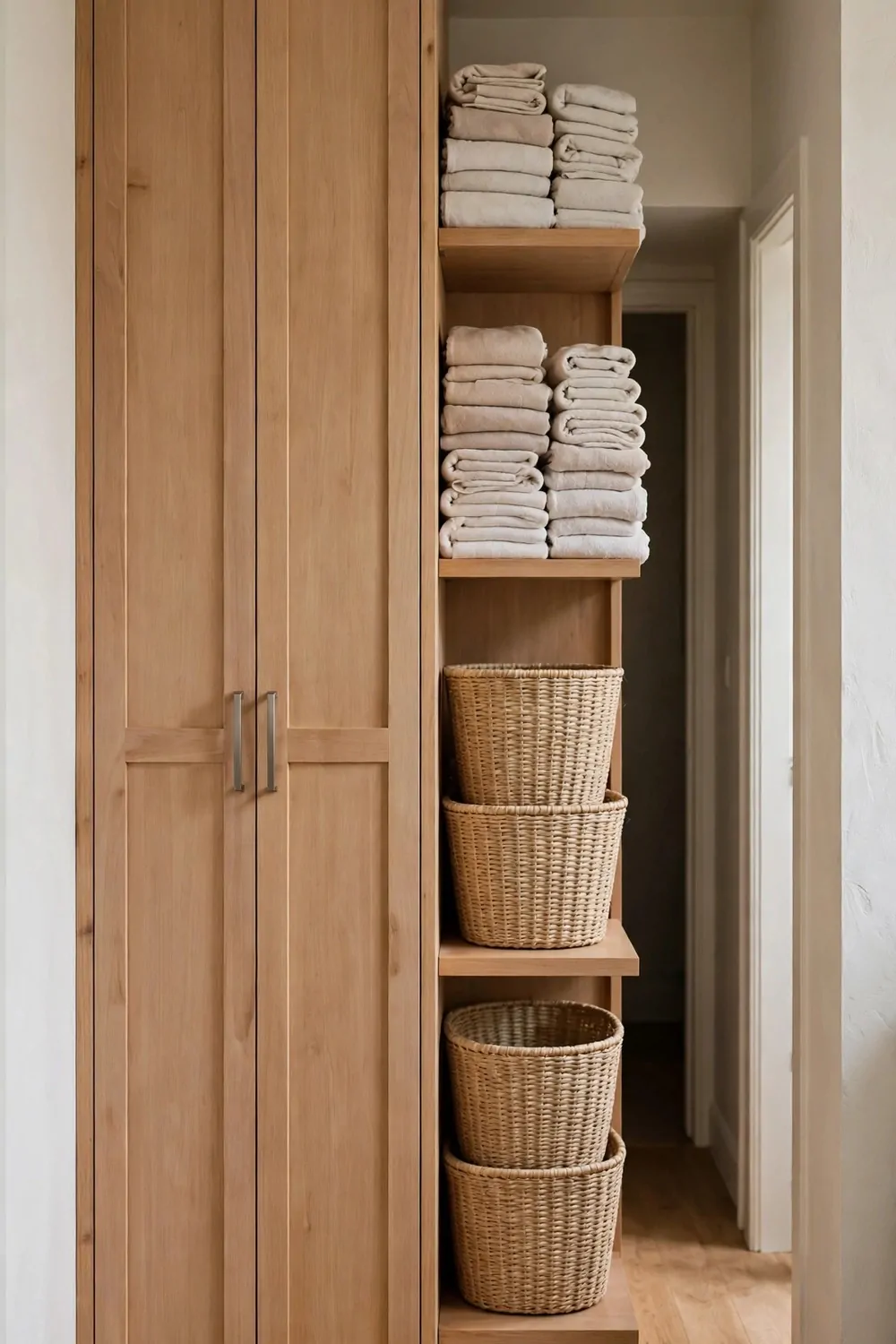
A washer and dryer in a small home can take over a whole corner. I had mine in the hallway once, and the noise and the mess of laundry made the whole space feel untidy.
A full-height wall that hides them works so well.
You build or fit tall doors around the machines, and when the doors shut, the laundry just vanishes. I keep soap and softener on a shelf above the machines, at a height I can reach without stretching, and spare towels go right up top.
Leave space for air to move, because machines need it. I leave a small gap at the back and I do not pack the shelf above too tight, so the machines can breathe and dry out after a wash.
Put a pull-out shelf between the machines if you can, at waist height. It gives you a spot to fold clothes straight from the dryer, and you do not need a big table in the room.
If you rent, a tall curtain or a freestanding screen can hide the machines too. It is not as neat as doors, but it softens the look a lot, and you can take it down when you move.
Keep daily laundry things low, like the basket and the soap, and keep spare sheets and cleaning cloths high. That way you are not reaching up with wet clothes in your arms.
I love how quiet the room feels when the doors are shut. You walk past, you see a plain tall cupboard, and the laundry day mess stays behind the doors until you are ready for it.
It is one of those ideas that gives you a whole room back. You get your hallway or kitchen corner back, and the machines still do their job, tucked away safe and tidy.
Tall Open Shelving in a Dining Nook
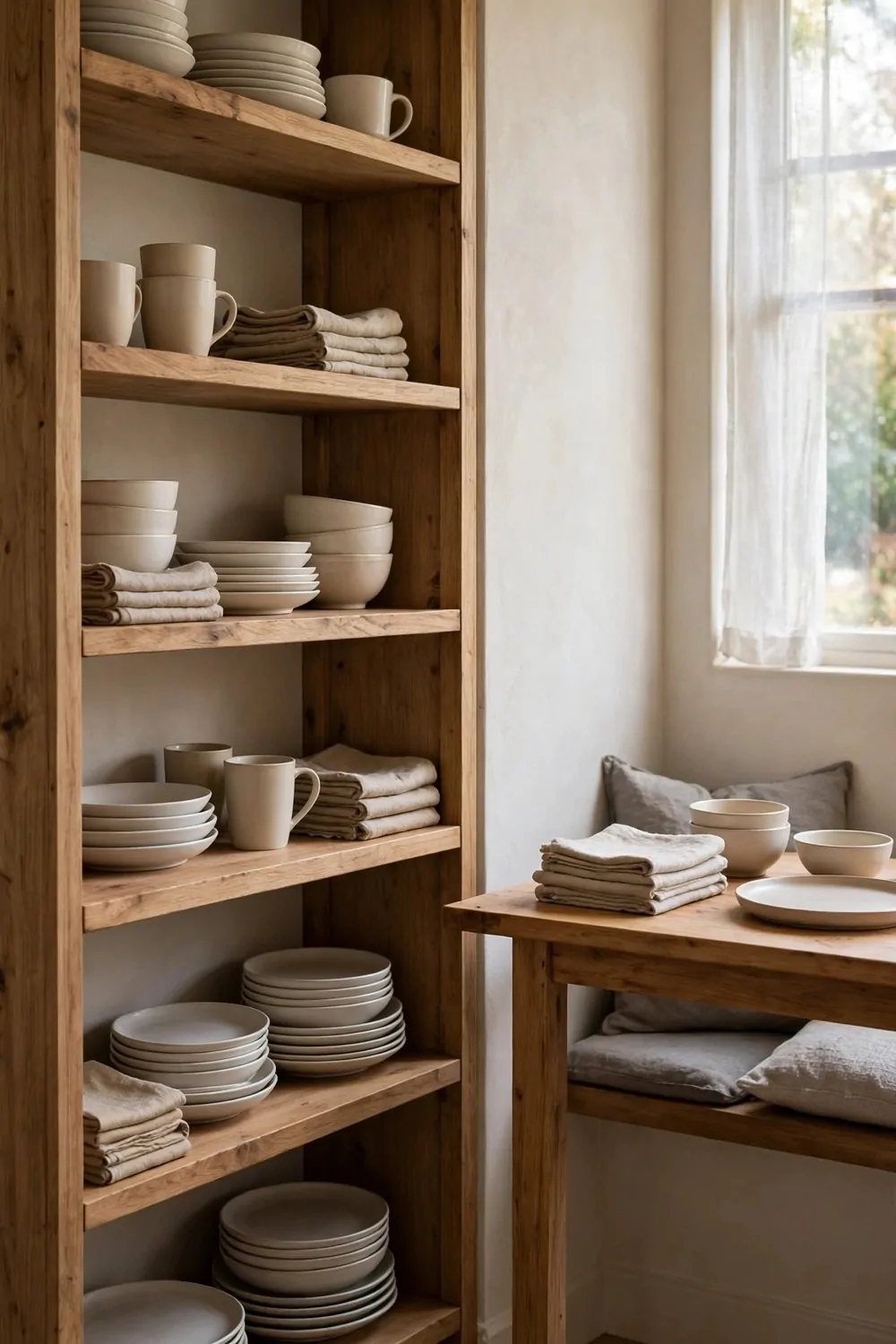
A small dining nook can feel cramped when plates and cups live in another room. I used to walk back and forth to the kitchen for every meal, and it made dinner feel like hard work.
Tall open shelves by the table changed that for me.
I keep everyday plates and bowls on the lowest shelves, where I can reach them while I set the table. Cups and glasses go just above, and the things we only use for guests go right up top, where they stay clean and out of the way.
Open shelves work best when you keep them simple. I use matching plates and plain bowls, and I leave a bit of space between stacks, so the shelves look calm and not crowded.
You can mix in a few pretty things too, like a small vase or a folded cloth. I keep it to just one or two, because too many bits on open shelves start to look messy fast.
Light wood or white shelves help the nook feel open, even when they go right up to the ceiling. Dark shelves can feel heavy over a small table, so I would keep the top shelves pale and airy.
Fix the shelves to the wall, and do not put heavy stacks right at the top. I keep the top for light things, like spare napkins and a few serving bowls, so nothing feels risky to lift down.
I wipe the shelves once a week with a damp cloth, and that keeps dust off the plates.
I love eating in a nook where everything is close by. You sit down, you reach for a plate, you pour a drink, and the meal feels easy and relaxed, just like it should.
A Simple Plan for Your Own Tall Storage Wall
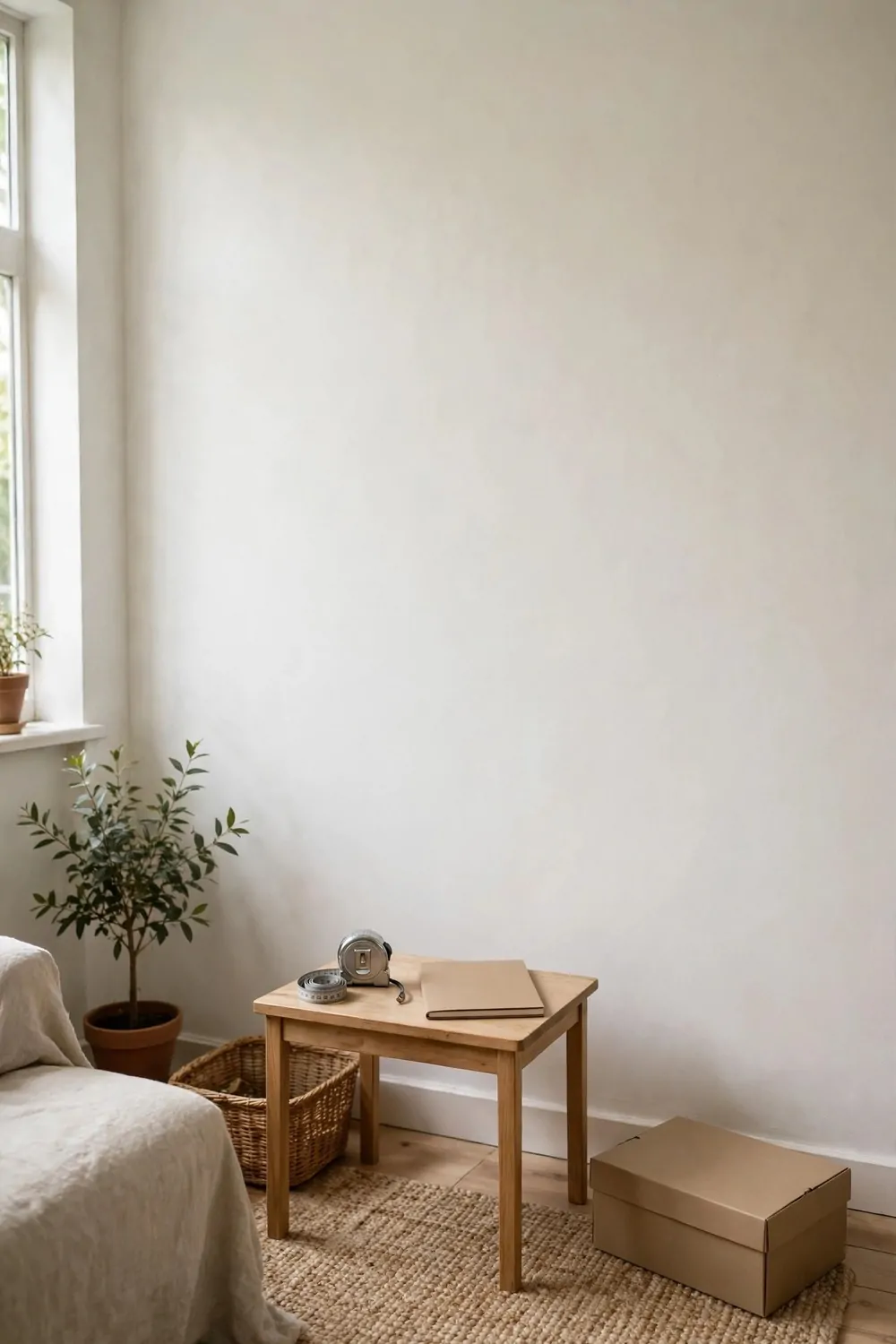
Now it is your turn, and I want to keep this really simple for you. You do not need to do it all in one day, and you do not need a big budget to start.
Pick one wall first, just one, and that is your tall storage wall.
Measure it from floor to ceiling, and write down the height and the width. I also measure the door swing and any plug sockets, because those small things can change where a shelf or a door can go.
Next, sort your things by how often you use them. Daily things go low, weekly things go in the middle, and things you use a few times a year go right up top, and that one rule will guide every choice you make.
Start low and build up, one shelf or one cabinet at a time. I started with a low unit and two shelves above it, and I added more only when I knew what I still needed to store.
Choose light colours for the top half, so the wall feels open and the room stays bright. I love pale wood and soft white up high, and I save deeper colours for the low drawers where they feel grounded.
Fix everything tall to the wall before you fill it. It takes a few extra minutes, but it keeps your home safe, and you can relax knowing a full shelf will not tip.
Leave a little empty space on purpose, on every shelf. It sounds odd, but empty space makes a tall wall look calm, and it gives you room to add things later without a big clear out.
You can do this in small steps, and your home will thank you for it. Pick your wall, measure it, sort your things, start low, and build up, and soon that tall wall will hold so much that your rooms finally feel big again.
Keep Reading
These tall walls are only the start. Once you see how much fits up high, you will start spotting empty walls in every room of your home.
The next four posts below are my favorite storage reads. Each one is full of simple ideas you can try this weekend, with no big budget and no builder needed.
- 31 Luxury Walk-In Closet Ideas With Custom Built-In Storage
- 35 Hidden Closet Storage Ideas That Maximize Every Inch
- 30 Hidden Kitchen Storage Ideas That Make Small Spaces Look Expensive
- 41 Custom Kitchen Cabinet Organization Ideas Worth Stealing
Pick one wall this week and start low. By next month your whole home will feel taller, calmer, and easier to live in.