18 Children Library Designs Kids Never Want to Leave

Here is a test I use on every children library corner I see. Walk into the room and listen. If it makes you want to whisper, it is working.
That is the whole secret. A children library is not about how many books you own. It is about the feeling in the air. The right corner makes a child slow down and pull a book off the shelf all by itself.
I have seen tiny corners do this better than whole rooms. A rug, a soft light, books at kid height. That is honestly most of it. The rest is the fun stuff in this list.
These 18 children library designs are all ideas I would try in a real home. Some cost almost nothing. Some take a weekend. All of them make kids want to stay a little longer.
The Floating Shelf Corner
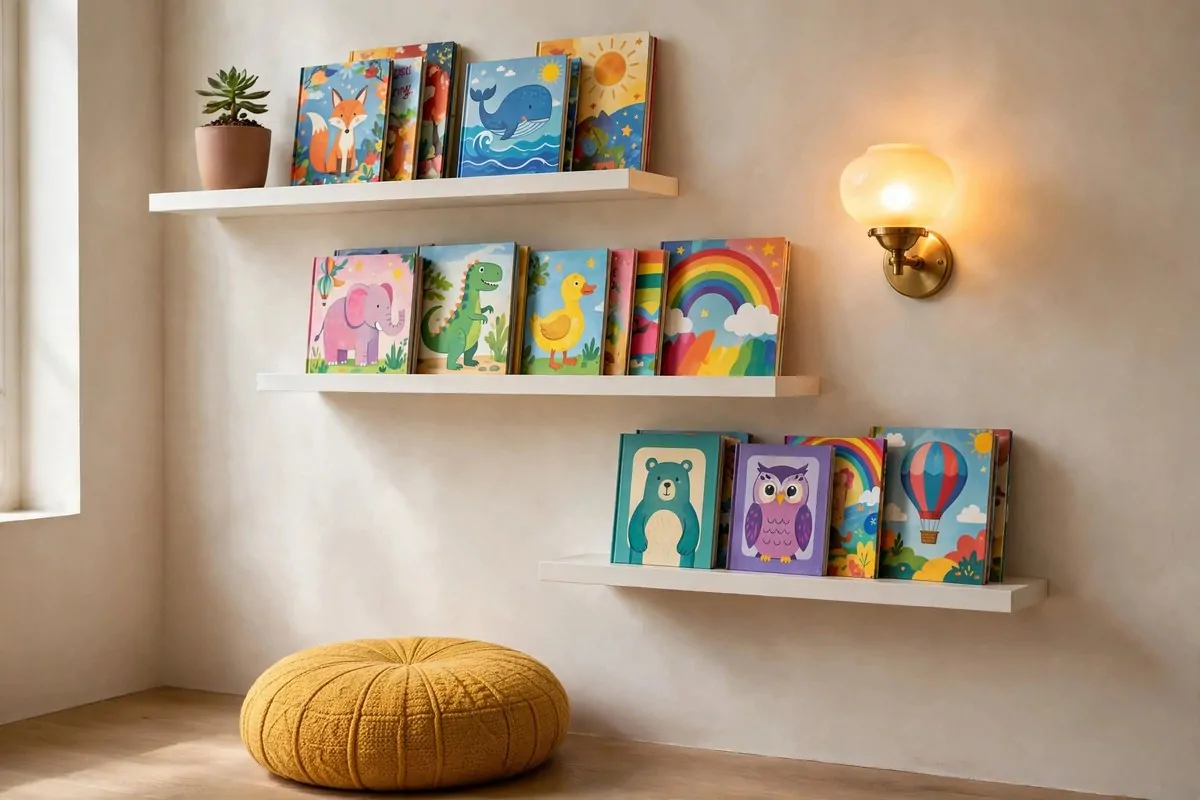
This is the easiest children library design on the whole list. Three floating shelves on a wall, a soft cushion on the floor below them, and you are done.
Kids love shelves they can reach. Put the books low. Keep the pretty covers facing out. A child picks books with their eyes first, not with the titles.
I like three rows at different heights. It looks more fun than one straight line. You can mix in a small plant or a toy on one end so it feels like a real little room.
The light matters more than you think. A small wall lamp or even a string of warm lights makes the corner glow at bedtime. My rule is simple. If the corner looks cozy in a photo, a child will want to sit there.
You do not need a big wall. Even four feet of wall space works. The magic is in the height. Low shelves say this spot is mine to a small child.
- Use three floating shelves at different heights for a playful look
- Face the best book covers outward so kids choose with their eyes
- Add one warm light source so the corner glows in the evening
- Keep a soft cushion or small rug right below the shelves
The Rainbow Book Wall
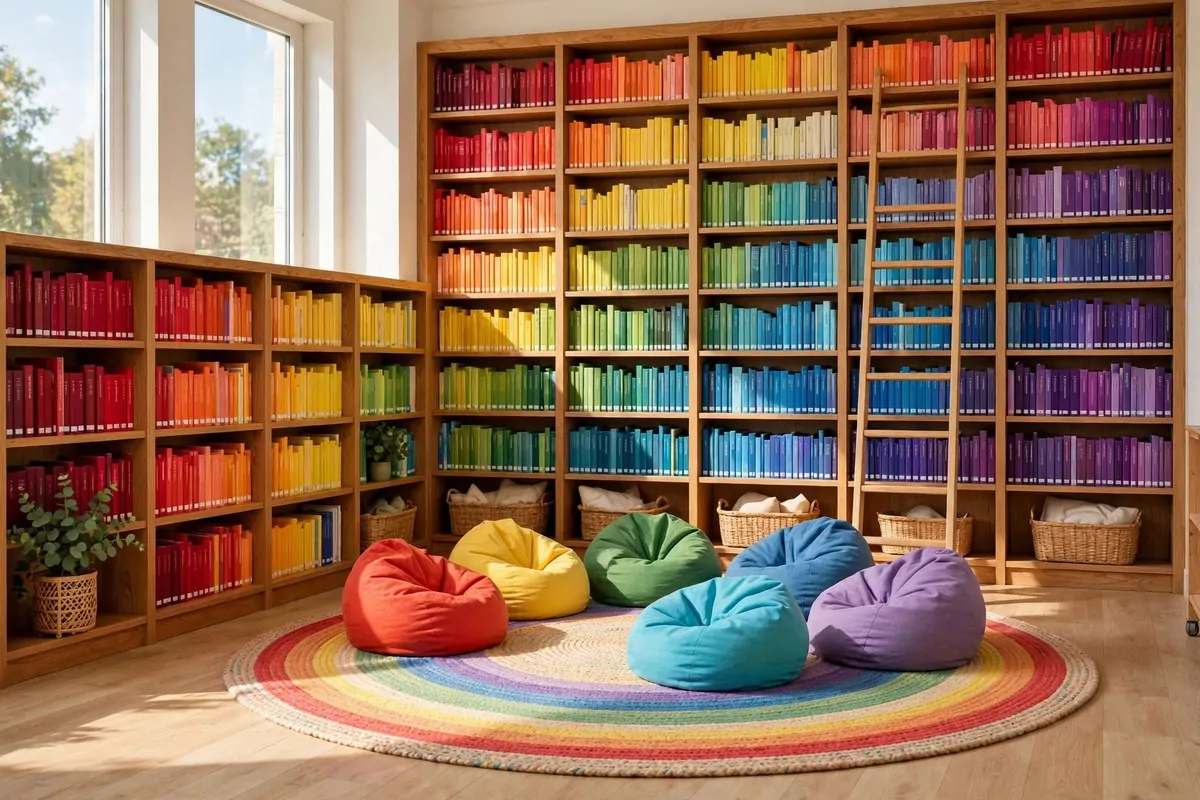
Sorting books by color sounds silly until you see it done. A rainbow book wall turns the shelf into art. Kids stare at it. Then they touch it. Then they pull a book out.
You need a decent amount of books for this one. Floor to ceiling shelves work best. The color order does the decorating for you, so the room needs almost nothing else.
I sort from red on the left to purple on the right. It takes about an hour the first time. After that it is easy to keep up. Kids actually learn the system fast.
This design works in a bigger room where the library is the star. Put a round rug in the middle. Add some beanbags. The wall does the talking.
One warning. Do not mix the sizes too much or the rainbow looks messy. Group the tall books together and the small ones together. It keeps the stripes clean.
The best part is how it grows with your child. A toddler sees colors. A bigger kid finds their favorite red book in two seconds. Everybody wins.
- Sort books in rainbow order from red to purple
- Group similar book sizes together to keep the stripes neat
- Let the wall be the only decoration in the room
- Add a round rug and beanbags in front of it
The Treehouse Loft Library
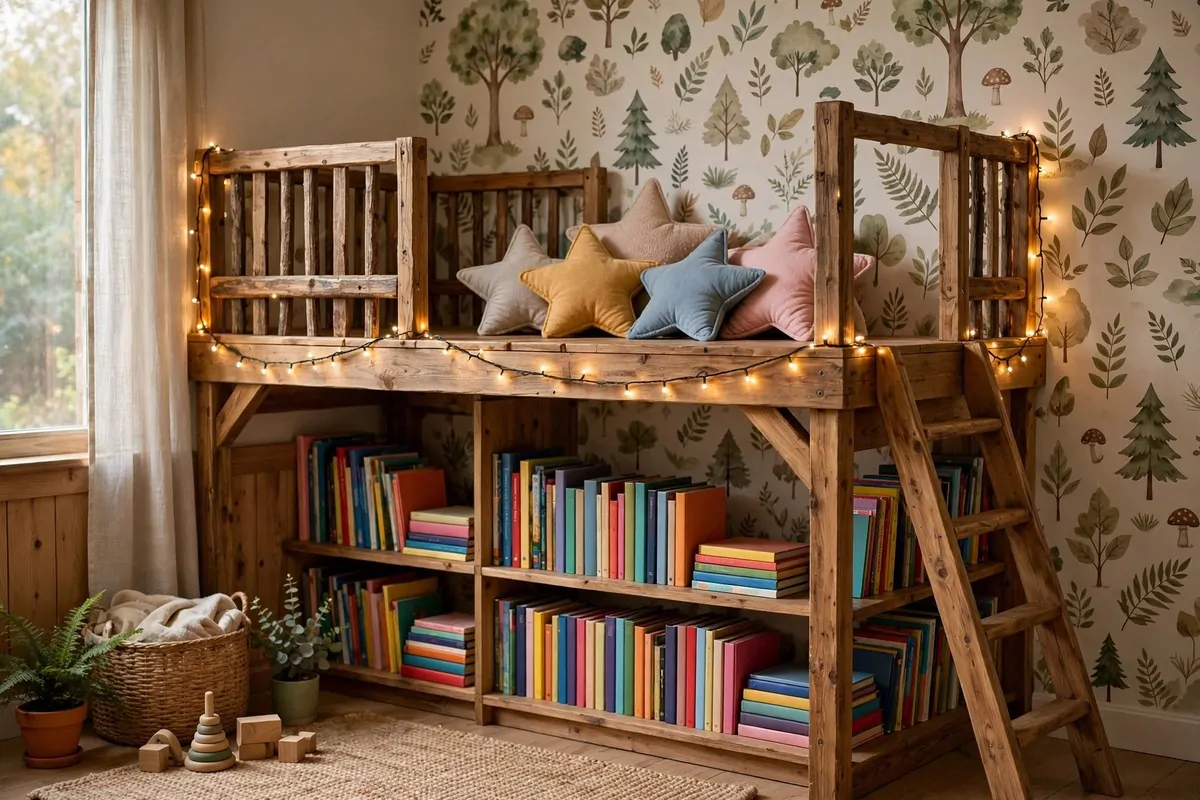
Every child wants a secret hideout. A treehouse loft library gives them one indoors. You build a small raised platform, put bookshelves under it, and add a little ladder.
The wood does most of the magic. Plain pine boards look like a real treehouse when they are boxed in. You do not need to be a carpenter. Simple boxes screwed together work fine.
Up top goes the reading spot. A thin mattress or thick foam pad. Some star shaped cushions. String lights along the edge so it glows at night.
Kids climb up there and the whole world changes. It is their space. Books feel more exciting in a hideout. I do not know why. They just do.
Safety first though. The platform should be low. Two or three feet is plenty. Add a rail on the open side. Anchor everything to the wall.
Under the loft, low bookshelves hold the collection. It is like the treehouse has a library in its trunk. Kids love that idea.
- Build the loft low, two to three feet high, with a rail on the open side
- Anchor the whole structure to the wall for safety
- Put string lights along the edge for a nighttime glow
- Use the space underneath for low bookshelves
The Window Seat Nook
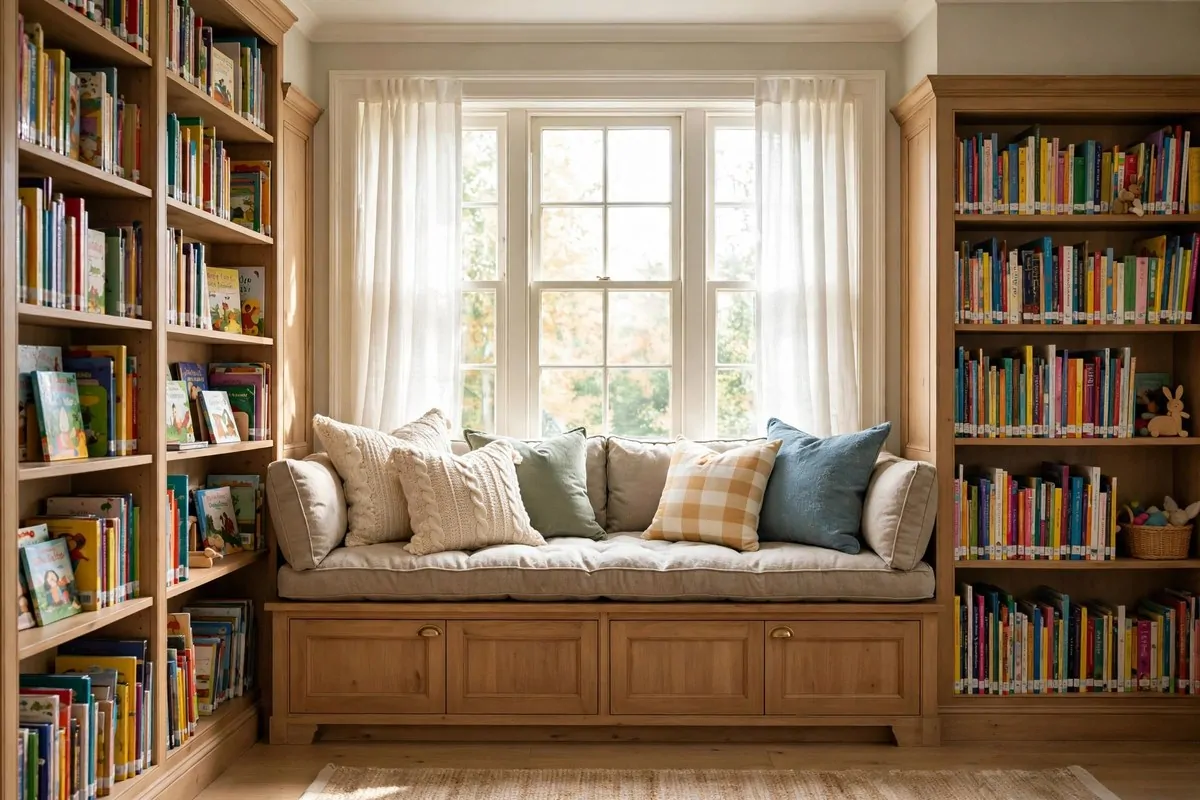
Natural light makes reading feel easy on the eyes. A window seat nook puts your child right in it. This is one of my favorite children library designs for small homes.
You build a bench under a window. Inside the bench goes storage for books or blankets. On top goes a thick cushion and a pile of pillows.
Then you add shelves on both sides of the window. The books frame the view like a picture. Kids sit there and read, then look outside, then read some more.
I love this one because it uses space that is usually wasted. The area under a window just sits there in most rooms. Now it is the best seat in the house.
Sheer curtains soften the light. They keep the glare off the pages. Pick a washable cushion cover. Window seats get a lot of use.
In the morning this nook is bright and happy. In the evening it is the perfect spot for one last chapter before bed.
- Build bench storage under the window for books and blankets
- Add shelves on both sides to frame the window
- Use sheer curtains to soften glare on the pages
- Choose washable cushion covers for heavy daily use
The Montessori Low Shelf Library
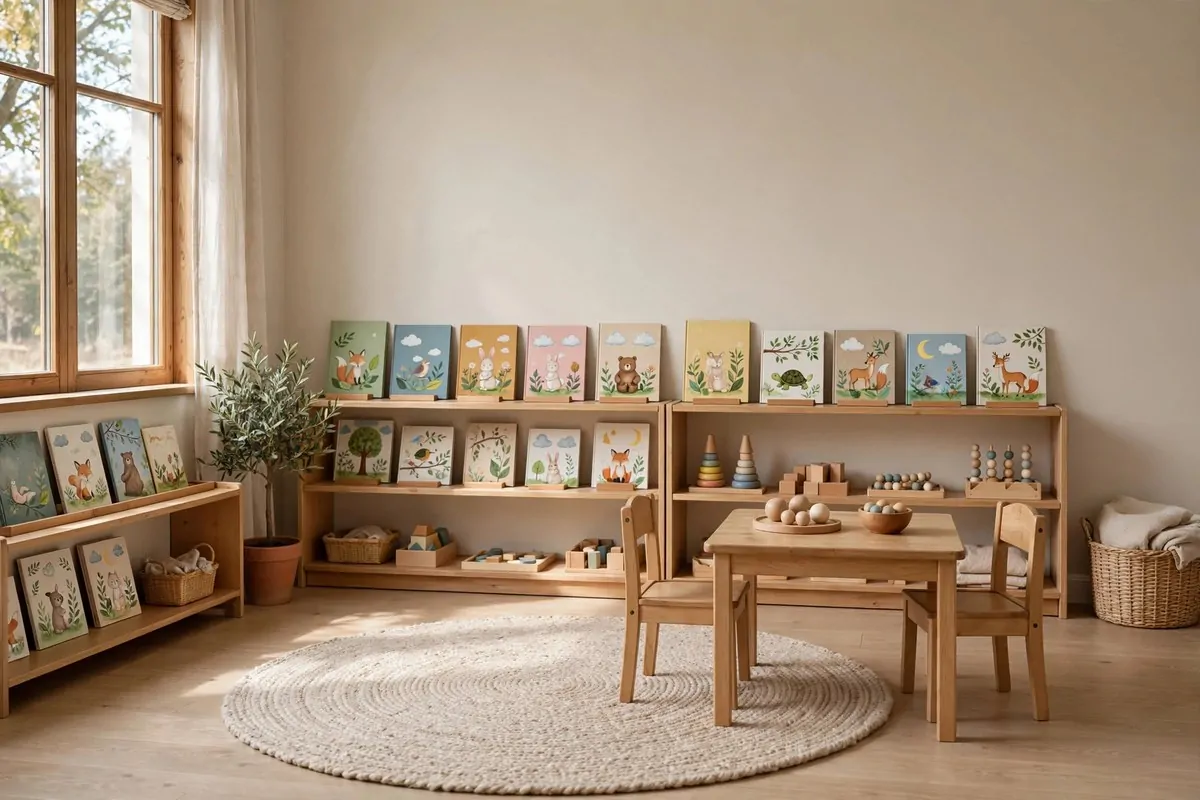
Montessori style means one thing. Everything at the child’s level. Low shelves, books facing forward, and only a few books out at a time.
This design looks calm because it is calm. Neutral wood, soft colors, no clutter. Kids can see every book cover. They pick one, read it, and put it back themselves.
I rotate the books every week or two. Ten to fifteen books out, the rest stored away. Old favorites feel new again when they come back.
Add a small child sized table and chairs nearby. Kids draw pictures about the books they read. It is the sweetest thing.
Natural materials work best here. Wood shelves, a wool rug, cotton cushions. The room feels warm without being loud.
This is the best design for toddlers and preschoolers. They can reach everything. They can clean up everything. Independence builds fast in this little library.
- Keep shelves at child height with books facing forward
- Display only ten to fifteen books and rotate them weekly
- Add a small table and chairs for drawing about books
- Use natural wood, wool, and cotton for a calm feel
The Story Tent Corner
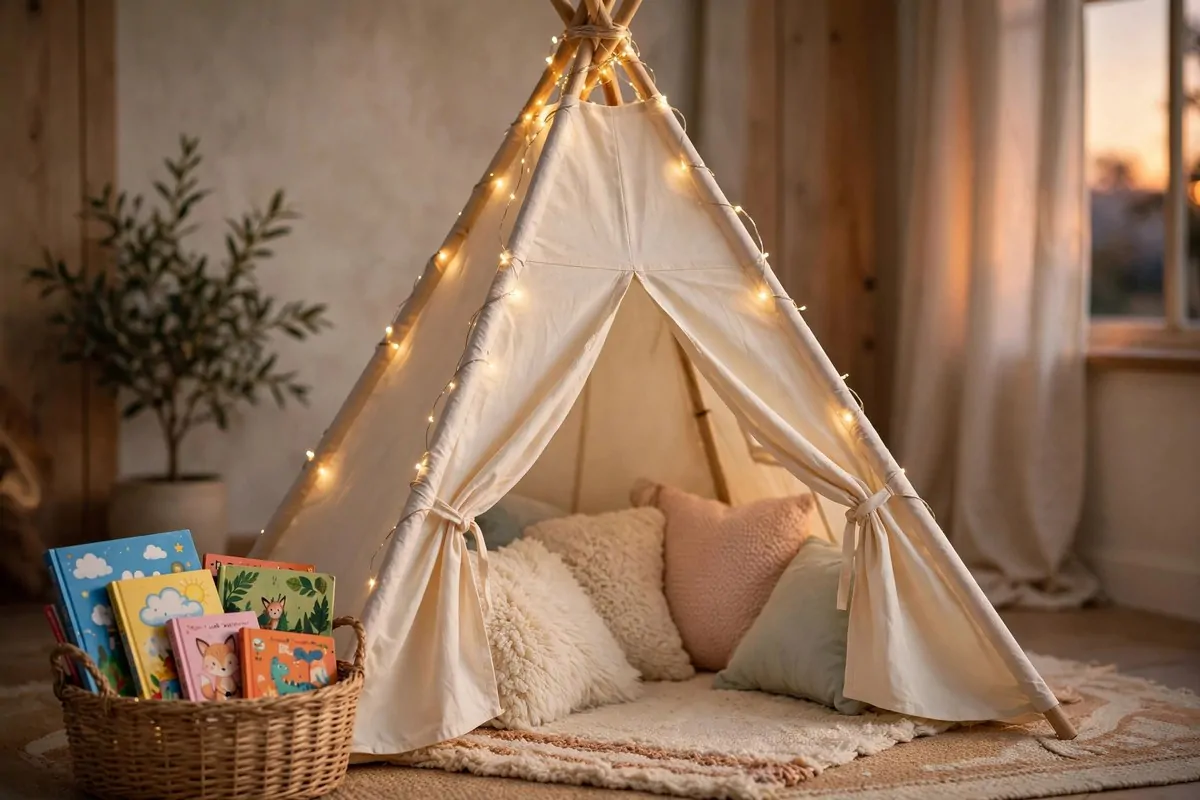
A tent turns reading into an adventure. Kids crawl inside and suddenly the book is happening in a fort. This is the cheapest big-impact idea on the list.
You can buy a simple canvas teepee or make one from a sheet and some poles. It does not need to be fancy. The shape does the work.
Inside goes a soft rug or a pile of blankets. A small basket of books. Maybe a battery lantern so it glows inside. Kids will read in there for an hour without noticing.
I love how the tent makes the library portable. Set it up in the living room on rainy days. Move it to the bedroom at night. Fold it away when guests come.
Pick books that match the mood. Adventure stories, animal tales, anything with a journey in it. The tent makes every story feel bigger.
One tip. Put a small rug under the whole tent. It marks the spot. It also makes cleanup easy when the tent moves.
- Use a simple canvas teepee or a sheet draped over poles
- Place a soft rug underneath to mark the reading spot
- Add a battery lantern inside for a warm glow
- Stock it with adventure and animal stories
The Under-Stairs Hideaway
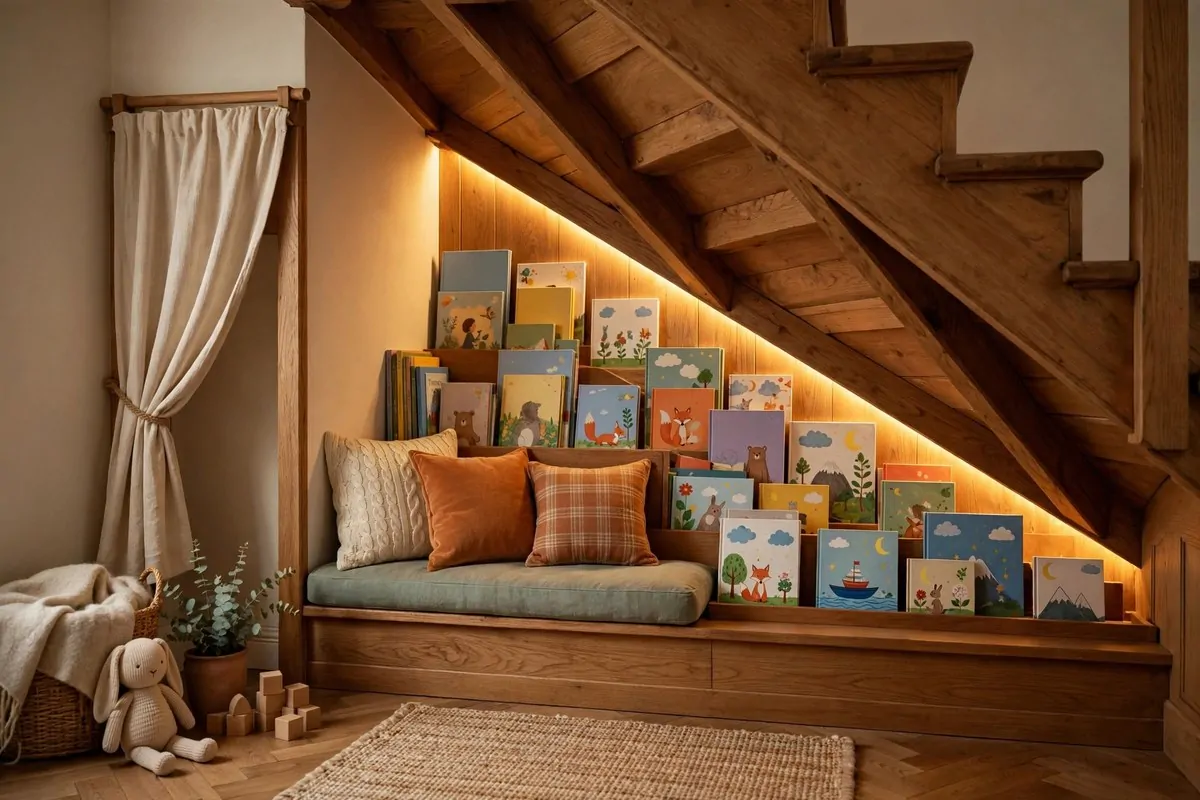
The space under your stairs is probably holding boxes right now. It could be holding a library instead. Kids adore small spaces that feel secret.
Low bookshelves fit perfectly under the slope. A small bench or a thick cushion makes the seat. Hidden strip lights along the back make it glow like a storybook illustration.
This design works because of the shape. The slanted ceiling hugs you. It feels like a burrow. Kids go quiet in here without being told.
I have seen families add a curtain across the front. The child pulls it closed and the world disappears. It is the cheapest door you will ever buy.
Storage goes in the deepest part where heads cannot reach. Pull out baskets for the books up front. Everything stays tidy because there is nowhere for mess to hide.
Measure first. You need about four feet of depth for a real seat. Less than that and it is just shelves, which is still nice but not a hideaway.
- Fit low bookshelves along the slanted wall
- Add hidden strip lights for a storybook glow
- Hang a simple curtain across the front for a secret door feel
- Use the deepest part for basket storage
The Fairy Light Glow Room
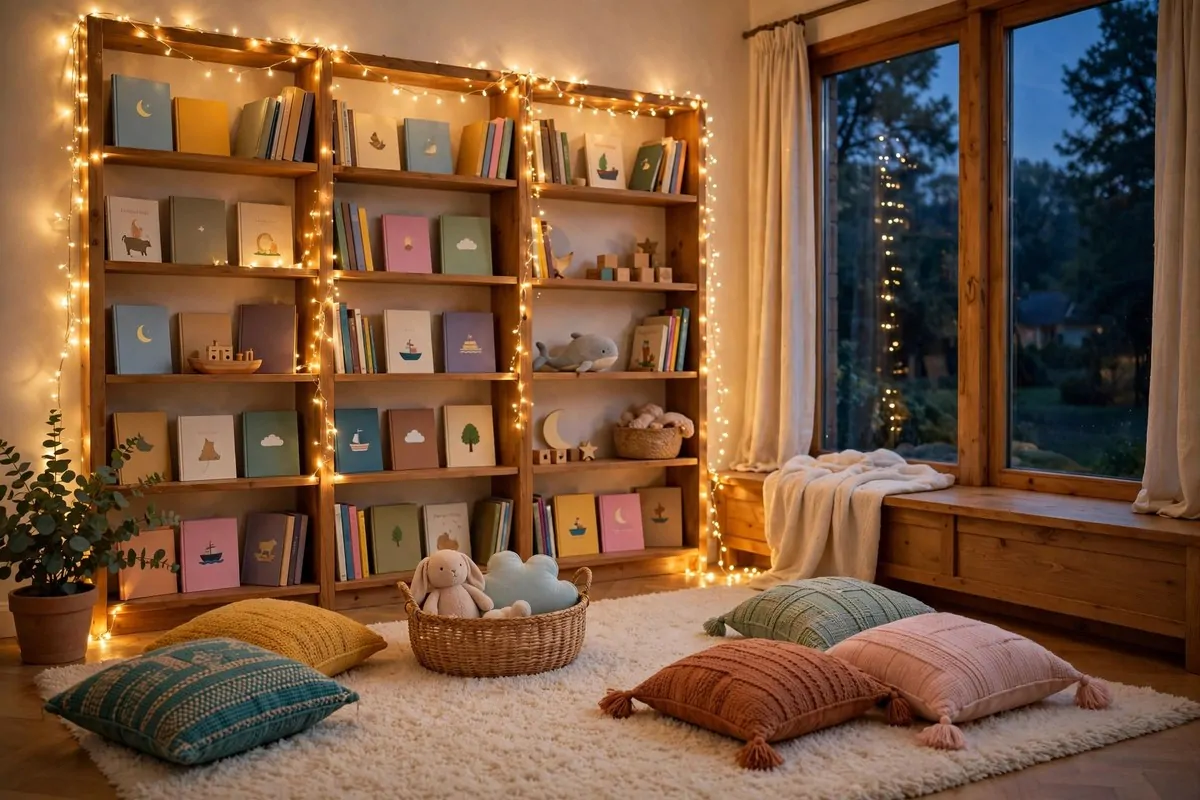
Fairy lights change everything. Drape them over a bookshelf and an ordinary corner turns into an evening reading spot. Kids are drawn to the glow like little moths.
This design is all about the light. Warm white lights, not colored ones. Wrap them around shelf edges, along the wall, over a curtain rod. Keep them low enough to see but high enough to be safe.
The rest of the room stays simple. A plush rug. Some floor cushions. Books in low baskets. The lights do the decorating.
I love this for the hour before bed. The main light goes off. The fairy lights stay on. One book, one child, one calm evening. It is a ritual kids remember.
Battery lights are safest. No cords to trip on. The timer ones turn off by themselves after six hours. That is a feature worth paying for.
Pair the lights with soft textures. A fluffy rug, knit blankets, velvet cushions. Glow plus softness equals a room kids never want to leave.
- Use warm white fairy lights, not colored ones
- Choose battery lights with a built in timer
- Keep the rest of the room simple and soft
- Make it the official before bed reading ritual spot
The Scandi Light Wood Library
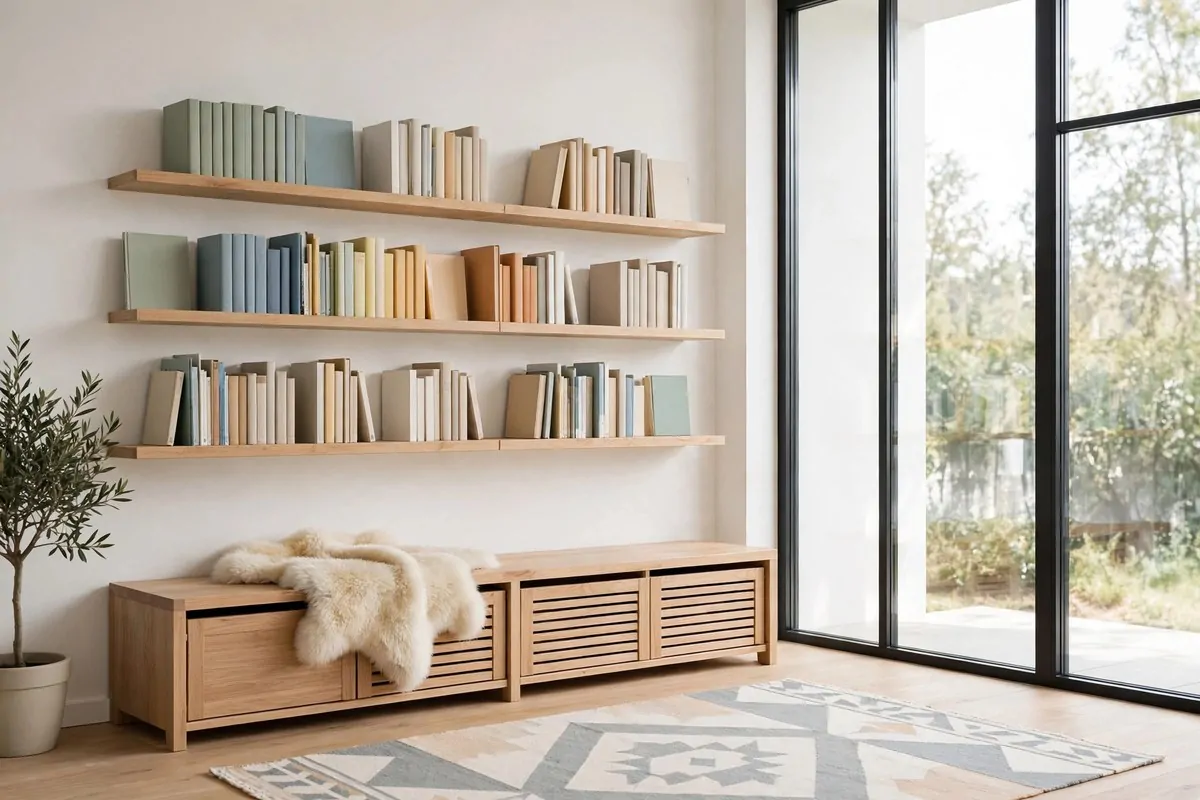
Scandinavian style is calm and bright. Light wood shelves, white walls, soft pastel touches. It looks clean but still feels warm and kid friendly.
The shelves are simple. Light oak or pine. Straight lines. Books lined up neatly with a little space between groups. It looks organized without trying too hard.
A simple reading bench sits below the main shelf. The bench has storage inside for toys or extra books. A geometric rug adds one playful pattern.
I like this design for parents who feel stressed by clutter. Everything has a place. The room stays tidy. The child still has plenty of books.
Big windows help a lot here. Let the daylight in. Use light curtains that glow when the sun hits them. The whole room feels like morning.
Add one or two soft things. A sheepskin on the bench. A round cushion on the floor. That is enough. The wood and light do the rest.
- Choose light oak or pine shelves with clean straight lines
- Keep book groups spaced out so the shelves breathe
- Use a storage bench as the main seat
- Let natural daylight do most of the lighting work
The Nature Corner Library
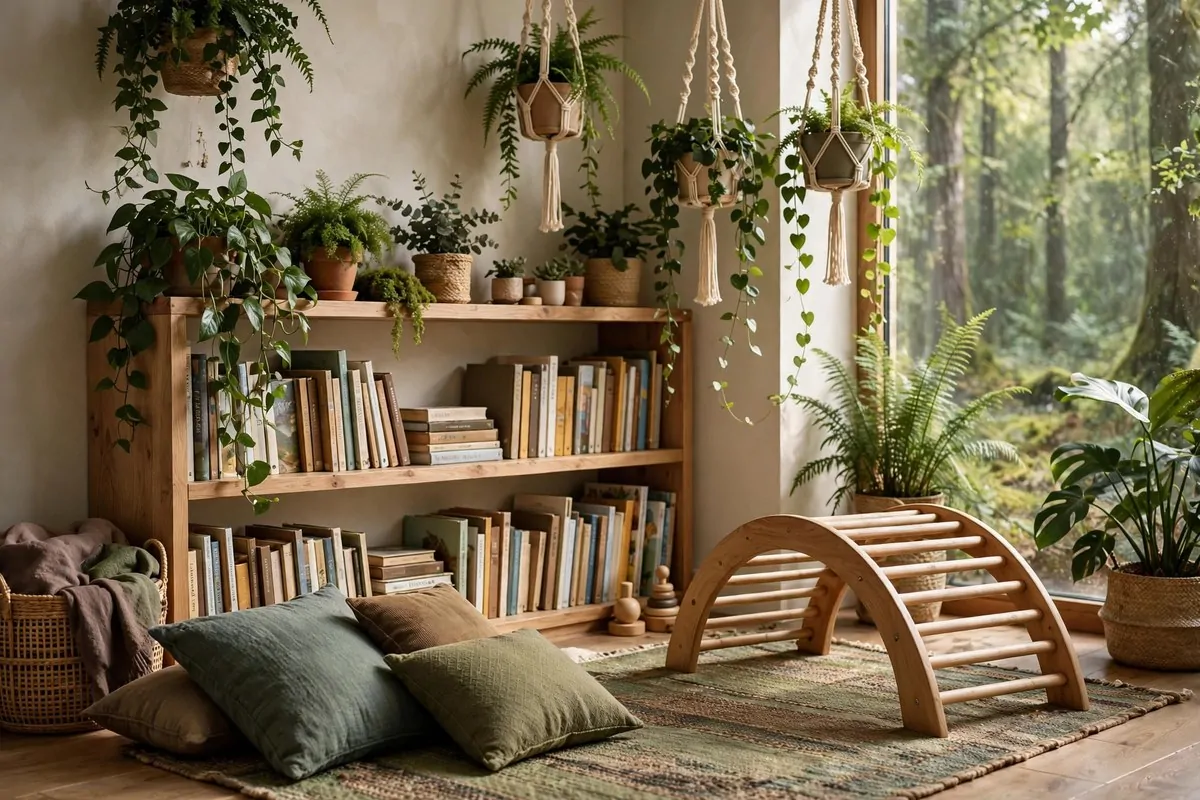
Bring the outdoors inside. A nature corner library uses wood, plants, and earthy colors. It feels calm like a forest clearing.
Start with wooden shelves and a soft green rug. Add real plants on the top shelf where little hands cannot knock them over. A small potted tree in the corner is a big win.
The colors stay earthy. Greens, browns, creams. Wall art with trees or animals. Maybe a wallpaper strip with a woodland scene on one wall.
Kids read about animals while sitting next to a plant. It connects the stories to real life. I think that is why this design works so well.
A climbing arch or a small indoor slide nearby blends play with reading. Active kids read better after they move. The design honors that.
Keep the plants safe. No sharp leaves at kid height. Hanging planters work great above the shelves. The green drapes down and looks magical.
- Use earthy greens, browns, and creams for the whole palette
- Add real plants on high shelves and hanging planters
- Include one woodland art piece or wallpaper strip
- Blend in one active play piece like a climbing arch
The Vintage Story Library
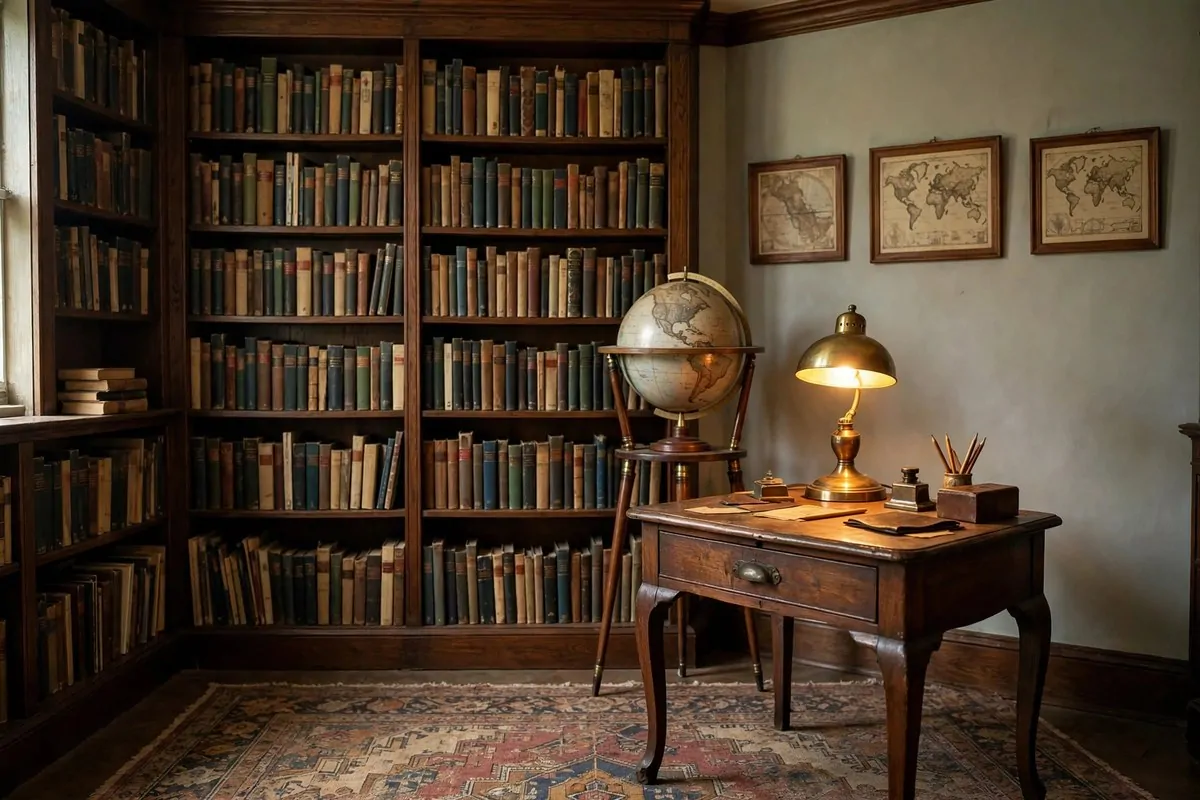
Old libraries have a smell and a feeling. Dark wood, brass lamps, a globe in the corner. Kids feel like explorers in a room like this.
Dark wood bookshelves are the base. You can find them secondhand for very little money. A small vintage style desk or writing table adds to the story.
The globe is the star. Kids spin it and point at places. Then they pull a book about that place. Geography becomes a game.
A brass lamp with a warm bulb lights the reading chair. Patterned curtains or an old rug add texture. Everything looks like it has a history.
I add old bookends, framed maps, and a magnifying glass on the desk. Kids love props. They pick up the magnifying glass and suddenly they are detectives.
This design suits older kids best. Eight and up. They get the adventure feeling. Younger kids just like the lamp glow, which is fine too.
- Hunt secondhand shops for dark wood bookshelves
- Make a globe the centerpiece of the room
- Add a brass lamp with a warm bulb for the reading chair
- Scatter props like old maps and a magnifying glass
The Chalkboard Wall Library
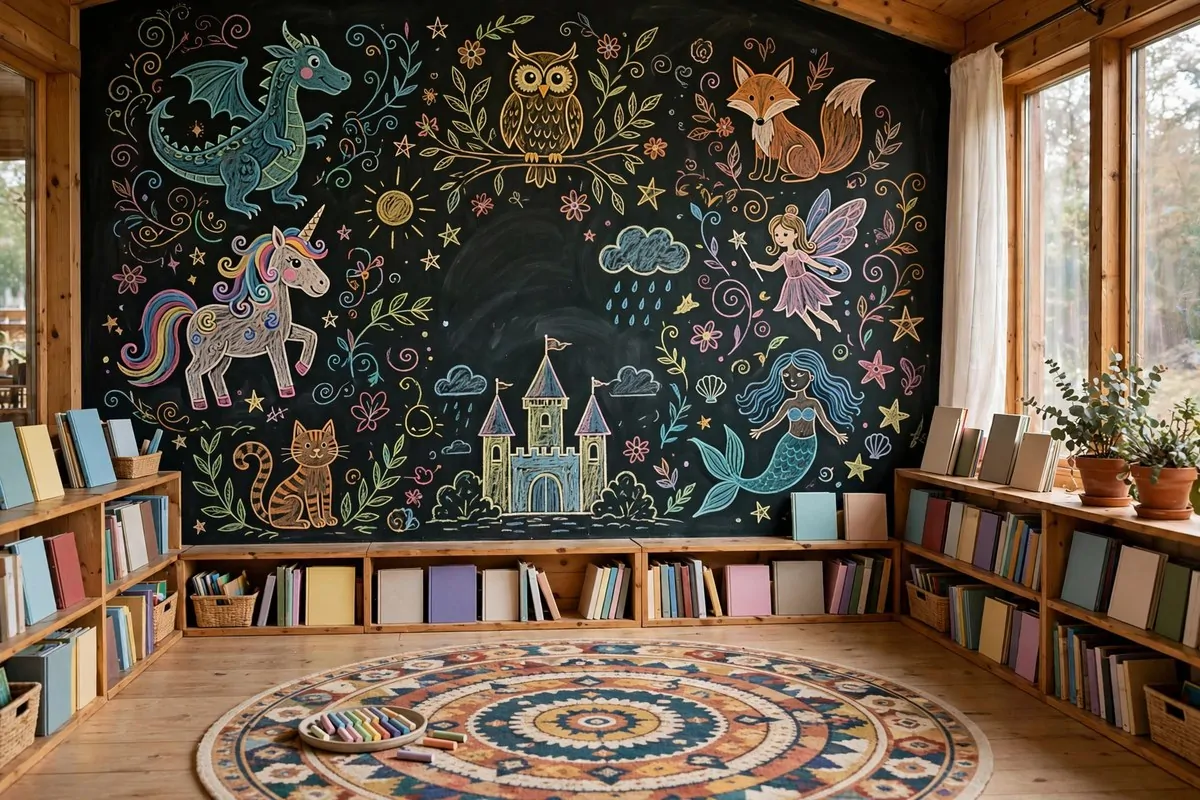
Some kids need to move and make things. A chalkboard wall lets them draw the stories they read. It turns the library into a studio too.
Paint one wall with chalkboard paint. It takes two coats and a weekend to cure. After that it is a giant canvas. Kids draw characters, maps, and scenes from their books.
The bookshelves go on the other walls. Low and reachable. A central rug gives everyone a spot to sit and look at the wall together.
I love watching kids retell a story in chalk. They remember more. They notice details. The wall makes reading active instead of passive.
Chalk dust is the only downside. Use dustless chalk. Keep a small tray for the chalk and erasers. Wipe the wall down once a week.
This design is perfect for siblings. One reads aloud. The other draws. They swap. The library becomes a team activity.
- Paint one full wall with two coats of chalkboard paint
- Keep low bookshelves on the remaining walls
- Use dustless chalk and a small tray for supplies
- Let siblings take turns reading aloud and drawing
The Hammock Chair Reading Spot
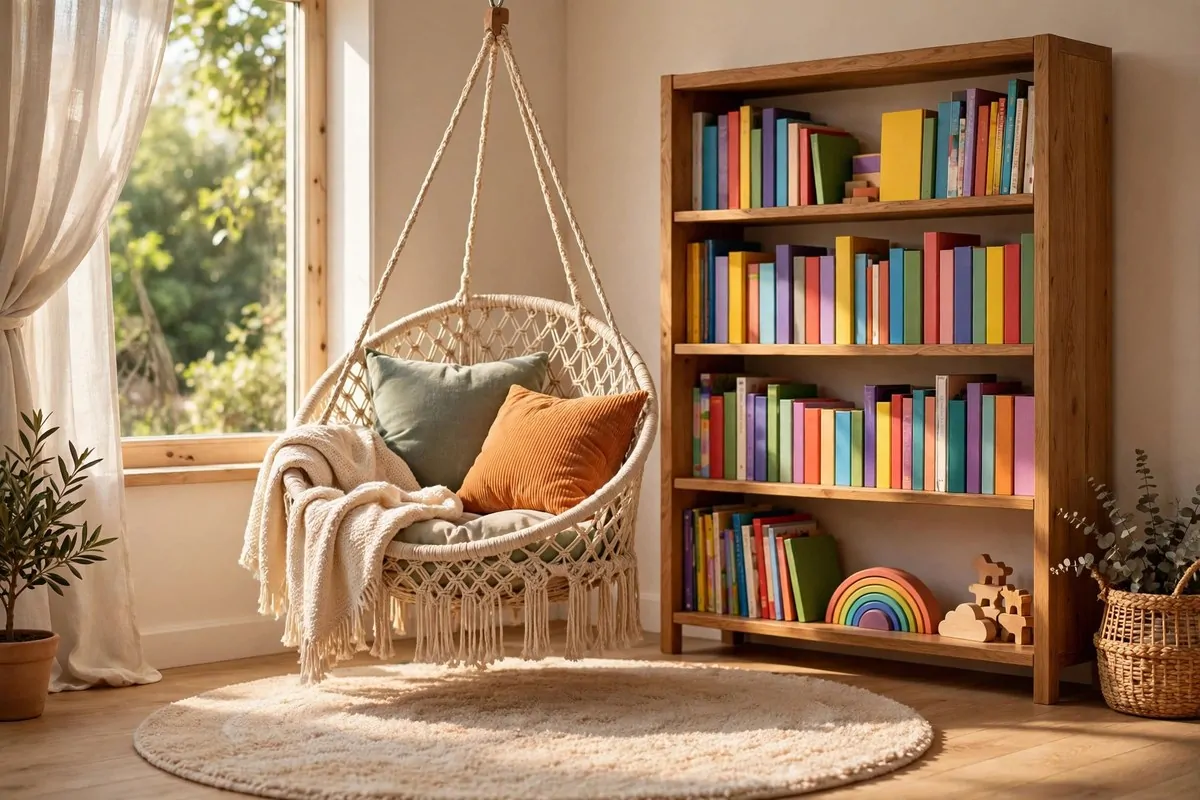
A hammock chair hangs from the ceiling and gently swings. Kids climb in with a book and rock themselves while they read. It is the coziest seat in any library.
You need a strong ceiling anchor. A joist, not just drywall. If you are not sure, ask someone who knows. Safety first, always.
The chair itself can be a simple macrame swing or a fabric cocoon. Add a cushion inside. Hang it low enough for kids to climb in alone.
Place a bookshelf right next to it. The child grabs a book, climbs in, and swings. The gentle motion actually helps some kids focus. It is like rocking a baby, but for readers.
I put a soft rug underneath. Feet dangle and touch the rug. It stops the spinning. It also catches the chair if it ever tips, which it should not if it is hung right.
This spot works in a corner of any room. You do not need a whole library. One chair, one shelf, one happy reader.
- Anchor the chair into a ceiling joist, never just drywall
- Hang it low enough for kids to climb in by themselves
- Place a bookshelf within arm’s reach of the chair
- Put a soft rug underneath to steady the swing
The Beanbag Circle Corner
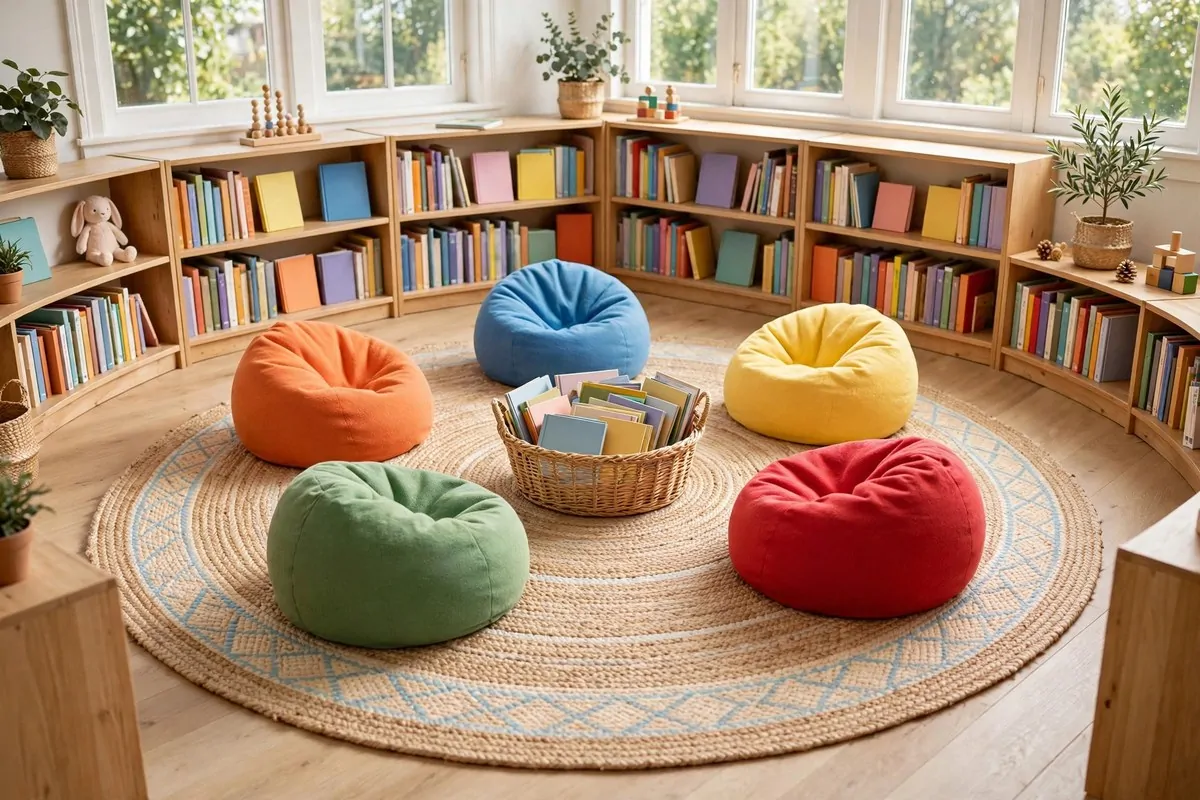
Reading is better with friends. A beanbag circle makes the library a social spot. Kids read together, trade books, and talk about stories.
Arrange four or five beanbags in a circle on a big round rug. Low bookshelves ring the outside. Everyone can see everyone. It feels like story time at school, but at home.
This design is great for playdates. Kids pick books and show each other the pictures. Siblings read side by side. It builds a little reading culture in your house.
Beanbags are cheap and light. Kids drag them around. That is fine. Let the circle be messy. A perfect circle is for photos. A lived in circle is for reading.
I keep a basket of books in the middle of the circle. New books go there. Kids dig through it like a treasure chest. Rotation keeps it exciting.
Washable beanbag covers are worth it. Juice happens. Crayons happen. Zip off covers go in the wash and the circle is fresh again.
- Arrange four or five beanbags in a loose circle
- Ring the circle with low bookshelves
- Keep a basket of rotating new books in the center
- Buy beanbags with washable zip off covers
The Picture-Ledge Gallery Wall
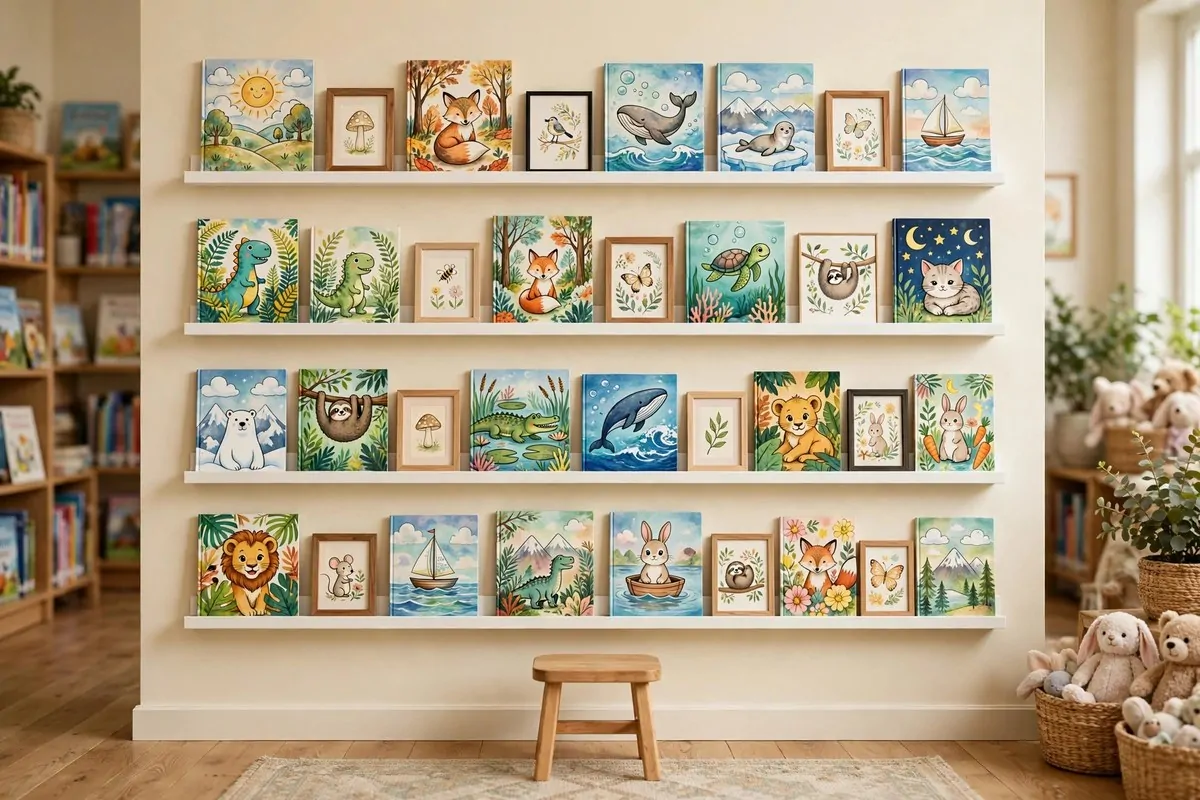
Picture ledges are narrow shelves that hold books facing forward. A whole wall of them looks like a gallery. Kids shop the wall like a bookstore.
Install three or four long ledges on one wall. Lean the books against the wall with covers out. Change the display every week. Kids notice new covers fast.
This is the best design for reluctant readers. The cover sells the book. A child who never opens a spine-out shelf will grab a book with a dragon on the cover.
I mix in framed art between the ledges. A print, a postcard, a drawing the child made. It makes the wall feel curated, like a real gallery.
The ledges are cheap and easy to hang. Two screws each. You can fill a whole wall in an afternoon. It is one of the fastest library makeovers on this list.
Keep a small stool nearby. The top ledge should still be reachable. If a child cannot reach a book, that book does not exist to them.
- Install three or four long picture ledges on one wall
- Display books with covers facing forward like a gallery
- Rotate the display weekly to catch wandering eyes
- Mix in framed art and the child’s own drawings
The Small Bench With Storage Library
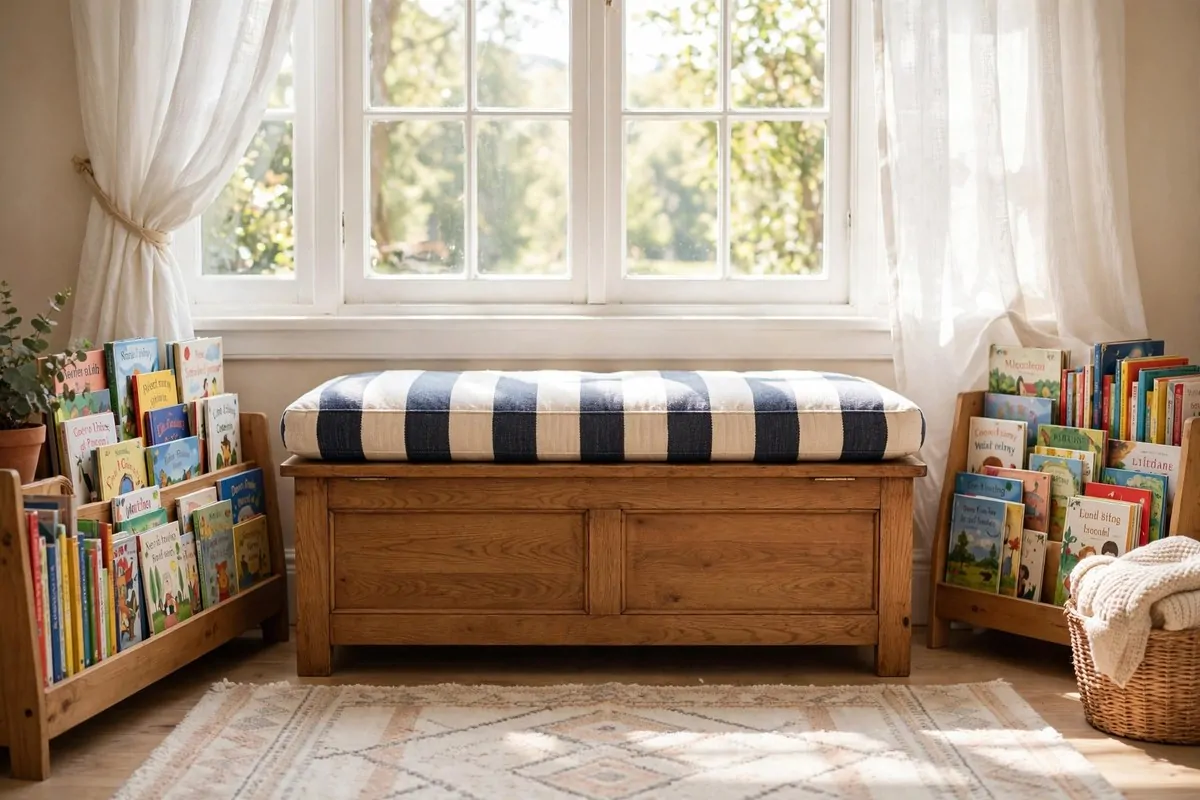
A storage bench does two jobs. Kids sit on it to read. Inside it hides the toys, the extra books, the clutter. Every small home needs furniture like this.
Place the bench under a window or against a short wall. Add a thick cushion on top. Flank it with bookshelves or stack books in cubbies on either side.
The inside storage is the real win. Lift the lid and toss in the stuffed animals. Close it and the library looks tidy. Kids learn that cleanup takes ten seconds.
I label the inside with simple picture labels. Animals here. Art stuff there. Even small kids can sort when the system is visual.
This design fits in a hallway, a bedroom corner, or at the end of a bed. It is a library that fits anywhere. That is its superpower.
Choose a bench with soft close hinges. Little fingers and heavy lids are a bad mix. Safety latches cost almost nothing.
- Place the bench under a window or against a short wall
- Add a thick washable cushion on top for reading
- Label the inside storage with picture labels
- Choose soft close hinges to protect little fingers
The Globe and Map Reading Corner
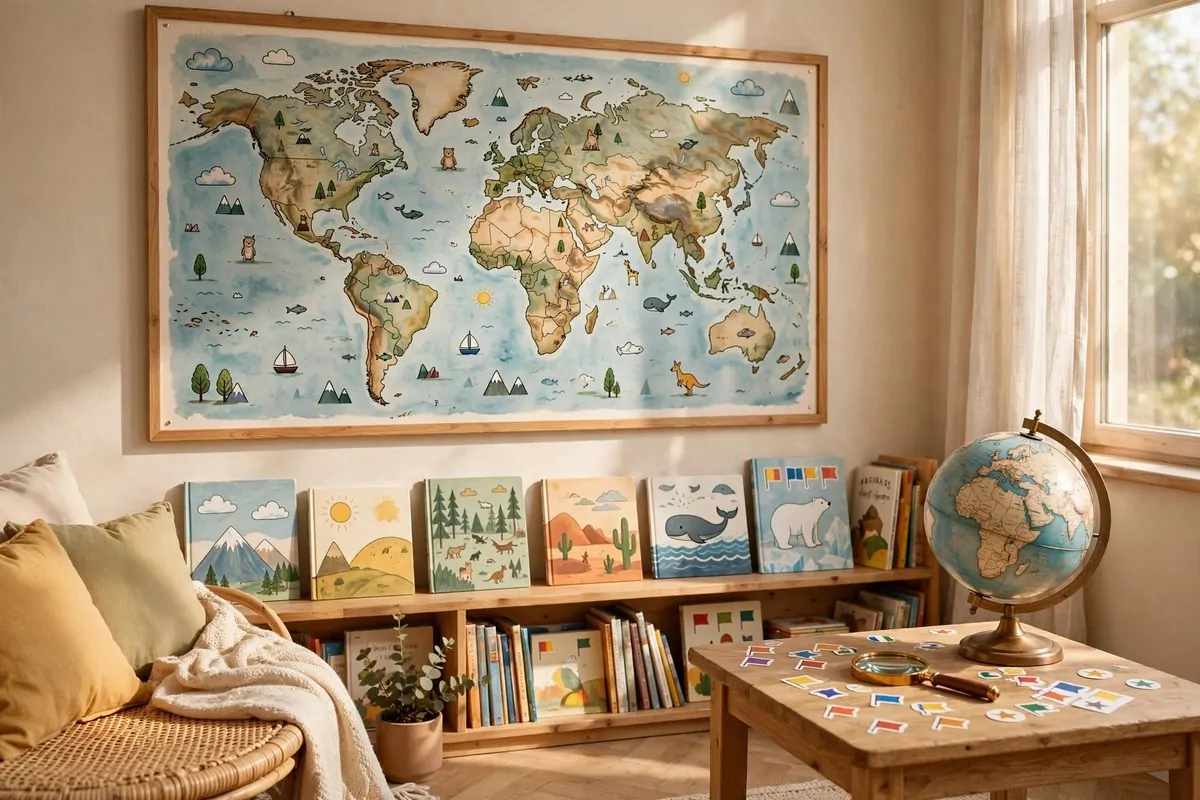
Stories happen somewhere. A map on the wall shows kids where. This corner pairs books with geography and turns reading into travel.
Hang a big world map on the wall. Put a globe on a small table next to the bookshelf. Add a pin or a sticker for every place you read about together.
Kids love tracking stories. We read about whales, we find the ocean. We read a folk tale, we find the country. The map fills up and so does their curiosity.
The bookshelf holds atlases, animal books, and folk tales from around the world. Mix fiction and nonfiction. A story about a desert pairs with a book about camels.
I add a small magnifying glass and some flag stickers. Props make it a game. Kids do not even realize they are learning.
This corner works for all ages. Toddlers point at colors. Big kids plan imaginary trips. The map never gets old.
- Hang a large world map at child eye level
- Keep a globe on a small table by the bookshelf
- Mark every story location with a pin or sticker
- Stock atlases, animal books, and world folk tales
The Soft Rug Campout Corner
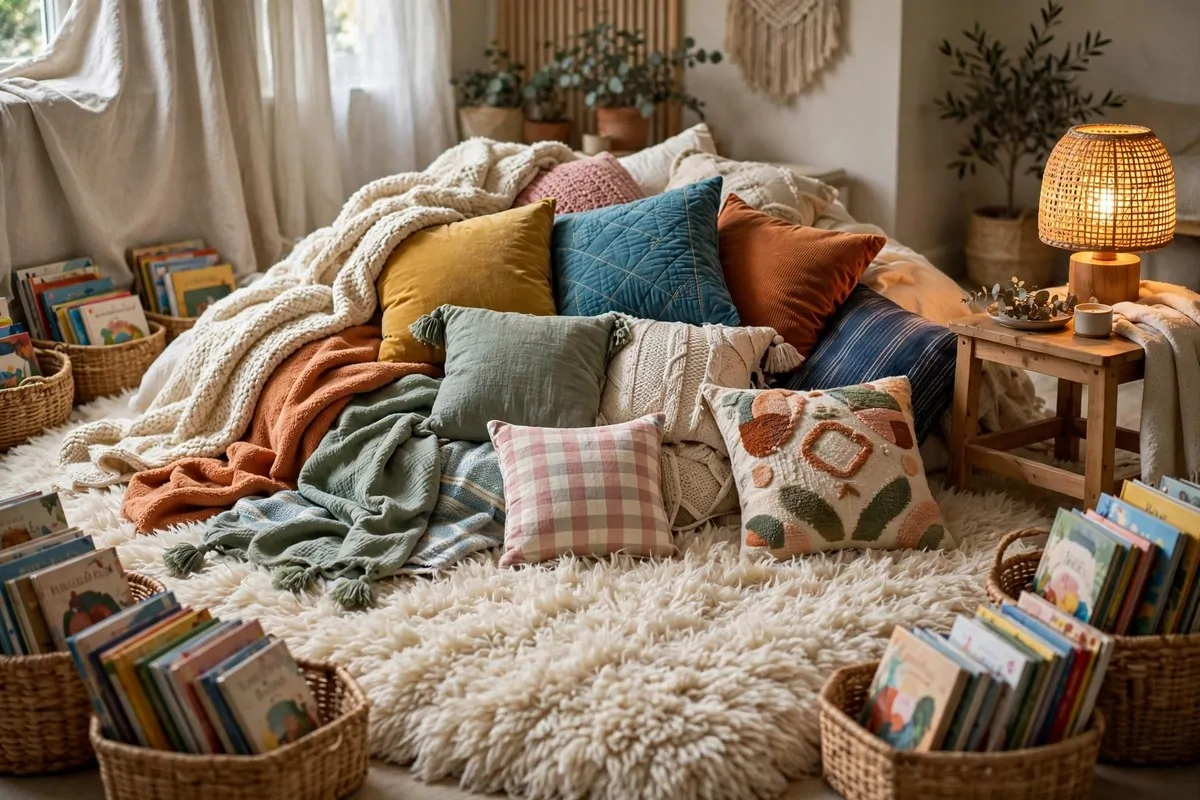
Sometimes the simplest design wins. A giant soft rug, a mountain of pillows, and baskets of books. Kids sprawl out and read like it is a campout.
The rug is everything here. Thick, soft, big enough for two or three kids. Shaggy or fluffy works best. It should feel like lying on a cloud.
Pile on the pillows. Different sizes, different textures. Throw a blanket over the pile. Kids burrow in and do not come out for an hour.
Baskets of books sit around the edges. Low and reachable. Rotate the baskets monthly so the pile feels fresh.
I love this design because there is nothing to fall off. No chairs, no loft, no climbing. Toddlers are safe. Big kids are comfy. Everybody reads.
Add a small side table for water and a lamp with a warm bulb. That is the whole room. Simple, soft, and full of books.
- Choose the thickest, softest rug you can afford
- Pile on pillows in different sizes and textures
- Ring the rug with low baskets of rotating books
- Add one warm lamp and a small side table