25 Puzzle Would You Rather Questions That Will Test Your Patience

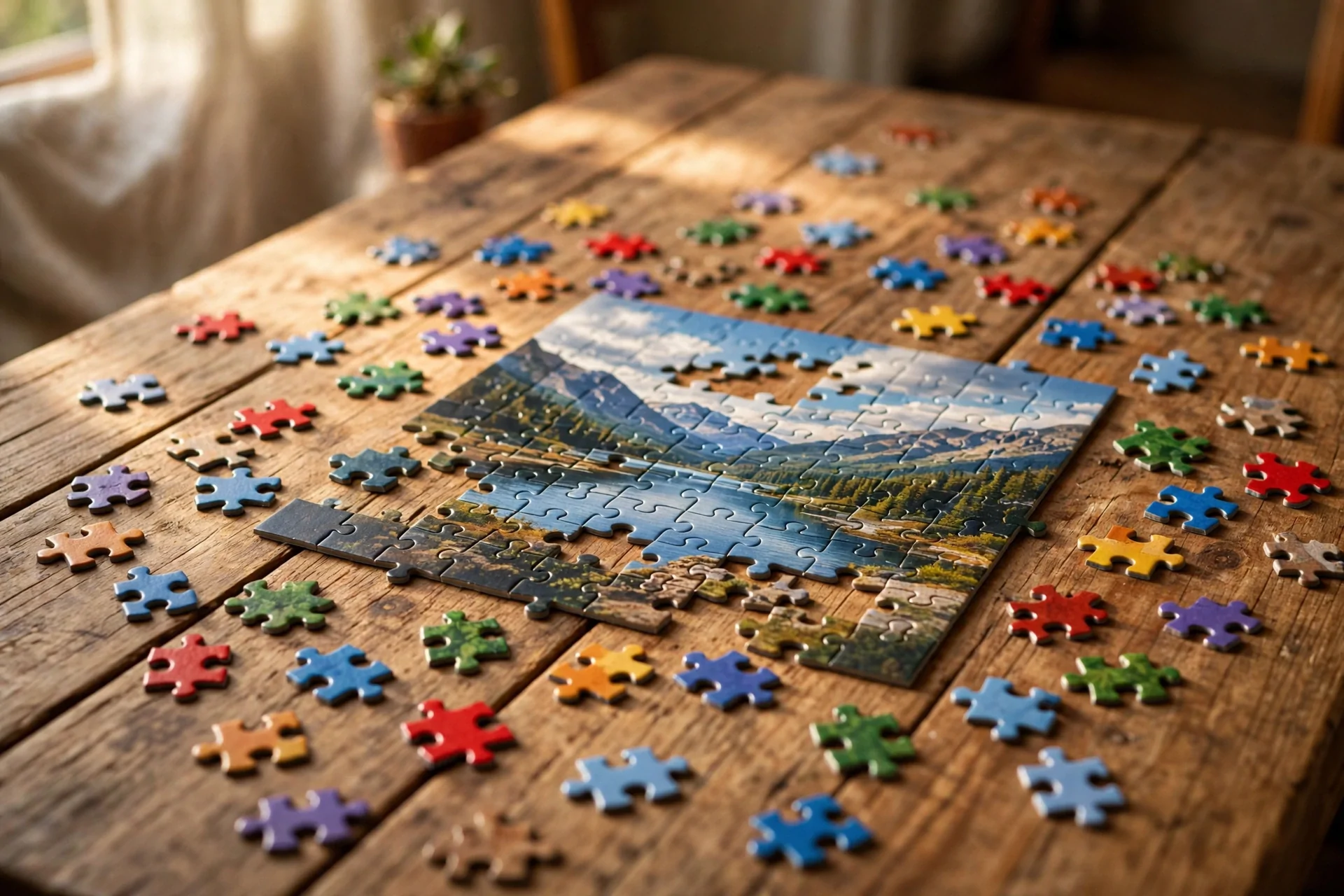
Puzzles look simple, but they test something deep inside us: our patience. A puzzle sits on the table and says nothing. It waits. And every choice we make while solving it shows what kind of person we are. Do we rush? Do we plan? Do we give up when it gets hard, or do we smile and keep going?
The 25 questions below are all about puzzles, brain games, and tricky choices that test how much patience you really have. Some are funny. Some are hard. All of them will make you think. Pick your answer for each one, and see what it says about your puzzle-solving style. Ready? Let the first piece fall into place.
1. Would You Rather Solve a 5000-Piece Jigsaw Puzzle Alone, or a 1000-Piece Jigsaw Puzzle in a Noisy Room?
Would you rather...
A 5000-piece puzzle is a mountain. Alone, you can work at your own speed, but there is nobody to share the long climb. A 1000-piece puzzle is smaller, but a noisy room full of talking, laughter, and banging doors can break your focus every few minutes. Which torture do you pick?
- Alone with 5000 pieces: total control, but the work can take weeks and your eyes will hurt.
- 1000 pieces in noise: the puzzle is easy, but your brain never gets quiet.
| Option | What You Gain | What You Give Up |
|---|---|---|
| 5000 pieces alone | Deep focus and a huge feeling of victory at the end | Your free evenings for many days |
| 1000 pieces in noise | A quick finish and lots of laughs with people around | The calm feeling of true concentration |
Real puzzle lovers know the truth: the room is as important as the puzzle. A quiet mind finds the missing piece faster than a loud one.
2. Would You Rather Sort All the Edge Pieces First, or Start Building from the Middle?
Would you rather...
Every jigsaw player has a method. Edge-first people love order. They build the frame, then fill the picture like a calm painter. Middle-first people love chaos. They dive into the fun part and deal with the border later. Which team are you?
Pro Tip: Edge-first usually wins for very large puzzles, because the frame keeps the shape stable. But starting in the middle is more fun for small puzzles with clear pictures.
- Edge pieces are easy to spot, so the start feels quick and rewarding.
- The middle holds the most colorful parts, so it feels more exciting to build.
- Switching methods halfway can teach you a whole new way to think.
3. Would You Rather Solve a Crossword with a One-Hour Timer, or a Crossword with No Eraser and No Help?
Would you rather...
The timer makes your heart beat fast. Every second ticks in your head. But the no-eraser rule is a different kind of pressure: one wrong letter can ruin the whole grid, and you cannot take it back. Both choices turn a calm word game into a real test of nerves.
Things to think about:
- Do you work better under time pressure, or under the fear of mistakes?
- A timer forgives errors but punishes slow thinking.
- No eraser forgives slow thinking but punishes every careless letter.
- Which failure would bother you more: running out of time, or one wrong word?
| Option | What You Gain | What You Give Up |
|---|---|---|
| One-hour timer | Fast, exciting energy and a clear finish line | The joy of thinking slowly and deeply |
| No eraser, no help | Total trust in your own brain and vocabulary | The safety net of fixing mistakes |
4. Would You Rather Look at the Box Cover Picture While Solving, or Solve the Puzzle Without Seeing the Picture?
Would you rather...
Most people peek at the box. It is a map. But some brave solvers throw the box away and trust only the shapes and colors. Solving blind turns a picture into a mystery: you have no idea what you are building until it appears piece by piece.
Checklist for the blind solvers:
- Sort pieces by color zones instead of picture parts.
- Trust the shape of each piece more than its printed pattern.
- Accept that the final picture will surprise you, and that is the fun.
- Keep the box in a drawer, not on the table, so temptation stays away.
Peeking is not cheating. It is just a different game: speed and accuracy instead of mystery.
5. Would You Rather Do a Puzzle by Dim Lamplight at Night, or in Bright Morning Sunlight?
Would you rather...
Night puzzlers say the quiet dark helps them focus, and the lamp makes the colors glow. Morning puzzlers say sunlight shows every tiny detail, and the fresh day gives them energy. But dim light strains the eyes, and bright sun can make pieces glare.
Warning: Very dim light for hours can give you a headache and tired eyes. If you pick night puzzling, use a good lamp and take breaks every 45 minutes.
Some people mix both: hard detail work in the morning, and relaxed sorting at night. The best light might be the one that matches your mood.
6. Would You Rather Sort Pieces by Color First, or Sort Pieces by Shape First?
Would you rather...
Before the real building starts, every puzzler sorts. Color sorters make little piles of blue, green, red, and sky. Shape sorters make piles of knobs, holes, and flat edges. The sorting method changes how the whole puzzle feels.
| Option | What You Gain | What You Give Up |
|---|---|---|
| Sort by color | Fast visual groups that match picture areas | Struggle with puzzles that have large single-color zones |
| Sort by shape | A system that works even on all-blue sky puzzles | Slower start that tests your patience early |
- Many champions do both: first a rough color sort, then shape sort inside each color pile.
- Small bowls or trays keep the piles from mixing back together.
7. Would You Rather Build a Small 3D Puzzle Tower, or a Flat Puzzle Twice as Large?
Would you rather...
A 3D puzzle stands up. You build with your hands in the air, and gravity fights you the whole time. A big flat puzzle lies still, but it can cover your whole dining table for a week. One tests your balance, the other tests your space.
Important Note: 3D puzzles often need glue or a calm hand at the end, or the tower falls. Flat puzzles need a dedicated table, or someone will move your work by accident.
Think about your home: do you have a safe shelf for a tall tower, or a wide table for a big flat picture? The puzzle you finish is always better than the puzzle you abandon halfway.
8. Would You Rather Solve a Puzzle Missing Ten Pieces, or a Puzzle with Fifty Extra Pieces That Do Not Belong?
Would you rather...
Missing pieces hurt at the end: you build almost the whole picture, then stare at ten sad empty holes. Extra pieces hurt the whole time: fifty fakes mixed in, and you try each one a dozen times before you learn it never fits anywhere. Both are cruel in their own way.
Things to think about:
- Missing pieces test your ability to accept an imperfect result.
- Extra pieces test your ability to stay calm through repeated failure.
- With missing pieces, the puzzle is truly unfinishable, no matter how good you are.
- With extra pieces, victory is possible, but the road is full of fake friends.
Old wisdom says: finish what you can, and do not let ten holes ruin the beauty of the other 490 pieces. A wise puzzler enjoys the building, not just the perfect end.
9. Would You Rather Learn One Very Hard Brain Teaser Slowly, or Learn Five Easy Riddles Quickly?
Would you rather...
The hard brain teaser can take days. You carry it in your head everywhere: at breakfast, on a walk, before sleep. When it finally clicks, the feeling is huge. Five easy riddles give quick wins, one after another, but none of them stays in your memory for long.
| Option | What You Gain | What You Give Up |
|---|---|---|
| One hard teaser | Deep thinking skills and a memory that lasts for years | The fun of quick victories |
| Five easy riddles | Fast fun you can share with family the same day | The deep satisfaction of a hard-earned answer |
Patience grows when we sit with a hard problem instead of running to an easy one. But easy riddles keep the habit alive on busy days. The best puzzle diet has a little of both.
10. Would You Rather Solve a Word Search with Tiny Letters, or a Hard Sudoku with Very Few Clues?
Would you rather...
The tiny-letter word search makes your eyes work overtime. You squint, you lean close, you lose your place. The hard sudoku looks calm and clean, but each empty box is a trap: one wrong number early can break the whole grid, and you may not find it for an hour.
Pro Tip: For hard sudoku, write small pencil notes in each box with possible numbers. For tiny word searches, use a ruler under each row so your eyes do not jump lines.
- Word searches reward sharp eyes and steady hands.
- Sudoku rewards logic, calm, and the courage to erase and restart.
- Both games quietly train your brain to notice small details.
11. Would You Rather Work on a Puzzle for Eight Hours Straight, or One Hour Each Day for a Week?
Would you rather...
The eight-hour marathon is a battle. Your back aches, your eyes blur, but you live inside the puzzle world for a full day. One hour a day is gentle: fresh eyes every morning, but the puzzle sits half-done on the table, calling to you all week.
Things to think about:
- Marathons build amazing focus, but mistakes grow after hour five.
- Daily hours keep your mind fresh, but you lose the flow between sessions.
- Can you really protect eight free hours in one day?
- Some people dream about the puzzle overnight and solve it faster the next day.
Slow and steady often wins the puzzle race. Small daily effort beats one giant burst that ends in burnout.
12. Would You Rather Solve a Maze with a Pencil in Hand, or Memorize the Maze and Solve It in Your Head?
Would you rather...
Pencil solvers draw, erase, and redraw. Their path is visible on the paper. Mind solvers close their eyes and walk the maze in their imagination, turn by turn. One is a hand skill, the other is a memory skill.
- A pencil lets you try wild ideas without fear, because erasing is free.
- Mental solving builds a powerful inner map, but one wrong turn can collapse it.
- Start with the pencil, then try one small maze from memory as a next-level challenge.
Whichever you pick, the maze teaches the same lesson: rushing leads to dead ends, and patient steps find the way out.
13. Would You Rather Do a Puzzle with a Slow but Kind Friend, or Alone Against a Strict Timer?
Would you rather...
The slow friend chats, laughs, and takes forever to place one piece. But the company is warm, and every piece you place together feels shared. The strict timer alone is cold and serious: nobody talks, the clock ticks, and your hands must move fast.
Important Note: Puzzle time with a friend is about the friendship, not the finish. If speed matters to you, play solo. If joy matters, invite the friend and forget the clock.
| Option | What You Gain | What You Give Up |
|---|---|---|
| Slow kind friend | Warm company and twice the fun | Speed and full control |
| Alone with timer | A real measure of your skill under pressure | The relaxed joy of shared solving |
14. Would You Rather Have Someone Hide One Piece Every Hour, or Wear Thick Gloves While Solving?
Would you rather...
Imagine this: every hour, a hidden hand steals one piece from your table. You do not notice until you need it. Or: your fingers wear thick winter gloves, and every tiny piece slips away like a fish. One attacks your patience, the other attacks your hands.
Warning: This question is a joke scenario, but the lesson is real. Real life also hides pieces and makes your hands clumsy. Patience means staying calm when the world plays tricks.
- Hidden pieces teach you to work with what you have instead of crying over what is gone.
- Gloves teach you that slow, careful fingers beat fast, careless ones.
- Both are excellent training for staying calm under silly pressure.
15. Would You Rather Solve a Riddle Written on Paper, or Hear the Riddle Spoken Only Once?
Would you rather...
The paper riddle waits for you. You can read it ten times, underline words, and think for an hour. The spoken riddle comes once, like a bird flying past. If your mind wanders for three seconds, the riddle is gone, and you must solve from a fuzzy memory.
- Paper riddles reward deep reading and careful word study.
- Spoken riddles reward sharp listening and strong short memory.
- Try this: listen once, then write down what you remember. The gap shows how much attention you really paid.
Many old riddles were spoken, not written, because wise teachers wanted students to listen with full hearts, not just eyes.
16. Would You Rather Do a Puzzle of a Plain Blue Sky, or a Puzzle of Tiny Detailed Artwork?
Would you rather...
The plain blue sky puzzle is the nightmare of jigsaw fans: hundreds of pieces that all look the same. No picture to guide you, only shapes. The tiny detailed artwork puzzle is the opposite nightmare: a thousand small faces, flowers, and patterns, so busy that your eyes cannot rest.
| Option | What You Gain | What You Give Up |
|---|---|---|
| Plain blue sky | Master-level shape reading skills | The fun of watching a picture appear |
| Tiny detailed art | Constant small victories as each detail connects | Rest for your tired eyes |
Pro Tip: For all-blue sky puzzles, sort pieces by exact shape (one knob, two knobs, flat sides). Shape becomes your only true friend when color gives up.
17. Would You Rather Take a Photo of Every Step, or Solve from Memory with No Notes?
Would you rather...
Some solvers photograph each stage, like a detective keeping evidence. If something breaks, they rebuild from the photos. Memory solvers keep everything in their head: the half-built corner, the sorted piles, the plan for tomorrow. One trusts the camera, the other trusts the brain.
- Photos save you when a puzzle falls off the table or a child mixes the piles.
- Memory solving trains your mind to hold pictures inside, a skill that helps in daily life too.
- A middle path: photograph only the big milestones, and memorize the rest.
The camera never forgets, but the brain gets stronger every time you ask it to remember.
18. Would You Rather Solve the Puzzle Right-Side Up, or Solve the Puzzle Upside Down?
Would you rather...
Upside-down puzzling is a famous challenge: you flip the whole puzzle so you see only the gray cardboard backs. No picture, no colors, just shapes. It sounds crazy, but many solvers say it removes distractions and forces pure shape logic.
Things to think about:
- Right-side up is the normal, joyful way most people play.
- Upside down turns an easy puzzle into a hard one, which some people love.
- Your patience gets tested harder when you cannot see what you are building.
- Try it on a small 100-piece puzzle first before attempting a giant one.
Warning: Flipping a half-built puzzle can break it apart. Slide a large board under it first, or only flip puzzles you have already finished and want to re-solve.
19. Would You Rather Pick a Number Puzzle Every Time, or a Picture Puzzle Every Time?
Would you rather...
Number people love clean logic: sudoku grids, math riddles, sequences that follow rules. Picture people love beauty: jigsaws of mountains, lakes, and gardens. For the rest of your life, you can only choose one family of puzzles. Which brain do you feed?
| Option | What You Gain | What You Give Up |
|---|---|---|
| Number puzzles always | Sharp logic that helps with daily decisions and planning | The visual joy of a finished picture |
| Picture puzzles always | A beautiful result you can frame and hang on the wall | The clean mental workout of pure logic |
A patient mind needs both: logic to stay clear, and beauty to stay happy.
20. Would You Rather Solve with the TV On in the Background, or in Complete Silence?
Would you rather...
Some puzzlers need background noise to feel relaxed. The TV hums, and their hands move calmly. Others need total silence: no voices, no buzz, just the soft click of pieces. Your brain type decides which room works for you.
- Background sound can make long sessions feel less lonely.
- Silence gives your brain full power for the hardest parts.
- Many people use silence for the tricky middle and sound for the easy edges.
Important Note: If you share your home, silence is a gift you must arrange: close the door, tell family your puzzle hour is quiet time, and enjoy the peace.
21. Would You Rather Have Someone Keep Moving Your Pieces, or Have the Table Keep Wobbling While You Work?
Would you rather...
Two more silly disasters. In the first, a playful hand keeps sliding your sorted piles around when you look away. In the second, the table has one short leg, so the whole puzzle shakes with every touch. Both will test whether you laugh or explode.
- Moving pieces teach you to rebuild fast and keep a mental map of your piles.
- A wobbly table teaches gentle hands: press softly, place carefully, breathe slowly.
- The real lesson: patient people fix the problem (a box to sort in, a folded paper under the leg) instead of getting angry.
The best puzzlers do not fight the chaos. They smile, adjust, and place the next piece.
22. Would You Rather Build a Wooden Model Castle Piece by Piece, or Assemble a 2000-Piece Flat Scene?
Would you rather...
The wooden castle rises in your hands: towers, bridges, tiny doors. It takes careful fingers and lots of waiting for glue to dry. The 2000-piece flat scene is a classic: spread across the table, built over many evenings, finished with a proud final click.
| Option | What You Gain | What You Give Up |
|---|---|---|
| Wooden model castle | A 3D treasure you can display for years | Quick results; glue drying tests real patience |
| 2000-piece flat scene | The classic deep puzzle journey with a stunning picture | A table you cannot use for anything else for days |
Pro Tip: Wooden models love a small brush for glue and a soft cloth for wiping. Keep your work area clean, and the castle will look like a shop piece.
23. Would You Rather Get One Hint Per Day for a Week, or Solve with No Hints in One Sitting?
Would you rather...
The slow drip of hints is sweet: each morning you wake up, read your one clue, and think about it all day. The no-hint sprint is bold: you sit down, lock the door, and refuse to leave until the answer comes. One is a slow burn, the other is a fire.
Things to think about:
- Daily hints let the answer grow in your mind while you do other things.
- No hints means the victory is 100 percent yours, with no help at all.
- Which feels better: a slow-growing idea, or a sudden flash of light?
- Wise people ask for help when they are truly stuck; pride is not patience.
True patience is not refusing help. It is knowing when to keep thinking and when to accept a small guiding hand.
24. Would You Rather Do a Puzzle Sitting on the Floor, or Do a Puzzle at a Small Wobbly Table?
Would you rather...
The floor gives you unlimited space and forces you to move your body.
- The floor gives you unlimited space and forces you to move your body.
- A chair and table protect your back during long sessions.
- A large flat board on the floor gives you the best of both worlds.
Comfort matters more than people think. A comfortable puzzler is a patient puzzler.
25. Would You Rather Finish an Old Half-Done Puzzle, or Start a Brand-New Puzzle Fresh?
Would you rather...
The last question is about endings and beginnings. Somewhere in a closet sits an old puzzle, half-built, dusty, waiting for years. Finishing it would be a quiet act of loyalty. But a brand-new box smells like adventure: fresh colors, new picture, clean start.
- Finishing the old puzzle teaches commitment: we do not abandon what we start.
- Starting fresh teaches joy: new challenges keep the mind young and curious.
- Here is a secret: you can do both. Finish the old one this weekend, open the new one next.
And that is the final lesson of all 25 questions. Patience is not just waiting. It is choosing, again and again, to stay with the puzzle until the last piece clicks home. Every piece you place builds a calmer, stronger mind. So pick up the next piece, take a deep breath, and keep going. Your patience is growing with every single one.
More Would You Rather Questions
- 35 Skateboarding Would You Rather Questions for Thrill Seekers
- 14 Martial Arts Would You Rather Questions That Test Your Courage
- 13 Running Would You Rather Questions for Runners
- 15 Swimming Would You Rather Questions for Water Lovers
- 20 Fishing Would You Rather Questions for Anglers
- 10 Cycling Would You Rather Questions for Bike Lovers
- 25 Home Improvement Would You Rather Questions for DIY Lovers