36 Custom Cabinet Interior Ideas You Should Consider Before Renovating

I opened my kitchen cabinet one morning and a lid fell right on my foot. It was not even a big lid. It just slipped out from the pile and hit the floor with a loud clatter.
I stood there and looked at the mess inside. Lids were stacked on pots. Pots were stacked on lids. Nothing had a real place, so everything fell out when I reached for one thing.
That day I learned that cabinets are not just boxes with doors. The inside matters more than the outside. A good inside makes cooking easy, and a bad inside makes you dread opening a door.
I put together 36 ideas for you in this post. They are simple ideas you can use before you renovate, so your new cabinets work the way you cook and live.
Pull-Out Shelves That Bring the Back to You
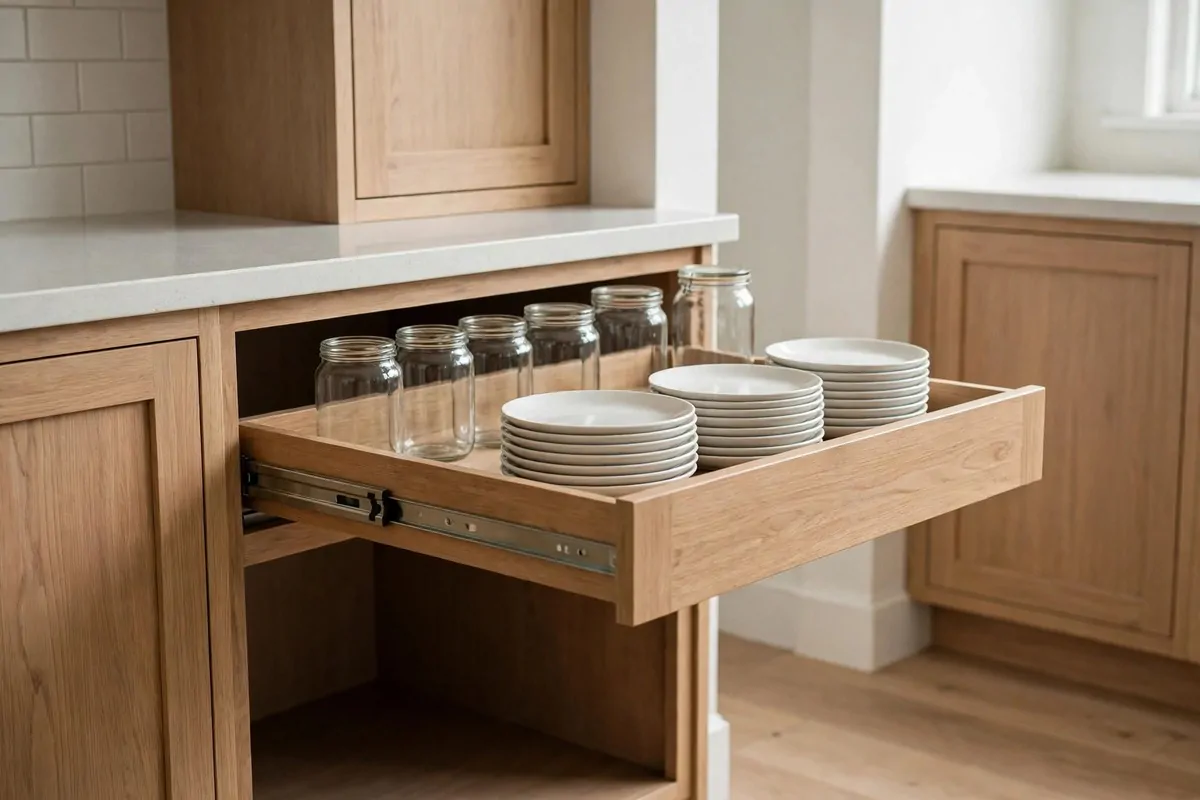
Have you ever lost a jar at the back of a cabinet? I have, many times. It sat there for months because I could not see it.
A pull-out shelf fixes that problem in a simple way. You pull it toward you, and the whole shelf comes out into the light.
You can see every jar and box at once. You do not have to kneel down and dig around.
I like them most under the sink area and in deep base cabinets. Those spots are the hardest to reach.
You can add them to a cabinet you already have. A carpenter can fit them inside, and you do not need new doors.
Put heavy things like pots on the lower pull-outs. They slide out smooth, so your back does not hurt.
Keep light things like snacks on the upper ones. You will grab them fast when you are in a rush.
One small tip is to leave a little space at the front. If you pack it too full, things can tip when you pull it out.
It is a small change, but it makes a big difference every single day. You will wonder why you waited so long.
Deep Drawers Instead of Fixed Shelves
Fixed shelves sound fine until you try to use them. You stack plates high, and the bottom plate never comes out.
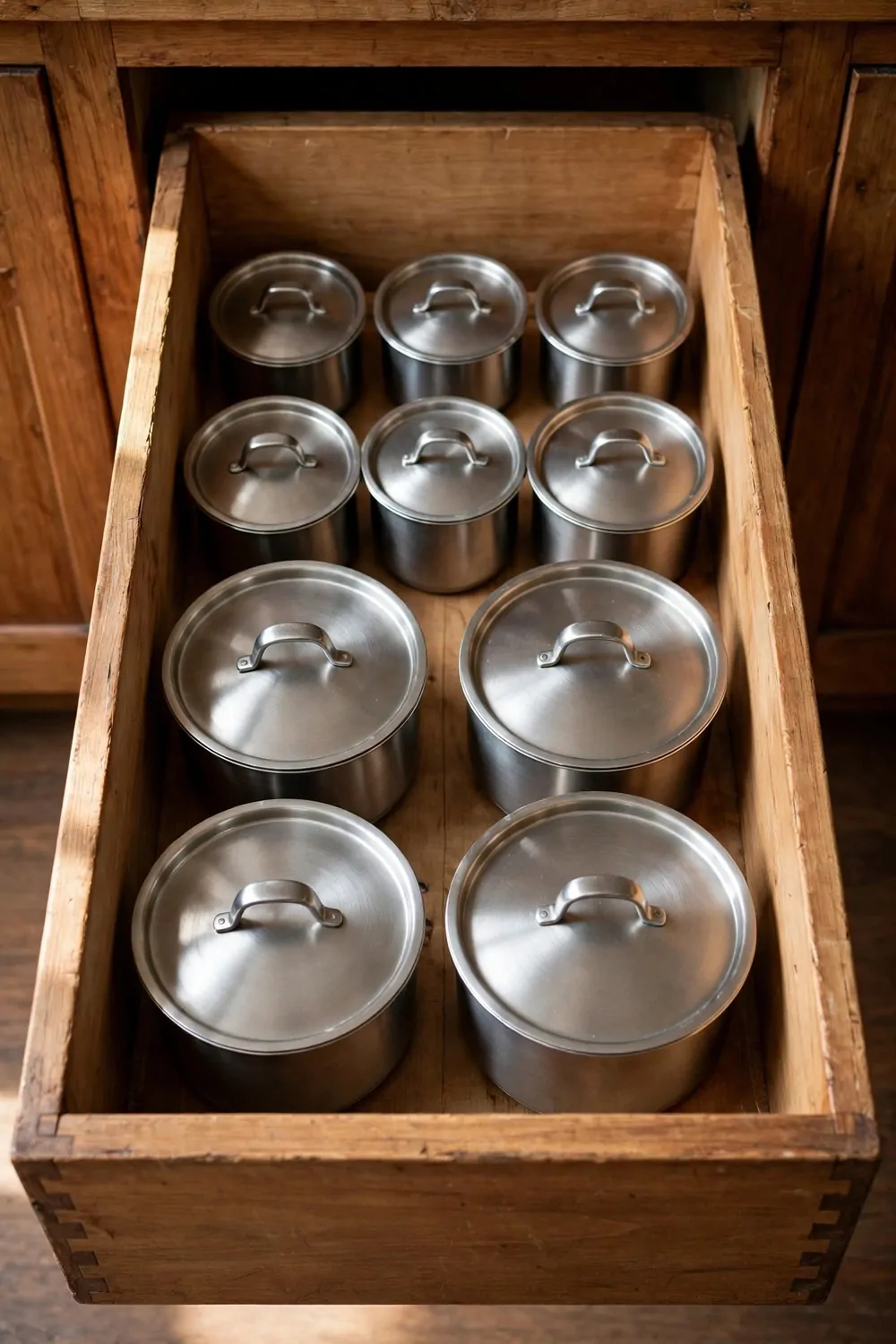
Deep drawers work better for most kitchens. You open the drawer and see everything from the top.
I keep my plates in a deep drawer now. I just lift the top one off, and the rest stay neat.
Pots fit well in deep drawers too. You can stack two or three, and you can still reach the one at the bottom.
You do not have to bend deep into a dark cabinet. The drawer comes to you, so your knees stay happy.
If you have kids, deep drawers are safer for them too. They can pull out the drawer with their cups and not climb up high.
Ask your cabinet maker for full-extension slides. They let the drawer open all the way, so nothing hides at the back.
Soft-close slides are worth it as well. The drawer shuts quiet, even when little hands push it hard.
Try one deep drawer first if you are not sure. I think you will want more after a week.
Vertical Dividers for Trays and Lids
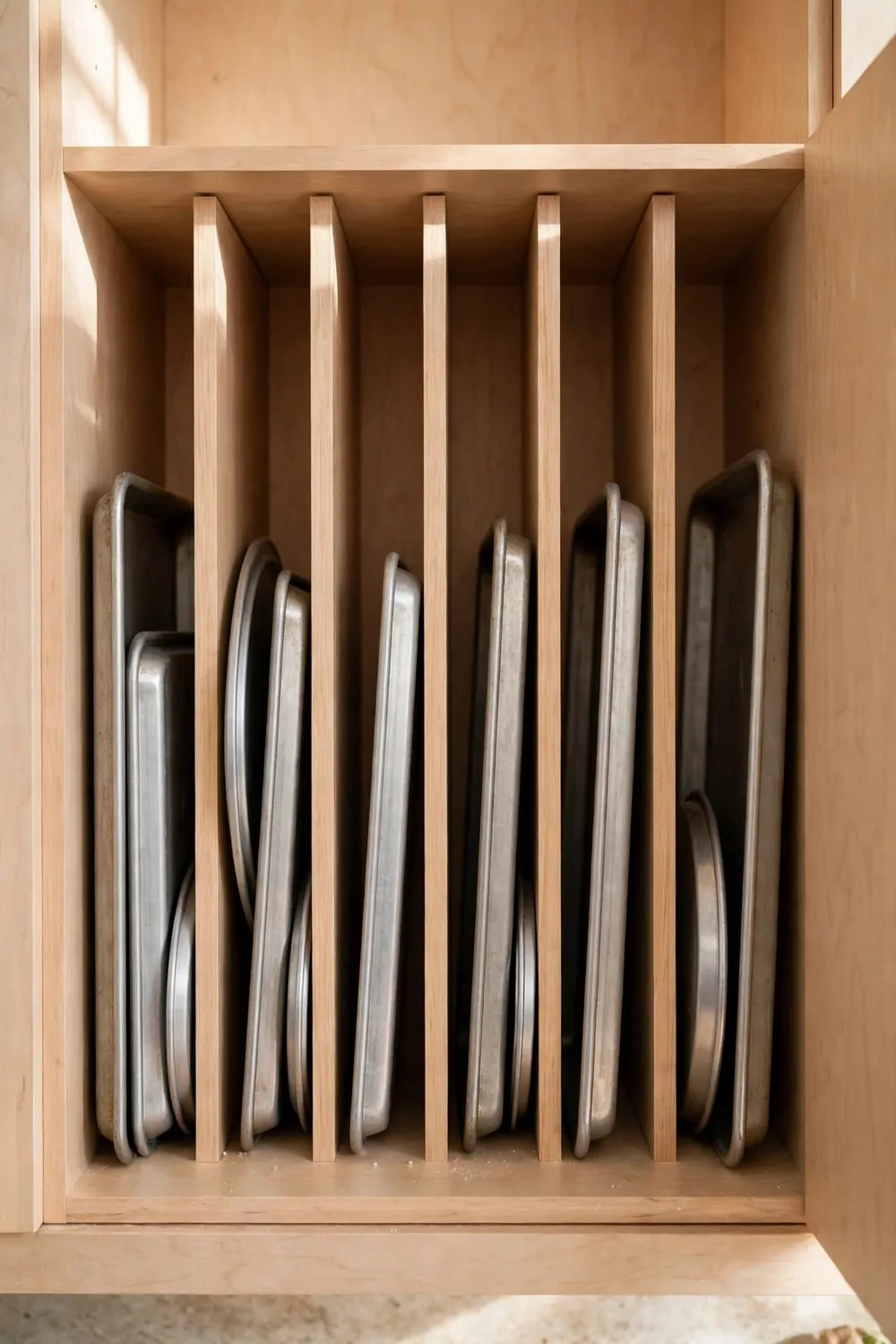
Trays and lids are flat, but we store them in piles. That is why they slide and crash every time we open the door.
Vertical dividers stand them up on their sides. Each tray gets its own thin slot, like books on a shelf.
You can pull out just the one you need. The rest stay still, and nothing falls on your toes.
I use mine for baking trays and cutting boards. They fit in a narrow cabinet that was useless before.
Lids fit well here too. Put the big lids at the back and the small ones at the front.
You can buy simple divider inserts, or ask for built-in ones. Built-in ones feel stronger and last longer.
Measure your biggest tray before you order. You want the slot tall enough so it does not stick out and block the door.
Keep this cabinet near the oven if you can. You will grab a tray in one move when dinner is ready.
It is a cheap fix with a big payoff. My tray cabinet is now the tidiest spot in my kitchen.
A Pull-Out Spice Rack by the Stove
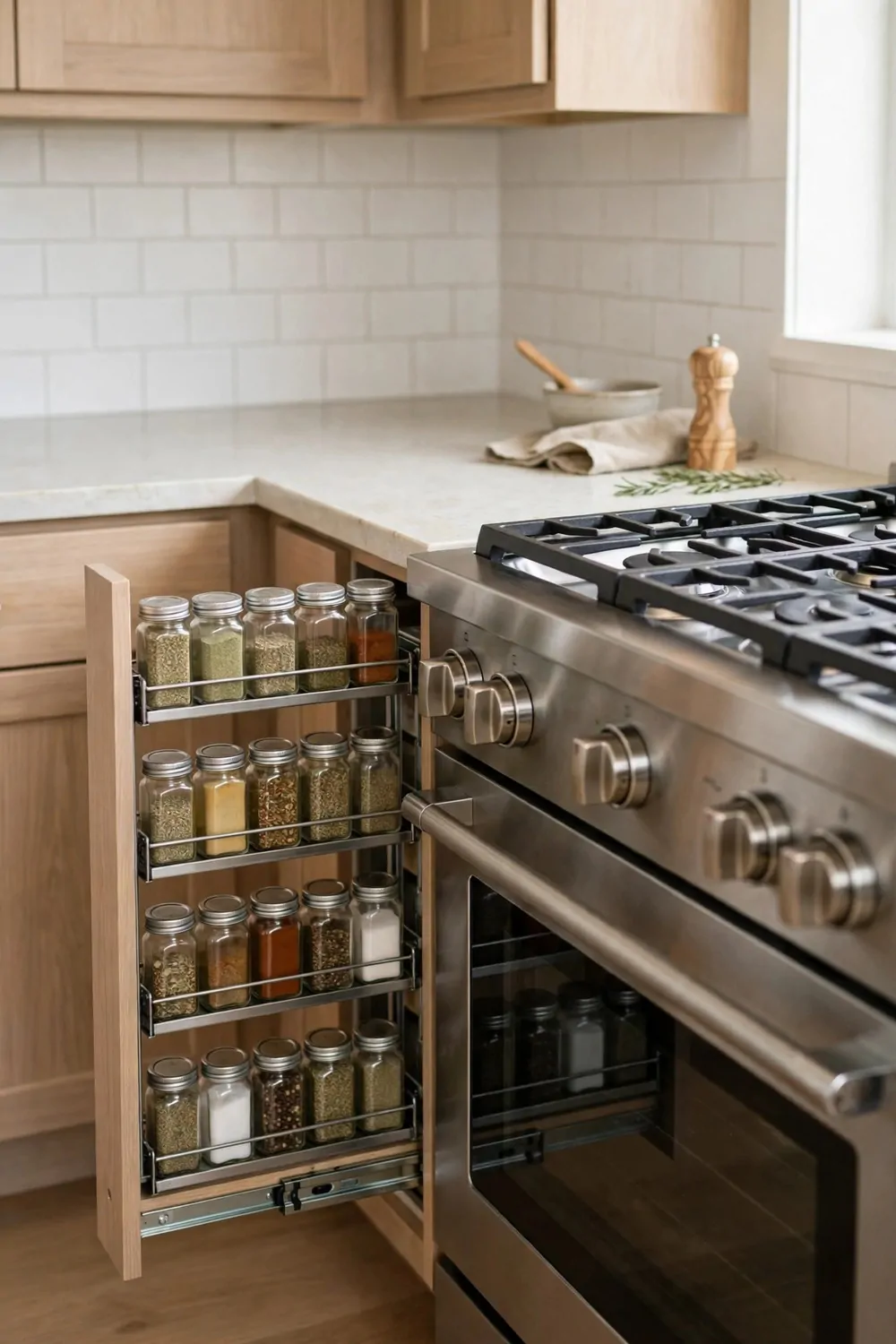
Spices hide at the back of the shelf, and I always buy a second bottle by mistake. I know I am not the only one.
A pull-out spice rack sits right next to the stove. You pull it out, and all your spice jars stand in a neat row.
You can read every label in one look. No more turning jars around to find the cumin.
I keep the ones I use most at the front. Salt, pepper, and paprika are always in reach when I cook.
The rack stays slim, so it fits in a small gap. Even a gap of fifteen centimetres can hold a lot of jars.
Put the tall bottles at the back and the short ones at the front. That way you can see them all at once.
If you cook with oils too, you can keep a small bottle on the same rack. Just make sure it does not spill when you pull it.
Wipe the rack once a week. Spices leave dust, and a quick wipe keeps it fresh.
It saves me time every day. I cook faster when my spices are right beside me.
Corner Cabinets That Stop Wasting Space
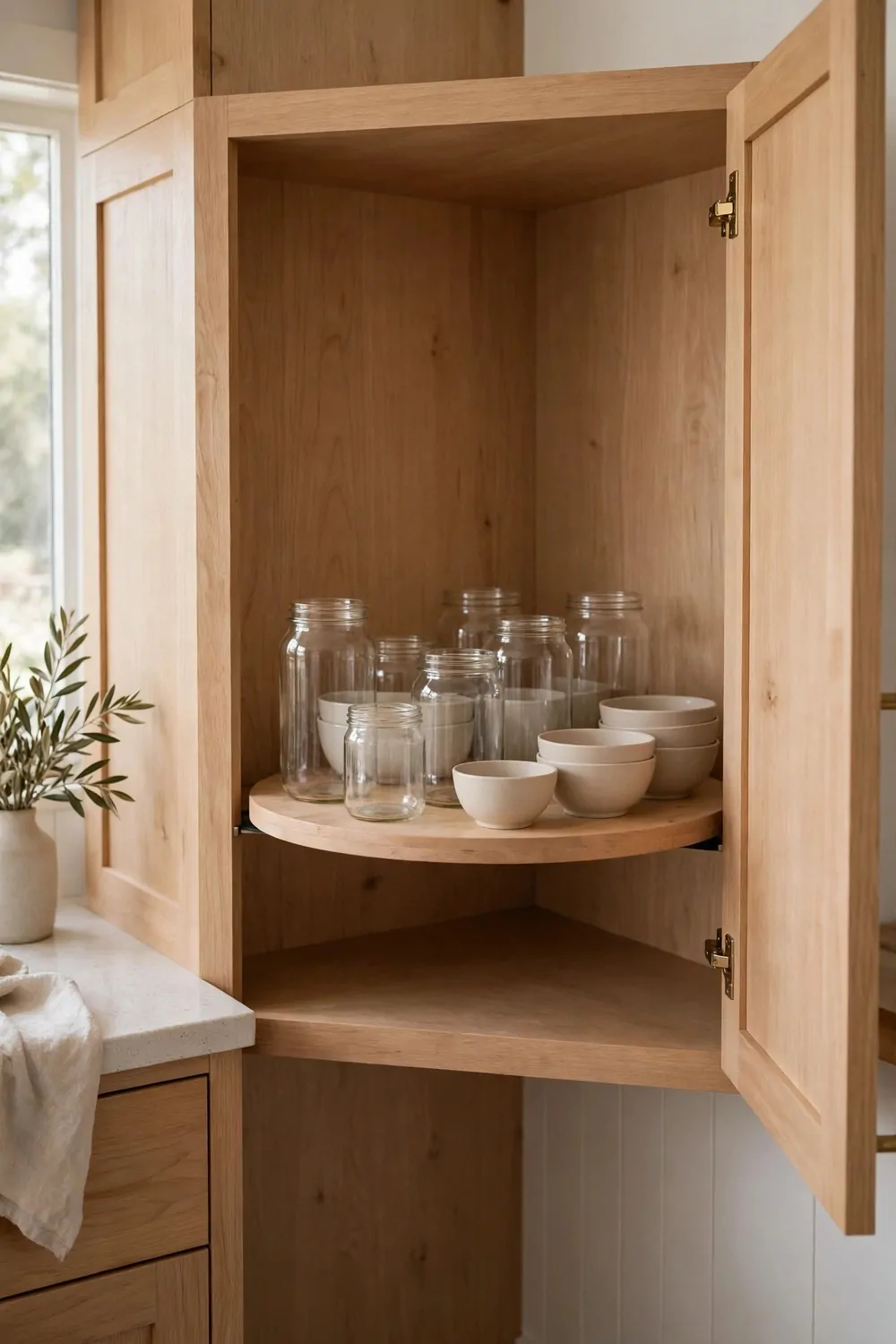
Corner cabinets are the dark holes of the kitchen. Things go in, and they never seem to come back out.
But the corner holds a lot of space if you plan it well. You just need a smart inside, not a bigger cabinet.
One good choice is a lazy susan made for corners. It spins and brings the back items to the front.
Another choice is a pull-out corner unit. The shelves swing out when you open the door, so you can reach them all.
I keep big, light things in my corner. Mixing bowls and baking dishes fit well and are easy to lift out.
Do not put heavy pots in the deepest corner. You will not want to pull them out from that far back.
Good lighting helps a lot here. A small stick-on light inside the corner makes it feel less dark.
Talk to your cabinet maker about the door style too. A wide door makes the corner much easier to use.
The corner does not have to be wasted space. With the right fix, it can hold a lot and still stay easy to reach.
A Lazy Susan That Spins Smoothly
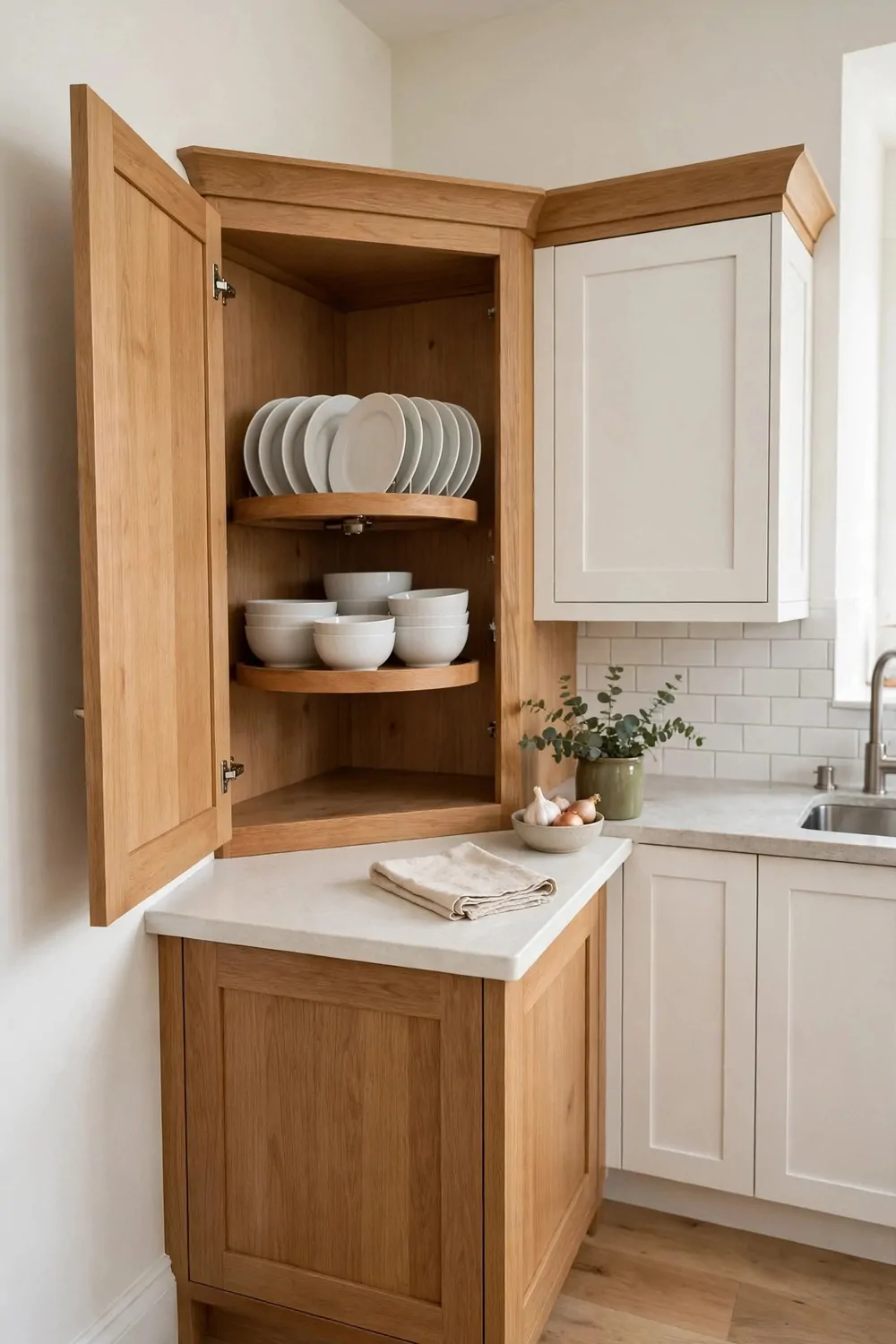
A lazy susan is a round tray that spins inside your cabinet. It sounds old, but it still works so well.
You spin it, and the jar you need comes to the front. You do not have to move five other jars out of the way.
I keep mine in the corner cabinet. It holds oils, sauces, and cans that I use all the time.
Pick one with a smooth spin. If it sticks, you will stop using it, and that is a waste.
Look for raised edges on the tray. They stop jars from sliding off when you spin it fast.
Two tiers are better than one if your cabinet is tall. You get double the storage in the same spot.
Do not overload it. Heavy cans on the top tier can make it hard to turn.
Wipe it down now and then. Spills happen, and a clean tray spins better.
It is one of the simplest fixes in this whole list. A small spin can save you a lot of reaching.
Blind Corner Pull-Outs
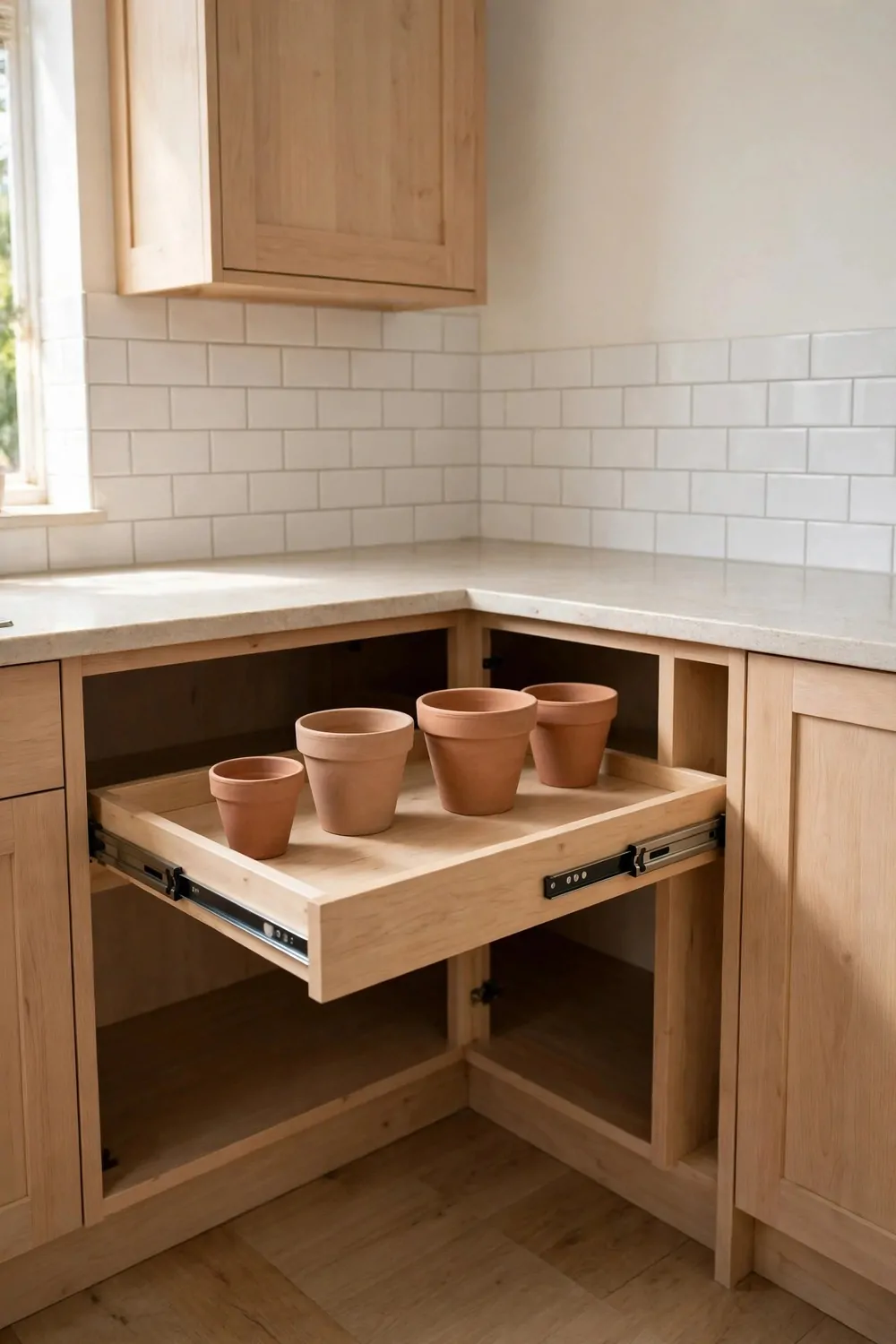
A blind corner is the part you cannot see when you open the door. It feels like a secret room that swallows your stuff.
A blind corner pull-out brings that hidden space out to you. The shelves slide out in a smooth line, one after the other.
You can store pots and pans in there. They slide out fully, so you can pick the one you want without a fight.
It works best for things you use a few times a week. You do not want your daily plates buried in a blind corner.
Ask for strong slides on this unit. The shelves carry a lot of weight when they come all the way out.
Keep the shelves even and not too tall. If you stack too high, things can fall when the shelf moves.
I like to keep lids with their pots here. It saves a trip to another cabinet when I am in a rush.
It costs more than a plain shelf, but it turns dead space into real storage. That is worth it in a small kitchen.
If your kitchen has a blind corner, do not leave it empty. This pull-out makes it useful again.
Drawer Dividers for Cutlery and Utensils
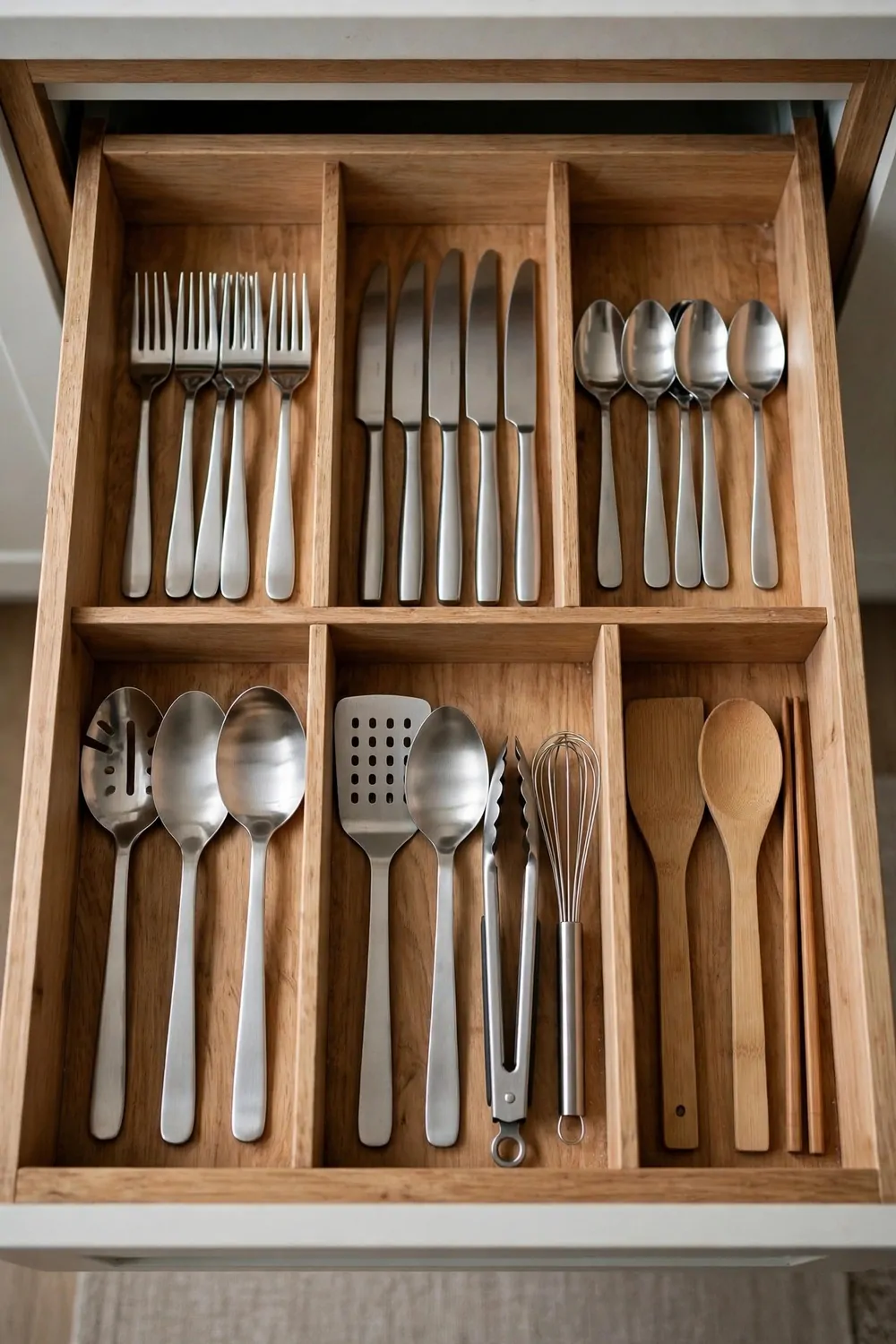
Open a messy cutlery drawer and you will find forks mixed with spoons and a whisk on top of it all. It is a small mess that bugs me every day.
Drawer dividers give every item its own home. Forks go in one slot, spoons in the next, and knives stay safe in their own row.
You can buy dividers that fit your drawer, or have them made to size. Made-to-size ones waste no space at all.
I keep my big cooking tools in a deeper divider set. Tongs, spatulas, and ladles each have a wide slot.
Wood dividers look warm and last a long time. Plastic ones are easy to wash if something spills.
Leave one slot empty on purpose. You will always find a new tool, and it needs a place too.
Kids can help set the table faster with dividers. They know just where the forks live.
Clean the dividers once a month. Crumbs gather in the corners, and a quick wipe keeps it fresh.
It is a tiny fix, but it makes mornings smoother. You grab what you need and go.
| Divider type | Best for | Cost level | Care |
|---|---|---|---|
| Wood dividers | Cutlery and daily tools | Mid range | Wipe with a damp cloth |
| Plastic inserts | Cutlery and small items | Low range | Rinse and dry |
| Bamboo trays | Cutlery and serving tools | Mid range | Wipe and air dry |
| Adjustable dividers | Mixed utensils | Low to mid range | Wipe clean as needed |
| Custom built-in dividers | Full drawer layout | Higher range | Wipe with a soft cloth |
A Built-In Knife Block Drawer
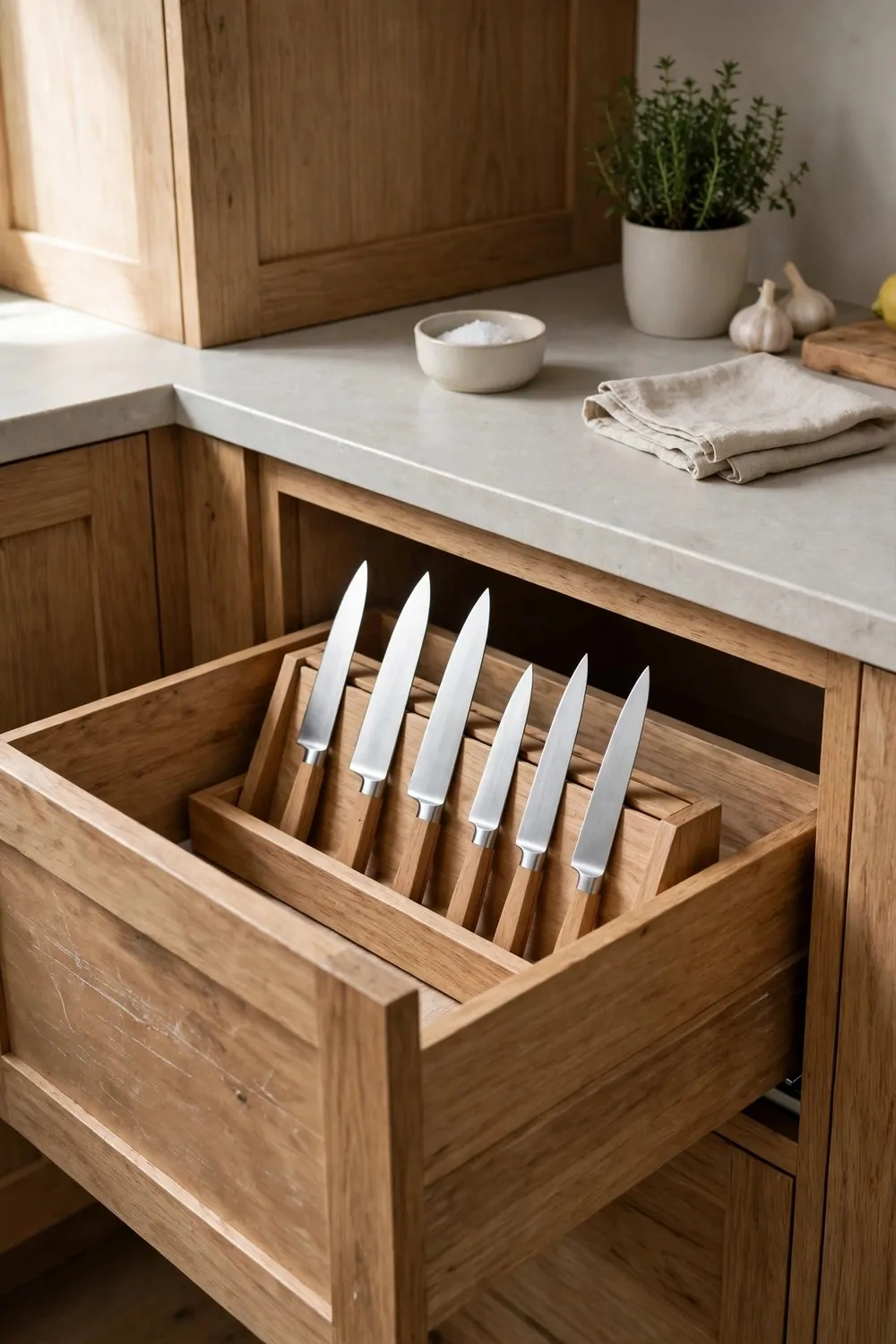
Knives on the counter take up space, and a knife block on the counter gets dusty fast. I moved mine into a drawer, and I love it.
A built-in knife block sits inside a shallow drawer. Each knife slides into its own slot, blade down and handle up.
You can see all your knives at a glance. You pick the right one without pulling out three others first.
It keeps the blades sharp too. They do not bang against each other like they do in a loose drawer.
It is safer for kids as well. The drawer stays shut, and little hands cannot reach the blades.
Put this drawer near your chopping spot. You will grab a knife and start cutting in seconds.
Leave a little extra room for a honing rod. It helps you keep the edge sharp between uses.
Wipe the slots now and then. Food bits can hide there, and a clean block is a safe block.
If you cook a lot, this is one of the best upgrades you can make. It feels calm and tidy every time you open it.
Tiered Shelves for Jars and Cans
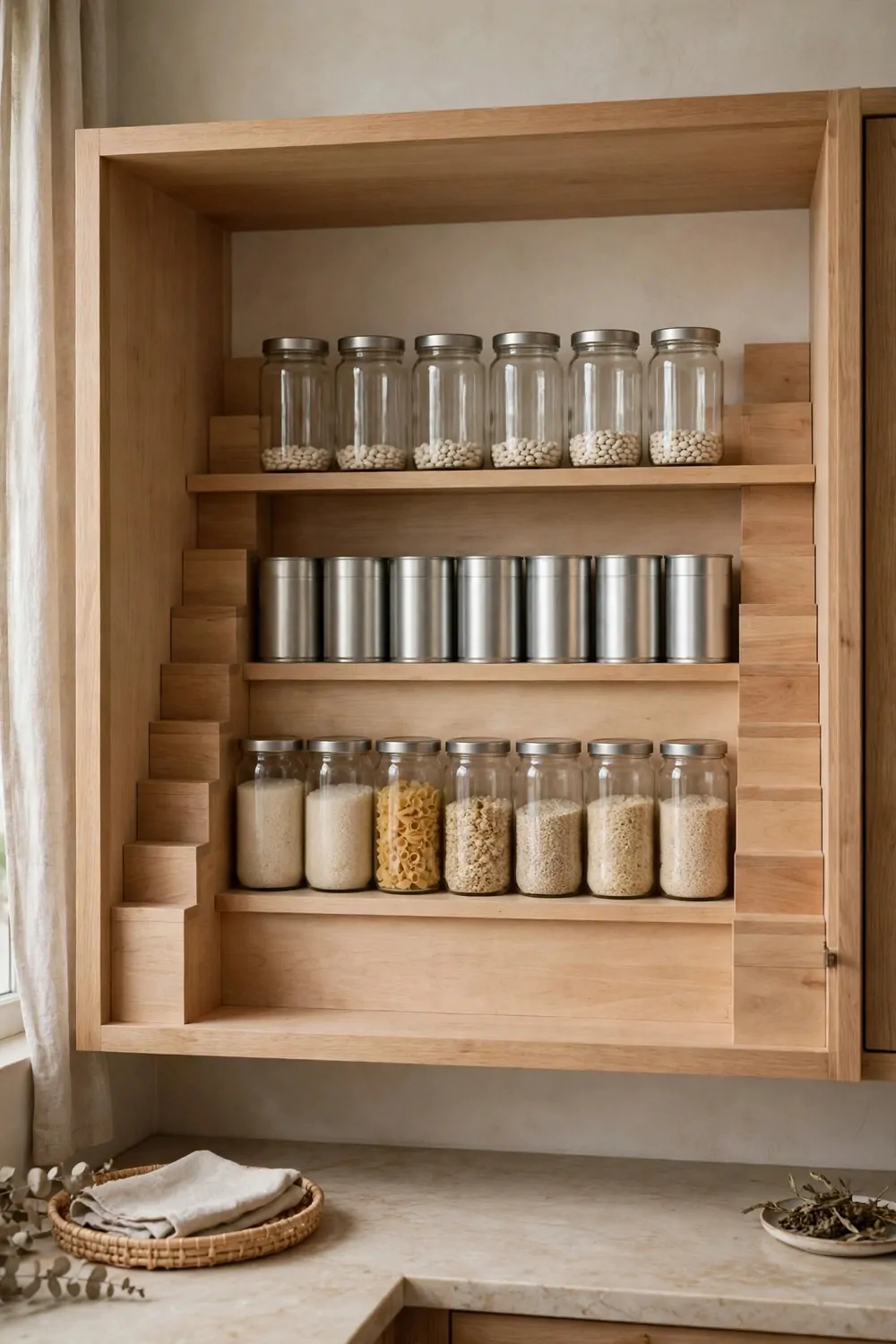
Jars in a single row hide each other. The short jar in front blocks the tall jar behind it, and you forget what you have.
Tiered shelves fix this with small steps. Each row sits a little higher than the one in front, like seats in a theatre.
You can see every label at once. It is so much easier to find the beans or the tomato sauce.
They work well in a pantry cabinet or a deep wall cabinet. Any spot where cans stack up will feel better.
You can buy tiered inserts that sit on the shelf. They are cheap and you can move them if you change your mind.
Keep the heavy cans on the lowest step. The shelf stays steady, and nothing tips over.
Group the same foods together. All the soups in one row, all the beans in the next, makes shopping lists easy.
Check the height before you buy. You want the back row tall enough to see over the front row.
It is a small step, quite literally, that makes a big change. Your pantry will look like a little shop.
Door-Mounted Racks for Foil and Wraps
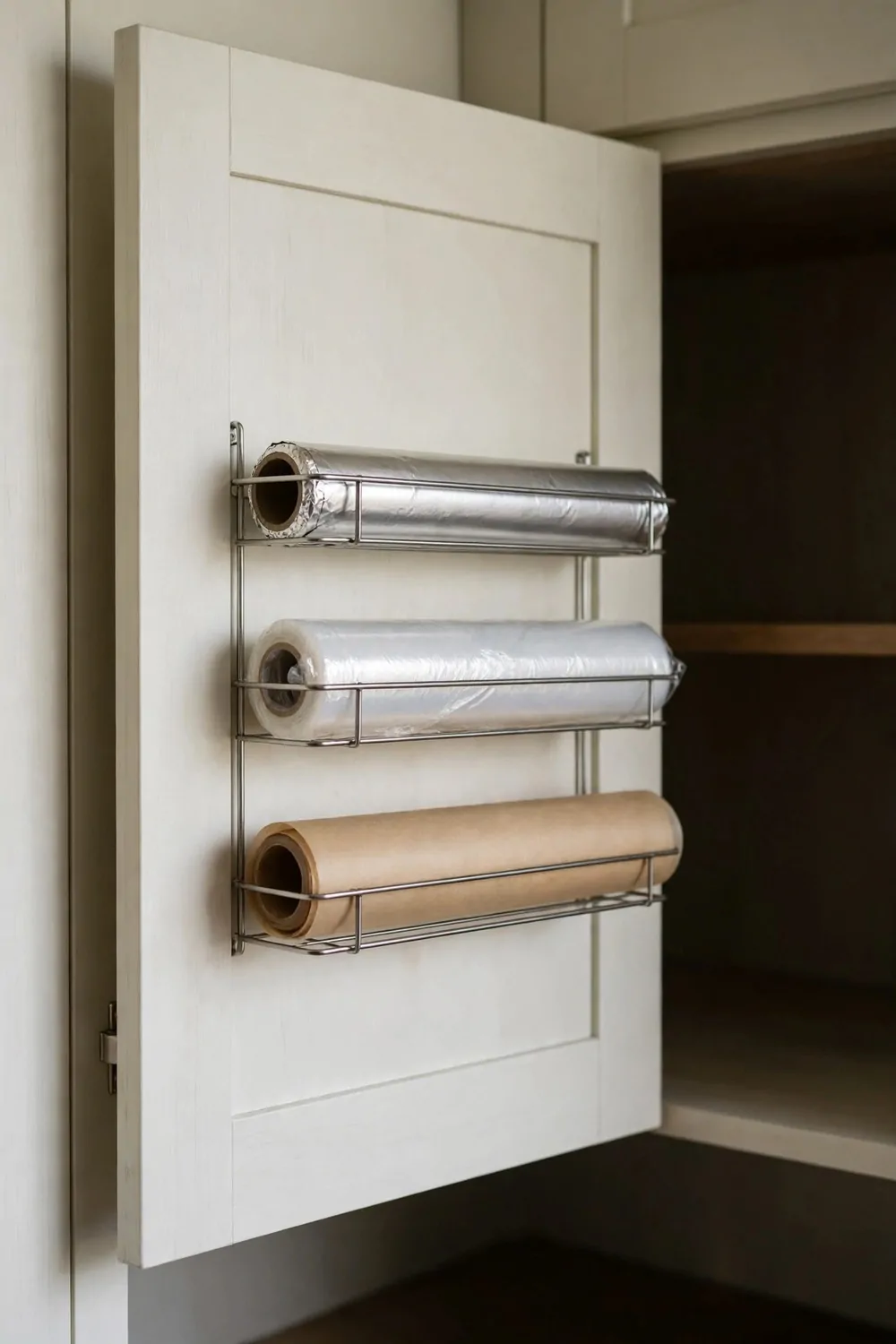
Foil and cling wrap boxes slide around in the drawer. They are long, light, and always in the way.
A door-mounted rack holds them on the inside of the cabinet door. You open the door, and there they are, neat and ready.
It frees up a whole drawer for other things. That is a big win in a small kitchen.
You can store foil, cling wrap, and baking paper side by side. Each roll has its own slot.
Pick a rack with a lip at the bottom. It stops the rolls from sliding out when you shut the door.
Keep it on a door you open a lot. Near the counter where you wrap food is the best spot.
Make sure the door can still close fully. Measure the roll depth before you screw the rack in.
It is a cheap and easy fix. Most racks go up with just a few screws.
Once you try it, you will wonder why those boxes ever lived in a drawer. The door is their real home.
A Pull-Out Bin for Rubbish and Recycling
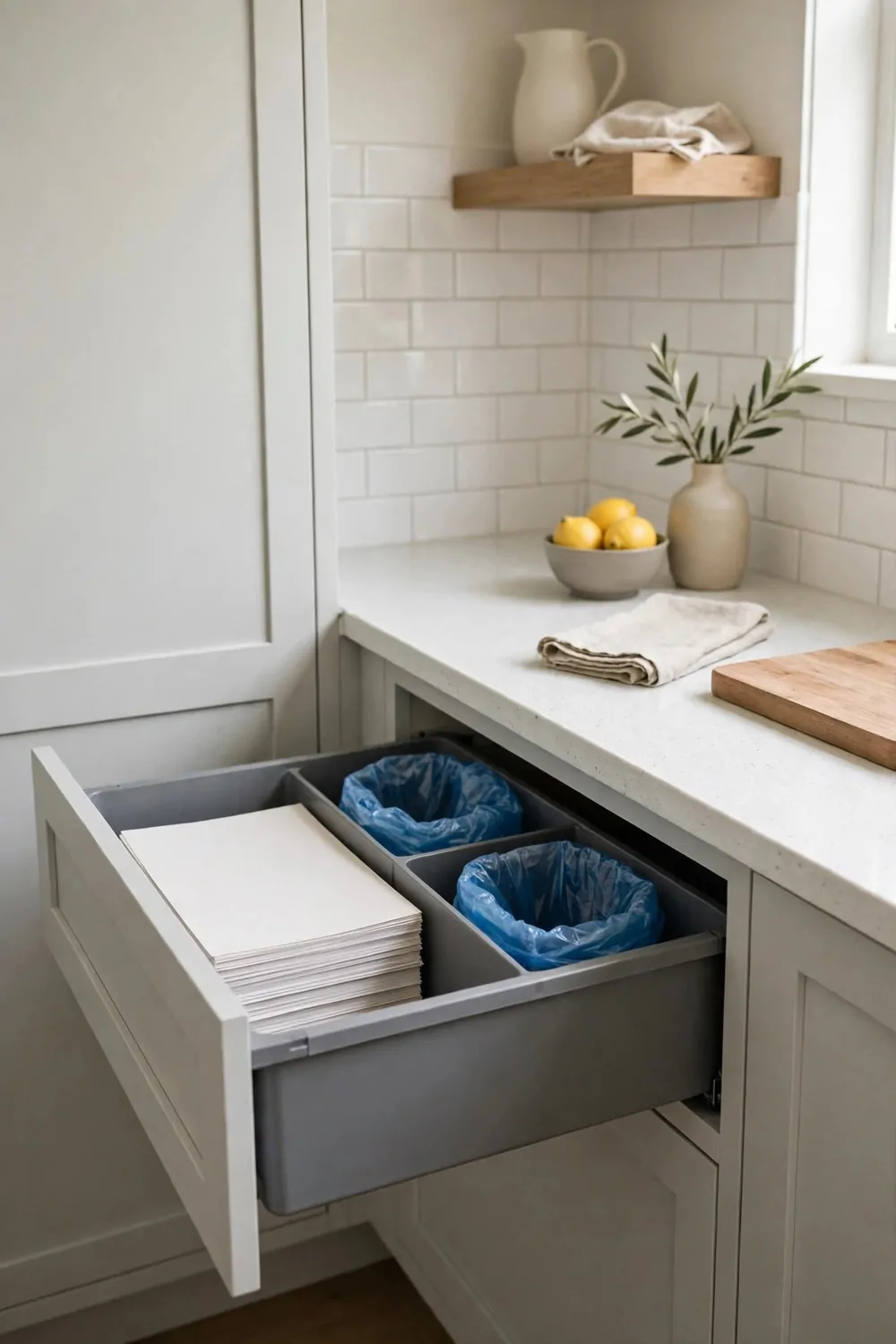
A bin on the floor takes up space and looks messy. It also gets in the way when you sweep the floor.
A pull-out bin hides inside a cabinet. You pull it out, toss the rubbish in, and push it back out of sight.
Many pull-outs hold two bins side by side. One is for rubbish, and one is for recycling.
I keep mine near the sink. That is where I peel and chop, so the scraps go straight in.
Pick a bin with a lid that lifts when you pull it out. It keeps smells in and looks tidy.
Use bags that fit well. A bag that is too big will bunch up, and a small one will slip down.
Wipe the pull-out frame once a week. Little drips happen, and a quick wipe keeps it fresh.
If you have kids or pets, a hidden bin is safer too. They cannot knock it over or dig through it.
It is a simple upgrade that makes the kitchen feel cleaner. You see less clutter, and the floor stays clear.
An Appliance Lift for the Heavy Mixer
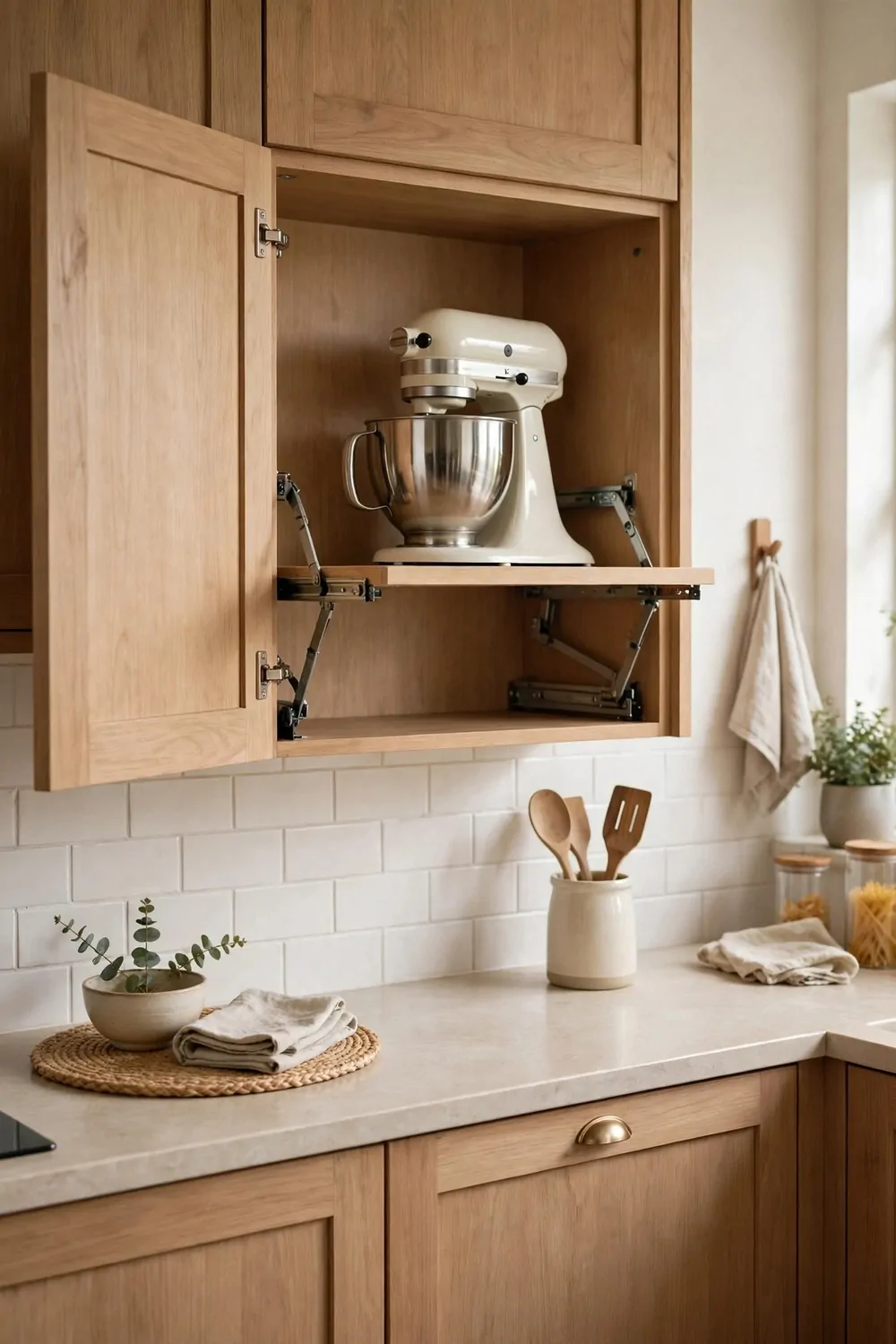
My stand mixer is heavy. I used to leave it on the counter because I dreaded lifting it out of the cabinet.
An appliance lift fixes that. The mixer sits on a shelf that lifts up and out when you need it.
You pull it up to counter height, use it, and push it back down when you are done. No heavy lifting at all.
It keeps your counter clear too. The mixer hides away, and your kitchen looks calm and open.
Make sure the lift can hold your mixer weight. A strong lift moves smooth and does not wobble.
Put it in a base cabinet near an outlet. You will want to plug it in without a long cord across the counter.
Leave room above the shelf for the mixer head. You need space to lift it and open the bowl.
It works for other heavy things too. A food processor or a bread machine can live on a lift just as well.
If your back hurts after cooking, this is worth a look. It turns a heavy chore into an easy pull.
A Pull-Down Shelf in the Wall Cabinet
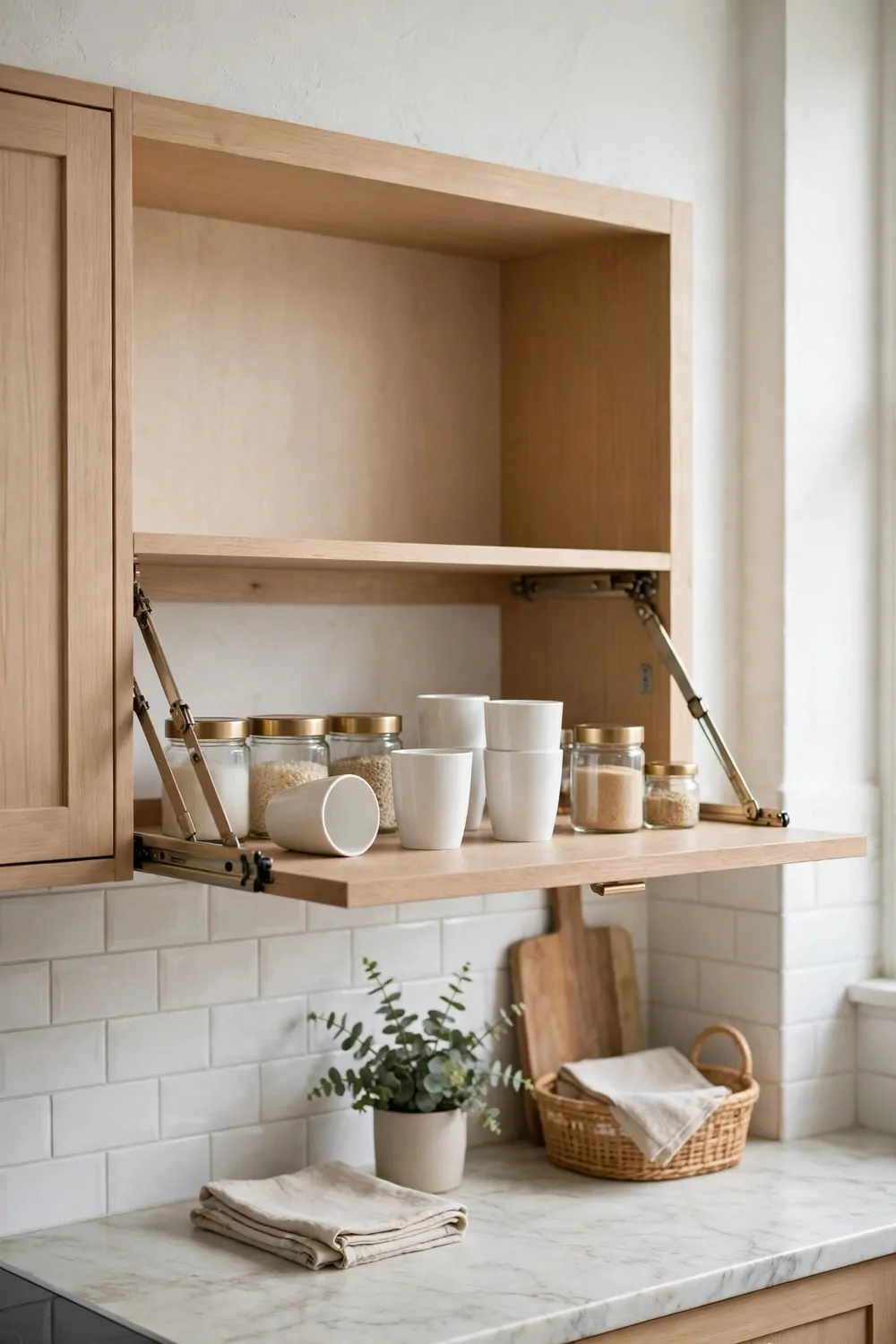
Wall cabinets are high, and the top shelf is hard to reach. I used to stand on a chair just to get a bowl down.
A pull-down shelf brings the top shelf down to you. You pull a handle, and the whole shelf lowers to a comfy height.
You can reach your dishes without climbing. It is safer, and it feels much calmer.
It is great for short folks and for older hands too. No more stretching on tiptoes.
Keep light things on a pull-down shelf. Plates and bowls are fine, but heavy pots can make it hard to lift back up.
Check the weight limit before you load it. A good shelf tells you how much it can hold.
Make sure nothing blocks the path down. A tap or a tall kettle on the counter can get in the way.
It costs more than a plain shelf, but it makes the whole wall cabinet useful. The top shelf stops being dead space.
If you hate climbing for dishes, this one is for you. Your everyday plates will finally be in easy reach.
Pegboard Drawer Bases for Pots and Pans
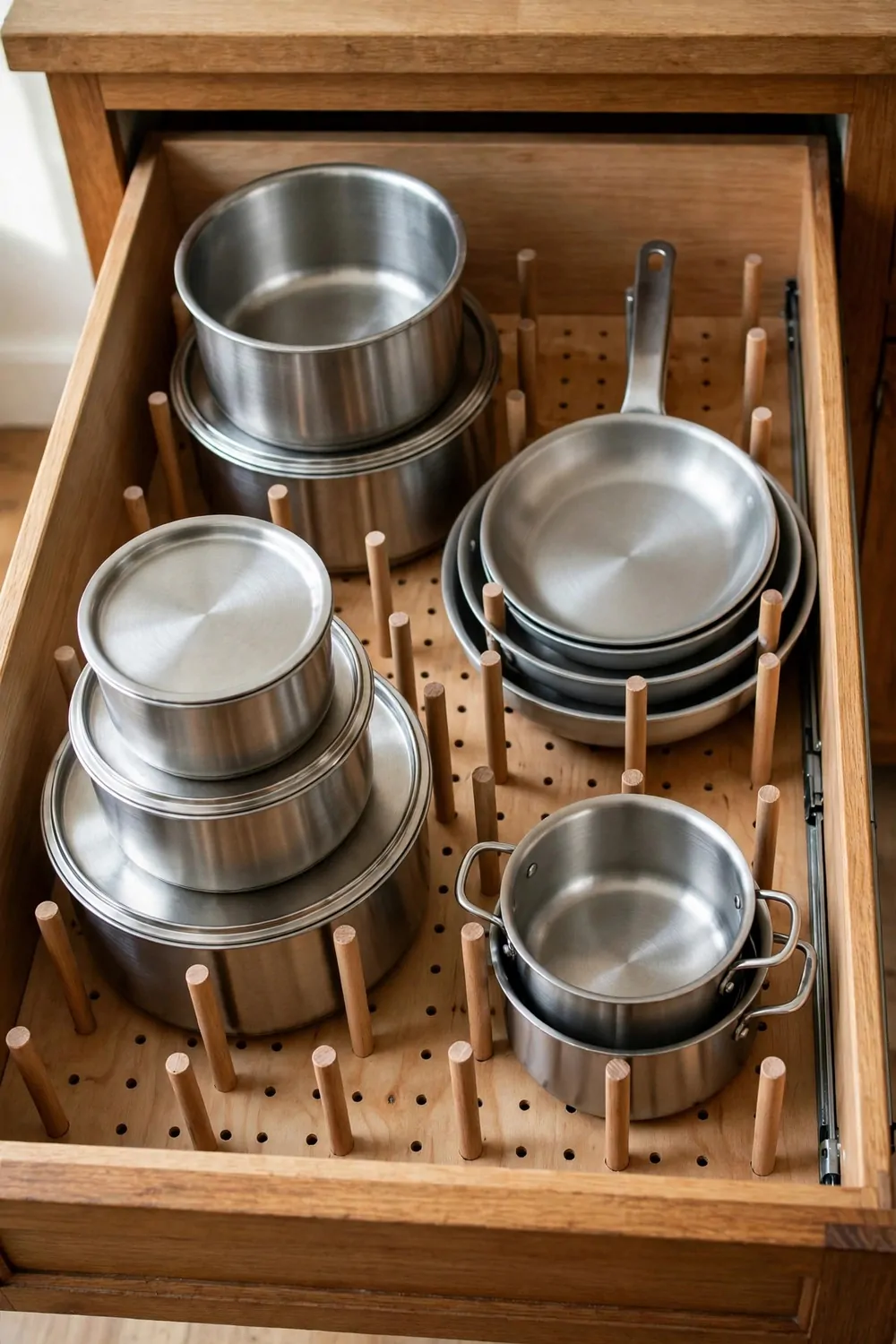
Pots and pans slide around in a deep drawer. They bang and scratch each other, and you can never find the right lid.
A pegboard base fixes that with small pegs. The pegs stick up from the drawer floor and hold each pot in place.
You can move the pegs around to fit your pots. Big pots get wide spaces, and small pans get snug ones.
I keep my lids standing up with pegs too. They stay upright, and I can grab one without moving the rest.
It keeps the pots from sliding when you open the drawer fast. No more loud crashes in the morning.
Wood pegs look nice and are gentle on pans. They will not scratch the coating like metal can.
Plan the layout before you place the pegs. Put the pots you use most at the front of the drawer.
Clean the drawer base now and then. Grease can build up, and a quick wipe keeps it fresh.
It is a clever and simple idea. Your pots stay put, and your drawer stays quiet.
A Baking Sheet Slot by the Oven
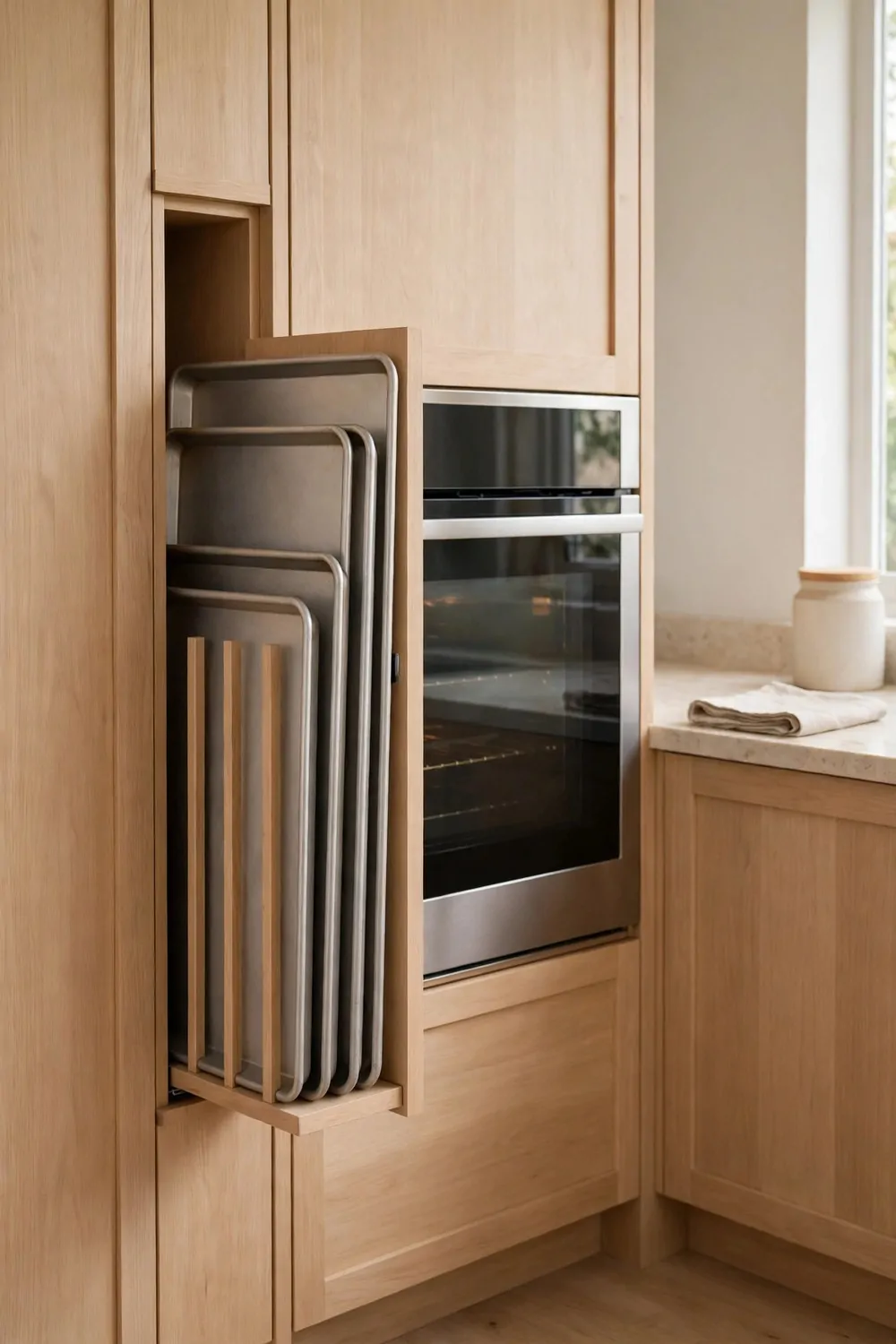
Baking sheets are wide and flat, and they never fit well in a normal cabinet. They lean and slide and make a mess.
A baking sheet slot stands them up in a thin, tall space by the oven. Each sheet gets its own slot, and you can see them all.
You grab the one you need in one move. No more pulling out a whole stack to reach the bottom sheet.
It works for cooling racks and muffin trays too. Flat things all fit in the same kind of slot.
Put this slot close to the oven. You will slide a sheet in and out while dinner cooks, and the short walk helps.
Keep the slot narrow so sheets stay upright. If it is too wide, they will lean and fall over.
Wipe the inside now and then. Flour and crumbs can gather at the bottom.
It is a small space that was often wasted before. Now it holds a whole set of sheets in a neat row.
If you bake a lot, this slot will be your favourite spot. It is simple, tidy, and always in reach.
A Coffee Station Drawer
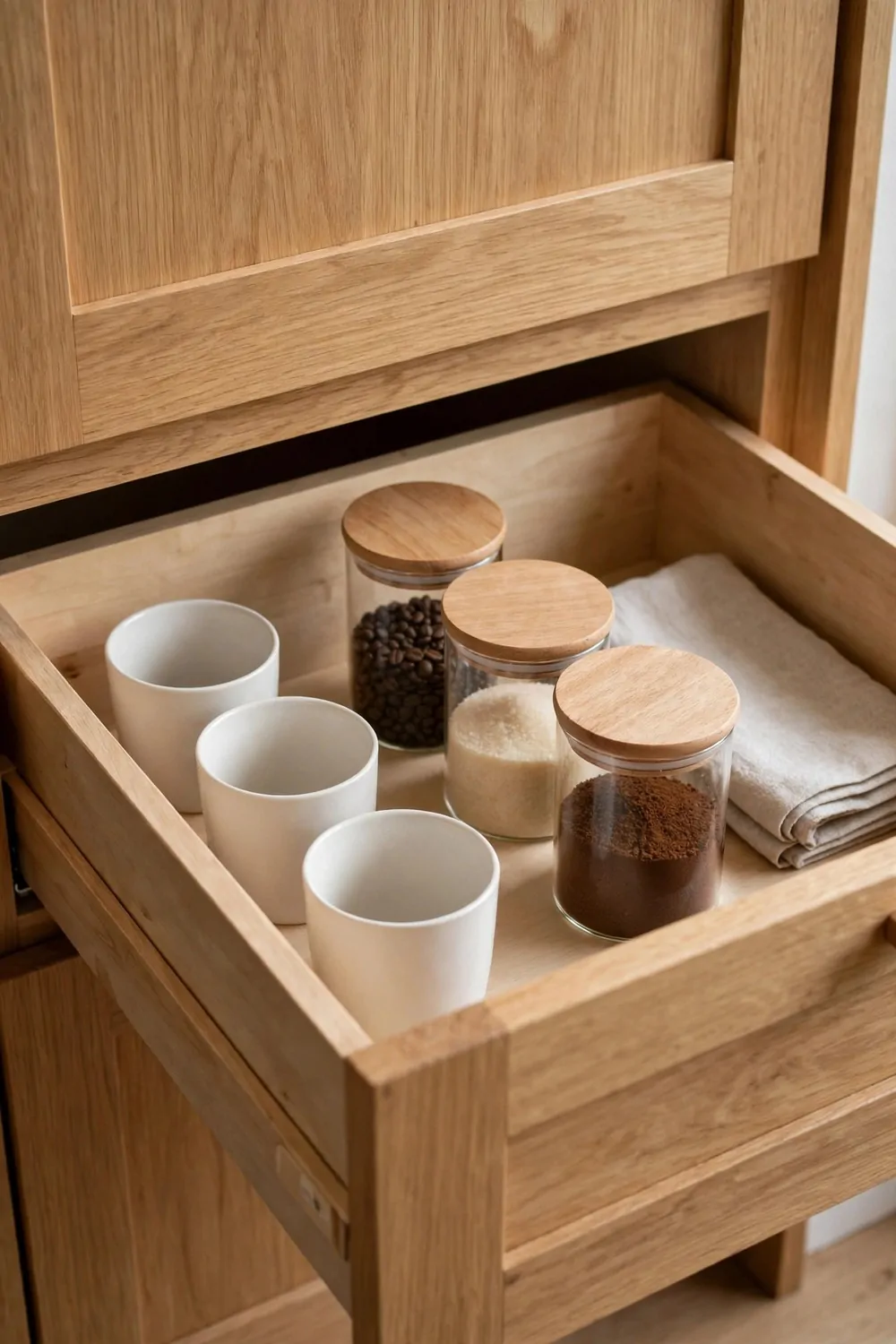
Mornings are busy, and my coffee things were spread all over the kitchen. The beans were in one cabinet, and the cups were in another.
A coffee station drawer puts it all in one place. Beans, filters, spoons, and cups live together in a neat drawer.
You open one drawer, and your whole coffee setup is ready. It makes the morning feel calm, even on a rush day.
Use dividers to keep it tidy. Small jars for beans and a slot for filters keep it from turning into a jumble.
Keep the drawer near the kettle or coffee machine. You will not have to walk across the kitchen with wet hands.
Add a small mat under the jars. It stops them from sliding when you open the drawer.
If you drink tea too, you can keep tea bags in the same drawer. One station for all your warm drinks is handy.
Clean it once a week. Coffee grounds get everywhere, and a quick wipe keeps it fresh.
It is a small luxury that makes mornings better. Your coffee corner will feel like a tiny cafe at home.
Adjustable Shelves You Can Move
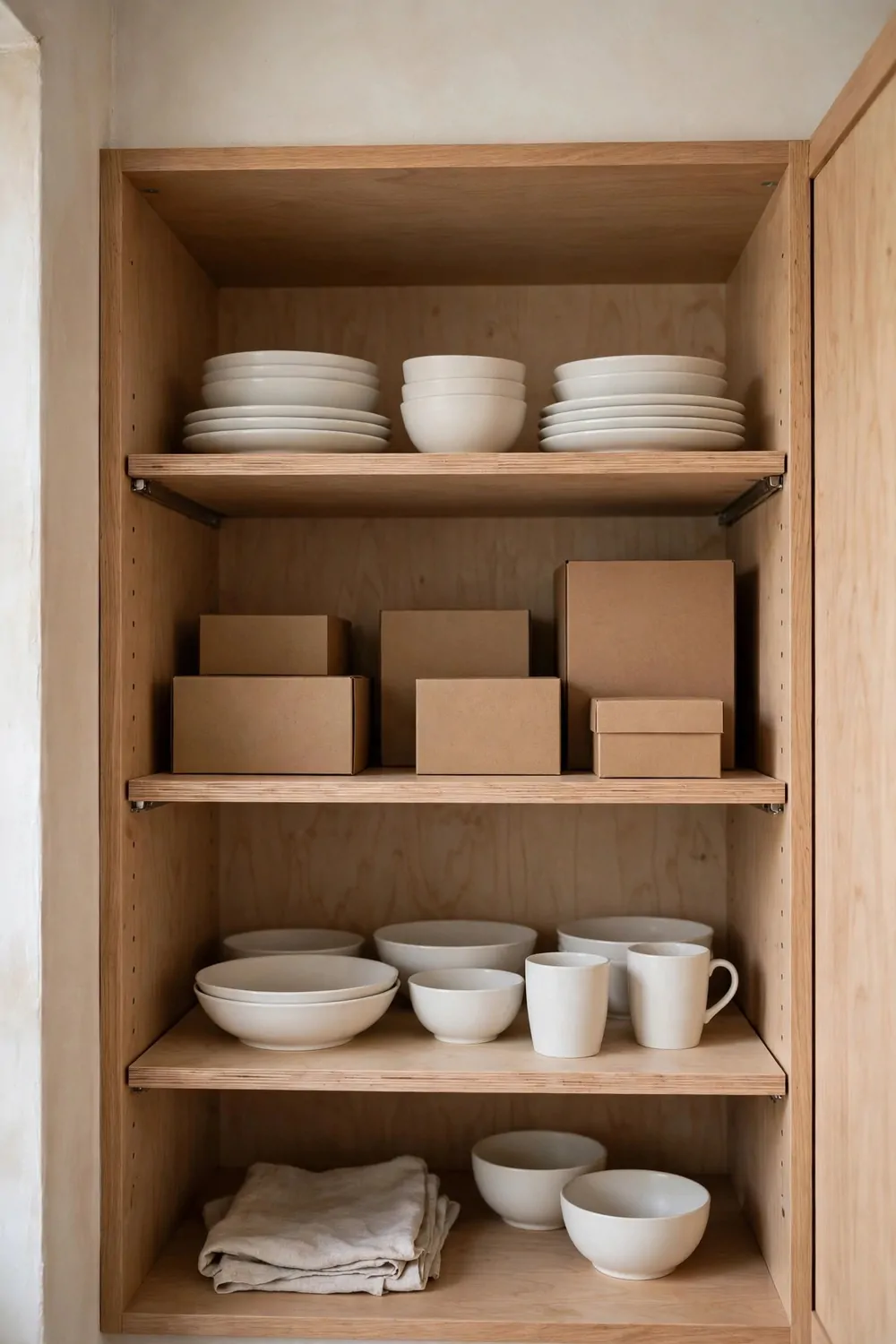
Fixed shelves are set at one height, and they never fit what you own. Tall bottles hit the shelf above, and short jars leave empty space.
Adjustable shelves move up and down. You can set each shelf at the height that fits your stuff.
When you buy a tall bottle, you just move the shelf up. No more storing it on the counter because it does not fit.
I change mine when the seasons change. In summer I need room for tall juice bottles, and in winter I need space for soup pots.
Ask for shelf pins that hold firm. You want the shelf to stay put when you load it with heavy cans.
Leave one shelf free to move later. Your needs will change, and a spare slot helps.
It works in wall cabinets and base cabinets alike. Any cabinet feels better when you can change the layout.
It costs very little extra, but it gives you freedom for years. You will not be stuck with a layout that does not fit.
If you only pick one idea from this part, pick this one. A cabinet that can change with you is a cabinet that lasts.
| Storage fix | Size | Typical cost | Time |
|---|---|---|---|
| Pull-out shelves | One base cabinet | Low to mid range | A few hours |
| Appliance lift | One base cabinet | Mid to higher range | Half a day |
| Pull-down shelf | One wall cabinet | Mid range | A few hours |
| Drawer dividers | One drawer | Low range | Under an hour |
| Adjustable shelves | One cabinet | Low range | Under an hour |
A Pantry Pull-Out for Tall Cabinets
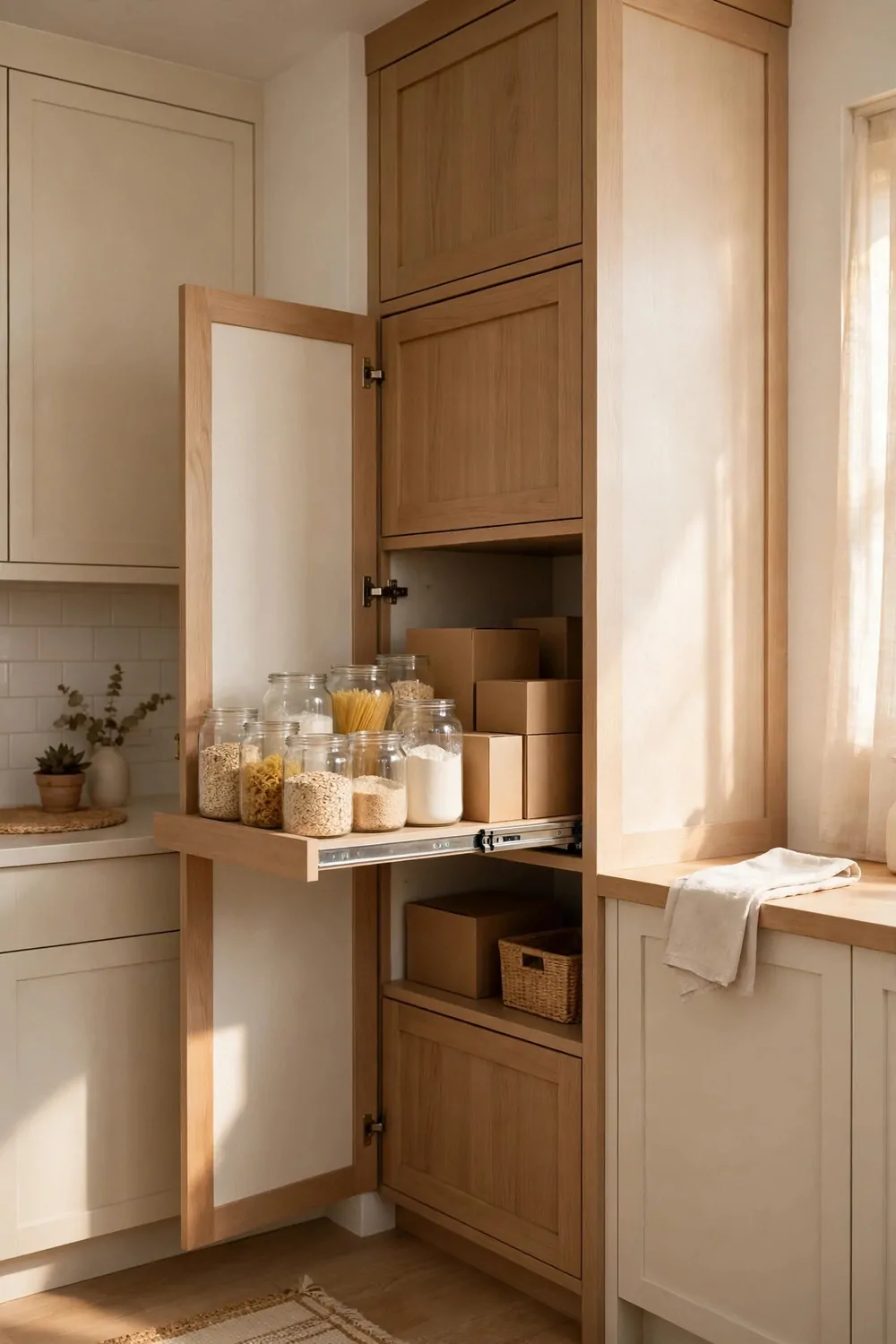
Tall cabinets can feel like a dark hole. I used to lose cans at the back for months. A pull-out changes that fast.
You pull the whole shelf toward you. Everything comes out into the light. You can see what you have in one look.
I like narrow pull-outs for tall spaces. They hold jars and boxes in neat rows. Nothing tips over when you slide them.
Think about what you grab most. Put snacks and pasta at hand height. Put big pots and spare stock up high.
Full height pull-outs work best with strong runners. Cheap ones sag when they are full. Ask your maker about the weight limit first.
You can add small rails on each shelf. They stop jars from sliding off. It is a small detail that saves a lot of mess.
I keep my tall pull-out near the stove. It holds oils, sauces, and rice. Cooking feels quicker when it is all in one place.
Measure the gap before you order. A pull-out that is too wide will stick. A pull-out that is too narrow wastes space.
This is one of those ideas that looks plain but helps every day. You open it, you see it, you grab it. Simple is good.
Under-Sink Organizers That Work Around Pipes
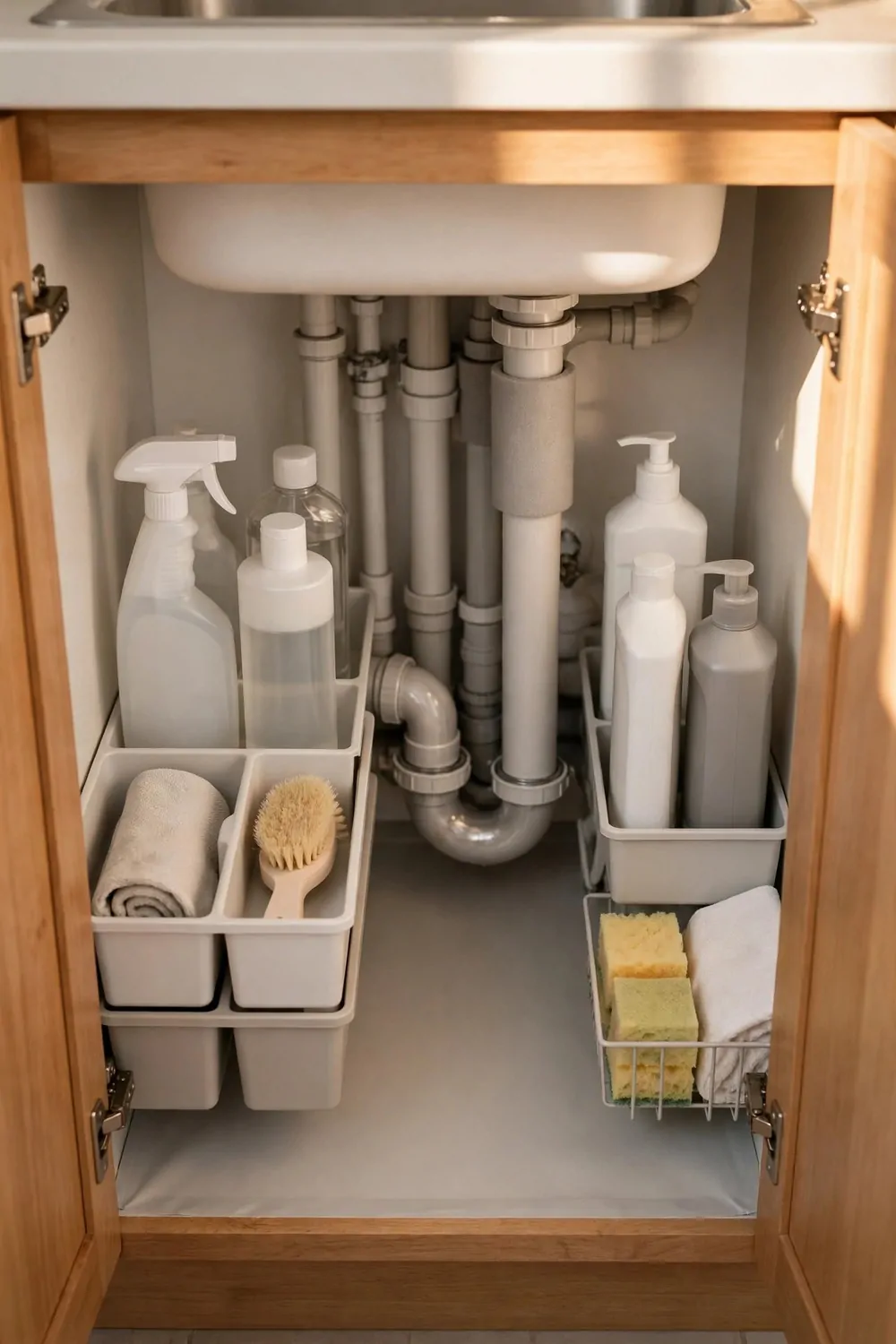
The space under the sink is always tricky. Pipes run right through the middle of it. Most people just toss things in and shut the door.
A good organizer works around the pipes instead of fighting them. It has a cut out shape in the middle. The shelves sit on each side.
I use two small bins on the left and right. One holds sponges and cloths. The other holds dish soap and extra bags.
A pull-out tray helps a lot here. You slide it out and reach the back without kneeling on the floor. Your knees will thank you.
Keep the stuff you use daily at the front. Put the spare bottles at the back. You will not need to move ten things to find one.
Watch out for leaks too. A plastic tray under the pipes catches drips. It keeps the cabinet base dry and clean.
Do not stack heavy bottles too high in here. They fall over when the door shuts. Short and steady works better.
I added a small hook on the inside of the door. It holds a brush and a pair of gloves. That tiny spot was wasted before.
Under sink storage does not need to be fancy. It just needs to fit around the pipes and stay tidy. Then it works.
A Charging Drawer Inside the Cabinet
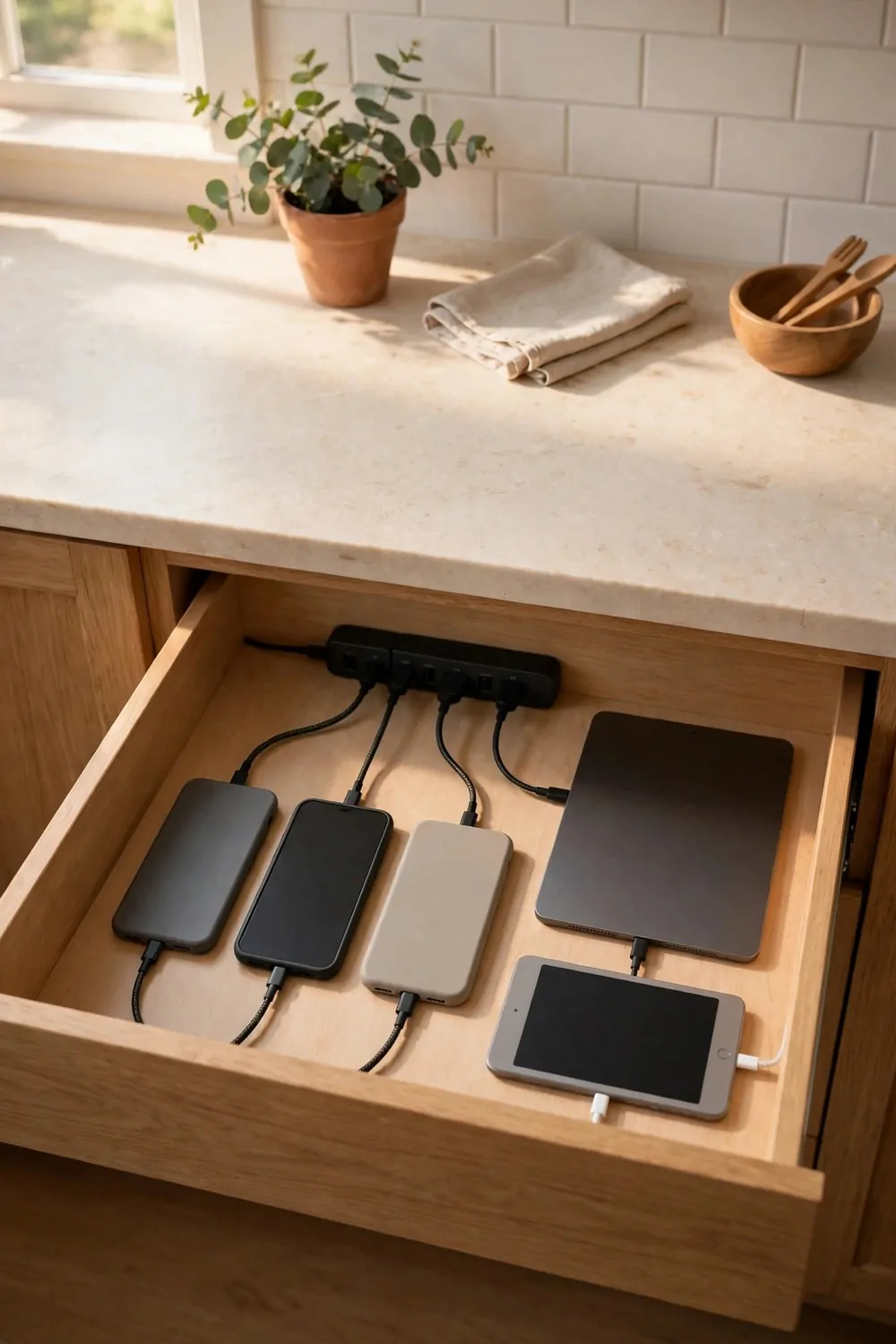
Chargers and cables end up all over my kitchen. They sit on the counter and look messy. A charging drawer hides them all.
The drawer has a power strip built inside it. You plug your phone in and shut the drawer. It charges out of sight.
I keep one drawer near the entry of the kitchen. Phones go in when we get home. The counter stays clear for cooking.
Make sure the drawer has a safe power setup. Your cabinet maker should fit it the right way. Do not try to wire it yourself.
You can add small slots inside the drawer. Each phone gets its own spot. The cables do not tangle up as much.
This drawer is great for tablets too. Kids can charge theirs in one place. You always know where the devices are.
Leave a little air gap at the back of the drawer. Chargers get warm when they work. A small gap keeps things cool.
I like a drawer with a soft close runner. It shuts quiet even when it is full of cables. No slamming at night.
It is a small luxury, I know. But once you have it, you will wonder how you lived with cables all over the counter.
Glass-Front Interiors That Show Pretty Things
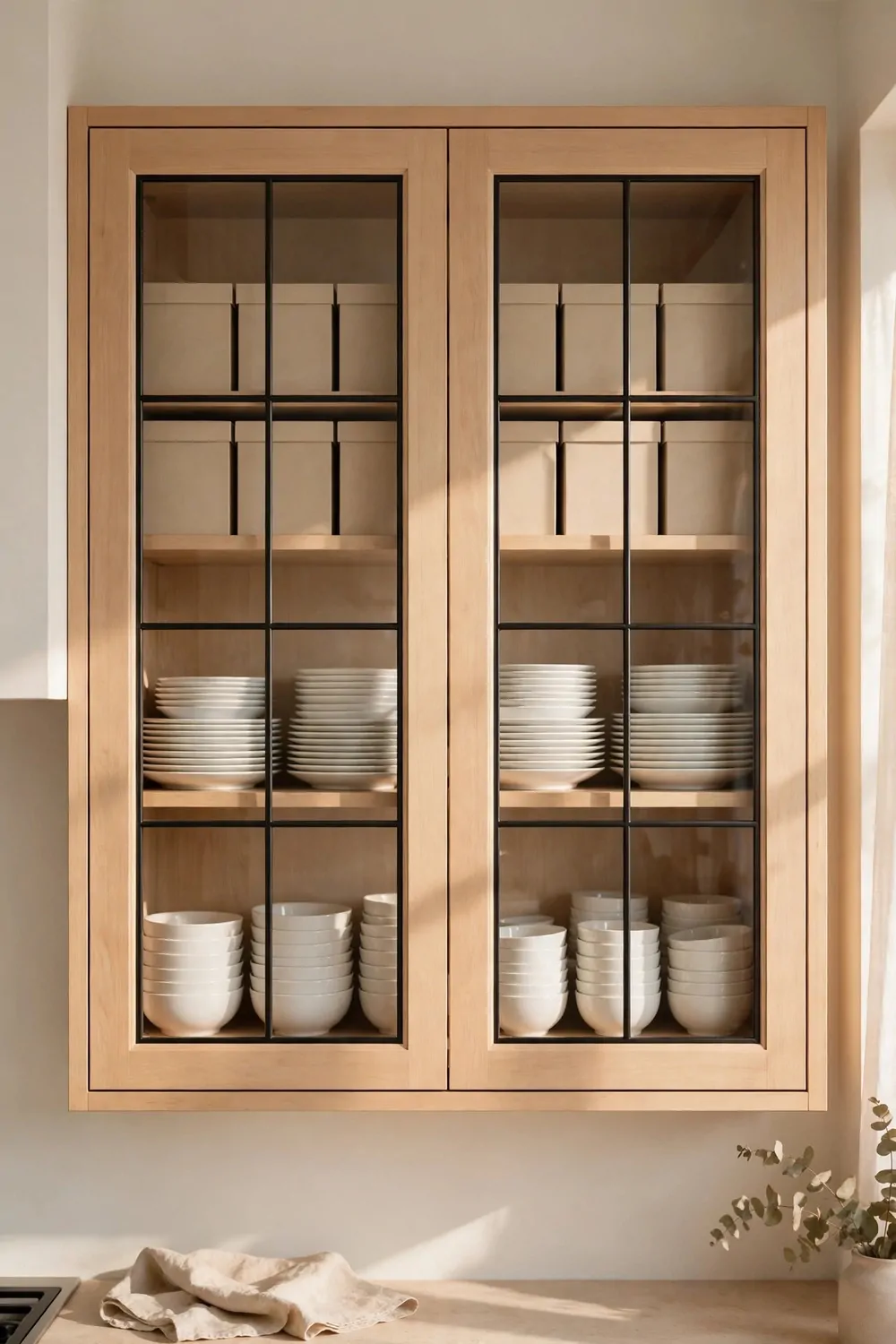
Glass fronts let you show off the pretty stuff. I keep my nice cups and bowls behind glass. They look like a small shop display.
The inside of the cabinet matters more with glass. Paint it a soft color. It makes the dishes stand out.
You do not need to fill every shelf. Leave some space between things. A little air makes it look calm and tidy.
I group things by color in mine. White plates together, blue mugs together. It sounds simple and it looks lovely.
Glass fronts work best when the inside stays neat. If it gets messy, everyone sees it. So only put your best pieces in there.
Add a small light inside the cabinet. It makes the glass glow at night. The kitchen feels warm and cosy.
You can use frosted glass if you want a softer look. It hides a bit of clutter. You still get the light through.
Keep the glass clean with a quick wipe each week. Finger marks show up fast. A dry cloth does the job in a minute.
This idea is not for every cabinet. Pick one or two glass fronts. They become a feature, not a chore.
A Plate Rack Built Into the Cabinet
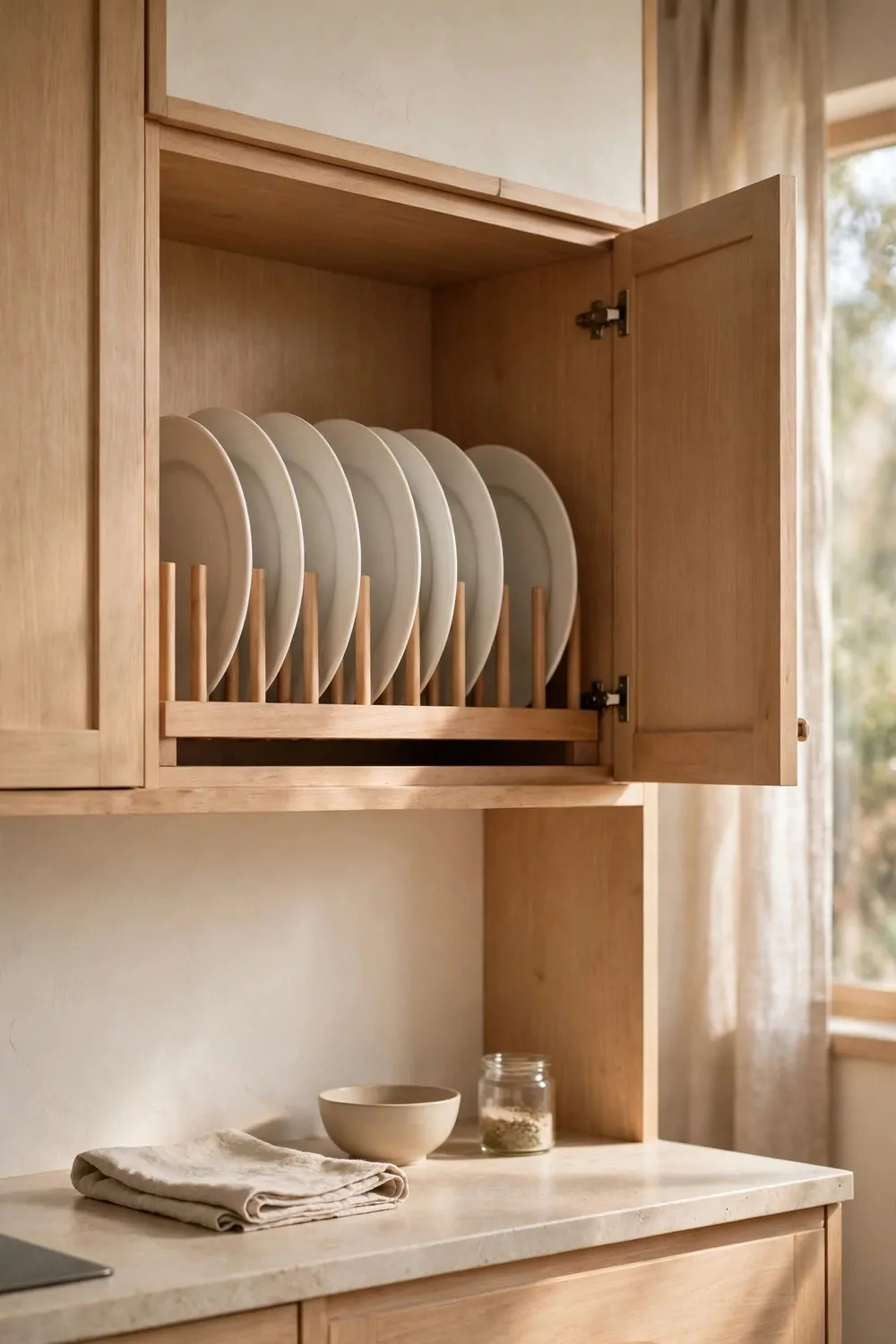
Plates stacked in a pile always chip at the edges. I got tired of that. A built in plate rack keeps them standing up.
The rack has thin slots for each plate. You slide one in and it stays upright. You can grab one without moving the rest.
I like the rack near the dishwasher. Clean plates go straight in. It saves steps when I unload.
Wood racks look warm and homely. Metal racks are strong and easy to wipe. Pick the one that fits your kitchen style.
Make sure the slots fit your plates. Big dinner plates need wider gaps. Small side plates need closer ones.
You can mix plates and bowls in one rack. Put bowls on the lower shelf. Plates stand tall on the upper one.
This rack also helps kids set the table. They can see each plate and take one safely. No more wobbly stacks.
Measure your tallest plate before you order. A rack that is too short will not hold it. A quick check saves a rebuild.
It is a quiet little upgrade. You will not notice it much at first. Then you will miss it in every other kitchen.
A Mug Rail Inside the Cabinet
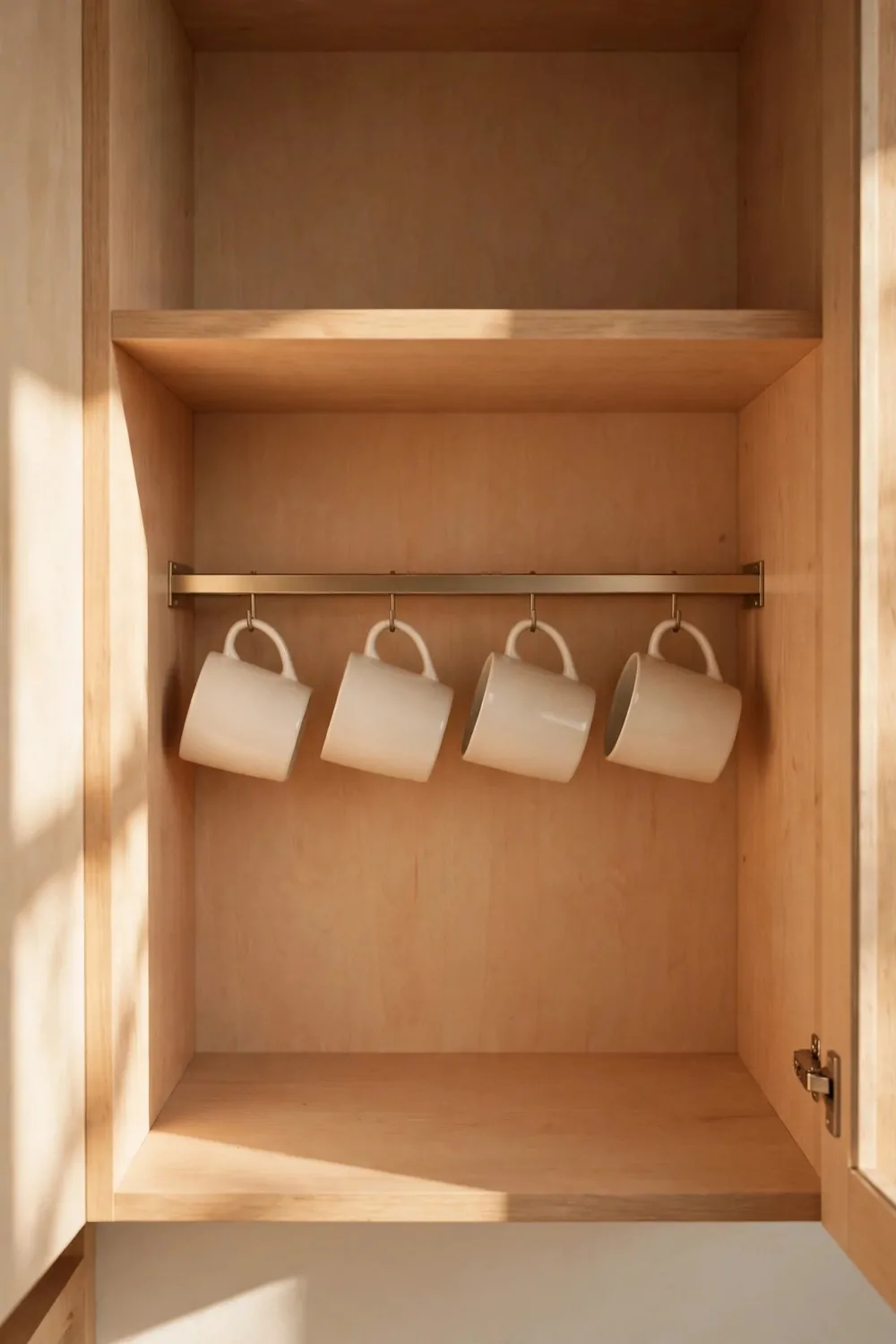
Mugs take up so much shelf space. They pile up and fall over. A mug rail inside the cabinet fixes that.
The rail hangs under a shelf. Hooks hold each mug by its handle. The mugs hang in a neat row.
I love seeing my favorite mugs lined up like that. It feels like a little cafe shelf. It makes me smile in the morning.
Put the rail at a height you can reach easy. Too high and you stretch every time. Too low and the mugs bump the shelf below.
Leave a small gap between hooks. Mugs need room to swing a little. If they are too close, they knock together.
You can use the rail for small cups too. Tea cups hang just as well. Keep the big heavy mugs on a shelf instead.
A rail frees up shelf space below it. I use that space for bowls now. One cabinet holds twice as much.
Check the hook strength before you load it up. Cheap hooks bend under heavy mugs. Strong ones last for years.
This is a cheap idea with a big payoff. It keeps mugs tidy and easy to grab. Your morning cup is right there waiting.
A Built-In Cutting Board Slot
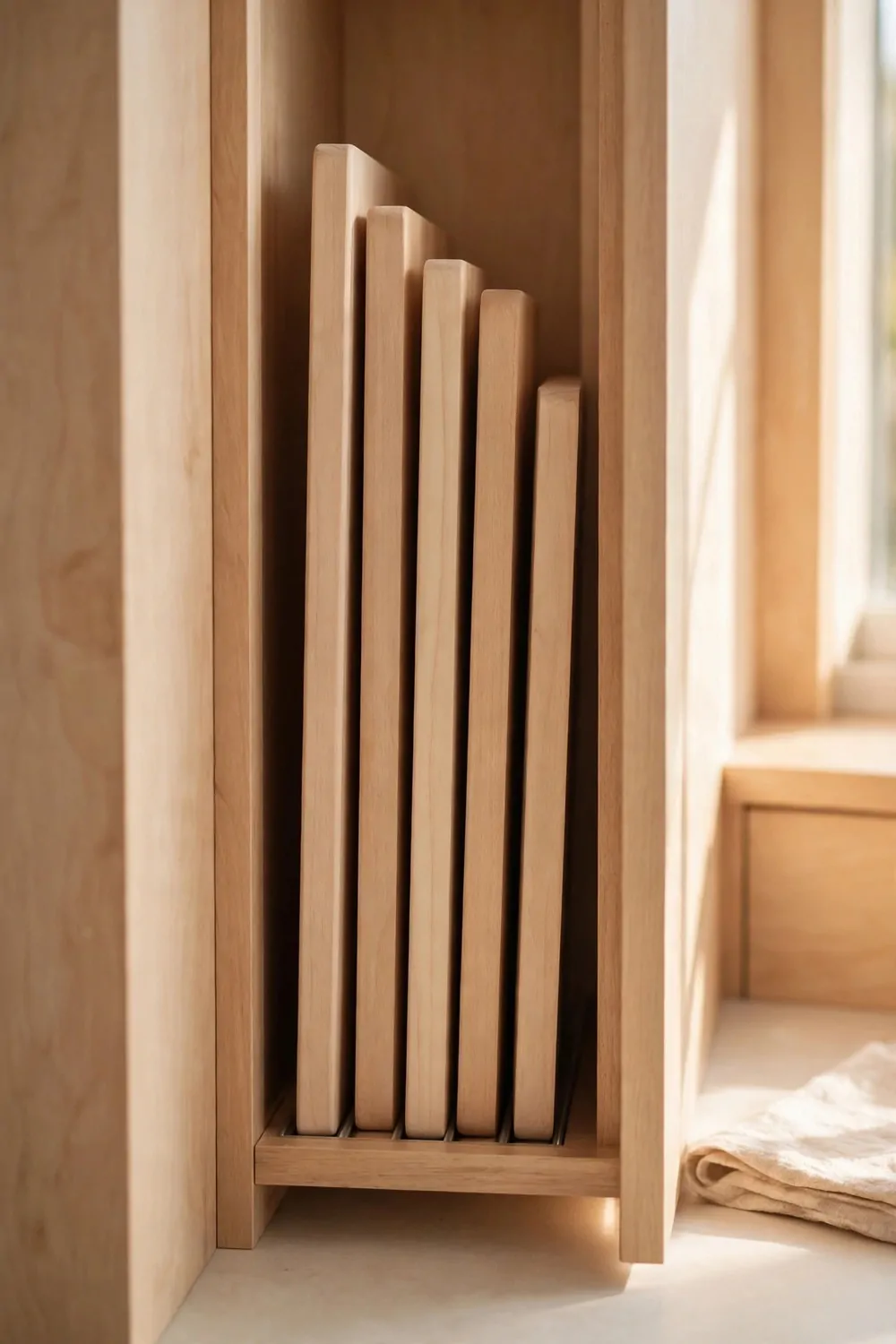
Cutting boards always end up leaning against the wall. They slide down and clatter. A built in slot gives them a real home.
The slot is a tall thin space inside a cabinet. You slide the boards in upright. They stay dry and easy to reach.
I keep mine next to the sink. I wash a board and slide it back in. It dries standing up, which is better.
Make the slot wide enough for your thickest board. A tight slot will jam. Measure the board first, then build.
You can fit two or three boards in one slot. Put the one you use most at the front. The rest sit behind it.
This slot works for baking trays too. They are flat and tall like boards. One slot can hold both.
Keep the bottom of the slot easy to clean. Crumbs fall down there. A quick wipe keeps it fresh.
I like a slot with a little lip at the base. It stops the boards from sliding forward when you open the door. Simple and smart.
It is such a small change. But my counter looks clearer now. The boards are out of sight until I need them.
A Spice Drawer With Angled Inserts
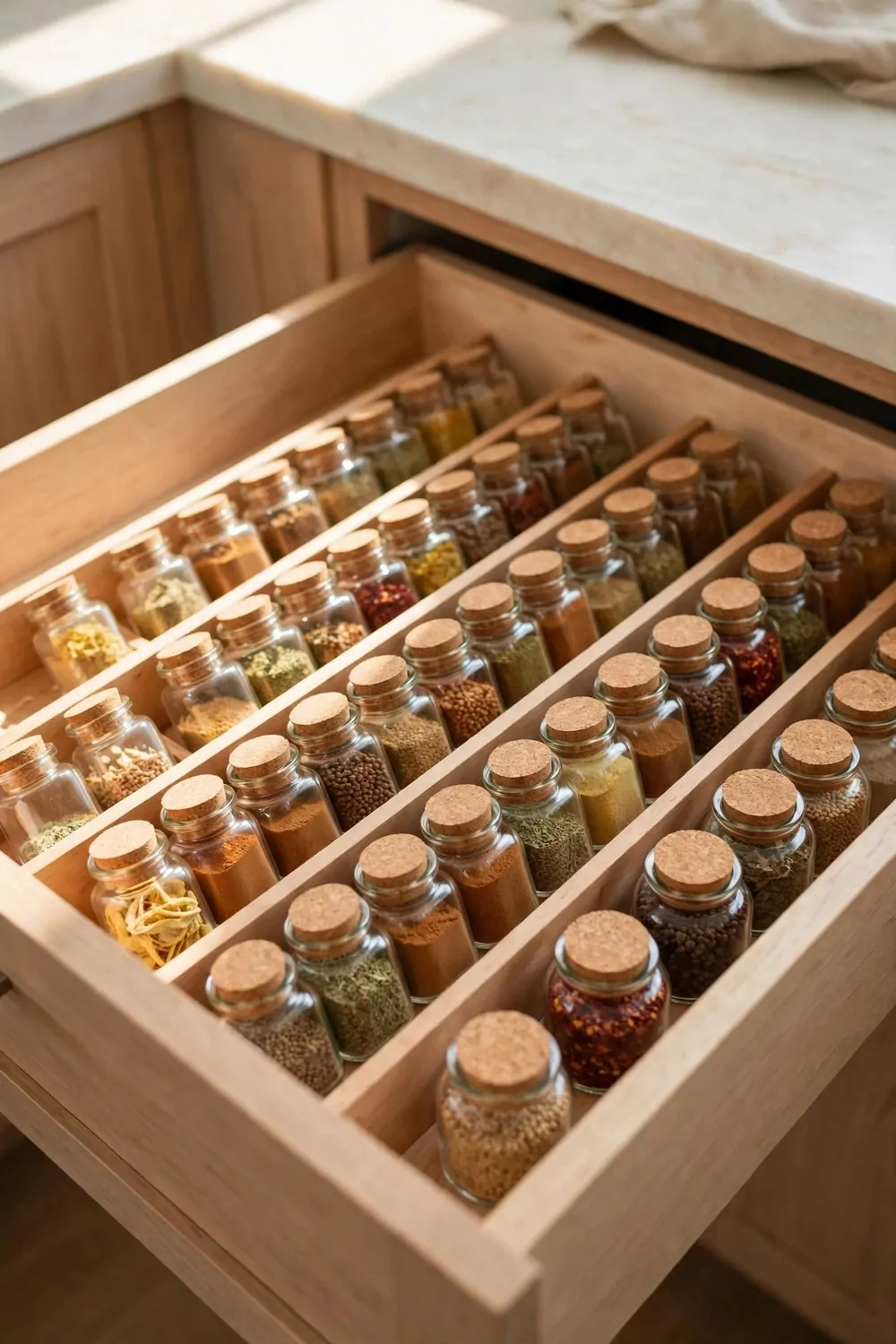
Spice jars in a deep drawer are hard to read. You dig through them and lose track. Angled inserts fix that in one move.
The insert tilts each jar up a little. You can read the labels from above. No more pulling out ten jars to find one.
I put my most used spices at the front. Salt, pepper, and paprika sit first. The rare ones go to the back.
Use jars that are all the same size if you can. They sit neat in the angled rows. Mixed sizes wobble and waste space.
Label the lids as well as the jars. You can see the name from the top. It makes cooking faster when your hands are busy.
A spice drawer near the stove is the best spot. You reach, you shake, you put it back. No steps across the kitchen.
Keep the drawer shallow if you can. Deep drawers hide jars at the back. A shallow one keeps every jar in view.
Wipe the inserts now and then. Spice dust builds up fast. A damp cloth keeps it clean in a minute.
This drawer makes me cook more, I think. Everything is right there and easy to see. Small order makes a big difference.
A Pull-Out Towel Rail
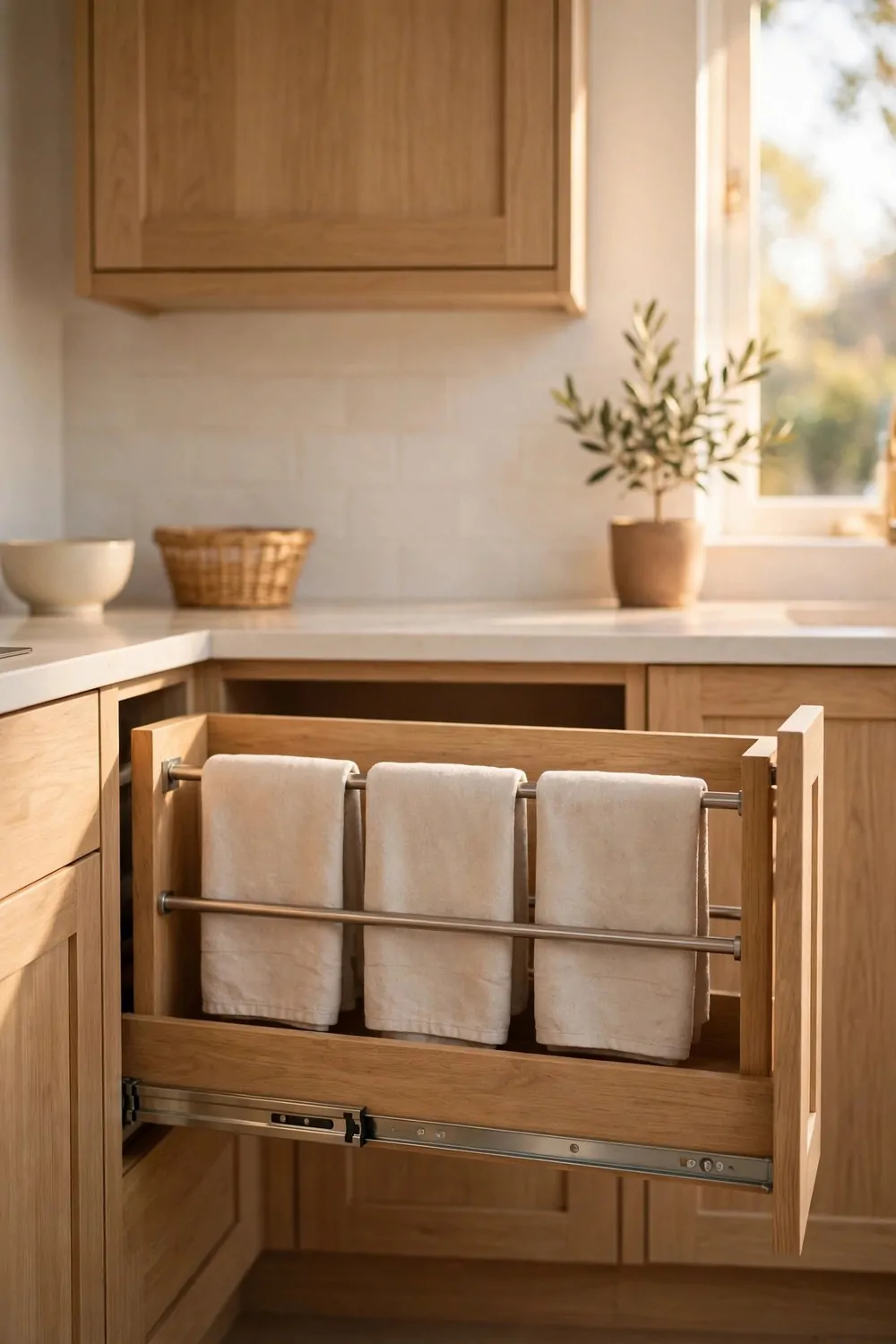
Towels draped over the oven door always slip off. They end up on the floor. A pull-out towel rail keeps them in place.
The rail slides out from inside a cabinet. You hang the towel, then push it back in. It stays neat and out of the way.
I use mine for hand towels in the kitchen. They dry faster on a rail than bunched up. They smell fresher too.
Put the rail near the sink if you can. You wash your hands and reach for the towel. It is right where you need it.
You can fit two towels on one rail. Use one for hands and one for dishes. Keep them apart so they stay clean.
Make sure the rail slides smooth when it is wet. Cheap runners stick with damp towels. A good runner is worth it.
This rail also works in a bathroom cabinet. It holds a small towel for faces. It hides away when guests come.
I like a rail that locks when it is out. It does not slide back while you dry your hands. That little lock matters.
It is a tiny feature, but I use it ten times a day. Good design is like that. It quietly makes life easier.
A Hidden Step Stool Drawer
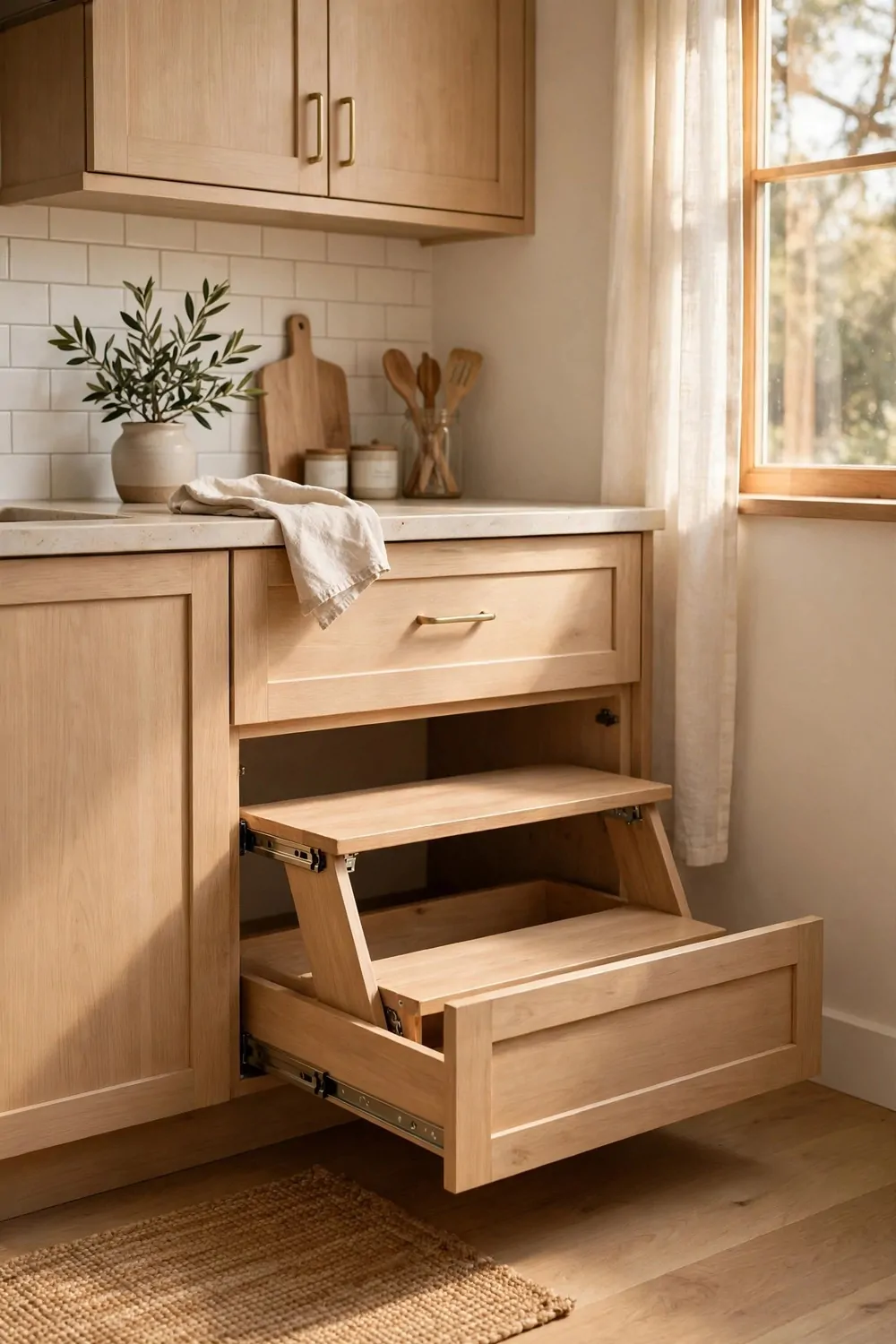
High shelves are hard to reach for me. I am not tall. A hidden step stool drawer solves it without a bulky stool in the room.
The drawer looks like a normal toe kick drawer. You pull it out and flip the top up. It becomes a small step.
I step up, grab the top shelf jar, and step down. Then I push it back in. The kitchen floor stays clear.
Make sure the step is strong and steady. It should hold your full weight without wobble. Ask the maker to test it.
Kids love this step too. They can reach the sink to wash hands. It helps them feel grown up and independent.
Keep the step clean and dry. Wet feet slip on smooth wood. A small grip strip on top helps a lot.
Put this drawer near the tall pantry or the high shelves. That is where you will use it most. Right spot matters.
Do not store heavy things in the step drawer. It needs to stay light to pull out fast. Keep it just for the step.
I wish I had added this years ago. Reaching the top shelf used to mean dragging a chair over. Now it takes two seconds.
| Project | Size | Typical cost | Time |
|---|---|---|---|
| Pantry pull-out | Tall, narrow | Low to medium | A few hours |
| Charging drawer | Standard drawer | Medium | Half a day |
| Spice drawer inserts | Shallow drawer | Low | Under an hour |
| Pull-out towel rail | Narrow cabinet | Low to medium | A few hours |
| Hidden step stool drawer | Toe kick width | Medium | Half a day |
Soft-Close Hinges and Runners
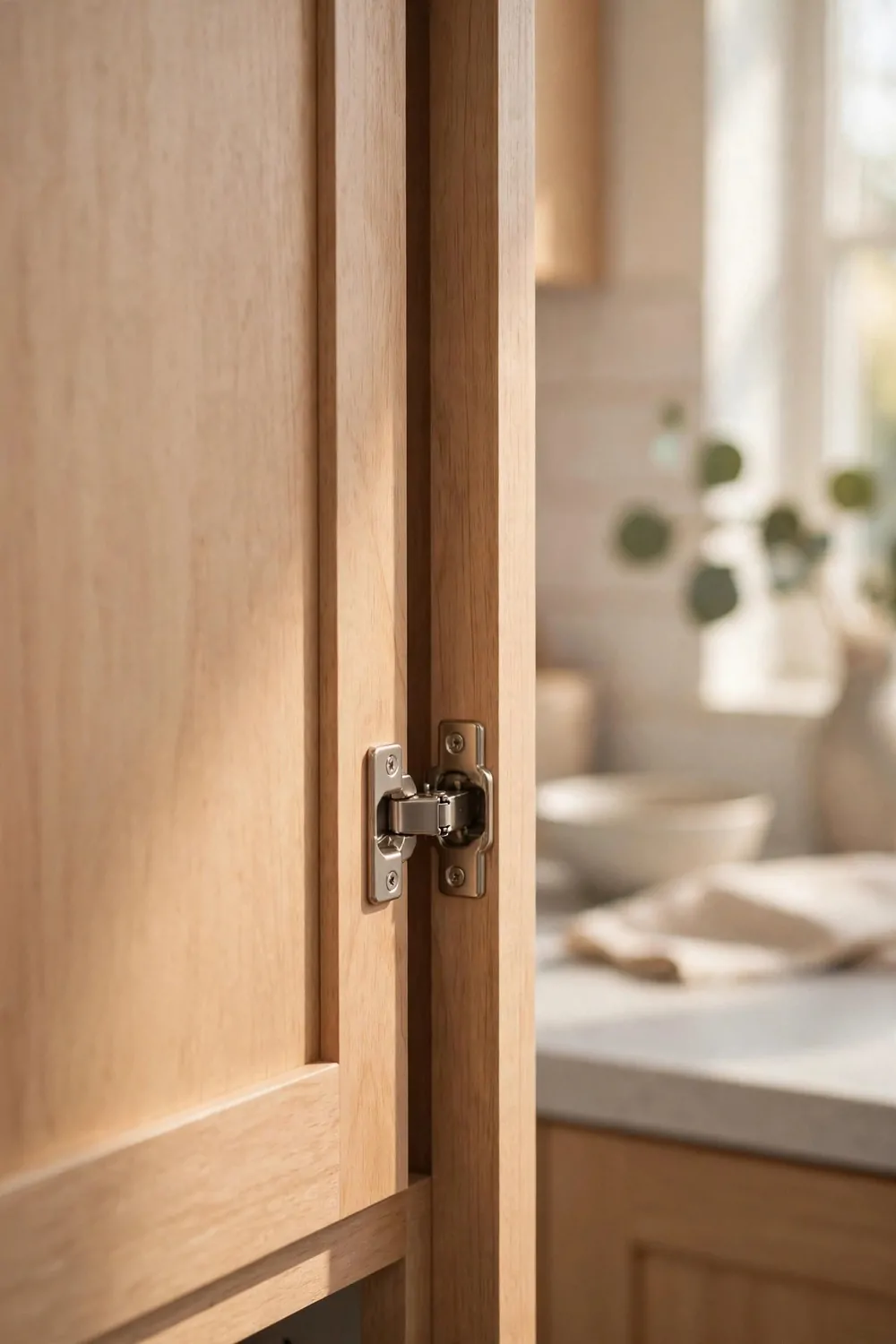
Doors that slam shut wake the whole house. I know that sound too well. Soft close hinges stop it completely.
The hinge catches the door near the end. It pulls it shut slow and quiet. No bang, no shake.
Runners do the same for drawers. You push and they glide shut on their own. Heavy drawers close soft too.
I notice this most at night. Someone gets a glass of water and nothing slams. The house stays calm.
Soft close parts also protect your cabinets. Doors do not hit the frame hard. The paint and wood last longer.
Ask for soft close on every door and drawer if you can. It costs a bit more up front. It pays back every single day.
Test them before the maker leaves. Open each door and let it go. It should close slow, not drop fast.
If an old hinge starts to slam again, it may need a small turn. A tiny screw adjusts the speed. Your maker can show you how.
This is one upgrade I would never skip now. Quiet cabinets feel calm and well made. They make the whole kitchen feel better.
A Label System Inside Every Cabinet
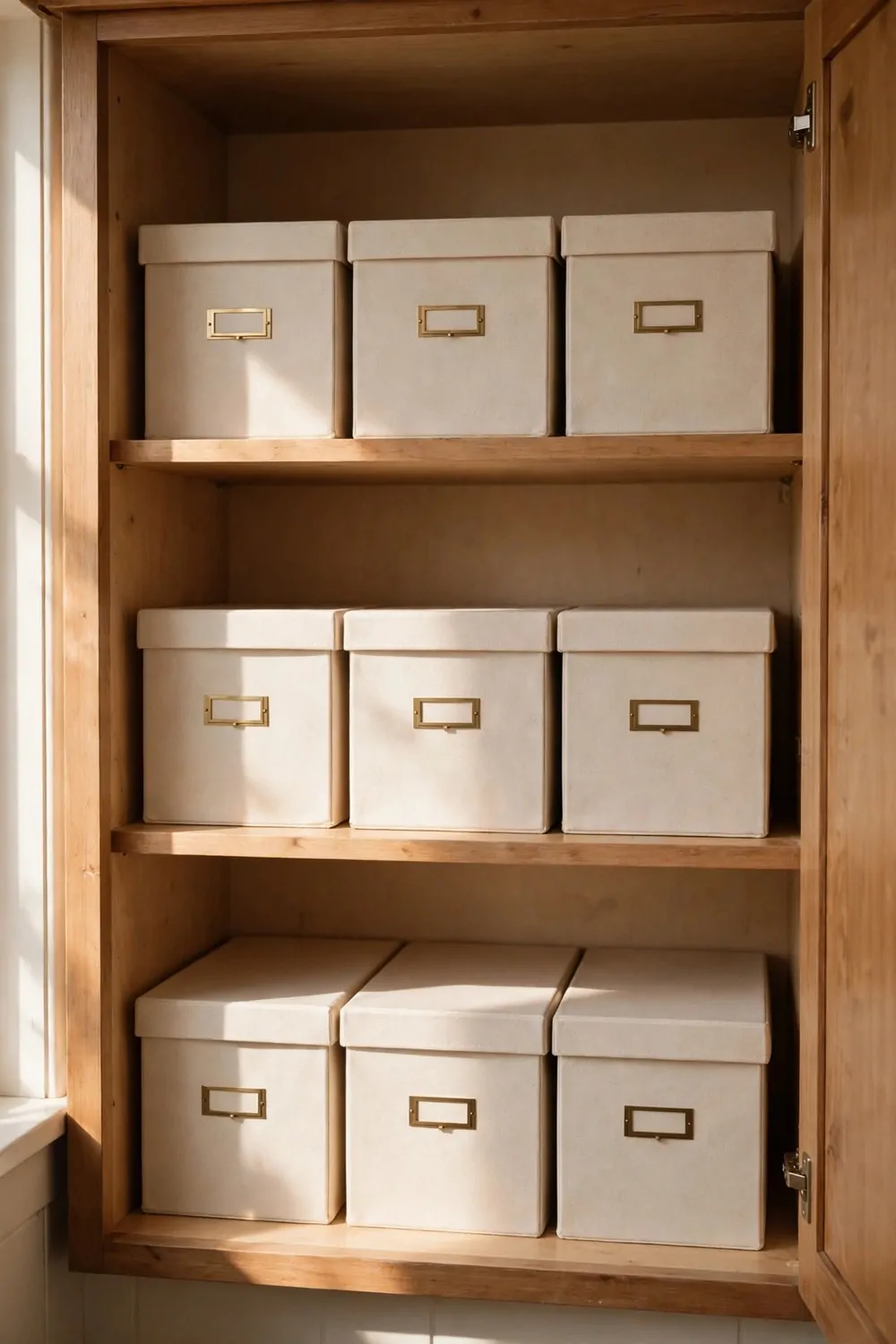
Labels inside cabinets sound fussy. I thought so too at first. Then I tried it and my kitchen stayed tidy for once.
A small label on each shelf tells you what lives there. Plates here, bowls there. Everyone in the house follows it.
Use plain labels with big clear words. No fancy writing. You need to read them fast when your hands are full.
I put labels inside the door as well. They list what is in that cabinet. Guests can find a glass without asking me.
Keep the labels simple and honest. If the shelf changes, change the label. An old label causes more mess than none.
Kids learn the system fast. They put things back in the right spot. It turns tidy up into a small game.
You can use a label maker or plain tape and a pen. Both work fine. Pick the one you will actually keep up with.
Blank labels are best for photos and shared homes. You can write what you need. No need for fancy printed words.
Labels are not about being strict. They are about making life easy. When everything has a home, you find it fast.
A Cleaning Supplies Caddy
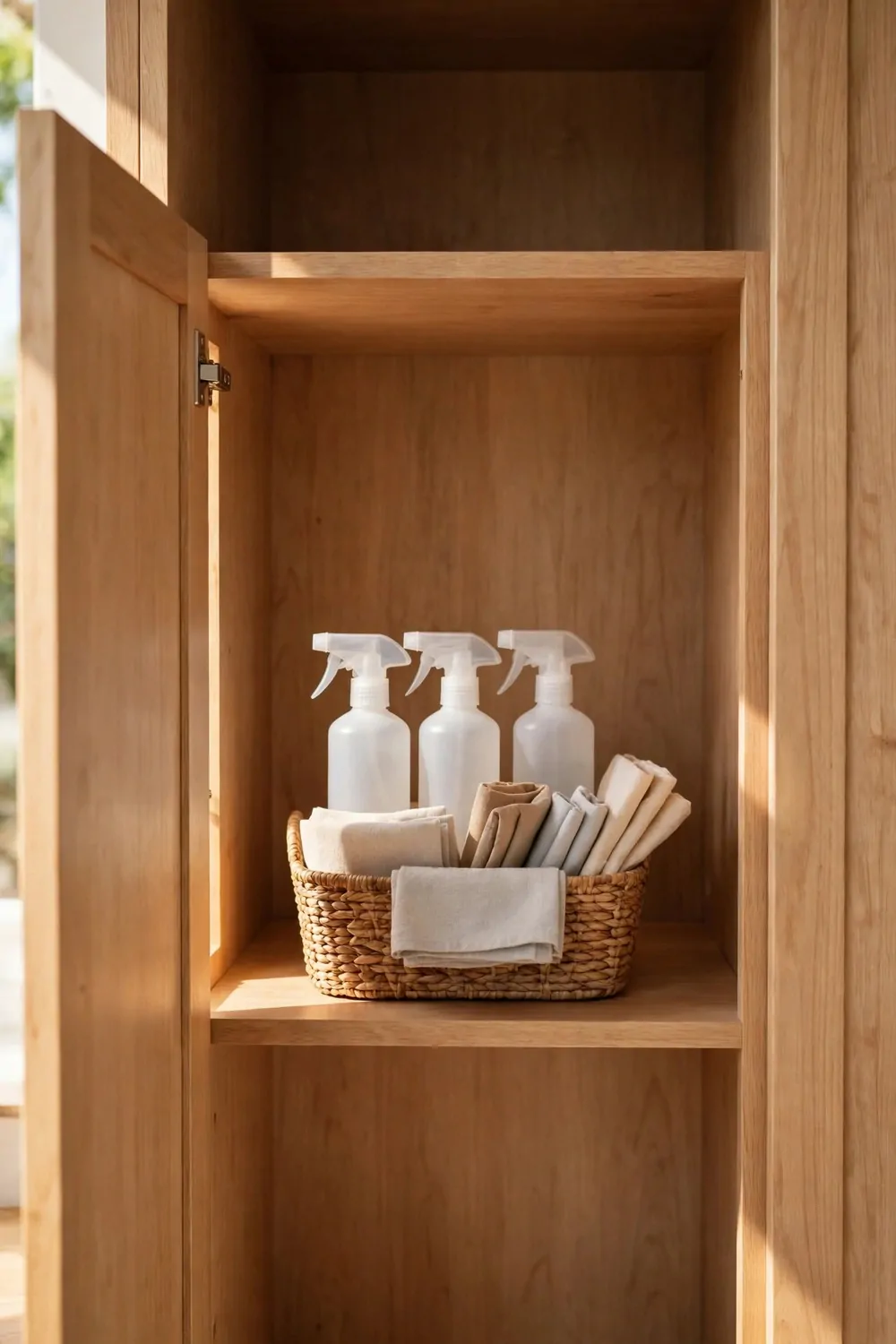
Cleaning sprays used to live in five spots in my house. I could never find the right one. A caddy inside the cabinet fixed it.
The caddy is a box with a handle. It holds sprays, cloths, and gloves in one place. You lift it out and carry it to the room.
I keep one caddy for the kitchen and one for the bathroom. Each has what that room needs. No more hunting around.
Put the tall bottles at the back of the caddy. Short cloths go at the front. It stays balanced when you carry it.
A pull-out shelf under the caddy helps too. You slide it out and lift the caddy off. No reaching deep into the cabinet.
Keep the caddy light enough to lift with one hand. If it is too heavy, you will leave it in the cabinet. Then it does not help.
Check the bottles for leaks now and then. A leaky spray makes a sticky mess. Wipe the caddy base once a week.
Kids and pets should not reach this caddy easy. Put it on a higher shelf or behind a latch. Safety comes first here.
This small box changed my cleaning days. I grab it, clean, and put it back. Everything is in one spot, ready to go.
A Pet Food Drawer
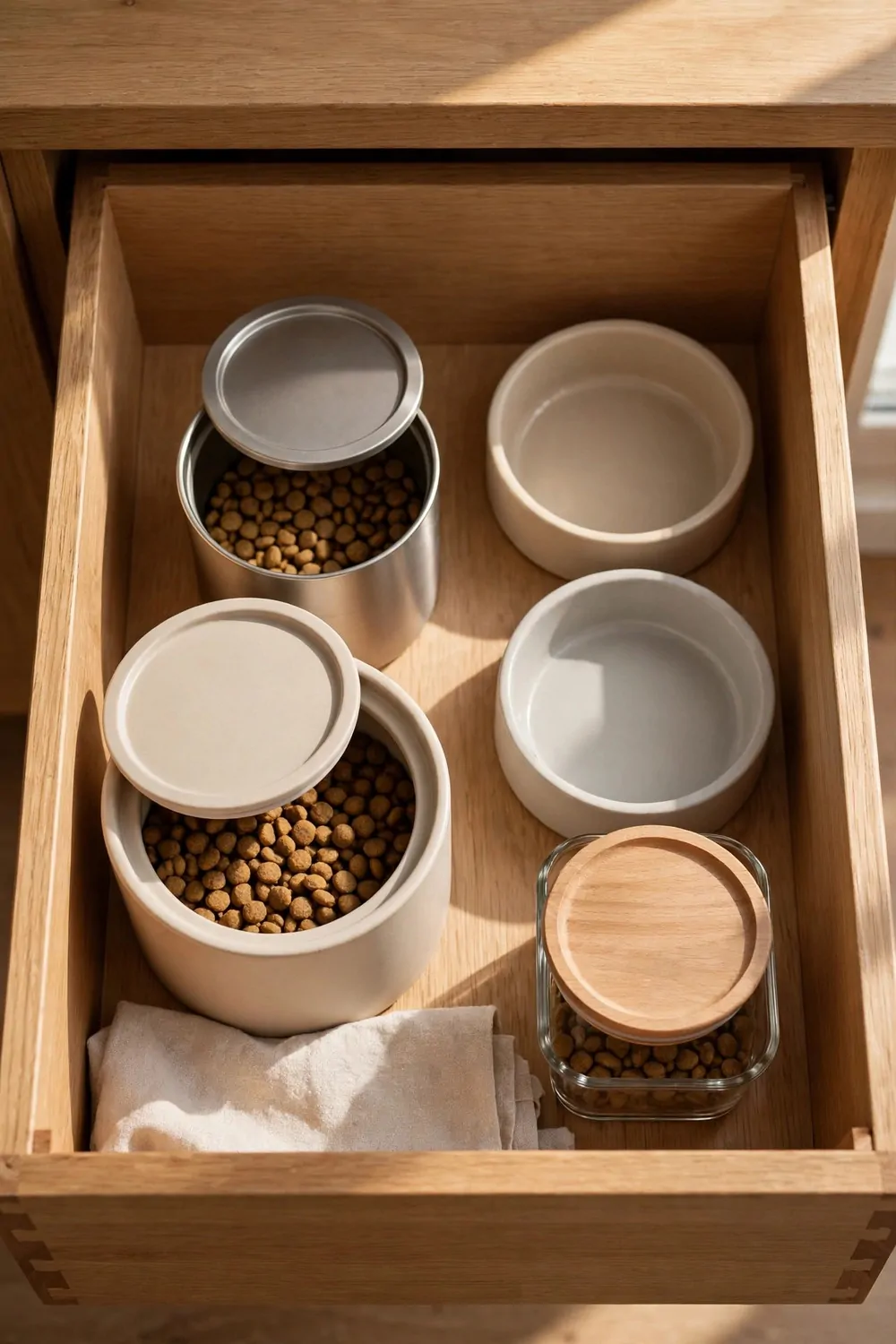
Pet food bags are big and ugly. They sit in the corner and spill. A pet food drawer hides the mess and keeps food fresh.
The drawer holds a bin for dry food. You scoop from the top and shut it. No bag to tear open each day.
I keep the scoop clipped inside the drawer lid. It is always there when I need it. No more hunting in a junk drawer.
Use a bin that seals tight. It keeps the food fresh and keeps smells in. It also keeps bugs out.
You can add a small shelf above the bin. It holds treats and the leash. Everything for your pet lives in one drawer.
Put the drawer low down, near the floor. It is easy to scoop from a low drawer. You do not lift a heavy bin up high.
Wipe the bin out when it gets empty. Old crumbs build up at the bottom. A quick wash keeps it clean and fresh.
Measure the food bag before you build the drawer. The bin needs to hold a full bag. A small bin means refills all the time.
My dog learned where his food lives fast. He sits by the drawer at dinner time. It makes feeding time simple and tidy.
A Linen Drawer in the Bathroom Cabinet
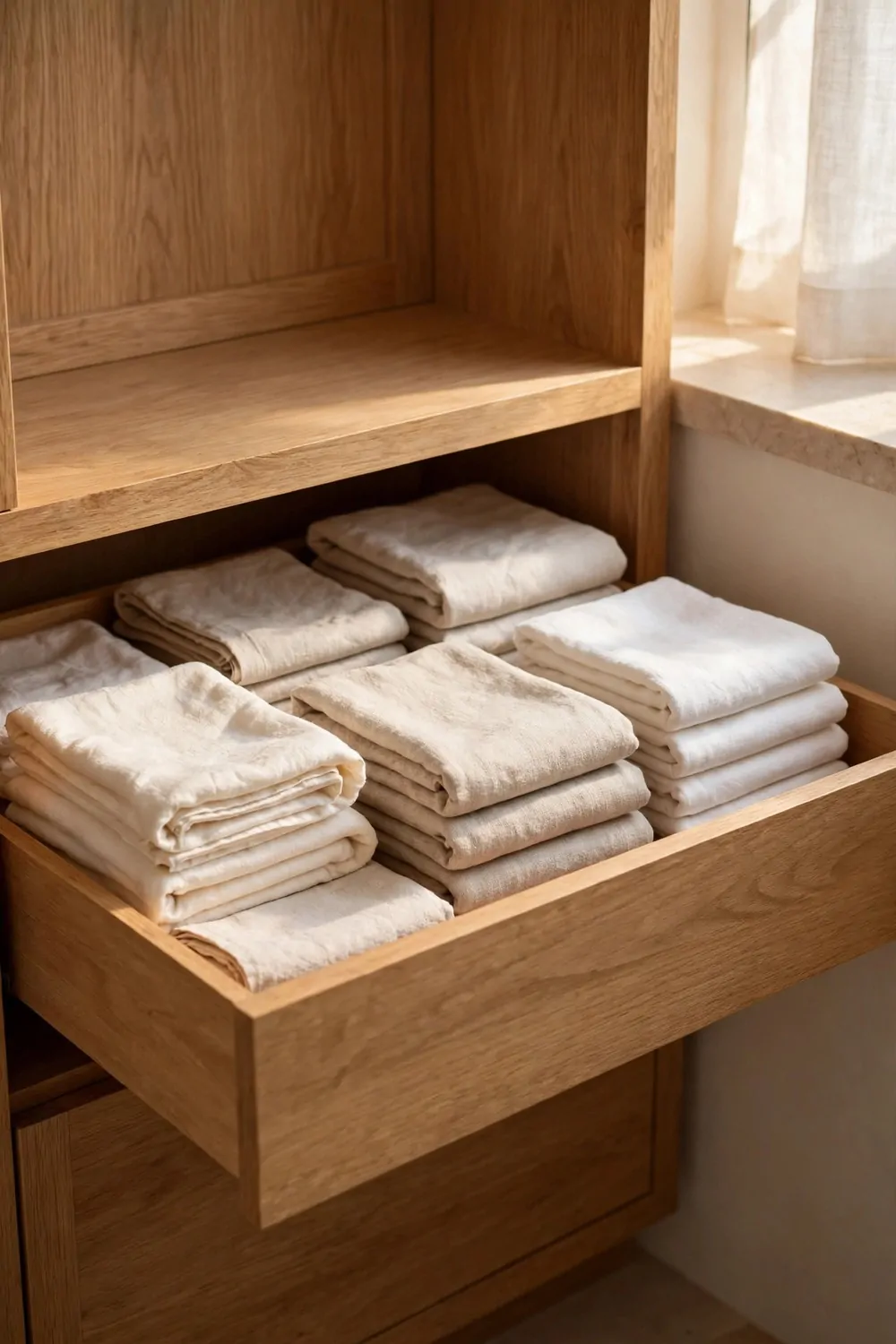
Bathroom linens pile up on a shelf and fall over. Towels slide down in a heap. A linen drawer keeps them folded and neat.
The drawer is deep and wide. You fold towels flat and stack them in rows. You can see each one when you open it.
I roll small hand towels in mine. They fit in a row like books on a shelf. It looks tidy and you grab one fast.
Keep daily towels at the front of the drawer. Guest towels go at the back. You reach what you use most without digging.
A drawer keeps towels away from steam. Shelves leave them damp after a shower. Drawers stay drier and fresher.
Add a small divider in the drawer. It stops the stacks from tipping over. One divider can make a big difference.
Do not pack the drawer too full. Towels need a little air. If it is stuffed, they come out wrinkled.
I keep a fresh set ready for guests in this drawer. When someone stays over, I just open it and hand them a set. Easy.
It is a calm little spot in a busy bathroom. Everything folded, everything in place. Mornings feel a bit smoother.
A Sewing Supplies Drawer
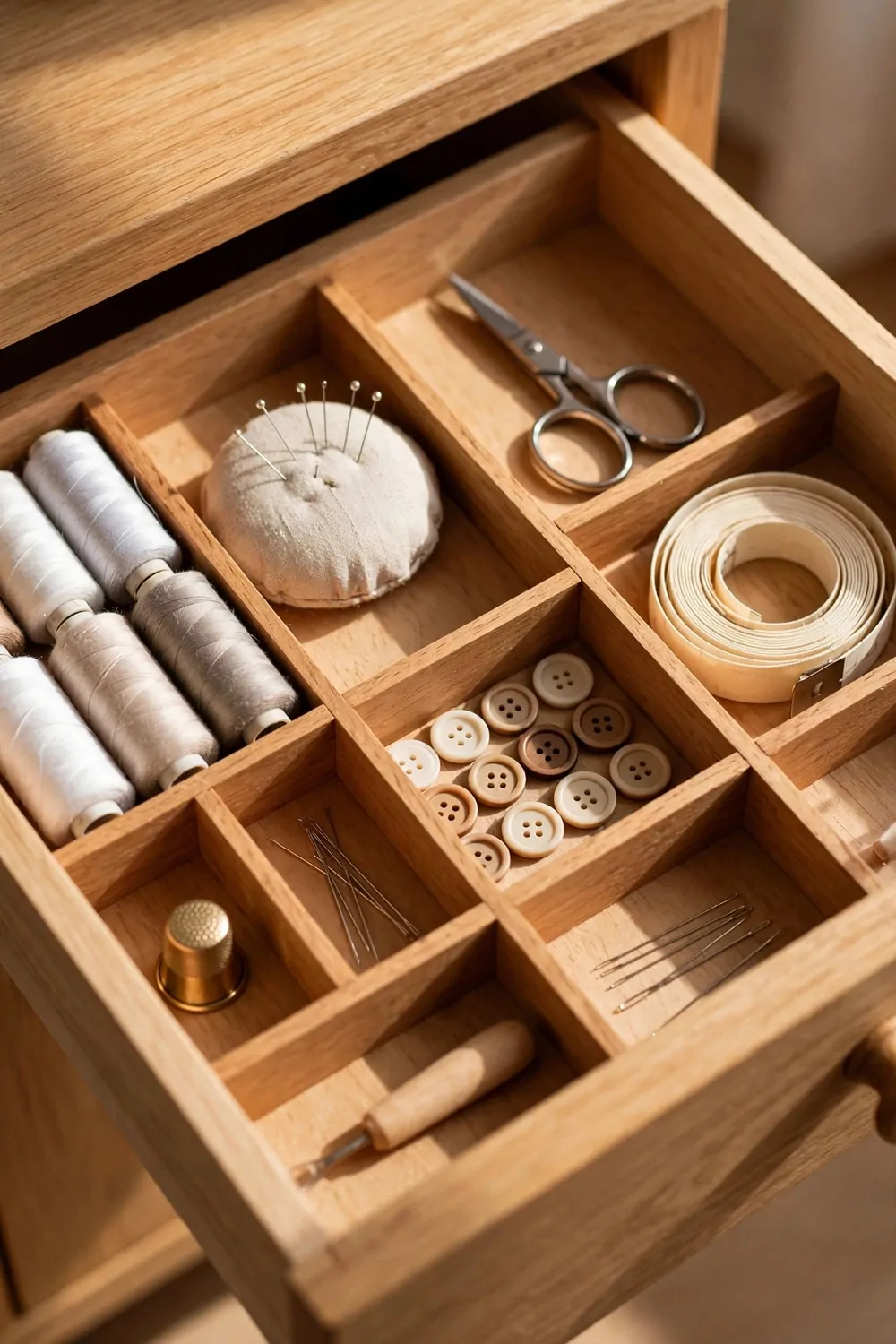
Sewing bits end up in jars and boxes all over the house. Buttons here, thread there. One drawer brings them all together.
The drawer has small boxes inside it. Each box holds one thing. Thread in one, buttons in one, needles in one.
I keep my scissors in a long slot at the side. They stay sharp and safe. No more digging past pins to find them.
Put a small pin cushion in the drawer too. Pins stay in one spot. They do not end up on the floor or in the carpet.
Keep the drawer near a table or a good light. You will sew there most. A drawer far away never gets used.
Label each small box if you can. It saves time when you need a black button fast. You look, you find it, you sew.
Do not let the drawer get stuffed with fabric scraps. Keep scraps in a separate box. This drawer is for tools only.
Kids should not reach sharp needles easy. Put this drawer up a bit higher. Or add a simple latch for safety.
I fixed a loose button in five minutes last week. Everything was right there. That is the joy of one tidy drawer.
A First-Aid Shelf at Eye Level
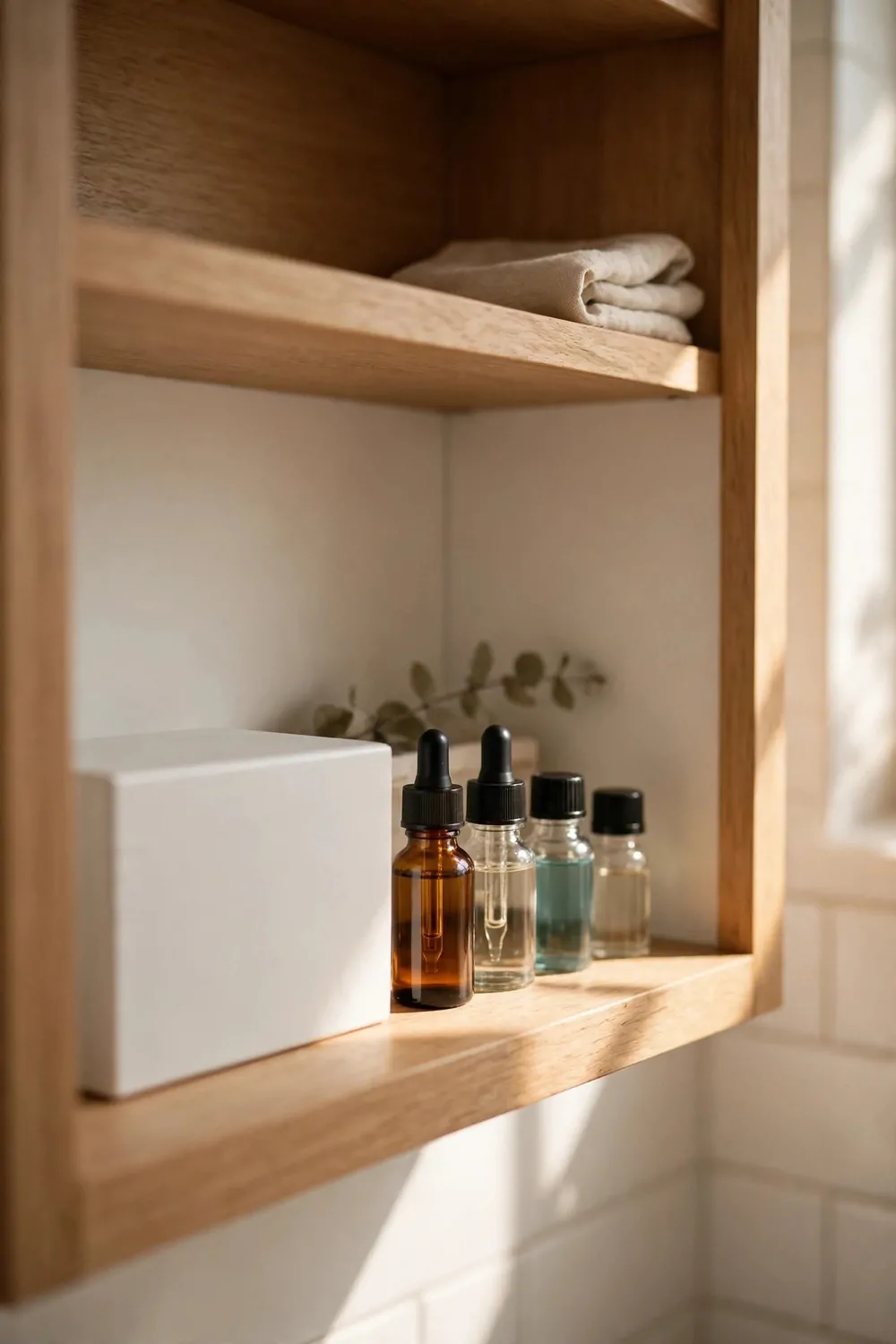
First aid stuff should be easy to find fast. It should not hide at the back of a high shelf. Eye level is the right spot.
I keep a small box on this shelf. It holds bandages, cream, and wipes. Everything is in one box, ready to grab.
Put the box where adults can reach it quick. But keep it safe from small kids. A latch on the cabinet door helps.
Check the box every few months. Things run out or go past their date. A quick check keeps it ready when you need it.
Keep a small torch or a note with key numbers in the box too. You may need them in a rush. It helps to have them in one place.
Do not pile other stuff on this shelf. It should stay clear and open. In a hurry, you do not want to move things aside.
I tell everyone in the house where this shelf is. Even guests know. When someone cuts a finger, no one panics or hunts around.
Use a box with a lid that opens easy. Fiddly lids slow you down. A simple flip lid is best.
This shelf gives me peace of mind. I hope I never need it much. But when I do, I know just where it is.
A Measure-Once Plan Before You Order
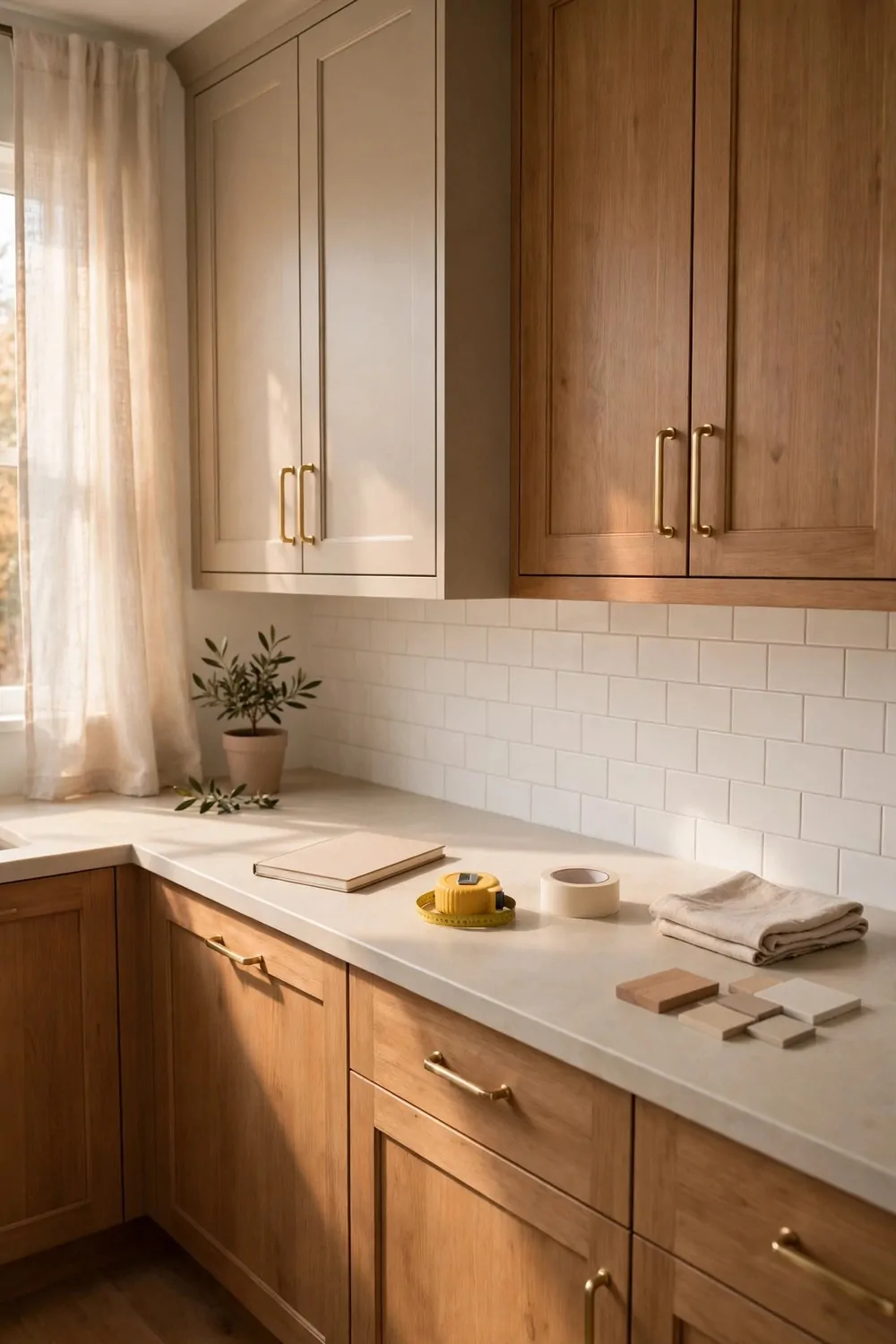
Measure once sounds too simple to matter. It matters more than anything else in this whole list. A wrong size ruins a good plan.
I measure each cabinet space twice before I order. I write the numbers down on paper. Then I check them again the next day.
Measure the width, the height, and the depth. All three matter. A drawer that is too deep will hit the back wall.
Think about the door swing too. A pull-out needs room to come out fully. A door needs room to open wide.
Write down what will live in each cabinet. Plates need tall space. Spice jars need shallow space. The plan follows the stuff.
Take photos of each cabinet with a tape in the shot. It helps the maker see what you see. It stops mix ups later.
Leave a little gap around each insert. Wood moves a bit with heat and damp. A tight fit today can stick next summer.
Share your plan with your cabinet maker early. They can spot a problem you missed. A short chat now saves a rebuild later.
This plan is the least fun part of the job. It is also the most useful. Measure well, order once, and enjoy the result.
Keep Reading
If you liked these cabinet ideas, you will like the next set too. I picked four posts that fit right in with this one. They are full of smart storage and tidy rooms.
Closets and cabinets go hand in hand. A good closet system makes the whole home feel calmer. These posts show you how to get that look.
I read these ideas myself when I planned my own storage. Some tips are small and quick. Some take a bit more work, but they are worth it.
Pick one post to start with and try one idea this week. Small steps add up fast. Your home will feel tidier before you know it.
- 35 Hidden Closet Storage Ideas That Maximize Every Inch
- 27 Reach-In Closet Ideas With Professional-Looking Storage Systems
- 30 Custom Built-In Shelving Ideas for Every Room
- 44 Hidden Built-In Storage Ideas for Modern Homes
Happy planning, and I hope your cabinets end up just how you dreamed them.