22 Green Office Ideas for a Fresh, Calming Workspace

Green is the color my eyes run to when they are tired. I look out of my window at the trees, and something in my shoulders just lets go. It is like my eyes were made to rest on leaves.
Now think about your workday. The screen glare. The inbox that never ends. The chair that starts to feel like a trap by 3 in the afternoon. A green office pushes back against all of that, quietly. It asks nothing from you.
This is why I gathered these Green Office Ideas for you. Twenty two small changes that bring that leafy calm inside. Some cost nothing. Some cost a weekend. All of them make your workspace feel fresher and kinder to your brain.
You do not need a big room or a big budget. You need plants, the right shade of green, and a few natural touches. Let me walk you through each one, and you can pick the ones that fit your space.
1. Paint One Wall Moss Green
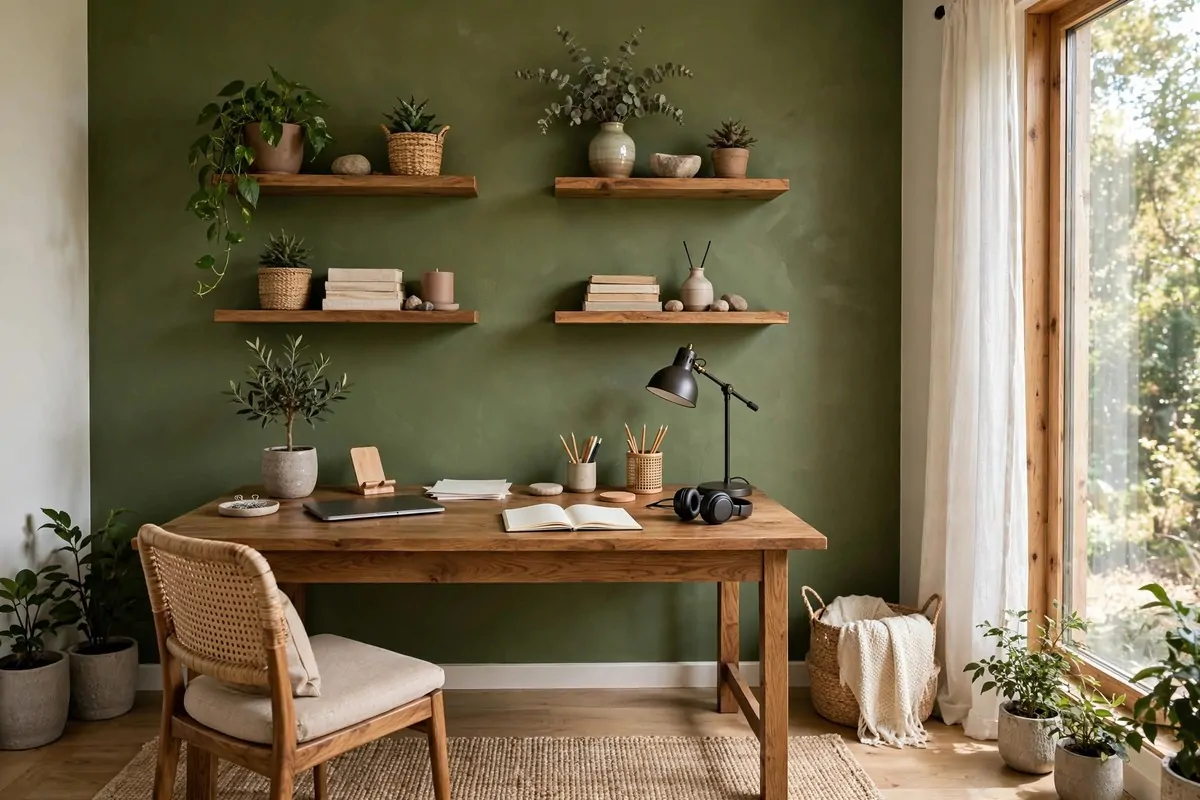
If you do just one thing from this list, do this. One wall, one color, one weekend afternoon.
Moss green is deep and earthy. It is the color of the forest floor. When it covers the wall behind your desk, your video calls look better too. Your face just glows against it, I swear.
Pick the wall your desk faces or the wall behind you. I like the wall behind the desk best. You see it every time you look up from your screen.
Keep the other walls white or cream. This makes the green pop without making the room feel small. Dark colors on every wall can feel heavy. One wall feels like a hug.
Paint it right and the whole mood of the room shifts. I painted mine last spring and my whole workday felt slower after. In a good way.
Sample the paint first. Slap two coats on a big sheet of paper and tape it up. Look at it morning and evening before you commit. Light changes everything.
Eggshell finish is my pick for offices. It is soft, not shiny. Flat paint shows marks, and offices get marks.
Here is my little painting checklist:
- Clean the wall with a damp cloth and let it dry
- Tape the edges and cover the floor
- Cut in the corners with a brush, roll the rest
- Give it two coats, even if one looks fine
Your desk suddenly looks richer against that green. Everything on it stands out more. Go try it.
2. Go Soft Sage All Over
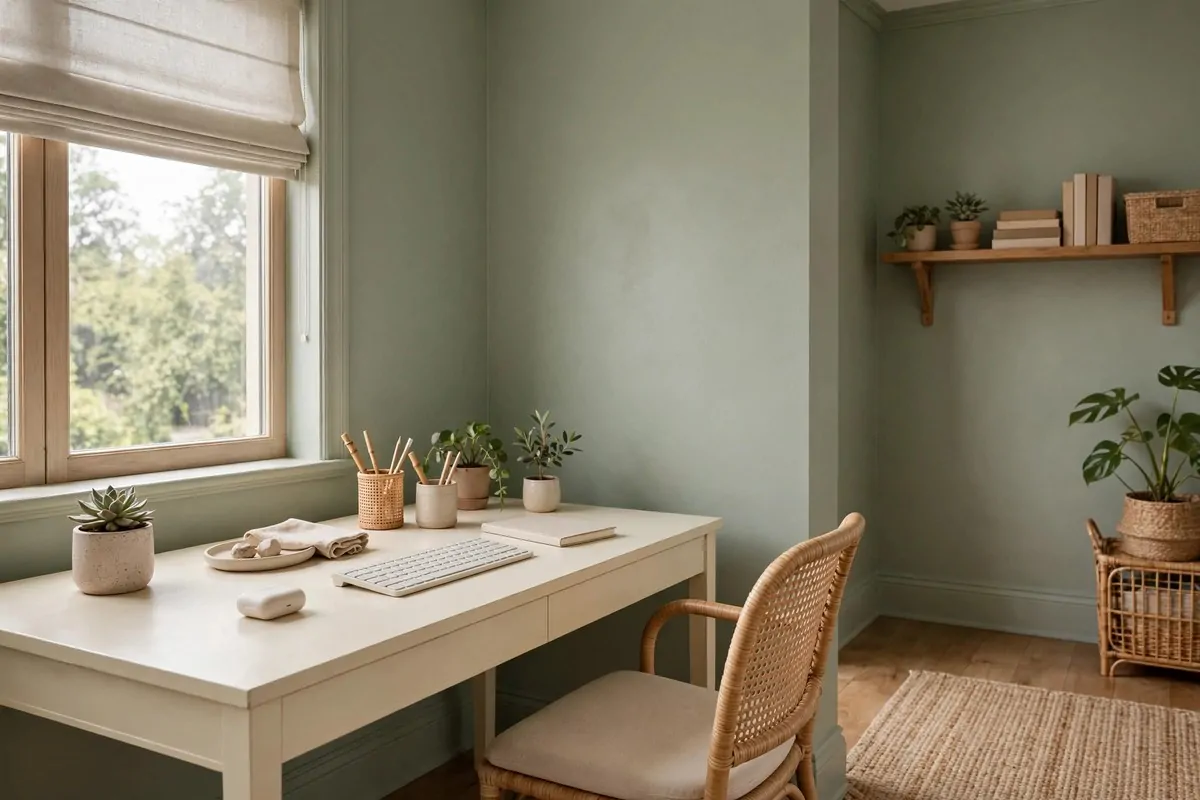
Some people do not want one bold wall. They want the whole room to feel like a soft blanket. That is what sage does.
Sage green is light and gentle. It sits between green and gray. It never shouts. It is the wall color that makes guests say “oh, this room feels nice” without knowing why.
It works on all four walls because it is so pale. Small rooms can wear it without feeling tiny. Dark rooms too, because it bounces light around.
Cream or white furniture looks lovely against sage. A cream desk, a light rug, pale curtains. The room feels airy and calm at the same time.
Different greens give different moods. Here is a quick compare:
| Shade | Mood | Best for |
|---|---|---|
| Sage | Soft and restful | All four walls |
| Moss | Deep and cozy | One accent wall |
| Moss | Deep and cozy | One accent wall |
| Olive | Warm and earthy | Reading corners |
| Mint | Fresh and light | Bright small rooms |
Sage pairs well with wood tones too. Oak, pine, bamboo. All of them look at home.
I love sage because it never fights with anything. Art, plants, books, it all just fits. You cannot really go wrong with it.
If you rent and cannot paint, sage curtains or a sage rug give you half the feeling. It is not the same as painted walls, but it helps a lot.
Try it in a hallway first if you are nervous. Live with it a week. I bet you end up painting the office next.
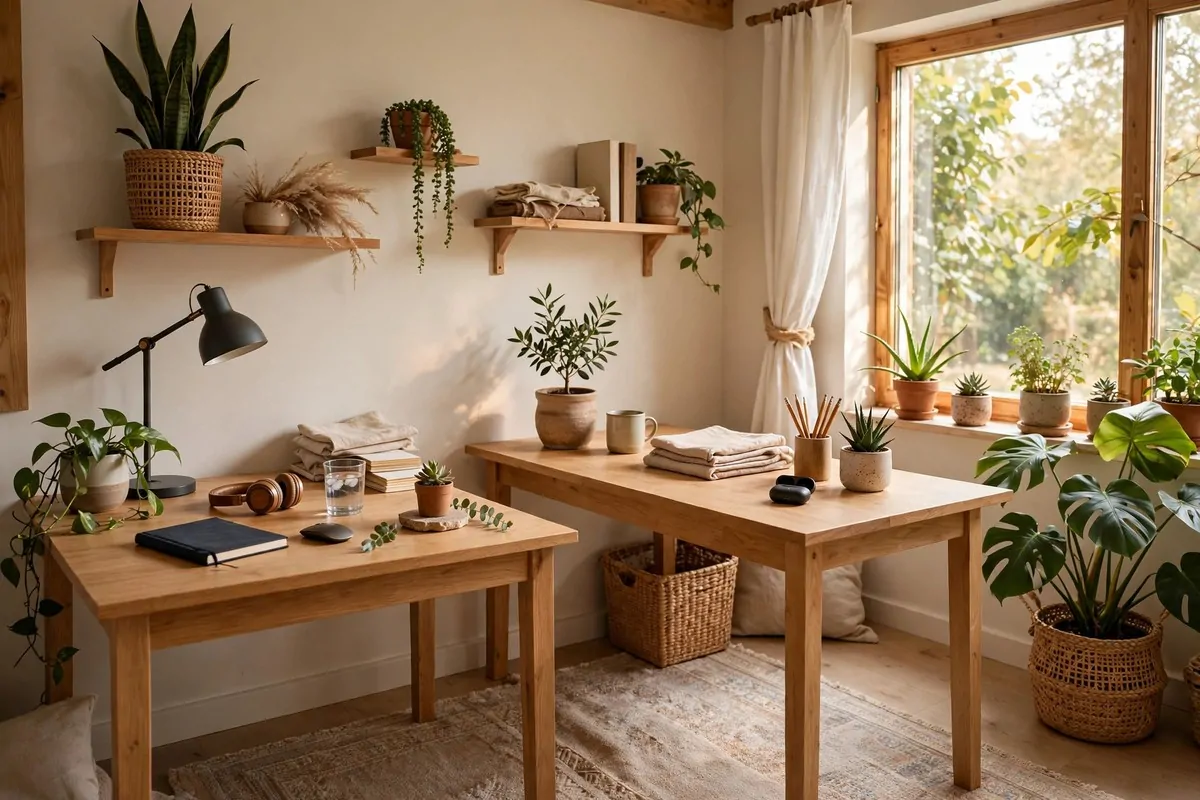
3. Pick a Natural Wood Desk
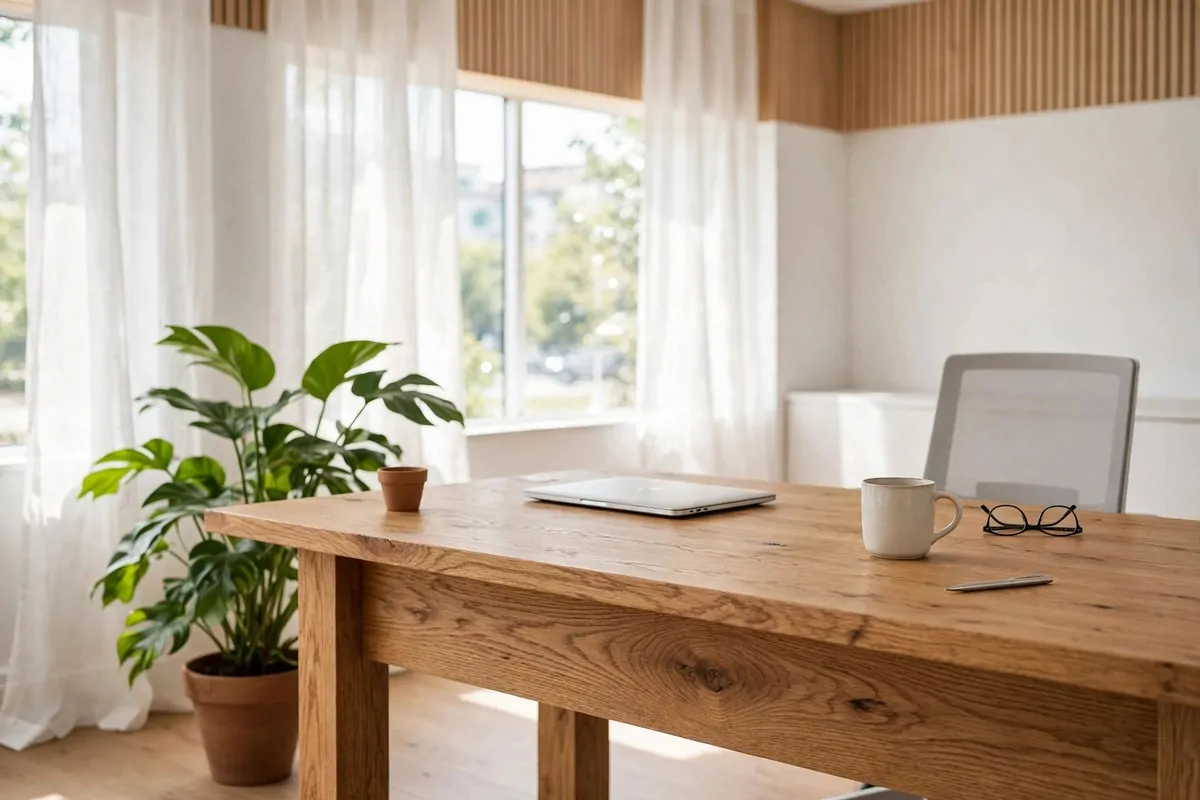
A green office needs wood. Not dark fake wood. Real, warm, honey-colored wood with grain you can see.
My old desk was gray laminate. It made everything feel cold, even with plants on it. Then I switched to an oak top, and the room changed temperature somehow. It just felt warmer.
Wood brings nature indoors in a different way than plants do. Plants are alive. Wood is calm and steady. You need both.
You do not have to buy new. Old wooden tables make great desks. Sand one down, oil it, and you are done. It costs less and looks better.
Keep the desktop clear-ish. Wood shows its beauty when it is not buried. A plant, a lamp, your laptop. That is enough.
The grain matters more than the shade. Pick a piece where you can see the lines. They give your eyes something soft to rest on during calls.
Oak, ash, and pine are all good and easy to find. Walnut is darker and moody. For a fresh feeling, go light.
Oil it once a year. It takes twenty minutes. The wood stays soft and keeps its glow.
I rest my forearms on my wooden desk and it feels warm, not cold like metal or plastic. Small thing. Big comfort.
4. Add Bamboo Accessories
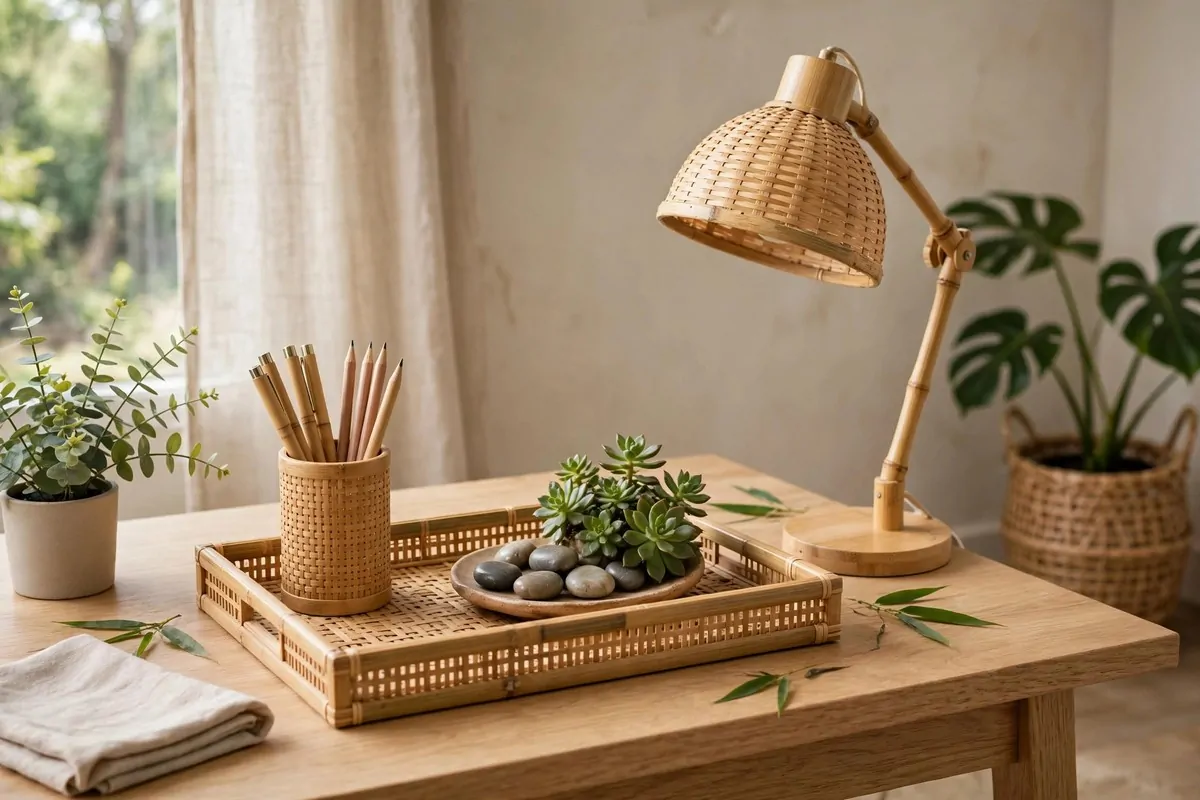
Bamboo is the quiet hero of a green office. It is light, strong, and it grows fast, which makes it kind to the planet too.
Start with the small stuff. A bamboo tray to hold your notebook and phone. A bamboo pen holder. A bamboo desk lamp shade. Each piece adds a warm tone.
These little touches pull the room together. They sit between your wood desk and your green plants and make the whole thing feel planned. Even if it was not.
Bamboo goes with every shade of green. Sage, moss, emerald. It never clashes. I have never seen bamboo look wrong next to a plant.
A bamboo desk organizer keeps cords and pens out of sight. Less clutter means less stress. Your brain notices mess even when you think you ignore it.
Look for bamboo with a natural finish, not stained dark. The pale honey color is what gives you that fresh feeling.
Here is what I have on my desk right now:
- A bamboo tray under my notebook and water glass
- A bamboo pen cup with three pens and one pencil
- A bamboo monitor stand that lifts my screen to eye level
- A small bamboo box for sticky notes and clips
Bamboo is cheap compared to other desk gear. You can build this whole look for the price of one fancy gadget.
Wipe bamboo down with a damp cloth now and then. It lasts years. Mine is going on three years and still looks new.
5. Get a Big Leafy Statement Plant
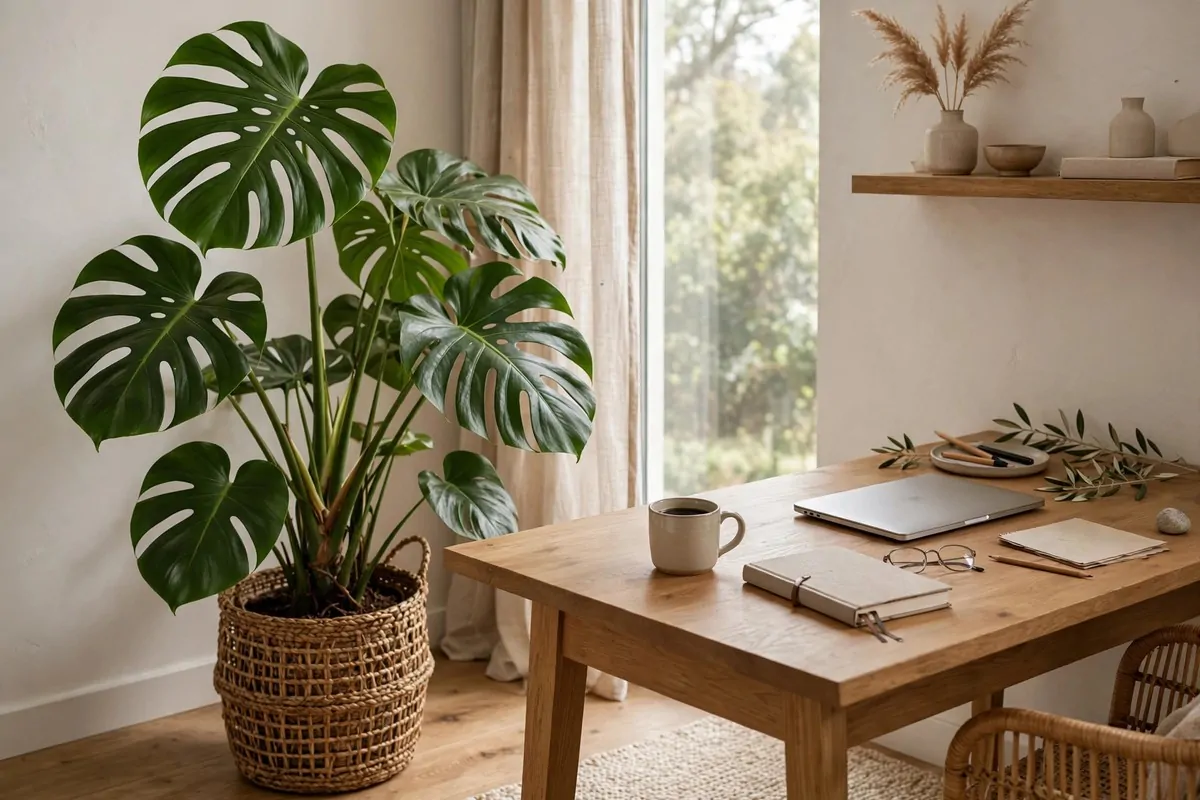
Every green office needs one star plant. Big leaves. Real presence. The one people notice on video calls and ask about.
A monstera is my top pick. Those big split leaves look like art. A fiddle-leaf fig is the other classic. Tall, bold, a little dramatic.
Put it beside your desk, not on it. It needs the floor. In a corner with good light, it becomes part of the room, like furniture that grows.
Water it once a week and you are mostly done. Stick your finger in the soil. Dry an inch down? Water it. Still wet? Wait.
Big plants make the air feel cleaner too. Maybe it is real, maybe it is in my head. Either way, I breathe easier with one in the room.
Turn it a quarter turn every week or two. Plants lean toward the light. This keeps it even and full on all sides.
If you are scared of killing it, get the biggest one you can carry home. Big plants are actually tougher than tiny ones. They forgive more.
Pick a pot you love. The pot is half the look. A simple ceramic or woven basket does the job.
My monstera has a name. I will not tell you what it is. But I water her every Sunday and she has never let me down.
6. Hang a Pothos From a Shelf
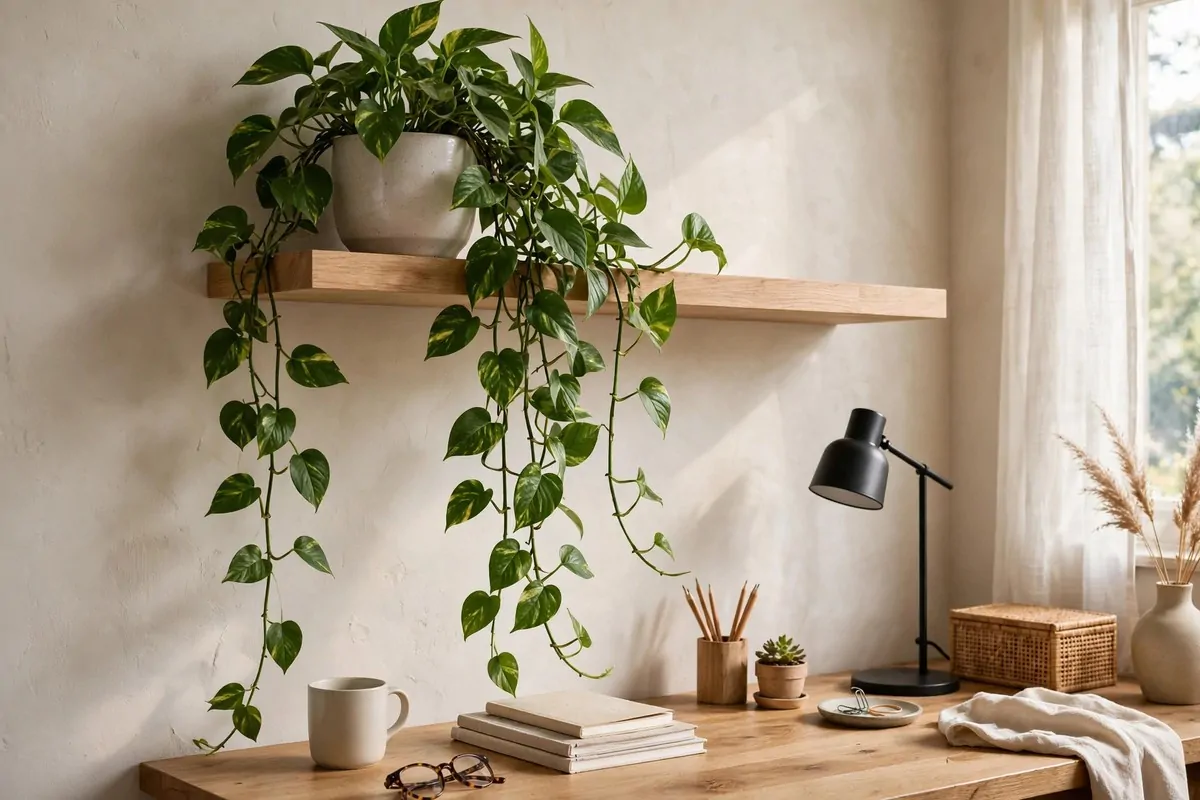
Pothos is the plant that forgives everything. Low light? Fine. Forgot to water it for two weeks? Fine. It keeps growing anyway.
Let it trail down from a shelf above your desk. Those long vines soften the whole wall. A bare shelf looks plain. A shelf with pothos looks styled.
It grows fast in spring and summer. You will see new leaves every week. That little bit of change is nice when your work feels like the same day on repeat.
Snip a stem and put it in water. Roots grow in a week or two. Now you have a second plant for free. I have made four plants from one mother pothos.
Hang it high enough that the vines do not hit your keyboard. About a foot above your head is good when you sit. You want to see it, not fight it.
It handles the dry air of an office better than fussy plants. Heating and air con dry out rooms fast. Pothos shrugs it off.
Here is how easy plants compare for busy people:
| Plant | Water | Light | Forgiveness |
|---|---|---|---|
| Pothos | Every 1 to 2 weeks | Low to bright | Very high |
| Snake plant | Every 2 to 3 weeks | Low to bright | Very high |
| Pothos | Every 1 to 2 weeks | Low to bright | Very high |
| Succulents | Every 2 to 4 weeks | Bright | Medium |
| Monstera | Weekly | Bright indirect | Medium |
Yellow leaves just mean it wants less water. Pick them off and water less. It bounces back fast.
One pothos on a shelf changed my whole office wall. People on calls ask about it more than anything else in my room.
7. Tuck a Snake Plant in the Corner
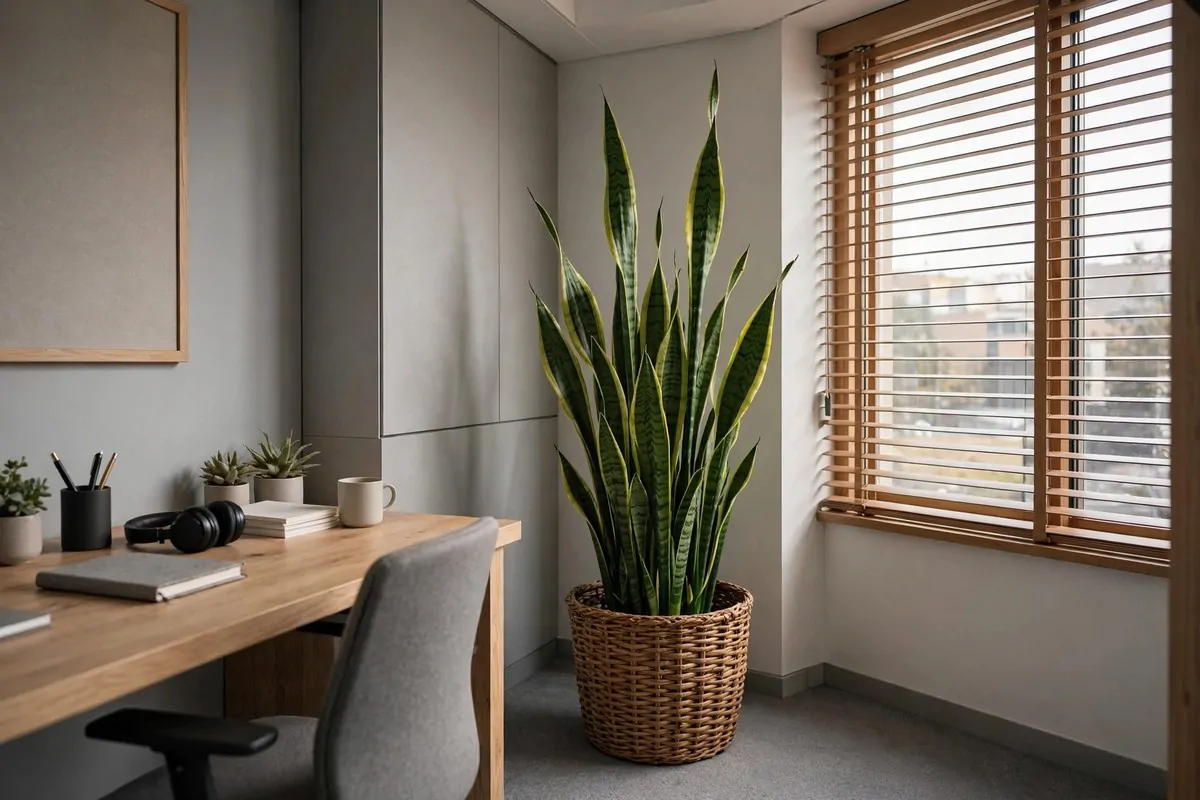
Corners are dead space in most offices. A snake plant fixes that. Tall, bold, and nearly impossible to kill.
Snake plants stand straight up like green swords. They add height to a room without taking up desk space. That vertical line makes low ceilings feel taller.
They handle neglect like champions. Water them every few weeks and they are happy. I once forgot mine for a month. It did not even look sad.
They like low light too. That dark corner where nothing grows? The snake plant will grow there. It actually prefers being left alone.
Put it in a woven basket. The texture of the basket against the sharp leaves looks great. It turns a plant into a piece of decor.
Dust the leaves once a month with a damp cloth. Clean leaves catch more light and look richer. It takes one minute.
They come in many looks. Dark green, yellow-edged, silvery. Pick the one that fits your room. I like the classic dark green with yellow edges.
One tall plant in a corner balances a room. Without it, the corner pulls the eye nowhere. With it, the room feels finished.
Mine sits next to my bookshelf and makes the whole corner look planned. It was the cheapest thing in the room and it does the most work.
8. Line Up Three Small Succulents
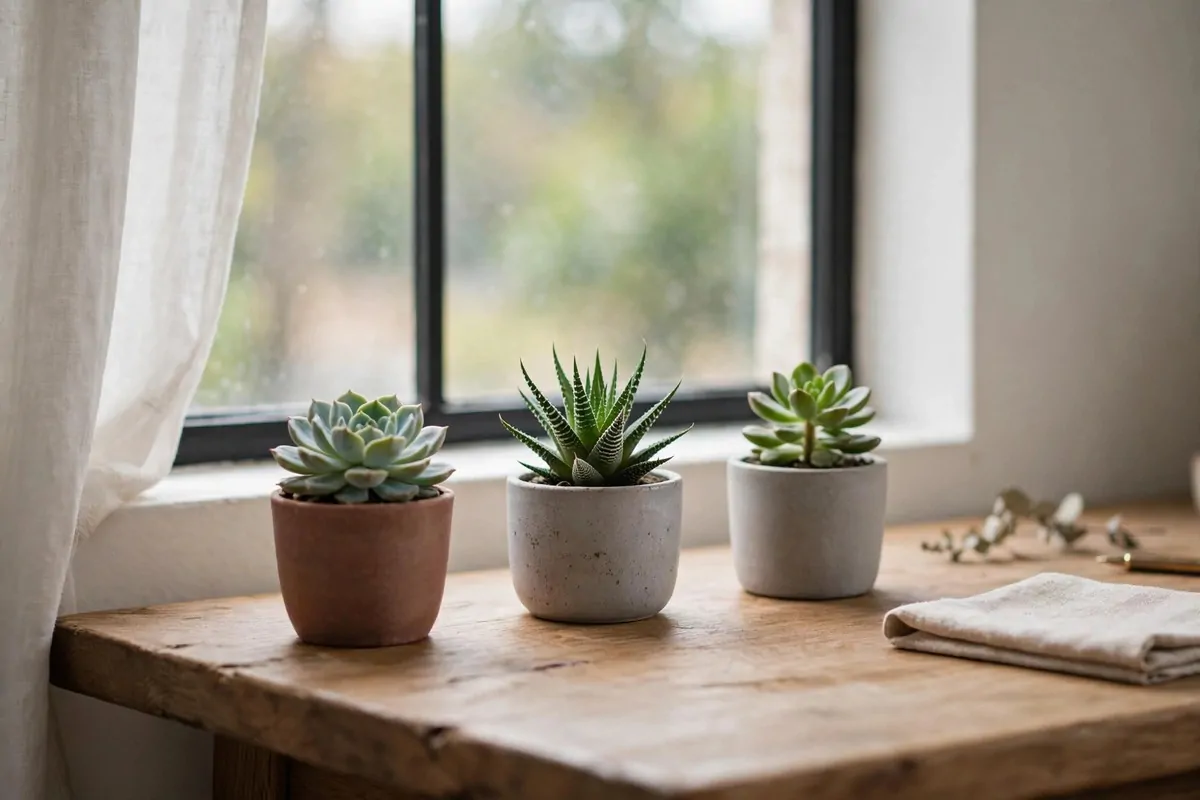
Three small succulents in a row. That is the whole idea. And it works every single time.
Odd numbers look better than even ones. Three is the magic number in decorating. Two looks flat, four looks crowded. Three looks just right.
Put them near a window. Succulents love bright light. A sunny desk corner or a windowsill makes them plump and happy.
They need very little water. Every two to four weeks is plenty. More succulents die from too much love than from neglect. Let them dry out.
Use matching pots for a clean look. Same shape, same color. It turns three random plants into one little display.
Or mix the pots for a casual look. Clay pots, ceramic, one tiny glass jar. Both styles work, just pick one and stick with it.
These little plants are great for your desk because they stay small. They do not block your screen or spill over your notebook. They just sit there, looking cute.
Rotate them once a week. They lean toward the light like all plants. A quarter turn keeps them round and even.
I keep mine by my mouse pad. When my eyes get tired, I look at them for ten seconds. It is like a tiny reset button.
9. Grow Herbs on the Windowsill
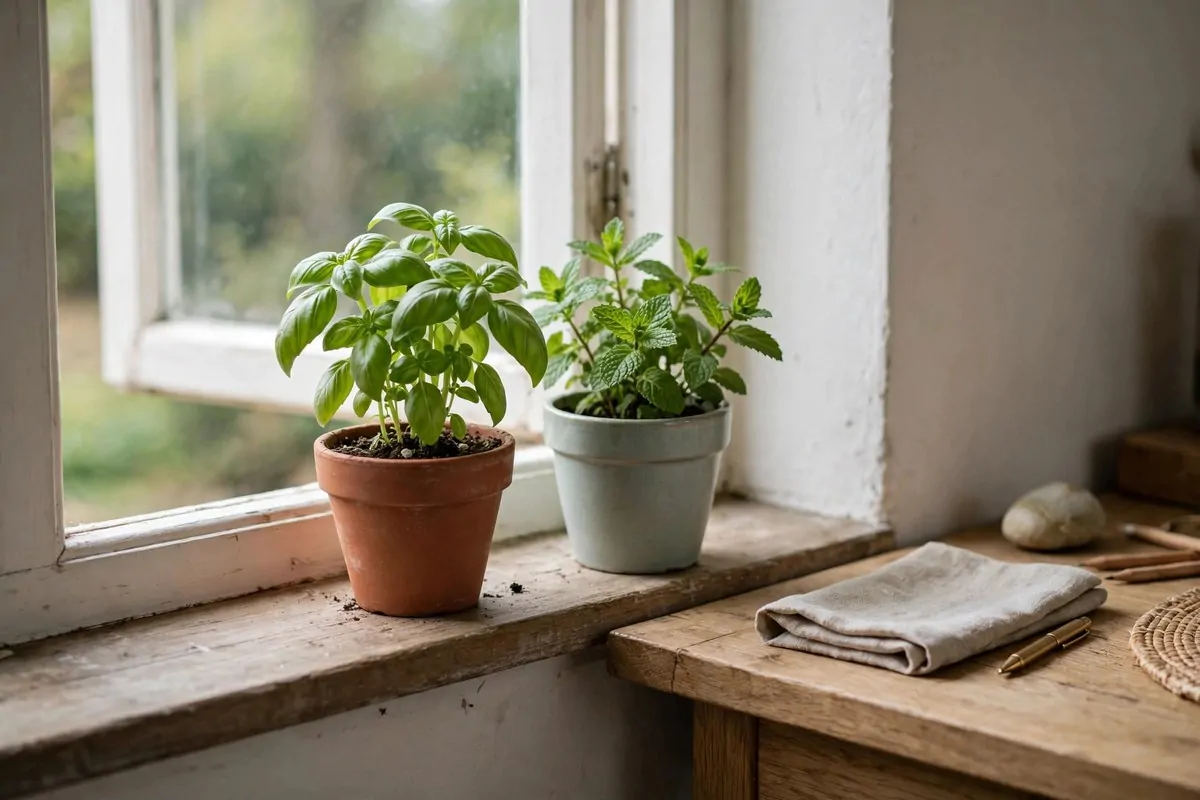
Herbs are plants with a job. They look green and pretty, and then you eat them. That is my kind of decor.
Basil and mint are the easiest to start with. They grow fast and they forgive beginners. Snip what you need for lunch and they grow back.
Put them on the windowsill beside your desk. They need sun, and you need the green in your eyeline. It helps both of you.
Brush your hand through the mint once in a while. The smell is instant calm. I do it before hard calls. It sounds silly. It works.
Small clay pots are best. They let the soil breathe. Plastic pots trap water and herbs hate wet feet.
Water them when the top of the soil feels dry. Herbs like a drink more often than succulents. Check them every two or three days in summer.
Good starter herbs for a desk windowsill:
- Basil, for that sweet summer smell
- Mint, which grows like it has somewhere to be
- Chives, thin and grassy and very cute
- Thyme, tiny leaves and tough as nails
Lunch gets better too. Fresh basil on a sandwich is a small joy. Your office pays you back in flavor.
One warning. Mint spreads like crazy in a garden bed. In a pot it stays put. Keep it in its own pot and it behaves.
10. Try a Small Living Plant Wall
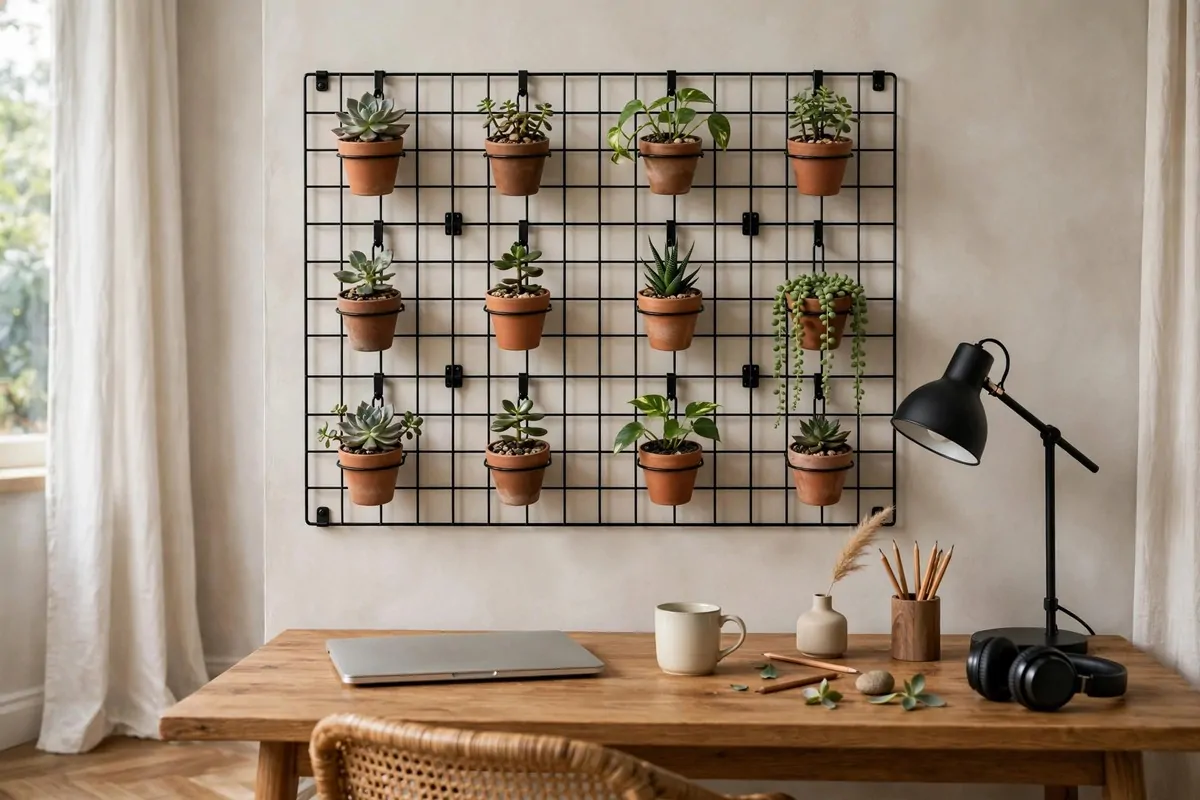
A plant wall sounds big and fancy. It does not have to be. A small grid of little pots above your desk counts.
Get a wire grid or a set of wall-mounted planters. Hang five or six small plants in a row or a square. It becomes living art.
Mix leaf shapes for the best look. Round leaves, spiky leaves, trailing leaves. The mix is what makes it look rich instead of plain.
Keep it small. You are not building a jungle gym. A grid about the size of a poster is plenty. Big enough to notice, small enough to water easily.
Watering is the only tricky part. Take each pot down once a week and water it over the sink. Let it drain, then hang it back. Five minutes, done.
Or use a spray bottle for a light drink between waterings. Some people only mist. I do both, water weekly and mist when I remember.
Pick plants that like the same light. Pothos, philodendron, and small ferns all get along. They want the same care, which keeps it simple.
Check that your wall mounts are strong. Soil and water are heavy. Use proper wall plugs, not just nails. Falling plants are no fun.
Guests will stare at it. Every time. A living wall above a desk is the one thing in my office that gets talked about most.
11. Hang Botanical Prints
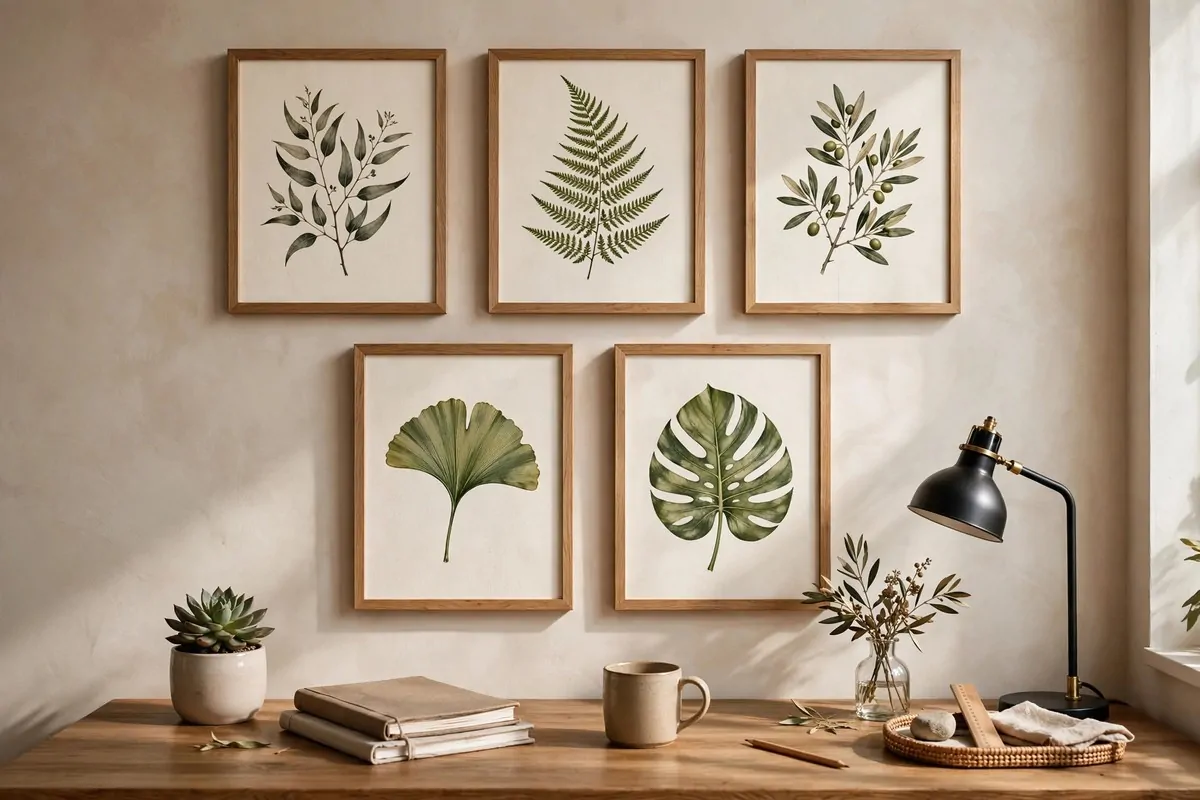
Real plants need care. Printed plants need nothing. Botanical prints give you green on the walls with zero watering.
These are drawings and photos of leaves, ferns, and flowers. They have been popular for a hundred years. They never look dated.
Hang two or three above your desk in simple frames. Same frame, same size, even spacing. That row of green makes the wall feel calm and finished.
You can print them yourself. There are tons of free botanical art files online. Print them at a copy shop for a few dollars each. Frame them cheap.
Or buy a set. Many shops sell sets of three or four that already match. That saves you the guessing.
Keep the frames simple. Thin black, light wood, or white. The art is the star. Busy frames fight with it.
Hang them at eye level when you sit. That is the art rule most people forget. Art in offices often hangs too high. Sit in your chair and mark the spot.
Mix print styles if you are brave. One photo, one drawing, one vintage chart. It can look great. Or keep them all the same for a calmer feel.
My prints are old fern drawings. They cost me almost nothing. They make my office feel like it has history.
12. Sit in a Green Velvet Chair
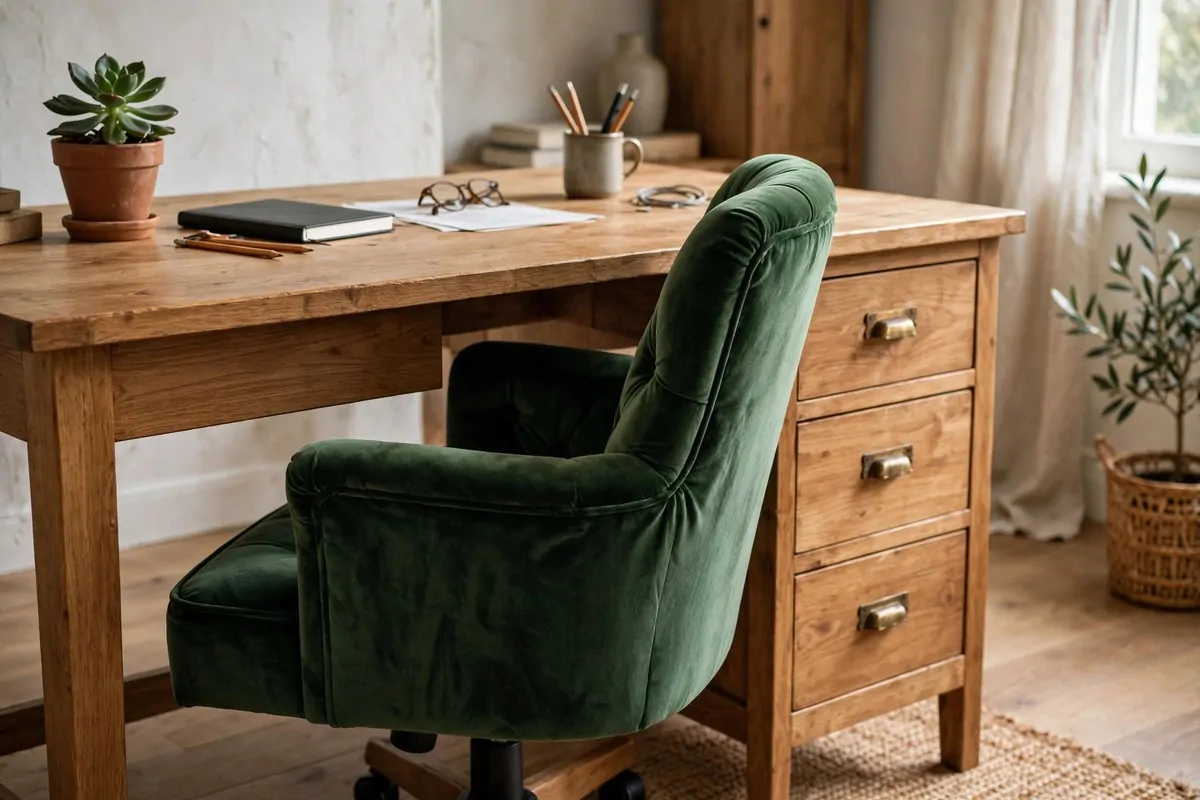
Your chair is the biggest thing in your office. Make it green and the whole room changes.
Green velvet is soft and rich. It catches the light in a way flat fabric does not. Even a simple chair looks fancy in it.
You sit in this chair for hours. It should feel good and look good. Velvet feels warm and soft. It makes long workdays a little nicer.
Pick a deep shade. Emerald or forest green. Pale velvet shows marks fast. Deep green hides a lot and looks better longer.
Check the back support before you buy. Pretty means nothing if your back hurts by noon. Sit in it, lean back, and be picky.
Velvet is easy to care for. Vacuum it with the soft brush now and then. Blot spills fast, do not rub. That is the whole routine.
Tuck it under a wooden desk and the combo sings. Wood and velvet. Green and honey tones. It is the coziest pairing in this whole list.
If a full velvet chair feels like too much, get a velvet desk chair in a small size. Same effect, smaller footprint.
I switched to mine two years ago. My old gray chair made me feel like I worked in a waiting room. The green one makes me feel like I work in a library.
13. Add a Green Desk Lamp
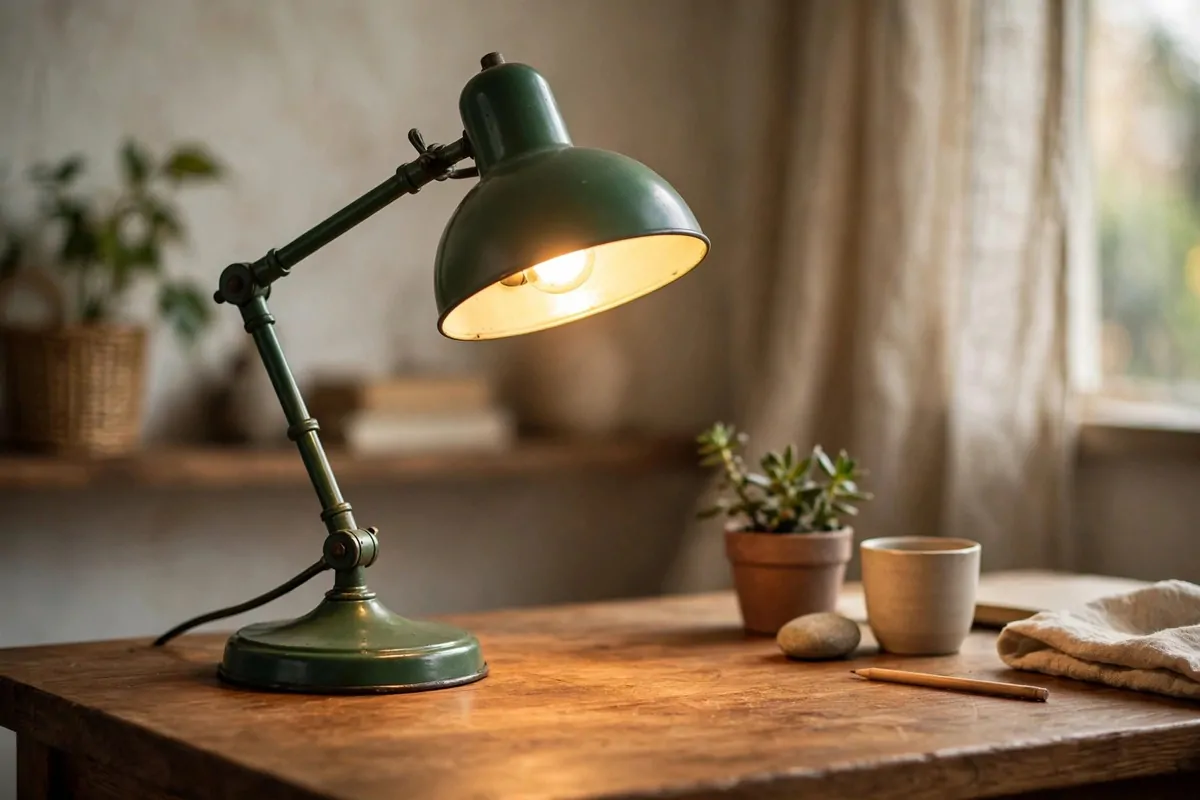
A green desk lamp does two jobs. It lights your work, and it adds color. Most lamps only do one of those.
Green metal lamps have a classic look. Like the ones in old libraries. They give your desk a story, even if everything else is new.
The shade directs light down onto your work. That is better for your eyes than a bare bulb. Less glare, fewer headaches.
Use a warm white bulb. Cool white light feels like a hospital. Warm light feels like evening sun. Your eyes will thank you at 9 pm.
Place it on the opposite side from your writing hand. Right-handed? Lamp on the left. This keeps your hand from casting a shadow on your work.
A lamp with an arm you can move is best. Pull it close for detail work, push it back for calls. One lamp, many moods.
Green goes with brass and gold details too. Many green lamps have brass arms. That combo is pure class.
Turn it on even during the day. A little pool of warm light on the desk makes the whole workspace feel alive. Try it once and you will keep doing it.
Mine clicks on every morning with my routine. Light on, water poured, day starts. It is a small ritual that tells my brain it is time.
14. Layer Earth-Toned Textiles
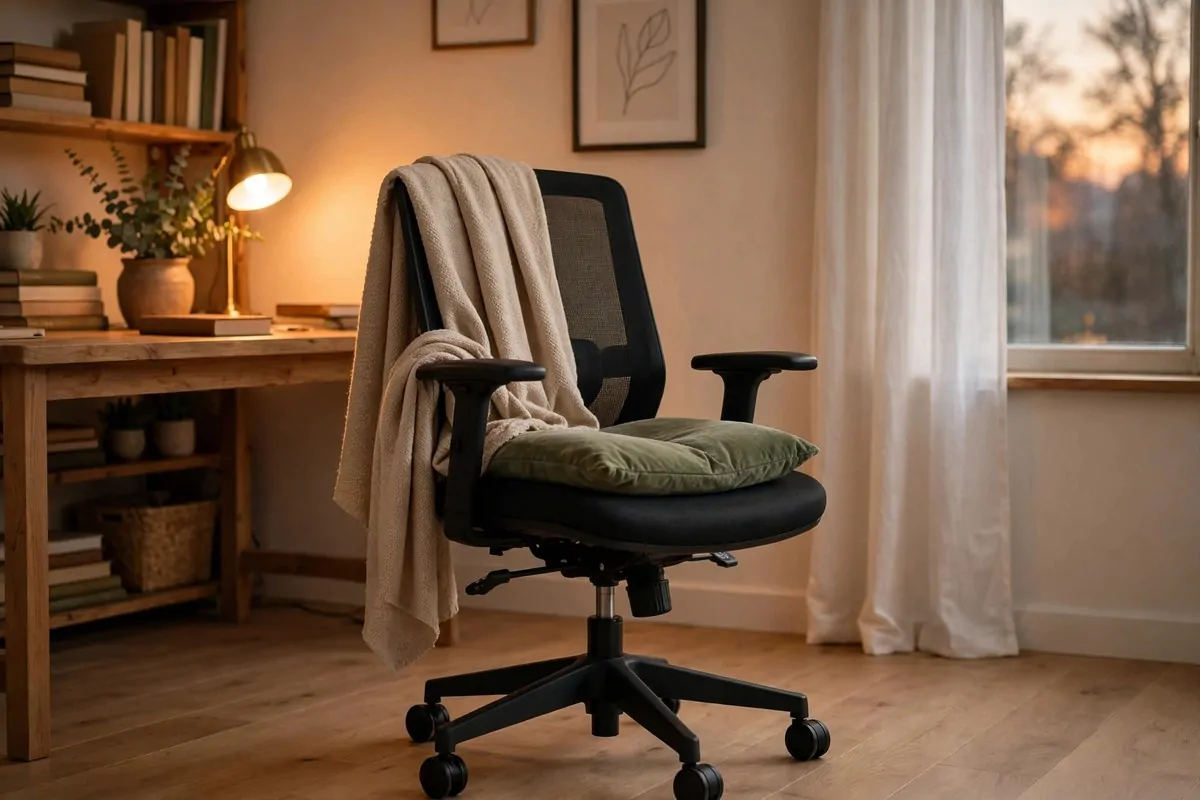
Rooms feel cold without fabric. Textiles warm them up. Throws, cushions, a rug. These soft layers make an office feel human.
Start with a beige throw over your chair. Beige is the quiet friend of green. It calms down bold greens and warms up pale ones.
Add one green cushion. Not three, not five. One. It echoes the plants and the walls without trying too hard.
Pick natural fabrics. Cotton, linen, wool. They feel better and they look better. Synthetic shine cheapens the whole green look.
A rug under the desk ties the space together. Jute or flat-weave cotton in a natural tone. Your feet land on something soft, and the room feels finished.
Wash the throw and cushion covers now and then. Offices collect dust fast. Fresh fabric keeps the room smelling clean too.
Layer, do not pile. A throw folded over the chair back. One cushion. A rug. That is plenty. Too many textiles make a small office feel crowded.
Texture matters as much as color. A nubby throw, a smooth cushion, a rough rug. Your hands notice the mix even if your eyes do not.
My chair throw is beige wool. In winter I wrap it around my shoulders on calls. Best purchase of that whole year, honestly.
15. Hang Nature Photography
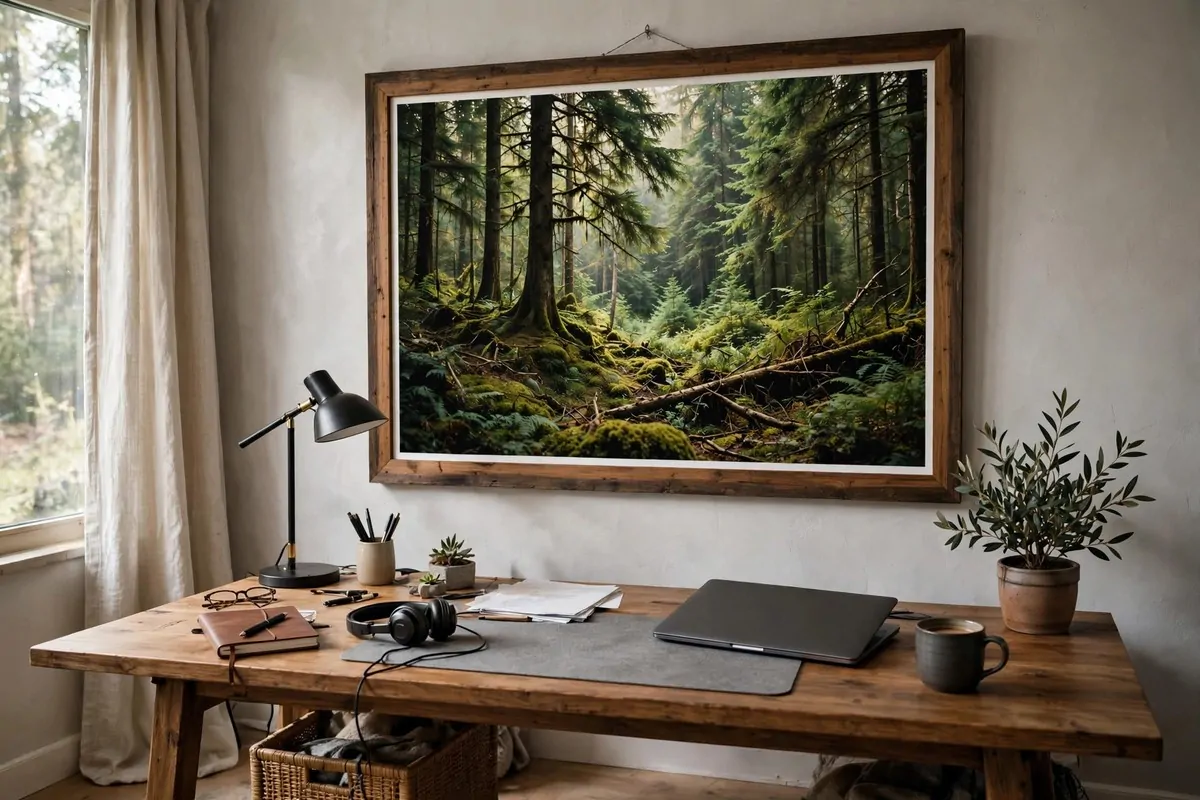
Big nature photos bring the outdoors in. A forest, a misty hill, a close-up of leaves. Your eyes get a little vacation every time you look up.
Go big with this one. One large frame beats four small ones. A big photo fills the wall and becomes the room’s second focal point after your desk.
Forests and green valleys work best in a green office. They match the theme without being matchy. Blue water scenes work too if you want contrast.
Print quality matters here. A blurry phone photo blown up looks bad. Use a high-res file from a free photo site or your own camera.
A thin frame keeps the focus on the image. Black or natural wood. Glass over the front if the room is dusty, open if you like the raw look.
Hang it where you see it during breaks. Not behind you where only calls see it. This one is for you. Above the desk or on the side wall you face.
Change it with the seasons if you like. Spring blossoms, summer forest, autumn gold, winter pines. Four prints, one frame, a fresh wall all year.
Photography feels personal. Pick a place you love or want to visit. Every glance reminds you of something good. Work feels lighter.
Mine is a foggy forest path I walked on once. I look at it when work gets heavy. It reminds me there is a world outside the inbox.
16. Choose a Rattan Chair
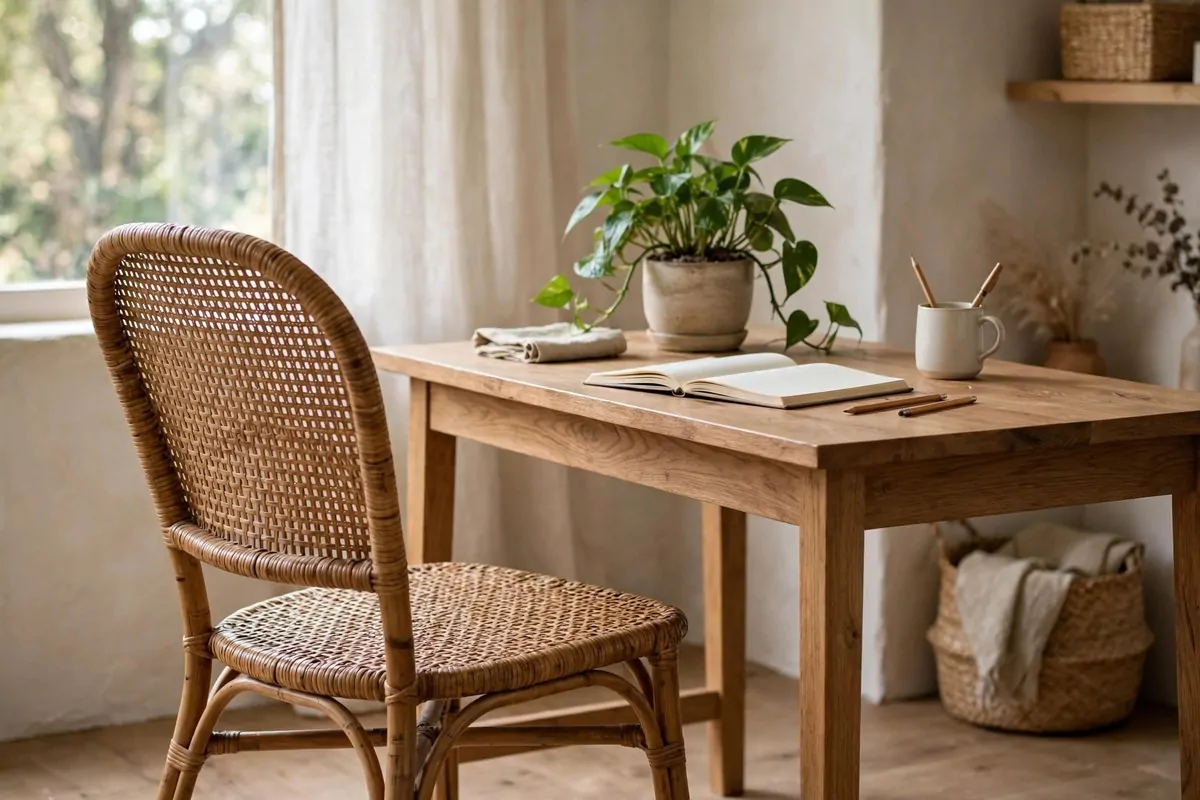
Rattan is woven, light, and full of texture. A rattan chair turns a plain office into a place with personality.
It is lighter than it looks. You can move it around the room with one hand. Rearranging your office becomes easy instead of a chore.
The woven pattern lets air through. Your back stays cooler in summer. Solid chairs trap heat. Rattan breathes.
Pair it with a cushion for long workdays. The weave is pretty but not soft. A flat seat cushion in cream or sage fixes that.
Rattan goes perfectly with plants. It is a natural material, so it speaks the same language as leaves and wood. The whole room feels like it belongs together.
Check that the weave is tight and even. Loose rattan sags over time. A well-made chair lasts years. A cheap one wobbles in months.
Dust it with a soft brush or a vacuum nozzle. Dust hides in the weave. A quick pass once a month keeps it clean.
It suits small spaces. The open weave does not block your view, so the room feels bigger. Solid chairs eat up visual space.
Mine is in the corner with a cushion and a throw. It is my reading spot. Work happens at the desk. Thinking happens in the rattan chair.
17. Hang a Brass Pendant Light
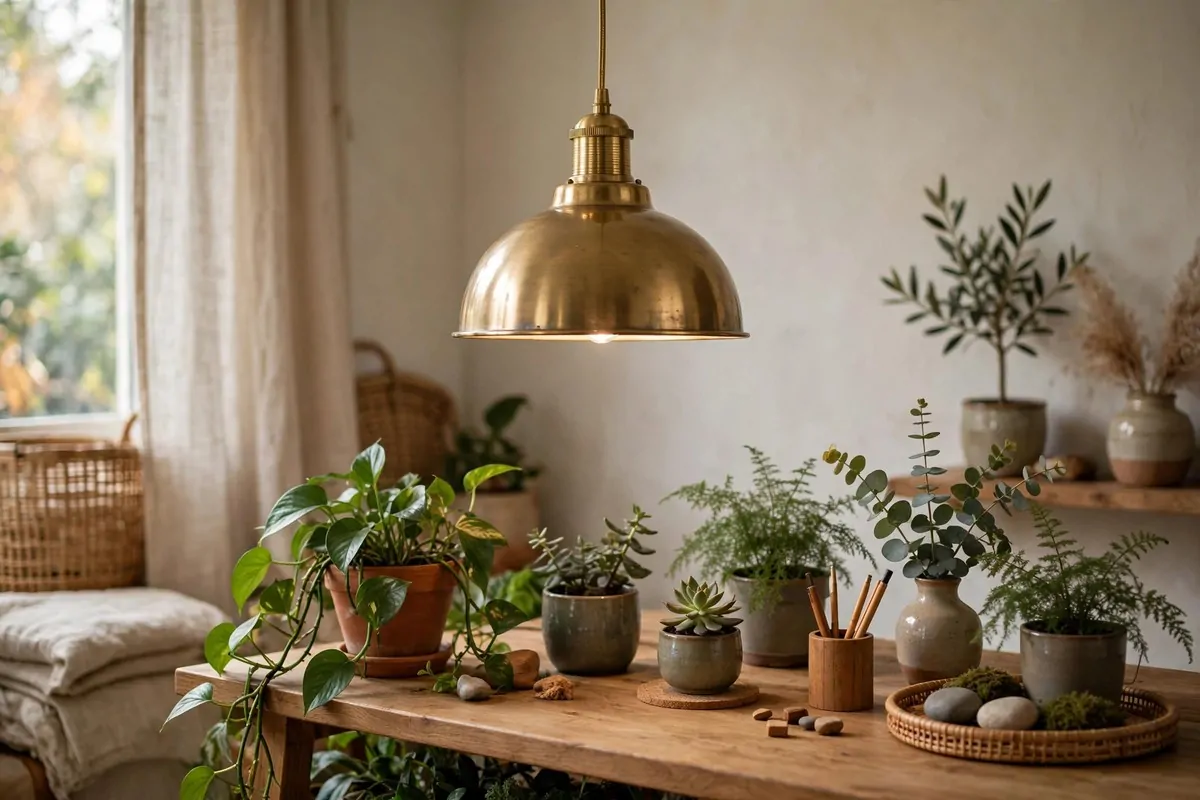
Overhead light is usually the worst light in a room. Harsh, cold, flat. A brass pendant fixes that and looks great doing it.
Brass glows warm. It is like jewelry for your ceiling. Against green walls it shines even more. Green and gold is a classic pair for a reason.
Hang it over your desk, not in the middle of the room. Task light where you work. The rest of the room can stay soft.
Height matters. Hang it so the bottom sits a bit above your eye line when you stand. Too low and it blinds you. Too high and it lights nothing.
Put it on a dimmer if you can. Bright for work, low for evening wind-down. One light, two moods. Dimmers are cheap and worth it.
A pendant with an open bottom throws light down on your desk. A closed globe spreads light everywhere. For an office, open bottom wins.
Brass needs a little care. Wipe it with a soft cloth now and then. It keeps its shine. Or let it age and go a little dark. Both look good.
If you rent and cannot wire a pendant, a plug-in swag pendant works. Same look, no electrician. Hang it from a hook and plug it in.
My brass pendant is the first thing I see when I walk in. It makes the whole office feel warm before I even sit down.
18. Use Stone and Ceramic Accessories
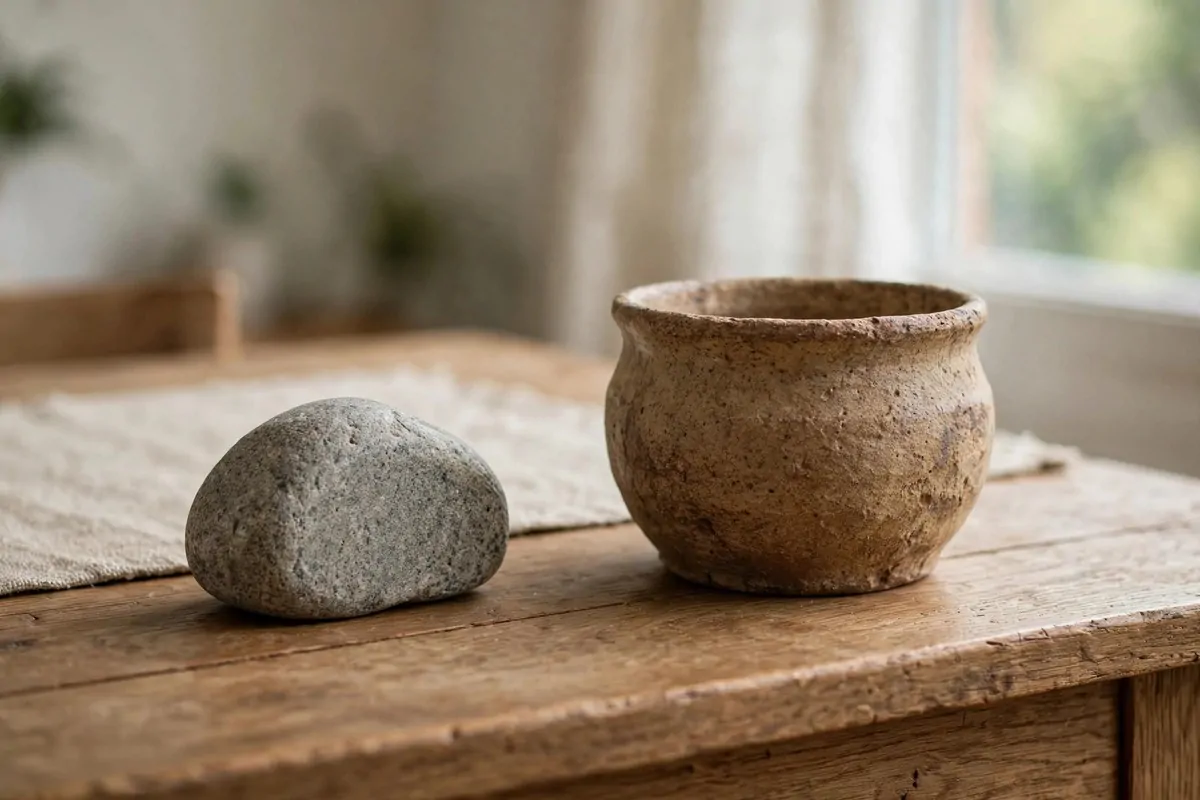
Small heavy things on a desk feel good. A stone paperweight. A handmade ceramic cup for pens. They ground the space.
Stone is old and solid. Holding it reminds you that some things last. Your to-do list is not one of them, and that is oddly calming.
Ceramic adds craft. A handmade pot has little bumps and marks. Those marks are proof a person made it. Machines do not make marks like that.
Keep it to two or three pieces. A paperweight, a pen cup, maybe a small dish for paper clips. More than that becomes clutter.
Earthy colors work best. Gray stone, cream ceramic, speckled clay. They sit quietly next to green plants without competing.
Put the paperweight where you see it during calls. It is a nice fidget too. Heavy in the hand, smooth to turn. Better than clicking a pen.
Buy from local makers when you can. It costs a little more. But you get a story with the piece, and your money stays close to home.
These small things age well. Stone does not fade. Ceramic does not peel. They will look the same in ten years.
My paperweight is a smooth river stone I picked up on a trip. It cost nothing. It is my favorite thing on the desk.
19. Put Eucalyptus in a Vase
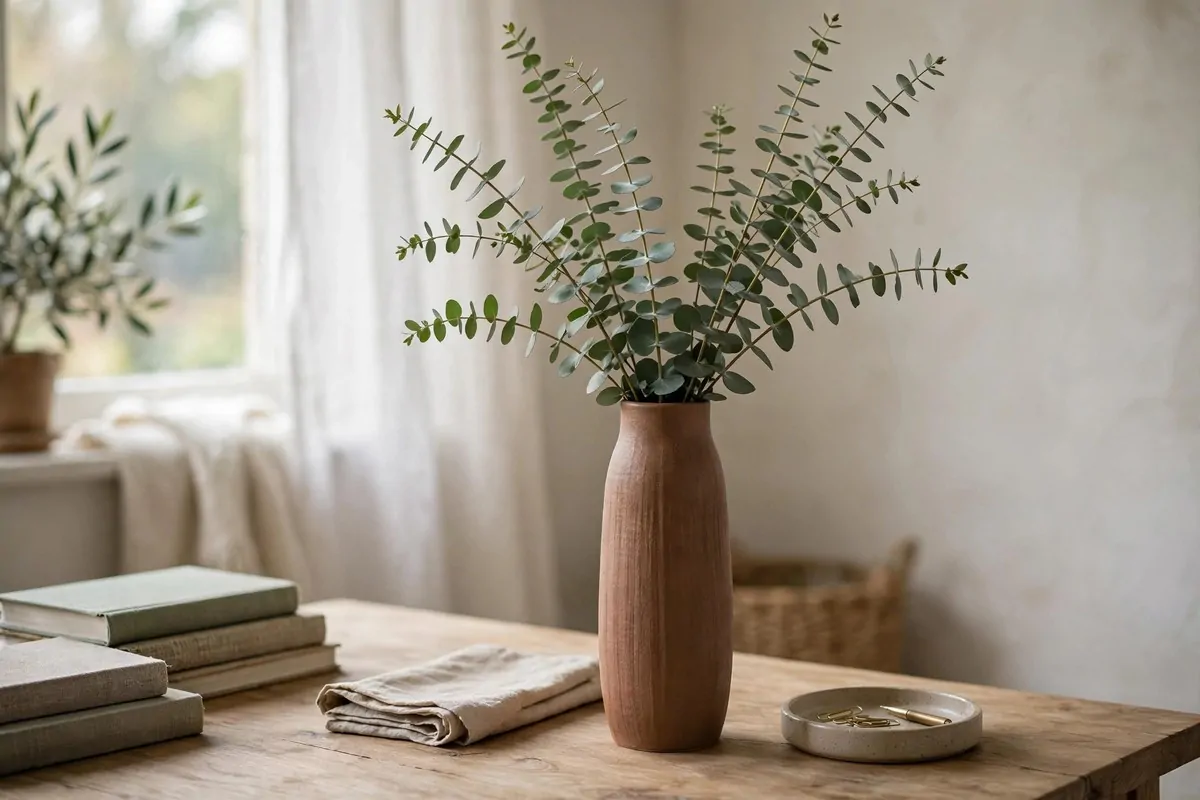
Eucalyptus is the easiest green you can buy. A bunch of stems in a tall vase. Done. It looks styled with zero effort.
The smell is the real gift. Fresh, clean, a little sharp. It clears your head. I keep it near my desk and breathe it in between tasks.
It dries beautifully. Leave it in the vase and it turns silvery and crisp. Dried eucalyptus looks good for months. Two looks for the price of one.
Use a tall vase. The stems are long and they need height. A short vase makes them flop. Tall and narrow is the shape.
You do not even need water at first. Eucalyptus lasts weeks dry. Add water if you want it fresh longer, or skip it for the dried look.
Hang a bunch upside down to dry it faster. Tie the stems with string and hang them from a shelf. In two weeks they are perfectly dried.
Mix it with other stems for a fuller look. Dried wheat, a few branches, some pampas grass. Eucalyptus plays well with all of them.
Replace the bunch every few months. It loses its smell over time. A fresh bunch is cheap and the room smells new again.
My vase sits by the window. Sun hits the leaves in the morning and the whole corner glows silver-green. It is my favorite ten seconds of the day.
20. Try Dried Flowers
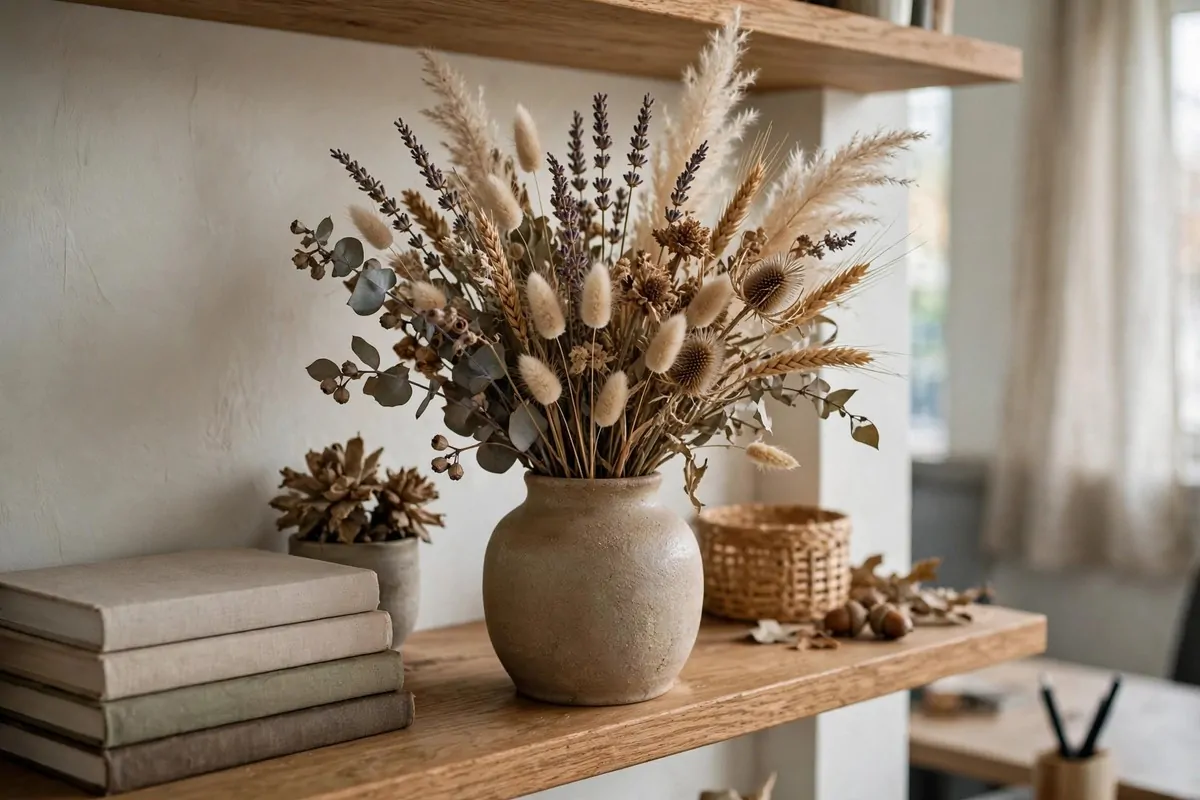
Dried flowers are for people who love plants but forget to water them. They need nothing. No water, no light, no care at all.
They last for months, sometimes a year. A fresh bouquet dies in a week. Dried flowers just sit there, looking pretty, asking nothing of you.
The colors are soft and muted. Creams, dusty pinks, pale yellows, sage greens. They fit a calm office perfectly. Nothing loud or shouty.
Put them on a shelf, not the desk. They are fragile and they shed a little. On a shelf they are safe and still in view.
Keep them out of direct sun. Sun fades the colors over time. A shaded shelf keeps them looking fresh much longer.
Lavender, statice, and dried roses are good picks. They hold their shape and their color. Cheap bundles from craft shops work fine.
Dust them gently with a hair dryer on cool, low setting. It blows the dust off without breaking the stems. Once every few months is enough.
They are also kind to the budget. One bunch lasts all year. Fresh flowers every week would cost a fortune by comparison.
My shelf has a bunch of dried lavender. It still smells faintly after six months. Every time I catch it, I smile.
21. Make a Green Vision Board
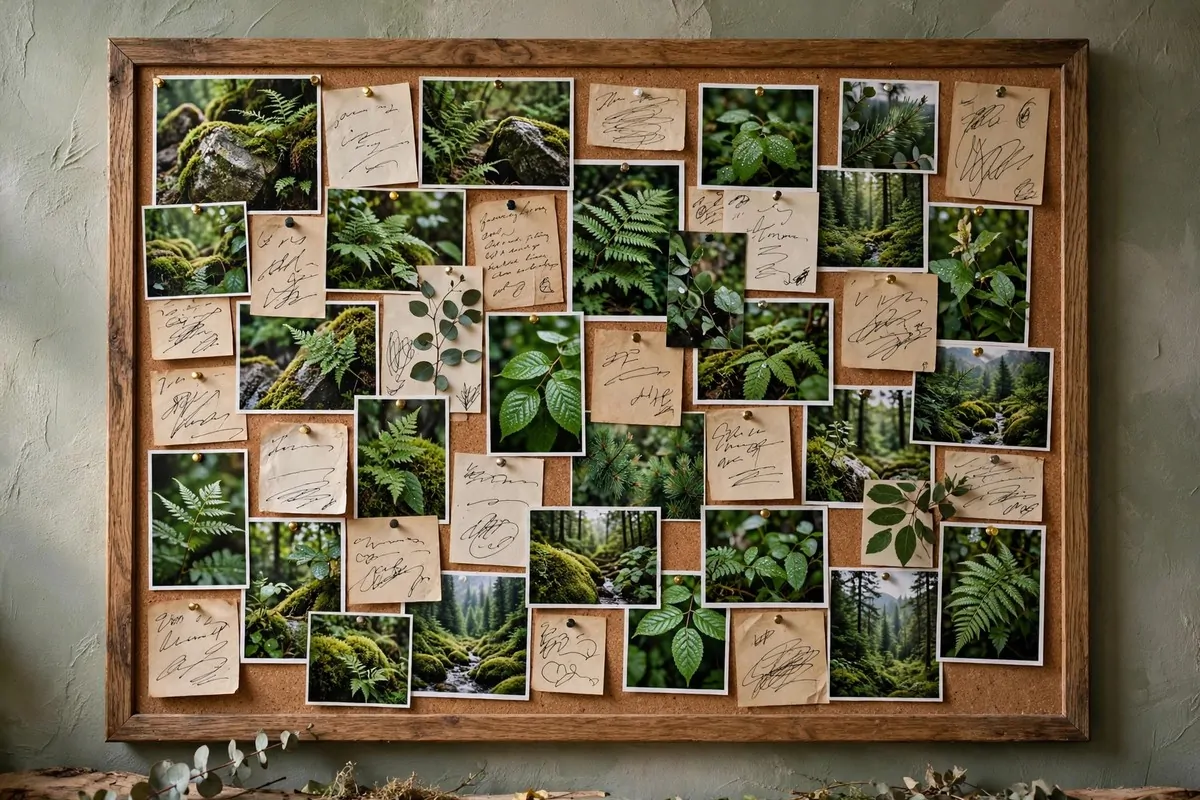
A vision board is a pinboard full of what you want. Dreams, goals, pretty things. Make it green and it doubles as decor.
Cover it with nature photos, green paint swatches, leaves you pressed, quotes you love. It becomes a collage of calm that also points you forward.
Hang it where you see it every day. Next to your desk or above it. If it hides in a closet, it does nothing. Visibility is the whole point.
Use a cork board or a wire grid with clips. Cork is classic. Wire grids are easier to change. Pick the one you will actually update.
Change it with your goals. A board from two years ago is just wallpaper. Swap in new images when your dreams change. Ten minutes, twice a year.
Add your own handwriting. A note in your own hand feels more real than printed words. Write the goal like it already happened. It tricks your brain in a good way.
Keep the green theme loose. Mostly green and nature, but a photo of your dream house fits too. It is your board. There are no rules.
This board is the most personal thing in your office. Everything else is taste. The board is you.
Mine has a photo of a cabin in the woods. It has been there three years. I look at it when work feels pointless. Then I get back to work.
22. Use Reclaimed Wood Shelves
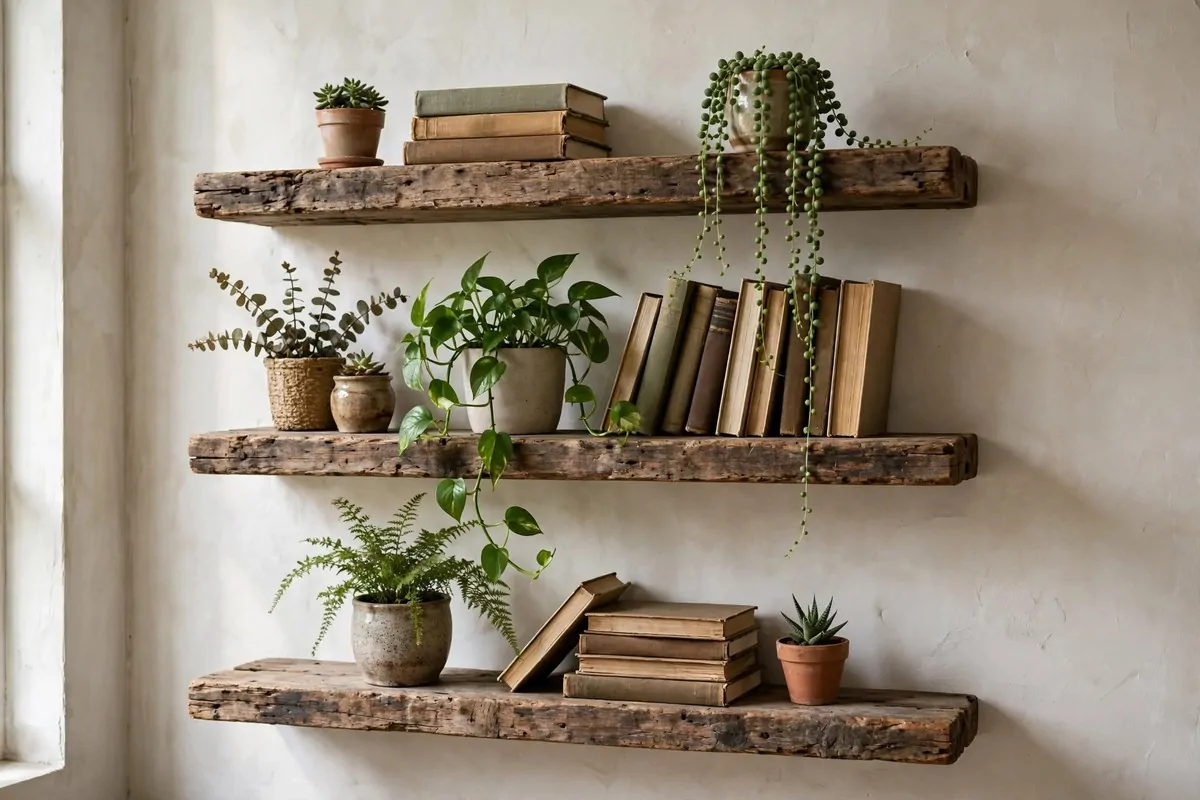
Reclaimed wood has a past. Old barns, old floors, old beams. That history shows in every mark, and it makes your office feel rich.
New shelves look clean. Reclaimed shelves look interesting. The nail holes and worn edges tell a story. Your office gains character overnight.
They are kind to the planet too. No new trees cut, no new wood made. Just old wood getting a second job. That fits the whole green office idea.
Mount two or three on the wall above or beside your desk. Stagger them for a casual look. Line them up even for a calmer feel.
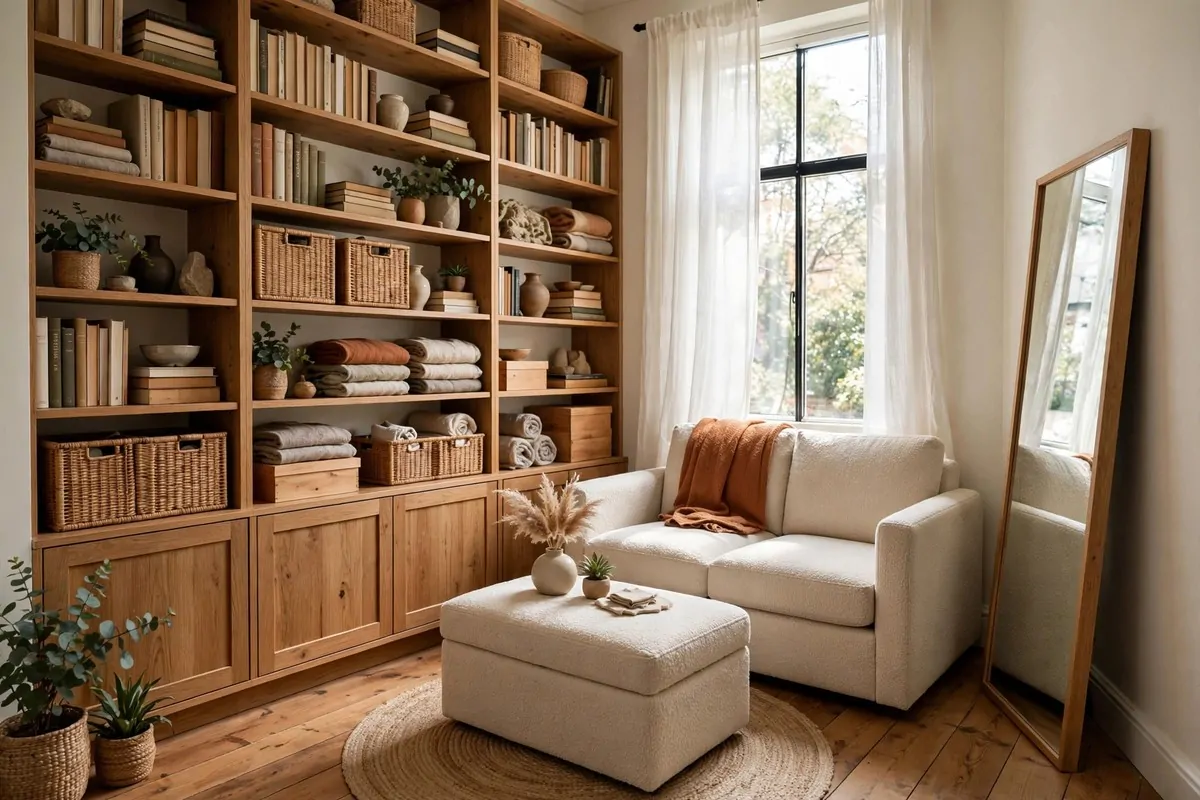
Fill them with plants and books. Trailing pothos off the top shelf. A row of books on the middle one. A small plant and a candle on the bottom.
Check the weight rating of your brackets. Wood is heavy, books are heavier. Use strong brackets and proper wall plugs. Shelves that sag are sad.
Seal the wood with a clear oil or wax. It protects the surface and brings out the grain. Old wood drinks up oil and looks amazing after.
Mix in a few baskets on the shelves. They hide the ugly stuff, chargers and cords. Woven baskets on wood shelves look like they were made for each other.
My shelves came from an old farmhouse two towns over. Every time I look at them, I wonder what they saw. Then I put another plant on them.