30 Library Ideas That Make Every Book Lover Swoon

I have a stack of unread books on my bedroom floor that has its own postal code.
Okay, that is not true. But it is closer than I want to admit.
The stack is so tall that my cat climbs it like a mountain. My husband walks past it and sighs. I walk past it and feel a little guilty every single time.
Every book in that pile deserves a real shelf. And I deserve a real spot to sit down and read them.
So this year I am building a home library. Not a whole new room. Just a corner of my house that feels like one.
Warm shelves. A chair that hugs me back. Good light. These 30 library ideas are my full plan, from cheap weekend fixes to the big dream stuff. Steal the ones that fit your home.
1. Start With Floor-to-Ceiling Built-In Shelves
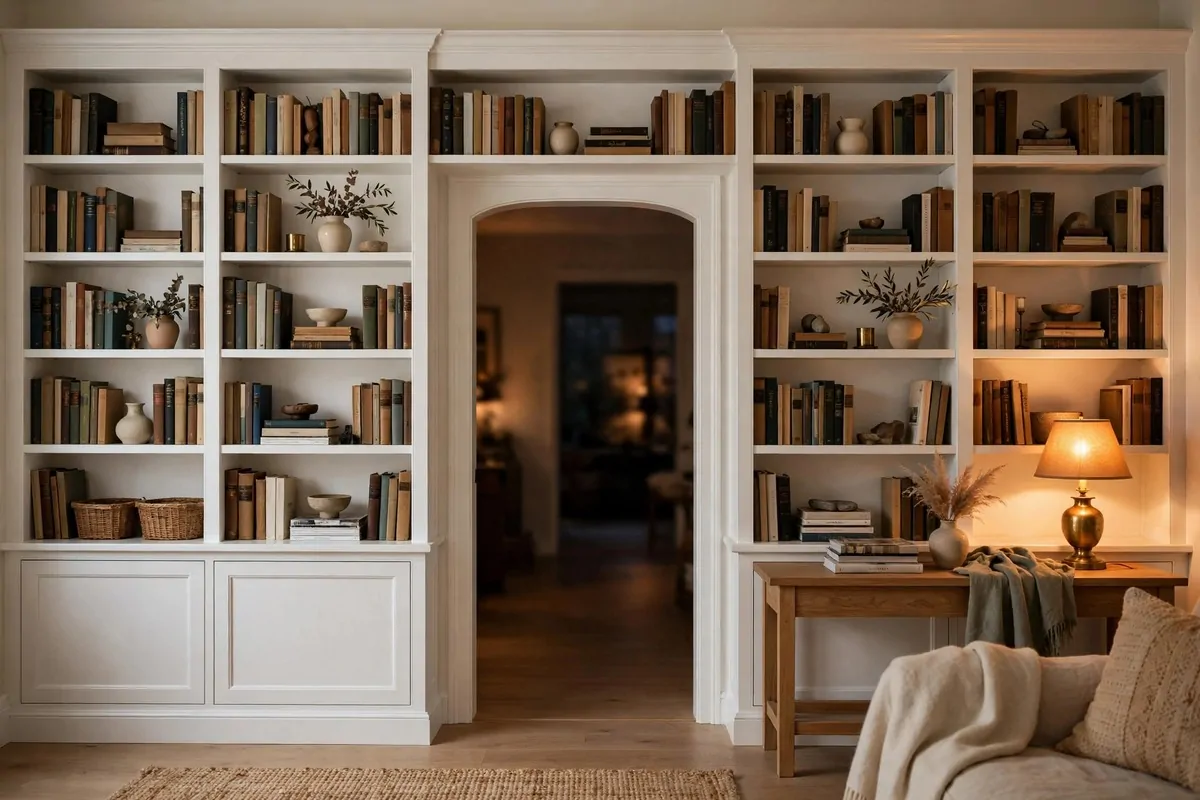
Nothing says home library like shelves that run all the way up the wall.
Floor-to-ceiling built-ins make even a small room feel grand. They use every inch of wall you have. Your books finally stop living in piles on the floor.
You can frame a doorway with them. You can frame a window too. It makes the shelves look like part of the house, not just furniture.
I love painting the shelves the same color as the wall. It makes the whole thing look built in, even when it is not.
Here is a cheap trick I learned. Buy simple flat-pack bookcases and add trim around the top and sides. Caulk the edges, then paint it all one color. Nobody will know it did not cost a fortune.
Mix open shelves with closed cabinets at the bottom. The cabinets hide the ugly stuff. Chargers, board games, the books you are embarrassed about.
Leave a little breathing room on each shelf. A shelf packed tight looks like storage. A shelf with small gaps looks like a library.
Measure your tallest books before you buy anything. I once bought shelves that was too short for my art books. They lived sideways for a year.
Start with one wall. You do not need the whole room on day one. One full wall of books changes everything.
2. Add a Rolling Library Ladder (Yes, the Fun Kind)
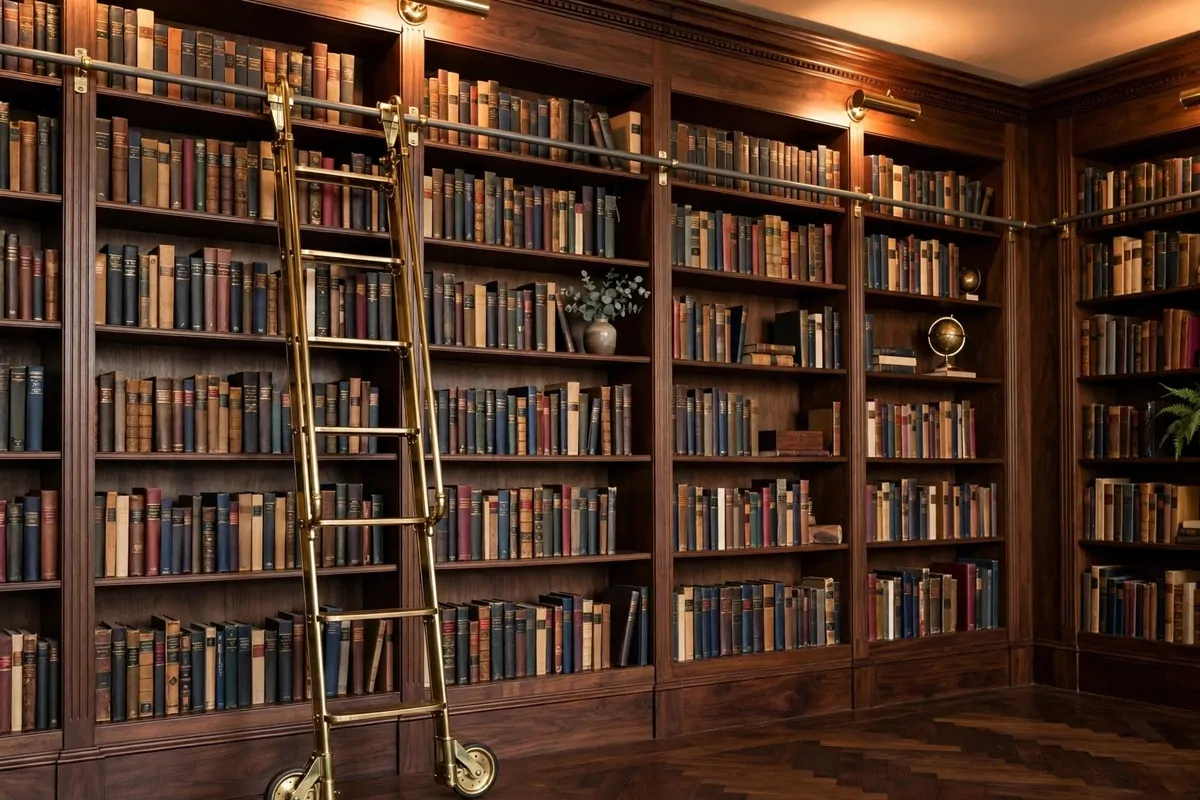
A rolling ladder is the most fun thing you can put in a home library. It is useful and it looks amazing.
Tall shelves are great until you need the book on the top shelf. Then you are dragging a kitchen chair across the room. A ladder fixes that problem in the funniest way.
You need a rail along the top of your shelves. The ladder hooks onto it and rolls side to side. Most kits come with the rail and all the hardware.
Here are the main options I found when I looked into it:
- A full rolling rail ladder kit, the classic library look
- A small wooden library step stool, cheap and cute
- A rolling step ladder from a hardware store, painted to match your shelves
The full kit costs the most. But it is the one that makes guests gasp when they walk in.
If your shelves are not super tall, skip the rail. A pretty step stool does the job. I keep one tucked beside my shelf. It is shaped like a little chair.
Mount the rail into studs, not just drywall. A ladder with a person on it is heavy. This is the one step you should not skip.
Oil the wheels once a year. It takes two minutes. A squeaky ladder is funny the first time and annoying after that.
My niece calls mine the book train. She rides it along the rail and picks one book per ride. It is the best reading habit builder I never planned.
3. Steal the Space Under Your Stairs
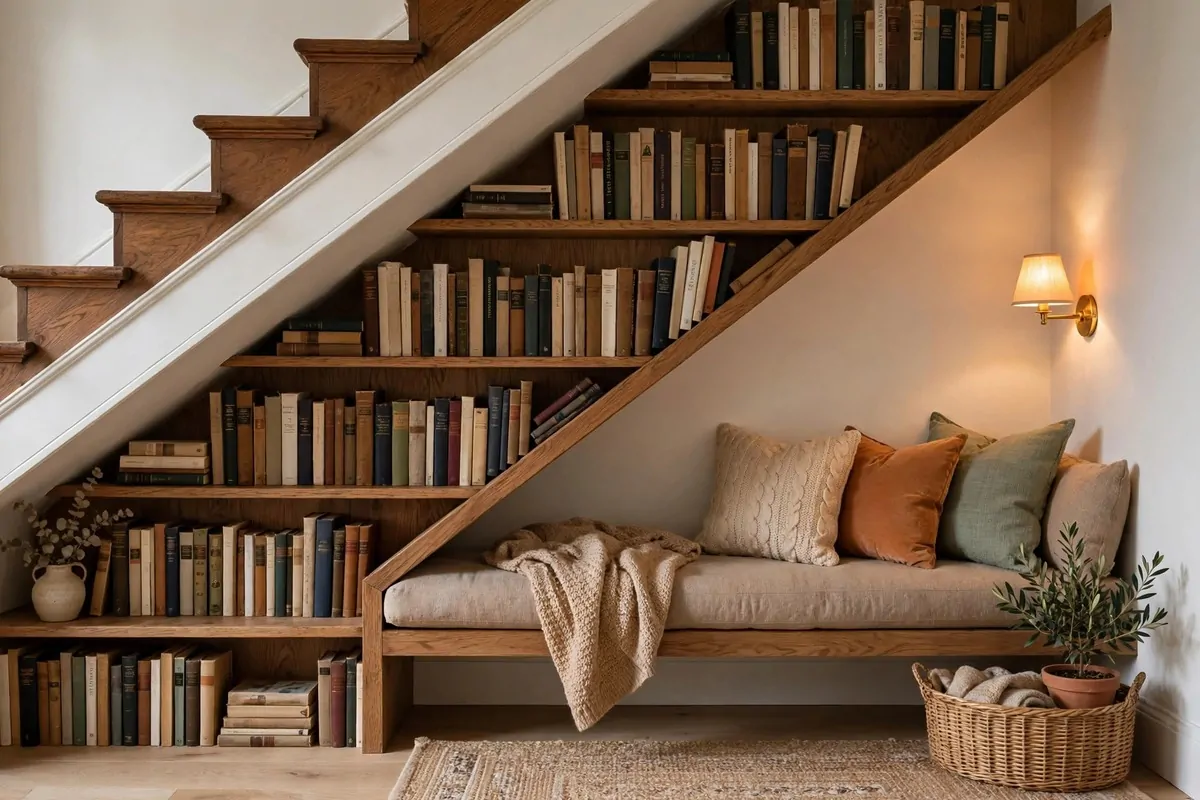
The space under your stairs is probably doing nothing right now. Mine held a vacuum and three boxes I never opened.
That sloped space is perfect for a mini library. Low shelves fit the short end. Taller shelves fit the high end. It is like the stairs were designed for books.
Add a bench with a thick cushion along the wall. Toss on two pillows and a throw. Now you have a reading nook and a library in one.
A small wall light makes it cozy. Battery-powered picture lights work great here. No electrician needed.
Paint the inside a fun color. Deep green or navy makes the nook feel like a secret room. My friend painted hers mustard yellow and it glows.
The angled shelves hold kids books really well. The covers face out and little hands can grab them. If you have kids, this spot is gold.
Measure the slope before you buy shelves. The height changes every few inches. Custom-cut boards are cheap at a hardware store.
Keep the walkway clear. You still need to get past the stairs. Shallow shelves, about eight inches deep, are plenty for most books.
This is one of the cheapest library ideas on this list. A few boards, some paint, and a cushion. Weekend project, big payoff.
4. Build a Window Seat Wrapped in Books
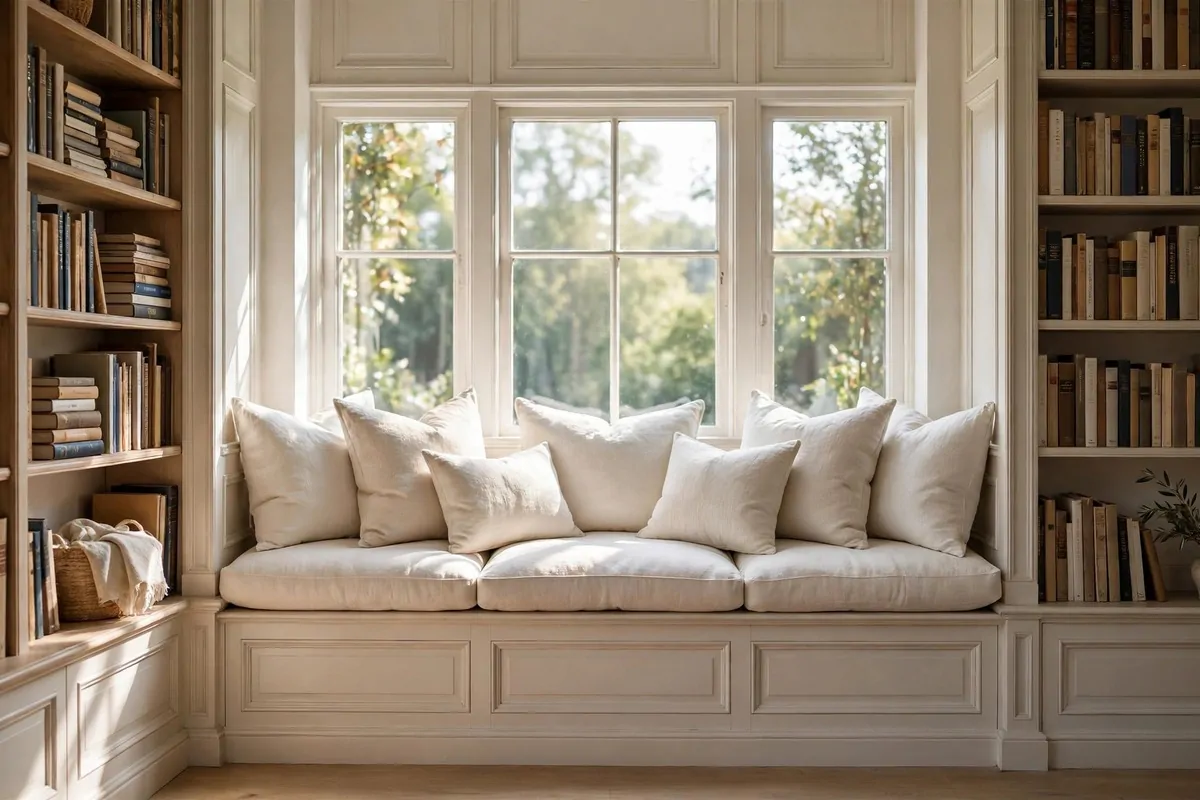
The best reading light is free. It comes through your window every morning.
Build a bench between two bookcases under a window. The seat holds your body and the shelves hold your books. The window gives you the light, and the whole thing just works.
Add a thick cushion cut to fit the bench. Then pile on pillows. I like one firm pillow for my back and one soft one to hug.
Build storage into the bench if you can. A hinged top or drawers underneath hide blankets and out-of-season books.
This is my favorite morning spot in any house. Coffee in one hand, book in the other, sun on my face. It never gets old.
If you rent, fake it. Push two narrow bookcases against the wall under a window. Put a storage ottoman between them. Same feeling, no tools.
Add a small side table or a wide windowsill for your mug. Books and hot drinks need to live close together. That is just science.
A throw blanket lives on my window seat all year. Even in summer. Reading without a blanket feels wrong to me now.
Curtains matter too. Sheers soften the light and cut the glare on pages. Heavy curtains turn the seat into a cozy cave at night.
5. Paint the Walls Dark and Moody
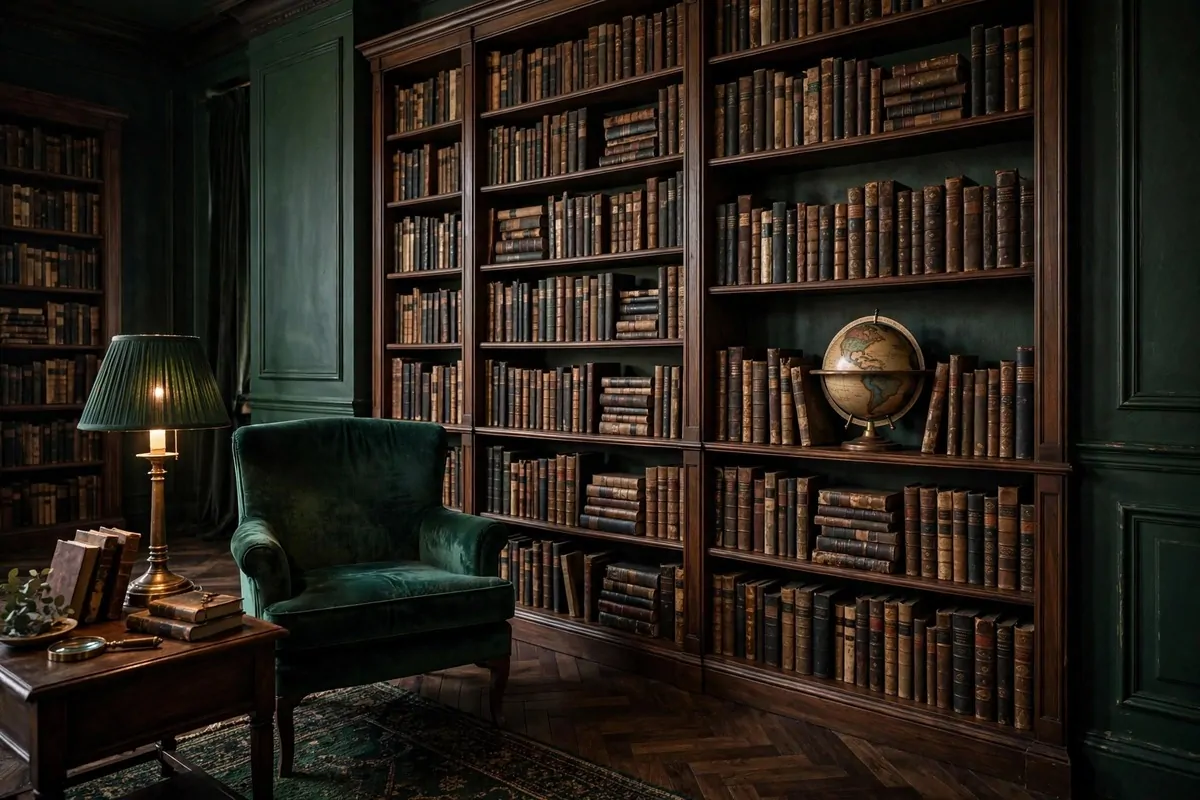
Dark walls make a library feel like evening all day long. Deep green, navy, or charcoal gray. Pick one and be brave.
I know dark paint sounds scary. Everyone worries the room will feel small. But small and cozy is exactly what you want for reading.
Dark colors make book spines pop. All those reds, golds, and creams stand out against a deep green wall. Your shelves start to look like art.
This is the heart of the dark academia look. Old university libraries were dark for a reason. It feels smart and calm and a little bit romantic.
You do not have to paint the whole room. One dark accent wall behind your shelves does most of the work. Try that first if you are nervous.
I painted a big square on cardboard and moved it around the room for two days. My husband thought I lost my mind. It worth it though.
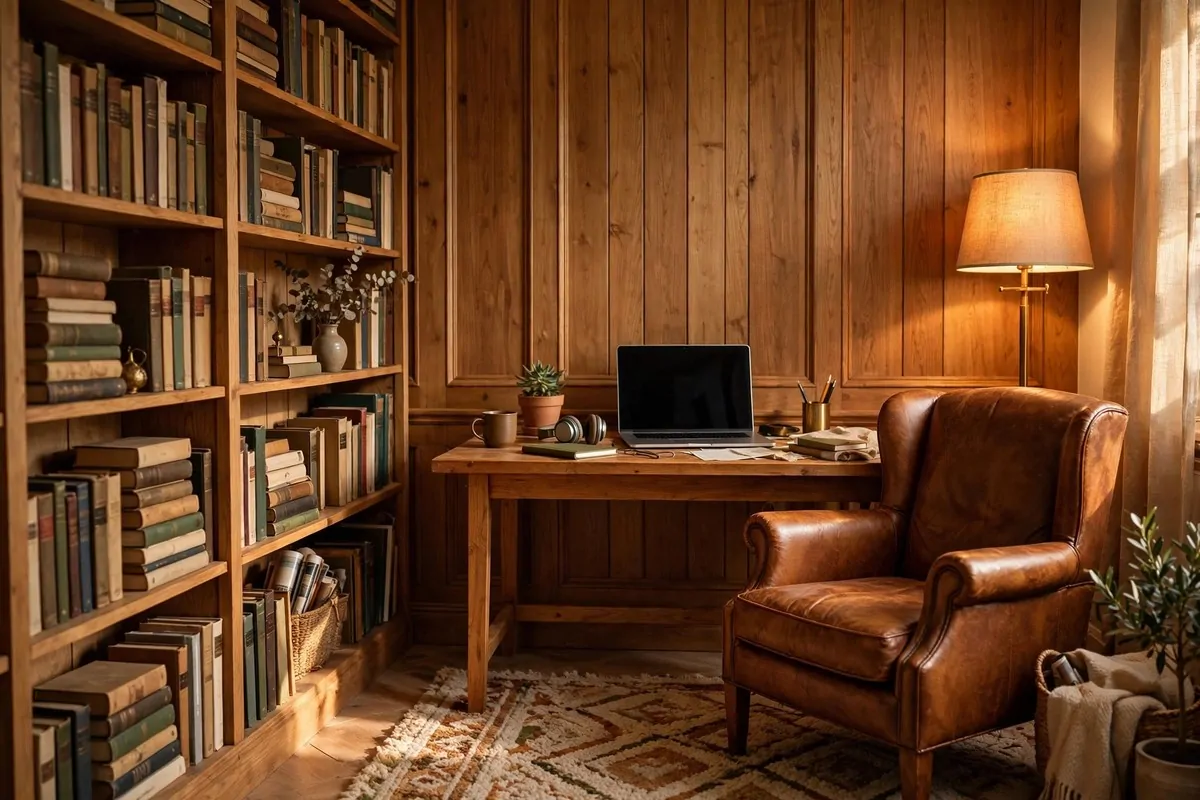
Brass and warm wood look amazing against dark walls. A brass lamp, wooden shelves, a leather chair. The dark paint makes every warm thing glow.
Keep the ceiling light or white. It bounces light down and keeps the room from feeling like a cave.
If dark feels like too much, go one shade deeper than you planned. Most people pick a color, then wish they had gone bolder. I learned that the hard way.
6. Light the Shelves Like They Deserve It
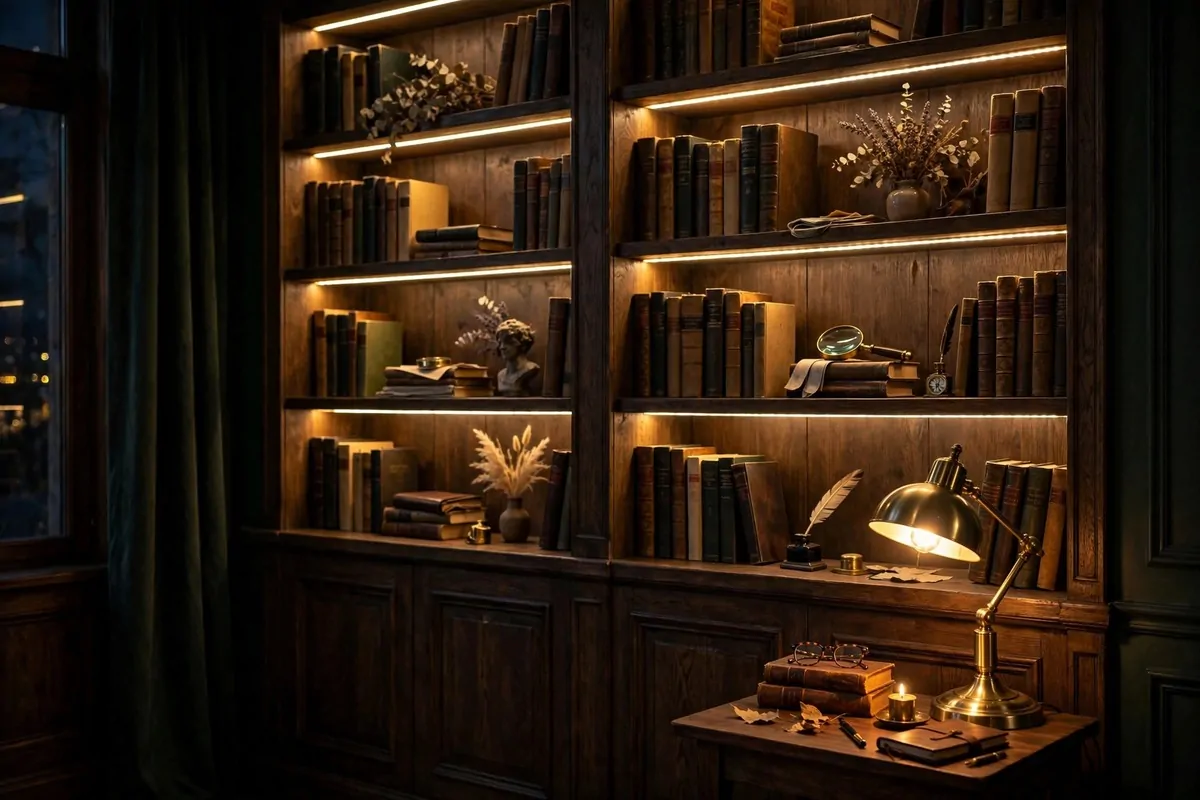
Bad lighting ruins a good library. You squint, your eyes get tired, and you stop reading. Good lighting does the opposite.
Every library needs three kinds of light. Here is the simple breakdown.
| Light type | What it does | Easy pick |
|---|---|---|
| Ambient | Lights the whole room | A warm ceiling fixture or chandelier |
| Task | Lights your book and your lap | A reading lamp by your chair |
LED strip lights are the cheapest magic trick here. Stick them under each shelf. Plug them in. Your bookcase glows like a bookstore at night.
Pick warm white bulbs, not cool white. Cool light feels like an office. Warm light feels like a hug. Look for 2700K on the box.
Put a reading lamp right next to your chair. A floor lamp with an adjustable head is perfect. The light should fall over your shoulder onto the page.
A dimmer switch is worth every penny. Bright for cleaning, soft for reading. I put one in and now I fiddle with it like a DJ.
Small spotlights on top of tall shelves wash light down the books. It looks fancy and it helps you actually find things.
Fairy lights are fine for looks but not for reading. They twinkle, they do not light a page. Use them for mood, then add a real lamp for your eyes.
Turn the lights on before it gets dark. A library that glows at dusk is the coziest room in the house. Your neighbors will be jealous.
7. Put the Fireplace in the Middle of the Books
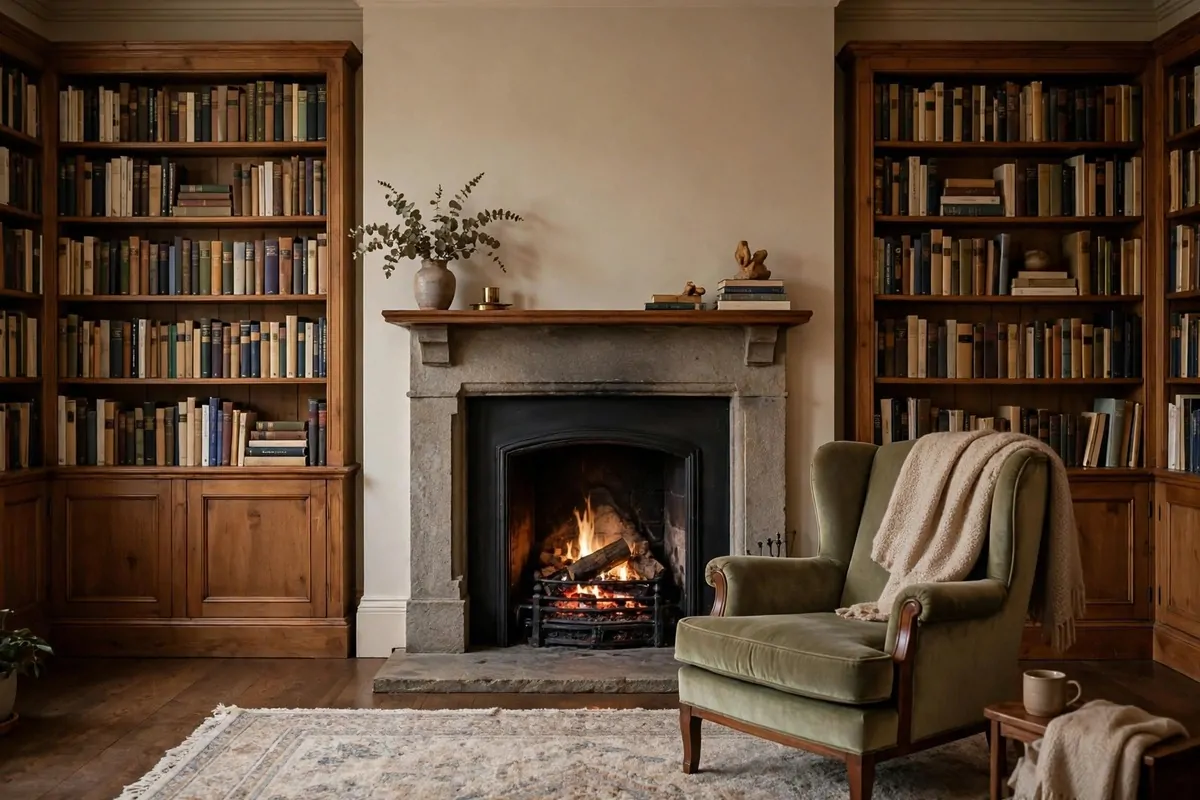
A fireplace surrounded by books is the dream. Firelight, a good chair, and shelves on both sides. It does not get better than this.
You do not need a real chimney. Electric fireplaces look great now. They give heat and glow with zero smoke.
Flank the fireplace with matching bookcases. Same height, same color. It frames the fire like a picture.
Keep books a safe distance from the heat. A foot or two is plenty for an electric unit. Real fireplaces need more space, so check the rules.
The mantel is free decor space. Stack a few pretty books there. Add a candle or a small plant. Change it with the seasons.
Winter reading hits different next to a fire. Rain on the windows, flames going, blanket on your lap. I plan my whole December around this.
If you already have a fireplace, just move books toward it. You do not need to rebuild anything. Two bookcases, one on each side, and you are done.
An armchair angled toward the fire is the best seat in the house. Fight your family for it. I am only half joking.
No fireplace at all? A big candle cluster on the mantel shelf gives a similar glow. It is not the same, but it is close enough on a cold night.
8. Pick One Chair You Never Want to Leave
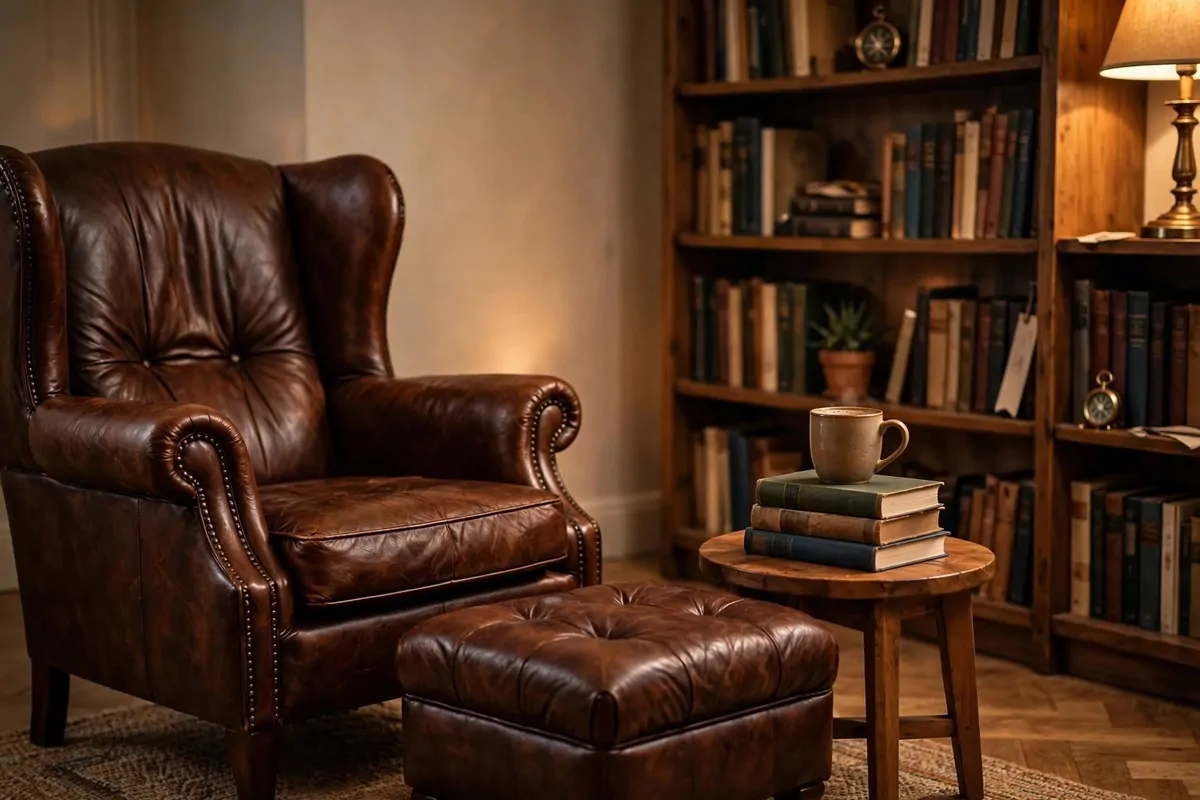
The chair is the most important thing in your library. More important than the shelves. You sit in it for hours.
Go deep and soft. A wingback chair, a big armchair, or a chaise lounge. Your back will thank you by page fifty.
Sit in it before you buy it. Bring a book to the store. Sit for ten minutes. A chair that feels fine for one minute can hurt after an hour.
Add an ottoman or footstool. Feet up changes everything. It is the difference between reading for twenty minutes and reading for two hours.
Put a small table within arm’s reach. Tea, coffee, your phone, your glasses. Everything you need without standing up.
A throw blanket on the arm of the chair is a must. It says this chair is for long stays. Visitors get the hint.
Leather looks classic and lasts forever. Fabric is softer and cozier. There is no wrong answer, just pick the one you want to sink into.
Check the seat height. Your feet should touch the floor. Dangling feet get uncomfortable fast, and uncomfortable readers quit early.
I found my chair at a thrift store for almost nothing. It smelled a little funny at first. One deep clean later, it is my favorite thing I own.
9. Tuck Trailing Plants Between the Books
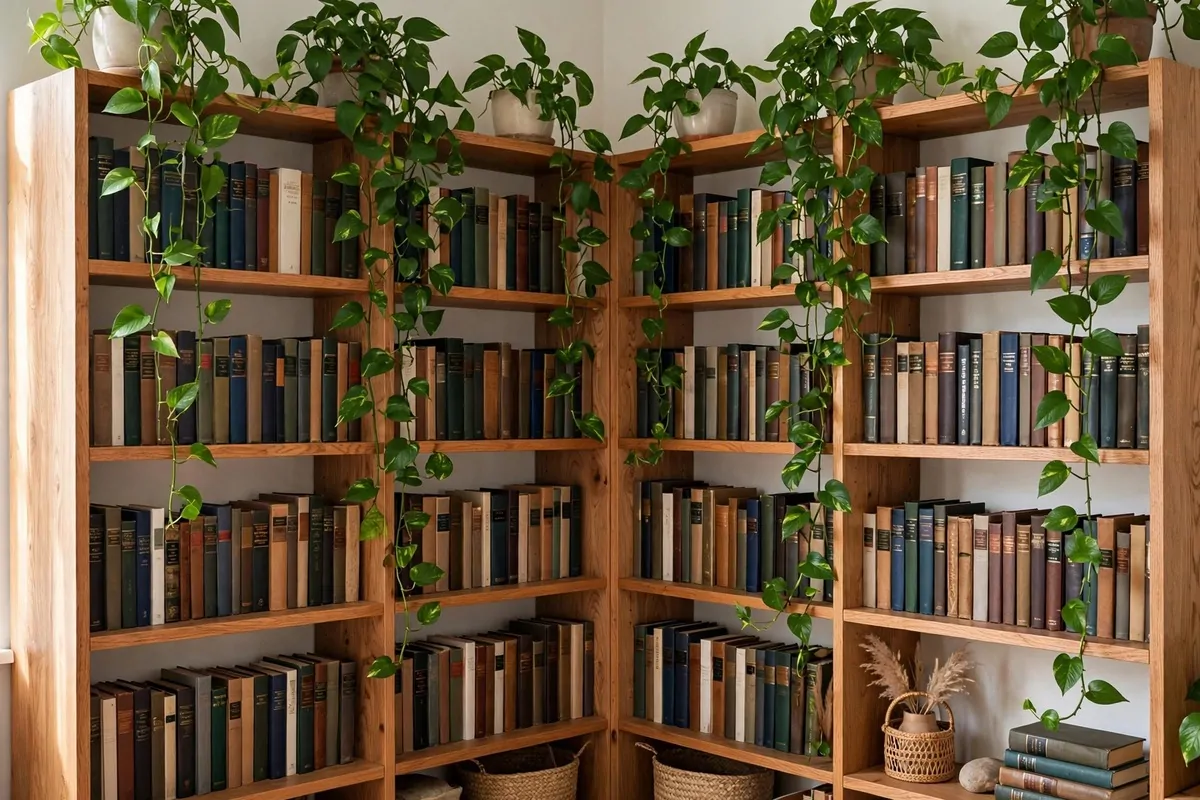
Books and plants are best friends. The green softens all those straight lines of shelves. It makes the room feel alive.
Trailing plants are perfect for shelves. Pothos, philodendron, or ivy. They spill over the edge and look like a little waterfall.
Put the plant on a high shelf and let it trail down. It fills the empty space between book stacks. Empty shelf corners disappear.
Small succulents work on the top shelves where you cannot reach to water much. They need almost nothing. Just light and a little neglect.
Water carefully. Books and water do not mix. Take the plant to the sink, water it, let it drain, then put it back.
Fake plants are totally fine here. A good fake pothos fools everyone. No watering, no dead leaves on your books.
One plant per shelf is plenty. Too many and your books get lost in a jungle. You want a library with plants, not a greenhouse with books.
Herbs can work too if your library gets sun. A little pot of mint on the windowsill smells amazing while you read.
My pothos is named Kevin. He has survived three moves and one cat attack. Every library needs a Kevin.
10. Roll Out a Book Cart for Your To-Be-Read Pile
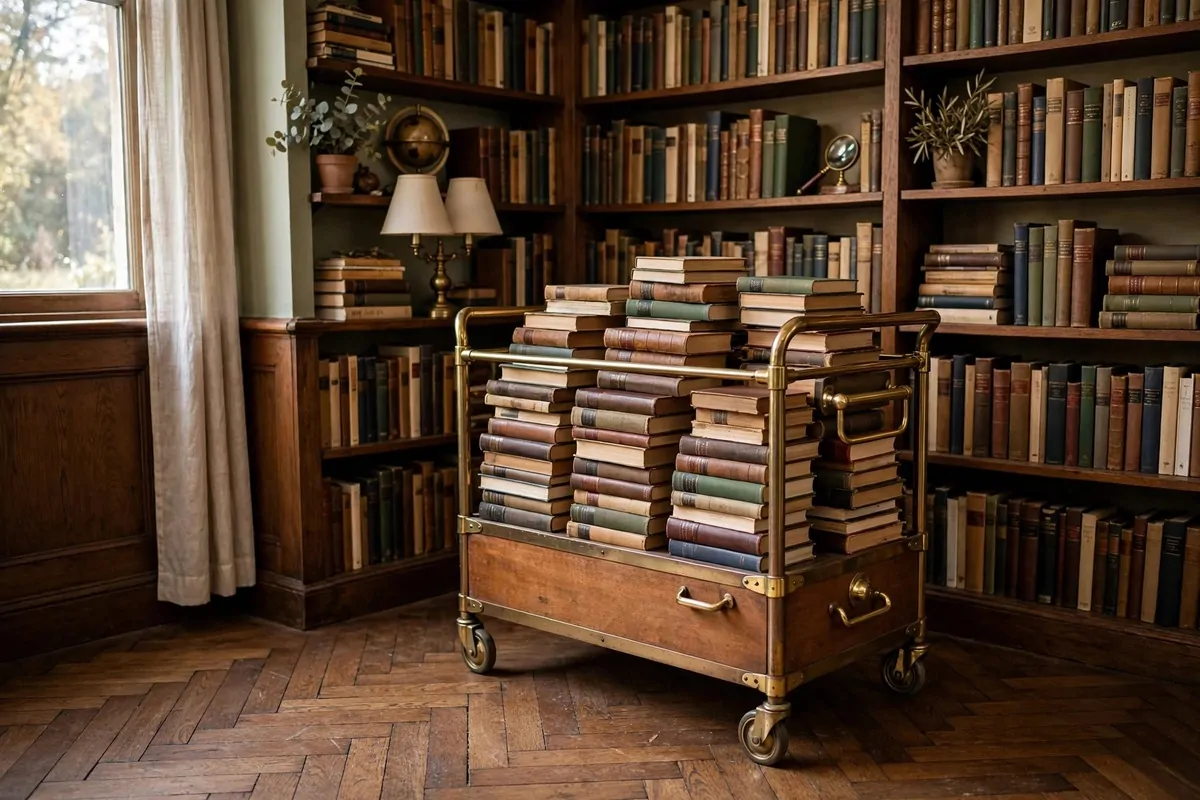
Every book lover has a to-be-read pile. Mine lives on the floor and my husband hates it. A book cart fixes this.
A rolling cart holds your next ten books in one pretty spot. It looks intentional instead of messy. That matters.
Vintage-style bar carts work perfectly. Brass frame, wooden shelves, little wheels. Thrift stores are full of them.
Roll it to your reading chair when you sit down. Roll it back when you are done. Your next book is always within reach.
Organize the cart by mood. Top shelf for exciting books. Middle shelf for cozy ones. Bottom shelf for the big serious books you keep avoiding.
A cart is also great for library books. They stay separate from your own books. No more hunting for the one you have to return Tuesday.
Kids love their own little cart too. A small rolling cart with picture books becomes their personal library. They will wheel it everywhere.
Style the top of the cart. A small plant, a candle, your reading glasses. It becomes a little station just for reading time.
When guests come, the cart rolls into a corner. No more apologizing for book piles. It is furniture now. Fancy furniture.
11. Arrange Your Books by Color
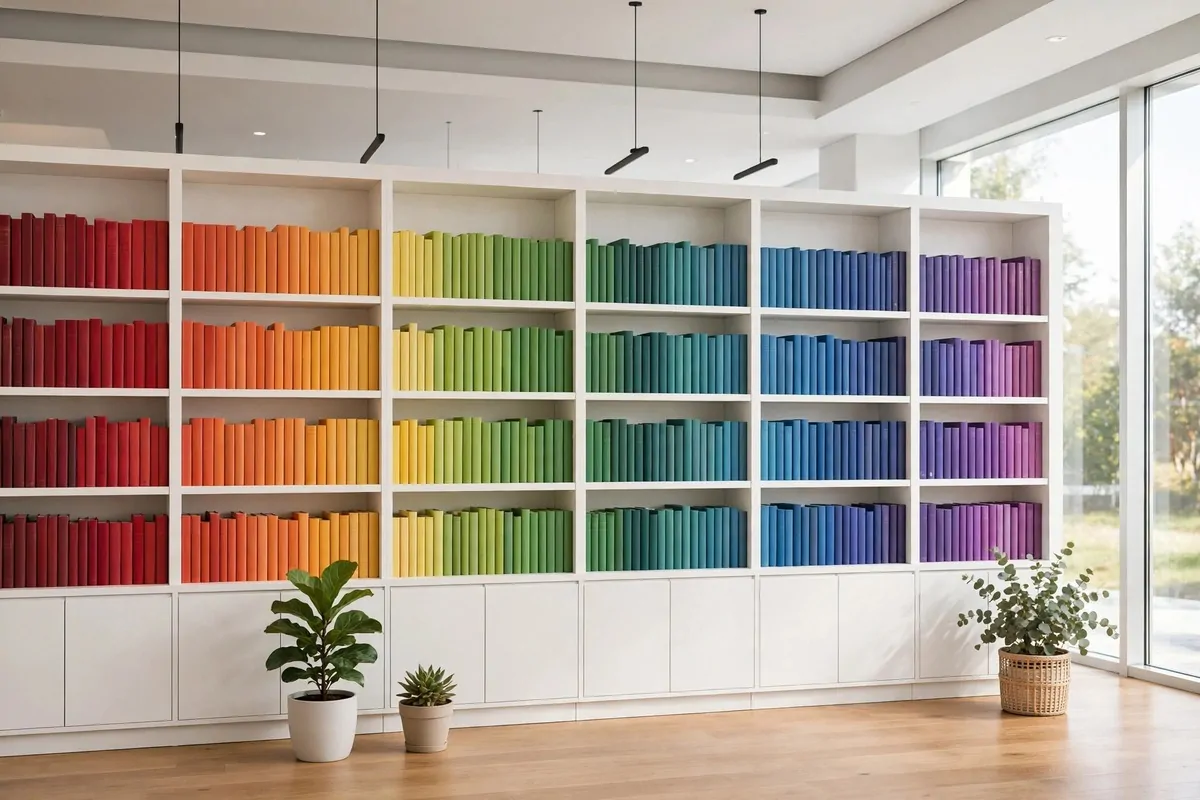
Rainbow shelves are the prettiest argument starter in home decor. People either love them or hate them. I love them.
Pull every book off the shelf first. Yes, all of them. It looks scary for about ten minutes. Then it gets fun.
Group the books by spine color. Reds with reds, blues with blues. It is like a puzzle and it is weirdly relaxing.
A few honest tips before you start:
- Keep book series together even if the colors clash, or you will never find volume three
- Neutrals like white, black, and cream make great dividers between color groups
- Take a photo of your old system first, just in case you change your mind
The downside is real. Finding one specific book takes longer. You will remember the color, not the title.
The upside is also real. It looks stunning. Guests always comment on it. Photos of rainbow shelves get all the likes.
Compromise option: color-code just one shelf. Make it the pretty display shelf. Keep the rest organized by author or genre.
Dust the shelves while they are empty. You will never have a better chance. Future you says thanks.
My rainbow shelf makes me happy every time I walk past. And honestly, half the fun of a home library is how it makes you feel.
12. Use Glass-Door Bookcases for the Fancy Stuff
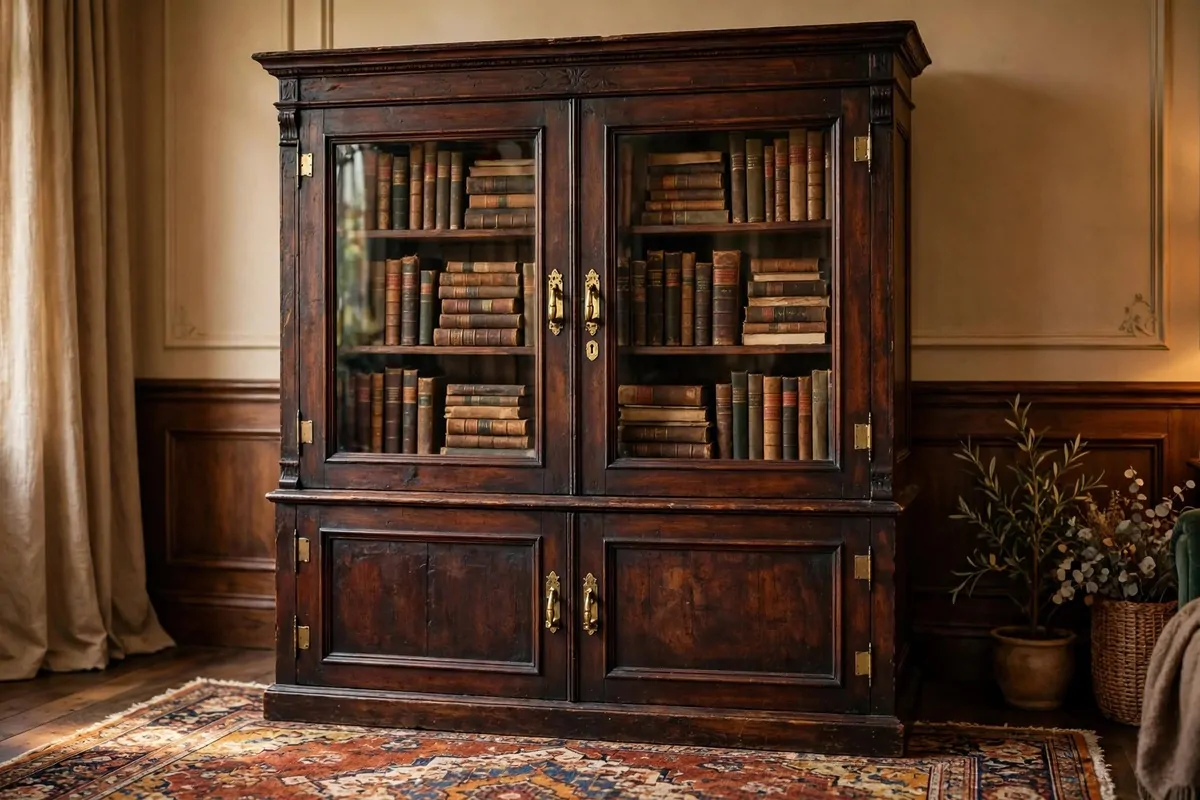
Some books deserve a glass case. First editions, pretty covers, the signed one you will never lend out.
Glass doors keep the dust off. Dust is the silent enemy of books. It settles into the tops of pages and turns them yellow.
Barrister bookcases are the classic choice. They stack, and each shelf has its own little glass door that lifts up. Lawyers used them a hundred years ago.
Glass also keeps little hands and paws out. If you have kids or a curious cat, this matters a lot.
Mix glass-door cases with open shelves. Glass for the treasures, open for the everyday reads. The mix looks richer than all one type.
Clean the glass with a dry microfiber cloth. Wet cleaners can drip onto the books below. Ask me how I know.
Leave space between the books and the glass. Books need air. Packed tight behind glass, they can get musty.
A glass bookcase in a hallway or entryway makes a great first impression. Guests see your beautiful books right away.
Thrift stores often have these for cheap. The glass might be a little wavy in old ones. That just adds character.
13. Turn a Hallway Into a Library Hall
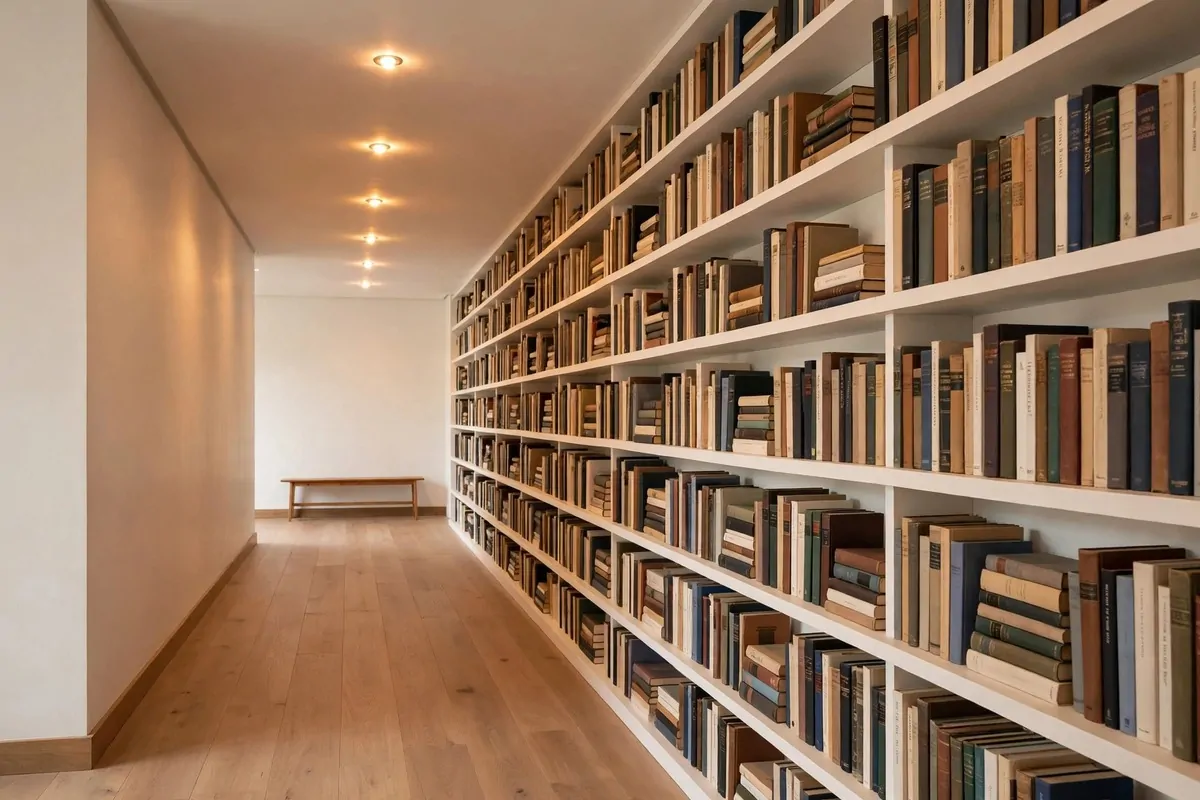
A wide hallway is a library waiting to happen. You walk through it ten times a day. Why not read in it too.
Line one wall with shallow bookshelves. Eight to ten inches deep is plenty. The hallway still feels like a hallway.
Put a slim bench or a small armchair at the end. Now the hallway has a destination. A little reading spot with books on both sides.
Good lighting is a must here. Hallways are often dark. Add picture lights or a row of small ceiling spots.
This is perfect for renters. Freestanding narrow bookcases need no drilling. Line them up and they look built in.
Organize by whatever you grab most. Cookbooks near the kitchen end. Kids books near their rooms. It becomes the most useful hallway in the house.
Add small art frames between the shelves. It breaks up the rows of books. The hallway feels like a gallery and a library at once.
Keep one side clear. You still need to walk through carrying laundry. Books on one wall only, always.
My hallway holds about two hundred books. I counted once when I was bored. Two hundred books I used to trip over in boxes.
14. Turn a Spare Closet Into a Secret Library
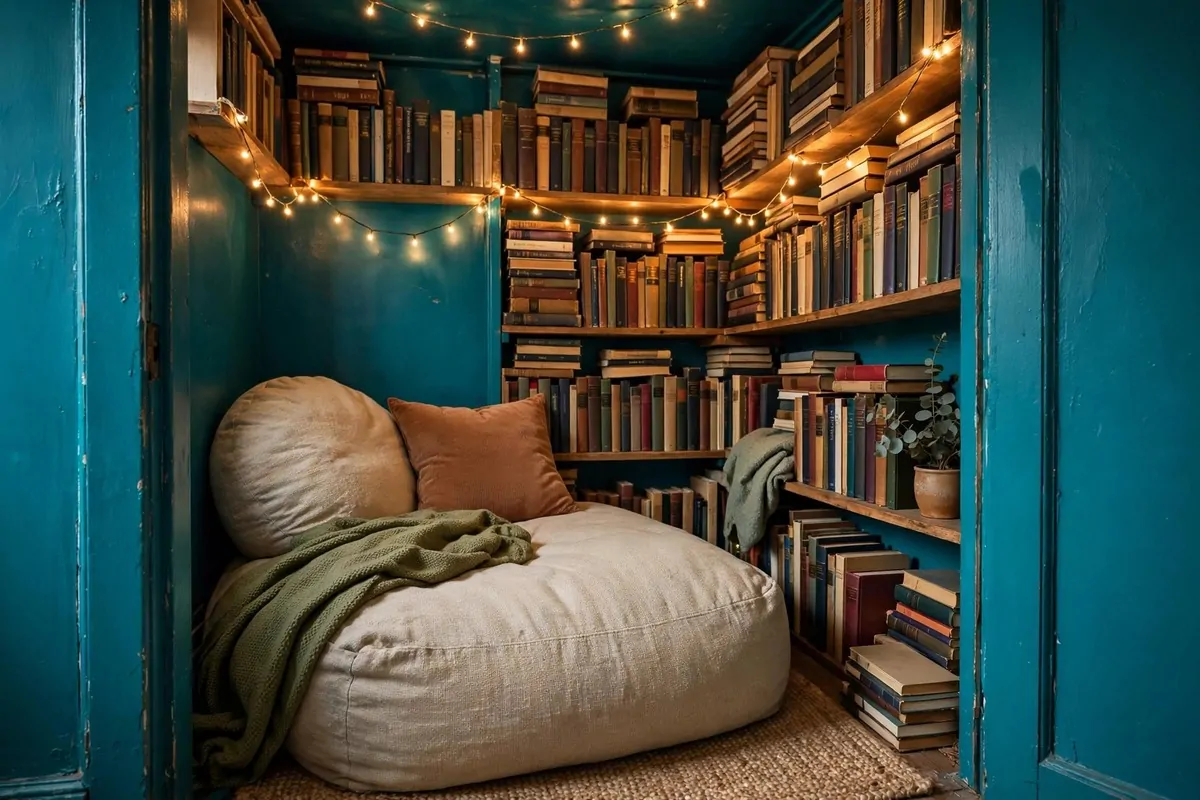
A spare closet can become the best reading spot in your house. It is small, quiet, and a little bit secret.
Take the door off first. A door makes it feel like a closet. No door makes it feel like a nook. Store the door somewhere safe for later.
Here is the simple plan:
- Empty it completely and give it a good clean
- Paint the inside a bold color, deep teal or warm red
- Add shelves on the back wall for books
- Hang a small light or string lights from the top
- Put a big cushion or beanbag on the floor
Kids go crazy for this. It feels like a hideout. My niece calls hers the book cave. She reads more in there than anywhere else.
Adults love it too. It is the one spot where nobody bothers you. Close the curtain and disappear for an hour.
A tension rod with a curtain works as a door. Pull it closed and the world goes away. Open it and it is decor again.
Keep a small basket for bookmarks, glasses, and lip balm. Everything you need in arm’s reach. Closet libraries run on coziness.
This costs almost nothing. Paint, a cushion, and shelves you might already own. The magic is free.
Fair warning. Once you build it, everyone in the house will fight over it. Build a schedule. I am serious.
15. Float Your Shelves for a Modern Look
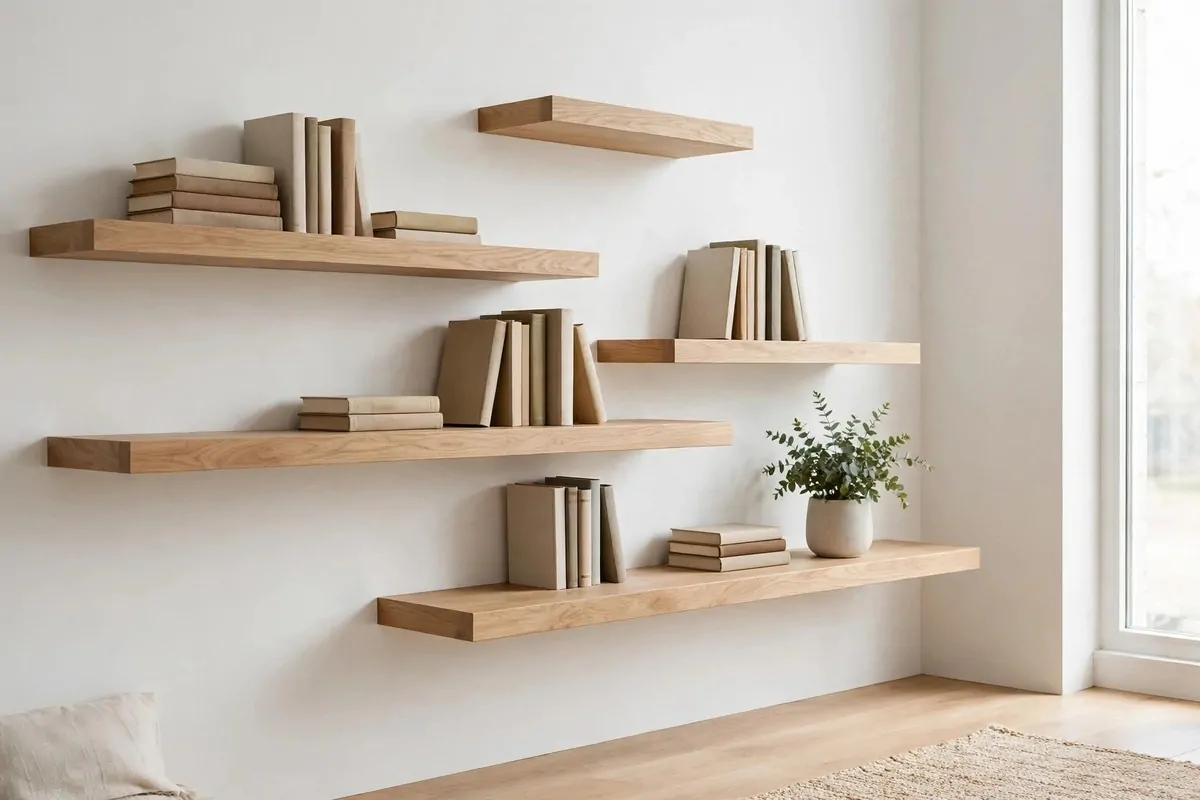
Floating shelves make books look like they are hovering on the wall. It is clean, modern, and a little bit magical.
They work great in small rooms. No big bookcase eating up floor space. The floor stays clear and the room feels bigger.
Stagger them instead of lining them up straight. Different heights look artsy. Straight lines look like a store.
Anchor them into wall studs. Books are heavy. A floating shelf full of hardcovers can weigh as much as a person.
Style them with books and a little decor. A small plant, a framed photo, a candle. Not too much. Floating shelves look best a little bit empty.
Ledges made for picture frames work great for books too. The little lip keeps them from sliding off. Face the covers out like a bookstore.
This is a good trick for awkward walls. That weird narrow wall by the door? Three floating shelves turn it into a mini library.
Wipe them down when you dust. Floating shelves show dust more than bookcases do. Two minutes with a cloth, done.
I have floating shelves in my kitchen for cookbooks. I grab recipes while I cook. Best idea I ever stole from a restaurant.
16. Build a Small Desk Right Into the Shelves
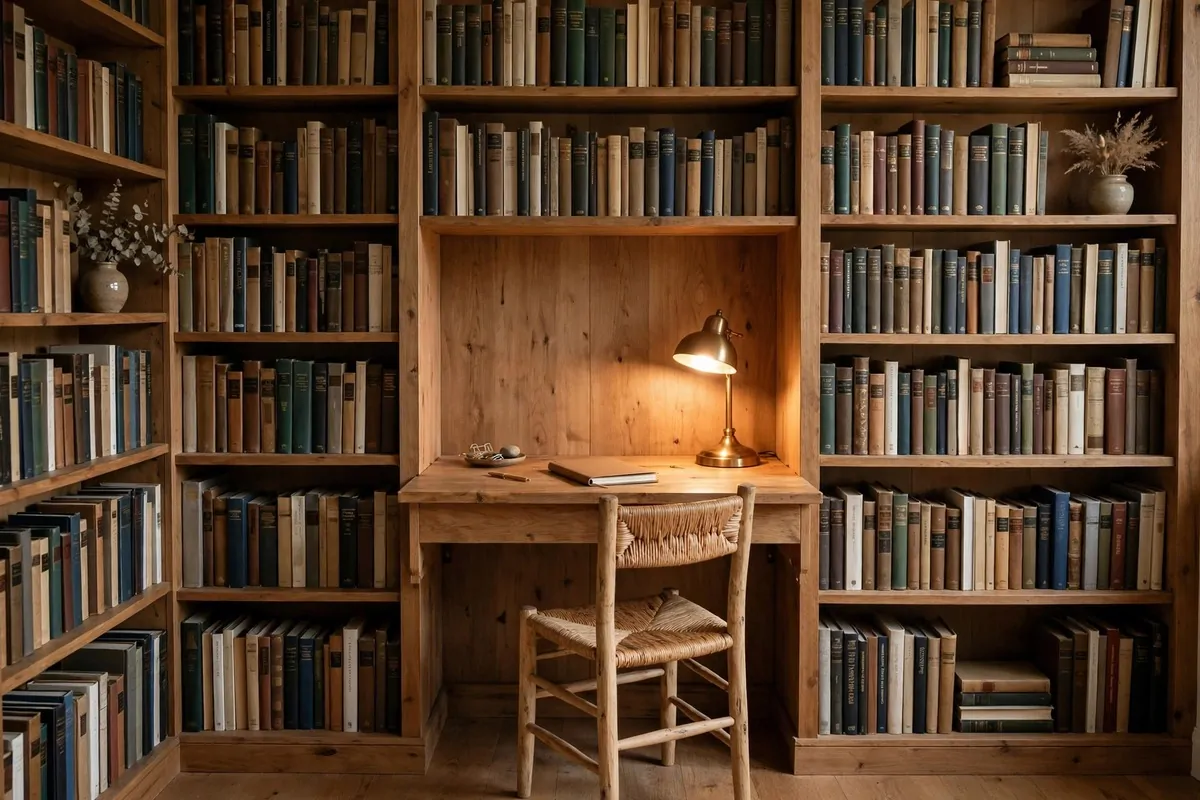
A library with a desk is two rooms in one. You read here and you work here. Surrounded by books either way.
A floating desk between two bookcases is the easiest version. One sturdy board, two brackets, done. It looks like it was always there.
Working surrounded by books feels different. Calmer. Smarter. Like the books are cheering you on. I write all my lists here now.
Keep the desk small. Just enough for a laptop or a journal. A big desk in a library becomes a dumping ground. Trust me on this one.
Hide the cables. A cable tray under the desk costs very little. Nothing ruins a pretty library like a nest of cords.
A desk lamp with warm light doubles as library lighting. Two jobs, one lamp. That is good math.
This spot is also perfect for journaling, paying bills, or helping kids with homework. Quiet, pretty, and everything you need is on the shelves.
Face the desk toward the room, not the wall, if you can. You get the view of your shelves while you work. It is motivating.
My desk is an old door on two filing cabinets. It cost me nothing. It holds my laptop, my tea, and my current read. Perfect.
17. Hunt Down One Antique Piece With a Story
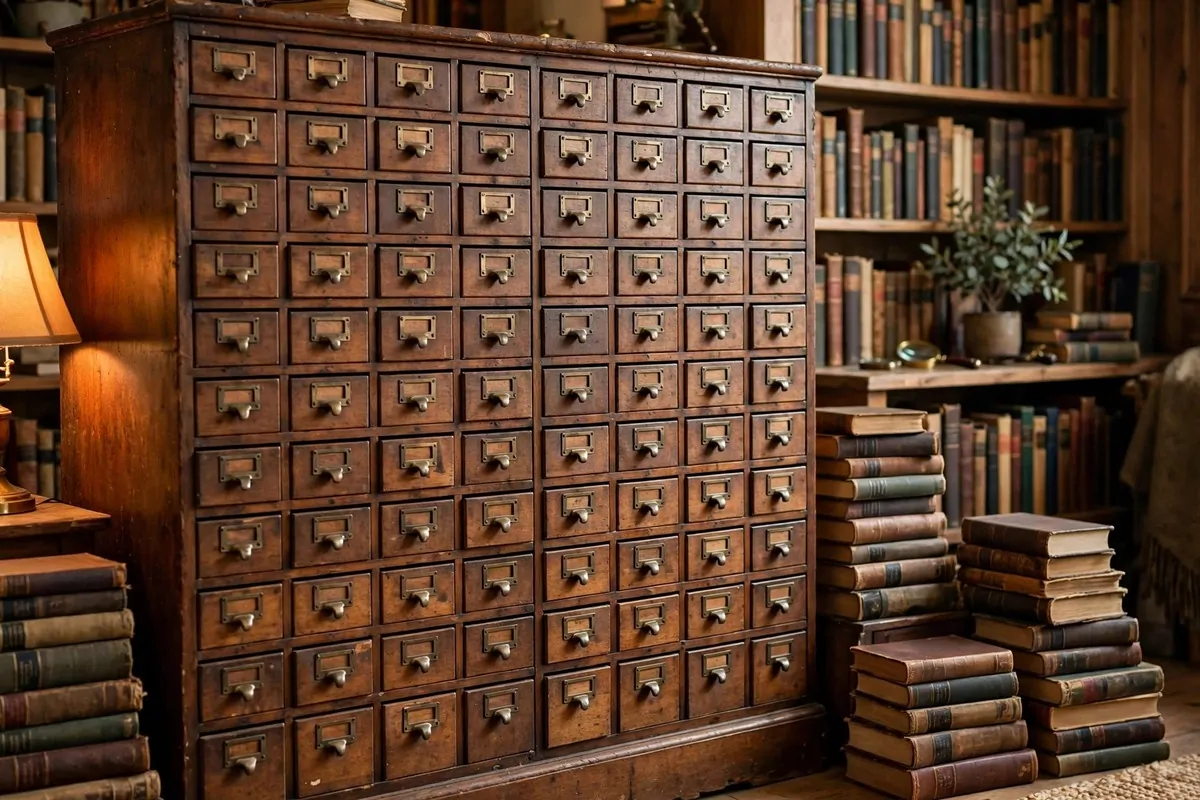
One old piece gives a library its soul. A card catalog, a wooden filing cabinet, an old library table. Something with a past.
Thrift stores and flea markets are full of these. Old office furniture is cheap because nobody wants it. Book lovers should want it.
A card catalog is the dream find. All those tiny drawers. Perfect for bookmarks, reading glasses, pens, and little treasures.
You do not need to refinish it perfectly. A light sand and some oil is enough. Dings and scratches are the whole point.
Ask the seller where it came from. Half the fun is the story. Mine came from a school library that closed in the eighties.
One antique is enough. Two is a collection. Ten is a museum. Let the old piece be the star and keep everything else simple.
Old pieces are built like tanks. Real wood, real joints. They will outlive all of us. That is more than I can say for flat-pack.
Check the drawers before you buy. They should slide smooth. A stuck drawer is fixable, but know what you are getting into.
Every time someone asks about mine, I get to tell the story. Furniture with a story beats new furniture every single time.
18. Try Industrial Pipe Shelving
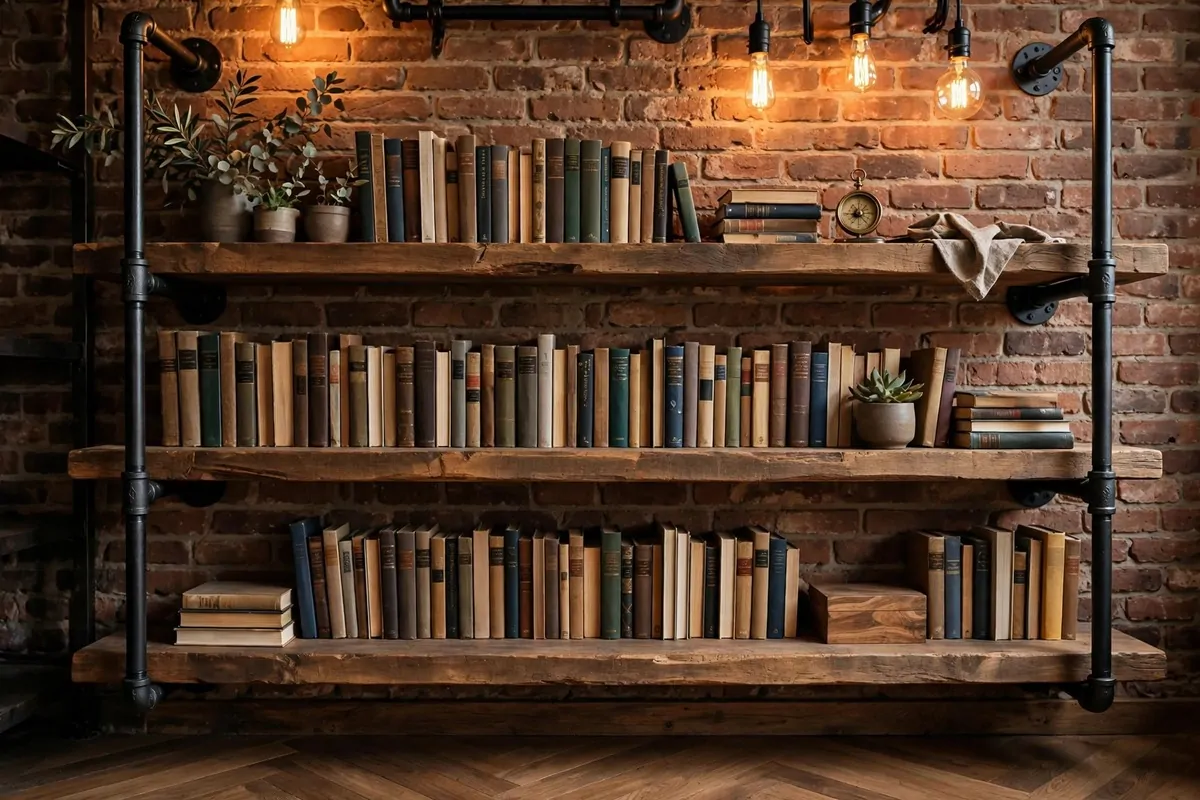
Pipes and wood planks make shelves that look tough and cool. It is the industrial look, and it works great for books.
The parts are simple. Black metal pipes, flanges for the wall, and wooden planks. Hardware stores sell all of it.
You pick the shelf heights. Tall space for art books, short space for paperbacks. No wasted inches.
It is strong. Really strong. Pipes bolted into studs can hold a shocking number of books.
The look mixes well with cozy stuff. Hard metal plus soft throw pillows is a great combo. Tough and warm at the same time.
Spray paint the pipes if you want a different color. Brass gold looks fancy. Matte black looks classic.
Sand the wood planks smooth so they do not snag your book covers. Then seal them with a clear coat. Splinters and books are enemies.
This is a good weekend project. Measure Saturday morning, build Saturday afternoon, style the shelves on Sunday.
My brother built these in his apartment. His landlord actually asked where he bought them. He just smiled.
19. Go for Arched Shelves With a Soft Curve
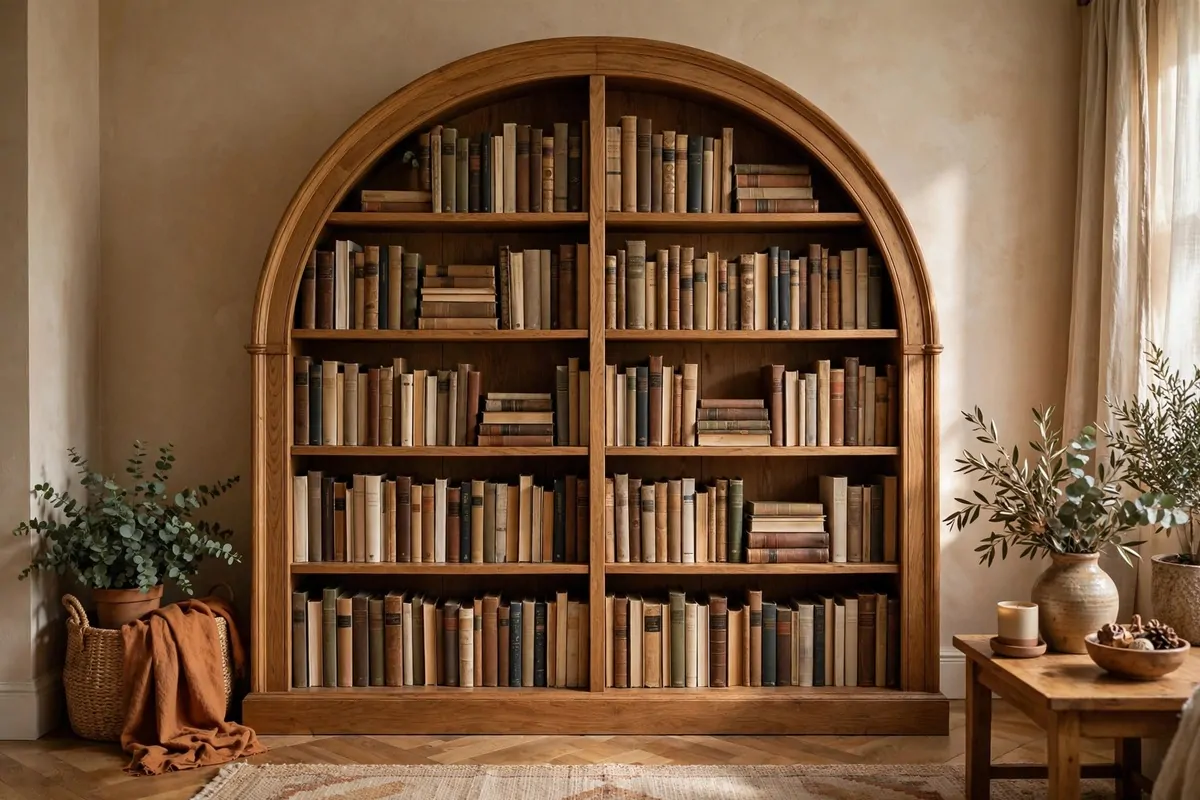
Arches make a room feel soft. All those straight shelf lines get a little boring. One curve changes everything.
An arched bookcase is an instant focal point. Guests notice it first. It is like the shelf is giving the room a hug.
You can fake the look with paint. Paint a big arch on the wall behind your regular shelves. It costs one can of paint.
Arched doorways inside a library feel magical too. If you are renovating anyway, consider it. Walking through an arch to reach books is a whole vibe.
Mix one arched piece with straight shelves. All arches is too much. One arch is just right.
Round mirrors near the shelves bounce light around. They echo the curve of the arch. Small trick, big difference.
This look is everywhere right now. It feels fresh but also a little bit old-world. That combo never really goes out of style.
Style the arched shelf simply. Let the shape do the talking. A few books, one plant, done.
I painted an arch behind my bookshelf last spring. It took an afternoon. I still catch myself smiling at it.
20. Hang a Reading Hammock in the Corner
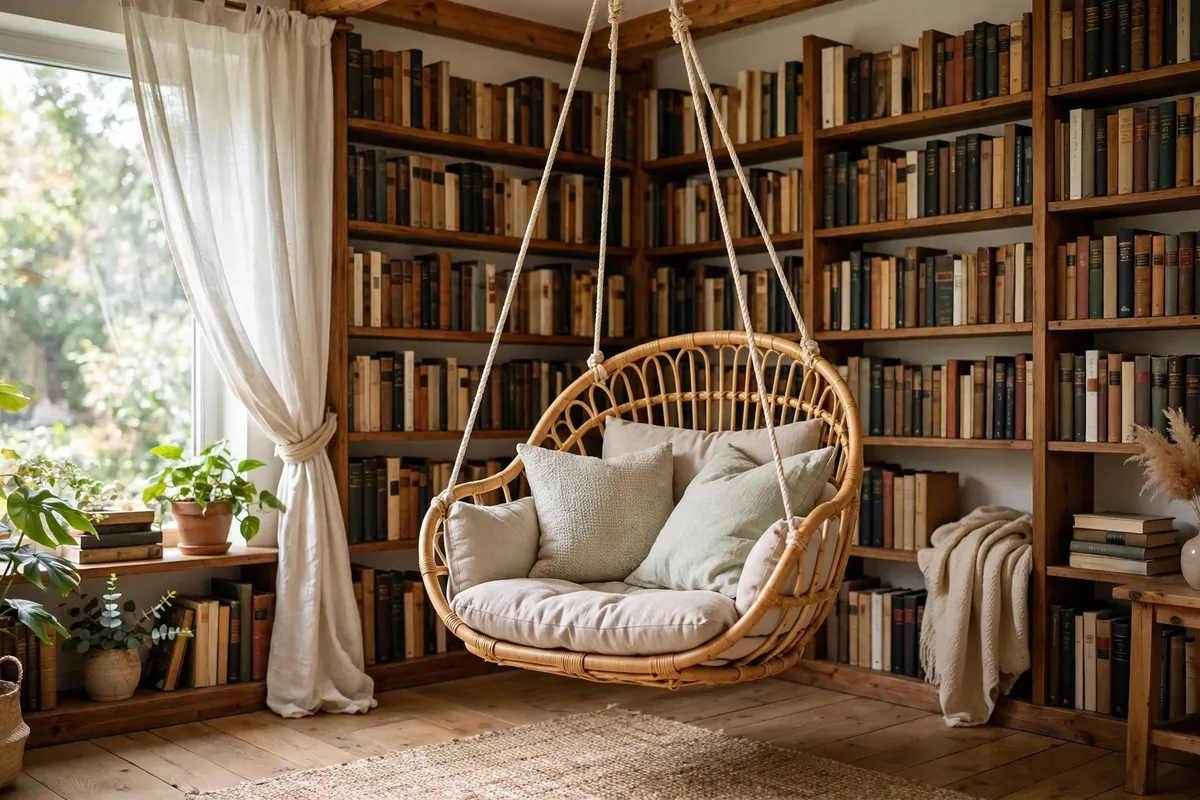
A hanging chair is the most fun seat in any library. It swings a little. It feels like a hug. Kids and adults fight over it.
Hang it from a ceiling joist, not just drywall. This is important. Find the joist with a stud finder. A falling chair is not fun.
Rattan and macrame chairs look the prettiest. They fit the cozy library look. They are light too, which helps.
Pile in the cushions. The chair alone is a little hard. Two cushions and a small pillow turn it into a nest.
Put a small bookshelf or a book cart right next to it. Reaching your next book without getting up is the goal.
It is also the best nap spot in the house. I have fallen asleep in mine more times than I will admit. The gentle swing gets me every time.
A floor cushion underneath is smart. It catches you if you flop out. It also gives someone else a place to sit.
Check the weight limit before you buy. Most hold plenty, but check anyway. Better safe than sorry with hanging things.
My hammock chair is where I read on Sunday afternoons. Tea on the side table, book in my lap, swinging slow. That is my church.
21. Make a Tiny Reading Pod Just for You
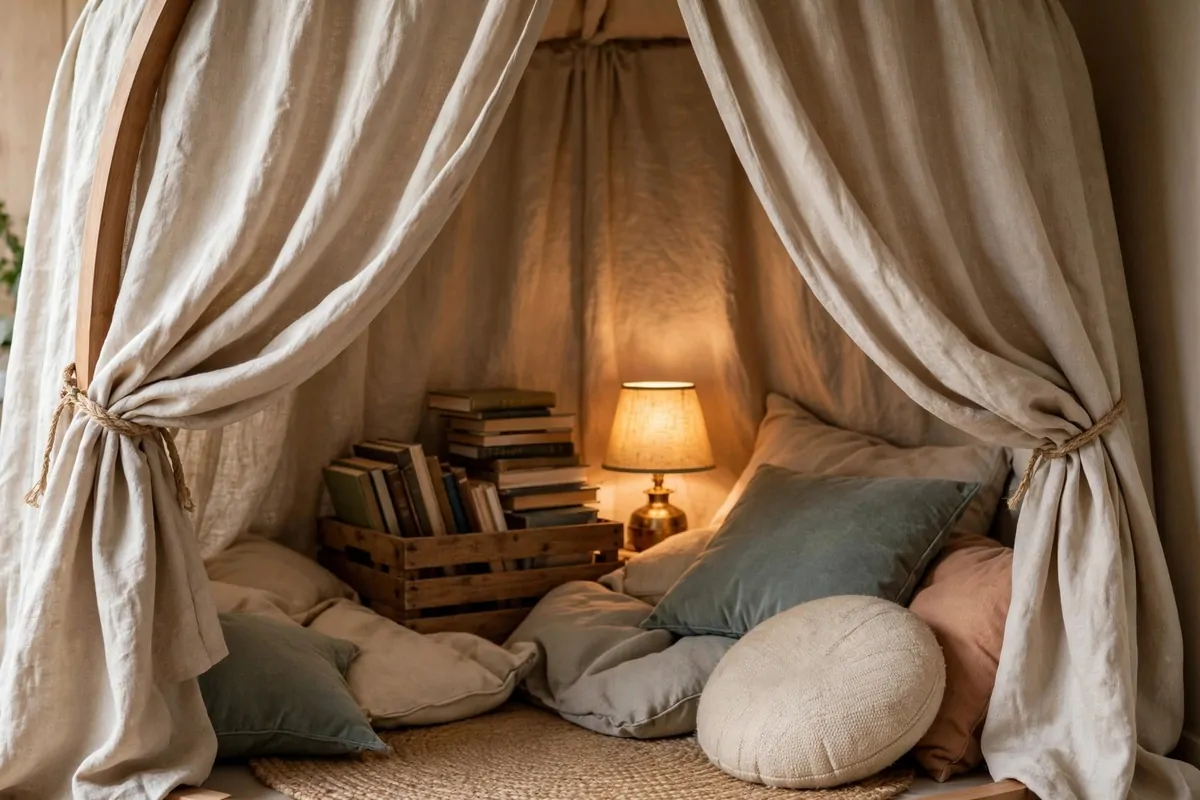
A reading pod is a little room inside your room. Curtains or a canopy close around you. The world gets quiet.
You do not need much space. A corner with a curtain rod does it. Hang curtains on two sides and you have walls.
Fill it with soft things. Floor cushions, a beanbag, every pillow you own. The floor is the seat here.
One warm lamp inside makes it glow. String lights work too. It should feel like a tent you never want to leave.
Add a small shelf or a crate for books. Five or six books is enough. This is a reading spot, not a storage room.
Sound feels softer inside a pod. Curtains eat up the noise. Kids reading in pods actually stay in them longer.
It is perfect for small apartments. A pod gives you a private room without building walls. Renters, this one is for you.
Let kids help build it. Blankets over chairs is the classic version. They will read in a fort way longer than at a desk.
I made one with a cheap canopy from an online store. It hangs over my armchair. Best twenty dollars I ever spent.
22. Lay Down a Big Statement Rug
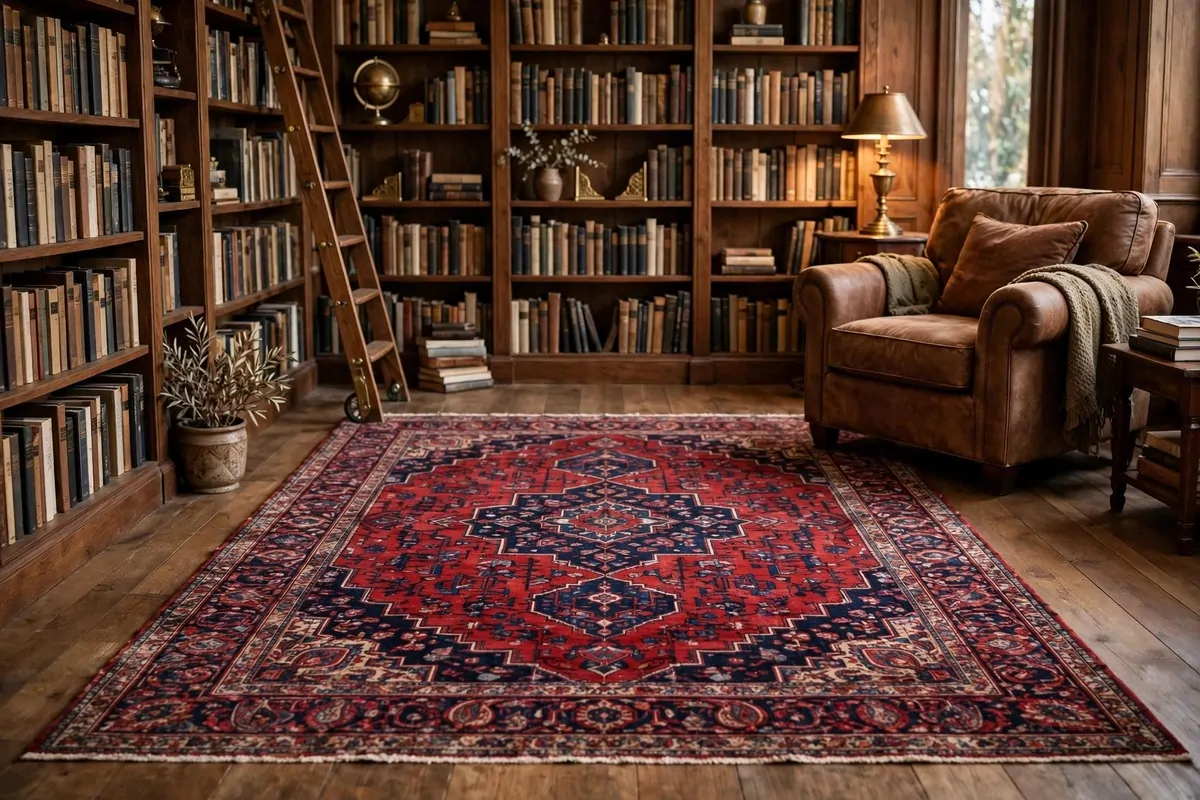
A rug ties the whole library together. Without one, the furniture floats around. With one, the room has a center.
Persian and Oriental style rugs are the classic library pick. Rich colors, busy patterns. They hide crumbs and look amazing with books.
Go big. The front legs of your chair should sit on the rug. A tiny rug in a big room looks lost.
Low pile is practical. Chair legs slide easy. The vacuum does not choke. High pile feels nice but fights with furniture.
Layer a small rug over a big neutral one if you want pattern without commitment. It is a designer trick and it works.
A rug also makes the room quieter. Hard floors echo. A thick rug eats the sound. Reading in a quiet room is better.
Vintage rugs have the best patterns. They are already soft and the colors are mellow. Check thrift stores and estate sales.
Put a rug pad underneath. It stops slipping and adds cushion. Your feet will thank you on cold mornings.
My rug is the first thing guests compliment. Not the books. The rug. I tell them the books are jealous.
23. Build Shelves From Reclaimed Wood
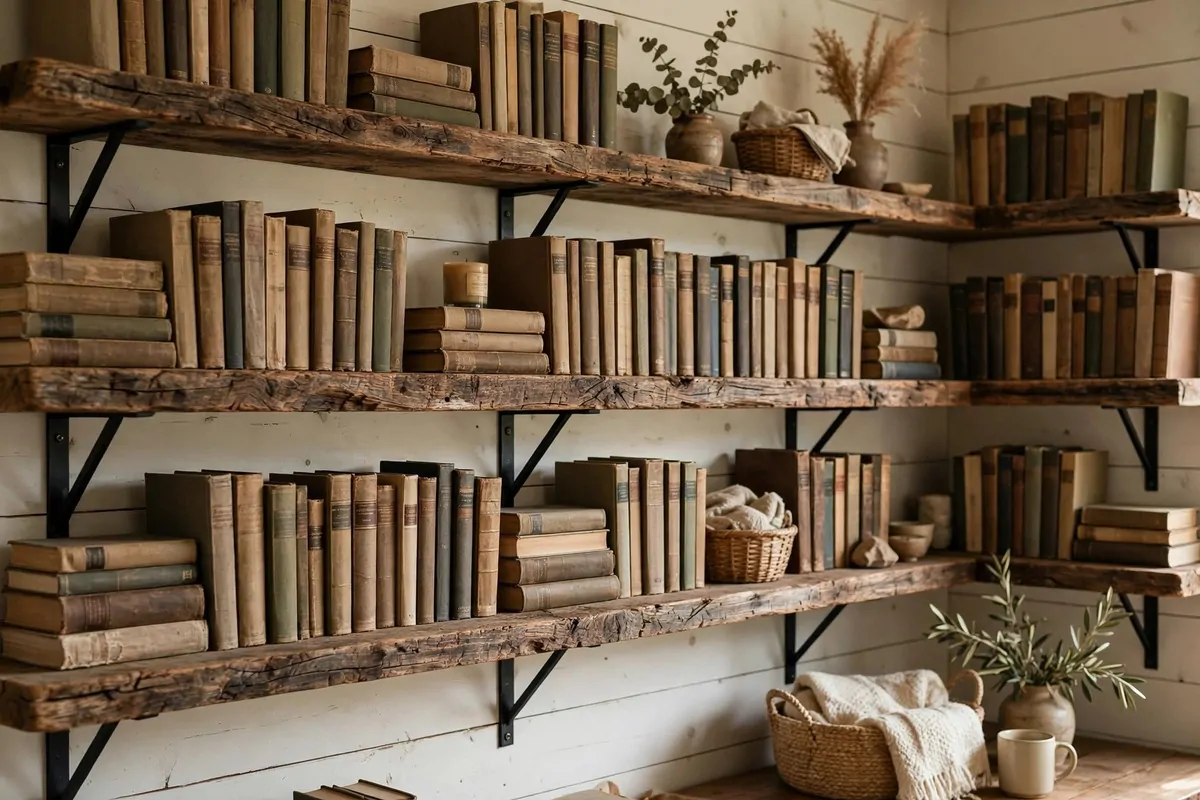
Old wood has a look new wood cannot fake. Nail holes, worn edges, color changes. Every board tells a story.
Check salvage yards and demolition sites. Old barns, old houses. The wood is often free or very cheap.
Sand it smooth enough to not snag books. You want character, not splinters. A medium sandpaper does the job.
Seal it with a clear coat. This keeps dust out of the grain. It also makes the color richer.
Pair reclaimed shelves with simple black brackets. The wood is the star. The brackets should disappear.
This wood is usually stronger than new pine. Old growth wood is dense. It holds heavy books without sagging.
Mix one reclaimed shelf wall with painted shelves elsewhere. Too much rustic gets heavy. One wall is perfect.
Ask about the wood’s history. My shelves came from an old farmhouse porch. I think about that porch every time I grab a book.
It is also the green choice. No new trees cut. Just good wood getting a second life holding good books.
24. Put Your Library on a Loft
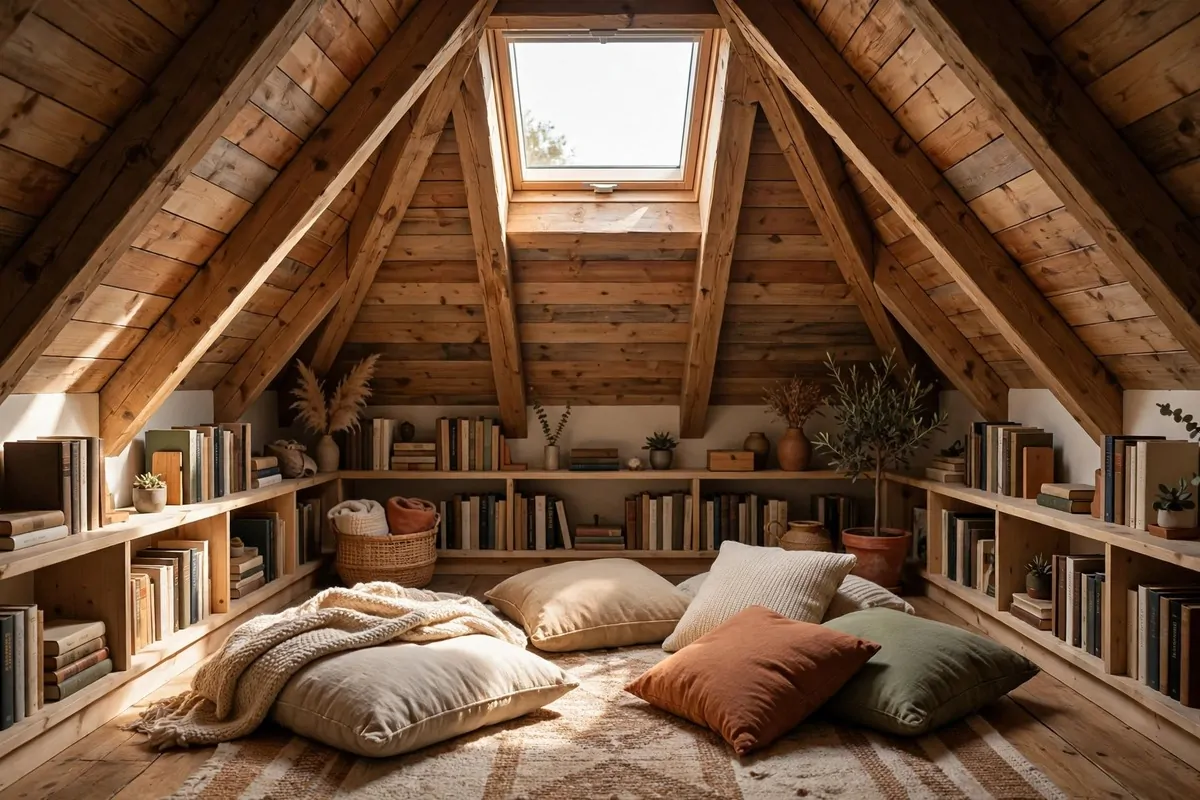
A loft is the coziest library location there is. Up high, tucked under the roof, away from everything.
Low built-in shelves fit perfectly under sloped ceilings. The short walls nobody uses become book storage.
Add floor cushions and a low table. Loft ceilings are short, so sit low. It feels like a secret clubhouse.
A skylight up there is pure magic. Natural light all day. Stars at night. Reading under the sky without going outside.
Make sure the floor can hold the weight. Books are heavy. A lot of books is really heavy. Check before you fill the shelves.
A railing or half wall keeps it safe. Especially with kids. Cozy should never mean dangerous.
Run power up there for lamps. Battery lights work, but a real lamp is better. An electrician can do it in an afternoon.
Keep it simple up top. Books, cushions, light. That is the whole list. Lofts feel best a little bit empty.
My dream is a loft library with a skylight. I do not have one yet. But a girl can plan.
25. Add a Sliding Barn Door
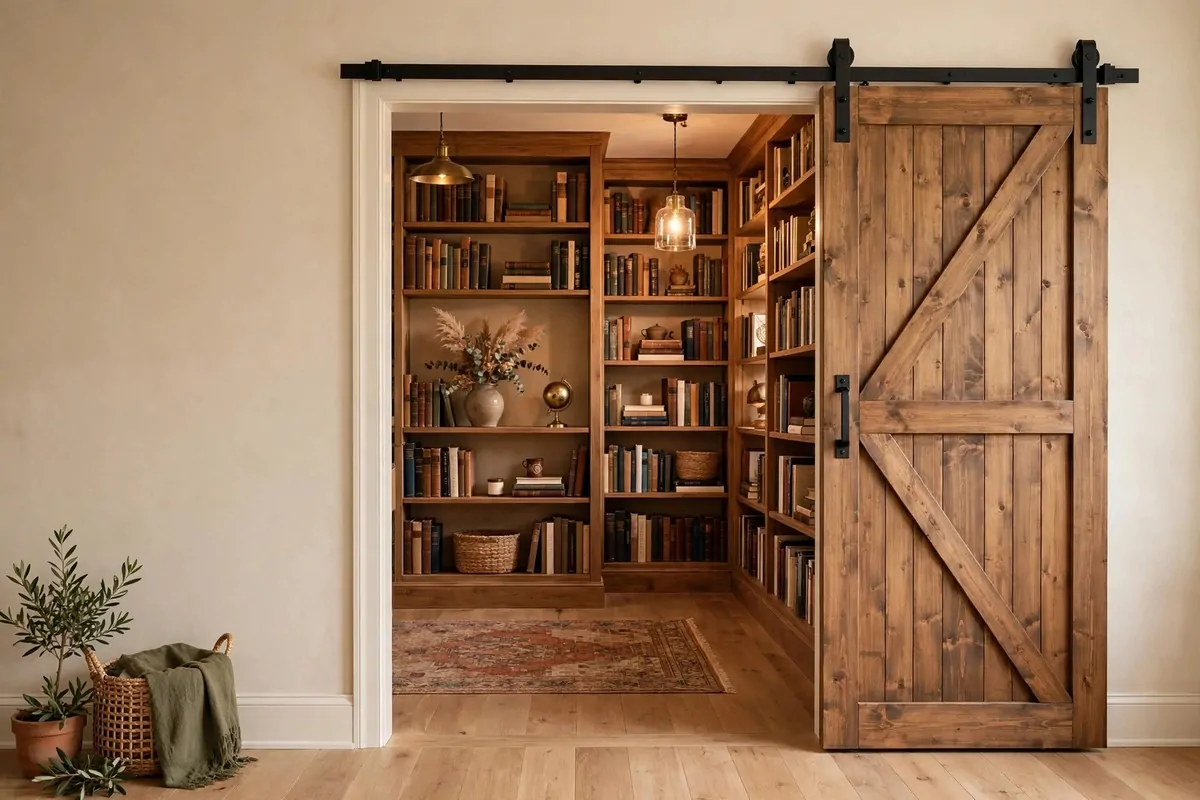
A sliding barn door saves space. No swing arc needed. In a small house, that matters a lot.
It also looks great. Warm wood on a black metal track. Rustic and a little bit fancy at the same time.
Close the door and the library becomes its own world. Quiet. Private. Open it and the books become part of the house.
DIY kits make this easy. The track, the rollers, the handle. Everything comes in one box.
Paint or stain the door to match your shelves. Matchy looks intentional. It ties the doorway to the room.
A chalkboard panel on the door is fun. Write your current read on it. Or a quote you love. Change it every week.
Barn doors do not block sound perfectly. There is a small gap. It is fine for privacy, not for silence.
Make sure the wall beside the door is clear. The door needs somewhere to slide. Measure twice, I beg you.
I love the sound mine makes. That low rumble on the track. It means reading time is starting.
26. Set Up a Book Club Corner
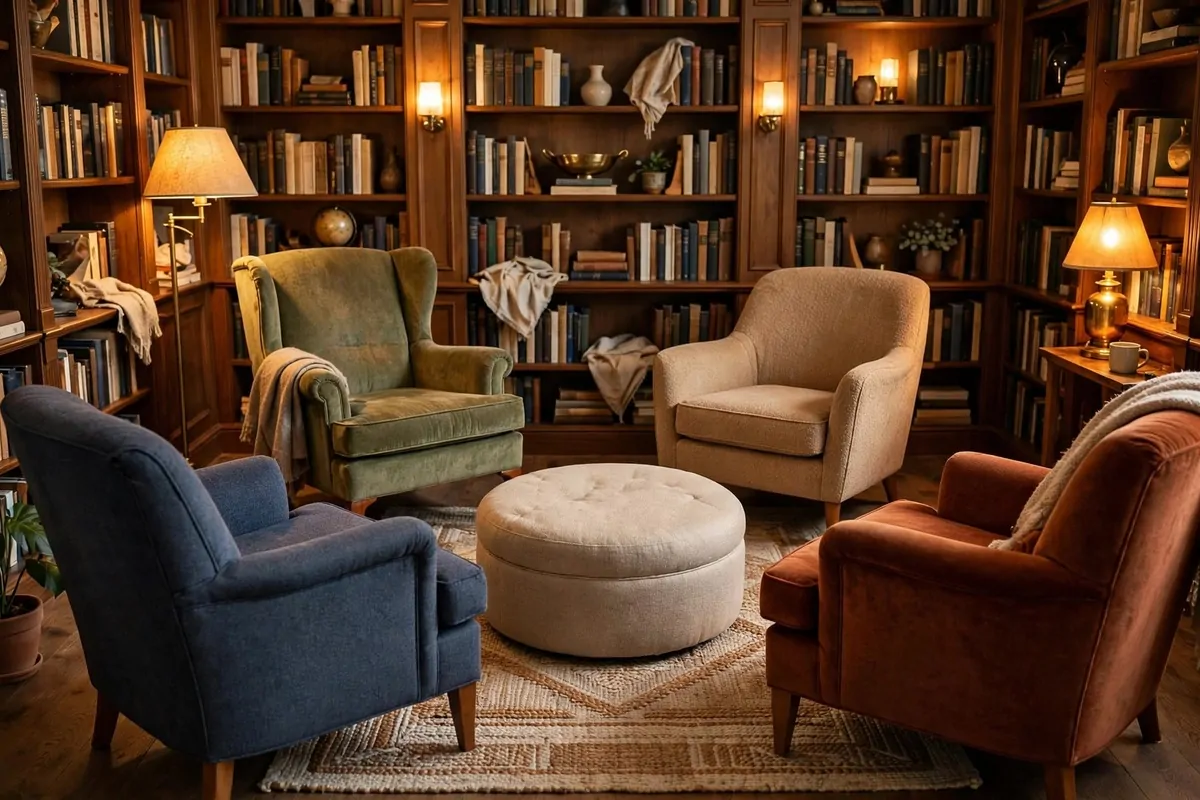
Books are better with friends. A book club corner turns your library into a gathering place.
Arrange four to six seats in a circle. Everyone should see everyone. A circle says we are talking, not watching TV.
A round ottoman in the middle works as a coffee table. Feet up, books down, snacks in the middle. Perfect.
You will want:
- Enough seats for your whole group, plus one extra
- A side table or tray for snacks and drinks
- Good light so everyone can read passages out loud
- A small basket for the books you are swapping
Keep the book club picks on one shelf nearby. Current book, past books, future ideas. It becomes the club’s home base.
Snacks matter more than you think. Cheese, crackers, something sweet. People come for the books and stay for the snacks.
Meet at the same time each month. Routine keeps clubs alive. First Tuesday, every month, no excuses.
Let everyone pick once a year. Taking turns keeps it fair. You will read books you never would have touched. That is the point.
My book club has met for three years. We finish maybe half the books. We finish all the snacks. Still worth it.
27. Style the Shelves With Vintage Finds
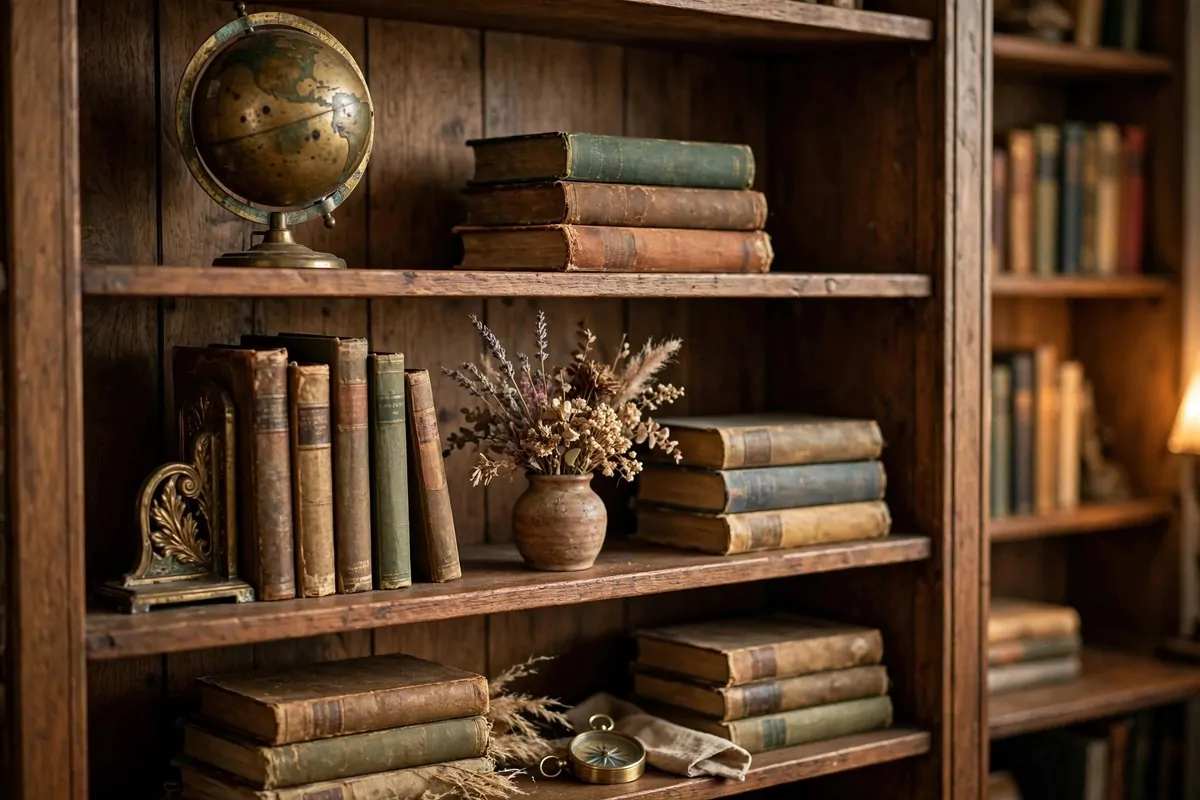
Books alone are great. Books plus interesting objects are better. A globe, old cameras, brass bookends.
Flea markets are treasure hunts for this stuff. Old globes, vintage clocks, pretty boxes. Go slow and look close.
Pick one theme per shelf. Travel stuff together. Old cameras together. It looks collected, not cluttered.
Brass bookends are worth the money. They hold books up and they look expensive. Two jobs, one object.
Stack old hardcovers sideways to make little pedestals. Put a small plant or a candle on top. Instant styling.
Leave breathing room. Every shelf does not need stuff on it. Empty space makes the full shelves look better.
Old maps and prints are cheap art. Frame a vintage map and hang it on the shelf front. It looks like a museum.
Rotate your decor with the seasons. Pumpkins in fall, shells in summer. Your shelves stay fresh all year.
The best finds have stories. Ask sellers where things came from. Then you get decor and a story. Two for one.
28. Read Under a Skylight
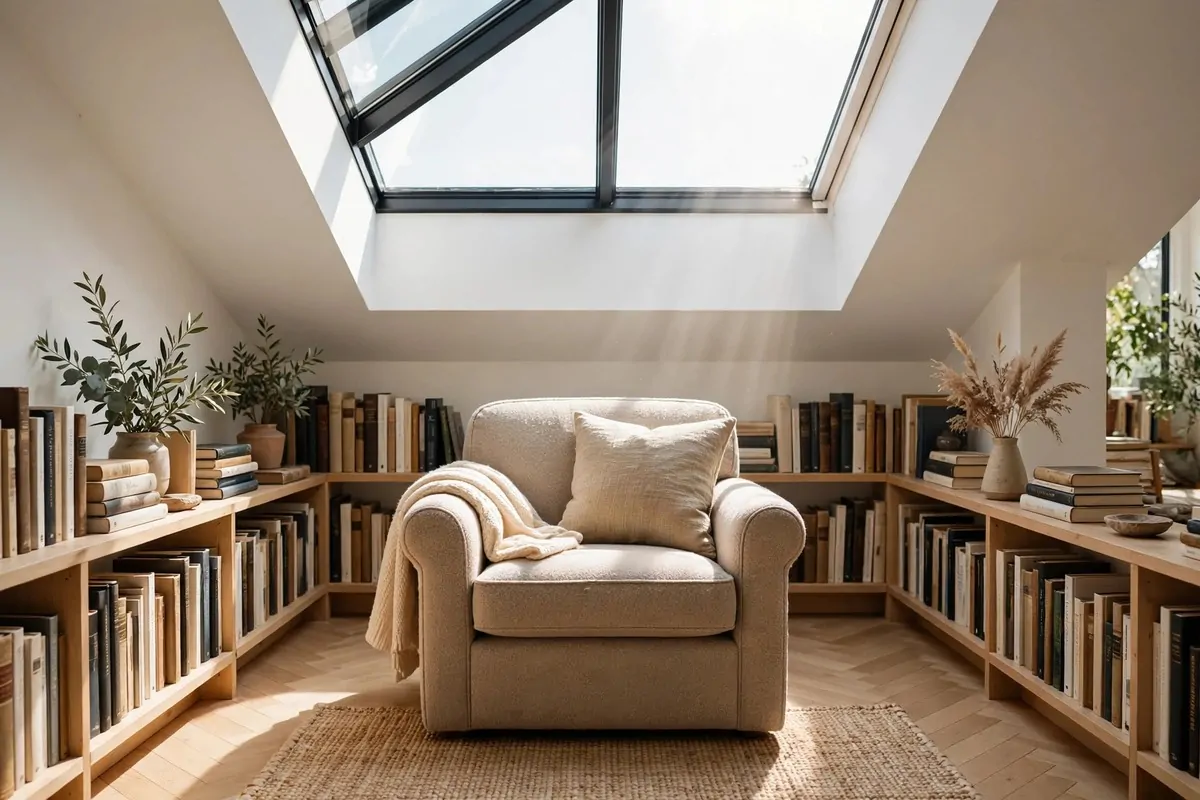
Natural light is the best light for reading. No lamp beats the sun. A skylight gives you sun all day.
Put your reading chair right under it. Morning light for coffee reads. Afternoon light for long chapters.
Rain on a skylight is the coziest sound in the world. Reading while it rains above you feels like a movie.
Add a shade for bright days. Direct sun on pages causes glare. A simple sheer shade fixes it.
At night, a skylight shows the stars. Night reading under stars is a little bit magical. I am not exaggerating. Much.
Keep the glass clean. Dirty skylights block a lot of light. Twice a year with a long brush does it.
Plants love skylight spots too. Put your sun-hungry plants under it. They will grow like crazy next to your chair.
No skylight? A big window works almost as well. The idea is the same. Chair plus sky plus books.
I read under mine every sunny morning. It is my favorite ten minutes of the day. Sometimes it becomes an hour.
29. Squeeze a Reading Nook Into a Corner
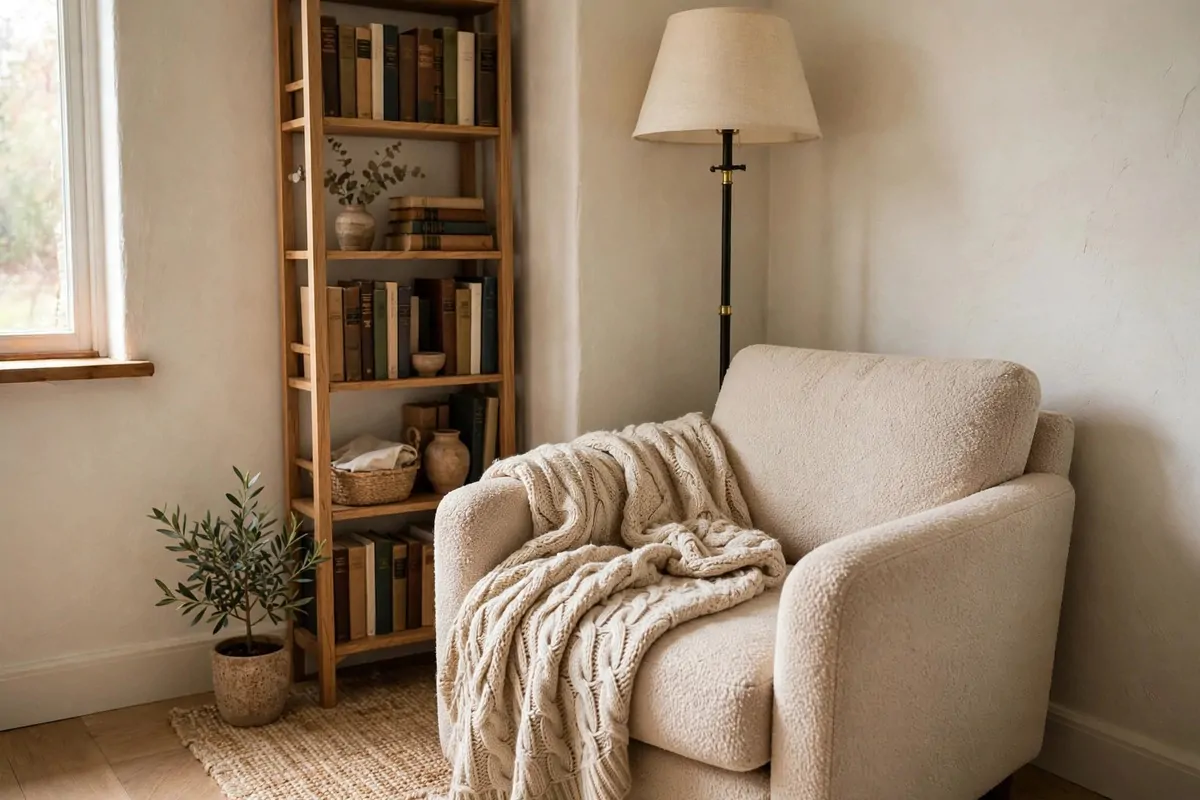
You do not need a whole room. One corner is enough. A chair, a lamp, and books. That is a library.
Angle the chair into the corner. It feels tucked in and private. Straight against the wall feels like a waiting room.
A tall floor lamp behind the chair gives perfect reading light. It shines over your shoulder right onto the page.
A narrow bookshelf beside the chair holds your current reads. Tall and thin fits anywhere. Even the tiniest corner.
This is the most renter-friendly idea on this list. Nothing mounts to walls. Everything moves with you.
A throw blanket makes it official. Drape it over the chair arm. Now it is not just a corner. It is your corner.
Add a small rug to mark the spot. It tells your brain this is the reading zone. Brains like zones.
Face the chair away from the TV if you can. Out of sight, out of mind. The book wins more often.
My corner nook is where I read every night. Ten minutes becomes thirty. Thirty becomes one more chapter. You know how it goes.
30. Mix Art In With Your Books
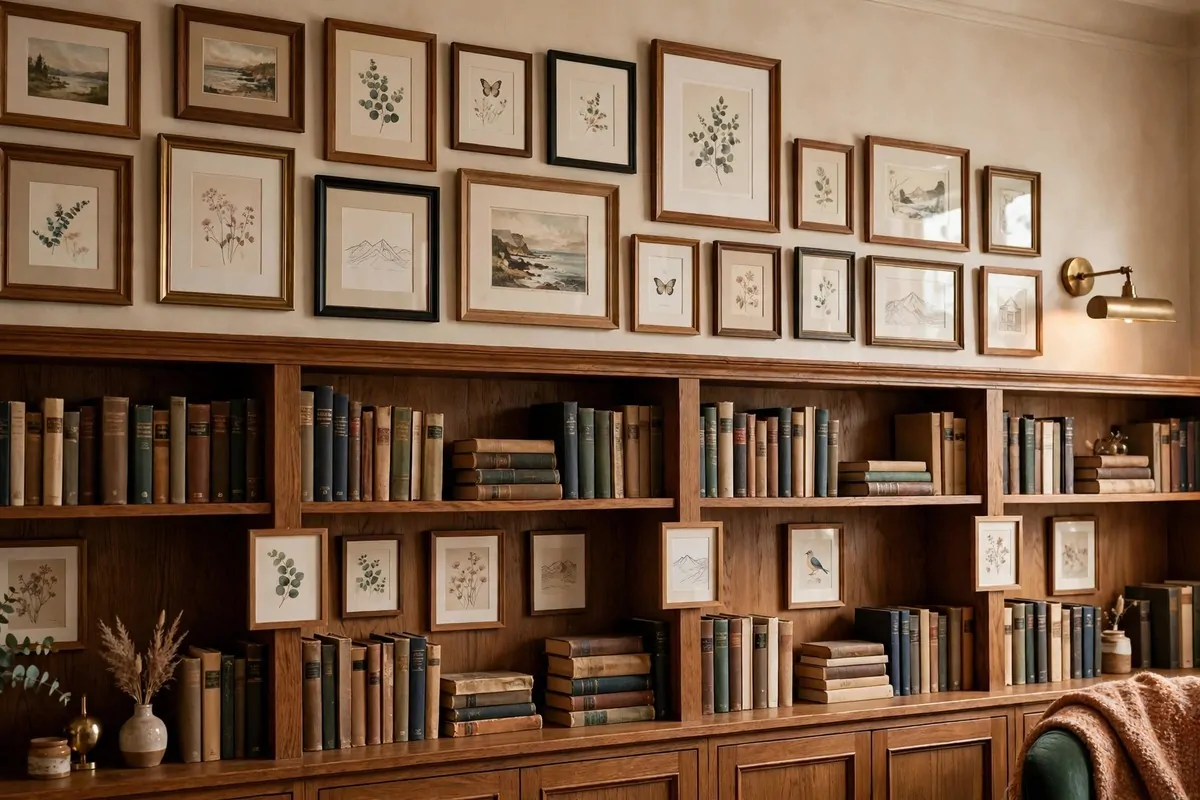
Art and books belong together. Both tell stories. Mixing them makes your shelves feel personal.
Hang small frames right on the bookshelf. On the side panels or between the shelves. It breaks up the rows of spines.
Lean bigger art on the shelf in front of books. Layer it. The depth looks amazing in photos and in real life.
A gallery wall above the bookcases uses the empty wall space. Frames of all sizes, hung close together.
Use art you actually love. Family photos, travel prints, your kid’s drawings. This is your library, not a museum.
Rotate the art sometimes. Swap a few pieces each season. Your shelves feel new without buying anything.
Black and white photos look classy against colorful books. The contrast is striking. Try it on one shelf.
Frame a beautiful book cover. Some covers are art. Put the prettiest ones in frames and hang them up.
My shelves hold a painting my grandmother made. It is not worth money. It is worth everything. That is what art in a library should be.