My yoga mat spent eleven months rolled up behind my sofa. I bought it full of hope in January. I unrolled it twice, then it became the thing I moved aside to vacuum under.
It was not the mat’s fault. The mat had nowhere nice to be, so I never felt like being on it. When I finally gave that mat a real home, a small corner with soft light and a plant and a rug that felt good under my feet, everything changed.
That little corner is what this list is about. These are 19 Yoga Studio Inspiration looks you can copy at home, one idea at a time, until your practice space feels like a place you want to walk into every single day.
You do not need a spare room to make this work. A corner is enough. Even a hallway corner can work if you treat it right.
The secret is that your brain links places to habits. When the same corner looks and smells and feels calm every day, your body starts to relax the moment you step onto the mat.
I learned this the hard way. For months I tried to practice in the middle of my living room, in front of the TV, with the laundry basket staring at me. It never stuck. The room was too busy and my mind stayed busy with it.
A practice space does not have to be fancy. It has to feel separate from the noisy parts of your house. A rug can do that. A lamp can do that. One plant can do that.
So here are 19 looks that real people actually use. Some are tiny and cost almost nothing. Some take a whole room. Pick the ones that fit your home and your budget, and start with just one.
1. Paint the Walls Soft and Let Warm Light Do the Work
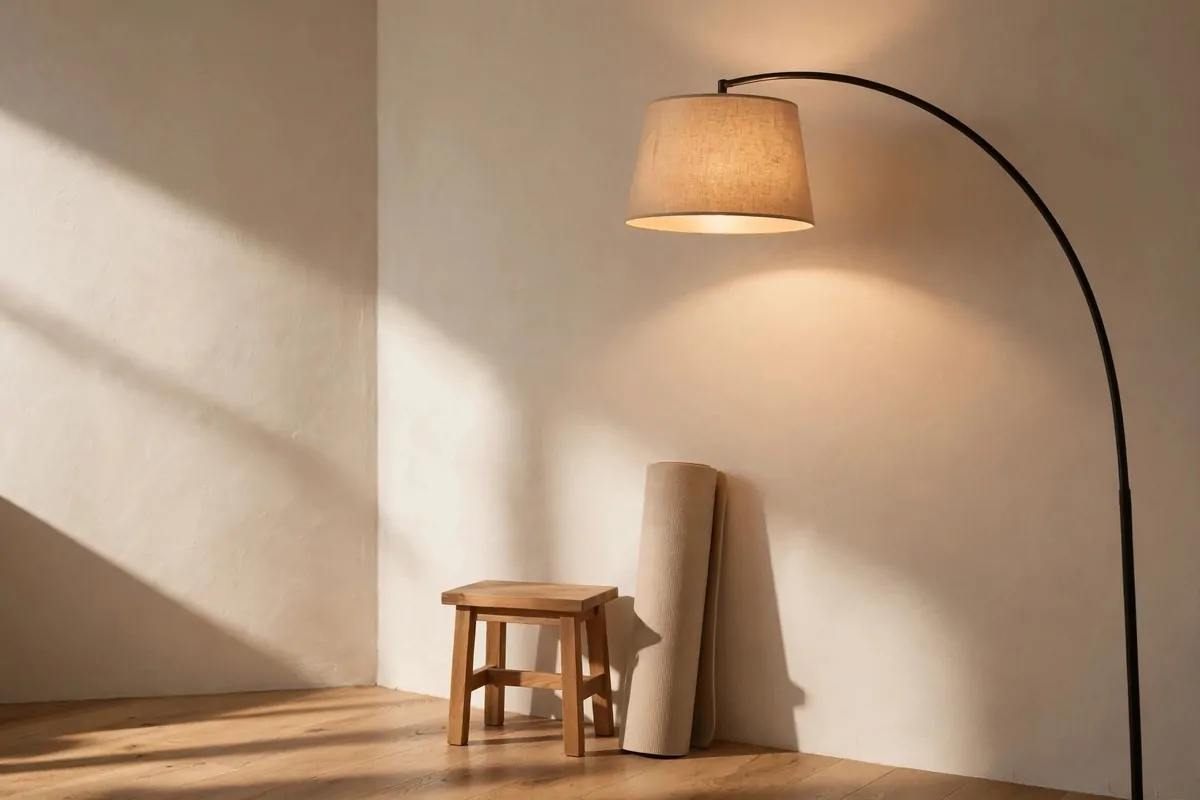
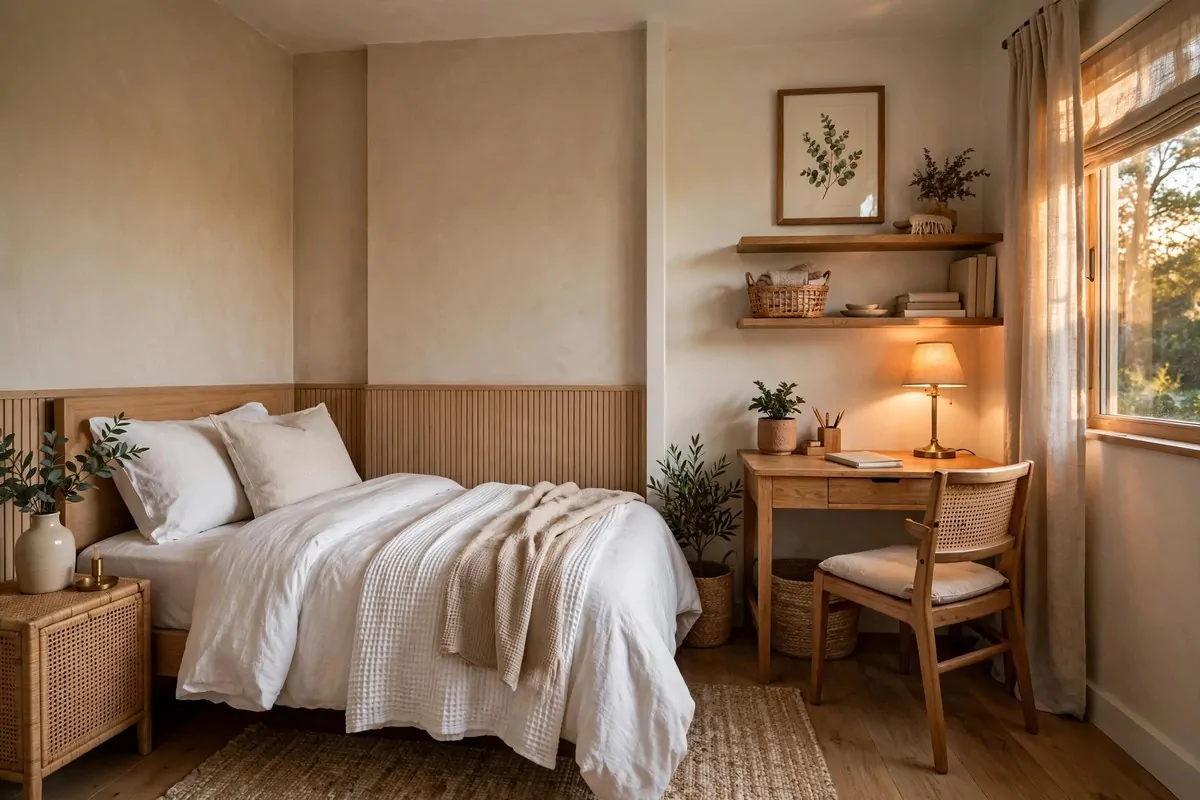
The cheapest change you can make is the color on your walls. Soft warm white, sand, or a pale sage makes a room feel calm before you even unroll the mat.
I painted my old corner a soft oat color and it felt like the room took a deep breath.
Dark colors can work too, but they make small spaces feel smaller at night. Light colors bounce whatever light you have around the room. Your eyes relax when the walls are not shouting.
Light matters just as much as paint.
A single warm lamp in the corner beats a bright ceiling light every time. Overhead lights shine right into your eyes when you lie down for savasana, and that ruins the mood fast.
Try a floor lamp with a fabric shade and put it in the corner so the light washes across the wall. Add a dimmer if you can. I keep mine low for evening stretches and a bit brighter for morning flows.
Morning people should chase the sun.
If your corner has a window, face your mat toward it. Daylight is free and it wakes up your brain better than any lamp. These quick wins cost almost nothing:
Paint one wall, or the whole corner, in warm white, sand, or soft sage
Swap the ceiling light for a warm floor lamp with a fabric shade
Add a dimmer so you can lower the light for meditation
Keep curtains light so daytime practice gets real daylight
2. Fill One Corner With Leafy Green Plants
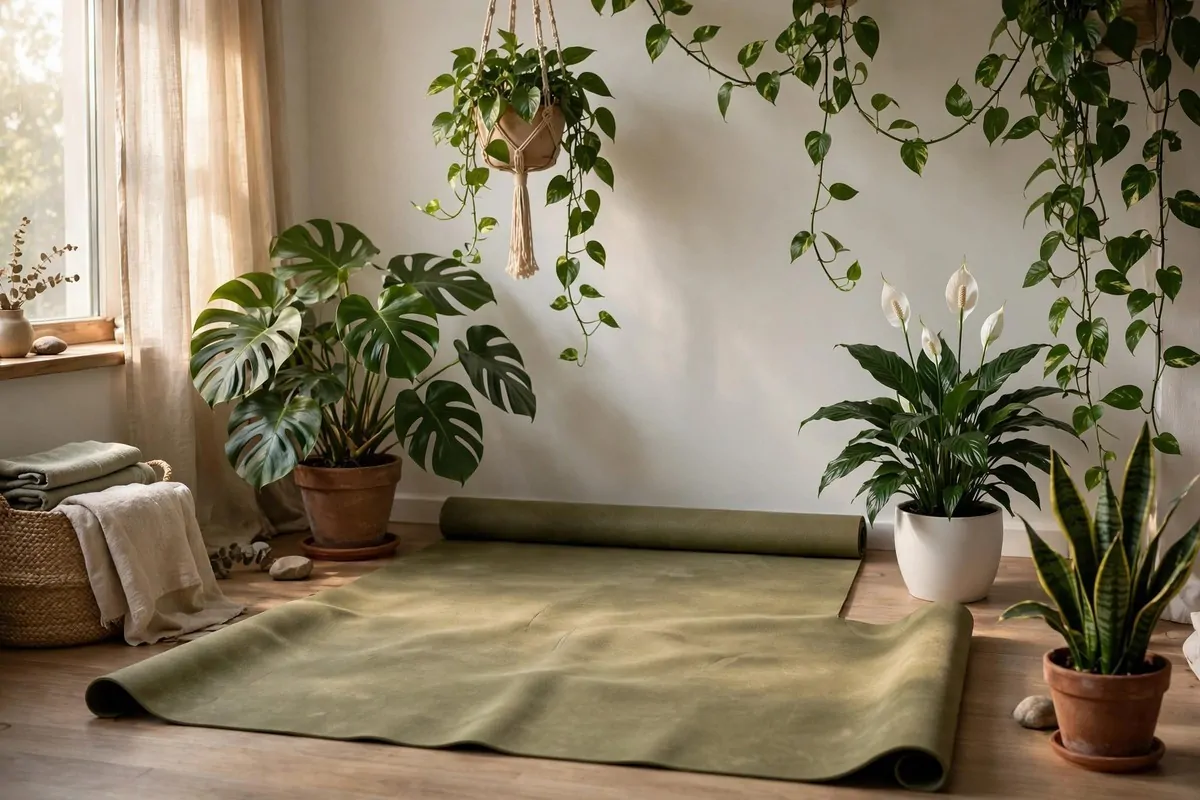
Every peaceful yoga space I have ever seen had plants. Not one. Several. They fill awkward corners and they make the air feel fresh.
You do not need a green thumb for this.
Snake plants, pothos, and ZZ plants forgive you when you forget to water them. A peace lily tells you when it is thirsty by drooping a little, which is kinda helpful. I killed three succulents before I learned I was watering them too much, not too little.
Put one tall plant in the corner behind your mat.
Then add a smaller one on a stool or shelf. Hanging a pothos from the ceiling draws the eye up and makes the whole corner feel taller.
Real plants are best, but nobody will judge you for mixing in a fake one or two. Dried pampas grass in a ceramic vase gives you that soft green feeling with zero care. I have one that has looked the same for two years.
Keep plants off your actual practice floor though.
Leaves under your feet are slippery and pots get knocked over in wide poses. Line them along the walls and keep the middle clear for your mat. Here are my easy favorites:
Plant
Light it likes
How fussy it is
Snake plant
Low to bright
Almost none
Pothos
Low to medium
Very low
Peace lily
Medium, no direct sun
Low, droops when thirsty
ZZ plant
Low
Almost none
Fiddle leaf fig
Bright, indirect
A bit fussy
3. Lay a Natural Jute Rug Under Your Mat
Hard floors are cold and loud.
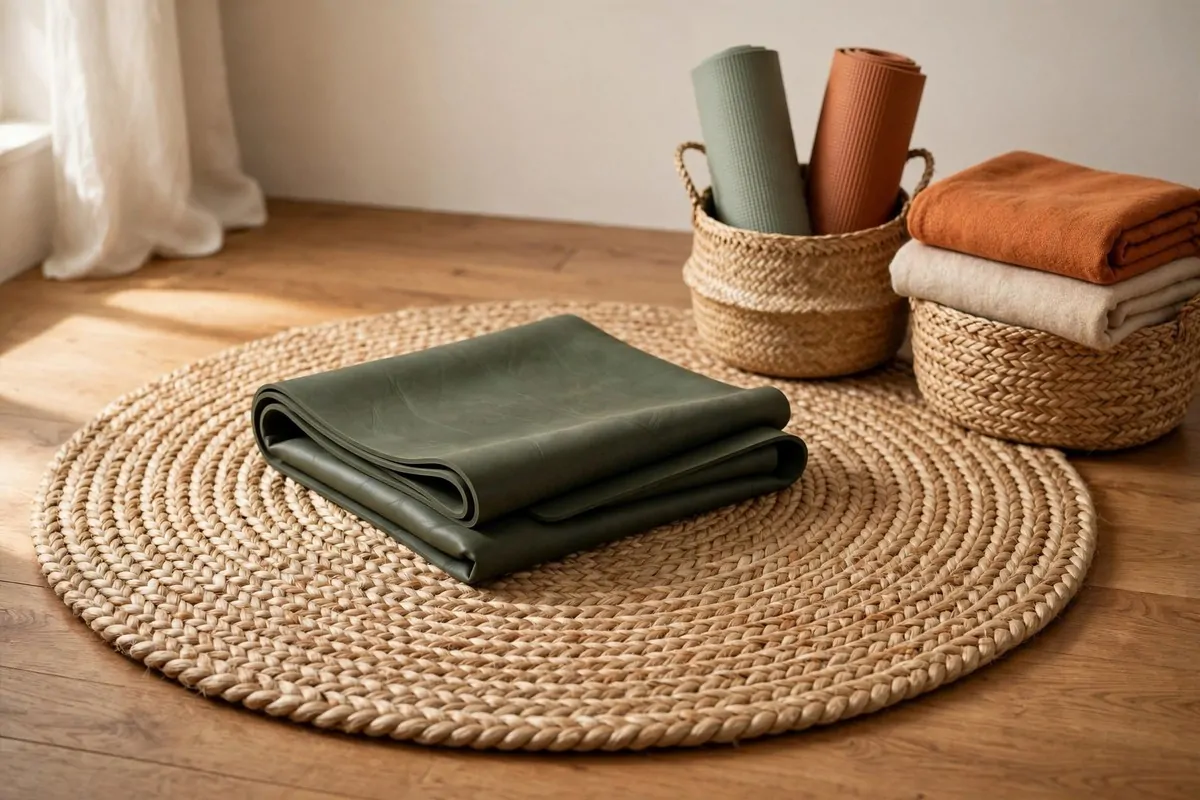
A thick natural rug fixes both problems at once. Jute and sisal rugs are cheap, tough, and they look right in a calm space.
I put a round braided jute rug under my mat and the corner changed overnight. My knees stopped hurting in low lunges. The room felt warmer even though the thermostat had not moved.
Pick a rug bigger than your mat.
You want space to step off the mat without hitting cold floor. Round rugs work well in corners. Rectangular ones suit a full practice lane.
Layer it if you like. A flat jute rug with a softer patterned rug on top gives you texture and comfort. Just make sure nothing slides around when you move.
Rugs also mark the boundary of your space.
That matters when your yoga corner shares a room with the rest of your life. When you step onto the rug, your brain knows it is practice time. Small thing, big difference.
4. Set Up Beside a Window With Sheer Curtains
Natural light is the best decoration a yoga space can have. It changes through the day and it never costs you a thing.
If you have a window, build your corner around it.
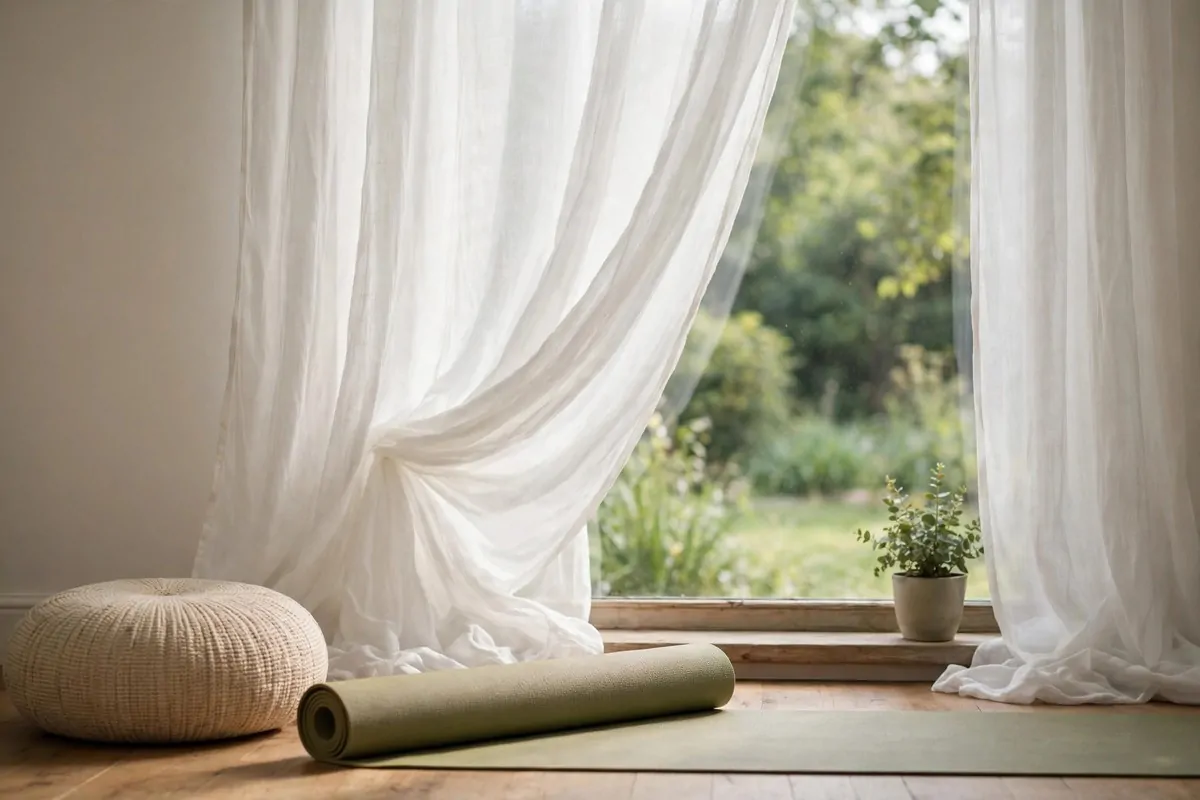
Put your mat beside the window, not facing a wall. You get fresh air when you crack it open. You get sky to look at during standing poses. Mornings feel like a gift.
Harsh sun can be too much though.
That is where sheer curtains come in. They soften the glare into a gentle glow. White linen or cotton sheers are cheap and they look dreamy.
I keep a small plant on my windowsill and a floor cushion beside the mat for meditation after practice. When the wind moves the curtains a little, the whole corner feels alive.
Face east if you get a choice.
Morning sun in your face, softly, through the sheer, wakes you up better than coffee. If your window faces the street, the sheers give you privacy without blocking the light.
5. Build a Simple Props Wall on Open Wooden Shelves
Blocks, straps, bolsters, and blankets pile up fast. When they live in a heap, you stop using them.
A props wall fixes that.
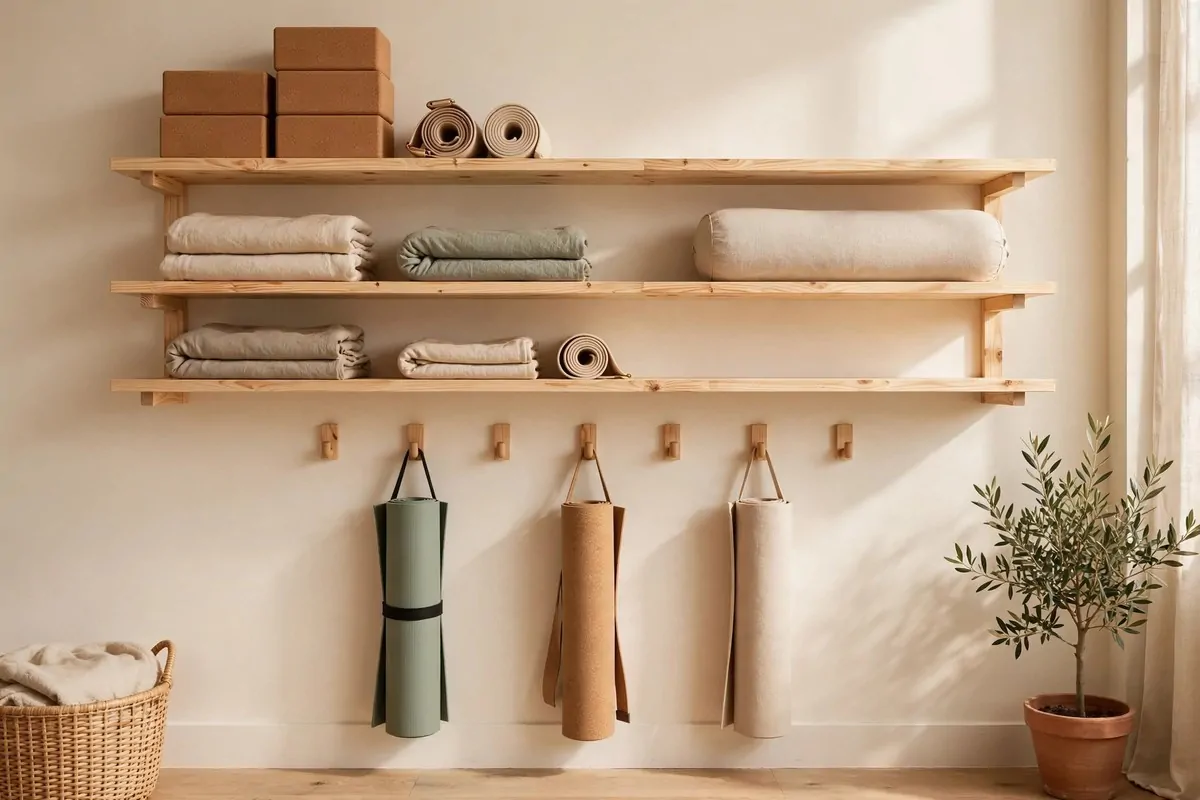
Hang two or three open wooden shelves on the wall beside your mat. Line up your blocks like little bricks. Roll your straps and stack your blankets. It looks like a tiny shop display and it makes you want to reach for them.
Wood shelves suit the calm mood best.
Light pine or bamboo keeps things bright. Raw wood feels warmer than white metal, and it matches the natural vibe of the rest of the space.
Keep it tidy. The point of open shelves is that you see everything, which only works if everything has a spot. I spend two minutes after practice putting things back. It has become part of my cool-down.
Add hooks under the lowest shelf for your mat.
A rolled mat hanging on the wall is out of the way and looks great. Strap your spare mat in a loop of rope for a rustic touch. Handy extras worth a shelf spot:
Prop
What it helps with
Where to keep it
Yoga blocks
Reach the floor in standing poses
Middle shelf, easy to grab
Yoga strap
Deeper stretches, shoulder openers
Hung on a hook
Bolster
Restorative poses and meditation
Top shelf
Folded blankets
Knee support, savasana warmth
Stacked on the shelf
Eye pillow
Deeper relaxation at the end
Small basket on the shelf
6. Hide the Clutter in Woven Baskets
Open shelves show your pretty props.
Baskets hide the messy stuff. You need both. Towels, spare mats, resistance bands, and cleaning spray do not need to be on display.
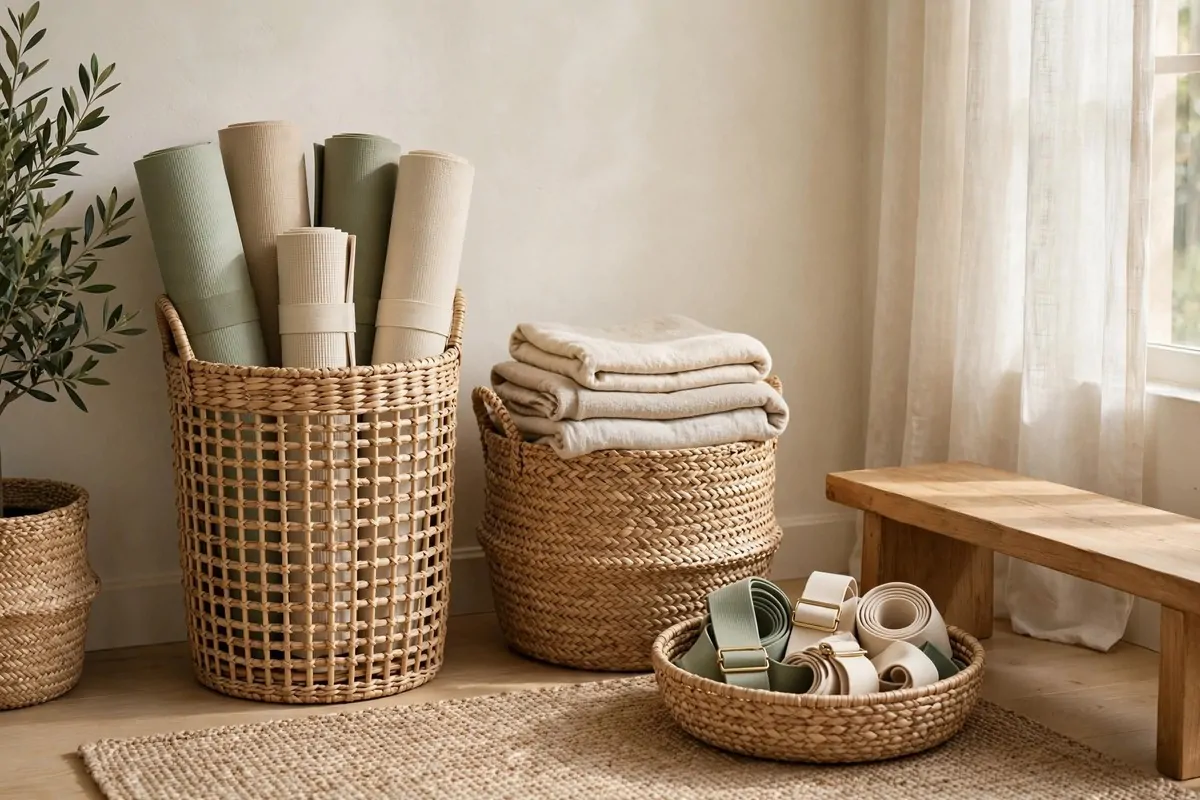
Woven baskets in rattan, seagrass, or jute look beautiful even when they are full of boring things. I have three beside my mat and nobody knows one holds old towels and a foam roller.
Get different sizes.
A tall one for rolled mats. A medium one for blankets. A small flat one for straps and eye pillows. They nest nicely in a corner when empty.
Baskets also make cleanup fast. After practice, toss everything in. Two minutes and the corner looks calm again. I do this every single evening and it keeps the space feeling fresh.
Lids are worth the extra money.
A lidded basket reads as furniture, not storage. Stack two small ones and use the top as a side table for your water bottle. Clever, right?
7. Make a Candle Corner for Evening Practice
Evenings need a different mood than mornings. Bright light wakes you up, and you want the opposite before bed.
Candles are the answer.
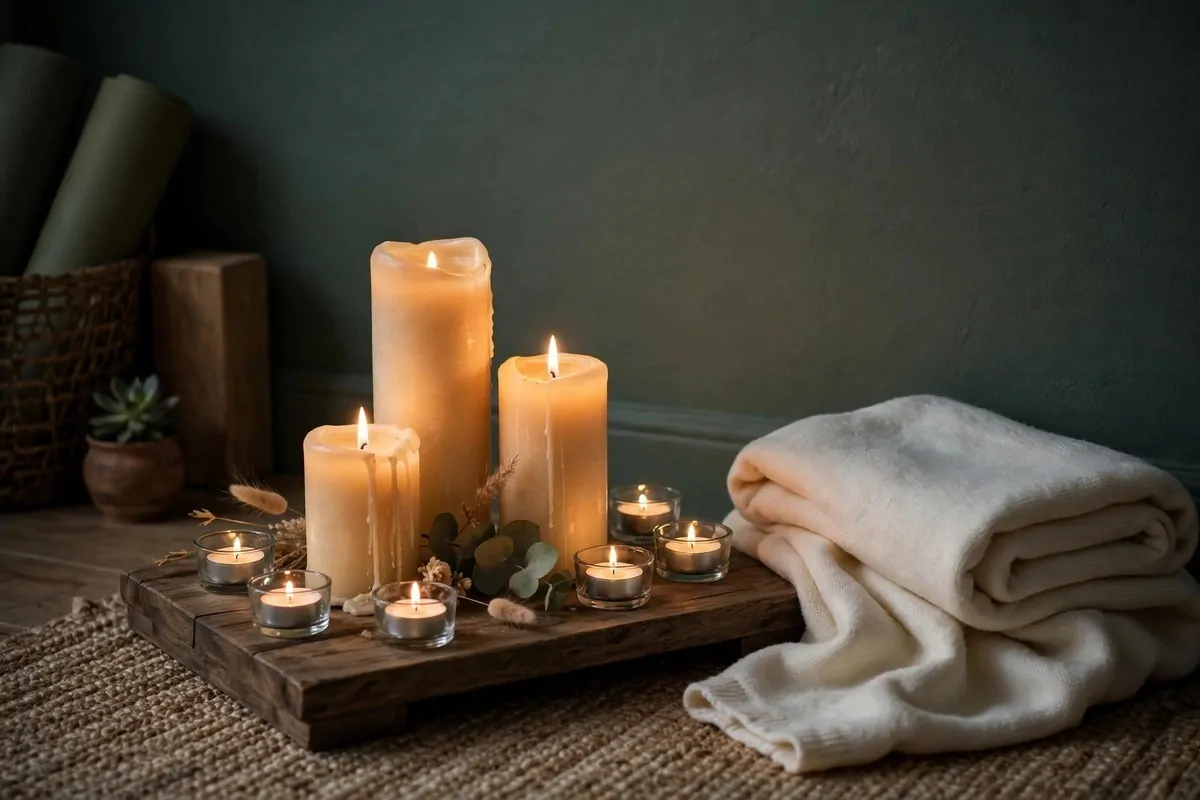
A small cluster of pillar candles on a wooden tray gives you a warm, flickering glow that no lamp can copy. Light them five minutes before you start. By the time you unroll your mat, the corner already feels like a ritual.
Keep them low and grouped.
Three candles of different heights on a tray look intentional. One lonely tealight looks like you forgot to finish the job.
Safety first though. Never leave them burning when you leave the room. Keep them away from curtains, rugs with long fibers, and your bolster. I use a metal tray with a rim so wax cannot escape.
If you have pets or kids, use LED flame candles instead.
The new ones flicker like real flames and some even have a timer. You get the glow with zero worry. Your evening practice stays safe and calm.
8. Diffuse a Calm Scent Before You Start
Smell is the fastest way to tell your brain it is time to slow down. One deep breath of lavender and your shoulders drop.
That is why so many studios smell amazing.
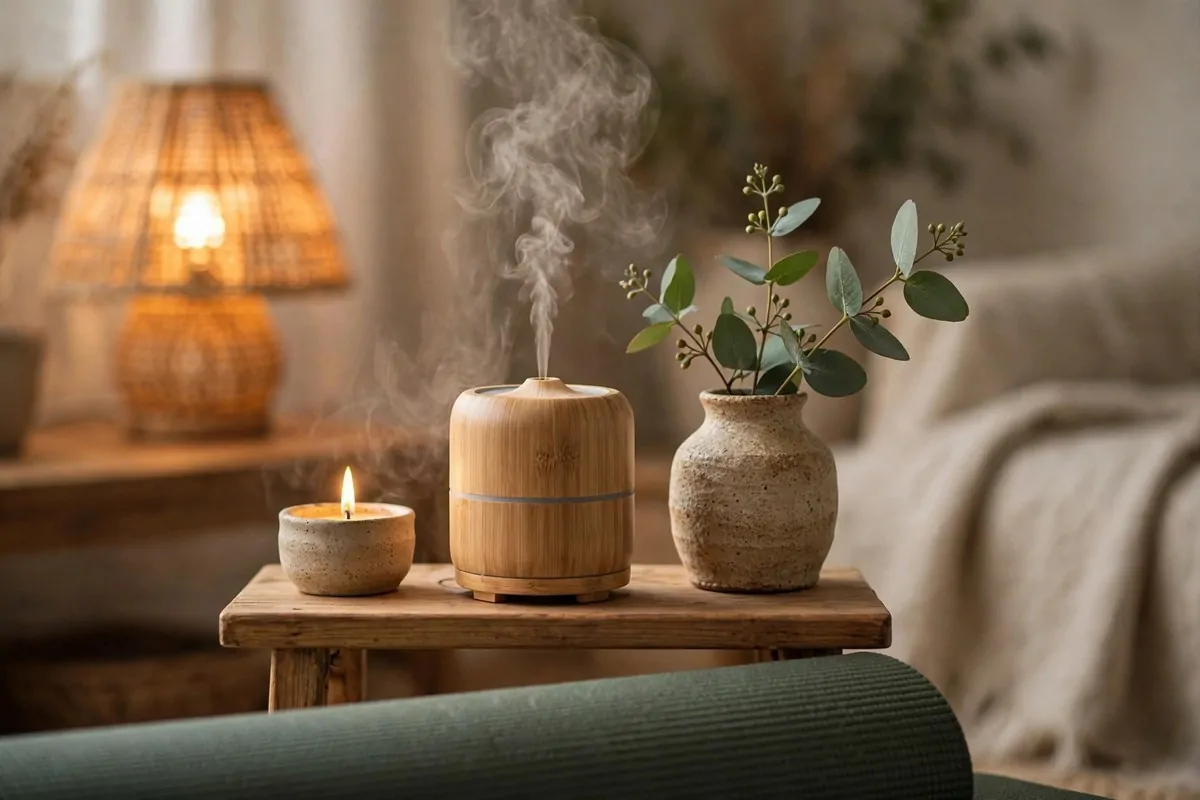
You can copy that at home with an essential oil diffuser or a simple room spray. Fill the diffuser ten minutes before practice. Let the scent settle into the room while you change your clothes.
Match the scent to your practice.
Morning flows like citrus and peppermint. Evening wind-downs like lavender and chamomile. Meditation and breathwork like sandalwood or frankincense.
Keep it light. A heavy scent gives you a headache during deep breathing, and that defeats the whole point. Two or three drops in the diffuser is plenty. I learned that the hard way after a eucalyptus incident.
A small bowl of dried lavender works too.
So does a sprig of fresh eucalyptus in a vase. You do not need a fancy machine. Quick scent guide for your practice:
When you practice
Scents to try
Morning energy
Citrus, peppermint, lemongrass
Evening calm
Lavender, chamomile, vetiver
Meditation and focus
Sandalwood, frankincense
Fresh and clean
Eucalyptus, tea tree, rosemary
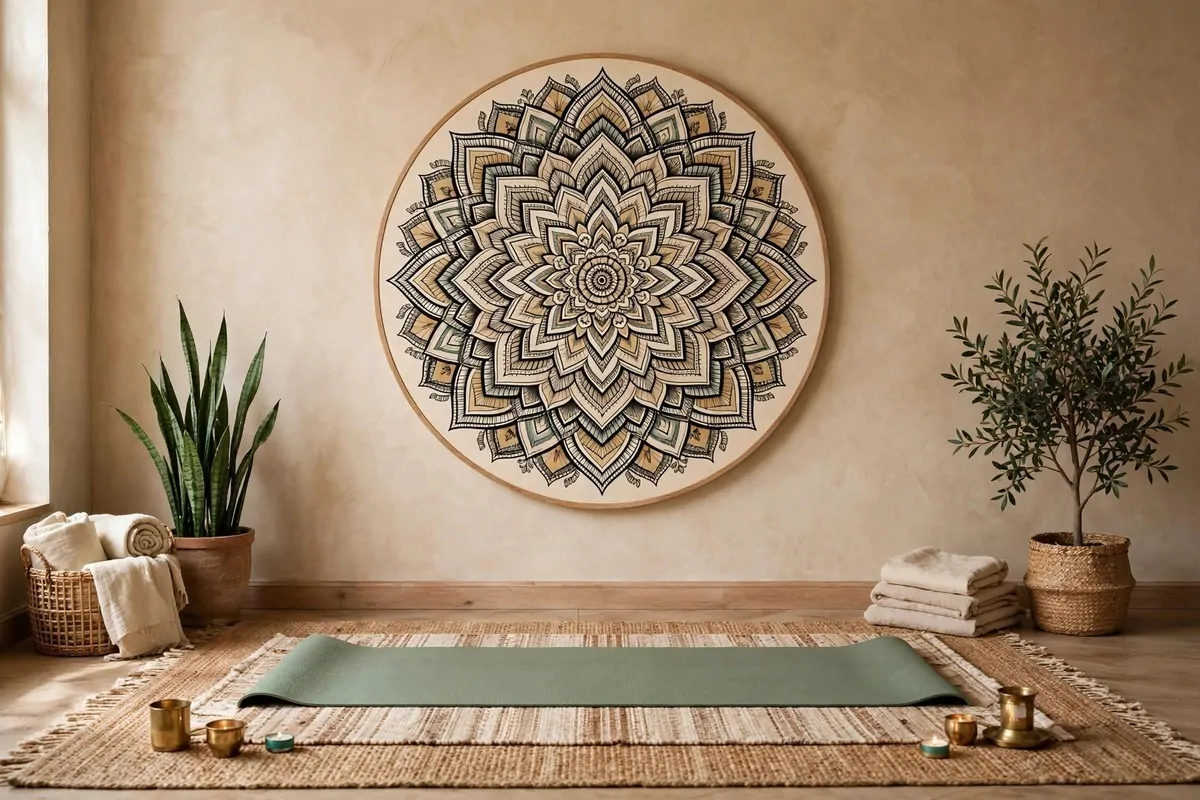
9. Give One Wall a Mandala or Nature Print
A blank wall is fine for a minimalist corner. But one piece of art can turn a corner into a destination.
Your eyes need somewhere kind to rest.
A large mandala print, a calm nature photo, or a soft abstract in earthy tones gives your practice a focal point. Hang it at seated eye level so you see it in meditation, not just in standing poses.
Keep it to one piece.
A gallery wall is too busy for a yoga space. One big calm image beats ten small loud ones. Your mind has enough to look at.
Macrame wall hangings work beautifully too. They add texture without color noise. A woven piece above your mat softens the wall and the room at the same time.
Art with words can help some people.
A short quote you love, in simple lettering, can set your intention for the whole practice. Just keep it gentle. Nothing that shouts.
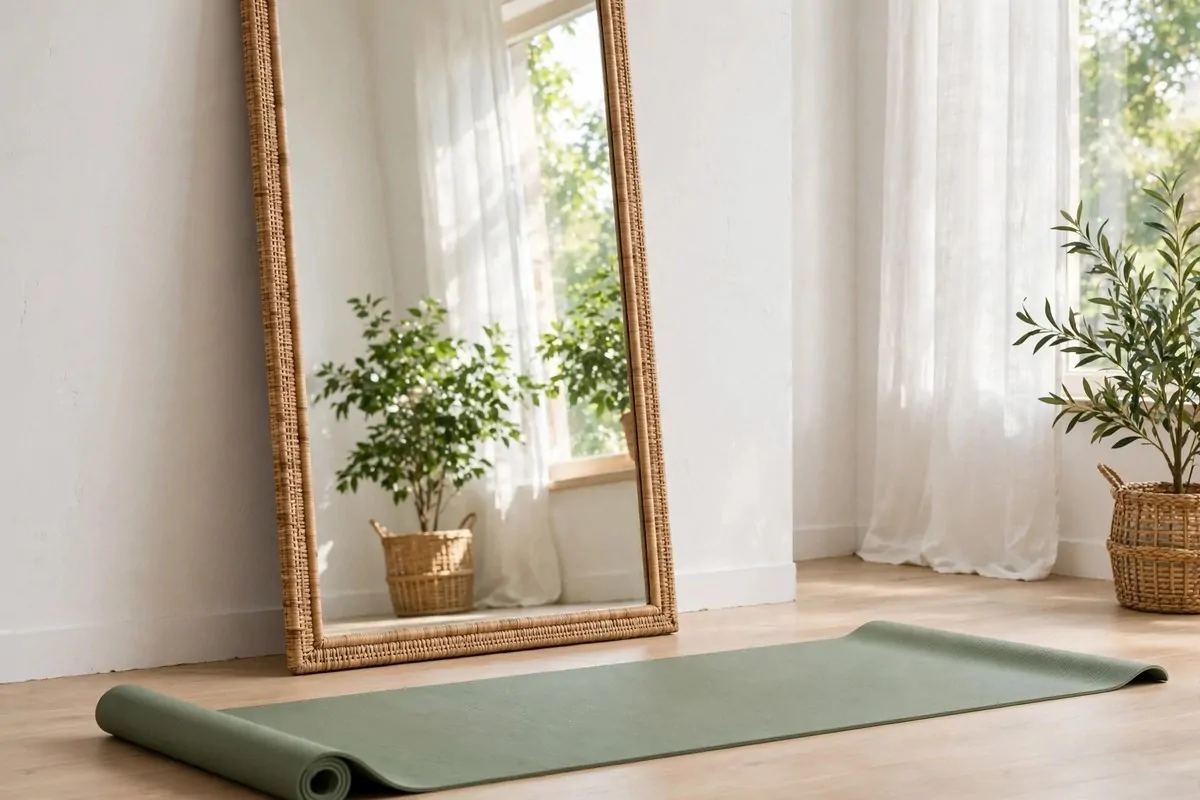
10. Lean a Full-Length Mirror for Alignment Checks
Studios use mirrors for a reason. You cannot fix your form if you cannot see it.
A full-length mirror helps at home too.
Lean it against the wall on the long side of your mat. You can check your profile in warrior poses and your lines in downward dog. Small corrections make poses feel better and safer.
Mirrors also bounce light around.
In a small corner, a mirror doubles the sense of space. It catches window light and throws it deeper into the room. Instant brightness, no wiring needed.
Pick a frame that matches your vibe. Natural rattan or light wood keeps things calm. A black metal frame looks modern. I found mine secondhand and painted the frame myself.
Angle it away from direct sun.
A mirror catching full sun throws a harsh beam across the room. Tilt it slightly so it reflects the soft parts of the room, like plants and the rug. Much nicer.
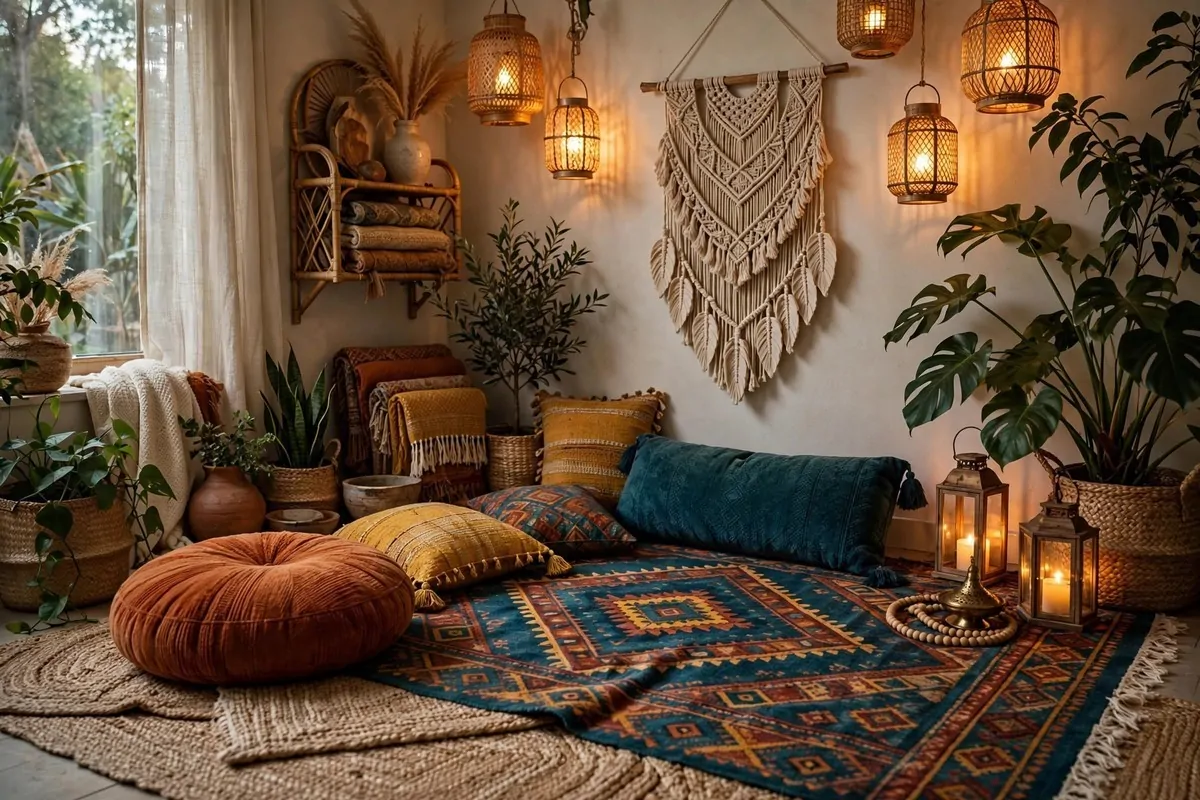
11. Layer Rugs and Cushions for a Boho Look
If minimal spaces feel cold to you, go the other way. Boho style is all about layers, and it suits yoga corners perfectly.
More texture means more comfort.
Start with a flat jute rug as your base. Layer a patterned rug on top in warm colors. Add floor cushions and a bolster in jewel tones like rust, mustard, and deep teal.
Throw a soft blanket over the bolster.
It waits for you during savasana. A fringed throw in cotton or wool adds that cozy boho feel and keeps you warm at the end.
Hang something on the wall. A macrame piece, a woven wall hanging, or even a colorful scarf pinned up works. Boho walls should feel collected, not decorated.
Lanterns and string lights fit right in here.
A metal lantern with a candle inside gives you that warm boho glow at night. This style forgives clutter better than minimal styles, but keep your practice floor clear anyway.
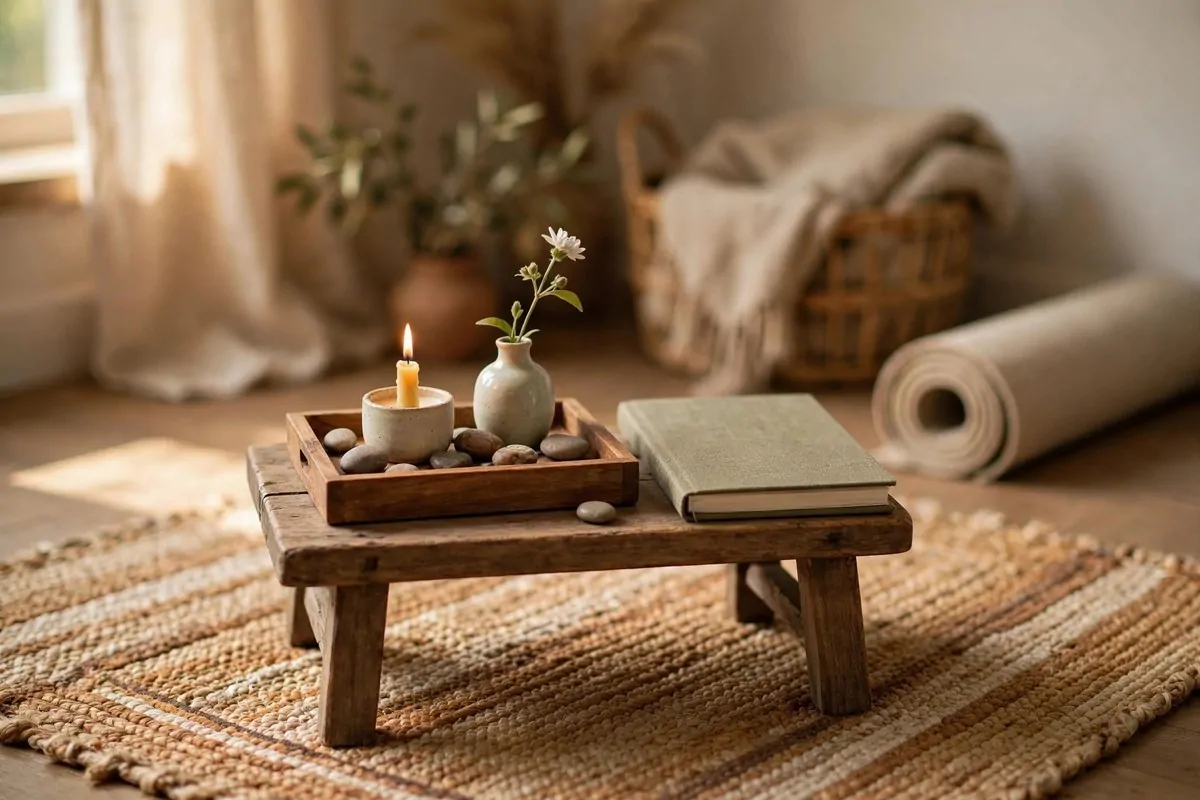
12. Keep a Tiny Altar Tray for Intention Setting
You do not need to be spiritual to enjoy a small altar. Think of it as a landing spot for the things that matter to you.
A tray is all it takes.
Use a small wooden tray or a low stool in your corner. Put a candle on it. Add a flower or a sprig of eucalyptus. Maybe a smooth stone from a walk you loved. That is your altar.
Change it with the seasons.
A pinecone in winter. A shell from a summer trip. Fresh flowers when you feel like treating yourself. Rotating small things keeps the space feeling alive.
Keep a journal beside it. Write one line before you practice and one line after. It sounds small, but looking back at those lines shows you how far your practice has come.
This tray marks your corner as sacred.
Sacred just means set apart. When guests see the little tray, they understand this spot is special. When you see it, your mind shifts into practice mode.
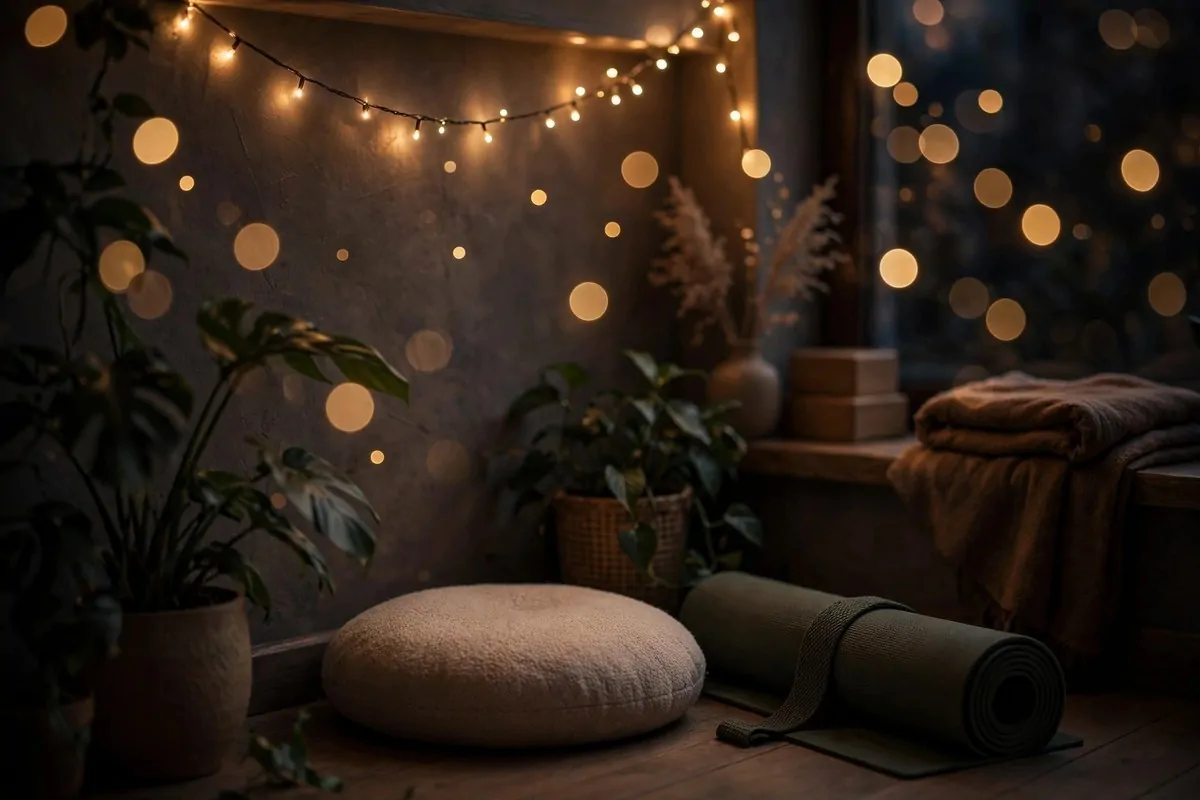
13. Drape Warm Fairy Lights Overhead
Fairy lights are the cheapest way to make any corner feel magical. A ten-dollar string changes the whole mood.
Drape them along the ceiling edge.
Or zigzag them across the wall above your mat. Warm white is the only color you want here. Cool white looks like an office and kills the calm.
They are perfect for evening practice.
Turn off the main lights and let the little bulbs do the work. The soft dots of light feel like stars. Your nervous system reads it as night and starts to wind down.
Paper lantern strings work too. They give a softer, more diffused glow than bare fairy lights. I hang mine on removable hooks so the landlord never knows.
Combine them with your candle corner.
Candles on the tray, fairy lights above. That is a whole evening ritual in one corner. Practice, stretch, blow out the candles, sleep like a baby.
Yoga is not only movement. The quiet sitting part needs its own spot too.
A meditation nook is simple to build.
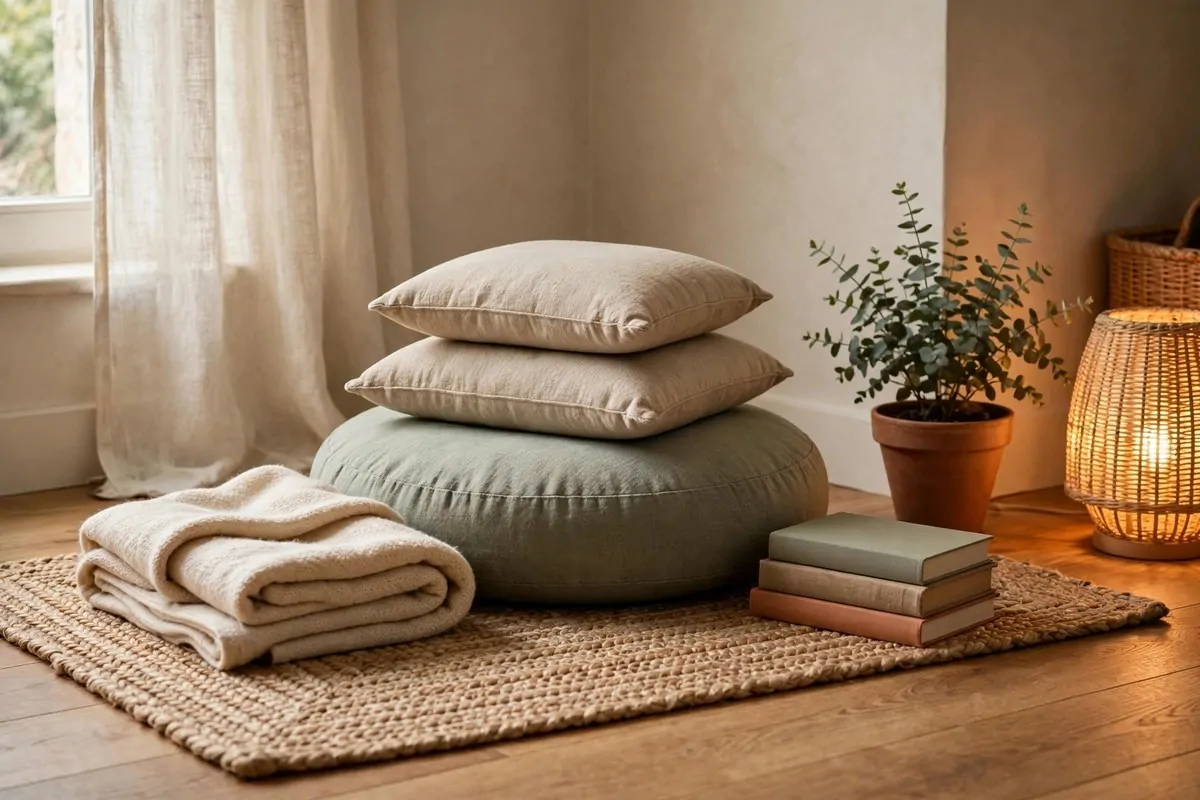
Place a round floor cushion on your rug. Add a firmer cushion on top for your hips. Your knees will thank you. Mine did after years of sitting on hard floors.
Keep a soft blanket within reach.
Mornings get chilly and a cold body cannot relax. Drape the blanket over your legs before you close your eyes. Warmth tells your body it is safe to let go.
Face your altar tray or your window. Having something calm to look at before you close your eyes sets the tone. I look at my little plant for a minute, then I close my eyes.
Add a timer so you are not clock-watching.
Your phone timer works fine if you put it face down. Or use a small sand timer. Ten minutes is plenty to start. The nook makes those ten minutes feel like a treat.
15. Move Your Practice to the Balcony or Garden
The best yoga studio has no walls at all. Fresh air, real sky, and birdsong beat any playlist.
If you have outdoor space, use it.
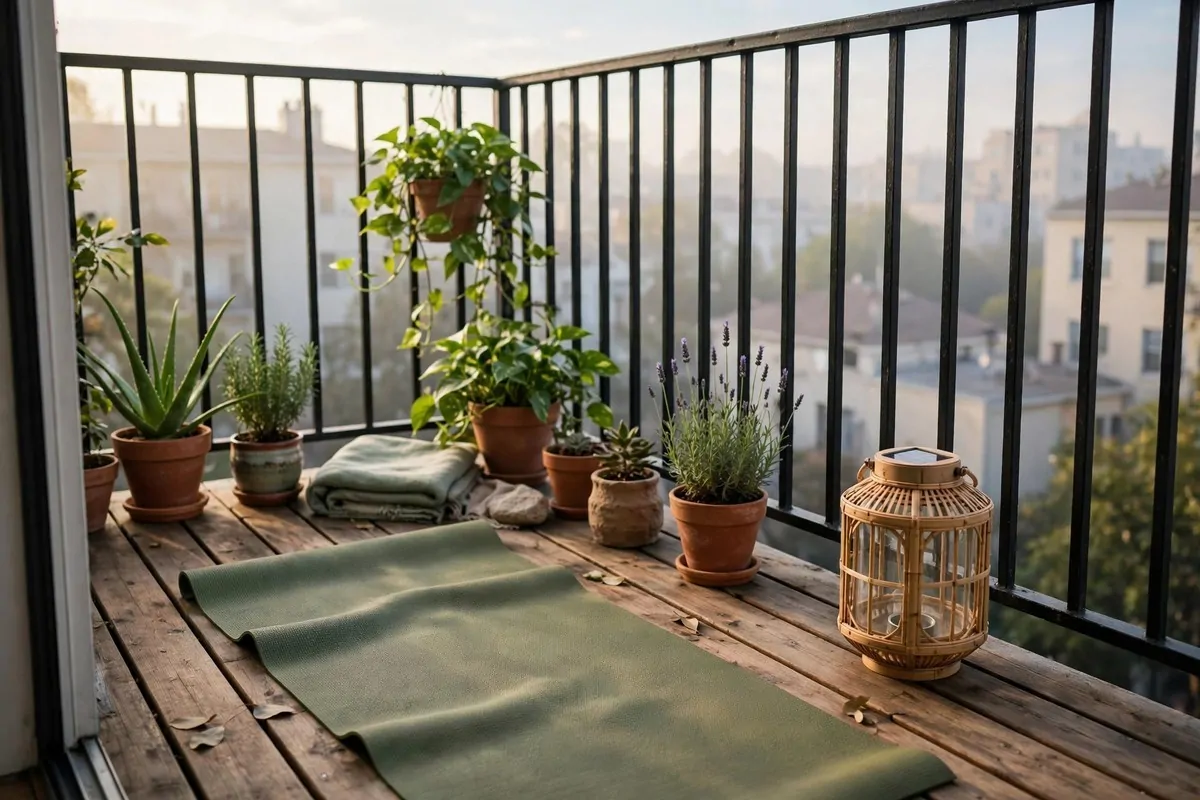
A balcony fits a mat easily. A garden corner fits even more. Sweep the floor, lay your mat, and bring out one plant in a pot to keep you company.
Morning practice outdoors is unbeatable.
The air is cool and the world is quiet. You stretch while the day wakes up around you. I do this in summer and my indoor corner feels dull by comparison.
Watch the weather though. Wind sends lightweight props flying, so keep blocks in a basket. Morning dew makes tiles slippery, so wait until the sun dries the floor.
A weather-safe lantern marks the spot.
Leave a solar lantern or a heavy candle holder out there. It tells you, and your brain, that this is your outdoor practice spot. Roll out the mat and breathe.
16. Use a Folding Screen to Claim Your Space
Not everyone has a spare corner. Some of us practice in the living room, in full view of the TV and the sofa.
A folding screen solves that.
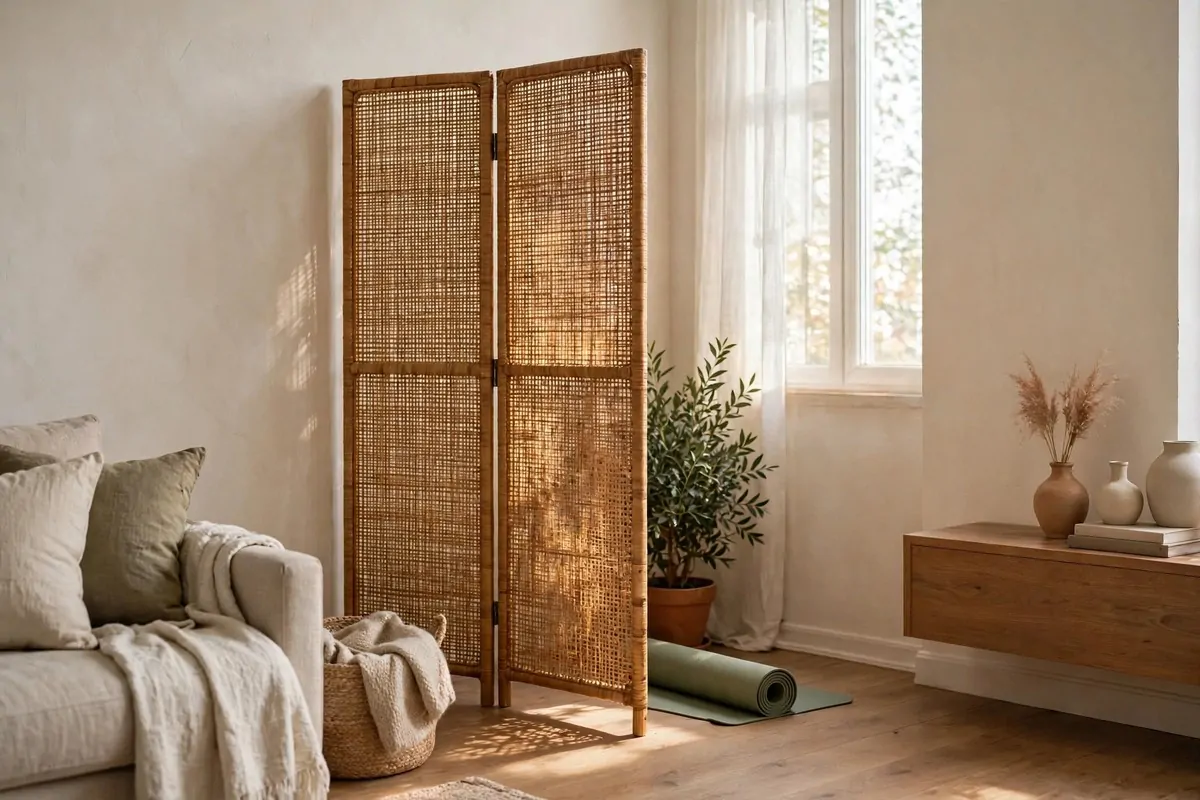
Unfold a rattan or fabric screen around your mat and the living room disappears. You get a private little room in seconds. Fold it flat after practice and slide it behind the sofa.
It works in bedrooms too.
If your mat lives beside your bed, a screen separates sleep space from practice space. Your brain stops mixing the two, and both get better.
Pick a screen that lets some light through. Woven rattan or rice-paper panels glow softly when light hits them. A solid dark screen makes your corner feel like a closet.
Screens double as decor.
When folded in the corner, a pretty screen looks like art. Mine has a simple branch pattern and guests always ask where I got it. Function and beauty in one piece.
17. Go Earthy With Sage Walls and Clay Pots
Green is the color your eyes rest on. Look out any window and you will see why.
Sage walls bring that feeling inside.
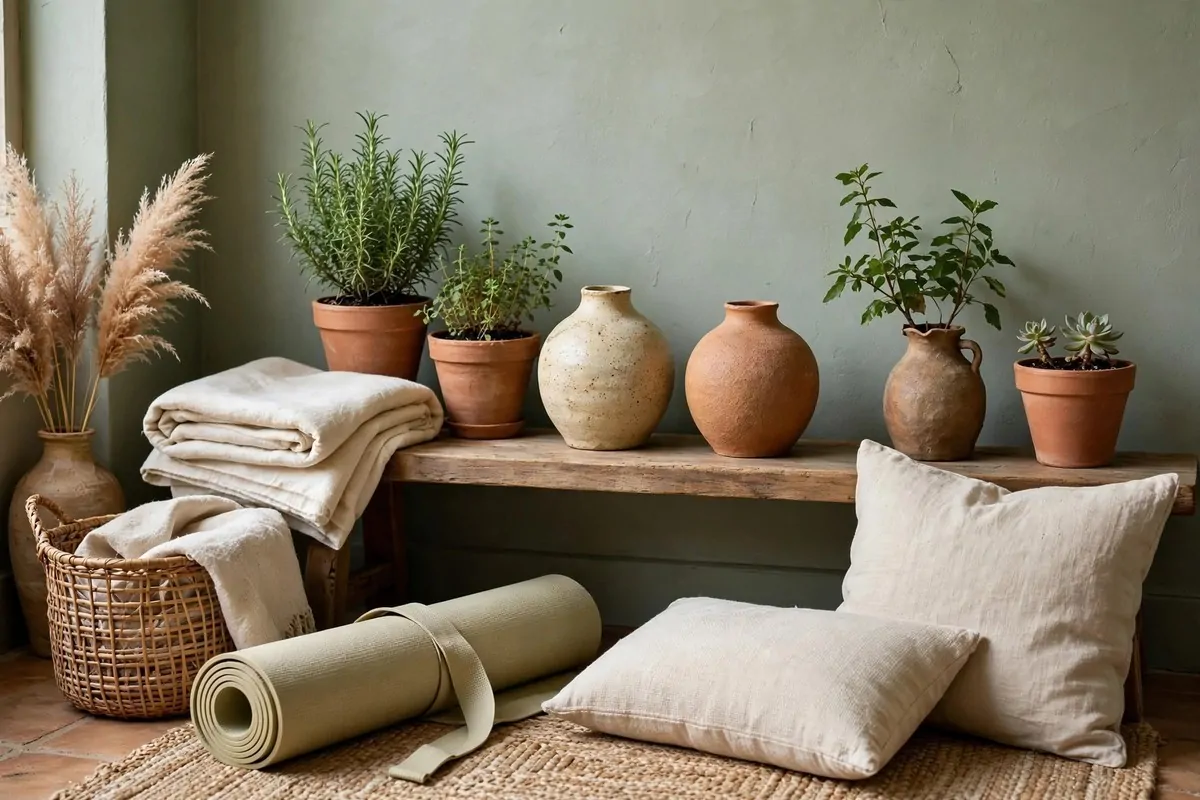
A soft sage or eucalyptus green on the walls makes a yoga corner feel grounded and fresh. It pairs beautifully with terracotta, clay, and raw wood. The whole palette comes straight from nature.
Clay pots are the perfect match.
Terracotta pots with herbs or small plants warm up the green walls. The orange-brown clay against soft green is one of my favorite color pairs in any room.
Add handmade ceramics. A hand-thrown vase, a little bowl for your mala beads, a mug for tea after practice. Slightly imperfect pottery feels human and calm.
Keep textiles natural here.
Linen cushions, a cotton throw, a jute rug. No shiny fabrics, no bright prints. The earthy look works because everything in it could have come from the ground.
18. Add a Small Water Fountain for Gentle Sound
Quiet is good. Gentle water sound is better. It covers street noise without demanding your attention.
A small tabletop fountain does the job.
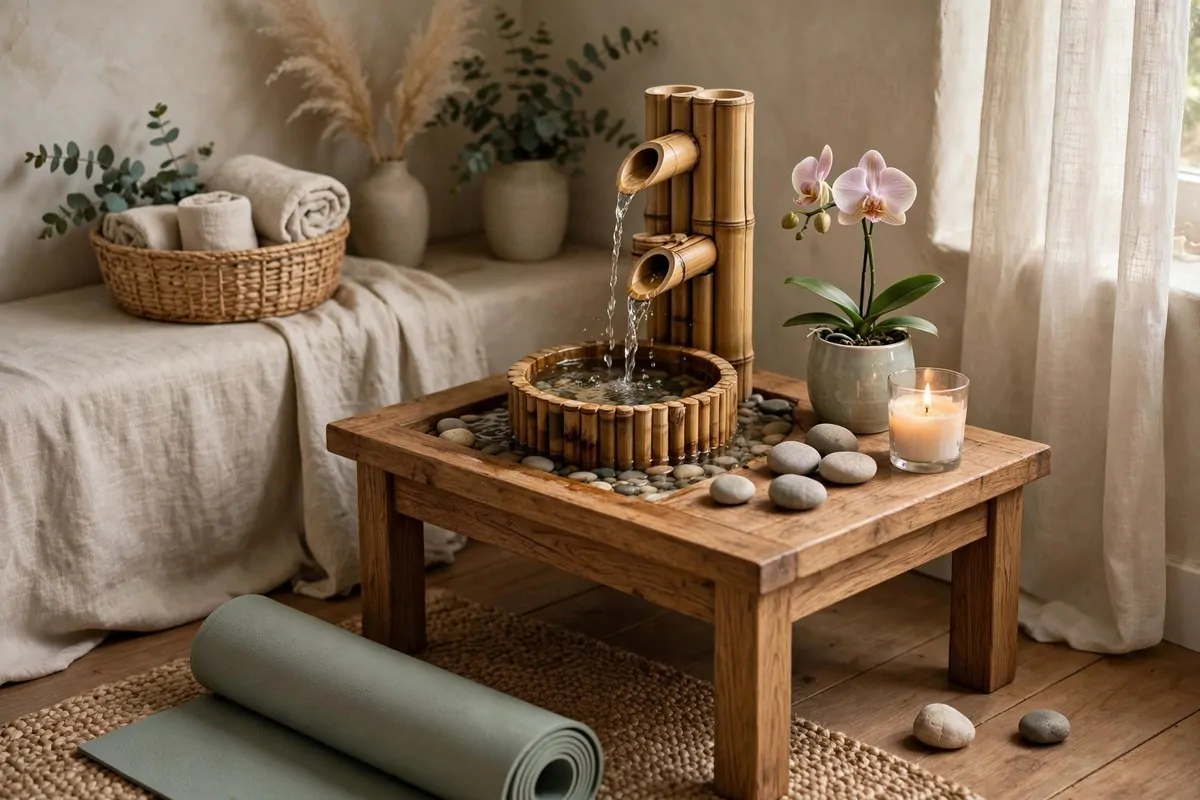
Place a little bamboo or stone fountain on a side table in your corner. The soft trickle becomes your background music. Your breathing naturally slows to match it.
It does not need to be big.
A fountain the size of a cereal bowl is enough for one corner. Bigger ones splash and need refilling all the time. Small and steady wins.
Pair it with a plant and a candle on the same table. Now you have water, earth, fire, and air from the open window all in one spot. It feels complete somehow.
Keep the water clean.
Change it every few days and wipe the bowl. Stagnant water smells and grows slime, and that ruins the calm fast. Two minutes of care keeps it lovely.
19. Keep It Ultra Simple, a Zen Corner With Almost Nothing
Here is a secret. The calmest yoga corner I ever saw had almost nothing in it.
Just a mat, a plant, and a candle.
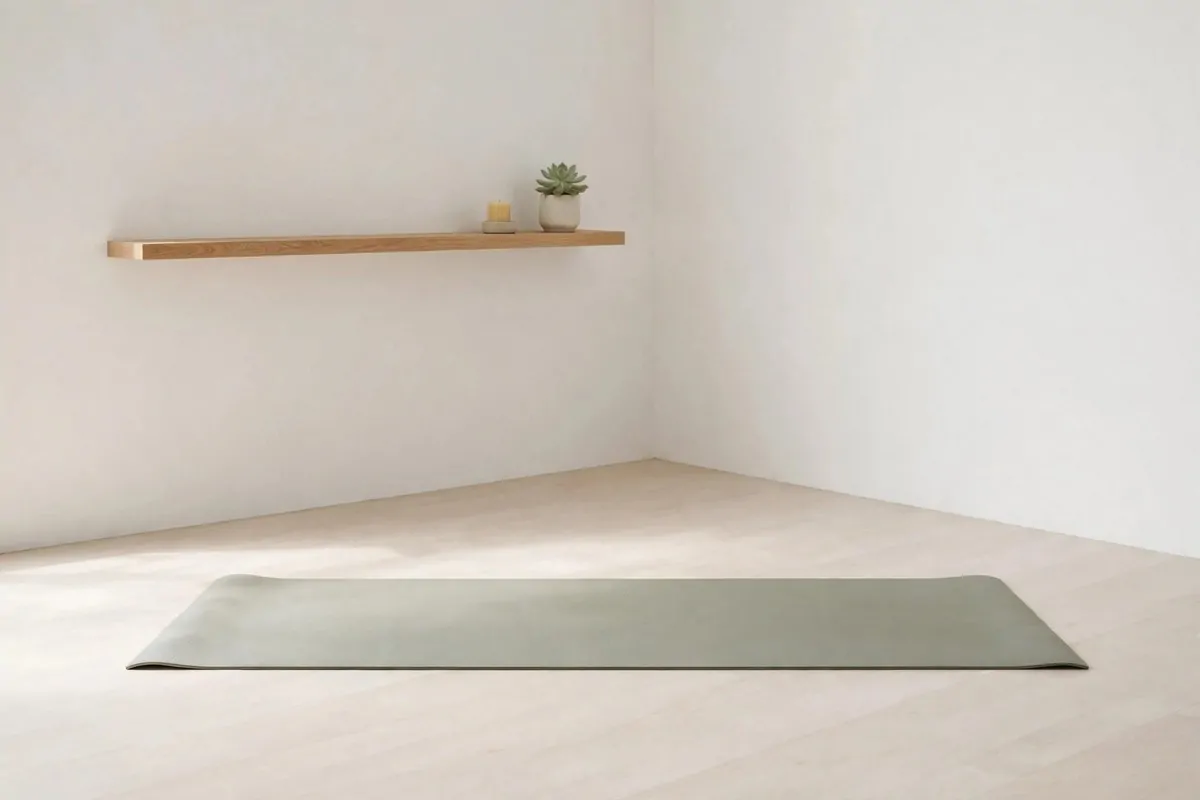
No shelves. No baskets. No art. One good mat centered on a clean floor, one green plant in the corner, one candle for evening light. It felt like the room was holding its breath in a good way.
This style is the cheapest too.
You already own most of it. Clear a corner, wipe the floor, unroll the mat. Done. The only thing you might buy is the plant.
Empty space is not boring. It is restful. Your eyes have nothing to snag on, so your mind stops snagging too. Every other look on this list adds things. This one takes them away.
It also cleans in thirty seconds.
Wipe the mat, water the plant, blow out the candle. Your corner is always ready. If your life is busy and your home is full, this might be the look for you.
Keep Reading
If you liked these Yoga Studio Inspiration looks, you will love these posts too:
Hi, I'm Sophie Lane! I love turning houses into cosy, organised homes without spending a fortune. Here I share simple DIY ideas, budget makeovers and clever storage hacks that actually work in real life.