21 Small Kitchen Pantry Ideas That Make Cooking Easier

My youngest opened the pantry last week and stared up at the top shelf. “Mum,” she said, “why do the good snacks live where I cannot reach them?”
I laughed, but she had a point. Our pantry was a tall pile of good ideas and bad spots, and dinner took longer than it should every single night.
So I spent a week fixing it, one small change at a time. These small kitchen pantry ideas are the ones that stayed, and they make cooking feel easier every single day.
Clear Jars You Can See Through
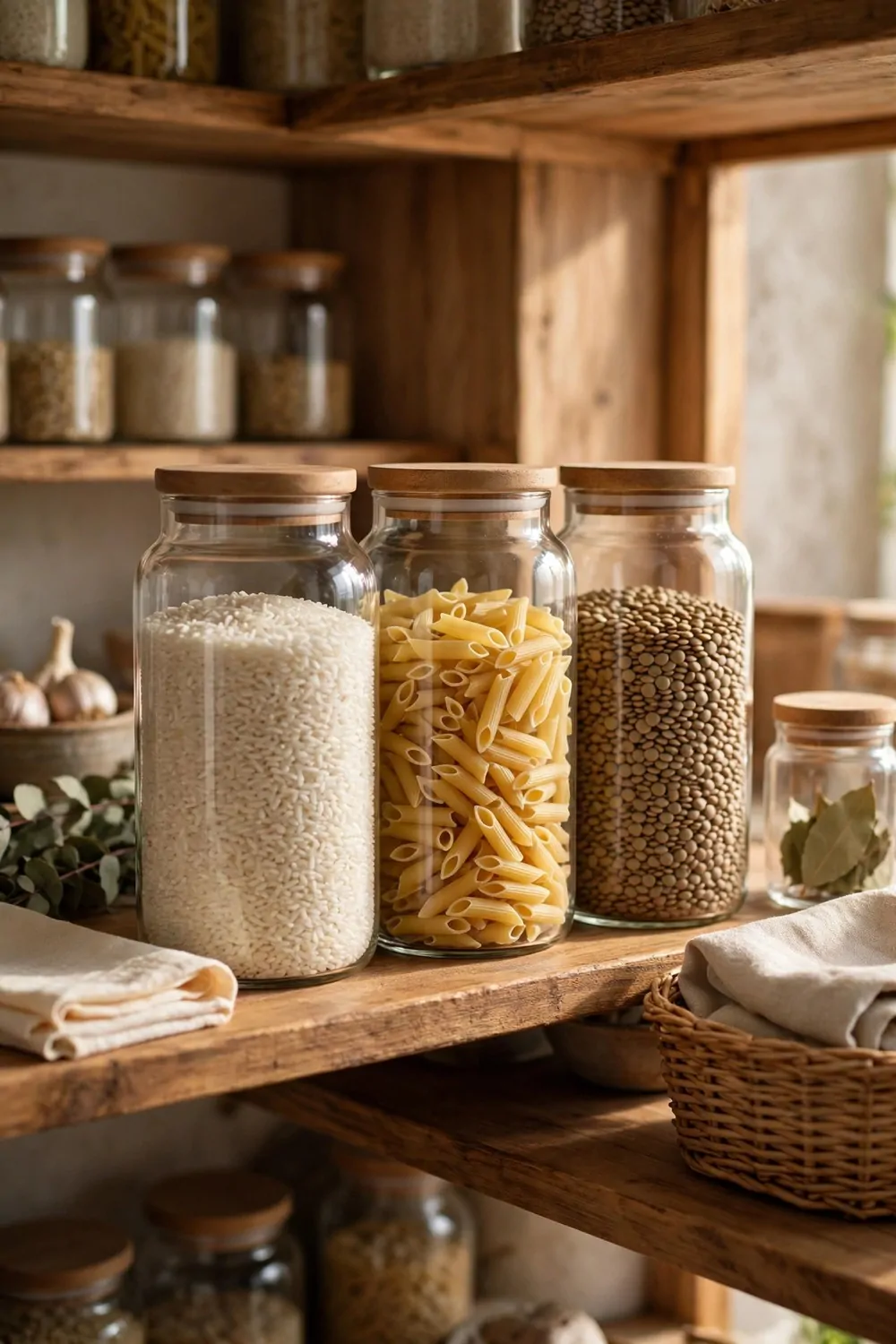
I used to keep rice in the bag it came in. The bag tore, rice went everywhere, and I swept it up with a sigh.
Clear jars fixed that in one afternoon. You can see what is inside without opening a single lid.
I pour the rice, the pasta, and the flour into tall glass jars. They sit in a row like little windows.
When a jar gets low, I know it right away. No more guessing, and no more buying a second bag of something I already have.
You do not need fancy jars. Any clean jar with a lid that shuts tight will do the job.
I washed out a few old jam jars and used those first. They worked so well that I slowly swapped the rest over time.
Keep the jars at eye level if you can. That is where your eyes go first, and it saves you from bending down to hunt.
It sounds like a small change, and it is. But dinner starts faster when you can see everything you need in one look.
A Shelf for Everyday Cooking
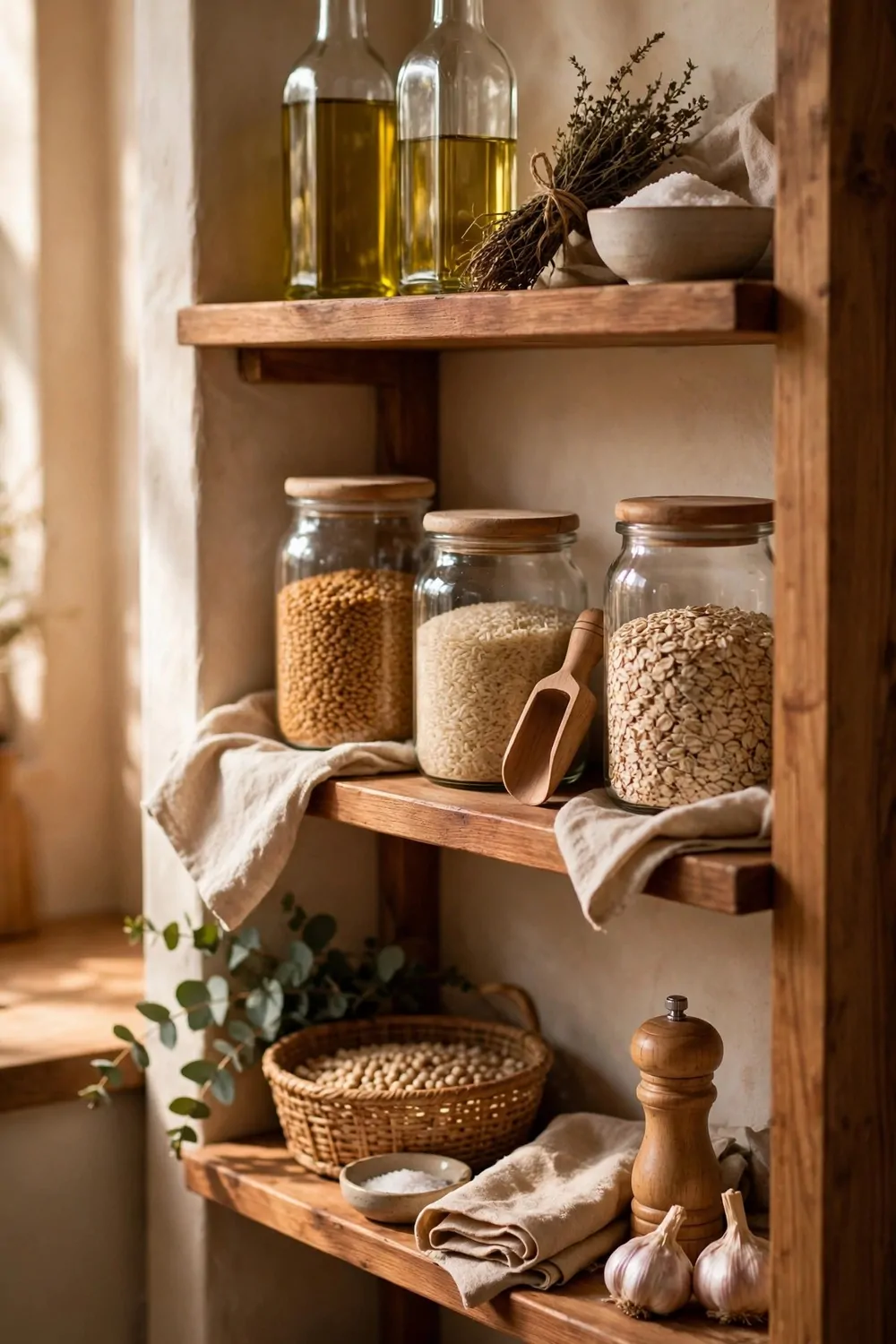
Every kitchen has a few things you reach for almost every day. In my house it is salt, pepper, oil, and the garlic.
I gave those things their own shelf, right in the middle of the pantry. Nothing else lives there.
It sounds silly to give salt a home of its own. But my hands find it now without my brain having to think at all.
The shelf is at arm height, so I do not stretch or bend. I just open the door and grab.
I tried putting the everyday stuff on the top shelf once. That lasted about two days, and my shoulders still remember it.
If you cook with one spice more than the rest, put that one closest to the door. Your future self will thank you at six in the evening.
Keep this shelf short and clear. When it starts to fill up with other things, move them somewhere else.
Cooking feels calmer when the things you use most are always in the same spot. It is like they are waiting for you.
Labels That Tell the Truth
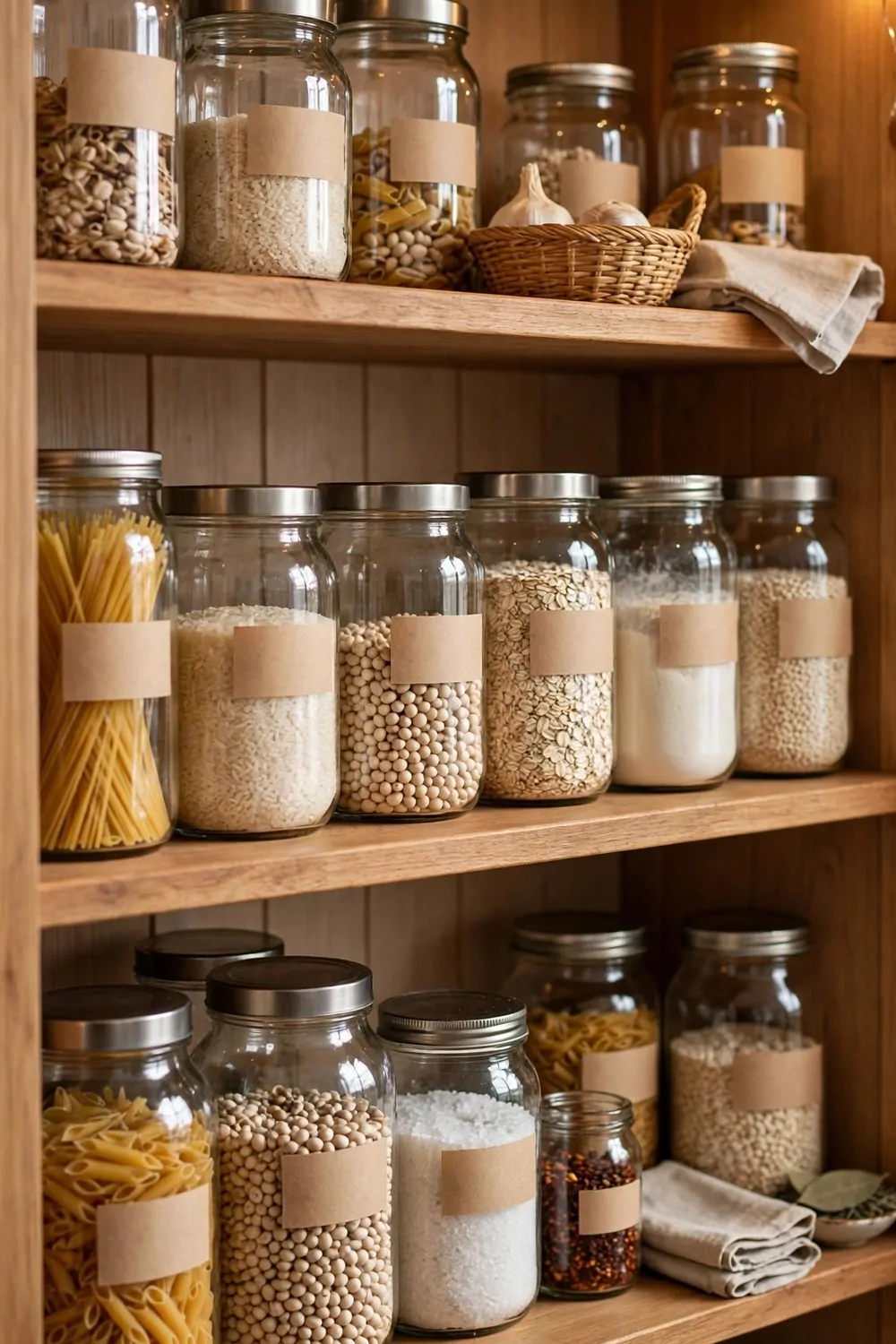
Flour and icing sugar look the same in a jar. I learned that the hard way, in the middle of a cake.
Labels stop that kind of mix up. A small label on the front tells you what is inside in one second.
I write the name in big letters. I also write the date I opened it, small, in the corner.
My labels are just bits of paper and tape. They are not pretty, and they work perfectly.
If more than one person cooks in your house, labels help them too. Nobody has to ask you where the sugar lives.
I relabel a jar the same day I refill it. If I wait, I forget, and then the jar lies to me for a month.
Keep the words short and easy to read. Long names are hard to read when you are in a hurry.
A label takes ten seconds to write. It saves you from a ruined dinner, and that is a fair trade.
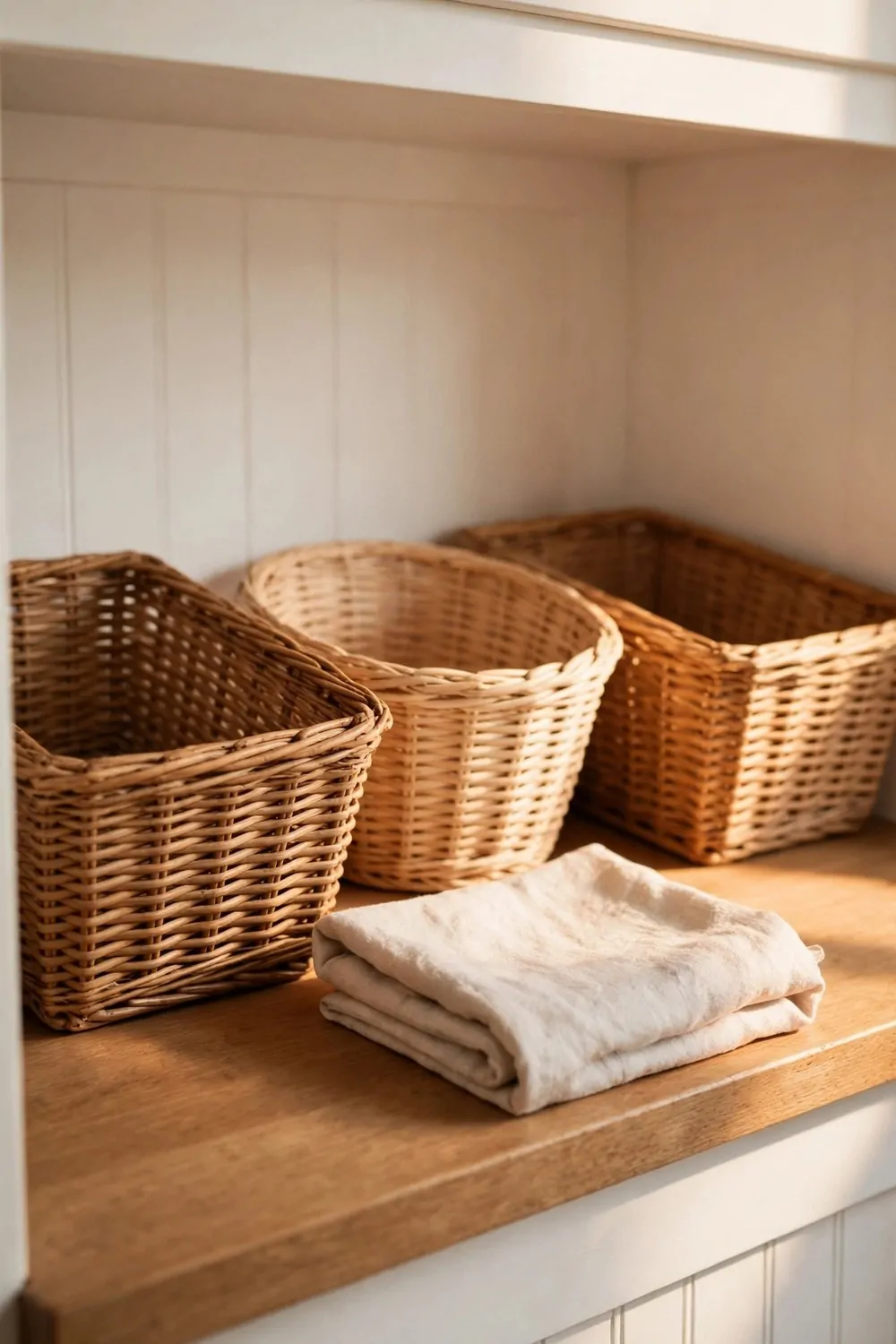
One Basket for Snacks
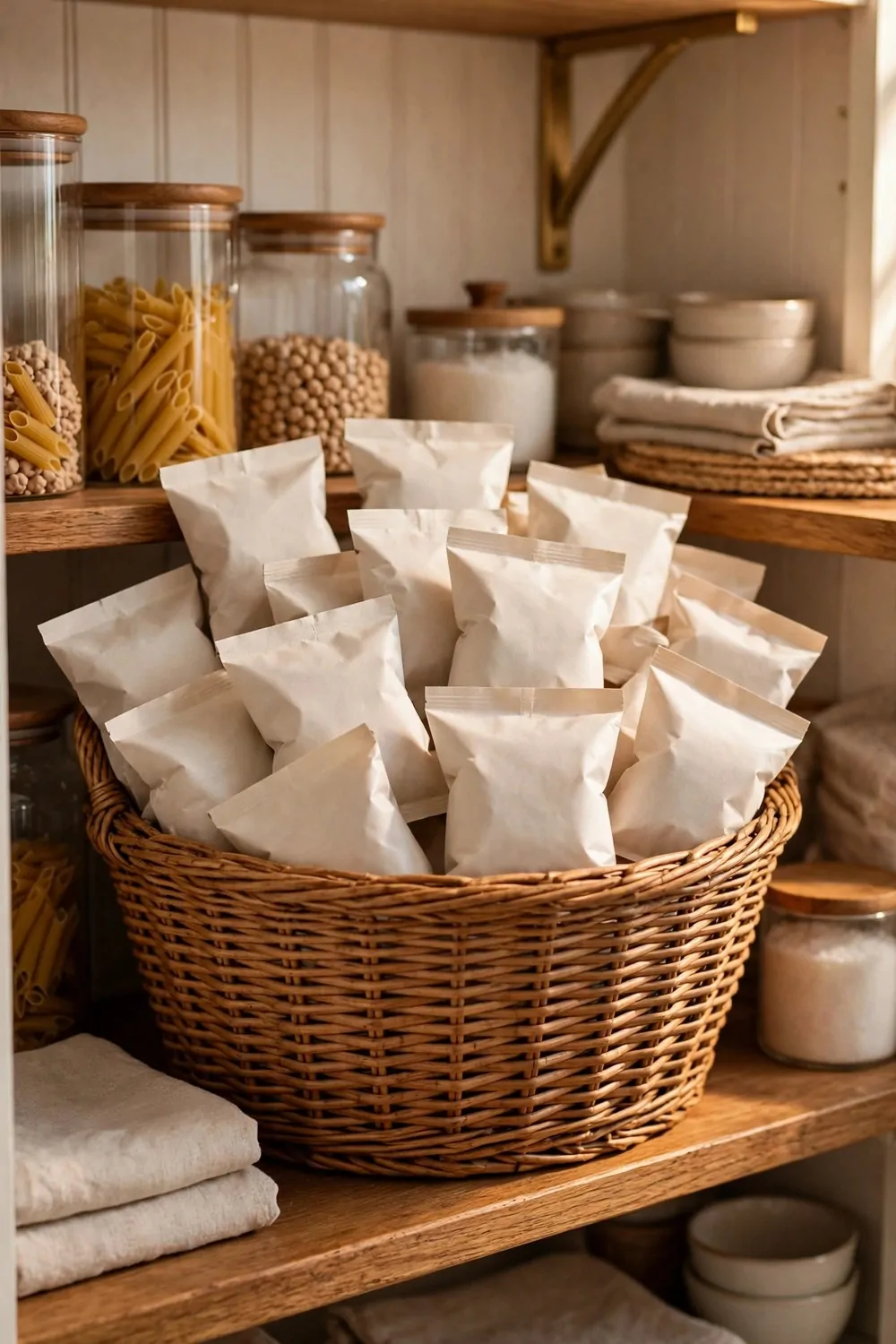
Snacks used to live all over my pantry. A packet here, a box there, and a bag hiding behind the soup.
Now they live in one basket. One basket, one spot, and everyone in the house knows where to look.
The basket is wide and low, so small hands can reach it and I can see inside it at a glance.
I keep the basket on a middle shelf. It is easy to reach, but it does not block the things behind it.
- Crackers for after school
- A few small bags of dried fruit
- Rice cakes and a little pot of spread
- Two or three treats for the weekend
When the basket gets empty, I fill it up again on shopping day. That is the rule, and it keeps the pantry tidy.
I stopped buying snacks in big boxes that spill everywhere. Small packets fit the basket better, and they stay fresh longer.
If a snack is a treat, it still goes in the basket. Hiding treats just means somebody finds them at midnight.
One basket sounds too simple to matter. But snack time is calmer now, and the pantry stays neat for longer.
Spices in a Straight Line
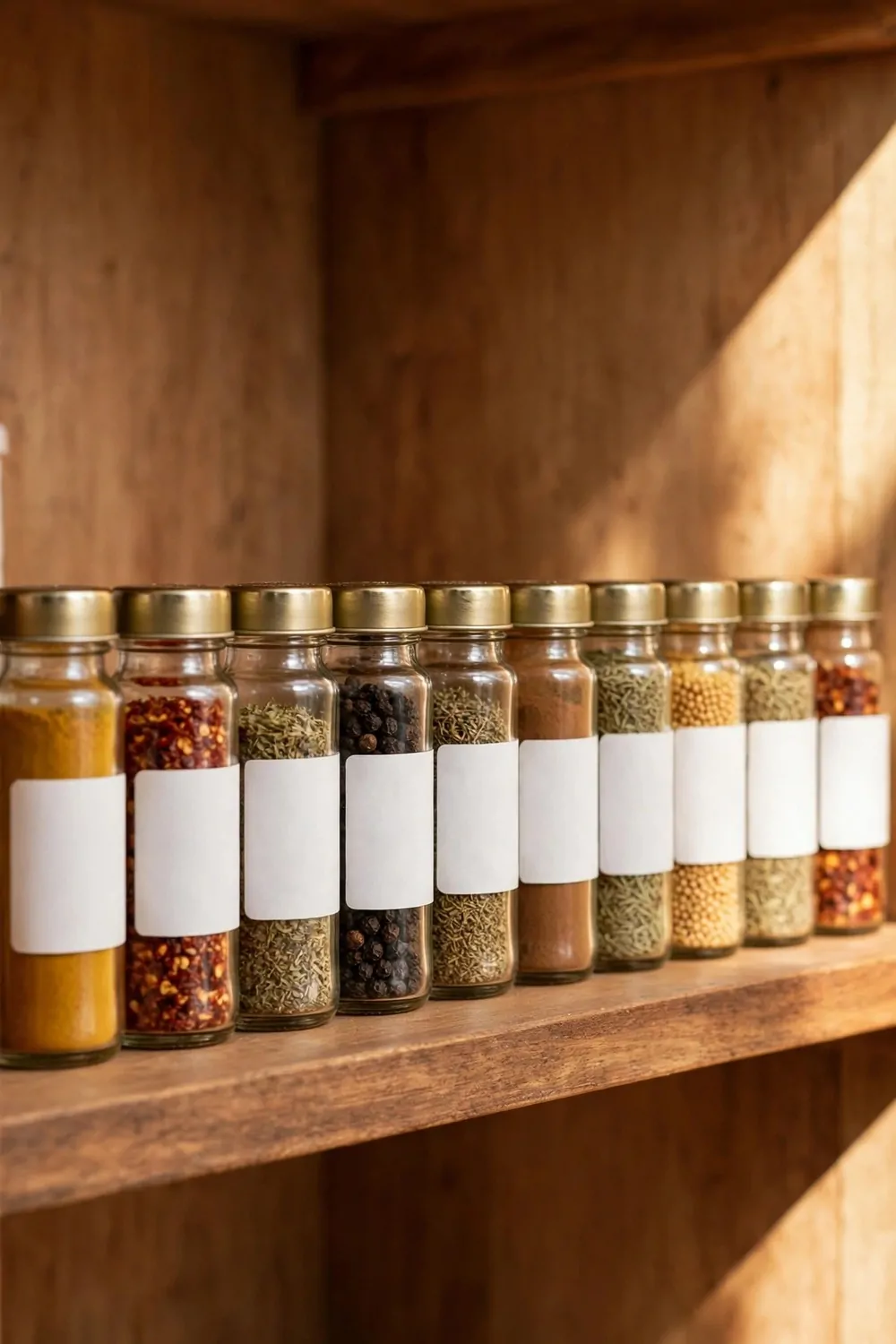
Spices are small, but they make a big mess. Mine used to roll around the shelf and fall over every time I opened the door.
Now they stand in one straight line, tallest at the back and shortest at the front. I can read every label in one look.
I keep the ones I use most in the middle of the line. The rare ones sit at the ends, where I do not mind reaching.
A straight line sounds boring. It is not boring when dinner is on the stove and you need the cumin right now.
I tried a spice rack that spun around once. It spun too well, and everything fell off the back. The straight line won.
If your jars are all different shapes, group them by size. The line still works, and it still looks tidy.
Wipe the shelf once a month. Spices spill a little every time you shake them, and the dust adds up fast.
| Spice | Where it lives | What it is for |
|---|---|---|
| Paprika | Middle of the line | Soups, eggs, and roast chicken |
| Cumin | Middle of the line | Rice dishes and beans |
| Cinnamon | End of the line | Baking and warm drinks |
Keep your spices close to where you cook, and keep them in a line. Your hands will learn the order, and your dinners will taste better for it.
A Door Rack for Small Bottles
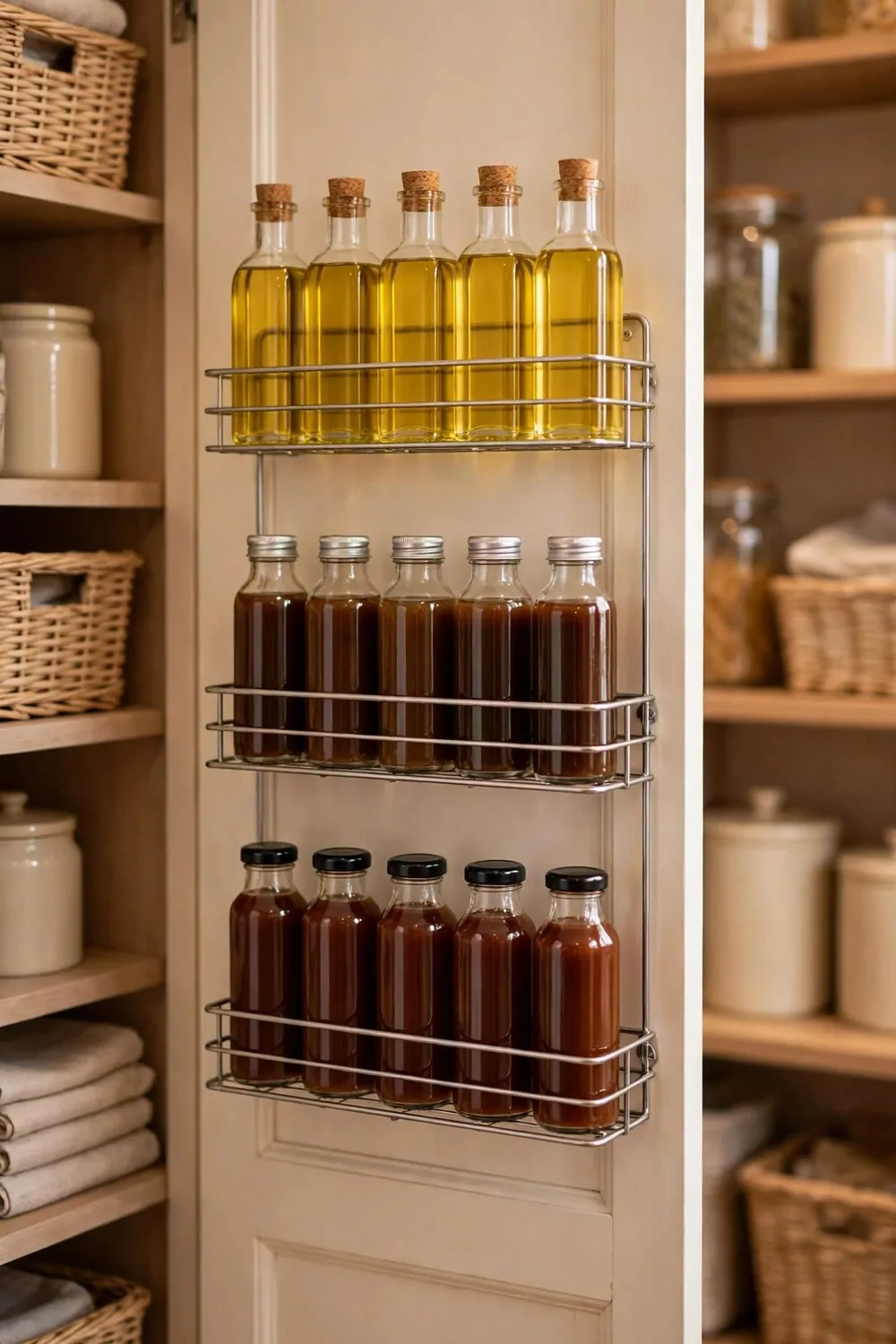
The pantry door was wasted space in my kitchen. It was just a door, and it did nothing but open and close.
A small rack on the inside of the door changed that. Now it holds the little bottles that used to crowd my shelves.
Soy sauce, hot sauce, and the small bottle of vanilla all live there now. They are easy to see and easy to grab.
The rack has to be shallow. If it is too deep, the door will not shut, and you will learn that the noisy way.
I measured the door before I put the rack up. Twice, actually, because I did not want to drill a hole in the wrong spot.
Keep heavy things off the door. A full bottle of oil is too heavy and the rack will sag over time.
Little bottles are perfect for a door rack. They are light, they are short, and you use them a drop at a time.
The door rack gave me a whole extra shelf without taking any space at all. That is the kind of trick a small pantry loves.
Canned Goods in One Row
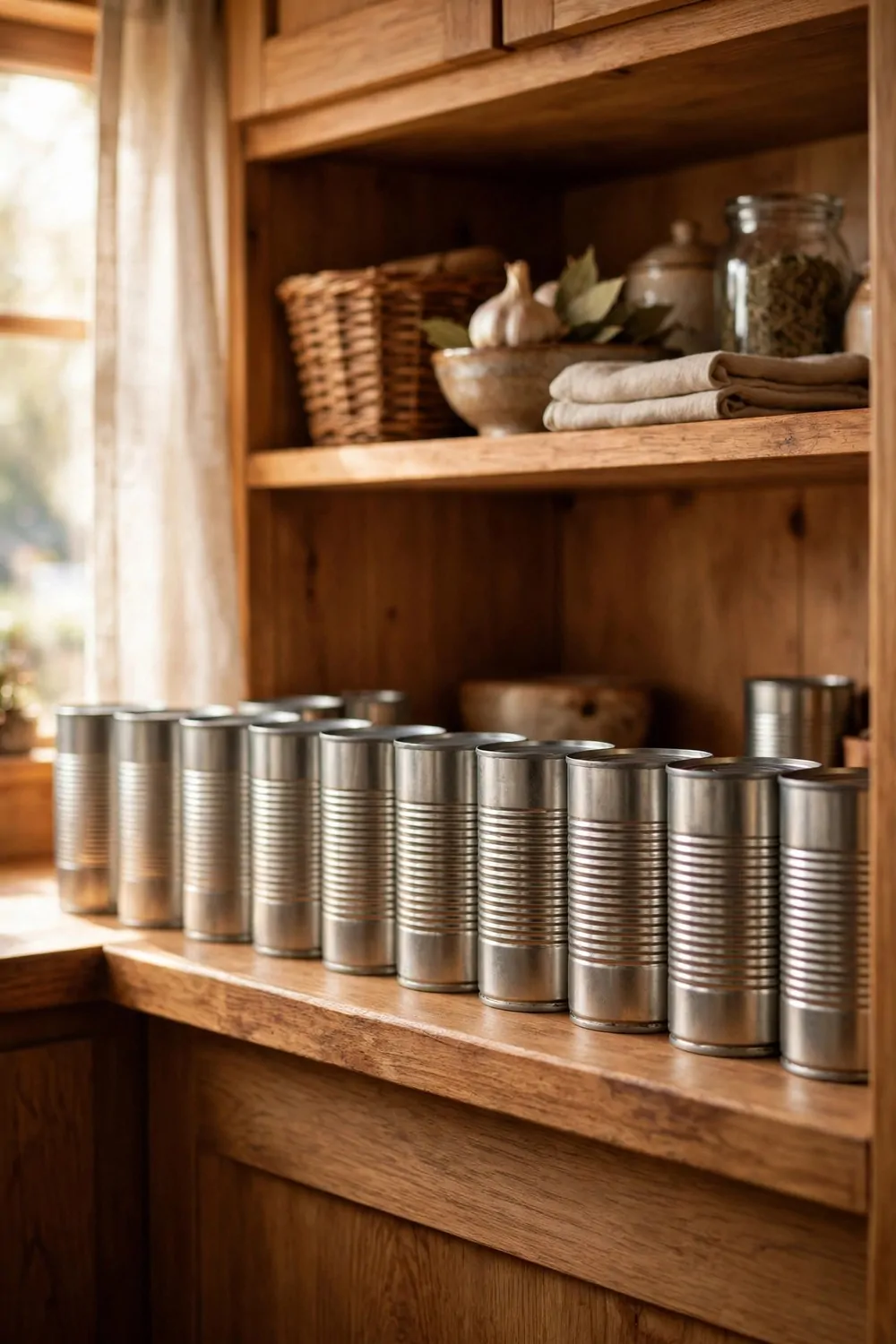
Cans are heavy, and they like to hide. I used to stack them two deep, and the ones at the back stayed there for years.
Now they stand in one row, labels facing out, like books on a shelf. I can see every can in a second.
I group them by type. Tomatoes together, beans together, and soup in its own little group at the end.
When I buy new cans, they go behind the old ones. The old ones get used first, and nothing sits there for years.
One row takes more shelf space than a stack. But it saves money, because I stop buying cans I already own.
I check the dates when I shop. A can with a near date moves to the front, where I will see it every day.
Keep the heavy cans low. A can of tomatoes falling from the top shelf is loud, and it hurts if it lands on your foot.
A single row of cans looks tidy, and it works like a little shop shelf. You see what you have, and you use what you see.
A Turntable for the Deep Corner
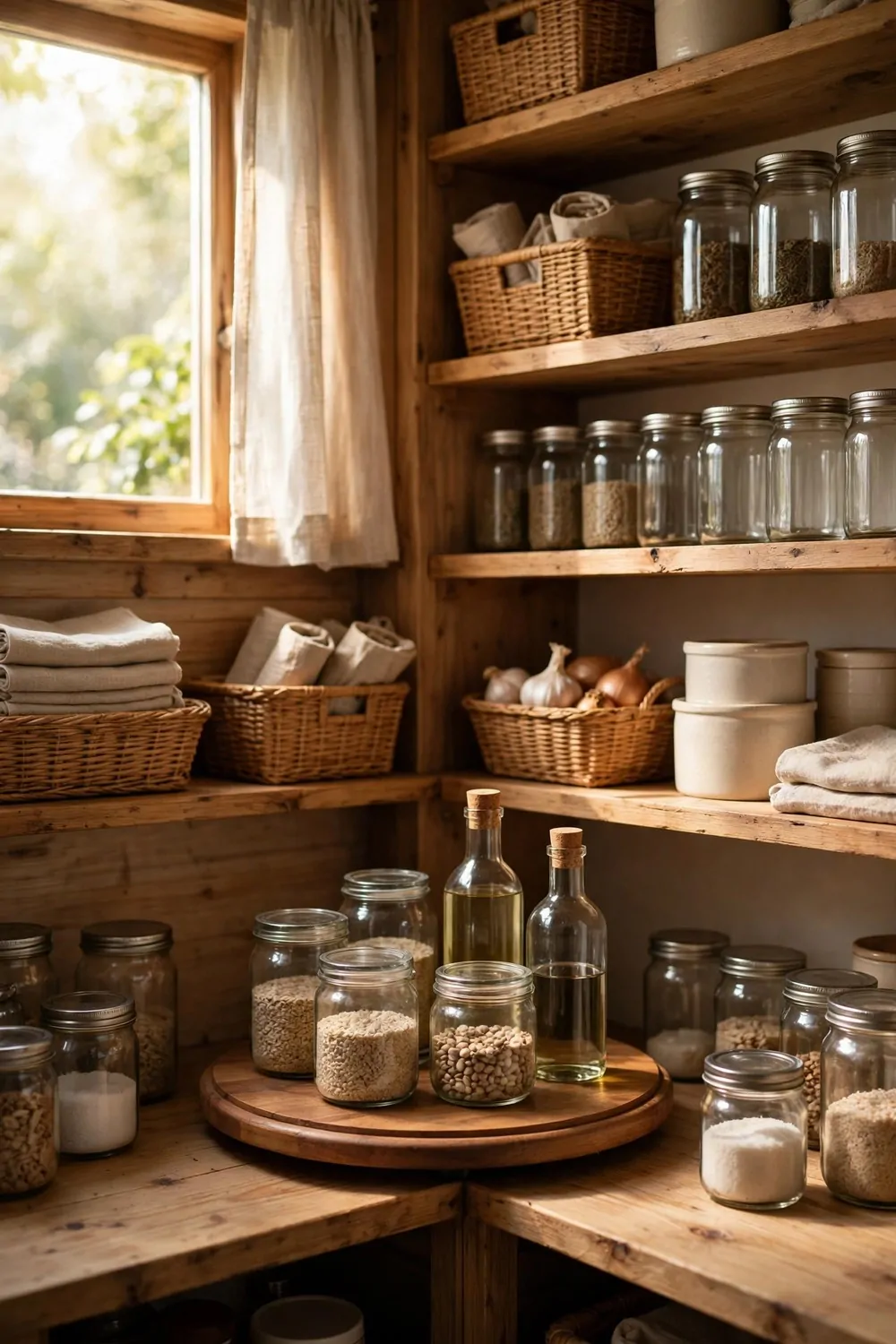
Every pantry has a deep corner. Things go in there and never come out again. Mine held a jar of jam from two years ago.
A turntable fixed that corner. It is just a round tray that spins, and it brings the back of the shelf to the front.
I put the sauces and small jars on it. One spin and I can see everything, even the stuff at the very back.
The turntable has a little edge around it. That edge matters, because jars slide off a flat tray when you spin it fast.
I spin it slow now. I learned that lesson after a jar of honey took a trip across the kitchen floor.
Deep corners are perfect for a turntable. Shallow shelves do not need one, and the tray would just get in the way.
Keep the turntable light. If you load it with heavy jars, it turns slow and wobbles, and that defeats the whole point.
The corner that used to eat my jars is now the easiest spot in the pantry. One spin, and dinner is back on track.
Breakfast in One Spot
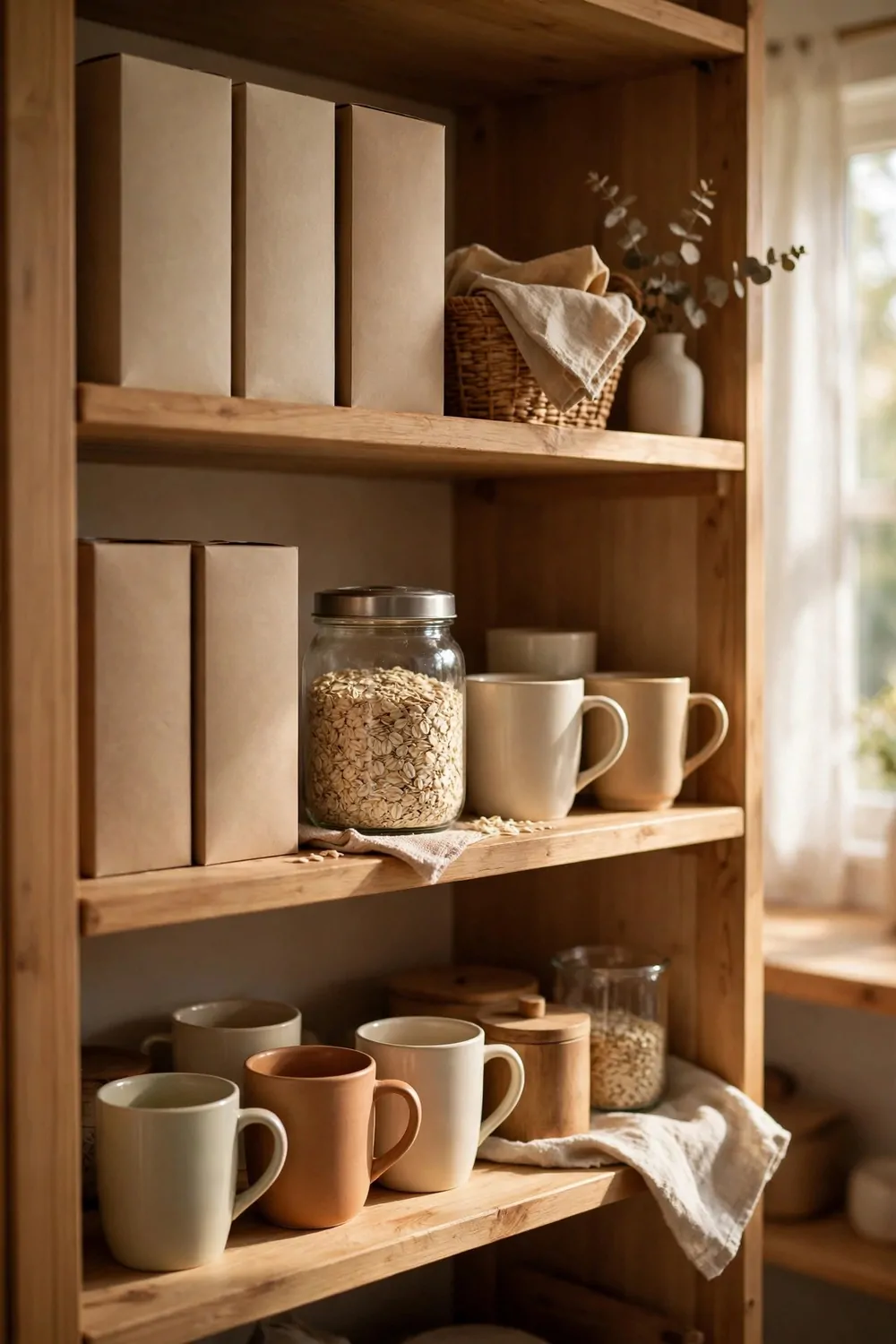
Mornings are busy in my house. Nobody has time to hunt for the oats while the kettle is boiling.
So breakfast lives in one spot now. One shelf, one corner, and everything for the morning in arm’s reach.
The cereal, the oats, and the honey sit together. The mugs hang just below, where small hands can reach them.
I put the breakfast shelf at a height my kids can reach. They make their own breakfast now, and I get five quiet minutes.
- Oats and cereal in clear jars
- Honey and jam in small pots
- Tea bags and a little tin of sugar
- Bowls stacked right below the shelf
When the breakfast things live together, mornings run smoother. Nobody opens five doors to make one bowl of cereal.
I fill the jars on Sunday night. That way Monday morning starts full, and nobody meets an empty jar before school.
Keep the breakfast spot away from the cooking shelf. Morning hands and dinner hands should not fight for the same space.
One spot for breakfast sounds small, but it changed our mornings. The kitchen feels calm before the day even starts.
Baking Supplies Together
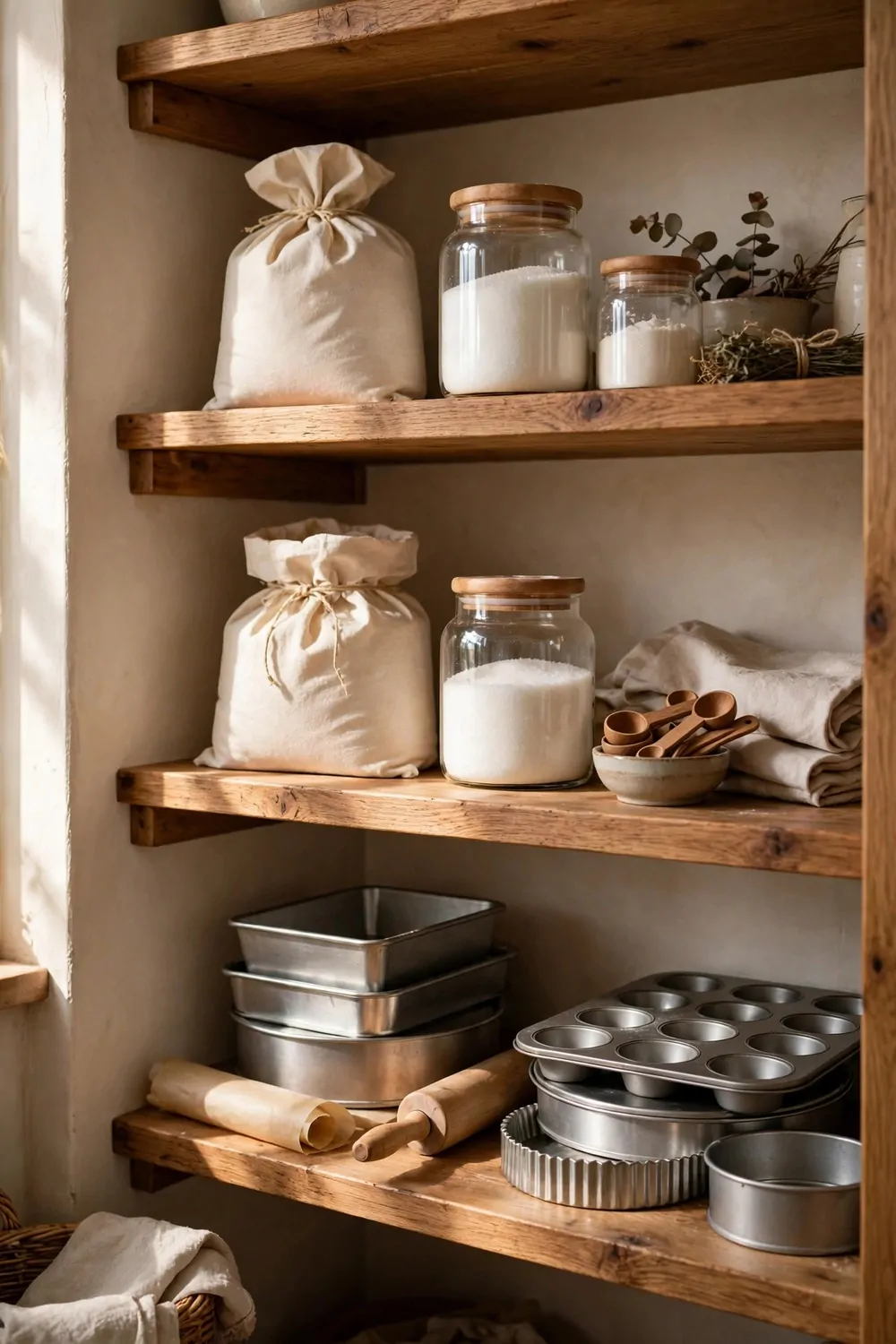
Baking needs a lot of little things. Flour, sugar, baking powder, and the vanilla all have to be there at the same time.
I keep them all in one box on a low shelf. When I want to bake, I lift the box out and everything comes with it.
The box has sides high enough to hold the bags upright. Nothing tips over when I pull it out.
I used to keep baking things on three different shelves. I spent more time looking for the baking powder than actually baking.
The flour lives in a jar with a tight lid. The sugar lives next to it, and the small packets sit in a little cup at the end.
When I run low on something, I write it on the shopping list right away. Baking day with no flour is a sad day.
Keep the baking box low and easy to lift. A heavy box on a high shelf is an accident waiting to happen.
Baking feels fun again when everything is in one place. You open the box, and the whole project is right there.
A Step Stool That Lives Nearby
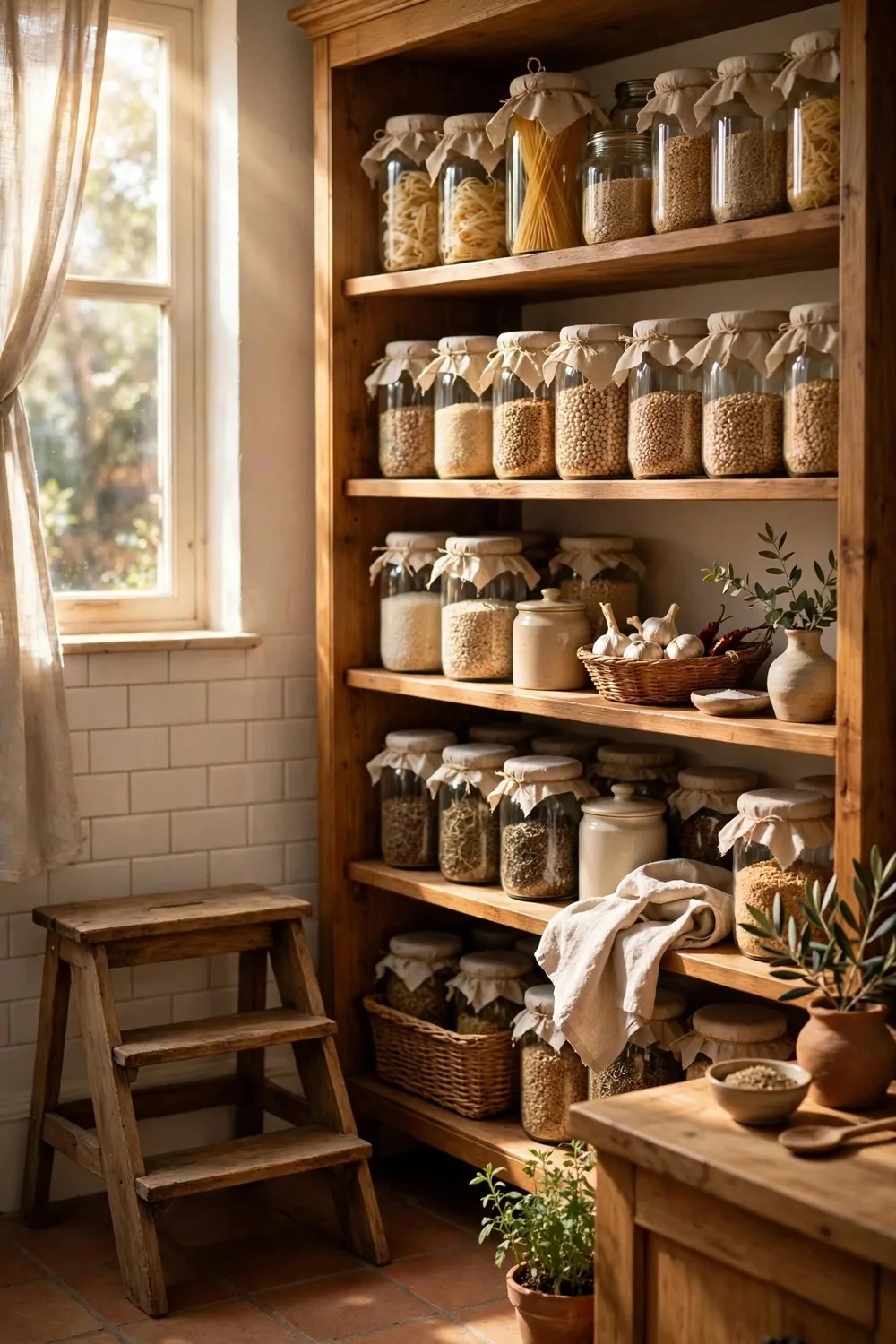
My top shelf is too high for me. I am not tall, and the top shelf knows it.
A small step stool lives right next to the pantry now. It folds flat, and it leans against the wall by the door.
I reach the top shelf in two seconds now. No more chairs dragged across the kitchen, and no more standing on tiptoe.
The stool is light enough for my kids to move. They use it too, and they put it back where it lives.
I picked a stool with a wide top step. Narrow steps wobble, and wobbling on a stool is not fun at all.
Keep the stool close to the pantry, not in another room. If it lives far away, you will not use it, and the top shelf will stay a mystery.
I use the stool every week, even if it is just to check what is up there. A top shelf you never see is just a hiding place.
A step stool is not fancy, but it makes the whole pantry usable. Every shelf counts when the pantry is small.
Dry Goods in Airtight Boxes
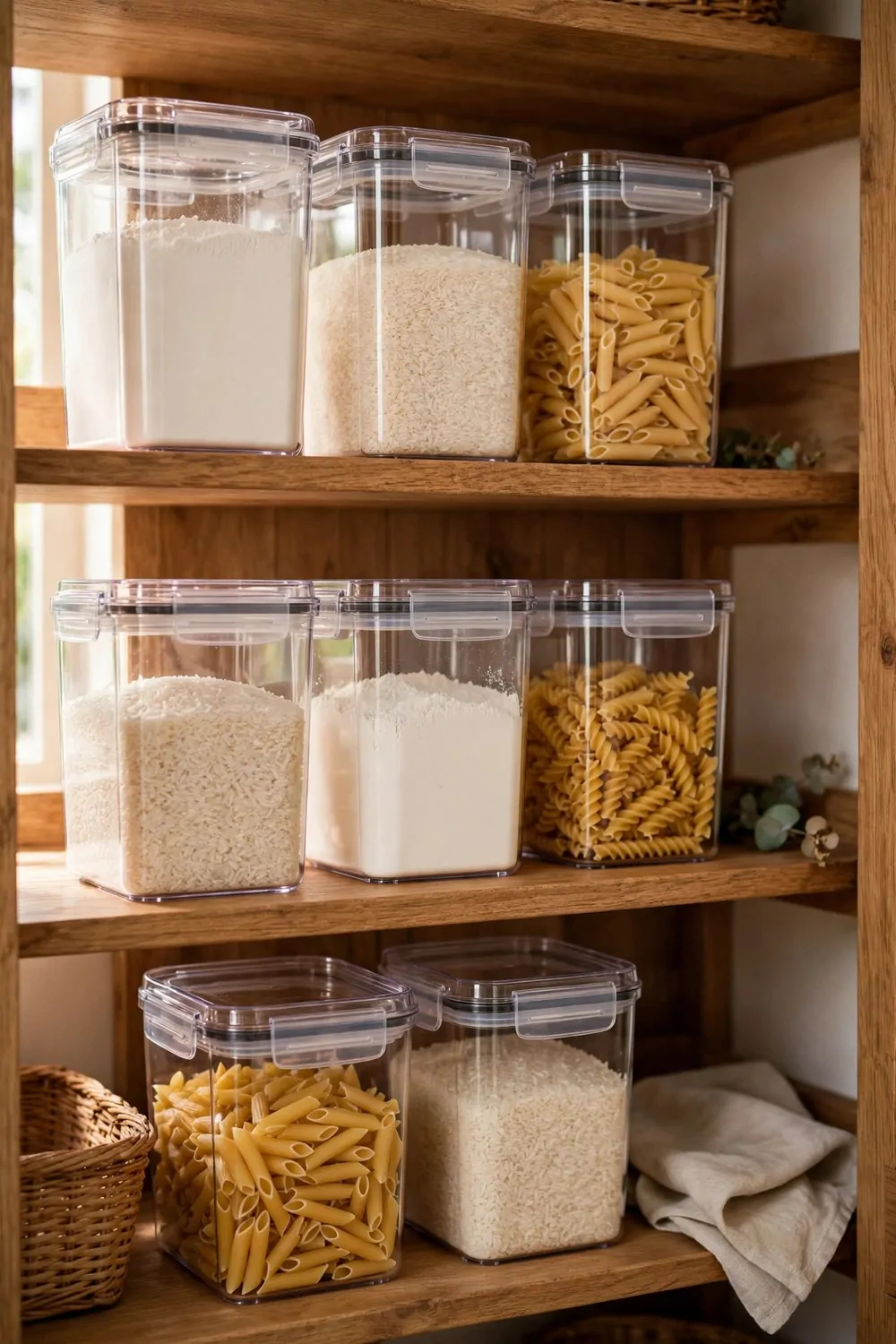
Dry goods go stale fast in an open bag. Pasta goes soft, rice picks up smells, and flour gets little visitors.
Airtight boxes stop all of that. The lid clicks shut, and the food inside stays fresh for weeks.
I moved my pasta, rice, and oats into clear boxes with lids that seal tight. The pantry looks tidier, and the food lasts longer.
Clear boxes are best. You can see how much is left without opening the lid, and that saves time on shopping day.
I wash the boxes before I refill them. Old crumbs at the bottom make the new food go stale faster.
Keep one box for each food. Mixing two kinds of pasta in one box sounds fine until you need the small one and find the big one.
Airtight does not mean forever. Dry goods still have a limit, so check the dates now and then.
| Food | Jar or box | How long it keeps |
|---|---|---|
| White rice | Tall airtight box | About a year |
| Dried pasta | Tall airtight box | About a year |
| Rolled oats | Wide airtight box | About six months |
Good boxes cost a little more than bags, but they pay for themselves. Less food goes stale, and less food goes in the bin.
The Weekly Shop List on the Door
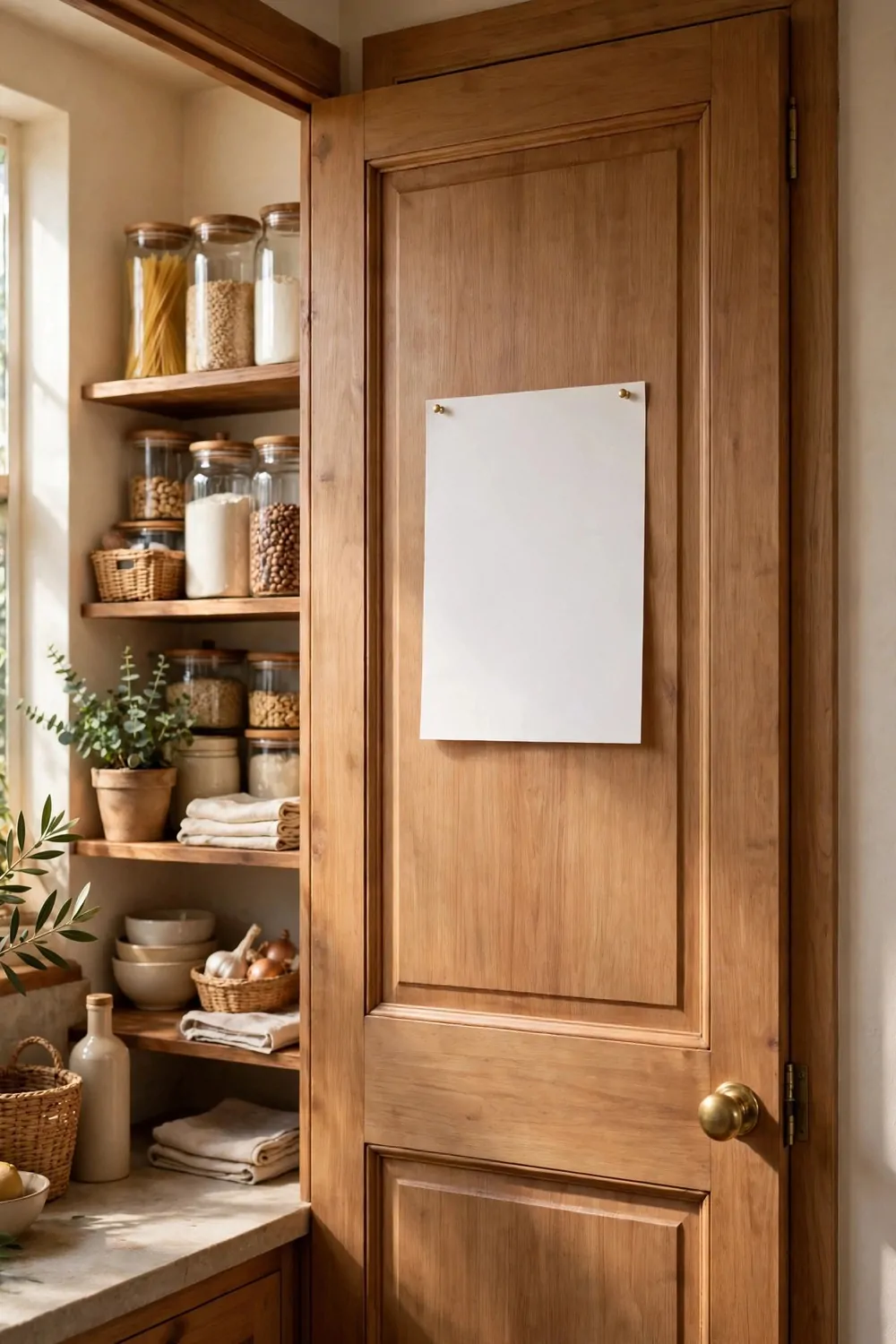
I used to forget one thing on every shopping trip. Every single time, it was the one thing I needed most.
Now the shopping list lives on the pantry door. A small notepad hangs there, and a pen hangs next to it.
When I use the last of something, I write it down right away. The list grows itself, and I never forget the important thing.
The door is the perfect spot for the list. You see it every time you open the pantry, which is about twenty times a day.
I cross things off when I buy them. That little line through a word feels better than it should.
My kids add to the list too. Their handwriting is wobbly, and I can still read most of it.
Keep the list short and real. If the list has forty things on it, nobody will read it, and the pen will stay in its place.
A list on the door means no more guessing in the shop. You walk in, you buy what is written, and you come home with everything.
Leftovers With a Plan
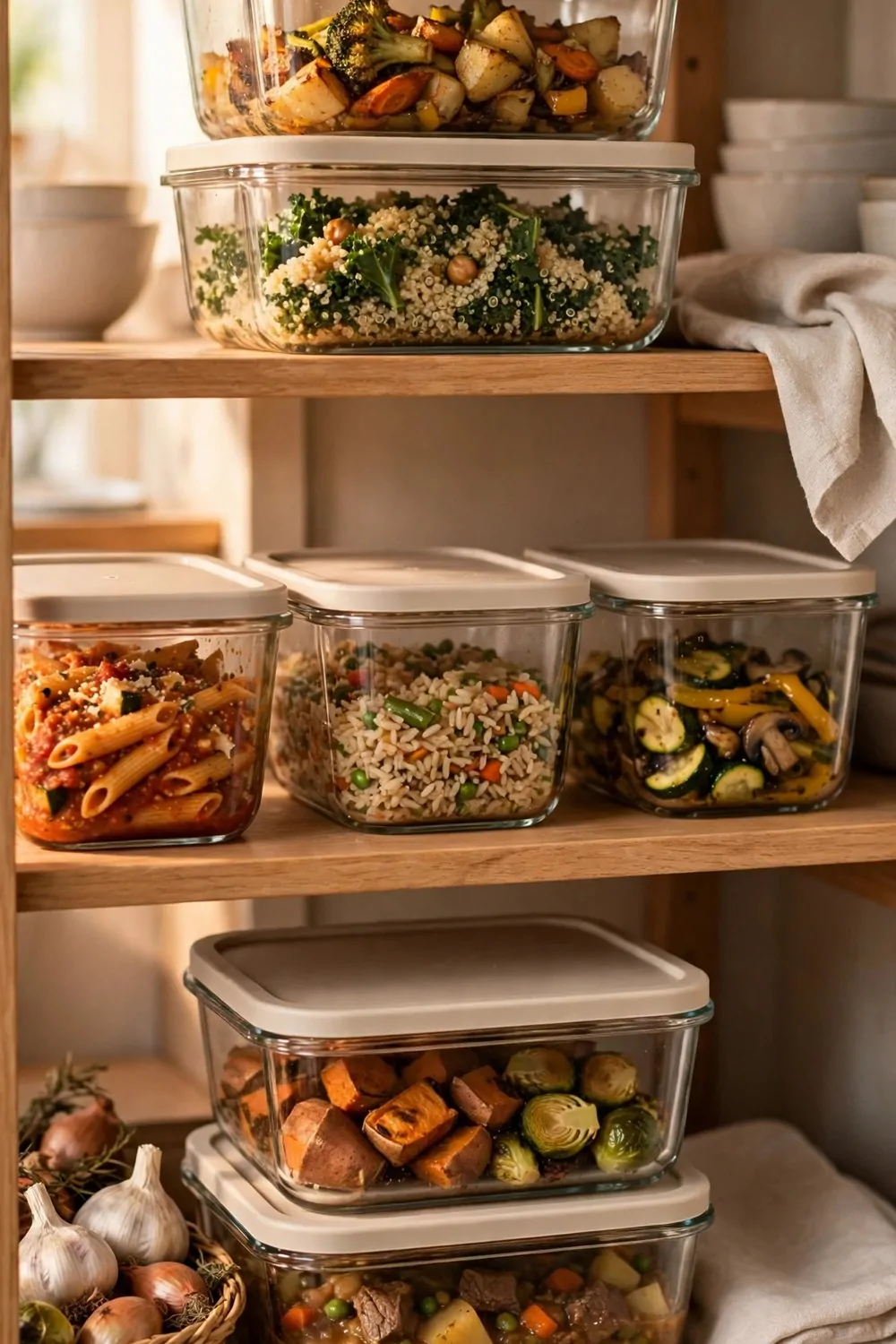
Leftovers are only useful if you can find them. Mine used to hide at the back of the fridge until they went bad.
Now leftovers have a plan. Every box gets a label with the day it was cooked, and it sits on one shelf only.
I use clear boxes so I can see what is inside. A mystery box is a box that gets thrown away.
The leftover shelf is at eye level in the fridge, right next to the pantry door. I see it every time I cook.
- One box for tonight’s dinner
- One box for tomorrow’s lunch
- Small boxes for little bits of rice or veg
- A label on every box with the day it was made
I plan one leftover night a week. We eat what is in the boxes, and the fridge starts the new week empty.
If a leftover is more than four days old, it goes. I do not argue with it, and I do not smell it twice.
Small boxes work better than one big one. A big box of mixed food is a puzzle nobody wants to solve.
Leftovers with a plan save money and save time. Dinner is already half made, and the bin stays empty.
Tea and Coffee in One Corner
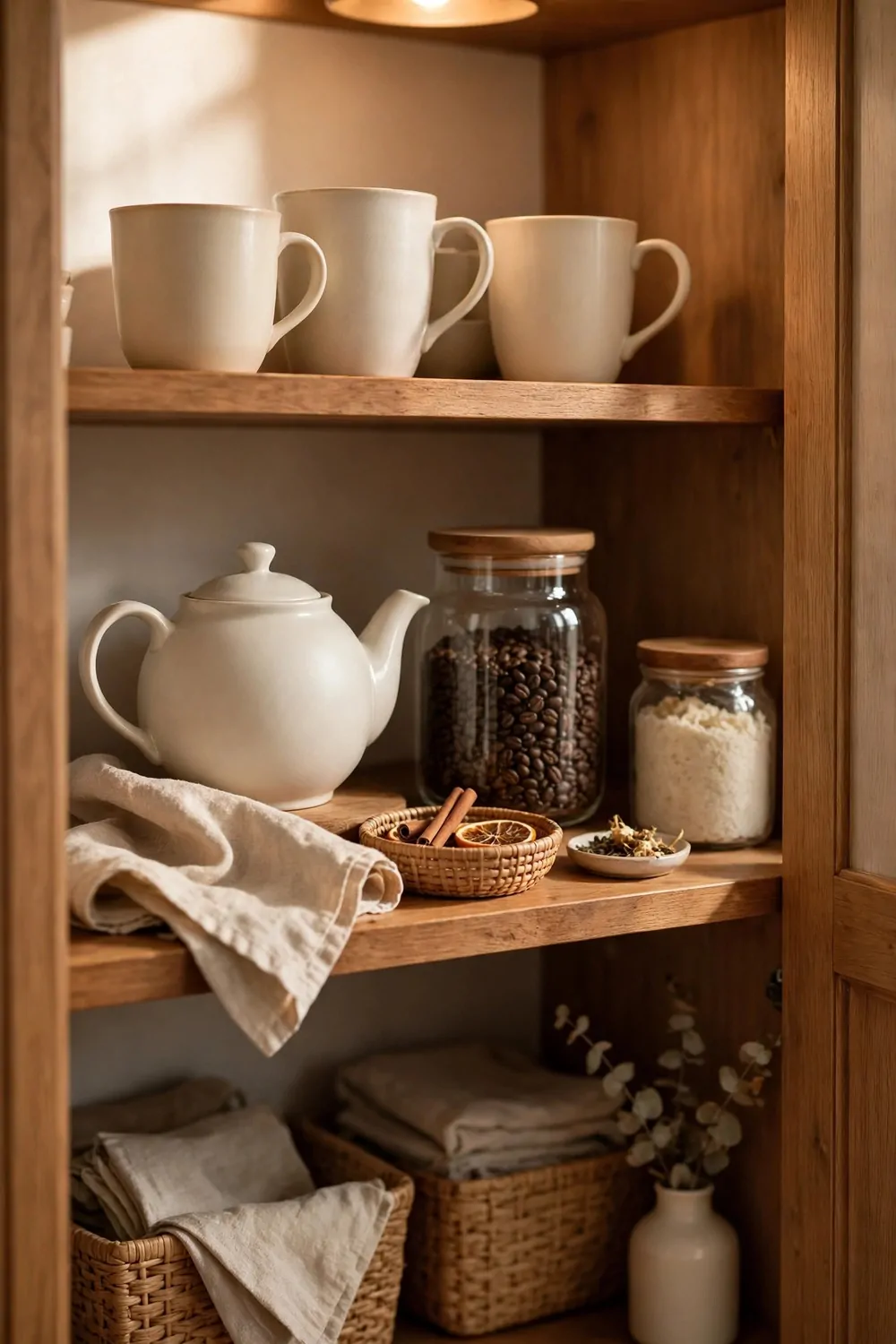
Tea and coffee are the first things I reach for in the morning. They deserve a corner of their own.
I keep the tea bags, the coffee, and the sugar in one corner of the pantry. The mugs hang on hooks just below.
The corner is small, but it holds everything. A little tray keeps the packets tidy, and the sugar pot sits in the middle.
I put the kettle next to the corner, not across the kitchen. Hot water should not have to travel far.
My morning drink takes two minutes now. Before, it took five, because the tea was on one shelf and the mugs were on another.
If you drink both tea and coffee, keep them apart in the corner. Tea picks up the smell of coffee, and coffee drinkers notice.
A little jar of honey sits in the corner too. It is for the days when the morning needs something sweet.
One corner for tea and coffee makes the morning feel easy. The day starts warm, and the kitchen starts calm.
Kids Snacks at Kid Height
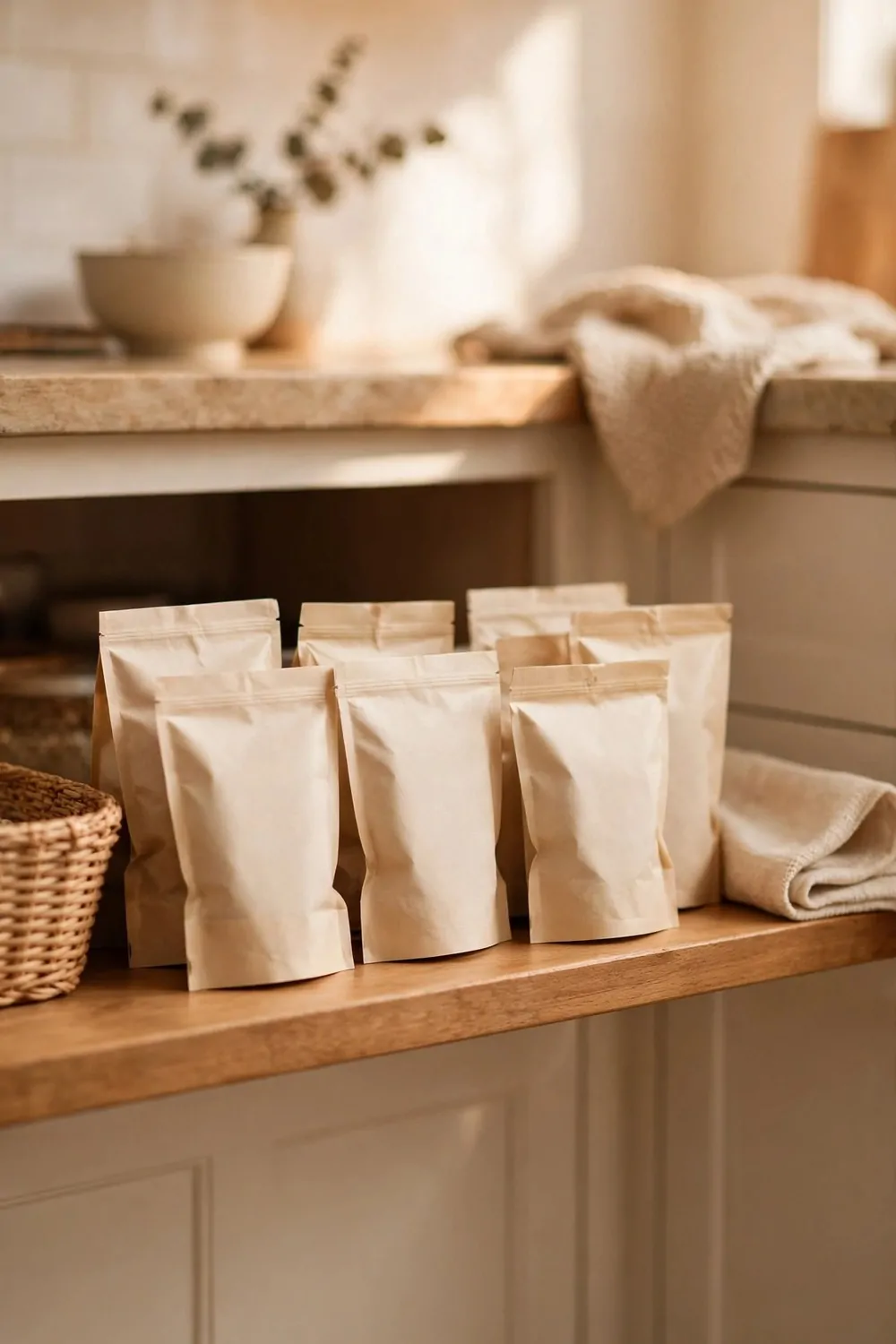
Kids cannot reach the top shelf, and they should not have to climb for a snack. That is how jars fall.
So the kids snacks live on the lowest shelf. It is their shelf, and they know it is theirs.
I put their crackers, fruit, and little pots of yoghurt there. Everything is in small packets they can open by themselves.
They pick their own snack now, and they put the packet back when they are done. Most of the time, anyway.
The shelf is low enough that I can see it from the kitchen door. I check it while I cook, and I fill it on shopping day.
I keep the treats on a higher shelf, out of easy reach. Treats are for after dinner, and the low shelf is for anytime snacks.
A small basket on the low shelf holds the loose packets. It keeps them from sliding all over the shelf.
When kids can reach their own snacks, the kitchen gets quieter. They feel grown up, and I get my hands back.
A Small Board for Meal Notes
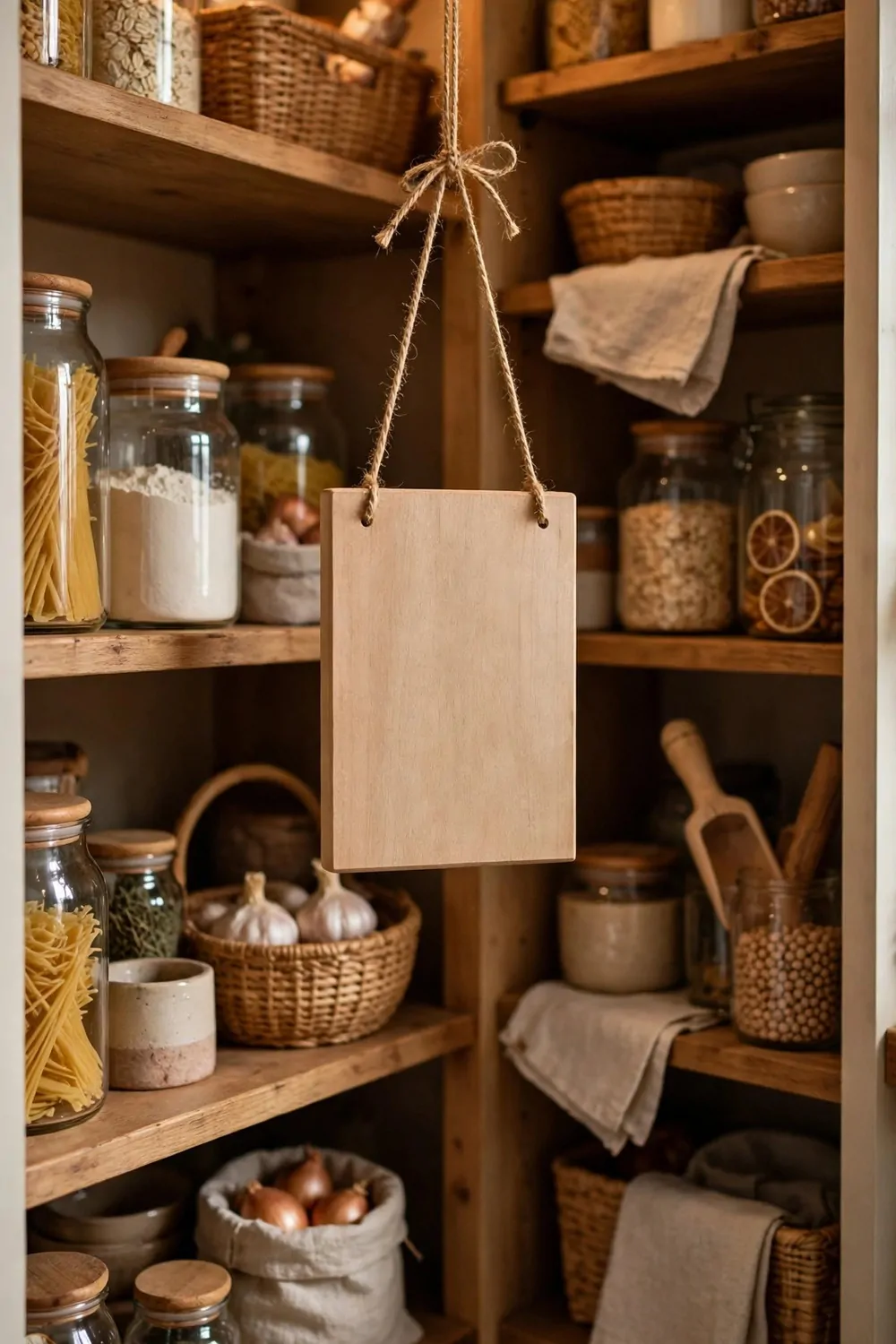
I forget meal ideas the second I think of them. A good idea at lunch is gone by dinner.
A small board on the pantry door catches those ideas. I scribble the meal down, and it waits there for me.
The board is just a little white board with a pen on a string. Nothing fancy, and it works every day.
I write the meals for the week on Sunday night. Three or four meals is enough, and the rest of the week fills itself in.
When I see a meal on the board, I check the pantry first. If I have the things, the meal stays. If not, it goes on the shopping list.
My kids write their requests on the board too. Pasta shows up a lot. I am not surprised.
Keep the board small and close to the food. A big board in another room is just a wall decoration.
A meal board takes the guesswork out of dinner. You open the pantry, you look at the board, and you already know what to cook.
Oil and Vinegar by the Stove
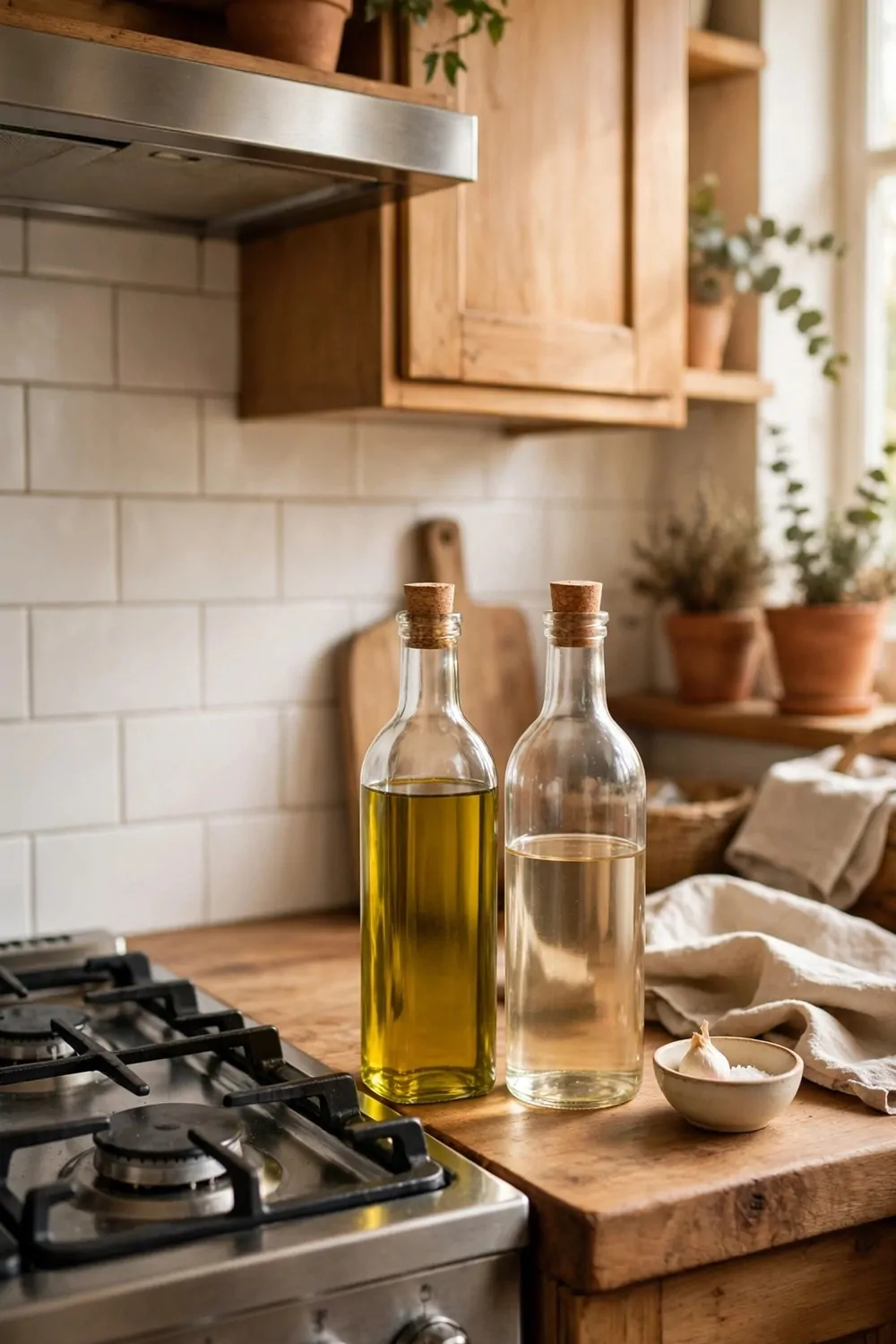
Oil and vinegar belong near the stove, not deep in the pantry. You reach for them while the pan is hot.
I keep one bottle of each on a small tray beside the stove. The tray catches drips, and the bottles stay clean.
The big bottles stay in the pantry. The small ones by the stove get refilled when they run low.
I used to keep the oil in the pantry, and every dinner started with a trip across the kitchen. The pan did not like waiting.
The tray is important. Oil drips, even from a careful hand, and a sticky shelf is no fun to clean.
Keep the bottles away from the direct heat. Oil goes bad faster when it sits next to a hot stove all day.
One bottle of each is enough by the stove. Five bottles is a collection, and collections belong in the pantry.
Oil and vinegar by the stove make cooking flow better. You grab, you pour, and you keep cooking without a pause.
A Tidy Top Shelf for Rarely Used Things
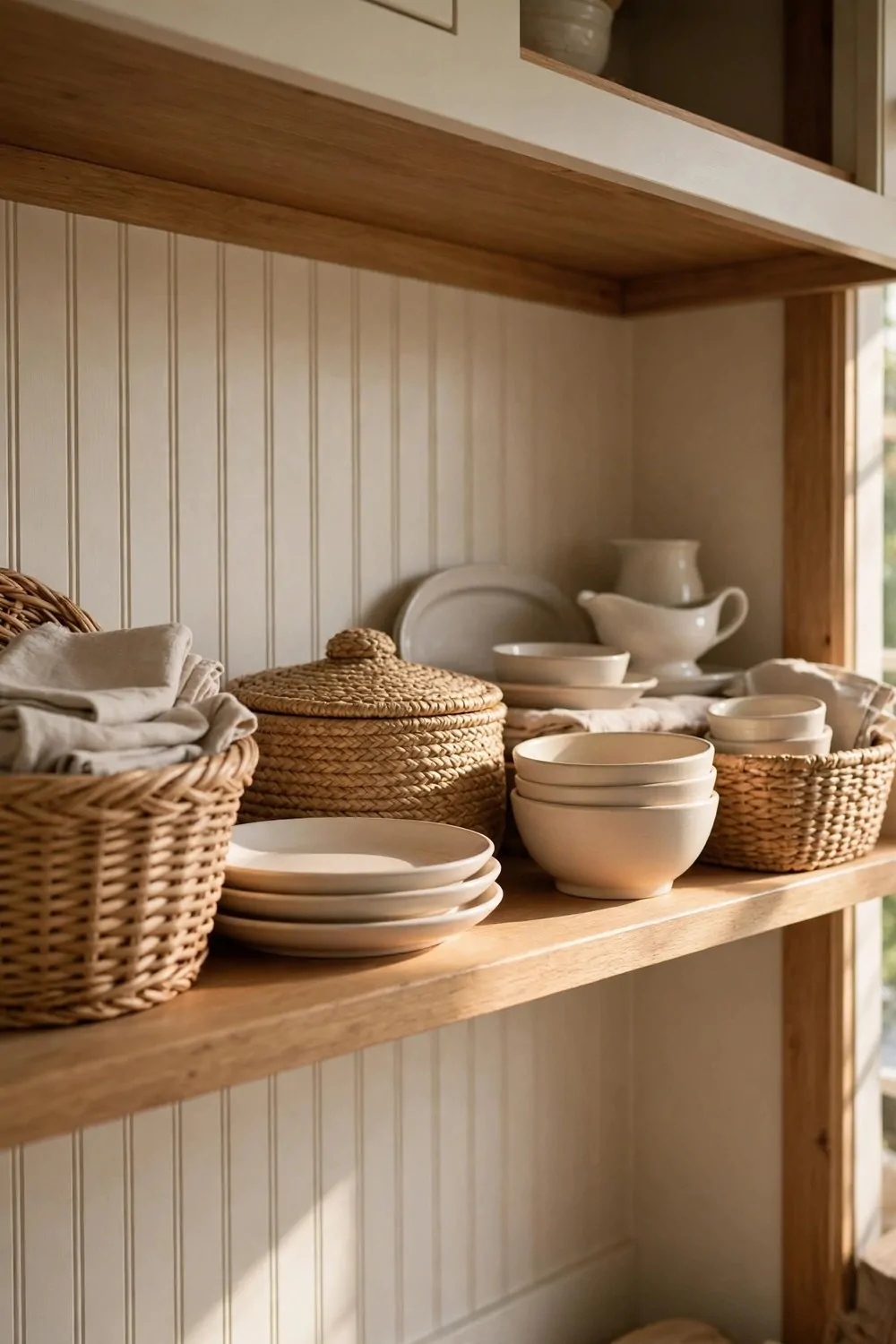
The top shelf is the hardest shelf to reach, so it should hold the things you use the least. That sounds obvious, but my top shelf used to hold the rice.
Now it holds the big pot I use for parties, the extra baking tins, and the picnic things. I reach up there about once a month.
I put the rarely used things in boxes up there. The boxes keep the dust off, and I can pull one down in a second.
Label the boxes, even up high. You do not want to pull down three boxes to find the one with the cake tins.
Keep the top shelf light. Heavy things up high are hard to lift down, and they hurt when they slip.
I check the top shelf once a season. Things creep up there and stay, and a quick check keeps it honest.
If something has sat on the top shelf for a year without being used, it goes. A pantry is not a storage unit.
A tidy top shelf makes the whole pantry feel bigger. The everyday things stay low, and the rare things wait their turn.
The Five-Minute Pantry Reset
A pantry gets messy a little bit every day. A jar moves here, a packet falls there, and by Friday it looks tired.
A five minute reset fixes it. I do it on Friday night, right after dinner, while the kitchen is already warm.
The reset is not a deep clean. It is just a quick tidy, and it keeps the pantry from sliding back into a mess.
I start by pulling out the things that do not belong. A toy, a sock, and once, a library book. They all go back where they live.
Then I straighten the jars and push everything to the front of the shelf. A straight row looks tidy, and it is easier to see.
I wipe the shelf fronts with a damp cloth. Crumbs and sticky spots disappear, and the pantry smells fresh again.
The last step is the list. I check what is low, and I write it on the shopping list on the door.
| Step | What to do | How long |
|---|---|---|
| Pull out strays | Take out anything that does not belong | One minute |
| Straighten the shelves | Push jars forward and line them up | Two minutes |
| Wipe and check | Wipe the fronts and note what is low | Two minutes |
Five minutes on a Friday saves you twenty minutes of hunting during the week. It is the smallest job with the biggest payoff.
A Pantry That Smells Like Home
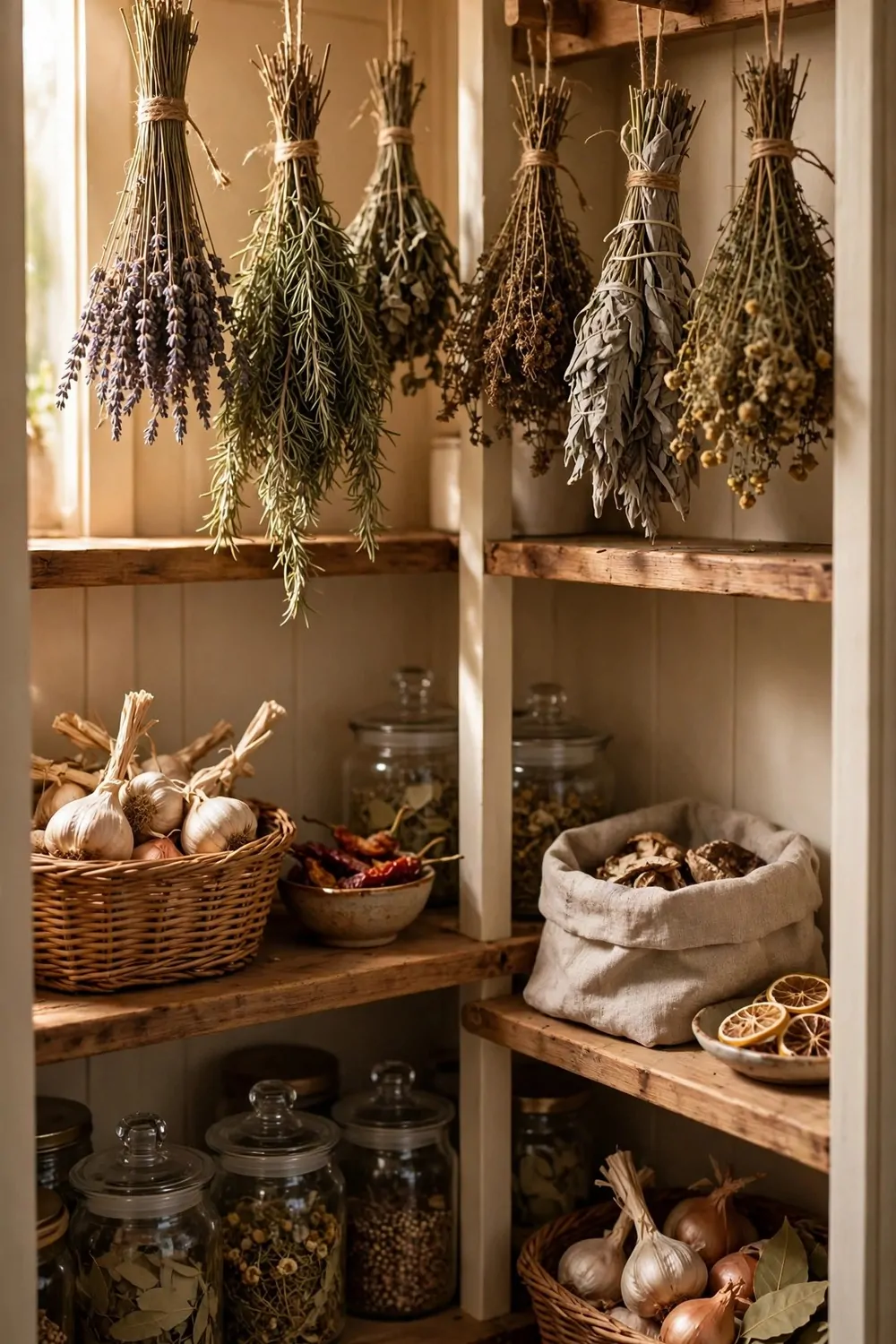
A pantry has a smell. Mine used to smell like old onions and a bag of flour that had been open too long.
Now it smells like home. A little cinnamon, a little coffee, and clean wood from the shelves.
I keep a small open jar of baking soda at the back of the pantry. It soaks up the smells I do not want.
A few dried orange slices in a little bowl add a soft sweet smell. They last for weeks, and they cost almost nothing.
I wipe up spills the day they happen. A spill left for a week turns into a smell that stays for a month.
The spice jars stay shut tight. Open spices fill the whole pantry with their smell, and then the tea tastes like cumin.
I air the pantry out once a week. I open the door wide while I cook, and fresh air does the rest.
A pantry that smells good makes cooking feel good. You open the door, you breathe in, and dinner already feels like home.
Keep Reading
If you liked making your pantry work harder, you will like these cozy office ideas too. They use the same trick. Small changes, one spot at a time, and a room that feels better to be in.
Pick one to read next, and see which idea fits your home best.
- 19 Cozy Home Office Aesthetic Looks You’ll Want to Recreate
- 18 Cozy Office Space at Work Ideas That Boost Your Mood
- 20 Cozy Office Space at Home Ideas for Better Focus
Start with one idea this week, like the clear jars or the snack basket, and let your pantry grow calmer one shelf at a time. Cooking feels easier when everything has a home, and your kitchen will thank you for it.