20 Cozy Office Space at Home Ideas for Better Focus

For one week I kept a little list on my desk. Every time my mind wandered, I wrote down what pulled it away, and by Friday the list had forty one lines. Only three of those lines were about real work.
The rest were small things. A cold room, a noisy phone, a messy desk, a dry throat, a chair that hurt my back, and a mind that kept jumping to chores. That list showed me my focus is a room problem, not a brain problem.
So I fixed the room, one small piece at a time. These twenty ideas are that list, turned into a calm home office that helps you stay on task, and you can start with just one today.
A Door You Can Close
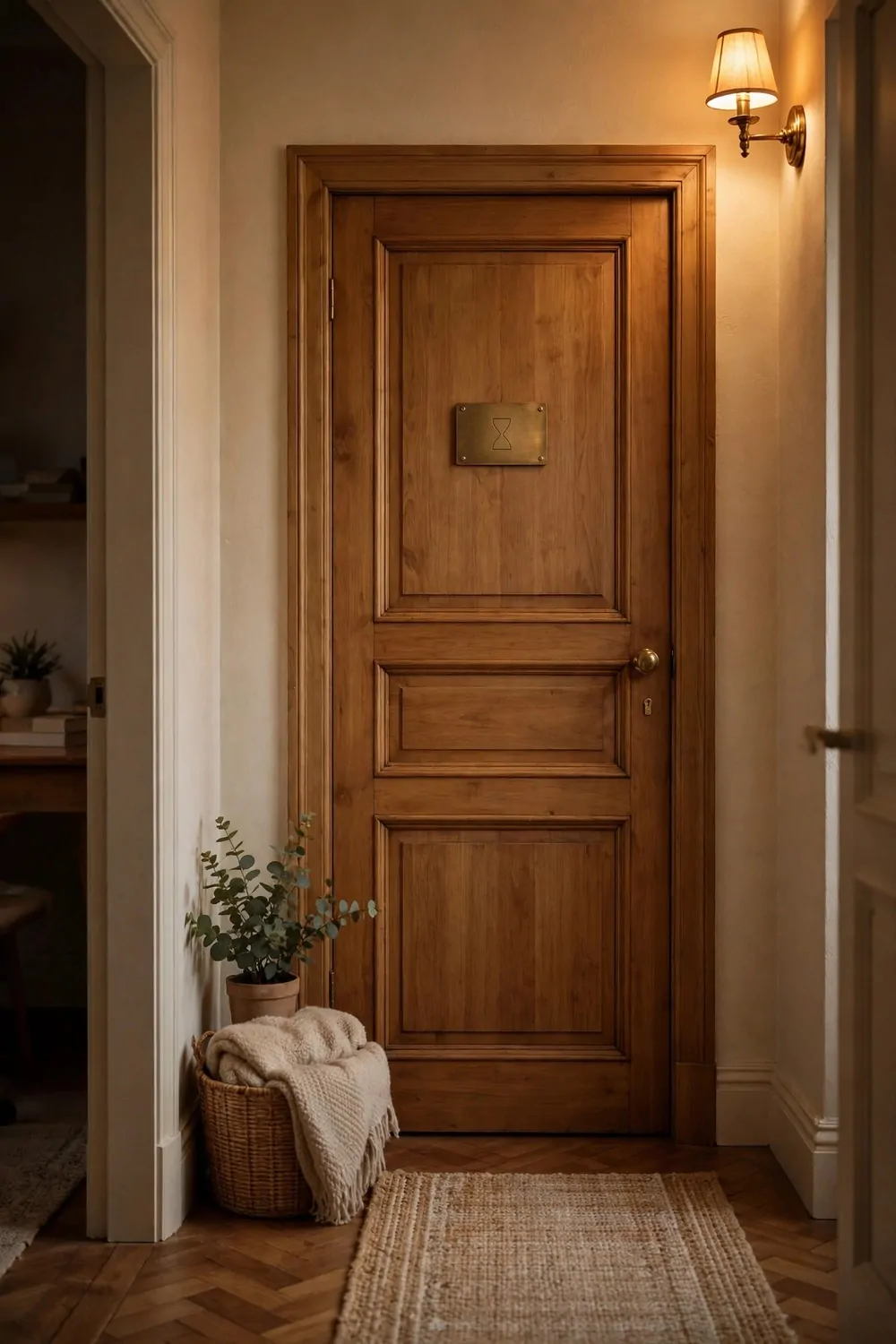
A door you can close is the first gift you give your focus.
It tells your brain that work has started. It tells the rest of the house that you are busy for a little while. That one small sound, the soft click, can change your whole morning.
You do not need a big room for this to work.
If your door does not close well, fix the little things first. A loose handle, a door that sticks, or a gap that lets sound in can all be fixed in a few minutes. A smooth door feels calm, and calm helps you think.
I keep a small hook on the back of my door. I hang a simple note there when I need quiet time. It says I am working, please come back soon.
My family learned what that note means in one week. They knock softly, they wait, and they know I will come out soon. That respect makes my work time feel safe.
If you work in a shared room, a door can still help. A folding screen, a curtain on a rail, or even a tall shelf can mark the edge of your work space. It is not perfect, but it still tells your mind where work lives.
Close the door when you start. Open it when you finish. That simple move gives your day a clear start and a clear end, and your focus will thank you for it.
A Desk That Faces the Room
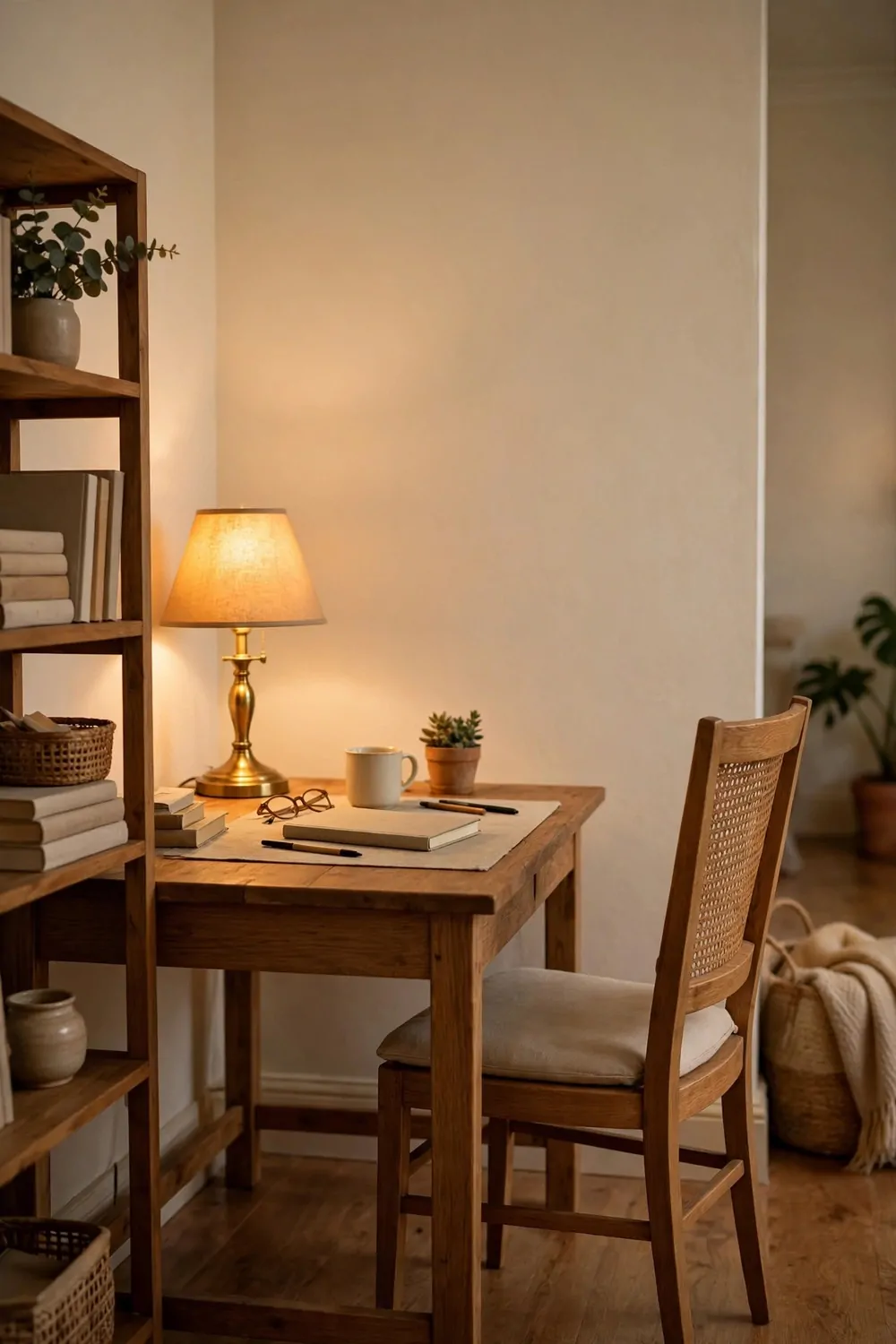
I used to sit with my back to the room, and I always felt watched by the mess behind me.
Now my desk faces into the room, and my back feels safe. I can see the door, I can see the window, and I can see when someone walks in. That small change made my shoulders drop.
Facing the room also helps me stop turning around to check things. My eyes stay forward, my hands stay on my work, and my mind stays in one place for longer.
Try it for one day and see how it feels. Move your desk a little, even if it is only a small turn. You may find that you breathe easier when you can see the whole room.
Keep the wall behind your desk clear if you can. A plain wall, a small shelf, or one soft picture is enough. Too much stuff behind you pulls your eyes back again and again.
I like to sit so the light comes from the side, not straight into my eyes. That way I can see my screen and still see the room. It feels open, but not bright in a hard way.
If your desk is stuck against a wall, do not worry. Put a small mirror on the wall, or keep the space in front of you very tidy. A clear view in front of you can feel just as calm as a clear view behind you.
Your desk should face your work, and your work should face you. When the room feels open and safe, your mind stops looking for trouble and starts looking at the job in front of you.
Morning Light on Your Left

Morning light is soft and kind, and it wakes your brain up in a gentle way.
I like it on my left side, because my right hand stays free and my screen stays clear. The light falls on my notebook, not on my eyes, and that makes reading feel easy.
Too much direct sun can hurt your focus. It makes you squint, it makes your screen hard to see, and it makes you hot. A little shade, a thin curtain, or a plant near the window can soften it.
Try to start work when the morning light is at its best. For me that is the first hour after I sit down. My mind feels fresh, my eyes feel awake, and my first job goes faster than I expect.
If your window is on the other side, that is fine too. Light from the right can work, as long as it does not hit your screen. Move your chair a little, or move your lamp, until the glare is gone.
On grey days I still sit near the window. Even soft light helps me feel more awake than a dark corner. A window gives your eyes a place to rest, and that rest helps you focus again.
Keep the window area clean and simple. A clear sill, one plant, and a mug is enough. When the view is calm, your mind feels calm too, and your work feels lighter.
Let the morning light do some of the work for you. It sets the mood, it wakes you up, and it tells your brain that this is work time, in the nicest way.
One Lamp for Cloudy Days
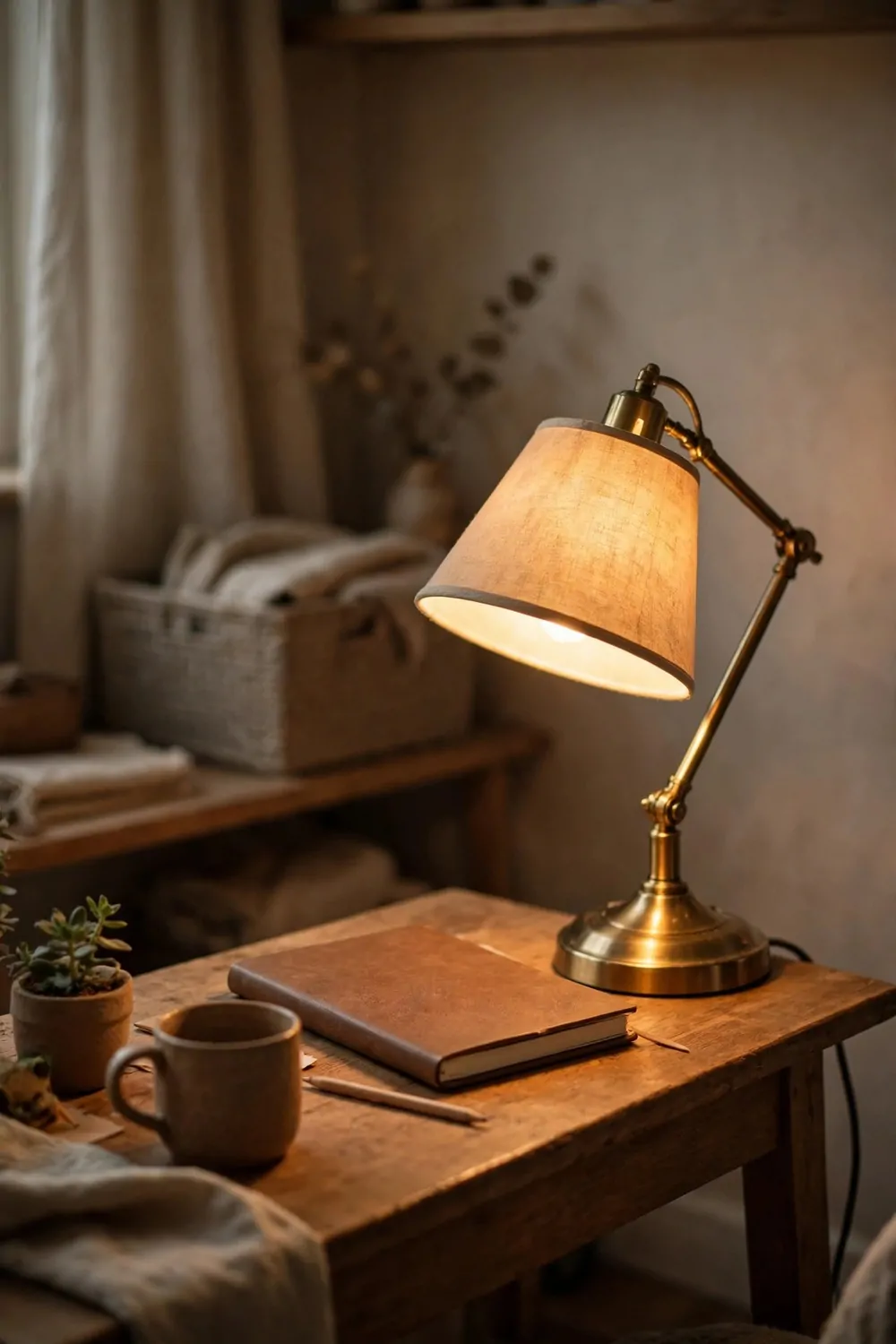
Cloudy days can make a room feel sleepy, and a sleepy room makes sleepy work.
One warm lamp can fix that. I turn mine on when the sky goes grey, and the room feels awake again. It is a small light, but it makes a big change.
Pick a lamp with warm light, not cold white light. Warm light feels soft on your eyes, and it feels like home. Cold light can feel like an office that never ends.
Put the lamp on the side where you write, not right behind your screen. That way your notebook is lit, your hands are lit, and your screen stays easy to read. A lamp that shines in your eyes will only make you tired.
I keep my lamp on a low setting most of the time. Bright light can feel harsh, but soft light feels calm. You want enough light to see well, not so much that you want to look away.
A lamp also helps on dark winter mornings. I turn it on before I start, and it feels like a small start signal. My brain sees the light and knows it is time to begin.
If you can, pick a lamp with a simple switch you can reach without standing up. That way you can turn it on and off as the day changes, without breaking your flow.
One lamp is enough. You do not need three lights and a bright ceiling. One warm pool of light on your desk can hold your focus all day.
A Chair That Keeps You Upright
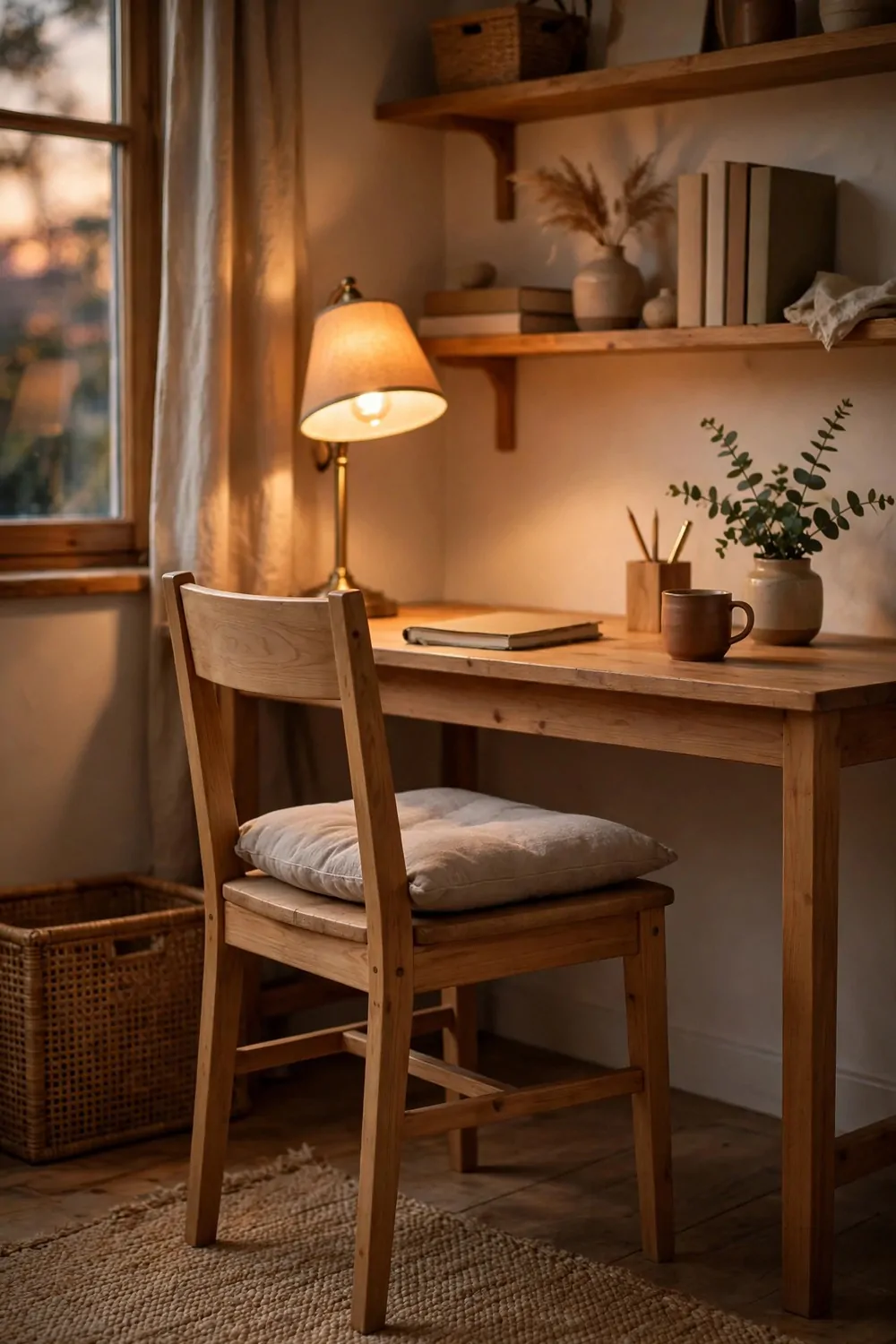
A good chair does not need to be fancy. It just needs to keep you upright and comfy.
When I sit up straight, I think straighter too. My back feels supported, my feet touch the floor, and my hands reach the desk without a stretch. That small comfort helps me work for longer.
A chair that is too soft can make you sleepy. A chair that is too hard can make you sore. Look for a middle ground, firm enough to hold you up, soft enough to sit on for an hour.
A small cushion can help a lot. I use a thin one behind my lower back, and it stops that dull ache I used to get by lunch. It is a tiny fix, but it changed my whole day.
Check your chair height before you buy anything new. Your knees should bend at a soft angle, and your elbows should rest near your desk. If your feet dangle, a small footrest or a stack of books can help.
Try not to sit in the same spot all day. Stand up, stretch, walk to the kitchen, and sit back down with fresh legs. Your chair is for work, not for staying still forever.
If your chair squeaks or wobbles, fix it or swap it. A noisy chair pulls your mind away every time you move. A quiet, steady chair lets you forget about sitting and just work.
Your chair is your work partner. Treat it well, pick one that fits you, and your focus will stay where it belongs, on the job in front of you.
The Phone Lives in a Drawer
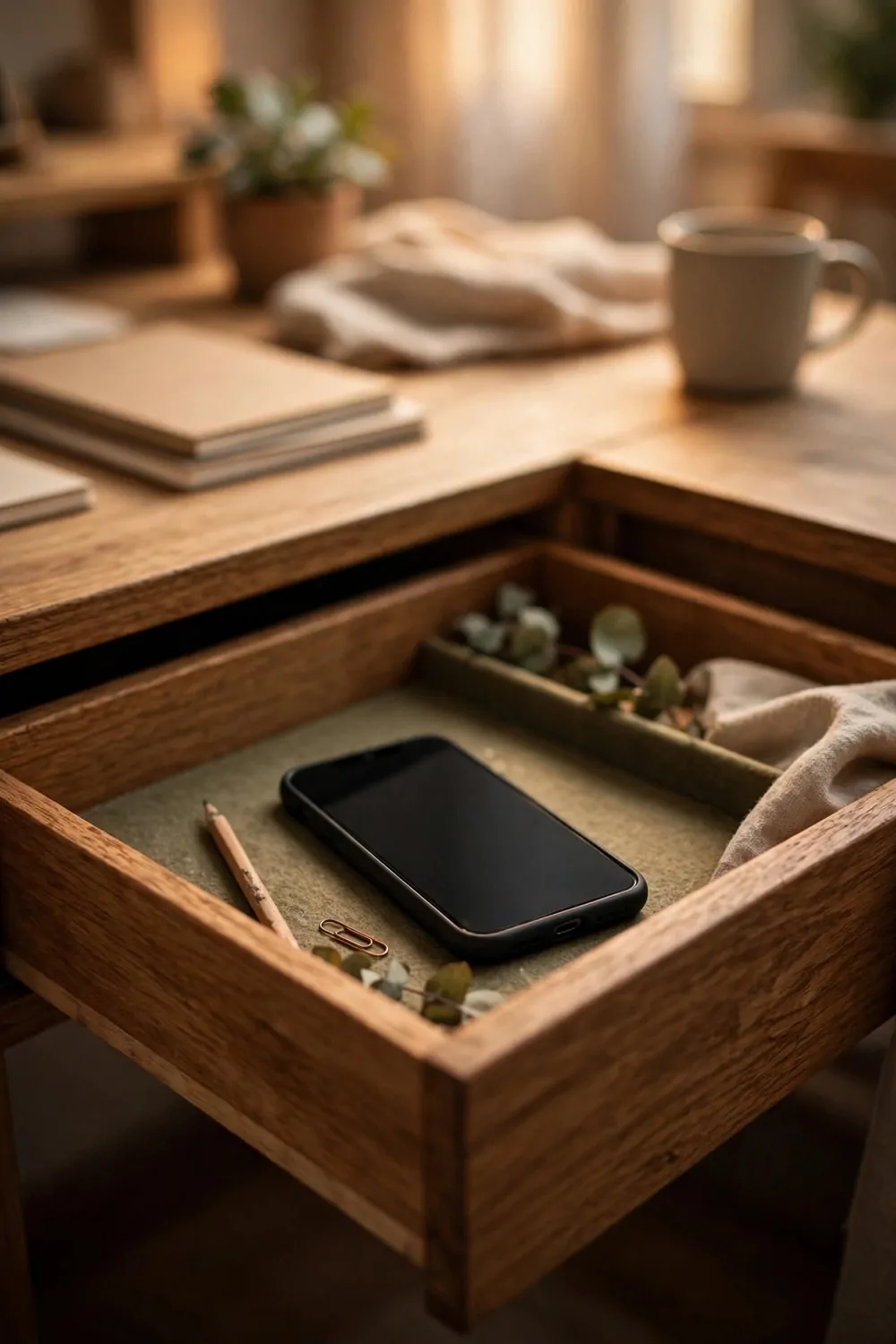
My phone used to sit next to my notebook, and it stole my focus every few minutes.
Now it lives in a drawer. I close the drawer, I hear the soft slide, and my mind knows the phone is gone for a while. That one move gives me back my morning.
It is not about willpower. It is about distance. When the phone is out of sight, I stop reaching for it without thinking. When it is in sight, my hand moves on its own.
Set a clear phone time so you do not worry. I check mine at lunch and again in the late afternoon. Knowing when I will check it makes it easier to leave it alone.
If you need your phone for work calls, put it face down and on silent. Let it ring only for the calls you must take. The rest can wait, and most of them do wait just fine.
Tell the people close to you about your drawer rule. They will learn to send a text instead of expecting a fast reply. That small talk saves a lot of stress.
Try these drawer rules for one week and see what changes:
- Phone in the drawer before the first work block
- Drawer closed, sound off, screen face down
- Check it only at set break times
- Take it out again only when work is done for the day
Your phone is a tool, not a boss. Put it in the drawer, close it gently, and let your work have the quiet it needs.
A Timer for Deep Work

A timer is a kind friend for your focus. It tells you when to start, and it tells you when to stop.
I set mine for twenty five minutes, and I work on one job only. No phone, no email, no quick check of something else. Just one job, for one short block.
When the timer rings, I stop. I stand up, I stretch, I drink some water, and I take a short break. That break is part of the work, not a break from it.
Short blocks work because they feel safe. Anyone can focus for twenty five minutes. A whole morning feels too big, but one small block feels easy, and easy gets done.
Use the table below to plan a simple morning. It is the same plan I use when my day feels full and my mind feels busy.
| Work block | Minutes | What I do |
|---|---|---|
| First focus block | 25 | One job only, phone in the drawer |
| Short break | 5 | Stand, stretch, drink water |
| Second focus block | 25 | Next job, or keep going on the same one |
| Longer break | 15 | Walk, snack, fresh air by the window |
Pick a timer you like. A small kitchen timer is nice because it ticks softly and it is not a screen. A phone timer works too, as long as the phone stays face down.
Do not chase a perfect day of timers. Some days you will do four blocks, some days you will do two. Both count, and both move your work forward.
Let the timer hold the time for you. You hold the work, the timer holds the clock, and together they make focus feel simple.
Noise That Helps, Not Hurts

Some noise helps you focus, and some noise pulls you away. The trick is to pick your sound on purpose.
I like soft rain sounds on busy days. They cover the small sounds of the house, and they give my brain a calm wall to lean on. My mind stops listening for every little noise.
Music with words can be tricky. The words fight with the words in my head, and my work slows down. Music without words, or very soft music, works much better for me.
Headphones can help, even with no sound at all. They tell the house that I am working, and they tell my ears to stay inside my own quiet world. It is a soft sign, not a wall.
Try different sounds for a few days and keep notes. Rain, soft piano, a fan, or plain quiet, each one feels different. Pick the one that lets you forget about sound completely.
If your home is noisy, do not fight it all day. Use sound to cover it for your hardest job, then take the headphones off for easy jobs. That way your ears get a rest too.
Keep the volume low. Loud sound can tire you out, even if it feels good at first. Soft sound stays in the back, and your work stays in the front.
Good noise is like good light. You should not notice it much, but you miss it when it is gone, and your focus feels steady while it is there.
A Plant That Marks Work Time
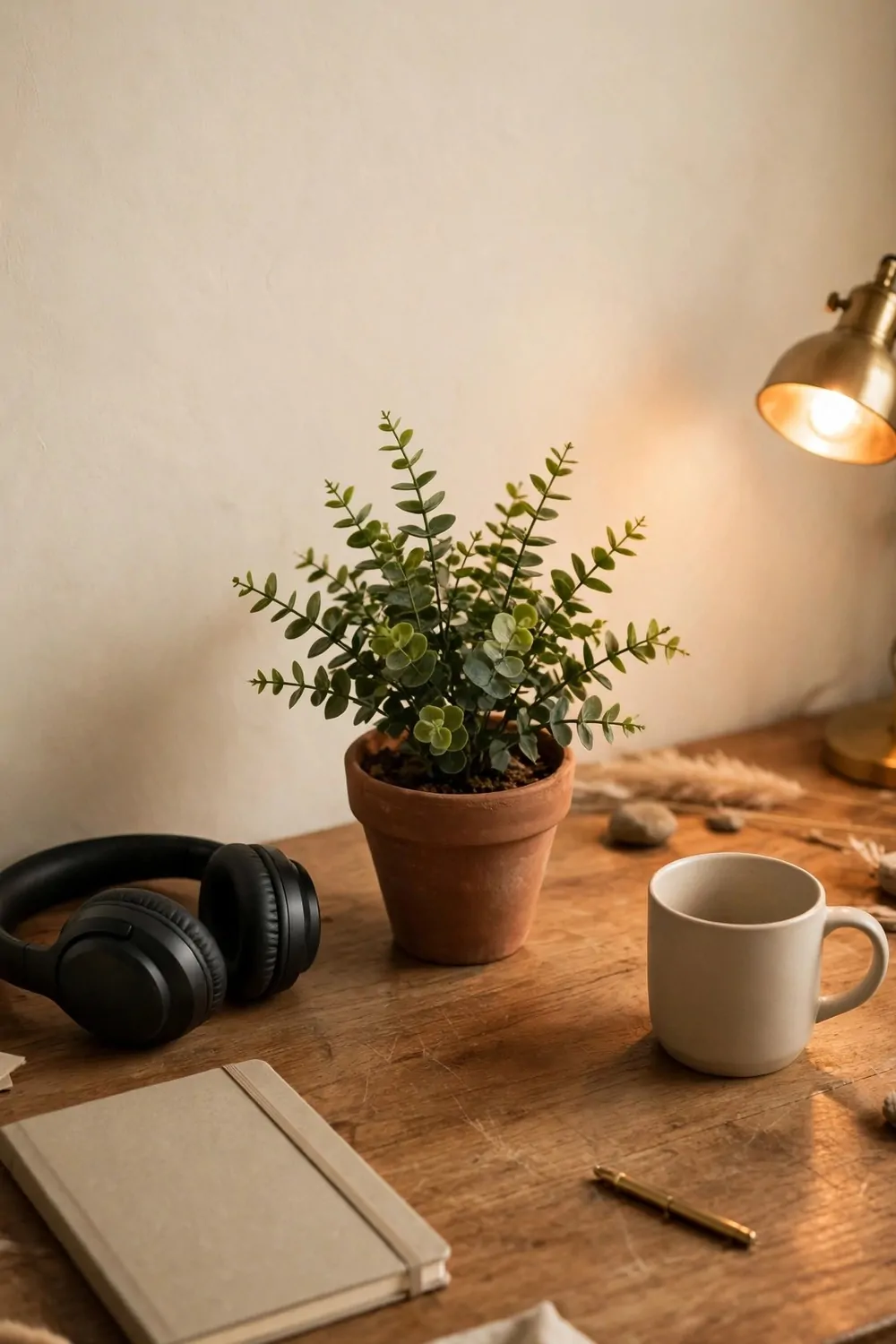
A plant on my desk does more than look nice. It marks my work time in a quiet way.
When I sit down, I give the plant a little look. I check the soil, I turn the pot a little, and I take one slow breath. That tiny habit tells my brain that work has started.
Plants also make a room feel alive. A small green leaf next to a plain screen can lift your mood, and a better mood makes hard work feel a little easier.
Pick a plant that is easy to keep alive. A small green plant that likes soft light and a little water is perfect. You do not want a plant that needs a lot of care, because that care becomes one more job.
Water it at the same time each week. That small routine can be a nice pause in your day, and it gives you a reason to step away from the screen for a minute.
Here are four easy ways to let your plant help your focus:
- Put it where you can see it, but not where it blocks your screen
- Give it a quick look at the start of work, like a hello
- Water it once a week, at the same time
- Move it near the window on very dark days, then back to your desk
If a real plant feels like too much, a small fake one can work too. It still gives your eyes a soft green spot to rest on, and it still marks your desk as a calm place.
Let the plant be your work buddy. It does not talk, it does not ask for much, and it sits there with you, green and calm, while you get your work done.
Water and a Snack Within Reach

Thirst is a sneaky focus thief. It creeps in slowly, and then you cannot think about anything else.
I keep a glass of water on my desk, on the left side where I will not knock it over. I sip it through the morning, and I fill it again at lunch. That simple habit keeps my head clear.
A small snack helps too. Not a big meal, just a little something to keep you going. A few nuts, a piece of fruit, or a small biscuit can stop that low feeling in the middle of a work block.
Keep the snack small and close. If you have to walk to the kitchen every time you feel hungry, you will lose your flow. If it is right there, you can eat and keep working.
Do not keep a big bag of snacks on your desk. A big bag invites mindless eating, and that can make you sleepy. A small bowl is enough, and when it is empty, that is your sign to stop.
Water first, snack second. Many times I think I am hungry, but I am really just thirsty. A few sips of water can clear that feeling in a minute.
At the end of the day, wash the glass and put the bowl away. A clean desk in the morning feels like a fresh start, and a fresh start helps you focus faster.
Your body needs fuel to focus. Give it water, give it a small snack, and it will give you back a clear mind and steady work.
A Paper Notebook for Wandering Thoughts

My mind loves to wander, especially when I am trying hard to focus.
Now I keep a paper notebook next to my laptop. When a random thought pops up, I write it down fast, and then I go back to work. The thought is safe on paper, so my brain can let it go.
This works because my brain is afraid of forgetting. It repeats the thought again and again, just in case. Once the thought is written down, the repeating stops.
Use the notebook for anything. A chore, a call to make, a gift idea, a question for later, or a silly idea that made you smile. It all goes on the same page, no sorting needed.
Keep the notebook open and the pen ready. If you have to search for a pen, the thought will be gone, or it will pull you away for too long. A ready pen keeps the pause very short.
At the end of the day, look at the page. Cross out what is done, move what matters to tomorrow, and throw away what was just noise. That quick check gives you a clean mind for the next morning.
Do not try to make the notebook pretty. Messy notes are fine, quick notes are best, and no one else needs to read them. This notebook is for you, not for show.
Let the notebook catch your wandering thoughts. You stay with your work, the notebook holds the rest, and your focus stays whole instead of split in ten pieces.
Cables Hidden, Mind Clear
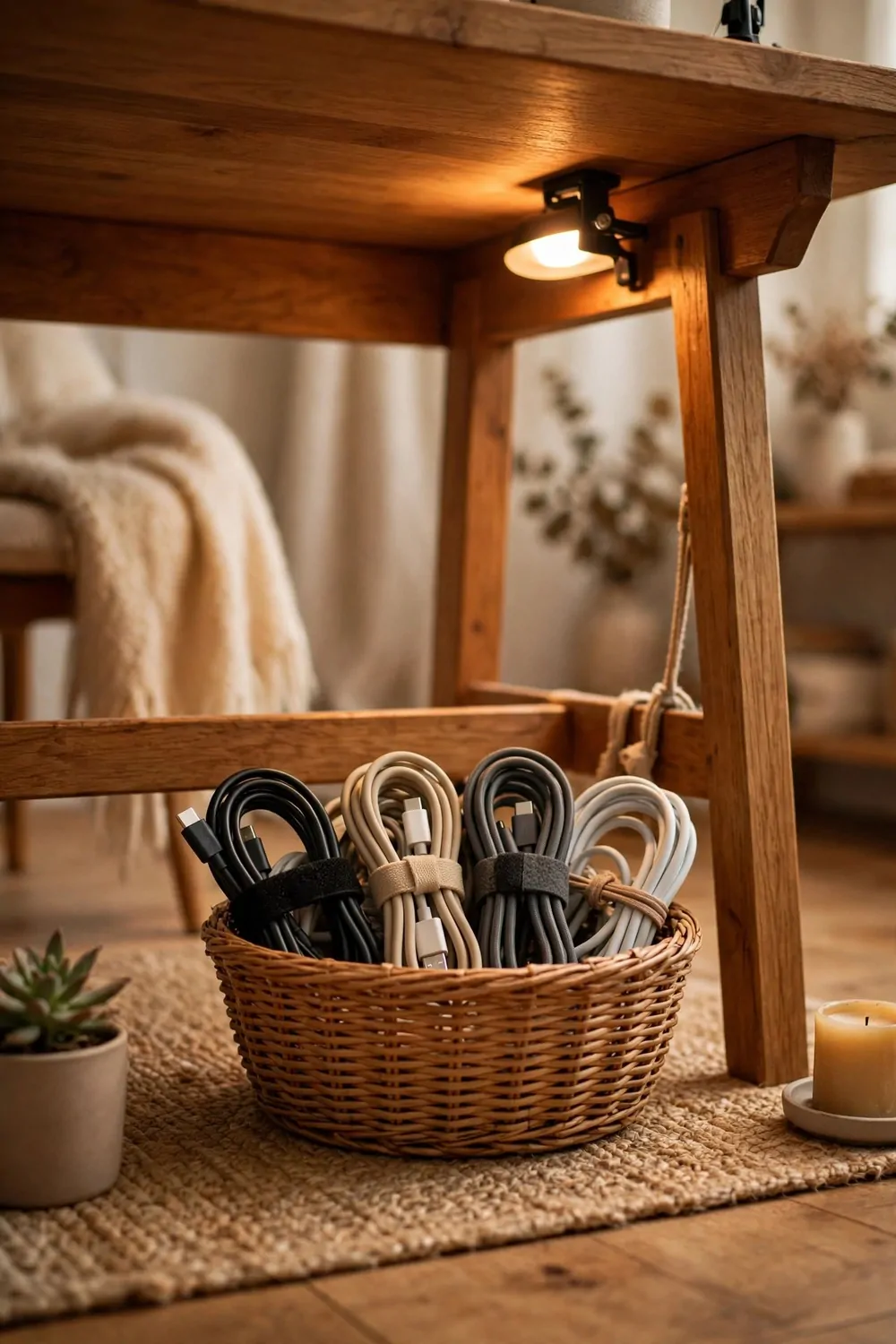
Messy cables make a desk feel messy, even when everything else is tidy.
I used to see a tangle of wires every time I looked down, and it made my mind feel tangled too. Now my cables live in a small basket under the desk, and my desk feels calm.
Start by unplugging what you do not use every day. Old chargers, extra cables, and plugs for things you rarely touch can go in a box. Fewer cables means less mess to hide.
Use a simple basket, a small box, or a cable clip. You do not need a fancy system. Just gather the cables, loop them neatly, and tuck them where your feet will not trip on them.
Label the cables if you have many. A small piece of tape with a word on it can save you a lot of time later. You will not have to pull each cable out to see what it belongs to.
Keep one charger on your desk, and only one. The rest can live in a drawer or a basket. One charger is enough for most days, and it keeps your desk clear.
Check your cables once a month. Dust can gather, loops can loosen, and a new cable can sneak in without you noticing. A quick five minute check keeps the calm in place.
Clear cables, clear mind. It sounds simple, and it is simple, but that is why it works so well for focus.
A Clock You Can See

A clock you can see helps you feel the time, without checking your phone.
I keep a small round clock on my desk, just to the left of my screen. I can glance at it in one second, and then my eyes go back to work. No apps, no alerts, no pull to scroll.
Phones show the time, but they also show everything else. One quick check can turn into five minutes of messages and news. A plain clock shows only the time, and that is all you need.
Use the clock to pace your work. If you start at nine, you can see when an hour has passed. That gentle sense of time helps you stay on track without feeling rushed.
Pick a clock that is quiet. A loud tick can be as bad as a phone buzz, it pulls your ear again and again. A soft clock, or a silent one, lets you forget about time until you need it.
Put the clock where you can see it without turning your head. If you have to twist to see it, you will stop looking, and then it is just decor. A clock should be easy to glance at.
At the end of the day, the clock shows you what you did with your hours. That can feel good, even on a slow day. You can see the time you gave to work, and the time you can now give to rest.
Let a simple clock hold your time. You hold your work, the clock holds the hours, and your focus stays free from phone checks.
The Five-Minute Reset Between Tasks
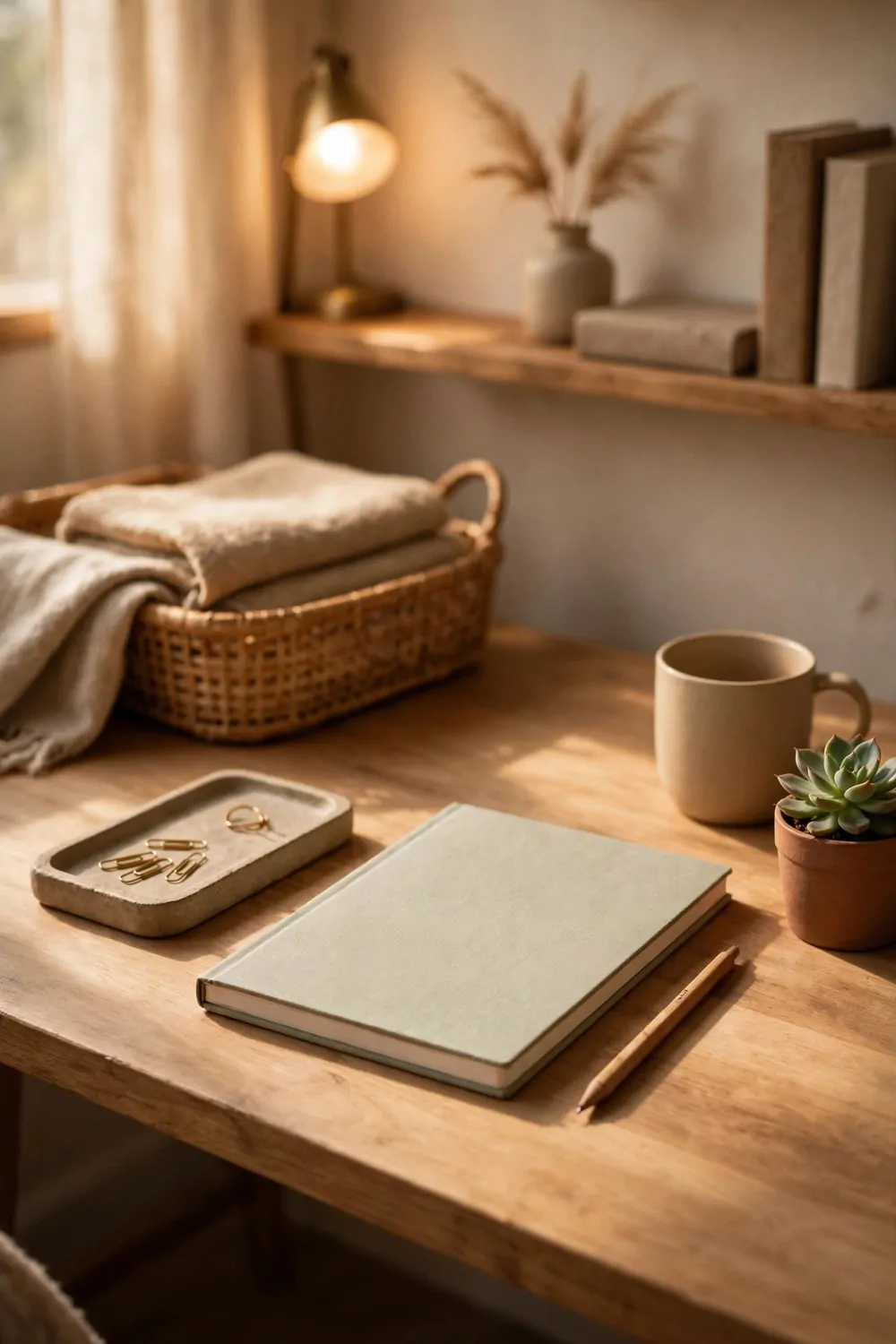
Jumping from one task to the next without a pause makes my brain feel tired.
Now I take a five minute reset between tasks. I stand up, I clear my desk a little, and I take a few slow breaths. That short pause helps me leave the old job behind.
A reset is not a long break. It is just enough time to tidy up, drink some water, and look at what comes next. Five minutes is short, but it feels like a fresh start.
Use the reset to close the old task in your mind. Save the file, close the extra tabs, and put the papers away. A closed task stops whispering in the back of your head.
Then look at the next task with fresh eyes. What is the first small step? Write it down, and start there. A clear first step makes starting feel easy.
The table below shows a simple reset you can use all day. It is short, it is calm, and it works for any kind of work.
| Reset step | Minutes | What I do |
|---|---|---|
| Stand and stretch | 1 | Arms up, shoulders back, slow breath |
| Tidy the desk | 2 | Clear papers, close tabs, sip water |
| Pick the next step | 2 | Write the first small step, then begin |
Do not skip the reset when you feel busy. That is when you need it most. A tired brain makes slow work, but a rested brain makes fast work.
Five minutes between tasks can save you thirty minutes of fog later. Take the pause, reset your mind, and come back ready for the next job.
A Blanket for Cold Focus Hours
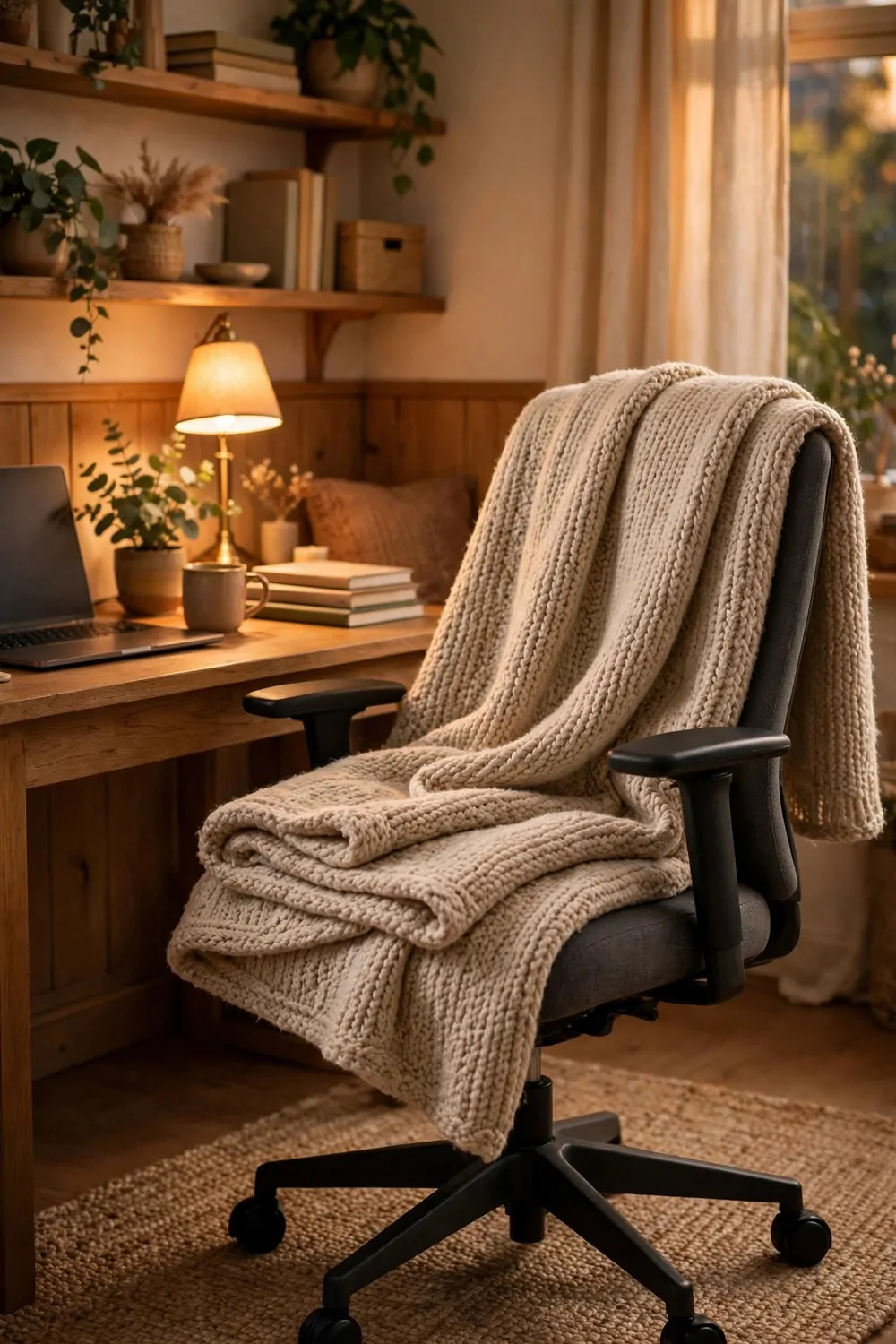
A blanket for cold focus hours is a small thing that keeps your mind on work instead of on the cold.
Cold hands make slow work. When I feel cold, I cannot think about anything else.
I keep a soft blanket on the back of my chair for cold focus hours. I pull it over my lap when the room feels chilly, and my mind can go back to work in seconds.
A blanket also feels like a hug, in a quiet way. It tells your body that you are safe and warm, and a safe body can focus for longer. That small comfort matters more than I thought it would.
Pick a blanket that is light and soft, not heavy and hot. A heavy blanket can make you sleepy, but a light one just takes the chill away. You want warmth, not a nap.
Keep the blanket folded when you do not need it. A folded blanket looks tidy, and it is ready when you want it. A blanket on the floor just becomes one more mess to step over.
If your room is often cold, check for drafts. A small gap by the window or the door can let cold air in all day. A rolled towel by the door can help, and it costs almost nothing.
Warm feet help too. Soft socks, a small rug, or warm slippers can keep the cold away from your toes. When your feet are warm, your whole body feels warmer.
Stay warm, stay focused. A blanket is a simple tool, but on a cold morning it can be the difference between a good work hour and a lost one.
A Shelf for Work Only
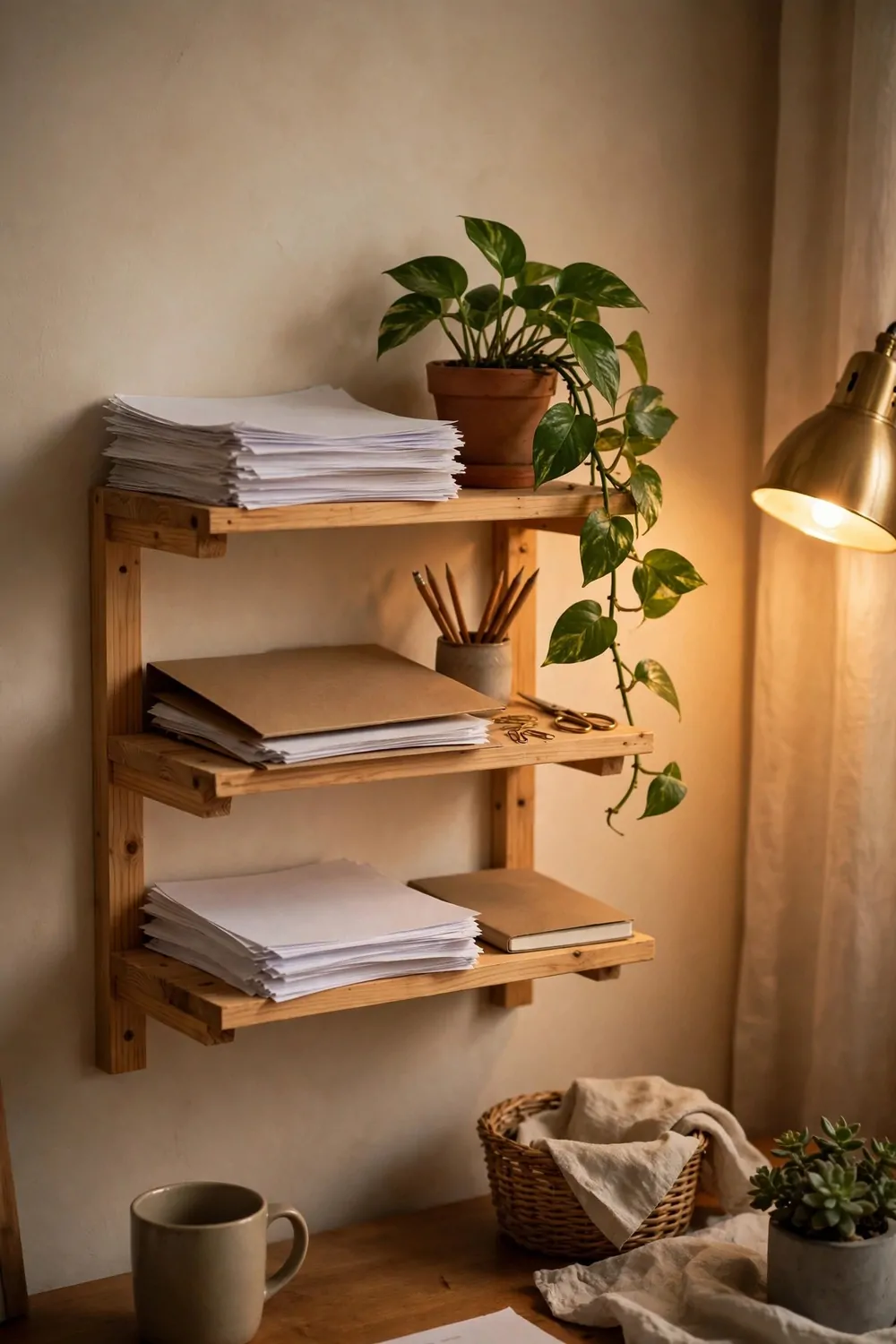
A shelf for work only keeps your work life and your home life in their own places.
I have one small shelf near my desk, and only work things live there. My notebook, my pens, a few papers, and my plant. Nothing else is allowed on that shelf.
When I see that shelf, my brain knows it is work time. When I walk away from it, my brain knows work is done. That clear line helps me rest better at night.
Keep the shelf tidy and small. A crowded shelf feels like a crowded mind, and a crowded mind cannot focus. A few neat items are enough, and they are easier to find.
Use the shelf to hold what you use every day. If you have to search the house for a pen, you lose time and focus. If it is always on the shelf, you can start work in seconds.
Do not let home things creep onto the work shelf. A toy, a bill, or a random box can sit somewhere else. Your work shelf is for work, and that rule keeps it calm.
Here are four things that belong on a work only shelf:
- The notebook you use every day
- Pens and a small tray for papers
- Your work papers, in one neat stack
- One small plant or soft item that makes you smile
At the end of the week, take five minutes to tidy the shelf. Throw away old papers, put pens back, and wipe the dust. A fresh shelf on Monday feels like a fresh start.
Curtains That Cut the Glare

Glare is a quiet focus thief. It makes your eyes hurt, and it makes your screen hard to read.
Soft curtains can cut that glare without making the room dark. I pull mine half closed in the afternoon, and the light turns soft and even. My eyes relax, and my work feels easier.
Pick curtains in a light, soft color. Cream, pale beige, or soft white work well. They let light in, but they take the sharp edge off it. Dark curtains can make the room feel too dark in the day.
Keep the curtains clean and simple. Heavy drapes with lots of folds can gather dust and feel heavy. Light curtains move softly, and they feel calm in a work room.
Try different positions through the day. Open in the morning for fresh light, half closed at noon for soft light, and open again in the late afternoon. Your eyes will tell you what feels best.
If your window has no curtains, a simple sheer panel can help. It costs little, it hangs easily, and it softens the sun in a gentle way. You do not need a big change to feel the difference.
Curtains also help with privacy. When you feel seen, you can feel watched, and that can pull your mind away. A soft curtain gives you a private space to think.
Let your curtains shape the light for you. Soft light, calm eyes, and a clear screen can hold your focus for hours.
A Rug That Marks Your Work Zone
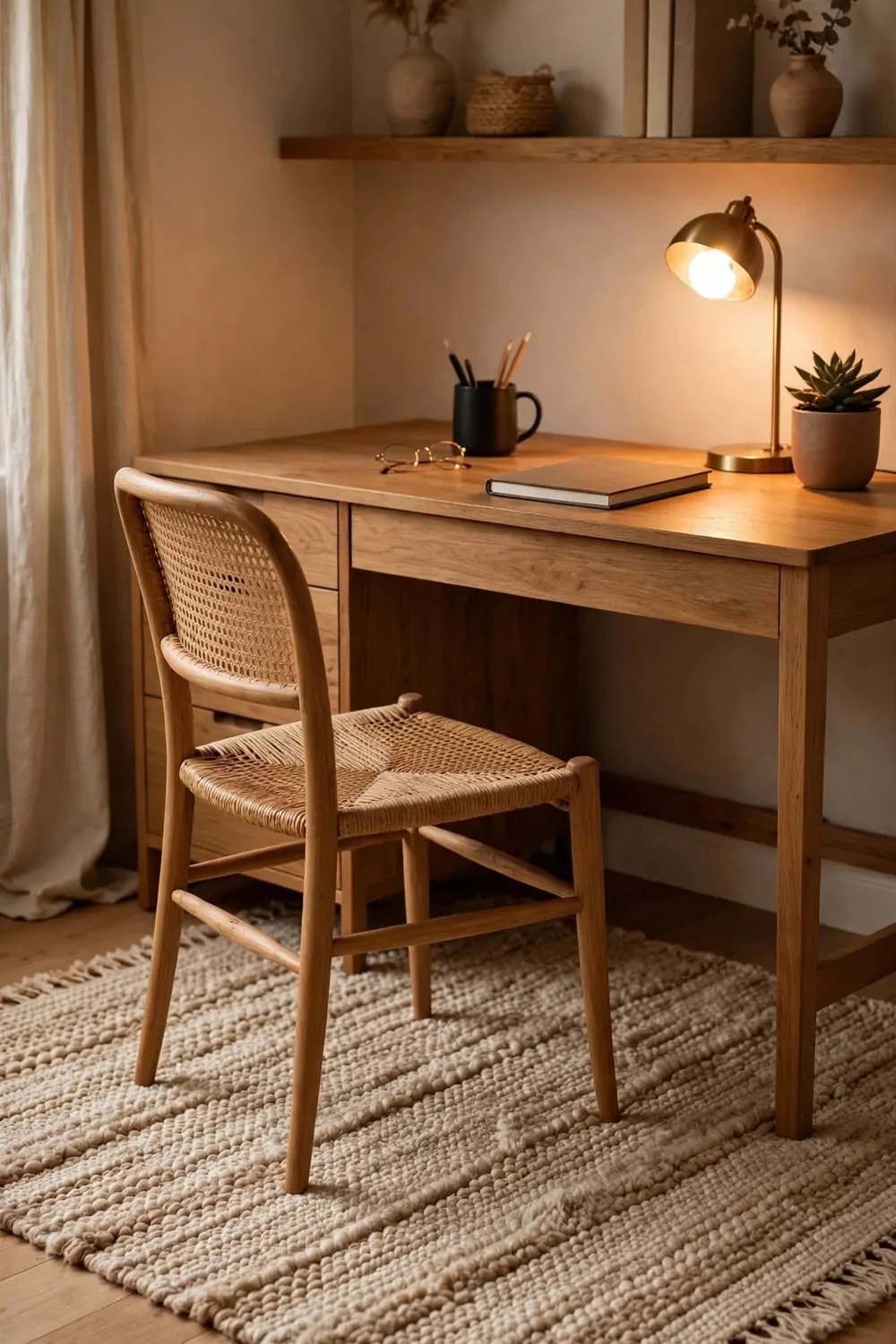
A rug under your desk can mark your work zone in a soft and simple way.
When my feet touch the rug, my brain knows I am in work mode. When I step off the rug, I am back in home mode. That small line on the floor helps me switch between work and rest.
Pick a rug that feels soft under your feet. A woven rug, a soft cotton rug, or a low pile rug all work well. You want comfort, not a rug that trips you or slides around.
Make sure the rug is big enough for your chair. If the chair legs sit half on and half off the rug, it will wobble and annoy you. A rug that fits the whole desk area feels steady and calm.
Keep the rug clean. Shake it out once a week, or vacuum it quickly. A dusty rug can make the room feel stale, and a fresh rug makes the whole corner feel new.
A rug also helps with sound. It softens footsteps, it quiets chair moves, and it makes the room feel less echoey. A quiet room is a focused room.
If you work in a shared space, a rug is even more useful. It draws a clear line that everyone can see. This side is work, that side is home, and the rug is the border between them.
Let the rug hold your work zone. Step on, focus well, step off, rest well, and let that soft edge guide your day.
The End-of-Day Shutdown Ritual
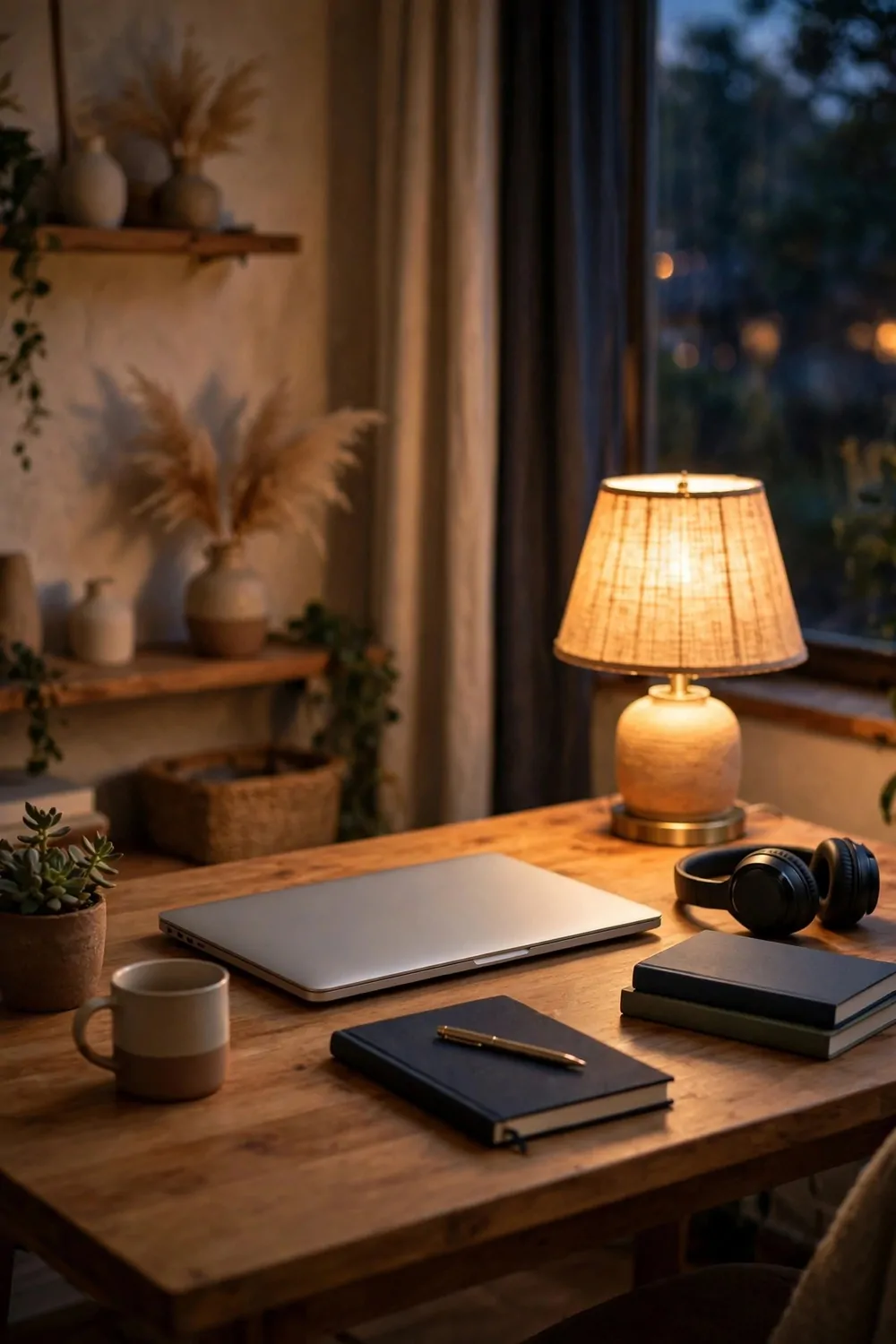
Work without an end can follow you into the evening, and that is not rest.
I have a small shutdown ritual that tells my brain work is done. I close my laptop, I tidy my desk, and I write down the first job for tomorrow. Then I turn off the lamp.
That ritual takes about five minutes, but it saves me hours of worry. I do not lie awake thinking about what I forgot, because I already wrote it down for tomorrow.
Start your ritual at the same time each day, if you can. A regular end time helps your body learn when to rest. Your mind stops asking for one more job, because it knows the day is done.
Clear your desk as part of the ritual. Put papers away, close tabs, and wash your mug. A clean desk in the morning is a gift from your evening self.
Write tomorrow’s first step on a small note. Not a long list, just one clear step. When you sit down tomorrow, you will know exactly where to begin, and starting will feel easy.
Tell the people at home that you are done for the day. A simple hello, a smile, and a change of clothes can mark the shift from work to home. That small change helps everyone relax.
End your day on purpose. Close the laptop, turn off the lamp, step away from the rug, and let your evening belong to you.
A Morning Start-Up Routine

A good morning starts before you open your laptop. It starts with a small routine that wakes you up gently.
My routine is simple. I open the curtains, I make a warm drink, I sit down, and I look at my notebook for one minute. That is all, but it sets my whole day.
A routine helps because you do not have to decide what to do first. You just follow the same small steps, and your brain slips into work mode without a fight. Decisions use energy, routines save it.
Keep the routine short. Five to ten minutes is enough. A long routine can turn into a way to avoid work, but a short one gets you to your desk fast and calm.
Use the table below to build your own start-up routine. Pick one small step from each row, and try it for a week.
| Routine step | Minutes | What I do |
|---|---|---|
| Open up the room | 2 | Curtains open, lamp on, water glass filled |
| Warm drink and plan | 3 | Make a drink, look at the notebook, pick one job |
| First focus block | 25 | Phone in the drawer, timer on, one job only |
Do the same routine every workday, even on slow days. Your brain loves a pattern, and a pattern makes starting feel safe. After a week, you will start without even thinking about it.
If a morning goes wrong, do not skip the routine. Just do a tiny version of it. Open the curtains, sip some water, and sit down. A tiny routine is still a routine.
Start small, start calm, start the same way each day. Your morning routine is the first focus tool you use, and it can carry you through the rest of your work.
Keep Reading
If you liked these ideas, you will love these next reads too. Each one has more cozy office ideas to help you build a work space that feels calm and kind.
Pick one to read next, save the others for later, and try just one small change in your own home office today.
- 22 Small Cozy Office Setups That Feel Like a Hug
- 17 Dark Cozy Office Ideas With Moody, Rich Textures
- 20 Cozy Office Space Ideas for Long Work Days
Start with one small change today, a closed door or a phone in a drawer, and let your home office grow calmer one piece at a time. Your desk does not need to be big to help you focus, it just needs to feel like yours.