32 Fun Math Activities for Kids at Home

My daughter counted the stairs out loud one morning and got to twelve before she even reached the top. She laughed at the big number and asked if the stairs went on for ever. That little moment showed me that maths is already hiding all over our home.
I put together 32 fun math activities for kids that you can try at home with things you already own. Every one of them is simple, quick, and made for real kitchens and living rooms.
Maths at home feels nothing like maths at school. There is no test at the end and no red pen waiting. Your child just plays, counts, and learns without even knowing it.
You do not need to buy a single new thing for most of these ideas. A bowl of buttons, a pair of dice, a wooden ruler, and a few coins will cover most of the list. Look in your drawers first and you will find nearly all of it.
Start small and keep it short. Ten minutes of counting games beats an hour of groans at the table. When your child smiles, you know you picked the right one.
Some kids love to sort and line things up in neat rows. Others love to run around the house and hunt for hidden cards. Pick the games that fit your child and skip the rest for now.
I wrote this list for busy mums and dads who want learning to feel like play. Try one idea today and see where it leads. You might be surprised how fast the numbers start to stick.
1. Count with Buttons in a Bowl
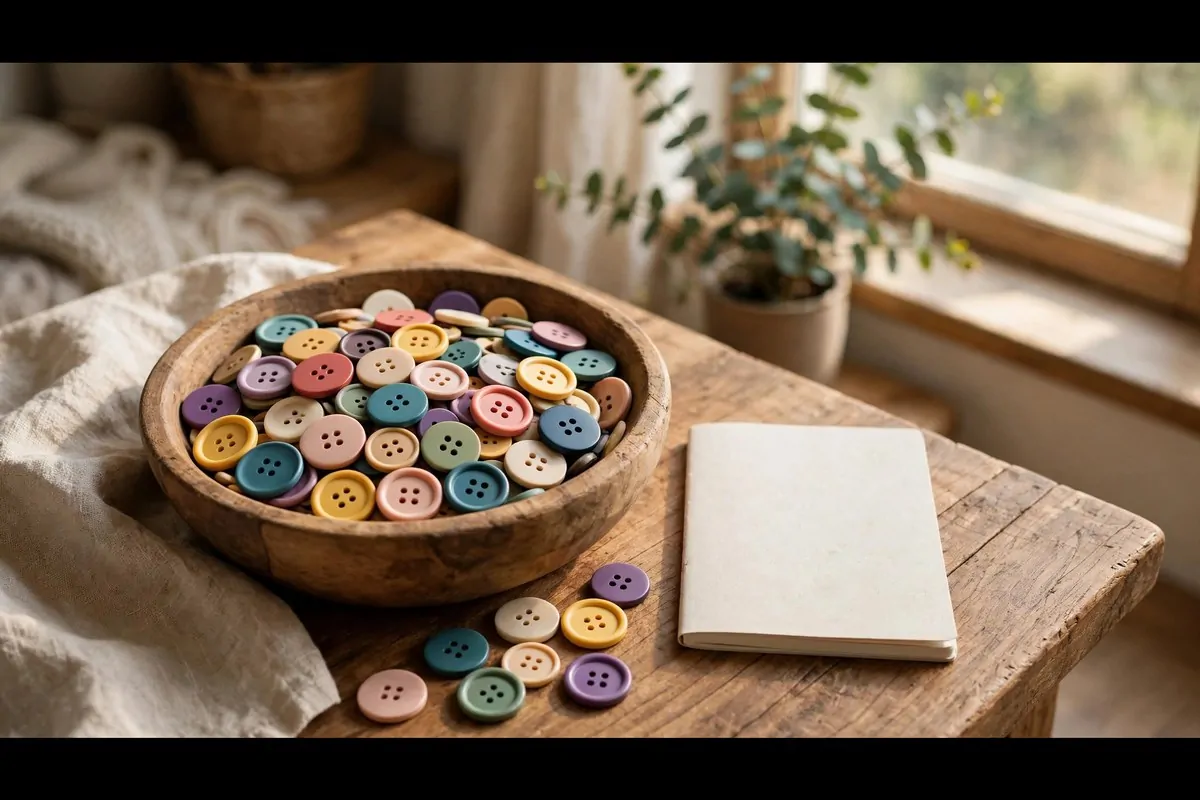
Grab a bowl and a small pile of buttons from your sewing box. Tip them all into the bowl and let your child dig in with both hands.
Ask your child to count the buttons out loud, one by one, as they lift each one out.
Then sort the buttons into little piles by colour. Red in one pile, blue in the next, and white in the last one. Ask which pile has the most buttons and which pile has the fewest.
Now try sorting the same buttons by size instead of colour.
Big buttons go in one row and small buttons go in another. Count each row again and talk about which row is longer.
You can also line the buttons up in a long snake across the table. Count the snake from head to tail and see how far it stretches.
Let your child mix the piles up and start all over again.
Buttons are perfect for this game because they feel nice in small hands. They come in so many colours and sizes that no two games look the same. Your child learns to count, sort, and compare without a single worksheet in sight.
Typical cost $2 to $4.
2. Roll Two Dice and Add Them Up
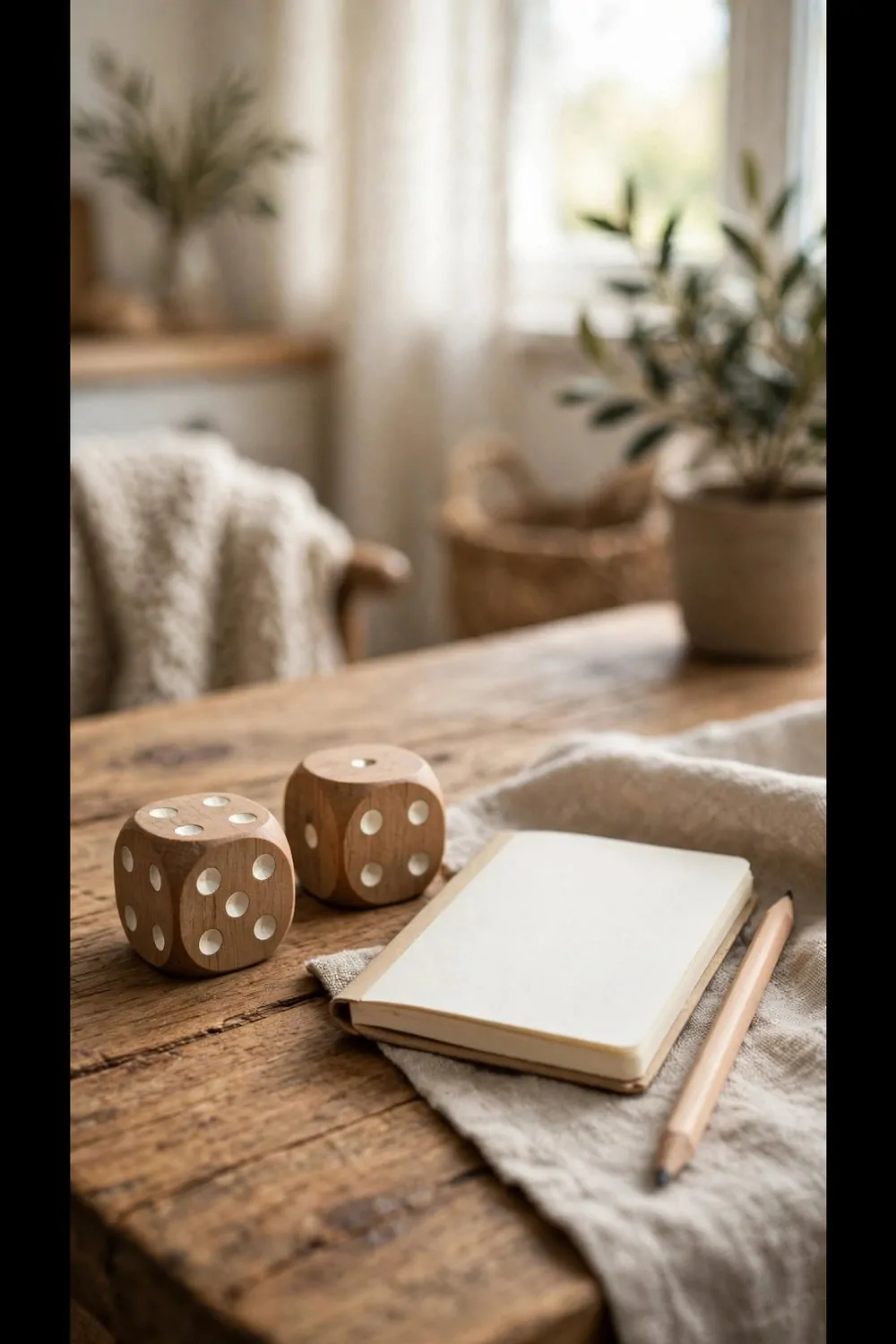
Two plain dice and a scrap of paper are all you need for this game.
Sit down with your child and take turns rolling both dice. Add the two numbers together out loud.
Write each total down in a little list so you can see the score grow.
The first player to reach ten points wins the round. If you roll a big number like eleven or twelve, you might win in just two turns. If you roll small numbers, the game lasts a little longer.
Let your child do the adding on their own when they feel brave. You can count the dots together if the sum feels tricky.
Swap the dice and roll again for a fresh start.
You can play best of three rounds to keep the fun going. The winner picks the next game you play together.
Dice games teach adding in the fastest way I know. Your child sees the dots, says the numbers, and finds the total without fear. After a few rounds they start to add in their heads without even trying.
Typical cost $3 to $5.
3. Hunt for Numbers Around the House
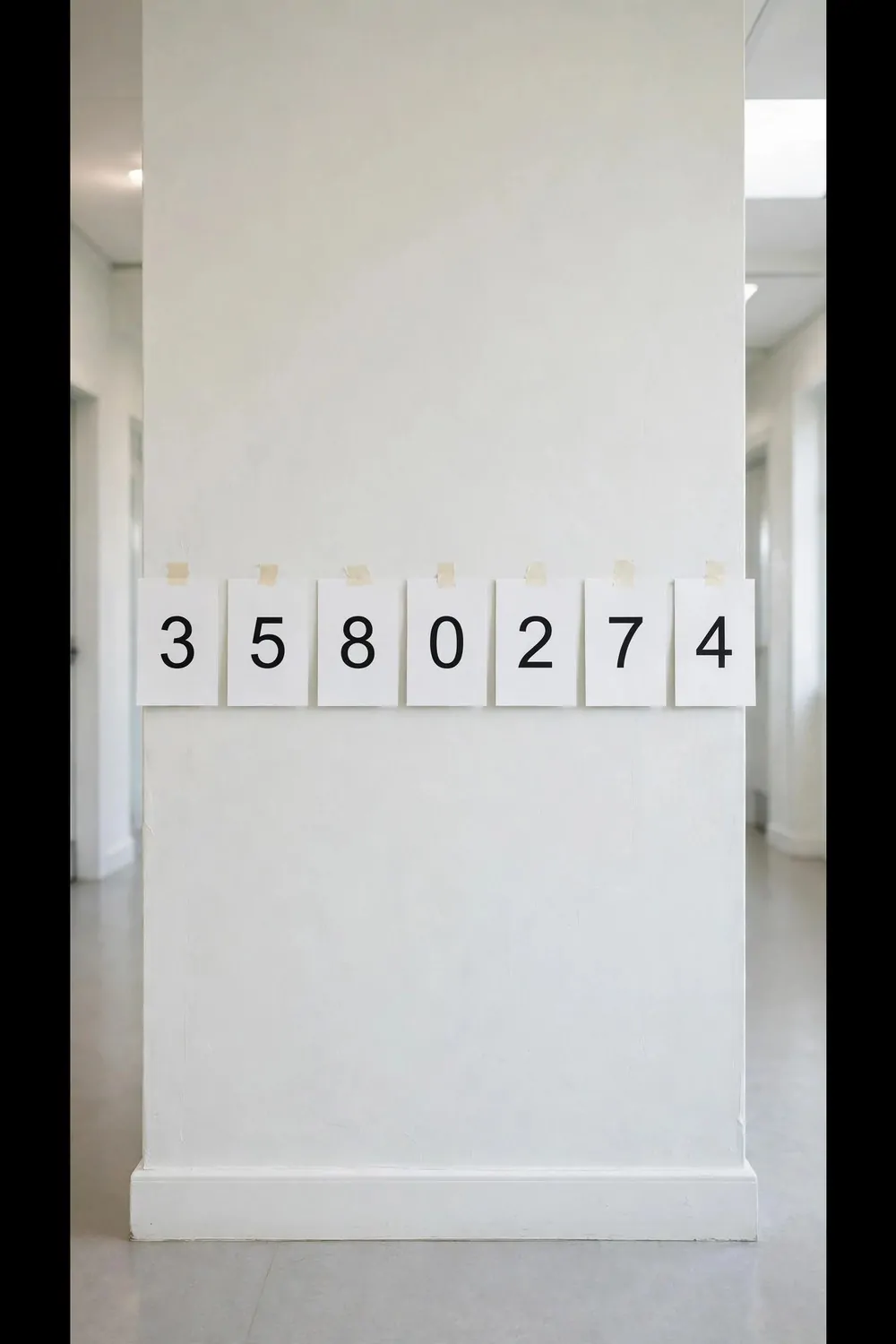
Write the numbers one to ten on small cards and hide them around the house. Tuck one behind a cushion, one under a chair, and one on a shelf. Your child has to find them all and read them out in order.
Start with just five cards if your child is still learning the numbers.
Give a small hint when they get stuck, like warm or cold. Cheer loud when they find each card.
Once all the cards are found, line them up from one to ten on the floor.
Then mix the cards up and ask your child to put them back in order. Point to a card and ask what number it shows. Ask which number comes next and which one came just before it.
You can hide the cards in a new room each time you play. The kitchen, the bedroom, and the living room all make great hunting grounds.
Let your child hide the cards for you next time.
Hunting for numbers turns a quiet counting lesson into a real game. Your child moves, searches, and reads the digits without sitting still for a minute.
Typical cost $1 to $3.
4. Sort Socks into Pairs and Count Them
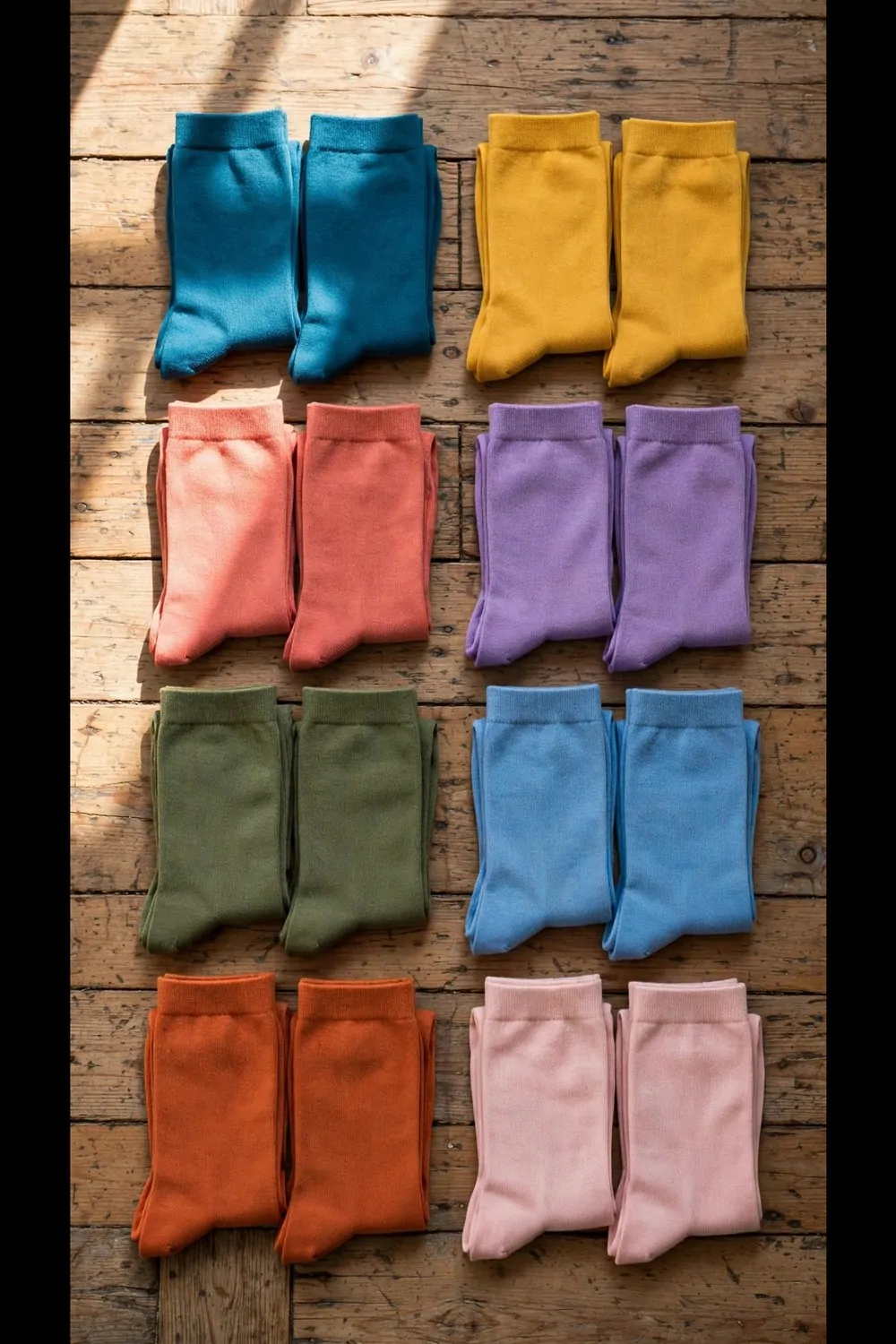
Tip a pile of clean socks onto the floor and sit down together. Every sock needs its mate, and your child gets to play matchmaker.
Hold up one sock and ask your child to find the one that looks just like it. Check the colour, the stripes, and the size before you call it a pair. Fold each pair together and stack it in a neat pile.
Count the pairs out loud as the pile grows.
Ask which pair is the longest and which pair is the shortest. Talk about how two single socks make one pair.
Odd socks go in a small pile of their own.
You can sort the pairs by who they belong to next. Mum has this pile, Dad has that pile, and the kids have the biggest pile of all. Count each person’s pairs and see who has the most.
This game works best right after the laundry is done. The socks are fresh, the pile is big, and the job feels like play.
Put the pairs away in the drawer together when you finish.
Typical cost $0 to $0.
5. Measure Things with a Wooden Ruler
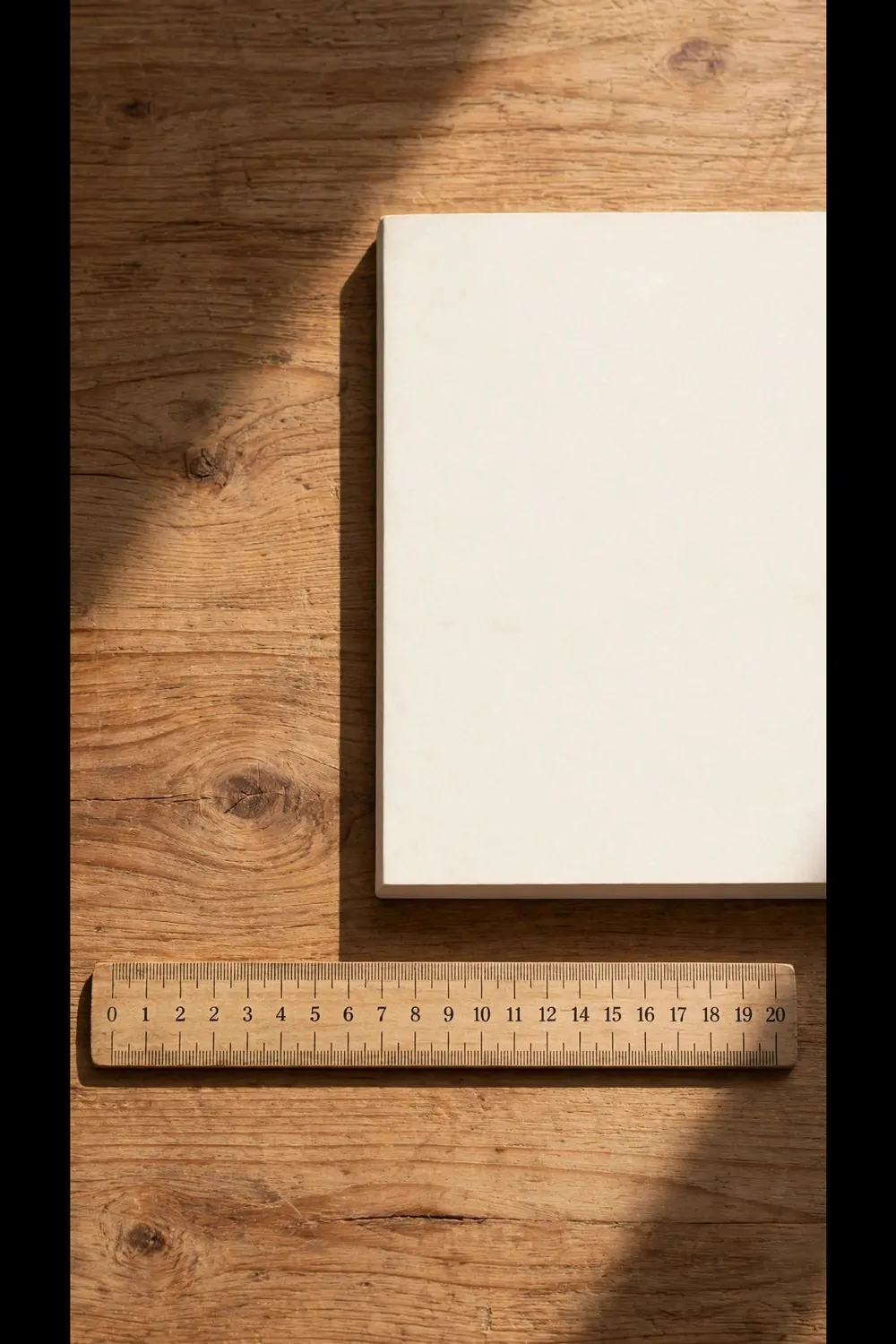
A wooden ruler turns your whole house into a measuring game.
Start with a book from the shelf and lay the ruler along its edge. Read the number out loud together and write it down on a scrap of paper. Then pick a cup and measure how tall it stands.
Try a toy car, a spoon, and a shoe next. Each new thing gives your child another number to read and write.
Ask which thing is the longest and which is the shortest. Line the things up from small to big and check if your guess was right.
Measure the same book twice to see if you get the same number.
You can measure the width of the table or the length of the sofa too. Big things need two rulers laid end to end, and that is half the fun.
Write all the numbers down in a little list and keep it on the fridge. Your child will love showing the list to visitors and reading each number aloud. Measuring feels like real work to a child, and that is why they love it so much.
Put the ruler back in its drawer when the game is done.
Typical cost $2 to $3.
6. Find Shapes in the Kitchen
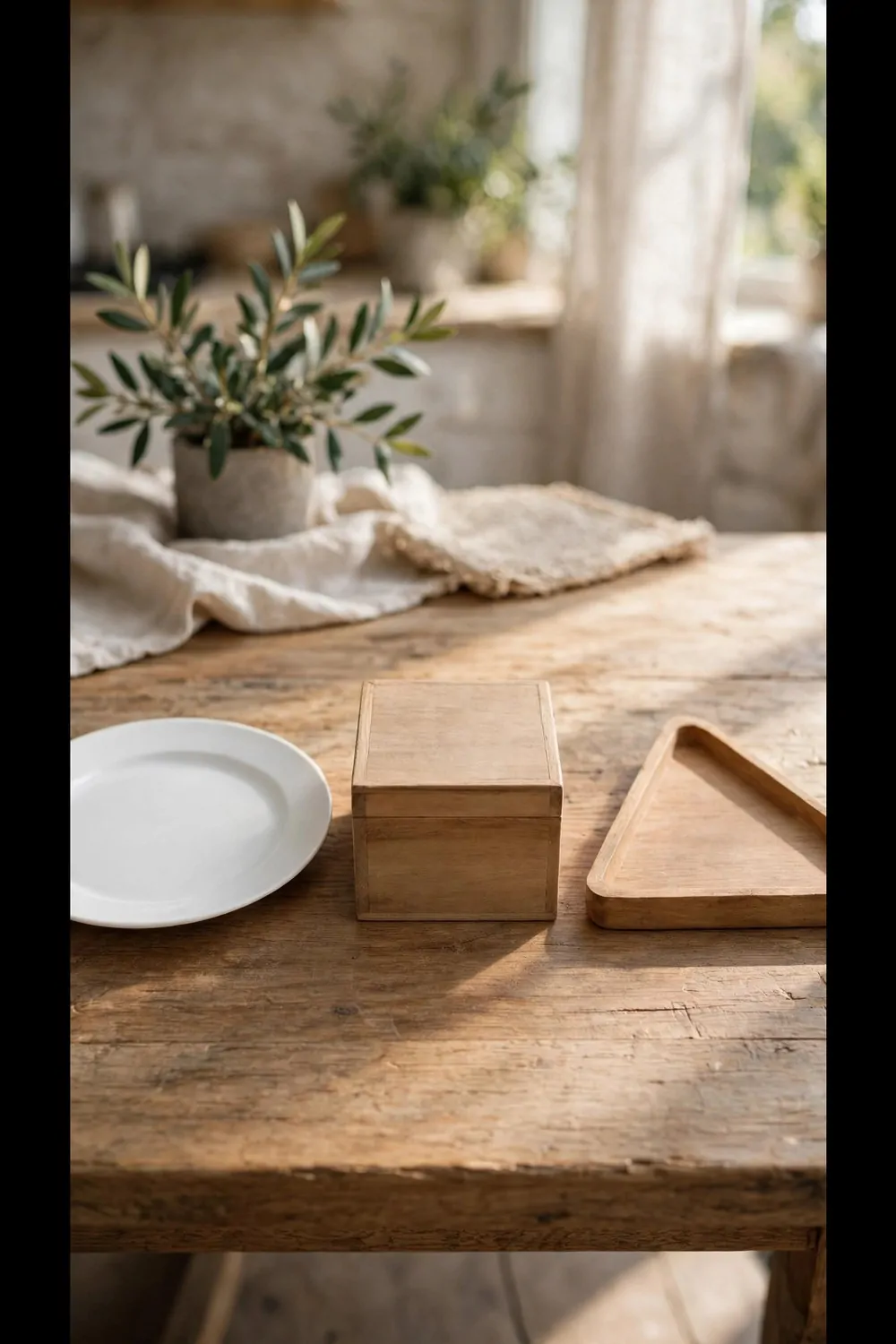
Stand in the kitchen with your child and look around slowly. The room is full of shapes if you know where to look. Round plates, square boxes, and triangle trays are all waiting to be found.
Point to a round plate and say its shape out loud. Ask your child to find another round thing on the table.
Square shapes hide in boxes, tiles, and napkins.
Triangle shapes are trickier, so look at trays and folded cloths.
Make it a race and see who can spot five round things first. Count them together as you point to each one.
Then draw the three shapes on a piece of paper and tick each one off as you find it. Draw a circle for round, a box for square, and a triangle with three sides. Your child learns the shape names while they hunt.
Move to the living room next and hunt for shapes there too.
Shape hunting teaches your child to really look at the world around them. The kitchen stops being just a room and turns into a treasure map of circles, squares, and triangles.
Typical cost $0 to $0.
7. Count Steps to the Front Door
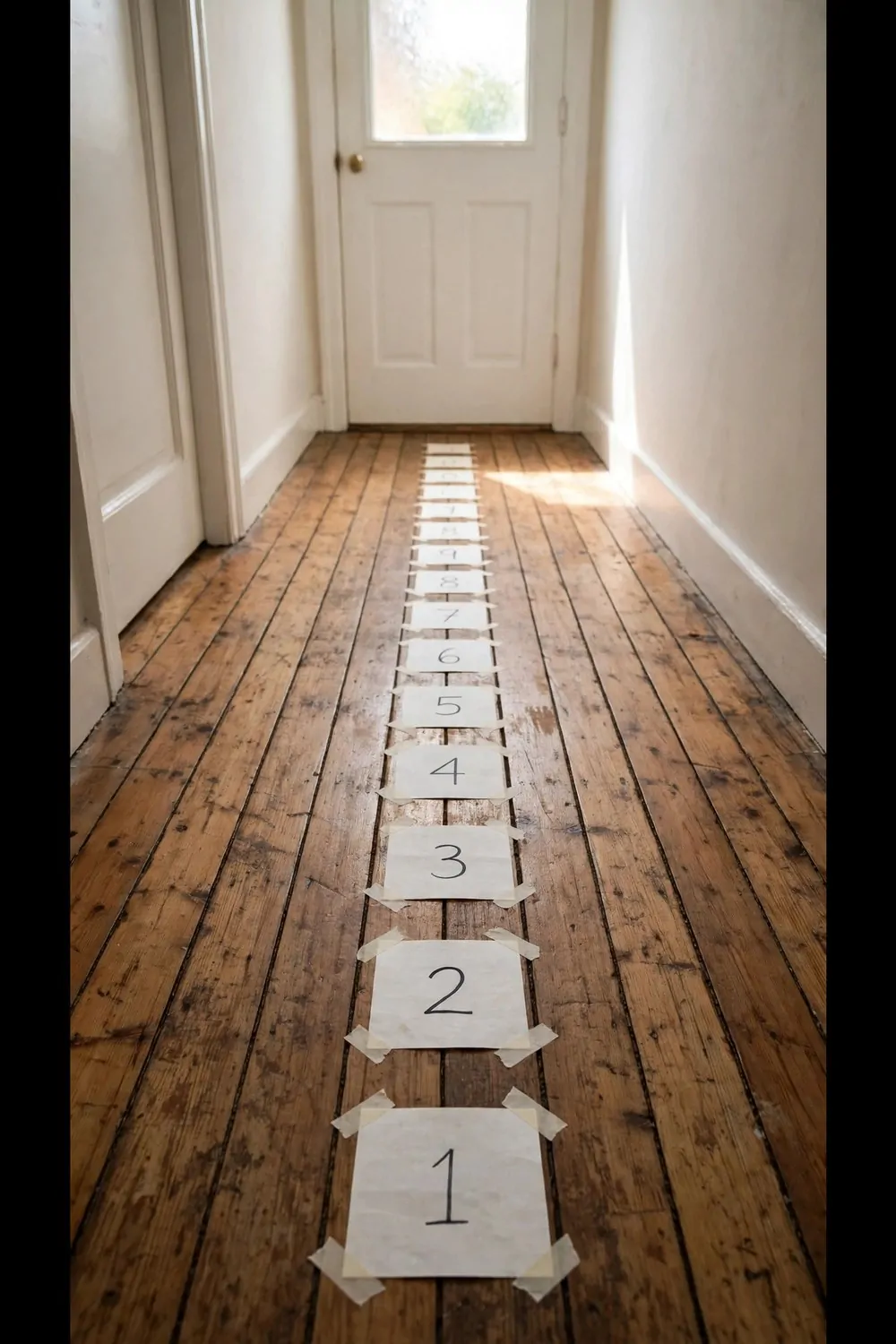
Stand in the kitchen with your child and point toward the front door. Count every step out loud as you walk there together.
Take big steps first and see how few steps it takes.
Then walk back with tiny baby steps and count again. The number will be much bigger this time.
Ask your child why the number changed when the walk stayed the same. Small steps mean more steps, and big steps mean fewer steps. That one idea is worth a whole maths lesson on its own.
Try the same walk from the bedroom to the front door.
Count the steps from the living room sofa too.
Write each number down and compare the three walks. The kitchen walk might take twelve steps, the bedroom walk might take nine, and the sofa walk might take only six. Your child learns that counting can measure a whole journey.
You can count the steps up the stairs as well. Go slow, hold the rail, and say each number with pride.
Typical cost $0 to $0.
8. Play Shop with Real Coins
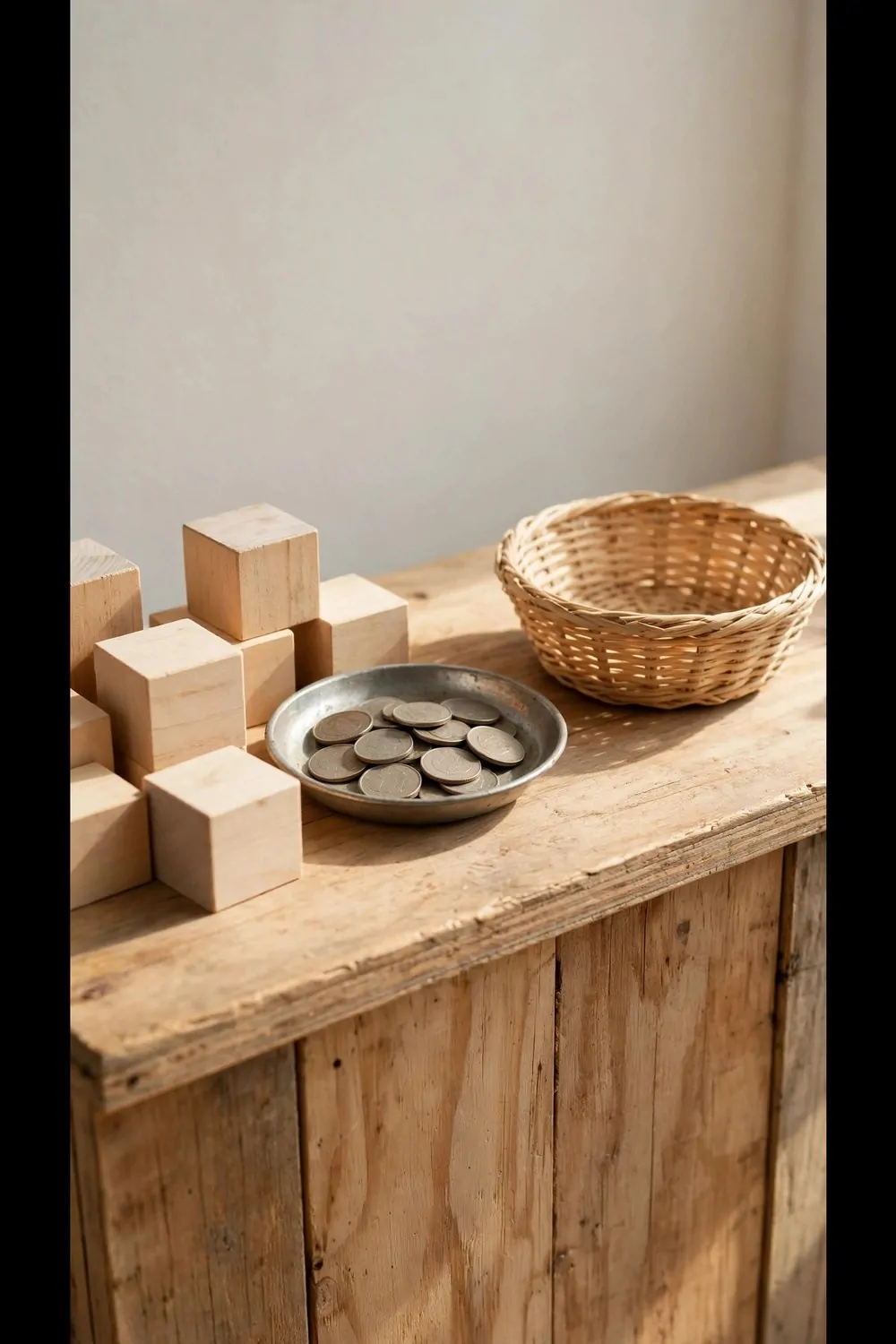
Set up a small shop on the kitchen table with toys and price tags.
Give each toy a simple price like one coin or two coins. Write the price on a scrap of paper and tuck it under the toy.
Hand your child a small pile of real coins to spend. Let them pick a toy, read its price, and hand you the right coins. Count the coins together before you hand them over.
Now swap roles and let your child be the shopkeeper. You buy a toy and they work out how many coins you owe.
Give the shopkeeper too many coins on purpose and ask for change. If the toy costs two coins and you pay with three, one coin comes back to you. Your child learns to subtract without even knowing the word for it.
Add a new toy to the shop each round.
Keep the prices small so the adding stays easy.
Playing shop teaches real money skills in the safest way there is. Your child handles coins, reads prices, and gives change, all while having the time of their life.
Typical cost $1 to $2.
9. Make a Number Line on the Floor
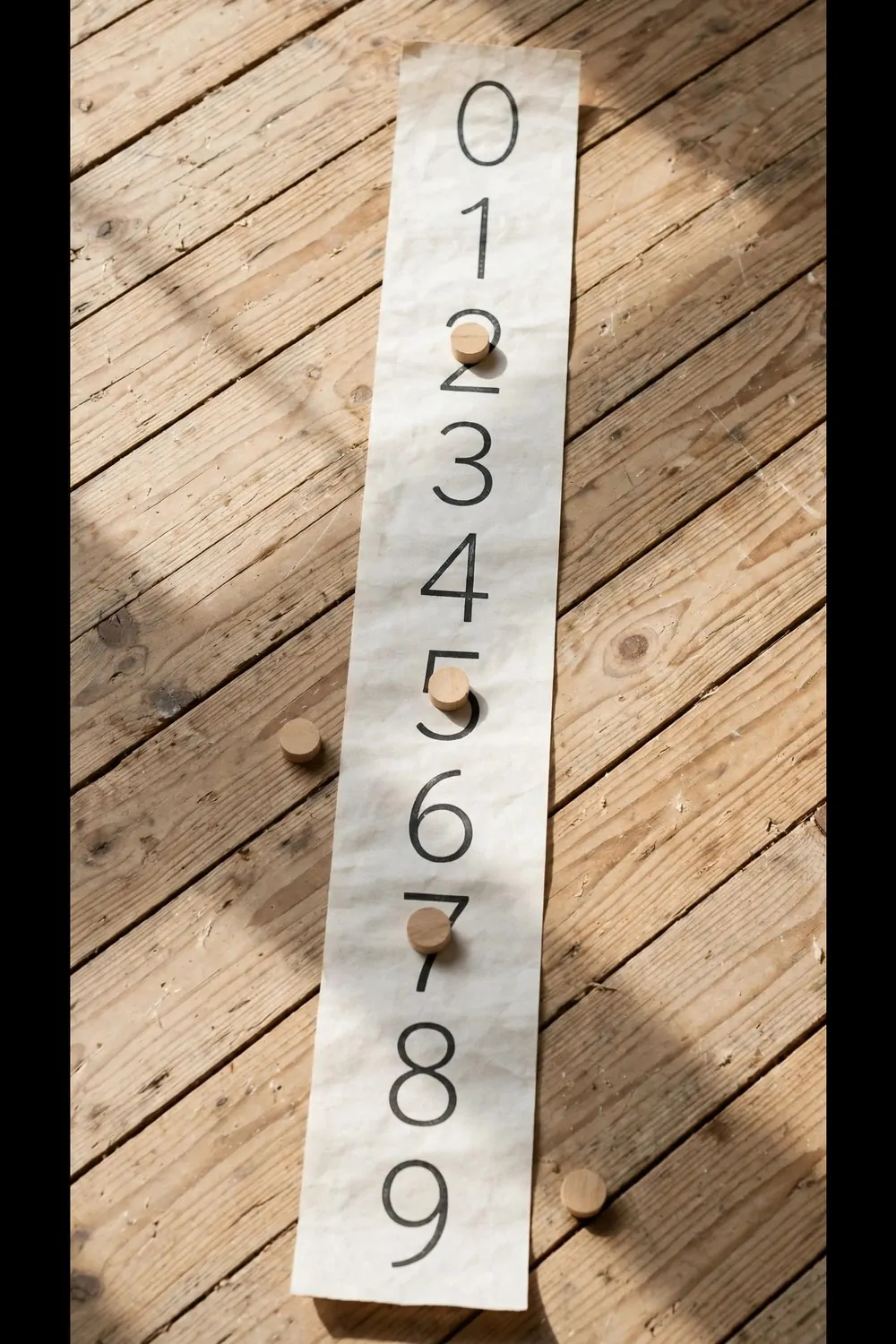
I tape a long strip of paper on the floor in our hall. I write the numbers 0 to 9 on it in big black pen.
My son stands at zero and waits for my call.
I call out a number and he hops to it. Then I call another one and he hops again. We go back and forth till he knows them all by heart.
Some days I call the numbers out of order to make him think.
He likes to jump with both feet when the number is big. I cheer him on and we count out loud as he lands.
If he lands on the wrong spot we just laugh and try it again. I point to the right number and say it slow. Then he hops there and says it too.
The strip lies flat on the floor and stays put.
We use the line for small sums too. I ask him to hop two steps on from 3 and he lands on 5.
Typical cost $2 to $4.
10. Count Fruit at Snack Time
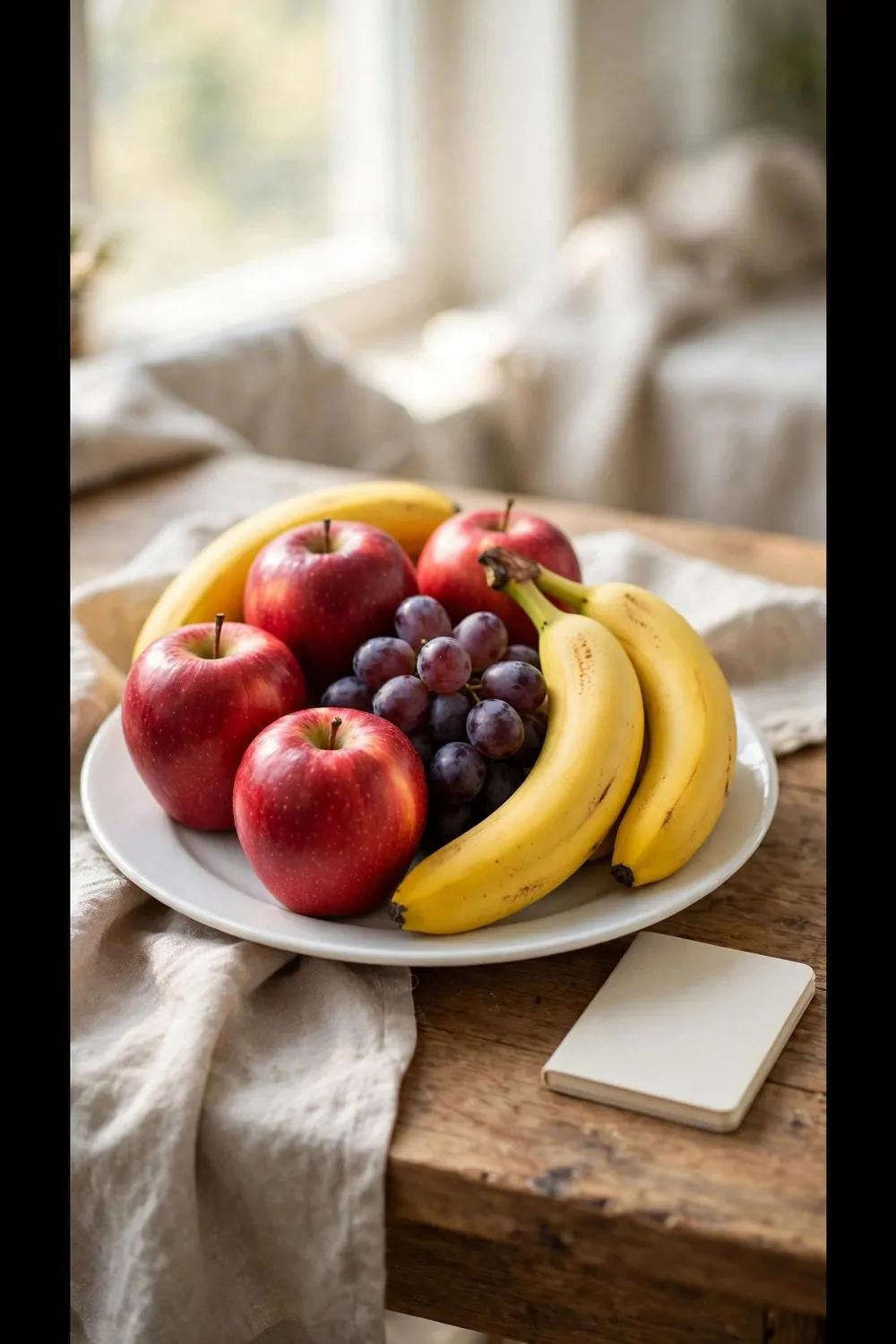
Snack time is the best time to count in our house.
I put apples, bananas and grapes on a plate. My girl counts each one as she picks it up.
We count the grapes one by one into a small bowl. She gets to ten and then starts again from one.
Then we share the fruit out fair between us. I give her one apple and I take one apple. We do the same with the banana pieces till none are left.
She likes it best when the shares come out even.
I ask her how many grapes are left on the plate. She counts them slow and tells me the number. If she gets it wrong we count them again side by side.
We sort the fruit by colour first on some days. Red apples in one pile and purple grapes in one more pile.
It takes five minutes and she eats her maths too.
Typical cost $2 to $4.
| Idea | Main change | Typical cost |
|---|---|---|
| Count with Buttons in a Bowl | count with buttons in a bowl | $2 to $4 |
| Roll Two Dice and Add Them Up | roll two dice and add them up | $3 to $5 |
| Hunt for Numbers Around the House | hunt for numbers around the house | $1 to $3 |
| Sort Socks into Pairs and Count Them | sort socks into pairs and count them | $0 to $0 |
| Measure Things with a Wooden Ruler | measure things with a wooden ruler | $2 to $3 |
| Find Shapes in the Kitchen | find shapes in the kitchen | $0 to $0 |
| Count Steps to the Front Door | count steps to the front door | $0 to $0 |
| Play Shop with Real Coins | play shop with real coins | $1 to $2 |
| Make a Number Line on the Floor | make a number line on the floor | $2 to $4 |
| Count Fruit at Snack Time | count fruit at snack time | $2 to $4 |
| Total | $13 to $25 |
11. Make Patterns with Coloured Blocks
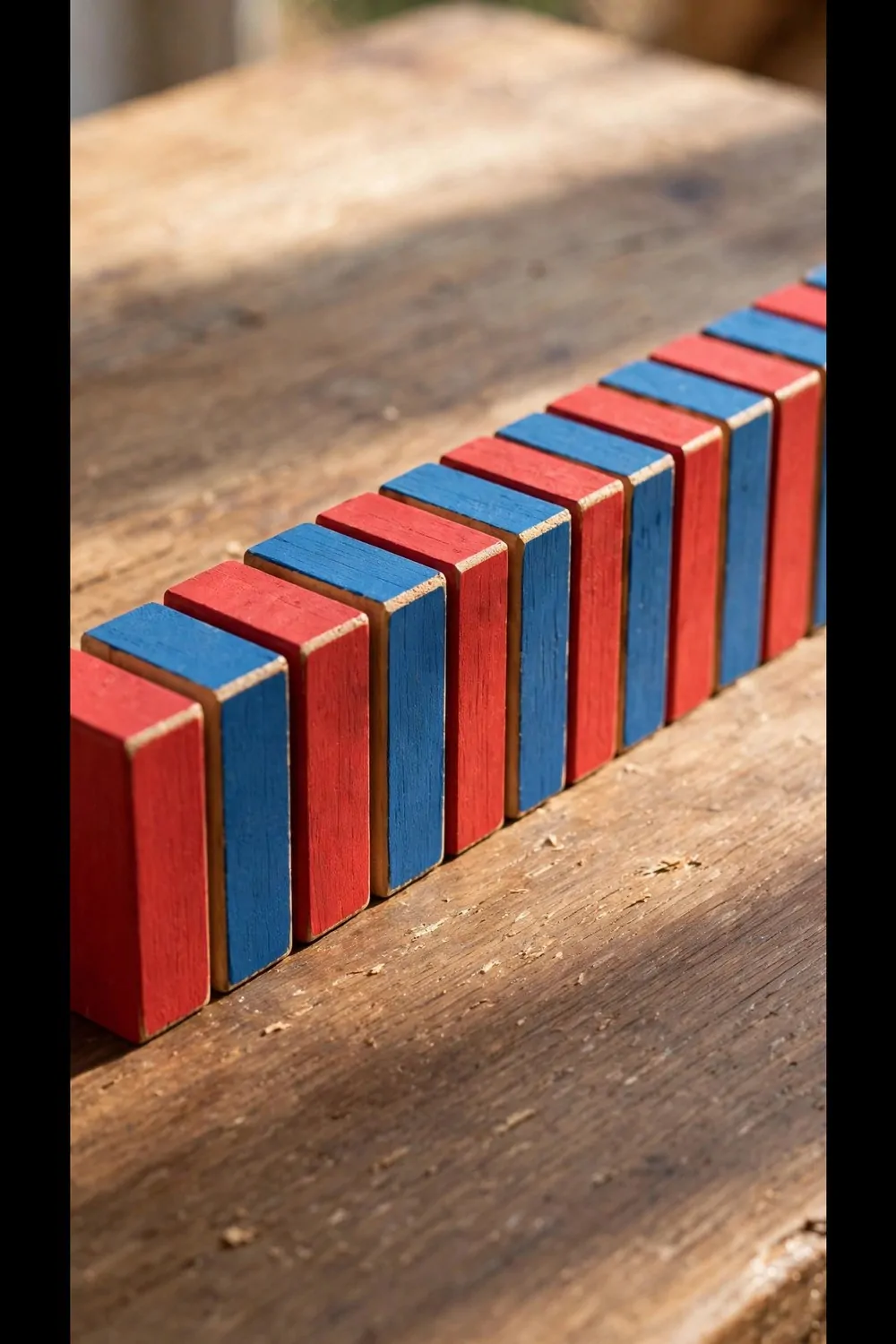
I tip a box of coloured blocks on the table. I pick out the red ones and the blue ones first. Then I lay them in a row for my boy to see.
Red, blue, red, blue, that is the whole trick.
I stop half way and ask him what comes next. He thinks for a bit and then puts a red block down.
He gets it right most days now.
Then we make the pattern longer and longer.
Some days I start a new pattern with three colours. Red, blue, yellow, red, blue, yellow, and he has to keep it going.
I let him build his own pattern after that. He lays the blocks out and I have to guess what comes next. We both laugh when I get it wrong and he shows me the right one.
We line the blocks up in a long snake across the floor. It curls round the chair legs and back again to us.
Typical cost $3 to $6.
12. Halves and Quarters with a Sandwich
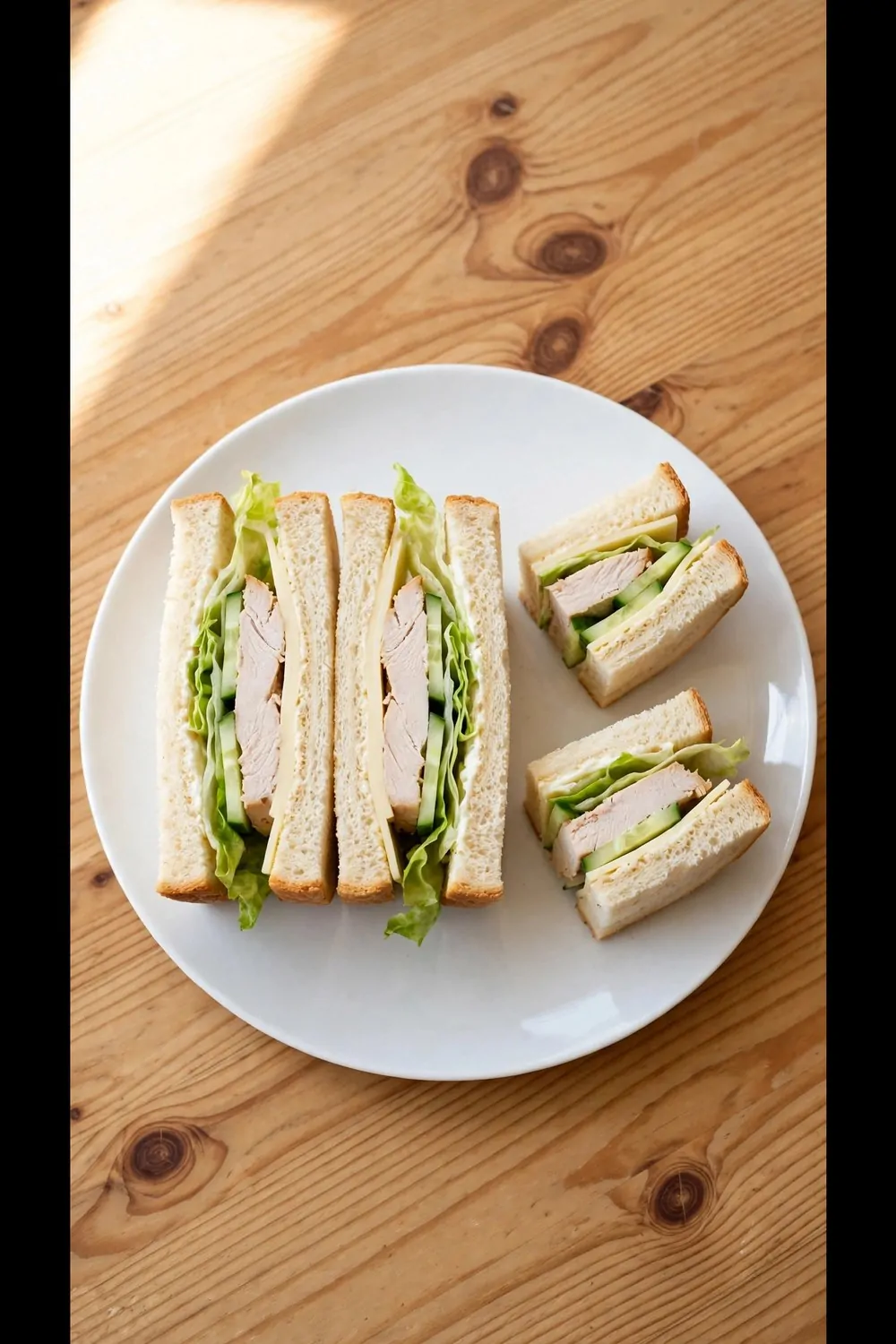
I make a chicken and cheese sandwich for lunch and cut it right down the middle. Now we have two halves on the plate.
I ask my girl how many pieces she can see. She counts them, one, two. Then I tell her each piece is called a half.
She holds one half up like a prize.
Next I cut one half into two small quarters. Now the plate holds two halves and two small quarters.
I tell her each small piece is called a quarter.
We count all the pieces out loud, one, two, three, four.
She eats one quarter and I ask how many are left. She counts the plate and says three. Then she eats one more and we count again.
Egg and jam work just as well for this game.
Typical cost $3 to $6.
13. Tell the Time on a Plain Clock
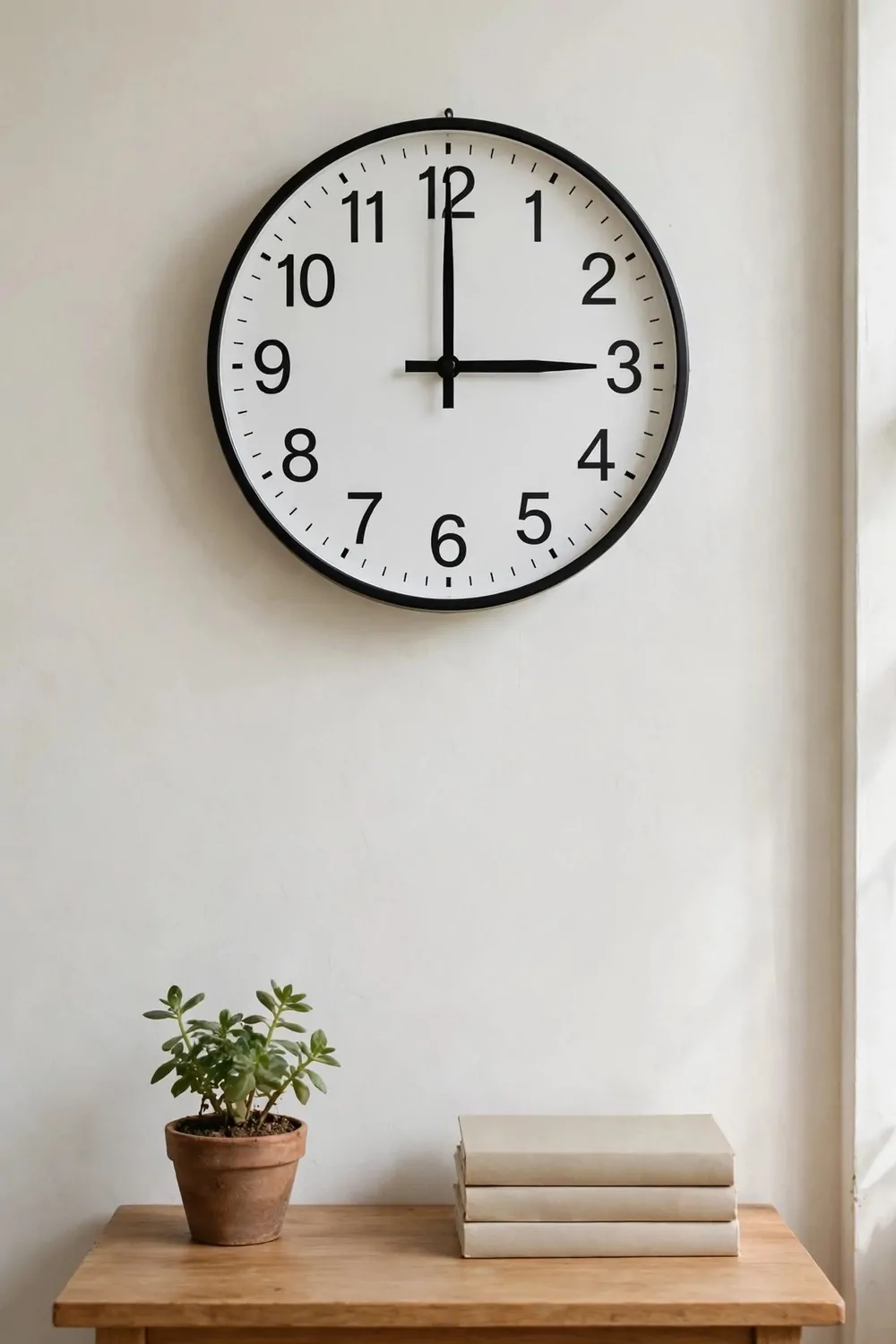
We keep a plain round clock on the wall in the kitchen.
I point to the big hand and the little hand. The little hand tells the hour and the big hand tells the minutes. My son moves the hands round with his finger and I say the time out loud.
At three o’clock the big hand points straight up. He loves it when both hands line up so neat.
Half past is the next step for us. When the big hand points down to six, I say it is half past the hour.
I ask him what time lunch is and he looks up at the clock. He reads the little hand first and then the big hand. If he gets stuck I give him a small hint and he tries again.
We check the clock each morning before school.
I set the clock to a new time and he has to read it. He gets faster at it every week.
A plain clock with clear numbers works best.
Typical cost $3 to $6.
14. Weigh Things on Kitchen Scales
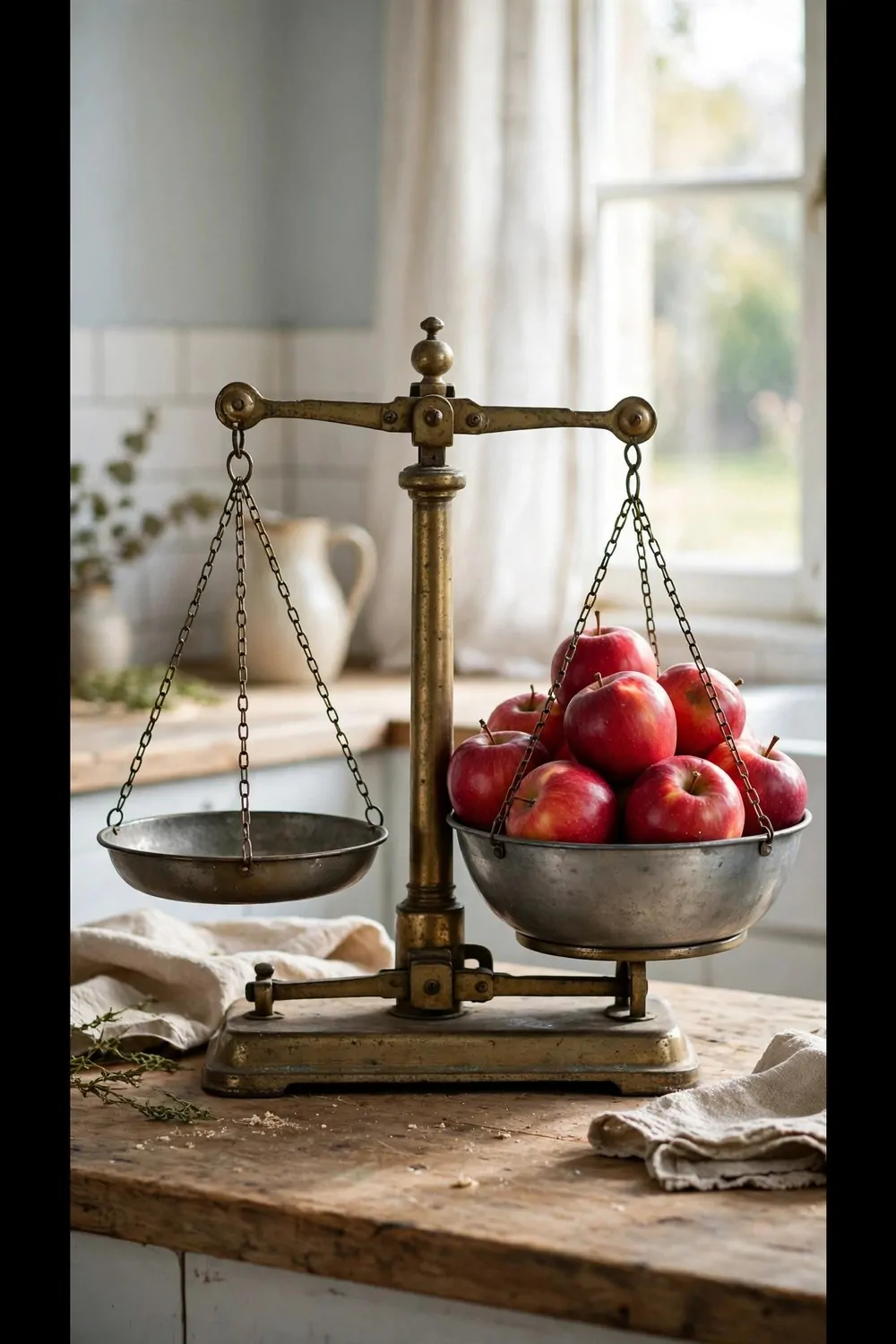
I put our kitchen scales on the table. I show my girl how the pan drops when I put a thing on it. Then I let her try with an apple first.
The apple is light and the pan drops a bit. A big book is much more heavy and the pan drops right down.
She says the book wins the heavy game.
We weigh her toy car next and then a cup. I ask her which one is more heavy before we look. She guesses, and then the scales tell us if she is right.
I note each thing down on a scrap of paper. We line the things up from light to heavy in a row.
The apple sits at the light end and the book at the heavy end.
She weighs her shoe next and we all laugh when the pan drops.
We guess first each time and then we weigh. Her guesses get closer each day we play.
Typical cost $3 to $6.
15. Skip Count by Twos with Socks
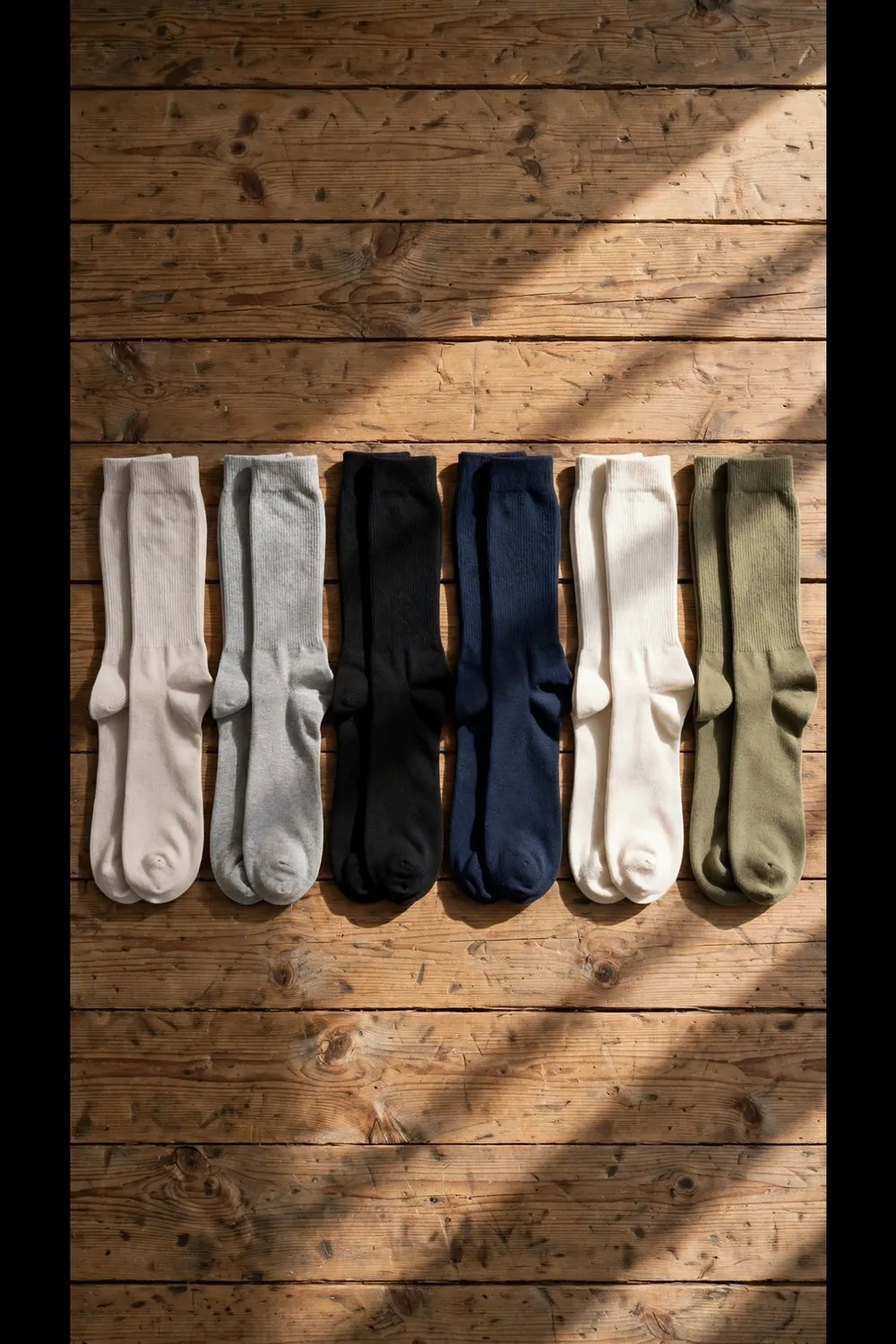
I tip a pile of clean socks on the floor. I ask my boy to pair them up first.
Each pair is two socks, and that is where we start.
We lay the pairs out in a long row.
I point to the first pair and say two. Then the next pair makes four, and the next one makes six. He says the numbers with me as we go down the row.
We count all the pairs till we reach the end. He claps each time we say a new number.
Some days I mix the pairs up and we start again. He likes it when the row gets long and the numbers get big.
Ten socks make five pairs and he counts it out loud.
I ask him what comes after ten and he thinks hard. He says twelve and I give him a high five. Then we keep going till all the socks are counted.
Typical cost $3 to $6.
16. Guess How Many Beans in the Jar
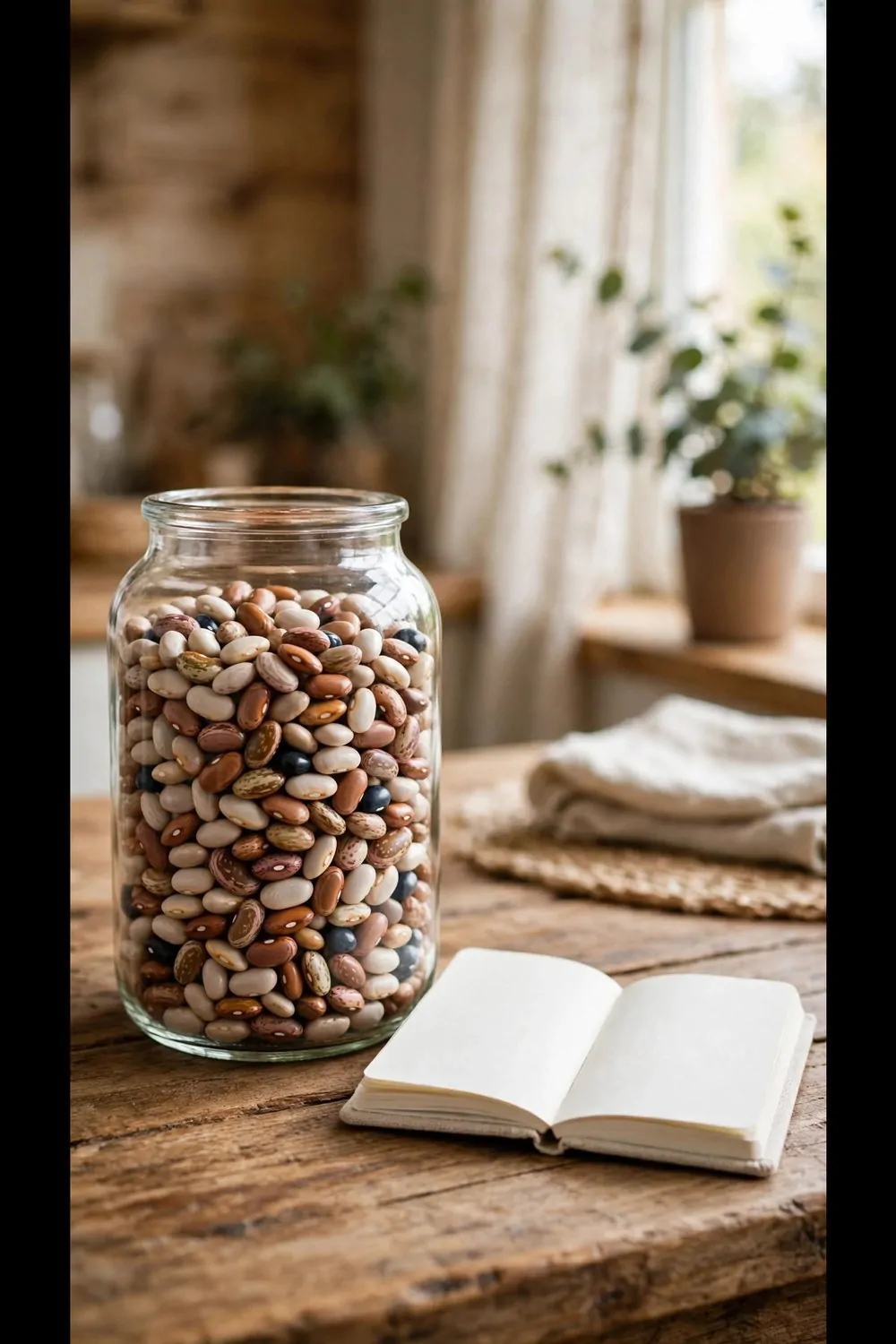
I fill a big glass jar with dry beans from the cupboard.
I hold it up and ask my girl to guess how many beans are in there. She looks close and says a big number.
I write her guess down on a bit of paper. Then I tip the beans out on the table in a pile. We both look at the pile and laugh at how big it is.
Then we count the beans out in tens.
I put ten beans in one small pile. Then ten more in the next pile, and ten more after that. She counts each pile as we go and keeps track on her fingers.
We line the ten piles up in a row.
At the end we add the piles up to find the whole count. Her guess was a bit high, but she was not far off at all.
We pour the beans back in the jar when we finish. Next week we fill it a bit more full and guess again.
Typical cost $3 to $6.
17. Play Dominoes and Add the Dots
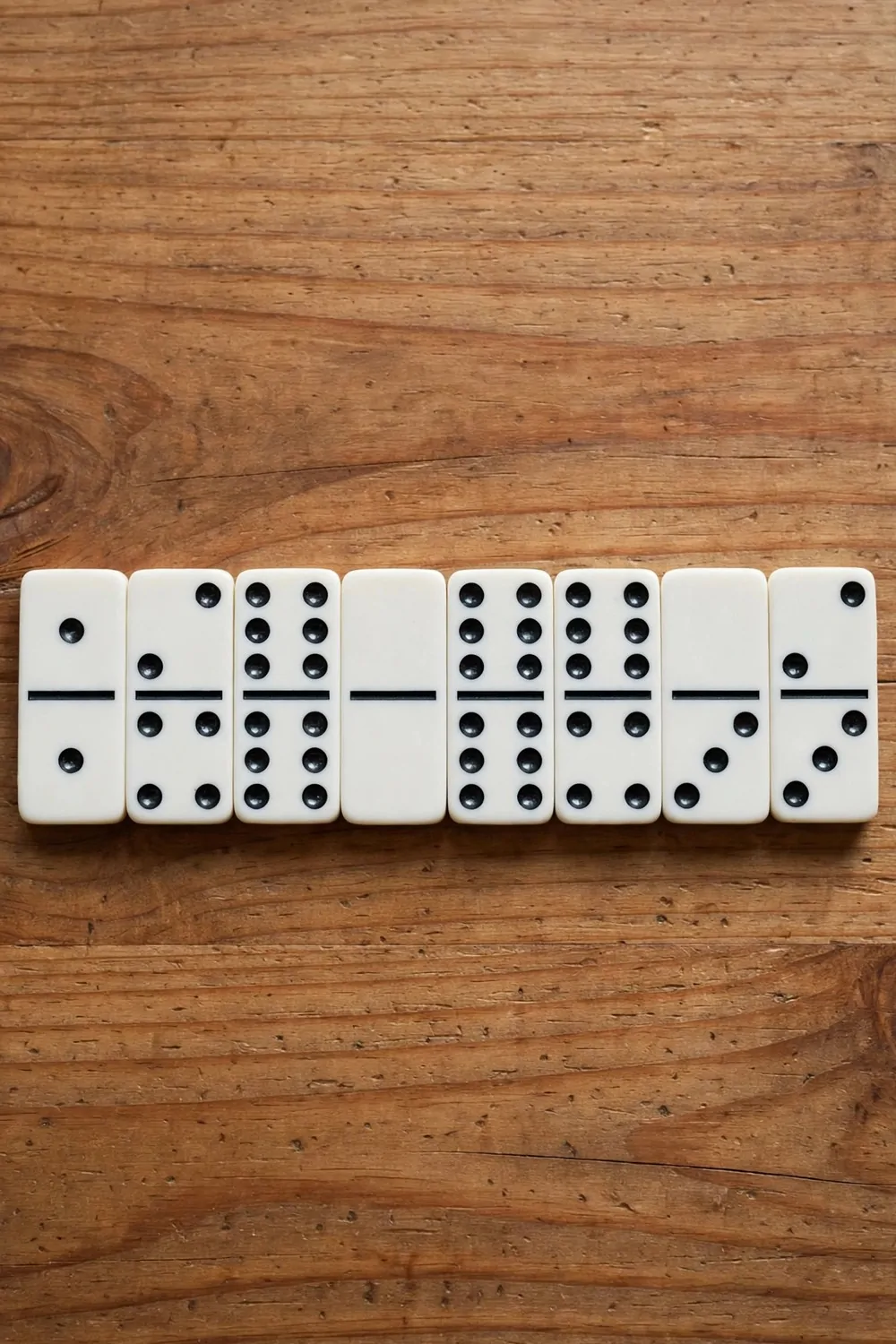
I lay my dominoes out in a long row on the floor. You can see all the dots at once that way.
I pick one domino and I count the dots on both ends.
You add the two sides together and you say the total out loud. I write the total down on a scrap of paper. You take the next domino and you do the same.
We keep going down the row till we reach the end. The first one to reach twenty wins the game.
I let my little one count the dots with a finger if the numbers feel big.
You can play it slow on a quiet afternoon. I like to mix the dominoes up first so no one knows what comes next. You can also sort them into small piles by their total.
I ask you to check my adding when I get a big one. You feel proud when you spot my mistake and fix it.
We put the dominoes back in the box when we finish.
Typical cost $3 to $6.
18. Count Backwards from Ten
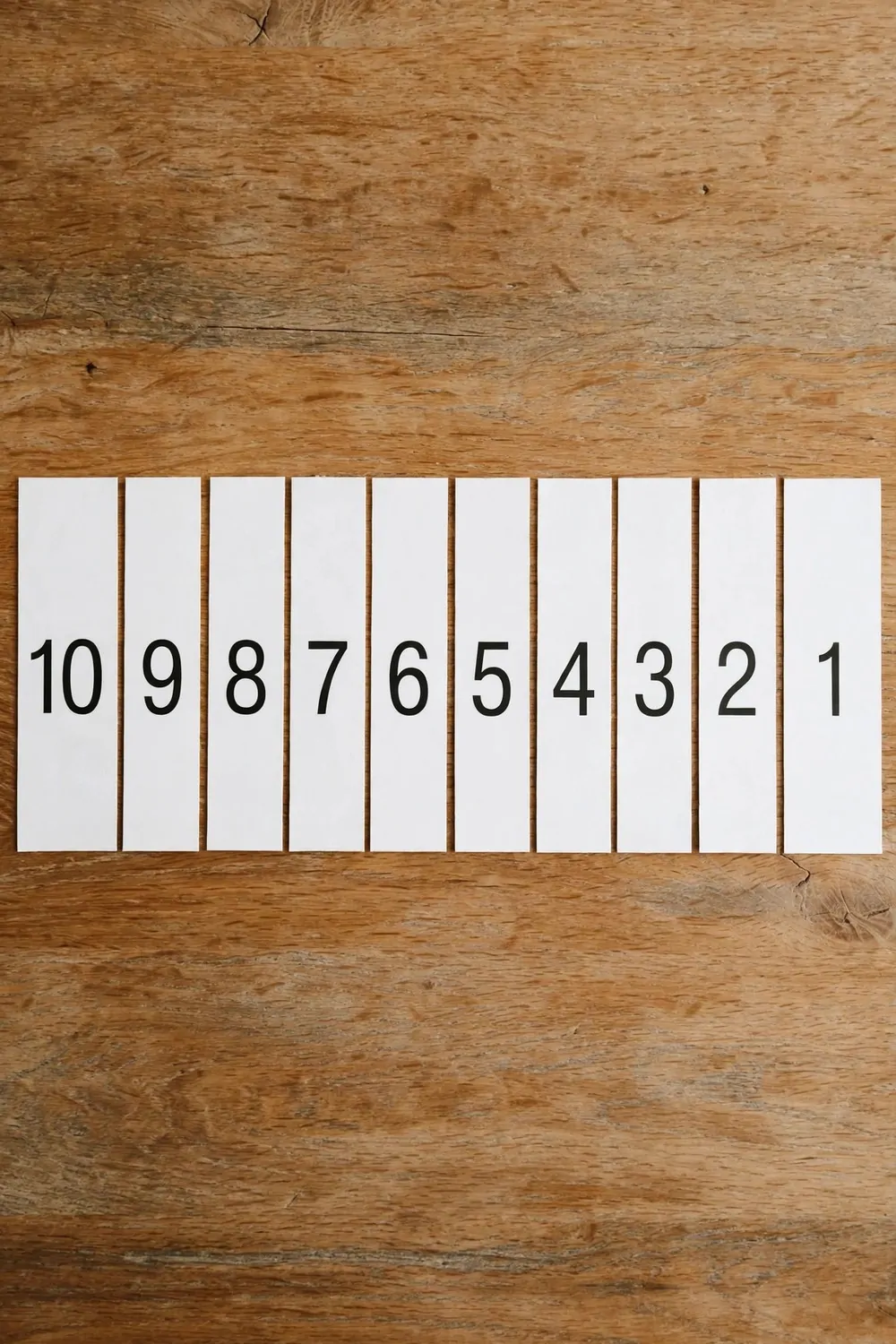
I count backwards from ten with my kids before bedtime.
You start at ten and you go down one number at a time. I hold up my fingers so you can see each number fall away. You say each number out loud in a soft voice.
We do it again before a game starts. It makes the start feel fun and it wakes our brains up.
I let you lead the count when you feel brave.
You can count backwards while you walk up the stairs. I count with you and I miss one out on purpose sometimes. You laugh and you tell me the right number.
Fingers help a lot when the numbers get tricky.
I fold one finger down for each number we say. You can see how many are left to go.
We try it from ten first and then we try it from twenty when ten feels easy. I cheer when you get all the way down to zero. You feel ready for the game after that.
Typical cost $0 to $0.
19. Measure Water in Cups
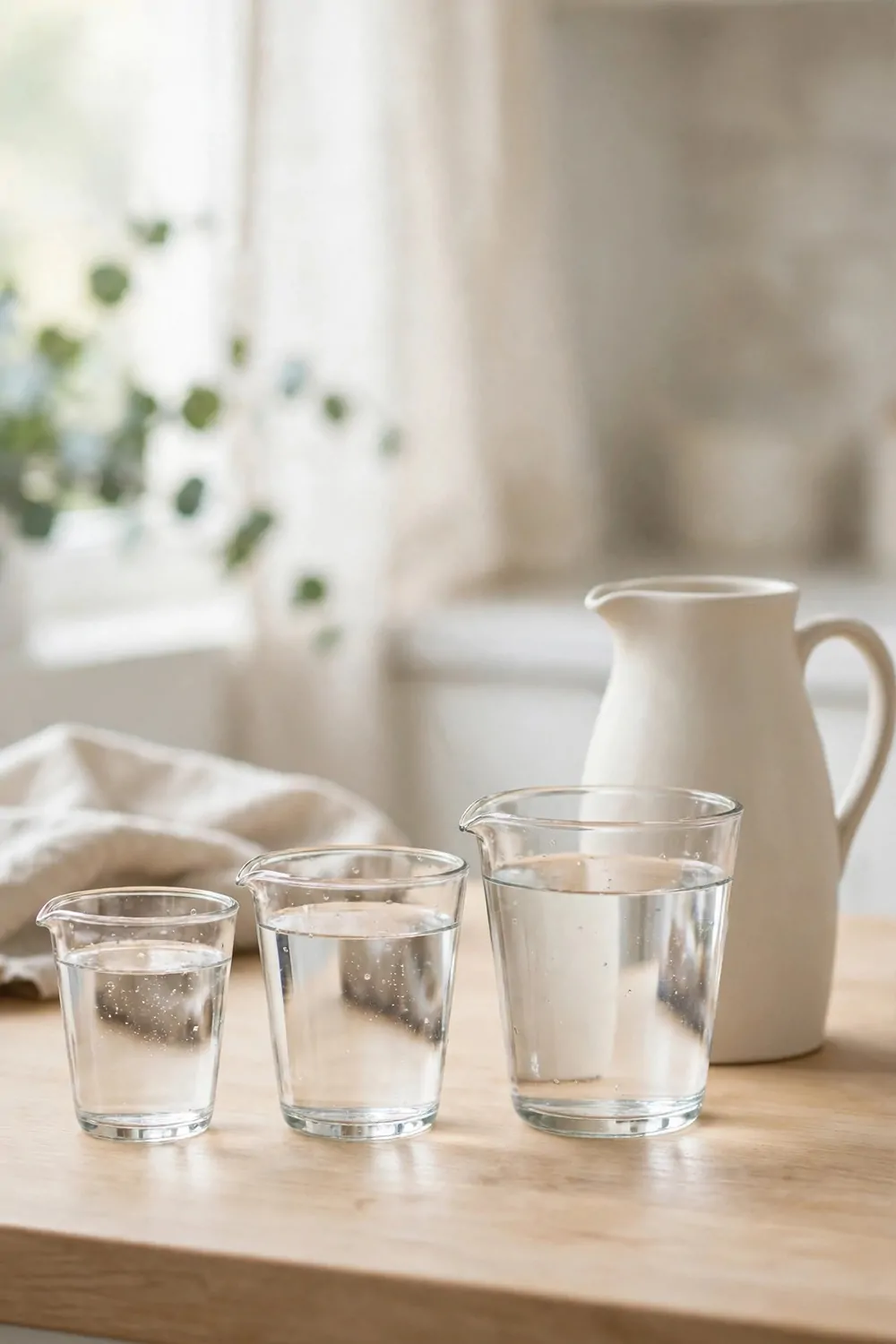
I put a big jug and a few small cups on the kitchen table. You pour water from a jug into the small cups one by one. I ask you to guess how many small cups will fill the big jug.
You count each cup as you pour it in.
I write the number down so we can check our guess. You feel so pleased when your guess is close.
We try it again with a taller cup and a short cup. I ask you which cup holds more water. You pour and you count and you find out for real.
I keep a towel close by for little spills.
You can pour the water back into the jug when you finish. I let you do the pouring all by yourself.
We talk about full and half full as we go.
I ask you to fill the jug to the halfway mark next. You stop and you look and you guess if it is right. We count the cups again to check.
Typical cost $0 to $0.
20. Sort Boxes by Shape
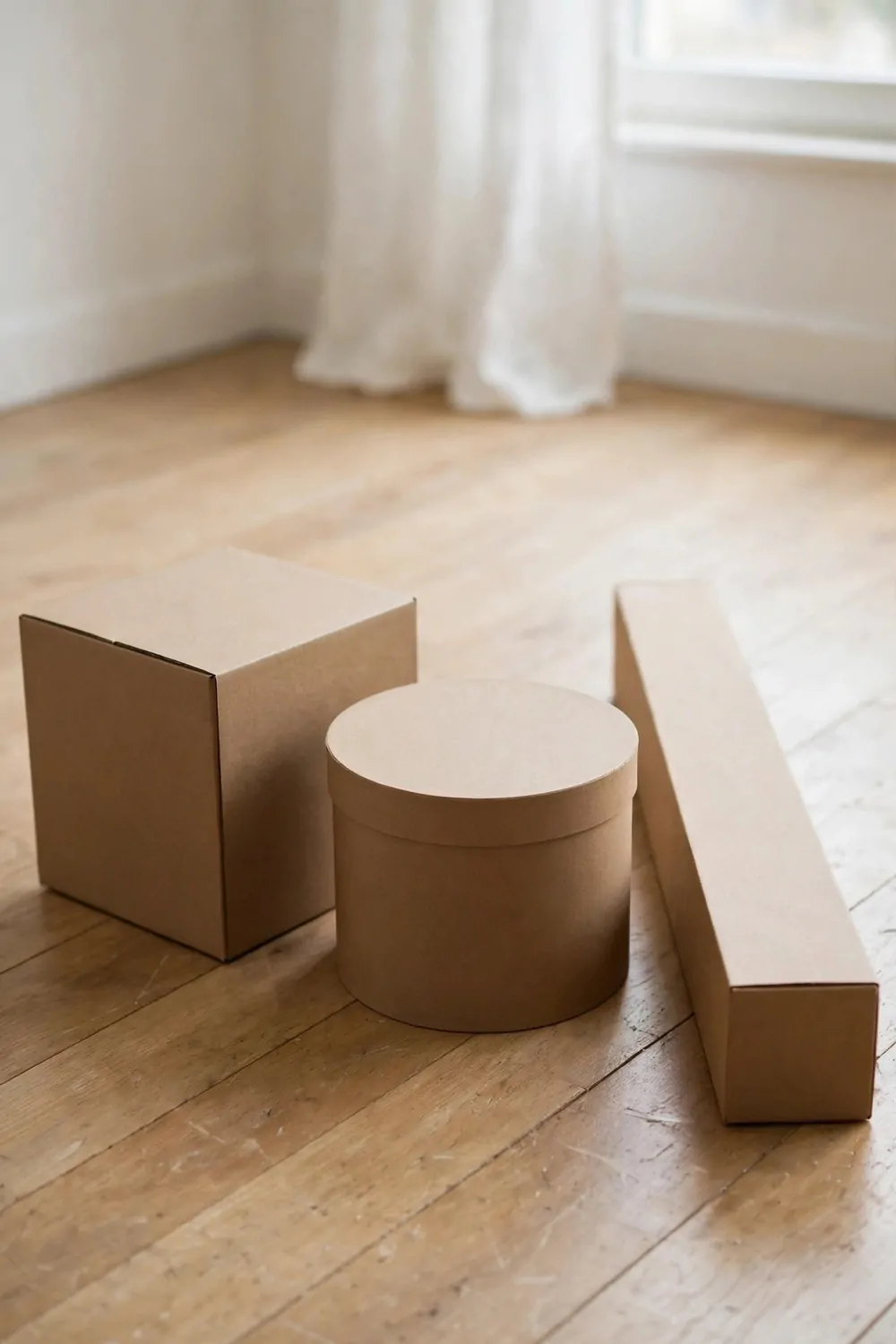
I save empty boxes from the cupboard for this game. You tip them all out on the floor in one big pile.
You pick up one box and you look at its shape. I ask you if it is square or round or long. You put it in the right pile with the same shapes.
I count each pile with you when the floor is clear.
You stack the square boxes into a tall tower. I stack the long boxes side by side in a neat row.
Round boxes roll away if you are not quick. I put a small mat down to stop them rolling too far. You laugh when one rolls off the mat and you chase it.
We count the round pile twice to make sure.
I ask you which pile has the most boxes. You point and you count and you tell me your answer. I ask you which pile has the fewest boxes next.
You can build a little town from the boxes when you finish sorting. I help you line the boxes up in rows.
Typical cost $0 to $0.
| Idea | Main change | Typical cost |
|---|---|---|
| Make Patterns with Coloured Blocks | make patterns with coloured blocks | $3 to $6 |
| Halves and Quarters with a Sandwich | cut a sandwich in halves and quarters | $3 to $6 |
| Tell the Time on a Plain Clock | tell the time on a plain clock | $3 to $6 |
| Weigh Things on Kitchen Scales | weigh things on kitchen scales | $3 to $6 |
| Skip Count by Twos with Socks | skip count by twos with socks | $3 to $6 |
| Guess How Many Beans in the Jar | guess how many beans in the jar | $3 to $6 |
| Play Dominoes and Add the Dots | play dominoes and add the dots | $3 to $6 |
| Count Backwards from Ten | count backwards from ten | $0 to $0 |
| Measure Water in Cups | measure water in cups | $0 to $0 |
| Sort Boxes by Shape | sort boxes by shape | $0 to $0 |
| Total | $21 to $42 |
21. Count the Days on a Calendar
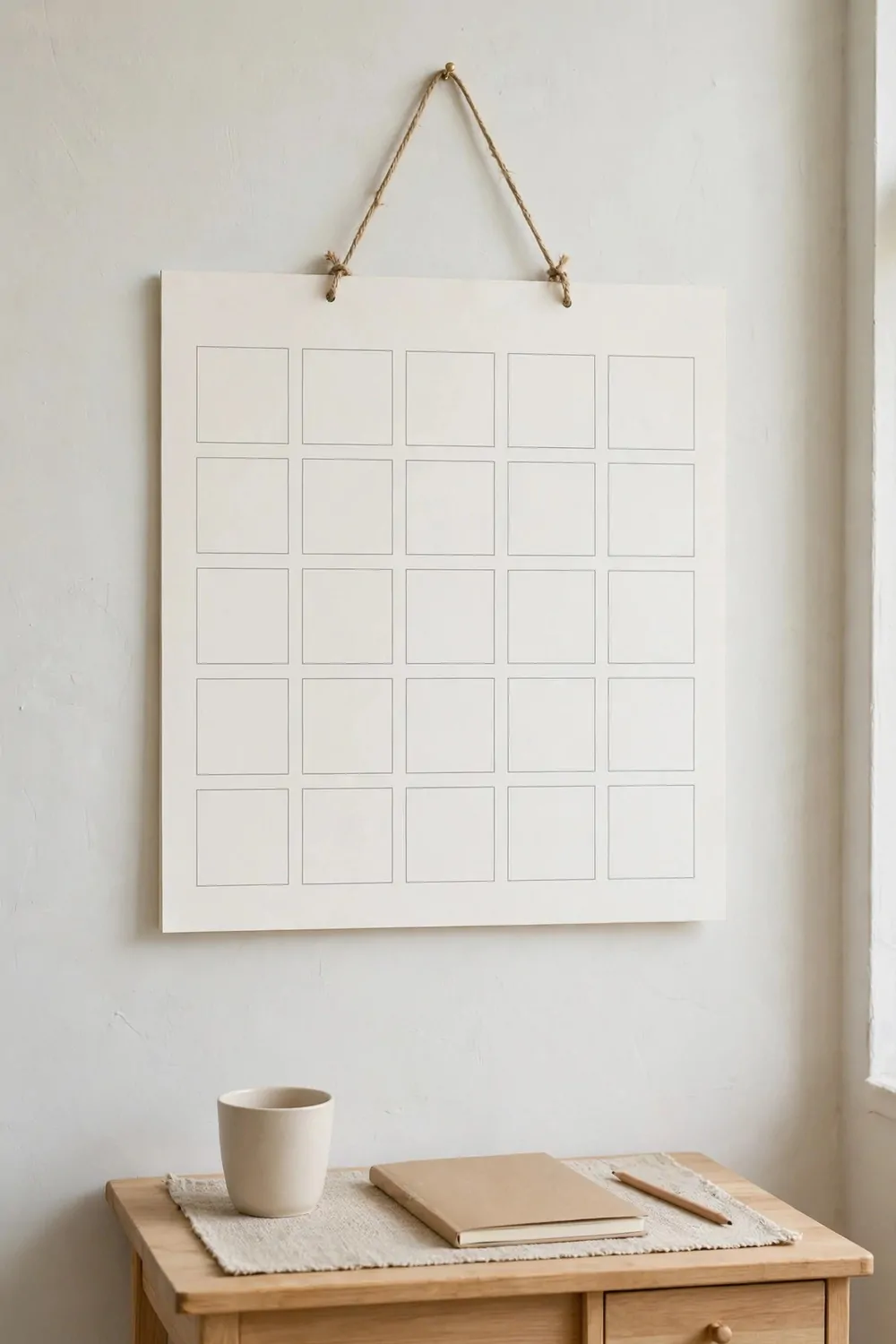
I hang a plain wall calendar where my kids can reach it.
You mark each day with a small cross when it ends. I let you pick the pen you like best.
We count how many days are left till the weekend. I point at today and you count forward with your finger. You say each day name as you tap it.
I ask you what day comes after Tuesday.
You look at the calendar and you find the answer yourself. I smile when you get it right on your own.
We circle big family days in a bright colour.
You can count the days till a birthday too. I help you count in small groups of five. You write the number on a scrap of paper and you stick it near the calendar.
I ask you how many days are in this week. You think hard and you tell me seven.
Typical cost $1 to $3.
22. Double a Simple Snack Recipe
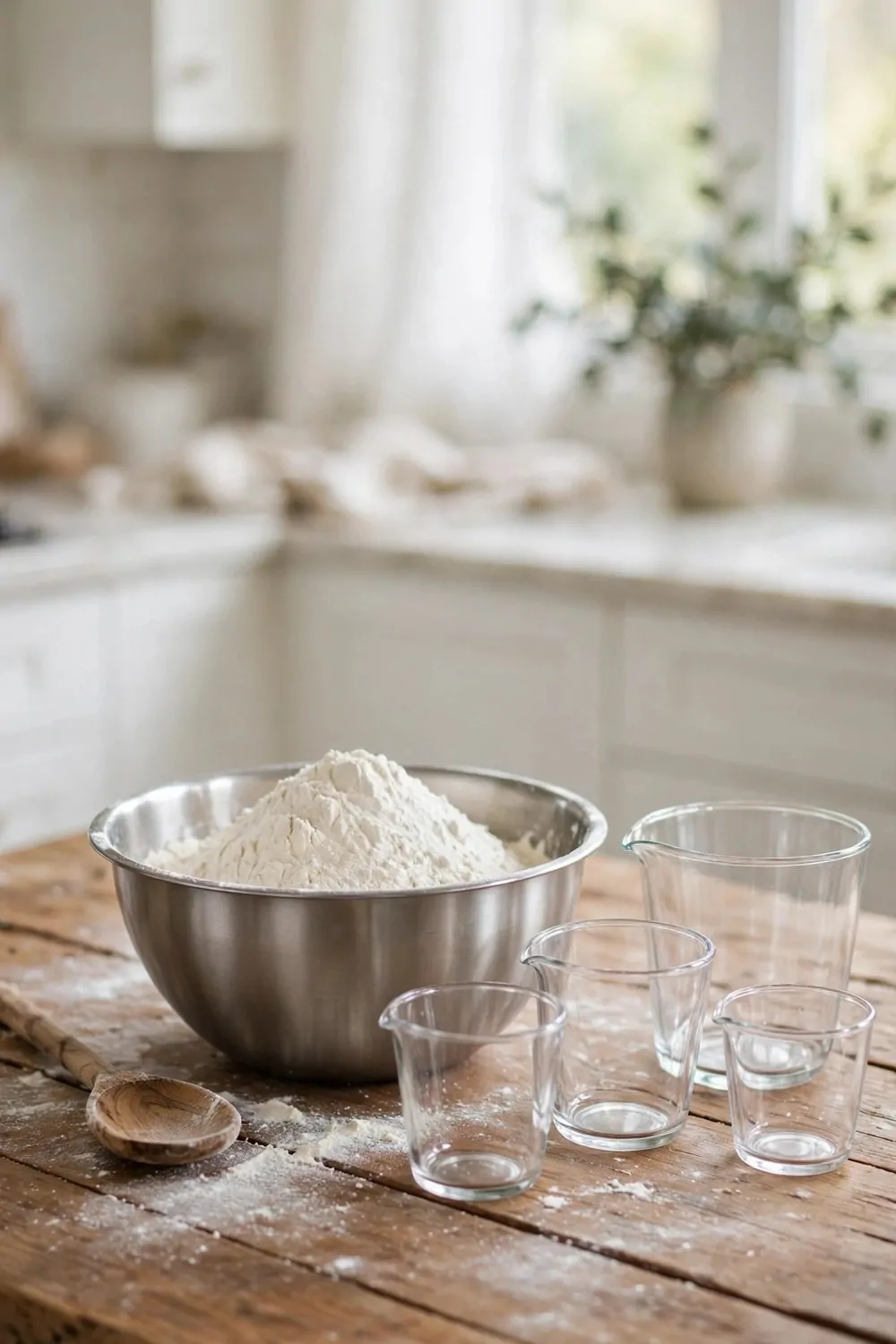
I make a simple pancake mix with my kids. You count out the spoonfuls of flour into a bowl. I hand you the wooden spoon to stir with.
We start with two spoonfuls of flour. I ask you how many spoonfuls we need if we double it.
You count it out and you say four.
I add one more spoonful of flour for each cup of water. You stir the bowl slow so nothing spills out. We take turns with the wooden spoon and smile at each other.
You can double the recipe again for a friend. I help you count the new total on your fingers.
We use plain cups and spoons from our own kitchen. I wipe the table first and you dry the cups with a clean cloth. You put the bowls on the table when we finish.
I let you pick how many spoonfuls go in next.
You count the spoonfuls as you drop them in the bowl. I write the new numbers down so we can make it again.
Typical cost $2 to $4.
23. Play Number Bingo with Plain Cards
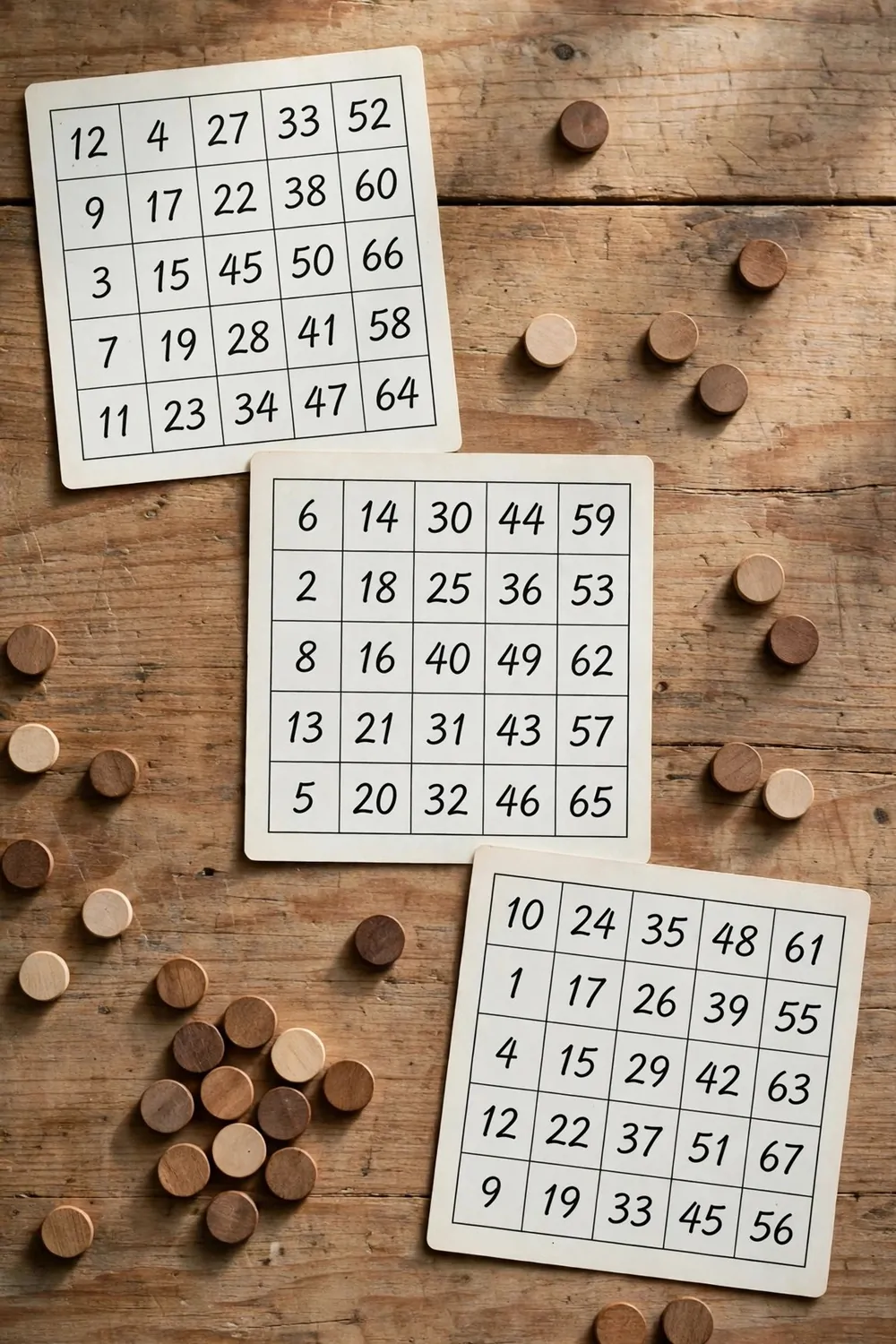
I make plain number cards from old paper for this game. You get one card each and a small pile of counters.
I call out one number at a time in a clear voice.
You look for that number on your card. I wait while you check each row with care.
You put a counter on the number when you find it. I call the next number and you look again. You shout out when you fill a whole row.
I let the youngest one go first when we call numbers.
You can swap cards and play again right away. I mix the number slips up in a bowl first.
We keep the game slow so no one feels rushed. I say each number twice so you can hear it well. You help your little brother find his numbers when he gets stuck.
We put the counters back in a small tin at the end.
Typical cost $1 to $3.
24. Count Coins in a Coin Jar
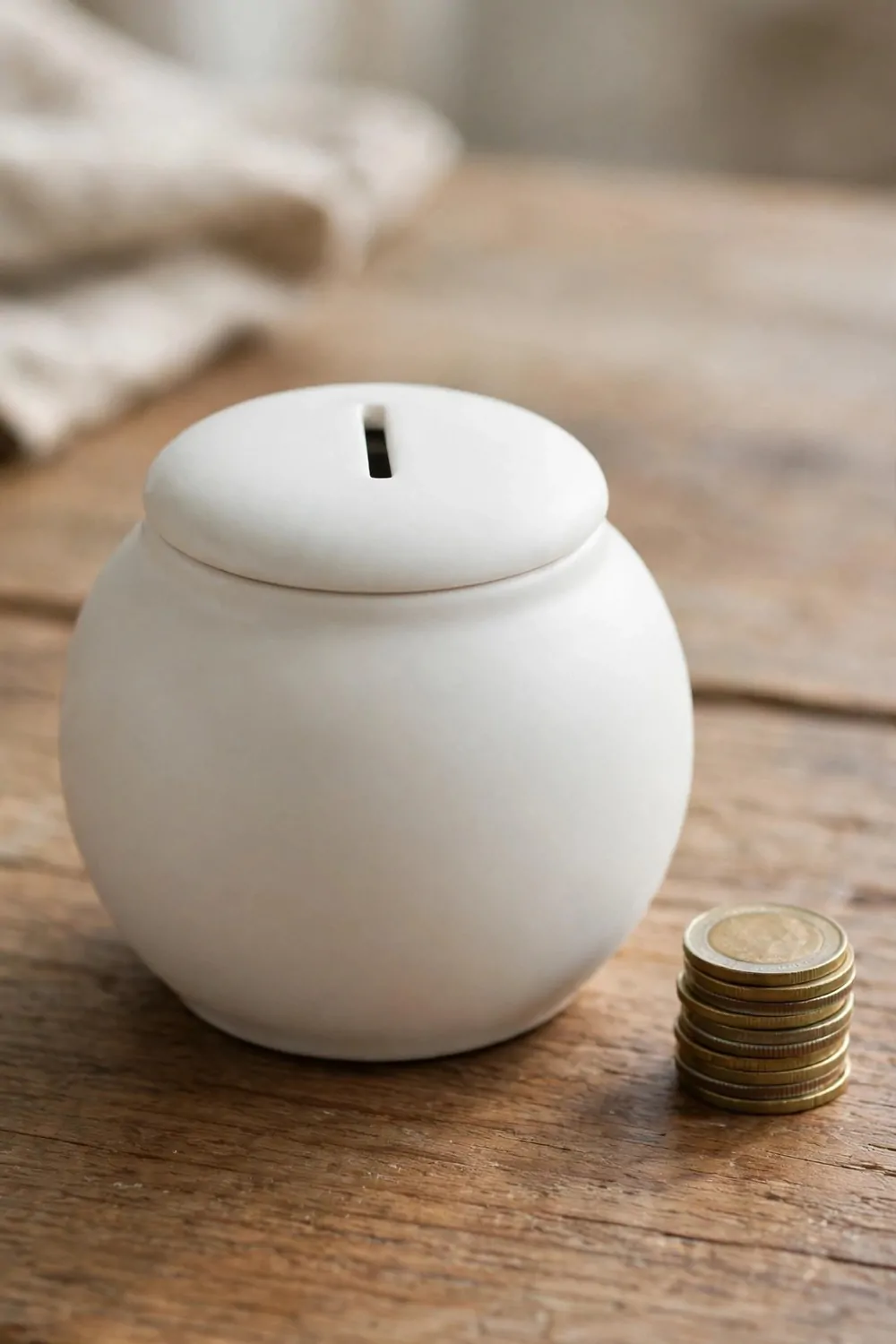
I tip the coins out of the coin jar onto a clean tray.
You sort the coins into piles by size. I show you how the big coins go in one pile and the small coins go in another. You pick up each coin and you look at it first.
I count one pile while you count the other pile.
We count in small groups so we do not lose track. You say each number out loud as you move the coins.
I ask you which pile has more coins in it. You point at the pile you think is bigger. We count both piles again to check your guess.
You can stack the coins into neat little towers.
I help you add the two piles together for the total. You write the total down on a scrap of paper.
We put the coins back in the coin jar when we finish.
Typical cost $0 to $0.
25. Hopscotch Numbers on the Floor
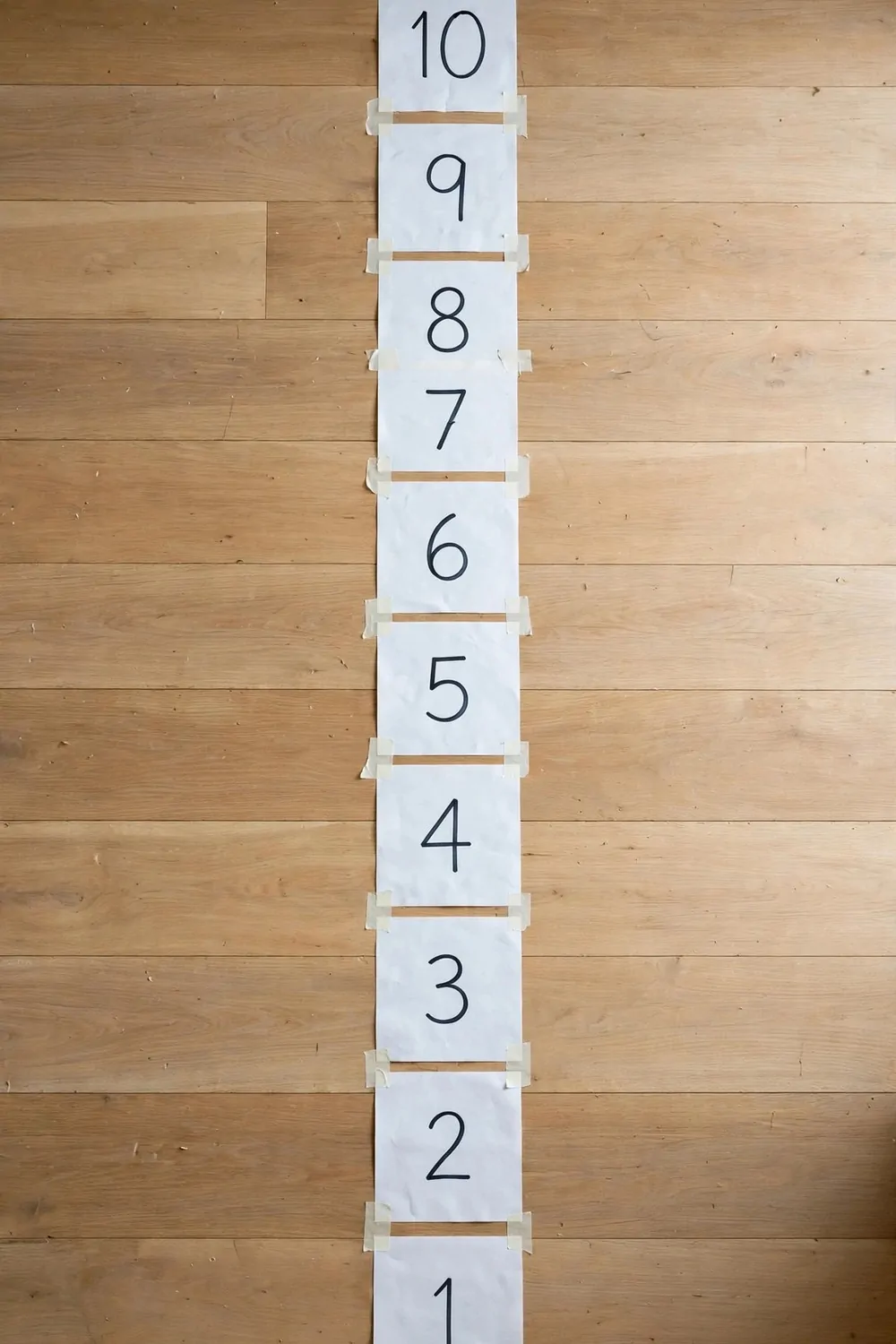
I tape paper squares on the floor in a long line, and each square gets one big number, from one to ten.
My kids hop from square to square and shout each number out loud.
We start at one and hop all the way to ten. Then we hop back from ten to one. It feels like a game, not a lesson.
I tape the squares in a straight line across the living room floor. A little space between each square keeps the hops safe.
My youngest hops on one foot and giggles when she wobbles.
We draw the numbers big and thick with a dark pen. Big numbers are easy to read from a hop away. The big black numbers stand out clear on the white squares.
Some days we hop only on the even numbers. Other days we hop on the odd ones.
The floor game takes five minutes to set up and keeps my kids busy for much longer.
Typical cost $1 to $3.
26. Group Toys into Tens
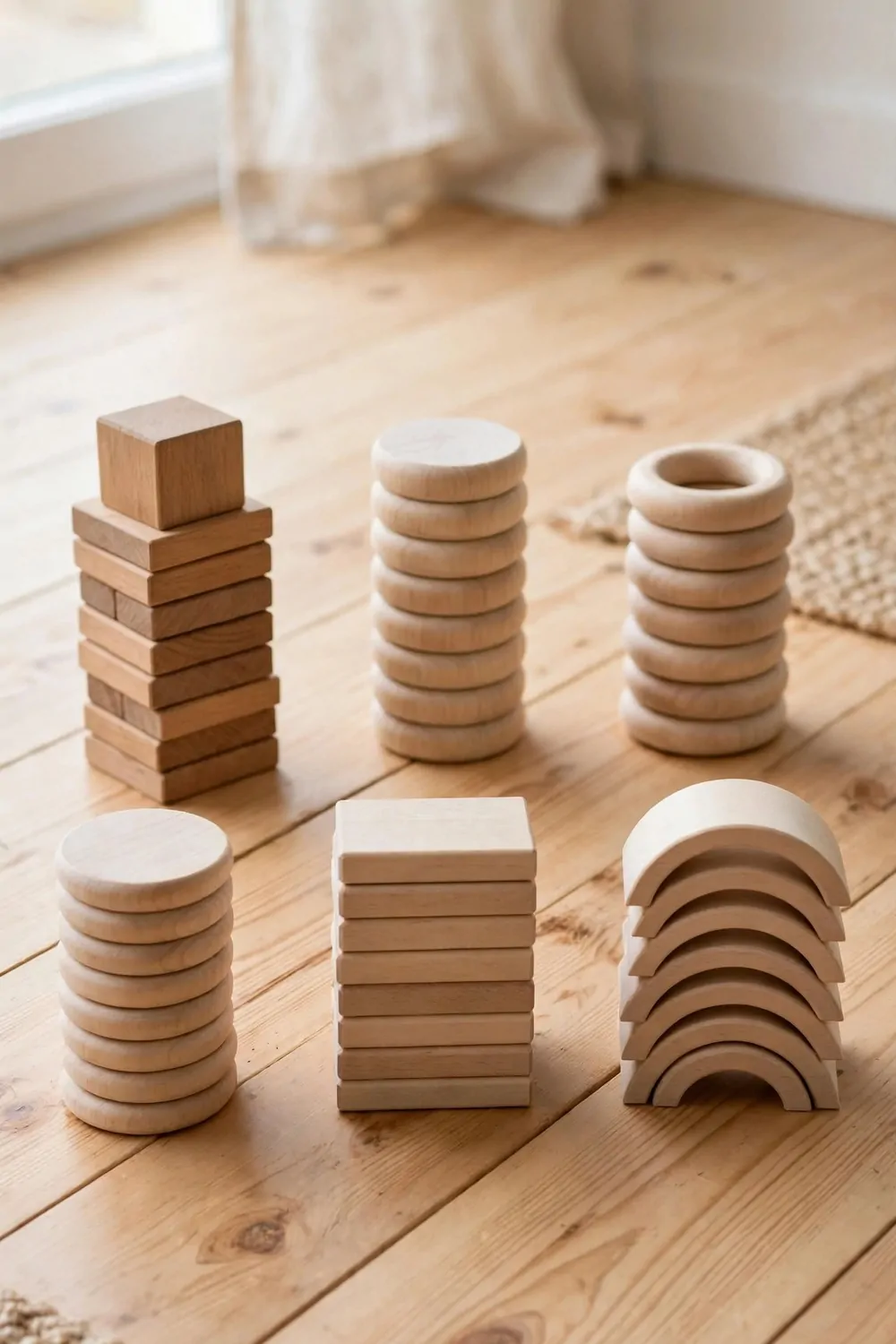
I tip a box of small toys onto the floor.
My kids pick up the toys one by one and try to put ten toys in each pile.
We count each pile out loud as we build it. One, two, three, and on we go. Then we start a fresh pile.
Small blocks work best for this game.
When all the toys are in piles, we count the piles. Six piles stand on the floor in front of us.
My daughter loves to line the piles up in neat rows.
We use toy cars one day and small blocks the next day. The toys change, but the counting stays the same. Ten toys in each pile is the goal.
If a pile has nine toys, we hunt for the missing one. If it has eleven, we move one toy to the next pile.
Typical cost $0 to $0.
27. Compare Heights with a Paper Strip
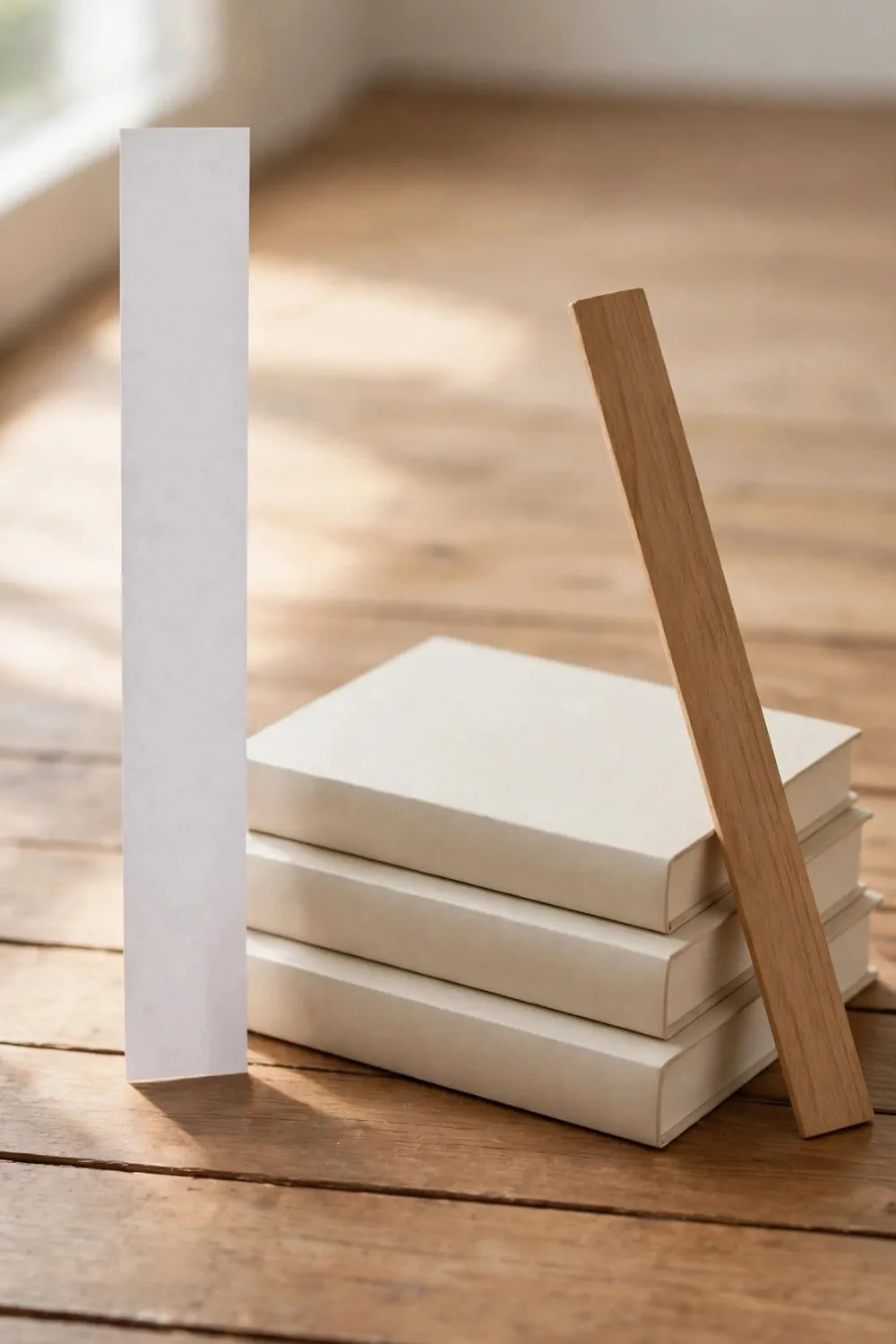
I cut a long strip of plain paper and hold it next to my child to mark the top of her head. Then I cut the strip at that mark.
Now we have a paper strip exactly as tall as my child.
We hold the strip next to her toy bear. The bear is much shorter than the strip.
We hold it next to a tall book on the shelf.
My son asks if the strip is taller than the chair. We check, and the chair wins by a little bit. He laughs and tries the table next.
We write each thing on the strip with a pen. Taller things get a mark above the line, shorter things below it.
The strip turns into a simple height chart for the whole room.
My kids love to check which toy is the tallest. They run around the room and bring me new things to measure.
Typical cost $1 to $2.
28. Count Birds from the Window
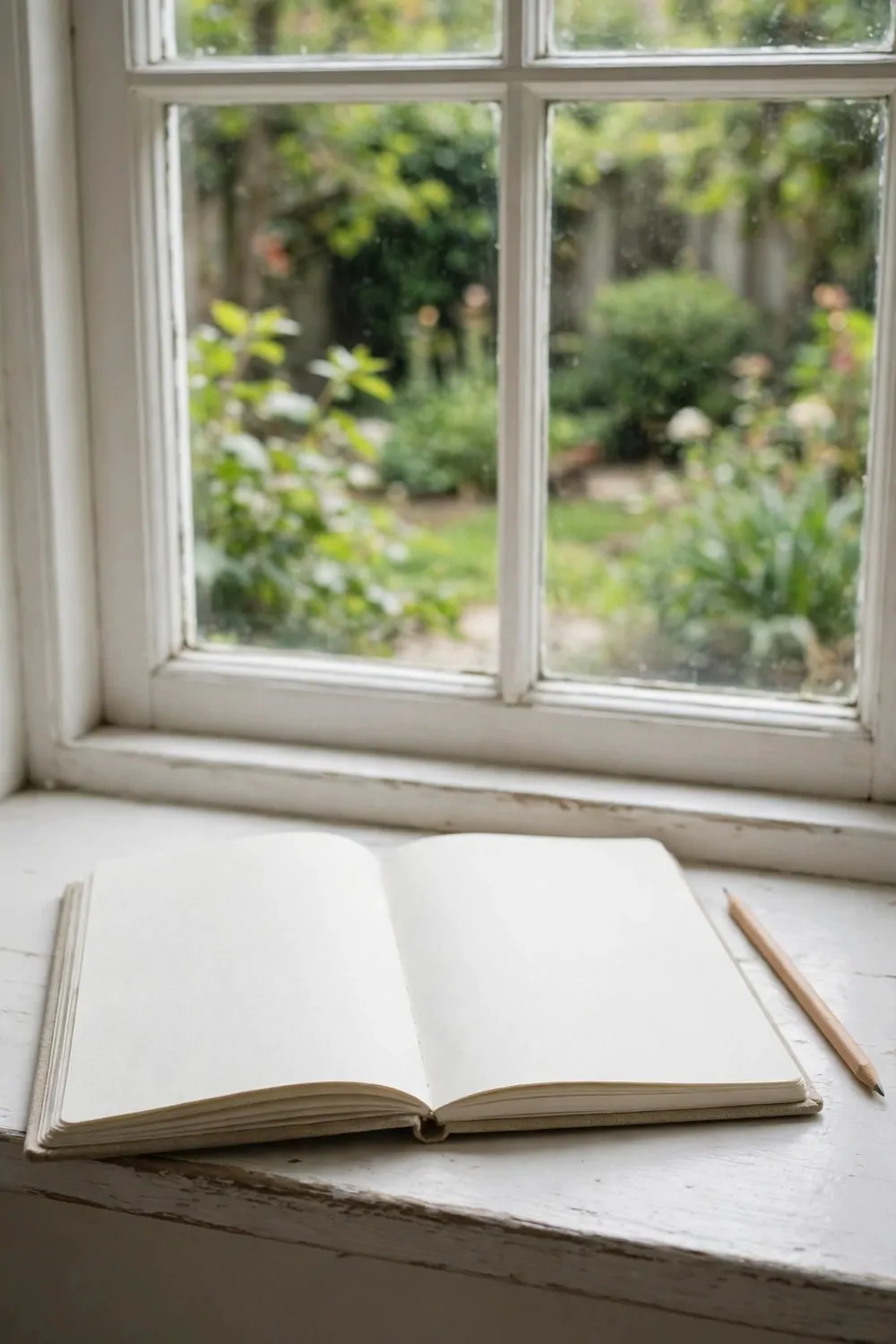
We sit by the window with a plain notebook.
My kids watch the trees outside and wait for a bird to land. When one lands, we draw a small mark in the notebook. Each mark means one bird.
We count the marks at the end of ten minutes. Some days we see three birds, and some days we see eight.
My son points at a brown bird on the fence. My daughter spots a black one on the roof. We add a mark for each bird we see.
We never tap the glass or shout, so the birds stay a while.
I ask my kids which colour bird we saw most. We count the marks by colour and compare the totals.
The notebook stays by the window all week. Each morning we add new marks to the same page. By Friday we have a full week of bird counts.
Counting birds teaches my kids to watch and wait.
Typical cost $0 to $0.
29. Make a Simple Bar Chart of Toys
We gather all the small toys into one big pile. Then we sort them into groups by type.
Cars go in one group, blocks in another, soft toys in a third, and balls in a fourth. My kids love to argue about which group a toy belongs in. We settle each one with a quick vote.
We count how many toys sit in each group.
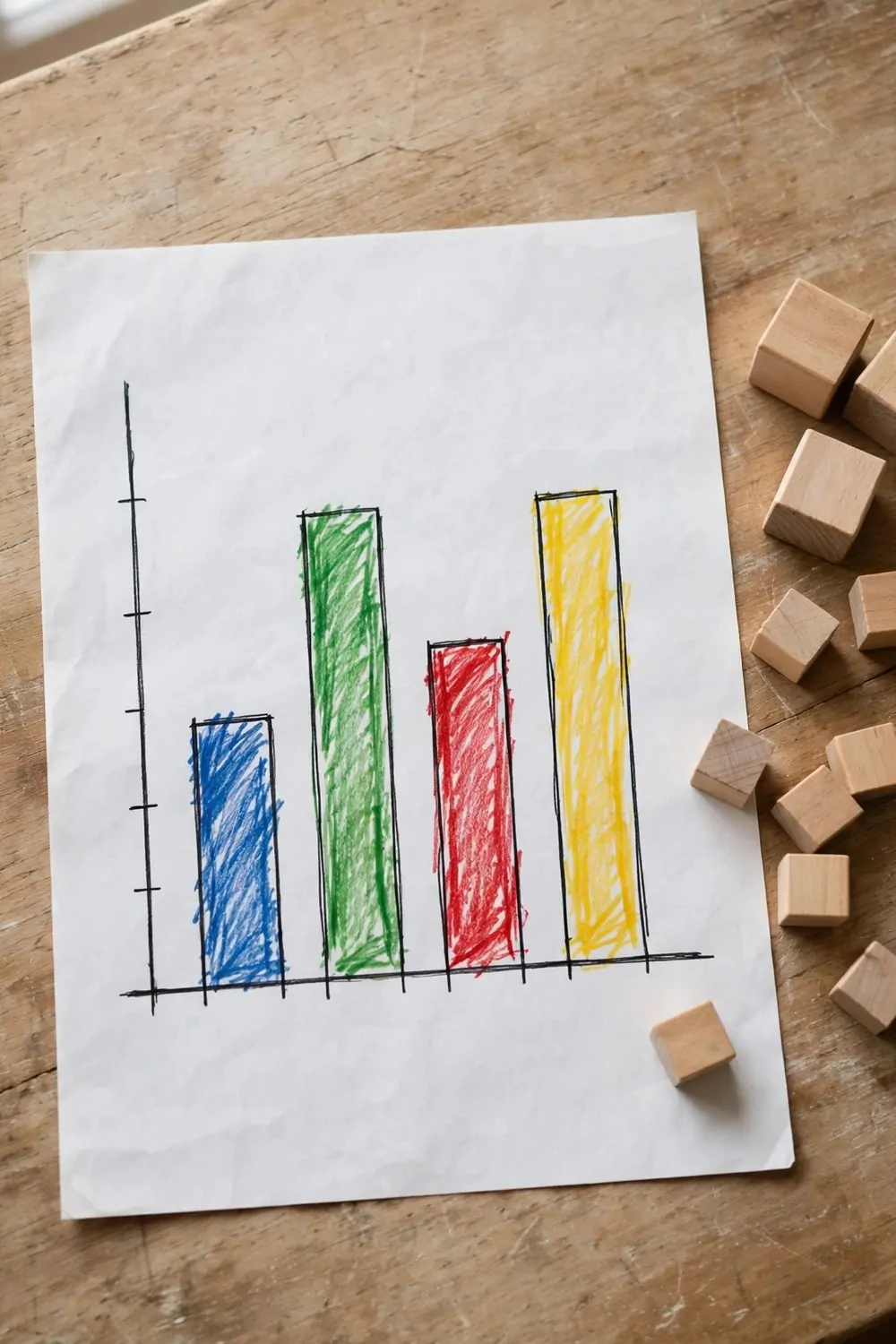
I draw a plain grid on a sheet of paper. Each group gets its own column.
My daughter colours one box for each toy in the group. The cars column grows tall fast. The soft toys column stays short.
The tallest column shows the group with the most toys.
My son points at the chart and reads the winner out loud. He wants to add more cars to make the column even taller.
We stick the chart on the fridge when we finish. My kids show it to everyone who visits. It feels good to see their counting work on display.
Typical cost $1 to $2.
30. Count with a Set of Number Cards
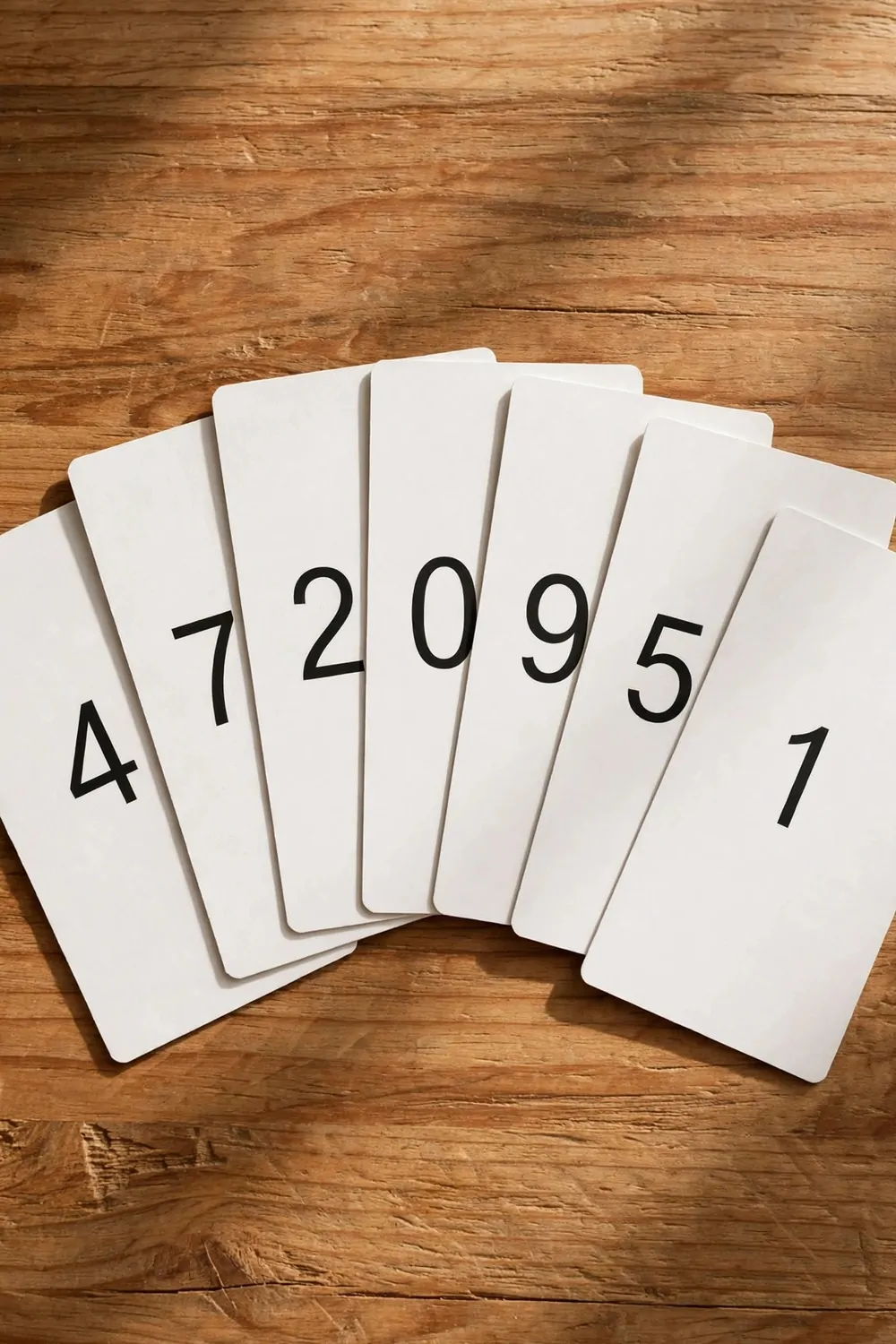
I fan the number cards out on the table. The numbers are all mixed up in a fan. My kids read each card out loud as they point at it.
Then I mix the cards up and lay them out again. My kids sort them back into the right order.
Sorting the cards feels like a puzzle to them.
We play a quick game where I hide one card under my hand. My kids guess which number is hiding. They check their guess by counting the row.
My daughter lays the cards face down and flips them one by one. She reads each number as it turns over.
We time her with a clock and cheer when she beats her last score.
Some days we lay the cards in order from ten down to one. Counting backwards is harder, and my son loves a hard game. He beams when he gets it right.
I keep the cards in a small box on the shelf. My kids pull them out on their own now.
Typical cost $3 to $5.
31. Find the Missing Number in a Row
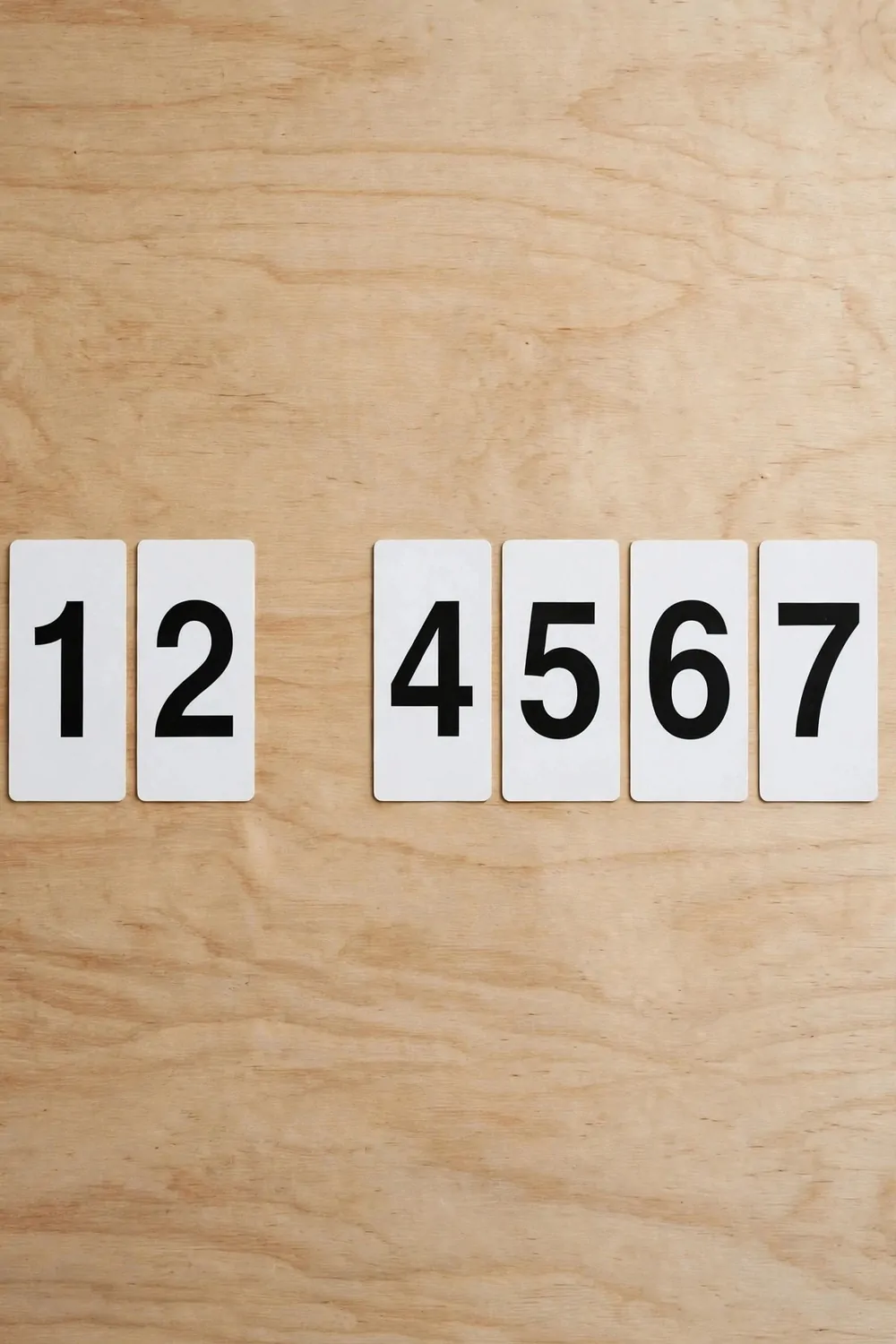
I lay number cards in a row on the table. Then I slide one card out while my kids close their eyes.
They open their eyes and hunt for the gap in the row.
My son counts along the row nice and slow. He stops at the gap and shouts the missing number.
We play it again with a different card missing. Each round gets a little faster. My daughter now spots the gap before her brother does.
The game works best with a short row of cards.
I let my kids take turns hiding the card. They love being the one who sets the puzzle.
A missing three is easy to spot once you count the row.
We keep score with small marks on a piece of paper. One mark for each right answer. The first to five marks wins the round.
Typical cost $0 to $0.
32. Lay Out Your Maths Kit on the Table First
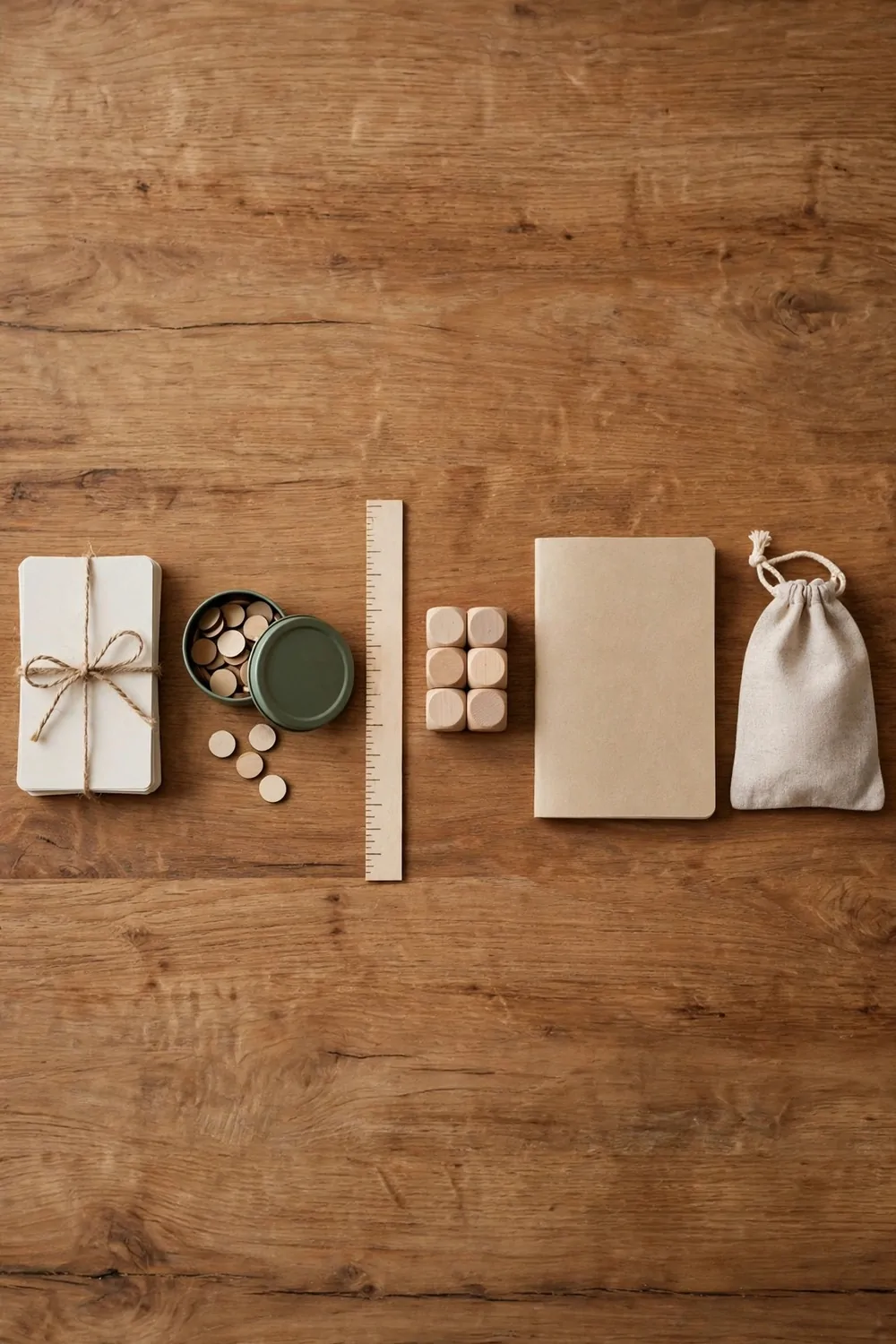
I clear the table and lay the maths kit out in a neat row. Everything sits where my kids can reach it.
First on the left, I set down the set of plain number cards.
Next to the cards, I place the small tin of plain counters. The tin clicks softly when I set it down. My kids love to shake it and hear the counters rattle inside.
Third in the row goes the plain wooden number line strip. It lies flat and straight, with small marks along its edge.
Fourth, I set down the set of plain wooden cubes.
Fifth comes the plain paper maths workbook, shut and ready for a fresh page. My kids flip through the pages and pick a sum to try. We keep a pencil close by, ready to go.
Last at the right end, I place the small fabric counting pouch. It holds the extra counters for counting games on the go.
A set of plain number cards costs $3 to $5, a small tin of plain counters costs $3 to $5, a plain wooden number line strip costs $2 to $4, a set of plain wooden cubes costs $3 to $5, a plain paper maths workbook costs $4 to $6, and a small fabric counting pouch costs $3 to $5, for a total of $18 to $30.
I lay the kit out on the table, and my kids run over with a smile because the fun is about to start. We pick one game first, and our maths time feels bright and full of laughs.
| Idea | Main change | Typical cost |
|---|---|---|
| Count the Days on a Calendar | count the days on a calendar | $1 to $3 |
| Double a Simple Snack Recipe | double a simple snack recipe | $2 to $4 |
| Play Number Bingo with Plain Cards | play number bingo with plain cards | $1 to $3 |
| Count Coins in a Coin Jar | count coins in a coin jar | $0 to $0 |
| Hopscotch Numbers on the Floor | play hopscotch numbers on the floor | $1 to $3 |
| Group Toys into Tens | group toys into tens | $0 to $0 |
| Compare Heights with a Paper Strip | compare heights with a paper strip | $1 to $2 |
| Count Birds from the Window | count birds from the window | $0 to $0 |
| Make a Simple Bar Chart of Toys | make a simple bar chart of toys | $1 to $2 |
| Count with a Set of Number Cards | count with a set of number cards | $3 to $5 |
| Find the Missing Number in a Row | find the missing number in a row | $0 to $0 |
| Lay Out Your Maths Kit on the Table First | lay out a maths kit on the table | $18 to $30 |
| Total | $28 to $52 |
| Idea | Main change | Typical cost |
|---|---|---|
| a set of plain number cards | count with a set of plain number cards | $3 to $5 |
| a small tin of plain counters | count and sort with a small tin of plain counters | $3 to $5 |
| a plain wooden number line strip | hop along a plain wooden number line strip | $2 to $4 |
| a set of plain wooden cubes | stack and count with a set of plain wooden cubes | $3 to $5 |
| a plain paper maths workbook | practise sums in a plain paper maths workbook | $4 to $6 |
| a small fabric counting pouch | carry counters in a small fabric counting pouch | $3 to $5 |
| Total | $18 to $30 |
Keep Reading
If you liked these ideas, you will love these posts too
Each post has more simple ideas you can try at home this weekend.