27 Spelling Practice Ideas That Make Words Stick

My son spelled the same word three different ways in one short note, and each try looked sure of itself.
Here are 27 spelling practice ideas that turn tricky words into words your child can keep for good.
Spelling felt hard at our house for a long time. My child would learn a word at night and lose it by the morning. That lose-it-by-morning loop made us both feel stuck.
What helped was not more work or longer lists. It was small daily practice that felt like play, not like a test. A few slow minutes each day did more than one long hard session.
Spelling sticks when a child hears a word, says it, and writes it. One way alone is weak. All three ways together make the word stay.
You do not need to buy much or set up a big plan. A pen, some plain cards, and a quiet spot at the table will do. Pick the ideas that fit your child and your day.
Start with the one that sounds like fun. A small win today makes tomorrow feel easy.
1. Sound Out Each Letter Slowly
Say the word out loud first, slow and clear. Let your child hear every part of it before they pick up a pen.
Slow sounds make the letters easier to find.
Pick a short word your child knows well. Say it in small parts, one bit at a time. Let them repeat each part back to you.
Stretch the word out like soft dough. Each small part gets its own clear sound.
Praise the slow try, even if a letter goes wrong.
If your child rushes, ask them to start again, nice and slow. A slow start beats a fast muddle.
Use this for one or two new words each day. Keep the list short so the win feels real. A short list today means a strong word tomorrow.
Slow spelling builds a calm habit.
Typical cost $0 to $0.
2. Spell Words with Letter Cards
Letter cards turn spelling into a game you can hold in your hands.
Lay some plain cards on the desk. Say a word out loud and let your child pick the cards that build it.
Start with short words your child already says a lot. Three or four letters is plenty for a first try.
Mix the cards up after each word and start fresh. Let your child sort them into a neat row first. A neat row makes the building part much easier.
Keep the game short and stop while it still feels fun.
If a letter goes in the wrong place, say the word again, slow and clear. Let your child move the cards round till the word sounds right. A small fix teaches more than a long talk.
Put the cards away in a small bag when you finish. A tidy bag means the game is ready for tomorrow.
Hands-on play helps letters stick.
Typical cost $2 to $5.
3. Write Each New Word Three Times
Writing a new word three times sounds plain, but it works well. The first try is slow and shaky. The third try feels much smoother.
Three slow tries beat ten rushed ones.
Say the word out loud before each try. Hearing it first helps the hand know what to do.
Keep the letters big and clear on the page.
Use a plain notebook and a pen your child likes. Let them write the word, then look at it, then write it again. A fresh line for each try keeps the page tidy.
If the second try goes wrong, do not rub it out in a rush. Let your child look at the good try and copy that one.
A calm page helps a calm mind.
Try this with one new word each day. Small daily wins add up fast.
Typical cost $0 to $1.
4. Break Long Words into Small Parts
Long words look scary till you break them into small parts. Each part is short and easy to say.
Take a long word your child needs for school. Say it in two or three small parts. Let your child clap once for each part.
Small parts make big words feel friendly.
Write each part on its own line in the notebook. A gap between the parts helps the eye rest.
Say the first part, then the next part, then the whole word. Let your child join the parts together, slow and clear. Joining the parts is the best bit of the game.
Praise the try, even if a part wobbles a bit.
Use this for one long word at a time. One long word a day is plenty.
Big words shrink when you cut them small.
Typical cost $0 to $0.
5. Play a Spelling Word Hunt
A word hunt turns spelling practice into a treasure hunt round the house.
I write a word on a card, then I hide the card somewhere easy to find. My child walks round the room and looks for it. Finding the card feels like a small win.
When my child finds a card, they read the word out loud. Then they spell it out loud, letter by letter.
A found word is a word they will recall.
Hide the cards in plain spots, not tricky ones. The hunt is about spelling, not about hard hiding places.
Play this with a small set of words your child is learning this week. Keep the hunt to ten minutes so it stays fun. A short hunt beats a long tired one.
Movement wakes the brain up.
Put all the cards back in the bag at the end. A tidy end means the game is ready to play again.
Typical cost $0 to $2.
6. Keep a Spelling Word Book
A spelling word book is a small notebook that holds all the new words in one place. Your child writes each new word in it as they learn it. The book grows a little bit each week.
Pick a plain notebook with a bright cover. Let your child choose it so the book feels like theirs.
A book they picked is a book they will open.
Write one new word on each line, with a little space round it. Say the word out loud as you write it. Hearing it and writing it at the same time helps it stick.
Look back through the book once a week. Pick a word from an old page and spell it out loud together.
Old words stay fresh when you meet them again.
Let your child draw a small star next to a word they know well. A star marks a win they can see. Seeing the stars grow keeps them keen to learn more.
A full book is proof of how far they have come.
Typical cost $1 to $4.
7. Say It, Spell It, Write It
Say it, spell it, write it. Those three steps turn one word into a word your child owns.
Three steps, one word, and it sticks.
First, say the word out loud, clear and slow. Let your child hear how it sounds.
Next, spell it out loud, one letter at a time. Go slow, and let your child join in with you. Saying each letter builds the word in their head.
Last, write the word down in the notebook.
Do all three steps for one word before you move on. One full word beats three half-done ones.
The steps work best in the same order each time.
Try this at the table after lunch, when the house is quiet. Keep it to a small set of words. A short daily round keeps spelling calm and steady.
Typical cost $0 to $0.
8. Practise Tricky Words Every Morning
I pick my hard words first thing in the morning. I say each one out loud twice before I start my day.
My mum helps me choose which words to work on.
I take one word at a time and try to spell it from memory. If I get it wrong, I say it again slow and try once more. The next morning I try the same word again to see if it stuck.
A short morning go keeps the words fresh in my mind.
I do this while I eat my breakfast at the table. It takes only a short time and then my day can start.
Some words take me a whole week to learn. I do not mind, as each morning I get a little bit better.
My teacher says a little bit each day works best.
I say the word out loud first. Then I spell it in my head letter by letter. Then I say the whole word again to finish.
Typical cost $0 to $0.
9. Build Words with Wooden Letters
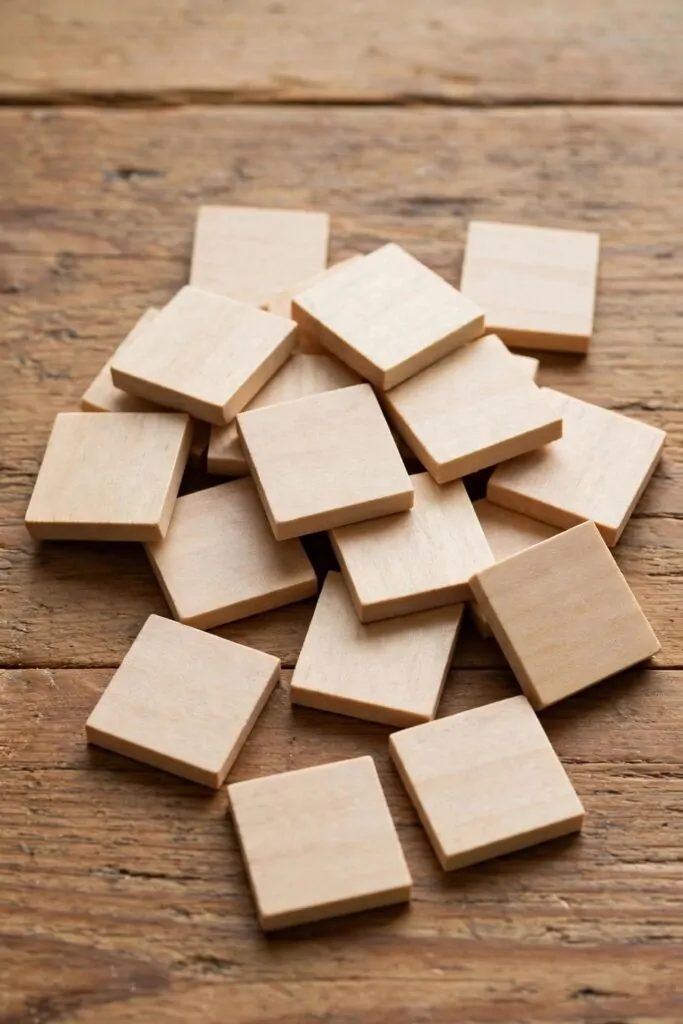
I build my words with wooden letters on the table.
I tip the letters out of their bag and spread them in front of me. Then I pick the ones I need for my word.
I push the letters into a line from left to right. I say each letter out loud as I place it down.
If a letter feels wrong, I swap it for another one. I look at my line again and read it back to myself. My mum waits while I fix it my own way.
Holding the letters helps me remember how the word is built.
I build one word at a time and take my time with it. When it looks right, I build the next word beside it.
My hands learn the shape of the word as I build it.
When I finish, I pack the letters back in their bag. I leave the table tidy for the next time I play with them.
Typical cost $4 to $9.
10. Spell Words in the Air
I spell my words in the air with my finger. I stand up and make each letter big so I can feel the shape. Then I say the whole word out loud when I finish.
My mum says a word out loud and I spell it back in the air.
I start with the first letter and move slow through the word. If I lose my place, I start the word again from the start.
Big letters in the air help me remember tricky spellings.
I do this in my room where I have space to move.
I spell the word once slow and once fast. Then I close my eyes and spell it again without looking. If I get it right, I pick a new word to try.
My little brother watches me and tries to copy my letters. We take turns and help each other when we get stuck.
I like this way best on days when I feel full of beans. It turns a dull word into a game I can move with.
Typical cost $0 to $0.
| Idea | Main change | Typical cost |
|---|---|---|
| Sound Out Each Letter Slowly | sound out each letter slowly | $0 to $0 |
| Spell Words with Letter Cards | spell words with letter cards | $2 to $5 |
| Write Each New Word Three Times | write each new word three times | $0 to $1 |
| Break Long Words into Small Parts | break long words into small parts | $0 to $0 |
| Play a Spelling Word Hunt | play a spelling word hunt | $0 to $2 |
| Keep a Spelling Word Book | keep a spelling word book | $1 to $4 |
| Say It, Spell It, Write It | say it, spell it, write it | $0 to $0 |
| Practise Tricky Words Every Morning | practise tricky words every morning | $0 to $0 |
| Build Words with Wooden Letters | build words with wooden letters | $4 to $9 |
| Spell Words in the Air | spell words in the air | $0 to $0 |
| Total | $7 to $21 |
11. Use a Spelling Word Jar
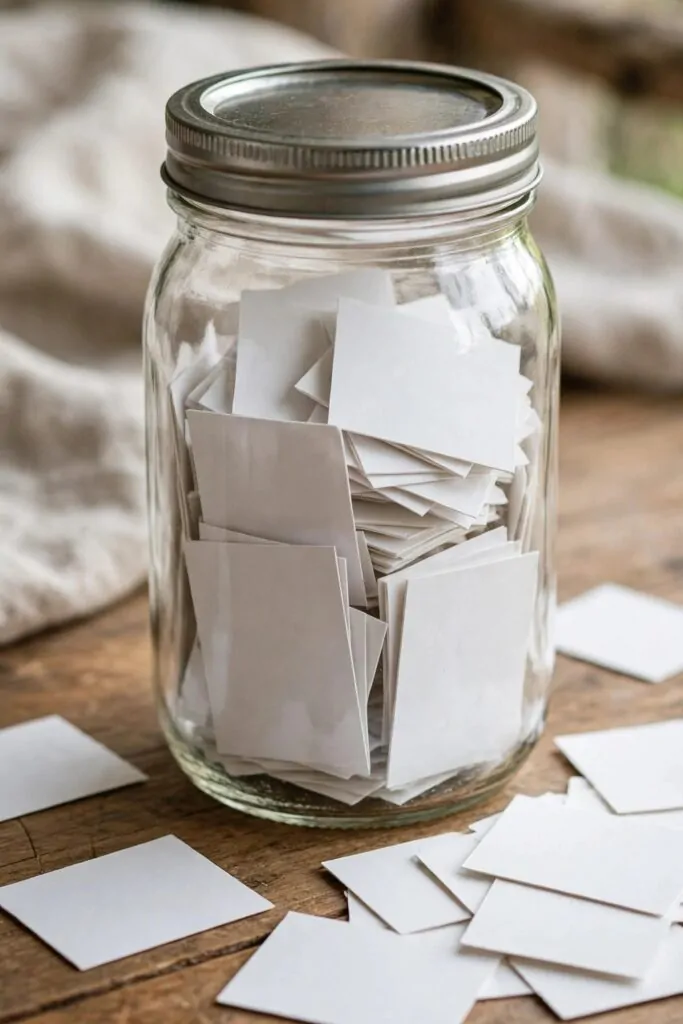
I write a word on a slip of paper and pop it in a jar. I do this for each word I need to learn that week.
Each day I pull out one slip and my mum says the word out loud. I try to spell it back from memory before I look. Then I pop the slip back in the jar for another day.
The jar makes spelling feel like a lucky dip.
I shake the jar first so the slips mix up well. Then I close my eyes and pick one out with my hand.
I never know which word I will get next.
That surprise keeps me keen to play again the next day.
When I learn a word well, I take its slip out of the jar. I write a fresh word on a new slip and pop it in the jar. My mum helps me pick the new words for the week.
I keep my jar near my books so I see it each day. It reminds me to have one quick go before I play.
Typical cost $1 to $4.
12. Match Words to Their Pictures
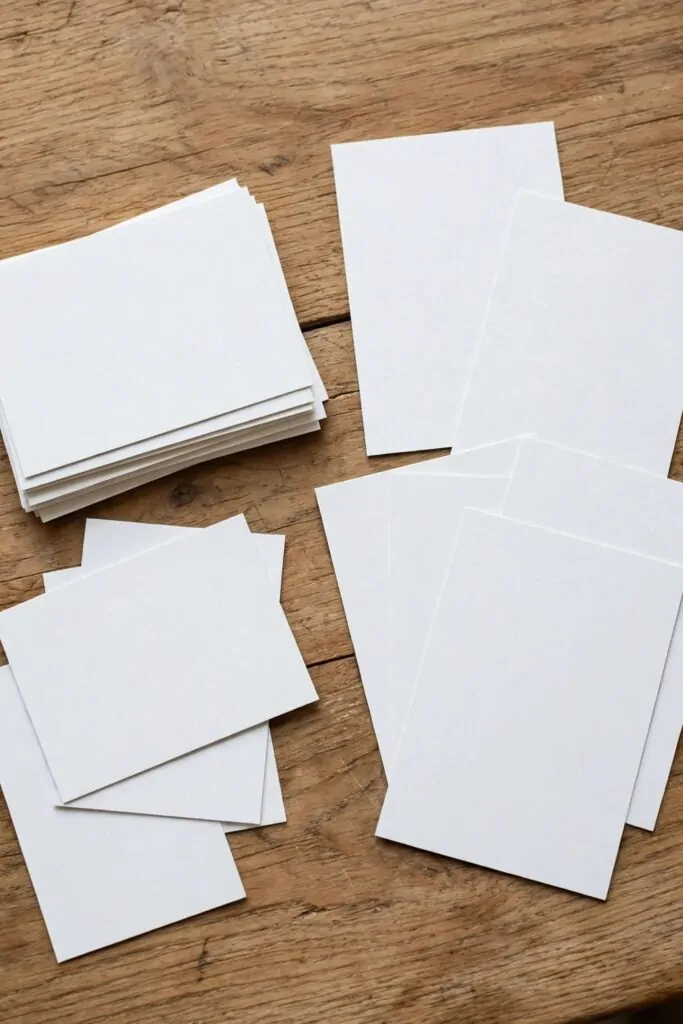
I match my words to their pictures on the table.
My mum lays the picture cards out in a row. She says a word out loud and I look for the picture that fits it. When I find it, I place my word card beside the picture.
I say the word out loud as I match it to the picture. That helps me link the word to what it means.
If I pick the wrong picture, I try again without a fuss. My mum gives me a clue and I look once more.
Matching the word to a picture helps it stick in my mind.
I start with the easy words I know well. Then I add the harder ones once I feel sure. By the end I can match them all on my own.
I pack the cards away in a pile when I finish.
I like this game on days when my head feels tired. It feels more like play than work to me.
Typical cost $2 to $5.
13. Write Words in a Tray of Sand
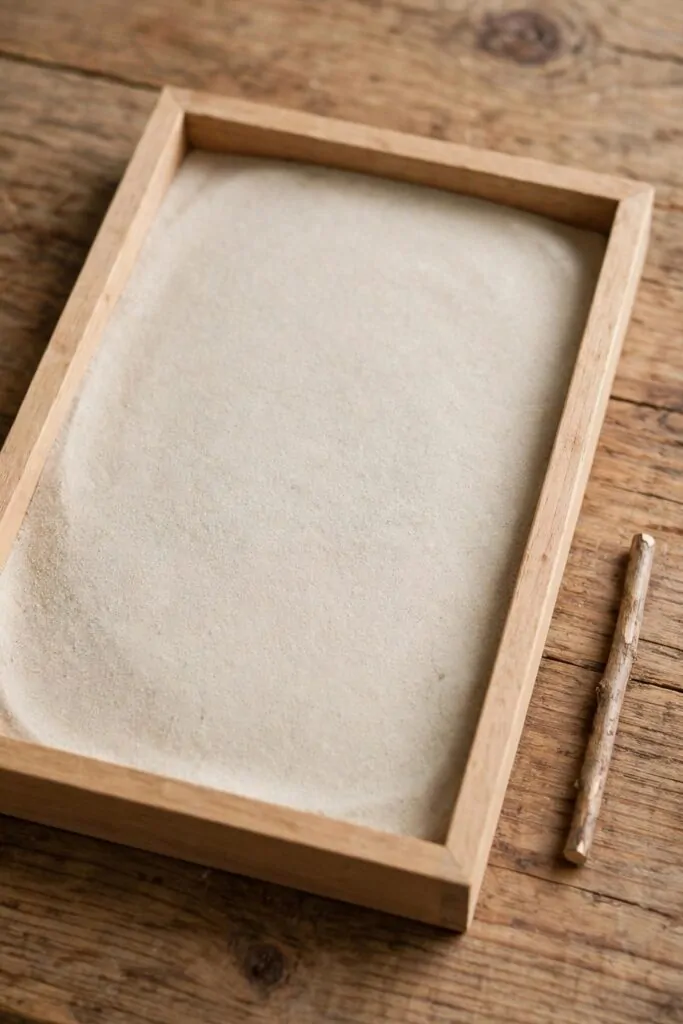
I pour sand into a shallow tray and smooth it flat with my hand. Then I take my finger and write a word in the sand. I say each letter out loud as I write it.
My mum says a word out loud and I write it in the tray. If a letter looks wrong, I smooth the sand and try it again.
The sand feels soft and cool under my finger.
I love that a mistake just smooths away with one wipe.
I write one word at a time and take my time with it. When the word looks right, I smooth the tray flat for the next one.
I use my finger first and then a blunt stick from the garden. The stick makes thin lines that are easy to read. I switch back to my finger when my hand gets tired.
I keep my tray on the table so the sand stays in one place. I brush the loose bits back in when I finish.
My teacher says writing in sand helps the letters stick.
Typical cost $3 to $7.
14. Play a Spelling Word Game at Home
We play a spelling word game at home after tea. Mum calls out a word and I spell it back letter by letter.
I get a point each time I spell a word right.
We take turns so everyone gets a go. My mum spells a word too and I check her letters as she goes.
If I get a word wrong, I try it again straight away. I say it slow and think hard about each letter. Then I spell it once more to fix it in my mind.
We keep the score in our heads as we play. The one with the most right answers at the end wins the game.
The game makes dull words feel fun.
I ask for one more round nearly every night.
Some nights my mum picks the hard words I keep missing. I spell them slow and get them right at last. Then I feel proud of myself for sticking with it.
Typical cost $3 to $8.
15. Read a Word, Cover It, Spell It
I read a word out loud for my child and then I cover the card with my hand. My child thinks for a short moment and then spells the word back to me.
One look is all it takes to start.
I keep a blank card on the table for this game. I say a word out loud and my child listens with care. Then I cover the card and I wait for the spelling.
Covering the word makes the mind work a little harder. The short pause gives the word time to settle.
You can try this with any word from school. You read it once, you cover it, and your child has a go.
I do not rush my child when the word feels hard. I give a small hint about the first sound and we try again.
A calm wait helps more than a fast answer.
We play this game for a short time each day after tea. My child likes the quick win when a hard word comes out right. I praise the try first and then we fix any small slip together.
Typical cost $0 to $0.
16. Make a Word Wall on the Fridge
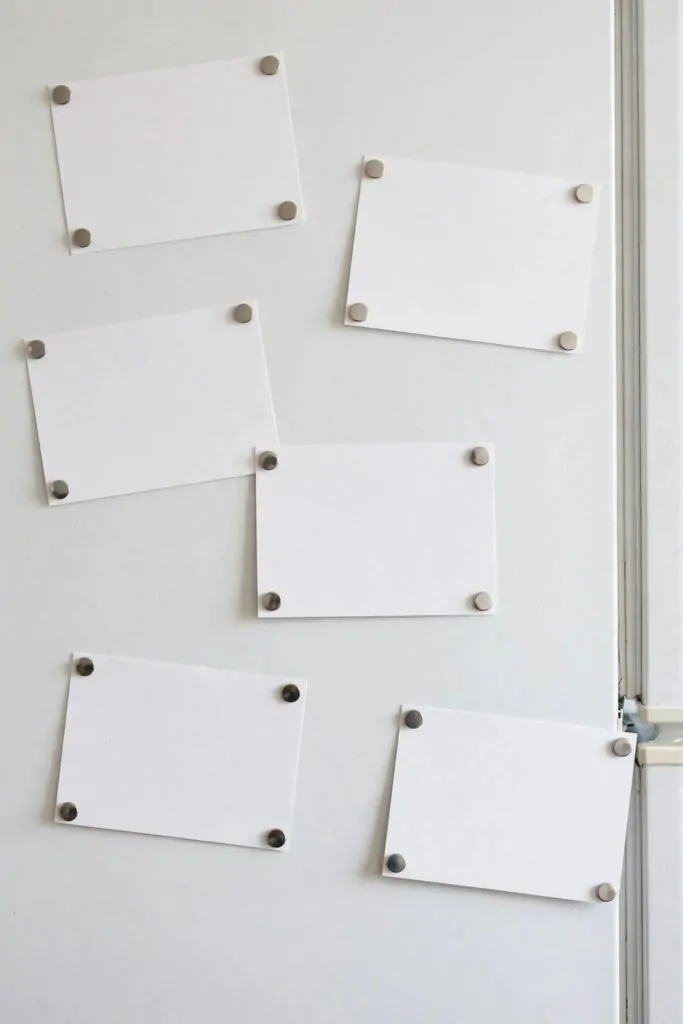
Our fridge holds our word wall and my child sees it every day.
I stick a blank card on the fridge door with a small magnet. Each day we add one new word to our wall together.
You can point to a word at breakfast and ask your child to spell it out loud. A quick look in the morning keeps the word fresh.
I keep the wall small so it never feels too full. When a word feels easy now, I take its card down and we make room for a new one. My child likes to pick which new word goes up next.
A word seen each day sticks much faster.
I do not fill the whole door at once. I add words one by one and I let my child help me choose them.
Mum can ask about one word while she makes lunch. My child spells it out loud and then gets on with the day. A short chat like that beats a long dull list.
One wall on the fridge turns plain moments into spelling time.
Typical cost $1 to $4.
17. Spell Words While You Jump
I call a word out loud and my child jumps once for each sound in it. The jump makes the spelling feel like a game. My child laughs and then tries the next word with a big smile.
Moving helps the word stay in the mind.
You can play this in the garden or in a clear room. You say a word, your child jumps and spells it out loud.
A short burst of jumps wakes up a tired mind.
I keep the words short at first. Short words keep the game fun.
If my child misses a word, I say it again in a slow and clear voice. We jump through it once more together. Then I move on to an easy word so the game ends on a win.
I do not make my child jump for a long time. A short round is all we need for one game.
My child asks for this game after school most days. I say yes because a moving game beats a still worksheet.
Typical cost $0 to $0.
18. Sort Words by Their First Letter
I say a list of words out loud and my child sorts them by their first sound. Words that start the same way go in one pile together.
I use blank cards for this game and I say each word in a clear voice. My child listens for the first sound and then picks a pile for it. A wrong pile is fine and we just move the card and try again.
Sorting by sound turns a plain list into a game.
You can start with words from your child’s school book. You say them one by one and your child sorts them with you.
Listening for the first sound builds a sharp ear for words.
I keep the piles small. Small piles keep the game from feeling too big.
When a pile grows, I ask my child to spell one word from it out loud. My child thinks for a moment and then gives it a go. I cheer the try and then we sort the next word together.
My child likes to sort the words on the floor in a wide space. I sit close by and I help when a first sound feels tricky.
Typical cost $0 to $2.
19. Write a Short Spelling Story
A short story gives spelling words a fun home.
I sit with my child and we pick our spelling words for the day. We talk about a fun tale that can hold them all. Then we tell the tale out loud before we write a single line.
You can keep the story very short and full of fun. A small tale is much easier to spell through than a long one.
I write the first line and my child adds the next one. We take turns and we laugh when the tale takes a daft turn.
When my child stops on a hard word, I sound it out nice and slow. My child tries the spelling and I help with the tricky part. We keep going and the tale grows line by line.
A tale told together makes hard words feel light.
I read our tale back to my child at the end.
My child likes to hear the tale again the next day. The same words come back and the spelling feels much easier the second time.
Typical cost $0 to $2.
20. Practise Words That Sound the Same
Some words sound just the same but mean quite different things. I say a pair out loud and my child tells me what each one means. We talk about the two meanings before we spell either word.
You can start with pairs you say each day, like sea and see. Saying them out loud first makes the difference clear.
Meaning first, spelling second, that is our rule.
I never rush this game because the two words can trick the ear.
I ask my child to use each word in a short spoken line. A quick line shows the meaning much better than a plain list.
When my child mixes the pair up, I smile and I say both words again one by one. We talk about what each one means in plain words. Then my child has another go and gets it right.
Talking about meaning stops the mix-ups.
My child likes pairs like right and write, and pair and pear. I say them at tea time and my child picks the right meaning for each one.
Typical cost $0 to $0.
| Idea | Main change | Typical cost |
|---|---|---|
| Use a Spelling Word Jar | use a spelling word jar | $1 to $4 |
| Match Words to Their Pictures | match words to their pictures | $2 to $5 |
| Write Words in a Tray of Sand | write words in a tray of sand | $3 to $7 |
| Play a Spelling Word Game at Home | play a spelling word game at home | $3 to $8 |
| Read a Word, Cover It, Spell It | read a word, cover it, spell it | $0 to $0 |
| Make a Word Wall on the Fridge | make a word wall on the fridge | $1 to $4 |
| Spell Words While You Jump | spell words while you jump | $0 to $0 |
| Sort Words by Their First Letter | sort words by their first letter | $0 to $2 |
| Write a Short Spelling Story | write a short spelling story | $0 to $2 |
| Practise Words That Sound the Same | practise words that sound the same | $0 to $0 |
| Total | $10 to $32 |
21. Spell Words Backwards for Fun
I say a word out loud and my child says its sounds back to front. It feels like a puzzle and my child loves the daft twist.
Backwards spelling is a game, not a test.
I start with short words so the game stays easy.
I pick a word my child knows well and I say it in a clear voice. My child waits a moment and then says the sounds in reverse order. We laugh when the sounds come out in a funny muddle.
You can play this at the table or on a walk. You say a word, your child flips it around out loud.
A short word flipped round feels like a small win.
If the word feels too long, I pick a shorter one. My child has another go and the sounds come out right.
My child likes to pick the next word for me to flip. I take my turn and I get it wrong on purpose sometimes. We both laugh and then we play one more round together.
Typical cost $0 to $0.
22. Use Rhymes to Remember Hard Words
Some words feel hard to spell, and a rhyme can make them stick. I say a pair of words out loud, and my kids listen for the sound they share.
When two words sound the same at the end, they are easy to hold in your mind.
I say day and play, and my kids smile at how close they sound. Then I say night and light, and they say the pair back to me. A small rhyme turns a hard word into a fun game.
My son makes up his own rhyme for a hard word from school. He says the pair out loud till it feels easy.
A rhyme you say out loud stays with you longer. A rhyme you only read fades much faster.
We keep a short list of rhyme pairs to say each night. My daughter picks a pair and says it three times.
If a word still feels hard, we find a rhyme that fits it. I say sun and fun, and my kids laugh and say it back. The laugh helps the word stay in their mind.
Try one rhyme pair tonight and see how fast your child says it back.
Typical cost $0 to $0.
23. Keep a List of Words to Practise
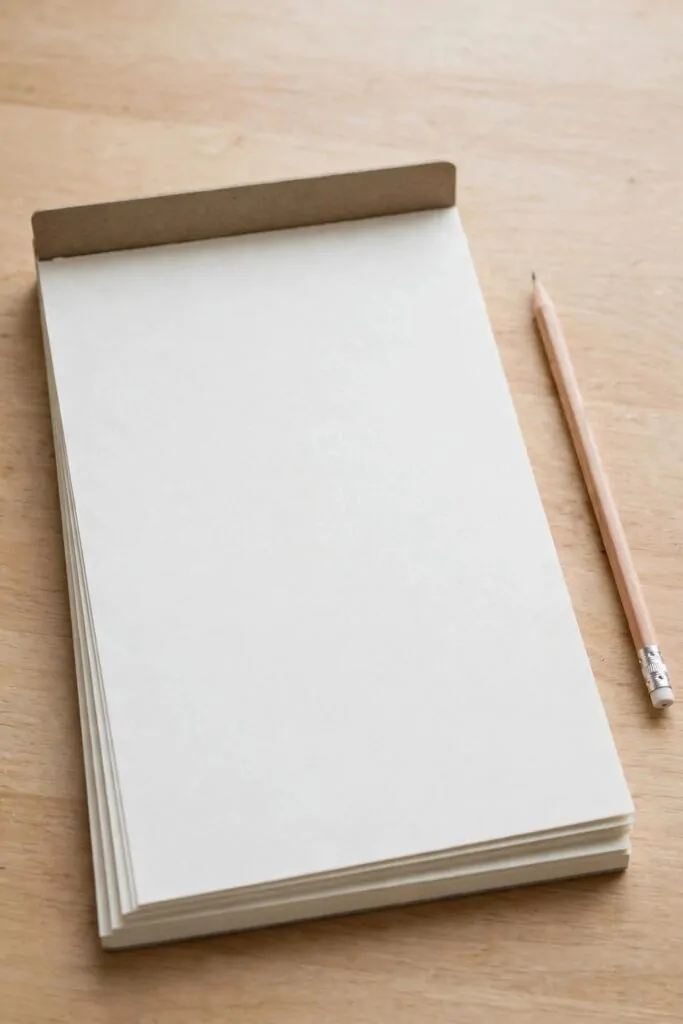
A short list of new words helps my kids practise a little each day.
I write each new word on a plain paper pad when it comes home from school. My kids read the word out loud as I write it down.
We keep the pad on the desk where we can reach it fast.
Each night we pick a word from the list and spell it out loud. My son spells it slow, letter by letter. My daughter spells it quick when she feels sure of it.
When a word feels easy, we put a small tick next to it. A tick means we know it well and can move on.
Hard words stay on the list till they feel easy.
My kids like to add their own words to the list. A word they pick feels like their own word to learn.
We read the whole list once a week to check what we still know. Words we miss go back on the list for one more week. A short list that grows slow is better than a long list we never finish.
Typical cost $1 to $3.
24. Spell Words on the Pavement with Chalk
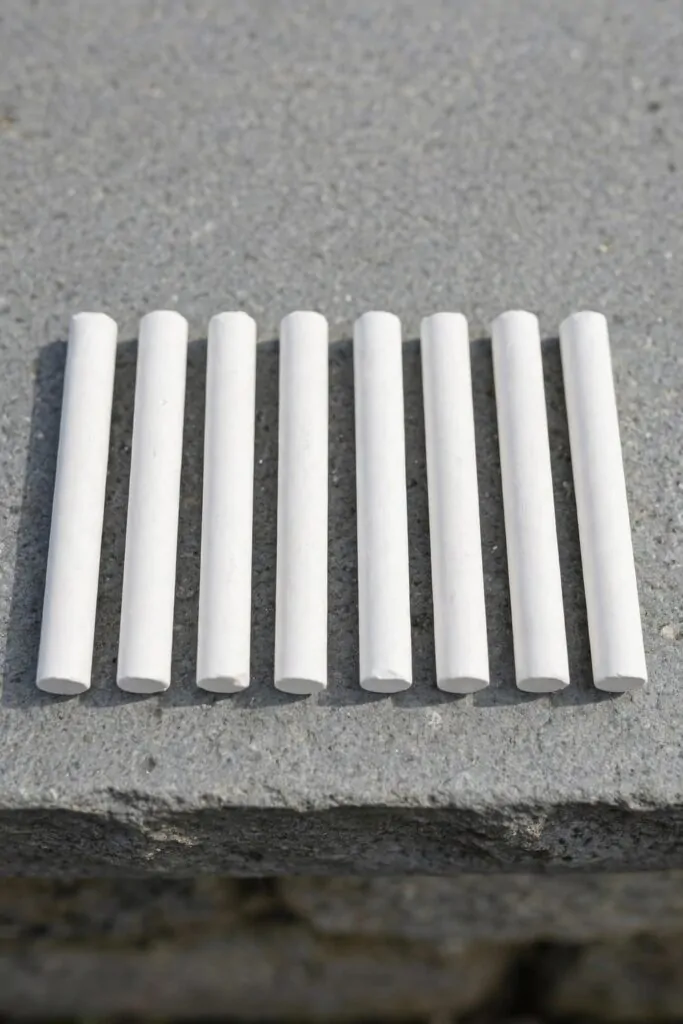
Chalk makes spelling feel like play. We take chalk sticks outside and sit on the step in the fresh air.
I say a word out loud, nice and slow. My kids spell it back to me, letter by letter. Then we say the word again together, loud and clear.
Saying the letters out loud helps a lot. The sound of each letter stays in the mind.
A hard word feels lighter when we split it into small parts. We say each part slow, then we join the parts back into one word.
My son likes to spell his words with big arm moves in the air. My daughter spells hers in a soft voice while she holds her chalk stick. Both ways help the word stay in their mind.
We take turns to say the word and spell it back.
The chalk sticks stay in a small tin when we finish. A quick tidy means the chalk is ready for the next sunny day.
Try it after lunch and see how many words your kids spell with a smile.
Typical cost $2 to $4.
25. Play a Spelling Quiz After Tea
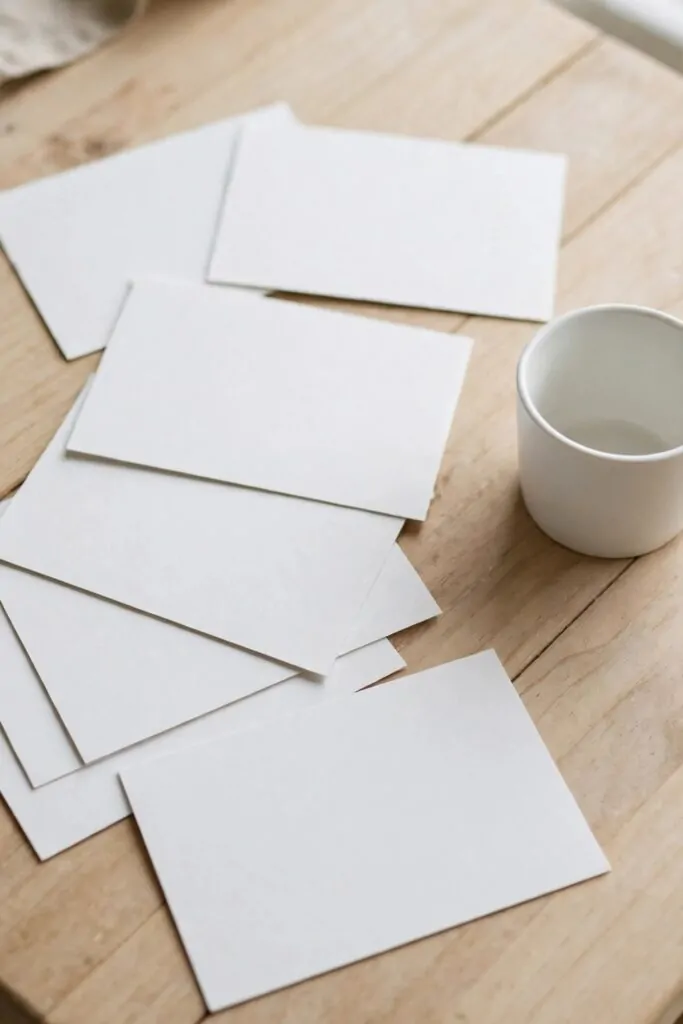
After tea, we clear the table and play a short spelling quiz. I ask the words, and my kids take turns to spell them out loud. A short quiz after tea feels like a game, not like work.
Each child gets a turn. We cheer for every try, big or small.
I start with easy words so the quiz feels kind. Then I ask one hard word to stretch their minds a little.
A miss is fine, and we spell the word together slow.
My daughter loves to be the quiz master some nights. She asks me the words, and I spell them out loud for her. When I miss one, we laugh and spell it together.
We keep score with small ticks on a plain sheet of paper. Ten ticks earn a small treat after dinner on Friday.
The quiz lasts ten minutes, and then we stop while it still feels fun.
A short quiz each night beats one long quiz once a week. Small tries each day help the words stick for good.
Typical cost $0 to $0.
26. Write Words with Rainbow Colours
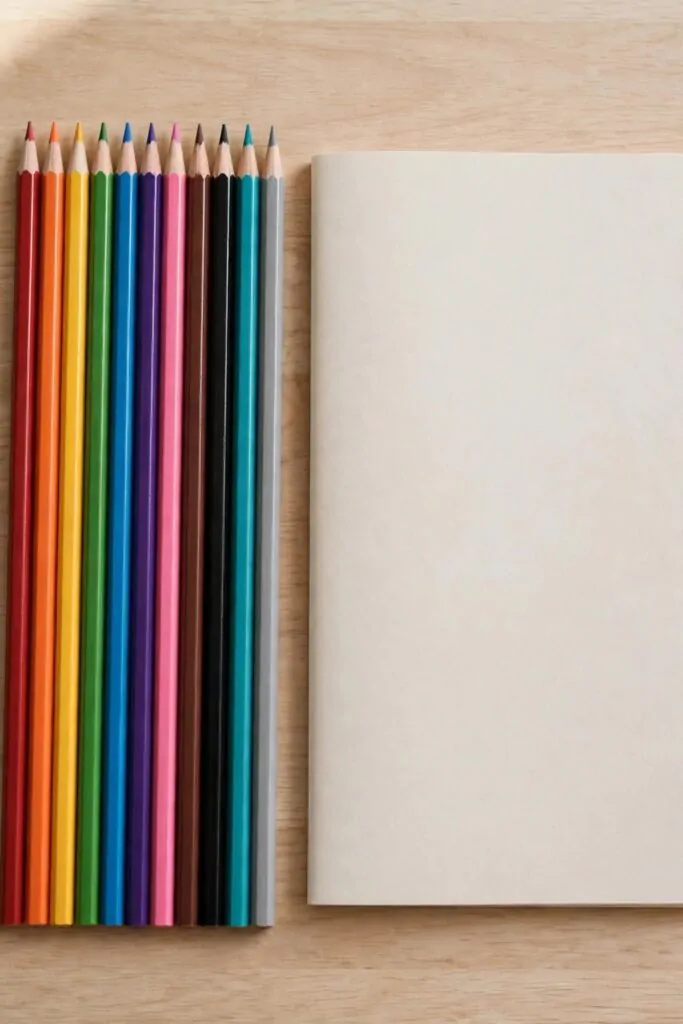
Bright colours make spelling feel fresh and fun.
I give each child a set of plain coloured pencils. They write each new word in a new colour, one letter at a time. A word in bright colours is easy to spot on the page.
My son picks red for his hard words and blue for his easy ones. The colours help him see which words need more tries.
A new colour each day keeps the words fresh. Fresh words never feel dull.
My daughter writes her words in a rainbow row across the page. She reads each word out loud as she writes it.
When a word feels hard, we write it again in a fresh colour. The second try feels new, not like the same old work. A fresh colour can turn a hard word into a fun word.
We keep the pencils in a small cup on the desk.
Try one rainbow word tonight with your child. A bright word is a word they will want to spell again.
Typical cost $3 to $5.
27. Lay Out Your Spelling Kit the Night Before
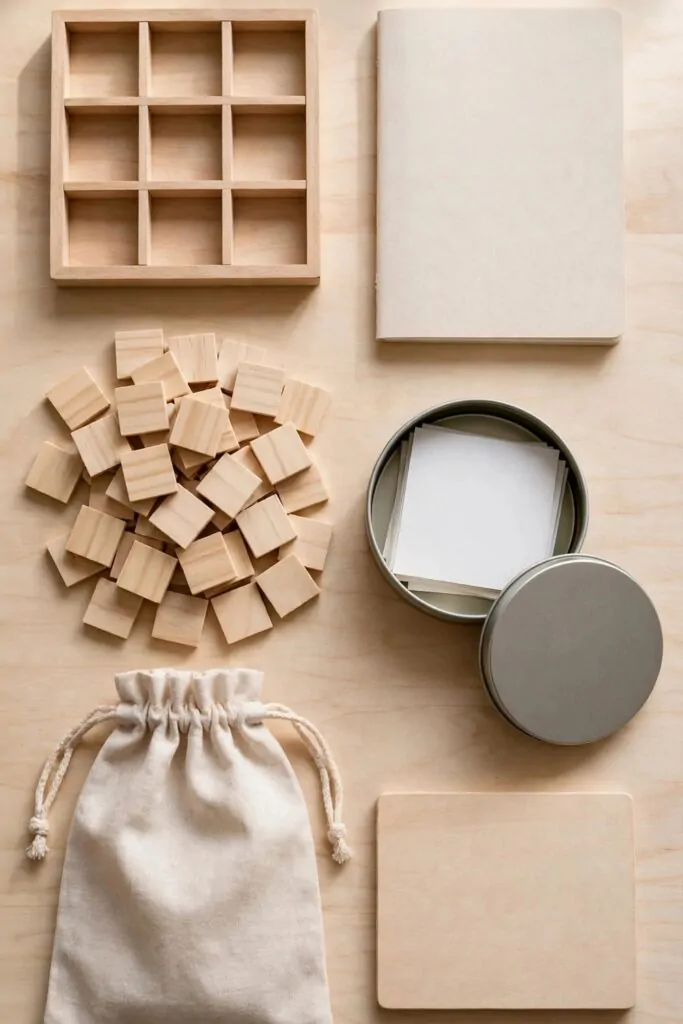
The night before, I clear a spot on the table and set the spelling kit out in a neat row. When morning comes, my kids find all they need close at hand.
First on the left, I set down the small wooden letter tile tray, ready for the letter tiles for the morning.
Next to the tray, I place the plain paper spelling word book. The book stays ready for the new words of the morning.
Third in the row goes the set of plain wooden letter tiles. The tiles are ready to build the first word of the day. My kids like to pick them up one by one and spell out loud.
Fourth, I set down the small tin of plain word cards, and the tin sits open with its lid beside it.
Fifth comes the plain fabric word bag. The bag sits soft and neat at the end of the row, ready for the word cards.
Last at the right end, I place the small wooden word board, ready for the words of the morning.
A small wooden letter tile tray costs $4 to $6, a plain paper spelling word book costs $3 to $5, a set of plain wooden letter tiles costs $5 to $8, a small tin of plain word cards costs $3 to $5, a plain fabric word bag costs $3 to $5, and a small wooden word board costs $4 to $6, for a total of $22 to $35.
When the kit waits on the table, the morning starts without a rush, and spelling feels like a quiet game we play together. My kids pull up their chairs with a smile, and the words come easy while the house stays calm.
| Idea | Main change | Typical cost |
|---|---|---|
| Spell Words Backwards for Fun | spell words backwards for fun | $0 to $0 |
| Use Rhymes to Remember Hard Words | use rhymes to remember hard words | $0 to $0 |
| Keep a List of Words to Practise | keep a list of words to practise | $1 to $3 |
| Spell Words on the Pavement with Chalk | spell words on the pavement with chalk | $2 to $4 |
| Play a Spelling Quiz After Tea | play a spelling quiz after tea | $0 to $0 |
| Write Words with Rainbow Colours | write words with rainbow colours | $3 to $5 |
| Lay Out Your Spelling Kit the Night Before | lay out a spelling kit the night before | $22 to $35 |
| Total | $28 to $47 |
| Idea | Main change | Typical cost |
|---|---|---|
| a small wooden letter tile tray | keep letter tiles in a small wooden letter tile tray | $4 to $6 |
| a plain paper spelling word book | write new words in a plain paper spelling word book | $3 to $5 |
| a set of plain wooden letter tiles | build words with a set of plain wooden letter tiles | $5 to $8 |
| a small tin of plain word cards | practise words with a small tin of plain word cards | $3 to $5 |
| a plain fabric word bag | carry word cards in a plain fabric word bag | $3 to $5 |
| a small wooden word board | pin words on a small wooden word board | $4 to $6 |
| Total | $22 to $35 |
Keep Reading
If you liked these ideas, you will love these posts too
Each post has more simple ideas you can try at home this weekend.