30 Bedroom Inspirations for Your Most Relaxing Room Yet

I used to think a relaxing bedroom meant spending a lot of money. New bed, new furniture, maybe even a designer. That is what I believed for years.
Then I repainted one wall. Just one wall, with a soft green paint I picked up for cheap. And that night, my whole room felt different. Calmer. Quieter. It hit me that a relaxing bedroom is not about money at all.
It is about small, thoughtful choices that tell your brain it is safe to rest. Soft colours. Warm light. Layers you want to touch. I have put together my 30 favourite Bedroom Inspirations below, and every single one of them made a real difference in my own home. Start with the ones that speak to you.
1. Paint Your Walls a Soft Sage Green
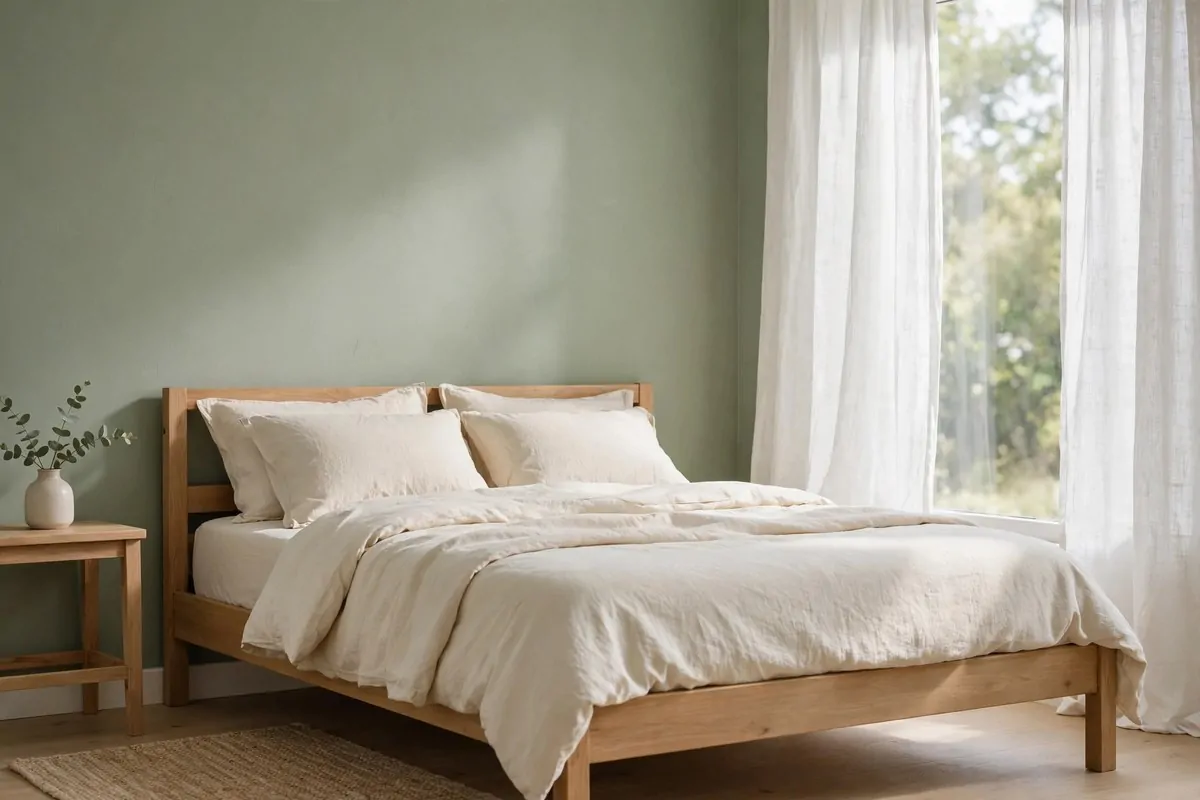
I painted my bedroom walls sage green last spring, and I wish I had done it years sooner. The whole room feels calmer the second I walk in. It is like the colour itself takes a deep breath.
Sage green sits between grey and green. It is soft, never loud. Your eyes rest on it instead of racing around. That is exactly what you want where you sleep.
Pick a muted shade, not a bright one. Bright green feels like a sports drink. Muted sage feels like morning light through leaves. Test a swatch on the wall and look at it in the evening too, because lamp light changes how it looks.
You only need two coats in most cases. Use a roller for the big flat parts and a small brush for the corners. I did my whole room in one weekend, and I am not quick at painting.
Pair sage walls with white bedding. The contrast is gentle, not sharp. Wooden furniture looks lovely against it too, especially oak or pine. Brass lamp bases pick up the warm tones hidden in the green.
If painting all four walls feels like a lot, do just the wall behind your bed. An accent wall still gives you the calm feeling. The other walls can stay warm white, and the room will feel tied together.
One thing to avoid: sage next to neon colours. Keep the rest of the room soft. Creams, taupes and light woods are your best friends here.
The change costs less than a new duvet set. A tin of paint and a weekend. For the effect it has on how the room feels, I think it is the best money you can spend on your bedroom.
2. Dress the Bed in Crisp White Layers

A hotel bed makes you want to fall into it, and most of that magic is just white layers. I started copying the trick at home. It changed how my bedroom looks more than any new furniture did.
Start with white fitted sheets. Cotton or cotton blend is fine. They do not have to be expensive. Wash them a few times and they get softer. The crisp look comes from the colour, not the price tag.
Next comes a flat sheet. Some people skip this. I like it because it folds back over the duvet and gives that neat hotel line at the top. It also keeps your duvet cover cleaner for longer.
Your duvet goes inside a white cover. Choose one with a hidden button closure so no buttons show. If you like pattern, keep it tiny and tonal, like a white-on-white pinstripe. From across the room it reads as plain white.
Pillows make the layers look finished. I use two sleeping pillows standing up, then two square cushions in front, then one small long cushion. Five sounds like a lot, but it fills the bed and looks generous.
Here is the order I lay everything out in, so you can follow it:
- Fitted sheet on the mattress, pulled smooth
- Flat sheet, top folded back about a hand's width
- Duvet in its white cover, folded down a third
- Sleeping pillows upright, then cushions, then the small one
Wrinkles are fine, by the way. Slightly lived-in white looks cosier than pressed white. Just pull the duvet up and fluff the pillows. Ten seconds and the bed looks made.
White bedding goes with everything. It lets your wall colour and your art do the talking. And when it gets stained, a bit of stain remover and a hot wash brings it back. You cannot do that with beige.
I wash my white sets weekly. Two sets in rotation means one is always clean. It sounds fussy, but it is the single cheapest way I know to make a bedroom feel calm and fresh.
3. Add Warm Lighting at Three Levels
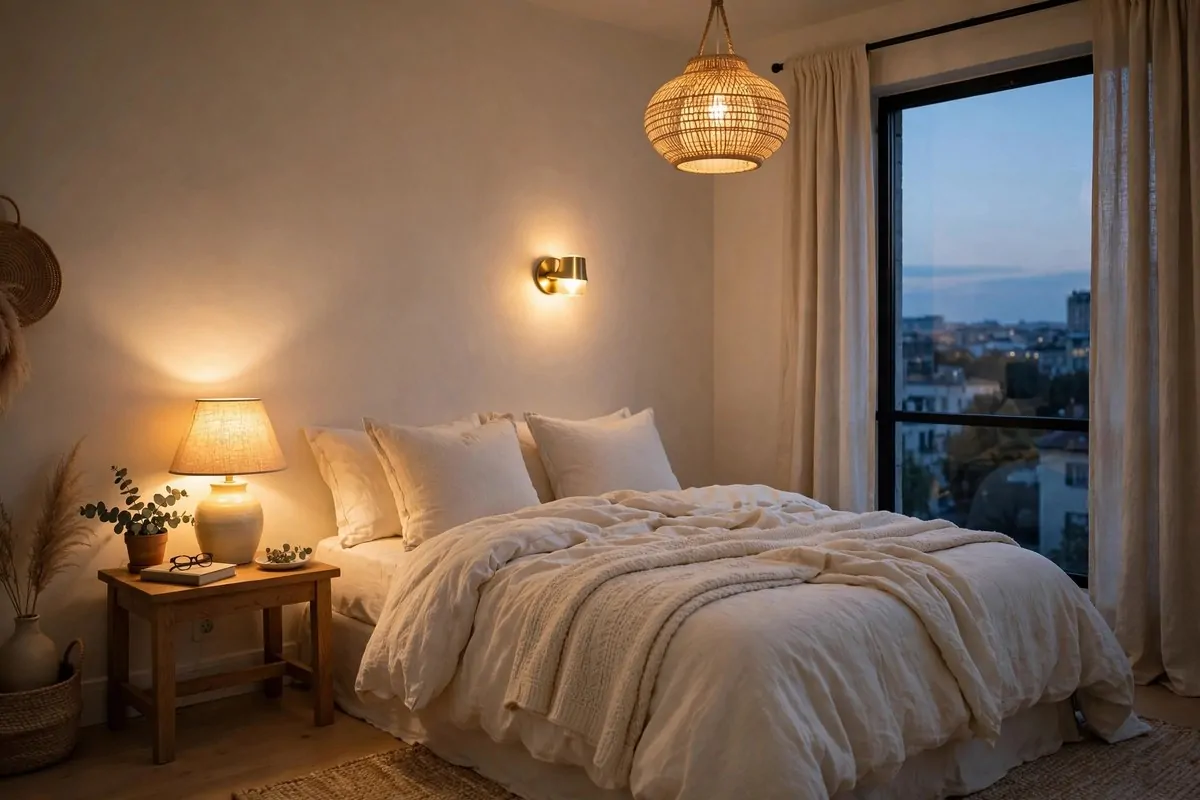
Overhead light alone makes a bedroom feel like an office. I learned this the hard way, blinking under one cold ceiling bulb for a year. Warm light at three levels changed everything.
Level one is the ceiling light. Keep it, but put it on a dimmer switch. A dimmer is cheap and an electrician fits one in minutes. At night you want the ceiling light low, just a soft glow.
Level two is bedside light. A lamp on each side of the bed is the classic setup. If you only have one side table, one lamp plus a small wall light on the other side works. You read by these, so they should sit at about shoulder height when you are in bed.
Level three is low light. This is a small lamp on the dresser, or fairy lights in a jar, or a plug-in night light. It fills the corners with a gentle glow. The room feels held by light instead of lit by one bulb.
Bulb temperature matters a lot here. Look for 2700K on the box. That number means warm, like candlelight. Anything 4000K or higher looks blue and cold, and it will fight the cosy feeling you are building.
Shades matter too. A fabric shade softens light. A bare bulb throws hard shadows. I swapped my glass shades for linen ones and the light in the room went from sharp to smooth in one afternoon.
Think about what you do in the room. Reading needs a brighter bedside lamp. Getting dressed needs enough light to see colours right. Relaxing needs almost nothing. Three levels let you pick the mood for each one.
At night I turn the ceiling light down low, keep one bedside lamp on, and let the little dresser lamp glow in the corner. It feels like the room is tucking me in. Try it for a week and see if you ever go back to one cold bulb.
4. Choose a Soft Upholstered Headboard
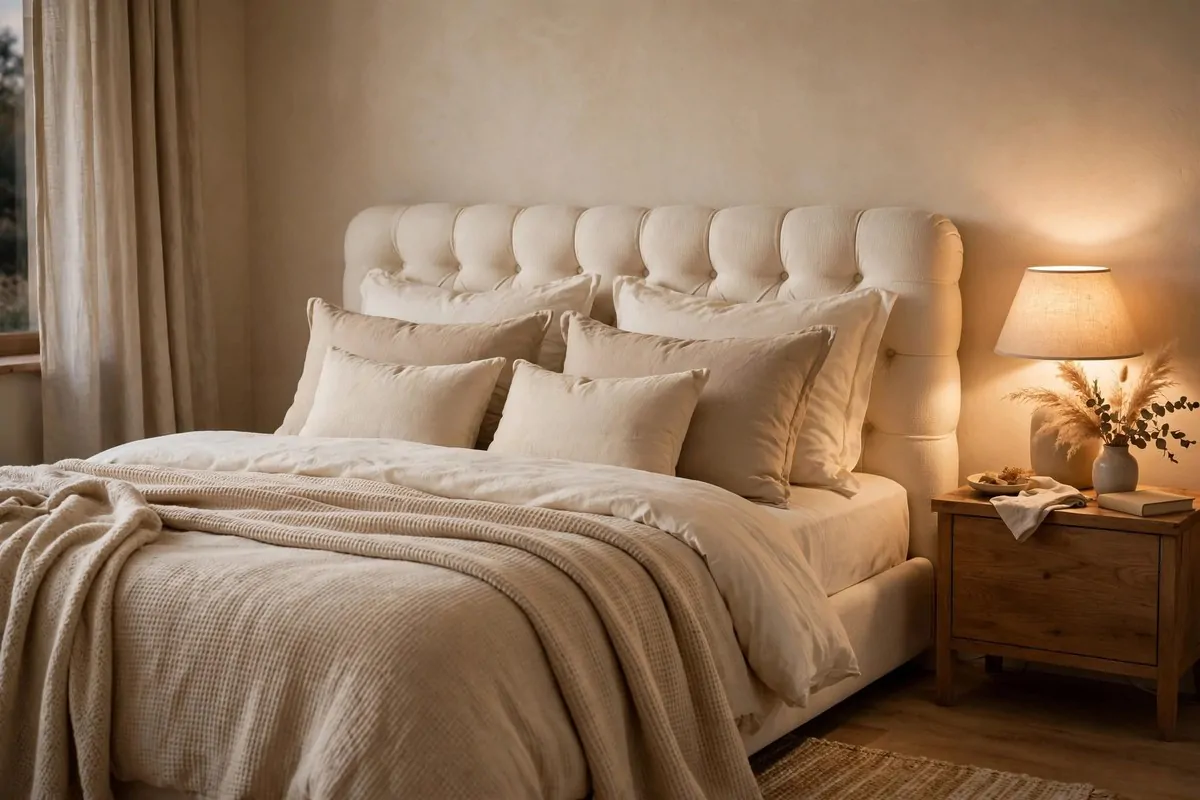
I used to lean against a hard wooden headboard to read. My back hurt every night. A soft upholstered headboard fixed that in one purchase. It is the most comfortable upgrade I have made to my bed.
An upholstered headboard is padded and covered in fabric. You pick the shape and the fabric. It turns the head of your bed into a cushion. Reading, scrolling, chatting in bed, all of it gets comfier.
Cream or oatmeal fabric is the safest pick. It goes with everything. Light grey works too. I would avoid very dark colours because they can look heavy in a small room. Stains show more on light fabric, so look for a removable cover or a stain-resistant finish.
The height matters. A tall headboard, around a metre from the floor, looks plush and fills the wall behind the bed. A short one looks neat and tidy. Measure your wall before you buy so the proportions sit right.
Button tufting gives a classic look. Plain panels look modern. Vertical channel stitching is popular right now and it stretches the eye upward. All three feel soft to lean on, so this is really about the style you like.
Here is a quick way to compare common fabrics before you decide:
| Fabric | Feel | Stain care |
|---|---|---|
| Linen blend | Soft, slightly rough | Spot clean gently |
| Velvet | Smooth and plush | Brushes clean, fades in sun |
| Boucle | Nubby and cosy | Vacuums well, snags on jewellery |
Fitting is usually simple. Most headboards bolt to the bed frame with two bolts. You can do it alone with a spanner. It takes about twenty minutes. The difference it makes looks like you bought a whole new bed.
Once it is up, dress the bed against it. Pillows stack neatly in front. The whole bed looks finished, like the picture in a shop. And your back will thank you every single night.
5. Go for a Natural Wood Bed Frame
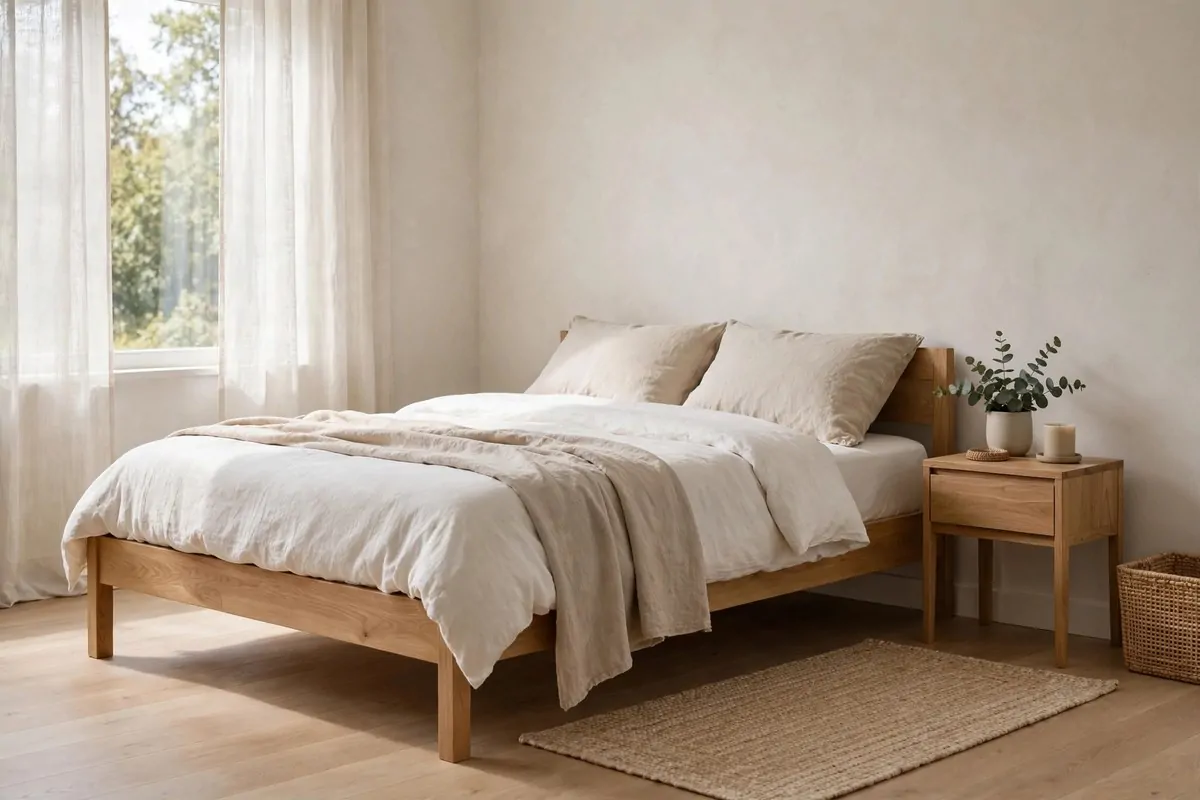
Wood makes a bedroom feel alive in a way that metal and plastic never do. My oak bed frame has little knots and grain lines I still notice and like. It grounds the whole room.
Natural wood means wood you can see. Not painted, not hidden under fabric. Oak, pine, ash and walnut all have their own look. Oak is golden and strong. Pine is pale and light. Walnut is dark and rich.
The finish matters as much as the wood. A matte oil finish looks calm and natural. A glossy varnish can look a bit shiny and cold. I like a satin oil, it protects the the wood but still feels like wood when you touch it.
A platform frame with a low profile suits a relaxing room. The bed sits closer to the floor and the room feels settled. High headboards and tall posts can feel formal. Low and simple feels restful.
Check the slats before you buy. They should sit close together, no more than about seven centimetres apart. Wide gaps let the mattress sag between them. Good slats mean the mattress lasts longer and you sleep better.
Wood frames are easy to look after. Dust them with a dry cloth. Once a year, wipe with a damp cloth and let dry. If a scratch appears, a furniture marker in a matching tone hides it. I have done this twice and you cannot tell.
One warning: cheap wood-look frames made of foil-covered chipboard chip at the corners. Real wood costs more, but it ages well and it can be repaired. Buy the best frame you can afford, because you keep it for decades.
Pair a wood frame with soft bedding and it sings. The hard frame and the soft textiles balance each other. The room feels both sturdy and gentle, which is exactly the mix that helps you switch off.
6. Throw On a Chunky Knit Blanket

A chunky knit blanket is the fastest way I know to make a bed look inviting. You fold it across the foot of the bed and the whole room gets cosier. It is texture you can see from the doorway.
Chunky knit means thick yarn and big loops. Merino wool ones are the softest, but cotton blends are easier to wash. Acrylic versions cost less and still look the part. Pick the one that fits your budget and your washing machine.
Colour keeps it simple. Cream, oatmeal or soft grey work with everything. A terracotta or rust one adds warmth if your room is very neutral. I would skip bright patterns, they fight with the calm feeling of the rest of the bed.
Drape it, do not spread it flat. Fold it in thirds lengthways and lay it across the foot of the bed, slightly off centre. A little bit of casual drape looks better than perfect straight lines. You want it to look tossed on, even if you placed it carefully.
Use it, not just look at it. Pull it over you when you read in bed. Drape it round your shoulders on cold mornings. A blanket that gets used looks better than a blanket that sits like a museum piece.
Washing needs a gentle hand. Most knit blankets do best on a cool, gentle cycle, or hand wash if it is pure wool. Dry flat, never hang, or the weight of the water stretches the loops out of shape. It takes a day to dry but it comes back soft.
Store it in summer folded in a basket at the bedside. Seeing it there in July reminds you of cosy nights. In winter it lives on the bed. I swap mine out when the weather turns, like the room is changing its clothes.
One blanket is enough. Two start to look fussy and they slide off. The single chunky layer at the foot of the bed is the sweet spot between plain and cluttered.
7. Hang Linen Curtains Over Blackout Panels
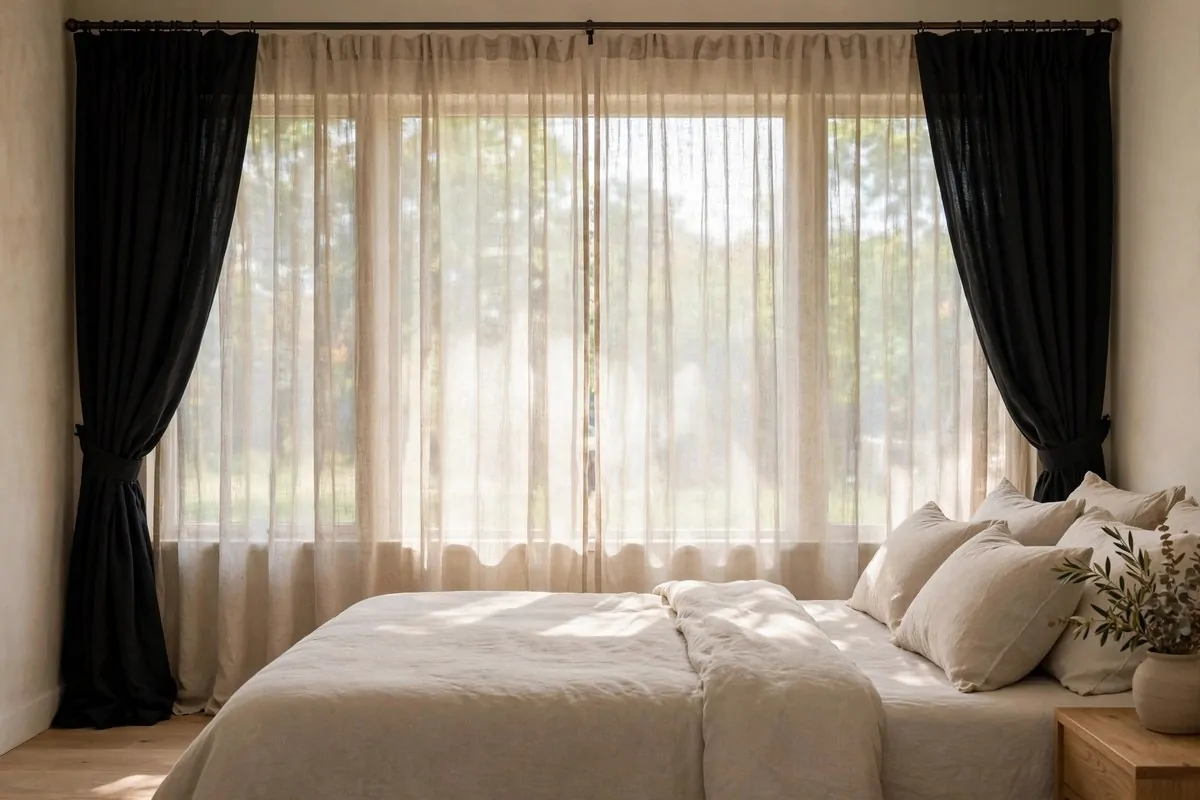
Linen curtains soften daylight in a way nothing else does. Morning light comes through them like a glow instead of a glare. I hung mine and the bedroom felt like a different room by ten in the morning.
But linen lets light through, and you need darkness to sleep well. The fix is simple: hang blackout panels behind the linen. You get soft filtered light by day and real darkness at night. Best of both worlds.
A double curtain rod makes this easy. One rod holds the blackout panels close to the window. The front rod holds the linen. Pull the linen closed in the day for softness, pull the blackout closed at night for sleep. It takes two seconds.
Length matters. Curtains should just kiss the floor. Too short and they look stingy. Too long and they pool and collect dust. Measure from the rod to the floor and add nothing. A centimetre above the floor is perfect.
Width matters too. Each curtain panel should be about one and a half times the width of the window. Skimpy curtains that barely close look sad. Full curtains look generous and they insulate better against cold glass.
Linen wrinkles. That is part of its charm. Do not iron them flat. A light steam if they arrive creased, then let them hang. They relax into soft folds within a day. Trying to keep linen crisp is a losing battle, so embrace the softness.
Wash linen curtains once a year on a cool cycle. They shrink a little, which is why you bought them slightly long in the first place. Hang them back up while slightly damp and they smooth themselves out.
Good sleep is the heart of a relaxing bedroom. Blackout panels give you the dark your brain needs. Linen gives you the soft morning light your eyes love. Together they do both jobs, and they look beautiful doing it.
8. Layer Two Rugs for Extra Softness
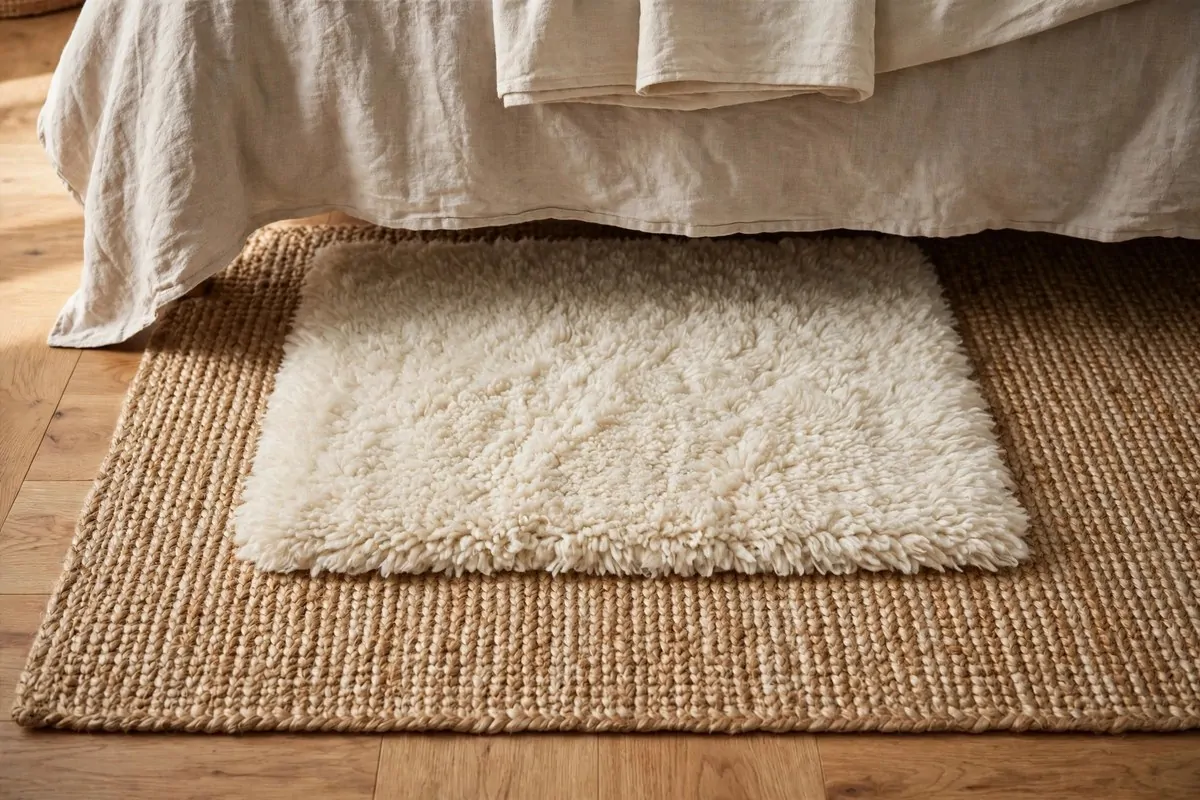
Stepping out of bed onto a cold hard floor is a small shock, and it starts the day badly. I layered two rugs by my bed and now my feet land on softness every morning. It is a tiny thing that changes the whole day.
Layering means one rug on top of another. The bottom rug is the big one. Jute is perfect because it is flat, tough and cheap. The top rug is smaller and softer, like a cream wool or cotton rug. Together they feel thick underfoot.
Place the big rug so it sits under the bed and sticks out on both sides. You want at least half a metre showing on each side. Your feet should land on rug, not floor, wherever you step out.
The top rug goes where your feet land most. Fold it at an angle for a relaxed look, or lay it straight and centred for a tidy look. I like it slightly angled, it feels less formal and more lived in.
Rug pads matter when you layer. A thin non-slip pad under the bottom rug stops everything sliding. Without one, the top rug walks across the room within a week. The pad also adds a little extra cushion.
Here are the pairings I have tried that actually work well together:
- Jute base with a cream wool rug on top, classic and warm
- Flat cotton base with a small sheepskin on top, soft under bare feet
- Sisal base with a patterned flatweave, adds interest without clutter
Cleaning layered rugs is easy. Vacuum both, and shake the top one outside now and then. Jute does not like water, so spot clean spills fast. The top rug takes most of the wear, which protects the big one underneath.
The look is relaxed and collected, like the room grew over time. And the feel is what sells it. Soft floor, soft light, soft bed. Your feet are the first part of you to wake up, so make their landing a gentle one.
9. Make a Reading Nook by the Window
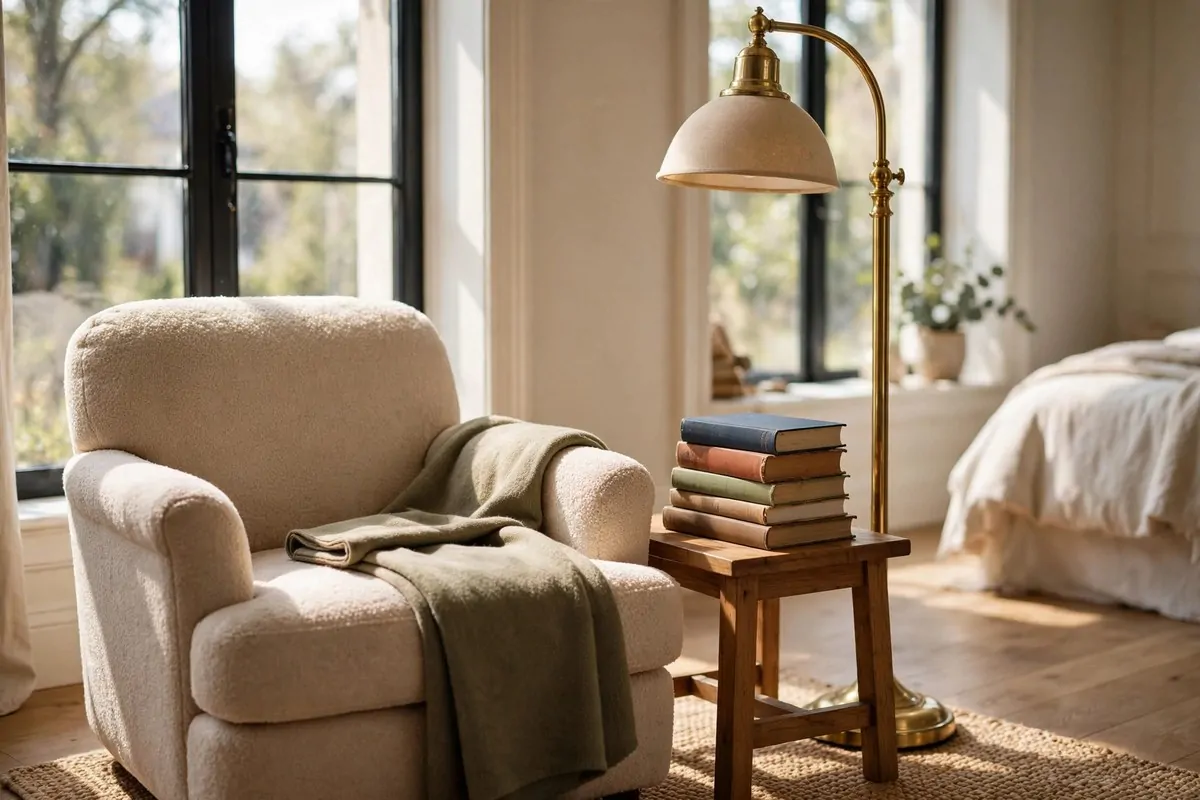
Every relaxing bedroom deserves a spot that is not the bed. I made a reading nook in the corner by my window, and now it is where I drink my morning tea. The bed stays for sleeping, the nook is for slow time.
You need three things: a chair, light, and somewhere to put your cup. That is it. An armchair that fits you properly is the heart of it. Sit in it before you buy if you can. Your feet should touch the floor and your back should feel held.
Place the chair near the window, angled slightly toward the room. Natural light is the best reading light there is. In the evening, a small floor lamp behind the chair takes over. It should shine over your shoulder onto the page, not into your eyes.
A side table within arm's reach holds your tea, your book and your glasses. Round tables fit small corners well. I found mine second hand and painted it. It wobbles slightly and I love it anyway.
Add one cushion and one throw on the chair. The cushion supports your lower back. The throw goes over your knees on cold evenings. These two small things are the difference between a chair and a nook.
Keep a small stack of books there, three or four. Not a whole shelf, just the ones you are reading now. A basket works well if you have no table space. Seeing them waiting invites you to sit down.
Face the chair so you can see out of the window between chapters. Watching rain or birds for a minute is part of the pleasure. A nook is not just about reading, it is about having a place to be still.
I read there most evenings now, twenty minutes before bed. It winds my mind down better than scrolling ever did. Give the corner of your room a job and it will give you back a small daily ritual.
10. Bring In Bedroom-Friendly Plants
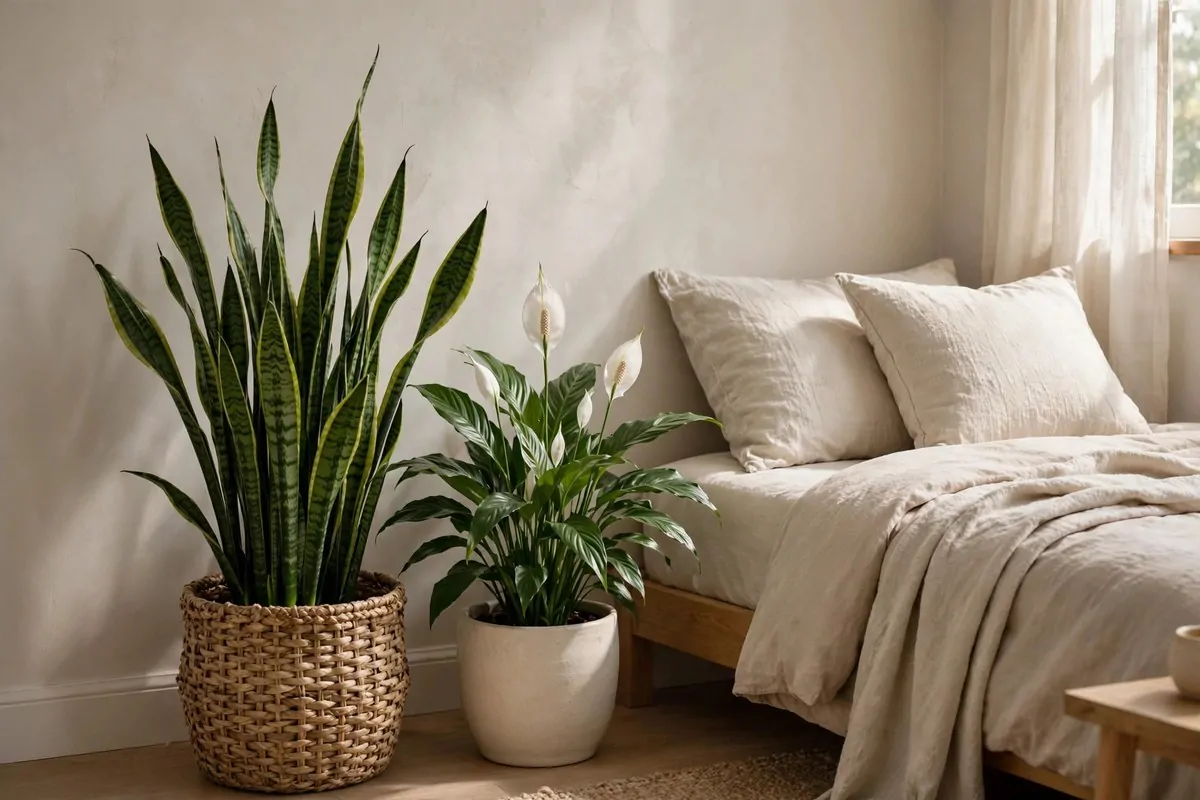
Plants make a bedroom feel alive. Mine has a snake plant in the corner and a peace lily on the dresser. The room feels fresher, softer, more cared for. I did not expect plants to change the mood that much.
Bedrooms need tough plants. Light is often low and you might forget to water. Snake plants survive almost anything. They stand upright and look sculptural. Water them once every two or three weeks and they are happy. I water mine on the first and fifteenth, roughly, and they thrive on the routine.
Peace lilies are the other bedroom classic. They like low light and they tell you when they are thirsty by drooping. A drink and they perk straight back up. Their white flowers look calm against green leaves. Keep them away from pets though, the leaves are not safe to chew.
Pothos is a good third choice. It trails down from a shelf or a high hook. The heart-shaped leaves soften hard furniture edges. Cut a stem, put it in water, and it grows roots, so one plant becomes many for free.
Pots matter for the look. Terracotta is warm and classic. White ceramic is clean and modern. Put a saucer under each pot or water will mark your furniture. I learned that one the expensive way on my bedside table.
A quick care comparison so you can pick with confidence:
| Plant | Light needs | Water |
|---|---|---|
| Snake plant | Low to bright | Every 2 to 3 weeks |
| Peace lily | Low to medium | Weekly, droops when thirsty |
| Pothos | Low to bright | Weekly, let soil dry between |
Dust the leaves now and then with a damp cloth. Dusty leaves cannot breathe as well, and they look dull. It takes two minutes and the plants look instantly better.
Start with one plant, not five. Learn its rhythm, then add another. Two or three plants in a bedroom is plenty. They add life and colour without turning the room into a greenhouse, and every morning you wake up to something green and growing.
11. Try a Bed With Sheer Canopy Drapes

A sheer canopy makes a bed feel like a little hideaway. You walk in and the fabric moves soft in the air. It feels calm before you even lie down.
I love how it softens the whole room. Harsh corners disappear behind the fabric. The bed becomes the star, and everything around it feels gentler.
You do not need an expensive frame to do this. Four tall posts or even a ceiling hoop works. Sheer panels hang easy from either one.
Pick white or cream voile for the softest look. It lets light through so the room never feels dark. In the evening, it glows around your bed like a cocoon.
Hanging it is simpler than you think. Curtain wire from any home store does the job. Thread the panels through, tighten the wire, and step back.
Tying the panels back at each post gives a breezy day look. You get the pretty drapes without feeling closed in. At night, let them fall loose for privacy and calm.
Keep the rest of the room simple. The canopy is the feature, so plain walls and a calm rug work best. Too many patterns will fight with the fabric.
Washing is easy too. Most voile panels come down in seconds. Pop them in the machine on a gentle cycle and hang them straight back up.
This look suits every bed size. Single beds, doubles, kings, all of them shine under a sheer drape. You will wonder why you waited so long.
12. Add a Textured Wallpaper Accent Wall
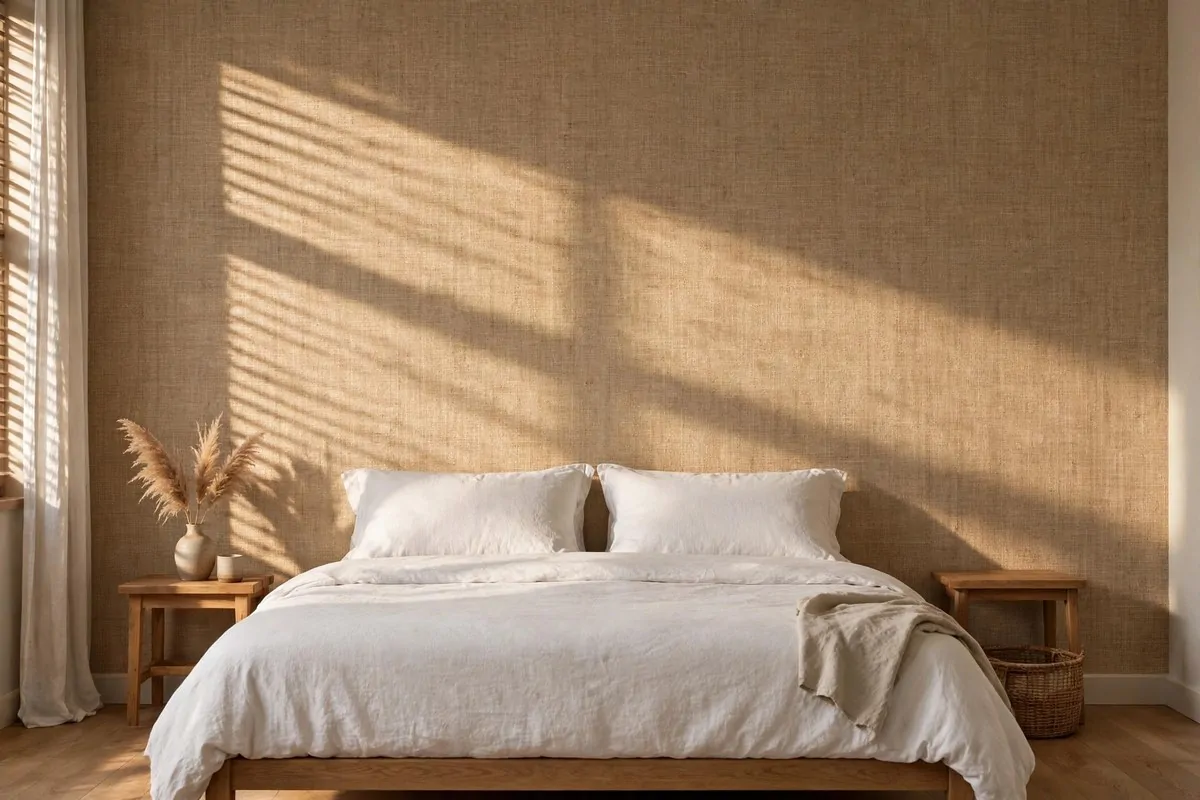
Texture on the wall gives your eyes something soft to rest on. It adds depth without adding colour. A bedroom feels richer for it straight away.
Grasscloth is my favourite pick for this. It has a woven, natural look that feels warm. It catches light in a way flat paint never can.
Pick the wall behind your bed for the biggest effect. You see it first when you walk in. And it frames your bed like art.
Going textured does not mean going loud. Stick to neutral tones like oat, sand, or pale grey. The texture does the talking, not the colour.
I would only paper one wall, not all four. Four textured walls can feel busy and close the room in. One wall gives calm interest.
Lighting matters more than you think here. A soft lamp near the wall will throw gentle shadows on the texture. It looks gorgeous at night.
If grasscloth feels too dear, try a textured vinyl instead. Many mimic linen or woven looks for less money. Some are peel and stick, which renters love.
Before you hang it, test a sample at different times of day. Light changes how texture looks. Morning sun and lamp light can feel like two different walls.
Pair it with simple bedding. Plain white or cream sheets let the wall shine. Add one soft throw and the room feels finished.
- Prep the wall first: clean, dry, and smooth so the paper sticks well.
- Order one extra roll: better safe than short, and patterns may need matching.
- Keep glue off the front: wipe drips straight away with a damp sponge.
13. Put Wooden Slats Behind the Bed
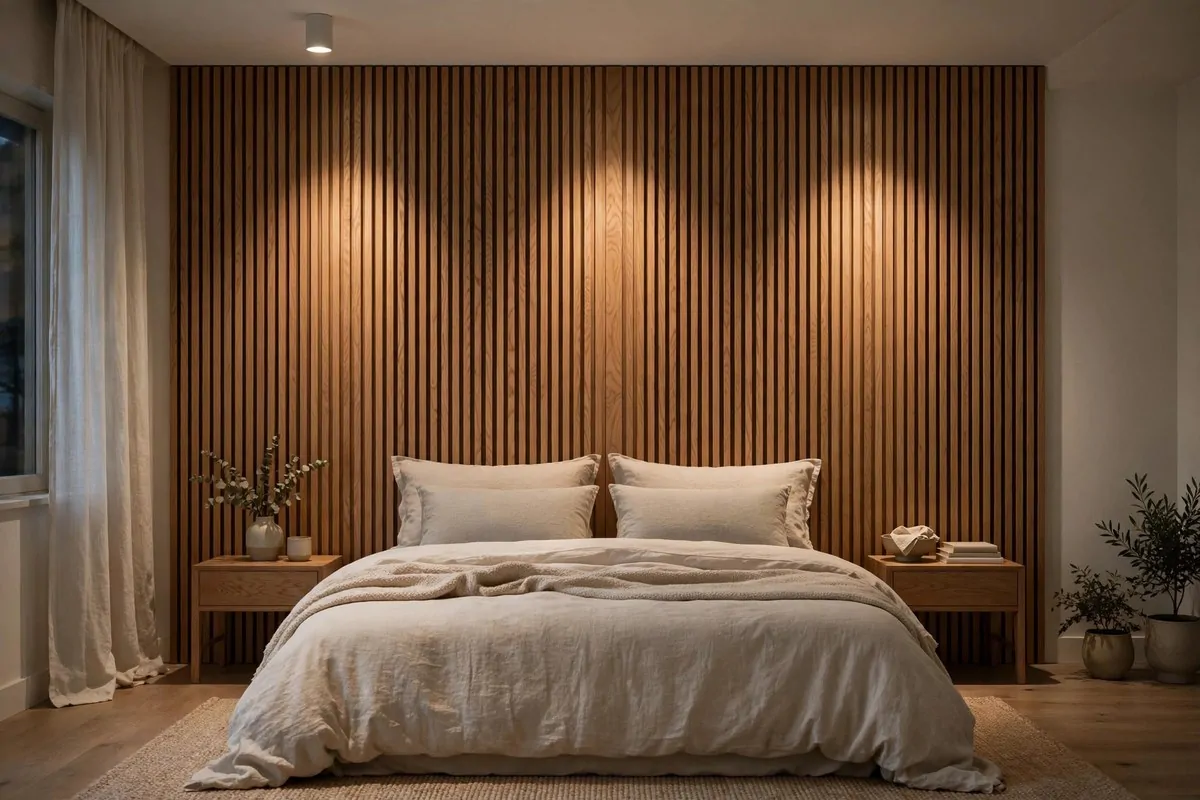
Wooden slats turn a plain wall into something special. The lines draw your eye up and make the room feel taller. Warmth comes free with the wood.
You can buy ready-made slat panels or cut your own strips. Ready-made panels save time and look neat. DIY strips cost less if you have tools.
Oak and walnut tones both work well. Light oak keeps the room bright and airy. Dark walnut feels cosy and rich.
Space the slats evenly for a calm rhythm. Random gaps look messy and restless. Even gaps feel organised and restful.
Paint them if raw wood is not your style. Soft white slats look fresh and Scandinavian. Sage or clay colours feel softer and more personal.
Leave a small gap behind the slats and add LED strip lights. The glow washing over the wood is pure calm. It beats a harsh ceiling light every time.
Slats also work beside the bed, not just behind it. A half wall of slats near the window frames the view. It feels like art built into the room.
Mount them straight onto the wall with strong adhesive or screws. Start from the middle and work outwards. That way the edges stay even.
Dust them now and then with a dry cloth. Wood slats collect dust in the grooves. A quick wipe keeps them looking new.
A slat wall pairs well with low furniture. A low platform bed matches its calm, grounded mood. Everything sits level and easy on the eye.
| Wood choice | Mood it gives | Best with |
|---|---|---|
| Light oak | Bright and airy | White bedding, pale rugs |
| Dark walnut | Cosy and rich | Cream linens, warm lamps |
| Painted white | Fresh and clean | Grey throws, plants |
14. Calm the Room With Blush Tones
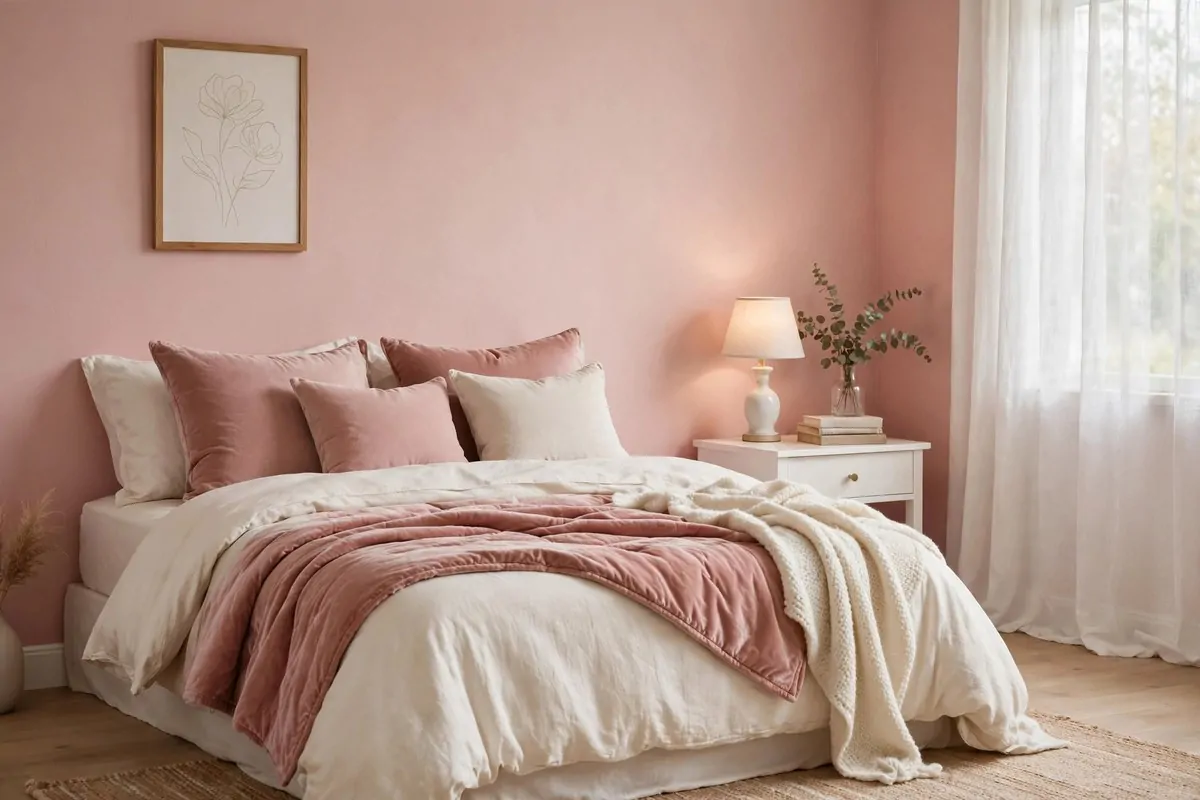
Blush is pink that grew up. It is soft, warm, and never shouty. In a bedroom it feels like a gentle hug.
Start small if pink scares you. Two blush cushions on a white bed are enough. You can build from there when you feel brave.
Blush loves to pair with grey. The cool grey balances the warm pink. Together they feel modern and very calm.
Bedding is the easiest place to begin. A blush duvet cover changes the whole room in five minutes. Fold a white throw over it for contrast.
Walls can carry blush too. One blush wall feels dreamy, not childish. Keep the shade dusty rather than bright.
I find blush works best with natural materials. Linen, cotton, and wood keep it grounded. It never feels fake or plastic.
Metallics in soft gold or rose gold suit blush well. A gold lamp base or small tray adds a little shine. Not too much, just a touch.
Avoid neon or hot pink in the same room. They clash with the soft mood. Keep every pink on the dusty side of the colour chart.
Plants look beautiful against blush. Green leaves and soft pink are a classic pair. Even one small plant lifts the whole scheme.
Blush suits every season. In winter it feels warm and snug. In summer it stays light and fresh.
15. Keep It Simple With a Japandi Look
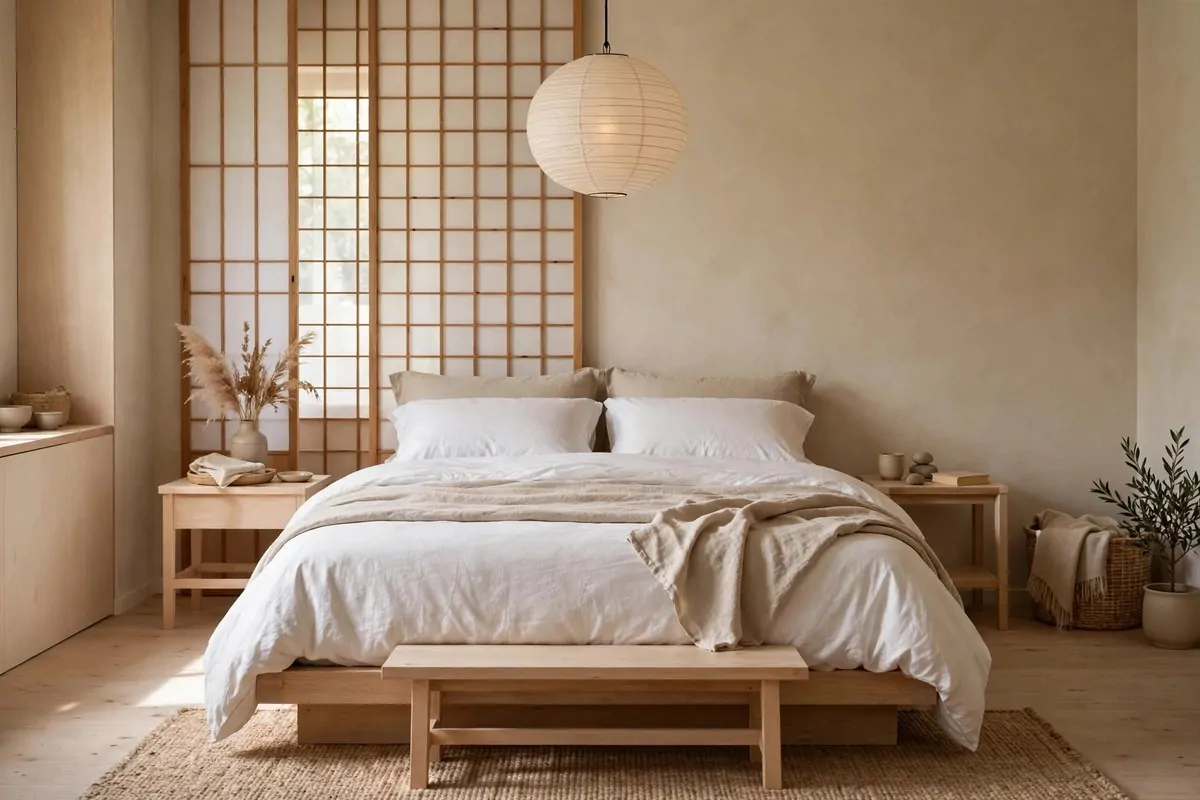
Japandi mixes Japanese calm with Scandinavian warmth. The result is a room with almost nothing in it, yet nothing feels missing. Peace is the whole point.
Start by clearing out clutter. Every item should earn its place. If it has no use or beauty, it goes.
A low platform bed is the heart of this look. It keeps the room feeling grounded. The lower the bed, the calmer the room feels.
Choose furniture with clean lines and soft wood. Light oak and ash are perfect. Avoid anything shiny or ornate.
The colour palette stays very quiet. Whites, beiges, and warm greys do all the work. One dark accent, like a charcoal vase, adds balance.
Storage should be hidden, not open. Closed drawers keep surfaces clear. Clear surfaces keep your mind clear too.
Texture replaces pattern here. A nubby wool rug and linen sheets add interest. Without them the room would feel flat.
Light stays soft and natural. Paper lanterns or rice-paper shades give a gentle glow. Harsh white bulbs ruin the mood fast.
Plants are welcome but few. One sculptural plant, like a small tree or tall grass, is plenty. A crowd of plants would fight the calm.
Japandi asks you to slow down. Fewer things, deeper rest. Your bedroom becomes a place that breathes with you.
- Keep only what you use daily or truly love.
- Choose quality over quantity in every single purchase.
- Leave empty space on purpose: emptiness is part of the design.
16. Place a Bench at the Foot of the Bed
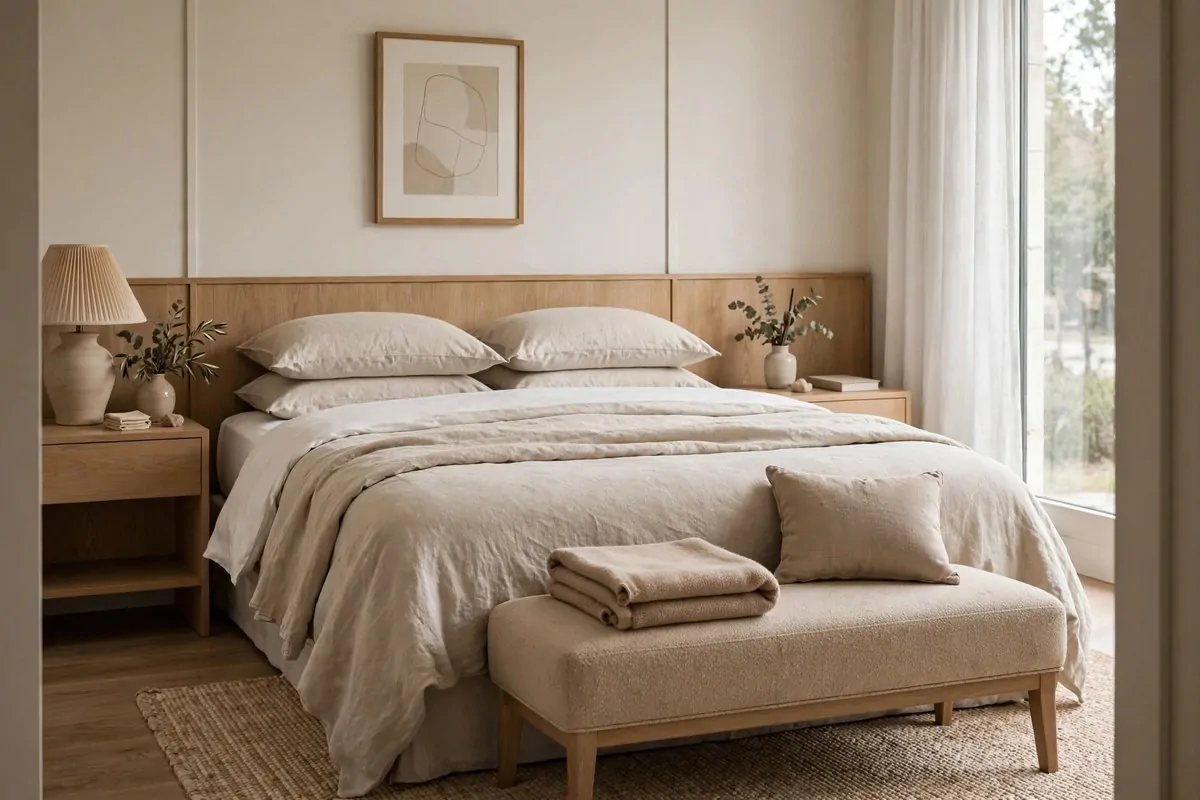
A bench at the foot of the bed is both pretty and practical. It gives you somewhere to sit while you dress. It also holds your throw blanket nicely.
Pick a bench that is slightly narrower than your bed. It should look like it belongs there, not like it wandered in. Measure before you buy.
Upholstered benches feel soft and welcoming. They are nice to sit on in pyjamas. A linen or velvet cover suits a bedroom best.
Storage benches are clever for small rooms. Lift the seat and hide extra bedding inside. You get calm looks and hidden storage.
Keep the style matching your bed. A modern bed wants a modern bench. A classic bed suits a bench with turned legs.
The bench is a great place for one styled item. A folded throw and one cushion is enough. Do not pile it high.
Height matters more than you think. The bench seat should sit a little lower than the mattress. That way the bed still looks like the star.
Use it as a dressing spot each morning. Lay out tomorrow's clothes on it at night. Mornings feel calmer when the choice is already made.
A simple wooden bench can work too. Add a cushion on top for comfort. It suits rustic and relaxed rooms.
Clean under and around it weekly. Beds collect dust at the foot. A quick vacuum keeps the corner feeling fresh.
17. Use Floating Shelves as Nightstands
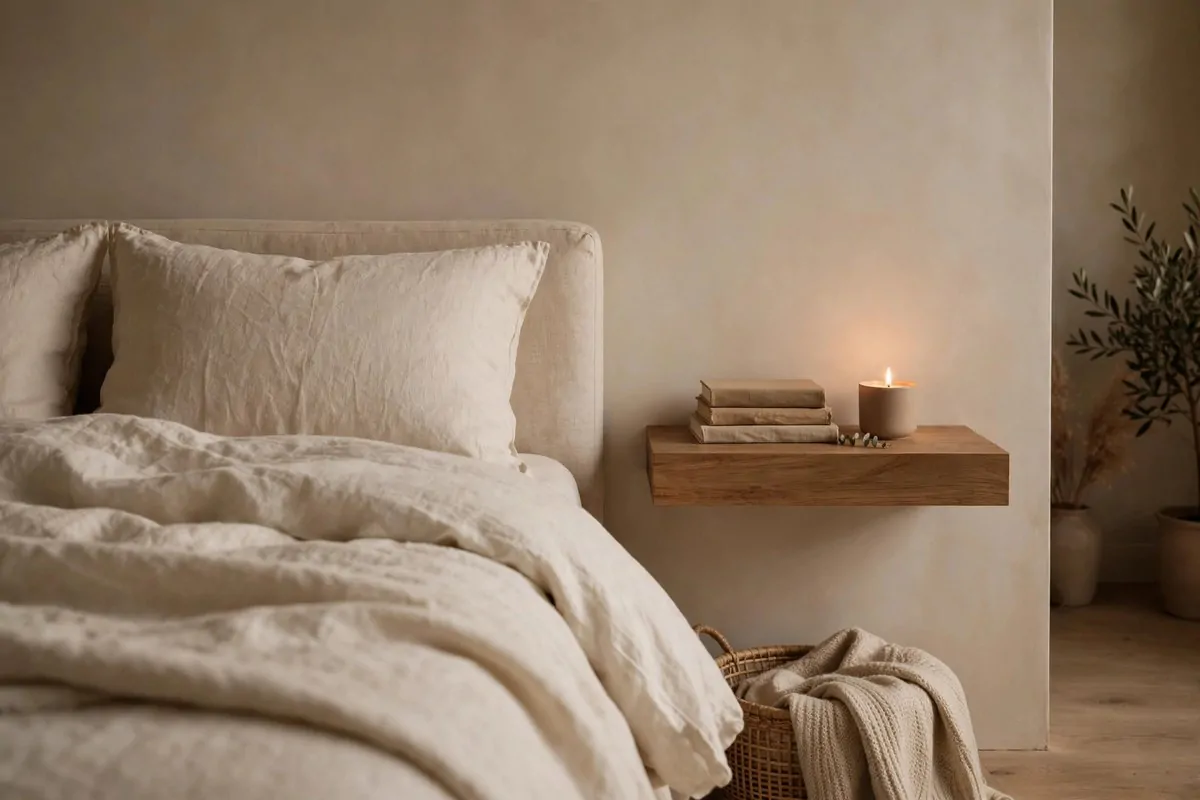
Floating shelves free up your floor and open the room. No bulky table legs crowding the bed. The space feels lighter straight away.
A single solid shelf beside each side of the bed works best. It holds a lamp, a book, and a glass of water. That is all a nightstand needs to do.
Mount them at mattress height or just above. Too high and reaching is awkward. Too low and things fall off.
Choose thick wood for a sturdy look. A chunky oak shelf feels solid and warm. Thin shelves can look flimsy next to a bed.
Keep the styling simple. One book, one small plant, one candle. Cluttered shelves undo the whole clean look.
Wall-mounted reading lights pair well with shelves. A small swing-arm lamp frees the shelf surface. More room for your things.
They suit small bedrooms perfectly. When floor space is tight, going vertical saves the day. Every centimetre counts.
Install into wall studs for real strength. A shelf full of books is heavy. Proper fixings keep it safe for years.
Dust them when you dust the room. Floating shelves catch dust on top. A quick swipe keeps them clean.
I love how they look with plants trailing down. A small pothos spilling over the edge softens the wood. It feels alive and calm.
18. Match Your Bedside Lamps
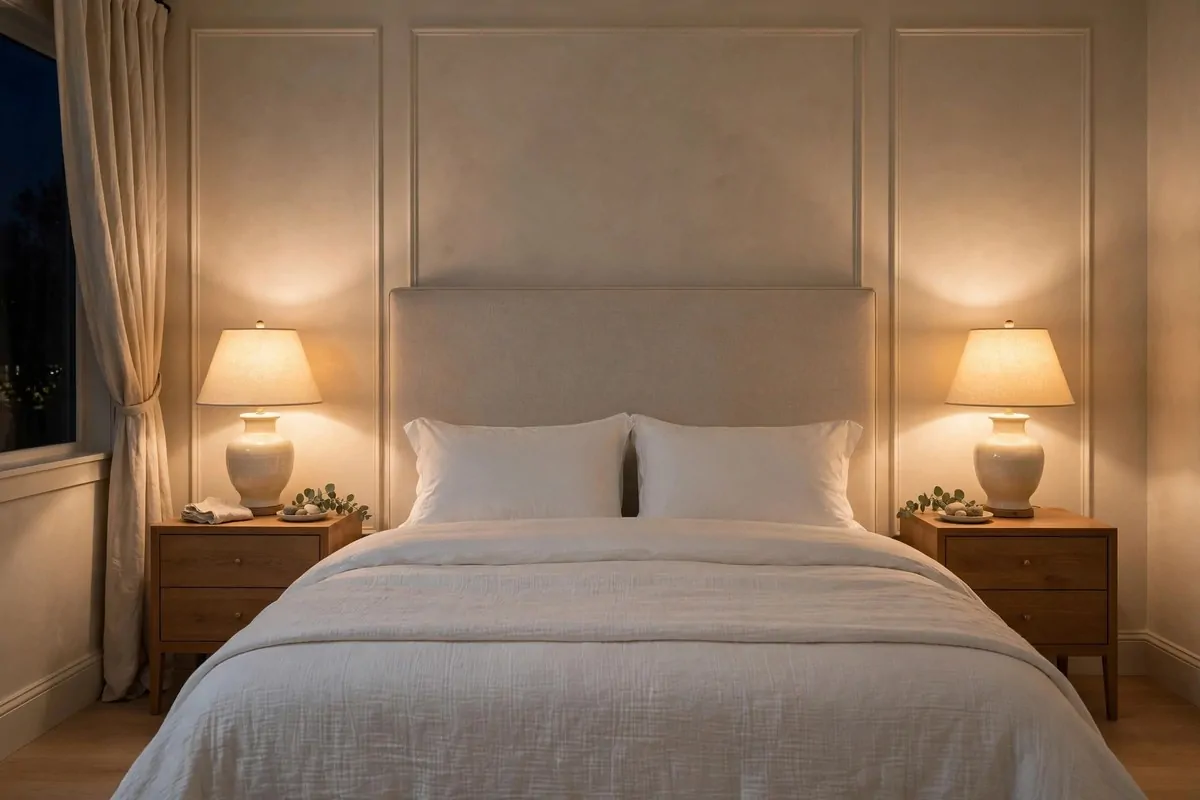
Matching lamps on both nightstands bring instant balance. Your eyes love symmetry. The room feels settled and restful.
Pick a lamp with a warm-toned shade. Cream, linen, or soft white shades glow nicely. Dark shades can make corners feel gloomy.
Size matters here. The lamp should be about one third the width of the nightstand. Too big overwhelms, too small looks lost.
Warm bulbs are non-negotiable for a relaxing bedroom. Look for 2700K on the box. That number means soft and golden, not harsh.
I like ceramic bases for a calm bedroom. They feel handmade and earthy. Glass bases work too if you want something lighter.
Place both lamps at the same height and same distance from the bed. Even small differences catch the eye. Symmetry is the whole point.
Use a dimmer if you can. Full brightness for reading, low glow for winding down. Your body will thank you at bedtime.
Match the lamps but vary one tiny detail. Maybe different books on each table. The pair still reads as one.
Keep cords tidy behind the tables. Loose wires ruin the calm look fast. A cable clip costs almost nothing.
Two matching lamps also frame the bed beautifully. They act like bookends for your sleep. Simple, but it really works.
19. Warm It Up With Terracotta Accents

Terracotta brings the warmth of baked earth indoors. It is orange and brown in one calm colour. A bedroom feels sunnier with it.
Cushions are the easiest start. Two or three terracotta cushions on neutral bedding pop gently. They do not shout.
A clay vase on the dresser adds shape and colour. Fill it with dried grasses for texture. Fresh flowers work too when you have them.
Terracotta loves cream and white. The pale colours let the warm tone breathe. Together they feel like a Mediterranean morning.
You can go bigger with a terracotta throw or rug. A rug in this colour grounds the whole room. It feels like walking on warm sand.
Mix it with other earthy tones. Olive green, mustard, and clay sit well together. They share the same warm, natural family.
Avoid pairing it with cool greys or icy blues. Those fight the warmth. Keep the palette warm all the way through.
Terracotta pottery is cheap and everywhere. Charity shops and markets have plenty. Each piece has its own little marks and character.
Paint one small piece of furniture if you feel bold. A terracotta bedside table is a lovely surprise. Sand and seal it well.
This colour suits autumn and winter best. When days get dark, warm tones keep the room cosy. Your bedroom becomes a little retreat.
| Accent | Cost level | Effect |
|---|---|---|
| Cushions | Low | Quick warm pop |
| Clay vase | Low | Natural texture |
| Throw blanket | Medium | Layered cosiness |
| Rug | Higher | Grounds the room |
20. Breathe Easy in a Coastal Bedroom

A coastal bedroom feels like a deep breath. Soft blues, sandy whites, and airy light. It is calm you can almost hear.
Start with white walls and blue bedding. That one change sets the whole mood. Everything else builds from there.
Layer different blues for depth. Pale sky, soft sea, one deeper navy cushion. Flat single-tone blue can feel dull.
Natural textures sell the coastal look. Jute rugs, rattan baskets, and linen curtains. They feel like the beach without the sand.
Keep it light, never themed. You want a hint of the coast, not a gift shop. Skip the anchor prints and rope knots.
Sheer white curtains are perfect here. They let the breeze move them gently. The room feels alive and fresh.
Driftwood tones in furniture work well. Weathered finishes feel relaxed and honest. New shiny wood would look too stiff.
Mirrors help bounce light around. A round mirror above the dresser opens the space. Light is the real decoration here.
Add one living plant for a touch of green. It keeps the blue and white from feeling cold. Life belongs in a calm room.
At night, keep lamps warm and low. Blue rooms can feel chilly after dark. Warm light fixes that in seconds.
- Layer blues: sky, sea, and one deep navy for balance.
- Stick to natural textures: jute, rattan, linen, cotton.
- Let light in: sheer curtains, pale walls, one good mirror.
21. Layer Textiles for a Boho Feel

Boho style is all about piling on soft things that feel good to touch. I love how a boho bed looks like it is inviting you in for a nap.
Start with your plain base sheets, the ones you already own. Then add a quilt or a patterned throw right across the middle of the bed.
I found a secondhand kantha quilt last year and it changed my whole room. The colours were not perfect but somehow they worked together.
You do not need to spend much money here. A couple of cushions in different prints can do the same job as a pricey bedspread.
Mix patterns that share at least one colour, like a striped cushion and a floral throw that both have rust tones. That shared colour is what makes it look planned instead of messy.
My rule is simple: odd numbers. Three cushions look better than four. Five throw pillows look softer than six.
Here are a few layers that work well together:
- A flat sheet or light quilt as the base
- One throw folded across the foot of the bed
- Three to five cushions in mixed prints
- A small sheepskin or textured runner on top if you like
Don't worry if it is not symmetrical. Boho is meant to look a little relaxed and lived in.
One thing to watch: too many layers can make the bed feel hot in summer. I swap my heavy quilt for a thin cotton throw in June and the room feels breezy again.
Your feet should be able to find the end of the bed without a struggle. If you have to dig through blankets, take one layer off.
22. Add a Small Electric Fireplace
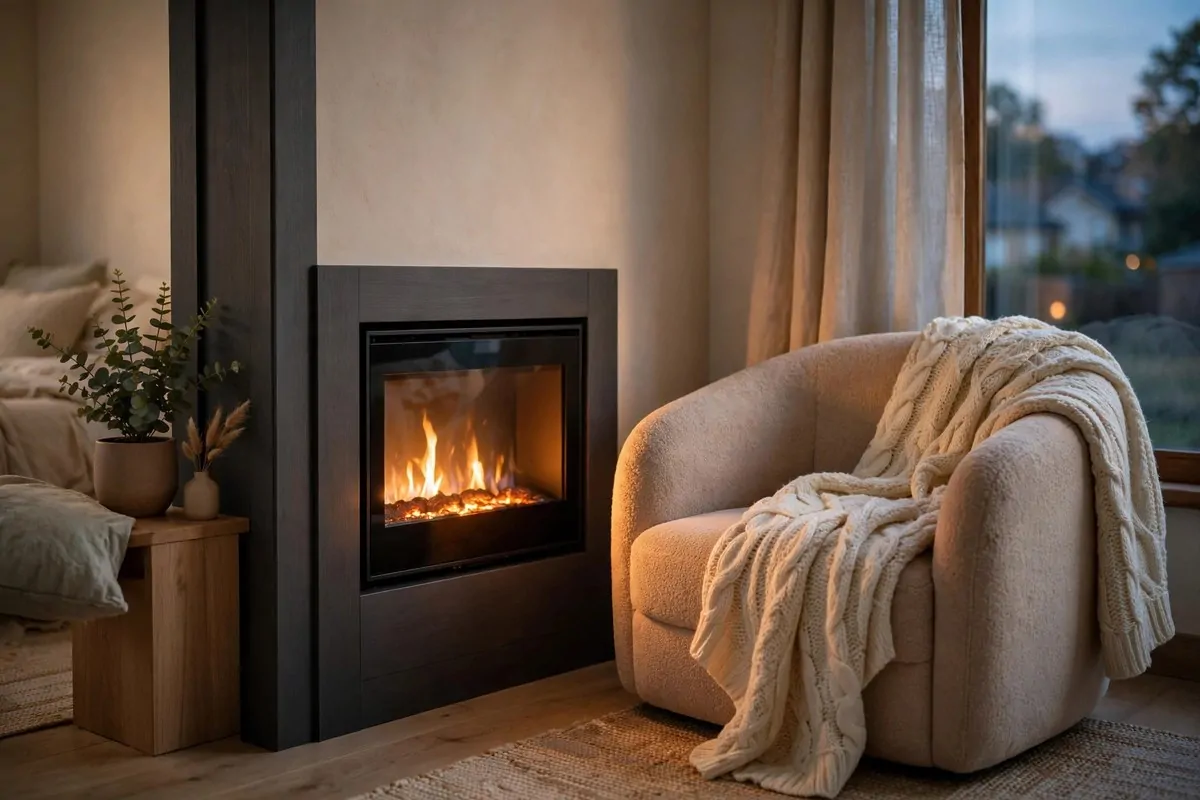
There is something about a flame that makes a body unwind. I noticed this first at a friend's cabin, and I wanted that feeling in my own bedroom.
A small electric fireplace gives you that glow without any smoke or chimney work. Most models just plug into a normal wall socket.
I keep mine in the corner near my reading chair. On cold nights I sit there for twenty minutes before bed and my shoulders drop down from my ears.
Choose a model with a realistic flame effect. Some cheap ones look like a orange screen saver, so read reviews first.
The heat setting matters too. I only use the heat on realy cold nights and let the flame run on its own the rest of the time.
It sounds odd, but the crackling sound on some models helps me stop thinking about my to-do list. A little background noise can be a great wind-down tool.
Safety is easy with these. There is no real fire, so you can fall asleep with it on if the model allows it. I still turn mine off with a timer, just out of habit.
A fireplace also gives your room a focal point. Everything else can be simple when that corner looks so pretty.
Measure your corner before you buy. The small ones are about the size of a bedside table, which fits most bedrooms nicely.
23. Set Up a Bedside Scent Corner
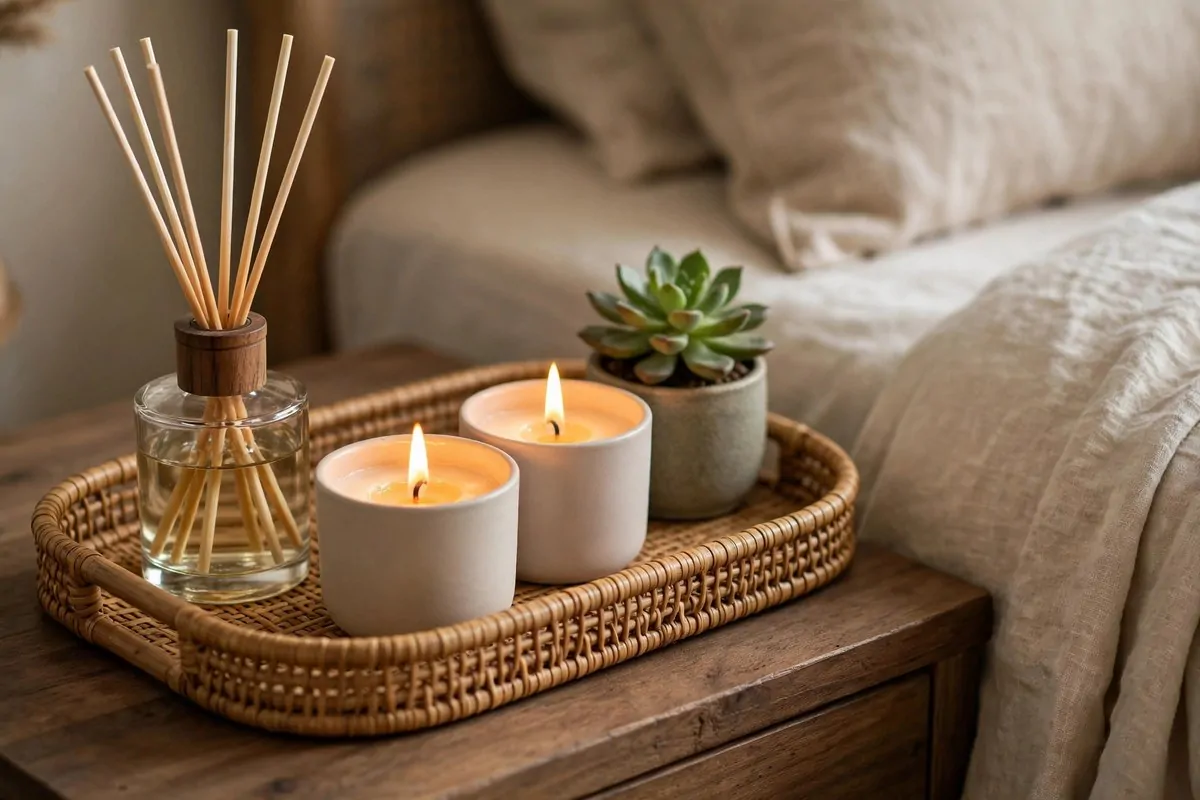
Smell is the fastest way to tell your brain it is bedtime. I started using scents in my bedroom two years ago and I fall asleep quicker now.
Pick one calm scent and stick with it. It is the classic choice and it works, but I prefer cedarwood because it smells like a forest cabin.
A small tray keeps everything tidy on your nightstand. I use a round wooden tray about the size of a dinner plate.
On my tray I have a reed diffuser, a small candle, and a tiny plant. The plant is not about smell, it just makes the corner look alive.
Diffusers are the laziest option and I mean that as a compliment. You set it up once and it works for weeks with zero effort.
Candles need a little more care. Never leave one burning when you leave the room, and keep it away from curtains.
Here is a quick guide to picking your scent:
| Scent | Best for | Strength |
|---|---|---|
| Lavender | Falling asleep fast | Medium |
| Cedarwood | Cosy cabin feeling | Soft |
| Vanilla | Sweet comfort | Warm and strong |
| Eucalyptus | Clear head, fresh air | Fresh and sharp |
Try the scent for one week before you decide. Your nose needs time to link it with bedtime.
I switch my candle with the seasons. Something light in spring, something warm and spicy in winter.
24. Hang Calm Art Above the Bed
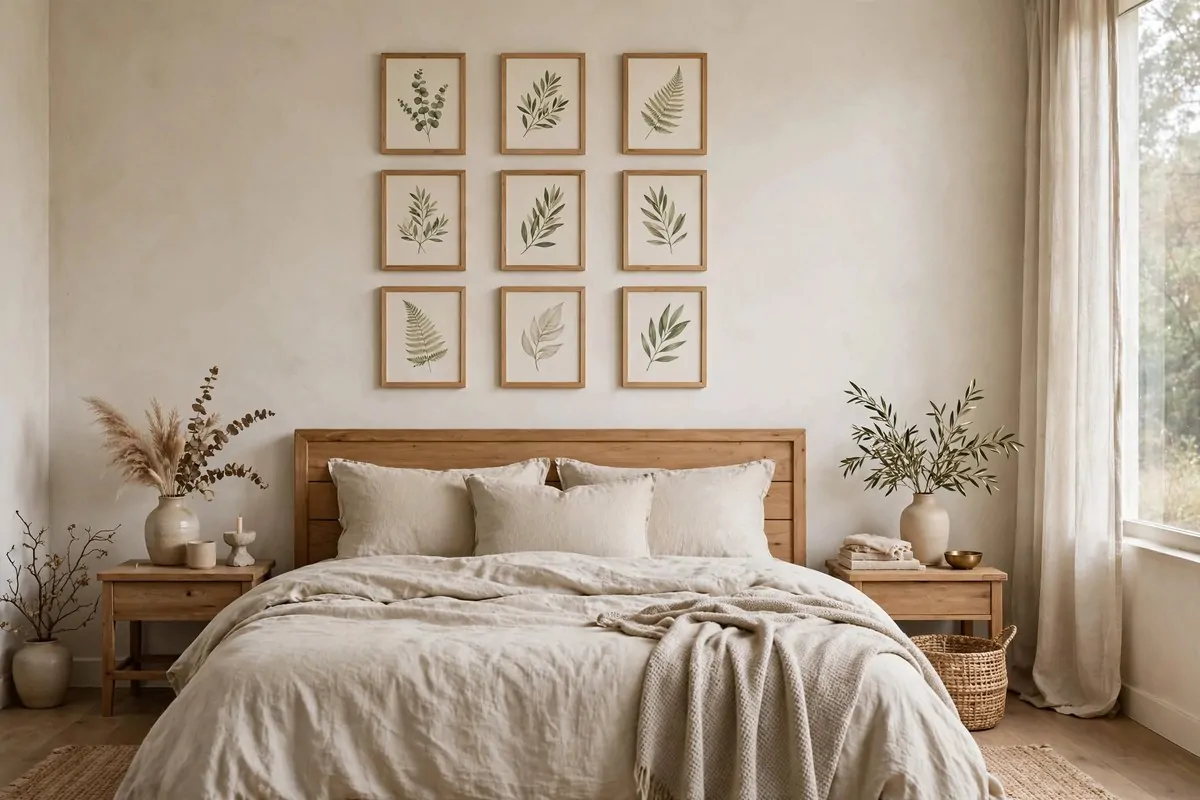
The wall above your bed is the biggest empty spot in most bedrooms. Art there sets the mood for the whole room.
Calm art means soft colours and gentle shapes. Think misty hills, leaves, or quiet seascapes. Nothing loud, nothing busy.
I hung three botanical prints above my bed in simple wooden frames. They cost me very little but people always ask about them.
Size matters more than price. One big print looks better than three tiny ones floating in a sea of wall.
My trick is to measure the bed first. Your art should span about two thirds of the bed width. For a queen bed, that is roughly 100 cm wide.
Hang it at eye level when you are sitting on the bed. That is lower than most people guess, usually about 15 to 20 cm above the headboard.
You can mix a big piece with two small ones. Keep the frames the same colour so it looks like one set.
Avoid art with sharp angles or bright reds above the bed. Your eyes rest there last thing at night, and soft shapes help your mind slow down.
I rotate my prints with the seasons too. Light florals in spring, darker moody landscapes in winter. It keeps the room feeling fresh.
25. Brighten the Room With a Round Mirror
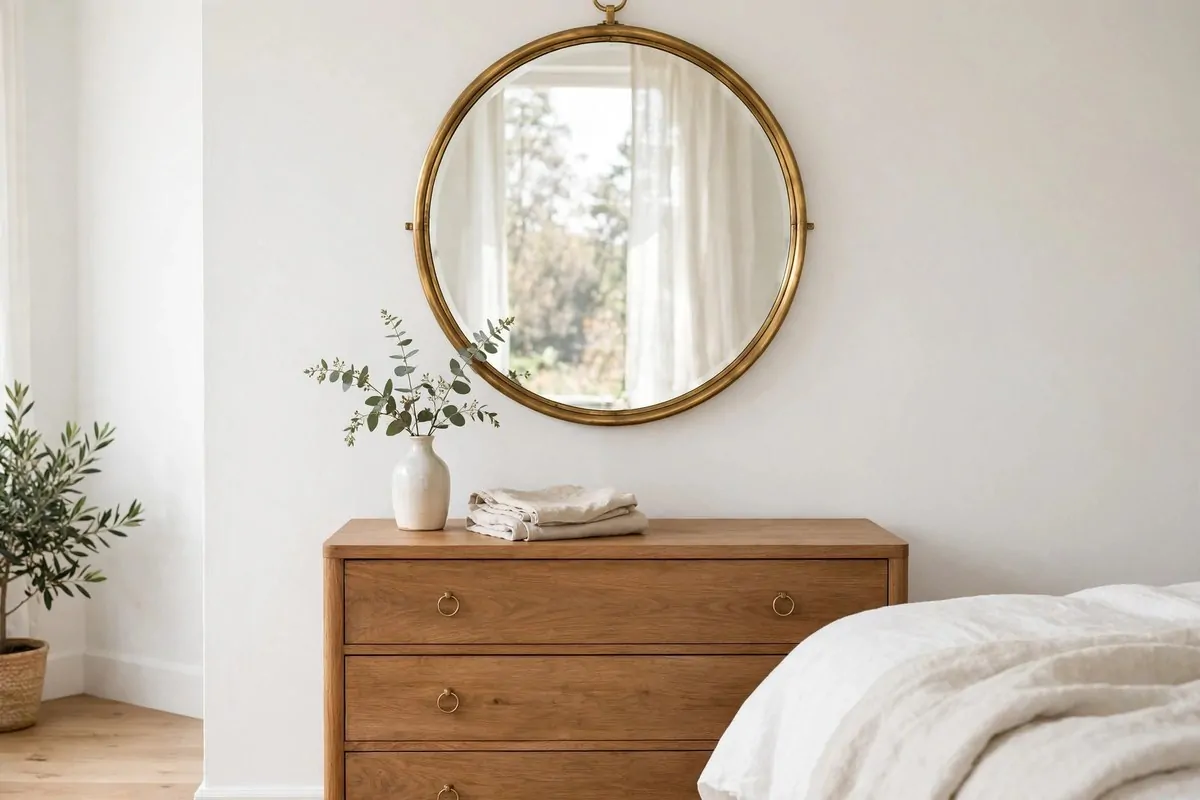
Mirrors do two jobs in a bedroom. They bounce light around and they make small rooms feel bigger.
A round mirror feels softer than a square one. There are no sharp corners, which suits a relaxing room perfectly.
I hung mine above the dresser across from the window. In the morning the sunlight hits it and throws a soft glow across the whole room.
Brass frames are my favourite right now. They add a little warmth without being flashy, and they match wood furniture nicely.
Size is worth thinking about. A mirror about 60 to 80 cm across works well above a dresser. Smaller than that can look lost on the wall.
Hang it a little higher than you think. You want to see your face and shoulders, not just your forehead.
Cleaning is quick. I wipe mine with a microfibre cloth once a week and it stays streak free.
One warning: do not hang a mirror where it catches the light from a lamp at night. The glare can be harsh when you are trying to wind down.
I also like what a mirror does to a dark corner. It pulls light into spots that used to feel heavy and closed in.
26. Hide Clutter in Under-Bed Storage

Clutter you cannot see still nags at your brain. I am much calmer when the floor around my bed is clear, even if I know stuff is hidden underneath.
The space under your bed is free real estate. Use it and your room will feel twice as tidy overnight.
I use flat rolling boxes with lids. They slide in and out without me having to lift the mattress or crawl on the floor.
Here is what I keep under my bed:
- Spare bedding and the winter duvet
- My suitcase and travel bag
- Off-season clothes in vacuum bags
- Gift wrap and cards, all in one box
Vacuum bags are brilliant for bulky things. My winter coats shrink to a third of their size and slide right under.
Label every box on the short end, the end that faces out. Then you can grab the right one without pulling them all out.
Dust is the only downside. Boxes with lids fix that. Open drawers collect dust bunnies fast.
I do a quick sort every three months. If I have not opened a box in a season, some of it goes to charity.
A tidy floor means easier cleaning too. You can run a mop straight under the bed instead of moving piles of stuff.
27. Show Off Wooden Ceiling Beams
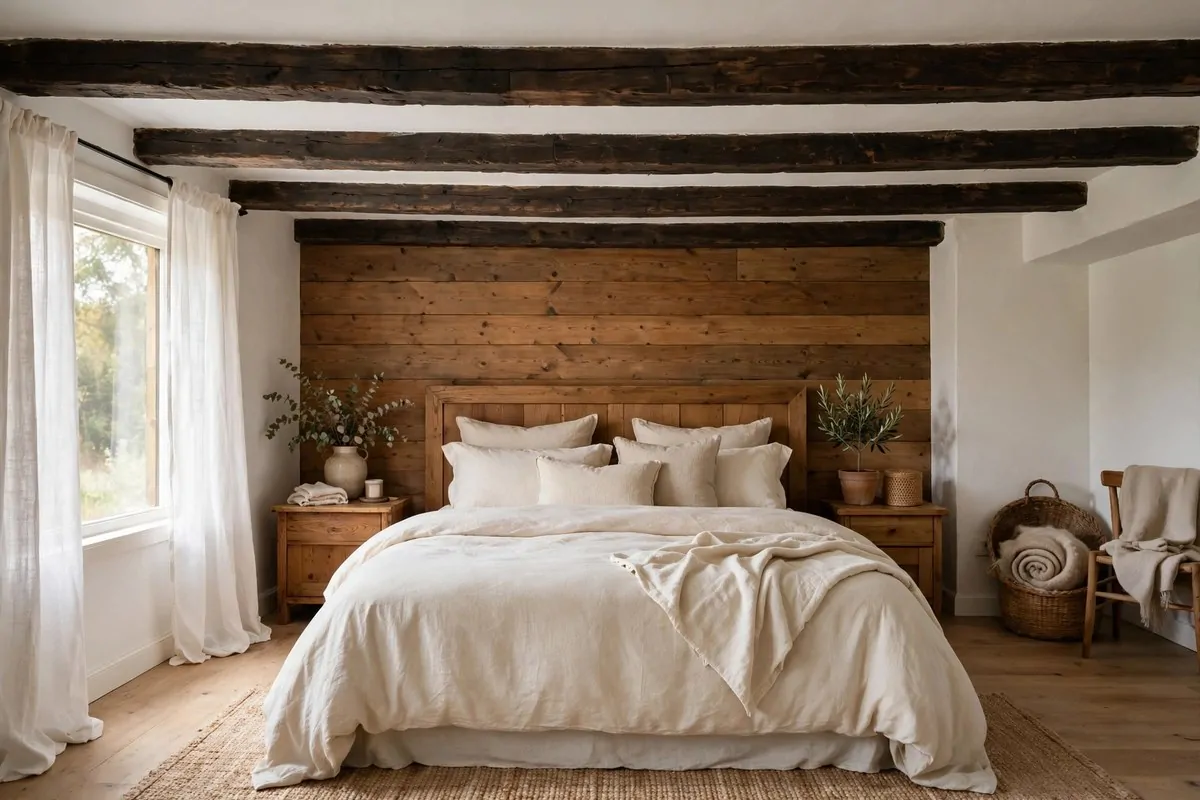
If your room has wooden beams, do not cover them up. They are the best feature most bedrooms never get.
Beams add warmth that paint never can. I walk into rooms with exposed wood and my breathing slows down before I even notice why.
Keep everything else simple when you have beams. White or cream walls let the wood be the star of the show.
Lighting matters a lot here. I hang one warm pendant light from the centre beam and it makes the whole ceiling glow.
Whitewash the beams if dark wood feels too heavy. The texture stays but the colour lightens. It suits small rooms well.
Hang plants from the beams for extra charm. A trailing pothos from a high beam looks lovely. Just make sure the hook is strong.
Dust the beams twice a year. They collect dust on top like shelves do. A long duster reaches them fine.
Beams suit rustic, farmhouse, and even modern rooms. They add character no matter the style. Real wood always wins.
You can fake beams with hollow boxes if you love the look. They are lighter and cheaper. Most guests will never know the difference.
28. Frame the Bed With Matching Nightstands

Two matching nightstands frame the bed like bookends. The room instantly looks more pulled together.
They do not have to be identical twins. Same height and similar style is enough. Two different wood nightstands in the same tone look collected, not mismatched.
Keep the tops simple. A lamp, a book, and a small dish for jewellery. That is all you need on each side. Cluttered nightstands make the whole room feel messy.
Height matters. The top of the nightstand should sit level with the top of your mattress, or just a little higher. Too low and you fumble for things in the dark.
Drawers beat open shelves for nightstands. Closed drawers hide the mess of chargers and medicines. Open shelves collect dust and look busy.
I like one drawer plus one open cubby. The drawer hides the ugly stuff. The cubby holds the book I am reading now.
Match the nightstand style to your bed. A modern low bed wants sleek nightstands. A traditional bed suits something with a little detail.
Small rooms can use one nightstand instead of two. It is better to have one good one than two cramped ones. Symmetry is nice, but space is nicer.
Dust and wipe them weekly with the rest of the room. Nightstands collect dust fast because they sit still. A quick wipe keeps them looking sharp.
29. Add a Rug That Defines the Sleep Zone
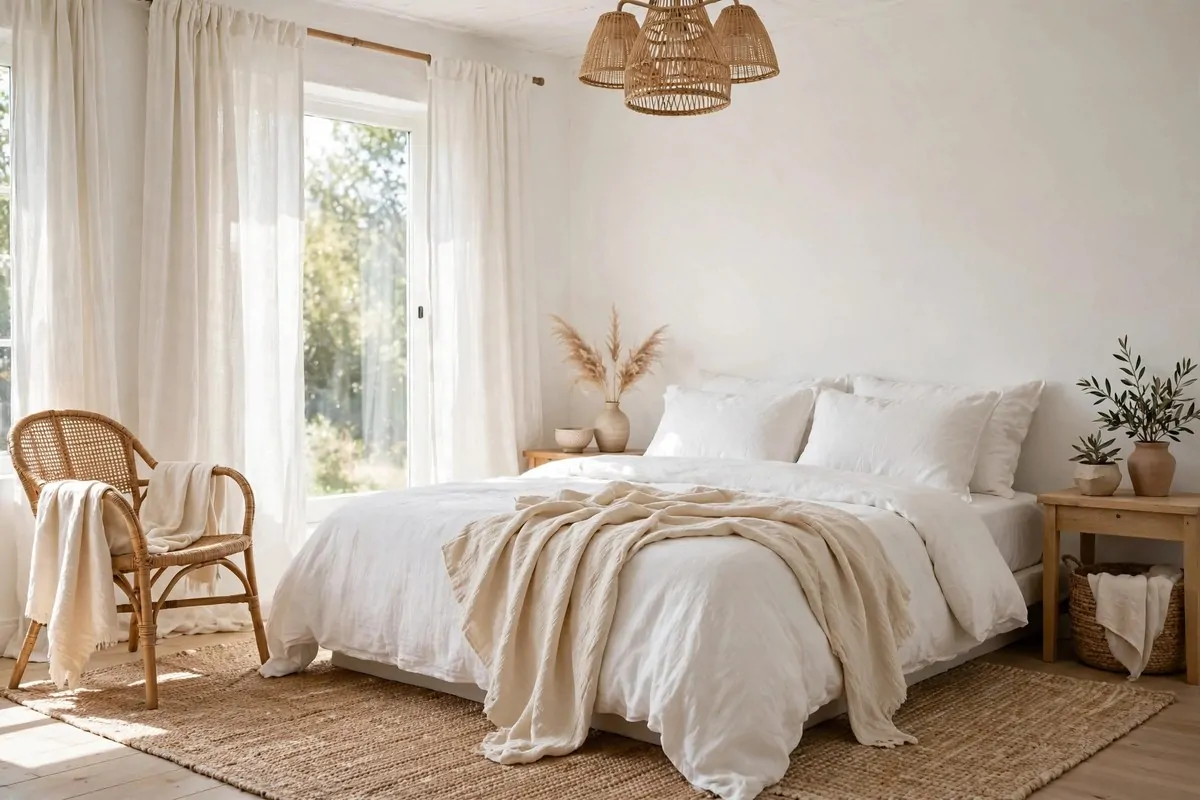
A big rug under the bed marks the sleep zone. It tells your brain this is where rest happens. The boundary is soft, but it works.
The rug should be bigger than the bed. Let it stick out on three sides, about half a metre each. Your feet land on softness no matter which side you get out on.
Soft and low-pile works best in bedrooms. You want comfort under bare feet, not a trip hazard. High-pile rugs look cosy but they trap dust.
Colour sets the mood here. Cream, soft grey, or muted blue all feel calm. The rug is the biggest colour block in the room after the walls, so choose well.
A rug pad underneath adds cushioning and stops slipping. It also protects the floor from the rug backing. The pad is worth the small extra cost.
Vacuum weekly to keep it fresh. Bedrooms collect more dust than you think. A quick vacuum makes the whole room feel cleaner.
Rotate the rug every six months. Sunlight fades one side faster. Rotation keeps the colour even and doubles the rug's good-looking life.
The rug also softens sound. Footsteps get quieter. The room feels calmer at night. It is a small change with a big effect on how the room feels.
30. End With Soft, Dimmable Bedside Lighting
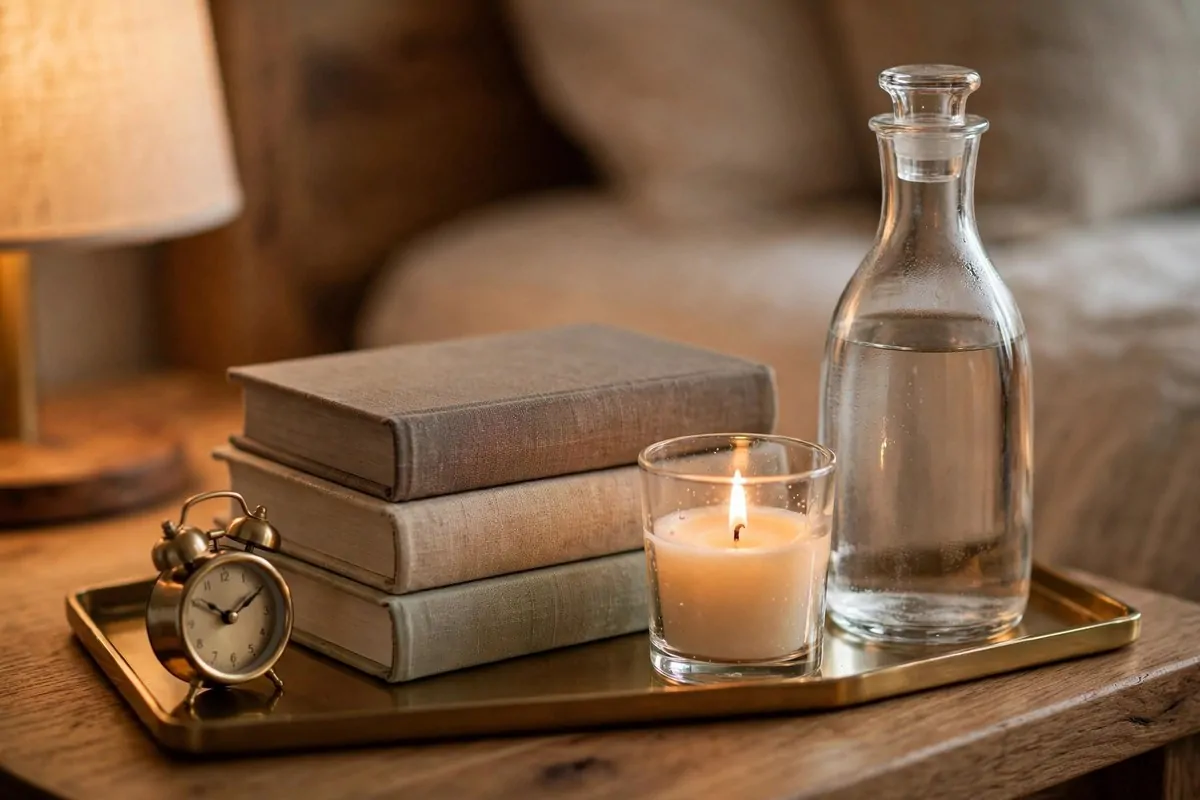
The last light you see at night should be soft and warm. It tells your body that sleep is coming. Harsh light at bedtime confuses your brain.
A small bedside lamp with a dimmer is perfect for this. Turn it down low for the last half hour. Read, stretch, breathe. Let the room go dim with you.
Warm bulbs only, 2700K or lower. Cool light at night is the enemy of good sleep. Your body reads blue light as daytime, and it fights the tiredness.
Place the lamp close enough to read by, but not in your direct eyeline when you lie down. You want a glow, not a glare. A fabric shade softens everything.
I keep my phone charging across the room now. The lamp is the only light left. It changed my nights more than I expected.
A salt lamp works well here too. The warm pink glow is very soothing. They are cheap and they look pretty on a nightstand.
Set a simple wind-down routine around this light. Lamp low, book open, phone away. Do it at the same time each night. Your body will learn the signal fast.
End the day gently and the next morning starts gently too. That is the real secret of a relaxing bedroom. It is not one big change. It is thirty small ones, done with care.