20 Cozy Office Space Ideas for Long Work Days

By nine in the morning my office feels fresh. By three in the afternoon it feels like a different room.
The light has gone flat. My back has gone stiff. My brain has gone slow. A long work day does that to a room, and it does it to you too.
These 20 Cozy Office Space Ideas are about surviving those long days in comfort. Not working harder. Not pushing through. Just small changes that keep your body happy and your energy up from morning to night.
The Chair That Holds You for Eight Hours
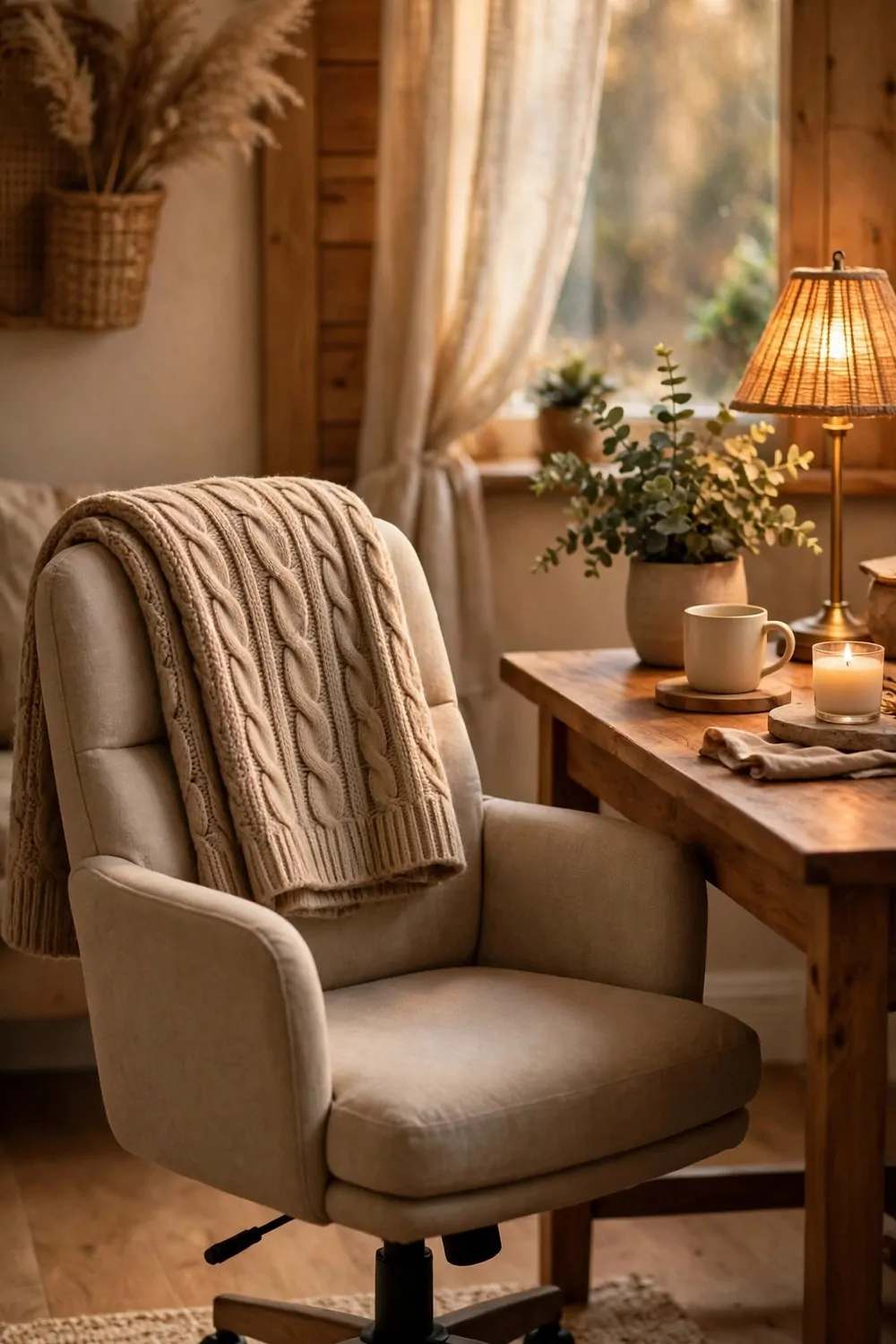
My chair holds me for eight hours on a long day. That is a long time to sit in one place.
A bad chair makes the whole day feel longer. My back starts to ache by lunch, and my shoulders creep up to my ears.
A good chair does the opposite. It holds my back up so my muscles can rest. I forget it is even there, and that is the point.
Look for a chair with a back that curves a little, the way your spine does. It should touch your lower back when you sit all the way in.
The seat should be deep enough for your thighs but not so deep that your feet dangle. Your feet should rest flat on the floor, or on a small footrest.
I test a chair by sitting in it for ten minutes, not ten seconds. Ten seconds tells you nothing. Ten minutes tells you if the seat is hard or kind.
A cushion helps, but it is not a fix for a bad chair. A soft cushion on a hard, flat chair just makes a soft, flat chair.
Try this before your next long day. Sit in your chair, close your eyes, and ask your back how it feels. If the answer is tired already, your chair is the first thing to fix.
A Desk at the Right Height
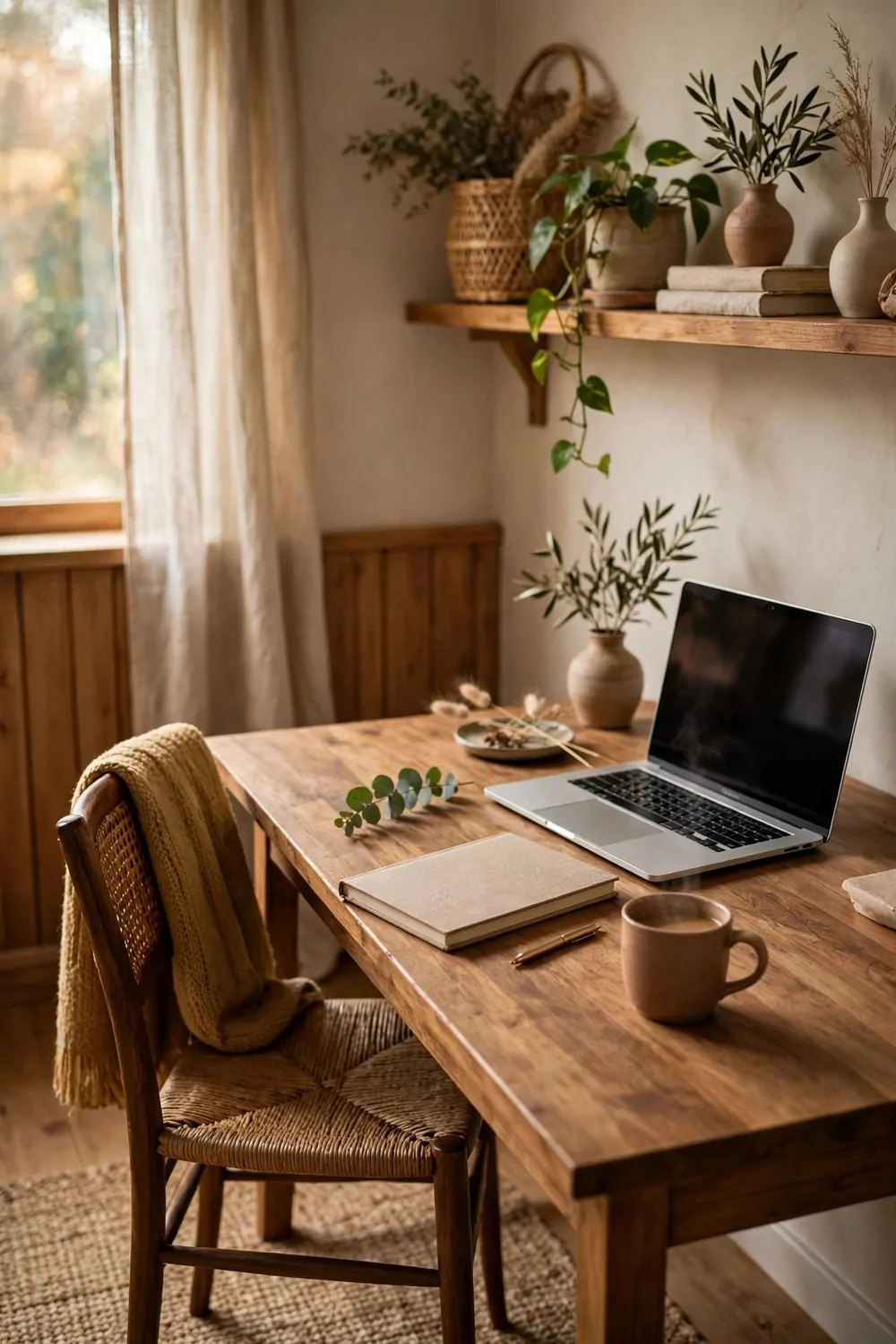
My desk used to be too high for me. I only noticed when my shoulders started to ache every afternoon.
The right height is simple to check. Sit down, let your arms hang loose, then bend your elbows to a right angle. Your hands should land on the desk without lifting your shoulders.
If the desk is too high, your shoulders creep up all day. If it is too low, you hunch over like you are reading a book on the floor.
Most desks are one fixed height, and most people are not one fixed size. That is why a small fix matters more than a new desk.
I raised my chair a little and put a footrest under my feet. The desk stayed the same, but my arms finally sat right.
A keyboard tray helps too. It drops the keyboard down a few inches, which is often all the difference you need.
Check your desk height once, then forget about it. Your body will tell you if it is wrong. Aching shoulders by lunch mean something is off.
A desk at the right height makes a long day feel shorter. Your arms rest. Your neck relaxes. Your work flows better because your body is not fighting the furniture.
A Screen That Does Not Glare
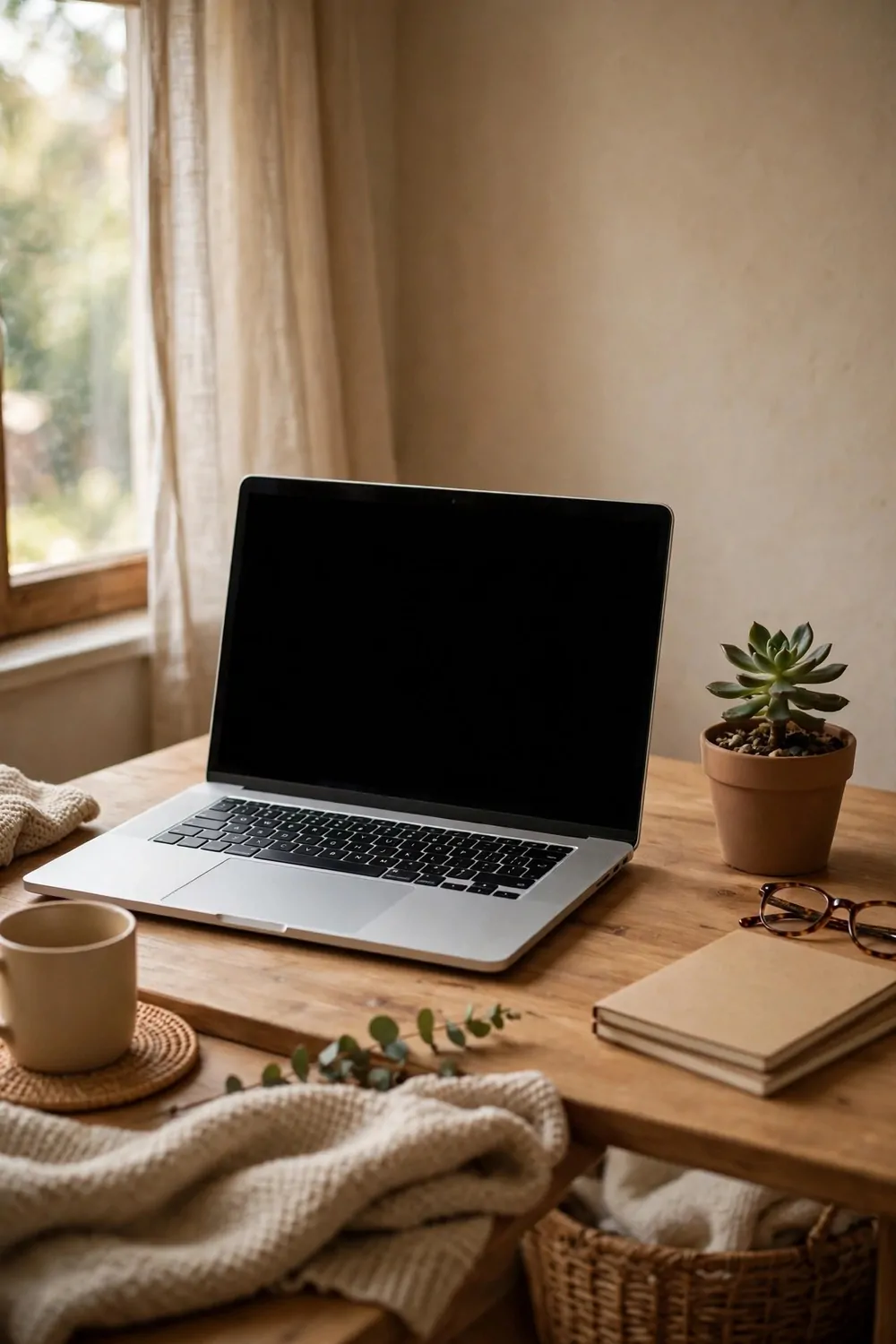
Glare is the quiet thief of a long work day. It makes your eyes tired before your brain is.
My screen used to face the window, and by midday the sun turned it into a mirror. I could see my own face more clearly than my work.
Turn the screen so the window is to your side, not in front of you or behind you. Side light is soft light. Front light blinds you, and back light turns your screen dark.
If you cannot move the desk, a small screen shade helps. A piece of card on the top edge blocks the worst of the overhead light.
Tilt the screen back just a little, about ten degrees. It cuts the glare from the ceiling light and feels easier on the neck.
Clean the screen once a week. Dust and fingerprints make glare worse, and a clean screen is brighter with the same light.
I keep my screen brightness matched to the room. Too bright in a dim room hurts. Too dim in a bright room makes you squint.
Your eyes work all day long. Give them a screen that does not fight them, and they will last till six without burning.
Five Minutes That Set Up the Day
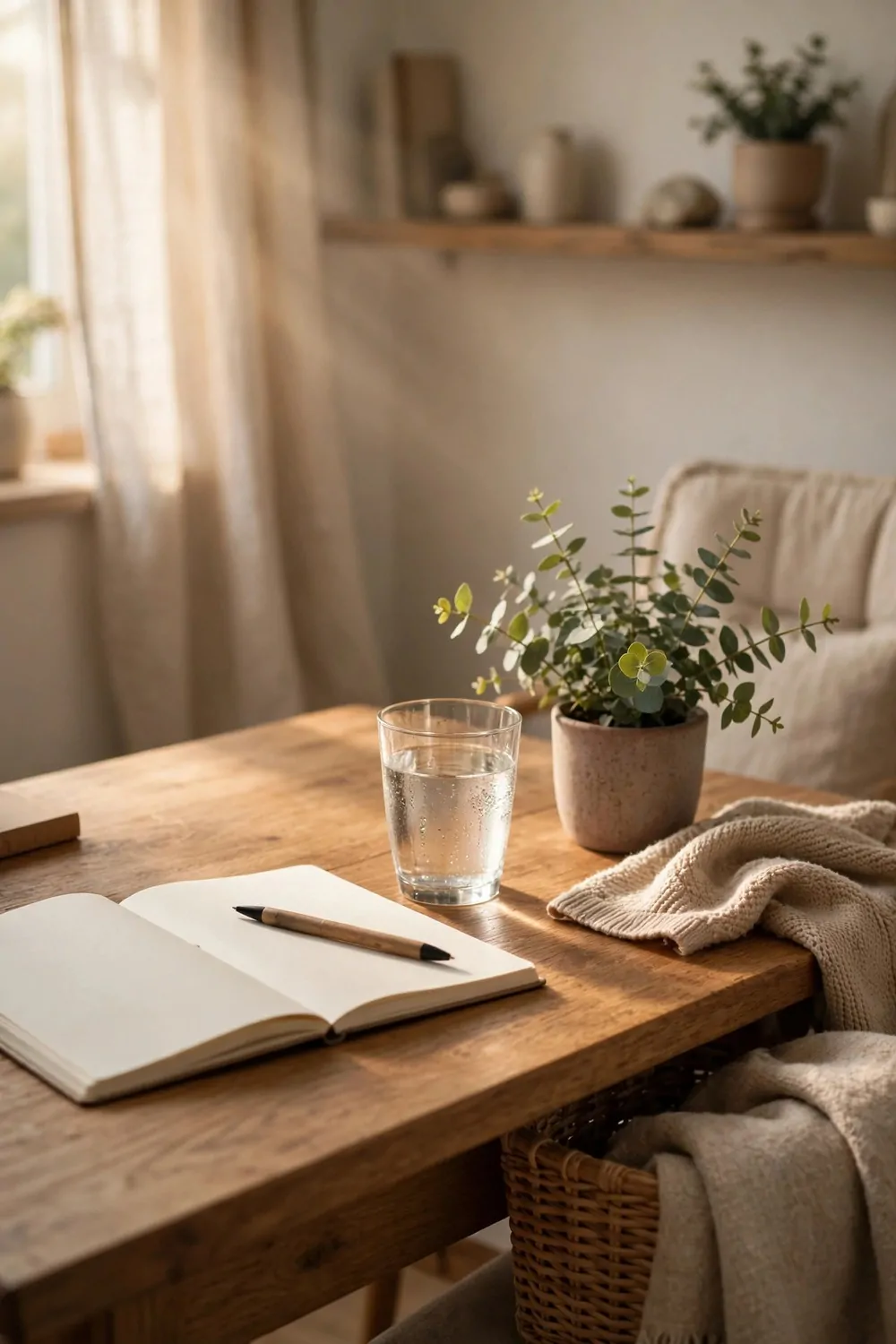
I spend five minutes setting up my desk before I start work. Those five minutes save me an hour of fumbling later.
First I clear yesterday off the desk. Papers go in a pile. The mug goes to the kitchen. The laptop lid opens.
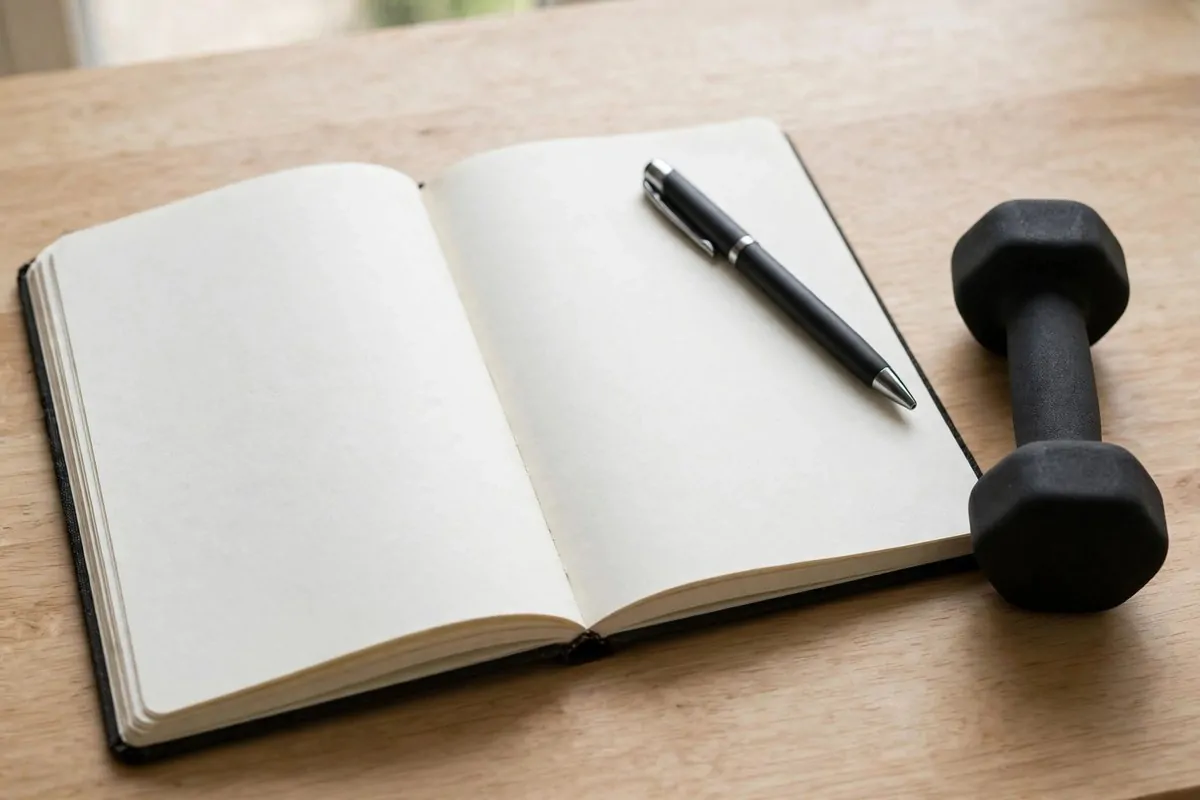
Then I put out what today needs. My notebook. A pen that works. A glass of water. Nothing else.
I check the light next. Curtains open if the morning is bright. Lamp on if the morning is grey. Light first, work second.
Then I write down the three things that matter most today. Just three. On a small card, where I can see them.
The card sits in the middle of my desk all day. When I drift, I look at it. It pulls me back without any scolding.
Five minutes sounds like nothing, but it changes the whole day. I start calm instead of starting in a rush.
Try it tomorrow. Five minutes, same order, every morning. Your desk will be ready before your brain is, and that is exactly how you want it.
A Footrest for Tired Legs
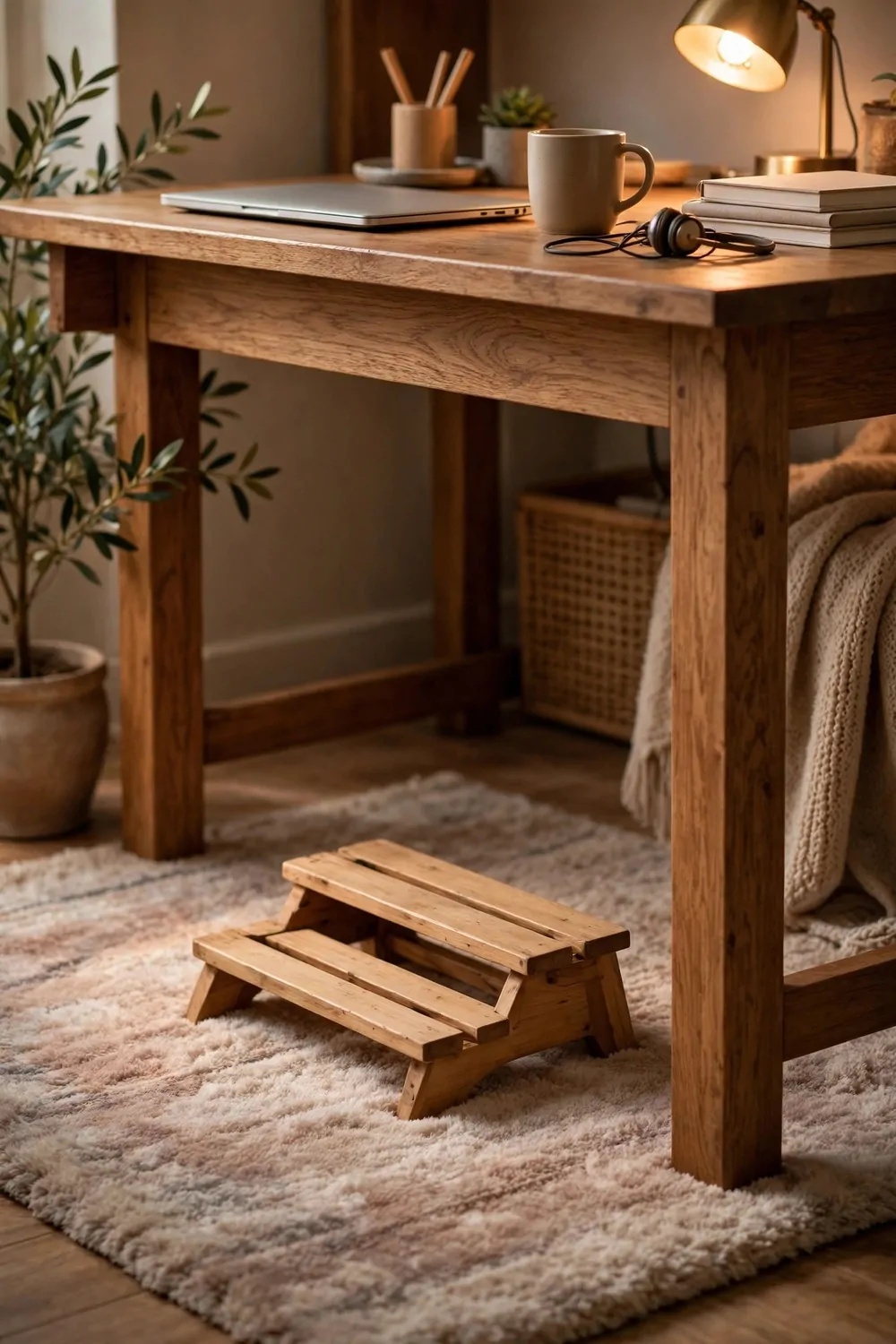
My legs get tired before my back does on a long day. They dangle, they fidget, they go numb.
A footrest fixed that for me. It is a small wooden block under my desk, and my feet rest on it all day.
Flat feet on a footrest take the weight off your thighs. Your legs stop dangling, and the blood keeps moving.
You do not need a fancy footrest. A low box works. A stack of books works. Even a firm cushion on the floor works.
The right height is easy to find. Your knees should sit a little lower than your hips, and your feet should rest flat without stretching.
I move my feet on the footrest through the day. Heels down, toes down, a little rock back and forth. It keeps my legs awake.
Cold feet make the whole day feel cold. A footrest on a soft rug keeps your feet warm, and warm feet make the room feel warmer.
If your feet hurt by lunch, look down before you blame the chair. A footrest costs almost nothing, and it can change a long day completely.
Water Within Reach
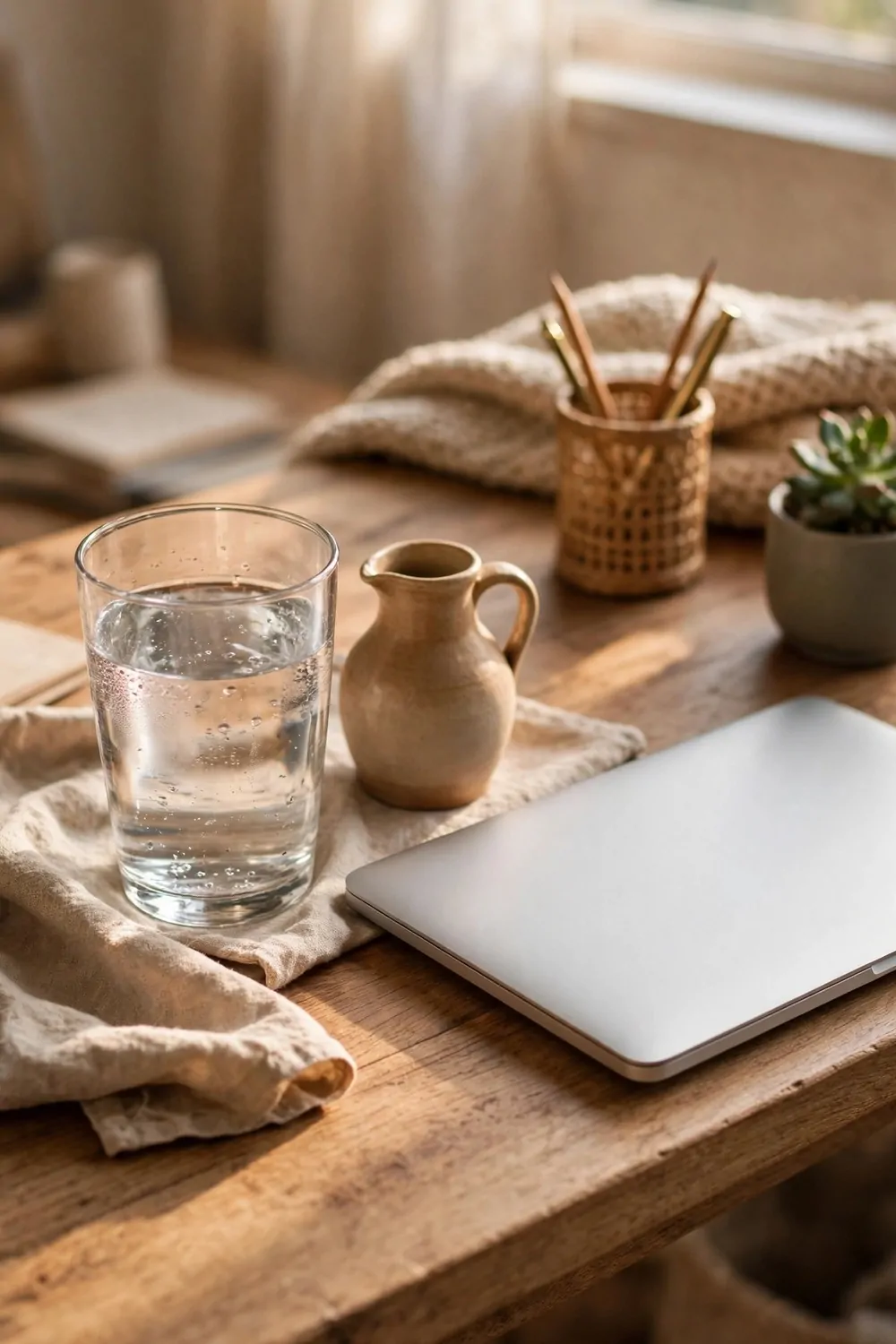
I keep a big glass of water on my desk all day. It is the simplest long-day trick I know.
When the water is out of reach, I forget to drink. When it is right there, I sip without thinking.
A long day dries you out. The heating dries the air. Talking on calls dries your throat. By three o’clock you feel tired, and half the time you are just thirsty.
I fill a large jug in the morning and keep it beside the glass. When the jug is empty, I know I drank enough.
Plain water is best. Fizzy drinks make me crash. Too much coffee makes my hands shake by lunch.
What I keep within reach on long days:
- a large glass, not a tiny one
- a jug of plain water
- a slice of lemon in the jug on hot days
- a small cloth under the glass so the desk stays dry
I drink a glass before I start, one mid-morning, one with lunch, and one in the afternoon. Four glasses, no counting, no app.
Water will not fix a bad day, but it stops a good day from turning into a tired one. Keep it close, and let your body do the rest.
The Ten O’Clock Stretch
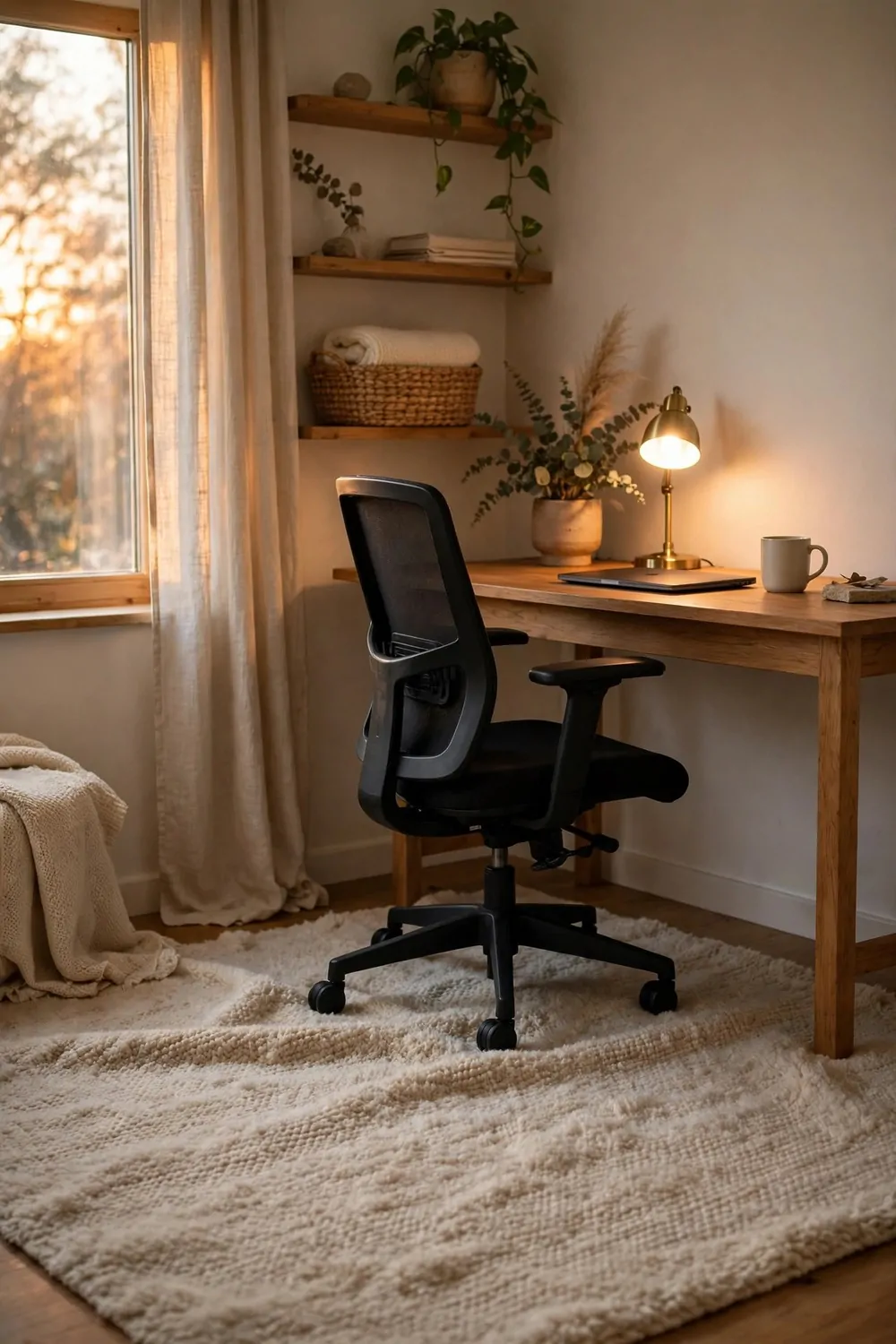
At ten o’clock my body starts to stiffen. My neck feels tight. My shoulders feel heavy. That is my stretch alarm.
I stand up and stretch for two minutes. That is all. Two minutes, and my body wakes up again.
I reach my arms up high, like I am trying to touch the ceiling. Then I roll my shoulders back, slow and wide.
Then I touch my toes, or as close as I can get. My hamstrings complain a little, and then they let go.
Stretching is not exercise. It is maintenance. Like oiling a door hinge so it stops squeaking.
Here is the stretch plan I follow through a long day.
| Time | Stretch | How long |
|---|---|---|
| Morning | Arms up and shoulder rolls | Two minutes |
| Midday | Toe touch and side bends | Two minutes |
| Afternoon | Neck rolls and wrist circles | Two minutes |
| Evening | Full body stretch before you stop | Three minutes |
I set a quiet alarm for these stretches. Not a loud one. Just a soft buzz on my phone.
Two minutes of stretching saves me from an afternoon of aching. It is the cheapest energy boost I know, and it costs nothing but standing up.
A Lunch That Fuels, Not Flattens

Lunch can make or break the second half of a long day. The wrong lunch flattens me by two o’clock.
A heavy lunch is the worst. A big plate of fried food makes my eyes droop and my brain go foggy.
A light lunch with real fuel works better. Soup, bread, cheese, leftovers. Food that fills you without knocking you out.
I eat away from my keyboard now. I used to eat over my laptop, and I never tasted a thing. Now I close the lid and take twenty slow minutes.
Here is what my best long-day lunches look like.
| Lunch | Energy it gives | Why it works |
|---|---|---|
| Soup and bread | Steady and warm | Easy to digest |
| Bread and cheese | Quick and filling | No cooking needed |
| Last night’s leftovers | Real food, fast | Nothing wasted |
| Salad with eggs | Light but strong | Protein keeps you going |
I drink water with lunch, not a sugary drink. Sugar gives me a fast lift and then a hard drop.
After lunch I sit still for five minutes. No phone. No email. Just a quiet pause while my food settles.
A good lunch is fuel, not a reward for surviving the morning. Eat like you still have four hours to go, because you do.
A Walk Around the Block at Lunch
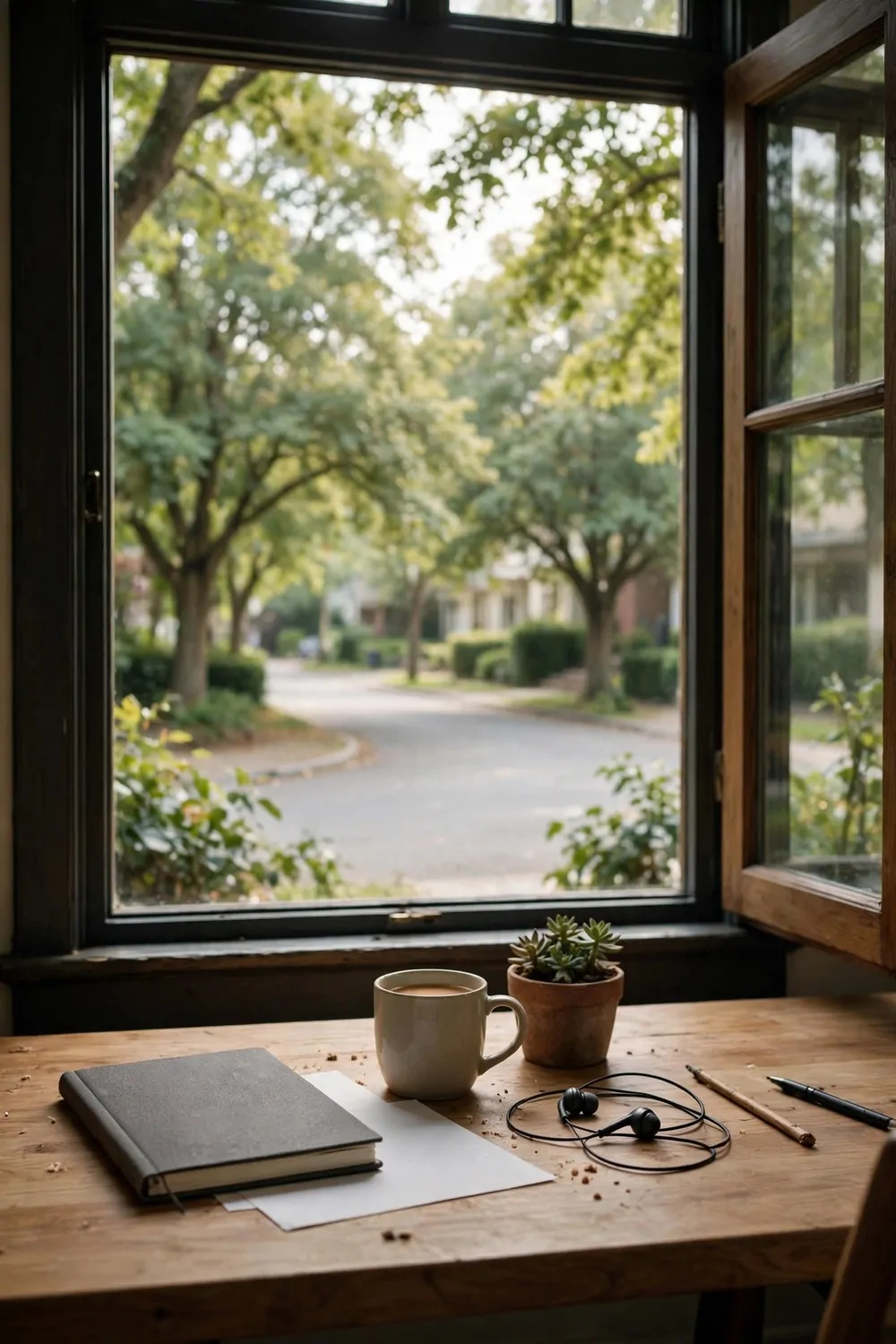
I used to spend my whole lunch break at my desk. Then I tried a short walk around the block, and I never went back.
Ten minutes outside resets my whole afternoon. The fresh air wakes me up better than coffee ever did.
Walking moves the blood back into my legs after a morning of sitting. My knees stop aching. My back loosens up.
I do not walk fast. I stroll. I look at the gardens, the trees, the sky. It is a break, not a workout.
The walk also clears my head. Problems that felt stuck in the morning often untangle themselves by the second street.
I leave my phone at home for this walk. No calls. No messages. Just ten minutes of my own thoughts and the street sounds.
Rain does not stop me. I put on a coat and go anyway. A rainy walk is still better than a stuffy room.
If your lunch break is short, even five minutes outside helps. Step out the door, walk to the corner and back. Your afternoon will thank you.
The Faraway Look Every Hour
My eyes spend all day looking at something two feet away. By the afternoon they feel tired and dry.
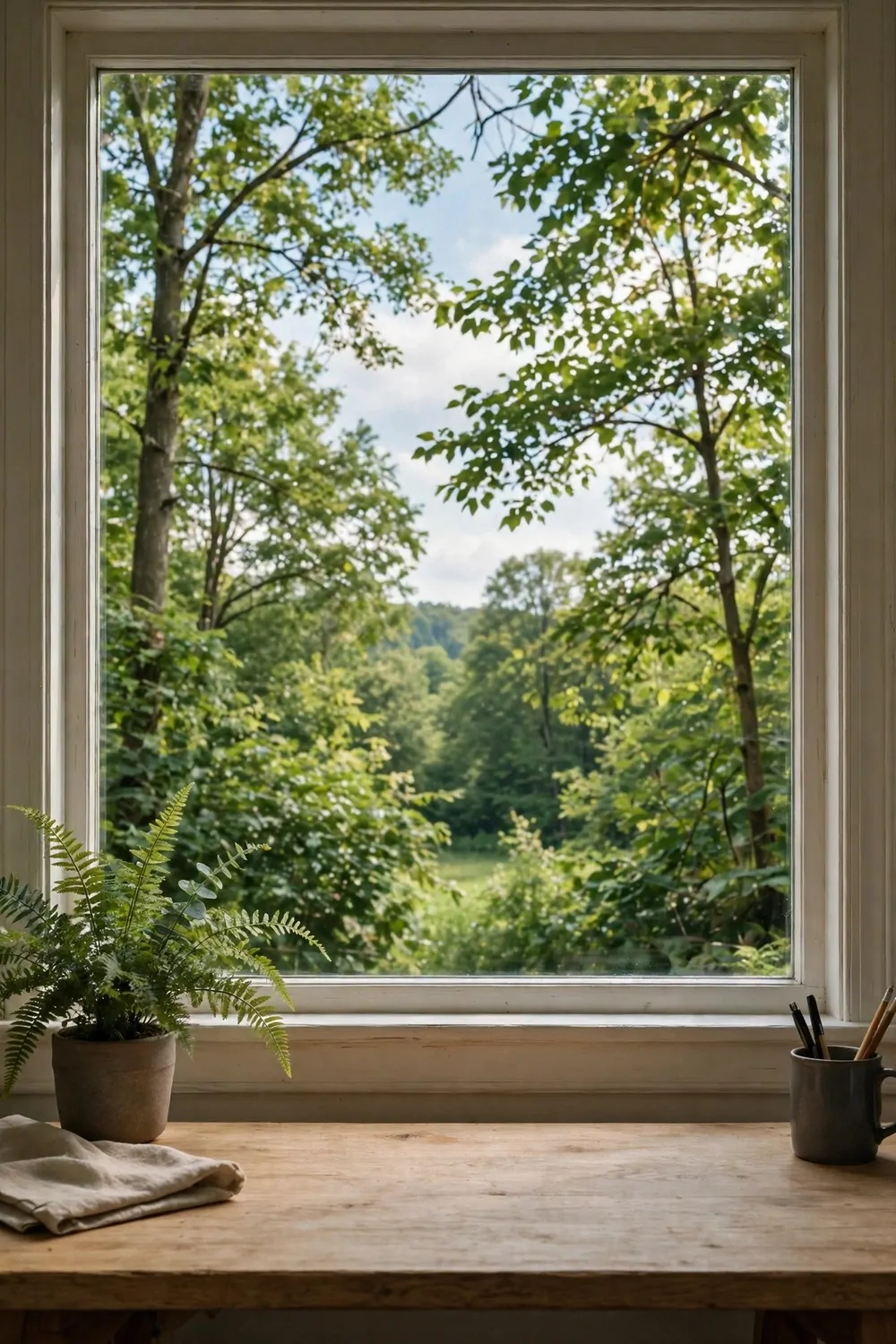
Every hour I look at something far away for one minute. Out of the window, down the street, at the trees. It rests my eyes.
The rule is simple. Every twenty minutes, look at something twenty feet away for twenty seconds. I do it every hour instead, for a full minute, because that is easier to remember.
Looking far away relaxes the tiny muscles inside your eyes. They have been squeezed tight all day, staring at a screen.
My window looks out on trees, and that is perfect. Green is the easiest colour for tired eyes. It asks nothing of them.
If your window faces a wall, look down a hallway instead. Or close your eyes for a minute and let them rest in the dark.
I blink more when I do this. Staring at a screen makes you forget to blink, and dry eyes hurt.
One minute of looking far away, every hour, keeps my eyes going till six. It is a small habit, but my eyes notice the days I skip it.
Fresh Air at Three O’Clock
Three o’clock is when my office air goes stale. The room feels heavy, and my brain feels heavy with it.
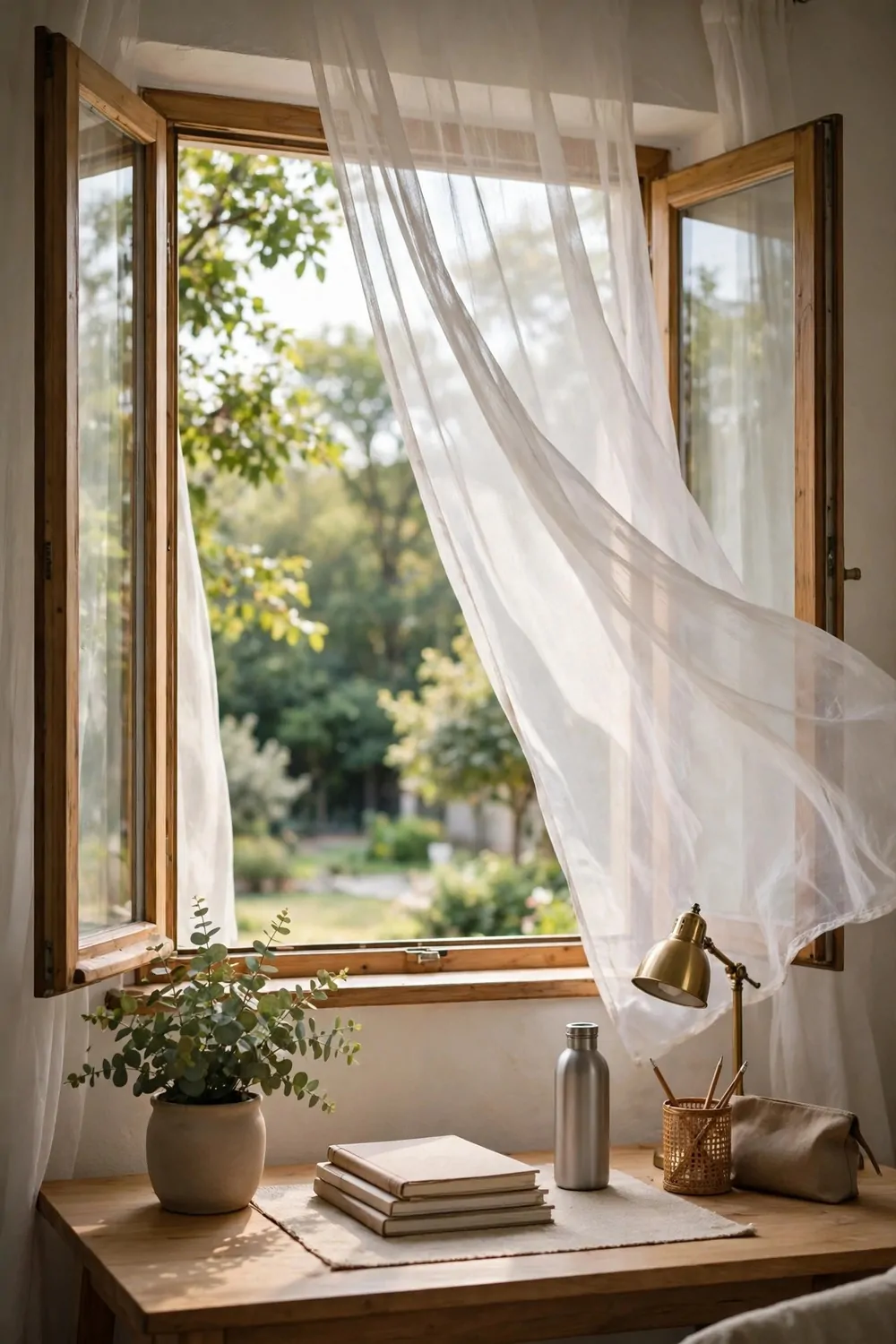
I open the window for five minutes. That is all it takes. The old air goes out, and the new air comes in.
Fresh air wakes me up faster than anything else. It is like a cold splash of water on my face, but gentler.
I open the window wide, not just a crack. A crack lets in a thin line of air. Wide open lets the whole room breathe.
If it is cold outside, I put on a jumper and open it anyway. Five minutes of cold air is better than three hours of stuffy air.
The smell changes too. The room stops smelling like old coffee and paper, and starts smelling like outside. Like rain, or grass, or just clean air.
I do this at the same time every day, so it becomes a habit. Three o’clock, window open, deep breath.
A long day needs fresh air the way a long walk needs water. Open the window, let the room breathe, and your afternoon gets easier.
The Snack Drawer That Behaves
My snack drawer used to be a disaster. Biscuits, crisps, chocolate, all fighting for my attention every hour.
I ate from it without thinking, and by four o’clock I felt sick and sleepy. The sugar rush always ended the same way.
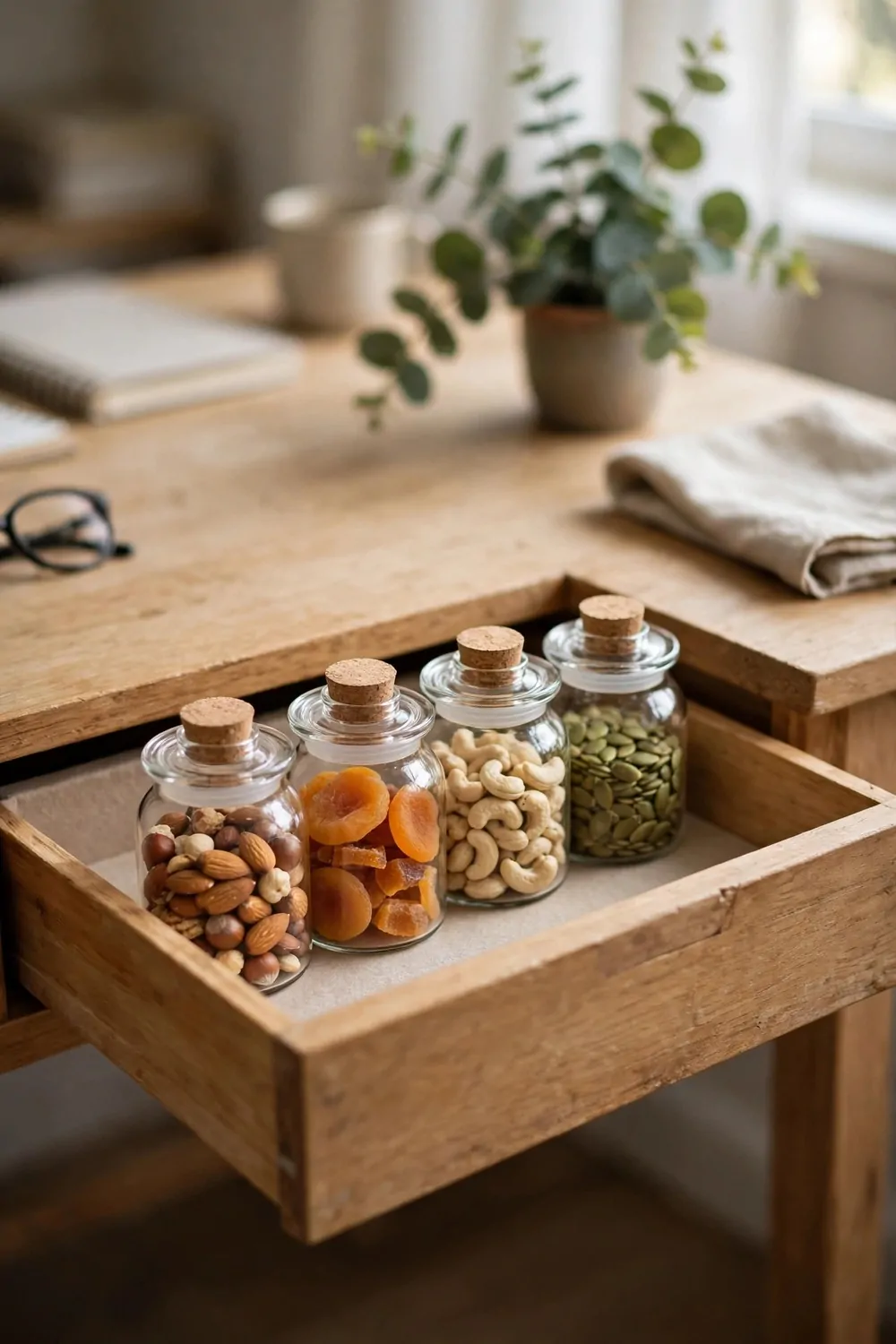
Now the drawer behaves, because I stocked it with snacks that actually help. Nuts, dried fruit, a few oat cakes.
The trick is to keep the good snacks at the front and the treats at the back. What you see first is what you eat first.
I pack the drawer on Sunday night, for the whole week. Five small bags, one for each day. When the bag is empty, the snacking stops.
What lives in my snack drawer now:
- a small bag of mixed nuts
- a few dried apricots
- two oat cakes
- a small square of dark chocolate for the hard days
I eat the snack slowly, away from the screen. A snack eaten while typing does not count as a break, and it never fills you up.
A snack drawer that behaves is a small thing, but on a long day it is the difference between steady energy and a four o’clock crash.
A Warm Drink at Four O’Clock
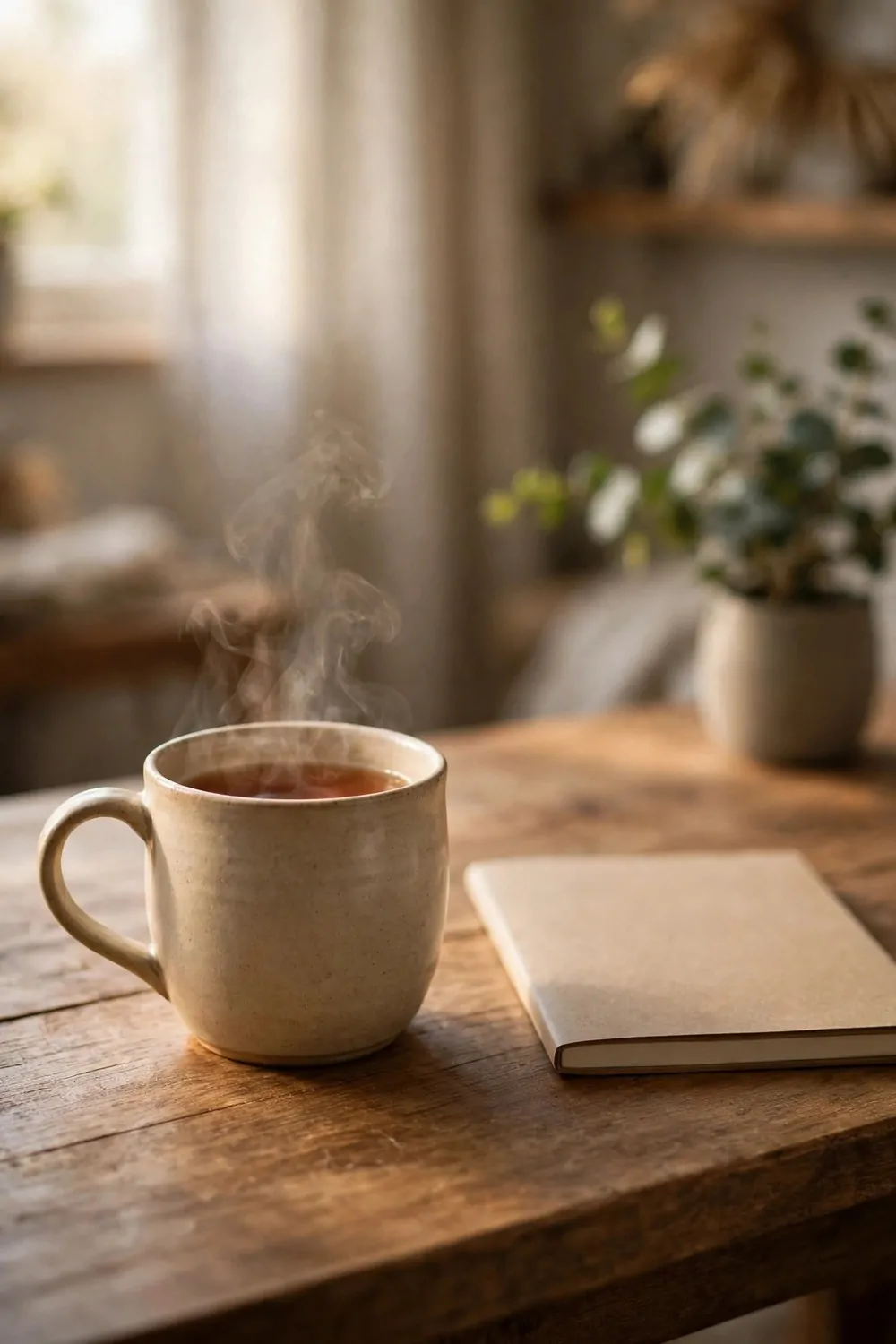
Four o’clock is the hardest hour of a long day. The finish line is close, but my energy is gone.
A warm drink at four saves me. Not coffee. Coffee at four keeps me awake too late. A warm mug of tea, or hot water with lemon.
The warmth matters as much as the drink. Holding a warm mug warms my hands, and warm hands make the whole room feel warmer.
I make the drink slowly. Kettle on, mug out, tea bag in. The little ritual is a break all by itself.
Here is what I drink through a long day, and when.
| Time | Drink | What it does |
|---|---|---|
| Morning | One mug of tea | Wakes you up gently |
| Midday | A glass of water | Keeps you going |
| Four o’clock | Herbal tea or lemon water | Warms you without keeping you up |
| Evening | Nothing with caffeine | Lets you sleep well |
I never drink the four o’clock mug at my desk while typing. I sit back, I sip, I look out of the window.
The drink is a signal to my brain. One more hour, and then we stop. It makes the last hour feel shorter.
A warm drink at four is a small kindness to yourself. On a long day, small kindnesses are what get you to six.
Warm Light for the Last Two Hours
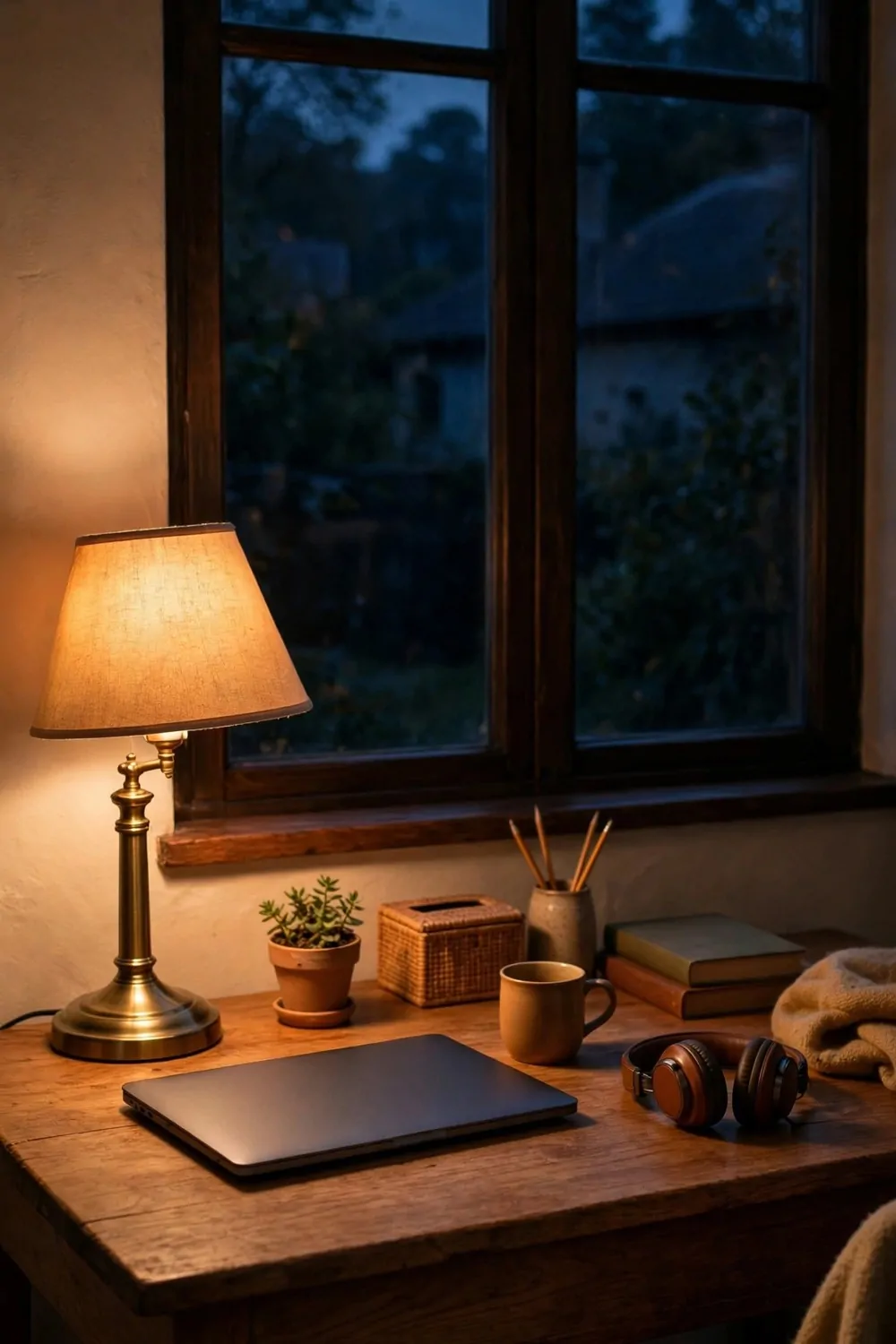
The last two hours of a long day are the darkest. The sun goes down, and the room turns grey before you notice.
That is when I switch on my warm lamp. One lamp, on the corner of the desk. It glows soft and gold.
That warm glow feels like home in the evening, even though I am still at my desk. It tells my brain the day is nearly done.
My bulb is warm, never white. White light feels cold and sharp at dusk. Warm light feels kind.
I switch the lamp on at the same hour each day. It is my little sign that the hard part is done.
I keep the big ceiling light off. One warm lamp is enough. A bright ceiling light at dusk makes my eyes ache.
The lamp should light the desk, not your face. Light in your eyes hurts. Light on your papers helps.
Try it on your next long day. When the light fades, switch on one warm lamp. Feel how the room changes in one second, and how much easier the last two hours become.
A Clock You Can Actually See
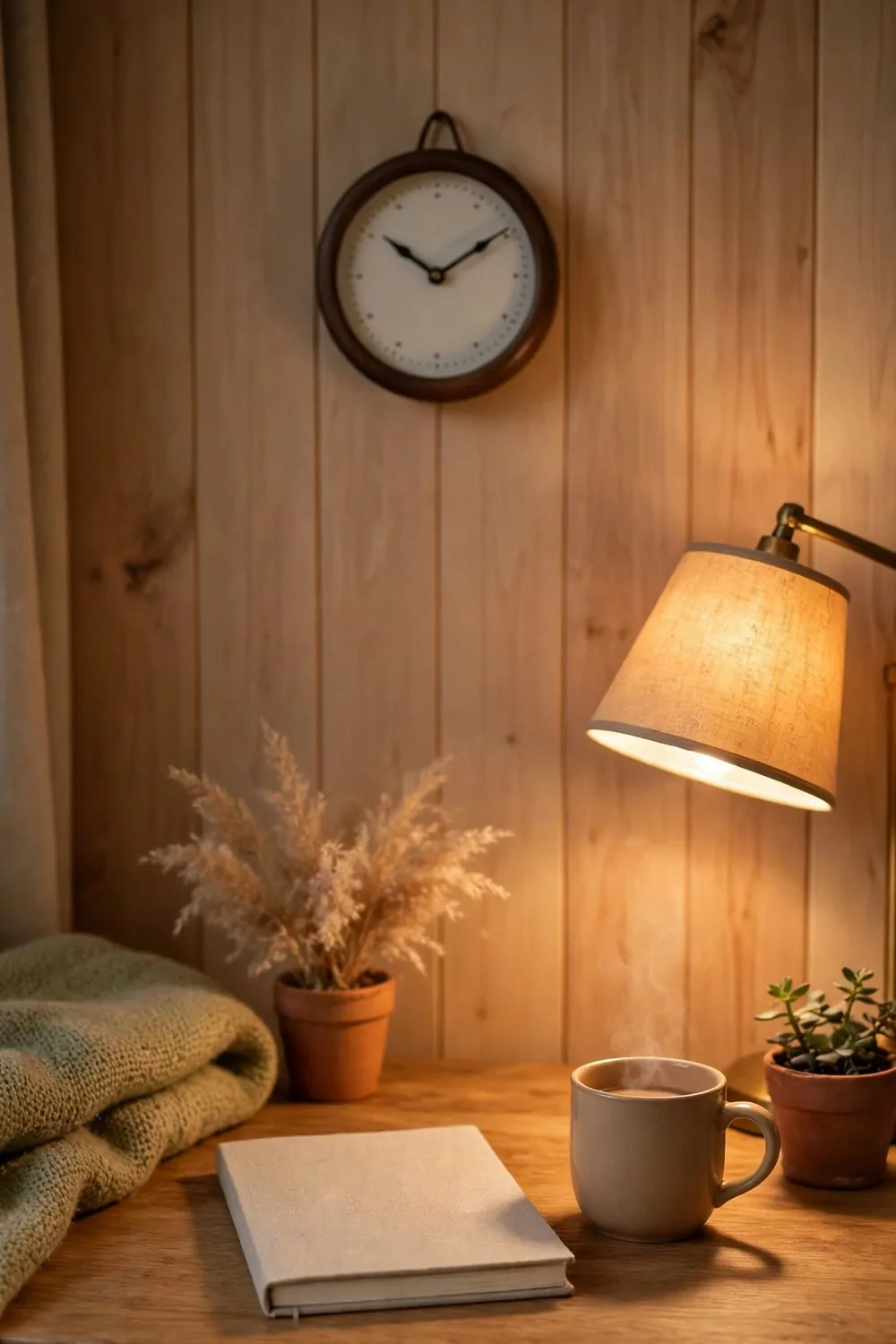
I have a clock on the wall above my desk, big enough to see without squinting. It changed my long days.
Before the clock, time slipped past me. I looked up and it was suddenly five, and I had done half of what I planned.
A visible clock keeps me honest. I can see the hour, and I can see how much of the day is left.
I plan my day around the clock, not against it. Big task in the morning. Small tasks after lunch. Tidy up in the last half hour.
The clock also tells me when to stop. Six o’clock means stop, even if the list is not finished. The list will still be there tomorrow.
Signs your day needs a visible clock:
- you lose track of time by ten in the morning
- lunch sneaks up on you
- you work late without meaning to
- the day feels like a blur when it ends
I do not use my phone as a clock. My phone has messages and news, and every glance turns into five lost minutes.
A clock on the wall is a quiet boss. It does not shout. It just shows you the time, and lets you decide what to do with it.
A Hard Stop at Six
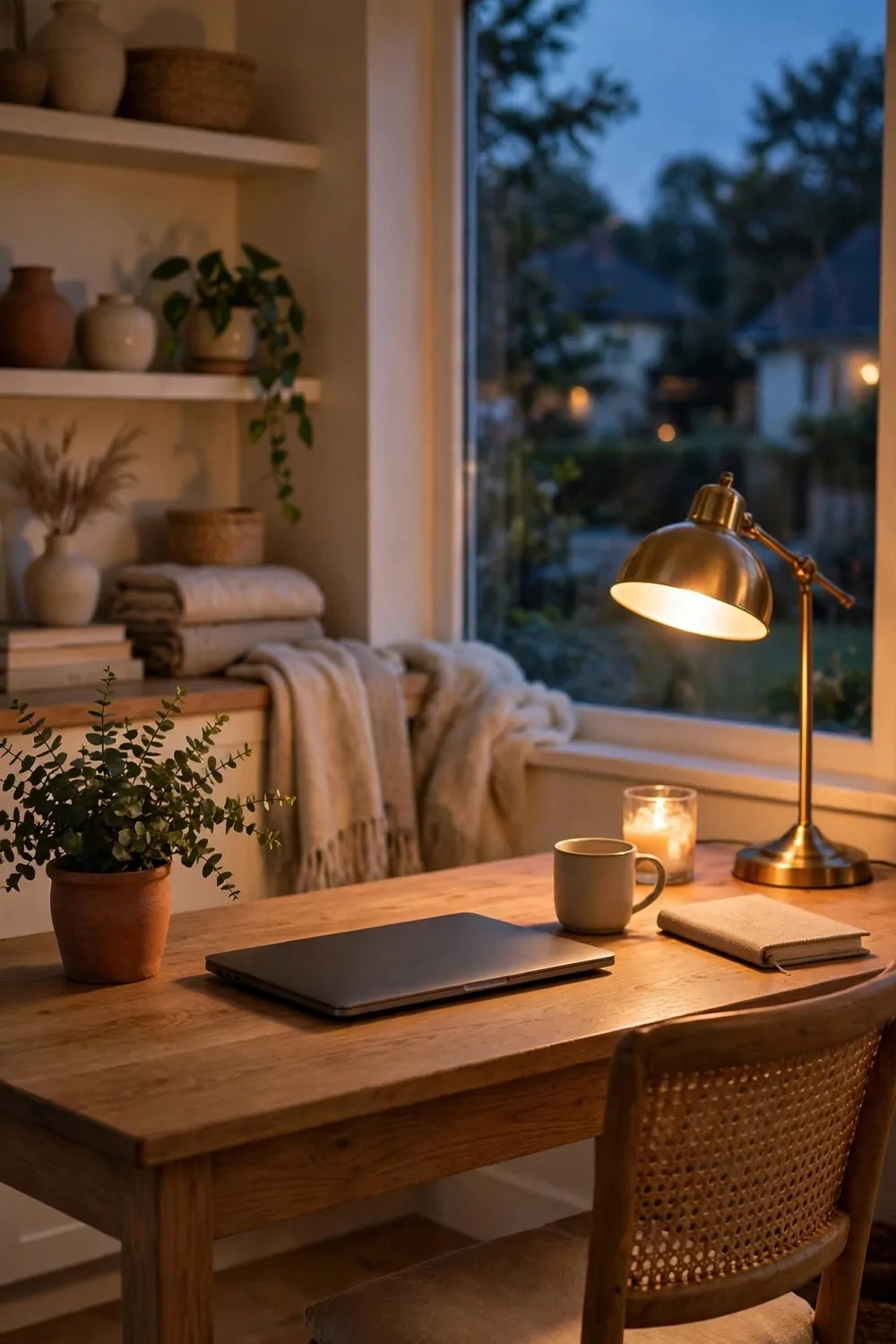
Six o’clock is my hard stop. I close the laptop, whatever is left undone.
A hard stop sounds harsh, but it is kind. It protects my evening, and it makes my mornings better too.
Before the hard stop, I worked till eight most nights. I was tired at dinner. I was tired in bed. I was tired the next morning.
The work never really ended. There was always one more email. One more small job. The list never got shorter.
Now I stop at six, and the work waits. It is still there in the morning, and I do it better with a rested brain.
I warn myself at half past five. Thirty minutes to finish up. Save the files. Write down where I stopped.
Then I close the lid. Not sleep mode. Closed. The screen turns black, and the room feels done for the day.
A hard stop is a promise you make to yourself. Six o’clock, every day, no exceptions. Your evenings will thank you, and so will your mornings.
A Heating Pad for a Cold Back
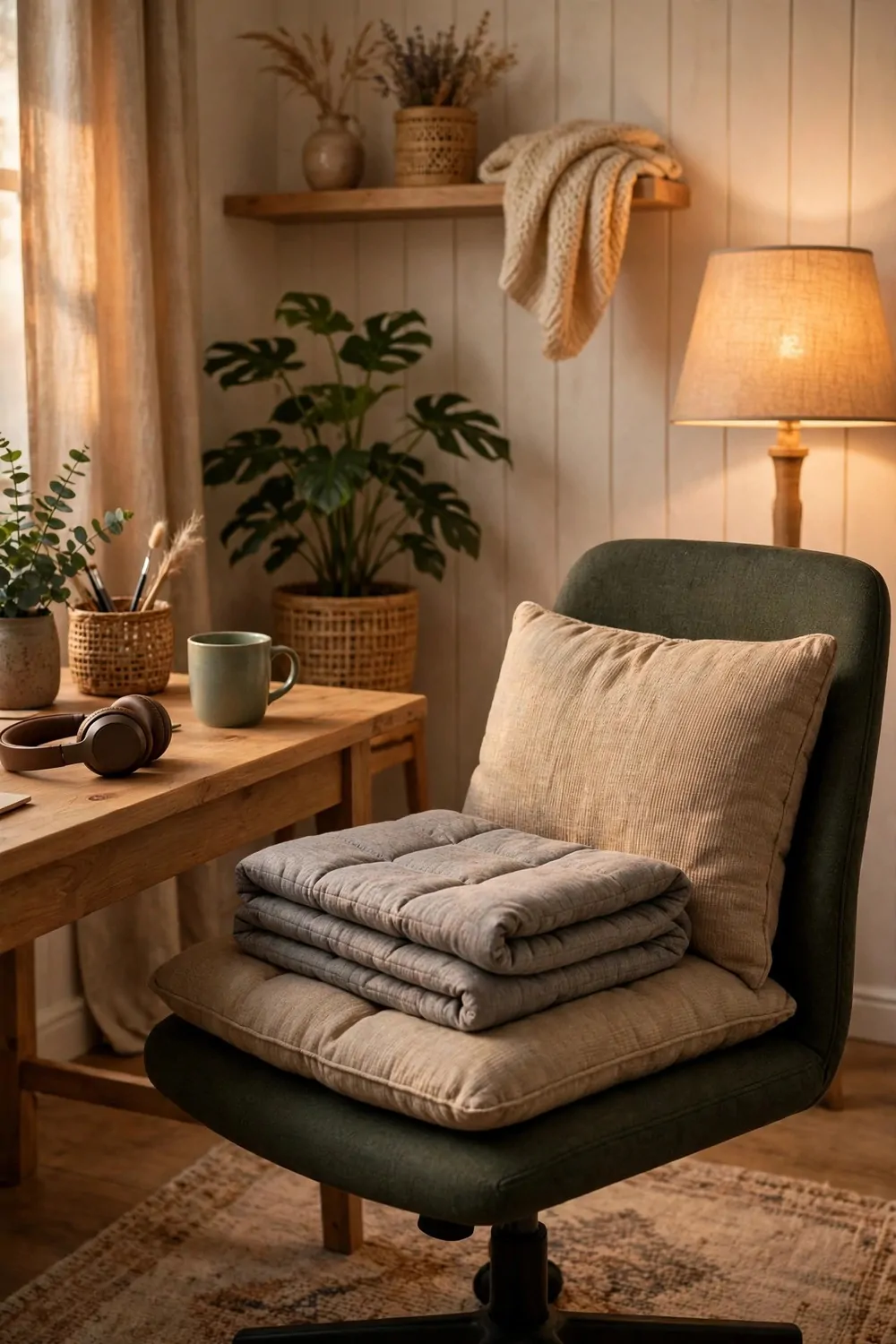
My lower back gets cold and stiff on long days. Sitting still for hours makes it ache by the afternoon.
A heating pad fixed that for me. It is a soft pad that warms up, and I drape it over my chair back.
The warmth loosens the muscles. It is like a warm hug for the exact spot that hurts.
I switch it on at lunch, when the stiffness starts. By two o’clock my back feels loose again.
A hot water bottle works just as well. Fill it, wrap it in a soft cloth, and tuck it behind your back.
Do not use the pad all day. An hour or two is enough. Your body should do some of the work itself.
The pad also reminds me to sit up straight. When it slips, I know I have been slouching.
A cold back makes a long day feel twice as long. A little warmth in the right spot makes it feel half as hard.
The Last Email, Then the Lid Closes
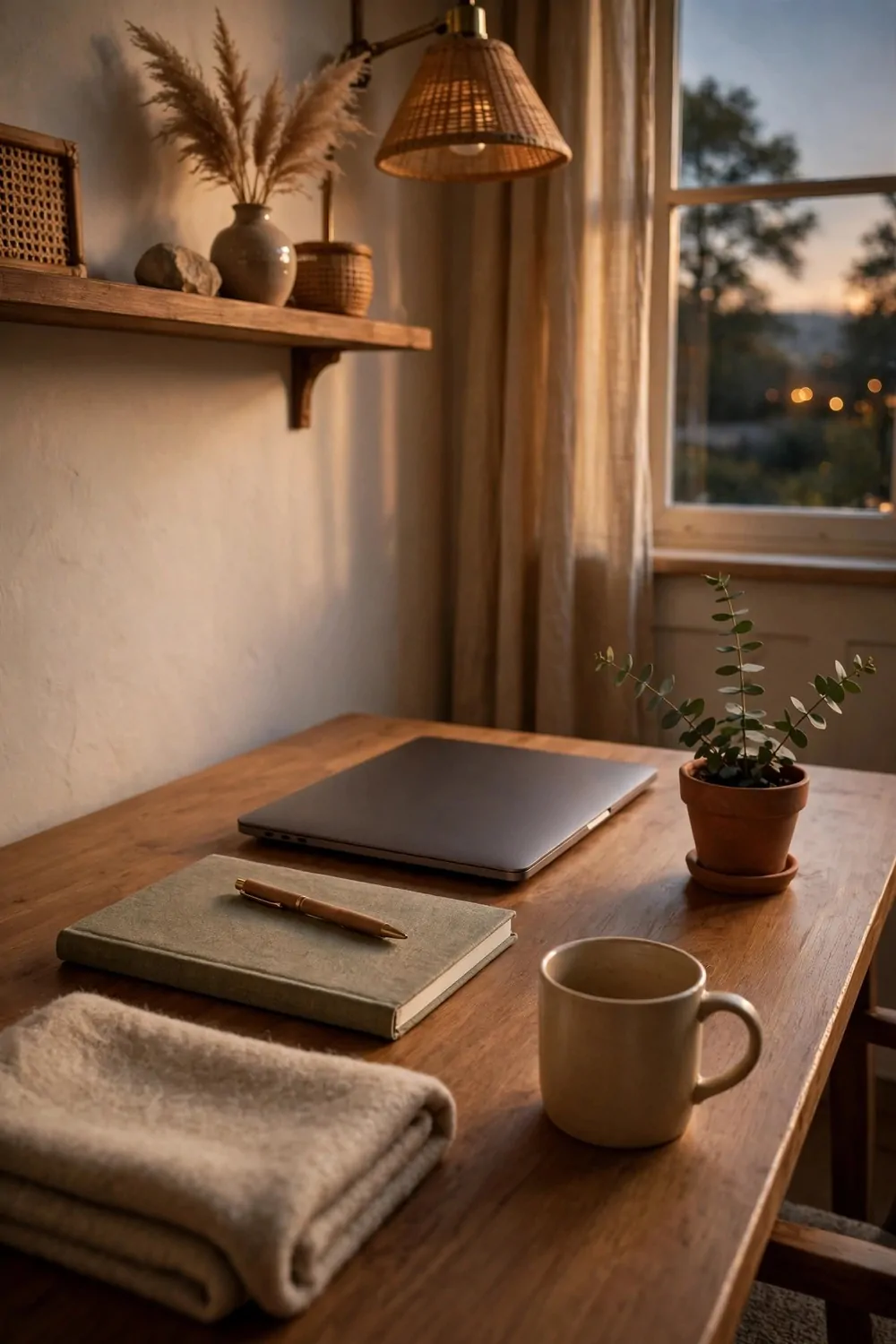
The last email of the day is the hardest one to send. Not because it is hard, but because it opens the door to five more.
I used to answer one last email at half past five, and then another at six, and then another at half past six.
Now I have a rule. One last email, then the lid closes. I pick the most important one, I send it, and I stop.
The rule works because it is simple. One email. Not two. Not just one more. One.
I write the last email early, before I get tired. A tired email is a sloppy email, and sloppy emails cause problems tomorrow.
After I send it, I close the laptop lid. The click of the lid is the sound of the day ending.
If something urgent comes in after the lid closes, it waits till morning. Real emergencies are rare. Most things can wait.
The lid closing is my favourite sound of the day. It means I did my work, and now the evening is mine.
The Desk That Clears Itself
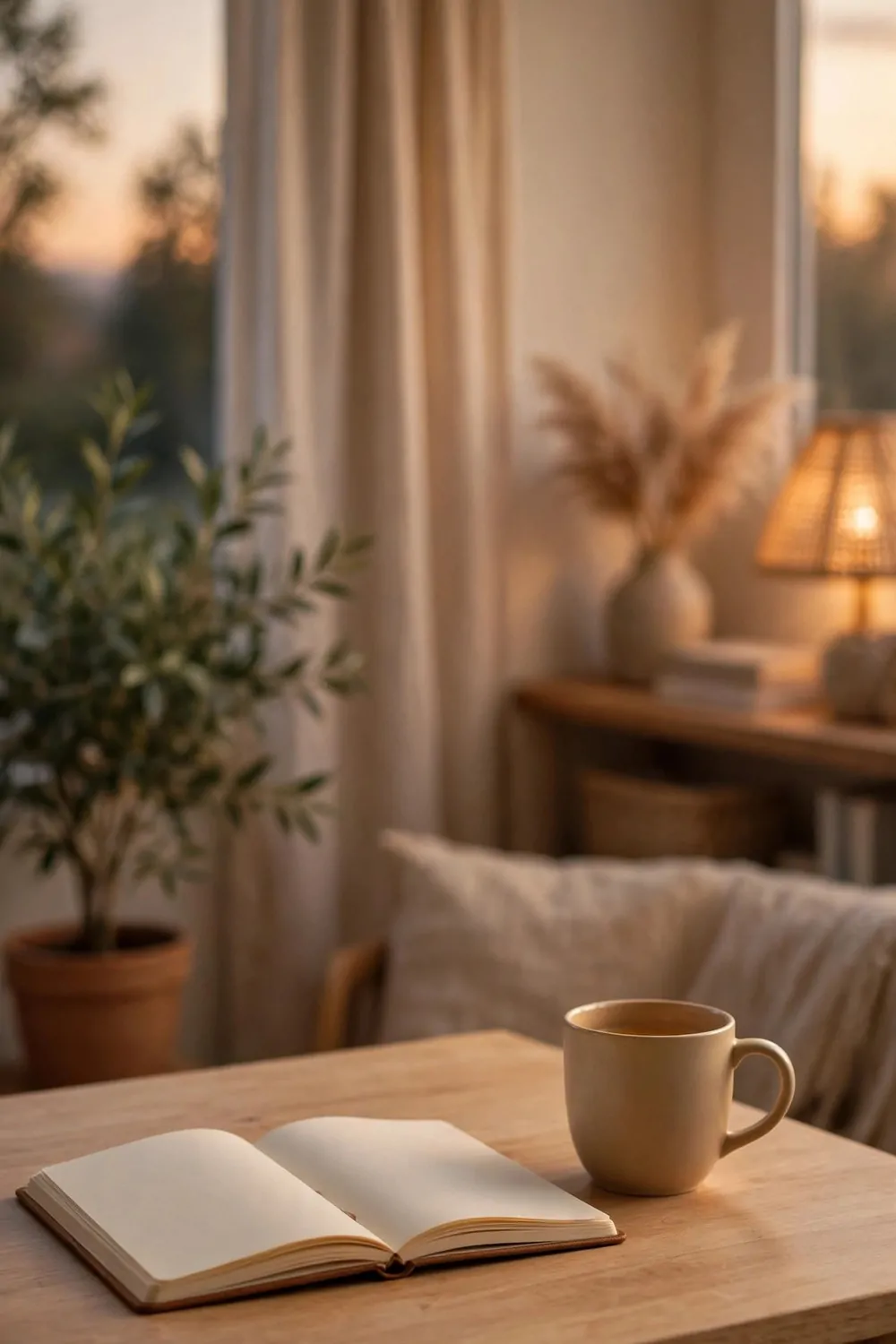
My desk clears itself every evening. Not by magic. By a small habit that takes three minutes.
Papers go in one pile. Pens go in the cup. The mug goes to the kitchen. The notebook closes.
A clear desk in the evening means a calm start in the morning. I sit down and the day begins, instead of beginning with a mess.
I used to leave the mess till morning, and every morning started with tidying. That is a bad way to start a day.
The evening clear-out is also a signal. It tells my brain the work is done. The desk is empty. The day is over.
Four things live on my desk overnight, and nothing else:
- my notebook, closed
- one pen, in the cup
- my mug, clean and upside down
- the small lamp, switched off
Everything else has a home somewhere else. If it has no home, it goes in a box until I find one.
Three minutes at night saves you ten minutes in the morning, and it makes the room feel like it is resting, just like you.
The Walk That Ends the Day
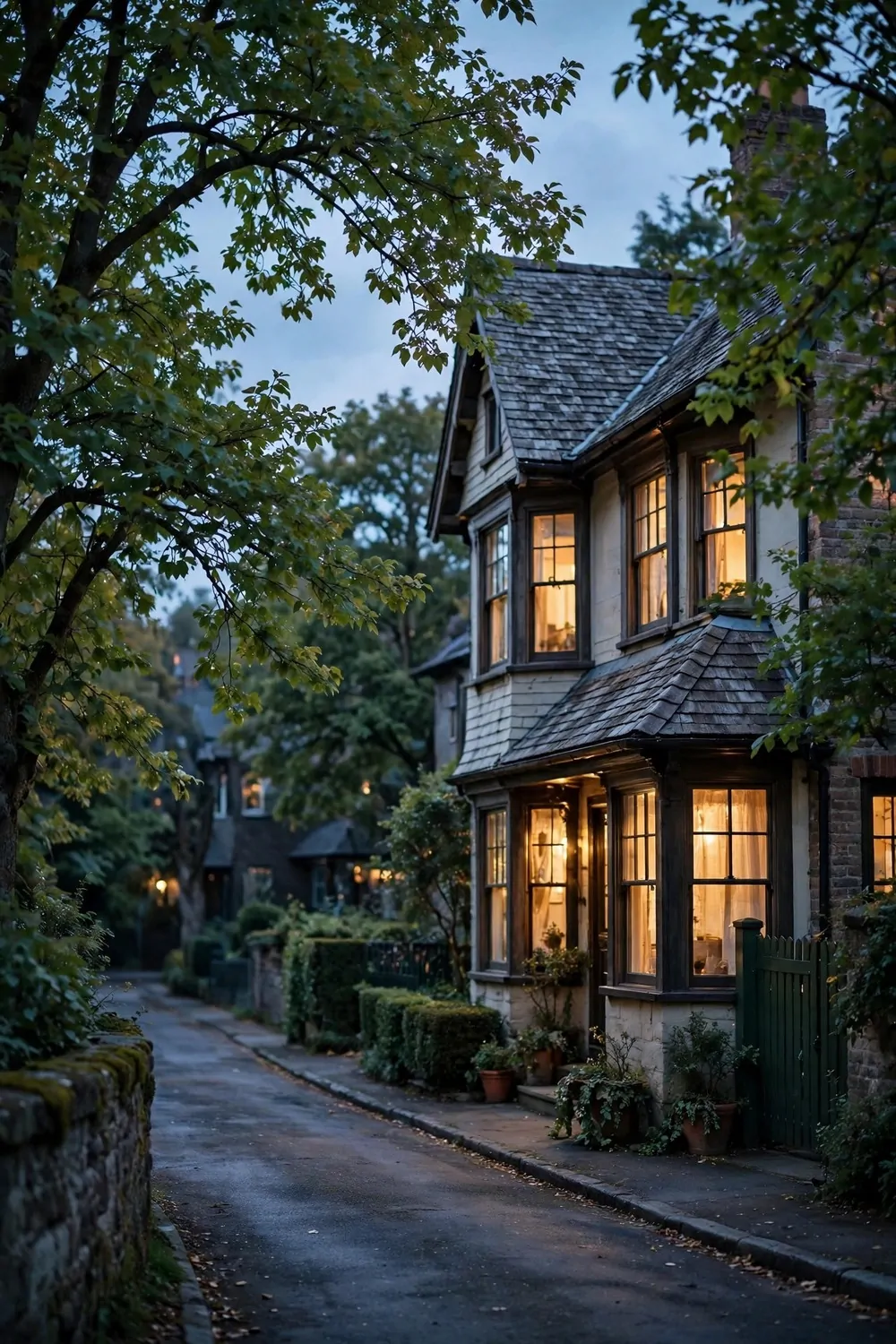
When the workday ends, I go for a walk. Not a long one. Just ten minutes around the block.
The walk is the line between work and home. Before it, I am still thinking about emails. After it, I am home.
I walk the same route every evening. Past the big tree. Past the corner shop. Back through my own gate.
Walking shakes off the sitting. My legs wake up. My back loosens. My shoulders drop for the first time all day.
I do not listen to anything on the walk. No podcasts. No calls. Just the street sounds and my own thoughts.
Sometimes I think about the day on the walk. What went well. What can wait. Mostly I think about dinner.
By the time I get back, the workday feels finished. Not paused. Finished. The office stays quiet behind me.
A walk that ends the day is the best habit I found for long work days. Ten minutes, same route, every evening. Try it once, and you will feel the difference the same night.
Keep Reading
If you liked these long-day ideas, these cozy office ideas will give you even more ways to make your work room feel warm and easy.
- 18 Cozy Office Room Ideas for Calm, Comfy Days
- 15 Home Office Library Ideas Cozy Enough for Book Lovers
- 28 Home Office Setups That Boost Focus Without Costing a Fortune
Start with one idea from this list tomorrow morning. Just one. A better chair, a glass of water, or a walk at lunch. Your long days will feel shorter, one small change at a time.