How To Organize Your Closet? A Full Plan That Works)

Most of us have been there. You open the closet door in the morning, you need that one shirt, and suddenly everything feels like a mess you did not mean to make. Stuff falls. You dig. You give up and pick the thing on top. Then you close the door fast before it all spills out.
It is not a bad habit. It is just what a closet without a real plan looks like over time.
The good news is that a well-kept closet is not about being neat by nature. It is about building a setup that works with how you live, not against it. Once the right bones are in place, the closet more or less keeps itself. And that feeling, when you open the door and find what you need in five seconds flat, is one of the small wins that makes daily life feel a lot less heavy.
This guide covers all of it. From the first sort to the last shelf, from tiny reach-in closets to full walk-in spaces, from shoe piles to belt hooks.
Read it once, use it as a map, and come back to the parts you need.
Why Most Closets Fall Apart in the First Place
It is easy to blame the space. Too small, too dark, no good shelf, bad rod placement. And yes, space does matter. But most closets fall apart long before the space runs out.
The real reason is that most closets are set up once and then left to grow on their own. Clothes get added. Bags get tossed in. Items that do not have a clear home end up in the closet by default. Over months and years, the space gets used in ways it was never built for.
There is also the issue of how clothes come in versus how they go out. Things come in fast, one item at a time, each day. Things go out slow, maybe once a year if that. The math does not work in anyone’s favor.
What most closet plans miss is this: a closet needs a system that is easy to use on a bad day, not just on a clean-up day. If putting a shirt back means finding the right spot, lining it up with others, and closing a drawer smoothly, most people will just drape it over a chair. The system has to be low-effort to maintain or it will not last.
The First Step Is Not Buying Anything
This part surprises a lot of people. The first step in any closet project is not a trip to the store. It is not a new set of bins or a fresh set of velvet hangers. It is a full clear-out.
You have to see what you are working with before you can build a plan around it. And more often than not, the closet holds things that have no business being there. Clothes that no longer fit. Gifts that were never used. Items from a life stage that has passed.
Clearing the closet down to nothing, or as close to it as possible, gives a clear picture. It also makes the sort that follows a lot easier.
The Sort: How To Go Through Everything Without Losing Your Mind
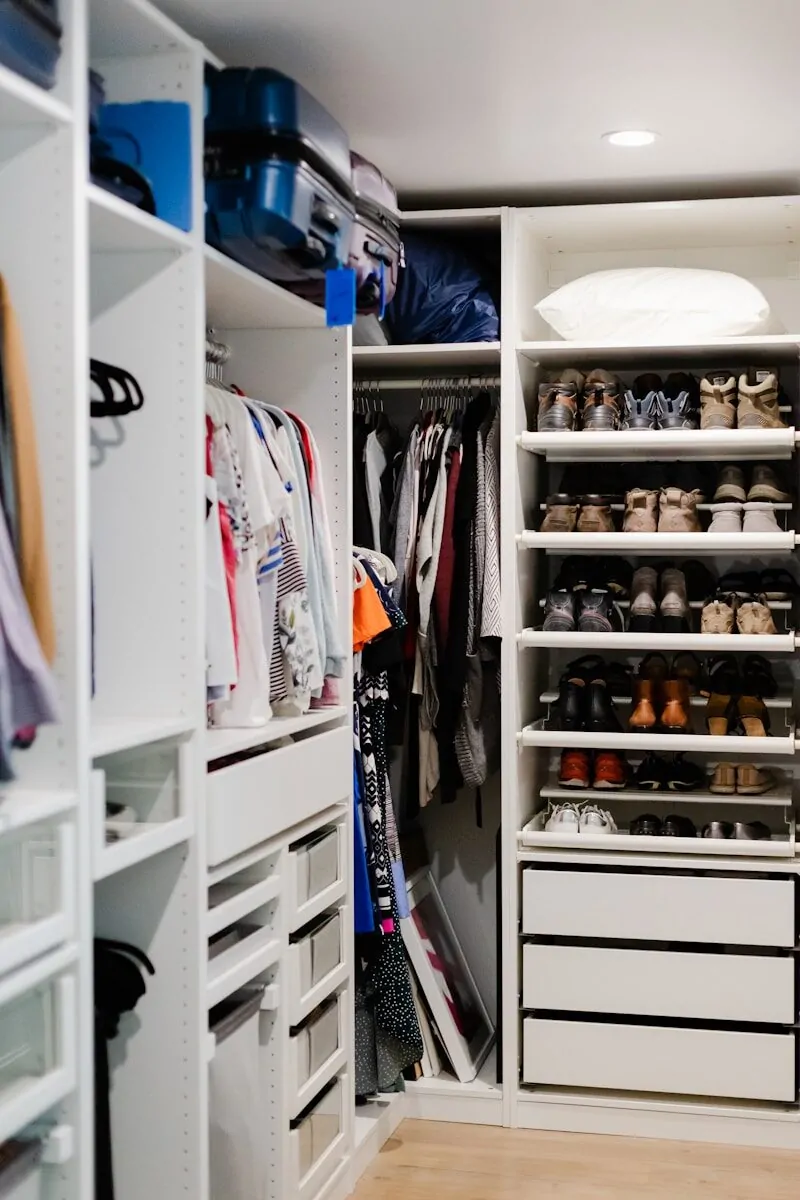
The sort is the heavy part. It takes time, it can feel emotional, and it often turns into a much bigger job than expected. But it is the foundation of everything else. A good sort means the organizing work that follows actually sticks.
Set aside a few hours, maybe a full afternoon. Pull everything out of the closet. Not just the easy stuff, everything, including what is in bins on the shelf and what is shoved in the back corner. Lay it all out on the bed or the floor.
Then go through it in groups.
The Four-Pile Method
Most organizers use some version of a four-pile sort, and it works well because it forces a clear decision on each item without overthinking.
- Keep: Worn in the past year, fits well, in good shape
- Donate: Still good, just not for this wardrobe anymore
- Repair or alter: Worth keeping but needs work first
- Toss: Worn out, stained beyond use, not worth donating
The hard items are the “maybe” ones. The dress that might fit again. The shirt from a trip with good memories but no real use anymore. The trick here is to ask one honest question: if this item were in a store right now, at full price, would you buy it today? If the answer is no, it goes.
Do not try to sort and organize at the same time. Finish the full sort first. Organizing mid-sort leads to chaos and a closet that is only half done.
What To Do With the Donate and Repair Piles
The donate pile needs to leave the house as soon as the sort is done. Bags that sit by the door for weeks tend to get reopened. Things get pulled back out. The cycle starts again. Box it up, put it in the car, and drop it off within a day or two.
The repair pile is often where good intentions go to die. So be strict with it. If the repair is simple (a loose button, a small hem), set a deadline of two weeks to fix it or have it fixed. If that deadline sounds unrealistic, be honest about whether the item is really a “keep.”
How To Plan the Space Before You Touch a Hanger
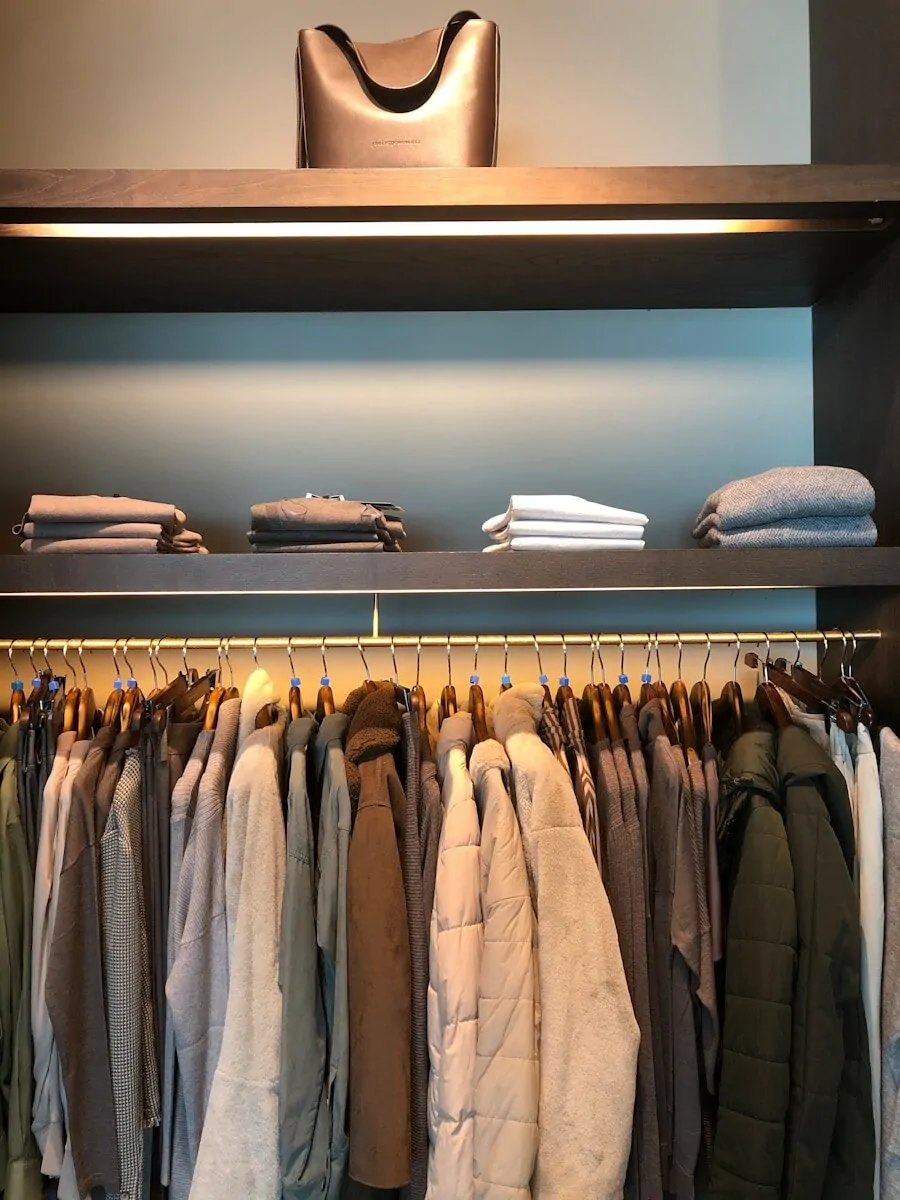
Once the closet is cleared and the keep pile is ready, the next step is planning. Not buying, not hanging, planning.
Look at what is left and sort it into rough groups:
- Tops (shirts, sweaters)
- Bottoms (pants etc)
- Dresses and long items
- Jackets and coats
- Shoes
- Bags and purses
- Accessories (belts, scarves, hats, ties)
- Folded items (jeans, gym wear, casual basics)
Then look at the closet space itself. Where is the rod? How high is the shelf? Is there floor space? How much of each category does the wardrobe have?
The goal is to match the space to the clothes, not the other way around. If there are twenty pairs of shoes but no shelf for them, that is a planning problem. If there are ten long dresses but the rod is set up for shirts, something needs to change.
Measuring the Space
This step takes ten minutes and saves hours of frustration later. Measure the full width, height, and depth of the closet. Note the current rod height. Check how much floor space is available below the hanging clothes.
If there is a rod at one height across the whole closet, consider whether a double-hang system would work. Double hang means two shorter rods stacked, one above the other. This works well for shirts, jackets, and folded pants hung over a hanger. It roughly doubles the hanging space with no extra wall needed.
Long items like dresses, coats, and full-length trousers need a single long hang. Give them one section of the closet, floor to above head height if possible.
Setting Up the Closet: Section by Section
Now comes the part most people want to skip to. But after the sort and the plan, this part is actually the easy one. It is just placement and decision-making.
The goal is to build zones. Each zone holds one type of item. Everything in a zone lives in that zone, always. When that rule holds, the closet stays organized with very little effort because things always go back to the same spot.
The Hanging Zone
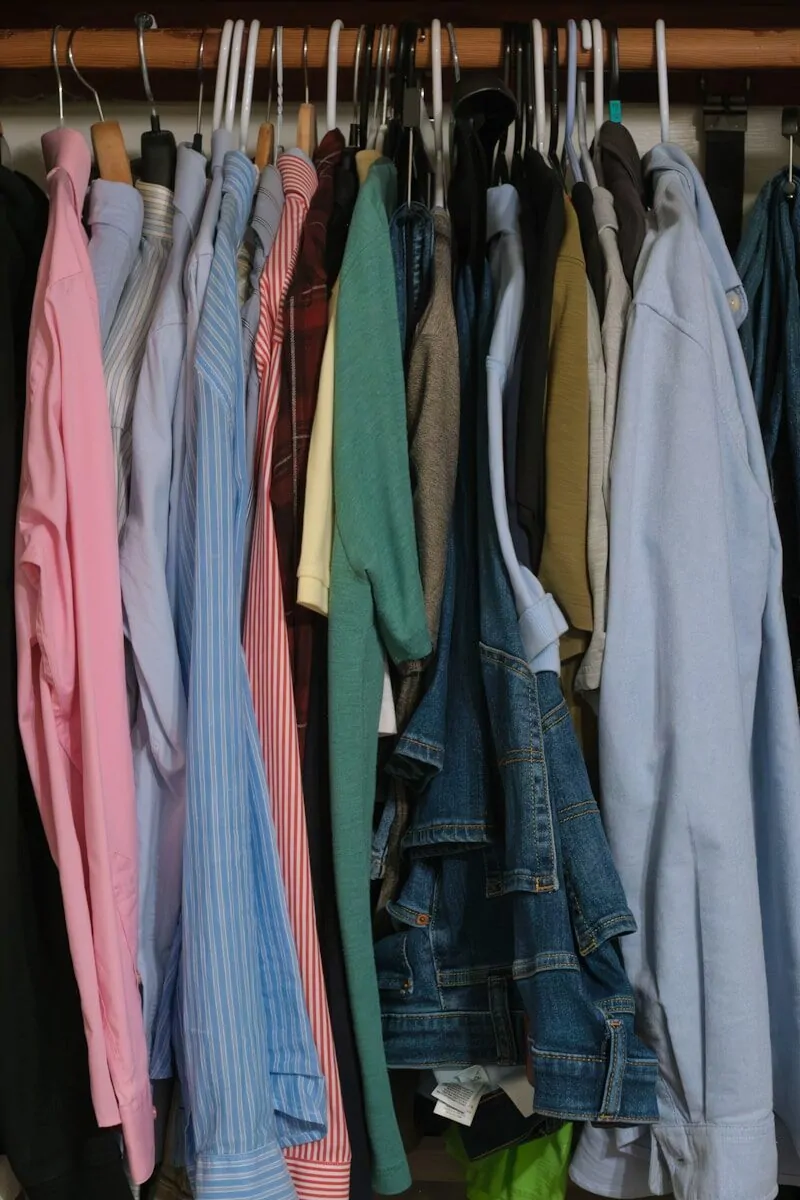
Most closets are built around a single rod. Work with it, but think about how to divide it.
A good rule of thumb is to hang by category, not by color. Color can come later, as a secondary system, but category first makes the closet functional. You find things by what they are, not by what shade they are.
A simple order that works for most wardrobes:
- Jackets and blazers on the far left (worn less often, heavier to move)
- Dress shirts and blouses next
- Casual tops after that
- Pants and skirts hung from clip hangers
- Dresses and long items at the far right or in their own section
Within each category, some people then sort by color, light to dark. This is optional but it does make the closet feel more calm and makes finding a specific item faster.
The Shelf Zone
Most closets have one shelf above the rod. This is prime space that often gets wasted on random storage.
The shelf above the rod works best for:
- Folded items you use regularly (sweaters, gym clothes, jeans)
- Bags or purses used often
- Hat boxes or small bins for accessories
- Items you need to see quickly
Heavier, bulkier items go up there too if there is no other option, but try not to stack things so high they become hard to reach. Items that get stacked high tend to get forgotten.
If there is a second, higher shelf (above the first one), that is where seasonal items and rarely used pieces go. Winter coats in summer, holiday items, formal wear worn once a year.
The Floor Zone
Shoe storage tends to be the most chaotic part of any closet. Shoes pile up fast, they take up more space than expected, and a pile of shoes on the closet floor makes the whole space feel out of control.
A few good options for the floor zone:
- A shoe rack (flat or angled) that sits on the floor and holds shoes in a row
- Clear shoe boxes stacked for shoes worn less often
- An over-the-door shoe organizer if floor space is tight
- A low shelf built into the closet design if doing a full renovation
Sort shoes by how often they are worn. Daily shoes go at the front. Occasion shoes go at the back or in boxes on an upper shelf.
The Drawer or Bin Zone
Not everything belongs on a hanger. Some items fold better than they hang. Jeans, knitwear, gym clothes, basics like socks, these often do better in drawers or bins.
If there is a dresser nearby, use it as part of the closet system. If not, small bins or fabric drawers that sit on the closet shelf or floor can fill that role.
Label bins if the closet is shared or if memory alone is not enough to keep things in place. A small label saves a surprising amount of time over weeks and months.
Organizing a Small Closet: What To Do When Space Is Tight
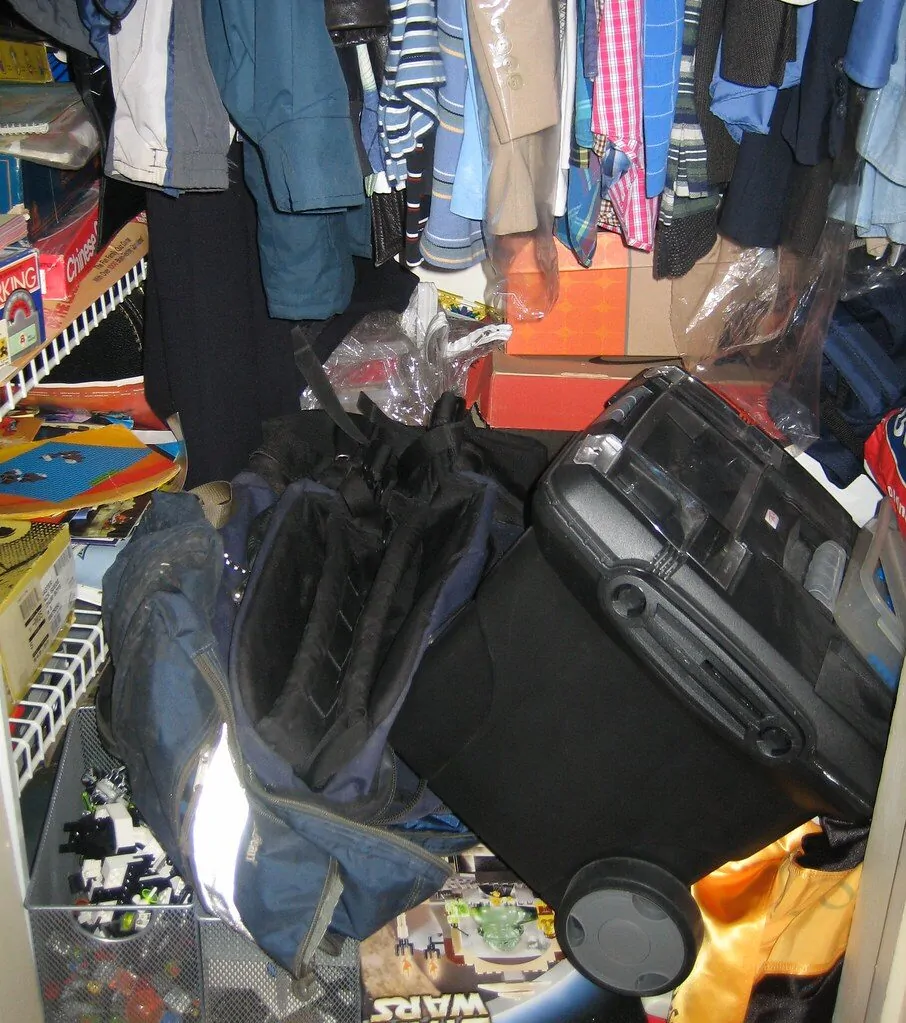
Small closets need smarter decisions, not more willpower. The usual mistake is trying to fit everything in and ending up with a compressed version of the same mess. The better approach is to be selective about what the closet holds and use every inch of available space.
Vertical Space Is Almost Always Wasted
Most small closets use only the obvious spots: the rod and the shelf. But the back wall, the door, and the space between the shelf and the ceiling are often untouched.
A few ways to use vertical space well:
- Add a second shelf above the existing one for seasonal or rarely used items
- Use stackable clear bins to go from floor to ceiling on the side wall
- Mount hooks on the side walls or the back wall for bags, belts, or scarves
- Use a hanging organizer on the rod itself for folded items like jeans or sweaters
The door is a particularly good spot. An over-the-door organizer can hold shoes, accessories, small bags, or folded items. It uses space that would otherwise do nothing.
Declutter More Aggressively for Small Spaces
A small closet with too many clothes will never feel organized, no matter how good the system is. The math is simple: the space can only hold what it can hold.
For a small closet, the rule of one-in-one-out is not just a nice idea. It is a necessity. When something new comes in, something else has to go. Otherwise the closet creeps back toward full in a matter of months.
Some people also do well with a capsule approach for a small closet, keeping a smaller, curated set of clothes that all work together and rotating out seasonally.
Use Slim Hangers
This sounds minor but it makes a real difference. Velvet slim hangers take up about a third of the space that plastic or wire hangers do. Switching to a uniform set of slim hangers can free up a significant amount of rod space in a small closet.
It also makes the closet look more put together, which matters. A closet that looks calm and ordered is easier to maintain because it creates a kind of social pressure to keep it that way.
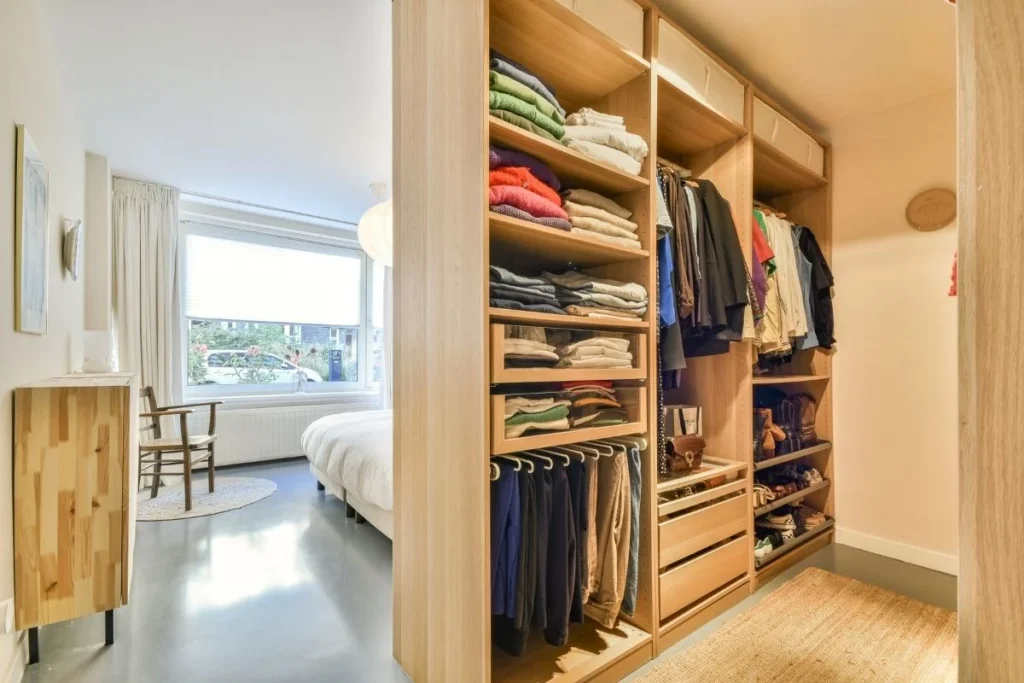
Organizing a Walk-In Closet: When There Is More Room to Work With
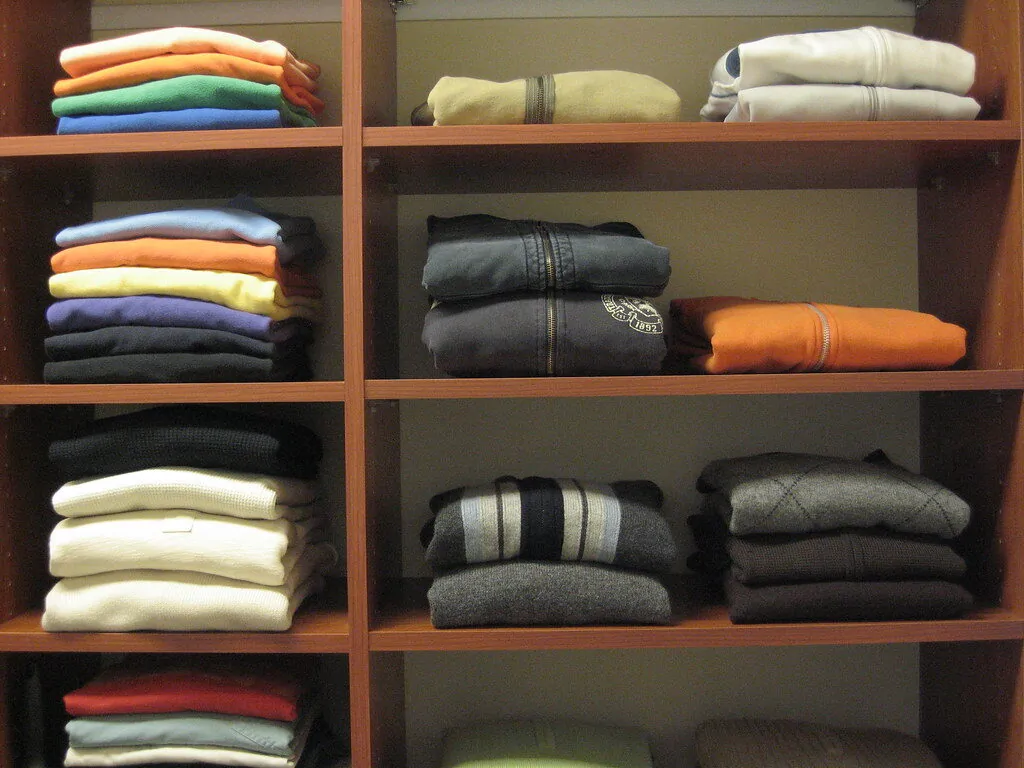
A walk-in closet sounds like a dream, and it can be. But more space also means more opportunity for chaos. Walk-in closets that are not planned well end up as large, messy rooms with clothes everywhere.
The key is to treat a walk-in closet like a small room with a purpose. Every wall, every corner, every shelf has a job.
Plan the Layout by Traffic Flow
Think about how you move through the space in the morning. You come in, you pick an outfit, you get dressed, you leave. The items you reach for most often should be closest to the door and at easy reach height.
A common layout that works well:
- Everyday clothes on the main wall closest to the door
- Shoes and bags on one side wall
- Formal or seasonal wear on the back wall or highest shelves
- Accessories near a mirror if there is one in the space
- Folded items and basics in the center island if the space has one
Walk-in closets with an island in the center are particularly useful. The island can hold drawers for folded items, a flat surface for laying out outfits, and sometimes a small drawer for jewelry or watches.
Lighting Matters More Than People Think
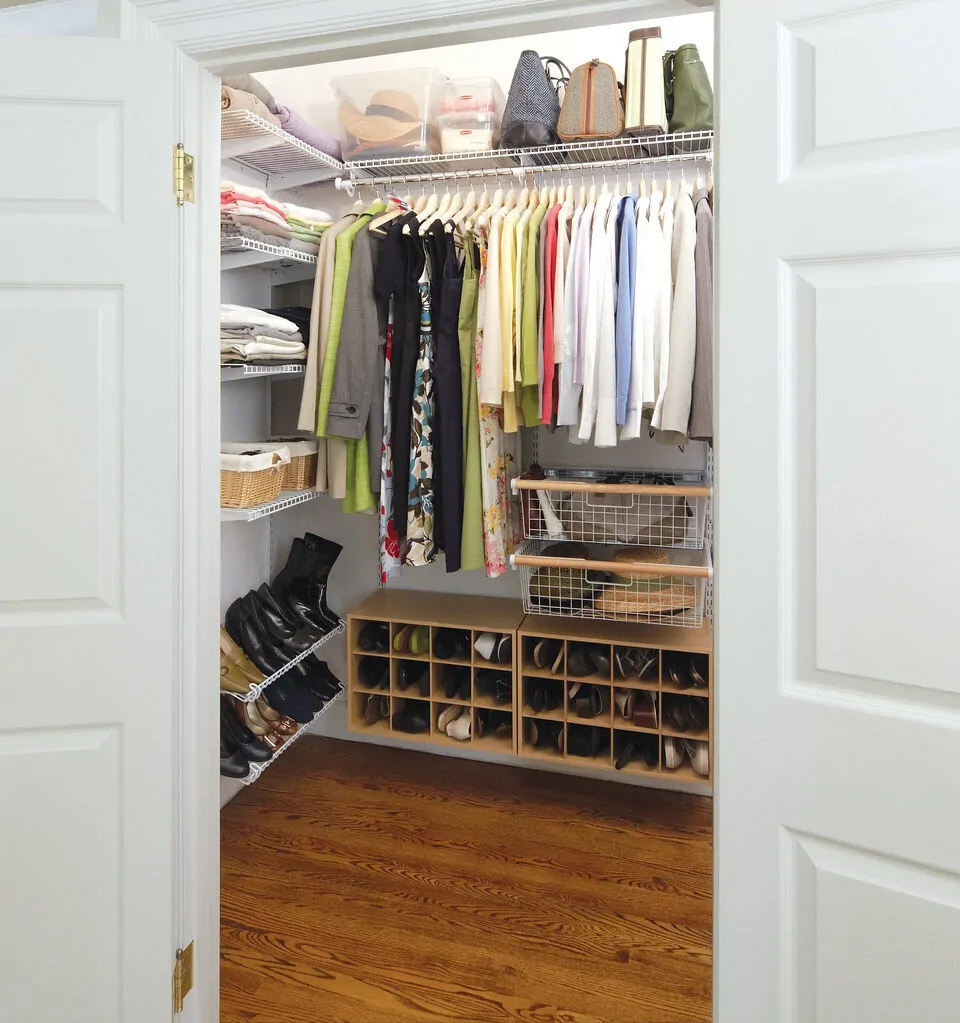
A dark walk-in closet undermines even the best organization system. If you cannot see what is in there, you default to the items in the front and the rest gets ignored. Over time, the back half of the closet becomes a dead zone.
Good lighting does not require a big project. Battery-powered LED strip lights or puck lights can be added to shelves with no wiring. Motion-sensor lights that turn on when you open the door are useful and inexpensive.
Organizing Shoes: The Category That Needs Its Own Plan
Shoes deserve a dedicated section because they almost always cause the most trouble. They are oddly shaped, they take up more space than expected, they pair up (so a lost one is useless), and they get treated like an afterthought.
The Basic Rules of Shoe Storage
A few principles that work across almost any closet size:
- Pair shoes together always. Never store a shoe without its match nearby.
- Sort by how often you wear them. Daily shoes up front, occasion shoes to the back or up high.
- Keep shoes off the floor when possible. Shoes on the floor make cleaning harder and the closet looks messier than it is.
- Use the original box for shoes worn rarely. Label the box with a photo or description on the outside.
For shoes worn often, clear shoe boxes are a good middle ground. They protect the shoes, stack neatly, and you can see what is inside without opening each one.
Boots Need Special Thought
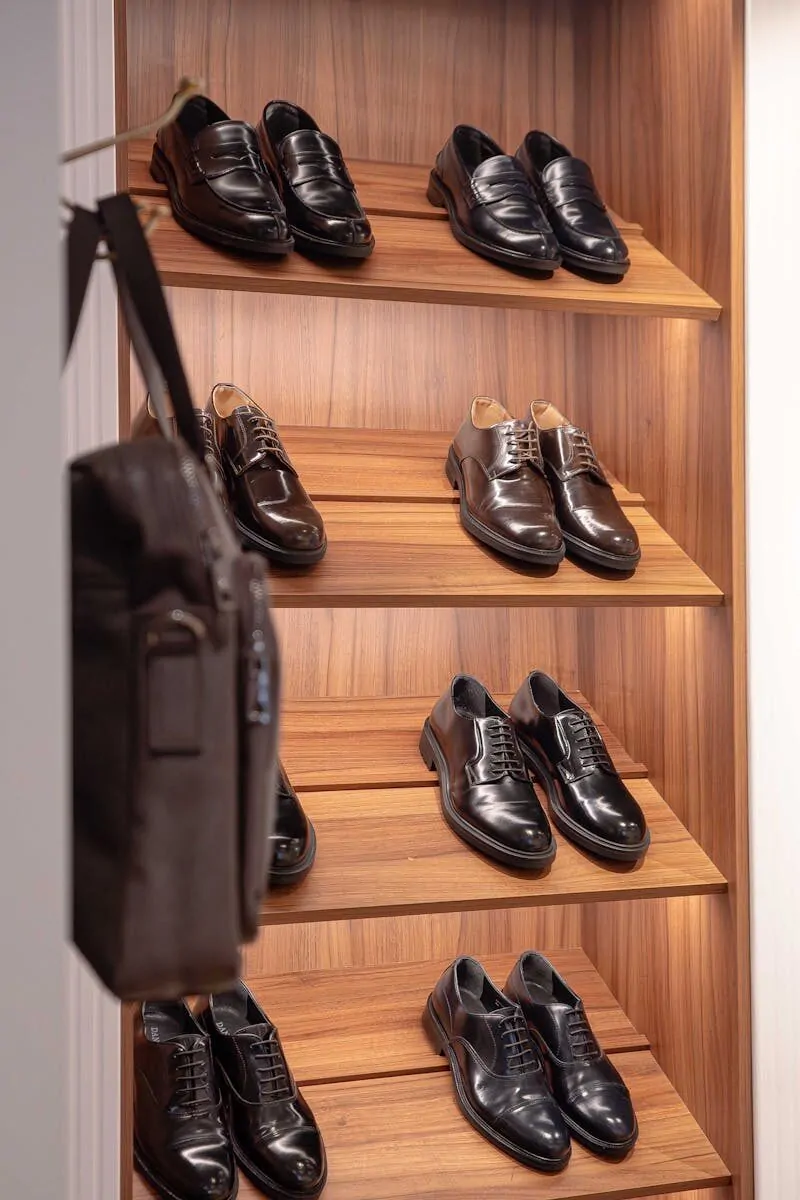
Tall boots collapse when not supported. A boot that folds over at the ankle is harder to store and easier to damage. Boot shapers (foam inserts or rolled magazines) keep them upright and save a lot of shelf space.
Ankle boots and short boots can go on a regular shoe rack. Tall boots do better standing up, which means they need vertical space or a boot-specific rack.
Accessories: The Stuff That Gets Lost the Most
Belts, scarves, ties, hats, sunglasses, watches, jewelry. These items are small, easy to lose, and rarely given a proper home. They end up in drawers that become junk drawers, on hooks that get overloaded, or in bags and boxes that no one opens.
The fix is simple: give every type of accessory one clear, fixed home.
Belts and Ties
Belts do well on hooks. A row of small hooks on the inside of the closet door or on the side wall lets belts hang full-length and makes them easy to grab and return.
Ties can hang the same way, or in a roll in a shallow drawer. A tie organizer that hangs from the rod is another option that works well in a small closet.
Scarves and Hats
Scarves can be folded and placed in a bin, hung from a multi-ring hanger, or stored in a shallow drawer. The goal is to be able to see all of them without pulling everything out.
Hats are awkward to store. They lose their shape if stacked. Hooks on the wall or a hat rack work for everyday hats. Structured hats do better in a hat box on a high shelf.
Jewelry
Jewelry needs to be visible to be used. A jewelry organizer mounted on the wall, a small tray on a shelf, or a hanging organizer with clear pockets all work well. The common mistake is storing jewelry in a closed box where it gets tangled and forgotten.
Watches and sunglasses benefit from a small tray or stand that keeps them in one place and prevents scratches.
Seasonal Rotation: The System That Keeps the Closet From Overflowing
One of the most practical things you can do for a closet, especially a small one, is to rotate your wardrobe by season. This means keeping only the current season’s clothes in the main closet and storing off-season items elsewhere.
This cuts the number of items in the closet roughly in half. It makes the space feel larger, makes getting dressed faster, and extends the life of your clothes because they are not crammed together.
How To Rotate Seasonally
At the start of spring, pull out the heavy winter coats, thick sweaters, and cold-weather gear. Fold them neatly, store them in vacuum bags or bins, and put them in a high shelf, under the bed, or in another storage area.
Bring in the lighter spring and summer items. Hang them properly, sorted by category.
At the start of fall, reverse the process. Summer clothes get stored, fall and winter clothes come back in.
Before anything goes into storage, make sure it is clean. Storing dirty clothes, even lightly worn ones, sets in stains and can attract moths or other problems.
What To Do With Items That Cross Seasons
Some items work year-round: dark jeans, plain white shirts, basic cardigans, neutral shoes. These stay in the main closet through all rotations. The items that get rotated are the clearly seasonal ones, heavy wool, thick denim, linen, summer dresses, winter coats.
Common Closet Organizing Mistakes (And Why They Happen)
Even people who try hard to get this right make a few predictable errors. Knowing them in advance makes it easier to avoid them.
Buying Storage Products Before Sorting
This is the most common one. The pull to buy nice bins and matching hangers is strong, especially at the start of a project. But buying before sorting means buying blind. You end up with bins that are the wrong size, hangers for items you do not have, and organizers for problems you do not actually have.
Always sort first. Then measure. Then buy exactly what is needed.
Organizing to Impress Instead of to Function
Pinterest closets and organized spaces on social media look beautiful. But a lot of them are styled for photos, not for daily use. Decanting everything into matching containers, color-sorting a wardrobe of fifty identical white shirts, building a system so intricate that only one person knows how it works, none of that serves the actual goal.
The goal is a closet that works on a rushed Tuesday morning when you are already running late. That is the test.
Not Planning for New Items
A closet plan that uses every inch of space leaves no room for growth. Clothes get added. Gifts arrive. Sales happen. If the closet is at 100% capacity right after organizing, it will be over capacity within months.
Leave some buffer. Not a lot, maybe 15 to 20 percent of rod space and shelf space, kept open. This is what gives the system room to breathe.
How To Keep the Closet Organized Over Time
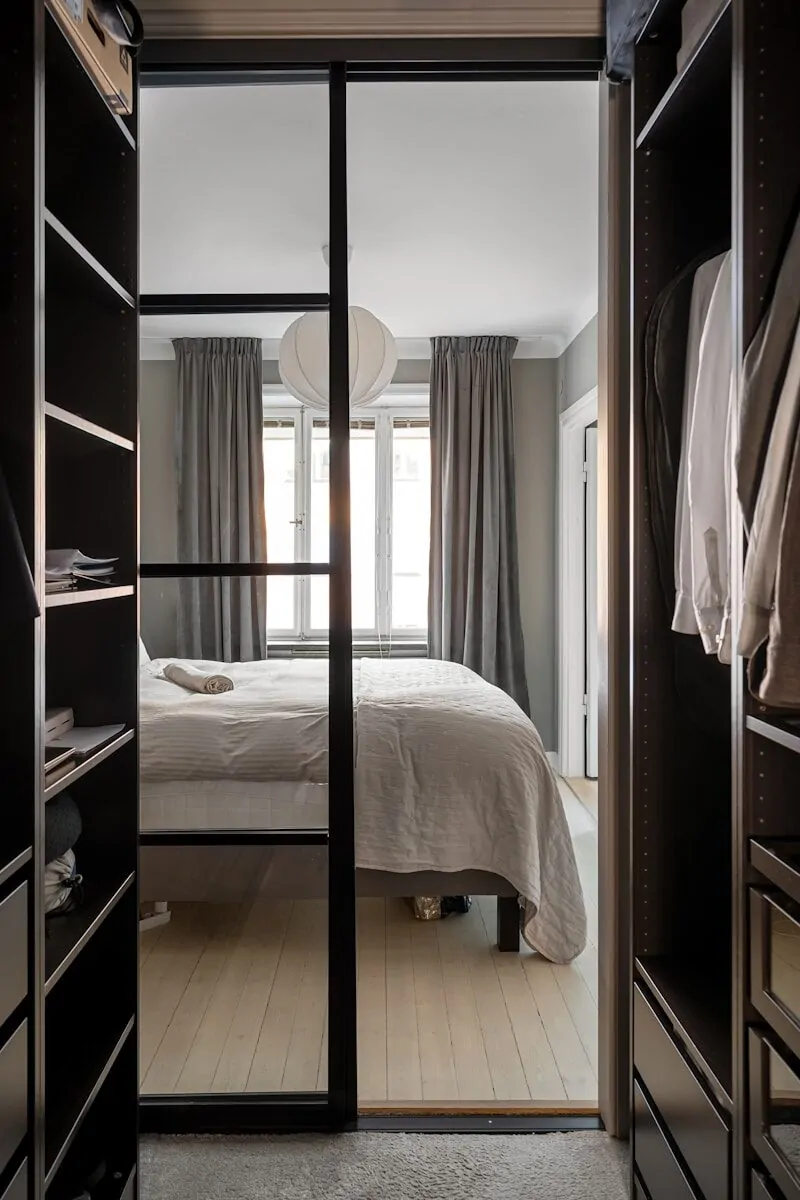
Getting a closet organized is satisfying. Keeping it that way is where most people struggle. Not because they are careless, but because daily life moves fast and the closet is easy to ignore.
A few habits that make a real difference over time:
- Put things back in the same spot every time. This sounds obvious but it is where most systems break down. When something goes back to a random spot “just for now,” it usually stays there.
- Do a small reset weekly. Five minutes, once a week, to return any items that have drifted, rehang things that fell, and keep the floor clear.
- Do a larger sort twice a year, ideally during seasonal rotation. This is the chance to clear out items that have stopped working and make room for anything new.
- Before buying new clothes, ask whether there is a clear spot in the closet for this item. If not, either make one or reconsider the purchase.
The closet is a living space. It changes with the wardrobe, the season, the life stage. The goal is not a perfect closet that never needs attention. The goal is a system simple enough to maintain without thinking too hard about it.
Key Takeaways
- The sort comes before everything else. Buying organizers before sorting is the most common mistake, and it almost always leads to wasted money and a system that does not fit.
- Space is less about square footage and more about how it is used. A small closet with a smart plan outperforms a large closet with no plan.
- The best system is the one you will actually use on a hard day. If the system requires effort to maintain, it will not be maintained.
- Seasonal rotation is underused and highly effective. Cutting the closet load in half twice a year is one of the simplest things you can do for long-term order.
- Accessories and shoes need their own plan. Treating them as afterthoughts is why they cause the most ongoing chaos.
- Keeping the closet organized is mostly about two or three simple habits, not about willpower or a perfect setup.
One Last Thought
There is something worth noticing about a well-organized closet. It is not really about the clothes. It is about time. Getting dressed without digging, without searching, without a small moment of frustration before the day has even started, that saves something. Not just minutes, though it does save those too. It saves a kind of mental energy that adds up quietly over months.
The writer William Morris once said something along the lines of: have nothing in your home that you do not know to be useful or believe to be beautiful. It was advice meant for a whole house, but it fits a closet exactly.
The things in your closet should be there because they belong there. Not because they ended up there. Not because you forgot to deal with them. Because they were chosen, placed with intention, and ready to be of use.
That is all an organized closet really is. And it is enough.