25 Office Room Design Layouts That Look Stunning and Work Hard

The handle on my office door is a little loose, and I always notice it before I notice anything else in the room. I push the door open, I hear that small rattle, and then I see the desk, the light, and the chair waiting for me.
That first look tells me a lot. It tells me if the room is ready for work, or if it is just a desk pushed against a wall. Good Office Room Design starts right there, in that first look, and it stays with you all day.
I used to think a good office was about one big thing. A new desk. A fancy chair. A wall color I saw online. I tried that, and my room still felt wrong.
Then I learned it is about the layout. Where the desk sits. Where the light falls. Where your eyes rest when you look up from your screen. Small moves change the whole feel.
That is why I made this list for you. These are 25 Office Room Design layouts that look stunning and work hard. Each one is simple to understand, and each one can fit a real home.
You do not need to try all 25. Read them slow, pick the one that fits your room, and start there. Your office should help you work, and it should make you smile when you walk in.
The Statement Wall That Sets the Tone
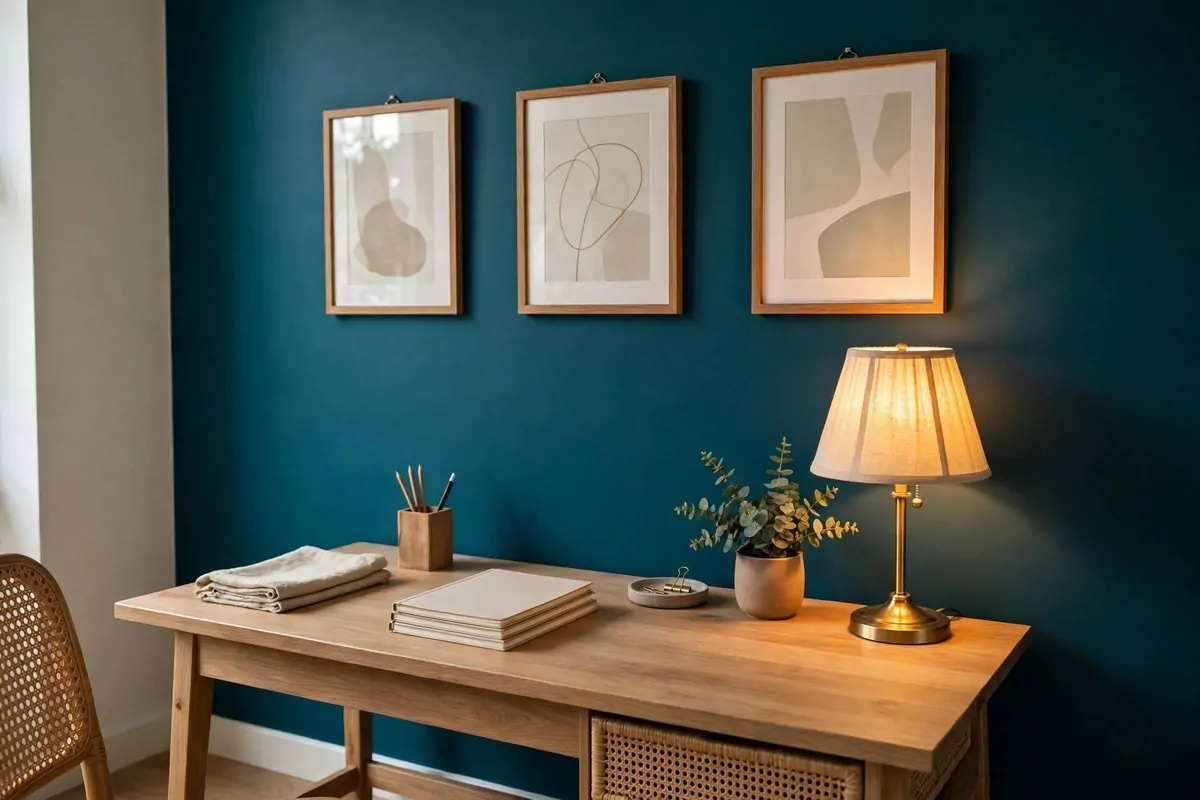
One wall can do most of the talking in your office. You walk in, you see it first, and you know what kind of room this is.
I like to pick the wall behind my desk for this. It is the wall I see least, but it is the wall everyone else sees on a video call. And it sets my mood too, in a quiet way.
Paint is the easy way to make a statement wall. One deep color, or one soft color, can change the room in one afternoon. You do not need a big budget for that.
Wood panels work well too. They add warmth, and they make a plain wall feel finished. I like thin wood strips best. They look neat, and they do not take up much space.
Art can be your statement as well. One big piece beats five small pieces that fight each other. Let your eye rest on one thing.
Keep the rest of the room calm when one wall is bold. If the wall is loud, let the desk and the shelves stay quiet. That balance is what makes it look smart.
I made the mistake once of making every wall loud. It felt busy, and I could not focus. One strong wall was all I needed.
Try your statement wall with a lamp in front of it. Warm light on a painted wall looks rich, even in a small room. It is a small trick, and it works every time.
Stand in the doorway and look at your wall. If it makes you feel ready to work, you got it right. If it feels too much, take one thing away and look again.
The Layered Lighting Plan That Works All Day
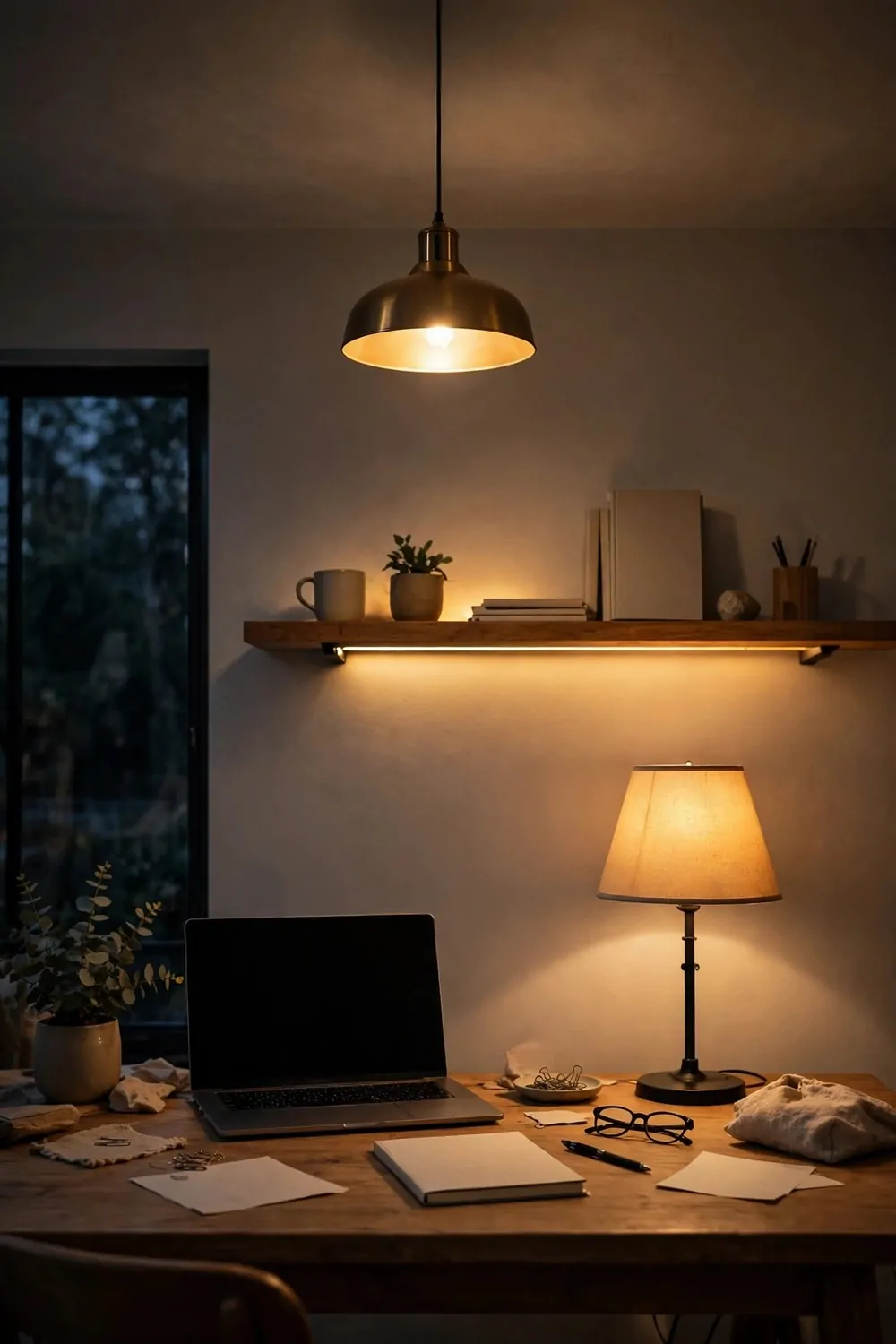
One ceiling light is not enough for a whole workday. It is too harsh in the morning, and too flat in the evening. Your eyes get tired fast.
I use three kinds of light in my office now. I have light from above, light on my desk, and a soft lamp in the corner. Each one has a job.
Daylight comes first when you can get it. Put your desk near a window if you can, but not right in front of the sun. Side light is kinder on your screen.
Your desk lamp is the second layer. It should light your work, not your whole room. I keep mine low and warm, so my papers are clear and my eyes stay calm.
The third layer is the soft lamp. It is for late work, and for the time when you just want the room to feel calm. A warm glow in the corner does a lot.
Think about morning, noon, and night as three different rooms. In the morning you want bright and clear light. At noon you want shade from glare. At night you want warm and low.
I switch my lights as the day moves on. It sounds fussy, but it takes ten seconds. And my head feels better at the end of the day.
Watch for shadows on your desk. If your lamp makes a dark patch where you write, move it to the other side. Small moves fix big problems.
Good lighting is not about fancy lamps. It is about layers, and about light that fits what you are doing right now.
The Built-In Desk Wall That Looks Custom
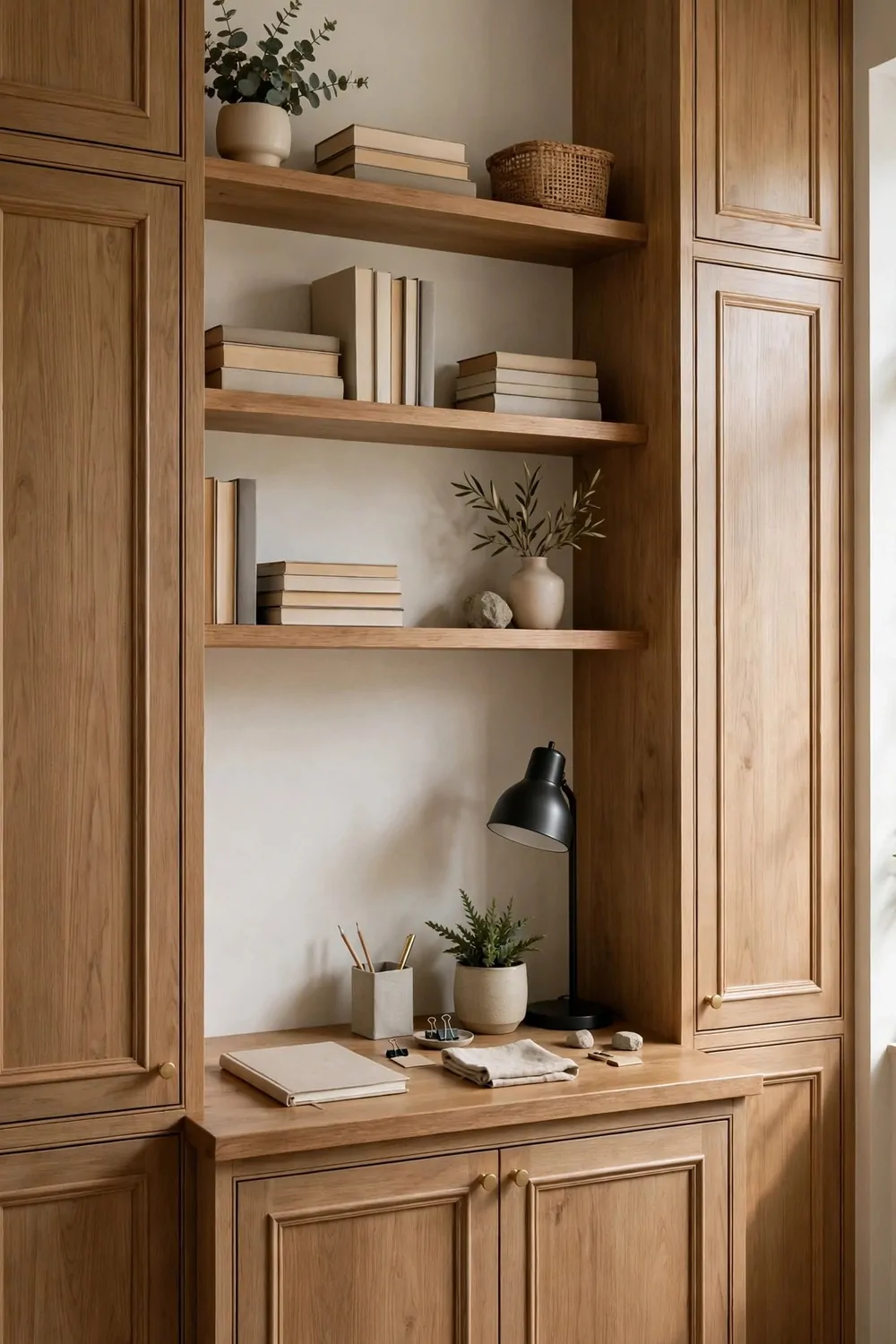
A desk that runs along the whole wall looks like it was built just for your room. It has no gaps, no wobble, and no wasted space at the ends.
I love this look because it feels neat from the first glance. Your desk, your shelves, and your storage all sit in one clean line. Nothing sticks out.
You can build this look with simple pieces. A long worktop, a few supports, and shelves above can do it. Paint them the same color, and they will read as one piece.
The trick is to measure twice. I mean it. Measure the wall, then measure again. A desk that fits wall to wall looks custom. A desk that stops short looks like it just landed there.
| Desk wall choice | Best for | Watch out for |
|---|---|---|
| Built-in desk wall | A room you use every day | It is hard to move later |
| Freestanding desk | A room that may change | Gaps at the wall show dust |
| Desk with wall shelves | Small rooms with no floor space | Shelves must hold the weight |
| Desk with side storage | Papers and supplies close by | Drawers can block leg room |
Add shelves above the desk, but keep them shallow. Deep shelves make you bump your head, and they cast shadows on your work. Shallow shelves hold books and boxes just fine.
Leave a clear space in the middle for your chair. I have seen desks that look great but leave no room to sit. Your knees need space, and your chair needs room to roll back.
Cables are the enemy of a clean desk wall. Run them behind the worktop, or tuck them in a small channel. When the cables hide, the whole wall looks calmer.
Paint the desk wall the same color as the shelves. That one choice ties it all together. Your eye sees one unit, not five loose pieces.
If you rent, you can fake this look. Use a long desk, add a shelf above, and paint them to match. It will not be fixed to the wall, but it will still look planned.
The Floating Shelves Gallery Above the Desk
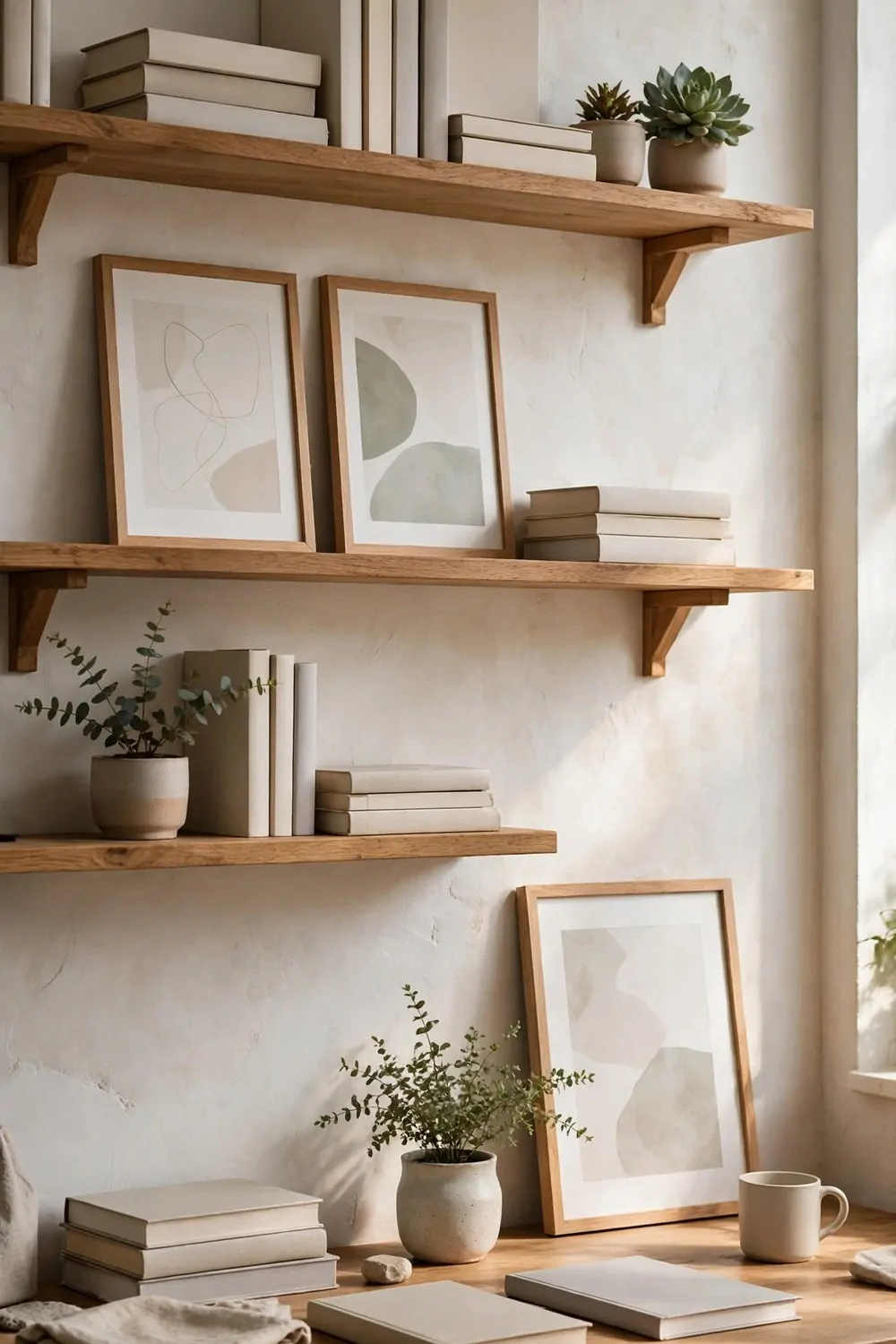
Floating shelves above a desk give you storage without heavy furniture. They float on the wall, and they leave your floor free.
I like them because they keep my desk clear. Books, boxes, and small plants go up high. My work surface stays open for work.
Start with two shelves, not five. Two shelves look calm. Five shelves look like a shop, and they are hard to keep tidy.
Mix useful things with pretty things. A row of books, one plant, and one small box looks good. A shelf full of only boxes looks dull.
Leave some empty space on each shelf. Empty space is not wasted space. It lets your eye rest, and it makes the things you keep look special.
Keep heavy books low, and light things high. That rule keeps the shelves safe, and it looks right too. Heavy things up high make a room feel top heavy.
I put my most used books on the lowest shelf. I can reach them without standing up. The top shelf holds things I love to look at, but I do not need every day.
Watch the height above your desk. If the shelf is too low, you will hit your head when you stand. If it is too high, you will never use it. Find the middle spot.
Step back and look at your shelves like a picture. If one side feels heavy, move one thing to the other side. Balance is the whole game here.
The Rug That Grounds the Whole Room
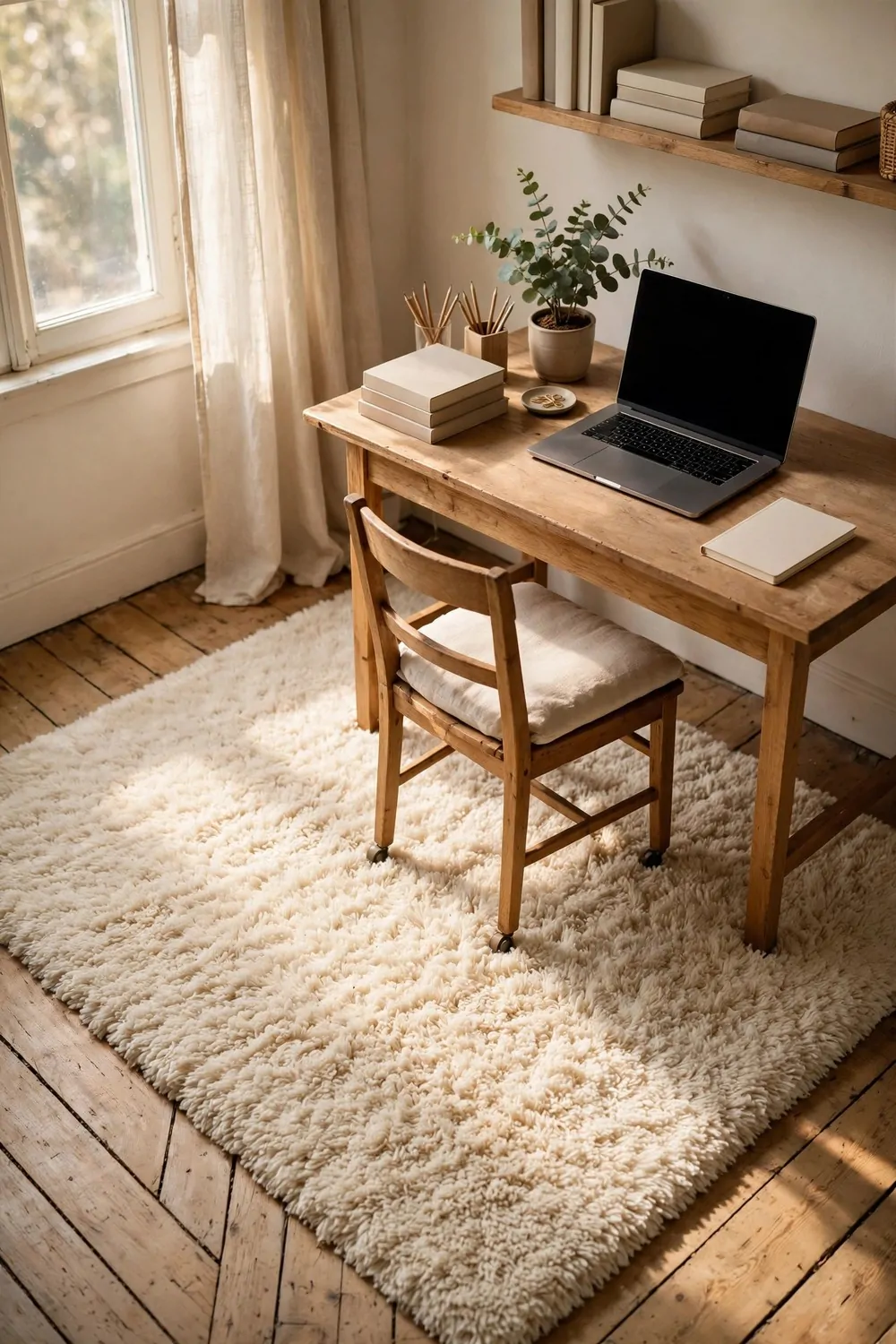
A rug can turn a loose desk and chair into a real office. It marks the spot, and it tells your brain, this is where work happens.
I did not believe this until I tried it. My desk sat on bare floor for a long time, and the room felt cold. One rug later, the room felt finished.
Pick a rug big enough for your chair. Your chair should roll on the rug, not half on and half off. That half and half look feels messy, and it wears the rug edge fast.
Soft rugs feel kind under your feet. I like a flat rug in an office, so my chair rolls easy. A thick rug looks cozy, but it can fight your chair wheels all day.
Color matters here too. A rug in a soft neutral tone will ground the room without shouting. A bold rug can be the star, if the rest of the room stays calm.
Try the rug before you buy more furniture. It is a cheap test. Lay it down, put your desk on it, and live with it for a few days.
- Measure your desk and chair space first, then pick a rug a little bigger than that space.
- Pick a flat weave if you roll your chair a lot, so the wheels move smooth.
- Pick a washable rug if you drink coffee at your desk, because spills will happen.
- Pick a soft tone if your walls are bold, and a bolder rug if your walls are plain.
I keep my rug simple, with just a small pattern. A busy pattern can fight with papers and books on the desk. Simple wins in a work room.
Clean your rug often, even if it looks fine. Dust hides in rugs, and it makes the room feel dull. A quick clean brings the color back.
Your rug is the floor of your office story. Get it right, and the desk, the chair, and the shelves all sit better on top of it.
The Window Seat Work Nook
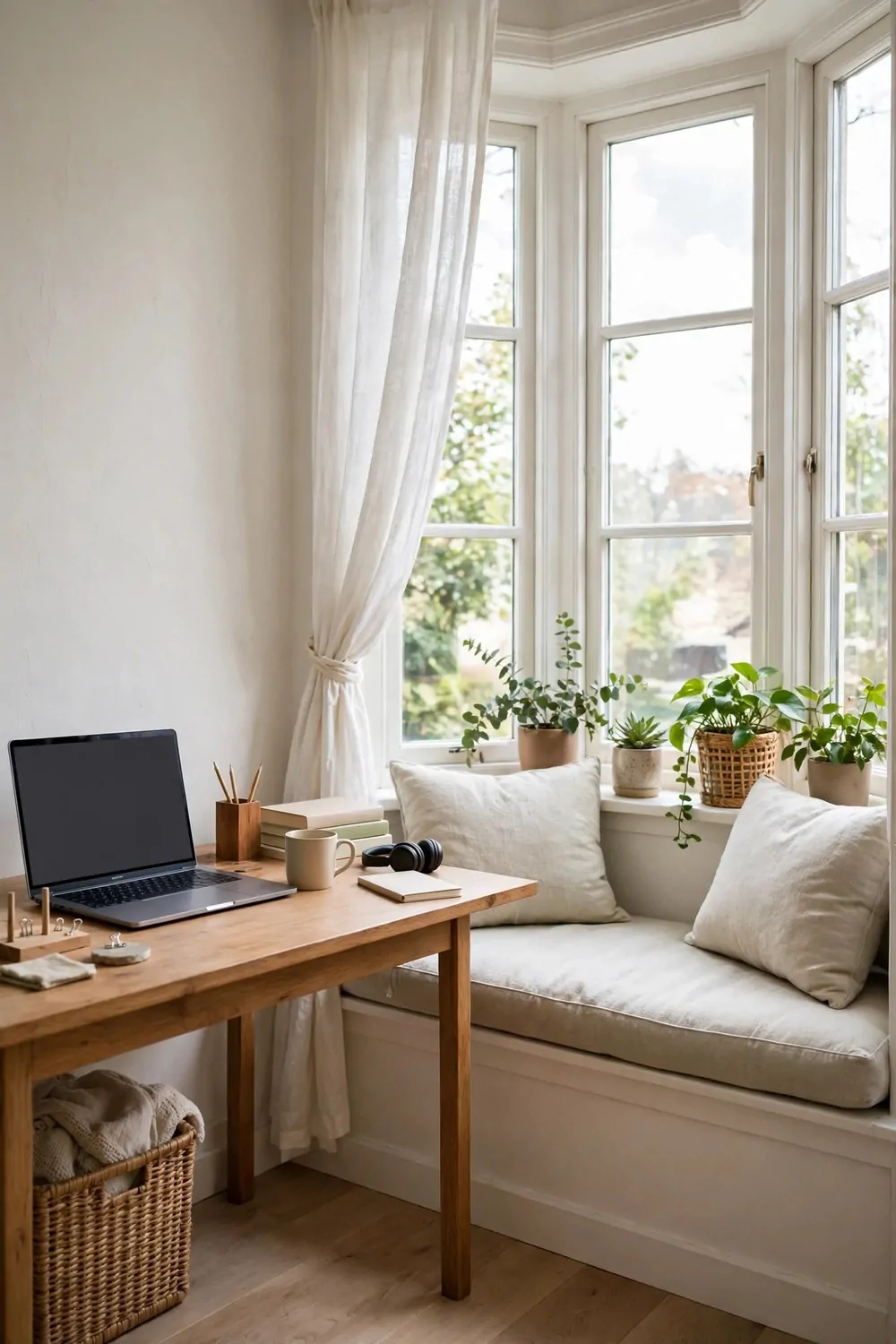
A window seat can be the best office in the house. You get daylight, a view, and a quiet corner all in one small spot.
I love working by a window because the light changes all day. Morning light is soft, noon light is bright, and evening light is warm. It keeps the room alive.
Build your nook around the window, not in front of it. Put your desk to one side, so you can look out when you need a break. You do not want the sun right in your eyes.
Add a cushion to the window seat. It turns a hard bench into a reading spot. You can sit there with a notebook, or just sit and think for a few minutes.
Storage under the seat is a gift. Boxes, files, and spare supplies can hide under the cushion. The nook stays tidy, and you still have what you need close by.
Watch the glare on your screen. If the sun hits your screen at noon, add a light curtain. Sheer fabric softens the light without blocking the view.
Keep the window clear of clutter. A plant or two is fine. A pile of papers on the sill will block light and make the nook feel small.
I keep a small lamp in my window nook for cloudy days. Daylight is great, but it does not stay all day. A warm lamp keeps the nook useful after dark.
If your window seat is small, keep your desk small too. A slim desk and a light chair fit a nook. A big desk will crowd the window and steal the charm.
The Dark Wood and Brass Combination
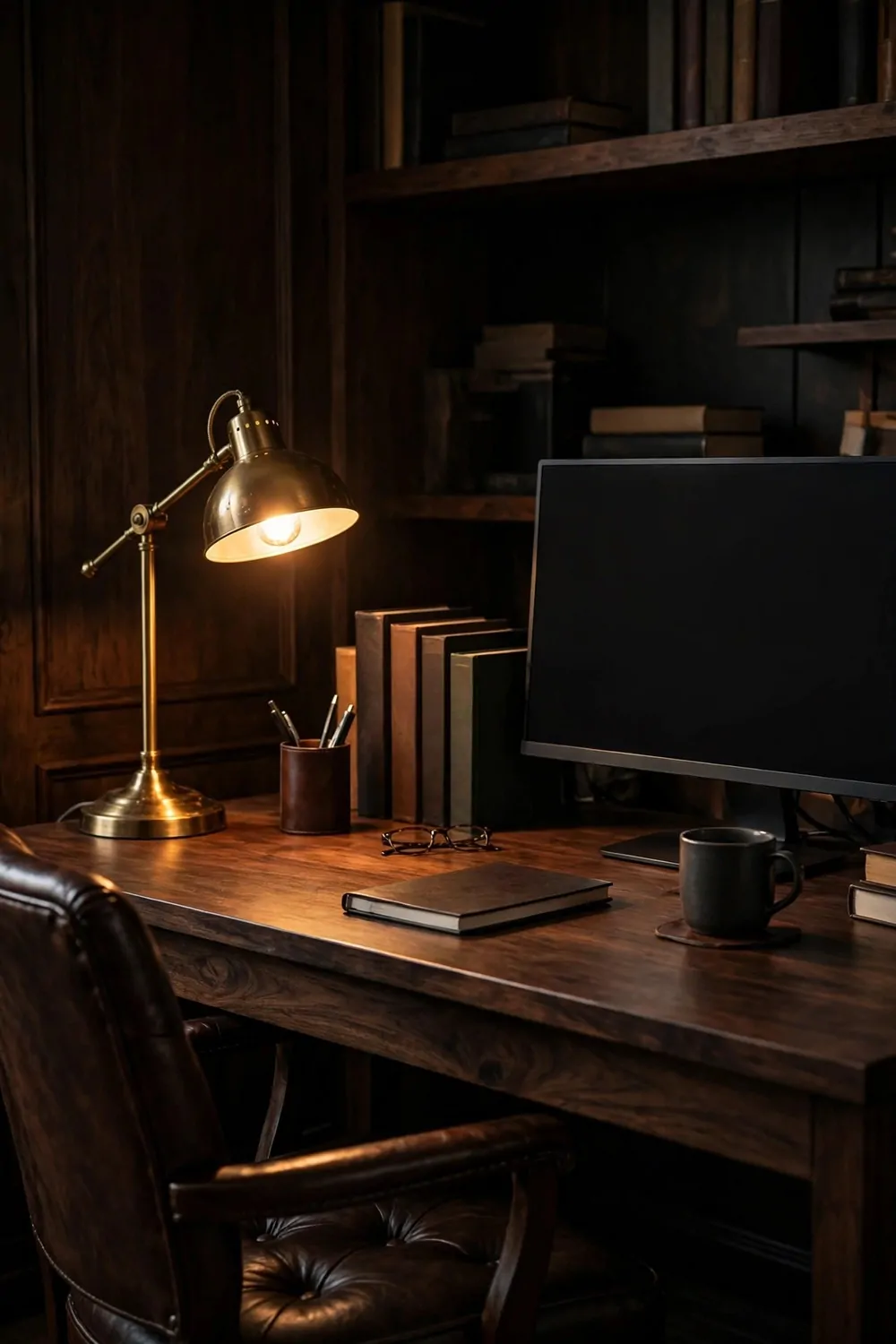
Dark wood and brass look rich together. The wood feels deep and calm, and the brass adds a warm shine that catches the light.
I think of dark wood as the base. It can be a desk, a shelf, or a bookcase. It grounds the room, and it makes the brass stand out more.
Brass works best in small touches. A lamp, a handle, a frame, or a small tray is enough. Too much brass can look loud, and it can feel cold.
Keep your walls light with this pair. Light walls let the dark wood breathe. Dark walls with dark wood can make a small room feel closed in.
Add a soft textile to warm it up. A cushion, a throw, or a rug in a warm tone will soften the wood and brass. The room will feel lived in, not like a showroom.
I like this look for a home office that also hosts video calls. It looks smart on camera, and it feels calm in real life too. That is a rare pair.
Mix old wood with new brass if you can. An old desk with a new brass lamp looks collected, not bought all at once. It tells a story.
Clean brass with a soft cloth, and do not overdo it. A little shine is lovely. A mirror shine on every piece can feel too sharp for a work room.
Try this combo in one corner first. A dark wood desk, one brass lamp, and a light wall can show you if the look fits you. You can build from there.
The Glass Partition Office in an Open Plan
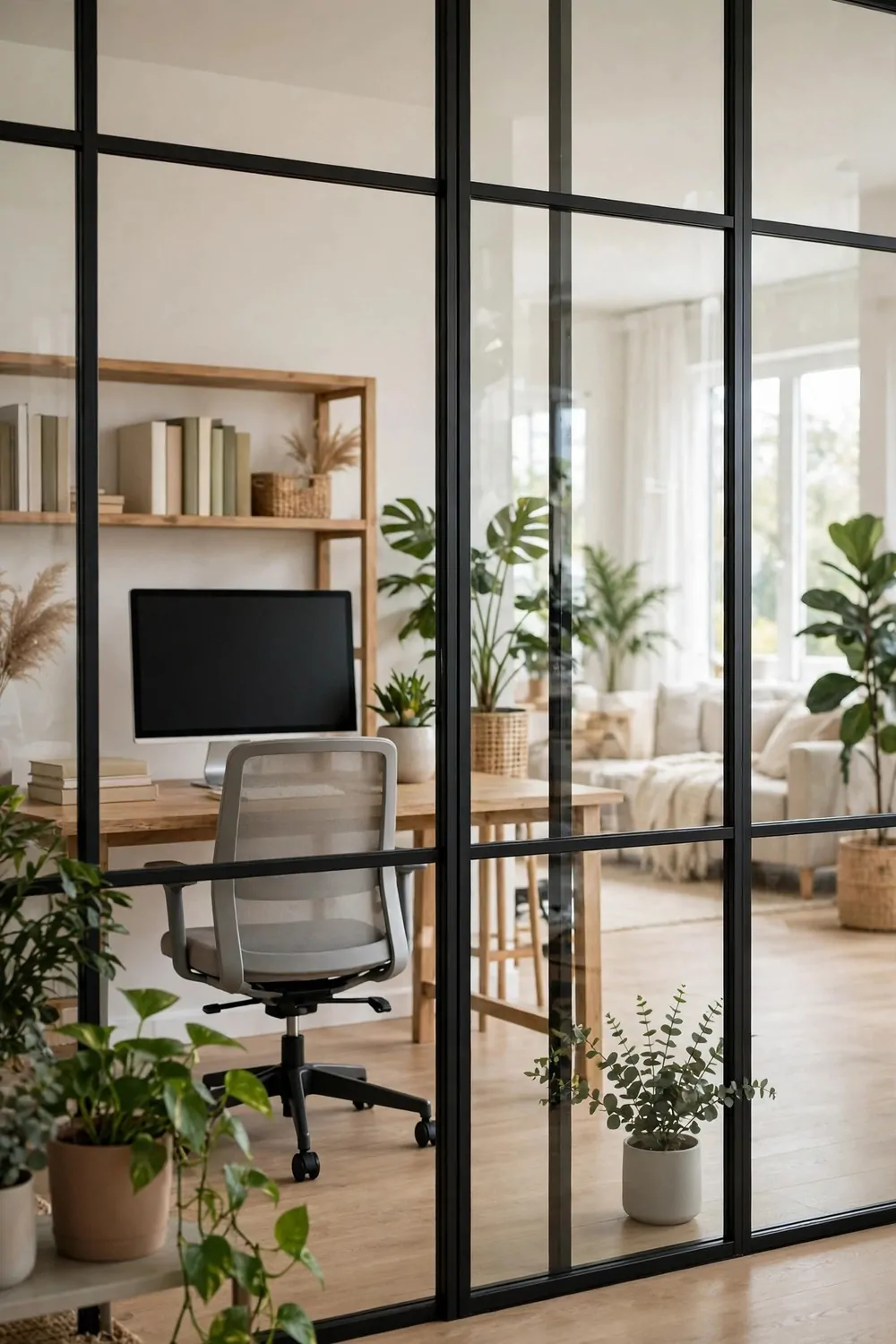
A glass wall can give you an office without closing you off. You get quiet, and you still get light from the rest of the home.
I like glass partitions in open plan homes. They mark the office, but they do not block the view. The home still feels open, and the office still feels like its own room.
Black frames on the glass look smart. They draw a clean line, and they make the glass feel like part of the design. Clear glass with thin frames feels light.
Sound is the one thing glass does not fix well. It will cut some noise, but not all of it. Add a rug and soft curtains to help soak up sound.
Keep the glass clean, or it will show every mark. A quick wipe each week keeps it clear. Smudges on glass catch the light, and they stand out fast.
Put your desk so you face into the room, not into the glass. Facing the glass can feel like you are in a box. Facing out feels open and calm.
Add a curtain or a blind you can close. Some days you want to be seen, and some days you want privacy. A simple blind gives you both.
I would not use glass if you need total quiet for calls all day. It is best for a home where you want light and a soft divide, not a sealed room.
Glass works best when the rest of the room is simple. Let the partition be the feature. Keep the furniture around it calm and neat.
The Gallery Wall Behind the Desk
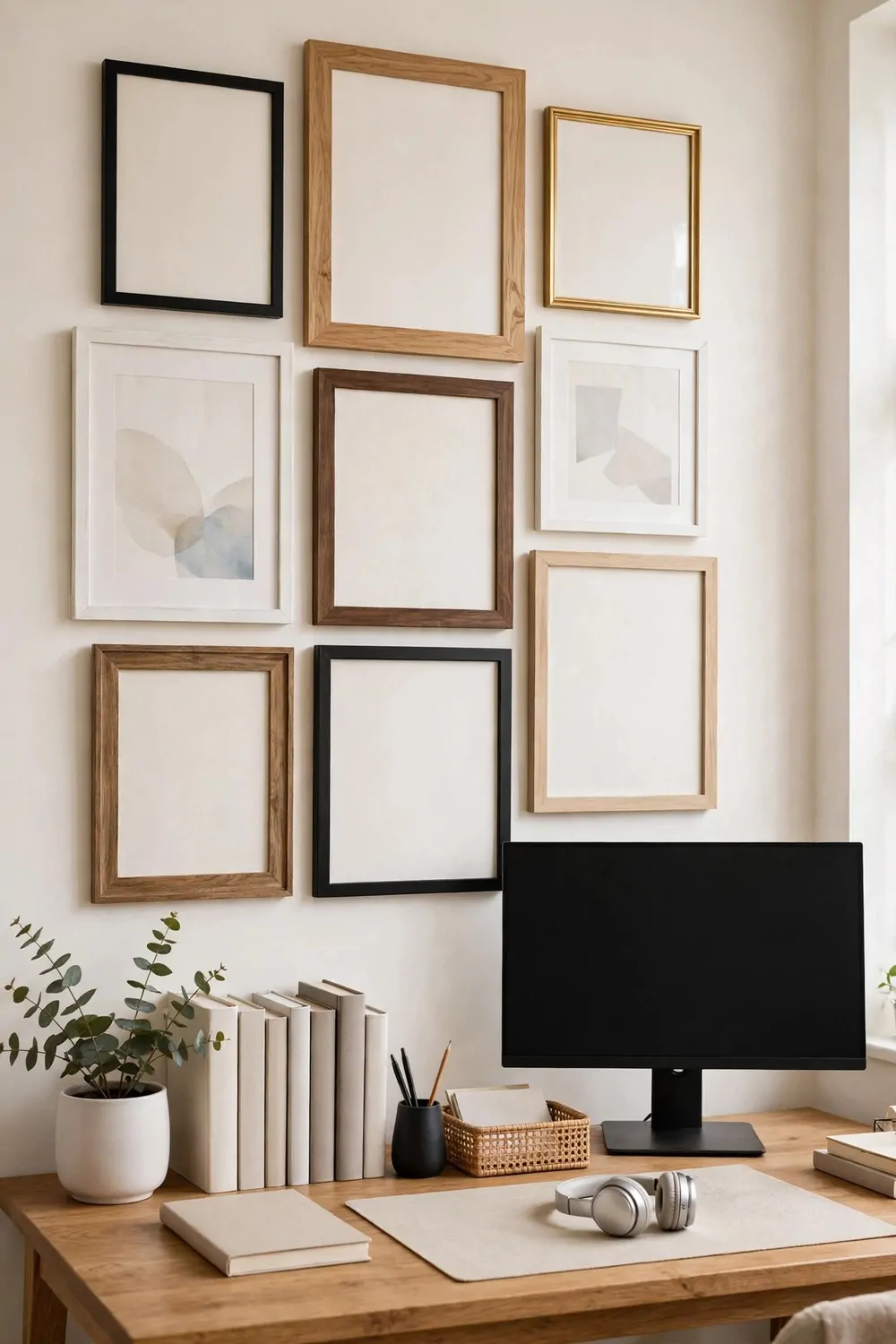
A gallery wall behind your desk turns a blank wall into a story. It shows what you love, and it makes the room feel personal from the first look.
I start with one big frame in the middle. That is my anchor. Then I add smaller frames around it, and I leave even gaps between them.
Mix art, photos, and small prints. A wall of only one kind of picture can feel flat. A mix feels like a real person lives and works here.
Keep the frames in the same tone if you want a calm look. Black frames, wood frames, or white frames all work. Mixed frames can work too, but they need more care.
Hang the wall at eye level when you sit. I have seen gallery walls hung too high, and they feel far away. Your art should be easy to see from your chair.
Plan the layout on the floor first. Lay the frames out, move them around, and take a photo. That photo will save you a lot of holes in the wall.
Leave room to grow. A gallery wall does not need to be finished in one day. Add one piece at a time, and let it grow with you.
I keep one frame for work I am proud of. It reminds me why I sit at this desk. It is a small thing, but it helps on slow days.
Step back often while you hang. What looks right up close can look crowded from the door. The door view is the one that matters most.
The Reading Corner Office Combo
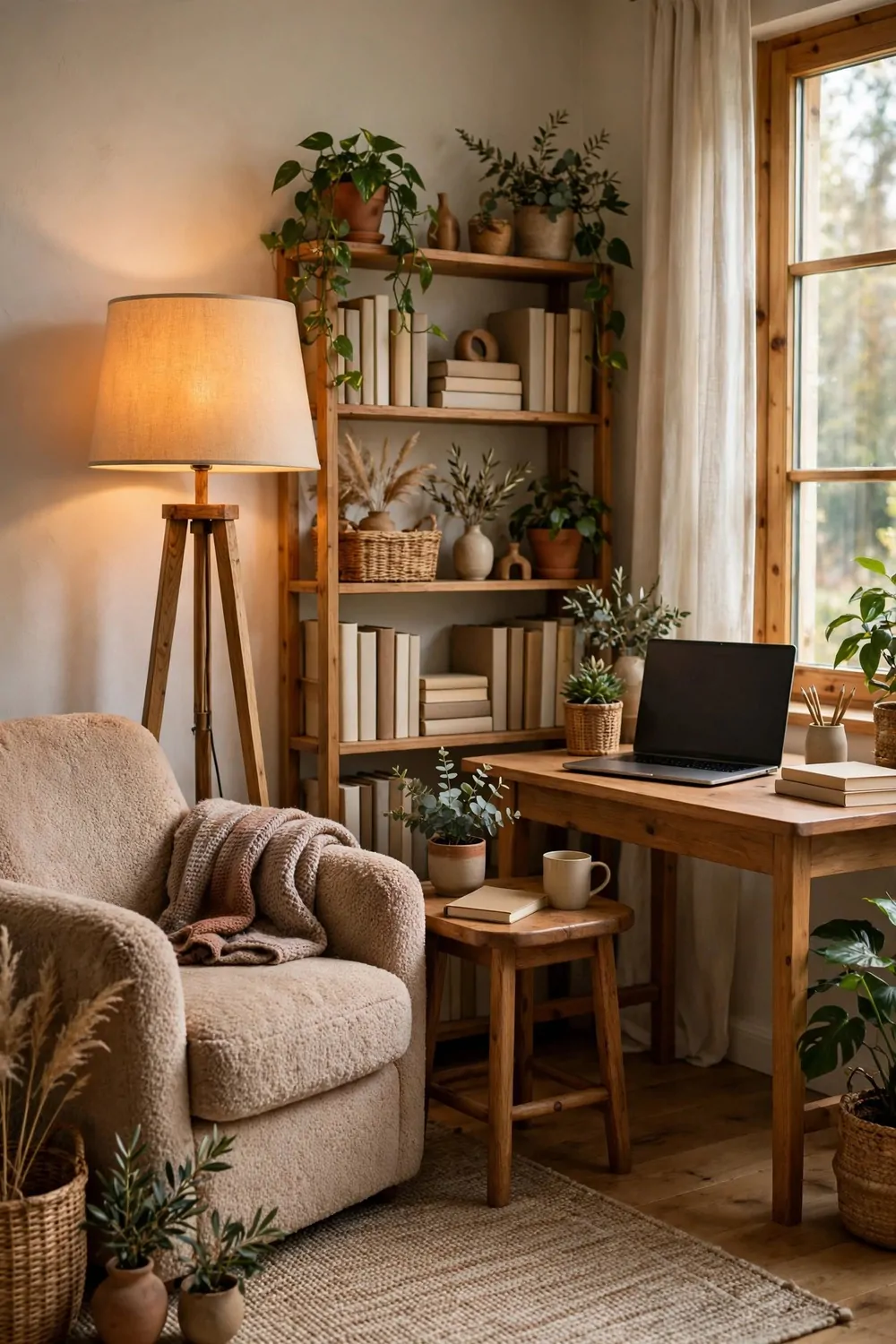
An office with a reading corner does two jobs in one room. You work at the desk, and you rest in the chair. Both jobs get their own spot.
I put my reading chair in the corner farthest from my desk. That gap helps my brain switch off work mode. When I sit in that chair, I am not at work.
Pick a chair you can sit in for a long time. A chair that looks good but hurts your back will sit empty. Comfort comes first in a reading corner.
A small side table is a must. It holds your book, your tea, and your glasses. Without it, you will pile things on the floor, and the corner will look messy.
Light the corner well. A floor lamp beside the chair is the classic choice. It should light your book, not the whole room.
Add a soft throw and a cushion. They make the chair feel like a hug, and they add color to the room. Pick a color that talks to your desk area.
Keep books close, but not all of them. A small shelf or a stack of three books is enough. A wall of books can make a reading corner feel like a library, not a rest spot.
I use my reading corner for thinking too. When a work problem feels stuck, I move to the chair. A new seat can give you a new idea.
Make the corner easy to reach. If you have to move furniture to sit down, you will not use it. Clear the path, and the corner will earn its keep.
The Symmetrical Double Desk for Two
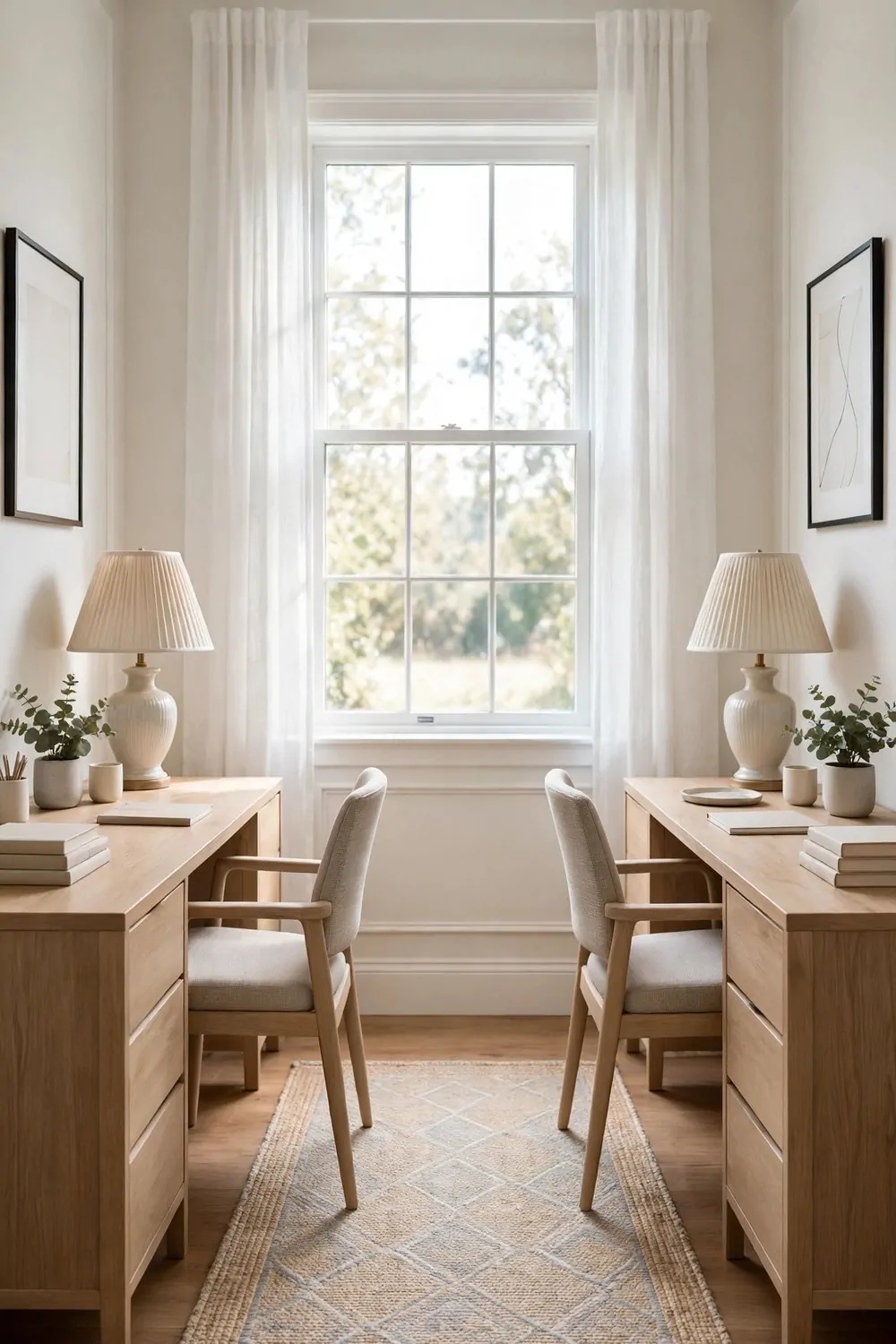
Two people can share one office and still have their own space. A symmetrical desk gives each person the same setup, and the room looks calm.
I like this layout when the room is wide. Two desks side by side, or face to face, can fill the wall in a neat way. Each person gets the same light and the same storage.
Face to face works well for teamwork. You can talk easy, and you can share ideas fast. It can get noisy, though, so it suits people who like to chat.
Side by side works well for quiet work. You both face the wall, and you both have your own zone. It feels private, even in a shared room.
Keep the middle clear. Shared cables, shared chargers, and shared papers can turn the middle into a mess. Give each side its own power and its own tray.
Use the same chair and the same lamp on both sides. That match is what makes the room look designed. Different chairs can make it look like two rooms crashed together.
Agree on small rules before you start. Who keeps the window open, who plays music, and when quiet time starts. Rules sound dull, but they save a lot of small fights.
Add a shared shelf in the middle for books you both use. It can be the bridge between the two desks. Keep it tidy, or it will become a dumping spot.
Test the layout for a week before you fix anything to the wall. You may find one side gets more sun, or one chair rolls better. Small fixes are easy early on.
The Loft-Style Industrial Office
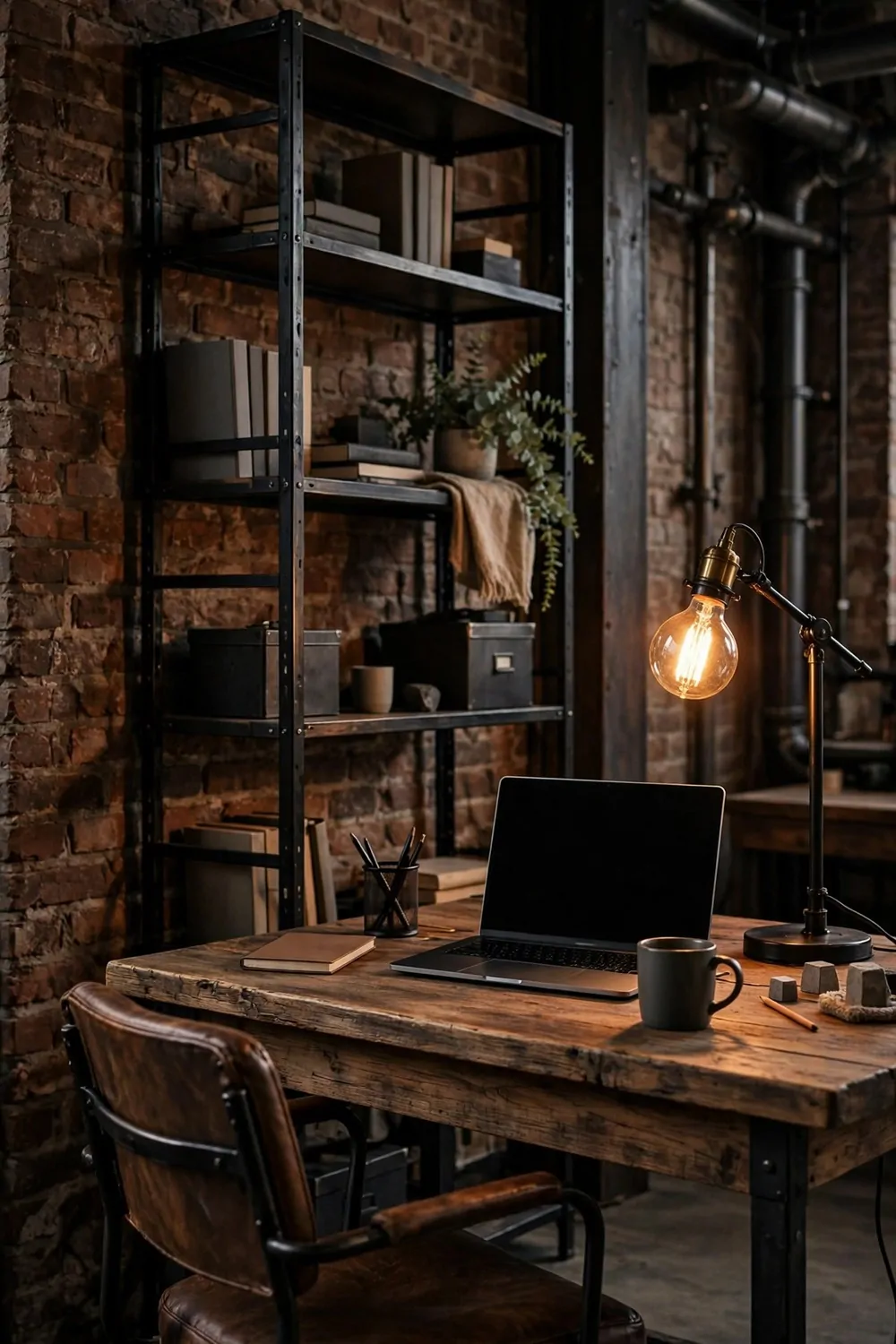
A loft style office feels open and honest. Brick, metal, and wood show their true nature, and nothing tries to hide.
I like this look for a room with high ceilings or big windows. The industrial feel loves space, and it loves light that falls across rough surfaces.
Metal is the backbone here. A metal desk frame, metal shelves, or a metal lamp can set the tone. Keep the metal dark, so it feels strong and calm.
Wood softens the metal. A thick wood top on a metal desk feels warm under your hands. It stops the room from feeling like a workshop.
Brick or concrete walls add texture. If you do not have real brick, a brick style panel or a rough plaster wall can give the same feel. Do not fake it too much, though.
| Material | What it adds | Keep in mind |
|---|---|---|
| Dark metal | Strong lines and structure | Too much can feel cold |
| Reclaimed wood | Warmth and texture | Check for rough edges first |
| Brick | Depth and history | Dust can collect in the gaps |
| Leather | Soft shine and comfort | It needs care to stay soft |
Add one soft piece to balance the hard surfaces. A rug, a cushion, or a fabric chair can do it. Without softness, a loft office can feel loud and hard.
Lighting should be warm, not white and harsh. Edison style bulbs or warm lamps suit the loft look. They make the metal glow, and they make the wood look rich.
Keep storage open, but tidy. Open shelves suit this style, but they show everything. If your shelves are messy, the whole room will feel messy.
I love a loft office at night, when the lamps are on and the room glows. It feels like a studio, and it makes work feel a little bit special.
The Soft Neutral Palette That Calms
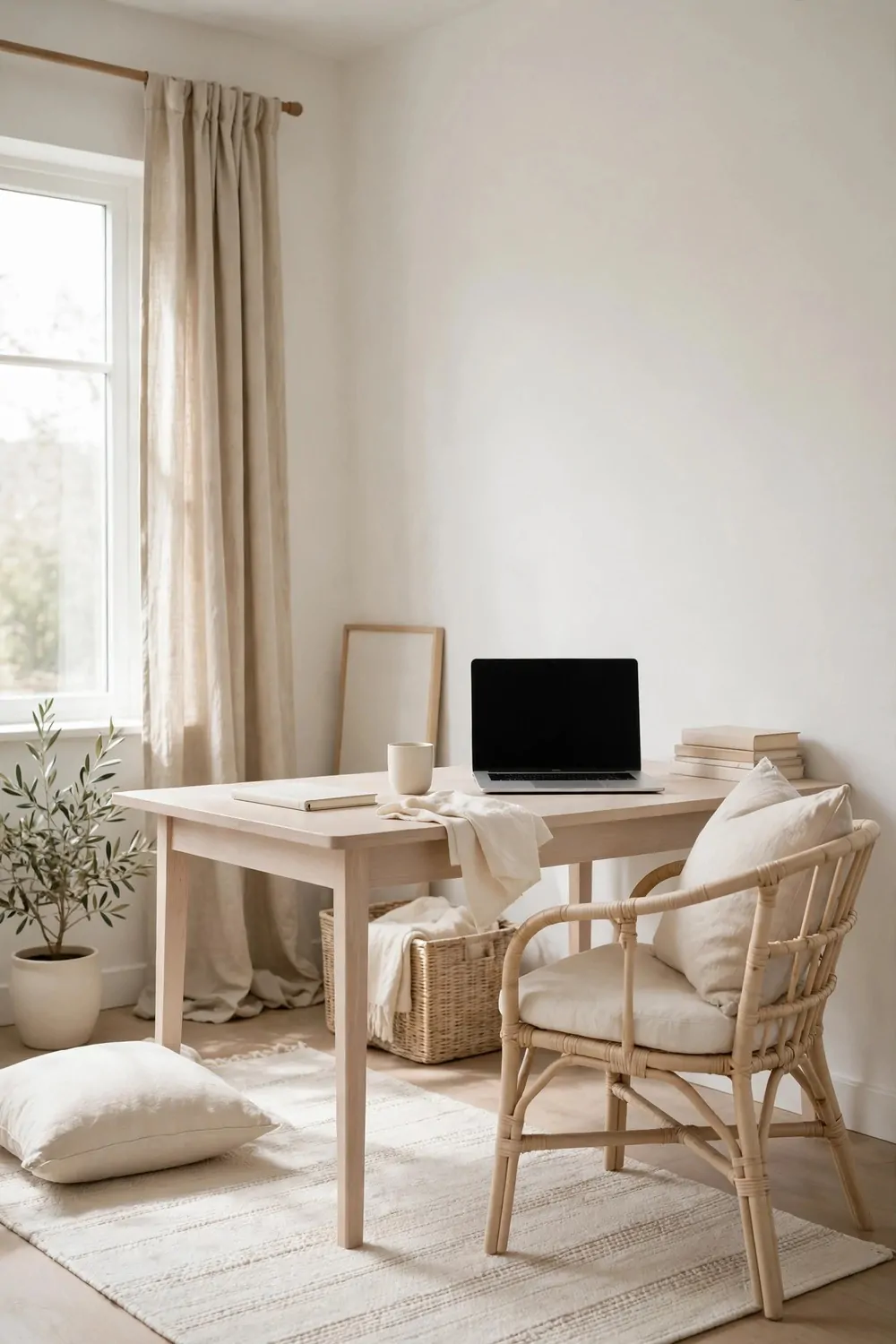
Soft neutrals can calm a busy mind. Cream, warm white, soft gray, and pale wood all sit together without fighting for attention.
I reach for neutrals when my work is loud. If my day is full of calls and screens, my room should be quiet. A calm room helps a busy brain.
Layer neutrals, do not just pick one. A cream wall, a pale wood desk, and a soft gray chair will feel richer than one flat color all over.
Texture is what saves a neutral room from feeling dull. A woven rug, a linen cushion, and a wood grain top add interest without color. Your hands notice texture even when your eyes do not.
Keep one warm tone in the mix. A warm cream or a honey wood tone stops the room from feeling cold. Cool neutrals alone can feel a bit stark.
Light plays a big part here. Soft neutrals glow in daylight, and they look warm under a lamp at night. Test your colors in both lights before you commit.
I add one plant to a neutral office. Green is soft, and it breaks the pale palette in a kind way. It is the one color that never fights a neutral room.
Avoid too many small neutral objects. They can blur together and look like clutter. Pick a few good pieces, and give each one space.
A neutral office is not boring. It is a room that lets your work take center stage, and that is exactly what a good office should do.
The One Bold Color Pop
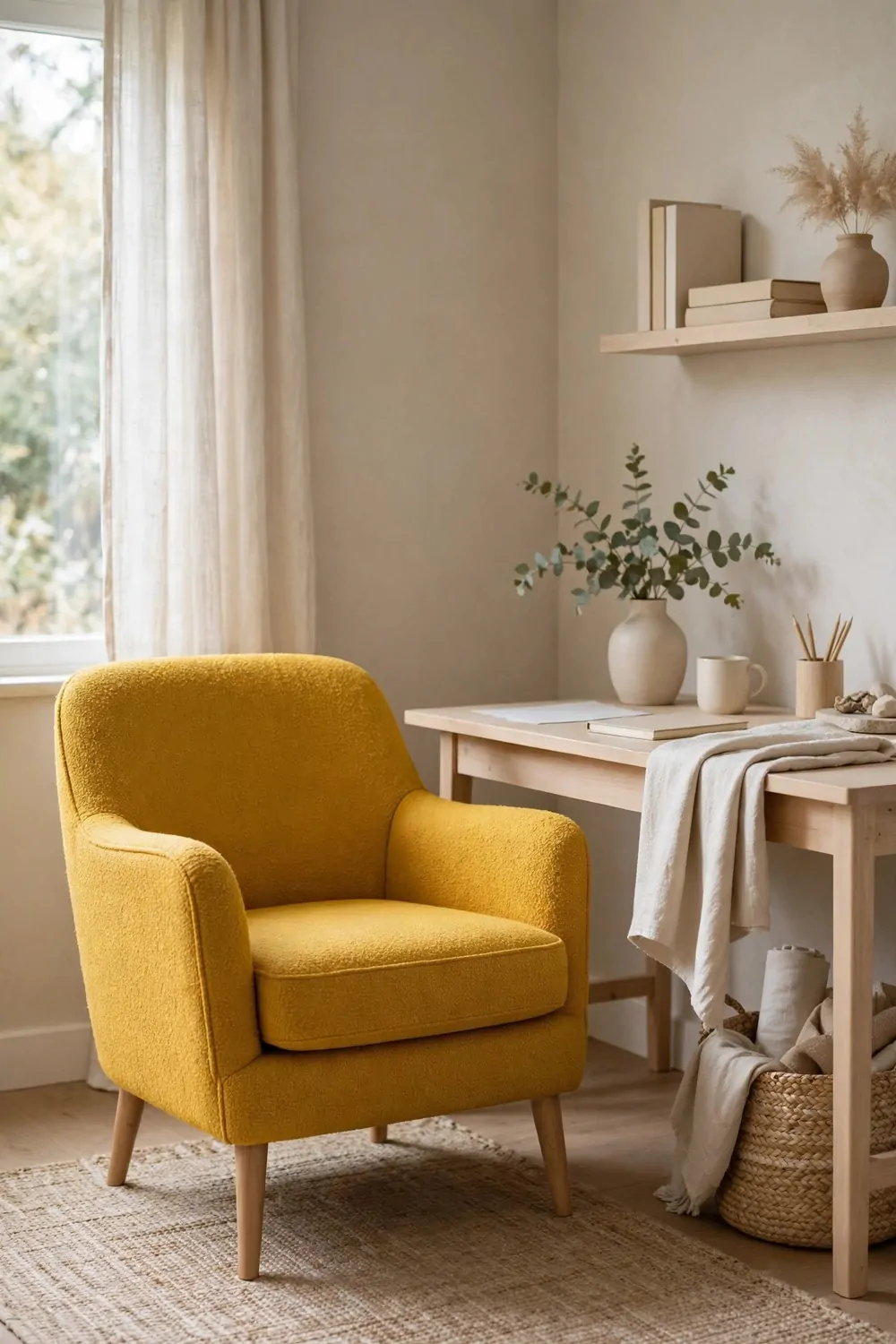
One bold color can wake up a whole office. It gives the room a focal point, and it shows a bit of your personality.
I like to pick one thing to be bold. It could be a chair, a rug, or one painted wall. One bold thing is a statement. Five bold things is noise.
Red, deep blue, mustard, and forest green all work as pops. Pick the one that makes you smile when you see it. You will look at it every day.
Keep the rest of the room simple when you go bold. White walls, a wood desk, and plain shelves let the bold piece shine. The room will feel designed, not random.
Test the color in your room light first. A chair that looks bright in a shop can look dark at home. Bring a sample home if you can, and live with it for a day.
I used a bold blue chair in my old office. It was the first thing I saw each morning, and it made me want to sit down. That is what a good pop should do.
Repeat the bold color once, in a small way. A cushion, a notebook, or a small frame in the same tone ties the room together. Do not repeat it five times, or it stops being special.
If you get bored of the color, you can change it easy. Swap a cushion or a chair, and the room feels new. That is the beauty of one pop, not a whole room of color.
Be brave, but be calm about it. One bold choice, made with care, will do more than a room full of safe choices that all blend together.
The Plant-Filled Office That Breathes
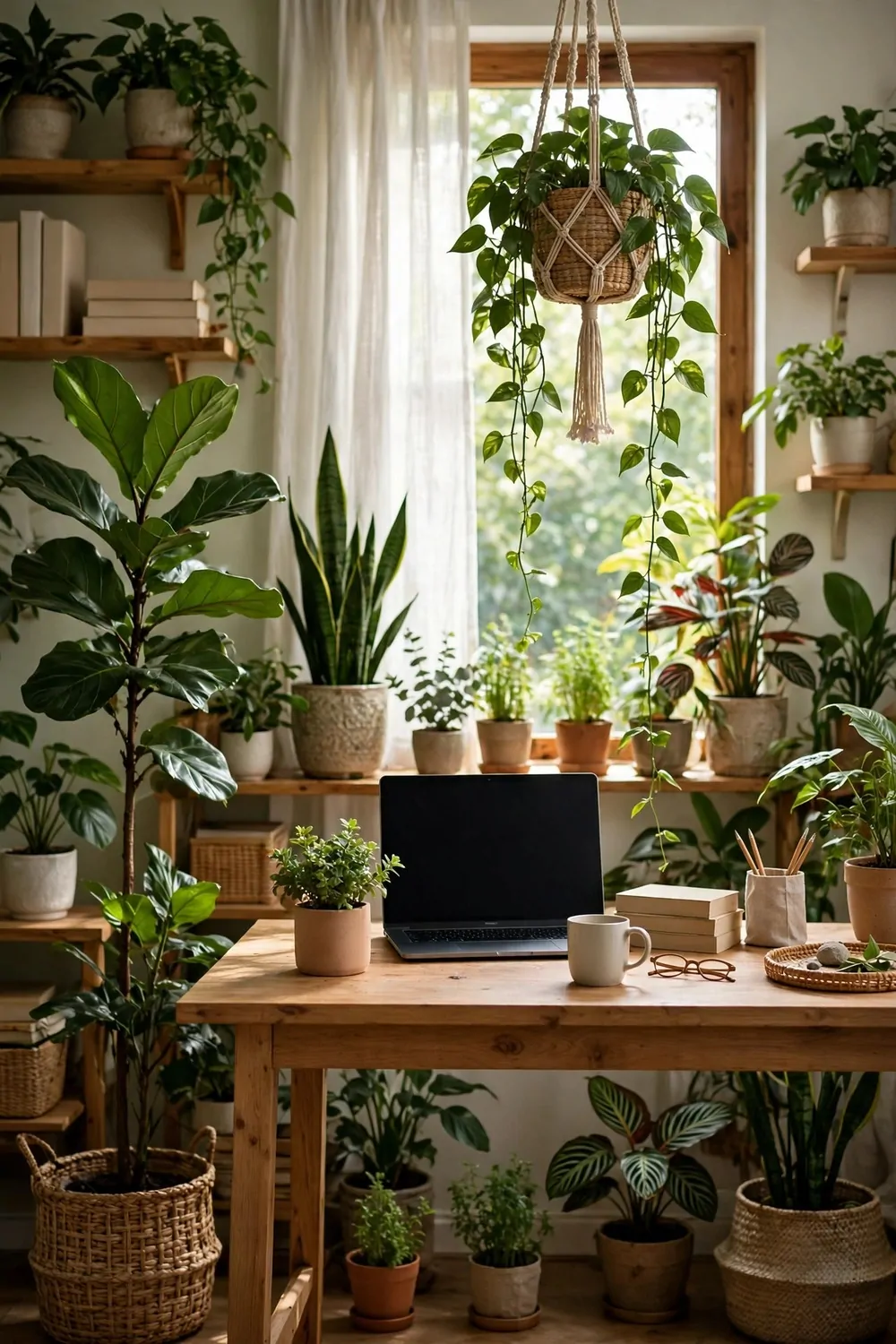
Plants can turn a plain office into a room that feels alive. They add green, soft shapes, and a calm that no furniture can match.
I keep plants at three heights in my office. One on the floor, one on the desk, and one on a shelf. That spread makes the green feel like part of the room.
Start with easy plants if you are new to this. Plants that need little water and little fuss will forgive you on busy weeks. You can add fussy plants later.
Light matters more than looks. Check what light your room really gets before you buy. A plant that needs sun will sulk in a dark corner, no matter how pretty it is.
Use pots that match your room. Simple pots in white, clay, or wood tones let the plants shine. Loud pots can fight with the green.
- Put a tall plant in a bare corner to soften the edge and fill the empty space.
- Put a small plant on your desk, but keep it off your main work spot.
- Hang one plant near a window if you have the height, so the green falls soft.
- Group three plants together on a shelf for a lush look that still feels tidy.
Water on a set day, so you do not forget. I water mine on the same morning each week. It takes five minutes, and the plants stay happy.
Keep leaves clean with a soft damp cloth now and then. Dust on leaves blocks light, and it makes the plant look dull. Clean leaves shine.
Do not fill every surface with plants. Your desk still needs room to work. A few good plants beat a jungle that crowds your papers.
A plant filled office feels fresh in the morning, and calm in the evening. It is a room that breathes with you, and that is a lovely thing to work in.
The Minimal All-White Office
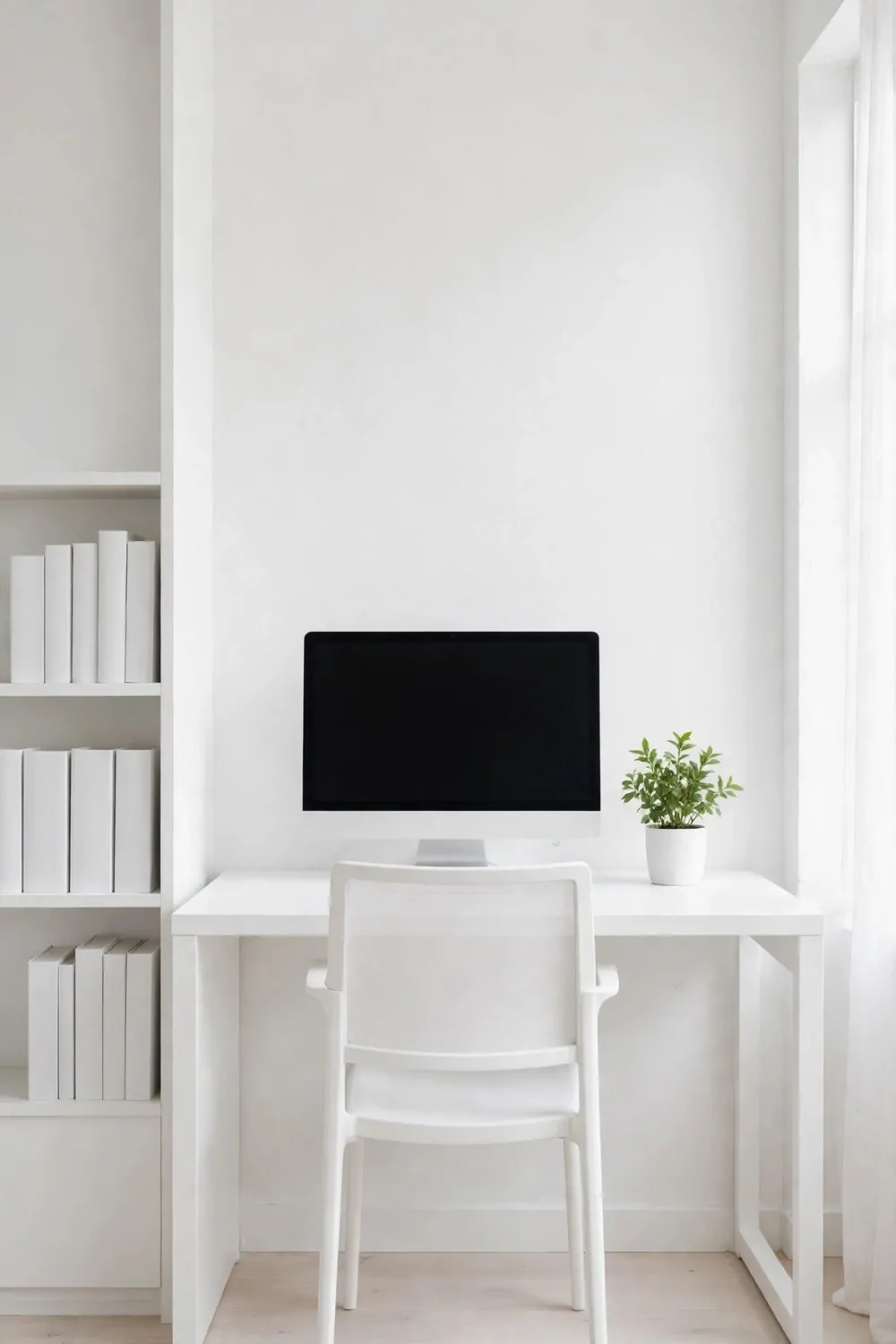
An all white office can feel clean, bright, and calm. It bounces light around, and it makes a small room feel bigger.
I love white in a small office. It opens the walls up, and it makes the desk feel less heavy. The room feels airy, even on a dull day.
White needs texture to stay warm. A white desk, a white wall, and a white chair can look cold if everything is smooth. Add wood, linen, and woven pieces to warm it up.
Keep your storage hidden in a white office. Open shelves with lots of colored books can break the calm. Closed storage keeps the white look clean.
One warm wood tone can save an all white room. A wood desk top, or a wood frame, adds warmth without breaking the palette. It is a small change with a big effect.
Light is your friend here. Daylight makes white glow. At night, use warm lamps, not cold white light. Cold light can make white walls look harsh.
I clean white surfaces more often, and I do not mind. A white office shows dust fast, and that keeps me tidy. It is a room that asks you to stay neat.
Add one soft color if white feels too stark for you. A pale cushion, or a soft gray rug, can ease the look. You can still call it a white office.
Minimal does not mean empty. It means every piece earns its place. Pick few things, pick them well, and let the white do the rest.
The Vintage Desk Meets Modern Chair Mix
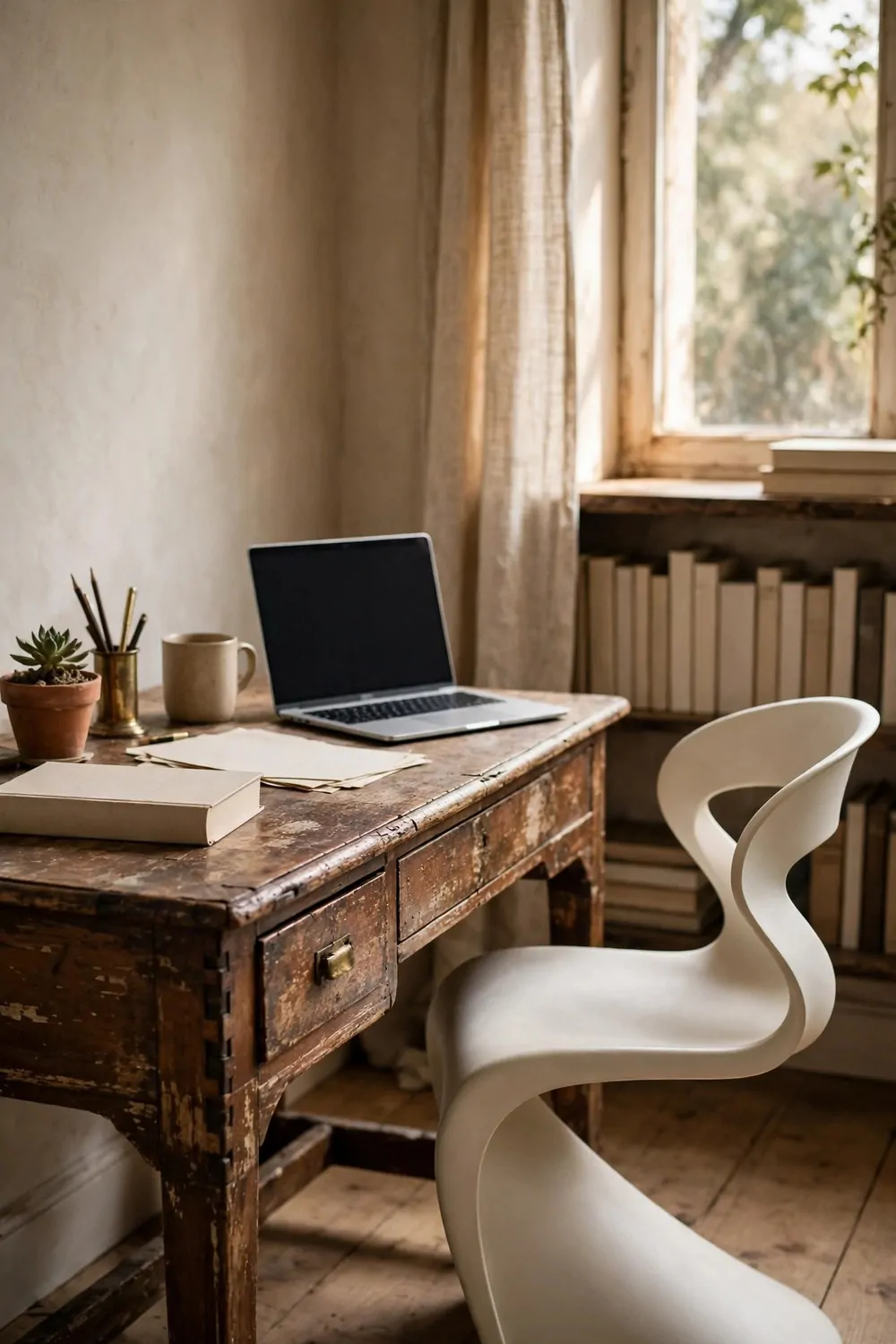
An old desk with a new chair can look smart and personal. The old piece brings history, and the new piece brings comfort.
I love a vintage desk because it has marks and stories. A scratch, a worn edge, or an old handle tells you someone worked there before you. That feels good.
Pick a modern chair that supports your back. Vintage chairs look lovely, but they can hurt after a long day. A new chair lets you work in comfort, and it still looks right.
Keep the color tones close. A warm wood desk and a chair in a soft neutral tone will sit well together. A clash of tones can make the mix look accidental.
Add one modern lamp to tie the two eras together. A clean lamp on an old desk bridges the gap. It says the room is old and new at once.
I keep the desk surface clear, so the wood can shine. A vintage desk deserves to be seen. Papers and clutter hide the best part of it.
Check the desk height before you buy a chair. Old desks can be lower or higher than new ones. Sit at it first, and make sure your arms rest easy.
Mix in one more old piece if you like, like a small shelf or a frame. Two old pieces feel like a collection. One old piece with all new things can feel lonely.
This mix is about balance. Old for soul, new for comfort. Get that balance right, and your office will feel like you, not like a shop display.
The Corner Banquette Office
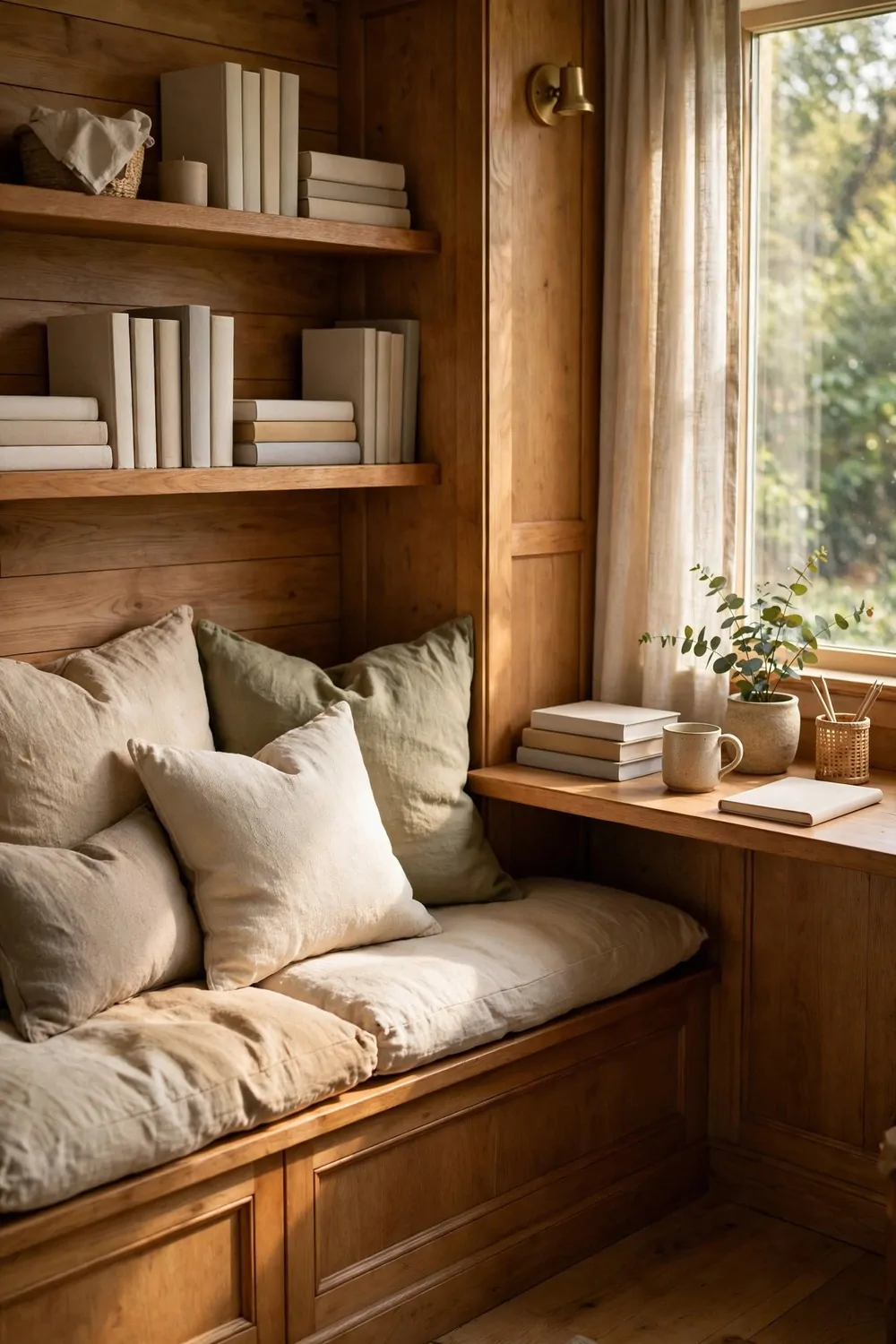
A corner banquette can turn a dead corner into a cozy office. A built in bench, a small desk, and a cushion can make a nook that feels made for you.
I like banquettes because they use the corner well. Corners are often wasted, but a bench fills them and gives you a seat that feels snug.
Keep the desk slim in a banquette nook. A deep desk will push you off the bench, and you will feel cramped. A slim desk leaves room to sit and move.
Cushions make the bench work. A firm cushion for sitting, and a soft cushion for your back, will keep you comfy for hours. Pick fabric that is easy to clean.
Storage under the bench is a bonus. Lift up seats or drawers under the bench can hide files and supplies. The nook stays neat, and you still have space.
Light the corner from above or from the side. Corners can be dark, and a dark corner makes work hard. A small wall lamp can fix it fast.
I add a small shelf above the banquette for books and a plant. It uses the wall, and it keeps the desk clear. Just keep it high enough to sit up straight.
A banquette office suits quiet work best. It is cozy, and it feels a bit tucked away. If you need to spread out big papers, you may want a bigger desk too.
Try sitting in the nook for a full work session before you build it in. Make sure the bench height, the desk height, and the light all feel right together.
The Open Shelving Display Wall
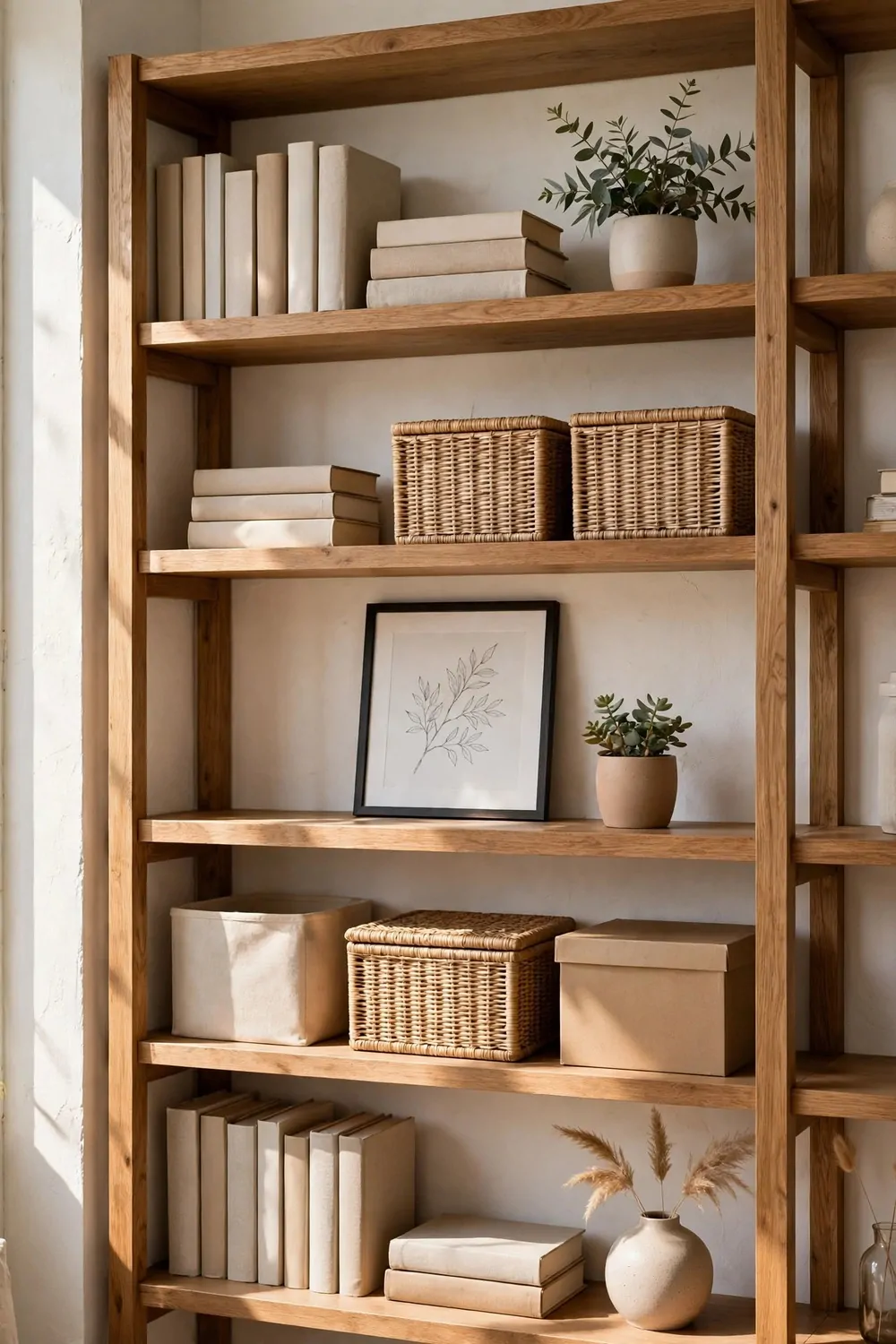
Open shelves can turn a whole wall into a display. Books, boxes, art, and objects all sit out in the open, and the wall tells your story.
I like open shelves when I want my office to feel lived in. Closed cabinets can feel cold. Open shelves feel warm, and they show what I care about.
Start with a plan for the whole wall. Map out where books go, where boxes go, and where art goes. A wall with no plan can look messy fast.
Group things in threes. Three books, three boxes, or three small objects look neat. Groups of three feel balanced, and they are easy to style.
Leave gaps between groups. Gaps let each group breathe, and they stop the wall from looking like a shop shelf. Empty space is part of the design.
Keep your work supplies on the lower shelves. You will reach them easy, and they will be out of the main view. Pretty things can go higher, where eyes travel first.
I color group my books on open shelves. It is not for everyone, but it makes the wall look calm. If you hate that idea, group by size instead. That works too.
Dust open shelves often. Open means dust shows, and it shows fast. A quick dust each week keeps the wall looking fresh.
An open shelf wall needs editing now and then. Take one thing off each month, and see if you miss it. If you do not, it did not earn its spot.
The Cozy Textile Layers
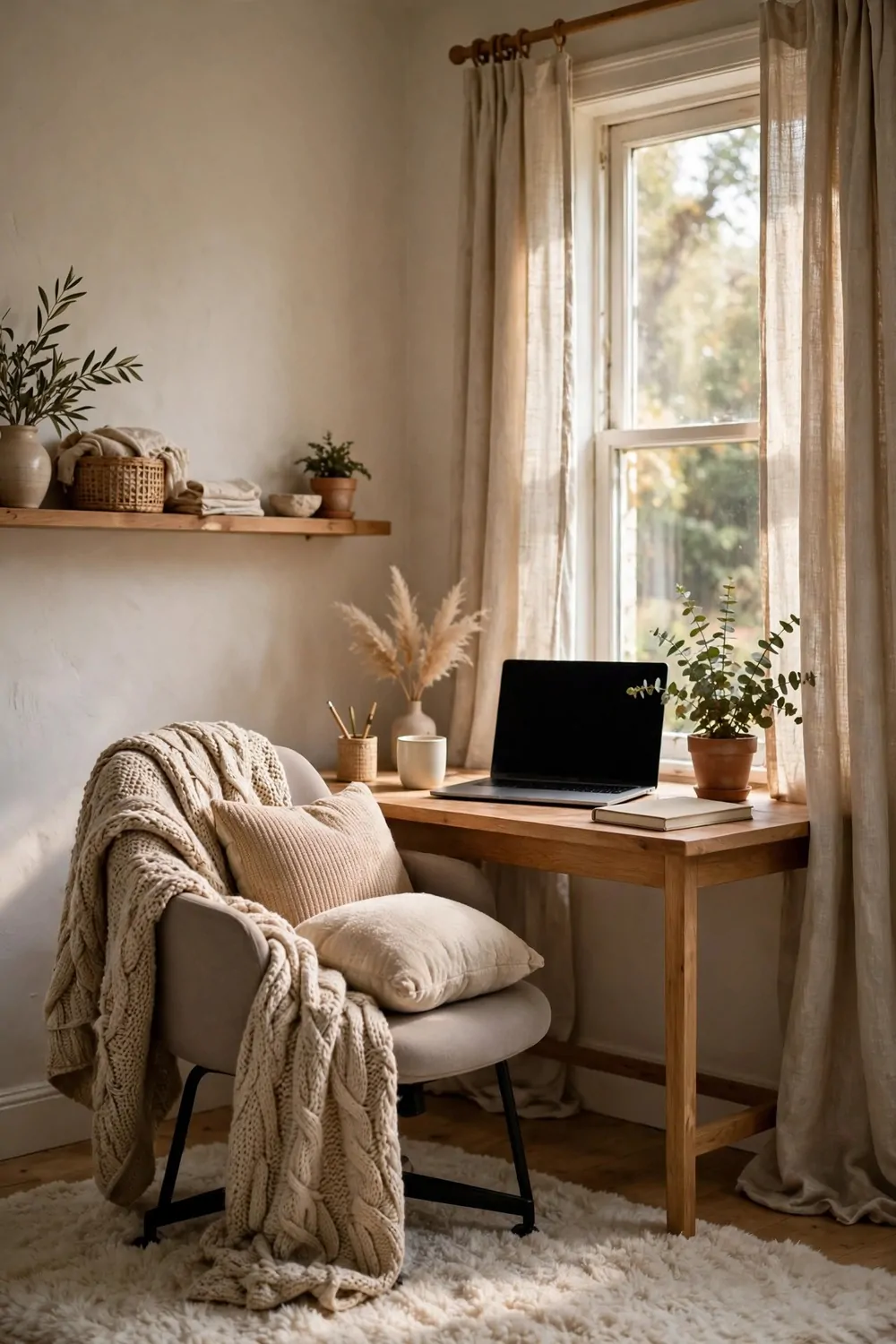
Textiles can make a hard office feel soft. A rug, a throw, cushions, and curtains all add warmth that wood and metal cannot give alone.
I layer textiles like I layer clothes in cold weather. Start with a base, add a middle layer, and finish with a soft top layer. Each layer adds comfort.
Start with the rug. It is the biggest textile in the room, and it sets the tone. A soft rug under your desk will warm your feet and quiet the room.
Add curtains next, even if your window is small. Curtains soften hard window edges, and they help with light and sound. Linen curtains in a soft tone work well.
A throw on your chair is the easy win. It is there when you feel cold, and it adds color when you do not need it. Drape it loose, not folded tight.
Cushions should be few and soft. Two cushions on a chair or a bench are enough. More than that, and you will spend your day moving cushions to sit down.
Mix textures, not just colors. Wool, linen, cotton, and woven fabric all feel different to touch. That mix is what makes a room feel rich.
I keep my textiles in warm tones for winter, and lighter tones for summer. Swapping a throw and a cushion is a cheap way to change the season in your room.
Textiles need washing now and then. A fresh throw and clean cushion covers can make the whole office feel new. It is a small job with a big payoff.
The Statement Ceiling Nobody Expects
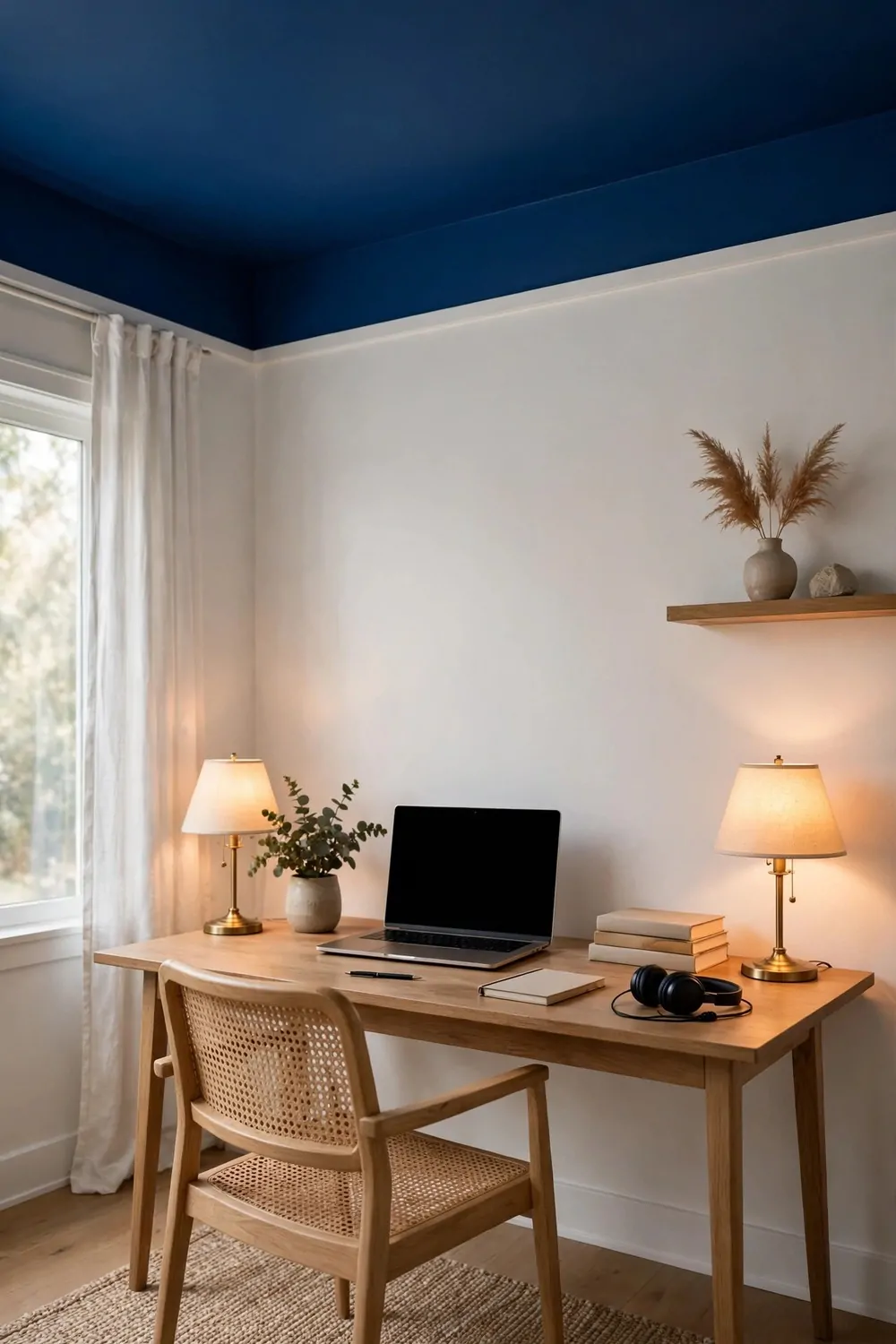
Most people forget the ceiling. They paint the walls, they pick the rug, and they leave the ceiling plain white. A statement ceiling can change all that.
I love a ceiling with color or pattern because it surprises you. You look up, and the room feels taller, richer, and more designed than you expected.
Paint is the simplest way to do it. A soft color on the ceiling, a little darker than the walls, can make the room feel cozy. A bold color can make it feel dramatic.
Wood on the ceiling adds warmth. Thin wood planks or beams can make a plain office feel like a cabin or a studio. Keep the wood light, so the room does not feel heavy.
Wallpaper on the ceiling is a bold move. A soft pattern up high can be lovely, because you see it in glimpses, not all at once. Pick a pattern you will not tire of.
Keep your light fixtures simple when the ceiling is the star. A plain pendant or a flush light lets the ceiling shine. A fancy light can fight with it.
I would test a ceiling color on a small patch first. Ceiling color looks different from up close, and it changes with the light. Live with the patch for a few days.
A statement ceiling works best in a room with plain walls. If the walls are bold too, the room can feel too busy. Let one surface take the lead.
Look up more often in your office. If your ceiling makes you smile, you have a room that works from floor to ceiling, and that is rare.
The Dual-Purpose Guest Office
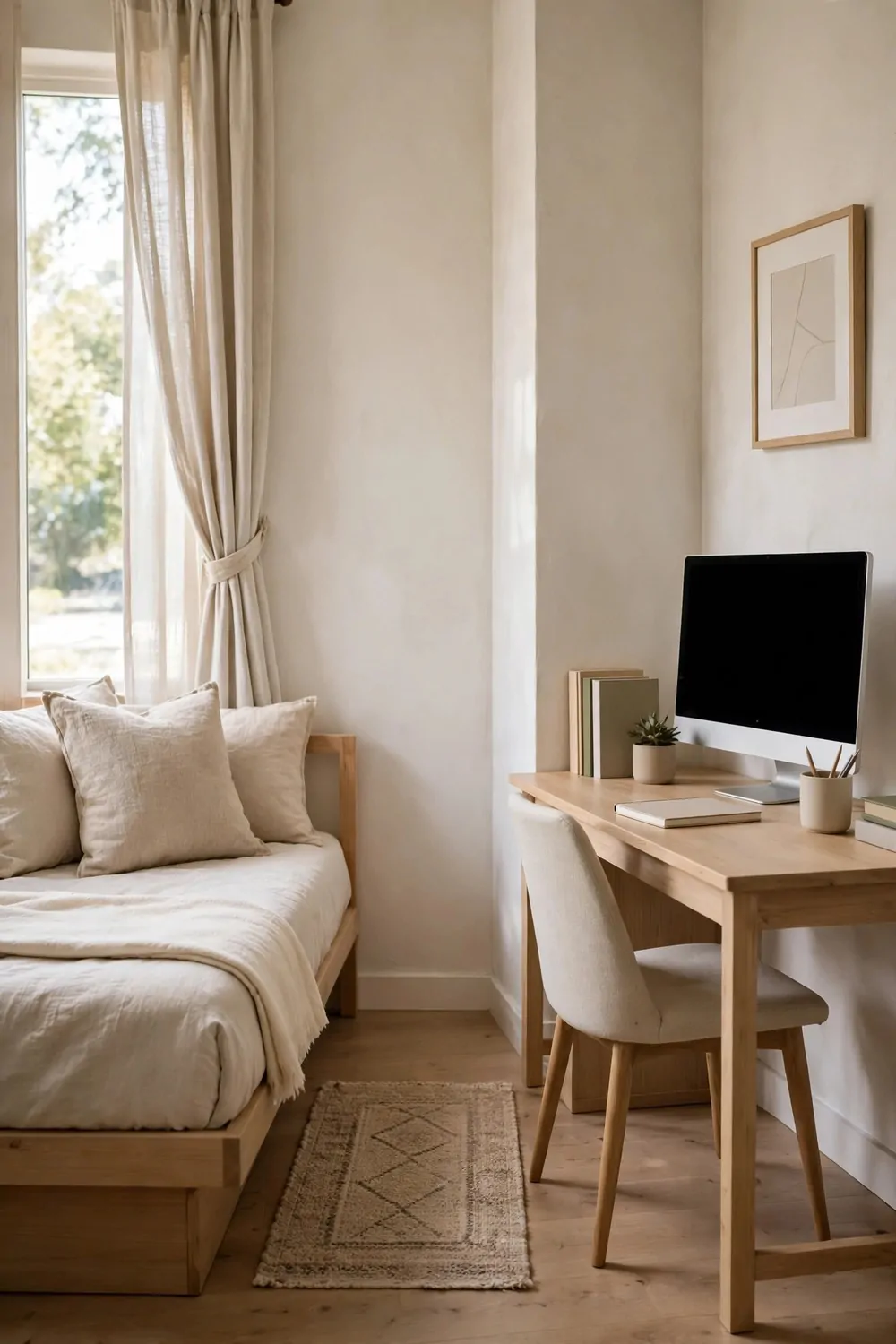
A guest office does two jobs. Most days it is your office. Some days it is a bedroom for a guest. Both jobs need to work, and neither should feel like an afterthought.
I start with a desk that can clear fast. A desk with drawers that close, and a surface that clears in five minutes, will turn into a guest room without stress.
A fold out bed or a daybed is the key piece. It should look like a sofa by day, and sleep well by night. Test it yourself before a guest does.
Keep guest bedding in the room, but hidden. A drawer, a box, or a closet shelf can hold sheets and towels. Guests should not have to ask for the basics.
Give guests a small clear surface. A bedside table, or a clear corner of the desk, gives them a spot for a phone and a glass of water. That small care matters.
Storage should split in two. One part for work, one part for guests. When work and guest things mix, the room feels messy for both jobs.
- Clear the desk the night before a guest arrives, so the room feels like a bedroom, not an office.
- Leave fresh towels, a spare charger, and a small lamp by the bed for your guest.
- Keep one drawer locked or private for work papers you do not want guests to see.
- Air the room and open the curtains before guests arrive, so it feels fresh and welcoming.
I keep a small plant in my guest office. It makes the room feel alive when no guest is there, and it welcomes guests when they arrive. One plant does both jobs.
Think about privacy too. A curtain, a screen, or a door that closes well helps guests feel at home. Privacy is the difference between a spare room and a real guest room.
A dual purpose room is a compromise, but it can be a good one. Plan both jobs, keep it tidy, and the room will serve you well all year.
The Moody Dark Office With Warm Lamps
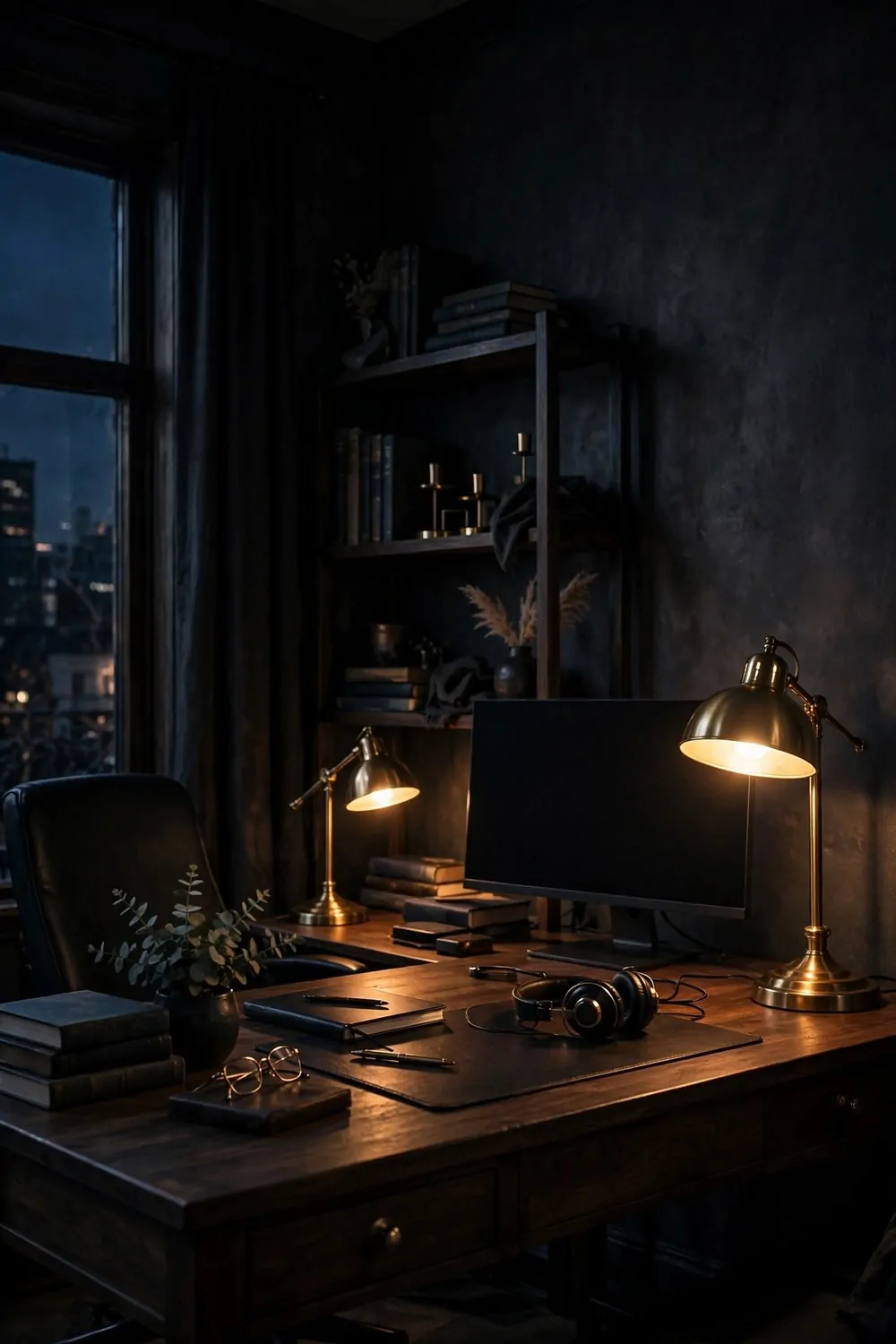
A dark office can feel calm and focused. Deep walls, warm lamps, and soft shadows make a room that asks you to sit down and work.
I used to fear dark walls. I thought they would make my office feel small. Then I tried a deep green wall, and the room felt bigger, not smaller, because the corners softened.
Pick a deep color you love. Deep green, navy, charcoal, or warm brown all work. Pick one, and paint all the walls in it. A half dark room can look unfinished.
Warm lamps are a must in a dark office. Cool white light on dark walls looks harsh. Warm light makes the dark feel rich and cozy, like evening all day.
Add wood and leather to warm the dark. A wood desk, a leather chair, or wood shelves will glow in warm light. Metal alone can feel cold in a dark room.
| Moody palette part | Pick | Why it works |
|---|---|---|
| Wall color | Deep green or navy | It softens corners and calms the eye |
| Light | Warm lamps, low and soft | Warm light makes dark walls glow |
| Textile | Wool throw and velvet cushion | Soft fabric stops the room feeling hard |
| Wood tone | Mid to dark warm wood | Warm wood adds depth without glare |
Keep your desk surface light if you can. A light desk top, or a light desk mat, will stand out against dark walls. Your work will be easy to see.
Art with light frames can pop on dark walls. A white mat, a light wood frame, or a brass frame will stand out. Dark frames on dark walls can disappear.
I work best in my dark office in the morning. The room feels quiet, and my screen feels clear. It is like the room shuts the world out for a while.
Do not fear the dark. With warm lamps and soft textiles, a moody office can be the calmest room in your home.
The Scandinavian Light and Simple Office
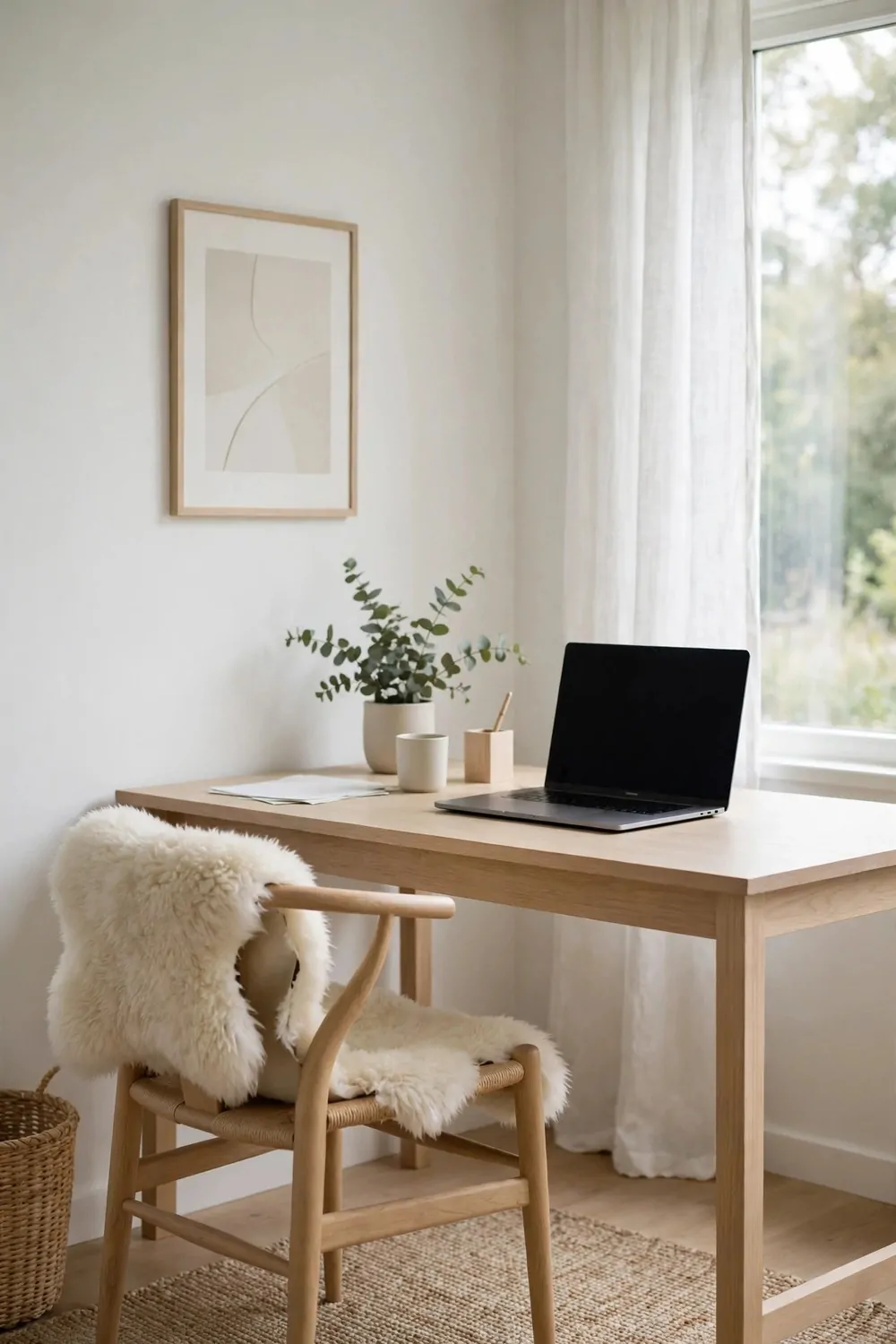
Scandinavian style is light, simple, and calm. Pale wood, white walls, and clean lines make a room that feels fresh and easy to work in.
I love this style because it has no clutter. Every piece has a job, and every piece has space around it. The room breathes, and so do you.
Start with pale wood. A light wood desk, light wood shelves, and a light wood chair frame will set the tone. Pale wood feels warm without being heavy.
White walls are the base. They bounce light, and they make the pale wood glow. Keep the white warm, not cold and blue. Warm white feels like home.
Keep furniture low and simple. Low shelves, a simple desk, and a chair with clean lines all suit this look. Tall heavy furniture can break the light feel.
Add one black accent for contrast. A black lamp, black handles, or a black frame can ground the pale room. Without it, the room can feel washed out.
Textiles should be soft and plain. A wool throw, a linen cushion, and a simple rug in soft gray or cream will add warmth. Avoid loud patterns here.
I keep plants in a Scandinavian office, but just a few. One or two green plants add life, and they stand out against the pale palette. Too many plants can crowd the calm.
Simple does not mean cold. With warm wood, soft textiles, and good light, a Scandinavian office feels like a bright morning, every day.
The Personal Gallery That Tells Your Story
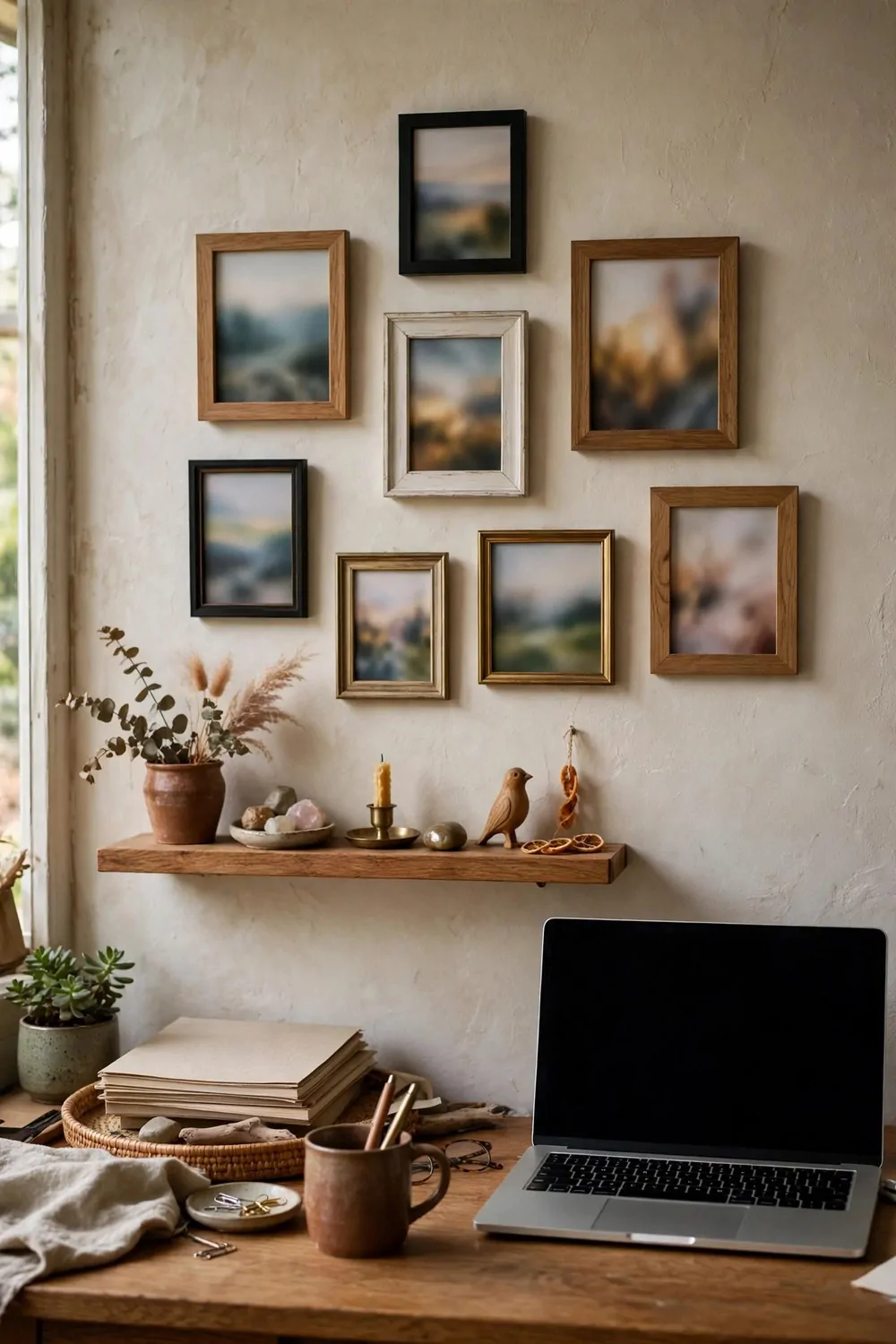
Your office should tell your story. A personal gallery does that, with photos, art, and objects that mean something to you.
I do not mean a perfect gallery. I mean a wall that shows your life. A photo from a trip, a drawing from a child, a ticket from a day you loved. Real things beat perfect things.
Start with what you already own. Look in drawers, look in boxes, and look on your phone. You may already have the best pieces for your gallery.
Mix frames and objects. A frame, a small shelf, and a hanging object can sit together well. The mix makes the wall feel collected, not bought.
Keep the layout loose, but not random. Leave even gaps, and keep the big pieces balanced. Loose does not mean messy, it means human.
Change one piece when your story changes. A gallery should grow with you. Swap a photo when you have a new memory, and the wall will stay alive.
I keep one spot in my gallery for work I am proud of. It is not bragging, it is a reminder. On hard days, I look at it and I remember what I can do.
Ask yourself, does this wall feel like me. If the answer is yes, you are done. If it feels like someone else’s wall, take one piece away and add one that is truly yours.
Your office is where you spend your days. Let it hold your story, and it will feel less like a work room, and more like your room.