17 Toca Boca Office Ideas Players Are Obsessed With

Walk into the room and count the colors before you count the furniture. Yellow on one wall, soft pink on a shelf, a blue chair, a green plant by the window.
Nothing matches the way a grown-up office matches. And that is exactly the point.
Players who build rooms in Toca Boca know this trick by heart. They start with color and fun, and they let the room grow around what makes them happy. A desk goes where the light is good. A shelf holds the things they love. The room looks like the person who uses it.
Your real office can work the same way. You do not need a big budget or a big room. You need a few playful choices that make you want to sit down and get to work.
I built my own office this way, one small idea at a time. Some ideas cost nothing. Some cost a weekend. All of them made the room feel more like mine.
Here are 17 Toca Boca office ideas players are obsessed with, remade for a real room in a real home. Pick the ones that make you smile. Start with one.
1. The Rainbow Wall That Does the Talking
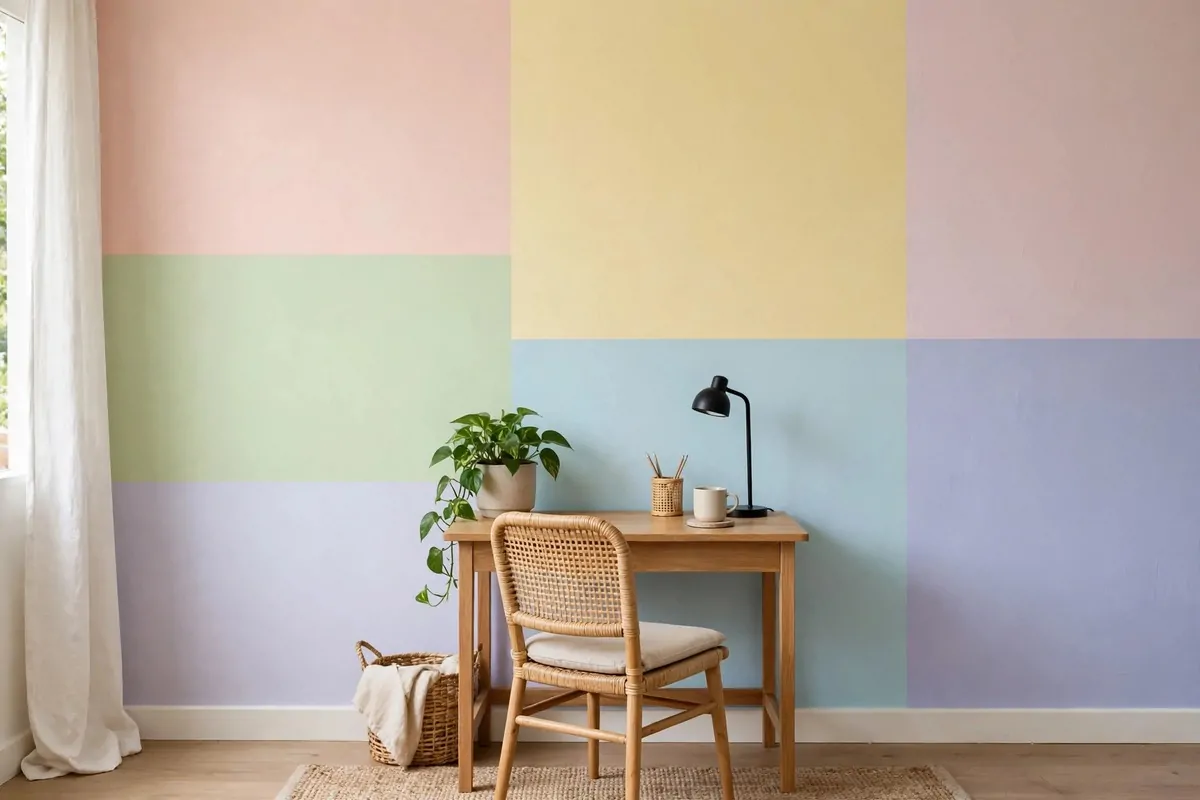
One painted wall can do the whole job. You do not need to paint the whole room. One wall, behind your desk, in a color you love, and the room wakes up.
Pick a color that makes you happy at nine in the morning. Soft yellow feels sunny. Pale pink feels calm. Mint green feels fresh. There is no wrong answer here. Your wall, your color.
Paint only the wall you face when you work. That way you see it all day, and it never shouts at you from behind. The other walls stay plain and quiet, and the color wall gets to be the star.
If paint feels too big a step, try big color blocks instead. Paint three wide stripes, or one big arch shape over the desk. An arch is just a half circle, and it frames your desk like a little stage. It takes one afternoon and one small tin of paint.
Tape the edges before you start. Painter’s tape is the difference between a clean line and a wobbly one. Press it down hard, paint over the edge, and peel it off while the paint is still a little wet.
Keep the desk and shelves in front of the wall simple. White or light wood works best. When the wall is loud, the furniture should whisper. That balance keeps the room fun instead of messy.
Stand back and look at the wall from the door. That is the view you get every time you walk in. If it makes you smile from the door, it will make you smile all day.
A color wall costs very little. One tin of paint, one roller, one free afternoon. And it turns a plain corner into a room with a personality.
2. The Tiny Desk That Fits in a Corner
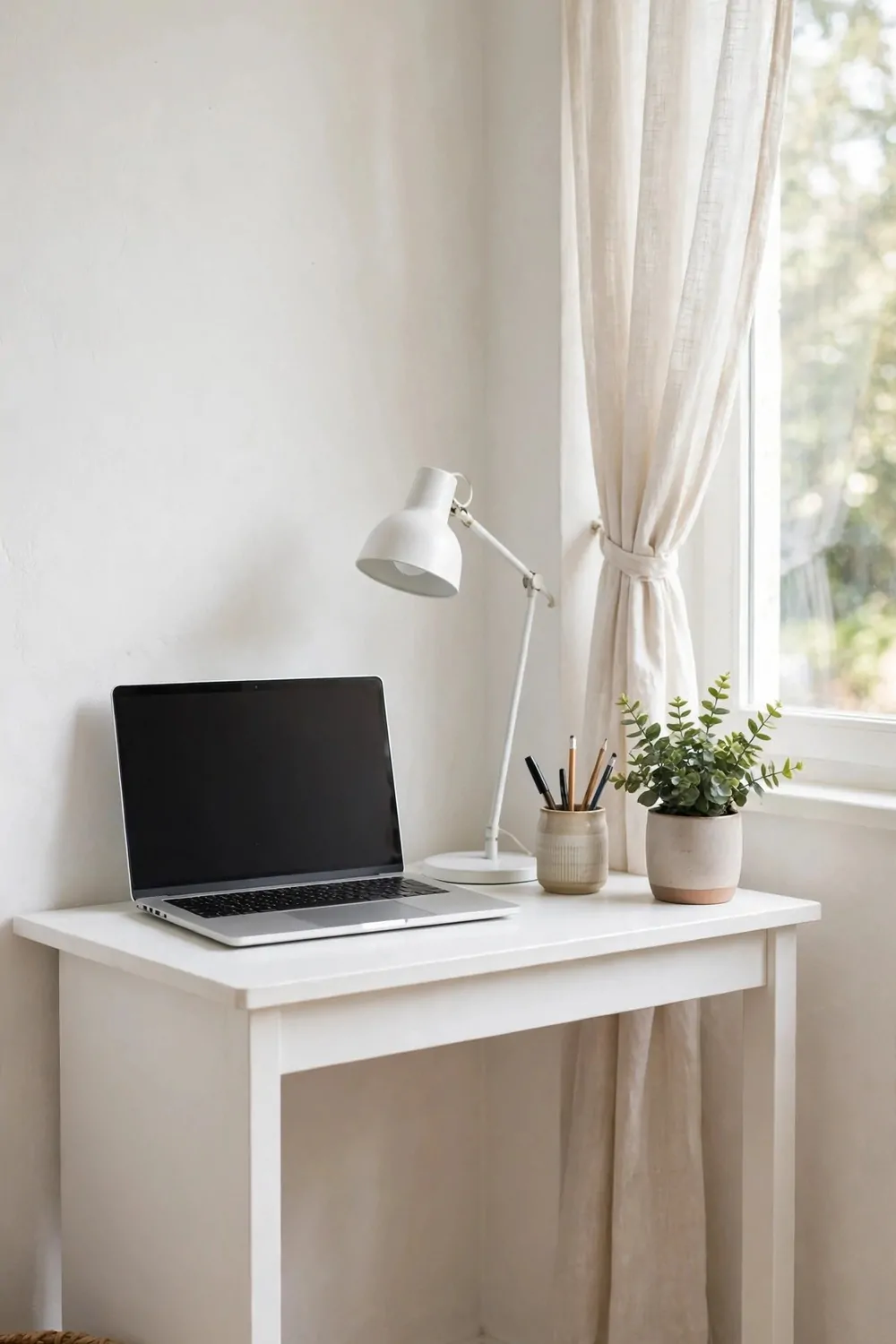
A big desk eats a small room. A tiny desk fits in a corner and still holds everything you need. That is the whole secret of a small office that works.
Measure your corner before you buy anything. Write the numbers down. A desk that is two inches too wide will not fit, and you will only learn that in the doorway with the box in your hands.
Look for a desk with no drawers on the sides. A simple top on two legs leaves room for your chair and your feet. You can add storage on the wall instead, where it costs no floor space at all.
Put the desk in the corner with the best light. Near a window is best. You want daylight on your work, not a dark corner that needs a lamp at noon.
Keep only five things on the desk top. A laptop or notebook, a lamp, a pen cup, a small plant, and one thing that makes you happy. Everything else lives on a shelf or in a drawer. A clear desk top is a clear head.
A corner desk also makes the room feel bigger. The middle of the floor stays open. You can walk in, spin your chair around, and never bump into anything.
If your corner is very small, try a wall-mounted folding desk. It folds flat against the wall when you are done. At five in the evening, your office folds away, and the room is just a room again.
Tiny desks are cheap, too. A simple one costs less than a big fancy desk, and it leaves you money for the fun stuff, like a good chair and a bright lamp.
Try the corner first. You might be surprised how much work fits on a desk the size of a kitchen tray, when everything on it earned its spot.
3. The Sticker Wall You Can Change Every Week
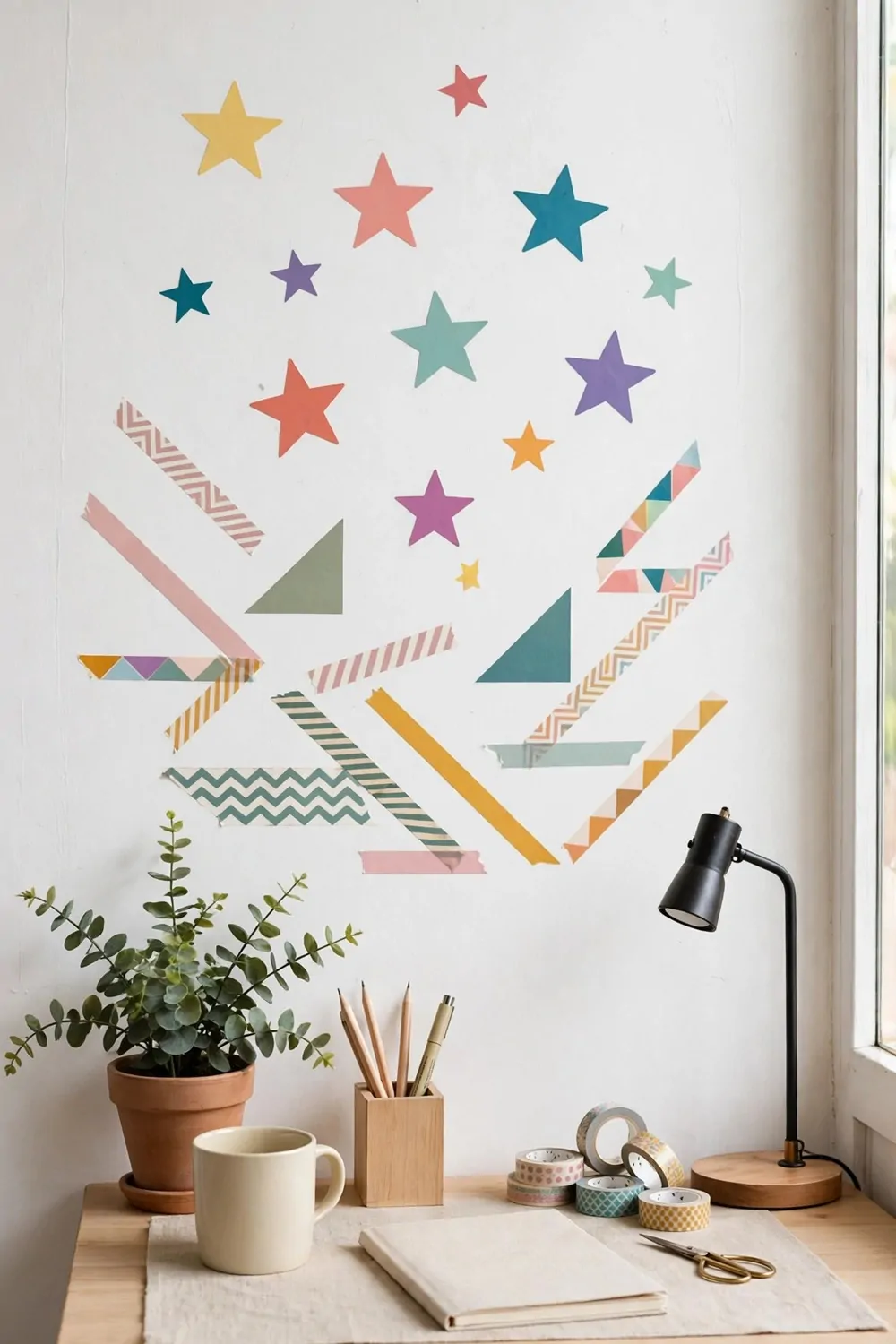
Some walls are boring because they never change. A sticker wall changes whenever you feel like it, and it never damages the paint.
Removable wall decals are just big stickers made for walls. Stars, dots, rainbows, leaves. You peel them off the sheet, press them on the wall, and peel them off again when you are bored. No holes. No marks.
Start with one shape and repeat it. Twenty stars in a loose cluster over the desk looks playful and tidy at the same time. Fifty random shapes everywhere looks like a mess. One shape, lots of copies, is the trick.
Let the decals climb a little. A cluster that starts low near the desk and drifts up the wall feels alive, like the stars are floating. Keep them away from the ceiling edge, or the room will feel top heavy.
Washi tape works the same way and costs even less. Tear off strips and make frames, stripes, or little flags on the wall. Washi tape peels off clean, and it comes in every color you can name.
Change the wall with the seasons. Warm colors in the cold months, bright colors when the sun comes back. It takes twenty minutes, and the room feels brand new each time.
Kids love this one, and so do grown-ups who rent. Your landlord never has to know, because nothing is permanent. The wall goes back to plain white on moving day, in about ten minutes.
Keep a small box of spare decals in a drawer. When one peels off or loses its stick, you just press a fresh one in its place. The wall never looks tired.
A sticker wall is the cheapest makeover in this whole list. One pack of decals, one free evening, and a wall that grows with your mood.
4. The Cubby Shelf That Holds Everything
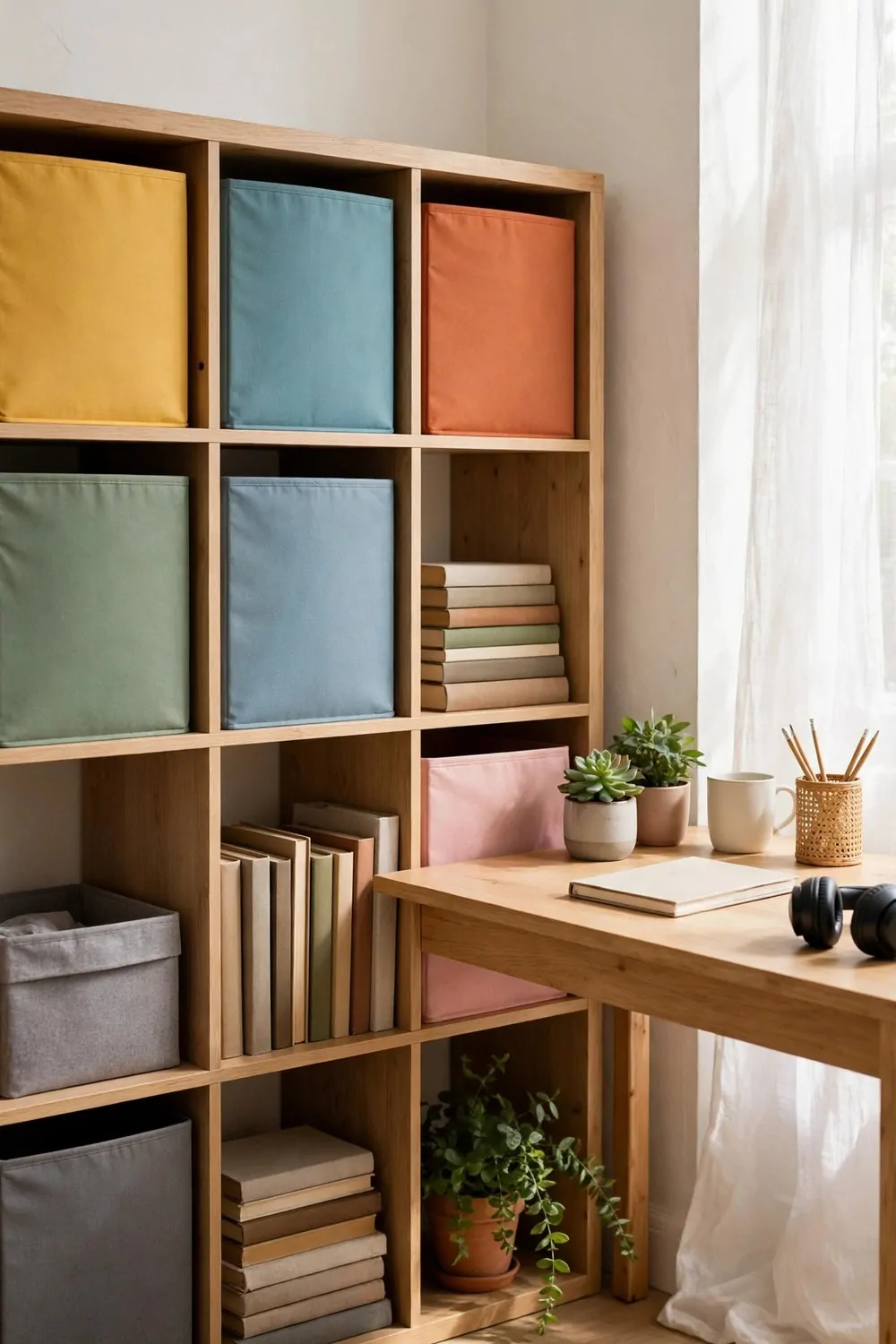
A cubby shelf is a box full of square holes, and it is the hardest working piece of furniture in a playful office. Every hole holds one thing, and everything has a home.
Pick a shelf with cubes that fit fabric bins. Bins hide the messy stuff. Papers, cables, chargers, snacks. The shelf looks tidy from the outside, even when the bins are full of real life.
Here is how I sort my cubbies, and it has never failed me:
| Bin color | What lives inside | Why it works |
|---|---|---|
| Yellow | Notebooks and paper | Easy to spot from the desk |
| Blue | Cables and chargers | Tangles stay hidden away |
| Green | Plants and craft bits | Soft things in one soft spot |
| Pink | Fun stuff and keepsakes | Joy gets its own cubby |
Leave two cubbies open with no bins at all. An open cubby holds a plant, a framed photo, or a stack of books standing upright. Open cubbies are the breathing space of the shelf. Without them, the shelf looks like a wall of boxes.
Put the shelf where you can reach it from your chair. Stretch, grab, sit back down. If you have to stand up and walk across the room for a pen, the shelf is in the wrong place.
Stack the shelf low if kids share the room. Low cubbies are easy for small hands to reach, and nothing heavy sits up high where it could fall. Safety first, even in a fun room.
Label the bins with little picture tags if more than one person uses the office. A drawn notebook, a drawn cable, a drawn plant. Pictures beat words when you are in a hurry.
A cubby shelf grows with you. Add bins as you need them. Move them around when your work changes. The shelf never argues. It just holds what you give it.
5. The Chair That Spins and Pops
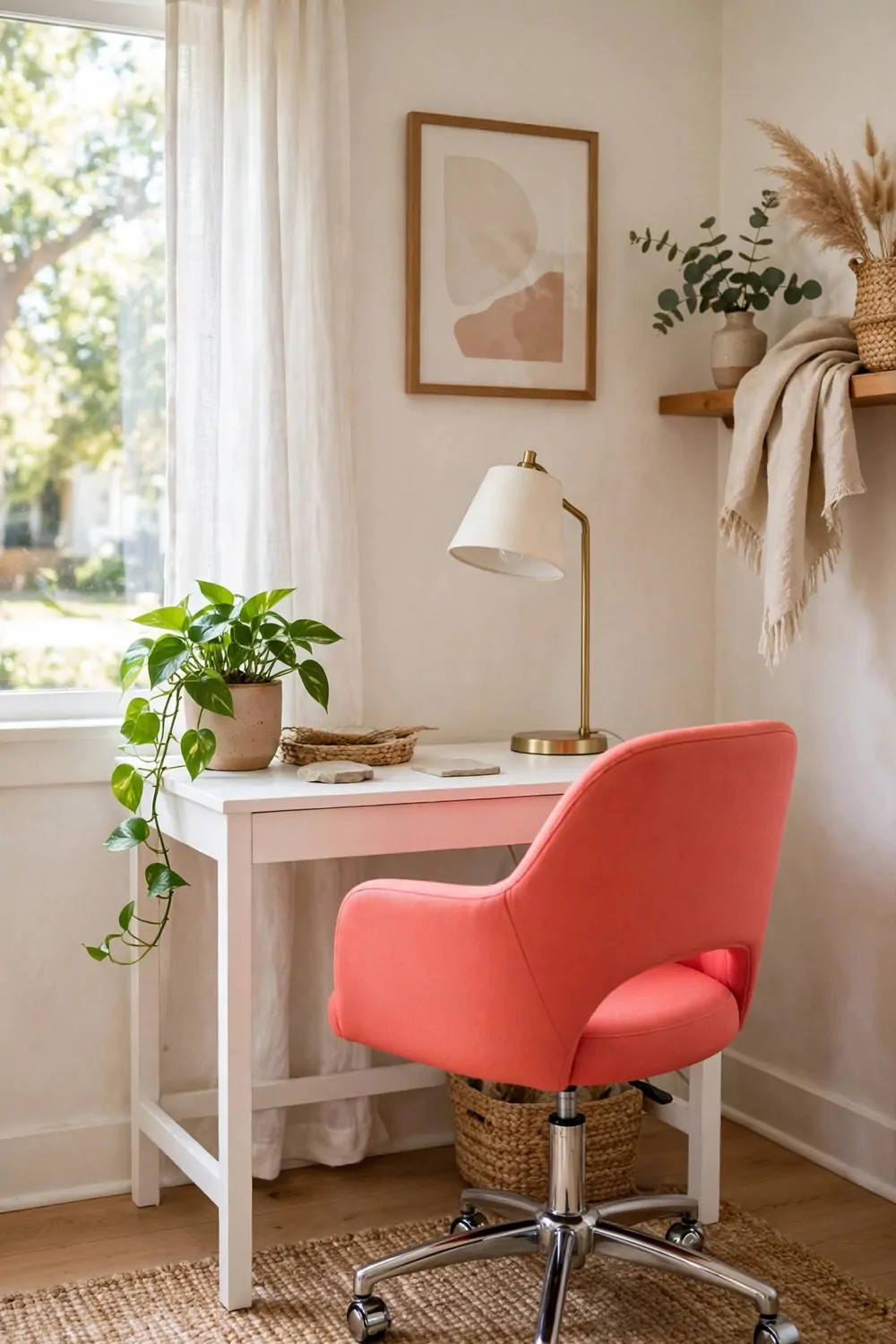
A boring chair makes a boring workday. A chair with a pop of color makes the whole room feel like play, and it makes sitting down feel like less of a chore.
Pick one bright color for the chair. Coral, teal, mustard yellow, bubblegum pink. The chair is small, so a loud color never overwhelms the room. It is one happy spot in the middle of everything.
Make sure the chair spins. A swivel chair lets you turn to the shelf, turn to the window, turn back to the desk, all without standing up. In a small room, spinning beats walking. Your knees will thank you.
Check the seat height before you fall in love with the color. Your feet should rest flat on the floor, and your elbows should sit level with the desk. A pretty chair at the wrong height will hurt your back by lunch.
Add a small cushion if the seat is hard. A round cushion in a second color is fun and soft at the same time. It also stops you sliding around when you spin too fast.
Keep the chair as the only loud color in its corner of the room. If the chair is coral, the rug under it should be calm. If the chair is teal, the cushions should be plain. One pop per corner is the rule that keeps play from turning into noise.
Roll the chair away at the end of the day. Tuck it under the desk. A tidy room in the evening makes a fresh start in the morning, and it takes about four seconds.
A fun chair is not a silly buy. You sit in it for hours every day. It should make you smile when you sit down, not just hold you up while you work.
6. The Pegboard That Grows With You
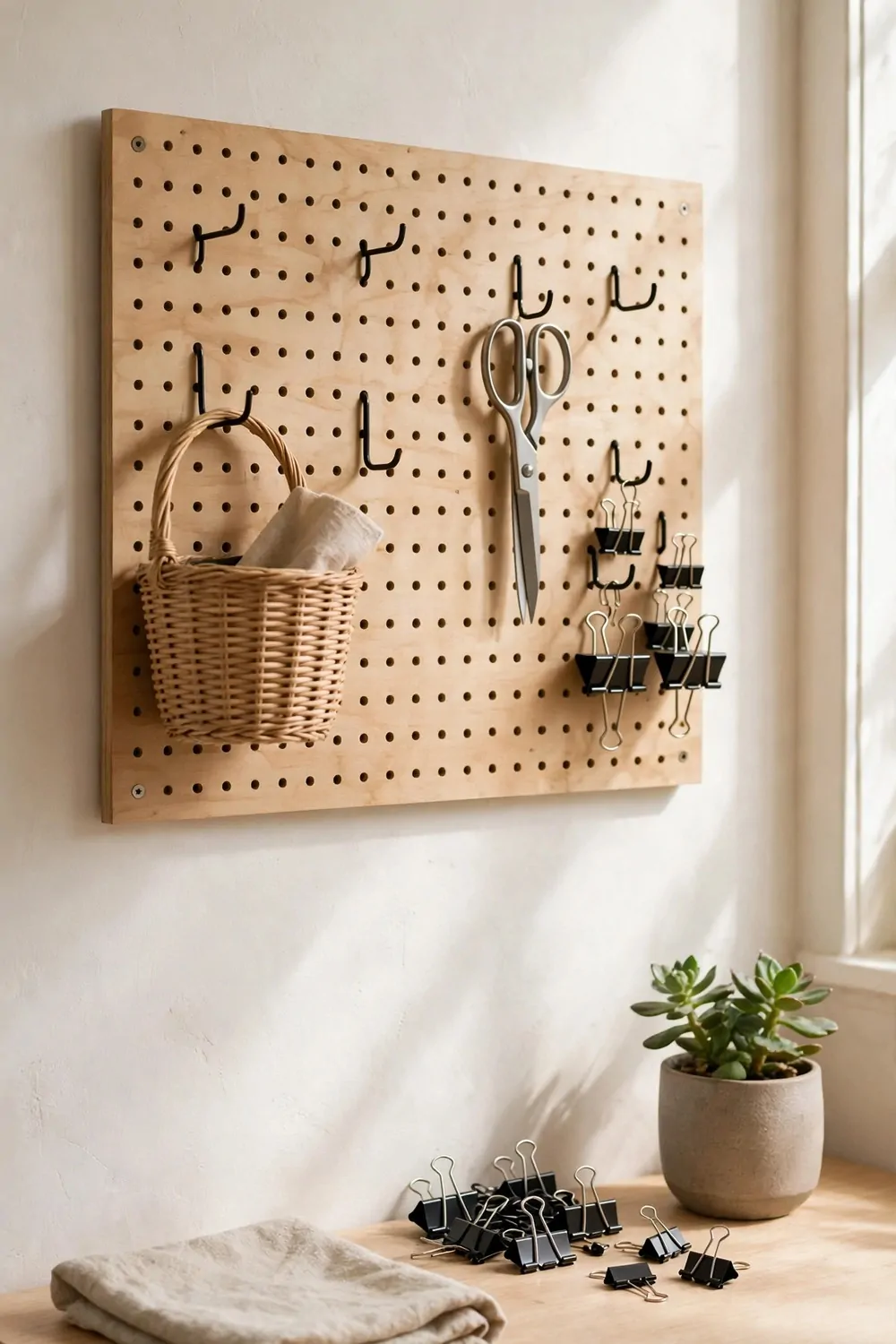
A pegboard is a flat board full of little holes, and it is the most flexible wall in any office. Hooks, baskets, and shelves clip into the holes, and you move them whenever you like.
Hang the pegboard on the wall right beside your desk, at arm’s reach. You want to grab a pen or a pair of scissors without standing up. If the board is across the room, it is just wall art.
Start with a few hooks and one small basket. That is enough. A pegboard that starts empty and fills up slowly stays useful. A pegboard loaded on day one with every tool you own turns into a junk wall.
Here is what lives on my pegboard most days:
- Scissors and tape, on two hooks at the top
- A small basket for pens and pencils
- A clip for the papers I need this week
- A tiny shelf for my phone charger and earbuds
- One hook kept empty, for whatever today brings
Paint the pegboard to match your wall, or paint it a bright color and let it be the art. A mint green pegboard on a white wall looks fresh. A plain wood pegboard on a color wall looks calm. Both work.
Move things around once a month. Your work changes, so your board should change too. A hook that held scissors last month might hold headphones this month. The board never minds.
Keep the bottom of the board above desk height. Things hanging low will bump your keyboard or knock your mug over. Give the desk top its space, and let the board live above it.
A pegboard costs little and holds a lot. One board, a bag of hooks, and a wall that works as hard as you do.
7. The Cozy Corner With Floor Cushions
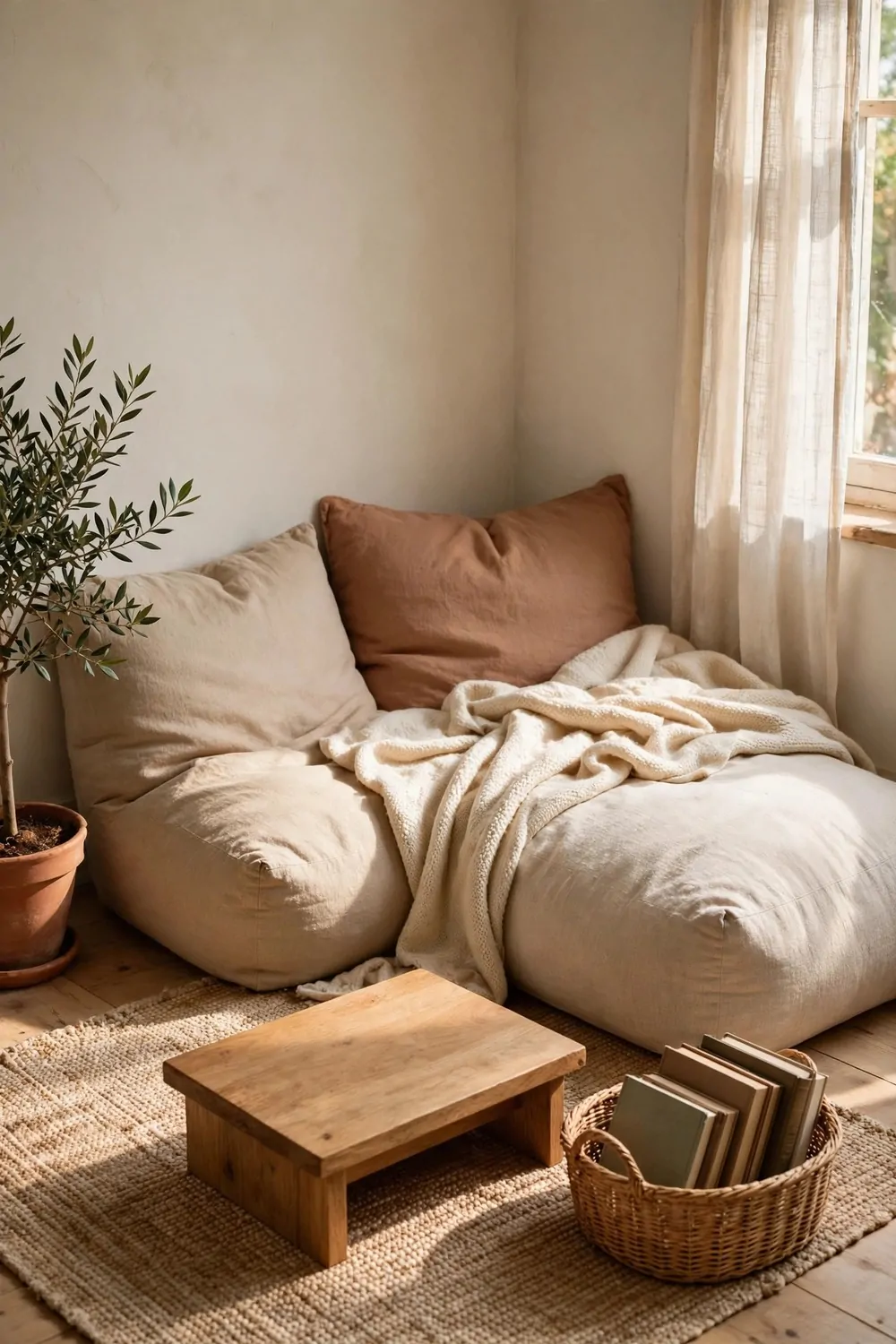
Not every work moment happens at a desk. Some of the best thinking happens on the floor, with a cushion under you and a notebook in your lap.
Pick one corner of the room for floor seating. A corner feels safe and tucked away, like a little den. Put a big floor cushion there, or two small ones stacked. The cushion should be fat enough that sitting on the floor feels soft, not hard.
Add a low table or a big tray for your mug and notebook. A tray on the floor tips over. A low table with short legs stays put, and it gives your tea a home that is not the rug.
Throw a soft blanket over the cushion. A blanket makes the corner look inviting even when nobody sits there. It also keeps you warm on cold afternoons when the heating has not caught up yet.
Keep a small basket beside the cushion for books and notebooks. A basket stops the pile from growing across the floor. When the basket is full, it is time to put things back on the shelf.
Use the corner for reading, planning, and phone calls. Save the desk for typing and focused work. Two spots in one room give your brain two modes, and switching spots can unstick a stuck afternoon.
Soft light helps here. A small lamp on the floor, or fairy lights along the wall, makes the corner glow in the evening. Bright overhead light kills the cozy feeling fast.
The floor corner costs almost nothing. A cushion, a blanket, a basket. But it gives your office a second room inside the first one, and that is a gift on long workdays.
8. The Fairy Lights That Make Work Feel Like Play
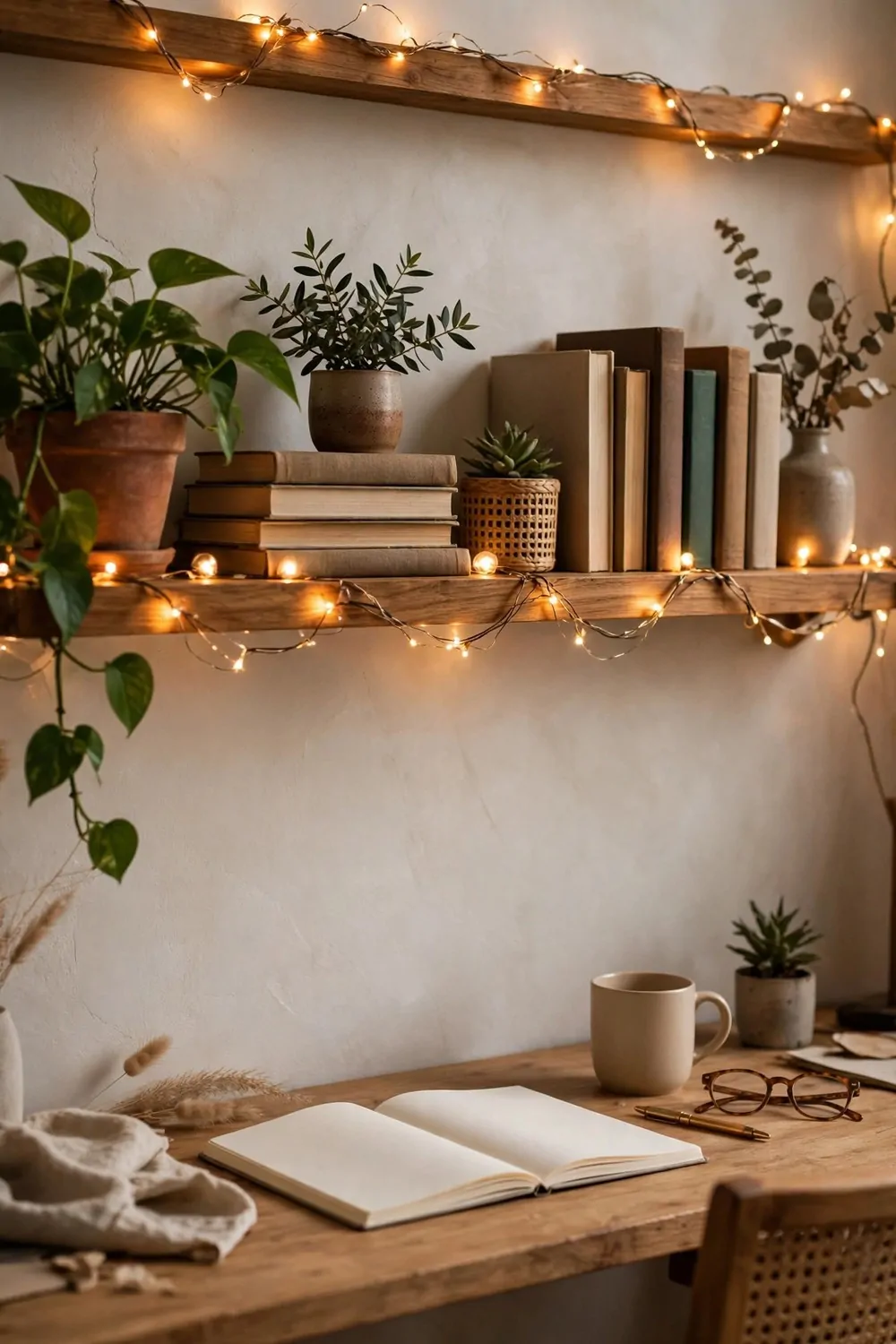
Fairy lights are tiny lights on a thin wire, and they turn a plain office into a magical one in about five minutes. No tools. No holes. Just a string of warm light.
Drape them along a shelf, not across the ceiling. A shelf lined with lights glows softly and lights the things on the shelf. Lights across the ceiling can glare into your eyes and make the room feel like a party that never ends.
Pick warm white lights, not colored ones. Warm white looks cozy and grown-up. Colored flashing lights look fun for a day and then drive you a little mad by week two. Warm and steady wins.
Plug them into a timer plug if you can. A timer that switches the lights on at four in the afternoon means you walk into a glowing room after lunch. It feels wonderful every single day, and you never have to remember the switch.
Keep the wire tidy. A loose wire hanging down the wall looks messy and catches on sleeves. Run the wire along the back edge of the shelf with tiny clear clips. The lights show. The wire does not.
Do not put lights behind your monitor. A glowing screen plus glowing lights behind it fights your eyes all day. Lights belong on the side wall or the shelf wall, never right behind the screen you stare at.
Fairy lights also fix a dark corner without a new lamp. A corner that felt dead in winter suddenly glows, and the whole room feels warmer for it. One string of lights, one dark corner, problem solved.
They cost very little and last for years. When one string fades, you just drape a fresh one in the same place. The shelf never notices the change.
Work feels different under soft light. Less like a chore, more like a cozy evening project. And on hard days, that small change in feeling is worth a lot.
9. The Color-Coded Drawer System
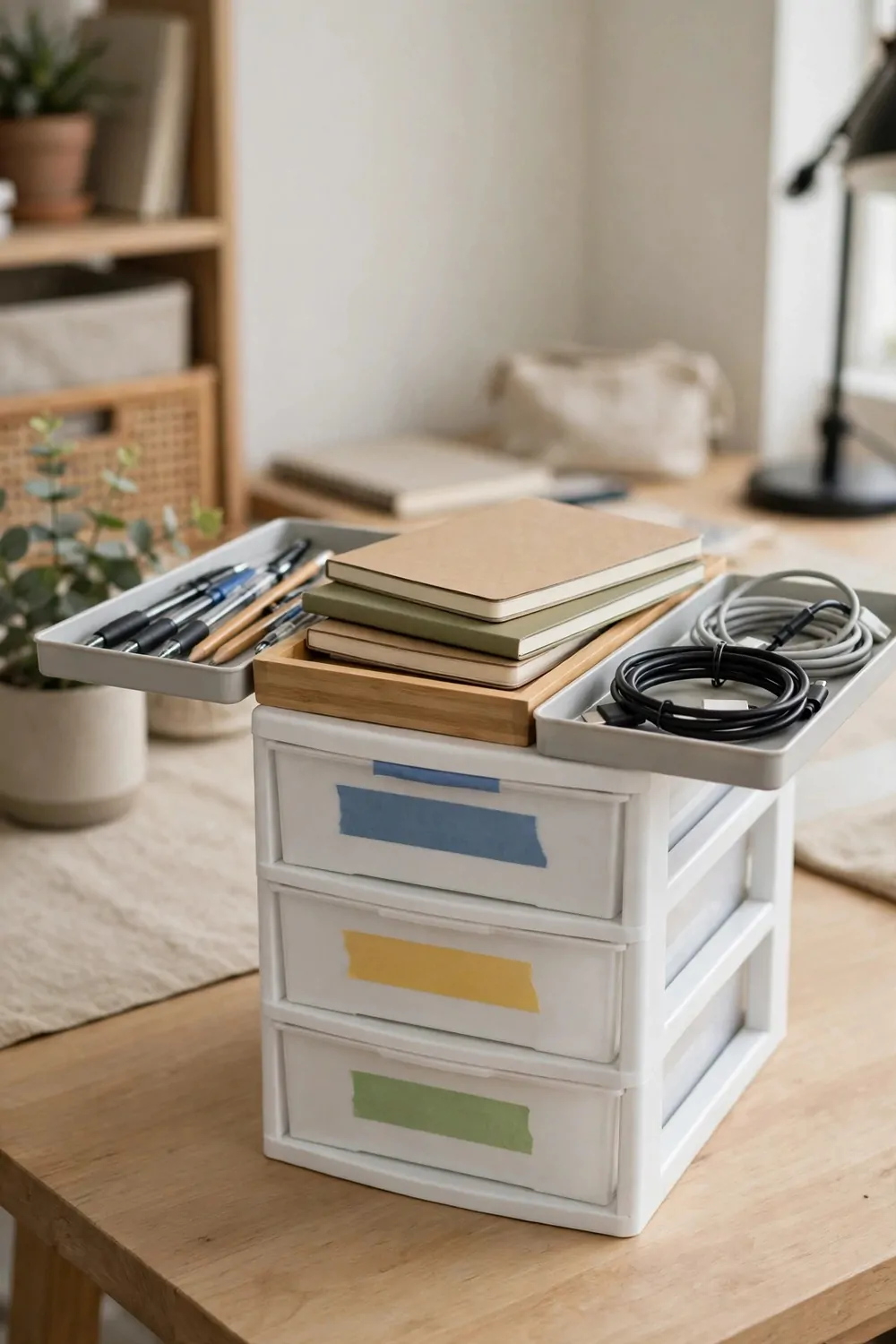
Drawers are where good intentions go to hide. A drawer with no system becomes a junk drawer in a week. A drawer with colors stays tidy for months.
Buy a small drawer unit with three or four drawers, and give each drawer one job and one color label. The label can be a strip of colored tape on the front. That is all it takes.
Here is the system that works in my office:
| Drawer | Label color | What goes inside |
|---|---|---|
| Top drawer | Yellow | Pens, pencils, scissors, tape |
| Second drawer | Blue | Notebooks and loose paper |
| Third drawer | Green | Cables, chargers, small tech |
| Bottom drawer | Pink | Fun bits, stickers, keepsakes |
Put a small tray or box inside each drawer. The tray keeps little things from sliding into a pile at the back. A drawer with trays feels organized even when you open it in a hurry.
Close the drawers all the way, every time. A drawer left open an inch catches hips, sleeves, and chair wheels. It also makes the room look untidy from the door. One push, and it clicks shut.
Empty one drawer a month. Just one. Tip it out, wipe it clean, put back only what you still use. A drawer that gets a monthly five-minute check never becomes a junk drawer.
Keep the drawer unit beside the desk, not under it. Under-desk drawers steal leg room and bang your knees. Beside the desk, the drawers are easy to reach and easy to open.
Color labels help everyone in the house. A visitor can find a pen without asking. A kid can put things back in the right drawer without reading a list. Color is a language everyone speaks.
A drawer system is not exciting to buy. But opening a drawer and finding exactly what you need, in three seconds, feels like a small win every single time.
10. The Snack Drawer That Saves Your Focus
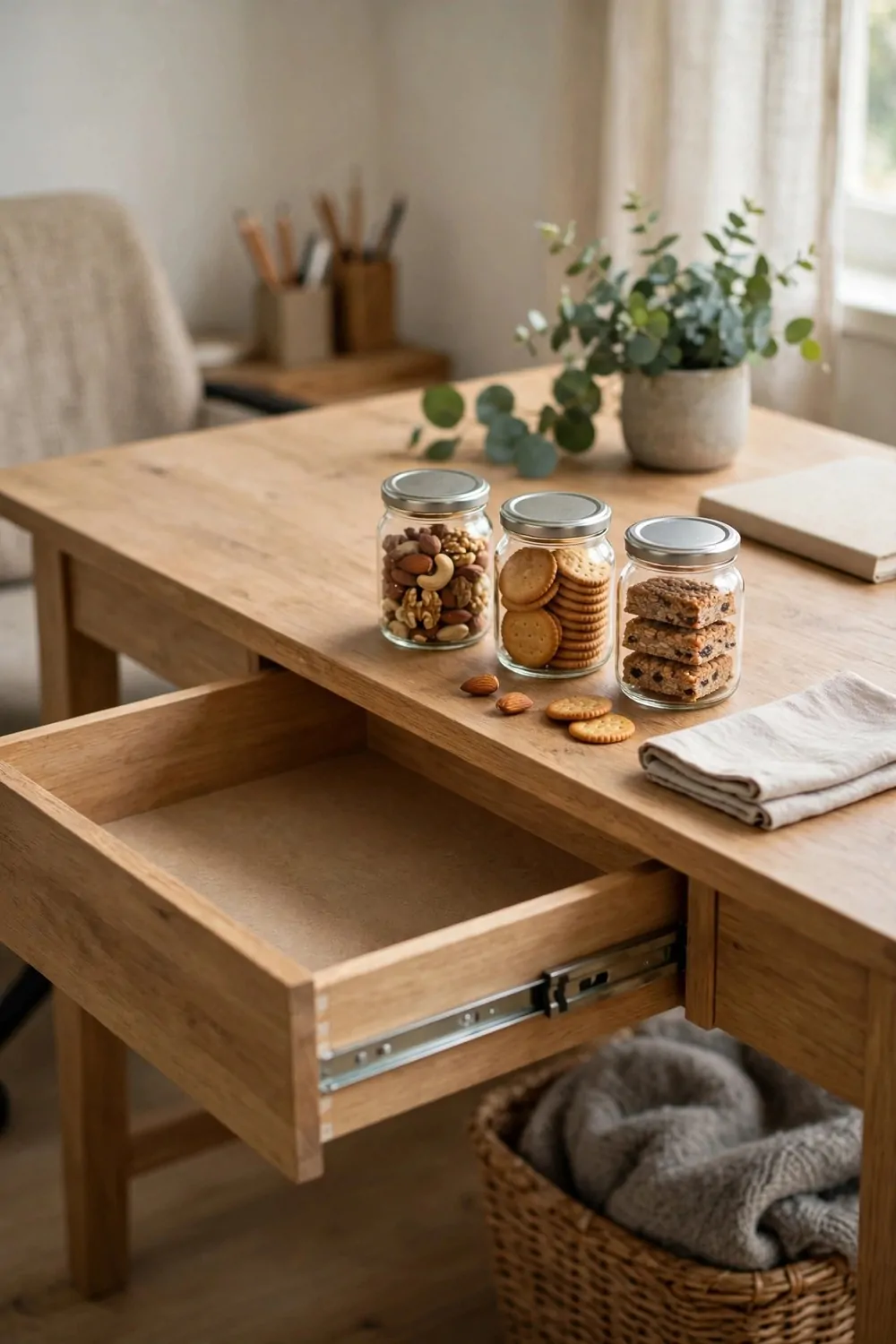
Hunger breaks focus faster than any phone notification. A snack drawer stops the kitchen trip that turns into a twenty-minute break.
Pick one drawer, or one box on a shelf, and call it the snack spot. It holds only snacks. Nothing else sneaks in. When the drawer has one job, it stays tidy.
Use small jars or boxes inside the drawer. Loose snack packets tear, spill crumbs, and make the drawer sticky. A jar with a lid keeps everything fresh and clean, and you can see what is left at a glance.
Here is what my snack drawer holds on a good week:
- A jar of mixed nuts, with a small scoop
- A box of plain crackers in a sealed tub
- A few fruit bars, standing upright like little books
- A small tin of mints for afternoon meetings
- One treat, because work should have one treat
Keep water on the desk, not in the drawer. A water bottle beside your laptop is easy to reach, and you will drink more. A bottle buried in a drawer gets forgotten until it is empty and dusty.
Restock the drawer on Sunday evening. Five minutes, once a week. Check what ran out, top up the jars, wipe the crumbs. Monday morning you starts the week with a full drawer and no excuses.
Keep the snacks plain and quiet. Crunchy snacks are fine at home, but a very loud snack on a video call is not fun for anyone. Save the loudest snacks for break time, away from the microphone.
A snack drawer is a small kindness to your future self. At three in the afternoon, when your brain is tired and your focus is gone, a handful of nuts from your own drawer can save the whole workday.
11. The Gallery Wall of Your Own Art
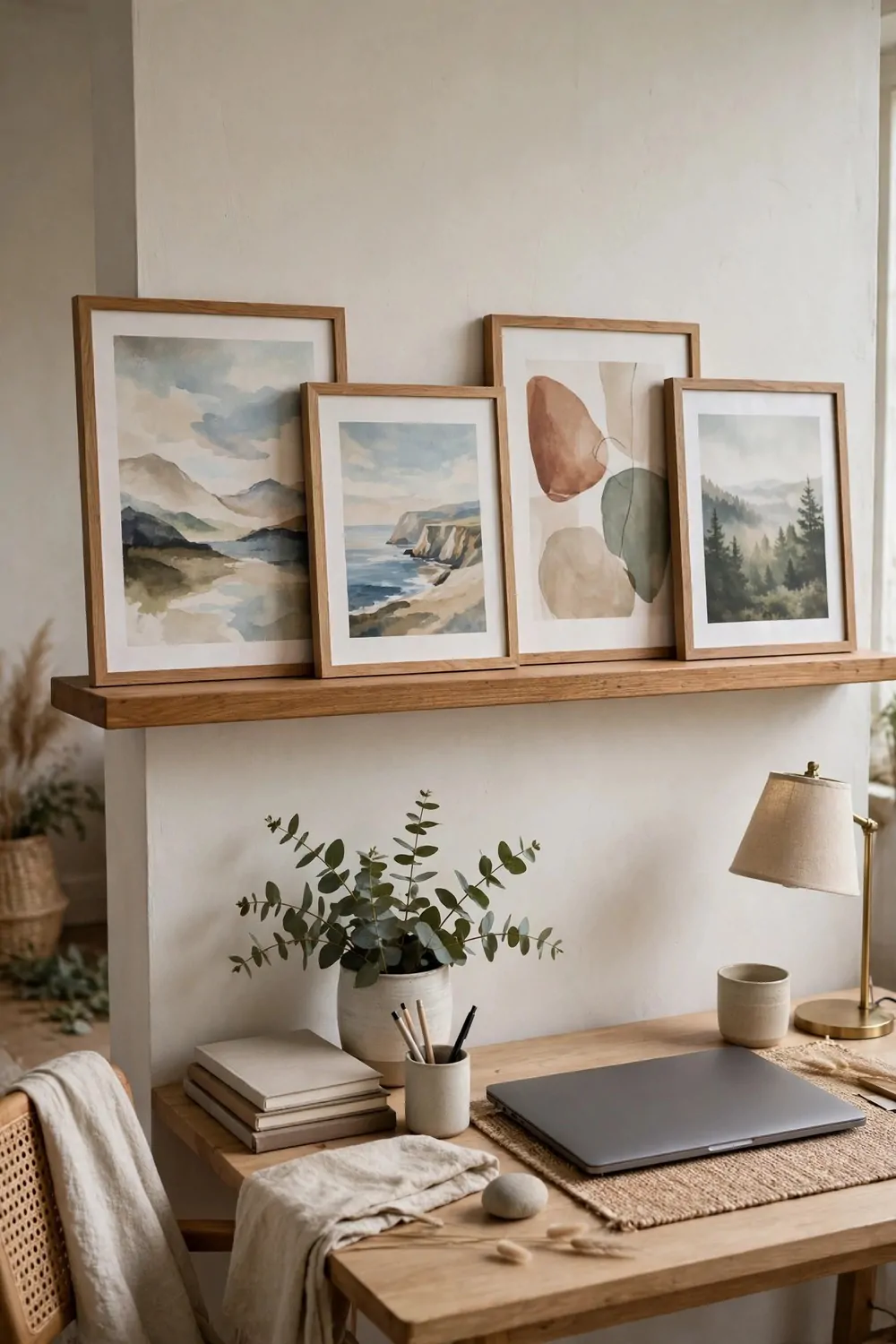
A gallery wall does not need famous art. It needs your art. Photos you took, drawings you made, prints you loved enough to frame. That is what makes it yours.
Use a picture ledge instead of hanging every frame with a nail. A ledge is a thin shelf that holds frames leaning against the wall. You slide frames along, swap them around, and never make a new hole.
Start with three frames. One big, one medium, one small. Odd numbers look natural to the eye. Three frames in a row on a ledge look finished. Ten frames crammed together look like a shop window.
Mix photos with prints and one small object. A photo of a beach, a print with a kind word, a tiny wooden shape on a stand. Different things at different heights keep the eye moving, and the wall never feels flat.
Keep the frames in two colors at most. Black and wood, or white and gold. When the frames match, the art inside gets to be wild and colorful. When every frame is a different color, the wall argues with itself.
Change one frame a month. Swap in a new photo, a new drawing, a new print. The wall stays fresh, and you get a small happy moment every month when you step back and look at it.
Hang the ledge at eye level when you sit at your desk. You look at the wall all day, so the art should sit where your eyes naturally rest. Too high and you crane your neck. Too low and the desk hides it.
Your gallery wall is the most personal spot in the office. Nobody else has your photos or your drawings. When work feels hard, one look at that wall reminds you who you are outside of work, too.
12. The Plant Jungle on One Shelf
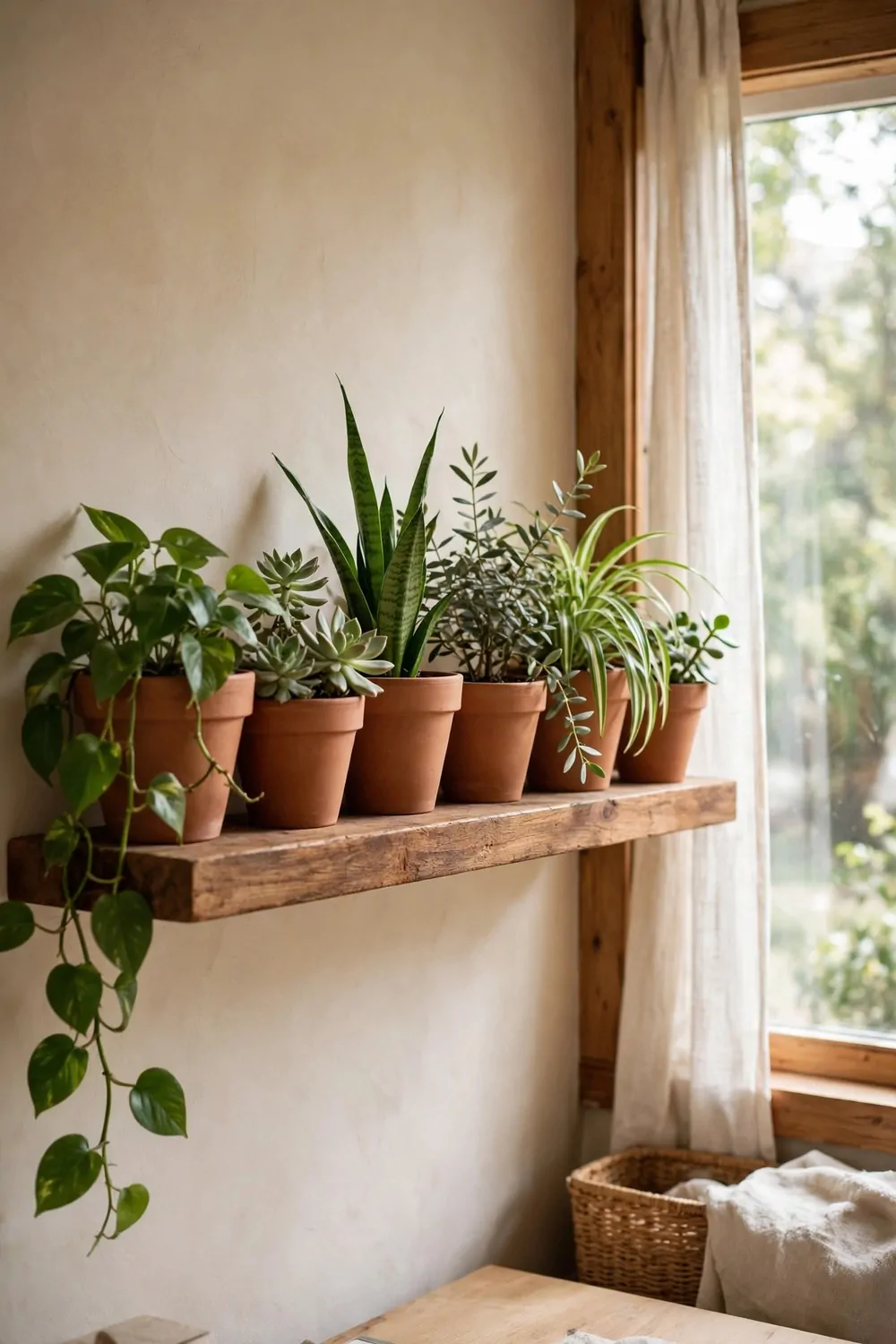
One shelf full of plants beats plants scattered all over the room. A plant jungle in one spot looks lush and intentional. Plants dotted everywhere look like they got lost.
Pick one shelf, near a window but not in harsh direct sun. Most house plants like bright light that does not burn their leaves. A shelf a few feet from a sunny window is the sweet spot.
Mix plant heights. A tall plant at one end, a trailing plant spilling over the edge, a few small pots in the middle. Different heights make the shelf look like a little forest, not a row of soldiers.
Use matching pots in one or two colors. Terracotta and cream, or sage green and white. Matching pots turn a random collection into a design. Mismatched pots turn the shelf into a garden sale.
Water all the plants on the same day each week. Same day, same habit. Check the soil with one finger first. If the top feels dry, water. If it feels damp, wait. Overwatering kills more plants than forgetting ever did.
Wipe the big leaves once a week with a damp cloth. Dusty leaves look dull on camera and in real life. Clean leaves catch the light and glow, and the whole shelf looks alive.
Keep one plant on your desk too, if you have room. A small plant beside your laptop softens the hard edges of the screen and the desk. It is like a tiny green friend who never interrupts.
Plants also help the air feel fresher, and they give your eyes a soft green place to rest between tasks. One shelf of green, one weekly watering habit, and your office breathes a little easier.
13. The Roll-Away Cart That Follows You
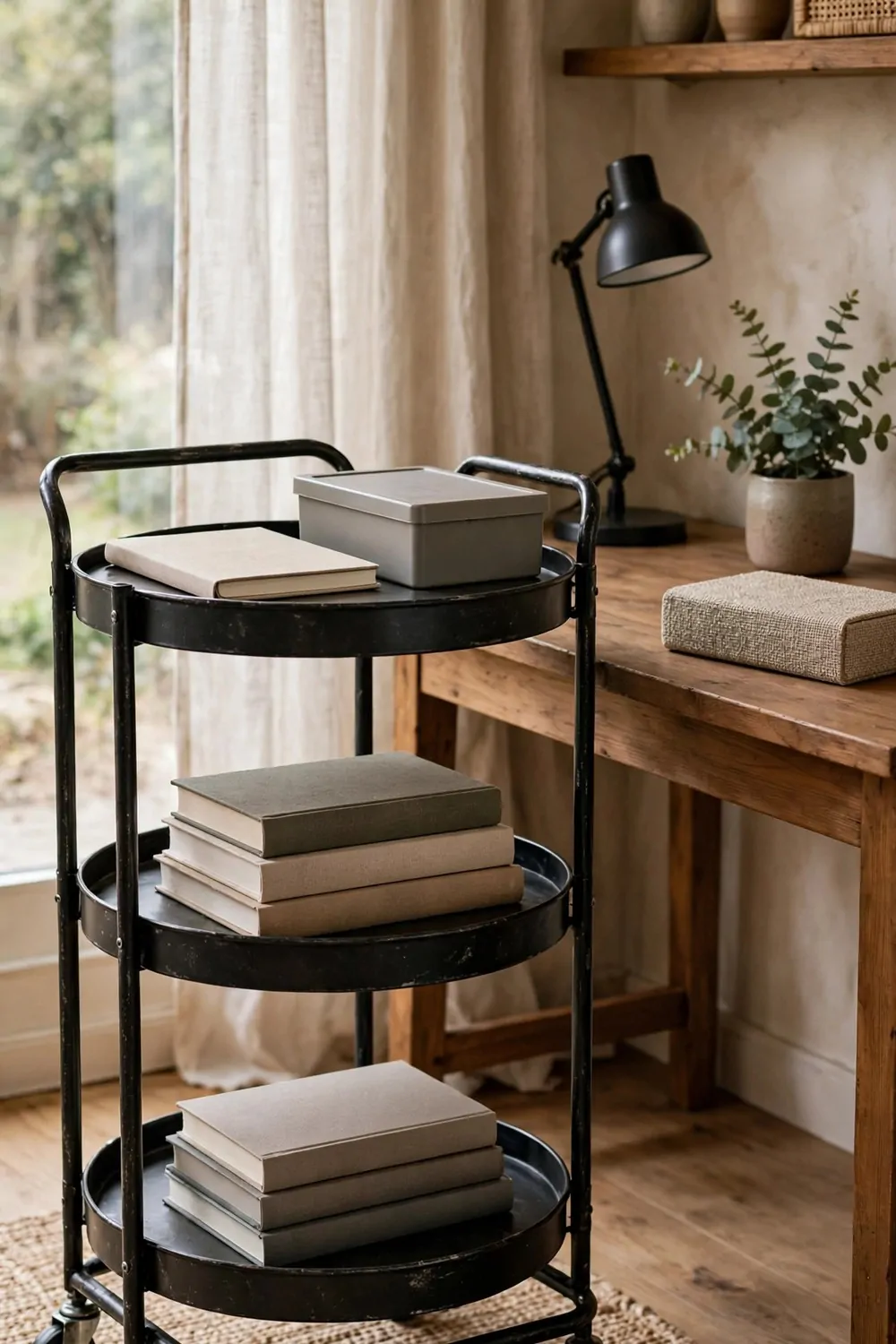
A rolling cart is a desk on wheels, and it goes wherever the work goes. Beside the desk in the morning, beside the reading corner in the afternoon, tucked in a closet at night.
Pick a cart with three tiers. Three levels hold a surprising amount, and the cart still rolls through a doorway without a fuss. Two tiers run out of space fast. Four tiers get top heavy and wobble.
Here is how the three tiers earn their keep in my office:
- Top tier: the things I use right now, like my notebook, pens, and phone charger
- Middle tier: the project box, with papers and bits for this week’s work
- Bottom tier: the heavy stuff, like books and a water jug, low down where they keep the cart steady
Put the heavy things on the bottom, always. A cart with books on top tips over when you roll it fast. A cart with books at the bottom rolls smooth and steady, like a little train.
Lock the wheels when the cart is parked. Most carts have a small brake on two of the wheels. One tap with your toe, and the cart stays put. No brakes, and the cart slowly drifts away while you work.
Use the cart for one project at a time. When the project ends, empty the cart, wipe the tiers, and start fresh. A cart that holds five old projects becomes a rolling junk pile, and nobody wants to roll that anywhere.
A rolling cart is also perfect for shared rooms. When someone else needs the space, you roll your whole office into a corner in ten seconds. Your work stays together, and the room stays shared.
The cart costs less than a small bookcase, and it works harder. It is a desk, a shelf, and a storage box, all on wheels.
14. The Big Board for Big Ideas
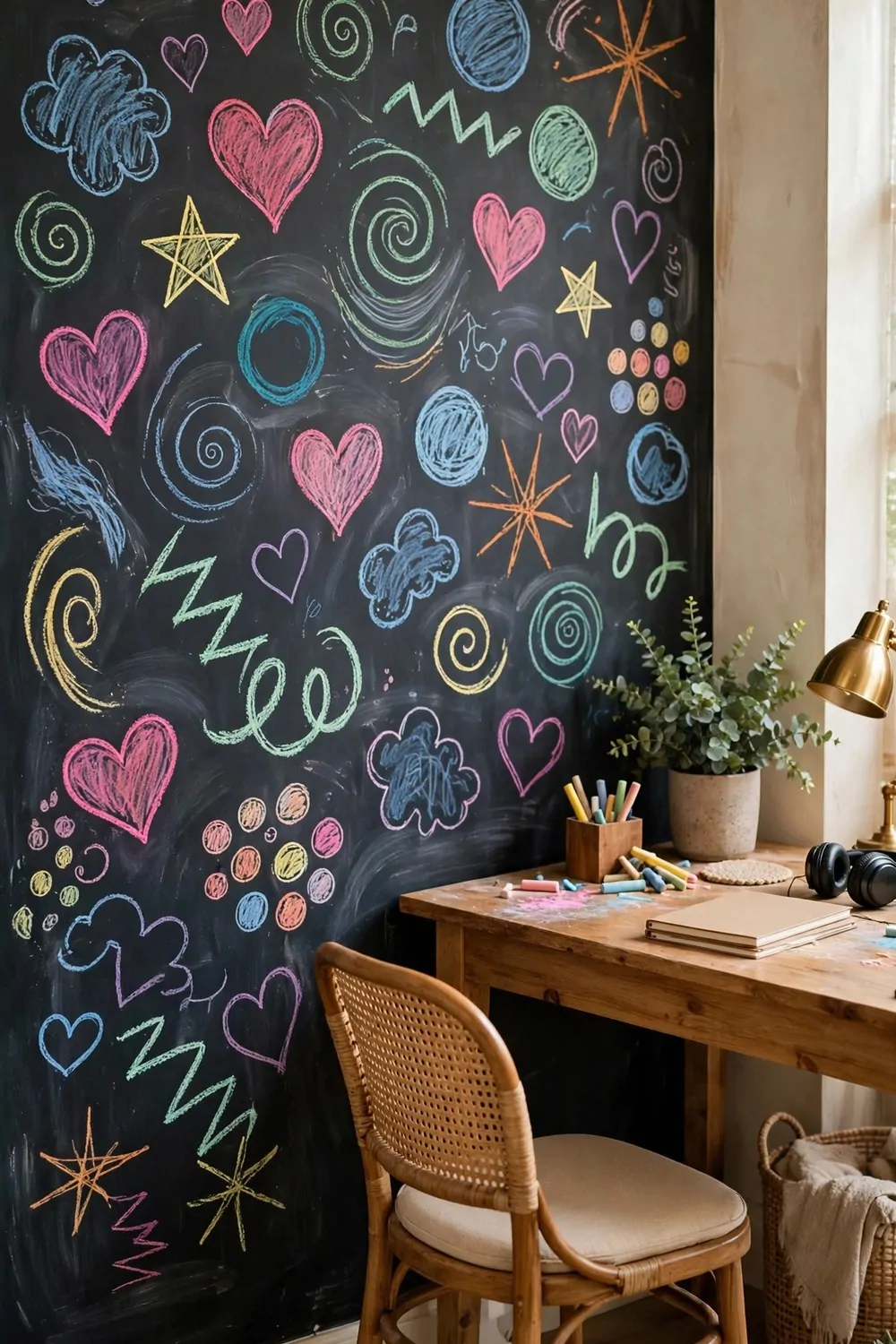
Big ideas need a big surface. A sticky note on a laptop is too small for a big plan. A whole wall board gives your ideas room to spread out.
Pick one wall, or one big board, and make it your thinking space. A chalkboard wall, a whiteboard, or a corkboard wall all work. The best one is the one you will actually use.
Here is how the three board types compare:
| Board type | Best for | Watch out for |
|---|---|---|
| Chalkboard | Big lists and weekly plans | Chalk dust on the floor |
| Whiteboard | Fast notes and mind maps | Markers that dry out fast |
| Corkboard | Pinning photos and tickets | Pins that fall out over time |
Keep the board at arm’s reach from your desk. You want to stand up, write one line, and sit back down. If the board is in another room, your ideas will stay in your head, where they fade fast.
Wipe the board clean once a week. A board full of last month’s plans stops being useful and starts being wallpaper. Friday afternoon is a good time. Wipe it, and Monday starts with a clean slate.
Use big writing. Small writing on a big board wastes the whole point. Write words you can read from your chair. If you cannot read it from the desk, write it bigger.
Add one fun thing to the board, not just work. A photo, a kind note, a doodle. A board that is only deadlines feels like a boss staring at you. A board with one happy thing feels like your own space.
A big board turns thinking into something you can see. Ideas stop swirling in your head and start sitting still on the wall, where you can move them around until they make sense.
15. The Soft Rug That Marks Your Zone
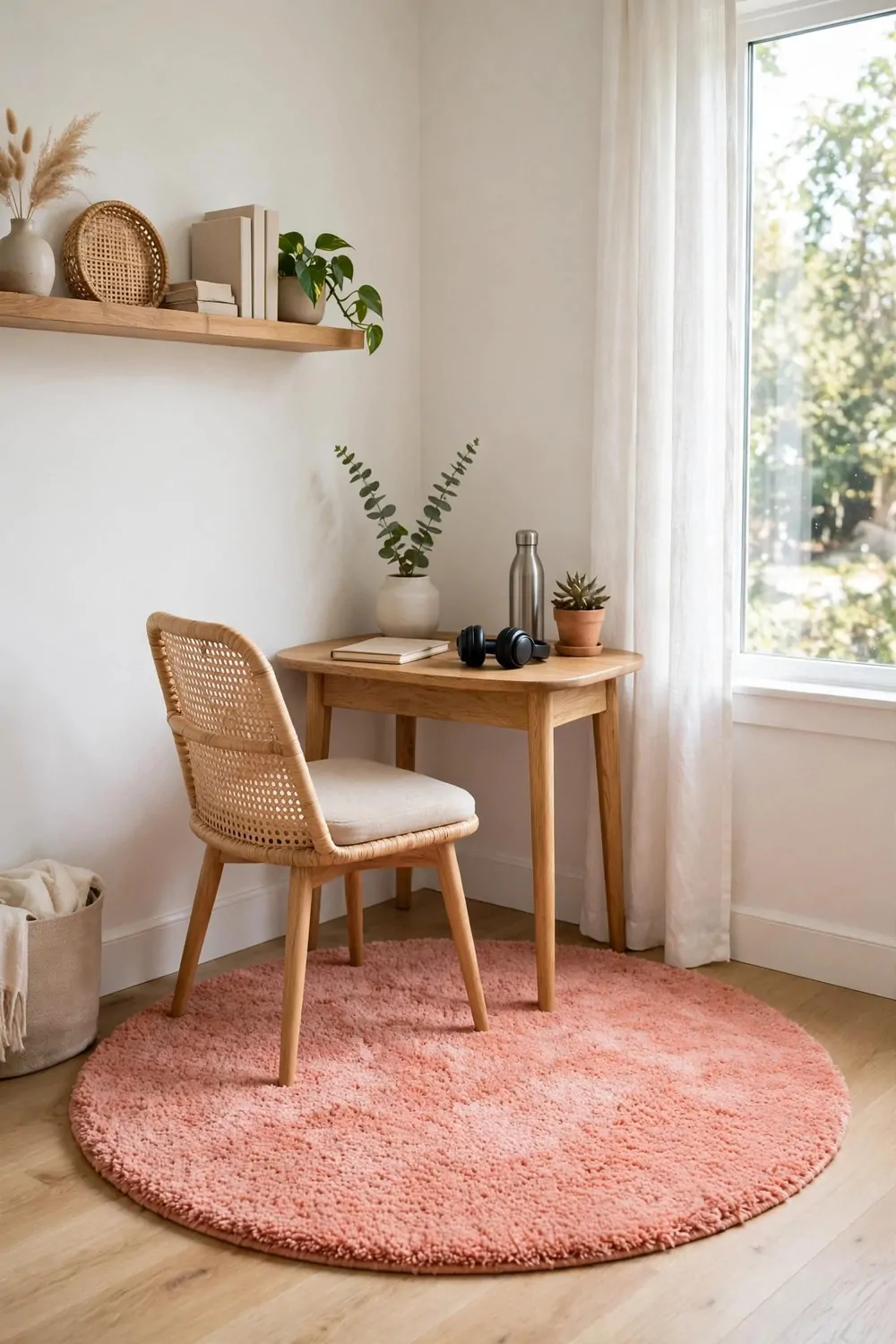
A rug does more than warm your feet. In an open room, a rug draws a line and says, this spot is the office. Everything on the rug is work. Everything off the rug is home.
Pick a rug big enough for the desk and the chair, with room to roll back. A rug that stops under the desk legs makes the chair catch on the edge every time you move. Measure the desk zone, then add a foot on every side.
Round rugs work beautifully in small offices. A round rug softens all the straight lines of desks and shelves, and it makes the zone feel playful. A circle on the floor is also a clear signal. Step onto the circle, and it is work time.
Choose a rug you can clean easily. Low pile beats deep shag in an office. Crumbs shake out, chair wheels roll smooth, and a quick vacuum once a week keeps it fresh. A deep rug eats chair wheels and holds every crumb for months.
Keep the rug color joyful but not loud. A soft coral, a gentle blue, a warm mustard. The rug is big, so a very loud color can take over the whole room. Let the rug be warm, and let the small things be bright.
Slide a rug pad underneath. A pad stops the rug sliding across the floor when you roll your chair, and it adds a soft layer under your feet. A sliding rug is annoying. A rug that stays put feels solid and safe.
Shake the rug outside once a month if you can. Fresh air and a good shake do more than a vacuum for a small rug. It comes back in smelling like outside, and the colors look brighter.
A rug is the cheapest way to build a room inside a room. No walls, no doors, no building work. Just a soft circle on the floor that tells your brain where work begins.
16. The Lamp That Changes Color With Your Mood
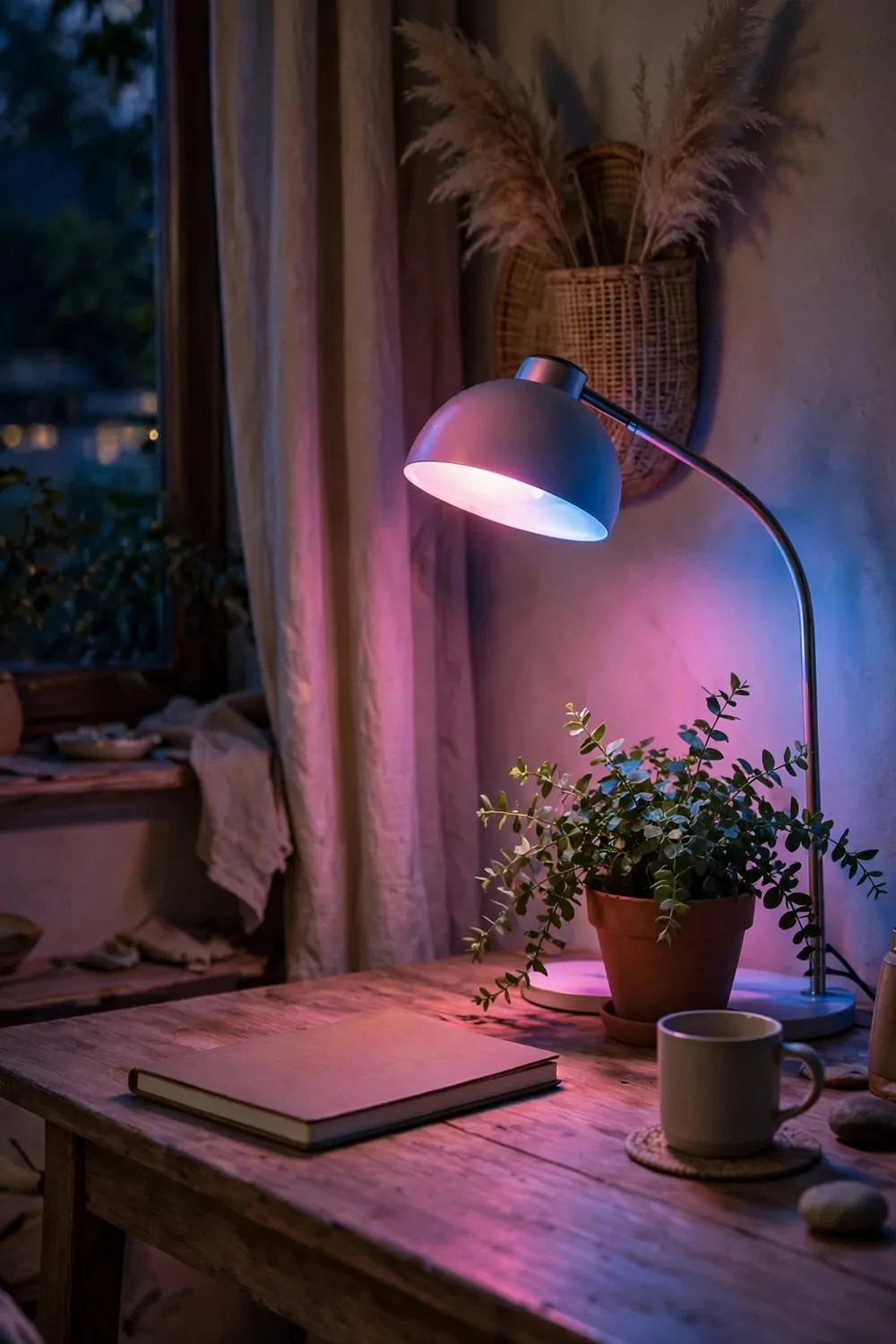
Most lamps do one thing. They shine one color, at one brightness, forever. A color-changing lamp does something better. It matches the mood of your workday.
Set the lamp to warm white in the morning. Warm light feels gentle when you are waking up, and it makes the room feel like a cozy kitchen at breakfast. Your eyes relax, and the day starts soft.
Switch to bright cool white for focused work. Cool light feels alert and clean, like a fresh page. Use it for the two hours when you need to think hard and get things done.
Turn the lamp pink or blue in the evening. A soft color glow tells your brain the hard work is done. It is wind-down light, the kind that makes a room feel like a calm evening instead of an office that forgot to close.
Keep the lamp on the desk, at the back corner, away from your screen. Light from the side or behind the screen is kind to your eyes. Light shining straight into your face from the front is tiring by lunchtime.
Use the lamp app or remote, not the wall switch. A lamp you change from your chair gets changed. A lamp you have to stand up and fiddle with stays on one setting all year. Easy controls make the habit stick.
Do not use wild flashing modes while you work. A lamp that pulses or cycles through colors is fun for five minutes and distracting for the other fifty-five. Steady colors only during work hours. Save the party mode for Friday evening.
A color-changing lamp costs little more than a normal lamp. But it gives your office three moods in one small object, and that is a bargain for a room you sit in all day.
17. The Hideaway Office That Closes at Five
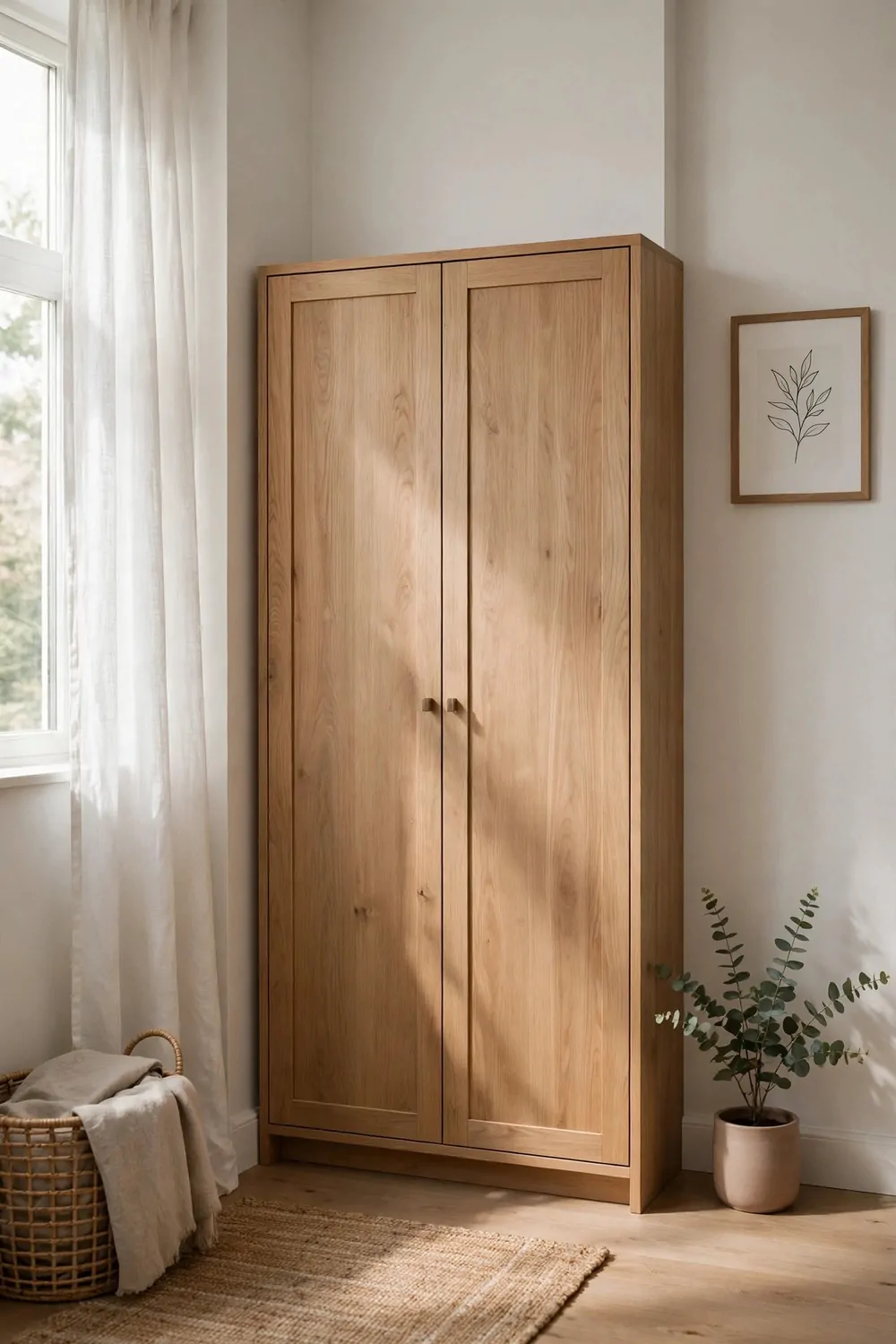
The best office trick of all is an office that disappears. At five o’clock, you close a door, fold a desk, or slide a panel, and the room is just a room again. Work is over. Home begins.
A cabinet desk is the simplest hideaway. It looks like a cupboard against the wall. Open the doors, and a desk folds down with shelves inside. Close it at night, and nobody would guess it holds an office at all.
A folding desk on the wall works the same way in a smaller space. Fold it up, and the wall is blank. Fold it down, and you have a desk in ten seconds. It is perfect for rooms that do two jobs, like a bedroom or a living room corner.
Keep only the daily tools inside the hideaway. Laptop, notebook, pen cup, charger. If the cabinet holds everything you own, closing it becomes a wrestling match. A hideaway should close in one smooth move, every day.
Make closing the office a little ritual. Shut the laptop. Put the notebook on the shelf. Fold the desk. Close the doors. That small routine tells your brain the workday is done, even when you work ten steps from your sofa.
The outside of the hideaway should look nice in the room. Paint it the wall color, or pick a wood finish that matches your shelves. A hideaway that looks good closed is furniture. A hideaway that looks like a storage box is just a box.
This is the idea players love most in room-building games. A room that transforms with one move. In real life, it works just as well, and your evenings feel longer when work is out of sight.
That is all seventeen. Seventeen playful ideas, and not one of them needs a big budget or a builder. A color wall, a tiny desk, a shelf of plants, a lamp that changes color, a desk that folds away at five.
You do not need to do all seventeen this weekend. Pick three. The rainbow wall, the cubby shelf, and the fairy lights. Those three alone will make your office feel like a room you actually want to sit in.
Then add one more next week. Slow setup beats fast setup every time, because slow setup stays. Fast setup ends up in a box in the storage room by winter.
Save the ideas you love. Start with the one that made you smile. Your office does not need to look like every other office. It needs to look like you, with color, comfort, and a little bit of play in every corner.