24 Home Library Aesthetic Looks You’ll Want to Save

If I won a small lottery tomorrow, the first thing I would buy is not a car. It would be a rolling library ladder.
A real one, with little brass wheels and a rail it slides along. I would push it down my wall of books every evening just because I could. Honestly, that tells you everything about me.
A home library is not just a place for books. It is a feeling you walk into. Quiet. Warm. Smelling faintly of old paper and the tea you are about to drink.
I have spent years saving photos of home library aesthetic looks that make my heart stop scrolling. Dark moody ones. Bright airy ones. Tiny closet ones. Every one of them is worth saving for later.
Here are my 24 favorite looks. Save the ones you love, and steal the small moves that make them work in a real home.
1. Go Dark and Moody With the Walls
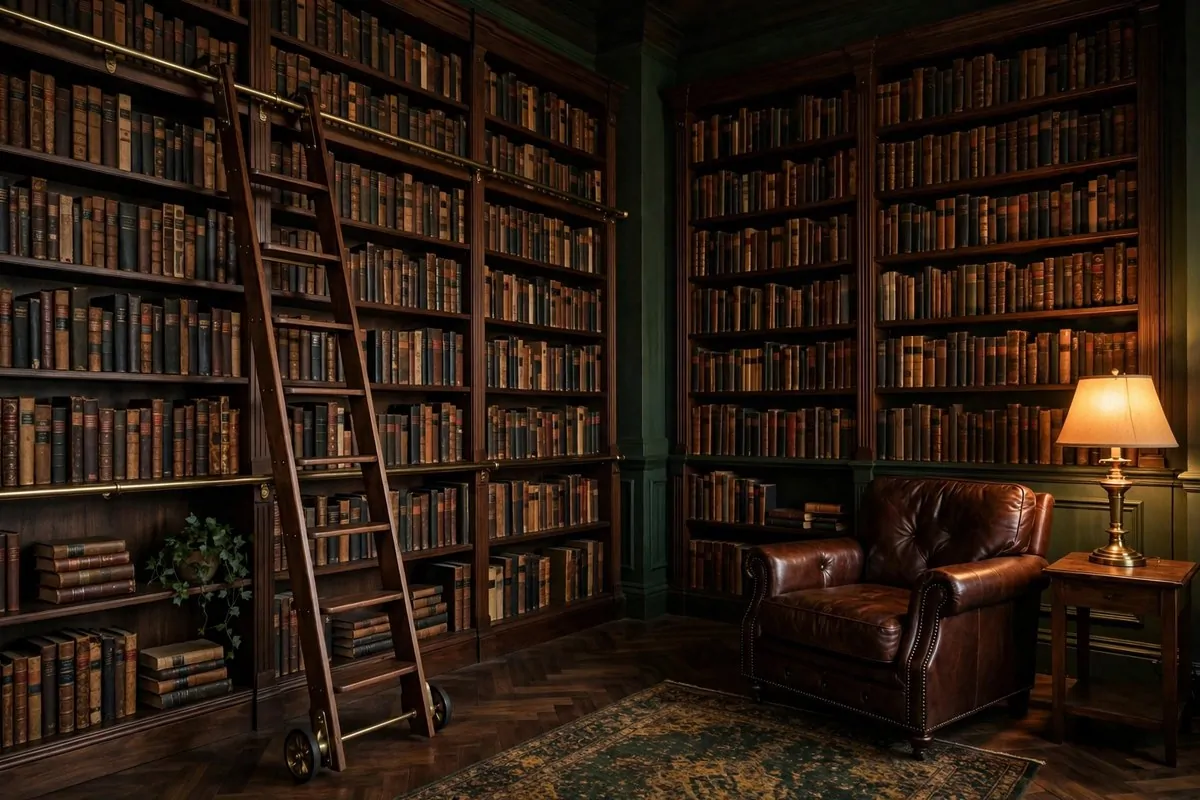
A light colored room feels fresh and open. A dark library feels like a secret.
That is the whole trick of the dark academia look. You paint the walls deep forest green, or charcoal, or even a rich oxblood red. Then the shelves fade into the shadows and the books seem to glow.
I painted one wall in my reading corner a deep green last spring. Just one wall, because I was scared to commit. Within a week I painted the rest.
Dark walls also hide clutter better than white ones. A pile of books on a dark shelf looks intentional. On a white shelf it looks messy. Funny how that works.
Pick a matte or eggshell finish for the paint. Glossy dark walls reflect the lamp light in a way that feels cold. You want the light to sink in, not bounce.
If you rent and cannot paint, do not panic. There are dark peel and stick wallpapers now that look like old damask or vintage botanical prints. They peel off clean when you leave.
Keep the ceiling a shade lighter than the walls so the room does not feel like a cave. White ceiling, dark walls, warm lamps. That mix is the whole recipe.
One more small thing. Dark rooms need more light than you think, just warm and low. Put a lamp on every shelf level if you can. The shadows between the books are what make the room feel alive.
2. Add a Rolling Library Ladder
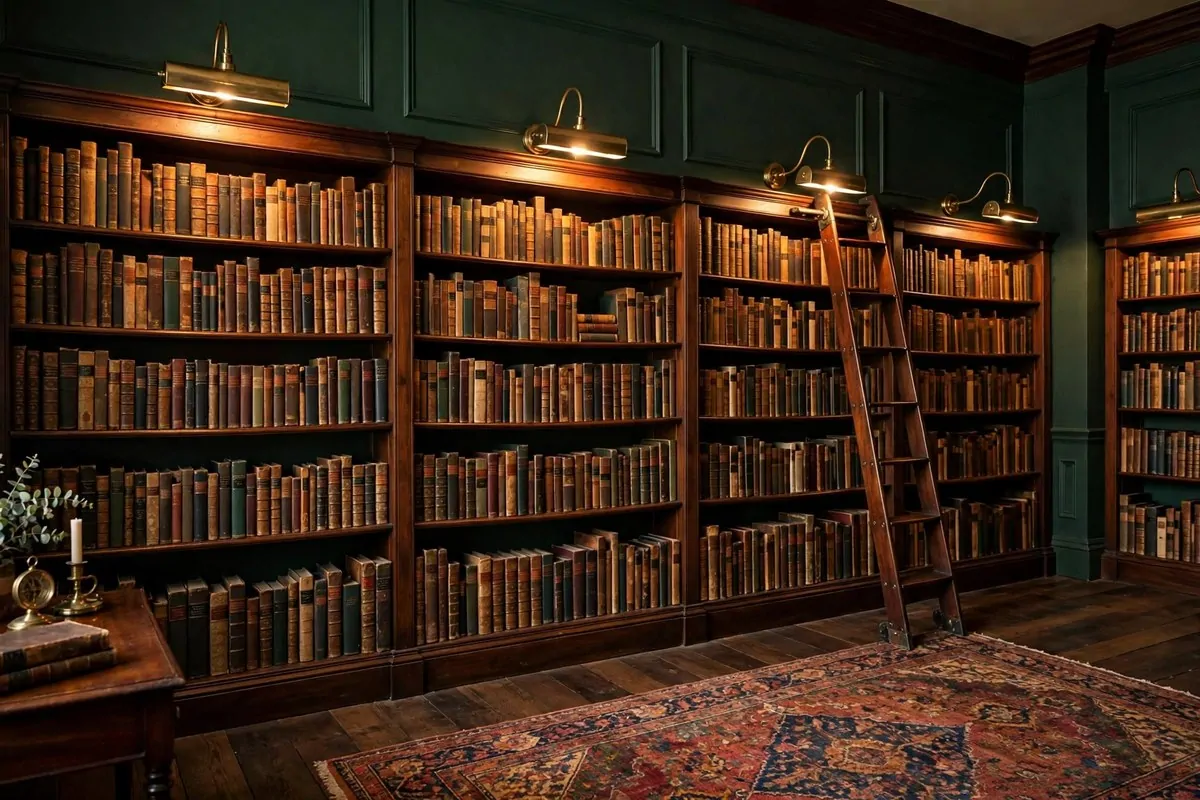
This is the dream. The one I would buy with my lottery money.
A rolling ladder makes tall shelves actually usable. No more chairs wobbling under your feet when you want the book on the top shelf. You just slide the ladder along its rail and climb up like you own a bookshop.
They come in kits now, and they cost less than you think. A simple pine ladder with a metal rail kit can be put up in one weekend. You do not need a carpenter.
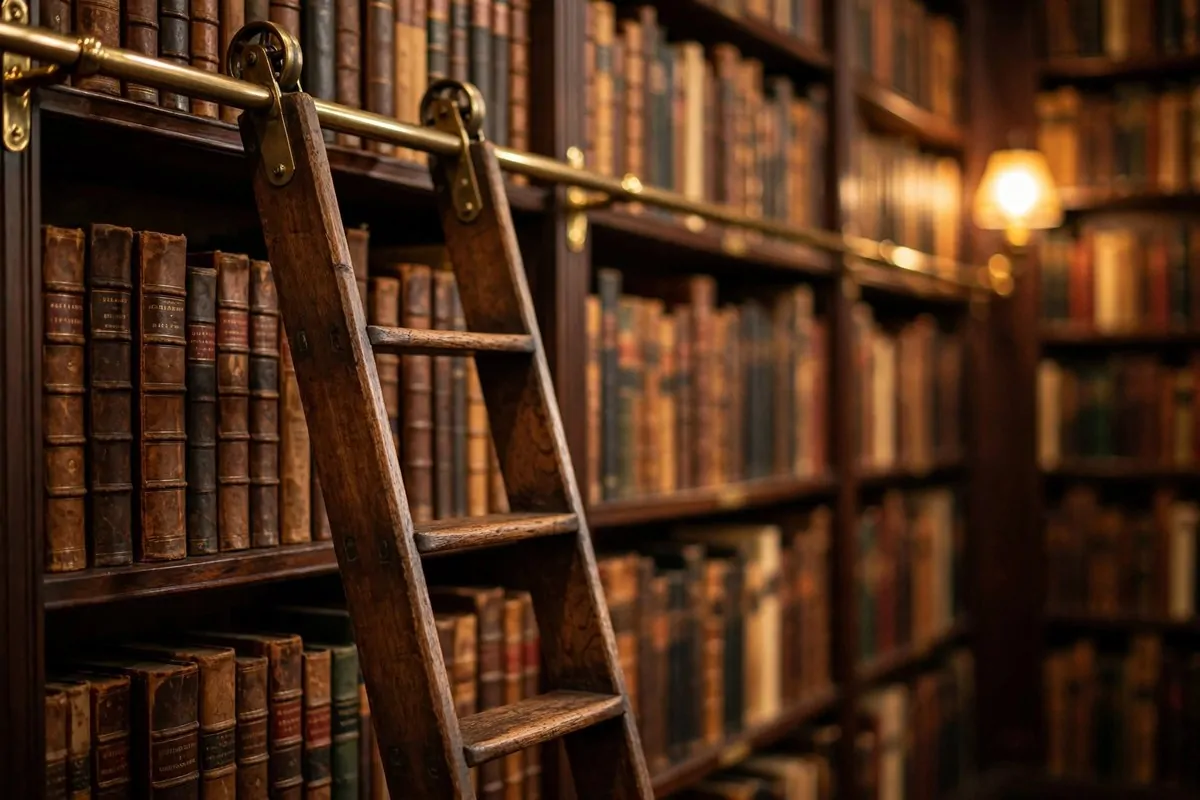
The rail matters as much as the ladder. Brass looks classic. Black metal looks modern. Pick the one that matches your shelf hardware and it will look like it was always there.
Make sure the rail is screwed into the studs, not just the drywall. A ladder with a person on it is heavier than it looks. This is the one place I say do not cut corners.
Kids love these ladders a little too much. Mine treats ours like a ride at a fair. I put a small hook lock on it so it stays parked when no one is using it.
Even a ladder that does not roll changes the room. A hooked wooden ladder leaning against a bookcase says library in a way nothing else does. It is the single most library-looking thing you can own.
Save this one for when your shelves are finally taller than you are.
3. Sink Into a Velvet Reading Chair
Every library needs one chair that nobody is allowed to sit in except you.
Velvet is the perfect chair fabric for a library. It looks rich, it feels soft against your back, and it photographs beautifully if you ever want to save the look. Emerald green, navy, or burnt orange all work with dark shelves.
The chair must be deep enough to curl up in. When you test it in the store, sit the way you actually read. Feet tucked under you. That is the only test that counts.
Add a plaid wool blanket over one arm. Not folded perfectly, just tossed. Perfect folds look like a hotel. A casual toss looks like someone actually reads there.
A small side table is non-negotiable. You need a place for your tea, your glasses, and the second book you are pretending you will read after the first one.
Secondhand velvet chairs are everywhere. People sell beautiful ones when they move. Check the legs and the seat springs, and do not worry about faded spots. Velvet wears its age well.
Angle the chair toward the room, not the wall. A chair facing into the library feels like an invitation. A chair facing a blank wall feels like a time out.
This chair will become the most fought over seat in your house. Plan for that. Buy a second cushion for the floor and call it done.
4. Light the Desk With a Brass Bankers Lamp
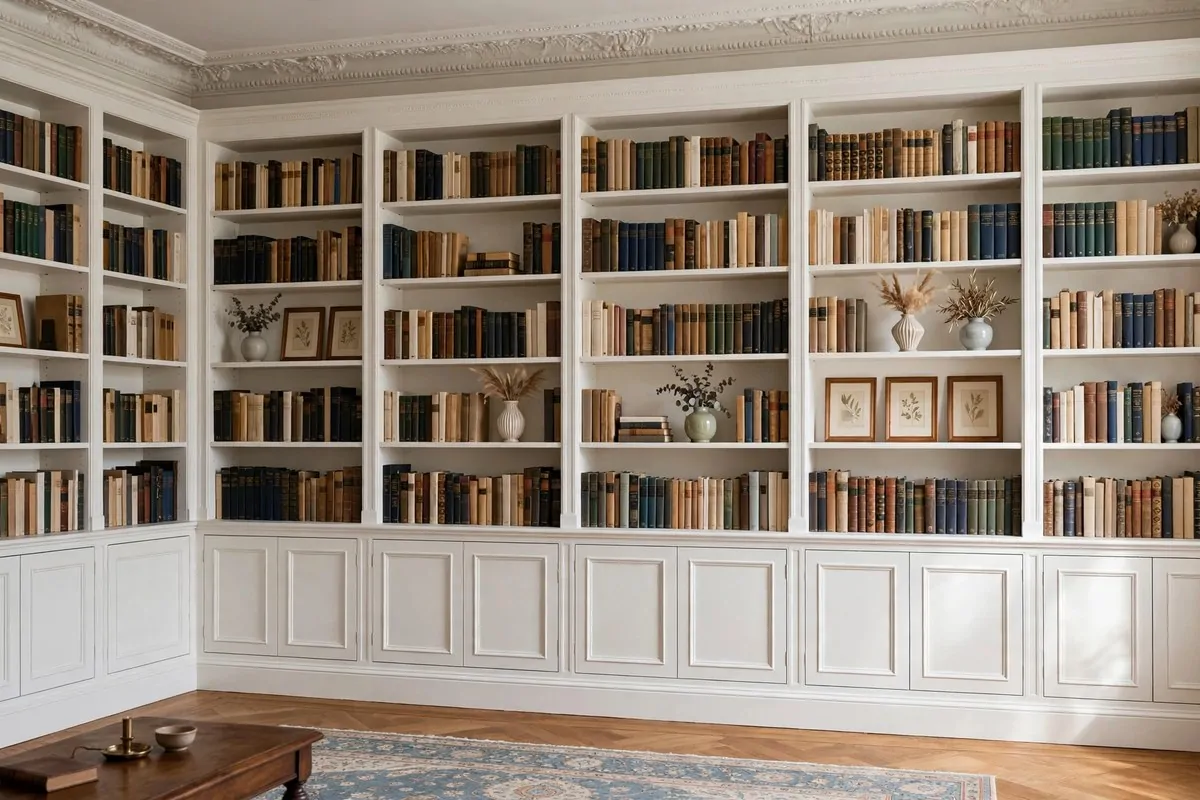
A bankers lamp is a small thing that changes the whole mood of a desk.
That green glass shade throws a soft pool of light right where you read. The rest of the room stays dim and cozy around you. It is the lighting equivalent of a hug.
They made these lamps for real banks a hundred years ago. Clerks used them to see ledgers at night. Now you can get the same look for the price of a pizza.
Put it on a wooden desk between stacks of books. Add a fountain pen if you have one, even if you never use it. The whole corner starts to look like a scene from an old film.
The trick is the bulb. Use a warm one, the yellow kind, not the bright white kind. White light under a green shade looks like a hospital. Warm light looks like candlelight.
You can also put bankers lamps on the shelves themselves. One on every third shelf turns a plain bookcase into something that glows. It is a cheap way to get that built in library lighting look.
Check the switch before you buy. The classic ones have a little brass chain you pull. It clicks in the most satisfying way. Small joy, but joy is joy.
Keep the shade dusted. Brass and glass collect dust fast in a library, and a dusty lamp throws half the light. A quick wipe once a month keeps the glow strong.
5. Read by Candlelight
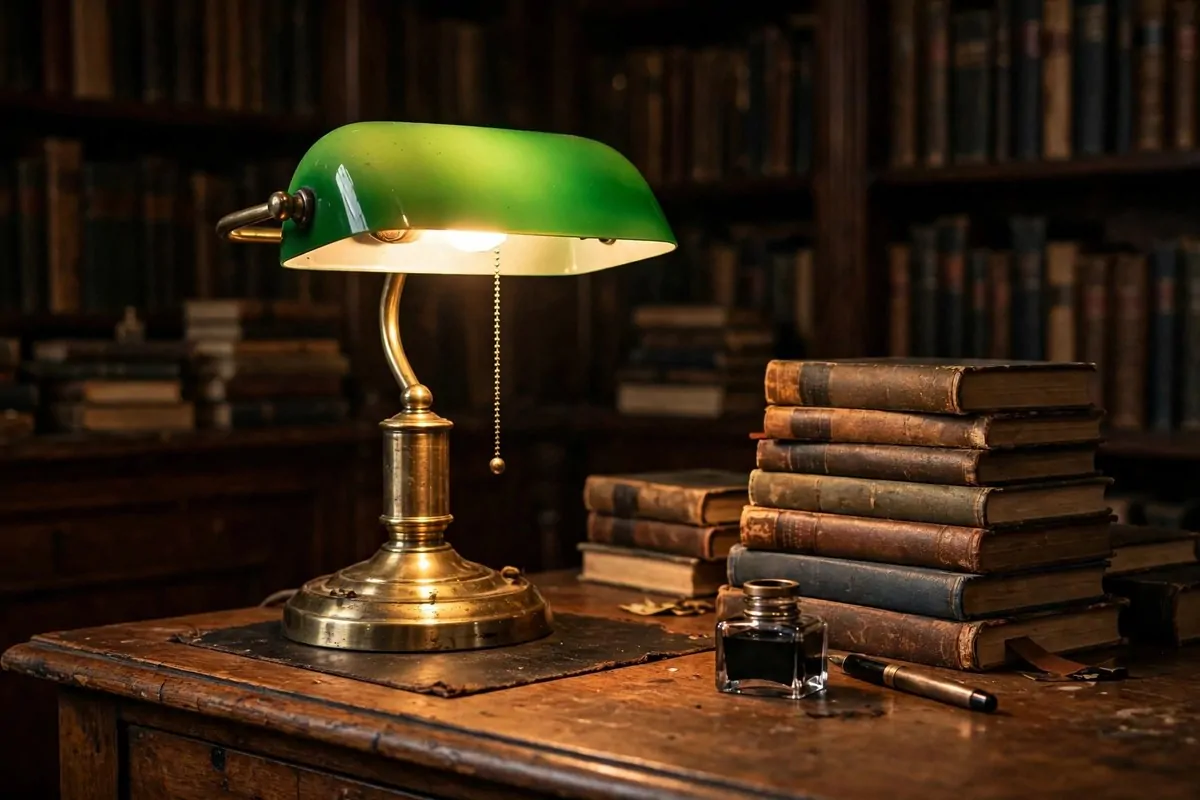
Nothing makes a library feel old and magic like candlelight.
Real candles give you that soft flicker that no lamp can copy. The shadows dance a little. The whole room breathes. Ten minutes with candles and a book feels like a different century.
Safety first though. Never leave real candles burning in a library. Books and flames are a bad match. Blow them out when you stand up, every single time.
LED candles have gotten very good. The flickering ones with real wax outsides fool me half the time. They even have timers so they turn themselves on at sunset.
Cluster candles in groups of three. Different heights look better than one tall lonely candle. Put them on a brass tray so the wax has somewhere safe to land.
Glass hurricanes around the candles make the glow softer and keep the draft from snuffing them. They also stop you from knocking a flame sideways when you reach for a book.
A lantern or two on the floor by the shelves adds height to the light. Light at different heights is what makes a room feel layered instead of flat.
The best candle corner I ever made was just a deep windowsill with five LED pillars. I sit there every rainy evening. It cost me less than one new book.
6. Keep It Bright With Light Academia
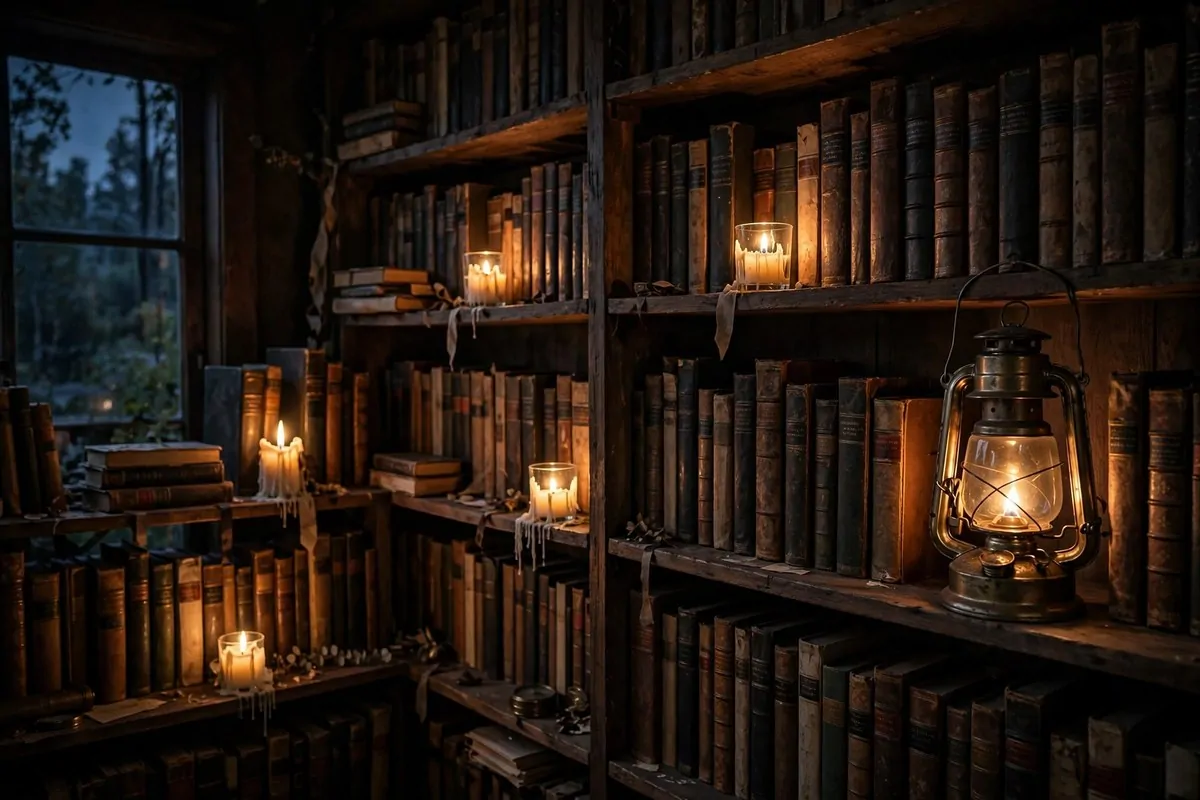
Not every library has to be dark. Some of the prettiest ones I have saved are bright enough to read the small print on a map.
Light academia is the sunny cousin of dark academia. Cream walls, white painted shelves, lots of daylight. It feels like a library in a country house on a spring morning.
This look works beautifully in small rooms. Dark walls can squeeze a tiny space. White walls push the walls back out. Your books become the color in the room instead of the walls.
Keep the furniture light too. Linen armchairs, pale wood tables, a jute or cream rug. Heavy dark furniture in a white library looks like it wandered in from the wrong house.
The books still matter here. Mix old hardcovers with paperbacks so the shelves do not look like a store display. A few stacks lying flat between the upright rows add that lived in feel.
Sunlight fades book spines over time. If your shelves face a big window, save the precious ones for a shadier shelf. The cheap paperbacks can take the sun.
A sheer curtain is the perfect library accessory for this look. It softens the light and makes dust less visible. Both good things in a room full of books.
This is the look for morning readers. If you do your reading with coffee at seven am, light academia is your style.
7. Cover a Whole Wall With Built In Shelves
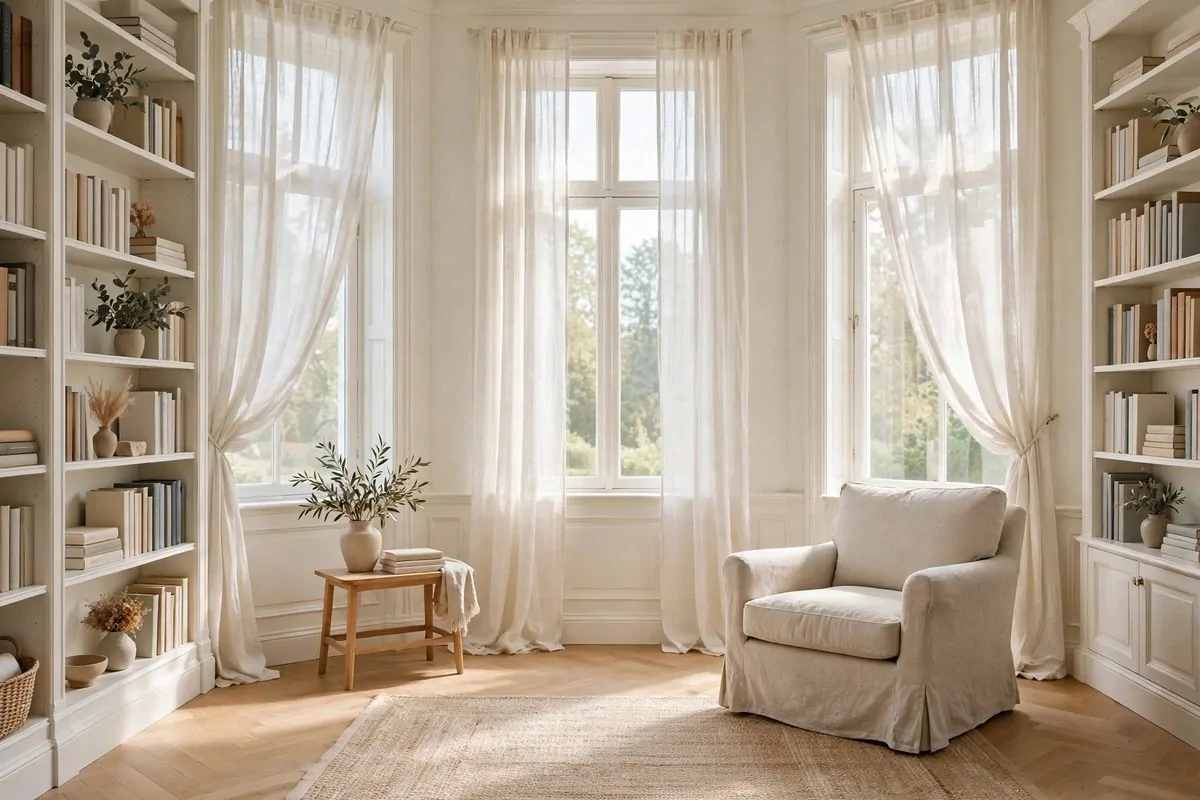
A full wall of shelves is the fastest way to say library without saying a word.
Built ins look like they grew there. They frame the room and make even a plain rental feel like it has history. Guests walk in and their eyes go straight up.
Real built ins cost real money. But here is the secret. A row of cheap bookcases with trim and one coat of paint looks like a built in for a tenth of the price. Crown molding on top, baseboard at the bottom, and nobody can tell.
Leave some breathing room on the shelves. Not every inch has to hold books. A small plant, a framed photo, an empty space. These little pauses make the full wall feel styled, not stuffed.
Vary the heights of the shelves if you can. Tall art books need tall spaces. Paperbacks look lost in tall spaces. Adjustable shelves are worth their weight in gold.
Anchor the middle of the wall with something bigger. A clock, a piece of art, a globe. It gives the eye a resting place on a very busy wall.
Paint the back of the shelves a different color for depth. Dark green behind white shelves looks amazing. It makes the books pop like they are on a stage.
A full wall of books also helps with sound. It soaks up echo and makes the room quiet. My library wall made the whole downstairs feel calmer. I did not expect that.
8. Build a Window Seat Reading Nook
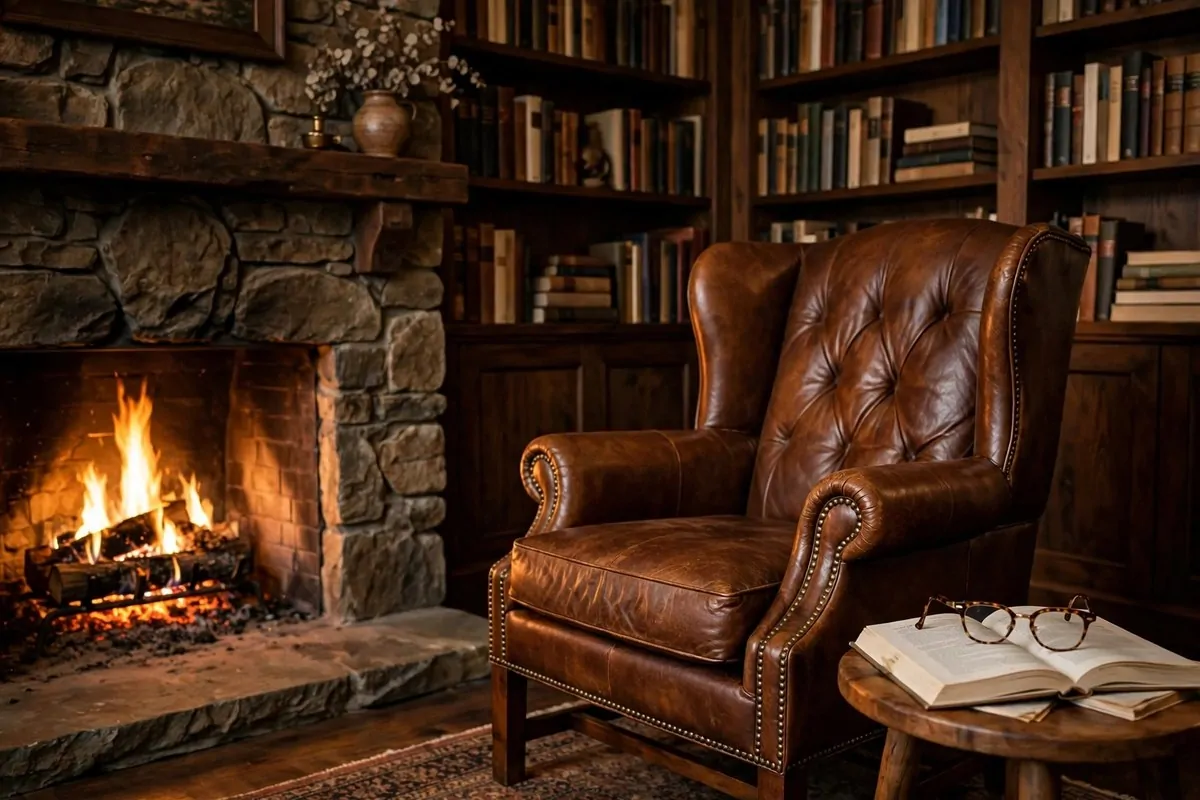
A window seat is where rain becomes entertainment.
You sit with your back against the pillows, a book in your lap, and the weather puts on a show right in front of you. I have lost whole afternoons to this setup and I regret nothing.
The cushion must be thick. A thin cushion on a hard bench is a twenty minute seat. Four inches of foam with a washable cover is a three hour seat. Thickness is everything.
Pillows go along the wall side and one on each end. You want to wedge yourself in like a cat. The cozier the wedge, the longer you will stay.
Build bookshelves right next to the window seat, or even under it. A nook with no books nearby is just a bench. Books within arm’s reach make it a library.
A reading light matters even with a window. Winter evenings get dark early. A small wall sconce or a clip lamp on the shelf keeps the nook working after sunset.
Watch out for cold glass in winter. A drafty window will chase you off the seat by December. A thick curtain you can pull across at night fixes it and adds coziness.
This is the seat everyone will fight over on a rainy Sunday. Put your name on it early.
9. Put a Leather Wingback by the Fire
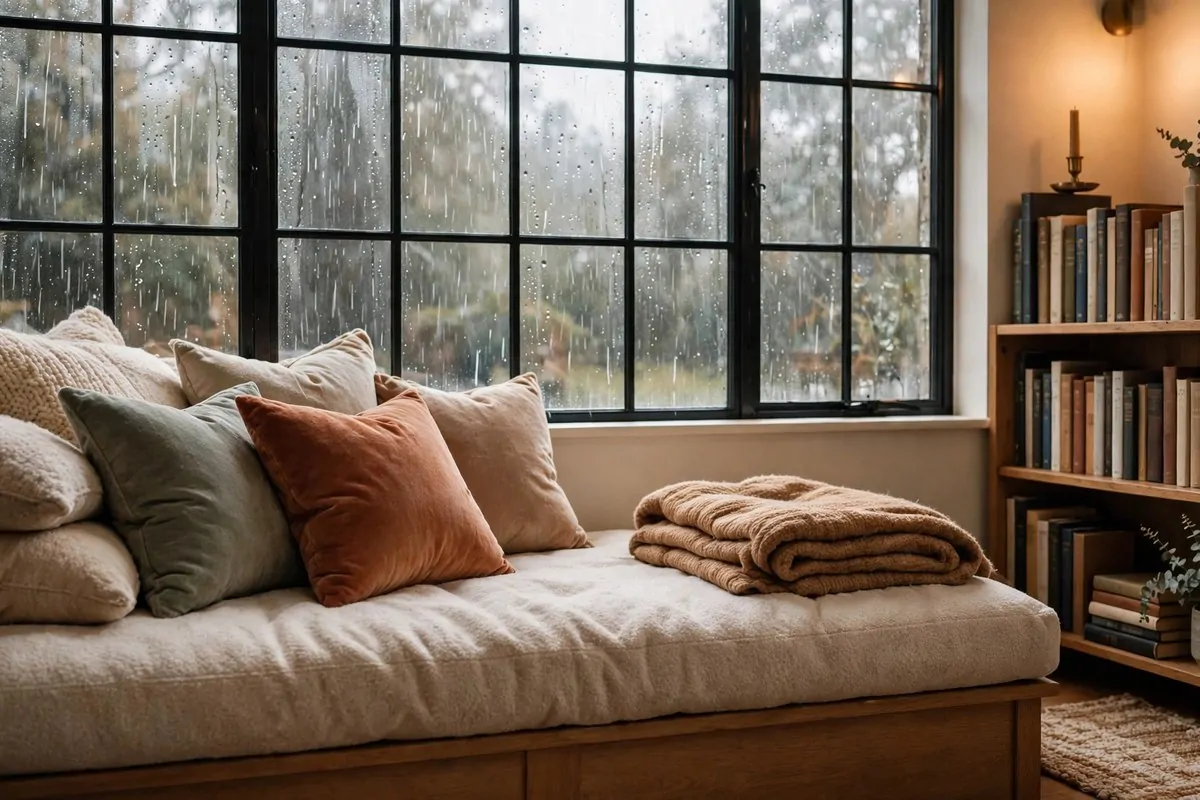
A leather wingback chair by a fireplace is the most classic library image there is.
There is a reason every old film puts the detective in this chair. The high back wraps around you. The leather creaks when you shift. You feel important just sitting there.
Real leather ages beautifully. Scratches and marks fade into a rich patina over the years. A ten year old leather chair looks better than a new one. That is a rare thing in furniture.
If you do not have a fireplace, fake it. An electric stove style fireplace gives the same glow and crackle for very little money. Your brain does not check if the flames are real.
Place the chair at a slight angle to the fire, not straight on. Angled feels relaxed and conversational. Straight on feels like you are being interviewed by the flames.
A small round table next to the chair holds the essentials. Tea. Reading glasses. The book you are actually reading, not the one you tell people about.
The leather will be cold in winter when you first sit down. Drape a wool throw over the back. Problem solved, and it looks even better.
Save this look for the corner of the library that gets the evening light. Fire plus sunset plus a good book. That is a perfect evening.
10. Hang a Gallery Wall of Vintage Prints
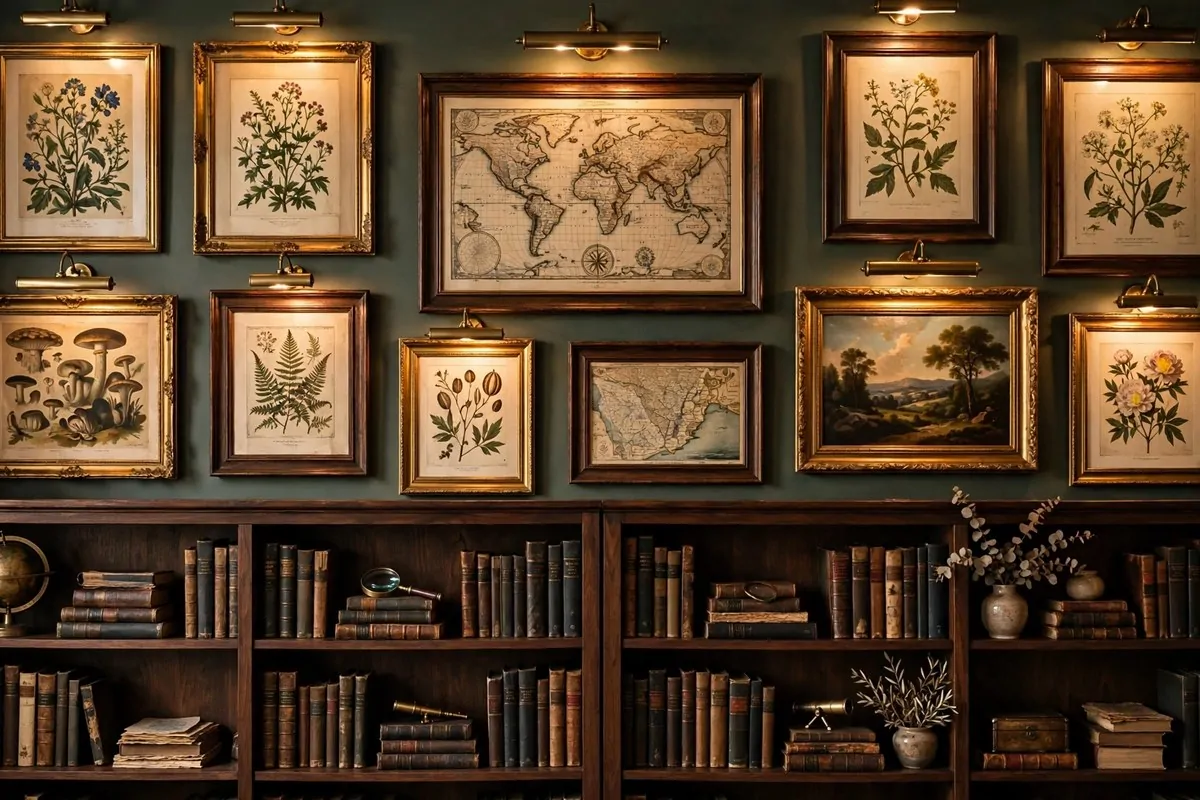
Books on the shelves and art on the walls. That is a library that feels collected over a lifetime.
Vintage style prints are easy to find and cheap. Botanical drawings, old maps, black and white portraits, scientific diagrams. Print them at home or order them online for a few dollars each.
Mix the frames. Gold ones, dark wood ones, thin black ones. Matching frames look like a hotel hallway. Mixed frames look like a person with taste.
Hang the gallery above the bookcases or on the wall between two shelf towers. Art over books is the classic library look. It fills the dead space that tall shelves leave behind.
Start with the biggest piece in the middle and work outward. Lay everything on the floor first and take a photo. Moving frames on the floor is free. Moving nail holes is not.
Keep the gaps small and even. Two inches between frames looks intentional. Six inches looks like you ran out of art.
Thrift stores are gold mines for frames. The art inside might be ugly, but the frames are often solid wood and cost almost nothing. Swap in your own prints and you have a gallery for pocket change.
A gallery wall also hides a multitude of sins. Uneven shelf tops, a patch of bad paint, a wall you do not love. Art covers all of it.
11. Sort Your Books by Color
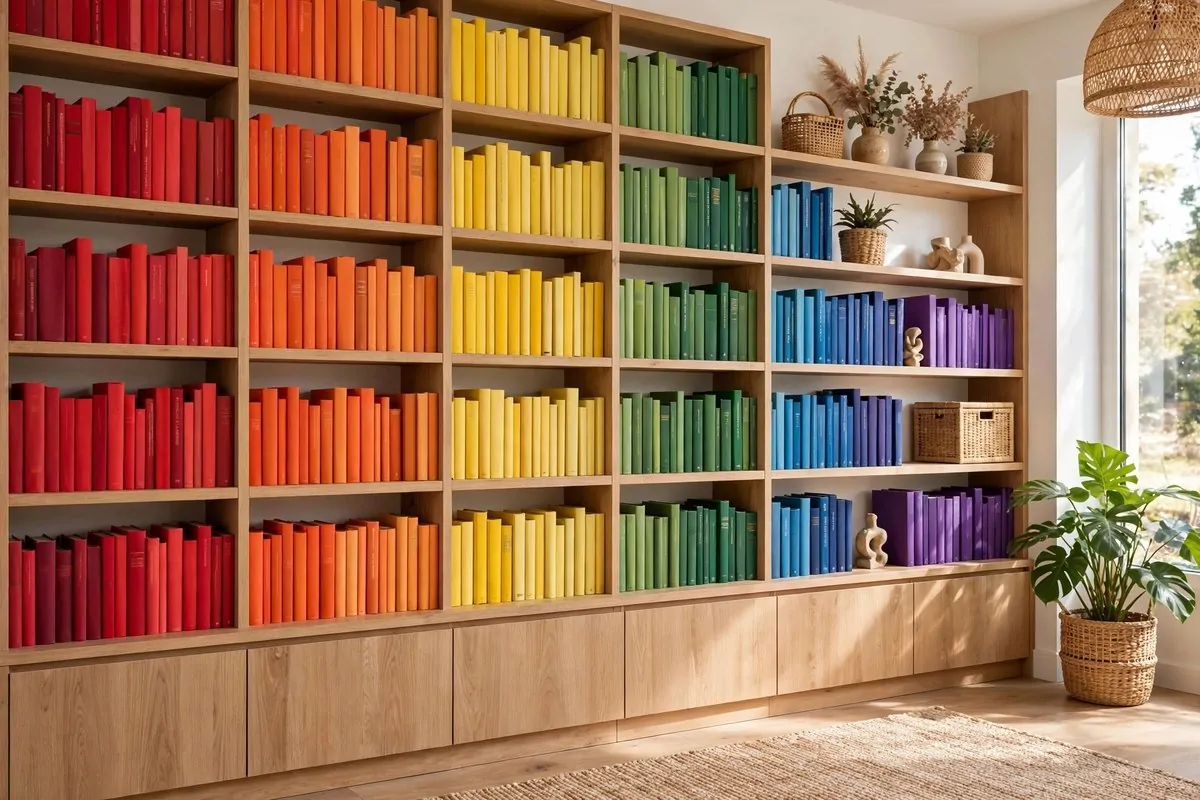
This one divides people. Some say it is beautiful. Some say it makes finding a book impossible. I say try it on one shelf and see.
Color blocked shelves turn your books into wall art. Reds flow into oranges into yellows into greens into blues. The whole bookcase becomes a rainbow you can stare at.
It works best on modern shelves with clean lines. A rainbow on dark academia wood looks a bit odd. A rainbow on white or black shelves looks like a design choice.
Here is my compromise for the findability problem. Keep your most read books in their own normal section. Color sort the rest. You get the pretty wall and you can still find your favorite novel.
Take everything off the shelf first and sort on the floor. It is faster and you will dust the shelves while they are empty. Two jobs, one afternoon.
Stand back and squint at each section. Your eyes will tell you when a color group is done. Trust the squint.
White spines go at one end, black spines at the other, and they both act like bookends for the rainbow. It gives the whole thing a frame.
This look photographs incredibly well. If you want a library that makes people stop scrolling, this is the one. It is bold, it is cheerful, and it costs nothing but an afternoon.
12. Layer Soft Blankets and Throws
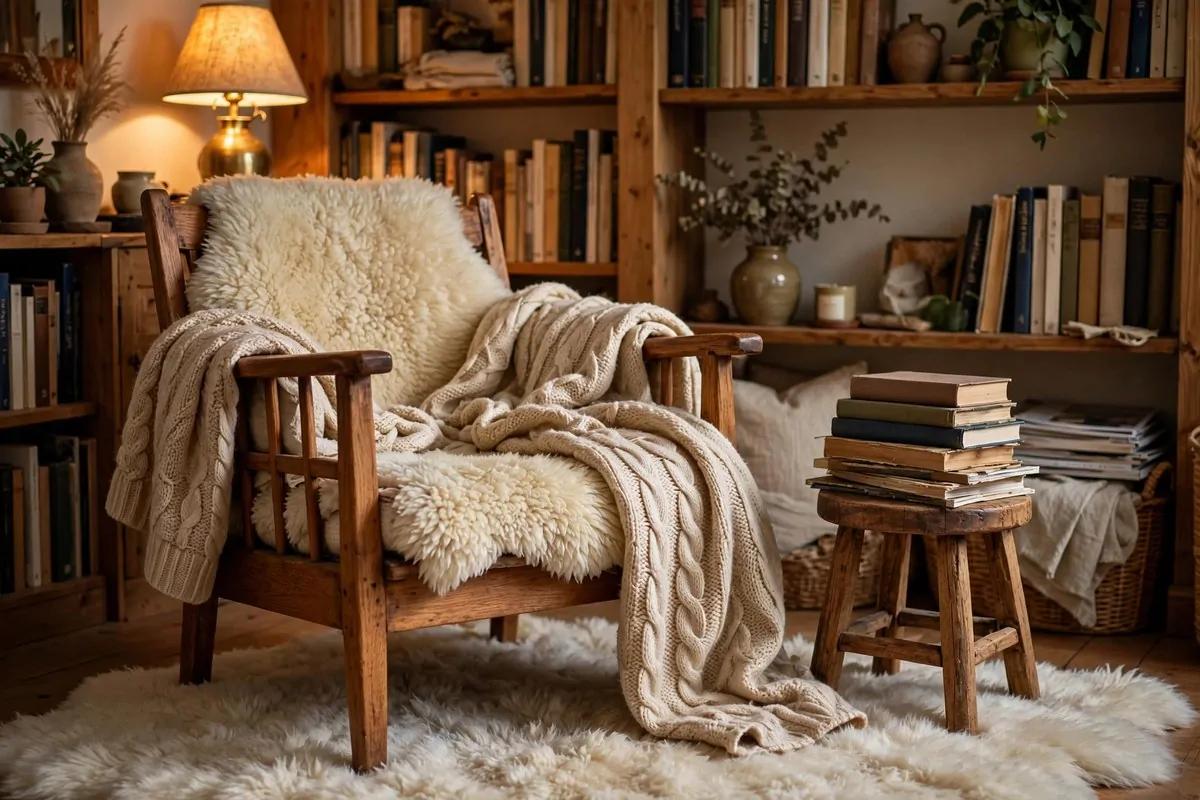
A library without a blanket is just a room with books. Add the blankets and it becomes a nest.
Layer them. A sheepskin over the chair back. A chunky knit across the arm. A thin cotton throw folded on the seat for your lap. Different textures make it look collected, not decorated.
Stick to a small color family. Creams, grays, and one warm accent like rust or mustard. Too many colors and it looks like a laundry pile. A tight palette looks like a stylist did it.
Texture matters more than pattern here. Cable knit, waffle weave, faux fur, wool. When everything is soft but different, your hands want to touch it all. That is the feeling you want.
Keep one blanket machine washable. The one on the seat will get tea spills and snack crumbs. Being precious about blankets ruins the cozy. Being practical keeps it cozy forever.
Drape, do not fold. A throw tossed over a chair arm looks inviting. A throw folded into a perfect square looks like a store display. You live here. Toss it.
In summer, swap the heavy knits for light cotton ones. A library that keeps its winter blankets all year feels dusty and heavy. Seasonal swaps keep it fresh.
Blankets are also the cheapest makeover in this whole list. Three new throws can change the mood of the whole room for less than one new lamp. Start here if your budget is tight.
13. Add a Globe and Old Maps
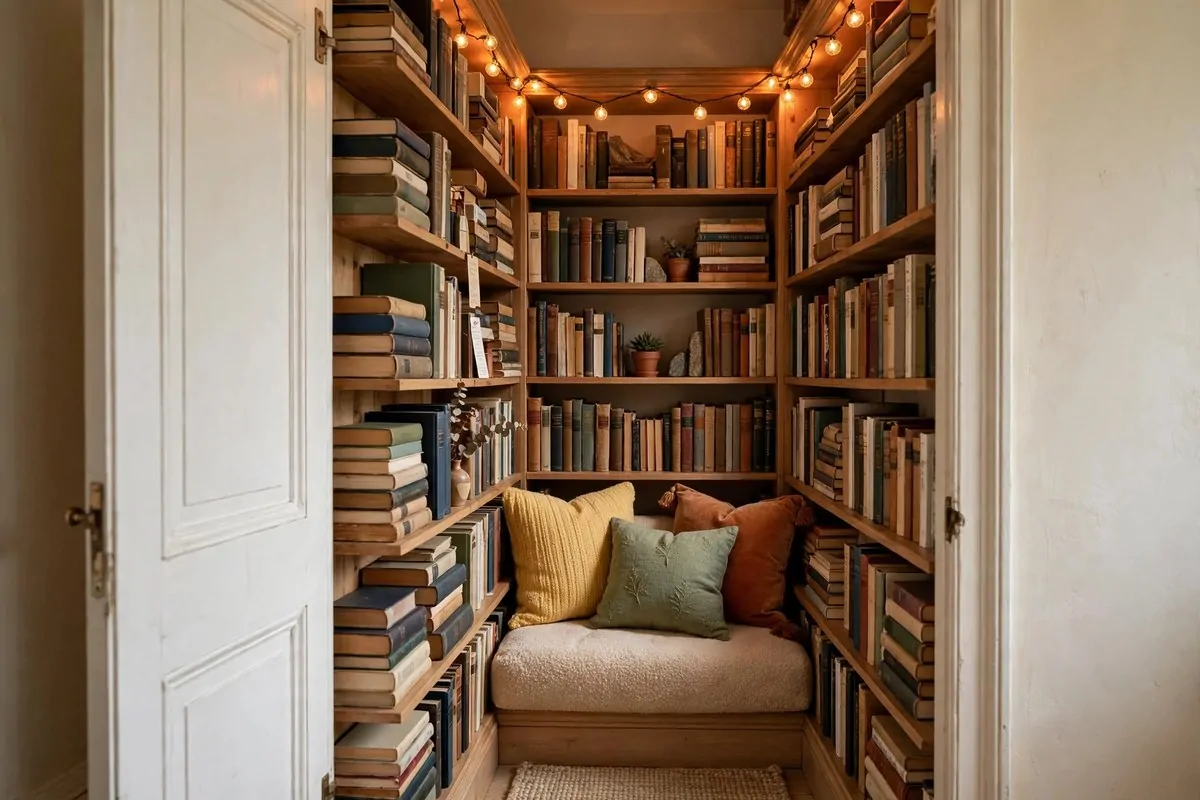
A globe says this room belongs to someone who wonders about the world.
Antique style globes show old country names and borders. They are beautiful and a little bit wrong, which makes them great conversation pieces. Guests always spin them and start asking questions.
Roll old maps and tie them with twine. Stand them in a tall basket or a brass umbrella stand next to the shelves. It looks like you just came back from somewhere interesting.
Frame one big map and hang it over the desk. Pick a place that means something to you. Your hometown, your dream trip, your grandparents’ country. A map with a story beats a map that is just pretty.
Magnifying glasses, compasses, and old brass instruments fit this theme perfectly. A few small curiosities on the shelf between books tell the story of a curious mind.
You do not need real antiques. Good reproductions look the part and cost a fraction. The globe just needs to look old and feel heavy. Nobody is checking its authenticity.
Keep the maps away from direct sun. Old paper fades fast in bright light. A shady shelf keeps them looking good for years.
This whole look works in any library style. Dark academia, light and bright, modern, rustic. A globe fits everywhere. It is the universal library accessory.
14. Turn a Closet Into a Tiny Library
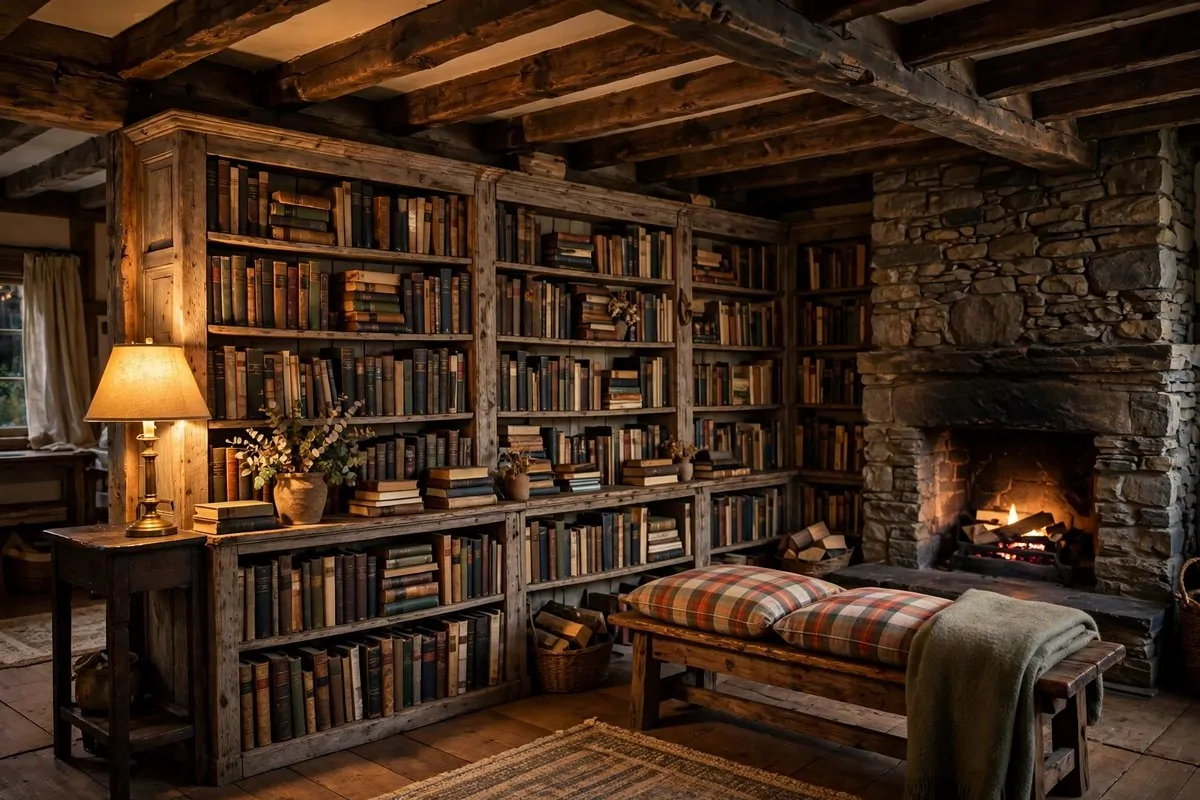
No spare room? No problem. A closet can become the coziest library you have ever owned.
Take the doors off or replace them with a curtain. Doors make a closet feel closed in. An open doorway with a curtain feels like a secret entrance to a storybook.
Line the walls with shelves. Shallow ones are fine, books are not deep. Go all the way up, because in a tiny space the top shelf is prime real estate.
Add a cushion on the floor or a small bench that fits inside. This is a curl up space, not a sit up straight space. Pillows everywhere. That is the rule.
String lights along the top of the closet are magic in here. They make the tiny space glow like a lantern. Warm white, not colored. Colored lights turn a library into a dorm room.
Paint the inside a fun color. Deep blue, forest green, even a warm terracotta. A tiny space is the perfect place for a bold color you were scared to use in a big room.
This is also a brilliant kids library. A small person sized reading cave with their own books and lights. They will fight over who gets to read in there.
Measure before you buy the bench. Closets are always smaller than you remember. I learned this the hard way with a bench that lived in my hallway for a month.
15. Go Rustic With Wood Beams and Warm Wood
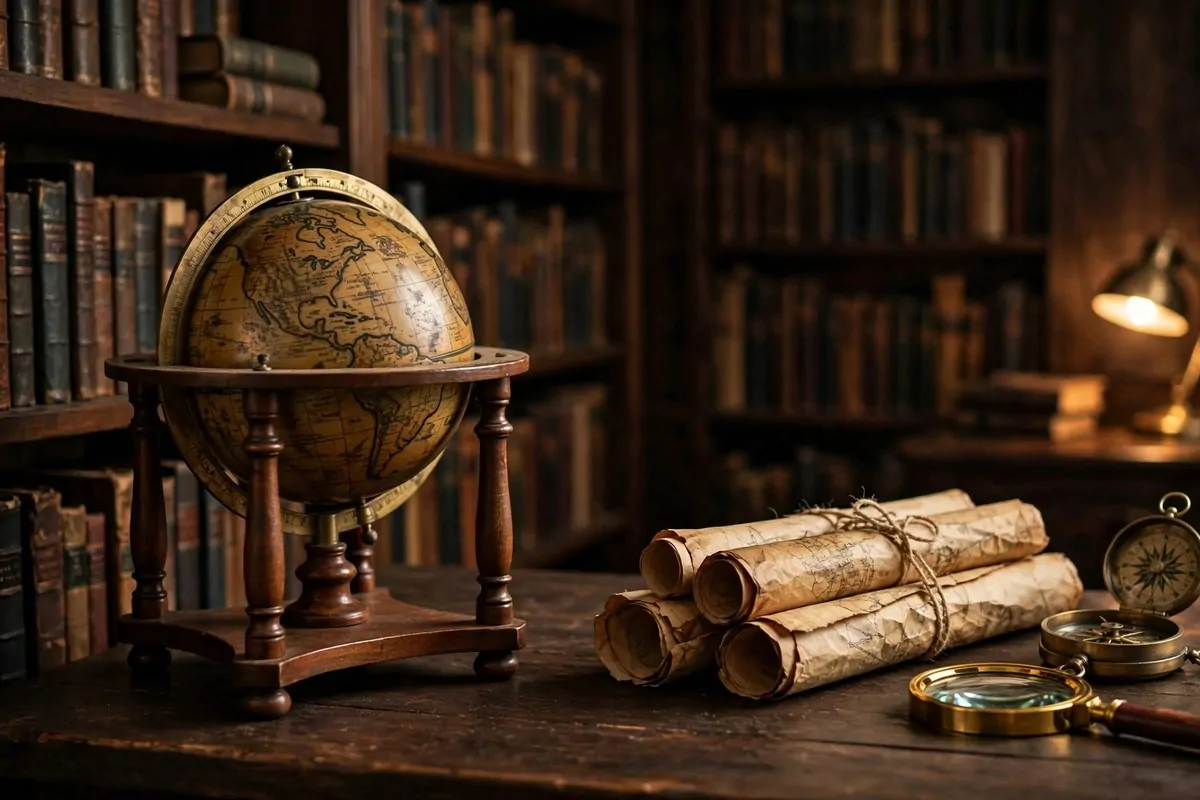
Some libraries feel like universities. This one feels like a cabin in the best way.
Exposed wood beams on the ceiling change everything. They make the room feel older and warmer at the same time. If you have them, show them off. If you do not, faux beams are a weekend project.
Weathered wood shelves beat perfect new ones here. The scratches and uneven stain tell a story. Sand a cheap shelf roughly and stain it dark, and it will look like it came from a farmhouse.
Add plaid somewhere. A cushion, a throw, a small rug. Plaid is the unofficial fabric of rustic libraries. It just belongs with wood and books.
Keep the lighting warm and low. Rustic rooms want lamplight, not overhead spots. A couple of table lamps with fabric shades do the whole job.
Mix in some nature. Pinecones in a bowl, a branch in a tall vase, dried flowers on a shelf. A rustic library should feel like the woods are just outside the door.
This style is forgiving. A scratch on the table? Character. A crooked shelf? Charm. If you are not a perfectionist, rustic is your style.
The smell helps too. A cedar block or a pine scented candle in a rustic library completes the cabin feeling. Your nose gets a vote in the aesthetic.
16. Try a Modern Black Shelf Wall
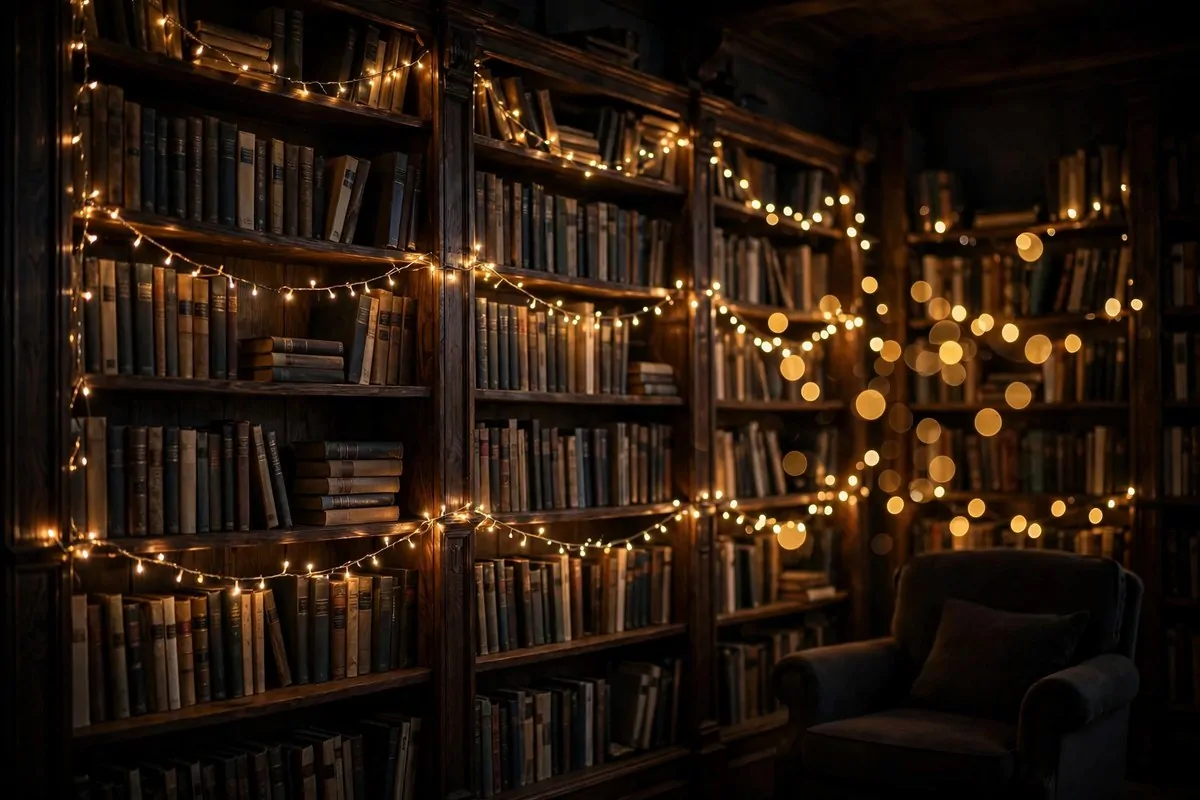
Not every library has to look old. A black modern shelf wall looks sharp and dramatic.
Black shelves make book covers pop like art. Bright spines against black look like a gallery. It is the most modern way to display books.
Face some books out, covers forward, like a bookstore display. This eats shelf space fast, so mix facing out books with normal rows. A few display books per shelf is the sweet spot.
Keep the styling minimal. Black shelves with too much stuff look cluttered fast. Books, a little breathing room, one object per shelf. Restraint is the whole look.
Metal frames with wood shelves hit the modern industrial note. The black metal keeps it sharp. The wood keeps it warm. Together they are perfect.
One statement light fixture does a lot here. An arc lamp over a chair, or a bold pendant in the middle of the room. Modern rooms love one big light moment.
Hide the clutter. Modern shelves need closed storage somewhere for the ugly stuff. Charging cables, notebooks, the remote. A couple of boxes on the bottom shelf keep the clean look clean.
This style suits small collections. If you own two hundred books, a black wall looks curated. If you own two thousand, it looks like a warehouse. Be honest about your book count.
17. Hide a Library in the Attic
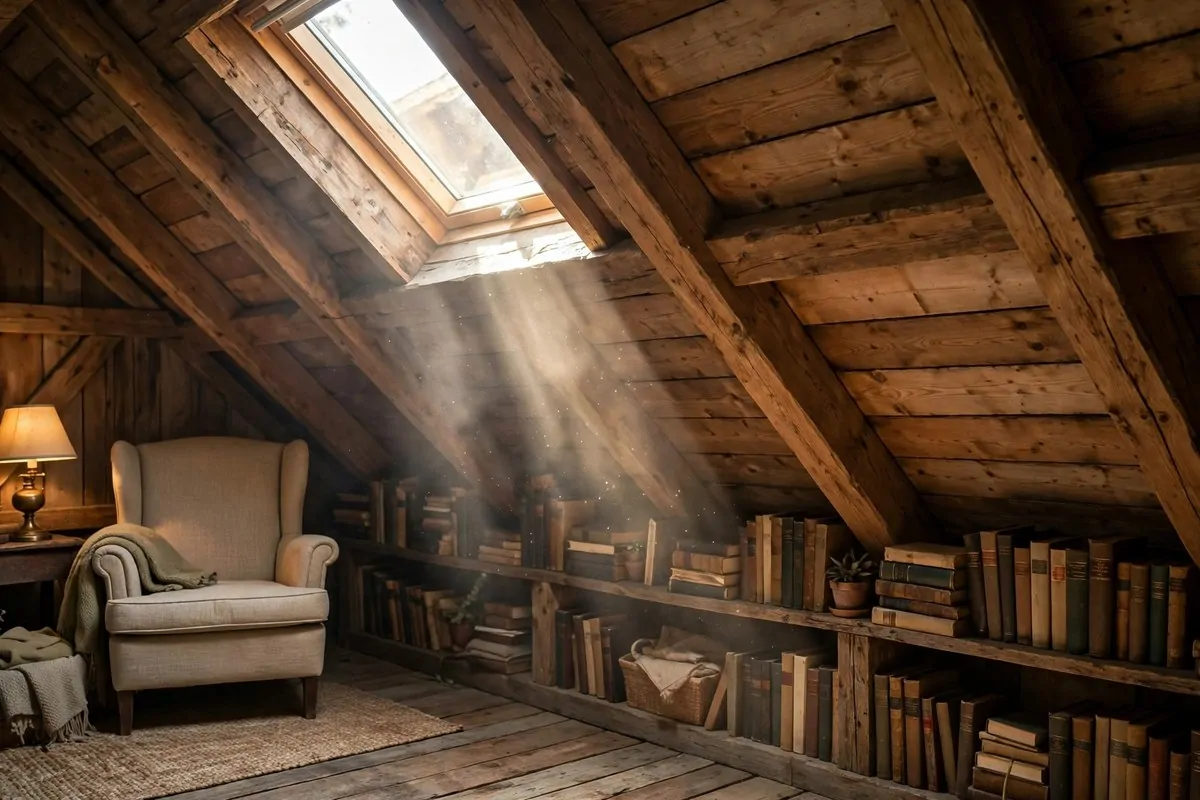
An attic library feels like a secret only you know about.
Sloped ceilings make the space feel like a hideout. Low shelves tucked under the eaves use the awkward space perfectly. Nothing else fits there anyway, so books might as well live there.
A skylight is the dream. Rain on the glass above your head while you read below. If you have one, put the chair right under it. If you do not, a good lamp works just as well.
Keep the furniture low. A low armchair, floor cushions, a small stool for tea. Tall furniture fights the sloped ceiling. Low furniture flows with it.
Watch the temperature. Attics get hot in summer and cold in winter. A small fan and a warm throw cover most of the year. Check the insulation before you move your rare books up there.
Rugs are important in attics. Bare floors up there echo and feel cold. A big soft rug under the chair makes the whole space feel like a real room, not storage.
Lighting needs thought because the ceiling is low and angled. Wall sconces and table lamps beat overhead lights here. Light the walls and the shelves, not the ceiling.
Tell almost no one about it. An attic library is better when it feels like your private discovery. Let people find it by accident. Their faces will be worth it.
18. Park a Tea Cart Beside Your Chair
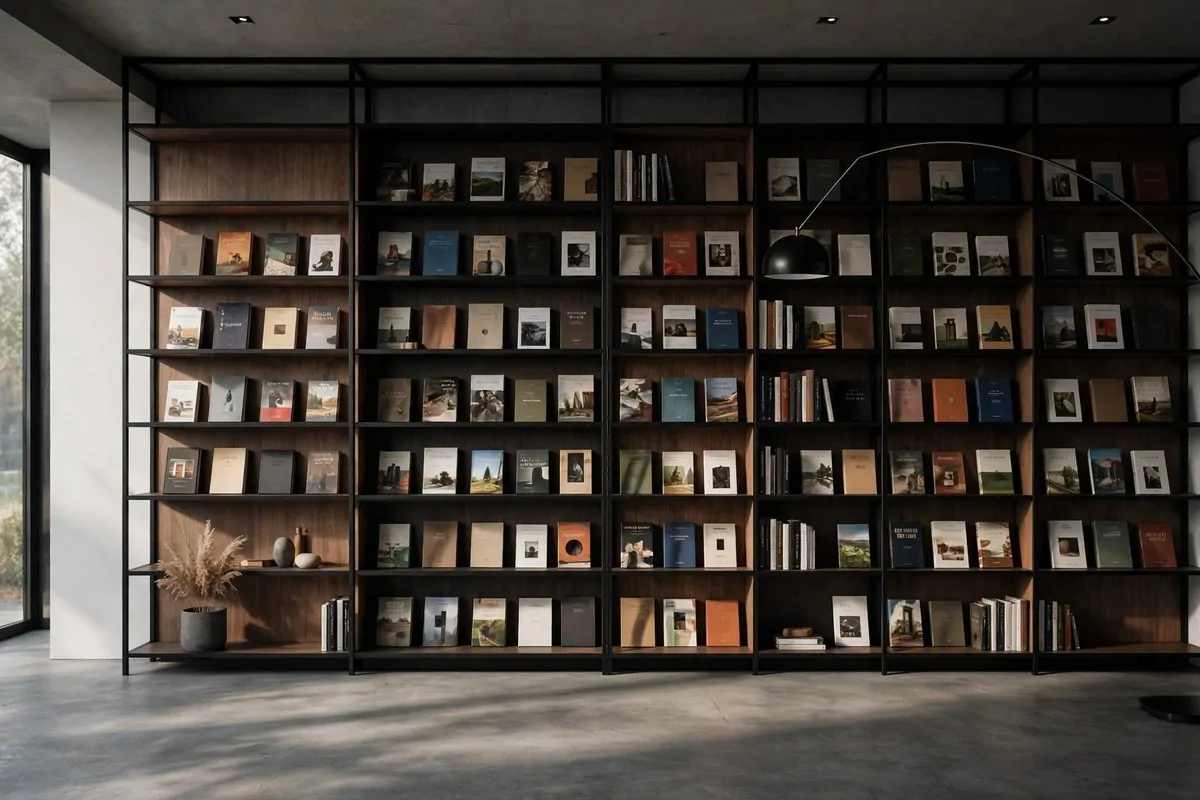
A vintage style bar cart or wooden tea cart beside your reading chair holds everything. Teapot, cups, a small plate of biscuits, and the book you are saving for later. It is a reading station on wheels.
Wheels matter. You can roll it to the kitchen to refill and roll it back. A stationary side table cannot do that. Mobility is the whole point of a cart.
Style the top like you mean it. A pretty teapot, two cups even if you drink alone, a small vase with one flower. It should look like a ritual, not a mess.
The lower shelf holds the current reads. A stack of three or four books you are working through. It keeps them off the chair arm and off the floor.
Thrift stores have these carts all the time. Brass ones, wooden ones, even old hospital carts that look amazing with a coat of paint. They cost very little and roll forever.
Put a small cloth or lace doily on top. It stops the cups from rattling and adds that old fashioned touch. Details like this are what make people save the photo.
Hot drinks and books need one rule. Lids on the mugs. I have lost two good books to tea. Learn from my sadness.
19. String Fairy Lights Along the Shelves
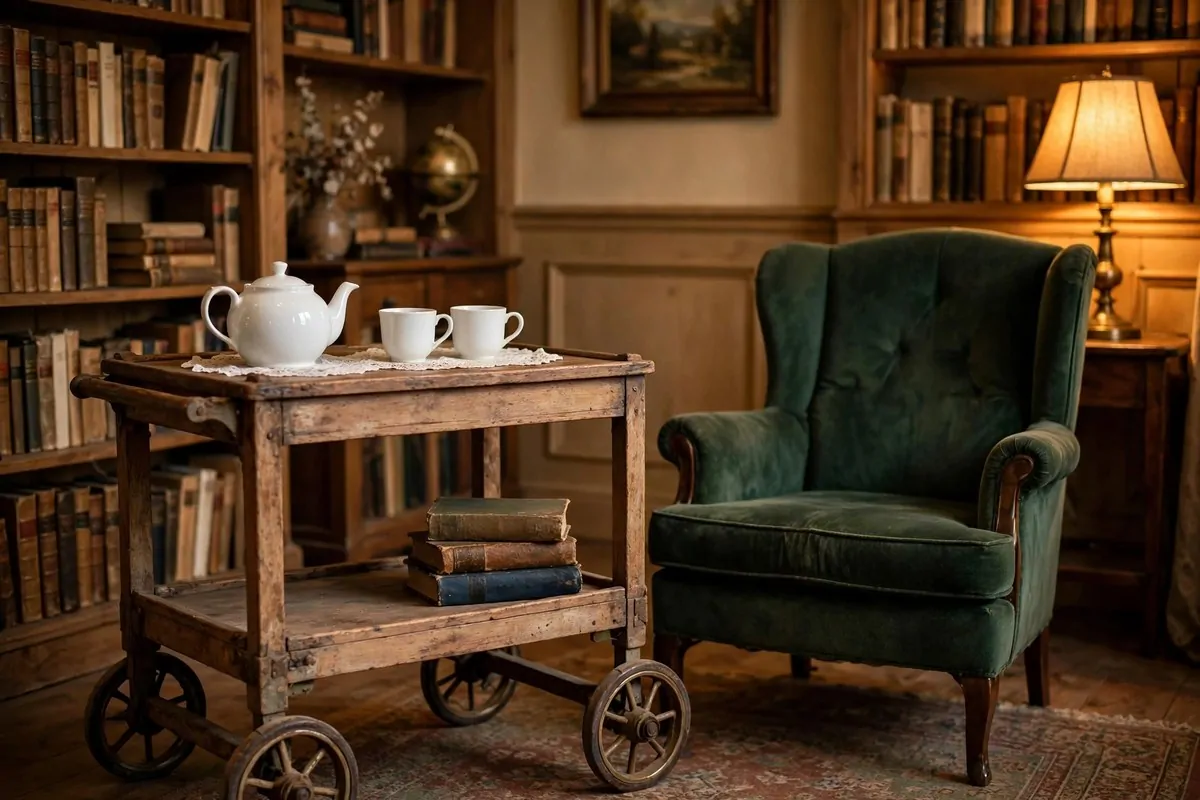
Fairy lights turn an ordinary bookcase into something out of a storybook.
Drape warm white string lights along the front edge of the shelves. They outline the bookcase in a soft glow. The books inside seem to shine. It is simple and it is stunning.
Use battery or USB lights with a timer. The timer is the key. Set them to turn on at sunset and off at bedtime. You never touch them again and the magic just happens.
Warm white only. Cool white lights make a library look like a science lab. Warm white looks like candlelight. The box should say 2700K or warm. Check before you buy.
Weave them loosely, not tight. A relaxed drape with little dips between the shelf edges looks natural. A tight straight line looks like a runway. You want cozy, not airport.
Combine them with your other lighting. Fairy lights plus one lamp plus a candle is the layered glow that makes libraries feel alive at night. One light source is flat. Three is magic.
They are perfect for renters. No nails, no drilling, no damage. A few tiny clear hooks or just tucked behind the books. Landlord approved sparkle.
Keep spare batteries in the drawer of the side table. Nothing is sadder than a dead string of lights on a rainy evening. Ask me how I know.
20. Use a Bookcase as a Room Divider
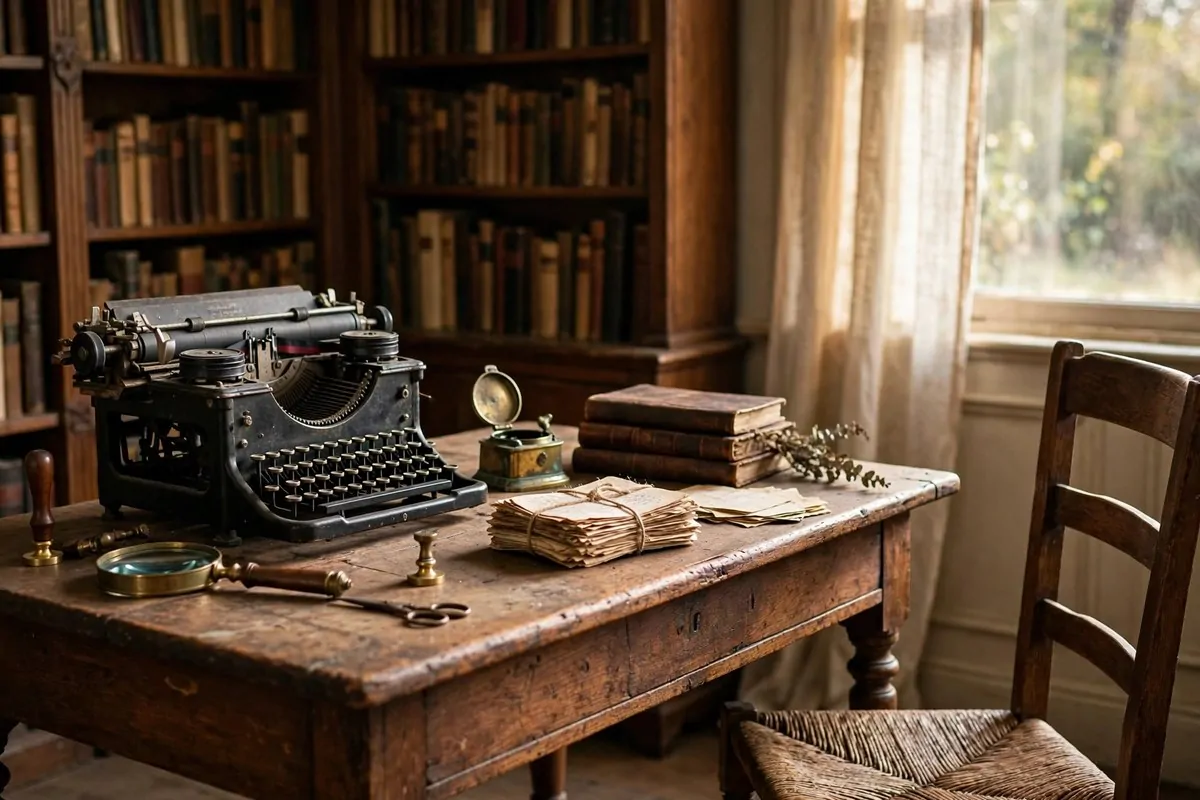
A freestanding bookcase can split one room into two without building a wall.
This is perfect for open plan homes. The bookcase stands between the living area and the reading corner. One side faces the sofa, the other faces the chair. Both sides get books.
Use a double sided bookcase or two normal ones back to back. Anchor it well. A tall bookcase that can tip is dangerous, especially with kids or pets around. Brackets into the floor or ceiling keep it safe.
Leave the top shelf a little empty so light flows over. A bookcase divider should divide, not block. You want two cozy zones, not two dark caves.
Style both sides. The living room side can hold prettier books and objects. The reading side holds the real collection. Both sides deserve love.
This trick also works in studios and one bedroom flats. A bookcase between the bed and the living space gives you a bedroom wall that also holds your library. Two problems, one piece of furniture.
Keep the walkway around it clear. A divider in a tight space becomes an obstacle. You need enough room to walk past comfortably with a cup of tea.
Measure your ceiling height before you buy. A bookcase that is too tall for the room looks like it is about to fall over. A few inches of clearance at the top keeps it calm.
21. Go Bold With Maximalist Color
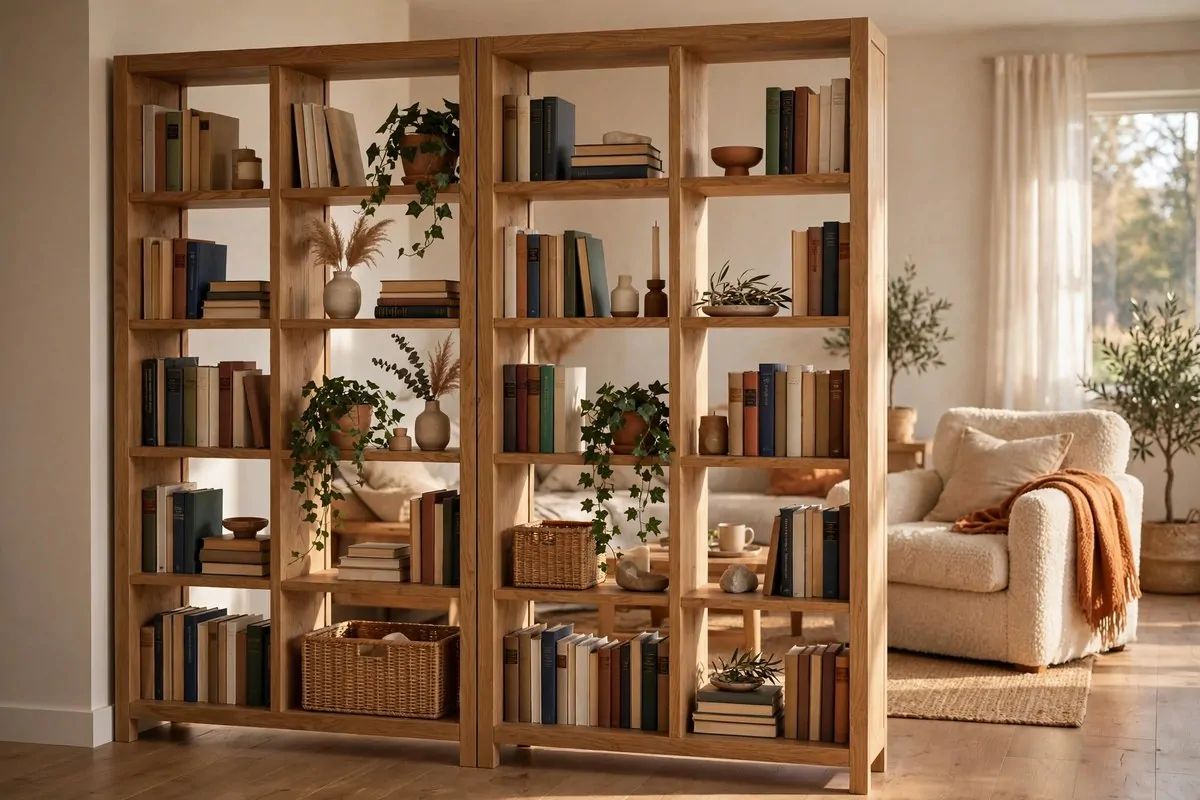
Some libraries whisper. This one sings.
Maximalism means more. More color, more pattern, more art, more everything. Jewel tone chairs, patterned wallpaper, brass lamps, art on every wall, books stacked on tables as well as shelves. It is joyful organized chaos.
The secret is a color thread. Pick three or four colors and repeat them everywhere. Emerald, gold, and plum, for example. Everything different, everything connected. That thread keeps maximalism from becoming mess.
Start with the wallpaper or the rug. One big pattern sets the tone. Then add smaller patterns that share a color with it. Big floral wallpaper plus small striped cushions in the same green. It works.
Mix old and new freely. A mid century chair next to a Victorian lamp next to a brand new bookshelf. Maximalism loves a mix. Matching sets are the enemy here.
Every surface can hold something. Stack books on the side table. Put a plant on top of the bookcase. Hang art above the art. Empty space is just space you have not decorated yet.
This style needs confidence more than money. Thrift stores and flea markets are maximalist paradise. The weirder the find, the better it fits.
Edit once a year. Even maximalism needs a little pruning. Take everything off the shelves, dust, and put back only what you still love. Your future self will thank you.
Here is a quick comparison to help you pick your library style:
| Style | Mood | Best for | Budget |
|---|---|---|---|
| Dark academia | Moody, old world | Evening readers | Medium |
| Light academia | Bright, airy | Small rooms, mornings | Low |
| Rustic cabin | Warm, rugged | Country homes | Low |
| Modern black | Sharp, clean | Medium | |
| Maximalist | Bold, joyful | Collectors, thrifting fans | Low |
22. Set Up a Scholar’s Writing Desk
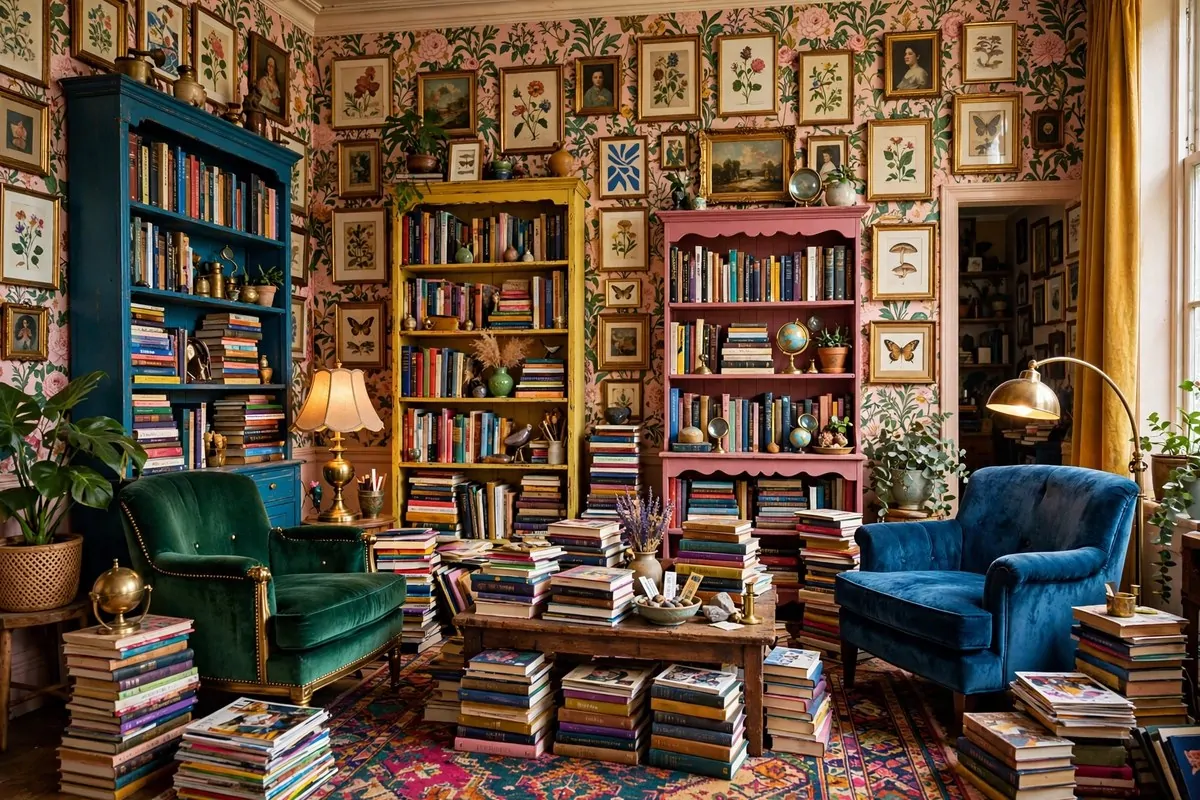
A library with a writing desk feels like ideas are supposed to happen there.
An old wooden desk in the corner becomes the scholar’s spot. A vintage typewriter, a stack of letters, leather journals, a brass inkwell. You do not have to write novels. The desk just has to invite it.
The typewriter is the star. Even a broken one looks amazing on a desk. They are heavy, black, and beautiful. People always touch the keys when they walk past.
Keep paper on the desk. A journal, a notepad, envelopes. A desk with no paper looks like a museum. A desk with paper looks like someone thinks here.
Face the desk toward the room or the window, not the wall. Writers need something to look at when they pause. A wall gives you nothing. A window gives you the world.
A good desk chair matters if you actually write. Pretty wooden chairs hurt after an hour. Put a cushion on it or swap in a comfortable chair that still looks the part.
This corner is also perfect for paying bills and writing cards. Beautiful surroundings make boring tasks better. I write all my thank you notes at my library desk now.
Light it well. A bankers lamp or a good task lamp right on the desk. Scholars need to see their work. Even pretend scholars.
23. Build Shelves Under the Stairs
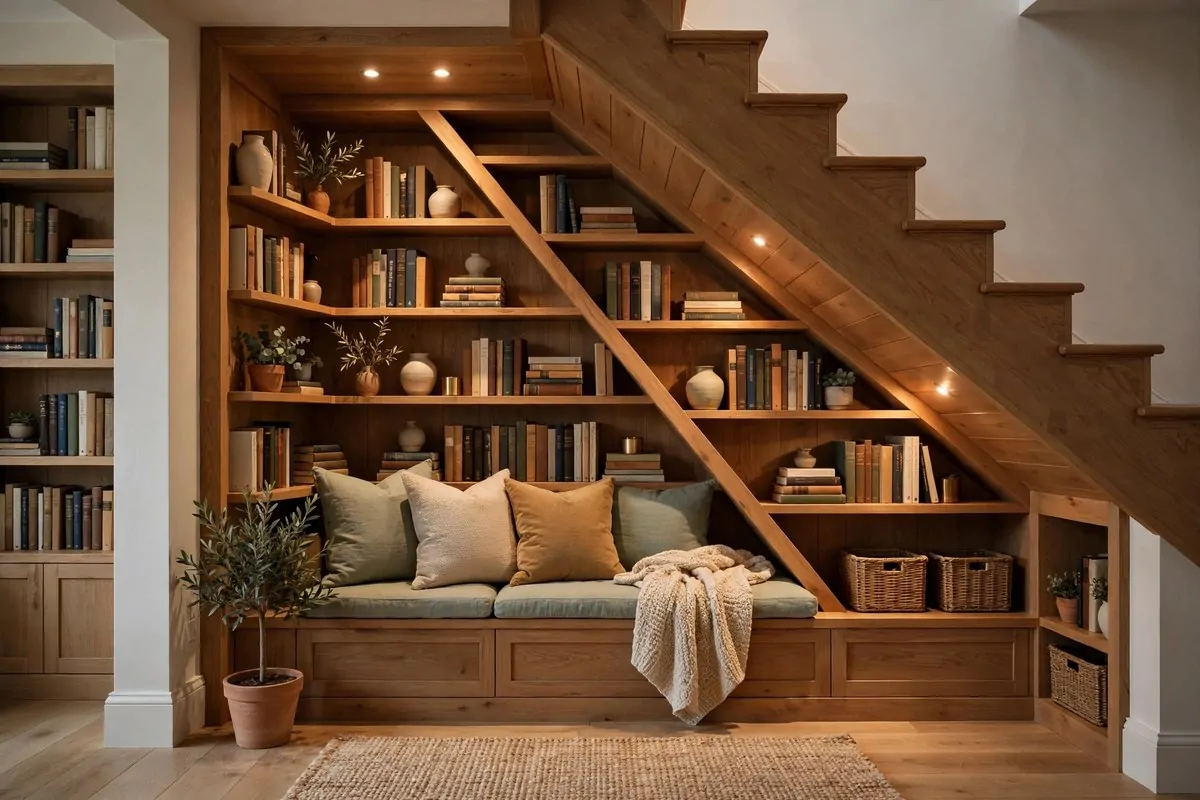
The space under the stairs is the most wasted space in most homes. Turn it into a library and it becomes the best space.
Custom shelves that follow the slope of the stairs look incredible. Tall books on the high side, short books where the stairs get low. Every inch works.
Add a small bench or a big floor cushion under the lowest part. It becomes a reading nook built into the architecture. Kids especially love this spot. It feels like a den.
Light it from inside. Small puck lights or an LED strip along the top of each shelf section. Under stair spaces are dark by nature. Built in light makes it glow.
This is a bigger project than most on this list. It might need a carpenter. But the result is a library that looks like it was designed with the house. Because it was.
If custom is too much, freestanding low bookcases work too. Push two or three short bookcases under the stairs. Not as seamless, but still a great library wall.
Use this spot for the books you love most. It is a showcase location. The pretty hardcovers, the signed copies, the ones with beautiful spines. Give them the stage.
Dust it more often than you think. Under stair areas collect dust fast. A quick wipe every couple of weeks keeps the showcase looking sharp.
24. Let Plants Climb the Shelves
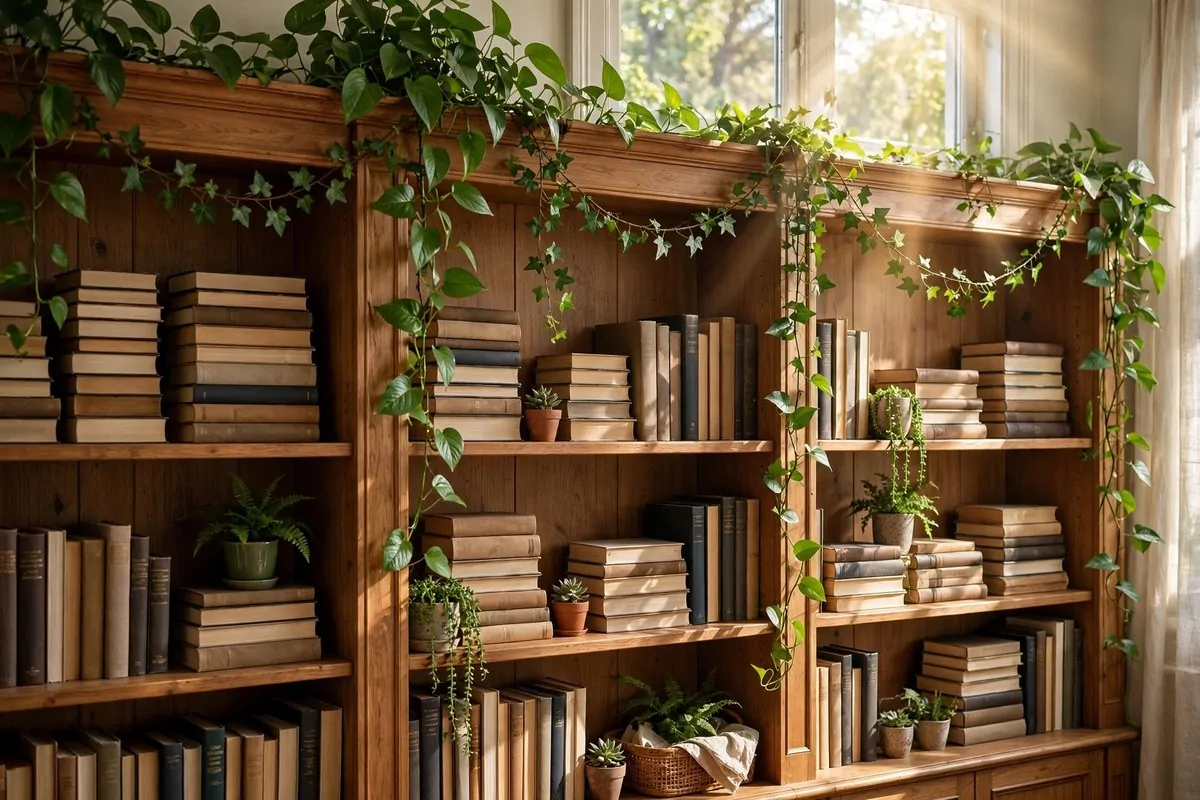
Books and plants are best friends. Put them together and the library comes alive.
Trailing plants like pothos on top of the bookcases send vines down between the books. It softens all the straight lines. The green against the book spines is beautiful in every light.
Pothos is nearly unkillable. It survives low light, missed waterings, and general neglect. It is the perfect library plant because libraries are for reading, not for plant care.
Small pots tucked between book stacks add green at shelf level. Succulents, ferns, a tiny cactus. Little surprises of green as your eyes move along the rows.
Hang one plant from the ceiling near the shelves if you have the height. A hanging fern above a reading chair is pure storybook. Just make sure you can reach it to water it.
Watch the watering. Plants and books share shelves, and water plus paper is a disaster. Water plants over the sink, let them drain, then put them back. Never water on the shelf.
Fake plants are fine too. A good fake trailing plant fools everyone from three feet away. If your library is dark, fake is smarter than a slow plant death.
The best part is free. Snip a piece of pothos, put it in water, and in a few weeks you have a new plant. Libraries multiply books and plants. Both are good problems.
A library is never really finished. You will move a chair, add a lamp, find one more shelf for one more book. That is the joy of it.
Save the looks you love from this list. Start with one small change this weekend. A lamp, a blanket, a string of lights. Small moves make the biggest difference.
Your home library aesthetic does not have to look like anyone else’s. It has to feel like yours. The books you love, the chair that fits you, the light that makes you want to stay.
Now go find your corner. Your next favorite book is waiting.