18 Bedroom Library Ideas Reading Corners Will Love

When I was eight, my reading corner was a blanket fort behind our couch. Two dining chairs, one striped bedsheet for a roof, and a flashlight with weak batteries that I had to shake every ten minutes to keep the light alive.
I read whole books inside that little tent. The blanket smelled like couch dust and warm laundry. My knees got sore from the hard floor. I did not care one bit.
Every reader I know carries a corner like that in their memory. A small spot that belonged only to them and their books.
Your bedroom can have one too. It does not need dining chairs or a bedsheet roof. It just needs a little planning. These 18 Bedroom Library Ideas Reading Corners will love are all real setups I have seen in real homes, tried myself, or helped friends build. Pick the one that fits your room and start tonight.
1. The Window Seat Nook With Hidden Book Storage
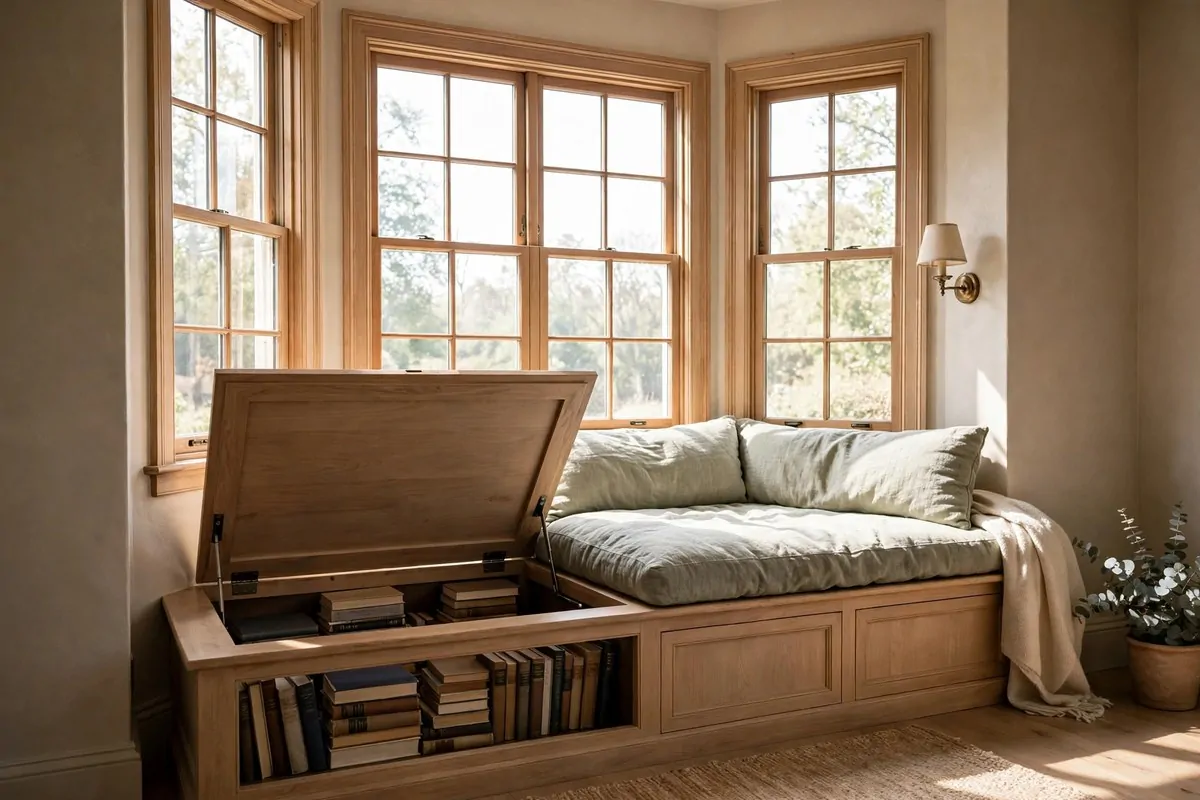
If your bedroom has a window with a wide sill, you already own half a reading corner. You just have not built the seat yet.
A window seat is the oldest trick in the book lover's handbook. You sit in natural light all day. You watch the sky change while you read. And when you lift the seat lid, there is storage underneath for the books you are not reading right now.
I helped my cousin build one of these in her spare bedroom last spring. We used a simple plywood box, a thick foam cushion cut to size, and fabric she picked from a discount bin. The whole thing took one weekend.
She keeps her current reads on top of the seat, lined up against the wall. The finished books go underneath, out of sight. Her room looks tidy even when she is halfway through four books at once.
The best part is the morning light. She reads there with her tea before the house wakes up. She told me it is her favorite hour of the day now.
If you are renting and cannot build, a low storage bench pushed under the window does the same job. Look for one with a hinged top. They are easy to find and they move with you.
Add one small lamp on the wall beside the window for evenings. Daylight handles the mornings. The lamp handles the nights.
A cushion matters more than you think. Get foam at least four inches thick, or your legs will fall asleep by chapter three.
Here is a quick checklist for this nook:
- A bench or built box that fits your window width
- A thick cushion with washable cover
- A hinged lid or open cubbies for book storage
- A small lamp or wall light for evening reading
- One throw blanket for cold mornings
Measure your window before you buy anything. Write the numbers on your phone. I have watched too many people guess and end up with a bench that blocks the radiator.
2. The Classic Corner Armchair With a Warm Floor Lamp
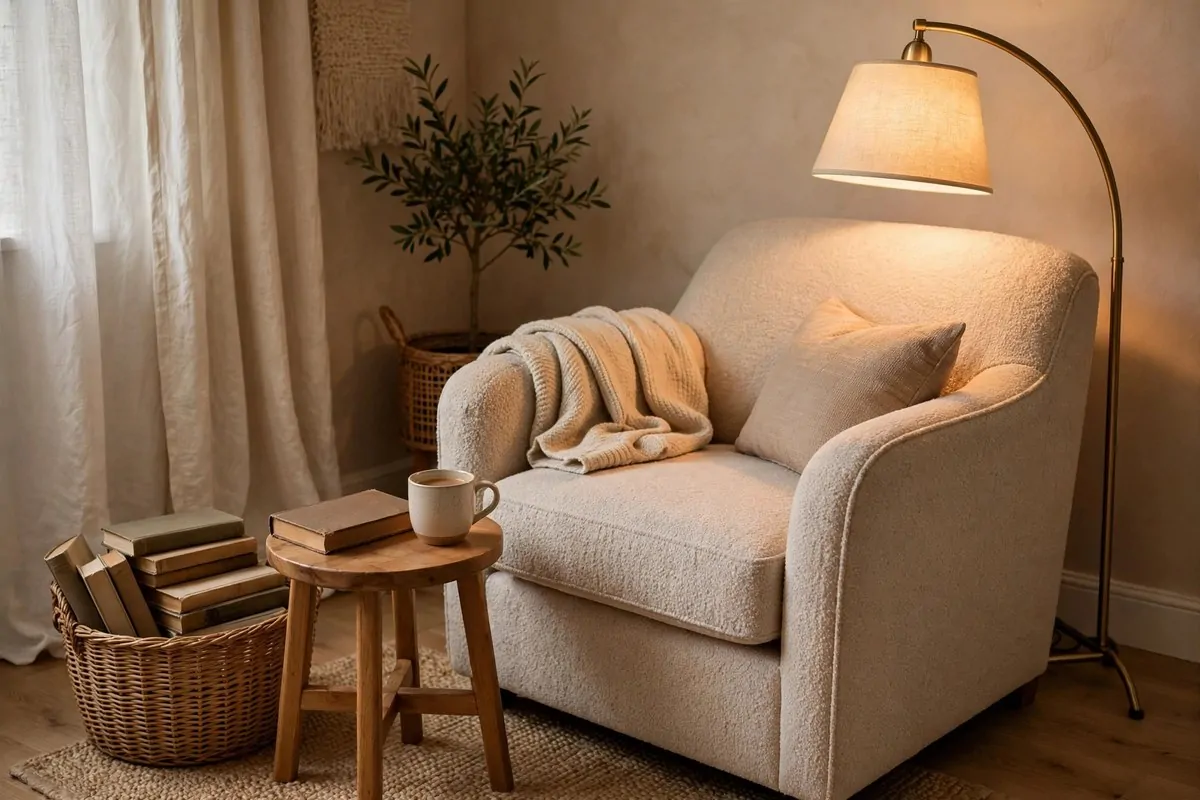
Some ideas never get old because they just work. A good chair, a warm lamp, and a small table. That is a reading corner.
Pick the quietest corner of your bedroom. The one farthest from the door. Push a comfortable armchair into it at a slight angle, not flat against the wall. Angled chairs feel like they are inviting you in.
The lamp is the part people get wrong. Overhead ceiling lights are too harsh for reading at night. You want a floor lamp with a warm bulb that arcs over your shoulder or stands right beside the chair.
I use a bulb marked warm white, around 2700K. It makes the pages glow soft instead of glaring. Your eyes will thank you after an hour.
The side table only needs to hold three things. Your current book, a drink, and your glasses. Anything bigger collects clutter.
A small basket on the floor beside the chair holds the next three books in your reading pile. It keeps them close without stacking them on the table.
This setup costs less than most people think. A secondhand armchair, a simple floor lamp, and a basket. Done.
Angle the chair toward the room, not into the corner. You want to feel tucked in, not trapped.
If your chair is low, add a footstool or a firm ottoman. Feet up changes everything about how long you can read.
I read in a corner like this every single night. It took me twenty minutes to set up and I have used it for three years.
3. Floating Shelves That Wrap Around Your Reading Chair
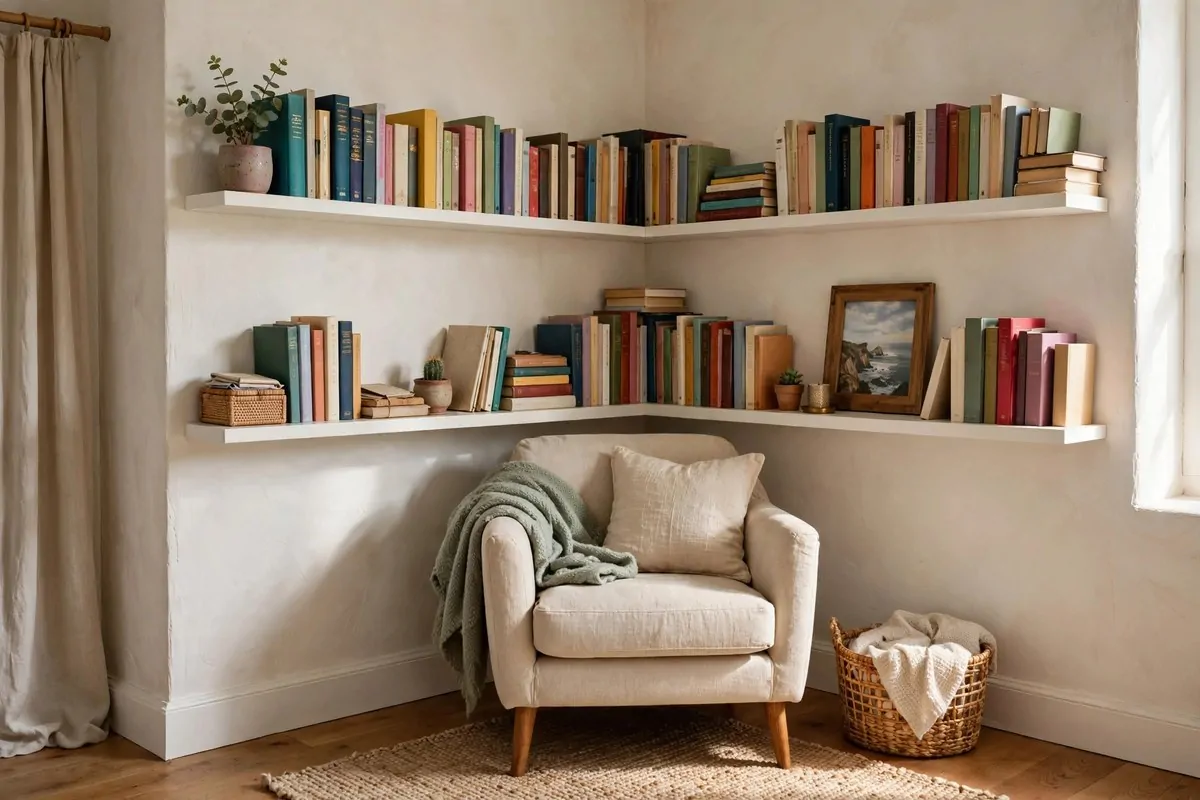
Floating shelves are a book lover's best friend in a small bedroom. They hold a lot of books and they take up zero floor space.
The trick that makes this idea special is wrapping the shelves around two walls. Put two or three shelves on one wall and continue them around the corner onto the next wall. It frames your reading chair like a little library hug.
I did this in my own bedroom two years ago. Three shelves on each wall, all at slightly different heights. It looks custom even though the shelves came from a hardware store.
Keep the lowest shelf within arm's reach of your chair. That is your active shelf. Current reads, the book you are in the middle of, the one you keep picking up and putting down.
The higher shelves hold books you have finished or want to read someday. They are there for looks and for browsing.
Mix in a few non-book items so it does not look like a warehouse. A small plant. A framed photo. A candle you never light but love looking at.
Do not overload the shelves. Books are heavy. Check the weight limit on the brackets and use wall anchors. I learned this the loud way when one shelf slowly tilted over a month.
Stagger the shelf lengths for a relaxed look. All the same length looks stiff. Different lengths look collected over time.
Paint the shelves the same color as your wall if you want the books to be the star. Paint them dark if you want the shelves to stand out.
This is one of the cheapest ways to make a bedroom feel like it has a real library in it.
4. A Hanging Chair Nook With Books Floating Above
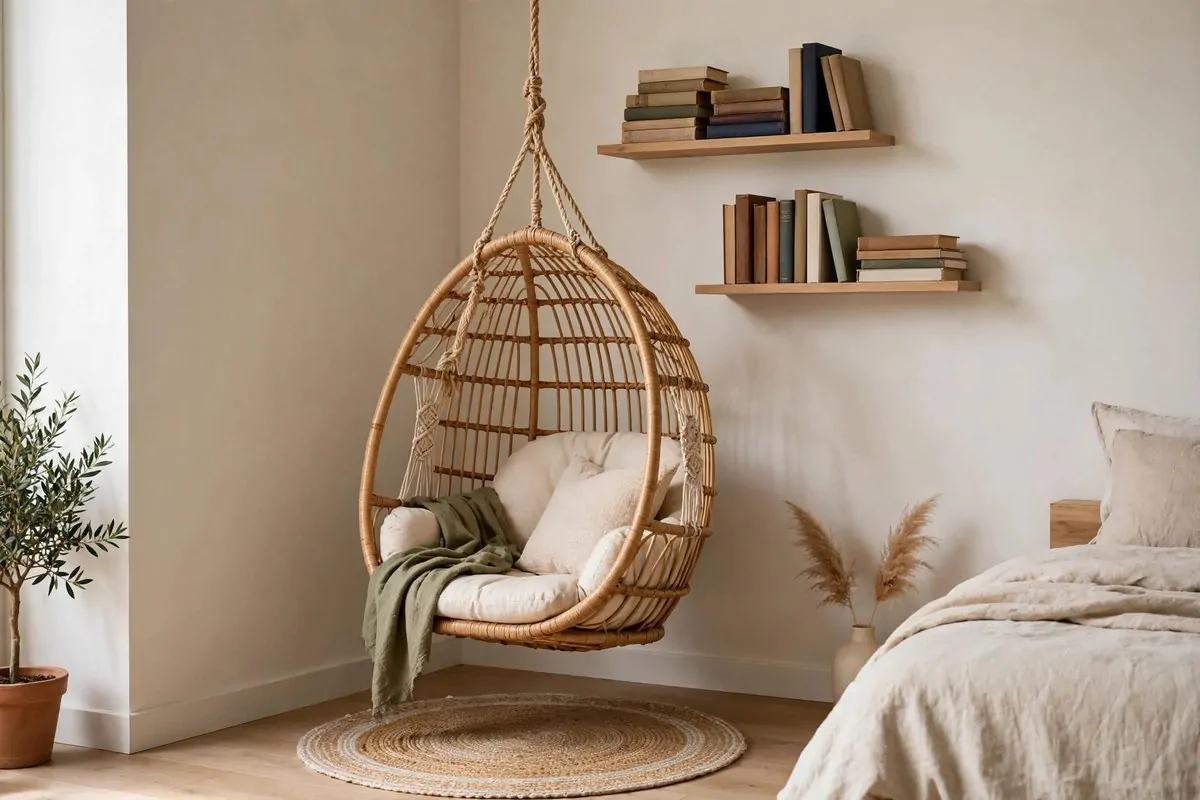
A hanging chair turns a boring corner into the spot everyone fights over. There is something about the gentle sway that makes reading feel like floating.
You need a strong ceiling joist or a sturdy stand. Do not hang a chair from drywall alone. Find the beam with a stud finder, or buy a stand made for hanging chairs. Safety first, always.
Hang it in a corner with enough room to swing a little without hitting the walls. About three feet of clear space all around is the sweet spot.
Above the chair, mount two or three short floating shelves. They hold the books at just the right height. You reach up, grab a book, and sink back into the sway.
I sat in a friend's hanging chair nook last winter and nearly fell asleep by page twenty. The rocking motion does something to your brain. It slows everything down.
Add a small round rug underneath. It catches the chair if it swings and it makes the corner feel finished.
A throw pillow in the chair saves your lower back. Hanging chairs look soft but the curve can press on your spine after a while.
This nook works best for one person and one book at a time. It is not a spot for spreading out. It is a cocoon.
If you get dizzy easily, skip the sway and get a hanging chair that barely moves. Some stands hold the chair almost still.
Kids love these chairs too, which means yours might get stolen. Just warning you.
5. A Sheer Curtain Canopy Over Your Corner
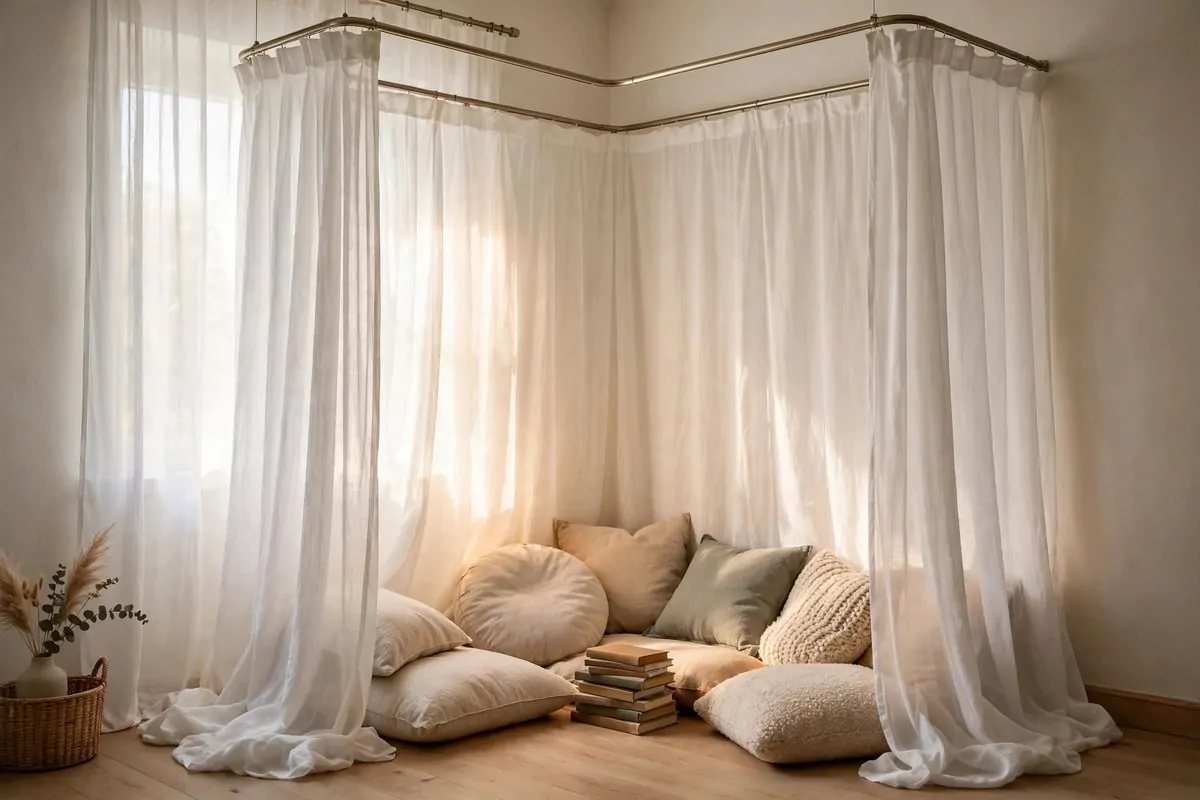
You do not need an alcove to have a hidden reading spot. A sheer curtain hung from the ceiling can make one anywhere.
Mount a curved curtain track or a simple ceiling track in an L shape across your corner. Hang floor-length sheer curtains. Pull them closed and your corner becomes a soft white tent.
Light still comes through the sheer fabric, so you can read inside without a lamp during the day. At night it glows softly from the room light outside. It looks like magic.
I saw this in a small apartment bedroom and could not stop staring. The whole corner looked like a cloud you could sit inside.
Use sheer white or cream fabric. Heavy curtains block too much light and make the tent feel dark. Sheer is the whole point.
The track should sit a few inches out from the corner so the fabric hangs free and does not touch your chair.
Inside the canopy, keep it simple. A floor cushion or a low chair, a small pile of books, and one soft light.
This idea costs very little. A ceiling track and two curtain panels. That is it.
It also hides a messy corner beautifully. Nobody sees the clutter behind the sheer glow.
When guests come, you pull the curtains open and the corner looks neat and styled. Close them when you want to disappear with a book.
6. Book Ledges Above the Bed for Nighttime Reads
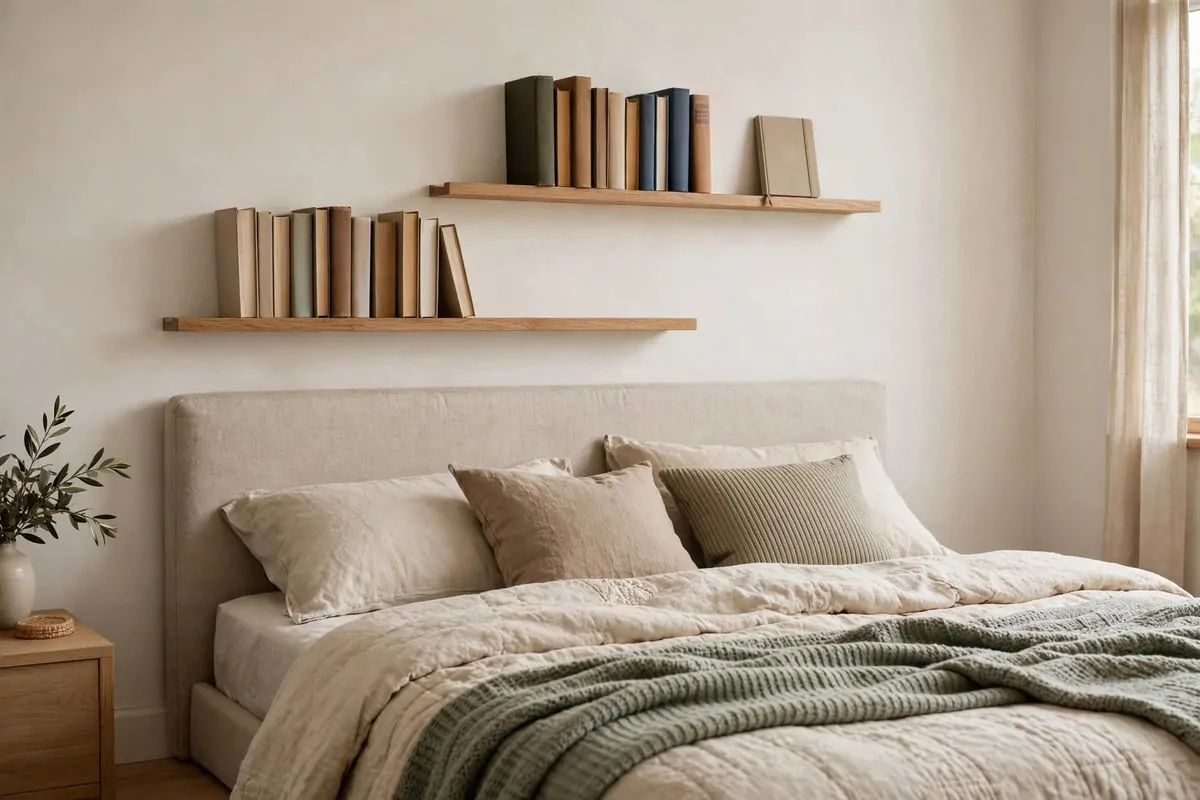
The books you read before sleep should live within arm's reach of your pillow. A slim ledge above the bed makes that happen.
These are the narrow picture ledges sold for framed photos. They are only a few inches deep, which is perfect. Books stand upright on them, spines facing out.
Mount one or two ledges above your headboard. Keep them high enough that you will not bump your head sitting up. About a foot above the headboard is safe for most beds.
I keep my current read, the next one, and a small notebook on mine. Three books and a pen. That is the whole nighttime library.
The best part is how it looks. A row of book spines above the bed acts like art. It tells anyone who walks in exactly who you are.
Rotate the books often. When you finish one, it moves to the main shelf and a new one takes its place. The ledge always shows what you are reading right now.
Use ledges with a small lip on the front edge. Books can slide off flat shelves if the bed shakes.
Do not stack books flat on a ledge. They slide. Stand them upright like soldiers.
If you share the bed, give each side its own ledge. His and hers reading walls. It is a small thing that feels very personal.
This is the smallest library idea on this list and maybe the most used. You will touch these books every single night.
Wipe the ledges when you dust the room. They collect dust fast because warm air rises and carries it up there.
7. The Nightstand That Doubles as a Bookshelf
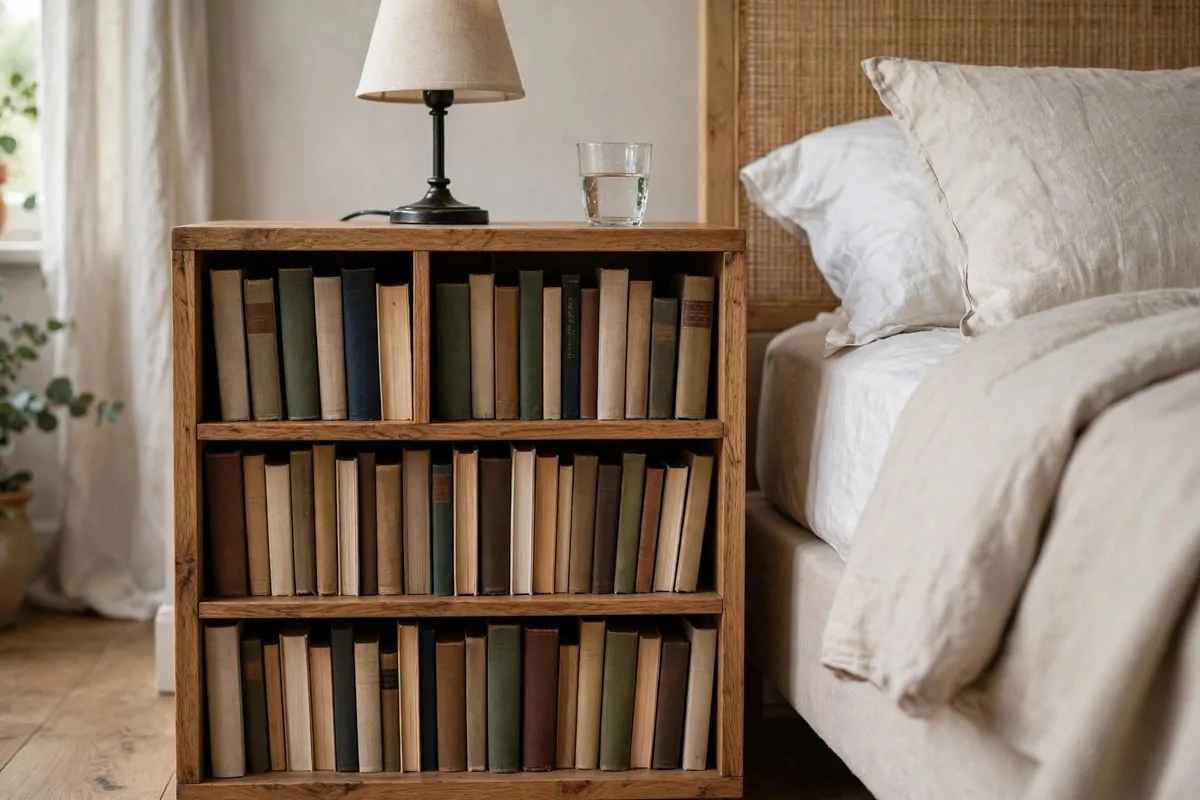
Your nightstand is already the most important piece of furniture for a bedtime reader. Make it work harder by choosing one with open shelves.
A nightstand with two or three open cubbies can hold fifteen to twenty books easily. That is a whole mini library within reach of your pillow.
I switched to an open-shelf nightstand last year and it changed my nighttime routine. No more getting up to fetch a book from across the room. No more pile of books sliding off a tiny table top.
Look for a nightstand where the shelves are tall enough for paperbacks standing up. Measure your tallest book before you shop. Mass market paperbacks need about seven inches of clearance.
Keep the top surface clear for just the essentials. A lamp, your current book, a glass of water. Everything else lives on the shelves below.
Organize the shelves by mood, not by author. Top shelf for books you are reading now. Middle shelf for books you want to read next. Bottom shelf for old favorites you reread.
This system means you always know where your next book is. No more standing in front of the big shelf at midnight, too tired to choose.
If you already love your nightstand, add a small stackable shelf unit beside the bed instead. Same idea, no furniture shopping.
Dust the shelves once a month. Books near the bed collect dust and it shows on dark covers.
A nightstand library also stops the floor pile. You know the one. The leaning tower of books beside the bed that everyone pretends not to see.
8. A Rolling Book Cart That Follows You Around
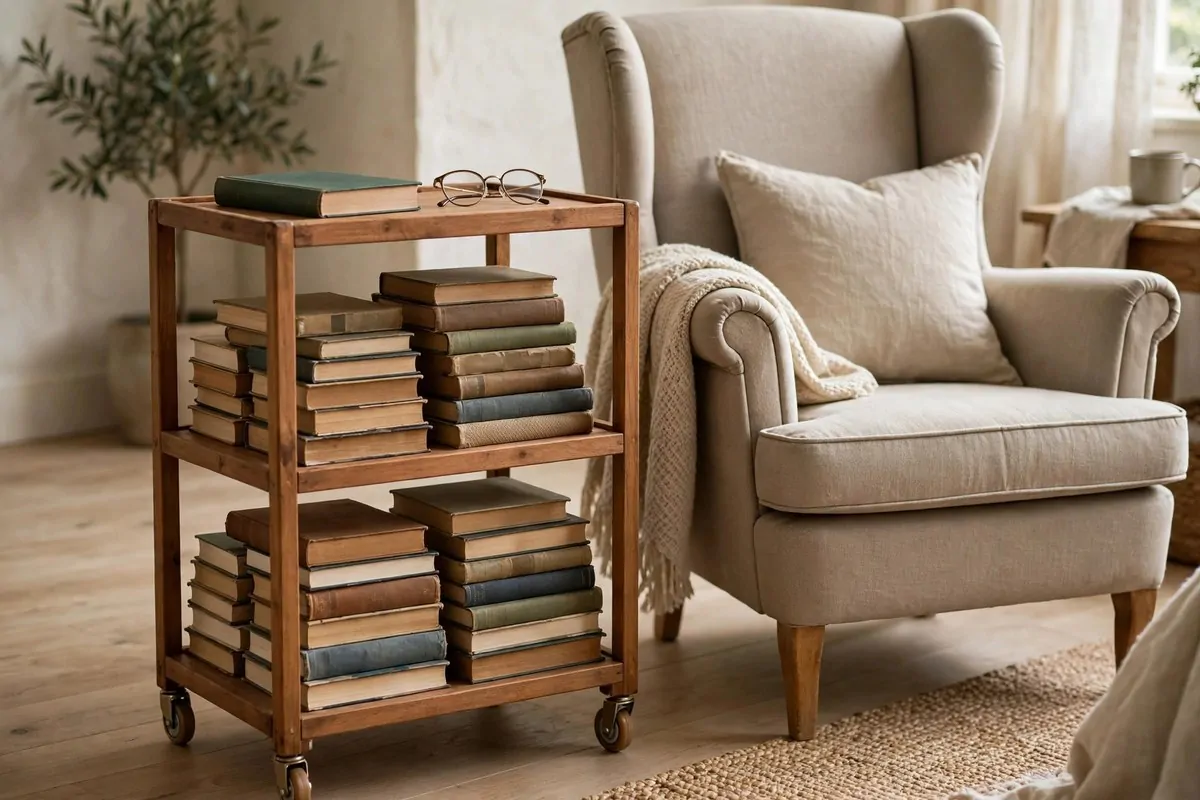
Some readers do not stay in one spot. They read in bed, then move to the chair, then end up on the floor by the window. A rolling book cart keeps up with all of that.
These little three-tier carts started as kitchen storage, but book lovers claimed them fast. Each tier holds a row of books, and the whole thing rolls wherever you go.
I keep mine stocked like a tiny traveling library. Top tier for the book I am reading now plus my glasses. Middle tier for the next two books. Bottom tier for notebooks and pens.
The wheels lock, which matters. You do not want your library rolling away on a sloped floor in the middle of a good chapter.
When friends visit, I roll the cart next to the guest chair. Instant welcome library. When I am done, it tucks into the closet.
These carts come in lots of colors. I picked a warm wood tone that matches my shelves. White ones disappear against white walls if you want it subtle.
Add small bookends or even a heavy mug on each tier to stop books sliding when you roll it. Learned that one after a cart-wide book avalanche.
This is also the perfect fix for renters who cannot mount shelves. No holes, no brackets, no landlord conversations.
The cart holds fewer books than a shelf, and that is actually a gift. It forces you to choose only the books you truly want near you right now.
Wipe the wheels now and then. They pick up dust bunnies and start squeaking.
9. Twin Tall Bookcases Flanking a Dresser
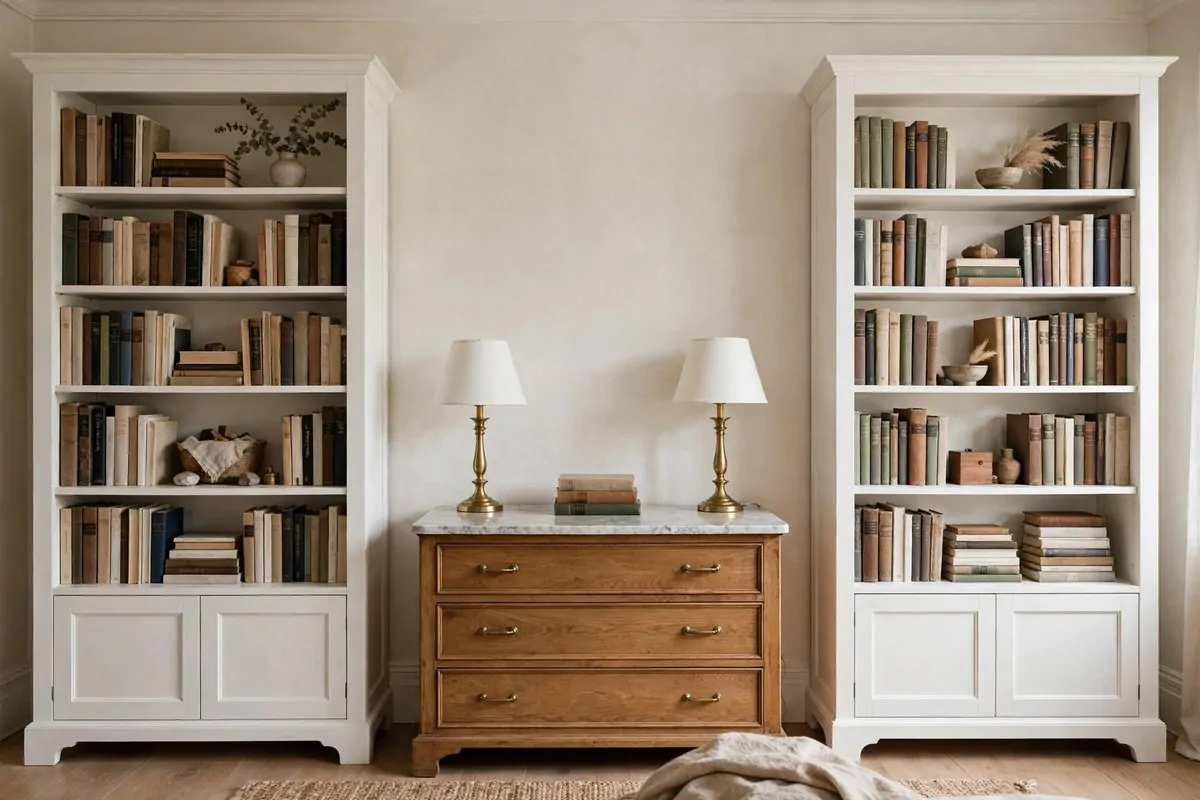
This is the most grown-up looking idea on the list. Two tall bookcases, one on each side of a dresser, turn a plain bedroom wall into a proper library wall.
The symmetry does the heavy lifting. Matching bookcases on both sides make the whole wall look planned and calm, even if the books inside are a happy mess.
Put a dresser or a low console between them. The top becomes a display spot. A pair of matching lamps, a small stack of books, maybe a framed print. It looks like a hotel library had a baby with your bedroom.
I saw this exact setup in a home tour online and copied it with budget bookcases. The trick is keeping the two bookcases identical. Same height, same color, same style. The dresser in the middle can be anything.
Use the dresser top for books you are showing off. Coffee table books. Beautiful covers. The ones with sprayed edges that are too pretty to shelve spine-out.
The bookcases hold the working library. Organize them however you like. By color, by genre, by size. Nobody can see your system but you.
Leave a little breathing room on each shelf. Crammed shelves look stressed. A few inches of empty space makes books easier to grab.
This wall becomes the focal point of the room. Hang nothing else on that wall. Let the books be the art.
Measure your wall first and leave walking space on both sides. Tall bookcases in a narrow room can feel like a hallway.
Anchor tall bookcases to the wall. This is not optional. A full bookcase is very heavy and very tippy.
10. Floor-to-Ceiling Built-Ins for a Real Library Wall
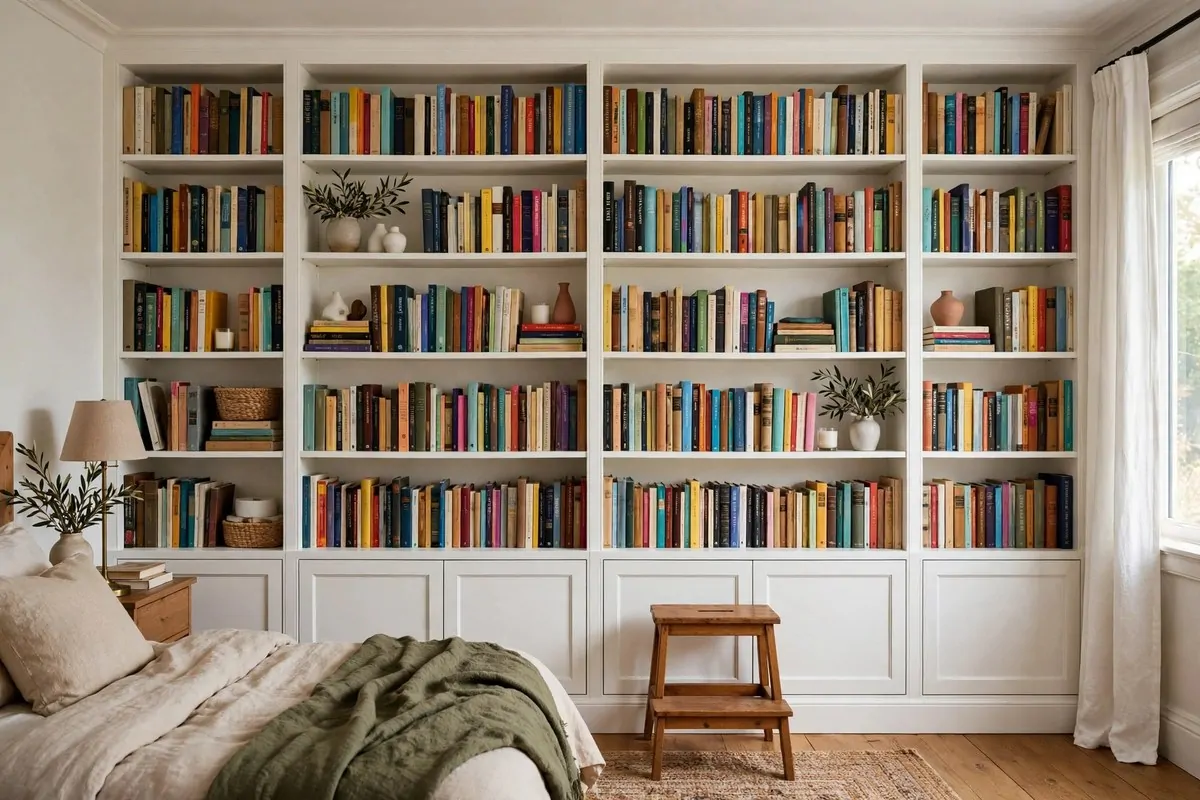
If you own your home and you love books deeply, this is the dream. One full wall of shelves from the floor all the way to the ceiling.
Built-ins look like they grew with the house. They make even a simple bedroom feel grand and settled, like the room has a history.
You do not need a carpenter for the look. A row of tall bookcases pushed tight together, with trim added along the top and base, reads as built-in to almost every eye.
I helped a friend fake this with four identical bookcases and some painted trim boards. Total cost was less than one real custom shelf. Guests assume a carpenter built it.
Paint the whole wall of shelves one color. White keeps it airy. A deep green or navy makes it moody and rich. The color unifies mismatched bookcases into one piece.
The top shelves hold books you rarely touch. Reference books, old textbooks, the complete works of someone you admire but never reread. They are there for the look and the love.
Keep a small step stool nearby. A folding one that hangs on the side of the bookcase works well and looks intentional.
Leave the middle shelves at eye level for your favorites. This is your gallery. The books that made you who you are go here.
Dust the top shelves twice a year. They get filthy up there and you will not notice until a book falls on your head.
This wall will hold hundreds of books. Before you build it, be honest about whether you own that many or plan to. Empty built-in shelves look sad.
11. A Ladder Shelf That Leans by Your Chair
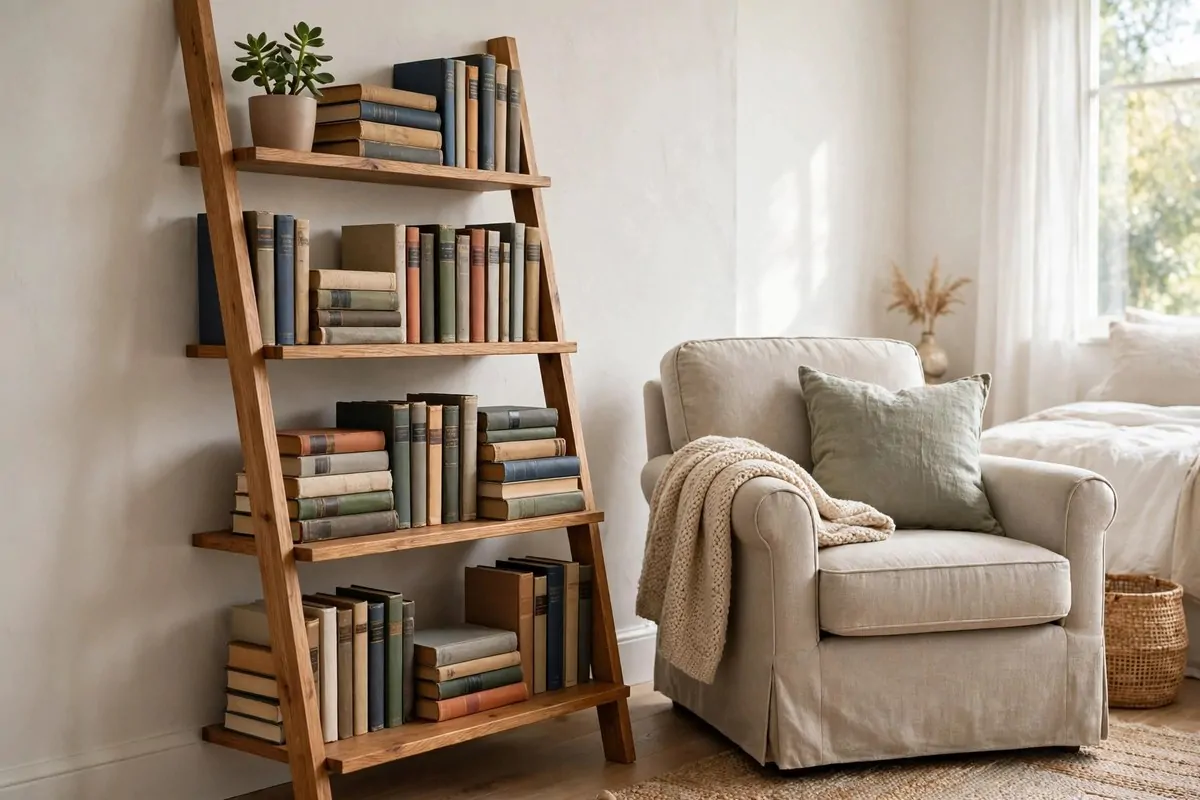
A leaning ladder shelf is the friendliest bookshelf shape there is. It leans against the wall, the shelves get deeper toward the bottom, and it asks for almost no floor space.
Put one right beside your reading chair. The bottom wide shelf holds big art books. The middle shelves hold novels. The top narrow shelf holds one small plant or a candle.
I love how these look slightly casual. They never feel stiff or formal. A ladder shelf says this reader is relaxed.
They are also renter friendly. Most just lean. No mounting, no holes. Check that yours has wall-safe pads or a small anchor strap so it cannot slide.
Style each shelf with a mix of books and one object. All books looks heavy. All objects looks like you are hiding something. The mix looks like a real person lives here.
The angled design means books on the upper shelves tilt back a little. Use the deeper lower shelves for the books you grab most.
These shelves come in wood, metal, and bamboo. Wood feels warmest in a bedroom. Black metal looks sharp against light walls.
A ladder shelf will not hold your whole collection. It holds maybe forty books. Think of it as a highlight reel, not the archive.
Pair it with a small basket underneath for oversized books that do not fit the shelves.
Dust the rungs when you dust the shelves. They catch dust in a way flat shelves do not.
12. Warm Wall Sconces Above the Shelves
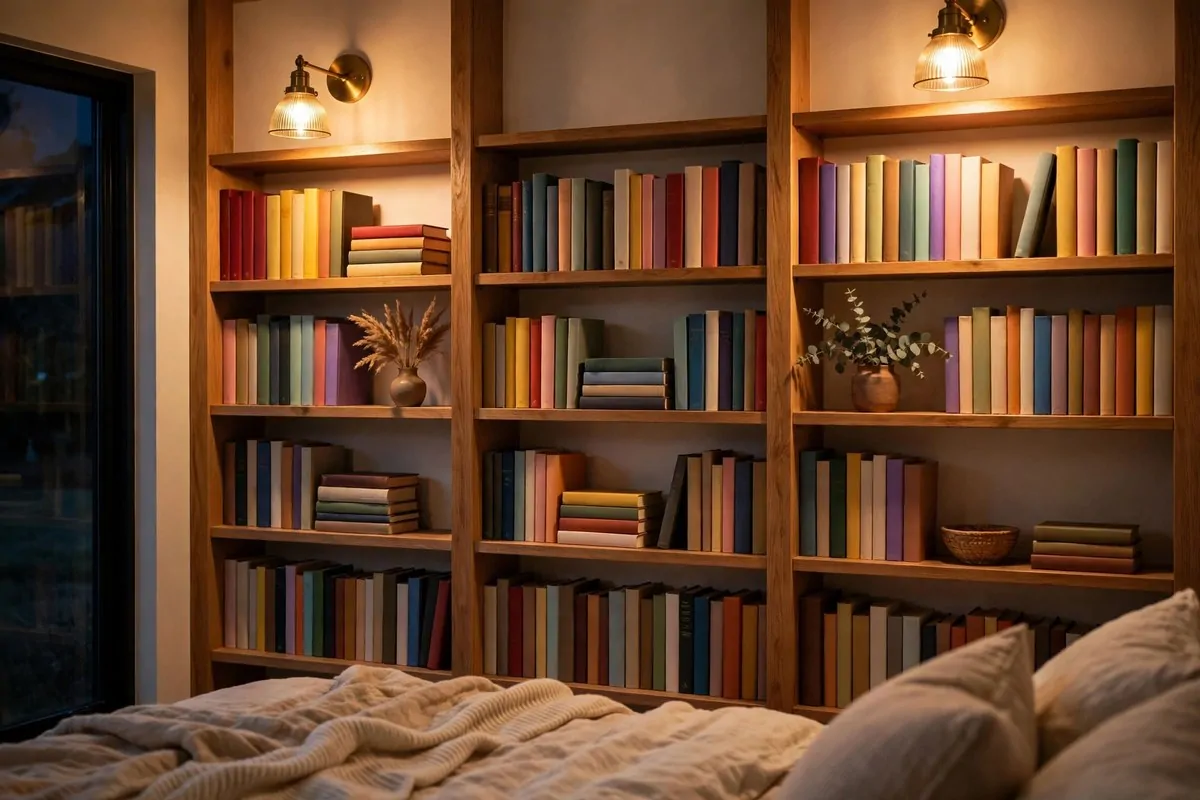
Lighting can make a fifty dollar shelf look like a five hundred dollar library. Warm sconces above your bookshelves are the fastest way to get that glow.
Picture lights and small wall sconces wash warm light down across the book spines. The titles become readable in the evening. The whole shelf looks like a shop window for your own books.
I added two plug-in sconces above my bedroom shelves last fall. No electrician, no new wiring. They plug into the wall and the cord hides behind the shelf. The room felt different the same night.
Choose warm bulbs, never cool white. Cool light on books looks like an office. Warm light looks like a library in an old film.
Battery sconces work too if you have no outlet nearby. The good ones last months on a charge and many come with a remote.
Space the sconces evenly across the shelf width. One sconce per three feet of shelf is a good rule.
Point the light at the books, not at the room. The glow should fall on the spines. That is what makes them look rich.
This light also helps you find books at night without turning on the big ceiling light and waking your brain up fully.
Dimmer plug-in sconces are worth the extra few dollars. Full brightness for choosing a book, low glow for falling asleep reading.
Clean the sconce shades when you dust. Dust on a warm bulb smells faintly like toast, which is charming exactly once.
Here is a simple comparison of shelf lighting options:
| Light type | Cost | Needs wiring | Best for |
|---|---|---|---|
| Plug-in sconce | Low | No | Renters, quick upgrades |
| Battery picture light | Low | No | Shelves far from outlets |
| Hardwired sconce | Higher | Yes | Forever homes, clean look |
13. A Deep-Colored Accent Wall Behind Your Books
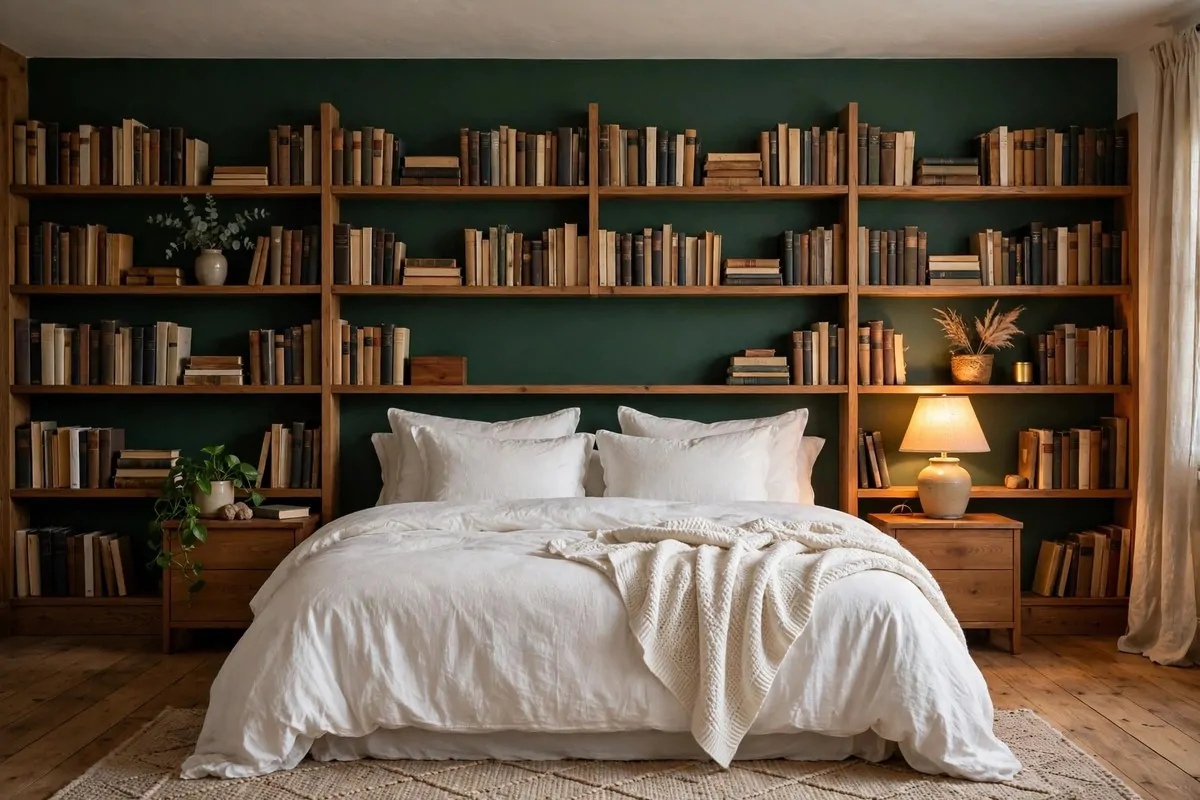
Book spines are already colorful. Put them against a deep, rich wall and every single one pops like art.
A dark green, navy, or warm charcoal wall behind your shelves makes light book covers glow and dark covers look dramatic. White walls wash books out. Dark walls frame them.
I painted the wall behind my bedroom shelves a deep forest green two years ago. It was one Saturday, one tin of paint. Friends now ask about the wall before they ask about the books.
This works best on one wall only. The shelf wall. The other walls stay light so the room does not feel like a cave.
Test the color first. Paint a big poster board and lean it behind the shelf for a few days. Live with it in morning light and evening light before you commit.
Matte or eggshell finish looks best. Shiny paint shows every bump and reflects the lamp light in a distracting way.
If painting feels like too much, try peel-and-stick wallpaper in a dark pattern. It comes off clean when you move or change your mind.
Dark walls also hide shelf shadows. The gaps behind books disappear into the color and the shelf looks fuller.
Keep your bedding light if the wall is dark. White or cream bedding balances a moody wall and keeps the bedroom feeling restful.
This is a weekend project with a big payoff. One wall, one color, and your books look twice as expensive.
14. A Round Rug That Marks Your Reading Spot
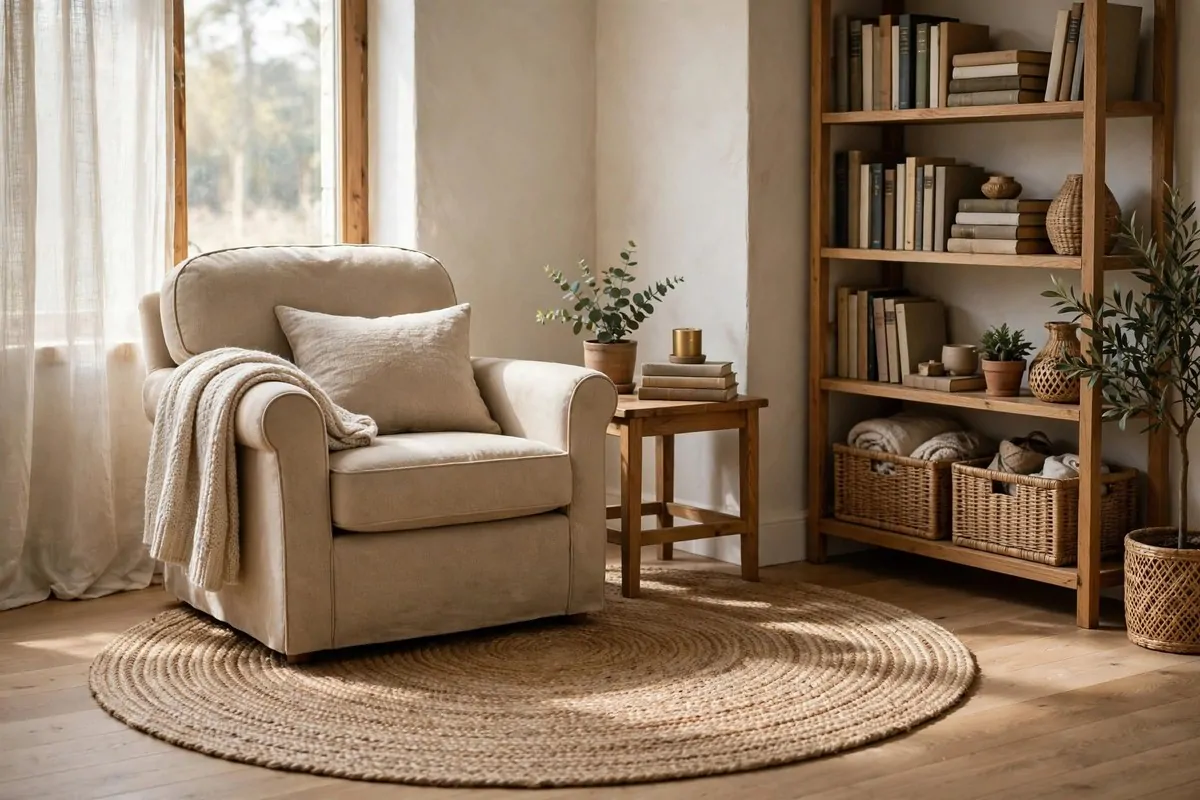
A rug can draw a circle around your reading corner and tell your brain this spot has one job. Reading.
Place a round rug under your chair and side table. Round works better than square here because it softens the corner and makes the nook feel separate from the rest of the room.
I added a round jute rug to my corner last year and the change was silly for how simple it was. The chair suddenly had a home. The corner had edges. My feet had something warm to land on.
Choose a rug big enough that the chair's front legs and the side table both sit on it. A rug that is too small looks like a coaster under furniture.
Low pile is best for reading corners. High pile feels nice but it eats chair legs and makes rolling carts stuck.
Jute, cotton, and flatweave wool all work well. They are flat enough for furniture and warm enough for bare feet.
The rug also protects your floor from chair scrapes and lamp stands. Small thing, but floors are expensive.
If your bedroom is carpeted already, use a flat cotton rug for texture contrast. It still marks the spot visually.
Washable rugs are worth it in a reading corner. Tea spills happen. Chocolate happens. A rug you can toss in the wash removes all worry.
Pick a color that repeats something else in the room. The throw blanket, the curtains, the lamp shade. One repeat ties the corner to the bedroom.
15. The Little Snack Basket Station
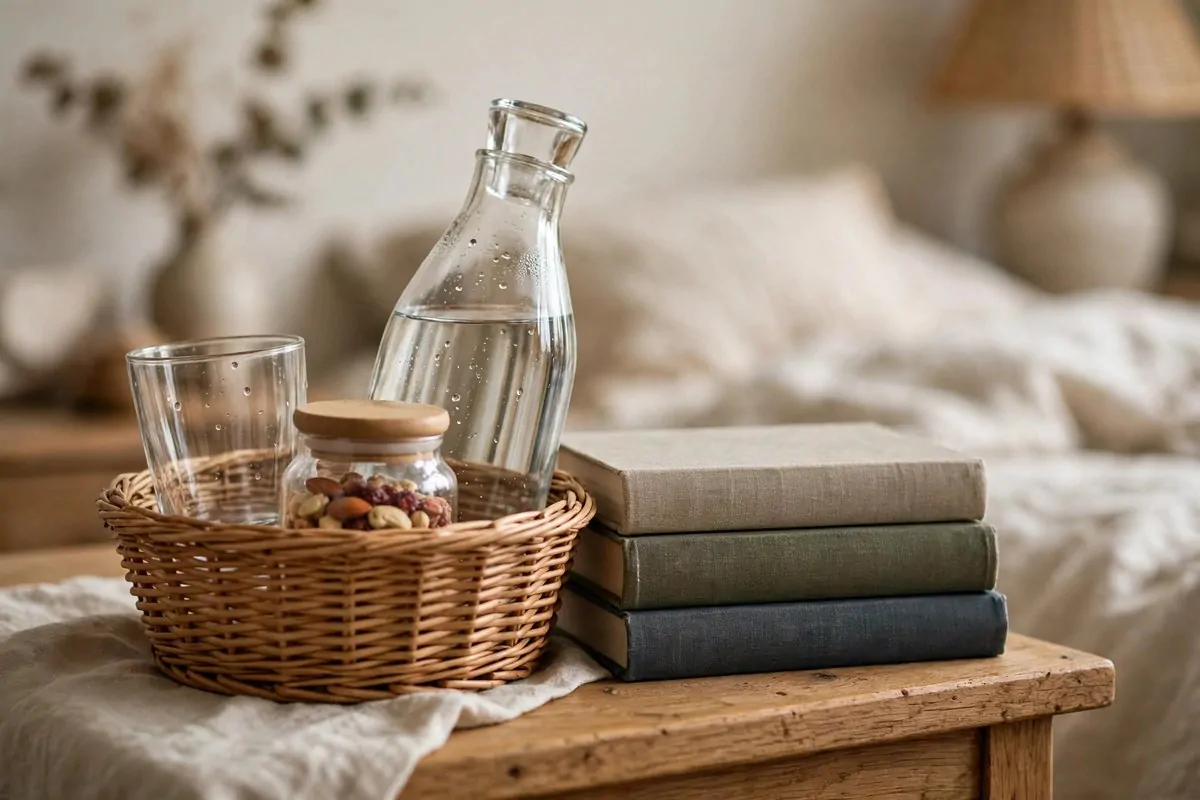
Every reader knows the problem. You get comfortable, you open the book, and twenty pages in you are thirsty. Getting up breaks the spell.
A tiny snack station beside your reading chair fixes it. A small basket or tray with a water carafe, a glass, and a little jar of something to nibble.
I keep a lidded jar of almonds and a bottle of water on my side table. Nothing that crumbs. Nothing that stains pages. Readers learn fast which snacks are book safe.
Book safe snacks are a real category in my house. Nuts, dried fruit, chocolate squares you eat in one bite. Not book safe are buttery popcorn, powdered anything, and jam toast.
A carafe beats a glass because you do not have to get up for refills. One fill lasts a whole reading session.
Use a tray under everything. It contains the crumbs, catches the drips, and makes the whole station look intentional instead of cluttered.
Keep it small. This is a reading corner, not a kitchen. If the station needs its own furniture, it is too big.
Refill it on Sundays when you tidy the room. Fresh water, topped-up jar. Two minutes and the week of reading is ready.
Guests love this touch too. Offer the basket when a friend reads in your corner and watch their face.
Wash the carafe every few days. Still water goes stale and stale water ruins a perfect reading hour.
16. A Spinning Bookshelf for Tight Corners
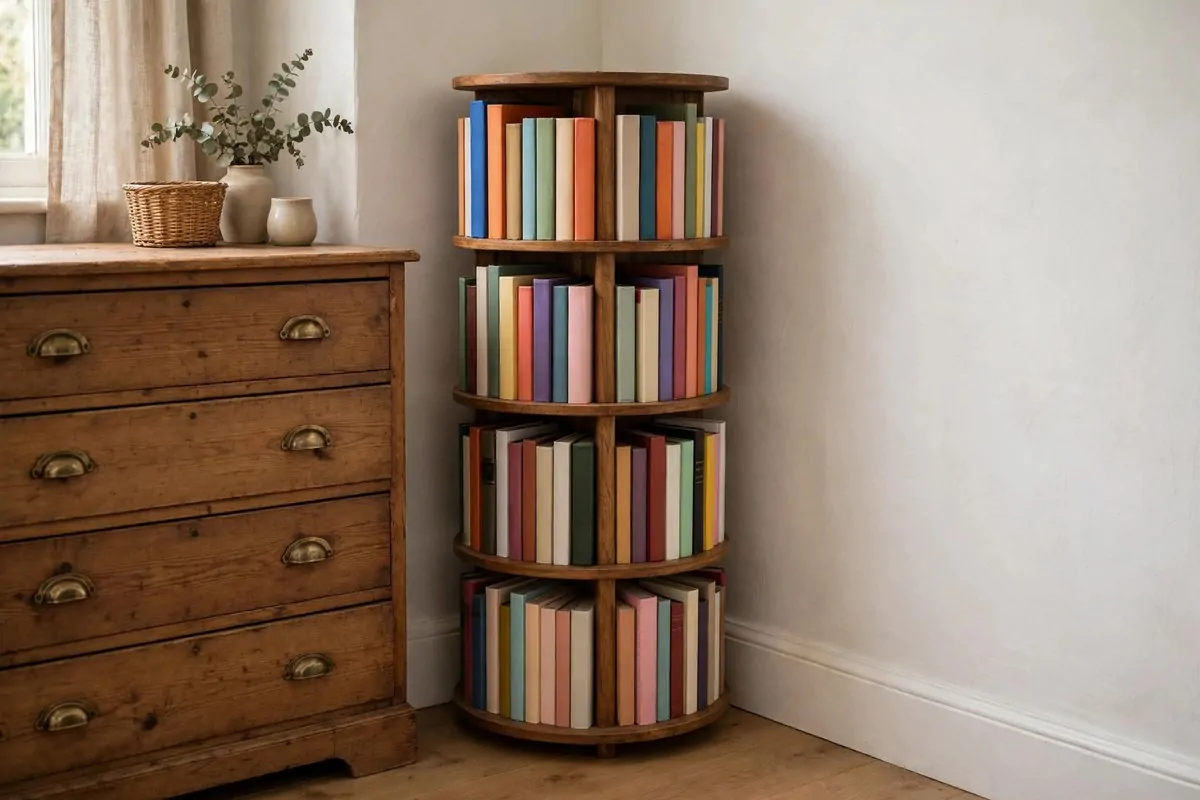
Some bedroom corners are too small for a real bookcase but too empty to ignore. A spinning bookshelf tower fits exactly there.
These round towers rotate on a base, so every side is reachable with one spin. They hold a surprising number of books for their tiny footprint. About the floor space of a large plant.
I bought one for the dead corner between my dresser and the wall. It holds sixty books where before there was dust and a lost sock.
The spin is the fun part. There is something deeply satisfying about rotating your little tower to find the right book. Kids will spin it just for joy.
Put your most grabbed books on the middle tiers. Top tier for display, bottom tier for the heavy books that keep it stable.
These towers come in wood and white. Wood looks warmer. White disappears into the corner if you want the books to be the focus.
Check the weight limit before you load it with hardcovers. Art books go on regular shelves. Paperbacks live happily on the tower.
It also works as a side table in a pinch. The flat top holds a drink or a small lamp if the tower is sturdy.
Dust it with a quick spin and a cloth. The rotation that makes it fun also flings dust outward, so it needs wiping more than flat shelves.
This is the best idea on the list for truly tiny bedrooms. If you think you have no room for books, you have room for this.
17. Under-Bed Drawers for the Minimalist Reader
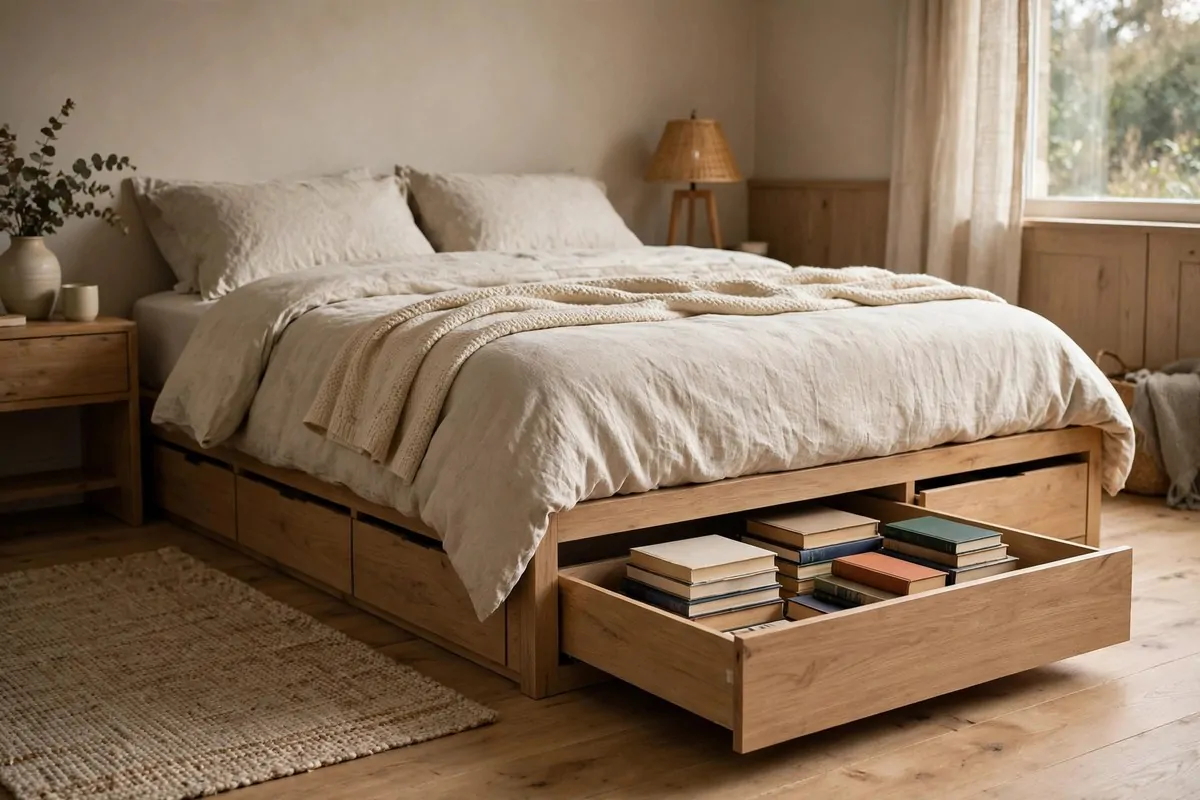
Not every reader wants books on display. Some of us like clean walls and clear surfaces, with our library tucked quietly out of sight.
Under-bed drawers are the minimalist reader's secret. Shallow drawers or flat boxes on wheels slide under the bed and hold dozens of books each.
I used this system in a tiny rental where wall shelves were forbidden. Three flat boxes under the bed held my whole collection. The room looked empty. The library was enormous.
Sort the boxes by category so you can find things. One for novels. One for nonfiction. One for the books you lend to friends and never see again.
Label the box ends with a luggage tag or a strip of masking tape. You will thank yourself at midnight when you are hunting one specific book.
Keep the boxes shallow. Deep boxes become book graves where titles go to be forgotten. Shallow boxes let you see every spine.
This method keeps books dust free too. Under the bed is dark and still, which books actually like. Just keep the room dry.
The downside is browsing. You cannot scan spines on a shelf. Keep a simple list on your phone of what lives in each box.
Pair this with one small visible shelf for current reads. Hidden archive below, active books above. Best of both worlds.
Vacuum under the bed when you pull the boxes out monthly. Dust bunnies love to colonize around book boxes.
18. A Small Loveseat Nook for Reading Together
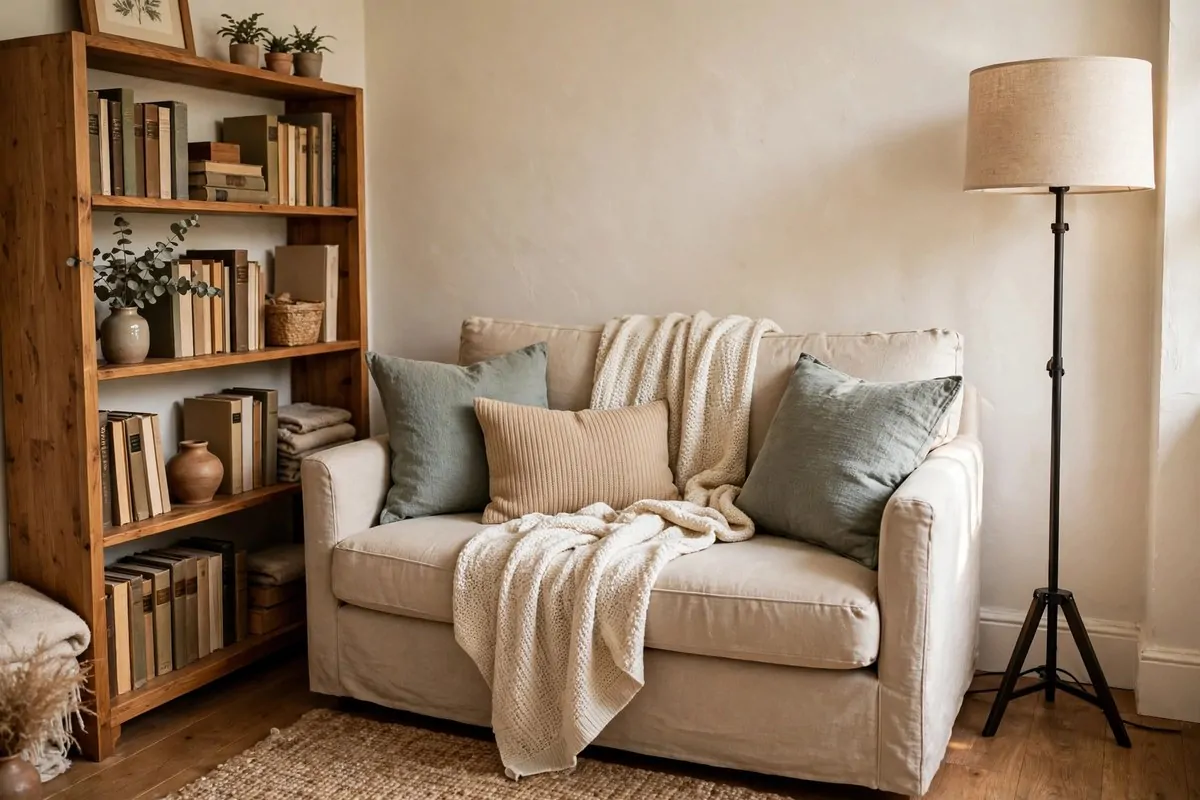
Reading does not always have to be solo. A small loveseat in the bedroom makes room for two readers side by side.
Look for a loveseat or a wide settee, not a full sofa. It should seat two people comfortably without eating the whole bedroom. Apartment sized loveseats are perfect.
Place it against a wall or in a wide corner. Add a bookshelf on one side and a floor lamp on the other. Now two people can read together in the evening, each in their own book, sharing the quiet.
My sister and I did this in her guest bedroom. We visit, we each grab a book from the shelf, and we read side by side for an hour before sleep. It is one of my favorite parts of visiting her.
A loveseat also works as extra seating when friends visit. It is a reading nook on quiet days and a hangout spot on social days.
Choose firm cushions over soft ones for reading. You sit upright to read, and mushy cushions fold you in half by chapter two.
A shared throw blanket across the back invites cuddling up. Two readers, one blanket, zero talking. Perfect.
Put a small table at each end if you have space. Each reader gets their own drink spot. Sharing one table leads to elbow wars.
This nook needs a bit more room than a single chair, so measure first. You want walking space around at least two sides.
If a loveseat will not fit, two small chairs facing slightly toward each other give the same together feeling in less space.
That is all eighteen. Your blanket fort days are behind you, but the feeling does not have to be. Pick one idea, start small, and give your books the corner they deserve. Your future self, the one reading at midnight with warm feet and a good lamp, will thank you.