20 Spare Bedroom Library Ideas That Put Extra Space to Work

Our spare bedroom was the room where good intentions went to wait. A suitcase nobody unpacked. Boxes from the move, and we moved three years ago. An ironing board I used twice. Every time I walked past, I felt a little guilty. Then one rainy weekend I did something about it. I dragged the boxes to the garage, borrowed two bookshelves from the living room, and put my old armchair by the window. That was it. That was the whole start. And you know what? By Sunday night I had read eighty pages in that chair and the room finally had a job. It was a library now. A small one. A messy one. But mine. These 20 spare bedroom library ideas are everything I learned turning that forgotten room into the coziest corner of my house. If you have a spare room collecting dust, this is your sign.
1. Floor-to-Ceiling Built-Ins
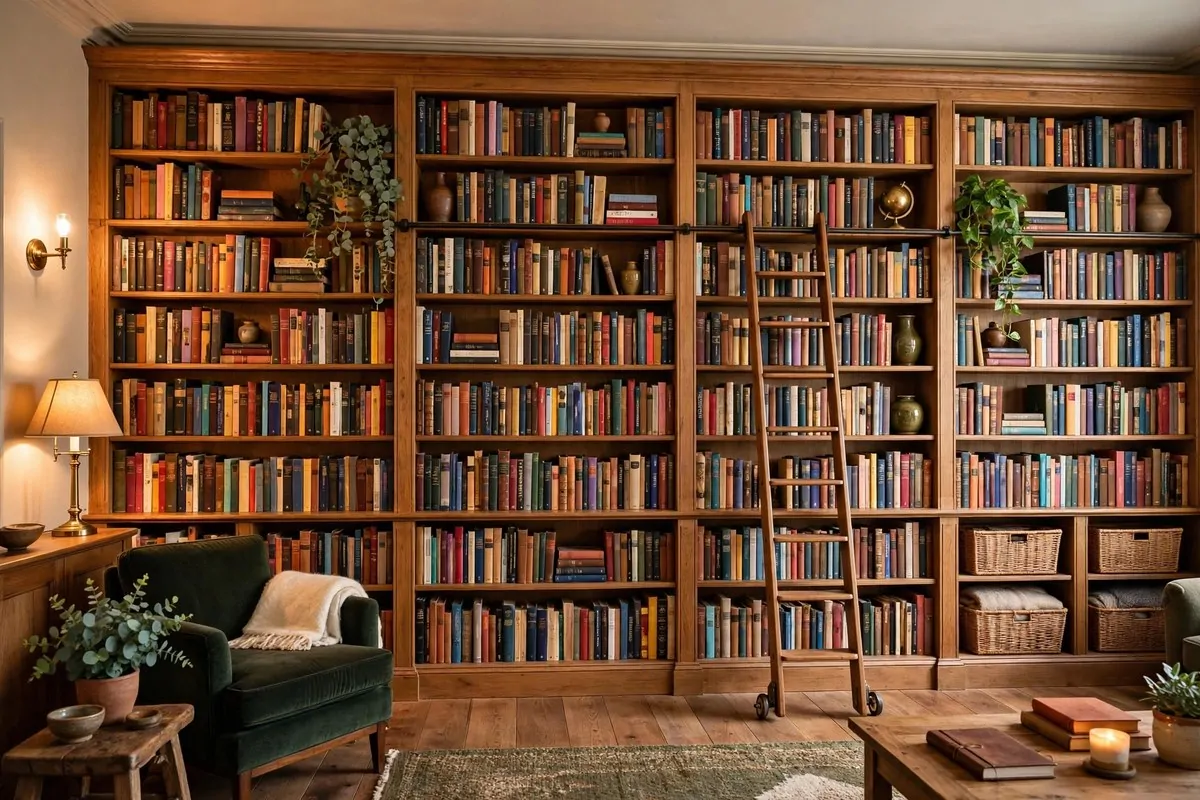
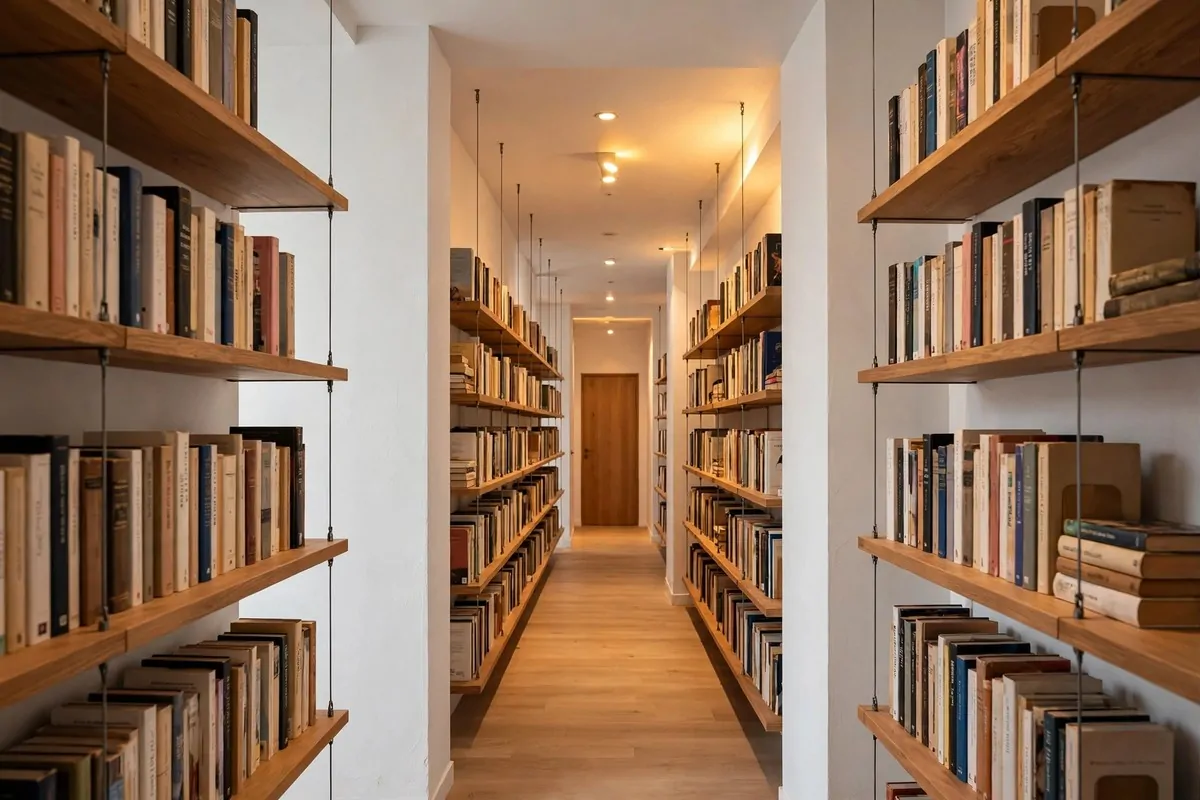
Nothing says library like a full wall of books. I covered one whole wall with tall bookshelves, floor to ceiling. The room changed instantly. It went from spare bedroom to book heaven in one weekend.
Tall shelves hold so many books. More than you think. When you use the full height, a single wall can hold hundreds. My collection finally left the boxes. Every book has a home now.
You do not need custom carpentry. Tall bookcases from a furniture shop work fine. Line them up side by side. Fill the gaps with thin trim. They will look built in. Nobody will know the difference.
Anchor them to the wall. This is important. Tall shelves full of books are heavy. A little bracket at the top keeps them safe. It takes ten minutes. Do not skip it.
Leave the top shelf for things you rarely touch. Old yearbooks. Books you keep for love, not reading. The everyday books live at arm height. Your back will thank you.
Paint the shelves the same color as the wall. They blend in. The books become the decoration. Or paint them a deep color for drama. Dark green shelves with colorful books look amazing.
I organized mine by type. Fiction on the left. Cookbooks in the middle. The random stuff on the right. It is not perfect. But I can find things. That is what matters.
Stand back when you finish. A wall of books is beautiful. It smells like paper and possibility. My spare room finally feels important. Like it matters. Because now it does.
2. The Murphy Bed Trick
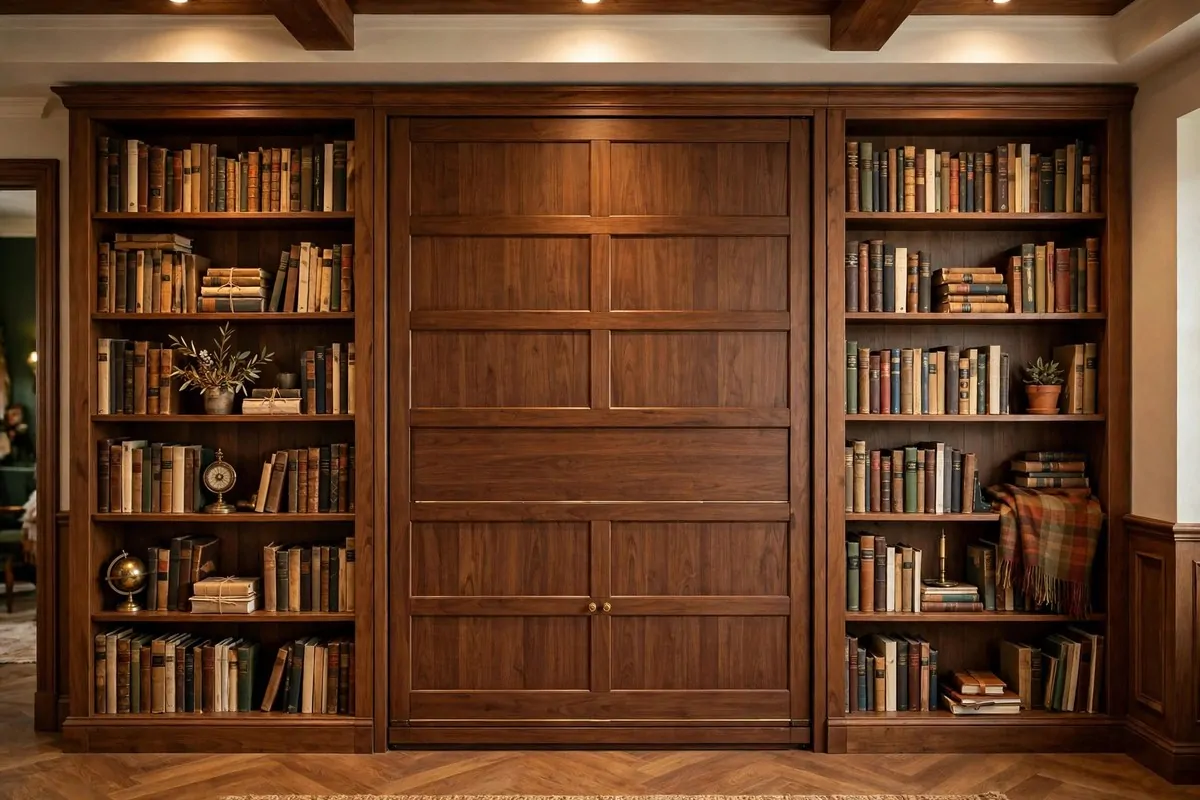
A spare room should still host guests. But a big bed eats the whole room. The answer is a Murphy bed. It folds up into the wall. By day, library. By night, bedroom. Best of both.
Flank it with bookshelves. One on each side. When the bed is up, the shelves frame the wall. It looks like a designed library wall. The bed hides completely. Guests never guess.
Modern Murphy beds are easy to use. They fold down smooth. No wrestling. Mine takes one hand. It locks in place. It feels solid. Not like the rickety ones from old movies.
Put a good mattress on it. Guests remember the mattress. A thin sad mattress ruins the visit. A decent one makes them ask where you bought the bed. Spend the money here.
Add a small bench under the window. For reading during the day. When guests come, the bench holds their bag. Everything in this room does two jobs. That is the secret.
The room stays a library 350 days a year. It becomes a bedroom for the other 15. That is smart use of space. No more empty guest room gathering dust for eleven months.
Measure carefully before you buy. Murphy beds need wall space and floor space to fold down. Check the open size. Make sure it does not hit the shelves. Measure twice, buy once.
My mother visited last month. She slept on the Murphy bed. In the morning she said it was the best guest sleep she had in years. The library room passed the test.
3. A Window Seat Made for Reading
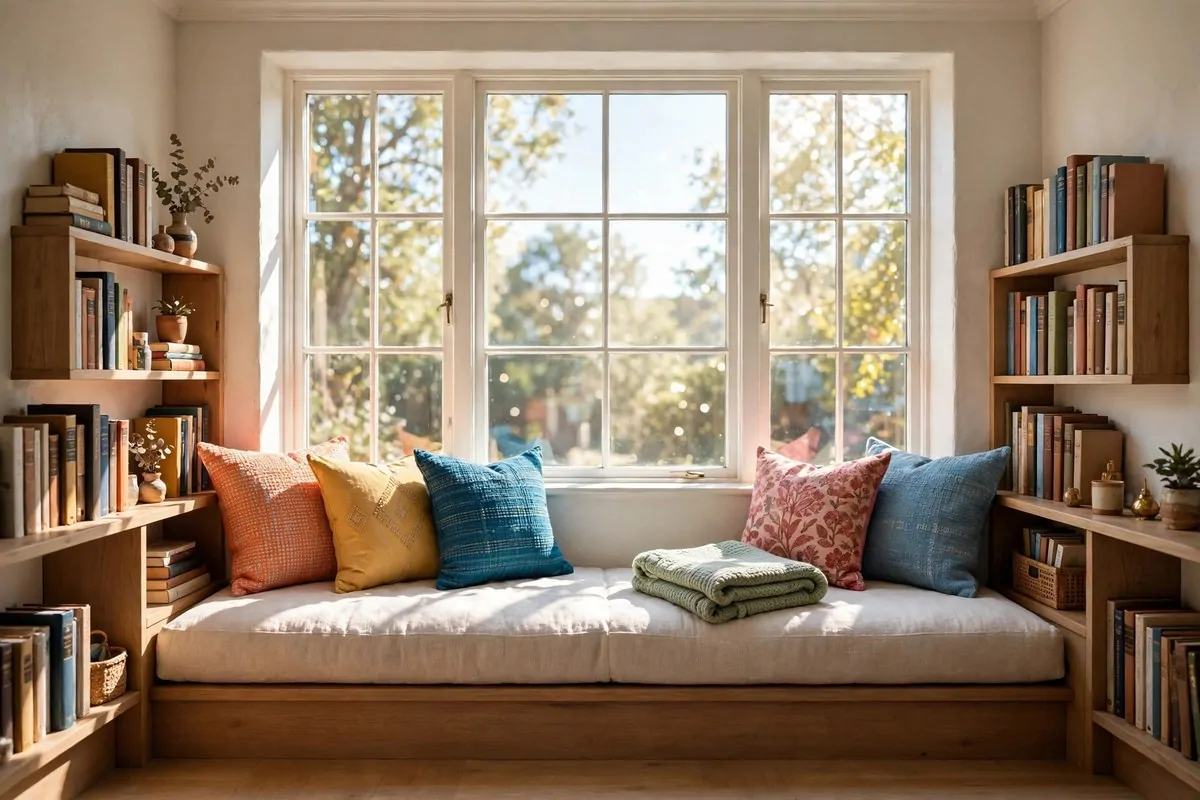
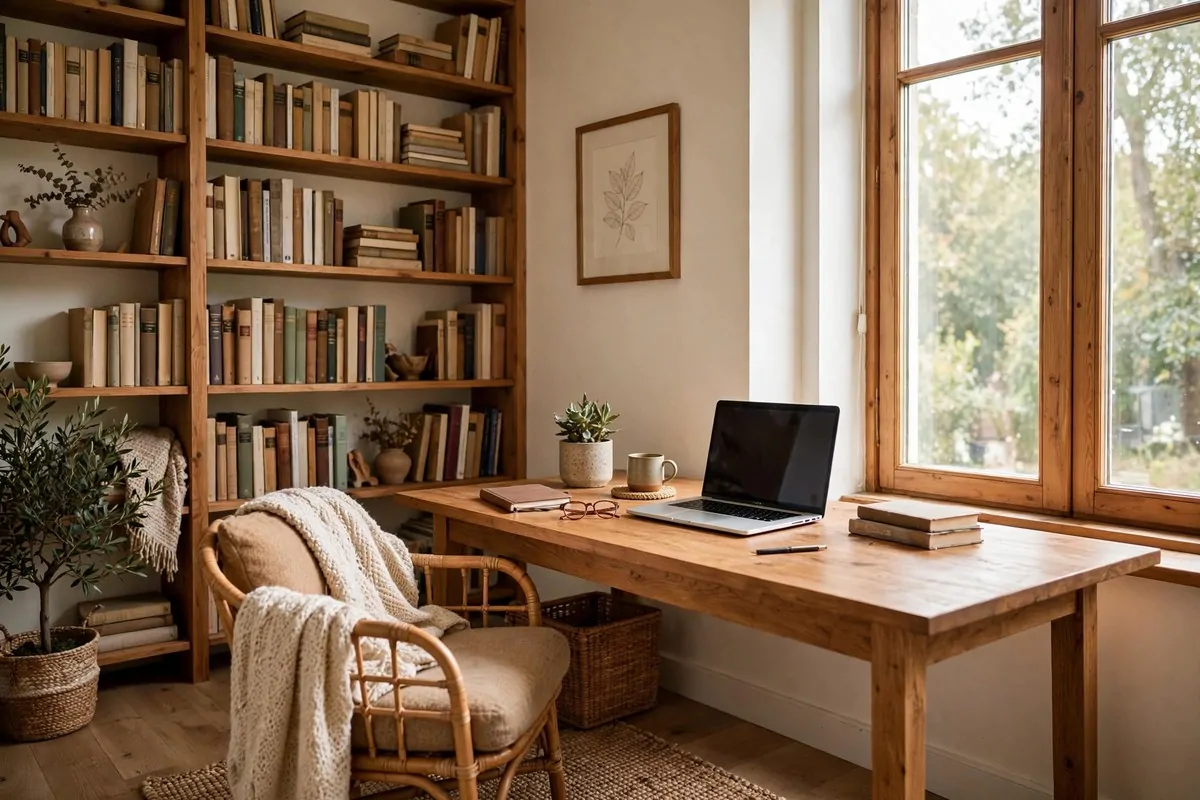
The window is the best seat in the house. I built a reading bench under my spare room window. Cushion, pillows, a throw. Now I read there every sunny afternoon. Natural light is free and perfect.
You do not need to build anything fancy. A sturdy bench works. Or a wide shelf at sitting height. Even stacked crates with a cushion on top. The cushion is what matters.
Make the cushion thick. Four inches at least. Thin cushions hurt after twenty minutes. Thick ones invite long chapters. I used foam from a craft shop. Covered it with washable fabric.
Pillows make it cozy. Two or three. One for your back, one to hug. Washable covers are smart. Sun fades fabric. Being able to wash and swap covers keeps it fresh.
Put bookshelves on both sides of the window. Books within arm's reach. You finish one chapter, grab the next. No getting up. This is peak reading comfort.
A small side table nearby holds tea. Tea and books and sunlight. That is a perfect afternoon. The table can be tiny. Just big enough for a mug and your glasses.
In winter the window seat is still lovely. The light is weaker but the coziness is stronger. Add a thicker throw. Watch the gray sky. Read something warm. It balances out.
This corner cost me very little. A bench, a cushion, some pillows. But it is the most used spot in the whole room. Sometimes the simplest ideas win.
4. The Rolling Library Ladder
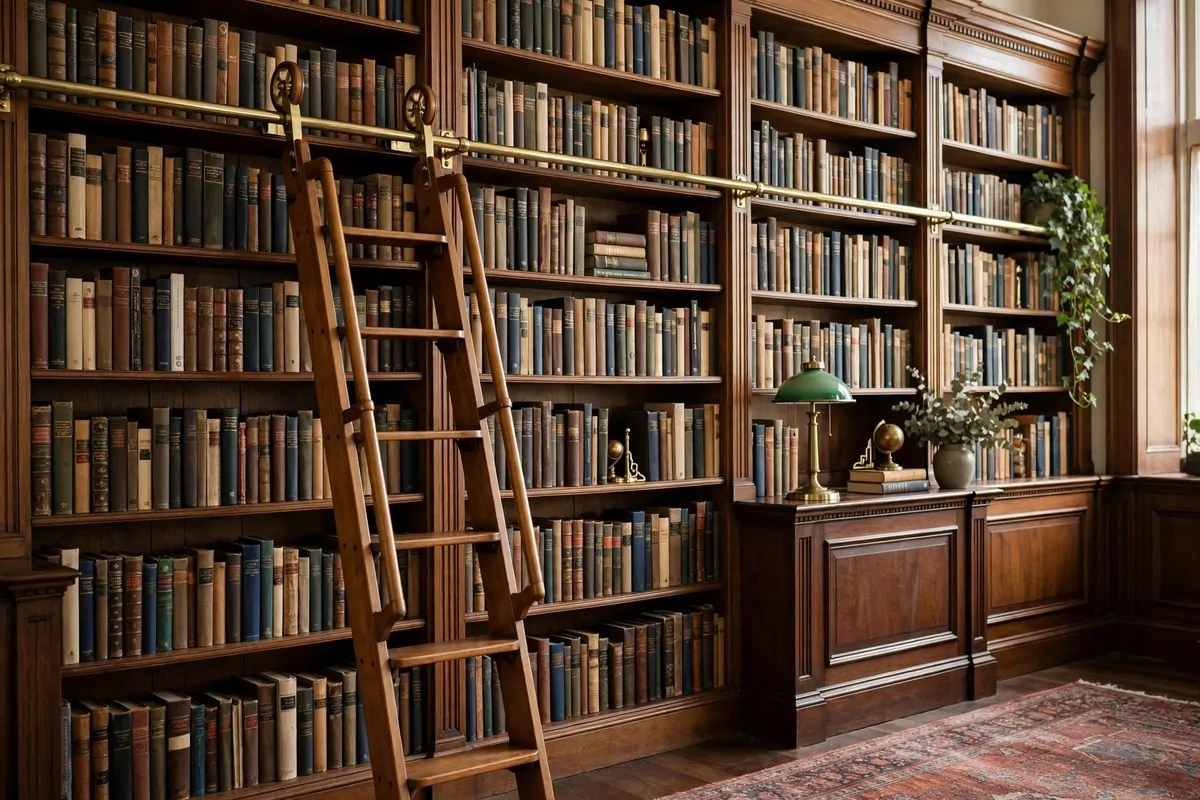
A rolling ladder is pure book magic. It slides along a rail on your tall shelves. You climb up, grab a book, roll to the next section. I feel like I live in an old manor. I do not. But I feel like it.
You need tall shelves first. The ladder only makes sense above eight feet. Below that, a step stool does the job. But if you went floor to ceiling, the ladder is the cherry on top.
The rail mounts to the shelves. The ladder hooks on and rolls. Installation is straightforward. Two people make it easier. One holds, one drills. An afternoon project.
Wood ladders look classic. Match the wood to your shelves. It becomes part of the furniture. Brass hardware adds a fancy touch. Little details make it feel special.
It is also practical. Top shelves are useless without a way to reach them. The ladder turns dead space into real storage. More books fit. The room works harder.
Kids love it. Mine treat it like a ride. Set a rule early. Ladder is for books, not climbing games. Or just let them enjoy it a little. A library should have some joy in it.
It photographs beautifully too. Every guest asks about the ladder. It is the most commented thing in the room. Function and beauty in one piece of wood.
If a full rail system is too much, get a nice wooden step ladder. It leans against the shelf. Same reach, less hardware. Still looks charming. Still gets the job done.
5. One Perfect Reading Chair
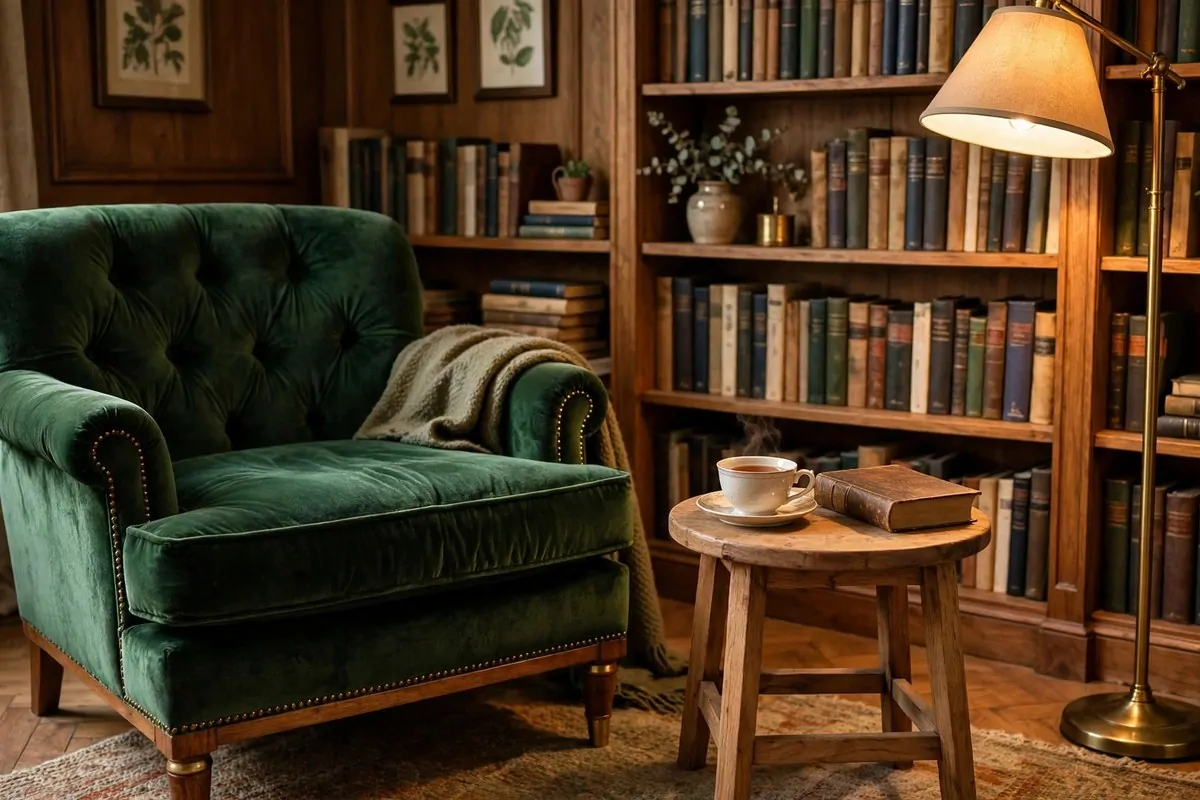
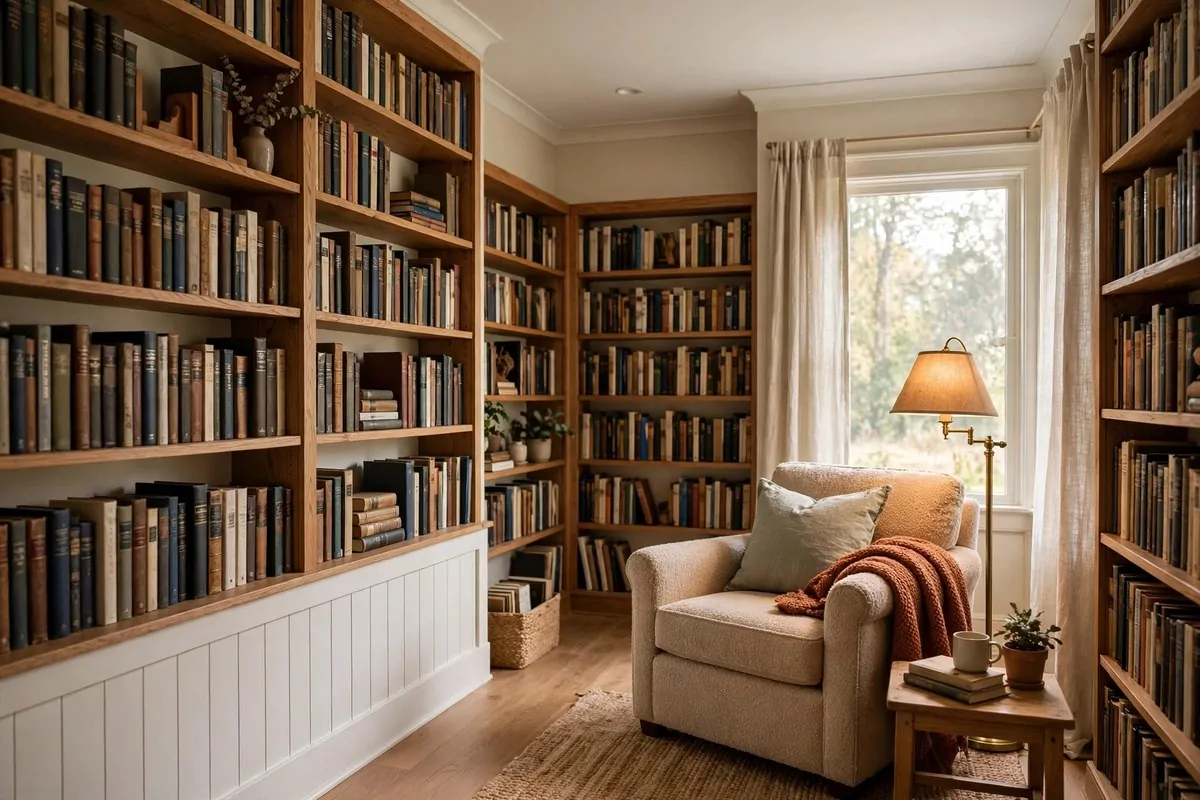
Every library needs one perfect chair. Not two. One. The chair that is yours. I found mine at a secondhand shop. Deep seat, high back, arms wide enough for a book and a cat. It was love.
Comfort beats looks. Sit in it for ten minutes before you buy. Bring a book to the shop. Actually read in it. If your neck hurts, walk away. The right chair disappears under you.
Velvet or chenille feels luxurious. They are soft and warm. They also show every crumb, so pick a forgiving color. Dark green, navy, warm brown. They hide a multitude of snacks.
A floor lamp goes beside it. Light over your shoulder. Warm bulb, always. Reading light should be bright enough for small print but soft enough for evening calm.
Add a small side table. For the mug. For the current book. For the glasses you always lose. The table should be within arm's reach. Stretching breaks the spell.
A footstool or ottoman completes it. Feet up is the reading position. My ottoman doubles as storage. Blankets live inside. Two jobs, one piece. You know I love that.
Throw a soft blanket over the arm. It invites you in. An empty chair looks nice. A chair with a throw looks irresistible. Make the calm choice the easy choice.
This chair is where I go when the house is loud. Door closed, book open, world paused. Everyone needs a spot like this. Build yours around one perfect chair.
6. A Daybed That Does Double Duty
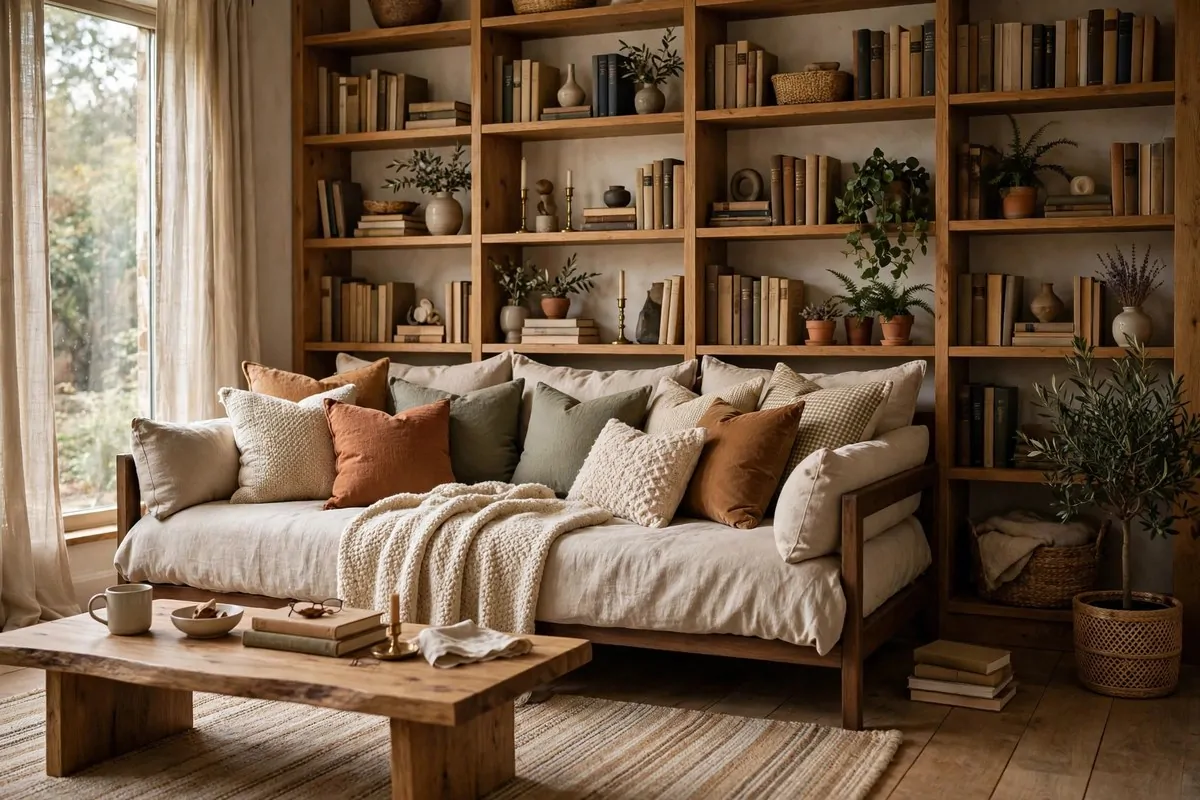
A daybed is a sofa by day and a bed by night. In a library room, it is perfect. Guests sleep on it. You lounge on it. It never looks like a bedroom taking over.
Style it like a sofa. Lots of pillows along the back. A throw across one arm. Nobody sees a bed. They see a cozy couch. The secret stays safe until bedtime.
Twin size is standard. It fits one guest comfortably. Two in a pinch. Add a trundle underneath for extra guests. The trundle slides out. Suddenly you sleep two. Magic.
Put bookshelves behind it. The daybed sits against a wall of books. It looks like a reading lounge. Because it is. The bed part is just a bonus feature.
Good pillows matter. Daybeds need more pillows than beds. They make the backrest. Mix sizes and textures. It should look plump and inviting. Flat pillows look sad.
A daybed is cheaper than a Murphy bed. Much cheaper. And simpler. No installation. Just push it against the wall. Instant library lounge that sleeps people.
I nap on mine most weekends. Twenty minutes with a book on my chest. The sun through the window. It is the best nap spot in the house. Guests agree.
When family visits, we pull out the trundle, add sheets, and the library becomes a bunk room. The kids fight over who sleeps on top. The room earns its keep.
7. Moody Green Walls
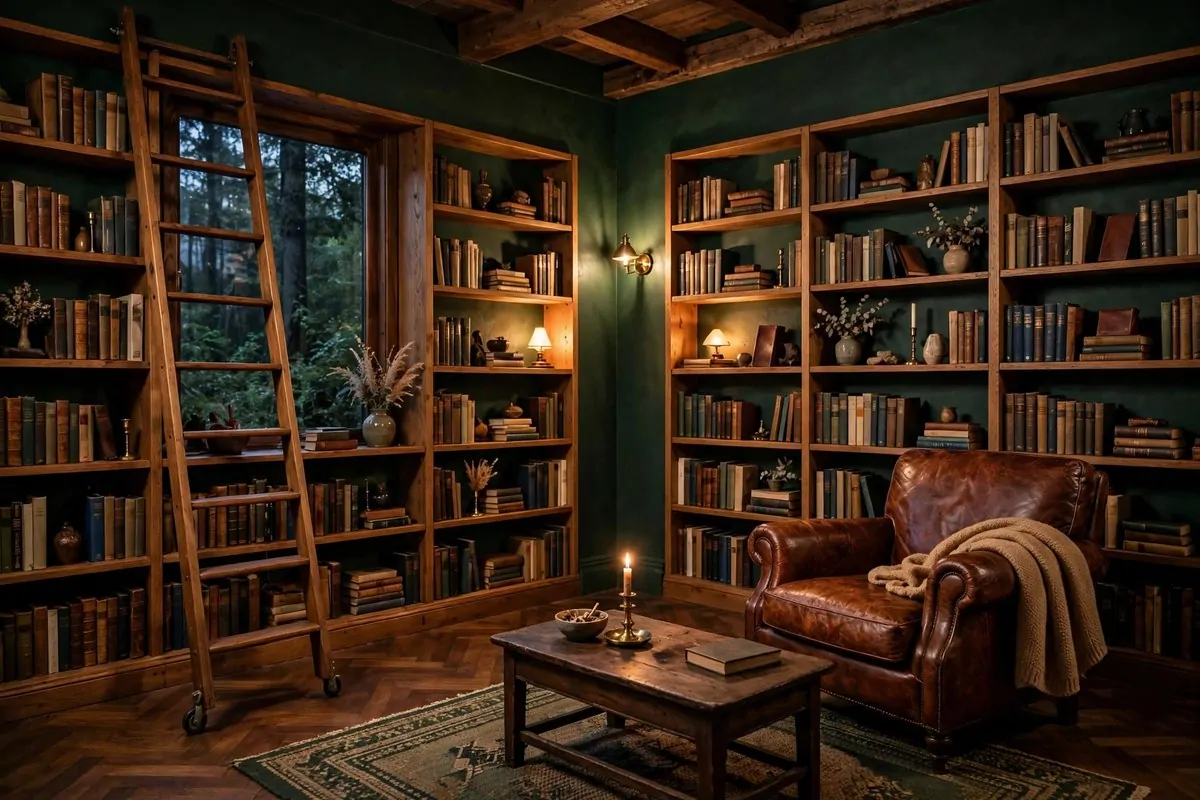
Dark walls make a library feel like a secret. I painted my spare room deep green. Forest green, almost black in the evening. The books pop against it. The room feels like a hideout.
Moody does not mean gloomy. Good lighting keeps it cozy. Warm lamps, a bright window, light colored rug. Dark walls plus warm light equals magic. Dark walls plus no light equals cave.
Green is the classic library color. Old libraries were green. There is a reason. It feels calm and smart at the same time. Like the room itself reads books.
Test the color first. Paint a big patch. Look at it day and night. My first green was too bright. The second was too gray. The third was just right. Patience pays.
White shelves pop on green walls. Wood shelves glow. Either works. I went with wood. The warm wood against the deep green looks rich. Like a proper old library.
Keep the ceiling light. White or cream. It lifts the room. Dark walls plus dark ceiling is too much. The light ceiling is the sky above your forest.
This color hides dust and marks. Practical bonus. The room always looks a bit tidy. Dark colors are forgiving like that. My white rooms judge me. My green room does not.
Guests walk in and say wow. Every time. The green wall is a statement. It says this room has a purpose. This room is for readers. This room is special.
8. A Big Reading Table
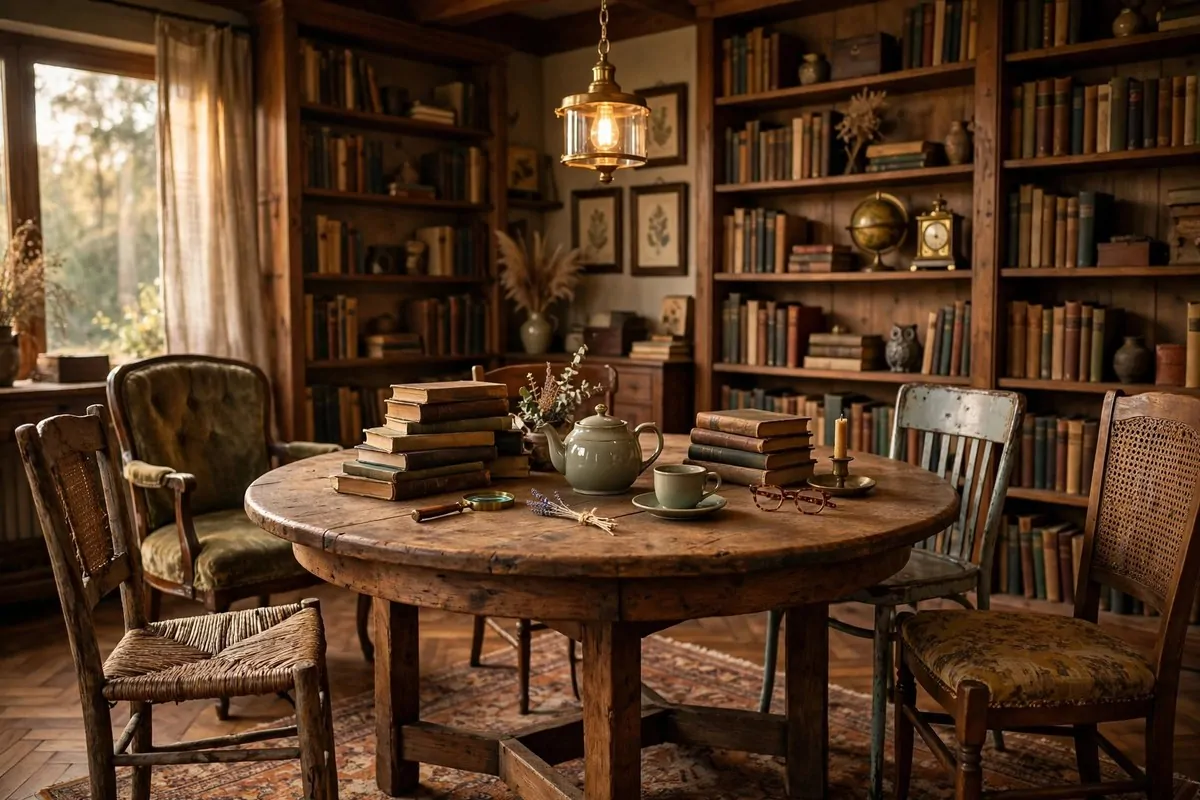
A big table in the middle changes everything. Mine is an old wooden table with mismatched chairs. We spread out books, do puzzles, drink tea. The library becomes a gathering place.
Round tables suit small rooms. No sharp corners. Everyone faces each other. It feels friendly. My table is round and seats four. Game nights happen here now.
Mismatched chairs look charming. They do not need to match. Different wood tones, different styles. It looks collected over time. Like the room grew instead of being decorated.
The table doubles as a desk. Laptop, notebook, coffee. Work from the library sometimes. The books make a better background than a blank wall. My video calls look smarter now.
Put a low centerpiece on it. A stack of art books. A small plant. Nothing tall. You want to see across the table. Tall centerpieces block conversation. Keep it low and simple.
Good light above the table matters. A pendant lamp or a bright floor lamp nearby. Reading at the table needs real light. I hung a simple paper lantern. It gives soft, even glow.
The table also holds the books you are currently reading. A little stack at your spot. It is like a personal display. I love seeing what everyone in the house is reading.
This table made the room social. Before, the library was just for me. Now friends come over and we sit here for hours. Books bring people together. Who knew.
9. Glass-Front Bookcases
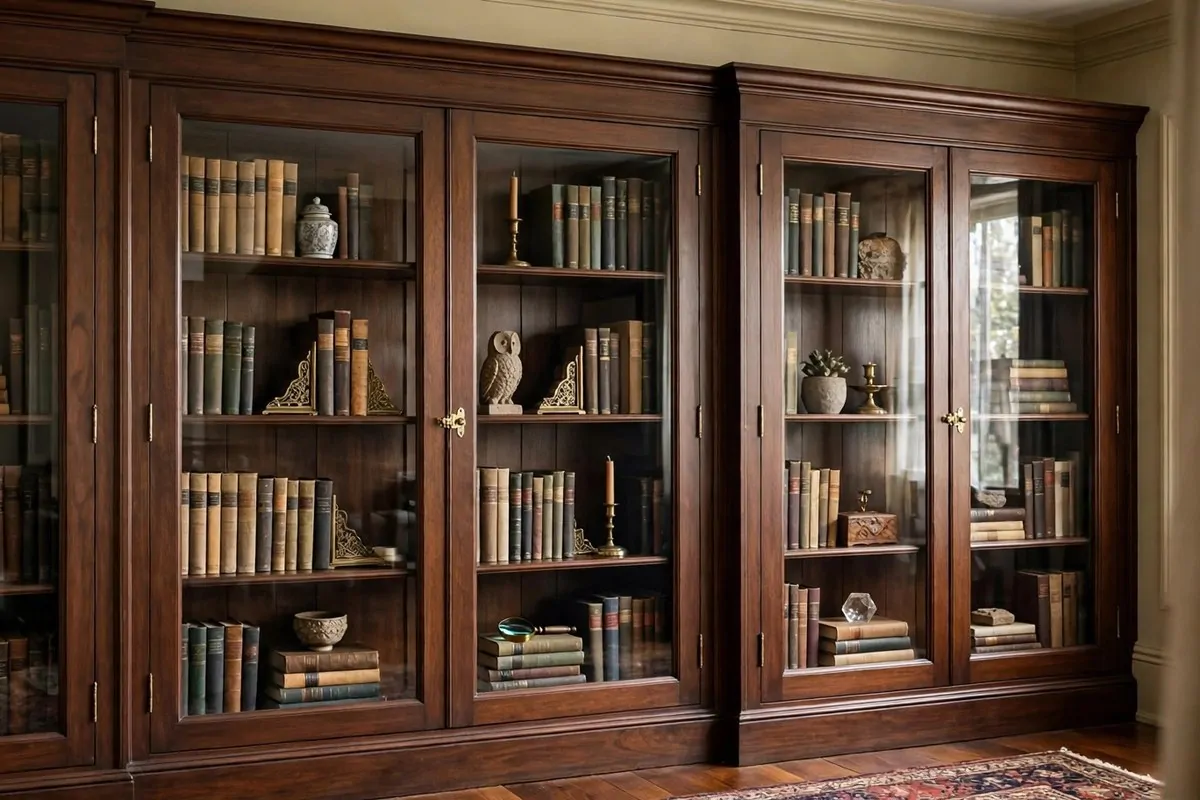
Glass doors make bookshelves look fancy. They keep dust off the books. They make the collection look tidy and hand-picked. I swapped one open shelf for glass-front cases. Instant upgrade.
Dust is the enemy of open shelves. Books get dusty. Glass stops it. If you hate dusting, glass doors are your answer. Wipe the glass monthly. Done. The books stay clean.
They also protect from sun. Direct sun fades book spines. Glass filters some of it. Keep precious books behind glass. They will thank you by staying pretty.
Style what shows through. Glass means visible. Arrange the shelves nicely. Books plus a small vase, a framed photo. Not crammed. Breathing room looks expensive.
Dark wood with glass looks classic. Like an old study. White with glass looks fresh and modern. Both are beautiful. Pick the mood you want. I went dark wood. It feels serious.
Lock the doors if you have rare books. Or curious toddlers. A tiny lock brings peace of mind. My first editions live behind locked glass. The paperbacks are free range.
They cost more than open shelves. Worth it for at least one case. Use glass for the pretty books. Open shelves for the everyday ones. Mix and match. Best of both.
My glass case holds the books I love most. The ones with beautiful covers. The signed ones. It is like a little museum of my reading life. I dust the glass and feel proud.
10. The Budget Billy Build
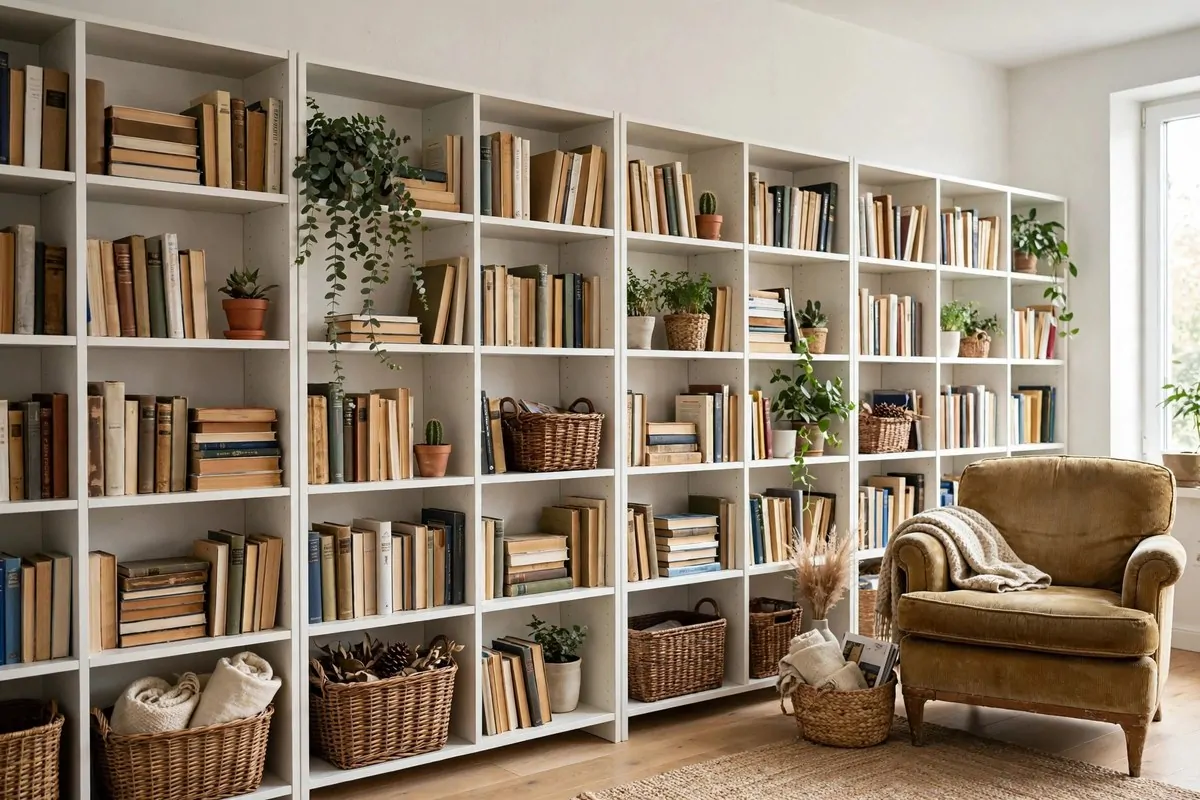
You do not need big money for a library. I built my first book wall with basic flat-pack bookcases. White ones, very plain. With styling, they look far more expensive than they were.
Line them up wall to wall. Three or four in a row. The repetition looks intentional. Like custom built-ins. Add a top trim board and nobody can tell the difference.
Paint them if white is not your thing. A deep color transforms cheap shelves. I painted a friend's set dark blue. They look like they cost ten times more. Paint is magic.
Fill them fully. Packed shelves look rich. Half empty shelves look sad. If you do not have enough books yet, add baskets, plants, framed photos. Fill the gaps with pretty things.
Add simple trim for a custom look. A thin board along the top. Baseboard at the bottom. These little touches fool the eye. The shelves look built into the room.
Shop secondhand first. People give away bookcases all the time. Check local listings. I got two solid wood ones for free. Free is the best budget. A little cleaning and they were perfect.
Total cost of my budget wall was less than a nice dinner out. The books were already mine. The shelves were cheap. The result looks like a real library. Because it is one.
Start where you are. A library is about books and a place to read them. Fancy shelves are nice. But books on cheap shelves still make a library. Do not wait for perfect.
11. Shelves Around the Door
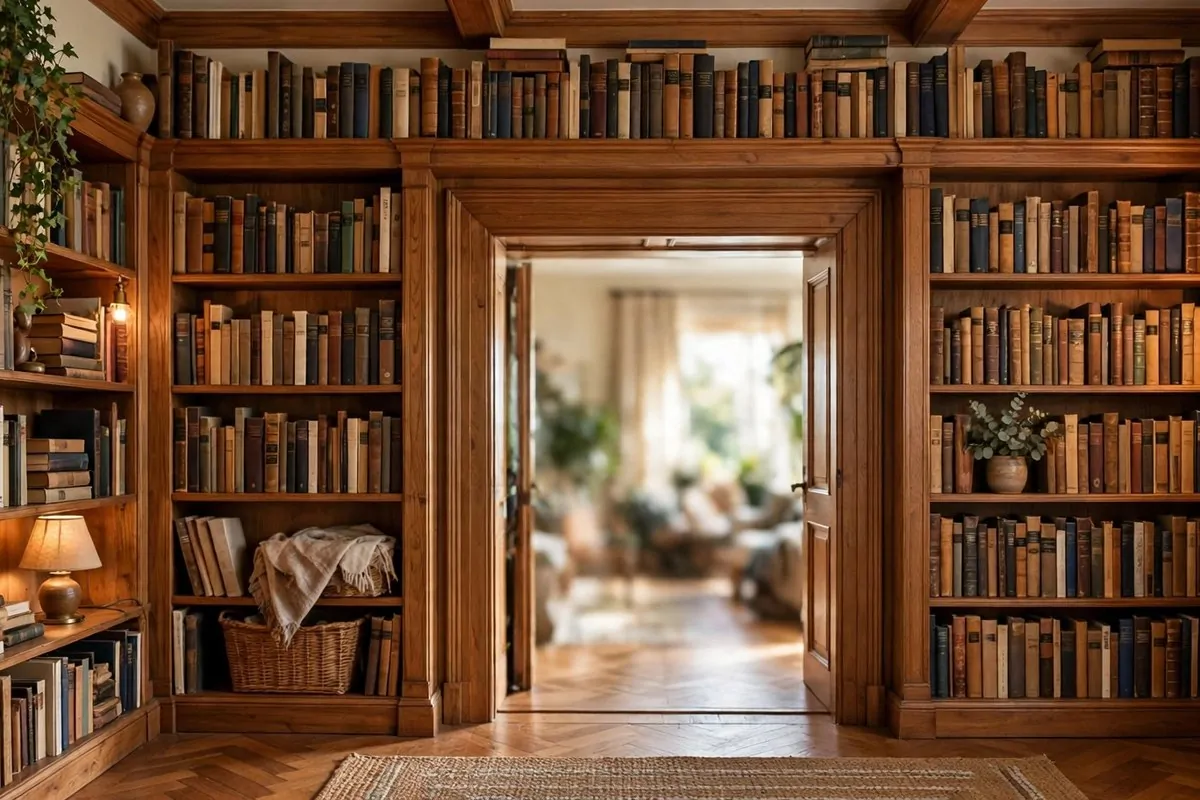
The wall around the door is wasted space. I put shelves around mine. Now the doorway is framed in books. Walking in feels like entering a secret library. It is my favorite detail.
Measure the door frame first. You need shelves that fit beside and above. Narrow bookcases work for the sides. A long low shelf bridges the top. It frames the door perfectly.
Secure everything well. Shelves near a door get bumped. Anchor them to the wall. Heavy books low, light things high. Safety first, beauty second. Both are possible.
The top shelf is great for display. Plants that trail down. Framed art. Things you look at but never touch. It is high up and out of the way. Perfect for pretty, impractical things.
This works in small rooms especially. When floor space is tight, use the walls. The door wall is often the only free wall. Make it work hard. Books everywhere is the goal.
Paint the shelves to match the trim. They blend with the door frame. It looks like the room was designed this way. Custom and intentional. Not an afterthought.
I put my travel books above the door. Fitting, somehow. Books about far places over the doorway. Every time I leave the room, they remind me to dream big.
Guests always notice it last. They look around, then look up. Then they smile. It is a surprise detail. Libraries should have surprises. This one is mine.
12. Corner Shelves for Dead Space
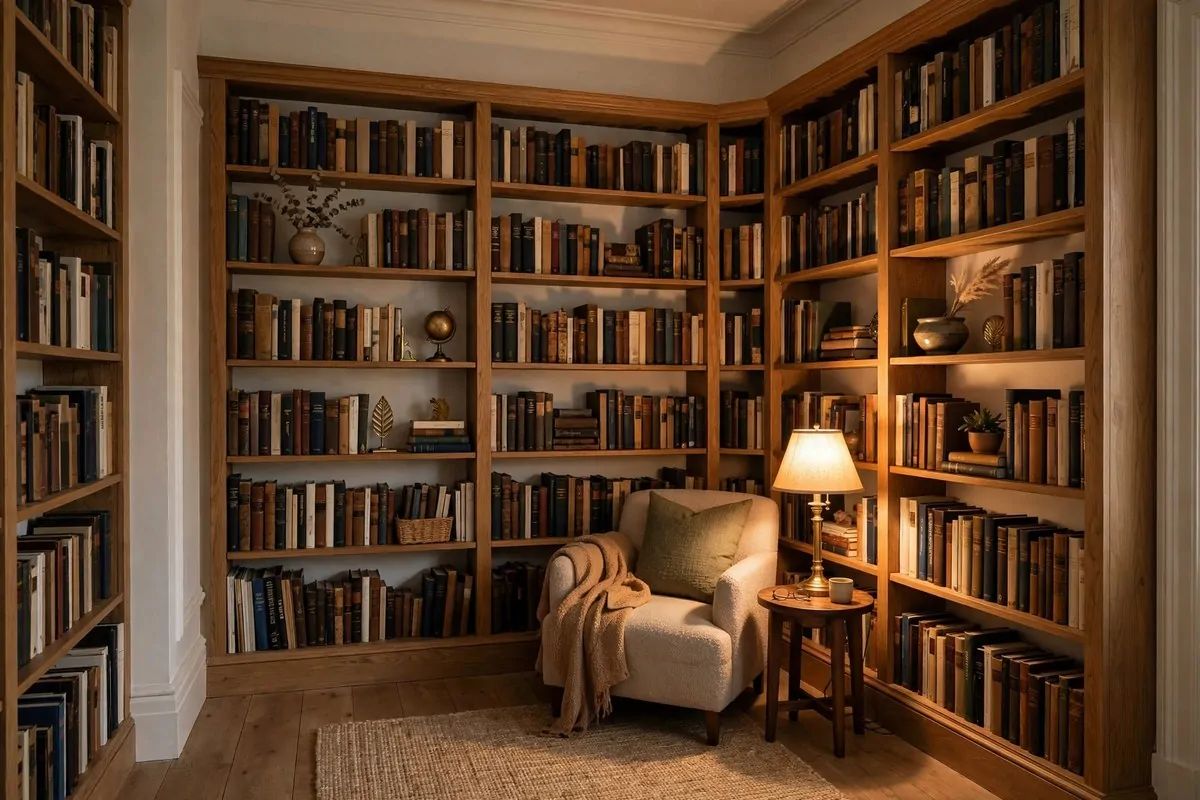
Corners are awkward. Furniture does not fit right. I turned my spare room corner into L-shaped shelving. Dead space became the best book storage in the room.
Corner shelves use every inch. Two walls meet, shelves follow both. No wasted gap behind furniture. It is the most efficient storage shape. Small rooms need this trick.
You can buy corner bookcases. Or build simple ones with boards and brackets. Boards are cheap. Brackets are easy. A Saturday afternoon and you have custom corner shelves.
Put a chair in front of the corner. Now it is a reading nook wrapped in books. Books on two sides. Cozy and enclosed. Like reading inside a book fort. The inner child approves.
Style the corner shelves fully. They are very visible. Books, a small plant on top, maybe a clock. Make it pretty. Corners draw the eye. Give the eye something nice.
Lighting helps dark corners. A small clip light on the shelf. Or a floor lamp nearby. Dark corners hide books. Lit corners invite browsing. Light it up.
I keep my poetry books in the corner. It feels right. Poetry in the quiet corner. The room has zones now. Fiction wall, cookbooks by the table, poetry in the corner. It makes sense.
Measure the corner angle. Most are 90 degrees. Some old houses are not. Check before you buy or build. A shelf that does not fit the corner is just a headache.
13. Books Sorted by Color
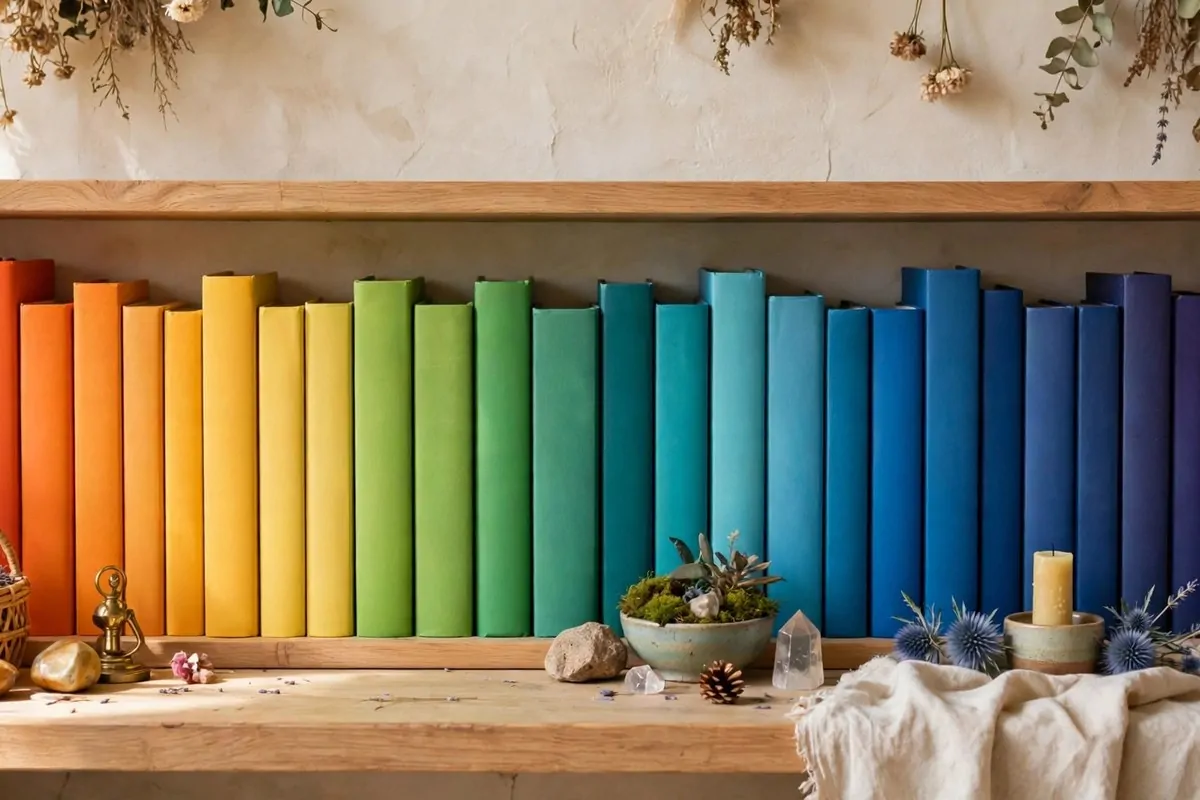
Sorting books by color makes a rainbow wall. I did it on one shelf as an experiment. It stayed. It is the prettiest shelf in the house. Guests photograph it. Every single time.
Start with one bookcase. Not the whole library. Finding books by color is hard. You will never find anything. One rainbow shelf is art. A whole rainbow library is chaos.
Pull all the books off. Sort into color piles. Red, orange, yellow, green, blue, purple, white, black. Then shelve in order. It takes an afternoon. Put on music. Enjoy it.
It looks amazing. Like a sunset on your wall. The colors flow into each other. Even boring books look beautiful in a rainbow. The spines become decoration.
Take a photo when you finish. You will want to remember it. And yes, post it. Rainbow shelves are made for sharing. Let people admire your work.
Keep your main collection organized normally. By author, by type, whatever works. The rainbow shelf is for display. For joy. For the books with the prettiest spines.
Kids love rainbow shelves. Mine reorganized their books by color immediately. It got them excited about the shelf. Anything that makes kids love books is a win.
I will warn you once. You will not find a specific book. Ever. You will browse and discover instead. That is actually lovely. The rainbow shelf is for wandering, not searching.
14. A Small Desk in the Stacks
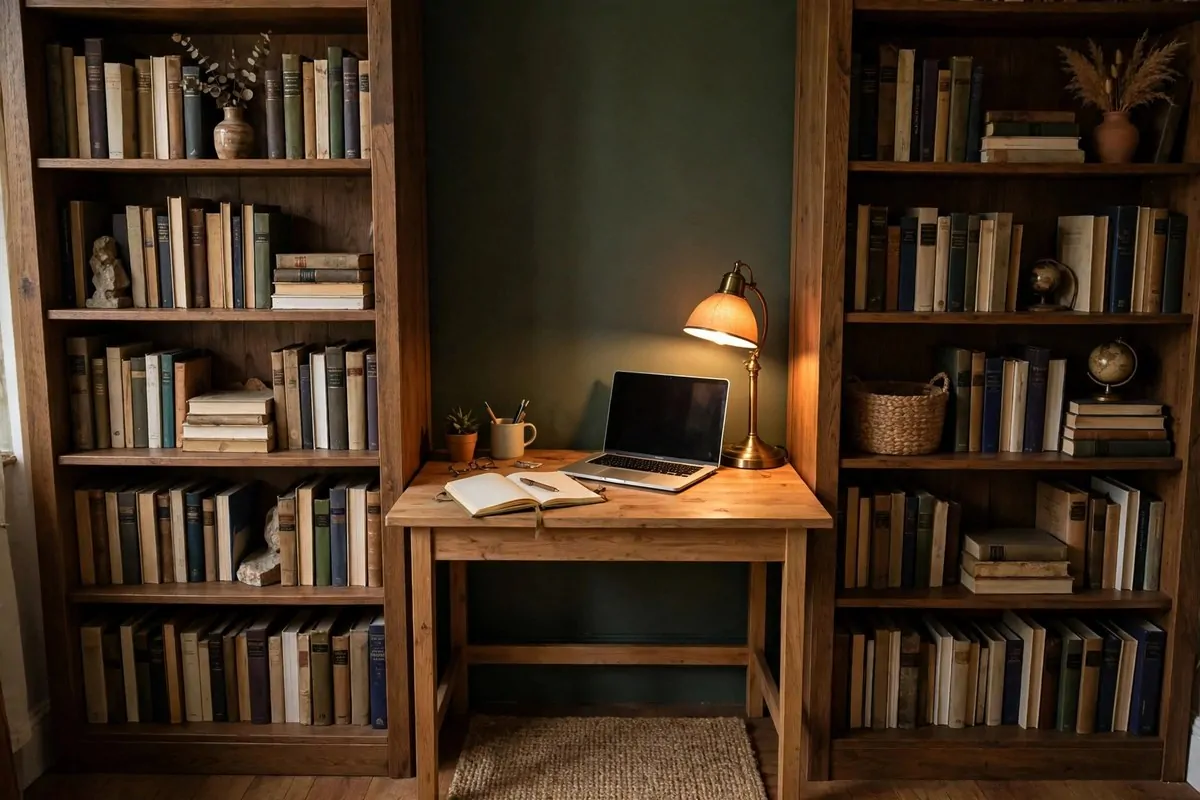
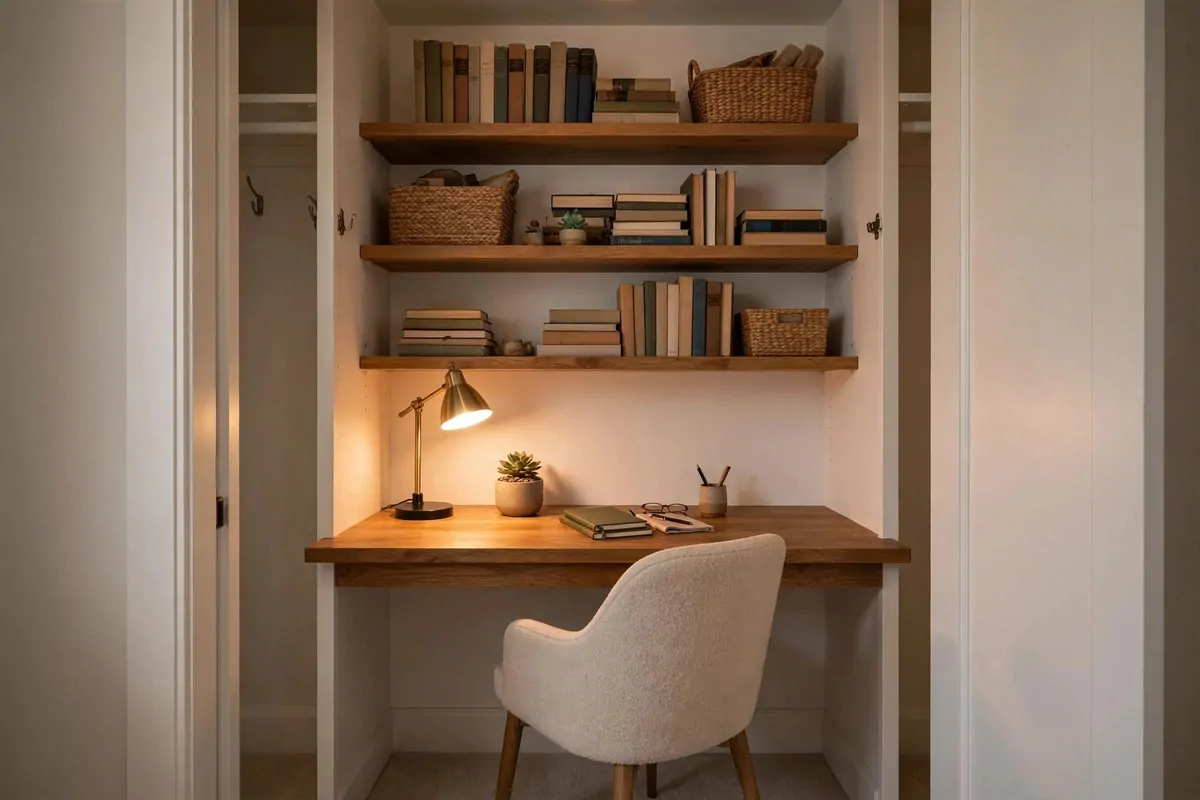
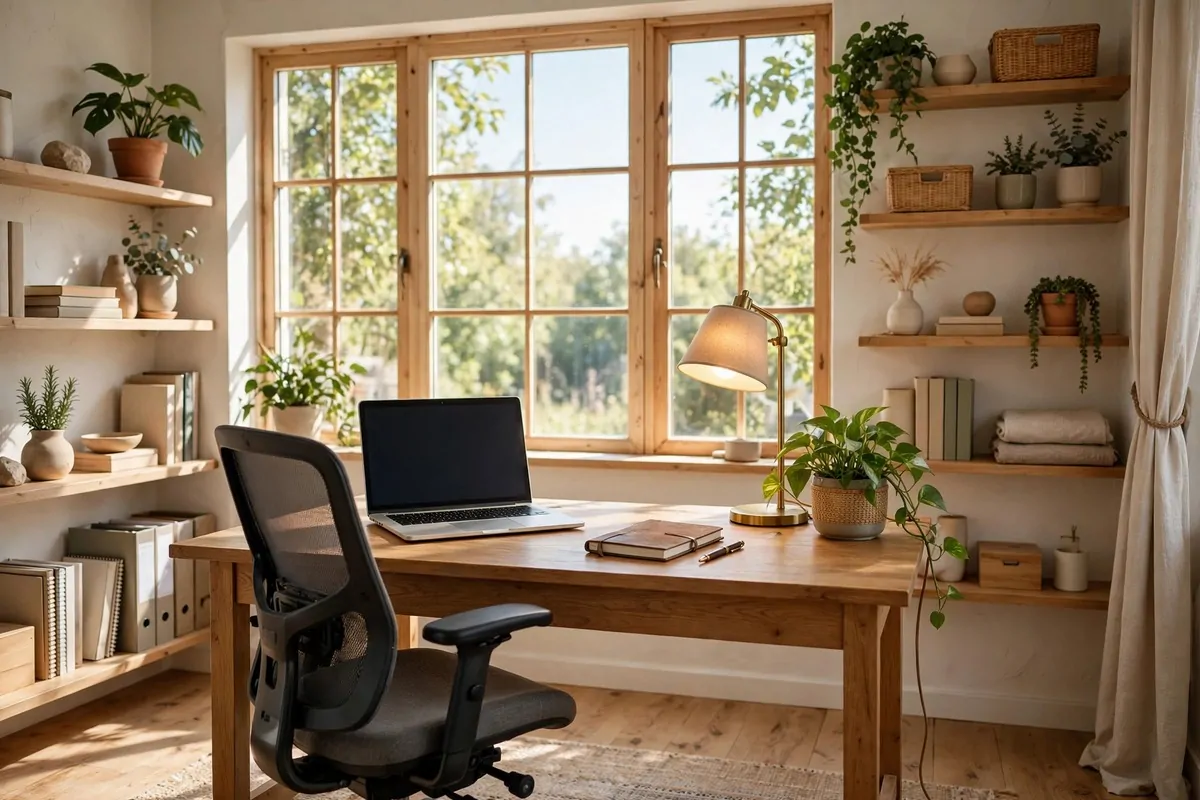
A library with a desk does double duty. I tucked a small desk between two bookshelves. Now the spare room is a library and a home office. Two rooms in one. Space working hard.
Keep the desk small. You do not need a big one. Just enough for a laptop and a notebook. The books are the decoration. The desk is just a surface. Small is fine.
Face the desk toward the room, not the wall. Looking at books while you think is inspiring. Staring at a wall is not. I turned mine around and my work mood improved.
A comfortable chair matters. You will sit here for hours. Get one with back support. Pretty chairs that hurt are useless. Comfort first, looks second. Always.
Shelves above the desk hold office supplies. Pretty boxes, jars for pens. Keep work stuff contained. When work ends, the desk should look calm. Not like an office exploded.
Good task lighting is essential. A small desk lamp with warm light. Bright enough to work, soft enough for evening. I use mine for journaling at night too.
Close the laptop when you are done. The room should feel like a library, not an office. A closed laptop disappears. An open one glows and demands attention. Shut it.
This setup saved me from needing a separate office. The spare room earns its space twice over. Library by evening, office by day. I love rooms that work this hard.
15. Backlit Shelves That Glow
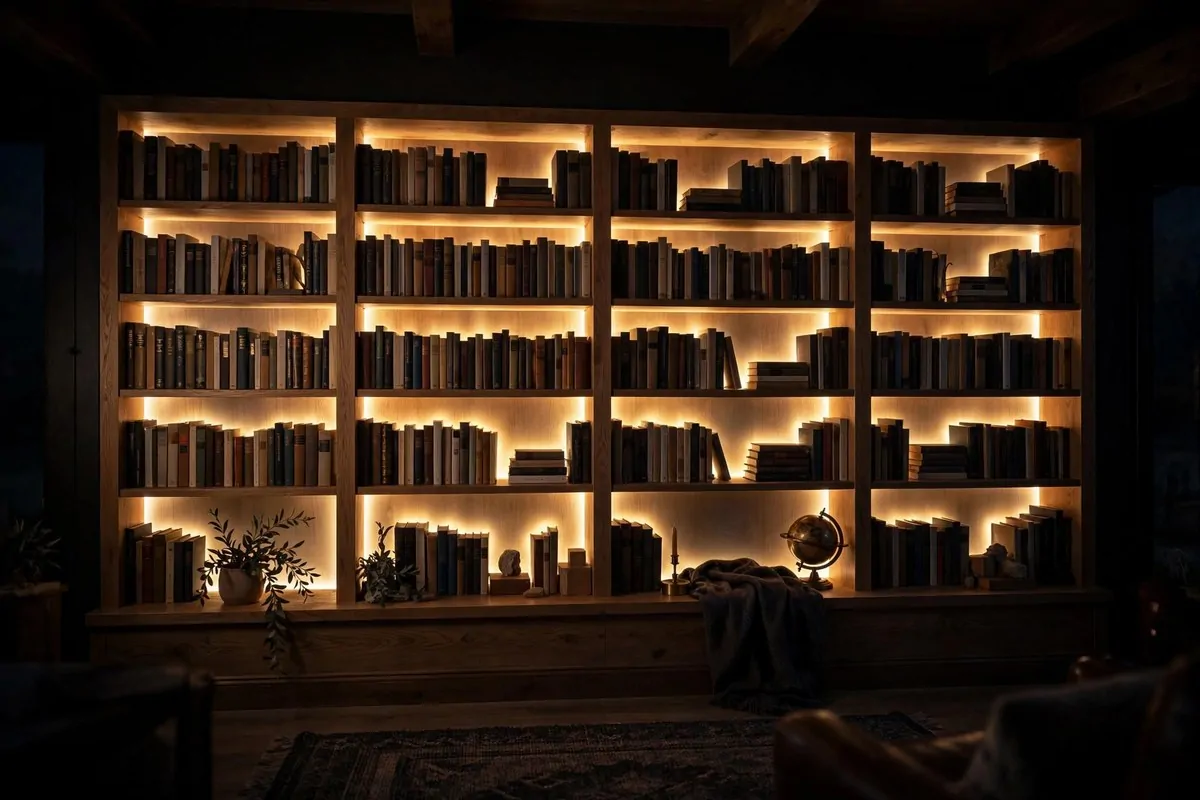
LED strips behind the shelves changed my evenings. The books glow softly. The room feels magical. It is the cheapest drama you can buy. A roll of lights and an hour of work.
Stick the strips to the underside of each shelf. Toward the back. The light washes down over the books. It highlights the spines. Every book looks important. Even the boring ones.
Warm white only. Cool white looks like a shop. We want cozy, not commercial. Warm white, 2700K. Same as the bedroom rule. Warm light everywhere in restful rooms.
Get dimmable strips if you can. Full brightness for finding books. Low glow for evening mood. I dim mine to the lowest setting at night. The room looks like it is dreaming.
They use almost no electricity. LEDs are cheap to run. Leave them on all evening. It costs pennies. The mood they create is worth far more.
Hide the wires. Run them down the back corner of the shelf. A little tape holds them. Visible wires ruin the magic. Tidy wires keep it. Five minutes of tidying.
Some strips change color. Fun, but stick to warm white mostly. Colored lights are for parties. Your library is for calm. Maybe save the blue for a winter evening treat.
My kids call it the glowing library. They read here more since I added the lights. Anything that makes books glow makes kids curious. Curiosity leads to reading. Everybody wins.
16. A Rug to Warm It Up
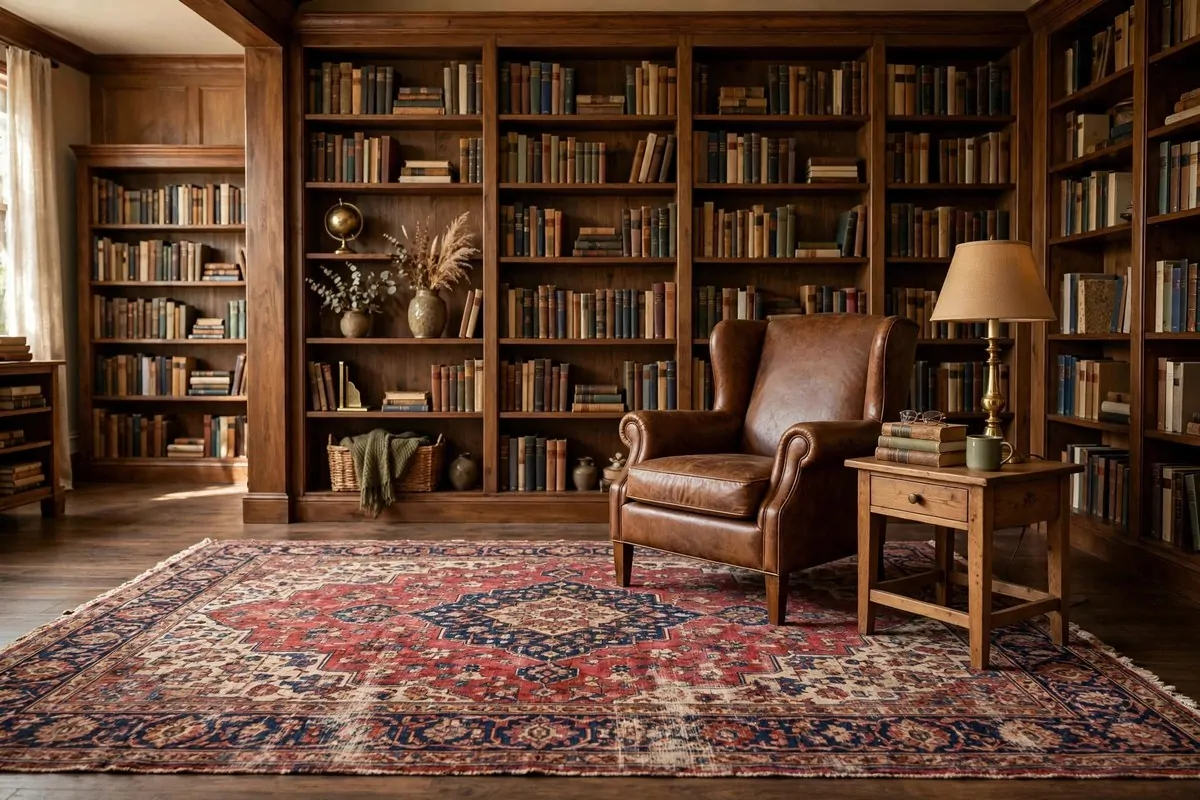
A library needs a rug. Hard floors are cold and loud. I put a big vintage-style rug under my reading chair. The room got warmer instantly. Sound softer. Feet happier.
Size it to the seating area. The chair and side table should sit on the rug. Front legs at least. All legs is better. A floating rug looks lost. Anchor the furniture to it.
Patterned rugs suit libraries. They hide crumbs and dust. A Persian-style pattern looks classic with books. It has that old library feel. New rugs come in washable versions now.
Washable is smart. Libraries collect dust from books. And tea spills happen. A rug you can throw in the wash is freedom. Mine has survived three spills. Still looks great.
Layer a small rug over a big one for coziness. A sheepskin on top of the main rug by the chair. Your feet land on clouds. It looks rich and feels amazing. Designers do this.
Rugs also define zones. The reading zone has the rug. The desk zone has bare floor. The room feels organized. Each area has its purpose. Rugs draw the map.
I found mine secondhand. Good rugs last decades. A used quality rug beats a new cheap one. Check thrift shops. They hide amazing rugs for very little money.
Vacuum weekly. Book dust settles on rugs. A quick vacuum keeps it fresh. Shake it outside in spring. There is nothing like a rug aired in sunshine. Even a library rug.
17. Bookshelves Around the Guest Bed
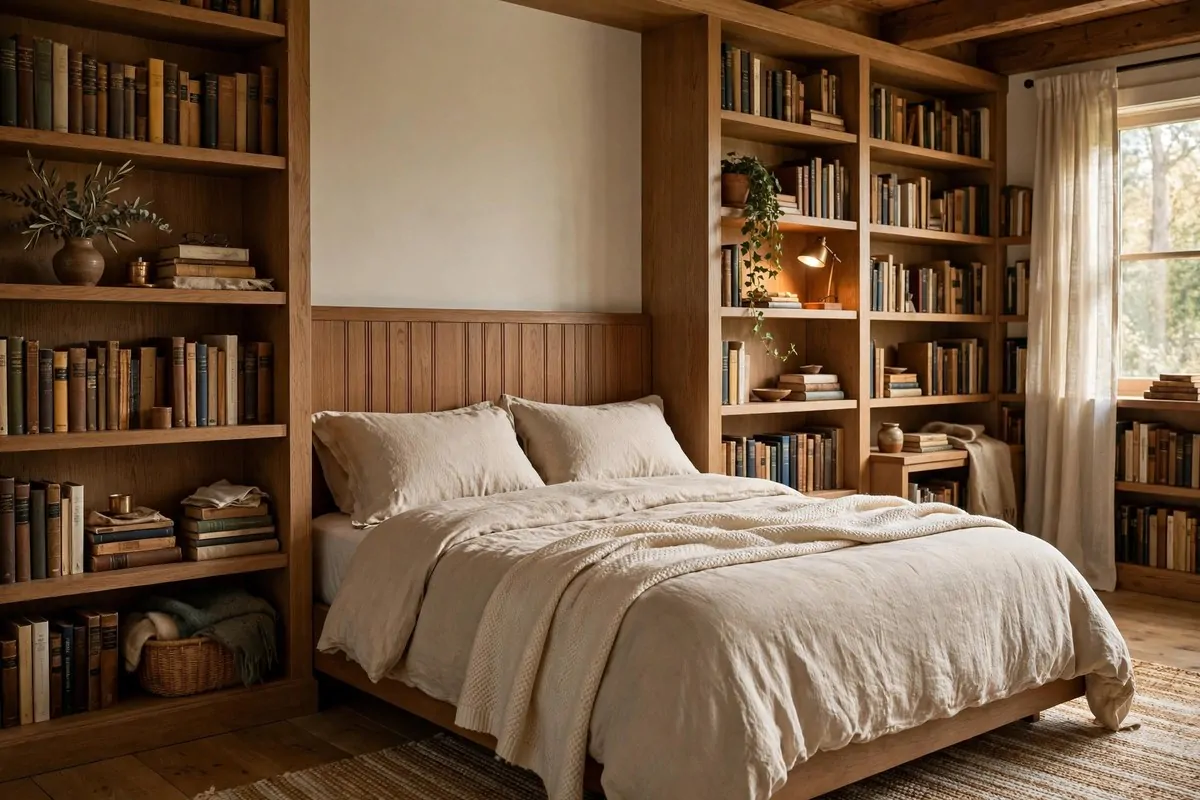
If the spare room keeps its bed, build shelves around it. I put bookcases on both sides of the guest bed and a shelf above. Guests sleep surrounded by books. They love it.
It looks custom and cozy. The bed nestles into the books. Like sleeping in a library nook. My guests say it is their favorite place to stay. The books make it special.
Use the shelves as nightstands. No need for separate tables. A book, a glass of water, your phone. The shelf beside the bed holds it all. Fewer furniture pieces needed.
Add reading lights on the shelves. Small clip lamps or mounted sconces. Guests can read in bed. Good lighting makes a guest room feel thoughtful. Thoughtful guests feel welcome.
Leave some shelf space empty for guest things. Do not pack every inch with books. Guests need a spot for their bag, their charger. A little empty space is hospitality.
Style the shelves facing the bed with pretty books. The guest sees them first thing. Make it inviting. Travel books, art books, a novel or two. Like a tiny hotel library.
This works in small rooms. The shelves go up, not out. No floor space lost. Vertical storage is small room magic. The bed stays. The books stay. Everyone is happy.
My father-in-law stayed last winter. He read three books in four days. He said the shelves kept calling to him. That is the best review a guest room can get.
18. Style the Shelves Like a Pro
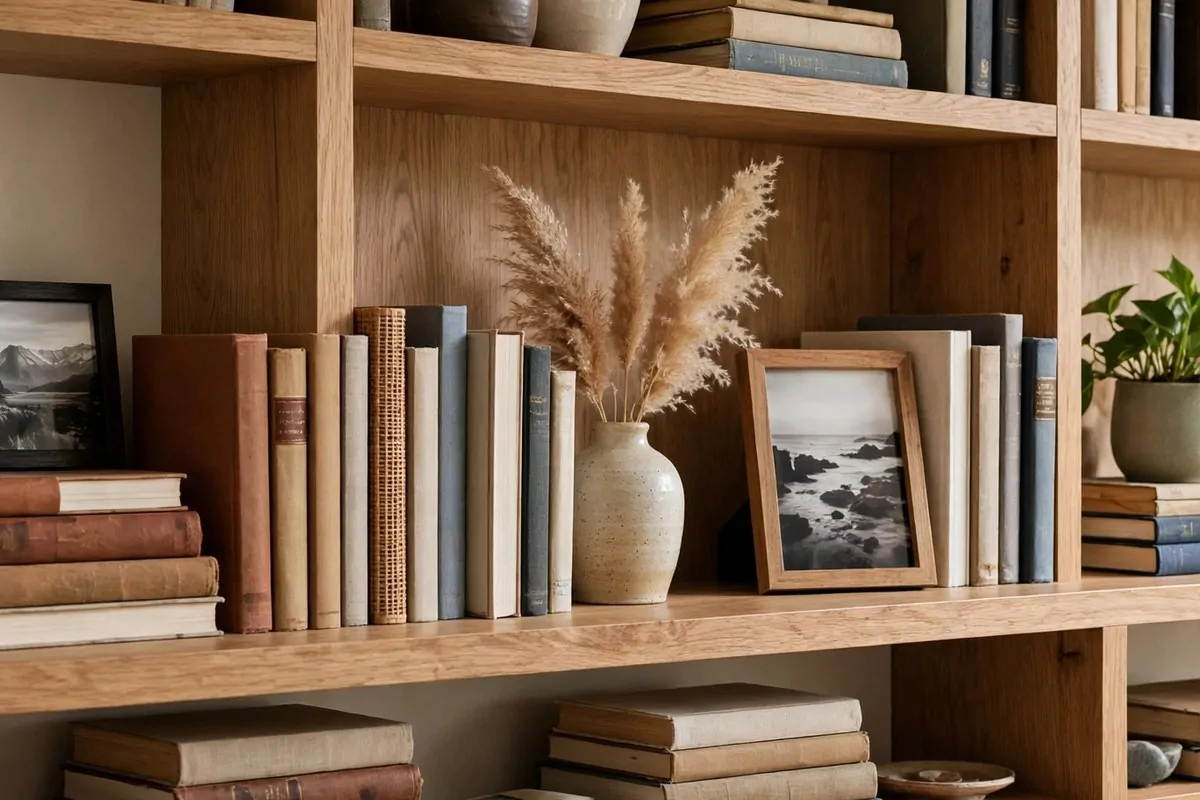
Books alone can look flat. Styled shelves look alive. I learned to mix books with objects. A vase here, a framed photo there. The shelves became decoration, not just storage.
The rule is simple. Books, then a break, then books. The breaks hold pretty things. A small plant. A candle. A souvenir from a trip. These pauses let the eye rest.
Vary the heights. Tall vase next to short stack. Big frame behind small books. Different heights create rhythm. Same height everything looks boring. Mix it up.
Stack some books horizontally. Not all vertical. A horizontal stack with a small object on top looks designed. It breaks the pattern. Pattern breaks are interesting.
Leave some empty space. Not every inch must be full. Empty space is luxury. It says you chose what is here. Crammed shelves say you ran out of room. Choose, do not cram.
Group by color or size for calm. Group randomly for energy. My library shelves are calm. Grouped and quiet. The rainbow shelf is the wild one. Balance is nice.
Change it with the seasons. I swap small things through the year. A pinecone in winter. A shell in summer. Tiny changes keep the room feeling fresh. It takes ten minutes.
Step back and look. Squint a little. Does it feel balanced? Heavy on one side? Move things until it feels right. Styling is feeling, not rules. Trust your eye.
| Shelf Spot | Put Here | Best For |
|---|---|---|
| Eye level | Favorite books, pretty objects | Daily joy |
| Top shelf | Plants, tall vases, art | Display |
| Bottom shelf | Big books, baskets, boxes | Storage |
| Beside the chair | Current reads, tea cup space | Comfort |
19. A Sconce for Night Reading
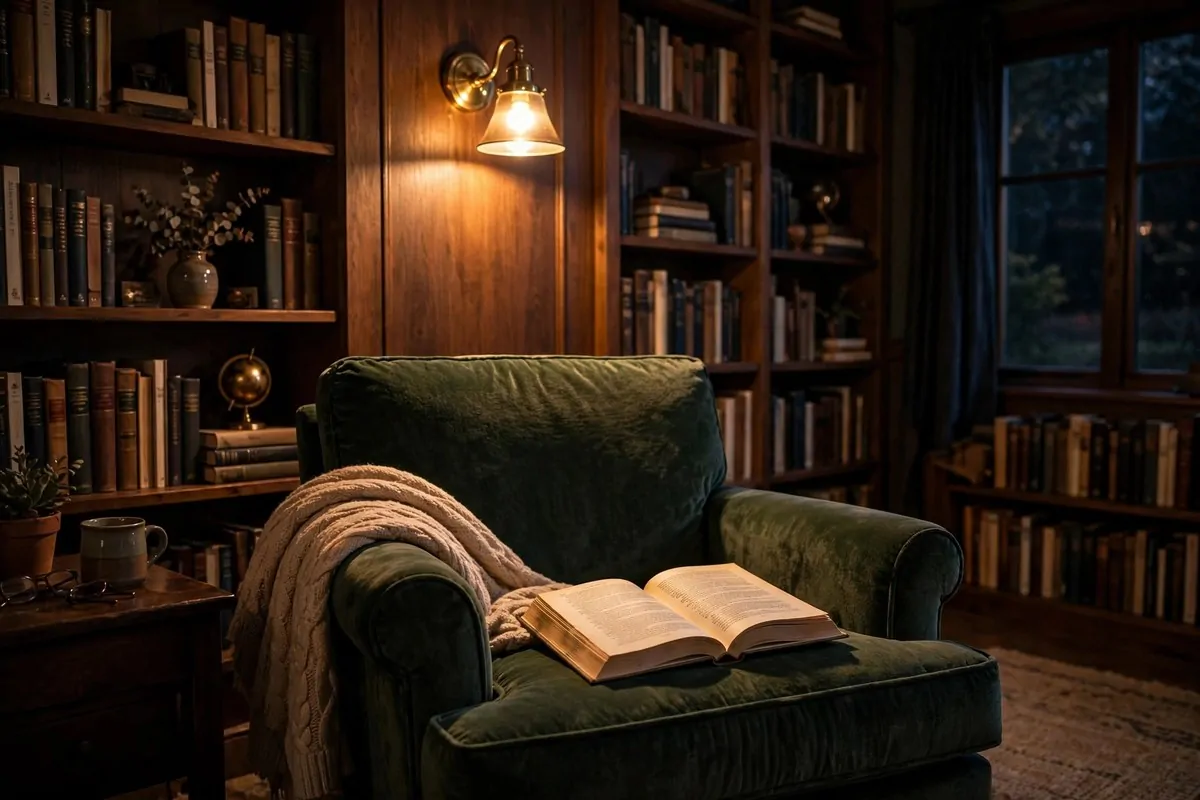
Overhead lights are terrible for reading. They glare and flatten everything. A wall sconce beside the chair is the answer. Focused warm light exactly where the pages are.
Mount it at shoulder height. When you sit, the light falls over your shoulder onto the book. No shadows from your head. No glare in your eyes. Just clean, warm reading light.
Brass sconces look classic in a library. They match the old library feel. Black or white works for modern rooms. Pick a finish that matches your other metals. Details matter.
Get one with a switch on the cord or the base. Reaching behind the chair is annoying. Easy switch means you will actually use it. Frictionless comfort is the goal.
If you cannot wire a real sconce, use a plug-in one. They mount with two screws. The cord runs down to an outlet. Cover the cord with a cord cover. Looks built in. No electrician needed.
Battery sconces exist too. No wires at all. Stick it on the wall. Change batteries twice a year. Perfect for renters. The light is softer, but for reading nooks it works.
Two sconces frame a daybed nicely. One on each side. Symmetry looks intentional. Each reader gets their own light. No more elbowing for the lamp. Peace in the library.
I read under mine every night. The pool of warm light, the dark room around it. It feels like the world shrinks to just me and the book. That is what a library should do.
20. A Little Tea Corner
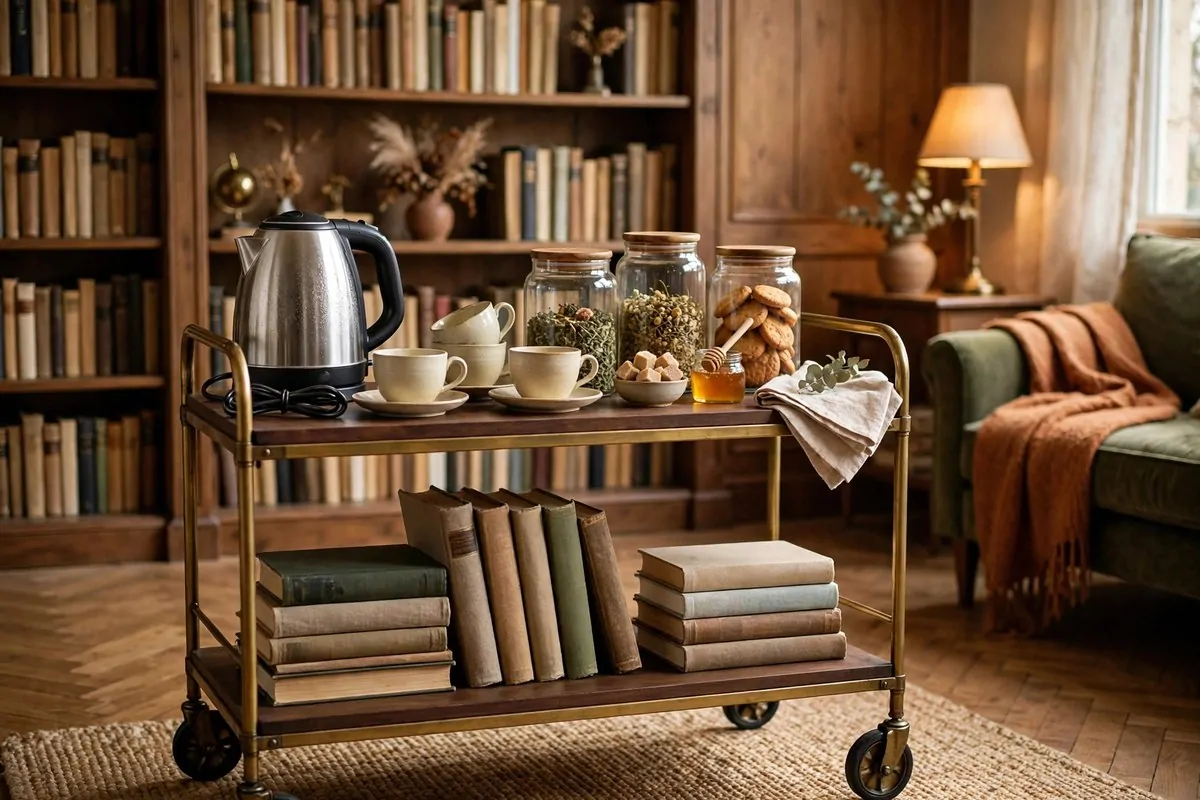
Long reading sessions need tea. I set up a tiny tea corner in the library. A small cart with a kettle, cups, and a jar of biscuits. Reading marathons are now fully supplied.
A bar cart is perfect. It rolls. It has two levels. Top for the kettle and cups. Bottom for tea boxes and books. When guests come, roll it to them. Fancy and useful.
An electric kettle is safest. No open flame near books. It boils fast. Keep water in it. Tea in under three minutes. Reading never has to pause for long.
Stock a few tea types. Something calm for evenings. Something bright for afternoons. My shelf holds chamomile, green tea, and one fancy blend for guests. Choice is a small joy.
Add a small trash bin nearby. Tea bags need a home. A pretty little bin keeps the corner tidy. Details like this separate a nice corner from a great one.
A cushion on the floor nearby invites sitting. Sometimes I drink my tea right there by the cart. Looking at the shelves. Planning what to read next. It is a happy pause.
In winter this corner is everything. Hot tea, warm room, good book. The cold stays outside. The library becomes a cocoon. I basically live here from December to February.
Keep it simple to clean. A tray under the kettle catches drips. Wipe it weekly. A tidy tea corner invites use. A sticky one does not. Five minutes of care, hours of comfort.