25 Free Printable Chore Chart Ideas for Families

A plain sheet of paper on our table changed how our whole week runs.
Before I put that sheet on the table, jobs lived only in my head, and I forgot half of them by lunch, and my kids forgot the rest by tea time.
Here are 25 free printable chore chart ideas for families that turn one plain chart and a pen into calm, easy weeks.
I like charts you can print at home and stick up in one minute, and I like them even more when my kids can read them without asking me what to do next.
You do not need fancy pens or a big plan to start, and you do not need to get every job right on day one, because a chart grows with your family week by week.
Some weeks our chart looks neat and full of ticks, and some weeks it looks a bit wild, but it still keeps us honest about who does what.
Pick one idea from this list, try it for a week, and see how your mornings feel when everyone knows their job before the day starts.
1. Start with One Simple Chart for the Whole Family
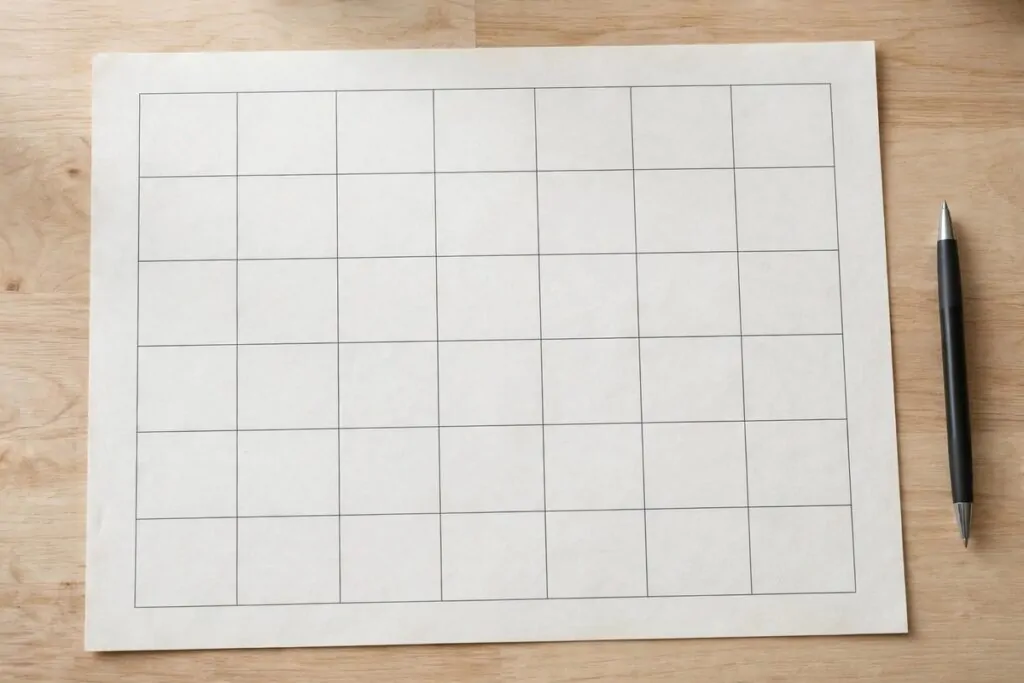
One chart for the whole family keeps life simple. I write every job on that one sheet, and we all look at the same list each morning.
My kids stopped asking me what to do next once the chart went up on the wall.
I keep the jobs short and clear. I write make the bed, not tidy the room. I write wash the cups, not help in the kitchen.
We look at the chart together after breakfast. Each child picks one job to start with, and I tick it off with them when it is done.
A short list beats a long list every time in our house.
I leave one blank row at the bottom for extra jobs. That row holds the odd jobs that pop up during the week.
New jobs go on the chart the same day they appear. Nobody has to remember them in their head. The chart holds them until someone does them.
One chart also means one place to look when a job gets missed.
A plain chart pad for my family chart cost $2 to $4. I keep it on the desk where we all see it.
2. Give Each Child Their Own Colour on the Chart
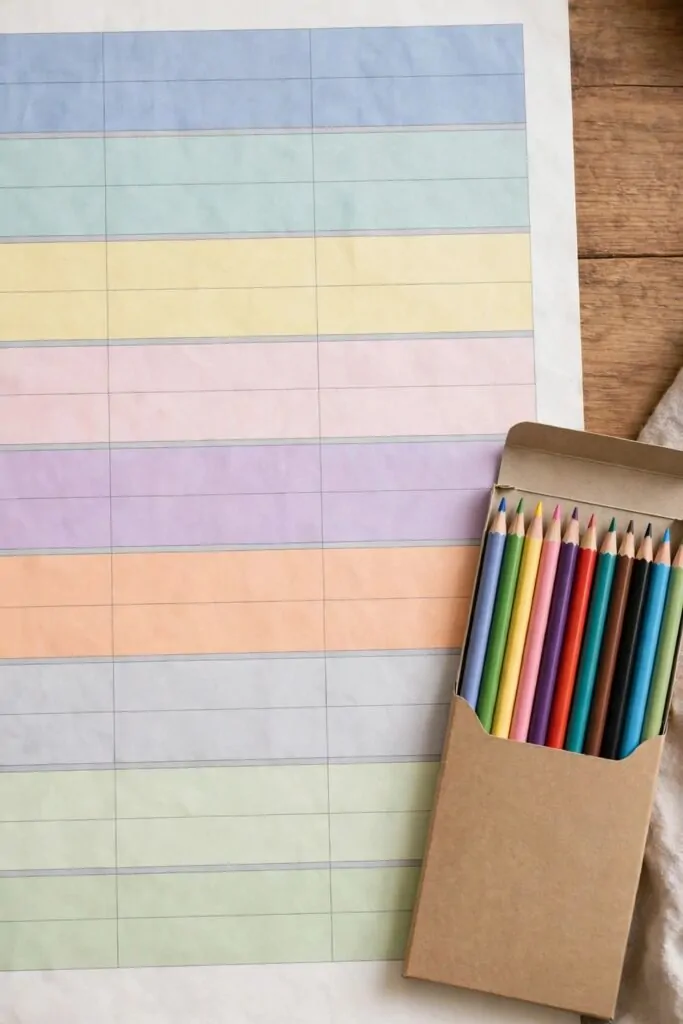
Each child in our house has their own colour on the chart, and that one small change stopped most of our arguments about whose job was whose.
My eldest picks blue for her jobs. My youngest picks green, and he looks for green first every morning.
I use a plain pencil in each colour to write the jobs. I draw a small coloured dot next to each name too. The colours make the chart easy to read at a glance.
Nobody argues about a job when their colour sits right next to it.
I let each child pick their own colour at the start of the week. They take more care of a chart they helped to colour in.
If two children want the same colour, I ask one of them to pick a second choice. I keep a small pot of pencils on the shelf for this job. We sort it out in one minute and move on.
The colours help my youngest most of all. He finds his green row before he finds his name.
A colour is a small thing, but it makes each child feel the chart is theirs.
A set of coloured pencils for our chart cost $2 to $3. I keep them in the box by the chart so they never walk off.
3. Put Morning Jobs at the Top of the Chart
Morning jobs sit at the top of our chart. My kids see them first when they come down for breakfast. They start the day with a clear job, not a hunt for what to do.
I write make the bed in the top row first thing.
I put brush teeth next, then clear the breakfast plates. Those three jobs take ten minutes, and then the morning feels calm.
I do not put big jobs in the morning list. A big job before school makes everyone late and cross. Small jobs first, big jobs later, that is our rule.
The top of the chart is for jobs we do before we leave the house.
My kids tick the morning jobs before they put their shoes on. I check the top row while I pack the lunch boxes.
A calm morning starts when we tick the top row together.
If a morning job gets missed, it stays at the top until lunch. I do not move it down the list to hide it. We do it after school and tick it then.
A plain chart pad for my morning chart cost $2 to $4. I keep a pen tied to the chart with string so it is always there.
4. Add a Tick Box for Every Small Job
Every small job on our chart has its own tick box. A job with no box gets skipped, and a job with a box gets done.
I draw the boxes by hand with a ruler. I make them big enough for a fat tick. My kids love the sound of the pen when they tick a box full.
A tick box turns a dull job into a small win.
I put the box right next to the job, not at the end of the row. My kids find it fast, and they never tick the wrong row by mistake.
Small jobs need small boxes. Big jobs get two boxes, one for the start and one for the finish. That way a long job still feels like it moves along.
I never tick a box for my kids unless they ask me to.
At the end of the day we count the ticks together. A full row of ticks feels like a prize all on its own.
If a box stays empty for three days, I ask why. Sometimes the job is too hard. Sometimes the job just needs a new time of day.
A chart pad and a pen for my tick-box chart cost $3 to $5.
5. Keep a Weekly Chart on the Fridge Door
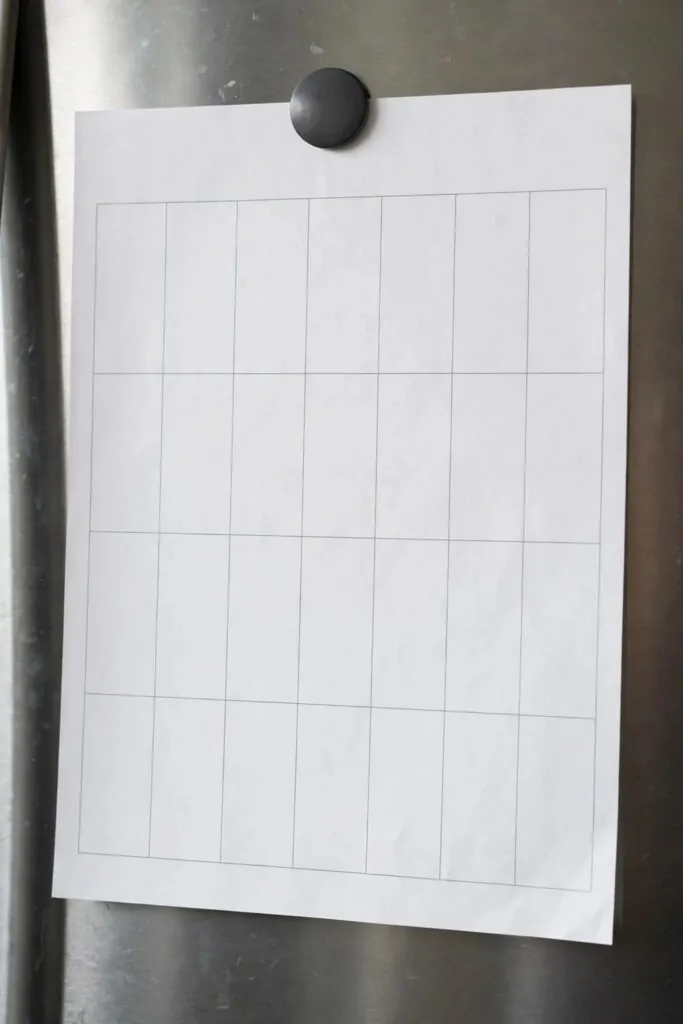
Our weekly chart lives on the fridge door, where everyone in the house sees it ten times a day.
I stick it up with one strong magnet. I put it at eye height for my kids, not up high where only I can read it. The fridge is the one spot nobody walks past without a look.
Each column on the chart is one day of the week. Each row is one job, and the ticks build up across the week.
A chart on the fridge door never gets lost under a pile of papers.
I change the chart every Sunday night. I take the old one down and pin the new week up. My kids help me write the new jobs for the week ahead.
The fridge door holds our chart, our shopping list, and one drawing my youngest made last month. The chart still stands out because it has the biggest ticks.
I like that the chart is right where we eat, talk, and plan the day.
If a job gets missed on Monday, we can still see it on Tuesday. The chart does not hide a missed job, and that helps us fix it fast.
A pack of magnets and a chart pad for our fridge chart cost $3 to $5. I keep spare magnets in the drawer by the fridge. I stick the new chart up in one minute each Sunday.
6. Use Pictures for Little Kids Who Cannot Read Yet
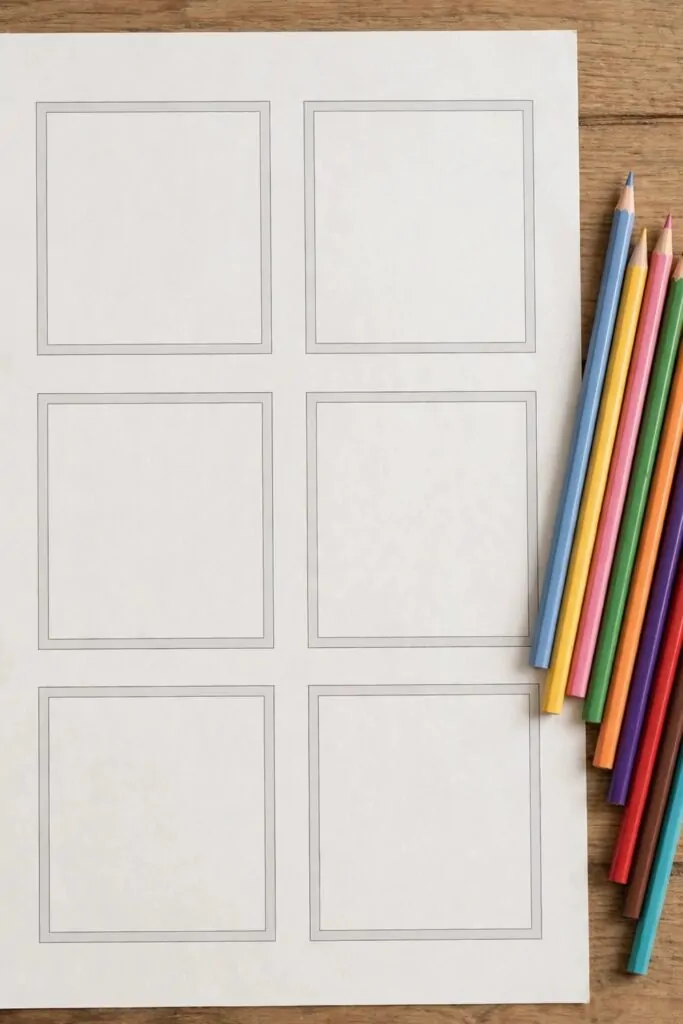
My youngest could not read when we started our chart. I drew a small bed next to make the bed, and he knew his job at once. A picture can do the work of ten words for a little child.
I draw a cup next to wash the cups. I draw a small broom next to sweep the floor, and he runs to get the broom himself.
Pictures let little kids join in without waiting for someone to read the chart for them.
I keep the drawings plain and simple. A bed is four lines and a pillow shape. A cup is a small U with a handle, and my kids still know it at once.
I draw the pictures with my kids on Sunday night. They pick which picture goes next to each job, and they remember it better because they drew it.
A chart with pictures feels like a game, not a list of rules.
I use the same picture for the same job every week. My youngest learns the pictures fast, and soon he does not need to ask me what each one means. He just points, smiles, and starts the job.
When he learns to read a new word, I add the word next to the picture. The chart grows with him, one word at a time.
A pad and pens for our picture chart cost $2 to $4.
7. Add a Star Row for Finished Weeks
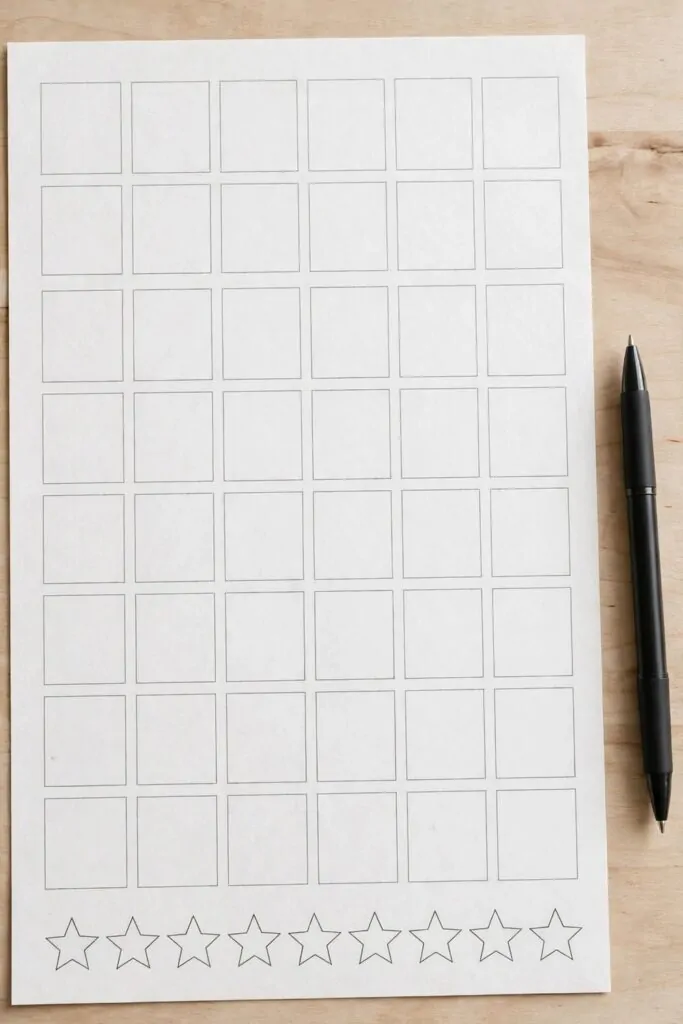
A star row sits at the bottom of our chart. It holds one star for each week we finish every job.
My kids watch that row grow all month, and they guard it like treasure.
I draw the stars by hand in black pen. A full week earns a star in the row.
I never take a star away once it is on the chart. A bad day does not wipe out a good week. The stars stay as proof that we kept going.
At the end of the month we count the stars together. Four stars in a row means a treat we all pick, like a picnic in the garden.
Stars cost nothing, but they mean a lot to my kids.
I let each child draw their own star for their own week. Each one draws it their own way. Both kinds count the same on our chart.
If a week falls apart, we start the next week fresh. The star row waits for us, and we try again on Monday.
A black pen and a chart pad for our star chart cost $2 to $3.
8. Plan One Big Job for Each Weekend Day
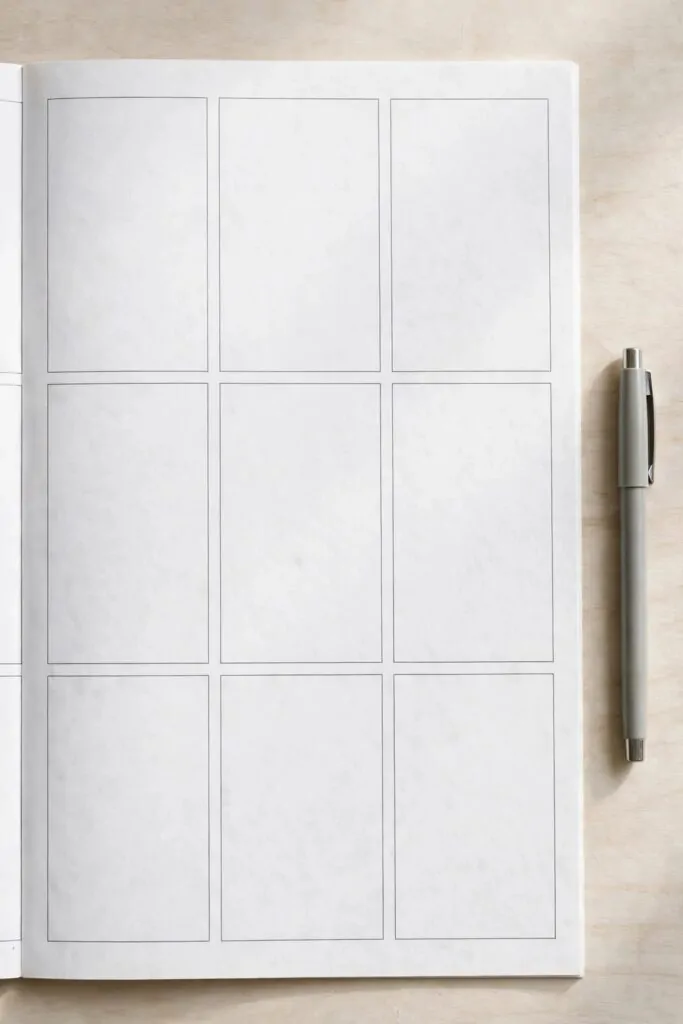
Each weekend day on our chart holds one big job, and nothing more.
Saturday is for the big tidy of the living room. Sunday is for the big tidy of the bedrooms, and we do it together after lunch.
One big job a day keeps the weekend calm and the house fresh.
I write the big job in big letters so nobody misses it. I list the small steps under it in plain words. My kids pick which step they want to do first.
We start the big job after breakfast, when everyone still has energy. We finish before lunch, so the rest of the day stays free.
A big job can be a wash of all the bedding. It can be a clear out of one cupboard. It can be a wash down of the front step and the path.
I never plan a big job for a day when we have guests or a long drive.
When the big job is done, we tick it with a big cross, not a small tick. That big cross feels like the best part of the weekend.
A chart pad and pens for our weekend chart cost $3 to $4. I keep the pad on the kitchen shelf. I write the big jobs in on Friday night.
9. Keep a Chart Just for After-School Jobs
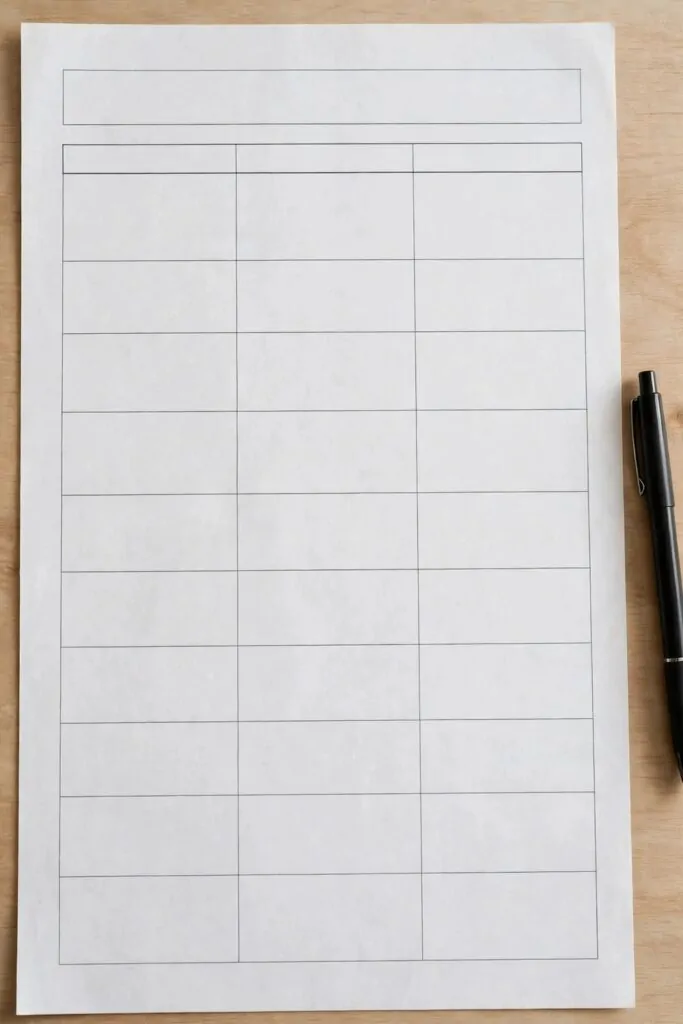
After school has its own chart in our house. Bags drop by the door and shoes come off, and the chart shows my kids what comes next. They do not need to ask me, and I do not need to nag them.
I write homework at the top of the after-school chart first.
I put tidy the school bag next. I put lay out tomorrow clothes after that. Those three jobs take half an hour, and then play time starts.
I keep the after-school jobs short and clear. My kids finish them fast, and they still have time to play before tea.
A chart just for after school stops homework from sliding into the evening.
I stick the chart on the wall by the back door. My kids see it the second they walk in. They hang their coats, kick off their shoes, and look at the chart.
If homework takes longer than usual, I move the other jobs to after tea. The chart bends a little, and nobody feels rushed or cross.
After-school jobs done early mean a calm evening for us all.
A plain chart pad for our after-school chart cost $2 to $3. I keep it by the back door where my kids see it first.
10. Add a Notes Line for Special Jobs
Some jobs do not fit in the neat little boxes on a chart. I leave a notes line at the bottom for those odd jobs.
It saves me from squeezing words into a tiny square.
Last week my son had to water the plants on the porch. The chart had no box for it. I wrote it on the notes line and he did it the same day.
A notes line also helps when a job pops up out of nowhere. You just write it down and it gets done.
I keep the line short so it stays easy to read.
If the line gets too long, I move the job to next week. That keeps the chart calm. A calm chart gets used more.
My kids like to add their own notes too. It makes them feel like the chart is theirs.
A small line at the bottom does a big job.
A plain pad for my notes line cost $2 to $4. I keep it by the chart so I can add a line fast.
| Idea | Main change | Typical cost |
|---|---|---|
| Start with One Simple Chart for the Whole Family | start with one simple family chart | $2 to $4 |
| Give Each Child Their Own Colour on the Chart | give each child their own chart colour | $2 to $3 |
| Put Morning Jobs at the Top of the Chart | put morning jobs at the top | $2 to $4 |
| Add a Tick Box for Every Small Job | add a tick box for each small job | $3 to $5 |
| Keep a Weekly Chart on the Fridge Door | keep a weekly chart on the fridge door | $3 to $5 |
| Use Pictures for Little Kids Who Cannot Read Yet | use pictures for little kids | $2 to $4 |
| Add a Star Row for Finished Weeks | add a star row for finished weeks | $2 to $3 |
| Plan One Big Job for Each Weekend Day | plan one big job for each weekend day | $3 to $4 |
| Keep a Chart Just for After-School Jobs | keep a chart for after-school jobs | $2 to $3 |
| Add a Notes Line for Special Jobs | add a notes line for special jobs | $2 to $4 |
| Total | $23 to $39 |
11. Make a Chart for the Kitchen Jobs
The kitchen makes the most mess in my house.
I made a small chart just for kitchen jobs. It hangs on the side of the fridge where we all see it.
One child clears the table after lunch. Another wipes the counters after dinner. I wash the big pots and they dry the small ones.
Each job takes only a few minutes.
I change the jobs every Sunday night. That way no one gets stuck with the same job all month.
A kitchen chart stops the same old fights about whose turn it is.
I draw a small star next to a job when it is done well. The kids love to earn stars. It costs me nothing and it works.
Keep the chart short, with four or five jobs at most. A long chart just gets ignored.
A small board for my kitchen chart cost $3 to $5.
12. Give Teens Their Own Weekly Chart
Teens want a chart that feels grown up. A baby chart with bright stars will not work for them. I made a plain weekly chart with clear jobs and clear days.
It hangs inside their cupboard door. It does not sit on the fridge.
They tick off their own jobs without me asking. That small bit of trust goes a long way.
One teen does the bins on Monday and Thursday. Another vacuums the living room on Wednesday. I do the laundry and they fold their own clothes.
I let them pick one job they hate and swap it for a fair one.
A weekly chart works better than a daily one for teens. They can plan their own time around school and friends.
The chart stays simple, with no baby pictures.
At the end of the week we look at the chart together. We talk about what went well. We fix what did not work and move on.
A plain weekly chart for my teens cost $2 to $4. I print a fresh one each month so it stays clean.
13. Add a Reward Box at the End of the Week
A reward box at the end of the week gives my kids something to look forward to. A small plain treat at the end of the week works just as well for us.
I fill a small box with little treats and fun picks. A late bedtime on Friday is one pick. A pick of what we cook on Saturday is another.
The box stays shut until the chart is full.
Each child picks one thing from the box. They take turns so it stays fair.
I change what goes in the box each month. Sometimes it holds a small toy or a craft kit. Sometimes it holds a trip to the park with me.
Small rewards work better than big ones.
I never take a reward away once it is earned. That would break the trust the chart builds.
A full chart plus a small box equals a happy week.
A small box for our weekly rewards cost $2 to $3. I found it in a shop near my home. It holds just enough for one pick each.
14. Keep a Chart for Bath Time and Bedtime Jobs
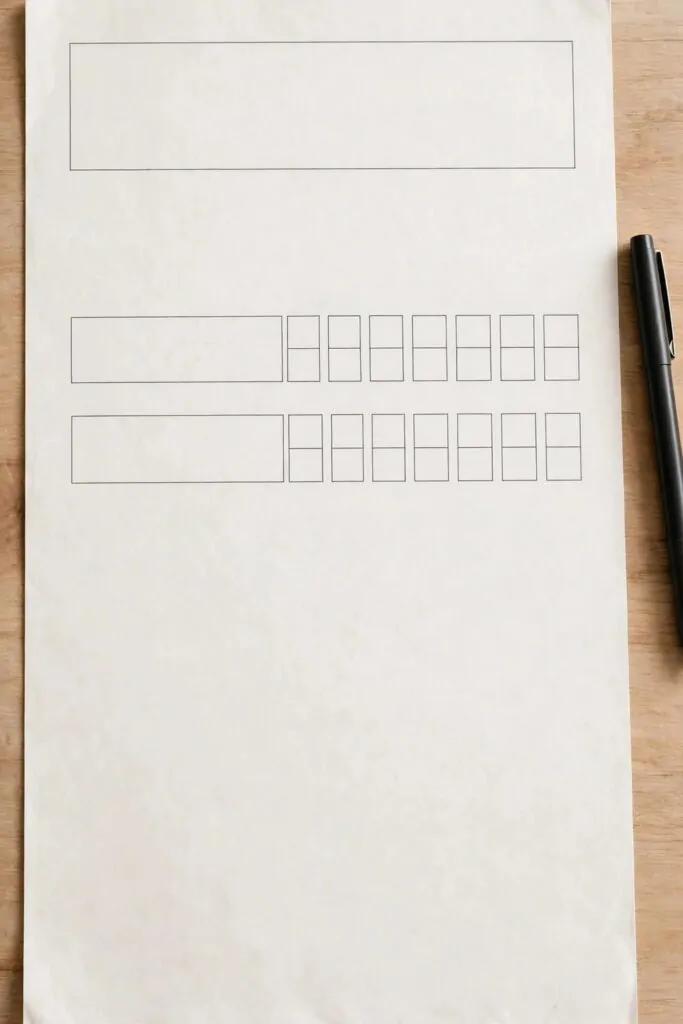
Bath time and bedtime can feel like a race every night.
I made a small chart for those two busy times. It lists each step in order. The kids follow it like a little map.
Bath, teeth, pyjamas, book, bed.
Each step gets a tick when it is done. My youngest loves to tick the boxes herself.
The chart hangs low on the bathroom wall. The kids can reach it without help. I can see it from the door while I fold towels.
We keep the steps the same every night. The same order makes the night go smooth.
A calm night starts with a clear chart.
If we are late home, we skip the book and keep the rest. The chart still works on a rushed night.
A small chart for bath time and bedtime cost $3 to $4. I made it with plain paper and tape. It has lasted us three months so far.
15. Use a Magnet Chart That Moves with the Week
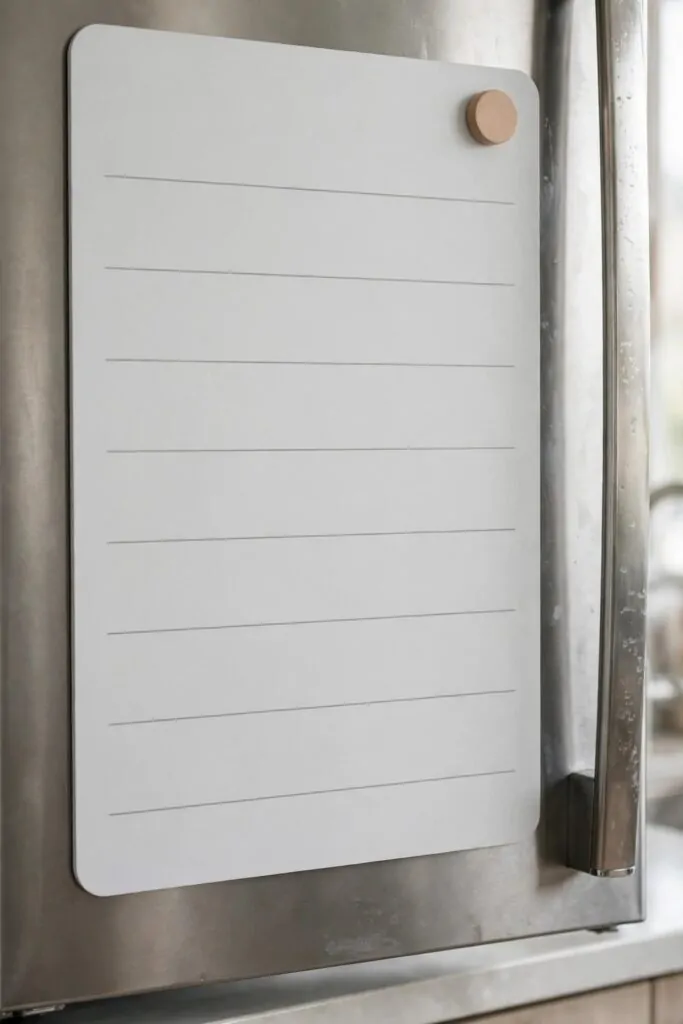
A magnet chart moves with the week. I stick one small magnet on the board to mark the job of the day. When a job is done, my child moves the magnet to the done side.
The moving part is what makes it fun. Kids love to slide the magnet across the board.
I use a plain board with a thin frame.
The magnet is a plain round wooden disc.
On Monday we set the magnets for the week. On Friday we count how many moved to done. Then we start fresh on Monday again.
If a job changes, I just move the magnet. There is no need to print a new chart.
I keep spare magnets in a small tin. Lost magnets get replaced fast. A chart with missing magnets is no fun at all.
It is simple, and it works.
A small set of magnets for our chart cost $3 to $5. I keep the tin by the board so we never lose one.
16. Add a Job Swap Day to the Chart
A job swap day keeps the chart fresh when my kids trade one job with each other once a week.
They get to try a job they have never done.
My daughter swapped bins for dusting last week. She liked dusting so much she asked to keep it.
Swap day teaches them that every job matters. No job is too small. And no one gets bored with the same job each week.
I write swap day on the chart in big letters. The kids look forward to it all week.
One swap per week is enough.
If a swap does not work, we swap back the next day. No fuss. The chart just goes back to how it was.
I let the kids pick their own swap. They feel in charge and they try harder.
A fresh chart with a swap day marked on it cost $2 to $3.
17. Keep a Chart for School Holiday Weeks
School holidays change everything in my house.
The kids are home all day and the mess grows fast. I make a holiday chart with more jobs and more free time built in.
It looks different from the school week chart.
Mornings hold the big jobs like tidying rooms and helping with lunch. Afternoons are free for play and rest. Evenings hold the small jobs like setting the table.
I let each child pick two holiday jobs they like. They do those jobs with a smile most days.
I keep the holiday chart light on purpose. A holiday should still feel like a holiday. The chart helps us keep it that way.
We stick the chart on the fridge for the whole break.
When school starts again, the holiday chart comes down. The normal chart goes back up the night before.
A plain holiday chart for our school break cost $2 to $4. I reuse the same chart each holiday with small changes.
18. Add a Ten-Minute Tidy Time to the Chart

Ten minutes is short, but it can change a room. I added a ten-minute tidy time to our chart. We all tidy together at the same time each day.
It happens right before dinner each day.
Each person picks one small spot to tidy. Shoes go by the door. Books go back on the shelf.
We race the clock, but we do not rush and break things. Fast and careful is the rule.
Ten minutes a day keeps the mess from piling up.
I put tidy time on the chart with a tick box. The kids love to tick it when the room looks neat.
Some days we only tidy the living room. Other days we tidy the hall and the kitchen too.
The best part is how the house feels after. It looks calm. It smells fresh and it feels good to sit down.
A plain chart with our tidy time marked on it cost $2 to $3.
19. Keep a Chart for Laundry Jobs
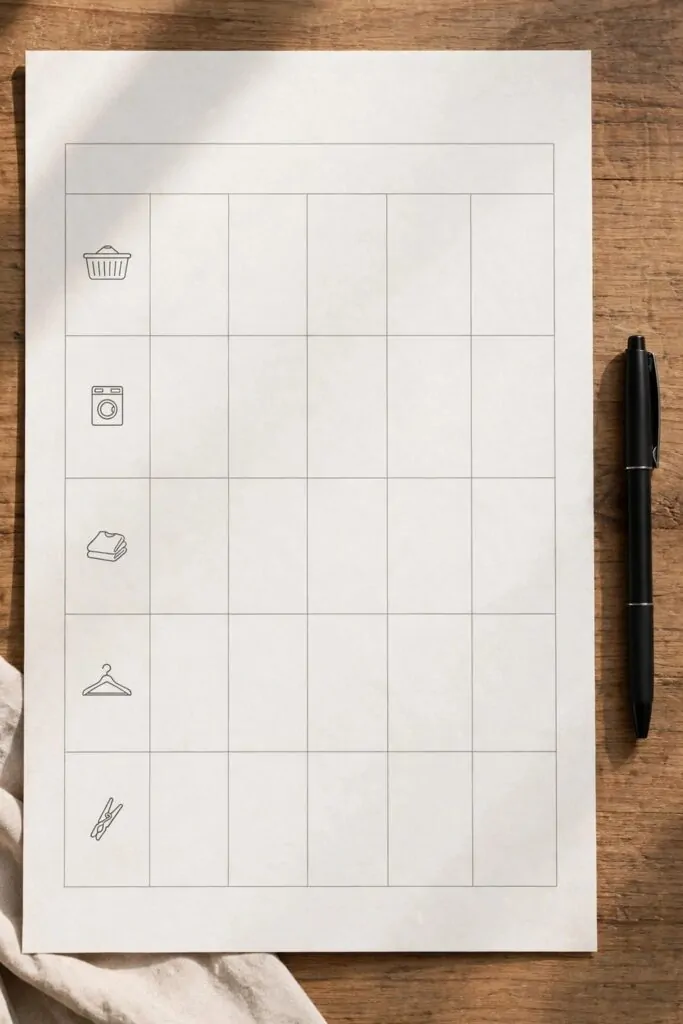
Laundry can pile up fast in a busy home. I keep a small chart on the wall near the wash basket so we all know whose turn it is.
Each child gets one small job on wash day.
One child sorts the dark clothes from the light ones and puts the clean clothes in the basket. One child helps me fold the small towels.
The chart stays simple on purpose. I write each job in big plain letters so my youngest can read it too.
A tick next to a job means it is done.
We check the chart each night before bed. It takes one quick look and then we know what is left.
If a job is missed, we move it to the next day. No one gets in trouble for a missed job. We just try again and keep the chart fair.
Laundry feels lighter when we all share it.
A plain chart and a thick pen are all you need to start. A plain chart and a pen cost $3 to $5 in all.
20. Add a Garden Jobs Row for the Weekend
The garden gives us small jobs each week.
I add one garden row to our chore chart for the weekend. It keeps the outside jobs in sight and not lost in the week.
We pick two jobs each Saturday morning. One child pulls weeds and one child waters the pots.
I write each job in the garden row with a plain pencil. The jobs stay short so small hands can finish them. We tick each job off when the work is done.
Rain can push a job to Sunday, and that is fine.
We keep a small box of garden tools by the back door. Each child takes one tool and puts it back when the job ends. The chart helps us recall who had which tool last.
A garden row makes weekend work feel like play. My kids ask for their job before I even point at the chart.
Fresh air and small jobs make a good Saturday.
You only need a chart and a pencil to add the row. A plain chart and a pencil cost $2 to $4 in all.
21. Make a Chart for Shared Family Jobs
| Idea | Main change | Typical cost |
|---|---|---|
| Make a Chart for the Kitchen Jobs | make a chart for the kitchen jobs | $3 to $5 |
| Give Teens Their Own Weekly Chart | give teens their own weekly chart | $2 to $4 |
| Add a Reward Box at the End of the Week | add a reward box at the end of the week | $2 to $3 |
| Keep a Chart for Bath Time and Bedtime Jobs | keep a chart for bath time and bedtime jobs | $3 to $4 |
| Use a Magnet Chart That Moves with the Week | use a magnet chart that moves with the week | $3 to $5 |
| Add a Job Swap Day to the Chart | add a job swap day to the chart | $2 to $3 |
| Keep a Chart for School Holiday Weeks | keep a chart for school holiday weeks | $2 to $4 |
| Add a Ten-Minute Tidy Time to the Chart | add a ten-minute tidy time to the chart | $2 to $3 |
| Keep a Chart for Laundry Jobs | keep a chart for laundry jobs | $3 to $5 |
| Add a Garden Jobs Row for the Weekend | add a garden jobs row for the weekend | $2 to $4 |
| Total | $24 to $40 |
Some jobs belong to all of us, not just one child. I make one shared row on our chart for these jobs. It stops the same person doing all the work.
We take turns week by week.
One week I clear the table after meals. The next week my eldest does it, and we all help dry the plates.
The chart shows whose turn it is at a glance.
I write each name in a different plain colour. The colour helps my youngest find her own row fast. We swap the colours round each month so it stays fair.
Shared jobs teach my kids that a home needs all hands. They grumble a bit at first, then they just get on with it.
A fair chart keeps the peace at home.
We sit down each Sunday and plan the shared jobs. It takes five minutes and saves a week of rows.
A plain chart and a set of plain pens are all you need. A plain chart and plain pens cost $2 to $4 in all.
22. Add a Points Row for Extra Jobs
Some jobs go past the normal list each week. I add a points row so extra jobs earn a small mark.
Each extra job is worth one point. I write the job in the points row with the points next to it. My kids can see their points add up through the week.
Ten points earn a small treat at the end of the week.
I keep the points row fair for all ages. A small child gets a point for a small job, just like a big child gets a point for a big job.
We count the points together on Friday night. It feels good to see hard work add up in plain marks.
No points are lost for a missed job.
If a job is half done, we talk it through first. I give half a point or we finish the job side by side. The point is the effort, not just the tick.
A points row turns dull jobs into a small game. My kids race to help, and the house looks better for it.
A plain chart and a pen cost $2 to $3 in all.
23. Keep a Chart for the School Morning Rush
School mornings can feel like a race.
I keep a small chart by the front door for the morning rush. Each child has a row with three short jobs. They tick each job as they go, and the rush feels calmer.
One job is to pack the school bag. The next job is to put on shoes and coat.
I write the jobs in the order we do them. My kids follow the list down, step by step.
A ticked row means we can leave on time.
We made the chart on a Sunday night in ten minutes. It has saved us more rushed mornings than I can count.
If a child forgets a job, the chart reminds them. I do not need to shout up the stairs. The chart does the telling for me.
Mornings still have busy days, but the chart helps a lot. My kids feel proud when all their boxes are ticked.
A plain chart and a thick pen cost $3 to $5 in all.
24. Add a Quiet Jobs Box for Rainy Days
Rainy days keep us inside, and small hands still need jobs. I add a quiet jobs box to our chore chart. It holds calm jobs that fit a slow day at home.
I put jobs like dusting low shelves and tidying books in the box. Each job takes ten minutes or less.
A child picks one job card from the box.
I write each quiet job on a small plain card. The cards sit in a little box on the shelf. A child takes one card, does the job, and puts the card back.
Quiet jobs suit a rainy day well. They keep the house tidy while we stay warm inside.
We swap the cards round each month.
My kids like to pick their own card. It feels like a small choice, not a chore.
If a job is too hard for a small child, we swap it for an easy one. No one is stuck with a job they hate. The box stays kind, and the house stays tidy.
A plain chart and plain cards cost $2 to $3 in all.
25. Put Together a Printable Chore Chart Starter Kit

A starter kit puts all the chart bits in one place. I keep ours in a plain basket by the hall table so we can grab it fast.
Six plain bits are all you need to start.
The binder holds each chart we print through the year. The star stickers mark each job that is done well.
The magnetic board sticks on the fridge where all can see it. The coloured pencils help each child find their own row. The kitchen timer keeps each short job on track.
A plain binder can cost $4 to $6, a set of star stickers can cost $2 to $3, and a plain magnetic board can cost $3 to $5. A pack of plain coloured pencils can cost $2 to $4, a plain kitchen timer can cost $3 to $5, and a plain clear sleeve can cost $2 to $3. For a total of $16 to $26, you get six plain bits that work well side by side.
The clear sleeve keeps the chart clean from grubby hands.
We set the kit up on a Sunday in one short hour. Each child picks a colour and a row on the new chart. The first week felt new, and the second week felt like ours.
A kit makes charts easy to keep going. When a chart fills up, we just slip in a fresh one.
Your kit is set, your charts are plain, and your family can start small tomorrow with one job each and a star to mark it done.
| Idea | Main change | Typical cost |
|---|---|---|
| Make a Chart for Shared Family Jobs | make a chart for shared family jobs | $2 to $4 |
| Add a Points Row for Extra Jobs | add a points row for extra jobs | $2 to $3 |
| Keep a Chart for the School Morning Rush | keep a chart for the school morning rush | $3 to $5 |
| Add a Quiet Jobs Box for Rainy Days | add a quiet jobs box for rainy days | $2 to $3 |
| Put Together a Printable Chore Chart Starter Kit | put six plain kit bits in one place | $16 to $26 |
| Total | $25 to $41 |
| Idea | Main change | Typical cost |
|---|---|---|
| a plain chore chart binder | Keep each chart in one place | $4 to $6 |
| a set of plain star stickers | Mark each finished job with a star | $2 to $3 |
| a plain magnetic chore chart board | Stick the chart where all can see it | $3 to $5 |
| a pack of plain coloured pencils | Colour each job in plain lines | $2 to $4 |
| a plain kitchen timer | Time each short job with care | $3 to $5 |
| a plain clear chart sleeve | Keep the chart clean and safe | $2 to $3 |
| Total | $16 to $26 |
Keep Reading
If you liked these ideas, you will love these posts too
Each post has more simple ideas you can try at home this weekend.