27 Small Studio Apartment Inspiration Looks That Feel Spacious

My first apartment had one room with five jobs. Bedroom, living room, office, dining room, closet. All in a space smaller than most people’s living rooms.
It worked. Not because it was big. Because every inch had a job and every corner earned its place. I learned more about decorating in that tiny flat than in any big house since.
Small studios are not a problem to fix. They are a puzzle to solve. And the solution is never more stuff. It is smarter choices, lighter colors, and zones that make one room feel like five.
These 27 small studio apartment inspiration looks all make tiny spaces feel open, calm, and bigger than they are. Steal the ones you love.
1. The One-Wall Layout
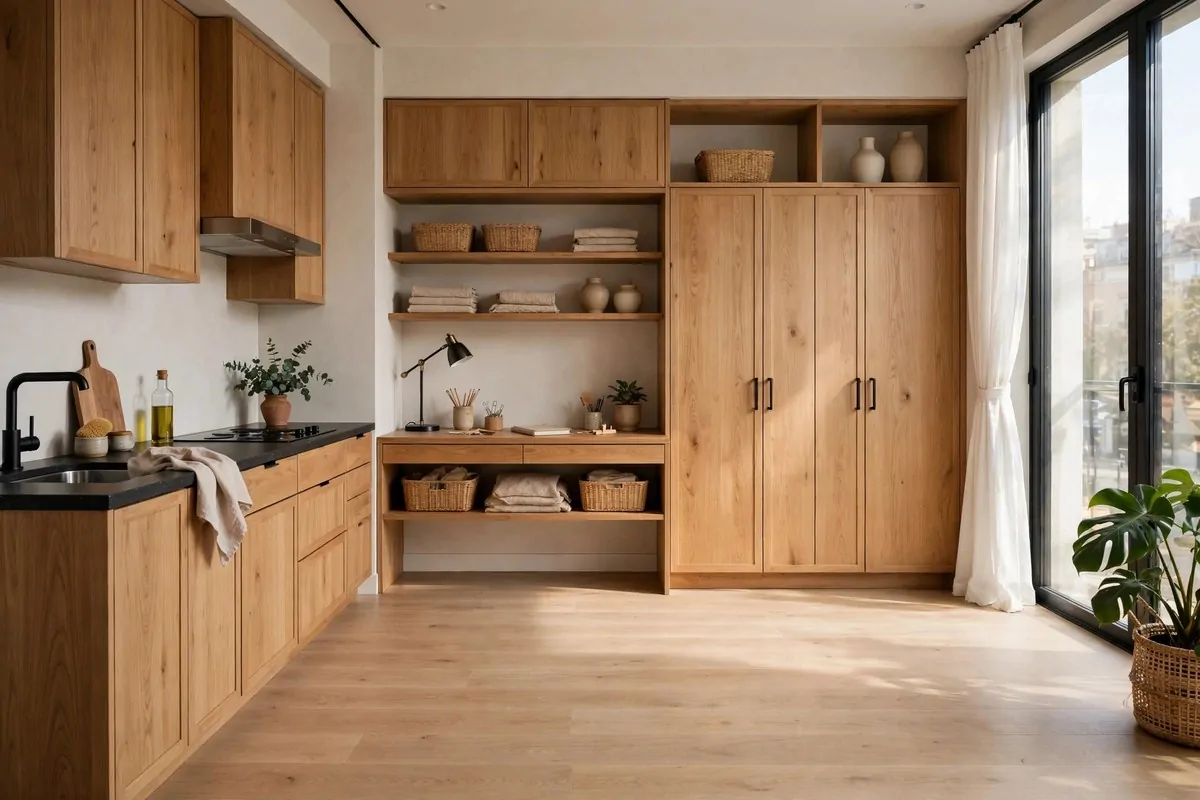
Put the hardworking stuff on one wall. Kitchen, desk, storage. All in a single line. The rest of the room stays open and breathes.
This layout cuts visual clutter in half. Instead of furniture scattered everywhere, one clean spine holds the busy functions. The eye rests.
It works because studios feel small when functions collide. Cooking next to sleeping next to working is chaos. One wall organizes the chaos.
Keep the opposite side simple. Bed, sofa, a rug. The room reads as calm because the busy wall does all the work quietly.
Keep the busy wall shallow. Twelve inch deep storage holds plenty and stays slim.
Run one long shelf the full length. It ties the whole wall together visually.
Hide the trash and cleaning supplies in a cabinet. Nothing kills calm like a visible bin.
A long runner rug along the busy wall softens the hardworking zone. Function can be pretty.
2. Leggy Furniture Everywhere
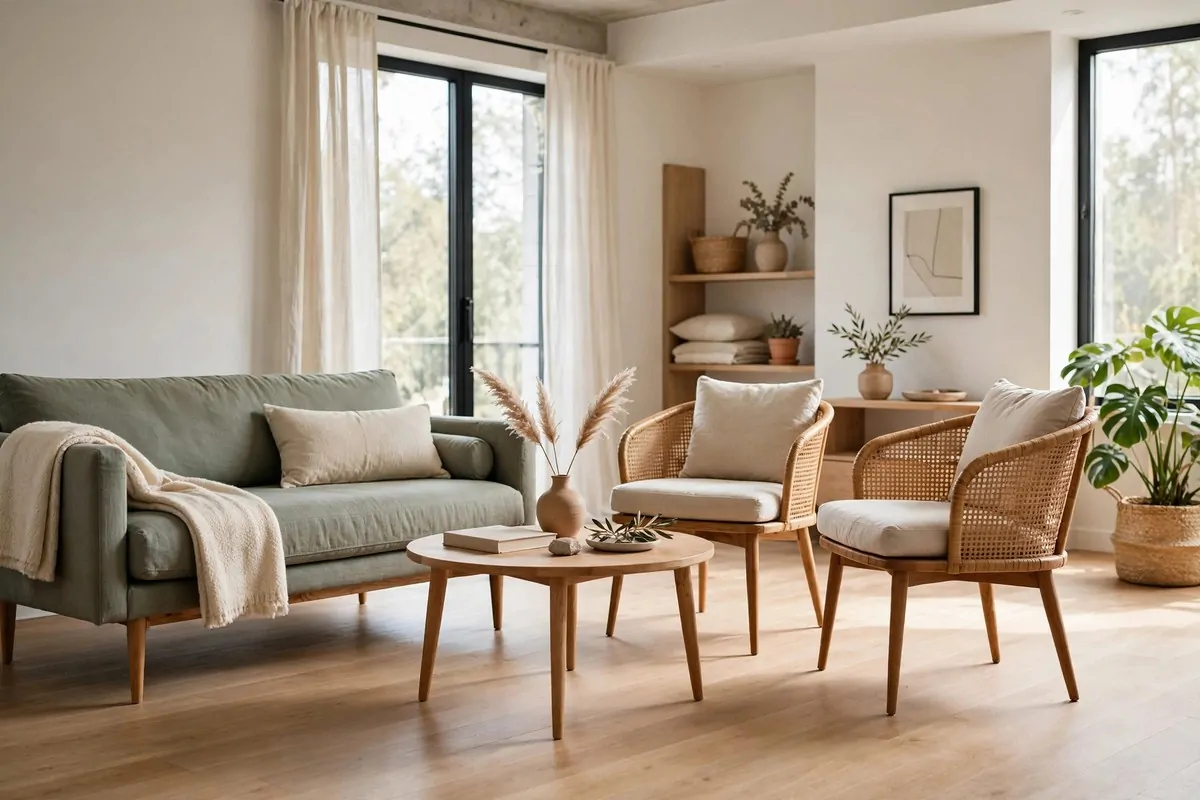
Furniture that sits flat on the floor looks heavy. Furniture on legs looks light. In a studio, that lightness is everything.
Pick sofas, chairs, and beds with visible legs. Tapered wood legs are classic. Even five inches of clearance lets light flow underneath.
Your eye reads the floor as continuous. Continuous floor means bigger room. It is a trick, but it works every single time.
Avoid bulky skirted sofas and solid-base beds. They eat visual space. Leggy pieces give it back. Same footprint, twice the air.
- Sofa: legs at least 4 inches high
- Bed: open frame, not solid base
- Tables: thin legs, glass tops
A robot vacuum fits under leggy furniture. Clean floors with zero effort.
Felt pads on every leg protect floors and stop scraping sounds. Cheap and essential.
Glass top tables show even more floor. Maximum airiness for small rooms.
Clear bins under the sofa hide clutter. Out of sight, still accessible.
3. Rug Zones That Draw the Map
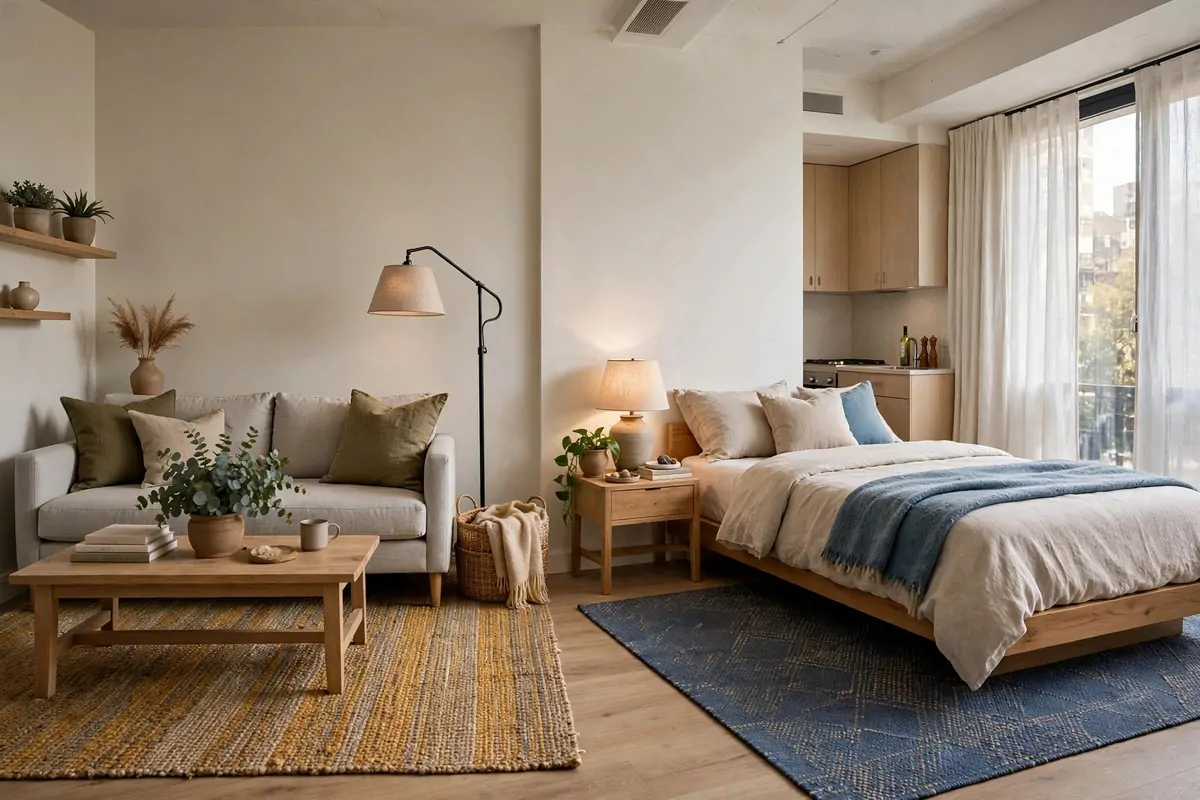
One room, no walls. Rugs draw the map instead. A big rug under the sofa says living room. A smaller rug by the desk says office.
Use a 5 by 8 rug for the main living zone. It anchors the sofa and chairs into one clear area. The room suddenly has rooms.
Different rugs for different zones. Not matching, just related. Same color family, different patterns. Cohesive but clearly separate.
Rugs also add warmth and quiet. Bare floors echo. A rug softens sound and feet. The studio feels calmer the second rugs go down.
A rug pad underneath stops slipping and adds cushion. Worth every penny.
Leave a foot of bare floor around each rug. Breathing room makes zones clearer.
Washable rugs are the studio answer. Spills happen, wash and move on.
Two smaller rugs beat one big one for zoning. Separate islands, clear map.
4. Shelves That Climb the Walls
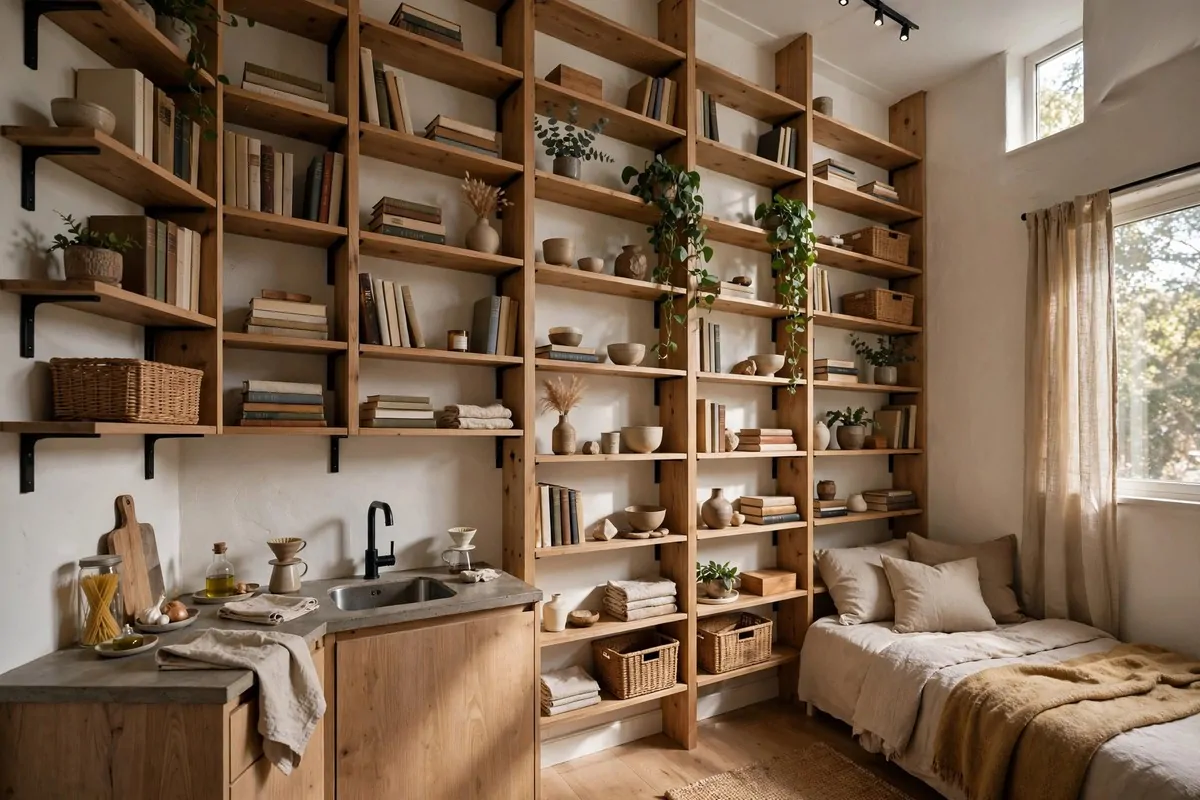
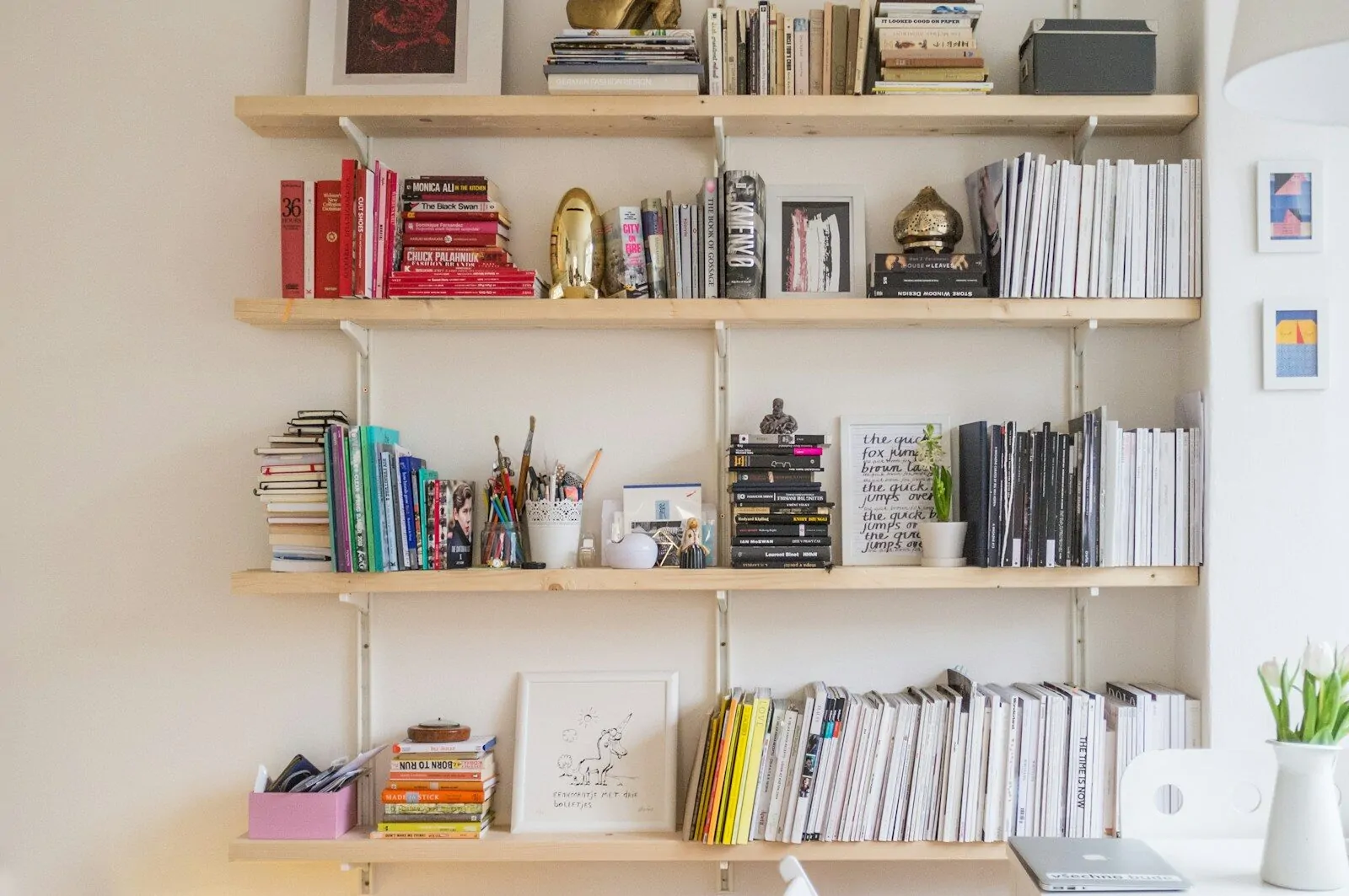
Floor space is precious. Wall space is free. Shelves that climb high store tons without touching a single inch of floor.
Eyes go up, and the room feels taller. High shelves draw the gaze to the ceiling. Perceived height is perceived space.
Use the top shelves for things you rarely need. Seasonal stuff. Keepsakes. Daily items stay at arm level where they belong.
Keep high shelves tidy. Clutter up high feels heavy. A few neat boxes and books look intentional. Messy piles look like the ceiling is falling.
A folding step stool lives nearby. High shelves are useless if you cannot reach.
Baskets on high shelves hide clutter beautifully. Uniform baskets look intentional.
Anchor tall shelving to the wall. Safety first, especially in small spaces.
A rolling stool reaches the top shelves. Practical and charming at once.
5. The All-Light Palette
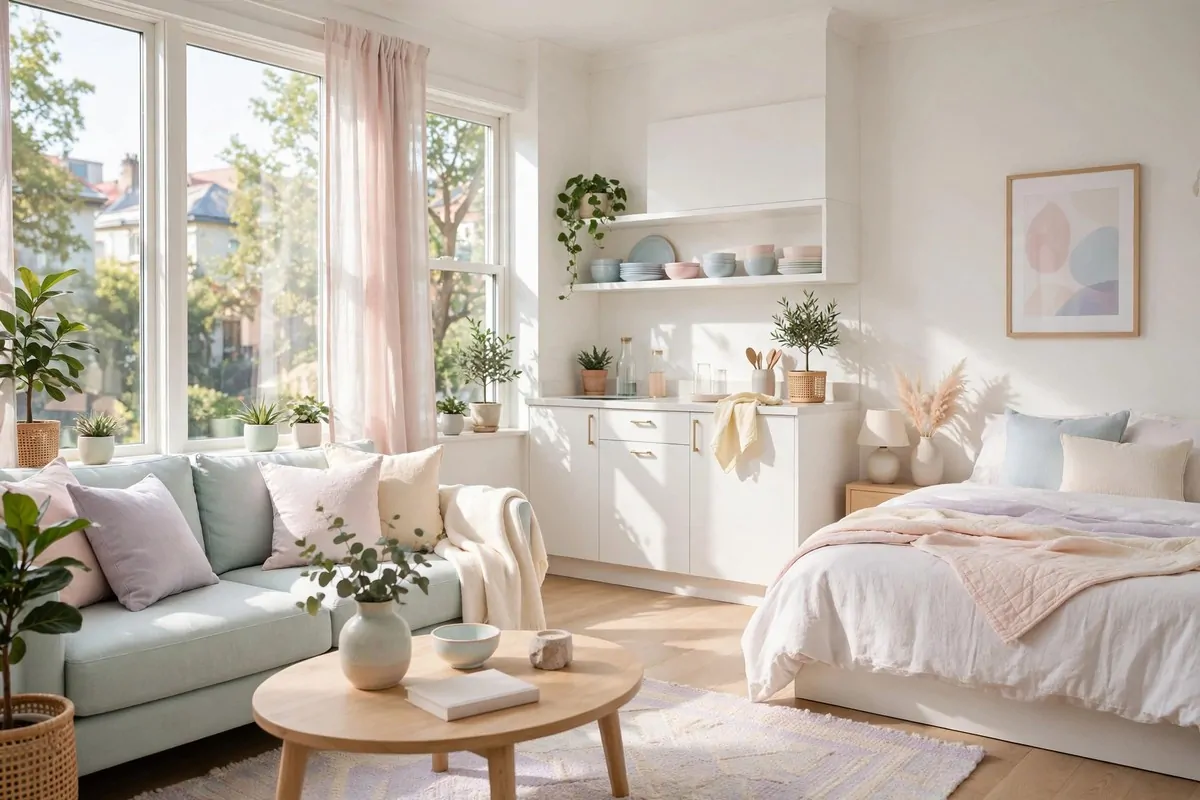
Light colors reflect light. Dark colors absorb it. In a small studio, every bit of reflected light makes the walls feel farther away.
Whites, soft pastels, light grays. Paint the walls light. Pick light furniture. Even light floors if you can. The room doubles visually.
This does not mean boring. Texture keeps light rooms interesting. Linen, wood, woven baskets. Same palette, many surfaces.
One dark accent is fine. A black lamp. A deep green plant pot. Small dark moments make the light feel even lighter.
| Light element | Effect |
|---|---|
| White walls | Walls recede |
| Light floors | Floor expands |
| Sheer curtains | Light pours in |
Paint the ceiling white, always. A white ceiling lifts the whole room.
Light wood floors beat dark in studios. They bounce light instead of eating it.
One colorful art piece pops beautifully against all light. Restraint makes it sing.
Paint trim the same color as walls. No contrast lines makes rooms feel bigger.
6. A Big Mirror Across From the Window
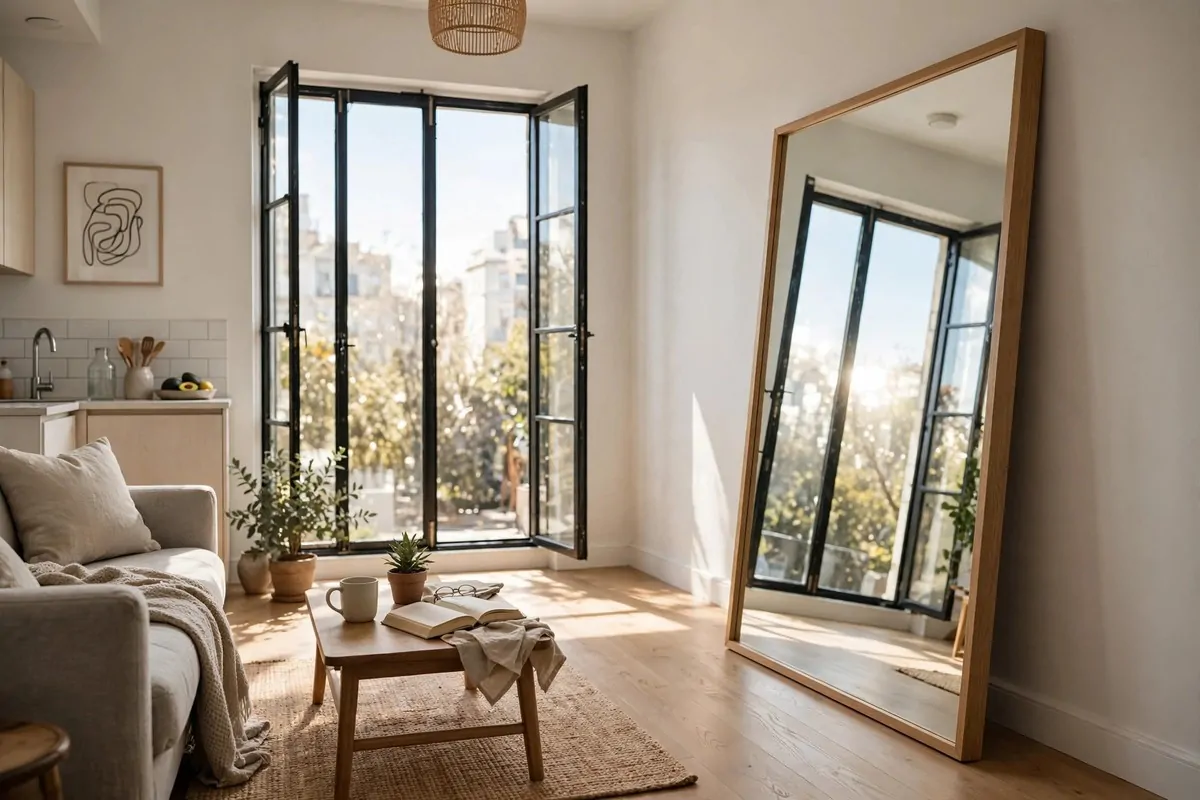
A big mirror across from the window doubles your light and your view. It is the oldest small-space trick because it simply works.
The mirror bounces daylight deep into the room. Corners that were dark get bright. The whole studio glows without extra lamps.
It also doubles the sense of space. Your eye sees another room in the glass. That illusion is powerful. The brain believes it.
Go as big as you can. A floor mirror leaning on the wall is perfect. Bigger mirror, bigger effect. Small mirrors barely help.
Lean it, do not hang it. Leaning mirrors are renter friendly and look relaxed.
Angle it slightly to catch the best view. A mirror reflecting a blank wall wastes the trick.
Clean it weekly. A dusty mirror doubles dust, not light.
A mirrored closet door doubles the effect. Storage plus light in one.
7. The Glass Wall Bedroom
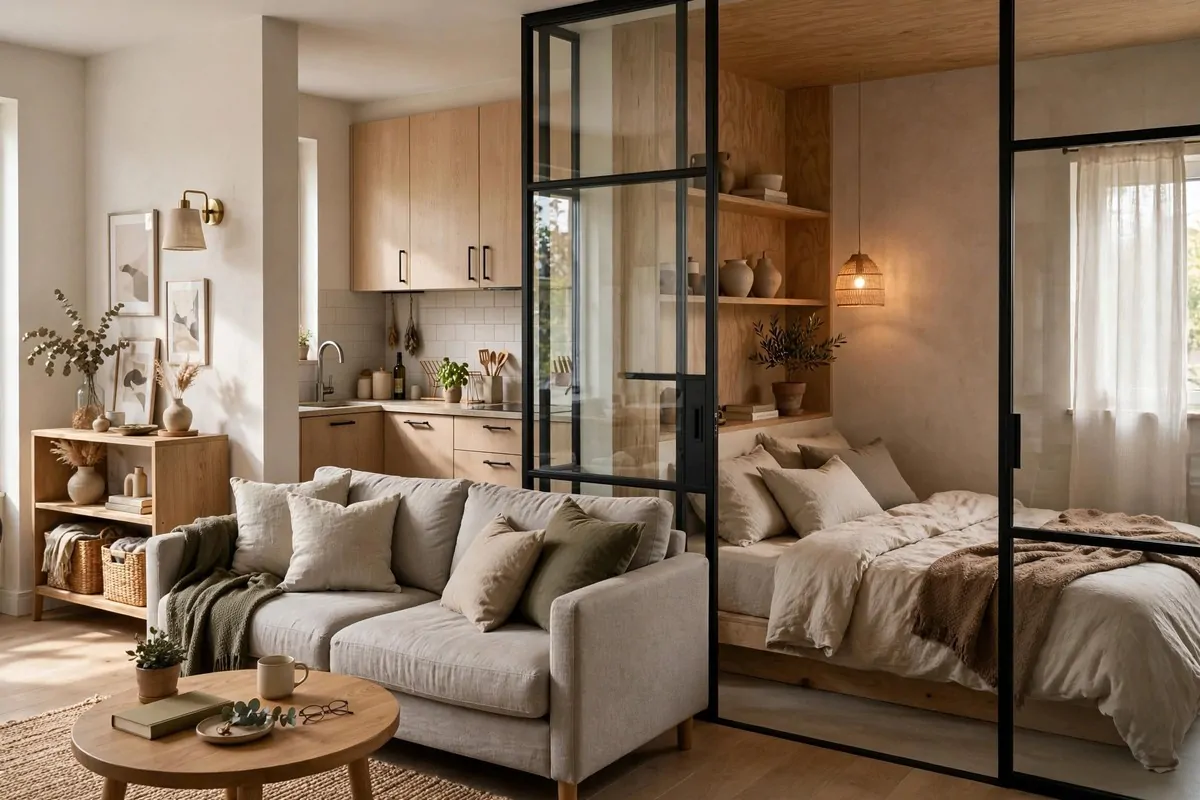
Want a separate bedroom without losing light? A glass interior wall gives privacy while light flows straight through. Best of both.
Frosted or fluted glass blurs the view just enough. You get a real bedroom feel. The living area keeps its daylight. Nobody loses.
This beats a solid wall in every way for studios. Solid walls chop the space and steal light. Glass divides without dividing.
Add a curtain on the bedroom side for nights. Sheer by day, closed at night. Flexible privacy that takes zero floor space.
Frosted film on existing glass is cheap. Privacy without replacing anything.
A curtain track on the bedroom side adds night privacy. Sheer by day, closed at night.
Keep the glass clean. Smudges show from both sides.
A pocket door saves swing space. Every inch counts in a studio.
8. The Loft Bed With Storage Under
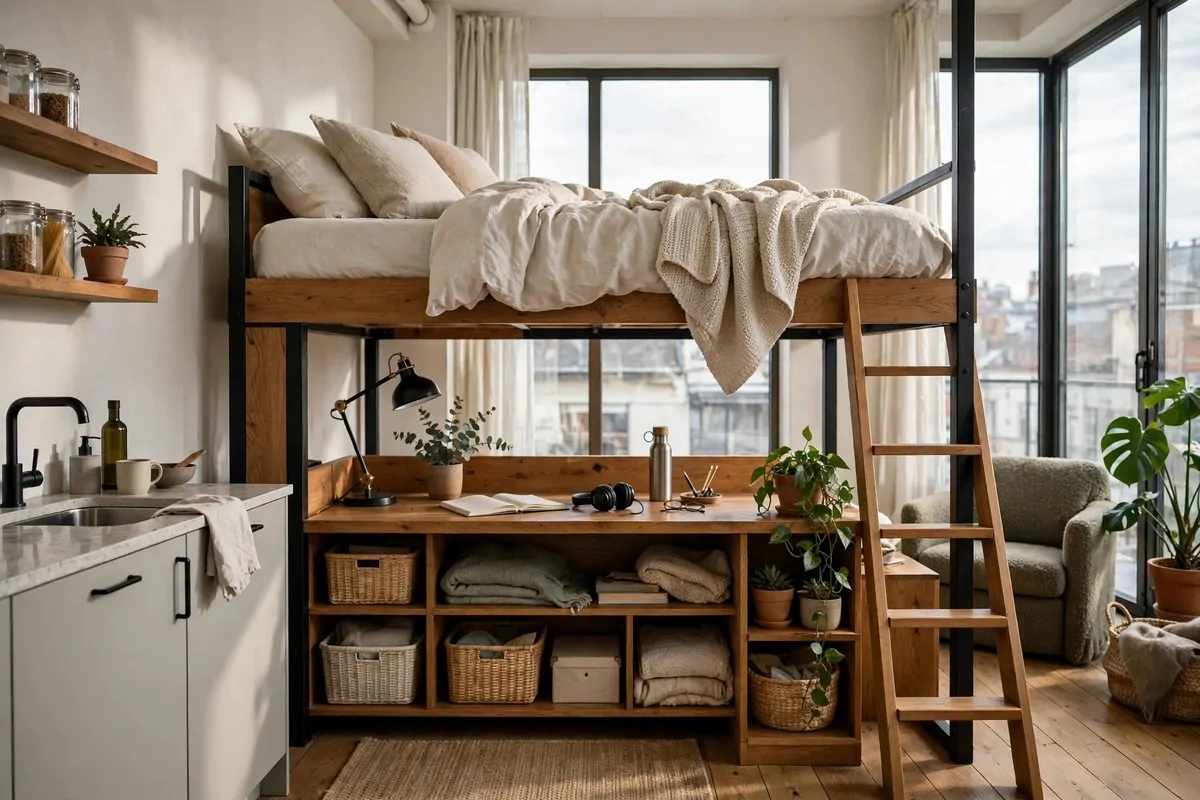
Raise the bed and you gain a whole room underneath. Desk, dresser, reading nook. The footprint stays the same. The function doubles.
Loft beds work best with decent ceiling height. You need to sit up in bed comfortably. Measure twice before you commit.
The space under becomes prime real estate. A full desk setup. Deep storage drawers. Even a tiny wardrobe. All hidden under the bed.
It also zones the studio beautifully. Up is for sleep. Down is for life. The room feels like two floors in one.
- Desk underneath: instant office
- Drawers underneath: hidden storage
- Curtain around: cozy privacy
A guard rail is non-negotiable. Safety beats style for sleeping up high.
A clip-on reading light saves space. No bedside table needed.
Test the ladder comfort before buying. You climb it every single day.
A curtain under the loft hides storage mess. Pretty fabric, hidden chaos.
9. The Sofa Bed That Works Two Jobs
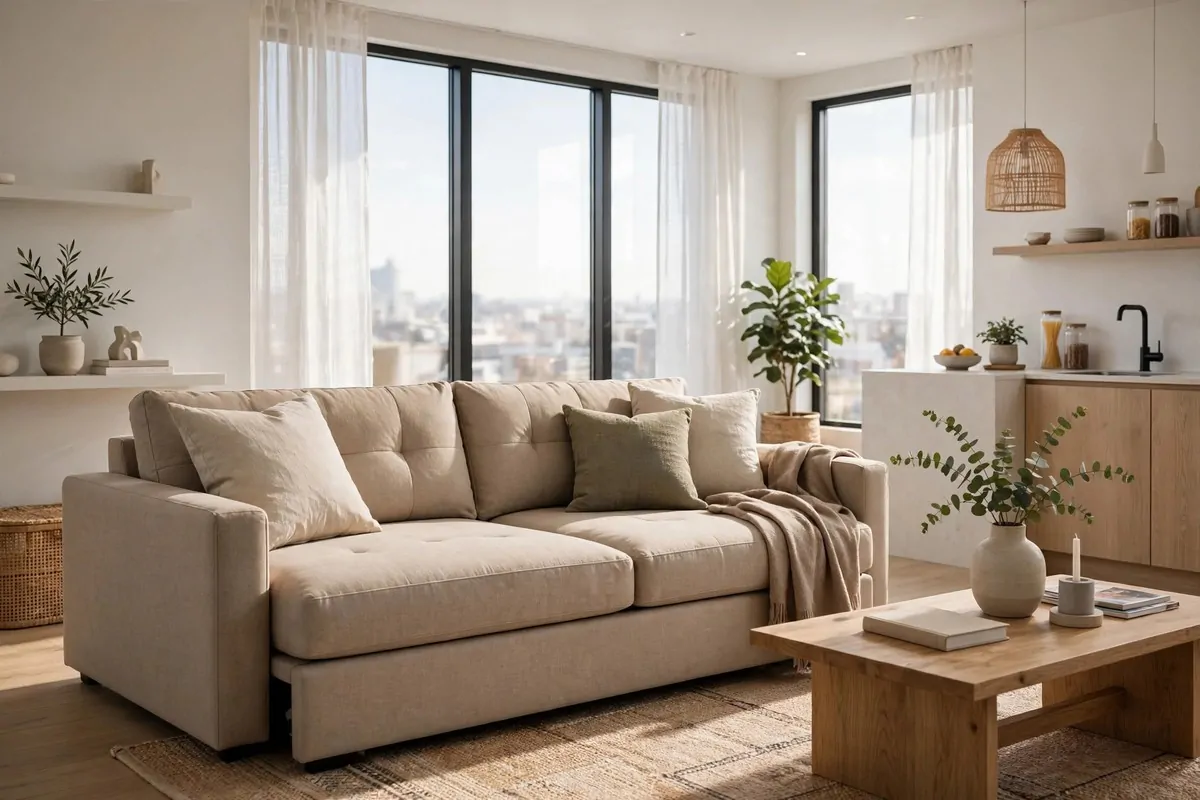
A sofa bed is two pieces of furniture in one footprint. Sofa by day, bed by night. In a studio, that is not a compromise. It is genius.
Modern sofa beds are nothing like the old lumpy ones. Good ones sit comfortably and sleep well. Test before you buy, always.
Fold it up every morning. The discipline matters. A studio with the bed always out feels like a bedroom. Folded away, it feels like a living room.
Pick one with storage inside. Bedding lives in the sofa base. The room stays clean with zero extra furniture needed.
A mattress topper lives in the storage base. Sleep comfort without daily bulk.
Practice the fold mechanism in the store. If it fights you there, it fights you daily.
Throw pillows hide the bed look by day. Style it like a sofa, not a compromise.
A daybed style with big pillows reads as sofa. Nobody guesses it is a bed.
10. Nesting Tables
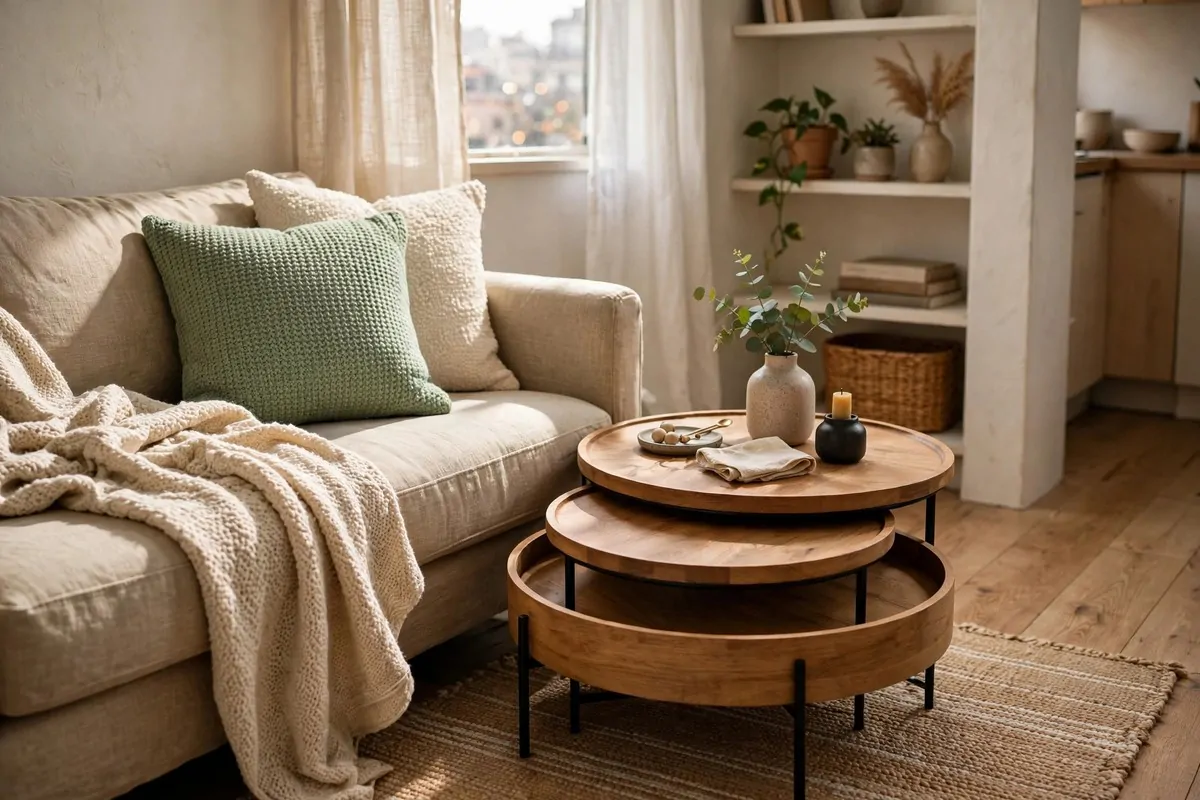
Nesting tables are space magic. Tucked together they are one small table. Pulled apart they serve a whole dinner party.
Keep them nested daily. They take up almost no room. Pull one out when you need a side table, a laptop spot, or extra serving space.
Round nesting tables soften a room. No sharp corners in tight walkways. Your shins will thank you every day.
They work as decor too. A small plant on the top one. A book on the lower. Pretty and practical in one tiny footprint.
Felt pads stop them scratching each other. Nested tables rub, protect them.
Use the small one as a plant stand. It earns its keep even when nested.
Round shapes are kinder in tight spaces. No sharp corners at shin height.
A C-shaped side table slides over the sofa arm. Laptop spot with zero footprint.
11. Sheer Curtains, Full Sunlight
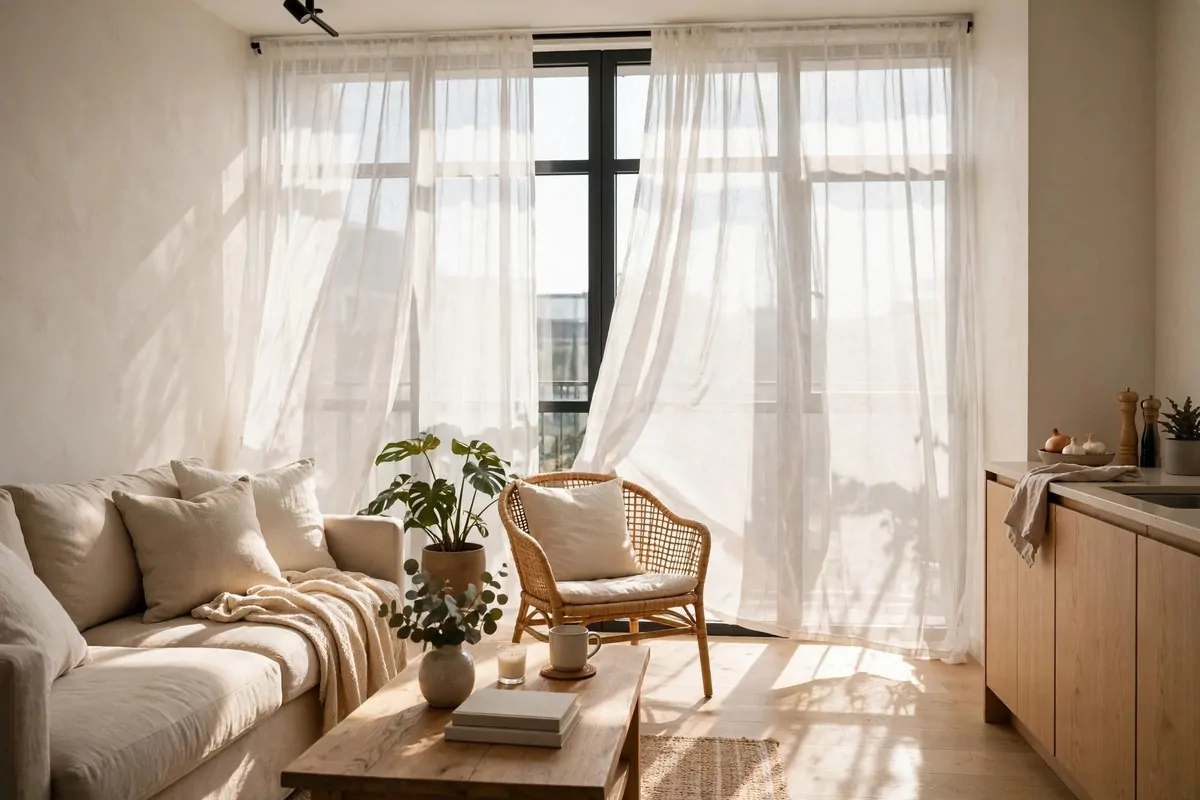
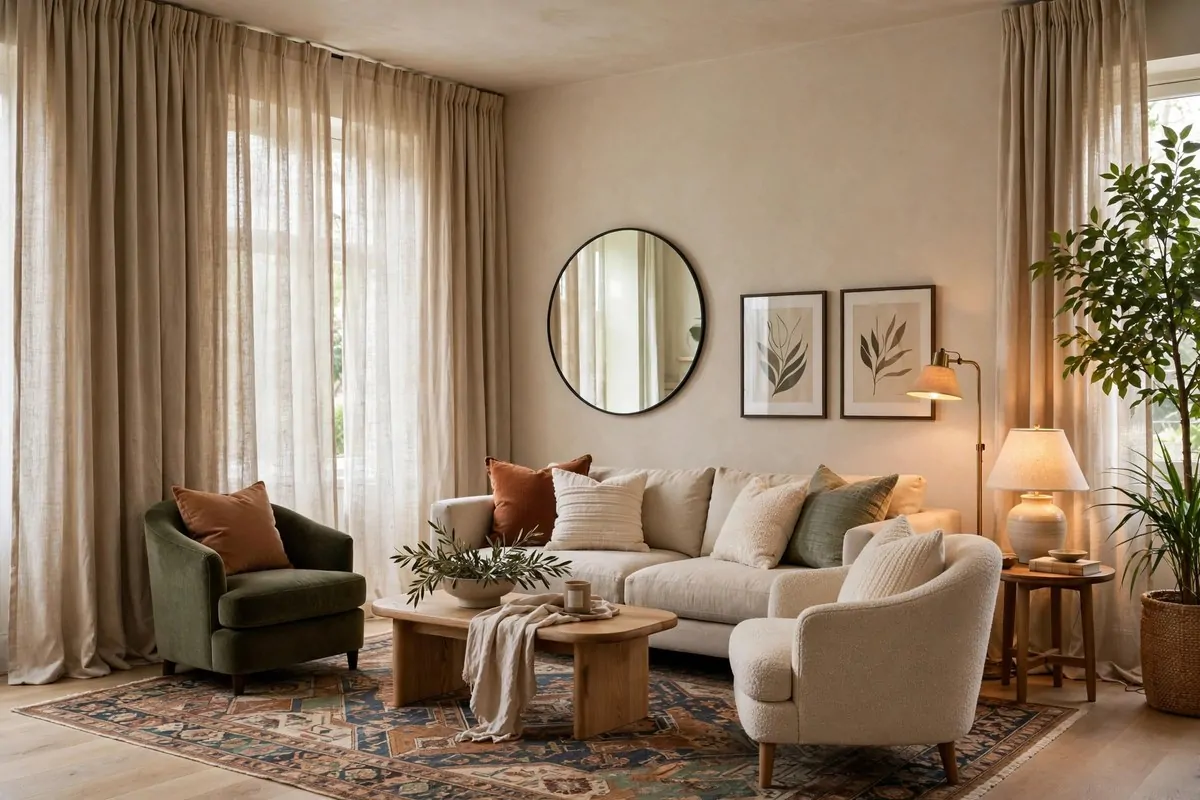
Heavy curtains eat light. Sheers let it pour in. In a studio, daylight is your best decorating tool and it is completely free.
White sheer curtains glow when sun hits them. The whole window becomes a soft light panel. The room feels warm and open.
Keep the curtain rod wide and high. Curtains hung high make windows look taller. Wide rods let sheers clear the glass fully by day.
Privacy at night needs a second layer. A simple roller blind behind the sheers. Down at night, up all day. Light when you want it.
Wash sheers twice a year. They yellow slowly and you stop noticing.
Double rods hold sheers plus blackout. Day glow, night privacy, one window.
Iron or steam them after washing. Crisp sheers glow, wrinkled ones look sad.
Top-down bottom-up blinds give privacy plus light. Best of both worlds.
12. The Mushroom Wall Look
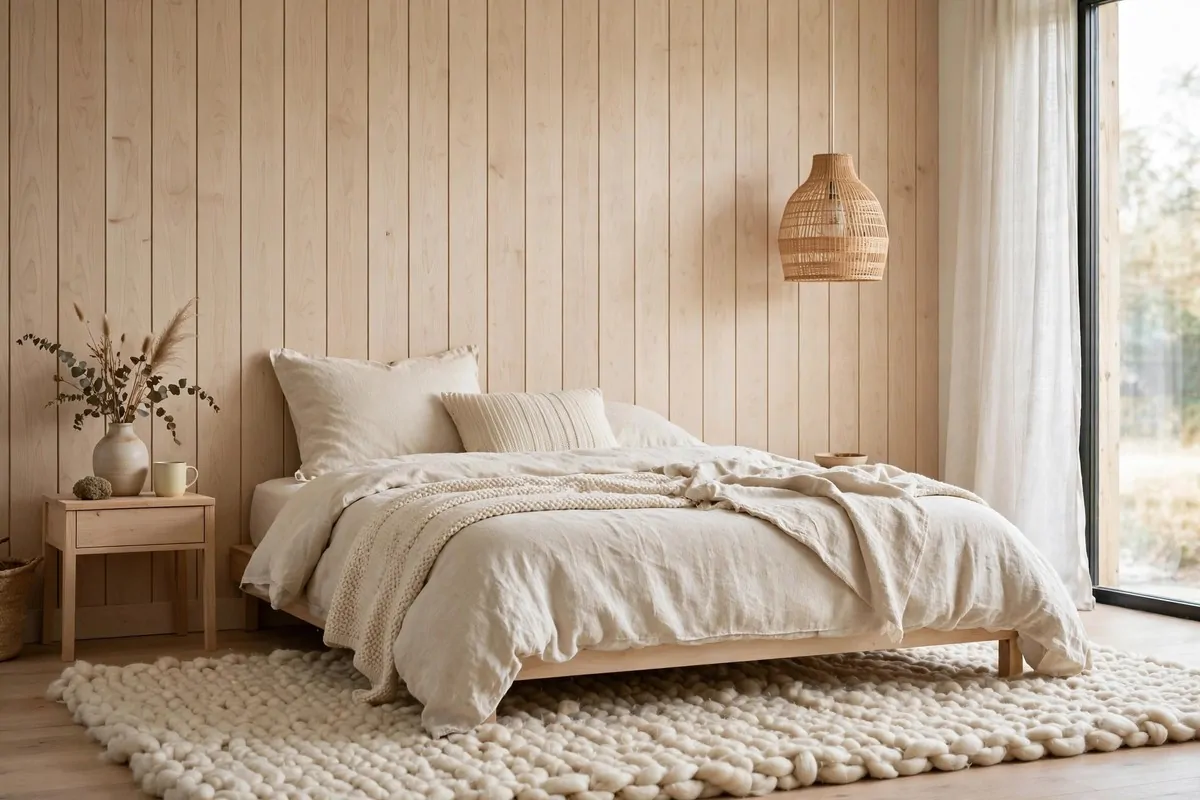
Pale birch panels behind the bed add calm rhythm to a wall. The soft mushroom tone warms the room without closing it in.
Wood paneling gives a flat wall depth and texture. It reads as designed, not decorated. One wall is enough to change the whole room.
Pair it with a chunky wool rug and darker floors. The contrast keeps the warmth from going flat. Light wall, grounded floor.
This look feels calm and collected. Perfect for the sleeping zone of a studio. Your bed area becomes a retreat, not just a corner.
Plywood panels are cheaper than solid wood. Stain them light for the birch look.
Run panels floor to ceiling for drama. Half walls can look unfinished.
A picture ledge on the paneled wall displays art without nails. Flexible and pretty.
Vertical panels make ceilings feel higher. Lines going up lift the eye.
13. An Arched Niche
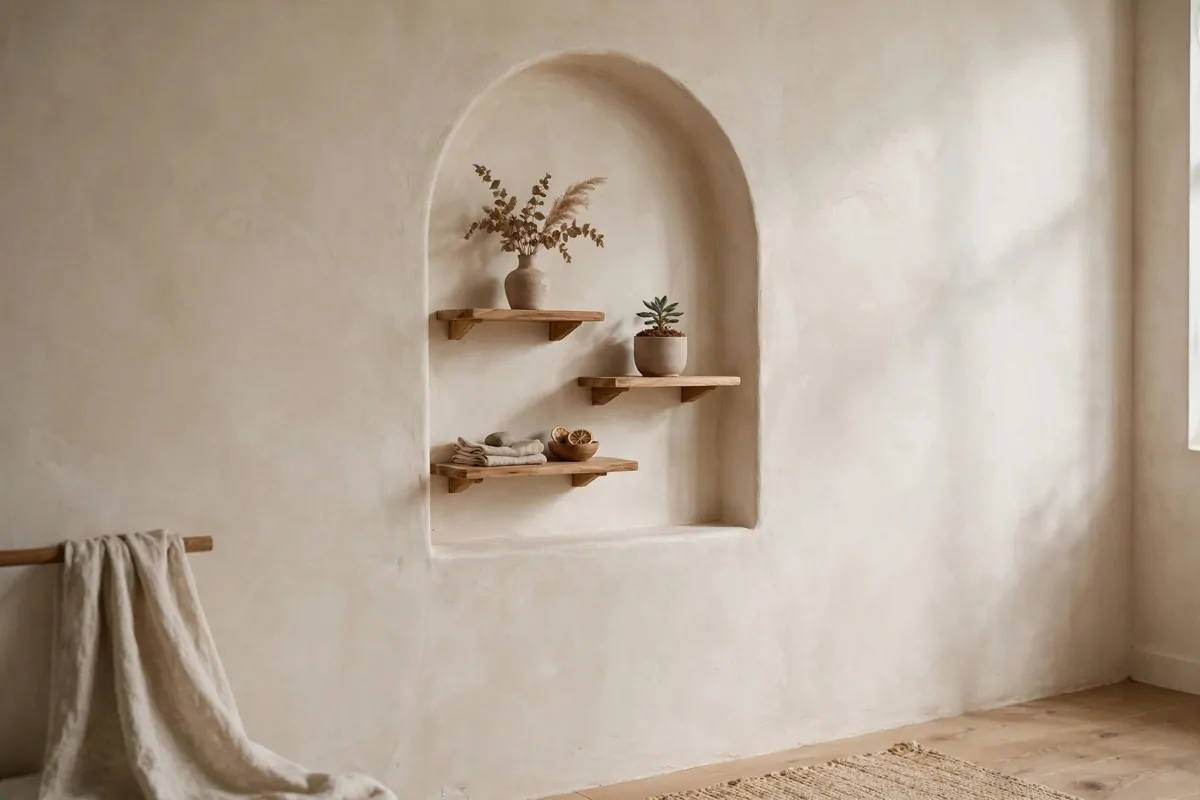
Curves soften small rooms. An arched niche in the wall adds architecture and display space without taking any floor at all.
The curved plaster catches light from every angle. It glows softly all day. A flat wall could never do that.
Fill the niche with staggered wood shelves. Books, plants, pretty objects. The layers make the wall feel collected and deep.
You do not need to build one. A large arched mirror gives a similar effect. Curves trick the eye into seeing more space.
An arched mirror gives the curve without construction. Lean it and done.
Paint the niche one shade darker. Depth makes the arch pop.
Small objects shine in niches. A niche frames whatever sits inside it.
A small spotlight in the niche makes objects glow. Museum lighting at home.
14. Terracotta and Charcoal
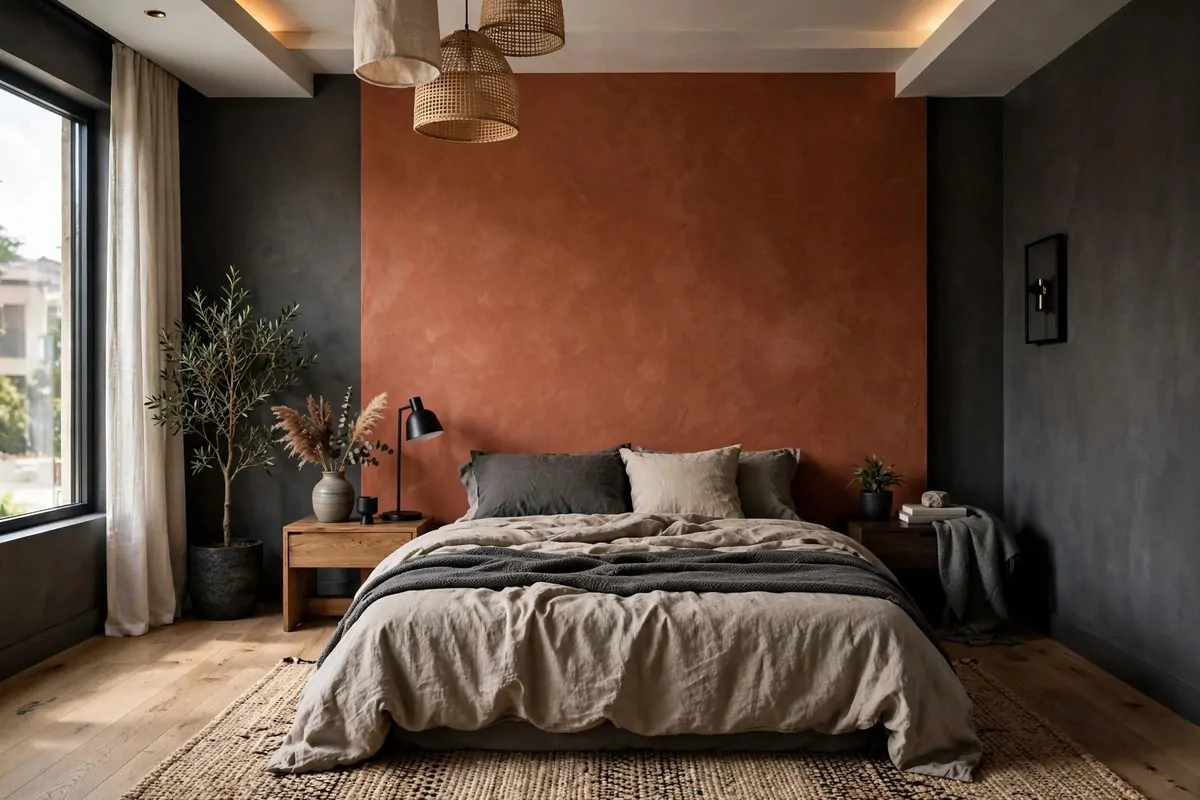
Terracotta plus charcoal is a bold studio palette that works. Warm terracotta anchors the sleeping zone. Charcoal keeps it from going too sweet.
A terracotta wall reads as warm depth, not smallness. It gives the bed area its own identity without any furniture doing extra work.
Keep bedding in stone-washed gray or cream. Cool bedding fights terracotta. Warm neutrals let the wall shine.
This is for the brave. But people who commit to this palette never go back. It feels rich, grounded, and surprisingly spacious.
- Terracotta wall: warm anchor
- Charcoal sides: modern edge
- Cream bedding: soft balance
Test terracotta in your light first. It swings orange under warm bulbs.
Charcoal bedding would be too much. Keep the dark on walls only.
Brass accents glow against terracotta. Warm metal loves warm walls.
A terracotta pot collection ties the palette together. Repeat the color in decor.
15. The Window Seat Nook
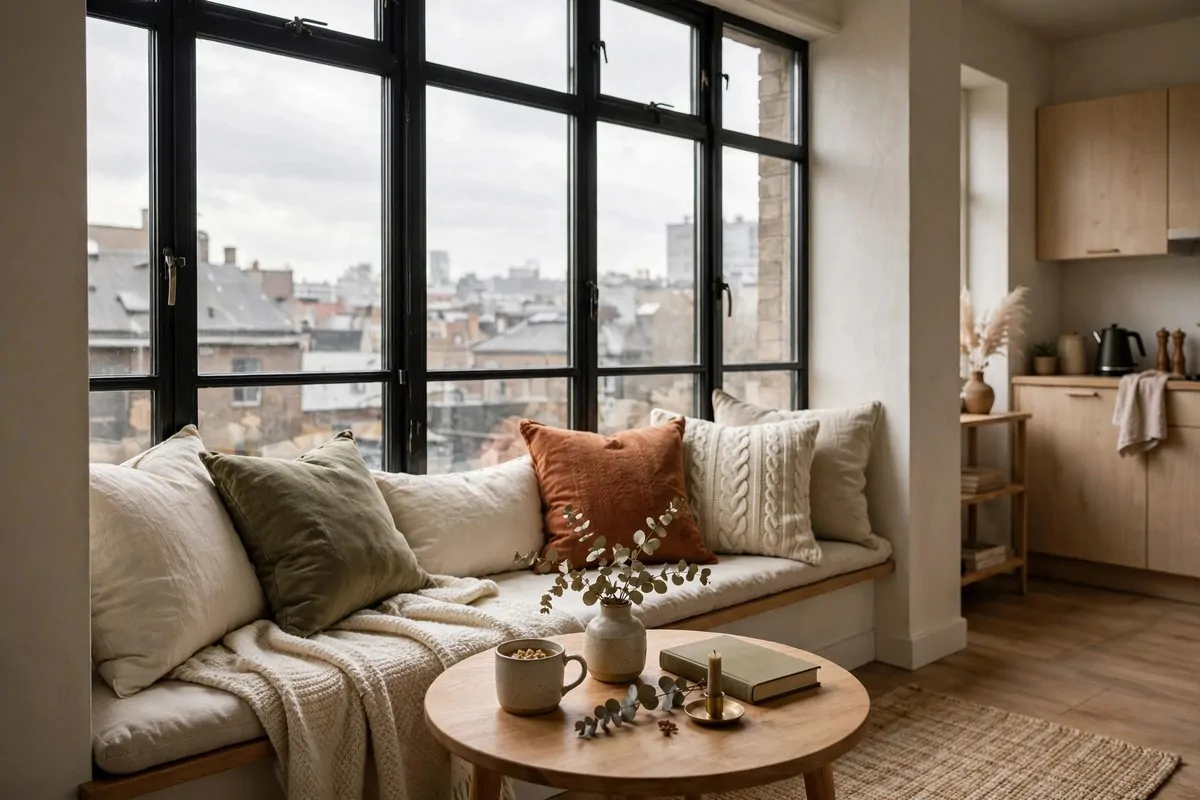
The sunniest spot in your studio wants a job. A window seat becomes a breakfast nook by morning and a desk by afternoon.
Build the seat over low storage. Cushion on top, boxes inside. Sitting space plus hidden storage in one window-wide unit.
A small round table in front completes it. Two chairs or just the bench. Coffee with a view beats a dining table in a dark corner.
Natural light makes work feel easier. Put your laptop here by day. Your body will thank you for the daylight hours.
A thick cushion makes it a real seat. Thin pads punish your back.
Storage inside the bench hides clutter. Lift the lid, toss it in, sit down.
A small wall lamp turns it into a reading nook at night. One spot, three jobs.
A fold-down table extends the nook for guests. Two seats become four.
16. Low Storage Under the Windows
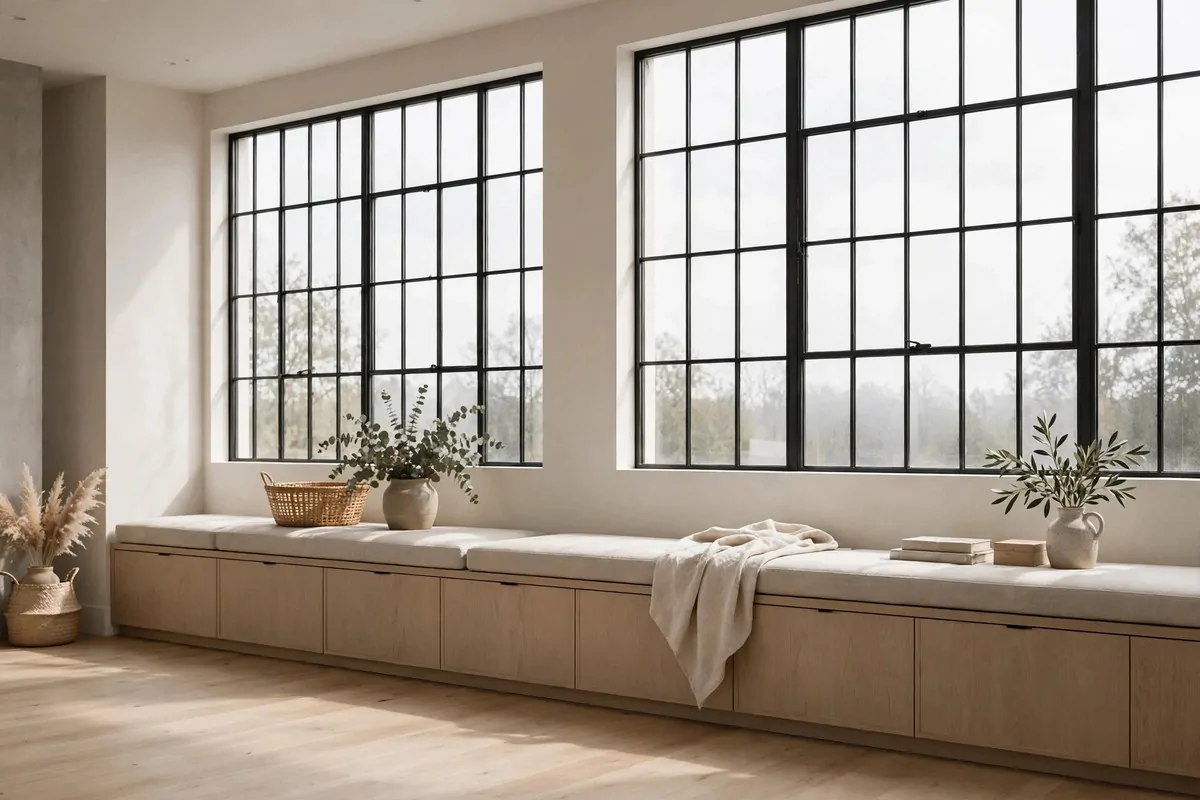
The wall under windows is wasted in most studios. Low storage units there add tons of space without blocking a single ray of light.
Keep them below sill height. Neutral colors so they disappear. The top becomes a display shelf or extra bench seating.
These units work in every zone. Under the living room window for books. Under the bedroom window for clothes. Same trick, everywhere.
It is the kind of storage guests never notice. No tall cabinets looming. Just a clean low line that holds half your stuff.
| Location | Store here | Top use |
|---|---|---|
| Living window | Books, games | Display shelf |
| Bedroom window | Clothes, linens | Bench seat |
| Kitchen window | Pantry extras | Plant ledge |
Soft-close hinges stop slamming. Quiet cabinets keep the studio calm.
Label the inside of each cabinet. You will forget what lives where.
Leave one unit empty for future needs. Space to grow is a gift.
A cushion in a bold color makes the bench pop. One bright moment is enough.
17. Open Kitchen Shelving
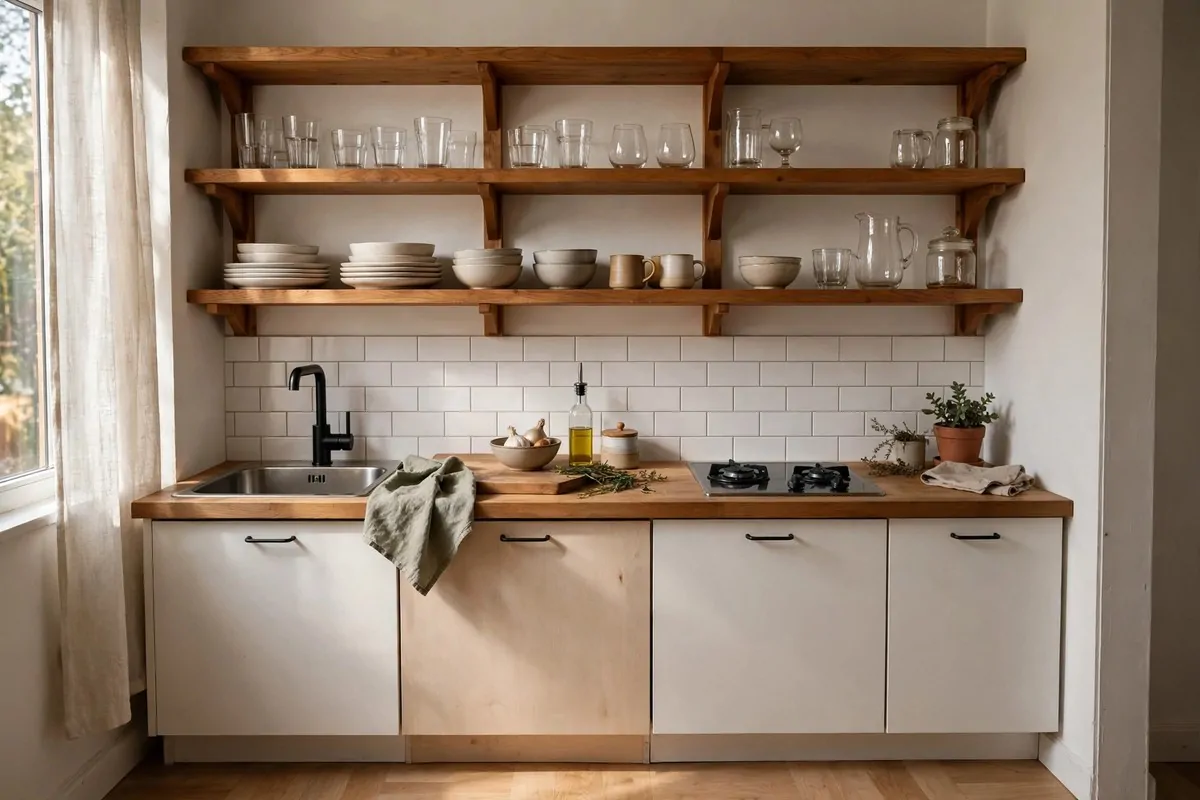
Upper cabinets make small kitchens feel boxed in. Open shelves keep the air flowing and the room feeling wide.
Wood shelves warm up a white kitchen. Dishes and glasses become decor. Your everyday things earn their display.
The catch is tidiness. Open shelves show everything. Keep them curated and clean. If you are messy, this is not your look.
Start with one wall of open shelves. Keep the rest closed. You get the airy feel without committing the whole kitchen.
Edit ruthlessly. If it is not pretty, it does not earn open shelf space.
Stack bowls and plates in small piles. Uniform stacks look calm.
A tiny rail with hooks adds hanging space. Mugs and utensils within reach.
Under-shelf hooks hold mugs. Every inch of shelf works twice.
18. The Double-Sided Divider Unit
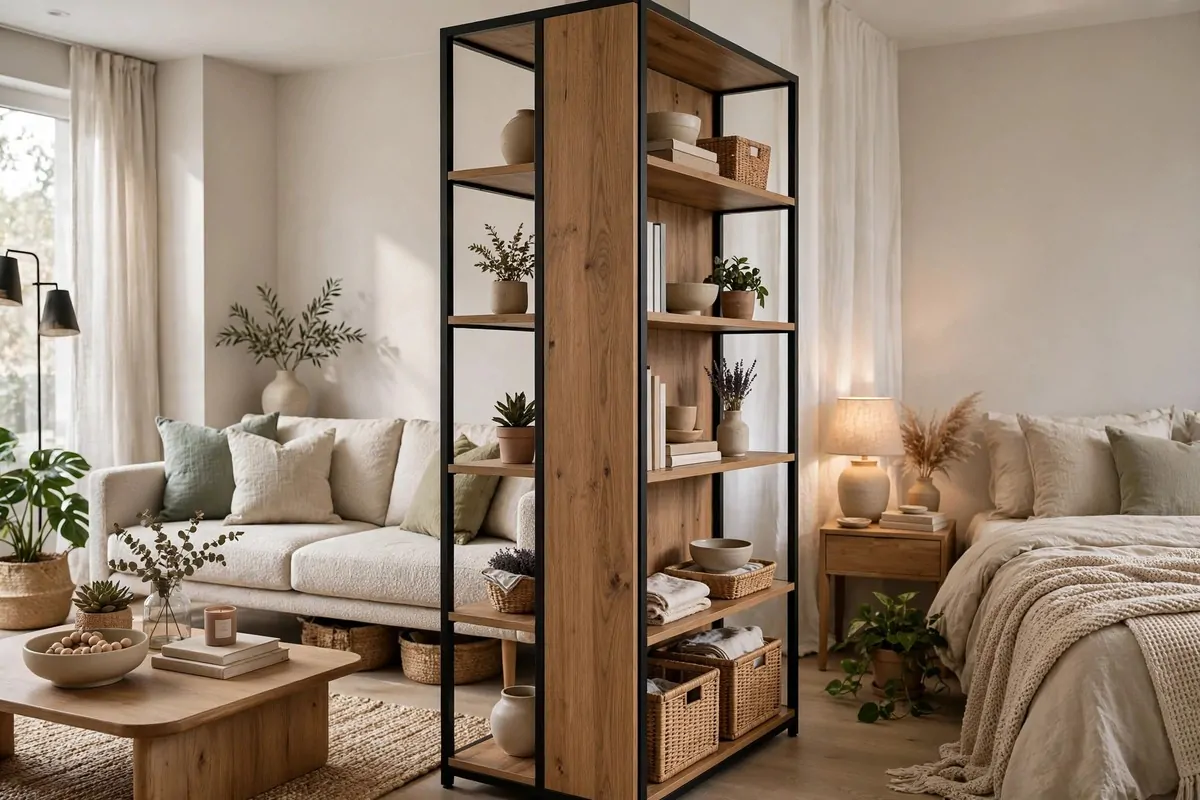
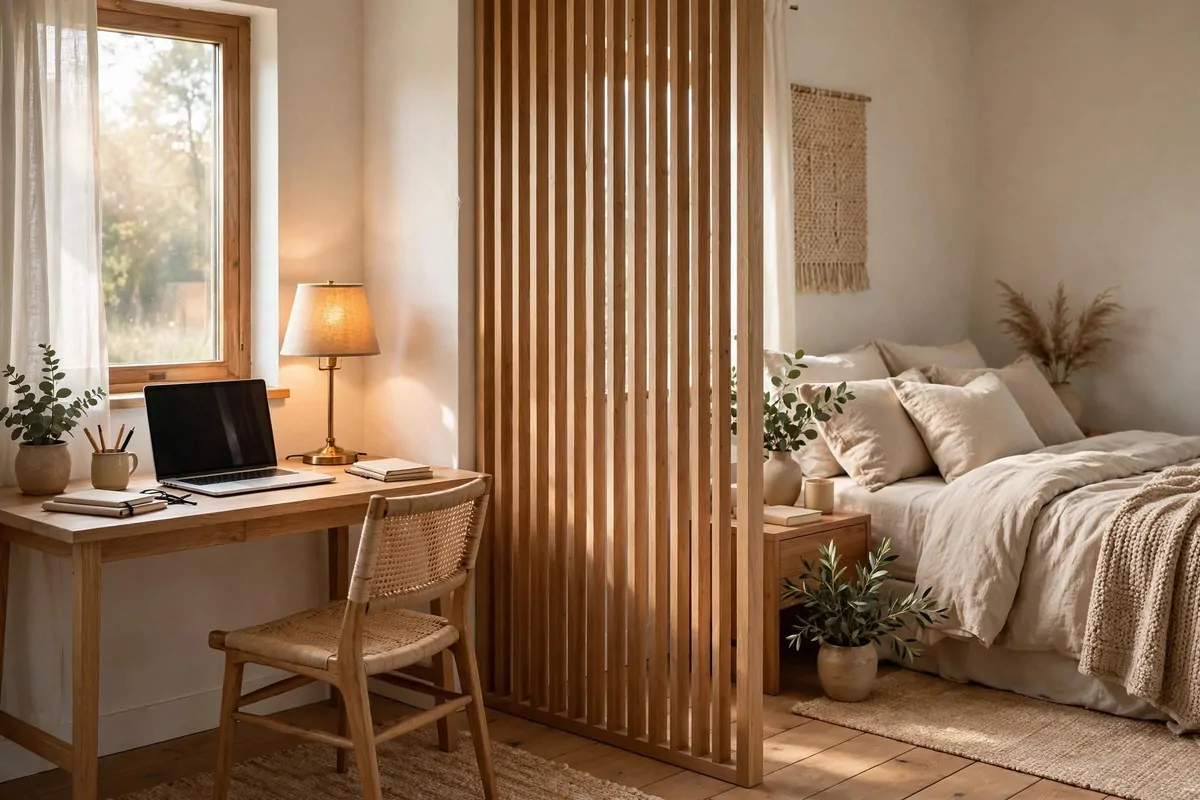
A freestanding storage unit can split your studio in two. TV on the living side. Shelves on the bedroom side. One piece, two jobs.
This beats a wall because it is useful on both faces. Storage plus division plus display. It earns its floor space three times over.
Keep it low enough to see over. About waist to chest height. The room stays connected. You get zones, not walls.
Style both sides. The bedroom side gets books and a plant. The living side gets the TV and speakers. Every angle looks intentional.
Locking casters let you move it for parties. Flexible zoning on wheels.
Style the back side as carefully as the front. Both faces get seen daily.
Cable holes in the back hide TV wires. Clean from every angle.
A record player on top adds soul. Music plus storage plus division.
19. The Soft French Look
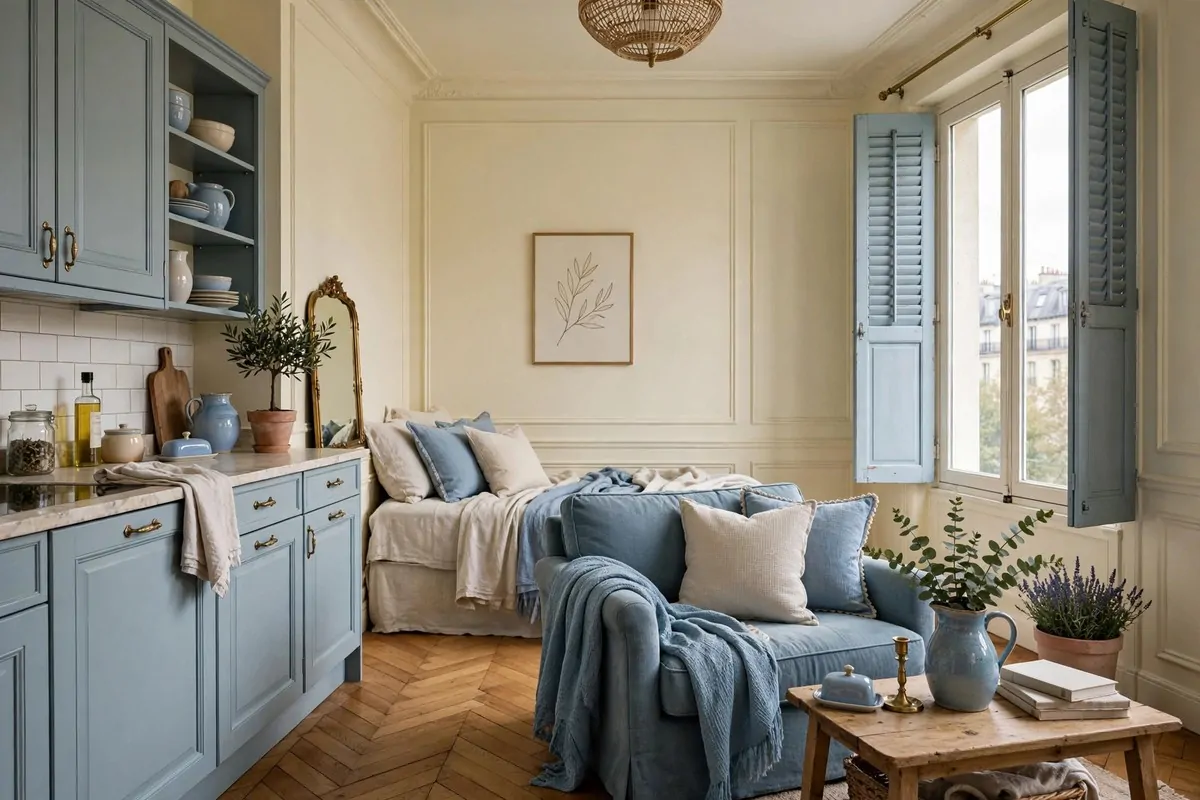
Small does not have to mean modern and stark. A soft French look proves it. Buttermilk walls, duck-egg blue, weathered wood. Gentle and pretty.
Carved mirrors, squishy sofas, washed-out colors. The room feels romantic instead of cramped. Softness distracts from size.
A low dividing unit with storage can separate living from sleeping here too. Rustic texture adds character without visual weight.
This style loves natural light. Sheer curtains, pale floors, soft colors. Everything glows. The studio feels like a Paris morning.
Chalk paint gives furniture the weathered look fast. No sanding needed.
A vintage mirror from the flea market is the signature piece. Hunt for it.
Dried lavender in a jug is the classic scent. Cheap, pretty, and French.
A cafe curtain on the lower window is very French. Charming and practical.
20. The Rustic Single-Wall Kitchen
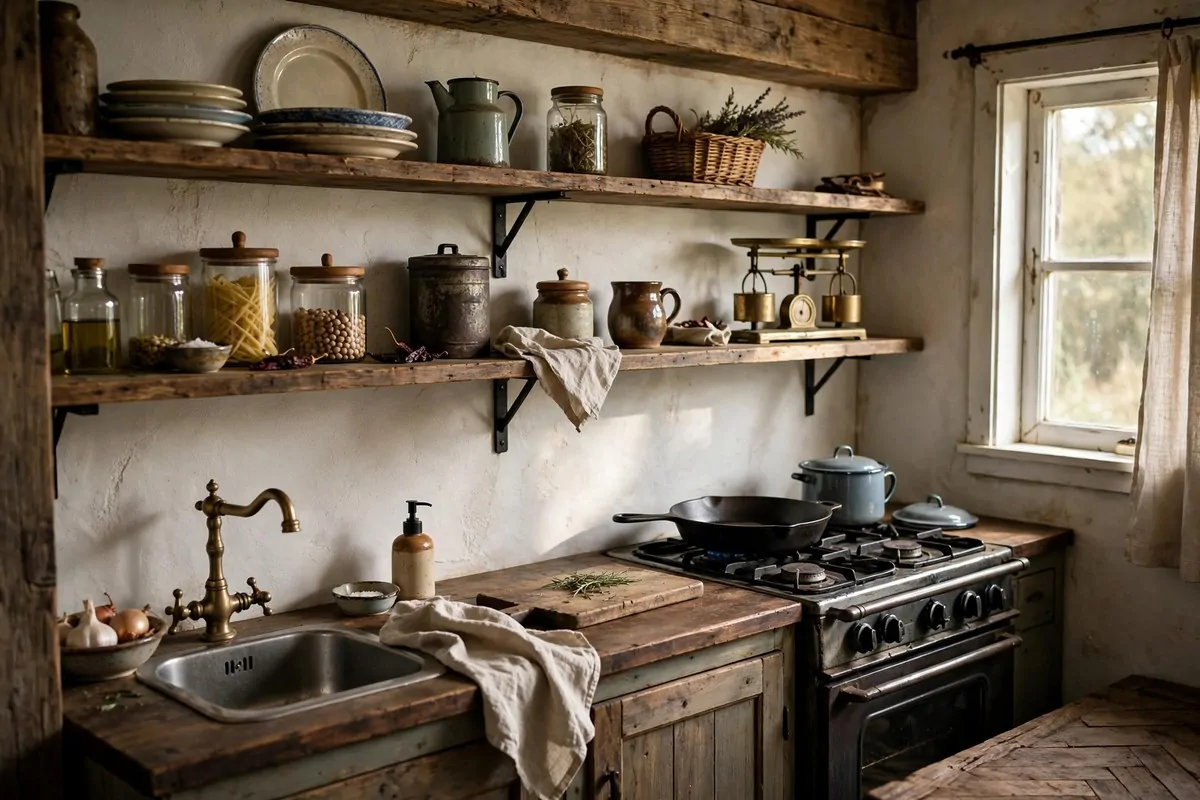
You do not need wall-to-wall cabinets. A single-wall kitchen with open shelving and rustic touches cooks just as well and looks better.
Wood shelves, a vintage-style faucet, simple white tile. The kitchen feels like a cottage corner, not a cramped galley.
Keep it extremely tidy. Open and rustic only works when it is clean. A busy small kitchen with clutter feels chaotic fast.
One wall keeps the rest of the studio free. The kitchen does its job in a line. The living space stays open and calm.
- Single wall: everything in reach
- Open shelves: airy and pretty
- Vintage touches: character for free
A rail with S-hooks holds utensils. Wall storage beats drawer digging.
Butcher block counters warm up white kitchens. Wood plus white is timeless.
One vintage find gives the kitchen soul. A scale, a clock, a sign.
A copper pot rail adds warm shine. Functional decor at its best.
21. Chunky Rug on Dark Floors
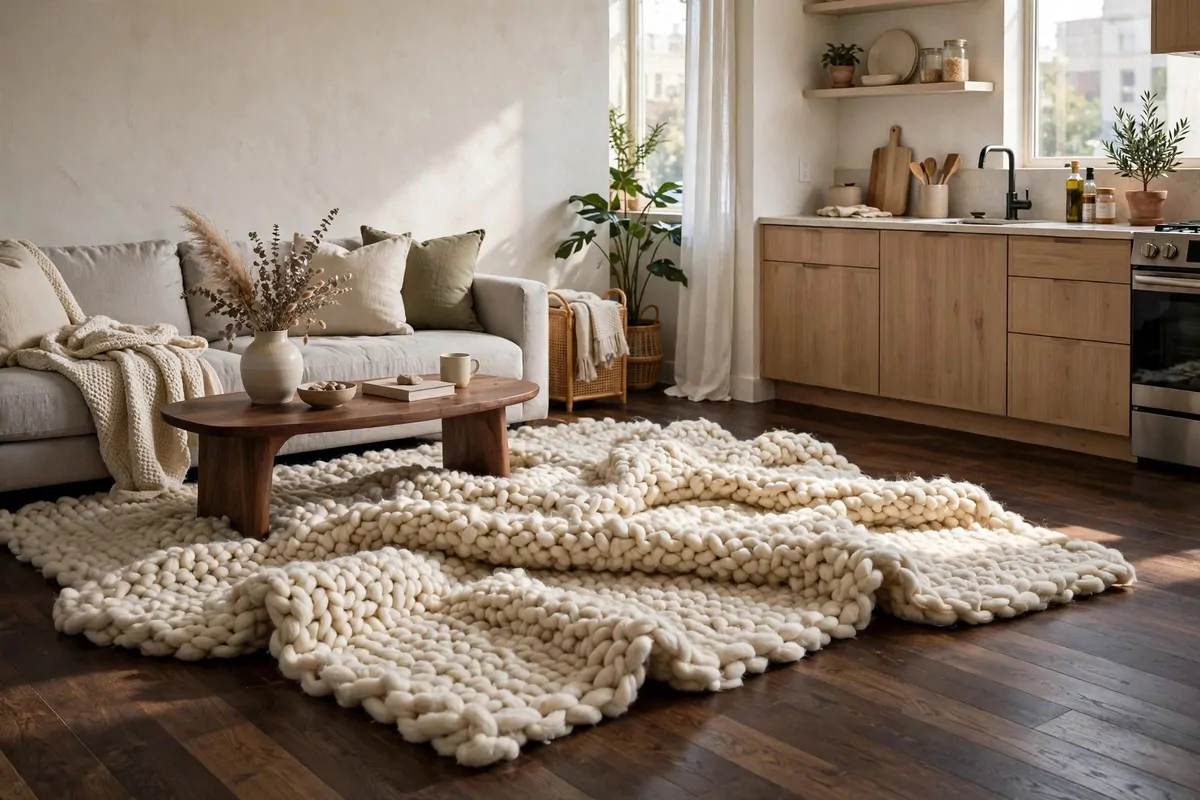
Dark floors plus a chunky light rug is a magic combo. The dark grounds the room. The light rug lifts it. Contrast creates depth.
A thick wool rug adds texture you can feel. Bare feet love it. The room feels cozy without adding a single piece of furniture.
The rug also zones the space. Under the bed or under the sofa, it marks territory. One room, clear areas, zero walls.
Pick a rug big enough to matter. Small rugs chop the floor into bits. A generous rug unifies. Go bigger than your instinct says.
A rug pad is essential on dark floors. It stops slipping and adds softness.
Vacuum weekly. Chunky weaves trap dust fast.
Rotate the rug yearly. Sun fades one side, even indoors.
Layer a smaller rug on top for pattern. Depth without bulk.
22. Layered Textures
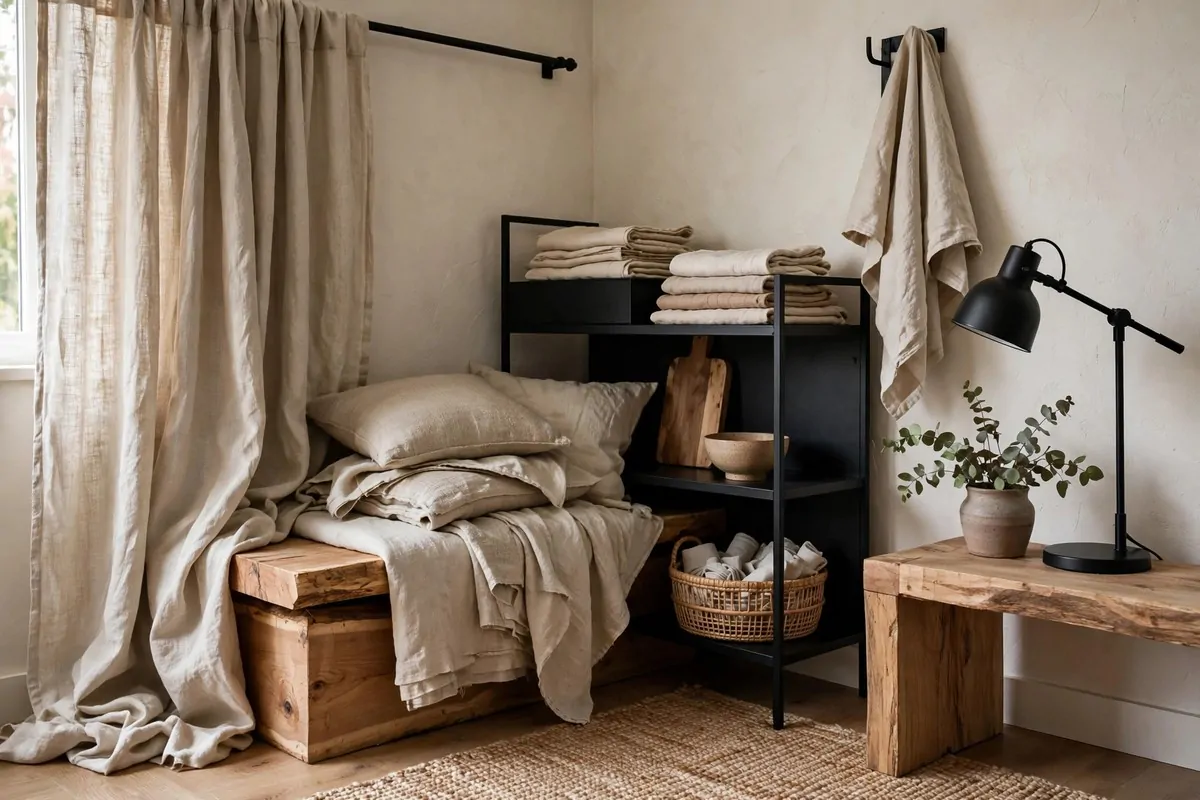
Texture is the secret weapon of small spaces. It adds richness without adding stuff. Linen, raw wood, matte black metal. Feel the room, not just see it.
Mix smooth and rough. A linen sofa throw. A ribbed ceramic vase. A raw-edge wood shelf. Each surface catches light differently.
Texture creates depth. Depth makes rooms feel bigger. It is visual interest that takes up zero square inches.
Keep colors calm when textures are busy. One palette, many surfaces. The room feels collected and rich, never cluttered.
| Texture | Where | Effect |
|---|---|---|
| Linen | Sofa, bedding | Soft, airy |
| Raw wood | Shelves, frames | Warm, natural |
| Matte black | Lamp, handles | Sharp, modern |
Touch everything before buying. Texture is felt, not just seen.
Three textures per zone is plenty. More becomes visual noise.
Natural materials age beautifully. Linen softens, wood deepens, metal gains character.
A sheepskin throw is texture you can feel. Instant coziness, zero space.
23. Track Lighting Plus LED Strips
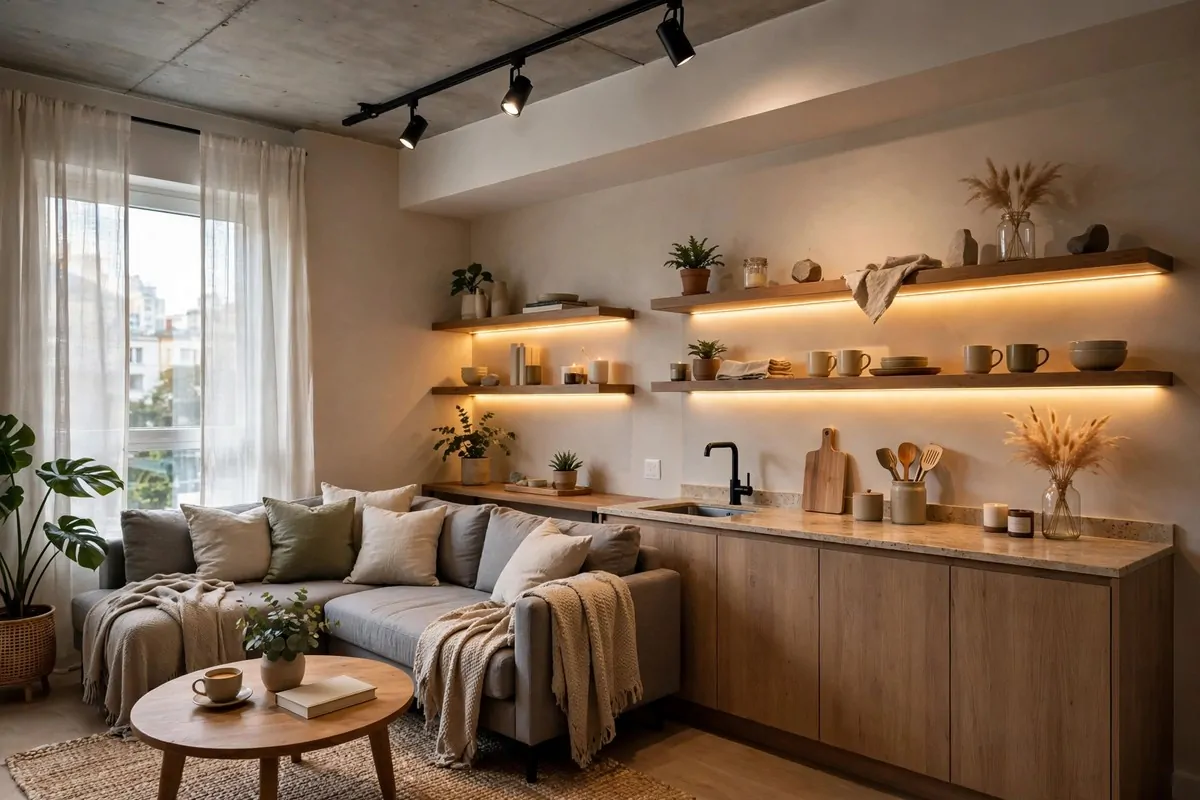
One ceiling light flattens a studio. Track lighting with adjustable heads lets you aim light where each zone needs it.
Point one head at the art. One at the desk. One at the reading chair. The room gets depth and drama. Every zone glows.
Add LED strips under shelves and cabinets. Hidden light lines make furniture float. The kitchen and desk areas feel custom and bright.
Dimmers on everything. Bright for work, soft for evening. Light is the cheapest way to change how big a room feels.
Aim one head at the ceiling. Bounced light softens the whole room.
Smart bulbs in the track change mood by voice. Tech that actually helps.
Keep spare bulbs handy. Track heads use specific sizes.
A floor lamp with three heads adds flexible light. Aim each head at a zone.
24. The Fold-Down Wall Desk
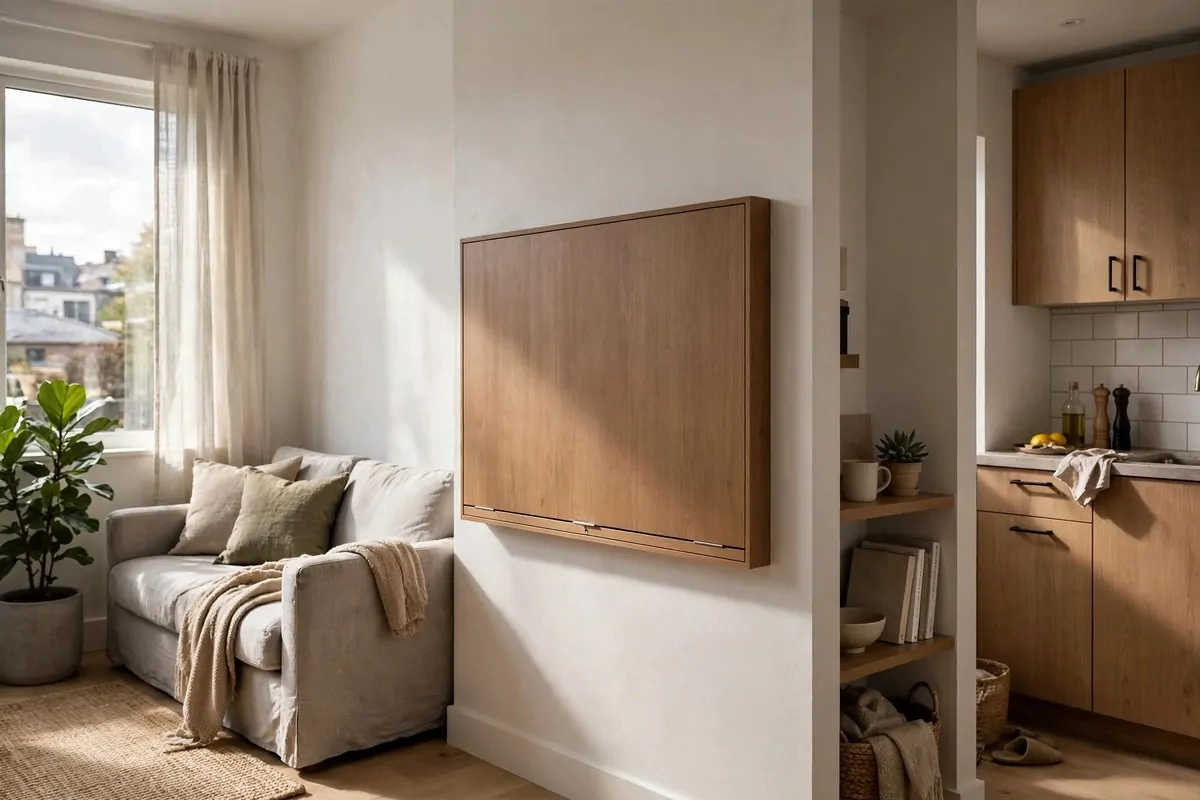
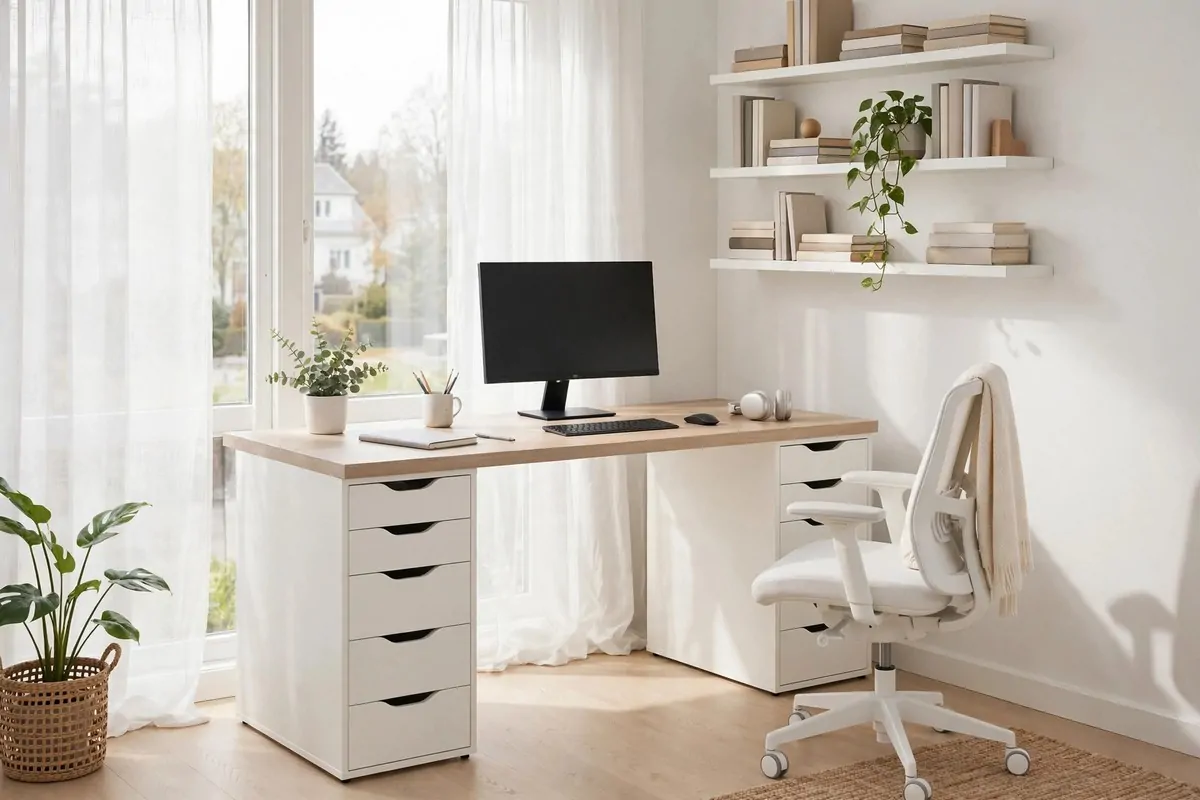
A desk you use four hours a day should not eat floor space all day. A fold-down wall desk vanishes when work ends.
Open it for laptop time. Close it flat when done. The wall looks like a slim cabinet. The room gets its floor back.
Mount it at the right height for your chair. Add a small shelf above for supplies. Everything within reach, nothing on the floor.
This is perfect for studio workers. The office appears and disappears on demand. Work stays in its place, literally.
A wall cleat holds it rock solid. Do not trust drywall anchors alone.
Clear it before folding. The discipline keeps the room calm.
A small pin board above holds notes. Vertical organization for a vertical desk.
A magnetic strip holds small metal tools. Knives and keys, all off the counter.
25. Ceiling Curtains as Walls
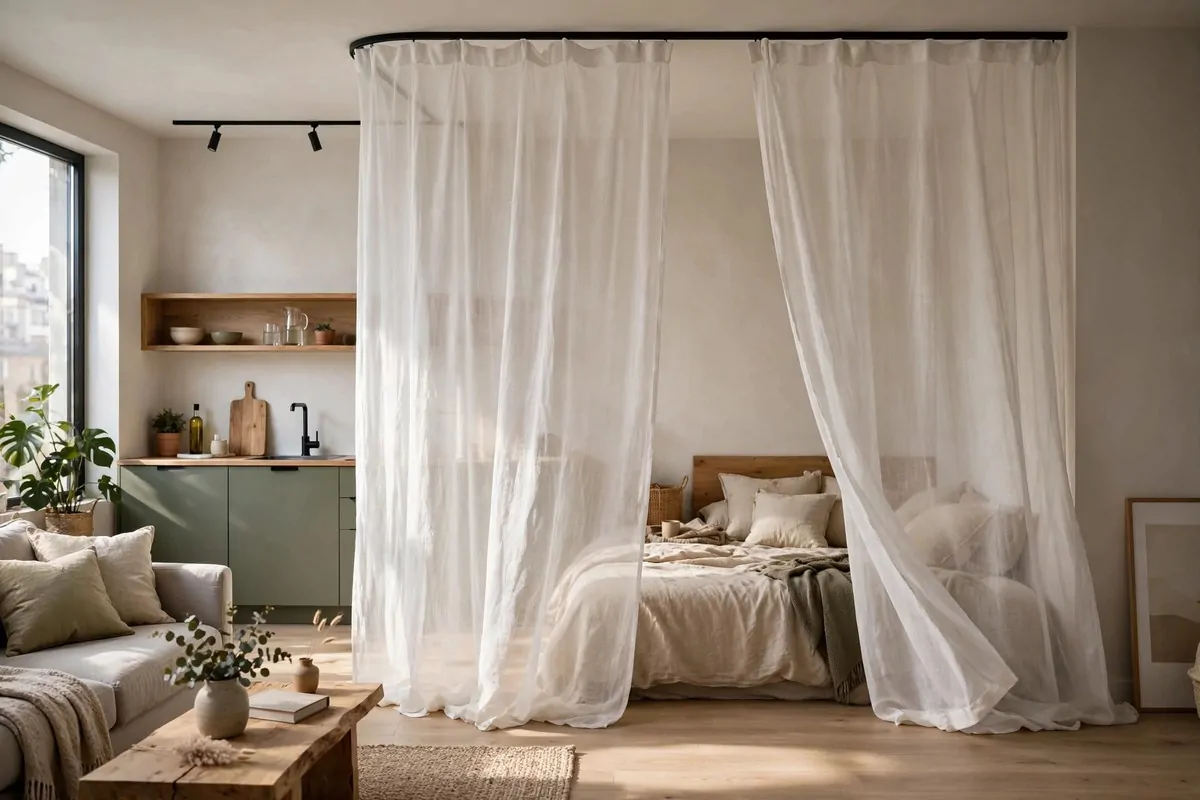
Ceiling-mounted curtains divide space without building anything. Pull closed for privacy. Pull open for light and air.
Sheer or linen curtains keep it soft. They filter light instead of blocking it. The sleeping zone feels separate but never dark.
Mount the track on the ceiling around the bed area. An L-shape or U-shape creates a real room feeling. Curtains cost little and hang in an hour.
This is renter-friendly too. A tension-mounted track needs no drilling. When you move, it all comes down clean.
- Sheer: light flows through
- Linen: soft privacy
- Blackout: full sleep cave
Washable curtains are key. Bed-zone curtains collect dust.
Ceiling tracks need solid anchors. Curtains are heavier than they look.
Tie-backs hold them open by day. Light floods in, privacy waits for night.
Sheer curtains let you see the room beyond. Division without isolation.
26. A Real Entryway
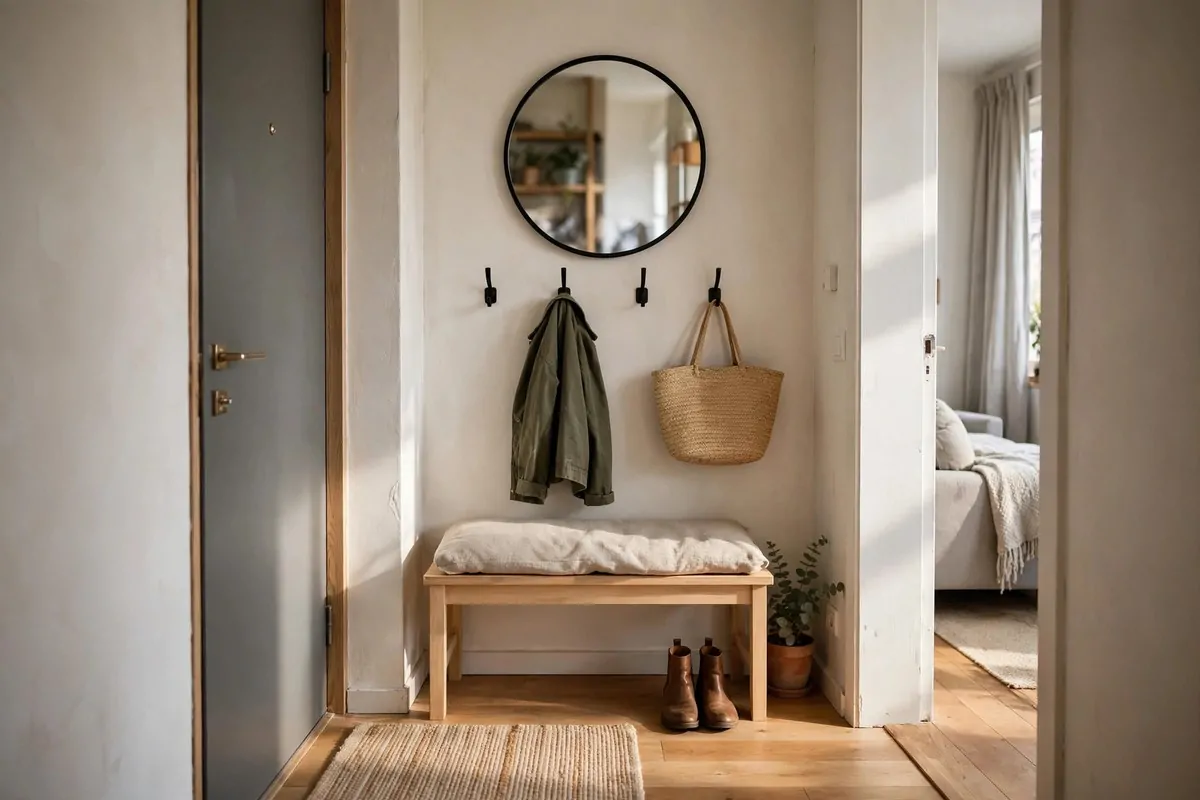
Studios often open straight into the living space. That feels chaotic. Carve out a tiny entryway and the whole flat calms down.
A small bench. Wall hooks for coats. A mirror. A rug that says welcome. Four pieces make a foyer out of thin air.
The entryway catches the mess. Shoes, keys, bags. They stop at the door instead of spreading through the studio.
It also creates an arrival moment. You come home to a defined space. The transition from outside to inside feels intentional.
A tray for keys stops the daily hunt. Everything lands in one spot.
A bench with shoe storage hides the mess. Sit, stash, done.
A mirror by the door is the last check. Keys, bag, confidence.
Wall-mounted mail holders stop pile-ups. Paper has a home from day one.
27. The Hidden Laundry Corner
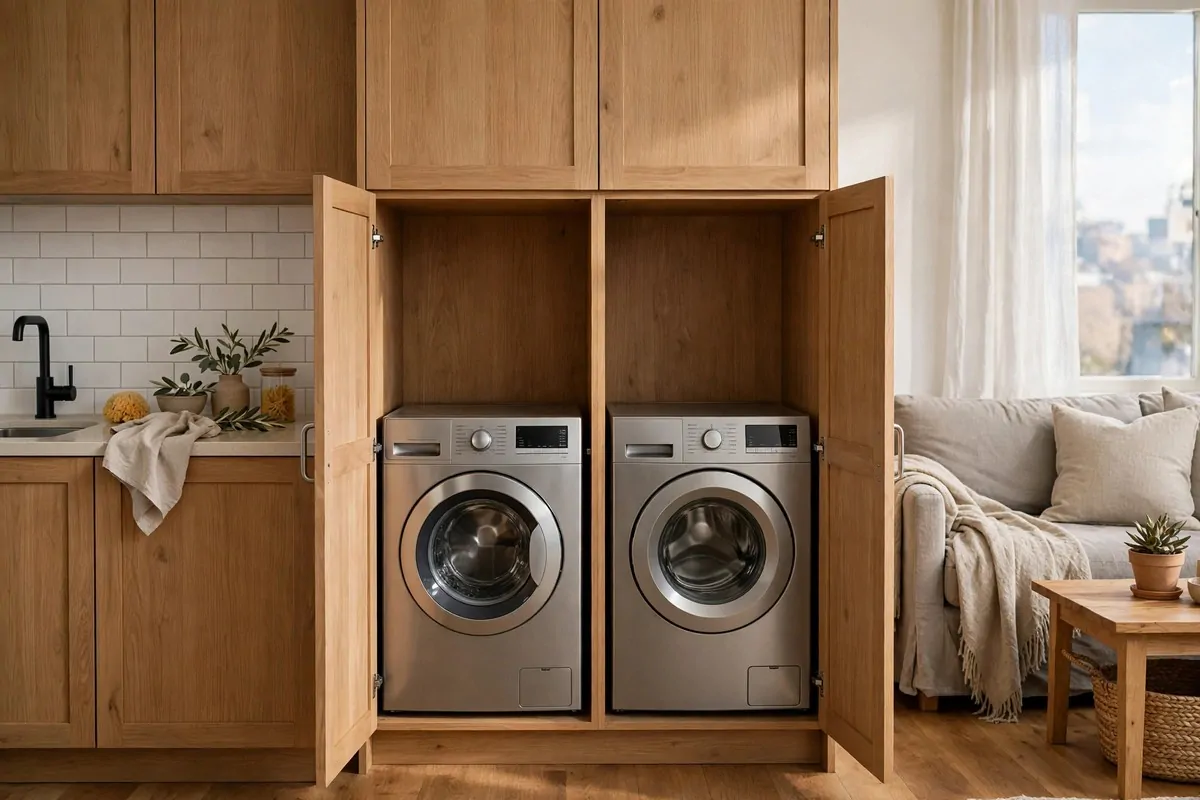
A washer in a studio sounds impossible until you hide it in the kitchen. Behind cabinet doors, it vanishes completely.
Stackable units fit in a closet too. Add bifold doors and the laundry corner looks like a wardrobe. Open to wash, close to forget.
Keep detergent in matching containers nearby. A small shelf above holds supplies. The corner stays tidy and odor-free.
This saves trips to the laundromat forever. In a small studio, that convenience is worth more than the little space it takes.
A vented door prevents musty smells. Airflow matters in closed cabinets.
Keep a small folding drying rack nearby. Delicates need air, not heat.
Run it at night on cheaper electricity. Small savings add up.
A countertop folding rack dries small loads. Laundry day without the laundromat.