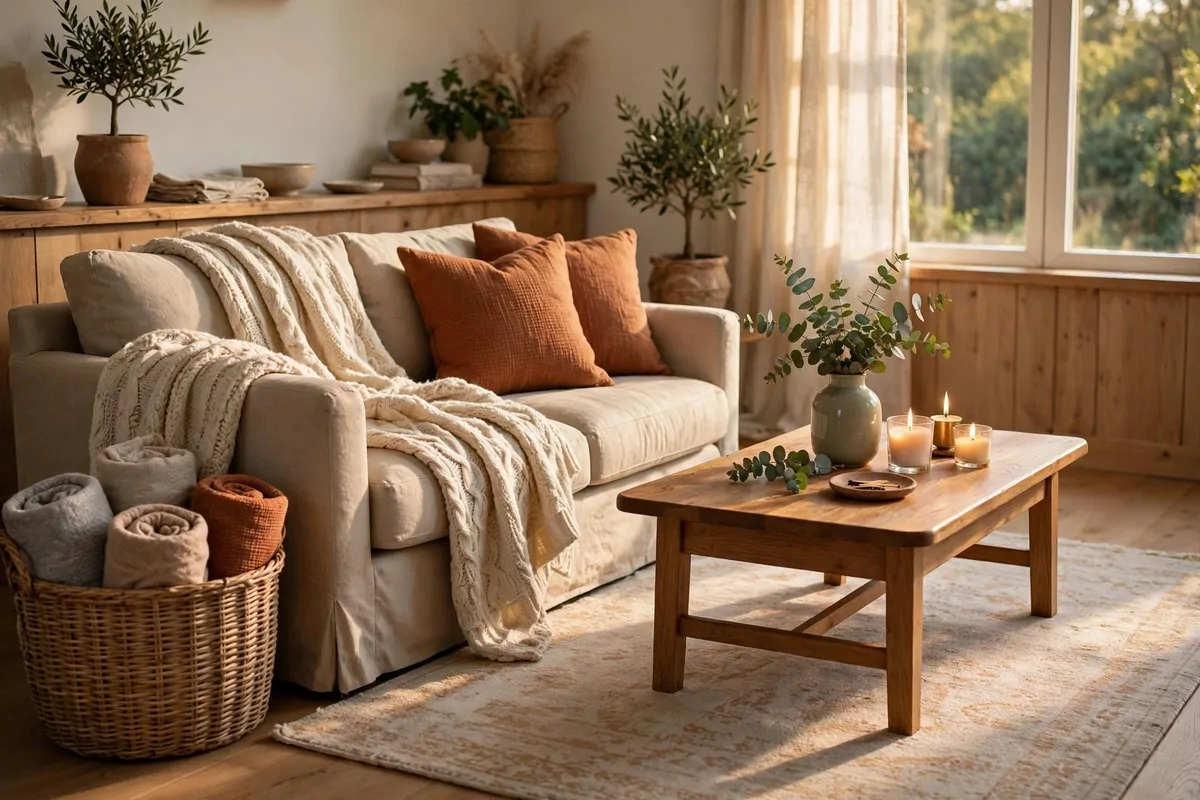
20 Bedroom with Office Space Layouts That Feel Balanced

A bedroom with an office in it works like a seesaw. If the work side is heavier, the room tips toward work, and you never rest. If the bed side is heavier, the room tips toward sleep, and you never focus.
The trick is balance, and balance is a layout, not a mood. You do not need a bigger room. You need both sides of the room to carry the same weight.
My bedroom used to tip. The desk took the best wall, the best light, and the biggest lamp, and the bed got whatever was left. I slept badly and worked badly, and I blamed the room. Then I moved things around until neither side won. That was the day the room started working.
That is what these 20 bedroom with office space layouts are about. Each one is a way to give the bed and the desk the same amount of room, light, and care. Pick the ones that fit your room, and start with the floor, because the floor is where balance begins.
Split the Floor in Half
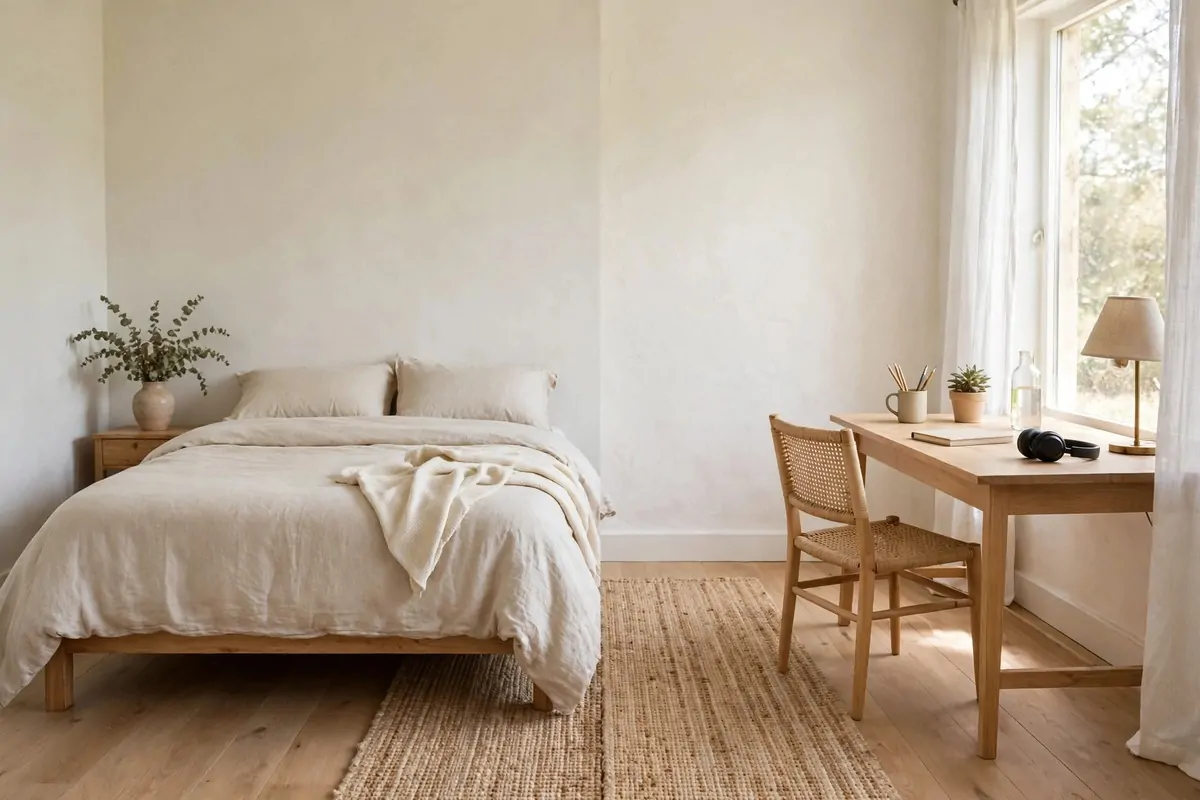
Half the floor for sleep. Half the floor for work. That is the whole idea, and it is the simplest layout on this list.
I drew the line with a tape measure first. My room is twelve feet wide, so each side got six feet. The bed went on the left half. The desk went on the right half. Nothing crossed the line except me.
Stand in the middle of your room and look at both sides. Does one side look fuller than the other? If the desk side is packed and the bed side is bare, the room will tip. Move one thing across the line and look again.
Measure before you move anything. A tape on the floor saves you from moving the bed twice. Write the numbers on a scrap of paper and keep it in your pocket while you work.
Keep the walkway down the middle clear. That middle strip is the road between the two halves. If bags and boxes live there, the two halves cannot talk to each other.
A rug can mark the split for you. One rug edge runs down the middle, and each side gets its own half of the floor. You do not need a wall. A rug edge does the job.
If the room is wider than it is long, split it the other way. The split follows the long side of the room, not the short side. A split along the long side gives both halves room to breathe.
Try this one first if your room feels lopsided and you cannot say why. Split the floor in half, and the reason will show itself in five minutes.
Bed on One Wall, Desk on the Other
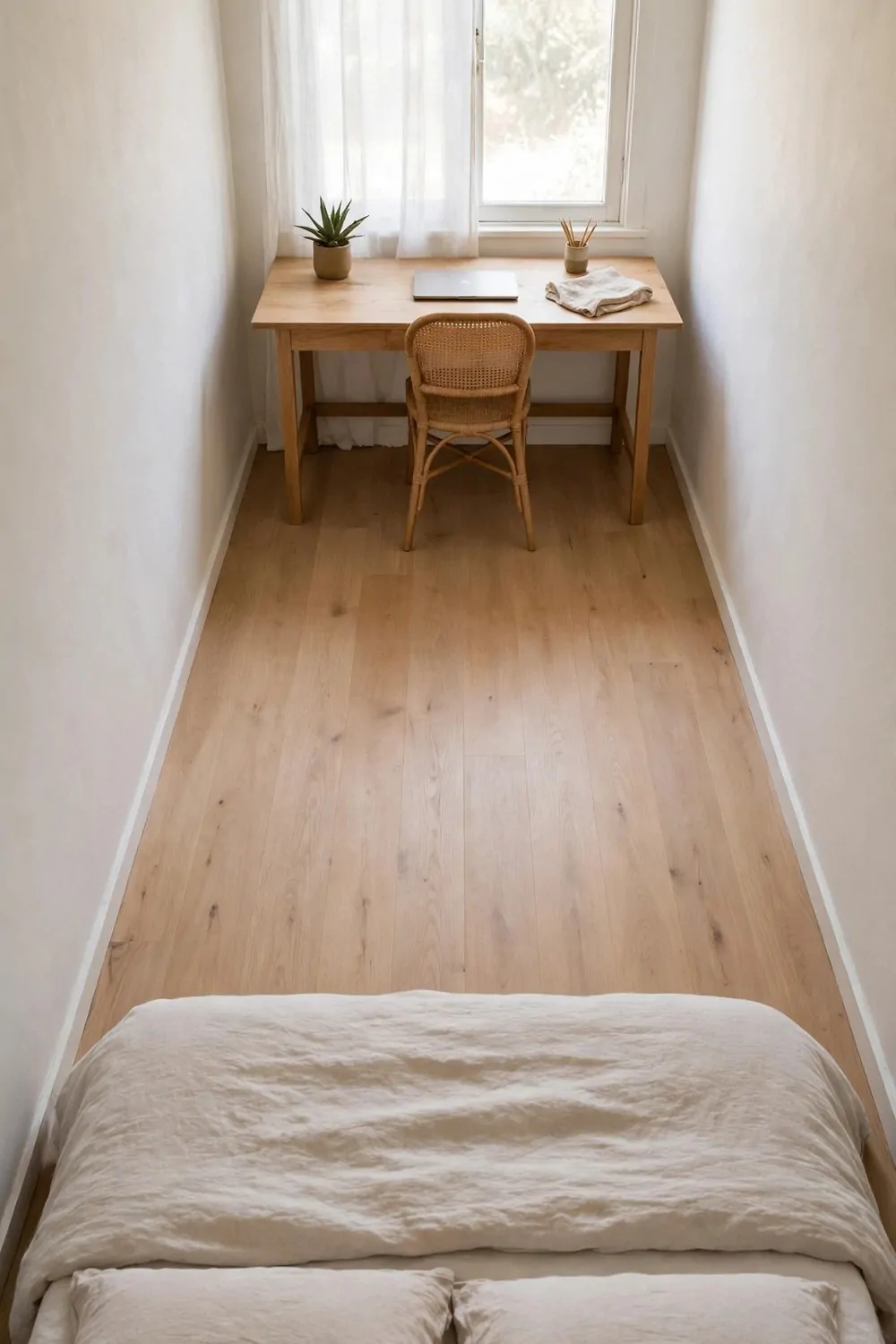
Bed on one wall. Desk on the other wall. The two biggest pieces face each other across the room, and neither one wins.
My bed sits against the left wall. My desk sits against the right wall. When I sit at my desk, I look at the bed. When I lie in bed, I look at the desk. Both sides get seen, and both sides feel like they belong.
Pick the two longest walls for the two big pieces. A bed needs a long wall. A desk needs a long wall too. Short walls are for shelves and small things, not for the big pieces.
Leave the same amount of space beside each piece. If the bed has two feet of air on its left, the desk should have two feet of air on its right. Matching gaps make matching sides.
Keep the floor between them open. That open floor is the shared ground. It is where you walk, where you stretch, where the room breathes. Fill it and the balance is gone.
A lamp on each side helps too. One by the bed, one on the desk, both the same size. When the lamps match, the walls match, and your eyes stop picking a favourite side.
Put a small rug on each side of the room. Two small rugs, one by the bed and one under the desk chair. When both sides have a rug, neither side looks bare.
Try this one if your bed and your desk share one wall right now. Split them up, one on each wall, and the room will feel twice as fair.
Two Zones, One Rug in the Middle
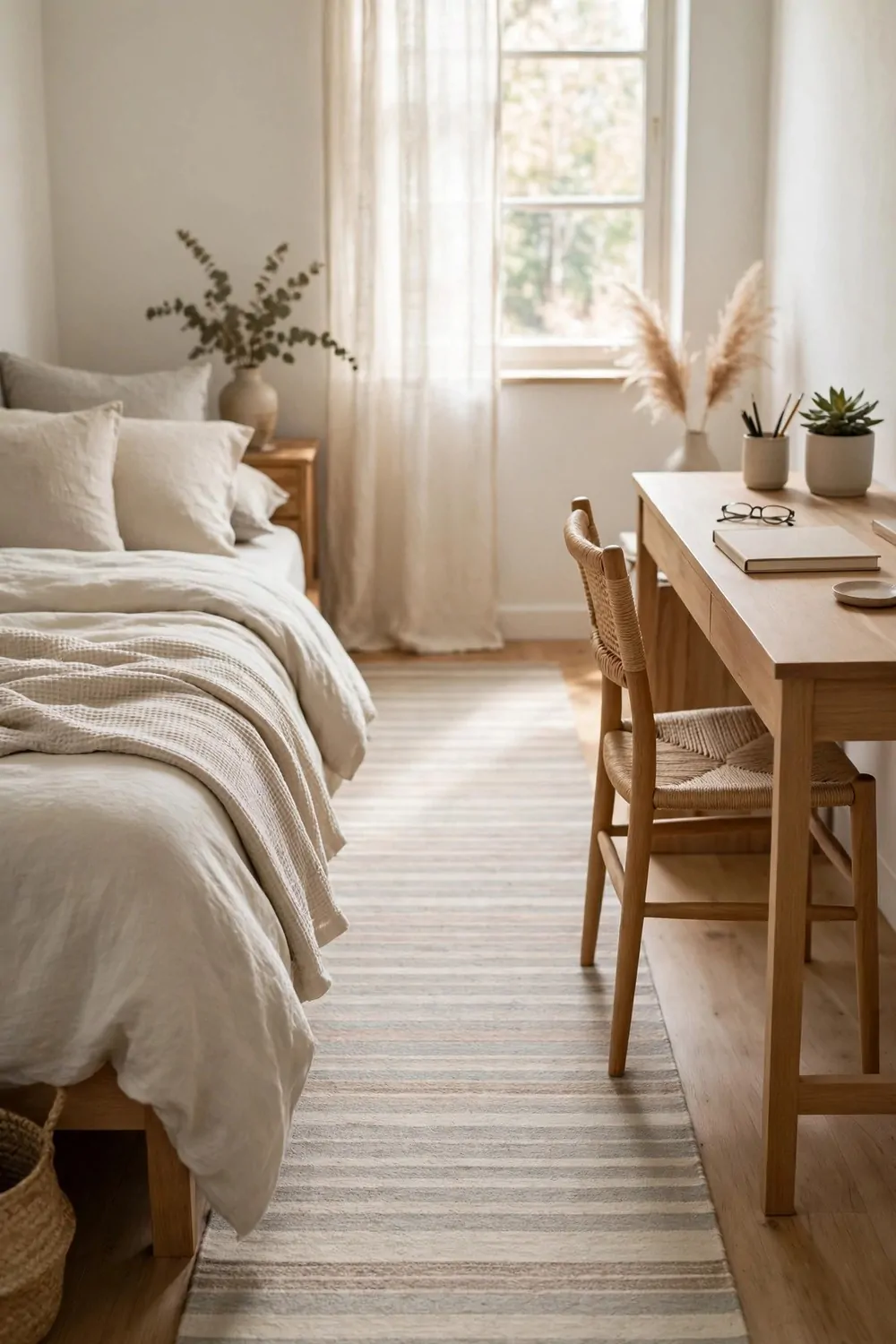
One rug can hold two zones together. It runs down the middle of the room, and one end sits under the bed while the other end sits under the desk chair.
My rug is long and pale, and it touches both sides. In the morning my feet land on it when I get out of bed. At nine my chair wheels roll onto it when I sit down to work. The same rug serves both jobs, and that is the point.
Pick a rug long enough to reach both pieces. A short rug only helps one side, and that side will feel richer than the other. Measure from the bed to the desk and add a foot on each end.
Keep the rug plain. A cream rug, a soft grey rug, or a pale green rug all sit well in a bedroom office. A loud pattern pulls your eyes to the floor, and a balanced room needs your eyes up, looking at both sides.
Choose a low pile. A thick fluffy rug grabs the chair legs and makes the chair stick when you try to move it. A low rug lets the chair glide from the bed side to the desk side without a fight.
Shake the rug outside once a month on a dry day. A rug that gets fresh air stays soft and smells clean. A rug that never leaves the floor slowly turns grey, and a grey rug makes both zones look tired.
Vacuum the rug once a week, both ends the same day. A rug that is clean on the bed end and dusty on the desk end makes the room look tipped. Clean it all at once, and both zones stay fresh.
Try this one if your bed and your desk feel like two separate rooms. One long rug, and they become two halves of one room.
Equal Weight on Both Sides
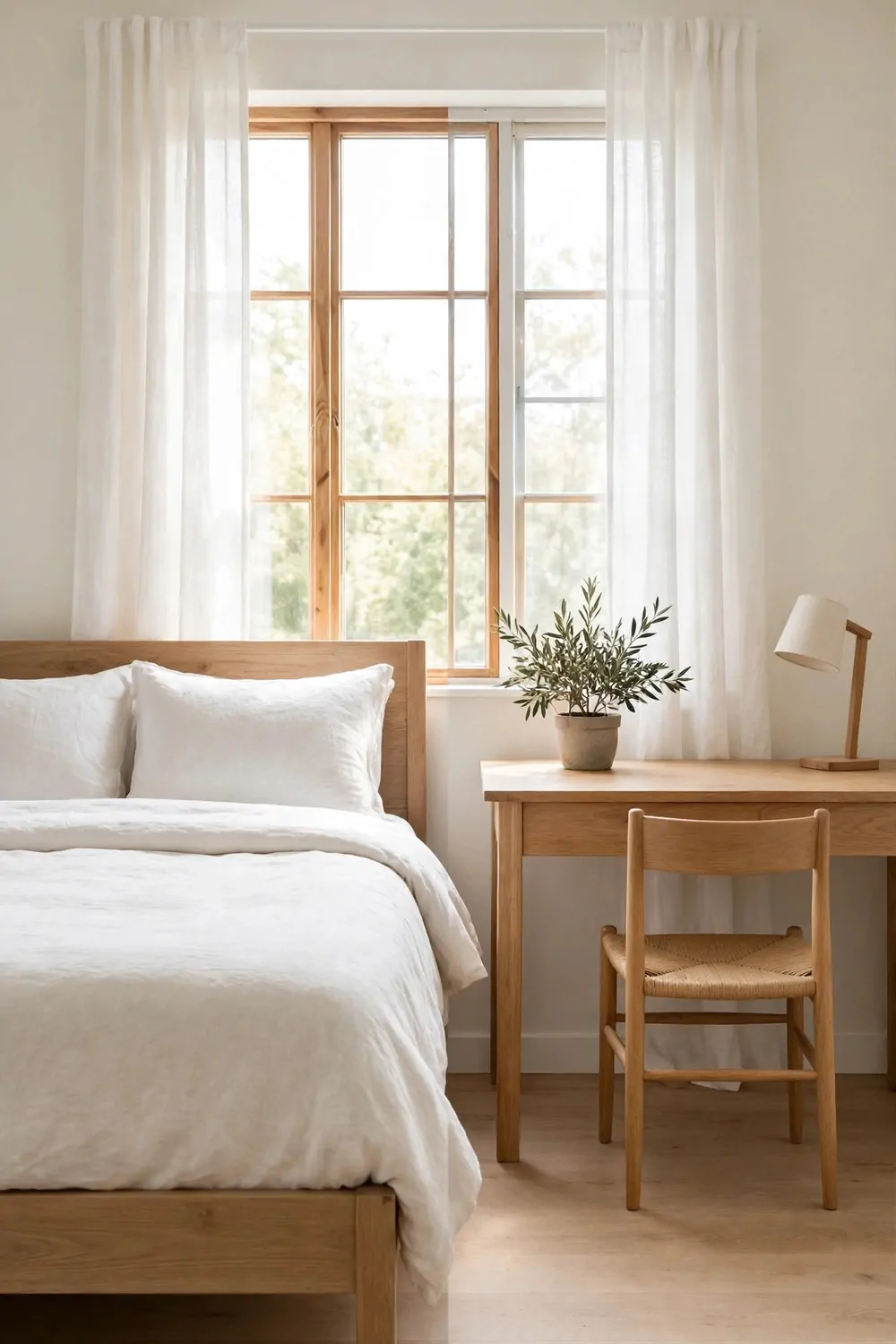
Equal weight is not about kilos. It is about how heavy each side looks when you stand in the doorway.
My desk side used to look heavier. Big desk, big chair, big shelf, all on one side. The bed side had a small bed and nothing else. The room tipped toward work, and I could feel it every morning.
Look at your room from the door. Which side looks fuller? If one side is crowded and the other side is empty, move one piece across. A shelf, a plant, a small table. One piece can fix the whole picture.
Match the biggest piece on each side. If the desk is big, the bed should look big too, with a proper headboard and a folded throw. If the bed is small, keep the desk small as well.
Keep tall things on both sides. A tall shelf on the desk side and a tall headboard on the bed side. Two tall things balance each other, like two ends of a seesaw.
Weigh the room with your eyes, not with a scale. Stand in the doorway and squint a little. The side that still jumps out at you is the heavy side.
Take one heavy thing off the heavy side and put something light in its place. A big dark shelf can move to the wall, and a small pale plant can take its spot.
Try this one if your room feels heavy on one side and light on the other. Move one thing, step back, and look again. Balance is something you can see.
Equal Light for Both Sides
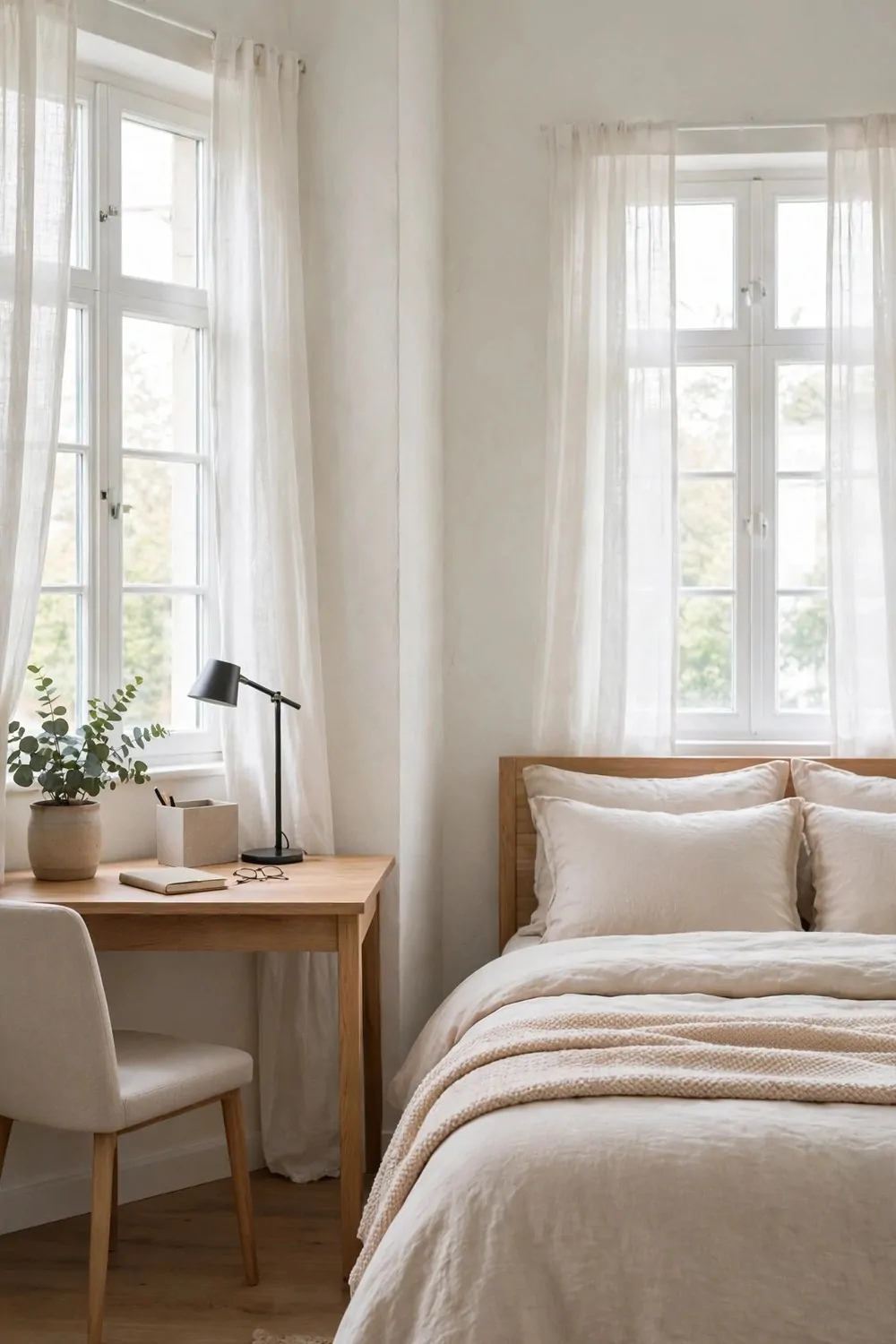
Both sides need light. Not one side bright and the other side dark. Equal light is what makes a shared room feel fair.
My desk sits near the window, and my bed sits near the window too. The window is wide, and the light falls across the whole room. Neither side has to beg for light.
Here is how the light works in my room through the day.
| Time of day | Bed side | Desk side |
|---|---|---|
| Morning | Soft light on the pillows | Bright light on the work top |
| Afternoon | Warm light, curtains half open | Steady light, no glare on the screen |
| Evening | One low lamp, soft and warm | One low lamp, soft and warm |
If your room has one window, put the desk and the bed on either side of it. Both sides get the same window, and the light splits down the middle.
Keep the curtains light. Thin pale curtains let the light in for both sides. Heavy dark curtains steal the light, and a room with stolen light always feels tipped.
If the window is small, use a mirror on the dark side. A small mirror on the wall bounces the window light across the room, and the dark side gets a share of it.
Keep the window clean on both sides of the glass. A dusty window steals light from the whole room, and clean glass gives it back for free.
Try this one if one side of your room is always dark. Move the desk or the bed toward the light until both sides can see the window.
Two Matching Lamps
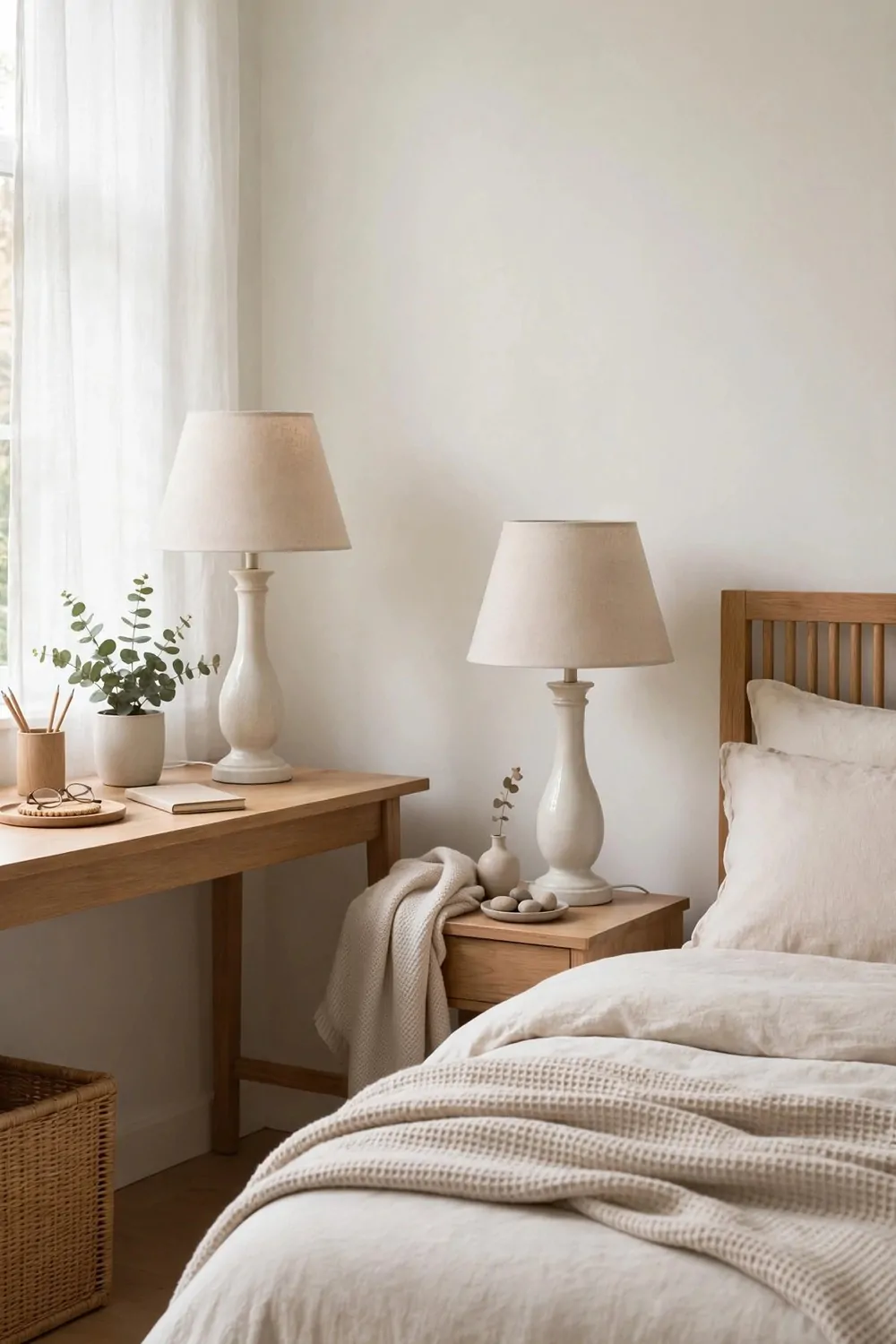
Two lamps that match make the room feel balanced. One on the desk, one on the bedside table, same size, same shape, same warm light.
My two lamps are plain and pale, with the same cloth shade. I switch the desk lamp on in the morning and the bedside lamp on in the evening. The room never has one bright corner and one dark corner.
Pick lamps that look like sisters, not twins. They do not have to be the same lamp from the same shop. Same height, same colour family, same warm bulb. That is enough.
Put the desk lamp on the side away from your writing hand. The light falls on your work and your hand never makes a shadow. A shadow on your work makes your eyes tired by lunch.
Set the bedside lamp close enough that you can switch it off without getting up. You should not have to get up to switch it off. A lamp you can reach from the bed is a lamp that gets used every night.
Use warm bulbs in both lamps. Soft warm light makes pale walls shine and gives wood a deeper colour. Bright white light makes the same room look like a shop, and a shop is not balanced.
Dust both lamp shades on the same day. A dusty shade makes the light look yellow and tired. A clean shade makes the same bulb look brand new.
Try this one if your desk has a good lamp and your bed has none. Give the bed a lamp that matches, and the room will even out the same evening.
One Colour on Each Side
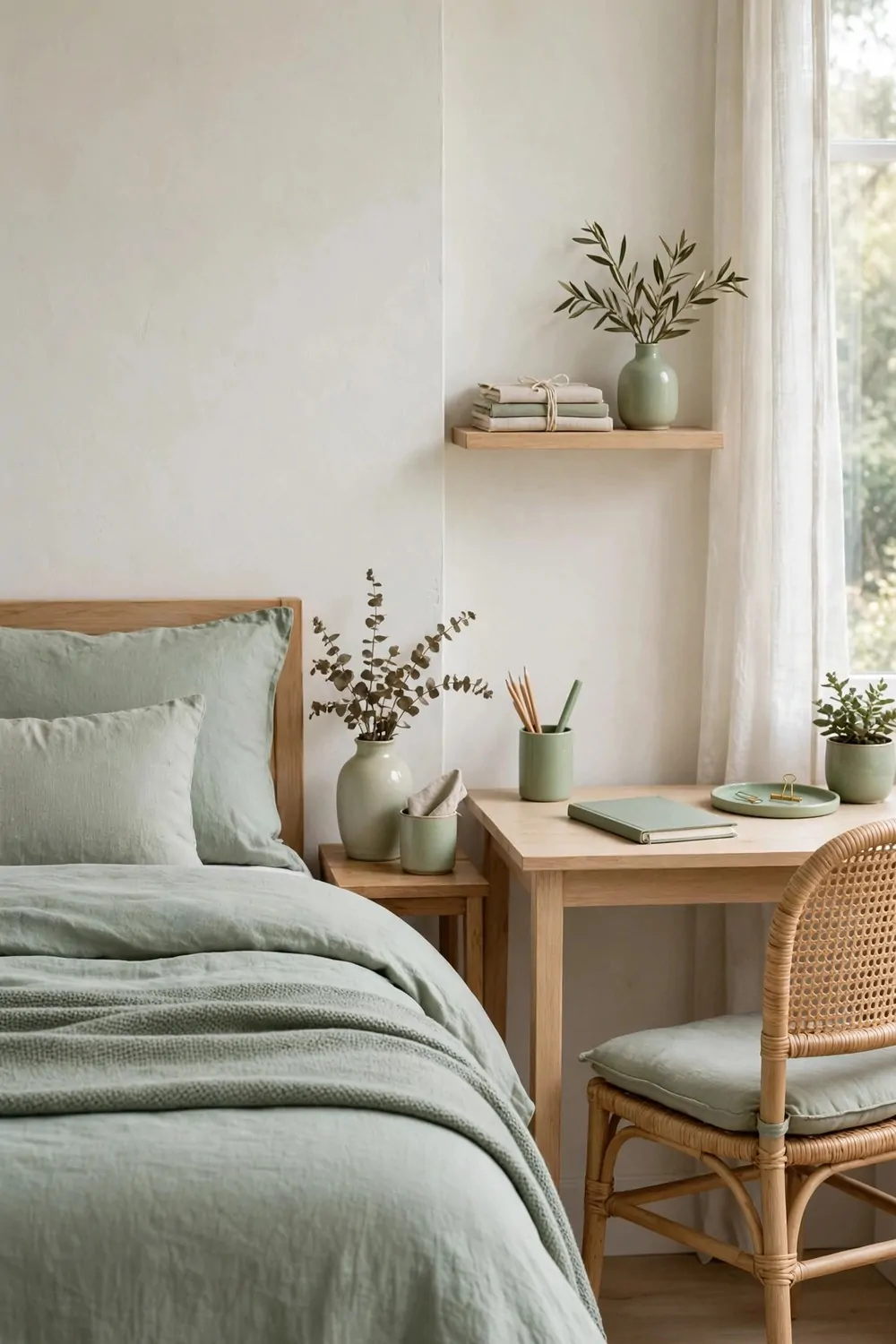
One soft colour on each side ties the room together. The same colour shows up on the bed and on the desk, and your eye reads the two sides as one room.
My colour is a soft dusty blue. It shows up on one cushion on the bed and on the notebook cover on my desk. Two small repeats. Nothing big. But the room feels pulled together.
Pick a colour you like living with. A soft blue, a pale sage, a warm dusty pink, or a gentle grey all work. The colour has to be one you like seeing every morning, because you will see it on both sides.
Use it once on the bed side. A cushion on the chair, a throw draped over the bed end, or a tiny vase on the desk. One repeat is enough to mark the side.
Use it once on the desk side. A pen pot, a tray, a notebook cover, or a plant pot. Small things count. The desk is where your eyes rest most of the day, so the colour has to live there too.
Leave everything else in the room pale and simple. Cream walls, pale wood, white bedding. A soft colour only looks soft when the room around it stays quiet.
Change the colour with the seasons if you like. A soft blue in summer, a warm rust in the colder months. Two small swaps, one on each side, and the room feels new again.
Try this one if your bed side and your desk side look like two different rooms. One colour, twice, and they become one room.
The Line Down the Middle
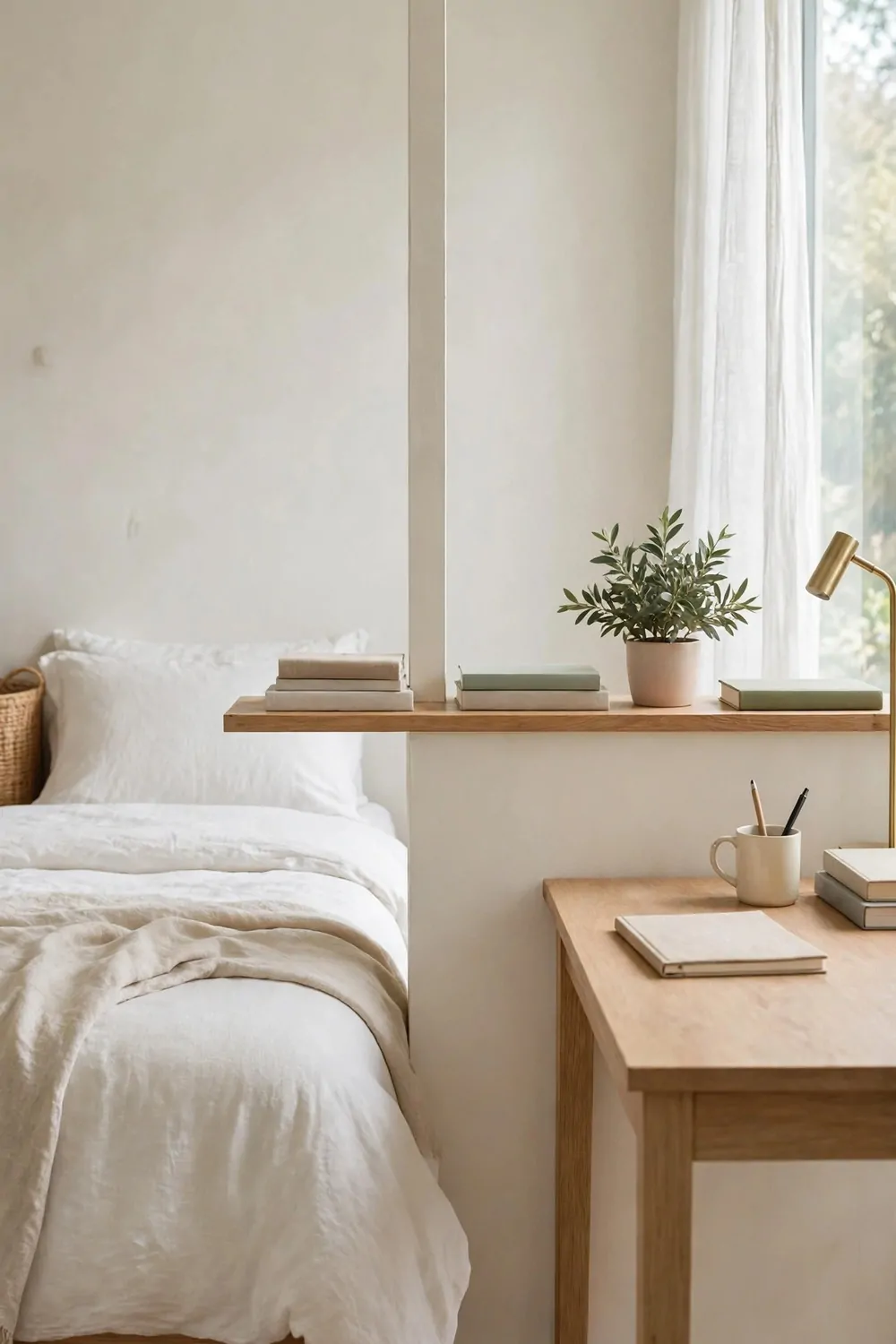
Every balanced room has a line down the middle. Not a wall. Just a line both sides respect. The bed stays on its side. The desk stays on its side.
My line is the edge of the rug. It runs down the middle of the floor, and I can see it every time I walk in. Nothing crosses it except me and the cat.
Here is the rule for the line in my room.
- Bags stay on their own side of the line.
- Papers stay on the desk side of the line.
- Shoes stay by the door, never past the line.
- Nothing else crosses it without a reason.
Mark your line with something you can see. A rug edge. A low shelf. A curtain rail on the ceiling. The mark matters more than what it is made of.
Keep the line soft, not strict. A line that feels like a rule will make you hate it. A line that feels like a habit will hold the room together without a fight.
Tell the people you live with about the line. A line only works if everyone in the house can see it. Point at the rug edge and say, this side is sleep, that side is work.
If the line keeps getting crossed, move it. A line that nobody can keep is the wrong line. Shift the rug a foot to one side and try again.
Try this one if your work stuff keeps creeping onto the bed side. Draw the line, and the creeping stops the same week.
Equal Storage: One Cupboard Each
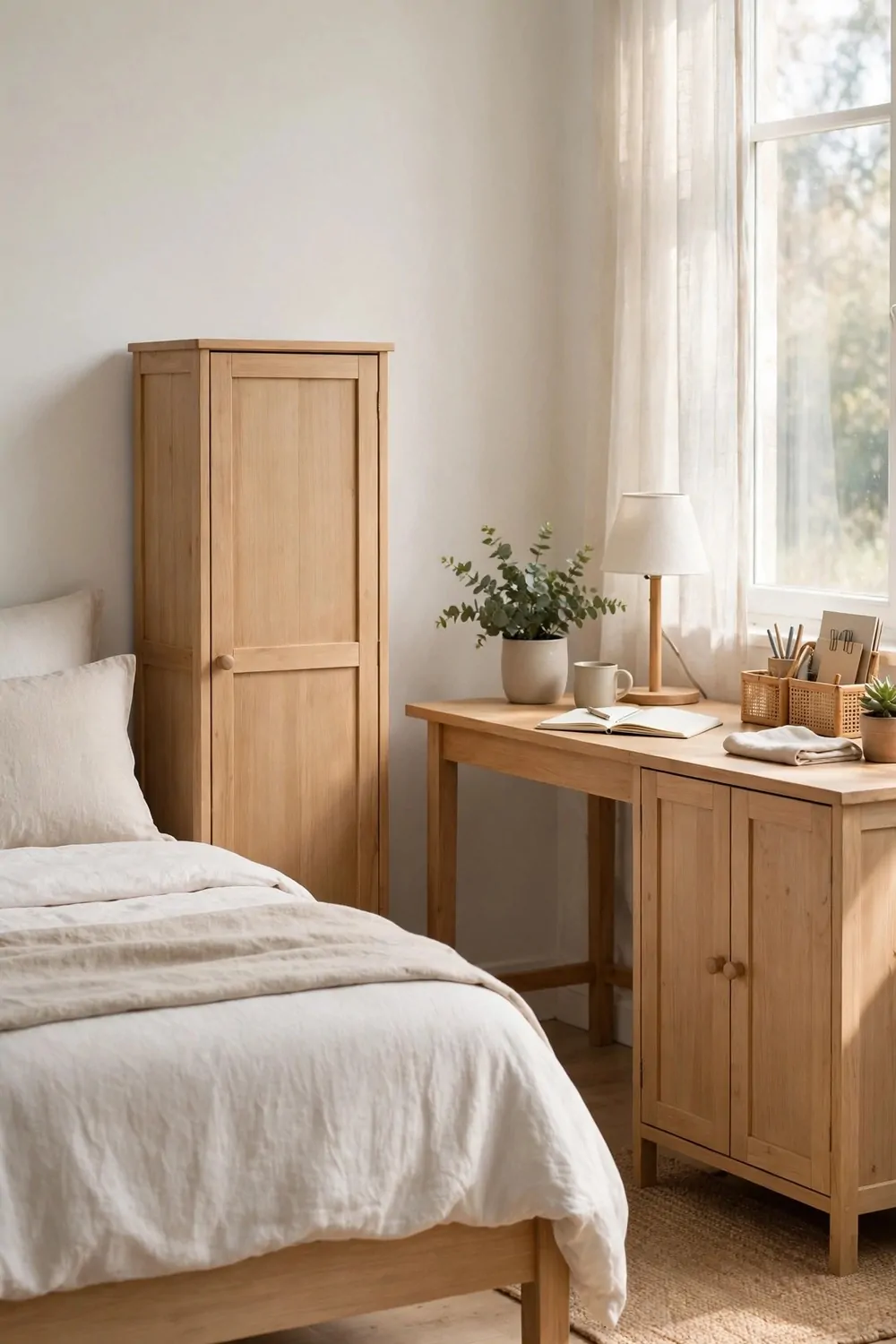
Equal storage means the bed side and the desk side each get a cupboard. Not one big cupboard for work and a drawer for sleep. One each, same size, same job.
My room has two cupboards, one on each wall. The desk cupboard holds papers, folders, and chargers. The bed cupboard holds sheets, towels, and a spare blanket. Both are full, and neither side borrows from the other.
Here is how my two cupboards split the room.
| Shelf | Desk cupboard | Bed cupboard |
|---|---|---|
| Top shelf | Spare paper and folders | Spare pillow in a bag |
| Middle shelf | The day’s papers in a tray | Towels and a folded sheet |
| Bottom shelf | Cables and chargers in a box | A spare blanket, folded flat |
If you have only one cupboard, split it down the middle. One half for work, one half for sleep. A plain divider and two plain boxes keep the halves apart.
Label the shelves with small plain tags if more than one person uses the room. One tag that says work, one tag that says sleep. Tags stop the mix-ups before they start.
Shut both cupboard doors every evening. Two closed doors make the room look calm. One open door makes the whole room look messy, even when only one side is untidy.
Wipe both cupboard doors on the same day. Two clean doors make the room look cared for. One clean door and one dusty door make the room look half finished.
Try this one if your work papers live in the bed cupboard and your sheets live on the desk. Give each side its own cupboard, and the borrowing stops.
Two Chairs That Match
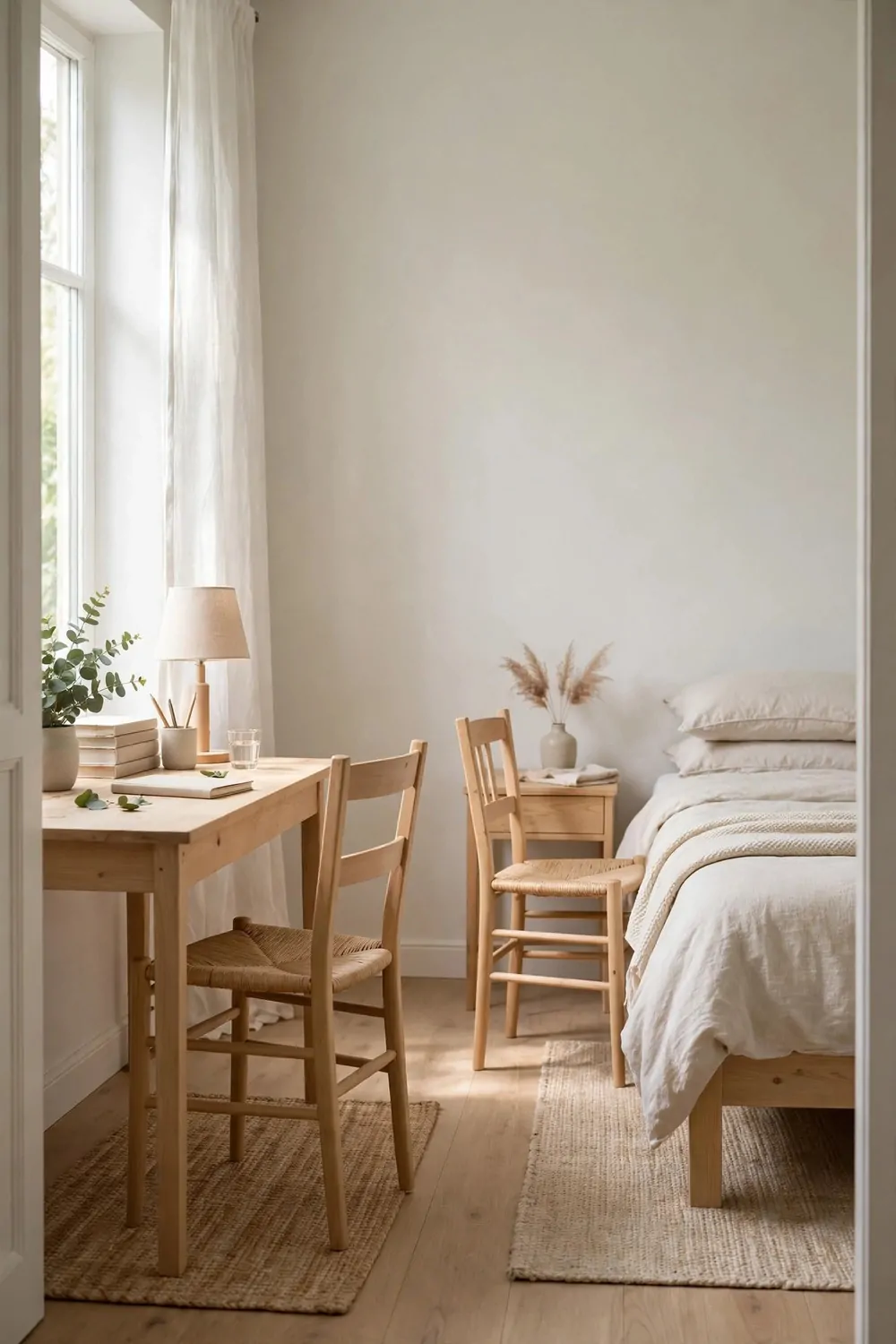
Two chairs that match make the room feel planned. One chair at the desk, one chair by the bed, same wood, same shape, same cushion.
My two chairs are plain wooden chairs with thin pale cushions. The desk chair holds me while I work. The bed chair holds my book and my cup of tea in the evening. Neither chair looks like a spare.
Pick chairs that look like sisters. Same wood family, same height, same simple shape. They do not have to match exactly. Close is enough for the eye.
Keep the desk chair tucked under the desk when the day ends. A chair pushed back under the desk tells the room the workday has ended. A chair left out in the middle of the floor says the work is still waiting.
Keep the bed chair by the bed, not by the desk. When the chairs live apart, the room reads as two places. When they crowd together, the room reads as one messy place.
Put a thin cushion on each chair in the same pale colour. Two matching cushions tie the two chairs together without a word.
Oil the chair joints once a year if either chair starts to creak. A chair that squeaks breaks the quiet every time you move in it. One drop of oil on each joint keeps both chairs silent.
Try this one if your desk chair is good and your bed chair is the old kitchen chair. Match them, and the room will look like someone planned it.
The Desk Faces the Bed
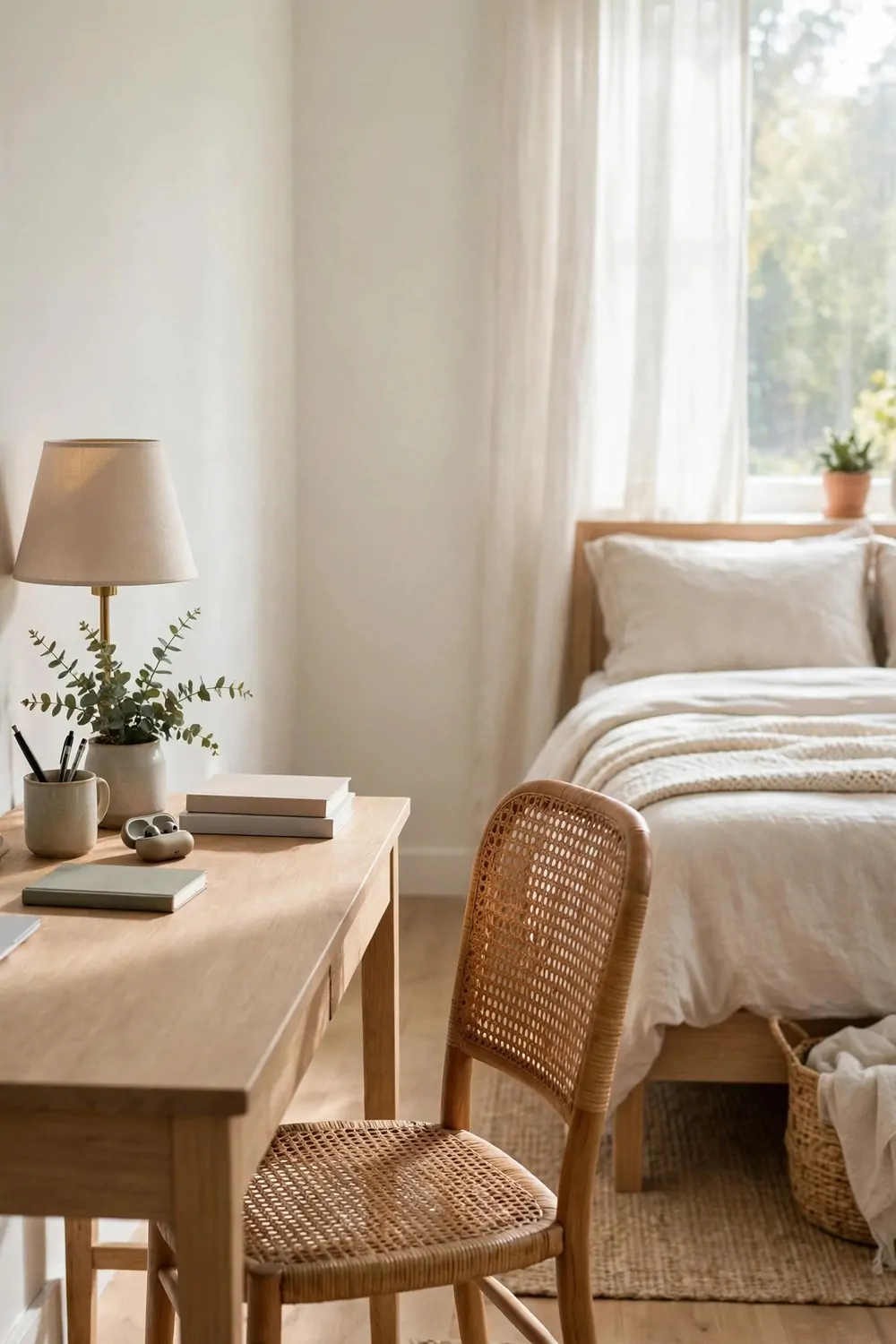
A desk that faces the bed keeps the two sides talking to each other. You sit down to work and you see the bed. You lie down to rest and you see the desk. Neither side hides.
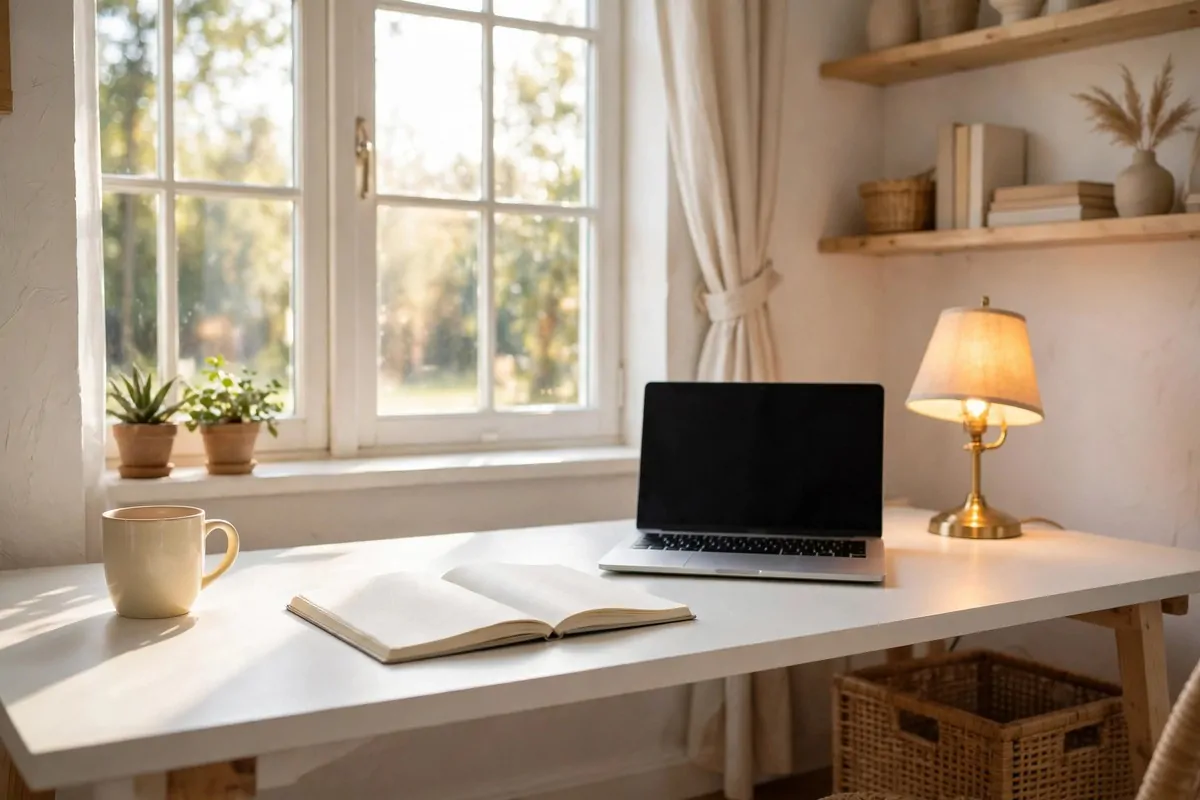
My desk faces across the room toward the bed. The chair turns to face the room, not the wall. When I look up from my work, I see the window and the bed and the whole room at once.
Turn your chair to face into the room. A chair that faces a blank wall makes the desk feel like a corner you hide in. A chair that faces the room makes the desk feel like part of the room.
Keep the view from the desk clean. A made bed, a clear floor, one picture on the wall. If the view is messy, your work will feel messy too, even when the desk is tidy.
Put the bed where you can see it from the desk, and the desk where you can see it from the bed. Both sides get seen, and both sides feel like they matter.
Keep a small clock on the desk where you can see it from the bed. When you wake up, you can see the time without getting up. A clock you can see from both sides serves the whole room.
If the desk faces the bed, keep the bed made. A made bed is a nice view from a desk. An unmade bed is a messy view, and a messy view makes work feel messy too.
Try this one if your desk faces a wall and your bed faces a wall too. Turn the desk around, and the room will feel like one room instead of two corners.
One Long Shelf Above Both
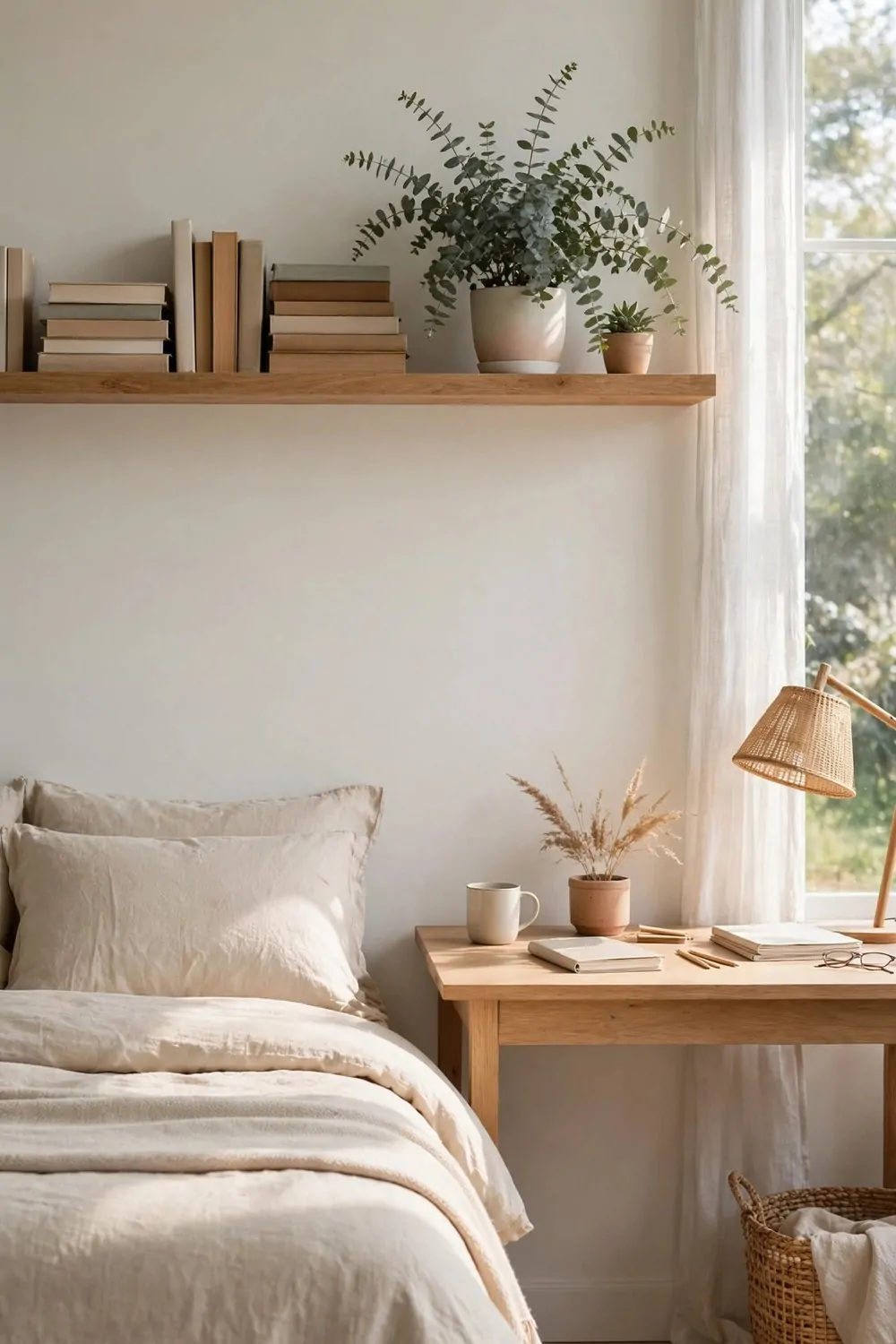
One long shelf above the bed and the desk ties the two sides together. It runs across the whole wall, and it holds a little bit of each side.
My shelf runs the full width of the wall. On the bed end it holds two books and a small plant. On the desk end it holds a notebook and a pen pot. The middle holds nothing at all, and that empty middle is the best part.
Hang the shelf at the same height all the way across. A shelf that dips or rises looks like a mistake. A straight shelf looks like it was planned.
Keep the shelf light. Books, one plant, a small box. A shelf full of heavy things pulls the wall down and makes the room feel tipped. A light shelf lifts the room up.
Leave one gap on the shelf on purpose. That empty space is where the next book goes, and it keeps the shelf from ever looking stuffed. Empty space is part of the balance too.
Dust the shelf once a week when you dust the desk. A dusty shelf makes the whole wall look tired. A clean shelf in good light looks like it was hung yesterday.
Put the plant in the middle of the shelf, right on the line between the two sides. A plant in the middle belongs to both sides, and it is the one thing the two halves share.
Try this one if your bed wall and your desk wall look like strangers. One long shelf, and they become neighbours.
Morning Side, Evening Side
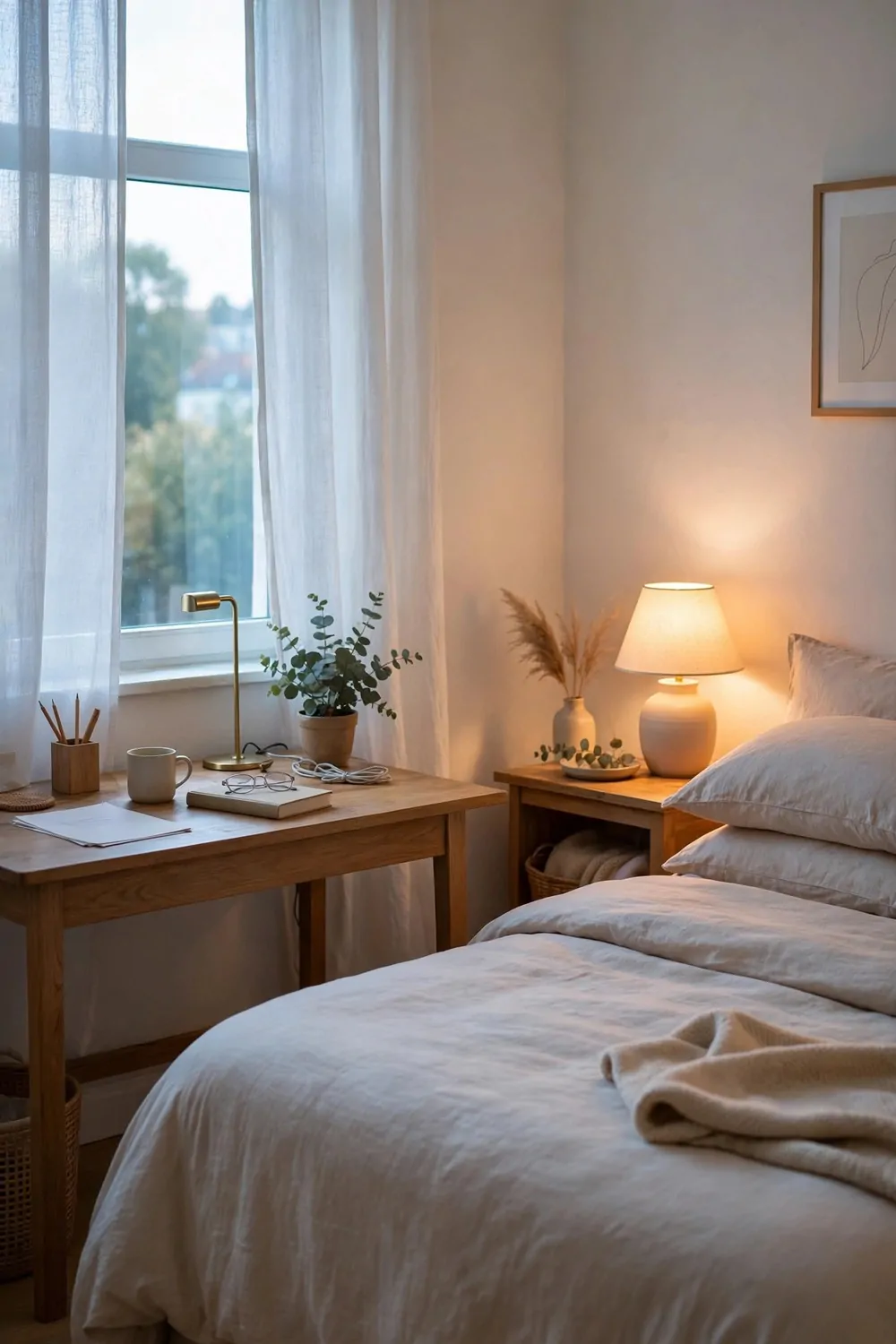
Morning belongs to the desk side. Evening belongs to the bed side. The room changes hands halfway through the day, and both sides get their turn.
In the morning the light falls on my desk, and I work there with the curtains wide open. In the evening the light goes soft, and I move to the bed side with a book and a cup of tea. Same room, two different days inside it.
Put the desk where the morning light lands. A desk in morning light is a desk that wakes you up gently. A desk in a dark corner needs a lamp all day, and that tires your eyes out fast.
Put the bed where the evening light lands. A bed in soft evening light is a bed that helps you slow down. A bed in harsh light feels like a waiting room, and nobody rests in a waiting room.
Open the curtains wide in the morning and pull them halfway closed in the evening. The room follows the sun, and your body follows the room.
Eat breakfast on the desk side and drink your evening tea on the bed side. Small habits like that teach your brain which side is for work and which side is for rest.
If the morning light is too strong on the desk, pull the thin curtain halfway across. Soft light is better than bright light, and your eyes will thank you by lunch.
Try this one if your room feels like work all day and work all night. Give the morning to the desk and the evening to the bed, and the room will learn the difference.
Two Bedside Tables, One for Work
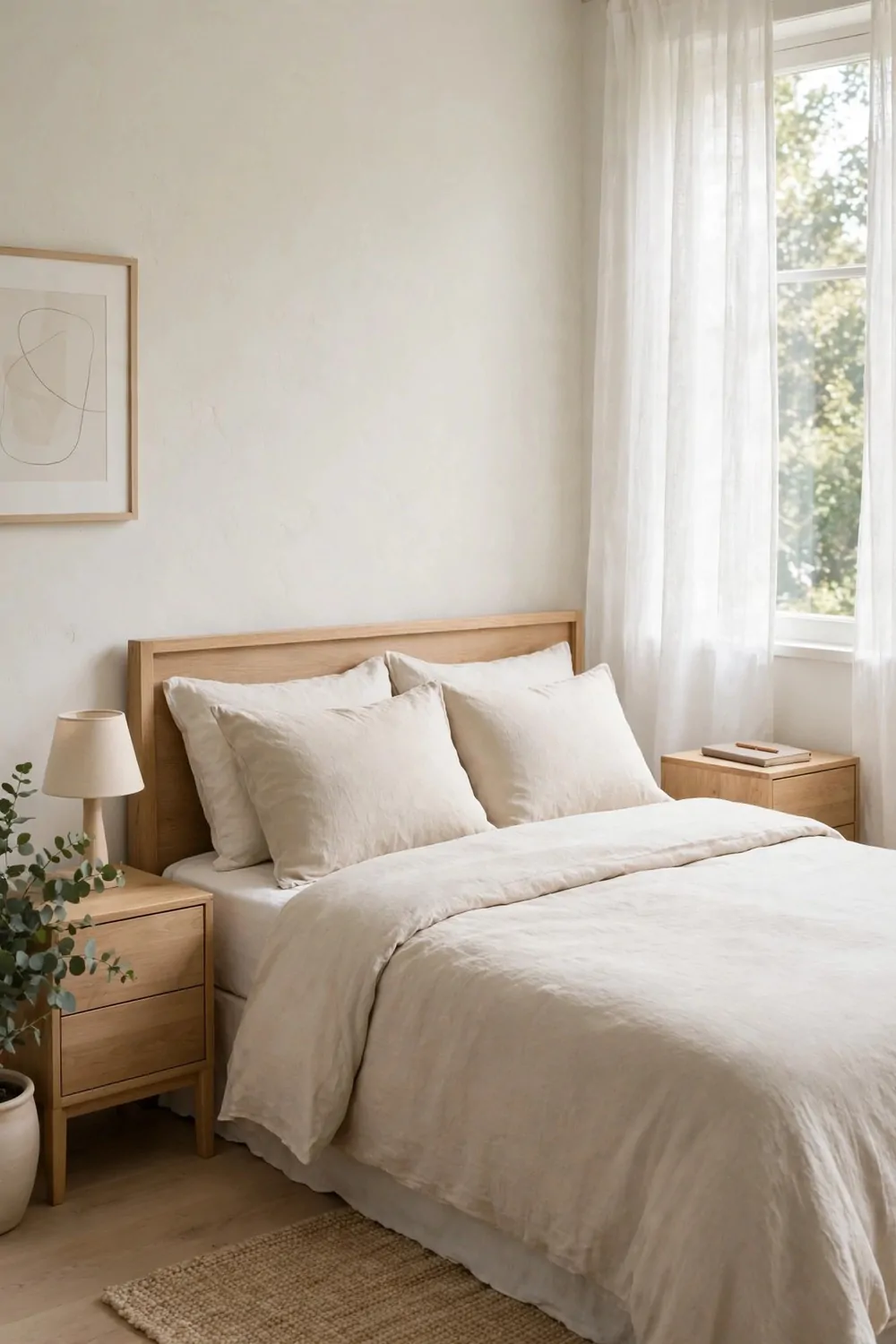
Two bedside tables, one on each side of the bed, make the room feel even. And one of them can work a day job without breaking the balance.
My left bedside table holds a lamp and a glass of water. My right bedside table holds a notebook and a pen. One table is for sleep. One table is for the last work thought of the day and the first one of the morning.
Pick two tables that match. Same height, same wood, same simple shape. Two matching tables frame the bed, and the bed looks settled between them.
Keep the work table clear of clutter. One notebook, one pen, nothing else. A table with one job is a table you can trust. A table with everything on it is a table you fear.
Put the lamp on the sleep table, not the work table. The lamp belongs to the evening. The notebook belongs to the morning. Each table keeps its own job.
Charge your phone on the work table overnight, not on the sleep table. A phone that buzzes on the sleep table will wake you up. A phone on the work table can wait until morning.
Keep a small glass of water on the sleep table every night. A glass of water by the bed is the smallest luxury there is, and it costs nothing at all.
Try this one if your bed has one table and your desk has a pile of notebooks. Give the bed a second table, and the pile will have a home.
A Plant on Each Side
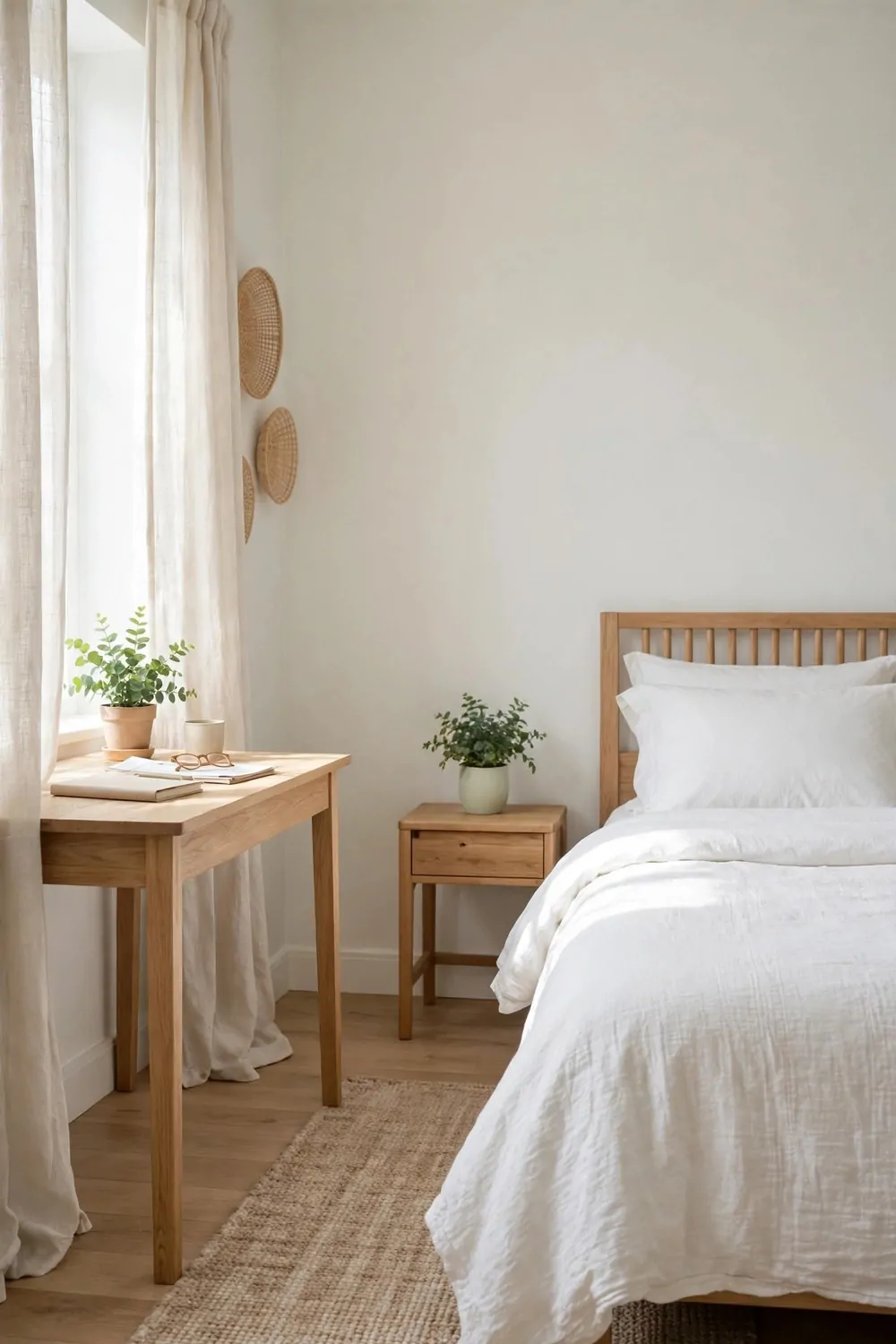
A plant on each side is the cheapest balance trick I know. One green thing by the bed, one green thing on the desk, and the room feels even.
My desk plant is a small green plant in a plain pot. My bed plant sits on the bedside table in a matching pot. Two plants, same size, same green. They are the only living things in the room besides me.
Pick plants that are easy to keep alive. A small leafy plant that likes a windowsill and a little water once a week. A plant that dies in a month is not balance. It is a chore.
Water both plants on the same day, always. A little water is plenty. A plant that gets too much love drowns, and a plant that gets too little dries out. Once a week is just right.
Keep the pots plain and matching. Two plain pots in the same colour tie the two sides together. Two loud pots would fight each other, and a balanced room does not fight with itself.
Pick plants with the same shape. Two round leafy plants, or two tall thin ones. Matching shapes make the two sides look like they were planned together.
If one plant grows faster than the other, trim it back. Two plants the same size keep the balance. One tall plant and one tiny plant tip the room.
Try this one if one side of your room feels alive and the other side feels bare. One plant each, and both sides will breathe.
Same Wood on Both Sides
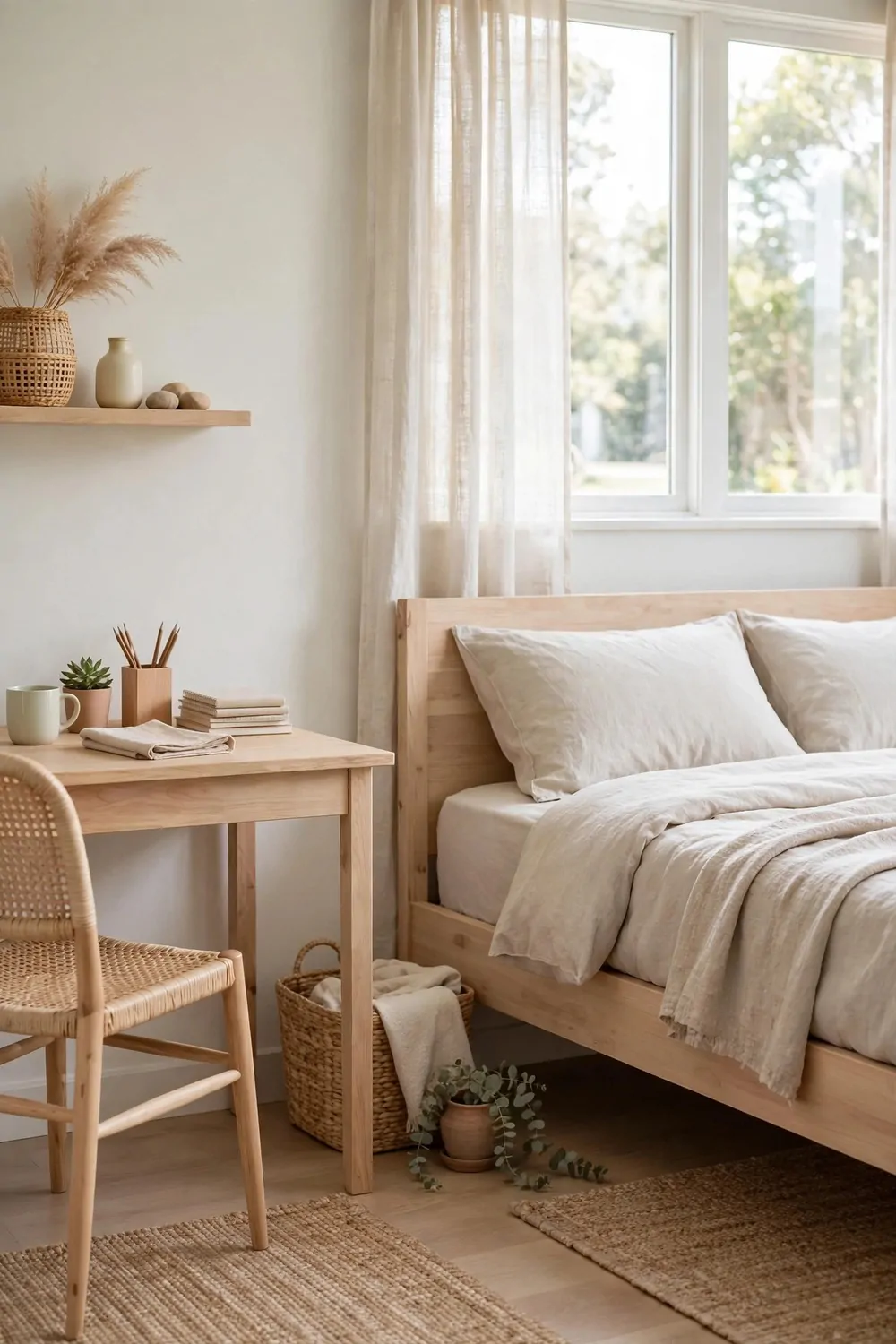
Wood is the one thing the bed and the desk share. If the wood matches, the room already looks planned, even when nothing else does.
Walk around the room and touch every wooden piece. The desk, the bed frame, the shelf, the chair legs. Write down what colour each one is.
Most rooms have three or four different woods fighting each other. A dark desk, a pale bed, a red shelf, a grey chair. Each piece is fine alone, but together they argue.
Pick the wood you like best and make it the boss. Let that wood lead, and let the other pieces follow it. One wood in charge keeps the room calm.
You do not need to buy new furniture to fix this. A coat of paint on the odd piece works. A pale wash over a dark shelf, or a dark stain over a pale desk leg.
Start with the two pieces your eyes see first. The bed and the desk fill the room, so they set the tone. When those two agree, the rest of the room falls in line.
Keep the metal bits and the soft bits free. Lamp bases, handles, cushions, throws. Those can be any colour you like. The wood rule only covers the wood.
Try this one if your room has good pieces that never quite sit right together. One wood family, one calm base, and the whole room starts to feel like it was planned.
Two Pictures, One on Each Side
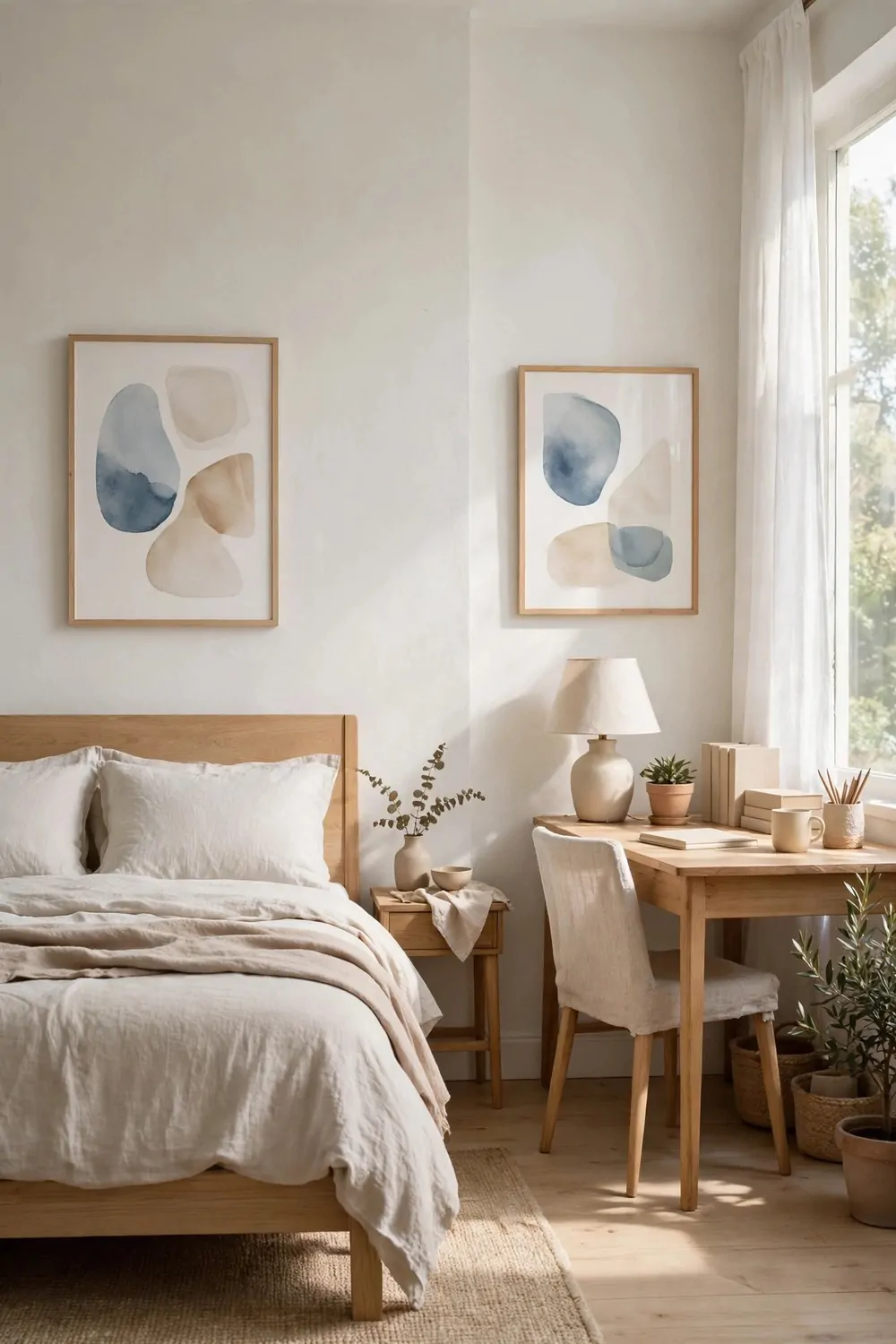
Two pictures, one on each side, make the walls feel balanced. One above the bed, one above the desk, same size, same frame, hung at the same height.
My two pictures are simple leaf prints in pale wood frames. One hangs above my bed. One hangs above my desk. I look up from my work and see green leaves. I look up from my pillow and see green leaves. Both sides get the same view.
Pick one picture, not three, for each side. One good frame, hung level, beats a whole wall of little frames that never sit straight. A balanced wall is a calm wall.
Hang them at the same height. Art hung at different heights makes the room feel wobbly, like a picture about to fall. Art hung at the same height makes the walls feel steady.
Match the frames to the wood in your room. A light wood frame next to a light wood desk. A dark walnut frame with a dark walnut bed. The frame is small, but it links the wall to the desk below it.
Keep the pictures simple. A hillside view, a leaf sketch, or one plain shape in a soft colour. A fussy picture drags your eyes off your work again and again. A quiet picture lets your eyes rest for a second, then come back to the page.
Swap the two pictures once in a while. The bed picture goes above the desk, and the desk picture goes above the bed. A small swap makes you notice the pictures again.
Try this one if one wall is bare and the other wall is full. Hang a matching picture on the bare wall, and the room will even out.
The Day Has Two Halves Too
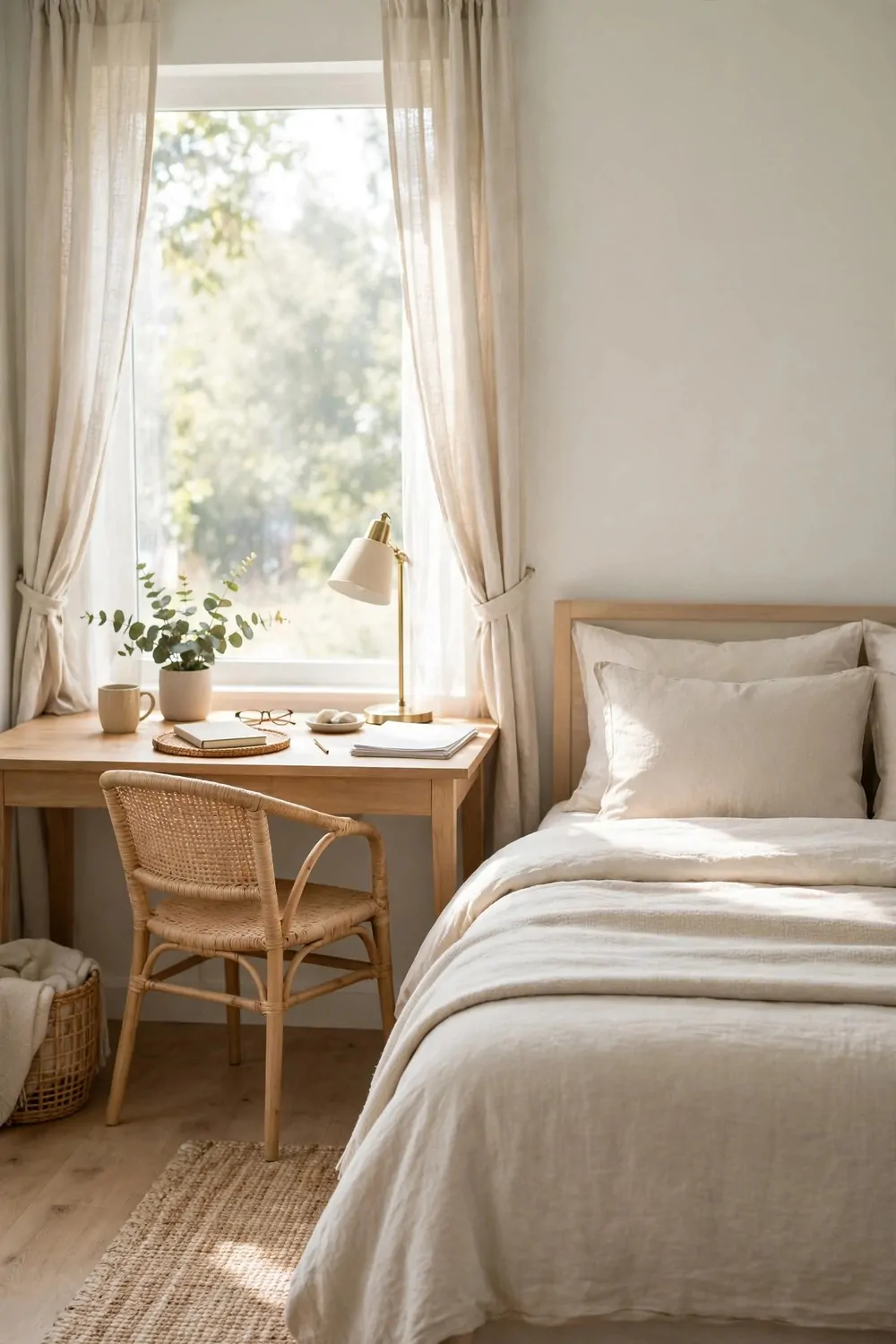
The day has two halves, just like the room. Morning is for the desk side. Evening is for the bed side. When the day is balanced, the room feels balanced too.
Here is how my day splits across the room.
| Part of the day | Where I sit | What the room does |
|---|---|---|
| Morning | At the desk, curtains open | Bright light, clear desk, work mode |
| Afternoon | At the desk, lamp on low | Steady light, quiet work, no rush |
| Evening | On the bed, book in hand | Soft light, laptop shut, rest mode |
Start the day at the desk and end the day at the bed. That order matters. A day that starts in bed and ends at the desk never really ends, and a day that never ends is not balanced.
Shut the laptop at the same time every evening. Five o’clock, six o’clock, whatever fits your life. The closing is the ending, and endings matter more than start times.
Keep the bed made in the morning before you sit down to work. A made bed is a calm bed. It takes two minutes, and the room looks finished before the work even starts.
Take your lunch break on the bed side, not at the desk. A break away from the desk is a real break. A break at the desk is just work with food.
Put your phone on silent when the work half of the day ends. The evening half belongs to rest, and a buzzing phone steals it.
Try this one if your workday bleeds into your evenings. Split the day in half, and the room will split with it.
A Small Table Between the Two Zones
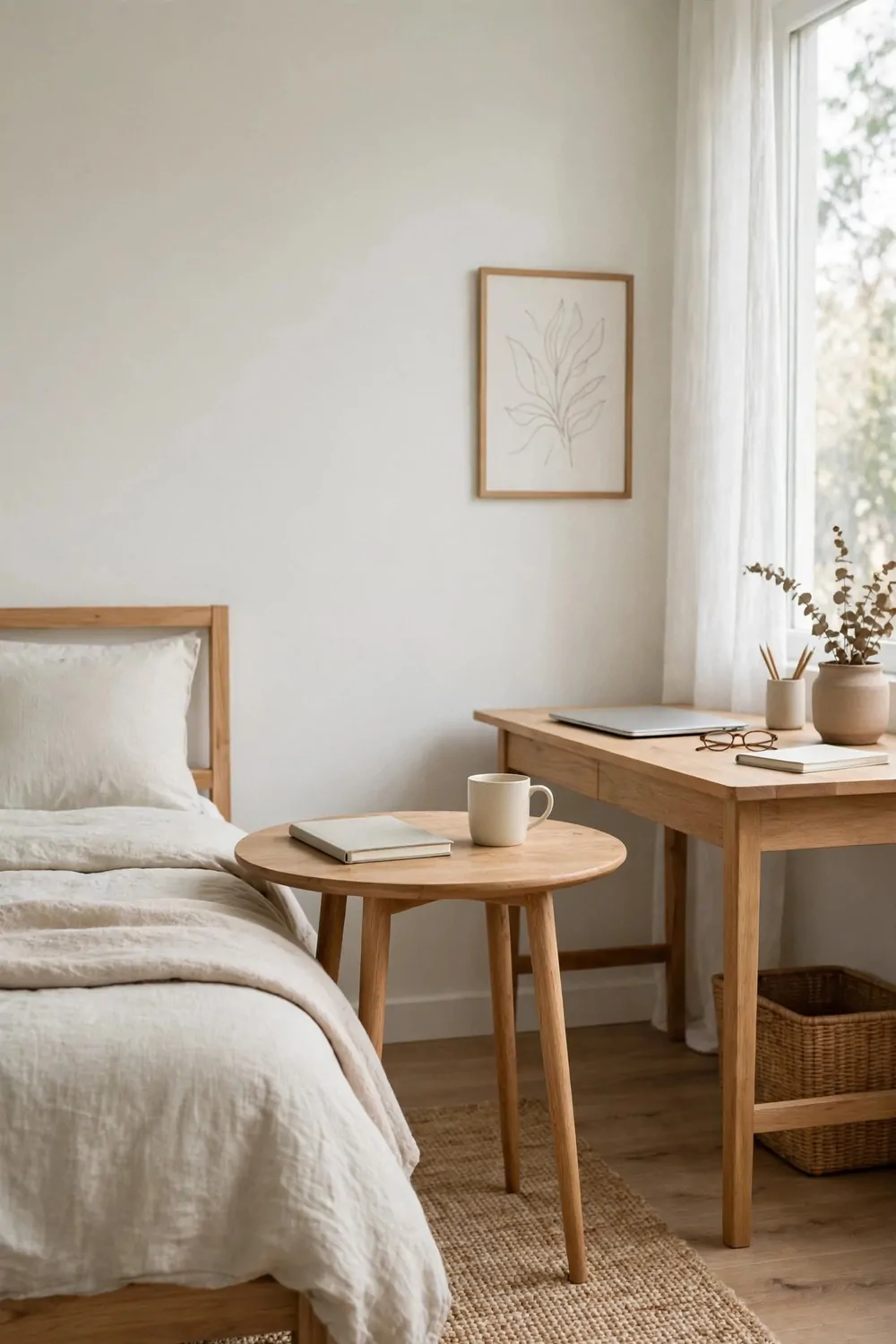
A small table between the two zones belongs to both sides. It stands on the line, and it serves the bed in the evening and the desk in the morning.
My little table is a plain round table on four short legs. In the morning I pull it to the desk, and it holds my notebook and my mug. At night I push it to the bed, and it holds my book and a glass of water.
Pick a table that one person can lift with one hand. If it is too heavy to move, it will never move, and it is just a table in the wrong place. Light wood is best.
Keep the top clear. A table with a clear top can change jobs in two seconds. A table covered in things has to be cleared first, and that is a job nobody wants to do at ten at night.
Put the table right on the line between the two zones. That is the spot where both sides can reach it. A table pushed into a corner can only serve one side, and one side is not the job.
Keep a coaster on the table for the mug. A ring on the wood will bother you every time you see it. A coaster costs almost nothing and saves the table.
If the table wobbles, fold a piece of card under the short leg. A steady table is a table you trust. A wobbly table is a table you avoid.
Try this one if your bed and your desk are far apart and the middle feels empty. One small table on the line, and the middle becomes the friendliest spot in the room.
Step Back and Check the Balance
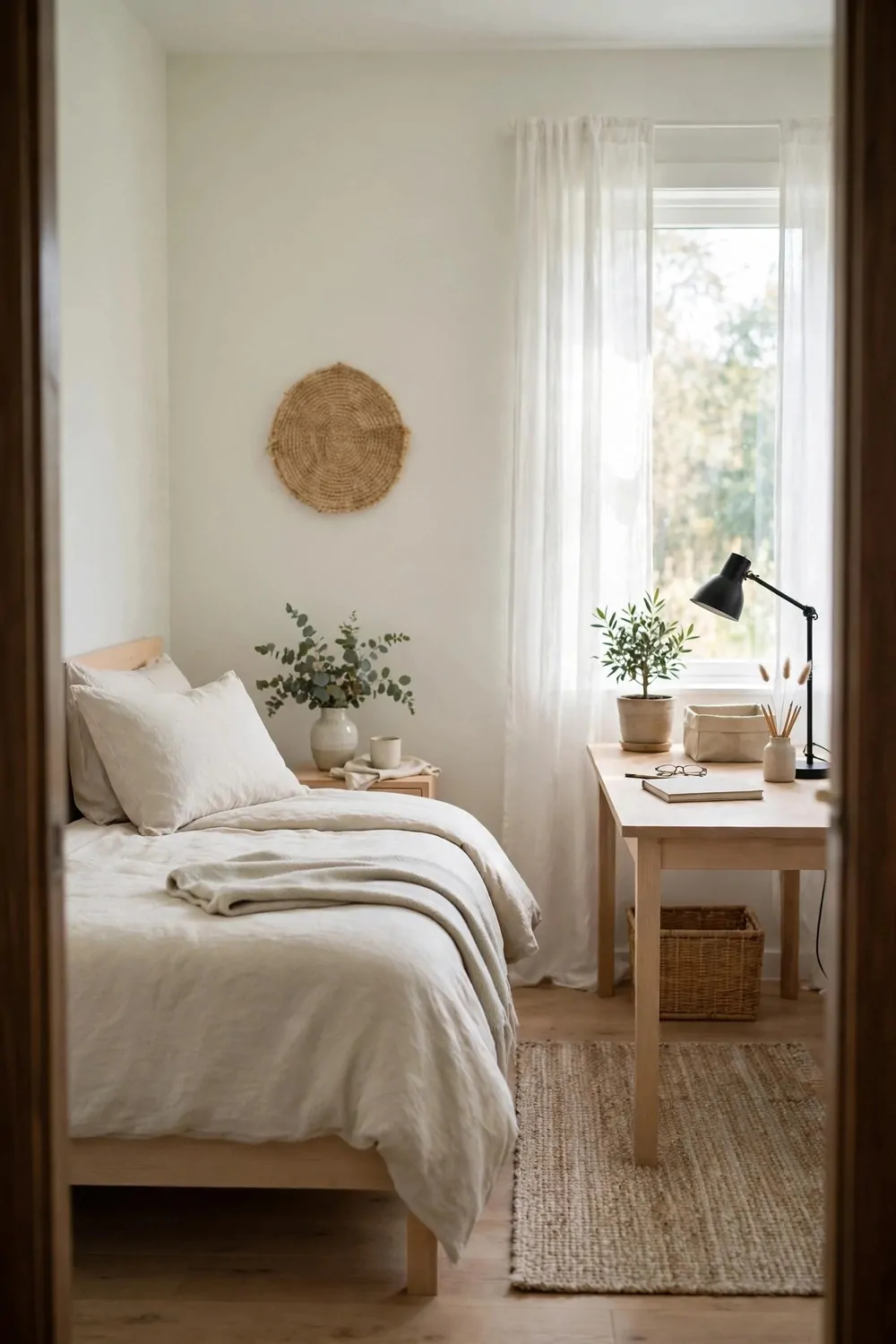
Step back to the doorway and look at the room. That is the test. If the room looks even from the door, it is balanced. If one side shouts and the other side whispers, it is not done yet.
Here is the check I run from my doorway every time I move anything.
- Both sides have the same amount of light.
- Both sides have a lamp, a chair, and a plant.
- Both sides have one picture on the wall.
- The middle of the floor is clear.
- Nothing else tips the room to one side.
Stand in the doorway for a full minute. Do not fix anything yet. Just look. Your eyes will find the heavy side on their own, because heavy sides pull your eyes first.
Fix one thing at a time. Move one lamp, or one plant, or one picture. Then step back and look again. Balance comes from small moves, not big ones.
A balanced room is not a perfect room. It is a room where work gets done in the day and sleep comes easy at night. One room, two jobs, and neither one wins. That is the whole trick, and now you know it.
Ask someone else to look at the room from the door. Fresh eyes see the heavy side faster than yours do. Your eyes are used to the room, and used eyes miss things.
Take a photo of the room from the doorway. A photo shows the balance more honestly than your eyes do. If the photo looks even, the room is even.
Try one layout from this list this week. Split the floor, or match the lamps, or hang the second picture. One change, and the room will tell you if it is the right one.
Keep Reading
If you liked these bedroom with office space layouts, these guest room, calm and work-separate bedroom office ideas will give you even more ways to make one room do two jobs well.
- 17 Small Home Office Guest Room Layouts That Work for Both
- 19 Work Space in Bedroom Ideas That Actually Feel Calm
- 21 Office Area in Bedroom Setups That Keep Work Separate
A bedroom and an office can share one room without either side winning. Pick one layout from this list, try it this week, and let your room feel even every single day.