20 Home Office Library Ideas That Blend Work and Books

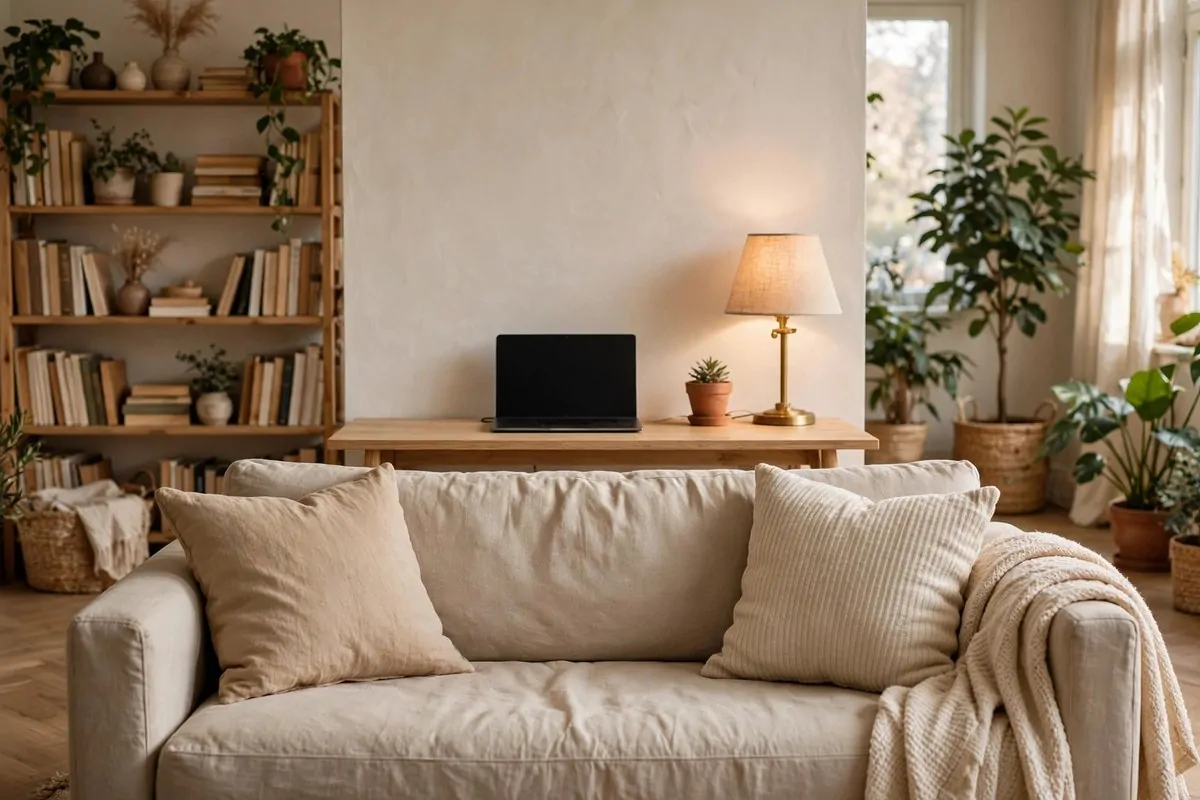
In my house, two pieces of furniture were fighting a quiet little war. My desk wanted the best wall in the room. My bookshelf wanted that same wall. For months they just stood there, staring at each other, and neither one would give in.
Then one rainy Saturday I got tired of the standoff. I dragged my desk right up against the shelves. I put my favorite books within arm’s reach of my laptop. And you know what happened? They stopped fighting. They started helping each other. My work got better, and my reading habit got better too.
This list is the peace treaty. Twenty Home Office Library Ideas that let your desk and your books share one room without any drama. Each one is simple, each one is real, and each one brings work and books a little closer together.
You do not need a big room for this. You do not need a big budget either. You just need a wall, some books, and the wish to have both in one place. Let me walk you through all twenty.
1. Put Your Desk in Front of Floor-to-Ceiling Shelves
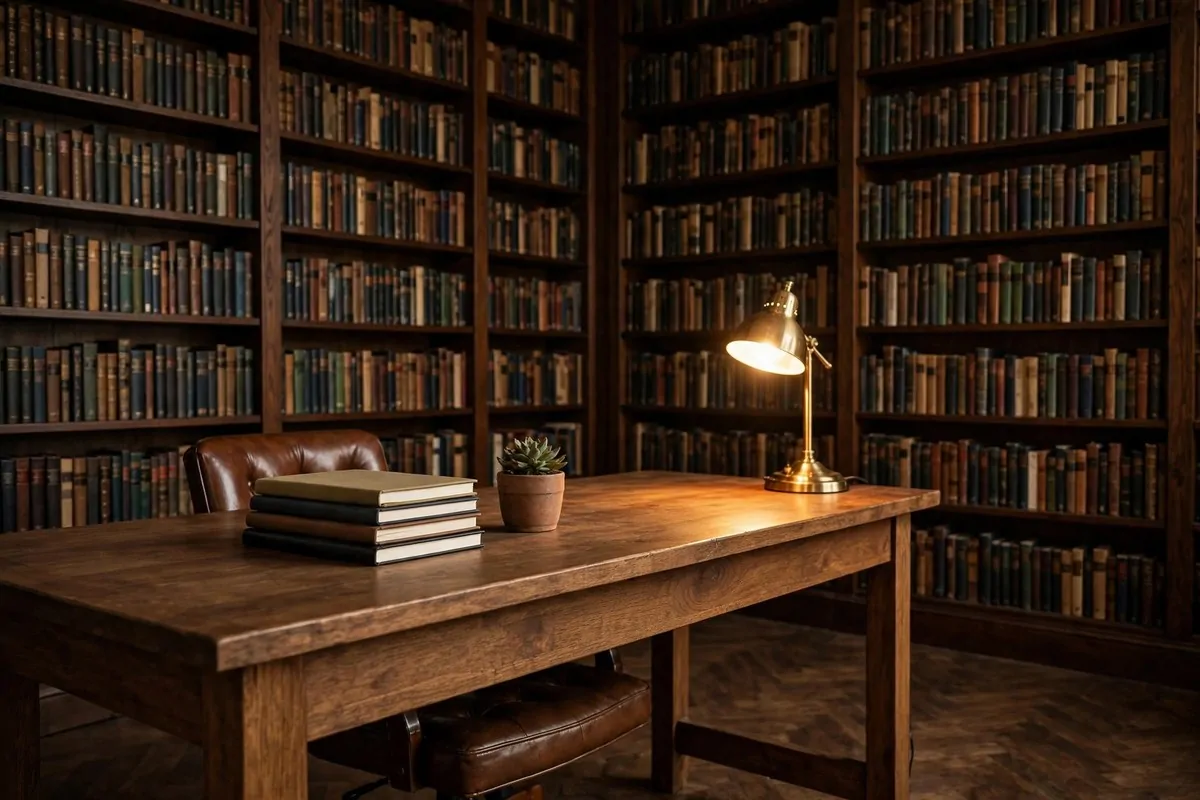
This is the classic move. Your desk faces a full wall of books, and the whole room suddenly feels like a real library. I did this last year and my video calls got nicer too. People kept asking about the books behind me.
Floor-to-ceiling shelves use the part of the wall most of us ignore. The high part. The part that just holds air. When you fill it with books, the room feels taller and richer, like an old bookstore.
You can build this with tall bookcases lined up in a row. Push them close together so they look like one big unit. If the tops are not the same height, nobody will notice from your chair. They really will not.
Start by measuring your wall. Then count how many bookcases fit. Leave a small gap on one side if you need to open a door. That is the whole plan.
Put the books you read for work on the shelves nearest your desk. Your reference books, your planners, your journals. The novels can live a little higher up. The pretty books you never touch can go on the very top shelf. Everyone does this.
This setup gives you something else too. A backdrop that looks smart. On camera or in real life, a wall of books says you are a person who reads. It is a nice feeling.
The only hard part is dusting up high. Keep a long duster in the closet and give the top shelf a quick wipe once a month. That is all it takes.
Paint the bookcases the same color as the wall if you want them to look built-in. This trick fools the eye. The shelves seem to grow out of the room itself.
2. Add a Rolling Library Ladder
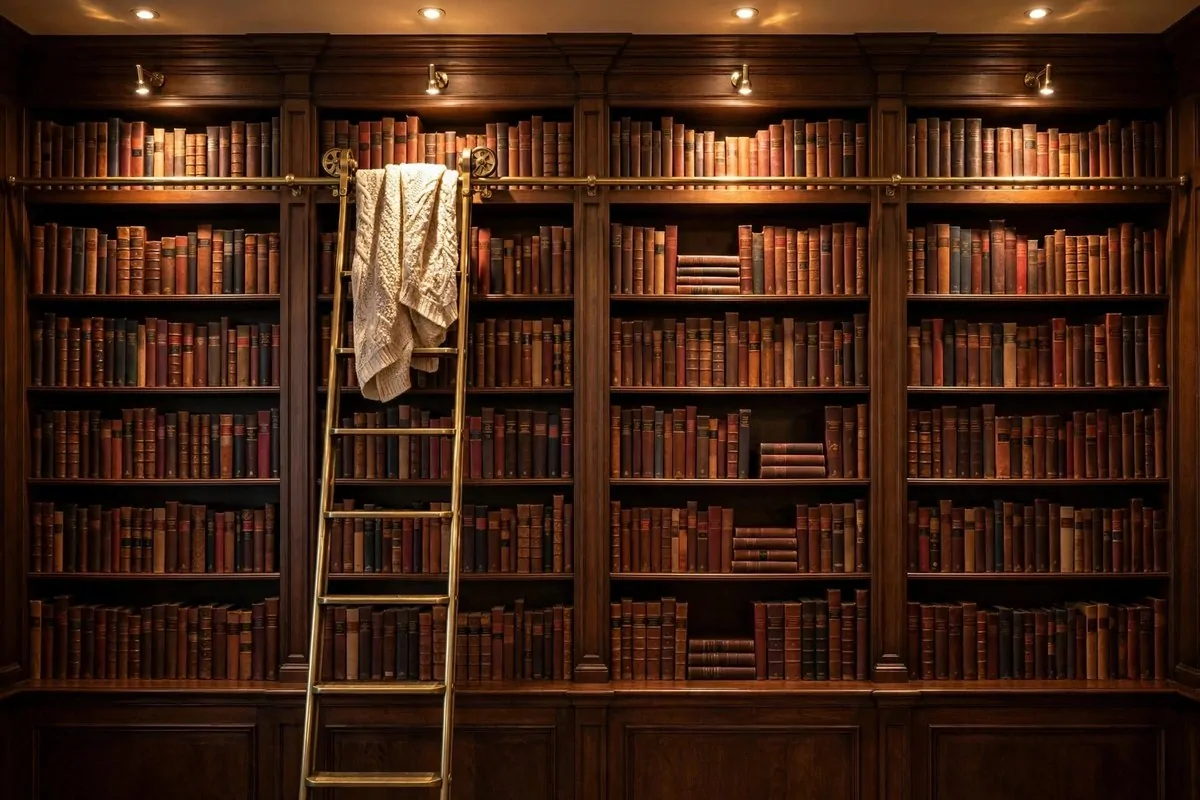
Nothing says library like a ladder that slides along a rail. You saw them in movies. Now you can have one in your office. I know it sounds fancy, but it is just a rail and a ladder.
The ladder makes your high shelves useful instead of decorative. You can actually reach the books up there. No more climbing on a wobbly chair. No more leaving the top two shelves empty because they are too far.
You buy a rail kit made for bookcases. They come with the hardware and simple steps. You screw the rail into the shelf fronts, hang the ladder, and it rolls. My cousin did this in one afternoon.
The ladder also becomes a piece of decor all by itself. Even when you are not using it, it leans against the shelf like it is waiting. It gives the room a storybook feel.
One small thing to watch. Make sure the floor in front of the shelves is clear. The ladder needs a little room to slide. Do not park a filing cabinet right under the rail.
Kids love these ladders, so teach them the rule early. Hands on the sides, feet on the steps, one person at a time. It is a tool, not a toy. Mostly.
Oil the rail once a year so the ladder keeps sliding smooth. A dry rail squeaks. One drop of oil fixes it in a minute.
If a full ladder feels like too much, a small two-step stool does the same job. Keep it tucked behind the shelf. It is less pretty but much cheaper.
3. Build a Small Reading Corner with an Armchair
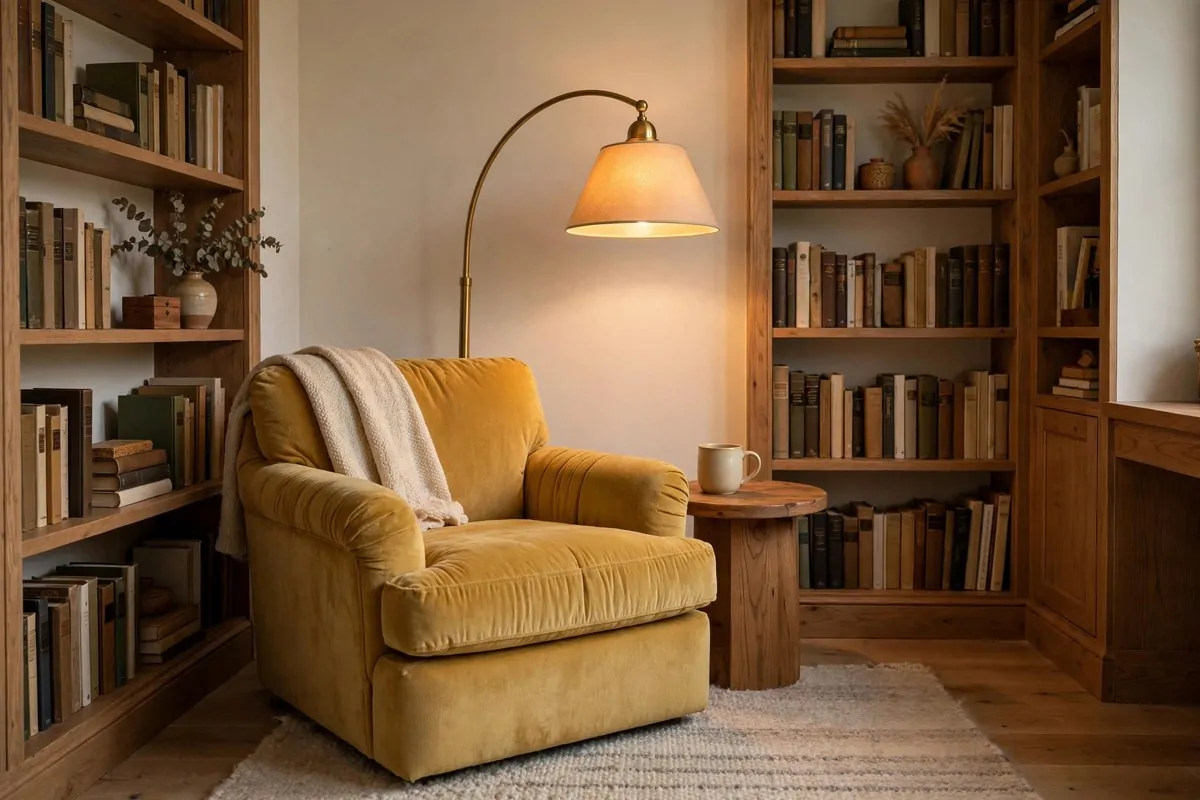
An office library is not complete until it has a spot for reading. Not working. Reading. A chair, a lamp, and a place for your cup. That is the whole corner.
Pick the quietest corner of your office. The one away from the desk. Put an armchair there. Add a small side table for your tea and the book you are reading now. A floor lamp goes behind the chair.
This corner changes how you use the room. After work, you move from the desk to the chair. Your brain gets the signal. Work is done. Reading time starts. I love that tiny walk across the room.
You do not need a big fancy chair. A soft one you already own will do. Add a throw blanket and it becomes the best seat in the house. My reading chair has a small stain from a spilled chai, and I still would not trade it.
Keep one book there. Just one. The one you are reading right now. When it sits on that little table, it calls to you. You will read more, I promise.
This corner is also great for thinking breaks. When a work problem gets stuck, I move to the chair and stare at the shelves. The answer usually shows up before the tea gets cold.
Keep a small basket of blankets beside the chair. One thick one for cold days, one thin throw for warm ones. You will reach for them more than you think.
A little rug under the chair marks the corner as its own zone. It tells your brain this patch of floor is for resting, not working.
4. Tuck Your Desk Between Two Bookcases
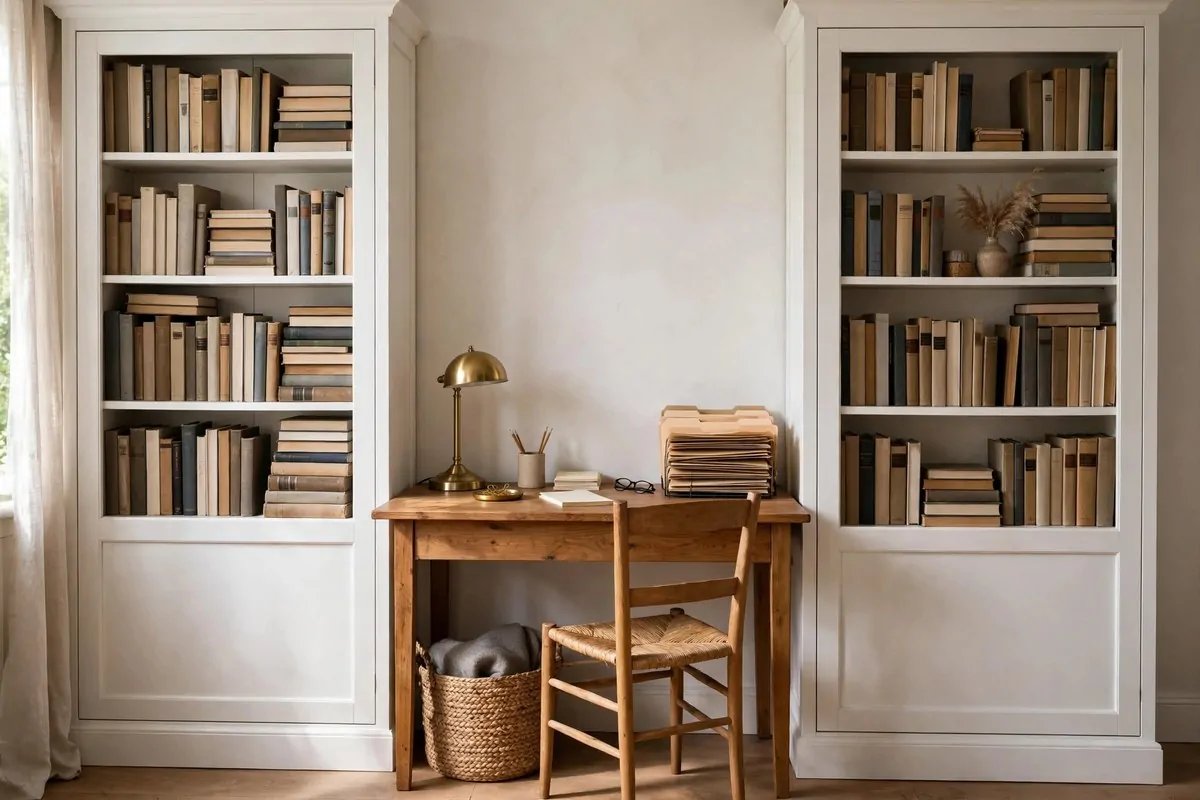
This idea is for small rooms. You put your desk in the gap between two tall bookcases. The books hug your workspace from both sides. It feels like a little study carved out of a library.
The beauty is how snug it feels. Your books are always within reach. No getting up to find a reference. You just swivel, grab, and sit back down. It saves so many little trips.
Measure the space between the bookcases before you buy the desk. Give yourself a little wiggle room on each side. A tight fit looks built-in. A gap of two inches looks sloppy.
Keep the tops of the two bookcases clear of heavy stuff. They sit right next to where you work all day. If something falls, it falls on your desk. Ask me how I know.
I like to put my current project books on the shelves at eye level. The stuff I need this week. The rest of the collection can live wherever it fits. This little system keeps the desk area calm.
If your bookcases are different colors, paint them the same. One tin of paint turns two random shelves into a matching pair. That one afternoon of painting makes the whole corner look planned.
Add a small desk lamp if the middle feels dark. A low lamp beats a bright overhead in a tight spot. The light feels softer around your screen.
Keep the floor between the bookcases clear of boxes. A snug desk spot needs clear legroom. Clutter under the desk makes a small space feel smaller.
5. Wrap Shelves Around the Window
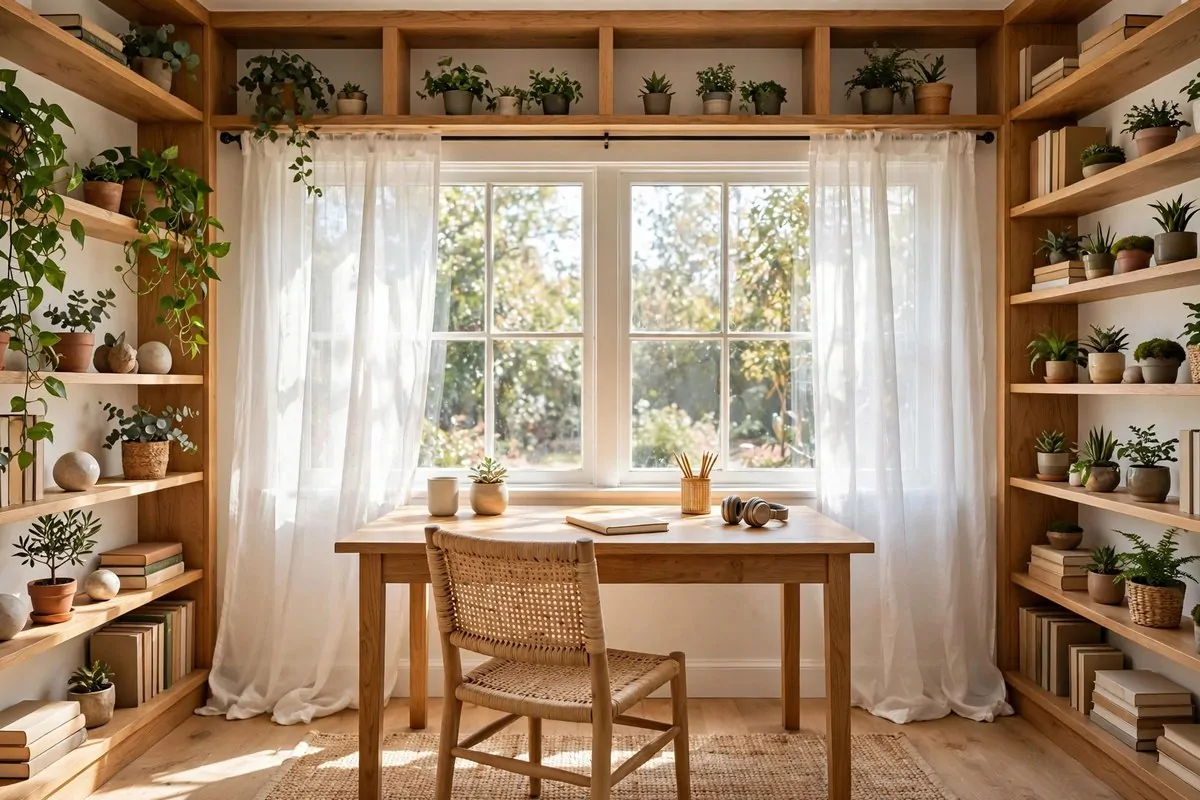
Windows are usually wasted space in an office. We put the desk under the window and the walls stay bare. Flip that. Put shelves on both sides of the window and along the top.
Now your window has a frame of books. You look up from your work and see daylight and spines. It is the prettiest view you can give yourself for free.
This layout loves natural light. Your desk sits right under the window, so you get daylight on your work all day. Your eyes will thank you. Screens are much easier to read when the light comes from the front.
You can do this with three bookcases. Two tall ones on the sides and a short one across the top, if your window is wide enough. Anchor everything to the wall. Tall shelves near a desk must be fixed.
Watch the direct sun though. Afternoon sun can fade book spines and heat up your laptop. A light curtain solves both. I use a thin white one that lets the glow in but blocks the harsh rays.
The top shelf across the window is perfect for plants. They love the light, and the green looks lovely against the books. Just pick plants that like bright light and do not mind a warm spot.
Use the side shelves for the books you read most. Journals near a work desk, cookbooks near a kitchen office. The closest shelves should hold the closest books.
If your window is small, one tall shelf on each side still works. You do not need the top bridge. The framed look still happens with just the two sides.
6. Arrange Your Books by Color
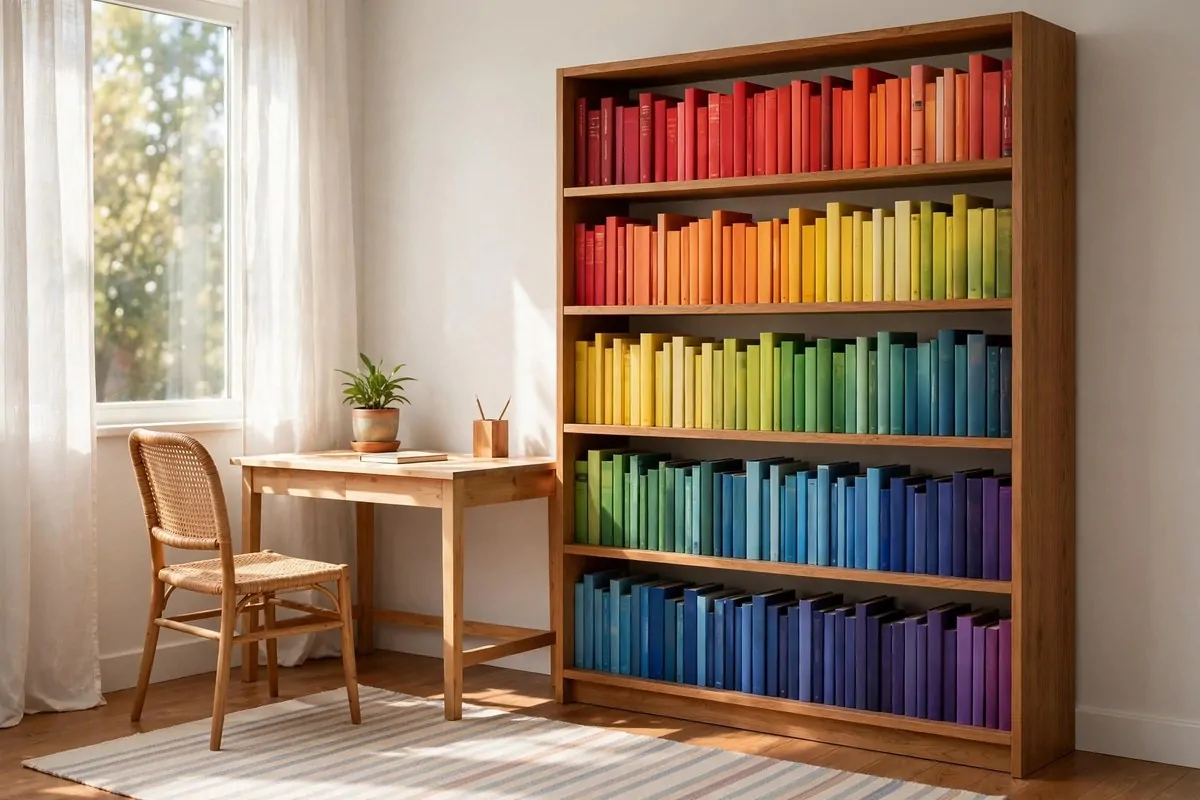
This one costs nothing. Take all your books off the shelves. Put them back in rainbow order. Red to orange to yellow to green to blue. Your office instantly becomes art.
I did this on a bored Sunday. It took two hours and three cups of tea. When I stepped back, my office looked like a candy shop for readers. My husband walked in and just said wow.
Color order looks amazing behind a desk. It turns your bookcase into a giant painting. Video calls get better. Photos get better. Everything gets better.
The honest downside is finding books. You can no longer hunt by title. You have to remember the color of the spine. After a week your brain learns. You start thinking in colors, which is kind of fun.
Try it in one bookcase first. See if you like it. If you hate it, switch back. No harm done. But most people keep it, because it makes the room feel cheerful.
Some people sort by color inside each genre. Reds in fiction, blues in work books. That is a nice middle ground. You get the rainbow and you still know where to look.
Take a photo when you finish. You will want to show someone. Everyone who color-sorts posts a photo. It is practically a rule.
Black and white books are the tricky part. Make a small monochrome section at one end. It looks chic instead of messy.
7. Use Glass-Door Bookcases to Beat the Dust
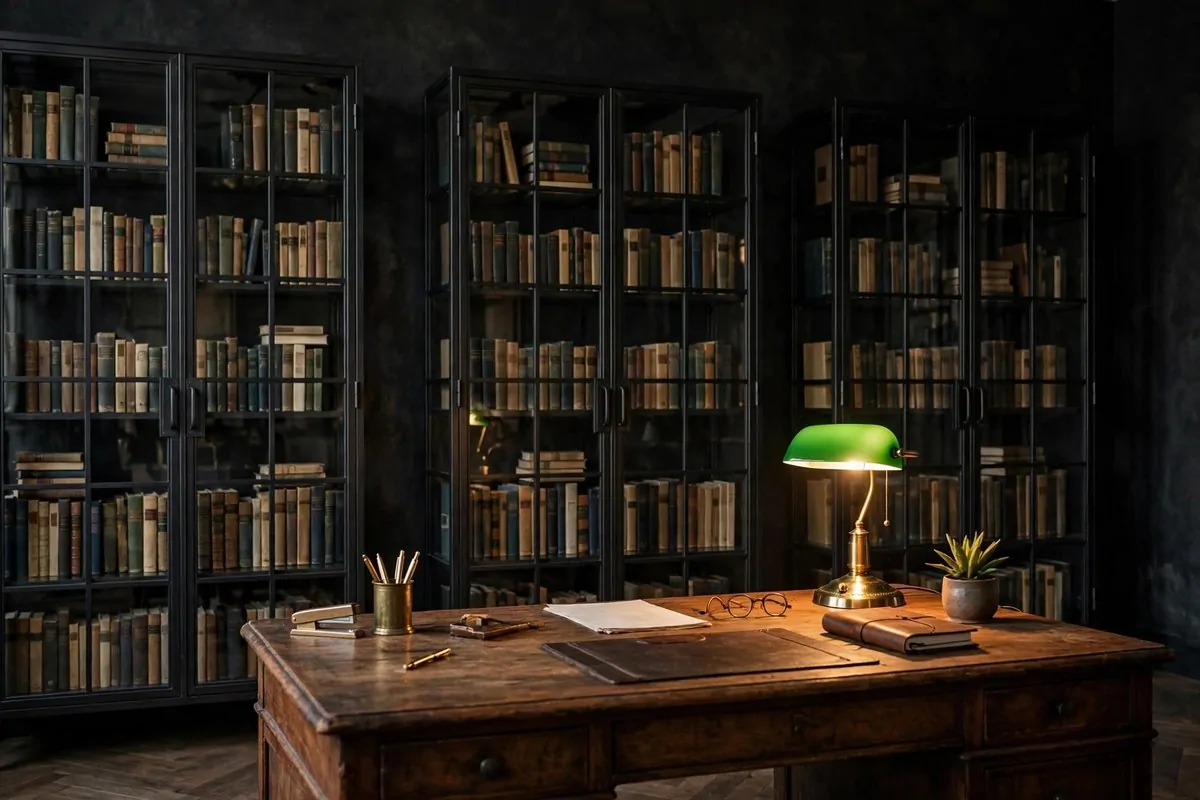
Books collect dust. It is just a fact. Open shelves need dusting all the time, and nobody has time for that. Glass doors fix the problem while keeping your books visible.
The books stay clean. You can see them through the glass. And the doors add a lovely shine to the room. It feels a bit like a museum, in a good way.
Look for bookcases with glass fronts at secondhand stores. They are very common. People sell them when they move because they are heavy. That is your chance to grab a bargain.
Keep the glass clean with a damp cloth once a month. Fingerprints show fast on glass. It takes two minutes per door. Much faster than dusting every single book.
Glass doors also protect your books from sunlight. The glass cuts down the harsh rays that fade spines. Your collection will look new for longer.
One tip. Do not pack the shelves too full behind glass. Give the books a little breathing room. A few empty spots look calm and let you slide new books in later.
Glass doors rattle if the hinges get loose. Tighten the little screws once a year. It takes five minutes and the doors close like new.
Put your prettiest books at eye level behind the glass. They are the ones people see first. The plain paperbacks can live lower down.
8. Add Lights Inside the Shelves
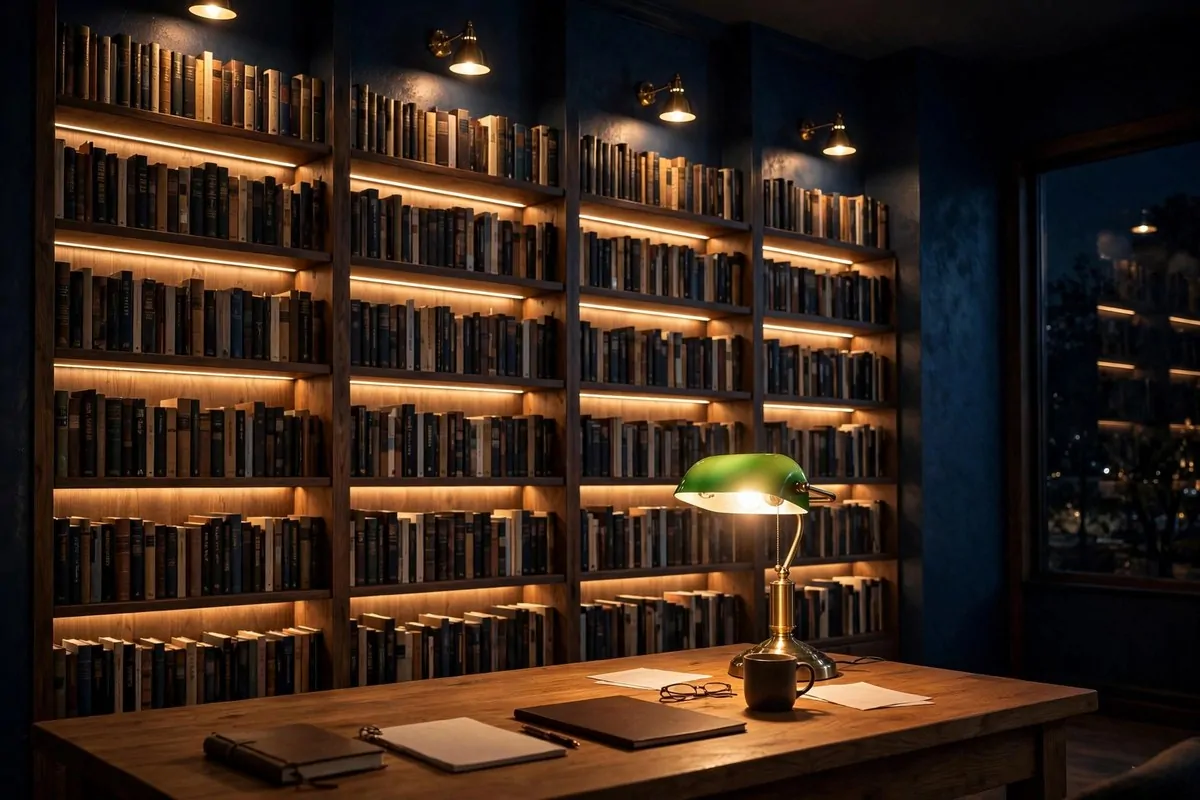
A bookcase with lights looks magical at night. Each shelf gets a soft warm glow. Your books look like they are on a stage. I added stick-on LED strips to my shelves and I still smile every evening when they turn on.
The light is not just pretty. It helps you find books too. Dark shelves hide the bottom rows. A little light under each shelf fixes that. You can actually see your whole collection.
Battery LED strips are the easy way. You stick them under the shelves, and they last for months on one set of batteries. No wires. No electrician. Just peel and stick.
Put the strips toward the front edge of the shelf. That way the light washes over the book spines. If you push them too far back, the light hides behind the books and you lose the effect.
Warm white light is the color you want. Cool white looks like an office fridge. Warm white looks like candlelight. Check the box for a warm tone before you buy.
I set mine on a timer plug. They turn on at six in the evening and off at eleven. When I walk past my office at night, it glows. It is my favorite little luxury in the house.
Hide the battery packs behind the books on each shelf. You do not want little white boxes showing. A few books in front is all the cover you need.
Start with just one bookcase to test the look. If you love it, do the rest. If not, you only spent a few dollars learning.
9. Place a Reading Chair by the Window
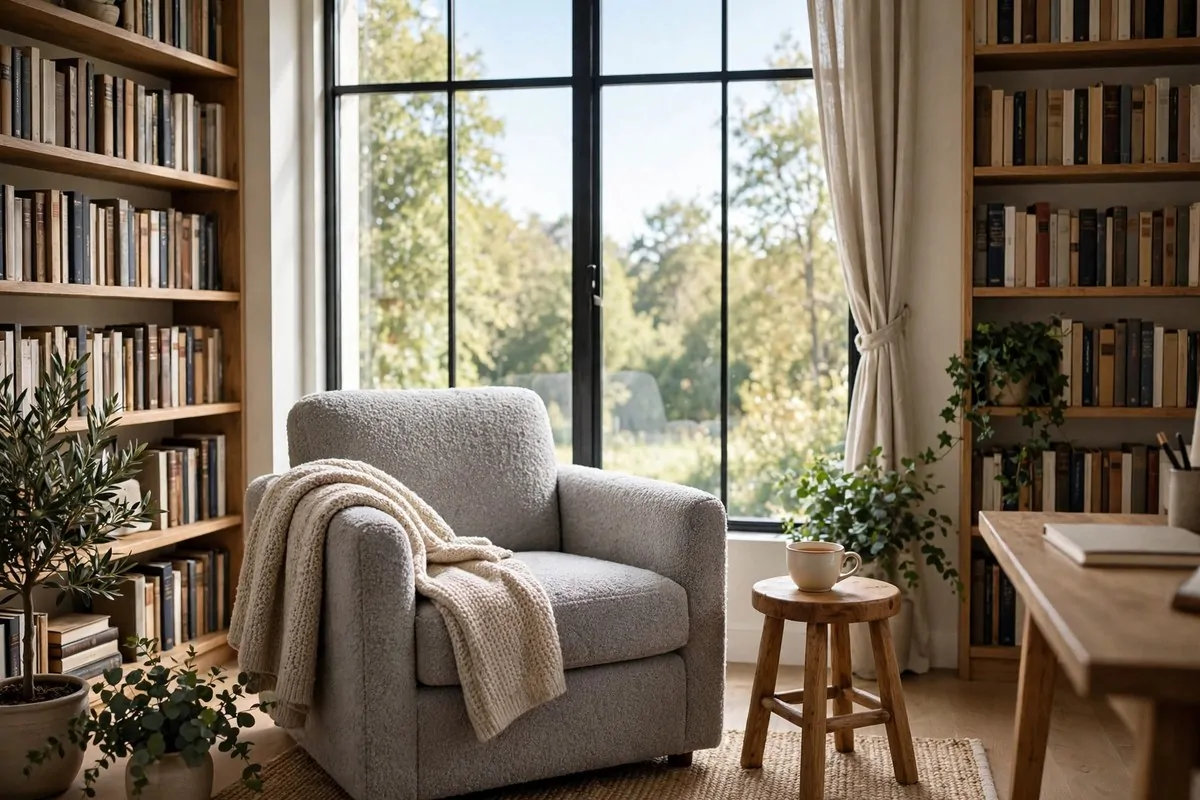
Daylight is the best reading light ever made. It is free, it is bright, and it does not tire your eyes. So put your reading chair right by the window.
This is different from the reading corner in idea three. That corner can be anywhere. This one lives for the daylight. You sit, the sun warms your lap, and the pages glow.
Add a small stool or table for your drink. Keep a soft blanket on the chair arm. On cold mornings, this spot becomes the warmest place in your office. You will fight everyone in the house for it.
Put a bookshelf on each side of the window if you can. Then your reading books are right there. No walking to another shelf. You finish a chapter, you reach out, you grab the next book.
The only enemy here is glare on the pages. If the sun hits your book directly, it gets hard to read. Angle the chair a little to the side. Problem solved.
I read my favorite books here every Sunday morning. The house is quiet. The light is soft. It feels like the world is giving me a little gift each week.
Keep closed books out of direct sun when you are not reading. A book left on the seat fades fast. Slide it back onto the shelf when you stand up.
A low bookshelf under the window works great here. It holds books and gives you a place to rest your feet. Two jobs, one piece of furniture.
10. Lean a Ladder Shelf Against the Wall
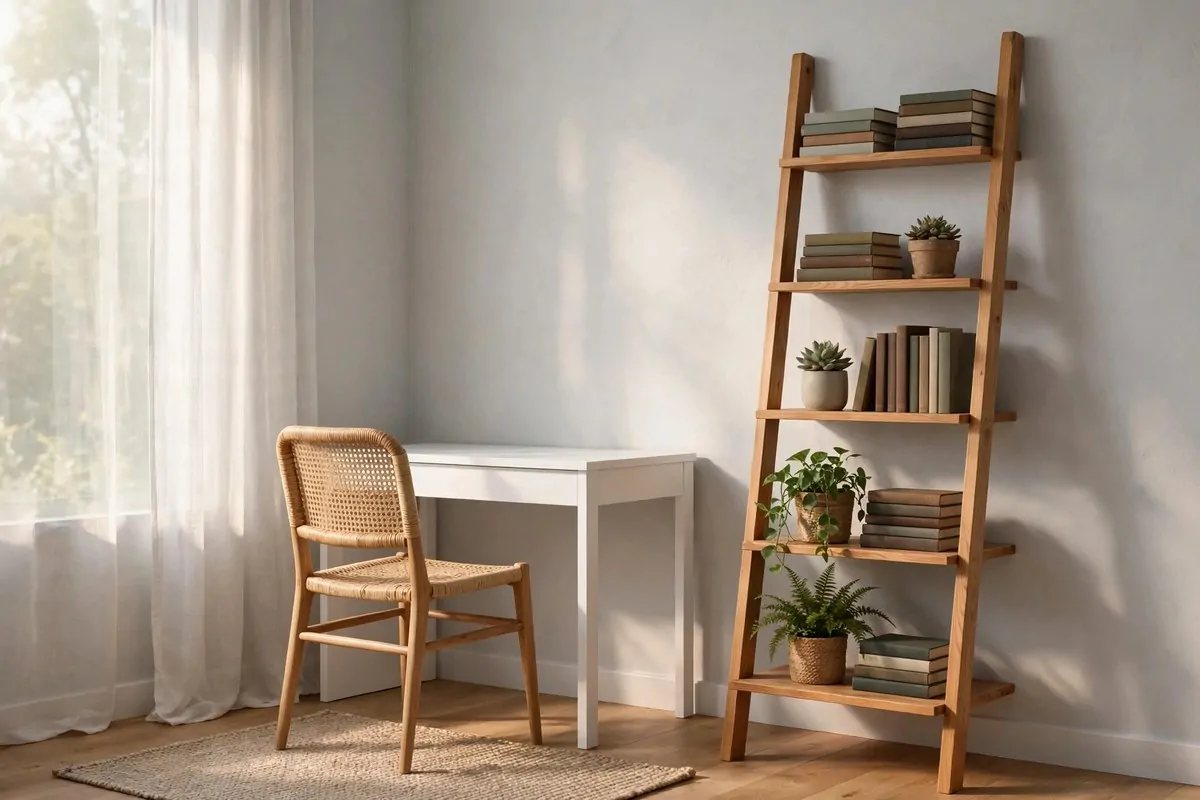
Ladder shelves are the friendly version of a bookcase. They lean against the wall. They are narrow at the top and wide at the bottom. They fit where big bookcases cannot.
Small offices love these. You can squeeze one into a corner, beside a door, or next to your desk. They hold a surprising number of books for something so slim.
The tilted shelves make book spines easy to see. You do not have to bend down and squint. Each shelf faces you a little. It is a small thing that makes a big difference.
Style the ladder shelf with books on the big lower shelves and lighter things up top. Plants, a small frame, a candle. The top shelf is too narrow for big books anyway.
These shelves are light, so anchor them to the wall. A little bracket at the top keeps them steady. Books are heavy, and a leaning shelf full of books can tip if you bump it.
I keep my work notebooks and current reads on mine. It sits right beside my desk. The books I am using this month stay close. The big collection lives on the main shelves.
Rotate the books on the ladder shelf each month. New month, new stack. It keeps the little shelf feeling fresh and reminds you of books you own.
Ladder shelves work in hallways and bedrooms too. If your office is full, put one just outside the door. Your books can live in more than one room.
11. Go Dark and Moody with Wood Paneling
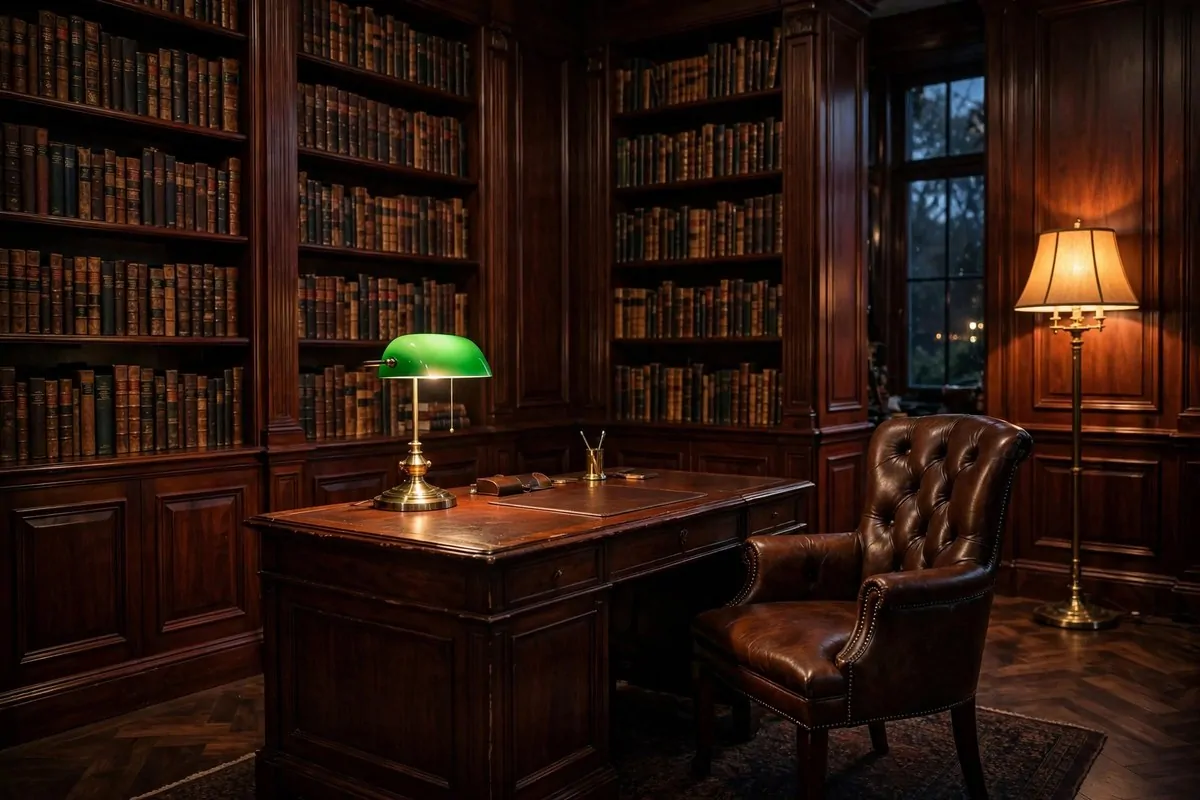
Some offices want to be bright. This one wants to be dark. Dark wood walls, deep shelves, one warm lamp glowing. It feels like a private club for one. I painted one wall of my old office dark green and it changed everything.
Dark colors make books look rich. The spines pop against the dark background. Gold letters shine. Old leather covers look like treasure. Your whole collection gets a promotion.
This look works best if your office is small. Dark walls pull the room in and make it feel like a cozy cave. Big bright rooms need more dark to get the same feeling.
You do not need real wood panels. Paint does the trick. A deep green, navy, or warm brown on the bookcase wall. One weekend, one tin of paint, and the room has a whole new mood.
Add warm lamps, not white ones. The glow should feel like firelight. A brass lamp, a shaded floor lamp, maybe some candle-style lights. Keep the overhead light off as much as you can.
The desk in a dark library should be simple wood. Nothing shiny. Let the shelves be the star. Your eyes should travel to the books first, and the desk second.
A light-colored rug keeps a dark room from feeling too heavy. It breaks up the dark floor. One rug in the middle is enough.
Test the paint color in the evening before you commit. Dark colors look different under lamplight. A small painted square on the wall saves you from surprises.
12. Float Your Shelves Above the Desk
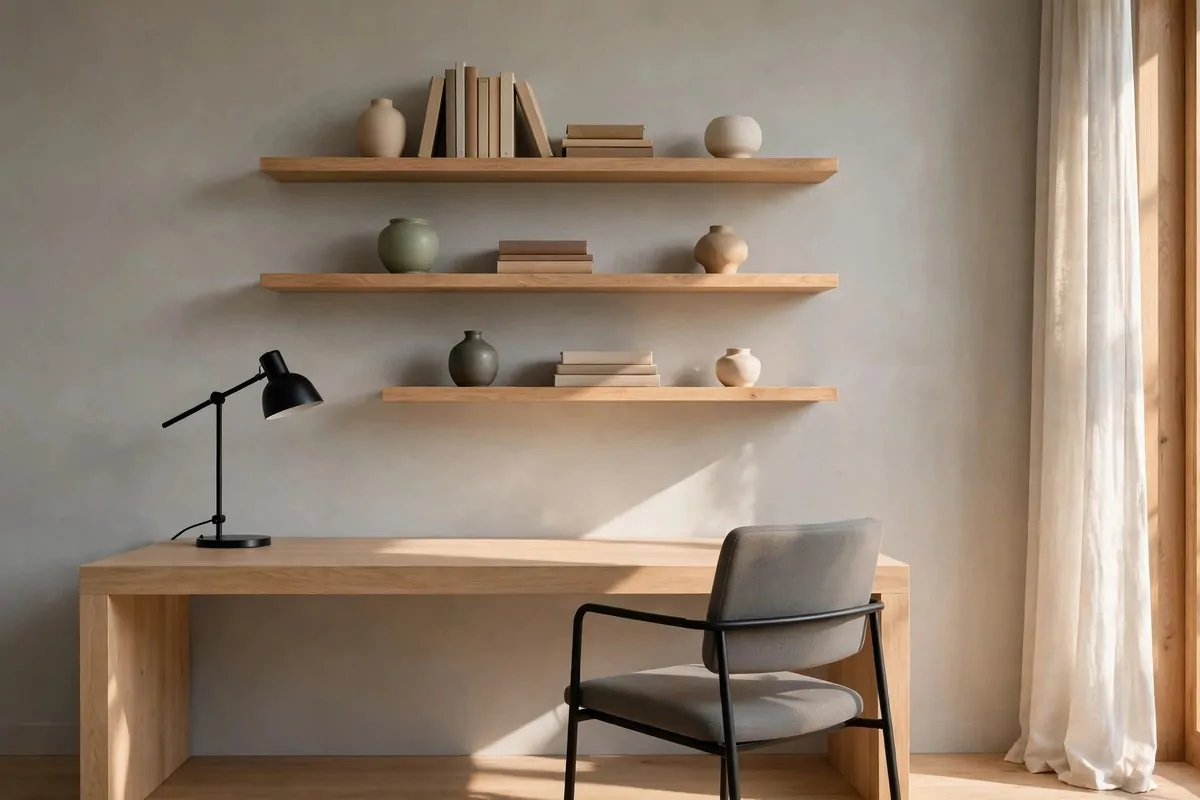
Floating shelves are shelves with no visible brackets. They just stick out of the wall. They look light and modern. Above a desk, they keep your books close without eating floor space.
The wall above your desk is usually blank. Maybe a clock. Maybe nothing. Floating shelves turn that dead space into storage. Two or three shelves hold your daily books and a plant or two.
Install them into wall studs. Books are heavy, and floating shelves carry their weight on hidden brackets. A shelf full of books pulling out of drywall is a bad surprise. Find the studs first.
Keep floating shelves a little curated. They are open and visible, so a messy pile shows. A neat row of books, a small frame, a plant. That is enough. The clean look is the whole point.
I like one shelf for work books, one for notebooks, and one for pretty things. Three shelves, three jobs. It keeps my desk area tidy and my eyes happy.
The gap between the shelves and the desk matters too. Leave enough room to sit and type without hitting your head on books. About two feet is comfortable.
Stagger the shelf lengths for a playful look. One long shelf, one short shelf. It looks designed instead of plain. Just keep them level.
Do not overload the ends of floating shelves. The middle holds weight best. Heavy books go center, light decor goes at the edges.
13. Roll In a Little Book Cart
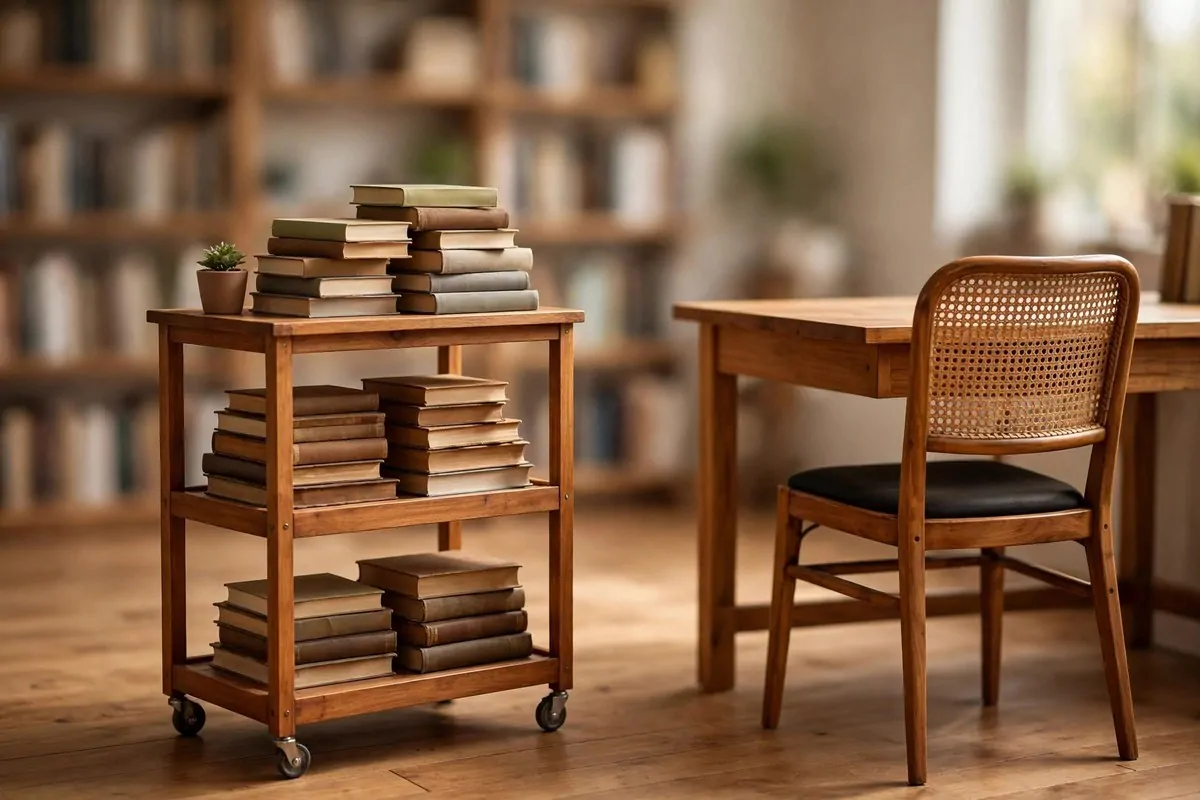
A book cart is a small rolling shelf on wheels. You push it where you need it. By the desk in the morning. By the reading chair in the evening. It follows you around like a helpful pet.
This is perfect if your main shelves are full. The cart holds your current books. The ones you are reading this month. The research for this week’s project. Your active stack.
Carts come in metal, wood, and rattan. A wooden one looks best in a library office. Pick one with at least two tiers. Three is even better if you can find it.
The top of the cart is a bonus surface. Your current book, a small notebook, a pen. Everything for today sits there. When the day ends, you roll the cart into a corner. The desk stays clean.
I keep my cart’s shelves sorted by mood. Top shelf for work reading. Middle shelf for fun reading. Bottom shelf for books to give away. It makes choosing my next book so easy.
The wheels should have locks. A cart that rolls away while you reach for a book is annoying. Most carts have little brakes on two wheels. Click them on when you park it.
Label the cart shelves with little tags if you like order. Work, fun, give away. It sounds fussy but it makes choosing a book so quick.
A cart also makes a great side table for guests. Roll it over, set drinks on top. Then roll it back. Furniture that moves earns its keep.
14. Split the Room with a Bookshelf
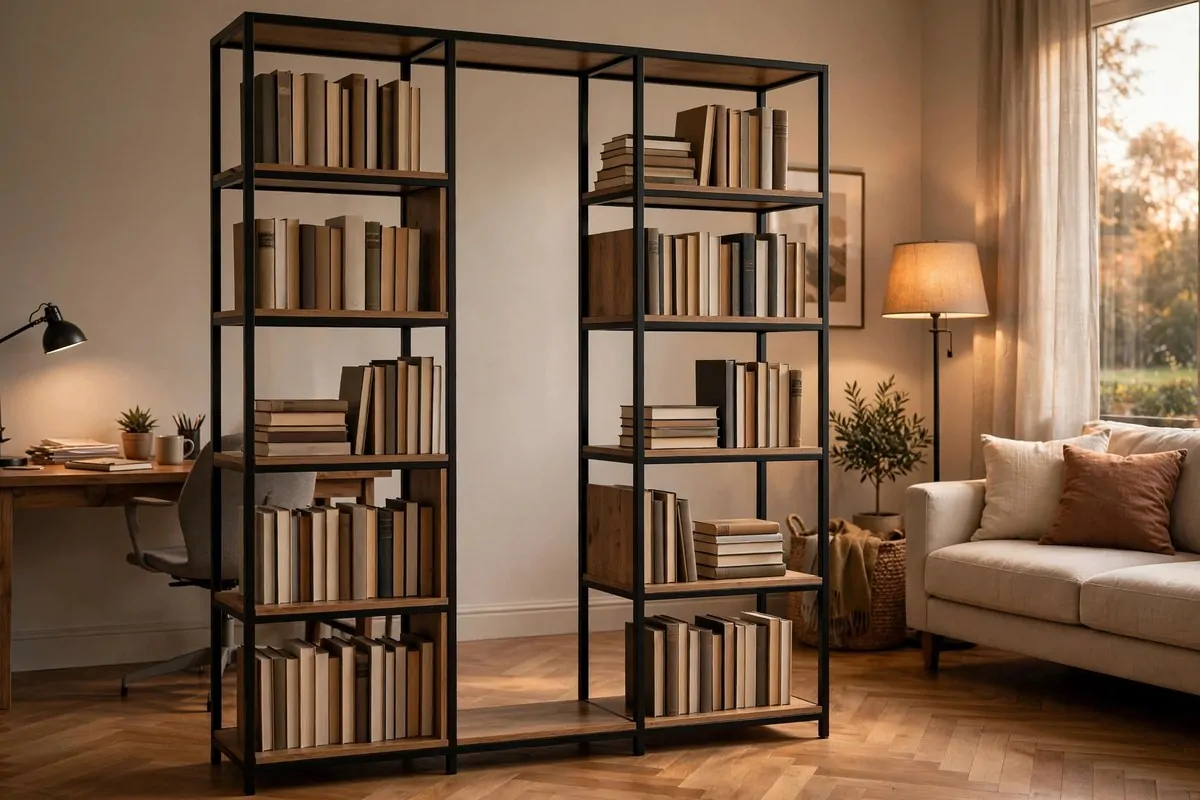
Got a big open room? A bookshelf down the middle makes two rooms out of one. Work side on one side, reading side on the other. One piece of furniture, two jobs.
Use a double-sided bookcase. Open on both sides so both rooms get the benefit. Your office library gets twice the shelf space for one footprint. That is smart shopping.
Anchor it well. A tall shelf standing in the middle of a room can tip if it gets bumped. Fix it to the floor or the ceiling. Safety first, always.
This trick is wonderful for couples who share a home office. One side is your zone, the other side is theirs. The books sit in the middle like a friendly wall. You see each other less, you fight less.
Decorate the two sides differently. The work side can be tidy and serious. The reading side can be soft and cozy. The shelf itself holds books on both faces.
Leave a gap at one end so you can walk around. Do not box yourself in completely. A bookshelf wall with one open end feels like a room. A fully closed one feels like a trap.
Put a rug on the reading side and a mat on the work side. The floors tell you which zone you are in. Your feet learn faster than your brain.
A double-sided shelf needs styling on both faces. Do not let the back go messy. Both sides are someone’s view.
15. Hide a Fold-Down Desk in the Bookcase
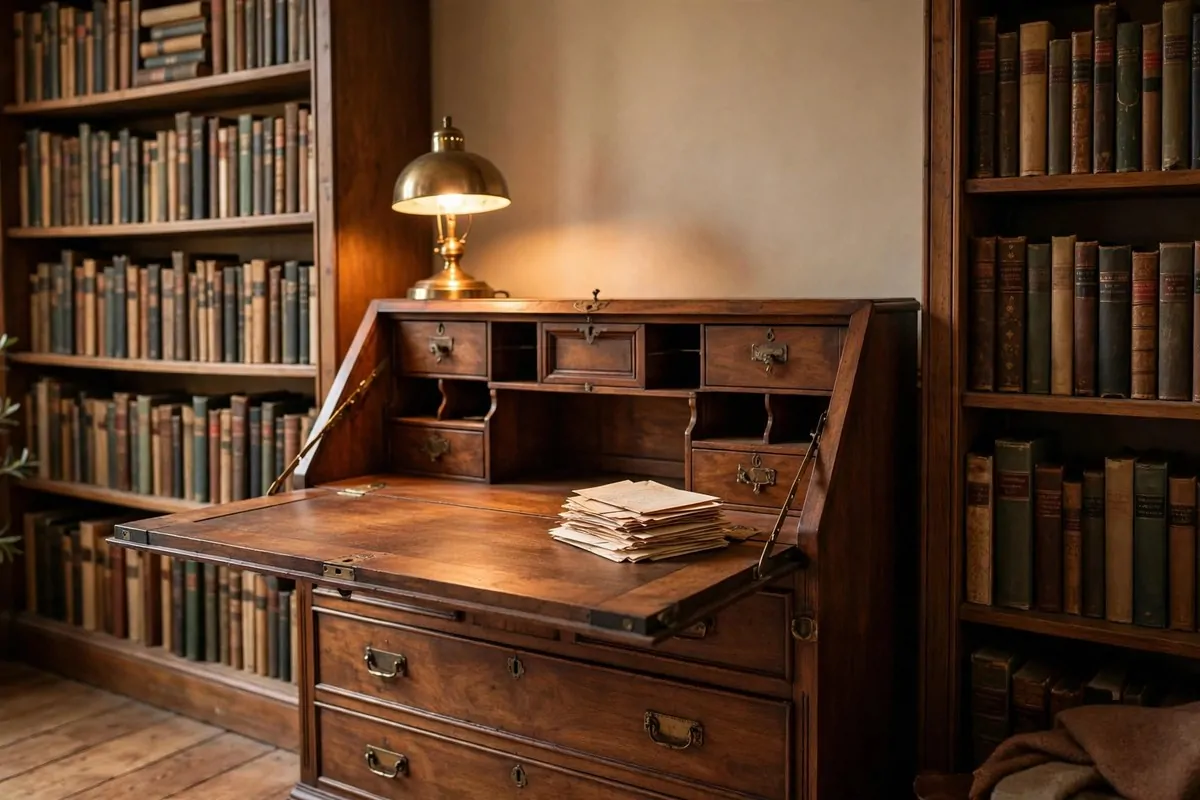
This is my favorite trick for tiny spaces. A secretary desk has a front panel that folds down into a writing surface. Fold it up when you are done, and the desk disappears into the bookshelf.
Closed, it looks like a tall narrow bookcase. Open, it is a full desk with little cubbies for pens and letters. It is like a magic trick you can do every day.
These desks are everywhere in secondhand stores. People call them old-fashioned. That means they are cheap. A little polish and yours looks like an antique treasure.
The fold-down desk forces you to stay tidy. You cannot close it if your papers are everywhere. So you clean up every evening. Your work life gets a little shutdown ritual for free.
Inside the little cubbies, keep your daily tools. Pens, stamps, sticky notes, a charger. Everything has a tiny home. When the panel closes, it all hides away.
If your office doubles as a guest room, this desk is perfect. Guests see a pretty bookcase, not a messy workspace. You keep your work life and your home life in separate boxes. Literally.
Here is a quick way to compare this idea with a few others for small rooms.
| Idea | Floor space needed | Best for |
|---|---|---|
| Fold-down secretary desk | Almost none | Guest room offices |
| Ladder shelf beside desk | Very little | Corners and nooks |
| Rolling book cart | Moves around | Active readers |
| Desk between bookcases | One wall | Guest room offices |
16. Layer Three Kinds of Light
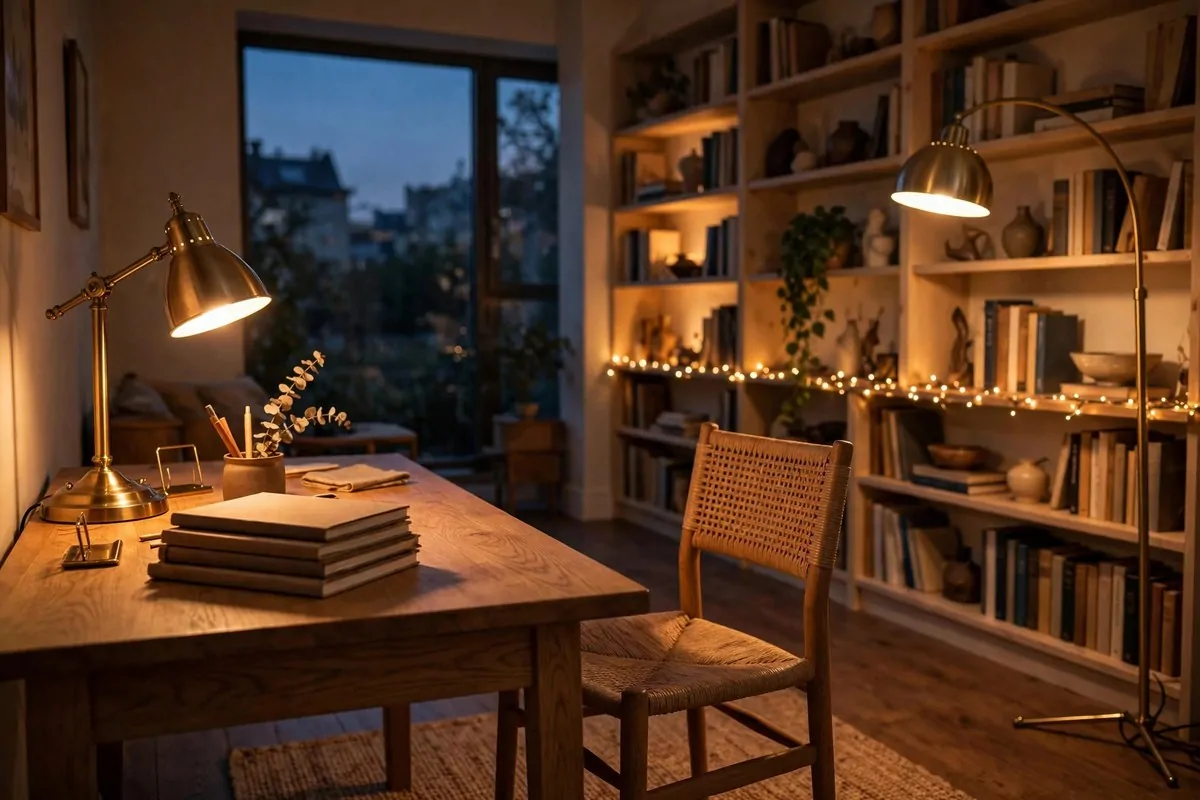
One light is never enough for an office library. You need three. A desk lamp for work. A floor lamp for reading. And a soft glow for the evenings. Three layers, three moods.
The desk lamp is your workhorse. It lights your keyboard and your papers. A swing-arm lamp is best because you can aim it. Point it at your work, not at your screen. Your eyes will thank you.
The floor lamp belongs to the reading corner. It arcs over your chair and pours light on the page. Pick one with a shade that pushes light down. Bare bulbs glare and tire your eyes fast.
The third layer is the cozy one. Fairy lights along a shelf. A small candle-style lamp. A plug-in nightlight with a warm tone. This is the light that makes the room glow when work is done.
Here is how the three layers work through the day.
| Time | Lights on | Mood |
|---|---|---|
| Morning work | Desk lamp plus daylight | Bright and focused |
| Evening reading | Floor lamp | Soft and calm |
| Night wind-down | Cozy glow only | Warm and sleepy |
All three should be warm white. Mixed light colors make a room feel strange. Keep the tone the same and the room feels like one happy place.
Put each layer on its own switch if you can. Smart plugs make this easy. Then you tap your phone and the room changes its mood in one second.
I run my cozy layer every evening even when I am not in the office. The glow in the hallway makes the whole house feel warmer. Little things like that matter more than we think.
17. Mix Open Shelves with Closed Cabinets
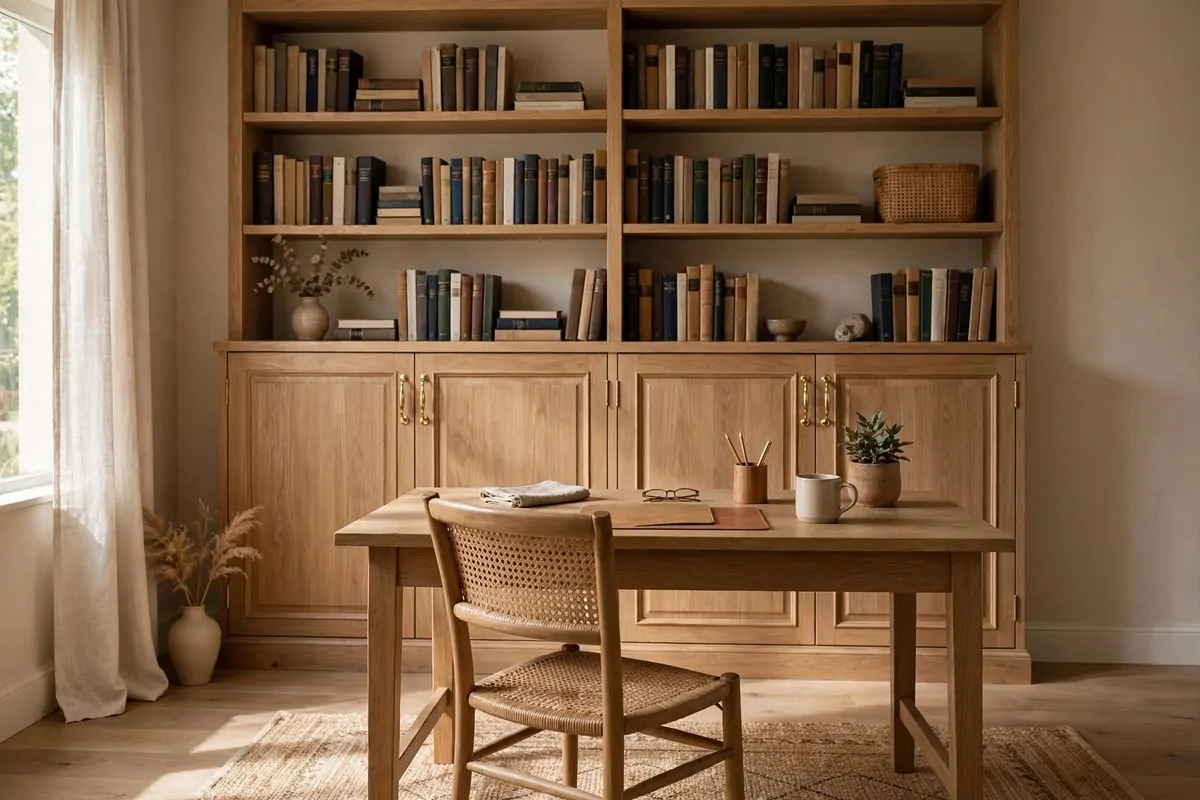
Open shelves are beautiful. They show your books. They also show your mess. The fix is simple. Open shelves on top for the pretty stuff. Closed cabinets below for the chaos.
The bottom cabinets swallow everything ugly. Chargers, printer paper, tax folders, the laptop bag. They disappear behind doors. Your office looks calm even when it is not.
Bookcases with this combo are easy to find. Most storage brands sell them. Or put two short cabinets side by side and stack bookcases on top. It looks built-in when the widths match.
Keep the closed part locked if you have little kids. Mine once filled my file drawer with crayons. It took a whole weekend to fix. A tiny lock costs almost nothing.
The open shelves above should hold books and a few nice things. Not supplies. If a stranger walked in, this is what they would see. Make it the face you want to show.
I keep one rule for the top. For every ten books, one pretty object. A vase, a frame, a plant. It stops the shelves from looking like a storage room and makes them look like a library.
This mix also helps with dust. The closed cabinets need almost no cleaning. You only dust the open shelves. Half the work, twice the calm.
Measure your chargers and gadgets before buying the cabinets. Deep drawers hide tall items. Shallow ones hide paper. Pick the depth your mess needs.
18. Hang a Gallery Wall Above the Shelves
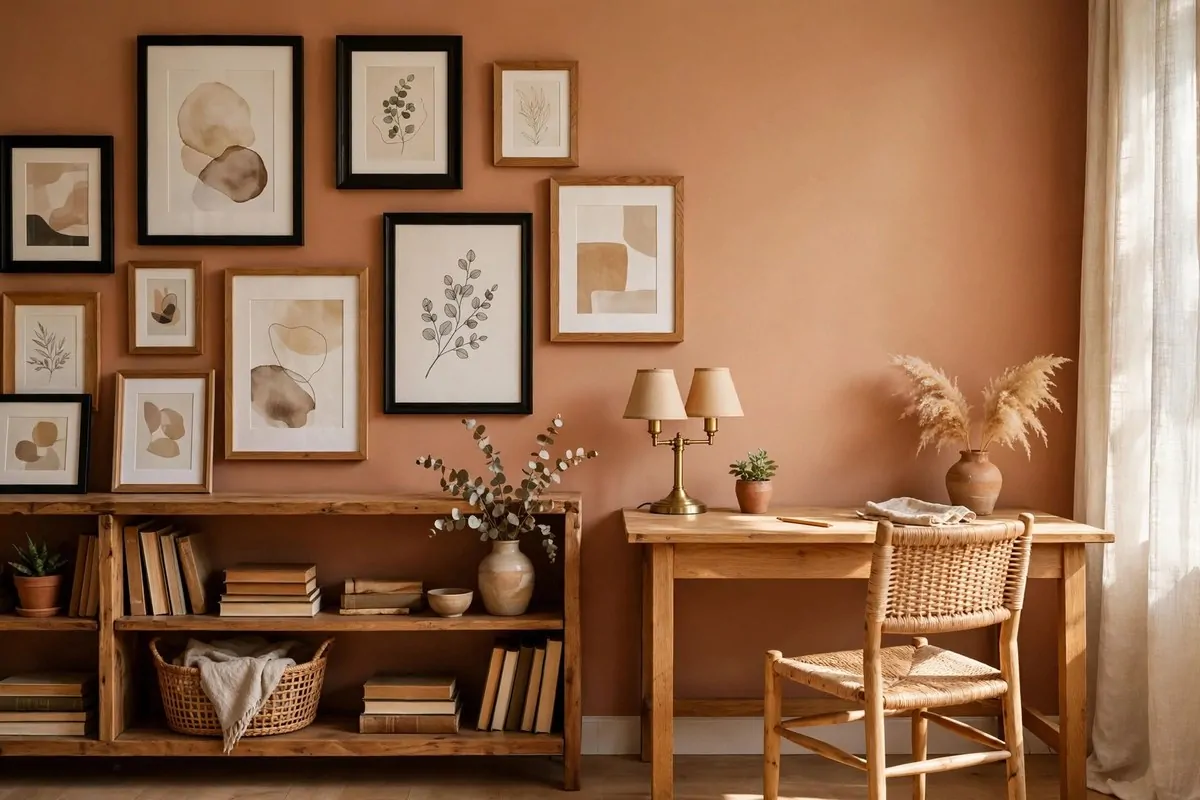
Books are art, but art is art too. A gallery wall above your low bookcases adds personality. Your office starts to look like you, not like a furniture store.
Pick frames in two colors. Black and wood is my favorite mix. Hang them in a loose grid above the shelf. Start with the biggest frame in the middle and work outward.
The art can be anything. Prints you love. Photos from trips. Your kid’s drawing in a nice frame. A quote that pushes you on hard days. This wall is yours.
Keep the bottom of the frames a few inches above the shelf top. You need that gap so you can dust and reach the books. About a hand’s width is perfect.
Gallery walls are forgiving. You can move things around for months until it feels right. Use small nails and the holes are tiny. Nobody will ever know how many times you changed it.
I hung mine over a weekend. It took four cups of tea and one argument with my husband about crooked frames. Now I look up from my laptop and see my favorite places. It makes hard work days softer.
Mix frame sizes but keep one color family. Big and small together looks lively. All black or all wood keeps it calm. Either way works.
Leave one frame empty at first. You will find the perfect print later. A gallery wall can grow slowly. It does not have to be finished on day one.
19. Build a Window Seat with Drawers
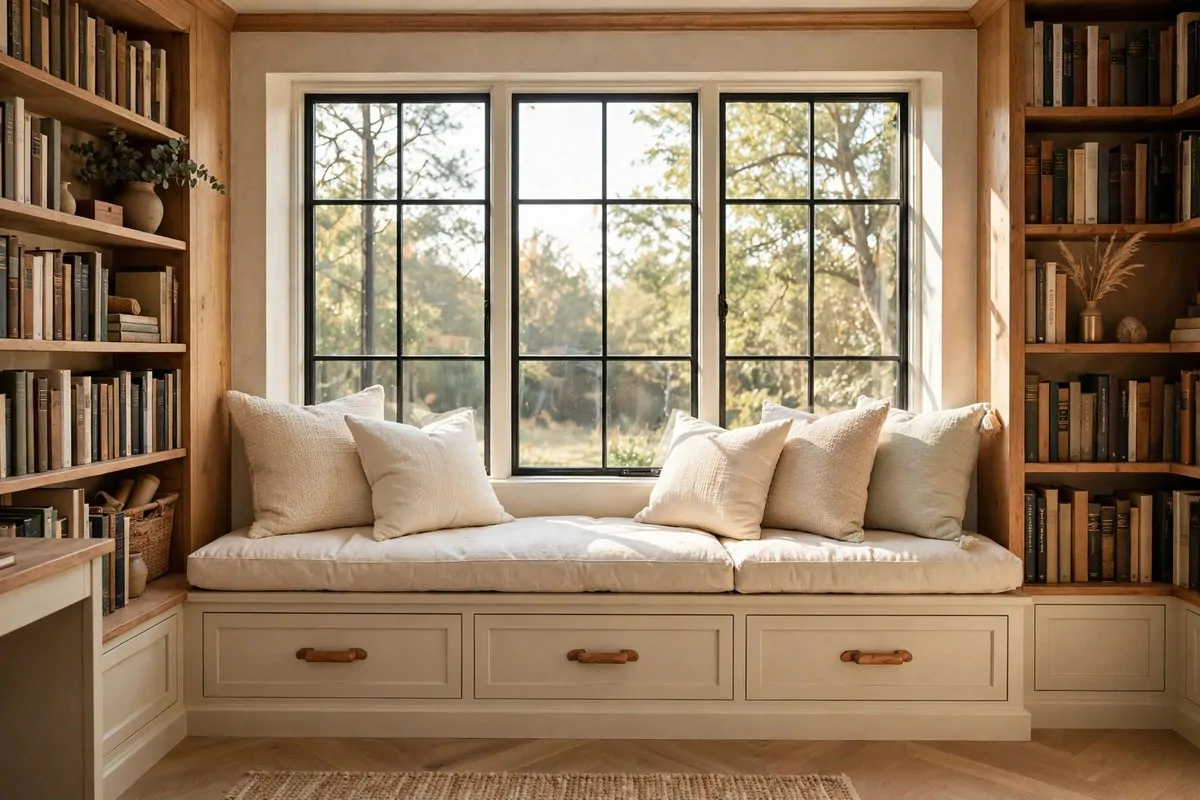
A window seat is a reading spot with storage hiding underneath. You sit on a cushion, you read in the daylight, and your office supplies live in the drawers below. Three wins in one.
Build it between two bookcases for the classic library look. The seat bridges the gap under the window. Add a thick cushion on top. Suddenly your office has the best seat in the house.
The drawers below are gold. They hold notebooks, pens, cables, all the boring stuff. Deep drawers swallow a lot. Label them if you share the office, so nobody mixes up your things.
The cushion needs to be thick. A thin cushion on a wooden seat gets hard fast. Four inches of foam wrapped in fabric is the minimum. Your back will tell you if you cheaped out.
Add pillows along the back. Big ones you can lean on. A throw blanket folded at one end. It should look so inviting that you cannot walk past it without sitting down.
This spot becomes the office favorite fast. Reading, thinking, taking calls, napping at lunch. I will not judge. Everyone needs a window seat nap sometimes.
Add a small shelf above the window for plants. They love the light up there. The green frames your view and softens the whole wall.
Keep the seat cushion cover washable. Window seats collect dust and pet hair fast. A cover you can toss in the wash saves the cushion.
20. Style Your Shelves with More Than Books
A shelf of only books looks like a warehouse. A shelf of books mixed with pretty things looks like a library. The difference is small objects placed with care.
The rule I follow is simple. Most of each shelf is books. The rest is breathing room. A small vase here. A framed photo there. A plant trailing over one edge. These little gaps let your eyes rest.
Group objects in odd numbers. Three small frames together. One tall vase alone. Odd groups look natural. Even groups look like a store display. I do not know why. It just works.
Leave some shelves mostly empty at first. You will find things over time. A shell from a beach trip. A funny mug. A plant cutting from a friend. Your shelves should collect your life, not just your books.
Plants are the best shelf friends. A pothos on the top shelf grows down like a green waterfall. A small succulent on a middle shelf adds life to a serious row of spines. They are cheap and they forgive you.
Change one shelf every season. Swap the objects, move the plants, turn some books face-out like a bookstore. It takes ten minutes. Your office feels fresh without spending a rupee.
Here is my little shelf styling formula.
| Slot | What goes there | Why it works |
|---|---|---|
| Eye level | Favorite books face-out | Shows your taste |
| Middle shelves | Books plus one object each | Calm and balanced |
| Top shelf | Plants and tall frames | Draws the eye up |
| Bottom shelf | Heavy books and baskets | Grounds the whole unit |
Start with just one shelf. Style it, step back, and see how it feels. Then do the next one. By the end of the day your bookcase will look like it belongs in a magazine. And it will still be full of your books.
Your desk and your bookshelf called a truce in my house. They can do the same in yours. Pick one idea from this list today. Just one. Move a chair, hang a light, roll in a cart. Small steps turn a plain office into a library you love working in.