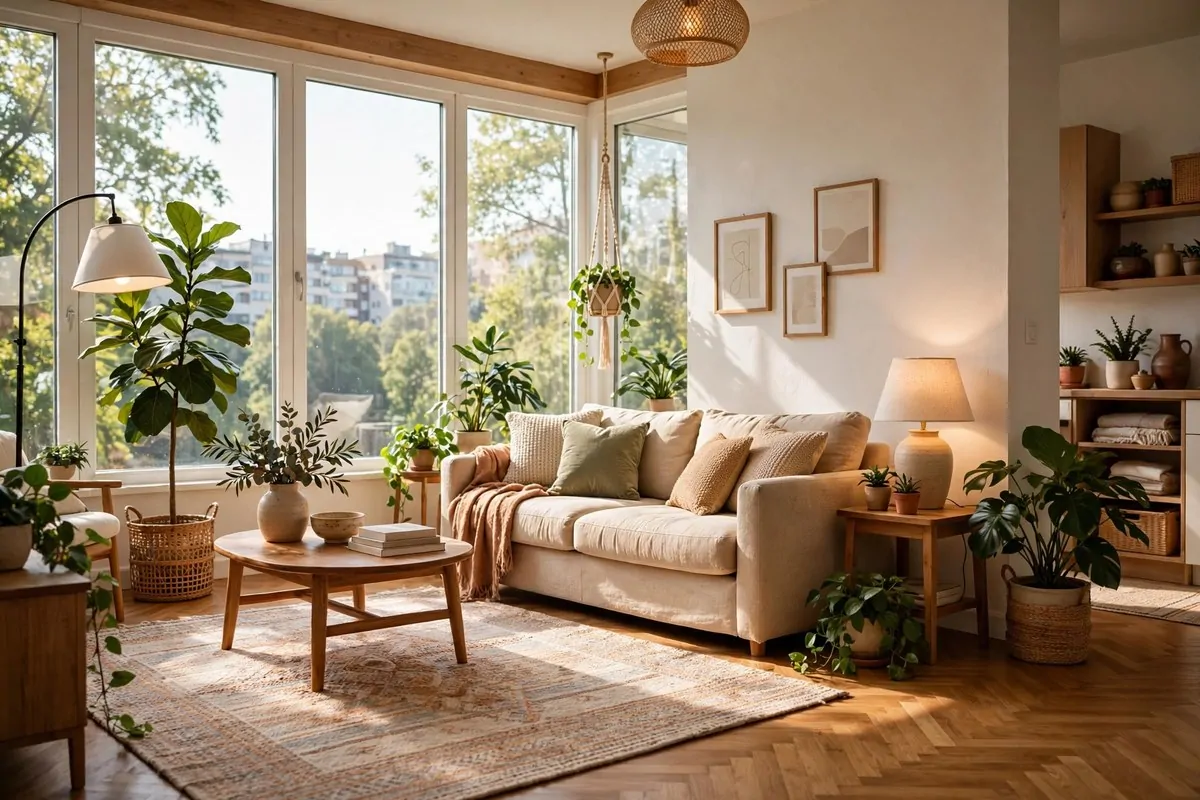
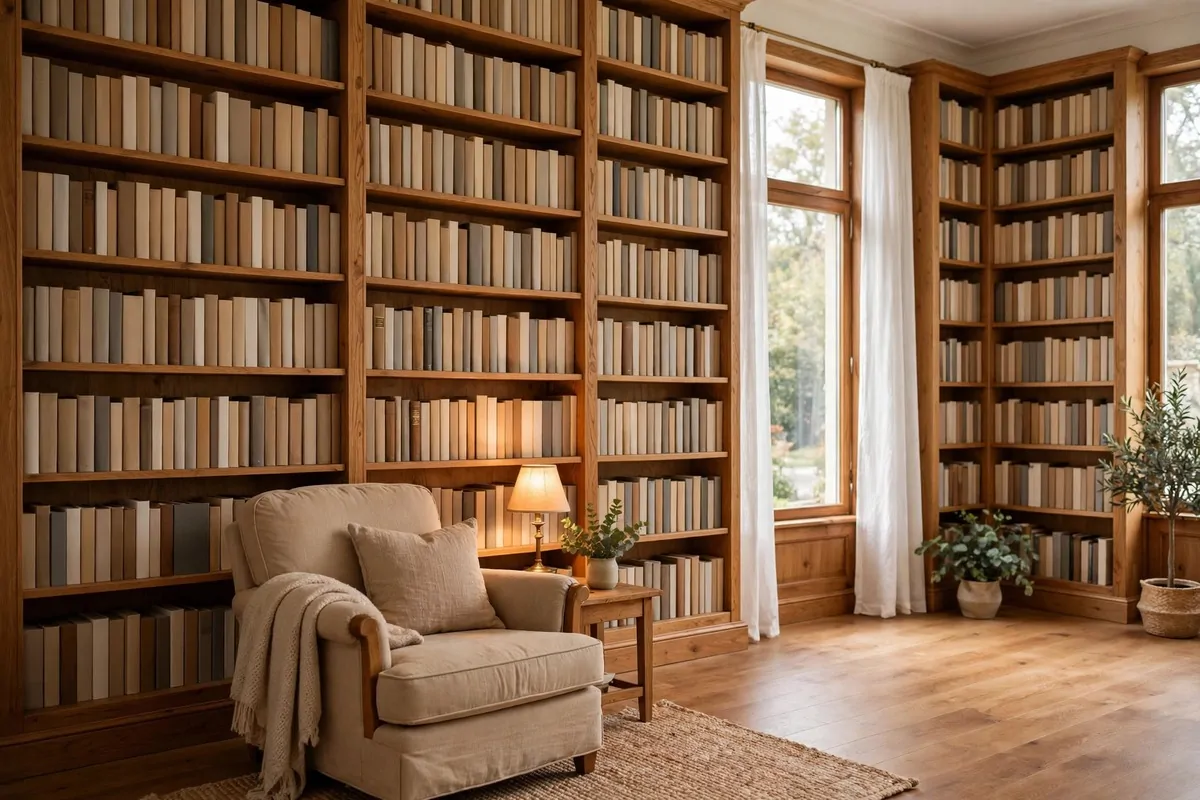
26 Vertical Storage Ideas That Make Small Homes Feel Bigger

My hallway used to feel like a squeeze every single morning.
Shoes piled up by the door, and bags hung off the chair, and I felt stuck before my day even started.
I kept buying small boxes and baskets, but the floor still looked full.
Then I looked up, and I saw all the empty wall space I never used.
That one change helped me a lot. I moved things up the wall, and the floor felt free again.
You do not need a big home to feel calm. You just need to use the tall space you already have.
In this one post, I share all 26 vertical storage ideas that help small homes feel bigger.
1. Tall Bookshelves That Reach the Ceiling
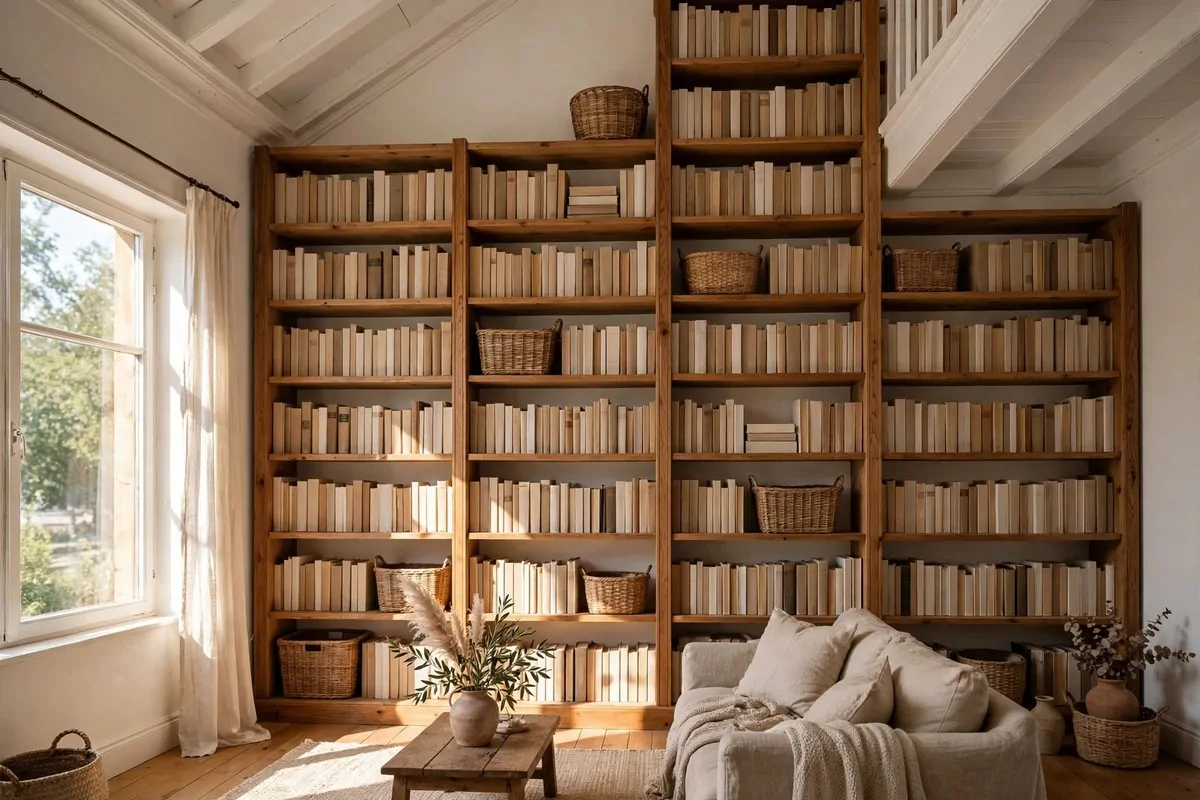
I love a tall bookshelf, because it uses the wall from floor to top.
My books used to sit in piles on the floor. Now they stand in rows, and I can see every title.
Put the books you read most at eye level. Put the ones you rarely touch up high.
A small step stool helps you reach the top shelf. Keep it close by, so you actually use it.
Typical cost is $60 to $250 for a tall bookshelf, and a simple wood one works fine.
Leave a little space on each shelf. A full shelf looks heavy, and a little air makes it look calm.
You can mix books with a small plant or a plain vase. It keeps the shelf from looking like a shop.
I keep a basket on the bottom shelf for bits and bobs. It hides the mess, and I can pull it out fast.
Measure your wall first. A shelf that is too wide will crowd the room, so check the width twice.
2. Floating Shelves Up High
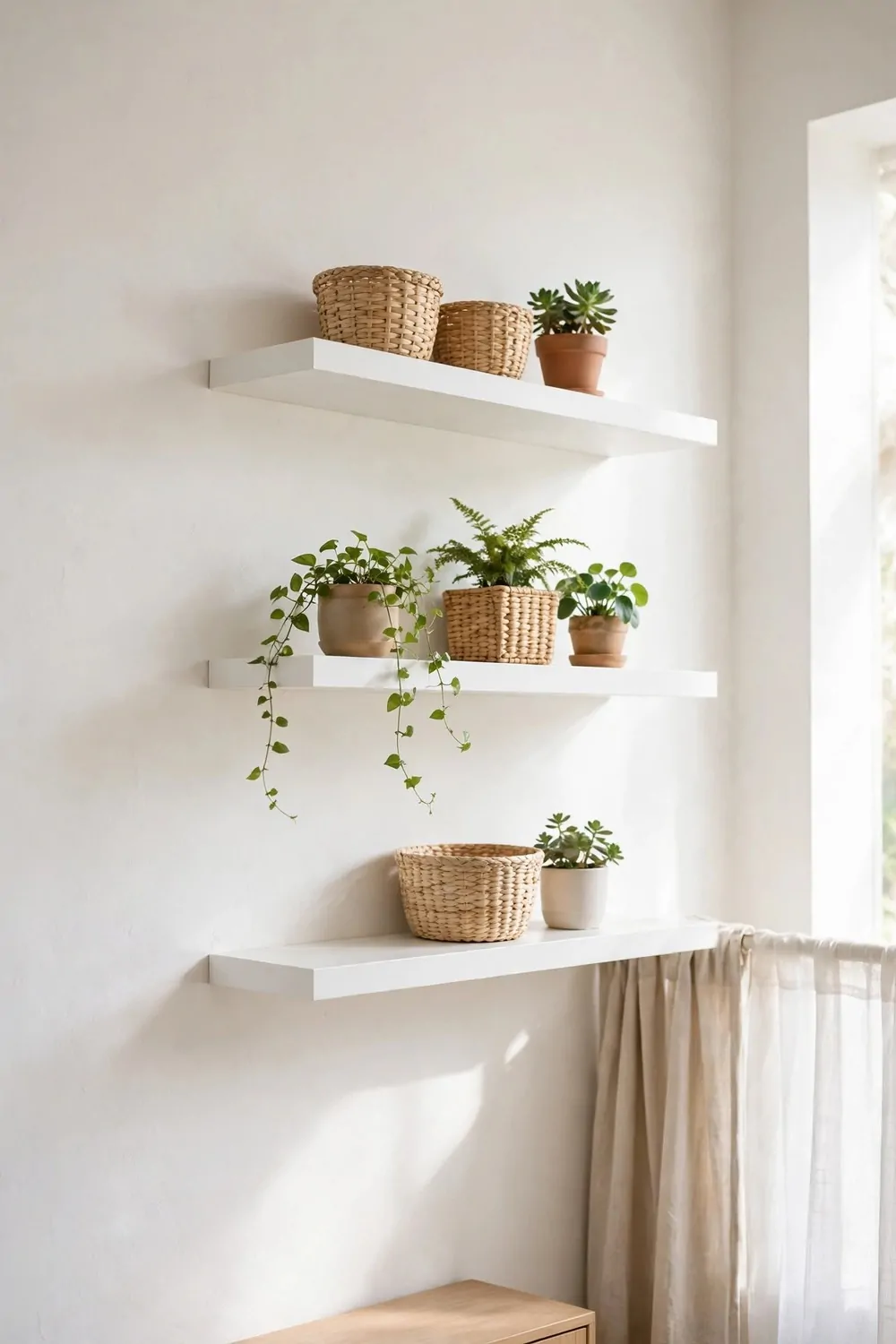
Floating shelves look light, because you cannot see the brackets under them.
I put two long shelves high on my living room wall, and they hold books and jars I do not use each day.
Keep the things you need daily lower down. The high shelves are for the stuff you reach for once in a while.
Typical cost is $20 to $80 for a set of floating shelves, and you can fit them in an afternoon.
Use a level when you fix them to the wall. A wonky shelf will bug you every time you look at it.
I like to keep one shelf clear for a few pretty things. It gives my eyes a rest, and the room feels calm.
Do not overload a floating shelf. Heavy books need strong fixings, so check what your wall can hold.
You can run a row of shelves around the top of a room. It sounds odd, but it frees up so much floor space.
Start with one wall, and see how it feels. You can always add more shelves later if you love them.
3. Over-the-Door Racks
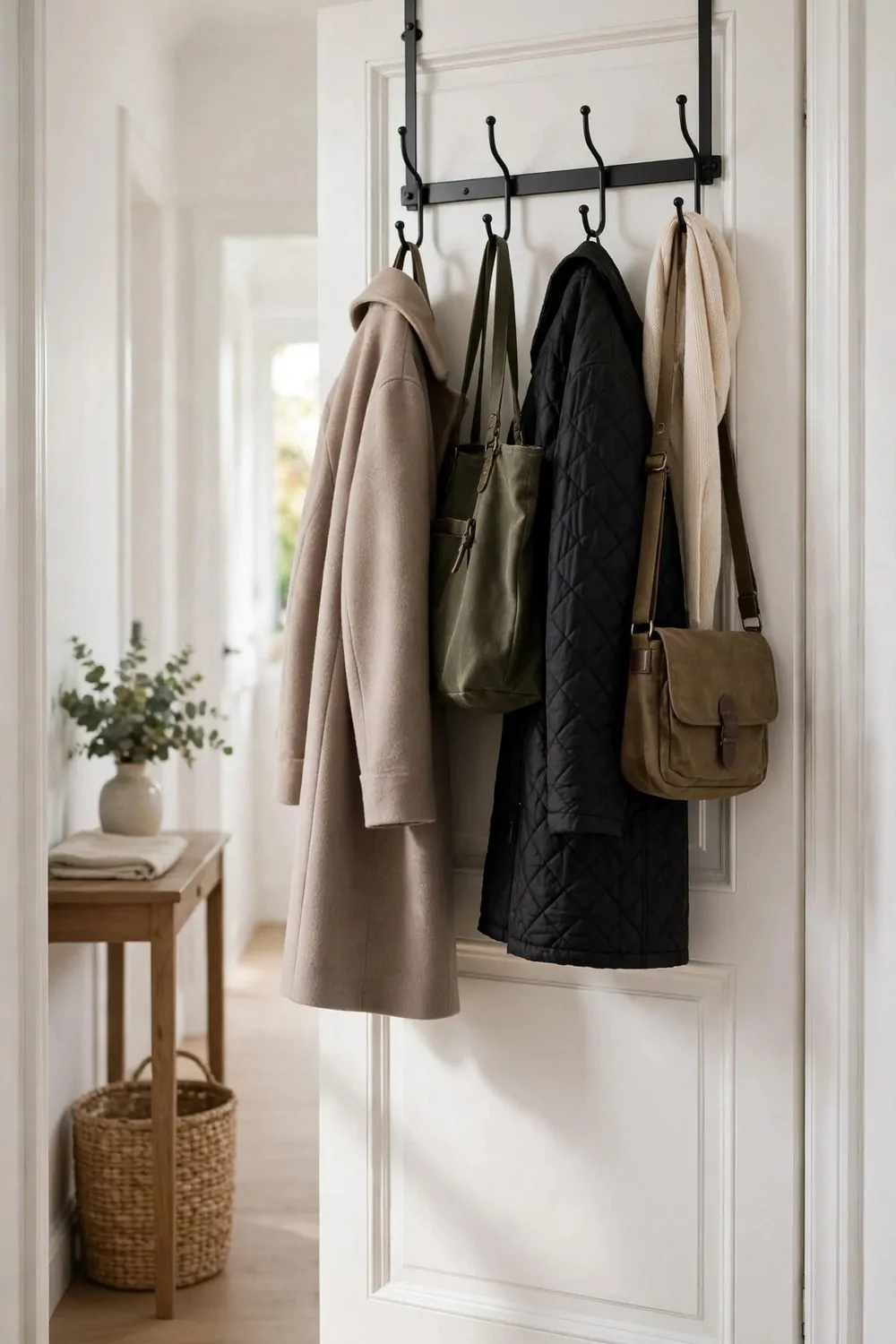
An over-the-door rack hangs on the back of a door, so it uses space you already have.
I use one on my bedroom door for scarves and belts. It takes two minutes to hang, and no holes in the wall.
You can use one in the kitchen too, for spice jars or cleaning sprays.
An over-the-door hook rack is $15 to $25, a basket rack is $20 to $35, and a shoe rack is $25 to $45. Typical cost is $15 to $45 for an over-the-door rack, and most fit a normal door.
Check that the door still shuts well after you hang it. If it sticks, try a thinner hook.
Keep the rack light, so the door does not sag. Small jars and flat things work best.
I keep my rack tidy by giving each hook one job. One hook for belts, one for scarves, and one for a small bag.
Kids can reach a low rack on their own door. It helps them hang up their own things, and it saves you a job.
If you rent your home, this is a great pick. You can take it down when you move, and leave no marks behind.
| Rack type | Typical cost | Best for |
|---|---|---|
| Hook rack | $15 to $25 | Coats and bags |
| Basket rack | $20 to $35 | Small bits and shoes |
| Shoe rack | $25 to $45 | Shoes by the door |
4. Wall-Mounted Hooks and Pegs
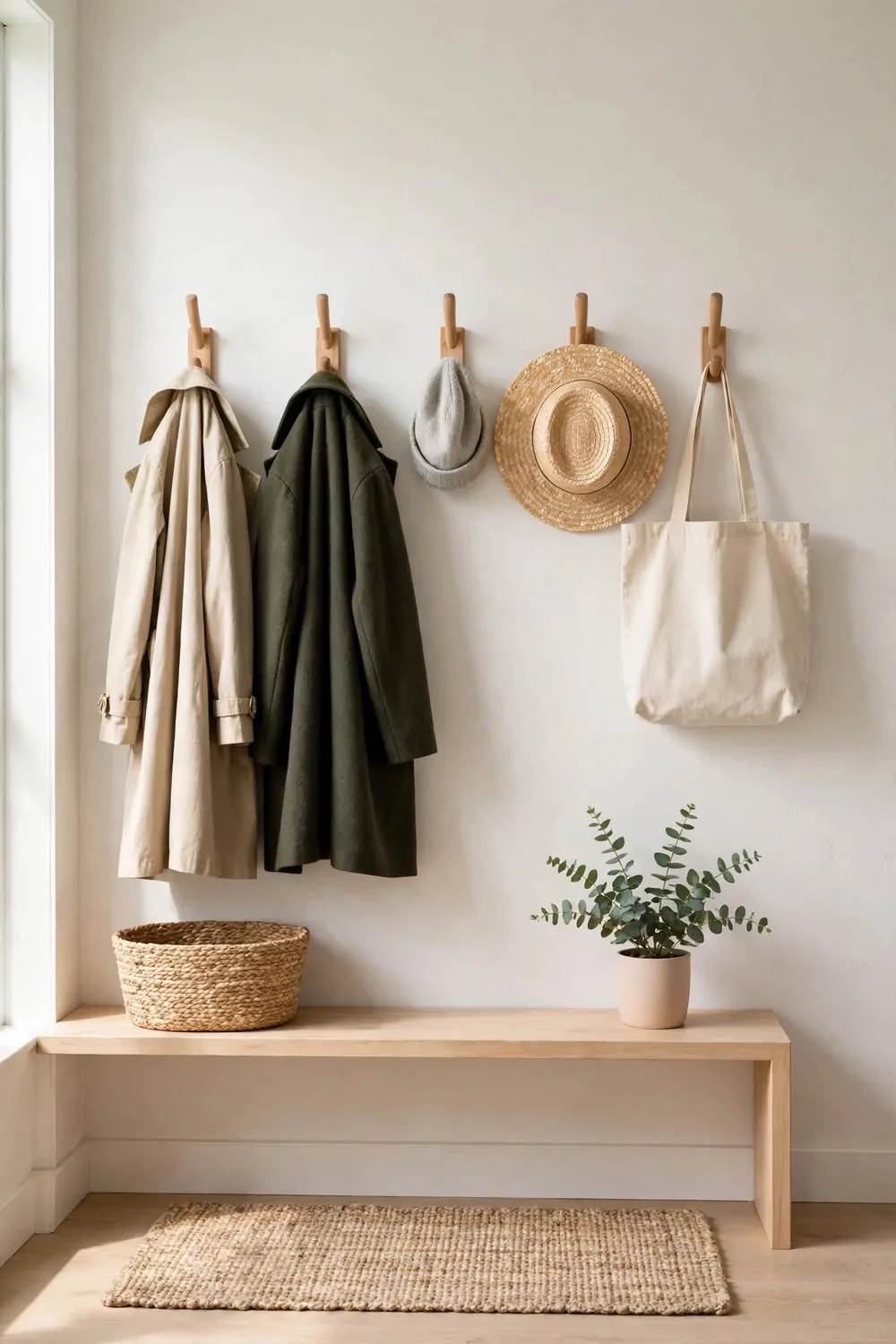
A row of hooks on the wall can hold coats, bags, hats, and keys.
I put a row by my front door, and now I never hunt for my keys. They hang in the same spot each day.
Hooks work in the bathroom too, for towels and robes. They dry faster on a hook than on a pile.
Typical cost is $10 to $50 for a set of wall hooks, and you can fit them with a drill in half an hour.
Space the hooks wide enough for thick coats. If they sit too close, the coats bunch up and look messy.
I like simple wood pegs, because they suit most rooms. You can paint them to match your wall if you want.
Give each person in the home one hook. It stops the pile by the door, and everyone knows their own spot.
Put a small shelf above the hooks for hats or gloves. It uses the same bit of wall, and it keeps things together.
Check the hooks once in a while, and tighten any that feel loose. A firm hook holds a heavy bag with no fuss.
5. A Tall Narrow Pantry Cabinet
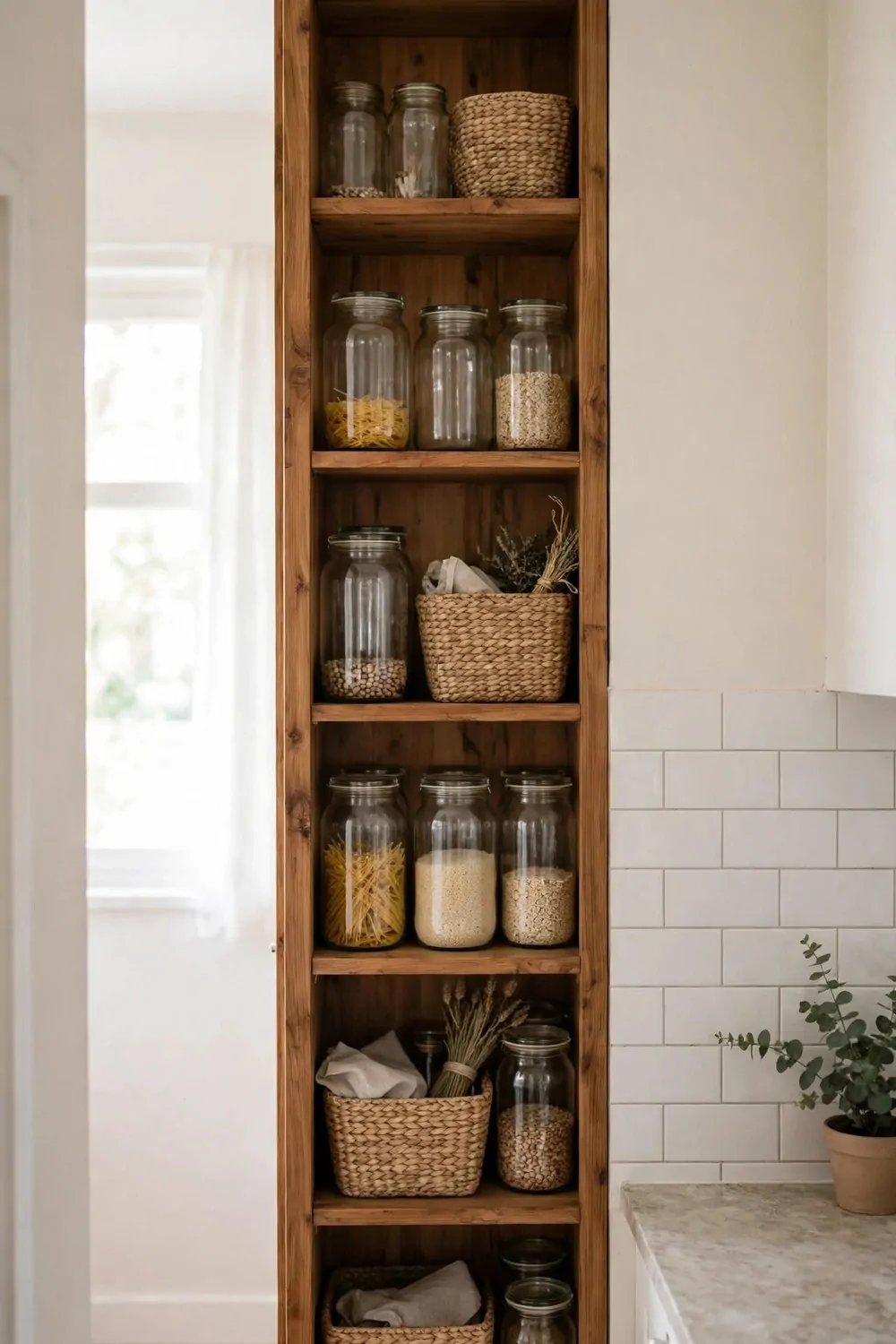
A tall narrow pantry cabinet fits in a slim gap, and it holds a lot of food and jars.
My kitchen had a thin gap next to the fridge, and it sat empty for years. Now a slim cabinet fills it, and I use it each day.
Put tins and jars you use most at eye level. Put big bags of rice or flour down low, where they are easy to lift.
Typical cost is $90 to $300 for a tall narrow pantry cabinet, and a slim one fits most kitchens.
Use clear jars inside, so you can see what you have. It stops you buying the same thing twice.
I label the shelves with small bits of tape. It sounds simple, but it helps the whole family put things back right.
A pull-out shelf inside makes the back easy to reach. You slide it out, grab what you need, and slide it back.
Keep the top shelf for things you use once a month. A small step stool helps you reach it with no trouble.
Measure the gap twice before you buy. A cabinet that is a tiny bit too wide will not fit, and that is a sad trip back to the shop.
6. Stackable Bins on Top of Wardrobes
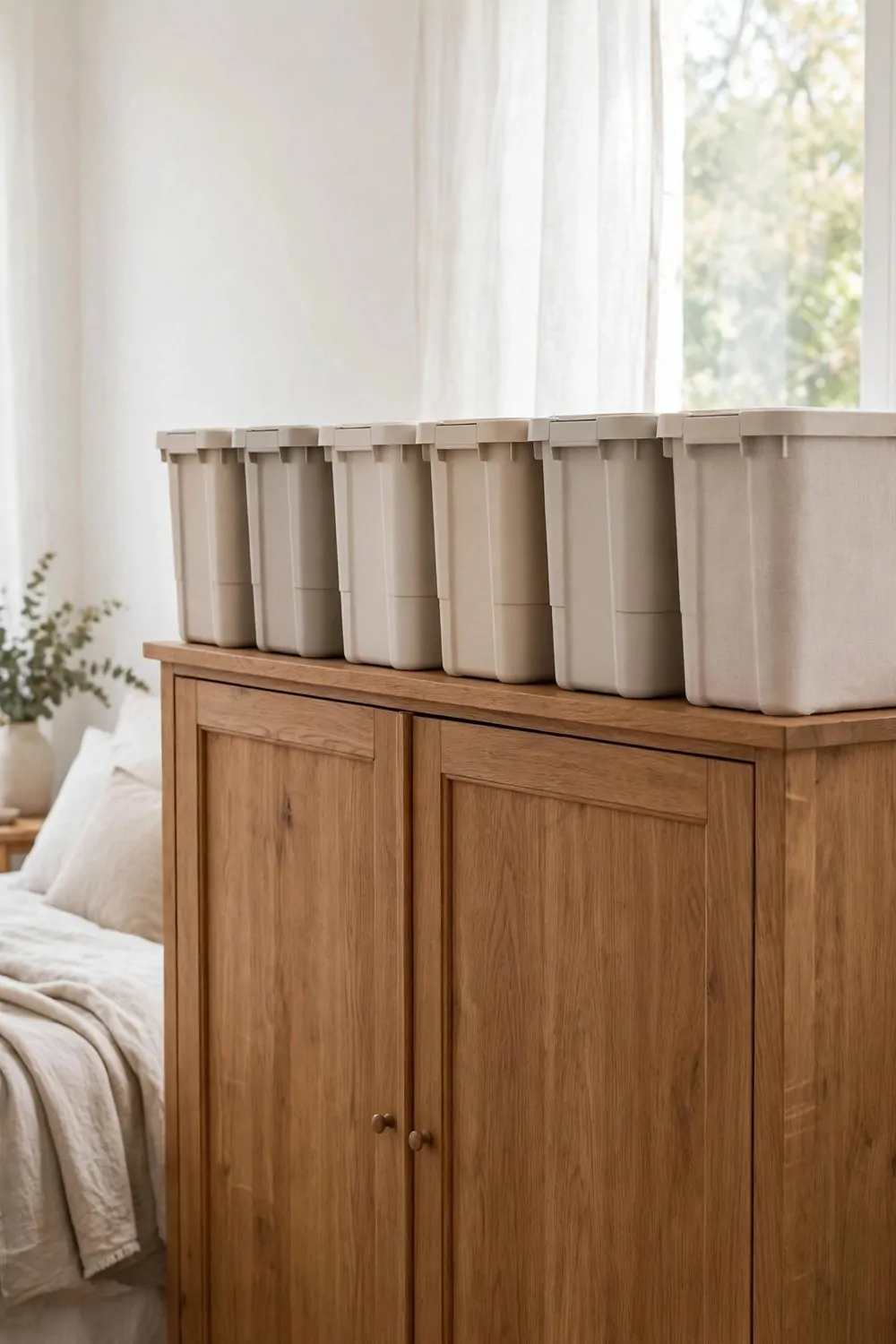
The top of a wardrobe is dead space in most homes, and stackable bins fix that fast.
I keep out-of-season clothes up there in plain bins. They stay clean, and they stay out of my way.
Pick bins with lids, so dust stays out. Clear bins help, because you can see what is inside without opening them.
Typical cost is $15 to $60 for a set of stackable bins, and you can start with just two or three.
Label each bin on the front. A simple tag that says winter clothes or spare bedding saves a lot of hunting.
Do not stack the bins too high. Two or three is safe, and you can still lift one down with no wobble.
I keep a small step stool in the bedroom for this job. It makes the top of the wardrobe easy to reach.
Use the bins for things you need once in a while, like spare blankets or gift wrap. Daily stuff should stay lower down.
Check the bins once a season, and clear out what you no longer need. A tidy top makes the whole room feel calm.
7. A Ladder Shelf in the Corner
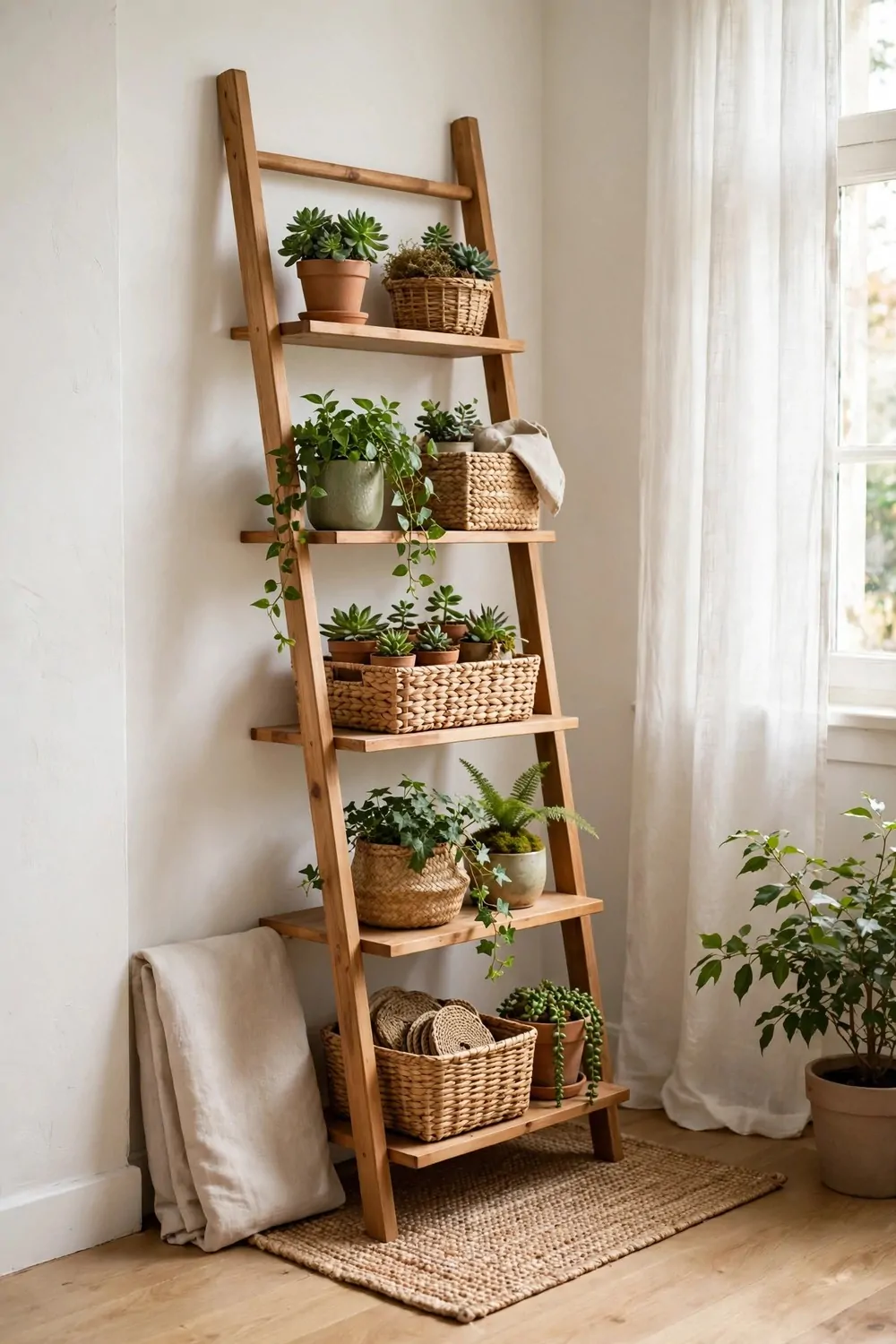
A ladder shelf leans on the wall, and it gets narrower as it goes up.
I love it in a corner, because corners often sit empty. The shelf turns a dead corner into a useful spot.
Put heavy things on the bottom shelf, and light things on the top. It keeps the shelf steady, and it looks right.
Typical cost is $40 to $150 for a ladder shelf, and a wood one suits most rooms.
You can use it in the bathroom for towels and jars. You can use it in the living room for books and plants.
I keep my ladder shelf light, with a few books and a small plant. Too much stuff makes it look crowded.
Make sure the feet sit flat on the floor. If the shelf wobbles, move it a tiny bit, or put a small pad under one foot.
A ladder shelf is easy to move, so you can try it in one room and shift it to another. I moved mine three times before I found its best spot.
Keep the top shelf for pretty things you like to see. It draws your eye up, and the room feels taller.
8. Hanging Baskets from the Ceiling
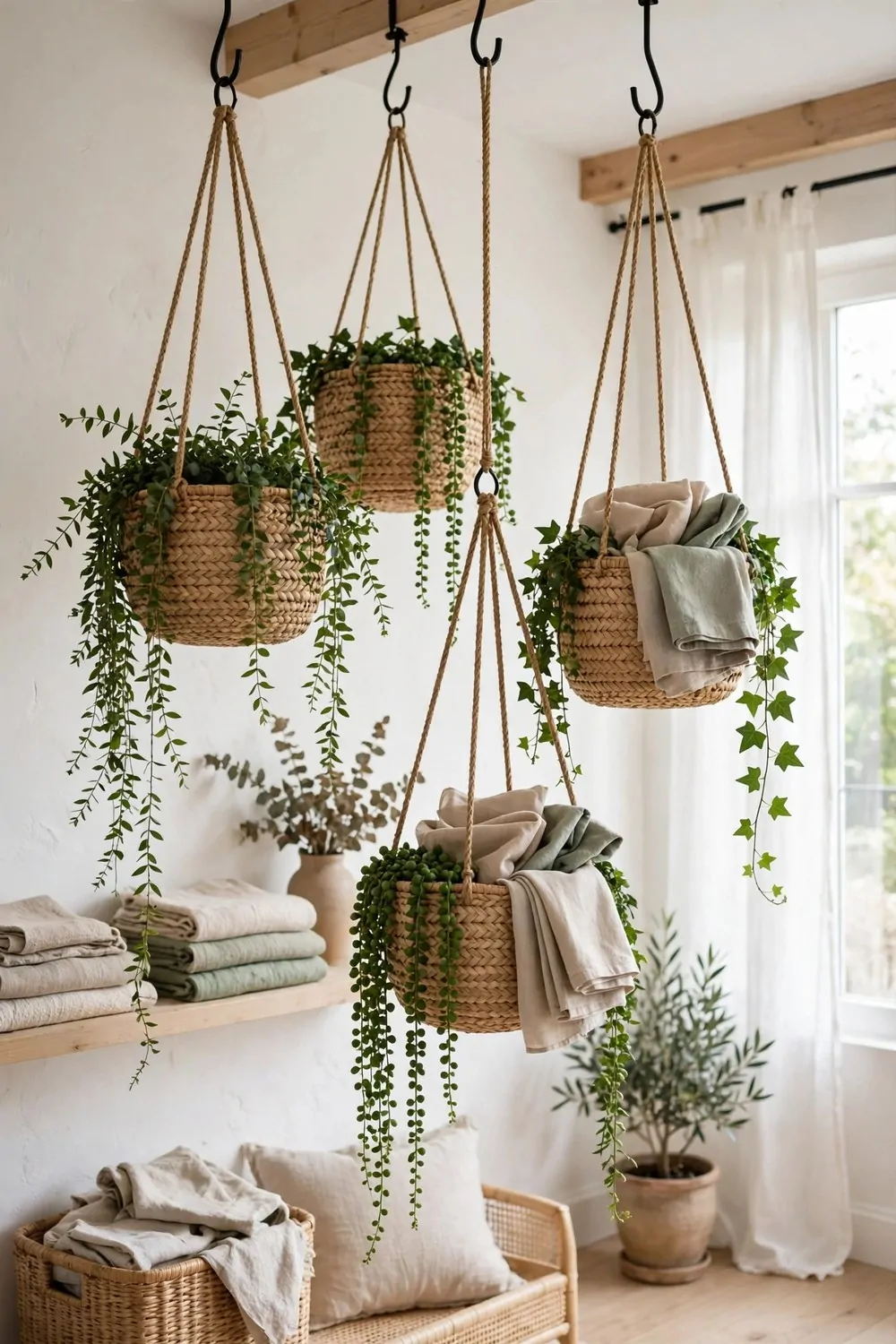
Hanging baskets use the air above your worktop, so your counters stay clear.
I hang fruit in a basket in my kitchen, and it frees up a whole shelf in the cupboard. It looks nice too.
You can hang baskets in the bathroom for towels, or by the door for hats and gloves.
Typical cost is $20 to $70 for hanging baskets and hooks, and you can fit them in under an hour.
Make sure the hook goes into a strong part of the ceiling. A weak fix will not hold a full basket, so ask for help if you are not sure.
Keep the baskets at a height you can reach. Too high, and you will never use them. Too low, and you will bump your head.
I use one basket for fruit, one for onions, and one for bread. Each basket has one job, so nothing gets lost.
Use light baskets, like wire or woven ones. Heavy baskets pull on the hook, and they are hard to lift down.
Check the baskets once a month, and clear out anything old. A fresh basket looks good, and it smells good too.
9. A Pegboard Wall for Tools
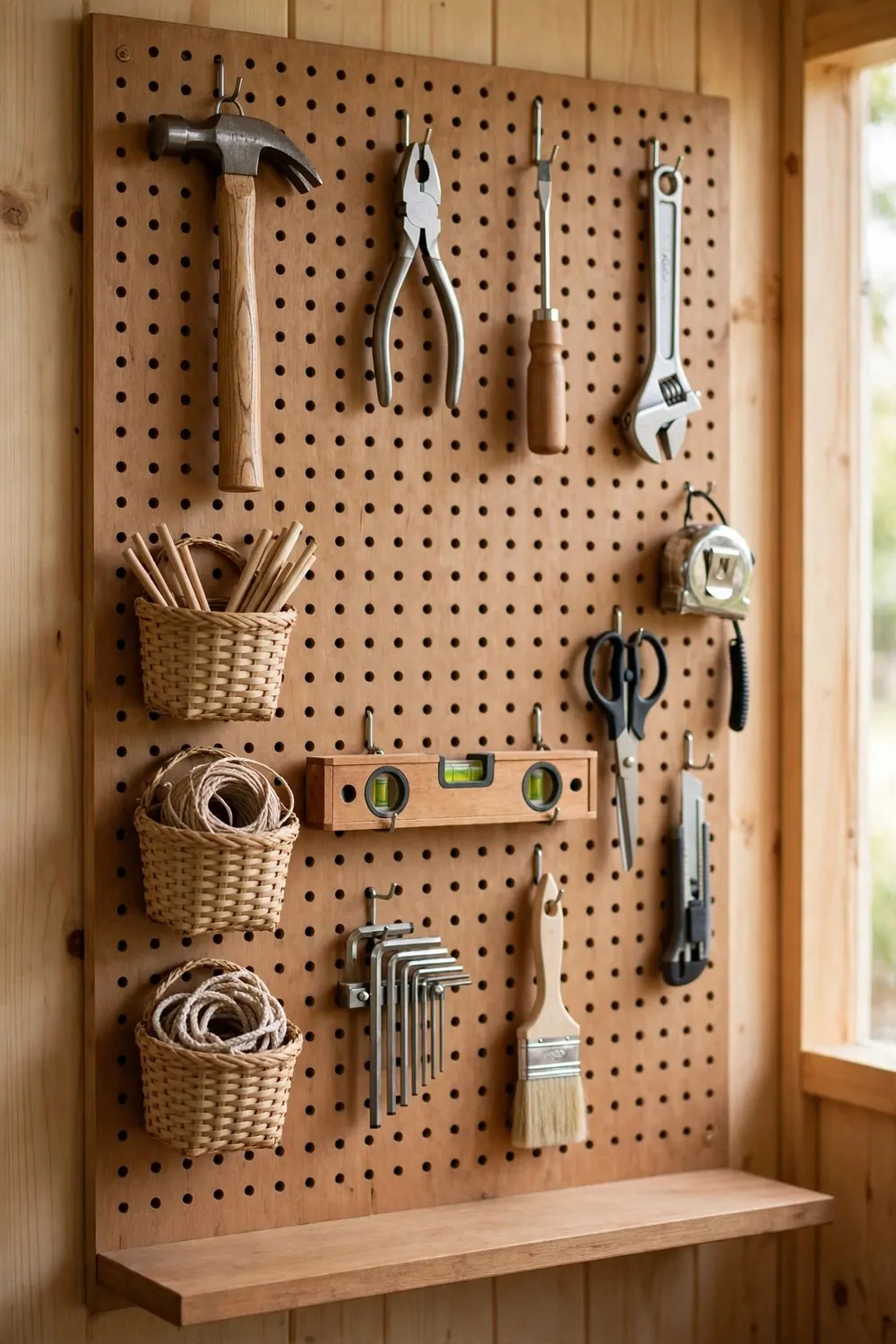
A pegboard is a flat board with small holes, and hooks fit in the holes to hold tools.
I put one in my work corner, and now my tools hang in a neat row. I can see them all, and I grab what I need in seconds.
Draw the shape of each tool on the board, so you know where it goes back. It sounds fussy, but it keeps things tidy.
Typical cost is $25 to $90 for a pegboard and hooks, and you can cut it to fit your wall.
Put the tools you use most at arm height. Put the ones you rarely use up high, or down low.
You can use small baskets on the board for screws and bits. They hang on the same hooks, and they keep tiny things together.
I like to keep the board near my work table, so I do not walk far with a tool in my hand. It saves time, and it feels safe.
Keep the board clear of clutter, and give each tool one hook. A full board looks busy, and it is hard to find things.
Check the hooks now and then, and push any loose ones back in. A firm hook holds a hammer with no fuss.
10. Vertical Shoe Racks by the Door
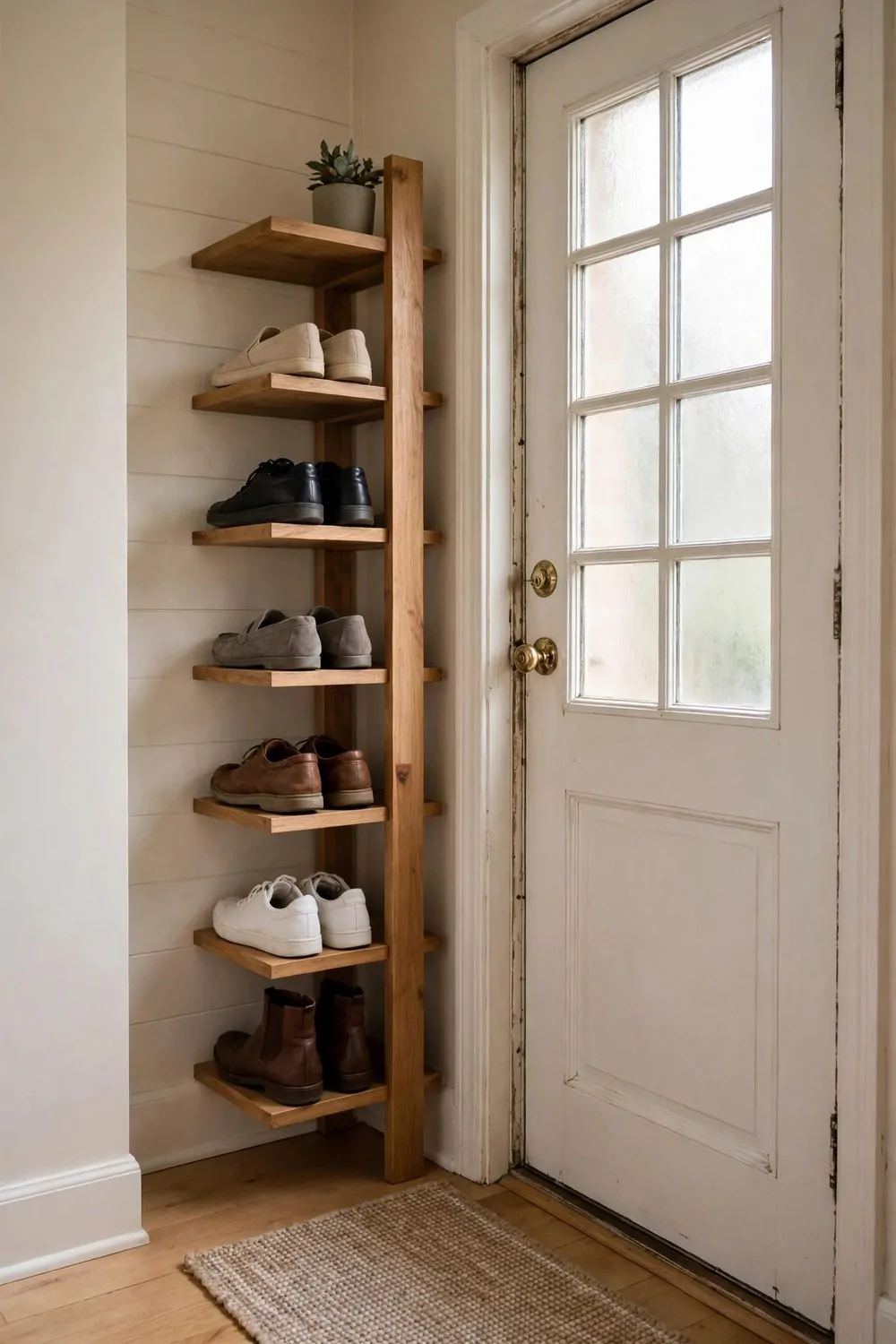
A vertical shoe rack stacks shoes up the wall, so they take up a tiny patch of floor.
My hall used to have shoes in a wide pile, and I tripped over them each morning. Now they stand in a tall row, and the floor is clear.
Put the shoes you wear each day at the bottom. Put the ones you wear once in a while up top.
Typical cost is $30 to $120 for a vertical shoe rack, and a slim one fits most hallways.
Give each pair its own slot, so shoes do not pile on top of each other. It keeps them clean, and it looks tidy.
I keep a small tray under the rack for wet shoes. It catches the water, and the floor stays dry.
Keep the rack near the door, so shoes go straight on it when you come home. If it sits far away, the pile comes back.
Use the top of the rack for a small tray or a few keys. It turns one bit of furniture into two useful spots.
Count your shoes before you buy, and pick a rack with enough slots. A rack that is too small just moves the pile, it does not fix it.
11. High Shelves Above the Bed
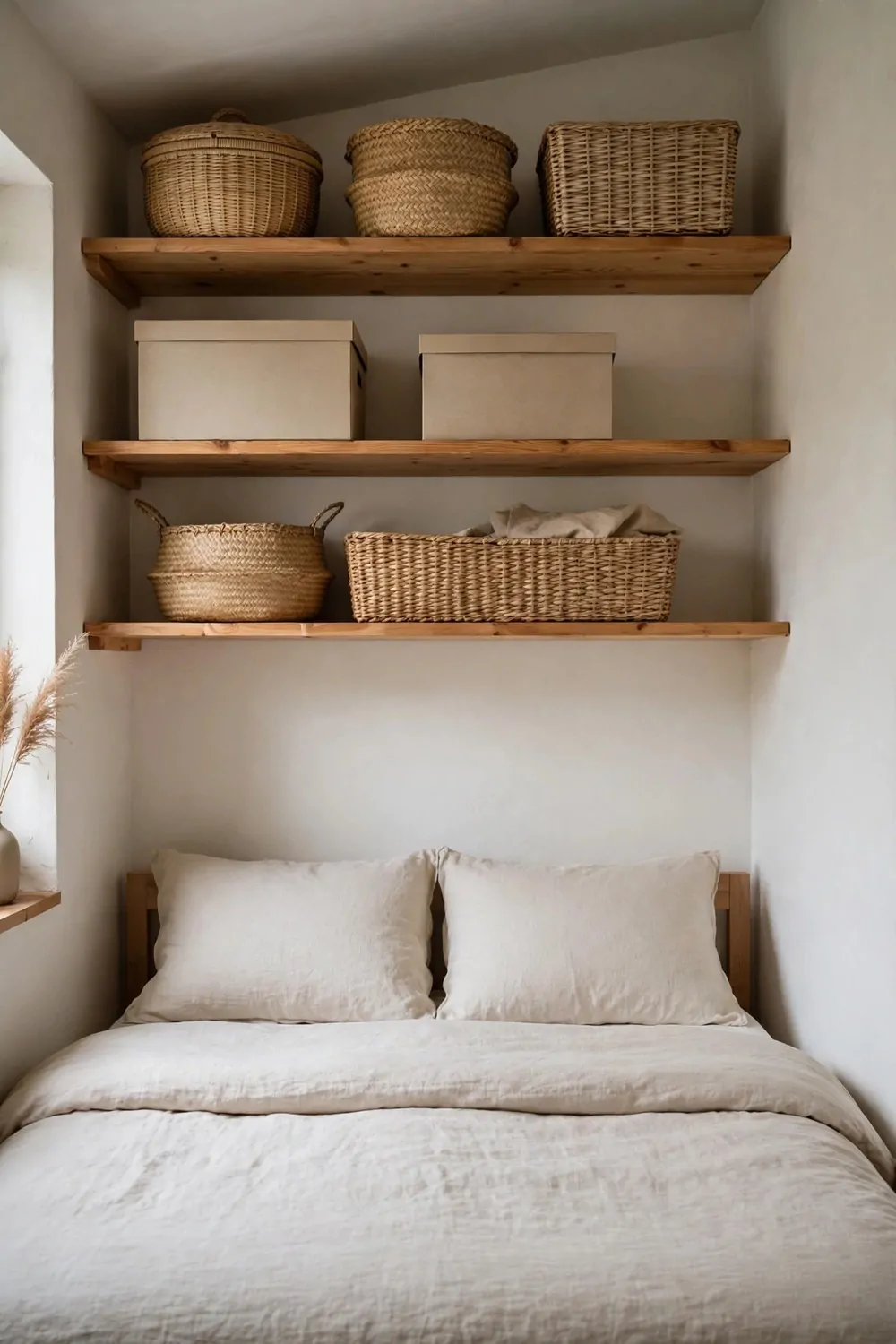
High shelves above the bed use the wall space that often sits empty.
I put two shelves above my bed for books and a small lamp. I reach up for a book at night, and it feels cosy.
Keep the shelves light, with a few books and a small plant. Heavy things above a bed are not a good idea.
Typical cost is $25 to $90 for high shelves above the bed, and you can fit them in an afternoon.
Fix the shelves well, into a strong part of the wall. If you are not sure, ask someone who knows walls to help you.
I keep my phone charger and a small clock on the lower shelf. They sit close by, and the bedside table stays clear.
Leave some space on the shelves, so they do not feel heavy over your head. A little air makes the room feel calm.
Use the shelves for books you love, or a few photos in plain frames. It makes the bed feel like your own spot.
Dust the shelves once a week, because dust shows up fast up high. A quick wipe keeps them fresh.
12. A Wall-Mounted Desk That Folds Down
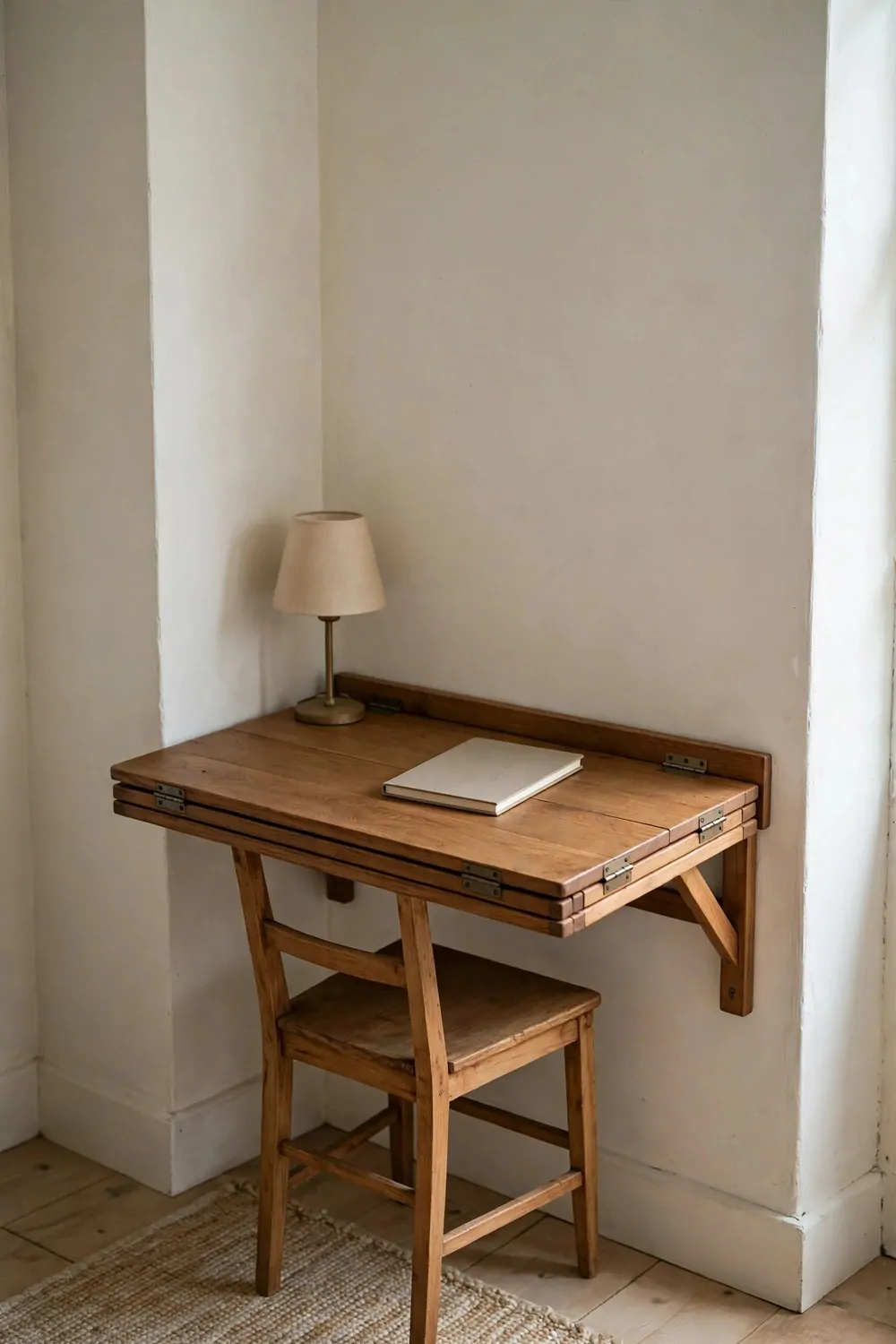
A wall-mounted desk folds down when you need it, and folds up when you are done.
I use one in a small corner, and it gives me a work spot with no big desk in the room. When I fold it up, the floor is free again.
Keep a chair nearby that tucks under the desk. It keeps the corner tidy, and you can sit down in seconds.
Typical cost is $70 to $220 for a fold-down wall desk, and a simple one works fine for most jobs.
Put a small shelf above the desk for pens and notebooks. It keeps your work bits close, and the desk top stays clear.
I keep only what I need on the desk while I work. When I fold it up, I put the pens back on the shelf, so nothing falls.
Check the hinges once in a while, and tighten any loose screws. A firm desk feels safe, and it folds smooth.
You can use this desk for homework, bills, or a laptop. It suits a small room, because it hides away when you do not need it.
Measure the wall space first, and make sure the desk fits when it folds down. You need room to sit, and room for your knees.
13. Tall Plant Stands That Stack Up
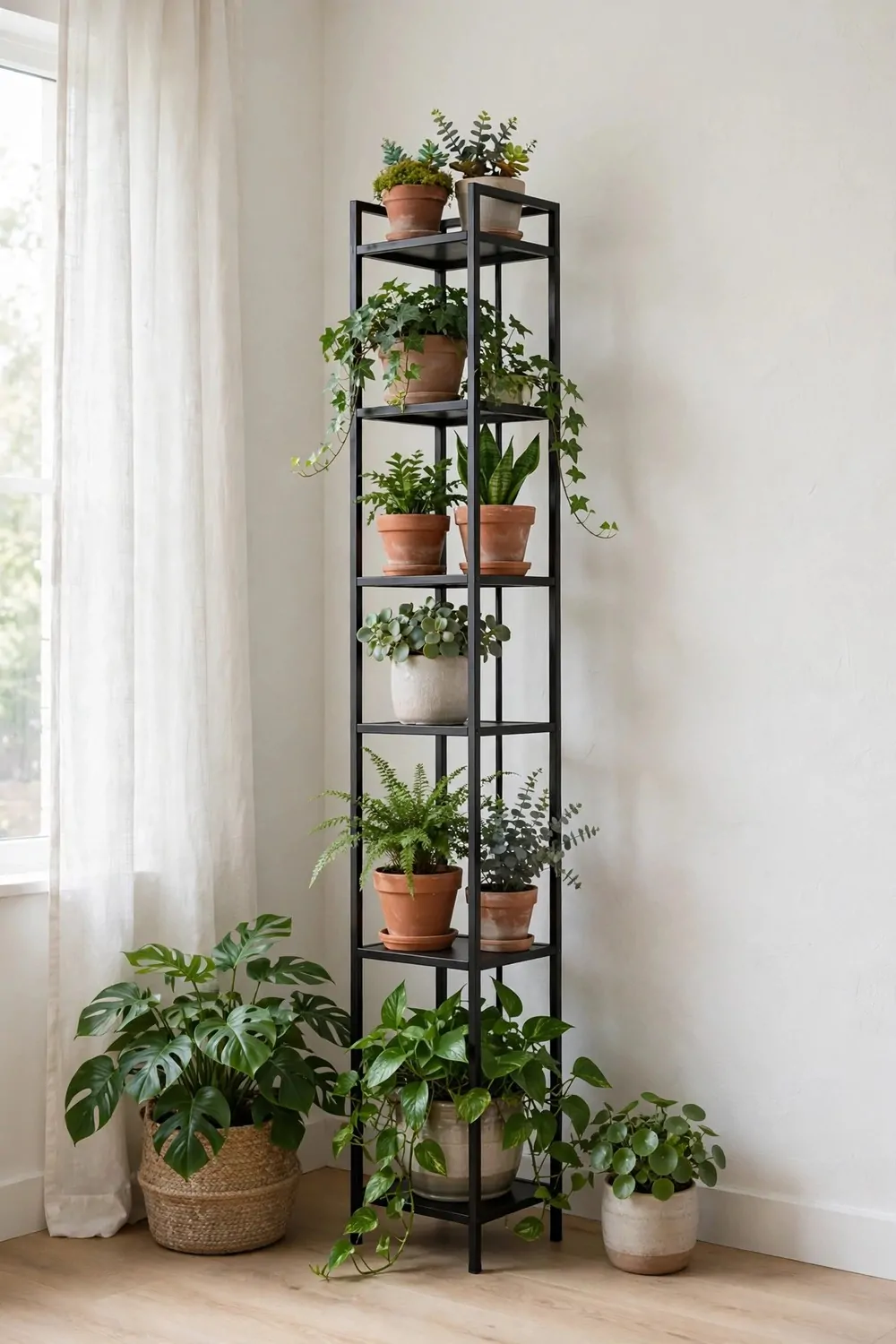
Tall plant stands lift your plants up in steps, so they get light without taking up floor space.
I have one by my window, and it holds five plants in the space of one pot. The window sill stays clear, and the plants look happy.
Put the plants that love sun on the top step. Put the ones that like shade lower down, where the light is soft.
Typical cost is $30 to $110 for a tall plant stand, and a simple wood or metal one lasts for years.
Use small pots, so the stand stays light and steady. Big heavy pots can make it wobble, and that is not safe for the plants.
I water my plants with a small jug, one pot at a time. It takes a few minutes, and it stops water running down the steps.
Put a small tray under each pot, to catch drips. It keeps the stand dry, and the floor stays clean.
You can move the stand to catch the light as the seasons change. I shift mine a little in winter, so the plants still get sun.
Start with a few easy plants, and add more as you learn. A full stand looks lovely, and it makes the room feel fresh.
14. Magnetic Strips for Knives and Tools
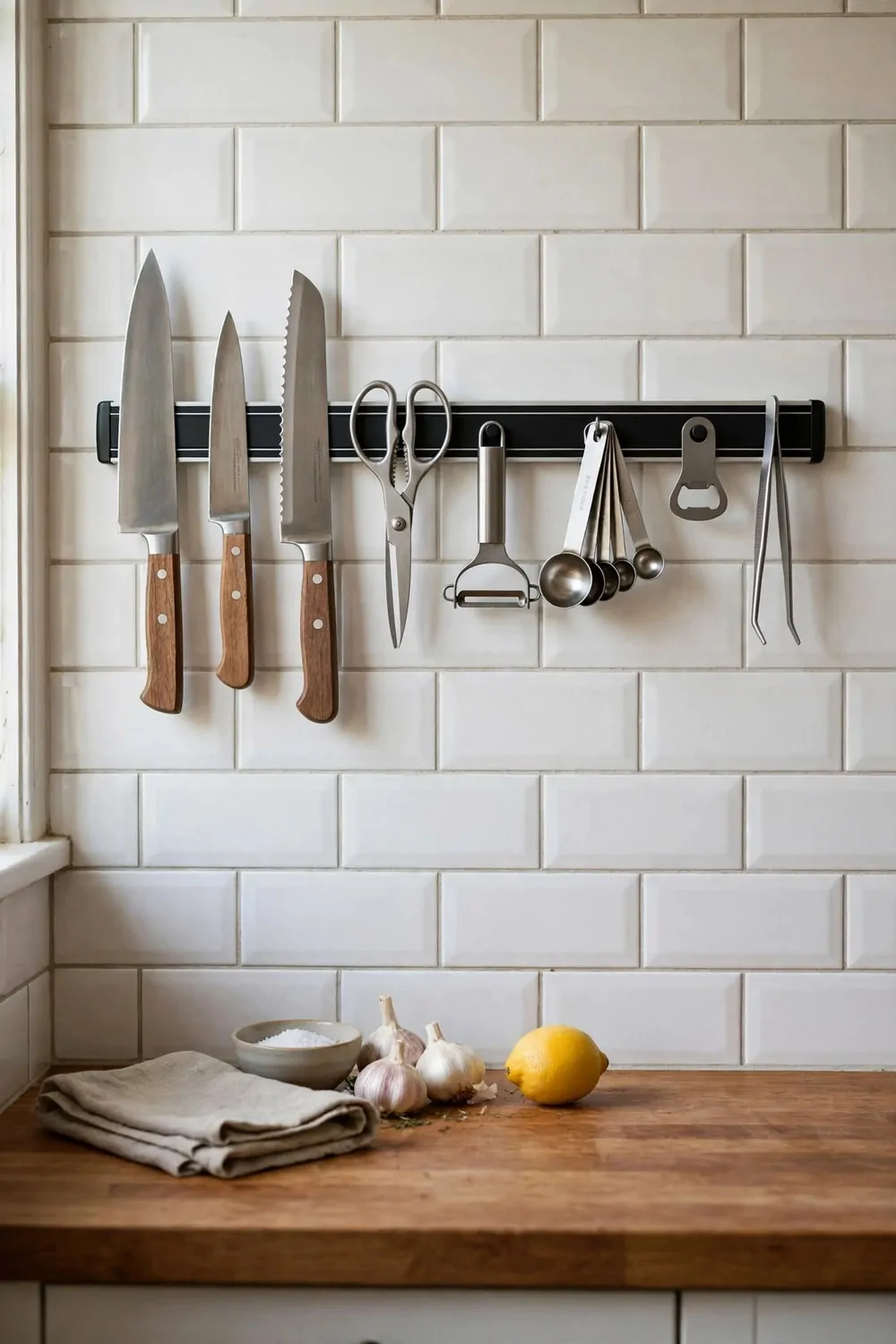
I love how a strip on the wall frees up a whole drawer. You can see everything at a glance, and you grab what you need fast.
Pick a spot near where you work.
In my kitchen I put mine right beside the stove, so I never walk far with a sharp knife in my hand. It feels safer, and cooking feels quicker too.
Most strips fix on with strong screws, and a few use sticky pads. I trust screws more, they hold the weight better over time.
A short magnetic strip is $12 to $20, a long strip is $18 to $30, and a tool strip is $20 to $35. Typical cost is $12 to $35 for a good strip, and the screws often come in the box.
You can use one in the garage too. I keep my small tools on a strip there, and I always know where my screwdriver is.
Wipe it clean once a week. A damp cloth takes off the dust and any bits of food, and it looks new again.
Do not overload it.
Start with one strip and see how it feels. You can always add a second one later if you love it, and I bet you will.
| Strip type | Typical cost | Best for |
|---|---|---|
| Short strip | $12 to $20 | A few knives |
| Long strip | $18 to $30 | A full knife set |
| Tool strip | $20 to $35 | Tools and small bits |
15. A Vertical File Holder on the Wall
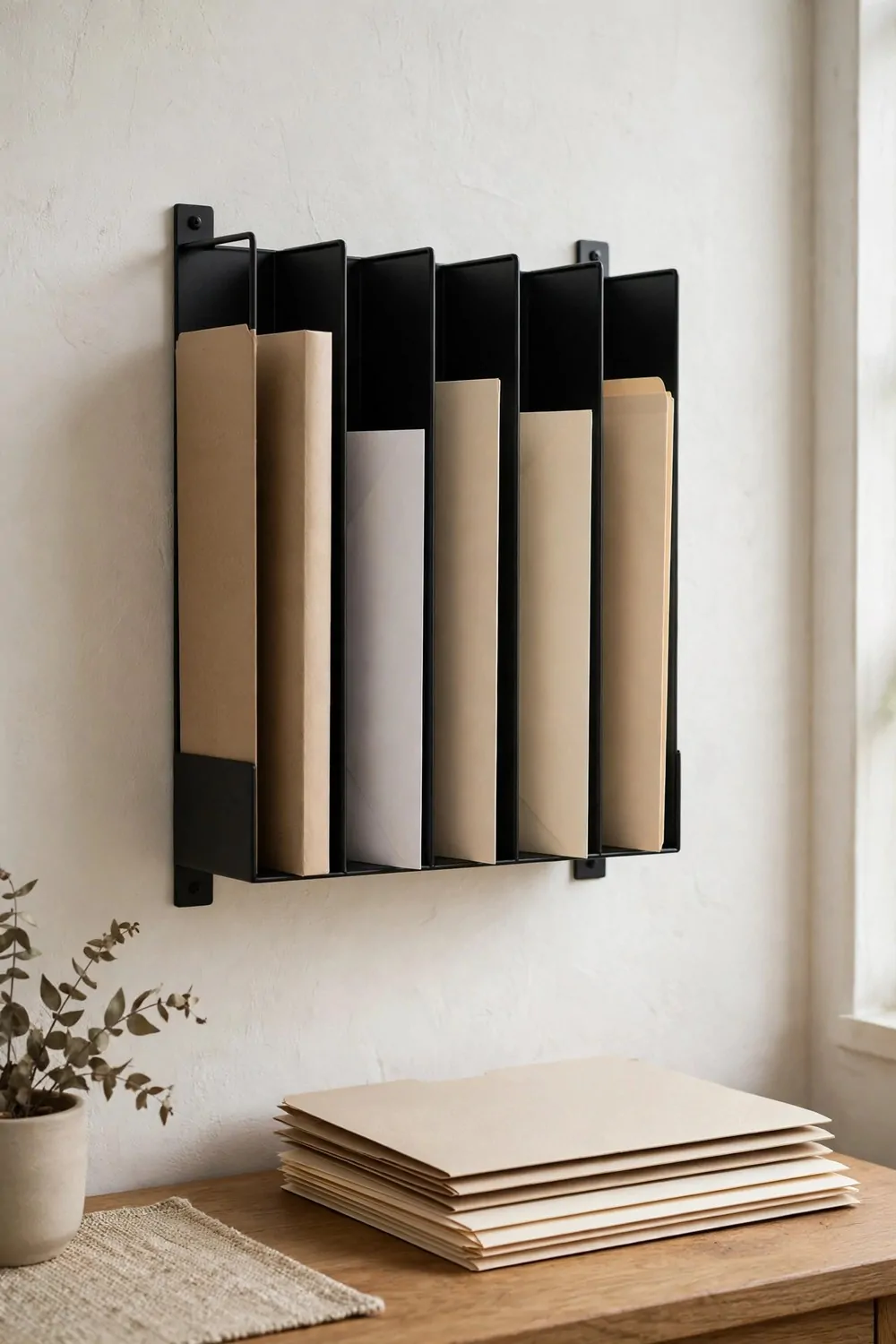
I used to lose papers all the time. Bills, school notes, and letters ended up in one messy pile on the table.
A file holder on the wall fixed that for me.
I hung mine near the front door. Mail goes in the top slot, school papers go in the middle, and bills go at the bottom. It takes me five seconds to sort the post now.
You can label each slot with a small tag. I wrote mine by hand, and it looks friendly and clear.
Typical cost is $10 to $28 for a wall file holder with three or four slots.
Pick a holder that matches your wall space. A slim one fits in a narrow gap, and a wide one holds more paper.
I empty mine every Sunday night. I file what I need, I toss what I do not need, and the holder starts the week clean.
If you work from home, put one by your desk too. It keeps your work papers off the desk and right where you can see them.
Try it for one week and see how calm your table feels.
16. Shelves Above the Toilet
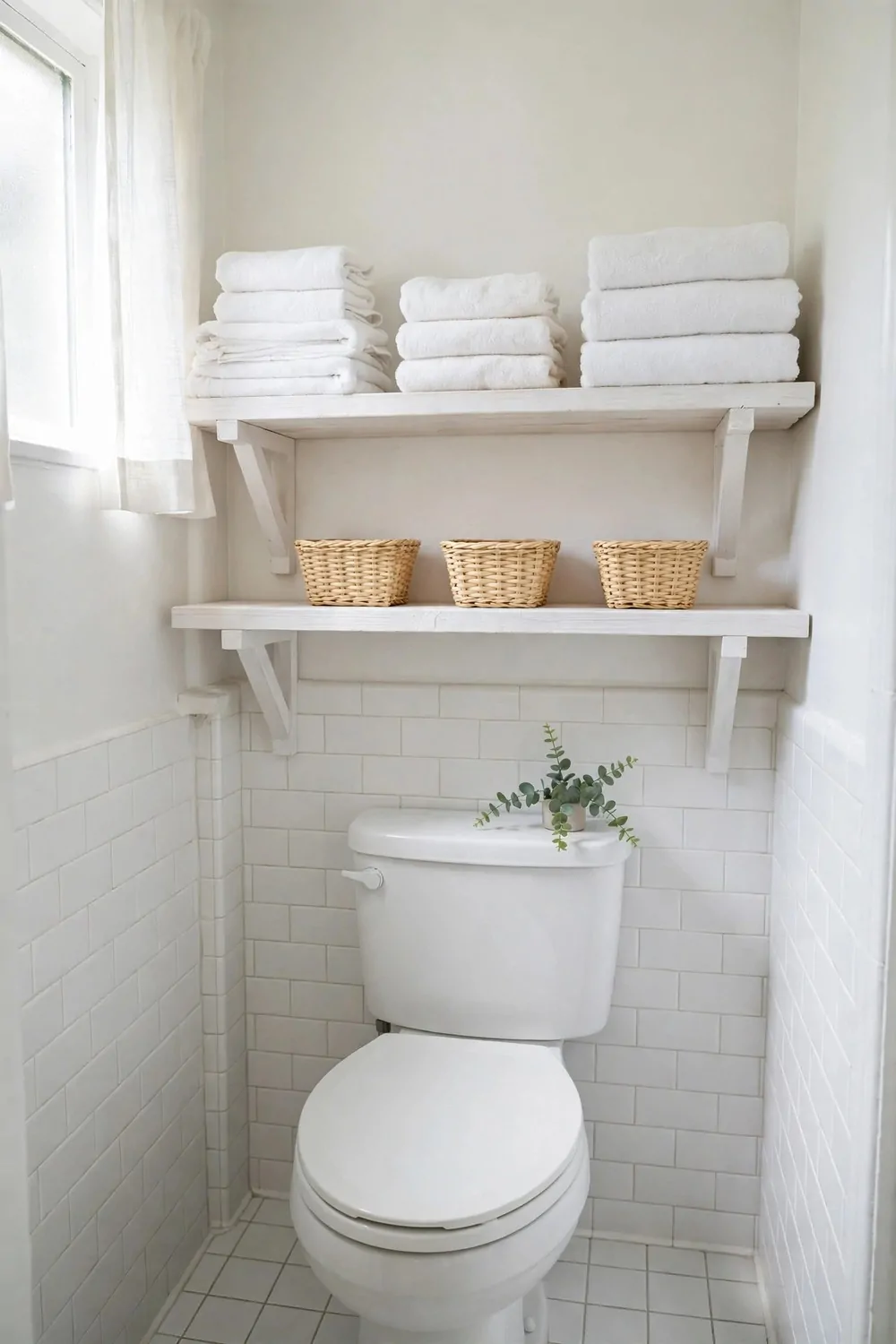
The wall above the toilet is dead space in most homes. I looked at mine for years and never used it.
Two small shelves changed that. I keep spare towels on one and a basket of toilet rolls on the other. Everything I need is right there.
Measure first, so the shelf sits high enough that you do not bump your head.
Use strong brackets and wall plugs. A shelf full of towels is heavier than you think, and I learned that the hard way.
Typical cost is $18 to $45 for two shelves with brackets.
Add a small plant if you like. A green leaf or two makes a small bathroom feel fresh and calm.
Keep the bottom shelf for things you grab often. I keep my spare rolls there, and the top shelf holds the towels we use less.
Wipe the shelves when you clean the bathroom. Dust builds up fast in a small room, and a quick wipe keeps it nice.
It is a small job, and it makes a big difference in a tiny room.
17. A Tall Slim Dresser in the Bedroom
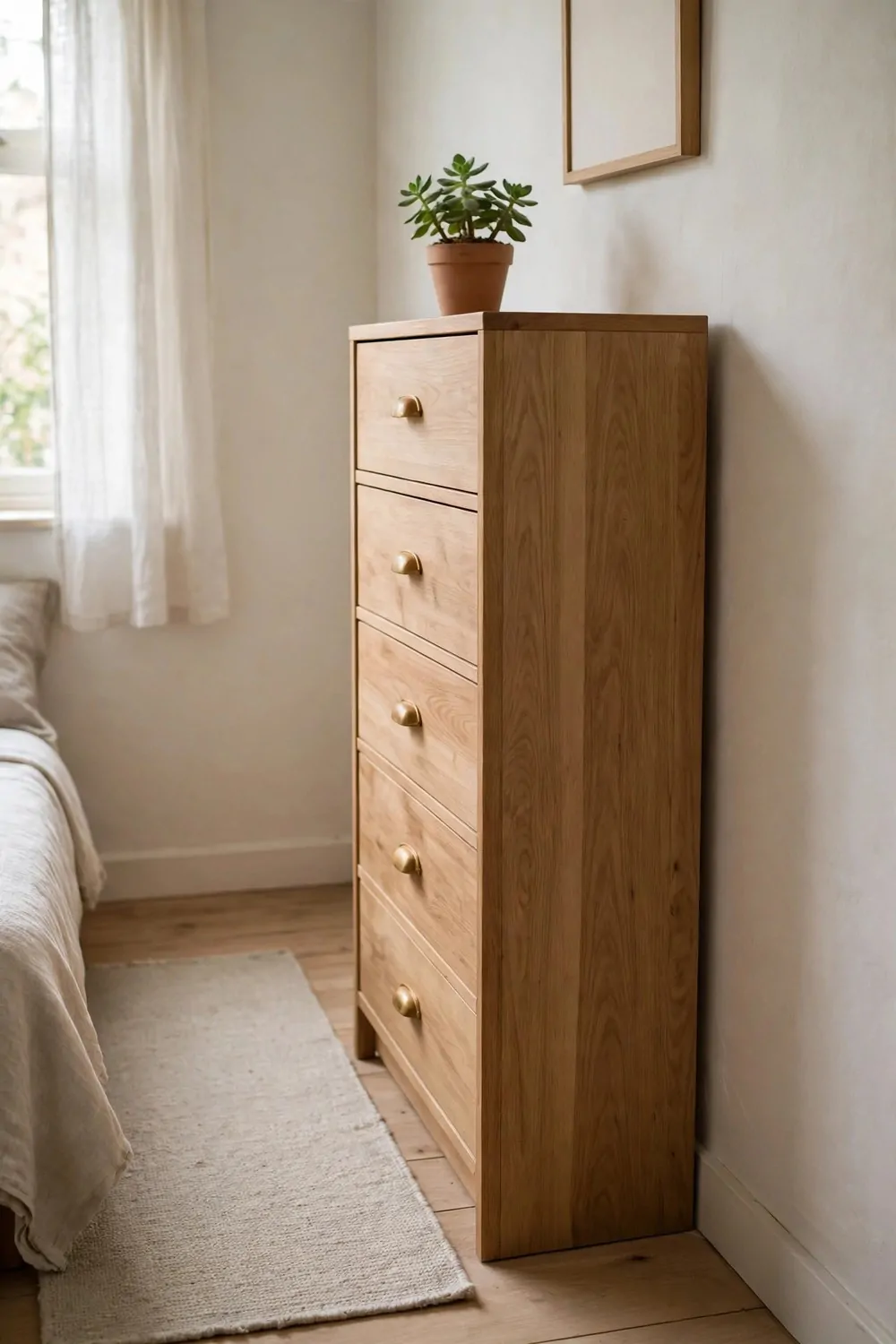
My bedroom is small, and a wide dresser just ate the floor. A tall slim one gave me the same space going up instead of out.
It fits in a gap I thought was useless.
I use the top drawer for socks, the next for shirts, and the bottom ones for jeans and jumpers. Each drawer has one job, so I find things fast.
Look for deep drawers that slide smooth. I open mine a hundred times a week, and good runners make it feel easy.
Typical cost is $90 to $220 for a tall slim dresser.
Put a small lamp or a photo on top. It turns a plain dresser into a nice corner of the room.
Keep the top clear of clutter. If I let things pile up there, the whole room feels messy again. So I clear it every night before bed.
A tall dresser works in a kids room too. I put the daily clothes in the low drawers, so they can reach them on their own.
Measure your gap twice before you buy, and check the height fits under your ceiling.
18. Hanging Organizers on Closet Doors
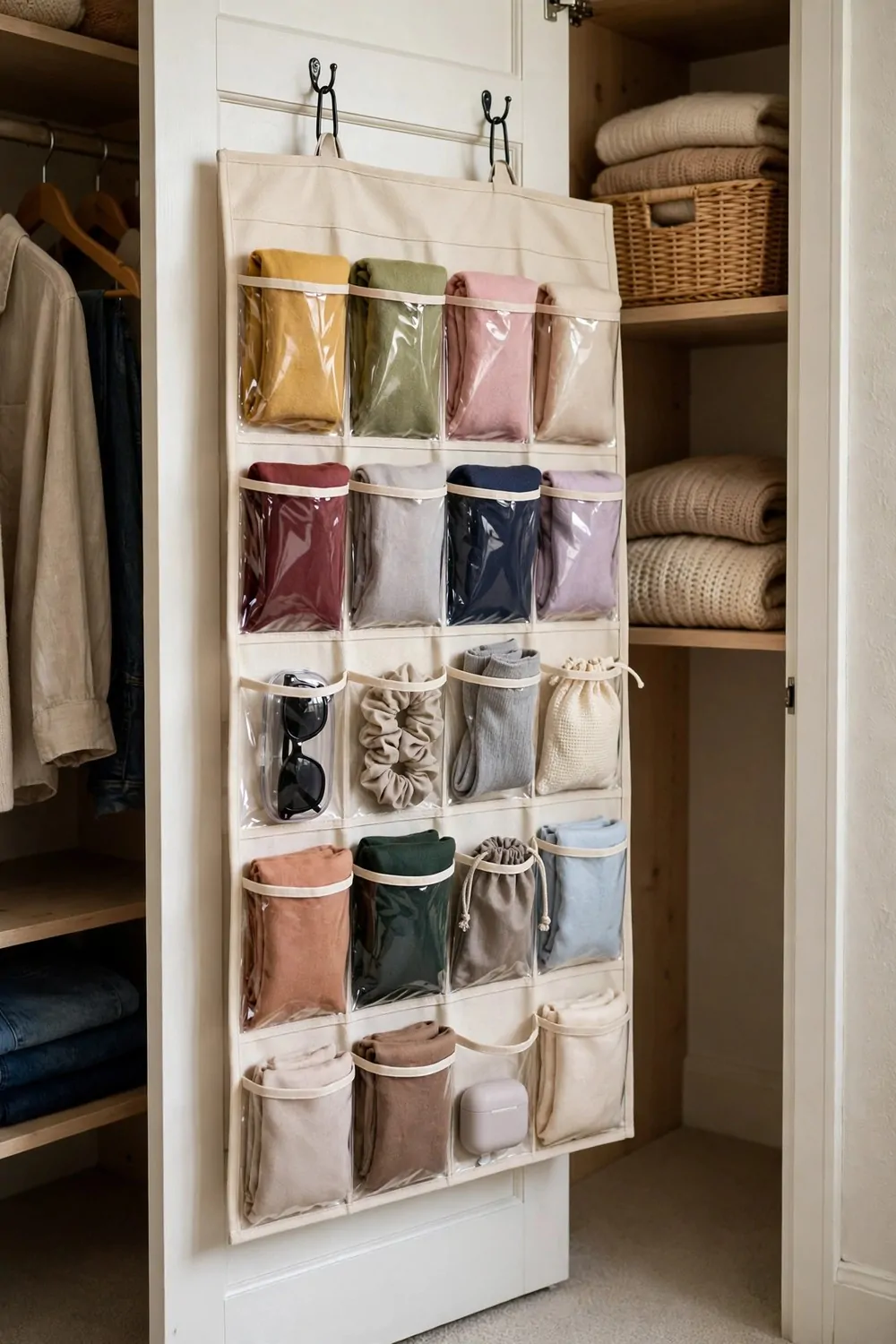
The back of a closet door is free storage, and I wasted it for years. Now it holds more than a whole shelf does.
I hang shoe pockets on mine. Shoes go in the bottom rows, scarves in the middle, and small bits like belts go at the top. It all stays neat and easy to see.
Most organizers just hook over the top of the door.
No drilling, no damage, and you can take it down in a minute if you move. I love how simple that is.
Typical cost is $9 to $25 for a hanging door organizer.
Use clear pockets if you can. You can see what is inside without opening every pocket, and that saves time in the morning.
I keep one on the pantry door too. It holds packets and small jars, and my shelves stay clear for the big stuff.
Do not overload the bottom pockets. Heavy things pull the organizer down, so keep the light stuff low and the heavy stuff in the middle.
It is one of the cheapest ways to win back space in a small home.
19. A Ceiling-Mounted Pot Rack
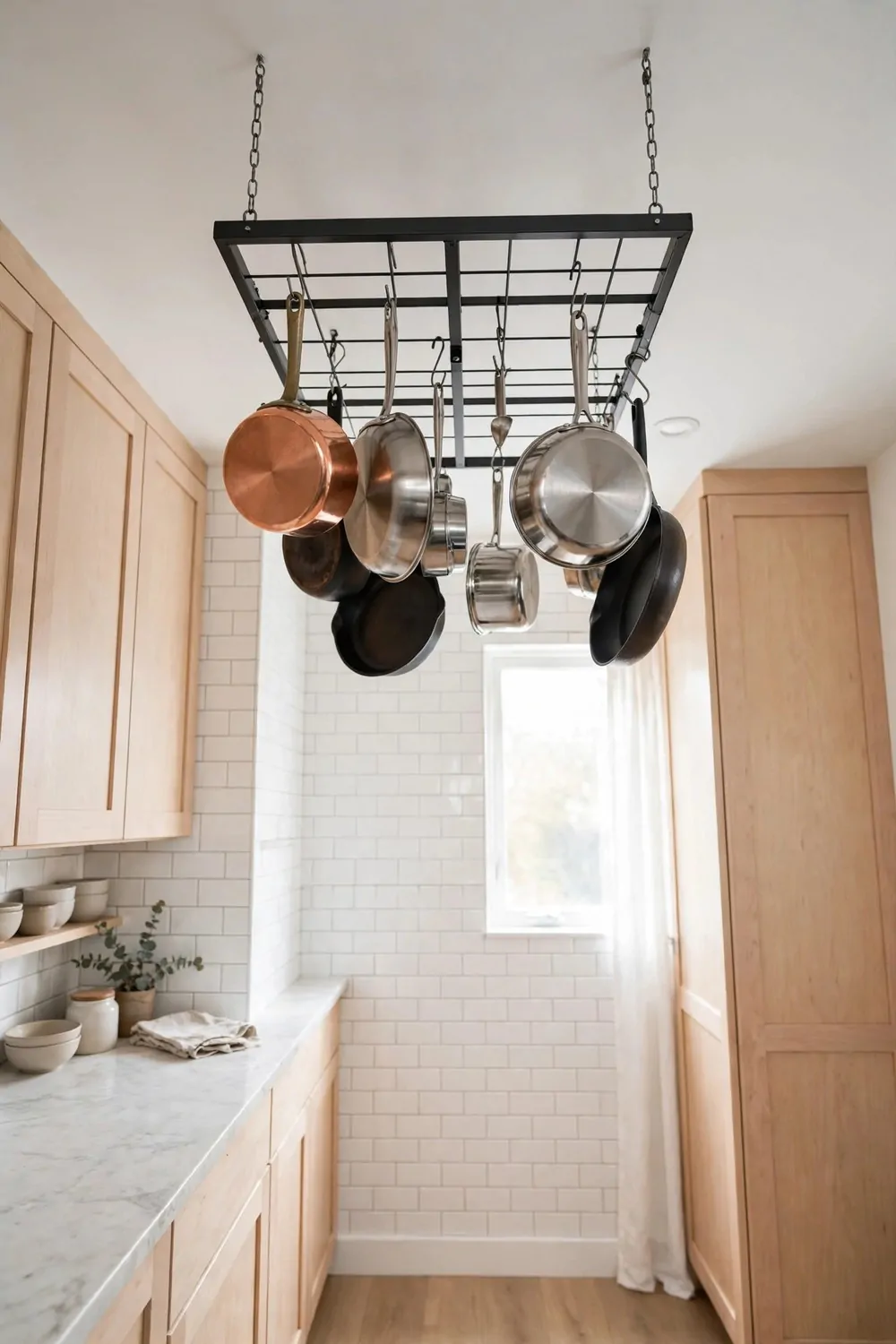
My pots used to live in a deep cupboard, and I hated digging for the right lid. A rack from the ceiling fixed that in one afternoon.
Now every pot hangs where I can see it.
Pick a strong ceiling beam to fix it to. A rack full of pots is heavy, so I had my brother check the beam first. Safety comes before style here.
Hang the pots you use most at the front. The big pot I use once a month hangs at the back, out of the way.
Typical cost is $45 to $120 for a ceiling pot rack with hooks.
Add small hooks for spoons and measuring cups. I keep my ladle on the rack too, and it is always in reach when I cook.
Keep the rack above a worktop or an island, not above your head where you walk. I learned to leave a clear path under it.
Wipe the pots before you hang them back. It takes ten seconds, and the rack stays clean and tidy.
If your ceiling is low, a wall rack may suit you better, so measure first.
20. Vertical Bike Storage on the Wall
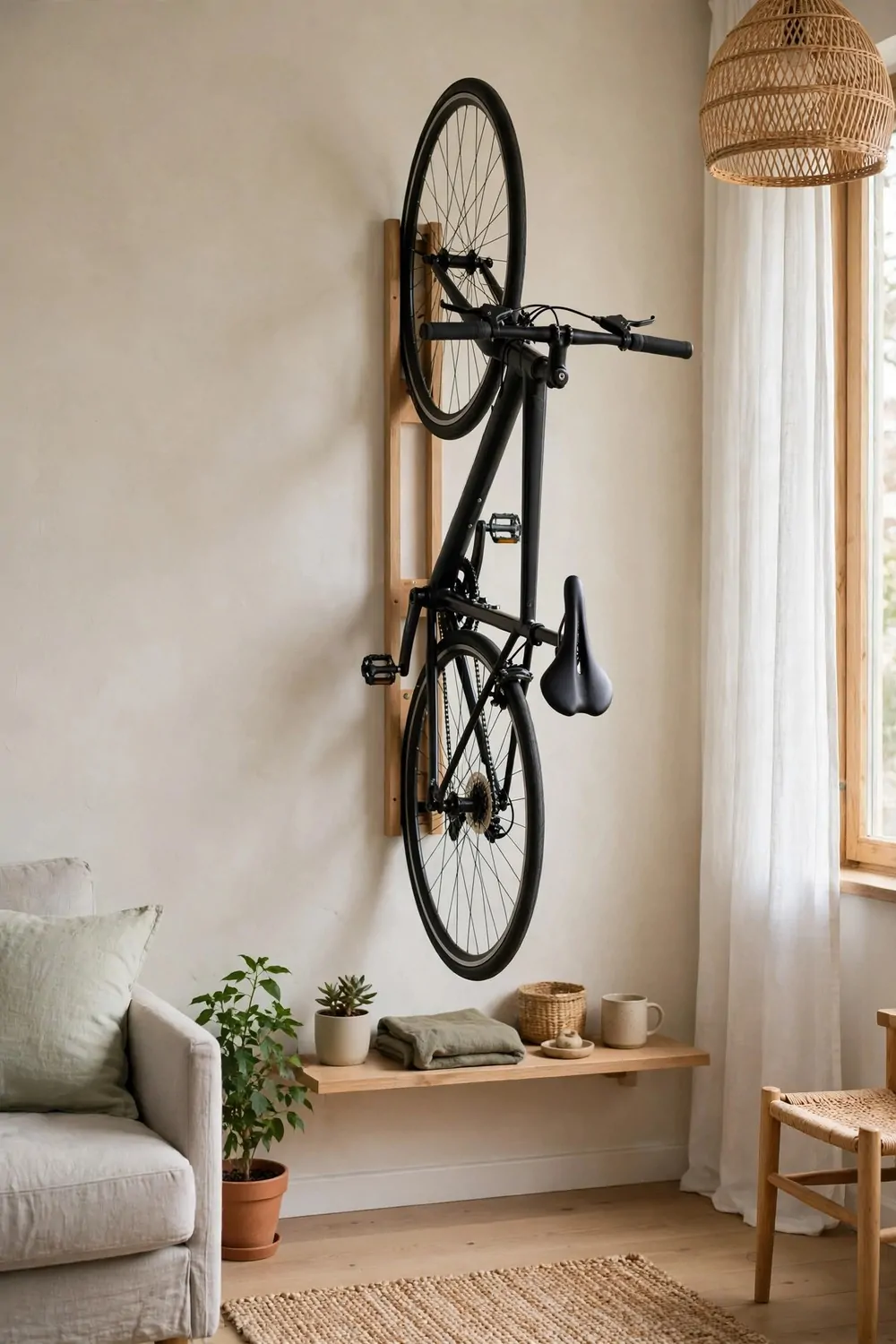
A bike on the floor eats a whole corner of a room. I used to trip over mine every single day.
A wall hook changed that. The bike hangs upright, the wheels stay off the floor, and I got my hallway back. It felt like I gained a whole new room.
Pick a hook made for your bike weight.
Fix it into a stud or a strong wall plug. A bike is heavy, and I would never trust a weak fixing with it.
Typical cost is $20 to $60 for a wall bike hook or mount.
Hang it near the door if you can. I grab my bike and go, and I never have to carry it through the house.
Put a small mat under the back wheel. It catches dirt from the tyre, and your floor stays clean when you bring the bike in.
If you have two bikes, hang them at different heights. They fit closer together that way, and they do not bump each other.
It is a small job that gives you back real floor space.
21. Stacking Crates as a Book Tower
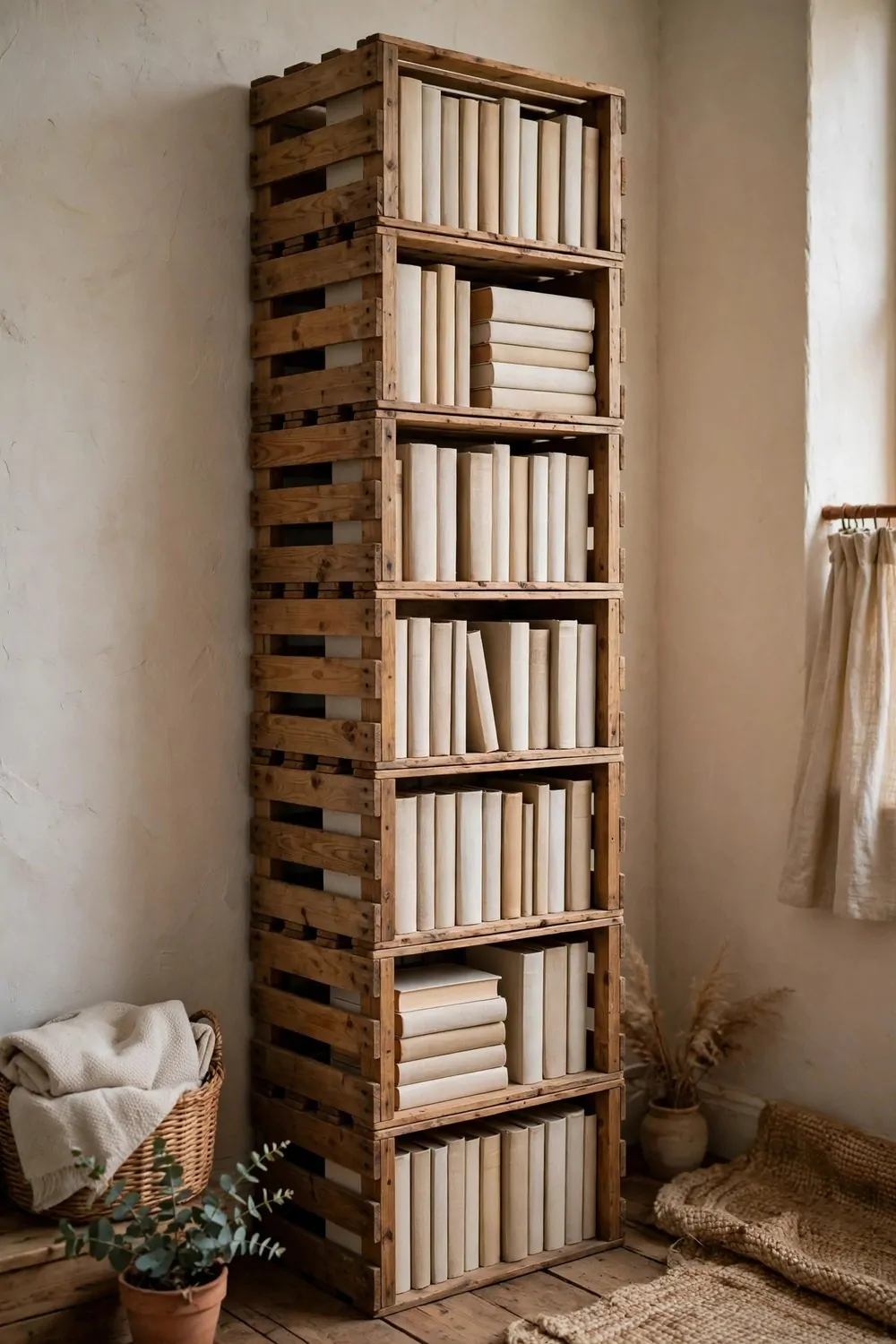
I had books everywhere, and no money for a big bookcase. A stack of crates gave me a book tower for very little money.
It looks simple, and it works so well.
I stack mine in a corner and turn each crate a little. The tower looks fun, the books stay neat, and I can see every spine. It is my favourite corner of the room now.
Use strong wooden crates, not flimsy ones. Heavy books need a solid base, and I always put the biggest books at the bottom.
Typical cost is $25 to $70 for a set of stacking crates.
You can paint the crates any colour you like. I painted mine soft white, and they match my walls.
Keep the tower to five or six crates high. Any taller and it can wobble, and I do not want books falling on the floor.
Put the books you read most at eye level. The ones you rarely open can live near the top or the bottom.
Add a small light on top, and your book tower becomes a cosy reading spot.
22. A High Shelf for Seasonal Boxes
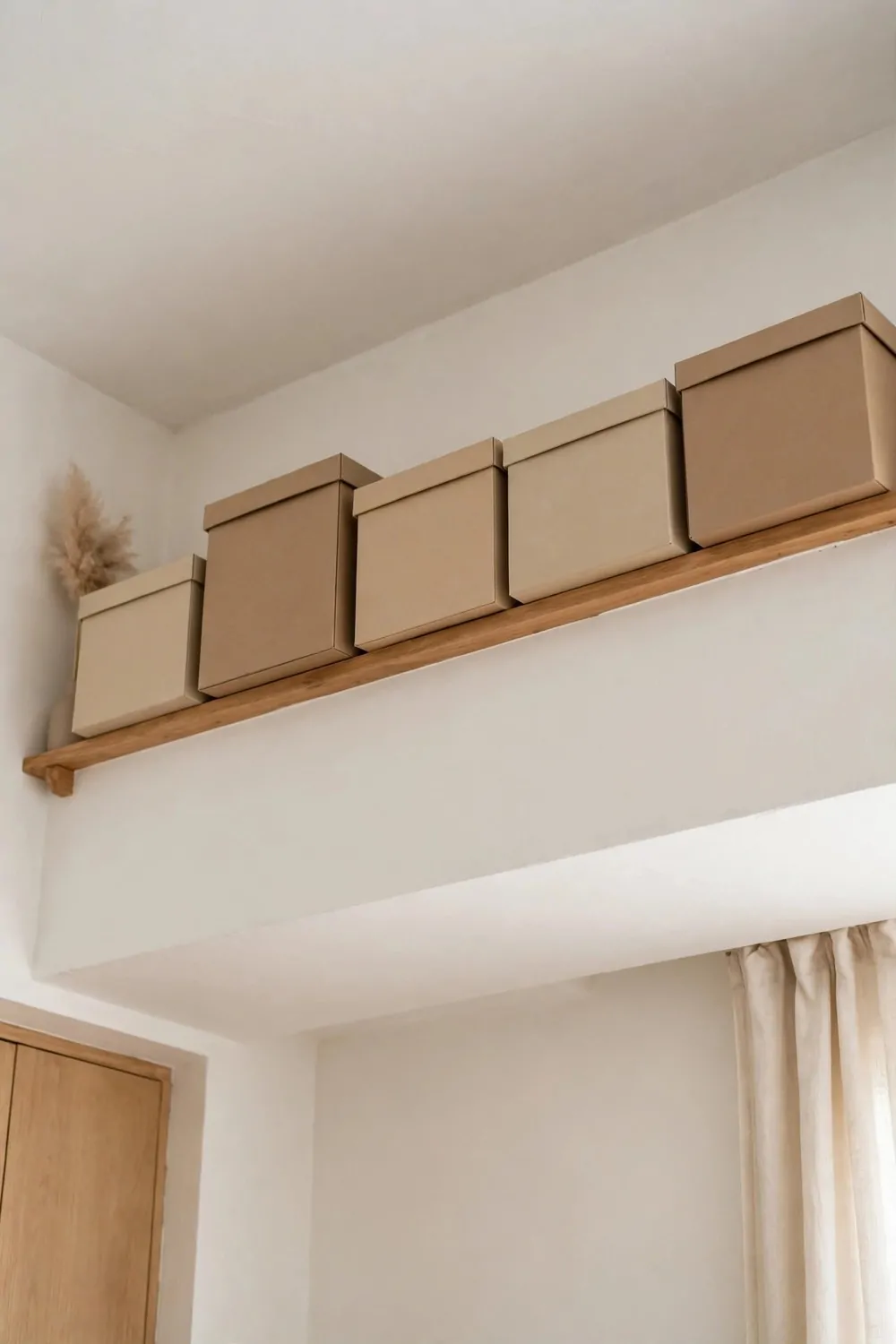
Seasonal boxes used to live on my bedroom floor. They took up space all year, even when I only needed them twice.
A high shelf near the ceiling fixed that. The boxes sit up high and out of the way, and my floor stays clear. I only climb up to get them when the season changes.
Label every box on the side you can see.
I write what is inside in big letters. It saves me opening three boxes to find one thing.
Typical cost is $22 to $55 for a high shelf with strong brackets.
Use boxes that are all the same size. They stack neat on the shelf, and nothing slides off the edge.
Keep a small step stool nearby, but store it somewhere safe. I keep mine in the closet, and I only bring it out when I need the high shelf.
Put the heavy boxes low on the shelf if you have two levels. Light boxes can go up top, where they are easy to lift down.
Check the shelf once a year, and tighten the brackets if they feel loose.
23. Wall Baskets for Toys and Bits
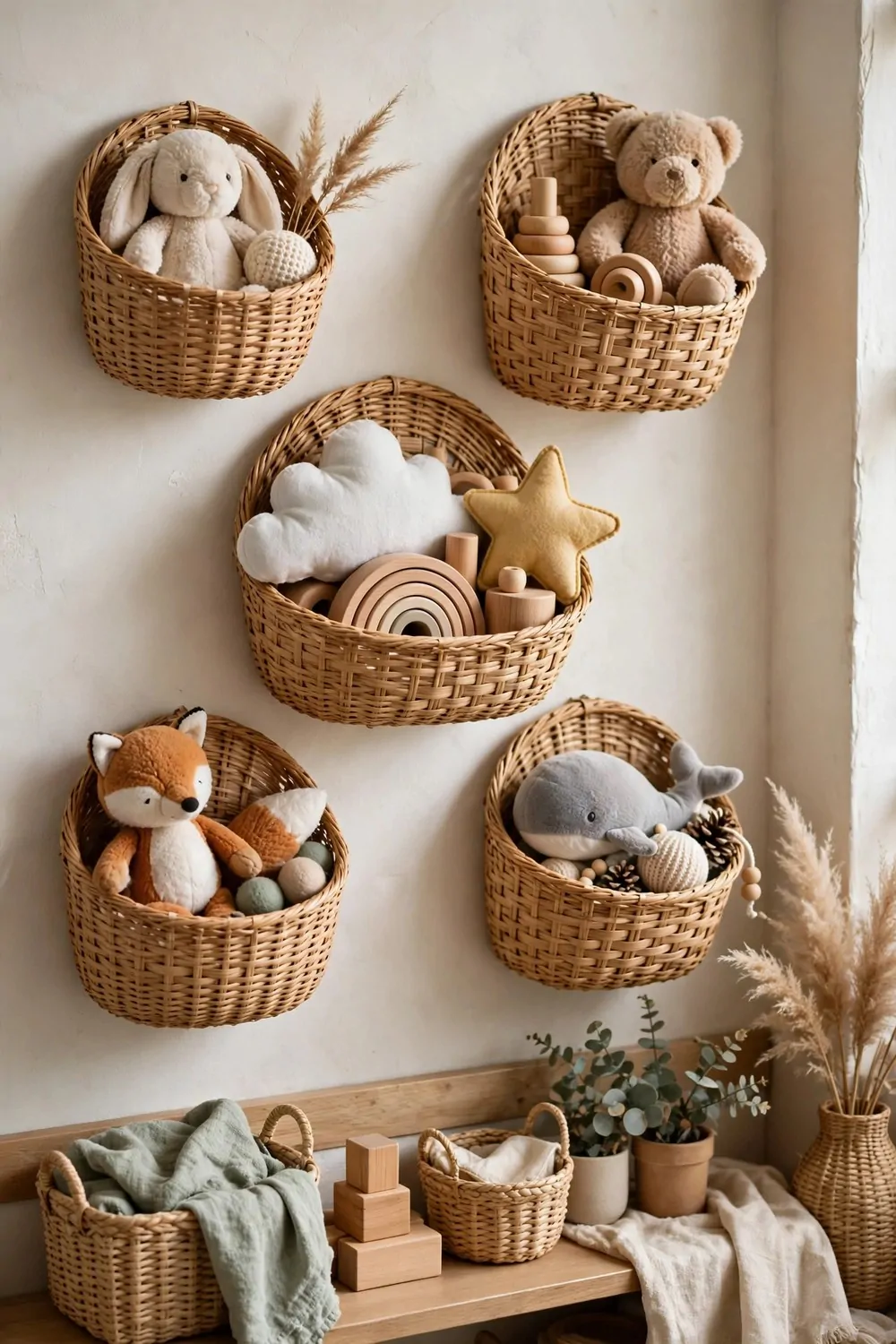
Small things are the hardest to store. I found bits and toys in every room, and tidy up never lasted long.
Wall baskets fixed that for me. I hung three in a row in the play corner, and now each basket has a job. One holds blocks, one holds small cars, and one holds craft bits.
Hang them low enough that little hands can reach them.
If they can reach the basket, they can tidy up on their own. That small change made a big difference in my house.
Typical cost is $15 to $40 for a set of wall baskets.
Pick baskets with strong hooks or brackets. A full basket of toys is heavier than it looks, and I check mine every month.
Label each basket with a picture, not just words. Little ones can not read yet, but they know what a block looks like.
Empty the baskets once a week and sort what is inside. Broken bits go out, and the good stuff goes back in its place.
Three baskets are enough to start, and you can add more later if you need them.
24. A Tall Mirror With Hidden Storage
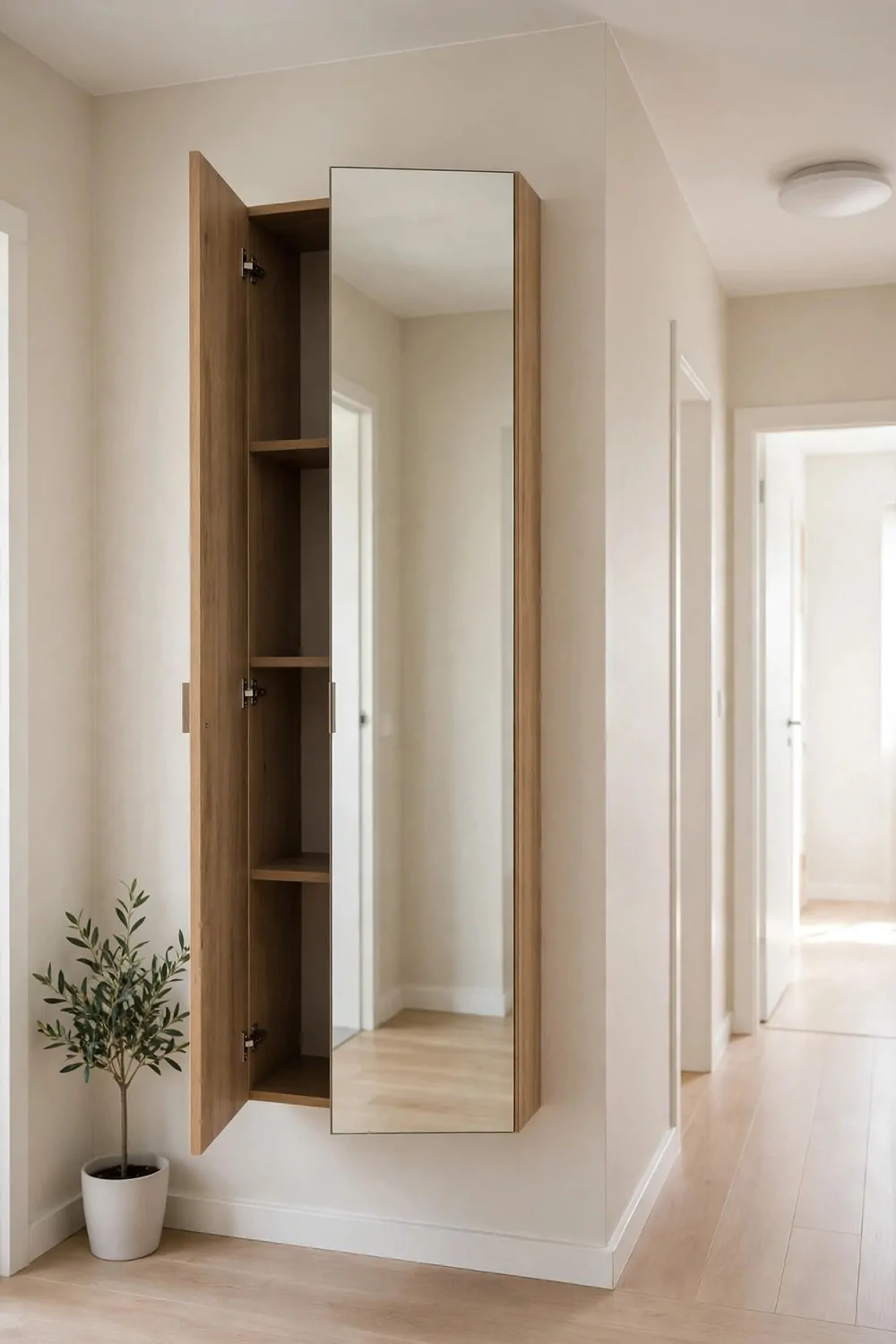
I love a tall mirror in a small room. It makes the room feel twice as big, and the light bounces around in a lovely way.
Mine hides storage behind it too.
It opens like a door, and inside I keep jewellery, scarves, and small bits. Everything has a place, and the room still looks calm and clear.
Fix it to the wall with strong fixings. A tall mirror is heavy, and I had mine checked twice before I trusted it.
Typical cost is $70 to $180 for a tall mirror with hidden storage.
Hang it where it catches the light. I put mine across from a window, and the whole room feels brighter.
Keep the inside tidy, or the mirror will not close right. I sort mine once a month, and it only takes five minutes.
A mirror like this works well in a bedroom or a hallway. It gives you a full view before you leave the house.
Check the hinges now and then, and oil them if they start to squeak.
25. Vertical Garden Pockets on a Wall
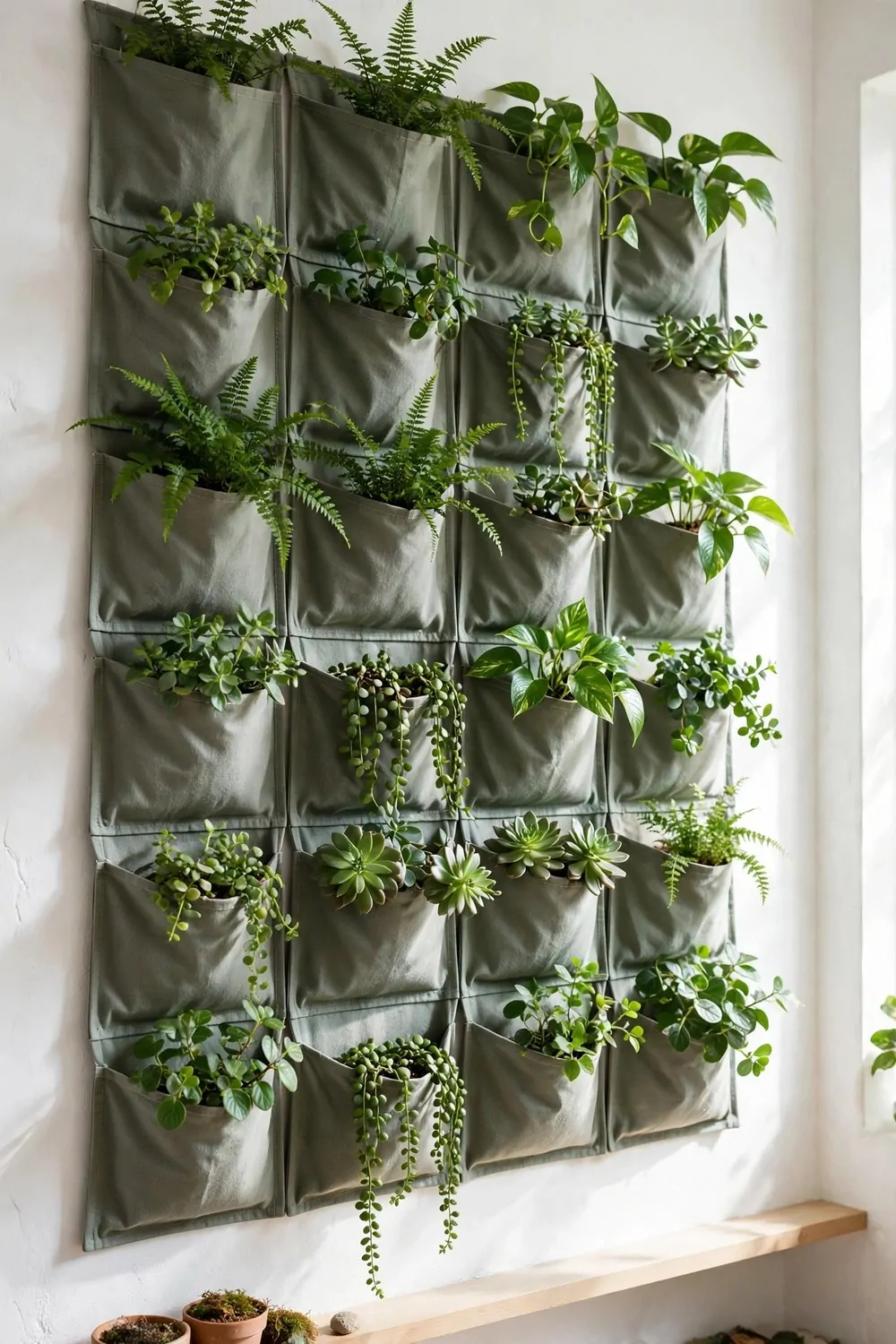
I always wanted plants, but I had no floor space for pots. Wall pockets gave me a garden going up instead of out.
I hung mine on the balcony wall. Herbs grow in the top pockets, small greens in the middle, and flowers at the bottom. It smells lovely when I step outside.
Pick plants that suit the light on your wall.
Sunny walls suit herbs, and shady walls suit leafy greens. I moved one pocket twice before I found its happy spot.
Typical cost is $18 to $50 for a set of wall garden pockets.
Water little and often. The pockets dry out fast in the sun, so I check the soil with my finger every morning.
Make sure water can drain out the bottom. If the pockets stay wet, the roots will rot, and I learned that after losing two plants.
Grow herbs you cook with. I pick fresh mint and basil right from the wall, and my food tastes so much better.
Start with three or four pockets, and add more when you feel sure.
26. A One-Day Vertical Storage Reset Plan
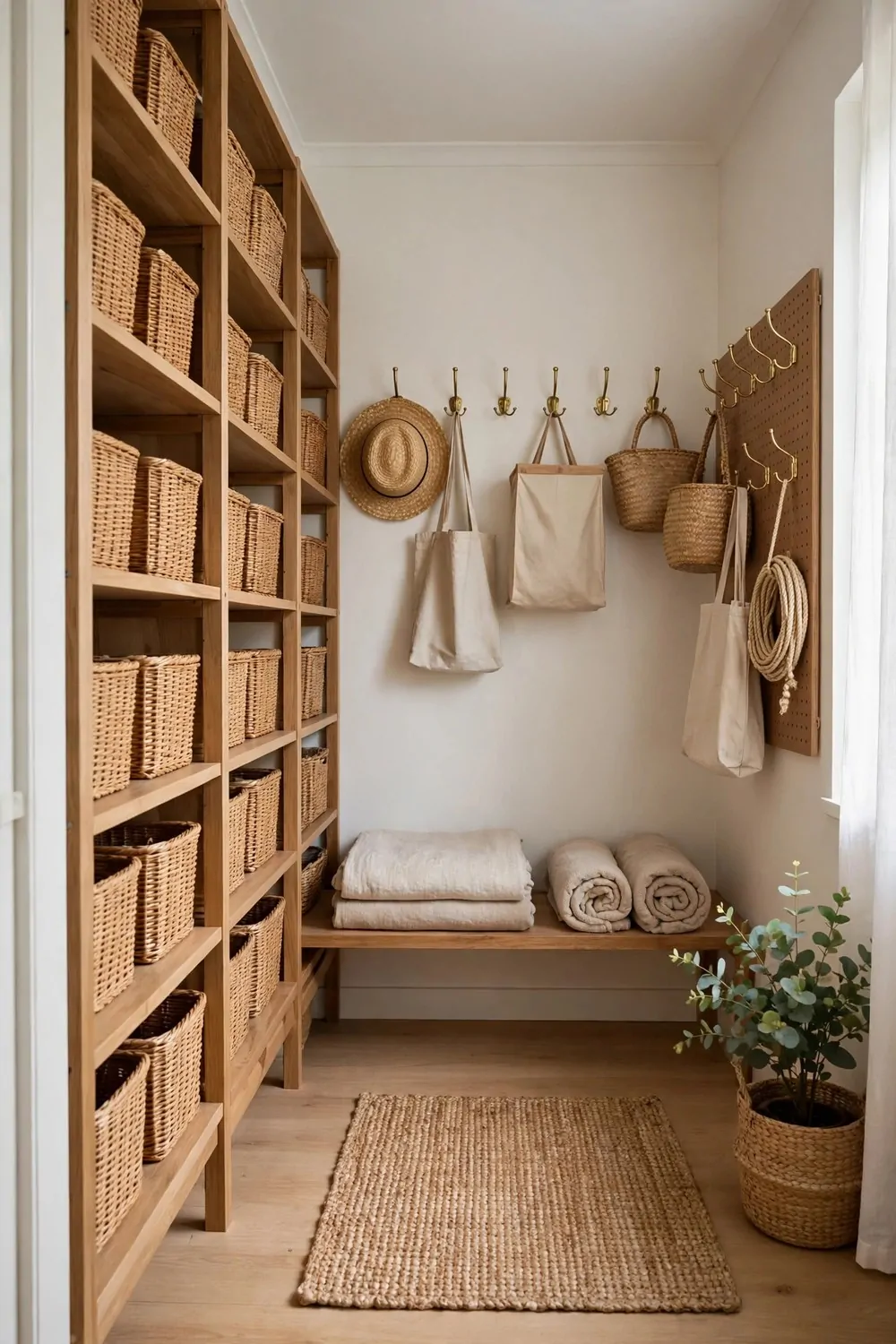
You can reset your whole home in one day if you work in order. I did this on a Saturday, and by dinner time my home felt new.
Start in the morning with the walls. Put up one hook rail or one small shelf in each room, and move things off the floor and onto the wall. Typical cost is $10 to $25 for the walls step.
Next, do the doors. Hang an organizer on the closet door and one on the pantry door, and fill them with the small bits that clutter your shelves. Typical cost is $8 to $20 for the doors step.
After lunch, fit the high shelves. Put one high shelf in the bedroom and one in the bathroom, and lift the seasonal boxes and spare towels up there. Typical cost is $15 to $40 for the high shelves step.
Then clear the floor. Move shoes, bags, and books into the wall storage you just made, and sweep the floor clear. Typical cost is $12 to $30 for floor baskets and mats for the floor step.
Finish with the corners. A tall basket or a slim shelf in each empty corner uses space you forgot you had. Typical cost is $10 to $25 for the corners step.
Label everything as you go. A small tag on each basket and shelf helps the whole family put things back in the right place.
Take a photo of each room when you finish.
The total for the whole day is $55 to $140, and that covers the walls, the doors, the high shelves, the floor, and the corners.
| Area | Main change | Typical cost |
|---|---|---|
| Walls | Hook rail or small shelf | $10 to $25 |
| Doors | Hanging door organizer | $8 to $20 |
| High shelves | One shelf in the bedroom and bathroom | $15 to $40 |
| Floor | Floor baskets and mats | $12 to $30 |
| Corners | Tall basket or slim shelf | $10 to $25 |
| Total | Whole day reset | $55 to $140 |
Keep Reading
If you liked these ideas, you will love these posts too.
- 21 Small Entryway Ideas for Apartments With No Foyer
- 30 Apartment Balcony Ideas That Make Outdoor Space Work
- 33 Small Space Living Room Ideas That Feel Open
- 27 Studio Apartment Storage Ideas That Actually Work
- 25 Apartment Decorating Ideas on a Budget
- 20 Dollar Store Home Decor Ideas That Look Expensive
Look up at your walls tonight and pick one tall idea to try this week. Your floor will thank you, and your small home will feel bigger by the weekend.